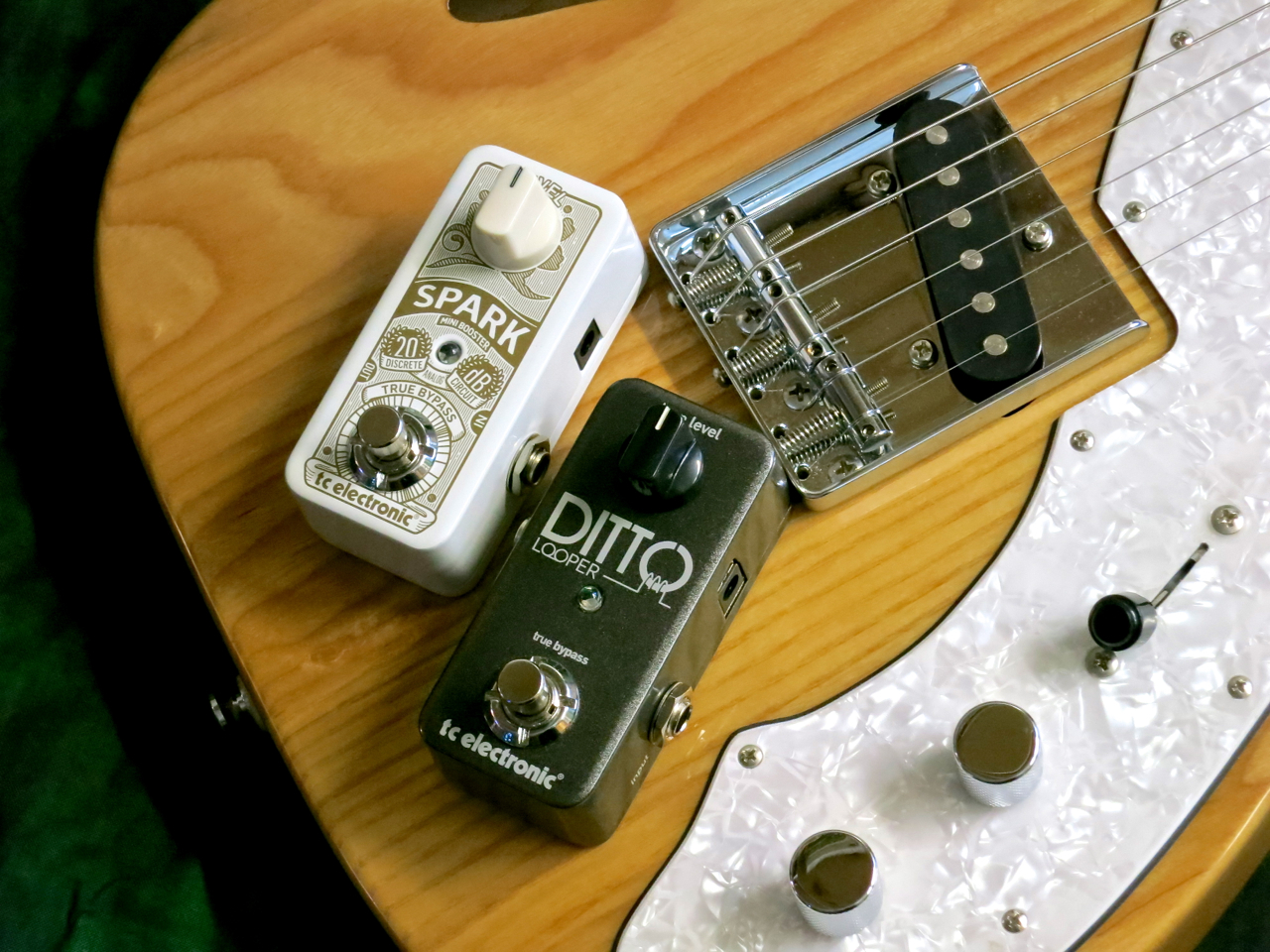
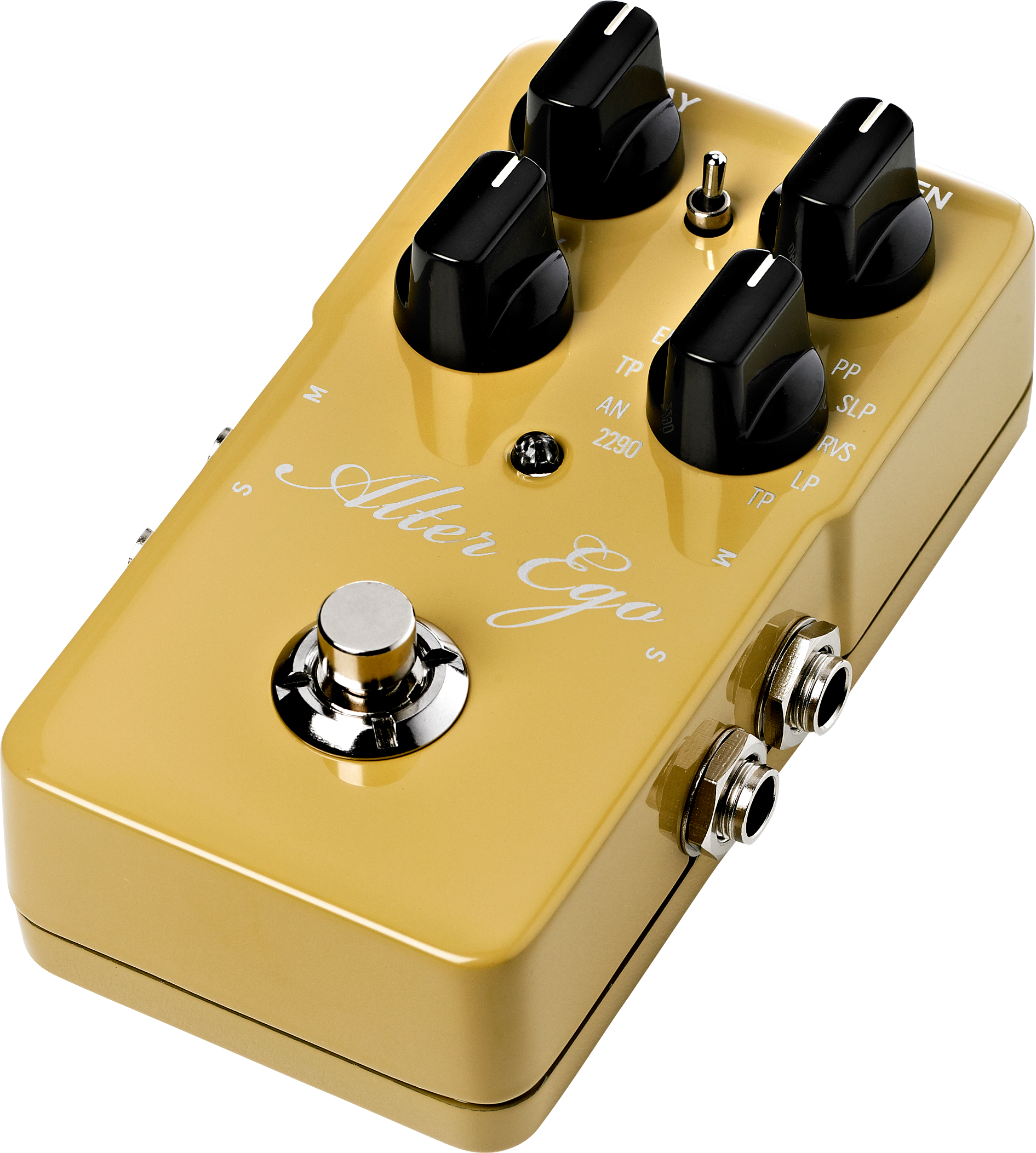
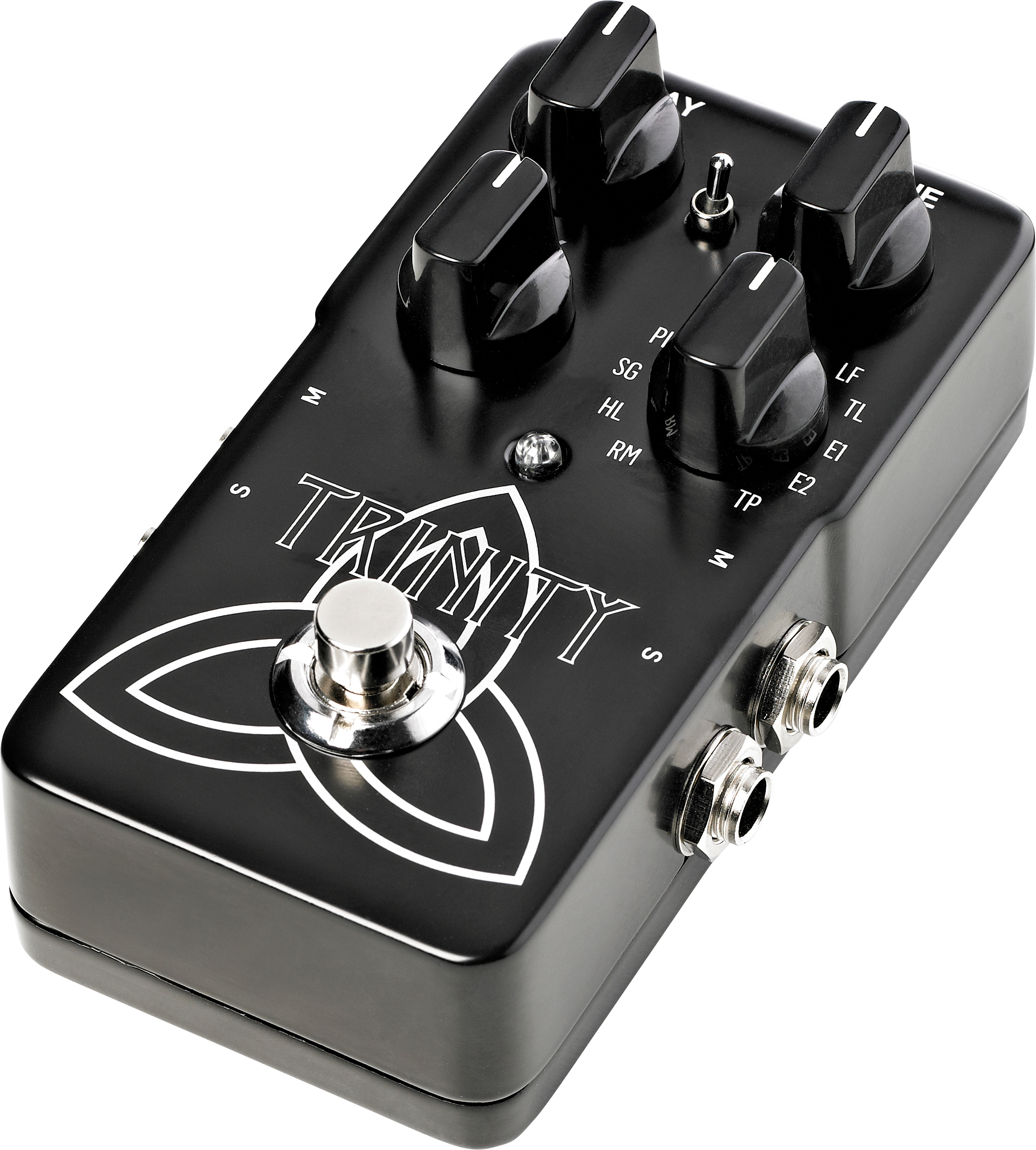
Saimme testiin kaksi erittäin kompaktia efektipedaalia TC Electronicilta:
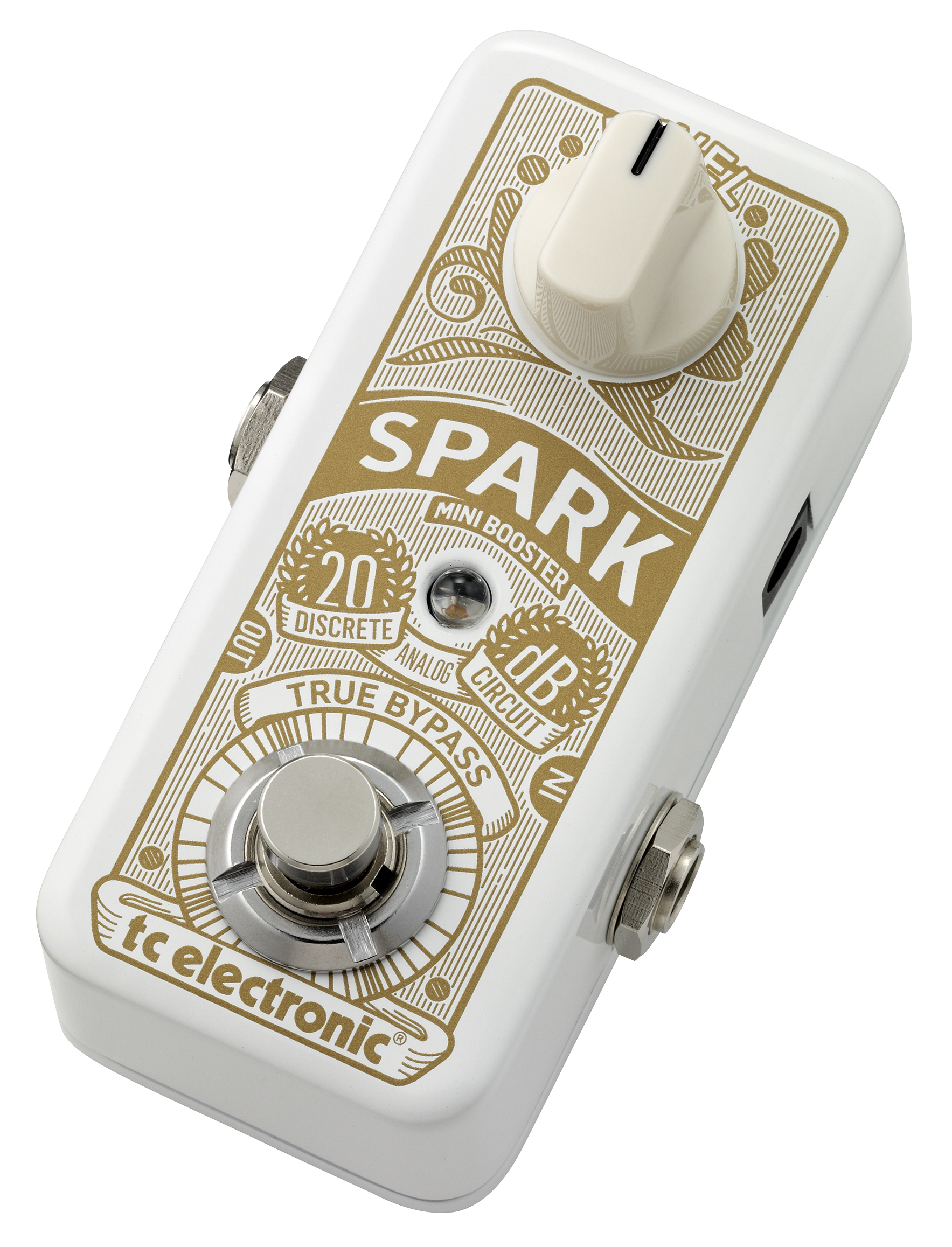
Spark Mini Boost on kompaktin Spark Boost -boosterin vielä pienempi veli, kun taas Ditto Looper on varmaan maailman pienin loopperi.
****
TC Electronicin Spark Mini (katuhinta noin 85 €) tarjoaa jopa 20 desibelliä signaalin vahvistusta erittäin pienessä pakkauksessa.
Näin pienen pedaalin etu on, että se vie pedaalilaudassa vain todella vähän tilaa. Kompaktiuuden ainoa haittapuoli on mielestäni se, että paristo ei mahdu pikkuiseen koteloon elektroniikan sekaan, vaan TC:n mineille täytyy aina syöttää käyttövirtaa ulkoiselta virtalähteeltä (hankittava erikseen).
Helpokäyttöisempää boosteria ei voi enää olla – Spark Minissä on vain yksi säädin, jolla säädetään halutun vahvistuksen tasoa, ja se on siinä.
Pikkuboosteri toimii true bypass -periaatteella, mikä tarkoittaa, että tulosignaali menee suoraan efektin lähtöön, aina kun boosteri on pois päältä.
Spark Minillä on kuitenkin vielä yksi ässä hihassa:
TC:n Prime Time -elektroniikka tunnistaa pidetäänkö pedaalin kytkin alas painettuna, jolloin boosteri on päällä vain niin kauan, kunnes jalka siirtyy pois kytkimestä. Lyhyellä polkaisulla taas Spark Mini toimii perinteisellä latch-tavalla, jossa ensimmäinen polkaisu laittaa efektin päälle ja toinen polkaisu kytkee sen jälleen pois.
TC Electronic Spark Mini kuulostaa erittäin hyvältä, ja tekee juuri sen, mitä tavallisesti odotan boosterilta. Puhtaassa kanavassa signaali saa puhdasta vahvistusta, kun taas pehmeästi rosoinen kanava menee reilusta boostauksesta kermaiseen säröön, niin kuin tässä pätkässä:
****
TC Electronic Ditto Looper (katuhinta noin 110 €) tarjoaa viisi (!) minuuttia looppausaikaa uskomattoman pienessä formaatissa.
Dittoon pätee sama kuin Spark Miniin – se vie erittäin vähän tilaa, mutta ulkoinen virtalähde täytyy hankkia erikseen. Onneksi TC:n pedaalien sähköt toimivat perinteisen Boss-standardin mukaisesti, minkä ansiosta sopivan virtalähteen löytäminen on helppoa.
Virtalähteen liittimen yläpuolelta löytyy muuten minikokoinen USB-portti, jonka kautta pystyy päivittämään tarvittaessa laitteen firmware-softaa.
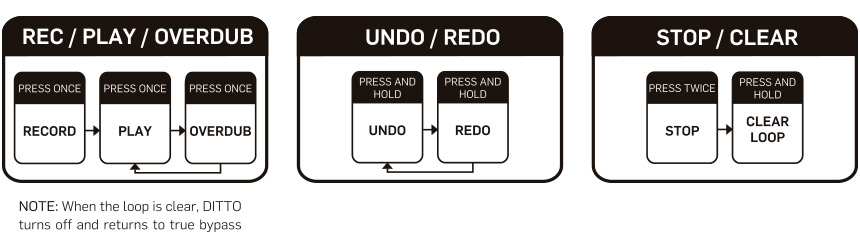
Vaikka TC:n Ditto toimii pelkästään yhdellä kytkimellä, on sen toimintalogiikka niin nerokkaan yksinkertainen, että Ditton käytöstä tulee melkein heti täysin orgaanista. Ensimmäisten muutamien minuuttien jälkeen loopataan jo kuin vanha tekijä täysin vaistonvaraisesti selkärangasta!
Myös soundin puolesta Ditto on hyvin kiitettävällä tasolla, sillä se toimittaa kompressoimatonta audiota 24-bittisellä resoluutiolla.
Loopperin käyttötilanteita on niin monia, että niiden listaaminen on täysin turhaa. Esimerkkipätkässä rakennan itselleni taustan, jonka päälle voi harjoittaa yhden tutun kappaleen soolo-osuuksien soittoa:
****
TC Electronicin Spark Mini ja Ditto ovat erittäin käteviä ja hyödyllisiä lisäyksiä jokaisen kitaristin efektiarsenaaliin. Spark Mini -boosterilla on helppoa lisätä esimerkiksi säröä yksikanavaiseen putkivahvistimeen tai saada soolot paremmin esiin. Ditto-loopperi taas on oiva kaveri harjoittamiseen (tai säveltämiseen) tai vaikkapa soolokeikoille.
****
TC Electronic Spark Mini Booster – katuhinta noin 85 €
Hagström Guitars’ new models, which had been announced at Frankfurt Musikmesse 2013, have finally arrived in Finland a few weeks ago!
Kitarablogi had the pleasure of receiving two of these guitars for testing:
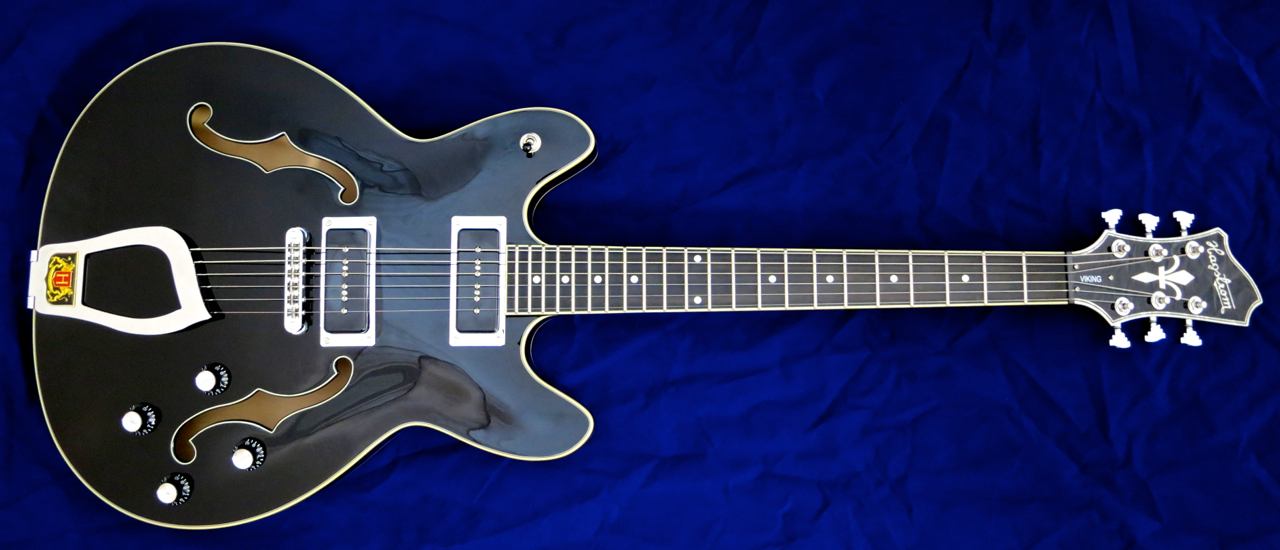
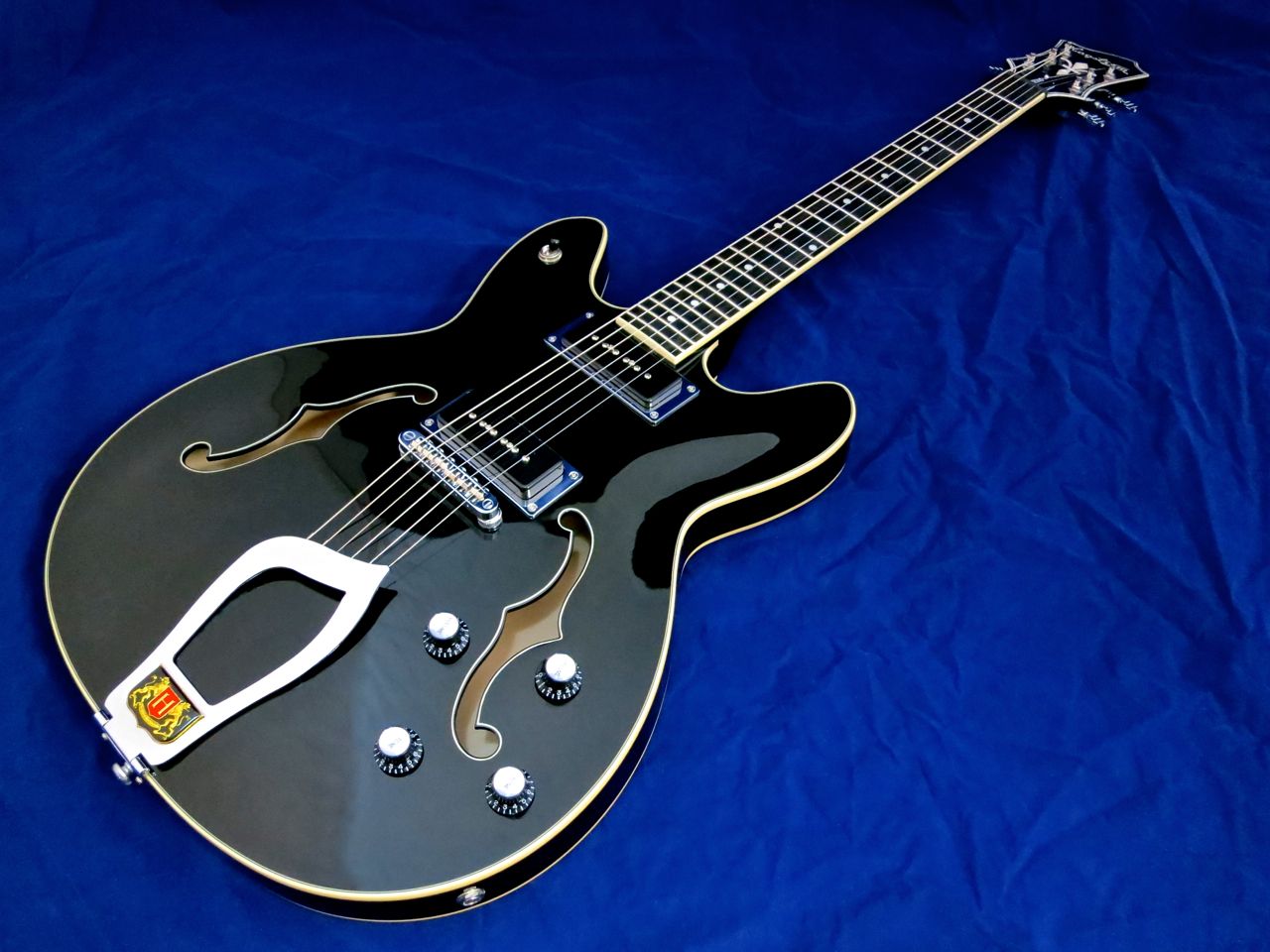
The Viking P is a new version of Hagström’s very popular semi-acoustic, and it comes equipped with two Custom P-50 singlecoil pickups.
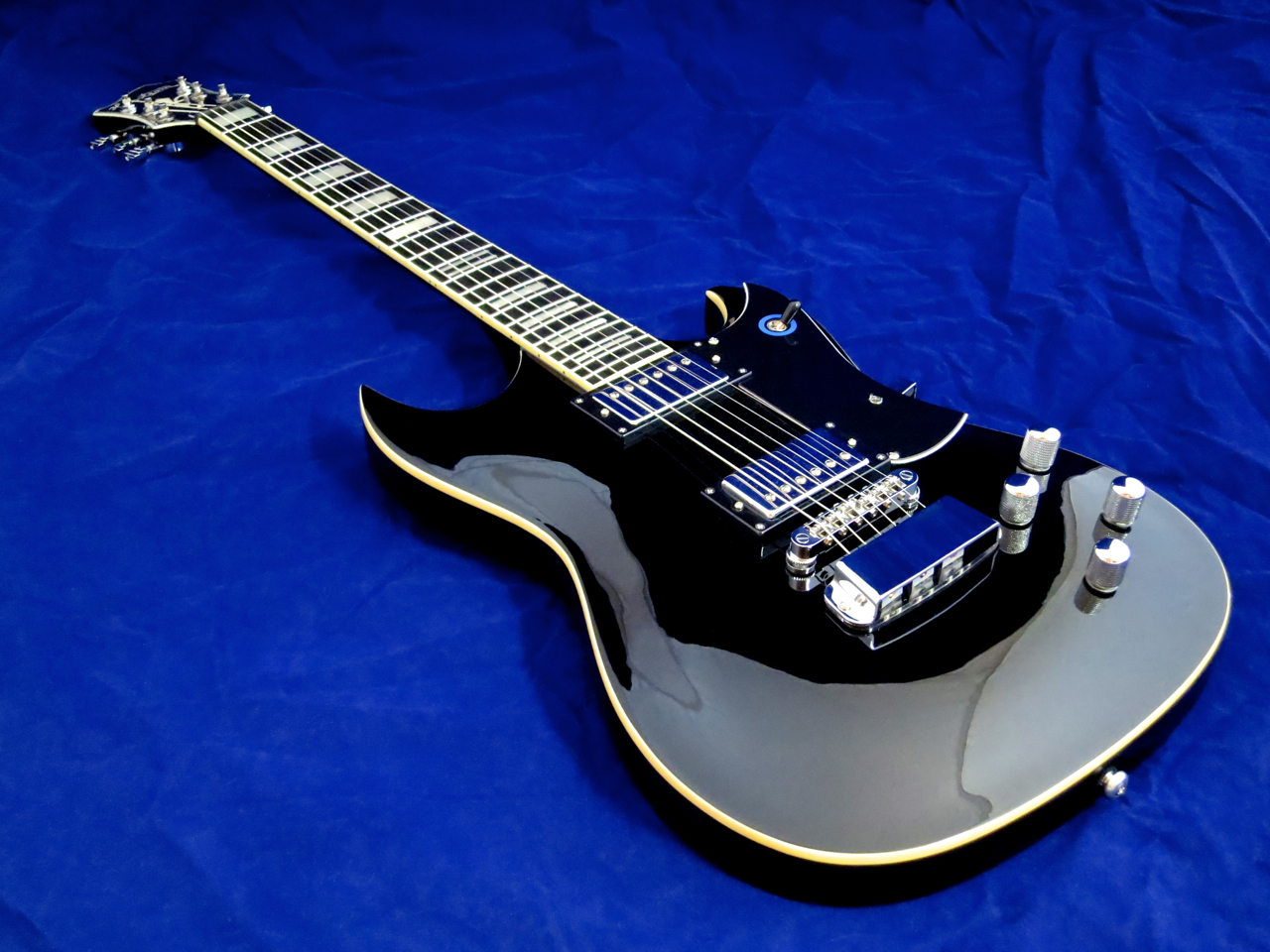
The Pat Smear Signature is a solid-body electric tailored to the Foo Fighters-guitarist’s needs.
****
The Hagström Viking is probably the company’s best-known guitar model, not least because of Elvis Presley’s use of a Viking during his legendary ’68 Comeback Special TV show.
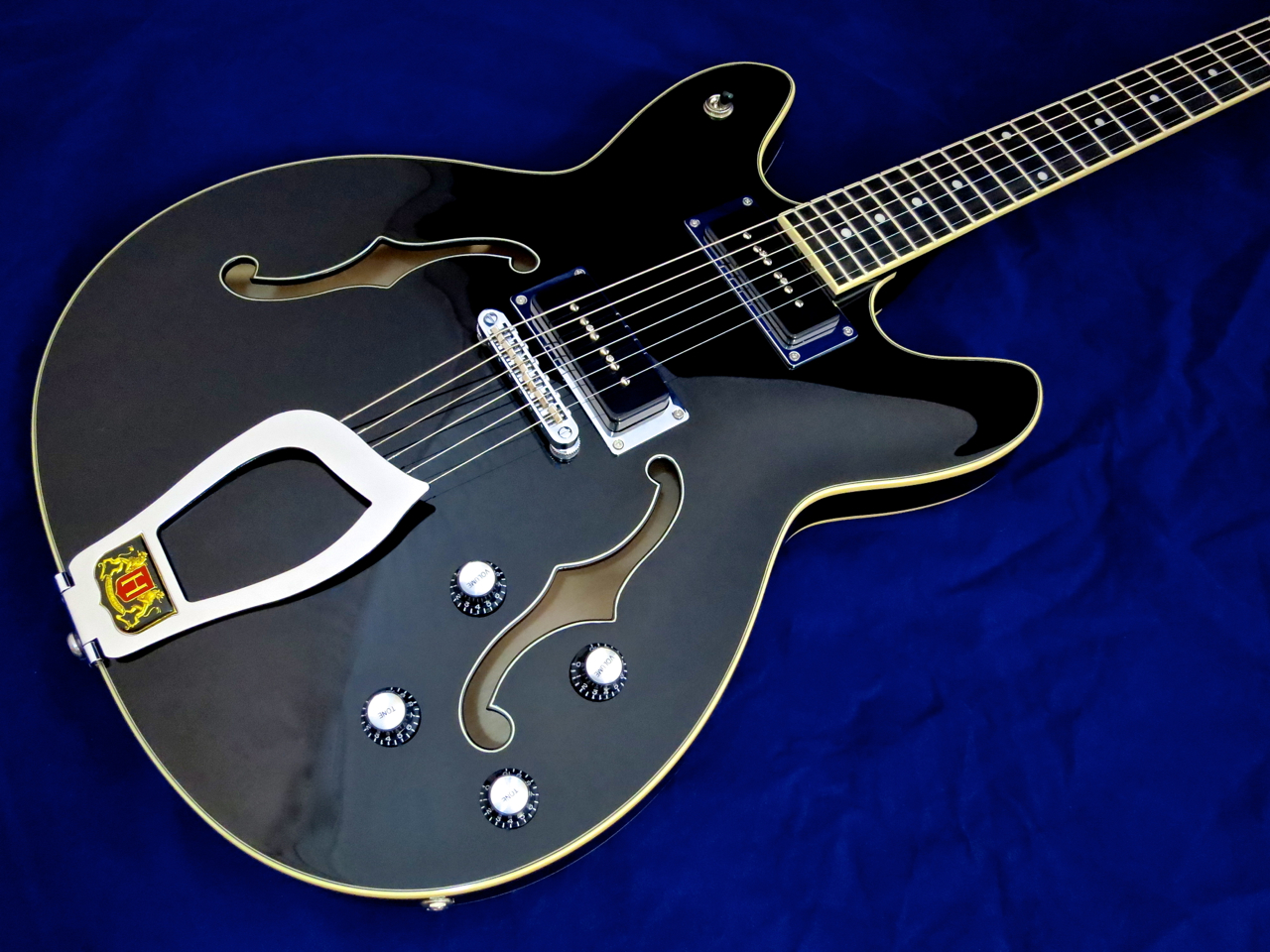
The brand-new Hagström Viking P (street price in Finland around 650 €) adds a pair of P-90-style singlecoils to the mix.
The Viking P’s maple neck is glued into the body, which is made in traditional style from form-pressed plywood maple.
A solid wood centre block – made of what looks like nato or meranti – runs the full length of this instrument.
”Beautiful”, ”classic” and ”timeless” are fitting adjectives to describe Hagström’s bound headstock.
Graph Tech’s self-lubricating Black Tusq-material has been chosen for the Viking P’s nut.
The Hagström-branded tuning machines are modern enclosed units that work very well.
The deep black fingerboard of the Viking P has been crafted from Hagström’s proprietary Resinator-material, which is a composite of birch fibres and resin. Resinator aims to be a man-made alternative to ebony, offering similar properties in terms of stability, looks and sound.
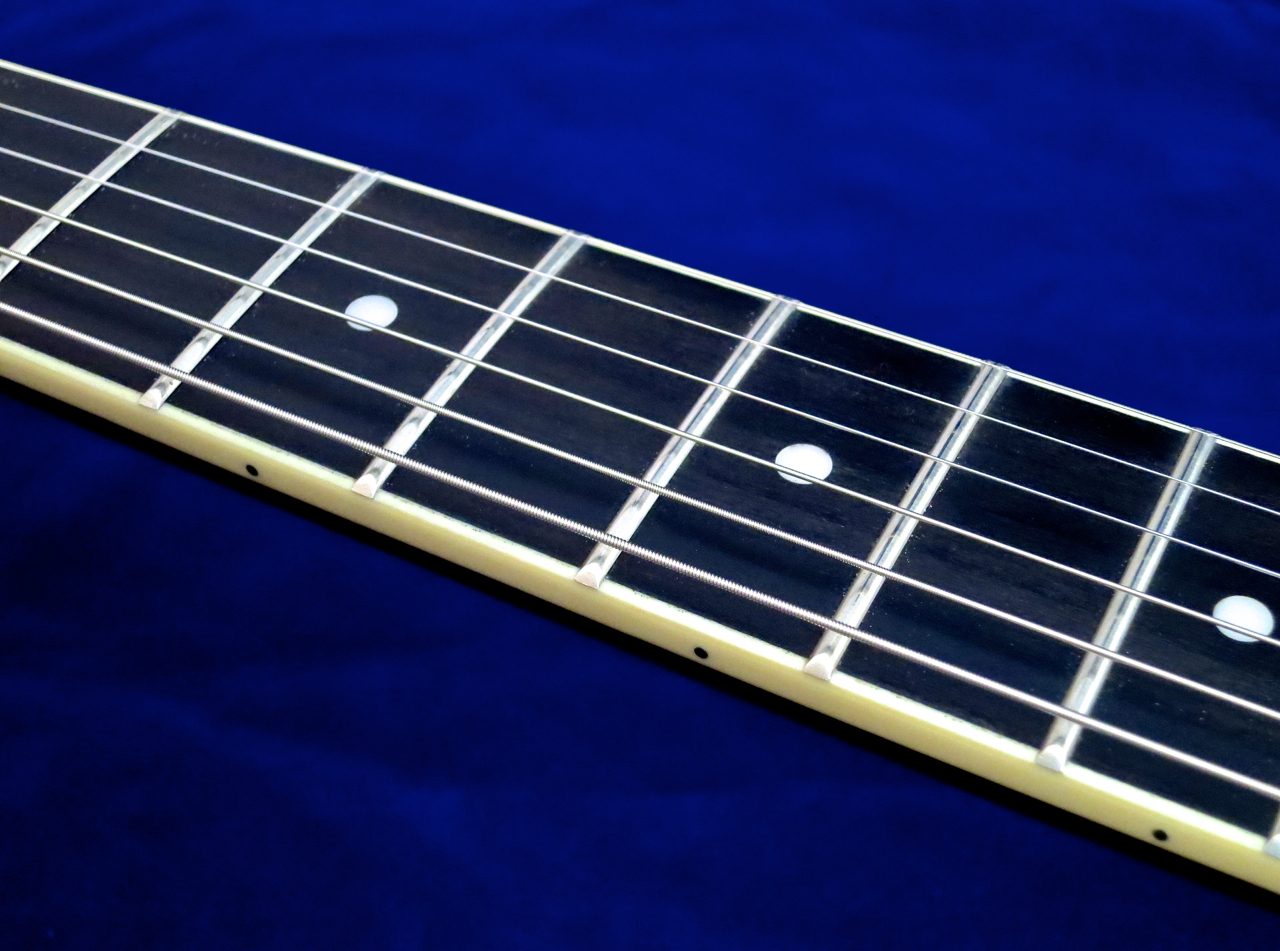
The ’board sports 22 medium-sized frets, which have been installed cleanly and finished well.
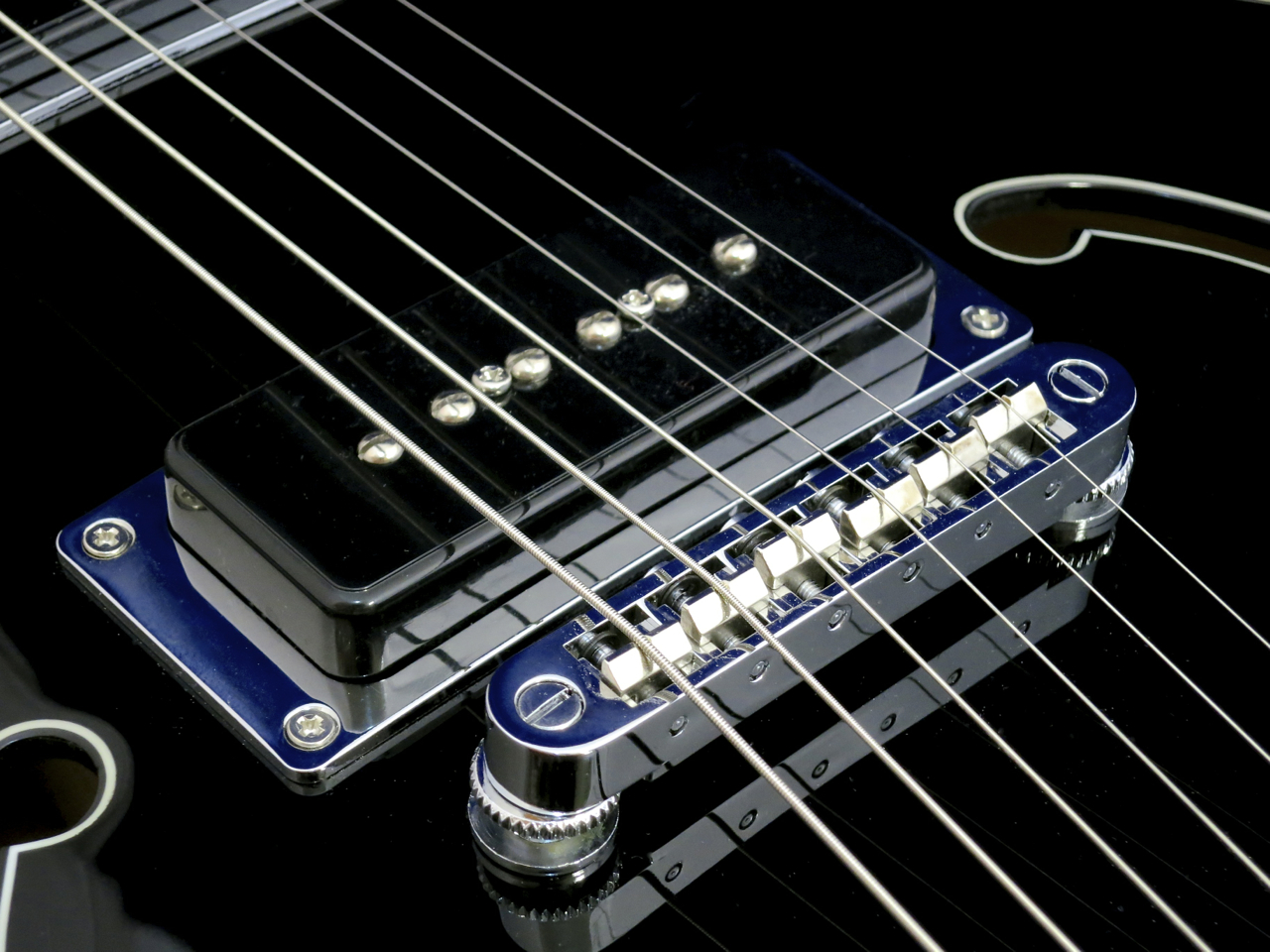
Hagström have chosen a stylish and practical way of installing their own Custom P-50 pickups on this semi:
Instead of opting for traditional, so-called dog ear covers, which are screwed to the guitar’s top, the Viking P comes with two black soap bar units. Originally developed for solid-body guitars, soap bar pickups offer the advantage of height adjustment via two Phillips-head screws placed between the adjustable pole pieces. With traditional dog ears the only means of adjusting pickup balance is by using the pole pieces – and often this leaves the bridge unit sounding a tad weaker than the neck pickup.
The three-way toggle switch has been placed on the Viking’s top horn.
The solid centre block cuts down feedback howl very effectively, and it also allows for the use of sturdy hardware.
The control setup is traditional, offering separate volume and tone pots for each pickup.
Pat liked the general shape of the F-200, but requested a thicker mahogany body with a bound maple top. In terms of thickness, we’re talking similar dimensions as on a PRS Guitars Custom 22, for example.
The Smear Signature features a set mahogany neck.
Any way you look at it – the Hagström headstock sure looks classy.
Pat Smear’s signature can be found on the back of the headstock.
It’s a Resinator fingerboard with 22 medium-sized frets on the Smear Signature also, but the position markers are large pearloid blocks here.
Mr Smear selected a pair of vintage-voiced Hagström Custom 58 -humbuckers for his signature model.
A special feature of this guitar is the toggle switch installation through a hole in the pickguard.
Even though the Pat Smear Signature isn’t equipped with a vibrato, the guitar comes with a roller bridge to ensure maximum tuning stability and string life.
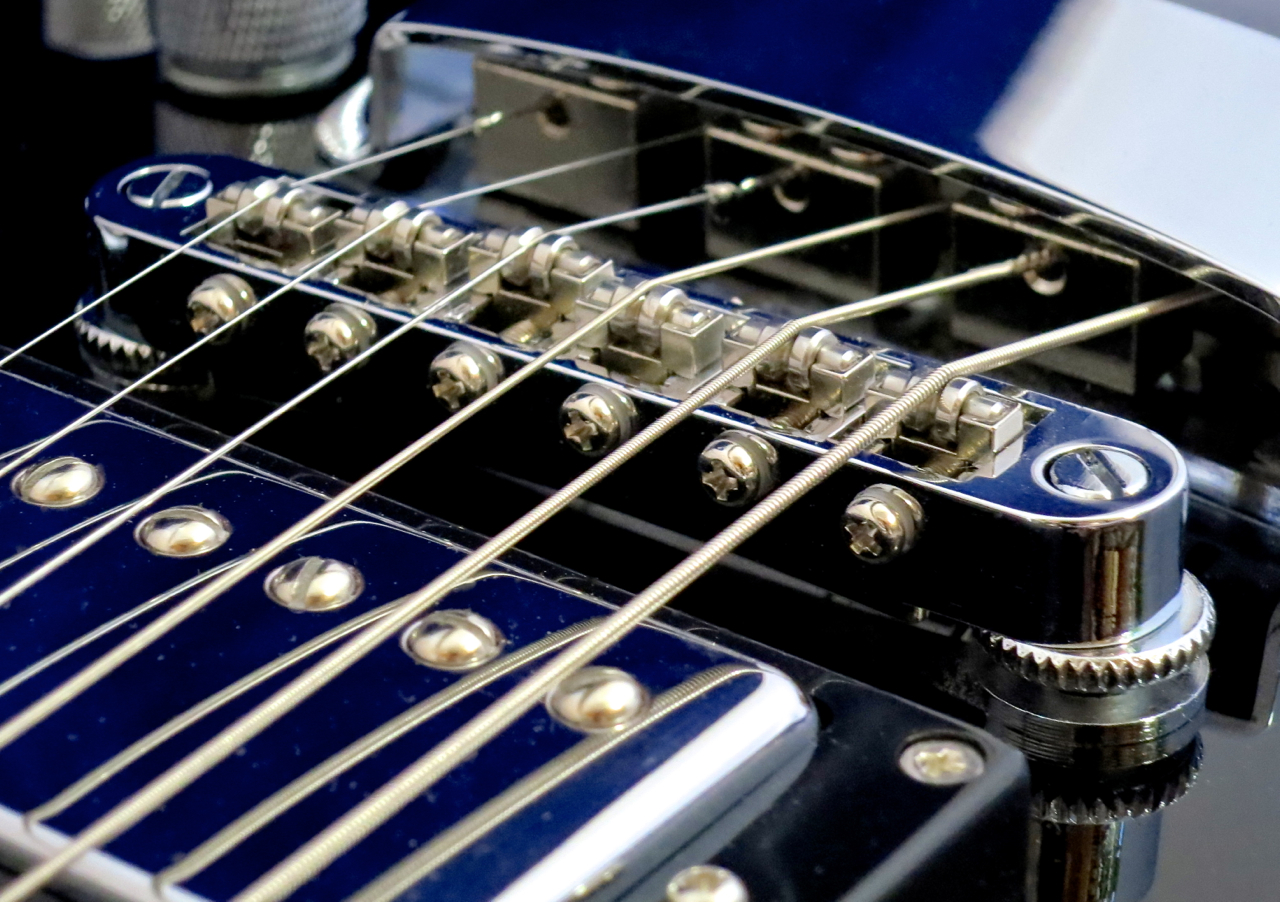
Hagström’s idiosyncratic tailpiece is made up of six brass string retainers mounted onto a plexiglass plate.
There are four controls on the Smear-model, instead of the F-200’s single pair of master volume and master tone.
Both review guitars come with high-quality switches and pots.
****
Both review guitars suffered from a very slight bout of fretboard shrinkage due to dry weather conditions. It seems that Hagström’s Resinator composite doesn’t only look and feel like ebony, but also reacts to changes in air humidity in a similar fashion. Fretboard shrinkage isn’t a real ”fault” per se, but rather something that happens to a large proportion of new guitars. Luckily, your friendly guitar repair shop can take care of the sharpish fret ends easily and inexpensively.
The Hagström Viking P is of medium weight, and balances well in the lap or on a strap.
The neck profile is a flattish D, which feels great.
Straight out of the shipping-box the setup was spot-on. The Hagström Viking P comes factory-equipped with a 010-gauge string set. Thanks to the flat (15″) fingerboard radius and the low action (low E: 1.9 mm/high e: 1.6 mm) this Viking is a really comfortable player.
Due to its semi-acoustic build, the Viking P’s unamplified voice is quieter and closer to a solid-body than the acoustic performance of all-hollow thinlines, such as the Gibson ES-330 or the Epiphone Casino. Acoustically, the Viking P sounds clear and fresh.
Hagström’s fantastic Custom P-50 pickups add a nice shot of warmth and roundness to the mix, without clouding the Viking’s inherent clarity and dynamics.
There are great clean sounds on tap:
But the fun doesn’t end there, as the Viking P also delivers when it comes to the crunchy side of things, with its fat midrange and dynamic punch:
Due to the physical limitations inherent in single-coil pickups, high-gain sounds are always a somewhat tricky endeavour in P-90-equipped guitars. The sound is really great, but you have to decide for yourselves how much how much hum and buzz you can stomach:
****
Hagström’s Pat Smear Signature feels very comfortable, thanks to its rounded body shape and moderate weight.
This guitar’s neck is a slightly more rounded affair, when compared to the neck profile on Viking P, making it feel even better, in my opinion.
Again, the setup was great straight out of the box – a low action, such as the one on the Smear Signature (low E: 1.6 mm/high e: 1.4 mm), only works as well as it does here when the frets are level. This guitar plays like a dream.
Acoustically, this Hagström speaks with a strong and clear voice. The Smear-model features a healthy attack coupled with long and even sustain.
I really like Hagström’s vintage-voiced Custom 58-humbuckers, because their moderate output level leaves enough room for the guitar’s acoustic clarity and dynamics to shine through:
The crunchy tones of the Pat Smear Signature manage to combine clarity and Rock-muscle in a very appealing fashion:
****
These new Hagström-models are very welcome additions to the company’s range of models.
Of these two, the Viking P leans somewhat more in the vintage direction tonally, dishing out a delicious and rootsy P-90-fuelled alternative to Hagström’s regular Viking. The Pat Smear Signature is a signature model that can work for many friends of double-humbucker solid-bodies, even if you’re not familiar with the man’s oeuvre.
In any case, both Hagström-models are quality instruments at prices even the amateur can afford.
****
Hagström Viking P + Pat Smear Signature
Viking P – street price in Finland approx. 650 €
Pat Smear Signature – street price in Finland approx. 670 €
Hagström Guitarsin uutuusmallit tämänvuotiselta Frankfurtin Musikmesseltä ovat viimein rantautuneet Suomeen!
Kitarablogi on saanut kaksi mallia testiin:
Viking P on Custom P-50 -yksikelaisilla varustettu versio Hagströmin suositusta puoliakustisesta.
Pat Smear Signature -malli on Foo Fighters -yhtyeen kitaristin kovasti odotettu nimikkokitara.
****
Hagströmin Viking on ehkä firman tunnetuin malli, ja kiitos siitä kuuluu Elvis Presleylle, joka käytti kyseistä kitaraa hänen legendaarisesta ’68 Comeback Special -TV-ohjelmassa.
Upouusi Hagström Viking P (hintaluokka noin 650 €) lisää tutulle reseptille P-90-tyylisiä yksikelaisia mikrofoneja.
Viking P:n vaahterakaula on liimattu muottiin prässätystä vaahteravanerista valmistettuun runkoon.
Rungon täysipuinen keskipalkki näyttää olevan testisoittimessa natosta tai meranti-puusta veistetty.
Kaunis, klassinen, ajaton – sellainen on Hagströmin reunalistoitettu viritinlapa.
Musta satula on tehty Graph Techin itsevoitelevasta Black Tusq -materiaalista.
Hagström-virittimet ovat nykyaikaista kapseloitua sorttia, ja toimivat moitteettomasti.
Viking P:n musta otelauta on veistetty Hagströmin omasta Resinator-materiaalista, joka valmistetaan koivusta ja hartsista. Resinatorilla on pitkälti samat ominaisuudet kuin eebenpuulla.
Kitarassa on 22 keskikokoista nauhaa, joita on istutettu otelautaan hyvin huolellisesti.
Hagström on päätynyt tällaiseen tyylikkääseen ja käytännölliseen tapaan asentaa omat Custom P-50 -mikrofoninsa puoliakustiseen kitaraan:
Kansikiinnityksen vaativan, perinteisen dog ear -vaihtoehdon sijaan Viking P:ssä käytetään alunperin lankkukitaroille kehitettyä saippuapala-tyyppiä. Soapbar-mikrofonin etu on, että sen korkeutta voi säätää naparuuvien välisillä ruuveilla. Dog eareissä taas vain naparuuveja voi säätää, minkä takia tallamikrofonin signaaliteho voi pysyä joissakin kitaroissa kaulamikrofonia heikompana.
Kolmiasentoinen vipukytkin sijaitsee kaikissa Viking-malleissa rungon yläsarvessa.
Kaikukopan keskipalkin ansiosta feedback-ulinan kanssa tulee vain harvemmin ongelmia, ja lisäksi palkki mahdollistaa kiinteän tallan asentamista.
Tuttuun tapaan on tarjolla neljä säädintä – kummallekin mikrofonille oma tone- ja volume-säädin.
Pat tykkäsi F-200:n ulkomuodosta, mutta toivoi selvästi paksumpaa runkoa, jossa mahonkisen takaosaan päälle on reunalistoitettu vaahterakansi. Smear-mallin runko on samaa paksuusluokkaa kuin esimerkiksi PRS Guitarsin Custom 22 -malli.
Smear Signaturen mahonkikaula on liimattu runkoon.
Hagström-lapa on kuvankaunis myös tästä kulmasta katsottuna.
Pat Smearin nimmari löytyy lavan kääntöpuolelta.
Myös nimikkomallissa on Resinator-otelautaan asennettu 22 medium-kokoista nauhaa, mutta otemerkit ovat tällä kertaa erittäin kauniita blokkeja.
Herra Smear valitsi nimikkokitaraansa Hagströmin vintage-tyyliset Custom 58 -humbuckerit.
Pleksin läpi asennettu vipukytkin on hyvin omaleimainen ja pikantti yksityiskohta tässä mallissa.
Vaikka Pat Smear Signaturessa ei ole vibratoa, artisti on valinnut tallaksi rullilla varustetun tune-o-matic-kopion.
Hagströmin perinteisessä kielipitimessä kielet kiinnitetään pleksilasialustan läpi runkoon kiinnitettyihin messinkipaloihin.
Kitarasankarin omasta toiveesta Smear-mallissa on neljä säädintä, kun taas F-200:ssa on vain master volume ja master tone.
Molemmissa kitaroissa käytetään laadukkaita kytkimiä ja potentiometrejä.
****
Molemmissa testisoittimissa otelauta on ilmeisesti kutistunut aavistuksen verran matkalla Kiinasta tänne Pohjolaan, minkä takia nauhojen päät tuntuvat hieman terävältä sormien alla. Ilmeisesti Resinator-materiaali ei ainoastaan näytä puulta, vaan se myös ”elää” puun lailla. Tässä ei ole kyse varsinaisesta viasta, vaan uusien kitaroiden yleisestä ongelmasta, joka on helposti (ja edullisesti) korjattavissa.
Hagström Viking P:llä on mukava keskivertopaino, ja se istuu tällä kitaralajille tyypillisellä tavalla erittäin hyvin sylissä tai hihnassa.
Kaulaprofiiliksi on valittu suhteellisen matala D, joka tuntuu oikein hyvältä.
Suoraan pakasta vedetyn testiyksilön säädöt olivat prikulleen kohdallaan. Hagström Viking P tulee tehtaalta 010-kielisatsilla, ja soittimen tatsi oli otelaudan loivan kaarevuuden (15 tuumaa) ja mukavan kielikorkeuden (matala E: 1,9 mm/korkea e: 1,6 mm) ansiosta erittäin kevyt.
Gibson ES-335-tyylisenä puoliakustisena soittimena Viking P:n akustinen ääni on hyvin tiukka ja paljon lankkukitara-maisempi kuin esimerkiksi samankokoisissa, mutta täysin ontoissa ES-330 tai Epiphone Casino -kitaroissa. Viking P kuulostaa raikkaalta ja selkeältä.
Hagströmin loistavat Custom P-50 -mikrofonit lisäävät soppaan hieman pyöreyttä ja lämpöä, ilman että Vikingin selkeys ja dynamiikka kärsisivät.
Lopputulos on puhtaan vahvistimen läpi soitettuna erittäin kaunis:
Myös säröllä Viking P:n soundi pistää suun messingille, koska sointi on tiivis ja erotteleva, muttei piikikäs:
Liidisoundeissa yksikelaisten mikkien – fysiikasta johtuva – häiriöherkkyys voi tulla suurilla gain-määrillä vasten. Jokaisen on itse selvitettävä, miten paljon hurinaa omassa kitarasignaalissa saa olla. Hagström Viking P:n soundi sinänsä on nimittäin erittäin hyvä:
****
Hagströmin Pat Smear -malli tuntuu mukavalta sekä seisten että istuen, myös maltillisen painonsa ansiosta.
Tämän kitaran kaula on aavistuksen verran pyöreämpi tapaus, kuin Vikingissä, ja se istuu minun käteeni ehkä vieläkin paremmin kuin puoliakustisen Hagströmin vastine.
Niin ikäänkin suoraan pakasta vedetyn Smear Signaturen säädöt olivat myös erittäin hyvässä kuosissa – näin matalan kieltenkorkeuden (E: 1,6 mm/e: 1,4 mm) saa toimimaan kunnolla vain silloin, kun nauhatyö on suoritettu kiitettävästi. Testiyksilön soitettavuus on erittäin vaivatonta.
Akustisesti tämä Hagström soi vahvalla ja selkeällä äänellä. Smear-mallilla on tarkka atakki sekä pitkä ja tasainen sustain-vaihe.
Hagströmin erinomaiset Custom 58 -humbuckerit ovat maltillisella tehollaan hyvin onnistunut valinta näin dynaamisesti ja avoimesti soivalle lankkukitaralle:
Myös särösoundeissa Pat Smearin nimikkomalli kuulostaa samalla selkeältä ja lihaksikkaalta:
****
Nämä uudet Hagström-mallit ovat erittäin tervetulleita variaatioita firman tutuista, omista malleista.
Viking P nojaa näistä kahdesta ehkä aavistuksen verran enemmän vintagen suuntaan, ja tarjoaa P-90-tyylisillä mikeillä hieman juurevamman vaihtoehdon perus-viikingille. Pat Smear Signature on yleishyödyllinen nimikkomalli, joka toimii myös erittäin hyvin, vaikka herran tuotanto tai musiikkityyli eivät miellytä.
Kyse on joka tapauksessa laadukkaista soittimista, joiden rahkeet selvästi riittävät myös ammattimuusikon käyttöön.
American guitar guru Grover Jackson is a genuine living legend. When Jackson bought Wayne Charvel’s small shop (in 1978) nobody would have guessed that this man would single-handedly define two new types of electric guitars.
The – mostly bolt-on necked – Charvel guitars from the Eighties kicked off the Superstrat-phenomenon in earnest.
The original Jackson-branded instruments became famous as hiogh-octane Metal-guitars, which combined first class playability with bold graphic finishes. The most legendary Jacks model is surely the Concorde/RR, which Grover Jackson developed for Randy Rhoads.
Grover Jackson left Charvel/Jackson at the end of the 80s, and he went on to design instruments for a number of different brands, like Washburn for example. The Charvel and Jackson brands are nowadays part of the huge Fender conglomerate.
Grover Jackson has recently launched a new guitar-making outfit, together with (ex-Fender man) Jon Gold. GJ2 Guitars is a small Californian outfit which concentrates on small-run high-end guitar making.
Kitarablogi.com takes the first five instruments to arrive in Finland for a spin.
****
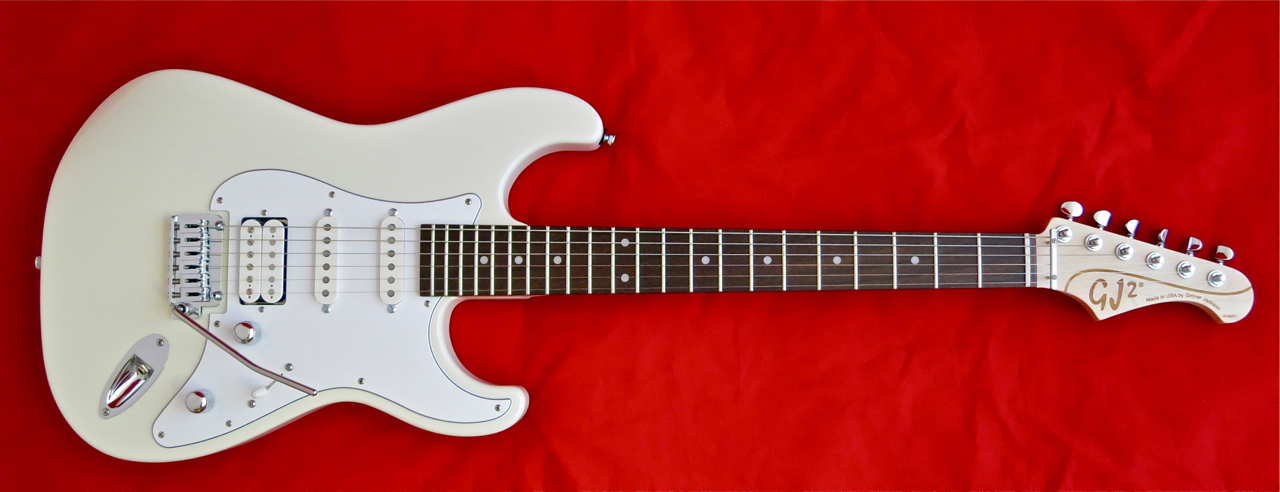
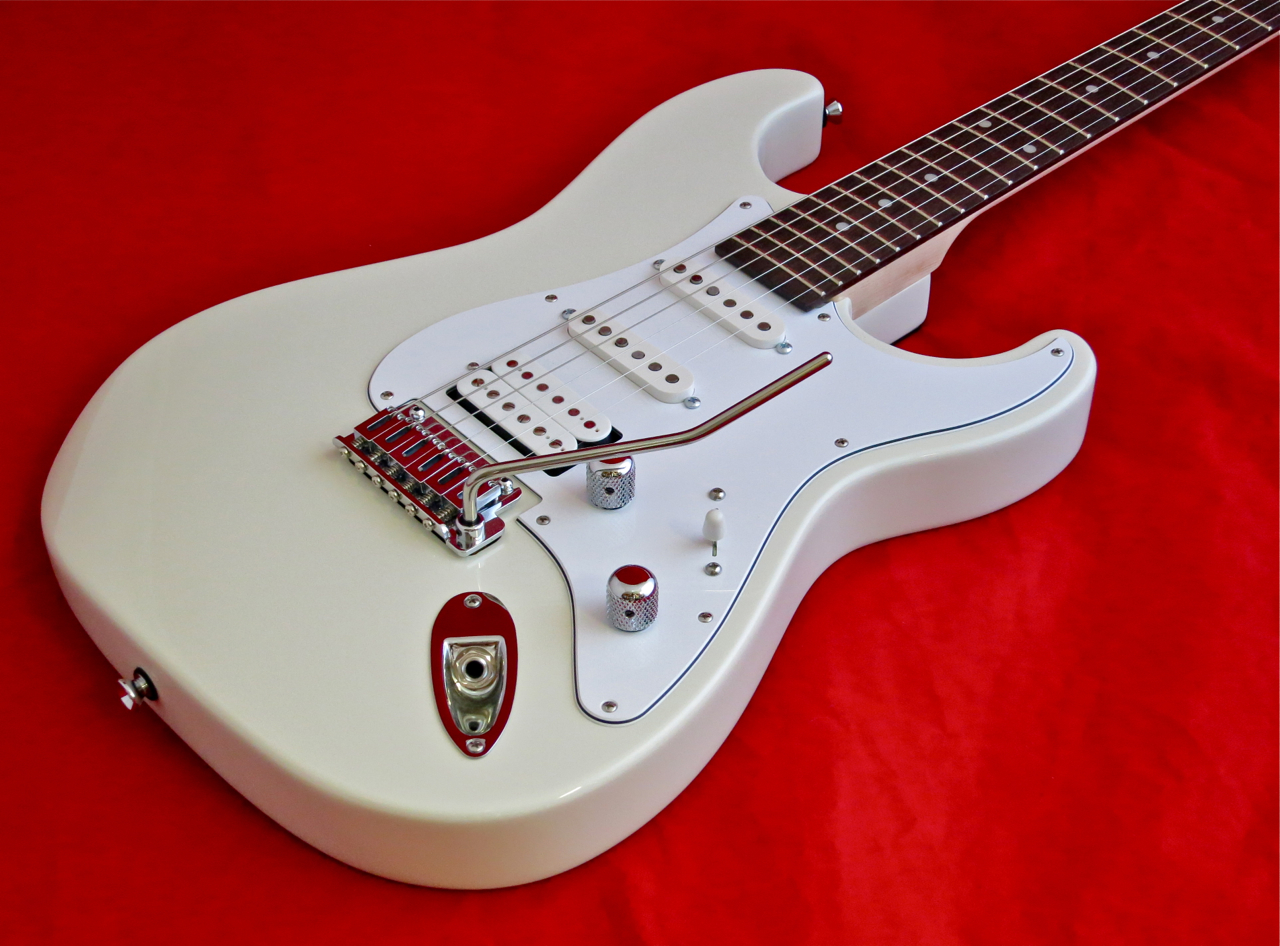
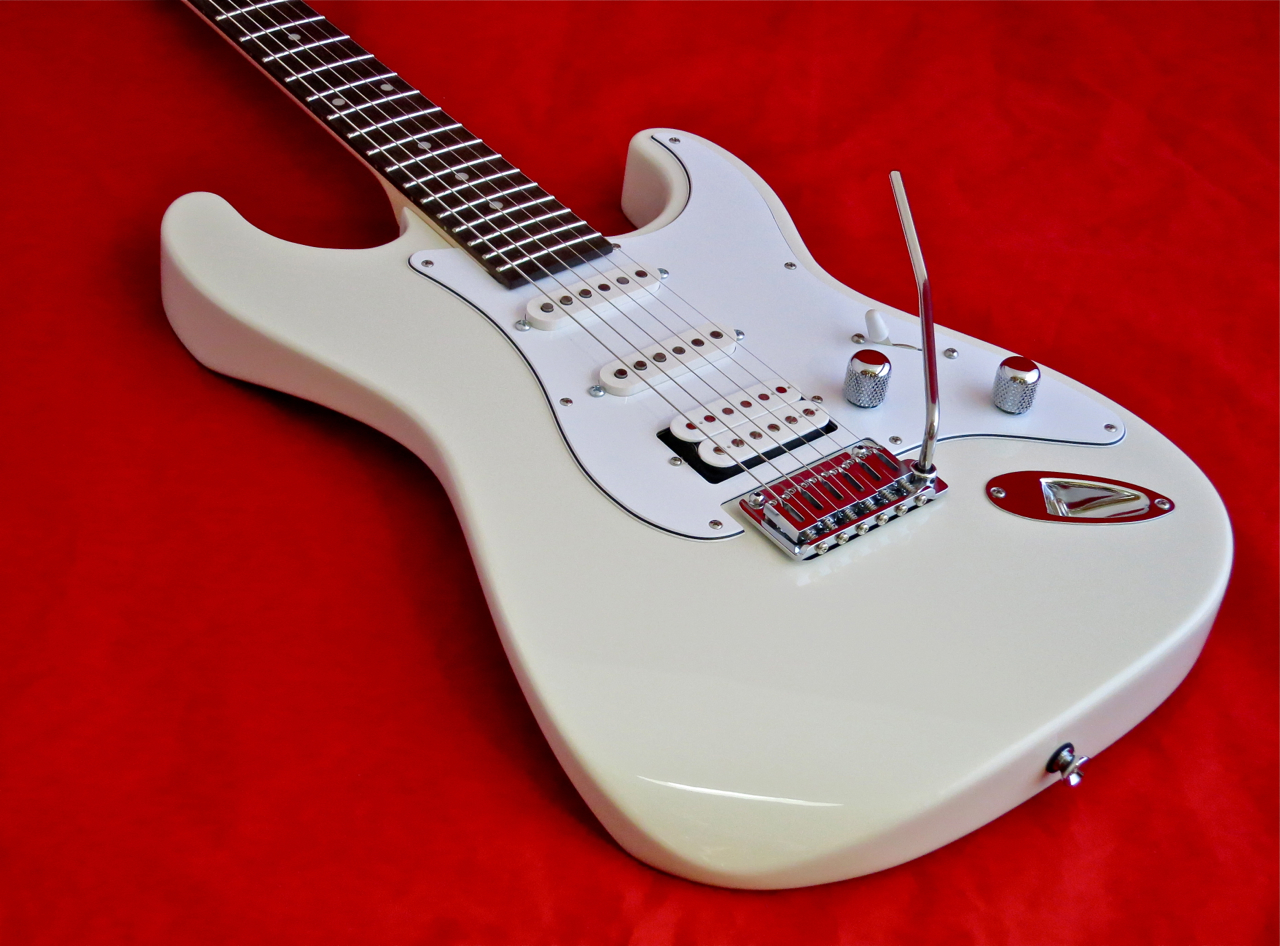
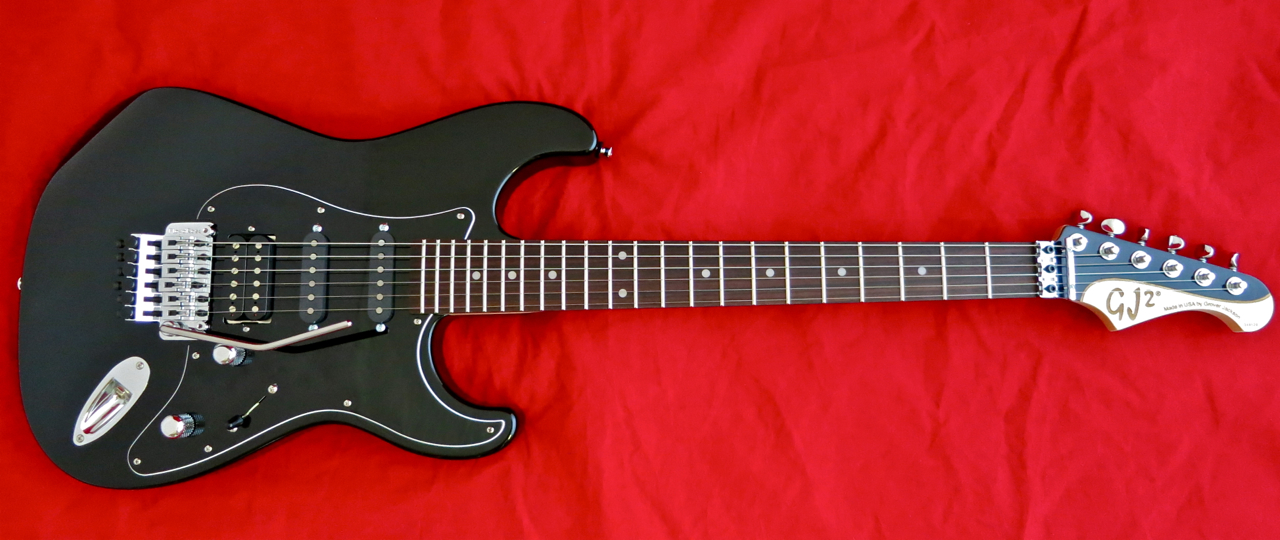
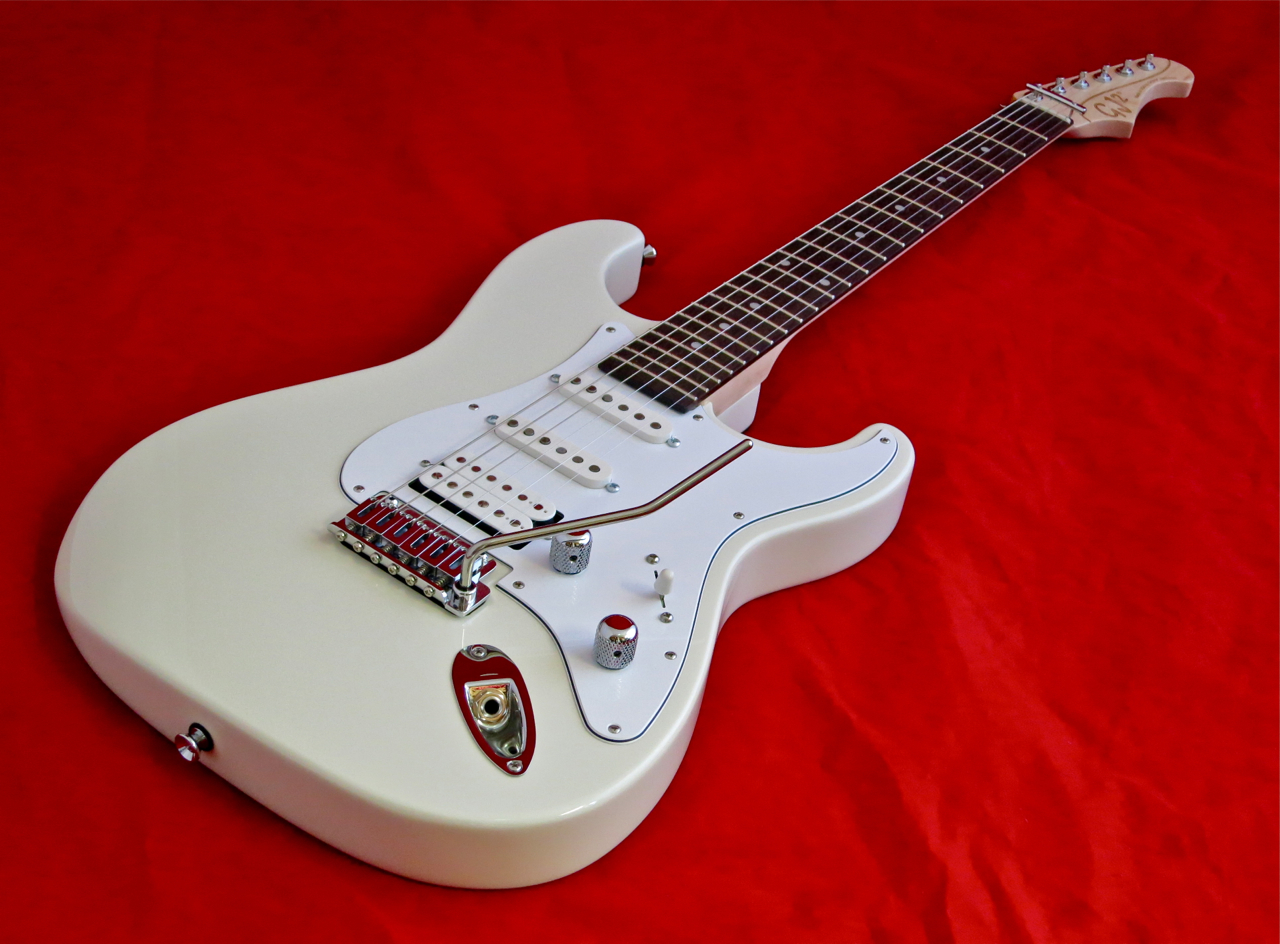
The GJ2 Glendora NLT (this version 1,717 €, incl. gigbag) is the most traditional guitar of our group of five.
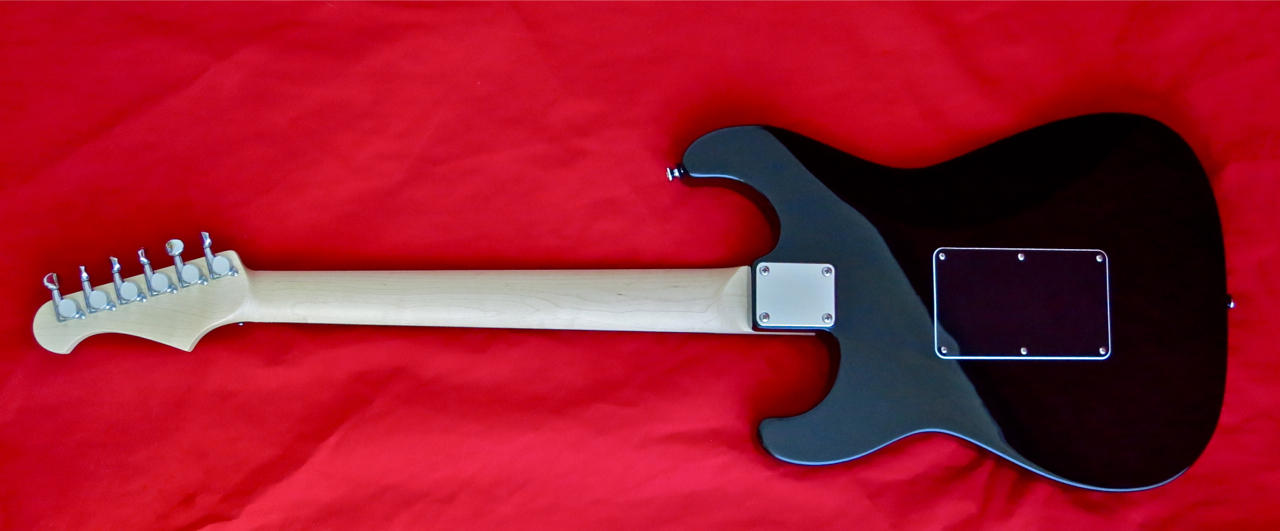
The review sample’s body has been crafted from light ash (custom option) and finished in gloss Antique White. The basic version of the Glendora comes with a body made from either basswood, alder or poplar.
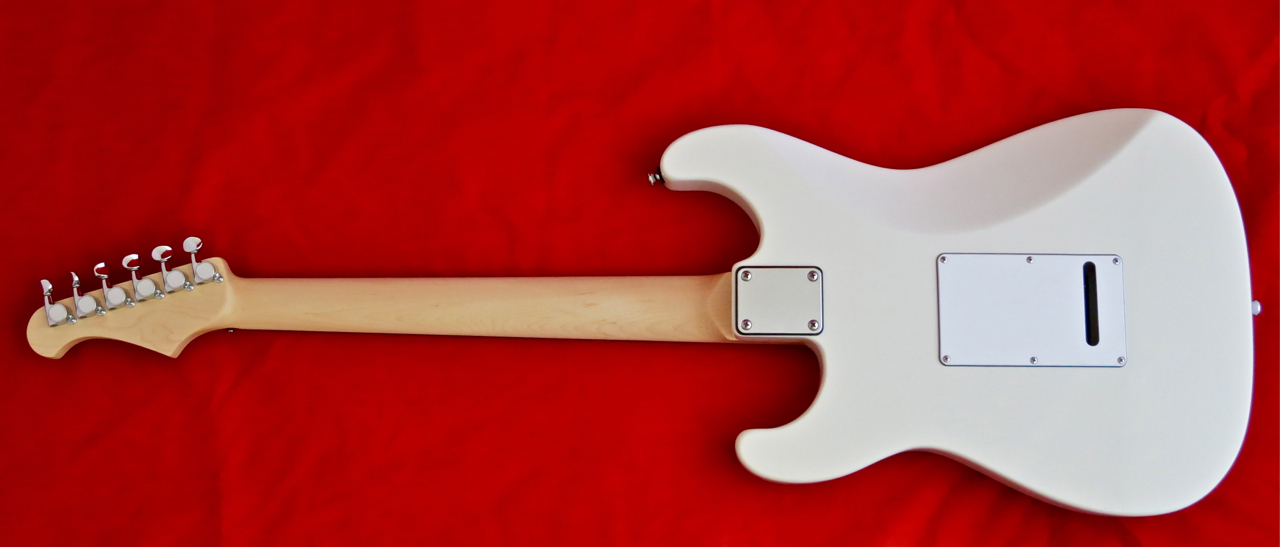
The satin-finished maple neck joins the body in traditional fashion.
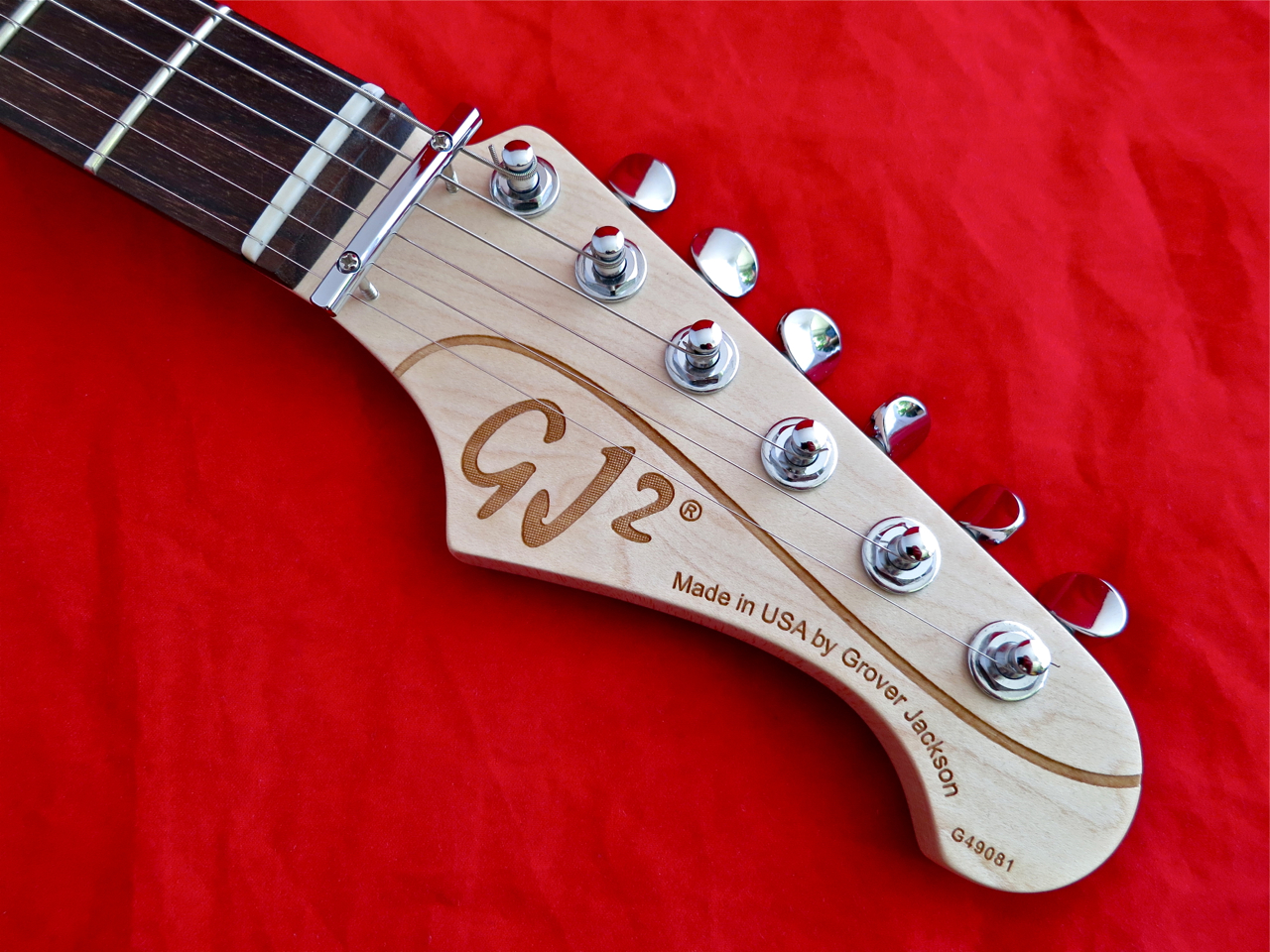
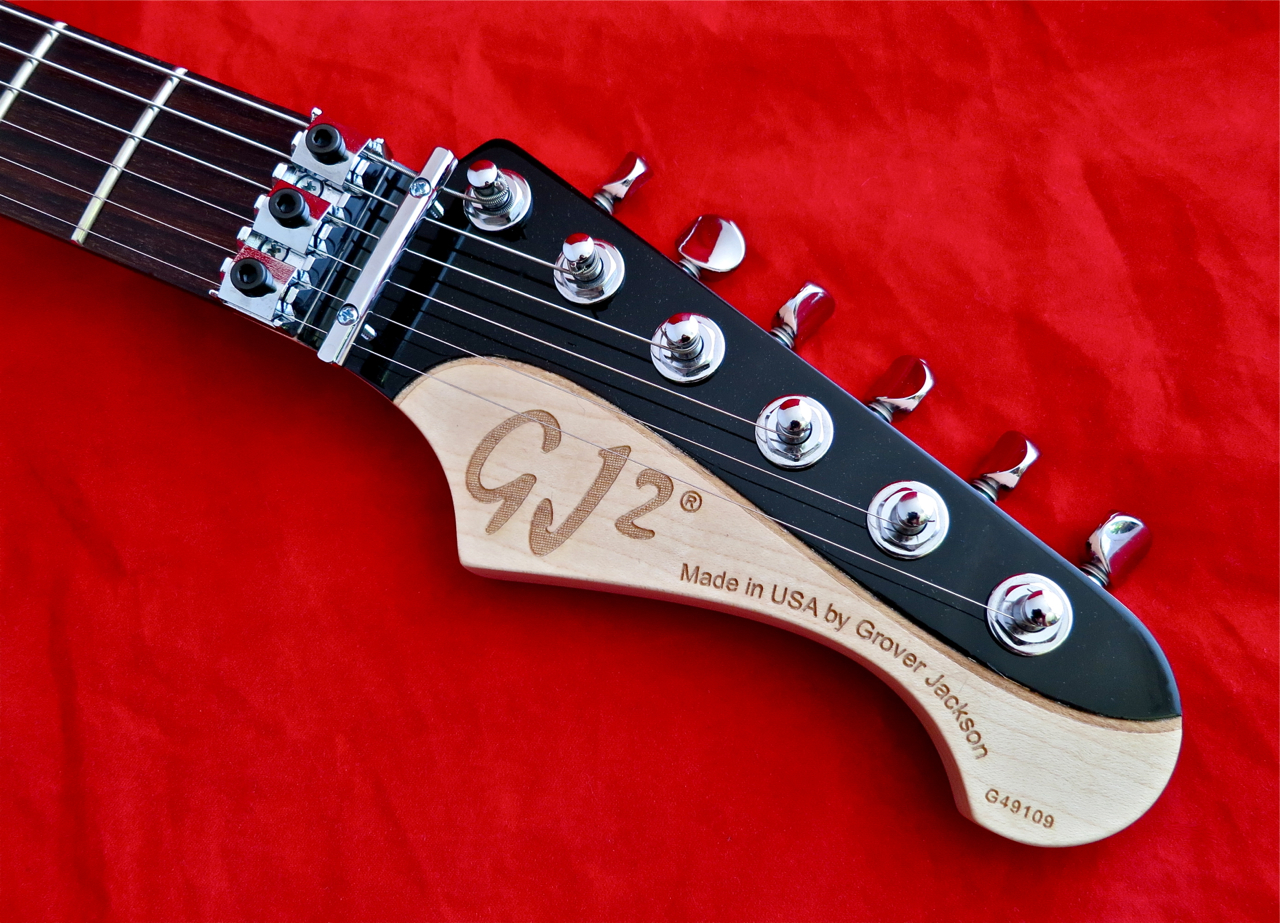
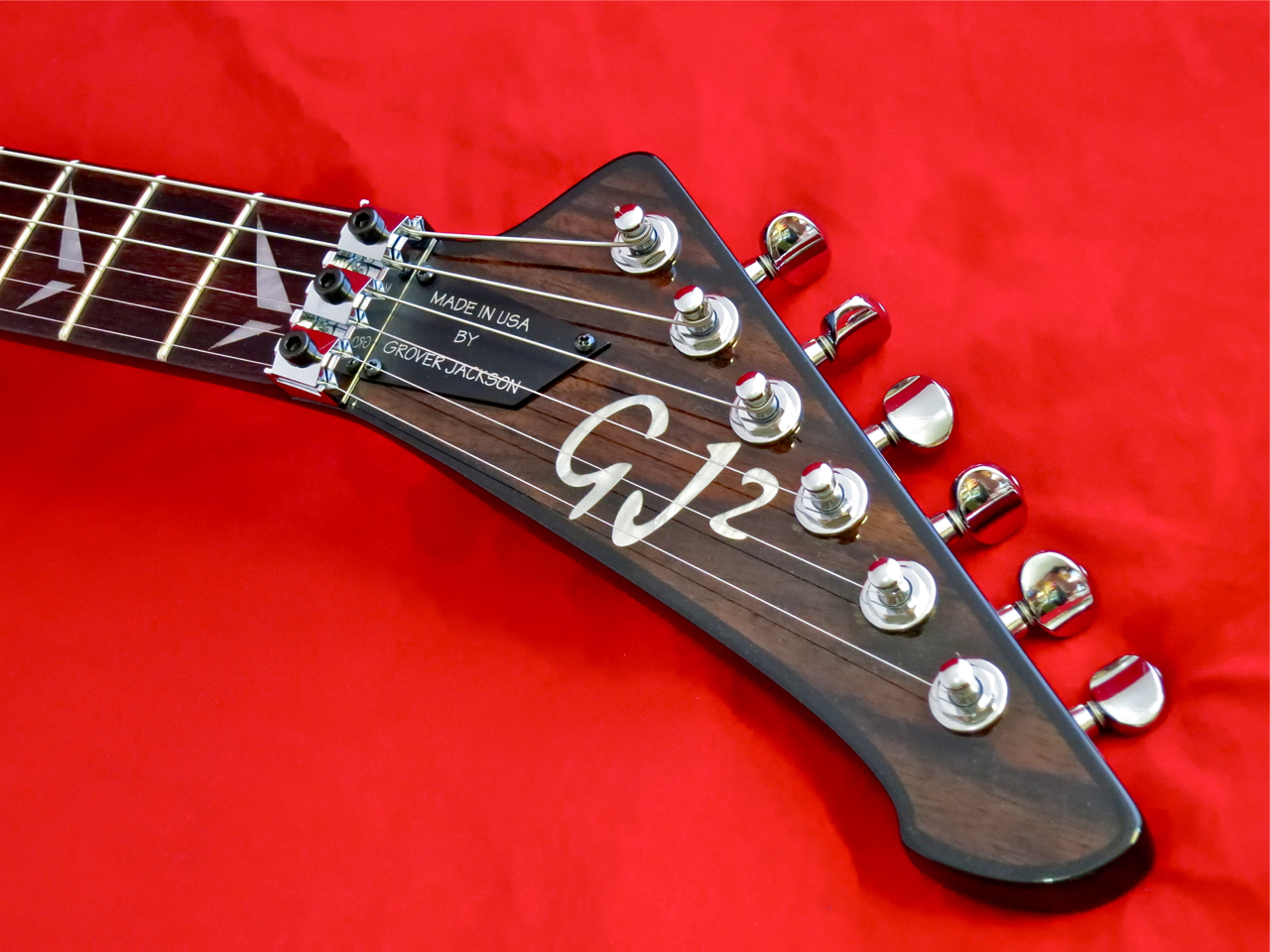
The Glendora’s headstock is a stylish variation on the classic six-in-a-row design.
The tuning machines are quality units from Gotoh.
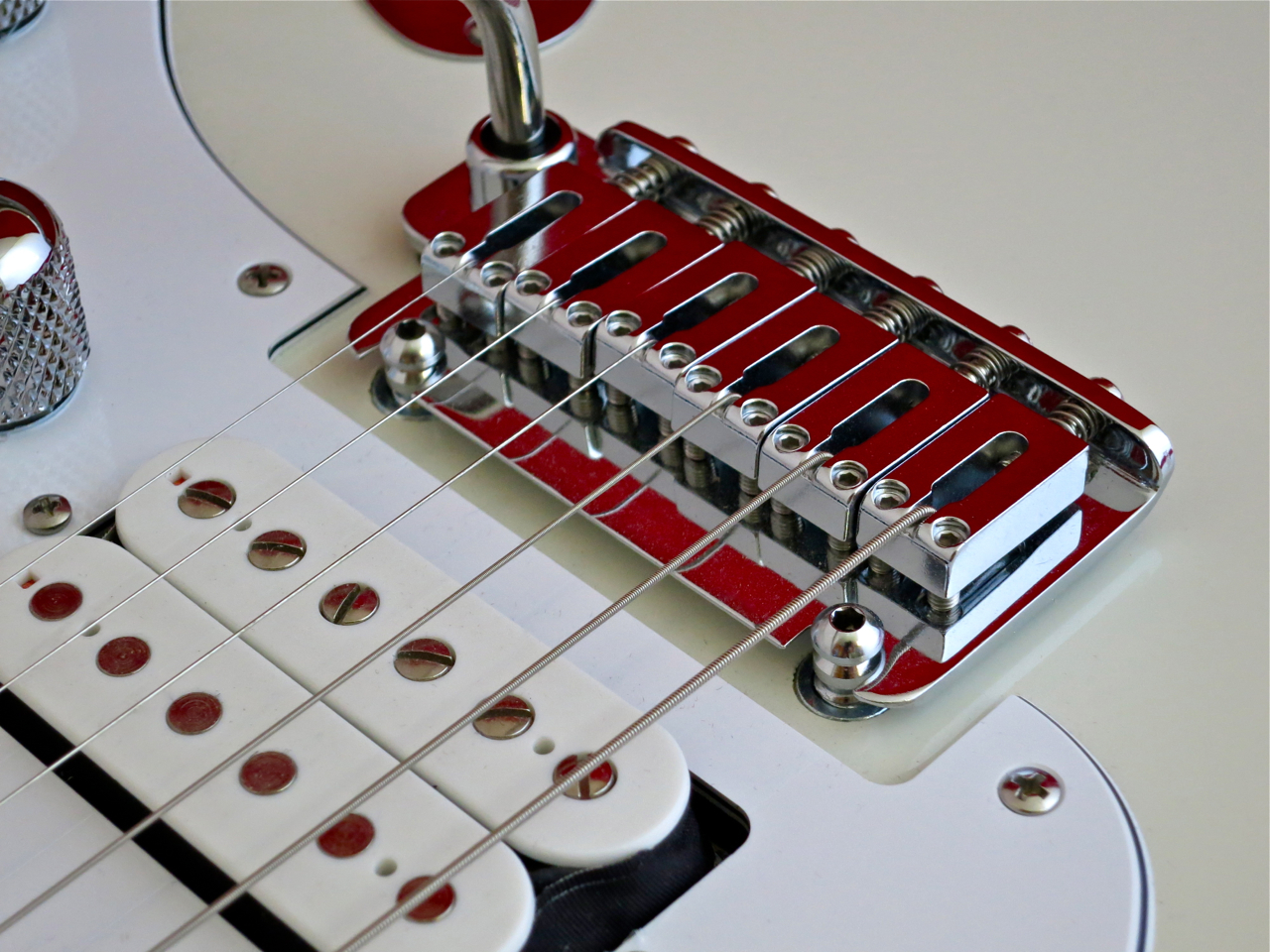
The contemporary two-post vibrato bridge is also a Gotoh design. The bar is simply pushed into the block and kept in place by an adjustable nylon collar.
The rosewood fingerboad sports 22 gleaming jumbo-sized frets.
For his new GJ2 guitars Grover Jackson has perfected a new method of applying a compound radius to the fretboard. A compund radius means that the frets have a steeper curve near the nut and get shallower further up towards the body. This gives you the best of both worlds with easy open position chording and effortless string bending higher up the neck without string choking.
GJ2 Guitars use their own Habanero pickups as standard. Our review sample comes equipped with an HSS-setup, but you can order your Glendora with several different pickup combinations, like the vintage-style SSS or two humbuckers.
The controls comprise a five-way switch, as well as master volume and tone controls.
****
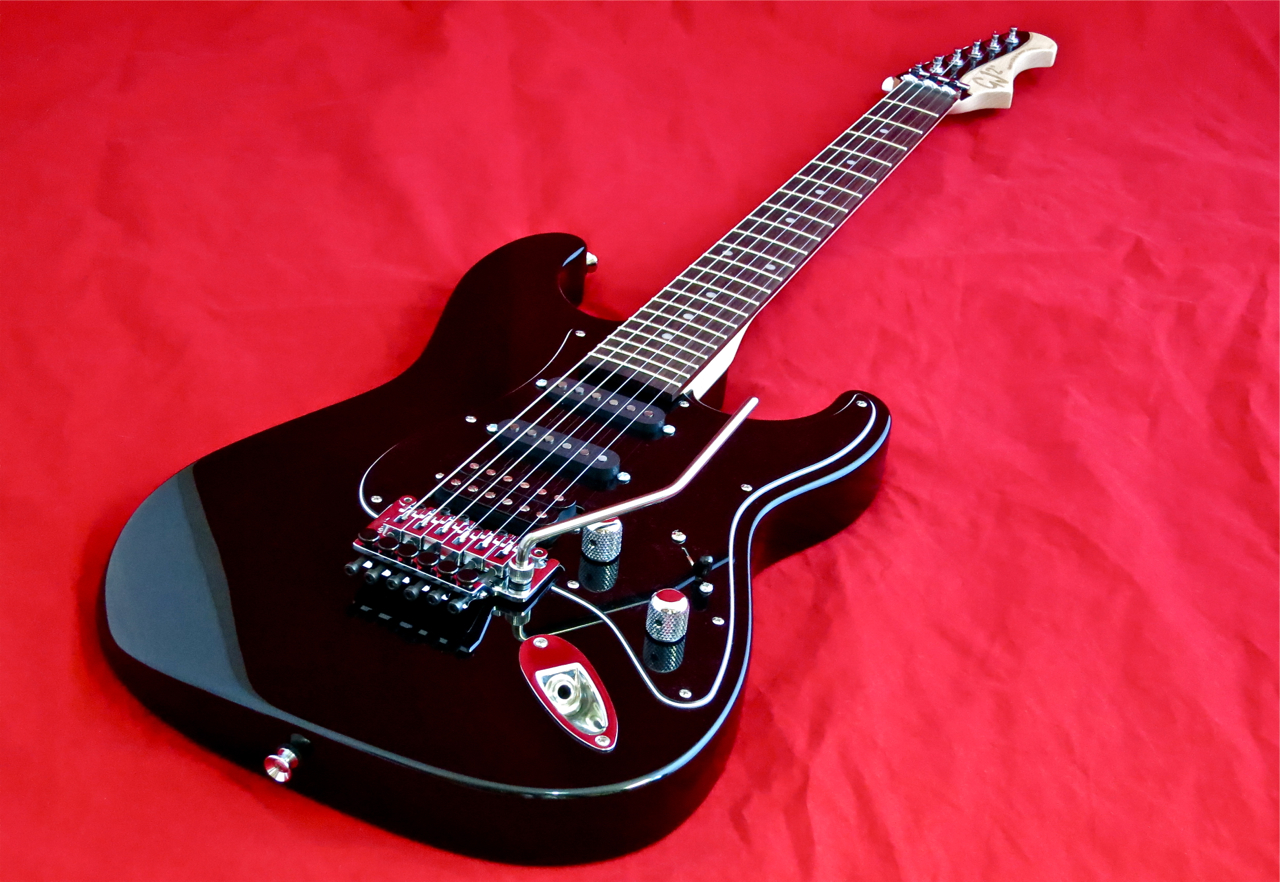
The Glendora FR (this version 1,930 €, incl. lightweight case) is the Floyd Rose-equipped version of the Glendora.
Our review instrument comes with a standard body (basswood, alder or poplar), but apart from that the basic build is the same as on the Glendora NLT.
One of the custom options available for a surcharge in the Glendora-range is a matching headcap, just like on this guitar.
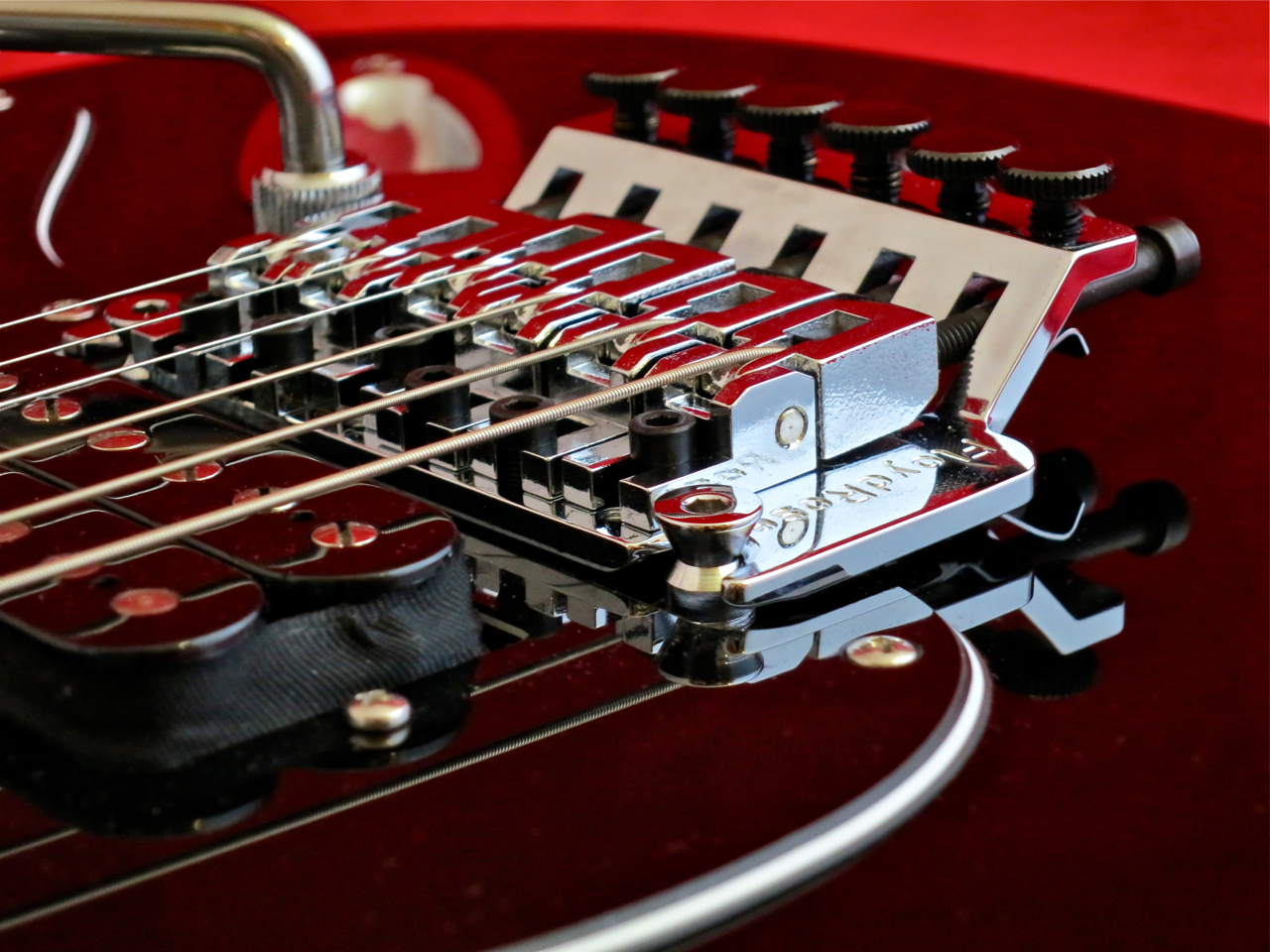
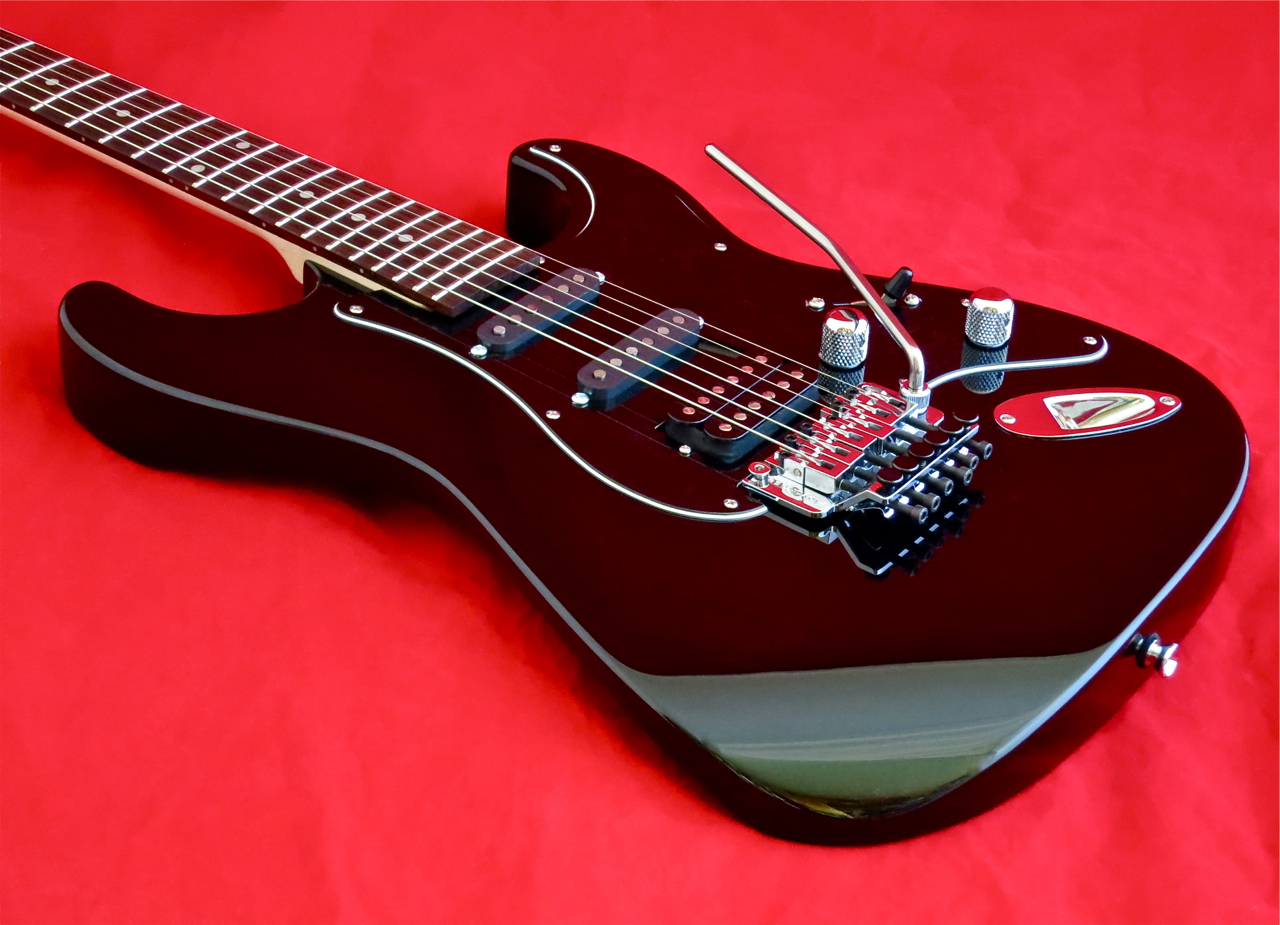
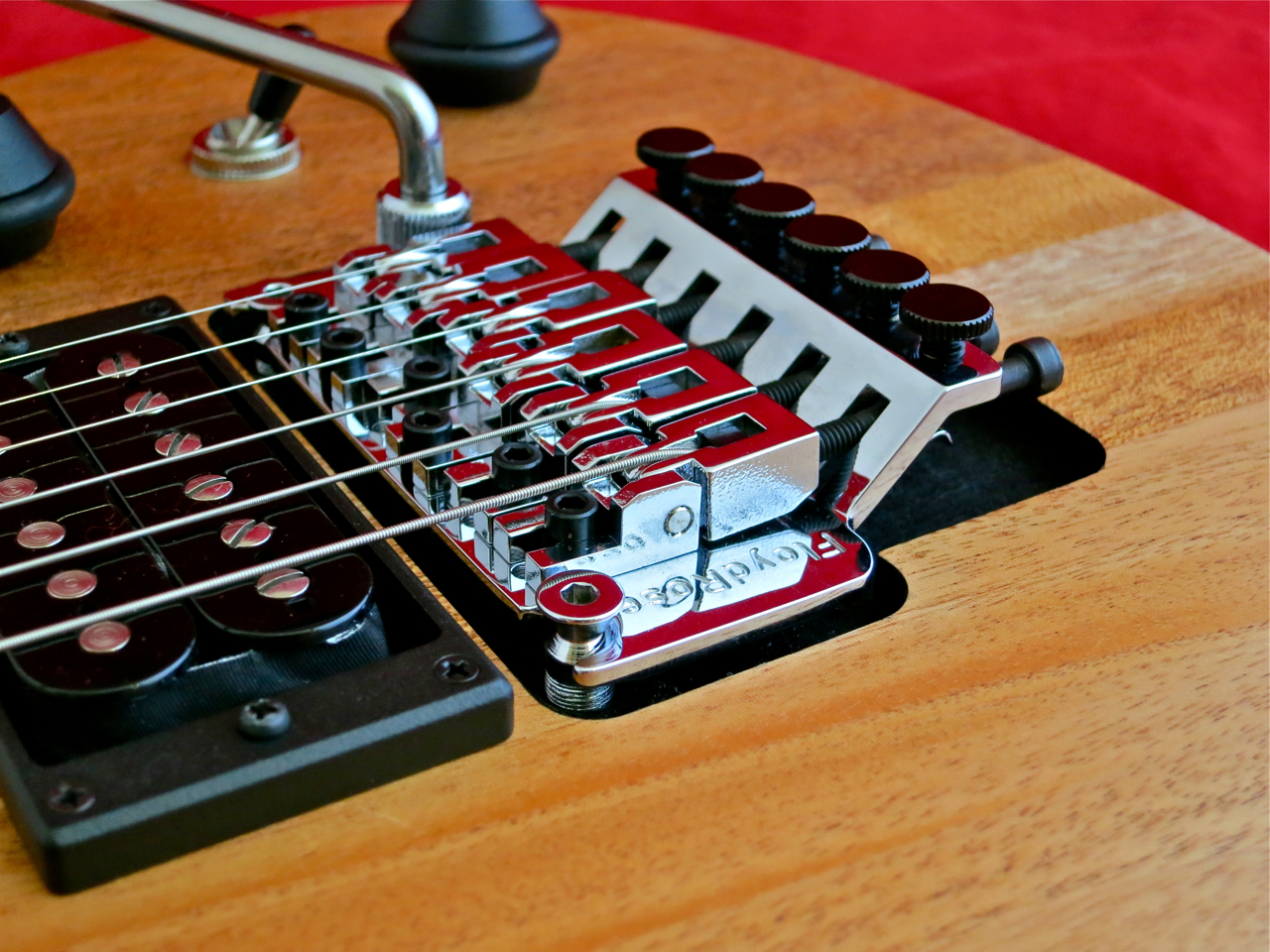
GJ2 Guitars use only top-drawer quality parts, like the Schaller-made steel Floyd Rose bridge on the Glendora FR.
It’s a Habanero-set of two single-coils and one humbucker for this guitar.
****
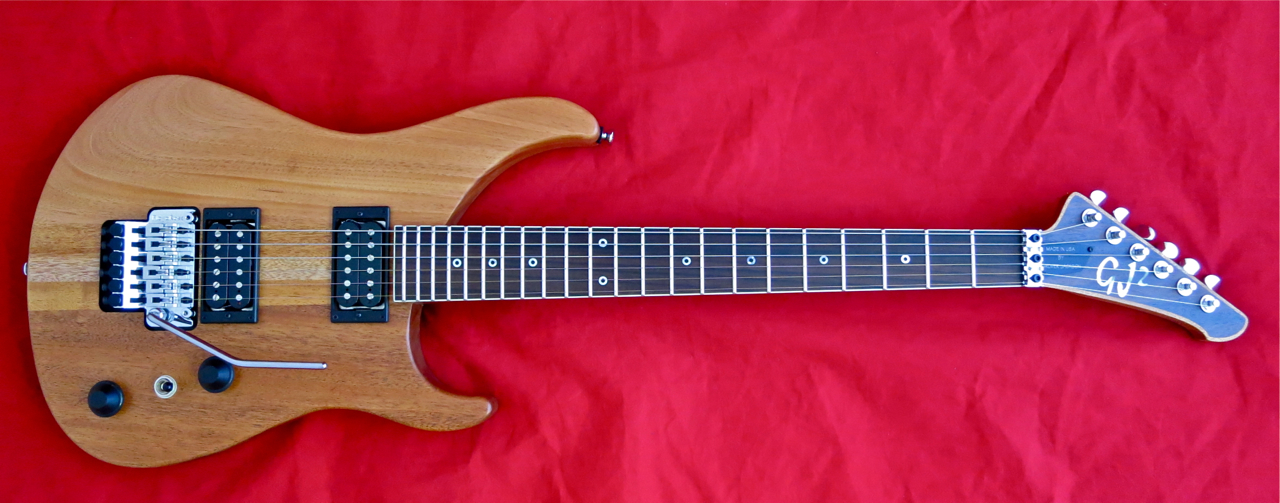
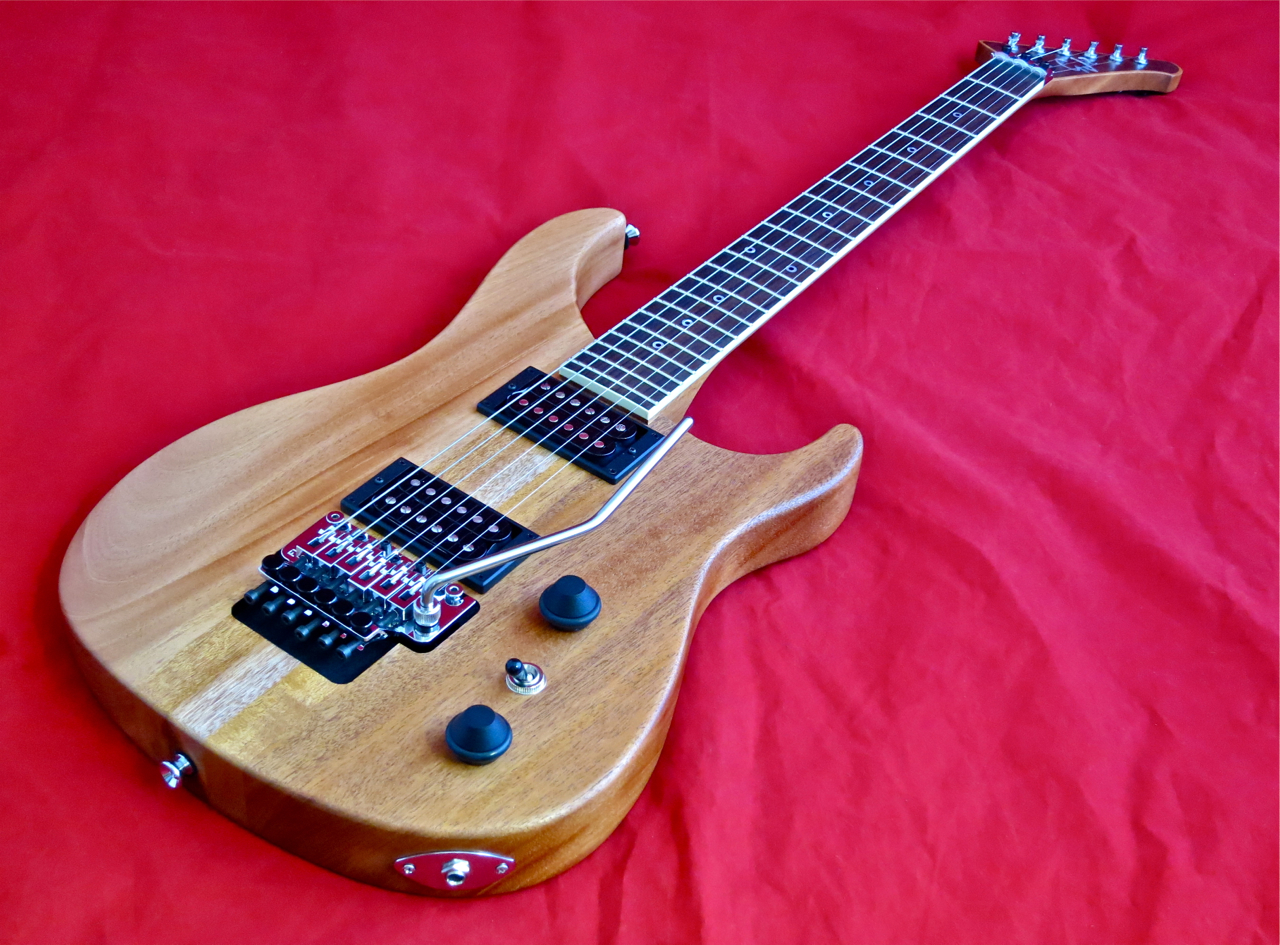
The GJ2 Arete is one of Grover Jackson’s new designs based on a through-neck. There are three different basic versions of the Arete available, called 3-Star, 4-Star and 5-Star.
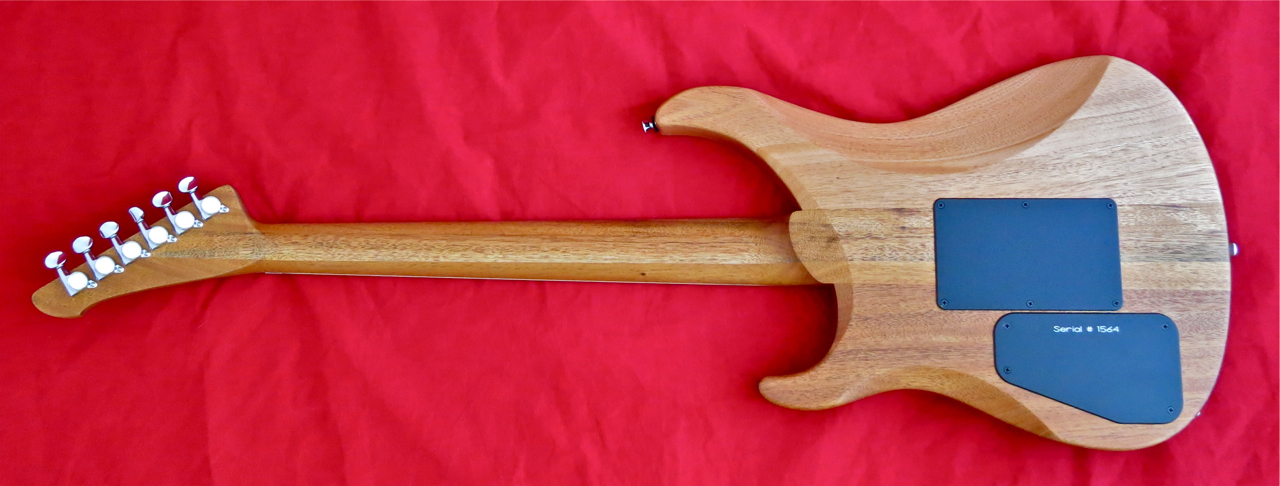
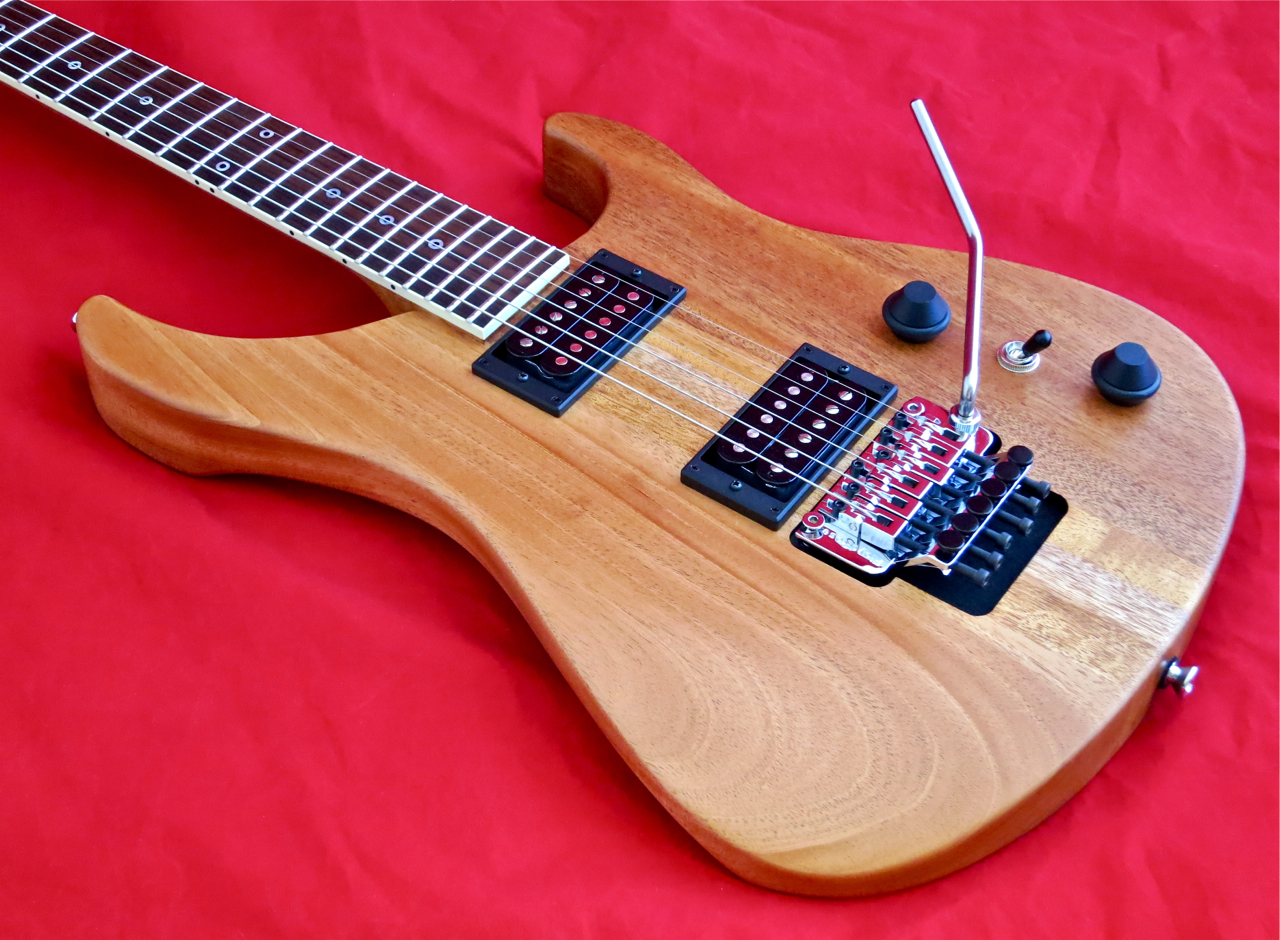
The Arete 4-Star (this version 2,231 €, incl. lightweight case) is the middle model, which is crafted almost completely from South-American mahogany. The neck uses three long strips side-by-side for added stiffness.
Two mahogany wings make up the streamlined body. The more affordable Arete 3-Star is made from sapele, while the more expensive 5-Star counterpart gives you several different body woods to choose from.
The Arete 4-Star comes in a hand-rubbed oil finish. The cover plates are made from aluminium.
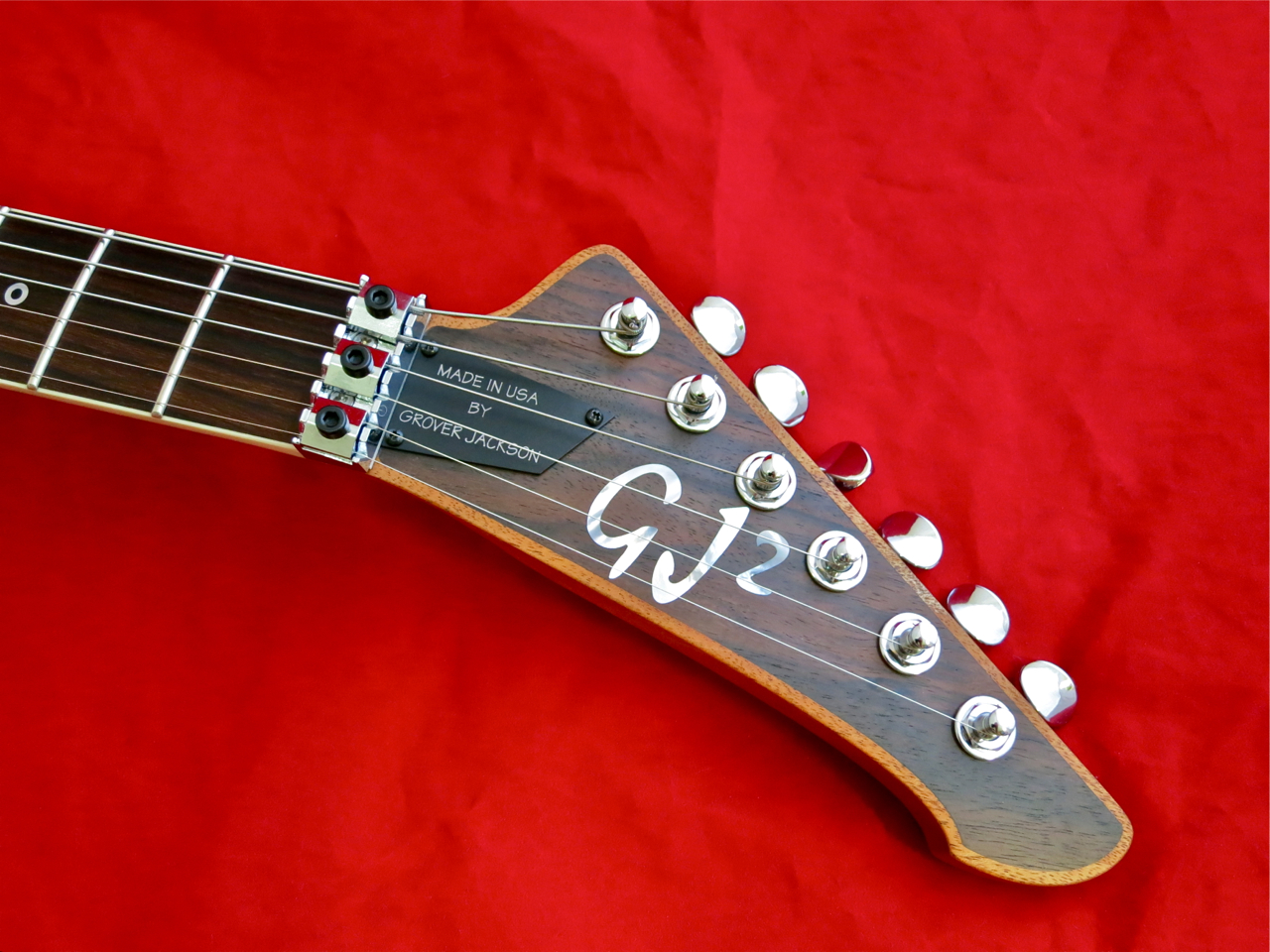
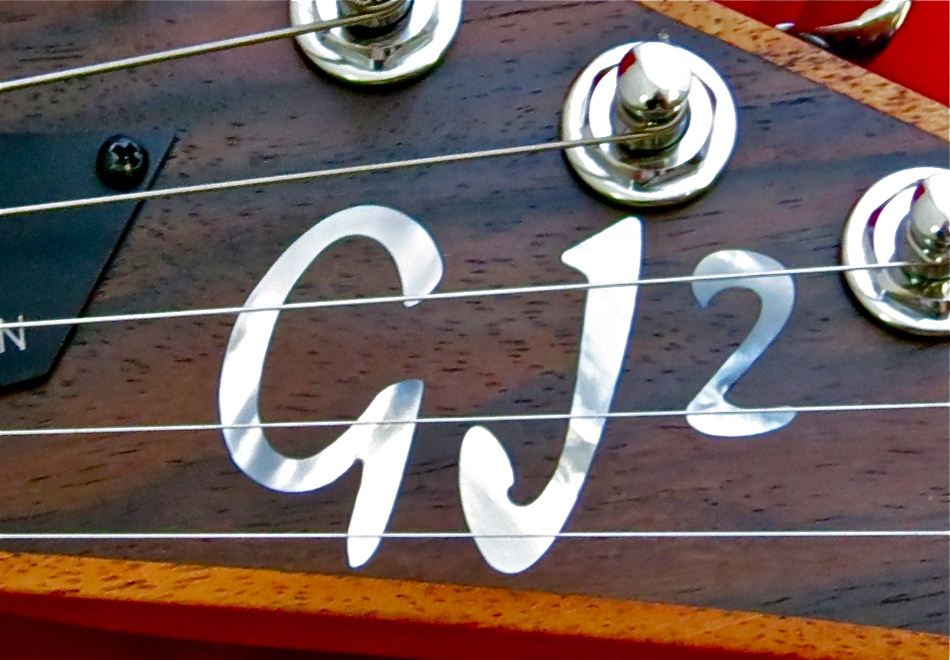
The headstock sports one of GJ2 Guitars’ special features – the Invisible Binding. This is achieved by routing out a shallow ”pool” on the headstock’s face, into which a large rosewood plate is then inlaid.
All Arete 4-Star guitars are vibrato-equipped – they come either with the same knife-edge bridge as on the Glendora NTL, or with a steel Floyd Rose as on our review instrument.
The black pickup bezels feature a structured surface.
The bound rosewood fingerboard sports Mini Bull’s Eye inlays, as well as 22 jumbo frets.
The basic version of the Arete 4-Star is equipped with two Habanero humbuckers, but you can also order HSS- or HSH-configurations, should you so desire.
The three-way toggle is mounted between the master volume and tone controls. GJ2 Guitars’ cool Flying Saucer-knobs not only look great, but are also easy to adjust.
****
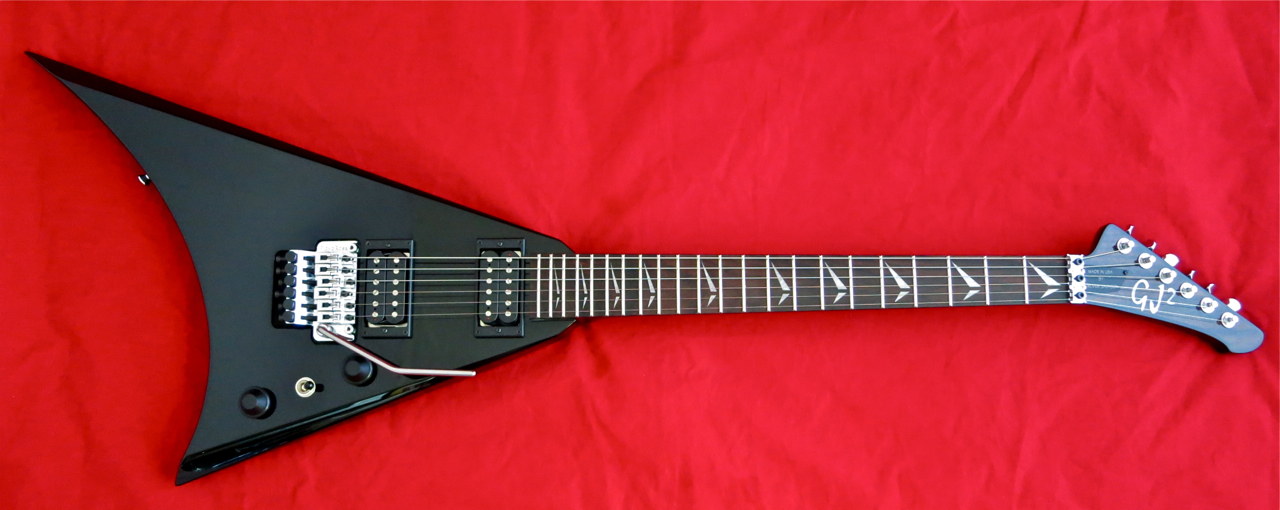
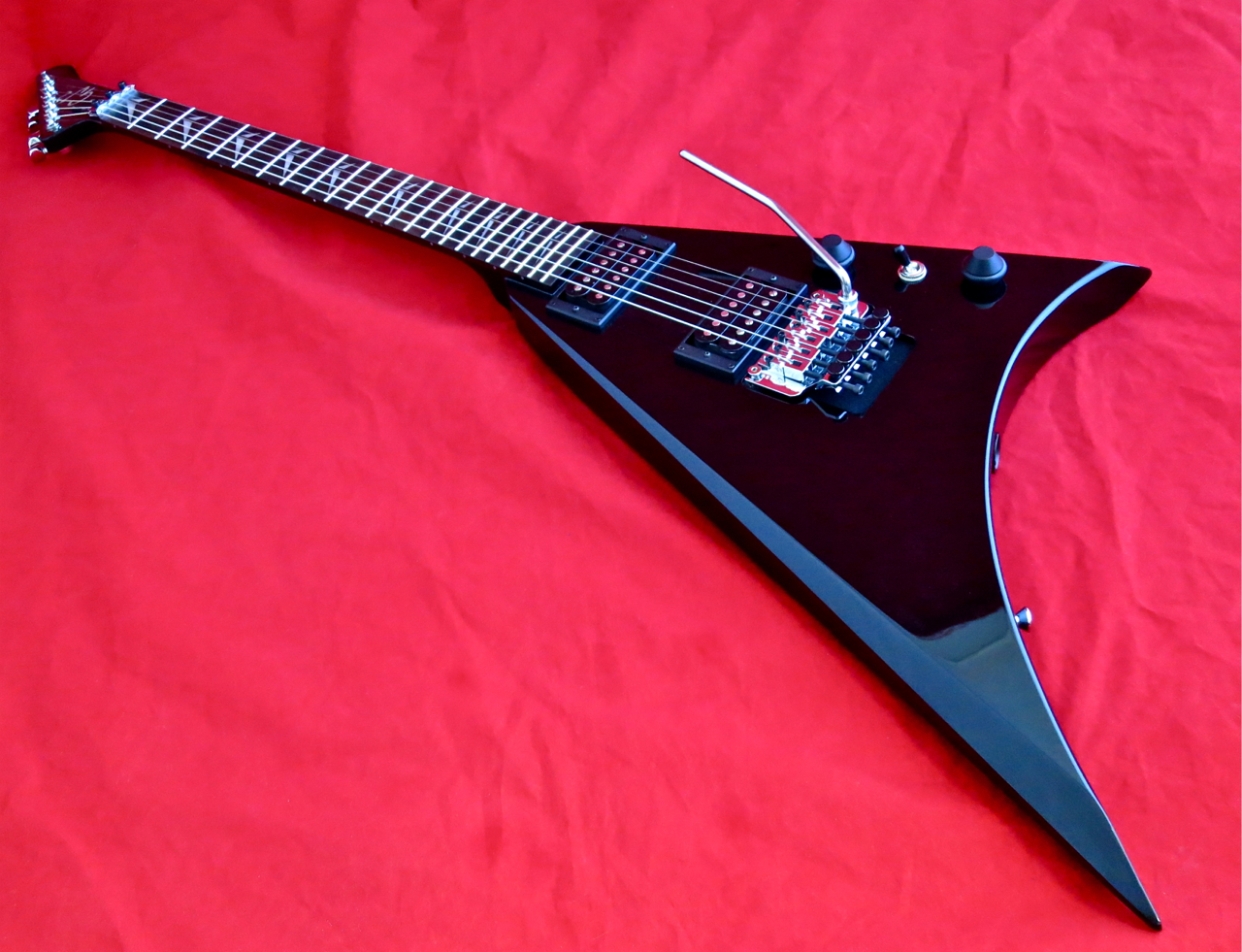
A through-neck crafted from three side-by-side strips of maple flanked by basswood wings – this is the basic recipe behind the GJ2 Concorde 4-Star (this version 2,768 €, including hard case).
All Concorde-models feature a full-length, 64.8 cm (25.5-inch) scale.
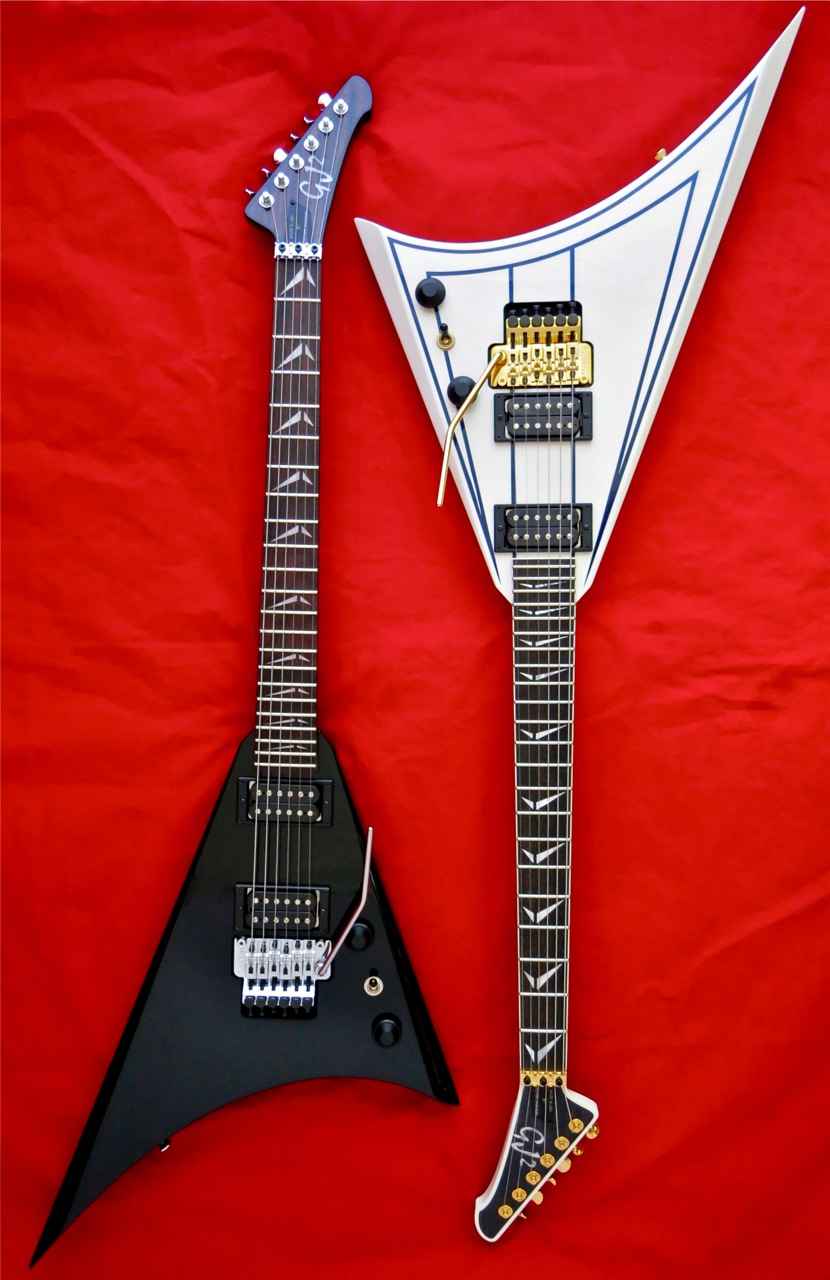
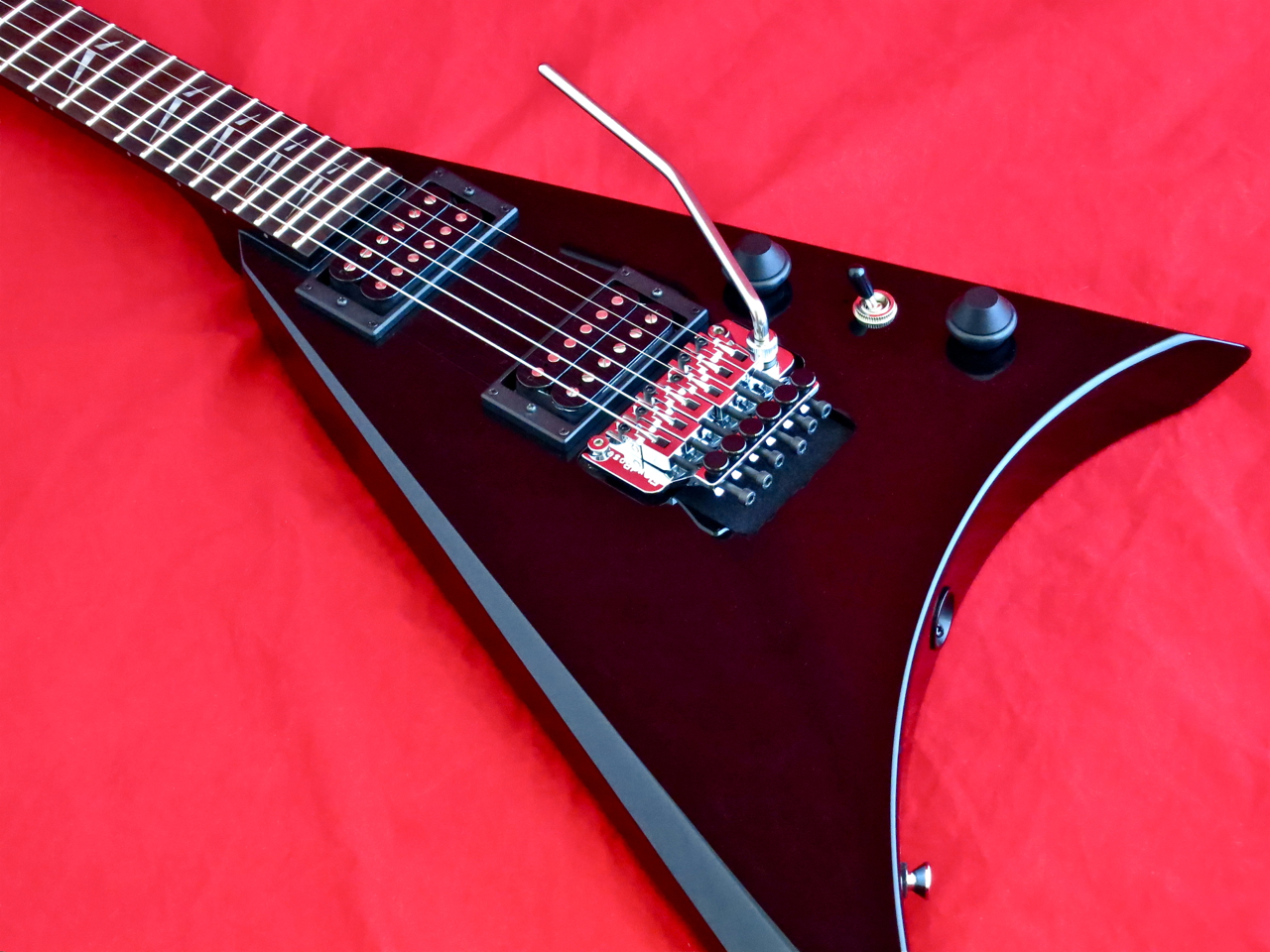
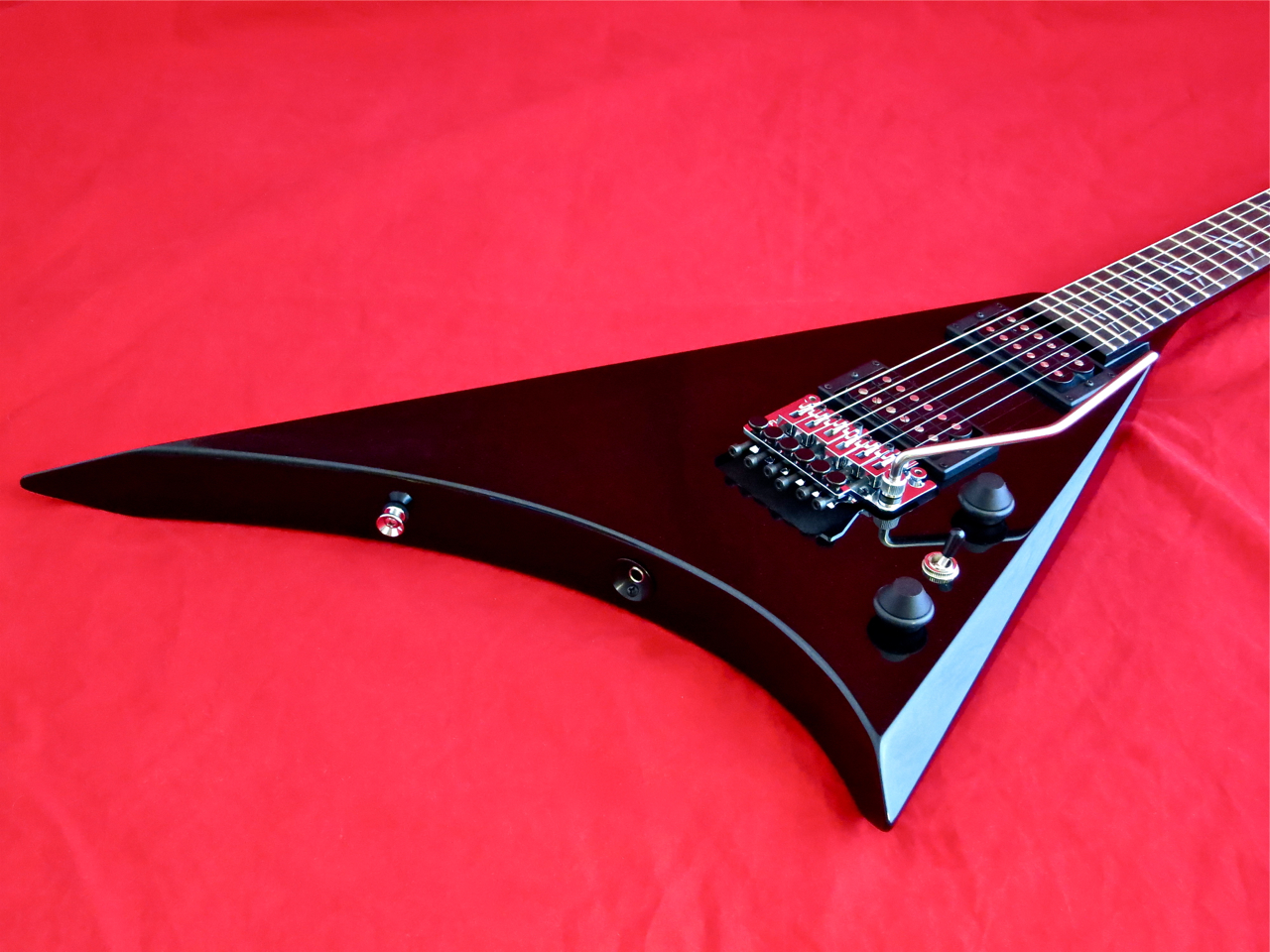
The Concorde 4-Star is available in five gloss finishes – Jet Black, Stark White, Antique White, Sports Car Red and GJ Blue – and either a Floyd Rose vibrato (as on the review sample) or a Gotoh hardtail bridge.
The hardware on a Concorde 4-Star is chrome-plated.
The fretboard is equipped with 22 jumbo frets and pearloid inlays.
The volume knob is easy to reach with your pinkie.
Two Hanbanero humbuckers, one master volume, one master tone control and a three-way toggle – what more does a Rock God need?
The placement of the output jack is a nifty little feature.
****
This is GJ2 Guitars’ ultimate Heavy Dream Machine:
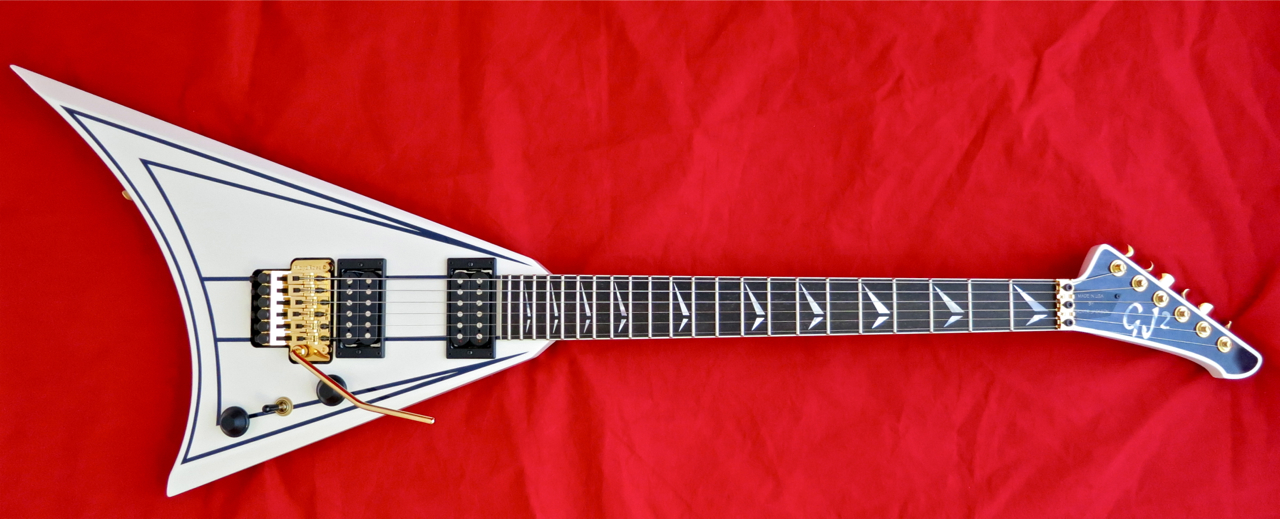
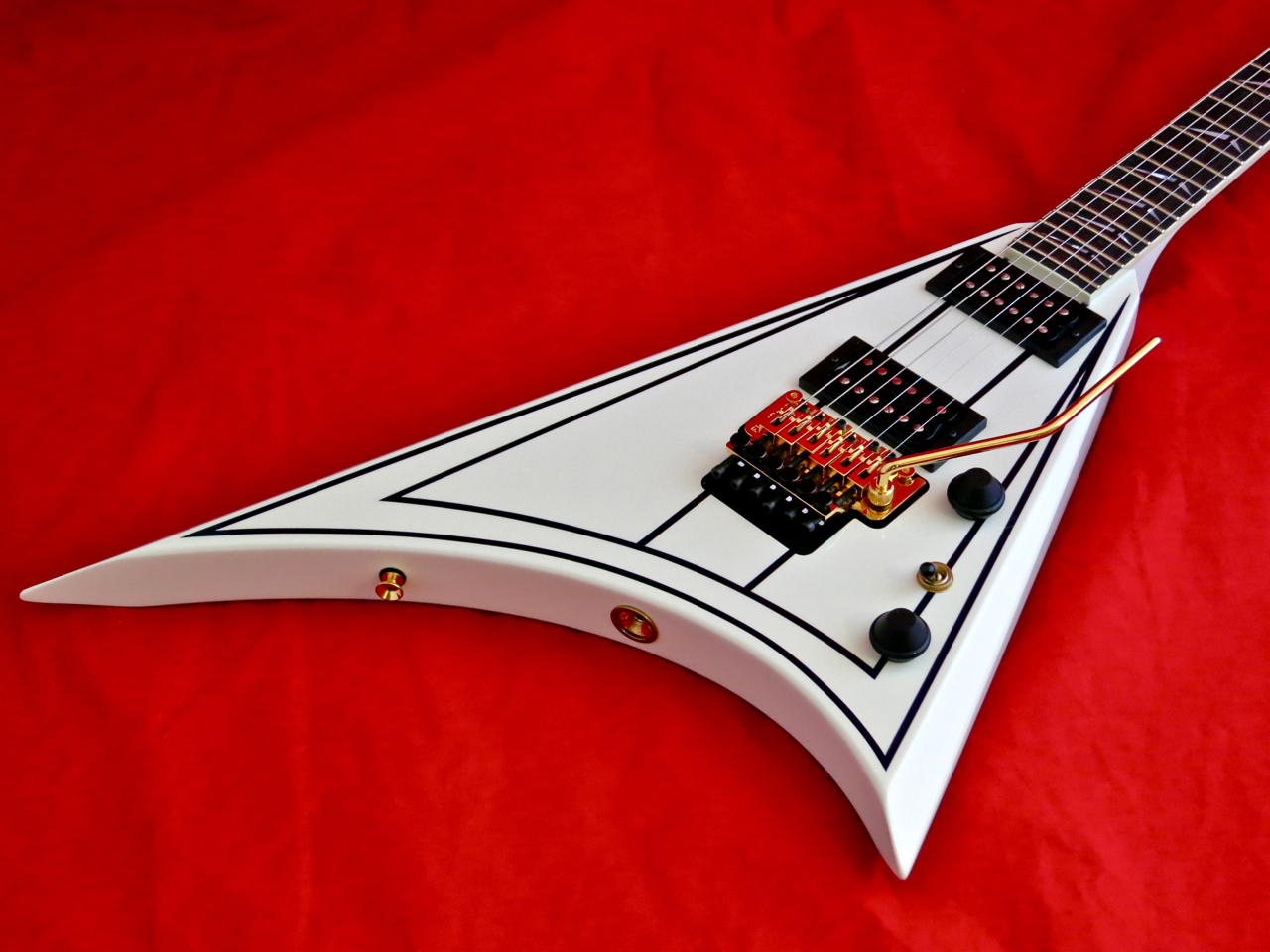
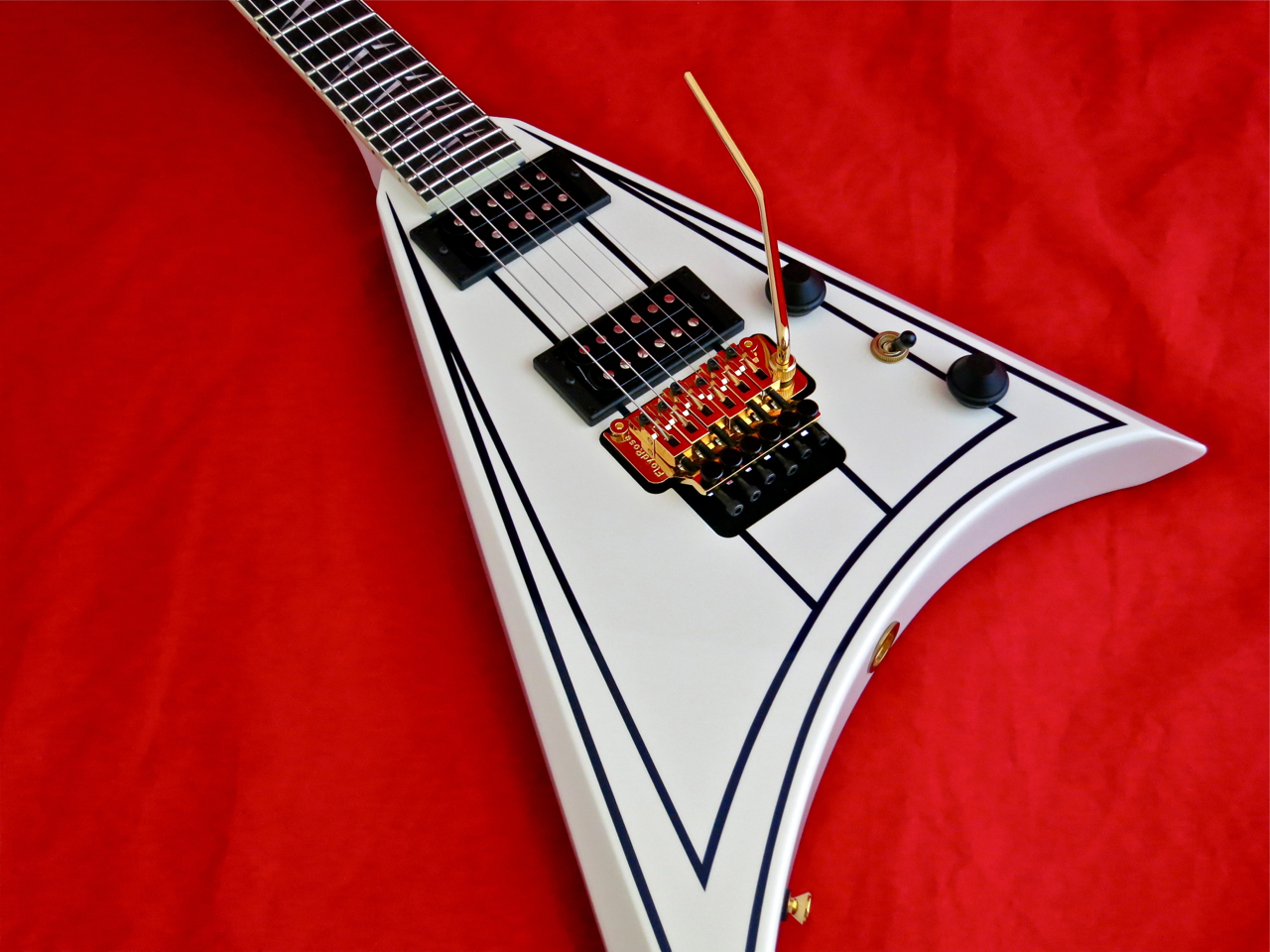
The Concorde 5-Star (this version 4,103 €, incl. hard case) can be had – for an additional charge – finished in a custom finish, such as the Randy Rhoads-style pinstripe graphics on this guitar.
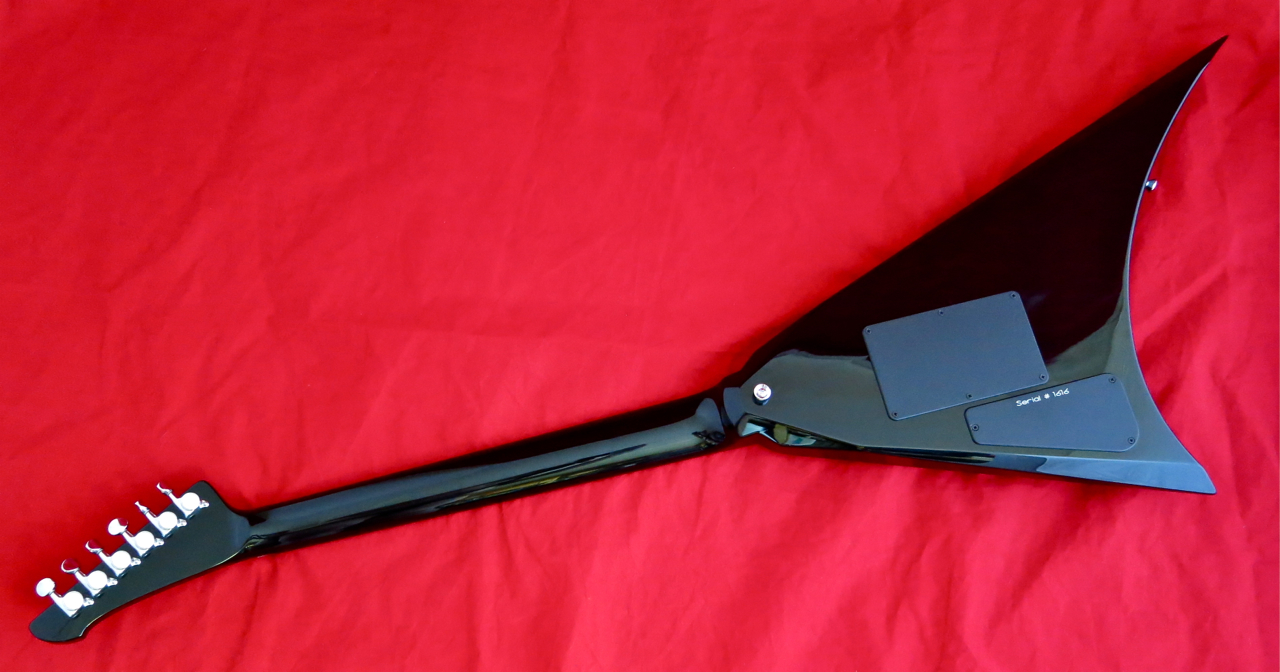
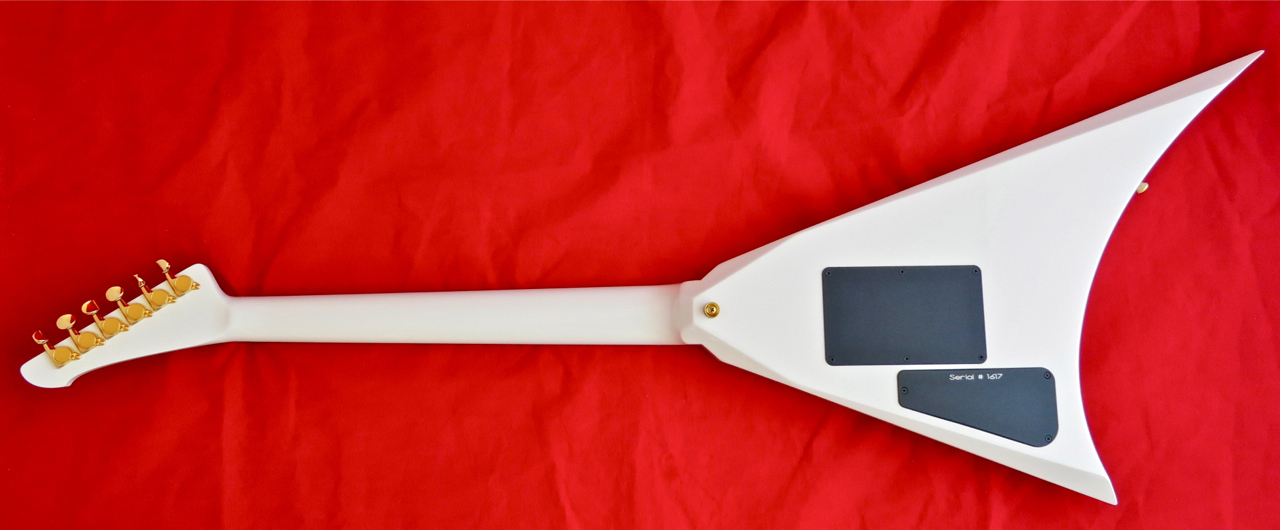
The back plates of the Concorde-models are made of aluminium.
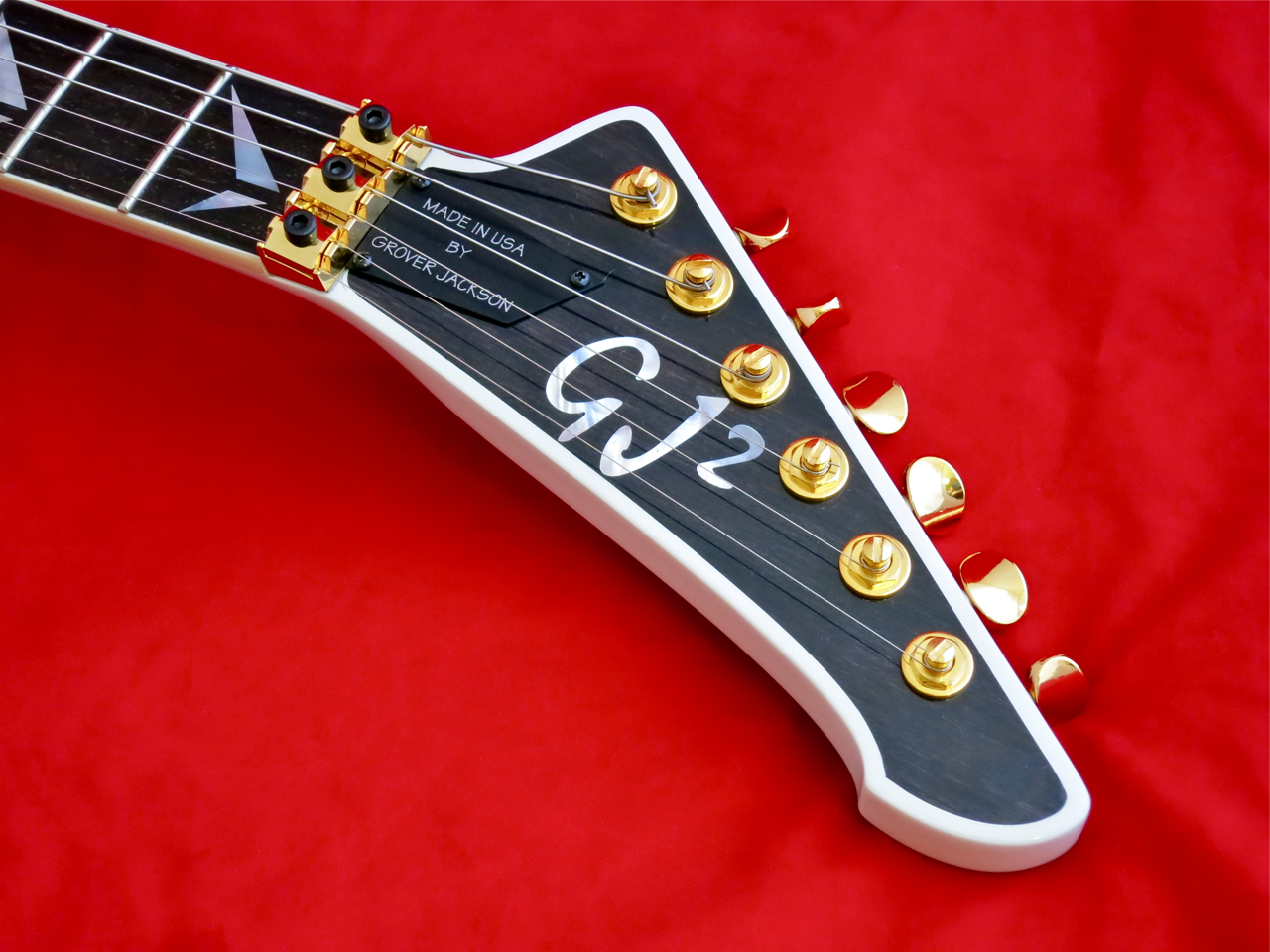
The Concorde 5-Star sports gold-coloured hardware. Our review sample had optional, locking Gotoh-tuners installed.
Ebony is the material of choice for the bound fretboard, as well as the headstock inlay.
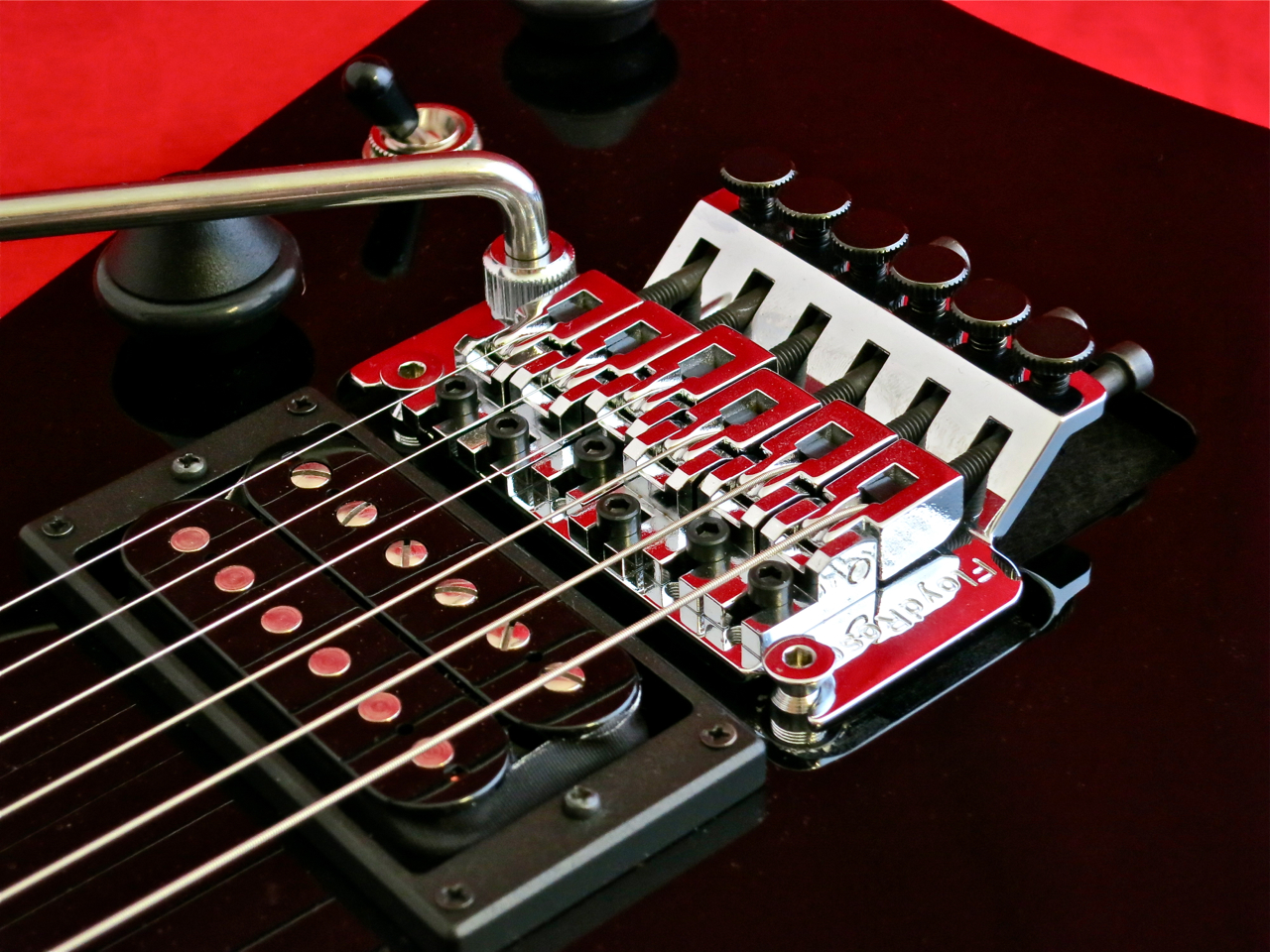
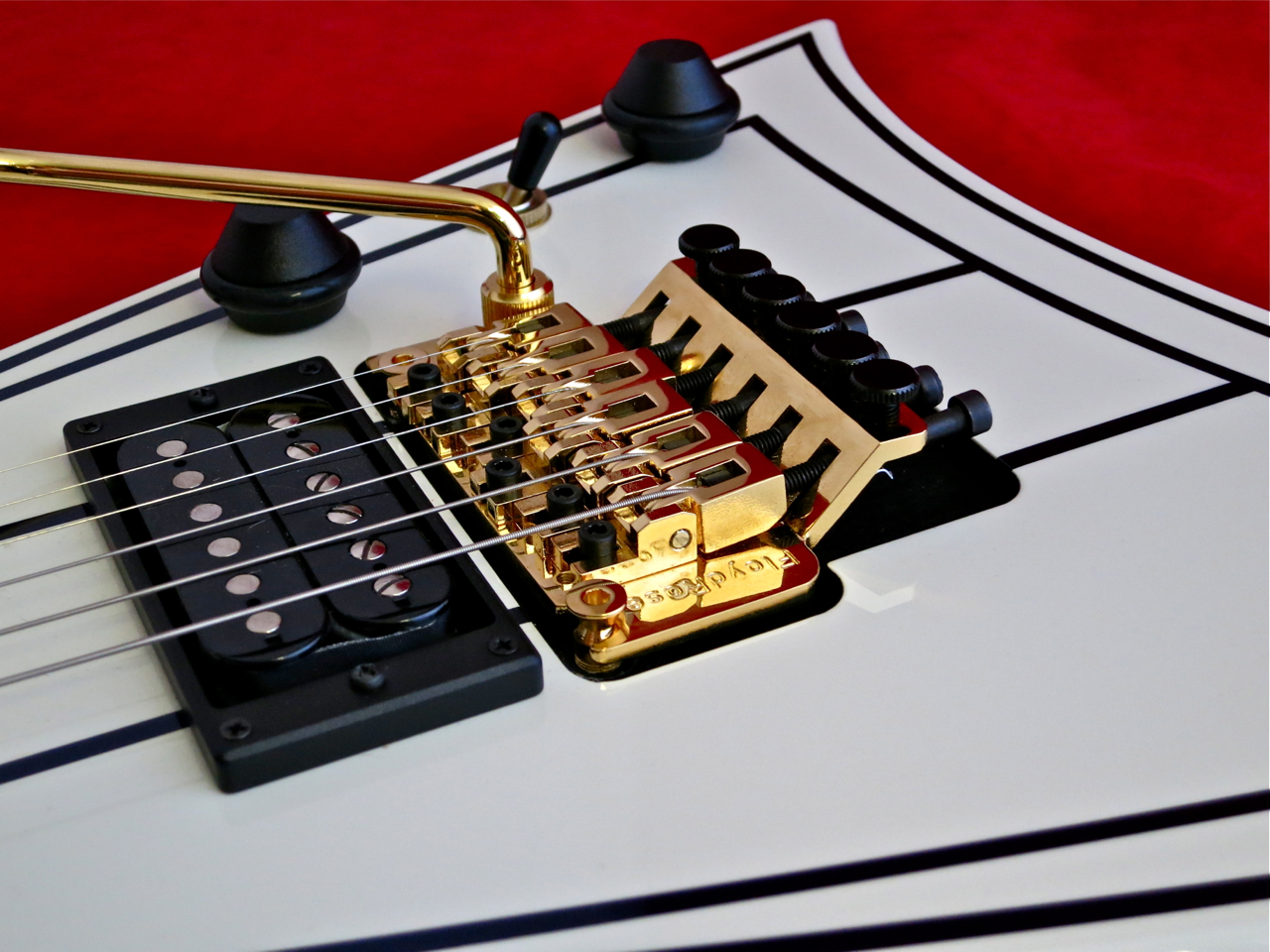
Here’s a closer look at the golden Floyd Rose bridge.
The inlays on the Concorde 5-Star are genuine pearl.
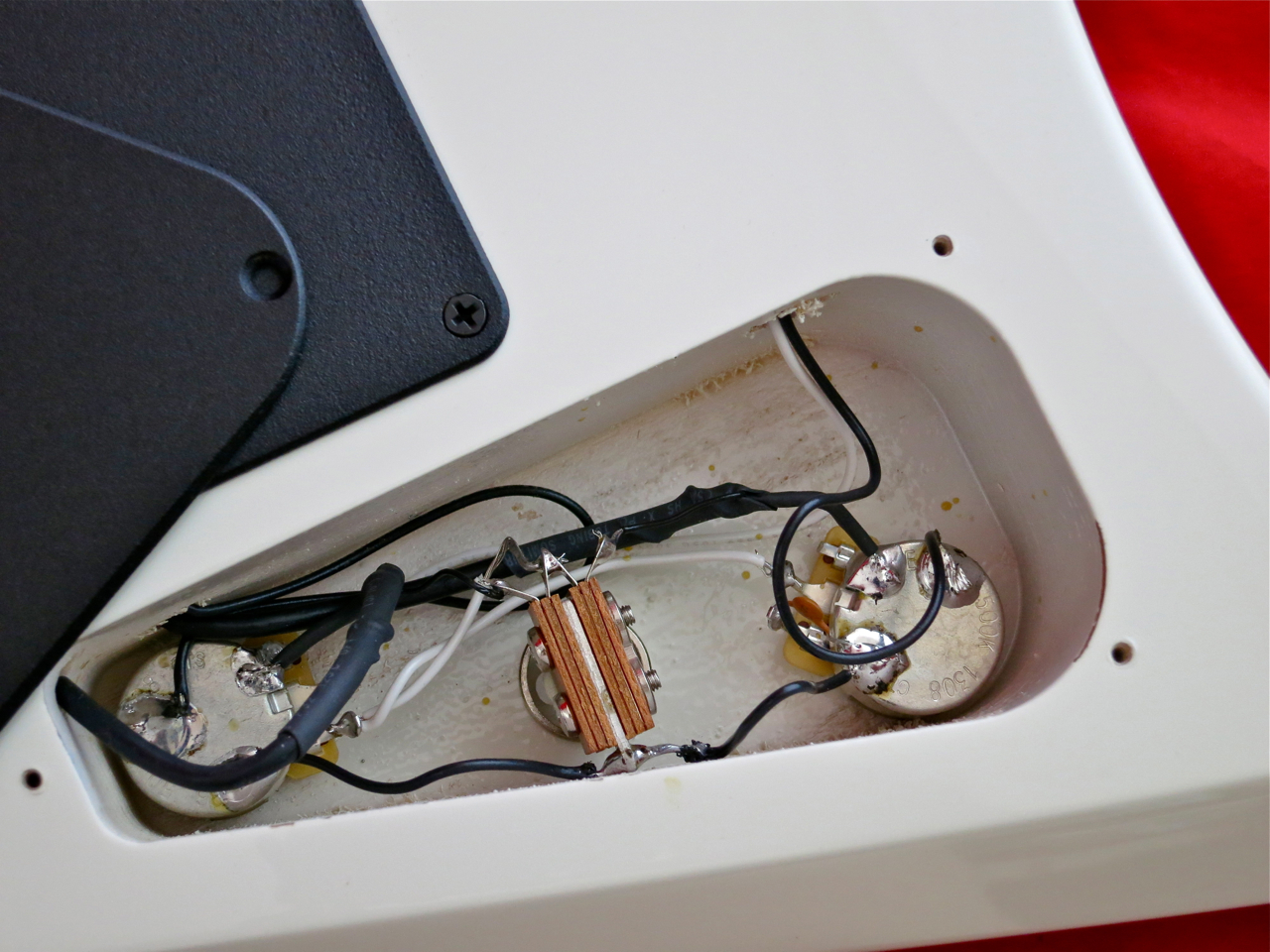
…and here’s a little peek into the very clean control cavity.
****
The feather-light ash-bodied GJ2 Glendora NLT is a fantastic S-style guitar for the connoisseur!
The Glendora’s playability is first-rate, and the guitar’s satin-finished neck, with its oval C-profile feels like an old friend.
Played acoustically there’s a hefty dose of woody dryness and sparkling top end, no doubt thanks to the ash body. The Glendora NLT’s displays an open voice with a nicely clucking attack.
I have only good things to say about GJ2’s Habanero pickups – they sound great, they are dynamically rich and the whole set is well balanced in terms of tone and output level.
Here’s a short clip played using the neck pickup:
The workmanship, feel and playability of the Glendora FR is the same as in the NLT-version – simply fantastic!
Acoustically there’s maybe a tad more roundness in the mid-range and a slightly fatter bass on display in the Glendora FR, which is probably a result of its standard body. On the other hand, the steel Floyd Rose adds its own sprinkling of presence bite into the mix.
Because the bridge humbucker isn’t overpowering the guitar’s single-coils, there’s plenty of fun to be had using the second switch position (bridge and middle):
The lightweight GJ2 Arete 4-Star is a very comfortable guitar to hold and play.
Thanks to its hand-rubbed oil finish the Arete feels very organic. If you’re a fan of nice wood, then this is the guitar for you.
The neck profile has a nice bit of shoulders to its slightly flattened D-section, and fills out your hand rather nicely.
The Arete’s acoustic voice is warm and open.
GJ2’s Habanera humbuckers clearly follow the boutique-vintage route, which puts tone and dynamics front and centre, instead of sheer brute force. Thanks to this it is very easy to coax a whole trainload of different tasty humbucker-tones from the Arete 4-Star, which will satisfy both the traditionalist, as well as modern Rock- and Fusion-guitarists.
The Flying Saucer knobs have a very positive grip, allowing you to adjust the guitar’s controls precisely.
Here’s a clip I recorded using the bridge humbucker:
It may come as a surprise to a newbie, but the Concorde 4-Star actually feels extremely comfortable hanging suspended from a guitar strap. Sure, the visuals are very angular, but the feel isn’t.
On the other hand I should stress that the Concorde most probably isn’t the right choice as a couch guitar, because it won’t really stay in your lap. And one more thing – beware of the sharp top horn! But as long as you know this guitar’s boundaries, your in for a fun ride with a light and well-balanced studio- and stage-guitar.
The neck has a chunky D-profile, which is good news for tone and sustain.
The Concorde’s long scale, its maple through-neck, as well as the Floyd Rose system give this guitar a clearer, more precise – and in a positive way – more neutral acoustic tone, when compared, say, to a Gibson Flying V.
The guitar’s Habanero humbuckers do a fantastic job in getting the Concorde 4-Star’s precise attack and growling mid-range across.
The neck ’bucker displays a fluid, flute-like timbre, without any sign of muddiness:
In terms of playablity and ergonomics there’s not much to divide the Concorden 5-Star from its 4-Star sibling.
But there are some clear differences in tone, most probably due to the posher 5-Star-version’s ebony ’board. The Concorde 5-Star has some added presence bite and a tad more twang in its attack, resulting in an even livelier tone.
Here’s a clip played using the bridge humbucker:
****
What a great thing that Grover Jackson isn’t content with resting on his (considerable) laurels. These new instruments build upon Mr Jackson’s rich past and vast knowledge, while managing to stay foward-facing and fresh.
The sum of this knowledge and experience, coupled with new building techniques and GJ2 Guitars’ obvious attention to detail, result in a range of instruments I would call the best guitars Grover Jackson has ever made.
This type of quality naturally comes at a price. But in light of GJ2’s comparatively small production runs and the sheer quality on offer here, you truly get what you paid for – boutique quality, made in the USA.