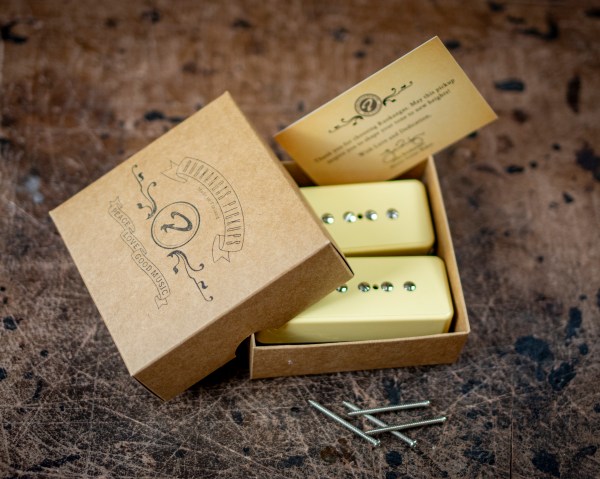
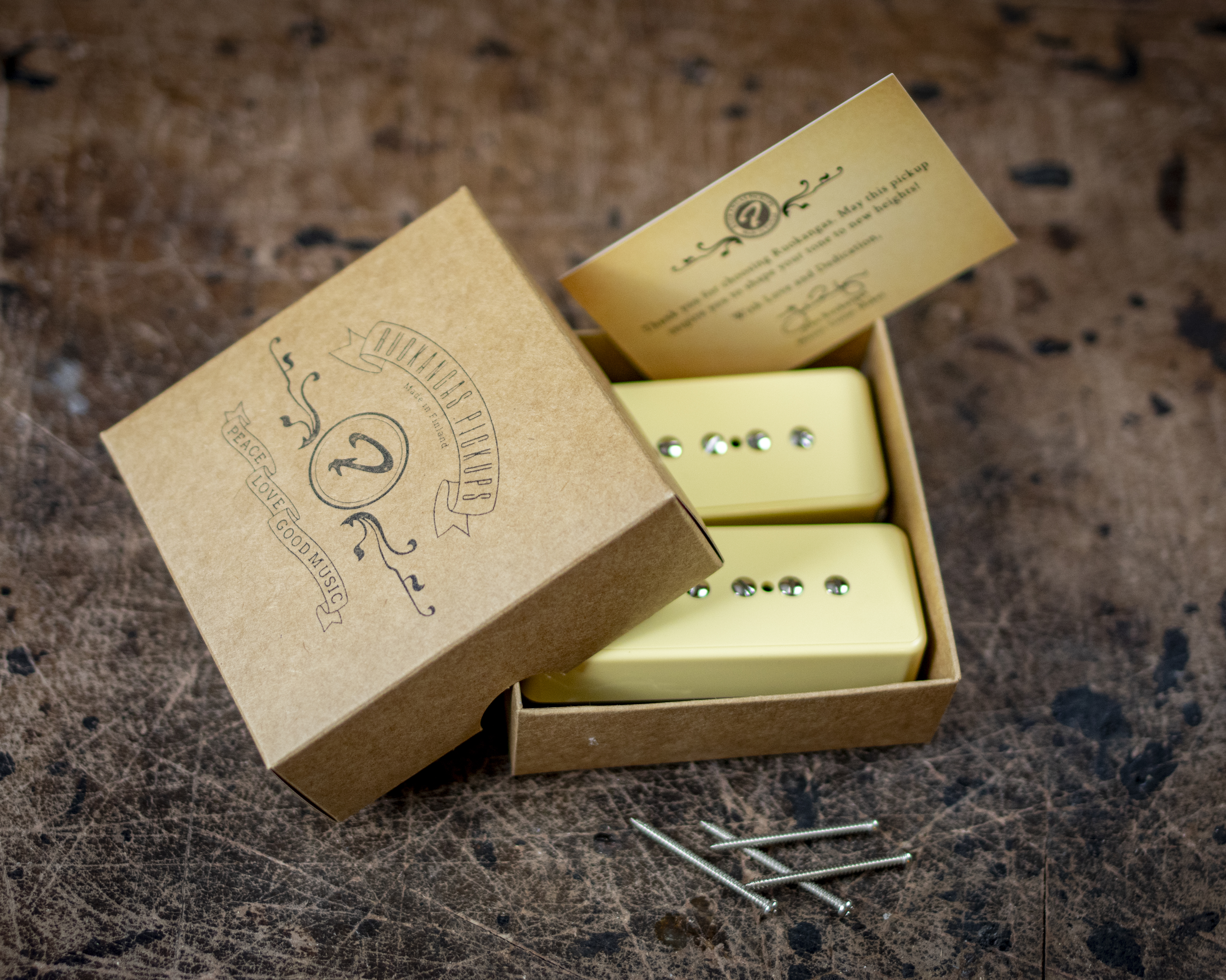
Harviala, Finland — Ruokangas Guitars has introduced Rauni and Ukko, a new pair of soapbar P90 pickups designed to deliver classic single-coil authority while remaining stable at stage volumes. Developed throughout most of 2025, the pickups feature the company’s proprietary Flux-Coil™ stabilization technology, allowing them to remain non-potted without the microphonic squeal.
Flux-Coil stabilization was first introduced in Ruokangas’ Aino & Väinö humbuckers, which received the 2025 Gear of the Year Award from Guitarist magazine (UK).
“P90s are famous for their punch and raw authority, but the line between musical grit and harshness can be razor thin”, says Juha Ruokangas. “With Flux-Coil stabilization we can keep the pickup non-potted, which preserves openness and touch sensitivity, while eliminating microphonic squeal often an issue with non-potted pickups.”
Rauni and Ukko are true single-coil soapbar P90s designed for use individually or in matched multi-pickup configurations. Sets of two or three pickups can be configured with hum-canceling in-between positions.
On totta, että joidenkin mielestä kopiokitaroiden tekeminen ei ole kovin reilua toimintaa. Toisaalta on myös totta, että kopiokitaroille löytyy niin suuri kysyntä, että monet isot brändit ovat jo pitkään kopioineet itse itseään. Parhaat esimerkit tästä ovat Fenderin Squier, Gibsonin Epiphone, PRS Guitarin SE-mallisto ja Music Manin Sterling by Music Man -soittimet.
On myös olemassa brändejä, jotka tekevät hyvinkin laadukkaita kopioita klassikkosoittimista, kuten Greco, Nash Guitars, Rock ’n’ Roll Relics tai Maybach. Tunnetuin nimi kopiobrändien keskuudessa on varmaan Tokai, jonka laajasta tarjonnasta löytyy sekä edullisia kitaroita ja bassoja, sekä korkealaatuisia käsintehtyjä jäljennöksiä.
Tällä kertaa saimme testiin kaksi eri P-90-yksikelaisilla varustettua sähkökitaraa – edullisen Tokai LSS-47C:n (505 €) ja japanilaisen Goldtopin, Tokai LS-98S:n (1.276 €; kova laukku kuuluu hintaan).
****
Kiinalaista Tokai LSS-47C:tä voisi luonnehtia erääksi best of -kopioksi 1950-luvun Gibson Les Paul Specialista. Kitaran peruslinja mukailee vuosien 1955-57 single-cut-mallia, keltainen väri tulee suoraan double-cut-versiosta (1958-60), ja kopion esikompensoitu palkkimainen talla on lainattu LP Specialin seuraajalta, SG Specialista.
Tokaissa runkoon liimattu kaula on veistetty kovasta vaahterasta, kun taas reunalistoitetun otelaudan puulajiksi on ilmoitettu (kestovärjättyä) jatobaa. Jatoba on eteläamerikkalainen puulaji, jota usein kutsutaan myös brasilialaiseksi kirsikaksi, vaikka todellisuudessa tämä puu kuuluu palkokasveihin. Viime aikoina jatobasta on tullut suosittu korvike CITES-listatulle ruusupuulle edullisissa ja keskihintaisissa kielisoittimissa.
Soittimen tasakanttinen runko on tehty mahongista.
Virittimet ovat hyvin toimivia Kluson-kopioita, kun taas tallaksi on valittu nykyaikainen versio Gibsonin 1960-luvun ”salama-tallasta”, jossa on kompensaatio ei-punotulle g-kielelle.
LSS-47C:n P-90-mikrofoneilla on mustat muovikuoret. Kitaran setti on päivitetty versio alkuperäisestä, jossa molempien mikkien käyttäminen samanaikaisesti mykistää ulkoisia häiriöääniä.
Ainoa, pieni kritiikin kohteeni on soittimen hieman liian isot, ja reunoissa pikkasen epäsiistit kolot mikrofoneille.
Kitarassa löytyy kolmiasentoinen kytkin, sekä kummallekin mikrofonille omat volume- ja tone-säätimet.
****
Japanilainen Tokai LS-98S on erittäin laadukas ja pikkutarkka uudelleenpainos vuoden 1956 Les Paul Standardista, siis mallista, joka tunnetaan nykyään nimellä LP Goldtop. LS-98S:een valitut puut ja komponentit ovat kauttaaltaan korkealaatuisia, ja työnjälki on erittäin huolellinen.
Kitaran yksiosainen mahonkikaula on liimattu mahonkirunkoon pitkällä sormella (long tenon). Soittimen reunalistoitettu kaareva kansi on vaahterasta, kun taas sen otelauta on aitoa intialaista ruusupuuta.
Toisin kuin vuoden 1958-60 LP Standardeissa, joilla on tavallisesti punaiseksi petsattuja runkoja ja kauloja, Goldtop-malleissa on miltei aina ”luonnollinen” viimeistely (= ruskea tasoite ja kiiltävä lakka sen päällä).
Tämän kitaran kaikki metalliosat on valittu Gotoh-malliston laadukkaammasta päästä.
LS-98S:n Tokai P-90 Mark II -mikrofoneissa on alnico-magneetteja. Alkuperäisen kaavan mukaan molemmat mikit on valmistettu täysin identtisillä spekseillä.
Laadukas kova laukku kuuluu LS-98S:n hintaan.
****
Testissä käynyt Tokai LSS-47C on todella kevyt ja erittäin mukava soitin.
Kaulaprofiili on suhteellisen matala, mutta pyöreä D, siis juuri sitä mitä Gibson-slangissa kutsutaan vuoden 1960 profiiliksi. Kun tähän lisätään vielä otelaudan 12 tuuman radius, testikitaran kiitettävä nauhatyö, sekä pro-luokan säädöt, lopputulos on erittäin vaivaton ja bendauksille suotuisa.
Vaikka kyseessä on verrattaen edullinen soitin, kuulostavat Tokain mikrofonit yllättävän hyviltä. Niissä on juuri oikea annos purevuutta, voimaa ja basson lämpöä, että ne pystyvät tyydyttämään P-90-soundin ystäviä. Kaula- ja tallamikin keskinäinen balanssi on myös todella hyvä.
****
Painonsa suhteen Tokai LS-98S on keskipainoisten kitaroiden tukevammasta päästä. Soittimen paino ei tässä vielä ole mielestäni ongelma, mutta tämän Tokain kyllä huomaa aina, kun se roikkuu hihnasta.
Työn laatu on yhdellä sanalla sanottu erinomainen. Se, että Tokain Goldtopin pyöreä C-kaulaprofiili maltillisella paksuudella on lähempänä vuoden 1959 LP Standardia, kuin hyvin paksua 1956 Goldtop -kaulaa, on varmasti enemmistölle vain hyvä asia.
Niin kuin monissa aidoissa, P-90-mikrofoneja käyttävissä LP Goldtopissa, myös Tokai LS-98S:n tapauksessa kaulamikrofoni soi selvästi kovemmalla kuin tallamikki. Tämä johtuu mikrofonien asennustavasta ja mikrofonikolojen syvyydestä – minkä takia kaulamikkiä ei pysty ruuvaamaan vielä syvemmälle runkoon – sekä siitä, että kaulamikrofonit sijaitsevat lähempänä kielten keskiväliä, jossa kielten liikerata on suurempi. Yleinen ratkaisu tähän Goldtop-ongelmaan/-ominaisuuteen on nostaa tallamikrofonin naparuuveja korkeammalle, sekä laittaa kaulumikin volume-säädin lukemaan 8,5.
Paksun vaahterakantensa ansiosta P-90-mikeillä varustettu Goldtop soi kirkkaammin kuin monet ehkä odottaisivat, etenkin tallamikin kautta. Tällä kitaralla kattaa laajan soundivalikoiman helposti ja suvereenisti, ja sopii lähes kaikkiin genreihin Jazzista ja Countrysta Bluesiin ja Rockiin.
****
LSS-47C ja LS-98S antavat vastauksen kysymykseen miksi Tokai on arvostetuin klassikkokopioiden valmistaja:
LSS-47C on hyvin edullinen versio legendaarisesta LP Specialista. Tämä soitin ei ehkä ole riittävän tarkka jäljennös useimmille vintage-faneille, mutta sen soitettavuus on vaivaton ja kitaran soundeissa on runsas annos mojoa.
LS-98S taas on pro-luokan uudelleenpainos vuoden 1956 LP Goldtopista. Tämä soitin on mainio osoitus japanilaisesta tarkkuudesta ja työnjäljestä – tämä on kerrassaan upea kitara erittäin kohtuulliseen hintaan.
****
Tokai Guitars LSS-47C + LS-98S
Tokai LSS-47 – 505 €
Tokai LS-98S – 1.276 € (kova laukku kuuluu hintaan)
While some may question the ethics behind copying classic guitar models, the fact is that there definitely is a market for such instruments. This is underlined by the licensed copies and sub-brands many well-known companies produce. There’s Fender’s Squier, Gibson’s Epiphone, PRS Guitar’s SE range and Music Man’s Sterling by Music Man, to name just a few.
Some companies have even made a name for themselves as makers of copy guitars, such as Greco, Nash Guitars, Rock ’n’ Roll Relics and Maybach. Probably the best known name in this field is Tokai, who make both affordable copies, as well as handcrafted high-quality replicas.
This time we’ll have a look at two different P-90 models – the affordable Tokai LSS-47C (current price in Finland: 505 €) and a Japanese ”Goldtop”, the Tokai LS-98S (1,276 €; case incl.).
****
The Chinese Tokai LSS-47C could be seen as a ”best of” version of Gibson’s 1950s Les Paul Special. We find the general outline of a 1955-57 single-cut model, a yellow finish very reminiscent of the 1958-60 double-cut, combined with the pre-compensated bridge used on the follow up instrument, the SG Special.
The set neck has been made from hard rock maple, while the bound fingerboard is carbonised (dyed) jatoba. Jatoba is a South-American tree that is also called Brazilian Cherry, even though it actually belongs to the bean family of plants. Recently, Jatoba has seen wider use as a replacement for rosewood on many affordable and mid-priced guitars and basses.
The slab body has been crafted from mahogany.
While the machine heads are decent Kluson copies, the bridge is a lightweight lightning bar wrapover model, pre-compensated for modern string sets with a plain g-string.
The P-90 singlecoil pickups sit inside black soapbar covers. This is a modern set with reverse-wound/reverse-polarity pickups, which makes the middle setting hum-free.
My only small criticism would concern the slightly oversized and not super tidy pickup routs on the LSS-47C.
The passive controls comprise the classic Gibson set of a three-way toggle plus volume and tone controls for each pickup.
****
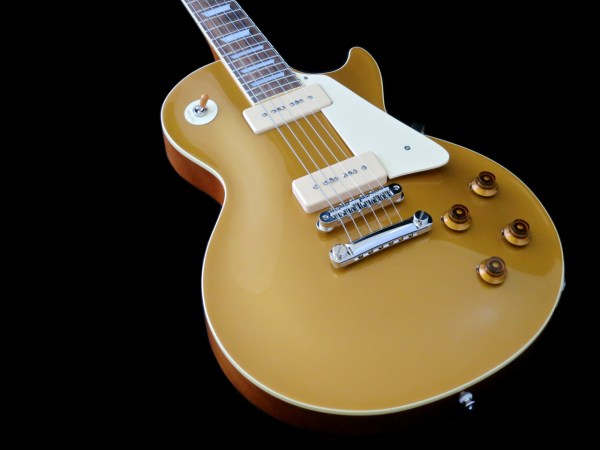
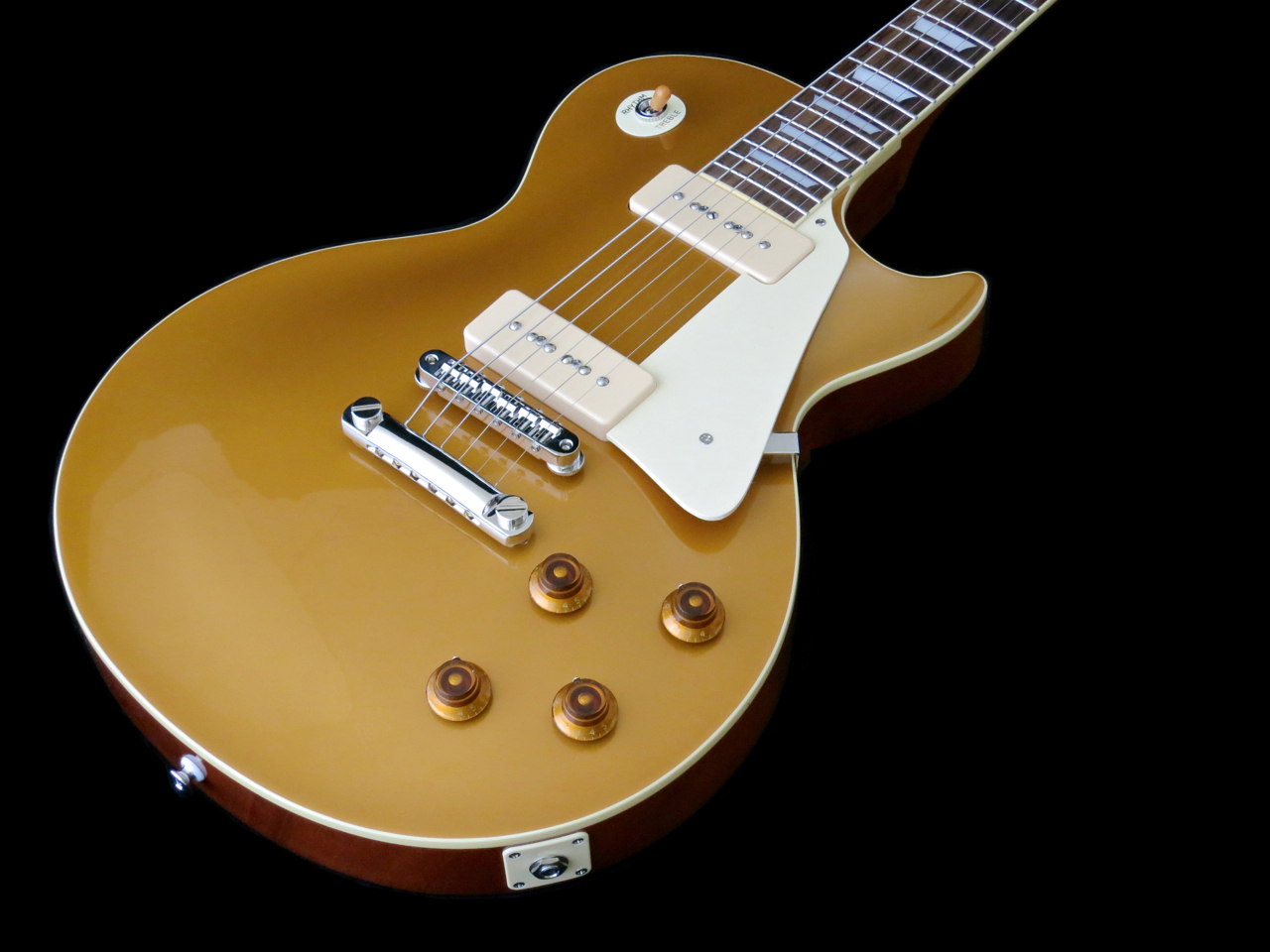
The Tokai LS-98S is a high-quality replica of a 1956 Les Paul Standard, called the LP Goldtop these days. The woods and components chosen for the LS-98S are top grade and the attention to detail is stunning.
We find a one-piece mahogany neck, glued into the mahogany body with a long tenon. The guitar’s carved top is maple, while the bound fretboard is made from rosewood.
In contrast to post-1957 LP Standards, which usually come with the neck and body back dyed with red filler, most Goldtops sport a ”natural” look (i.e. brown pore filler).
The machine heads, the stopbar tailpiece and the tuneomatic bridge all come from Gotoh’s professional grade range.
The P-90s on the LS-98S are alnico-powered Tokai P-90 Mark II units. True to vintage specs the guitar uses identical pickups in both positions.
The LS-98S come in its own high-quality case.
****
Our review sample of the Tokai LSS-47C is really light in weight and very comfortable to play.
The neck profile is a relatively thin D, or what Gibson fans would describe as a 60s profile. Combined with the 12-inch fretboard radius, the well-dressed frets and the excellent set-up, this makes the LSS-47C a really bend-friendly instrument.
Despite having a rather affordable pedigree, the pickups on this Tokai sound surprisingly good, offering the typical combination of grit, power and roundness so loved by P-90 fans. There is also a nice balance in output levels between the neck pickup and the bridge unit.
****
In terms of its weight, the Tokai LS-98S lies in the heavier side of medium. The weight isn’t really an issue per se, but you sure notice it whenever you have this Tokai strapped on.
The workmanship is simply flawless and leaves nothing to be desired. The neck profile is much closer to a late-59 LP neck than the clubby profile of a genuine 1956 Goldtop, meaning we’re dealing with a very comfortable, rounded C of medium depth.
As on many Gibson originals from the early to mid-Fifties, the Tokai LS-98S’ neck P-90 sounds a fair deal louder than its bridge pickup. This is due to the way the identical units are suspended inside the body – which means the neck pickup can’t be screwed quite far enough into the body – as well as the neck unit’s placement closer to the strings’ mid-point. You simply have to adjust the neck pickup’s volume control to 8.5 to even out the signal levels.
The thick maple top makes a P-90-equipped Les Paul-style guitar sound brighter than you’d probably expect, especially with the bridge pickup selected. This guitar can really take you from warm Jazz to spiky Country, and on to Blues and Rock sounds, without the slightest problem.
****
The LSS-47C and LS-98S give you a very good idea why Tokai is the top name in copy guitars:
The LSS-47C is a very reasonably priced version of a classic LP Special. It may not be ”vintage correct” in many of its details, but it plays and sounds very well, and gives you a lot of that classic flavour.
The LS-98S is a professional grade recreation of a 1956 LP Goldtop. Made with typical Japanese attention to detail, this is a stunning guitar at an extremely fair price.
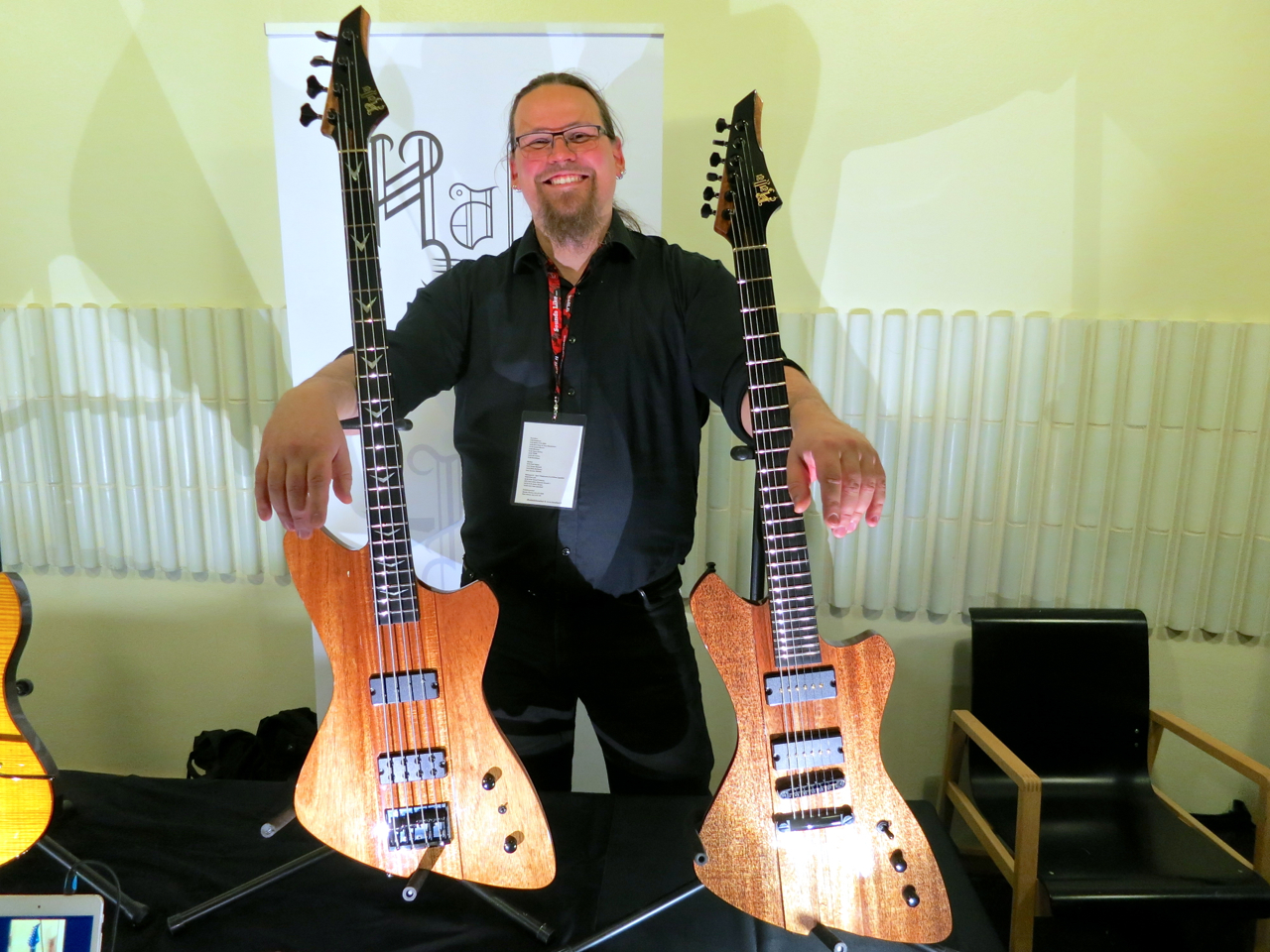
Näin Halla Customin Hallabird-kitaran ensi kertaa vuoden alussa pidetyssä Tonefestissä, jossa se oli esillä soitinrakentaja-artesaani Ville Mattilan ständillä samantyylisen basson kanssa.
Siitä bassosta koko Hallabird-ajatus lähti alun perin liikkeelle. Ville oli rakentanut omaan käyttöönsä Gibson Thunderbirdiltä vaikutteita saaneen sähköbasson. Ville sai keikoilla niin paljon myönteistä palautetta uudesta bassostaan, että hän päätti tehdä samoilla designperiaatteilla myös sähkökitaran.
****
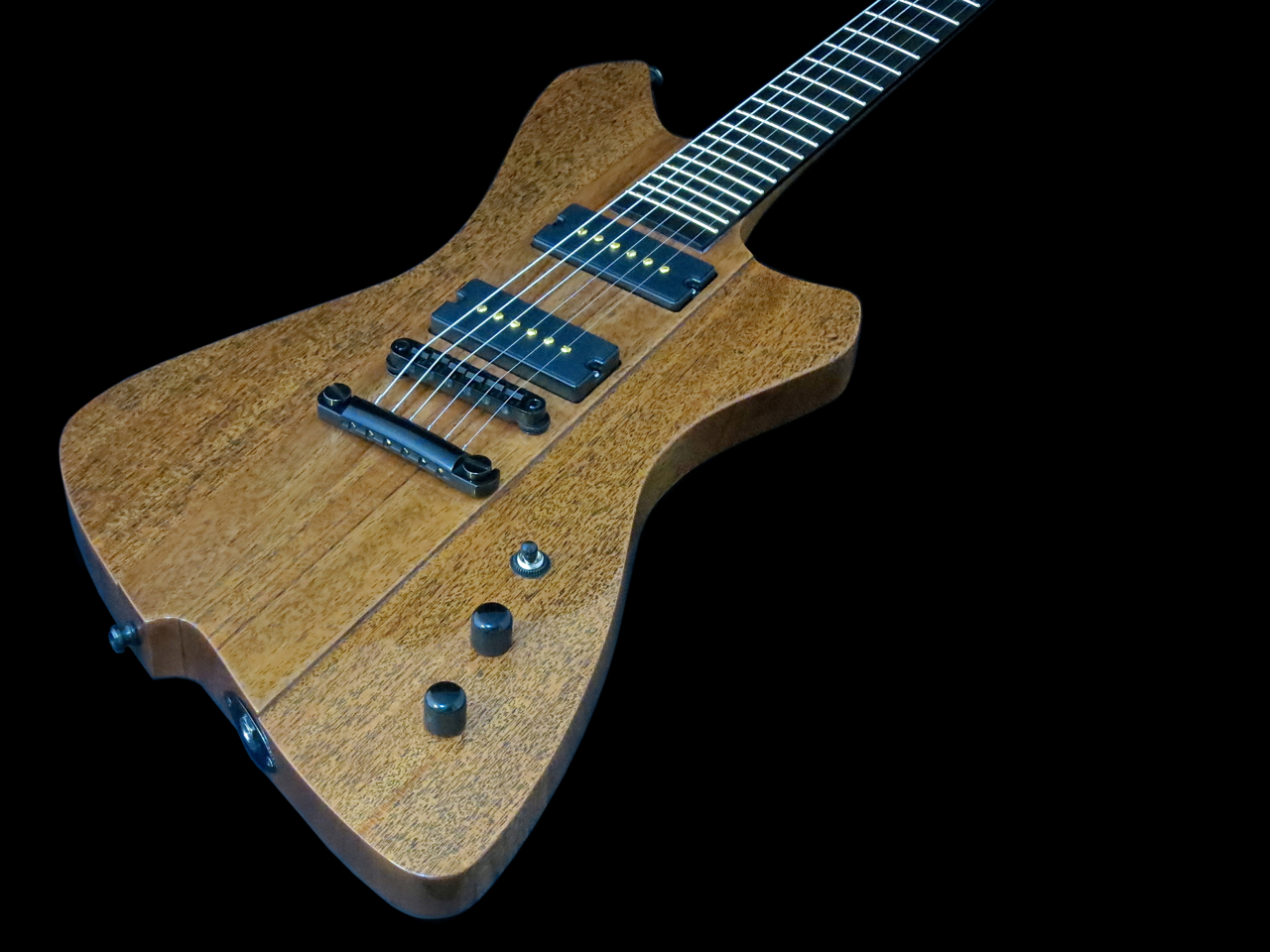
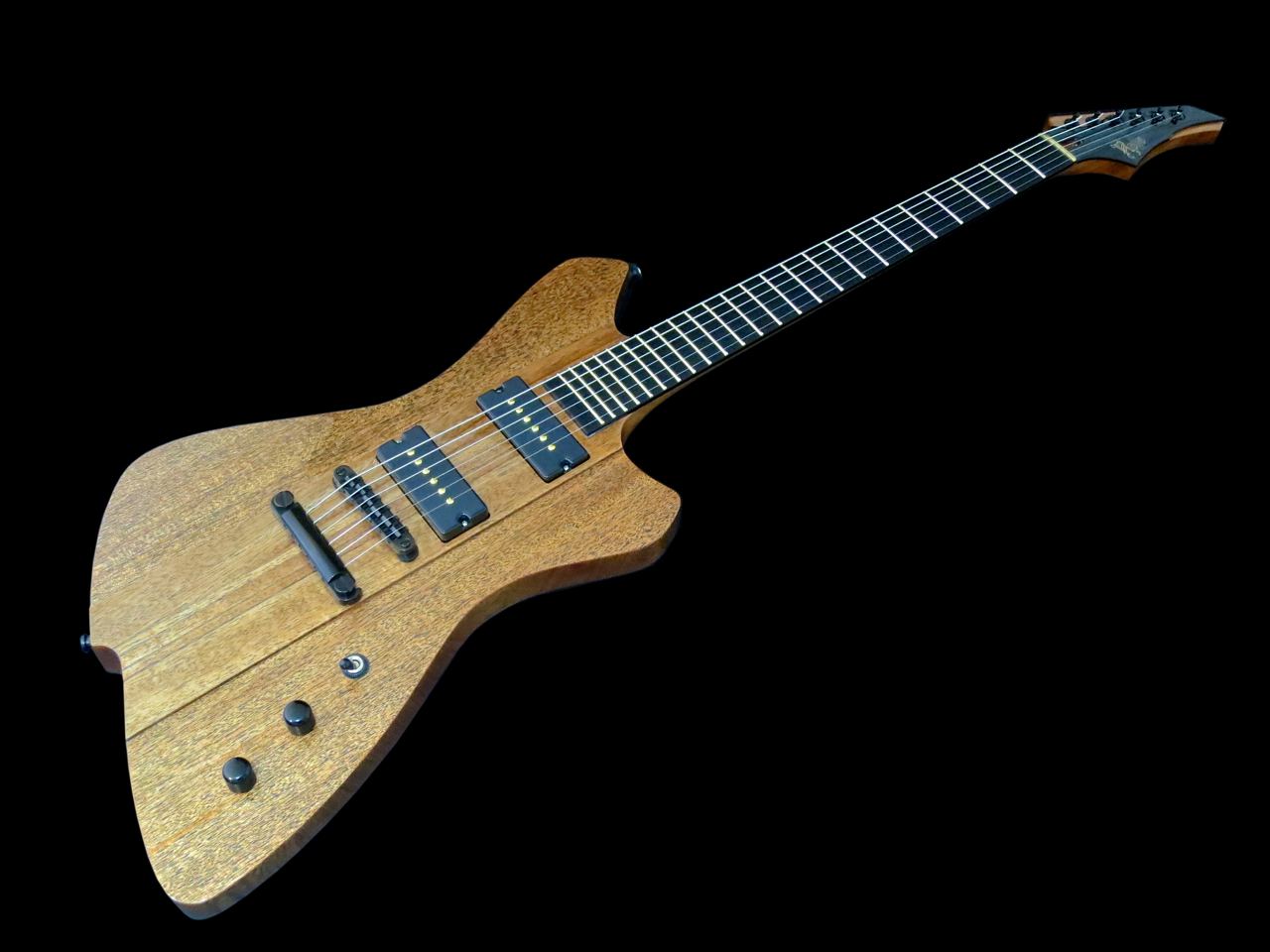
Halla Customin Hallabird (3,700 €; mm. kova laukku kuluu hintaan) on käsintehty kaula-läpi-rungon kitara täydellisellä natural-viimeistelyllä.
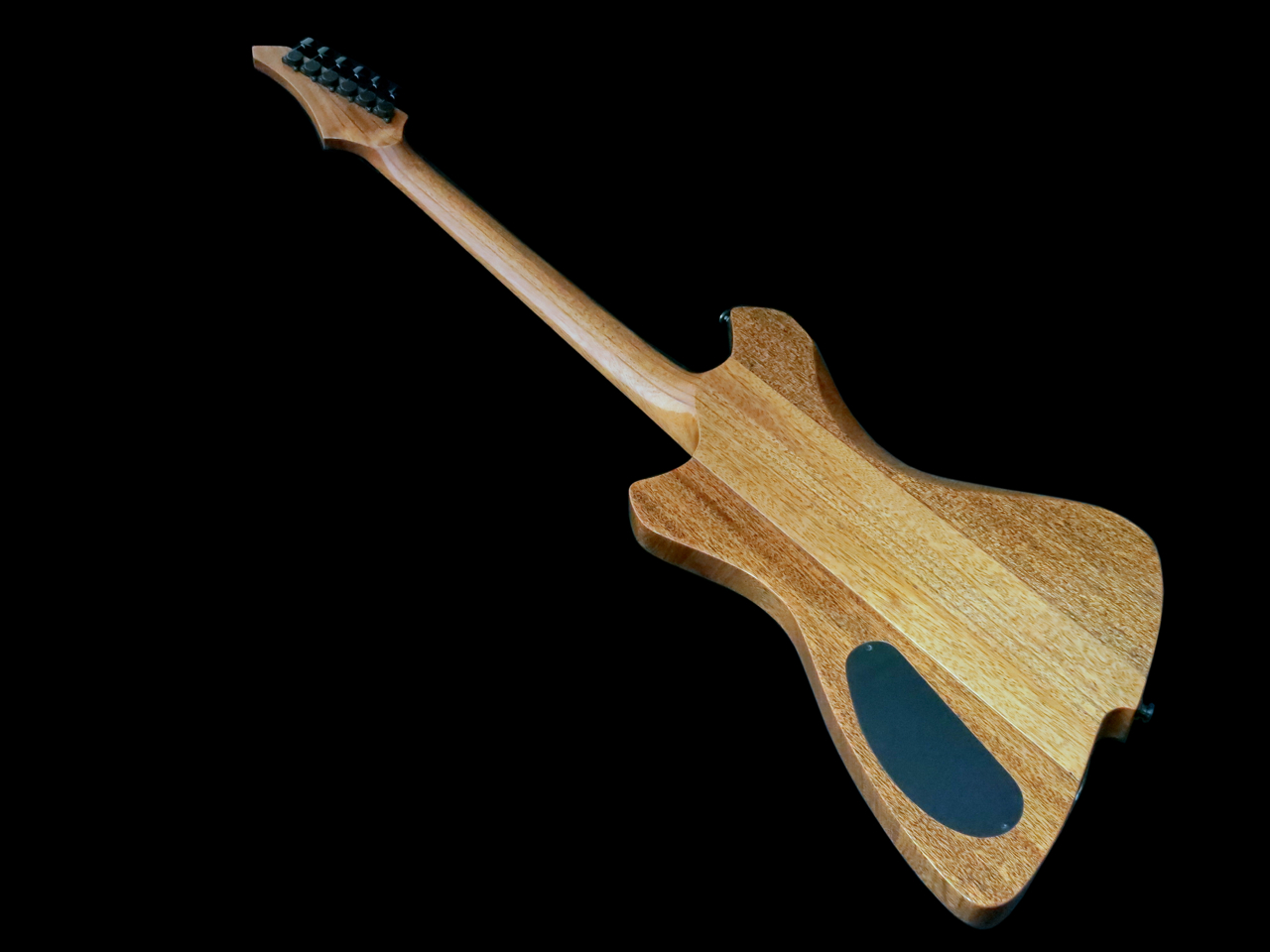
Kitaran kaula on kasattu yhdeksästä vierekkäisestä puurimasta, jossa afrikkalainen mahonki (khaya ivorensis) ja pähkinäpuu vuorottelevat. Kaulan perusrakenne on siis hyvin Gibson-tyylinen, mutta mensuurin suhteen Hallabird lähtee omille teilleen. Tässä custom-kitarassa on nimittäin erikoispitkä mensuuri (kielten soivan osan pituus), joka on 67 senttimetreillä kaksi senttiä Strato-mesuuria pidempi.
Kitaran tyylikäs ja solakka runko muodostuu kahdesta khaya-palasta.
Hallabird-mallin mustat metalliosat tulevat Gotohilta. Soittimen messinkisatula lisää avoimien kielten soittoon hieman diskanttia. En ole tähän mennessä koskaan kohdannut näin sulavasti muotoiltua messinkisatulaa.
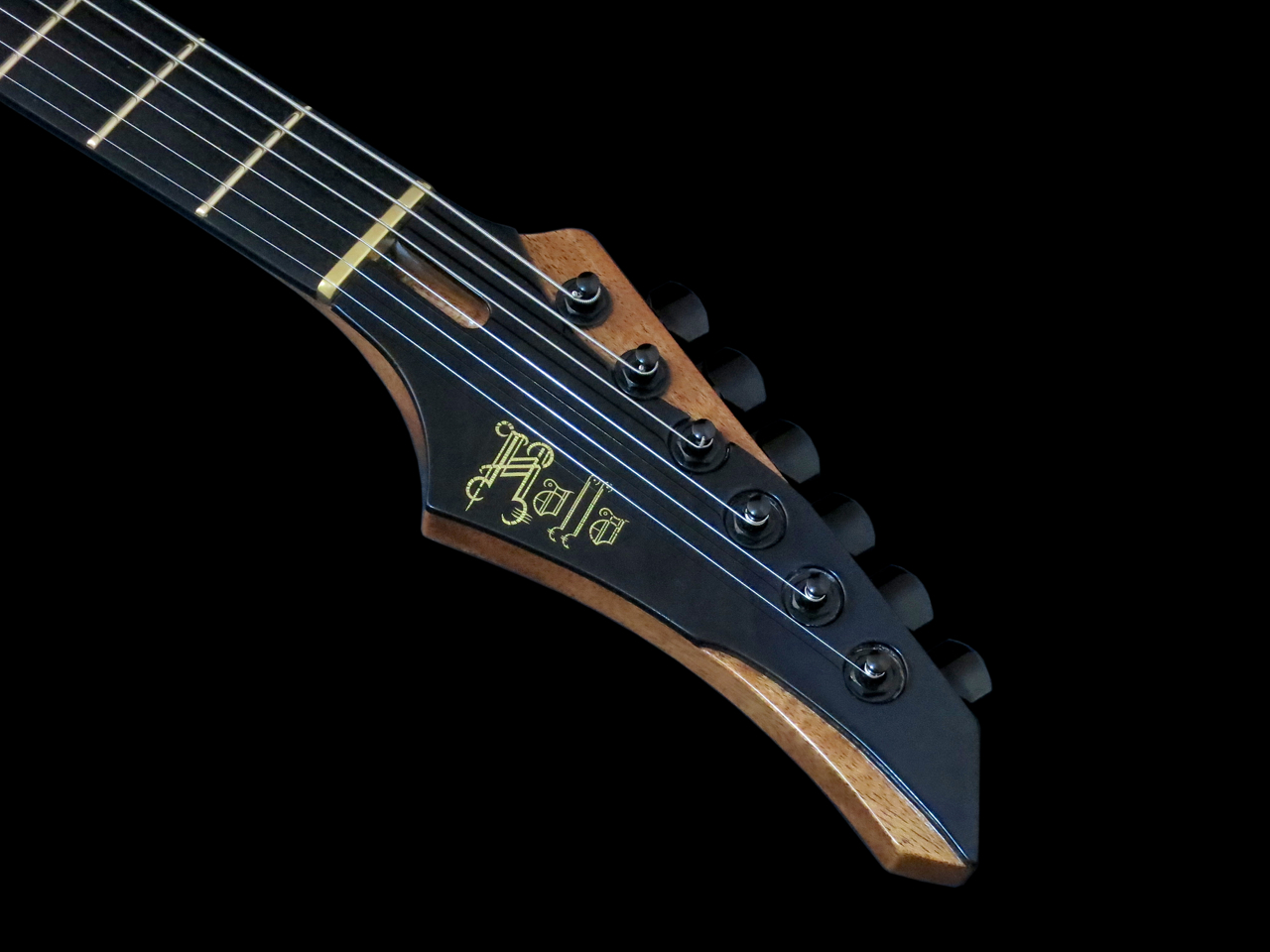
Kaksisuuntaista kaularautaa pääsee säätämään tässä Halla Custom -kitarassa viritinlavalta.
Hallabirdin eebenpuiseen otelautaan on asennettu 24 kiiltävää Jescar Evo jumbonauhaa. Nauhatyön laatu on esimerkillinen. Tällaista laatua on miltei mahdotonta löytää edes kalliimmissa tuotantolinjan soittimissa.
Virittimien tavoin myös Hallabirdin tune-o-matic-talla ja palkkimainen kieltenpidin ovat laadukkaita Gotoh-osia.
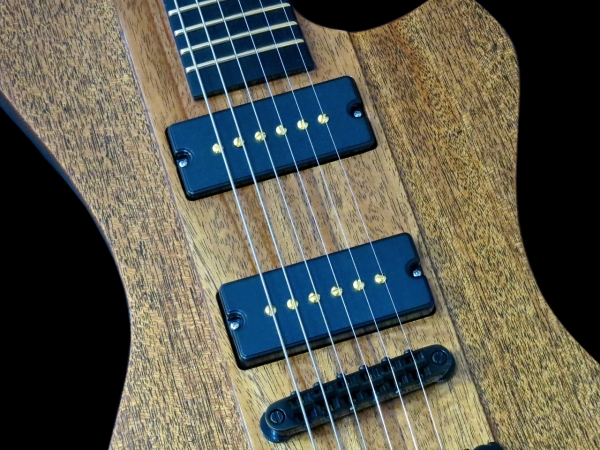
Ville Mattila käyttää monissa Halla Custom -malleissa oman pajan mikrofoneja. Hallabirdistä löytyy kaksi P-90-tyylistä mikkiä, jotka on sovitettu taitavasti EMG-tyylisiin muovikuoriin. Yhteiskäytössä mikit toimivat humbuckerin tavoin. Mikrofonien kultaiset naparuuvit ovat hieno yksityiskohta, joka sopii hyvin yhteen mallin Jescar EVO -nauhojen ja afrikkalaisen mahongin kanssa.
Hallabirdin säätimissä piilee vielä yksi mielenkiintoinen yksityiskohta. Kitaran kolmiasentoinen vipukytkin ja myös sen mastervolume (ilman treble-bleediä) toimivat odotetusti, mutta toisen mustan nupin alta paljastuukin kolmiasentoinen kiertokytkin. Ville kutsuu tätä kytkintä impedanssikytkimeksi, joka vaikuttaa sekä kitarasignaalin diskanttipitoisuuteen että volume-säätimen käyttäytymiseen. Impedanssikytkimellä pystyy siis hienovirittämään volume-säätimen tuntumaa omaan musiikkigenreen ja vahvistimeen sopivaksi.
****
Halla Customin Hallabird on helvetinmoinen kitara. Ville Mattila on onnistunut luomaan sellaisen soittimen, joka näyttää samalla tutulta ja tuoreelta. Kitara on samanaikaisesti hillitty ja huomiota herättävä tapaus. Työnjälki on ensiluokkaista pienintä yksityiskohtaa myöten.
Pitkiä sessiot tai keikat eivät tunnu missään, koska Hallabird on niin kevyt. Non-reverse rungon ansiosta Hallabirdin tasapaino hihnassa on myös hyvin mukava, erikoispitkästä kaulasta huolimatta.
Kaulaprofiili on mukavan lihaksikas ja pyöreä, ilman että se tuntuisi kömpelöltä. Erinomaisen nauhatyön ja loistavan trimmin ansiosta kitaran kymppisetti tuntuu erittäin nopealta ja kevyeltä. Veikkaisin, että tällaisella setupilla monet soittajat eivät edes huomaisi testikitaran pidempää mensuuria. Asiakas pystyy kuitenkin tilaamaan oman unelmakitaransa omien speksien mukaan.
Hallabirdissä on tarkka, pianomainen atakki, sekä pitkä ja tasainen sustain. Kielten välinen erottelevuus on ensiluokkainen, jopa hyvin tiheitä sointuja soitettaessa. Soundissa on erinomainen balanssi lämmön ja avoimuuden välillä.
P-90-tyyliset mikrofonit ovat oiva valinta, jos hakusessa on humbuckerin soundillinen leveys ja voima yhdistettyinä yksikelaisen mikin dynamiikkaan. Vaikka sen ulkonäkö on melko ”rock”, pystyy Hallabirdillä kuitenkin liikkumaan ongelmitta myös kantrimusiikin tai Jazzin piireissä.
Nämä kaksi ääniklippiä on äänitetty 1980-luvun Boss SD-1 säröpedaalilla ja Bluetone Shadows Jr. -putkikombolla:
Demobiisissä käytin komppikitaroissa 80-luvun Ibanez SC10 chorusta, sekä Morleyn M2 Wah -pedaalia soolo-osuuksissa. Vahvistin oli tässäkin Shadows Jr.:
****
Halla Customin Hallabird on hyvin kaunis ja erittäin hyvin soiva käsintehty sähkökitara, joka on suomalaisen kitararakennuksen huipputason loistokas hedelmä. Hallabirdin Rock-asenteen takana löytyy hyvin monipuolinen soitin vaativalle soittajalle.
Luonnollisesti, tällaisella huippulaadulla on aina myös hintansa. Mutta vastineeksi saa tässä aidon boutique-luokan soittimen, jonka takana seisoo osaava ja omistautunut käsityöläinen.
3,700 € – hintaan sisältyy: kova laukku, boutique-luokan kitarajohto, laadukas hihna (Schaller-lukoilla), yksi ilmainen säätökäynti (6-12 kk jälkeen), sekä elinikäinen tekninen tuki
I first saw the Halla Custom Hallabird at this year’s Tonefest, where luthier-artisan Ville Mattila displayed it alongside its bass brother.
It was actually the bass that served as the original impetus for the Hallabird. Ville had made a slightly Gibson Thunderbird-influenced bass for his own use. The bass got so much positive attention that Ville decided to put more bread on the water, which is why he developed a guitar model along the same design ideas.
****
The Halla Custom Hallabird (3,700 €; including case and more, see below) is a handmade neck-through guitar with a flawless clear finish.
The through neck is made from nine long strips of wood – African mahogany (khaya ivorensis) offset with walnut. While the neck construction follows Gibson’s lead, the Hallabird takes its own path when it comes to scale length. This custom guitar comes with an extra long scale length of 67 cm (that’s approximately 26.37 inches for our Imperial readers).
The streamlined body wings have been crafted from khaya, too.
The Hallabird comes equipped with black Gotoh-hardware. This guitar also sports a brass nut to insert a little brightness into the open strings. This is probably the smoothest brass nut I’ve seen in my guitar-playing life.
Access to the two-way truss rod is from the headstock end on this Halla Custom guitar.
Twenty-four gleaming Jescar Evo jumbo frets have been installed into the Hallabird’s ebony fingerboard. The fretwork is nothing short of excellent – this is one of the areas where a handcrafted guitar tends to outshine production models, regardless of their price.
Gotoh’s hardware is known for its consistently high quality, and the Hallabird’s TOM-bridge and stopbar are no exception.
Ville Mattila mostly uses his own pickups in his Halla Custom guitars. The Hallabird comes equipped with a pair of handmade P-90s, niftily placed inside EMG-style plastic covers. The pickups are reverse-wound/reverse-polarity, meaning they act as a humbucker, when used together. The pickups’ golden polepieces look great with the Jescar EVOs and the khaya mahogany.
The Hallabird’s electronics are a little bit different than what you’d expect, judging by the knobs. There’s a three-way toggle for pickup selection, as well as a master volume control (sans treble bleed). What looks like a tone control is in fact what Ville calls a three-way impedance rotary. While the rotary switch minutely changes the treble content of the overall signal, it clearly influences the volume control’s roll-off taper. This allows you to fine-tune the way the guitar’s volume control reacts to your playing style and your amplifier.
****
Halla Custom’s Hallabird is one heck of a guitar. It is one of these rare cases, where a new design manages to look classic and fresh at the same time. A guitar that is understated, yet flashy. The quality of workmanship is excellent down to the smallest details.
The Hallabird is very lightweight, making it an ideal choice for long sessions or gigs. Thanks to the guitar being a non-reverse design, the Hallabird balances very nicely despite its longer-than-usual neck.
The neck profile is reassuringly round and chunky, without feeling clunky or unwieldy. Thanks to the outstanding fretwork the Hallabird came with a setup that made a set of 010s feel very slinky, even on the extra long scale neck. I’m quite sure many players won’t even notice the extra scale length, but if you wanted to order something more ordinary, I’m sure that Ville would happily oblige.
Acoustically, the Hallabird displays a piano-like attack with a long and even sustain. Note separation is excellent, even with complex chords, and there’s a great balance between warmth and clarity.
P-90s are a fantastic choice if you need humbucker-type power and girth, coupled to a single-coil’s dynamics. Even though its looks are probably a little ”too Rock”, the Hallabird can glide effortlessly into Country and Jazz mode, and then turn into a Rock machine at the proverbial drop of a hat.
These two clips have been recorded using a 1980s Boss SD-1 and a Bluetone Shadows Jr. boutique combo:
For the demo song I used a 1980s Ibanez SC10 chorus pedal on the rhythm guitars, and a Morley M2 Wah for the lead, through the Shadows Jr.:
****
Halla Custom’s Hallabird is a great-sounding and classy-looking guitar, made by somebody who clearly knows what he is doing. Don’t be fooled by the Classic Rock looks – this is a very versatile instrument for the discerning player.
Naturally, handcrafted quality like this never comes cheap. This is a true boutique guitar, made by a trained luthier-artisan highly dedicated to his craft.
****
Halla Custom Hallabird
Handmade neck-through electric guitar
3,700 € – includes hard case, high-end guitar cable, quality strap (with Schaller locks), one free setup (after 6-12 months of use), and lifetime tech support
So, you want to buy an electric guitar? Let Kitarablogi.com help you find the guitar that’s ”the right one” for you.
There are a few things you should think through in advance, before setting out to your local guitar shop.
**** What guitar do I really want/need?
• The way you feel about a guitar’s looks and design can be an important factor in making a buying decision, and the same goes for the guitar your favourite artist plays. There’s nothing ridiculous in choosing an instrument for its looks, as there’s always a psychological component to how you approach a guitar. If you really dig the way an instrument looks, you will want to play it, and play it more often. This goes the other way, too – if you feel your guitar is ugly, playing it won’t be as much fun.
• Nevertheless, the most important criterion for buying your guitar should be the style of music you plan to use it for. Yes, theoretically you can play any guitar in any style – as Ted Nugent proves by playing loud Rock on an all-hollow archtop (a Jazz guitar) – but if you choose the ”right” instrument for a musical style, it will make things much easier.
Here are some examples of musical genres:
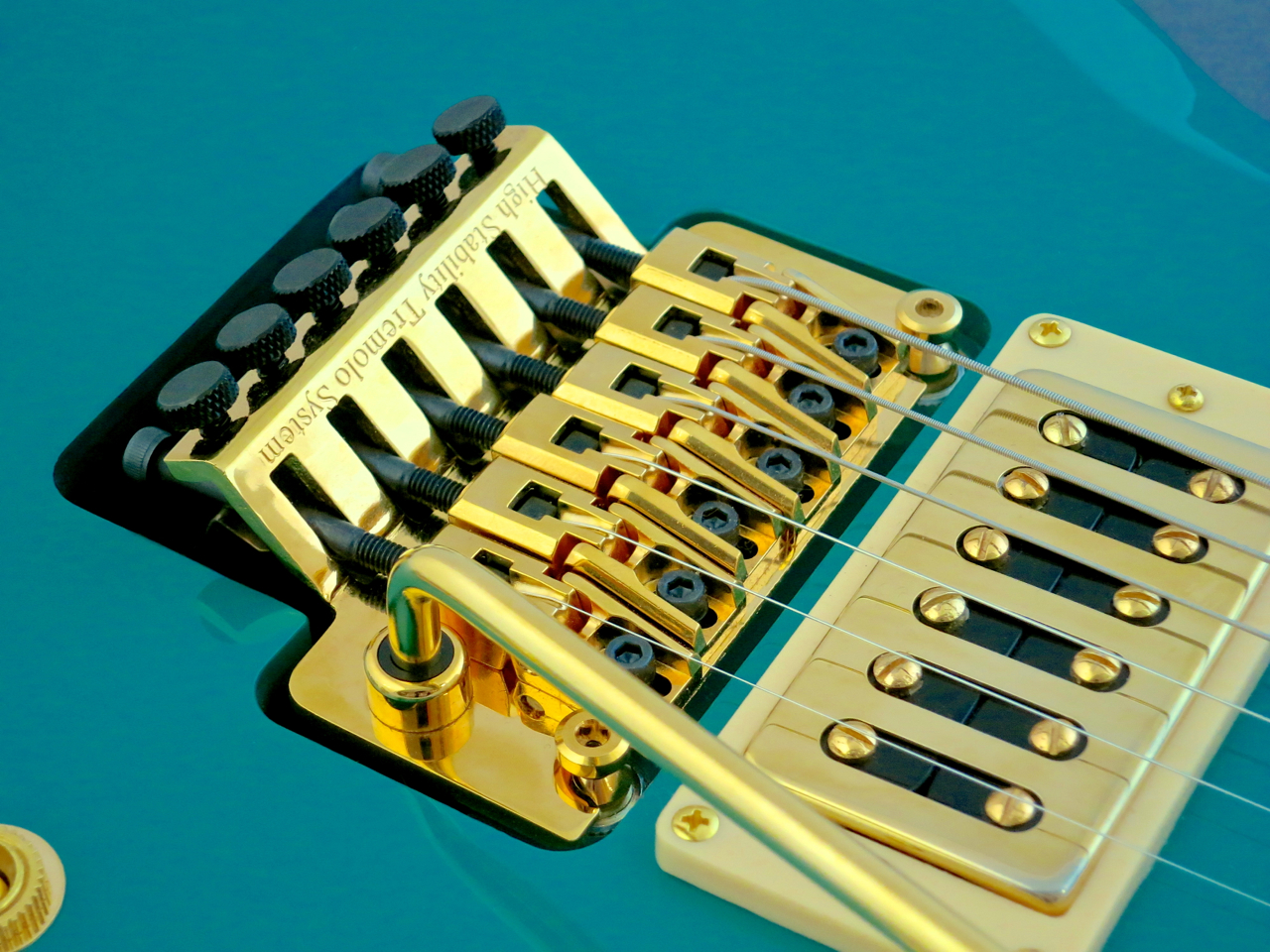
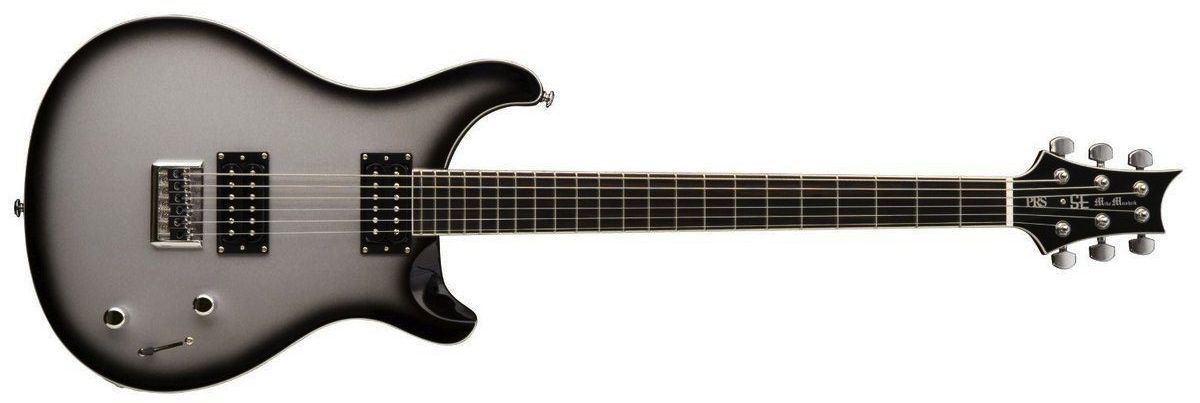
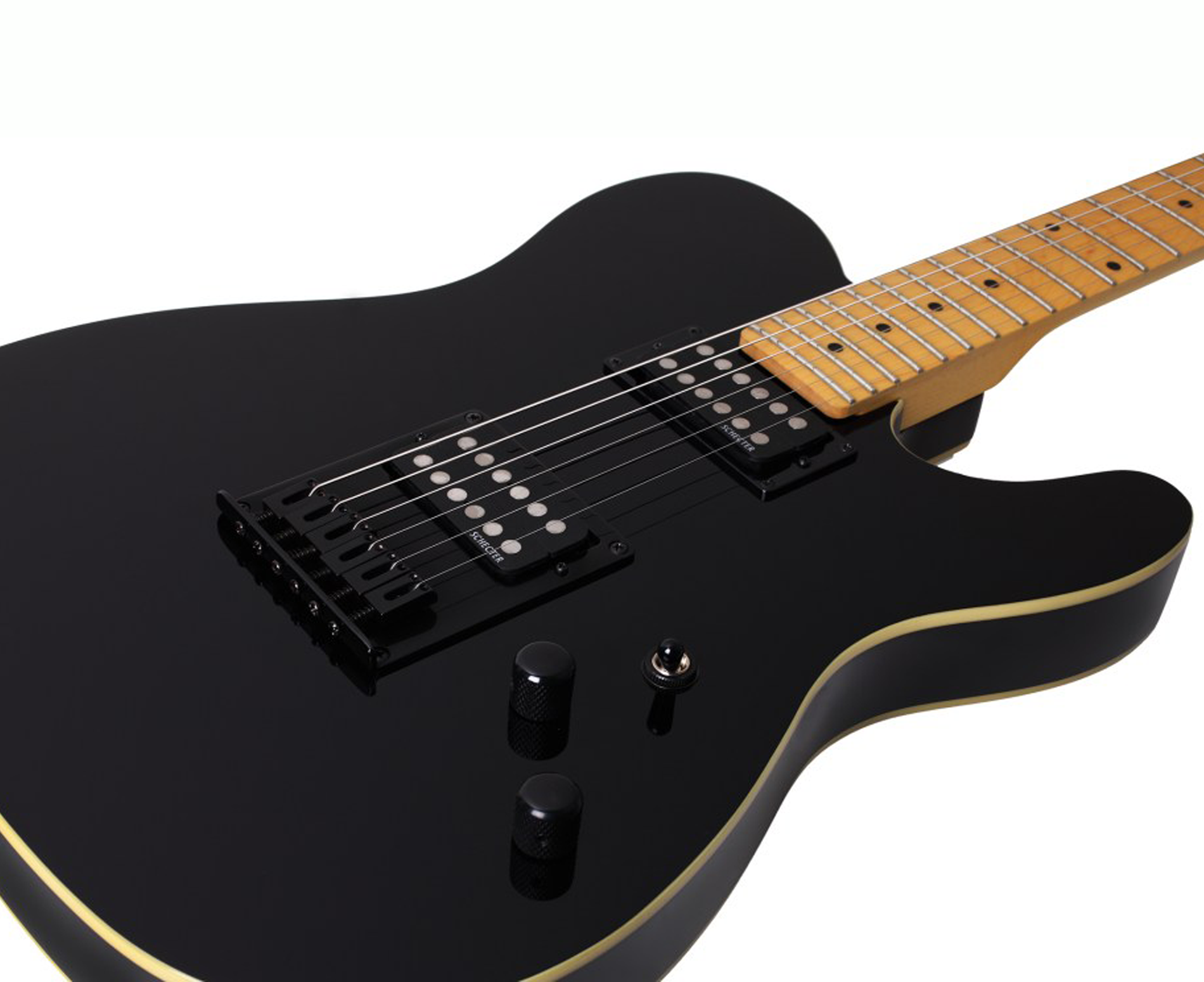
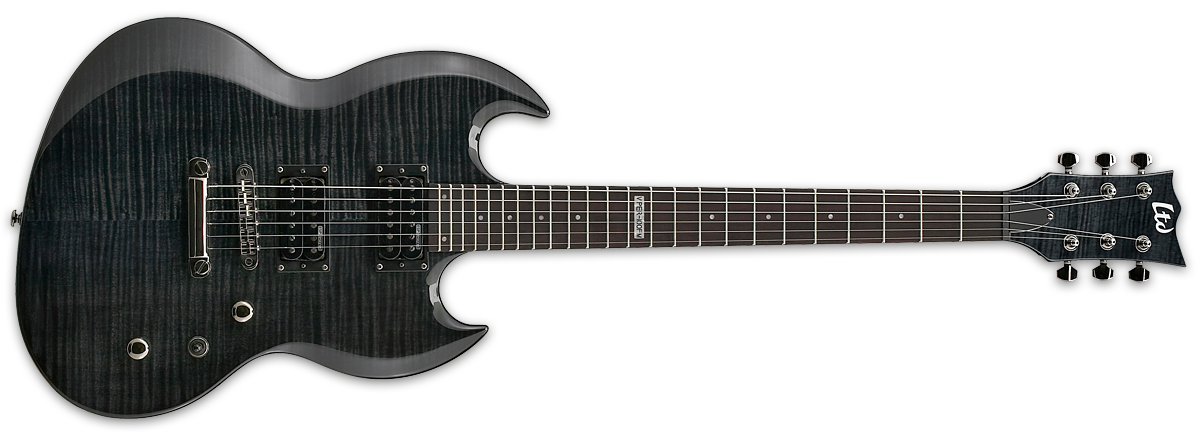
++ Modern Metal: As you’re dealing with large amounts of volume and gain, the best choice would be a solidbody guitar, equipped with humbuckers. Some prefer active pickups, while others like traditional passive designs more. Lead guitarists often go for a model equipped with a locking vibrato system, like a Floyd Rose.
As many bands in this genre use lower than standard tunings, you could consider opting for a seven-string model (which offers an additional lower string), or even go full-out for a baritone electric.
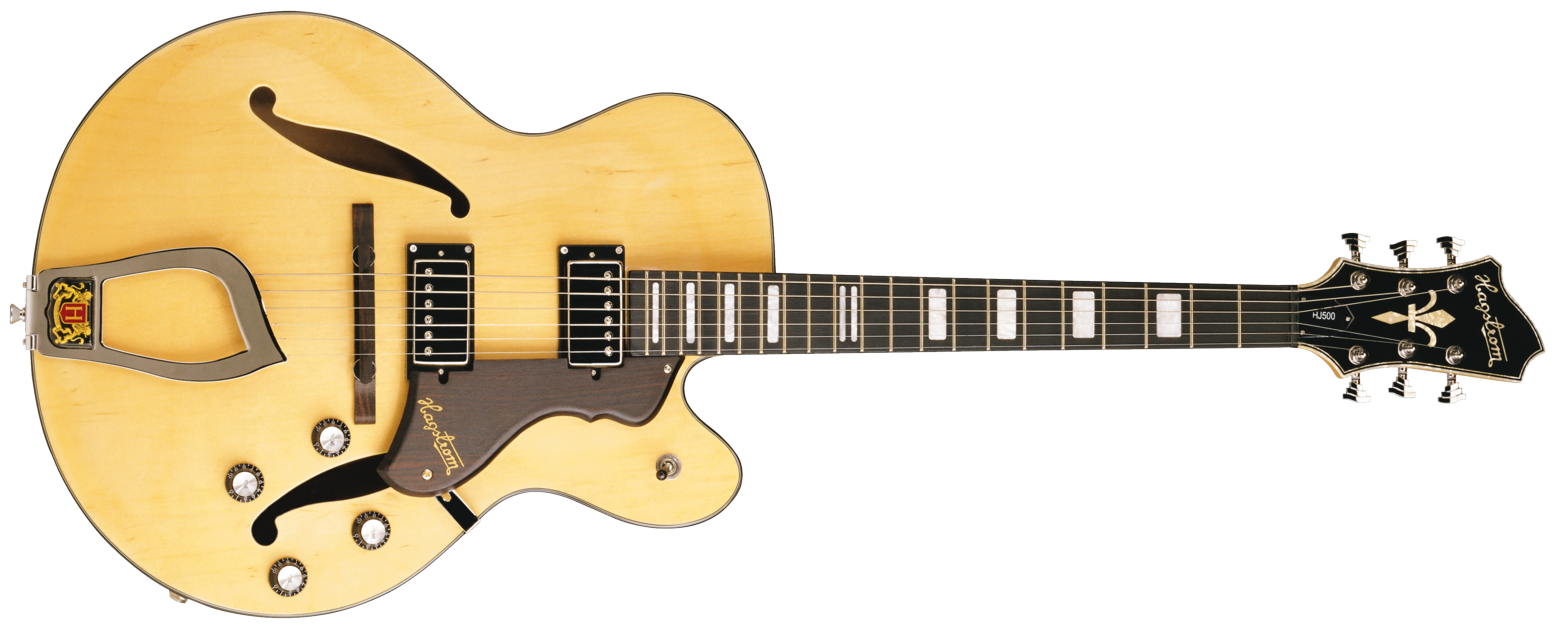
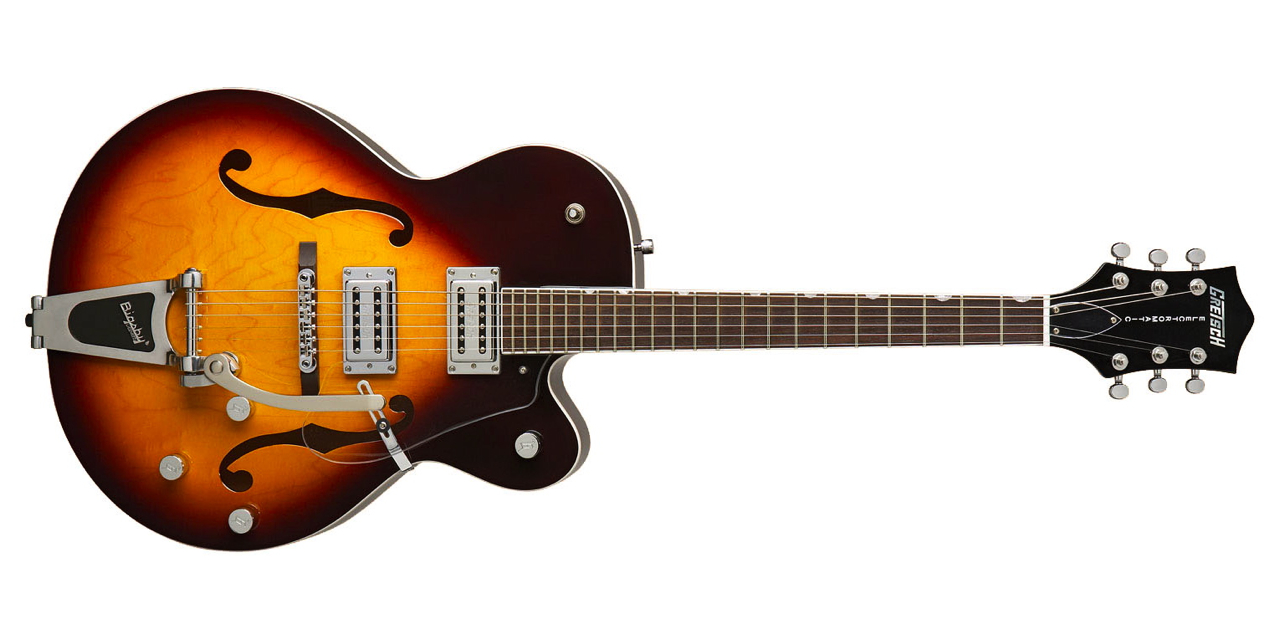
++ Jazz: Most Jazz guitarists like to stay in the traditional sonic space offered by all-hollow archtops or semi-solid ES-335-type guitars. The preferred pickup choices are humbuckers and P-90s.
++ Blues: Blues musicians use a wide variety of different guitars, depending on their personal taste. Here the most important thing is that you feel comfortable with your chosen instrument, in order to express your feelings without being hindered by your guitar. Locking vibratos and active pickups are very rarely seen in Blues music.
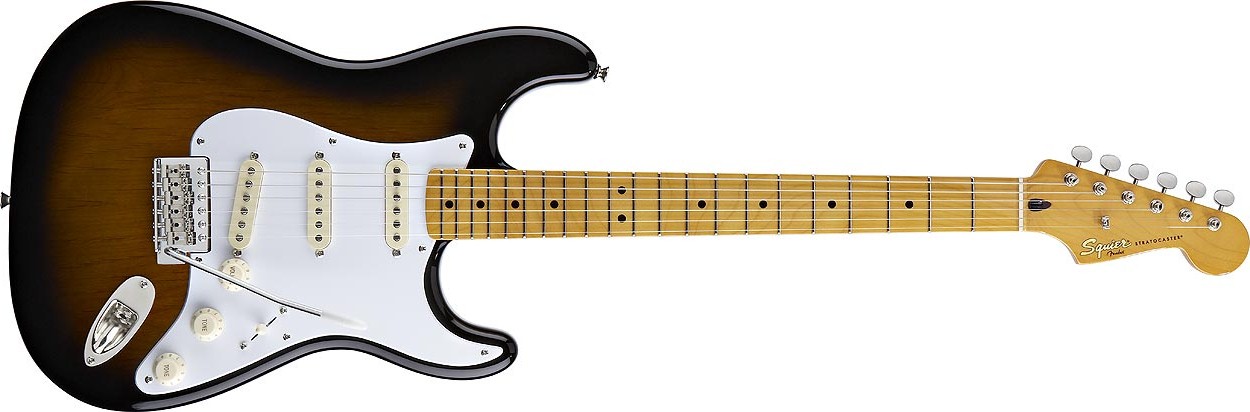
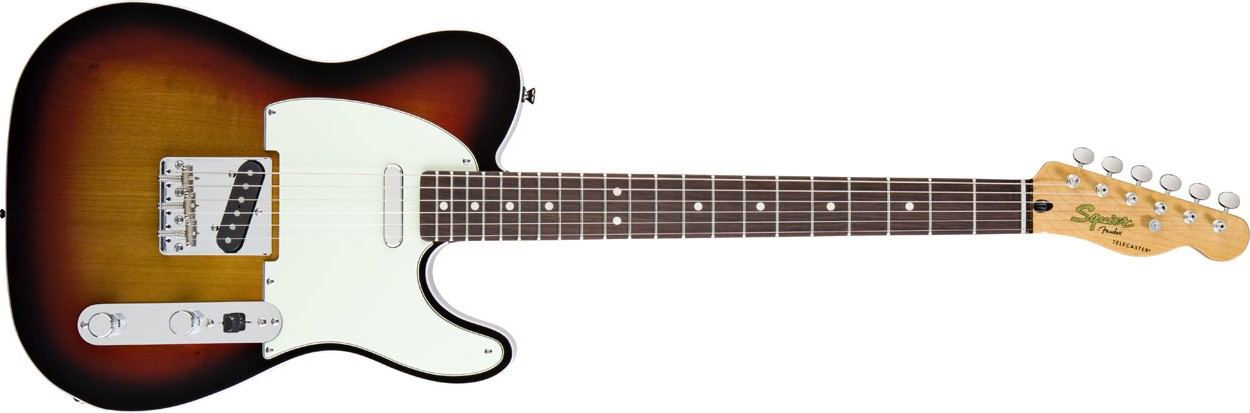
++ Country: Traditional Country guitarists tend to drift towards guitar models with a lot of chime and bite in their tone. Very often this means Fender-style single coils or a Gretsch guitar. Over the past couple of decades there’s been quite a lot of crossover from Rock into Country music, though, which has lead to more variety in the choice of instruments in this genre.
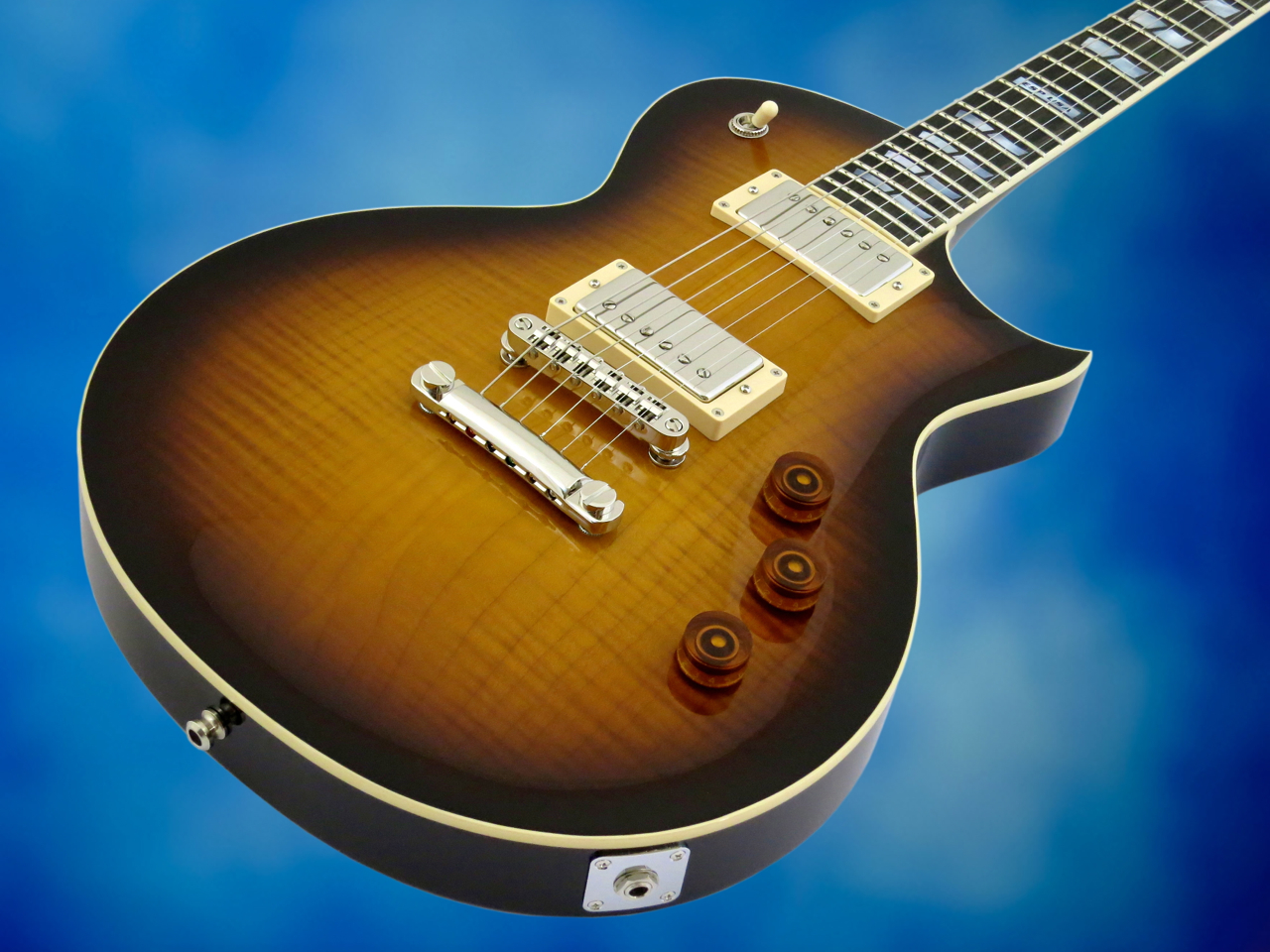
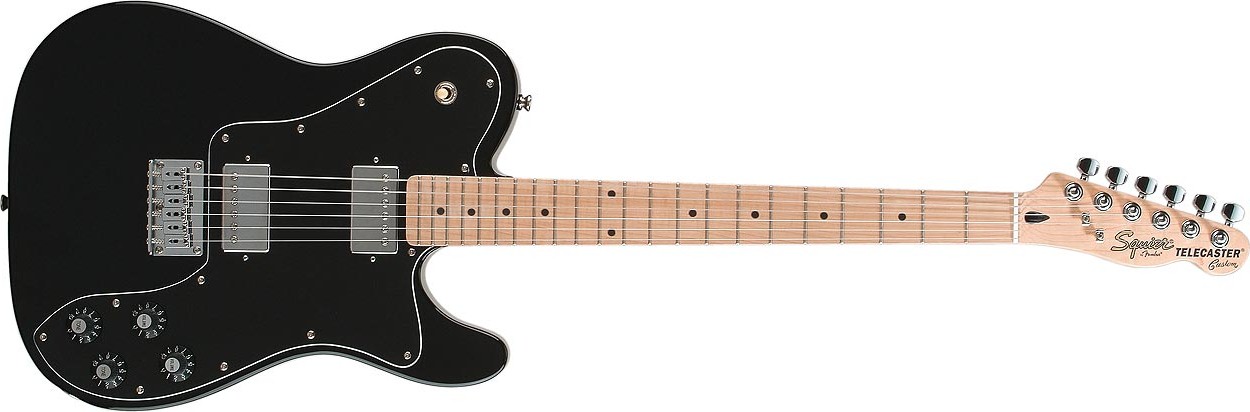
++ Classic Rock: Traditional 1970s Classic Rock is built upon humbucker-equipped solidbody guitars, which offer enough grit and output for this genre. Think Les Paul, SG or Telecaster Deluxe.
++ If this is going to be your first electric guitar: If you’re a beginner, we would suggest choosing a model that won’t confuse you with a large array of pickup- and switching-options. A non-vibrato bridge would also be a welcome feature, as vibrato bridges are generally harder to set up and keep in tune.
****
Set yourself a budget and stick to it!
• It is important that you set yourself a budget for your guitar shopping. If you have a good idea of your target price range, you will be able to sift through all the different guitars on offer much more quickly, by leaving out any models that are too expensive (or too cheap). This will make choosing your instrument a bit easier.
















 Kitarablogi.com – Finland's premier Guitar and Bass blog