Contact: Musamaailma & Flaxwood Guitars
Review: Vox AC10C1
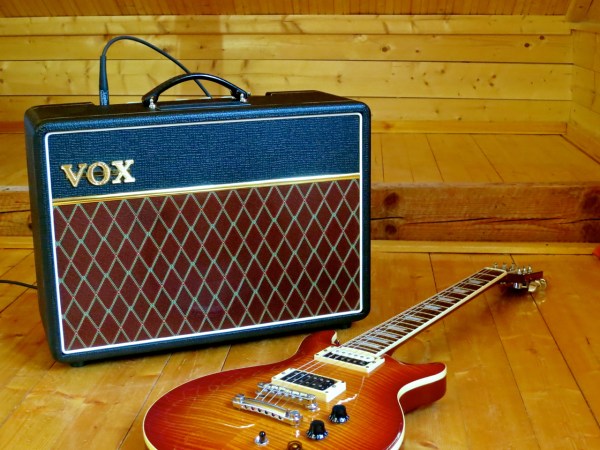

The new Vox AC10C1 combo amp nicely bridges the gap between the Custom Series’ AC4C1 four-watter and the 15-watt AC15C1.
****
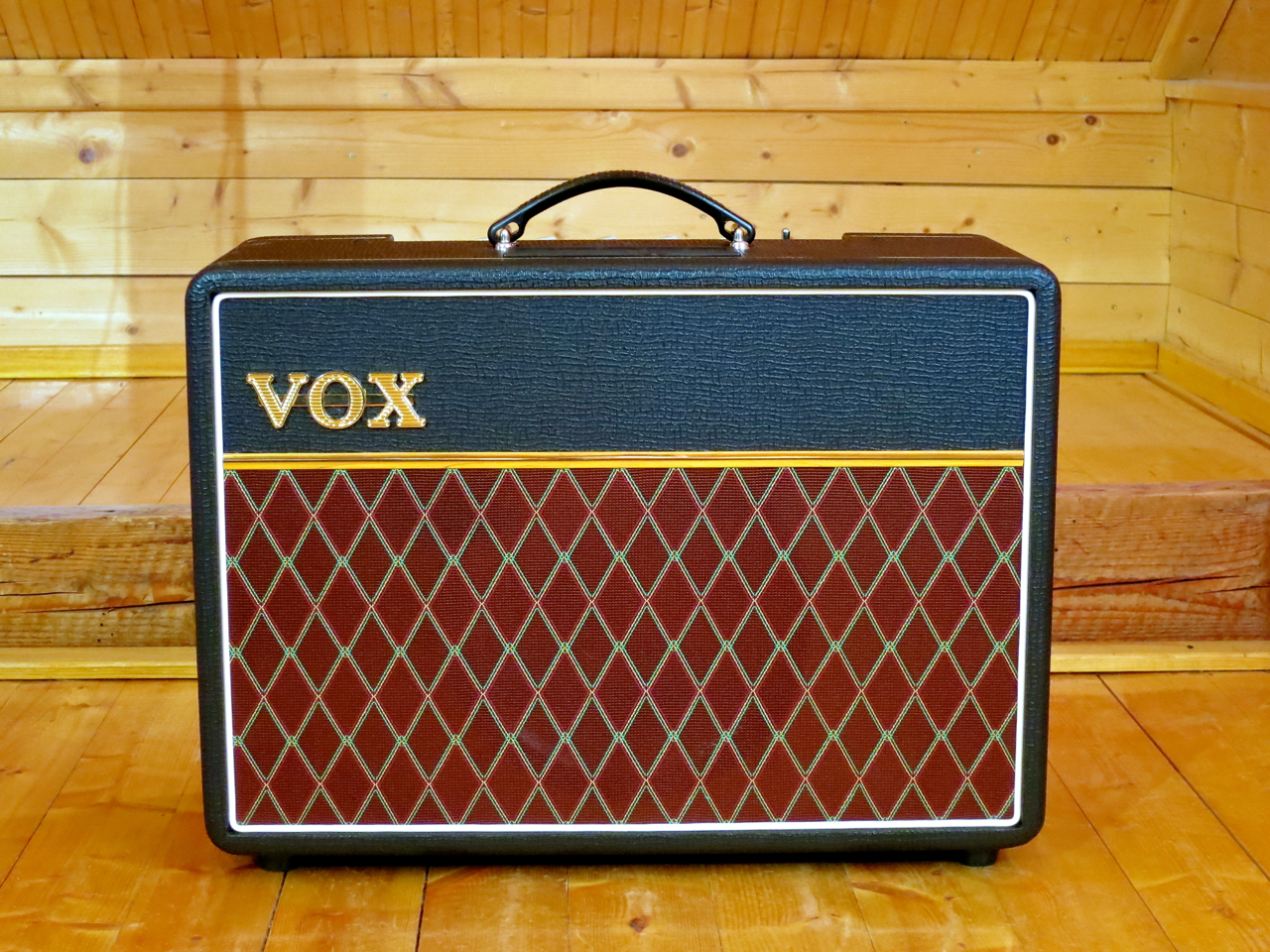
The Vox AC10C1 (street price in Finland approx. 520 €) isn’t a copy or reissue of any of the AC10 versions from the 1950s or 60s, but rather a modern reinterpretation of the company’s Top Boost-theme in a more compact guise, and made in China, just like the rest of the Custom Series.
This being so, the new AC10C1 amp does away with the old version’s vibrato effect, adding instead such welcome modern features as a quality digital reverb, and separate Gain and (Master) Volume controls.
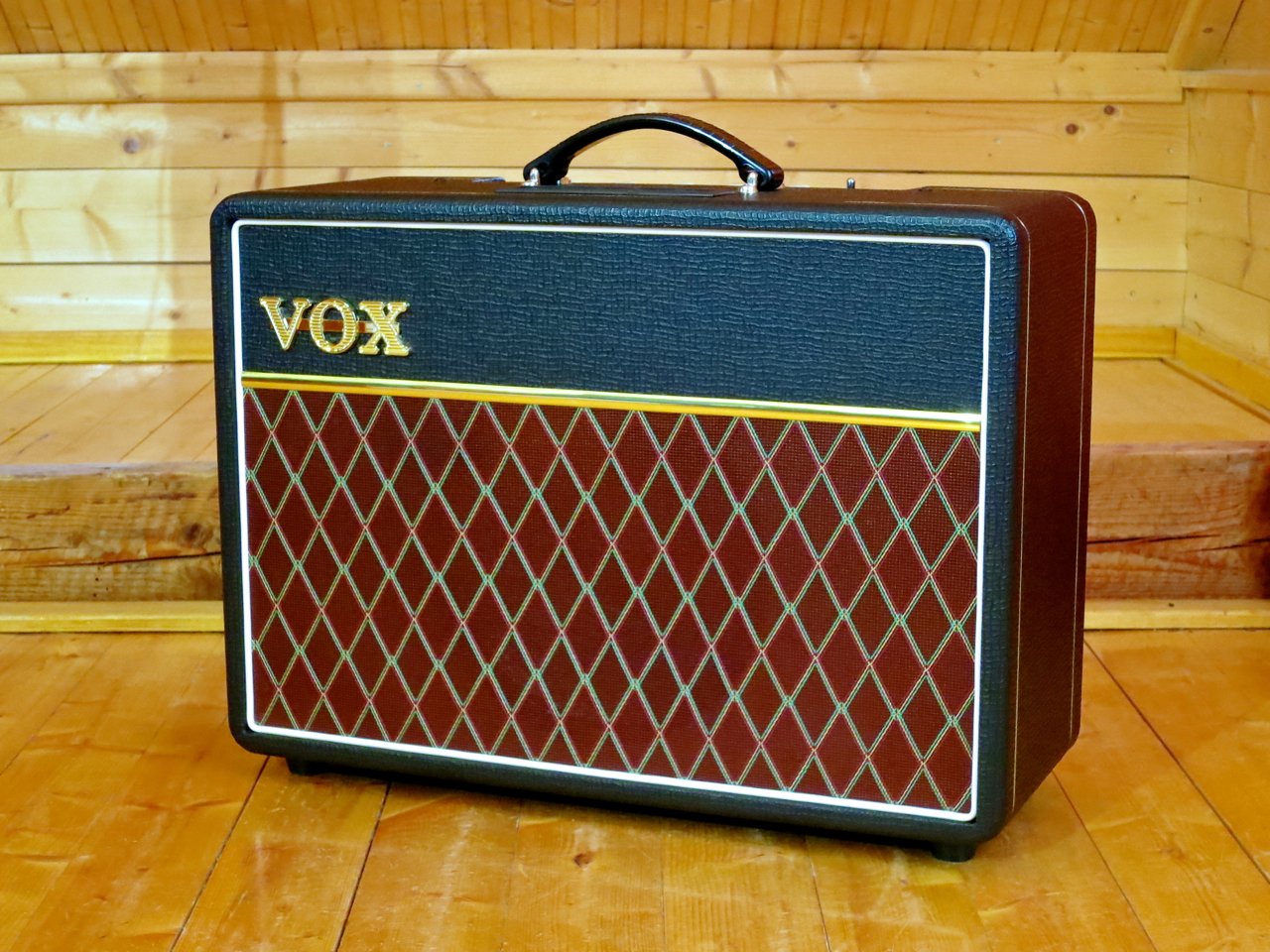
Vox’ new combo looks like a smaller version of their legendary AC30 combo, which isn’t a coincidence, I’m sure. It sports lots of black vinyl, white piping, a golden metal rail, and the famous maroon front cloth with the diamond pattern.
The AC10C1 only weighs 12 kilos, which means it’s very easy to carry by its single top handle.
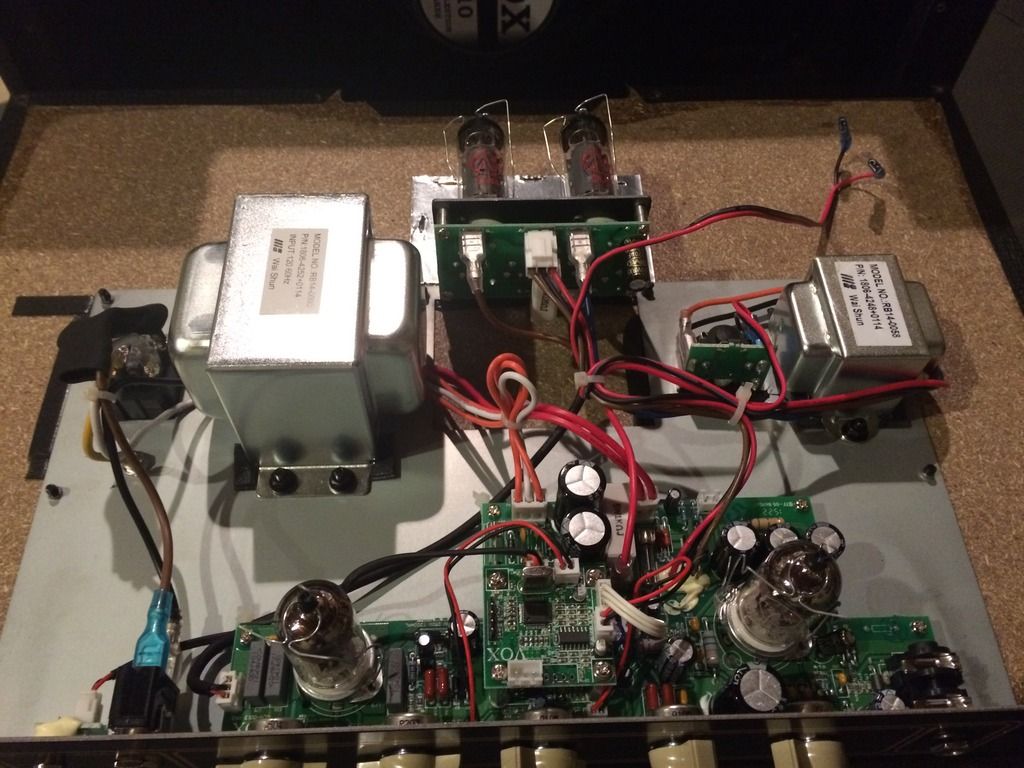
As we are looking at a production line, Chinese valve amp, it would be totally unrealistic to expect hand soldered point-to-point wiring inside this combo. The AC10C1’s electronic components – tubes and all – are mounted on three PCBs. You can have a good looks at this combo’s innards in this picture.
The little Vox’ two EL84 main amplifier valves have been placed just beneath the ventilation grille on the top (next to the handle). The preamp valves – a pair of 12AX7s – get their ventilation via a small slot at the bottom end of the cabinet’s back wall.

The control panel sports the classic Vox chicken head knobs.
In addition to Gain and Volume, you will find a two-band EQ section, and the reverb control.
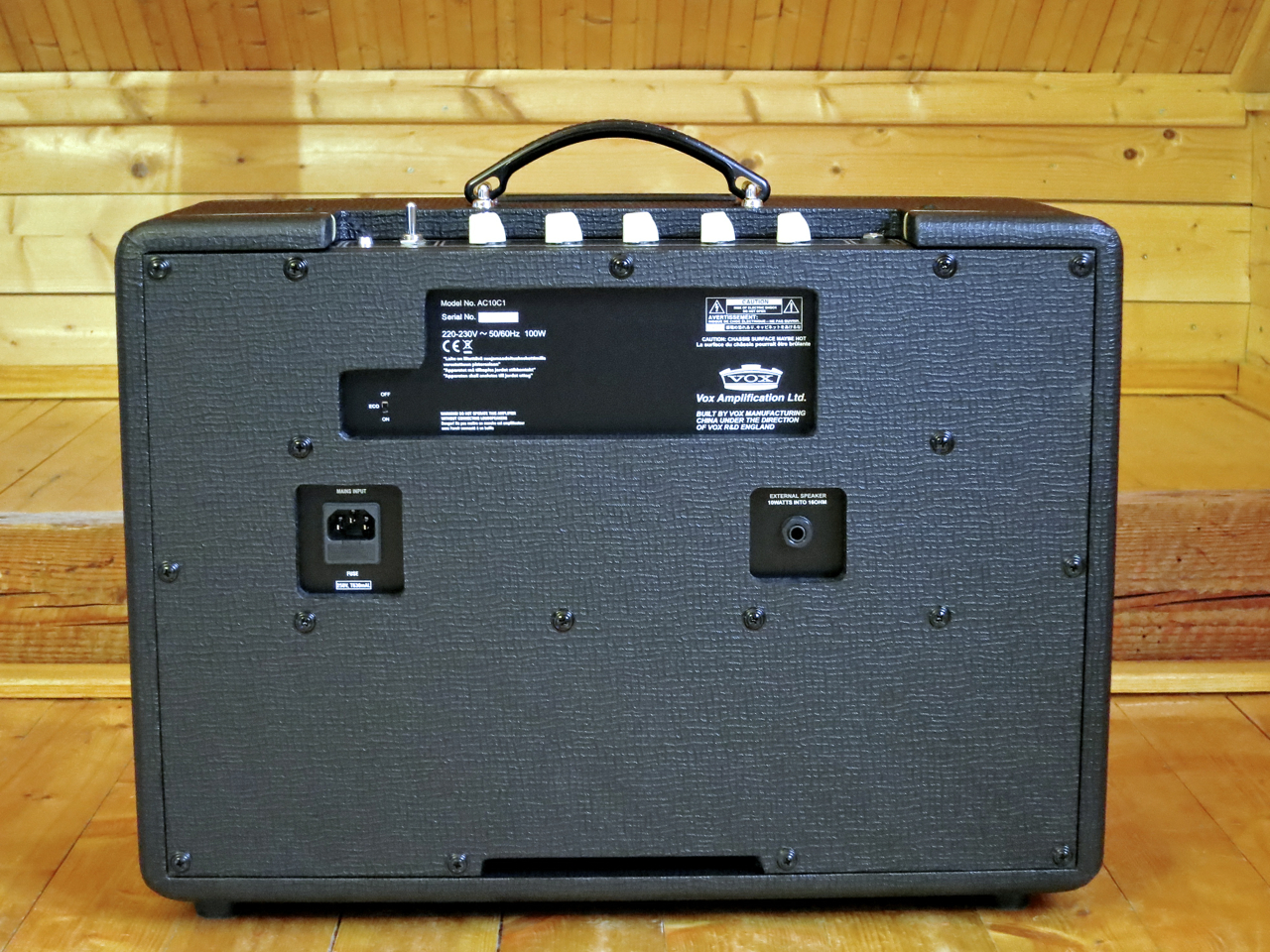
In practical terms, the Vox AC10C1 is a closed-back combo, despite the small opening for preamp tube ventilation.
A ten-inch Celestion VX10 has been chosen as the combo’s sole speaker.

In the EU the new combo is sold with an Eco-feature. When the Eco-switch is set to ”on”, the AC10C1 will power off automatically if the amp isn’t played for two hours.
The AC10C1 can be connected to an external speaker cabinet, as long as the load is kept to 16 Ohms.
****

Let me say something about the Vox AC10C1’s volume first:
This little amp is quite the belter for a combo rated at only 10 Watts! Yes, it does have a master volume control, but I still wouldn’t recommend using this Vox as a living-room amp in an apartment block. The Volume control really has to be set to 10 o’clock, or higher, to make this baby come to life.
The basic character of this Vox combo is rather bright and bitey – I had to take the Treble knob down to below 10 o’clock to find the sounds that I like.
This AC10C1 doesn’t have oodles of clean headroom, still there are some very nice clean tones to be had in the first third of the Gain control’s range, when you use Fender-type single coil pickups (Fender Stratocaster; amp gain at 10 o’clock):
Many valve amp snobs will view a digital reverb circuit as a big no-no, but in my view, the AC10C1’s reverb is one of the very best I’ve ever heard in an amp in this price range. The reverb is a digital version of a spring tank, and has a charming sense of depth. At higher settings you can even get some ”spring splash” by attacking the strings with gusto:
Due to its higher output a P-90-type pickup will require you to adjust the volume knob(s) on the guitar, if you want to achieve genuinely clean sounds. Here’s a clip of an Epiphone Casino (with Göldo P-90s), with the guitar’s volumes turned about halfway down (amp gain at 9 o’clock):
Here’s the same Casino with its volume controls set to 8 (the amp settings stay untouched):
Humbuckers, too, mean you will have to turn the guitar down a bit for clean sounds, otherwise the AC10C1 will start adding some of that famous Top Boost grit. The first clip uses a Hamer USA Studio Custom with its volume controls turned down to 5 (amp gain at 9 o’clock):
Same guitar, same amp settings, but the Hamer’s volumes have been set to 7:
You could sum up the AC10C1’s distorted sounds with one word – classic! This isn’t a high gain combo by no stretch of the imagination. This Vox feels most at home with Pop-, Blues-, and Rock-sounds of the Sixties and Seventies (and their modern descendants). If you want a piece of that classic Vox Top Boost tone (think Beatles, Queen, U2), the AC10C1 has it in spades at manageable volume levels.
Stratocaster; amp gain 3 o’clock:
Casino; amp gain 1 o’clock:
Hamer; amp gain 1 o’clock:
Stratocaster; full amp gain:
Casino; full amp gain:
Hamer; full amp gain:
****
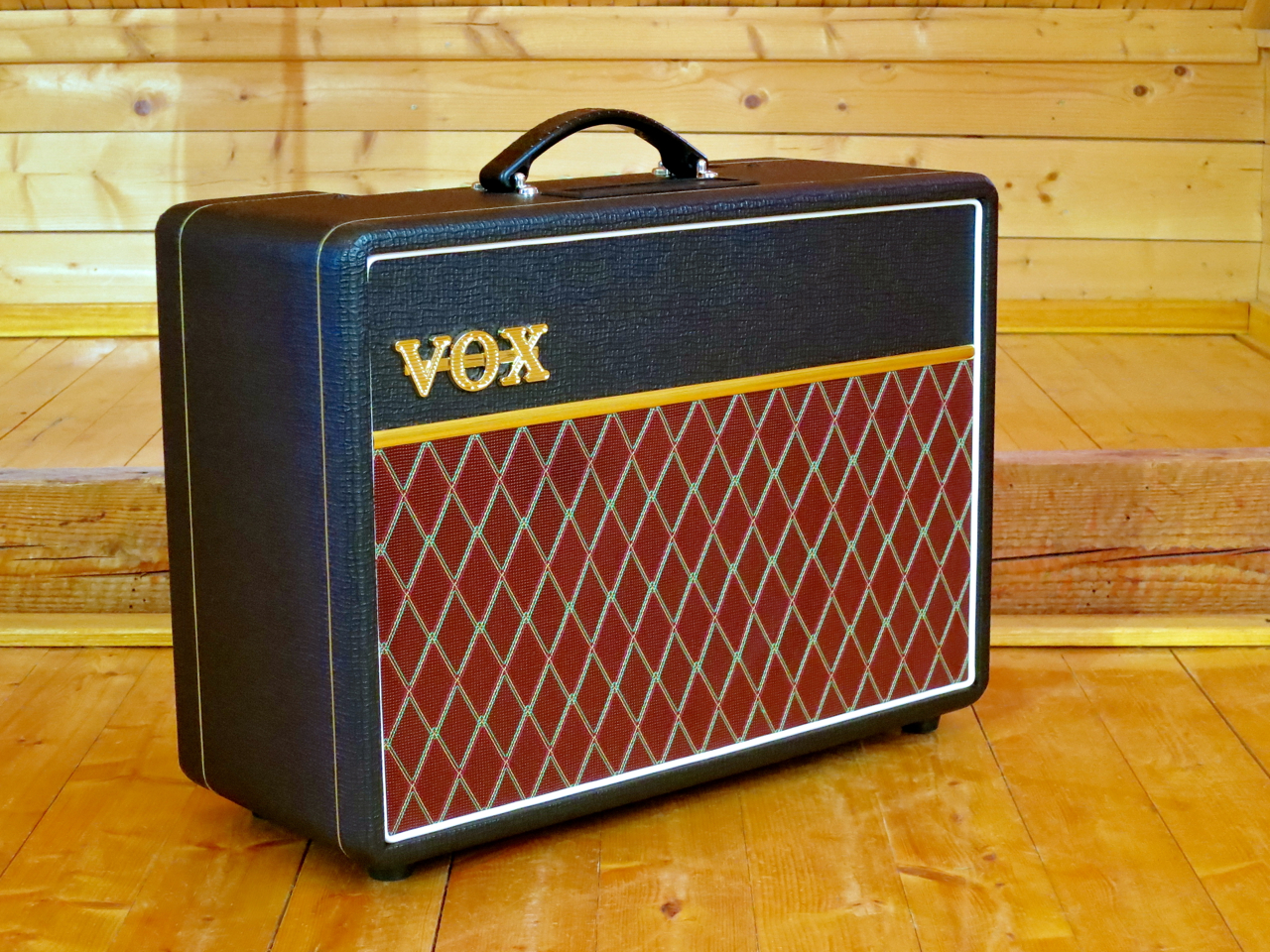
In my opinion, the Vox AC10C1 is just the ticket if you’re after genuine Vox tones in a compact, easy-to-handle package.
Clean headroom isn’t to be had in abundance, but luckily this Vox combo reacts extremely well to volume changes on the guitar. The sound cleans up nicely, while the amp retains its full vigour and liveliness.
The Vox AC10C1 is loud enough for most rehearsal situations, and you might even use it in some small venues without a mike.
For studio work, too, I feel Vox’ AC10C1 has a lot to offer, because it enables you to get chunky Vox tones with much less bleed-through into other microphones, like the drum mikes.

****
Vox AC10C1
current street price in Finland approximately 520 €
Finnish distribution: EM Nordic
A hearty ”thank you” goes to DLX Music Helsinki for the loan of the review combo!
Pros:
+ value for money
+ compact size
+ reverb sound
+ amp sound
Cons:
– limited clean headroom
Testipenkissä: Vox AC10C1
Uusi Vox AC10C1 on teholtaan oiva väliaskel firman Custom-sarjassa neliwattisen AC4C1:n ja 15-wattisen AC15C1-kombon välillä.
****
Vox AC10C1 (katuhinta noin 520 €) ei ole alkuperäisen (1950 tai 60-luvun) AC10-kombon uusintapainos, vaan uutuuskombo on Kiinassa rakennetun, nykyaikaisen Custom-sarjan jäsen.
Näin ollen AC10C1-vahvistimesta löytyy – alkuperäisen vibratoefektin sijaan – laadukas digikaiku, sekä erilliset Gain- ja (Master) Volume-säätimet.
Uusi Vox-kombo näyttää pienennetyltä versiolta firman legendaarisesta AC30-mallista – paljon mustaa vinyyliä, kultaiset ja valkoiset koristelistat, sekä vinoneliökuvioilla koristettu, ruskea etukangas.
AC10C1 painaa vain 12 kiloa, minkä ansiosta komboa on helppo kantaa sen ainoasta muovikahvasta.
Koska kyse on kiinalaisesta sarjatuotannosta, ei tässä voi odottaa käsinjuotettua, kallista point-to-point elektroniikka, vaan AC10 on toteutettu kolmella piirilevyllä, joihin myös vahvistimen putkikannat on kiinnitetty. Hyvän kuvan AC10C1:n elektroniikan arkkitehtuurista saa tästä linkistä.
Voxin kaksi EL84 päätevahvistinputkea sijaitsevat kombon kotelossa suoraan kahvan viereisen tuuletusritilän alla. Etuvahvistimen putket (2 x 12AX7) taas löytyvät kombon pohjan läheltä, jossa niille on takaseinässä toinen tuuletusaukko.
Myös kombon säädinpaneeli on ulkonäöltään tyypillinen Vox-kombolle.
Paneeli tarjoaa Gain- ja Volume-säätimien lisäksi vielä kaksikaistaisen EQ-osaston, sekä säätimen kaiulle.
Vox AC10C1 on käytännössä suljetulla takaseinällä varustettu kombovahvistin, vaikka takaseinässä onkin pieni tuuletusreikä.
Kaiuttimeksi on valittu yksi kymppituumainen Celestion VX10.
EU:ssa uutuuskomboa myydään uudella Eco-ominaisuudella. Kun Eco-kytkin on päällä-asennossa, AC10C1 menee omatoimisesti pois päältä, jos kombo on kaksi tuntia tyhjäkäynnissä.
AC10C1:n kanssa voi käyttää sellaista lisäkaappia, jolla on 16 ohmin impedanssi.
****
Ensin sana Vox AC10C1:n tehosta:
Tämä vahvistin on 10-wattiseksi komboksi erittäin kovaääninen! Uutuus-Voxi ei mielestäni oikein sovi kerrostaloasunnon olohuonekomboksi, koska tämä AC-kymppi alkaa soida kunnolla vasta, kun Volume-säädin on avattu ainakin ”kello kymmeneen”.
Vox-kombon perusääni on melko kirkas – löysin minua miellyttäviä soundeja vasta, kun Treble-säädin oli kello 10:ssä (tai vielä enemmän kiinni).
Vaikka uutuus-Voxi ei tarjoa valtavia määriä puhdasta headroomia, löytyy Gain-säätimen alkumetreillä kuitenkin kauniita puhtaita soundeja Fender-tyylisillä yksikelaisilla mikrofoneilla varustetun kitaran kanssa (tässä soi Fender Stratocaster, AC10C1:n Gain: kello 10):
Monille putkipuristeille digitaalinen kaiku putkikombossa on kuin punainen vaate, mutta ainakin minun mielestäni Vox AC10C1 tarjoaa yhden parhaista digikaiuista tässä hintaluokassa. Kaikutyyppi on muhkea jousikaiku, joka myös ”pärskii” mukavan autenttisesti isoilla säädöillä ja kovalla atakilla:
Gibson P-90 -yksikelainen vaatii jo – isomman lähtötason takia – kitaran omien volume-namikoiden säätämistä hiukan alaspäin, jos halutaan, että AC10C1 pysyy puhtaana. Ensimmäisessä klipissä soi Epiphone Casino, ja sen omat volume-säätimet ovat puoliksi kiinni (AC10C1:n Gain: kello 9):
Tässä sama Casino, mutta omat volumet säädetty kahdeksaan:
Myös humbuckereilla täytyy säätää kitaran omat volumet alas, muuten Vox AC10:n soundi muuttuu jo hieman rosoiseksi. Tässä kaksi esimerkkiä Hamer USA Studio Custom -kitaralla:
AC10C1:n särösoundien kirjo menee hyvin vahvasti ”klassisen” puolelle. Tämä ei ole mikään high gain -kombo, vaan Voxin luontevin ympäristö ovat 60- ja 70-luvun Pop-, Blues- ja Rock-soundit. Kombo tarjoaa kätevästi tyypilliset (Top Boost) AC30-soundit kompaktissa – ja ei ihan niin kovaäänisessä – formaatissa.
Stratocaster, Gain – kello 3:
Casino, Gain – kello 1:
Hamer, Gain – kello 1:
Stratocaster, Gain täysillä:
Casino, Gain täysillä:
Hamer, Gain täysillä:
****
Vox AC10C1 on mielestäni juuri oikea vahvistin, jos etsii aitoa Vox-soundia helposti hallittavassa kokonaisuudessa.
Puhdasta headroomia ei ole tarjolla valtavasti, mutta onneksi tämä Vox reagoi todella hyvin kitaran volume-säätimillä, eikä näin saavutettu clean-soundi muutu elottomaksi tai ponnettomaksi.
Vox AC10C1 on riittävän kovaääninen bändikäyttöön treenikämpässä, ja pienissä keikkapaikoissa jopa livenä ilman mikkiä.
Myös studiokäyttöön Vox AC10C1 on mielestäni hyvä valinta, koska kombosta saa aidon Vox-soundin ratkaisevasti vähemmällä vuotoäänellä.
****
Vox AC10C1
katuhinta noin 520 €
Lisätiedot: EM Nordic
Kiitos DLX Musiikille testikombon lainaamisesta!
Plussat:
+ hinta-laatu-suhde
+ kompakti koko
+ kaiun soundi
+ soundi
Miinukset:
– puhdas headroom rajallinen
Vox AC10C1 – testi ilmestyy torstaina
Lisätiedot: EM Nordic
Now on SoundCloud: Vox AC10C1


Lisätiedot: EM Nordic
Review: Hehku Custom Nightingale 15
From a guitarist’s standpoint, Finland truly is the land where milk and honey flow. In relation to its tiny population Finland is home to an unbelievable number of first-rate guitar-, effects- and amp-makers.
One such boutique-level amp brand is Hehku Customs from the town of Pori (on the western coast). Hehku’s team consists of chief designer Jarmo Välimäki, as well as Markku Penttilä and Juha Heljakka, who are in charge of R & D, sales and marketing.
There are several examples of different custom amps the company has built on Hehku’s website. Prices for custom amps start at about roughly 1,300 €. Hehku Custom’s cabinet sizes and shapes are standardised, but all other details can be tailoured to each customers wishes and requirements. ”The basic idea is that we want to make our customers’ wildest dreams come true!” says Jarmo Välimäki.
****

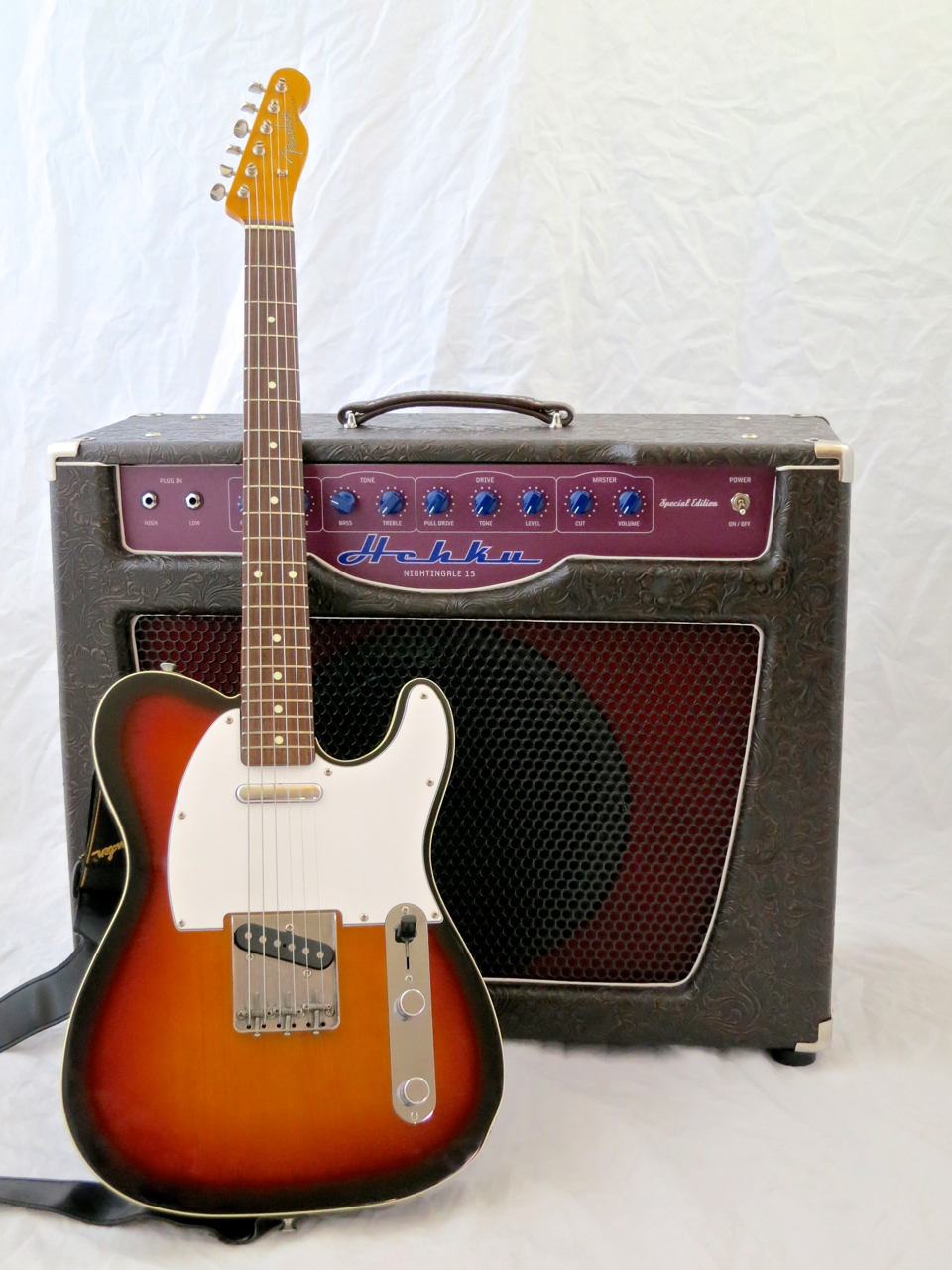
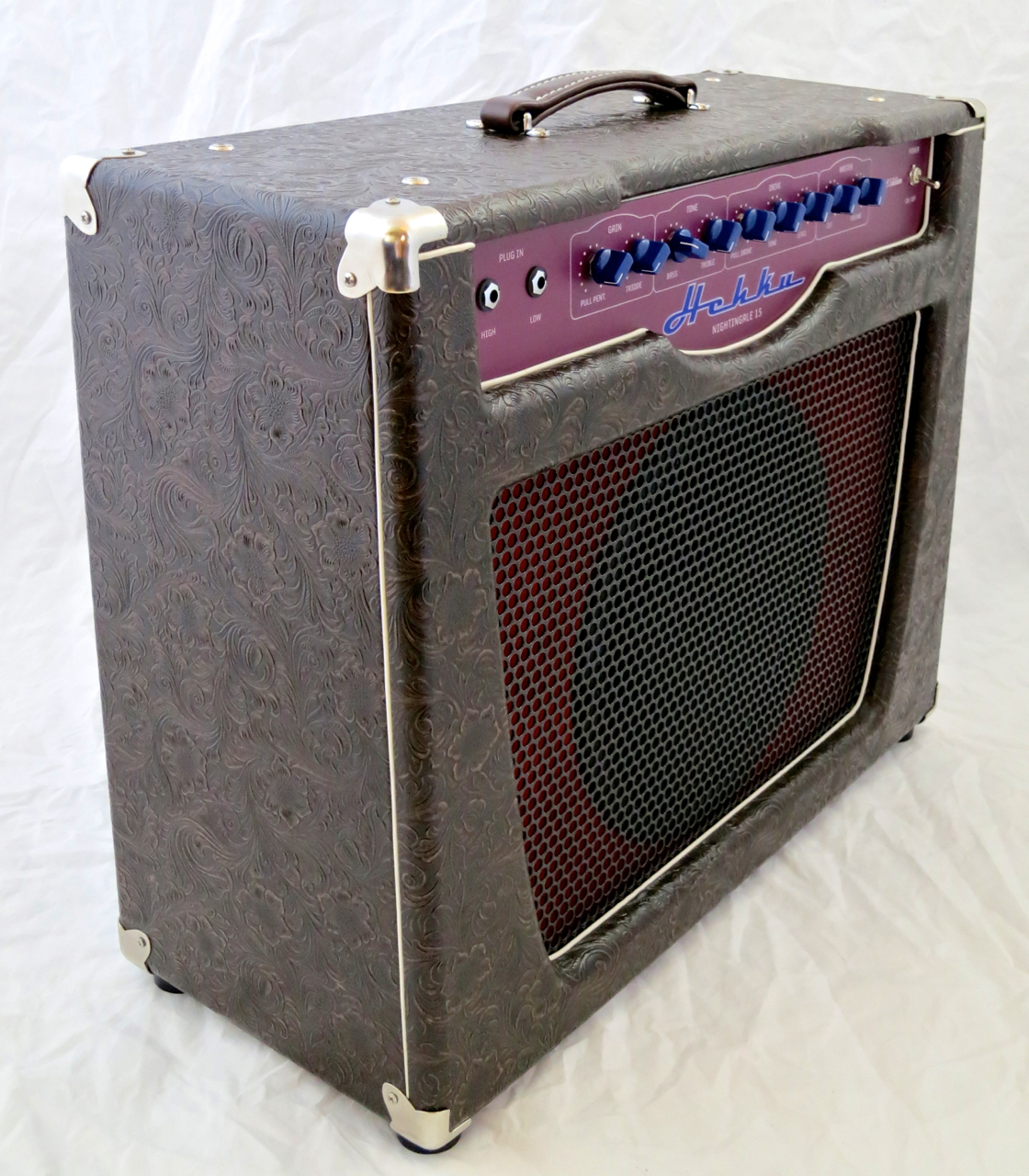
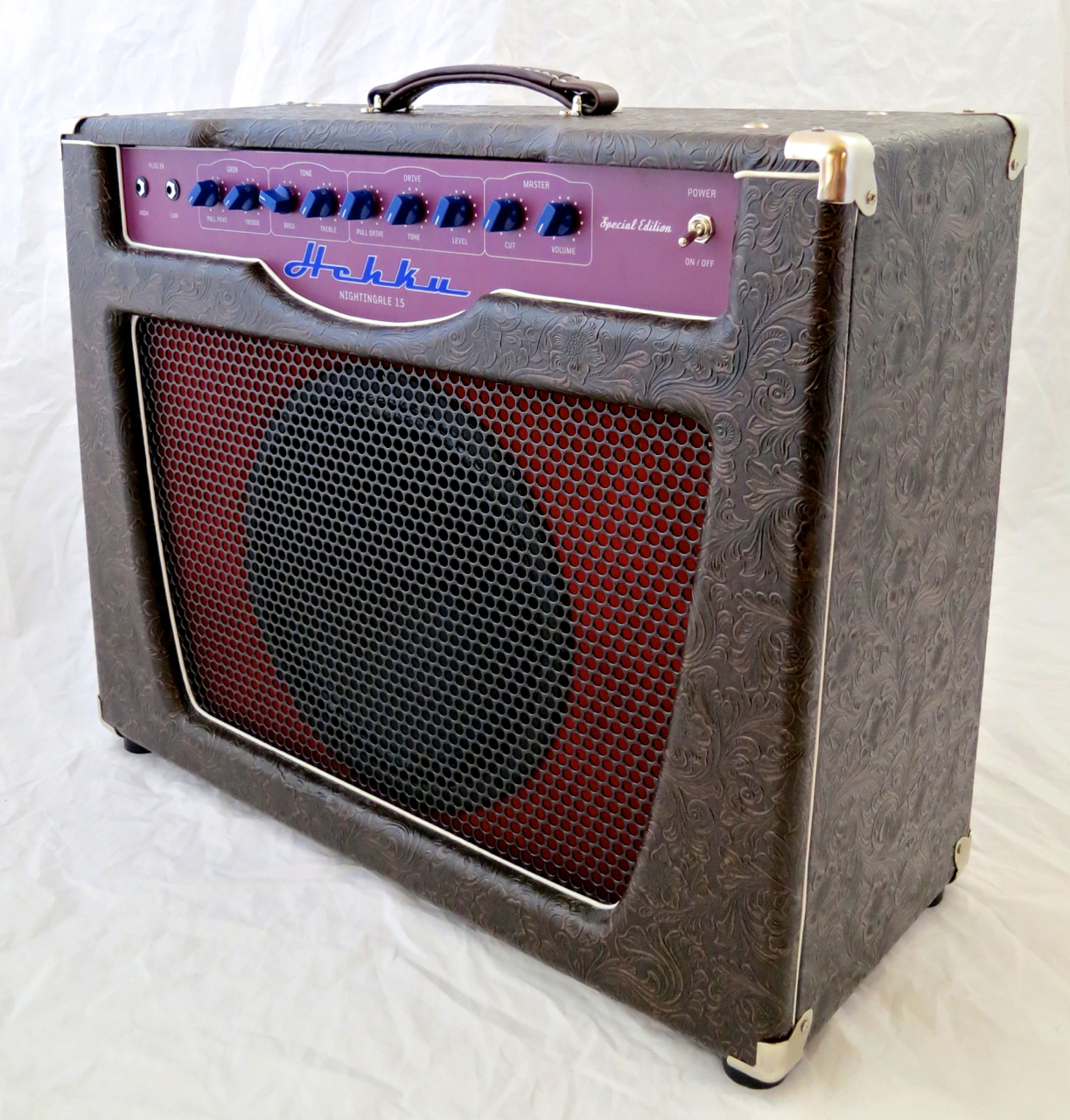
Kitarablogi got a 15-watt Hehku Nightingale 15 combo for testing. This is Hehku Custom’s first standardised model without custom options.
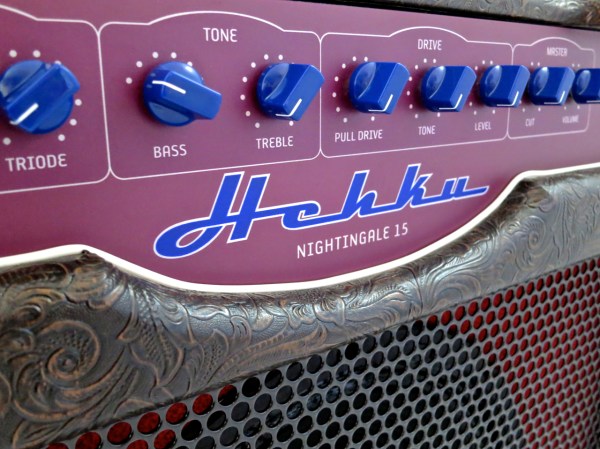
The Nightingale 15 (combo approx.: 1,950 €, head approx.: 1,750 €) is a hand-made, all-valve combo with a single 12-inch speaker, and represents many features typical of Hehku’s design philosophy.
The Nightingale’s cool and original looks make it clear from the off that this combo isn’t your typical Fender Tweed clone.
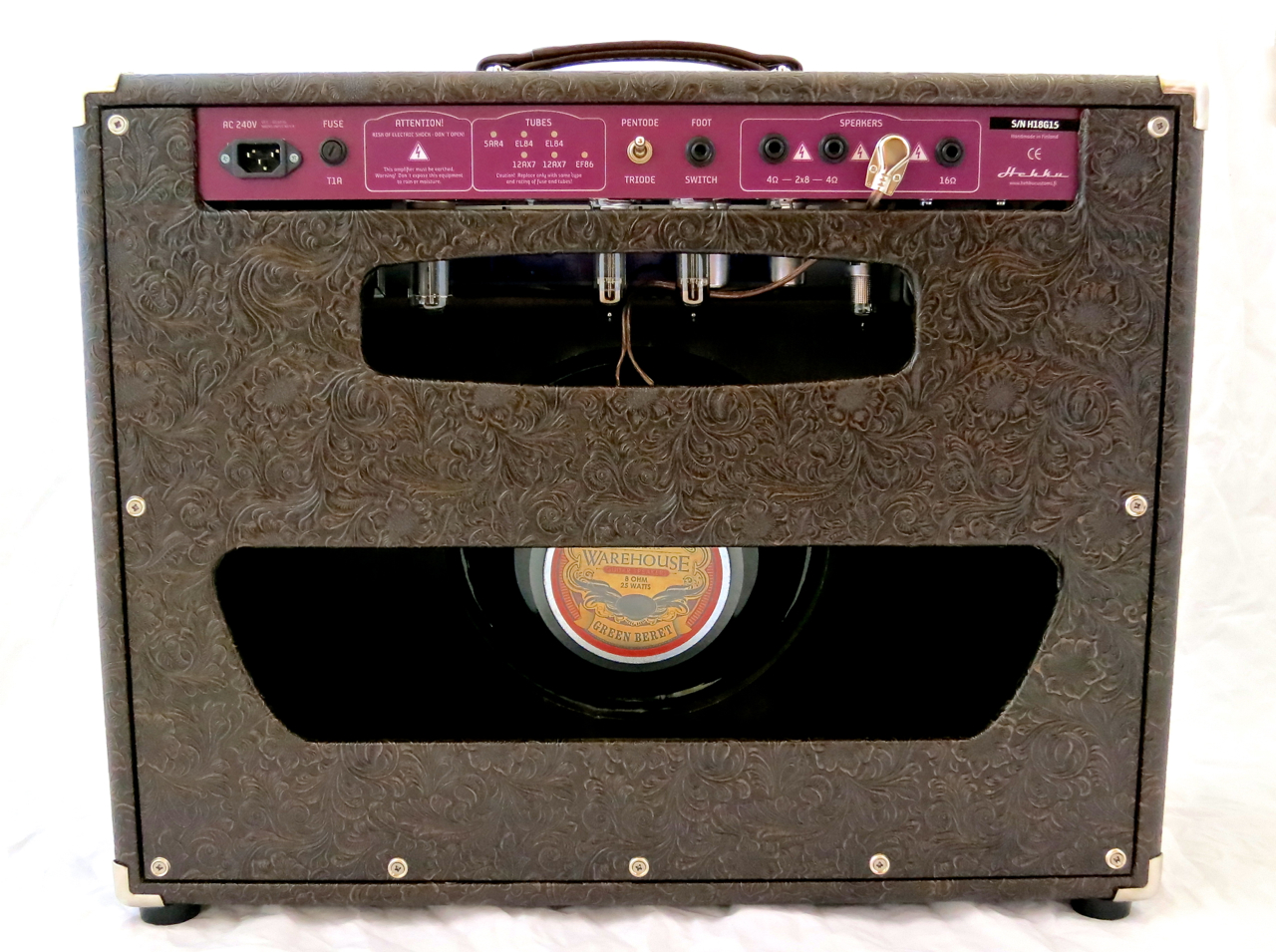
The Hehku Nightingale is an open-backed combo with easy valve access. All Hehku cabinets are made from Finnish birch ply, which is an outstanding material, both in terms of strength as well as sound.
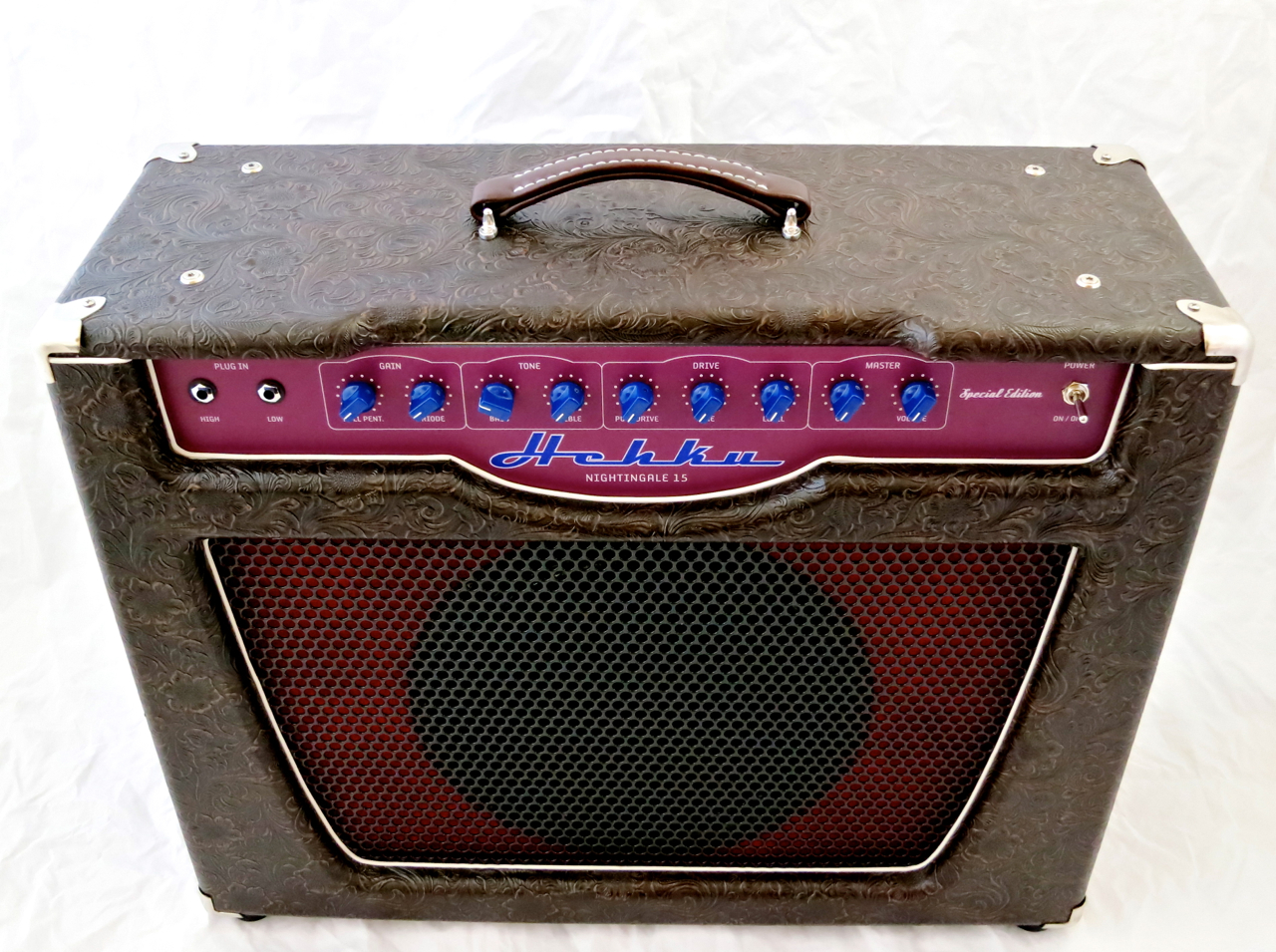
Birch ply is also relatively lightweight, which is why the Nightingale is easy to carry by its single top handle.
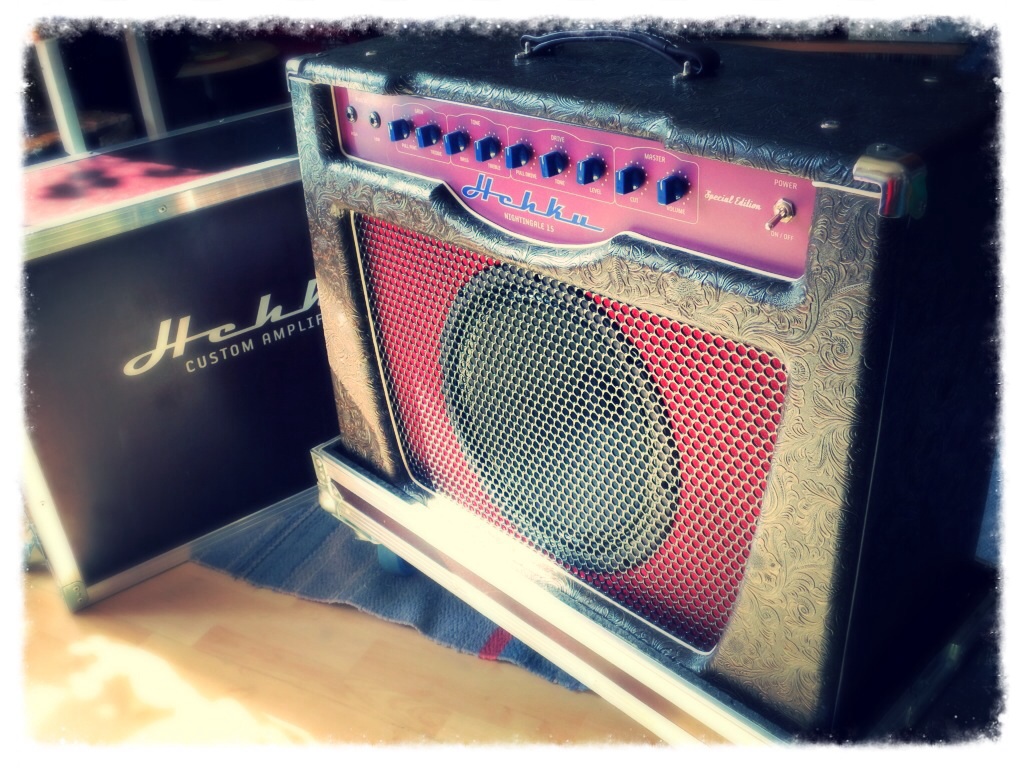
Hehku also offers professional transport cases to go with their amps and cabinets. A road case for the Nightingale 15 would set you back around 260 €.
****

Hehku’s Nightingale 15 is a very special case for a two channel combo, because its signal path is in series the whole way through.
Most vintage (-style) amps have two discrete channels with separate controls and functions (like ”Normal” and ”Tremolo”), and no channel switching capabilities. Modern amps, on the other hand, may share a single EQ section between two channels, but they offer channel switching, and separate gain and volume settings for each channel.
Hehku’s Nightingale takes its own, idiosyncratic path by offering two switchable channels in a cascading set-up. This means that the Clean channel’s triode and pentode gain settings, as well as this channels two-band EQ (six-position rotary Bass, active Treble), also influence the Drive channel’s tone and response.

You can either use the control panel’s push/pull-switches or the compact footswitch unit (included with the amp) to select triode- and pentode-modes, and to switch from Clean to Drive.

The Nightingale’s back panel sports a handy valve chart for easy orientation.
There’s also a triode/pentode switch for the power amp valves – switching to triode-mode the combo’s output power drops from fifteen to seven watts, and it also changes the amp’s tone somewhat.
Thanks to its four speaker outputs you will be able to connect the Nightingale to virtually any external guitar cabinet you can find.
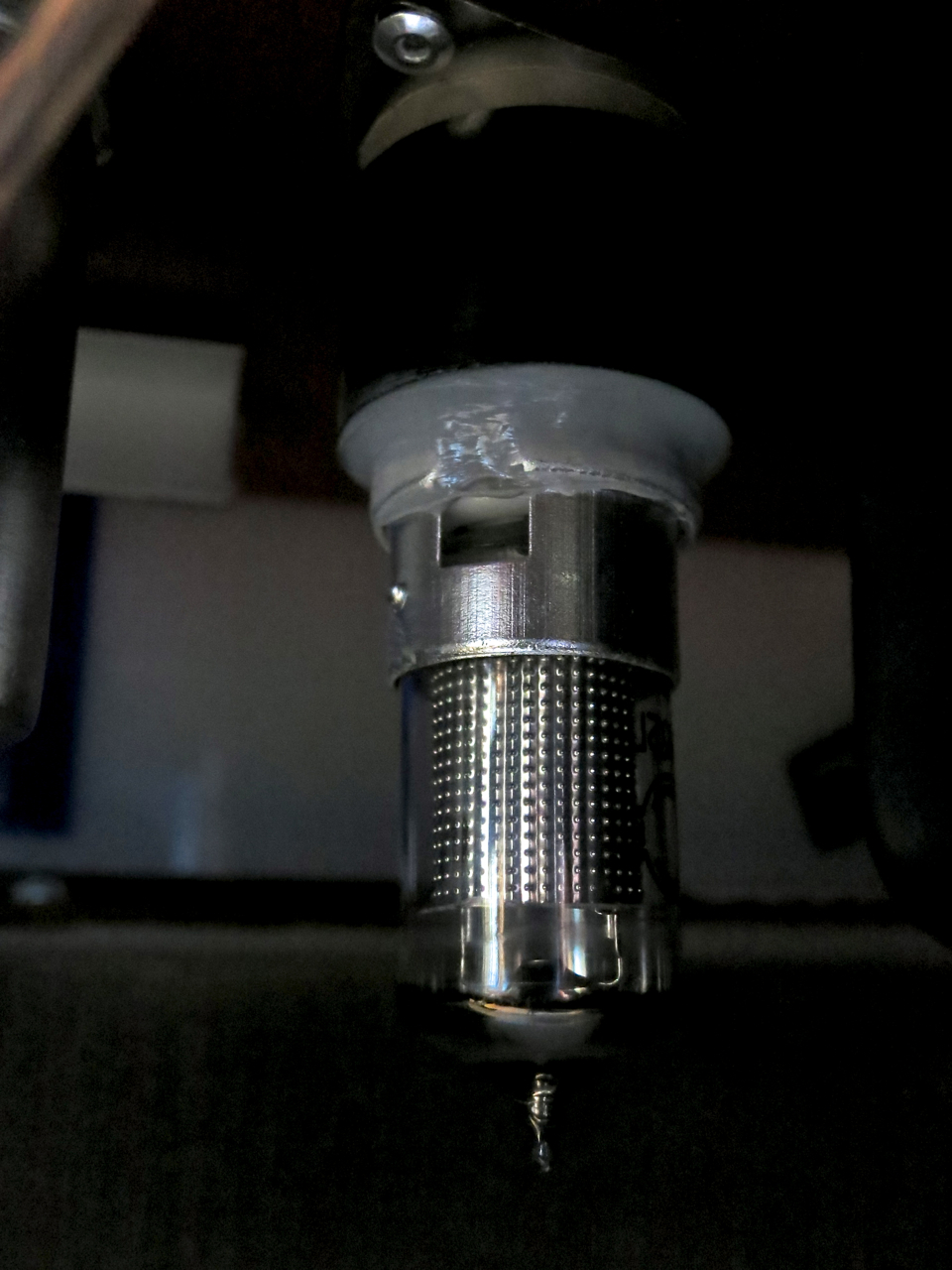
The clean channel is constructed around a EF86-type pentode. The EF86 (aka the 6267) is known for its great tone, and it can be found in some vintage Vox amps, as well as in Matchless and Dr Z amps. But due to its microphonic nature this tube type is not widely used.
Hehku Customs has solved this problem by using a damper made from silicone, which decouples the EF86 from the mechanical vibrations of the combo.

Overdrive (and phase inversion) duties are handled by a pair of 6N2P-valves, which are Russian, military-spec’ed relatives of the 12AX7/ECC83, offering a slightly different gain structure and sound.

The Nightingale uses a tube rectifier designed around a type 5AR4.

The power amp section runs on a pair of EL84s. You could also drop in two Russian (military) 6P15P/EL83-types, and thanks to the fact that the Hehku Nightingale is self-biasing, you can do this without the need for an amp technician.

A quality 12-inch speaker from Warehouse, the Green Beret, has been selected for its British sound.
****
With its factory set-up (6N2P + EL84), the Hehku Nightingale 15’s clean channels has plenty of headroom, even for twin humbucker guitars. The six-step Bass-rotary and the combo’s active Treble control offer you a lot of leeway to tune the tone to your requirements. Tonally, the Nightingale’s clean delivery is more ”Vox” than ”Blackface”.
The Nightingale’s overdriven tones are extremely tasty, too. There’s a very juicy mid-range, coupled with a healthy dose of top end grit, which will surely satisfy any fan of classic Rock and Blues sounds.
Here’s a clip recorded with my vintage-reissue Fender Telecaster – you will hear: clean (triode) –> clean (pentode) –> overdriven (triode) –> overdriven (pentode); the power amp runs in pentode-mode:
And here’s a similar clip played with my Hamer USA Studio Custom:
****
Hehku’s Jarmo Välimäki also supplied me with a set of alternative valves (12AX7 + 6P15P), and the difference in tone and dynamics is easy to hear:
With the alternative set, there’s much less headroom on offer. Even the Telecaster will drive the clean channel into break-up (in pentode-mode), with the Hamer stepping clearly into Blues-overdrive territory.
These valves add more gain to the drive channel, and also result in a slightly flabbier bass and sharper treble. The Nightingale 15 sounds great this way, too, even though my own preferences lean more into the direction of the factory set-up.
Here’s a clip with the Telecaster (the control settings have stayed unchanged, only the valves have been swapped):
And here’s the sound of the amp played with the Hamer’s two humbuckers:
****

In my view, the Hehku Customs Nightingale 15 is a fantastic all-valve combo with its own voice and an interestingly idiosyncratic overall concept. I like Hehku’s eye for detail, and the fact that the company go their own way in terms of looks and electronic design. The Nightingale is a top-drawer amp, offering its own distinctive looks and sounds, without the need to resort to snake oil or nostalgic tube voodoo.
Hehku’s Nightingale is a modern, hand-made valve combo, with a clear and easy-to-understand lay-out, as well as a very interesting and interactive signal path. The Nightingale is not about trying to imitate any specific vintage amp’s sounds – this amp is a true creative tool, setting you on your path to your personal guitar tone nirvana.
The Nightingale 15 sure isn’t cheap, but in light of the fact that this is a hand-made Finnish product, you can only call the price tag very fair!
****
Hehku Customs Nightingale 15
approximately 1.950 €
Contact: Hehku Custom
****
Pros:
+ voluptious appearance
+ workmanship
+ hand-crafted
+ Made in Finland
+ idiosyncratic channel lay-out
+ sound
Testipenkissä: Mooer

****

Musamaailma on hiljattain alkanut tuoda maahan Mooerin erittäin kompakteja kitaraefektejä.
Mooerin tapauksessa kyse on suhteellisen edullisista pedaaleista, joille valmistaja lupaa kuitenkin laadukasta soundia. Koska kitaristin pedaalilaudassa on aina liian vähän tilaa, ja soittajan kukkarossa aina vain rajoitetusti rahaa, Mooer-pedaalien kokeilu luonnollisesti kiinnosti.
****

Aloitetaan Mooer Pure Boost -boosterilla (54 €), joka tarjoaa 20 dB:n verran puhdasta signaalivahvistusta.
Tämän lisäksi Pure Boost on varustettu hyvin tehokkaalla kaksikaistaisella EQ:lla (+/- 15 dB), sekä Gain-säätimellä, jolla voi lisätä signaaliin pikkuisen putkimaista lämpöä.

Kaikki Mooer-pikkupedaalit saavat virtansa vain ja ainoastaan Boss-standardin (miinus keskellä) mukaisesta 9V-virtalähteestä, ja vain 6 mA kuluttava Pure Boost on varsinainen energiapihi (mikä on aina hyvä asia).
Pure Boost on true bypass -pedaali – niin kuin kaikki tässä testatut efektit – mikä tarkoittaa, että signaali kulkee suoraan tulosta lähtöön, silloin kun boosteri on kytketty pois päältä.

Kestävänoloinen Mooer Pure Boost on erittäin kätevä apulainen, kun halutaan nostaa signaalitasoa, kenties myös hieman maustettuna EQ:lla.
Pure Boostilla saa myös nostettua putkivahvistimen puhtaan kanavan särölle tai lisättyä boostaamisella pikkusärölle vielä aimo annoksen lisää säröä.
Ääninäytteessä Fender Stratocasterin signaali menee Mooer Pure Boost -pedaalin kautta Blackstar HT-1R -komboon:
****
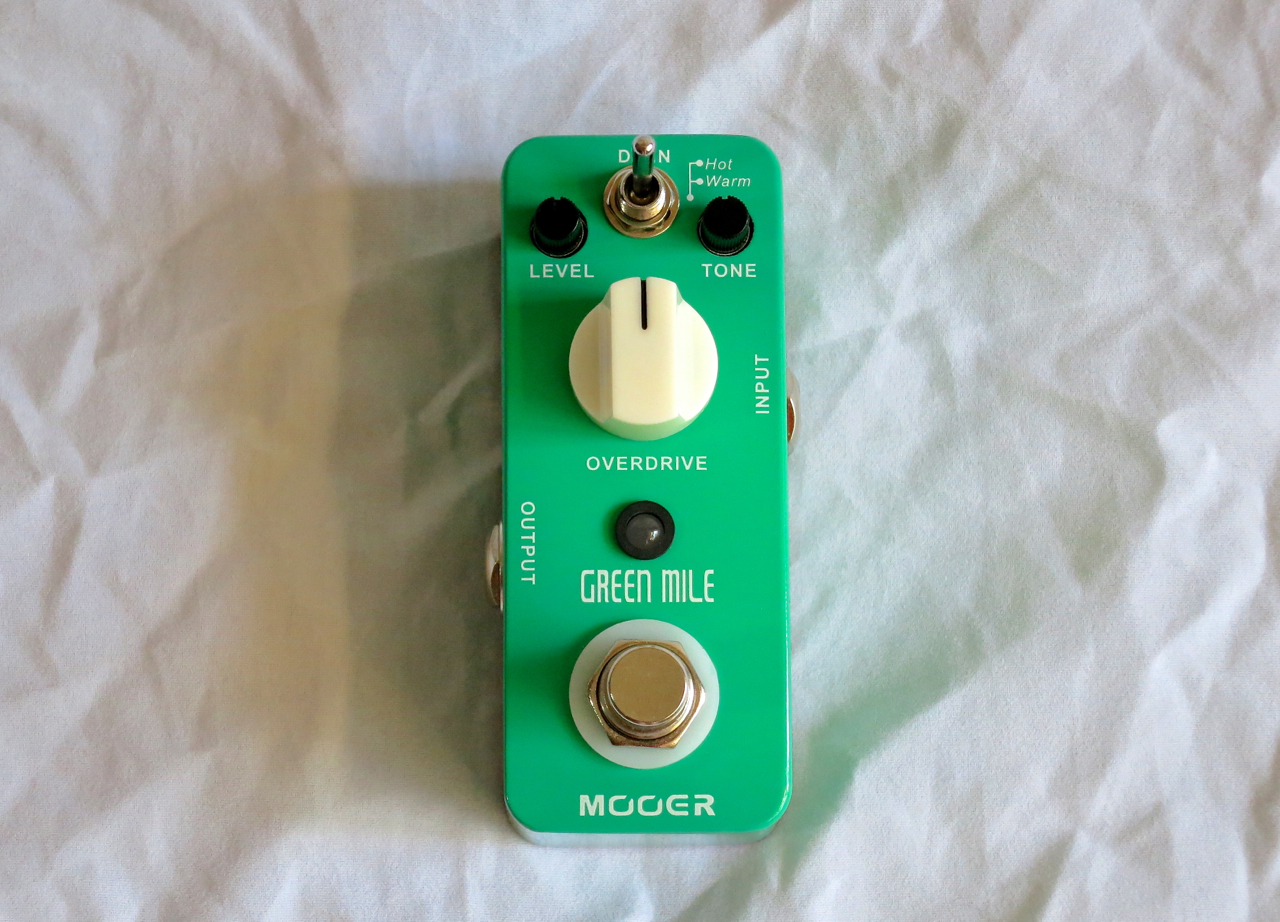
Mooer Green Mile (54 €) on firman Tube Screamer -tyylinen overdrive-särö.
Perinteisten Overdrive- , Tone- ja Level-säätimien lisäksi Green Mile tarjoaa vielä kaksipykäläisen moodikytkimen.
Warm-moodissa Green Mile -pedaali toimii tavallisena TS-tyylisenä särönä, jolla on kermainen keskialue ja maltillinen kompressointi. Hot-moodissa lisätään signaalitielle vielä tehokas boosteri.
Green Mile käyttää virtaa hyvin säästeliäästi (7 mA).

Kyllä, hyvin toimii!
Tässä pätkässä Mooer Green Mile on Warm-moodissa. Soitan ensin Stratocasteria puhtaaseen kanavaan, ja sen jälkeen särökanavaan:
****
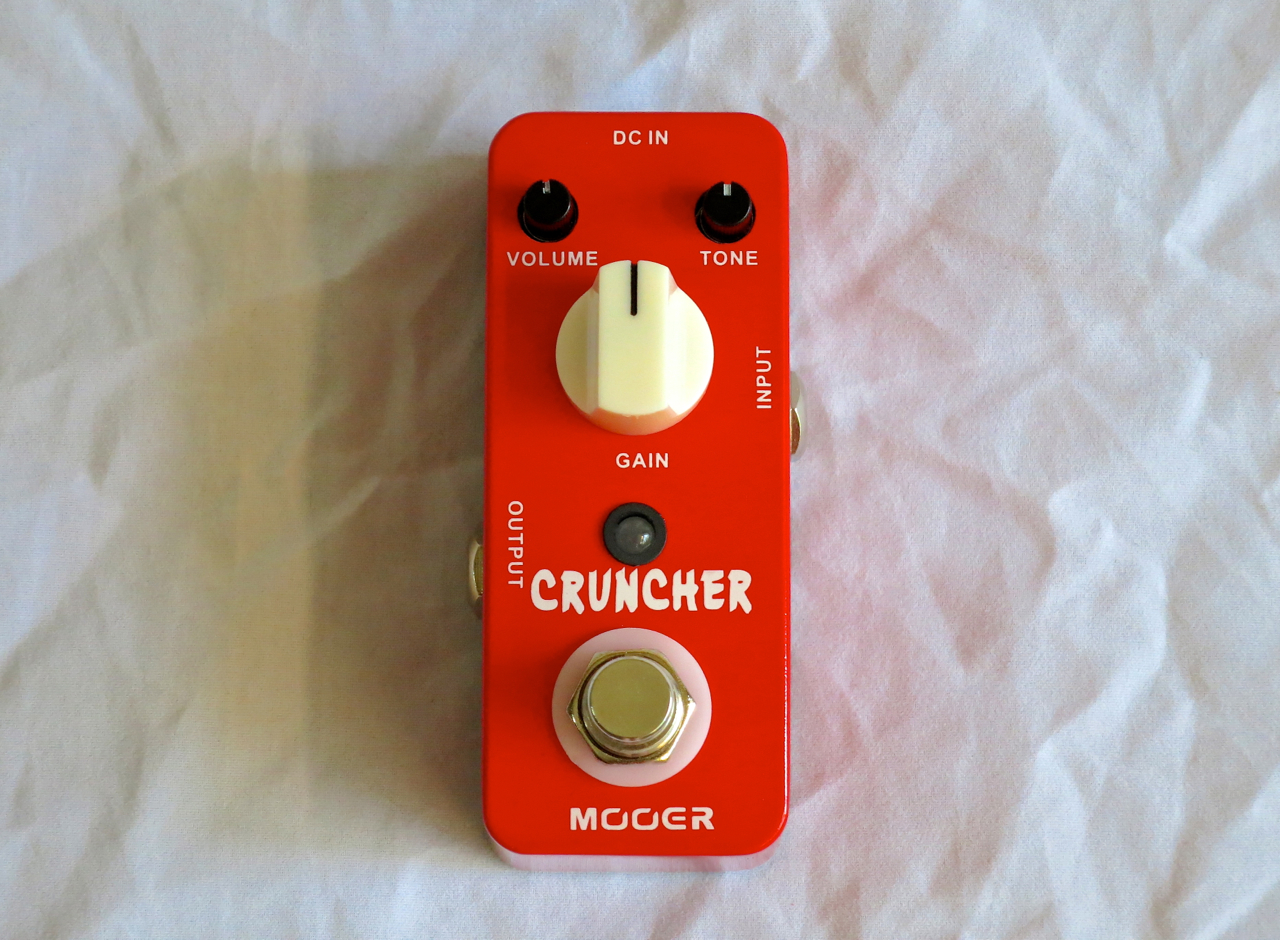
Punainen Mooer Cruncher (54 €) on distortion-tyyppinen särörasia.
Cruncherin käyttö on hyvin helppo, sillä efekti keskittyy olennaiseen tarjoamalla ainoastaan perinteiset Gain-, Tone- ja Volume-säätimet.

Mooer Cruncher kuulostaa mielestäni varsin herkulliselta. Tästä säröstä lähtee sopivasti potkulla ja purevuudella höystetty Rock- ja Metal-soundi.
Jällen kerran audiopätkässä kuulaan ensin HT-1R:n puhtaan kanavaan menevä vaihtoehto, ennen kun Cruncher soitetaan särökanavaan:
****
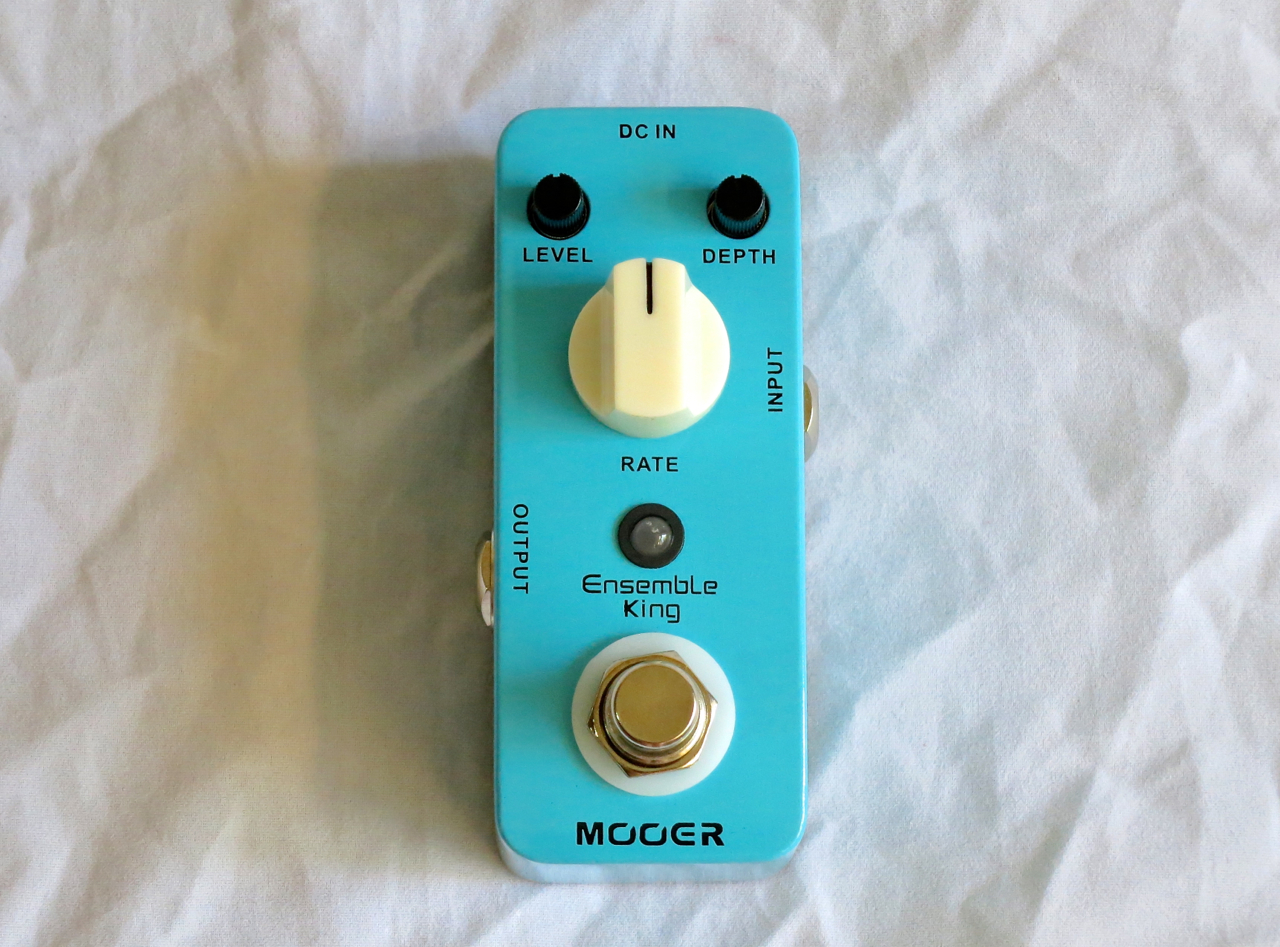
Se on vaaleansininen, sen täyttyy siis olla chorus.
Ensemble King (59 €) on Mooer-pikkuspedujen helppokäyttöinen chorus-pedaali.
Niin kuin kaikkien muiden firman pedaaleissa, myös Ensemble Kingin kotelo on valmistettu kokonaan metallista, ja sen pohjassa on paksu, liukumista estävä kumikerros.

Pikku-Mooerista lähtee kauniisti tiheä, klassinen chorussoundi, joka sopii mainiosti joka lähtöön. Ensemble Kingin oma kohina on kiitettävän alhainen:
****

Mooer Mod Factory (75 €) on tämän efektisarjan moniosaaja, joka pystyy tuottamaan peräti yksitoista eri modulaatioefektiä!
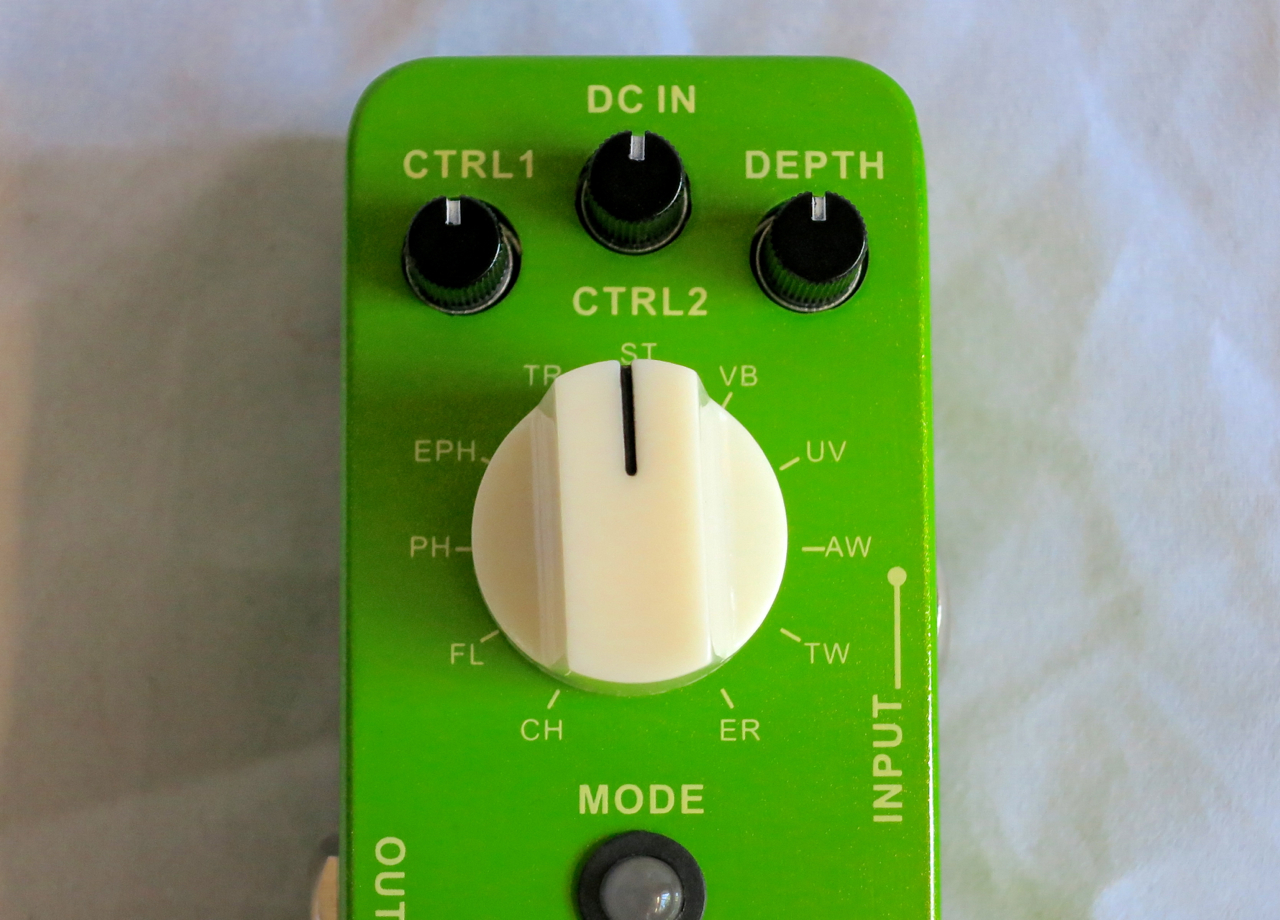
Isolla Mode-kytkimellä valitaan Mod Factoryn efekteistä sen, jota haluaa käyttää.
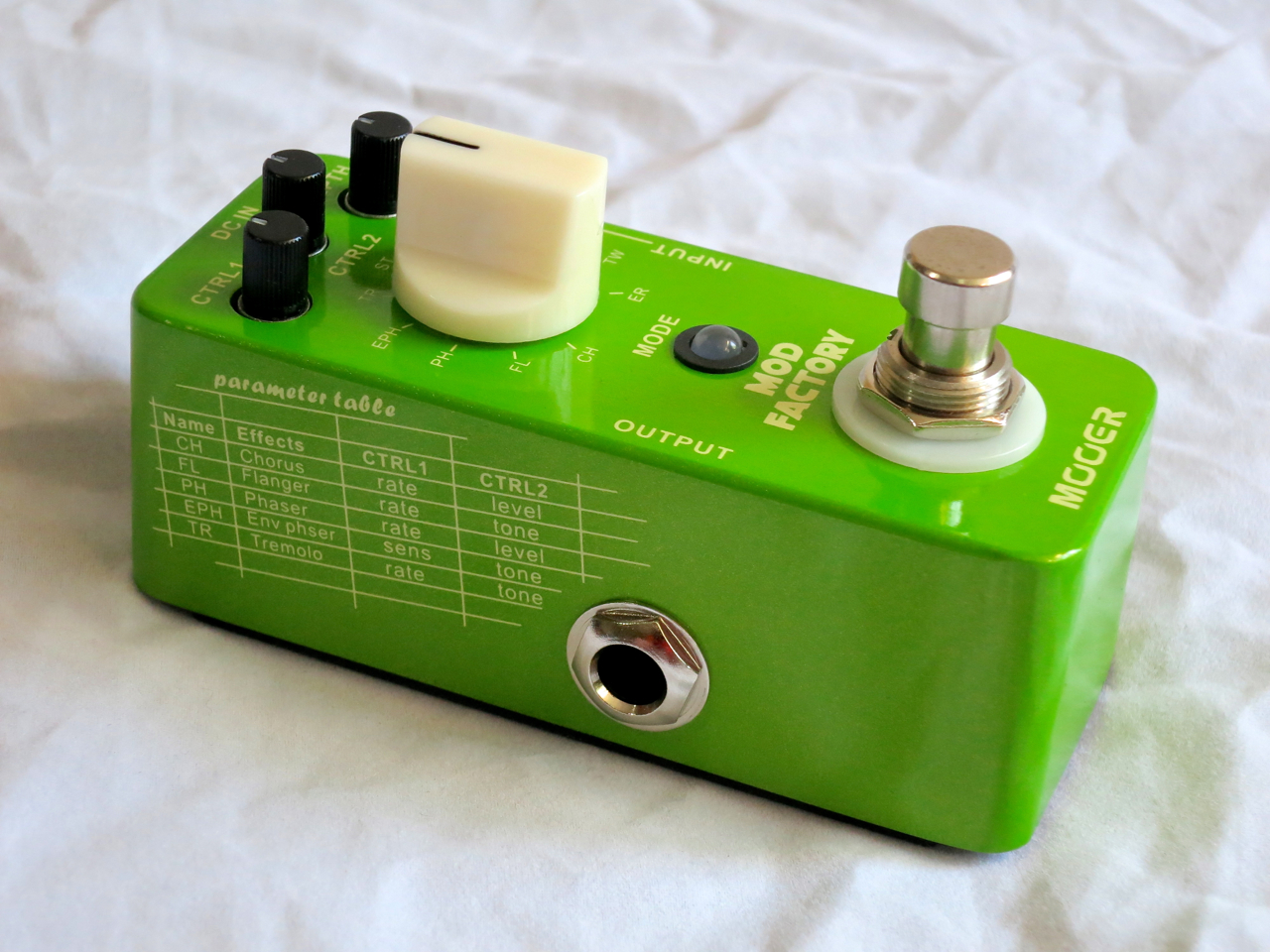
Tarjolla ovat chorus, flanger, phaser, envelope phaser, tremolo…
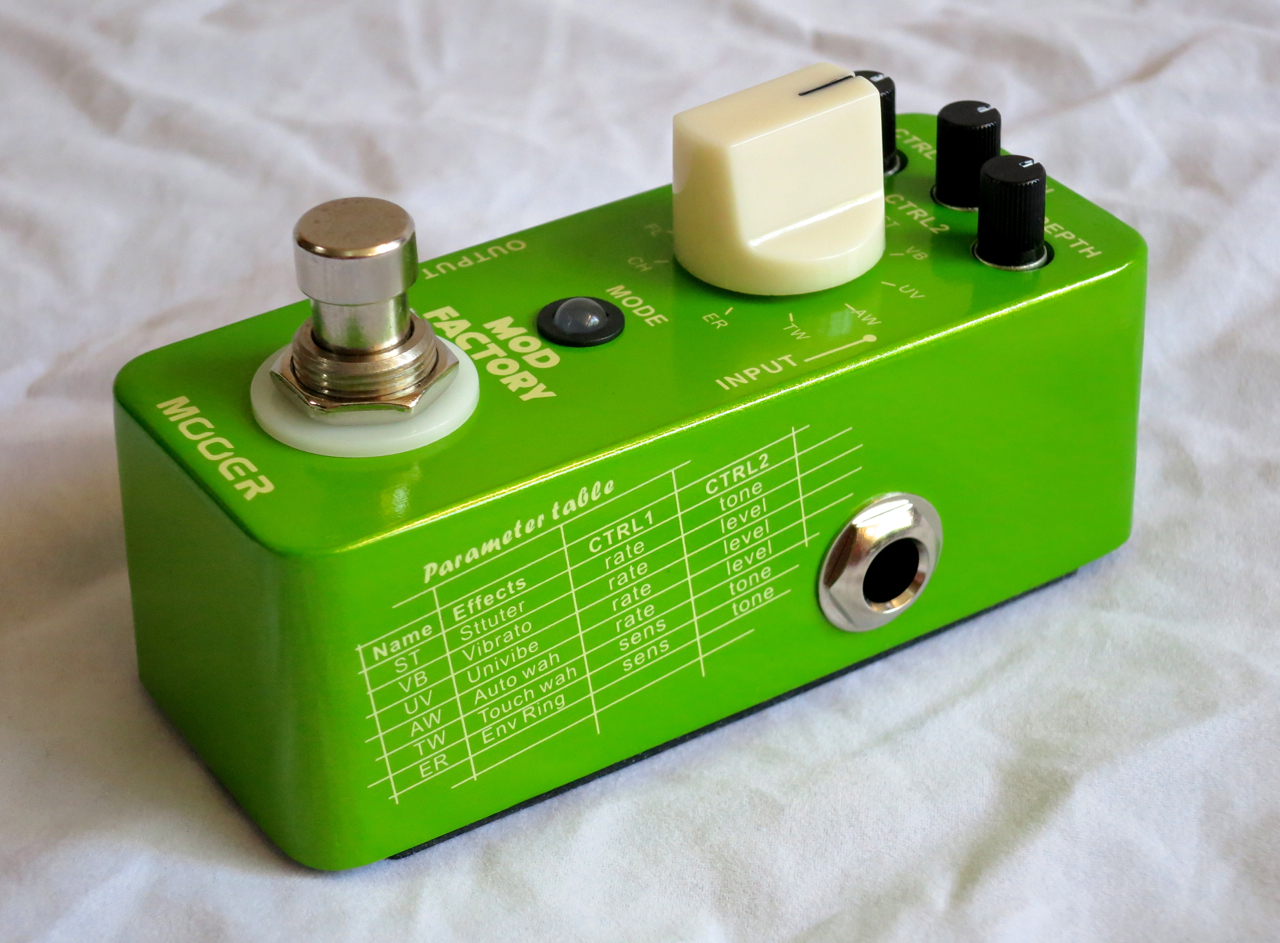
…stutter, vibrato, Univibe, auto-wah, touch-wah, sekä kehämodulaattori.
Omat suosikkini ovat Mod Factory -pedaalin molemmat phaserit, sen tremoloefekti, sekä tämän Mooerin auto-wah. Olen kuitenkin melko varma, että jokainen kitaristi löytää Mod Factorysta muutaman mielenkiintoisen efektin omaan käyttöön.
Tässä esimerkissä soitan kaikki efektit läpi (aloitan choruksesta):
****

Mooerin ShimVerb -kaiku (66 €) tarjoaa kolme erilaista kaikutyyppiä:
Room on huonetta (tai studiotilaa) muistuva kaikusoundi, kun taas Spring-vaihtoehto on digitaalinen näköispainos jousikaiusta. Shimmer on ShimVerbin erikoiskaiku, jossa tuodaan kaikuun hieman metallista hohdetta lisäämällä signaaliin kvintin verran ylöspäin nostettua ääntä.
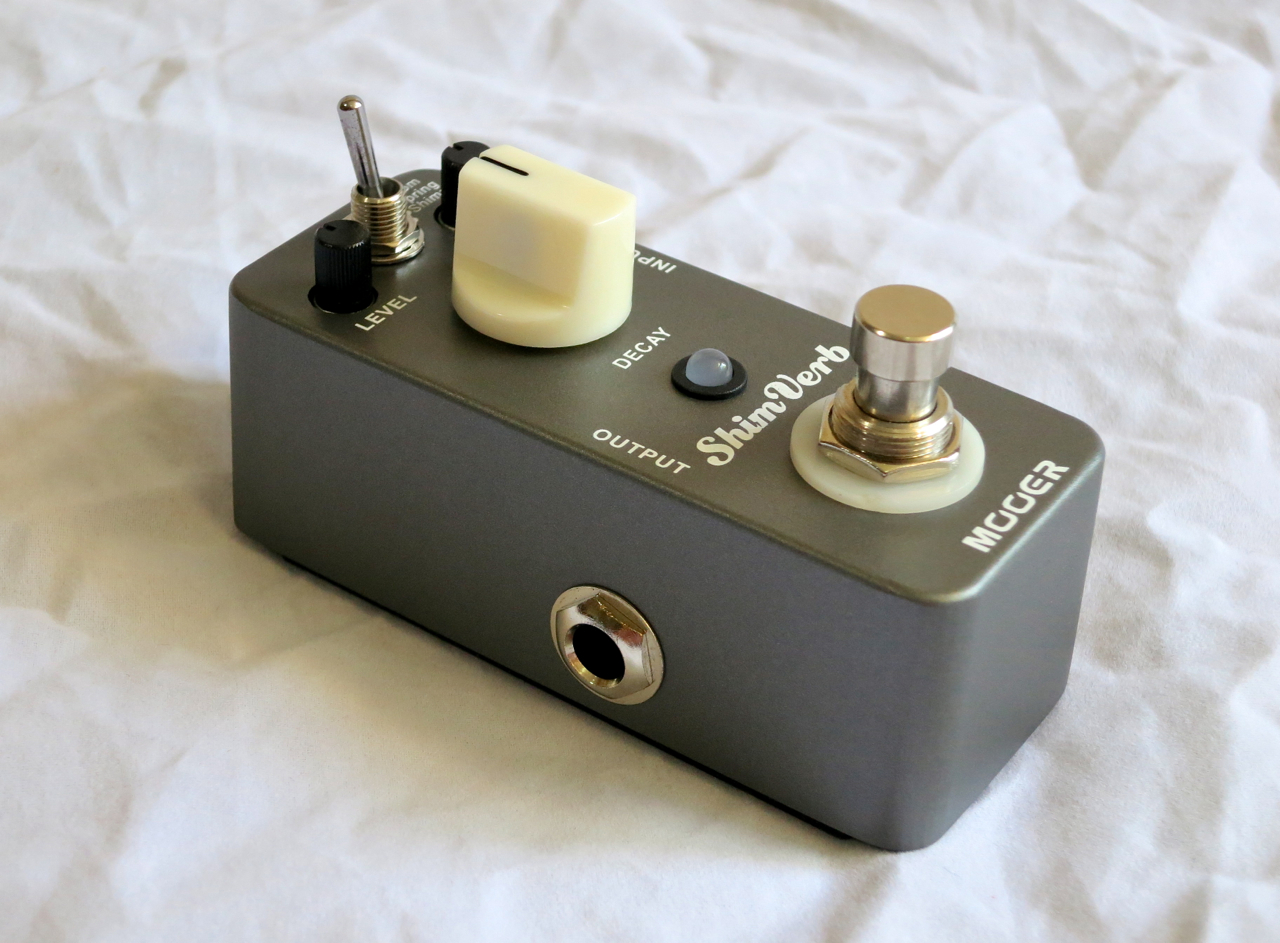
ShimVerb on tästä kattauksesta ehkä se pedaali, joka puhuttelee minua henkilökohtaisesti vähiten. Ainakin omiin korviini Room on pikkusen liian honottava, eikä Spring-kaiusta löydy niin selvää jousimaista klangia ja pärskettä kuin odotin. Mooerin Shimmer-kaiku on kuitenkin mielenkiintoinen valinta kokeiluhaluiselle kitaristille.
Aloitan äänipätkässä Room-kaiulta:
****

Mooer Reecho (75 €) on viivepedaali, joka tarjoaa kolme erilaista delay-tyyppiä:
Analog on Mooerin versio vanhasta analogisesta viivepedaalista, Real Echo on nykyaikainen digitaalinen delay-efekti, ja Tape Echo matkii vanhan nauhakaiun soundia.

Mooerin Reecho-pedaalin Time-säätimellä voi säätää viiveajan viiden ja 780 millisekunnin välillä.
Mielestäni Reecho on ilahduttavan suoraviivainen, mutta silti melko monipuolinen delay-pedaali. Analog-moodi soi juuri oikealla tavalla suttuisesti, kun taas Real Echo tarjoaa orgaanisen lämmintä viive-efekiä. Pitkillä viiveasetuksilla Tape Echolla on ehkä hieman liian voimakas nauhahuojunta, mutta Rockabilly- ja Rautalanka-meininkiin soundi sopii kuin piste iin päällä.
Esimerkki alkaa Analog-vaihtoehdosta, sitten tulee Real Echo, ja sitten Tape – viimeisinä toinen Analog-viivellä soitettu pätkä:
****
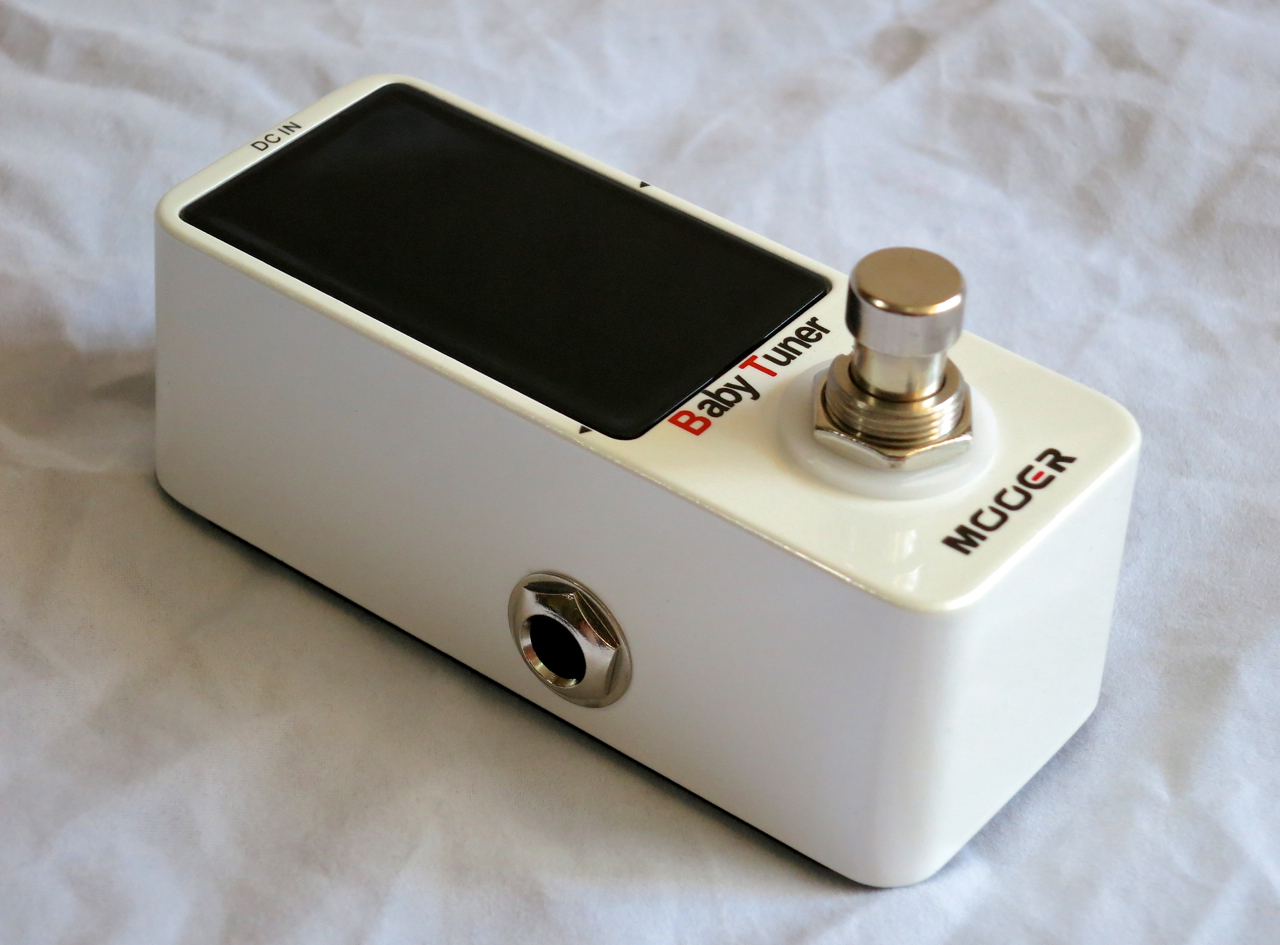
Baby Tuner (49,90 €) on tämän Mooer-sarjan digitaalinen viritysmittari.
Vaikka Baby Tunerin ulkonäkö muistuttaa erästä polyfonista viritysmittaria, tämä pikku-Mooer on kuitenkin perinteinen viritinmittari.
Ison, kirkkailla ledeillä varustetun näyttönsä ansiosta Mooer Baby Tuner on erittäin helposti luettavissa, ja viritysmittari on optimoitu toimimaan moitteettomasti myös seitsenkielisillä kitaroilla ja viisikielisillä bassoilla.
****
Mooerin mikrokokoiset efektipedaalit kyllä tarjoavat roimasti vastinetta rahalle! En väitä, että nämä pikkulootat olisivat boutique-luokan peliä, mutta Mooer-pedaalien soundi on kuitenkin niin hyvässä mallissa, että näitä löytävät varmasti tiensä myös monen ammattimuusikon pedaalilaudalle.
Nyt kokeiltujen pedaalien lisäksi löytyy vielä runsaasti lisää Mooer-efektejä, joihin kannattaa varmasti myös tutustua lähemmin.
****
Mooer – minikokoiset efektipedaalit
• Cruncher – 54 €
• Ensemble King – 59 €
• Green Mile – 54 €
• Mod Factory – 75 €
• Pure Boost – 54 €
• Reecho – 75 €
• ShimVerb – 66 €
• Baby Tuner – 49,90 €
Maahantuoja: Musamaailma
****
Plussat:
+ hinta-laatu-suhde
+ metallikotelo
+ pieni koko
+ soundi


 Kitarablogi.com – Finland's premier Guitar and Bass blog