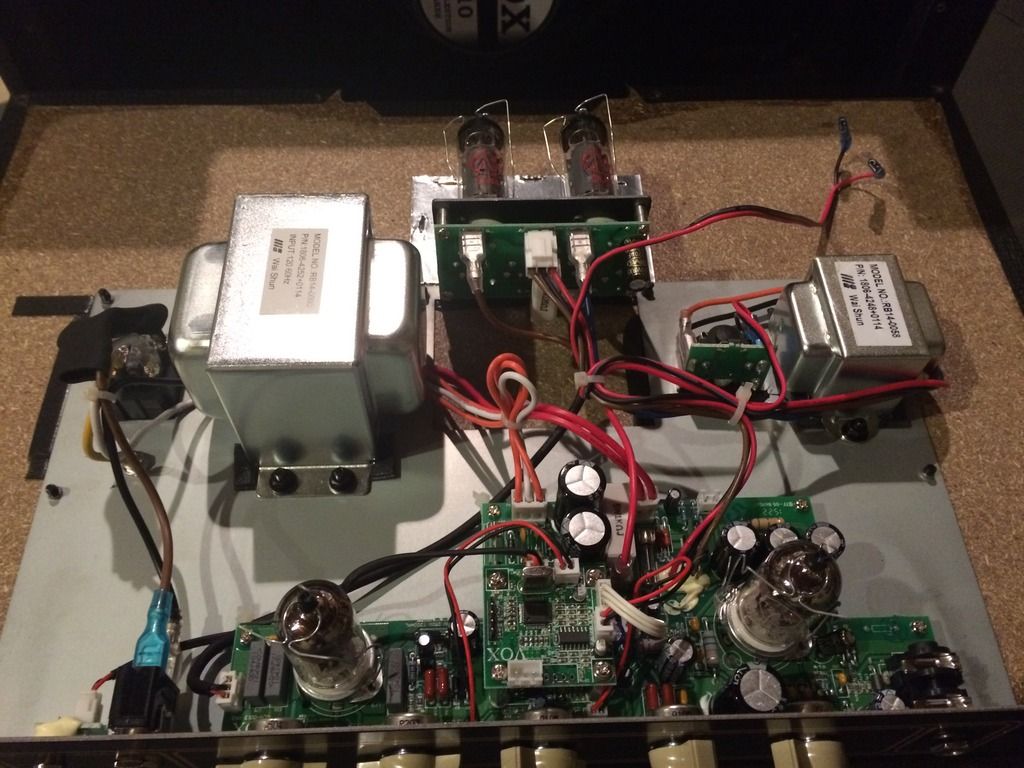
Finland’s Bluetone Amps, which is run by Harry Kneckt and Matti Vauhkonen, has already garnered quite a reputation as a maker of high-quality valve amplifiers.
The company offers quite a large range of different models – starting with small combos, such as the Barfly, with large-wattage tube heads, such as the AcDcII– or the Bugaboo, at the other end of the spectrum. Bluetone also make bass amps, as well as guitar and bass cabinets.
Each and every Bluetone amp is made by hand, using point-to-point construction and top drawer components. This type of dedication to a pure tube signal path doesn’t mean, however, that we’re dealing with a backward-facing company. Quite the opposite is true – Bluetone amps include some of the most cutting edge features, when it comes to making their products user-friendly. One great example is a special metering tool the company sells, which makes it possible for a regular Jane or Joe to bias their amplifier’s output valves by themselves with the least possible amount of fuss.
Bluetone is a genuine custom maker, because virtually all of their amps leave their workshop with customer-specified modifications. Bluetone have their basic model range, but there’s a lot of scope for customisation, both when it comes to the technical specifications as well as on the cosmetic side of things (you can even specify the font used for lettering the front panel).
Kitarablogi.com has been offered a chance to follow the making of a Bluetone head, all the way from the customer’s order to the finished product:
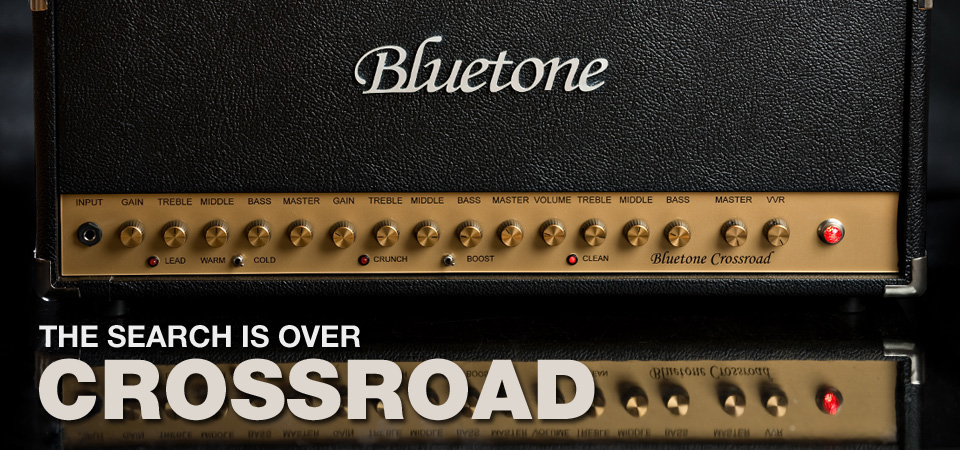
This specific head is basically a Bluetone Crossroad amplifier with a 2+2 power amp. Bluetone’s own 2+2 power amp uses the four output valves in two pairs, with one pair being dedicated solely to the clean channel (usually running a pair of 6V6 or 6L6 tubes), with the second pair being reserved to handle all crunchy and lead tones (normally a pair of EL34s). The advantage of Bluetone’s 2+2-system lies in the fact that you’re dealing with the ”correct” classic tones of the power valves used, so there’s no need for any modelling or tube amp ”voodoo” to achieve Marshall-type drive tones from Fender-type tubes, or vice versa.
The list of specifications on this Crossroad 2+2 is more than impressive:
• Lead-channel: modified Friedman Brown Eye-type
• Crunch-channel: modified Marshall JCM800-type
• Clean-channel: modified Fender Deluxe Reverb-type
• Bluetone’s special valve spring reverb with dedicated controls for each channel
• Bluetone’s own buffered tube-based effects loop (with level controls)
• Channel- and effects-switching controllable via MIDI
• Main valve status control and biasing using the Bluetone ABC-system (Auto Bias Control)
• Power tubes can be biased either with a Bluetone ABC-metering tool or using a mobile device app via WLAN
• Power amp has built-in Variac (think: ”EVH Brown Sound”)
• Adjustable line output
• Adjustable headphone output
• Presence- and Resonance-control in master section
This is how the journey begins:
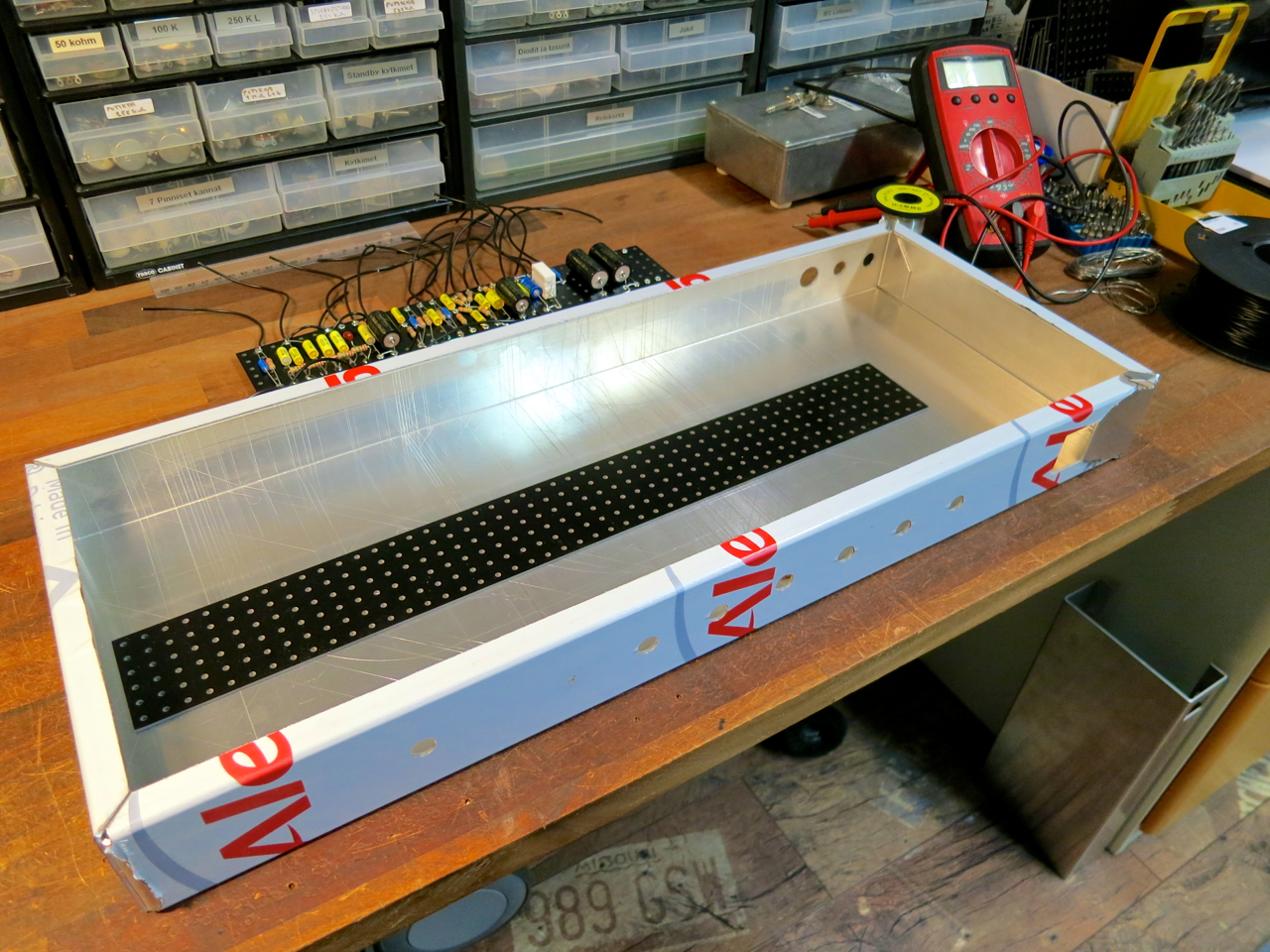
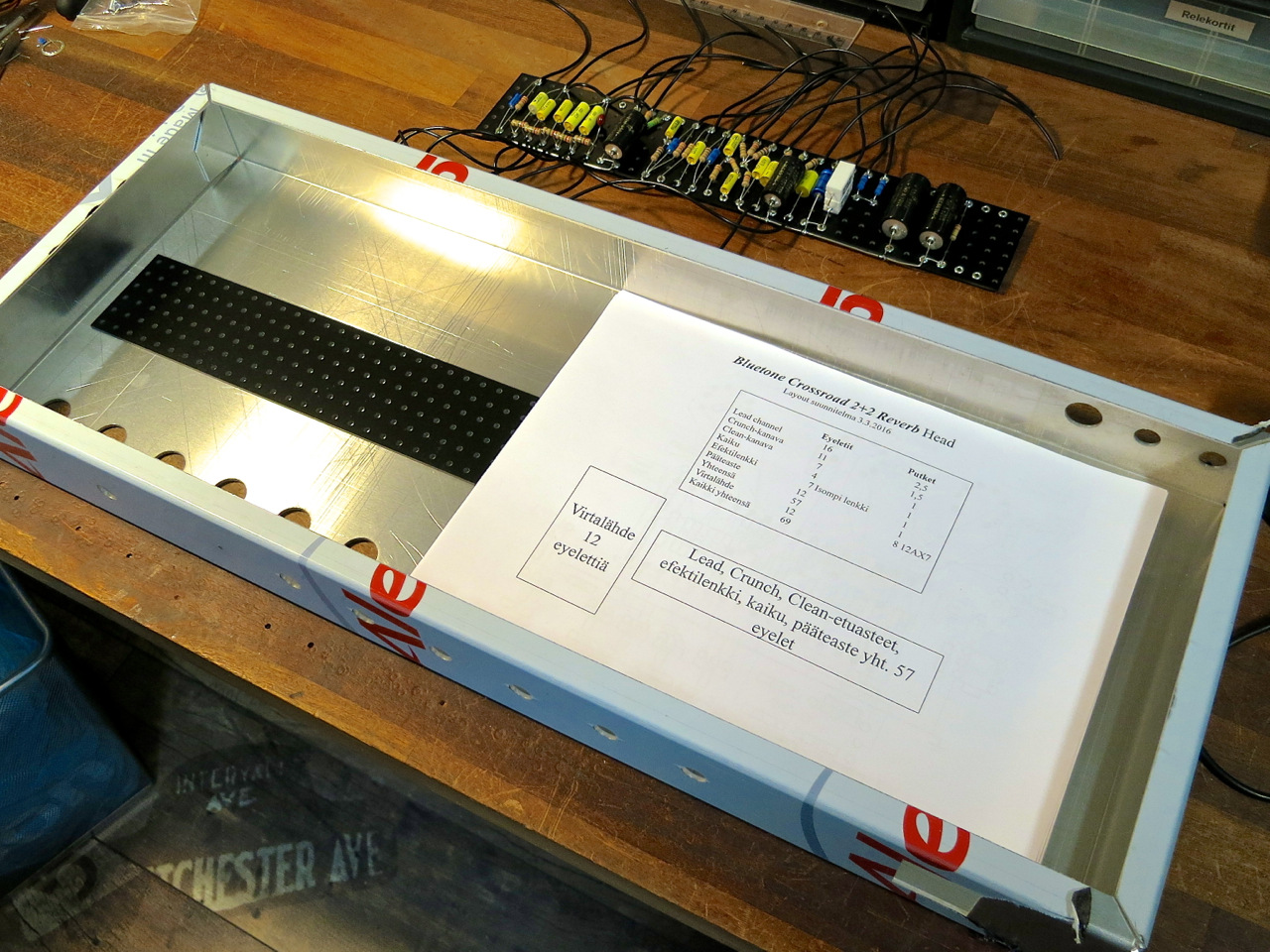
An empty steel chassis, a fibreglass eyelet-board of the correct size, and the customer’s order, which Harry Kneckt has already used to draw the necessary schematics and put together a list of the necessary components.
Bluetone-vahvistimissa signaalitie rakennetaan täysin vailla kompromisseja käsin point-to-point-periaatteella. Mutta tästä huolimatta tämä firma ei toimi katse taakse käännettynä, vaan uusia teknisiä ratkaisuja ja ominaisuuksia lisätään vahvistimiin tekemään käyttäjien elämästä helpomman. Bluetone valmistaa esimerkiksi vahvistimiin kätevän lisälaitteen, jolla maalikkokin voi biasoida firman vahvistimia vaivattomasti itse.
Bluetone on todellinen custom-paja, sillä käytännössä jokainen heidän rakentama vahvistin on asiakkaan toiveiden mukaan tehty, vaikka se perustuukin johonkin firman perusmalliin. Asiakas voi vaikuttaa niin styrkkarin teknisiin ominaisuuksiin kuin myös kosmeettisiin ratkaisuihin (jopa naamataulun fonttiin).
Kitarablogi.com sai nyt tilaisuuden seurata uuden Bluetone-nupin syntymää tyhjästä metallikotelosta valmiiseen vahvistimeen:
Asiakas on tilannut kolmikanavaisen Crossroad-nupin Bluetonen omalla 2+2-pääteasteella. 2+2-pääte tarkoittaa, että vahvistimen neljää pääteputkea käytetään niin, että yksi pari hoitaa puhtaan kanavan (tavallisesti joko 6V6- tai 6L6-putket), kun toinen pari on käytössä särösoundien kanssa (tavallisesti EL34). Bluetonen 2+2-systeemin suuri etu on, että soittaja saa käyttöön näiden eri pääteputkityyppien ominaiset, aidot soundit ilman mitään tarvetta mallinnukseen tai muuhun elektroniseen voodoohon.
Tämän Crossroad 2+2 -nupin speksilista on todella vaikuttava:
• Lead-kanava: modattu Friedman Brown Eye
• Crunch-kanava: modattu Marshall JCM800
• Clean-kanava: modattu Fender Deluxe Reverb
• Bluetonen omaan suunnitteluun perustuva putkijousikaiku omilla kanavakohtaisilla tason säädöillä
• Bluetonen omaan suunnitteluun perustuva bufferoitu putkiefektilenkki lähtötason säädöllä
• Kanavanvaihto ja efektien hallinta MIDI-ohjauksella
• Pääteputkien hallinta ja biasointi ohjelmistopohjaisella Bluetone ABC (Auto Bias Control) -järjestelmällä
• Putkien biakset voidaan säätää joko ABC-mittarilla tai langattomasti älypuhelimella/läppärillä WLAN-sovelluksella
• Virtalähteessä vahvarin sisäisen päätetehon ja putkien jännitteiden säätö (Variac, eli ”EVH Brown Sound”)
• Säädettävä line out -lähtö
• Säädettävä kuulokelähtö
• Presence ja Resonance-säätimet pääteasteessa
Ja tästä matkamme valmiiseen custom-nuppiin siis alkaa:
Tyhjä metallikotelo, sopivan kokoinen eyelet-levy lasikuidusta, sekä asiakkaan tilaus, jonka perusteella Harry Kneckt on jo kasannut osien listan ja piirtänyt kytkentäkaavion.
The new Vox AC10C1 combo amp nicely bridges the gap between the Custom Series’ AC4C1 four-watter and the 15-watt AC15C1.
****
The Vox AC10C1 (street price in Finland approx. 520 €) isn’t a copy or reissue of any of the AC10 versions from the 1950s or 60s, but rather a modern reinterpretation of the company’s Top Boost-theme in a more compact guise, and made in China, just like the rest of the Custom Series.
This being so, the new AC10C1 amp does away with the old version’s vibrato effect, adding instead such welcome modern features as a quality digital reverb, and separate Gain and (Master) Volume controls.
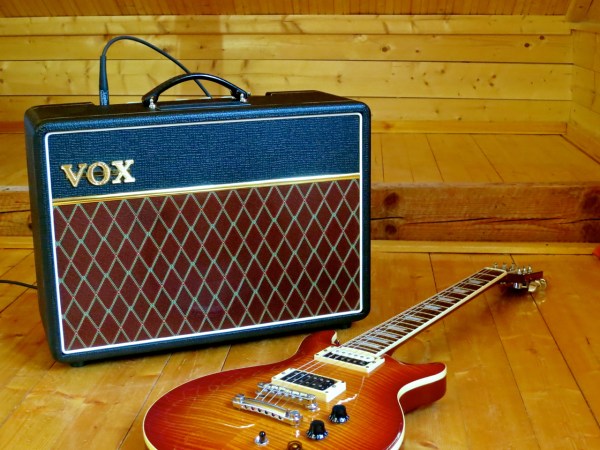
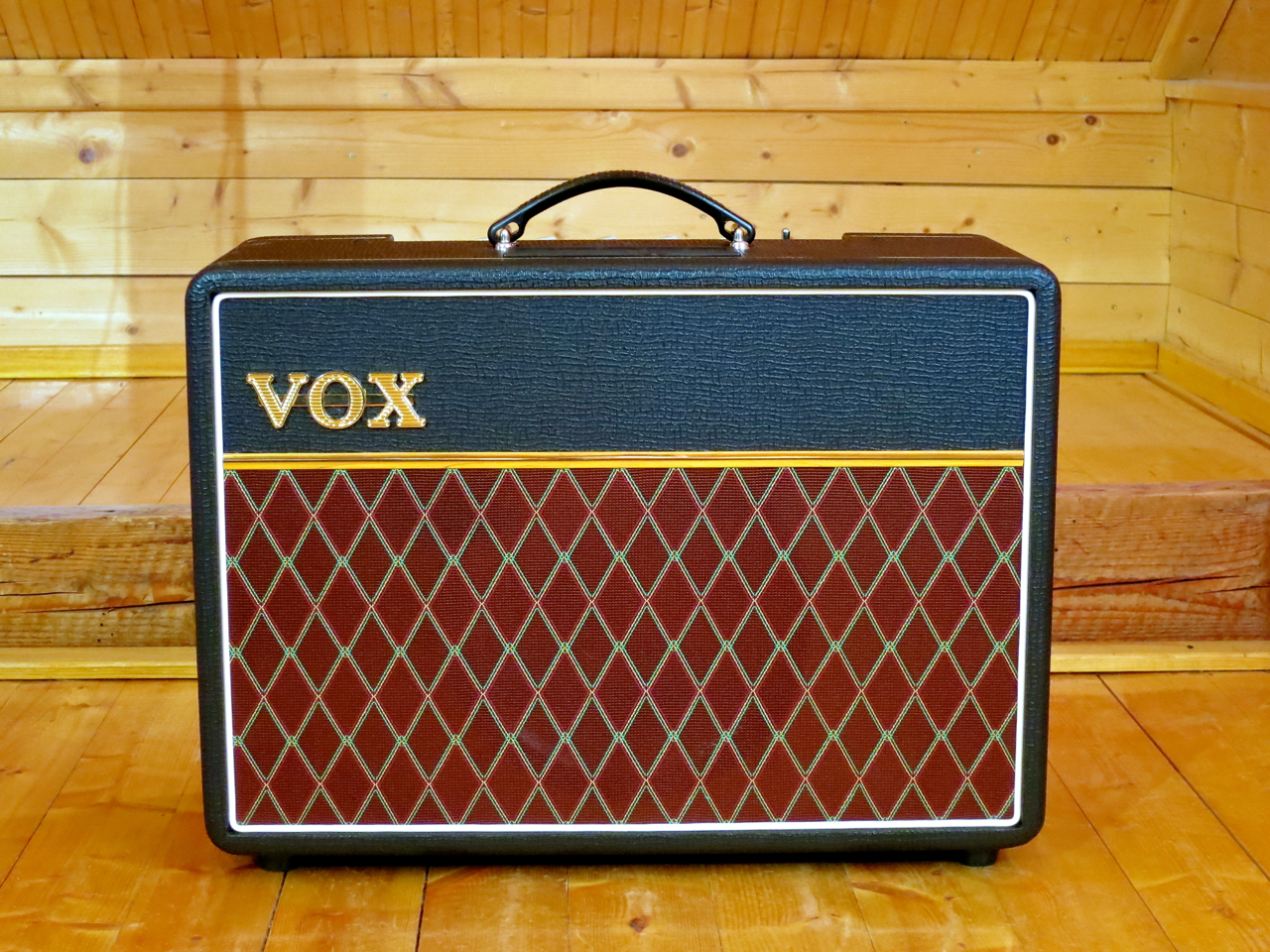
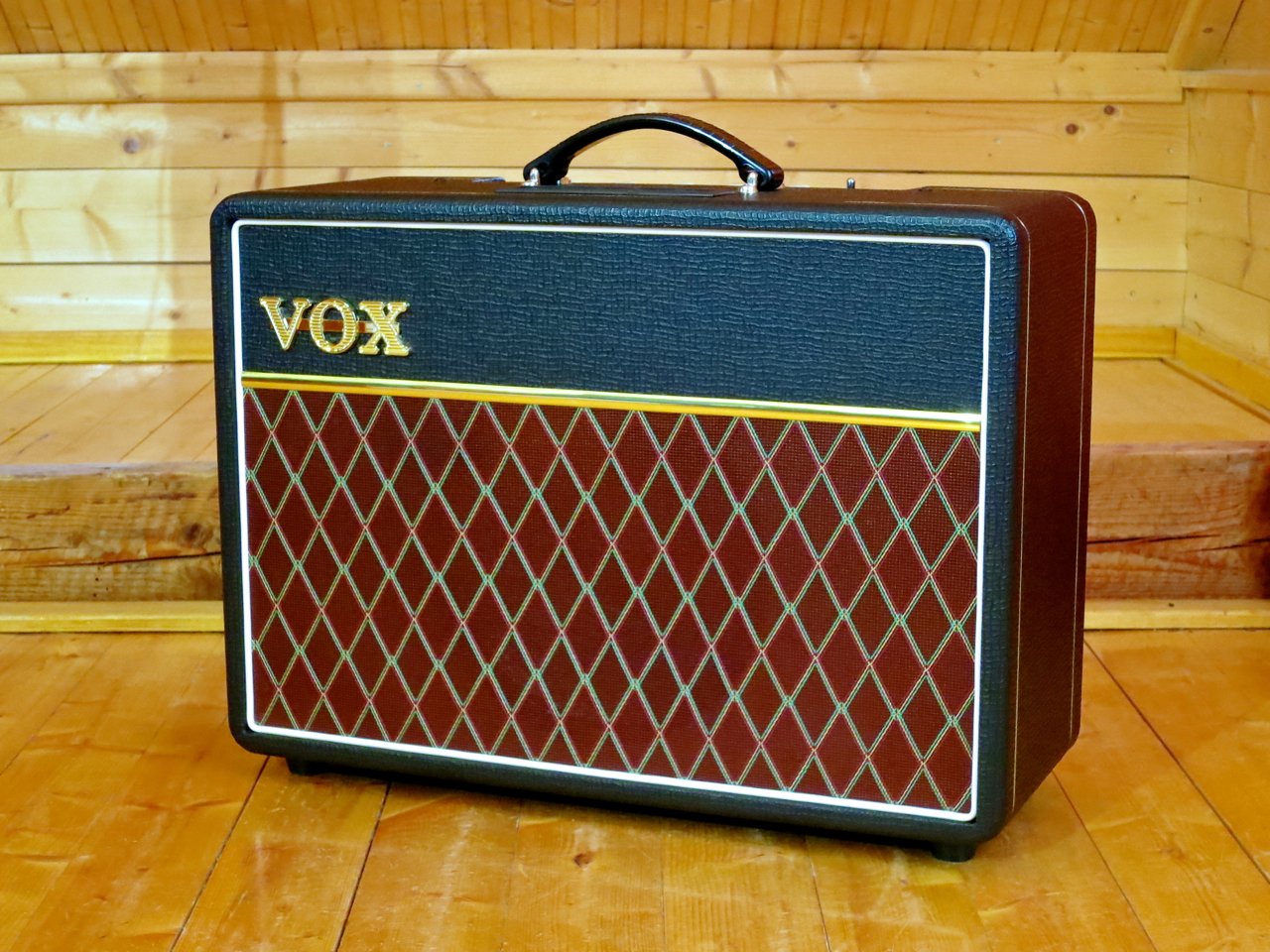
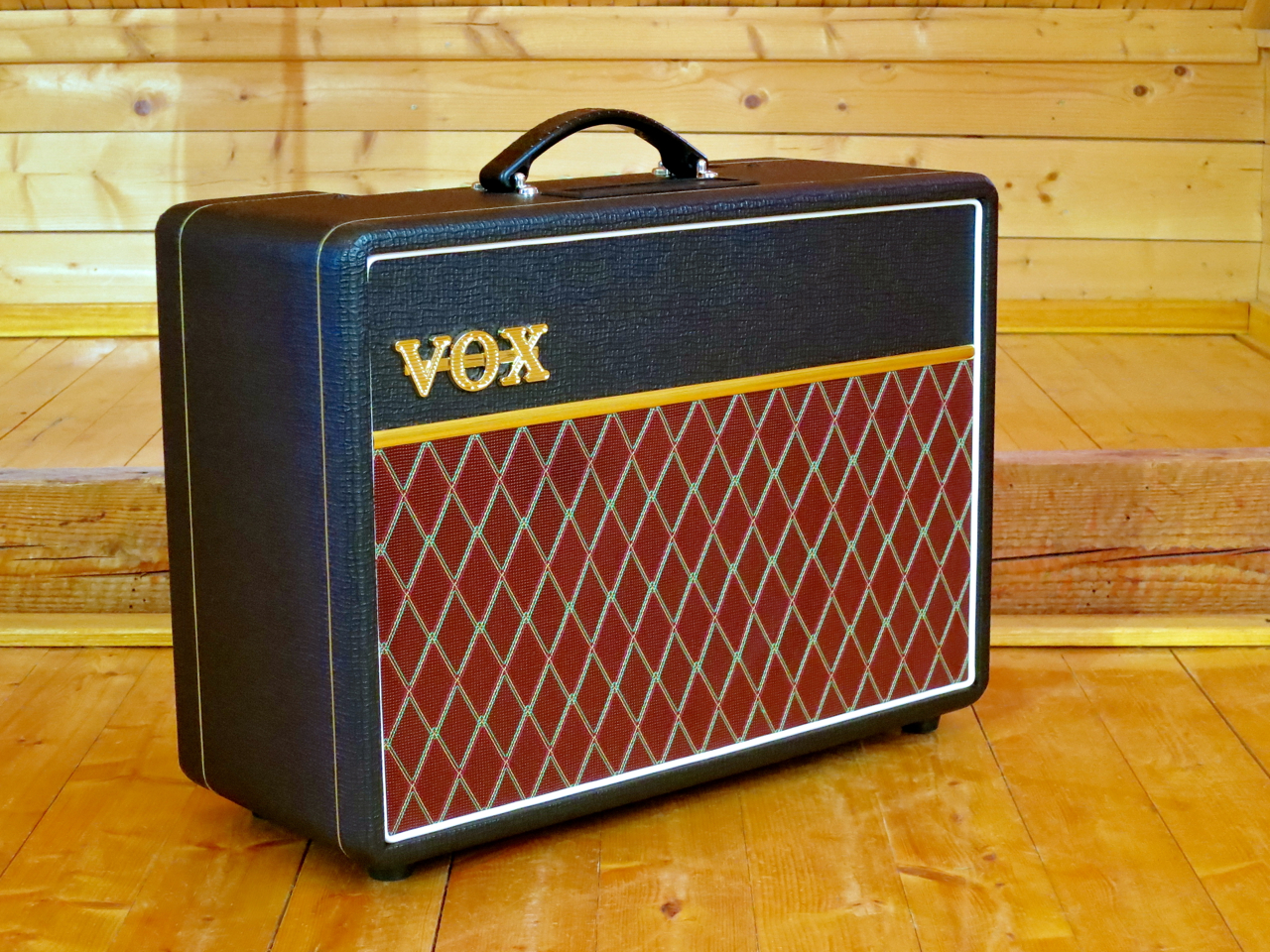
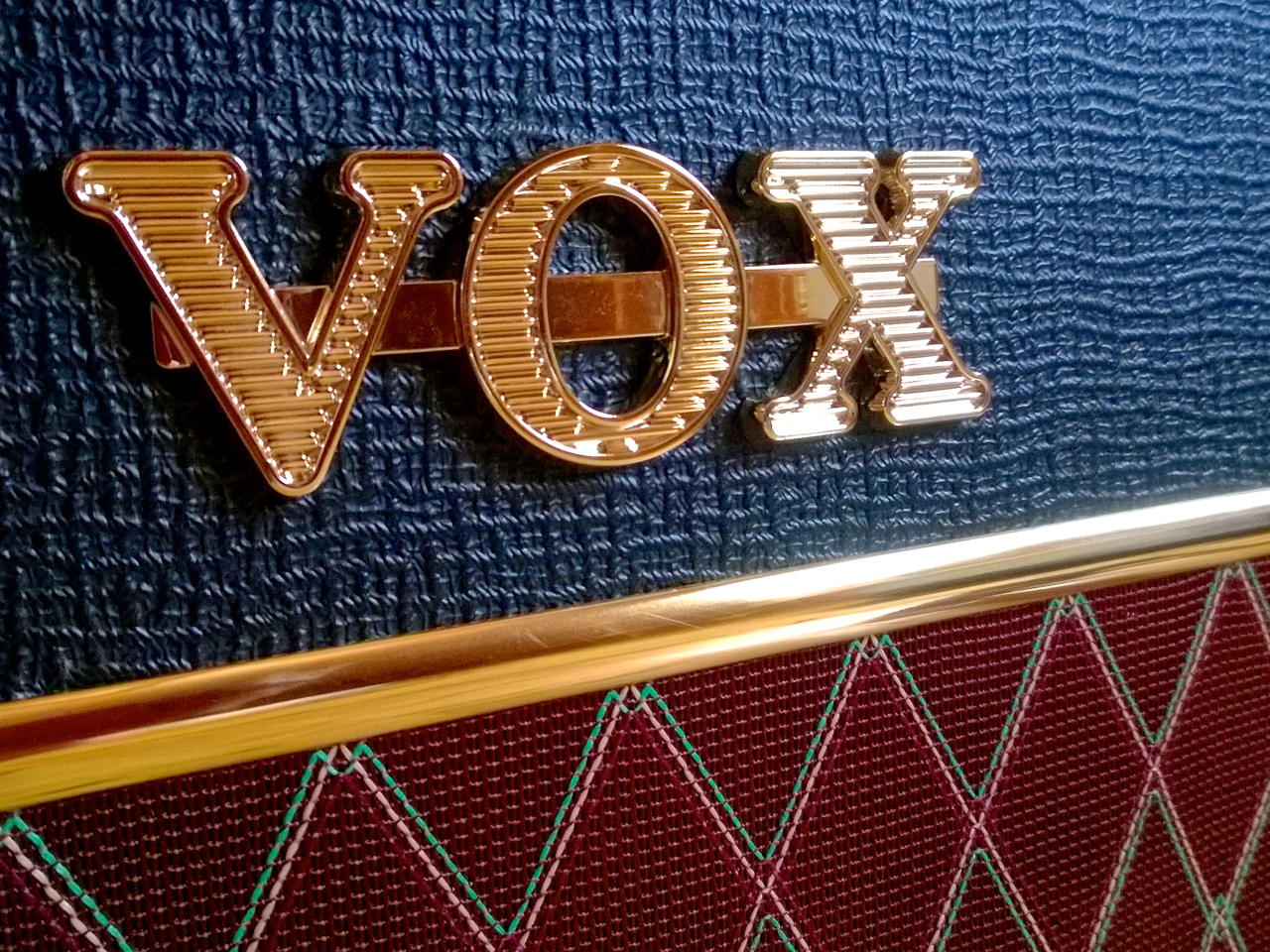
Vox’ new combo looks like a smaller version of their legendary AC30 combo, which isn’t a coincidence, I’m sure. It sports lots of black vinyl, white piping, a golden metal rail, and the famous maroon front cloth with the diamond pattern.
The AC10C1 only weighs 12 kilos, which means it’s very easy to carry by its single top handle.
As we are looking at a production line, Chinese valve amp, it would be totally unrealistic to expect hand soldered point-to-point wiring inside this combo. The AC10C1’s electronic components – tubes and all – are mounted on three PCBs. You can have a good looks at this combo’s innards in this picture.
The little Vox’ two EL84 main amplifier valves have been placed just beneath the ventilation grille on the top (next to the handle). The preamp valves – a pair of 12AX7s – get their ventilation via a small slot at the bottom end of the cabinet’s back wall.
The control panel sports the classic Vox chicken head knobs.
In addition to Gain and Volume, you will find a two-band EQ section, and the reverb control.
In practical terms, the Vox AC10C1 is a closed-back combo, despite the small opening for preamp tube ventilation.
A ten-inch Celestion VX10 has been chosen as the combo’s sole speaker.
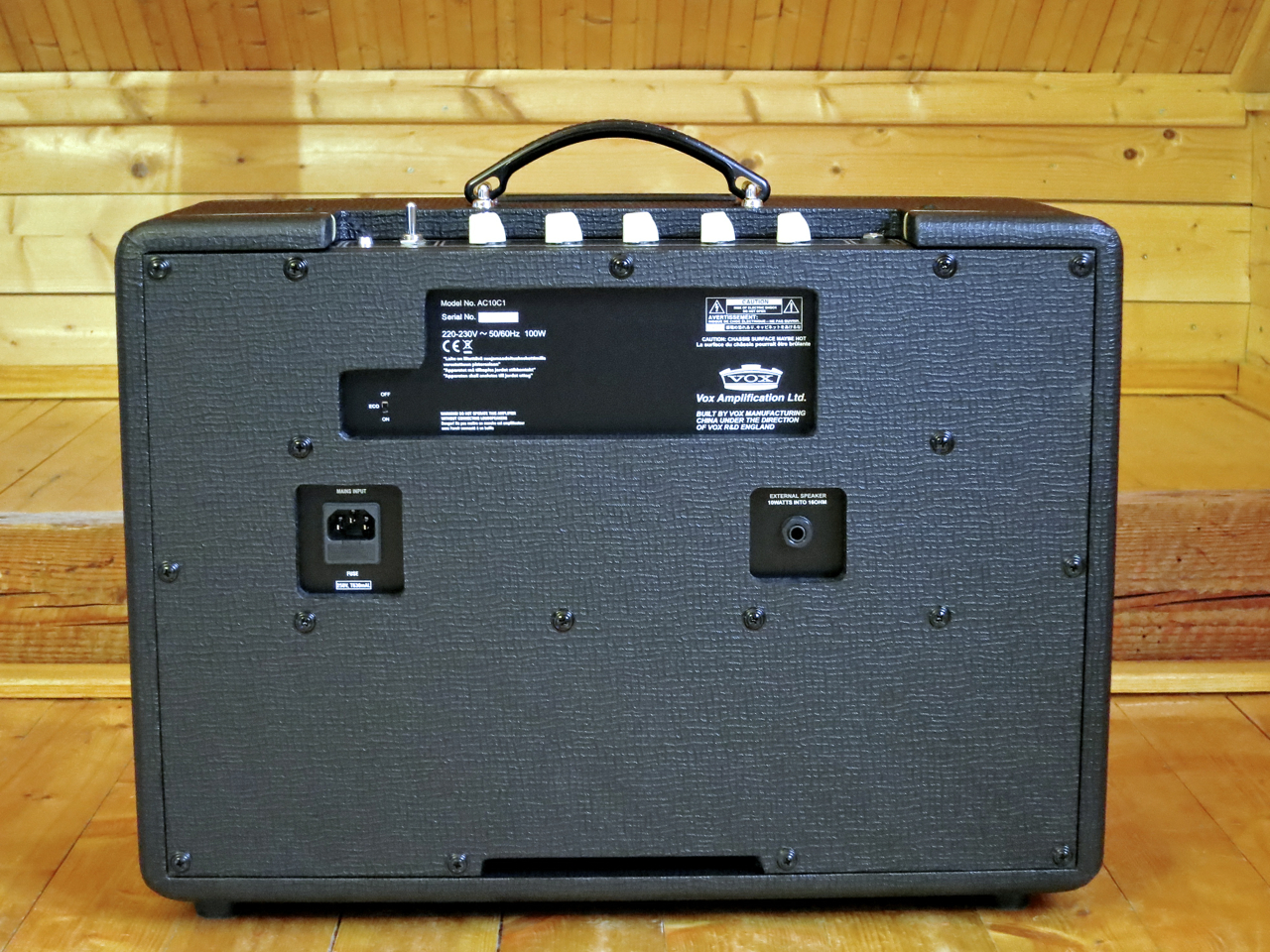
In the EU the new combo is sold with an Eco-feature. When the Eco-switch is set to ”on”, the AC10C1 will power off automatically if the amp isn’t played for two hours.
The AC10C1 can be connected to an external speaker cabinet, as long as the load is kept to 16 Ohms.
****
Let me say something about the Vox AC10C1’s volume first:
This little amp is quite the belter for a combo rated at only 10 Watts! Yes, it does have a master volume control, but I still wouldn’t recommend using this Vox as a living-room amp in an apartment block. The Volume control really has to be set to 10 o’clock, or higher, to make this baby come to life.
The basic character of this Vox combo is rather bright and bitey – I had to take the Treble knob down to below 10 o’clock to find the sounds that I like.
This AC10C1 doesn’t have oodles of clean headroom, still there are some very nice clean tones to be had in the first third of the Gain control’s range, when you use Fender-type single coil pickups (Fender Stratocaster; amp gain at 10 o’clock):
Many valve amp snobs will view a digital reverb circuit as a big no-no, but in my view, the AC10C1’s reverb is one of the very best I’ve ever heard in an amp in this price range. The reverb is a digital version of a spring tank, and has a charming sense of depth. At higher settings you can even get some ”spring splash” by attacking the strings with gusto:
Due to its higher output a P-90-type pickup will require you to adjust the volume knob(s) on the guitar, if you want to achieve genuinely clean sounds. Here’s a clip of an Epiphone Casino (with Göldo P-90s), with the guitar’s volumes turned about halfway down (amp gain at 9 o’clock):
Here’s the same Casino with its volume controls set to 8 (the amp settings stay untouched):
Humbuckers, too, mean you will have to turn the guitar down a bit for clean sounds, otherwise the AC10C1 will start adding some of that famous Top Boost grit. The first clip uses a Hamer USA Studio Custom with its volume controls turned down to 5 (amp gain at 9 o’clock):
Same guitar, same amp settings, but the Hamer’s volumes have been set to 7:
You could sum up the AC10C1’s distorted sounds with one word – classic! This isn’t a high gain combo by no stretch of the imagination. This Vox feels most at home with Pop-, Blues-, and Rock-sounds of the Sixties and Seventies (and their modern descendants). If you want a piece of that classic Vox Top Boost tone (think Beatles, Queen, U2), the AC10C1 has it in spades at manageable volume levels.
Stratocaster; amp gain 3 o’clock:
Casino; amp gain 1 o’clock:
Hamer; amp gain 1 o’clock:
Stratocaster; full amp gain:
Casino; full amp gain:
Hamer; full amp gain:
****
In my opinion, the Vox AC10C1 is just the ticket if you’re after genuine Vox tones in a compact, easy-to-handle package.
Clean headroom isn’t to be had in abundance, but luckily this Vox combo reacts extremely well to volume changes on the guitar. The sound cleans up nicely, while the amp retains its full vigour and liveliness.
The Vox AC10C1 is loud enough for most rehearsal situations, and you might even use it in some small venues without a mike.
For studio work, too, I feel Vox’ AC10C1 has a lot to offer, because it enables you to get chunky Vox tones with much less bleed-through into other microphones, like the drum mikes.
****
Vox AC10C1
current street price in Finland approximately 520 €
Uusi Vox AC10C1 on teholtaan oiva väliaskel firman Custom-sarjassa neliwattisen AC4C1:n ja 15-wattisen AC15C1-kombon välillä.
****
Vox AC10C1 (katuhinta noin 520 €) ei ole alkuperäisen (1950 tai 60-luvun) AC10-kombon uusintapainos, vaan uutuuskombo on Kiinassa rakennetun, nykyaikaisen Custom-sarjan jäsen.
Näin ollen AC10C1-vahvistimesta löytyy – alkuperäisen vibratoefektin sijaan – laadukas digikaiku, sekä erilliset Gain- ja (Master) Volume-säätimet.
Uusi Vox-kombo näyttää pienennetyltä versiolta firman legendaarisesta AC30-mallista – paljon mustaa vinyyliä, kultaiset ja valkoiset koristelistat, sekä vinoneliökuvioilla koristettu, ruskea etukangas.
AC10C1 painaa vain 12 kiloa, minkä ansiosta komboa on helppo kantaa sen ainoasta muovikahvasta.
Koska kyse on kiinalaisesta sarjatuotannosta, ei tässä voi odottaa käsinjuotettua, kallista point-to-point elektroniikka, vaan AC10 on toteutettu kolmella piirilevyllä, joihin myös vahvistimen putkikannat on kiinnitetty. Hyvän kuvan AC10C1:n elektroniikan arkkitehtuurista saa tästä linkistä.
Voxin kaksi EL84 päätevahvistinputkea sijaitsevat kombon kotelossa suoraan kahvan viereisen tuuletusritilän alla. Etuvahvistimen putket (2 x 12AX7) taas löytyvät kombon pohjan läheltä, jossa niille on takaseinässä toinen tuuletusaukko.
Myös kombon säädinpaneeli on ulkonäöltään tyypillinen Vox-kombolle.
Paneeli tarjoaa Gain- ja Volume-säätimien lisäksi vielä kaksikaistaisen EQ-osaston, sekä säätimen kaiulle.
Vox AC10C1 on käytännössä suljetulla takaseinällä varustettu kombovahvistin, vaikka takaseinässä onkin pieni tuuletusreikä.
Kaiuttimeksi on valittu yksi kymppituumainen Celestion VX10.
EU:ssa uutuuskomboa myydään uudella Eco-ominaisuudella. Kun Eco-kytkin on päällä-asennossa, AC10C1 menee omatoimisesti pois päältä, jos kombo on kaksi tuntia tyhjäkäynnissä.
AC10C1:n kanssa voi käyttää sellaista lisäkaappia, jolla on 16 ohmin impedanssi.
****
Ensin sana Vox AC10C1:n tehosta:
Tämä vahvistin on 10-wattiseksi komboksi erittäin kovaääninen! Uutuus-Voxi ei mielestäni oikein sovi kerrostaloasunnon olohuonekomboksi, koska tämä AC-kymppi alkaa soida kunnolla vasta, kun Volume-säädin on avattu ainakin ”kello kymmeneen”.
Vox-kombon perusääni on melko kirkas – löysin minua miellyttäviä soundeja vasta, kun Treble-säädin oli kello 10:ssä (tai vielä enemmän kiinni).
Vaikka uutuus-Voxi ei tarjoa valtavia määriä puhdasta headroomia, löytyy Gain-säätimen alkumetreillä kuitenkin kauniita puhtaita soundeja Fender-tyylisillä yksikelaisilla mikrofoneilla varustetun kitaran kanssa (tässä soi Fender Stratocaster, AC10C1:n Gain: kello 10):
Monille putkipuristeille digitaalinen kaiku putkikombossa on kuin punainen vaate, mutta ainakin minun mielestäni Vox AC10C1 tarjoaa yhden parhaista digikaiuista tässä hintaluokassa. Kaikutyyppi on muhkea jousikaiku, joka myös ”pärskii” mukavan autenttisesti isoilla säädöillä ja kovalla atakilla:
Gibson P-90 -yksikelainen vaatii jo – isomman lähtötason takia – kitaran omien volume-namikoiden säätämistä hiukan alaspäin, jos halutaan, että AC10C1 pysyy puhtaana. Ensimmäisessä klipissä soi Epiphone Casino, ja sen omat volume-säätimet ovat puoliksi kiinni (AC10C1:n Gain: kello 9):
Tässä sama Casino, mutta omat volumet säädetty kahdeksaan:
Myös humbuckereilla täytyy säätää kitaran omat volumet alas, muuten Vox AC10:n soundi muuttuu jo hieman rosoiseksi. Tässä kaksi esimerkkiä Hamer USA Studio Custom -kitaralla:
AC10C1:n särösoundien kirjo menee hyvin vahvasti ”klassisen” puolelle. Tämä ei ole mikään high gain -kombo, vaan Voxin luontevin ympäristö ovat 60- ja 70-luvun Pop-, Blues- ja Rock-soundit. Kombo tarjoaa kätevästi tyypilliset (Top Boost) AC30-soundit kompaktissa – ja ei ihan niin kovaäänisessä – formaatissa.
Stratocaster, Gain – kello 3:
Casino, Gain – kello 1:
Hamer, Gain – kello 1:
Stratocaster, Gain täysillä:
Casino, Gain täysillä:
Hamer, Gain täysillä:
****
Vox AC10C1 on mielestäni juuri oikea vahvistin, jos etsii aitoa Vox-soundia helposti hallittavassa kokonaisuudessa.
Puhdasta headroomia ei ole tarjolla valtavasti, mutta onneksi tämä Vox reagoi todella hyvin kitaran volume-säätimillä, eikä näin saavutettu clean-soundi muutu elottomaksi tai ponnettomaksi.
Vox AC10C1 on riittävän kovaääninen bändikäyttöön treenikämpässä, ja pienissä keikkapaikoissa jopa livenä ilman mikkiä.
Myös studiokäyttöön Vox AC10C1 on mielestäni hyvä valinta, koska kombosta saa aidon Vox-soundin ratkaisevasti vähemmällä vuotoäänellä.
From a guitarist’s standpoint, Finland truly is the land where milk and honey flow. In relation to its tiny population Finland is home to an unbelievable number of first-rate guitar-, effects- and amp-makers.
One such boutique-level amp brand is Hehku Customs from the town of Pori (on the western coast). Hehku’s team consists of chief designer Jarmo Välimäki, as well as Markku Penttilä and Juha Heljakka, who are in charge of R & D, sales and marketing.
There are several examples of different custom amps the company has built on Hehku’s website. Prices for custom amps start at about roughly 1,300 €. Hehku Custom’s cabinet sizes and shapes are standardised, but all other details can be tailoured to each customers wishes and requirements. ”The basic idea is that we want to make our customers’ wildest dreams come true!” says Jarmo Välimäki.
****
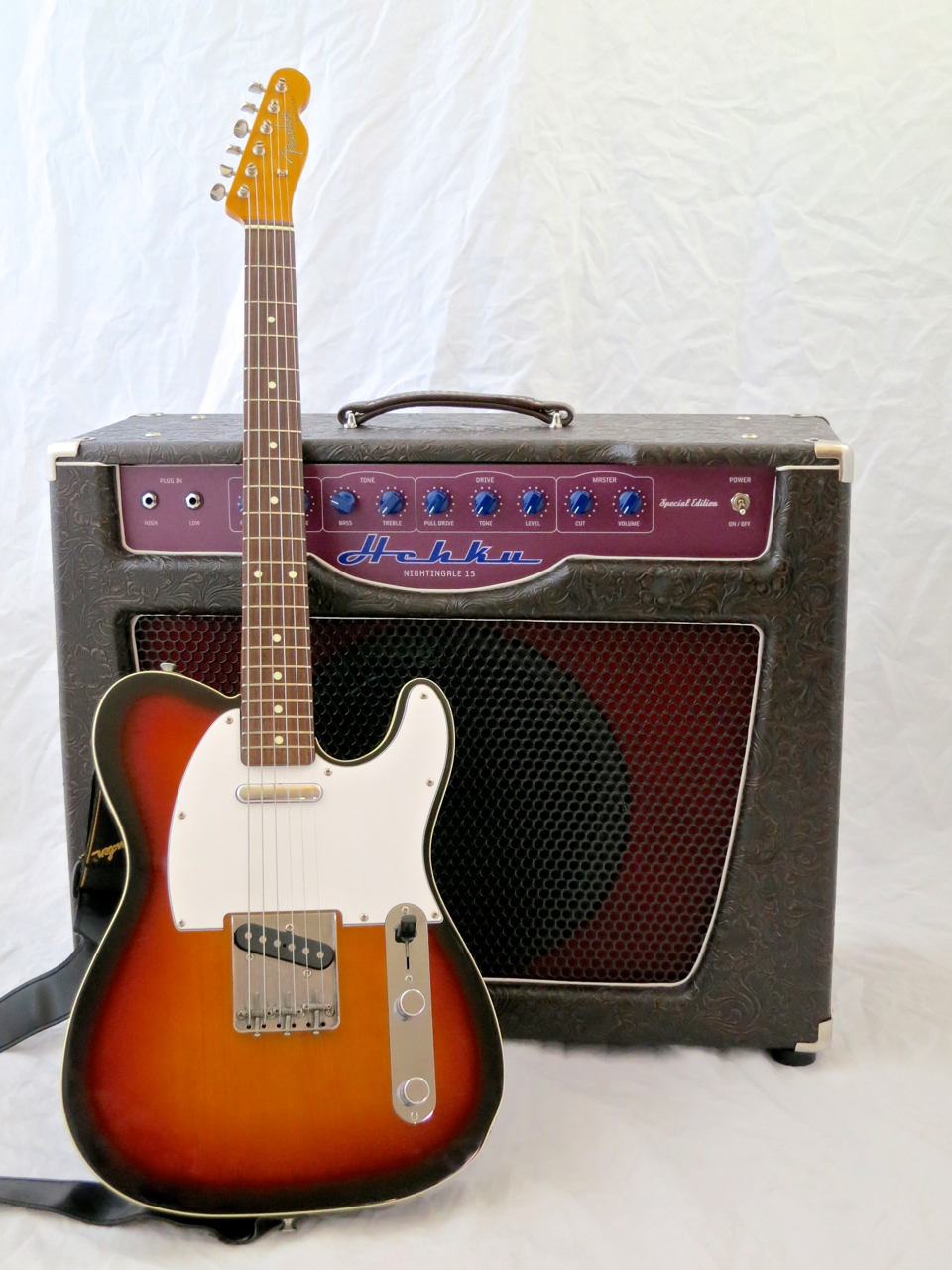
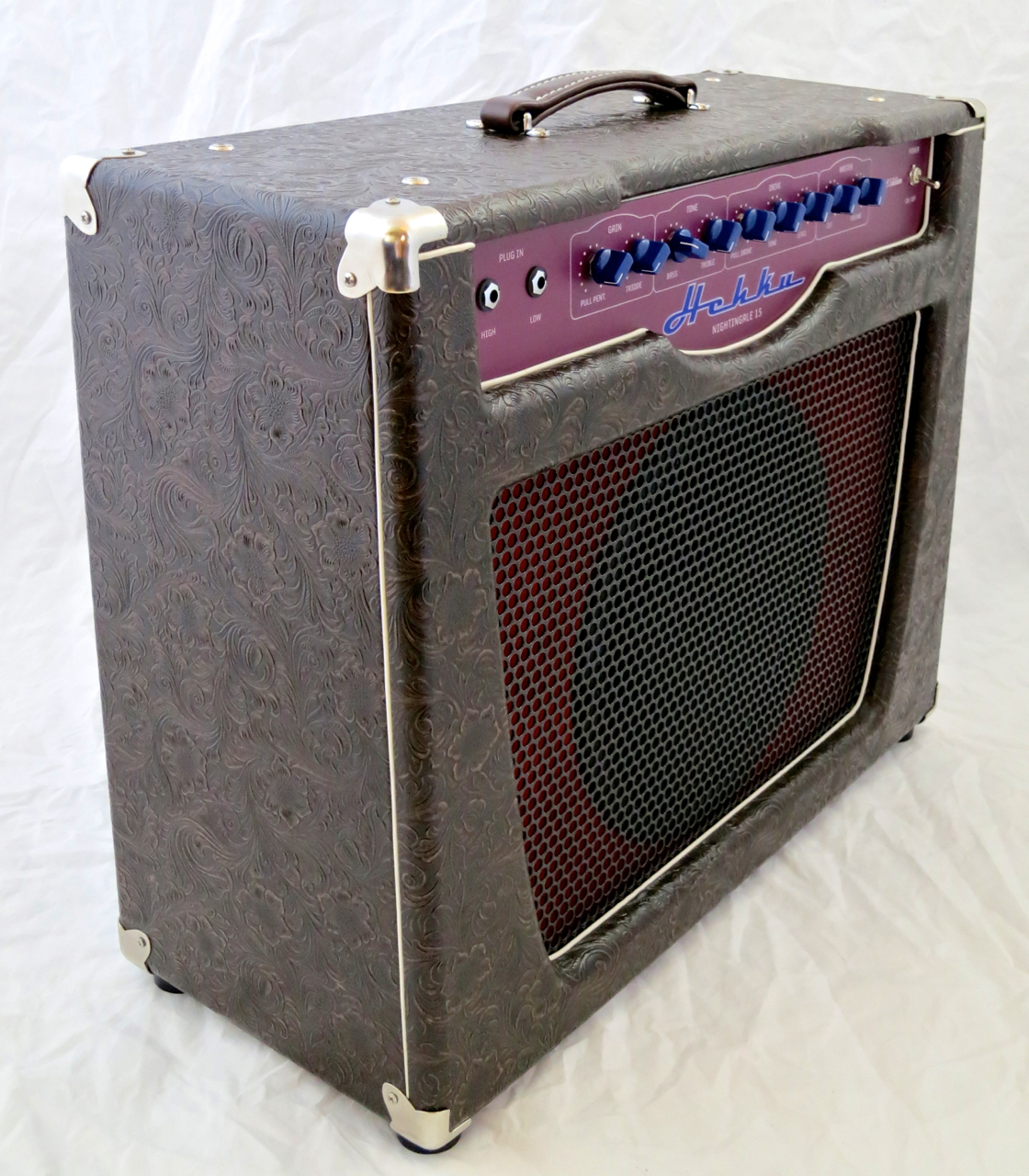
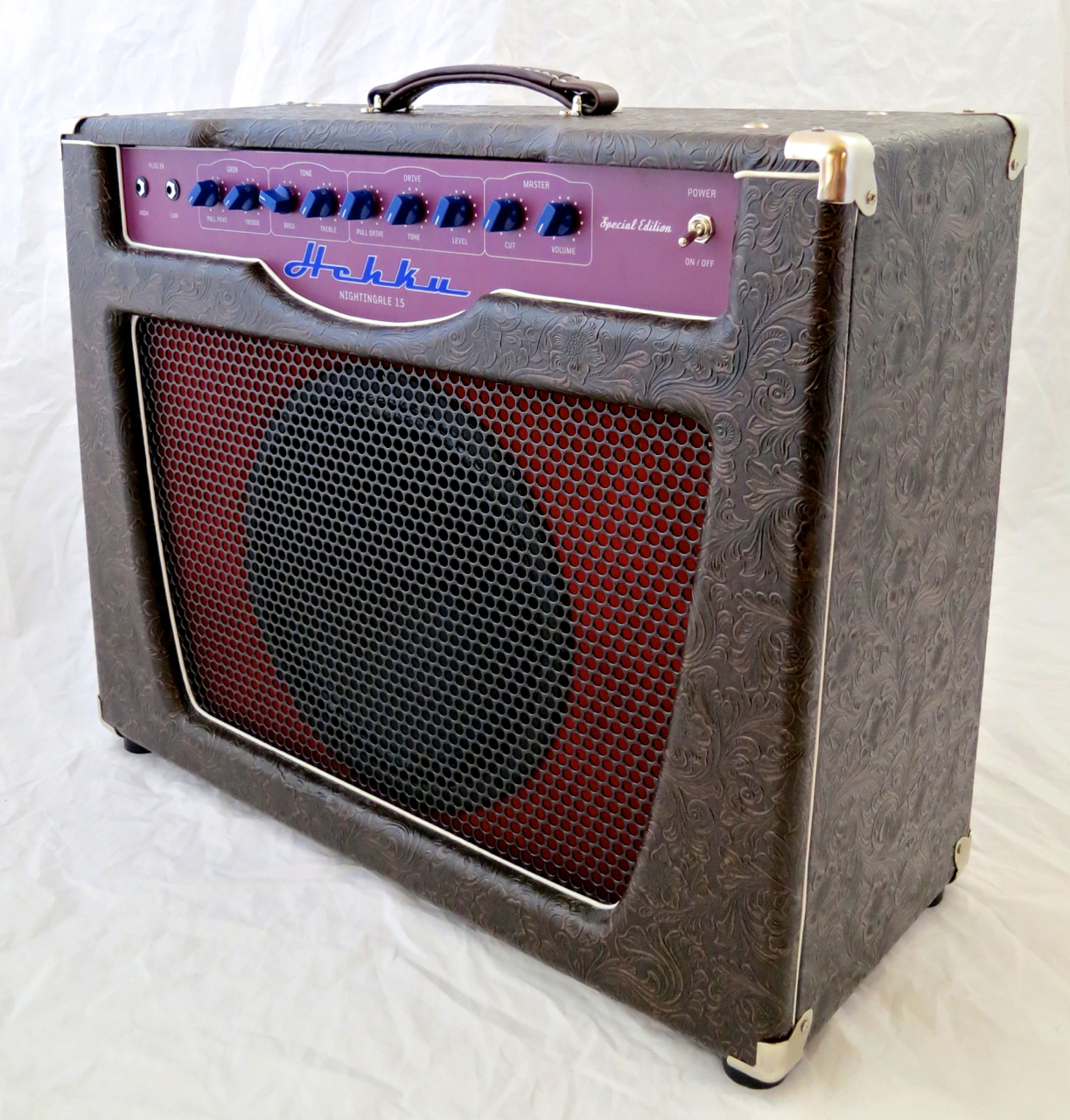
Kitarablogi got a 15-watt Hehku Nightingale 15 combo for testing. This is Hehku Custom’s first standardised model without custom options.
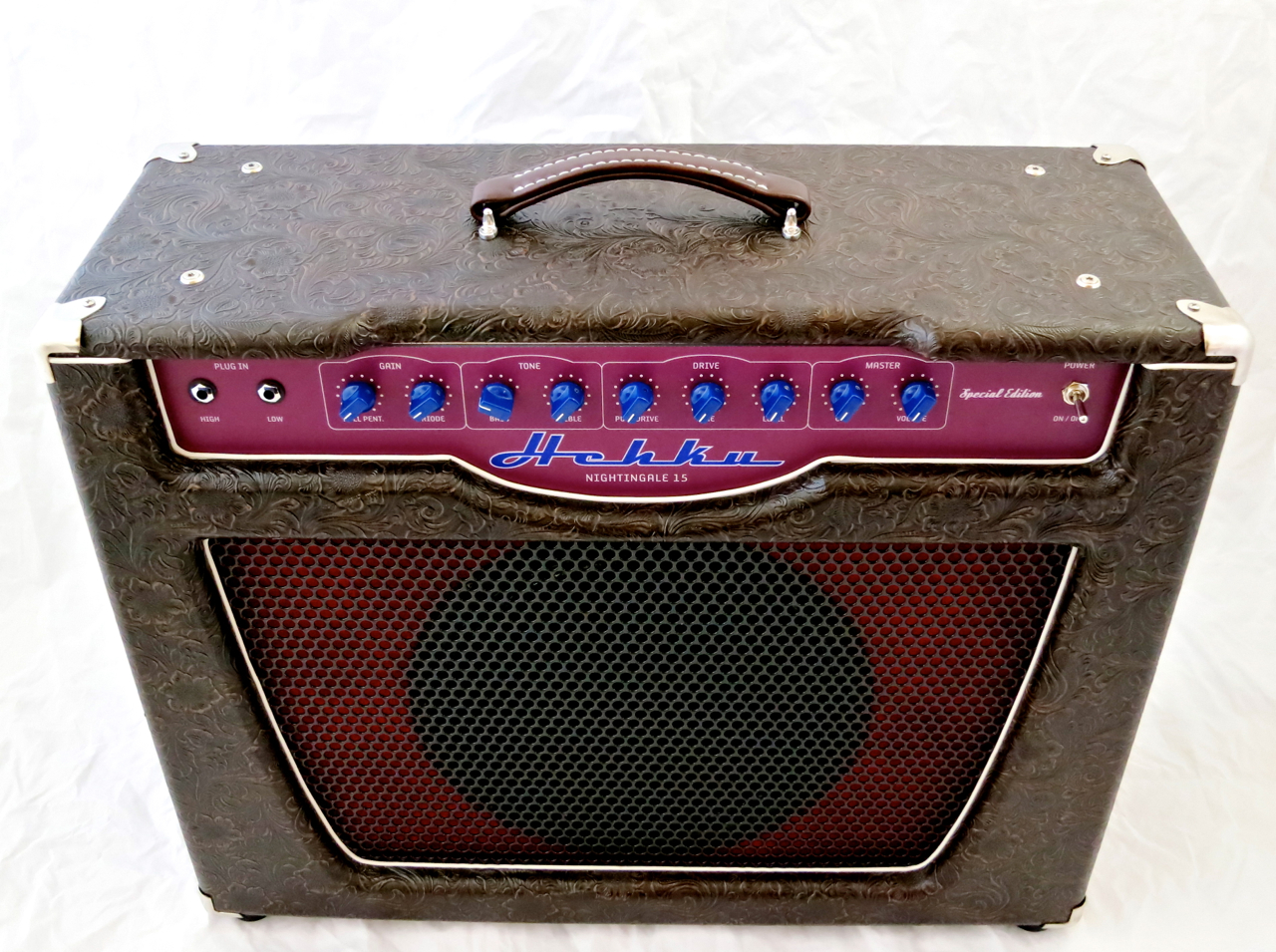
The Nightingale 15 (combo approx.:1,950 €, head approx.: 1,750 €) is a hand-made, all-valve combo with a single 12-inch speaker, and represents many features typical of Hehku’s design philosophy.
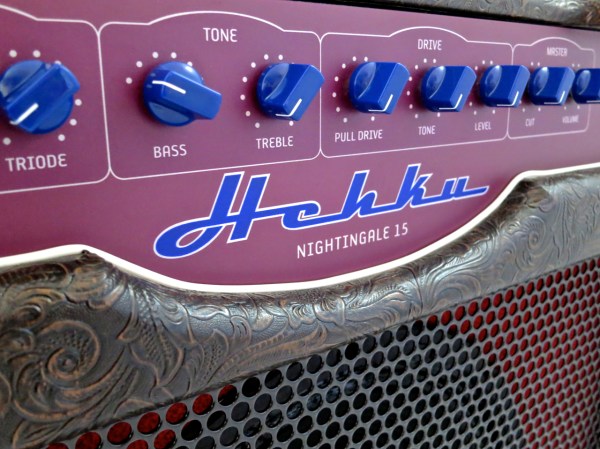
The Nightingale’s cool and original looks make it clear from the off that this combo isn’t your typical Fender Tweed clone.
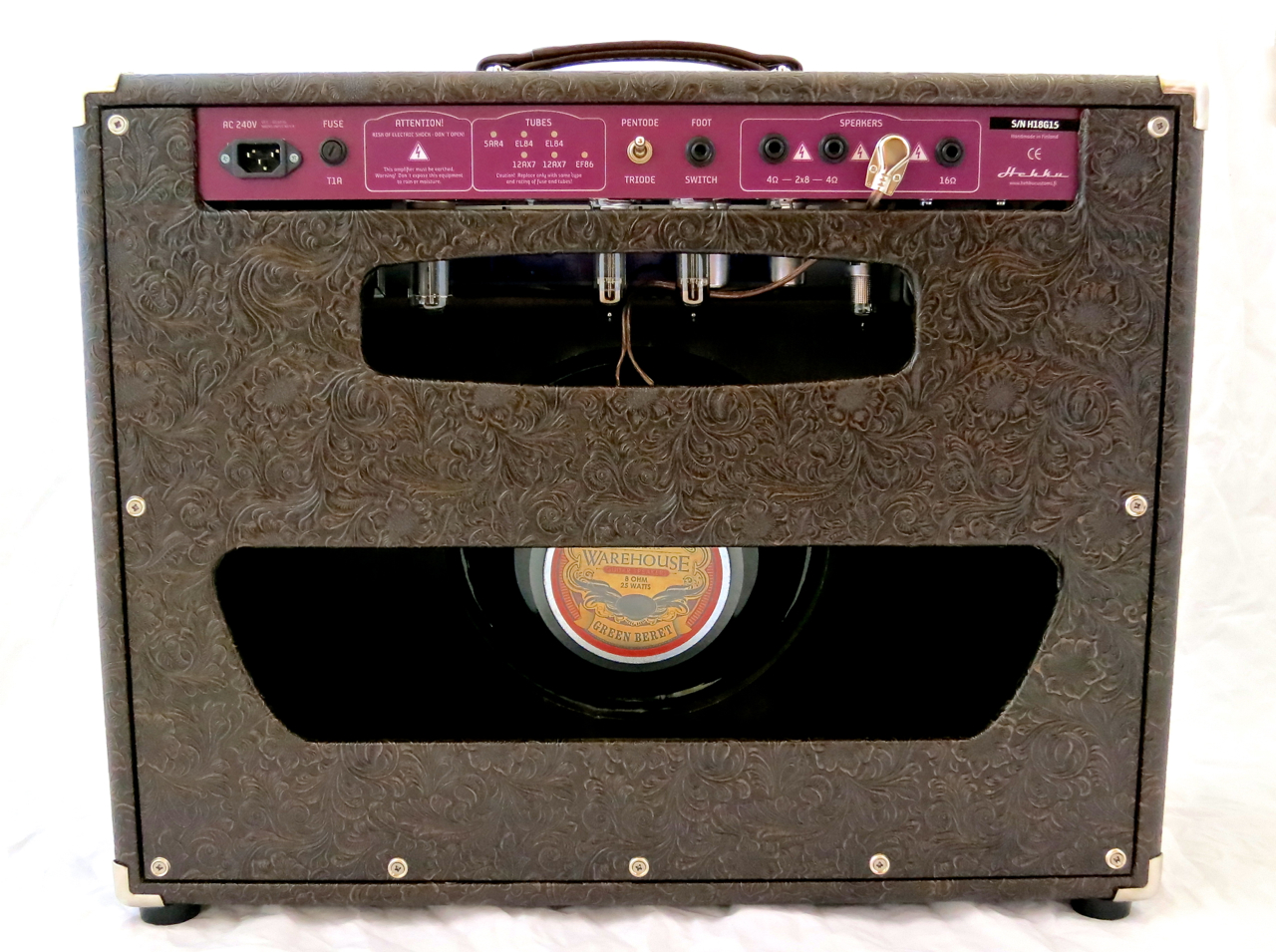
The Hehku Nightingale is an open-backed combo with easy valve access. All Hehku cabinets are made from Finnish birch ply, which is an outstanding material, both in terms of strength as well as sound.
Birch ply is also relatively lightweight, which is why the Nightingale is easy to carry by its single top handle.
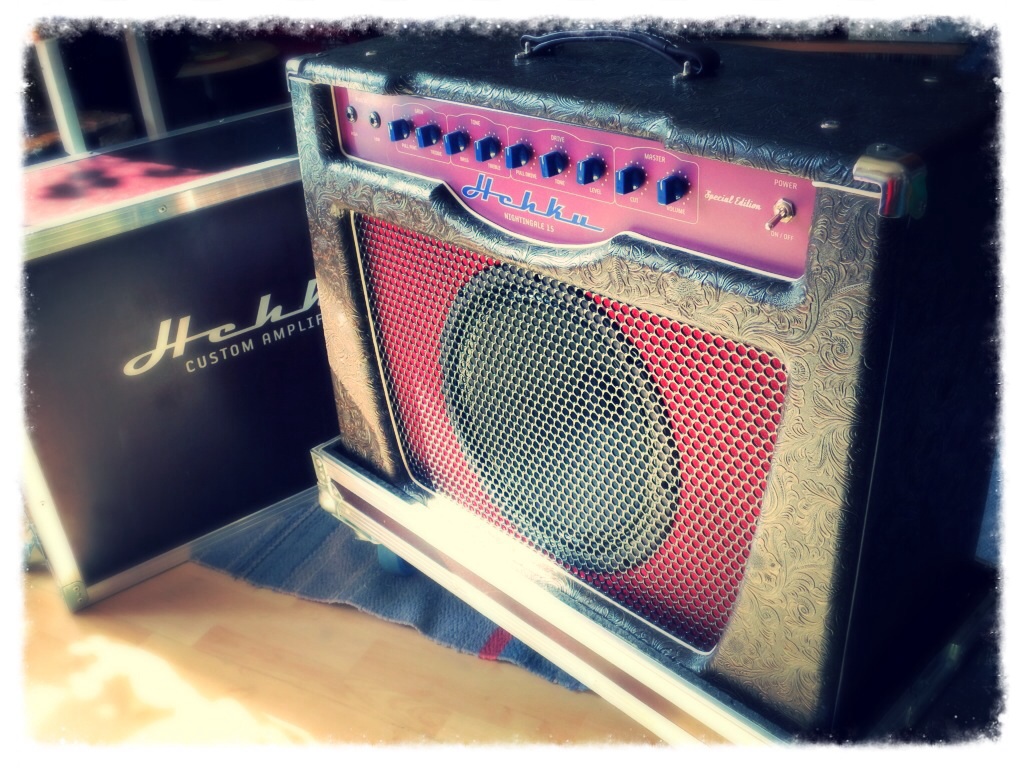
Hehku also offers professional transport cases to go with their amps and cabinets. A road case for the Nightingale 15 would set you back around 260 €.
****
Hehku’s Nightingale 15 is a very special case for a two channel combo, because its signal path is in series the whole way through.
Most vintage (-style) amps have two discrete channels with separate controls and functions (like ”Normal” and ”Tremolo”), and no channel switching capabilities. Modern amps, on the other hand, may share a single EQ section between two channels, but they offer channel switching, and separate gain and volume settings for each channel.
Hehku’s Nightingale takes its own, idiosyncratic path by offering two switchable channels in a cascading set-up. This means that the Clean channel’s triode and pentode gain settings, as well as this channels two-band EQ (six-position rotary Bass, active Treble), also influence the Drive channel’s tone and response.
You can either use the control panel’s push/pull-switches or the compact footswitch unit (included with the amp) to select triode- and pentode-modes, and to switch from Clean to Drive.
The Nightingale’s back panel sports a handy valve chart for easy orientation.
There’s also a triode/pentode switch for the power amp valves – switching to triode-mode the combo’s output power drops from fifteen to seven watts, and it also changes the amp’s tone somewhat.
Thanks to its four speaker outputs you will be able to connect the Nightingale to virtually any external guitar cabinet you can find.
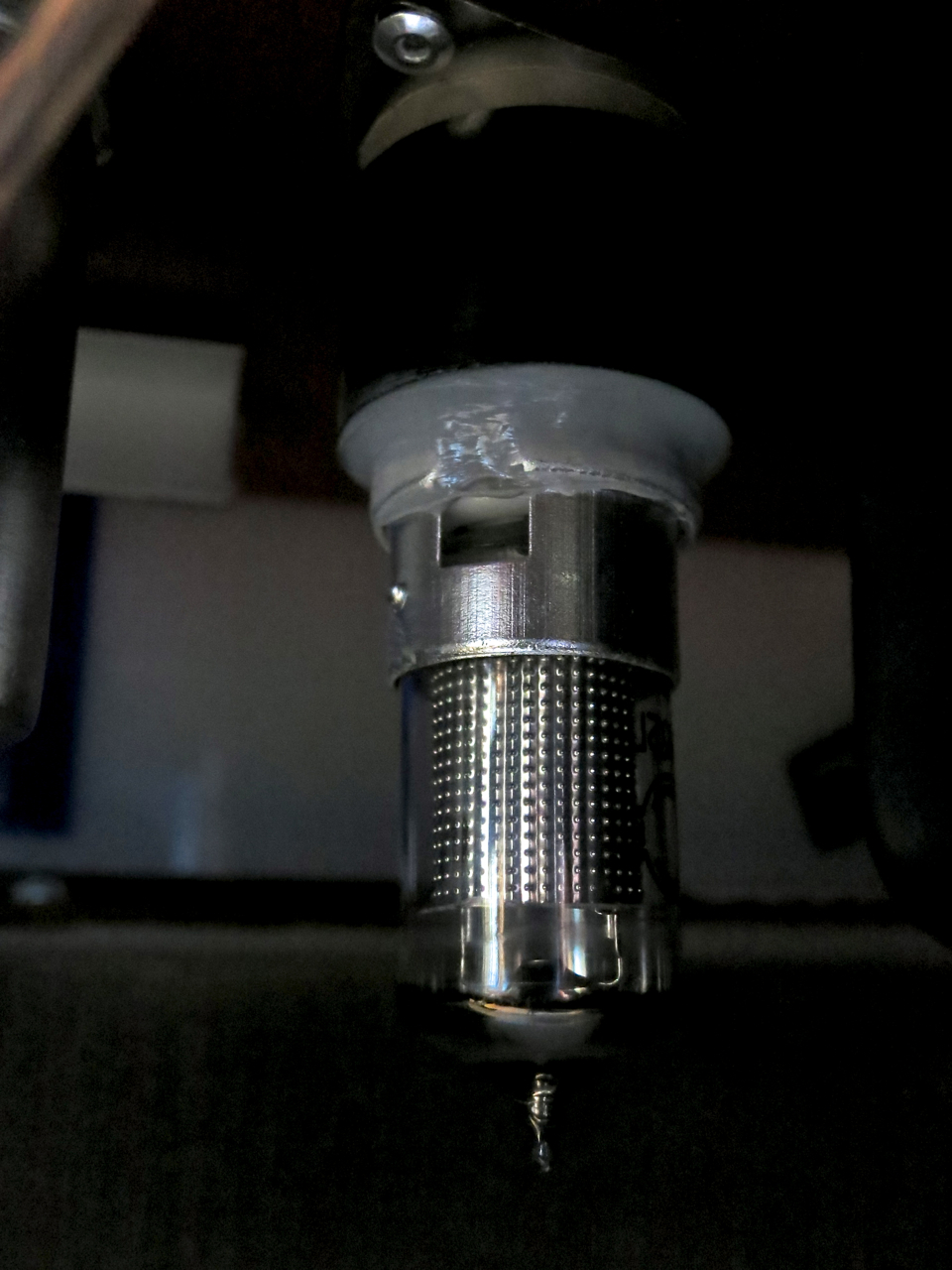
The clean channel is constructed around a EF86-type pentode. The EF86 (aka the 6267) is known for its great tone, and it can be found in some vintage Vox amps, as well as in Matchless and Dr Z amps. But due to its microphonic nature this tube type is not widely used.
Hehku Customs has solved this problem by using a damper made from silicone, which decouples the EF86 from the mechanical vibrations of the combo.
Overdrive (and phase inversion) duties are handled by a pair of 6N2P-valves, which are Russian, military-spec’ed relatives of the 12AX7/ECC83, offering a slightly different gain structure and sound.
The Nightingale uses a tube rectifier designed around a type 5AR4.
The power amp section runs on a pair of EL84s. You could also drop in two Russian (military) 6P15P/EL83-types, and thanks to the fact that the Hehku Nightingale is self-biasing, you can do this without the need for an amp technician.
A quality 12-inch speaker from Warehouse, the Green Beret, has been selected for its British sound.
****
With its factory set-up (6N2P + EL84), the Hehku Nightingale 15’s clean channels has plenty of headroom, even for twin humbucker guitars. The six-step Bass-rotary and the combo’s active Treble control offer you a lot of leeway to tune the tone to your requirements. Tonally, the Nightingale’s clean delivery is more ”Vox” than ”Blackface”.
The Nightingale’s overdriven tones are extremely tasty, too. There’s a very juicy mid-range, coupled with a healthy dose of top end grit, which will surely satisfy any fan of classic Rock and Blues sounds.
Here’s a clip recorded with my vintage-reissue Fender Telecaster – you will hear: clean (triode) –> clean (pentode) –> overdriven (triode) –> overdriven (pentode); the power amp runs in pentode-mode:
And here’s a similar clip played with my Hamer USA Studio Custom:
****
Hehku’s Jarmo Välimäki also supplied me with a set of alternative valves (12AX7 + 6P15P), and the difference in tone and dynamics is easy to hear:
With the alternative set, there’s much less headroom on offer. Even the Telecaster will drive the clean channel into break-up (in pentode-mode), with the Hamer stepping clearly into Blues-overdrive territory.
These valves add more gain to the drive channel, and also result in a slightly flabbier bass and sharper treble. The Nightingale 15 sounds great this way, too, even though my own preferences lean more into the direction of the factory set-up.
Here’s a clip with the Telecaster (the control settings have stayed unchanged, only the valves have been swapped):
And here’s the sound of the amp played with the Hamer’s two humbuckers:
****
In my view, the Hehku Customs Nightingale 15 is a fantastic all-valve combo with its own voice and an interestingly idiosyncratic overall concept. I like Hehku’s eye for detail, and the fact that the company go their own way in terms of looks and electronic design. The Nightingale is a top-drawer amp, offering its own distinctive looks and sounds, without the need to resort to snake oil or nostalgic tube voodoo.
Hehku’s Nightingale is a modern, hand-made valve combo, with a clear and easy-to-understand lay-out, as well as a very interesting and interactive signal path. The Nightingale is not about trying to imitate any specific vintage amp’s sounds – this amp is a true creative tool, setting you on your path to your personal guitar tone nirvana.
The Nightingale 15 sure isn’t cheap, but in light of the fact that this is a hand-made Finnish product, you can only call the price tag very fair!
Albion Amplification is a new name on the Finnish market, even though the brand has been in existence since 2010.
Albion’s main man is genuine amp guru and bonafide living legend Steve Grindrod. Mr Grindrod left an indelible mark in the field of amplifier design as Marshall’s chief designer for over 20 years. In the beginning of the Noughties, after leaving Marshall, he also worked for Vox for a few years.
Albion was founded in 2009 as a joint venture between Grindrod and Chinese audio specialists IAG Group. Albion’s guitar and bass amplifiers are produced in their own plant in China under the direct supervision of Steve Grindrod, who has moved there from the UK.
****
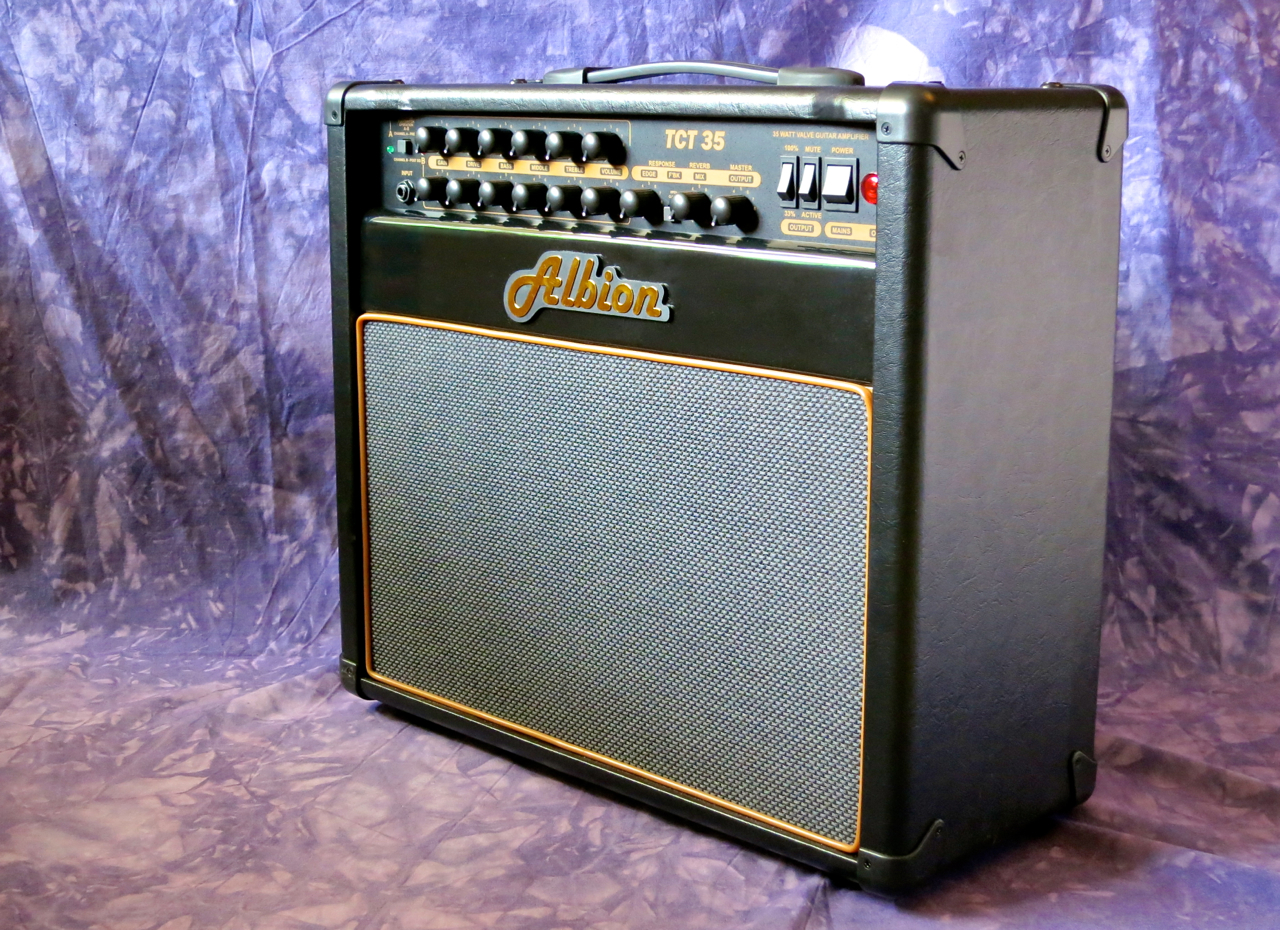
The Albion TCT35C (recommended retail price in Finland: 865 €) is part of the company’s TCT-series, which is aimed directly at the guitarist who needs a versatile amp.
The TCT-series offers two-channel, all-valve amplifiers built with a very open architecture that allows for maximum flexibility. At the moment of writing, the TCT-series comprises two combos and three amp heads.
The TCT35C has a cabinet made of high-quality birch plywood. The panel carrying the golden script logo is a solid piece of walnut, which has received a piano black finish on our review sample (there’s also a see-through wine red version available).
The overall finishing quality is on a very high level, and the TCT35C looks rather stylish in a businesslike, slightly understated way.
The combo weighs in at about 24 kilos, which is rather moderate for an all-valve amp of this size.
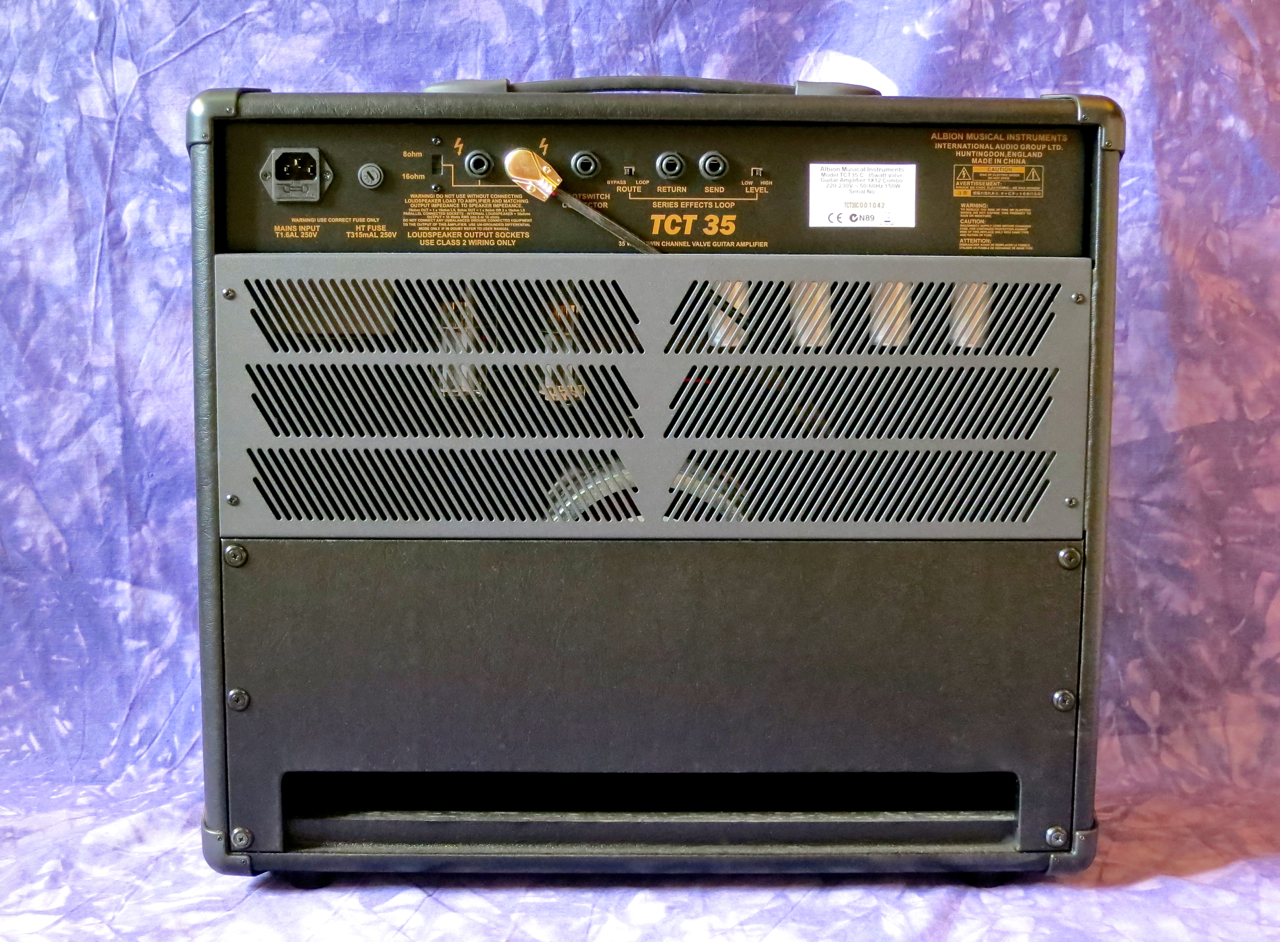
The cabinet features a half-closed back with a sturdy metall grille protecting the valves (or ”tubes”, for our North American friends).
Albion’s TCT35C employs three 12AX7 valves (aka ECC83) in its preamplifier section. A fourth 12AX7 is used as the combo’s phase inverter.
The power amp section churns out approximately 35 Watts of power (RMS), using a pair of 6L6 valves.
All Albion amps use IAG Group’s pro-quality audio transformers, which are well regarded by Hifi-enthusiasts and used in IAG’s Leak and Luxman valve amplifiers.
Albion produces all of their PCBs, metal parts and speakers in their own factory to Steve Grindrod’s exacting specifications.
The TCT35C comes equipped with a 12-inch Albion G1280-VSR-16 speaker, which has power rating of 80 Watts and an impedance of 16 Ohms.
A two-switch footswitch unit comes supplied with the combo. It allows for channel switching, as well as the muting of the on-board digital reverb unit.
The unit is shipped with the output jack on the right hand side, but if you prefer to have the connector on the left, you can switch things around easily. Simply unscrew the six screws holding the footswitch assembly in the chassis, pull the assemby out, turn it around, put the switches back into the chassis and tighten the screws. Brilliantly easy!
****
Even though both of the Albion TCT35C’s channels sport the same controls, the channels have been designed differently:
In Channel A the guitar signal is first routed through the EQ-section, before it reaches the main gain stages. In Channel B the signal first goes from the input jack to the gain section and is only then fed into the EQ-department. Even though both channels will give you sounds from clean all the way to high gain, each channel has its own distinct character and ”feel”.
One special feature of TCT-series amps are their twin gain controls – called Gain and Drive. The first amplification stage is called Gain, while the second one is called Drive, and each adds their own type of gain structure and character to a channel’s tone. By experimenting with different combinations of a channel’s Gain and Drive settings you will get a plethora of different sounds and responses to playing dynamics.
The combo’s Master-section offers some additional features for even more tonal flexibility:
The Edge-control is a presence/brightness control for the power amp, which allows you to tailor the TCT35C’s bite to your own requirements. The F’BK-switch (short for ”feedback”) offers you two different power amp responses – you can either go for more bite and a very tight attack or choose a creamier delivery with much more fat compression.
Steve Grindrod has chosen to use digital reverb on his TCT-amps, because they tend to stand up better to the demands of a high gain amp.
Thanks to its output power switch you can also run the combo at only 33 % of its output power. As were dealing with a genuine valve amp here, this power drop also lowers the clean headroom and adds some tasty power amp compression to the signal.
The TCT35C’s effects loop is deliberately using solid state technology, as Steve Grindrod aims for a clean and transparent signal transfer in this section.
****
The Albion TCT35C combo is an extremely flexible guitar amp, thanks to its well-designed channel architecture and its extremely efficient channel equalisers.
This isn’t a one-trick pony at all, but rather a guitar sound enthusiast’s dream machine, offering a large palette of different tones.
Despite the fact that both channels will ”do” clean as well as dirty tones, Channel B will offer you more gain than Channel A. ”Fender-style” and ”Marshall-style” are far too narrow to adequately describe the different characters provided by Channels A and B, but there are clear differences apparent in their mid-range sounds and bass responses.
The effective Channel EQs, as well as the Master-section’s Edge- and Feedback-controls add their bits to the Albion’s versatility. While the TCT35C is quite an intuitive amp to use, I’d still recommend you take your time to find out all the features and sounds this combo has to offer.
These eight audio clips only scratch the surface of what the Albion TCT35C’s tonal versatility.
Let’s start with two clean examples using Channel A; first the Stratocaster:
…followed by a Les Paul-style Hamer Studio Custom:
Here are two crunchy clips played through Channel A. First the Strat:
…and then the Hamer:
These are two crunchy clips using Channel B – the Stratocaster first:
…followed by the double-humbucker Hamer:
And as a finale two high gain examples (Channel B) – starting with the Strat:
…and finishing with the Hamer (in Drop-D):
****
Wow, what a fantastic amp! I can’t think of any musical genre the Albion TCT35C couldn’t master.
The TCT35C is an extremely versatile valve amplifier offering loads of great sounds. Despite being quite a compact combo there’s plenty of volume on tap.
Steve Grindrod’s vast knowledge and experience in the field of amp design really shows in the way the Albion is put together, as well as in the quality of the sounds on offer in the TCT35C and in the low amounts of hiss (even in high gain settings).
****
Albion TCT35C
Current RRP in Finland – 865 € (street price approximately 800 €)




















 Kitarablogi.com – Finland's premier Guitar and Bass blog