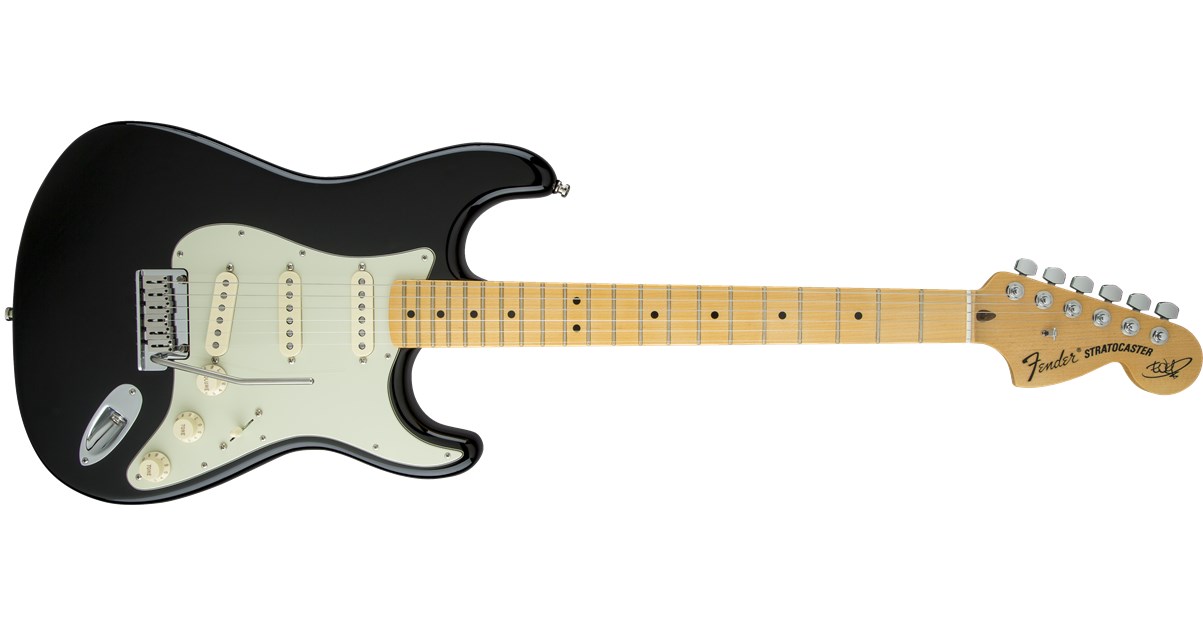
The Edge Strat is engineered for top-notch performance with versatile tone and effortless playing. Unique features include a pair of special Custom Shop Fat 50s single-coil pickups with flat pole pieces, a DiMarzio® FS-1™ bridge pickup, upgraded quartersawn maple neck with “C”-shaped profile and 9.5” maple fingerboard, modern two-point synchronized tremolo bridge with pop-in arm and fully adjustable saddles. The Edge’s signature is also included on the front of the large ‘70s-style headstock.
The elegant guitar combines the classic curves, appointments and effortless playability of the Stratocaster with modern enhancements and materials to create a dream instrument for players and U2 fans alike.
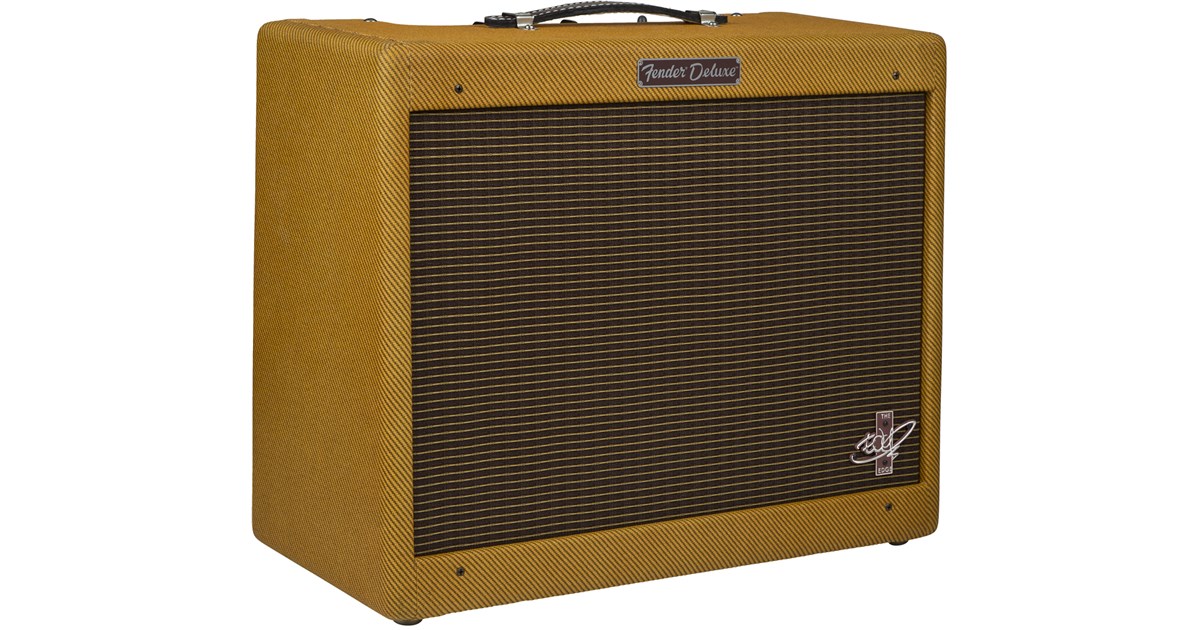
The Edge Deluxe signature model is an updated take on the classic ’57 tweed Deluxe used to craft the Edge’s sonic identity. This amp also produces the tone and articulation of the vintage Fender Deluxe amps that are an important part of the artist’s complex multi-amp effects setup.
This 12-watt hand-wired amp features modified circuitry for tighter low-end response and high-impact tone, a 12” Celestion® Blue speaker, custom-tapered volume control and altered component values that tighten up low-end frequency response. The Edge himself also hand-designed the special grille logo badge, which distinguishes the traditional tweed amp as a distinctive tool for guitarists everywhere.
Gretsch Guitars’ brand new Streamliner series offers access to the legendary brand name at a very affordable price point.
At the moment, the new range includes three different guitar models:
The G2622 Streamliner Center Block (also available left handed) is a centre block-equipped version of a Sixties double cutaway Country Gentleman, while the G2655 Streamliner Center Block offers you similar looks in a more compact package. The G2420 Streamliner Hollow Body, for its part, is a full-blown, big-bodied archtop guitar in a similar vein to Gretsch’s legendary 6120.
All three guitars are also available as T-versions with a Bigsby Lightning Series vibrato. The Streamliner Series is handmade in Indonesia.
****
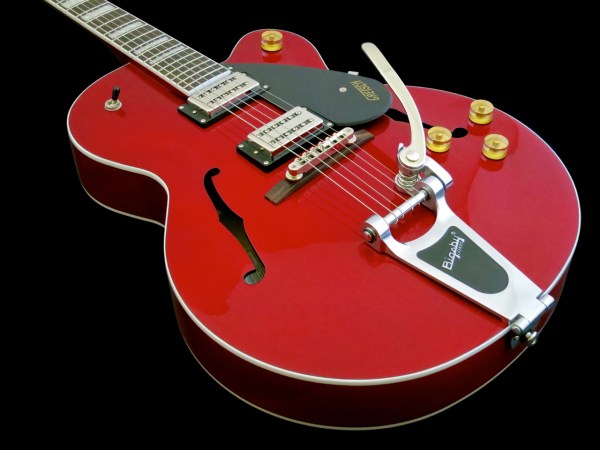
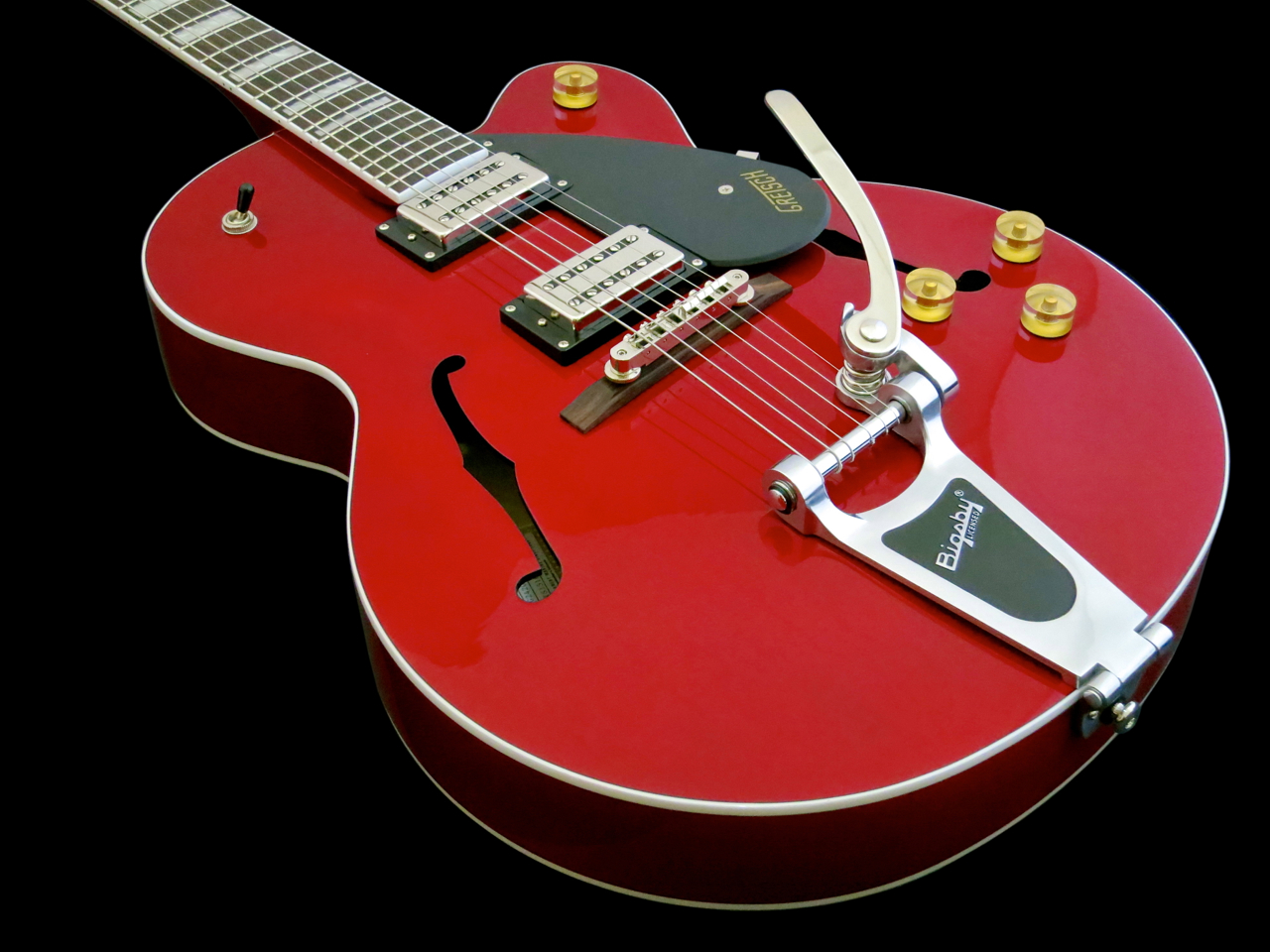
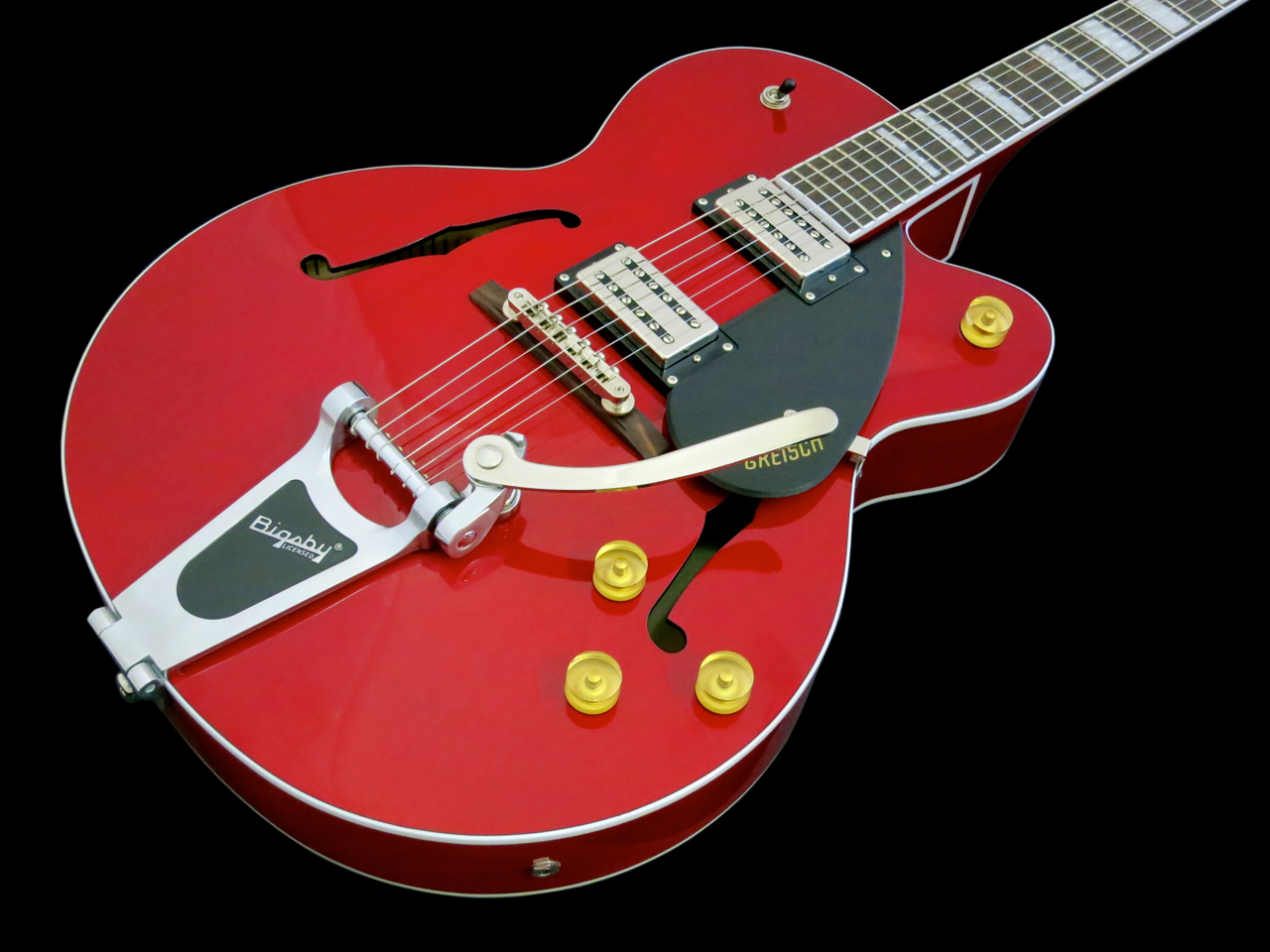
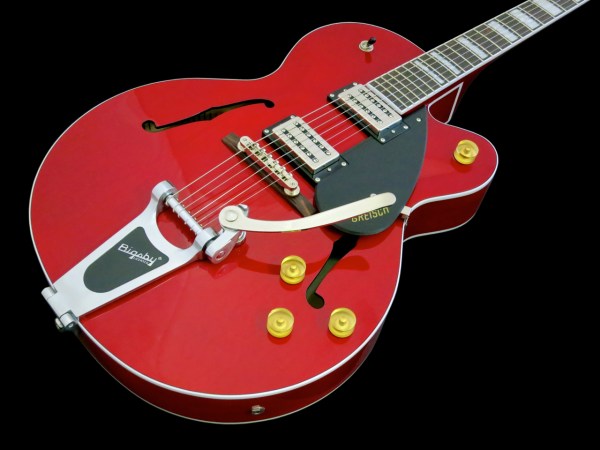
The Gretsch Streamliner G2420T Hollow Body (street price in Finland approx. 560 €) is a very foxy looking guitar, despite its quite affordable pedigree.
The G2420T can be had in see-though red or gold metallic, while the standard model (equipped with a lyre-style tailpiece) comes in brown sunburst only.
The G2420T’s full-depth body is made from steam-pressed laminated maple. The top is stiffened by Gretsch’s traditional parallel bracing.
The nato (an Asian wood species somewhat similar to mahogany) neck is glued into the body.
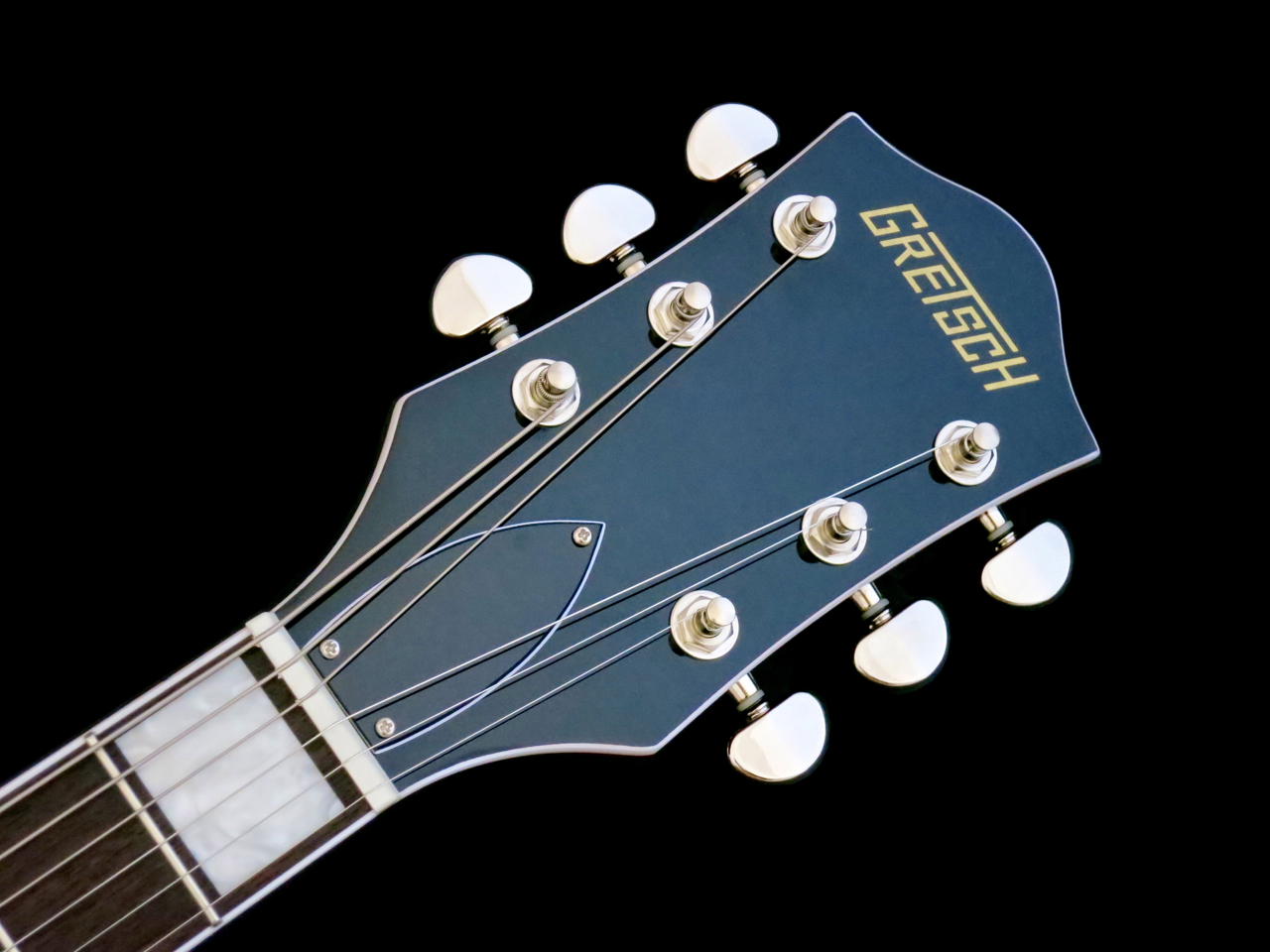
There’s plenty of binding on the Streamliner Hollow Body – in addition to the multiple binding on the body the guitar also sports a bound fretboard and even a bound headstock.
This Gretsch comes equipped with a very decent set of sealed tuning machines.
The vintage-sized frets have been neatly seated. The G2420T features large rectangular position markers made from pearloid.
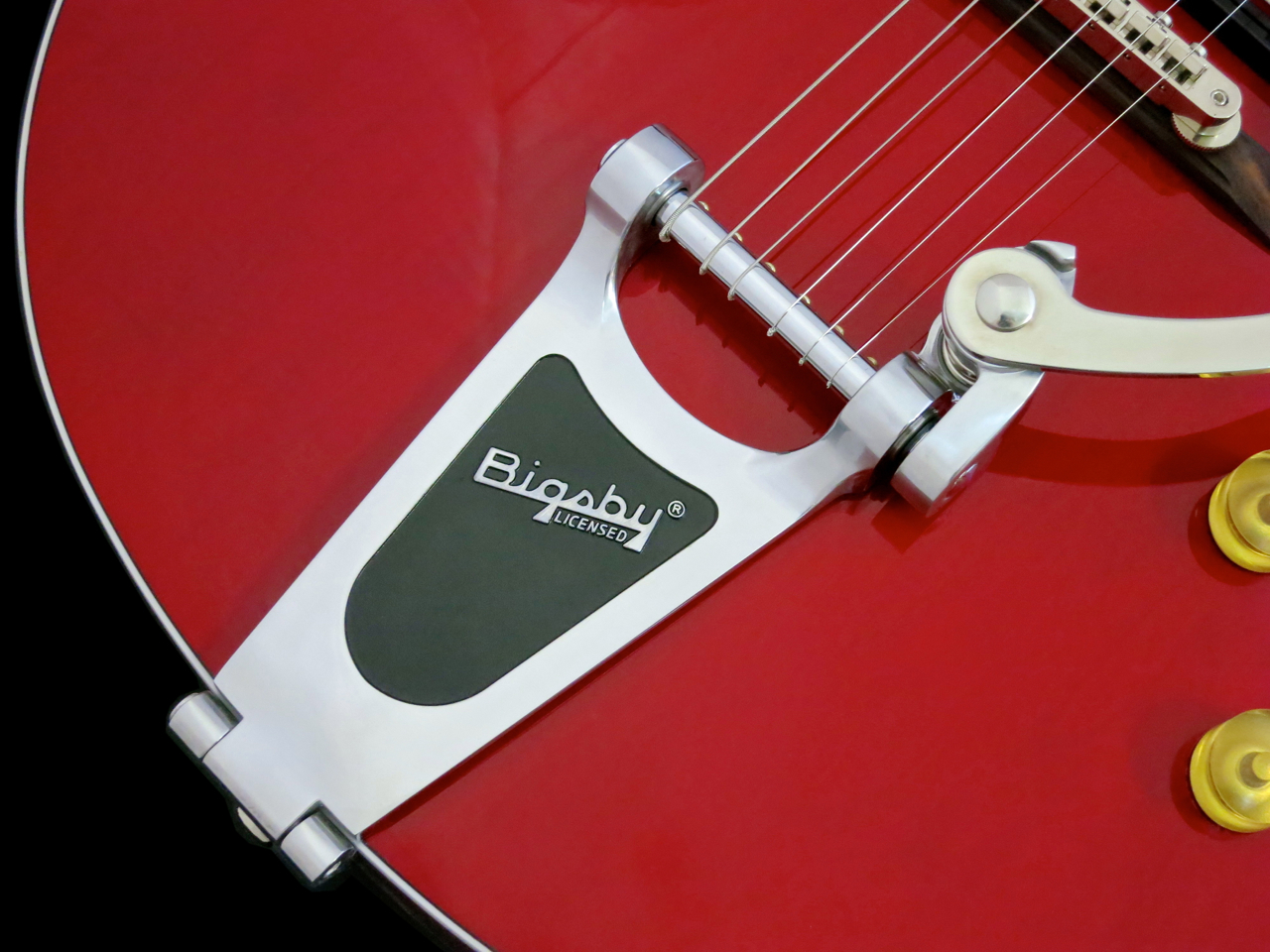
Bigsby’s mid-priced Lightning Series vibratos are produced in the Far East to exacting standards. The Bigsby B60 has been specifically designed for use with large-bodied archtops, such as the Gretsch G2420T.
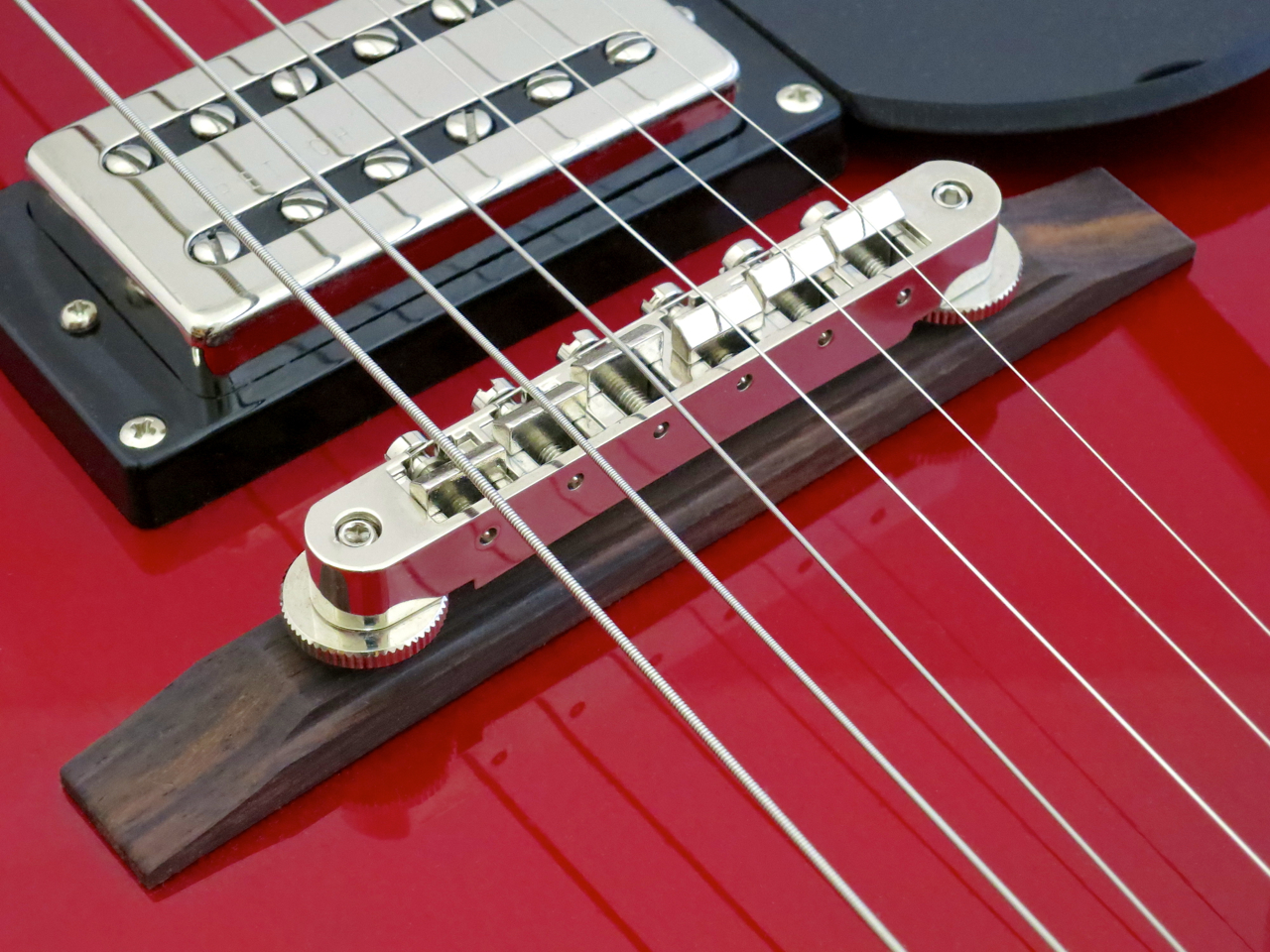
This Streamliner’s Adjusto-matic bridge may seem to be held in place simply by string pressure, but there’s more to the bridge than meets the eye. The rosewood base is ”secured”, which means reverse pinned. The bridge posts continue all the way through the rosewood base and into two holes in the guitar’s top, which keeps the whole bridge in the correct place.
The biggest difference between the Streamliner G2420T and similar models in Gretsch’s Electromatic- and Pro-ranges can be found in the new guitar’s pickups:
Depending on the ”era”, or an artists wishes, a Pro Series Model G6120 will either come with a pair of DeArmond single coils, Gretsch’s own Filter’Tron humbuckers or similar TV Jones pickups. Recent Electromatic G5420’s are now equipped with Gretsch’s new Black Top Filter’Trons, which are licensed Far Eastern copies of the original pickups.
All new Streamliners sport a pair of Broad’Tron pickups. Broad’Trons are full-sized humbuckers designed to offer a tone somewhere in-between the twang and bite of Filter’Trons and the lush warmth of PAF-style ’buckers.
The controls on the G2420T are pure Gretsch:
Below the f-hole you will find separate volume knobs for each pickup, as well as a joint master tone control. An additional master volume control is placed next to the cutaway.
****
Let me start this section by stressing how well-made this budget-Gretsch really is! The review sample wasn’t a ”review instrument”, breathed on by distributors Fender Scandinavia, instead I took the guitar straight off the wall at a local music shop (DLX Music).
The Gretsch G2420T Streamliner Hollow Body is a very cleanly put together archtop electric, and I genuinely couldn’t find anything to criticise (especially when considering the instruments pocket-friendly price). The very nice fretwork on the Streamliner is a definite plus when it comes to this guitar’s comfortable playability.
Officially Gretsch call this neck profile a ”Thin U”, but I would describe it as a very comfy D shape with a slightly flattened back.
The Bigsby B60 is buttery and doesn’t throw the Hollow Body out of tune too much, if used sensibly (a word of advice: if you’re very sensitive when it comes tuning stability, a Bigsby probably isn’t right for you). Because a Bigsby B6/B60 makes do without the additional roller of other Bigsby models, this vibrato is more sensitive and immediate in use (which is a good thing in my view). You get the all the Bigsby shine and shimmer with less ”work”.
Played acoustically, the Streamliner Hollow Body sounds just like the laminated-body archtop it is – open and dry with a strong focus on mid-range frequencies.
I feel that Gretsch’s plan of taking its new Streamliners closer towards the mainstream really seems to hit the mark. The Broad’Trons may not give you the traditional clucky, chicken picking, bright and sparkly sound of a set of Filter’Trons, but there’s still enough presence and treble left in the new pickups’ tone for a gretsch-y sound.
Thanks to the new pickups’ broader tone the Gretsch G2420T also works well for Jazz, apart from the usual Country and Rock (-abilly) genres. This clip starts with the neck pickup:
The Streamliner Hollow Body also sounds great with a light amount of crunch. There’s a nice balance between the low end and the treble in the G2420T’s sound, coupled with the dry delivery so typical of big box archtops.
You should be aware, though, that high gain settings and/or very high volume levels will result in howling feedback sooner or later. This isn’t really a fault, but rather a normal feature of this type of instrument, and the Streamliner Hollow Body isn’t any more ”problematic” than other guitars of this type.
This sound clip, too, has been recorded with Blackstar HT-1R valve combo:
Here’s the demo track off the Youtube video, whose guitar tracks were recorded using Apple Garageband’s own amp plug-ins. The lead guitar uses the bridge pickup, while the rhythm parts have been recorded using both pickups (left channel) and the neck pickup (right channel), respectively:
****
In my opinion the Gretsch Streamliner G2420T Hollow Body is one of the best full-size archtops in this price range – possibly even the best! This is a surprisingly well-made instrument that punches far above its ”weight”.
If you’re looking for the ”genuine Gretsch Sound”, warts-and-all, I would point you to the (much pricier) Electromatic Series and its Filter’Tron pickups.
One of the Streamliner Series’ main objectives, though, is to broaden and widen the appeal of these guitars, and take the Gretsch name closer to the mainstream. I feel Gretsch have succeeded very well in this endeavour!
Gretsch Guitarsin Streamliner-uutuussarja tuo legendaarisen valmistajan kitaroita uuteen, edullisempaan hintaluokkaan.
Tällä hetkellä uuteen sarjaan kuuluvat kolme mallia:
G2622 Streamliner Center Block (saatavilla myös vasenkätisenä) on keskipalkilla varustettu versio 1960-luvun Country Gentleman -kitarasta, ja G2655 Streamliner Center Block on nykyaikainen malli pienemmällä puoliakustisella rungolla. G2420 Streamliner Hollow Body taas on legendaarisen Gretsch 6120:n edullinen painos, ja juuri sellaisen Kitarablogi sai testiin.
Kaikki kolme mallia on saatavilla myös T-versiona Lightning-sarjan Bigsby-vibratolla varustettuina. Streamliner-sarja rakennetaan käsityönä Indonesiassa.
G2420:n T-versiota saa punaisena tai kultaisena, kun taas lyyra-muotoisella kieltenpitimellä varustettua perusmallia tarjotaan ruskealla liukuvärityksellä.
G2420T:n täysikokoinen runko valmistetaan kokonaan muotoon prässätystä vaahteravanerista. Kannen alta löytyy – Gretschin tapaan – kaksi pitkittäissuunnassa kulkevaa rimaa.
Nato-puusta veistetty kaula on liitetty runkoon liimaamalla.
Rungon ja otelaudan lisäksi myös Streamliner Hollow Bodyn tyylikäs viritinlapa on reunalistoitettu.
Uutuus-Gretschin virittimet ovat sulavasti toimivaa nykyaikaista sorttia.
G2420T:n vintage-tyyliset nauhat on asennettu hyvin siististi soittimen palisanteriotelautaan. Isot suorakulmiot helmiäismuovista toimivat otemerkkeinä.
Bigsbyn laadukkaat Lightning-sarjan vibratot valmistetaan kauko-idässä. Bigsby B60 on tarkoitettu nimenomaan tällaiseen isokoppaiseen orkesterikitaraan kuin Gretsch G2420T:hen.
Streamlinerin Adjusto-matic-talla näyttää vapaasti seisovalta, mutta se on ylhäältä päin varmistettu luistamista vastaan. Tallan kahdet kierretangot jatkavat tallan ruusupuujalan läpi, ja nämä ”tapit” sitten istuvat niille tarkoitetuissa pienissä rei’issä kannessa.
Suurin ero Streamliner G2420T:n ja muiden vastaavien mallien Gretschin Electromatic- ja Pro-sarjojen välillä löytyy mikrofonivarustuksesta:
Pro-sarjan G6120-kitaroissa käytetään – aikakauden tai artistin toiveiden mukaisesti – joko DeArmond-yksikelaisia, Gretschin omia Filter’Tron-humbuckereita tai TV Jonesin vastaavia mikkejä. Electromatic G5420 -malleihin asennetaan nykyään Gretschin uudet Black Top Filter’Tronit, jotka ovat kauko-idässä tehtyjä lisenssikopioita firman alkuperäisistä mikrofoneista.
Kaikissa Streamliner-soittimissa taas käytetään Broad’Tron-nimisiä, täysikokoisia humbuckereita. Broad’Troneille luvataan sellaista soundia, joka on perinteisen Filter’Tron-purevuuden ja -twangin ja PAF-tyylisten humbuckerien täyteläisyyden välimaastossa.
G2420T:n kytkentä on ehtaa Gretschiä:
F-aukon läheltä löytyy kummallekin mikrofonille oma volyymisäädin, sekä yhteinen master tone, kun taas soololoven vierestä löytyy vielä erillinen master volume.
****
Heti aluksi minun täytyy korostaa kuinka korkealla tasolla tämän testikitaran työnjälki on, eikä tässä ole kyse Fender Scandinavian lähettämästä ”tuunatusta testikitarasta”, vaan soitin on poimittu suoraan DLX Musiikin seinältä mukaan testiin!
Gretsch G2420T Streamliner Hollow Body on erittäin siististi rakennettu orkesterikitara, enkä ole löytänyt mitään mikä olisi pistänyt ikävästi silmään. Testikitaran laadukas nauhatyö saa tältä testaajalta vielä erityisen kiitoksen – kitaran soitettavuus on erinomainen, eikä mikään rämise.
Tämän Gretschin kaulaprofiili on mukava D-muoto aavistuksen verran laakealla selkäpuolella.
Bigsby B60 toimii mukavan jouhevasti ja vire säilyy ns. ”järkevässä” käytössä yllättävän hyvin (huom: Bigsby ei oikein sovi kultakorville). Koska B6/B60-vibratolla (samoin kuin lyhyemmällä B3/B30-mallilla) ei ole muiden Bigsby-mallien lisärulla, toimii tämä vibrato (hyvällä tavalla) herkemmin ja suoremmin. Bigsbyn hohtoa saa näin esiin vähemmällä ”työllä”.
Streamliner Hollow Body -mallin akustinen soundi on hyvä tyyppiesimerkki vanerikoppaisesta orkesterikitarasta – avoin, kuiva ja hieman keskialuevoittoinen.
Gretschin suunnitelma viedä Streamliner-mallit niiden Broad’Tron-mikrofonien avulla hieman lähemmäksi valtavirtaa on – ainakin minun omasta mielestäni – onnistunut varsin hyvin. On totta, ettei uusista mikeistä lähde läheskään niin kirkas, pureva ja naksahteleva soundi kuin perinteisistä Filter’Troneista, mutta Broad’Tron-humbuckereissa on kuitenkin onnistuttu säilyttämään riittävästi ylipäätä Gretsch-vivahteiseen soundiin.
Leveämmän perussoundinsa ansiosta Gretschin G2420T sopii Countryn ja varhaisen Rockin ohella myös todella hyvin Jazziin. Esimerkkipätkä alkaa kaulamikrofonista:
Myös kevyellä säröllä Streamliner Hollow Body kuulostaa mielestäni oikein mainiolta. G2420T:n soundissa bassot ja diskantit ovat hyvässä tasapainossa, ja kitara soi orkesterikitaran tavoin mukavan kuivalla äänellä.
Isoimmilla volyymeillä tällaisen kitaran kanssa alkaa tulla vastaan väistämättä feedback-ongelmia, etenkin särösoundeilla. Mutta tämä ei ole vika, vaan täysakustisen orkesterikitaran ominaisuus, eikä Streamliner Hollow Body ole siinä mielessä ”hankalampi” kuin muut.
Myös tämä pätkä on äänitetty Blackstar HT-1R putkikombolla:
Tässä vielä videon ääniraita, jossa kitararaidat on äänitetty Apple Garagebandin vahvistinplugareilla. Soolokitara käyttää tallamikrofonia, kun taas komppiraidat on soitettu sekä molemmilla mikrofoneilla (vasen kanava) että kaulamikrofonilla (oikea kanava):
****
Minun mielestäni Gretsch Streamliner G2420T Hollow Body on yksi parhaimmista orkesterikitaroista tässä hintaluokassa – ehkä jopa se paras. Tämä on yllättävän laadukas soitin, eikä mikään halpakitara.
Jos se ”aito Gretsch-soundi” on hakusessa, Electromatic-sarjan (huomattavasti kalliimpi) G5420T-malli on Filter’Tron-mikrofoniensa ansiosta varmasti se parempi valinta.
Streamliner-sarjan yksi tarkoitus on kuitenkin tarjota sellaisia Gretschejä, joilla on perinteistä laajempi vetovoima ja modernimpi soundi. Ja tässä aikeessa Gretsch on onnistunut erittäin hyvin!
Jimi Hendrix’ simply doesn’t seem to wane, even though the genial guitar hero himself died in London in 1970 at 27 years of age. There’s still so much interest in Hendrix’ music that he continues to rank among the top ten of best-earning dead celebrities in Forbes magazine.
The Fender Stratocaster was the master’s favourite instrument, so it’s not really surprising that the man has been honoured with a signature model by Fender last year. This guitar is now also available in Finland.
In 1980 a small, semiofficial run of Hendrix Strats was made, sporting a white body and a left-handed neck with a large headstock. Fender’s Custom Shop came out with 100 Monterey Stratocasters, which where close copies of the guitar instrument played and burned at the 1967 festival. It was a right-handed Stratocaster with a small headstock and a hand-painted body, set up for left-handed playing. Along with the guitar the Monterey Set also included a flight case and a leather gig bag. In the same year (1997) Fender USA started to produce the Jimi Hendrix Voodoo Strat. The Voodoo Strat was in fact a a left-handed (!) copy of Hendrix’ (right-handed) Woodstock Stratocaster, with the headstock decals turned into mirror images, so that you would look (a bit) like Hendrix, whenever you stepped in front of a mirror. 😀
****
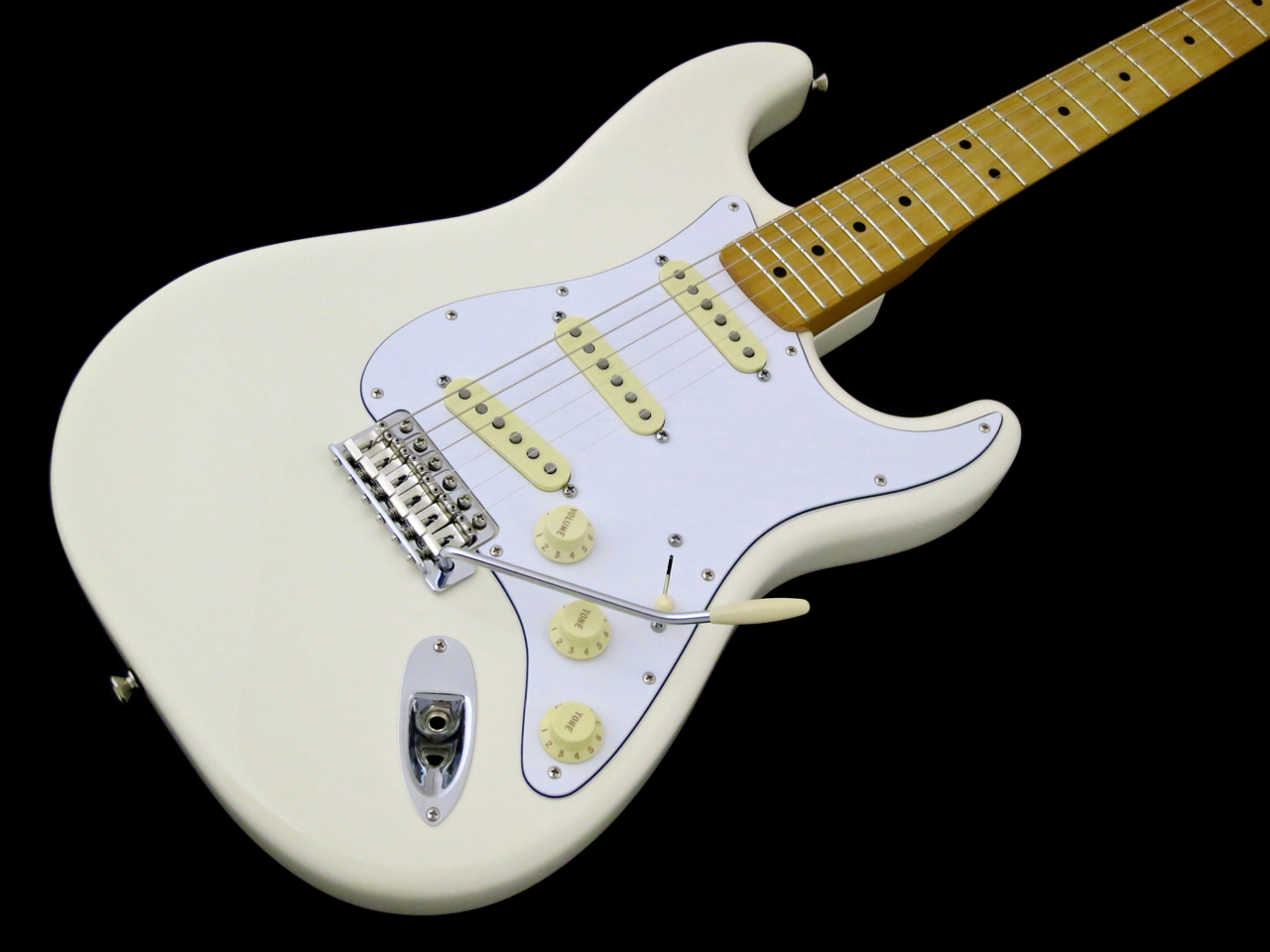
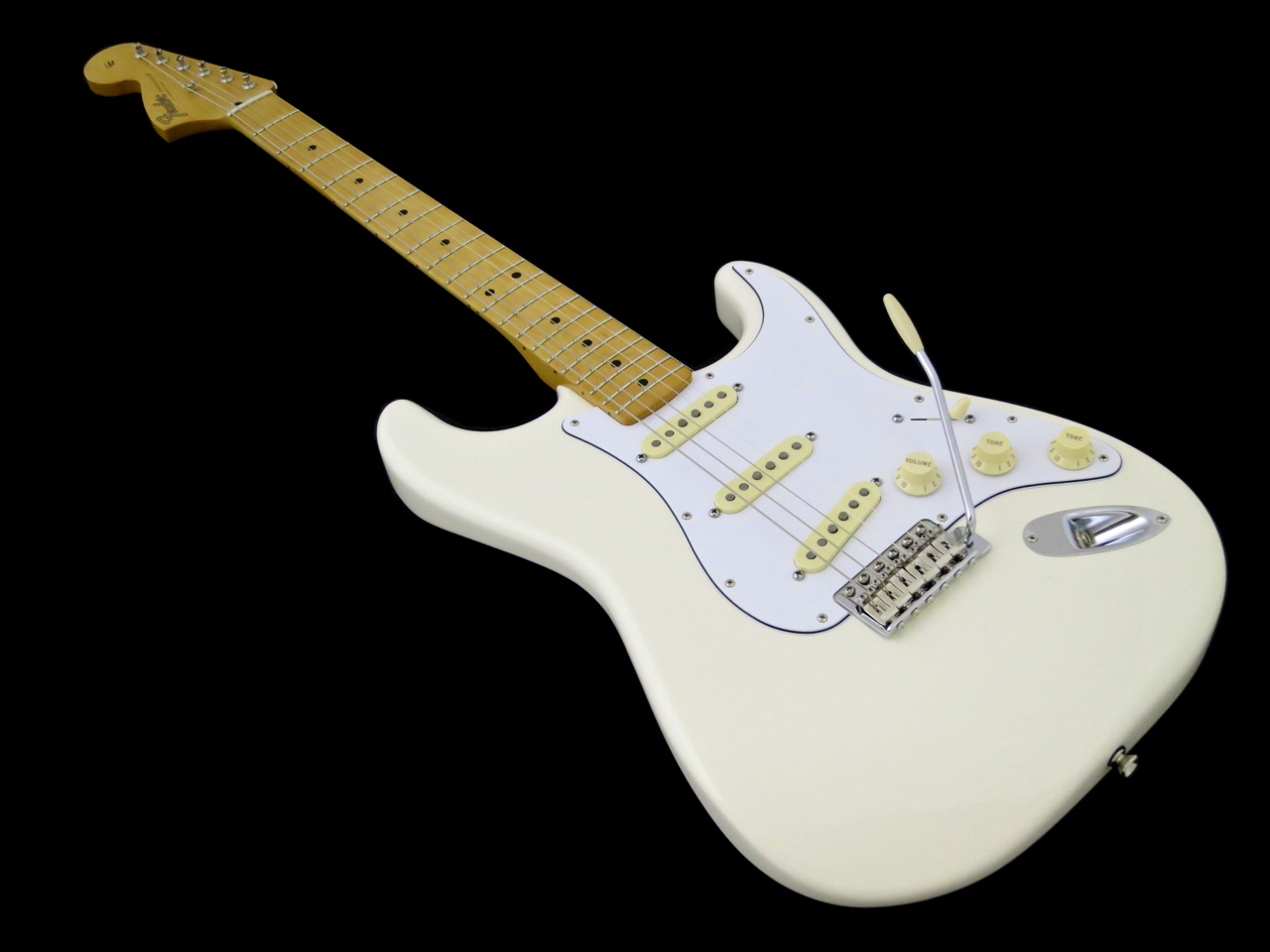
The brand-new Fender Jimi Hendrix Stratocaster (approx. 950 € in Finland) also has some features resembling the guitar Hendrix used at the Woodstock festival:
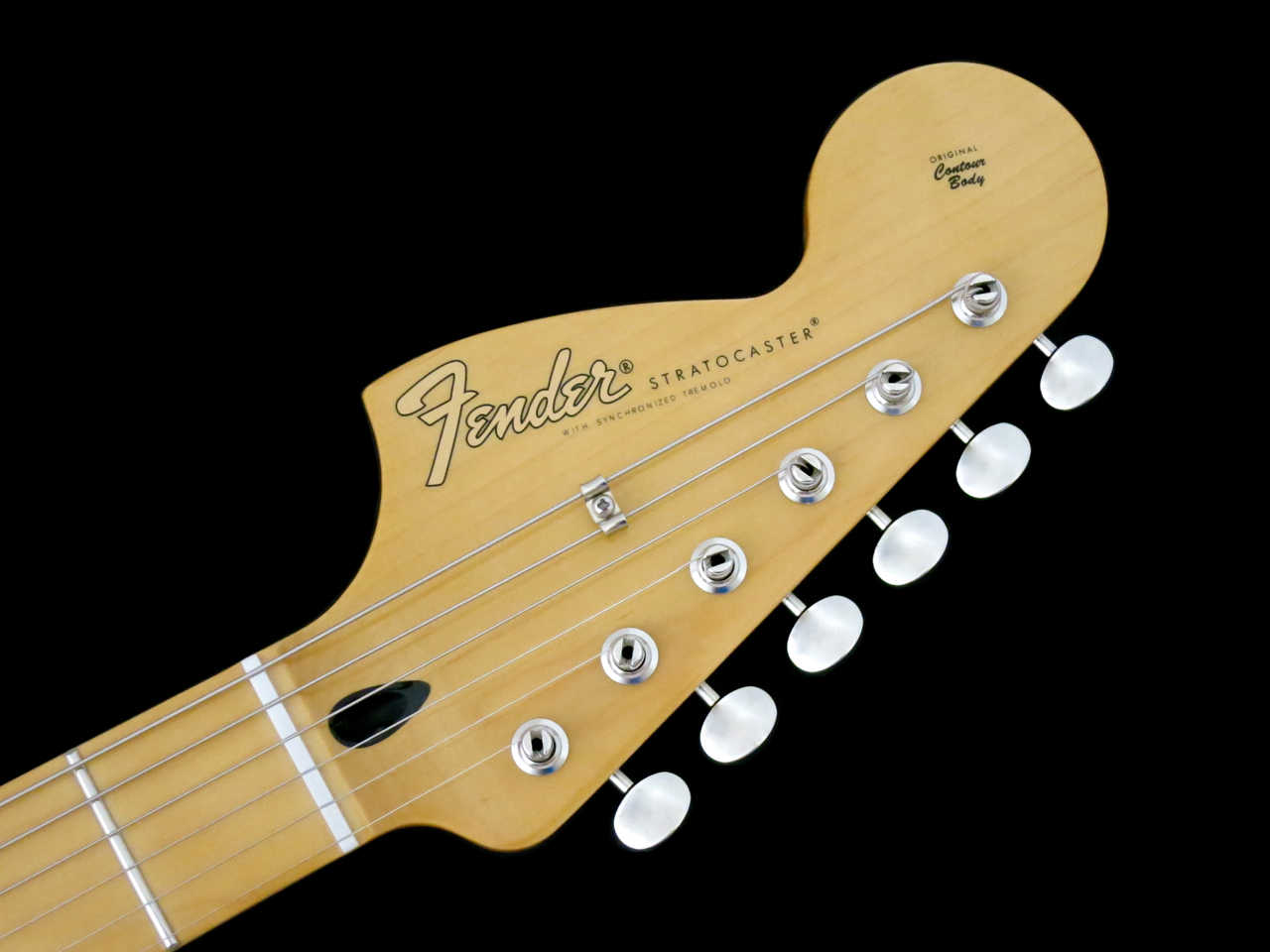
The right-handed alder body is finished either in black or in white, while the neck is a large headstock-carrying, left-handed, all-maple affair.
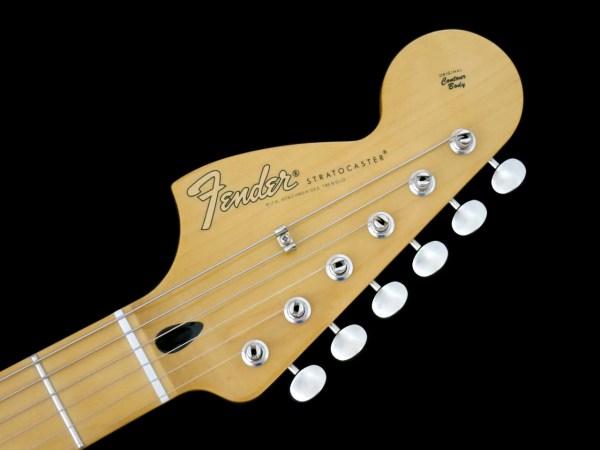
The headstock carries the so-called transition logo from the mid-Sixties, which was much larger than the Fifties’ spaghetti logo, but still gold coloured. By the end of the Sixties the logo was changed to black and the model name was written in large, bold lettering – that would be called the the CBS logo.
Modern improvements on the Hendrix Strat include truss rod access from the headstock side, as well as a flatter, more bend-friendly fretboard radius of 9.5 inches.
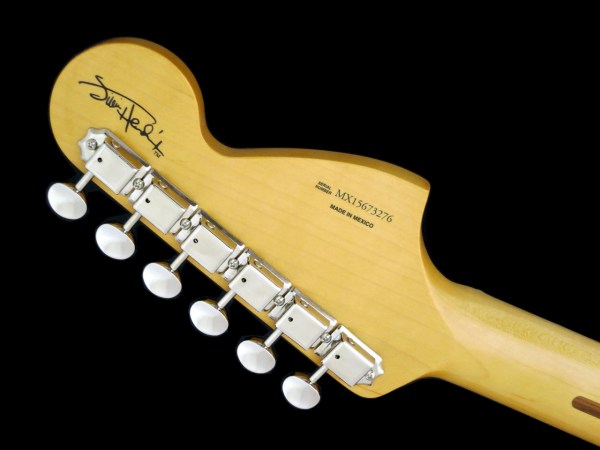
The headstock’s flip side displays Hendrix’ signature, and a very decent set of Kluson copies.
The neck joint has been kept very traditional, but for the Authentic Hendrix-logo on the neck plate.
The most important differences between the Hendrix model and a bog standard Strat can be found in the pickup department:
The Mexican signature guitar comes equipped with a pukka set of American Vintage ’65 Gray-Bottom Fender-pickups, which have been installed into this guitar, as if this were a left-handed model turned over. Both the neck and middle pickup have been flipped over by 180 degrees, while the bridge pickup has been flipped over first, before being installed at a reverse angle. Usually the bridge pickup is placed so that its bass side is closer to the neck with the treble side being closer to the bridge. On the Hendrix Strat the bridge pickup’s bass side is closer to the bridge and the treble side closer to the neck.
This reverse installation means that the magnet stagger is ”wrong”, changing slightly the balance between the strings in terms of output. Furthermore, the bridge pickup will give you a slightly changed range of overtones, due to its reverse angle.
We’ll find out in the listening test, whether these changes really make any discernible difference.
The controls follow the vintage recipe – master volume, neck tone, middle tone – while the pickup selector on the Hendrix model is a modern five-way unit.
The American Vintage ’65 pickup set is true to the original specs and does not feature a reverse-wound/reverse-polarity middle pickup for hum-cancelling in positions two and four, like many updated Strats!
Fender’s vintage vibrato bridge (the ”Sychronized Tremolo”) sports bent steel saddles.
****
Fender Strats are well-known for their excellent ergonomic properties and the Hendrix signature model stays true to this heritage.
Our review instrument was of comfortable moderate weight. The neck’s mid-Sixties C-profile feels great, thanks to not being overly chunky.
The guitar arrived strung with a set of 010s and tuned to E-flat, but the setup wasn’t quite spot-on. The vibrato bridge was tipped a little too steeply, and the intonation was a bit off on the bass strings. But it only took me a couple of minutes (and the correct pair of screwdrivers) to get this Strat shipshape. The result was a great-playing and great-sounding guitar (string height at 12th fret: bottom-E: 2.2 mm/high-e: 1.7 mm).
The flatter-than-vintage fretboard radius really helps to make the Hendrix Strat a very bend-friendly guitar, while also minimising the possibility of fret choke during large-interval bends.
I must admit that I’m not quite sure, whether I really hear much of a difference in the amplified sound of the reversed pickups, though.
Jimi’s guitar tech and effects guru, Roger Mayer, has often stated that Hendrix was satisfied with the sound of his (right-handed) Strats right off the peg. According to Mayer, the only ”customisation” the pair ever did on newly bought guitars, was to take off the neck and remove all possible finish residue inside the neck pockets to improve the stability of the neck joints. Hendrix’ effects, on the other hand, were a regular target for fine-adjustment and electronic customisation.
Anyway, the new Fender Jimi Hendrix signature guitar sounds just like a great Strat should. Here’s a clean clip first:
Here’s an example of the Hendrix Strat’s distorted tone:
I was eager to start recording with the Fender Hendrix model. The first demo track puts the signature Strat into a slightly more contemporary context. The signal chain for this track was: Fender Hendrix Stratocaster –> Electro-Harmonix Germanium 4 Big Muff Pi –> Morley M2 Wah/Volume –> Blackstar HT-1R:
Next I recorded a demo track with a more Hendrix-like arrangement. The signal path was: Hendrix Stratocaster –> Morley M2 Wah/Volume –> Electro-Harmonix Nano Big Muff Pi –> Blackstar HT-1R. The Uni-Vibe style sound at the end of the track was achieved with a phaser plug-in during mixdown:
****
Hendrix’ Live Sound
Even though Jimi Hendrix was known for his avant-garde use of effects in the studio – buoyed by the creativity of his sound engineer Eddie Kramer – his signal chain on stage was surprisingly straightforward. Here’s a short and basic rundown of Hendrix’ live rig.
1. Marshall Model 1959 ”Plexi” stack Jimi Hendrix used what we now call a vintage-type, non-master volume amplifier stack, which wasn’t especially high-gain by today’s standards. Usually Hendrix had two 100 Watt Marshall-stacks running in parallel, which meant things got very loud. His Strats would cause his amp to break up, but the type of distortion was closer to what we’d now call a 60s Blues sound than to 70s Metal, and far removed from the high-gain saturation of our time.
I simulated this type of amp response by turning my Blackstar HT-1R’s gain control up to get the clean channel to overdrive.
2. Dallas-Arbiter Fuzz Face
In my view, the fuzz pedal is the most important ingredient in Jimi’s sound, because it adds a lot of oomph, creamy compression, and aggression to proceedings.
A British importer of musical equipment, a man called Ivor Arbiter, came up with the Fuzz Face in 1966, because he wanted to have a fuzz pedal in his product range. He came up with a chunky package by having the Fuzz Face circuit built into the base of a 60s microphone stand. The round enclosure, coupled with the unit’s two controls and single footswitch, looked like a smiley face, which is where the pedal got its name from.
Fuzz Faces are built by the Jim Dunlop company these days. There are also cheap alternatives available, from companies such as Mooer or Rowin. I’m using an Electro-Harmonix Nano Big Muff Pi for the demo tracks:
3. Vox Wah-Wah
Hendrix generally used his Vox Wah in front of his Fuzz Face, but keeping it behind the fuzz will also result in some cool tones. Great wah-pedals can also be head from Boss, Mission Engineering or Jim Dunlop.
Roger Mayer’s Octavia-pedal was sometimes used as an additional ingredient in Jimi’s live sound. This strange-sounding effect combines distortion with an artificial upper octave and some slight ring-modulation. Hendrix also used a Uni-Vibe effect, which was one of the first pedals that tried to create a Leslie-like sound in a compact format.
A genuine Octavia-pedal is only made by Roger Mayer, but Joyo’s inexpensive JF-12 Voodoo Octave stomp box sets you off in a very similar direction.
Korg has introduced the NuVibe, which is a pukka re-imagination of the original Uni-Vibe-pedal. Voodoo Lab’s Micro Vibe is a high-quality proposition at a fair price.
You can also simulate Uni-Vibe-style tones by using a suitable phaser. The Boss PH-3 is a modern and versatile phaser. If you want something even more affordable, you could check out Mooer’s range of effects.
This clip uses a combination of two phaser plug-ins in my audio sequencer:
****
If you want to go all the way to ”become Hendrix”, you will need to buy a left-handed Stratocaster and turn it into a right-handed instrument. The result will be authentic, but also much less comfortable than a regular Strat, because the controls are all in the wrong place.
Fender’s new Jimi Hendrix Stratocaster will give you the (very slight) difference a reversed headstock brings to the playing feel, as well as the (very slight) tonal differences of the reversed pickups, while keeping all of the Stratocaster’s great ergonomics intact.
Fender’s Hendrix model is a fine Strat, which you can use for all types of music. Still, it’s the ”Hendrix-thing” this guitar does the best!
If I could only have the maestro’s long fingers and musical imagination…
Jimi Hendrixin suosio ei näytä hiipumisen merkkejä, vaikka tämä valovoimainen kitarasankari itse kuoli jo vuonna 1970 27-vuotiaana Lontoossa. Kiinnostus Hendrixin musiikkia kohti on yhä niin suuri, että hän on sijalla yhdeksän Forbes-lehden listalla parhaiten tienaavista kuolleista henkilöistä.
Fenderin Stratocaster oli mestarin suosikkisoitin, eikä ole siis ihme, että Fender hiljattain esitteli uuden Jimi Hendrix -nimikkomallin, joka on nyt myös saatavilla Suomessakin.
Uusi meksikolainen Fender Jimi Hendrix Stratocaster ei ole kuitenkaan firman ensimmäinen kunniaosoitus legendaariselle kitaristille:
Vuonna 1980 tehtiin pieni ”epävirallinen” erä Hendrix-Stratoja (tuotantoerä vain muutama tusina) valkoisella rungolla ja vasenkätisellä, isolla viritinlavalla varustetulla kaulalla. Vuonna 1997 ilmestyi Custom Shopin 100 kitaran erä Hendrixin Monterey-Stratosta, joka oli tarkka kopio soittimesta, jota Hendrix käytti Monterey-festivaalilla 1967. Se oli käsin maalattu vasenkätiselle sopivaksi muutettu oikeankätinen Strato pienellä lavalla. Monterey Strat -settiin kuului myös flight case -laukku, nahkahihna, sekä nahasta tehty topattu pussi. Vuonna 1997 ilmestyi myös Fender USA:n Jimi Hendrix Voodoo -Strato, joka oli oikeakätiselle tarkoitettu kopio Hendrixin legendaarisesta Woodstock-kitarasta. Voodoo-Straton juju oli, että kitaran logo oli alkuperäisen peilikuva, minkä ansiosta nimikkomallin käyttäjä näytti peilin edessä enemmän Hendrixiltä. 😀
Tässä tapauksessa kitaran leppärunko on saatavilla joko valkoisena tai mustana, ja siihen on liitetty yksiosainen vaahterakaula isolla, vasenkätisellä lavalla.
Viritinlavalta löytyy ns. transition logo 60-luvun keskiväliltä, joka on isompi kuin 50-luvun spaghetti logo, mutta vielä kultainen. Logo muuttui 60-luvun lopulla mustaksi CBS logoksi.
Nykyaikaisia parannuksia Hendrix Stratocasterissa ovat lavanpuoleinen kaularaudan säätöruuvi, sekä otelaudan loivempi kaarevuus (9,5 tuumaa), joka helpottaa kielten venytyksiä.
Lavan kääntöpuolelta löytyy Jimi Hendrixin nimikirjoitus, kitaran sarjanumero, sekä sulavasti toimivat Kluson-kopiot.
Kaulaliitos on hyvin perinteistä sorttia, mutta kaulalevyyn on kaiverrettu Authentic Hendrix -tuotteiden logo.
Tärkein ja ratkaisevin ero rivi-Stratoon piilee Fender Jimi Hendrix -mallin mikrofoneissa:
Meksikolaisessa nimikkomallissa käytetään laadukkaita American Vintage ’65 Gray-Bottom Fender-mikrofoneja, jotka on asennettu niin kuin tämä kitara olisi vasenkätinen. Kaula- ja keskimikrofoni on siis käännetty 180 asteella. Myös tallamikrofoni on ensin käännetty, mutta tämän lisäksi se on myös asennettu käänteisen kulmaan. Tavallisesti tallamikin bassopuoli on lähempänä kaulaa, Hendrix-Stratossa taas mikin diskanttipuoli on lähempänä soittimen kaulaa.
Tämä toimenpide kääntää mikrofonien erikorkoisten magneettien järjestystä, ja se myös muuttaa tallamikin tapauksessa mitkä ylä-äänet mikki poimii kielistä.
Vasta käyttötestissä selviää onko ero kuultavissa.
Säädinosasto on vintage-reseptin mukainen – master volume, kaulamikin tone ja keskimikin tone – mutta Hendrix-mallissa on nykyaikainen viisiasentoinen kytkin.
American Vintage ’65 -mikkisetissä kaikki mikrofonit on käämitty samaan suuntaan, niin kuin aidoissa 60-luvun Stratoissa. Tämän takia yksikelaisten hurina ei poistu mikkiasennoissa kaksi ja neljä, niin kuin monissa nykyaikaisissa Stratocastereissa!
Vibratalla on Fenderin vintage vibrato (”Sychronized Tremolo”) teräksisillä tallapaloilla.
****
Fender Stratot tunnetaan niiden hyvästä ergonomiasta, eikä Fender Jimi Hendrix -malli poikkea tästä linjasta.
Testiyksilö on mukavasti keskipainoinen ja sen runko hyvin sulavalinjainen. Fender on valinnut 1960-luvun C-profiilin tähän Hendrix-Stratoon, joka tuntuu todella hyvältä kädessä myös hyvin maltillisen paksuutensa ansiosta.
Testikitara saapui Es-vireessä 010-satsilla, mutta sen säädöt eivät olleet täysin kohdallaan suoraan laatikosta. Vibratallan kulma oli hieman liian jyrkkä ja myös soittimen intonaatio oli bassokielillä vähän pielessä. Oikean kokoisilla ristipääruuvareilla ongelmat hoidettiin nopeasti ja helposti pois päiväjärjestykseltä. Lopputulos oli erittäin hyvin soiva sähkökitara mukavalla tatsilla (kieltenkorkeus 12. nauhalla: matala-E: 2,2 mm/diskantti-e: 1,7 mm).
Loivasta otelautaradiuksesta (9,5 tuumaa) on todellakin paljon hyötyä bendaamisessa. Kielten venyttäminen on helpompaa, eivätkä kielet rämise isoissa intervalleissa ylimpiä nauhoja vastaan kuin usein kuperammalla vintage-radiuksella (7,25 tuumaa).
En ole ihan varma kuuluuko käänteisten mikrofonien soundillisia vaikutuksia ratkaisevasti Hendrix-Stratocasterin sähköisessä soundissa.
Hendrixin tekniikon ja soundigurun, Roger Mayerin, mukaan muusikko itse oli tyytyväinen tuotantolinjan Stratoihin. Mayer on sanonut useissa haastatteluissa, että ainoat toimenpiteet, joita tehtiin juuri ostettuihin soittimiin, olivat kaulataskujen siivoaminen lakkausjäämiltä. Sen sijaan Hendrixin efekteihin tehtiin kaikenlaista kustomointia.
Oli niin tai näin, uusi Fender Jimi Hendrix -malli soi kuin laadukas Strato. Tässä ensin puhdas pätkä:
Ja tässä esimerkki Hendrix-kitaran särösoundista:
Halusin ensin kokeilla Jimi Hendrix -Stratoa nykyaikaisessa soundiympäristössä, ja äänitin tämän pienen demon. Signaaliketju on Hendrix Stratocaster –> Electro-Harmonix Germanium 4 Big Muff Pi –> Morley M2 Wah/Volume –> Blackstar HT-1R:
Äänitin sitten vielä toisen, Hendrix-tyylisen demokappaleen. Signaaliketju on tässä Hendrix Stratocaster –> Morley M2 Wah/Volume –> Electro-Harmonix Nano Big Muff Pi –> Blackstar HT-1R. Kappaleen lopussa simuloin Uni-Vibe-efektin soundia nopealla phaser-efektillä miksausvaiheessa:
****
Hendrixin live-soundi
Vaikka Jimi Hendrix oli – ääniteknikko Eddie Kramerin avulla – melkoinen edelläkävijä efektien käytössä studiossa, perustui hänen live-soundinsa yllättävän pieneen efektiarsenaaliin. Tässä todella lyhyt johdanto Hendrixin signaaliketjuun lavalla.
1. Marshall Model 1959 ”Plexi” -stäkki Jimi Hendrix käytti mitä tänään kutsutaan vintage-tyylisiksi stäkeiksi, joiden vahvistimissa ei ollut high-gain säröpiirejä, eikä master volume säätimiä. Hänellä oli tavallisesti käytössä jopa kaksi 100-watista Marshall-stäkkiä, mikä tarkoitti että äänenpaine oli melkoinen. Stratollakin nämä vahvistimet menevät särölle, mutta soundi on enemmän Blues-tyylinen, kuin mitä saadaan nykyaikaisista high-gain stäkeistä.
Fuzz-tyypinen säröpedaali on mielestäni Hendrix-soundin kannalta ratkaisevassa asemassa, koska se lisää soundiin sekä lihaksia ja kermaista sustainea että runsaasti rosoisuutta.
Englantilainen musiikkilaitteiden maahantuoja Ivor Arbiter halusi saada firmalleen 1966 oman säröpedaalin. Hän keksi Fuzz Facen rakentamalla fuzz-piirin mikrofoniständin jalkaan. Pyöreä jalka näytti kahdella säätimellään ja yhdellä jalkakytkimellään naamalta, josta pedaalin nimi tulee.
Hendrix käytti Vox Wahiaan tavallisesti kytkettynä Fuzz Face -särön tuloon, mutta myös fuzzin jälkeen saadaan monta käyttökelpoista soundia. Hyviä wah-pedaaleja on saatavilla esimerkiksi Bossilta, Mission Engineeringiltä tai Jim Dunlopilta.
Lisämausteina Hendrix käytti vielä Roger Mayerin rakentamaa Octavia-efektiä, jossa säröefekti ja yläoktaaveri tuottavat hyvin erikoisia soundeja, sekä alun perin Leslie-simulaatioksi tarkoitettua Uni-Vibe-pedaalia.
Korgilta saa nykyään NuVibe-nimeä kantavan Uni-Vibe-uusintapainoksen, mutta pedaali on melko kallis hankinta. Voodoo Labin Micro Vibe on jo hieman edullisempi, mutta silti laadukas ratkaisu.
Uni-Vibe-tyylisiä soundeja voi simuloida myös phaser-efektillä. Bossin PH-3 on nykyaikainen phaser-pedaali monipuolisilla ominaisuuksilla, kun taas Mooerilta saa hyvin edullisen phaserin.
Esimerkkipätkässä ketjutin miksausvaiheessa kaksi phaser-plugaria audiosekvensserissä:
Tässä vielä LINKKI Kimmo Aroluoman erinomaiselle jutulle Hendrixin signaaliketjusta, sekä toinen LINKKI pro-luokan Hendrix-pedaalilaudan testille.
****
Jos haluaa soittaa kitaraa täysin autenttisesti Hendrixin hengessä, pitää hankkia itselleen vasenkätisten Strato, vaihtaa (tai kääntää) kitaran satula oikeankätiseksi ja soittaa sitä kitaraa sitten väärinpäin. Lopputulos on autenttinen, mutta samalla ergonomialta ongelmallinen, koska esimerkiksi säätimet ovat huonolla paikalla.
Uudelta Fender Jimi Hendrix Stratocasterilla saa vasenkätisen viritinlavan tuomaa (hieman) erilaista soittotuntumaa, sekä käännettyjen mikrofonien tuomaa (hieman) erilaista perussoundia oikeankätisen kitaran ergonomialla.
Fenderin Hendrix-malli on todella hyvä Strato, jolla voi soittaa myös muuta musiikkia kuin vain Hendrixiä, mutta Hendrix onnistuu kyllä erityisen hyvin.
Nyt pitäisi ”vain” olla mestarin pitkät sormet ja Hendrixin idearikkautta…
Jan Merivirta’s J. Leachim Guitars is still a young company, yet it already has managed to gain a reputation among guitarists.
Kitarablogi.com has had the pleasure to test drive two J.L.G.-models – a heavily relic’d S&T-Style, along with a brand-new addition to the lineup, the semiacoustic Royal.
J. Leachim has also started to import Mojotone pickups from the USA, recently – in addition to the Mojotone-equipped review guitars, I received three further instruments carrying Mojotone pickups to try out.
****
J. Leachim Guitars have really made a mark with their heavily relic’d guitars and basses. It’s true, you can also order a ”mint” condition instrument from J.L.G., but many players have decided to go for the added mojo of a pre-worn guitar.
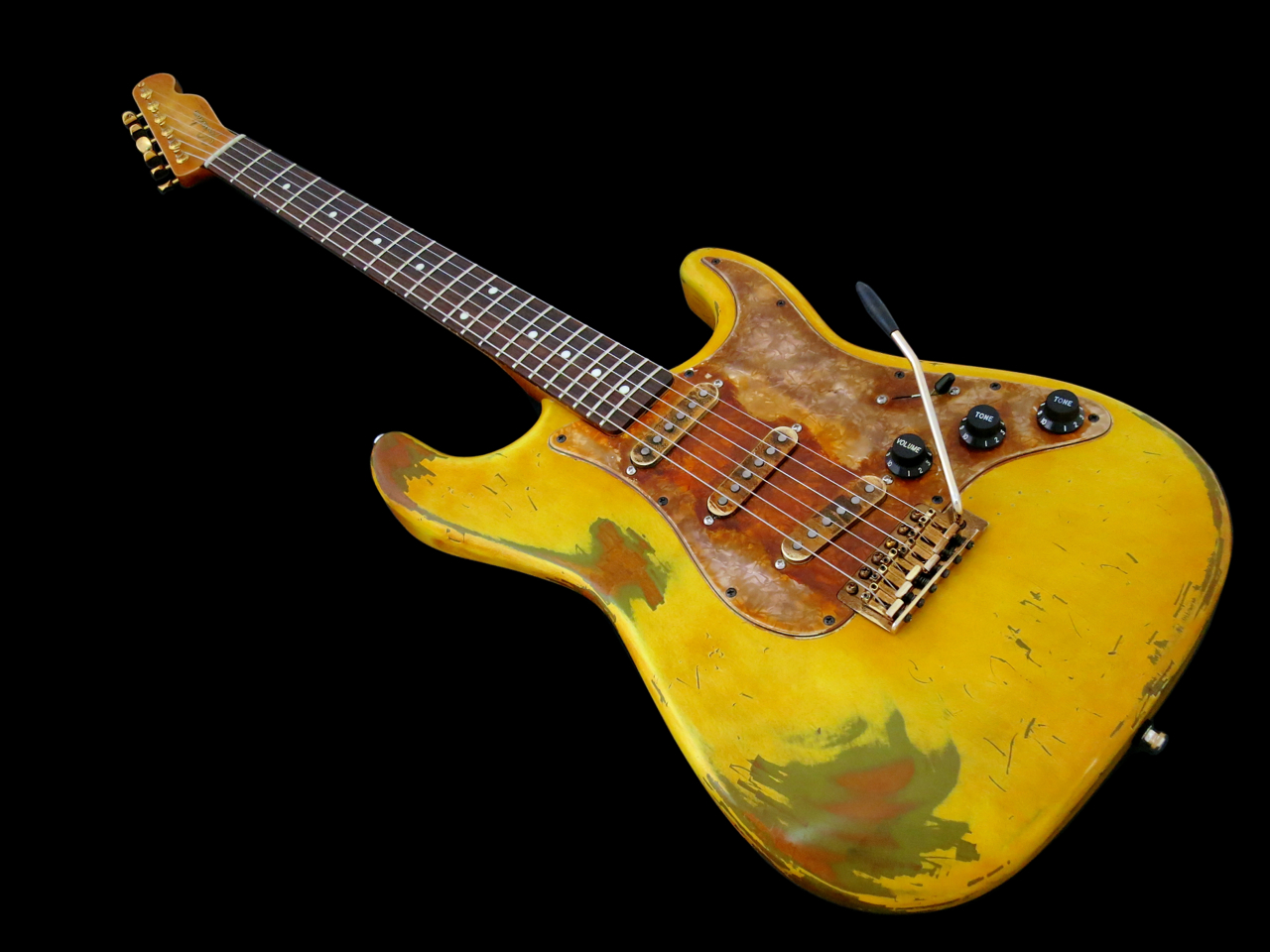
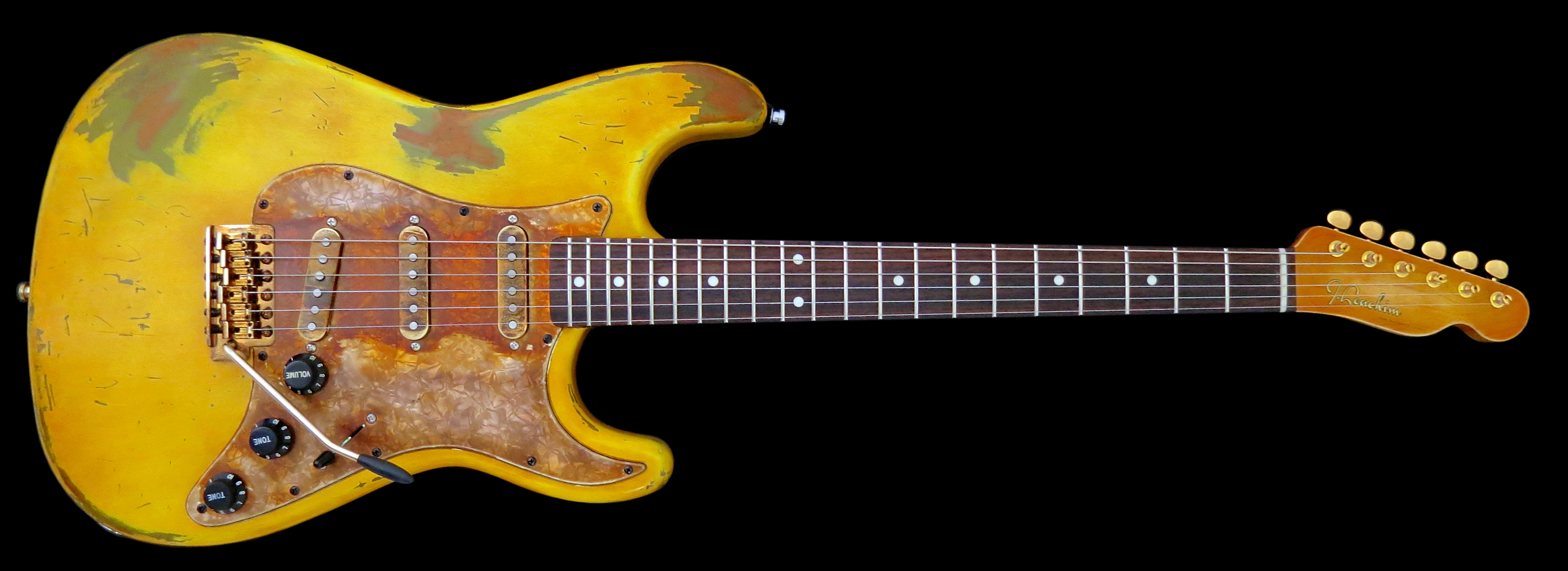
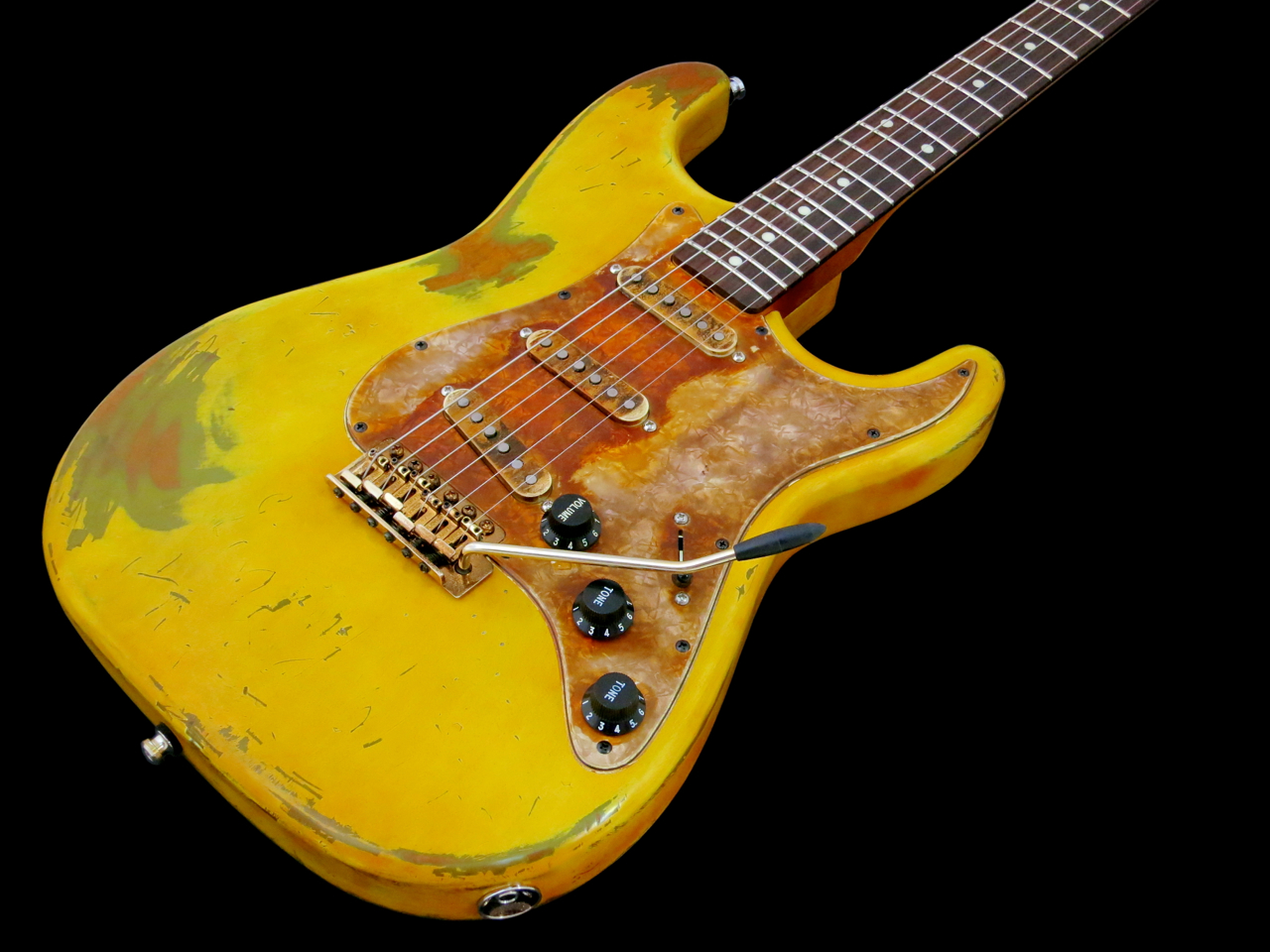
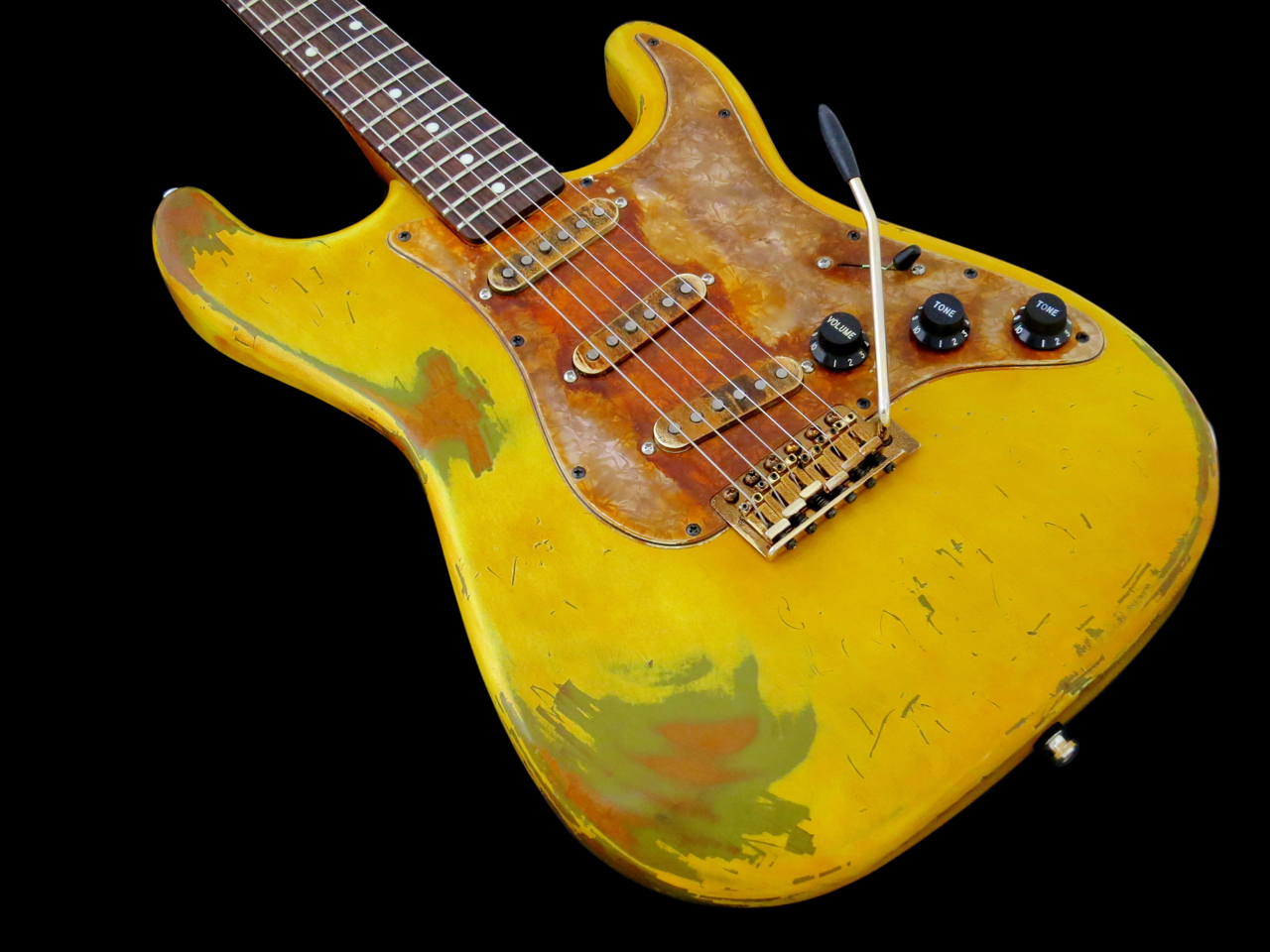
The J. Leachim S&T-Style (price approximately 1.600 €; includes a hard case and a custom-made leather strap) is such a mojo machine – a players solidbody electric, that combines a Stratocaster-type body with a Tele-style neck.
The S&T’s neck sports a relic’d satin finish, as well as a classy set of Kluson-style machine heads.
The guitar’s Wilkinson Vintage vibrato looks extremely worn, too.
This bridge is based on a vintage Fender bridge, but it features two practical improvements:
The vibrato arm is push fit with adjustable action, while the vibrato block has the string channels drilled so that they follow the octave compensation, which keeps the string pressure on the saddle uniform across all strings.
S&T-Style uses four vibrato springs for a very positive, muscular vibrato action that managed to stay on the right side of stiff.
The review guitar’s alder body looks like the guitar has been regularly used (and abused) on sweaty club stage for the last 50 years.
The Electrosocket jack receptacle keeps the Telecaster look, while offering much easier access for servicing and repairs that Fender’s original part.
****
The J. Leachim Royal (1.600 €; includes hard case and certificate of authenticity) is a step in a new direction for J.L.G. – it’s a thinline semiacoustic guitar.
The body shape owes a lot to the venerable Telecaster, but this isn’t a straight copy, though, as it is built in an involved, multilayered fashion.
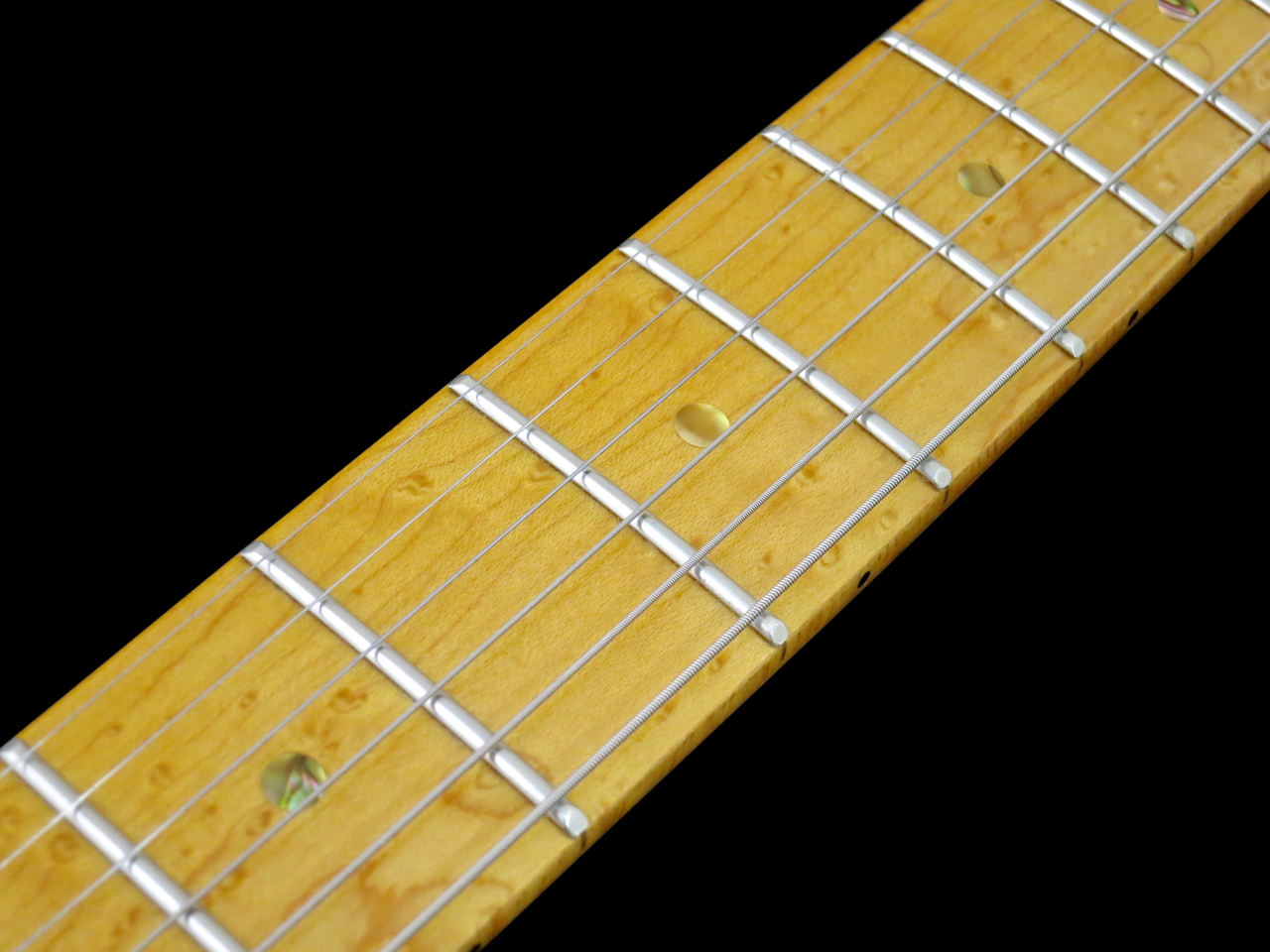
The Royal’s one-piece bird’s eye maple neck is a true thing of beauty.
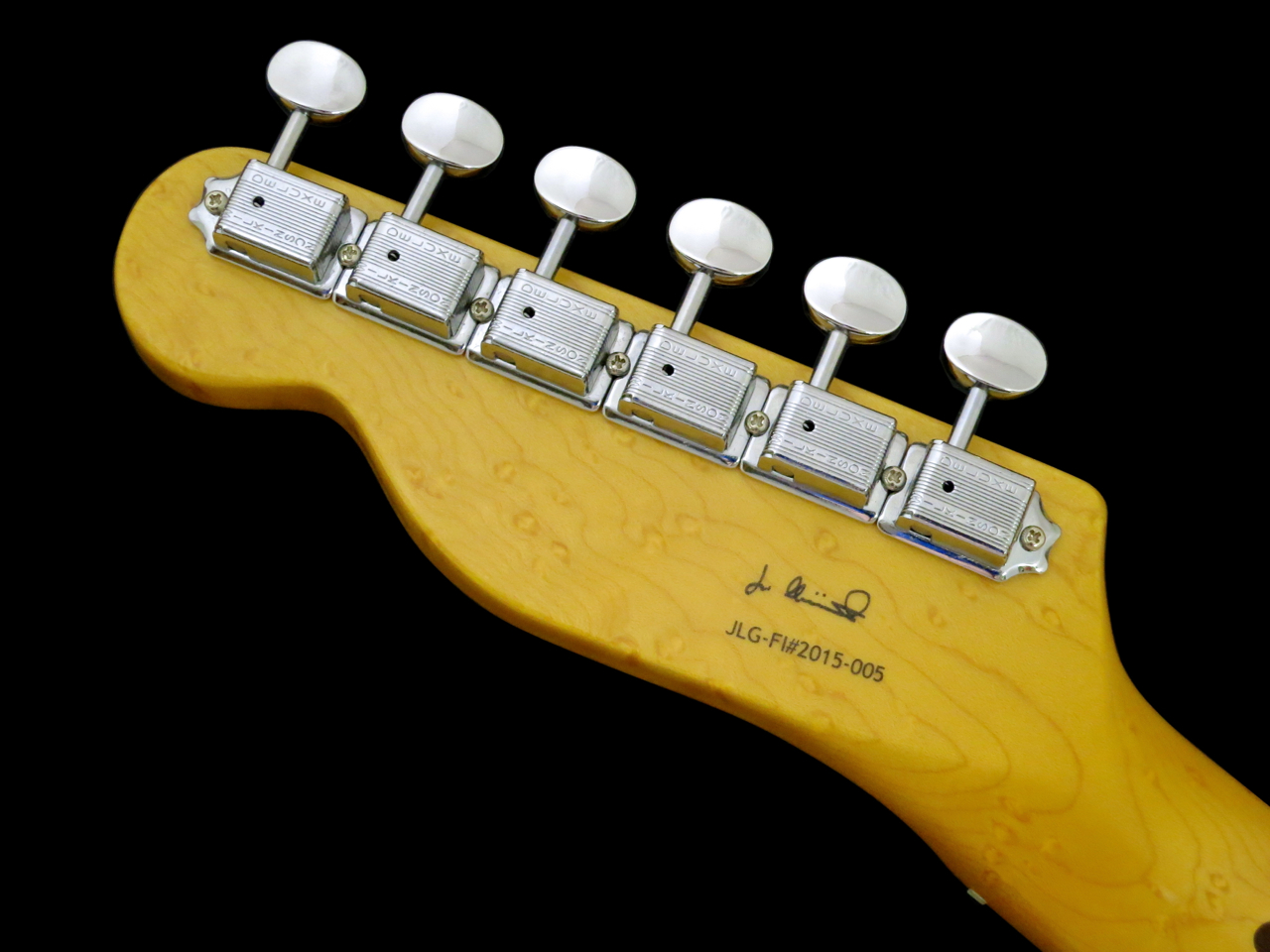
The tuners are Wilkinson’s updates of vintage Kluson machines.
Bird’s eye maple and abalone dots – sure looks like Custom Shop-luxury to me!
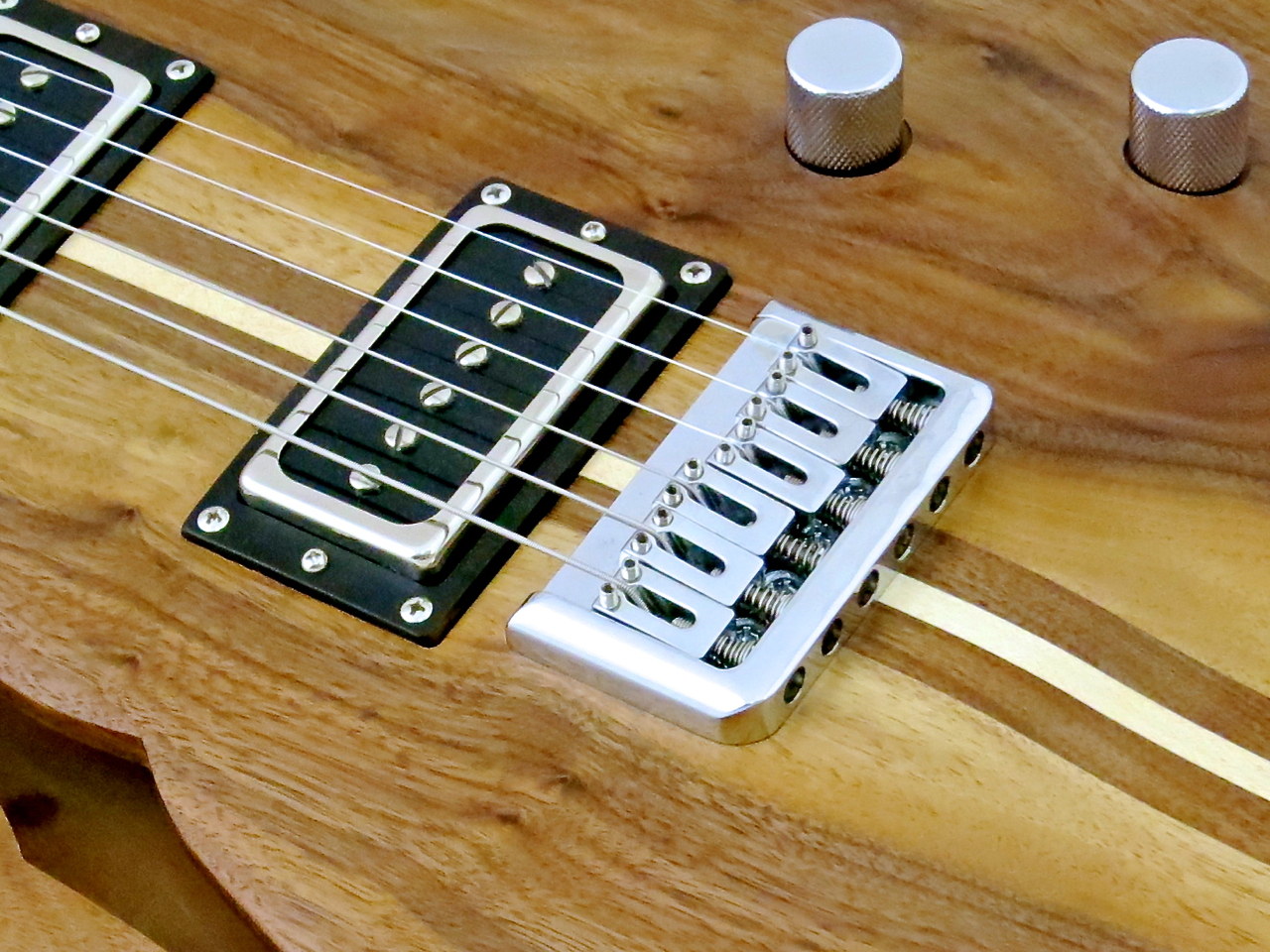
The chunky bridge on the Royal is a quality piece of hardware, but probably not the best choice on this model. The thick base means that the bridge saddles have to adjusted quite low to achieve a comfortable action. This in turn results in the sharpish height-adjustment grub screws protruding quite some way above the top of the saddles. Shorter grub screws would make this guitar more comfortable for the plectrum hand.
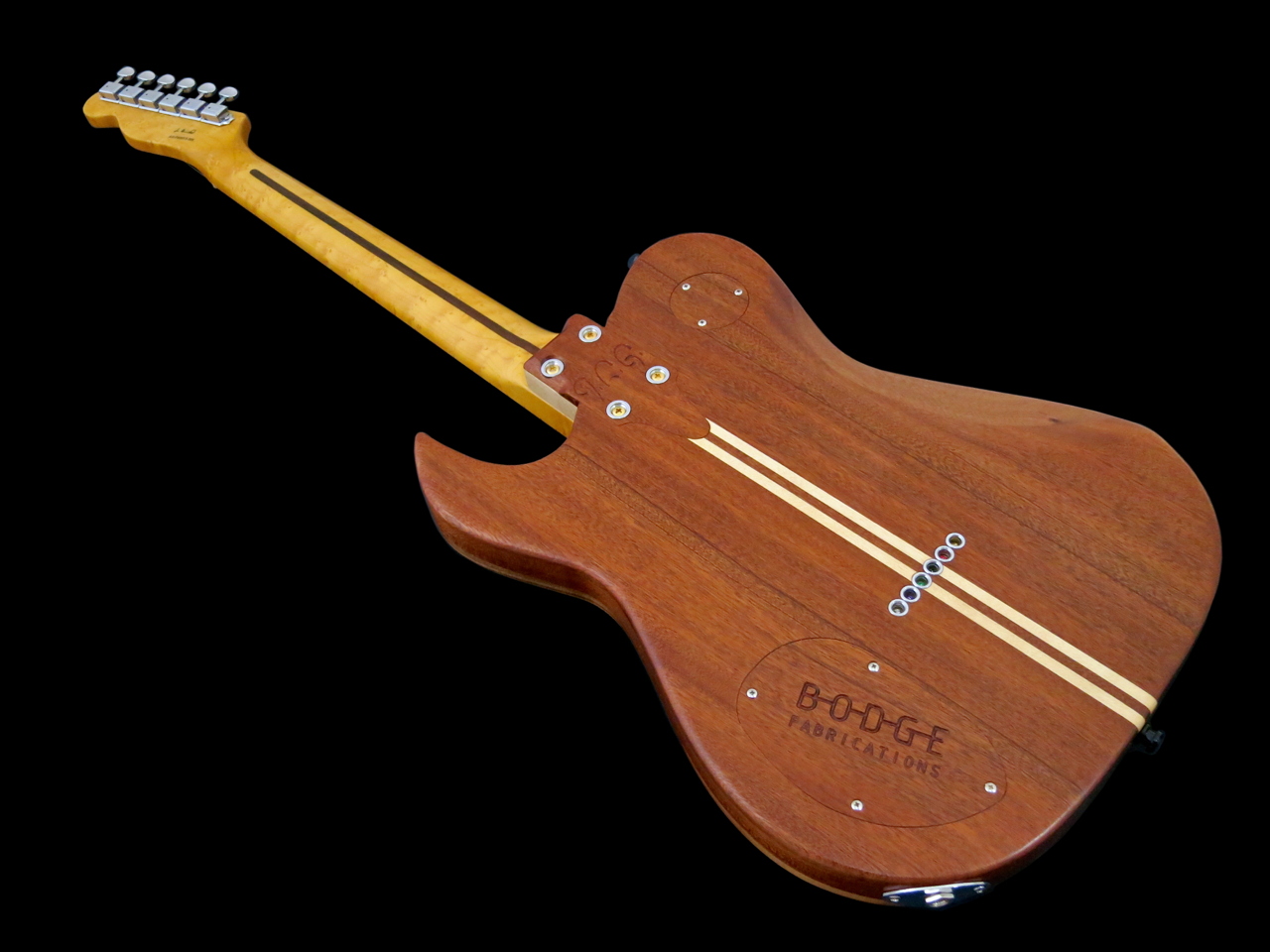
The J. Leachim Royal’s body is made in the UK (in Nottingham) by a small company called Bodge Fabrications (pun intended!).
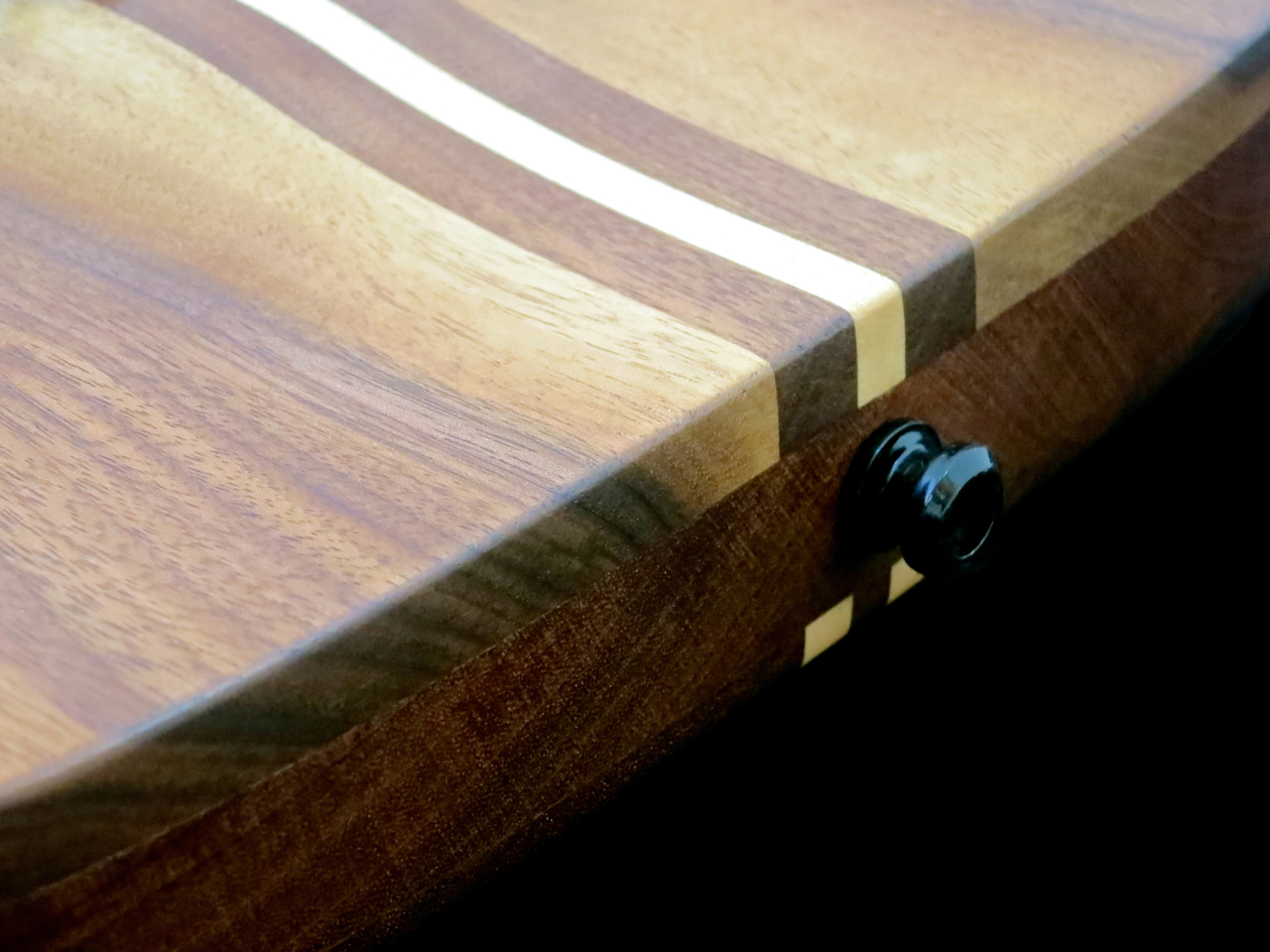
The beautifully sculpted Bodge body is a layered affair made from walnut, maple, and mahogany. If you love nice woods, like I do, this body will sen shivers of delight down your spine.
The back of the body features a rib cage bevel for added carrying comfort.
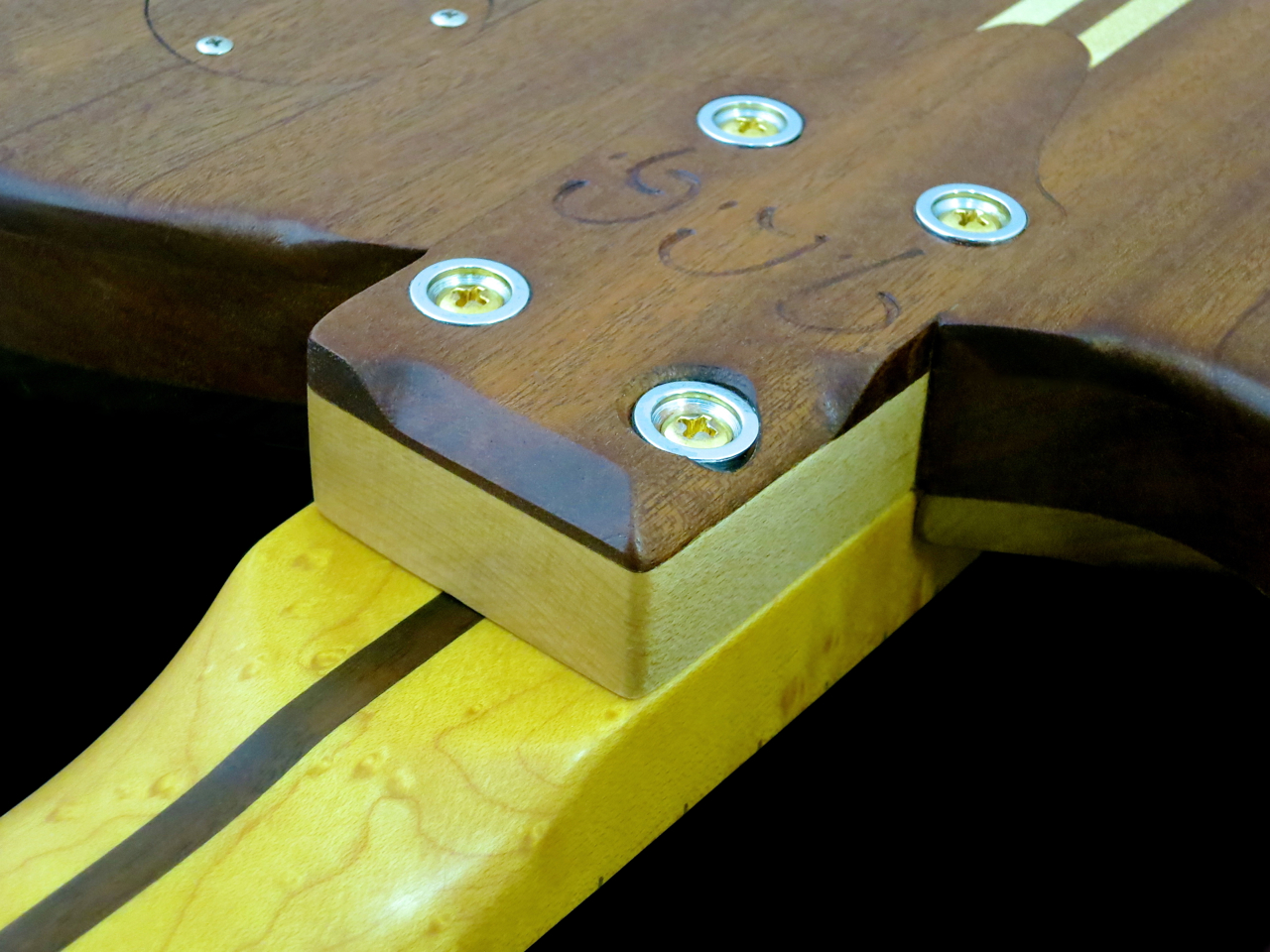
The added maple block inside the neck pocket adds stiffness to the Royal’s neck joint.
****
J. Leachim’s S&T-Style is a very ergonomically sound instrument:
This guitar is lightweight, and sports a rounded 60s-style Tele neck that feels great. The fret-job is very smooth. This guitar is a fantastic player, and its vibrato works as smoothly as can be expected in a quality instrument in this price range.
This S&T-Style came equipped with a Mojotone Rene Martinez Texas Strat pickup set. Rene Martinez was Stevie Ray Vaughan’s guitar technician, so it’s no wonder these pickups are specifically tailored to give you SRV-style tones.
The neck and (reverse-wound) middle pickup use Alnico III magnets for a bright sound with a sharp attack and a fantastically dynamic response. The bridge pickup is wound a little hotter and comes loaded with more powerful Alnico V magnets for a more muscular tone.
Here are two audio clips of the S&T-Style:
As a demo track I chose to record my own cover version of Stevie Ray Vaughan’s guitar solo on David Bowie’s hit China Girl (all guitar tracks have been recorded with the J.L.G S&T-Style):
****
J.L.G.’s Royal is a classy newcomer in the company’s range of models.
The Royal is all about the feel and sound of wood. This is a guitar that’s very hard to put down once you’ve picked it up. The semiacoustic body adds a charming vocal quality to this model’s acoustic tone.
This Royal comes with a Mojotone set of humbucker-sized P-90 pickups, which offer you a range of different sounds, from Jazz all the way to gritty Rock.
The neck pickups is built around an Alnico IV magnet, while the slightly hotter bridge pickup comes with an Alnico V magnet:
Carlos Santana used a P-90-equipped Gibson SG Special at the beginning of his career (for example at Woodstock), which prompted me to record a Santana-tinged demo track with the J. Leachim Royal:
****
Additionally, I got the chance to check out these three Mojotone pickup sets:
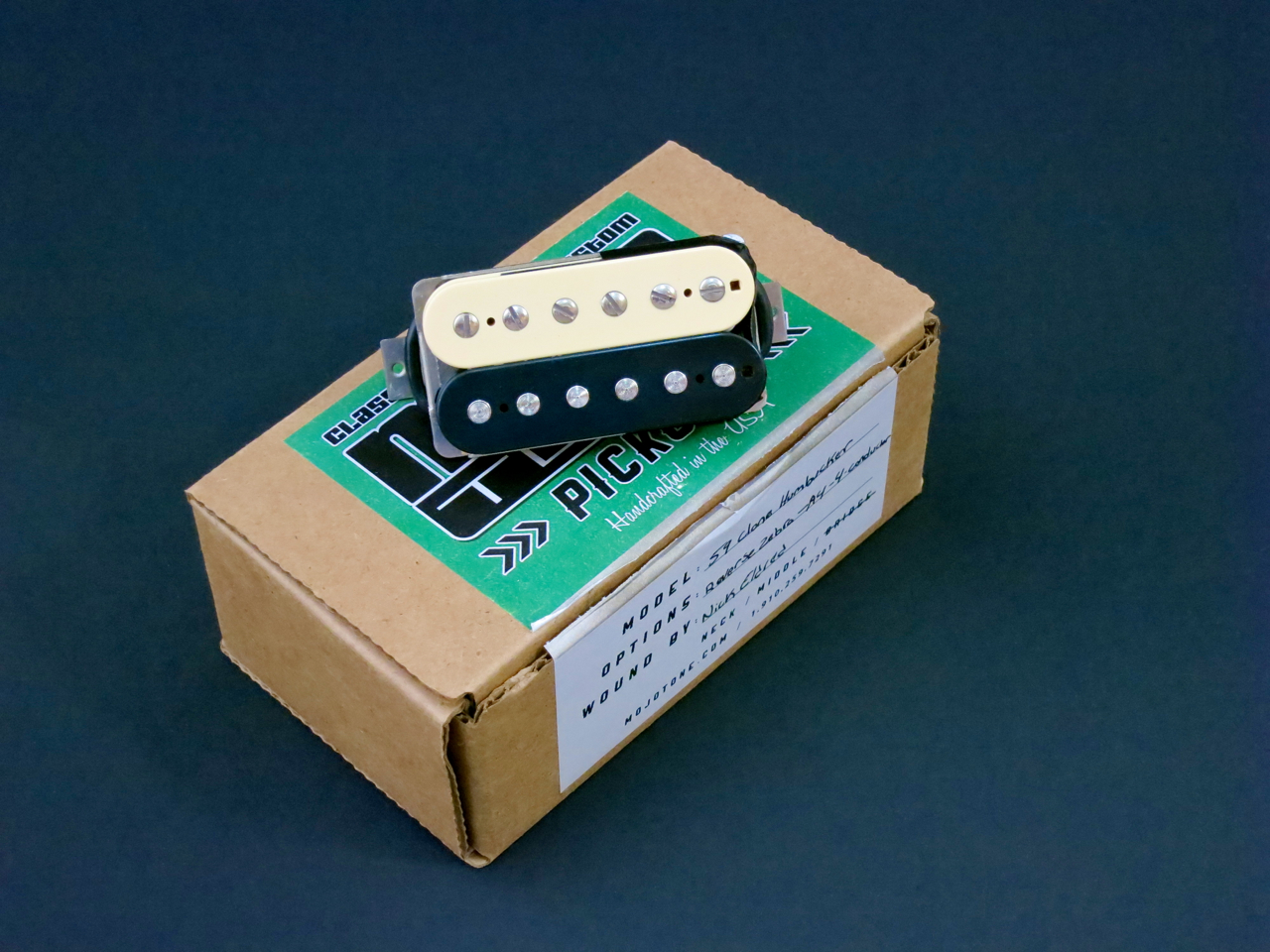
A J.L.G. TeleGacy with a pair of covered Mojotone ’59 PAF Clone humbuckers. This guitar sported push/pull-switches to split the humbuckers for single coil type tones:
****
Finland really is blessed with a very diverse list of homegrown guitars, and J. Leachim is definitely one company to keep on your radar.
J. Leachim’s S&T-Style will make you boogie till the cows come home, and the company’s new Royal model is a beautiful new take on the Thinline Telecaster theme.



























 Kitarablogi.com – Finland's premier Guitar and Bass blog