Halla Custom Instruments on pieni kitarapaja Tampereelta. Firma on erikoistunut custom-tilauksiin, joissa valmistetaan kaikenlaisia kielisoittimia asiakkaiden toivomuksien mukaan. Halla Customin vetäjä on soitinrakentaja-artesaani Ville Mattila. Mattila kuluu Suomen Soitinrakentajien Kiltaan.
Kitarablogi sai Halla Customilta oikean kaunottaren testiin. Kitara vaikuttaa ensisilmäykseltä kunnianosoitukselta Gibson SG:lle, mutta asiat eivät ole niin suoraviivaisia kuin miltä ne näyttävät!
****
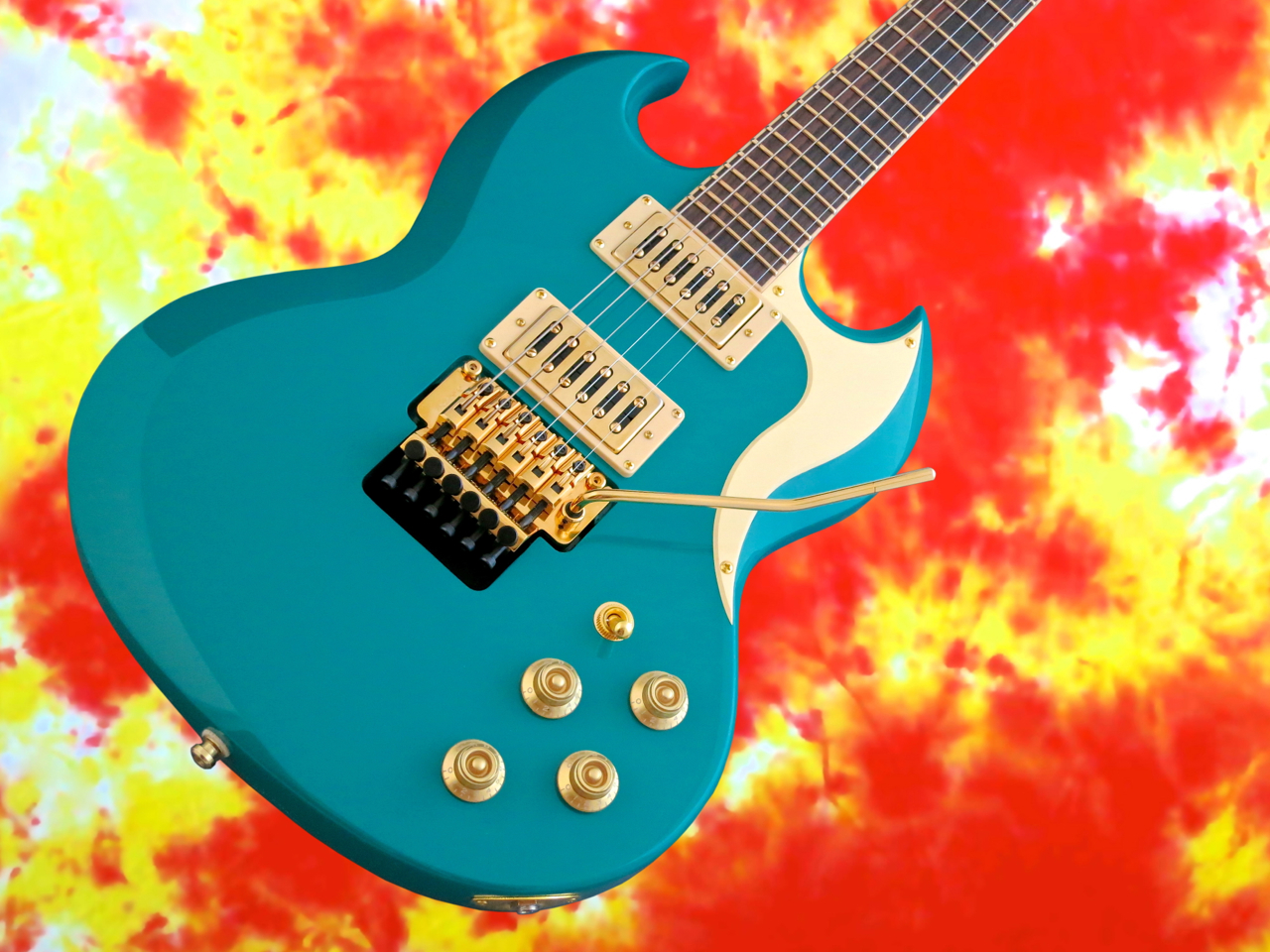
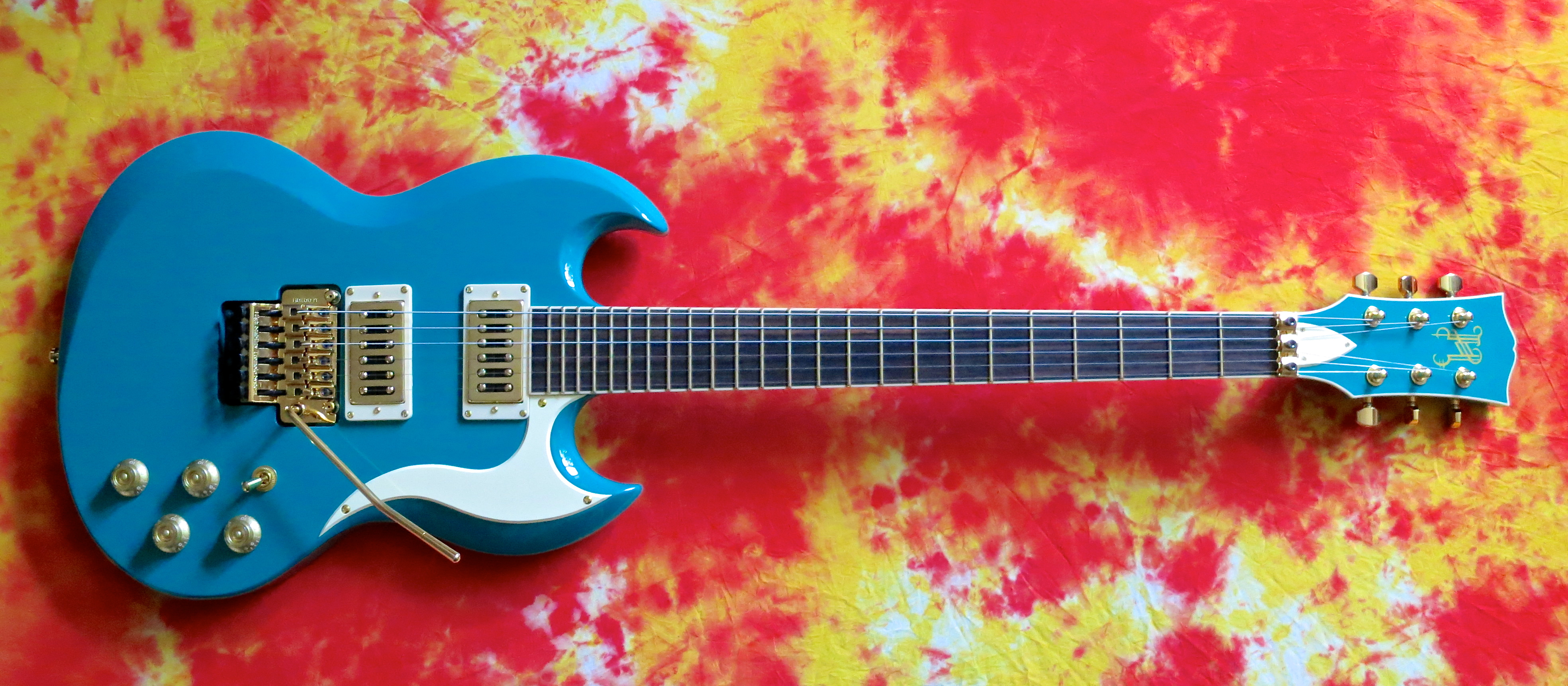
Kyllä tämä Halla Custom SG (hinta noin 3.000 €) on varsin henkeäsalpaava ilmestys. Se on turkoosinvärinen, uhkeanmuotoinen soitin, johon metalliosien kultainen hohto sopii kuin nakutettu.
Mutta tämän kitaran upea viimeistely (kovalla akryylilakalla) ei ole Halla Custom SG:n tärkein piirre: ”It’s an SG, Jim, but not as we know it!”
Tässä Halla Custom -kitarassa yhdistetään saumattomasti kahden klassikkokitaroiden ominaisuuksia – Gibson SG:n muotoiluun on sekoitettu reilusti Fender Stratocasterilta tuttuja piirteitä:
Vaikka tässäkin kitarassa on Gibson-klassikon virtaviivaistettu runko ja liimattu kaula (tosin paljon sulavammalla liitoksella), käytetään Halla Customissa Fenderille tyypillisiä materiaaleja – nimittäin vaahterakaulaa ja leppärunkoa – sekä täysipitkää mensuuria (25,5 tuumaa/64,8 cm).
Floyd Rosella varustetulla Hallalla on kartiomaisesti muuttuva otelaudan radius (ns. compound radius), jossa otelaudan kaarevuudesta tulee sitä loivempi mitä lähemmäksi runkoa mennään. Reunalistoitettuun ruusupuisen otelautaan on asennettu 24 kullanväristä teräsnauha.
Kaksi grafiittitankoa kaularaudan vieressä lisäävät entisestään kaulan lujuutta.
Laadukkaat, kullanväriset virittimet ovat peräisin japanilaisen Gotohin valikoimasta.
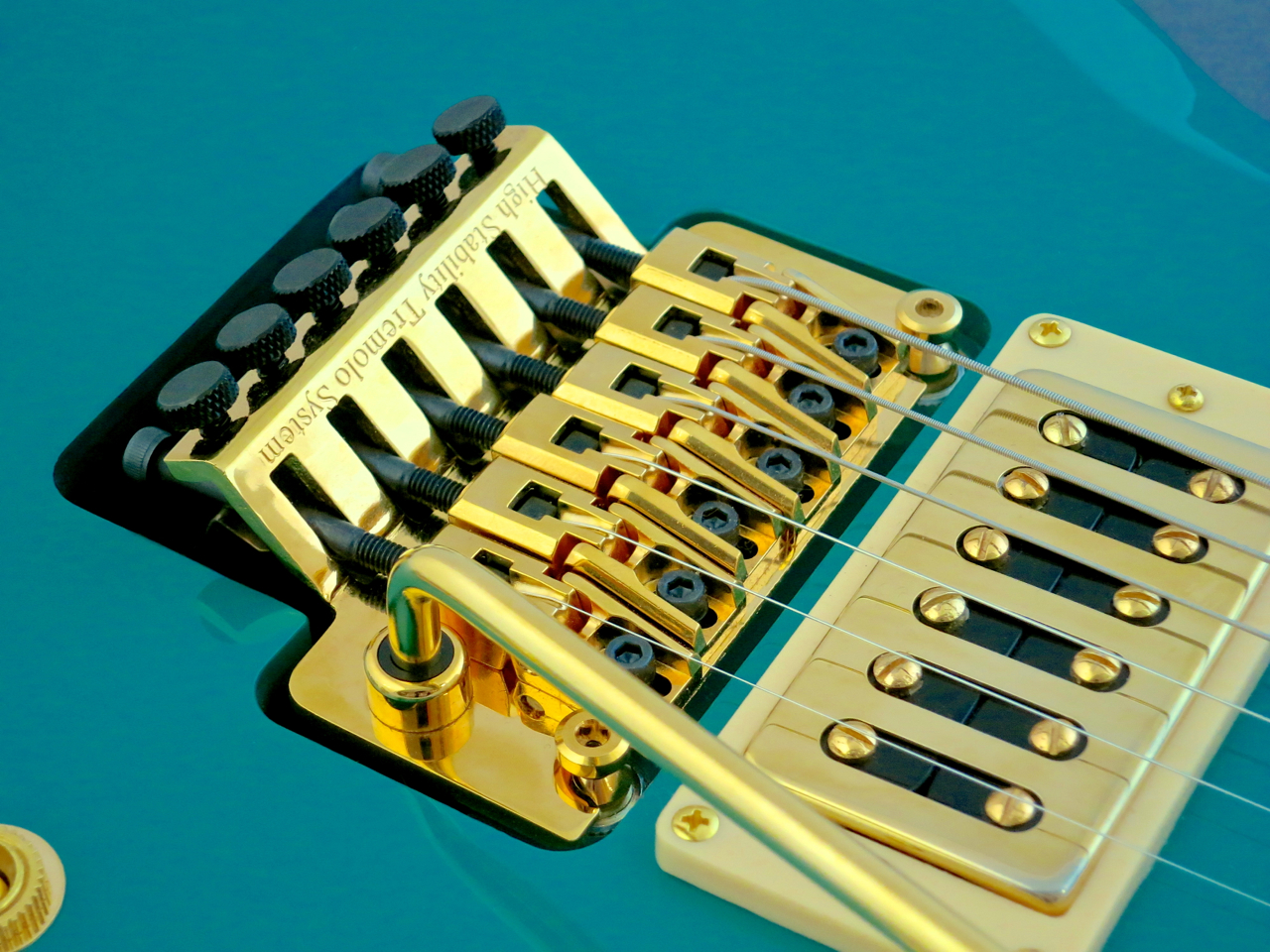
Huippulaadukas Floyd Rose tulee sekin Gotohilta. Ruuvattavan vibrakammen istuvuutta säädetään nailonkauluksella ja pienellä kuusiokoloruuvilla.
Halla Custom SG -kitaraan on asennettu kaksi firman omaa humbuckeria. Halla Venla -nimiset kaksikelaiset ovat vintagea selvästi kuumempia tapauksia.
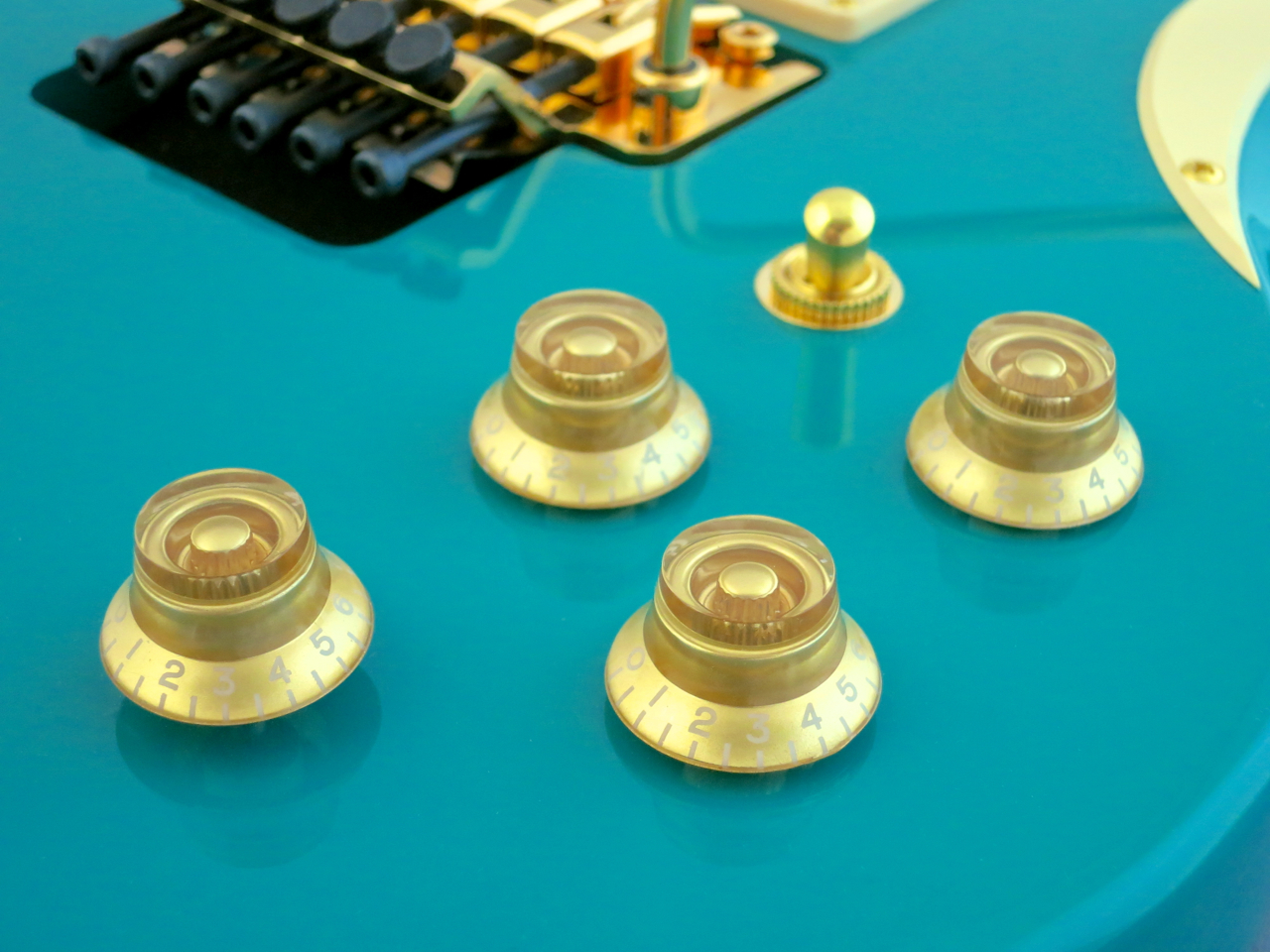
Neljä säädintä ja kolmiasentoinen vipukytkin – asetelma näyttää harmittomalta, mutta tähänkin on lisätty yksi herkullinen lisäominaisuus:
Tässä Halla Customissa on mukana passiivinen (= ei tarvitse paristoa) säröpiiri, joka laitetaan päälle kaulamikin tone-säädintä nostamalla.
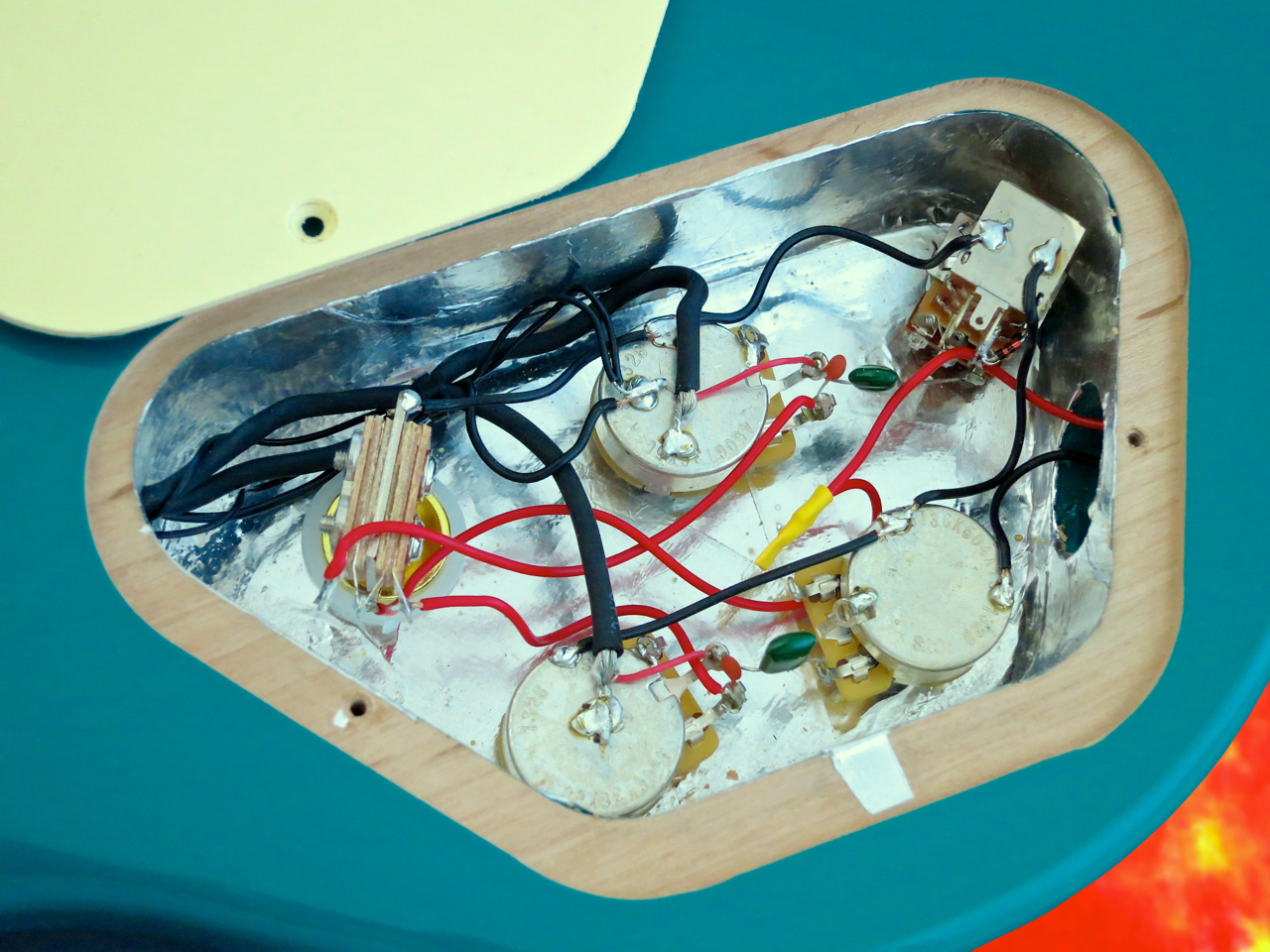
Myös sisäisesti Hallan työnjälki edustaa ehtaa custom shop -laatua, jollaista on lähes mahdotonta löytää ison tuotannon soittimista.
Asiantuntijat ovat varmasti jo huomanneet, että volume-potikoihin on myös lisätty treble-bleed kondensaattoreita.
****
Tätä Halla Custom SG:tä on tilattu hot-rod Rock-kitaraksi, jossa on Gibson-kaltainen ulkonäkö, mutta Superstrat-tyylinen soundi.
Voin vain todeta, että tuli täysosuma. Tämä on suorastaan fantastinen ja erittäin inspiroiva soitin!
Jotkut Gibson SG:t voivat tuntua hieman hauraalta, ja monilla yksilöillä on sisäänrakennettuja vireongelmia soitintyypin erittäin pitkän kaulan takia. Halla Custom SG on täysin vapaa tällaisista ongelmista – soittotuntuma on (sanojen parhaassa mielessä) erittäin tukeva ja tanakka. Tämä kitara rokkaa!
Omistajan valitsema paksu kaulaprofiili, kaulan grafiittivahvennukset, Hallan Gibsonia paksumpi leppärunko, sekä Ville Mattilan osaaminen soitinrakentajana nostavat Halla Custom SG:n selvästi valtavirran yläpuolelle.
Testikitara oli säädetty omistajan toivomuksien mukaisesti Es-vireeseen ja se tuli hyvin matalalla kielten korkeudella. Soittotuntuma oli erittäin nopea ja vaivaton, ja kevyellä plektrakädellä kitara soi rämisemättä koko otelaudalla.
Myös soittimen Gotoh-floikka toimi kiitettävästi.
Halla Customin valmistamien Venla-mikrofonien soundi sopii täydellisesti rankempaan Rock- ja Metal-meininkiin. Mikrofonien lähtötaso on suhteellisen korkea, mutta – ihme kyllä – niiden soundi on silti vintage-maisesti avoin ja helisevä:
Halla-kitaran sisäinen passiivinen säröpiiri on erittäin kätevä lisäys, etenkin kun käytössä on yksikanavainen kitaravahvistin:
Tätä kitaraa on kuitenkin luotu rokkaamaan rankasti, ja niin se tekeekin selkeällä atakilla ja rouhealla äänellään:
****
Halla Customin SG on loistava esimerkki soitinrakentamisen erittäin korkeasta tasosta täällä Suomessa.
Tällaisella käsintehdyllä laadulla on luonnollisesti hintansakin, mutta vastineeksi saa tässä aidon custom-soittimen, joka on tehty kokonaan omien toivomusten mukaan.
****
Halla Custom Instruments SG-Style
Halla Custom -kitaroiden hinnat lähtevät noin 1.200 eurosta ylöspäin, riippuen kitaratyypistä, sekä soittimen varustelusta ja viimeistelystä. Testatun kitaran hinta olisi noin 3.000 €.
Halla Custom Instruments is one of a number of cool small instrument makers in Finland. The company is run by trained luthier-artisan Ville Mattila and specialises in one-off custom electric and acoustic string instruments. Ville Mattila is a member of the Guild of Finnish Luthiers.
Kitarablogi received a stunning Halla Custom electric for testing. The guitar may look like a tribute to the Gibson SG, but there’s more to this Halla than meets the eye!
****
Just looking at the Halla Custom SG (price approximately 3,000 €) I had to catch my breath. This is a turquoise bombshell of a guitar, with a healthy dose of additional glitz added by the golden hardware.
But the fantastic paint job (using very hard acrylic lacquer) is only part of the story: ”It’s an SG, Jim, but not as we know it!”
The Halla Custom SG fuses design aspects from two classic guitar models – the Gibson SG and the Fender Stratocaster.
We find the classic lines and the set neck of an SG, but the Halla uses Fender-typical materials – namely a maple neck and an alder body – as well as a long scale (25.5″/64.8 cm).
The Floyd Rose-equipped Halla comes with a bound rosewood fretboard with a compound radius and 24 gold-coloured stainless steel frets.
Hidden beneath the fretboard lie two neck-stabilising graphite rods, placed either side of the truss rod.
The instrument sports a set of golden Gotoh tuners, as well as a neck wrist-strengthening volute.
The Floyd Rose is a top-drawer Gotoh unit, which comes with a screw in vibrato arm. An adjustable nylon cuff lets you decide how loosely (or tightly) the arm stays in place.
The Custom SG is equipped with a pair of Halla Custom’s hotter-than-vintage Venla-humbuckers.
There’s a nice little twist to the seemingly standard four controls plus three-way toggle set-up:
This Halla Custom guitar features a built-in passive fuzz circuit, which can be activated using a push/pull-switch hidden in the neck pickup’s tone control.
You really get what you pay for with a Halla – quality components, ultra-clean workmanship and thoroughly applied foil shielding.
The eagle-eyed among you will surely have already spotted the treble-bleed caps on both volume pots.
****
The Halla Custom SG was ordered by its lucky owner (a man known as Make El Weirdo) as a hot-rod Rock guitar with Gibson-esque looks, but a Superstrat sound.
What can I say? This is a fantastic guitar that ticks all the right boxes!
Some Gibson SGs can feel a little bit insubstantial, and many suffer from tuning problems due to their long necks. The Halla Custom SG has no such problems, this is a rock solid, chunky instrument.
The owner’s preference for a ”baseball bat” neck profile, this guitar’s thicker-than-a-Gibson alder body, and Ville Mattila’s considerable skills as a luthier take the Halla Custom SG to a different level altogether!
This Halla came tuned to E-flat, and set up with a very low action, as specified by the customer. The playing feel was extremely fluid, and with a light picking technique this Halla played buzz-free all across the fretboard.
The Gotoh Floyd Rose worked great, too.
Halla Custom’s own Venla-humbuckers are the bee’s knees for fans of the harder styles of Rock guitar. The pickups pack an enormous punch, but miraculously manage to sound as open and chiming as vintage, low-powered ’buckers:
Halla’s built-in passive fuzz is a fun little addition that’s more than a gadget, especially when you’re playing with a single channel amp:
But with a guitar such as this, you will surely spend most of your time enjoying its precise attack and chunky crunch:
****
The Halla Custom SG is a shining example of the high standards of luthiery in Finland.
Naturally, handmade quality such as this comes at a price. If you have the money, though, you should really ask yourself if you want to spend it on an off-the-peg, production line guitar, or rather on a special instrument made exactly to your own specifications.
****
Halla Custom Instruments SG-Style
Prices for Halla Custom guitars start from 1,200 €, depending on the guitar type and options chosen. A similar guitar like the reviewed instrument would cost approximately 3,000 €.
We’ve all seen the memes on social media, haven’t we? And let’s be honest – there’s plenty of truth in them!
Many – if not most – of us guitarists seem to have an annoying tendency to want to amass a wide selection of instruments and/or effect pedals and/or guitar amps for personal use. This gear lust, which often leads to crammed living conditions, empty pockets, and considerable trouble with our significant other, is generally known as Gear Acquisition Syndrome, colloquially shortened to G.A.S. (or GAS).
It seems that GAS has become ever more prevalent over the last couple of (or three) decades, but the roots of this problem reach as far back as popular music and the advent of mass media.
****
G.A.S. through the decades
The early days
It’s hard to pinpoint exactly the onset of GAS, but many people would agree that Gibson’s Nick Lucas Special signature model (first released in 1927) played a crucial part.
Nick Lucas (1897-1982) was an accomplished guitarist and popular crooner, whose biggest hits (in the late Twenties and early Thirties) coincided with the popularity of the radio and the wider availability of phonograph records.
The Nick Lucas Special was Gibson’s first signature guitar, laying the groundwork for the endorsement deals we’re familiar with these days. Apart from riding on an artist’s popularity, a signature guitar also tends to suggest to the guitarist that, were he (or she) to play this particular instrument, some of the magic (as well as the technical prowess) of the endorsing artist might rub off. In short, the message is ”buy this guitar, and you will become a better and more popular player!”
As most male guitarists not only care for their playing technique, but also for the opposite sex, becoming more popular always sounded (and still sounds) like a good idea.
The Fifties and Sixties – the guitar boom
During the first half of the 20th Century the guitar grew from a not-very-common, specialist instrument into a popular mainstream choice – not least thanks to Country music and the ”singing cowboys” featured on radio and records, as well as in the movie theatres.
But it was Rock ’n’ Roll that put the guitar in all its shapes on the top of the desirability list for masses of youngsters in the so-called Western World.
Yet, GAS wasn’t such a serious issue at that time, because musical instruments were outrageously expensive then, and some of the top US-brands almost impossible to get hold of in Europe.
Andy Babiuk’s fantastic book ”Beatles Gear” gives the reader a very good idea of how difficult it was for the guitarists of the late Fifties and early Sixties to even scrape together enough money to buy a single guitar (or amp). Owning multiple guitars was the privilege of the biggest stars only. Back in 1965 a new, baby blue Fender Stratocaster would have set you back around 3,000 euros in today’s money! This makes a current American Standard Stratocaster seem dead cheap at approximately 1,500 euros. And remember, back then there was no such thing as a quality (licensed) copy, and even substandard instruments from Eastern Europe weren’t really cheap (Harrison’s Czech-made Futurama cost him the better part of 1,200 euros in today’s money).
Still, young players were brand-conscious, at least to some degree, and lusting for the exact guitar they knew their idol was playing. Even if they couldn’t afford it…
They don’t make ’em like they used to
The transition of the plain old ”used guitar” to the ”vintage guitar” we all know today got to a start in the late Sixties, mostly fuelled by the two best-known brands – Gibson and Fender:
When flagging sales of the Gibson Les Paul prompted the company to scuttle the model in favour of the instrument we now know as the Gibson SG, nobody could have foreseen that the move would lead to the first run on a discontinued electric guitar model ever. Caused by the exposure given to the ”out of print” Les Paul Standard by the new wave of Blues players, spearheaded by Mike Bloomfield and Eric Clapton, many serious guitarists started actively searching for used Les Pauls. The fact that Gibson chose to reissue the Les Paul in the late Sixties, but failed to sense that the crowd lusted for the double-humbucker Burst (instead of the Goldtop and the Custom), quickly turned the original Standards produced between 1958 and 1960 into the stuff of legend.
Both Fender and Gibson became parts of large business conglomerates before the Sixties were over, and a feeling started to seep into the guitar community that the earlier instruments were of a higher quality than those produced under the new managements.
Big in Japan
The proliferation of reasonably well-made guitars from Japan – often dead-on copies of US classics – at reasonable prices was what truly kicked off the phenomenon we now call GAS.
For the first time amateur and semi-professional guitarists could afford to own more than a couple of guitars. Effect pedals, too, would start to benefit from Far Eastern efficiency and mass-production.
Many of the 1970s Tokai-, Ibanez- and Yamaha-guitars – as well as the earliest Roland/Boss-effects – are now considered vintage classics in their own right.
Licensed copies
The Eighties finally ”sealed our fate”, when it comes to GAS.
Many large brands started to release official (=licensed) copies of their own instruments in the 1980s, with the rest following suit in the following decades. Brands like Squier, Epiphone, or Sterling make it affordable to hoard instruments that offer at least some of the clout of their famous, upmarket brethren.
****
The Five Types of GAS-sufferers
We are all different – we don’t all lust after the same guitars, and we don’t all accumulate gear for the same reasons or in the same way.
I think one could divide us Gassers up into five basic categories, according to how and why we ”simply have to have that guitar”.
1. The Fan
The Fan is a hardcore follower of one (or two) Rock bands (or guitar gods), and he (or she) focusses on acquiring as much of the gear used by their idol as humanly possible. The Fan hopes to come as close as possible to their idol’s famous guitar tone, and he/she wants to feel (and look) the way his (or her) idol does when playing those classic riffs and songs.
2. The Nostalgist
The Nostalgist comes from a similar place as the Fan, having a clear vision of what it is he’s looking for. But, instead of trying to relive a certain band’s or player’s tone, as the Fan does, the Nostalgist wants to reclaim the (his/her own?) past. The Nostalgist longs for the classic looks and tones gleaned off vintage equipment, the sounds of a cooler, more vibrant place than the current here-and-now. Some Nostalgists also buy all the stuff they wanted, but couldn’t afford to get, when they were young.
3. The Hunter and Gatherer
The Hunter and Gatherer simply loves to get new toys, especially when he can claim to have ”snapped up a real bargain”. These are the guys that constantly trail the Internet, on the lookout for something, anything really, that might whet their considerable appetite. Very often it doesn’t even matter if it is an instrument (or other piece of gear) the Hunter and Gatherer really ”needs”; as long as it’s cool and ”a bargain” it’s a viable acquisition.
4. The Specialist
The Specialist has a strong focus on one, two or three specific pieces of equipment, that he (or she) simply cannot get enough of. These are the guys who seem to have a perfectly good reason for buying several dozen Telecasters, or a whole flock of Fender Tweed-era amps – or maybe they zone in solely on gear manufactured during one specific year…
5. The Pragmatist
The Pragmatist comes over as very reasonable, even though he’s an addict like the rest of us. The Pragmatist tells his wife that he doesn’t yet own an archtop guitar with DeArmond pickups, but that he needs just such a guitar to complete his ”colour palette” or ”toolbox”. Some Pragmatists – like professional guitarists, studio owners, or guitar reviewers – can make a real art form of their Gassing, meaning it takes the unsuspecting wife years (if not decades) to see through this charade.
Naturally, things aren’t always as clear cut in real life as they might seem on paper. Most of us GAS-sufferers tend to display a mixture of two of three of the above GAS-categories.
****
”You can’t play more than one guitar at a time!”
Does owning more than one or two guitars have real advantages? If you ask me, my answer would be a resounding ”yes and no”!
The ”yes” part of my answer has to do with the fact that playing guitar (or bass guitar) is always a tactile experience. Different instruments have different neck profiles, they have different overall dimensions, different actions, different fret sizes, different fingerboard radii, and they simply smell and feel differently.
This is probably the main reason why we don’t all play Line 6 Variax guitars. They might be decent instruments with an astonishingly realistic array of different tones, but they completely lack the important tactile element that is so crucial in inspiring you to come up with different licks and different ways of approaching the guitar as an instrument.
A big, fat Jazz box will make you play noticeably differently to a sleek Strat or SG, and the same holds true for the differences between, say, an ES-335 and a Floyd Rose-equipped Metal axe.
On the ”no” side of the equation, buying a new piece of equipment will surely inspire you, but it won’t automatically turn you into a ”better” guitarist. Even though it’s hard to admit, only regular practice will move you forward on the long and winding road to improvement.
****
Damned If You Do…
In a way, we’re extremely lucky these days. There has never been a better time to be a guitarist than now. There’s an abundance of cool gear available, and much of it at rather reasonable prices.
The downside to this is, of course, that it’s so much easier to become a gear addict, because the price tag doesn’t necessarily act as much of a threshold, anymore.
Still, I tend to see the positive side of things, because the affordability of decent equipment makes it much easier for guitarists these days to try out different stuff on their way to finding the gear that’s most suitable for the music they make.
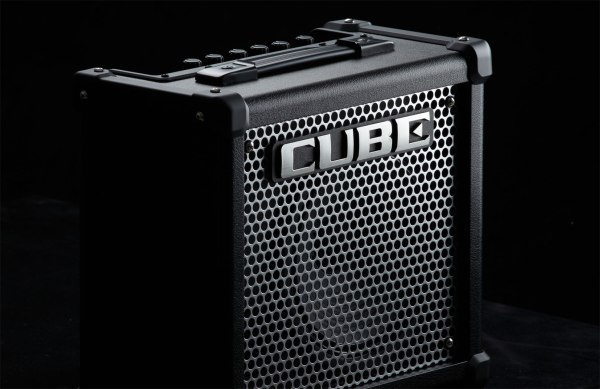
The new Roland Cube-10GX approaches the company’s popular Cube-concept from a slightly different angle.
****
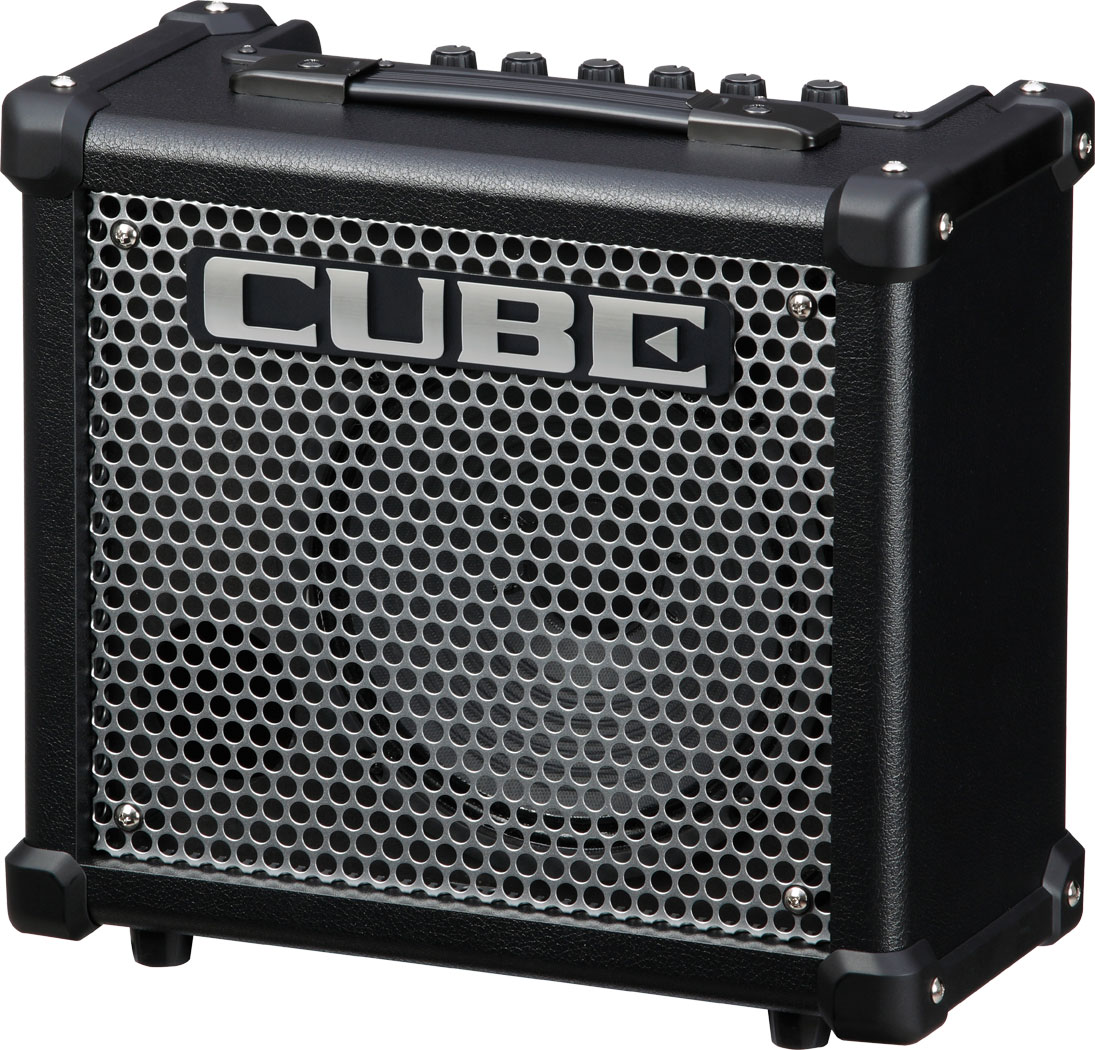
The 10-watt Roland Cube-10GX (Finnish price approx. 125 €) slots into the model range right between the 3-watt Micro Cube GX and the 20-wattCube-20GX combo.
Despite its very affordable price, the 10GX is built as sturdily as the larger Cube models, featuring chunky corner protectors, and the metal grille typical of this series.
An eight-inch speaker has been installed into the closed-back, front-ported cabinet.
The backpanel sports connections for DC In (the PSU comes included), Aux In, as well as a combined line level output/headphones jack.
The Cube-10GX combo’s architecture differs somewhat from the rest of the GX-models:
The 10GX doesn’t feature a built-in tuner or an i-Cube-Link, like the rest of the GX-models, but offers a much more open way of offering its COSM-generated amp models.
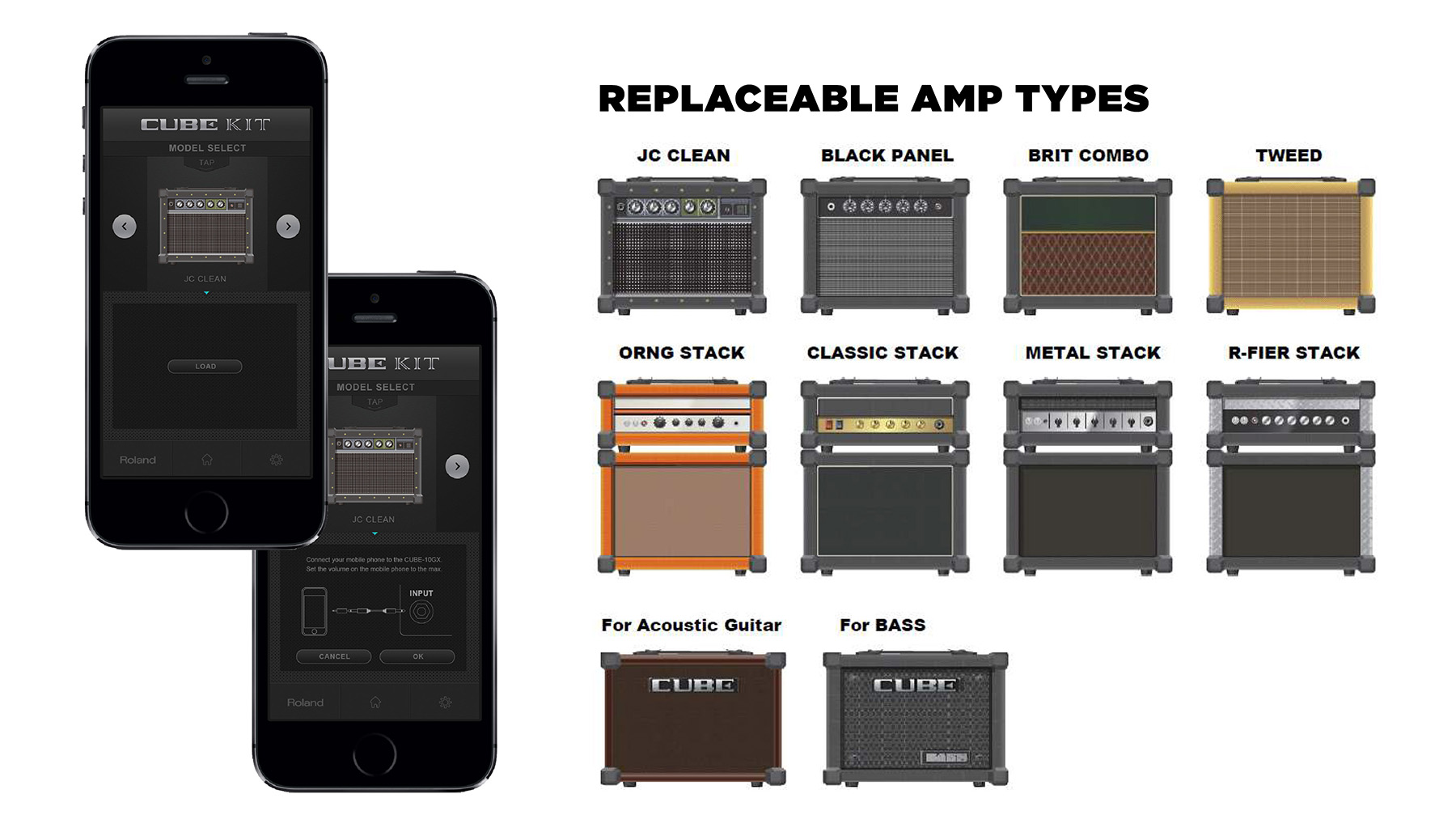
The Cube-10GX lets you choose from a number of different amp models via the new Roland Cube Kit app (Android and iOS). At the moment of writing the app offers eight guitar amp models, plus one bass amp and one amp for acoustic guitar.
Despite the fact that the control panel reads ”Clean”, ”Crunch” and ”Lead”, you can load any of the COSM amp models on offer into any of the amp’s three channels. If you’re a Jazzer, for example, you might prefer to use only clean amps, like Acoustic, JC Clean and Black Panel.
****
Let me deal with the ”bad news” first: Sadly, the Cube-10GX offers only a single effect section, in contrast to all the other Cube GX -combos. The 10GX gives you the choice between either a chorus or a delay or a hall reverb or a (very wet) spring reverb. And there are no effect combinations on offer.
The new combo’s main focus lies in the easy-to-swap amp models, and improvements in the sound of both the amp and the COSM-models. For a 10-watter the Cube-10GX is surprisingly loud. Thanks to its much larger speaker the new combo sounds much fuller and more grown up than the Micro Cube.
The updated COSM-models sound noticeably more transparent and fresher, without any additional background hiss or noise. The 10GX’ well-designed three-band EQ section lets you tailor the sound to your requirements.
Loading a new amp model into one of the Cube-10GX’ channels via the Cube Kit app is fast and easy, and doesn’t require any special cables. You only need a fitting mini-jack adapter to hook up the guitar lead to your smartphone (or tablet). All the necessary data is then transmitted from the Android- or iOS-device to the amp via the guitar cable. The whole process takes only a few taps and a couple of seconds.
The factory default has the Jazz Chorus amp model loaded into channel 1. I’m playing my Fender Telecaster with a little chorus added from the combo:
Here’s another Jazz Chorus clip, but this time seasoned with some Surf-type spring reverb:
The Classic Stack model is the factory setting for channel 2. It is Roland’s version of a Marshall-stack. I’ve added some delay for this clip:
I loaded the Brit Combo (AC30) model into channel 2, using the Cube Kit app. I’m playing my Telecaster with some reverb from the combo:
”Orng Stack” stands for Orange-stack. This is what it sounds like, played with my Gibson Melody Maker SG:
The factory default for channel 3 is the R-fier Stack model. First a clip using the Telecaster, and then an example Played with the Melody Maker SG:
The Cube Kit’s Acoustic model provides an easy solution for amplifying your acoustic guitar. I’ve used a Tanglewood dreadnought equipped with a magnetic soundhole pickup by Seymour Duncan:
The Cube-10GX even sounds surprisingly good as a tiny bass combo (all audio clips have been recorded with a Shure SM57):
****
Roland’s Cube-10GX (and the cool Cube Kit app) makes it possible to turn this little combo into the amp you really need. A Blues player will probably load his (or her) Cube-10GX with the Black Panel-, Brit Combo-, and Tweed-models, while a Metal guitarist will prefer the chunkier COSM-models on offer (like the Classic-, Metal- and R-fier-stacks).
The Cube-10GX sounds great and is a real little shouter. Despite offering fewer built-in effects than the rest of the GX-range, the Roland Cube-10GX still offers a lot of fun at a very competitive price.
Kymppi-GX on edullisesta hinnastaan huolimatta samaa vankkaa tekoa kuin sen isot veljeksiä. Reilunkokoiset kulmasuojat ja Cube-sarjalle tyypillinen metalliritilä suojaavat kombon tehokkaasti monilta kolhuilta.
Koteloon on asennettu kahdeksantuumainen kaiutin.
Takapaneelista löytyy virtaliittimen (verkkolaite kuuluu hintaan) lisäksi aux-tulo, sekä yhdistetty kuuloke- ja linjalähtö.
Cube-10GX-kombon arkkitehtuuri poikkeaa toisista Cube-perheen GX-malleista:
Muiden GX-kombojen viritysmittarit ja i-Cube-Link-lähdöt puuttuvat tästä mallista, mutta niiden tilalle uudessa Cubessa tarjotaan huomattavasti avoimempi rakenne COSM-vahvistinosiossa.
Cube-10GX tarjoaa nimittäin uuden Roland Cube Kit -appsin kautta (Android ja iOS) kitaristeille mahdollisuuden valita ja vaihtaa oman Cuben COSM-mallinnuksia oman maun ja käyttötarpeen mukaan. Tällä hetkellä Cube Kitistä löytyy kahdeksan sähkövahvistinmallia, yksi vahvistinmalli mikitetylle akustiselle kitaralle, sekä yksi bassovahvistin.
Vaikka kombon etupaneelissa lukee sen kolmen kanavapaikkojen kohdalla Clean, Crunch ja Lead, käyttäjä saa valita appsin kautta vapaasti kanaviin juuri niitä COSM-malleja, joita hän itse haluaa – vaikkapa vain puhtaita vaihtoehtoja, kuten Acoustic, JC Clean ja Black Panel.
****
Kerron sen ”huonon uutisen” ensin: Olisin kernaasti nähnyt myös uudessa Cube-10GX-mallissa kaksi efektiosastoa, niin kuin esimerkiksi Micro Cube GX:ssä! Kymppi-GX-kombossa voi valita joko choruksen tai viiveen tai kaiun tai (reilusti annostetun) jousikaiun, eikä yhdistelmäefektejä ole tarjolla lainkaan.
Uutuuskombon painopiste on siis selvästi vahvistimen soundissa ja entistäkin parannetuissa COSM-mallinnuksissa. Cube-10GX on yllättävän äänekäs vahvistin 10-wattiselle kombolle, ja sen kahdeksantuumaisen kaiuttimen ansiosta tämän Rolandin yleissoundi on paljon syvempi ja aikuisempi kuin esimerkiksi Micro Cubessa.
Uudistetuissa COSM-malleissa on myös selvästi rapeampi, erottelevampi soundi, ilman lisättyä kohinaa. Kymppi-GX:n musikaalisesta kolmialueisesta EQ:sta on todella paljon apua soundien muokkaamisessa.
Soundien vaihtaminen Cube Kit -appsilla onnistuu erittäin helposti ja – mikä on parasta – täysin ilman erikoisjohtoja. Tarvitaan vain puhelimen (tai tabletin) ja kitarajohdon väliin sopiva kuulokeadapteri, jolla saadaan ohjelman dataa kulkemaan Android- tai iOS-laitteen kuulokelähdöstä kitarajohdon kautta Cube-10GX:een. Muutama täppäys vaan ja valitun kanavan COSM-malli on vaihdettu uuteen.
Tehdasasetuksena kombon ykköskanavassa on valittu Roland Jazz Chorus -kombon mallinnus. Tässä soitan Fender Telecasterilla ykköskanavan läpi ja chorus-efekti on päällä:
Myös tässä käytän Jazz Chorus -mallia, mutta tällä kertaa Surf-tyylisellä jousikaiku-efektillä:
Classic Stack on kakkoskanavan tehdasasetus. Se on Rolandin COSM-versio Marshall-stäkistä, jota kuullaan tässä delay-efektillä höystettynä:
Latasin Cube Kitillä kakkoskanavalle Brit Combo -mallin (AC30). Soitan Telecasterilla ja käytän kombon kaikua:
Tehtaalta on asennettu kolmoskanavaan R-fier Stack -malli – siis Rectifier-meininkiä (ensin Telecasterilla, sen jälkeen Melody Maker SG:llä soitettuna):
Cube Kitin Acoustic-malli tarjoaa nopean ja helppokäyttöisen ratkaisun akustisen kitaran vahvistamiseen (tässä Tanglewood teräskielinen magneettisella Seymour Duncan -mikrofonilla):
Rolandin Cube-10GX tarjoaa firman oivan Cube Kit -appsin ansiosta jokaiselle kitaristille juuri sen vahvistimen, jonka hän tarvitsee ja haluaa. Bluesmies (tai -nainen) voisi esimerkiksi ladata kymppi-GX:n kolmelle kanavapaikalle Black Panel-, Brit Combo-, sekä Tweed-mallit, kun taas rankan musiikin ystävä voi tehdä pikkustyrkkarista metallimusiikkiin erikoistuneen koneen (esimerkiksi valitsemalla Classic-, Metal- ja R-fier-stäkit).
Cube-10GX:stä lähtee niin paljon – ja etenkin niin laadukasta – ääntä, että tämän kombon (muihin GX-malliin nähden) supistetulla efektivalikoimalla ei ole mielestäni oikeastaan niin paljon väliä. Roland Cube-10GX tarjoaa todella paljon vahvistinta edulliseen hintaan.
















 Kitarablogi.com – Finland's premier Guitar and Bass blog