Review: Blackstar HT Metal 5 + HT Metal 60

Blackstar HT Metal 60 – logo

Blackstar Amplification’s very popular HT Venue-series has recently been joined by the company’s brand-new HT Metal-range, which offers you valve amplifiers tailored specifically to the needs of Metal-guitarists.

Kitarablogi has received the compact five Watt HT Metal 5-combo – meant for use at home, for warm-up and in the studio – and the chunky three-channel, 60 Watt HT Metal 60 -combo for this review.

****
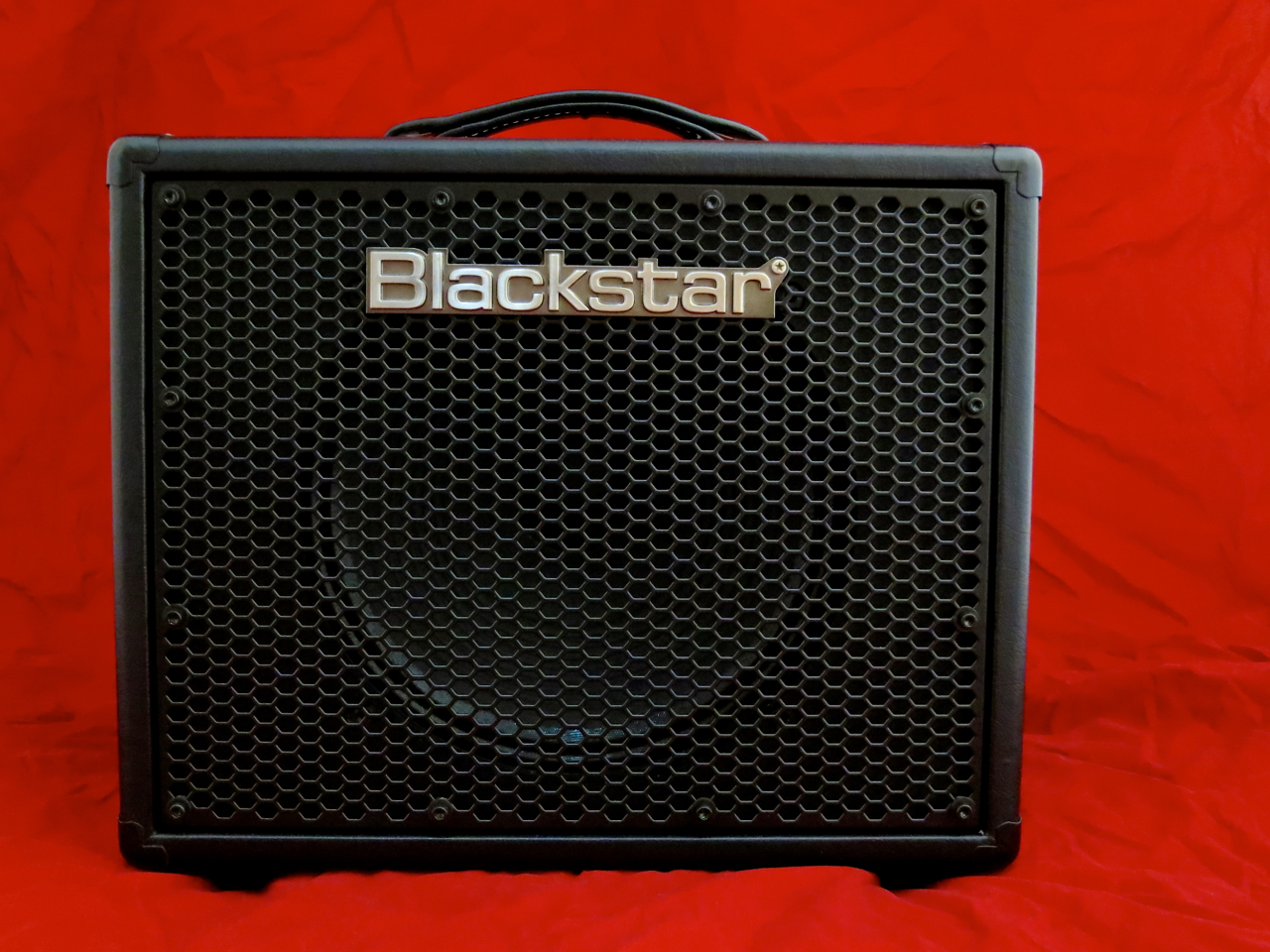
Blackstar HT Metal 5 – full front

The Blackstar HT Metal 5 (street price around 450 €) is based on the company’s extremely successful HT-5R-valve combo, with the new amp sharing the older model’s main architecture and push-pull power amp.

The HT Metal 5 uses two different valves to amplify your guitar signal – one is an ECC83 (aka 12AX7), the other a model 12BH7.

Instead of a woven speaker cloth – like on the HT-5R – the HT Metal 5-combo sports a very sturdy metal grille.
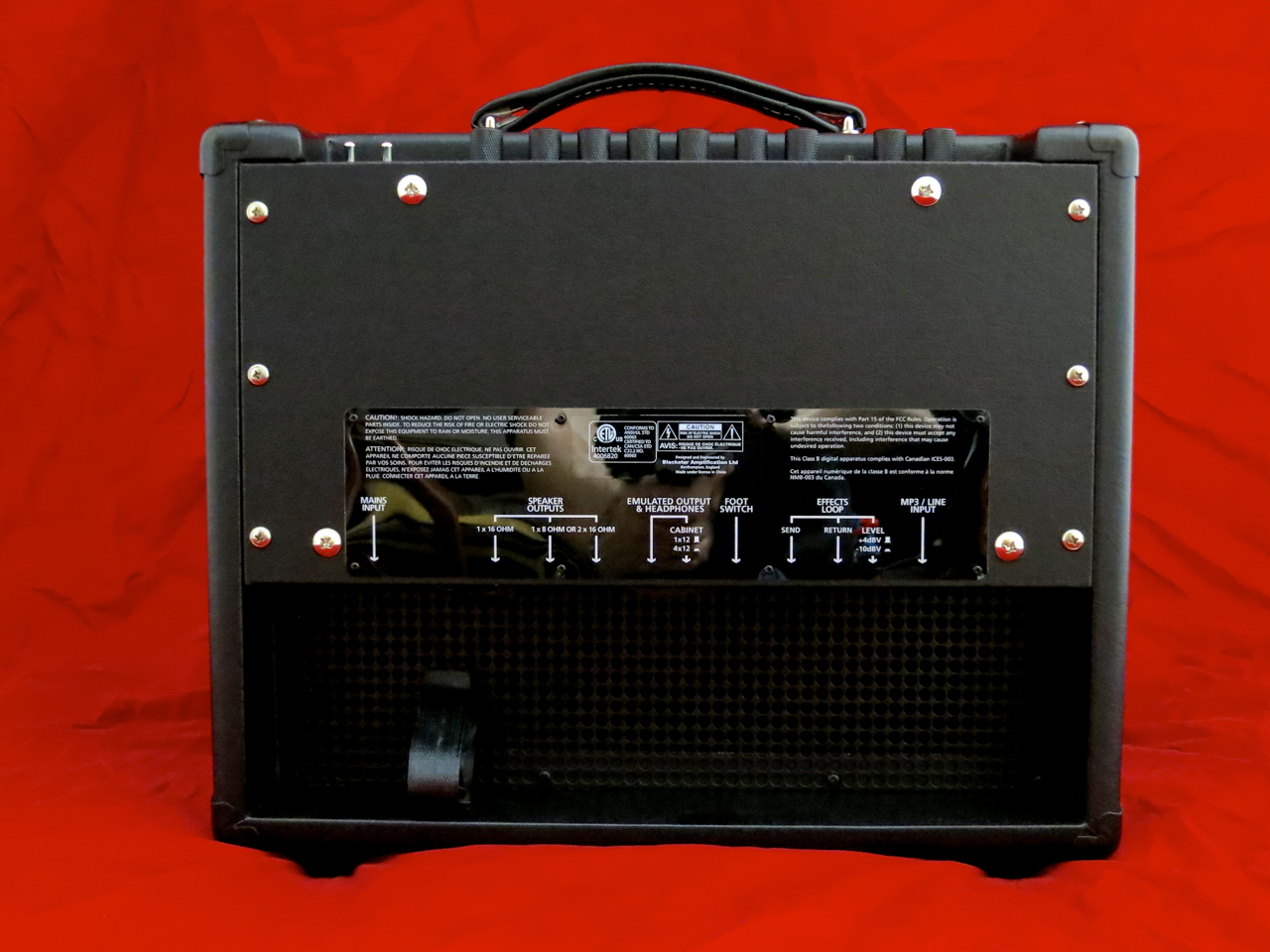
Blackstar HT Metal 5 – full back

The cabinet is a half-closed affair. The lower third of the back is covered by a metal grille, through which you can spot this Blackstar’s Chinese 12-inch speaker.

This compact combo weighs only 14 kilos, making it very easy to lift and carry around by its single top handle.

Blackstar HT Metal 5 – control panel

The Metal 5’s control panel looks like this (click for a larger picture):

This valve combo features two channels, called Clean and Overdrive. The Clean channel is equipped with a simple tone control, while Overdrive comes with a full 3-band EQ, as well as Blackstar’s patented ISF-control. Turning the ISF-control (ISF stands for Infinite Shape Feature) you can go from a USA-type response (with a loudness-style sound) all the way to what is known as a British tone (with its fatter mid-range).

The HT Metal 5 also comes equipped with a very nice digital reverb.
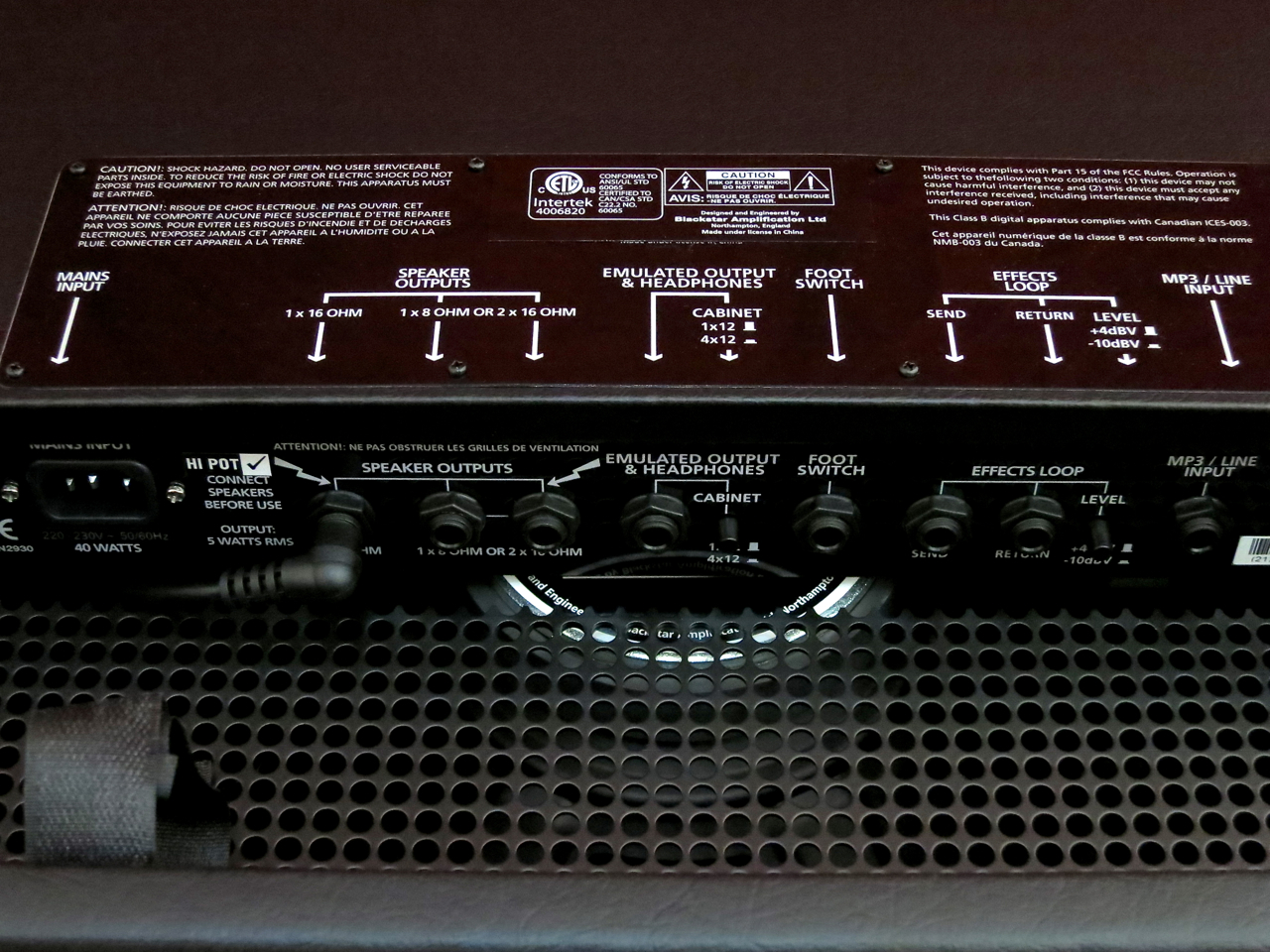
Blackstar HT Metal 5 – back panel

It is rather surprising to find so many different connectors and pushbuttons on such a small amp:

On the left, you will find the combo’s three speaker outputs.

Next up is Blackstar’s speaker-emulated output. A switch lets you choose between a virtual combo and an emulated stack sound. This output also works with headphones, and when the combo runs on standby.

The effects loop on the Metal 5 can be switched from a nominal signal level of -10 dB to +4 dB.

The line input on the far right allows you to connect your mp3-player to the combo.

Blackstar HT Metal 5 – footswitch

A footswitch for channel switching is included in the price of Blackstar HT Metal 5!

****

Blackstar HT Metal 60 – full front

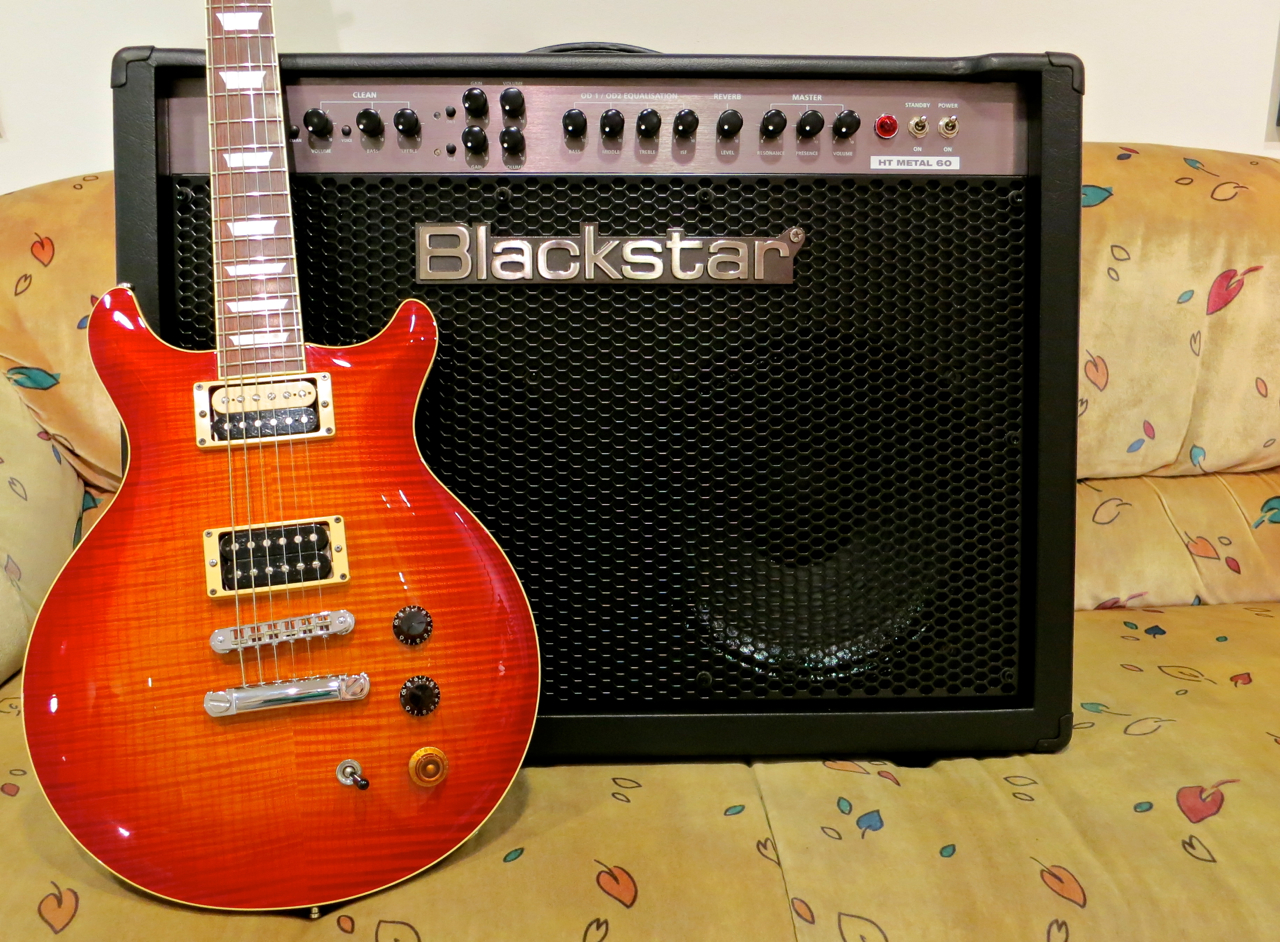
Blackstar’s HT Metal 60 (street price around 1.000 €) is a three-channel powerhouse meant for live use.

This combo is build around a pair of ECC83-preamp valves and two 6L6s in the power amp.

The HT Metal 60 is equipped with two 12-inch Celestion speakers.
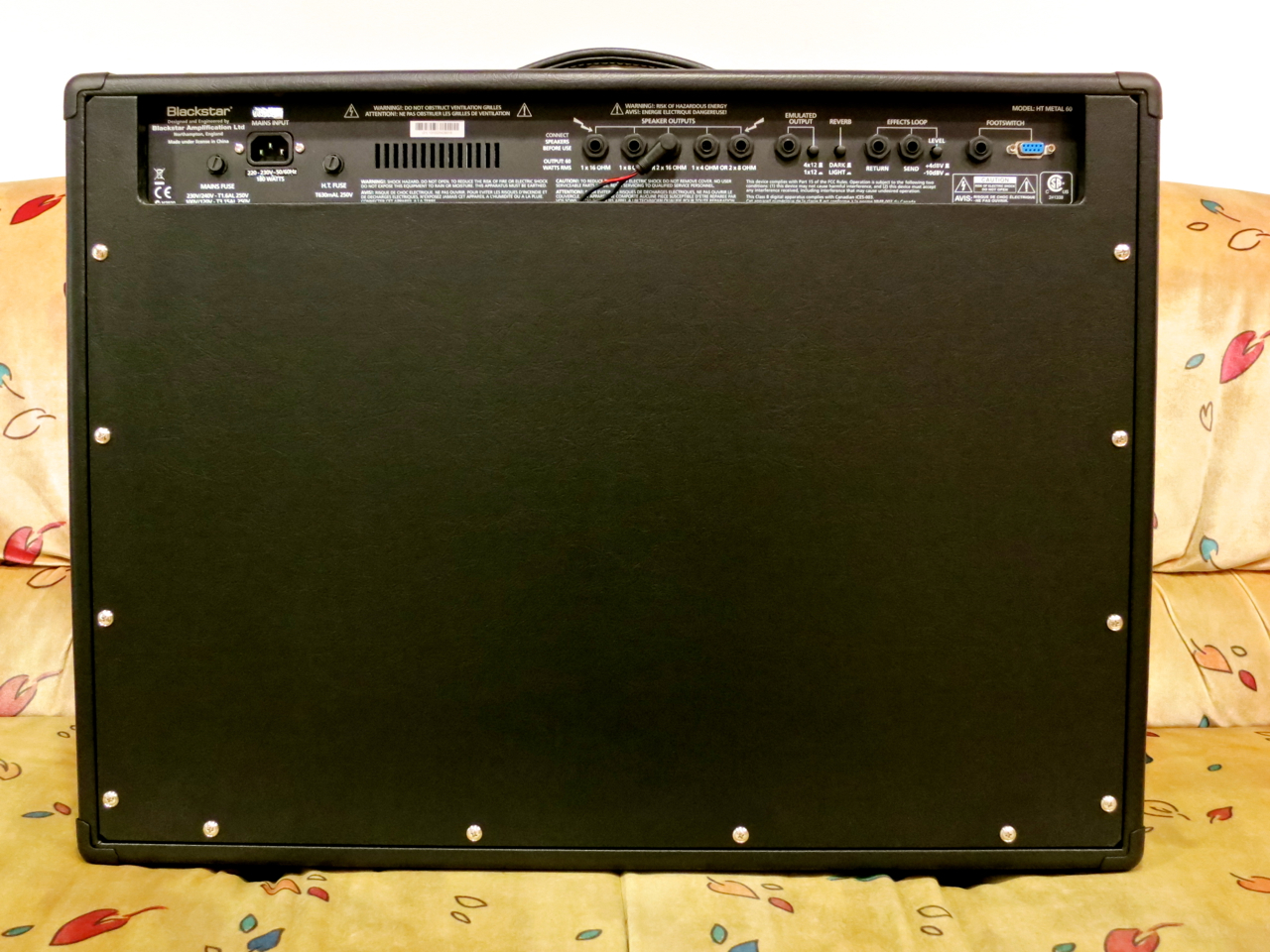
Blackstar HT Metal 60 – full back

The closed-back cabinet aims at giving this amp a stack-style tonality and punch.

Blackstar HT Metal 60 – side handle

Because of the considerable weight (30 kg) of a large tube combo, such as this, the HT Metal 60 has been equipped with two metal handles, installed into the amp’s sides.
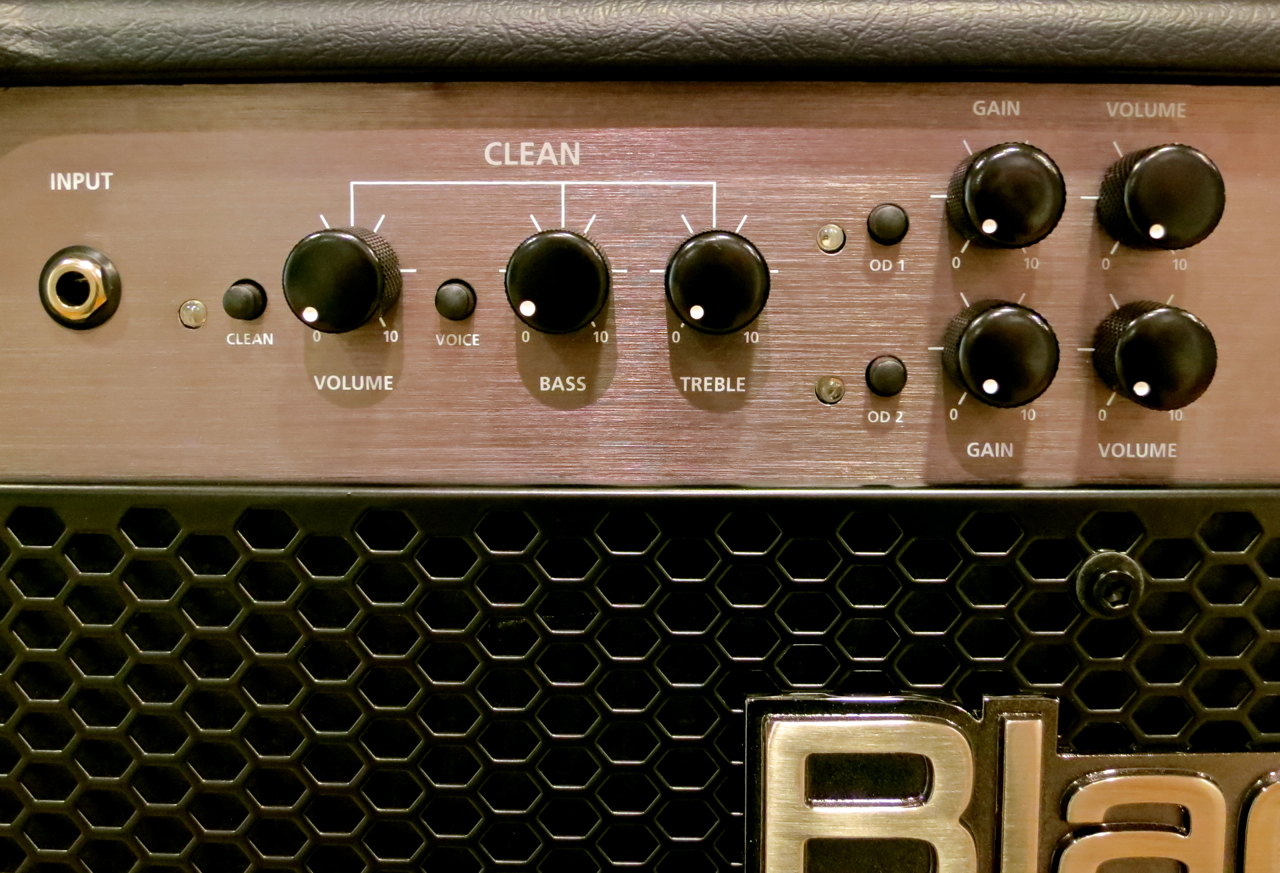
Blackstar HT Metal 60 – clean channel

You can choose between two different tonal characters in this Blackstar’s Clean channel, using the Voice-switch: Boutique Clean puts the amp in Class A mode, giving you a very dynamic response, but with less clean headroom than the voicing called Modern Clean.

The channel’s Bass- and Treble-controls make it very easy to find your sound.
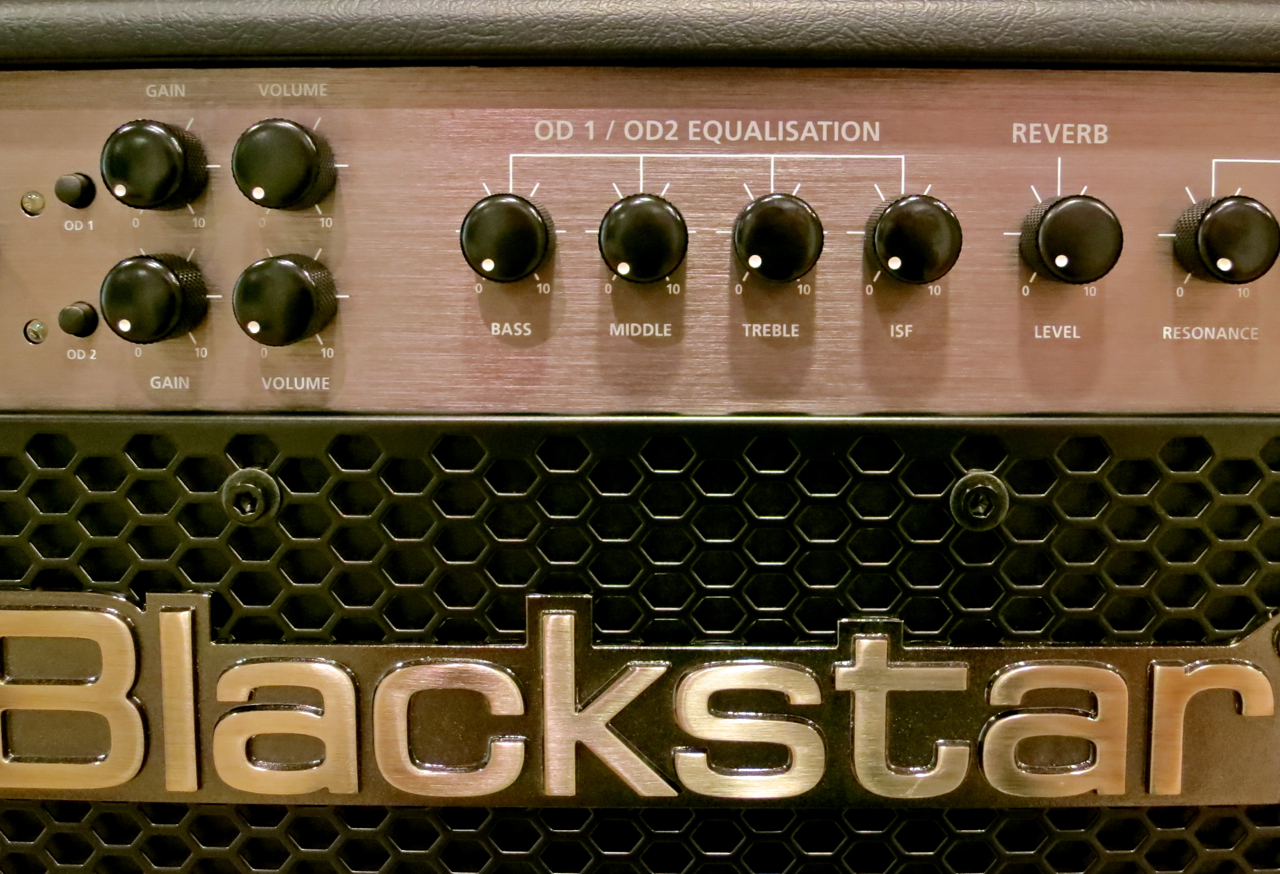
Blackstar HT Metal 60 – OD1 + OD2

The HT Metal 60 offers you two distinct overdrive channels – named OD1 and OD2 – which share the three-band-plus-ISF equalisation section.

OD1 has a tad less gain than OD2. Thanks to its slightly less compressed sound, as well as its drier bottom end, OD1 is the ideal choice for chunky and precise rhythm parts.

OD2’s massive gain reserves are combined with very creamy compression, but there’s plenty of bite here, too, to make sure your lead lines cut through with authority.

Blackstar HT Metal 60 – master section

The master section comprises controls for the HT Metal 60’s digital reverb, overall resonance and presence, as well as master volume.

Blackstar HT Metal 60 – back panel 1

You can connect the HT Metal 60 to virtually any other speaker cabinet, thanks to the five speaker outputs found on the back panel.

In addition to Blackstar’s well-designed speaker-emulated output, and the combo’s effects loop, there’s also a switch to access two different types of reverb (labelled ”light” and ”dark”).

Blackstar HT Metal 60 – back panel 2

The blue D-SUB-port is meant for the combo’s chunky FS-7-board (included, see below), that handles channel-switching duties and allows you to turn off the reverb on the fly.

The regular Footswitch-jack allows you to connect an additional footswitch to activate the combo’s internal boost. This boost is factory preset, and its amount cannot be changed by the user.

Blackstar HT Metal 60 – footswitch

****

Blackstar HT Metal 5 – opener

The Clean-channel on the Blackstar HT Metal 5 takes you from totally clean all the way to a mild Blues-crunch.

There’s more than enough volume on tap for living room and studio use. There’s a limited amount of clean headroom, though, which means that you will have to turn down the volume pot on a humbucker-equipped guitar.

This clip is played on a Hamer USA Studio Custom into the Blackstar’s Clean-channel, and recorded using a Shure SM57:

Here’s what the same clip sounds like recorded direct via the speaker-emulated output:

The HT Metal 5 dishes out delicious overdriven and distorted tones by the bucket load. Blackstar’s 12-inch speaker sounds fat and muscular, and makes it hard to believe that you’re listening to such a compact little combo!

Turning the ISF-control up full gives you a great Marshall-style tone, regardless of whether you’re using a mic…

…or the built in DI-output.

With ISF turned to zero the sound leans heavily in a Rectifier-type direction (first the SM57-clip, then the speaker-emulated output):

****
Blackstar HT Metal 60 – opener

Blackstar’s HT Metal 60 naturally offers a much wider tonal palette than its small brother.

You can get two different types of clean sounds, with Boutique Clean being the rounder alternative of the two.

SM57:

Line output:

Modern Clean comes across as brighter and somewhat more compact (first the Shure SM57 -clip, then the speaker emulated output):

Here’s an example of the OD1-channel with the guitar tuned to drop-D.

First the ”British” version (ISF=10):

Then its ”US” counterpart (ISF=0):

With the exact same EQ settings, OD2 has more bite.

ISF=10 (”UK”):

ISF=0 (”USA”):

****

Blackstar-logo 2

In my view, Blackstar’s new HT Metal-series is a fantastic addition to the company’s line-up, which takes the needs of modern Metal-guitarists into full account.

The HT Metal 5’s clean sound is very decent, even if the available headroom isn’t on a par with some larger amps. The distortion-channel is really where it’s all at with this compact combo – you will be floored by the big and fearless nature of the Metal 5’s mighty roar!

The Blackstar HT Metal 60 is the workingman’s Metal-combo. This is a professional grade combo offering both very tasty clean tones, as well as bone-crushingly powerful overdrive and distortion with spades of creamy compression. In all but the largest of venues this combo’s volume levels will surely be more than sufficient, even without adding any external cabinets.

****

Blackstar HT Metal 5 & HT Metal 60

HT Metal 5 – street price ca 450 €

HT Metal 60 – street price ca 1.000 €

Finnish distributor: Musamaailma

****

Blackstar HT Metal 5

Pros:

+ workmanship and finish

+ separate tone-control for Clean-channel

+ OD-channel’s 3-band EQ and ISF

+ big tone

+ speaker-emulated DI-output

+ footswitch inluded

Cons:

– Clean-channel’s restricted headroom

****

Blackstar HT Metal 60

Pros:

+ workmanship and finish

+ metal grips

+ Clean-channel’s Voice-feature

+ Clean-channel has own EQ-section

+ OD-channels’ 3-band EQ and ISF

+ big tone

+ speaker-emulated DI-output

+ FS-7-board included

Testipenkissä: Mission Engineering ReWah PRO

****

Mission Engineering – opener

Mission Engineering on kalifornialainen laadukkaiden pedaalien ja vahvistinkaappien valmistaja.

Mission Engineering EP-1 – red no switch

Mission Engineeringin valikoimasta löytyy monta erilaista volume- ja ekspressiopedaalia.

Mission Engineering EP-1 – spring

Ekspressiopedaali-valikomasta löytyy sekä yleiskäyttöön sopivia malleja (lisäkytkimellä tai ilman) että tietylle multiefektille tai mallintavalle vahvistimelle (Line 6, Eleven Rack, G-System, jne.) valmiiksi räätälöityjä pedaaleja.

Mission Engineering SP-1 – green

Mission Engineering -pedaalit on selvästi rakennettu kestämään rankempaakin käyttöä, ja firman laaja värivalikoima tarjoaa runsaasti vaihtoehtoja perinteisen tylsään mustaan.

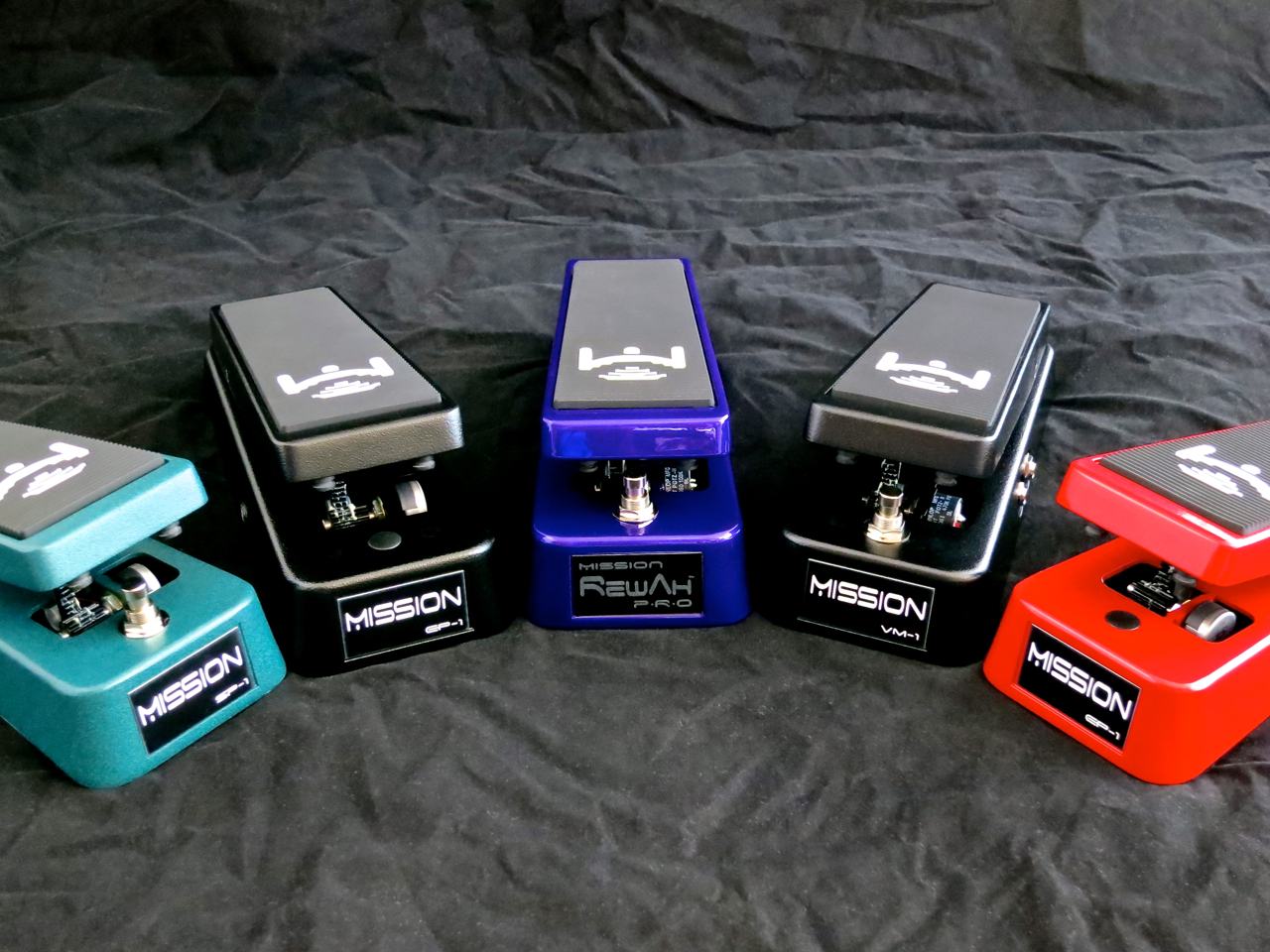
Mission Engineering – all pedals

Ekspressiopedaalien hinnat alkavat 137 eurosta (EP1BK), kun taas firman volumepedaalien hinnat alkavat 154 eurosta (VM1BK).

Kokeilemani Mission-pedaalit toimivat – mallista riippumatta – erittäin sulavasti ja tarkasti.

****

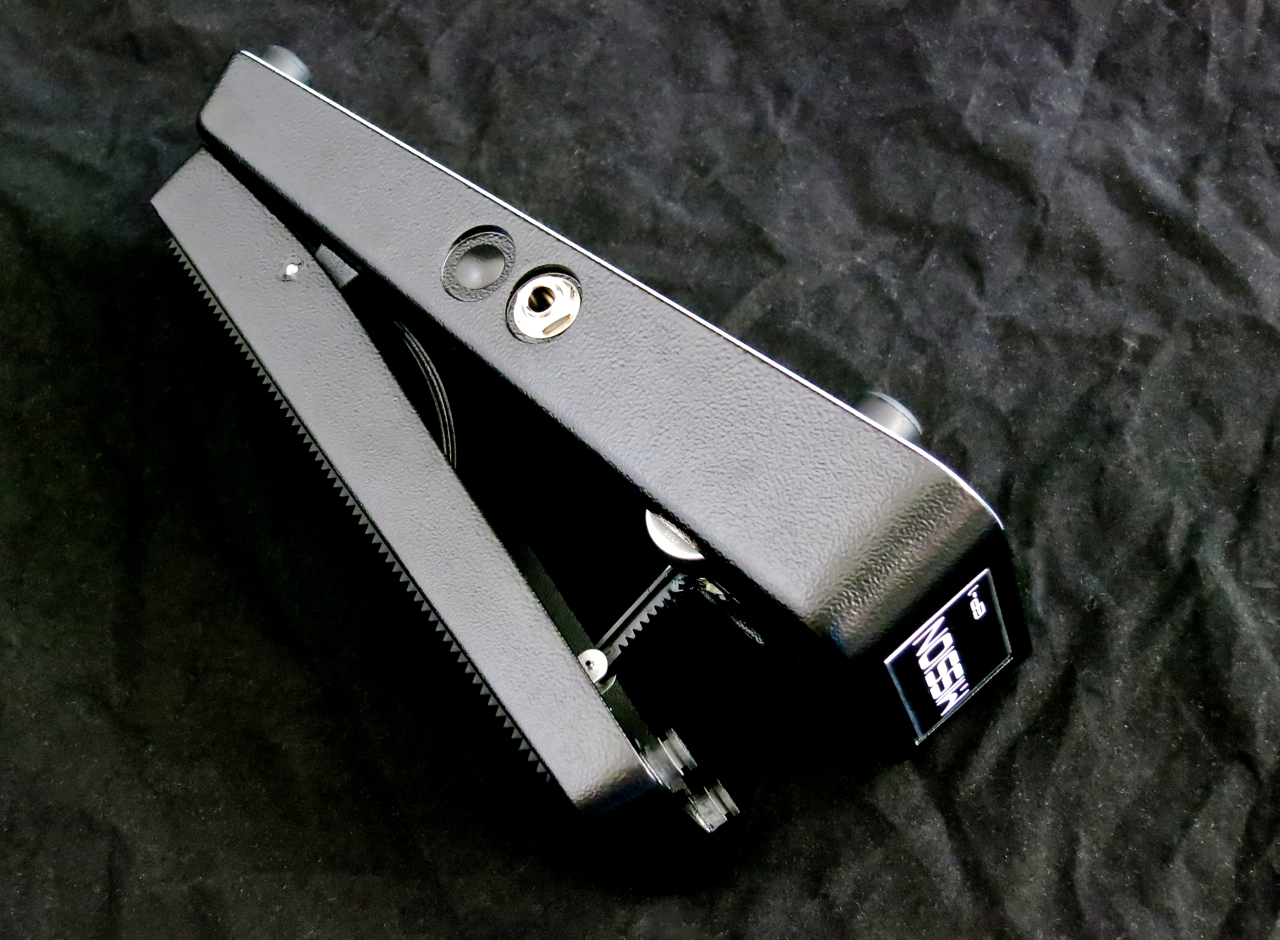
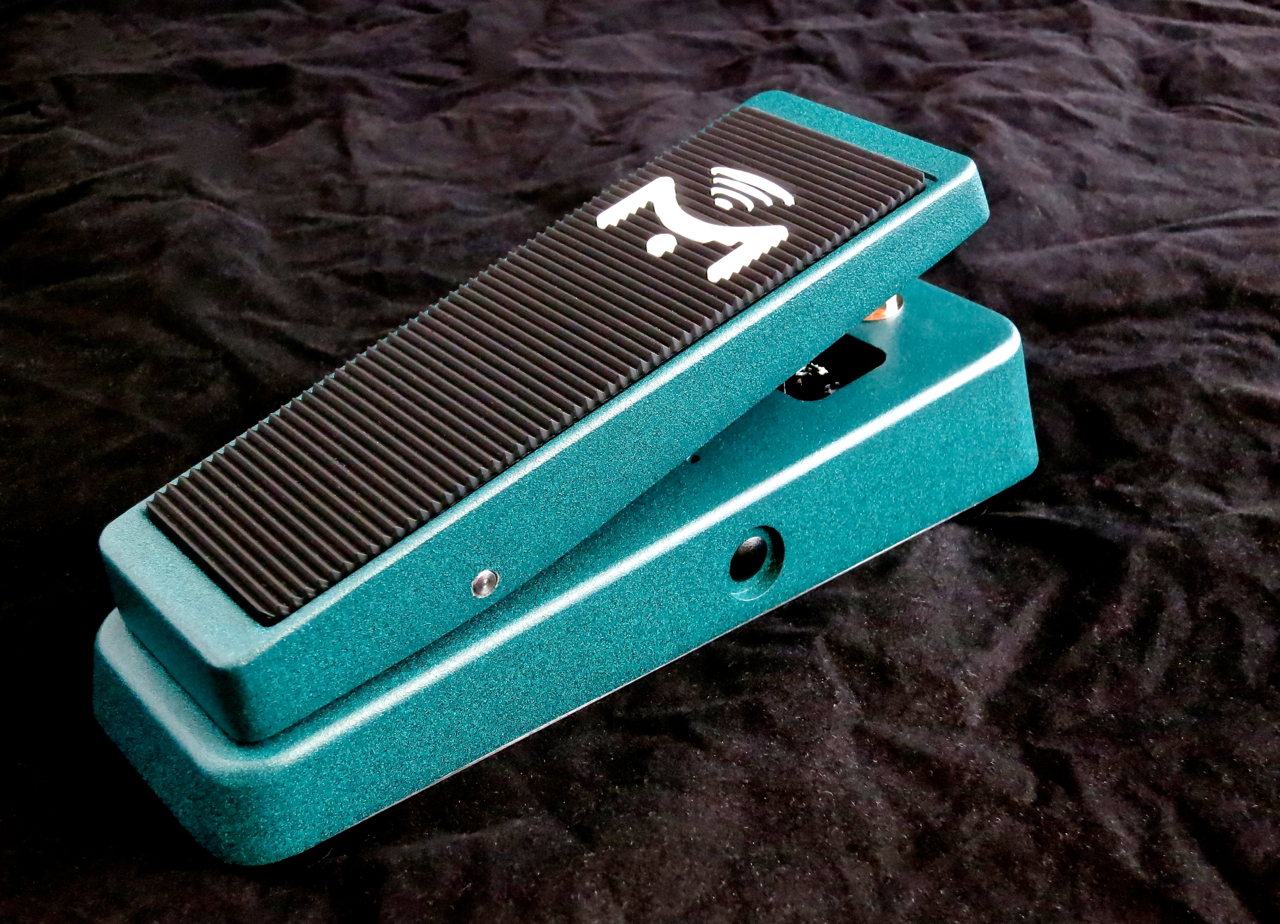
Mission Engineering ReWah PRO – front angle

Mission Engineering -pedaalien kruunujalokivi on kuitenkin firman ReWah Pro -wah-wah (307 €).

Tämä pedaali näyttää hyvin tyylikkäältä, mutta vaikuttaa ulkoisesti kuitenkin tavalliselta, harmittomalta wahilta.

Mission Engineering ReWah PRO – power supply input

Missionin ReWah Pro -efektiä voi käyttää 9 voltin paristolla tai Boss-standardin mukaisella virtalähteellä.

Mission Engineering ReWah PRO – base plate

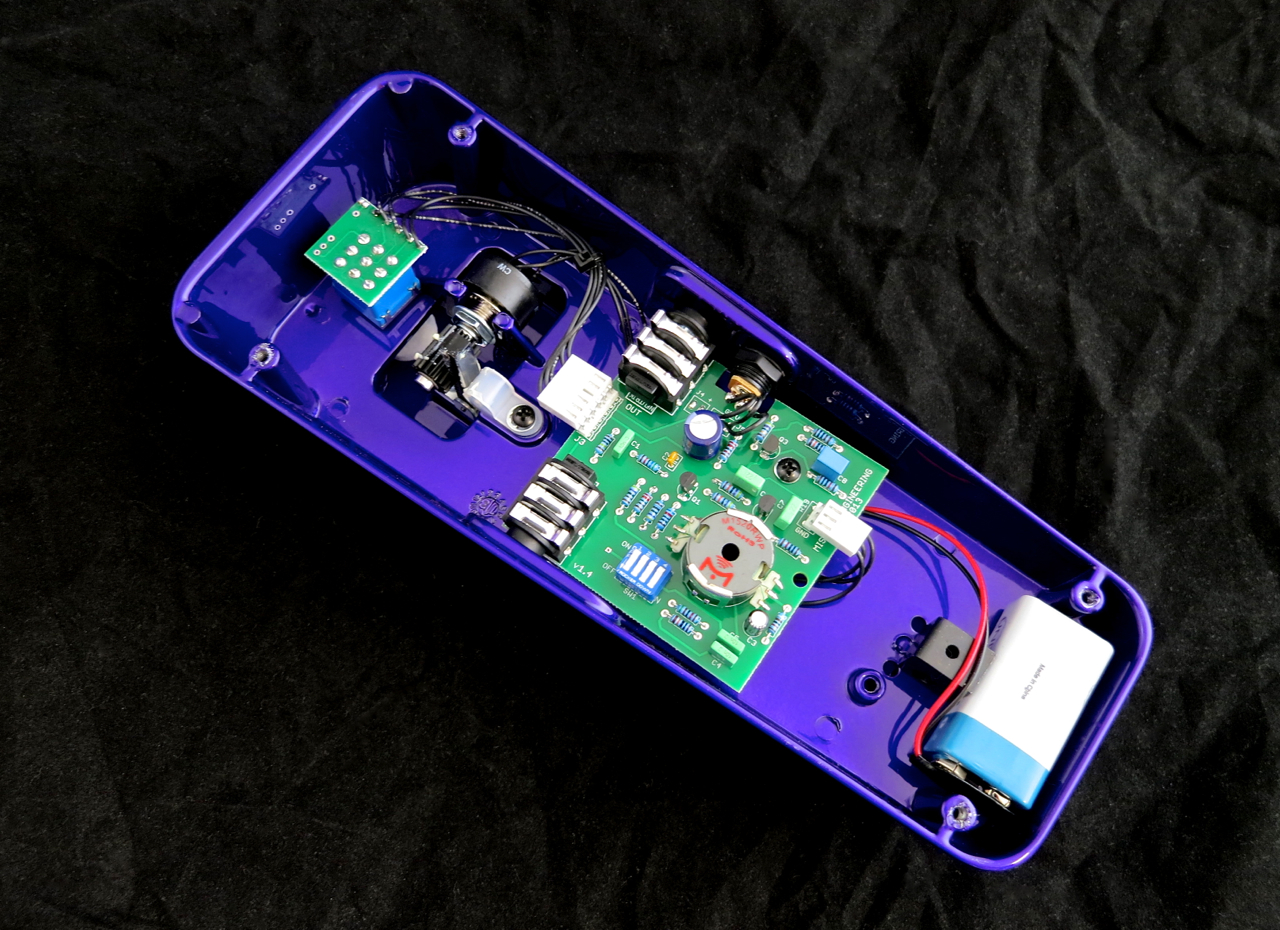
Pariston vaihtamisessa täyttyy irrottaa ReWahin koko metallipohja ristipääruuvarilla. Tämä seikka hidastaa pariston vaihtoa, mutta ratkaisu on mekaanisesti kestävämpi kuin muovinen paristolokero. Yhtenäinen metallilevy suojaa myös efektin elektroniikkaa tehokkaammin ulkoisia häiriöitä vastaan.

Mission Engineering ReWah PRO – electronics 1

Tämän wah-wahin sisäkalut on asennettu hyvin huolellisesti ja siististi.

Mission Engineering ReWah PRO – battery

Paristo löytyy perinteisestä paikastaan kitaristin kantapään alla.

Mission Engineering ReWah PRO – Dunlop pot

Mission Engineering käyttää erittäin laadukkaita Dunlop-potentiometrejä pedaaleissaan.

Mission Engineering ReWah – switches

ReWah Pron salaisuus löytyy tästä – tämä pedaali ei ole jonkun tietyn vintage-wahin kopio, vaan moderni ja monipuolinen työkalu laatutietoiselle kitaristille:

Mission käyttää omaa, erikoisvalmisteista kelaa, jolla on samankaltainen induktanssi ja vastus kuin klassikkomalleissa, mutta huomattavasti muhkeampi bassotoisto ja pienempi saturaatio kuin yleisesti käytössä olevissa wah-keloissa.

Tämän lisäksi ReWah Pro tarjoaa neljä pikkuista kytkintä, joilla wahin filtterin ja esivahvistuksen käyttäytymistä voi muuttaa:

• Ykköskytkin lisää soundiin pienen annoksen herkullista säröä.

• Kakkoskytkimellä muutetaan filtterin keskitaajuutta hivenen verran matalammaksi, ja samalla suodinta kavennetaan. Soundi muuttuu hieman nasaalisemmaksi.

• Kolmoskytkin vetää suotimen keskitaajuutta melko voimakkaasti alas, jonka seurauksena syntyy selkeästi bassovoittoisempi wah-soundi.

• Neloskytkimellä säädetään elektroniikan vahvistusta pienemmäksi ja filtterin kaistaa leveämmäksi. Soundi muuttuu puhtaammaksi.

ReWah Pro -pedaalin kytkimet voi käyttää joko yksitellen tai kaikissa mahdollisissa yhdistelmissä. Kokeileminen todella kannattaa!

****

Mission Engineering ReWah PRO – electronics 2

Voi pojat! Minulla ei ole ollut pitkään näin hauskaa kuin Mission Engineering ReWah Pro -pedaalin kanssa!

Tämän wahin soundi on jo tehdasasetuksilla niin hyvä, että soitto loppuu vasta, kun pakarat alkavat krampata. Tämä pedaali tekee riippuvaiseksi!

Ja mikä on parasta, ovat Mission-wahin erittäin alhainen omakohina ja sen toimiva häiriösuojaus.

Tässä on lyhyt pätkä puhtaan kanavaan soitetusta wahista, jossa käytän Fender Telecaster -kitaraa ja ReWahin tehdasasetukset:

Kun kääntää kytkimet 1-3 on-asentoon, sama yhdistelmä kuulostaa tältä:

Tässä esimerkissä ReWah-pedaali on laitettu takaisin tehdasasetuksiin (kaikki kytkimet ”off”). Efekti toimii tässä pelkästään filtterinä (”fixed wah”), kitara on Hamer Studio Custom, ja särökanava on valittu:

Ja vielä kauniisti laulava kitarasoolo:

Mission Engineering ReWah PRO – switches alternative

****

Mission Engineering ReWah PRO – reverse front angle

Onko Mission Engineering ReWah Pro maailman paras wah-wah? Pedaali kuuluu kiistämättä ainakin kärkikolmikkoon, laadukkaan soundinsa ja kestävän olemuksensa ansiosta.

ReWah Pron hinta on kiistämättä kova, mutta pedaali tarjoaa omasta mielestäni reilusti vastinetta rahalle. Kun etsit mahdollisimman laadukasta wah-wahia, kannattaa ehdottomasti tutustua tähän pedaaliin!

****

Mission Engineering ReWah Pro

307 €

Maahantuoja: Musamaailma

****

Plussat:

+ kestävänoloinen

+ true bypass

+ audiofiilitason elektroniikka

+ erittäin monipuolinen

+ soundi

Review: Tanglewood TU-1CE, TU-3, TU-3E & TU-5

Tanglewood TU-3E – headstock VID

The humble ukulele’s popularity has been on the rise over the last few years, not least because these instruments are easy to carry around and plenty of fun to play.

This fact hasn’t gone unnoticed by British brand Tanglewood, who have recently broadened their range of ukes.

****

Tanglewood ukuleles – teaser

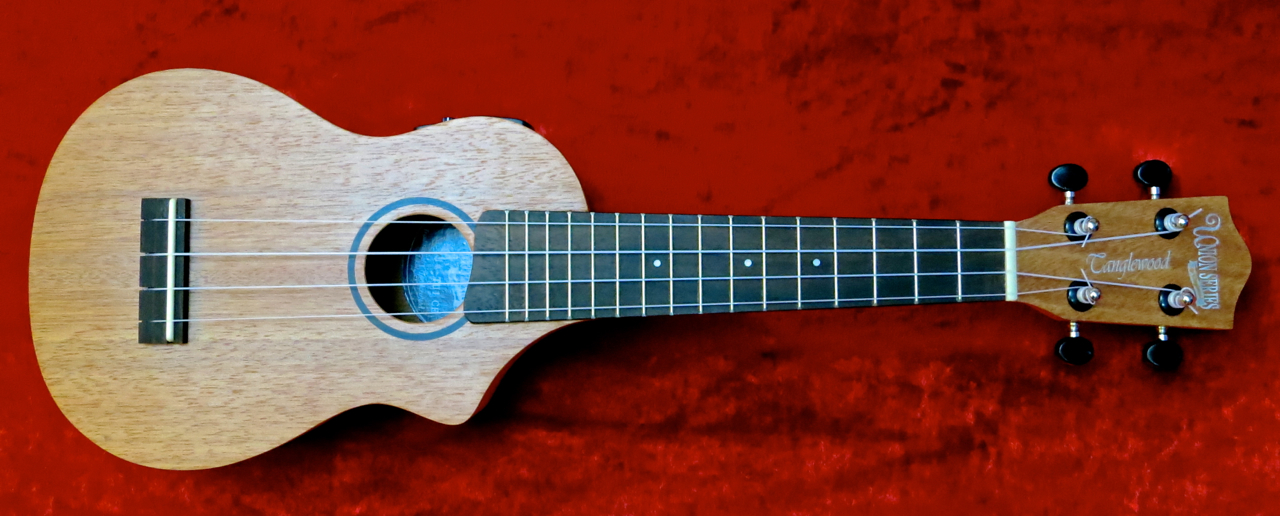
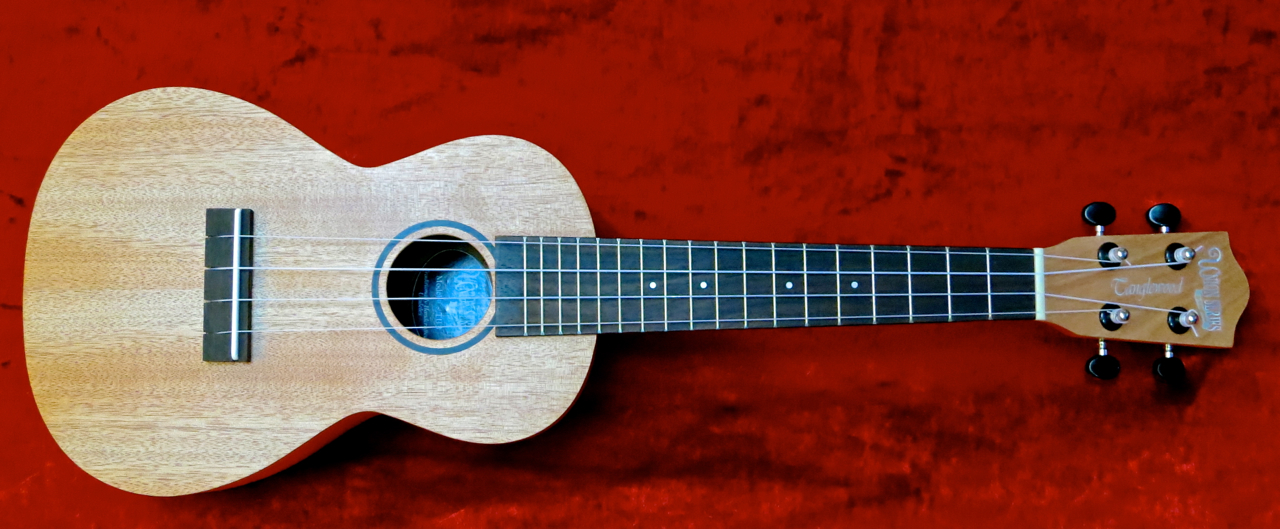
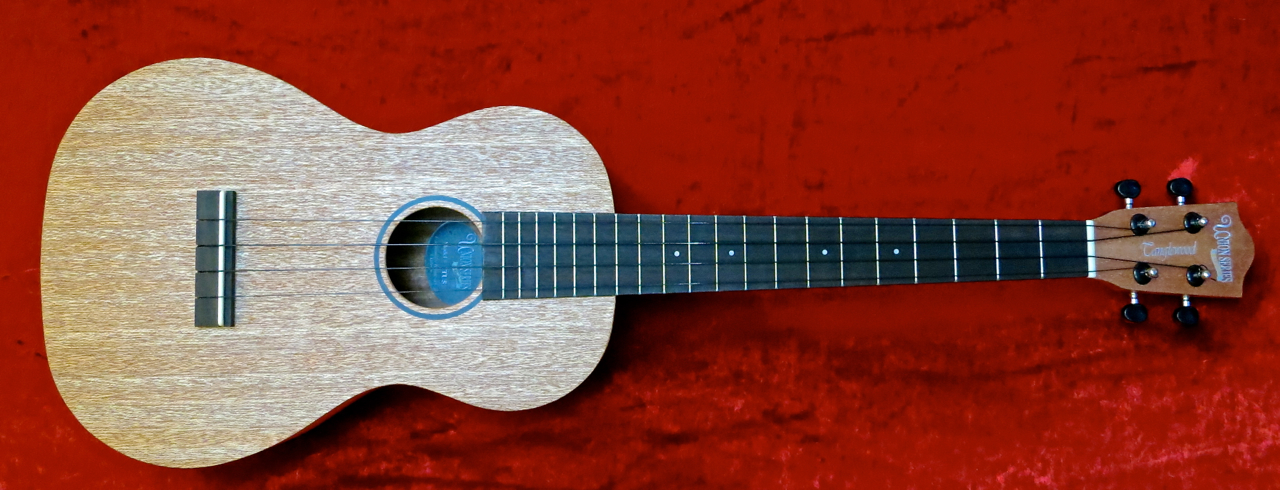
The quartet of ukes we’ve received for testing – the TU-1CE, the TU-3, the TU-3E and the TU-5 – are all part of Tanglewood’s mahogany-bodied Union-series.

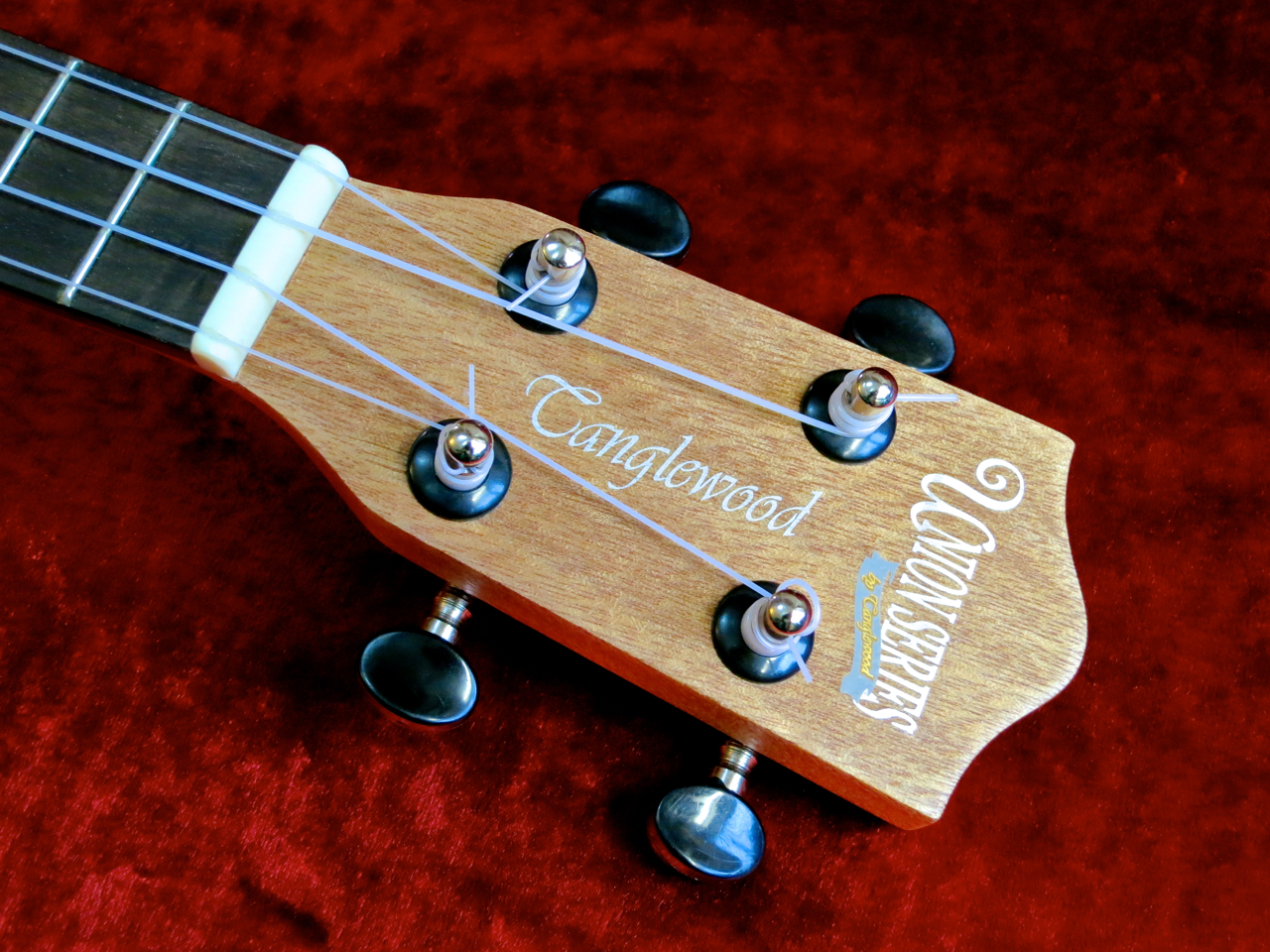
Tanglewood TU-1CE – headstock

All Union-series ukuleles have mahogany necks with glued-on neck heels and headstocks.

The fingerboards have been crafted from rosewood.

Tanglewood – uke tuners VID

Tanglewood’s geared, open tuners work very well.

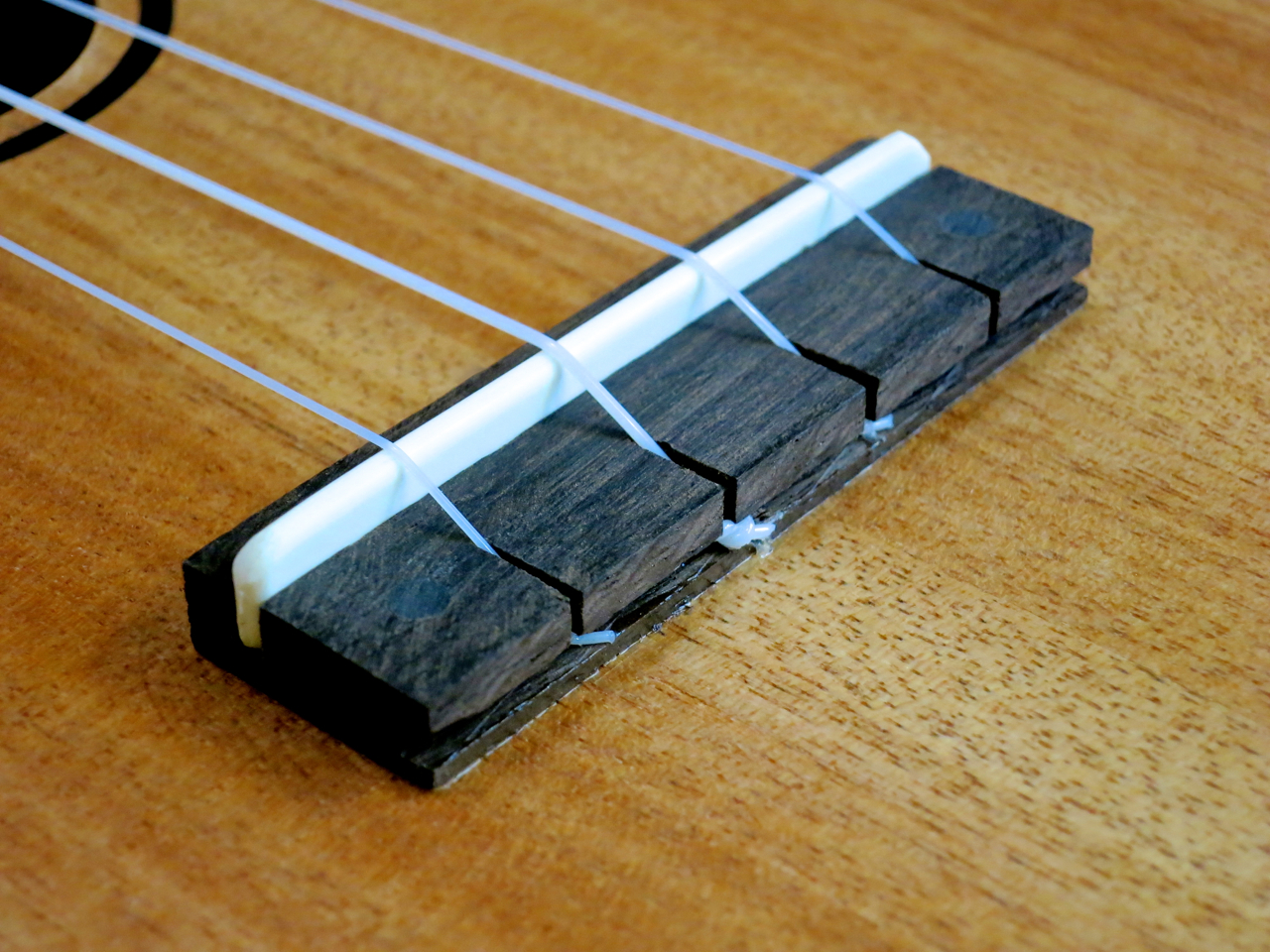
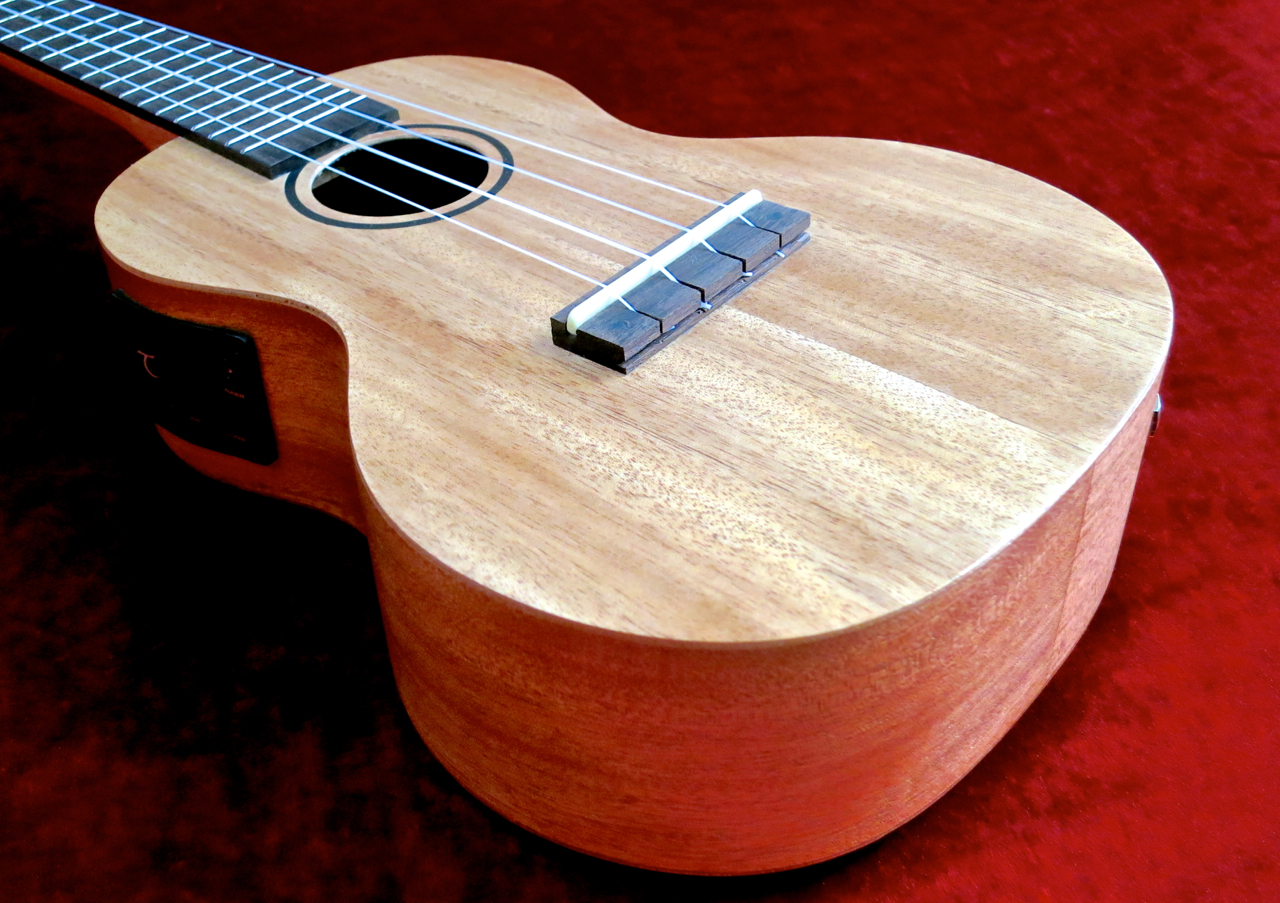
Tanglewood TU-3 – bridge

Ukuleles come with one of several different bridge designs, depending on the manufacturer.

Tanglewood has chosen the most practical ukulele bridge, which anchors the knotted string ends in little slots cut into the top of the bridge.

Tanglewood TU-3 – body beauty 2

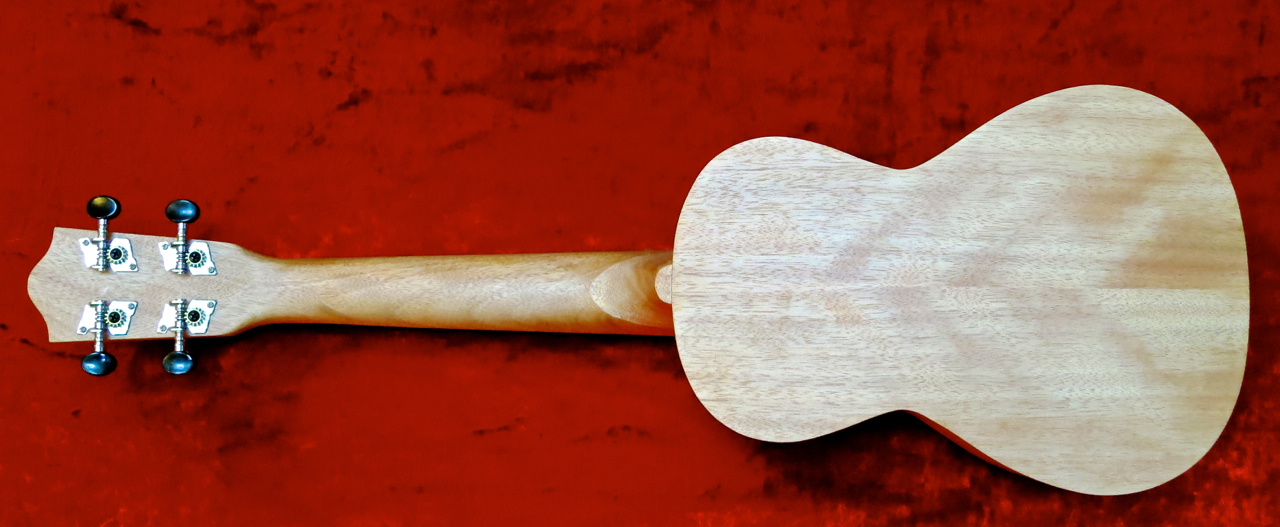
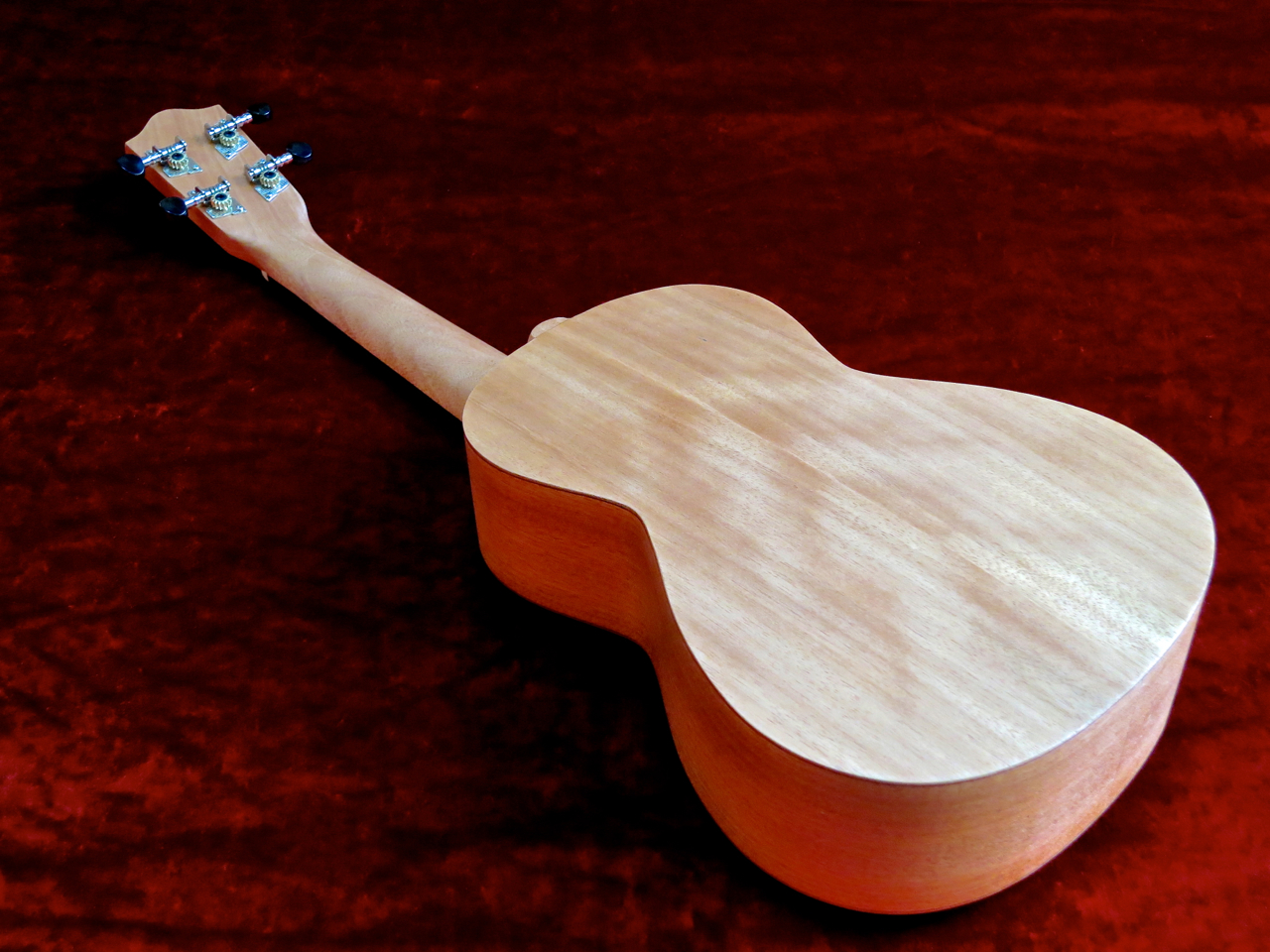
All Union-series ukuleles have a sound box made from laminated mahogany.

The instruments have received a clear satin finish.

****

Tanglewood TU-1CE – beauty shot

Tanglewood’s TU-1CE (current price in Finland 116 €) is a soprano ukulele with a deep cutaway. It comes with a pickup and preamp installed.

The soprano is the smallest of the common four ukulele sizes. The TU-1CE has a scale of only 34.5 cm.

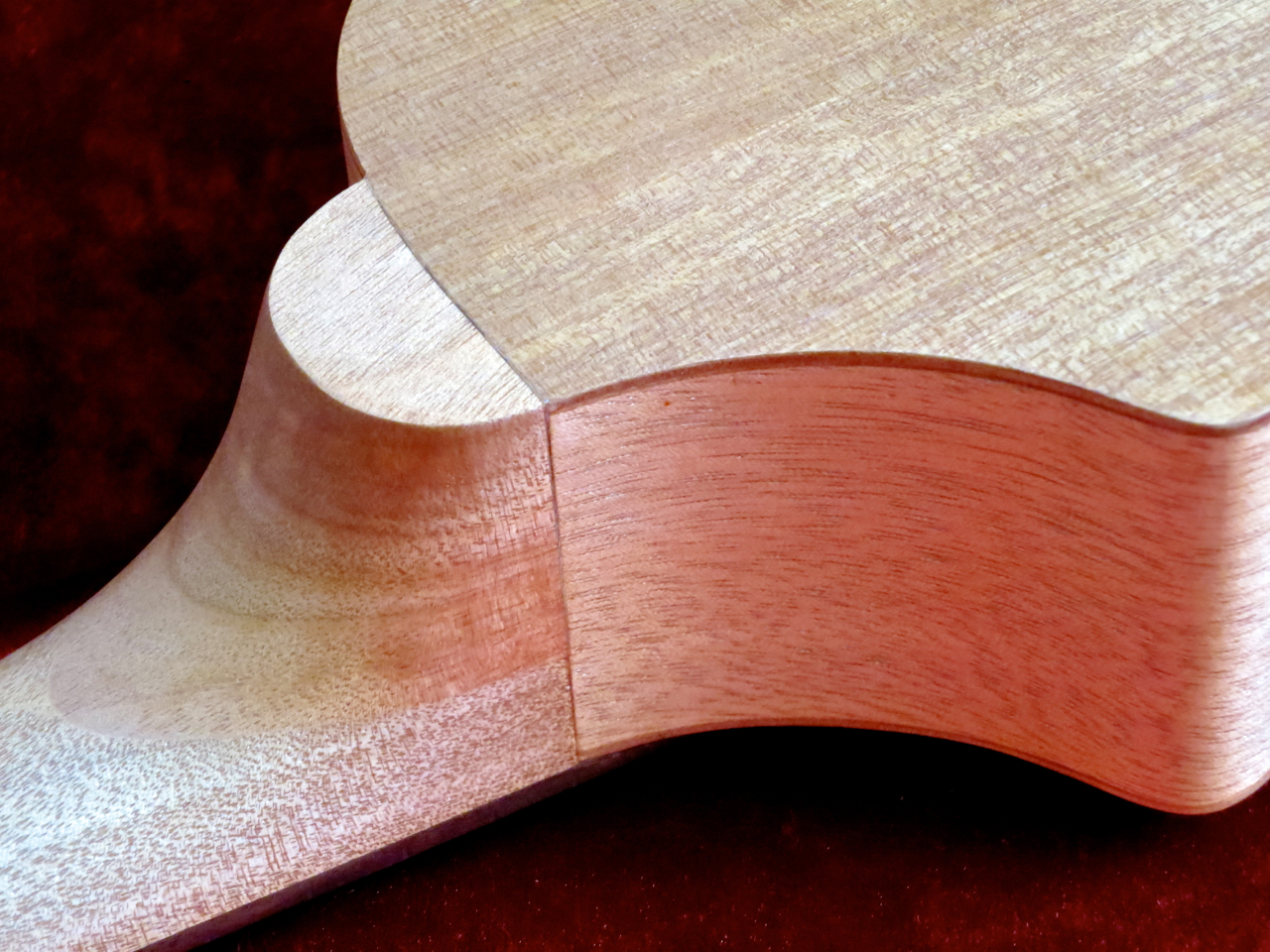
Tanglewood TU-1CE – cutaway

The workmanship on this Tanglewood (built in the Far East) is very good in relation to its low price. Look at that clean neck joint!

Tanglewood TU-1CE – frets

The TU-1CE sports 16 small frets, as well as dot position markers.

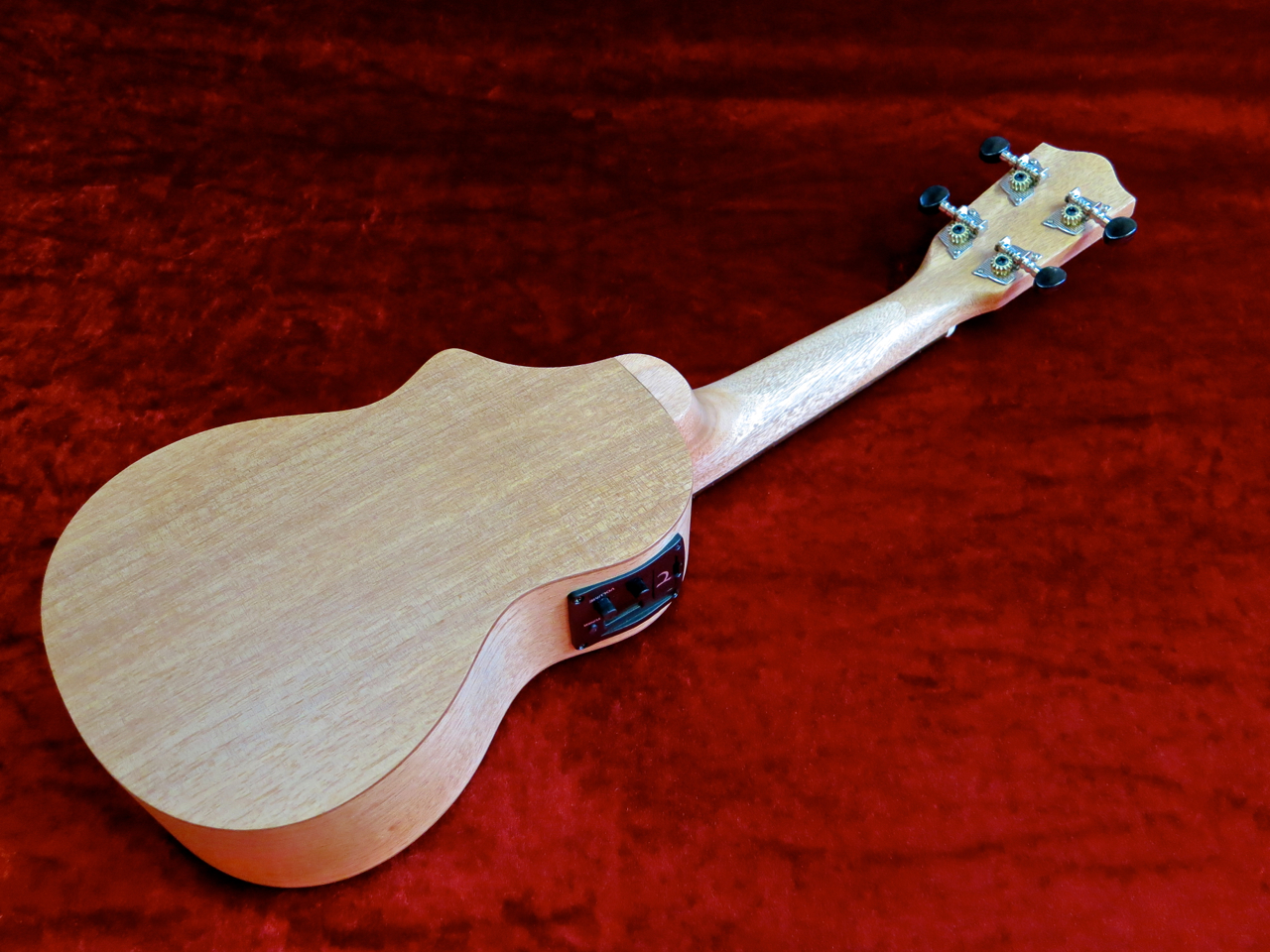
Tanglewood TU-1CE – back beauty 2

This soprano comes factory-equipped with top quality Aquila Nylgut strings.

Tanglewood TU-1CE – preamp + tuner

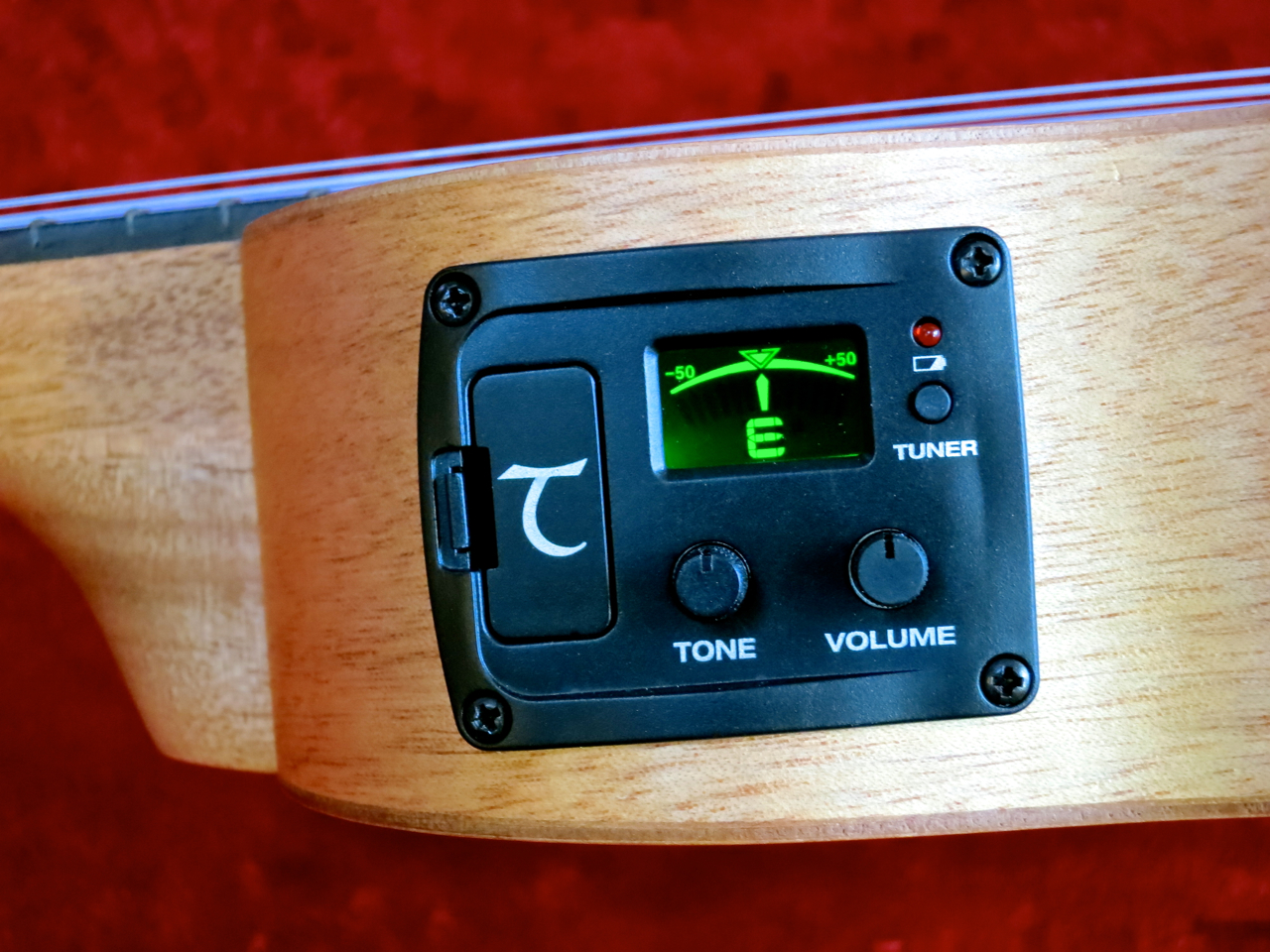
The Tanglewood’s preamplifier is powered by a button cell and offers controls for volume and tone, as well as a chromatic tuner.

****

Tanglewood TU-3 – case

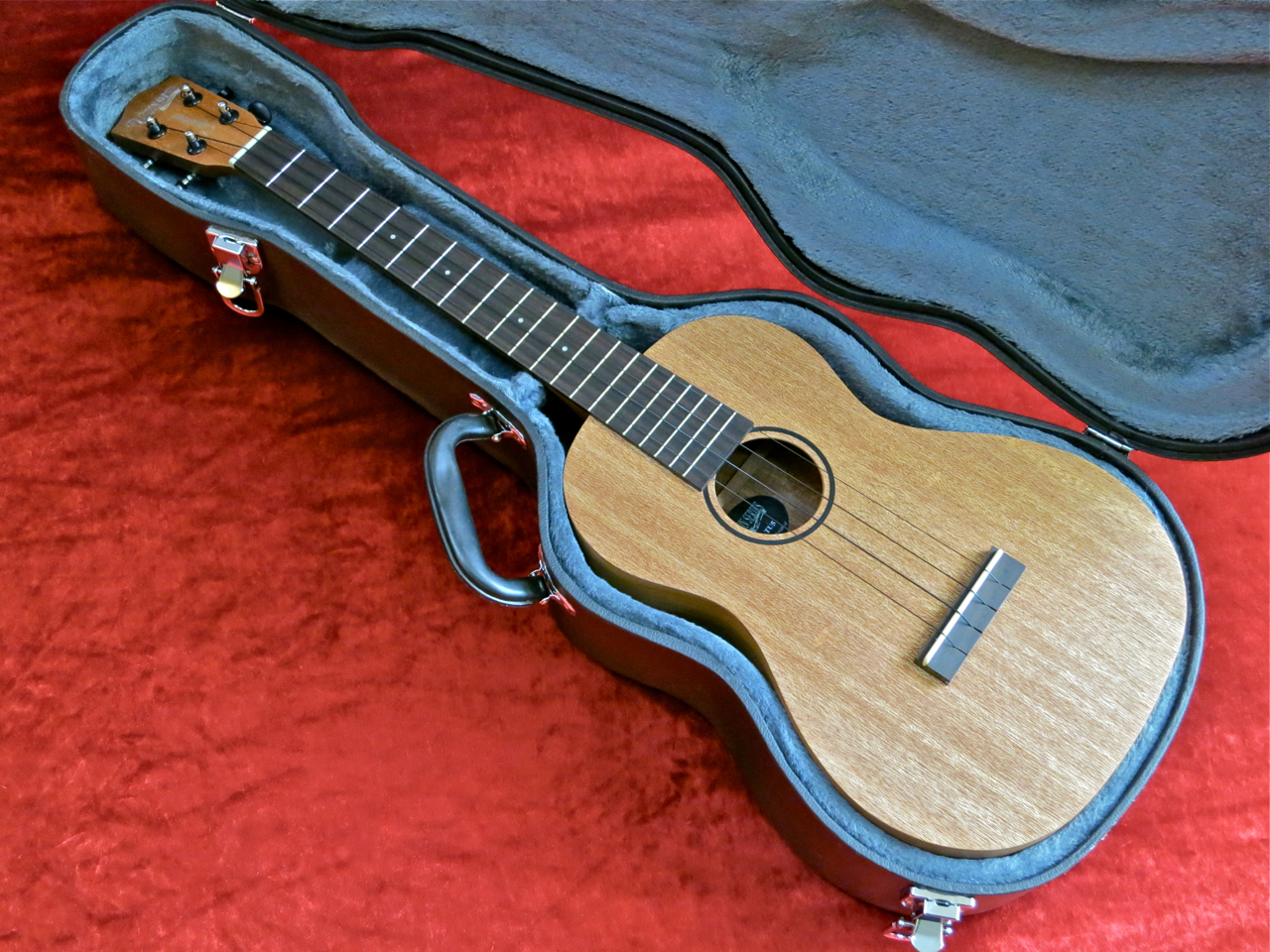
The Tanglewood TU-3 (119 €) is a concert-sized uke. A stylish hardcase is included in the price.

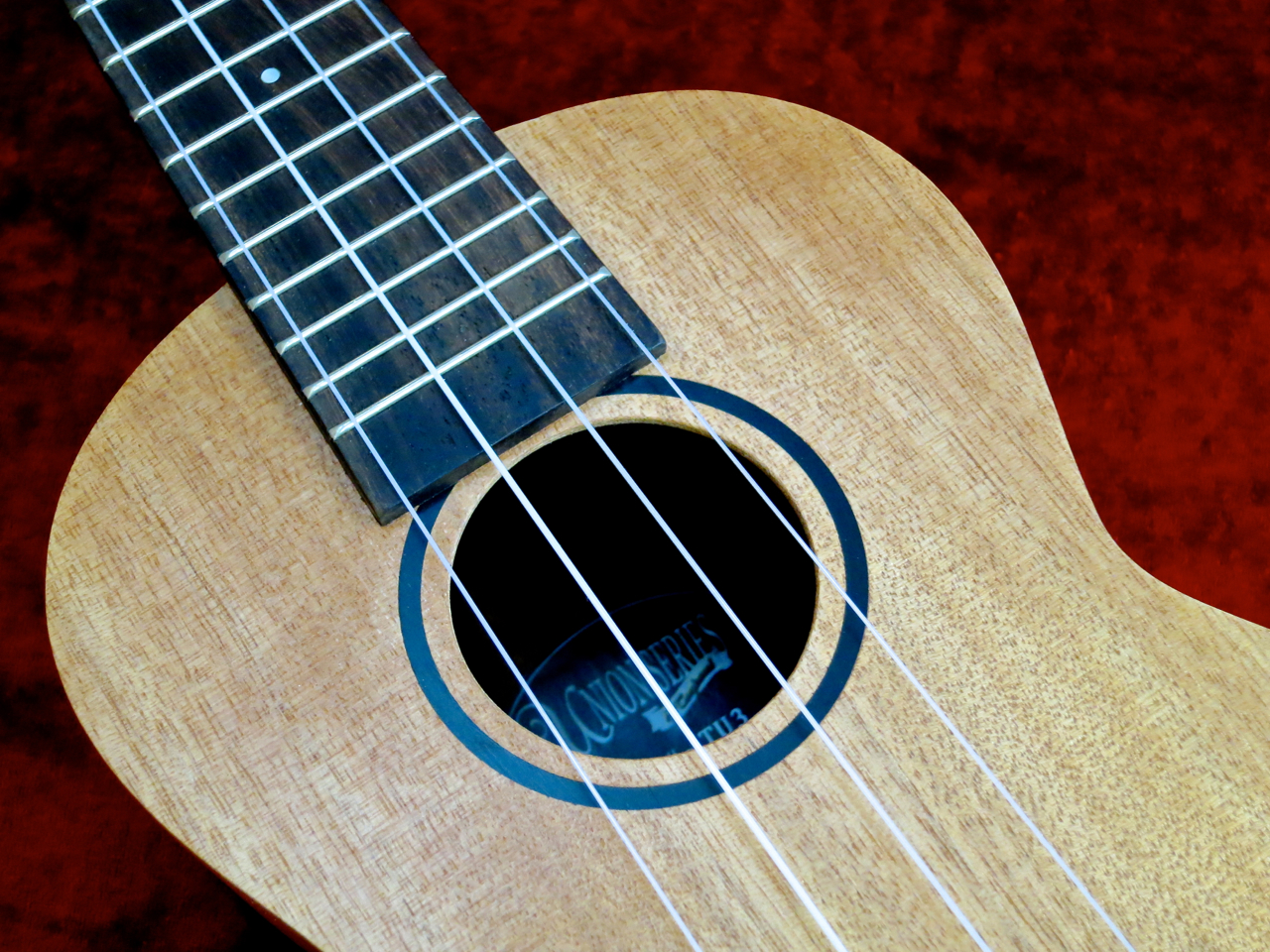
Tanglewood TU-3 – soundhole

A Concert-ukulele is the next bigger size to a soprano.

This model has a 37.5 cm scale.

Tanglewood TU-3 – beauty shot

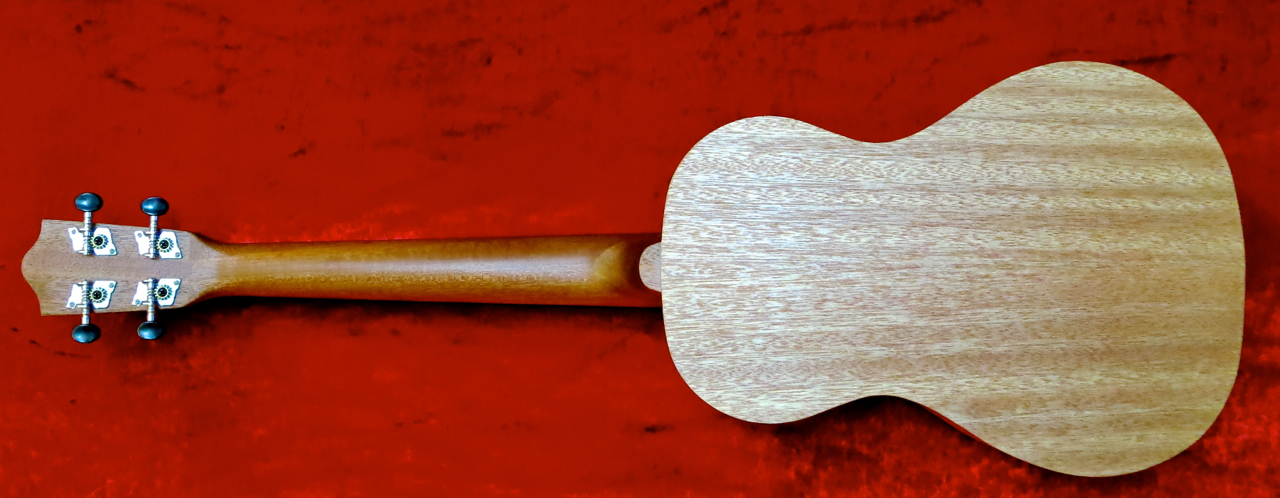
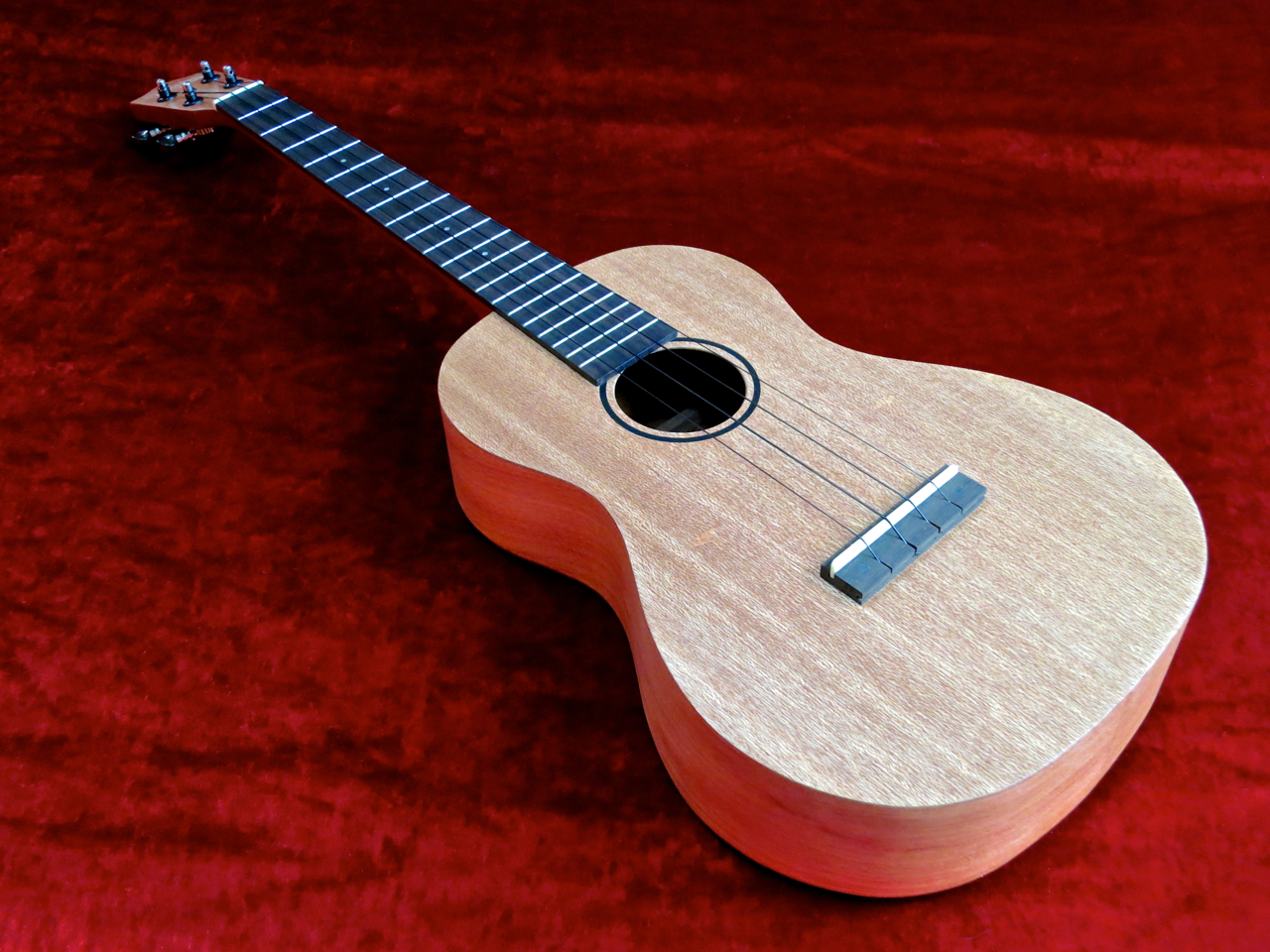
This TU-3 has an exceptionally nicely grained body…

Tanglewood TU-3 – back beauty

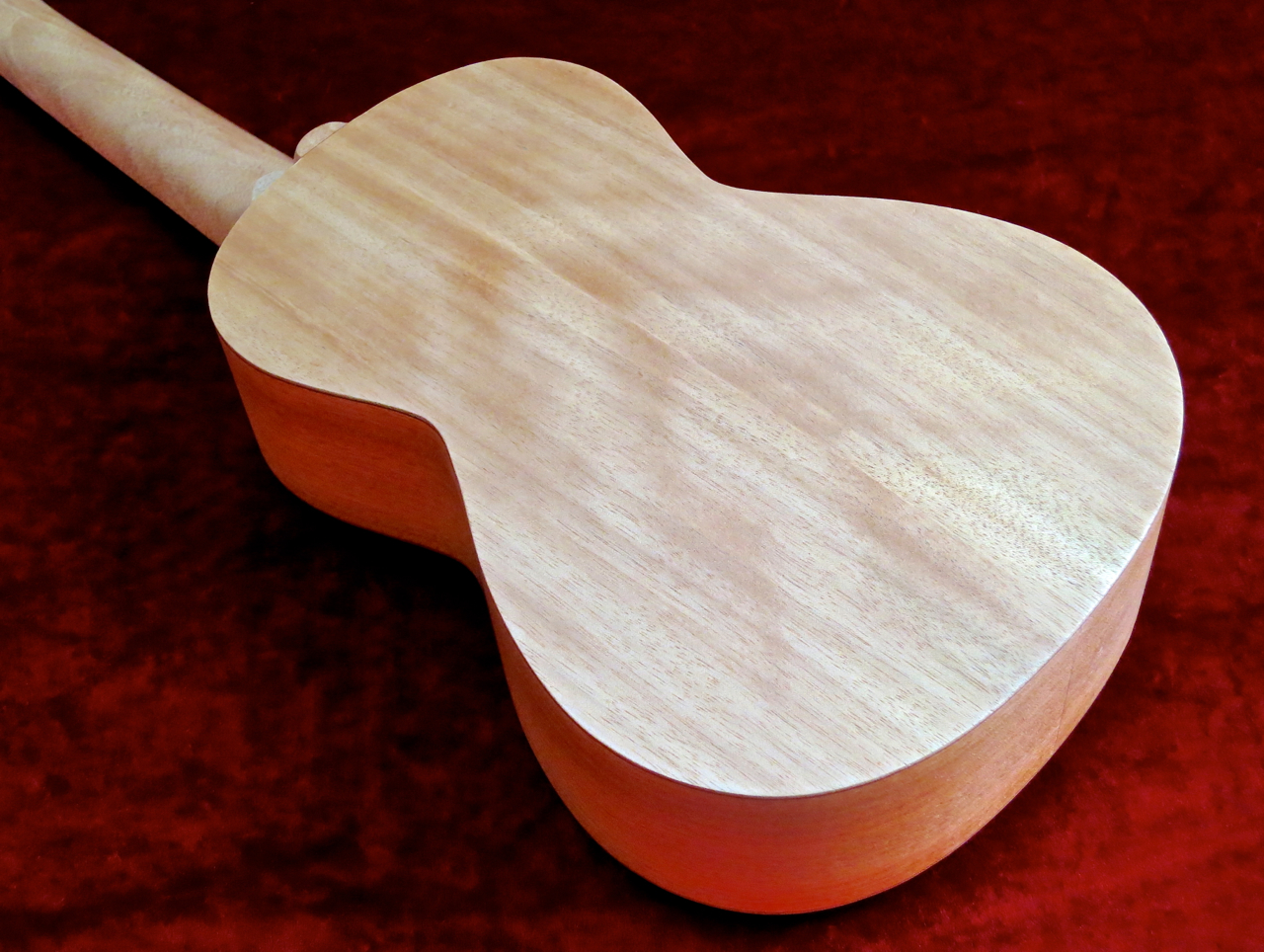
…with a highly figured back.

****

Tanglewood TU-3E – preamp

The TU-3’s electroacoustic version – the Tanglewood TU-3E (129 €) – comes equipped with the same preamp model we’ve already seen on the TU-1CE.

Tanglewood TU-3E – body angle VID

The TU-3E’s fingerboard offers you 18 small frets.

Tanglewood TU-3E – rosette VID

The simple rosette found on all Union-series ukuleles complements the organic, woody look of the instruments very well.

Tanglewood TU-3E – body back angle VID

The output jack is situated on the lower rim.

****

Tanglewood TU-5 – case vs2

Just like the two Union concert-ukuleles, Tanglewood’s baritone uke, the TU-5-ukulelessa (149 €), also comes in its sturdy case.

Tanglewood TU-5 – beauty 2 VID

The baritone is the largest traditional ukulele size, with the TU-5’s scale length measuring 51.2 cm.

Tanglewood TU-5 – bridge + rosette VID

The TU-5is equipped with 20 small frets. Our test sample came with a set of black nylon strings tuned to High-g-tuning (d4-g3-h3-e4), meaning that the fourth string is one octave above a regular guitar string.

Tanglewood TU-5 – back beauty 2 VID

****

Tanglewood TU-1CE – full front

This is what the TU-1CE sounds like when recorded with a condenser microphone:

The built-in piezo system results in a very decent direct sound:

This clips mixes the microphone with the piezo output:

Tanglewood TU-1CE – full back

****

Tanglewood TU-3 – full front

I recorded the concert-sized Tanglewoodin TU-3 with an AKG C3000 and a Shure SM57:

Tanglewood TU-3 – full back

****

Tanglewood TU-3E – full front

Acoustically, the piezo-equipped TU-3E sounds virtually indentical to the all-acoustic TU-3:

Sadly, our test sample displayed some sort of trouble with its under-saddle transducer (probably an uneven bridge slot), which rendered the pickup sound rather useless, because the middle pair of strings was much louder than the two outermost strings:

Here’s a mix of the TU-3E’s electric and acoustic signals:

Tanglewood TU-3E – full back

****

Tanglewood TU-5 – full front

I recorded Tanglewood’s TU-5 baritone uke using an AKG C3000 condenser microphone and Shure’s dynamic model SM57:

Tanglewood TU-5 – full back

****

Tanglewood TU-1CE – beauty shot 2

Tanglewood’s Union-series ukes are well-made, lightweight instruments with a very down-to-earth charm.

Regardless of their low price tags these ukes are decent musical instruments, not toys!

I must say I enjoyed Tanglewood’s fat neck profiles a lot. These are neck a grown-up man can hold on to!

Judging by the fine performance of the TU-1CE’s pickup system, I’m willing to believe that the TU-3E’s underwhelming pickup sound is just a one-off oversight in quality control.

Still, the whole picture is really very positive, both in terms of workmanship and sound. The inclusion on classy-looking hard cases in the price of the three ”bigger” models on test makes these Tanglewoods even more enticing. In my view, Tanglewood’s Union-series ukuleles are a great, and affordable, way to get to know the Hawaiian cousin of the guitar.

Tanglewood TU-5 – beauty shot VID

****

Tanglewood Union-sarja ukuleles

Finnish distributor: Musamaailma

TU-1CE – 116 €

TU-3 – 119 €

TU-3E – 129 €

TU-5 – 149 €

****

Pros (all models):

+ workmanship

+ satin finish

+ fretwork

+ Aquila-strings (except for TU-5)

+ case included (not with TU-1CE)
+ TU-1CE: good-sounding piezo system

Cons:

– TU-3E: piezo system’s performance in review sample

– TU-5: spongy feel of factory-installed strings

****

Tanglewood TU-3 – body back angle

Review: Zoom H6

Zoom H6 – perspective 1

Zoom have released their new handy recorder flagship:

The Zoom H6 is a six-track mobile recorder with exchangeable microphone modules.

****

Zoom H6 – package and case

Zoom’s H6 (rrp in Finland: 398 €) comes in its own carrying case.

Zoom H6 – the set

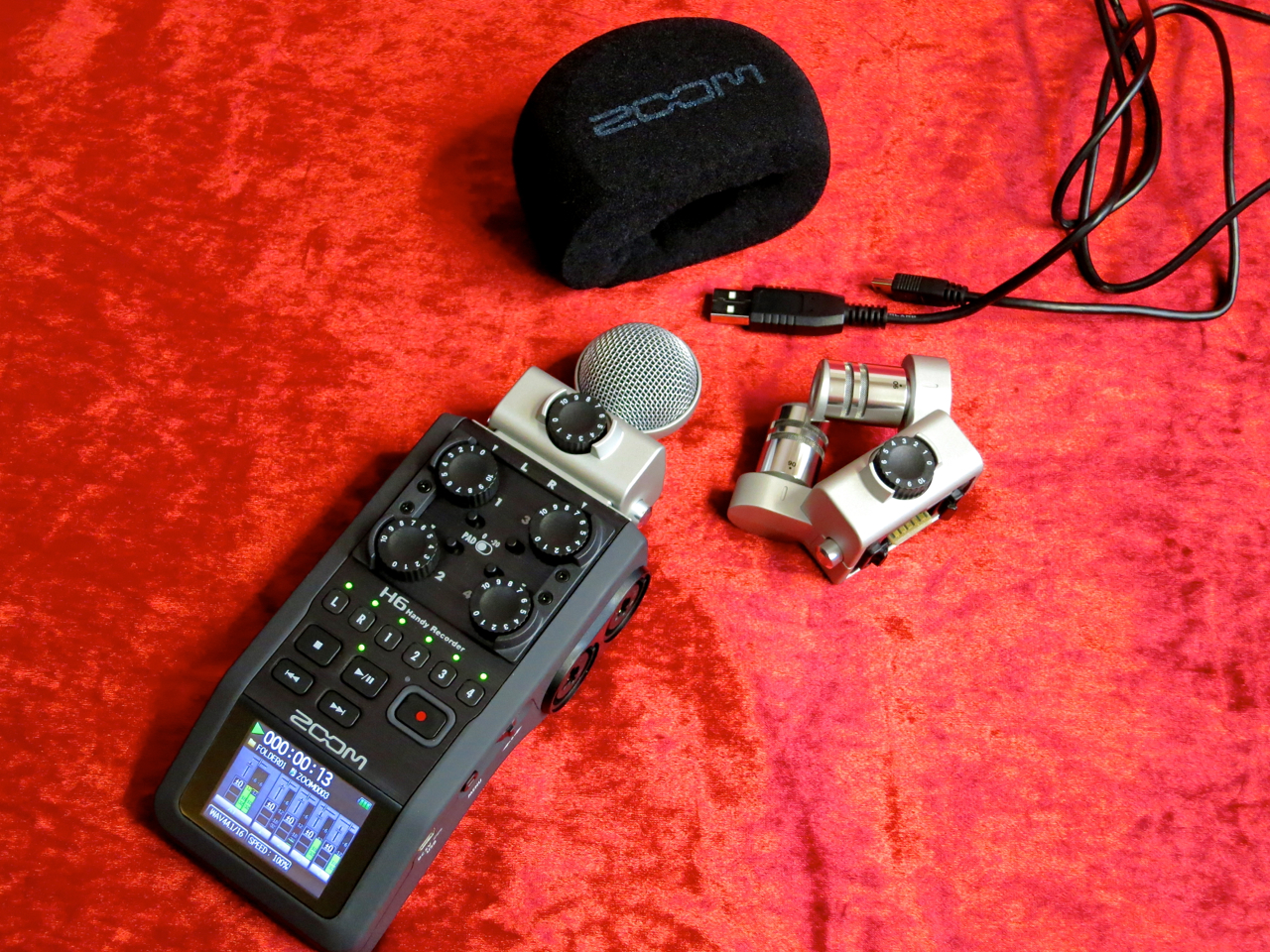
The package includes the H6 itself, two mic modules – the XYH-6 offering XY-stereo and the MSH-6 with an MS-stereo capsule – a foam windscreen, a USB-cable, four AA-size batteries and a 2 GB SD-card.

Also included is Steinberg’s Cubase LE audio-sequencer software.

h6n

At the moment the H6 is the only field recorder offering you different exchangeable mic and preamp modules.

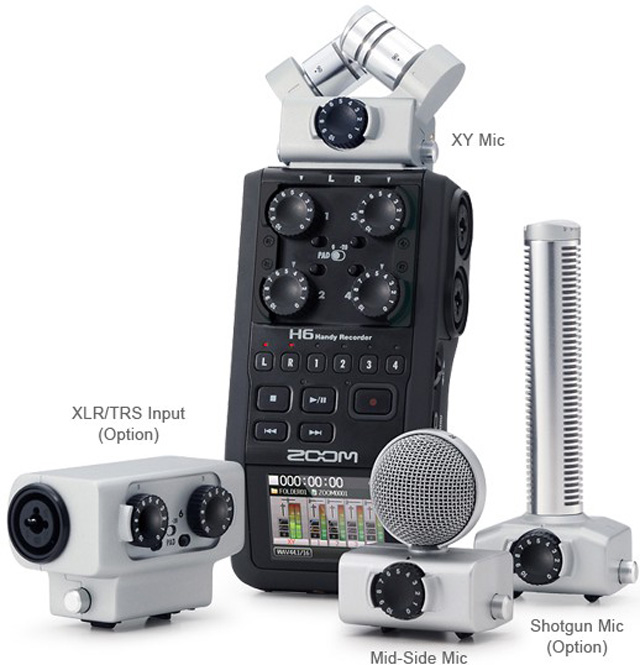
In addition to the supplied XY- and MS-modules you can also buy Zoom’s shotgun module (SGH-6) or a module with an additional pair of XLR-/TRS-inputs (EXH-6).

Zoom H6 – accessory pack

For this review we were also supplied with Zoom’s accessory pack for the H6 (APH-6), which contains a furry windshield for outdoor recording, as well a USB-power supply and a remote control.

****

Zoom H6 – XY-module

Except for its control panel the Zoom H6 is entirely covered in a non-slip rubbery coating, which also cuts down on handling noise during recording.

Zoom H6 – XY 90 deg

A typical Zoom-feature has been carried over into the recorder’s XY-module:

You can switch the stereo width of the XY-setup by turning the capsules. The options are the slightly narrower 90 degrees angle…

Zoom H6 – XY 120 deg

…and the wider pickup pattern of 120 degrees.

Zoom H6 – left side view

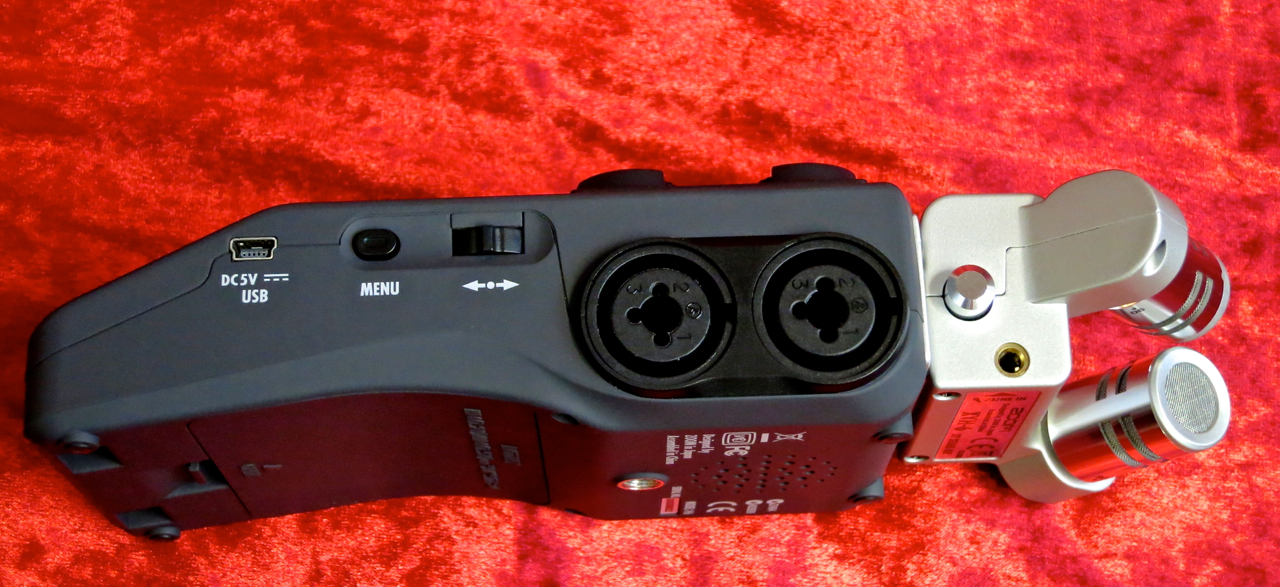
The combined XLR/TRS-connectors have been placed on both sides of the H6. The Zoom offers switchable phantom power for condenser mics.

On the left side you’ll find the access to the SD-card, as well as the headphones output and the volume control.

Zoom H6 – right side view

In addition to the recorder’s mini-USB-port the right side is home to the Menu-button and the device’s nifty navigation toggle.

Zoom H6 – back view

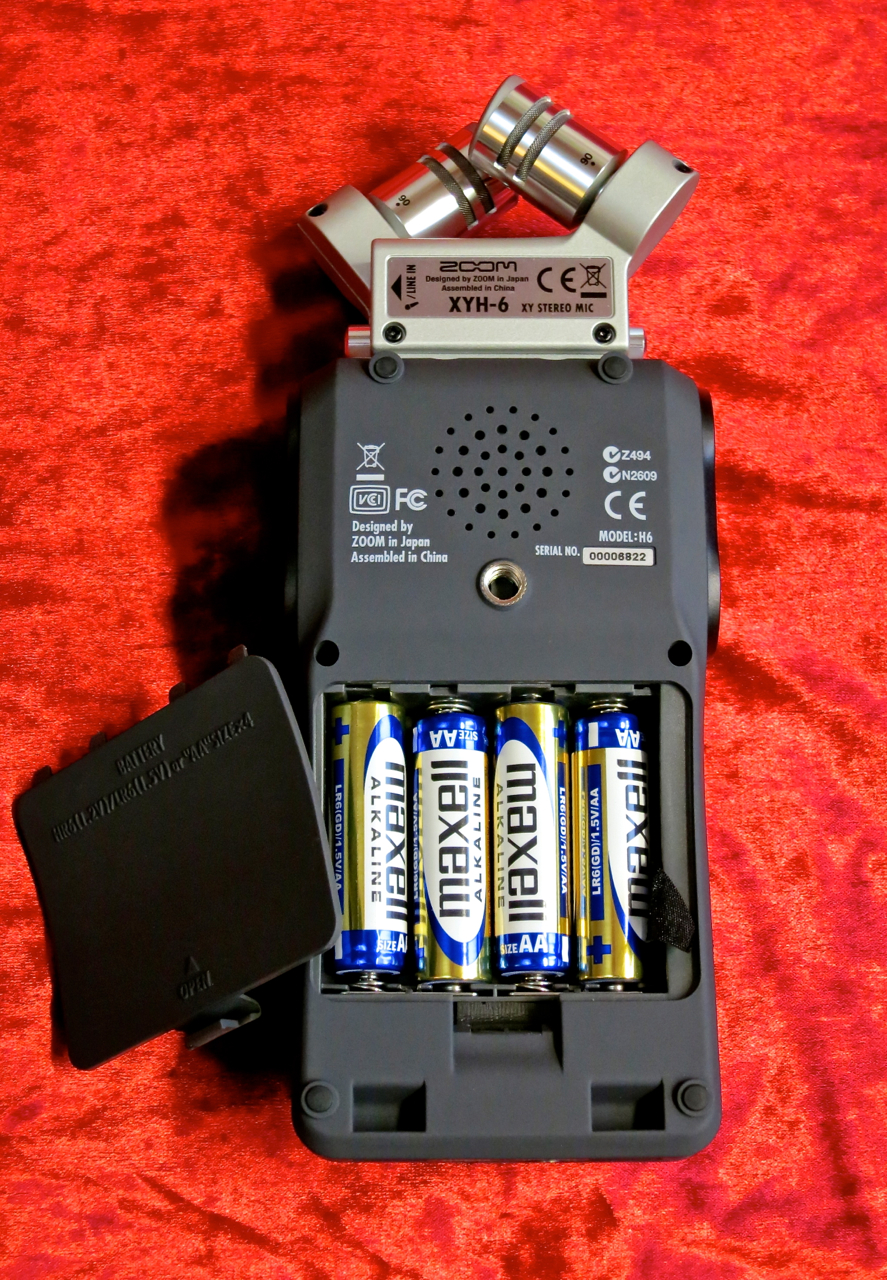
This recorder runs on four AA-size batteries, and will run for approximately 20 hours on a fresh set of alkalines.

You can place the Zoom on most camera tripods, thanks to its standardised thread. There’s also the HS-1 hot shoe adapter available, which makes it possible to mount the recorder straight onto a camera.

The small monitor speaker isn’t particularly Hi-Fi, but it’s good to have it for quick checks.

Zoom H6 – line + remote

The unit’s line level output, as well as the connector for the optional remote control, has been placed on the bottom rim of the Zoom.

****

The Zoom H6 can handle two audio formats:

Linear WAV-files offer you sample rates of 44.1, 48 or 96 kHz with 16 or 24 bits of resolution. When you choose WAV as your recording format the H6 works as a multitrack recorder, which makes it possible to do overdubs, and which allows you to mix the recorded tracks afterwards. You can do your mixdown internally, using the Zoom’s own Project Mixer, or by exporting the separate tracks to an audio-sequencer.
Another function that only works when you’ve chosen WAV as your recording format is called Backup Record. This nifty function records the input signal from the exchangeable module twice – one set of tracks uses your input gain settings and is routed to the L/R-track, as usual, while the second set is recorded with 12 dB of attenuation as the so-called Backup-track. The Backup-track is your safety in case your own settings were too hot.

The big advantage of using the H6 in MP3-mode is, of course, this mode’s greatly extended recording time, made possible by data reduction. The recorder lets you choose from many different recording quality settings between 48 and 320 kbps. When in MP3-mode you use the Zoom’s Monitor Mixer to mix all of the six inputs into one stereo file, which is the recorded. This means that, when recording using the MP3-format, the end result is always a single stereo file, instead of the separate tracks you get when running in WAV-mode.

Zoom H6 – MS-module

When you’re using the MS-module you can adjust the side-mic level, either before recording (WAV and MP3) or afterwards if you’ve recorded the module’s input signal using the Zoom’s MS-Raw-mode (WAV only).

More information on MS-stereo can be found HERE.

****

Zoom H6 – level knobs

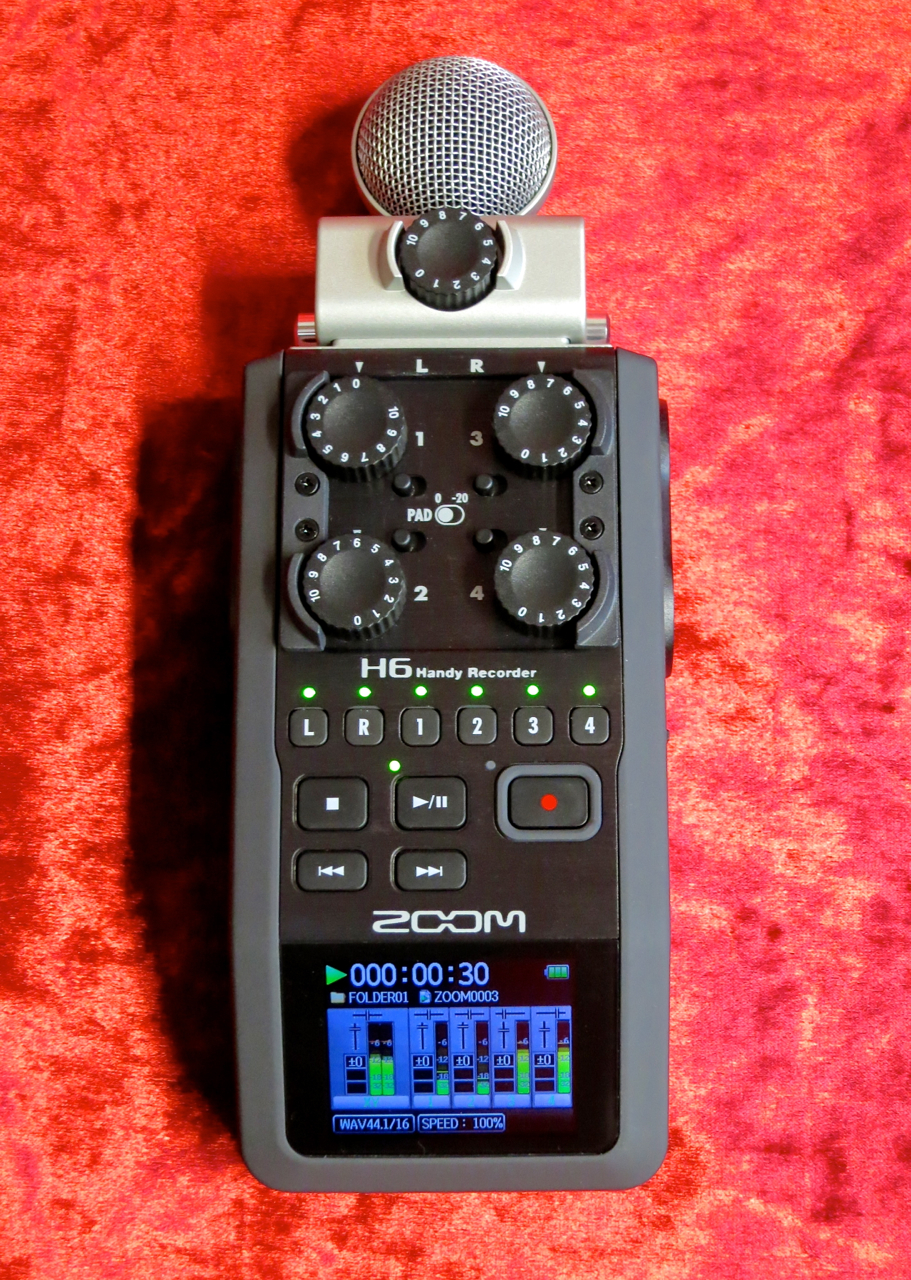
The Zoom H6 is very easy to use, because the signal routing is fixed:

The module’s output always goes to the L/R-track (stereo), while inputs one to four are routed to their corresponding mono tracks (1-4).

Zoom H6 – display

Beneath the Gain-controls there’s a row of track status buttons, as well as the recorder’s ”transport” buttons.

Zoom H6 – monitor mixer

The Zoom’s Monitor Mixer is where you adjust the signal levels and pan positions of all the signals for monitoring.

The Monitor Mixer window also shows you the status of each channel’s bass cut, compressor/limiter and phantom power.

Zoom H6 – menu view

This is what the Menu-view looks like.

Zoom H6 – project mixer

To mix down recorded tracks you use a different internal mixer, called the Project Mixer.

The Project Mixer allows you to adjust each track’s volume and pan position, as well as the playback pitch for each track (without changing the playback speed).

****

Zoom H6 – top view

In my opinion Zoom’s H6 hits the bull’s eye:

The exchangeable mic modules give you an enormous amount of flexibility to tailor the recorder quickly to the recording situation you find yourself in. The H6 is easy to use, and the recorder’s sound quality is very, very good. Thanks to the built-in metronome and chromatic tuner it’s easy to make sure you play in time and in tune. I’ve also enjoyed the Zoom’s nice compressors and limiters, which work very musically.

To demonstrate the H6’s performance and sound I recorded a short song using the recorder’s overdub function. I used the X/Y-module (at 90 deg) to record the steel-string acoustic, and recorded two mandolin tracks and two vocals with my trusty Shure SM57.

First, I mixed the song using the Zoom’s internal mixer, after which I exported the stereo file to Garageband, where I cut off the count-in and added a little bit of reverb:

I also tried taking the other route by exporting all the separate files from the H6 into Garageband, where I remixed the song using the original tracks:

****

I used a series of sine-wave sweeps to give you an idea of the effect the side-mic level has on the stereo-width of the recorded material. The lower the side-mic level is, the narrower your stereo image gets.

Side-mic +6dB:

Side-mic -2 dB:

Side-mic -9 dB:

Side-mic -22 dB:

Side-mic off:

****

Zoom H6 – perspective 2

I think Zoom’s H6 is a great field recorder and portable multi-track studio. The H6 works great to capture your song ideas or to for quality recordings of your band rehearsals or live gigs. The Zoom makes pro-quality recording on the road possible.

****

Zoom H6

Finnish distributor: Studiotec

Zoom H6 – 398 €

APH-6 – 48 €

EXH-6 – 58 €

SGH-6 – 118 €

****

Pros:

+ exchangeable L/R-modules

+ rugged build

+ colour display

+ Overdub-, Pre Record- ja Backup Record -functions

+ quality compressor/limiter-section

****

Testipenkissä: Blackstar HT Metal 5 + HT Metal 60

Blackstar HT Metal 60 – logo

Blackstar Amplificationin suosittu HT Venue -sarja on saanut rinnalleen uuden HT Metal -sarjan, joiden putkivahvistimet ovat suunnattuja nimenomaan rankkojen musiikkityylien soittajille.

Kitarablogi sai testiin viisiwattisen HT Metal 5 -kombon, joka on suunnattu koti-, treeni- ja studiokäyttöön, sekä tuhdin, 60-wattisen HT Metal 60 -kombon, joka on varustettu peräti kolmella kanavalla.

****

Blackstar HT Metal 5 – full front

Blackstar HT Metal 5 (495 €) perustuu valmistajan suosittuun HT-5R-putkikomboon, ja uutukaisella on myös sama peruskytkentä firman omalla push-pull-periaatteella toimivalla päätevahvistimella.

HT Metal 5 käyttää kahta putkea – yksi ECC83 (tunnetaan myös tunnuksella 12AX7), sekä yksi 12BH7-malli.

HT-5R:n etukangas on vaihtunut HT Metal 5 -kombossa erittäin tukevaan metalliritilään.

Blackstar HT Metal 5 – full back

Kotelo on rakennettu puolisuojelluksi. Takaseinän alimpaan kolmasosaan on käytetty metalliritilää, jonka läpi näkyy Blackstarin Kiinassa valmistettu 12-tuumainen kaiutin.

Pieni vahvistin painaa vain 14 kiloa, ja on näin ollen helppoa kantaa kombon yhdestä nahkakahvasta.

Blackstar HT Metal 5 – control panel

Metal 5:n säädinpaneeli on erittäin selkeä:

Putkikombo tarjoaa kaksi kanavaa, jotka ovat Clean ja Overdrive. Clean-kanavassa on yksinkertainen Tone-säädin, kun taas särökanavassa on tarjolla kolmikaistainen EQ Blackstarin patentoimalla ISF-toiminnolla. ISF-säätimellä (Infinite Shape Feature) voi muuttaa vahvistimen perusluonnetta portaattomasti USA:n tyyliseltä (loudness-mainen taajuuskäyrä) brittimäiseen (paksumpi keskialue).

Viimeinen lenkki signaaliketjussa on HT Metal 5:n kaunisääninen digitaalinen kaiku.

Blackstar HT Metal 5 – back panel

Takapaneelin liittimien runsaus on suorastaan hämmästyttävä näin pienessä vahvistimessa:

Vasemmalla näkyy kombon kolme kaiutinlähtöä.

Seuraavaksi tulee Blackstarin kaiutinmallinnuksella varustettu lähtö. Lähdössä on valintanappi, jolla voi vaihtaa virtuaalisen kombo- ja stäkkisoundin välillä. Lähtö toimii myös kuulokkeilla ja/tai silloin, kun vahvistimen kaiutin on standby-kytkimellä mykistetty.

Metal 5:n efektilenkin nimellistasoa voi muuttaa -10 desibelistä +4:ään.

Oikealla reunalla näkyy kombon linjatasoista tuloa, joka sopii esimerkiksi mp3-soittimen kytkemiseen.

Blackstar HT Metal 5 – footswitch

Jalkakytkin kanavavaihtoon kuuluu Blackstar HT Metal 5 -kombon hintaan!

****

Blackstar HT Metal 60 – full front

Blackstar HT Metal 60 (1.120 €) on livekäyttöön tarkoitettu kolmikanavainen voimapesä.

Putkikombon kytkentä on rakennettu kahden ECC83-etuasteputkien sekä kahden 6L6-pääteputkien ympärille.

Koteloon on asennettu kaksi Celestion-kaiutinta.

Blackstar HT Metal 60 – full back

Täysin suljetulla kotelolla haetaan HT Metal 60 -komboon stäkin tyylistä suunnattavuutta ja potkua.

Blackstar HT Metal 60 – side handle

Koska tällaisen putkikombon paino on jo huomattava (30 kg), on HT Metal 60:een lisätty kotelon sivuun upotettuja metallikahvoja, mikä on mielestäni erittäin tervetullut ratkaisu.

Blackstar HT Metal 60 – clean channel

Blackstarin puhdas kanava tarjoaa kaksi erilaista karakteeriä (Voice): Boutique Clean -niminen vaihtoehto toimii A-luokan kytkennöillä, ja on hieman dynaamisempi, mutta samalla myös aavistuksen verran rosoisempi, kuin isompaa puhdasta headroomia omaavaa Modern Clean -vastine.

Erillisillä Bass- ja Treble-sävynsäätimillä oman soundin löytäminen on helppoa.

Blackstar HT Metal 60 – OD1 + OD2

HT Metal 60:n kahdella särökanavilla – OD1 ja OD2 – on yhteiset EQ:t, mutta hieman erilainen perusluonne.

OD1 tarjoaa hieman vähemmän säröä kuin OD2. Kanavan miedompi kompressio ja pikkuisen kuivempi alapää vie OD1:stä enemmän tuhtien komppiosuuksien suuntaan.

OD2:lta taas saa enemmän säröä, ja kanavan kompressio on todella kermainen. Samalla löytyy kuitenkin juuri se oikea määrä purevuutta, että kitarasoolo ei huku muun bändin alle.

Blackstar HT Metal 60 – master section

Masterosastolta löytyy digikaiun ja master volumen lisäksi vielä alamiddleen ja bassoon vaikuttava Resonance-säädin, sekä preesensaluetta muokkaava Presence-säädin.

Blackstar HT Metal 60 – back panel 1

HT Metal 60 -kombon viiden kaiutinlähdön ansiosta löytyy varmasti omalle setupille se oikea vaihtoehto.

Kaiutinmallinuksella varustettu linjatasoinen lähtö, sekä Blackstarin mainio efektilenkki ovat tuttuja jo HT Metal viitosesta, mutta isossa kombossa voi myös valita kahden eri kaikusoundin välillä.

Blackstar HT Metal 60 – back panel 2

Siniseen tietokoneliittimeen menee pakettiin kuuluva reilunkokoinen FS-7-kytkinlauta (kts. alle), jolla voi vaihtaa kanavia ja kytkeä halutessa kaiun pois päältä.

Toiseen Footswitch-jakkiin voi liittää yksittäisen kytkimen, jolla saa tarvittaessa vielä lisäboostin kaikille kanaville. Lisävahvistus on säädetty valmiiksi tehtaassa, eikä sen tasoon pysty vaikuttamaan itse.

Blackstar HT Metal 60 – footswitch

****

Blackstar HT Metal 5 – opener

Blackstar HT Metal 5:n Clean-kanavalta saa soundeja putipuhtaasta mietoon Blues-säröön asti.

Volyymiä löytyy pikkukombosta enemmän kuin riittävästi olohuone- tai studiokäyttöön. Blackstarin puhdas headroom ei ole kuitenkin erityisen suuri, minkä takia humbuckereilla varustetuissa kitaroissa kitaran volume-säätimen käyttö on lähes pakollinen.

Tällainen on Hamer USA Studio Custom -kitaralla soitettu Clean-kanava äänitettynä Shure SM57 -mikrofonin kautta:

Sama pätkä äänitetty takapaneelin linjalähdön kautta:

HT Metal 5:n särökanava on erittäin mainio ja maukas. Blackstarin 12-tuumaisesta kaiuttimesta lähtee niin täyteläinen, voimakas ja dynaaminen ääni, että on vaikea uskoa, että se lähtee tällaisesta pikkustyrkkarista!

ISF-säädin täysille avattuna antaa kombolle hyvin uskottavan vanhan liiton Marshall-soundin, sekä mikrofonilla…

…että linjalähdon kautta poimittuna.

ISF nollalla tuo esiin Rectifier-tyylisiä vaihtoehoja (ensin SM57, sitten linjalähtö):

****

Blackstar HT Metal 60 – opener

Blackstar HT Metal 60 -kombon soundivalikoima on luonnollisesti pikkukomboon nähden huomattavasti laajempi.

Puhtaita soundeja on saatavilla kahtena hieman erilaisena versiona, joista Boutique Clean on se täyteläisempi vaihtoehto.

SM57:

Linjalähtö:

Modern Clean taas soi mielestäni hieman kompaktimmin ja kirkkaammin (ensin Shure SM57, sen alla linjalähdön kautta poimittuna):

OD1-kanavan esimerkkejä on soitettu drop-D-virityksessä.

Ensin ”Britti-versio” (ISF=10):

Sitten ”US-versio” (ISF=0):

Samoilla EQ-asetuksilla OD2-kanava on hieman kirkkaampi kuin ykkösvaihtoehto.

ISF=10 (”UK”):

ISF=0 (”USA”):

****

Blackstar-logo 2

Minun mielestäni HT Metal -sarja on loistava lisäys Blackstarin tuotevalikoimaan, joka ottaa nykyaikaisen Metal-soittajan tarpeet huomioon.

HT Metal 5 -kombon puhdas soundi on hyvin käyttökelpoinen, vaikka kanavalla on tarjolla headroomia vain rajoitetusti. Pikkukombon loistavuus piilee sen sijaan tämän putkivahvistimen särösoundeissa, jotka kuulostavat hämmästyttävän isoilta.

Blackstar HT Metal 60 on metallimiehen uskollinen keikkakone. Ammattitason putkikombosta löytyy sekä erittäin maukkaita puhtaita soundeja että yllin kyllin rankkaa säröä kermaisella kompressiolla höystettynä. Kovaäänisen kombon puhti riittää varmasti useimmissa tapauksissa ilman lisäkaappiakin.

****

Blackstar HT Metal 5 & HT Metal 60

HT Metal 5 – 495 €

HT Metal 60 – 1.120 €

Maahantuoja: Musamaailma

****

Blackstar HT Metal 5

Plussat:

+ työnjälki

+ Clean-kanavalla oma tone-säädin

+ OD-kanavalla kolmialueinen EQ ja ISF

+ tuhti soundi

+ linjalähtö kaiutinmallinnuksella

+ jalkakytkin kuuluu hintaan

Miinukset:

– Clean-kanavan headroom rajallinen

****

Blackstar HT Metal 60

Plussat:

+ työnjälki

+ metallikahvat

+ Clean-kanavan Voice-toiminto

+ Clean-kanavalla omat tone-säätimet

+ OD-kanavilla kolmialueinen EQ ja ISF

+ tuhti soundi

+ linjalähtö kaiutinmallinnuksella

+ FS-7-kytkinlauta kuuluu hintaan

Testipenkissä: Zoom H6

Zoom H6 – perspective 1

Zoomilla on uusi pikkutallentimien lippulaiva:

Zoom H6 on kuusiraitainen kannettava tallennin, joka tarjoaa vaihtomoduulien kautta erilaisia mikrofoniratkaisuja.

****

Zoom H6 – package and case

Zoom H6 (suositushinta 398 €) myydään omassa kätevässä laukussa.

Zoom H6 – the set

Laukun sisältä löytyy H6:n runko, kaksi mikrofonimoduulia – XY-stereota tarjoava XYH-6 ja MS-stereomikrofoni MSH-6 – vaahtomuovinen tuulisuoja, USB-johto, neljä AA-paristoa, sekä 2 GB:n SD-kortti.

Tämän lisäksi pakettiin kuuluu myös Cubase LE -softasekvensseri.

h6n

H6 on tällä hetkellä ainoa kämmenkokoinen tallennin, joka tarjoaa mahdollisuuden vaihtaa tallentimen mikrofonivarustusta erilaisilla moduuleilla.

Lisävarusteena voi ostaa itselleen XY- ja MS-moduulien lisäksi Zoomiin sopiva haulikkomikki (SGH-6) tai sitten kaksi XLR/TRS-lisätuloja tarjoavaa vaihtoehtoa (EXH-6).

Zoom H6 – accessory pack

Testiin saatiin myös Zoomin kätevä lisävarustepaketti (APH-6), josta löytyy karvainen tuulisuoja ulkotyöskentelyä varten, sekä H6:lle sopiva USB-virtalähde ja langallinen kauko-ohjain.

****

Zoom H6 – XY-module

Zoom H6:n metallista etupaneelia lukuun ottamatta laitteen runkoa on päällystetty käsittelyääniä vaimentavalla kumimaisella kuorella.

Zoom H6 – XY 90 deg

Yksi Zoom-tallentimille tyypillisistä ominaisuuksista löytyy myös XY-moduulista:

Mikrofonikapseleiden kulmaa voi säätää kääntämällä. Vaihtoehtoina tarjotaan hieman kapeampaa 90:n asteen kulmaa…

Zoom H6 – XY 120 deg

…sekä leveämpi 120:n asteen asentoa.

Zoom H6 – left side view

H6:n XLR/TRS-kombiliitimet on sijoitettu kätevästi laitteen molempiin kylkiin. Tuloista voi lähettää tarvittaessa phantom-virtaa kondensaattorimikrofoneja varten.

Vasen kylki tarjoaa tulojen lisäksi muistikorttipaikan, kuulokelähdön, sekä volumesäätimen.

Zoom H6 – right side view

Oikeasta kyljestä taas löytyy minikokoisen USB-portin lisäksi vielä Zoomin Menu-nappi ja H6:n sulavasti toimiva navigointivipu.

Zoom H6 – back view

Laitteen pohjaan on upotettu sen paristolokero neljälle AA-kokoisille paristoille. Alkaliparistoilla H6 toimii noin 20 tuntia.

Standardisoidun kierteensä ansiosta Zoomin voi kiinnittää suoraan tavalliseen kamerajalustaan, tai HS-1-kamera-adapterilla myös suoraan kameran salamakiinnikkeeseen.

Zoom H6:lla on myös pieni sisäinen monitorikaiutin.

Zoom H6 – line + remote

Zoomin linjalähtö, sekä H6:n liitin kauko-ohjaimelle on sijoitettu tallentimen etureunaan.

****

Zoom H6 käyttää kahta audioformaattia:

Lineaariset WAV-tiedostot tarjoavat 44,1:n, 48:n tai 96:n kilohertsin näytetaajuudet 16- tai 24-bittisinä. Kun WAV on valittu äänitysformaatiksi, tallennin toimii moniraiturina, jolloin jälkiäänittäminen (engl. overdubbing) ja raitojen miksaaminen äänityksen jälkeen – joko H6:n omalla mikserillä (Project Mixer) tai audiosekvensserillä – on mahdollinen.

Myös Zoomin mainiota Backup Record -toimintoa varten formaatiksi täytyy valita WAV-vaihtoehto. Backup Record äänittää vaihtomoduulin signaalin samanaikaisesti sekä normaalina tallennuksena L/R-stereoraidalle että varmuuden vuoksi 12 desibeliä hiljaisempana ns. BU-raidalle. Jos on esimerkiksi live-tilanteessa tullut laitettua mikkimoduulin gain-asetuksia vahingossa liian isoksi, on Backupin ansiosta kuitenkin hyvin todennäköistä, että L/R-raidasta löytyy myös särötön versio.

MP3-tilan suuri etu on luonnollisesti, että datakompressoitu tiedostomuoto antaa roimasti enemmän tallennusaikaa. Zoomissa voi valita mp3-laadun 48:n ja 320:n kbps välillä. Kun mp3-on valittu äänitysformaatiksi H6:n kaikki tulosignaalit miksataan kuuntelumikserillä (engl. monitor mixer) yhdeksi valmiiksi stereotiedostoksi. MP3-tilan äänityksessä syntyy siis aina vain yksi valmis stereotiedosto, eikä WAV-tilan tavoin erillisiä raitoja.

Zoom H6 – MS-module

Tallentimen MS-moduulilla äänittäessä voi säätää stereokuvan laajuutta säätämällä sivumikrofonin (side-mic) signaalitasoa, joko ennen äänitystä (WAV ja mp3) tai ns. MS-Raw-moodissa (vain WAV) vasta miksausvaiheessa.

Lisää tietoa MS-stereosta saa TÄSTÄ.

****

Zoom H6 – level knobs

Zoomin H6 on helppoa käyttää, sillä tallentimen signaalireititys on kiinteä:

Moduulin signaali menee L/R-stereoraidalle, kun taas muiden tulojen (1-4) signaalit äänitetään niille kuuluville monoraidoille (1-4).

Zoom H6 – display

Gain-säätimien alapuolella sijaitsevat raitojen tilanapit, sekä tallentimen isokokoiset näppäimet ”nauhakuljetusta” varten.

Zoom H6 – monitor mixer

Äänitysvaiheessa käytössä on Zoomin Monitor Mixer, jossa säädetään kuuntelutasoa ja -panorointia.

Kuuntelumikserissä voi myös nähdä, ovatko tulojen bassoleikkurit, kompressorit ja phantom-syötöt päällä vai pois.

Zoom H6 – menu view

Tällainen on H6:n selkeä Menu-näkymä.

Zoom H6 – project mixer

Valmiin materiaalin miksausta varten tallentimella on oma mikseri nimellä Project Mixer.

Tarjolla on raitojen tason säätö ja panorointi, ja sen lisäksi jokaisen raidan reaaliaikainen transponointi (toistonopeus pysyy muuttumattomana).

****

Zoom H6 – top view

Mielestäni Zoom H6 on täysosuma:

Vaihtomoduulien käyttö on nerokas tapa laajentaa tallentimen käyttökohteita. H6 on helppo käyttää, ja sen tarjoama äänenlaatu on hyvin kiitettävällä tasolla. Sisäisen metronomin ja viritysmittarin ansiosta äänitys pysyy myös taimissa ja vireessä. Erityiskiitos kuuluu Zoom H6:n monipuolisille ja laadukkaille kompressori- ja limitteri-efekteille, jotka toimivat erittäin musikaalisella tavalla.

Äänitin kokeiluksi yhden akustisen demobiisin päällesoittoja käyttäen. Teräskielistä akustista kitaraa poimin talteen Zoomin XY-moduulilla (90 asteen kulma), minkä jälkeen äänitin kaksi lauluosuutta ja kaksi mandoliiniraitaa dynaamisella Shure SM57 -mikrofonilla.

Miksasin biisin ensin H6:n omalla mikserillä, minkä jälkeen vein stereomiksauksen Garagebandiin, jossa poistin sisäänlaskun ja lisäsin hieman yleiskaikua:

Tämän jälkeen vein biisin yksittäiset raidat Garagebandiin, ja miksasin biisiä uudelleen sekvensserillä:

****

Käytin sarjan siniaalto-sweepejä MS-moduulin sivumikrofonin asetuksien havainnollistamiseen. Mitä pienempi sivumikin taso on, sitä kapeammaksi stereokuva muuttuu.

Side-mic +6dB:

Side-mic -2 dB:

Side-mic -9 dB:

Side-mic -22 dB:

Side-mic off:

****

Zoom H6 – perspective 2

Zoom H6 on mielestäni loistava taskustudio, joka toimii yhtä hyvin biisintekovälineenä kuin myös mainiona keikka- tai harjoitustallentimena. Se on erittäin onnistunut paketti paljon liikkuvalle muusikoille, jolla voi syntyä helposti jopa julkaisukelpoista materiaalia.

****

Zoom H6

Maahantuoja: Studiotec

Zoom H6 – 398 €

APH-6 – 48 €

EXH-6 – 58 €

SGH-6 – 118 €

****

Plussat:

+ vaihdettavat moduulit

+ vankkaa tekoa

+ värinäyttö

+ Overdub-, Pre Record- ja Backup Record -toiminnot

+ laadukkat kompressorit/limitterit

****

Testipenkissä: Tanglewood TU-1CE, TU-3, TU-3E & TU-5

Tanglewood TU-3E – headstock VID

Ukulele on tällä hetkellä kovasti ”in”. Kompaktia soitinta on hauska soittaa ja se kulkee helposti mukana.

Tämän asian on huomannut myös englantilainen brändi Tanglewood, joka on hiljattain laajentanut ukulele-valikoimaansa.

****

Tanglewood ukuleles – teaser

Testissä käynyt kvartetti – TU-1CE, TU-3, TU-3E ja TU-5 – tulee Tanglewoodin mahonkikoppaisesta Union-sarjasta.

Tanglewood TU-1CE – headstock

Kaikissa Union-sarjan ukuleleissa on mahonkikaula, jossa kaulakorko ja lapa ovat liimattuna pitkään pääosaan.

Otelauta on palisanterista.

Tanglewood – uke tuners VID

Tanglewoodin avoimet virittimet toimivat moitteettomasti.

Tanglewood TU-3 – bridge

Ukuleleissa käytetään valmistajasta riippuen useita eri tallaratkaisuja.

Tanglewood on päättänyt käyttää niistä helppokäyttöisintä mallia, jossa kielet kiinnitetään solmulla tallan edestä.

Tanglewood TU-3 – body beauty 2

Union-sarja ukuleleissa on kaikukoppa mahonkivanerista.

Soittimet on viimeistelty ohuella mattalakkauksella.

****

Tanglewood TU-1CE – beauty shot

Tanglewood TU-1CE (116 €) on soololovella ja mikrofonijärjestelmällä varustettu sopraano-kokoinen ukulele.

Sopraano on tavallisista ukulele-kokoluokista pienin, ja näin ollen TU-1CE:n mensuuri on vain 34,5 cm.

Tanglewood TU-1CE – cutaway

Kauko-Idässä valmistetun Tanglewoodin työnjälki on hintaansa nähden erinomainen, mikä näkyy esimerkiksi erittäin siististä kaulaliitoksesta.

Tanglewood TU-1CE – frets

TU-1CE:n otelaudassa on 16 pienikokoista nauhaa.

Tanglewood TU-1CE – back beauty 2

TU-1CE on varustettu laadukkailla Aquila Nylgut -kielillä.

Tanglewood TU-1CE – preamp + tuner

Tanglewoodin kylkeen on asennettu nappiparistolla toimiva esivahvistin TU-1CE:n pietsomikrofonille. Volume- ja tone-säätimien lisäksi esivahvistin tarjoaa myös oivan viritysmittarin.

****

Tanglewood TU-3 – case

Tanglewood TU-3 (119 €) on konsertti-kokoinen ukulele, ja se toimitetaan omassa laukussaan.

Tanglewood TU-3 – soundhole

Concert-ukulele on yksi kokoluokka sopraanosta ylöspäin.

Tämän mallin mensuuri on 37,5 cm.

Tanglewood TU-3 – beauty shot

Testissä käynyt TU-3 on kaunis yksilö niin etu-…

Tanglewood TU-3 – back beauty

…kuin takapuoleltakin.

****

Tanglewood TU-3E – preamp

TU-3:n sähköistetyssä versiossa – Tanglewood TU-3E (129 €) – on sama etuvahvistin kuin TU-1CE-mallissa.

Tanglewood TU-3E – body angle VID

TU-3E:n otelauta tarjoaa 18 pientä nauhaa.

Tanglewood TU-3E – rosette VID

Union-sarjan ukuleleiden yksinkertainen musta rosetti istuu tyylikkäästi soittimien luonnonläheiseen imagoon.

Tanglewood TU-3E – body back angle VID

Mikkijärjestelmän lähtöjakki on asennettu kopan sivuun.

****

Tanglewood TU-5 – case vs2

Myös Tanglewoodin baritoni-kokoisessa TU-5-ukulelessa (149 €) laadukas laukku kuuluu hintaan.

Tanglewood TU-5 – beauty 2 VID

Baritoni on isoin perinteinen ukulelekoko. TU-5:n mensuurin pituus on 51,2 cm.

Tanglewood TU-5 – bridge + rosette VID

TU-5:llä on 20 pientä nauhaa. Tämä malli toimitetaan tehtaalta mustilla nylonkielillä korkeassa g-virityksessä (d4-g3-h3-e4), jossa D-kieli on viritetty oktaavin verran ylemmäs kuin akustisessa kitarassa.

Tanglewood TU-5 – back beauty 2 VID

****

Tanglewood TU-1CE – full front

Tältä TU-1CE-sopraano kuulostaa studiomikrofonilla mikitettynä:

Linjasoitostakin lähtee laadukas versio pienokaisen akustisesta äänestä:

Ja molemmista äänilähteistä yhdistetty signaali on tällainen:

Tanglewood TU-1CE – full back

****

Tanglewood TU-3 – full front

Äänitin Tanglewoodin TU-3 konserttiukulelea samanaikaisesti sekä kondensaattorimikrofonilla (AKG C3000) että dynaamisella Shure SM57:llä:

Tanglewood TU-3 – full back

****

Tanglewood TU-3E – full front

Mikitettynä pietsolla varustettu TU-3E kuulostaa käytännössä samalta kuin täysin akustinen TU-3:

Valitettavasti testiyksilön tallamikrofonin asennuksessa (tai sen toiminnassa) oli jotain häikkää, minkä takia ukulelen kaksi reunimmaiset kielet eivät kuulu käytännössä lainkaan:

Tältä kuulostavat TU-3E:n akustinen ja linjasignaali summattuina:

Tanglewood TU-3E – full back

****

Tanglewood TU-5 – full front

Äänitin Tanglewood TU-5 -baritoniukulelea samanaikaisesti sekä AKG C3000 -kondensaattorimikrofonilla että Shuren dynaamisella SM57:llä:

Tanglewood TU-5 – full back

****

Tanglewood TU-1CE – beauty shot 2

Tanglewoodin Union-sarjan ukulelet ovat laadukkaasti tehtyjä, kevyitä soittimia, joilla on mattaviimeistelyn tuoma hillitty charmi.

Nämä ukulelet ovat jo ihan oikeita soittimia, edullisista hinnoista huolimatta!

Pidän todella paljon Tanglewoodien tuhdista kaulaprofiilista, joka tarjoaa myös aikuisen kädelle reilusti mistä pitää kiinni.

Testissä käyneen TU-3E:n sähkösoundissa ilmentynyt ongelma on toki harmittava yksilövika, etenkin kun sitä vertaa TU-1CE:n mallikkaasti toimivaan pietsojärjestelmään.

Kokonaiskuva on kuitenkin hyvin positiivinen, niin työnjäljen kuin soundin osilta. Kolmen ”isompien” mallien kovat laukut tekevät näistä Tanglewood-soittimista entistäkin houkuttelevampia. Mielestäni Tanglewoodin Union-sarjan ukulelet ovat erittäin hyvä (ja edullinen) tapa tutustua ukulelen soittamiseen hieman vakavammin.

Tanglewood TU-5 – beauty shot VID

****

Tanglewood Union-sarja ukulelet

Maahantuoja: Musamaailma

TU-1CE – 116 €

TU-3 – 119 €

TU-3E – 129 €

TU-5 – 149 €

****

Plussat (kaikki mallit):

+ työnjälki

+ mattaviimeistely

+ nauhatyö

+ Aquila-kielet (ei TU-5)

+ kova laukku kuuluu hintaan (ei TU-1CE)

+ TU-1CE: laadukas pietsosoundi

Miinukset:

– TU-3E: pietsosignaalin epätasaisuus testiyksilössä

– TU-5: ensiasennuskielten löysähkö soittotuntuma

****

Tanglewood TU-3 – body back angle

Review: Roland Micro Cube GX + Cube-80 GX

cube_gx_family_2_gal

Roland’s popular Cube-series of COSM-combos has recently been updated.

The new Cube GX-amps boast some new features, like the iCube Link (first seen in the Cube Lite), which allows you to use the guitar combo as a soundcard with Apple iOS devices.

****

micro_cube_gx_r_angle_2_gal

The Roland Micro Cube GX (current price in Finland 134 €) is the newest version of one of the most successful battery-powered practice amps ever.

At first glance the GX-version looks very similar to the Micro Cube’s previous incarnation, with only the large Cube logo on the metal grille hinting at the combo’s updated status.

micro_cube_gx_b_back_gal

The Micro Cube GX’ back panel is a good deal smaller than on the last version.

The new combo sports mini-sized headphone and line-level outputs.

micro_cube_gx_batteries_gal

The GX still runs on six AA-batteries, but the new battery compartment is much easier to use.

A power supply can be found in the box.

micro_cube_gx_r_top_gal

The front panel has gotten a serious overhaul:

Above the guitar input you can find the i-Cube Link connector, which allows you to hook up you iPad or iPhone to the combo using the supplied cable. Thanks to the i-Cube Link you can use the GX-amp as the iDevice’s sound-card, as well as record and practice using Roland’s free Cube Jam-app. You can get more info on the Cube Jam-app in Kitarablogi’s Cube Lite review.

Another important new feature of the Micro Cube GX is the Memory-function, which offers you one memory slot per COSM Amp Type. Memory stores all settings of the chosen Amp Type, namely the settings of the Gain-, Volume-, EFX- and Delay-controls.

The tuner section has also received an overhaul. The old Micro Cube came with an electronic tuning fork on-board, giving you an ”a” (or Ab or Abb) to tune to. The brand-new Micro Cube GX comes equipped with a genuine digital tuner. The default setting for the tuner is chromatic, but it can also be set to A-only, which comes in handy when changing strings.

****

cube-80gx_angle_2_gal

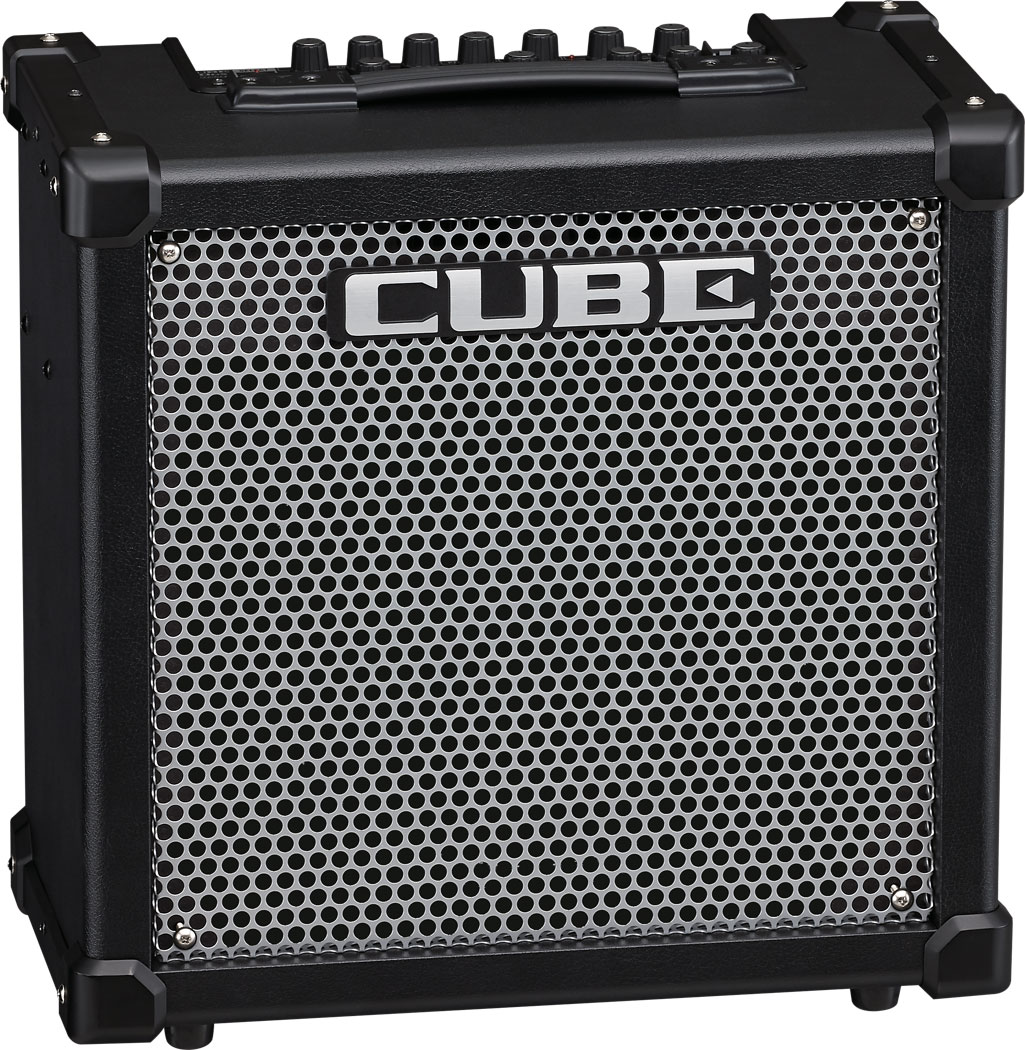
The Roland Cube-80 GX (current price in Finland 384 €) is the current top model in the GX-series, offering you 80 Watts of output power through a single 12-inch speaker.

The clearest difference between the predecessor – the Cube-80 XL – and the GX-version is the addition of the i-Cube Link in favour of the old model’s built-in looper.

cube-80gx_back_gal

Also new is the GA-FC-connector on the amp’s back panel, which allows you to use Roland’s guitar amp foot-controller the GA-FC (optional) with the Cube-80 GX.

top_L

This is what the foot-controller looks like. When used with the GX, you can switch amp channels and turn the combo’s EFX-, Delay- and Reverb-sections on/off separately. You can also connect two expression pedals to the GA-FC, if you want to adjust input and output levels on the fly. The Cube-80 GX comes supplied with a special overlay for the foot-controller, so you can change the GA-FC’s labelling to match the correct functions.

cube-80gx_foot_gal

Some things have stayed the same, though, like the rugged design of the Cube-series.

cube-80gx_top_gal

The Cube-80 GX is a three-channel guitar amplifier:

The JC Clean-channel is reserved for ultra-clean tones in the style of Roland’s legendary Jazz Chorus-combo. The Lead-channel, on the other hand, offers you nine different COSM-models, as well as an acoustic simulator for your occasional steel-string needs.

The third channel is the so-called Solo-channel. I say ”so-called”, because actually the Solo-channel is the Cube-80 GX’ memory slot, which you can fill with any amp setting you wish, regardless of whether it is a setting for soloing or not. The crucial difference between the Solo-channel and the other two channels is the fact that the Solo-channel uses its own (stored) settings for the EQ-, EFX-, Delay- and Reverb-sections, while JC Clean- and Lead-channels have to share the current control settings.

Apart from the i-Cube Link, the Cube-80 GX’ features list is very similar to the Cube-80 XL-version. You can get more info on the i-Cube Link and Roland’s free Cube Jam-app in Kitarablogi’s Cube Lite review.

****

micro_cube_gx_r_front_gal

Roland’s brand-new Micro Cube GX offers you even more than its already legendary predecessor. The built-in tuner makes life much easier, and the new i-Cube Link/Cube Jam functionality genuinely adds value to this diminutive powerhouse. If you own an iDevice you will have your own practice set-up up and running in no time.

The little GX-combo also gives you three new sounds – the fantastically über-Metal amp type called Extreme, a fine polyphonic octaver effect, as well as a spring reverb model. The Micro Cube GX’ spring reverb simulation sounds good, but very small area designated for it on the Reverb-control doesn’t allow for much in terms of tailoring the spring reverb. It’s more of an on/off affair.

Overall the GX sounds better than the original Micro Cube, with more realistic amp simulations and clearly less hiss in the effect section.

These four clips have been recorded using a dynamic mic in front of the combo, and playing a Fender Stratocaster:

****

cube-80gx_front_gal

Roland’s new Cube-80 GX is a compact, yet powerful guitar combo for the gigging guitarist.

The sounds on offer cover all bases, and the amp types and effects all sound great. Depending on your guitar of choice there can be a very slight tendency toward a crowded lower-midrange – especially with clean sounds – but this can be easily kept in check with the amp’s nice EQ-section.

I feel that if you want to use the Cube-80 GX live, buying the GA-FC-controller is almost compulsory, as it is the only way you can fully control all the combo’s functions on the fly. 100 euros seems a bit steep in relation to the Cube’s own price tag, but from a practical standpoint the additional outlay makes a whole lot of sense.

Be that as it may, Roland’s Cube-80 GX is a cool amp for both gigging and studio use.

These four examples have been recorded with the same set-up are the Micro Cube GX-clips:

****

cube_gx_family_1_gal

Roland’s Cube GX-series is a good choice if you want a wide variety of different amp tones and effect sounds to choose from. For teaching and/or practising purposes the iOS-compatibility and Roland’s own Cube Jam-app add a lot of value to an already very enticing package.

****

Roland Cube GX-series

Micro Cube GX – 134 €

Cube-80 GX – 384 €

Finnish distributor: Roland Scandinavia

****

Pros:

+ value for money

+ i-Cube Link

+ Micro Cube GX: new Memory-feature 

+ Cube-80 GX: GA-FC-compatibility

+ sound

+ rugged build

Cons:

– Micro Cube GX: spring reverb effect hard to adjust

– Cube-80 GX: price of GA-FC-controller

Pidä blogia WordPress.comissa.

Ylös ↑