Contact: Puuverstas Änäkäinen
Review: Tokai ES-138/SR • ES-145G/BB • ES-162/TB


Tokai Guitars have a well-earned reputation for making high-quality electric guitars and basses, often ”inspired” by vintage designs. This time we got three semis from the very top of Tokai’s Japanese model range for review.
****

The Tokai ES-138 (current price in Finland: 1,368 €, incl. hard case) is the company’s version of a 1958 Gibson ES-335, available in either see-through red or piano black.

Tokai’s ES-145G (current price in Finland: 1,431 €, incl. hard case) is a lightly updated variation on the theme, which comes equipped with gold-coloured hardware and a black finish.
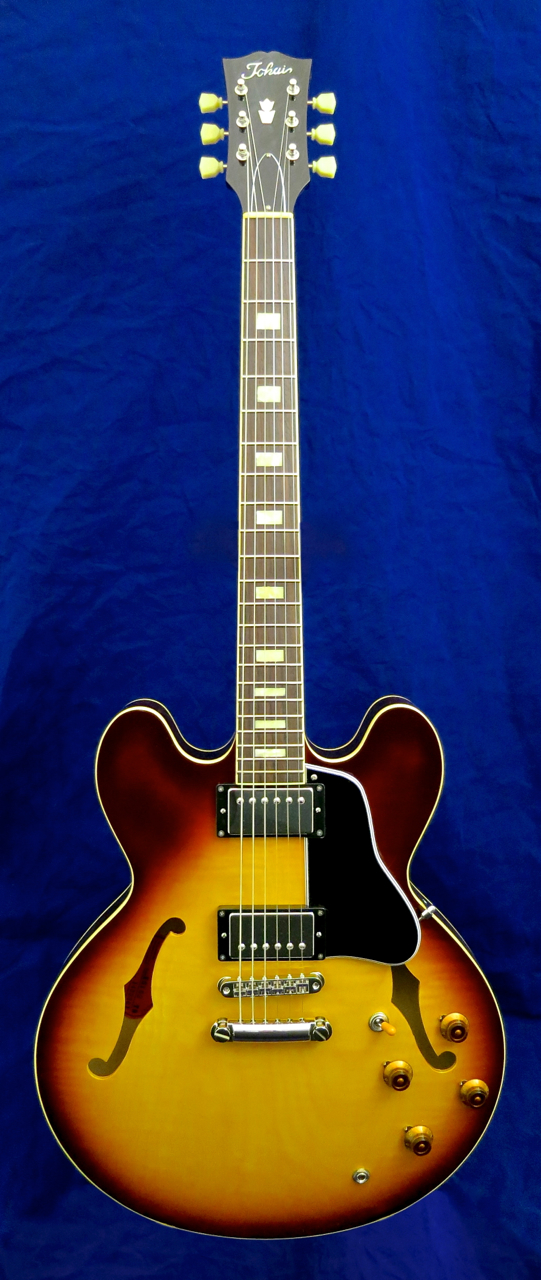
The Tokai ES-162 (current price in Finland: 1,628 €, incl. hard case) is the most expensive model of the three on review. The ES-162 comes with post-1962 style small block markers, brass bridge saddles, and a light aluminium stopbar. The icing on the cake is this model’s vintage-style nitrocellulose finish – you can choose between a tri-burst and red.

Tokai use top-drawer Gotoh tuners on the three tested models.

The ES-138 and ES-162 come equipped with vintage-style Kluson-copies.
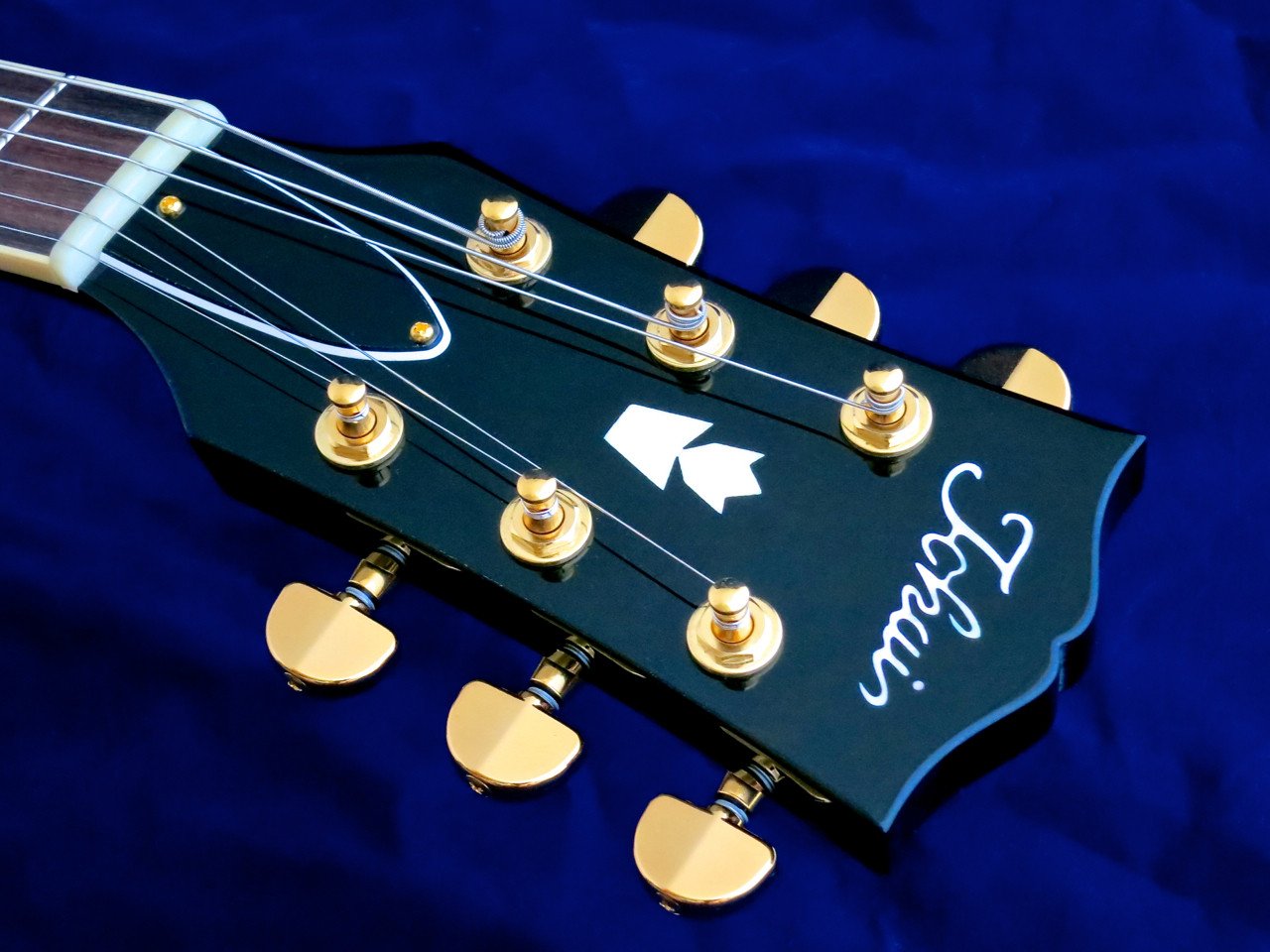

For the ES-145G Tokai have chosen a set of modern enclosed Gotohs.

These Tokai Japan -instruments all come with a one-piece mahogany neck, complete with a vintage-correct, steep headstock angle (17 degrees).
The bound rosewood fretboards on the ES-138 and ES-145G models sport dot markers.

As the ES-162 is Tokai’s version of a 1962-’64 ”Block Marker” ES-335, this guitar comes with small rectangular inlays made of pearloid.
All three instruments come fitted with medium-size frets.

Tokai’s ES-guitars come with Gotoh Tune-o-matic-bridges and stopbar tailpieces.

On the ES-138 and the ES-145G we find Gotoh’s LS-series hardware – die-cast (Zamac) parts with steel bridge saddles.
The ES-162 goes one step more ”vintage” by using a Gotoh HLS -set, comprising an ultra-light aluminium stopbar tailpiece and chrome-plated brass saddles on the bridge.

This guitar trio is equipped with the same pickups – a pair of Tokai PAF-Vintage Mark II -humbuckers.

All the electronic components are top quality Japanese parts.

Certain Tokai Japan -models are now sold in Finland complete with Tokai’s cool hard cases.
****

The cherry red semi-acoustic is one of guitardom’s most iconic electric models. For many this curvy and well-rounded body, made from heat-pressed maple plywood, is the most beautiful body style ever.
Tokai’s ES-138 recreates this classic guitar in its earliest guise (c. 1958), complete with dot markers and a long pickguard, which extends past the bridge.
Even though an ES-335-type body is comparatively large (but thin), many of the best semi-acoustics are surprisingly lightweight. The Tokai ES-138 is very comfortable to play – both seated and strapped on – and balances superbly.
This model’s neck profile is a medium-thick ”D”, which feels great (at least in my hand). The fret job on the test sample was excellent, the set-up spot-on, and the action very light (with a set of 010s). The ES-138’s acoustic tone is typical of this type of guitar – very hollow and nasal with a clicking attack.
Tokai’s own rendition of the classic PAF-humbucker is superb, there’s no two ways about this! The output signal is moderate, and the basic sound is very open and dynamic. The neck pickup has a warm, round tone, but doesn’t mush up. The middle position on the selector switch gives you a very balanced and open sound. The bridge humbucker on its own sounds fresh and crispy, with not even a hint of annoying mid-range ”nagging”.

****

The black-and-gold ES-145G sure looks very stylish – this is the distinguished gentleman in Tokai’s ES-range, who keeps his cool and looks dapper, no matter what.
Our test sample was the heaviest guitar of this trio, but still much, much lighter than may lesser contenders.
The ES-145G’s neck profile is also the chunkiest. This D-profile is a real palm-filler, giving you a real taste of late-Fifties goodness, and managing to stay just on the right side of ”fat”.
The workmanship displayed, and playability offered by the ES-145G are simply superb. Played acoustically there’s not a lot of difference between the ES-145G and the ES-138.
Through an amp, the ES-145G sounds just like a quality semi-acoustic should – humbucker power, balanced by a clean mid-range.

****

Our review sample of the Tokai ES-162 is a real featherweight!
The ES-162’s Block Marker -personality is completed by an authentic early-Sixties style neck profile. It’s an oval ”C” that is less of a handful than the ES-138’s neck.
Top marks for the ES-162’s workmanship, finish and playability – this is a first-rate instrument.
This model’s thin nitro lacquer, its lightweight tailpiece, as well as the brass saddles on the Tune-o-matic combine into a very open-sounding and dynamic acoustic performance.
Standing in the same room with your amp, it is easy to notice an added degree of 3D-depth and scope in the guitar’s amplified tone. Interestingly – as is so often the case – recording the sound doesn’t seem to fully convey this added tonal dimension. You have to experience the ES-168 ”in the flesh” to get the full picture; the recordings sound remarkably similar to the other two models’ performances.

****

The reputation of Tokai Japan -instruments has been legendary among players and collectors ever since the 1970s. This trio of ES-semis makes it crystal-clear that Tokai actually deserves this reputation thanks to the superb quality of it’s Made-in-Japan guitars.
Tokai’s ES-138, ES-145G and ES-162 offer you genuine Japanese quality at very fair prices.
****
Tokai Japan semi-acoustic electrics
Tokai ES-138 – 1,368 € (hard case included)
Tokai ES-145G – 1,431 € (hard case included)
Tokai ES-162 – 1,628 € (hard case included)
Finnish distributor: Musamaailma
****
Pros:
+ Japanese workmanship
+ one-piece neck
+ superb finish and set-up
+ Gotoh-hardware
+ authentic tone
Review: Roland Cube-10GX

****

The new Roland Cube-10GX approaches the company’s popular Cube-concept from a slightly different angle.
****

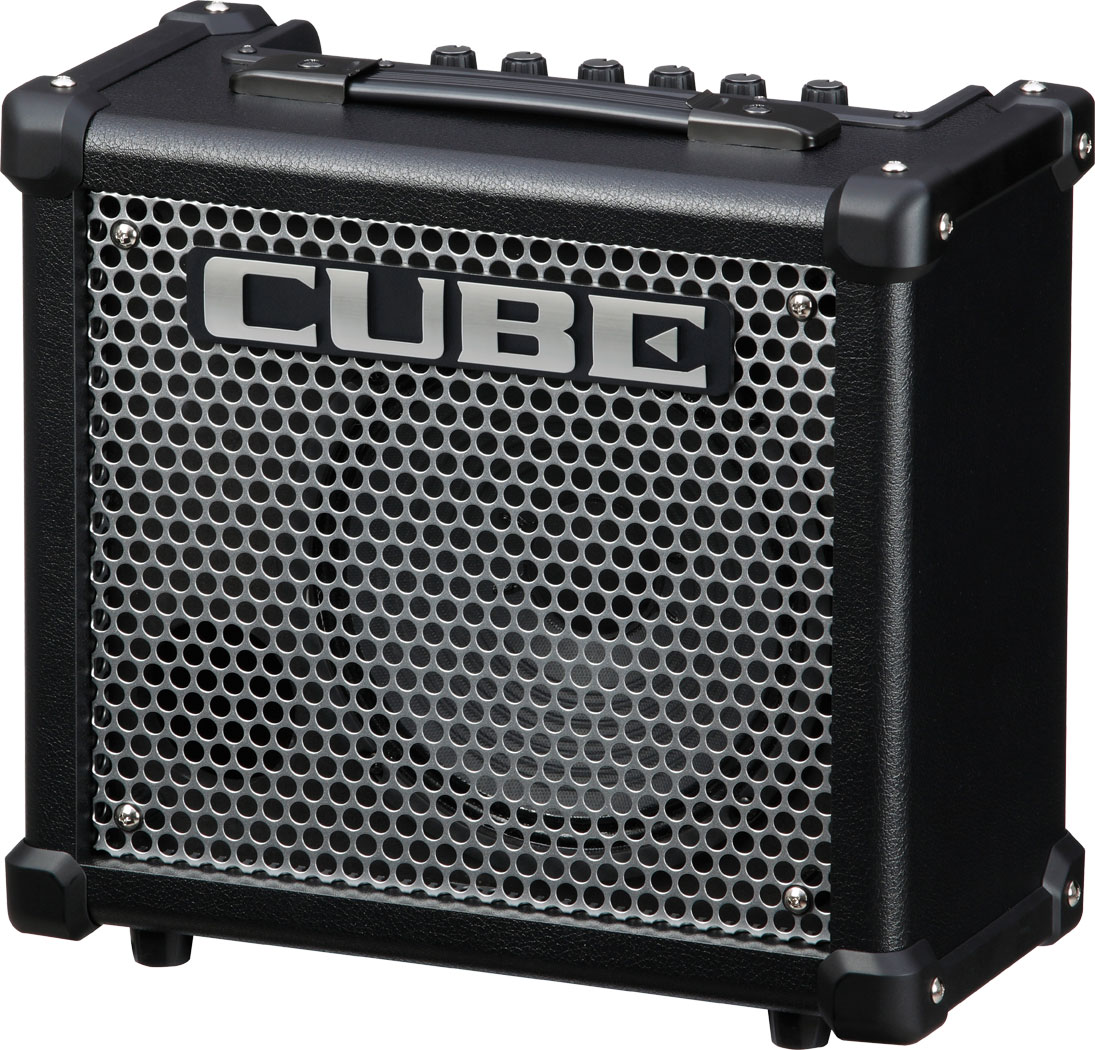
The 10-watt Roland Cube-10GX (Finnish price approx. 125 €) slots into the model range right between the 3-watt Micro Cube GX and the 20-watt Cube-20GX combo.
Despite its very affordable price, the 10GX is built as sturdily as the larger Cube models, featuring chunky corner protectors, and the metal grille typical of this series.
An eight-inch speaker has been installed into the closed-back, front-ported cabinet.

The backpanel sports connections for DC In (the PSU comes included), Aux In, as well as a combined line level output/headphones jack.

The Cube-10GX combo’s architecture differs somewhat from the rest of the GX-models:
The 10GX doesn’t feature a built-in tuner or an i-Cube-Link, like the rest of the GX-models, but offers a much more open way of offering its COSM-generated amp models.
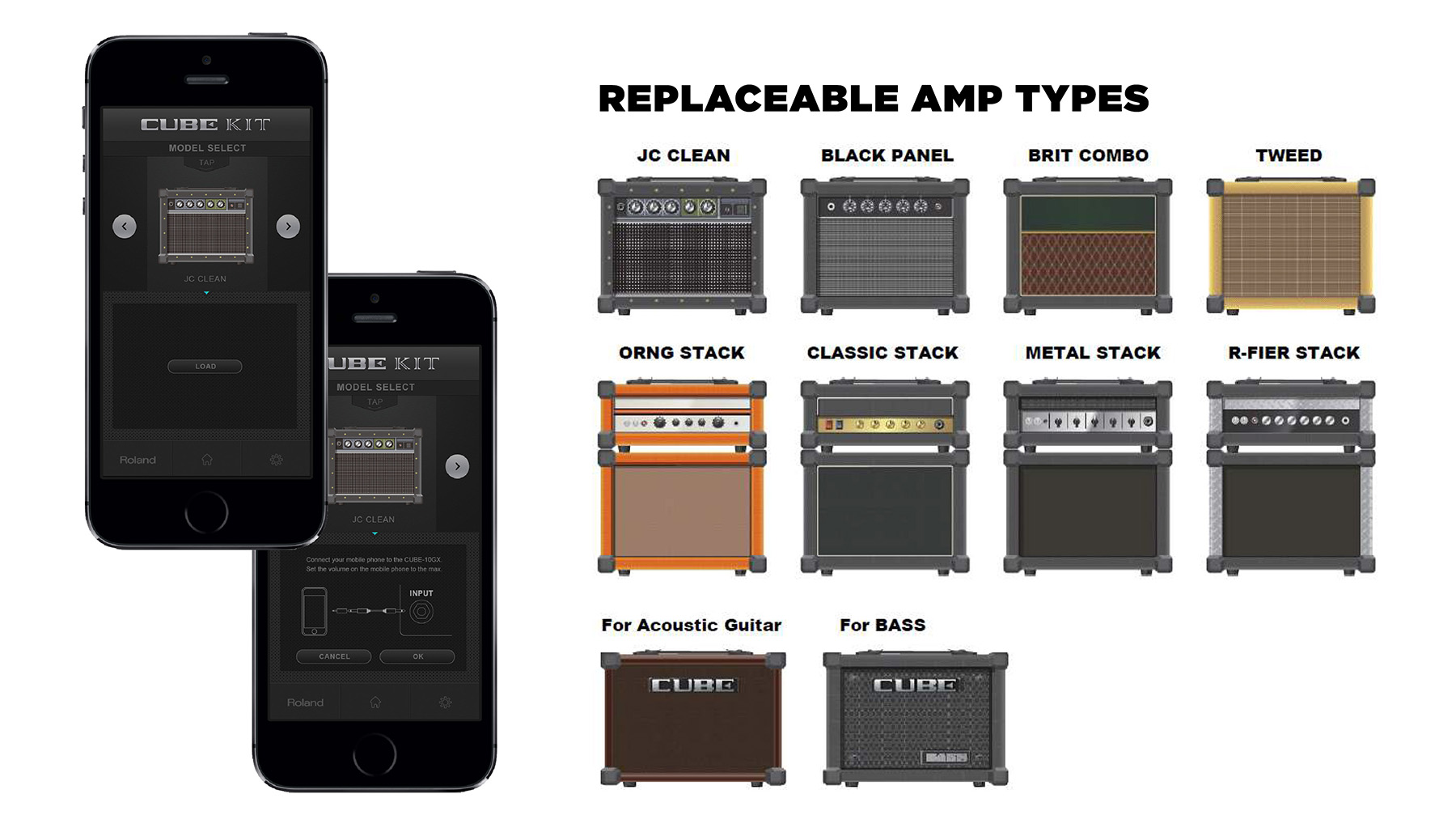
The Cube-10GX lets you choose from a number of different amp models via the new Roland Cube Kit app (Android and iOS). At the moment of writing the app offers eight guitar amp models, plus one bass amp and one amp for acoustic guitar.
Despite the fact that the control panel reads ”Clean”, ”Crunch” and ”Lead”, you can load any of the COSM amp models on offer into any of the amp’s three channels. If you’re a Jazzer, for example, you might prefer to use only clean amps, like Acoustic, JC Clean and Black Panel.
****
Let me deal with the ”bad news” first: Sadly, the Cube-10GX offers only a single effect section, in contrast to all the other Cube GX -combos. The 10GX gives you the choice between either a chorus or a delay or a hall reverb or a (very wet) spring reverb. And there are no effect combinations on offer.
The new combo’s main focus lies in the easy-to-swap amp models, and improvements in the sound of both the amp and the COSM-models. For a 10-watter the Cube-10GX is surprisingly loud. Thanks to its much larger speaker the new combo sounds much fuller and more grown up than the Micro Cube.
The updated COSM-models sound noticeably more transparent and fresher, without any additional background hiss or noise. The 10GX’ well-designed three-band EQ section lets you tailor the sound to your requirements.
Loading a new amp model into one of the Cube-10GX’ channels via the Cube Kit app is fast and easy, and doesn’t require any special cables. You only need a fitting mini-jack adapter to hook up the guitar lead to your smartphone (or tablet). All the necessary data is then transmitted from the Android- or iOS-device to the amp via the guitar cable. The whole process takes only a few taps and a couple of seconds.
The factory default has the Jazz Chorus amp model loaded into channel 1. I’m playing my Fender Telecaster with a little chorus added from the combo:
Here’s another Jazz Chorus clip, but this time seasoned with some Surf-type spring reverb:
The Classic Stack model is the factory setting for channel 2. It is Roland’s version of a Marshall-stack. I’ve added some delay for this clip:
I loaded the Brit Combo (AC30) model into channel 2, using the Cube Kit app. I’m playing my Telecaster with some reverb from the combo:
”Orng Stack” stands for Orange-stack. This is what it sounds like, played with my Gibson Melody Maker SG:
The factory default for channel 3 is the R-fier Stack model. First a clip using the Telecaster, and then an example Played with the Melody Maker SG:
The Cube Kit’s Acoustic model provides an easy solution for amplifying your acoustic guitar. I’ve used a Tanglewood dreadnought equipped with a magnetic soundhole pickup by Seymour Duncan:
The Cube-10GX even sounds surprisingly good as a tiny bass combo (all audio clips have been recorded with a Shure SM57):
****
Roland’s Cube-10GX (and the cool Cube Kit app) makes it possible to turn this little combo into the amp you really need. A Blues player will probably load his (or her) Cube-10GX with the Black Panel-, Brit Combo-, and Tweed-models, while a Metal guitarist will prefer the chunkier COSM-models on offer (like the Classic-, Metal- and R-fier-stacks).
The Cube-10GX sounds great and is a real little shouter. Despite offering fewer built-in effects than the rest of the GX-range, the Roland Cube-10GX still offers a lot of fun at a very competitive price.

****
Roland Cube-10GX
Price range in Finland approx. 125 €
Maahantuoja: Roland Scandinavia
****
Pros:
+ fair price
+ powerful
+ wide range of available amp models (via the Cube Kit app)
+ three-band EQ
+ sturdy build
+ sound
Cons:
– only one effect section
– spring reverb offers only little scope for adjustment
Testipenkissä: Tokai ES-138/SR • ES-145G/BB • ES-162/TB

Tokai Guitarsilla on erittäin hyvä maine laadukkaiden sähkökitaroiden ja -bassojen valmistajana. Tällä kertaa testissä kävi kolme Japanissa käsityönä valmistettua Tokai ES -sarjan soitinta hintaskaalan kalliimmasta päästä.
****
Tokai ES-138 (hinta: 1.368 €, sis. kovan kotelon) on firman versio vuoden 1958:n Gibson ES-335 -kitarasta, joka on saatavilla sekä punaisena että mustana.
Tokai ES-145G (hinta: 1.431 €, sis. kovan kotelon) on kullanvärisillä metalliosilla varustettu ja kevyesti modernisoitu tulkinta aiheesta. Se on saatavana ainoastaan mustana.
Tokai ES-162 (hinta: 1.628 €, sis. kovan kotelon) on kolmikon kallein malli, jolla on suorakulmaiset otemerkit, tallapalat messingistä, sekä alumiininen kieltenpidin. Piste i:n päällä on kuitenkin ES-162:n viimeistely aidolla nitrolakalla. Malli on saatavana kolmivärisellä liukuvärityksellä tai punaisena.
Tokai käyttää näissä kitaroissa Gotohin valmistamia laatuvirittimiä.
ES-138- ja ES-162-kitarat on varustettu Kluson-tyylisillä vintage-koneistoilla.
ES-145G:n lapaan taas on asennettu nykyaikaisia suljettuja Gotoh-virittimia.
Näissä Tokai Japan -soittimissa on yhdestä palasta veistettyjä mahonkikauloja vintage-tyylisellä, jyrkällä lapakulmalla (17 astetta).
ES-138- ja ES-145G-malleissa käytetään pieniä pyöreitä otemerkkejä reunalistoitetussa palisanteriotelaudassa.
ES-162 taas on Tokain versio vuoden 1962-’64 ns. ”Block Marker” ES-335:sta, jossa upotukset ovat keskikokoisia suorakulmia.
Nauhakoko on näissä kolmessa ES-mallissa medium.
Kaikissa kolmessa Tokai ES -kitaroissa on Gotohin valmistama palkkimainen kieltenpidin, sekä kevyesti nykyaikaistettu versio Tune-o-Matic-tallasta.
ES-138:ssä ja ES-145G:ssä käytettään Gotoh LS -settiä sinkkipitoisesta valumetallista teräksisillä tallapaloilla.
ES-162:n Gotoh HLS -setti on muutaman asteen verran vintagemaisempi, kun käytössä on erittäin kevyt alumiinista valmistettu kieltenpidin, sekä kromattuja tallapaloja messingistä.
Kolmikon mikrofonivarustus on sama – kitaroissa on kaksi Tokai PAF-Vintage Mark II -humbuckeria.
Huippulaadukas linja jatkuu luonnollisesti myös ES-kolmikon japanilaisissa elektroniikkaosissa.
Tokai Japanin hienoimpia kitaramalleja myydään nykyään firman omissa laadukkaissa koteloissa.
****
Kirsikanpunainen puoliakustinen on yksi legendaarisimmista sähkökitaramalleista. Useimpien mielestä tämä kurvikas, muottiin prässätystä nelikerroksisesta vaahteravanerista tehty koppa on kaunein muoto ikinä.
Tokain ES-138 on kyllä upea tulkinta klassikkomallin varhaisesta versiosta, jolla on asianmukainen erikoispitkä plektrasuoja ja pyöreät otemerkit.
Vaikka ES-kitaroiden runko on pinta-alalta varsin mittava, on laadukas lajinsa edustaja kuitenkin useimmiten yllättävän kevyt. Tokai ES-138 on erittäin mukava pitää sylissä tai kantaa hihnassa, ja se asettuu hyvin nätisti tasapainoon.
Kaulaprofiili on keskituhti ”D”, joka istuu todella mukavasti ainakin minun käteeni. Nauhatyö oli testisoittimessa ensiluokkaista, ja kitara oli säädetty hyvin mukavaksi 010-kielisatsilla. ES-138:n akustinen klangi on mallityypin mukainen – ontto ja nasaali maiskuttavalla atakilla.
Täytyy kyllä sanoa, että Tokain omat PAF-tyyliset humbuckerit kuulostavat loistavilta! Lähtötaso on hyvin maltillinen ja perussoundi on mukavan avoin. Kaulamikki on lämmin, mutta erotteleva, ja valitsimen keskiasennossa soundi on ilmava. Tallahumbucker taas soi hyvin tuoreella äänellä, mutta ei ”marise” häiritsevästi keskialueella.
****
Musta ja kultainen ES-145G on mielestäni erittäin tyylikäs soitin – Tokai ES -sarjan oikea herrasmies, joka näyttää hyvältä tilanteessa kuin tilanteessa.
Testiyksilö on aavistuksen verran painavampi kuin testissä käynyt ES-138, mutta silti vielä huomattavasti kevyempi kuin moni edullinen tulkinta samasta aiheesta.
ES-145G:n kaulaprofiili on tämän kolmikon tuhdein. Tällainen täyteläinen D-profiili antaa aitoa myöhäisen 1950-luvun makua. Kaula ei ole missään nimessä liian paksu, mutta se täyttää käden vakuuttavasti.
Työnjälki ja soitettavuus ovat myös ES-145G:ssä esimerkillisiä. Akustisesti soitettuna ES-145G:n ja ES-138:n soundit ovat käytännössä identtisiä.
Myös vahvistettuna on vaikea huomata selkeitä eroja – Tokai ES-145G soi kuin mitä erittäin laadukkaalta puoliakustiselta sopii odottaa.
****
Testissä käynyt ES-162 on selvästi kolmikon kevyin yksilö!
ES-162:n Block Marker -ulkonäköön sopii myös kaulan autenttinen profiili, joka on ovaali ”C” ja hieman ohuempi kuin ES-138:ssa.
Työnjälki ja soitettavuus on myös ES-162:n tapauksessa ensiluokkaista.
Tämän kitaran ohut viimeistely nitrolakalla, sen kevyempi kieltenpidin, sekä tallan messingistä tehdyt tallapalat antavat Tokai ES-162:lle erittäin avoimen ja dynaamisen akustisen klangin.
Myös ”livenä” vahvistimen kanssa samassa huoneessa huomaa, että tämän kitaran soundissa on aavistuksen verran enemmän syvyyttä ja laajuutta. Mutta, kuten usein, äänitetyssä materiaalissa tämä ”kolmas ulottuvuus” katoaa melkein kokonaan, ja ES-162 kuulostaa miltei samalta kuin testikolmikon kaksi muuta mallia.
****
Tokai Japan -soittimien maine on jo 1970-luvulta lähtien ollut legendaarinen, ja tämä ES-sarjan kärkkikolmikko tekee hyvinkin selväksi, että Tokain tapauksessa firman maine ja sen kitaroiden laatu käyvät saumattomasti yksi yhteen.
Tokain ES-138, ES-145G ja ES-162 tarjoavat japanilaista huippulaatua erittäin reiluun hintaan.
****
Tokai Japan -puoliakustiset
Tokai ES-138 – 1.368 € (kotelo sis. hintaan)
Tokai ES-145G – 1.431 € (kotelo sis. hintaan)
Tokai ES-162 – 1.628 € (kotelo sis. hintaan)
Maahantuoja: Musamaailma
****
Plussat:
+ japanilainen työnjälki
+ yksiosainen kaula
+ viimeistelyn taso
+ Gotoh-metalliosat
+ mikrofonien soundi

Testipenkissä: Roland Cube-10GX
****
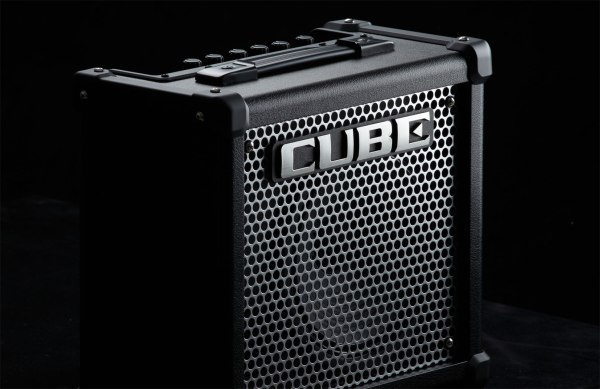
Hiljattain ilmestynyt Roland Cube-10GX on Cube-perheen uusin jäsen, joka lähestyy firman suosittua Cube-reseptiä hieman toiselta kulmalta.
****
Kymmenwattinen Roland Cube-10GX (hintaluokka 125 €) asettuu vahvistinteholtaan kolmiwattisen Micro Cube GX:n ja 20-wattisen Cube-20GX-kombon väliin.
Kymppi-GX on edullisesta hinnastaan huolimatta samaa vankkaa tekoa kuin sen isot veljeksiä. Reilunkokoiset kulmasuojat ja Cube-sarjalle tyypillinen metalliritilä suojaavat kombon tehokkaasti monilta kolhuilta.
Koteloon on asennettu kahdeksantuumainen kaiutin.
Takapaneelista löytyy virtaliittimen (verkkolaite kuuluu hintaan) lisäksi aux-tulo, sekä yhdistetty kuuloke- ja linjalähtö.
Cube-10GX-kombon arkkitehtuuri poikkeaa toisista Cube-perheen GX-malleista:
Muiden GX-kombojen viritysmittarit ja i-Cube-Link-lähdöt puuttuvat tästä mallista, mutta niiden tilalle uudessa Cubessa tarjotaan huomattavasti avoimempi rakenne COSM-vahvistinosiossa.
Cube-10GX tarjoaa nimittäin uuden Roland Cube Kit -appsin kautta (Android ja iOS) kitaristeille mahdollisuuden valita ja vaihtaa oman Cuben COSM-mallinnuksia oman maun ja käyttötarpeen mukaan. Tällä hetkellä Cube Kitistä löytyy kahdeksan sähkövahvistinmallia, yksi vahvistinmalli mikitetylle akustiselle kitaralle, sekä yksi bassovahvistin.
Vaikka kombon etupaneelissa lukee sen kolmen kanavapaikkojen kohdalla Clean, Crunch ja Lead, käyttäjä saa valita appsin kautta vapaasti kanaviin juuri niitä COSM-malleja, joita hän itse haluaa – vaikkapa vain puhtaita vaihtoehtoja, kuten Acoustic, JC Clean ja Black Panel.
****
Kerron sen ”huonon uutisen” ensin: Olisin kernaasti nähnyt myös uudessa Cube-10GX-mallissa kaksi efektiosastoa, niin kuin esimerkiksi Micro Cube GX:ssä! Kymppi-GX-kombossa voi valita joko choruksen tai viiveen tai kaiun tai (reilusti annostetun) jousikaiun, eikä yhdistelmäefektejä ole tarjolla lainkaan.
Uutuuskombon painopiste on siis selvästi vahvistimen soundissa ja entistäkin parannetuissa COSM-mallinnuksissa. Cube-10GX on yllättävän äänekäs vahvistin 10-wattiselle kombolle, ja sen kahdeksantuumaisen kaiuttimen ansiosta tämän Rolandin yleissoundi on paljon syvempi ja aikuisempi kuin esimerkiksi Micro Cubessa.
Uudistetuissa COSM-malleissa on myös selvästi rapeampi, erottelevampi soundi, ilman lisättyä kohinaa. Kymppi-GX:n musikaalisesta kolmialueisesta EQ:sta on todella paljon apua soundien muokkaamisessa.
Soundien vaihtaminen Cube Kit -appsilla onnistuu erittäin helposti ja – mikä on parasta – täysin ilman erikoisjohtoja. Tarvitaan vain puhelimen (tai tabletin) ja kitarajohdon väliin sopiva kuulokeadapteri, jolla saadaan ohjelman dataa kulkemaan Android- tai iOS-laitteen kuulokelähdöstä kitarajohdon kautta Cube-10GX:een. Muutama täppäys vaan ja valitun kanavan COSM-malli on vaihdettu uuteen.
Tehdasasetuksena kombon ykköskanavassa on valittu Roland Jazz Chorus -kombon mallinnus. Tässä soitan Fender Telecasterilla ykköskanavan läpi ja chorus-efekti on päällä:
Myös tässä käytän Jazz Chorus -mallia, mutta tällä kertaa Surf-tyylisellä jousikaiku-efektillä:
Classic Stack on kakkoskanavan tehdasasetus. Se on Rolandin COSM-versio Marshall-stäkistä, jota kuullaan tässä delay-efektillä höystettynä:
Latasin Cube Kitillä kakkoskanavalle Brit Combo -mallin (AC30). Soitan Telecasterilla ja käytän kombon kaikua:
Orange-stäkkiä matkiva Orng Stack -malli kuulostaa tällaiselta Gibson Melody Maker SG:ltä soitettuna:
Tehtaalta on asennettu kolmoskanavaan R-fier Stack -malli – siis Rectifier-meininkiä (ensin Telecasterilla, sen jälkeen Melody Maker SG:llä soitettuna):
Cube Kitin Acoustic-malli tarjoaa nopean ja helppokäyttöisen ratkaisun akustisen kitaran vahvistamiseen (tässä Tanglewood teräskielinen magneettisella Seymour Duncan -mikrofonilla):
Cube-10GX kuulostaa yllättävän isolta myös bassovahvistimena (kaikki ääninäytteet äänitetty Shure SM57:lla):
****
Rolandin Cube-10GX tarjoaa firman oivan Cube Kit -appsin ansiosta jokaiselle kitaristille juuri sen vahvistimen, jonka hän tarvitsee ja haluaa. Bluesmies (tai -nainen) voisi esimerkiksi ladata kymppi-GX:n kolmelle kanavapaikalle Black Panel-, Brit Combo-, sekä Tweed-mallit, kun taas rankan musiikin ystävä voi tehdä pikkustyrkkarista metallimusiikkiin erikoistuneen koneen (esimerkiksi valitsemalla Classic-, Metal- ja R-fier-stäkit).
Cube-10GX:stä lähtee niin paljon – ja etenkin niin laadukasta – ääntä, että tämän kombon (muihin GX-malliin nähden) supistetulla efektivalikoimalla ei ole mielestäni oikeastaan niin paljon väliä. Roland Cube-10GX tarjoaa todella paljon vahvistinta edulliseen hintaan.
****
Roland Cube-10GX
Hintaluokka noin 125 €
Maahantuoja: Roland Scandinavia
****
Plussat:
+ edullinen
+ tehokas
+ monipuolinen vahvistintarjonta (Cube Kit -appsin kautta)
+ kolmialueinen EQ
+ tukeva rakenne
+ soundi
Miinukset:
– vain yksi efektiosasto
– jousikaiun vähäinen säätövara
Review: Marshall DSL5C

****

Marshall’s DSL5C combo is the newest – and smallest – member of the DSL-series.
The DSL-range has its roots in the year 1997, when Marshall introduced their – now legendary – JCM2000 Dual Super Lead -head. The JCM2000 was the first Marshall amp that combined a vintage-voiced Plexi-channel and a modern Ultra Gain -channel in one chassis.
The production run of the original DSL-series was discontinued in 2007, with the JVM-range superseding it. The new DSL-series offers the company’s most-affordable all-valve amps to date, which are produced at Marshall’s own facility in Vietnam.
****

As you can easily guess by its name, the Marshall DSL5C (current street price in Finland around 520 €) is a five-Watt, two-channel combo.
In terms of its looks and the quality of its finish, this is a genuine Marshall. Quality control at the Vietnamese factory seems to as stringent as in Britain, and the combo looks great and feels well-made and sturdy.

The DSL5C comes with an open back cabinet. The upper opening in the cabinet’s back is covered with a metal grille to keep stray fingers and hot tubes apart form each other.

This little Marshall uses three preamp valves (ECC83/12AX7), plus a single power amp tube (ECC99/12BH7).

The DSL5C’s speaker is a ten-inch Celestion Ten 30, which is meant to provide a big, warm bottom-end, coupled with a healthy dose of ”Celestion grunt” and bite.
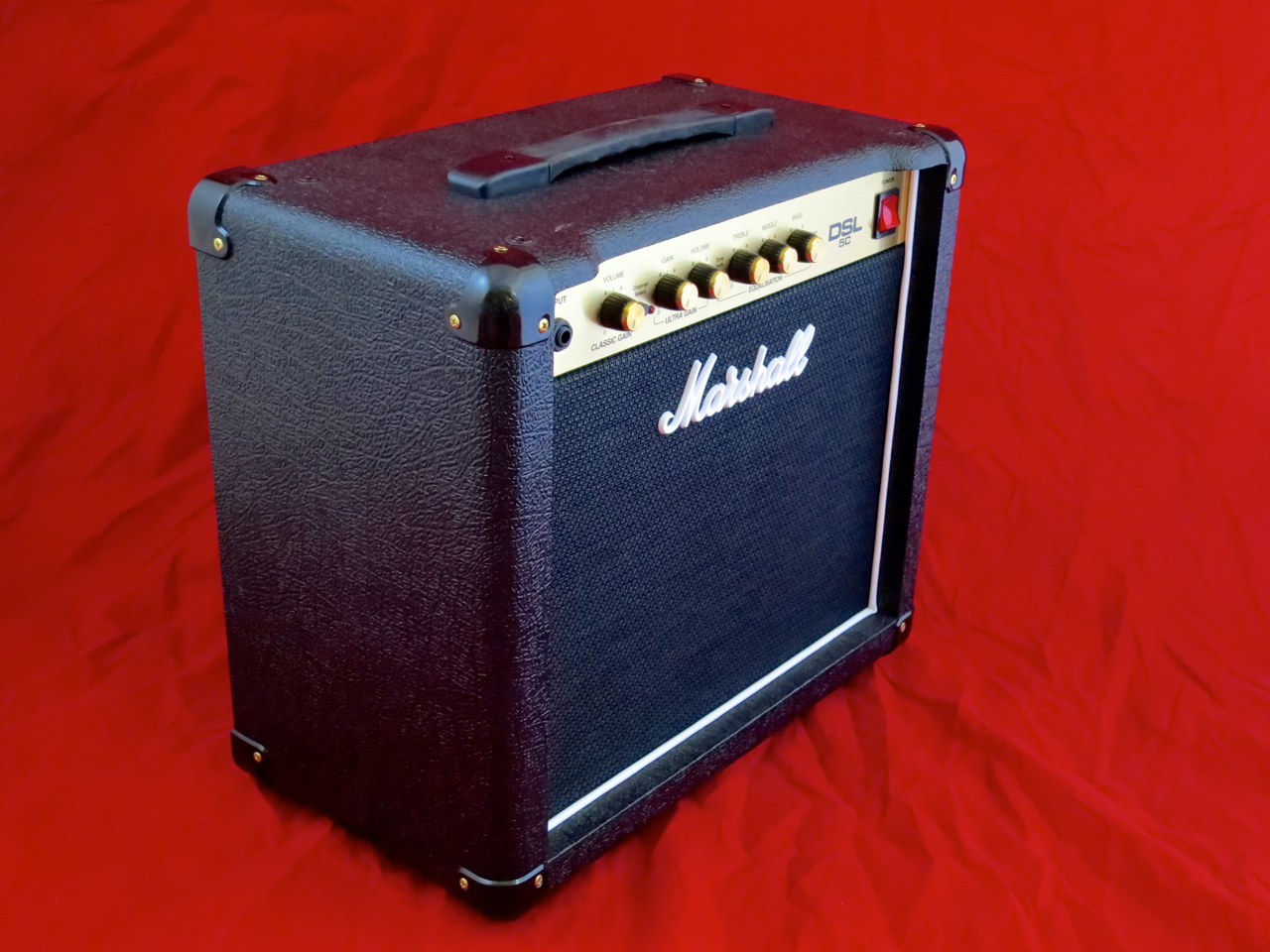
This compact combo weighs less than five kilos, making it very easy to carry, using its rubberised handle.
****

The Marshall DSL5C is a two-channel, all-valve combo:
Channel one – Classic Gain – is voiced to give you a classic Marshall 1959 -style tone and gain structure. The Classic-channel goes from bright and clean all the way to mid-level, classic crunch. Due to the fact that this channel doesn’t have a master volume, distorted sounds can only be had at very high volume levels – unless you switch to Low Power mode (more on this further down).
True to its name, the second channel – Ultra Gain – is made for modern, saturated high-gain sounds.
Both channels share a three-band EQ-section, which means a certain amount of tonal compromises will have to be made. But thanks to the way both channels have been voiced, a shared EQ doesn’t pose any real problems in the Marshall DSL5C’s case.
Pushing in the Tone Shift switch will give you a thinned out, sharper mid-range, making it ideal for many Thrash Metal tones. Engaging Deep bolsters the bottom-end at the output stage for a fatter sound.

The back panel offers you an effects loop, as well as a footswitch jack for the DSL5C’s sturdy channel switch (supplied, see pic below).
There’s a very nifty speaker-emulated output designed into this Marshall combo, which works in two different ways, depending on the setting of the Power-switch:
In Full Power mode the output gives out a line level signal, which can be sent to a mixing console or your recording equipment. The speaker will run even with a plug connected to the output. In Low Power mode (the manual says 0.5 Watts, the website 1 W) the output level is changed to work with headphones, and plugging a pair of cans in will mute the speaker. The Aux In only works in Low-mode, and its signal will be sent directly to the headphones.

****

In my opinion Marshall’s DSL5C is a fantastic-sounding little Rock- and Metal-combo, ideally suited for use in your bedroom, for practice, for recording and for backstage warm-up.
My only small niggle would be with the emulated output of our review sample, which produced more hiss than what I’d have expected. Anyhow, I was able to EQ out most of the hiss for the sound clips, meaning it really isn’t that much of a problem. And then there’s always the possibility that there was something wrong with this particular combo…
The DSL5C’s two channels enable you to get a wide variety of different Rock-, Metal- and Thrash-sounds out of this little combo, depending on your gain-, volume- and EQ-settings, but also on the power mode chosen. Going to Low Power doesn’t only drop your output levels, but also adds a lot of tasty, squashy power amp compression. This means that you can choose between very tight sounds (Full Power) and fatter, compressed tones (Low Power) by using the switch on the back panel.
All sound clips have been recorded in Full Power mode to allow for direct comparison between the miked up sound of the speaker and the speaker-emulated output.
For starters I played my Stratocaster through a clean setting on the Classic-channel (recorded with a Shure SM57):
…and here’s what the same bit sounds like recorded directly via the emulated output:
Here’s the Classic-channel and the neck pickup of my double-humbucker Hamer Studio Custom (miked up):
…and the same clip recorded direct:
Here’s my Strat into the Ultra-channel (Tone Shift off), recorded with the SM57:
…and its speaker-emulated counterpart:
This is the Hamer, tuned to Drop-D into the Ultra-channel (Tone Shift on), miked up:
…and this is the direct recorded version:
****
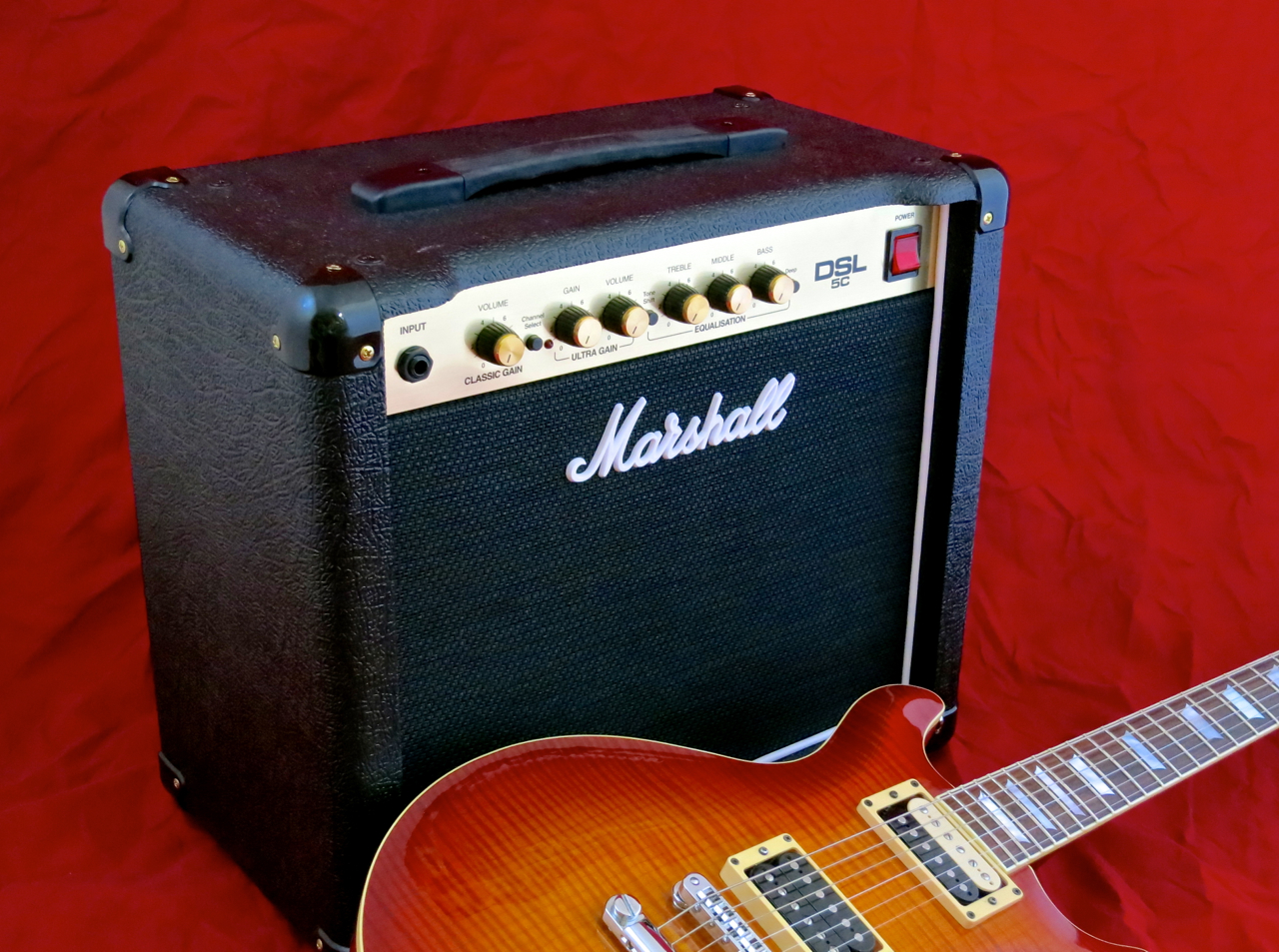
Marshall’s cute and cuddly new five-watter, the DSL5C, is a great choice as a first tube combo (”My first Marshall”), as well as a precision tool for any guitarist in those situations, when high wattage is more of a problem than an advantage (like at home or in the project studio).
The DSL5C delivers genuine, all-valve Marshall-tone in a handy package, and the combo’s Vietnamese origin means it’s also very affordable.

****
Marshall DSL5C
Finnish street price ca. 520 €
Finnish distributor: EM Nordic
We’d like to thank DLX Music Helsinki for the loan of the review amp!
****
Pros:
+ value-for-money
+ finish/workmanship
+ sound
+ two power modes
+ speaker-emulated output
+ footswitch included
Cons:
– noise levels of speaker-emulated output (see text)
Testipenkissä: Marshall DSL5C
****
Marshallin DSL5C on DSL-sarjan uusin, ja samalla myös pienitehoisin jäsen.
DSL-sarjan juuret ulottuvat vuoteen 1997, jolloin Marshallin legendaarinen JCM2000 Dual Super Lead -nuppi julkaistiin. JCM2000 oli silloin ensimmäinen Marshall, jossa oli yhdistetty Plexi-tyylinen vintage-kanava ja moderni Ultra Gain -kanava.
Alkuperäisen DSL-sarjan tuotanto lopetettiin vuonna 2007, jolloin JVM-sarja tuli sen tilalle. Uusi DSL-sarja tarjoaa firman edullisimmat putkivahvistimet, joita valmistetaan Marshallin omassa tehtaassa Vietnamissa.
****
Nimensä mukaisesti Marshall DSL5C (katuhinta noin 520 €) on viisiwattinen, kaksikanavainen putkikombo.
Vahvistimen ulkonäkö – samoin kuin viimeistelyn taso – on ehtaa Marshallia. Vietnamilaisessa tehtaassa laadunvalvonta näyttää pelaavan kiitettävästi, ja kombo tuntuu heti kättelyssä luotettavalta ja kestävältä.
Kotelon rakenne on DSL5C:n tapauksessa avoin. Takaseinän ylempään aukkoon on asennettu metalliritilä, joka suojaa vahvistinputkia kosketukselta ja kitaristin käsiä kuumilta putkilta.
Pikku-Marsun putkivarustus koostuu kolmesta etuasteputkesta (ECC83/12AX7) sekä yhdestä pääteputkesta (ECC99/12BH7).
DSL5C:n kaiutin on 10-tuumainen, keraamisella magneetilla varustettu Celestion Ten 30, jolle luvataan lämmintä bassorekisteriä, sekä monelle Celestion-kaiuttimelle tyypillistä purevuutta preesensalueella.
Tämä kompakti uutuuskombo painaa vain viisi kiloa, minkä ansiosta se on erittäin helppo kuljettaa sen kumimaisella kahvalla.
****
Marshall DSL5C on kaksikanavainen putkikombo:
Ykköskanava – Classic Gain – tarjoaa klassista Marshall 1959 -mallia muistuttavaa soundia ja gain-rakennetta. Classic-kanava ulottuu kirkkaista clean-soundeista keskivahvoihin vintage-säröihin. Koska tähän kanavaan ei ole lisätty omaa Master Volume -säädintä, Classicin särösoundeja saa esiin kuitenkin ainoastaan hyvin kovalla volyymitasolla, silloin kun päätevahvistin on 5 W -moodissa.
Nimensä mukaisesti kakkoskanava – Ultra Gain – on luotu tarjoamaan nykyaikaisia high gain -soundeja.
Molemmille kanaville yhteinen EQ-osasto tarkoittaa luonnollisesti, että soundin kannalta täytyy elää jonkin verran kompromisseja tekemällä, mutta Marshall DSL5C:n tapauksessa tästä ei koidu minkäänlaisia ongelmia.
Tone Shift -kytkimellä saa esiin loudnessmaisia Metal-soundeja, kun taas ilman Tone Shiftiä pikku-Marsulla on täyteläisempi keskialue. Deep-kytkin taas vaikuttaa päätevahvistimen bassotoistoon, ja lisää tarvittaessa muhkeamman bassorekisterin.
Takapaneelista löytyy efektilenkin ohella myös liitin pakettiin kuuluvalle kanavavaihto-kytkimelle (katso alla).
DSL5C:n kaappimallinnettu lähtö toimii kahdella eri tavalla, pääteasteen Power-kytkimen asennosta riippuen:
Power täysille jakki on linjatasoinen lähtö mikserille tai äänikortille, ja kombon oma kaiutin toimii myös silloin, kun linjalähtöä käytetään. Low Power -moodissa (käyttöohjeessa lukee 0,5 W, nettisivulla taas 1 W) sama lähtö toimii kuuloketasolla, ja kuulokkeen liittäminen jakkiin mykistää vahvarin oman kaiutinta.
****
Marshall DSL5C on mielestäni erittäin hyvältä kuulostava Rock- ja Metal-kombo koti-, harjoitus-, äänitys- ja warm up -käyttöön.
Ainoa kritiikkini kohdistuu kombon kaappimallinnettuun lähtöön, joka – ainakin testikoneessa – kohisi enemmän kuin mitä olisin odottanut. Tässä voi kuitenkin olla hyvinkin kyse yksilöviasta.
DSL5C:n kahdesta kanavasta saa esiin hyvin erilaisia soundeja, riippuen etupaneelin gain- ja volume-säädöistä, mutta myös päätevahvistimen Power-kytkimestä. Päätetehon pudottaminen aiheuttaa headroomin kutistamisen, mikä nostaa selvästi kompression määrää entisestään. Power-moodin valinnassa ei siis ainoastaan ole kyse pelkästä volyymistä, vaan myös siitä halutaanko soundista tiukemman (Full Power) vai muhkeamman (Low Power).
Kaikki ääninäytteet on äänitetty Full Power -moodissa.
Tässä ensin Stratocaster soitettu Classic-kanavan kautta Shure SM57 -mikrofonilla poimittuna:
…ja tässä sama pätkä linjalähdön kautta:
Tällainen on mikitetty puhdas soundi Hamer Studio Customin kaulamikillä soitettuna:
…ja sama pätkä linjalähdön kautta:
Tällainen on Straton soundi Ultra-kanavan kautta (Tone Shift on pois päältä) SM57 äänitettynä:
…ja sama pätkä linjalähdön kautta:
Tässä soitan Hamer-kitaraa Drop-D-virityksessä Ultra-kanavaan (Tone Shift päällä):
…ja sama linjalähdön kautta poimittuna:
****
Marshallin viisiwattinen DSL5C sopii loistavasti sekä ensimmäiseksi putkikomboksi (”My first Marshall”) että varttuneen soittajan työkaluna, sellaisissa tilanteissa, joissa isosta styrkkarista on enemmän haittaa kuin hyötyä (esim. kotistudiossa tai olohuoneessa).
DSL5C tuo aidon Marshall-soundin myös pieneen huoneeseen, ja kombon vietnamilaisen alkuperän ansiosta tämän putkivahvistimen hinta on kukkarolle ystävällinen.
****
Marshall DSL5C
Katuhinta noin 520 €
Maahantuoja: EM Nordic
Kiitos DLX Musiikille testivahvistimen lainasta!
****
Plussat:
+ hinta
+ viimeistely
+ soundi
+ päätevahvistimen tehonpudottaja
+ kaappimallinnettu lähtö
+ jalkakytkin kuuluu hintaan
Miinukset:
– linjalähdön kohinataso

Review: Blackstar HT Metal 5 + HT Metal 60


Blackstar Amplification’s very popular HT Venue-series has recently been joined by the company’s brand-new HT Metal-range, which offers you valve amplifiers tailored specifically to the needs of Metal-guitarists.
Kitarablogi has received the compact five Watt HT Metal 5-combo – meant for use at home, for warm-up and in the studio – and the chunky three-channel, 60 Watt HT Metal 60 -combo for this review.
****
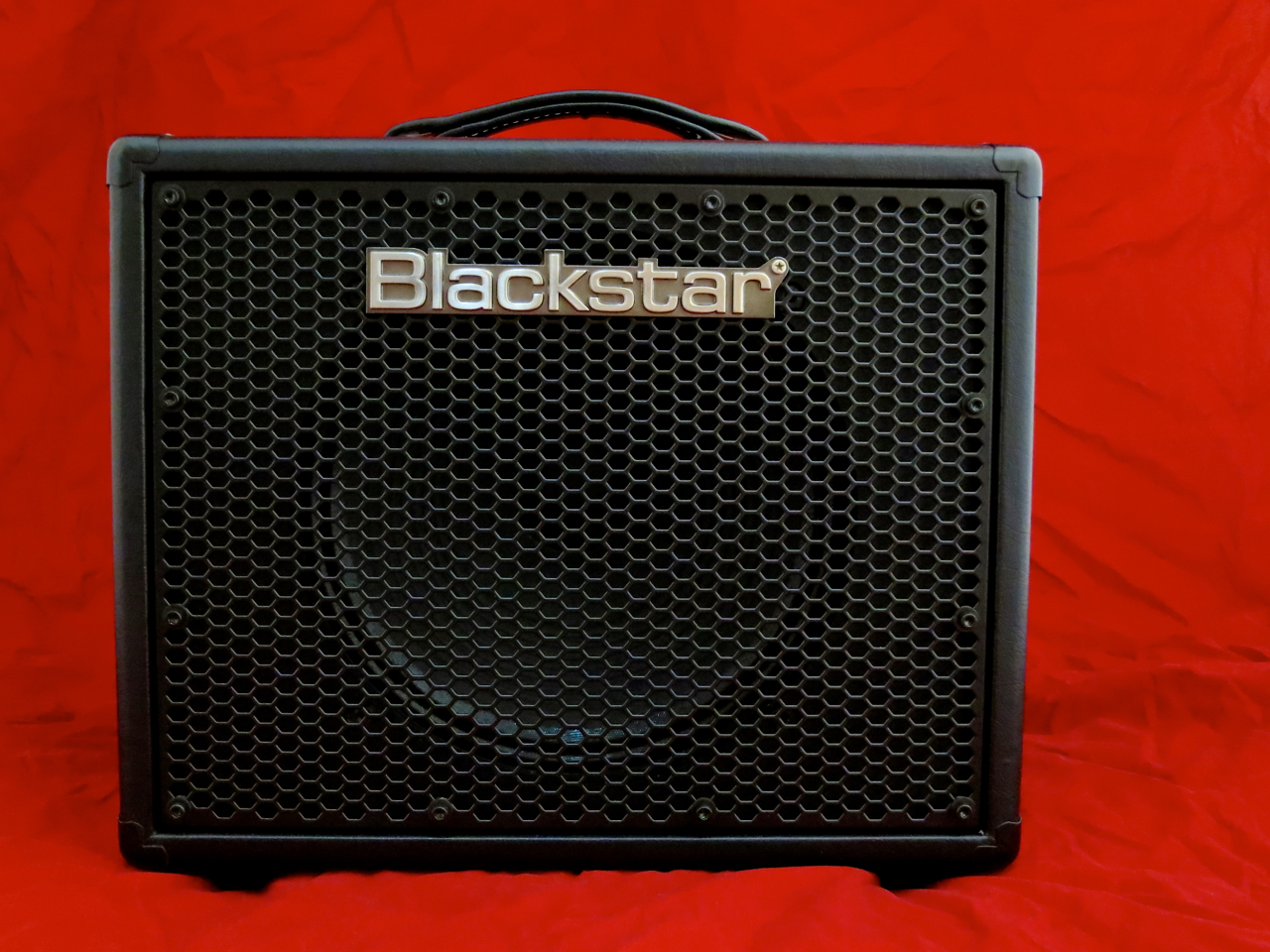
The Blackstar HT Metal 5 (street price around 450 €) is based on the company’s extremely successful HT-5R-valve combo, with the new amp sharing the older model’s main architecture and push-pull power amp.
The HT Metal 5 uses two different valves to amplify your guitar signal – one is an ECC83 (aka 12AX7), the other a model 12BH7.
Instead of a woven speaker cloth – like on the HT-5R – the HT Metal 5-combo sports a very sturdy metal grille.
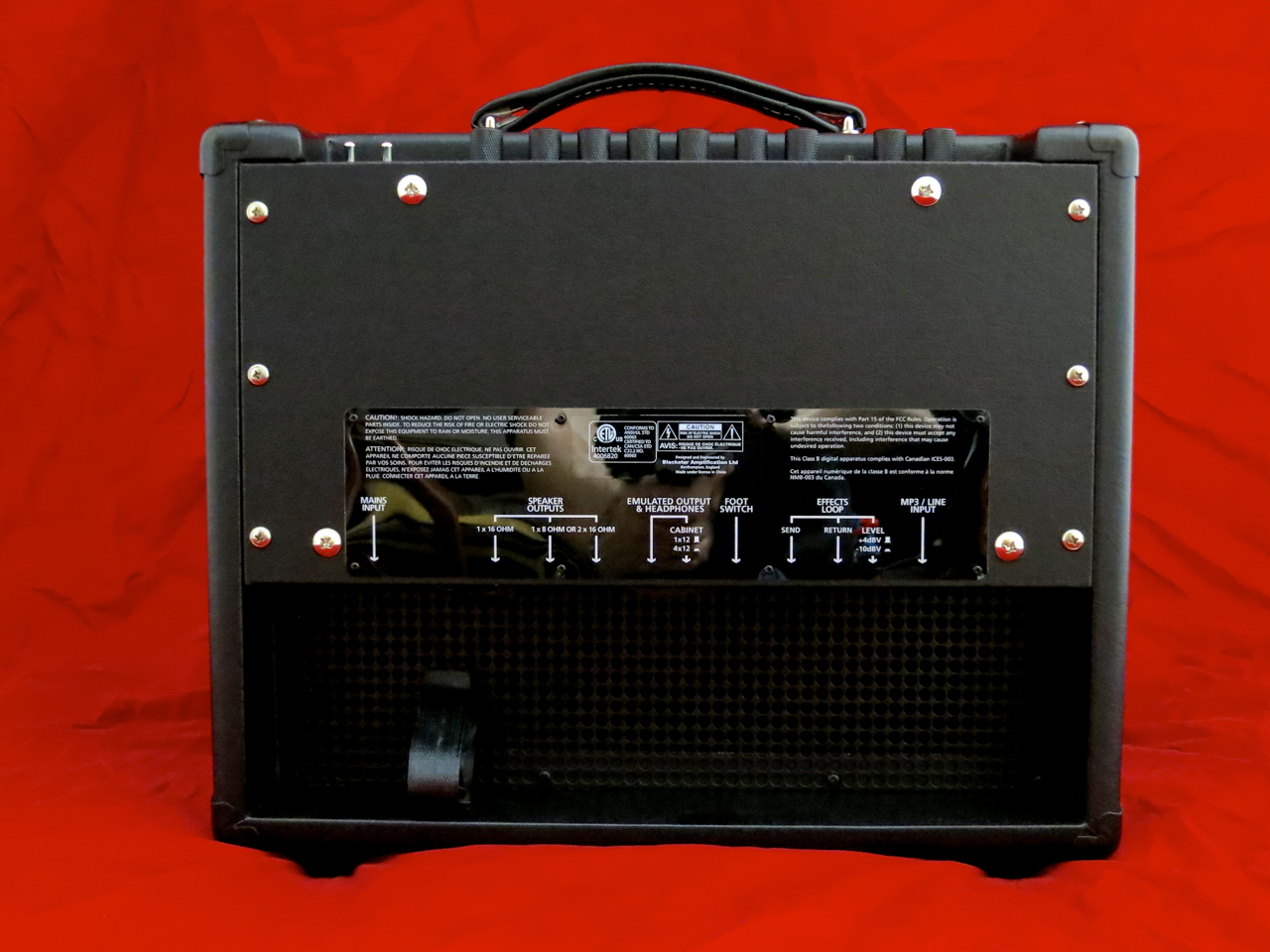
The cabinet is a half-closed affair. The lower third of the back is covered by a metal grille, through which you can spot this Blackstar’s Chinese 12-inch speaker.
This compact combo weighs only 14 kilos, making it very easy to lift and carry around by its single top handle.

The Metal 5’s control panel looks like this (click for a larger picture):
This valve combo features two channels, called Clean and Overdrive. The Clean channel is equipped with a simple tone control, while Overdrive comes with a full 3-band EQ, as well as Blackstar’s patented ISF-control. Turning the ISF-control (ISF stands for Infinite Shape Feature) you can go from a USA-type response (with a loudness-style sound) all the way to what is known as a British tone (with its fatter mid-range).
The HT Metal 5 also comes equipped with a very nice digital reverb.
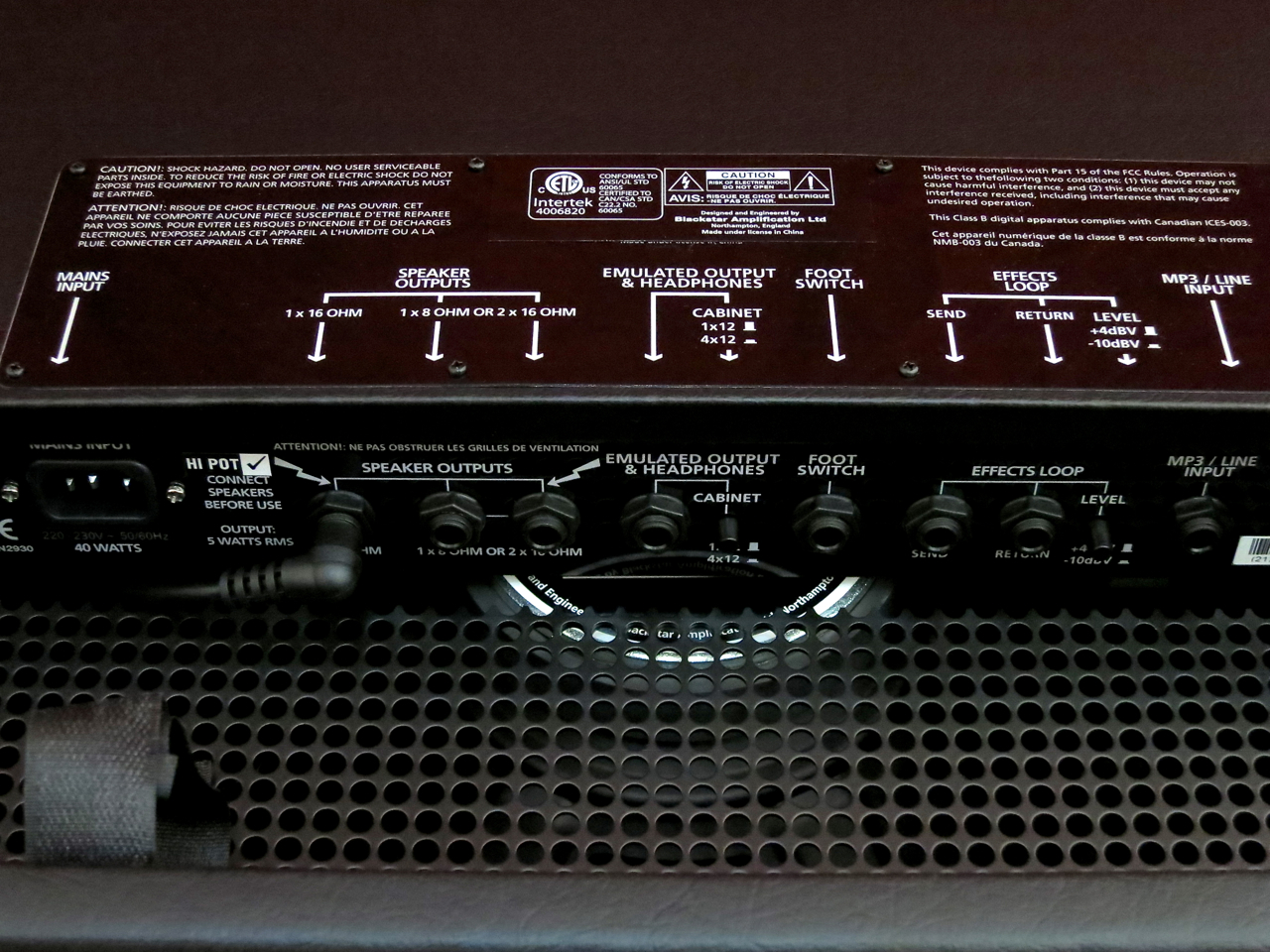
It is rather surprising to find so many different connectors and pushbuttons on such a small amp:
On the left, you will find the combo’s three speaker outputs.
Next up is Blackstar’s speaker-emulated output. A switch lets you choose between a virtual combo and an emulated stack sound. This output also works with headphones, and when the combo runs on standby.
The effects loop on the Metal 5 can be switched from a nominal signal level of -10 dB to +4 dB.
The line input on the far right allows you to connect your mp3-player to the combo.

A footswitch for channel switching is included in the price of Blackstar HT Metal 5!
****

Blackstar’s HT Metal 60 (street price around 1.000 €) is a three-channel powerhouse meant for live use.
This combo is build around a pair of ECC83-preamp valves and two 6L6s in the power amp.
The HT Metal 60 is equipped with two 12-inch Celestion speakers.
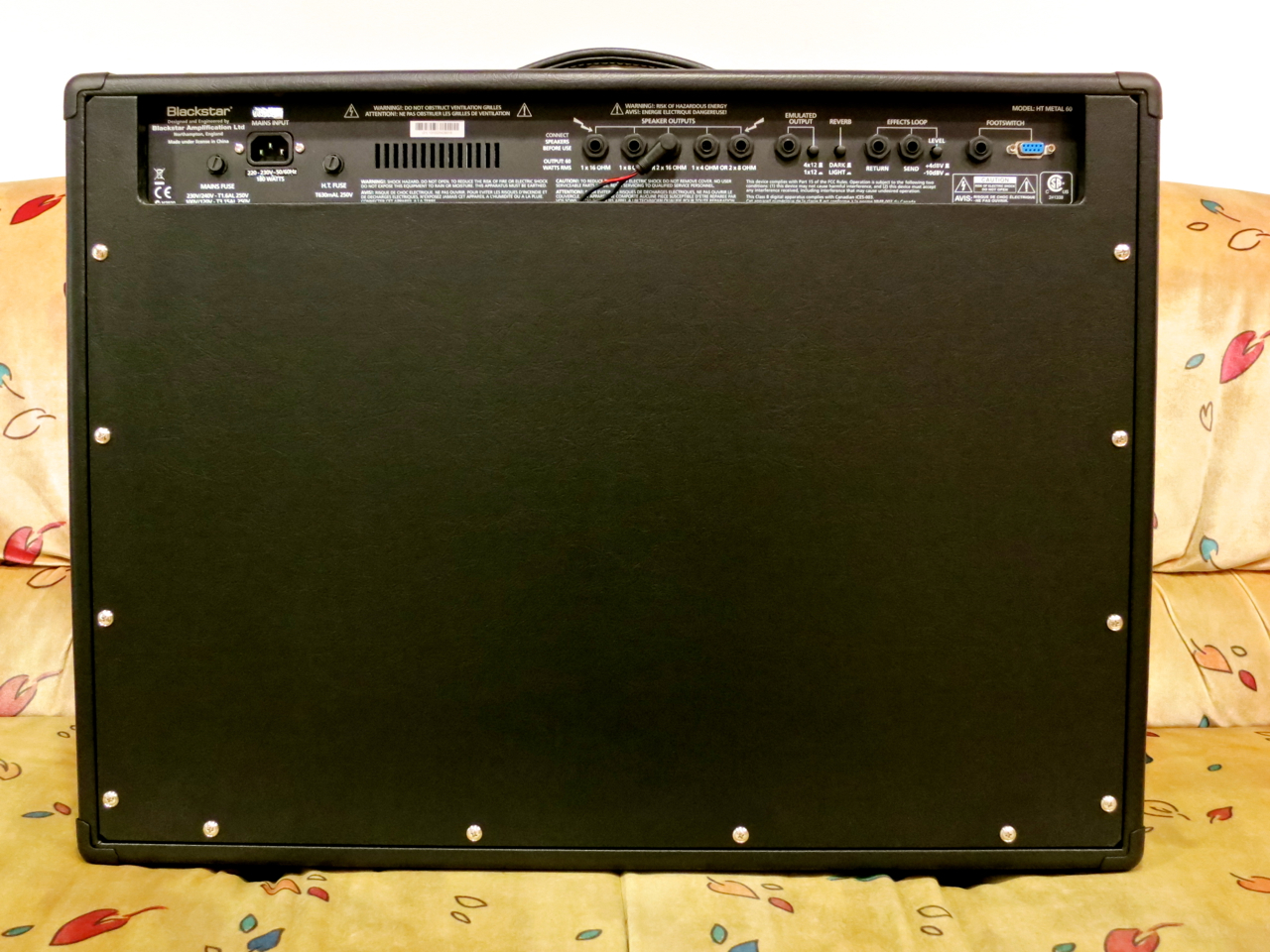
The closed-back cabinet aims at giving this amp a stack-style tonality and punch.

Because of the considerable weight (30 kg) of a large tube combo, such as this, the HT Metal 60 has been equipped with two metal handles, installed into the amp’s sides.
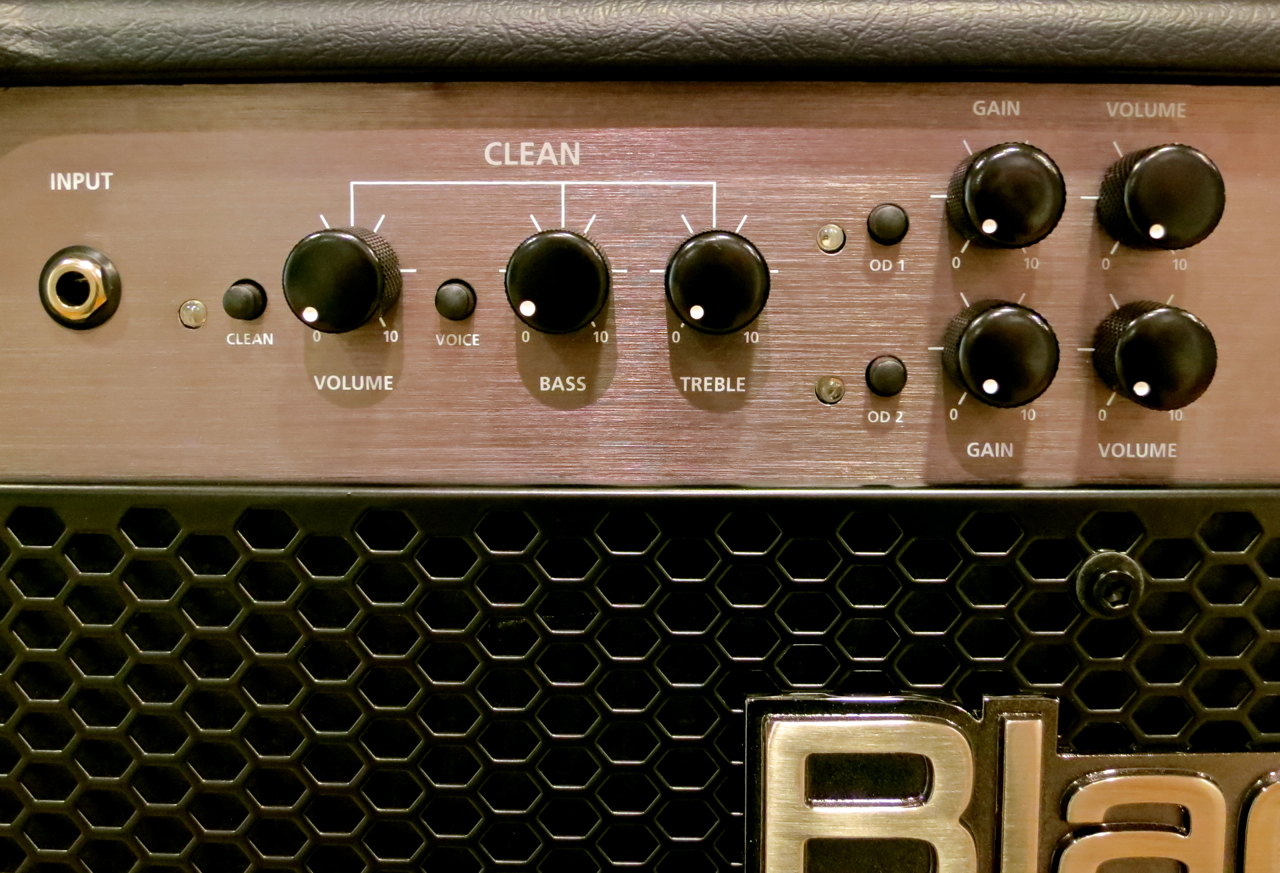
You can choose between two different tonal characters in this Blackstar’s Clean channel, using the Voice-switch: Boutique Clean puts the amp in Class A mode, giving you a very dynamic response, but with less clean headroom than the voicing called Modern Clean.
The channel’s Bass- and Treble-controls make it very easy to find your sound.
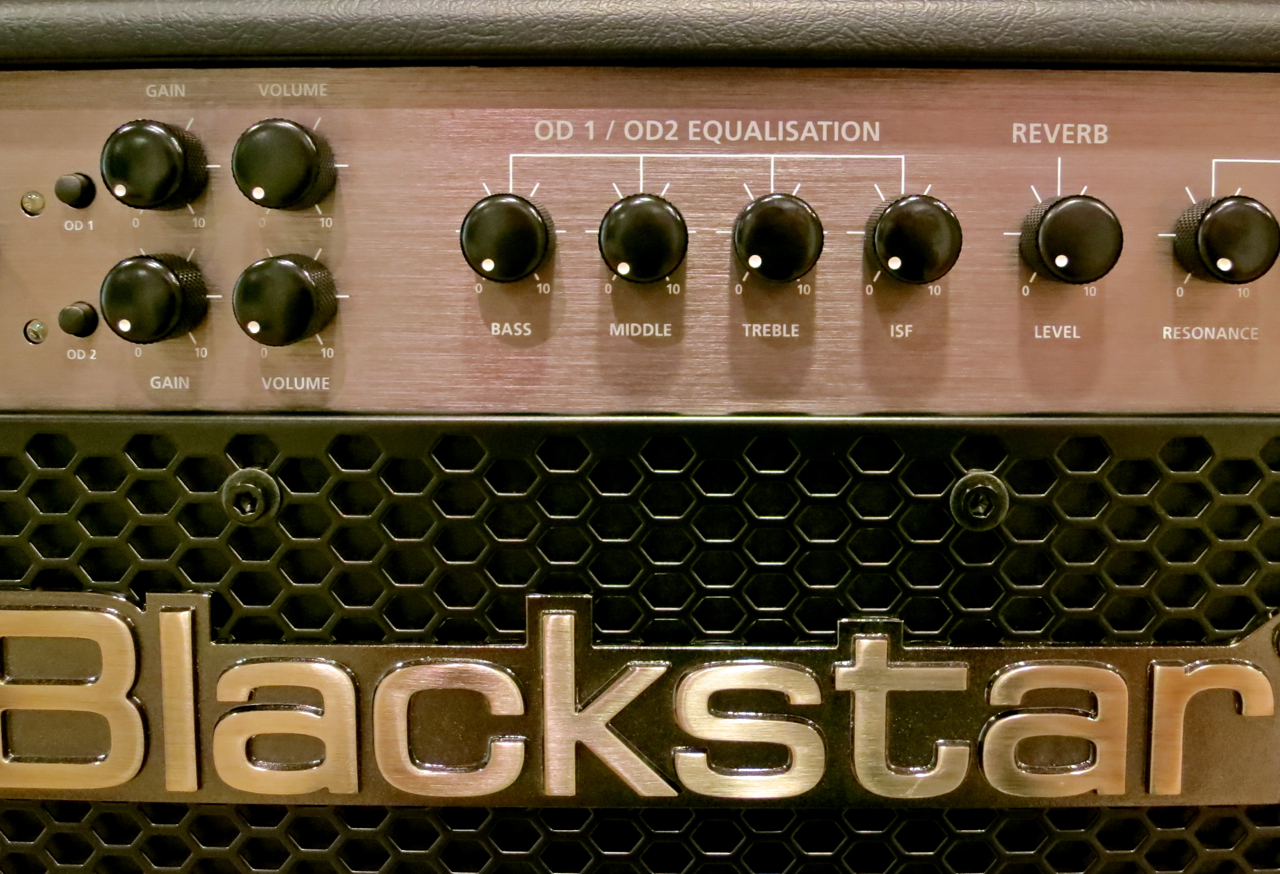
The HT Metal 60 offers you two distinct overdrive channels – named OD1 and OD2 – which share the three-band-plus-ISF equalisation section.
OD1 has a tad less gain than OD2. Thanks to its slightly less compressed sound, as well as its drier bottom end, OD1 is the ideal choice for chunky and precise rhythm parts.
OD2’s massive gain reserves are combined with very creamy compression, but there’s plenty of bite here, too, to make sure your lead lines cut through with authority.

The master section comprises controls for the HT Metal 60’s digital reverb, overall resonance and presence, as well as master volume.

You can connect the HT Metal 60 to virtually any other speaker cabinet, thanks to the five speaker outputs found on the back panel.
In addition to Blackstar’s well-designed speaker-emulated output, and the combo’s effects loop, there’s also a switch to access two different types of reverb (labelled ”light” and ”dark”).

The blue D-SUB-port is meant for the combo’s chunky FS-7-board (included, see below), that handles channel-switching duties and allows you to turn off the reverb on the fly.
The regular Footswitch-jack allows you to connect an additional footswitch to activate the combo’s internal boost. This boost is factory preset, and its amount cannot be changed by the user.

****

The Clean-channel on the Blackstar HT Metal 5 takes you from totally clean all the way to a mild Blues-crunch.
There’s more than enough volume on tap for living room and studio use. There’s a limited amount of clean headroom, though, which means that you will have to turn down the volume pot on a humbucker-equipped guitar.
This clip is played on a Hamer USA Studio Custom into the Blackstar’s Clean-channel, and recorded using a Shure SM57:
Here’s what the same clip sounds like recorded direct via the speaker-emulated output:
The HT Metal 5 dishes out delicious overdriven and distorted tones by the bucket load. Blackstar’s 12-inch speaker sounds fat and muscular, and makes it hard to believe that you’re listening to such a compact little combo!
Turning the ISF-control up full gives you a great Marshall-style tone, regardless of whether you’re using a mic…
…or the built in DI-output.
With ISF turned to zero the sound leans heavily in a Rectifier-type direction (first the SM57-clip, then the speaker-emulated output):
****
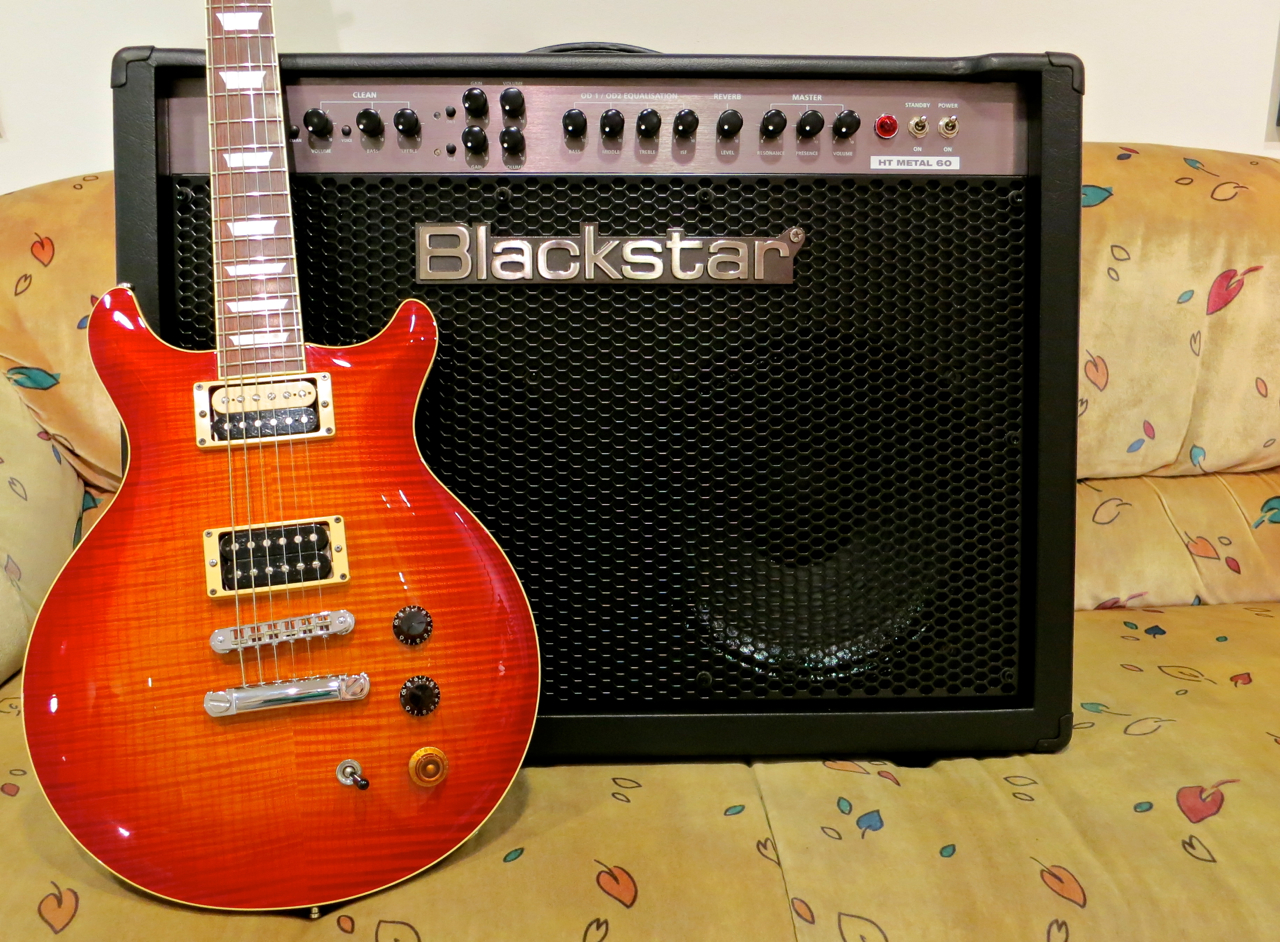
Blackstar’s HT Metal 60 naturally offers a much wider tonal palette than its small brother.
You can get two different types of clean sounds, with Boutique Clean being the rounder alternative of the two.
SM57:
Line output:
Modern Clean comes across as brighter and somewhat more compact (first the Shure SM57 -clip, then the speaker emulated output):
Here’s an example of the OD1-channel with the guitar tuned to drop-D.
First the ”British” version (ISF=10):
Then its ”US” counterpart (ISF=0):
With the exact same EQ settings, OD2 has more bite.
ISF=10 (”UK”):
ISF=0 (”USA”):
****

In my view, Blackstar’s new HT Metal-series is a fantastic addition to the company’s line-up, which takes the needs of modern Metal-guitarists into full account.
The HT Metal 5’s clean sound is very decent, even if the available headroom isn’t on a par with some larger amps. The distortion-channel is really where it’s all at with this compact combo – you will be floored by the big and fearless nature of the Metal 5’s mighty roar!
The Blackstar HT Metal 60 is the workingman’s Metal-combo. This is a professional grade combo offering both very tasty clean tones, as well as bone-crushingly powerful overdrive and distortion with spades of creamy compression. In all but the largest of venues this combo’s volume levels will surely be more than sufficient, even without adding any external cabinets.
****
Blackstar HT Metal 5 & HT Metal 60
HT Metal 5 – street price ca 450 €
HT Metal 60 – street price ca 1.000 €
Finnish distributor: Musamaailma
****
Blackstar HT Metal 5
Pros:
+ workmanship and finish
+ separate tone-control for Clean-channel
+ OD-channel’s 3-band EQ and ISF
+ big tone
+ speaker-emulated DI-output
+ footswitch inluded
Cons:
– Clean-channel’s restricted headroom
****
Blackstar HT Metal 60
Pros:
+ workmanship and finish
+ metal grips
+ Clean-channel’s Voice-feature
+ Clean-channel has own EQ-section
+ OD-channels’ 3-band EQ and ISF
+ big tone
+ speaker-emulated DI-output
+ FS-7-board included
 Kitarablogi.com – Finland's premier Guitar and Bass blog