Lisätiedot: Musamaailma
Kitarablogi.com – Finland's premier Guitar and Bass blog
Juttuja kitaroista ja bassoista

Lisätiedot: Musamaailma

Flaxwood Liekki 290-T
• Flaxwood neck and body
• 22 medium jumbo frets
• Gotoh HAPM locking tuners
• Schaller LP Tremolo
• Two Seymour Duncan SP90-1 Vintage Soapbar pickups
****
Rhythm guitars – both PUs (left channel), bridge PU (right channel)
Lead guitar – neck pickup
****
• Amp used – Blackstar HT-1R
• Auto-wah/-filter plug-in added during mixing

****
Flaxwood 57HM-H Master
• Flaxwood wood fibre composite neck and body
• 22 jumbo frets
• Locking Gotoh SG360 MG tuners
• Gotoh tune-o-matic + stopbar
• Active EMG pickups – neck pickup: Model 66; bridge pickup: Model 57
****
Amp used: Blackstar HT-1R
Wah-pedal: Morley M2 Wah/Volume

****
Lisätiedot: Flaxwood


Vox Amplificationin upouusi AV-sarja koostuu kolmesta edullisesta kombovahvistimesta kitaralle. Lähtötehonsa mukaan nimetyt Vox AV15-, AV30- ja AV60 -vahvistimet ovat mallintavia putkihybridejä, jotka yhdistävät puolijohde- ja putkielektroniikan parhaimpia puolia.
****
****
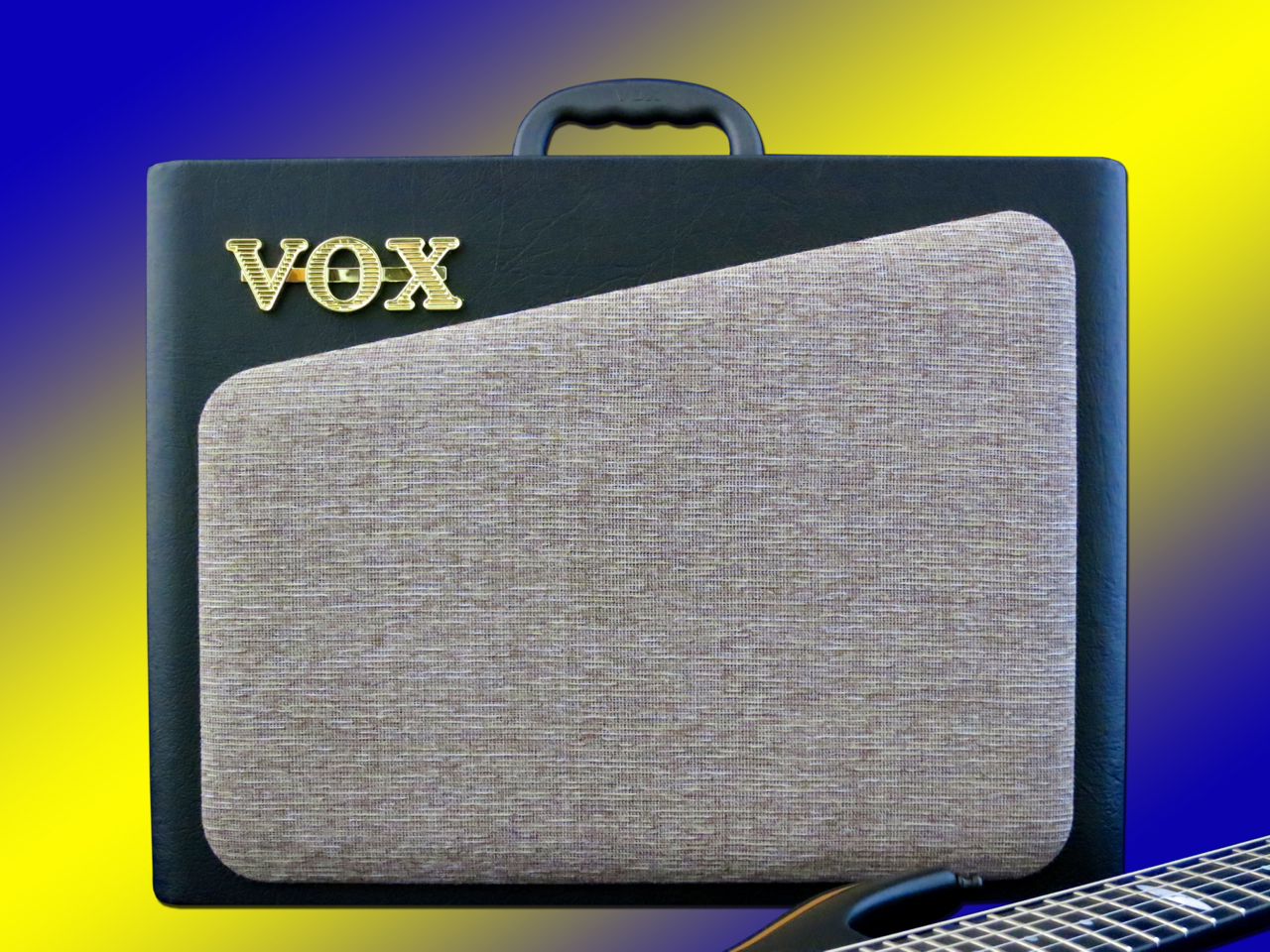
Kitarablogi sai testiin Vox AV15 -kombon (arvioitu katuhinta noin 269 €), joka on AV-perheen kuopus.
AV15 on mukavan kompakti kokonaisuus (korkeus: 37 cm, leveys: 45 cm, syvyys: 23 cm), ja se painaa vain hieman alle kahdeksan kiloa.

Vahvistinkotelon (= kaiutinkaapin) rakenne on selvästi ottanut inspiraatiota hifi-kaapeista. Tavallisesti kitarakaappi antaa oman lisämausteensa lopulliselle kitarasoundille, mutta AV-sarjan kaltaisissa mallintavissa vahvistimissa refleksikaapin lineaarisempi taajuusvaste auttaa useiden eri soundien jäljittämisessä.


Vox AV15:n takaseinästä löytyy ainoastaan virtaliitin kombon mukana tulevalle ulkoiselle virtalähteelle (12 V DC).
****
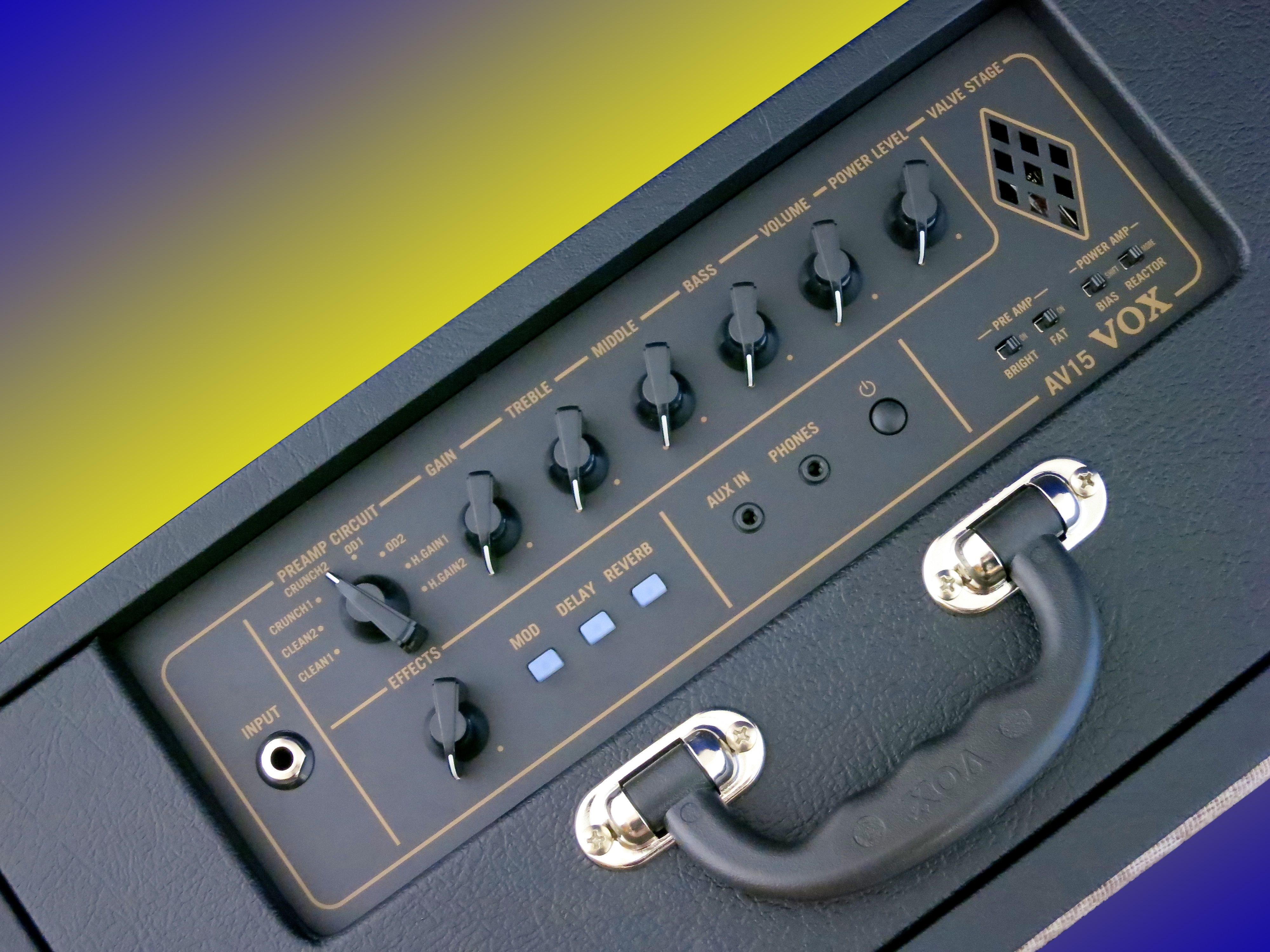
Preamp Circuit -kytkimellä saa valittua yhden Vox-kombon kahdeksasta vahvistinmallista. Tarjolla on riittävästi vaihtoehtoja Fender Twin -tyylisestä cleanista, sekä Vox- ja Marshall-mallinnuksien kautta jopa Rectifier-tyyliseen High Gain -meininkiin.
Vahvistinsoundien maustamiseksi tämä Voxi tarjoaa kolmikaistaisen EQ-osaston, sekä kolme efektiä (chorus, viive, kaiku). Kaikkia kolmea efektiä voi käyttää samanaikaisesti. Jokaisessa efektissä pystyy säätämään efektitason lisäksi vielä toisen parametrin (pitämällä efektinappia alas painettuna, samalla kun kääntää Effects-säädintä) – vatkaamisnopeutta choruksessa, viiveaikaa delayssä, sekä kaiun pituutta reverbissä. AV-kombon efektit ovat muuten vahvistimen ainoat digitaalisesti toteutetut osat, Voxin muu signaalitie – mallinnusta myöten – on täysin analoginen.
Tässä kolme lyhyttä pätkää efektiosaston soundeista (Gibson Les Paul Junior, Shure SM57):
CHORUS (ja pieni annos kaikua)
DELAY
REVERB
Hieman epätavallisesti löytyy AV15-kombosta jopa kolme eri ”volyymi-säädintä”, joiden toiminta vaikuttaa soundiin eri lailla:
Gain-säätimellä säädetään tulosignaalin tasoa, ennen kun signaali menee etuvahvistimen putkiasteelle. Pienillä Gain-asetuksilla soundi pysyy puhtaana, kun taas isommat Gain-asetukset tuovat signaaliin rosoisuutta ja/tai (vahvistinmallista riippuen) selkeätä etuastesäröä. Kombon Volume-säätimen rooli taas on säätää etuvahvistimesta tulevan signaalin tasoa juuri ennen päätevahvistimen putkiastetta. Pienillä Volume-asetuksilla signaali pysyy puhtaampana ja dynaamisempana, kun taas isot Volume-asetukset lisäävät signaaliin hieman kompressiota ja päätevahvistimen saturaatiota (= säröä). Power Level -nupilla sitten säädetään kuinka kovalla kitarasoittosi kuuluu kaiuttimen (tai kuulokkeiden) kautta.

Vaikka AV30:ssä ja AV60:ssä on kahdet putket – yksi etu- ja toinen päätevahvistimelle – Vox AV15 tulee toimeen vain yhdellä putkella, joka toimii sekä etu- että päätevahvistimessa. Tämän mahdollistaa perinteikkään 12AX7-putken nerokas rakenne, joka tarjoaa kaksi erillistä triodia samassa kuoressa, minkä ansiosta tätä putkityyppiä voi ja saa splitata.
Valve Stage -osio tarjoaa neljä liukukytkintä, joilla voi vaikuttaa suoraan putkiasteiden toimintaan ja soundiin:
Etuvahvistimelle (Pre Amp) löytyy sekä Bright-kytkin diskantin lisäämiseksi että Fat-kytkin, jolla bassontoistoa saadaan muhkeammaksi.
Päätevahvistimen (Power Amp) kytkimillä on vielä suurempi vaikutus vahvistimen soundiin ja ”tuntumaan”. Bias- ja Reactor-kytkimillä valitaan kuinka ”kuumana” päätevahvistimen putkipuolikas toimii ja miten dynaamisesti päätevahvistin reagoi etuvahvistimesta tulevaan signaaliin.
Tässä kaksi ääniesimerkkiä – clean ja crunch – joissa aloitetaan kaikilla kytkimillä vasemmassa asennossa, ja jossa laitan sitten kytkimet peräkkäin (aloitan Bright-kytkimestä) oikeaan asentoon (Gibson Les Paul Junior, Shure SM57):

****

Snobismi näyttää olevan tällä hetkellä muodissa – on viinisnobismi, on vinyylisnobismi, on putkisnobismi.
Mutta kun ollaan ihan rehellisiä olen ihan varma, että moni meistä ”vanhoista pieruista” olisi ollut enemmän kuin onnellinen, jos hänellä olisi ollut aloittelijana 1970-/80-luvun taitteessa ollut näin hieno vekotin kuin Vox AV15! AV15 on nimittäin hyvin monipuolinen – ja todella hyvällä soundillaan vakuuttava – hybridikombo erittäin soittajaystävällisellä hinnalla.
Vox AV15 on kunnon vahvistin kunnon soundilla, eikä muovinen lelu, joka lannistaisi kitarauntuvikon heti alkumetreillä. Varttuneellekin soittajalle AV-sarjalaiset voivat olla järkevä hankinta olohuonekomboksi tai backstage-lämmittelyyn, ja myös kotistudiossa AV15-kombosta on paljon iloa (kuten demobiiseissä kuulee).
BLUES-demo
Komppikitarat: Fender Telecaster (vasen kanava) ja Epiphone Casino (oikea kanava)
Soolokitara: Fender Stratocaster
ROCK-demo
Komppikitarat: Fender Telecaster (vasen kanava) ja Gibson Les Paul Junior (oikea kanava)
Soolokitara: Gibson Melody Maker SG
METAL-demo
Komppikitarat: Gibson Melody Maker SG (vasen kanava) ja Fender Stratocaster (oikea kanava)
Soolokitara: Hamer USA Studio Custom
****

Minun mielestäni Vox Amplificationin AV-uutuussarja on oiva valinta esimerkiksi omaksi harjoitusvahvistimeksi, opetuskäyttöön tai vaikkapa bändikerholaisille. Edullinen Vox AV15 on helppo käyttää ja se kuulostaa mielestäni todella hyvältä.
****
Vox AV15
Arvioitu katuhinta noin 269 €
Maahantuoja: EM Nordic
Suuri kiitos DLX Musiikille testikombon lainaamisesta!
Plussat:
+ kompakti
+ kevyt
+ monipuolinen
+ Valve Stage -osio
+ soundi
+ hinta-laatu-suhde

Flaxwood MTQ Hybrid
• Flaxwood neck
• Swamp ash body with bound flame maple top
• 22 medium jumbo frets
• Locking Gotoh H.A.P tuners
• Steel bridge with six bridge saddle (through-body stringing)
• Seymour Duncan pickups – neck: Antiquity Humbucker; bridge: STL-1 Broadcast
****
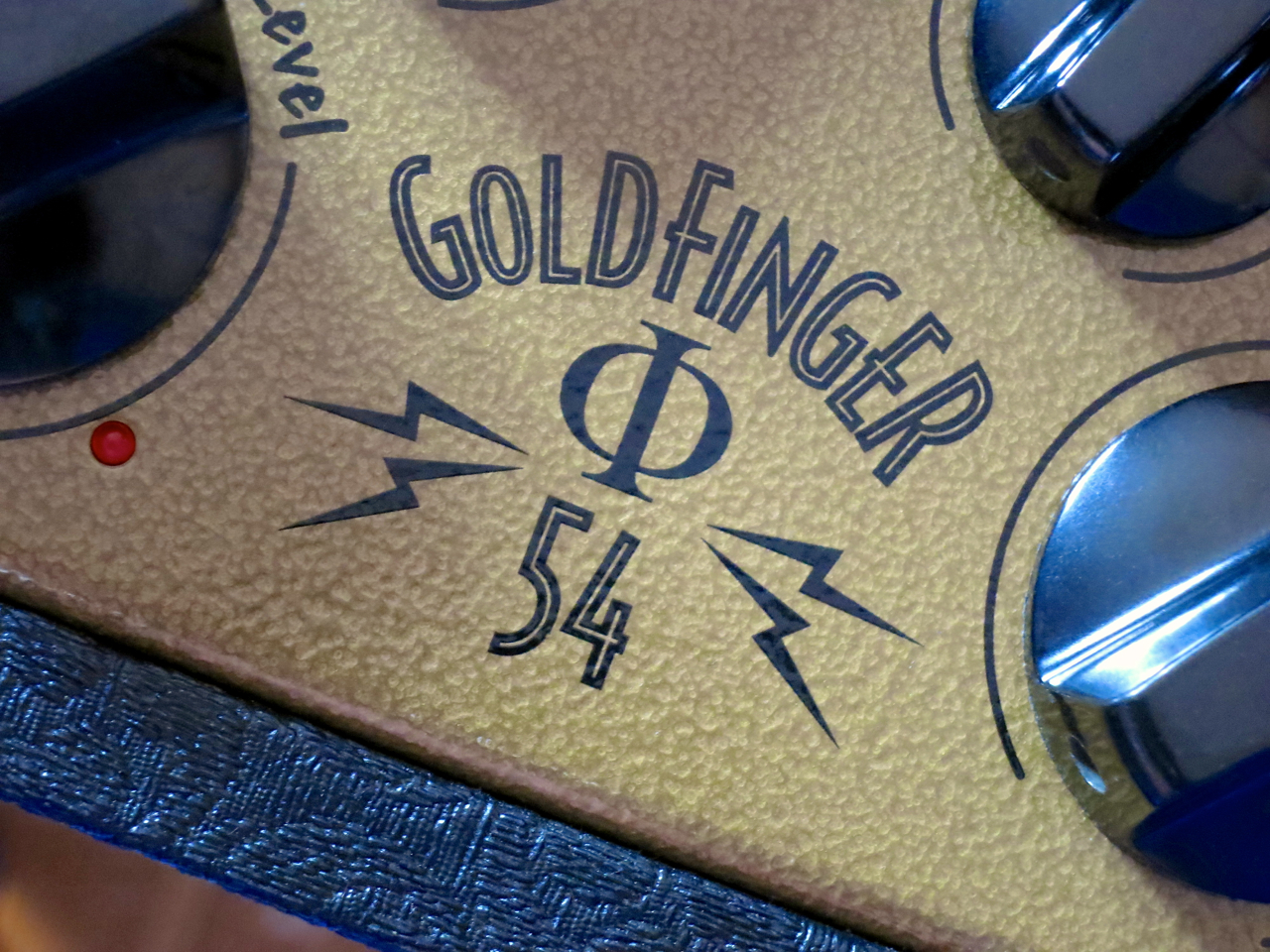
Amp used: Bogner Goldfinger Phi 54 in 66-Watts mode
Pedals used: Boss SD-1 Overdrive; Joyo JF-37 Analog Chorus
Mic used: Shure SM57

Contact: Flaxwood
Contact: Musamaailma & Flaxwood Guitars


Contact: EM Nordic
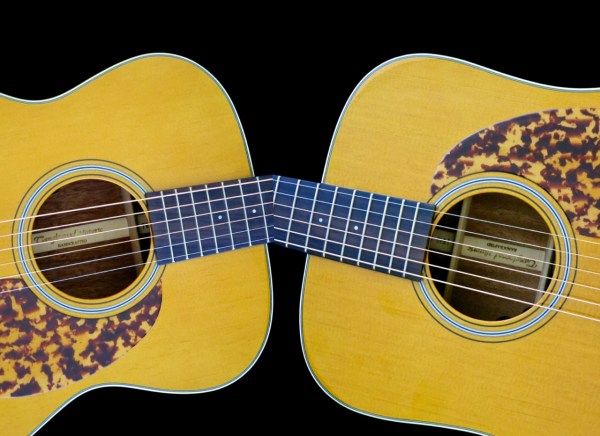

This review could also carry the headline: ”Tanglewood brings vintage to the masses”. Tanglewood’s Sundance Historic guitars have been designed to give you plenty of that ”pre-war” charm at very player-friendly prices. Take the two models on review, for example, which have price tags well below 700 Euros, despite even coming with on-board Fishman pickups and preamps!
The TW40O-AN-E and the TW40D-AN-E are both quite reminiscent of certain legendary Martin-models from the 1930s and 40s.
****

The Tanglewood TW40O–AN-E (current price in Finland 673 €) is the Sundance Historic series’ version of a Martin OM-18 model – the first Martin steel-string acoustic to feature a neck joint at the 14th fret when it was introduced in the Thirties.

Tanglewood’s TW40D-AN-E (673 €) is a tip of the hat to Martin’s D-18, which is the most copied, most referenced steel-string of all time. Even Gibson went out and bought a Martin in 1960, so they could use it to reverse engineer their own Hummingbird and Dove models.
Both of these models can also be had without the pickup system for 598 Euros each.

The necks of the TW40O and the TW40D have been built in the traditional fashion employed on classical guitars:
The neck is a one-piece mahogany affair – headstock and all – save for a separate, glued-on neck heel.

The bodies are crafted using solid spruce tops and laminated mahogany rims and backs.
The ”AN” in the model designation hints at the beautiful Antique Natural finish of these Historic Series instruments.
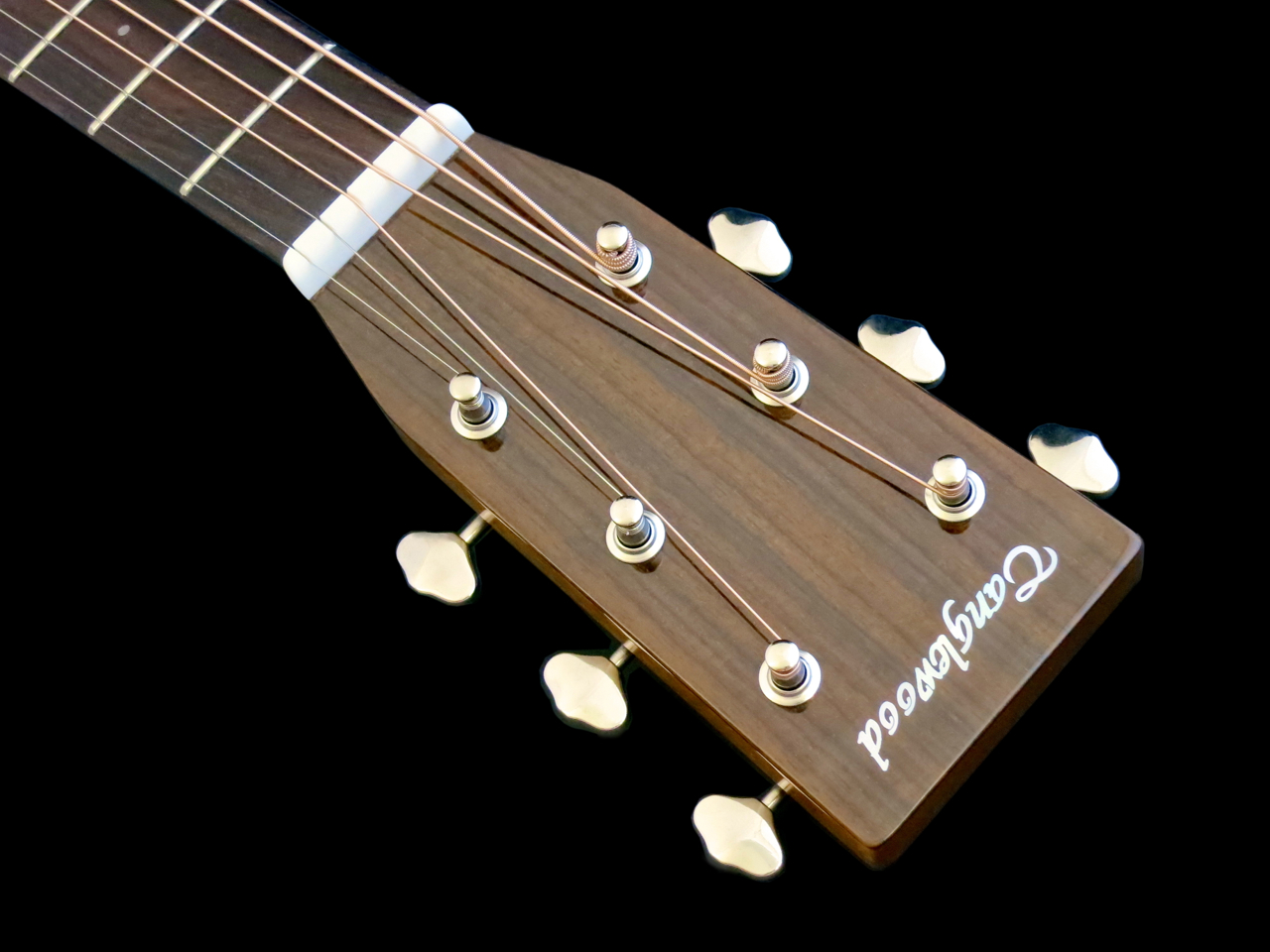
The nut is genuine bovine bone.

The machine heads are very decent copies of 1930s open-geared Grovers. They do a great job of keeping the tuning stable, but their action is a little bit stiffer than what you’re used to with modern die-cast tuners.
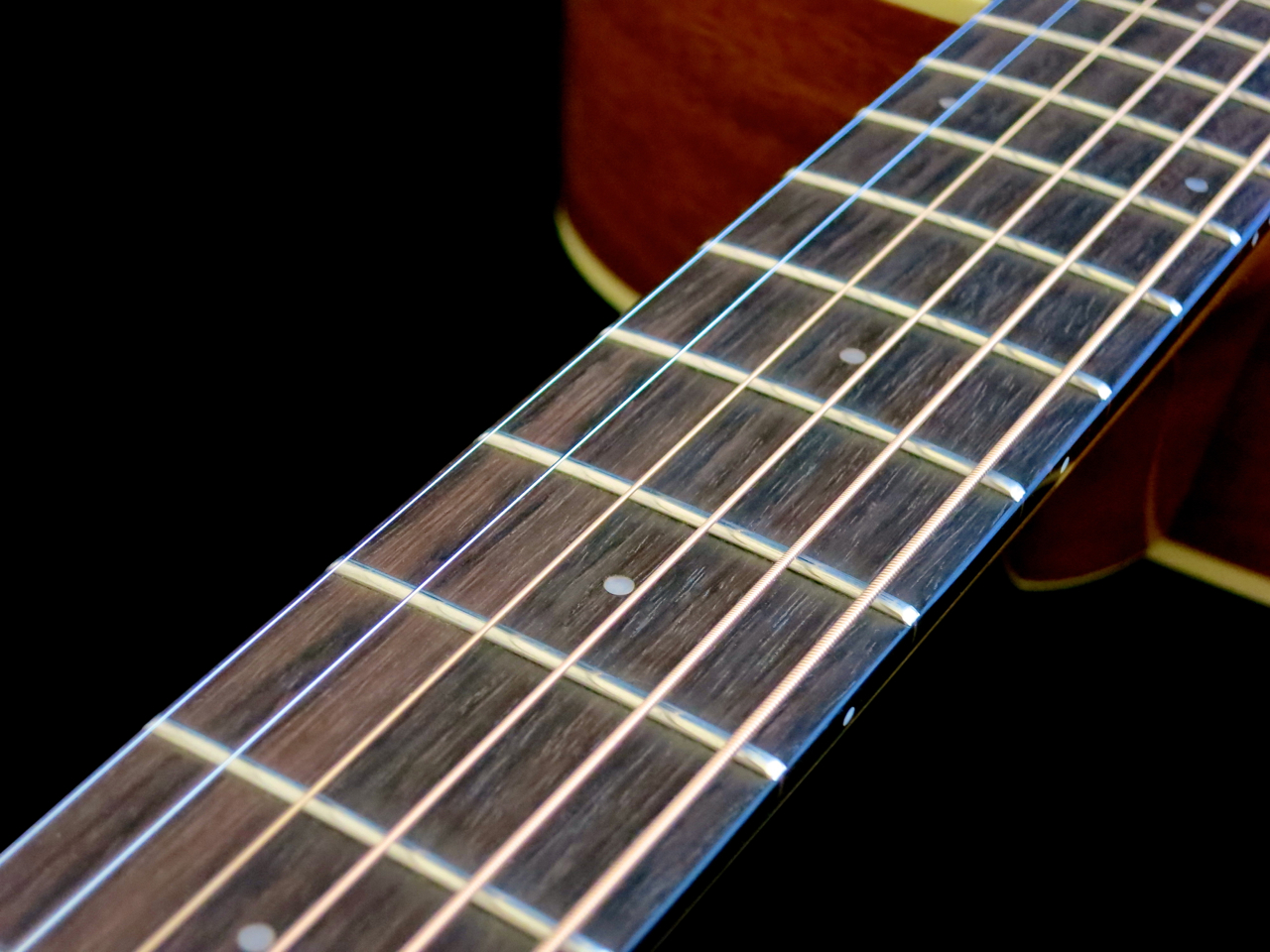
The slender and small frets fit the vintage brief of the TW40O and TW40D to a tee.

Here’s a good example of how different two pieces of rosewood can look:
The reviewed TW40O-AN-E’s bridge is a nicely-grained light example…

…while the dreadnought carries a much darker counterpart.
The compensated bridge saddle is genuine bone on both instruments.

Both Sundance Historics have been equipped with a Fishman Sonitone pickup and preamp.
The piezo transducer sits beneath the bridge saddle and feeds its signal to the preamp – featuring master volume and master tone controls – that has been glued to the underside of the soundhole’s bass side edge. The Sonitone is powered by a 9 V battery, which is stowed away in its own pouch that is velcro’d to the neck block. The downside is that changing the battery is a much more involved affair than with a quick change battery compartment, but the advantage of this Fishman system is that it doesn’t spoil the guitar’s looks.
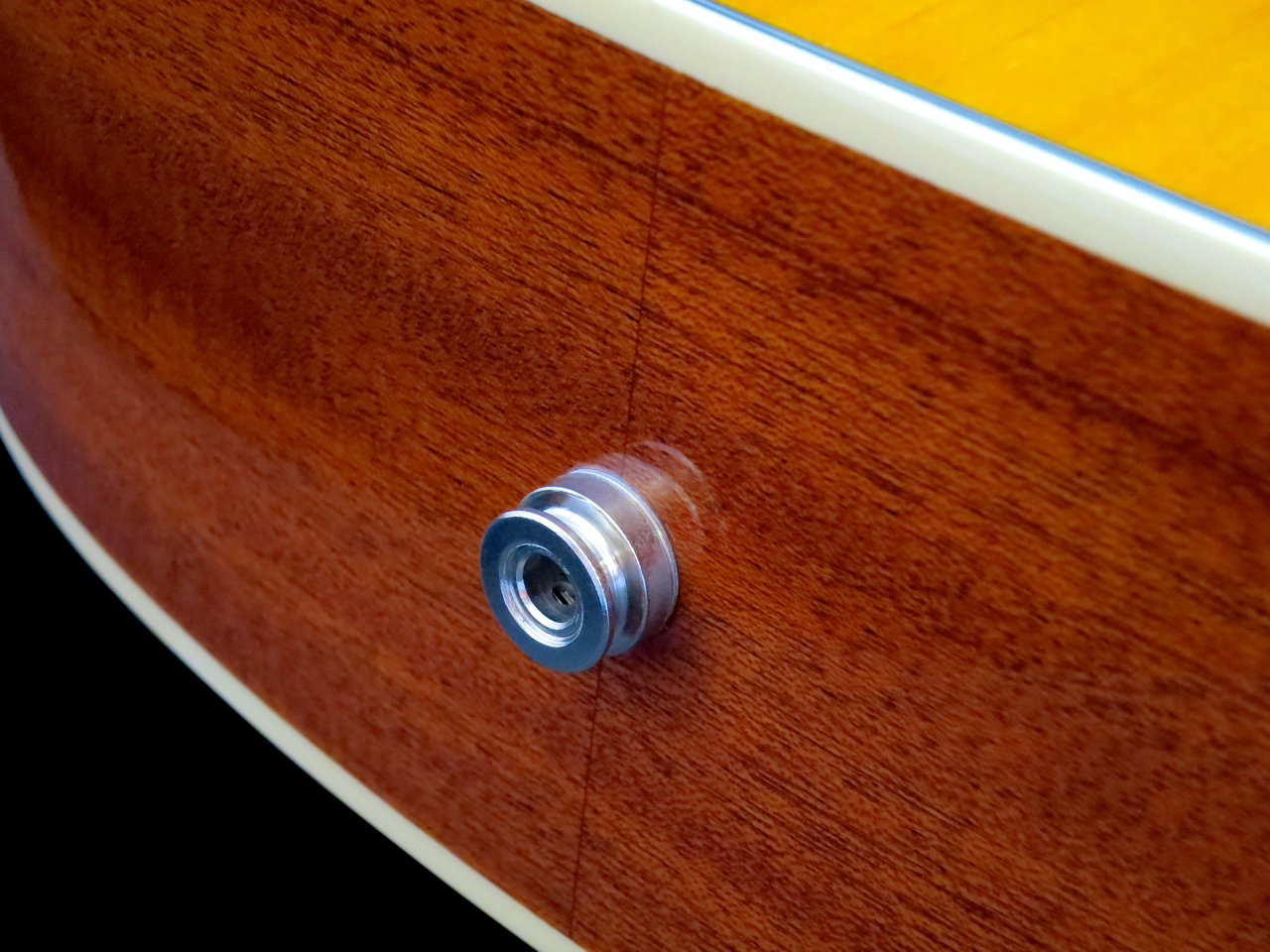
Both Tanglewoods sport an end pin output jack.
****

The care that has quite obviously gone into building these two Tanglewood Sundance Historic guitars really puts a smile on your face. The workmanship is clean and precise, and both instruments look more expensive than they really are.
Even though both guitars are from the 500-800 Euro price bracket, Tanglewood have gone the extra mile to match the wood grain on the sides of both guitars. The tops of the shoulders look bookmatched.
The vintage brief extends to more than simple cosmetics on the TW40O-AN-E:
Vintage OM-guitars (OM stands for Orchestra Model) are known for their slightly wider necks with soft V-profiles. You will also often find a slightly wider string spacing at the bridge, which makes fingerstyle playing much easier.
Tanglewood has used these vintage specifications for their Sundance Historic OM:
The neck has a very nice, soft V-profile, with a width at the top nut of 46 mm. The low E to top e spacing at the bridge is a very comfy 58 mm, which is good news for fingerpickers, working equally well with a plectrum.
The TW40O plays like a dream with a nice set-up on our review sample (string height at the 12th fret: bass-E – 2.1 mm/treble-e – 1.9 mm).
There a lot of debate about the pros and cons of solid backs in acoustic guitars. Some claim that a solid back is almost as important as a solid top in a steel-string acoustic, while others point to the use of laminated backs in the legendary Selmer-Maccaferri guitars (and newer exponents of the Gypsy Jazz genre) or to the great sound of arched-back vintage Guilds.
My own position in this debate is that most (but not all) guitars with laminated backs a bit quieter and drier-sounding than their all-solid brethren. Nevertheless, I feel that a solid top and an overall well-crafted instrument are much more important to the sound as a whole.
An OM-sized steel-string will have a ”sweeter”, less bass-heavy tone than a Dreadnought of similar build, which is due in large part to its smaller and differently-shaped body.
Tanglewood’s TW40O has the trademark OM-sound – the guitar’s voice is open and well-balanced, with a projection akin to that of a Dreadnought, and it is very easy to record and place in a mix.
These two clips have been recorded with a pair of Shure SM57 microphones:
Fishman’s Sonitone system is a decent and easy-to-use choice to amplify your guitar on stage with the least amount of hassle:

****

The original aims in designing the Dreadnought were the need for more volume and a fatter bass register. At first Martin’s D-models were aimed squarely at the ”singing cowboys”, which were so popular in the US in the 1930s and 40s. These musicians, such as Gene Autry or Hank Williams, needed loud guitars that would build a strong foundation for their vocals. This is what started the phenomenal success of the D-model, making it fairly ubiquitous in most genres of music.
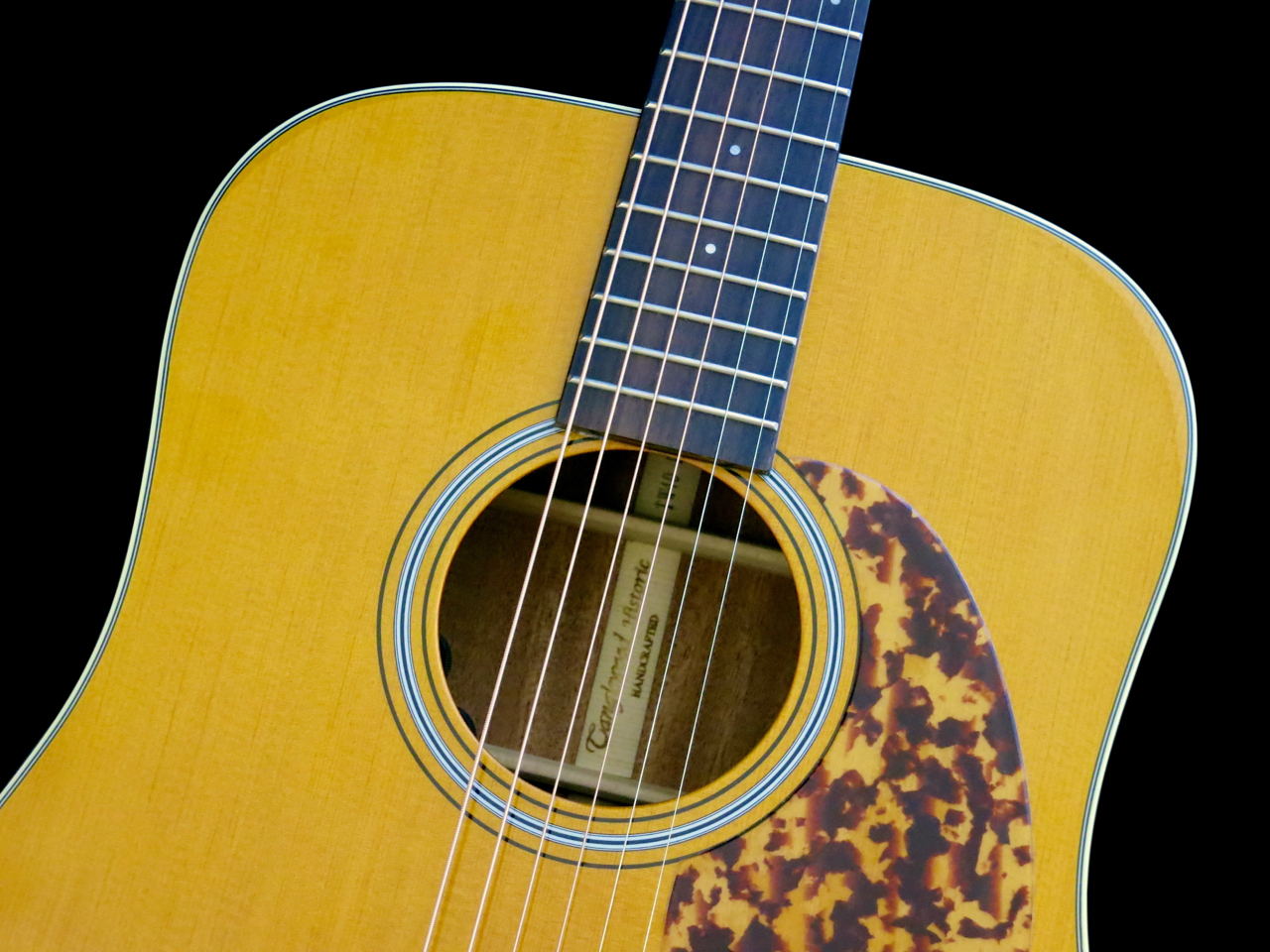
Tanglewood’s TW40D-AN-E is a well-made homage to a 1930s-style D-18, both in terms of looks and sound.
The TW40D’s neck is virtually identical to the one on the TW40O – a nice soft-V affair, which is slightly wider and bigger than the neck on many contemporary steel-strings.
The craftsmanship displayed on this D is of the same high standard as on the reviewed OM, really leaving nothing to be desired in terms of the TW40D’s playability and set-up (bass-E: 2.2 mm/top-e: 1.7 mm).
We all know how a Dreadnought should sound: a big bottom end, coupled with a warm mid-range and chiming treble.
The Tanglewood TW40D doesn’t disappoint:
Fishman’s Sonitone system also works very well in the context of the TW40D-AN-E-model:
****

In my opinion Tanglewood’s TW40O-AN-E and TW40D-AN-E really do offer something special in their price range:
Here we have a pair of steel-string acoustics at player-friendly prices, which take the terms ”vintage” and ”historic” above and beyond mere cosmetics. Thanks to the ”vintage correct” neck dimensions and neck profiles of these two instruments, and the wider string spacing, genuinely vintage-feeling guitars become available without custom shop price tags.
These are well-made, great-sounding guitars. Too bad I have to give them back…

****
Tanglewood Sundance Historic
TW40O-AN-E – 673 €
TW40D-AN-E – 673 €
Finnish distributor: Musamaailma
****
Pros:
+ value-for-money
+ workmanship
+ authentic neck profile
+ playability
+ Fishman pickup and preamp
+ sound


 Kitarablogi.com – Finland's premier Guitar and Bass blog