Review: ESP Eclipse II FM FT Distressed

****

A pre-aged guitar – to some people it’s the daftest idea ever, while others think relicing imbues the instrument with its own type of charm.

But one thing is clear: artificial ageing is here to stay!

This time we will take a new-old ESP for a spin – the Eclipse II FM FT Distressed.

****

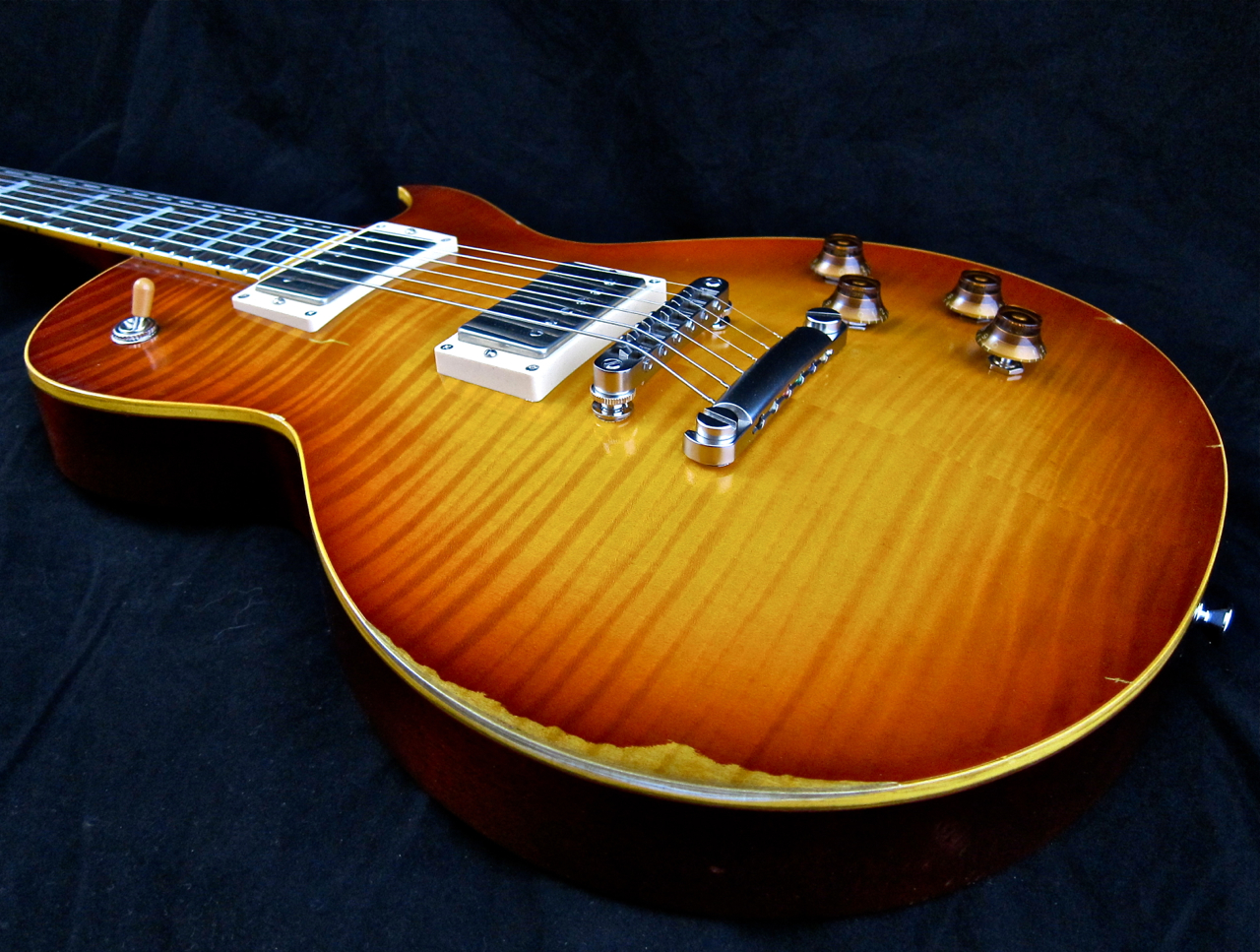
The ESP Eclipse II Distressed (current price in Finland: 1.889 €) is a Japanese quality instrument treated to look and feel like a 50-year-plus veteran of the stage and studio.

The rather realistic impression is achieved not only by dings, dents and scratches, but also by using a laqcuer that looks old and sunken in.

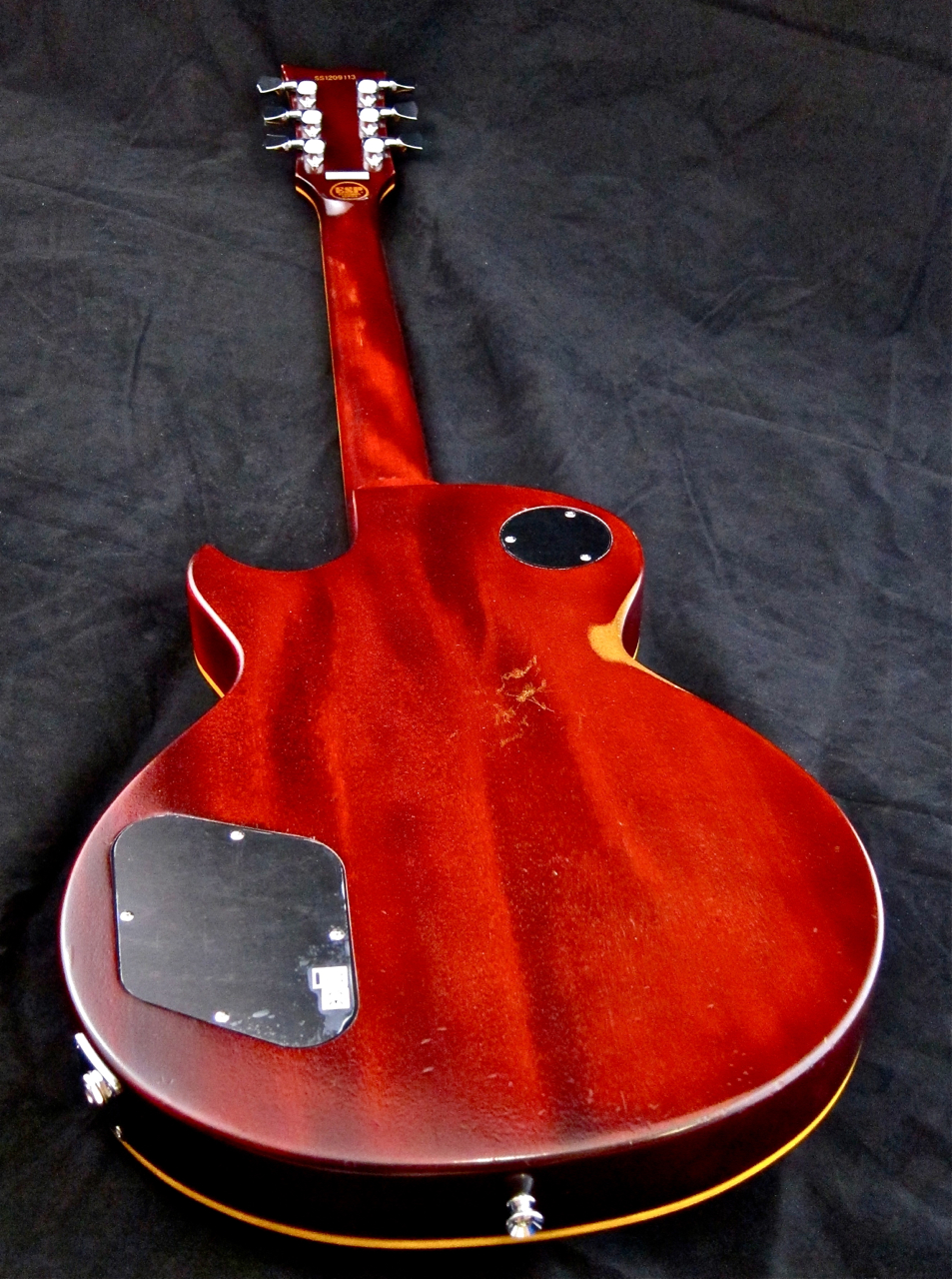
The flip side of the Eclipse II Distressed’s body has also received lots of scratches and a bout of artificial belt buckle rash. The neck, though, has been left fairly clean.

The mahogany looks scrumptious, and the finish does its bit to underscore the lively wood grain.

ESP have restrained themselves from adding over-the-top finish cracks, which is a good decision, in my opinion.
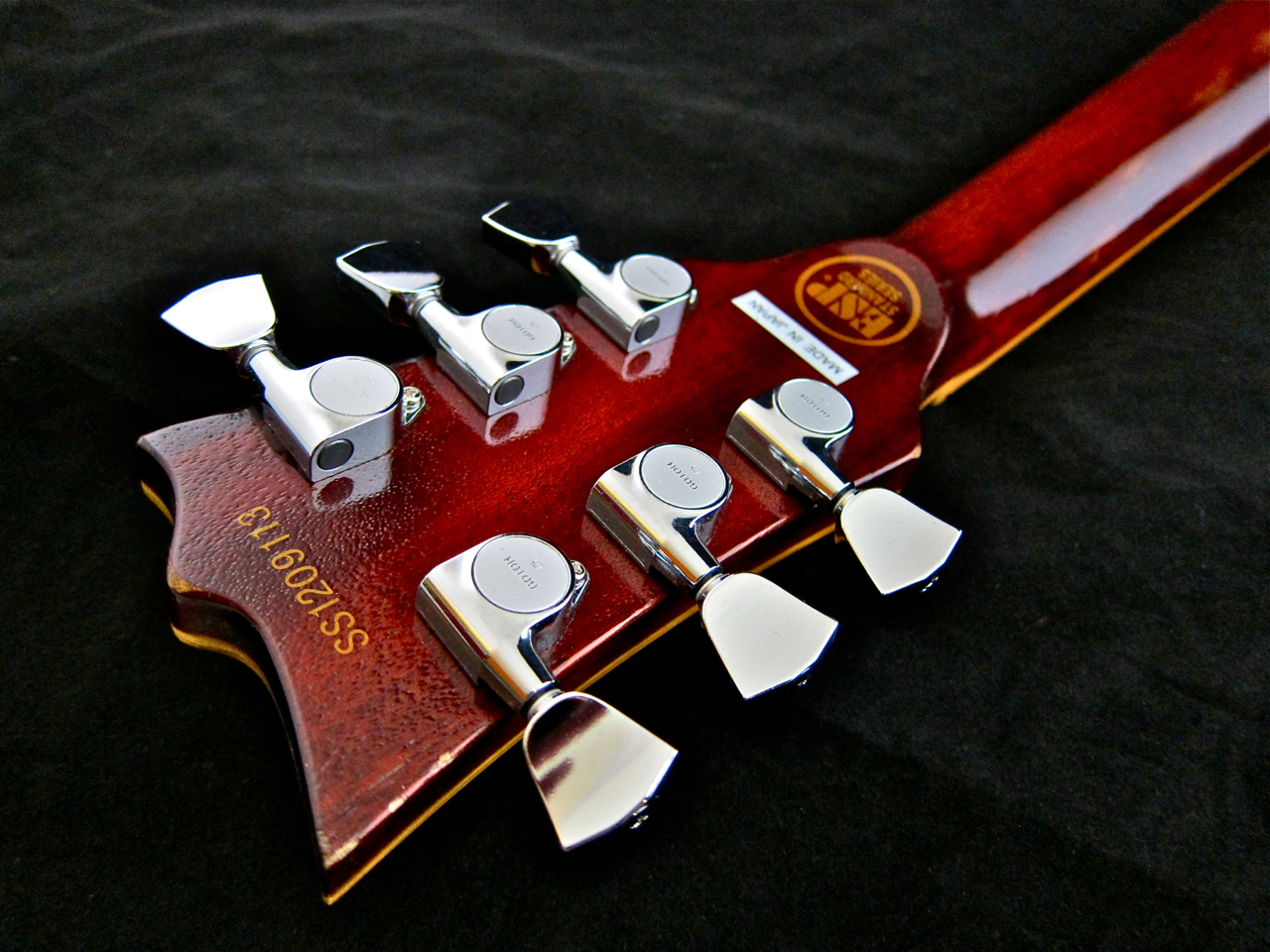
The Gotoh-machines look traditional, but are in fact up-to-date locking tuners.

The Eclipse’s beautiful rosewood ’board and jumbo-sized frets have been left untouched by relicing – this is a brand-new guitar with a pristine playing feel, great!

The neck joint is a traditional set-in job.

This viewing angle makes it easy to spot all the dents in the sunken in finish (click the picture for a larger view).

The Distressed-model comes fitted with Seymour Duncans: The neck unit is a ’59-model, while a Duncan JB -humbucker has been installed near the bridge.

The brushed metal covers fit the ESP’s lightly-aged look to a tee.
The neck pickup’s tone control is equipped with a push/push-switch that splits the humbuckers in the up-position.

Everything’s hunky-dory in the control cavity – quality parts, clean workmanship and thorough shielding wherever you look.
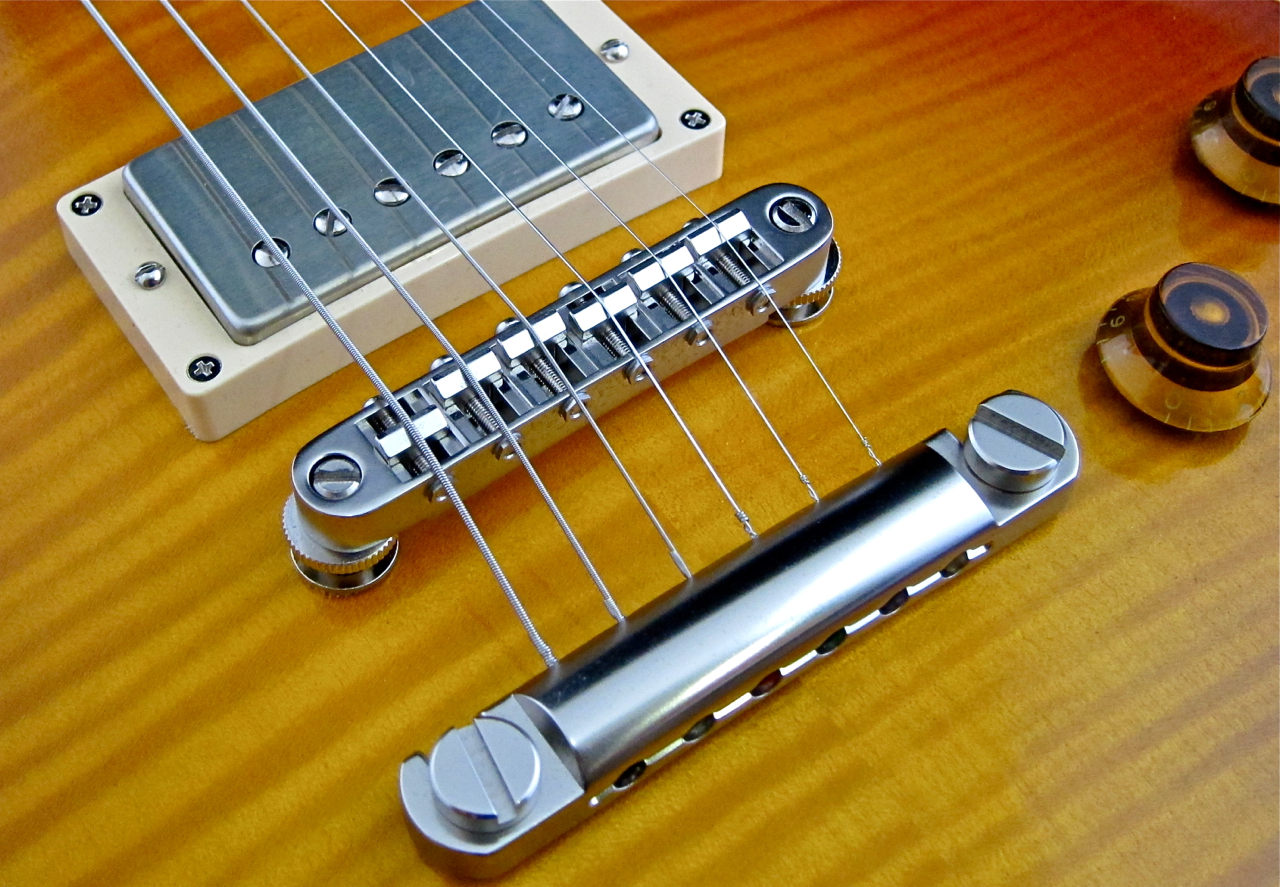
The tune-o-matic-type bridge and the guitars tailpiece are quality parts made by Gotoh.
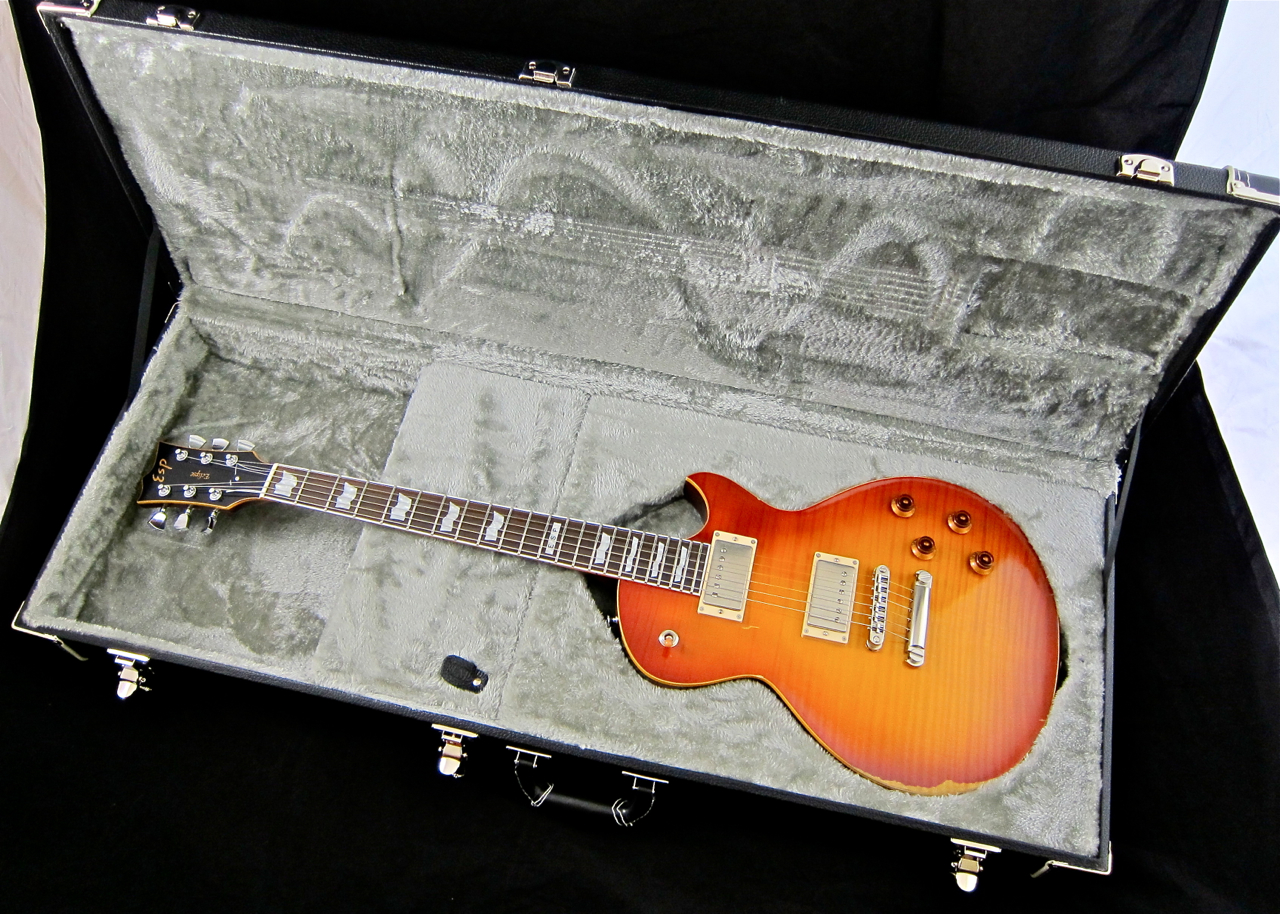
The ESP Eclipse II Distressed is sold in its own, beautiful case.

****

Many players complain about the weight of a good deal of LP-type electrics, which can give you a sore shoulder or a hurting back. I can only suggest that these guitarists take a stoll to their friendly ESP-dealer, if this test sample is anything to go by!

I don’t know whether it’s in the wood selection or whether ESP employ an Emmental-method (like Gibson) for weight-relief – by drilling large-diameter holes into the mahogany before gluing the maple top on – but this ESP is the most lightweight LP-style guitar I have ever played!

The neck profile is a very friendly medium-depth ”D”, not far removed from Gibson’s 60s-neck. The sunken-in finish feels smooth and fast, and the fine fretwork and large fretboard radius make for an easy playability.

It’s hard to gauge whether this is due to the relicing or not, but the ESP Eclipse II Distressed feels really live. The guitar breathes and resonates freely, and its fine acoustic tone has a nice warmth and a sinewy midrange.

Seymour Duncan’s ’59/JB-pairing is an excellent choice for the ESP Eclipse II. The pickups have a good balance between themselves, and manage to convey this instrument’s tonefulness onwards to the amp with fine detail. The ability to split the ’buckers adds three fresh and springy selections to your arsenal.

Both sound examples start with the split neck pickup, followed by the full neck pickup, and so on:

ESP Eclipse II Distressed – clean

ESP Eclipse II Distressed – distorted
Regardless of your stance towards pre-aged guitars, there’s no denying that ESP’s Eclipse II Distressed is a fine, high-quality instrument, with its own hefty dose of charm. Shame we had to give it back…

****

ESP Eclipse II FM FT Distressed 

Current price in Finland: 1.889 €

Finnish distributor: Musamaailma

Pros:

+ looks

+ sound

+ weight

+ playability

+ coil-split 

+ workmanship

****

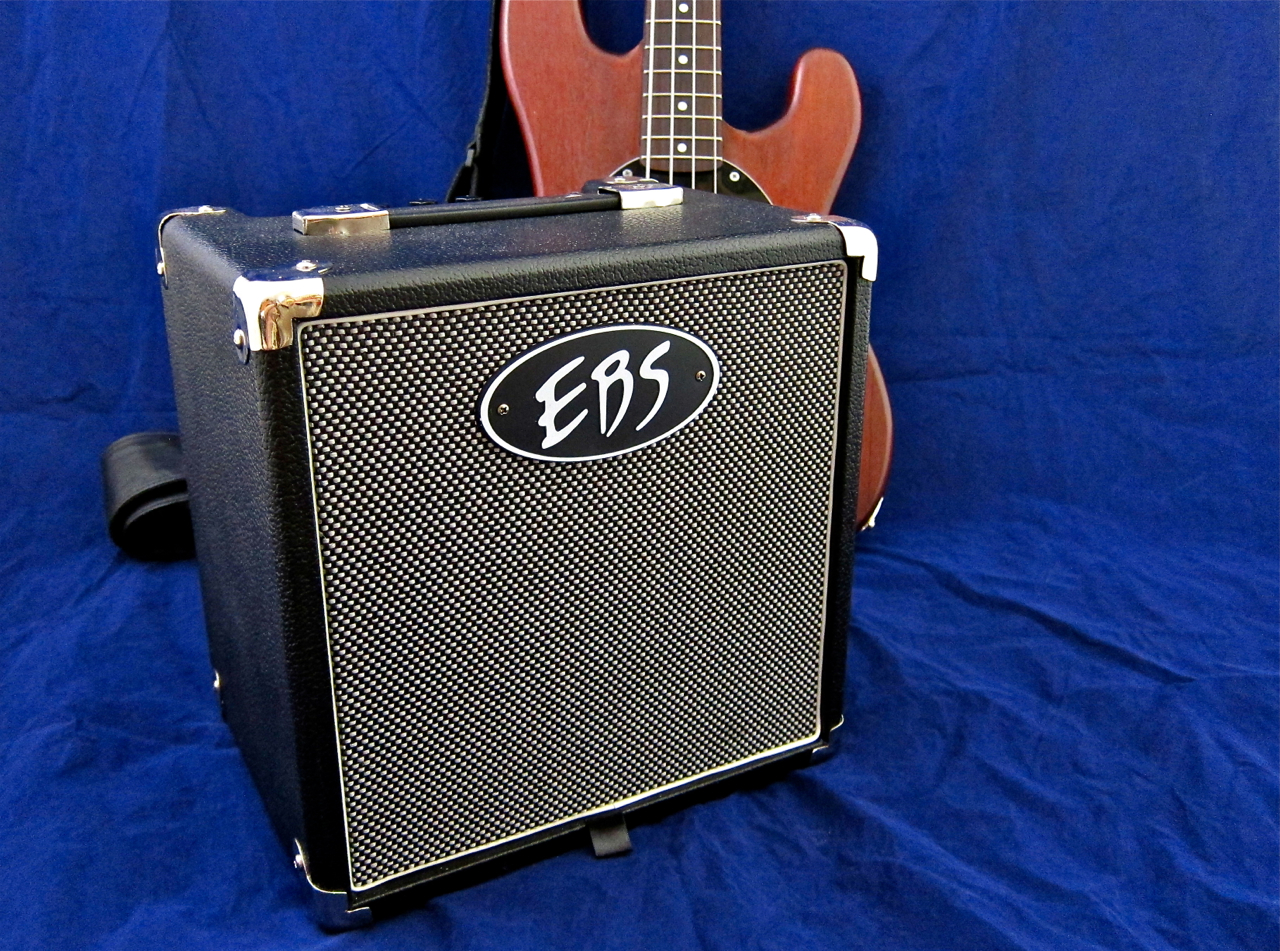
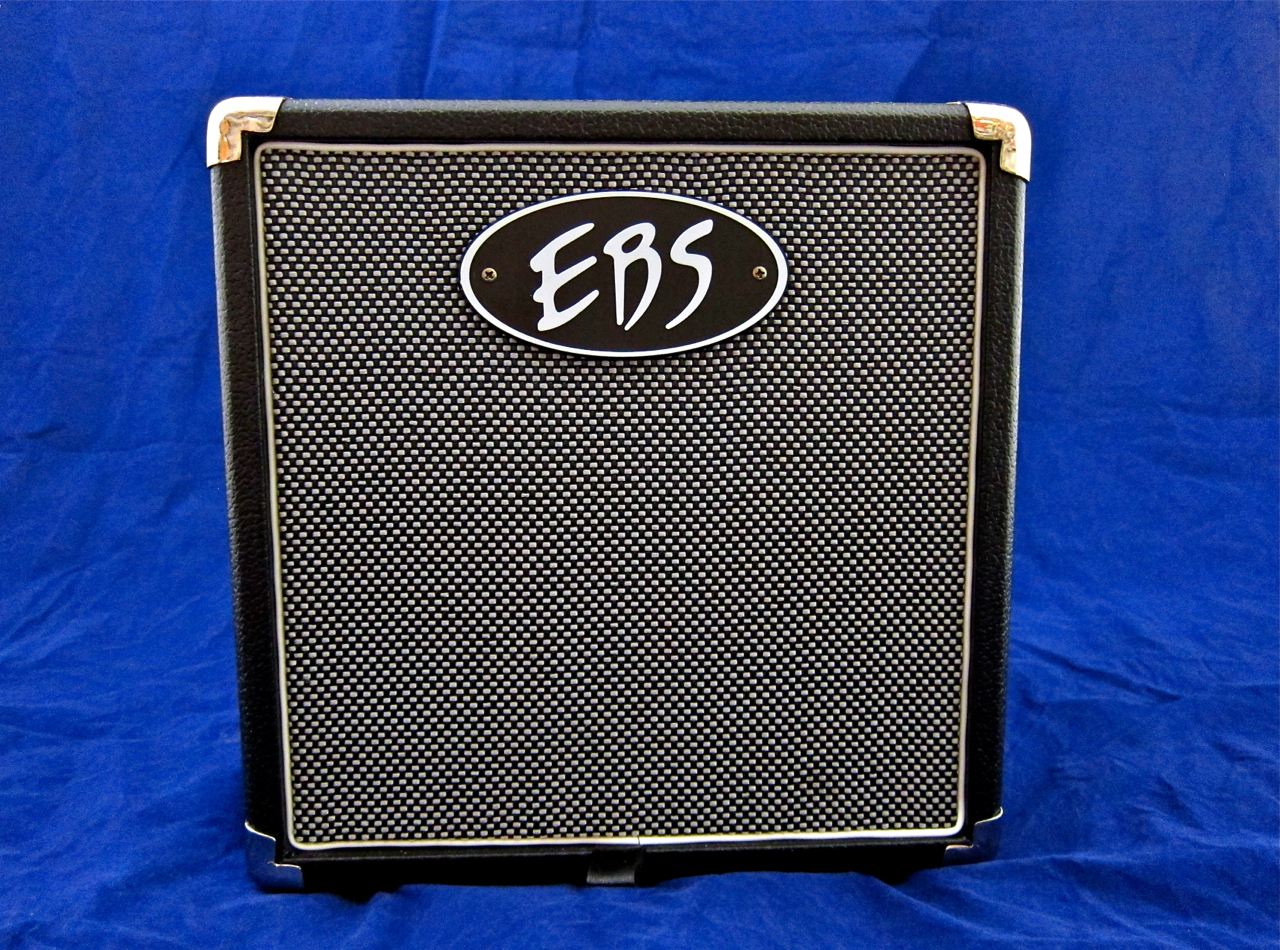
Testipenkissä: EBS Classic Session 30

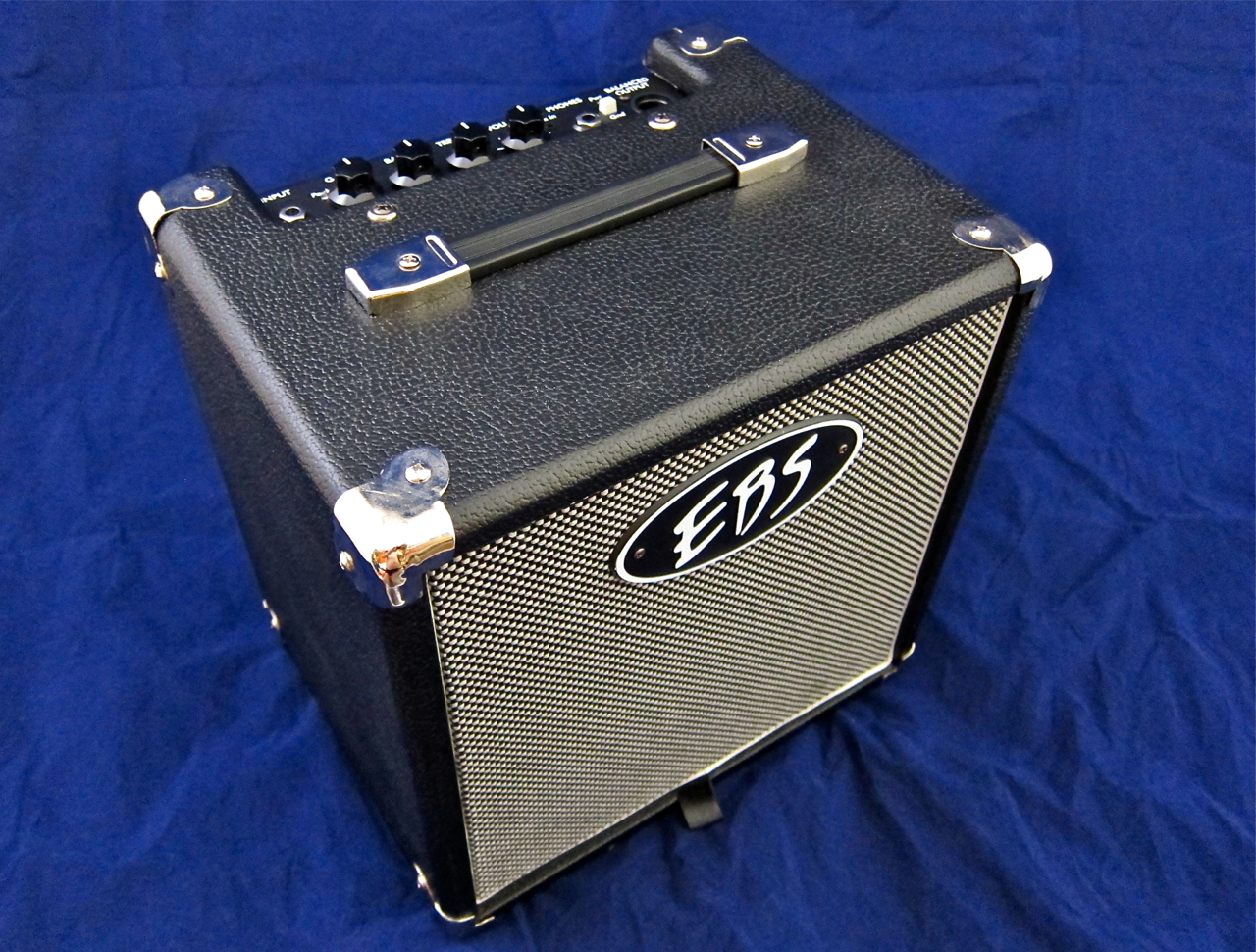
EBS Swedenin uutuus – Session 30 – on firman pienin kombo tähän mennessä, joka on tarkoitettu koti-, äänitys- ja harjoituskäyttöön.

****

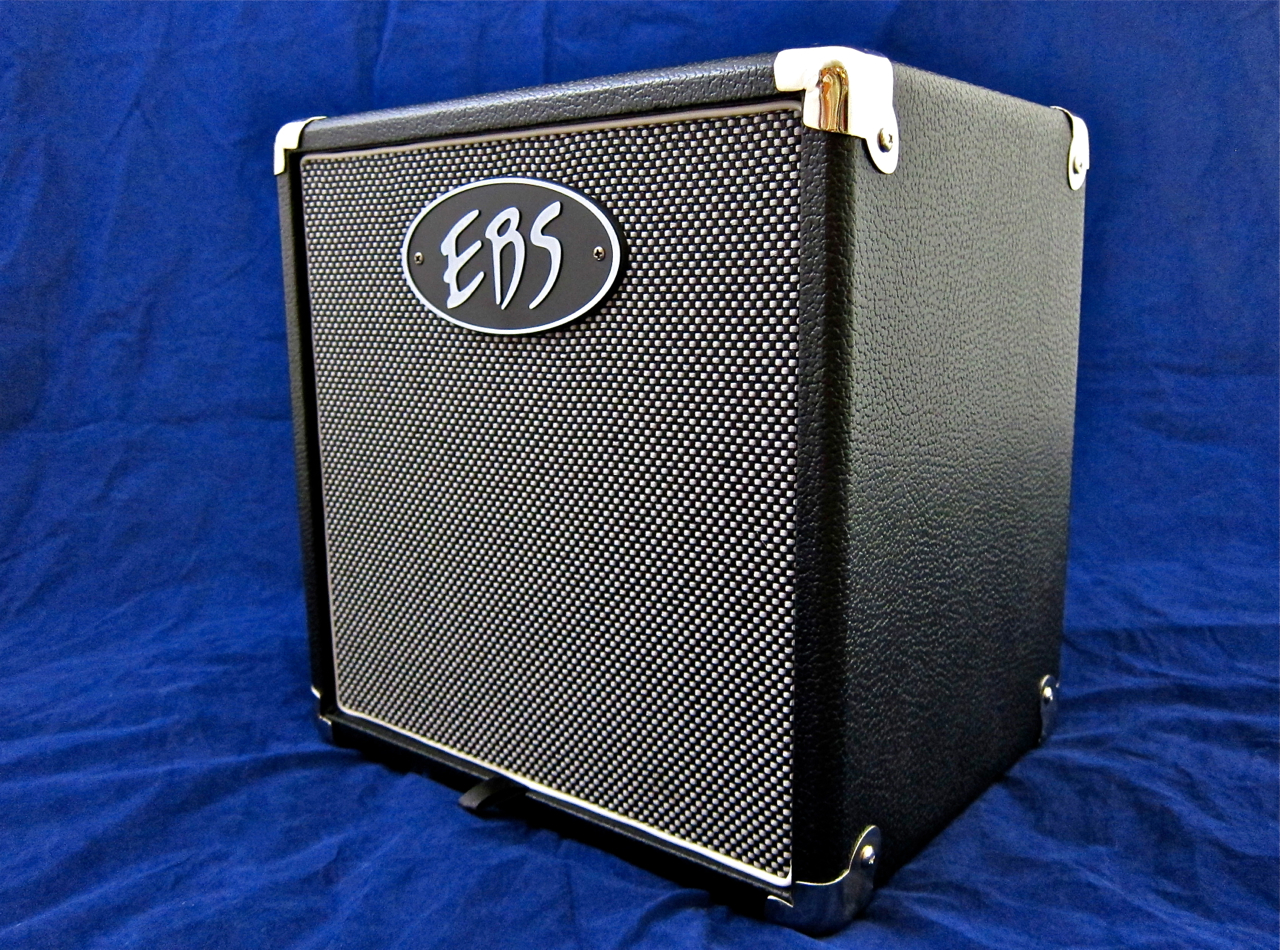
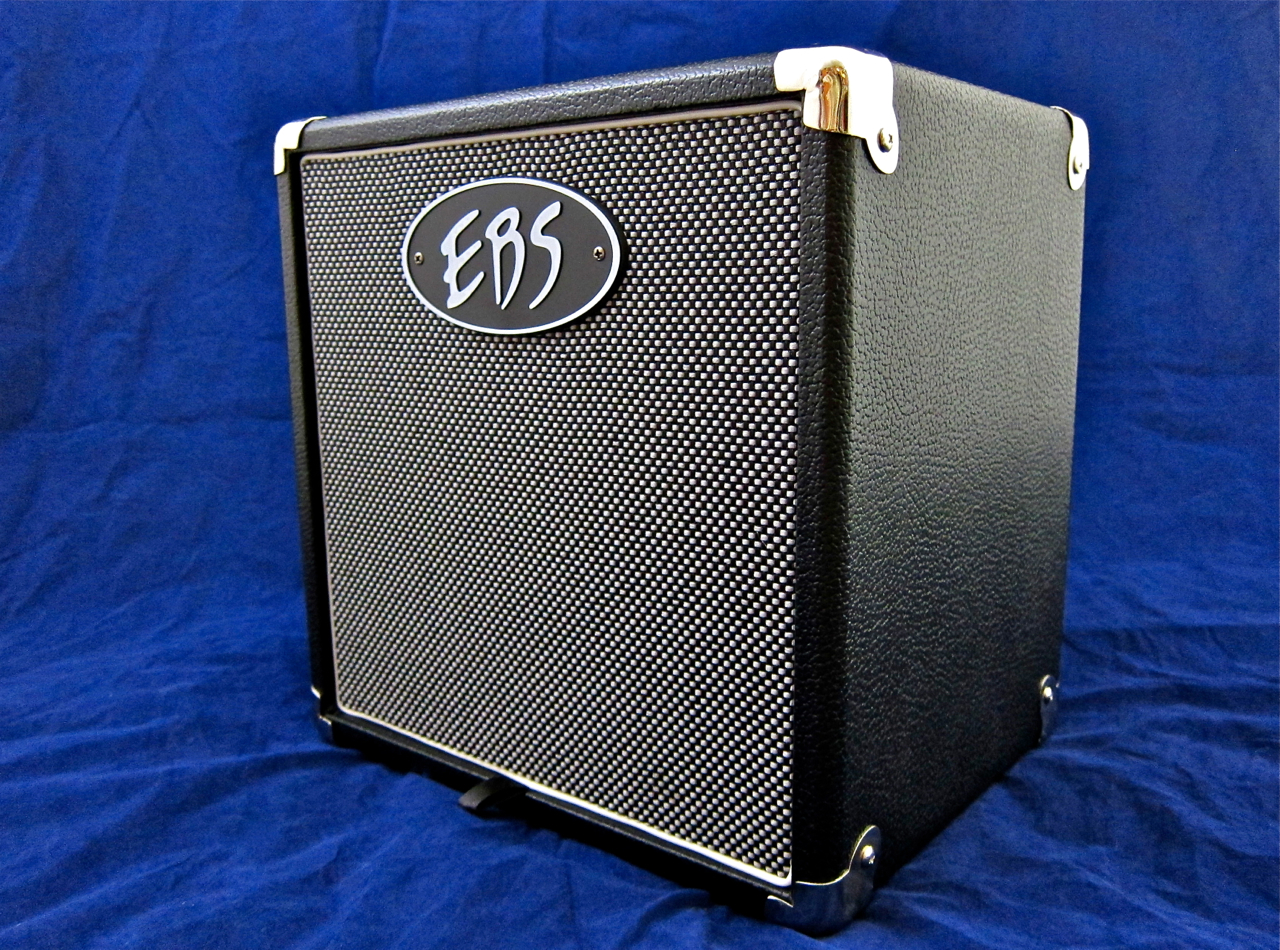
Pieni ja kevyt EBS Classic Session 30 (169 €) kuuluu valmistajan vintage-tyyliseen, Kiinassa valmistettuun Classic-sarjaan.

Session 30 tarjoaa nimensä mukaisesti 30 wattia lähtötehoa.

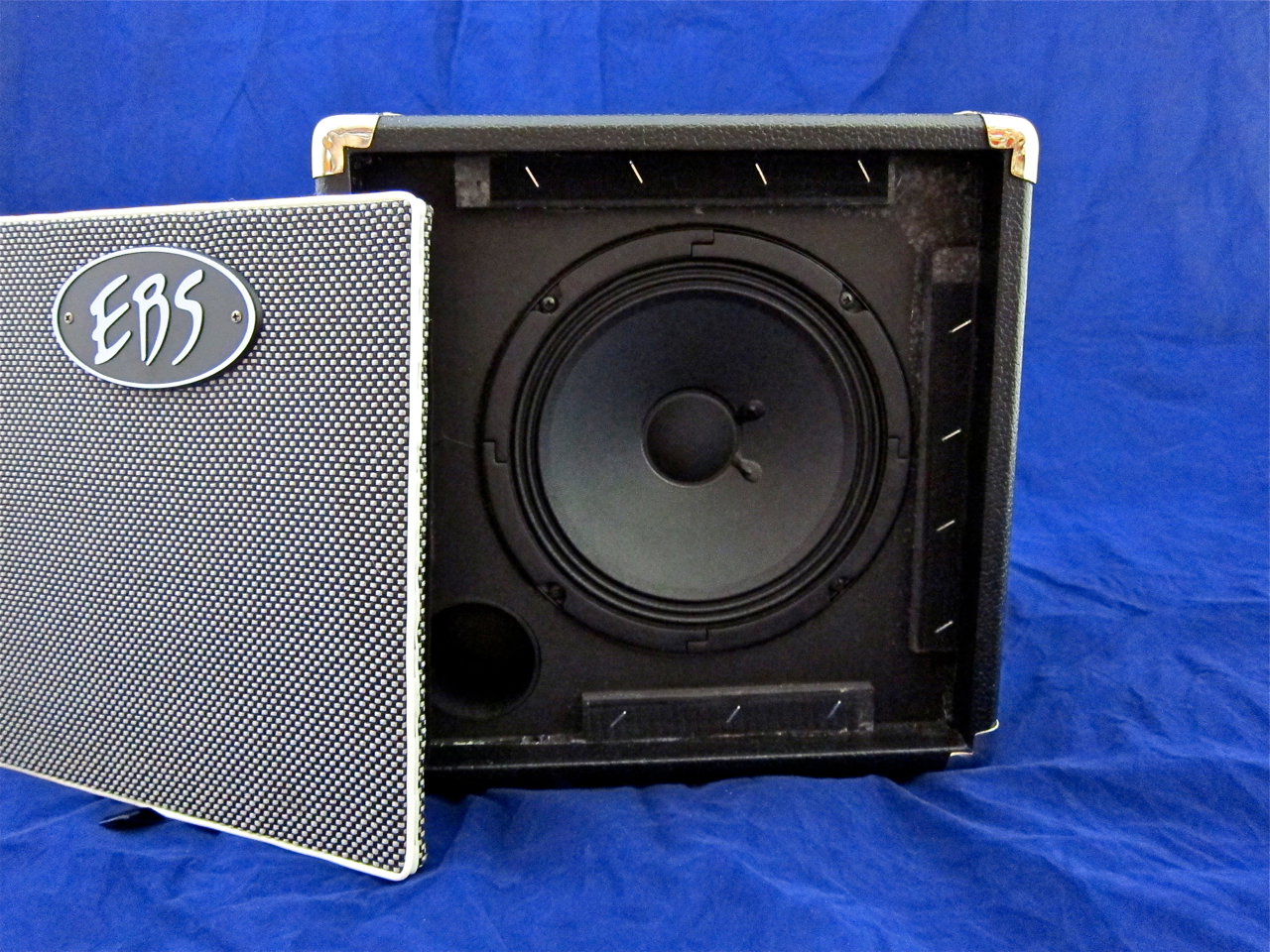
Kahdeksantuumainen kaiutin istuu refleksikotelossa, jolla on auko edessä. Tyylikäs etukangas on kiinnitetty perinteiseen tapaan tarranauhoilla.

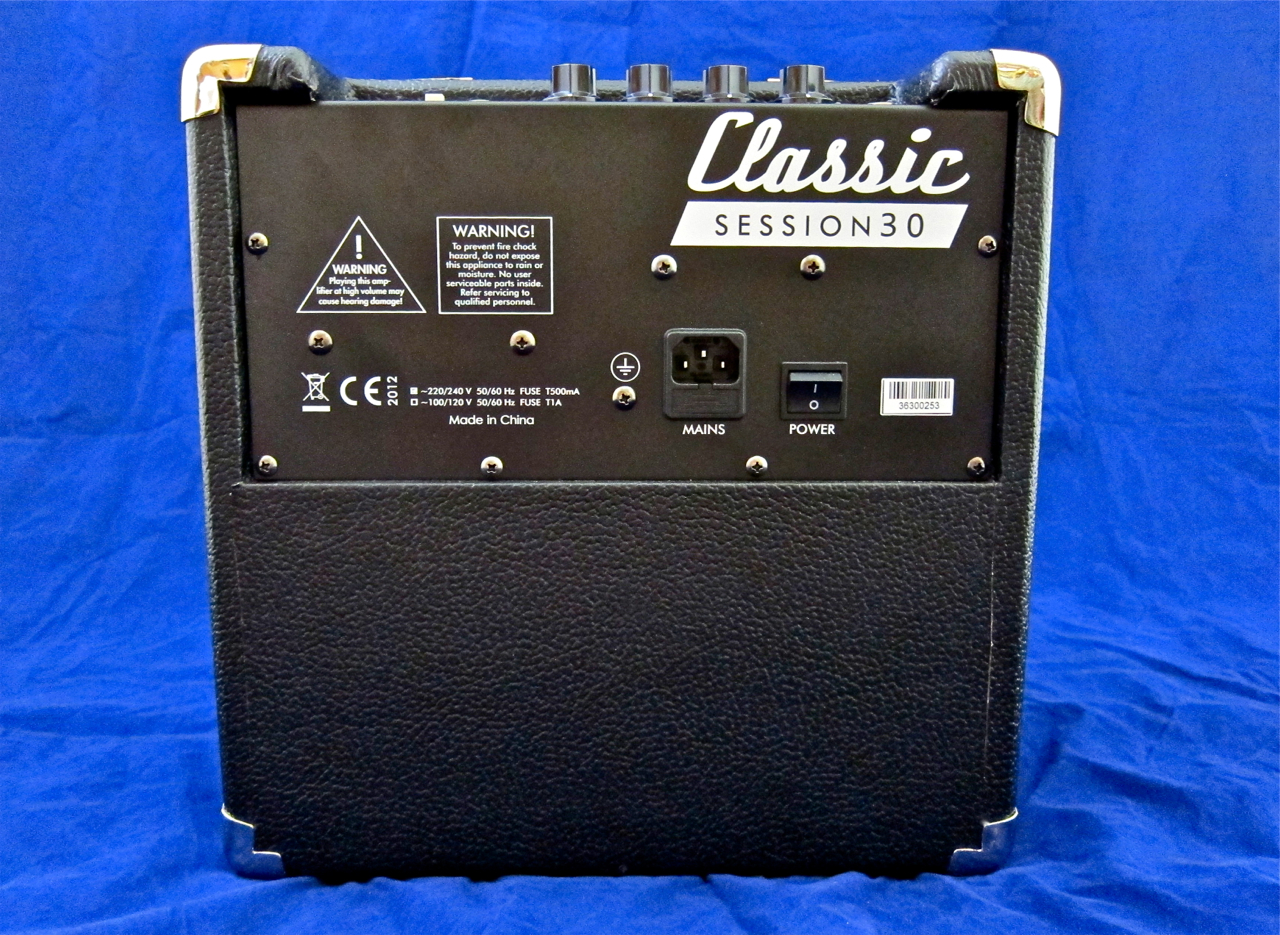
Harjoituskombon takapuoli on täysin suljettu. Virtajohdon liittimen ja virtakytkimen viereen EBS on lisännyt vielä maadoituspisteen, josta voi olla hyötyä hurinan minimoimisessa, silloin kun vahvistinta käytetään studioympäristössä.

Session 30:n paino jää alle yhdeksän kiloa, joten kombo on todella helppo kuljettaa kantokahvallaan.

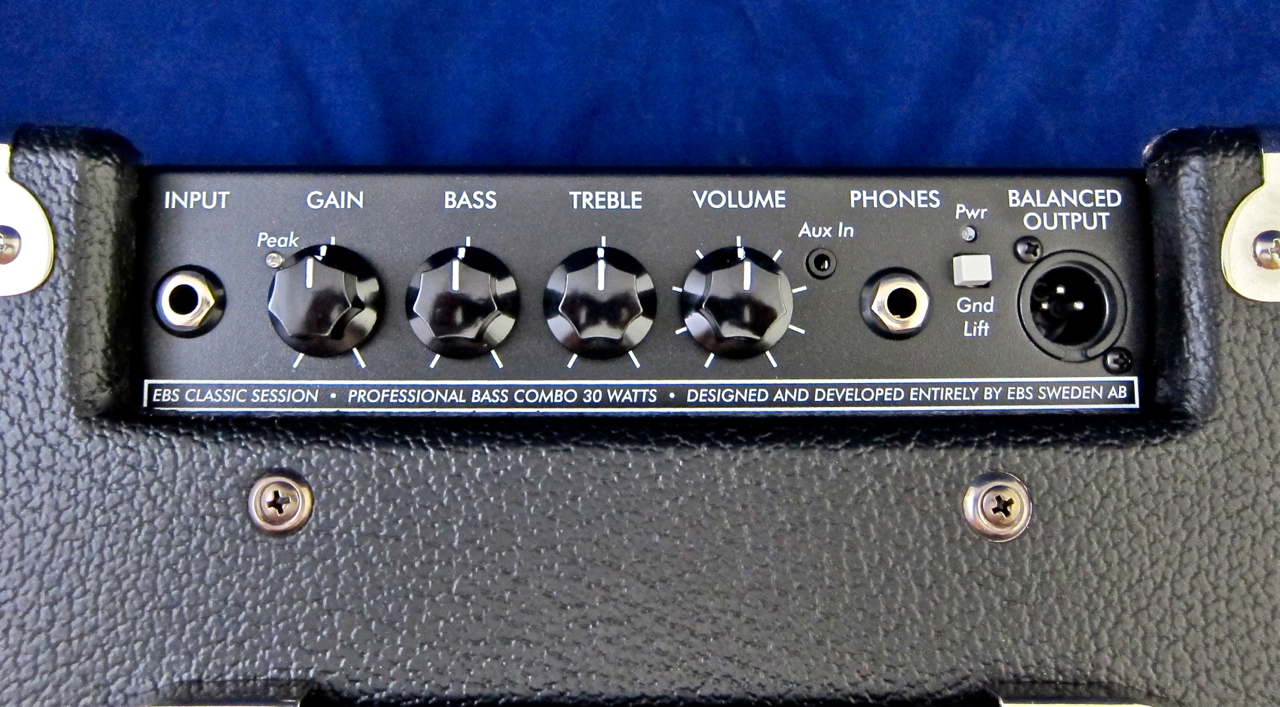
Kombon paneeli tarjoaa säätimiä gainille (jolla on oma Peak-ledi), bassolle, diskantille sekä volumelle.

Harjoituskäyttöä varten EBS on lisännyt Session-vahvariin minijakin mp3-soittimelle ja kuulokelähdön.

Harvinaisuus tässä hintaluokassa on pikkukombon balansoitu XLR-lähtö, joka tekee Session 30:stä myös kätevän DI-boksin omalla monitoroinnilla studiokäyttöä varten. Ground Lift -kytkimellä saa katkaistua tehokkaasti mahdollisista maalenkeistä aiheuttavan brummin.

****

Pikkuisesta, kahdeksantuumaisella kaiuttimella varustetusta harjoituskombosta ei voi odottaa seiniä vavisuttavaa bassotoistoa ja äänenpainetta – se olisi täysin epärealistinen.

Toisaalta täyttyy korostaa, että EBS Classic Session 30:stä lähtee kunnon bassosoundi. Tämä kombo ei missään nimessä ole kumiseva leluvahvistin, erittäin reilusta hinnastaan huolimatta.

Pikkuvahvistin tarjoaa aitoa EBS Classic -sarjan soundia opetus- ja harjoituskäyttöön sopivalla volyymillä. Bassorekisteri on lämmin, keskialue siisti ja yläkerta silkkisen pehmeä.

Kun vääntää master volumen täysille – tai jo vähän aikaisemmin viisikielisellä bassolla – mukaan kuvaan astuu odotetusti myös kombon (ja kaiuttimen) pienestä koosta aiheuttuvaa resonointia ja surinaa, mutta järkevässä käytössä EBS:n pienokainen pärjää mainiosti.

Session 30:n XLR-lähtö toimii sekin moitteettomasti, välittämällä kombon laatusignaalia puhtaasti eteenpäin mikserille tai äänikortille.

Mielestäni EBS Classic Session 30 on mainio harjoitusvahvistin, sekä erittäin kätevä työkalu kotistudiossa.

****
Seuraavat esimerkit on äänitetty käyttämällä samanaikaisesti sekä kondensaattorimikrofonia kaiuttimen edessä että kombon suoraa XLR-lähtöä:

1985 Squier Jazz Bass

1989 Höfner 500/1

1987 Rickenbacker 4003

****
EBS Classic Session 30

169 €

Maahantuoja: F-Musiikki

****
Plussat:

+ hinta-laatu-suhde

+ koko

+ paino

+ soundi

+ DI-lähtö

****

Review: Bogner Goldfinger 45 1×12 combo

Over the last decade Bogner Amplification have achieved a legendary status among fans of boutique amps.

Bogner’s best-known design is probably the Uberschall-model, which is aimed squarely at the connoisseur of high-gain amps. But the company also build several vintage-inspired amps, one of which is the Bogner Goldfinger combo.

****

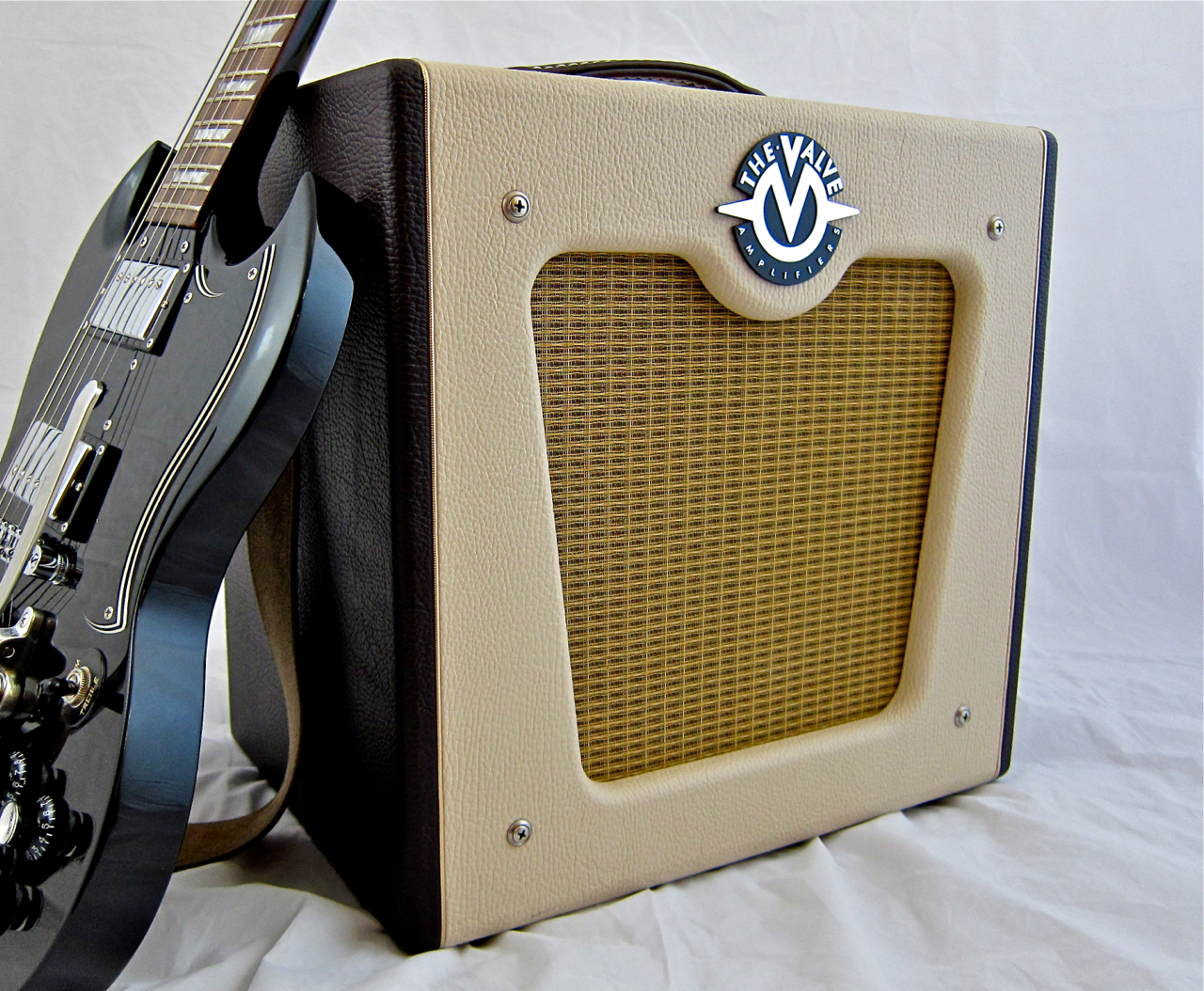
Bogner’s Goldfinger 45 1×12 (current price in Finland: 2.946 €) is quite large for a 1×12”-combo. Its dimensions are in a similar league as the 2 x 12 Vox AC30. The reason behind the large and deep cabinet lies in the fatter tone it produces.

The Goldfinger’s preamp section has been designed around four 12X7- and one 12AT7-valve, with the main amplifier running a quartet of 6V6-types. The combo is rated at 45 Watts, but its power can be reigned in using the front panel’s  Standby/Hi/Low-toggle, as well as the Full/Half-switch around the back.

The top-drawer valve amplification circuit and the combo’s high-class plywood cabinet naturally make themselves felt on the scales. Handling 30 kilos worth of weight using the Goldfinger’s sole top handle isn’t quite a walk in the park.

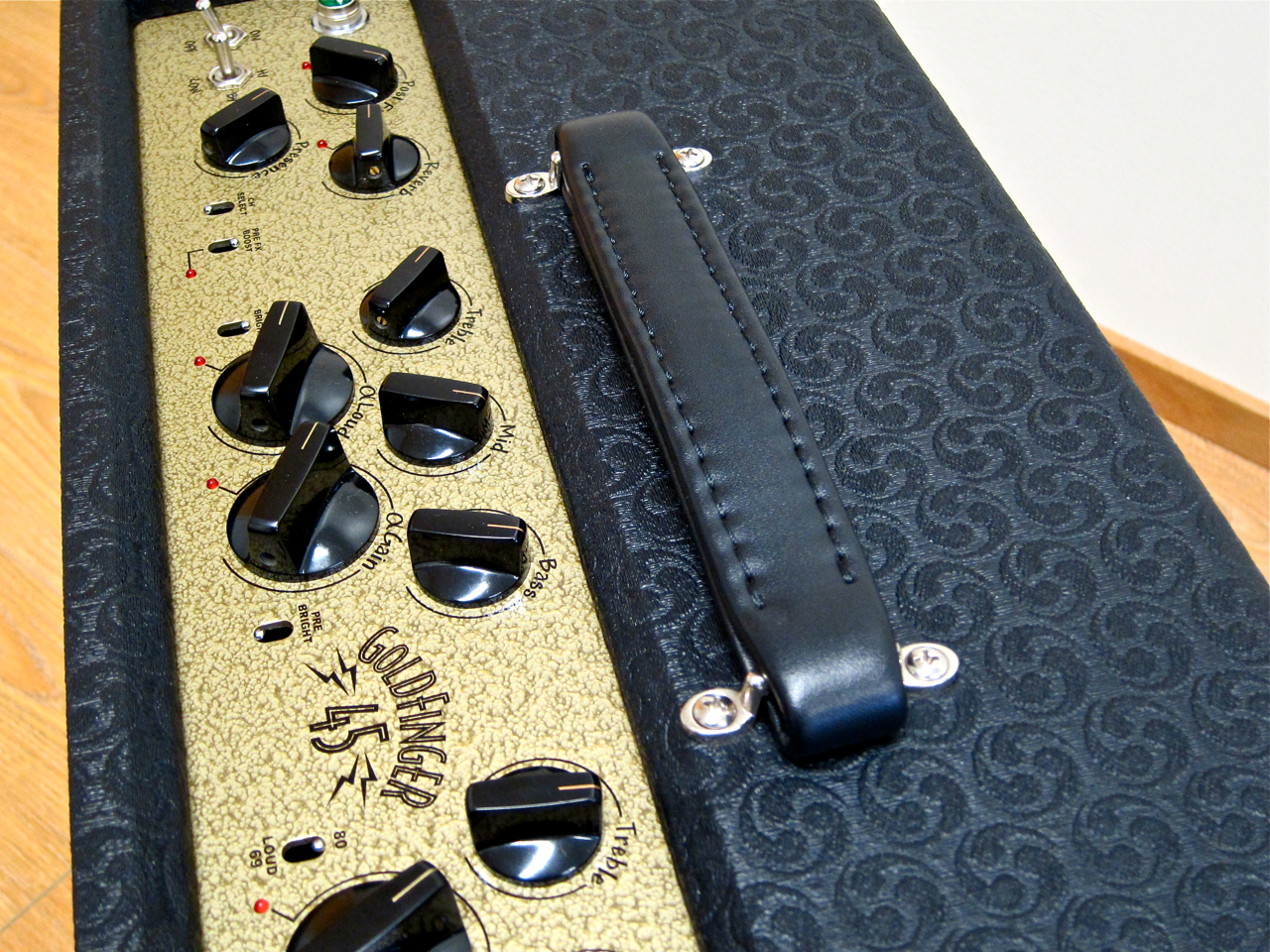
The Bogner Goldfinger 45 is a two-channel amplifier, with the clean channel called α – or Alpha.

On the right side of the picture you can spot the Alpha-channel’s controls – gain, master volume (”Loudness”), as well as a three-band EQ-section – with the added attraction of not one, but two bright-switches. Pre Bright spices up the signal in front of the gain control, with Post Bright being inserted into the Loudness-circuit. Pre Bright has a sharper and more dynamic character, in contrast to Post Bright’s somewhat more open tone. Both the gain- as well as the Loudness-settings affect the amount of brightness added via the switches – the louder you go, the less top end bite is added.

On the picture’s right hand side you’ll find the Goldfinger’s master section, with controls for reverb, master presence and the Post FX -loop. One of the Bogner-combo’s coolest features is hinted at by the miniswitch labelled Pre FX/Boost – the input has its own effects loop.

You could use the Pre FX -loop for adding a booster, compressor or outboard EQ-pedal to your signal chain, which then can be switched on or off using the combo’s own footswitch board. If you don’t have anything plugged into the Pre FX -loop, you can use the loop’s own buffer amp as a signal booster, with the amplification level adjustable on the back panel.

The name of the Goldfinger’s overdrive channel is Ω, or Omega, and it’s got a slightly different architecture compared to the Alpha-channel.

The Omega-channel offers you two basic charatcers to choose from, called 80 ja Loud 69. Loud 69 is the more vintage-type setting of the pair, giving you a moderate amount of gain with plenty of dynamics, reminding me of early Marshall-amps or the rudeness of a hollering Hiwatt. ”Loud” is a very good term here, as with identical settings Loud 69 is much louder and punchier than the far creamier 80-selection.

Setting the Omega to 80 morphs the Goldfinger into a Classic Rock -aficionado’s dream machine. There’s lot of gain on tap with a good helping of fat and creamy compression, which calls to mind Mesa/Boogie-style Westcoast-sounds or Gary Moore’s singing Marshall-tones.

In addition to its three-band EQ, Omega also offers a control named Gain EQ, which allows you to change the channel’s tonal focus from warm and fat all the way to biting and bright. Because the Gain EQ -control sits at the channel’s front end, its setting also influences the amount of overdrive.

A full-length spring reverb tank is situated in its own bag at the bottom of the cabinet.

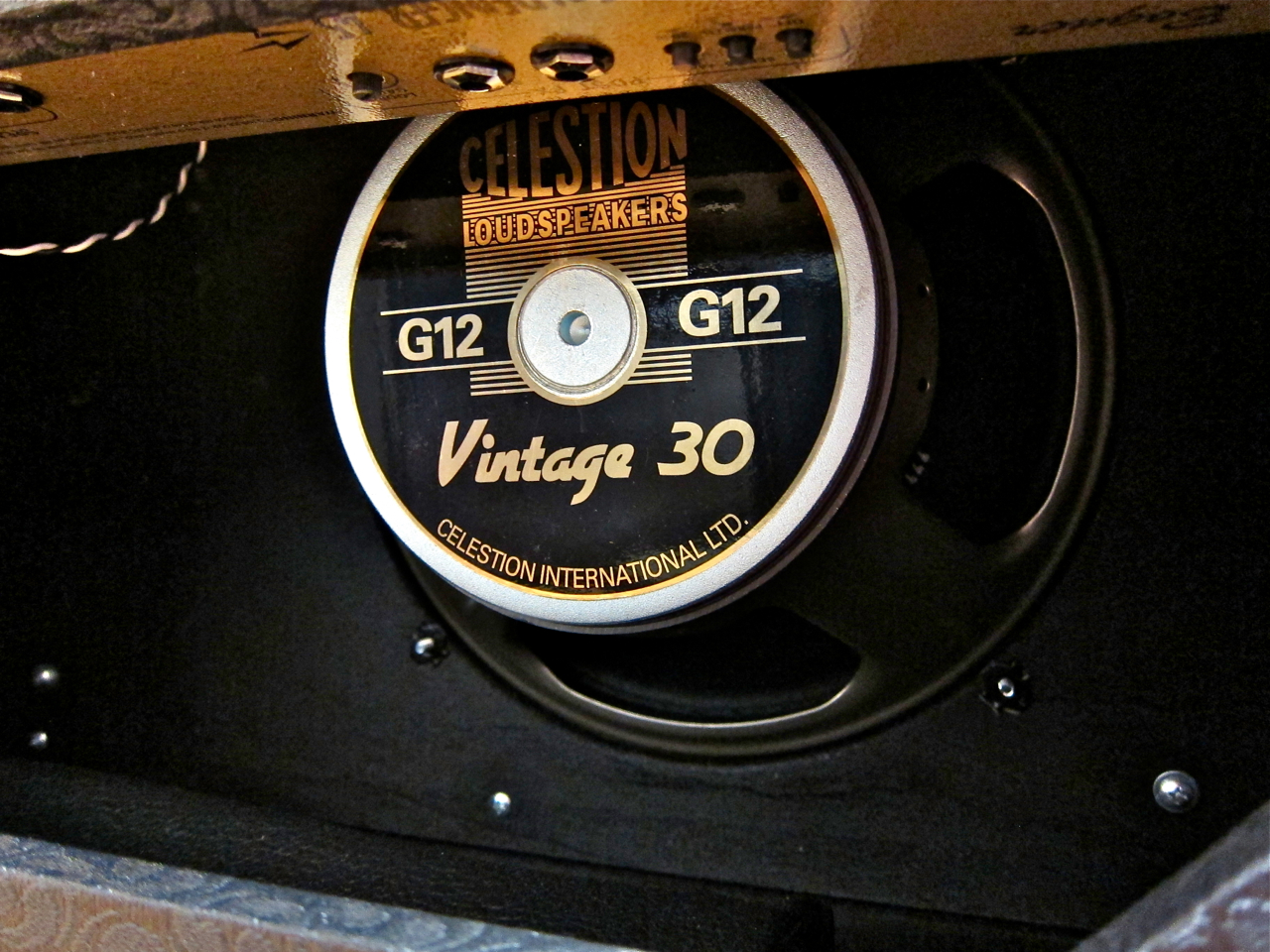
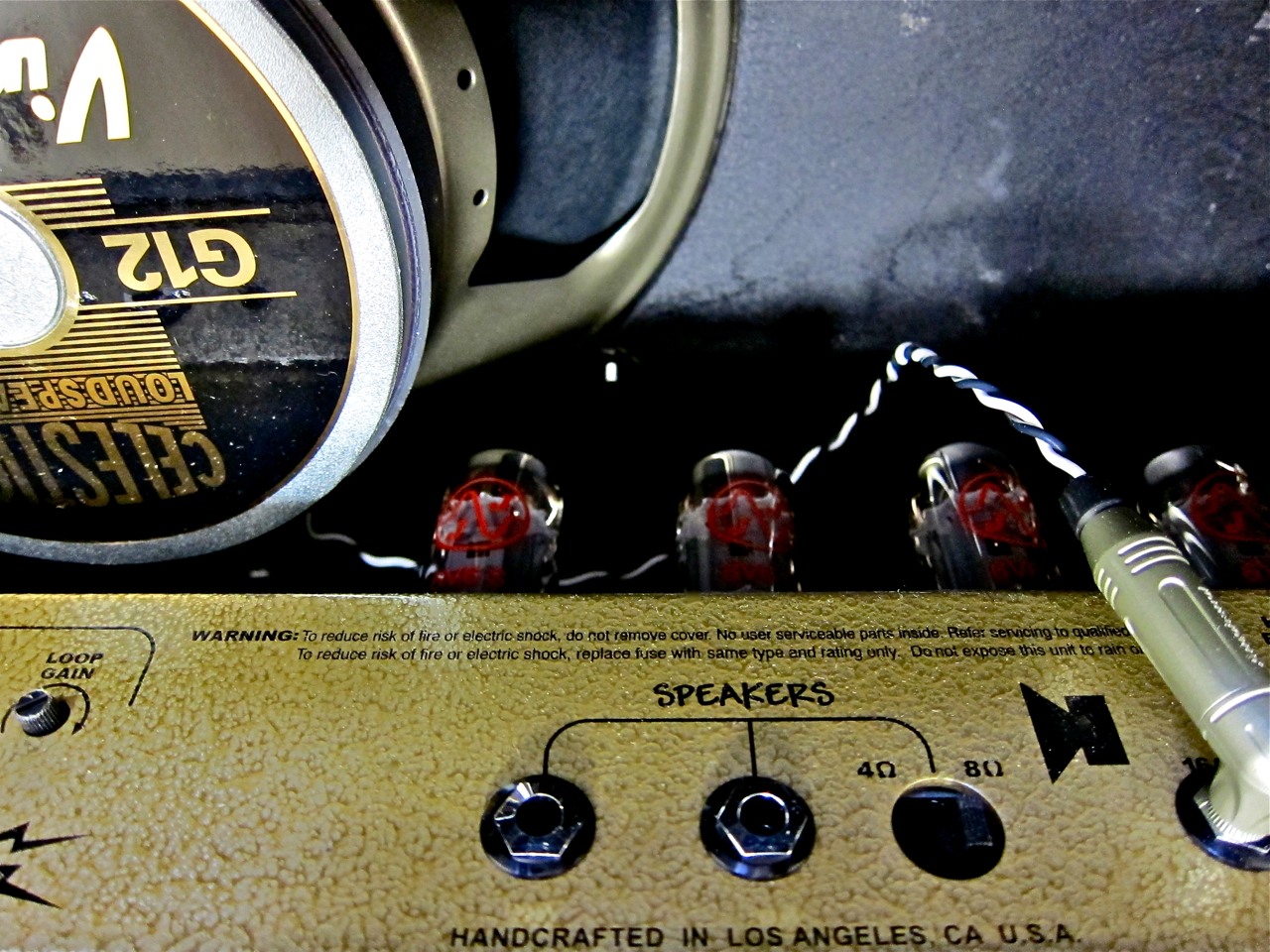
Bogner’s Goldfinger 45 speaks via one of the world’s most-loved speakers – a Celestion G12 Vintage 30.

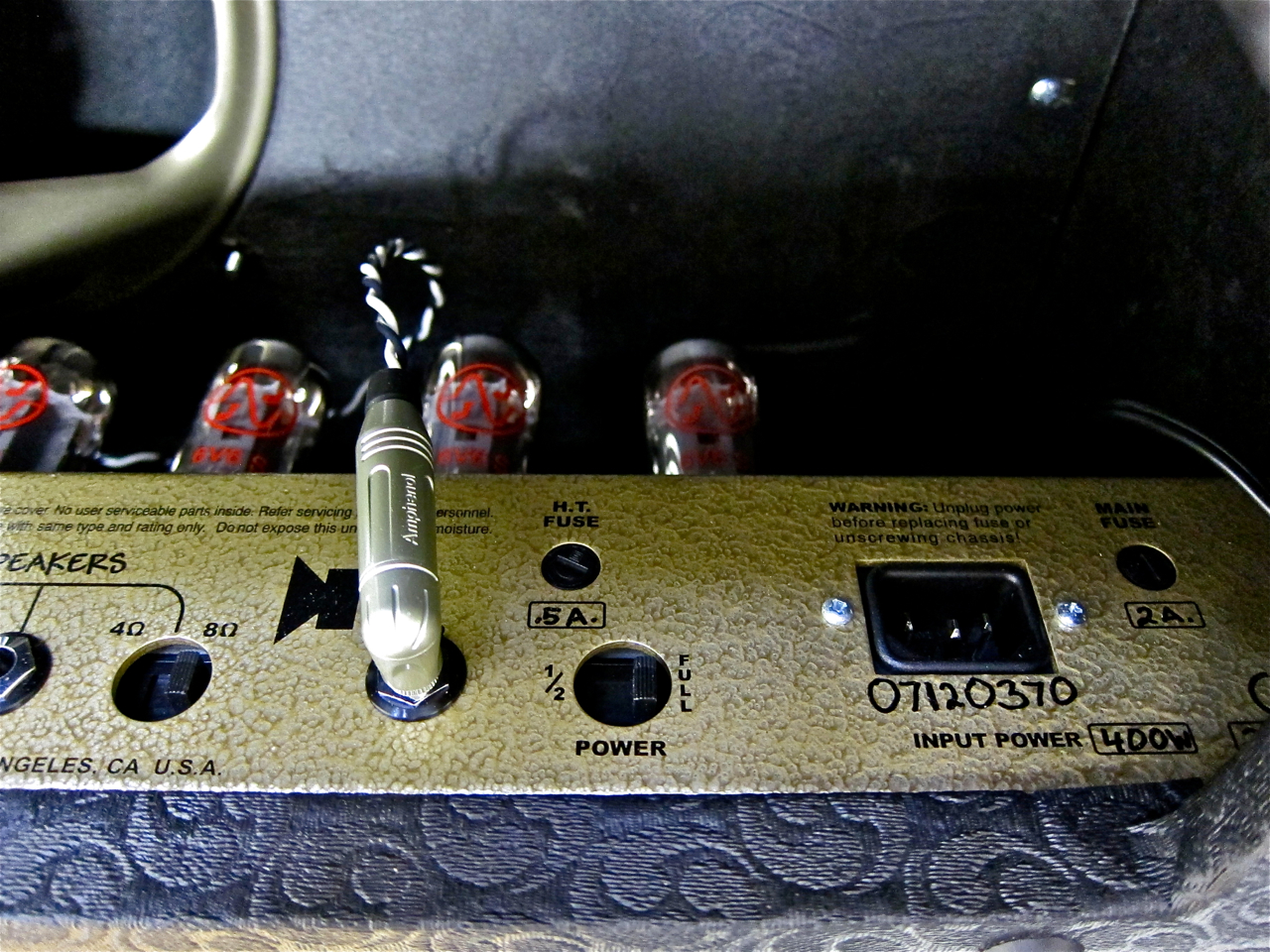
Because the Goldfinger-combo basically utilises the head of the same name, only flipped on its side, a more fitting name for the back panel might be ”bottom panel” in this case. All connectors, switches and controls face downward, which isn’t so great for accessibility and visibility.

On the right hand side you can find the connectors and the level control for the Pre FX -loop, as well as the socket for the footboard’s screw-in connector.

Bogner’s Post FX -loop offers a plethora of options.

There are two additional speaker outputs on offer, with the impedance switch sitting right next to them.

…and last, but not least, the amp’s fuses, as well as the half-power switch for the main amp section.

Just as the combo itself, the accompanying footswitch board is built to last, and sports the same structured, golden finish as the combo’s control panel.

****

The Bogner Goldfinger 45 is an extremely versatile valve-amplifier. Per se this doesn’t really tell you anything, because in many designs versatility comes at the price of a mediocre basic tone.

The Bogner Goldfinger’s outstanding quality really shows in this respect, as each and every link in the signal chain only serves to enhance this combo’s fantastic basic tone.

True, if you don’t know what you’re doing, you can get bad sounds out of the Bogner, regardless – for example by heaping both Alpha-channel brights on top of a Fender Strat or Tele – but in those cases it’s the user who’s to blame, not the amp.

Used with good taste, though, the Bogner Goldfinger will enhance the basic character of your guitar’s tone to bring out the best in your playing.

The combo’s spring reverb sounds fantastically lush, with the reverb-knob giving you anything from a nice little sprinkle to full-out Surf Mania.

The only two things I am not totally in love with are the downward-facing back panel, as well as the loud thud emanating from the Omega’s Mode-switch, when used with the amp running. According to the owner’s manual this loud noise is perfectly normal, but it still bothers me a bit, not being able to switch between Loud 69 and 80 on-the-fly.

All in all, I feel that the Bogner Goldfinger 45 is a very strong contender for the title of ”Best Combo ever”. The price tag is steepish, but well in line with the amp’s quality and this particular market segment as a whole.

Here are some sounds I recorded with the Bogner Goldfinger combo:

Alpha – Fender Stratocaster

Alpha (Post Bright on) – Hamer Studio Custom

Omega (Loud 69) – Fender Stratocaster

Omega (Loud 69) – Hamer Studio Custom

Omega (80) – Fender Stratocaster

Omega (80) – Hamer Studio Custom

****

Bogner Goldfinger 45 1×12 -kombo

Current price in Finland: 2.946 €

Finnish distribution: Musamaailma

Pros:

+ workmanship

+ sound

+ versatility

+ pedalboard included in price

+ half-power switch

+ reverb sound

Cons:

– back panel placement not very practical

– Loud 69/80-switch’s thud

Testipenkissä: Roland GA-112

****

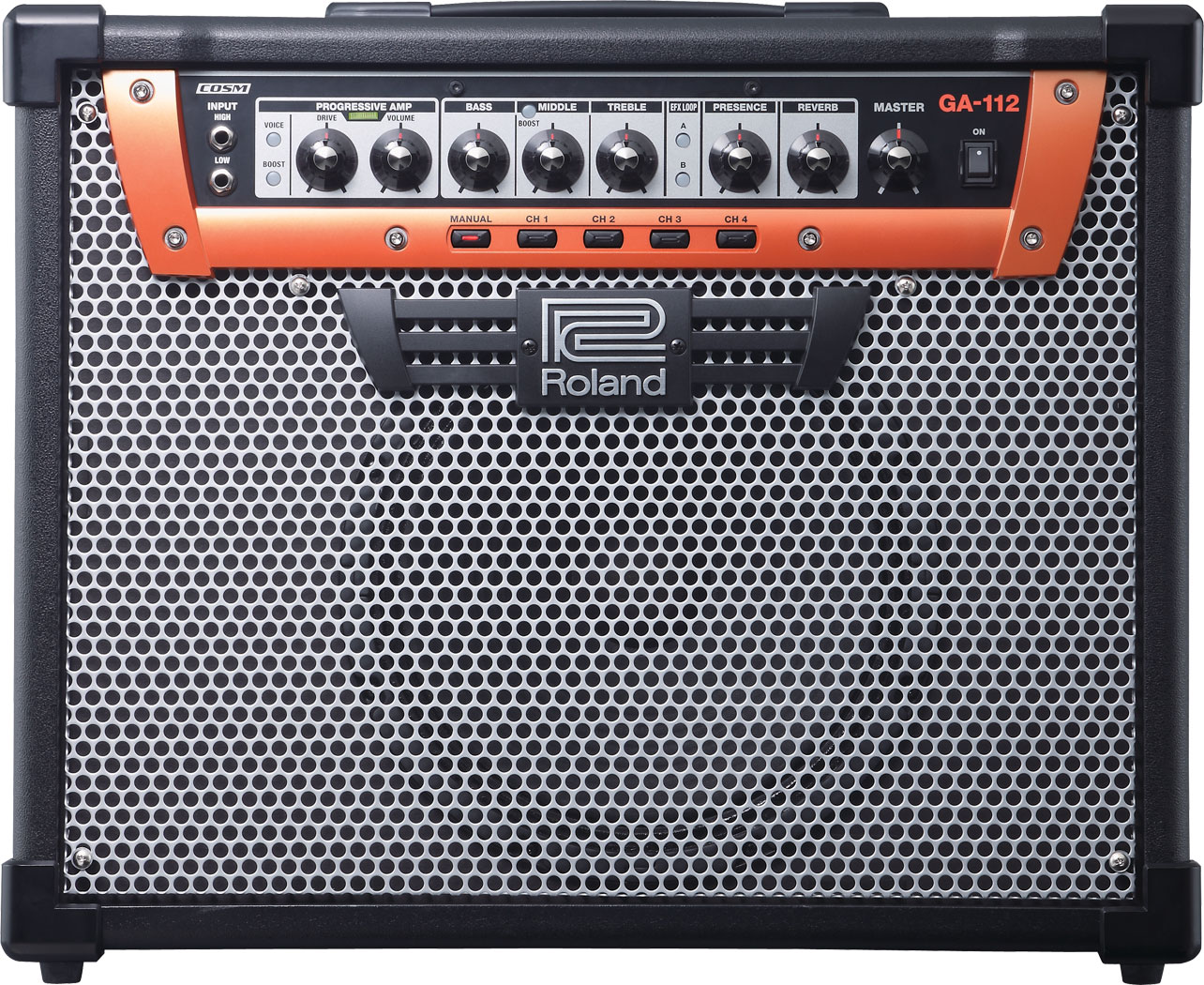
Yksi tämänvuotisista Roland-uutuuksista on GA-112 – firman COSM-teknologiaa hyödyntävä kitarakombo, joka on ihan omaa itsensä, täysin ilman tiettyjen vahvistimien mallinnusta.

Koko komeuden ytimessä toimii GA-112 – ja isompaa, kahta 12-tuumaisia kaiutinta sisältävä sisarmalliaan GA-212 – varta vasten kehitelty Progressive Amp -niminen COSM-malli. Progressive Amp lupaa erinomaisia clean-, crunch- ja lead-soundeja yhdestä, samasta vahvistimesta, pelkästään gain-säädintä ja EQ:tä käyttämällä.

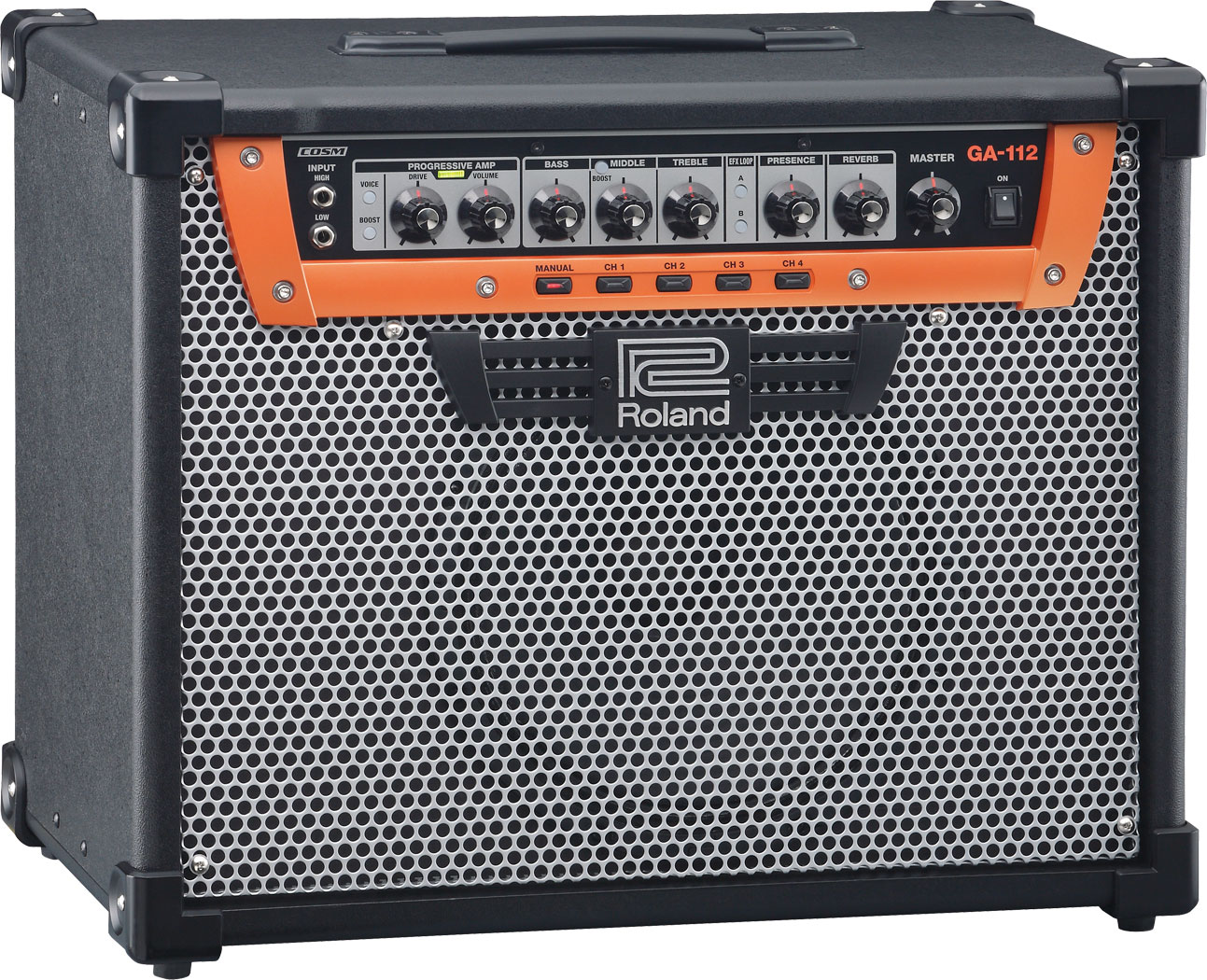
Satawattisessa Roland GA-112:ssa (844 €) yhdistyy monia piirteitä, joita ovat tuttuja entisestään firman kitaravahvistimista.

Etupaneelin värimaailma muistuttaa legendaarista Jazz Chorus -komboa, kun taas kestävä musta päällinen ja erittäin tukeva metalliritilä tulevat suoraan firman Cube-sarjasta.

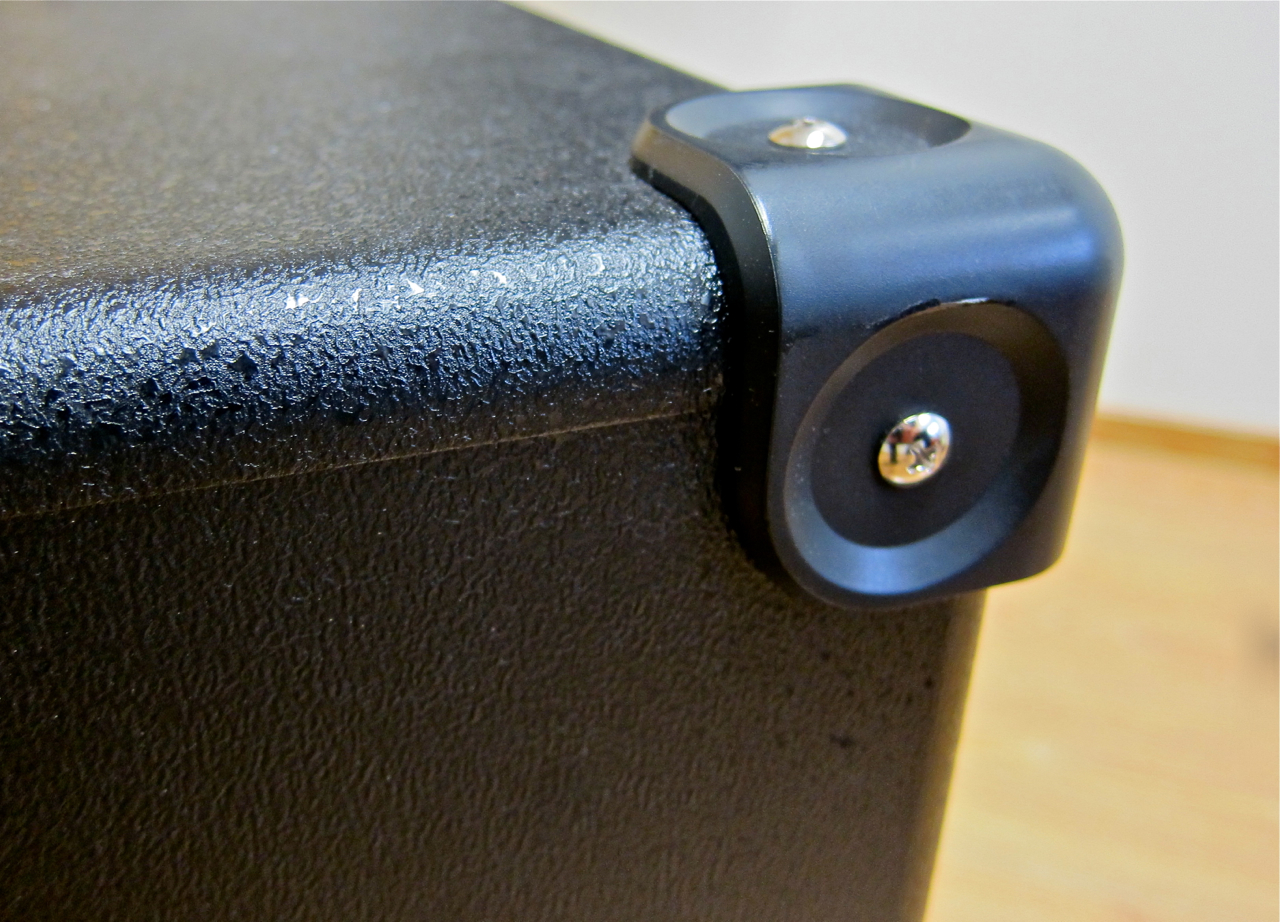
Myös paksut muoviset kulmasuojat on tehty kestämään keikkailevan kitarakombon ajoittain rankkaa elämää.

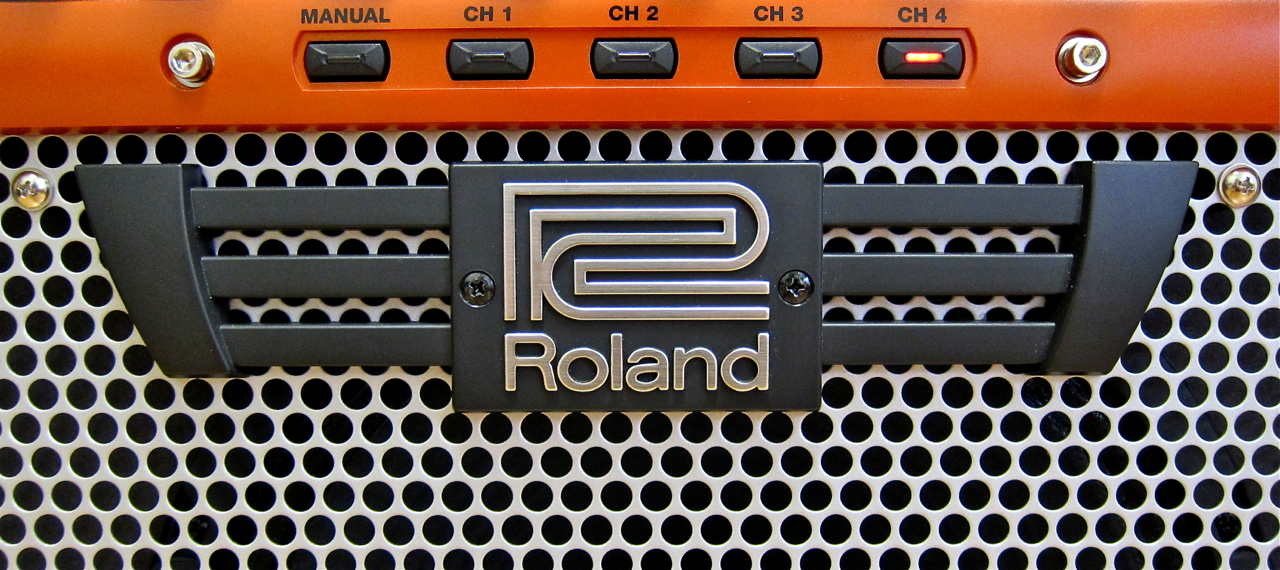
GA-112:n etuvahvistin on täysdigitaalinen, ja se tarjoaa peräti viisi kanavaa – neljä tallennettua kanavaa, sekä manuaalisen tilan, jossa käytetään säätimien tämänhetkiset asetukset soundin pohjana.

Etupaneelin rakenne on erittäin selkeä, kombon uumenissa piiloutetusta huipputeknologiasta huolimatta. Kaikki painonapit ovat taustavalaistetut, ja kaikki tallennettavissa olevat säätimet (siis kaikki, paitsi Master Volume) ilmaisevat asentonsa punaisilla ledeillä. Tämän kombon asetukset näkee selvästi myös täysin pimeällä lavalla.

Vahvistimen tulopuolella tarjotaan kahden jakkien lisäksi Boost-napin lisäpotkua varten, sekä Voice-kytkimen, jolla saa signaaliin lisättyä mietoa loudness-käyrää.

Progressive Amp -osaston pitkänomainen ledi auttaa suuresti gain-määrän visuaalisessa hahmottamisessa, muuttamalla väriään porttaattomasti loogisella tavalla Drive-asetuksen mukaan. Jos näkee vihreän valon tietää heti, että soundi on säädetty puhtaaksi, kun taas tumman punainen tai hohtavan valkoinen tarkoittaa rankkaa säröä.

EQ-osasto koostuu basso-, keskialue- ja diskanttisäätimistä, ja se tarjoaa tämän lisäksi myös keskialueen lisäboostin todella paksuja sointeja varten.

Ennen kuin signaali kulkee preesenssäätimen ja digikaiun läpi masterille, sitä voi vielä lähettää kummallekin tai jopa molemmille GA-112:n ulkoiselle efektilenkille. Efektilenkien päälle/pois-tilaa tallennetaan kaikien muiden vahvistimen parametrien mukaan kanavamuistipaikkaan, mikä tarkoittaa että kanavavaihdon yhteydessä myös oikeat ulkoiset efektit menevät automaattisesti päälle.

GA-kombon ainoa sisäinen efekti on sen kaunisääninen digitaalinen kaiku.

Roland GA-112 tallentaa muuten kaikki muutokset säätöihin automaatisesti muistiin, mikä selvästi nopeuttaa työskentelyä vahvarin kanssa.

Efektilenkkien liittimet on sijoitettu puoleksi avoimen kotelon takapaneeliin.

Kummankin efektilenkin kohdalla voi erikseen valita, onko kyseessä rinnakainen tai sarjakytkennässä oleva signaalitie, ja onko käytössä –10dB:n tai +4 dB:n signaalitasolla pyörivä efektilaite.

Takapaneelistä löytyy myös lähtö viritysmittarille ja mikserillä. Lisäksi pystyy myös ketjuttaa kaksi GA-112-komboa todella isoja lavoja varten.

Jos haluaa täyttä kontrollia lavalla täytyy lisätä laskuun vielä reilu satanen ja hankkia Rolandin oma GA-FC-jalkakytkinlauta. Sillä pystyy lennossa paitsi vaihtamaan kanavia myös kytkemään kombon boosteja, efektilenkkejä ja kaiun päälle tai pois.

Mielestäni se olisi ollut kuitenkin käyttäjän kannalta ystävällinen veto, jos Roland GA-112:n paketista olisi löytynyt valmiiksi yksinkertainen, kahdella kytkimellä varustettu pedaali, jolla voisi vaihtaa kombon kanavia ylös- ja alaspäin.

****

Roland ei lähtenyt GA-112:n suunnitteluun sellaisella päämäärällä, että nyt rakennetaan sellainen kombo, jossa on valtavasti erilaisia mallinnoksia vanhoista vahvistimistä ja iso kasa sisäisiä efektejä, vaan idea oli päinvastainen.

GA-112:n valtti ovat sen erittäin terve perussoundi, ja oman Progressive Amp -mallin uskomattoman laaja gain-skaala, joka ulottuu putipuhtaasta hyvin rankkaan metalliin.

En lähde tässä myöskään spekuloimaan Roland-kombon erilaisten soundien mahdollisista esikuvista tai GA-112:n tarjoamasta ”autenttisuudesta” tai sen puutteesta. Tämä ei ole mallintava vahvistin perinteisessä tarkoituksessa, tässä ei haetakaan uskollisuutta johonkin esikuvaan.

Roland GA-112 on ihan oma itsensä, ja pärjää vallan mainiosti tarjoamalla kitaristeille mahdollisuuden löytää omat soundinsa minimaalisella vaivalla.

Lämmin puhdas jazz tai helisevän pureva country – Roland-kombolla onnistuu kädenkäänteessä ja lopputulos kuulostaa erittäin hyvältä. Soittodynamiikaan ja kitaran volume-säätimeen herkästi reagoiva perinne-blues tai 1970-luvun rock luonnistuvat nekin mainiosti. Ja armoton metal-riffaaminenkin voi GA-112:llä jatkua, kunnes talkkari tulee ja takavarikoi treenikämpän pääsulakkeen.

Hyödyntämällä vielä styrkkarin kahta efektilenkkiä saa Rolandista esiin todella massiivisen määrän erilaisia laatusoundeja.

Voin vain suositella Roland GA-112 -kombon koeajelua, jos etsii uuden vahvistimen oman kitarasoundin komentokeskukseksi.

****

Tässä muutama esimerkki GA-112:n soundista ilman ulkoisia efektilaiteita:

Stratocaster – puhdas

Kasuga puoliakustinen – puhdas

Stratocaster – säröllä

Kasuga puoliakustinen – säröllä

Stratocaster – gain täysillä

Kasuga puoliakustinen – soolosoundi

****

Roland GA-112

844 €

Maahantuoja: Roland Scandinavia

****

Plussat:

+ perussoundi

+ erittäin laaja gain-skaala

+ ohjelmoitavuus

+ kaksi efektilenkkiä

+ teho

+ kestävä rakenne

Miinukset:

– jalkakytkin ei kuuluu hintaan

****

Pidä blogia WordPress.comissa.

Ylös ↑