Review: Morley M2 Wah, M2 Wah Volume + M2 Passive Volume

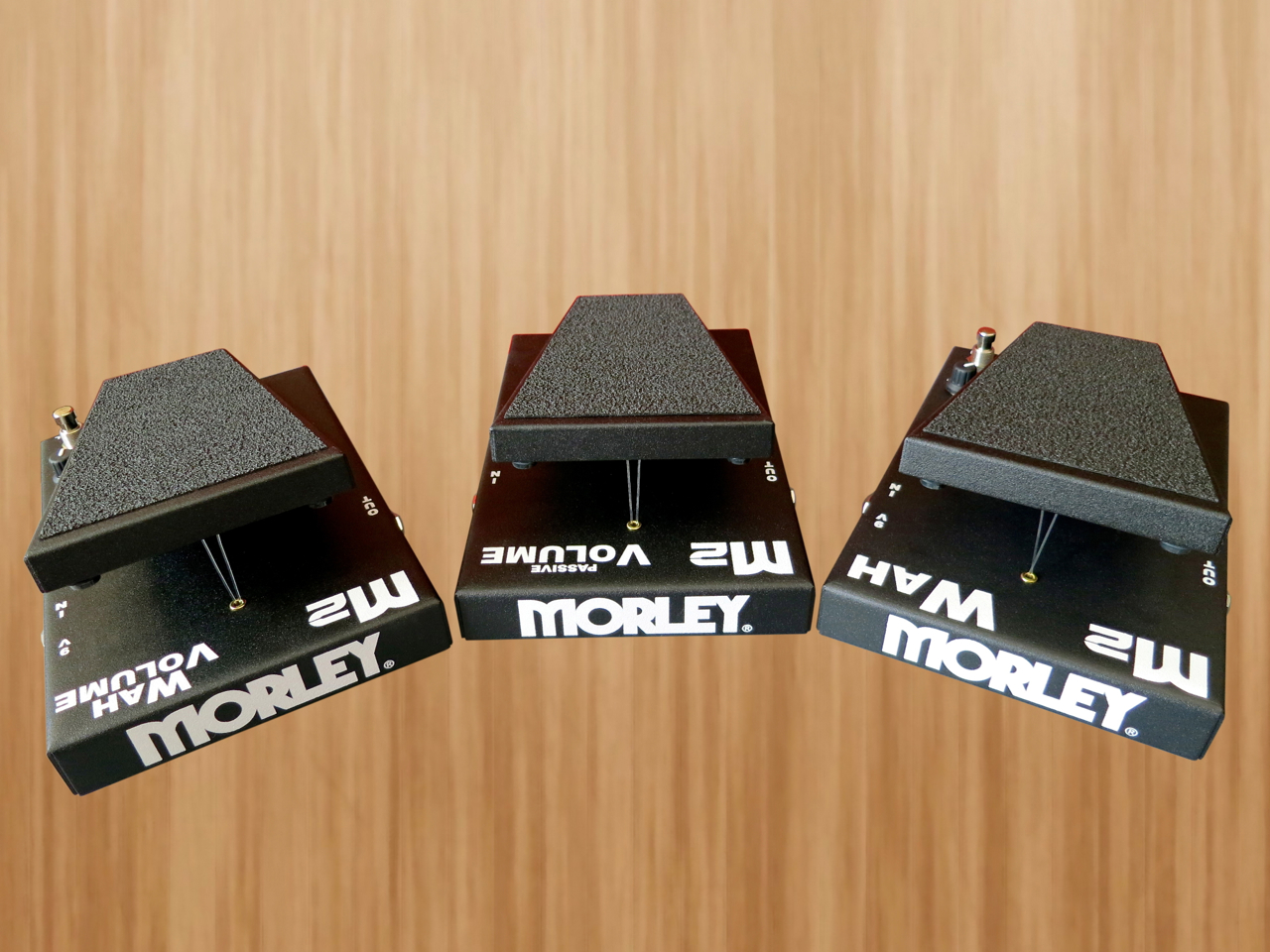
Morley M2 – group shot – final

US brand Morley are best known for their pro-quality wahs and volume pedals that many players – like Steve Vai, George Lynch and Mark Tremonti – rely on in their setups. Morley’s original series uses electro-optical electronics, instead of traditional potentiometres. The big advantage in going electro-optical lies in the fact that such a pedal won’t ever become scratchy or intermittent, because there is no mechanical control pot to wear out or become dirty.

There are quite a few guitarists, though, which – for some reason or other – prefer the ”feel” and ”sound” of a mechanically controlled pedal to that of an electro-optical one. Morley’s new M2-series is a nod to the more traditional players.
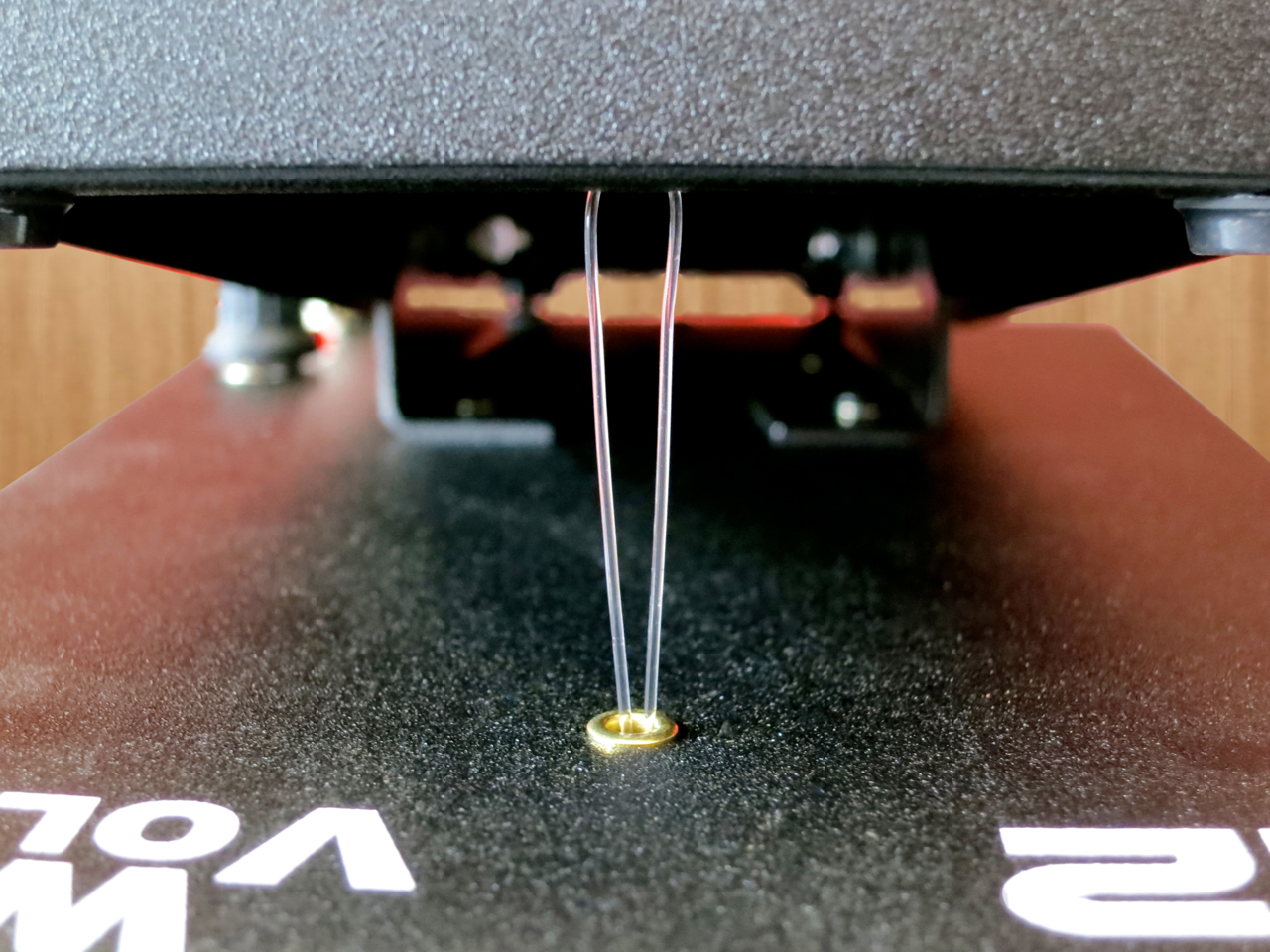
Morley M2 Wah Volume – nylon string

Nevertheless, Morley still like to do things their own way, which is why the company has come up with a different type of mechanical control for their M2-pedals:

Traditional pedals (and their descendants) use a rack, mounted beneath the treadle, to turn the pinion of a large control pot attached to the top of the pedal’s casing. Hanging in this exposed position, the pot is prone to take in dirt, moisture and dust, which in turn shortens its lifespan and affects signal quality. Sooner or later you will have to change the old pot for a brand-new one.

Morley’s M2-pedals use a top grade, sealed fader, tucked away neatly inside the pedal’s casing. The fader is moved by sturdy nylon strings attached to the front and back of the treadle.

****
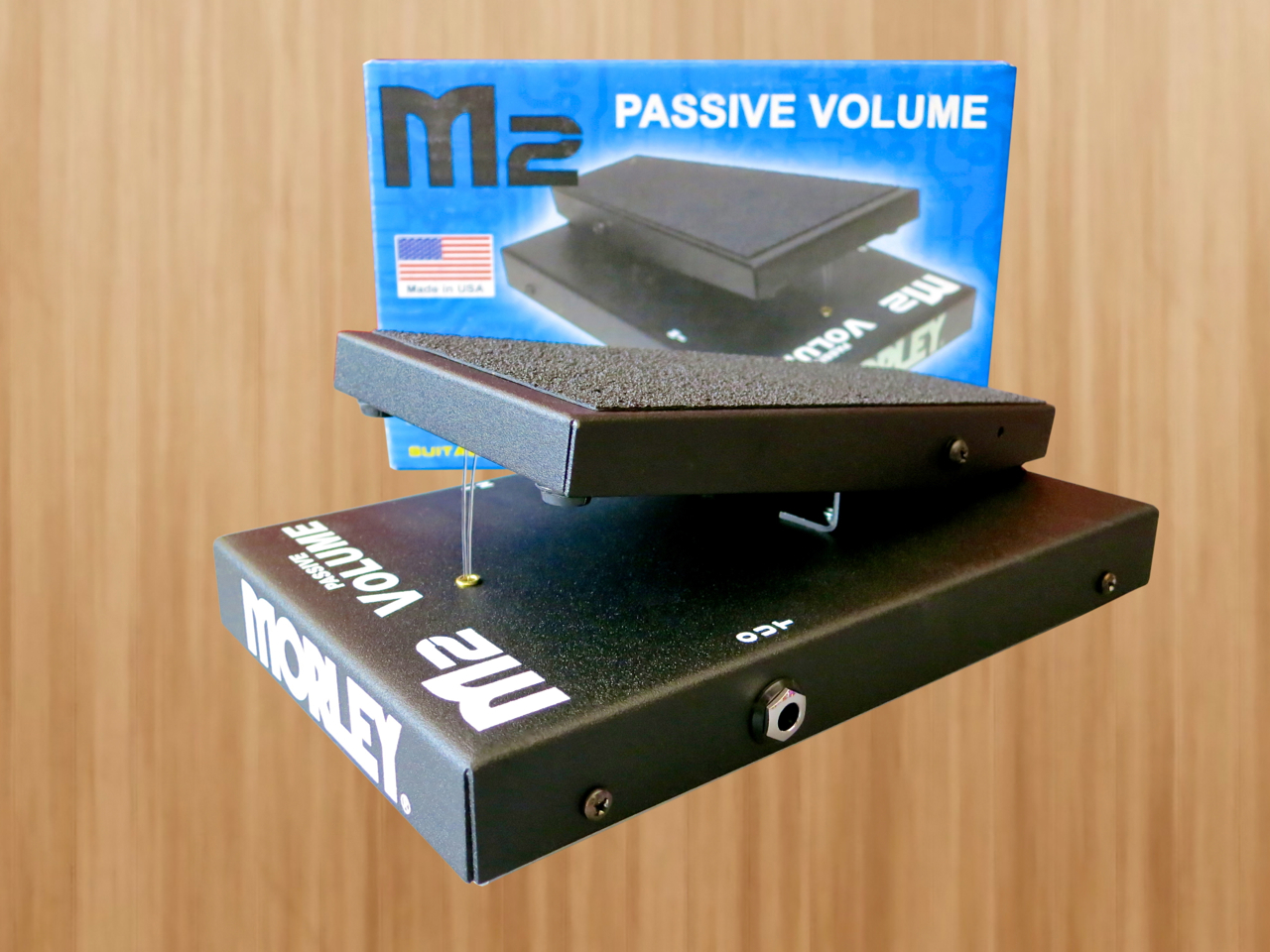
Morley M2 Passive Volume – with box

For this review we got three M2 models from Vantaan Musiikki:

The first pedal is the Morley M2 Passive Volume (current price in Finland: 76 €), which works without the need for a battery.
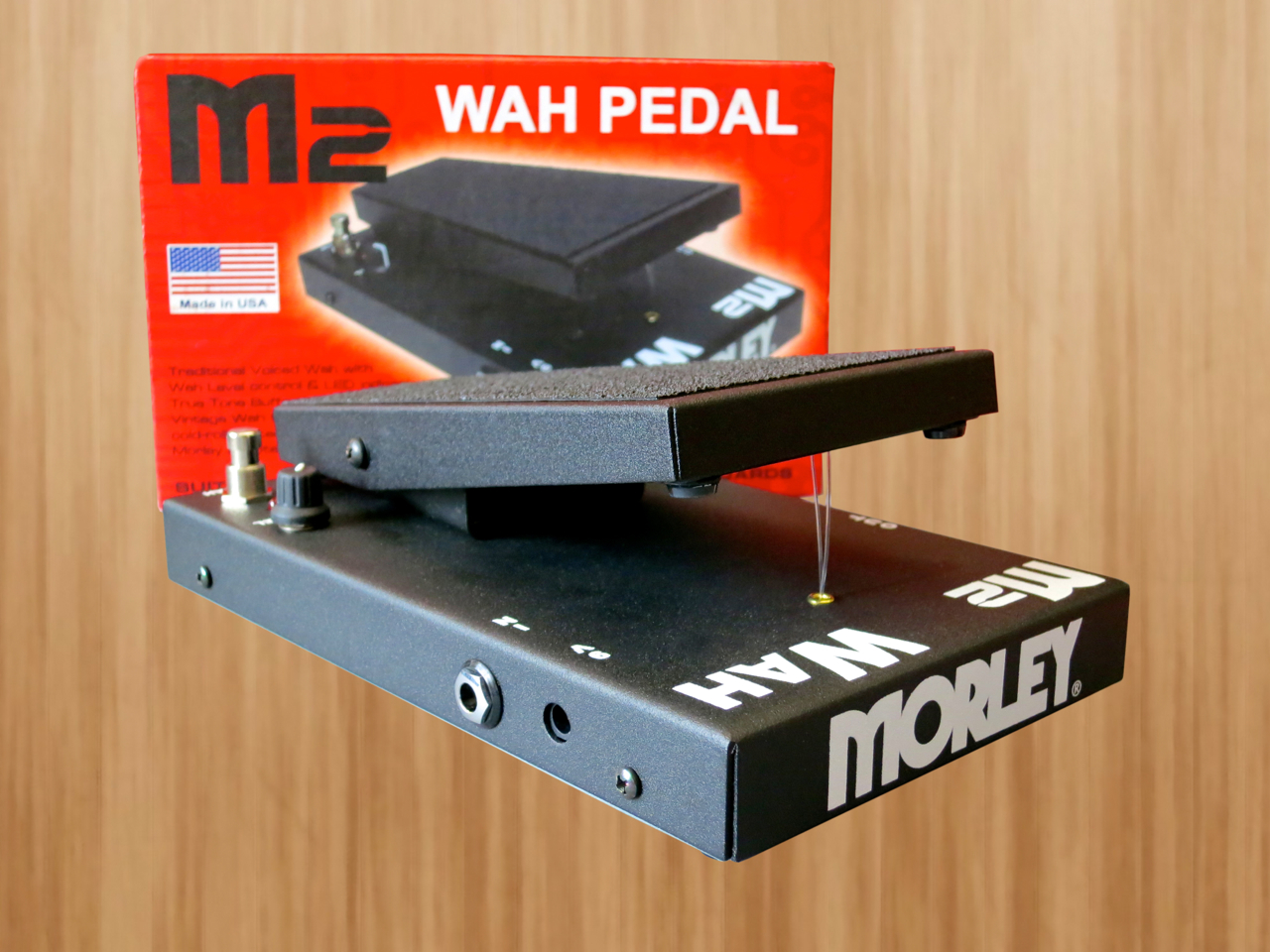
Morley M2 Wah – with box

The second model is the Morley M2 Wah (83 €), which promises to deliver vintage-toned wah-goodness.

Morley M2 Wah Volume – with box

And, last but not least, there’s a cool twin-mode pedal – the Morley M2 Wah/Volume (94 €).
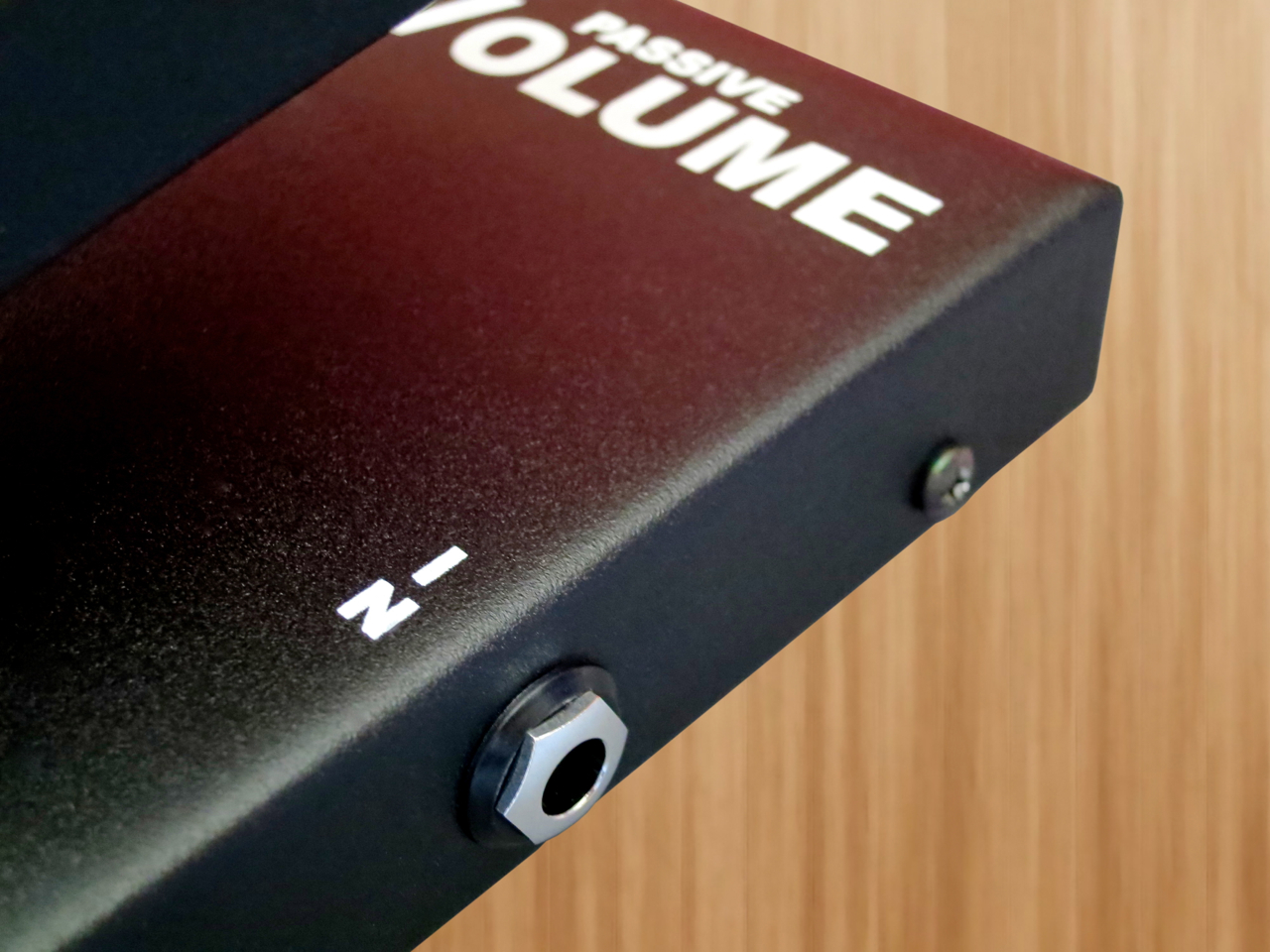
Morley M2 Passive Volume – input

This trio of M2-pedals share the same basic build:

The housing is made from folded, cold-rolled steel, resulting in very sturdy and trustworthy pedals. The treadle sports a thick cover of non-slip material that will keep your foot safely on the pedal, no matter what.

The guitar input is on the Morley’s right flank.
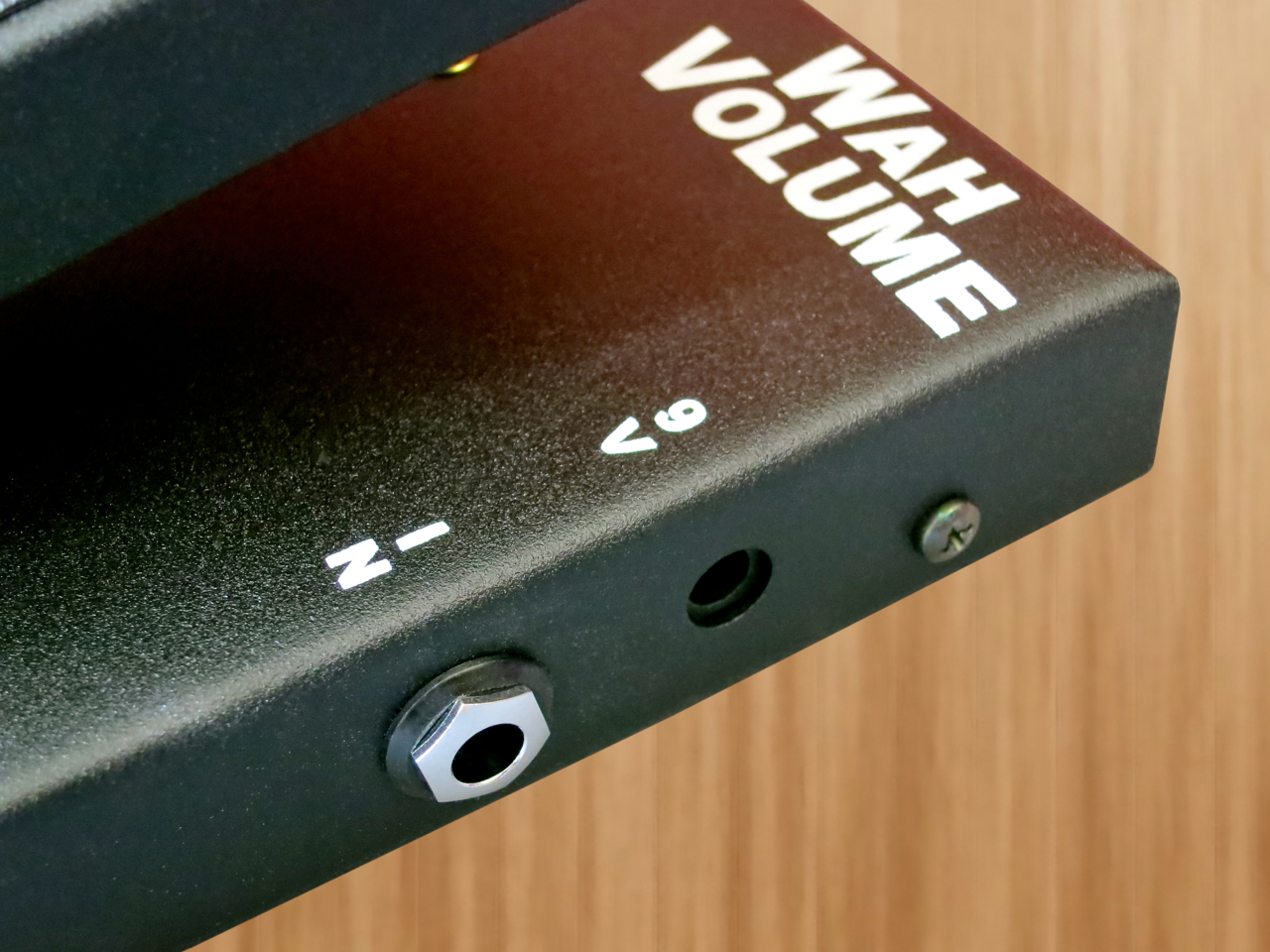
Morley M2 Wah Volume – input

The two active pedals – the M2 Wah and the M2 Wah/Volume – additionally feature a standard 9 Volts DC input.

Morley M2 Wah – base plate

You can also run the active pedals using a 9 V battery. The battery compartment comes equipped with an easy-to-open quick clip lid.
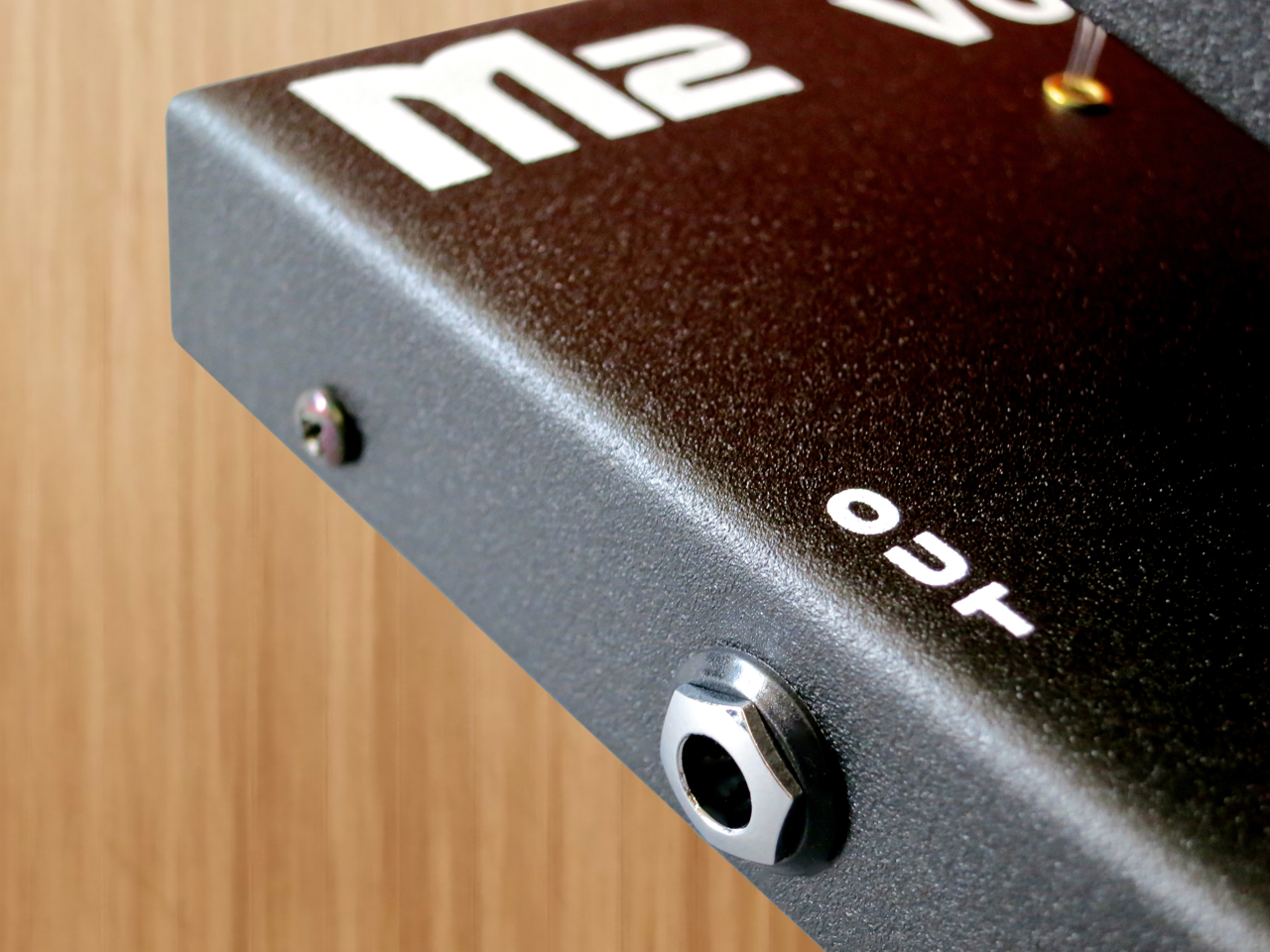
Morley M2 Passive Volume – output

The output has been placed on the left side of the M2-pedals.
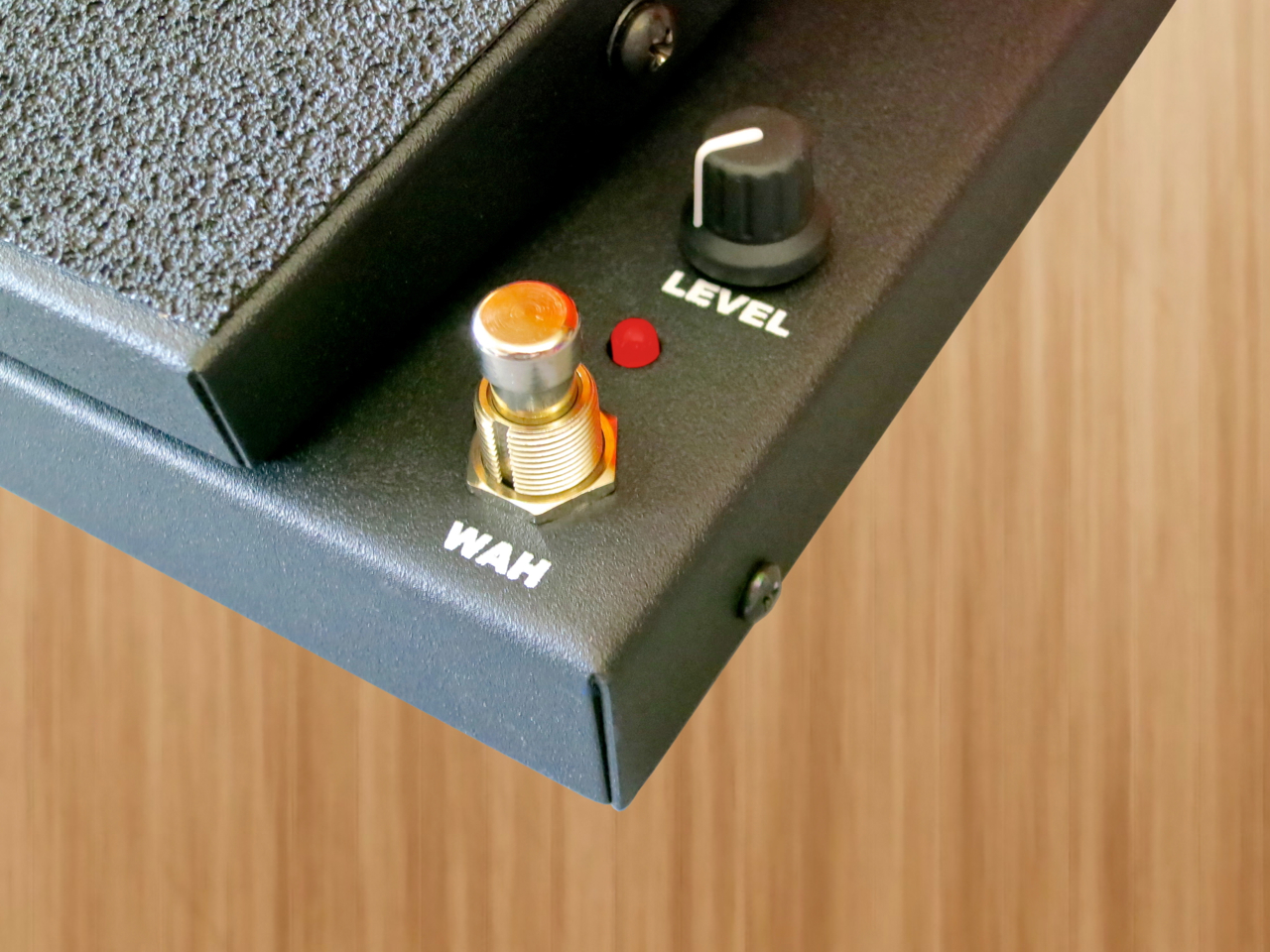
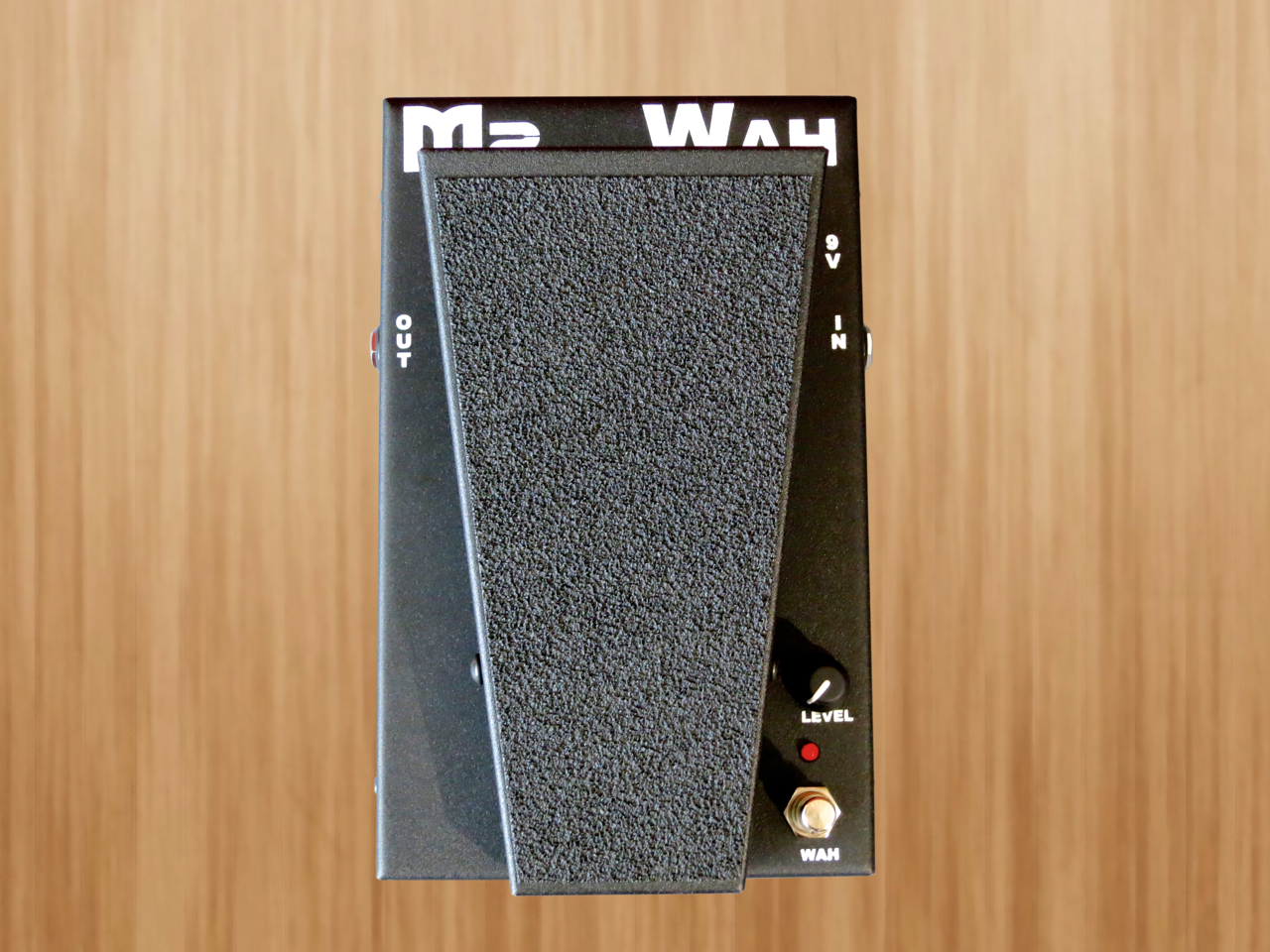
Morley M2 Wah – switch and control

The M2 Wah features an On/Off-switch for the wah-effect (with a red indicator LED), as well as a dedicated level control for the effect signal.

Morley M2 Wah Volume – switch and control

The control setup on the M2 Wah/Volume looks identical, but it functions a bit differently:

The footswitch toggles between volume mode (LED off) and wah mode (LED on). The level knob works only on the wah side of things.

****

Morley M2 Passive Volume – front view

Morley’s M2 Passive Volume-pedal works extremely smoothly, evenly and precisely. There are no jumps or wobbles in the volume level, instead the Passive Volume works just as it should, and without having any noticeable effect on your guitar’s inherent tone. The M2 Passive Volume clearly is a pro-quality choice at a very fair price.

Morley M2 Passive Volume – left

****

Morley M2 Wah – top view

Morley’s M2 Wah comes equipped with an internal active buffer (the Morley True Tone Buffer), which stays on, even with the wah-effect turned off. An active buffer will prevent audible signal deterioration, even if you’re using a long line of (true bypass) effect pedals or a very long cable between you effects and the amp. The only ”drawback” of an active buffer is that the pedal will draw a tiny bit of current, even with the effect turned off.

Oh, boy, Morley’s wah-sound is just what the doctor ordered! The M2 Wah’s filter sounds really juicy, and the pedal works in a very musical and organic way.

Morley M2 Wah – left

****

Morley M2 Wah Volume – right

The M2 Wah/Volume combines both volume control and wah-wah with an active buffer, meaning you do need a battery (or power supply) to run the pedal’s volume side, too.

Morley’s Wah/Volume-pedal manages to combine both effects in an easy-to-use, handy package. This pedal’s volume mode works just as evenly and smoothly as the M2 Passive Volume, while the wah side of things sounds just as tasty as in the stand-alone M2 Wah.

The M2 Wah/Volume was simply too good to let go – I had to buy one!
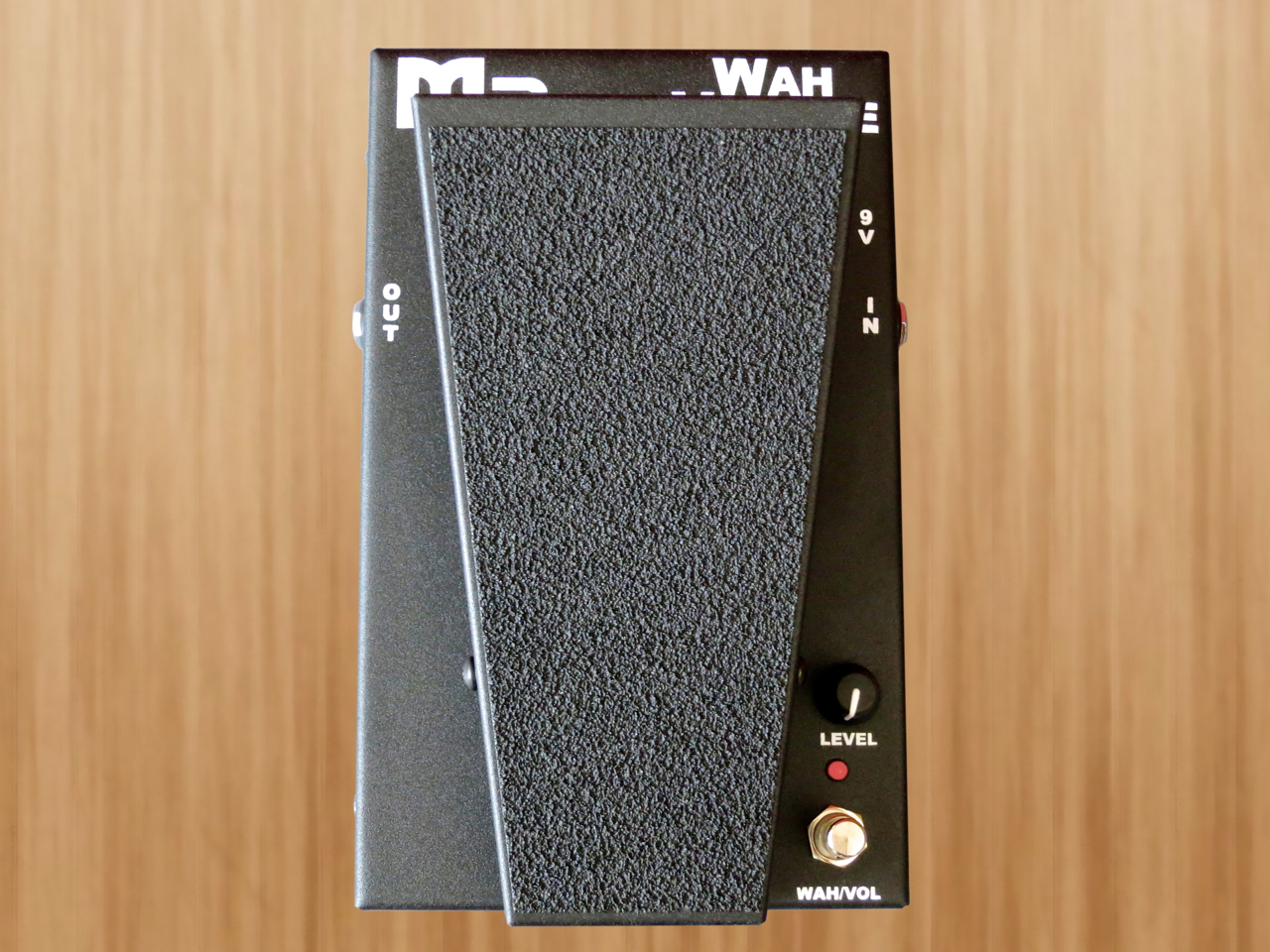
Morley M2 Wah Volume – top view

****

Morley M2 Wah – right

For some reason, I’ve always dug Morley’s straightforward and unsentimental design. The new M2-series, too, has that famous big, black and square ”Morley look”. Morley’s M2-pedals sure don’t look cute, but they more than make up for it when it comes to roadworthiness and reliability.

Many professionals rely on a Morley for their sound. I’m sure that these M2-series pedals will find their way into many a musician’s arsenal.

I’d suggest you go and check them out!

Morley M2 Wah Volume – left

****

Morley M2 -series

M2 Volume – 76 €

M2 Wah – 83 €

M2 Wah/Volume – 94 €

Finnish distributor: Musiikki Silfverberg

Many thanks to Vantaan Musiikki for the loan of the review pedals!

****

Pros:

+ excellent value-for-money

+ made in USA

+ sturdy build

+ work smoothly

+ sound

+ buffered output (M2 Wah and M2 Wah/Volume only)

Testipenkissä: Morley M2 Wah, M2 Wah Volume + M2 Passive Volume

Morley M2 – group shot – final

Amerikkalaisvalmistaja Morley on tunnettu laadukkaista wah- ja volume-pedaaleistaan, jotka kuuluvat esimerkiksi Steve Vain, George Lynchin ja Mark Tremontin vakiotyökaluihin. Alkuperäiset Morley-pedaalit on usein toteutettu optisella tavalla, ilman perinteistä mekaanista potentiometriä polkimen alla.

Joidenkin kitaristien mielestä mekaaninen säädin kuulostaa ja tuntuu kuitenkin – vaikeasti selitettävällä tavalla – ”paremmalta” kuin optisesti toteutettu wah-pedaali, ja juuri heitä varten Morley on kehittänyt uuden M2-sarjansa.

Morley M2 Wah Volume – nylon string

Morley on kuitenkin Morley, ja firma on päättänyt käyttää M2-sarjassa omaa säätömekanismiaan:

Perinnepedaaleissa (ja niiden kopioissa) polkimen etupäähän on kiinnitetty hammastanko, joka kääntää kotelon kanteen asennettua säädintä. Näiden pedaalien iso potikka altistuu pölylle ja lialle, mikä voi johtaa siihen, että signaali alkaa jossain vaiheessa rahista. Silloin on useimmiten edessä potentiometrin vaihto.

Morley M2 -pedaaleissa käytetään military-speksattua, kotelon uumeniin asennettua liukusäädintä, jota säädetään polkimen etu- ja takapuoliin kiinnitetyillä nailonsiimoilla.

****

Morley M2 Passive Volume – with box

Saimme Vantaan Musiikilta kolme M2-pedaalia testiin:

Ensimmäinen on ilman paristoa toimiva Morley M2 Passive Volume (76 €).

Morley M2 Wah – with box

Toinen pedaali on sarjan klassisia wah-soundeja tarjoava Morley M2 Wah (83 €).

Morley M2 Wah Volume – with box

Ja kolmas on todella kätevä yhdistelmäpedaali – Morley M2 Wah/Volume (94 €).

Morley M2 Passive Volume – input

M2-kolmikon perusrakenne on sama:

Pedaalit on rakennettu täysin taitetusta teräksestä, ja lopputulos vaikuttaa erittäin kestävältä ja luotettavalta. Poljin on päällystetty paksusti luistamattomalla materiaalilla, joka pitää kengän pohjan tiukasti ja turvallisesti pedaalilla.

Tulo kitarajohdolle on Morley:ssa pedaalin oikeassa laidassa.

Morley M2 Wah Volume – input

Kolmikon aktiivipedaaleissa – M2 Wah ja M2 Wah/Volume – on kitaratulon lisäksi vielä liitin virtalähteelle.

Morley M2 Wah – base plate

Näitä kahta pedaalia voi luonnollisesti myös käyttää yhdeksän voltin paristolla, ja paristolokeroon päästään ilman ruuvimeisseliä.

Morley M2 Passive Volume – output

Vasemmasta kyljestä taas löytyy kaikissa M2-pedaaleissa lähtöjakki.

Morley M2 Wah – switch and control

M2 Wahissa on efektille tarkoitettu päälle/pois-jalkakytkin, punainen led-valo, sekä Level-säädin efektin lähtötasolle.

Morley M2 Wah Volume – switch and control

M2 Wah/Volume-pedaalin kattaus näyttää samanlaiselta, mutta yhdistelmäpedaalissa jalkakytkin vaihtaa pedaalin käyttötilaa volumesta (ledi pois päältä) wahiin (valo on päällä) ja takaisin.

****

Morley M2 Passive Volume – front view

Morley M2 Passive Volume -pedaali toimii erittäin jouhevasti, sulavasti ja tarkasti. Äänenvoimakkuutta säädettäessä ei esiinny minkäänlaisia kuoppia, eikä hyppelehtimistäkään, vaan volyymimuutokset ovat tasaisia polkimen koko liikeradalla. Pedaali vaikuttaa siis luotettavalta ja oivalta työkalulta.

Morley M2 Passive Volume – left

****

Morley M2 Wah – top view

M2 Wah -pedaalissa on aktiivinen bufferi (Morley True Tone Buffer), joka on päällä myös silloin, kun wah-efekti on pois päältä. Bufferivahvistimen ansiosta signaali ei huonone käytännössä lainkaan, vaikka pedaalin jälkeen olisi käytössä tavallista isompi määrä muita efektejä, tai vaikkapa erittäin pitkä johto vahvistimeen. Bufferin ainoa ”huono” puoli on se, että pedaali tarvitsee aina pienen määrän käyttövirtaa.

Morleyn wah-soundi on täysin minun makuuni! M2 Wah:n filtteri kuulostaa erittäin mehevältä ja koko pedaali toimii erittäin orgaanisella ja hyvin musikaalisella tavalla.

Morley M2 Wah – left

****

Morley M2 Wah Volume – right

Erittäin kätevässä M2 Wah/Volume-pedaalissa molemmat puolet käyttävät efektin sisäistä bufferia – siis: tässä pedaalissa myös volume-toiminto tarvitsee toimiakseen pariston (tai virtalähteen).

Morleyn Wah/Volume-pedaali onnistuu yhdistämään hyvin käytännöllisellä tavalla sekä wah-efektin että äänentason säätämistä. Volume-puoli toimii yhtä jouhevasti ja tarkasti kuin Passive Volume -pedaalissa, ja wah-soundi on yhtä herkullinen kuin M2 Wah -polkimessa.

Itse asiassa pidin tästä pedaalista niin paljon, että ostin sen itselleni!

Morley M2 Wah Volume – top view

****

Morley M2 Wah – right

Jostain syystä Morleyn suorasukainen ja epäsentimentaalinen muotoilu on aina vedonnut minuun. Myös uusi M2-kolmikko koostuu kolmesta isosta mustista laatikosta. Morley ei ehkä saa koskaan design-palkintoa, mutta M2-pedaalien jämeryys ja kestävyys on vailla vertaa.

Morleyn soundiin luottavat monet ammattimuusikot, ja M2-sarja on selvästi rakennettu kestämään myös rankempaa kiertue-elämää mukisematta.

Kokeilemisen arvoisia polkimia siis!

Morley M2 Wah Volume – left

****

Morley M2 -sarja

M2 Volume – 76 €

M2 Wah – 83 €

M2 Wah/Volume – 94 €

Maahantuoja: Musiikki Silfverberg

Kiitos Vantaan Musiikille testipedaalien lainaamisesta!

****

Plussat:

+ loistava hinta-laatu-suhde

+ valmistettu USA:ssa

+ jämerä rakenne

+ toimivat jouhevasti ja tarkasti

+ soundi

+ bufferoitu lähtö (vain M2 Wah ja M2 Wah/Volume)

Testipenkissä: Bogner Harlow, Wessex ja Burnley

Reinhold Bogner

Tällä kertaa Kitarablogissa on testissä kahden legendan yhteistyön hedelmät:

Saksalaisamerikkalainen vahvistinguru Reinhold Bogner

Rupert Neve

…ja studiotekniikan grand old man Rupert Neve esittelivät hiljattain USA:ssa valmistetun Bogner kitaraefektimalliston, jossa käytetään Rupert Neve Designsin erikoisvalmisteisia audiomuuntajia.

Bogner – Neve transformer

Audiomuuntajia nähdään perinteisesti erittäin harvoin lattiaefekteissä, sekä kustannus- että tuotannollisista syistä.

Putkivahvistimissa audiomuuntajalla on sen sijaan keskeinen rooli, mikä tulee syntyvän kitarasoundin äänenlaatuun ja dynamiikkaan. Laadukas audiomuuntaja vahvistaa audiosignaalia niin, että sen dynamiikka ja soundi pysyvät täysin ehjinä ja muuttamattomina.

Bogner-pedals teaser – w lights

Tällä hetkellä Bogner/Neve-mallisto koostuu kolmesta pedaaleista – Harlow-boosteri (235 €), Wessex-overdrive (229 €), sekä Burnley-distortion (235 €).

Kaikissa pedaaleissa on optisena lisämausteena värisilmä, josta näkyy läpikulkevan signaalin voimakkuus.

****

Bogner Harlow – with box

Bogner Harlow tarjoaa kaksi efektiä samassa kuoressa:

Boost-vahvistuksen lisäksi Harlow-pedaalissa on myös Bognerin kehittämä Bloom-kompressori, jolle luvataan hyvin orgaanista, kolmiulotteista ja musikaalista soundia.

Harlow:ssa on kolme säädintä – Level-nuppi boostille, Bloom-säädin kompressiolle, sekä yleis-Tone.

Bogner Harlow – full front 2

****

Bogner Wessex – with box

Bogner Wessex on Bogner/Neve-malliston overdrive-tyyppinen säröpedaali.

Gain- ja Level-säätimien lisäksi Wessexissä on kaksikaistainen EQ, sekä E/N-kytkin. N-asennossa (= normal) Wessexin soundi on perinteisempi, siis hieman keskiäänivoittoinen, kun taas minikytkimen E-asennossa (= enhanced) efektistä lähtee entistä voimakkaampi, maukkaampi ja laajempi soundimaailma.

Bogner Wessex – full front 2

****

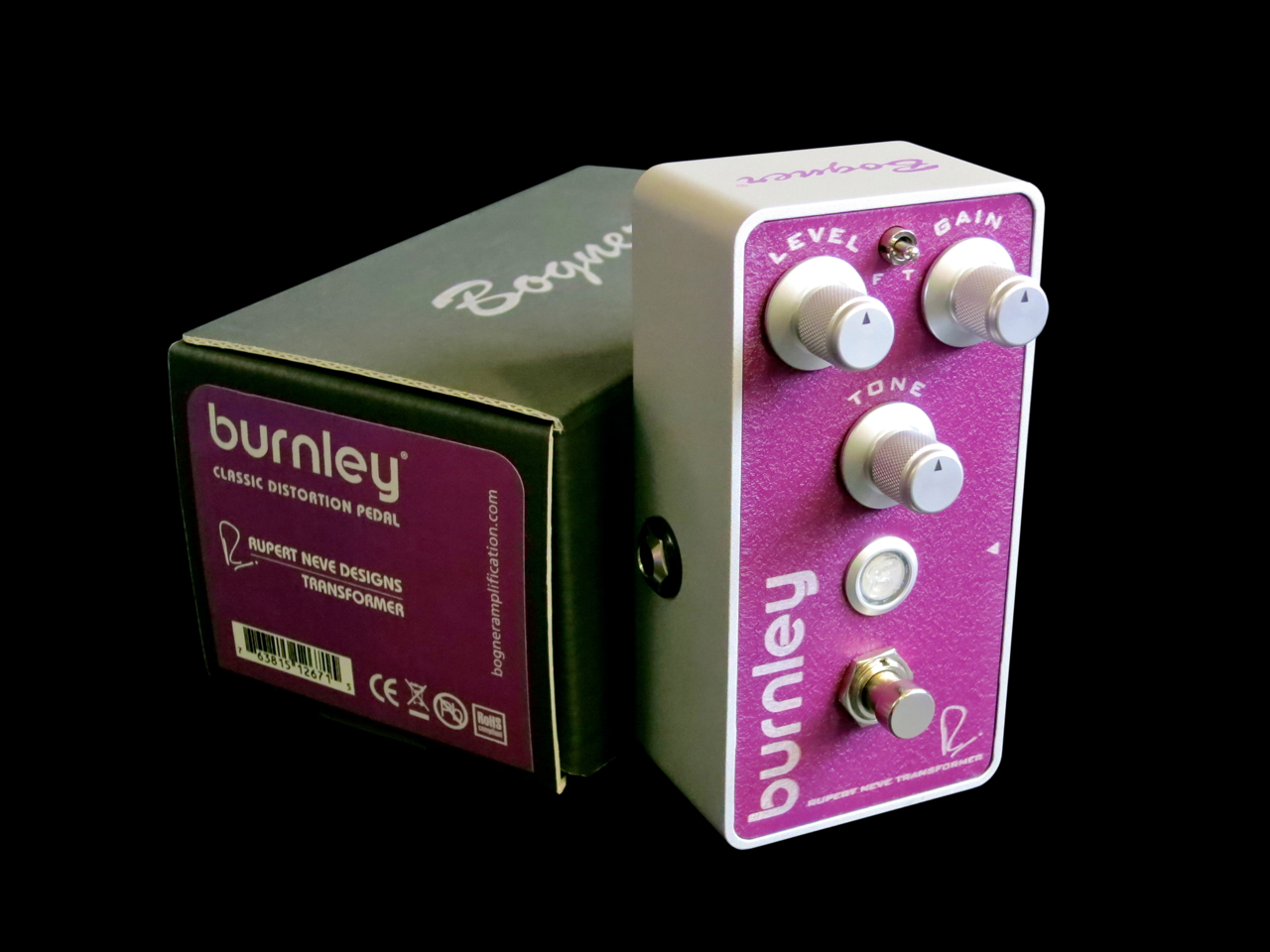
Bogner Burnley – with box

Bogner Burnley on tämän kolmikon distortion-särö.

Burnleystä löytyy kolme säädintä – Level, Gain ja Tone – sekä F/T-minikytkin. T-asennossa (= tight) Burnleyn soundikirjo on aggressiivisempi ja tiukempi kuin selvästi muhkeammassa F-vaihtoehdossa (= fat).

Bogner Burnley – full front 2

****

Bogner Harlow – inside

Sekä Bogner että Neve ovat legendaaristen soundien lisäksi tunnettuja myös tuotteidensa kompromissittomasta laadusta ja siististä työnjäljestä, mikä näkyy hyvin myös Bogner/Neve-pedaalien toteutuksessa.

Bognerin piirilevy jää piiloon mustan muovikuvun alle. Ratkaisu estää edes hieman laitteen suoraa kopiointia, mutta ei vaikeuta mahdollisia korjauksia samalla tavalla kuin esimerkiksi mustaan hartsiin valettu elektroniikka.

Kuten kuvasta näkyy, kaikkia kolmea efektipedaalia voi käyttää joko yhdellä yhdeksän voltin paristolla tai (Boss-standardin mukaisella) virtalähteellä.

****

Bogner Harlow – left 2

Bogner ei kerro missään Harlow-pedaalin tarkkoja vahvistusmääriä, mutta testin perusteella voin vain todeta, että sitä ääntä kyllä riittää. Jos siihen on tarve, pystyy tällä boosterilla yliohjaamaan minkä vahvistimen tahansa!

Bogner Harlow:n Bloom-kompressori kuulostaa erittäin maukkaalta ja musikaaliselta.

Bognerin Harlow on juuri sellainen kitaraefekti, jota haluaa pitää koko ajan päälle, koska kitara kuin kitara soi yksinkertaisesti kauneimmin ajettuna sen läpi. Tämä maustepurkki reagoi mallikkaasti myös kitaran volume-säätimeen.

Straton soundissa kuulee mukavasti atakin klikkiä:

Harlow pysyy myös selkeänä silloin, kun sen läpi soitetaan (Hamer USA -kitaran) kaulahumbuckerilla:

Bogner Wessex – right 2

Bogner-vahvistimien särösoundit ovat legendaarisia, ja mestari on onnistunut paketoimaan ne Bogner/Neve-sarjan kahteen särölootaan.

Bogner Wessex ei ole (onneksi) jälleen yksi Tubescreamer-klooni, vaan vahvistingurun oma näkemys täydellisestä overdrive-pedaalista.

Wessex tarjoaa runsaasti gainia, mutta soundi pysyy aina selkeänä ja erottelevana, eikä mene koskaan mössöksi. Myös kitaran oma luonne säilyy esimerkillisesti.

Wessexin Enhanced-moodin ansiosta jopa vintage-tyylinen Stratocaster soi lihaksikkaasti:

Tämä overdrive-pedaali ei honota, vaan soundi pysyy myös humbuckereiden kanssa selkeänä ja maukkaana:

Bogner Burnley – left 2

Burnleyn Fat-moodin kautta jokainen Hendrix-fani löytää varmasti soundillisen nirvanansa. Jopa puhtaalla vahvistimella ja olohuonevolyymillä Strato soi kuin Woodstockissa konsanaan:

Myös Bognerin Burnley reagoi todella hyvin (kitaran) volume-potikan muutoksiin. Tight-moodissa humbuckerilla varustetulta kitaralta lähtee tiukka ja nykyaikainen särösoundi:

Bogner-pedals teaser

Tässä vielä videon ääniraita, jossa soitan kaikki kitaraosuudet yhdellä P-90-mikrofonilla varustetulla Gibson Les Paul Juniorilla:

****

Bogner Harlow – right 2

Bogner Wessex – left 2

Bogner Burnley – right 2

Rupert Neve ja Reinhold Bogner eivät ole miehiä, jotka jättävät asiat puolitiehen, ja sen kyllä huomaa!

Bogner/Neve-sarjan efektipedaalit tarjoavat Bognerin boutique-luokan soundeja mukavan kompaktissa muodossa kilpailukykyiseen hintaan. Kolmikko on mielestäni ehdottomasti kokeilemisen arvoinen!

****

Bogner Amplification Harlow, Wessex & Burnley

Harlow – 235 €

Wessex – 229 €

Burnley – 235 €

Maahantuoja: Musamaailma

****

Plussat:

+ työnjälki

+ kompakti koko

+ boutique-luokan soundi

Review: JAM Pedals

JAM Pedals is a Greek maker of boutique effect pedals, whose products are now available in Finland, too (distributed by R-Jam Group).

JAM Pedals’ products are all-analogue, built by hand from first-rate components. Some models even rely on hard to come by NOS-chips and -transistors for their sound.

Most JAM-models can also be ordered in point-to-point versions, or with customised specifications and/or artwork.

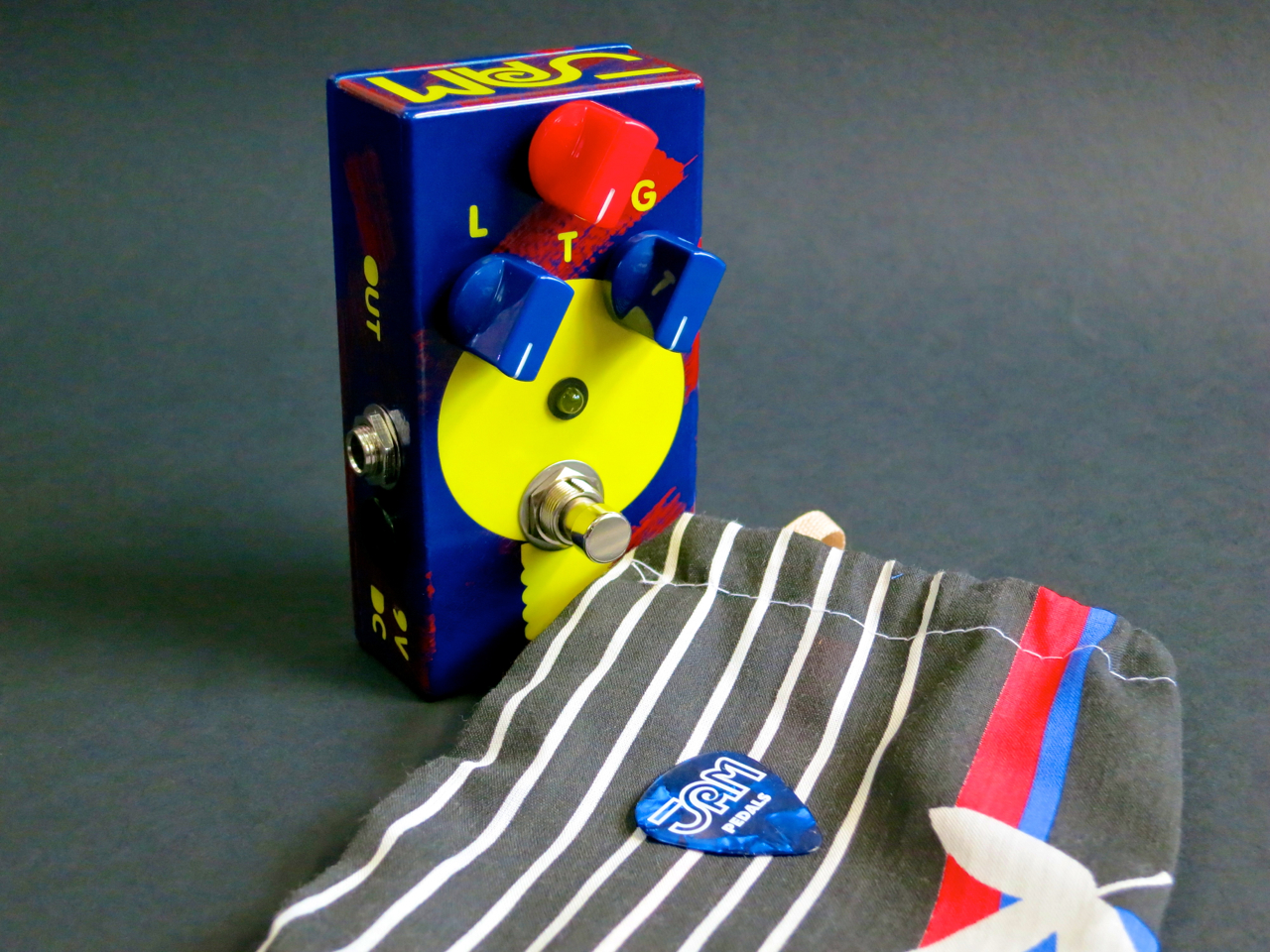
All JAM Pedals come in hand-painted, unique designs, and are delivered with a cloth sack for storage, as well as a JAM-logo’d plectrum.

All the effects tested in this review run on a nine volt battery or a (Boss-type) power supply (not included).

****

Jam pedals – Tube Dreamer 58 + bag

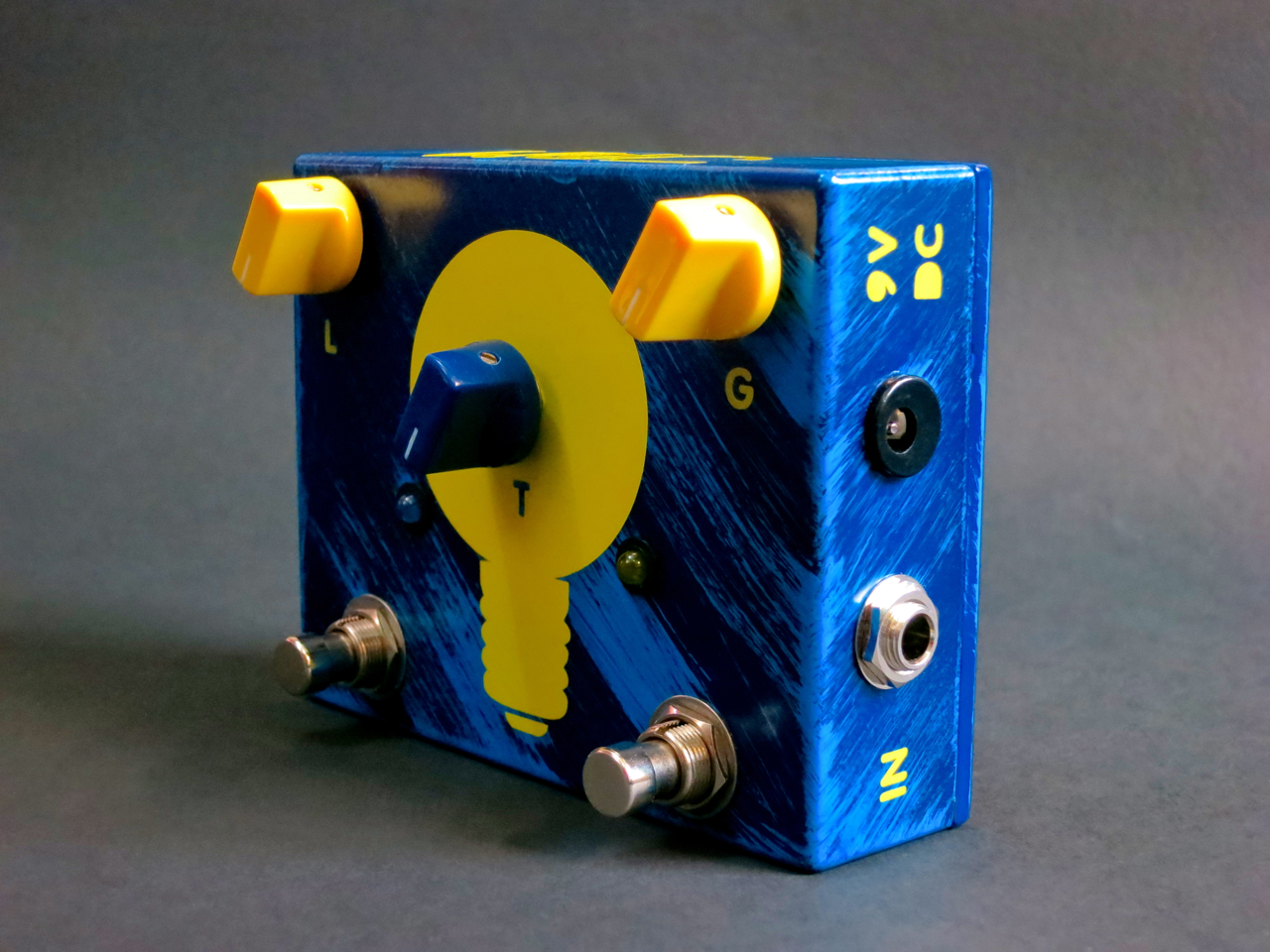
JAM Pedals offers four different versions of its Tube Dreamer overdrive pedal.

Their compact Tube Dreamer 58 is the company’s take on the ultimate Ibanez Tube Screamer 808 pedal. The circuit is built around an original JRC4558D-chip.

Jam pedals – Tube Dreamer 58 pic 1

The JAM Tube Dreamer 58 (current price in Finland: 185 €) wins you over with a healthy dose of that classic, creamy Tube Screamer mid-range. The TD58’s forte, though, is the vastly improved dynamic range of the JAM-model, and the more organic, amp-like overdrive structure, achieved by using three diodes for asymmetrical clipping.

This sound clip – like all the others in this review – has been recorded using a Fender Stratocaster and a Blackstar HT-1R valve combo:

Jam pedals – Tube Dreamer 58 pic 2

****

Jam pedals – Tube Dreamer+ and bag

The flagship model Tube Dreamer pedal is called the JAM Tube Dreamer+ (current price in Finland: 225 €), and is the deluxe version of the JAM Tube Dreamer 72, which is designed a ”secret chip”.

Jam pedals – Tube Dreamer+ pic 1

The Plus-version adds a high-gain-/boost-circuit (left footswitch) on top of the moderate-gain overdrive section (right footswitch).

The Tube Dreamer+ is shipped with the high-gain circuit adding only more gain to proceedings, but you can also adjust the high-gain circuit’s internal trimmer to deliver copious amounts of signal boost, whenever it is switched on.

In terms of its sound, the Tube Dreamer+ gives more than a passing nod to 1970s Blues Rock and Heavy Metal. Despite its high-gain boost, this JAM-model hasn’t been designed for contemporary Thrash Metal.

Jam pedals – Tube Dreamer+ pic 2

****

Jam pedals – Red Muck + bag

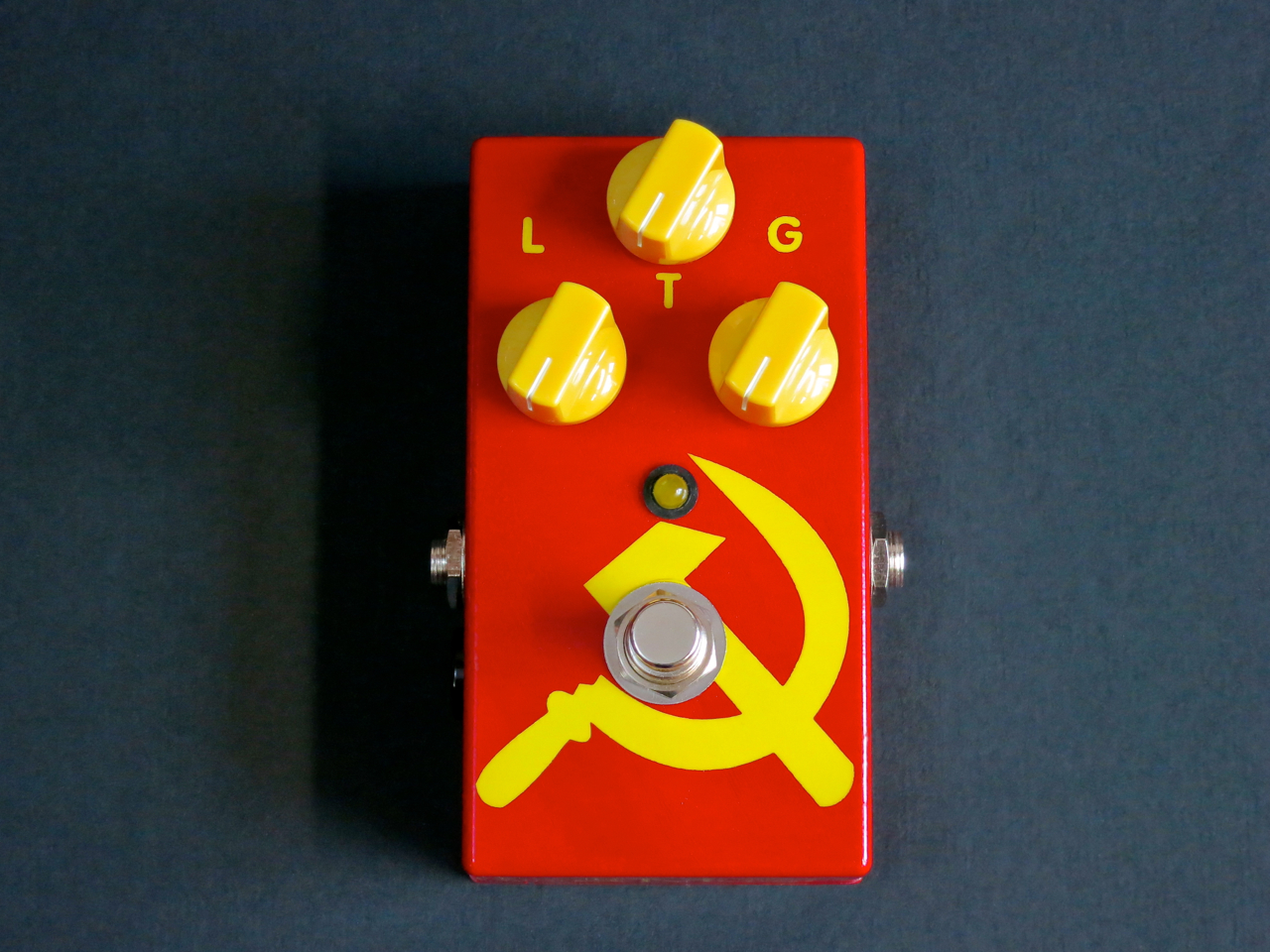
JAM Pedals’ stompbox fuzz is called Red Muck, and it comes in a Soviet-inspired colour scheme, complete with hammer and sickle graphics.

Jam pedals – Red Muck pic 1

The starting points for the Red Muck fuzz’ (current price in Finland: 209 €) tone were the classic, early Big Muff -sounds.

JAM has refined the original fuzz character to come up with a much more versatile pedal. JAM’s Red Muck reacts extremely well to changes in the guitar’s volume knob settings, while the overall delivery is noticeably fatter and creamier, when compared to many other fuzz-effects. This pedal also takes well to full chords, and doesn’t mush up so quickly.

I have to admit that JAM’s Red Muck has quickly become my favourite fuzz box.

Listen for the tonal changes, as I slowly raise the volume control at the beginning of this clip:

Jam pedals – Red Muck pic 2

****

Jam pedals – Waterfall + bag

The JAM WaterFall (259 €) is a dual-function effect pedal, offering chorus and vibrato in one compact package.

Jam pedals – Waterfall pic 1

The two effects in the WaterFall have been designed around two legendary Panasonic-chips (the MN3101 and the MN3007), on which some of the earliest Boss modulation effects were also based.

The mini-switch on the right is for selecting the effect – chorus or vibrato (v) – while the switch on the opposite side lets you choose between a milder, vintage (-) version of the chosen effect, or its more drastic, modern counterpart.

The WaterFall’s chorus is simply superb, sounding very natural and musical:

Vibrato may not be the most-commonly used effect, but the WaterFall’s reading must surely be one of the sweetest-sounding there is:

Jam pedals – Waterfall pic 2

****

Jam pedals – Ripple + bag

JAM Pedals’ The Ripple (199 €) is an easy-to-use phaser. There’s only a single Speed-control for the effect, and that’s all.

Jam pedals – Ripple pic 1

This is one lush-sounding phaser – you can’t get more musical than this! The Ripple has a rich and organic tone, broadening your guitar sound, yet it never seems to usurp the show or hog the limelight.

Jam pedals – Ripple pic 2

****

Jam pedals – Delay Llama + bag

The Delay Llama?! The guys at JAM HQ sure do have a sense of humour!

JAM’s Delay Llama (265 €) is an analogue, lo-fi delay pedal in the spirit of the early Eighties.

Jam pedals – Delay Llama pic 1

The Delay Llama features a classic bucket-brigade circuit, which uses an updated version Panasonic’s legendary MN3205-chip. The maximum delay time offered is approximately 600 ms. An internal trim port allows you to adjust the maximum number of repeats available from the Repeats-control.

The Delay Llama will bring sonic fulfilment to fans of the BBD-sound – there’s plenty of grease on tap, and each new repeat degenerates noticeably from the one before. Factory settings even allow for the Repeat-control to cause infinite and distorting feedback loops, something for the fans of psychedelic and experimental music.

Jam pedals – Delay Llama pic 2

****

Jam pedals – teaser

In my opinion, these JAM Pedals offer the genuine boutique pedal experience at fair prices! They sound great, they look cool, their noise floor is low, and the pedals consume surprisingly little (battery) power. Give them a try!

****

JAM Pedals

effect pedals from Greece

Tube Dreamer 58 – 185 €

Tube Dreamer+ – 225 €

Red Muck – 209 €

WaterFall – 259 €

The Ripple – 199 €

Delay Llama – 265 €

****

Pros:

+ handmade

+ hand-painted

+ sound

+ low power consumption

Review: Hughes & Kettner Red Box 5

Hughes & Kettner Red Box 5 – opener

Hughes & Kettner’s Red Box has been a runaway success, ever since the first version was introduced in the late Eighties.

The Red Box is a specialised DI-box for your guitar amp. Traditionally, DI-boxes are meant to transform the high impedance signal of an electric guitar (or bass) into a low impedance signal fit for direct connection to a recording (or PA) console.

The Red Box, on the other hand, is inserted between the amp’s speaker output and the speaker (cabinet). Hughes & Kettner’s analogue cabinet modelling then makes it possible to send the sound of a miked up guitar speaker to the mixing desk (or sound card) without having to actually put a microphone in front of the amp’s speaker.

Hughes & Kettner haven’t been resting on their laurels, though. They have updated and improved the Red Box every once in a while, with the most recent version being the Red Box 5 tested here.

****

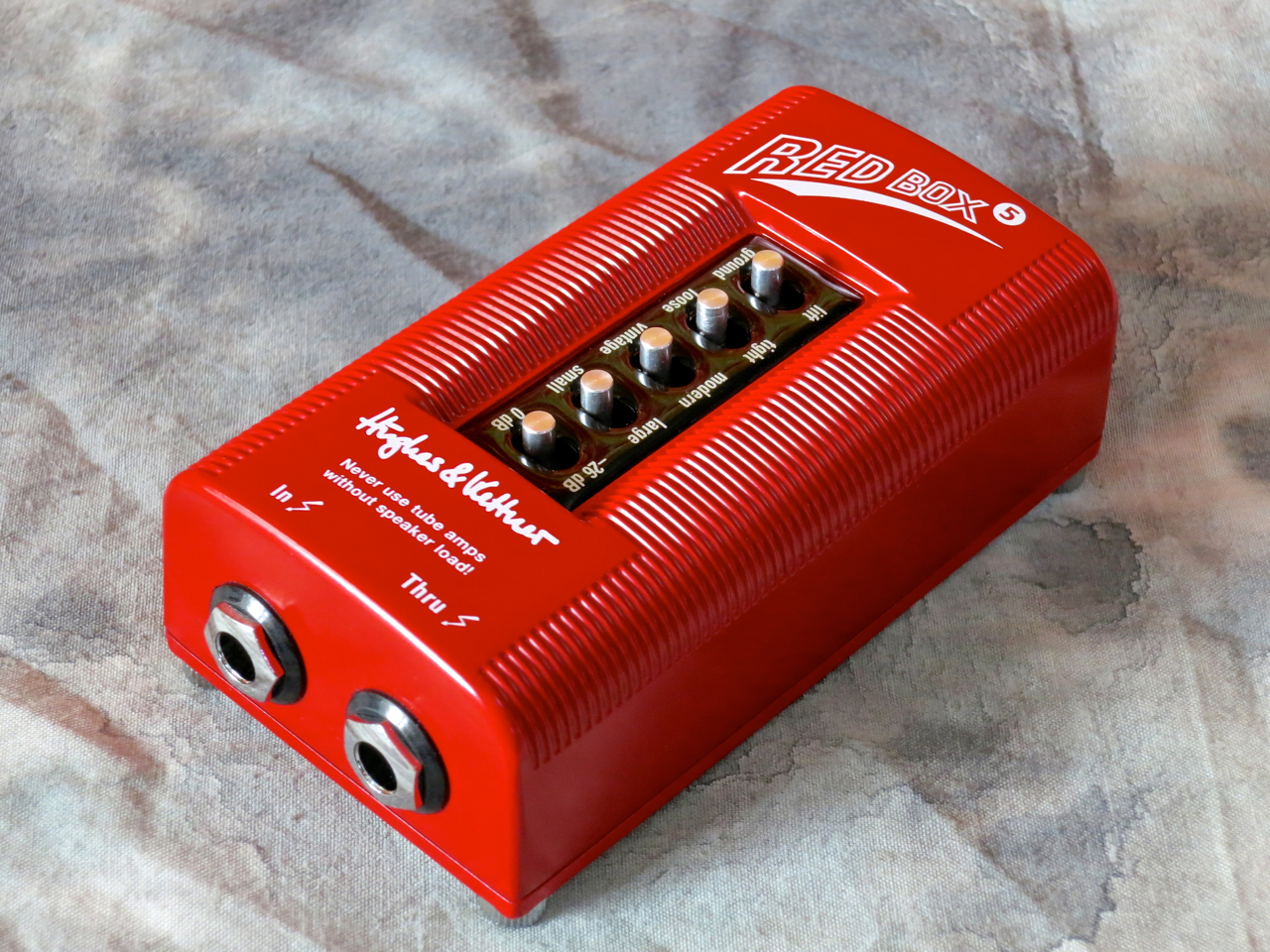
Hughes & Kettner Red Box 5 – full

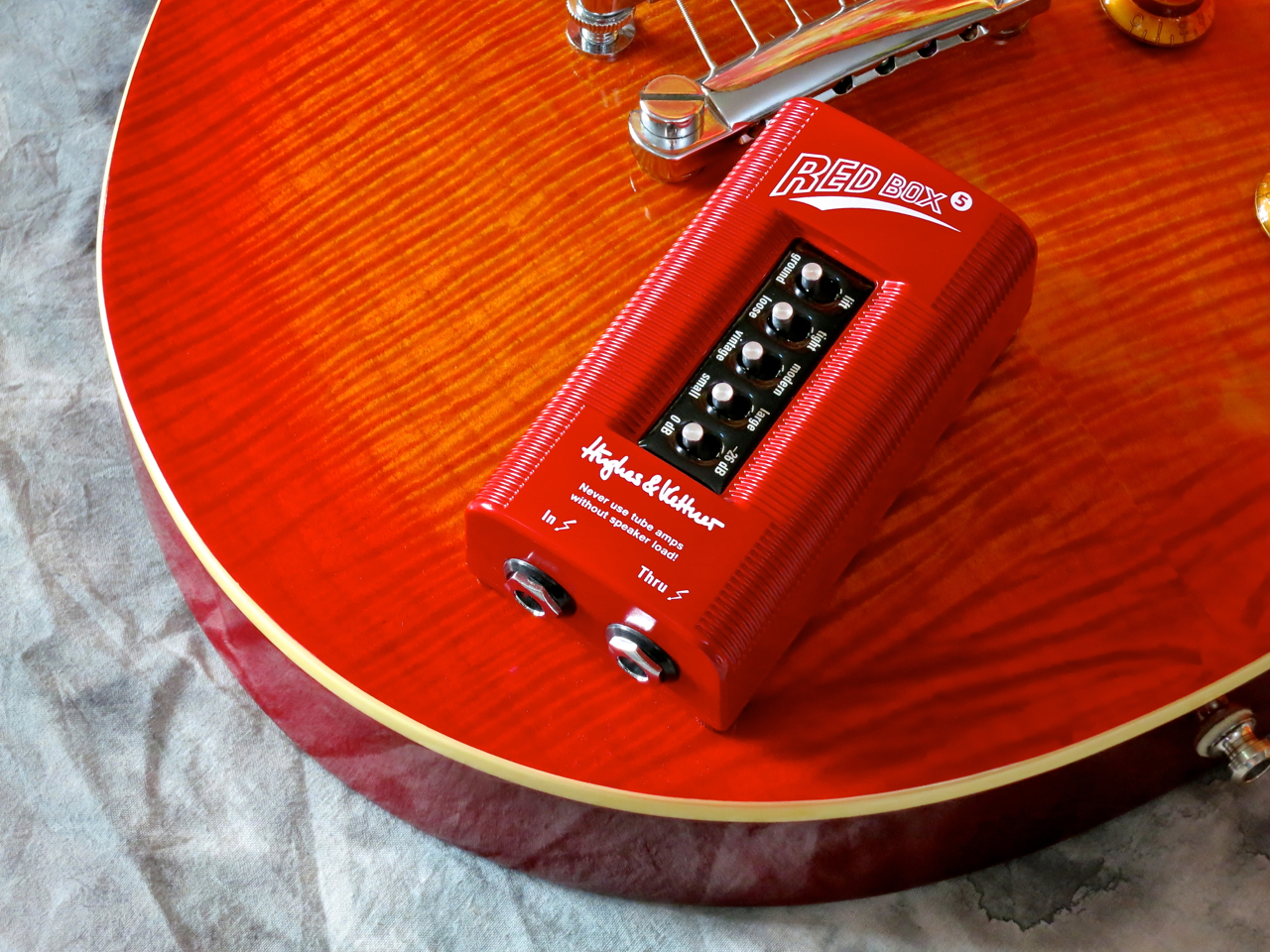
The Hughes & Kettner Red Box 5 (current price in Finland: 89,90 €) feels like a sturdy little blighter in its very compact cast-metal casing.

The Red Box’ switch panel has been sunk into the unit’s face, keeping the switches secure from mechanical damage or accidental changes to the settings.

Hughes & Kettner Red Box 5 – bottom view

Guitarists and guitar techs will rejoice in the fact that this little helper isn’t finicky when it comes to its power supply:

The Hughes & Kettner works just as well running on an internal 9 volts block, as it does powered by phantom power off the mixer, an external PSU. The Red Box will work with voltages from 9 to 12 V DC (centre negative) or even AC. So, finding a wall wart for this device should be a piece of cake!

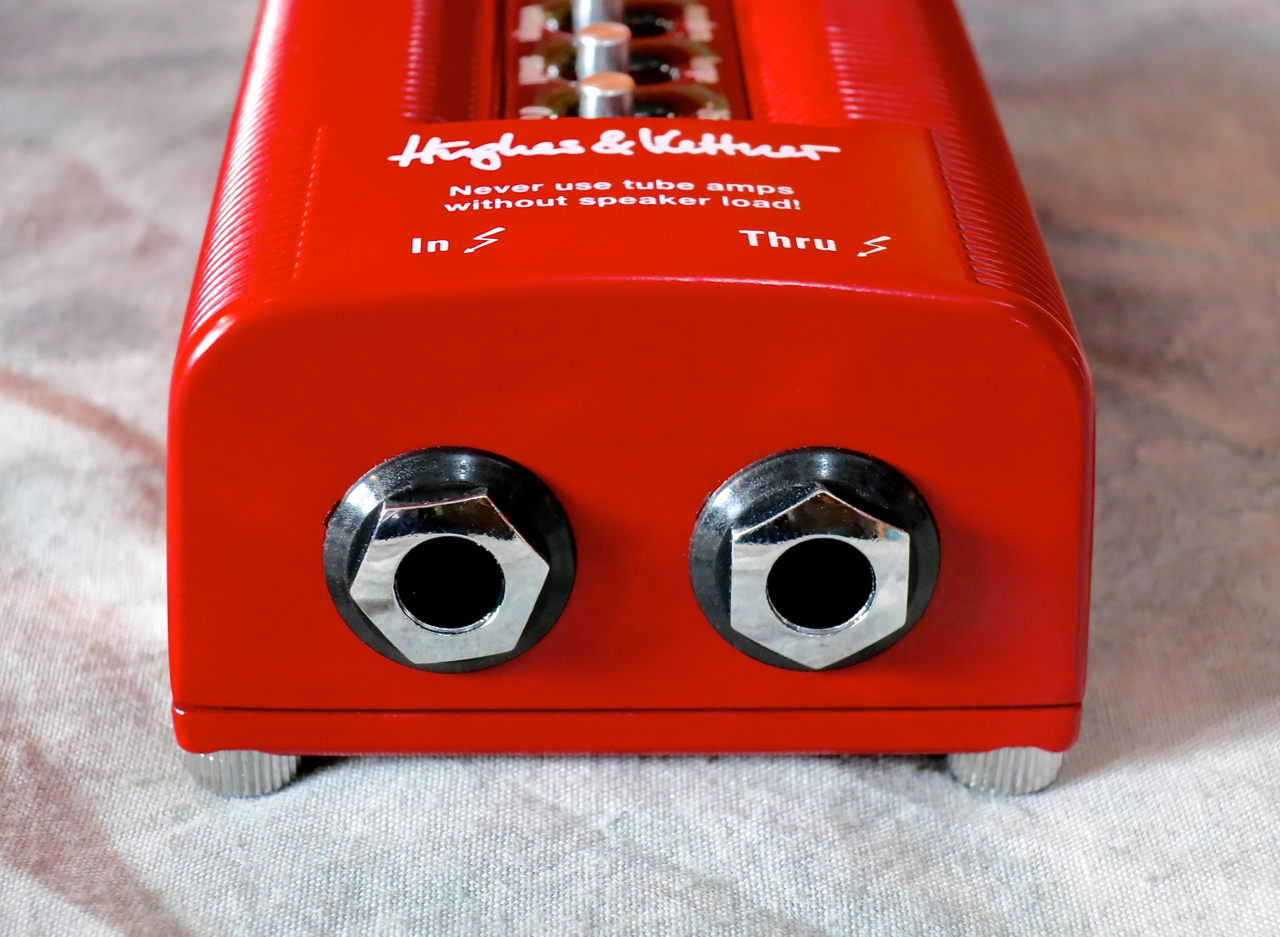
Hughes & Kettner Red Box 5 – speaker jacks

The speaker connectors have been placed at the Hughes & Kettner’s bottom end:

The amp’s speaker output is connected to the Red Box’ In-jack, while the Thru-jack will send an unadulterated signal to your speaker (cabinet).

It is very important that you don not confuse the Red Box – which is a DI-box – with a dummy load! If you’re using a valve amplifier (or a hybrid with a tube power amp) you really have to make sure to have the correct speaker load (in ohms) connected, whenever you use the amp. Using the Red Box without a speaker or dummy load will fry your amp’s power section or audio transformer!

Hughes & Kettner Red Box 5 – XLR + DC

The Red Box’ top end holds the balanced XLR DI-output, as well as the power supply (not included) connector.

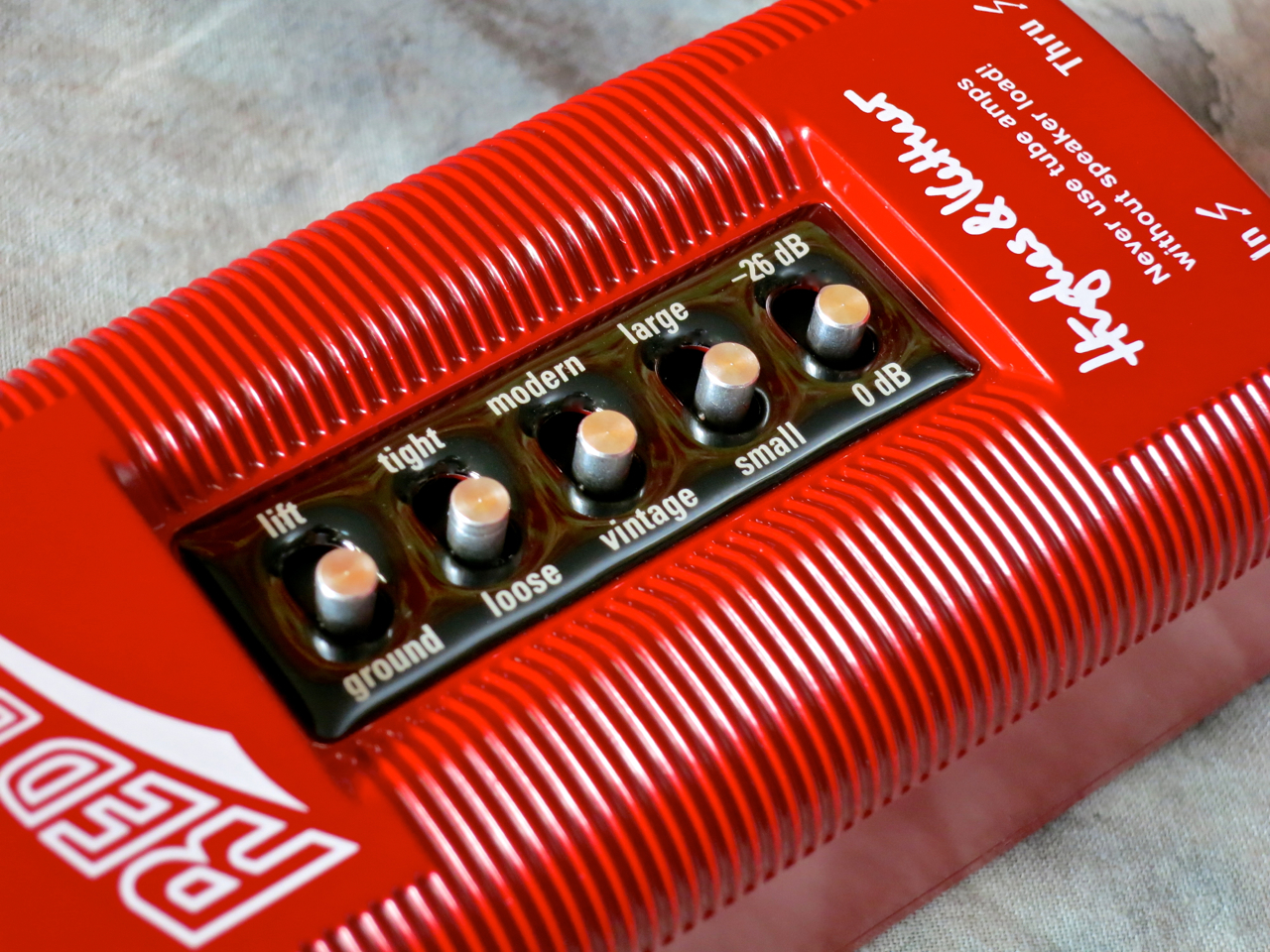
Hughes & Kettner Red Box 5 – switches

The Hughes & Kettner unit offers you five switches to tailor the DI-box’ output to your specific requirements:

There’s a ground lift switch (to cut any humming ground loops), a bass response switch, modern or vintage pre-EQ, a switch for the size of the virtual cabinet, as well as a 26 dB pad to prevent the DI-signal from overloading the console’s input.

Hughes & Kettner Red Box 5 – baggie

A black velvet bag is also thrown in with the Red Box.

****

Hughes & Kettner Red Box 5 – angle left

A ”great guitar sound” is probably one of our universe’s most subjective matters. Any guitar signal chain offers plenty of different variables. When you throw in the chosen cabinet, as well as the microphone and its placement relative to the speaker, the options available are virtually infinite. Nobody in their right mind can demand that a small DI-box, such as the Red Box 5, can actually offer any and all of the tonal options theoretically possible.

The Hughes & Kettner Red Box 5 raison d’être is to offer a handful of ”Best of” miked cabinet sounds, straight off of the amp’s speaker output to the mixing console (or sound card), without the hassle of having to set up a physical microphone, or having to account for the different sound characteristics of different rooms (for example on a tour). And in this the Red Box 5 truly excels.

To give you an idea of how well the Red Box 5’s sound stands up to a physical microphone, I have recorded a few clips simultaneously using a Shure SM57 and the Red Box. I used a Blackstar HT-1R running into an Änäkäinen Rumble speaker. The Red Box 5 was set to ”loose”, ”vintage” and ”large”.

Here’s a clean example, close-miked with the Shure:

And here’s the same example recorded direct with the Red Box:

Next I went for a crunchy amp sound; here’s the close-miked version:

And this is the same example DI’d through the Hughes & Kettner:

****

Hughes & Kettner Red Box 5 – angle right

Hughes & Kettner’s Red Box 5 is a fabulous tool, especially for onstage use. No need to put up a mic anymore, which means no more feedback and bleed problems. The Red Box 5 will give you consistently excellent DI’d guitar amp tones with the least amount of hassle.

****

Hughes & Kettner Red Box 5

Current price in Finland: 89,90 €

Finnish distribution: F-Musiikki

****

Pros:

+ very compact size

+ multiple means of power supply

+ different tonal options

+ pro-quality cabinet modelling

Review: Änäkäinen Rumble 1 x 12

Änäkäinen Rumble Cream – logo 2

Puuverstas Änäkäinen’s Rumble 1 x 12 -cabinet (prices in Finland start around 580 €) offers a few fresh ideas on how to come up with a cracking guitar tone.

The fathers of the Rumble-concept are cabinet maker Kari Änäkäinen (try saying: Curry ANNA-kay-nun), who is also gigging as a guitarist and bassist, and Kuusankoski’s very own tube amp guru, Triodipaja’s proprietor Lassi Ukkonen (LUSS-cee OO-cow-nun). The guys hit upon the basic idea for the Rumble cabinet, when Kari asked Lassi to calculate the correct cubic content for a lightweight bass cabinet he was building for himself. The bass cabinet turned out very well and set the duo on the path to coming up with the Rumble.

****

Änäkäinen Rumble Cream – angle right

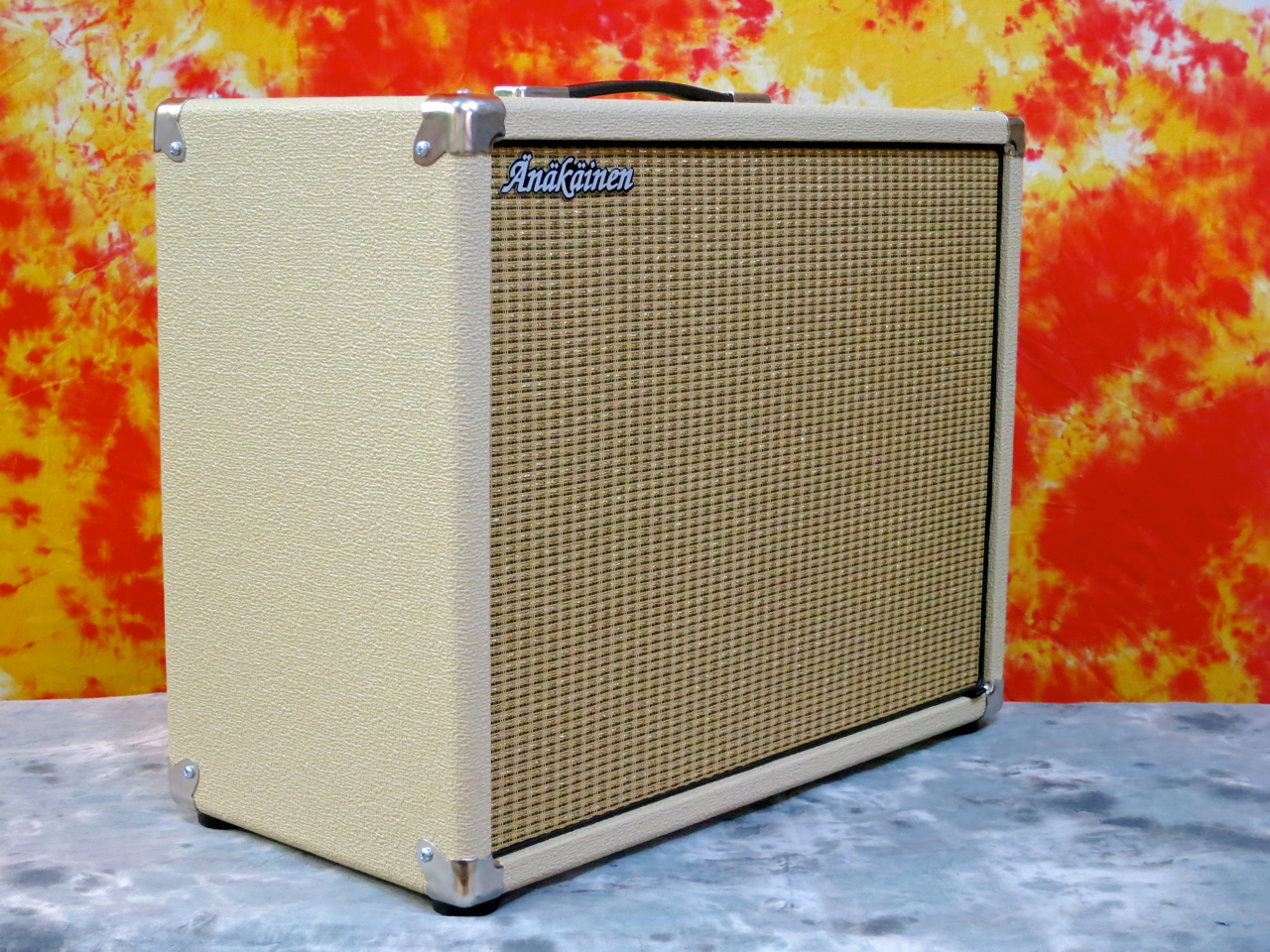
When it comes to the cosmetics of his Rumble cabinets, Kari Änäkäinen is a dyed-in-the-wool vintage fan.

Änäkäinen Rumble Cream – back angle

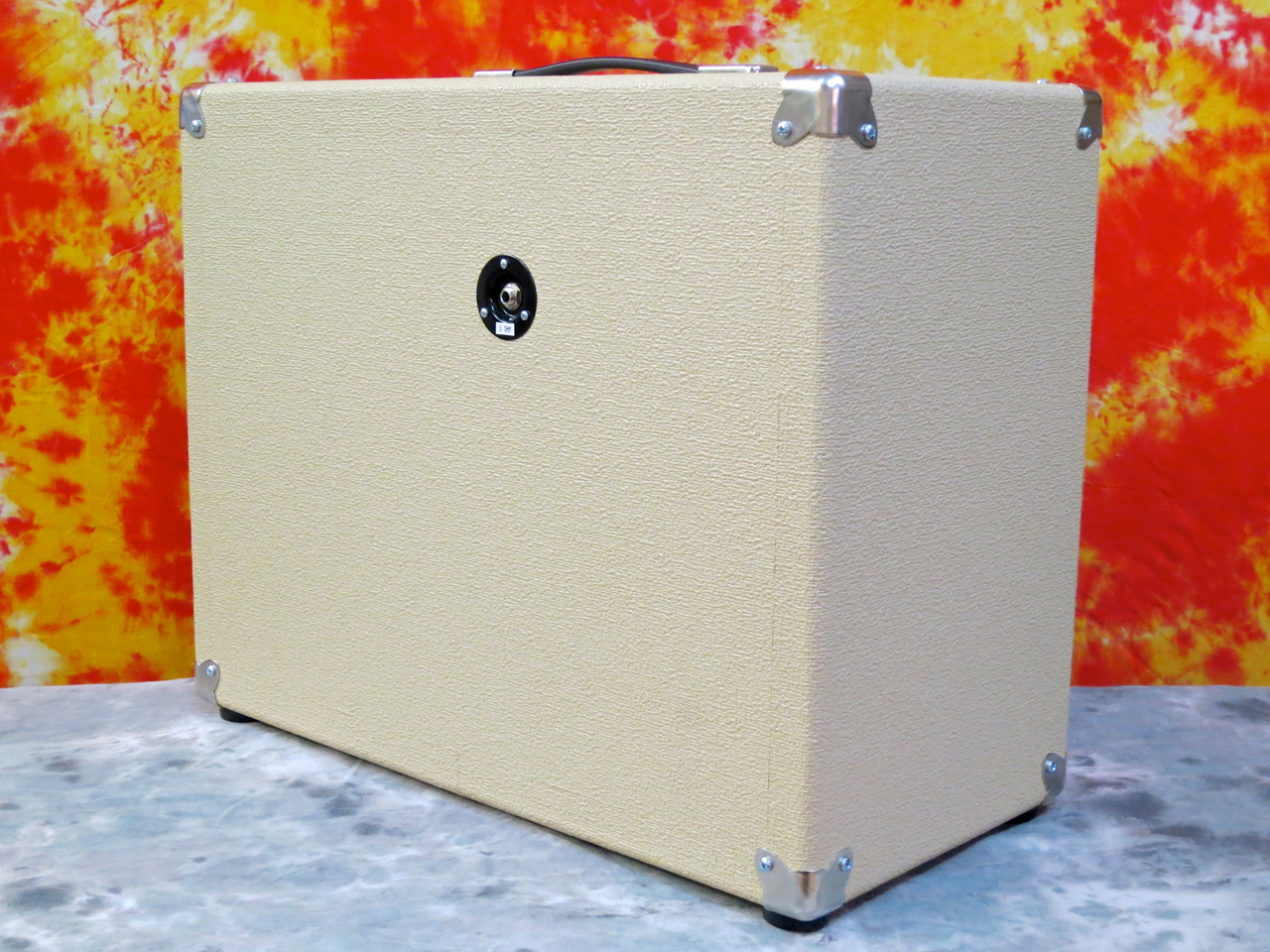
We received two different Rumble 1 x 12 cabinets for this review – one comes in a fetching ”Fender Blonde” look…

Änäkäinen Rumble Black – front angle left

…while the other clearly points in the direction of moody Marshall-ness.

Änäkäinen Rumble Black – back angle

The Rumbles sport metal corner protectors.

Änäkäinen Rumble Black – input

Here you can see the impedance sticker affixed to the sturdy jack plate.

Änäkäinen Rumble Cream – front cloth off

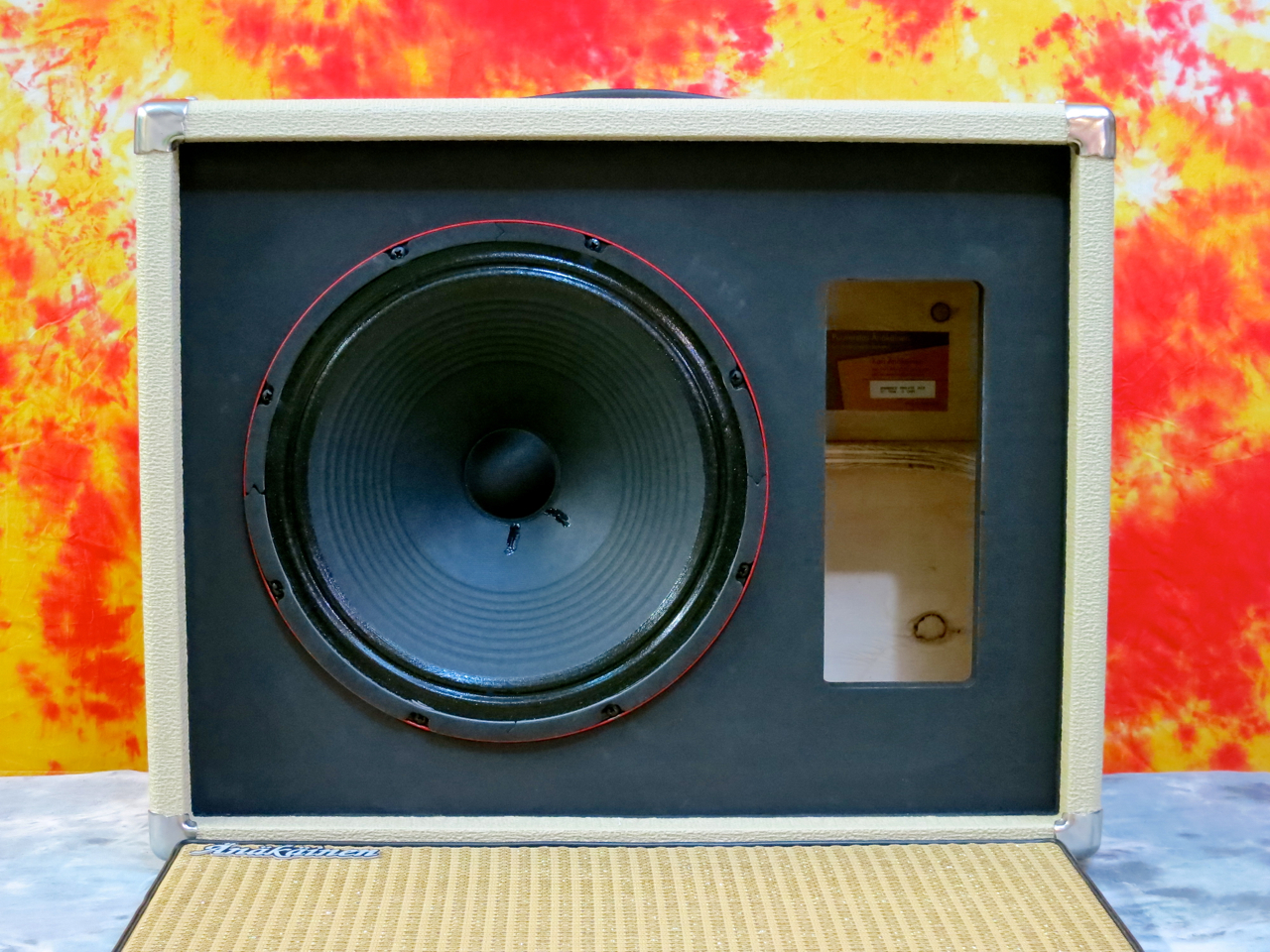
Currently, Kari Änäkäinen gives you a choice of five different speaker models for your personal cabinet.

The cream-coloured Rumble came equipped with an Eminence Private Jack -speaker (50 W/8 Ω).

Änäkäinen Rumble Black – front cloth off

A WGS:n Reaper (30 W/8 Ω) was chosen for the black counterpart.

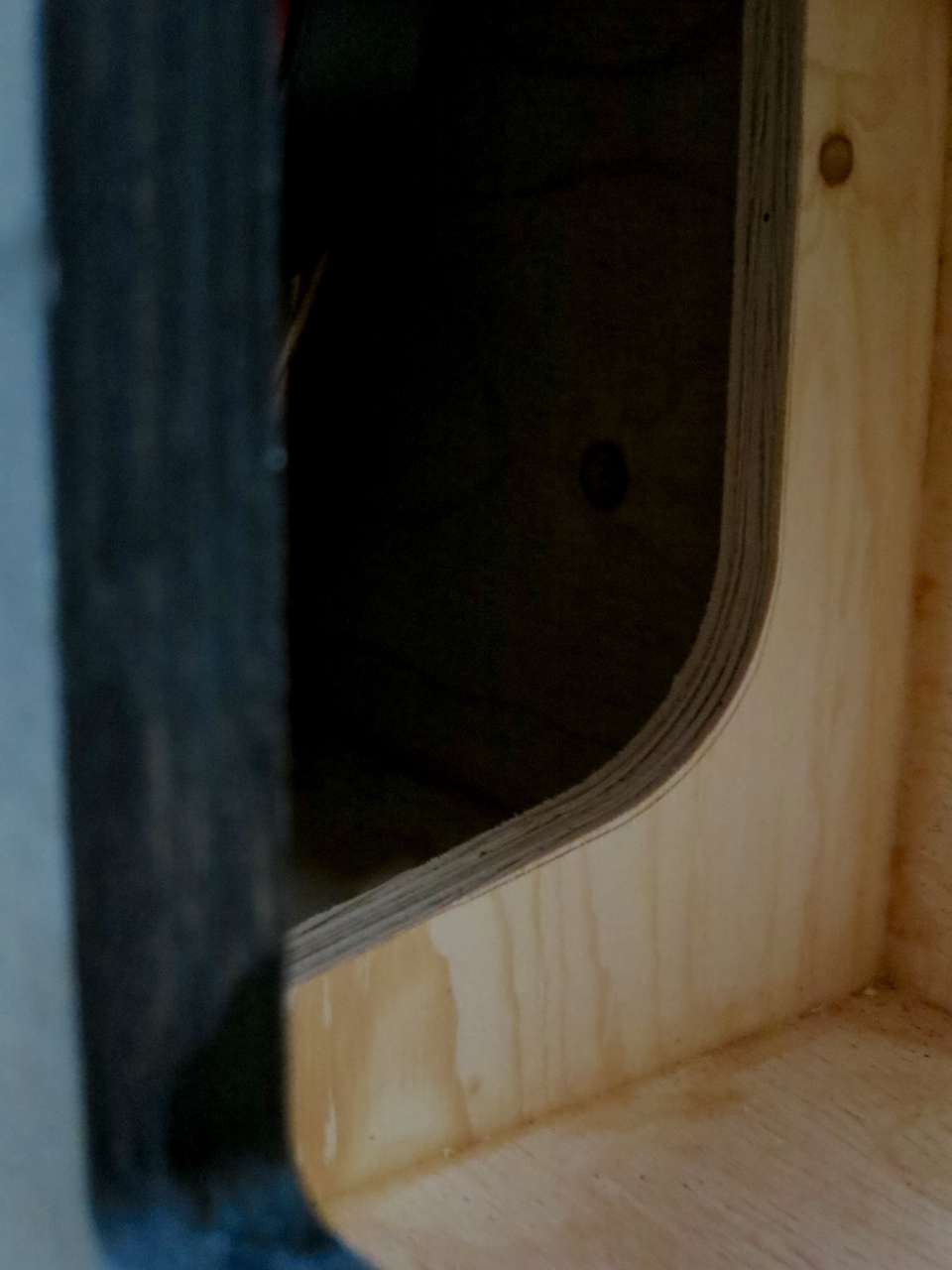
As you can see in these pictures, one of the special features of all Rumbles is the large rectangular port on one side of the cabinet. The basic idea has been borrowed from bass-reflex speaker, which are often used in Hifi- and bass (amp) cabinet designs. In the Rumble the opening is mainly used for sound dispersion, as the speaker doesn’t feature any internal reflectors, tunnels or a ”tuned” bass port.

Änäkäinen Rumble Cream – struts 1

The details of the cabinet build is also a little bit different to your run-of-the-mill guitar cab. The cabinet itself is crafted from Finnish conifer plywood with a thickness of 15 millimetres.

The advantages of conifer plywood are its quality, abundance and light weight. Most other cabinet makers will claim that this type of plywood is too soft and pliable for cabinet-making, but Kari has found his own solution to this problem: He uses internal struts and supports made from the same material.

Änäkäinen Rumble Cream – struts 2

The speaker baffle, on the other hand, is made from very sturdy, 18 millimetre thick Finnish birch plywood.

The whole speaker cabinet is constructed using only glue joints and wood dowels. The only screws in an Änäkäinen Rumble are those keeping the speaker, the jack plate and the corner protectors in place.

Änäkäinen Rumble Cream – top handle

The Rumble’s low weight of approximately 12 kilos is easy to lift by the cab’s top handle.

****

Änäkäinen Rumble Cream – front left

The first – completely subjective – impression I got from using the Rumble 1 x 12 was of a ”loud”, ”big” and ”musical” sounding cab. The Änäkäinen even made my tiny Blackstar HT-1R sound like a full-size tube amp.

The Rumble gets across a healthy shot of warmth and transparency – just like many other quality cabinets – but its special, front-ported construction adds an amazing amount of spread and directivity to the sound that is all its own. The sound dispersion is neither too narrowly focussed, nor is there any sound getting ”lost” behind the cab. Thanks to its front port, the Rumble delivers a larger-than-life, Cinemascope-style sound.

The Eminence-loaded blonde Rumble sings beautifully with a warm and creamy voice:

Änäkäinen Rumble Black – front angle right

Thanks to the WGS Reaper -speaker inside the black-clad Rumble 1 x 12, this cab has a somewhat more aggressive British accent. This added bite isn’t quite as pronounced when you stick to clean amp settings, but it will help your Rock riffs to cut through more easily:

****

Änäkäinen Rumble Black – logo 2

I must say I really like these Änäkäinen Rumbles a lot! They deliver excellent, boutique-class tones at a very fair price. If you need a relatively compact guitar cab with a big sound, you should really consider going for a Rumble!

****

Änäkäinen Rumble 1 x 12

Finnish prices starting around 580 €

Made by Puuverstas Änäkäinen

****

Pros:

+ workmanship

+ a functional, non-mainstream concept

+ wide, yet focussed sound

+ rich bottom end

+ different speaker options

Testipenkissä: JAM Pedals

JAM Pedals on kreikkalainen boutique-luokan efektipedaalien valmistaja, jonka tuotteet ovat hiljattain rantautuneet myös Suomeen (maahantuoja on espoolainen yritys R-Jam Group).

JAM Pedalsin kaikki kitara- ja bassoefektit ovat analogisia, ja valmistetaan käsityönä laadukkaista osista. Joissakin malleissa käytetään jopa harvinaisia vanhoja (ns. ”new old stock”) siruja ja transistoreita.

Erikoistilauksesta saa myös point-to-point versiot firman pedaaleista, sekä customoituja efektejä.

JAM-pedaalien ominaisuuksiin kuuluu aina myös käsin maalattu kotelo, kevyt kangaspussi ja firman logolla varustettu laadukas plektra.

Nyt testissä käyneet pedaalit toimivat kaikki sekä 9 voltin paristolla että Boss-standardin mukaisella 9 voltin virtalähteellä (ei kuulu hintaan).

****

Jam pedals – Tube Dreamer 58 + bag

JAM Pedals tarjoaa neljä erilaista Tube Dreamer -säröpedaalia.

Kompakti Tube Dreamer 58 on firman edelleen jalostettu näkemys klassisesta Ibanez Tube Screamer 808 -pedaalista. Kytkennän perustana käytetään jopa alkuperäistä JRC4558D-sirua.

Jam pedals – Tube Dreamer 58 pic 1

JAM Tube Dreamer 58 säröön (185 €) on saatu mukaan tuhdin annoksen vanhasta Tube Screamerista tuttua kermaista keskialuetta. TD58:ssa on kuitenkin parannettu roimasti pedaalin dynamiikka ja särön putkivahvistin-tyylistä soundia käyttämällä kolmea diodia, jotka tuottavat harmonisesti rikkaan asymmetrisen klippauksen.

Tämä ääninäyte – kuten tämän jutun muutkin pätkät – on äänitetty Fender Stratocasterilla ja Blackstar HT-1R -putkikombolla:

Jam pedals – Tube Dreamer 58 pic 2

****

Jam pedals – Tube Dreamer+ and bag

JAM Tube Dreamer+ (225 €) on valmistajan lippulaivasärö, joka perustuu JAMin Tube Dreamer 72 -pedaaliin, jossa käytetään firman salaista sirua.

Jam pedals – Tube Dreamer+ pic 1

Plussaversio tarjoaa keskivahvan overdrive-särön lisäksi samassa kotelossa vielä yhden päälle polkaistavan high-gain-/boost-piirin (vasen jalkakytkin).

Tehdasasetuksissa high-gain puoli lisää signaaliin pelkästään säröä, mutta Tube Dreamer Plussan pienellä sisäisellä trimmerillä voi halutessa myös lisätä reilusti high-gain-särön volyymitasoa.

Soundiltaan Tube Dreamer+ nojaa vahvasti 1970-luvun mehukkaaseen Bluesrockin ja Heavy Metalin suuntaan. High-gain-puolestaan huolimatta tämä JAM-pedaali ei ole tarkoitettu nykypäivän Thrash Metal -soittajille.

Jam pedals – Tube Dreamer+ pic 2

****

Jam pedals – Red Muck + bag

JAM Pedalsin fuzz-pedaalin nimi on Red Muck (punainen lika), vaikka se onkin hyvin siistin näköinen, neuvostoajan symboleilla leikkivä efektipedaali.

Jam pedals – Red Muck pic 1

Red Muck -fuzzin (209 €) lähtökohtana toimivat historian parhaat Big Muff -soundit.

JAM on kuitenkin jalostanut näistä alkuperäispedaaleja huomattavasti yleispätevämmän kokonaisuuden. JAM Red Muck reagoi esimerkillisesti kitaran volume-potikan kanssa, ja fuzz-efektin yleissoundi on täyteläisempi ja hieman kermaisempikin kuin monet muut fuzz-efektit. Tämä pedaali ei myöskään mene täysin tukkoon, silloin kun soittaa sointuja sen läpi.

Täytyy sanoa, että JAMin Red Muck on tämän testin perusteella noussut minun henkilökohtaiseksi suosikki-fuzziksi.

Tämän audiopätkän alussa avaan hitaasti kitaran volume-potikan:

Jam pedals – Red Muck pic 2

****

Jam pedals – Waterfall + bag

JAM WaterFall (259 €) on nyt testatun kuusikon monipuolisin efektipedaali, joka tarjoaa sekä chorus- että vibratoefektin samassa kuoressa.

Jam pedals – Waterfall pic 1

WaterFallin efektipiirit käyttävät varhaisista Boss-efekteistä tuttuja – nykyään legendaarisen maineen saaneita – alkuperäisiä Panasonic-siruja (MN3101 ja MN3007).

Pedaalin oikeanpuoleisella pikkukytkimellä vaihdetaan choruksen ja vibraton (V) välillä, kun taas vasemmanpuoleisella kytkimellä voi valita käyttääkö vahvemman nykytulkinnan tai miedomman vintage-tyylisen version (-) valitusta efektistä.

WaterFallin chorus on erittäin luonnollisen kuuloinen ja musikaalisella tavalla orgaaninen:

Vibratoefekti on ehkä hieman harvemmin käytetty efektityyppi, mutta WaterFall-pedaalin tulkinta on kuitenkin hyvin laadukas lajinsa edustaja:

Jam pedals – Waterfall pic 2

****

Jam pedals – Ripple + bag

JAM Pedals The Ripple (199 €) on erittäin helppokäyttöinen phaser-pedaali, koska sillä on ainoastaan yksi säädin efektin nopeussäätöä varten.

Jam pedals – Ripple pic 1

Samoin kuin WaterFall-choruksen kohdalla, voin myös The Ripple -phaserin tapauksessa vain todeta, että efekti toimii erittäin kiitettävästi hyvin musikaalisella tavalla. Phaser-efekti on täyteläinen ja soundia laajentava, ilman että JAMin pedaali kahmisi koko huomiota itselleen.

Jam pedals – Ripple pic 2

****

Jam pedals – Delay Llama + bag

Delay Llama?! Kyllä, JAMin tyypeillä on huumorintajua!

JAM Delay Llama (265 €) on analoginen lo-fi viive-efekti varhaisen 1980-luvun hengessä.

Jam pedals – Delay Llama pic 1

Delay Llaman kytkentä on rakennettu bucket-brigade-periatteella, jonka sydämenä toimii vanhan (ja legendaarisen) Panasonic MN3205 -sirun laadukas kopio. Pedaalin maksimaalinen viiveaika on noin 600 millisekuntia. Sisäisellä trimmerillä voi säätää toistomäärän ylärajaa.

Delay Llamalla on juuri se oikea BBD-soundi – se on likainen, ja jokainen toisto huononee entisestään hyvin herkullisella tavalla. Tehdasasetuksilla pystyy käyttämään Repeat-säädintä myös feedback-loopin aiheuttamiseen, mistä kokeellisen tai psykedeelisen musiikin ystävät varmasti iloitsevat.

Jam pedals – Delay Llama pic 2

****

Jam pedals – teaser

Nämä JAM-pedaalit ovat mielestäni todella loistavia, eikä edes ylisuurella hintalapulla pilattuja! JAM Pedals -efektit tarjoavat aidon boutique-kokemuksen: Niillä on loistava soundi, hyvin alhainen kohinataso, omaleimainen ulkonäkö, ja ne ovat sähköpihejä. Kokeileminen kannattaa varmasti!

****

JAM Pedals

kreikkalaisia efektipedaaleja

Tube Dreamer 58 – 185 €

Tube Dreamer+ – 225 €

Red Muck – 209 €

WaterFall – 259 €

The Ripple – 199 €

Delay Llama – 265 €

****

Plussat:

+ käsintehtyjä

+ käsinmaalattuja

+ soundi

+ vähäinen virrantarve

Pidä blogia WordPress.comissa.

Ylös ↑