Zoom’s A3 is the company’s brand-new, next-generation modelling effects unit for acoustic guitar.
The Zoom A3’s user interface is very similar to the one used in their MS-50G-pedal for electric guitar, but in terms of its features the A3 offers a whole plethora of stuff developed specially for use with acoustic guitars.
****
Zoom have managed to pack an unbelievable amount of processing prowess into its new compact contender (current street price in Finland approx. 170 €), yet the A3 is still easy to use. The most vital functions have been given their own knobs and pushbuttons, which makes the A3 easy to use and cuts back on unnecessary menu-jumping at the same time.
The Zoom’s main sections are the quality dual preamp with its three-band EQ, the pedal’s versatile guitar-modelling department, as well as the A3’s large assortment of effects.
Additionally, the pedal offers a switchable solo boost (up to 12 dB) with its own tone control, an automatic feedback remover (that can defeat up to three different frequencies simultaneously) and a digital tuner.
The Zoom A3 is a programmable unit, which can store up to 20 patches. The patches can also be lined up in an A/B-list, which enables you to select patches for on-the-fly switching.
The effect pedal comes with its own power supply unit, but it can also be run on four AA-size batteries.
The A3’s microphone input – which can run phantom power (+24V or +48V) for condenser mics – and the unit’s balanced XLR-output (with a dedicated ground lift switch) have been placed on the front panel.
Your guitar’s output goes into the Zoom’s pickup input on the unit’s right hand side. A three-way slider lets you select two pre-EQ curves – magnetic or piezo – as well as a linear option (flat).
The stereo outputs have been placed on the opposite side, next to the USB-port for (firmware updates).
****
Each of the A3’s patches can run up to three different effects simultaneously, so you could use the first slot for one of the Zoom’s 28 virtual guitars, the second slot for one of three virtual microphones (SM57, C414, U87) and the third for something like a reverb.
On the other hand, you can also use the A3 as a ”pure” multieffect, by not using any digital guitar-modelling and creating patches with three effects in them. You can choose from 40 different effect types – from compression and chorus all the way to pitch-shifting and reverb. The sound quality is very good, and each effect offers plenty of leeway for precise adjustment.
Still, I think the A3’s biggest selling point is its excellent modelling section, which makes it possible to achieve astonishingly realistic results with only a few clicks of a button.
To work properly the modelling section needs a clean guitar signal, so the first thing is to make sure you’ve got the input gain settings for your straight guitar output and/or the mic put in front of your guitar just right.
Once the levels are OK, miraculously changing the character of your guitar is quick and easy: First, use the rotary switch above the Zoom’s display to select the body type corresponding best to the guitar you’re using – for example, choose ”Mold Body” if you’re playing an Ovation or ”YMH” if your guitar is a Yamaha LL-series instrument.
Next, you select a virtual guitar of your liking for the first effect slot in the chosen patch. You can access all of the A3’s 28 virtual guitars by using the Type-buttons. The guitars are displayed using their model names – like J-45, LG-2 or F-55 – as well as by an icon in the display.
If you’re using only a direct piezo signal as a starting point, you can add a good dose of authenticity by selecting a virtual microphone for the second effect slot of the patch. Each of the three virtual mics lets you choose between close- and ambient-miking, and whether the mic has been placed in front of the virtual sound-hole or near the virtual guitar’s bridge.
I have recorded three audio examples to give you an idea of the modelling technology’s sound:
The first clip features a Godin Acousticaster with an LR Baggs piezo system. First you’ll hear the straight piezo signal, followed by the these virtual guitars: A D-28, an OM-28, a 00-18 and an SJ-200. I’ve used Zoom’s virtual version of an AKG C414, and a touch of reverb:
The second clip has been recorded with me playing my Takamine N-20 -jumbo into a real condenser mic (an AKG C3000). The sequence of virtual guitar models is the same as above:
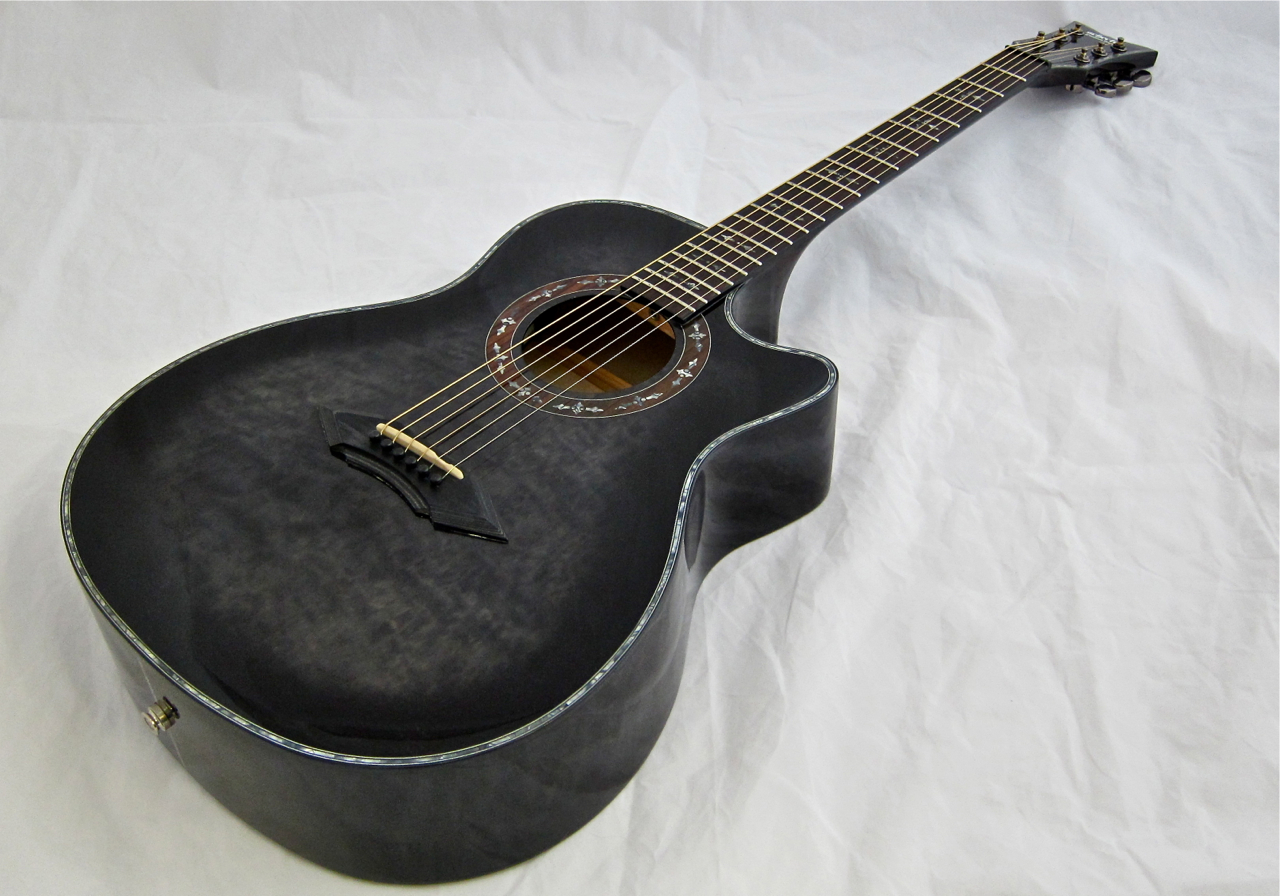
In the third clip I play my Tanglewood TW28-CSN -dreadnought, with the physical microphone and the sequence of virtual guitars staying the same:
****
In my opinion the Zoom A3 is a very serious contender for the title of ”Best compact multieffect for acoustic guitar”. It is a fantastic little tool for both live use and in the studio, where it can act as your own production centre for acoustic guitars. The Zoom is very easy to use and it sounds great. The on-board anti-feedback circuitry works very nicely and the solo boost is a handy tool to have in a unit such as this.
The best bit is, nonetheless, the A3’s surprisingly organic-sounding modelling section. The Zoom’s biggest advantage, when compared to other similar effect units, lies in its versatility and the wide range of different virtual guitars on offer. It is very easy to find a good body-style match for your physical guitar’s input signal, and the amount of different virtual guitar models makes it almost hard to choose. The option to creatively misuse the Zoom A3 – by selecting the ”wrong” body-type for your input signal – is also fun, and yields some nice new flavours.
But, don’t listen to me, go out and give it a try yourselves.
Uusi Zoom A3 on firman uusimman sukupolven mallintava etuvahvistin ja efektipedaali akustisille kitaroille.
Zoom A3:n käyttölogiikka on pitkälti samanlainen kuin firman sähkökitaralle tarkoitetussa MS-50G-pedaalissa, mutta ominaisuuksiltaan uutuus tarjoaa monia uusia ominaisuuksia, joita on kehitetty varta vasten akustiselle kitaralle.
****
Uutuuspedaali (katuhinta noin 170 €) tarjoaa uskomattoman paljon pienessä koossa, mutta samalla käyttäjälle ystävällisellä tavalla. Kaikilla tärkeimmillä toiminnoilla on omat säätimensä ja/tai napinsa, minkä ansiosta valikkojen välinen hyppäily on pidetty A3:ssa minimissä.
Zoomin kolme pääpilaria on sen erittäin laadukas, kaksikanavainen etuvahvistin kolmialueisella EQ:lla, laitteen monipuolinen digitaalinen kitaramallinnus, sekä sen runsas efektiosasto.
Tämän lisäksi on tarjolla vielä tehokas (12 dB) boosteri omalla EQ:lla, sekä kierronpoistaja, jolla voi vaimentaa jopa kolme eri feedbacktaajuutta samanaikaisesti. Myös digitaalinen viritysmittari on mahdutettu mukaan.
Zoom A3 on ohjelmoitava laite, ja se tarjoaa 20 muistipaikkaa omille patcheille. Patcheja voi myös ketjuttaa A/B-List-tilassa niin, että omassa setissä käytettäviä patcheja voi vaihtaa lennossa kytkinpolkaisulla.
Efektipedaali toimii joko pakettiin kuuluvalla yhdeksän voltin virtalähteellä, tai sitten vaihtoehtoisesti neljällä AA-paristolla.
A3:n etupuolelta löytyy laitteen mikrofonitulo – johon voi kytkeä phantomvirran (+24V tai +48V) kondensaattorimikrofoneja varten – balansoitu XLR-lähtö (maadoituskytkimellä), sekä liitin virtalähteelle.
Soittimen sisäiselle mikrofonille on omistettu oma tulo Zoomin oikeassa kyljessä. Kolmiasentoisella kytkimellä voi kytkeä päälle etuvahvistimen esisuodatusta piezo- tai magneettiselle mikrofonille, tai päästää muokkaamaton signaali eteenpäin (Flat).
Zoomin toisesta laidasta löytyy stereofoniset jakkilähdöt (vasempaan jakkiin voi kytkeä suoraan myös kuulokkeet), sekä USB-portti firmwarepäivityksiä varten.
****
Jokaiseen Zoom A3:n efektipatchiin kuuluu maksimissaan kolme yksittäistä efektiä, joista ensimmäinen voisi olla esimerkiksi yksi laitteen 28:sta digitaalisista kitaramalleista, toinen yksi kolmesta mikrofonimallinnuksista (SM57, C414, U87) ja kolmas vaikkapa kaiku.
Zoomia voi toki käyttää myös ”pelkkänä” efektilaitteena, ilman kitara- ja mikkimallinnuksia, jolloin patchin kaikki kolme palikkaa vapautuvat puhtaaseen efektikäyttöön. Tarjolla on 40 eri efektityyppiä laidasta laitaan – kompressorista chorukseen ja pitch shifteristä kaikuun. Jokaista efektityyppiä voi räätälöidä omien tarpeiden mukaan, ja efektien laatu on kauttaaltaan hyvin korkea.
Veikkaisin kuitenkin, että monien käyttäjien näkökulmasta mielenkiintoisin ominaisuus Zoom A3:ssa on juuri sen digitaalinen kitaramallinnus. Ja syystäkin, sillä mallinnusosastoa on helppo käyttää, ja sen tuottama soundi useimmissa tapauksissa jopa ällistyttävän autenttinen.
Mallinnusosaston toimivuuden kannalta on tietysti hyvin tärkeää, että soitetun kitaran tulosignaali on mahdollisen laadukas, ja kitaran piezomikrofonin ja/tai kitaran eteen laitetun mikrofonin tasot on säädetty sopiviksi.
Tämän jälkeen fyysisen kitaran soinnin muuttaminen toisen kitaratyypin soundiksi on hyvin helppoa: Ensin valitaan 16-pykäläisestä kiertokytkimestä sen koppatyypin, joka vastaa eniten käytettyä fyysistä kitaraa – esimerkiksi ”Mold Body”, jos käytössä on Ovation-malli, tai vaikkapa ”YMH”, kun soitetaan yhden Yamahan LL-malleista.
Tämän jälkeen valitaan patchin ensimmäiselle efektilohkolle Type-napeilla sen Zoomin tarjoamista 28 kitaramallista – esimerkiksi J-45, LG-2 tai F-55 – joksi halutaan tulosignaalia muuttaa.
Jos fyysiseltä kitaralta tulee pelkästään piezosignaali A3:een, voi lisätä lopputulokseen vielä aimo annoksen autenttisuutta käytämällä patchia toisessa lohkossa yhden Zoomin kolmesta virtuaalimikrofoneista. Virtuaalimikrofonin kohdalla pystyy säätämään, onko kitara läheltä mikitetty vai ei, ja onko virtuaalimikki laitettu virtuaalisen kaikuaukon eteen vai suunnattu virtuaalikitaran tallaa kohti.
Tässä ovat kolme esimerkkipätkää Zoom A3:n mallinnuksista:
Ensimmäiseksi äänitin sähkökitaraa muistuttavaa Godin Acousticasteria, jossa on LR Baggs -mikrofonijärjestelmä. Virtuaalikitaramallien järjestys – efektoimattoman osion jälkeen – on D-28, OM-28, 00-18 ja SJ-200. Virtuaalimikrofoniksi valitsin Zoomin versiota C414-studiomikrofonista:
Toinen esimerkki on äänitetty Takamine N-20 -jumbolla ja fyysisellä AKG C3000 -mikillä. Myös tämä pätkä alkaa muokkaamattomalla osiolla, minkä jälkeen seuraa samat virtuaalikitarat samassa järjestyksessä kuin yllä:
Kolmas – ja viimeinen – esimerkki on äänitetty C3000:n kautta Tanglewood TW28-CSN -kitaralla. Virtuaalikitarat ovat jälleen samat (ja samassa järjestyksessä) kuin muissa pätkissä:
****
Mielestäni uusi Zoom A3 kuuluu selvästi pienten, akustisille kitaroille tarkoitettujen, multiefektien aatelistoon. A3 on erinomainen työkalu sekä livekäytössä lavalla että akustisten raitojen tuotantokeskukseksi studiossa. Zoomia on helppo käyttää, ja sen efektit kuulostavat erittäin terveeltä. Kierronpoistaja toimii tehokkaasti, ja sooloboosteri omalla tone-asetuksella on todella tervetullut lisäys tällaiselle multiefektille.
Parasta A3:ssa on omasta mielestäni kuitenkin sen kitaramallinnusosasto. Mallinnuksen luonnollisuus ja autenttisuus on erittäin hyvällä mallilla. Moniin muihin systeemiin verrattuna Zoomin suurin etu on sen monipuolisuudessa ja mallien runsaudessa. On hyvin vaivatonta löytää omalle kitaralle sopiva koppa-asetus, ja virtuaalikitaroiden määrä luo jo lähes liikkaakin valinnanvaraa. Myös tahallisesta väärinkäyttämisestä – valitsemalla tulopuolella väärää koppatyyppiä – voi saada monta käyttökelpoista soundia aikaiseksi.
Kitarablogi’s Book of Guitars-kirjassa on yli 100 sivua kitarakuvia, Duesenbergistä ja ESP:stä, PRS:n ja Schecterin kautta Yamahaan. Klikkaamalla kirjan audio-ikoneita saa kuuluville esimerkkisoundeja jokaisesta eKirjaan kuvatuista malleista.
Saat ilmaisen kitarakirjan TÄÄLTÄ tai menemällä iBookstoreen!
Kitarablogi’s Book of Guitarsfeatures over 100 pages of guitar photography, getting up close with many different models starting with Duesenberg and ESP, and continuing all the way to PRS, Schecter and Yamaha. Click on the audio-icons in the eBook to hear sound samples of all the guitars covered in this interactive tome.
Get your free copy HERE or by visiting your iBookstore!
The UK’s favourite brand of acoustic guitars – Tanglewood – is steadily growing a devoted following in Finland, too, thanks to their wide variety of different models, as well as the company’s knack for providing fantastic value for money.
This time Kitarablogi.com takes a closer look at two guitars from opposing ends of Tanglewood’s price range:
The Tanglewood TW28-CLN is one of the brand’s most affordable instruments, and is part of the Evolution-series.
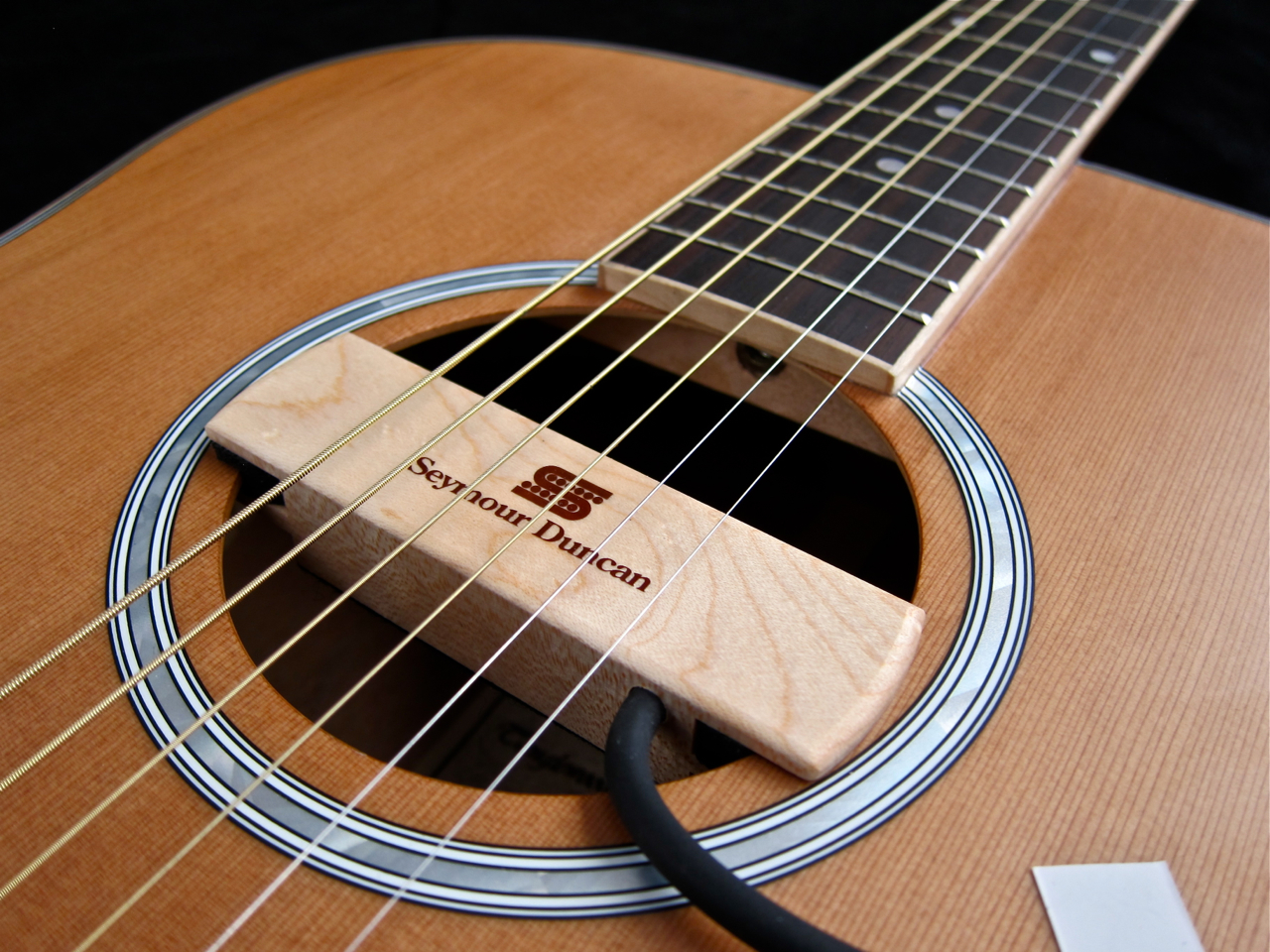
Tanglewood’s Finnish distributor – Musamaailma – has equipped the test sample with a Seymour Duncan soundhole pickup, the humbucking Woody (SA-3 HC).
Tanglewood’s TW1000HSRE is the top model of the Heritage-series, and comes factory-equipped with a Fishman-pickup and Sonitone-preamp.
By the way, Musamaailma throws in a nifty Kyser Lifeguard humidifier for free with the purchase of any Tanglewood acoustic guitar, so you can be sure that your new instrument won’t suffer the detrimental effects of central heating during the cold season.
****
Tanglewood’s TW28-CLN (current price in Finland:201 €) is a Dreadnought with a soundbox made from plywood, and a set mahogany neck.
The top is crafted from very nice looking cedar…
…while the rims and the back have been made of laminated mahogany.
The whole instrument – with the exception of the gloss-lacquered headstock veneer – has been finished in a very thin, clear satin finish.
The TW28-CLN’s headstock sports a rosewood veneer.
In this picture you can clearly spot the glue line, where the headstock has been added to the neck, as well as the very decent sealed machine heads.
Even though the Evolution-series is all about affordability, this Tanglewood has been spruced up with some nice cosmetic touches: The rosewood fingerboard, for example, has been bound using genuine maple!
The frets are of medium size, and the fretwork looks and feels very crisp and clean.
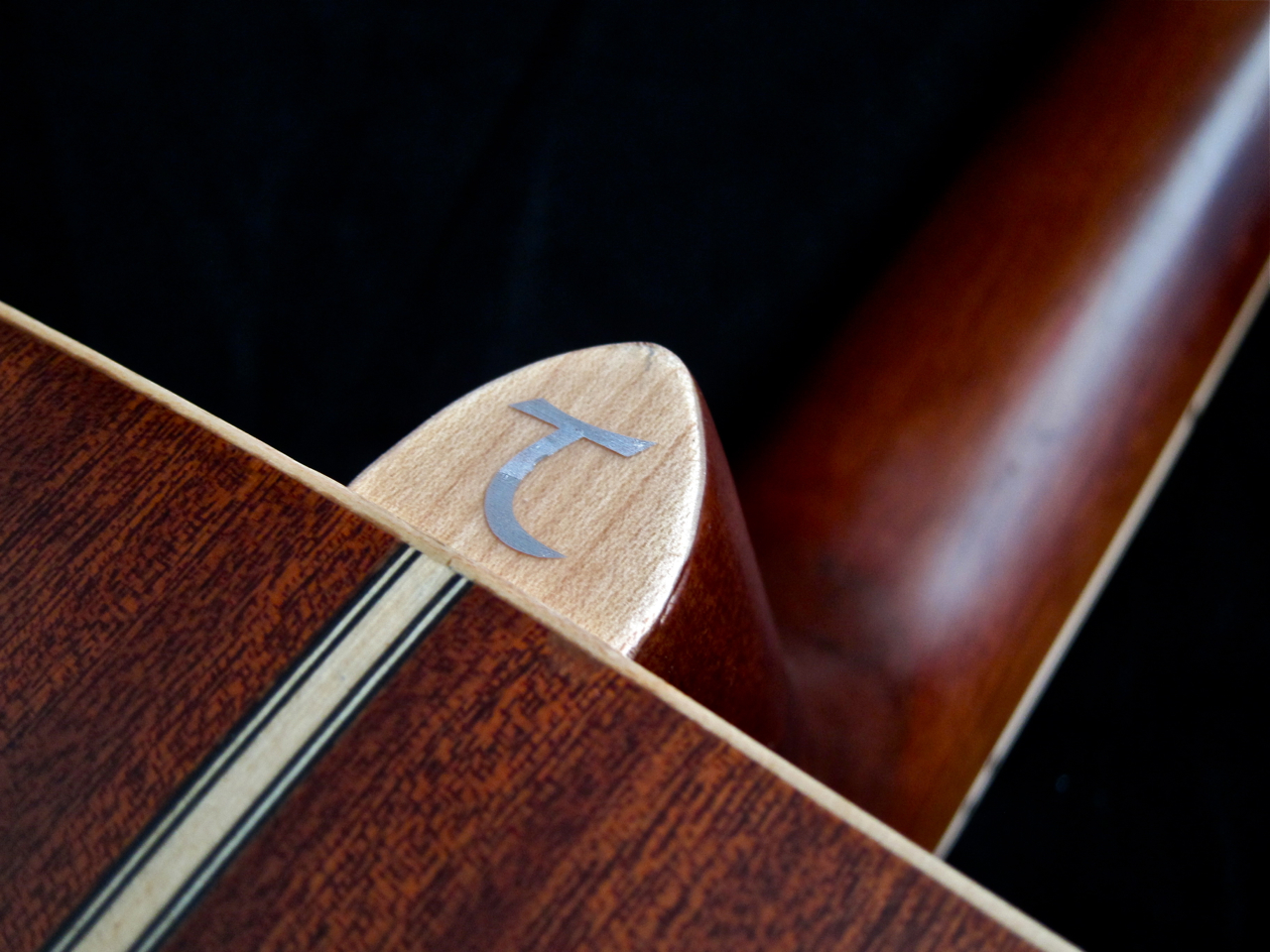
The neck’s heel-cap has been adorned with a maple overlay and a ”Tanglewood-T” made from holographic aluminium foil.
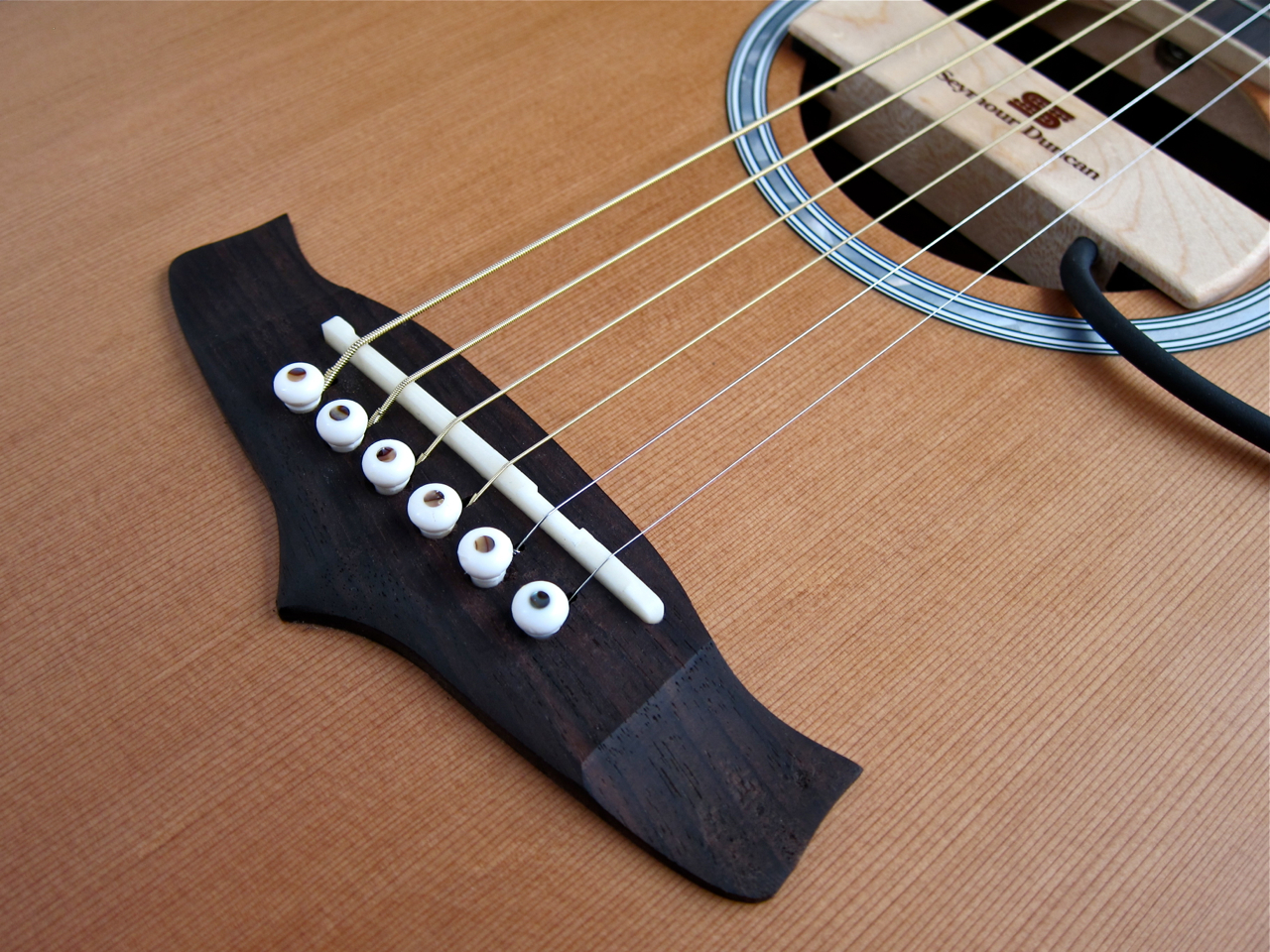
Tanglewood’s TW28-CLN exudes a certain down-to-earth, organic stylishness: There is no scratchplate, but the instrument features multiple binding, and also sports a pretty, bird-shaped bridge.
The looks of the Seymour Duncan Woody pickup (current price in Finland 61.70 €) complements the TW28’s earthy looks. This magnetic pickup is a stacked humbucker featuring double-potted (wax and resin) coils in a maple casing.
The Woody fits most regular soundholes (with a diameter between 9.8 and 10.4 cm) and is kept in place by chunky foam inserts on its sides.
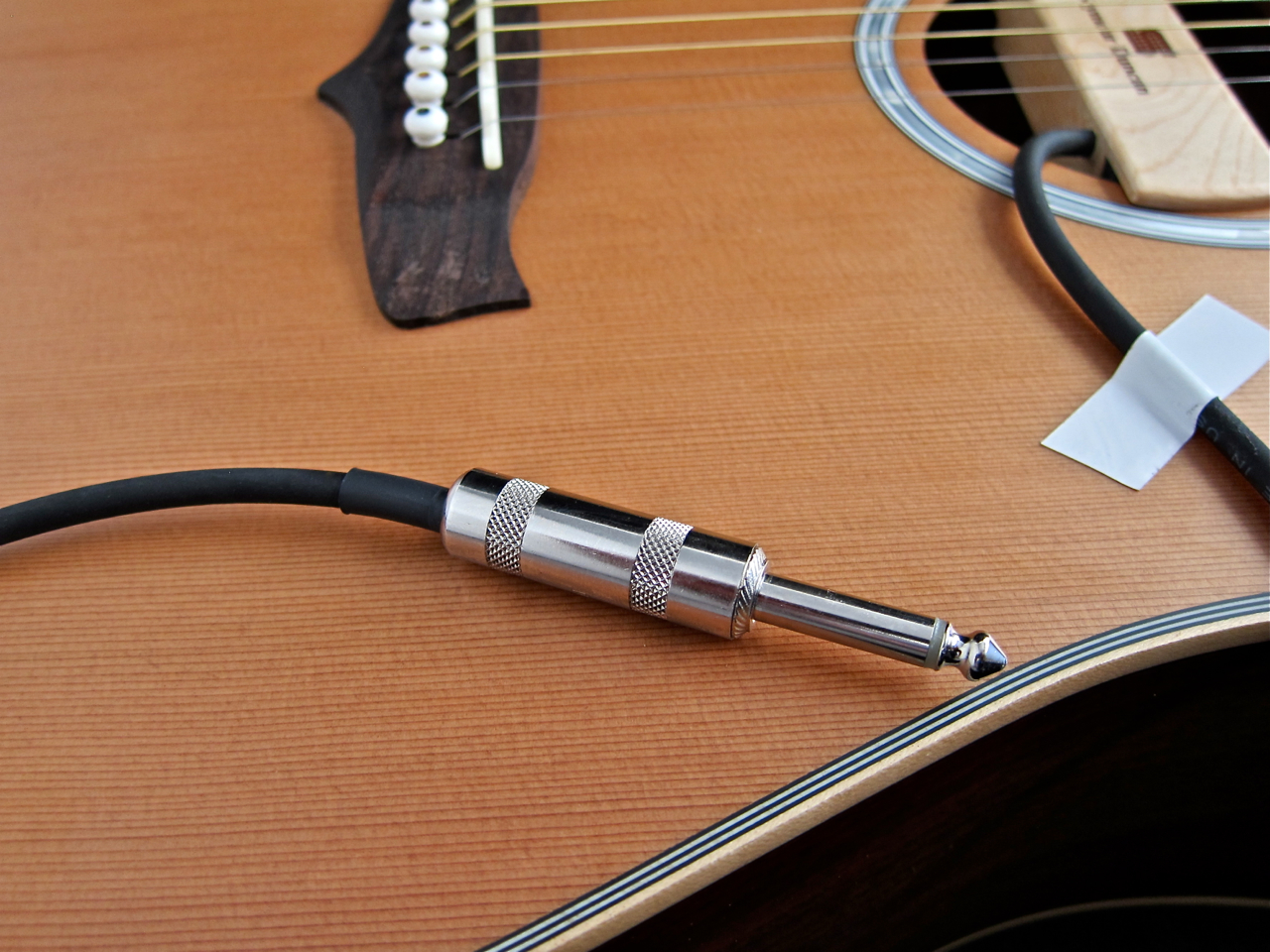
The pickup’s quality lead is approximately five metres long.
Tanglewood’s standard of workmanship is delightfully crisp, even when it comes to their most affordable models.
Both the top nut, as well as the compensated bridge saddle have been carved from bovine bone.
****
There is a certain logic behind the Tanglewood TW1000HSRE’s (current price in Finland:1,137 €) hard-to-enunciate model designation: The letters in the suffix stand for the guitar’s Herringbone-trim (H), its solid rosewood back and sides (SR), and the factory-installed Fishman-electronics (E).
Engelmann spruce has been chosen for this model’s solid wood top.
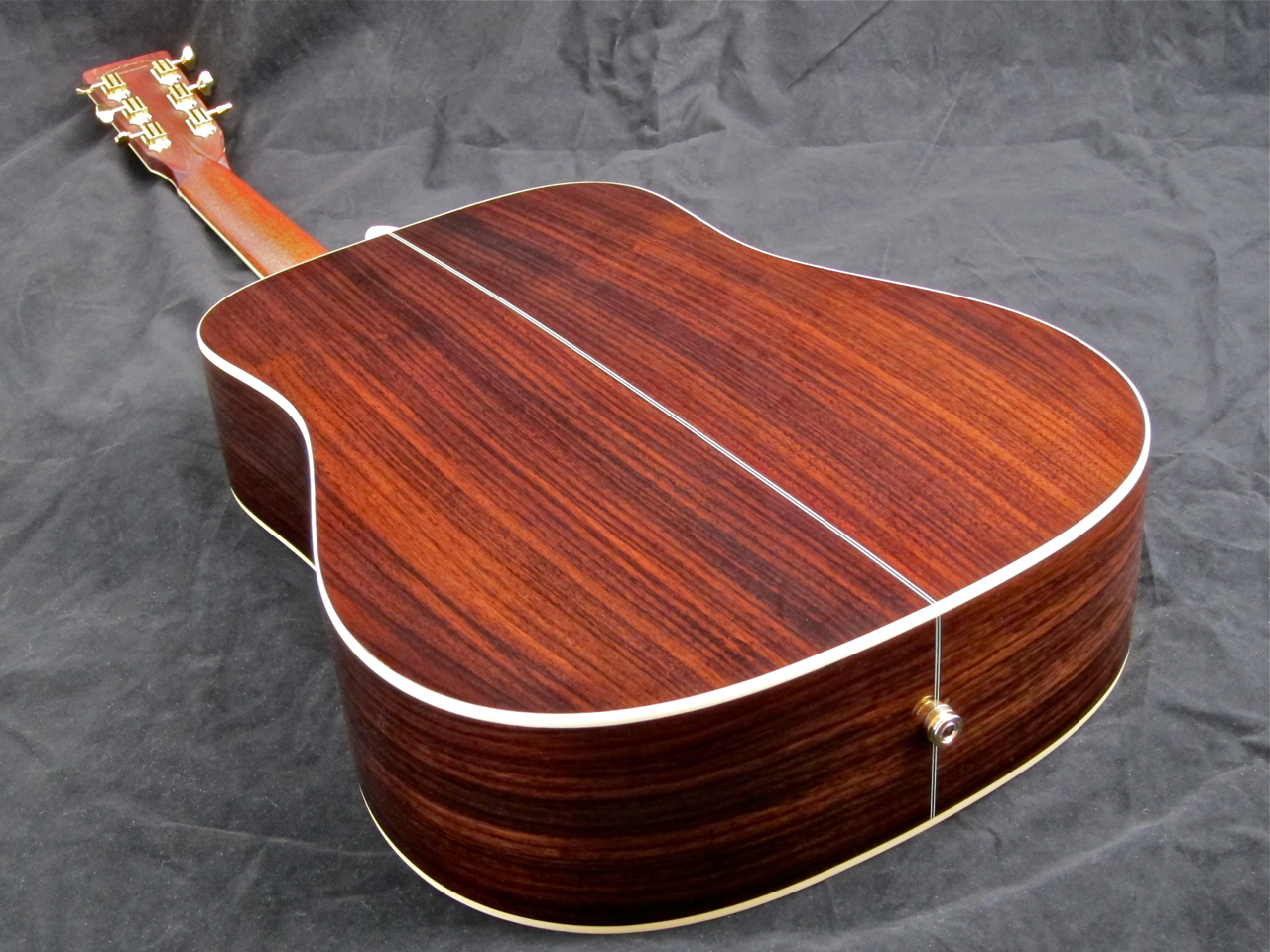
The fine Indian rosewood used for the TW1000 is breathtakingly beautiful.
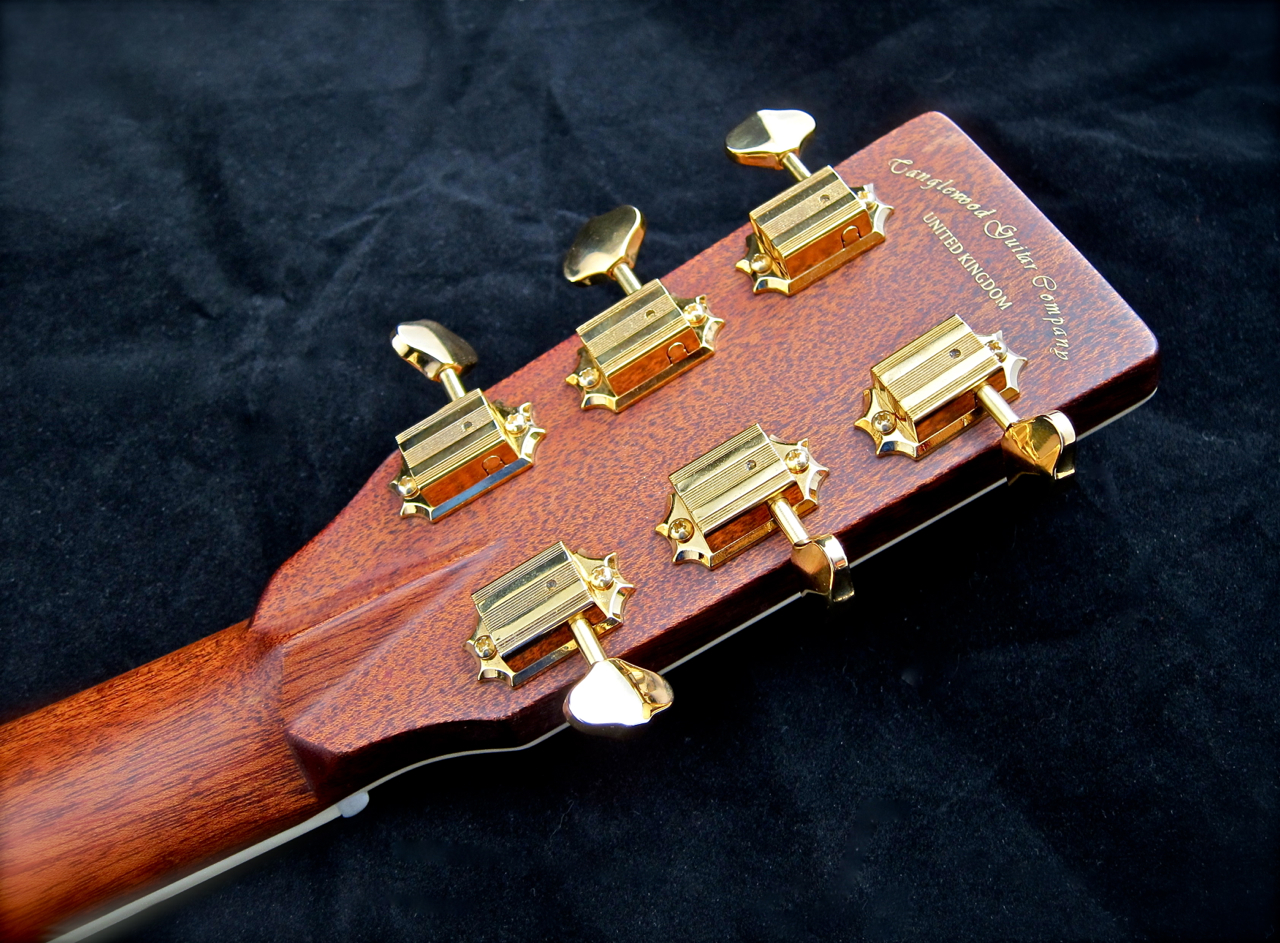
The same material has also been used for the headstock veneer.
Vintage-aficionados will be delighted at the sight of the diamond-shaped headstock volute, so reminiscent of vintage Martins (and their reissues).
The gold-coloured tuners may look light straight vintage copies, but they have been designed to feature a much more practical, modern gear ratio. The result is a very smooth and precise tuning feel.
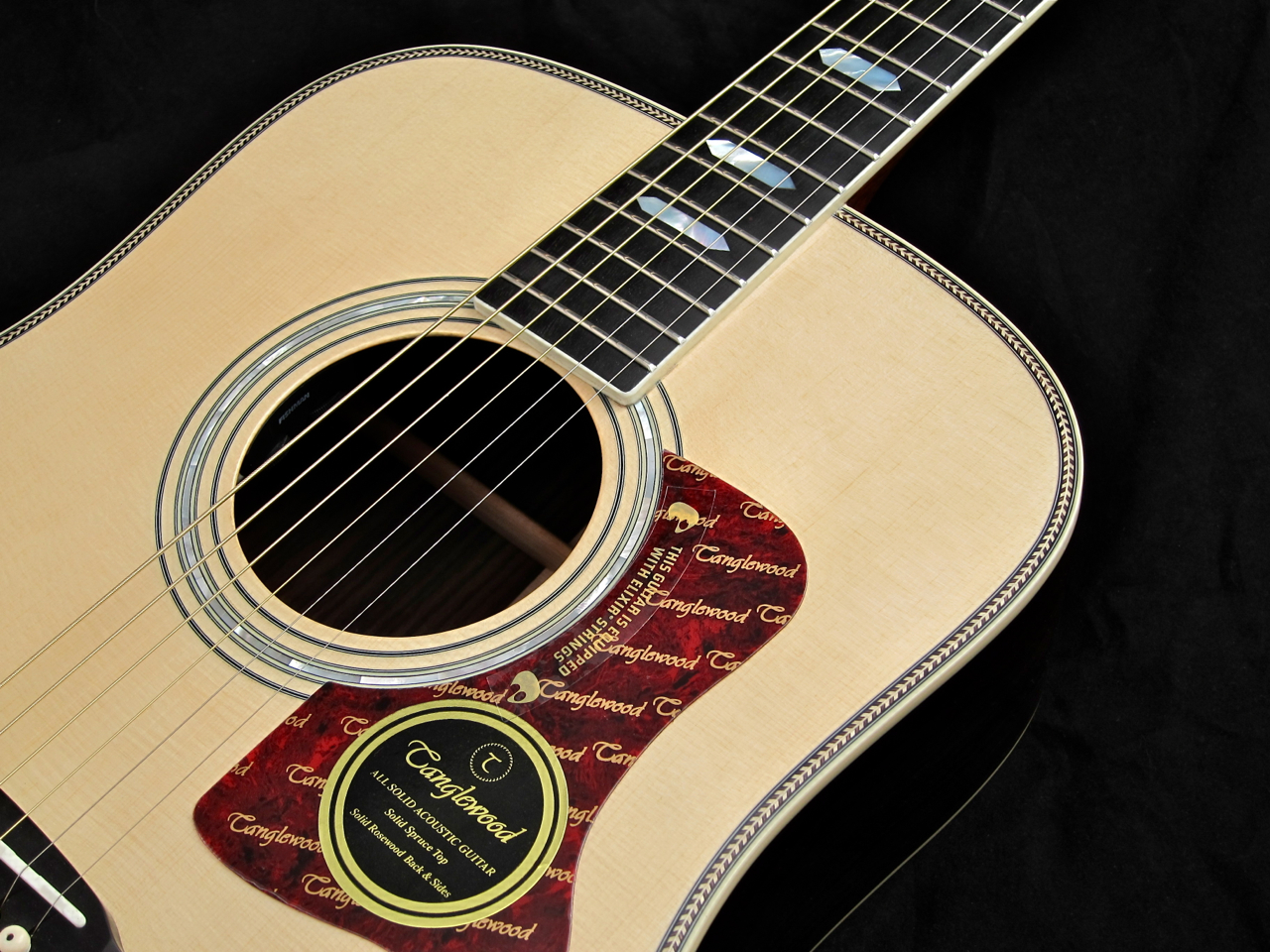
Only the best ingredients go into the making of Tanglewood’s top models – this Dread’ sports genuine mother-of-pearl inlays (in a D-45’s hexagonal style) in its ebony fretboard.
The inlay work and fretting are top-notch!
Just look at that rosewood…
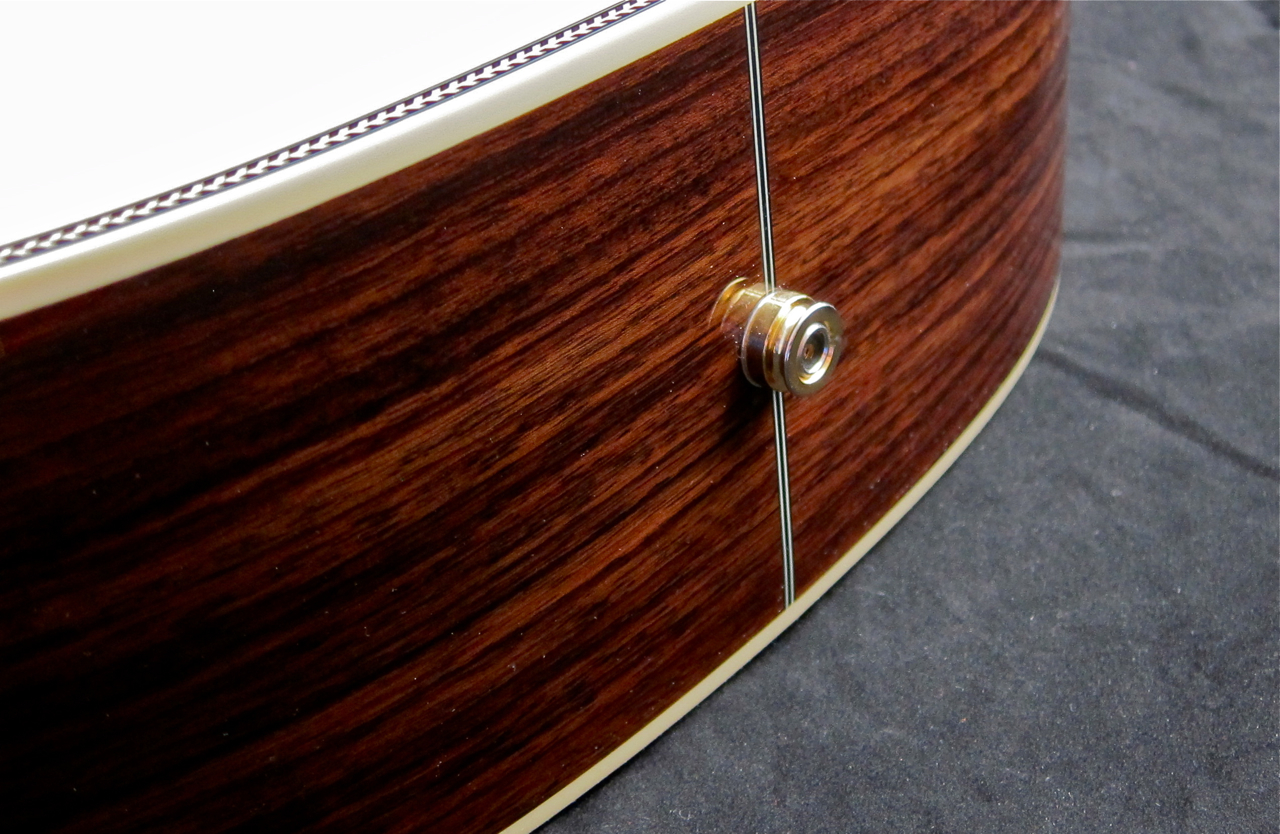
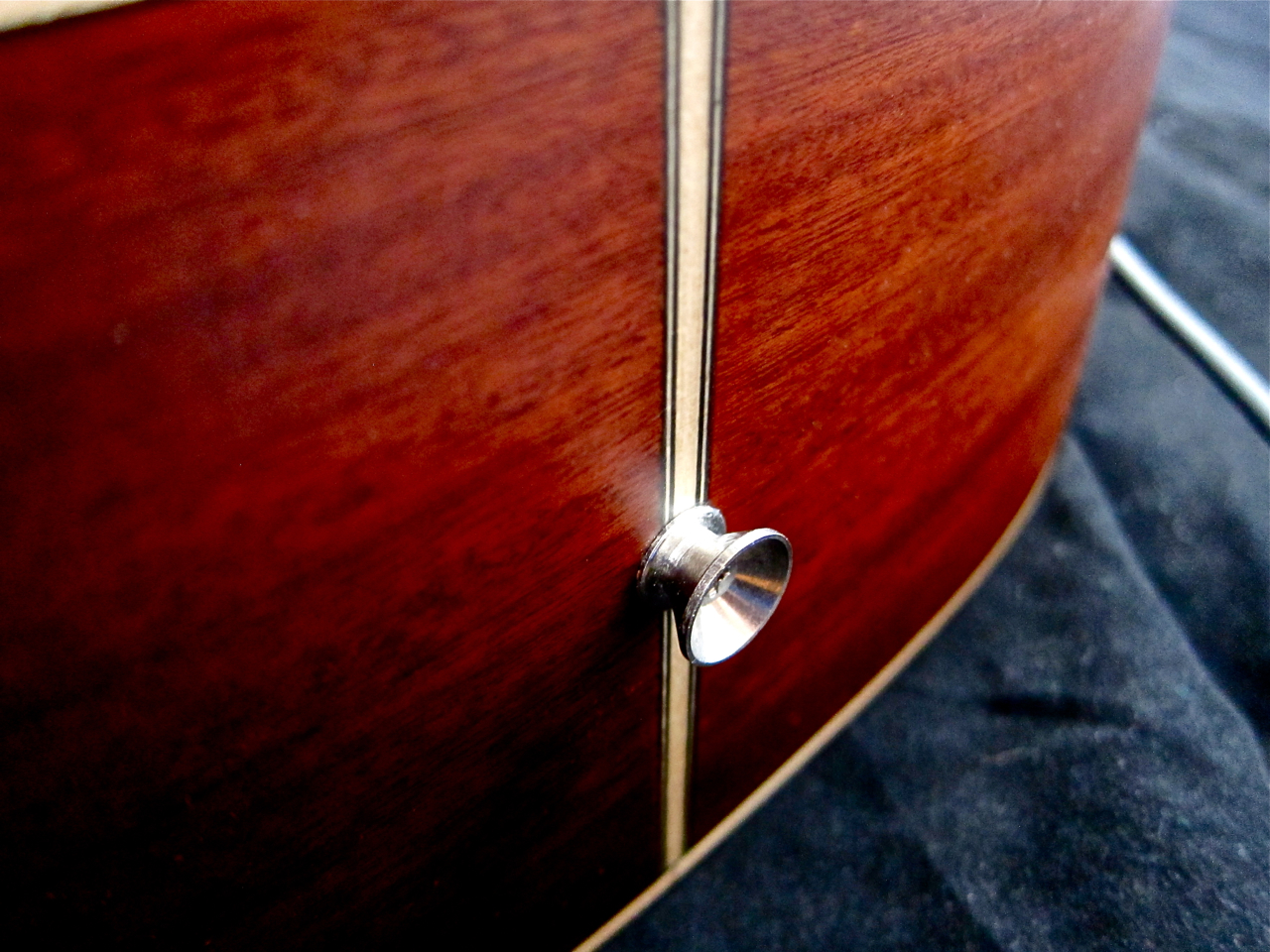
All Tanglewoods come equipped with a second strap button – a small, but nevertheless very nice little detail.
Genuine mother-of-pearl inlays in the rosette, along with Herringbone-binding – this is a guitar enthusiast’s wet dream come true!
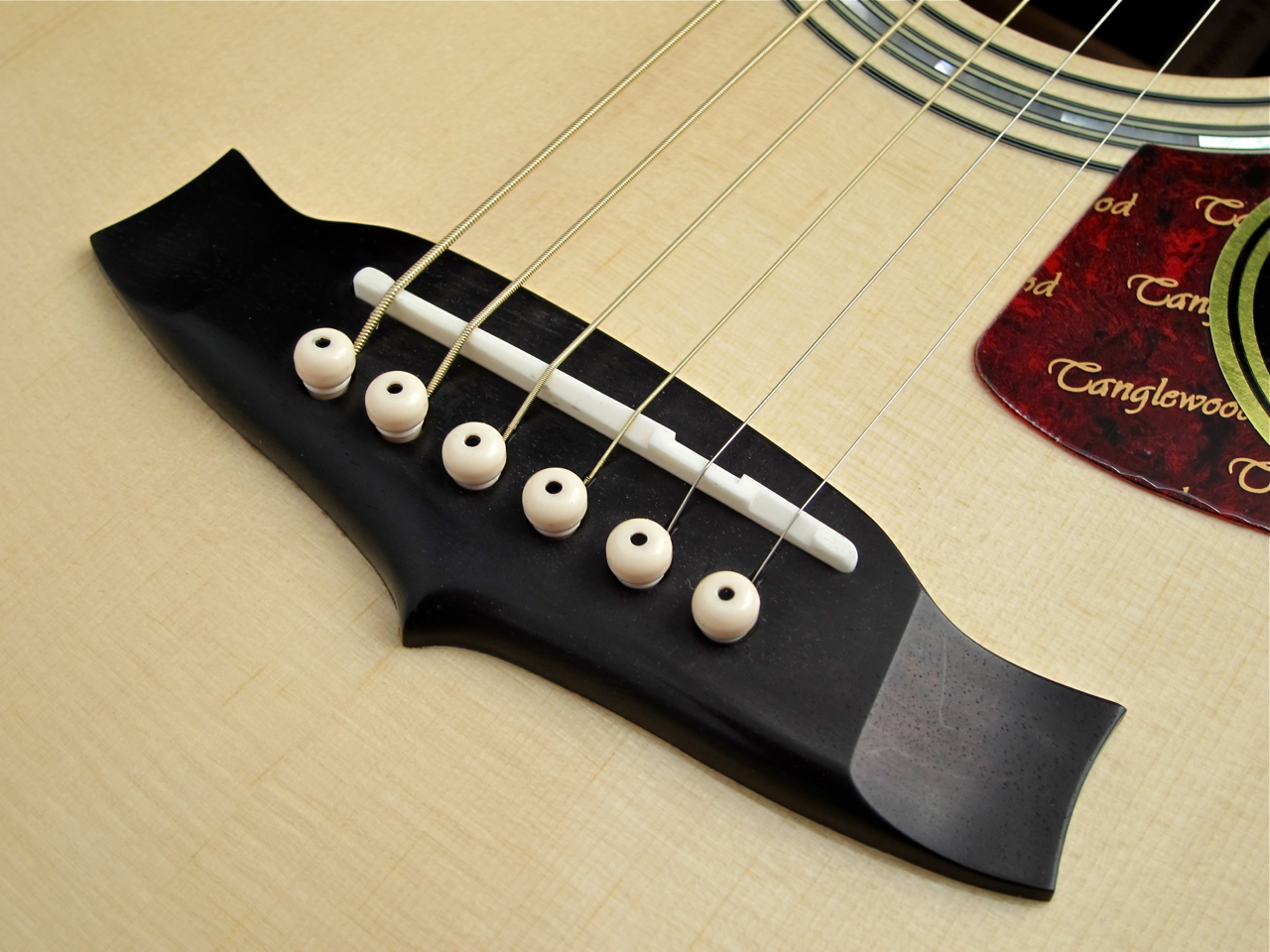
Here’s a second glimpse at Tanglewood’s stylish steel-string bridge – this time crafted from luscious ebony.
Tucked away beneath the bone saddle is a Fishman Sonicore piezo pickup, which feeds a Sonitone-preamp.
The Sonitone’s controls are mounted beneath the soundhole’s bass side edge.
The system is simplicity incarnate, offering a volume control (bridge-facing side) and an easy-to-use tone control (neck-facing side).
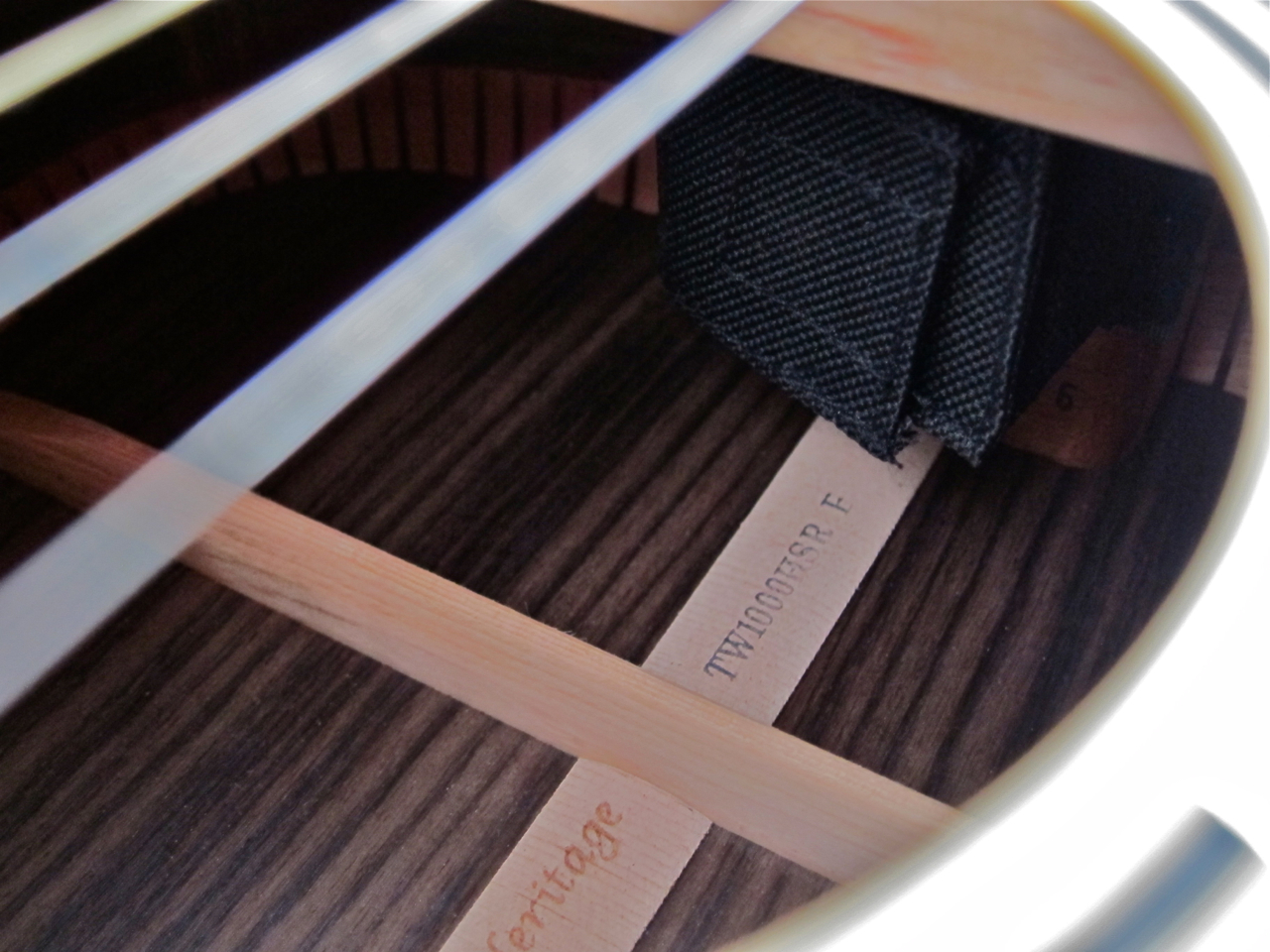
Tanglewood have chosen to keep the TW1000HSRE’s good looks intact, by using a battery pouch, velcro’d to the neck block. There is one drawback, tough: You have to loosen the strings to get to the pouch, meaning quick battery-changes mid-set are impossible.
The output jack is integrated into the guitar’s end pin.
****
Our review sample of the TW28–CLN is a very lightweight and comfortable instrument, even though its broad shoulders are a few millimetres wider than those of some other Dreadnoughts. The guitar sits nicely in your lap and feels well-balanced.
For the guitar’s price the standard of its satin finish is quite good – there are a couple of tiny grainy spots on the back of the neck, but overall the feel is very nice.
The neck profile will fit into most players’ hands – it’s a D-profile of medium depth with a slight whiff of a soft V blended in.
The TW28-CLN is a very decent player, thanks to its clean fretwork and comfortable set-up (string height @ 12th fret: bottom-E = 2.6 mm, top-e = 1.7 mm). String spacing is a good middle-of-the-road choice – 3.7 cm at the nut and 5.5 cm at the bridge. It’s a workable compromise for both fingerstylists and plectrum strummers.
I was surprised by the test sample’s punch and volume! After the first few strums I really had to check the label to make sure I hadn’t been given this model’s solid top cousin (the TW28-CSN) by mistake.
The TW28-CLN wins you over with its warm and clear voice. Thanks in no small part to its tight bass response, this model is very easy to record with a condenser microphone set up in front of it.
Seymour Duncan’s Woody sounds old-fashioned in a very nice way: The bottom end is warm, the mid-range is plummy and the trebles are airy and pleasant. If you’re after an authentic Sixties Pop guitar tone, the Woody will get you there in no time. Many of the early Beatles-stuff (pre-1966), for example, was recorded with their Gibsons miked up, as well as plugged into their Vox amps. Furthermore, I’m quite sure the Woody’s vintage-tinged tones will also please the slide guitar fraternity.
Here are some sound examples of the TW28-CLN recorded with an AKG microphone, as well as using the Duncan Woody:
To say Tanglewood’s TW1000HSRE is a ”great guitar for its price” or a ”very decent Chinese-made instrument” would do this guitar a grave injustice. The TW1000HSRE is simply a great guitar, carefully crafted from top quality materials – period! Our review sample is that sort of guitar that puts a quick stop to any kind of brand snobbery.
The guitar’s finish is flawless, and the instrument plays like a dream.
We have a mid-sized, oval C-Profile, coupled with a generous string spacing – 3.95 cm at the nut and 5.75 cm at the bridge – which makes a lot of difference to fingerstyle players.
The set-up is superb, with the guitar playing cleanly across the whole neck, despite the comfortably low action (bottom-E: 2.0 mm, top-e: 1.6 mm).
The TW1000HSRE’s acoustic tone and punch will bowl you over! The bottom end is fat and rich, the mid-range has character in spades, and the top end sparkles like a diamond. This is a very hard guitar to put down.
The Fishman Sonicore-piezo and Sonitone-preamp seem like the perfect match for this Tanglewood – a really inspired choice. The Fishman system sounds surprisingly ”acoustic” with not so much as a whiff of piezo quack or dryness. The amplified tone is a couple of degrees more upfront, and a tiny bit fuller, than the TW1000HSRE’s acoustic voice, but it’s very close. Coming to grips with the Sonitone only requires seconds. I left the tone control on full – if you need more scope for adjustment you’ll most probably find it in your acoustic amp or at the mixing console.
If there’s a conclusion to be drawn from this review, then maybe it is that Tanglewood seem to consistently offer fantastic value at any price-point. And this is regardless of whether you chose one of their affordable models (like the TW28-CLN) or something from the very top of their catalogue (like the TW1000HSRE).
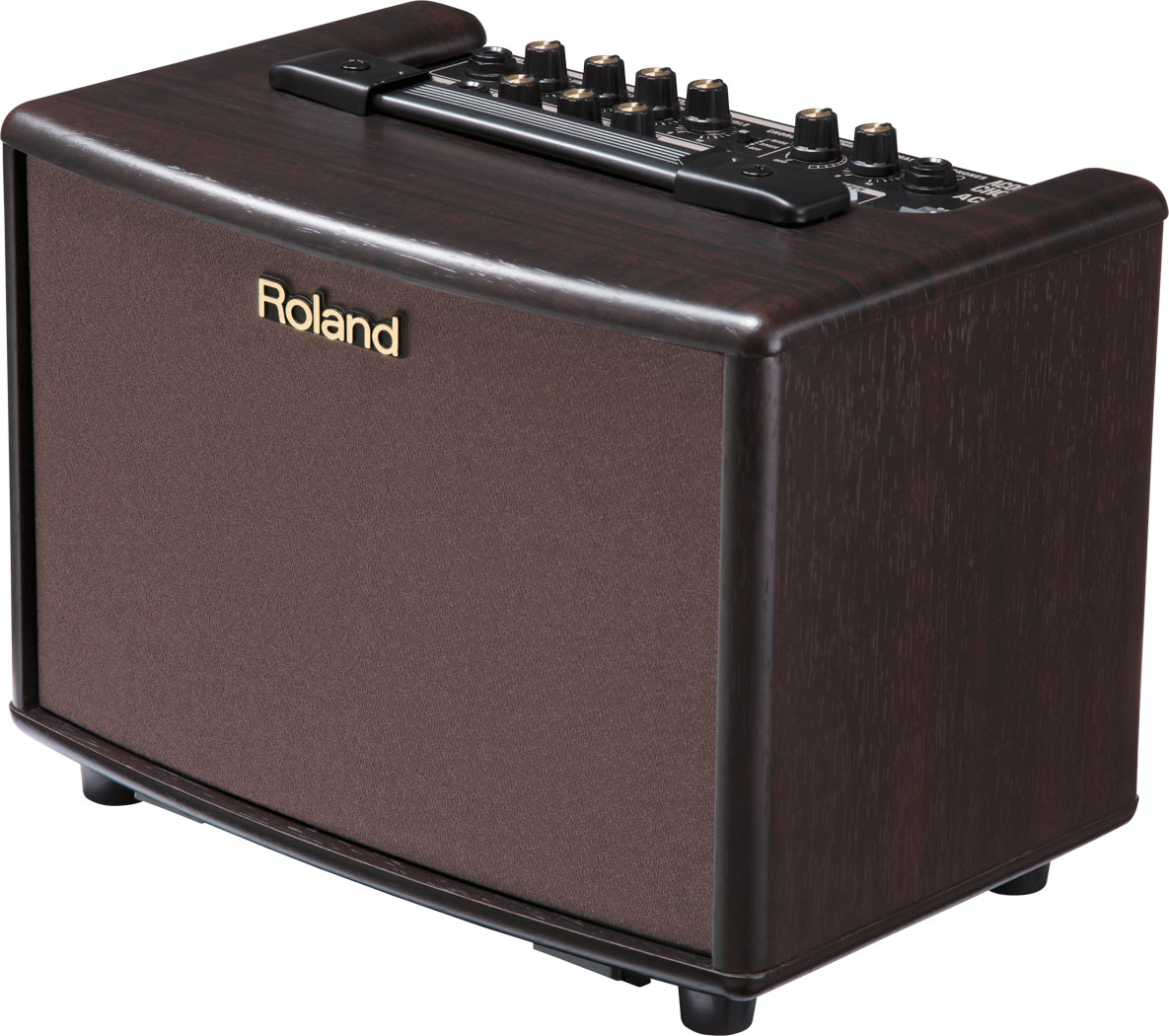
Roland’s AC-33RW (current price in Finland:467 €) is the new sister model to the all-black AC-33. The acoustic combo is finished in a faux-rosewood finish – the same kind as seen on many pieces of furniture.
The AC-33RW is the company’s smallest amplifier for acoustic guitar and vocal. It can be plugged into a wall socket, using the power adapter included with the amp. Alternatively, the AC-33 also runs on eight AA-size batteries, giving you somewhere between eight and nine hours of continuous use (depending on the type of battery used).
The AC-33RW weighs only a little over four and a half kilos, but is still able to dish out a whopping 30 Watts of power (20 W, if run on batteries)! The cabinet comes equipped with a pair of five-inch speakers, with a bass reflex port placed between them.
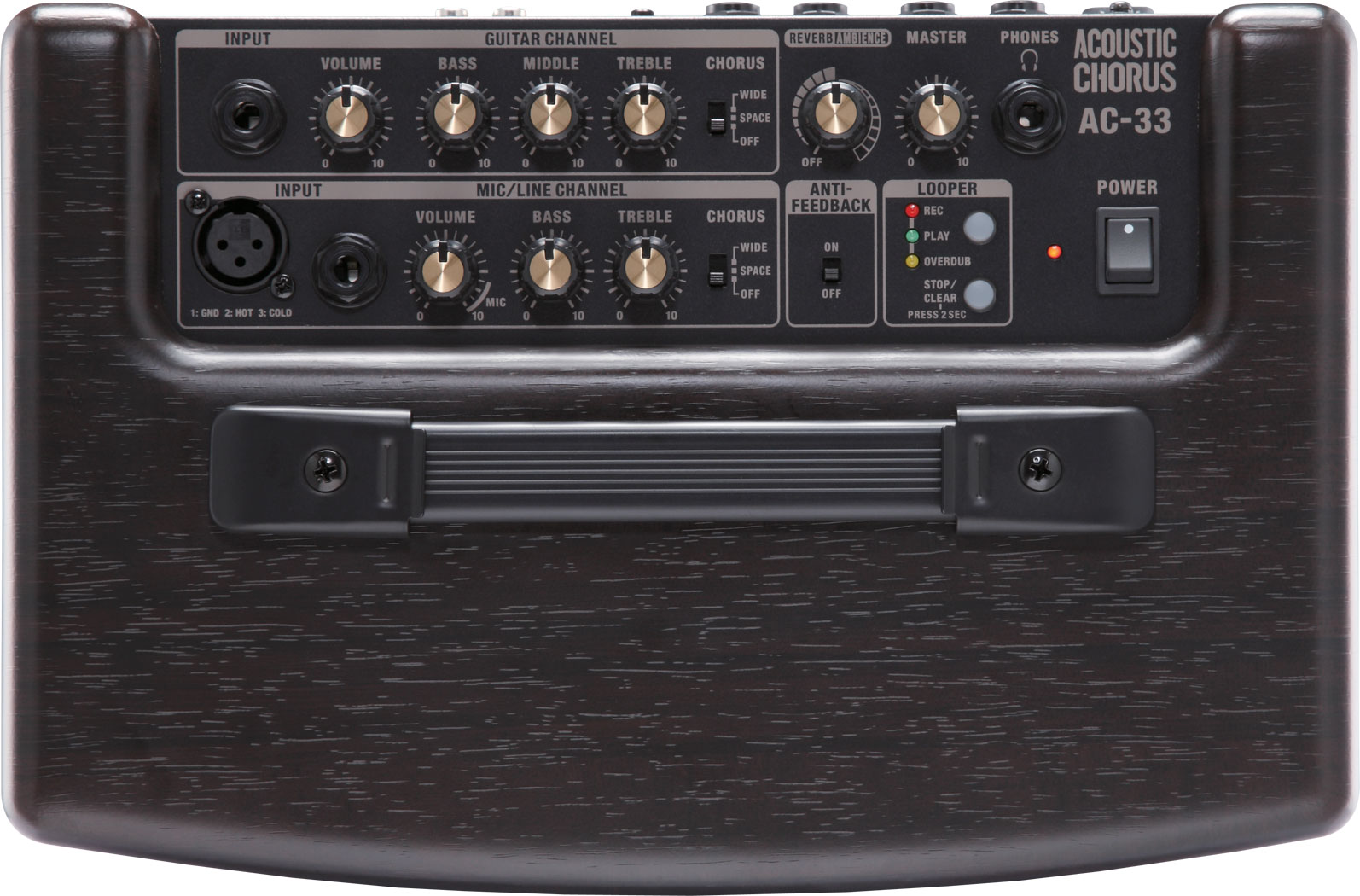
There are two channels on offer in the AC-33RW:
The Guitar-channel, which is meant for use with an electro-acoustic guitar, comprises a volume knob, as well as three-band EQ. The second channel is called Mic/Line, and it is best used for the amplification of a dynamic microphone or a line level sound source (which could also be a second acoustic guitar). Mic/Line only offers you two-band equalisation in addition to its volume control. By the way, you cannot use both of the Mic/Line-channel’s inputs simultaneously! Plugging into the phone jack mutes the XLR-input.
Both channels feature a nice, switchable chorus-effect in two different permutations – Space is a light chorus setting, while Wide will give you quite a fat chorus sound.
The AC-33RW’s master section offers you an automatic anti-feedback circuit, a looper with 40 seconds of recording time, a headphones output for quiet practising, the Reverb/Ambience-control, as well as the master volume.
Regardless of its diminutive size, Roland’s AC-33RW sports a well-equipped back panel, too:
Next to the power supply input you will find two foot switch connectors. With two (optional) twin foot-switches you can control all looper functions, as well as turn on/off the chorus and/or reverb effects on the fly.
The amp’s output can be sent to a mixing console or a sound-card via the stereophonic line output. The Line Out signal is routed pre-master, meaning you can use the Roland freely as your stage monitor, without inadvertently changing the signal level going to the front-of-house mixer.
The Aux In offers you a choice of two different connectors (RCA and mini-jack), and even has its own level control. The incoming signal is also send through the looper, meaning you can even use your mp3-player to provide the raw material for your live loops.
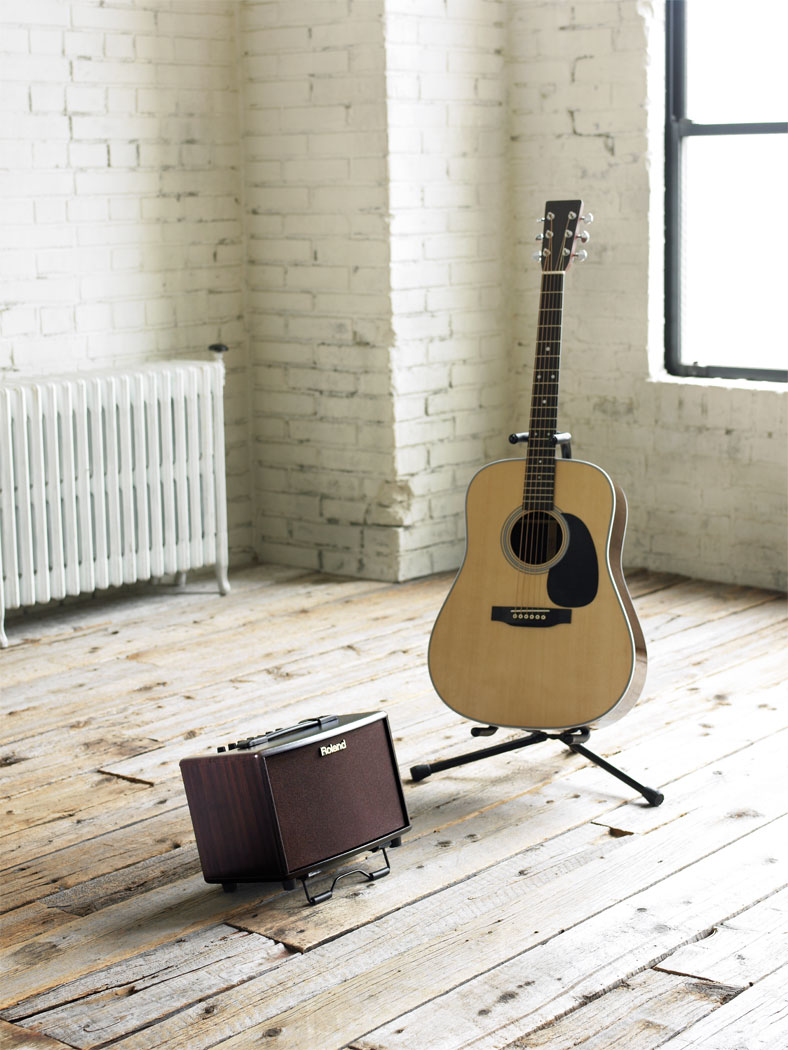
The additional fold-out stand angles the combo for a better listening position, whenever the Roland is placed on the floor.
****
The Roland AC-33RW is a very nifty little combo for acoustic guitarists and solo performers. The amp sounds clean and clear, and dishes out a surprising amount of wallop for its compact size. There’s enough power on tap for busking and small-scale, bistro-type gigs. For larger venues I’d suggest turning to one of Roland’s larger models – like the Roland AC-60 – because otherwise the usual din in a pub will most likely drown out your playing.
I tried both channels using the same guitar (a Tanglewood TW1000HSRE), and found out that they’re voiced slightly differently. The Guitar-channel has a perceivable presence lift, while Mic/Line sounds more neutral (with both channel-EQs set to neutral).
There are two small points I’d like to raise, though:
Even if the life of an acoustic performer most probably isn’t as rough as a Rock gig, I would have liked to have seen corner protectors on the AC-33RW. As it stands, you will have to be rather careful not to bump into things with the combo during set-up and teardown, if you want to preserve the Roland’s pristine looks. My second point of criticism concerns the global Reverb/Ambience-control. It would be nice to be able to set different amounts of reverb for each channel – either via separate channel sends or a reverb balance knob. The compromise on offer now is workable, but having different reverb-levels for guitar and vocals would be just that bit more convenient.
I recorded some AC-33RW sounds by miking up the combo:
Even though this small unit has been designed specifically to work with modern acoustic-electric preamps, I also tested the AC-33RW with a magnetic soundhole pickup (Seymour Duncan Woody). The Guitar-channel didn’t really offer enough preamp gain for this application, but Line/Mic worked rather nicely:
The Roland offers a great basic sound, nice effects, and all the most important features. The combo works really well. I’d warmly suggest buying a set of foot-switches to make the most of the AC-33’s cool looper.
Regardless of its small size, the Roland AC-33RW really is a fine little amp for acoustic performers in small settings.
Englannin suosituin akustinen kitarabrändi – Tanglewood – löytää myös täällä Suomessa yhä enemmän ystäviä laajan valikoimansa ja todella hyvän hinta-laatu-suhteensa ansiosta.
Akusti-kuun raameissa testataan tällä kertaa kaksi teräskielistä Tanglewoodin malliston kahdesta ääripäästä:
Tanglewood TW-28-CLN on yksi firman edullisimmista malleista, ja tämä kitara kuuluu valmistajan Evolution-sarjaan.
Tanglewood TW1000HSRE on Heritage-sarjan topmalli, joka tarjoaa valmiiksi asennetun Fishman Sonitone-etuvahvistimen.
Musamaailma antaa muuten jokaiselle Tanglewood-ostajalle Kyser Lifeguard -kostuttajan mukaan ilmaiseksi, jotta uusi kitara säilysi ehjänä myös Suomen asuntojen tunnetusti kuivissa talviolosuhteissa.
****
Tanglewood TW28-CLN (201 €) on vanerikoppainen Dreadnought-kitara, jolla on perinteisellä liimaliitoksella kiinnitetty mahonkikaula.
Kopan kansi on valmistettu kauniista setrivanerista…
…kun taas sivut ja pohja ovat mahonkia.
Koko soitin – viritinlavan etupuolta lukuunottamatta – on viimeistelty satiinipintaisella mattalakalla.
TW28-CLN:n lapaa on koristeltu palisanteriviilulla.
Kuvassa näkyy lavan liimaussauma, sekä Tanglewood-logolla varustetut, nykyaikaiset virittimet.
Vaikka Evolution-sarjassa on kyse varsin edullisista kitaroista, ei otelaudan reunalistoituksesta ole säästetty. TW28-CLN:ssä käytetään listoja aidosta vaahterasta!
Tanglewood käyttää tässä mallissa keskikokoisia nauhoja. Testikitaran nauhatyö on suoritettu kiitettävästi.
Kaulakoron kärki on päällystetty pienellä vaahterapalalla, johon on liimattu kiiltävästä (hologrammi-) foliosta tehty T-kirjain.
Tanglewoodin TW28-CLN on hillityä charmia huokuva kitara: vaikka plektrasuoja on jätetty pois, koristeluun kuuluu kaunis, linnunmuotoinen talla, sekä kannen monikerroksinen reunalistoitus, jonka uloin kerros on vaahteraa.
Ulkonäöltään Duncanin Woody-mikrofoni (61,70 €) sopii TW28:iin kuin nakutettu. Magneettinen mikki on rakennettu humbucker-periaatteella kahdella päällekkäisellä kelalla. Kelat tuplavahataan ja suljetaan hartsiin, ennen kuin ne upotetaan Woodyn vaahterarunkoon.
Woody sopii tavallisen kokoiseen ääniaukoon (läpimitta noin 9,8 – 10,4 cm) ja se pysyy paikoillaan sen raoilla olevien vaahtomuovipalojen avulla.
Woody-mikrofonilla on laadukas, noin viisi metriä pitkä johto.
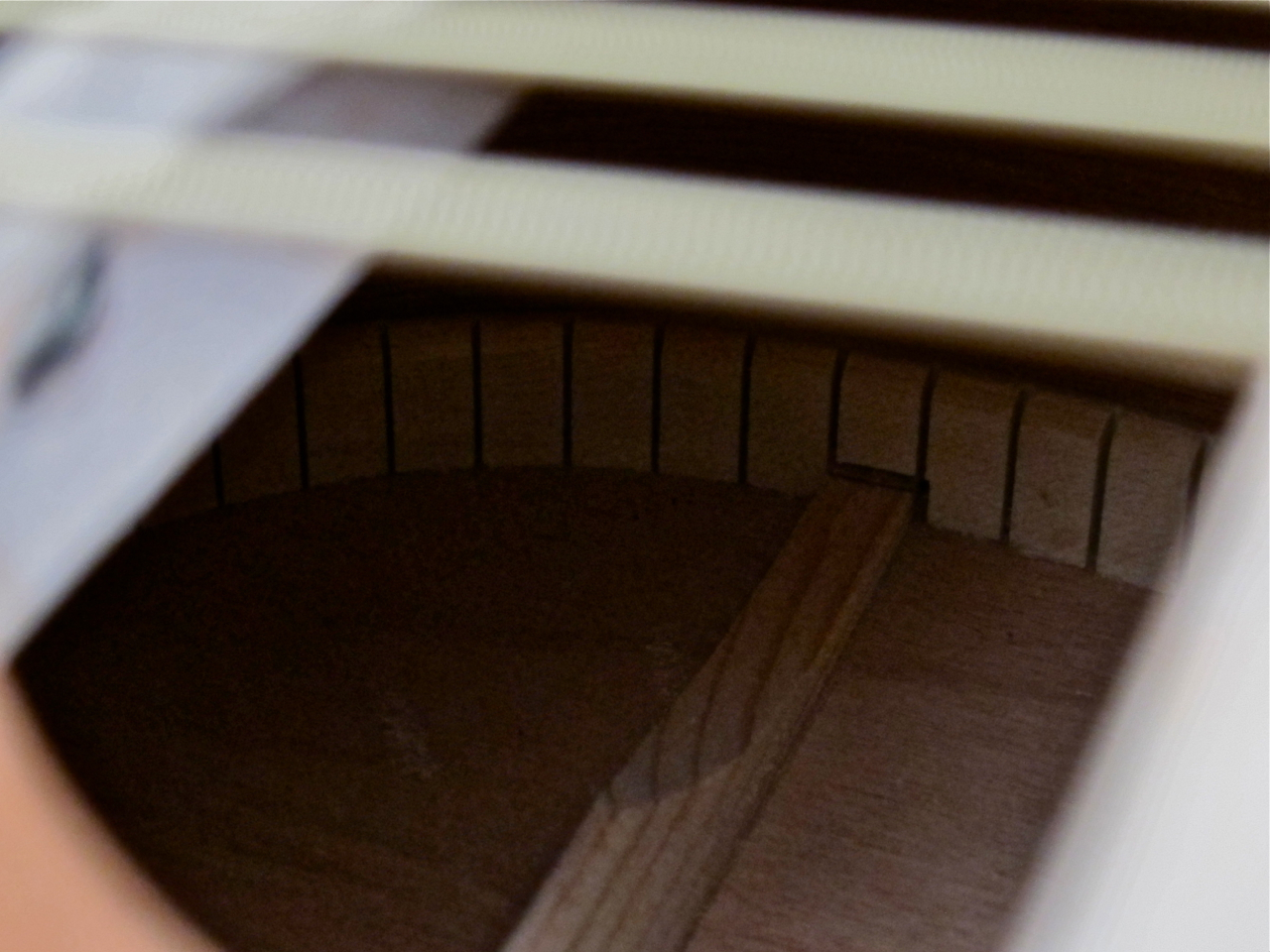
Työnjälki on yllättävän siisti myös tämän edullisen kitaran kopan sisällä, kuten näkyy rimoituksen kuvasta.
Tanglewood käyttää myös Evolution-sarjassaan perinteistä naudanluuta satulan ja tallaluun valmistukseen.
****
Tanglewood TW1000HSRE (1.137 €) – hankalan nimen takana pilee seuraavanlainen logiikka: loppupuolessa olevat kirjaimet tarkoittavat, että kitarassa on Herringbone-reunalistoitus kopassa (H), sivut ja pohja kokopuisesta palisanterista (= solid rosewood –> SR), sekä Fishmanin elektroniikka (E).
Kokopuinen kansi veistetään länsi-amerikkalaisesta Engelmanninkuusesta, joka on erittäin suosittu materiaali tähän tarkoitukseen.
TW1000:n valmistukseen käytetty intialainen palisanteri on huippulaadukasta ja henkeäsalpaavan kaunista.
Myös reunalistoitetun lavan koristeviilu on samasta puulajista veistetty.
Lapaa vahvistava volute-paksunnos on kaikille vintage-faneille tuttu vanhoista Martin-kitaroista (ja niiden uusintapainoksista).
Kullanväriset virittimet näyttävät vanhanaikaisilta, mutta ovat todellisuudessa nykyaikaisia koneistoja, joilla on hienompi välityssuhde ja jouhevampi tuntuma.
Tanglewoodin huippumalliin käytetään vain parhaita aineosia – otelauta on veistetty eebenpuusta ja D-45-tyyliset otemerkit aitoa helmiäistä.
Keskikokoisten nauhojen upotus ja niiden viimeistelyn taso on huippuluokkaa!
TW1000HSRE:n kaunista palisanteria voi katsella aina uudestaan…
Kaulanpuoleinen hihnatappi on Tanglewoodeissa aina valmiiksi asennettuna.
Aito helmiäisrosetti ja aito Herringbone-reunalistoitus – tämä on kitarahullun märkä unelma!
Tanglewoodin tyylikäs talla – tällä kertaa eebenpuusta veistetty.
Tallaluun alle on asennettu Fishman Sonicore piezomikrofoni, joka on liitetty firman Sonitone-etuvahvistimeen.
Sonitonen säätimet on piilotettu ääniaukon bassopuoleisen reunan alle.
Tallanpuoleinen säädin on volyymille, kun taas kaulanpuoleinen säädin on helppokäyttöinen tone-potikka.
Kaulablokin päälle kiinnitetyn paristopussin ansiosta TW1000:n kauneutta ei ole turmeltu muovisella paristokotelolla. Toisaalta tämä – tällä hetkellä hyvin suosittu tapa – tekee pariston vaihtamisesta hieman työläämpää, koska kaikki kielet täytyy ensin löysätä, ennen kun käsi menee ääniaukon läpi.
Järjestelmän lähtöjakki on integroitu hihnatappiin.
****
Testissä käynyt TW28–CLN on erittäin kevyt ja mukavantuntuinen soitin, vaikka sen ulkomitat ovat jopa muutaman millin isommat kuin perinteisissä Dreadnought-malleissa yleensä. Kitara istuu mukavasti sylissä hyvässä tasapainossa.
Viimeistelyn taso on kitaran hintaa nähden todella hyvä – vaikka esimerkiksi kaulan lakkaus ei ole sataprosenttisesti tasainen, tuntuma on silti hyvin mielyttävä.
Kaulaprofiili sopii niin aloitteilijan kuin myös pitkän linjan soittajan käsiin – sopivan paksuinen D, jossa on hieno aavistus V-profiilista mukana.
Soittotuntuma on todella mukava, hyvän nauhatyön ja hyvien säätöjen (kielten korkeus 12. nauhalla: ala-E = 2,6 mm, ylä-e = 1,7 mm) ansiosta. Kielten välinen etäisyys sekä satulassa (3,7 cm) että tallassa (5,5 cm) on hyvää keskitietä – TW28-CLN tarjoaa siis riittävästi tilaa plektrasoiton ohella myös näppäilyyn.
Tämän Tanglewoodin ääni on hyvässä tasapainossa ja yllättävän voimakas! Ensimmäisten sointujen jälkeen minun piti tarkistaa, että olin todella saanut vanerikannella varustetun CLN-version, eikä kokopuisella setrikannella komeilevaa TW28-CSN-sisarmallia.
TW28-CLN:n akustinen ääni on lämmin, mutta silti selkeä. Jäntevän bassoalueensa ansiosta soitinta on erittäin helppo äänittää kondensaattorimikrofonilla.
Seymour Duncanin Woody kuulostaa erittäin hyvällä tavalla vanhanaikaiselta: basso on lämmin, keskialue täyteläinen, eikä diskantti liian tunkeileva tai pureva. Woodyn kautta saa vaivattoman pääsyn 1960-luvun akustiselle soundille – esimerkiksi Beatlesien akustiset kitarat äänitettiin niiden uran alkuvaiheella aina Help-levyyn asti usein sekä studiomikrofonilla että Gibson-mikrofonin ja vahvistimen kautta. Myös slide-soittajille löytyy Woody-mikillä varmasti hyviä perinnesoundeja.
Tällaisia soundeja sain äänitettyä AKG C3000 -mikrofonilla, sekä Woodylla suoraan äänikortin kitaratuloon soittettuna:
Tanglewood TW1000HSRE ei ole loistava kitara ”hintaansa nähden” tai ”kiinalaiseksi soittimeksi” – TW1000HSRE on huippulaadukas soitin, piste! Testiyksilö ainakin on sellainen herkkupala, että kaikilta ”merkkisnobbailulta” leikataan tehokkaasti siivet. Tässä yhdistetään laadukkaat ainekset taidokkaalla osaamisella loistavaksi kitaraksi.
Viimeistely on ensiluokkainen, ja soitettavuudesta annetaan täydet pisteet:
Kaulaprofiili on keskivahva, pyöreä C. Hieman ilmavamman kielietäisyyden myös tallan kohdalla (5,75 cm) ja leveämmän kaulan (kielten välinen etäisyys satulassa: 3,95 cm) ansiosta – kun vertaa TW28-CLN:een – TW1000 on erittäin helppo soittaa. Etenkin fingerstylen ystävät huomaavat tämän eron nopeasti.
Tatsi on säädetty erittäin kevyeksi (ala-E: 2,0 mm, ylä-e: 1,6 mm), silti tässä ei surise eikä rämise mikään, vaan Tanglewood soi puhtaasti ja kauniisti koko kaulassa. Volyymia ja dynamiikkaa löytyy näitäkin yllin kyllin.
TW1000HSRE:n soundissa on iso ja lämmin basso, hyvin moniulotteinen keskialue, sekä kimaltelevaa diskanttia. Tätä kitaraa on vaikea olla soittamatta koko päivää.
Fishmanin Sonicore-piezo ja Sonitone-etuvahvistin on oiva parivaljakko vahvistamaan Tanglewoodin laatusoundia hyvin uskollisesti. Fishmanin välittämä signaali ei ole kuiva tai nasaalinen, vaan vain hiukan suorasukkaisempi, ja aavistuksen verran täyteläisempi versio tämän Tanglewoodin akustisesta soinnista. Etuvahvistimen kanssa tulee toimeen sekunneissa, ja jos on tarve lisämuokkaukseen, löytyy kuitenkin kaikkea tarvittavaa mikseristä tai hyvästä akustisesta vahvistimesta. Itse jätin tone-säätimen kokonaan avattuna…
Jos tästä testistä pystyy jotain päättää, niin ehkä sen, että ilmeisesti Tanglewoodilta saa aina todella hyvän vastineen rahalle. Tämä näyttää pitävän paikkansa ihan riippumatta siitä, valitaanko TW28-CLN:n kaltainen edullinen soitin tai sellainen huippupeli kuin TW1000HSRE.



















 Kitarablogi.com – Finland's premier Guitar and Bass blog