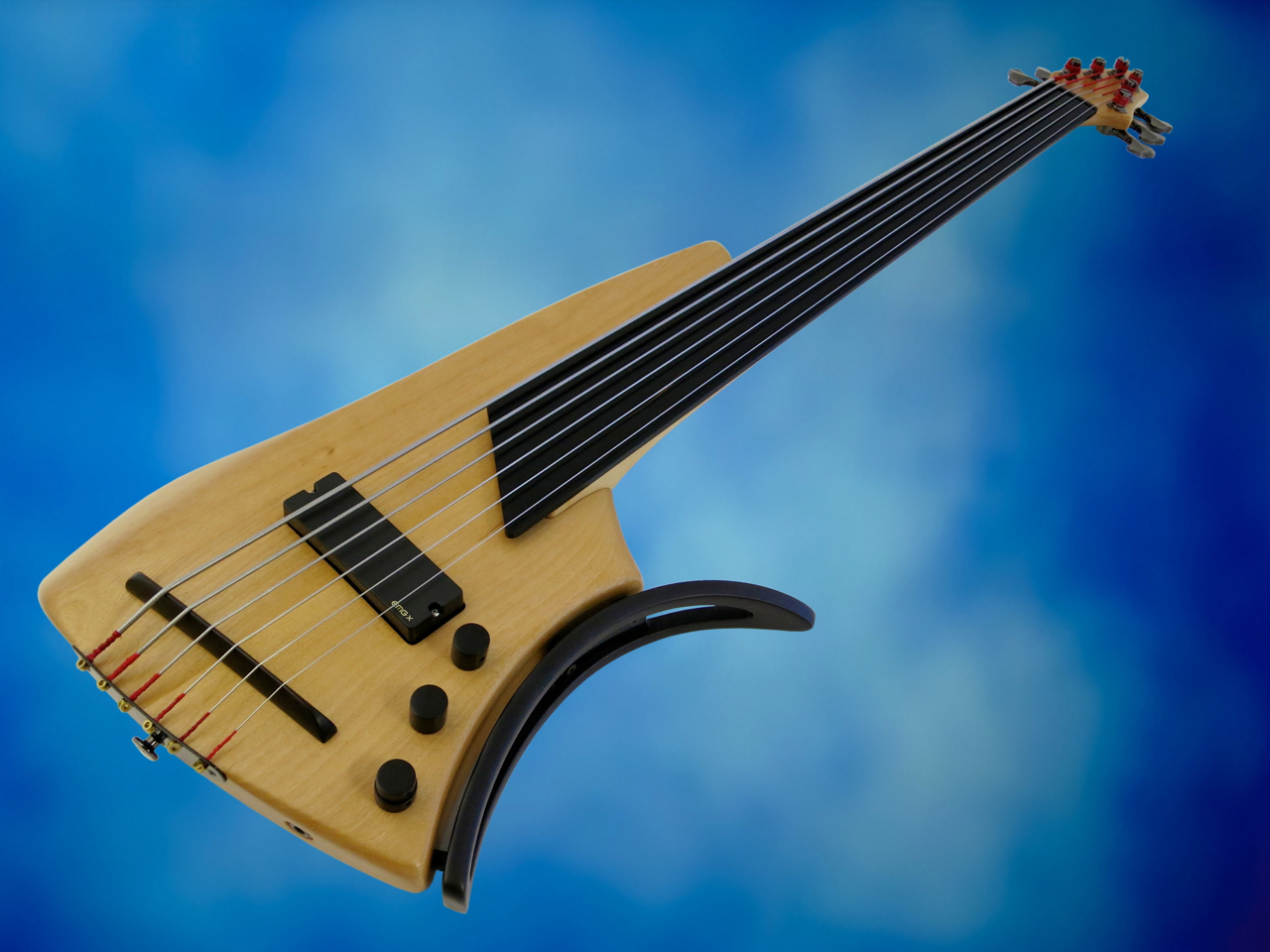
Testipenkissä: Juha Savisalo – 6-kielisen basson prototyyppi

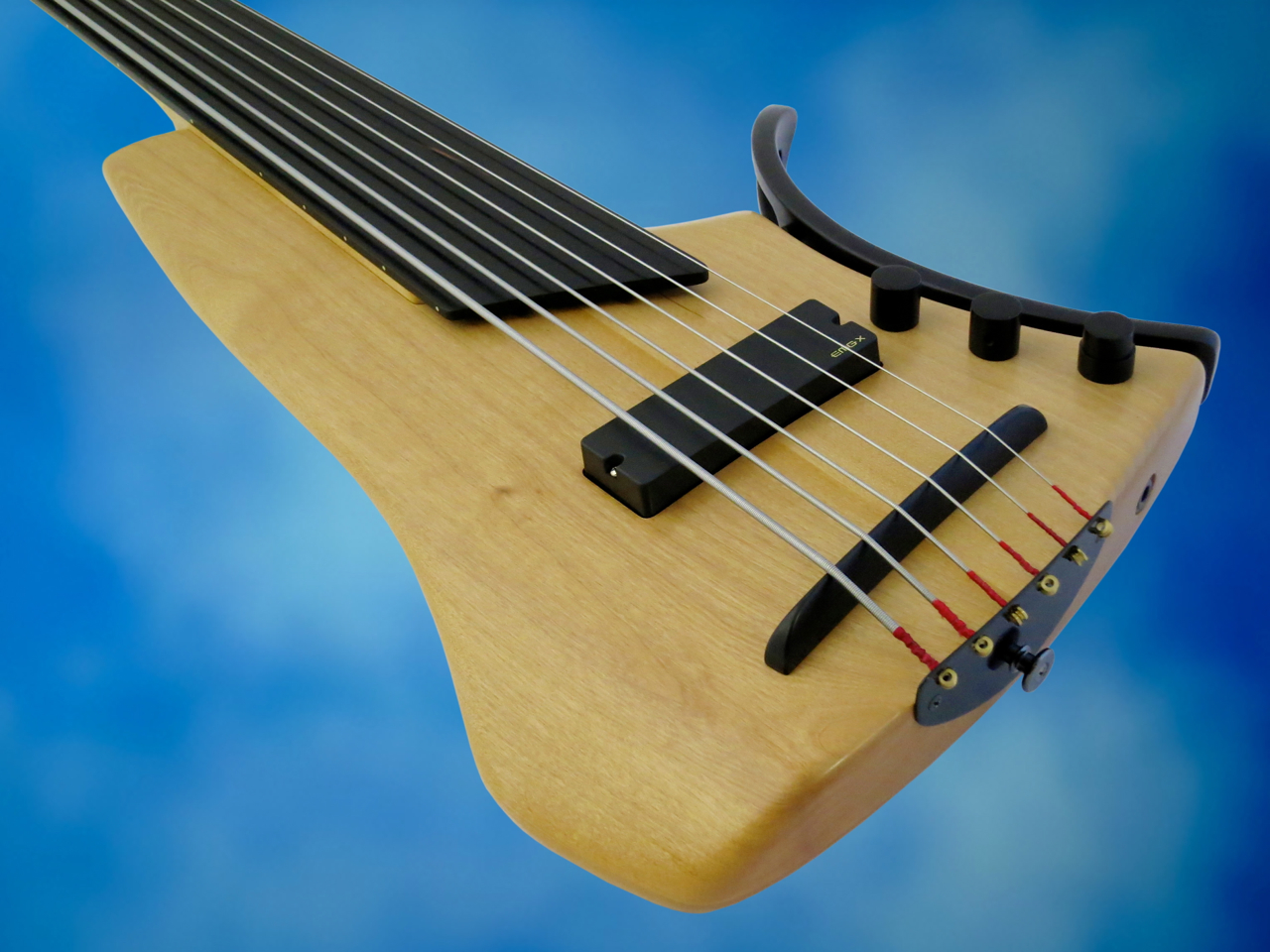
Juha Savisalo 6-String double bass – beauty shot 1

Tutustuin Juha Savisaloon Riffi-työni kautta, kun testasin vuonna 2000 hänen kehittämää sähkökontrabassoa.

Vaikka elämä on vienyt Juhaa – joka oli valmistunut aikoinaan Ikaalisessa soitinrakentajaksi – työn osalta muille aloille, on uusien soittimien kehittäminen kuitenkin jatkunut vapaa-ajalla.

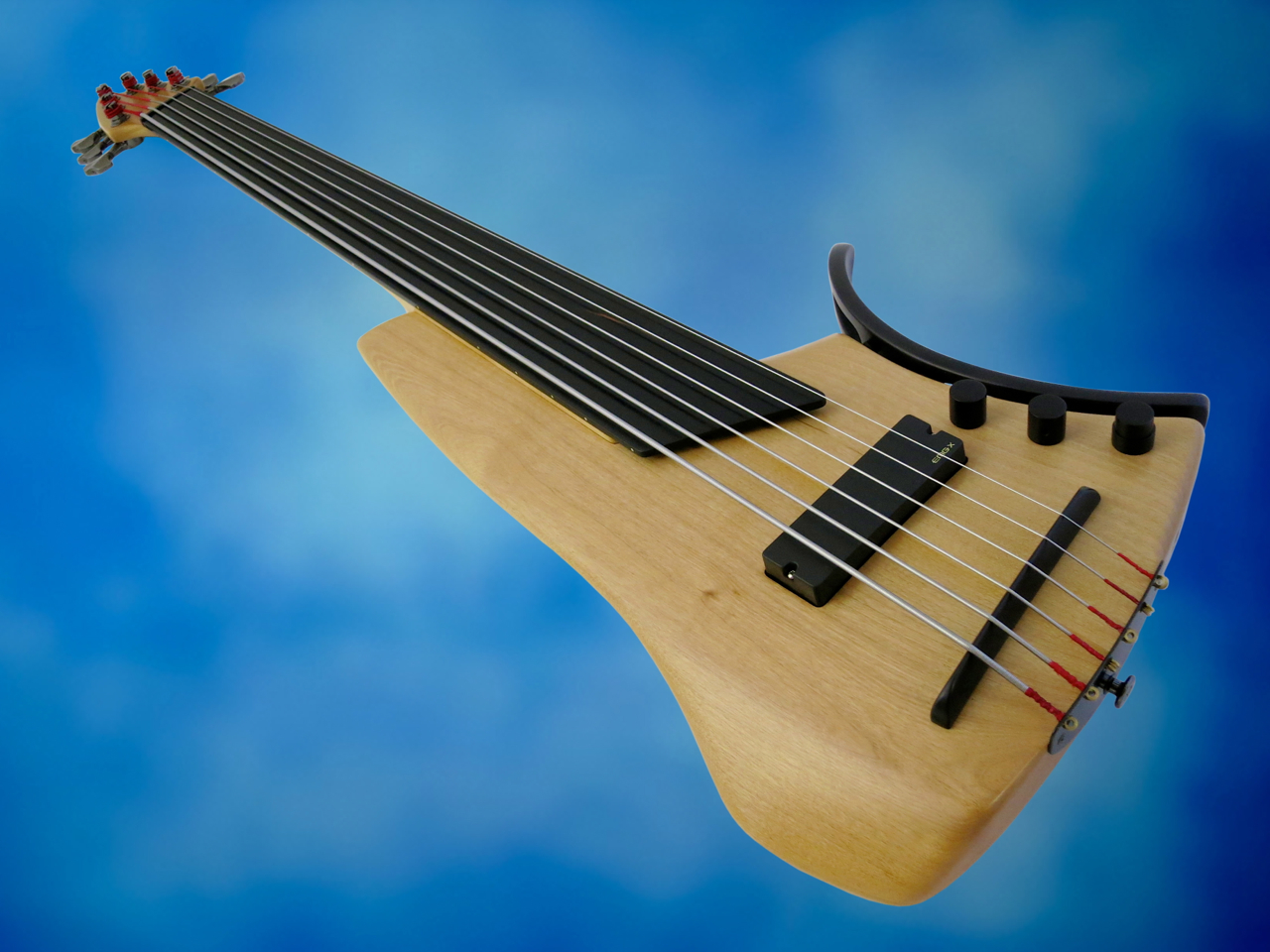
Uusin Juhan tekemä soitin on kuusikielisen nauhattoman basson prototyyppi, jossa kontramainen soundi yhdistyy sähköbasso-tyyliseen soitettavuuteen.

****
Juha Savisalo 6-String double bass – full front LRG

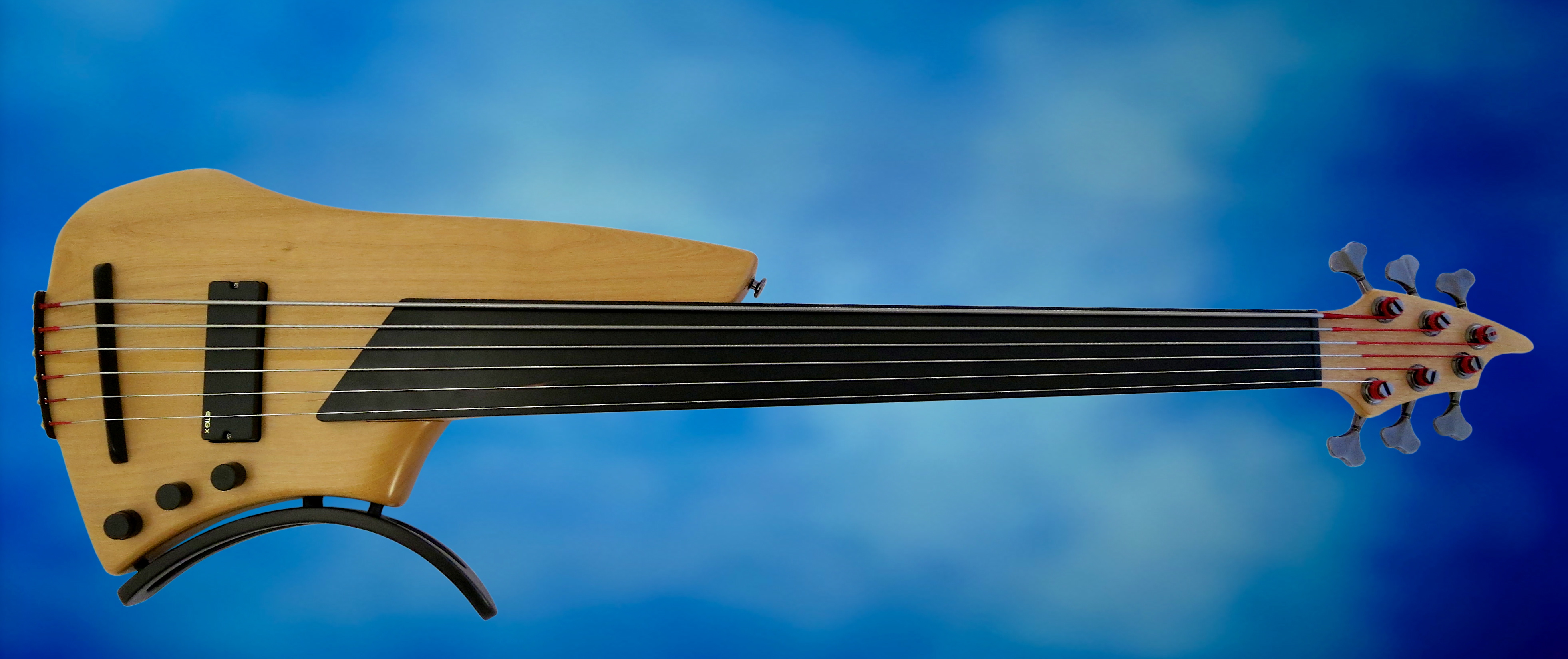
Kauniilla tavalla futuristisen näköinen Savisalo-prototyyppi on käsintehty perinteisistä soitinpuista.
Juha Savisalo 6-String double bass – full back LRG

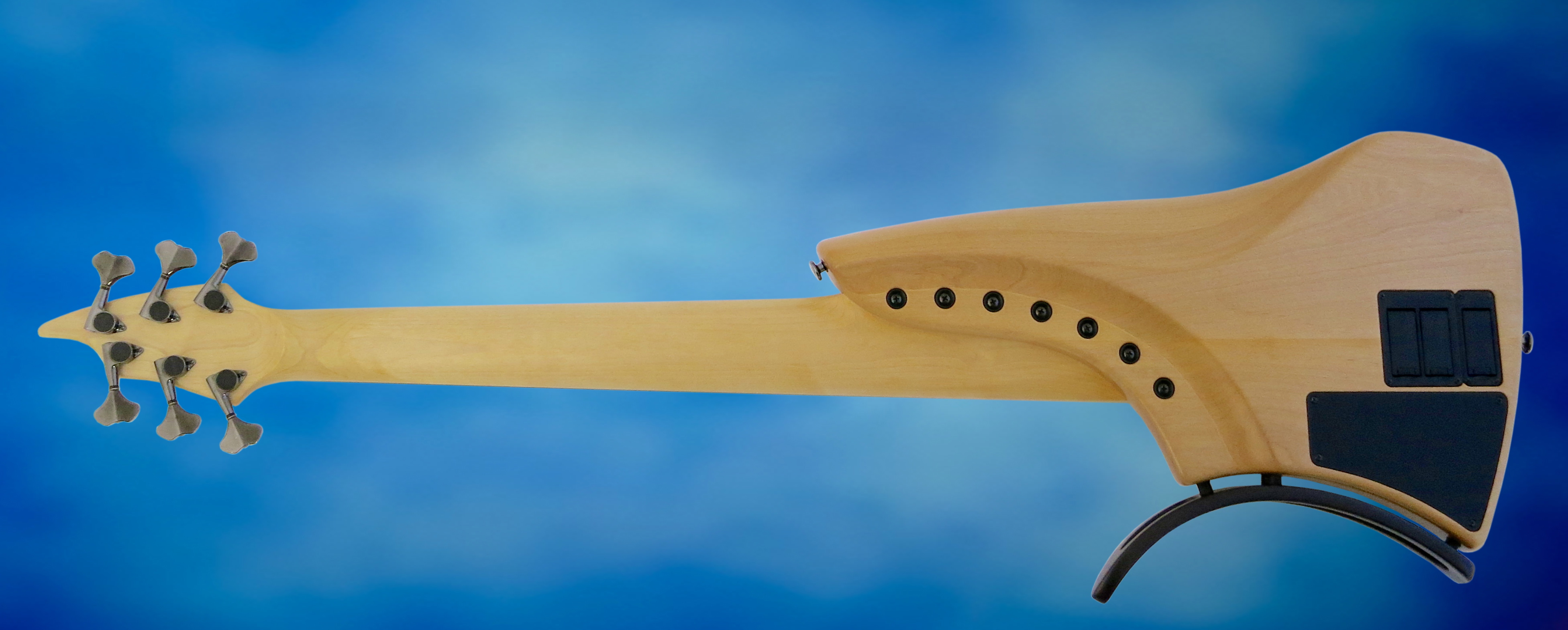
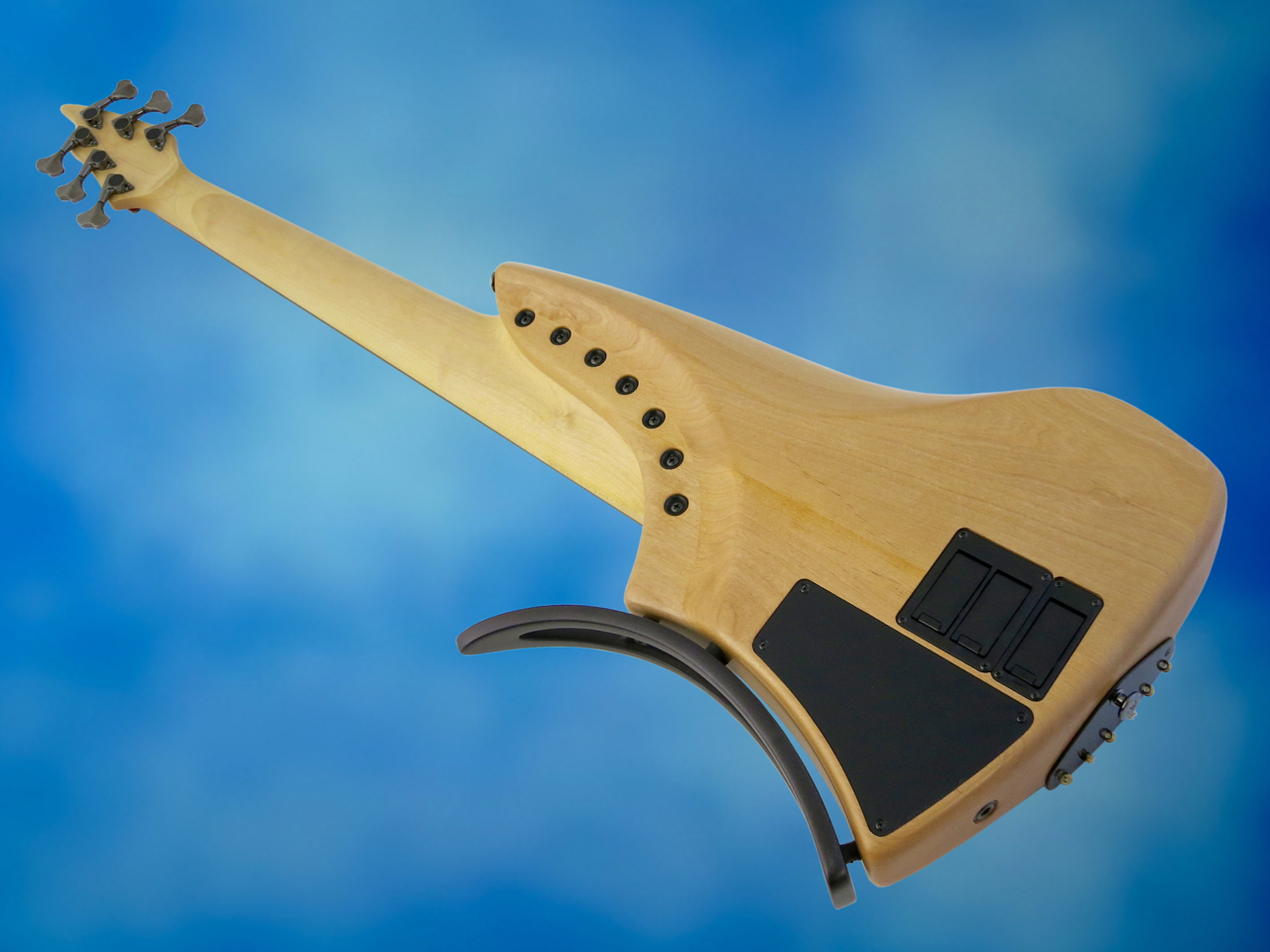
Vahattu pulttikaula on veistetty vaahterasta, kun taas öljyllä ja vahalla käsitelty, osittain ontto runko on tehty lepästä.
Juha Savisalo 6-String double bass – headstock

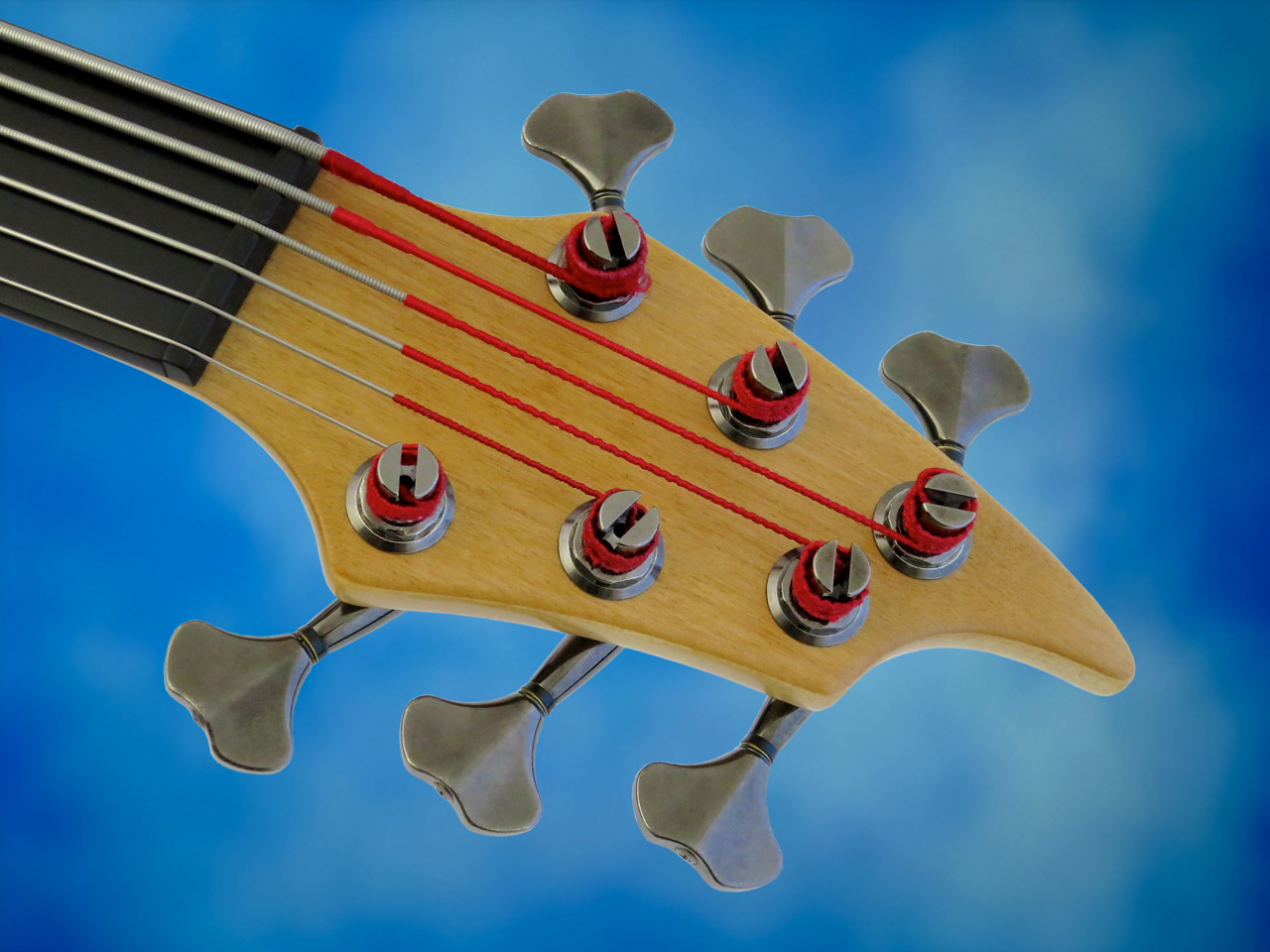
Taakse kallistuva viritinlapa on suunniteltu niin, että kielet menevät suorassa linjassa satulasta virityskoneistoille.
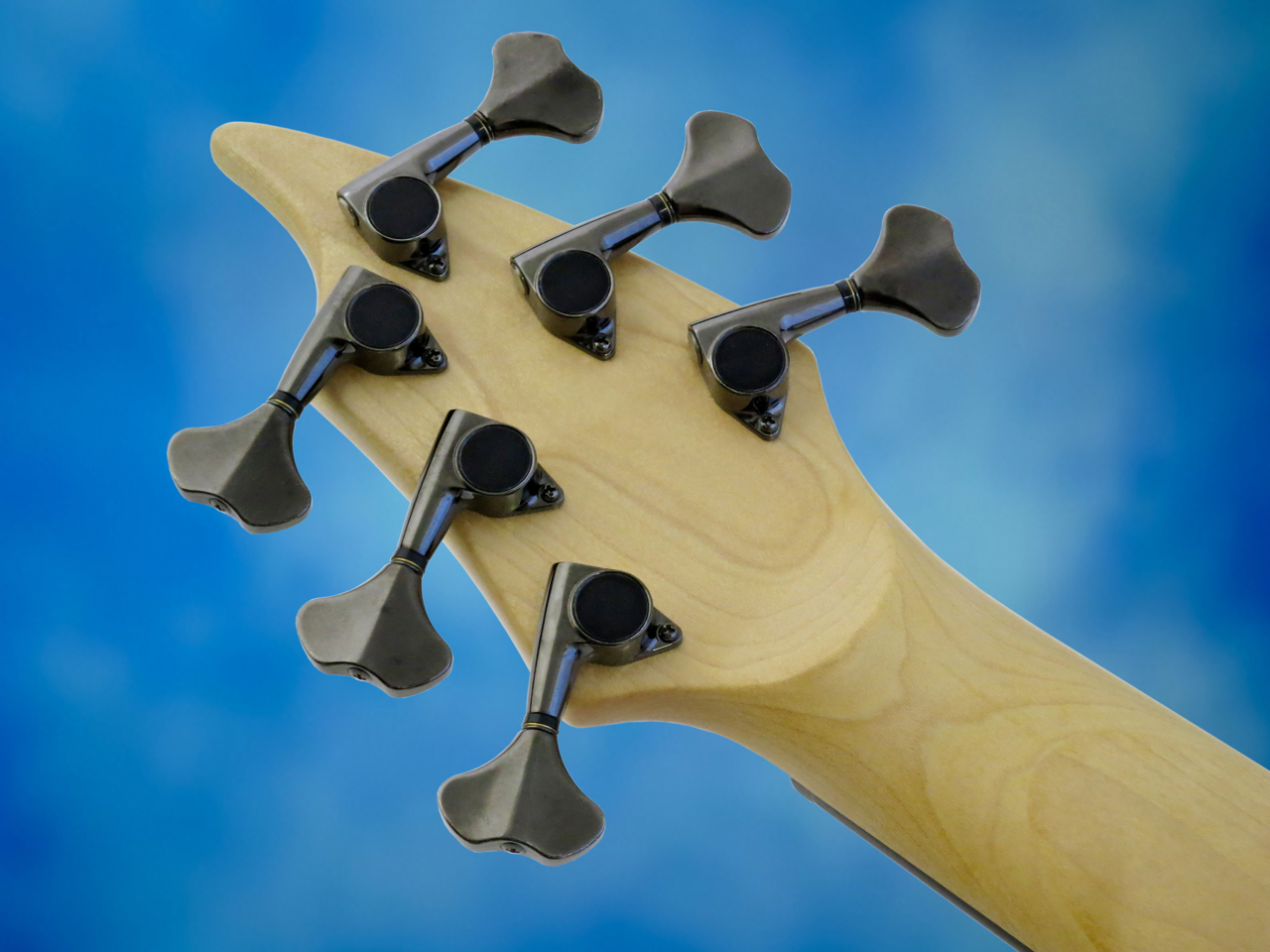
Juha Savisalo 6-String double bass – tuners

Kuusikielisessä Savisalo-bassossa käytetään laadukkaita Gotoh-virittimiä.
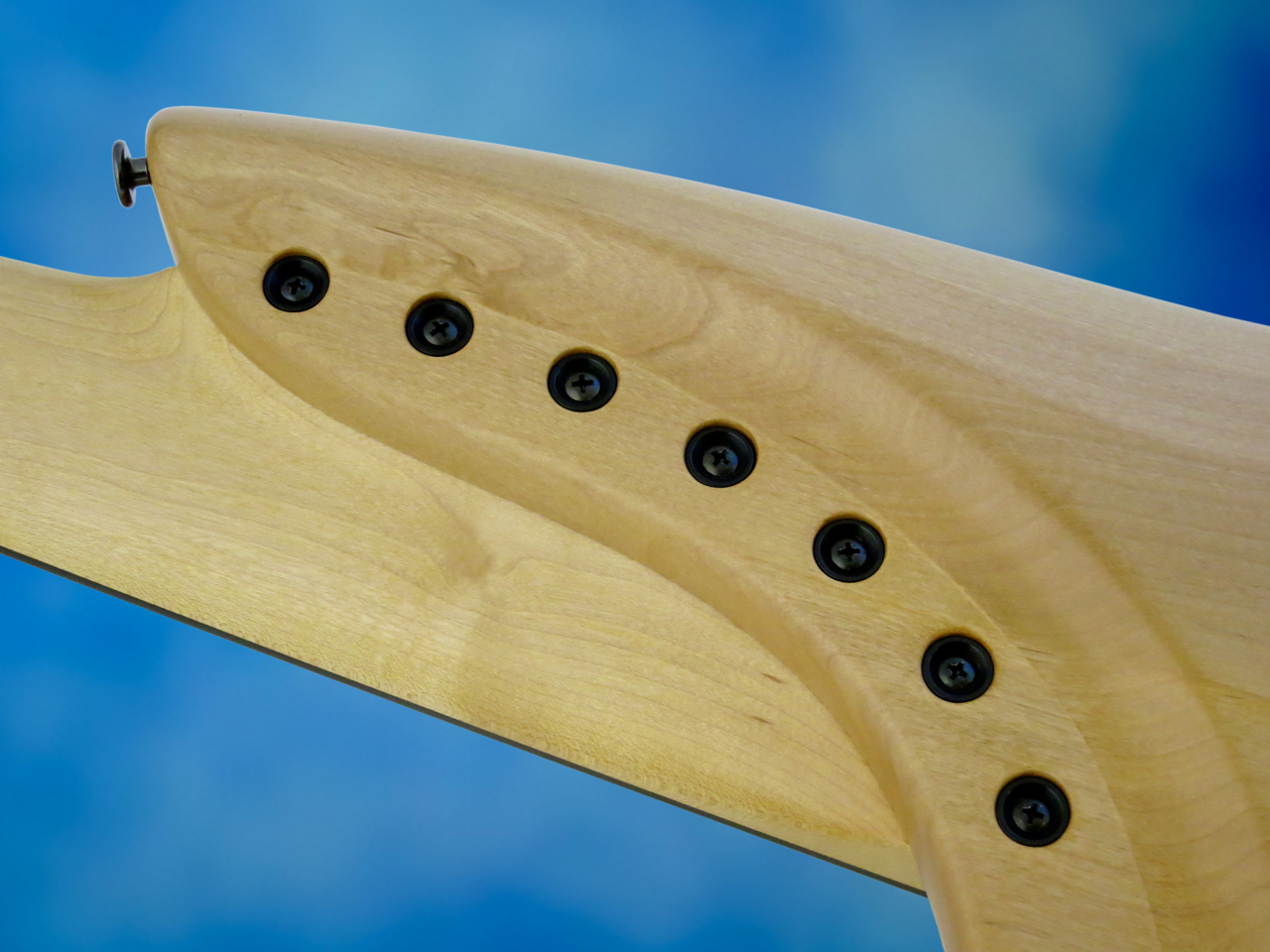
Juha Savisalo 6-String double bass – neck joint

Seitsemällä ruuvilla toteutettu kaareva kaulaliitos takaa sen, että soittajan käsi pääsee vaivattomasti myös otelaudan ylimpiin sfääreihin.
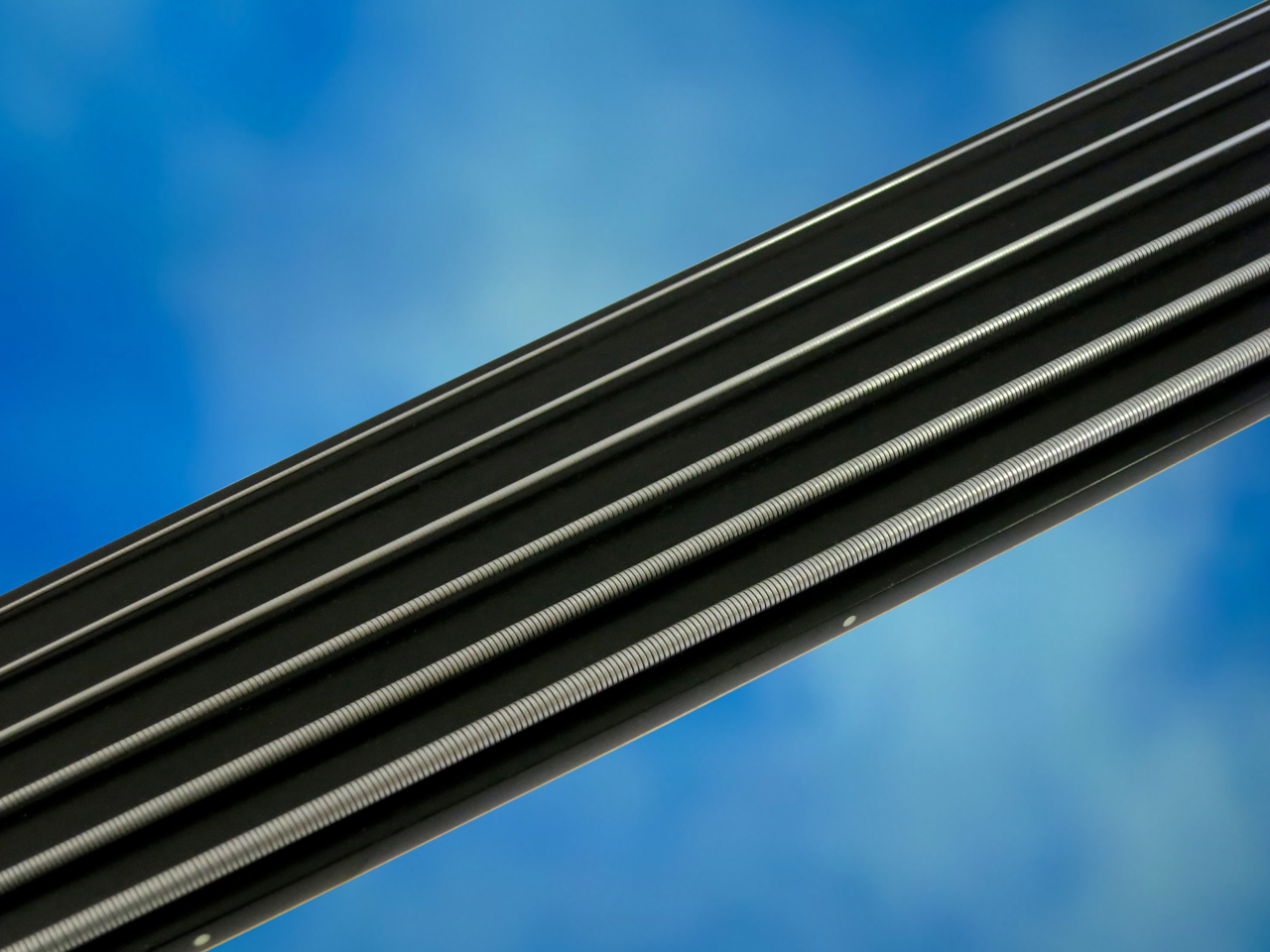
Juha Savisalo 6-String double bass – fingerboard

Basson eebenpuinen otelauta tuntuu erittäin sileältä.

Juha Savisalo on varustanut soittimensa Thomastik-Infeldin Jazz Flatwound -kielillä, jotka on kehitetty tuomaan sähköbassolle kontra-tyylistä soitettavuutta ja soundia.
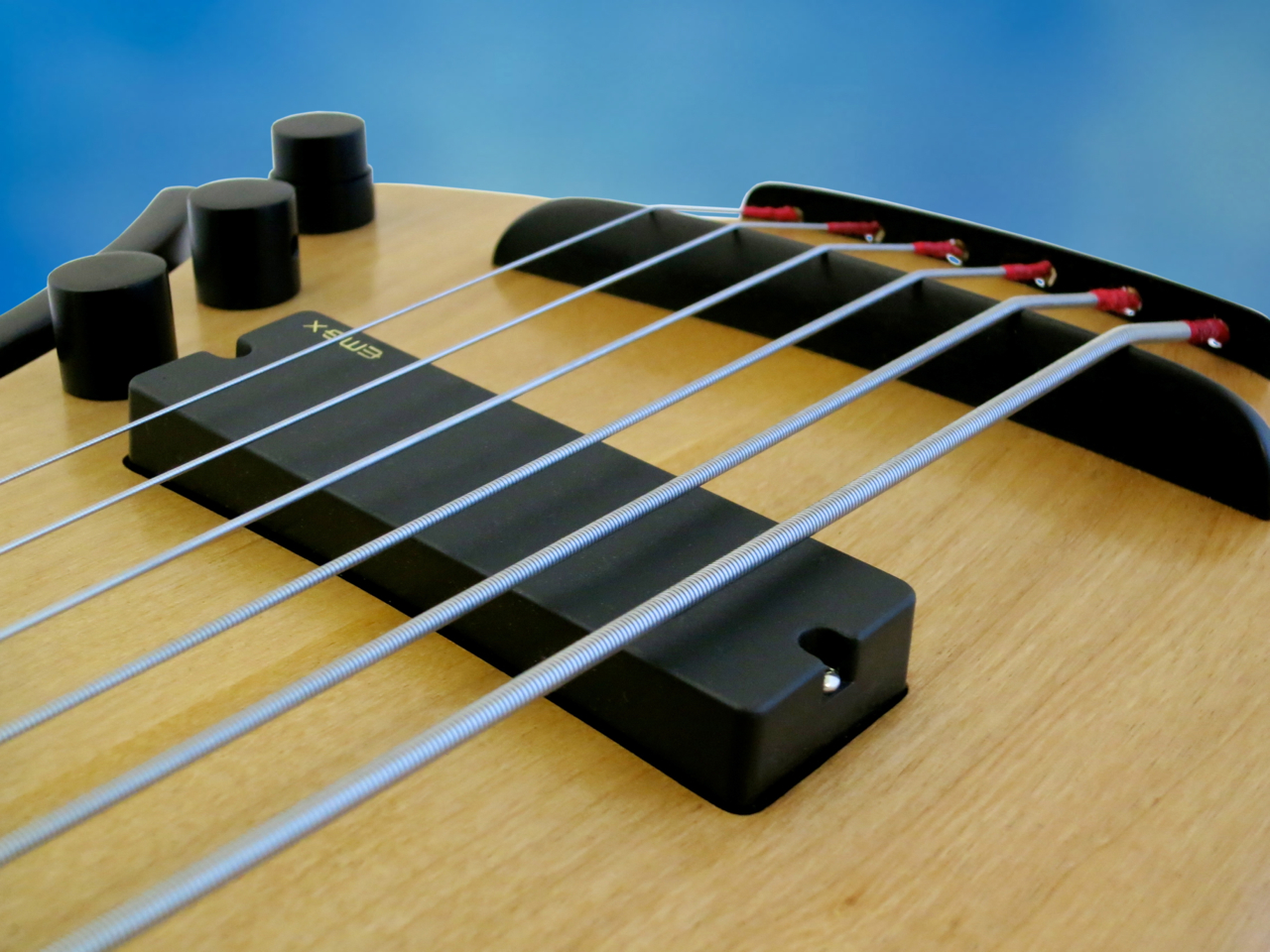
Juha Savisalo 6-String double bass – EMG + controls

Juhan alkuperäinen idea oli toteuttaa bassonsa täysin ilman magneetista mikrofonia. Rakennusvaiheessa hän kuitenkin päätti lisätä soundin monipuolisuuden nimessä myös yhden EMG 45-PAX -mikrofonin.
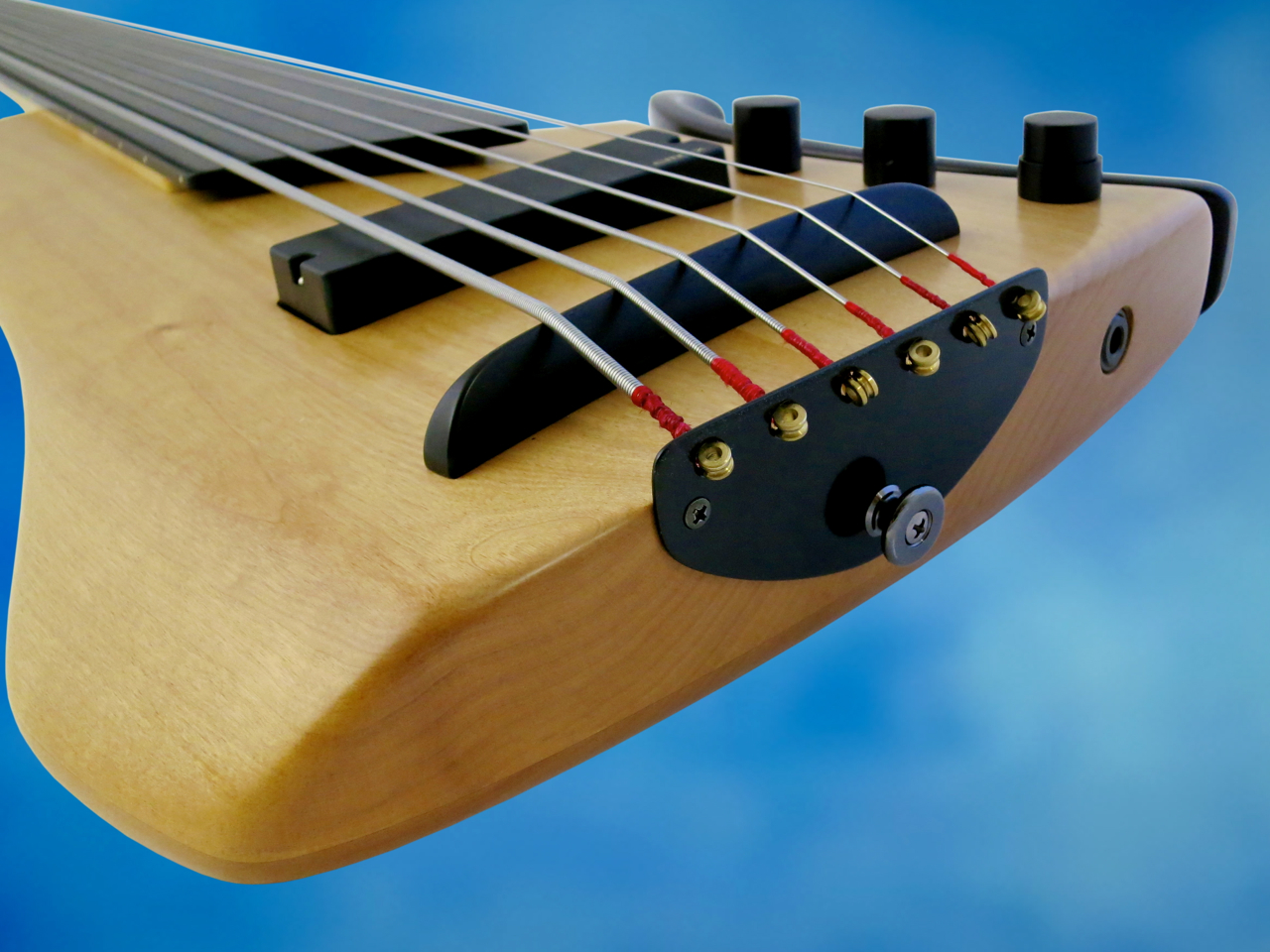
Juha Savisalo 6-String double bass – bridge

Prototyypin vapaasti seisovaan eebenpuiseen tallaan on integroitu yksi aktiivinen B-Band-kontaktimikrofoni.

Savisalo-basson säädinosasto koostuu master volumesta, blend-potikasta mikkivalintaan, sekä diskantti- ja basso-säätimistä. Soittimen aktiivi-EQ on EMG:n valmistama.
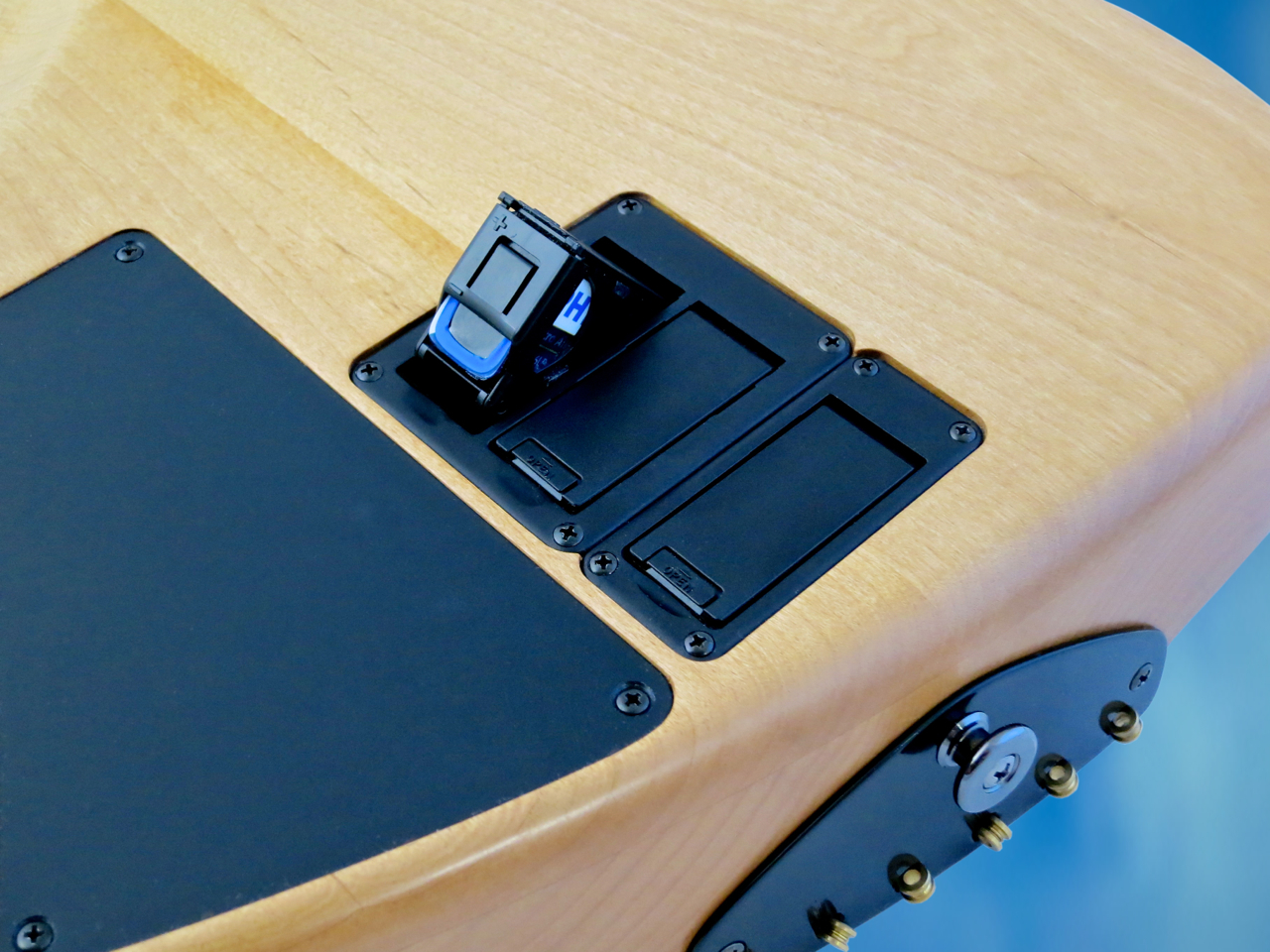
Juha Savisalo 6-String double bass – battery compartments

Basson elektroniikka pyörii peräti kolmella yhdeksän voltin paristolla – kaksi paristoa syöttää 18 V EMG-etuvahvistimelle, kun taas kolmas paristo on B-Band-mikrofonia varten.
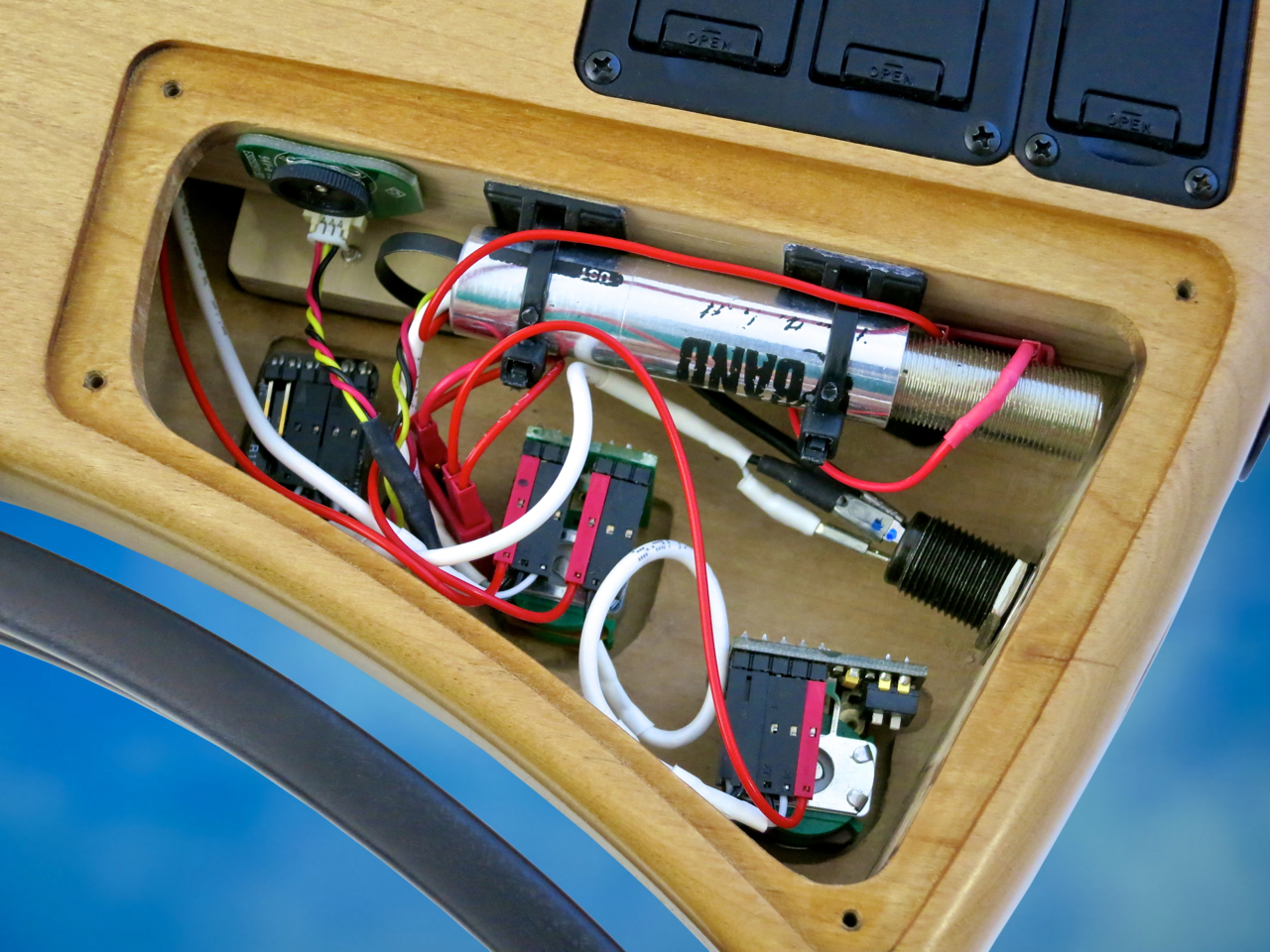
Juha Savisalo 6-String double bass – control cavity

Täydet pisteet Juhalle siitä erittäin luovasta tavasta, jolla hän on siististi yhdistänyt kahden firman elektroniikan toimivaksi kokonaisuudeksi.

Pieni potentiometri kuvan vasemmassa yläkulmassa säätää B-Band UST-mikrofonin lähtötasoa.
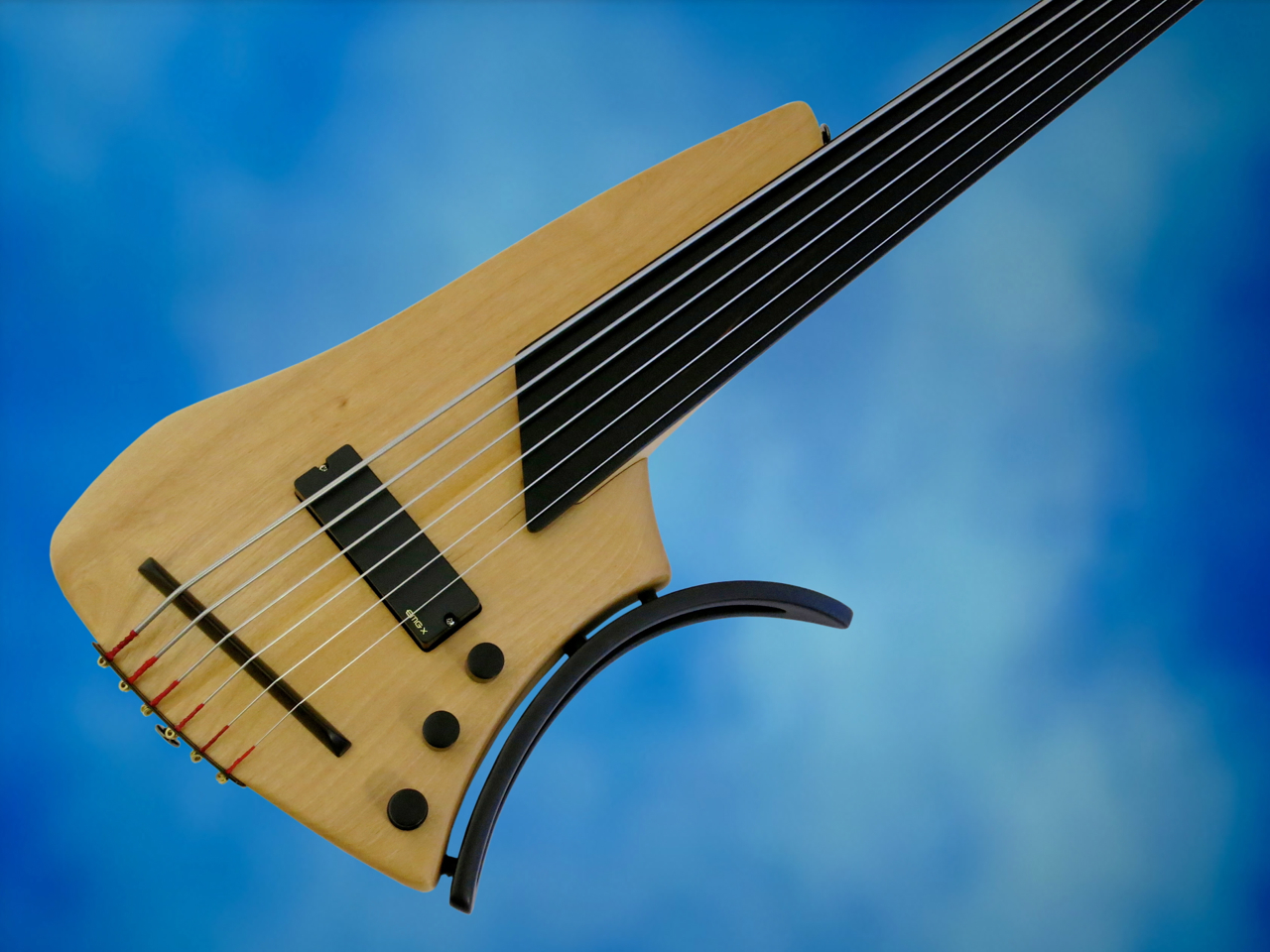
Juha Savisalo 6-String double bass – body beauty 1

Hieman liikkuvasti asennettu jalkatuki on veistetty mustaksi värjätystä vaahterasta.

****
Juha Savisalo 6-String double bass – beauty shot 2

Juha Savisalon kuusikielinen basso on pienikokoisen ja osittain onton koppansa ansiosta yllättävän kevyt. Bassopuolen pitkä ”olkapää” taas pitää soittimen mahdollista kaulanpainoisuutta onnistuneesti loitolla. Prototyyppi asettuu hyvin rauhallisesti olkahihnaan, ja se istuu myös todella mukavasti sylissä.

Kuusikielisessä bassossa ei ole ergonomian kannalta paljonkaan vaihtoehtoja kaulaprofiileissa: Koska kaula on pakosta melko leveä täytyy kaulaprofiilin olla suhteellisen ohut ja laakea, muuten basistin sormet eivät yllä matalaan H-kieleen.

Savisalo-basson kaula sopii ainakin omaan käteen kuin nakutettu. Myös soittimen geometriaa on erittäin onnistunut, minkä ansiosta vasen käsi löytää jo muutaman minuutin sisäänsoiton jälkeen kuin itsestään nuottien oikeat paikat otelaudalla.

Kahden eri valmistajan mikrofonit ja etuvahvistimet toimivat Savisalon prototyypissä yllättävän hyvin yhdessä. B-Band-mikrofonilla saa kauniisti esiin puun lämpimän klangin ja basson puoliakustisen luonteen, kun taas EMG-mikrofonista lähtee erinomainen Fusion-tyylinen, lämmin, mutta samalla tarkasti piirretty sähkösoundi. Blend-potikan keskiasento antaa soittajalle sellaisen herkullisen best-of-both-worlds soundin, jossa akustinen ja sähkösoundi yhdistävät toimivaksi kokonaisuudeksi, jossa kumpikin puoli on edustettu tasavertaisesti.

Tässä lyhyt ääninäyte mikrofonien soundeista – järjestys on B-Band –> molemmat yhdessä –> EMG:

Demobiisini varten äänitin kaksi bassoraitaa suoraan linjasoittona äänikorttiin. ”Tavallinen” basso-osuus on soitettu EMG-mikin kautta, kun taas soolobassoa varten käytin soittimen B-Band-mikrofonia:
Juha Savisalo 6-String double bass – back beauty

****

Juha Savisalo 6-String double bass – body beauty 2

Tämän basson soitettavuus, sen ergonimia, ja etenkin sen soundi tekevät hyvin selväksi, että soitin ei ole tavallisen harrastajan tuotos. Vaikka Juha Savisalo ei työskentele päivätyössään soitinrakentajana, näkyy tässä prototyypissä kuitenkin selvästi miehen soitinrakentajan koulutus. Tämä kuusikielinen puoliakustinen sähköbasso on mielestäni selkeästi pro-tason laatusoitin.

Juha Savisalon yhteystiedot löytyy hänen (ja vaimonsa) kotisivultaan.

****

Plussat:

+ työnjälki

+ ergonomia

+ soitettavuus

+ soundi

Testipenkissä: Markbass Mini CMD 121P + CMD Jeff Berlin Players School

Kitarablogin testipenkissä kävi tällä kertaa kaksi eri Markbass bassokomboa – toisesta niistä on jo tullut varsinainen klassikko firman mallistossa, kun taas toinen on upouusi nimikkomalli erittäin soittajaystävällisellä hinnalla.

****

Markbass Mini CMD 121P – front

Markbass Mini CMD 121P (799 €) on yksi firman myydyimmistä kombovahvistimista, koska se tarjoaa hyvin kompaktissa, ja erittäin houkuttavassa paketissa kaikkia Markbassolle ominaisia tunnusmerkkejä ja ominaisuuksia.

Mini CMD 121P -komboon on asennettu tehokas, mutta kevyt neodyymikaiutin Markbassin keltaisella kartiolla, sekä diskanttitorvi (edestä katsottuna oikeassa yläkulmassa).

Markbass Mini CMD 121P – back

Kotelon takaseinässä on refleksiaukko. Kombo on päällystetty kestävällä mustalla mattomaisella materiaalilla, ja tuhdit kulmasuojat on tehty muovista.

Markbass Mini CMD 121P – top

Kombon ulkomitat ovat vain 38 x 43 x 36 cm (l x k x s) ja koko komeus painaa hiukan yli 13 kiloa, mikä tekee tästä Markbass-vahvistimesta helppoa roudata.

Vaikka Markbass Mini CMD 121P onkin kompakti, se ei missään nimessä ole hentoääninen, vaan se tarjoaa 300 wattia kahdeksan ohmin tai 500 wattia neljän ohmin impedanssilla.

Markbass rakentaa kombojaan upottamalla olemassa olevia vahvistin-nuppeja ylhäältä päin kaiutinkoteloon. Tässä tapauksessa käytössä on Combo Head II -niminen vahvistinyksikkö.

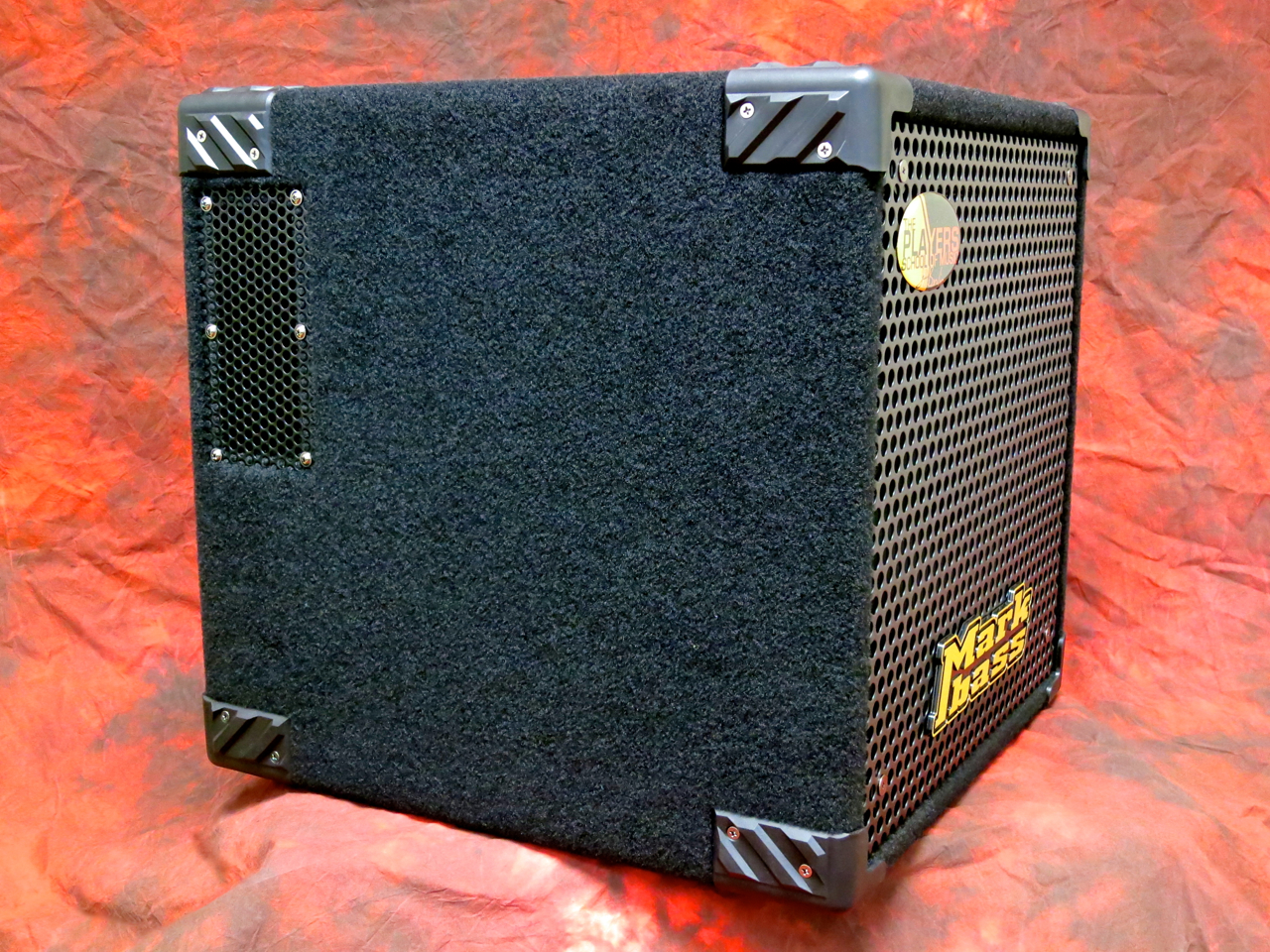
Markbass Mini CMD 121P – side

Vahvistimessa on aktiivijäähdytys pienellä ja hiljaisella tuulettimella. Reilunkokoinen tuuletusaukko kombon sivussa takaa tuloilman riittävyyden.

Markbass Mini CMD 121P – control panel – large

Markbass-vahvistimien erinomainen soundi on italialaisvalmistajan tärkein valttikortti ja ominaisuus:

Combo Head II:n kolme volume-säädintä on helppoa erottaa EQ:sta ja muista nupeista niiden keltaisen värin ansiosta. Tulopuolella on tarjolla gain-säädin (sinisellä ledillä), kun taas lähtöpuolelta löytyy master volumen lisäksi myös tasosäädin kombon DI-lähtöä varten.

EQ-osastolta löytyy nelikaistaiset taajuuskorjaimet, sekä Markbasson omat VLE- ja VPF-säätimet.

VLE tarkoittaa Vintage Loudspeaker Emulator, ja säätimen avulla voi siirtyä portaattomasti nykyaikaisesta, tuoreesta soundista vintage-maisesti kumisevaan soundiin.

Variable Pre-Shape Filter -nupilla (VPF) taas muokataan signaalia hieman Hi-fi-tyylisemmäksi.

Kombossa on myös sisäinen kaksikaistainen limitteri, joka suojaa Mini CMD 121P:n kaiuttimia ylikuormittumiselta, silloin kun vahvistin toimii täydellä volyymillä.

Markbass Mini CMD 121P – back panel

Koska nupin etupaneeli katsoo ylöspäin, suuntavat takapaneelin liittimet luonnollisesti lattiaa kohti. Ei ehkä paras mahdollinen ratkaisu pimeällä lavalla, mutta ajan kanssa käyttäjä varmasti oppii ulkomuistista liittimien järjestyksen ja sijainnin.

Tässä Markbassossa on balansoitu DI-lähtö omalla pre-/post-EQ ja ground lift kytkimillä. Lisäksi löytyy yksi efektilenkki, yksi lähtö viritysmittarille, sekä Speakon-liitin lisäkaiuttimelle.

****

Markbass CMD JB Players School – front

Legendaarinen basisti Jeff Berlin on jo pitkään ollut Markbass-tuotteiden fani. Berlinistä on hiljattain tullut myös oman musiikkiopiston – The Players School of Music – johtaja, ja hän sai idean kehittää yhdessä Markbass-suunnittelijoiden kanssa edullisempaa, juuri opiskelijoille tarkoitettua Markbass-komboa.

Tämän yhteistyön hedelmä, Markbass CMD Jeff Berlin Players School (499 €), on suunniteltu kunnianhimoista aloittelijaa varten, mutta sopii varmaan myös kaikille sellaisille basisteille, jotka etsivät edullista, mutta hyväsoundista komboa. CMD JB Players School -kombon tarkoitus on antaa käyttäjälle aito Markbass-kokemus mutta muutamalla, Jeff Berlinin pyytämällä, muutoksella höystettynä.

Jeff Berlinin ihannesoundi on lämmin, iso ja orgaaninen. Mies myös vihaa tunnetusti diskanttitorvien käyttöä kaikissa bassokaapeissa. Näistä syystä Players School -malliin on suunniteltu erikoissyvä kaiutinkaappi, ja siksi kombo on myös varustettu ainoastaan yhdellä 15-tuumaisella ämyrillä.

Markbass CMD JB Players School – top

Basistilegendan toivelistalla oli myös kestävä, komboon upotettu metallikahva. Vaikka Players School -mallin ulkomitat ovat selvästi Mini CMD -komboa isommat (46 x 46 x 48 cm), painaa vahvistin silti vain 16 kiloa.

Markbass CMD JB Players School – back

Myös tässä kombossa on refleksiaukot takana…

Markbass CMD JB Players School – side

…sekä tuuletusritilä vahvistinyksikön tuloilmaa varten.

Markbass CMD JB Players School – control panel – large

Players School -mallissa käytetään Markbassin Little Mark 250 nuppia, josta lähtee 150 wattia kahdeksalle ohmille (tai 250 wattia neljän ohmin impedanssille).

Vahvistimen ominaisuudet ovat miltei samoja kuin Mini CMD -kombossa – tarjolla on nelikaistainen EQ, ja sen lisäksi VLE- ja VPF-filtterit.

Markbass CMD JB Players School – back panel

CMD JB Players School -vahvistimen takapaneeli on toiseen komboon nähden käytännössä täysin identtinen, ja sieltä löytyy DI-lähtö, efektilenkki, lähtö viritysmittarille, sekä Speakon-kaiutinlähtö.

****

Markbass Mini CMD 121P + CMD JB Players School – stacked

On helppo nähdä miksi Markbass Mini CMD 121P -mallista on tullut näin valtava myyntimenestys italialaisvalmistajalle: On hyvin hankalaa löytää näin kompaktia ammattitason bassovahvistinta, josta lähtee samaa volyymiä, voimaa, potkua, monipuolisuutta, sekä näin laadukasta ääntä.

Mini CMD 121P:n ääni on hyvin täyteläinen ja tasapainoinen (vaikka kyseessä onkin ”vain” 12-tuumainen kaiutin), ja sen äänessä on herkullisen mehukas ja kärjekäs ylämiddle, sekä hyvin luonteikas ala-middle. Erittäin musikaalisesti toimivalla EQ-osastolla, sekä Markbasson VLE- ja VPF-säätimillä on helppoa löytää juuri se ”oma ja oikea” soundi.

Mini CMD:n omat tehot tulevat varmasti riittämään hyvin moneen keikkatilanteeseen. Tosi isoissa paikoissa taas voi käyttää komboa yksinkertaisesti sopivalla lisäkaapilla.

Ei tarvitse olla mikään selvännäkijä ennustamaan myös Markbasson CMD Jeff Berlin Players School -kombolle suurta menestystä. Tässä kun on tarjolla täysikokoinen Markbass-kombo 500:lla eurolla!

En tiedä miten he ovat tehneet sen mutta, itse asiassa, pienemmästä nimellistehostaan huolimatta Players School -kombo vaikuttaa lähes niin äänekkäältä kuin nyt testattu Mini CMD. Jeff Berlin Players School:n potku riittää varmasti hyvin moneen ravintola- ja hääkeikkaan, sekä pienille klubeille. Ja lisätehon tarpeessa voi aina käyttää lisäkaappia ja/tai kombon erinomaista DI-lähtöä kytkettynä PA:han.

CMD JB Players School -kombolla on todella herkullinen ääni, jossa riittää syvyyttä ja lämpöä, ja myös vahvistimen dynaaminen skaala on vaikuttava. Tulen itsekin yleensä erinomaisesti toimeen ilman erillisen diskanttielementin tuomia naksahduksia, ja ihastuin täydellisesti Jeff Berlin CMD -kombon nykyaikaiseen soundiin ja silkkiseen trebleen.

Olen äänittänyt molempia komboja samankaltaisilla säädöillä yhdellä single Shure SM57 -mikrofonilla. Näissä demoissa on aina sama järjestys: Jazz Bass (sormisoitto)/Mini CMD –> Rickenbacker (plektralla)/Mini CMD –> Jazz Bass/CMD JBPS –> Rickenbacker/CMD JBPS.

Tässä ovat pelkästään basso-osuudet:

Rummut lisätty:

Koko sovitus, mutta bassot miksattu eteen:

Ja viimeiseksi hieman ”tavallisempi” miksaus:

****

Markbass Mini CMD 121P & CMD Jeff Berlin Players School -kombot

Mini CMD 121P – 799 €

CMD JB Players School – 499 €

Maahantuoja: Musamaailma

****

Plussat (molemmat mallit):

+ koko

+ paino

+ monipuolisuus

+ teho

+ soundi
Miinukset (molemmat mallit):

– takapaneeli hieman hankalassa paikassa

Review: Markbass Mini CMD 121P + CMD Jeff Berlin Players School

This time Kitarablogi.com takes a look at two different Markbass bass combos – one is already a bona fide classic, while the other is a brand new, affordably-priced signature model.

****

Markbass Mini CMD 121P – front

The Markbass Mini CMD 121P (current price in Finland: 799 €) is one of the company’s best-selling combos, as it manages to put all of Markbass’ trademark features into a compact, hard-to-beat package.

The Mini CMD 121P comes loaded with a lightweight, but powerful 12-inch neodymium speaker with Markbass’ cool yellow cone, as well as a piezo tweeter in the top right corner.

Markbass Mini CMD 121P – back

The back-ported cabinet is covered in a hard-wearing carpet style exterior, and comes equipped with sturdy plastic corner protectors.

Markbass Mini CMD 121P – top

The whole combo measures only 38 x 43 x 36 centimetres (w x h x d) and weighs in at just above 13 kilos, which makes it easy to carry around by its single top handle.

Despite its diminutive dimensions the Markbass Mini CMD 121P packs a very hefty punch, delivering 300 watts at 8 ohms or 500 watts at 4 ohms.

Markbass tend to use existing amp head models in their combos by simply sinking the amp units into the cabinet from the top. This combo uses the Markbass Combo Head II amp, for example.

Markbass Mini CMD 121P – side

Ample ventilation is provided thanks to a side vent, as well as a (quiet-running) ventilator next to the bass-reflex port.

Markbass Mini CMD 121P – control panel – large

Markbass’ excellent preamp is definitely one of the features that originally put the Italian brand on the map:

The Combo Head II makes all the volume knobs stand out from the EQ-section by using yellow controls. We have an input gain control (with its corresponding blue indicator LED), a level control for the balanced DI output, and the master volume control.

The EQ-section comprises a four-band EQ, and Markbass’ special VLE and VPF controls.

VLE stands for Vintage Loudspeaker Emulator, and it allows you to take your tone from modern, fresh and wiry to vintage-style thuddy – and all points in-between – by the simple turn of a knob.

The Variable Pre-Shape Filter, or VPF, lets you dial in a pre-EQ curve with a dip in the lower mids, should you prefer a more Hi-Fi-type sound.

A built-in, automatic two-band limiter protects the Mini CMD 121P’s speakers from damage, even when you run the combo flat out.

Markbass Mini CMD 121P – back panel

As the amp head has been sunk into the cabinet with its controls facing up, the back panel faces floor ward. This isn’t the most practical of solutions on a dimly lit stage, but over time you will learn which connector is which.

The Markbass features a balanced DI output with pre/post-switching and a secure ground lift feature, an effects loop, a tuner output, and a Speakon connector for hooking up an expansion cabinet.

****

Markbass CMD JB Players School – front

Bassist extraordinaire Jeff Berlin has long been a vocal supporter of Markbass amps. Now Mr Berlin and Markbass have come up with an affordably-priced, but fully-spec’d bass combo to go along with Jeff’s position as the director of The Players School of Music.

The new Markbass CMD Jeff Berlin Players School combo (current price in Finland: 499 €) is aimed directly at the ambitious beginner/intermediate bass player (or anyone on a tight budget), who wants maximum tone from a gig-worthy combo. The CMD JB Players School combo gives you the genuine Markbass experience with a couple of twists specifically requested by Jeff Berlin.

Mr Berlin likes to hear a fat, organic bass sound, and he simply hates all types of tweeters in bass amplifiers, which is why he requested a special, deep cabinet for the Players School –model, loaded with an all-black 15-inch speaker, but no treble horn.

Markbass CMD JB Players School – top

Jeff Berlin also requested a chunky metal handle for the 46 x 46 x 48 centimetres cabinet. Despite its larger cabinet and speaker the CMD JB Players School model still only weighs just under 16 kilos.

Markbass CMD JB Players School – back

This combo is also rear-ported…

Markbass CMD JB Players School – side

…and features an air vent for the fan-cooled amplifier.

Markbass CMD JB Players School – control panel – large

The Players School model comes equipped with a Little Mark 250 amp, which dishes out 150 watts to 8 ohms, or 250 watts at 4 ohms impedance.

The amp’s features are virtually identical to the Mini CMD’s, offering a four-band EQ-section with additional VLE and VPF knobs.

Markbass CMD JB Players School – back panel

The CMD JB Players School offers the same array of outputs on its back panels, namely balanced DI, effects loop, tuner output, and Speakon speaker output.

****

Markbass Mini CMD 121P + CMD JB Players School – stacked

It’s easy to see why the Markbass Mini CMD 121P has become such a mega seller for the Italian maker: There aren’t that many professional bass combos around that manage successfully to glean such an amount of volume, punch, versatility and sheer quality of tone from such a compact 12-plus-one setup.

The Mini CMD 121P’s basic tone is surprisingly full (for a 12-inch speaker) and balanced with a nice, juicy upper midrange nose, as well as lots of lower-mid character. The extremely musical EQ-, VLE- and VPF-controls make it very easy to dial in the sounds you hear in your head.

You will be able to do most of your gigs just by running the Mini CMD by its own. For larger venues, simply add one of Markbass’ bass cabs for additional girth and volume.

You don’t need to be a prophet to predict a huge success for Markbass’ CMD Jeff Berlin Players School combo, too. A genuine, full-blown Markbass bass combo for 500 euros, you’ve gotta be kidding me!

I’m not sure how they’ve managed to do this, but actually, despite its lower wattage, the Players School amp doesn’t seem that much quieter. I’m sure you can play most restaurant gigs, functions, and small clubs with this combo. And should you need more power, there’s always the option to use the excellent built-in DI output to connect to the PA-system.

The CMD JB Players School combo has a gorgeously round, deep and warm basic tone with a wide dynamic range. I’m not a huge fan of the additional click and trebly scratch that many tweeters seem to add to your bass sound, which made me feel right at home with the Jeff Berlin CMD, and its modern tone and silky top end.

I’ve recorded both combos with similar settings using a single Shure SM57. These demo tracks all follow the same sequence: Jazz Bass (fingerstyle)/Mini CMD –> Rickenbacker (plectrum)/Mini CMD –> Jazz Bass/CMD JBPS –> Rickenbacker/CMD JBPS.

Here are the combos on their own:

The same track with the drums added:

The full arrangement with the bass tracks mixed high:

And, lastly, a more balanced mix of the above:

****

Markbass Mini CMD 121P & CMD Jeff Berlin Players School combos

Mini CMD 121P – 799 €

CMD JB Players School – 499 €

Distributor: Musamaailma

****

Pros (both combos):

+ size

+ weight

+ versatility

+ power

+ sound

Cons (both combos):

– back panel access

Review: DV Mark Little Jazz + Jazz 12

DV Mark Little Jazz + Jazz 12 – Soundcloud pic

Marco de Virgiliis’ company Markbass has made its mark spearheading the use of Class D power amps, which have made it possible to pack an amazing amount of output power into very small and lightweight bass amp heads. Markbass’ sister brand, DV Mark, concentrates on guitar amps, for the most part.

Markbass and DV Mark have recently changed their distributor in Finland. Their products are now distributed by Musamaailma, which celebrates its 30th year in business in 2015.

The combos in DV Mark’s Jazz series – the DV Little Jazz  (current price in Finland: 393 €) and the DV Jazz 12 (462 €) – are very lightweight guitar amps, meant for professional use, and designed to concentrate solely on one thing – a top grade clean tone.

****

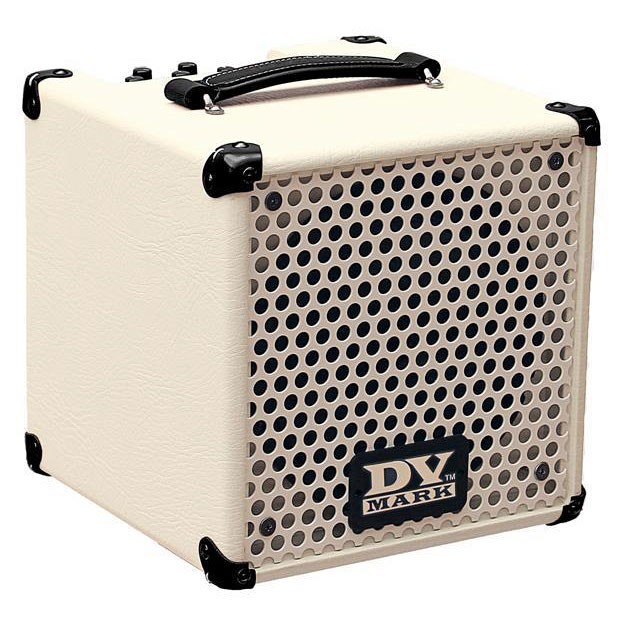
dvmark_little_jazz_1_625px

The DV Little Jazz is a surprisingly small combo in the shape of a cube (27 x 27 x 26 cm). Thanks to its diminutive size and small weight (just under seven kilos), you can easily take it on a bus or tram on the way to your next gig or rehearsal.

The cream white cabinet is home to an eight-inch speaker that was specially designed for this amp.

The corner protectors and the Little Jazz’ sturdy metal grille give this small combo a suitably chunky look.

dvmark_dv_jazz_12_1_700px

The DV Jazz 12 is a good deal larger in size (43 x 42 x 30 cm), with a more traditional guitar combo look and a stylish cloth grille.

Thanks to its special-design, neodymium 12-inch speaker, the Jazz 12 weighs in at just under nine kilos.

dvmark_little_jazz_pic_3

dvmark_dv_jazz_12_2

Both combos have a partially open back, and they share an identical, fan-cooled amplifier module dishing out 45 watts of power.

The back panel offers a speaker output, a balanced DI output (XLR), as well as a headphones output and an on/off-switch for the internal speaker.

dvmark_little_jazz_2

In addition to the Master volume, the control panel sports a three-band EQ section, a level control for the built-in digital reverb, as well as an auxiliary input for your phone, tablet or mp3-player.

dvmark_dv_jazz_12_3

****

DV Mark Jazz controls

The sound of both DV Mark Jazz-combos is really clean, warm and beautiful, but never lifeless or one-dimensional. The inherent character of your chosen guitar is kept intact, and the same holds true for all the intricacies of your playing technique.

You can then fine-tune the tone to your liking by using the musical EQ section.

A fantastically realistic spring reverb simulation works as the basis for the reverb sound in these DV Mark combos. To add even more character and depth to the overall tone, DV Mark’s designers have chosen to add some pitch modulation to the reverb. Adding reverb in moderate amounts, the modulation adds a chorus-like breadth to proceedings. At full-on Surf-style settings, though, the pitch modulation could prove to be a tad distracting to some guitarists.

My only real criticism regarding the Little Jazz and Jazz 12 combos has to do with their continuous fan-cooling. On stage the – relatively quiet – whoosh of the PC-type fan won’t be a problem, but in intimate recording studio settings some fan noise may end up on ”tape”.

I would really like to stress that, despite looking like a small practice amp, the DV Mark Little Jazz really is meant for active onstage use – it’s not a toy! The combo’s 45 W will be enough in many situations, and if you need more power, you can simply stick a mic in front of it or use the excellent built-in DI-output.

For such a small amp the Little Jazz sounds surprisingly big and warm, even though there’s a small trace of boxiness to the tone, when compared directly with the Jazz 12. DV’s Little Jazz sounds like the grown up guitar combo it really is.

Here’s a short clip using a Fender Telecaster and recorded with a Shure SM57:

This is what a double humbucker Hamer sounds like through the Little Jazz:

Here’s a short clip of the built-in reverb:

The DV Jazz 12 could be called the Little Jazz’ deluxe edition, thanks to its bigger and slightly more open sound. The larger speaker combined with a larger cabinet gives the brilliant clean tone more space to breathe. The end result is one of the best clean sounds I’ve ever heard.

The first clip has been played on a Telecaster:

Here’s a similar clip with my Hamer USA Studio Custom:

I’ve used an Epiphone Casino (equipped with Göldo pickups) for the demo track. The first pass is the Little Jazz, the second pass has been recorded with the Jazz 12:

****

LITTLE_JAZZ_VS_JAZZ_12(0)

The DV Mark Little Jazz and Jazz 12 are two great combos for the gigging guitarist. And I don’t just mean Jazzers.

These DV Mark combos are also fantastic choices for players who like to get their sounds from pedals or multi-effect boards. By combining a pair of Little Jazzes or Jazz 12s you’ll end up with a great-sounding stereo rig, which will still be easy to transport.

****

DV Mark Little Jazz + Jazz 12

DV Little Jazz – 393 €

DV Jazz 12 – 462 €

Finnish distributor: Musamaailma

****

Pros (both models):

+ lightweight

+ compact

+ ample output power

+ workmanship

+ sound

+ DI-output

Cons (both models):

– continuous fan-cooling

Testipenkissä: DV Mark Little Jazz + Jazz 12

DV Mark Little Jazz + Jazz 12 – Soundcloud pic

Marco de Virgiliisin perustama Markbass on tunnettu edelläkävijänä D-luokan päätevahvistimien käytössä, mikä on mahdollistanut tehokkaiden bassovahvistimien tarjoamista erittäin kompaktissa ja kevyessä muodossa. Markbassin sisarbrändi DV Mark taas keskittyy kitaravahvistimiin.

Markbassin ja DV Markin edustus Suomessa on muuttunut hiljattain – uusi maahantuoja on Musamaailma.

DV Markin Jazz-sarjan kombot – DV Little Jazz  (393 €) ja DV Jazz 12 (462 €) – ovat ammattikäyttöön tarkoitettuja, hyvin kevyitä kitaravahvistimia, jotka keskittyvät täysin yhteen asiaan – erittäin laadukkaaseen puhtaaseen soundiin.

****

dvmark_little_jazz_1_625px

DV Little Jazz on todella pienikokoinen, kuutiomainen (27 x 27 x 26 cm) kitarakombo, joka kulkee erittäin helposti soittajan mukana. Paino pysyy jopa seitsemän kilon alapuolella.

Kermanvaalean kotelonsa uumeniin on asennettu 8-tuumainen, juuri tätä vahvistinta varten suunniteltu kaiutin.

Kestävä metallinen eturitilä antaa kombolle sopivasti tukevan ulkonäön.

dvmark_dv_jazz_12_1_700px

Selvästi isomman (43 x 42 x 30 cm) DV Jazz 12 -kitarakombon ulkonäkö on perinteisempi, ja sen tumma etukangas kenties myös tyylikkäämpi.

Erikoisvalmisteisen, 12 -tuumaisen neodyymikaiuttimensa ansiosta Jazz 12:n paino pysyy jopa alle 9 kiloa.

dvmark_little_jazz_pic_3

dvmark_dv_jazz_12_2

Molemmissa komboissa on identtinen, tuulettimella jäähdytetty 45-wattinen vahvistinmoduuli, sekä puoliavoin takaseinä.

Takapaneelista löytyy lähtö lisäkaiuttimelle, balansoitu DI-lähtö, päälle/pois-kytkin sisäiselle kaiuttimelle, sekä kuulokelähtö hiljaista harjoittelua varten.

dvmark_little_jazz_2

Etupaneeli taas tarjoaa master-volumen lisäksi kolmikaistaisen EQ-osaston, digitaalisen kaiun, sekä aux-tulon mp3-soittimelle.

dvmark_dv_jazz_12_3

****

DV Mark Jazz controls

DV Markin Jazz-sarjan kombojen soundi on todella puhdas, lämmin ja kaunis, muttei koskaan tylsä tai yksiulotteinen. Käytetyn soittimen luonne säilyy täysin ehjänä, ja myös kitaristin soittotekniikan jokaista yksityiskohtaa vahvistetaan uskollisesti.

Erittäin tervettä perussoundia voi sitten maustella itselleen sopivaksi kombon oivilla Bass-, Mid- ja Treble-säätimillä.

Kaiun perustana toimii DV Mark -kaksikossa erittäin luonnollisen kuuloinen jousikaiun mallinnus. Kaikuun on kuitenkin lisätty pikkuannos sävelkorkeuden huojuntaa, joka syventää kaiun maltillisilla asetuksilla (chorus-efektin lailla) sopivasti vahvistimen soundia. Surf-tyylisillä asetuksilla (= kaiku täysille) kaiun modulaatio voi kuitenkin mahdollisesti häiritä huojunnalle herkkää kultakorvaa.

Ainoa kritiikkikohta koskee Little Jazzin ja Jazz 12:n tuuletinta – lavalla tuulettimen (sinänsä hiljainen) käyntiääni ei varmasti koidu ongelmaksi, mutta erittäin intiimeissä studiotilanteissa pieni annos aktiivituuletuksen suhinaa voi joskus päätyä ”nauhaan”.

Haluaisin korostaa sitä, että vaikkapa DV Little Jazz näyttääkin pieneltä harjoituskombolta, se on todellakin live-käyttöön tarkoitettu kitaravahvistin, eikä lelu! Kombon 45 wattia riittävät mainiosti moniin tilanteisiin, ja lisätehoa saa helposti joko mikittämällä tai mainion sisäänrakennetun DI-lähdön kautta.

Soundiltaan Little Jazz on yllättävän iso ja lämmin, vaikka suorassa vertailussa Jazz 12:een pikkuinen annos soinnillista ahtautta on toki havaittavissa. DV Little Jazz kuulostaa kuitenkin aikuiselta kitarakombolta.

Tässä Telecasterilla soitettu esimerkki:

Ja tältä humbuckereilla varustettu Hamer kuulostaa:

Tässä yksi lyhyt näyte kaikusoundista:

DV Jazz 12 -komboa voi mielestäni kutsua Little Jazzin deluxe-versioksi, sen isomman ja hieman avoimemman soundinsa ansiosta. Jazz-sarjan loistava perussoundi saa suuremman kaiuttimen ja isomman kotelon kautta yksinkertaisesti enemmän tilaa hengittää. Lopputulos on vaikuttavaa.

Ensimmäinen esimerkkipätkä on soitettu Fender Telecasterilla:

Toisessa soi Hamerin Studio Custom -kitara:

Demobiisissä käytin (Göldo-mikrofoneilla varustettua) Epiphone Casinoa. Ensimmäinen läpimeno on äänitetty Little Jazzilla, kun toisessa puoliskossa kuullaan Jazz 12 -komboa:

****

LITTLE_JAZZ_VS_JAZZ_12(0)

Kauniilla clean-soundilla varustetut Little Jazz- ja Jazz 12 -kombot ovat mielestäni loistava valinta monille kitaristeille, ei ainoastaan Jazz-musiikin ystäville.

DV Mark -kombot tekevät nimittäin myös erinomaista yhteistyötä pedaalilaudan (tai multiefektin) kanssa. Kahdella kombolla voi rakentaa itselleen tehokkaan ja hyväkuuloisen stereojärjestelmän, joka on silti vielä todella helppoa roudata.

****

DV Mark Little Jazz + Jazz 12 -kombot

DV Little Jazz – 393 €

DV Jazz 12 – 462 €

Lisätiedot: Musamaailma

****

Plussat (molemmat mallit):

+ alhainen paino

+ kompakti koko

+ vahvistinteho

+ työnjälki

+ soundi

+ DI-lähtö

Miinukset (molemmat mallit):

– tuuletin aina päällä

Testipenkissä: Halla Custom Instruments SG-Style

Halla Custom SG – body beauty reverse

Halla Custom Instruments on pieni kitarapaja Tampereelta. Firma on erikoistunut custom-tilauksiin, joissa valmistetaan kaikenlaisia kielisoittimia asiakkaiden toivomuksien mukaan. Halla Customin vetäjä on soitinrakentaja-artesaani Ville Mattila. Mattila kuluu Suomen Soitinrakentajien Kiltaan.

Kitarablogi sai Halla Customilta oikean kaunottaren testiin. Kitara vaikuttaa ensisilmäykseltä kunnianosoitukselta Gibson SG:lle, mutta asiat eivät ole niin suoraviivaisia kuin miltä ne näyttävät!

****

Halla Custom SG – full front

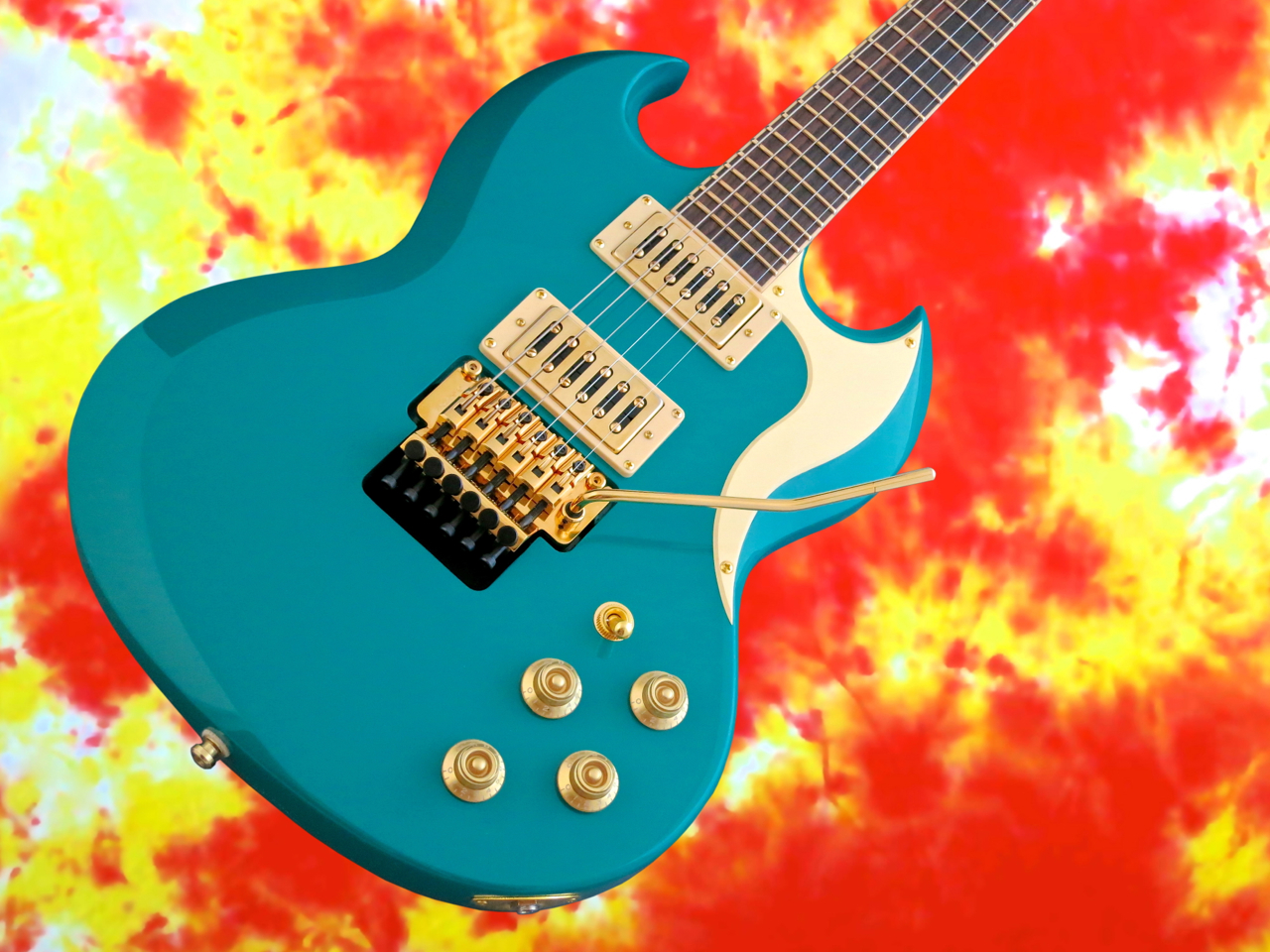
Kyllä tämä Halla Custom SG (hinta noin 3.000 €) on varsin henkeäsalpaava ilmestys. Se on turkoosinvärinen, uhkeanmuotoinen soitin, johon metalliosien kultainen hohto sopii kuin nakutettu.

Mutta tämän kitaran upea viimeistely (kovalla akryylilakalla) ei ole Halla Custom SG:n tärkein piirre: ”It’s an SG, Jim, but not as we know it!”

Halla Custom SG – back beauty

Tässä Halla Custom -kitarassa yhdistetään saumattomasti kahden klassikkokitaroiden ominaisuuksia – Gibson SG:n muotoiluun on sekoitettu reilusti Fender Stratocasterilta tuttuja piirteitä:

Vaikka tässäkin kitarassa on Gibson-klassikon virtaviivaistettu runko ja liimattu kaula (tosin paljon sulavammalla liitoksella), käytetään Halla Customissa Fenderille tyypillisiä materiaaleja – nimittäin vaahterakaulaa ja leppärunkoa – sekä täysipitkää mensuuria (25,5 tuumaa/64,8 cm).

Halla Custom SG – headstock

Floyd Rosella varustetulla Hallalla on kartiomaisesti muuttuva otelaudan radius (ns. compound radius), jossa otelaudan kaarevuudesta tulee sitä loivempi mitä lähemmäksi runkoa mennään. Reunalistoitettuun ruusupuisen otelautaan on asennettu 24 kullanväristä teräsnauha.

Kaksi grafiittitankoa kaularaudan vieressä lisäävät entisestään kaulan lujuutta.

Halla Custom SG – tuners

Laadukkaat, kullanväriset virittimet ovat peräisin japanilaisen Gotohin valikoimasta.

Halla Custom SG – Floyd Rose

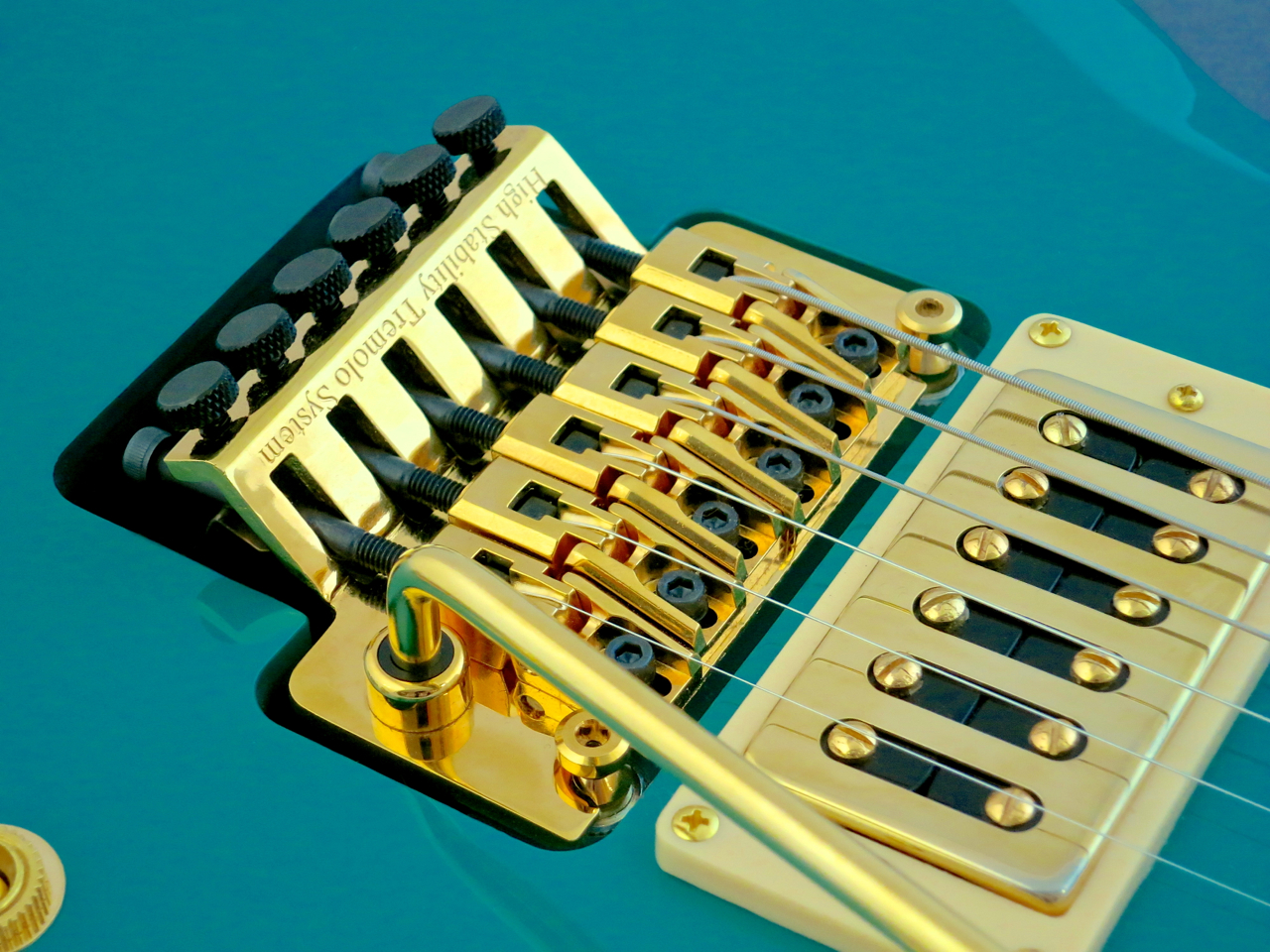
Huippulaadukas Floyd Rose tulee sekin Gotohilta. Ruuvattavan vibrakammen istuvuutta säädetään nailonkauluksella ja pienellä kuusiokoloruuvilla.

Halla Custom SG – Venla pickups

Halla Custom SG -kitaraan on asennettu kaksi firman omaa humbuckeria. Halla Venla -nimiset kaksikelaiset ovat vintagea selvästi kuumempia tapauksia.

Halla Custom SG – controls

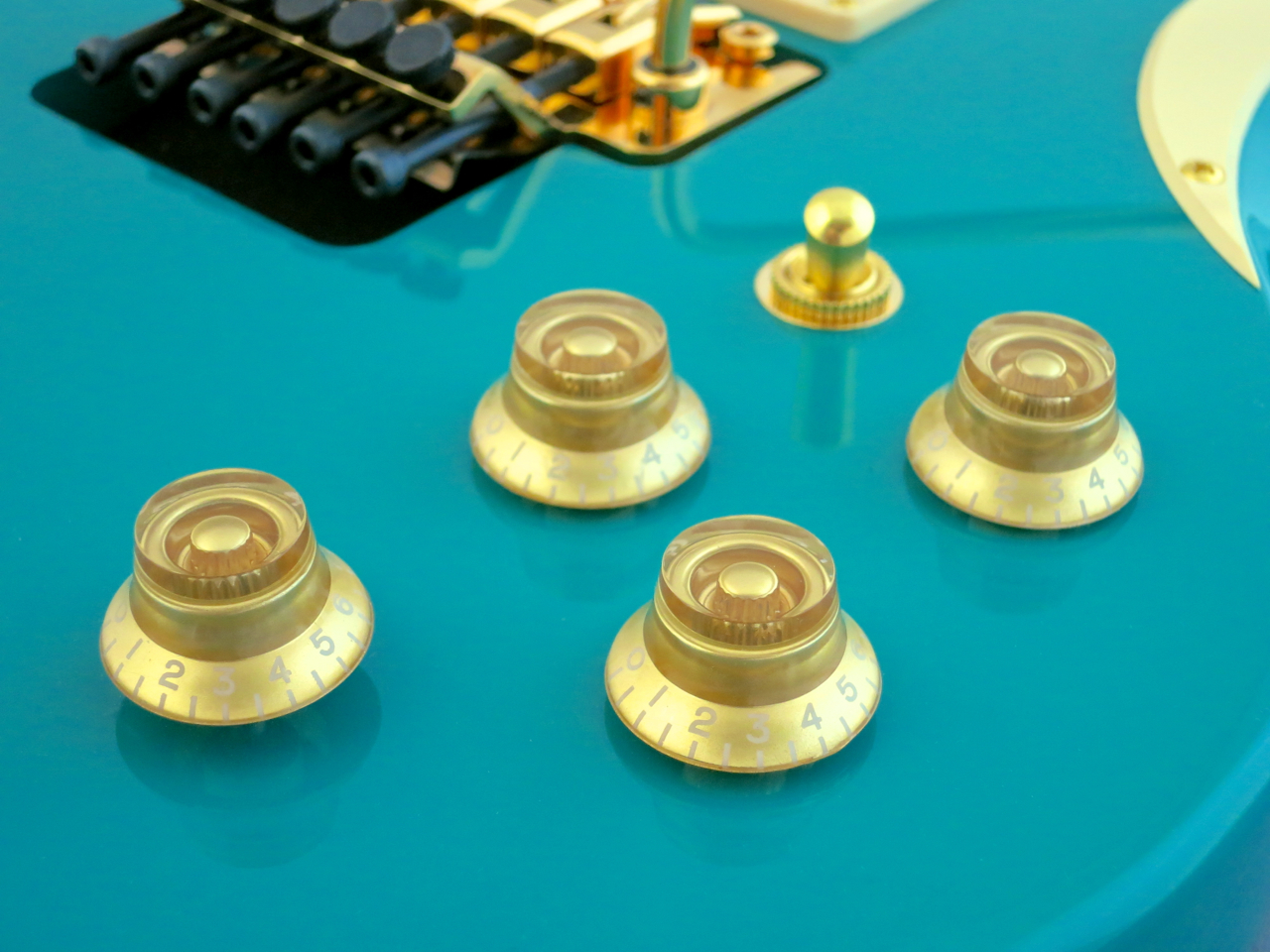
Neljä säädintä ja kolmiasentoinen vipukytkin – asetelma näyttää harmittomalta, mutta tähänkin on lisätty yksi herkullinen lisäominaisuus:

Tässä Halla Customissa on mukana passiivinen (= ei tarvitse paristoa) säröpiiri, joka laitetaan päälle kaulamikin tone-säädintä nostamalla.

Halla Custom SG – control cavity

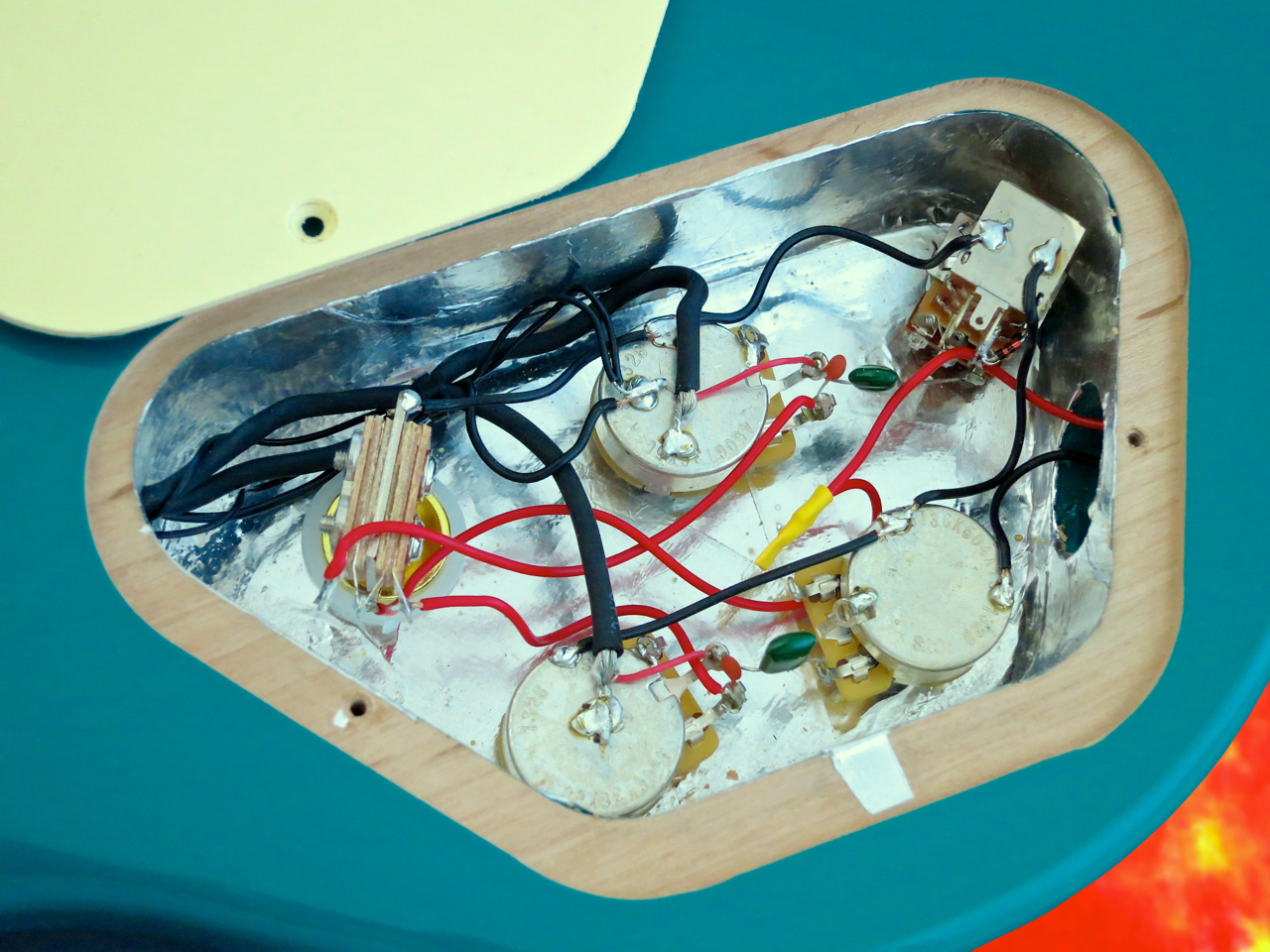
Myös sisäisesti Hallan työnjälki edustaa ehtaa custom shop -laatua, jollaista on lähes mahdotonta löytää ison tuotannon soittimista.

Asiantuntijat ovat varmasti jo huomanneet, että volume-potikoihin on myös lisätty treble-bleed kondensaattoreita.

****

Halla Custom SG – body beauty 1

Tätä Halla Custom SG:tä on tilattu hot-rod Rock-kitaraksi, jossa on Gibson-kaltainen ulkonäkö, mutta Superstrat-tyylinen soundi.

Voin vain todeta, että tuli täysosuma. Tämä on suorastaan fantastinen ja erittäin inspiroiva soitin!

Jotkut Gibson SG:t voivat tuntua hieman hauraalta, ja monilla yksilöillä on sisäänrakennettuja vireongelmia soitintyypin erittäin pitkän kaulan takia. Halla Custom SG on täysin vapaa tällaisista ongelmista – soittotuntuma on (sanojen parhaassa mielessä) erittäin tukeva ja tanakka. Tämä kitara rokkaa!

Omistajan valitsema paksu kaulaprofiili, kaulan grafiittivahvennukset, Hallan Gibsonia paksumpi leppärunko, sekä Ville Mattilan osaaminen soitinrakentajana nostavat Halla Custom SG:n selvästi valtavirran yläpuolelle.

Testikitara oli säädetty omistajan toivomuksien mukaisesti Es-vireeseen ja se tuli hyvin matalalla kielten korkeudella. Soittotuntuma oli erittäin nopea ja vaivaton, ja kevyellä plektrakädellä kitara soi rämisemättä koko otelaudalla.

Myös soittimen Gotoh-floikka toimi kiitettävästi.

Halla Customin valmistamien Venla-mikrofonien soundi sopii täydellisesti rankempaan Rock- ja Metal-meininkiin. Mikrofonien lähtötaso on suhteellisen korkea, mutta – ihme kyllä – niiden soundi on silti vintage-maisesti avoin ja helisevä:
Halla-kitaran sisäinen passiivinen säröpiiri on erittäin kätevä lisäys, etenkin kun käytössä on yksikanavainen kitaravahvistin:

Tätä kitaraa on kuitenkin luotu rokkaamaan rankasti, ja niin se tekeekin selkeällä atakilla ja rouhealla äänellään:

Halla Custom SG – body beauty 2

****

Halla Custom SG – beauty shot 2

Halla Customin SG on loistava esimerkki soitinrakentamisen erittäin korkeasta tasosta täällä Suomessa.

Tällaisella käsintehdyllä laadulla on luonnollisesti hintansakin, mutta vastineeksi saa tässä aidon custom-soittimen, joka on tehty kokonaan omien toivomusten mukaan.

Halla Custom SG – beauty shot 1

****

Halla Custom Instruments SG-Style

Halla Custom -kitaroiden hinnat lähtevät noin 1.200 eurosta ylöspäin, riippuen kitaratyypistä, sekä soittimen varustelusta ja viimeistelystä. Testatun kitaran hinta olisi noin 3.000 €.

Lisätiedot: Halla Custom Instruments

Kiitokset menevät Make El Weirdolle (aka Mutantti Make) oman kitaransa lainaamisesta!

****

Plussat:

+ käsintehty Suomessa

+ työnjälki

+ vireen pitäminen

+ kitaran säädöt

+ sisäänrakennettu särö

+ soundi
Review: Halla Custom Instruments SG-Style

Halla Custom SG – body beauty reverse

Halla Custom Instruments is one of a number of cool small instrument makers in Finland. The company is run by trained luthier-artisan Ville Mattila and specialises in one-off custom electric and acoustic string instruments. Ville Mattila is a member of the Guild of Finnish Luthiers.

Kitarablogi received a stunning Halla Custom electric for testing. The guitar may look like a tribute to the Gibson SG, but there’s more to this Halla than meets the eye!

****

Halla Custom SG – full front

Just looking at the Halla Custom SG (price approximately 3,000 €) I had to catch my breath. This is a turquoise bombshell of a guitar, with a healthy dose of additional glitz added by the golden hardware.

But the fantastic paint job (using very hard acrylic lacquer) is only part of the story: ”It’s an SG, Jim, but not as we know it!”

Halla Custom SG – back beauty

The Halla Custom SG fuses design aspects from two classic guitar models – the Gibson SG and the Fender Stratocaster.

We find the classic lines and the set neck of an SG, but the Halla uses Fender-typical materials – namely a maple neck and an alder body – as well as a long scale (25.5″/64.8 cm).

Halla Custom SG – headstock

The Floyd Rose-equipped Halla comes with a bound rosewood fretboard with a compound radius and 24 gold-coloured stainless steel frets.

Hidden beneath the fretboard lie two neck-stabilising graphite rods, placed either side of the truss rod.

Halla Custom SG – tuners

The instrument sports a set of golden Gotoh tuners, as well as a neck wrist-strengthening volute.

Halla Custom SG – Floyd Rose

The Floyd Rose is a top-drawer Gotoh unit, which comes with a screw in vibrato arm. An adjustable nylon cuff lets you decide how loosely (or tightly) the arm stays in place.

Halla Custom SG – Venla pickups

The Custom SG is equipped with a pair of Halla Custom’s hotter-than-vintage Venla-humbuckers.

Halla Custom SG – controls

There’s a nice little twist to the seemingly standard four controls plus three-way toggle set-up:

This Halla Custom guitar features a built-in passive fuzz circuit, which can be activated using a push/pull-switch hidden in the neck pickup’s tone control.

Halla Custom SG – control cavity

You really get what you pay for with a Halla – quality components, ultra-clean workmanship and thoroughly applied foil shielding.

The eagle-eyed among you will surely have already spotted the treble-bleed caps on both volume pots.

****

Halla Custom SG – body beauty 1

The Halla Custom SG was ordered by its lucky owner (a man known as Make El Weirdo) as a hot-rod Rock guitar with Gibson-esque looks, but a Superstrat sound.

What can I say? This is a fantastic guitar that ticks all the right boxes!

Some Gibson SGs can feel a little bit insubstantial, and many suffer from tuning problems due to their long necks. The Halla Custom SG has no such problems, this is a rock solid, chunky instrument.

The owner’s preference for a ”baseball bat” neck profile, this guitar’s thicker-than-a-Gibson alder body, and Ville Mattila’s considerable skills as a luthier take the Halla Custom SG to a different level altogether!

This Halla came tuned to E-flat, and set up with a very low action, as specified by the customer. The playing feel was extremely fluid, and with a light picking technique this Halla played buzz-free all across the fretboard.

The Gotoh Floyd Rose worked great, too.

Halla Custom’s own Venla-humbuckers are the bee’s knees for fans of the harder styles of Rock guitar. The pickups pack an enormous punch, but miraculously manage to sound as open and chiming as vintage, low-powered ’buckers:

Halla’s built-in passive fuzz is a fun little addition that’s more than a gadget, especially when you’re playing with a single channel amp:

But with a guitar such as this, you will surely spend most of your time enjoying its precise attack and chunky crunch:

Halla Custom SG – body beauty 2

****

Halla Custom SG – beauty shot 2

The Halla Custom SG is a shining example of the high standards of luthiery in Finland.

Naturally, handmade quality such as this comes at a price. If you have the money, though, you should really ask yourself if you want to spend it on an off-the-peg, production line guitar, or rather on a special instrument made exactly to your own specifications.

Halla Custom SG – beauty shot 1

****

Halla Custom Instruments SG-Style

Prices for Halla Custom guitars start from 1,200 €, depending on the guitar type and options chosen. A similar guitar like the reviewed instrument would cost approximately 3,000 €.

Contact: Halla Custom Instruments

Thanks to Make El Weirdo (aka Mutantti Make) for the loan of his personal guitar!

****

Pros:

+ handmade in Finland

+ workmanship

+ tuning stability

+ set-up

+ built-in fuzz

+ sound

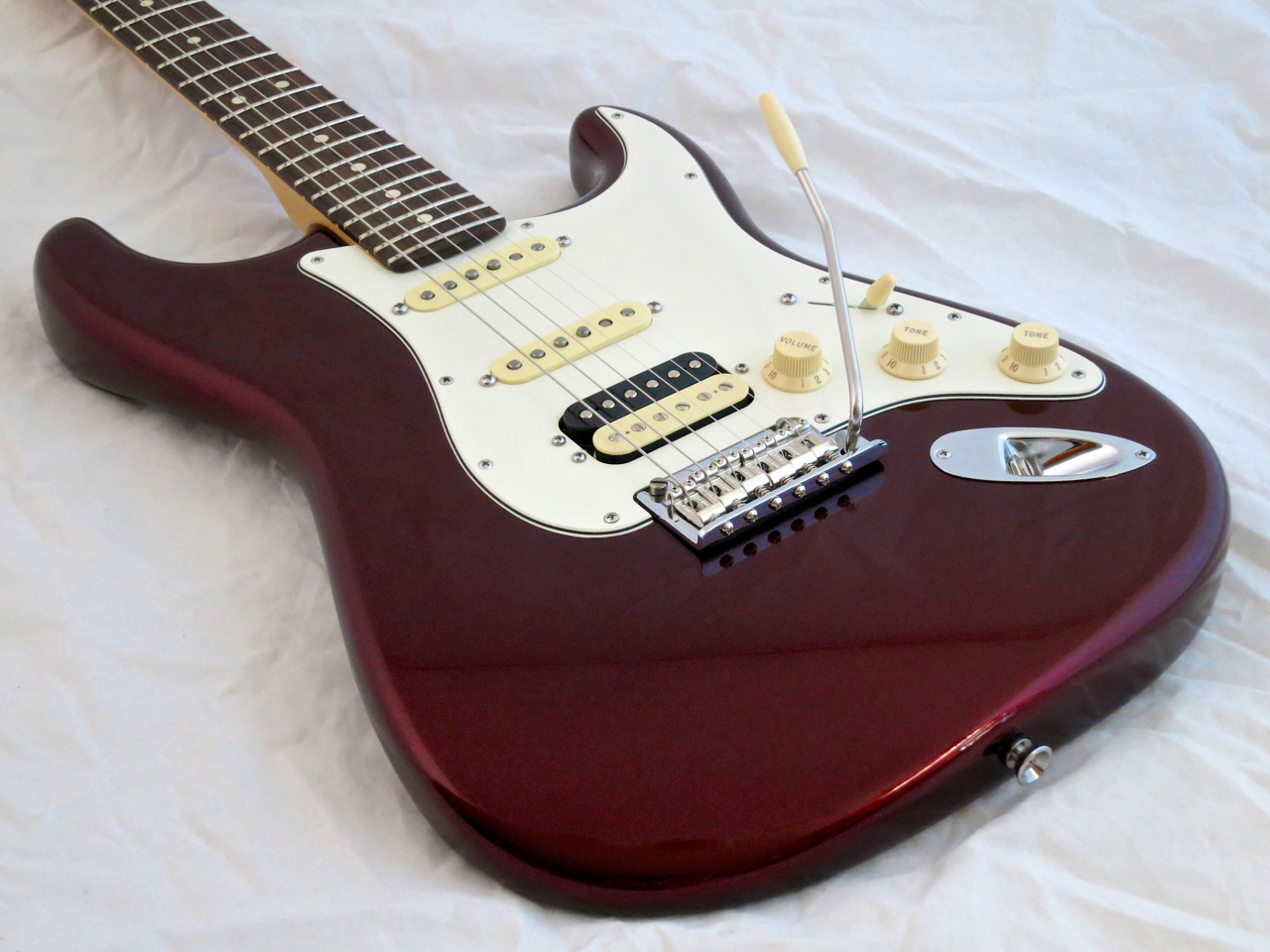
Review: Fender American Standard Stratocaster HSS Shawbucker

Fender Am Std Stratocaster HSS Shawbucker – in case

What – yet another Stratocaster model!? Who needs another Strat? Yeah, man, I’ve noticed there’s a ’bucker at the bridge position, but that’s been done before, hasn’t it!

True, but this is a new American Standard model you should definitely try out, because the guys at Fender R&D have come up with a couple of nifty improvements that haven’t been available on HSS-Strats thus far.

Fender Am Std Stratocaster HSS Shawbucker – The Shawbucker

A Shaw-what?

Fender calls its newest bridge humbucker the Shawbucker in honour of the man who designed it, Tim Shaw. Mr Shaw is a genuine living legend, and held in high esteem amongst people in the know. In the 1970s and 80s he worked for Gibson, and helped to turn around the company’s flagging fortunes and decline in quality. As the resident electronic guru he played a pivotal role during the design of models, such as the Gibson Les Paul Heritage 80, coming up with the first reissue of the original PAF-humbucker. This pickup is still in production, now known as the ’57 Classic. Later, Shaw moved on to Guild, and from there to Fender Musical Instruments.

****

Fender Am Std Stratocaster HSS Shawbucker – full front BIG

Most of the improvements in the Fender American Standard Stratocaster HSS Shawbucker (current price in Finland approx. 1,600 €) centre around the electronic side of things.

In terms of its basic build the model continues within the time-tested parameters of the American Standard product line.

Fender Am Std Stratocaster HSS Shawbucker – beauty shot 2

The Shawbucker Strat is built using a solid ash body and a bolt-on maple neck.

The neck profile is a friendly, modern ”C”, with the rosewood fingerboards flatter-than-vintage radius of 9.5″ and the 22 jumbo-sized frets further contributing to a contemporary playing feel.

Fender Am Std Stratocaster HSS Shawbucker – headstock

The two-way truss rod is adjusted from the headstock.

Fender Am Std Stratocaster HSS Shawbucker – tuners

Fender’s Deluxe machine heads work smoothly and accurately.

Fender Am Std Stratocaster HSS Shawbucker – neck plate

The American Standard Shawbucker also sports the company’s patented neck angle adjustment.

Fender Am Std Stratocaster HSS Shawbucker – vibrato bridge

The current American Standard vibrato bridge combines a modern, knife-edge, twin-post base plate with vintage-type bridge saddles made from folded steel.

Our review sample came with a slightly steep bridge tip up, which I adjusted back to factory specs in no time, using the correct Phillips head screwdrivers.

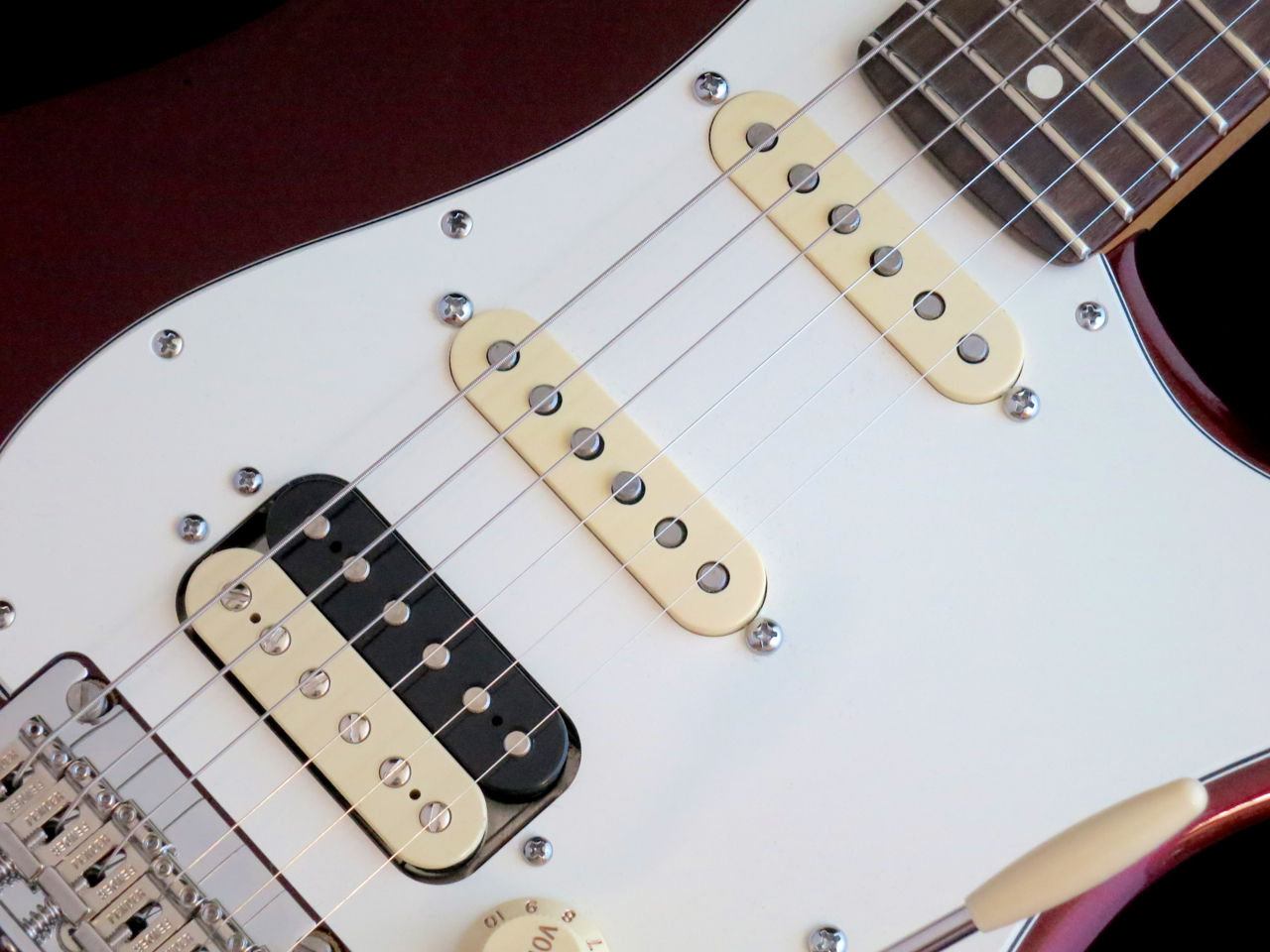
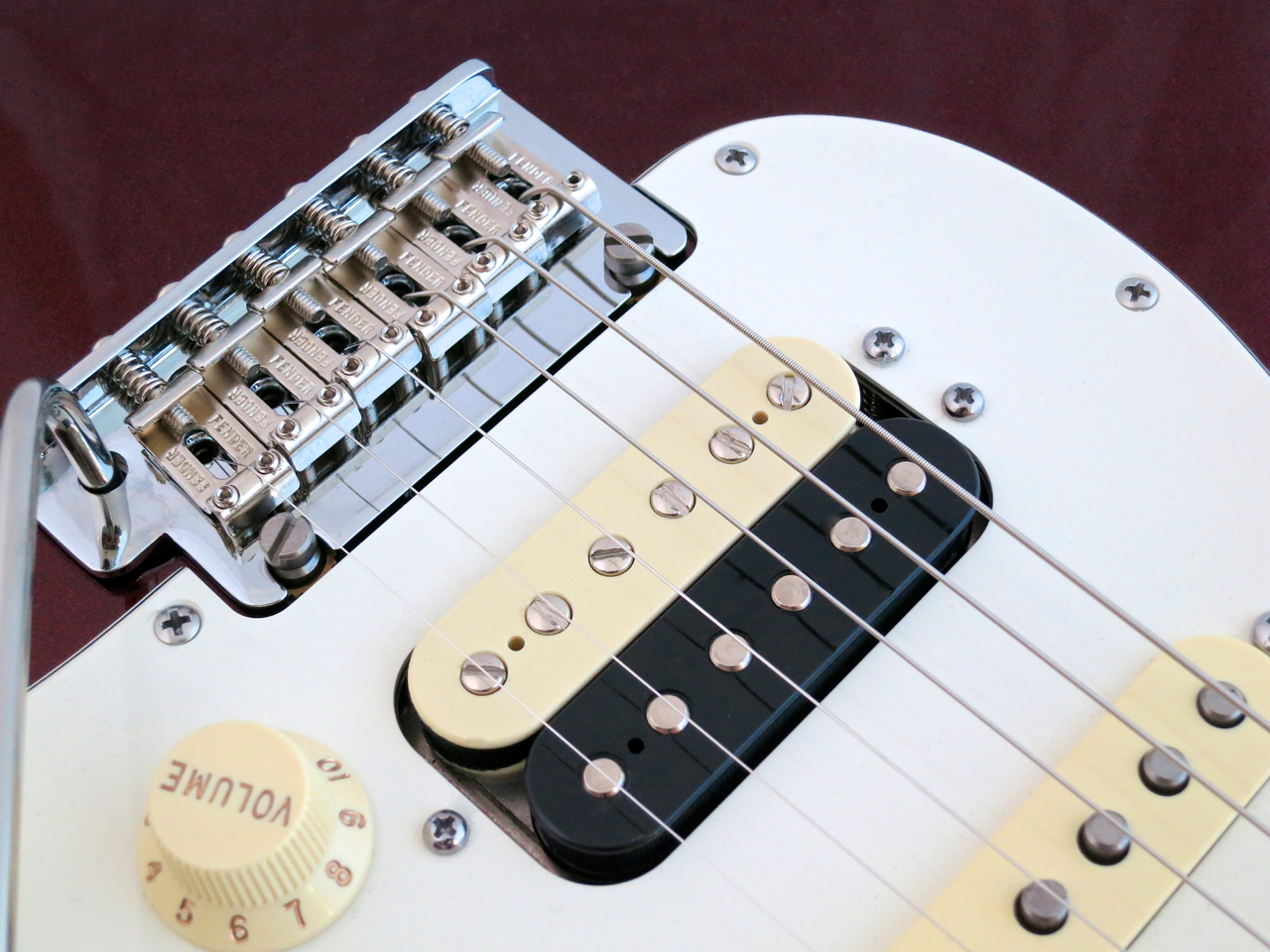
Fender Am Std Stratocaster HSS Shawbucker – pickups

The HSS Shawbucker features a well-balanced set of pickups:

A pair of Custom Shop Fat ’50s single coils have been selected for neck and middle pickup duties. The middle pickup is RW/RP, making position four on the five-way switch humbucking.

Fender Am Std Stratocaster HSS Shawbucker – The Shawbucker

The Shawbucker is a moderate-output, vintage-voiced humbucker with a PAF-type tone.

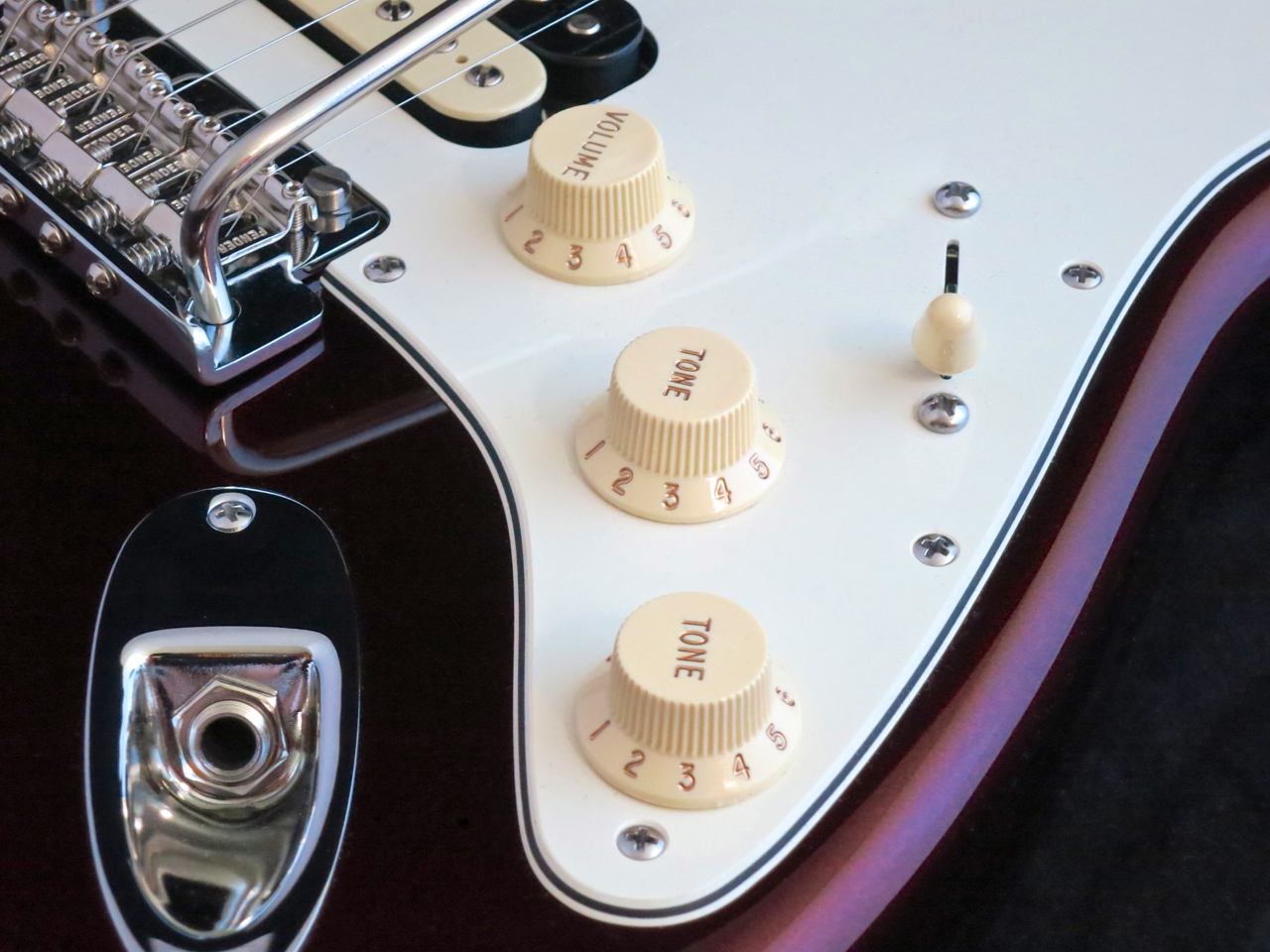
Fender Am Std Stratocaster HSS Shawbucker – controls

The control set-up looks pretty standard, but there’s more to the Shawbucker Strat than meets the eye:

Single coil pickups and humbuckers usually require different types of potentiometers to function satisfactorily. Single coils tend to sound best with 250k controls, as they attenuate some of the sharpest, most biting trebles in the signal. Humbuckers, on the other hand, tend to work better with higher resistance values – 500k, usually – which keep this pickup type’s softer top end intact. Tone control circuits usually also employ differently valued capacitors for single coils and humbuckers, respectively.

Most HSS- and HSH-loaded guitars suffer from the compromises shared control pots and tone circuits entail, when mixing the different pickup types. As a result, you either end up with muddy-sounding humbuckers or uncomfortably scratchy single coils.

The genius of the Shawbucker Strat lies in the two stacked potentiometers it uses. The same pot shaft simultaneously turns both a 250k and a 500k pot stacked on top of each other. The Shawbucker Stratocaster employs these stacked pots for the master volume control and for the joint bridge-and-middle tone circuit. The 500k side deals with all things humbucker, while the 250k layer is reserved for the single coil signals. As the neck tone is reserved for the neck pickup only, it uses a traditional 250k pot.

The second position on the five-way switch gives you the middle pickup together with the split Shawbucker.

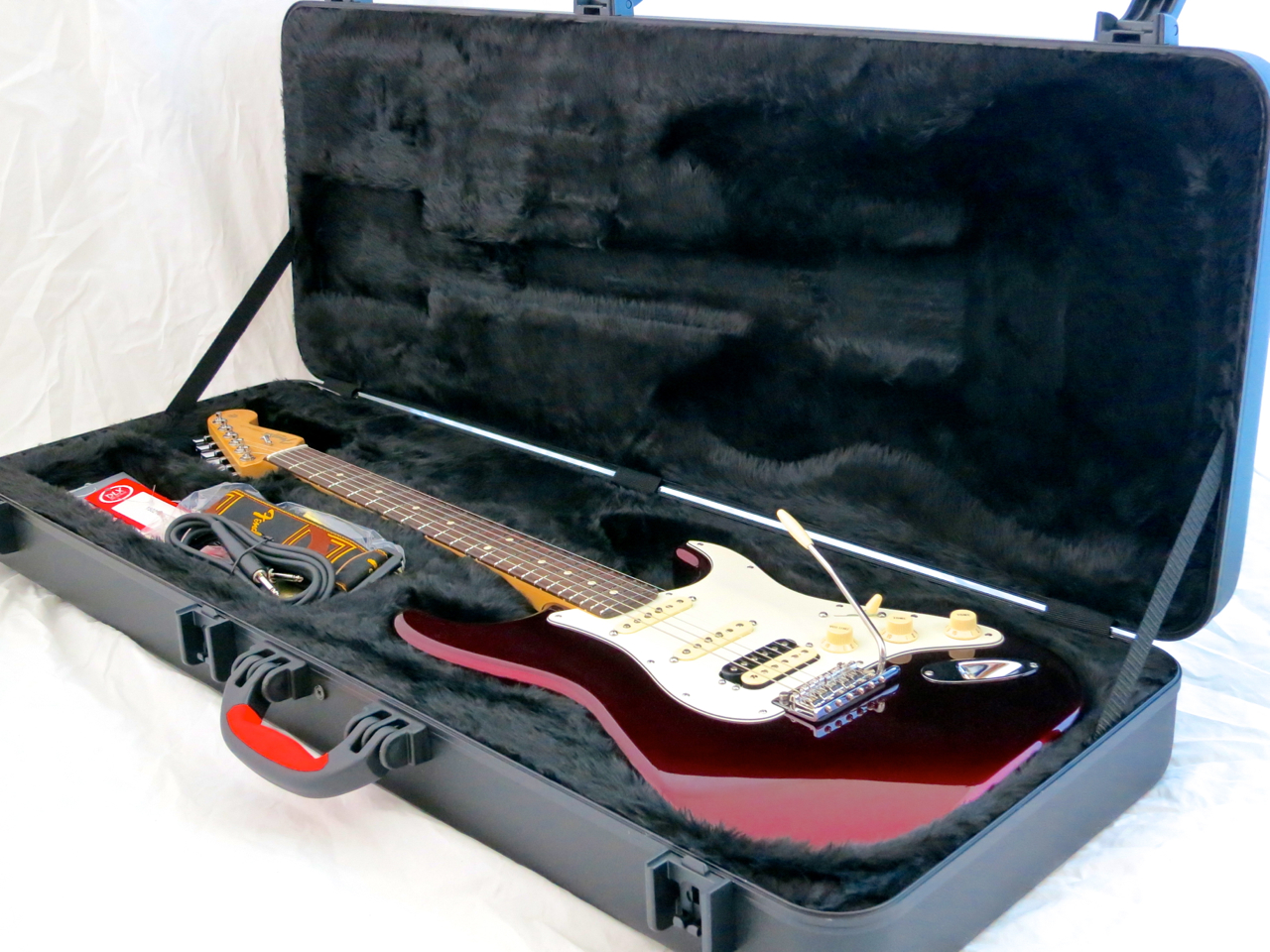
Fender Am Std Stratocaster HSS Shawbucker – in case

The American Standard Stratocaster HSS Shawbucker guitar comes in its quality hard case, with a strap and a guitar lead also included in the price.

****

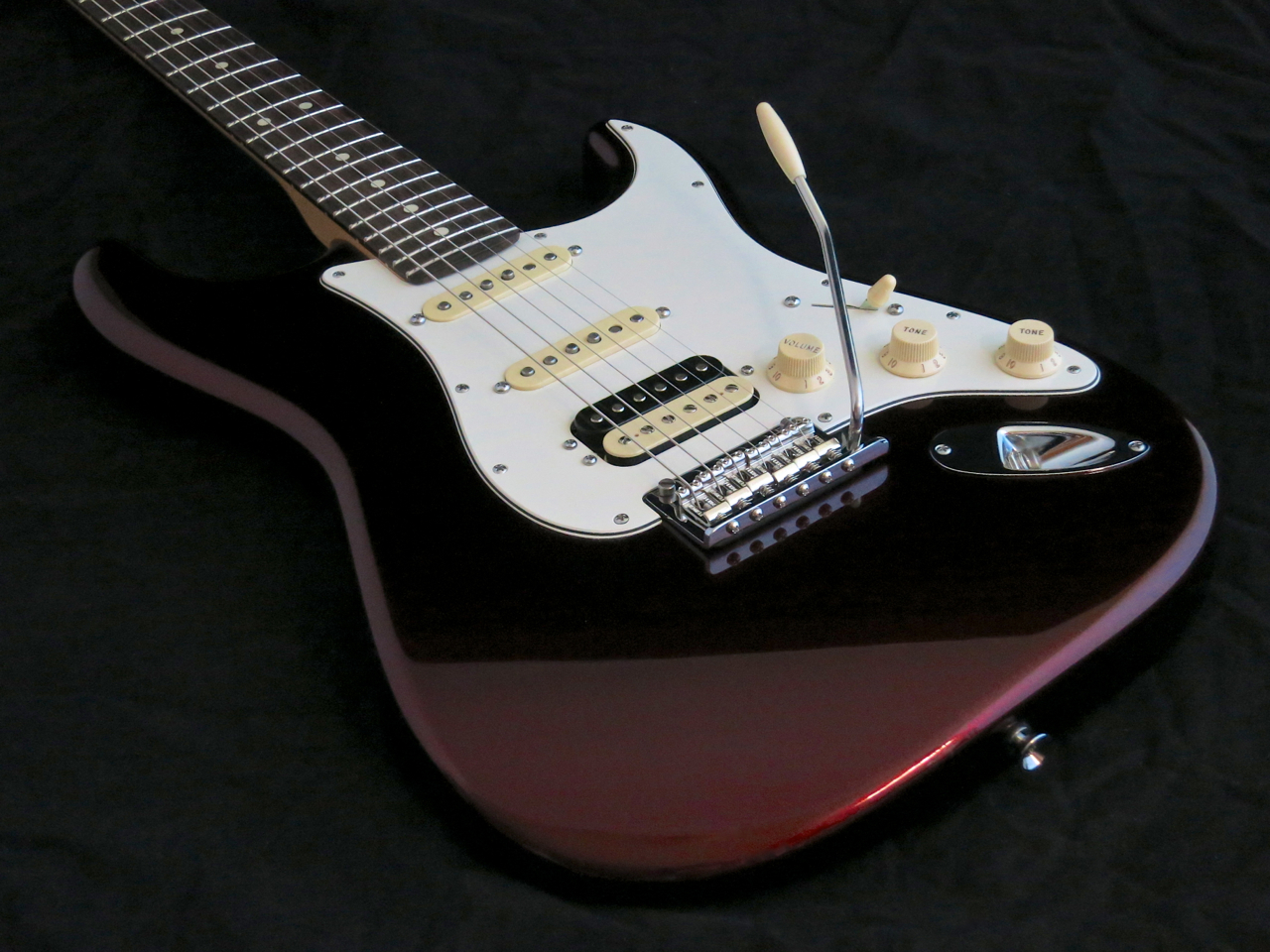
Fender Am Std Stratocaster HSS Shawbucker – beauty shot 1

I don’t think there’s much need to talk about the Stratocaster’s time-proven ergonomics. Same goes for the well thought-out contemporary improvements the American Standard series offers. The American Standard Stratocaster has been the top seller of Fender’s US output for decades.

The review instruments is a fitting torchbearer for this industry standard – it’s a great-feeling, great-playing, lightweight guitar.

Its acoustic voice is fresh, dynamic and strong, and the Shawbucker Strat’s vibrato works very well in the middle ground between a vintage vibrato and a double-locking Floyd Rose whammy.

Thanks to the chunky nature of the Custom Shop Fat ’50s, this model’s bridge humbucker never manages to overpower the single coils. Yes, there is a slight jump in signal level, when you switch from the Fat ’50s to the Shawbucker, but here it feels very organic and musical.

To my ears the HSS Shawbucker sounds fantastic, offering a bridge position signal boost, while retaining plenty of that ”stratty” character. The improved control set-up works just like it should – there’s a healthy dose of top end airiness in the bridge humbucker, while the single coils sound chiming, but fat. Now, here’s an HSS-Strat that finally does away with any unnecessary compromises!

Fender Am Std Stratocaster HSS Shawbucker – beauty shot 2

****

Fender Am Std Stratocaster HSS Shawbucker – body beauty 1

Despite the long-winded name, Fender’s American Standard Stratocaster HSS Shawbucker is an outstanding new variation on a proven theme. The Shawbucker-model takes the sound of HSS-guitars to a whole new level.

Fender Am Std Stratocaster HSS Shawbucker – body beauty 2

****

Fender American Standard Stratocaster HSS Shawbucker

price around 1.600 €

A big thank you to DLX Music Helsinki for supplying the review guitar!

Pros:

+ value for money

+ playability

+ updated electronics

+ vibrato action and stability

+ sound

Fender Am Std Stratocaster HSS Shawbucker – body beauty 2

Testipenkissä: Fender American Standard Stratocaster HSS Shawbucker

Fender Am Std Stratocaster HSS Shawbucker – in case

Taasko uusi Strato-malli? Ketä tällainen enää kiinnostaa? Juu, juu, kyllä, siinä on humbucker tallamikkinä…näitäkin on jo nähty!

Totta, mutta tähän uuteen American Standard -malliin kannattaa mielestäni ehdottomasti tutustua, koska Fenderin R&D-ryhmä on keksinyt Shawbucker-Stratoon muutamia uusia, oivia detaljiratkaisuja, joita tähän mennessä puuttuivat HSS-mikitetyiltä Stratocastereilta.

Fender Am Std Stratocaster HSS Shawbucker – The Shawbucker

Mikä ihmeen Shawbucker?

Shawbucker on Fenderin uuden tallahumbuckerin nimi, joka on nimetty sen kehittäjän, Tim Shawn, mukaan. Tim Shaw on oikea elävä legenda kitarapiireissä, joka on ollut 1970- ja 1980-luvulla Gibsonilla töissä. Myöhemmin hän siirtyi Guildiin ja sittemmin Fenderiin. Elektroniikka-guruna hän oli ratkaisevassa asemassa esim. Gibson Les Paul Heritage 80 -projektissa, ja kehitteli firmalle mm. PAF-mikrofonin uusintapainoksia, joita nykyään tunnetaan nimellä ’57 Classic.

****

Fender Am Std Stratocaster HSS Shawbucker – full front BIG

Fender American Standard Stratocaster HSS Shawbuckerin (hintaluokka noin 1.600 €) parannukset koskevat pääosin soittimen elektroniikkaa.

Perusrakenteeltaan malli jatkaa saumattomasti Fenderin erittäin suosittua American Standard -linjaa.

Fender Am Std Stratocaster HSS Shawbucker – beauty shot 2

Shawbucker-Straton saarnirunkoon on liitetty vaahterasta veistetty ruuvikaula.

Kaulaprofiiliksi on valittu nykyaikainen C-profiili, ja myös ruusupuisen otelaudan vintagea loivempi radius (9,5 tuumaa) sekä kitaran 22 jumbokokoiset nauhat tekevät soittimesta nykyaikaisen.

Fender Am Std Stratocaster HSS Shawbucker – headstock

Kaksisuuntaista kaularautaa säädetään kätevästi lavan puolelta.

Fender Am Std Stratocaster HSS Shawbucker – tuners

Hyvästä vireestä pitävät huolen Fenderin Deluxe-koneistot.

Fender Am Std Stratocaster HSS Shawbucker – neck plate

American Standard Shawbucker -mallista löytyy myös firman patentoitu säätömekanismi kaulan kulmalle.

Fender Am Std Stratocaster HSS Shawbucker – vibrato

Nykyisissä American Standard -vibratalloissa on moderni aluslevy veitsenterä-laakereilla, mutta vintage-Stratoista tuttuja tallapaloja muotoon taivutetusta teräksestä.

Testisoittimessa vibran tip up -kulma oli säädetty hieman liian jyrkäksi, mutta asia oli helppo korjata itse sopivilla ristipääruuvareilla.

Fender Am Std Stratocaster HSS Shawbucker – pickups

HSS Shawbuckerin mikrofonivarustus on tarkoin valikoitu:

Kaula- ja keksimikrofoneina toimivat kaksi Custom Shop Fat ’50s -yksikelaista. Vastakkaiseen suuntaan käämitty – ja vastakkaista magneetista napaisuutta omaava – keskimikrofoni poistaa tehokkaasti ulkoisia häiriöitä, kun sitä käytetään yhdessä kaulamikin kanssa.

Fender Am Std Stratocaster HSS Shawbucker – The Shawbucker

Shawbucker-kaksikelainen on vintage-tyylinen humbucker avoimella, PAF-tyylisellä soundilla.

Fender Am Std Stratocaster HSS Shawbucker – controls

Kytkin- ja säädinosasto näyttää hyvin perinteiseltä, mutta siihen on piilotettu tämän kitaran kätevimmät parannukset:

Yksikelaiset ja humbucker-mikrofonit vaativat periaatteessa erilaisia potentiometrejä toimiakseen toivotulla tavalla. Yksikelaisten mikkien kanssa käytetään yleisesti potikoita 250 kilo-ohmin vastuksella, jotta niiden soundista ei tulisi liiankin terävä. Humbuckereilla taas on perinteisesti käytetty 500 kilo-ohmin potentiometrejä, jotta diskantti säilyisi paremmin niiden signaalissa. Myös tonepiirissä toimivan kondensaattorin kapasitanssi-arvo on usein syytä olla erilainen, riippuen siitä onko käytössä yksikelainen vai kaksikelainen mikrofoni.

HSS- ja HSH-kitaroiden ongelma piilee usein juuri potikoiden ja konkkien valinnassa, koska sekä yksikelaisten että kaksikelaisten signaalit reititetään yhteisten volume- ja tone-potikoiden läpi. Lopputuloksena joko humbucker soi hieman mutaisesti tai sitten yksikelainen on hieman liian terävä.

Shawbucker-Stratossa nämä ongelmat on hoidettu pois päiväjärjestykseltä käyttämällä sekä volume- että toisen tone-säätimessä  tuplapotikoita, joissa samaan akseliin on liitetty sekä 250 k:n että 500 k:n potentiometri päällekkäin. Humbuckerin signaali on kytketty tuplapotikan 500 k -tasoon, kun taas yksikelaisen soundi muokataan 250 k -tasolla. Keskimmäinen, perinteinen tone-säädin vaikuttaa kaulamikrofoniin, kun taas pleksin reunalla oleva toinen tone toimii keski- ja tallamikrofoneilla.

Viisiasentoisen kytkimen kakkosasennossa keskimikrofoni soi yhdessä puolitetun humbuckerin kanssa.

Fender Am Std Stratocaster HSS Shawbucker – in case

American Standard Stratocaster HSS Shawbucker -pakettiin kuuluu myös laadukas kova laukku, olkahinka, sekä kitarajohto.

****

Fender Am Std Stratocaster HSS Shawbucker – beauty shot 1

Stratocasterin hyvästä ergonomiasta ei tarvitse varmasti puhua enempää. American Standard -sarjan soittimien erittäin mukavasta, nykyaikaisesta soittotuntumasta on myös hehkutettu jo pitkään, ja syystäkin. American Standard -Strato on jo vuosikymmeniä ollut firman eniten myyty kitara USA-valikoimastaan.

Testikitara tuntuu juuri sellaiselta kuin sopii odottaa alan merkkipaaluusta – soitin on kevyt, ja se sopii erinomaisesti ainakin minun käteeni.

Akustinen ääni on tutun raikas, dynaaminen ja vahva. Vibratallakin toimii kiitettävästi perinne-Straton ja Floikan välimaastossa.

Fat ’50s -mikrofonien valinta Shawbuckerin aisapareiksi takaa, etteivät yksikelaiset jää missään tilanteessa humbuckeriin nähden alakynteen. Vaihdossa Fat ’50s -mikrofonista Shawbuckerin kyllä huomaa edelleen signaalitason eron, mutta tässä kitarassa boostaus tuntuu hyvin orgaaniselta ja musikaaliselta.

Mielestäni HSS Shawbuckerin soundi on kauttaaltaan hyvin herkullinen ja sopivasti Straton omalla luonteella höystetty. Päivitetty elektroniikka toimii vallan mainiosti – humbucker soi raikkaasti, eikä mene tukkoon, mutta samalla yksikelaisissa diskantilta on leikattu kaikki epämiellyttävä piikikkyys sopivasti pois. Viimeinkin HSS-Strato joka toimii vailla soundillisia kompromisseja!

Fender Am Std Stratocaster HSS Shawbucker – beauty shot 2

****

Fender Am Std Stratocaster HSS Shawbucker – body beauty 1

Fender American Standard Stratocaster HSS Shawbucker on – hassusta nimestään huolimatta – mainio sähkökitara todella hyvillä päivityksillä. Shawbucker-Strato vie HSS-mikkitetyn kitaran konseptin viimein seuraavalle tasolle.

Fender Am Std Stratocaster HSS Shawbucker – body beauty 2

****

Fender American Standard Stratocaster HSS Shawbucker

hintaluokka noin 1.600 €

Kiitos DLX Musiikille testikitaran lainaamisesta!

Plussat:

+ hinta-laatu-suhde

+ soitettavuus

+ parannettu elektroniikka

+ vibratallan toiminta

+ soundi

Fender Am Std Stratocaster HSS Shawbucker – body beauty 2

Review: Blackstar ID:Core BEAM

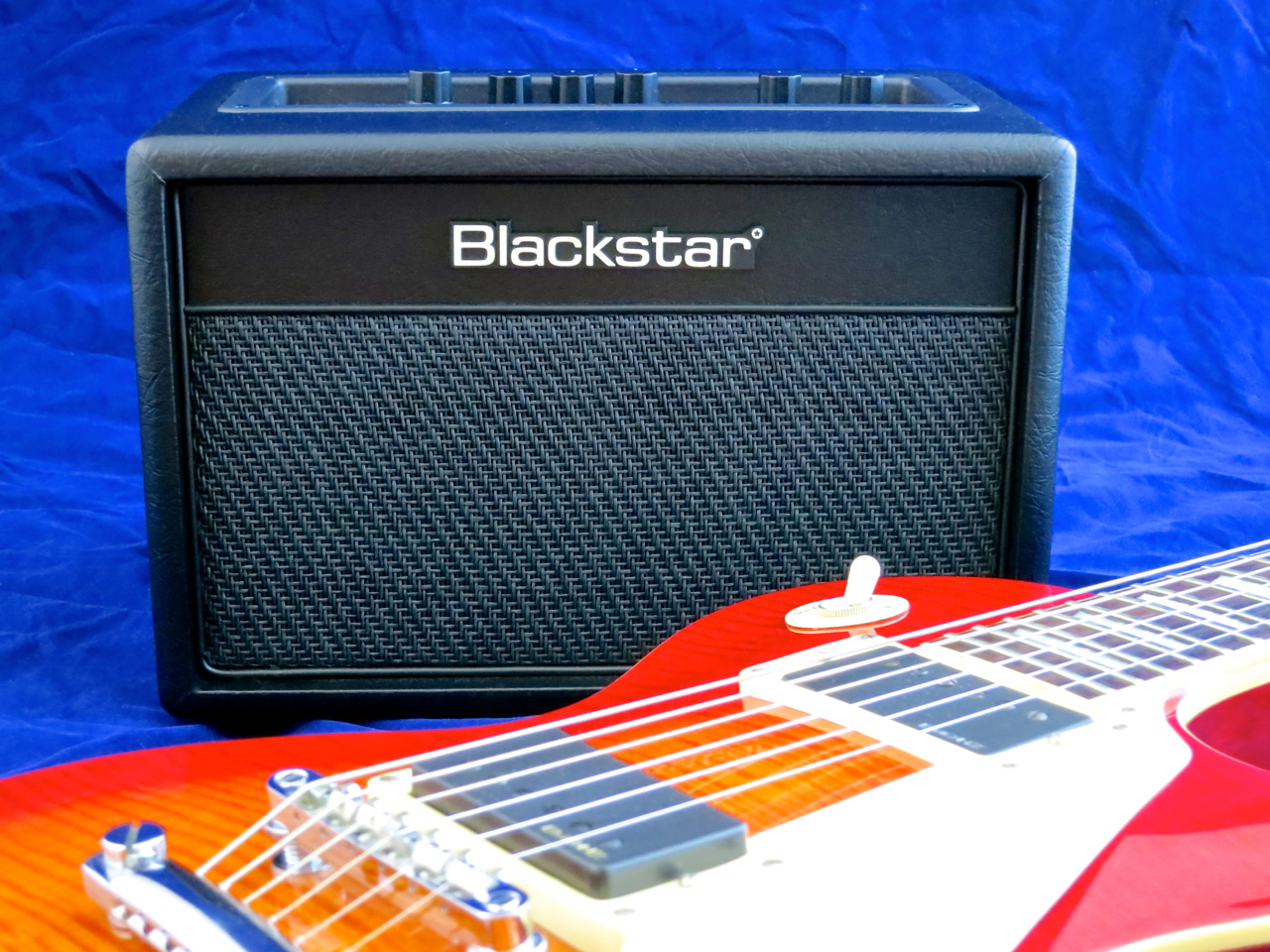
Blackstar ID_Core Beam – front

Blackstar’s ID:Core BEAM (current price in Finland: 299 €), which was introduced at this year’s NAMM Show, is one of a new breed of amplifiers:

The BEAM is a so-called ”lifestyle amp” that combines a practical solution for living room practising with a Bluetooth stereo system with a suitable Rock look.

****

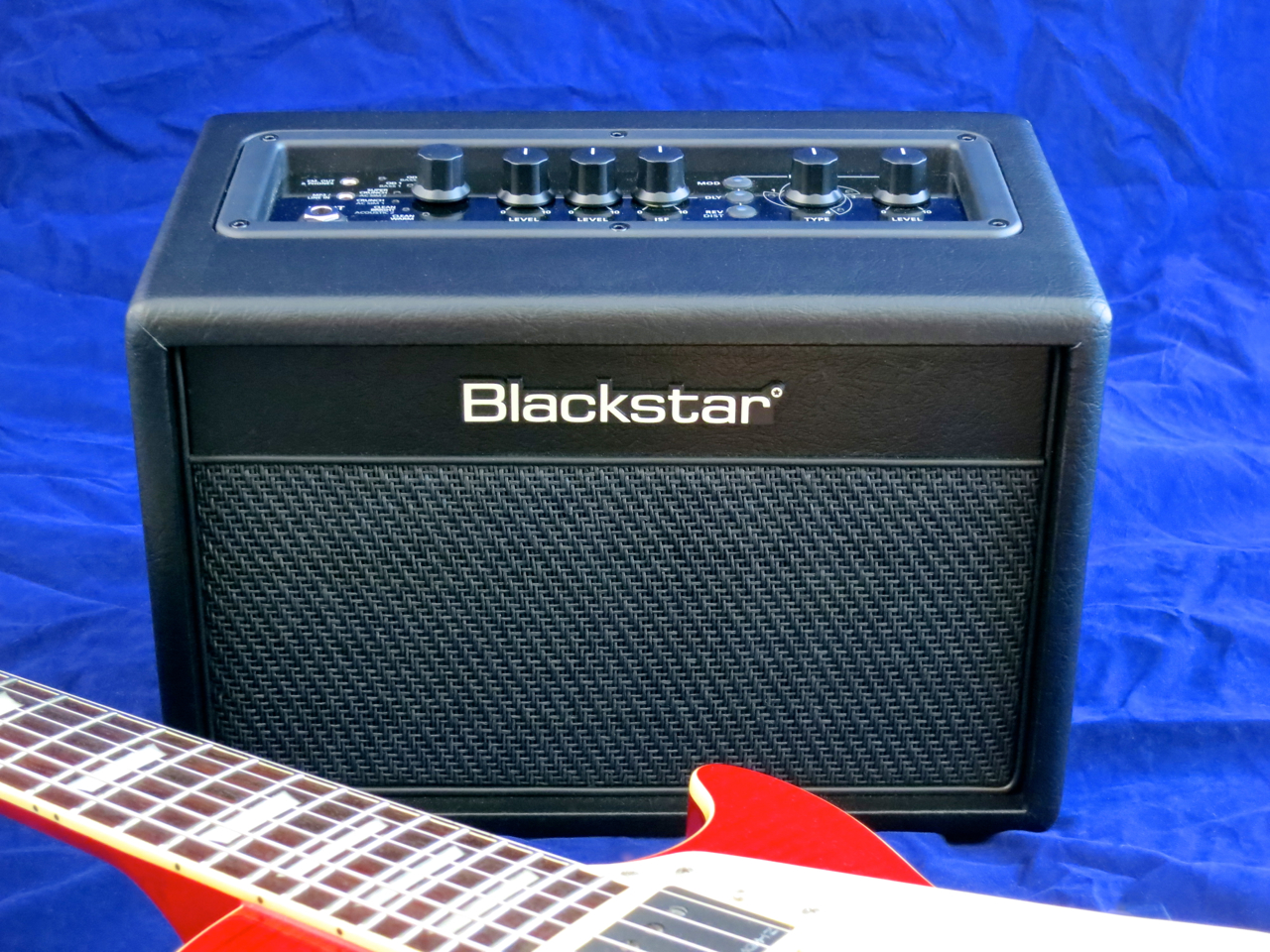
Blackstar ID_Core Beam – angle right

The Blackstar ID:Core BEAM is a genuine ID:Core-combo, which means that all its parameters are accessible via Blackstar’s Insider software.

The newcomer is a stereophonic amp with its 20 watts of power running into a pair of three-inch speakers. Blackstar’s Super Wide Stereo-effect – a feature taken from the company’s larger ID:Core combos – can also be applied to the BEAM’s music player, with its own, separate width adjustment.

Blackstar ID_Core Beam – back

Apart from the power switch, the ID:Core BEAM’s back panel features the input jack for the (optional) footswitch. The rest of the combo’s controls and connectors can be found on the top-mounted control panel.

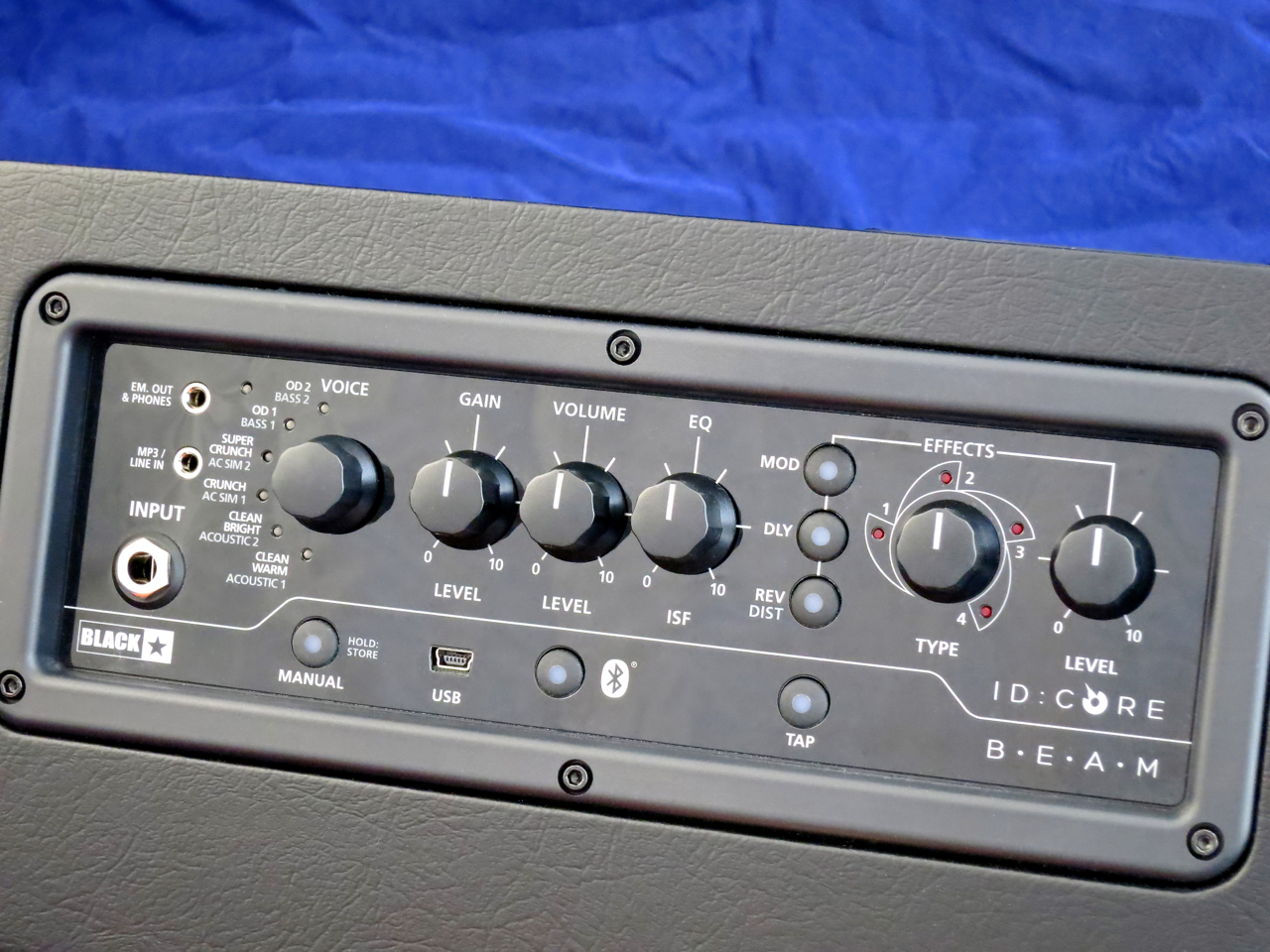
Blackstar ID_Core Beam – control panel

The larger ID:Core combos are well-equipped practice amps, but the BEAM has a couple of additional aces up its sleeve:

The ID:Core BEAM offers you 12 amp models (Voices). The first set (the Voices LED glows red) deals with six amp models for electric guitar, while the second set (green LED) gives you two Voices each for acoustic guitar, electric bass, and acoustic guitar simulation.

The amp section has three physical knobs for adjustment – gain, volume, and Blackstar’s patented ISF-control, which control’s the amp’s overall tonal character. Using the Insider-software you will be able to access additional parameters for deep editing, like a three-band EQ-section or a noise gate.

The effects department features four different modulation effects, four delay types, and four reverbs. The two Voices for bass swap the reverbs for bass distortion. You can choose one effect from each effect section for a Voice (meaning up to three simultaneous effects).

The small combo also features a built-in tuner.

The music signal, sent to the BEAM from your mobile device via Bluetooth, naturally isn’t sent through the combo’s amp modelling circuits. It is fed into the signal chain just before the power amp section. The ID:Core BEAM allows you to play along to the Bluetooth signal, of course!

The USB-port isn’t only used to remote control the amp’s parameters via Insider – this lifestyle combo doubles as a full-blown USB sound card. The BEAM can be run in three different USB-modes, which allows you to either send a stereo signal of the amp sound to your sequencer, or send two discrete mono signals (with one channel completely dry, and the second channel with all the amp modelling and effects) to your recording software. The third USB-mode is called Reamping, and it’s used to feed a dry guitar signal off your audio sequencer into the ID:Core BEAM and record the effected signal onto a separate recording track simultaneously.

The signal level of the USB-audio can be controlled directly (and independently of the amp’s master volume settings), making it very easy to set the correct recording levels for your personal studio setup.

****

Blackstar ID_Core Beam – front angle

Blackstar have really hit the bull’s eye with their new lifestyle combo!

Listening to music with a very critical ear you can hear a little bit of hiss, but it isn’t loud enough to spoil the fun. Remember, the ID:Core BEAM isn’t meant to be a studio monitor, but rather a nifty, compact music player for your bookcase – something this little combo handles with much aplomb. You wouldn’t necessarily expect such a full and strong delivery from such a compact unit.

The ID:Core BEAM also sounds great as a guitar and bass amp, which isn’t quite as surprising, considering this combo’s pedigree.

The guitar amp voices have plenty of character, and the effects have more than ample depth and width:

The high quality of the acoustic simulator was something of a positive surprise:

Despite its diminutive size, the BEAM also delivers when it comes to electric bass tones:

****

Blackstar ID_Core Beam – angle left

The Blackstar ID:Core BEAM succeeds to combine a programmable practice combo for guitar and bass, a Bluetooth-player, and a USB sound card into a very enticing package. In addition to being a great living room amp, the BEAM could also prove a handy little amp for guitar instructors.

****

Blackstar ID:Core BEAM

299 €

Finnish distributor: Musamaailma

****

Pros:

+ well thought-out concept

+ value for money

+ feature-packed guitar and bass amp

+ adjustable Super Wide Stereo-function

+ USB sound card

+ full sound

Cons:

– high noise gate setting on default bass distortion

Pidä blogia WordPress.comissa.

Ylös ↑