At NAMM 2012 Ampeg introduced their second micro stack to the public – the Ampeg Micro-CL.
The company’s first foray into this market segment came in the guise of the very successful Micro-VR (currently still available), which is a 200 Watt miniature version of Ampeg’s classic 1970s SVT. The brand-new Micro-CL takes its starting point from the Eighties version of the venerable Ampeg bass stack (the SVT-CL), offering 100 Watts of bass tone.
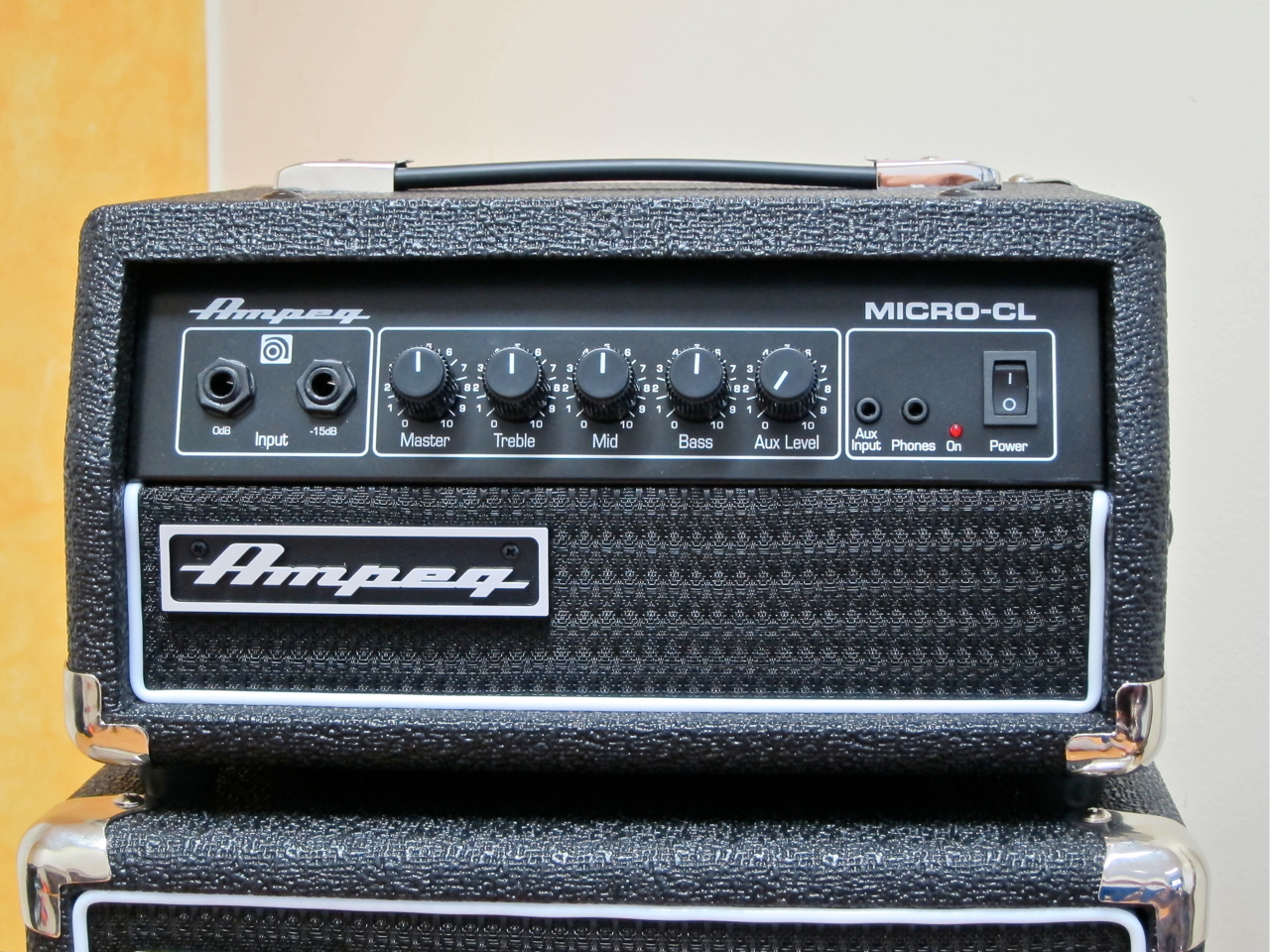
Ampeg’s Micro-CL -stack (current RRP in Finland: 505 €) brings the company’s classic look down to an easily manageable size.
The solid-state head weighs in at only about six kilos, with the cabinet clocking in at a very moderate 15 kg. The whole miniature stack is only about 80 cm tall – making it a very easy fit with almost any car boot.
The Micro-CL-head comes equipped with two inputs – one for passive and the other for active bass guitars – as well as a three-band EQ-section.
Because this amp is also very handy as a practice amp at home, Ampeg have added an Aux-input (with its own volume control) and a headphones output to the front panel.
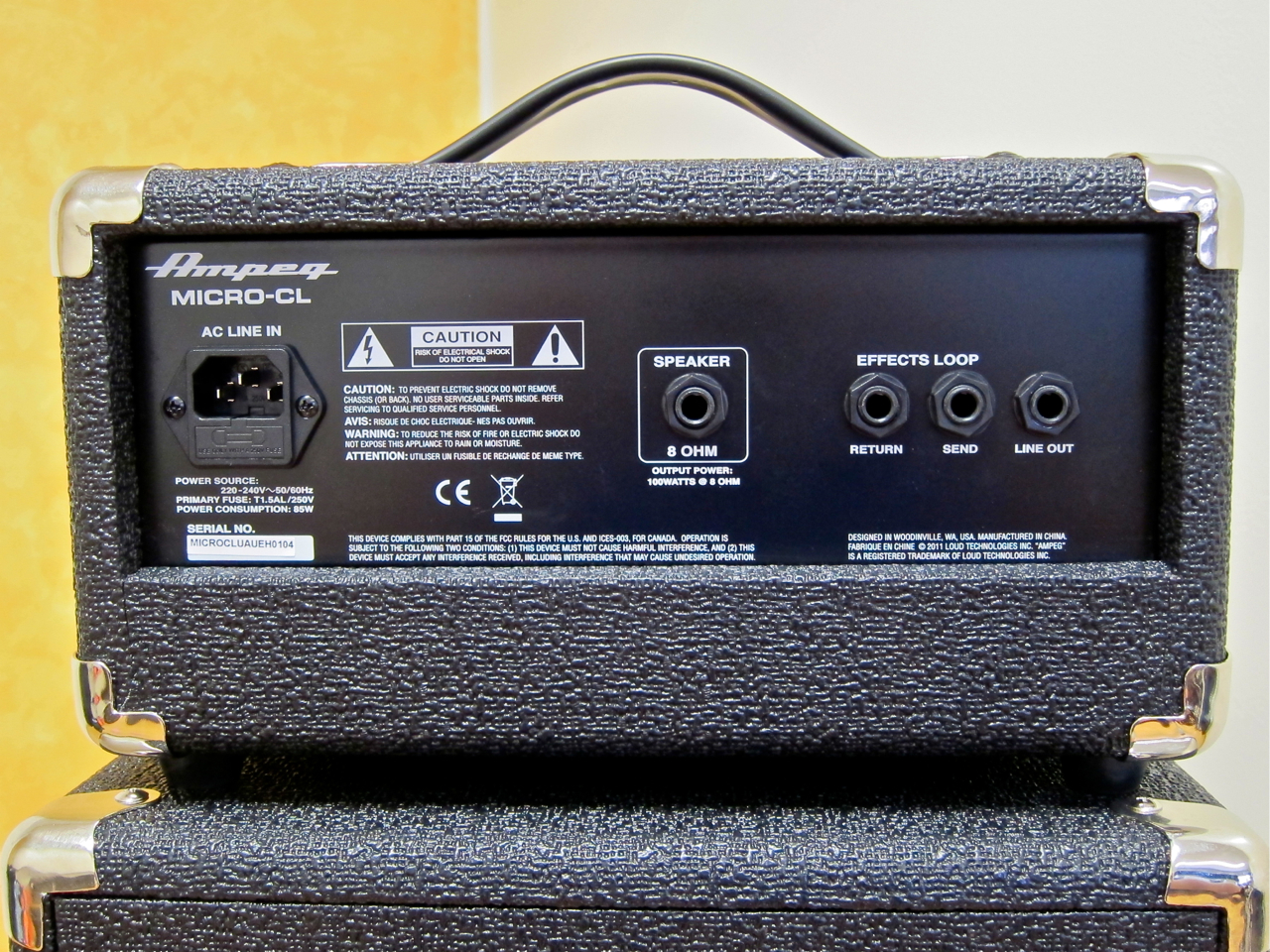
On the head’s flip side you’ll find the speaker output, as well as phone jacks for the effects loop and the line-level output.
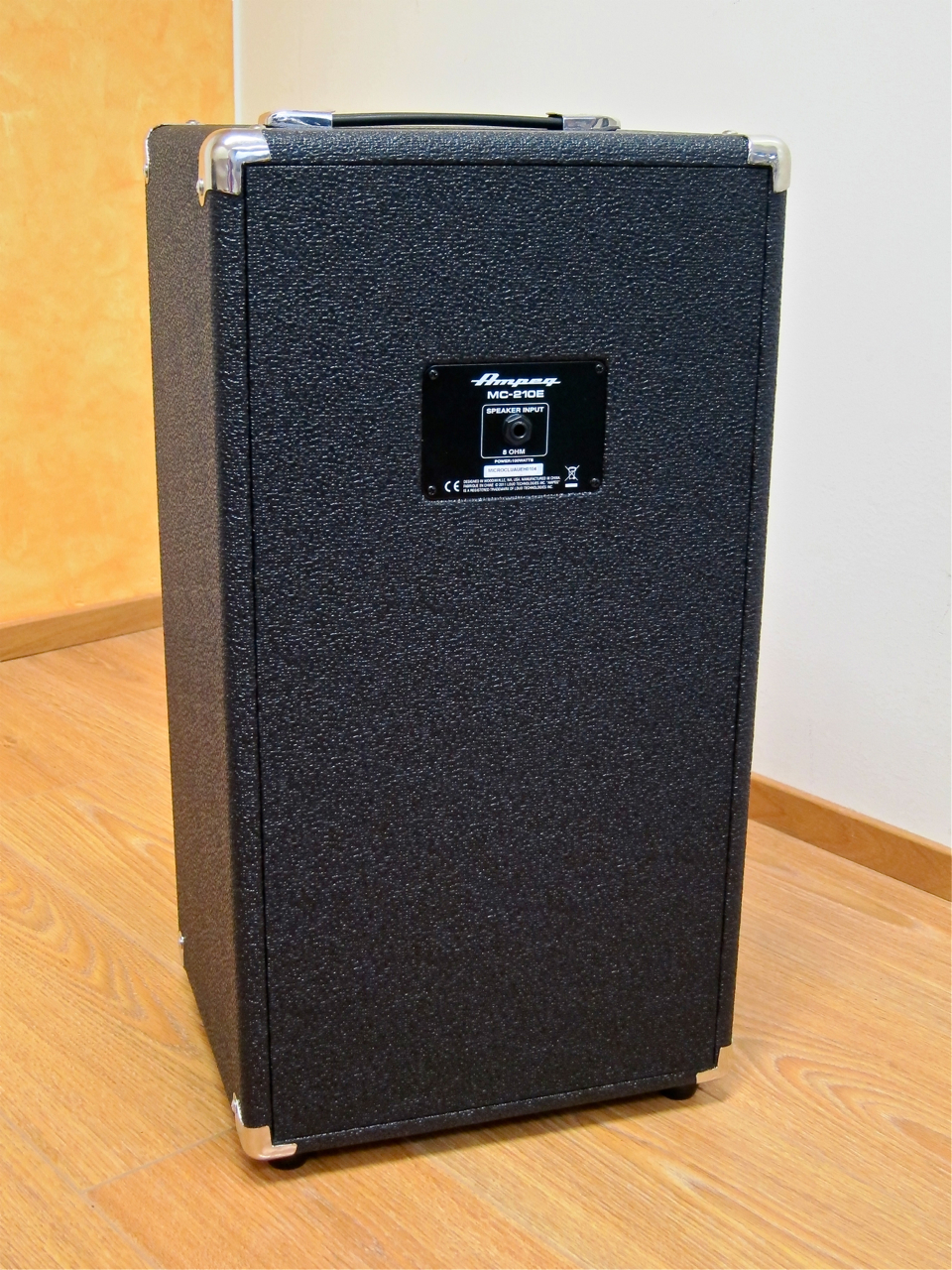
The stack’s cabinet – called the Ampeg MC-210E – is built using the same Infinite Baffle -principle also applied to the company’s famous (and huge) 8 x 10″ cabinets.
The completely enclosed cab comes loaded with two 10-inch speakers. The front grille is attached in the traditional way using velcro.
The workmanship seems spot on, with the miniature cabinet exuding the same air of rugged roadworthiness that its big brothers are known for.
The speaker input sits on its own metal plate.
Just to put things into perspective for you: Here’s the stack and a regular bass guitar case – yup, this stack really is small…
****
The amp may be small and cuddly, but don’t forget we have a genuine 100 W Ampeg system here!
I was positively surprised by the sound levels this small bass amp dishes out. Using it at home I wouldn’t recommend turning the master volume anywhere above number three, if you want to stay on good terms with your neighbours.
In the rehearsal studio – where I also recorded the audio clips for this review – the Micro-CL left me in no doubt that it would be fully up to its task at rehearsals and even smaller gigs.
With regard to its sound the tiny stack proved to be a thoroughbred Ampeg: The tones on offer are fat and juicy, with the raunchy midrange growl this company’s bass amps are famous for.
With the master volume approaching 10 you will also be able to coax some tasty, tube-like overdrive from the Micro-CL – but I’d suggest using earplugs then.
Granted, the Ampeg Micro-CL -stack is something of a cutie, but this isn’t a fancy toy, it’s a real bass amp with a lot of Ampeg-tone to boot.
The audio clips have been recorded using my ’87 Rickenbacker 4003 (starting with the neck pickup):
There’s surprisingly little information available on the net when it comes to classical/nylon-string guitars.
Now Kitarablogi.com comes to the rescue:
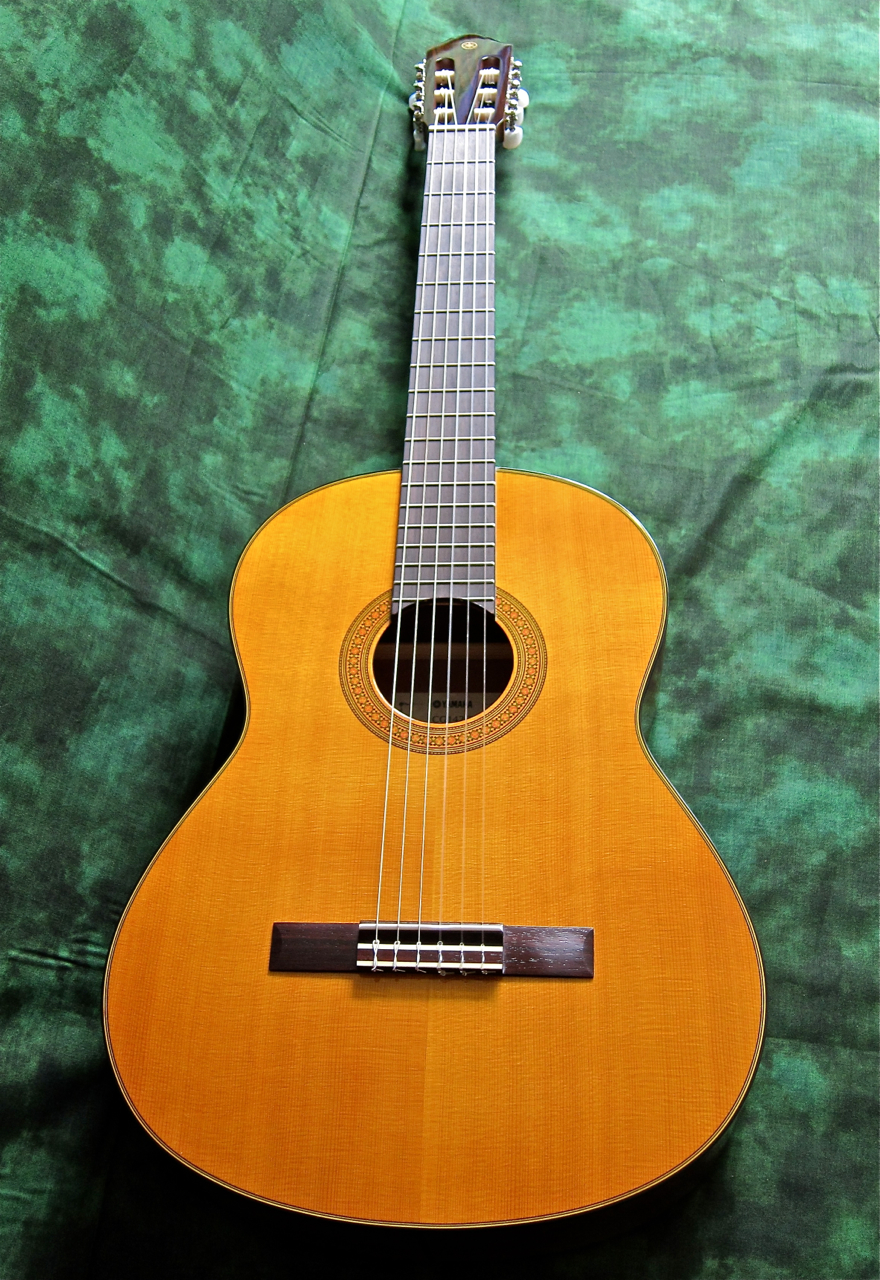
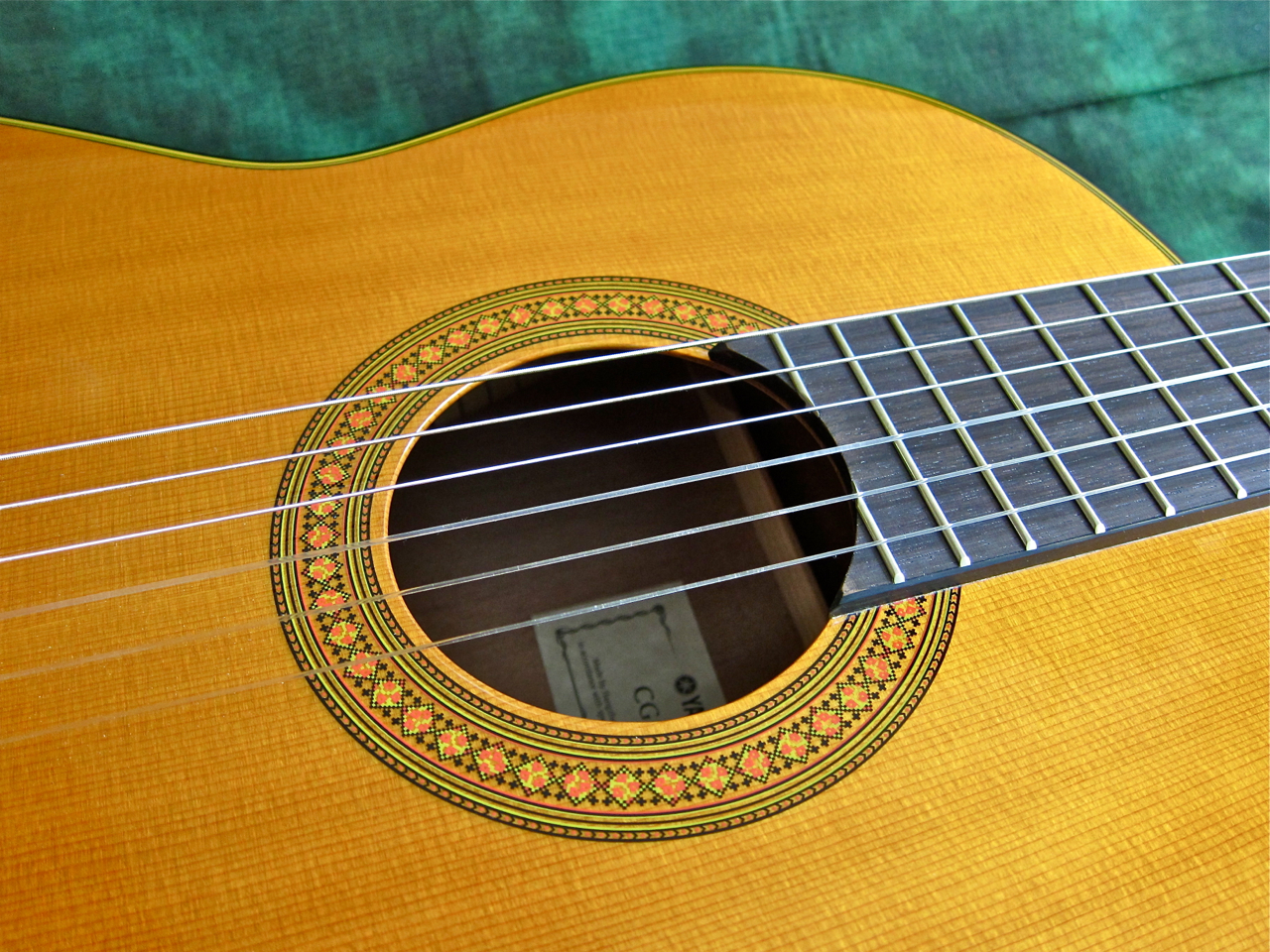
Yamaha’s C- and CG-series instruments are the best-selling classical guitars in Finland. We selected a solid cedar -topped Yamaha CG142C for this review.
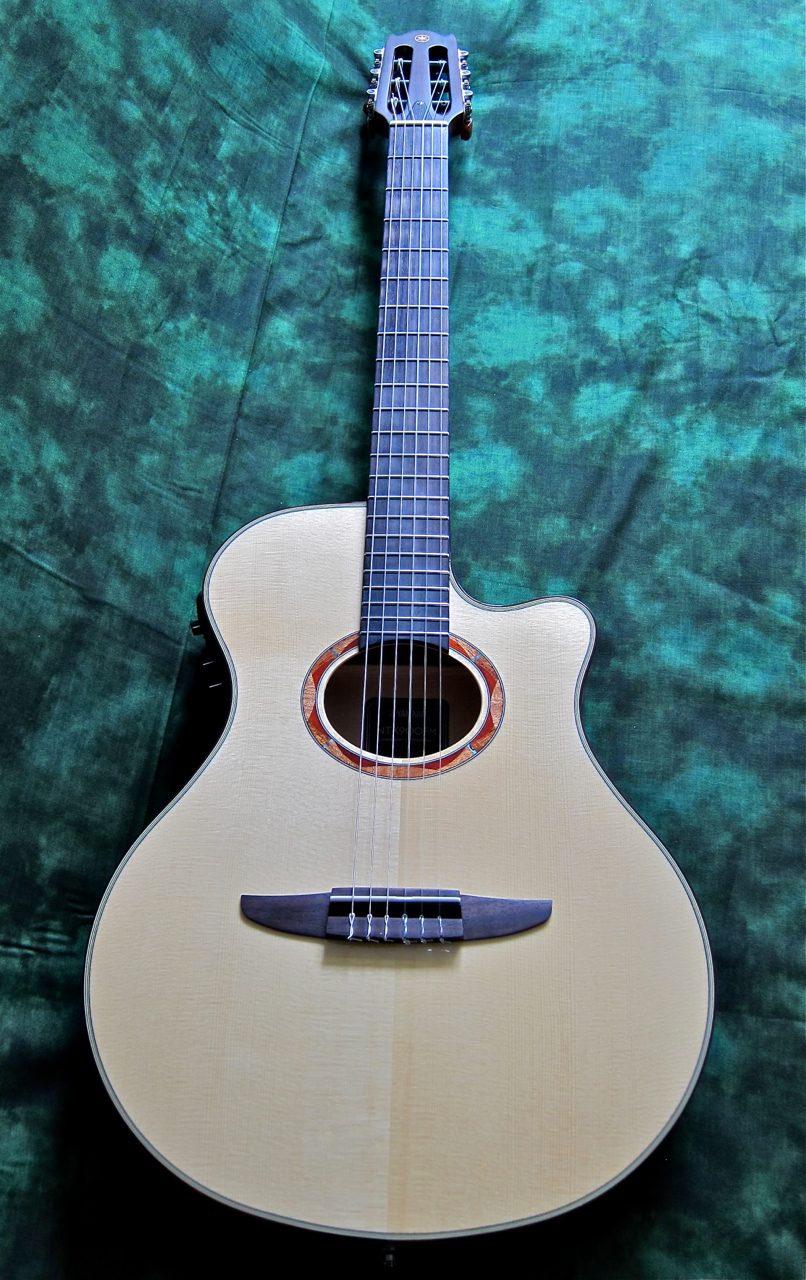
The Yamaha NTX900FM is a very interesting hybrid model – a nylon-string with a pickup and preamp system, as well as a narrower-than-classical nut width.
****
Typical of the company’s output, Yamaha’s CG142C (current street price in Finland approx. 300 €) is an extremely clean piece of work with the understated charm of a classical guitar. All CG-series guitars are build with solid tops – spruce-topped models have an ”S” suffix to their name, while cedar models are denoted with a ”C” at the end of their model name.
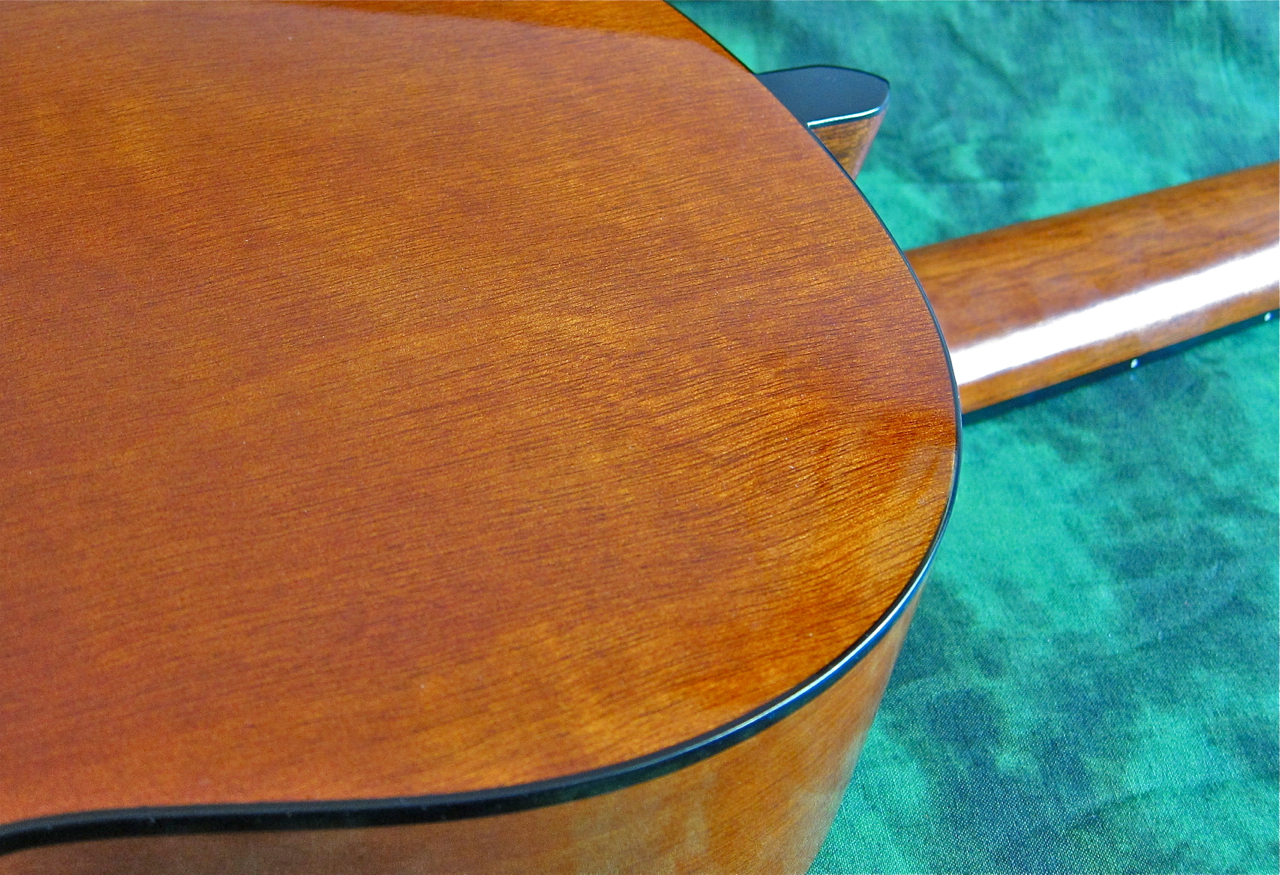
The neck, as well as the body’s back and rims, has been crafted from nato-wood. Nato is a South-East Asian tree species (lat. Palaquium) which looks and sounds similar to mahogany. The neck is solid wood, while the body (apart from the top) uses nato-plywood.
The headstock sports a beautiful rosewood veneer.
The CG142C comes equipped with traditional, open tuners. The headstock has been glued to the main part of the neck right above the neck wrist.
The satin-finished neck has been made by gluing together three strips of nato side-by-side. Added onto this main part is the neck heel, built up from several pieces of nato. Using small cut-offs in this way not only keeps costs sufficiently low, but also helps to save natural resources.
The bound rosewood fretboard sports traditional small and narrow frets.
The CG142C’s beautiful rosette is actually a decal, stuck onto the top prior to lacquering, which is common practice on many budget classicals. Higher-priced models feature rosettes crafted from many small pieces of wood and other materials.
Here’s a close-up look at the top’s five-ply binding.
The back’s black binding is carried across to the heel cap.
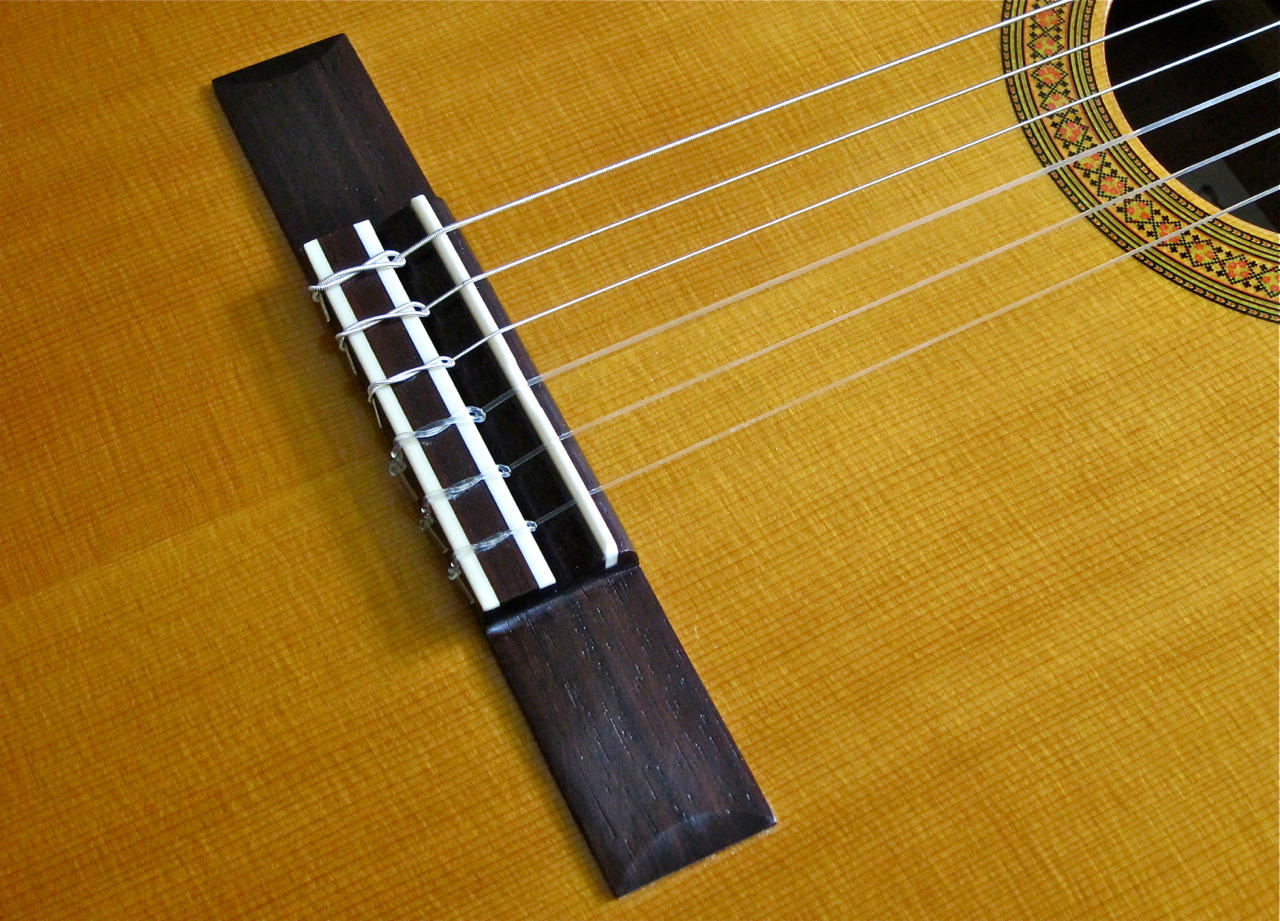
The Yamaha CG142C’s rosewood bridge is quite fetching in its poised simplicity.
Yamaha’s classical guitars tend to display clean workmanship on the inside also.
****
The Yamaha NTX900FM (current street price in Finland approx. 800 €) is the nylon-string cousin of the company’s APX-guitars. It has been designed for the guitarist who needs a quality pickup system, but doesn’t necessarily like the traditional wide and flat classical neck profile.
The NTX900FM’s top has been crafted from solid Engelmann-spruce.
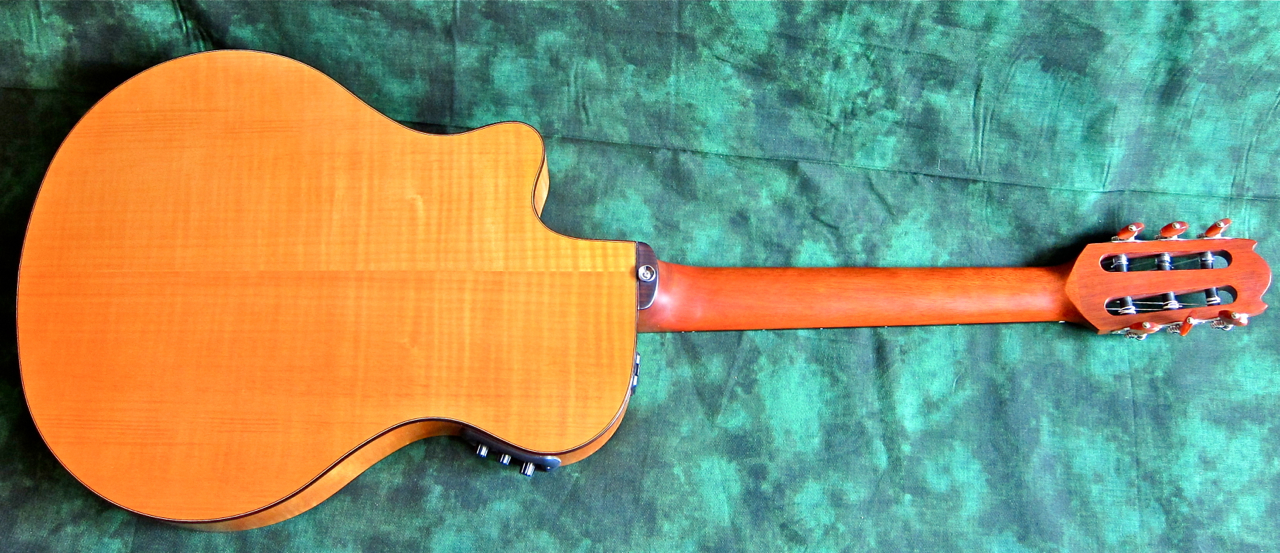
The nato neck has been glued to the maple body.
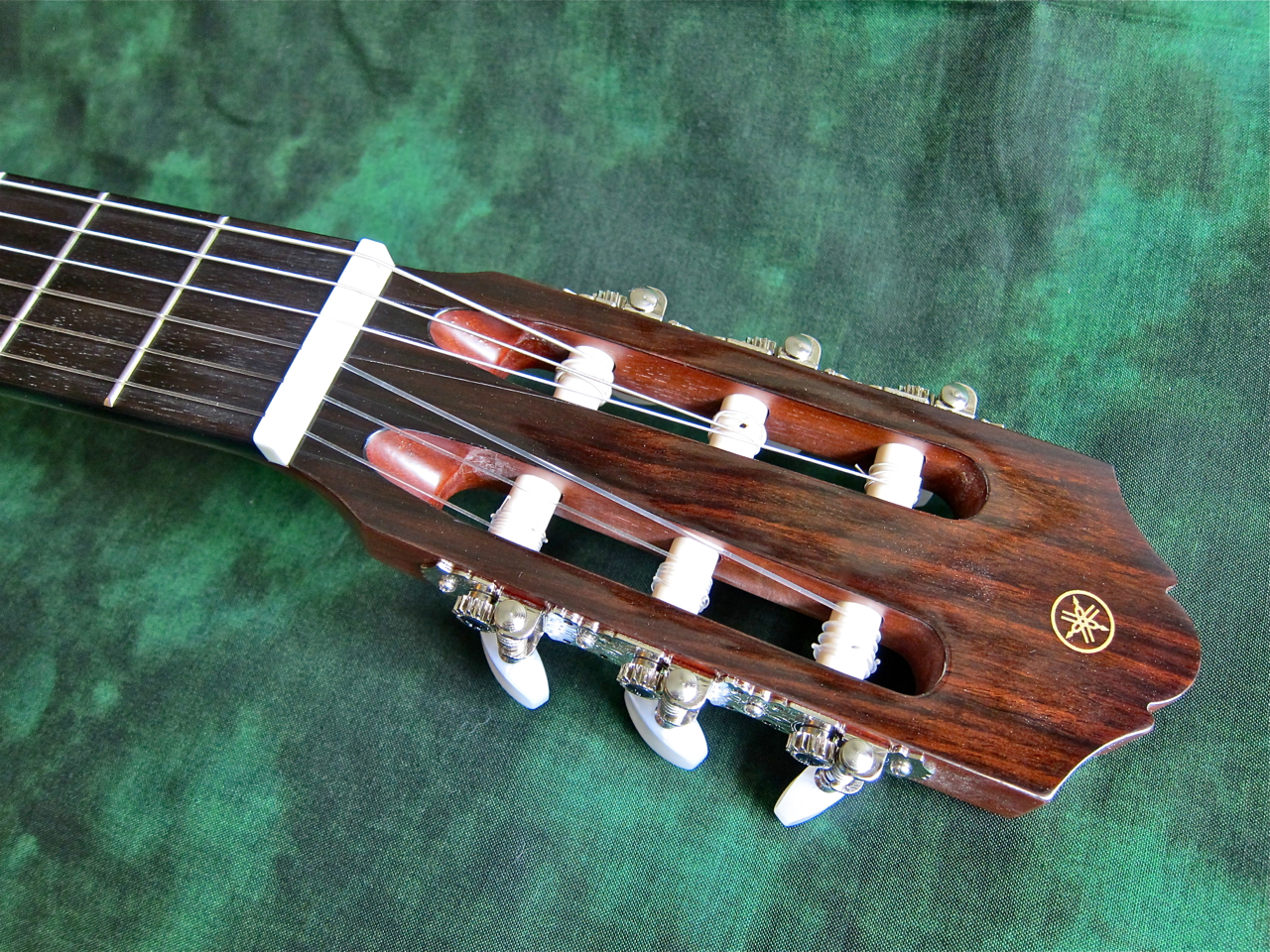
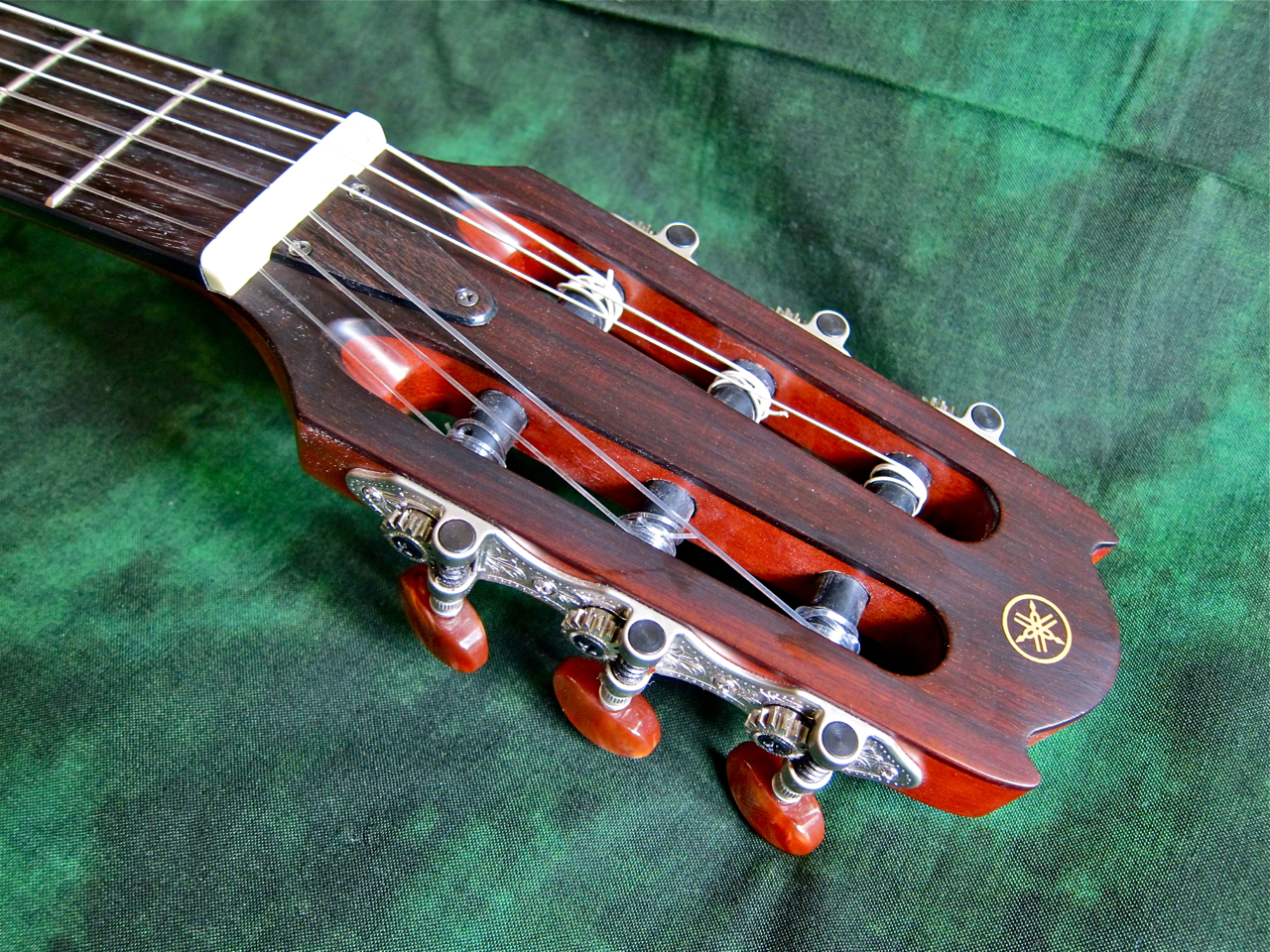
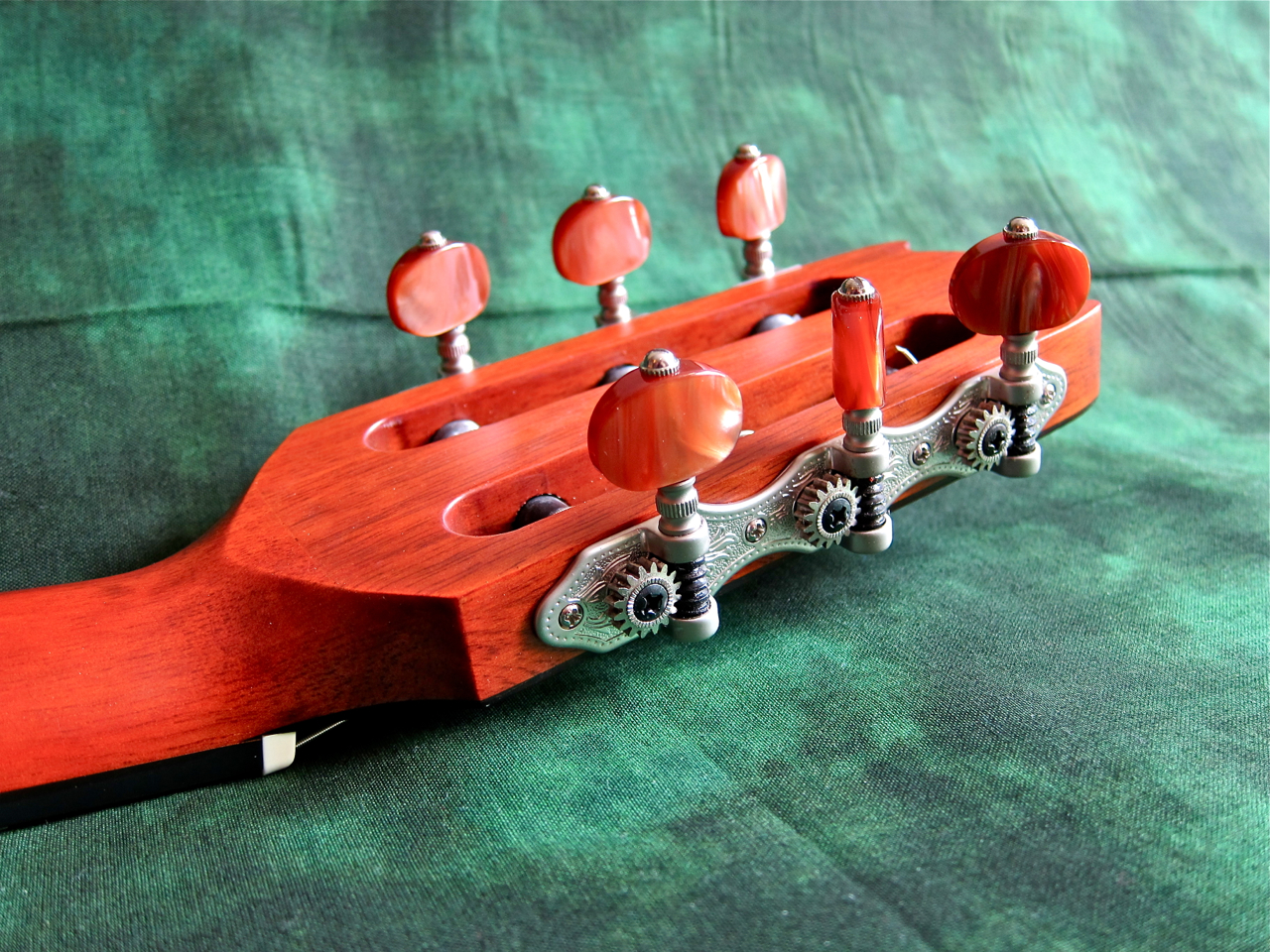
The headstock displays a cool and contemporary look…
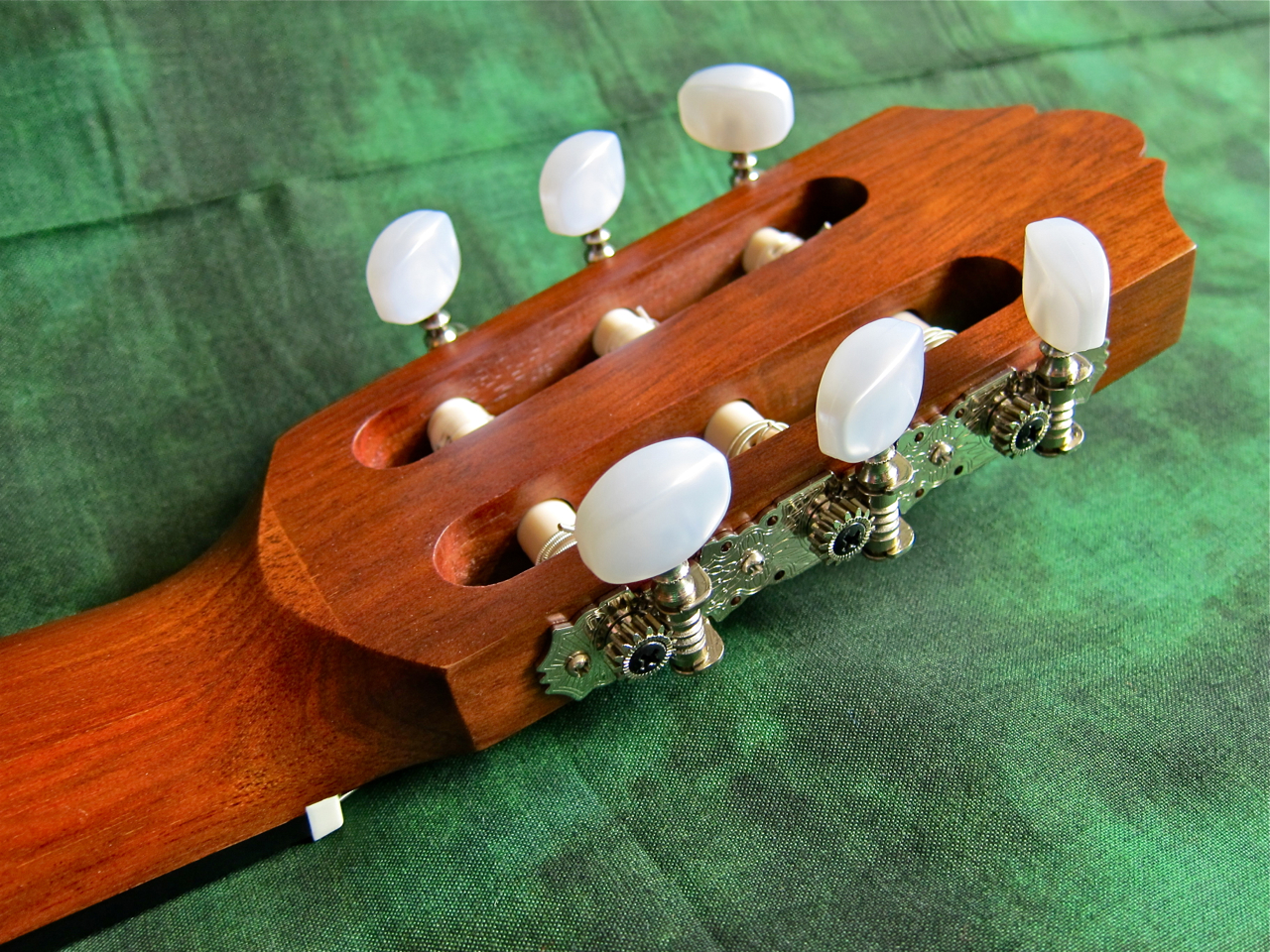
…which is complemented by the nice tuners.
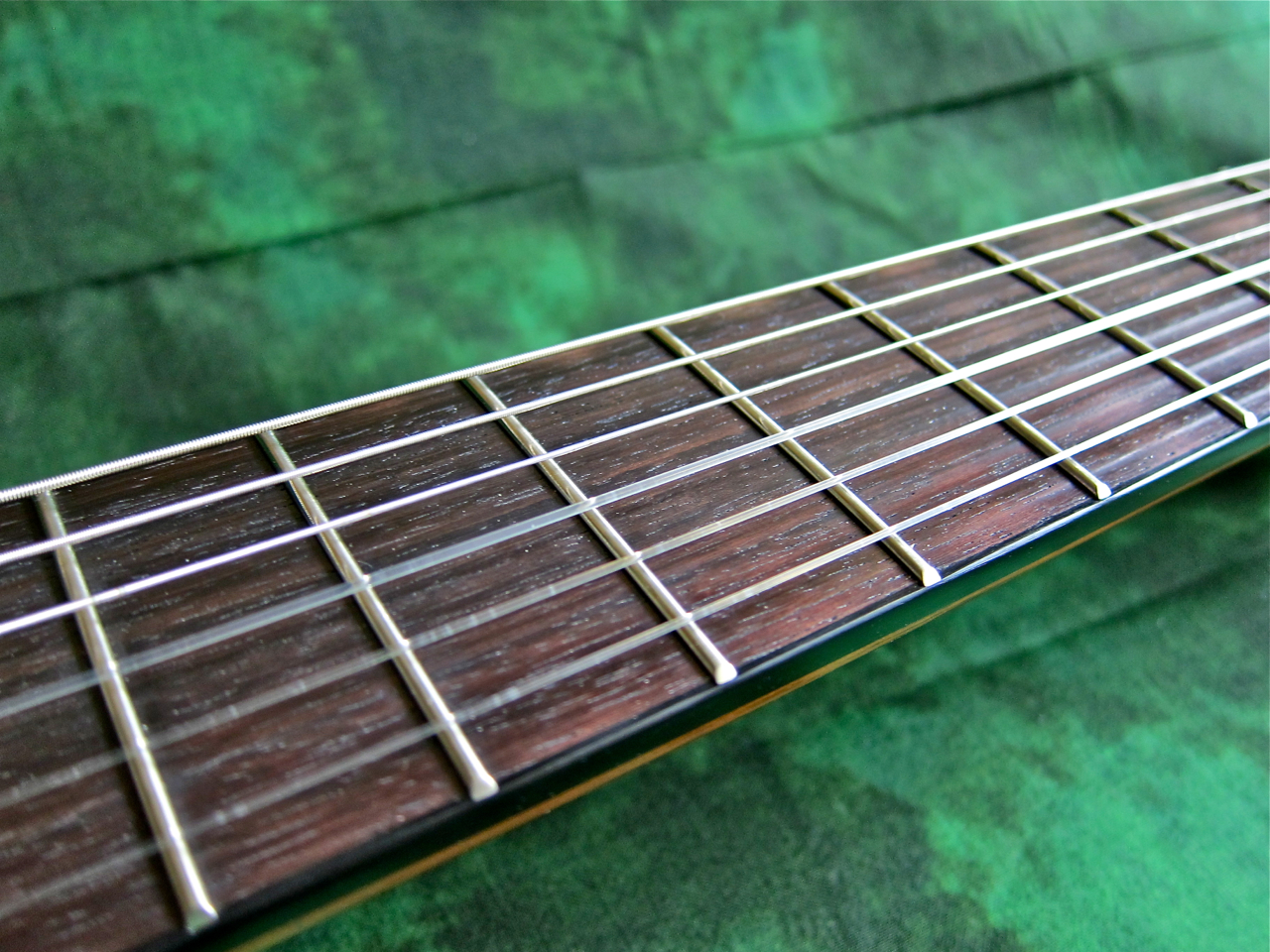
The NTX’ bound fingerboard is rosewood and comes with traditional frets.
NTX-guitars have the same type of body shape as their APX-brethren, and, just like the APX-guitars, the NTX-body is also shallower than what you’d expect from a classical guitar (with a depth of about 75 %).
The NTX900FM’s rosette has been beautifully crafted from various pieces of wood, as well as small bits of abalone.
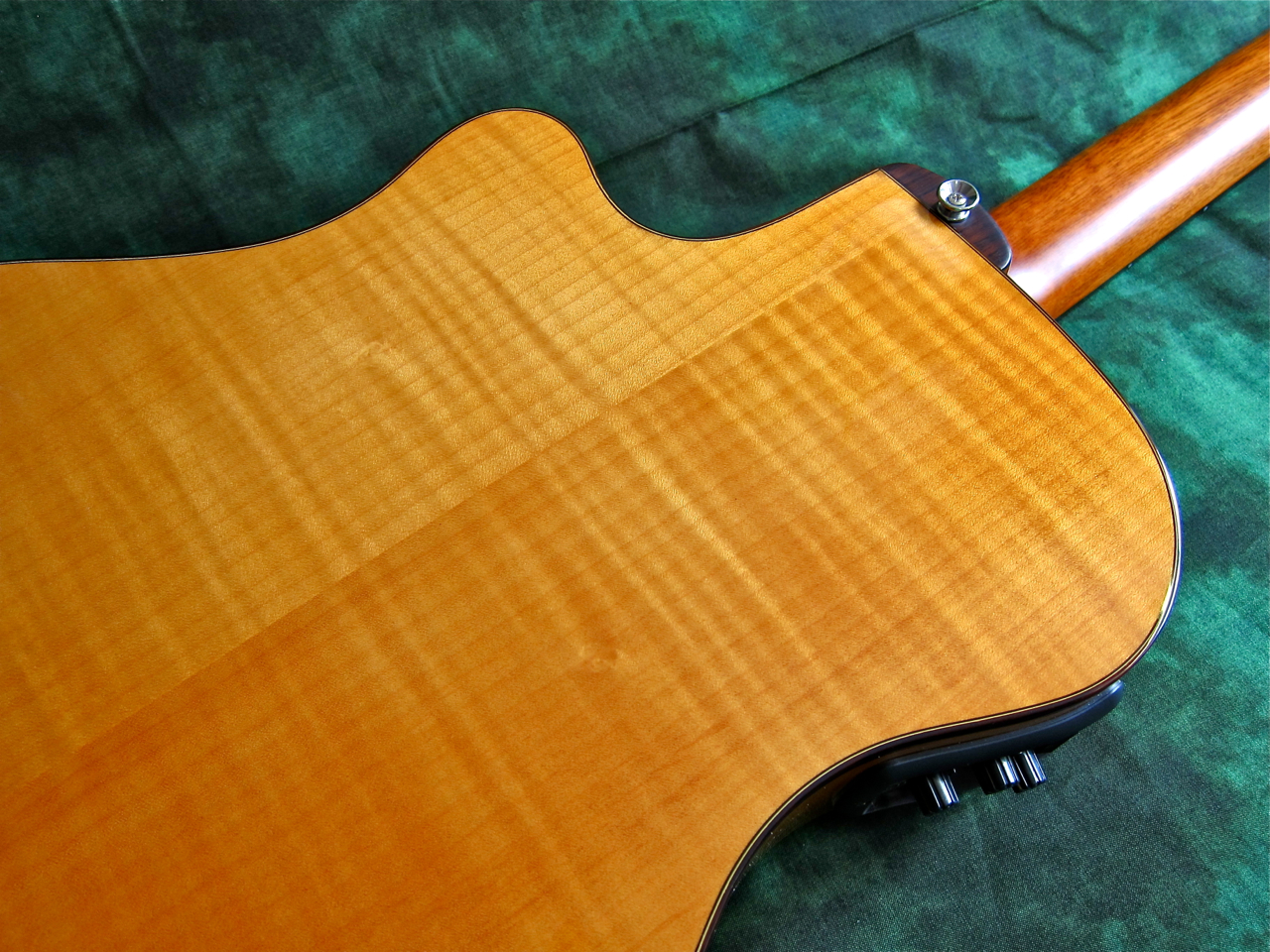
The honey-coloured finish of the flame maple soundbox looks good enough to eat.
Thes NTX900’s rosewood bridge also breaks with classical tradition in a stylish way.
This guitar’s preamp is Yamaha’s ART System 61, which is a two-band preamp with separate piezo transducers for the bass and treble string triplets. This enables you to adjust signal levels independently for the bottom and top halves. The ART System 61 preamp is equipped with a three-band EQ and a digital tuner.
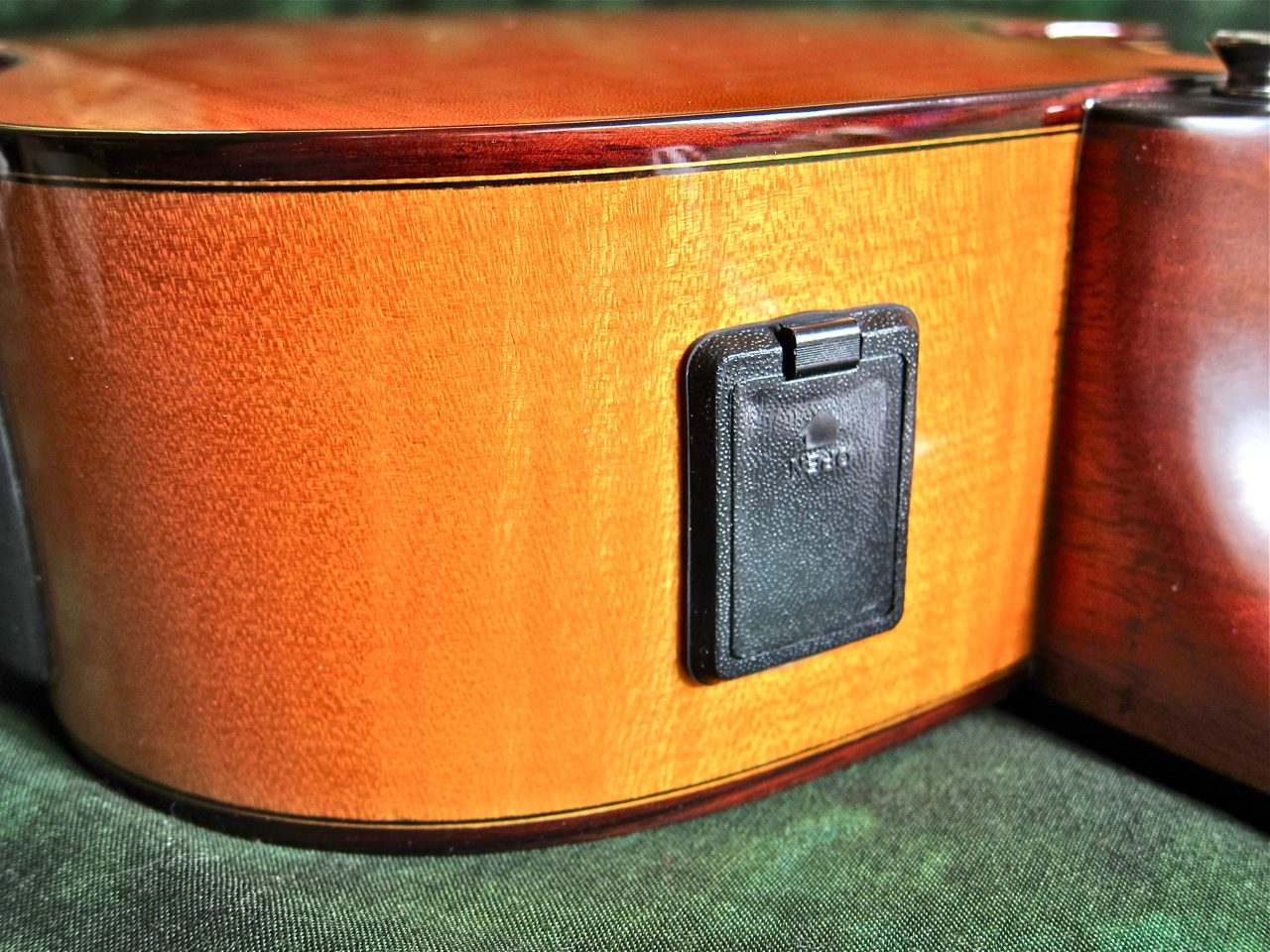
The battery compartment has been placed next to the neck heel.
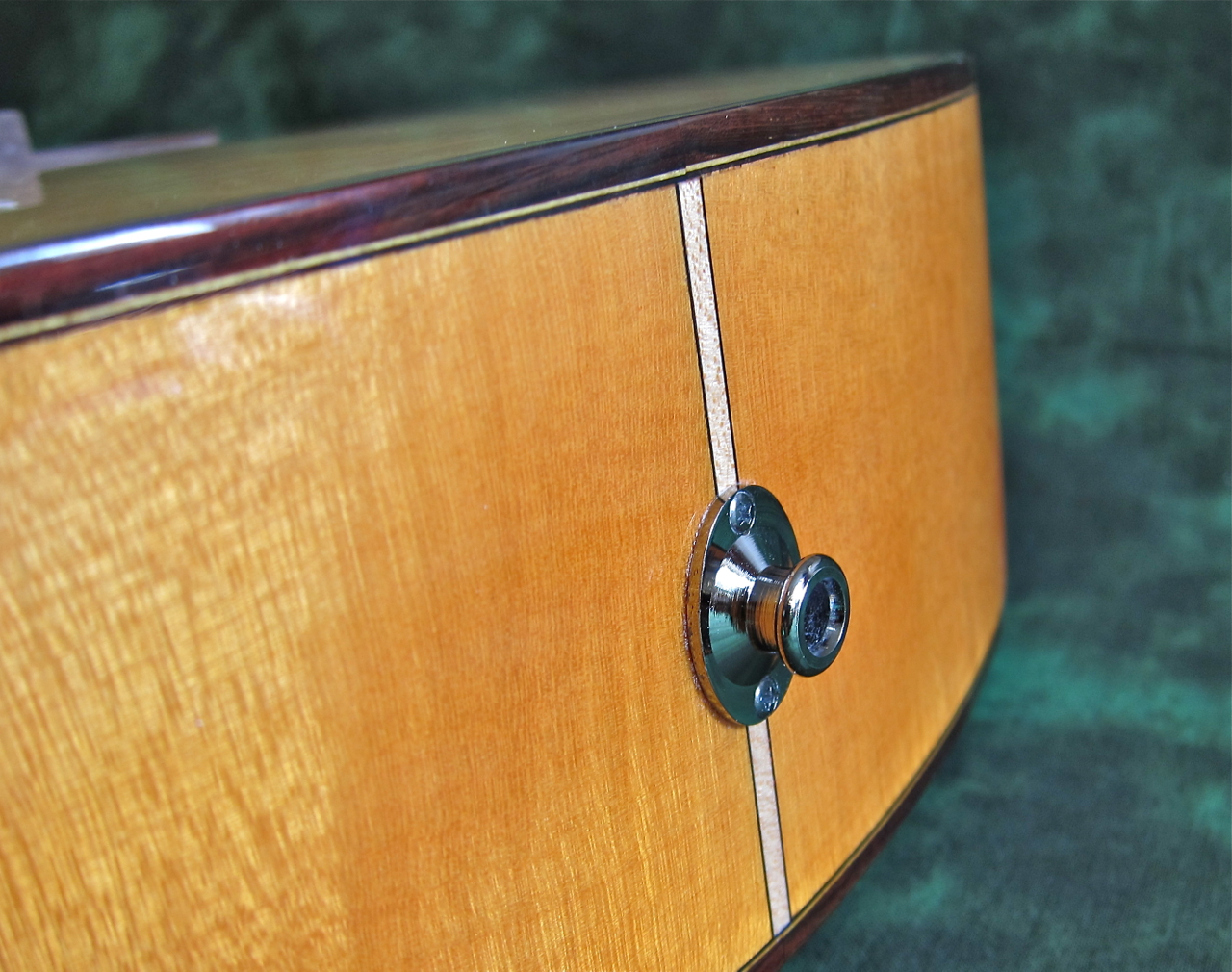
NTX900FM carries two strap buttons, with the bottom one doubling as the piezo system’s output jack.
The workmanship is clean and neat all around – inside and out.
****
****
Yamaha’s CG412C feels like a typical classical guitar: The nut width is a whopping two inches (52 mm) and the neck profile is true to style, namely flat and broad-shouldered. Such a traditional neck gives your left hand plenty of breathing room for complex fingerings, but barre chords require more attention and strength compared to a steel-string.
From an electric player’s standpoint a traditional classical set-up looks impossible, with the action at the 12th fret typically somewhere around 3.5 mm, but this is standard, comfortable fare on a nylon-string. Nylon strings are much softer than steel strings, and they also require a higher action to allow for their larger excursion.
Yamaha’s CG412C sings with a nice, full-bodied voice and an open tonal character. The guitar doesn’t project as well as an expensive classical does, but in its own price bracket the Yamaha CG142C clearly is a winner.
The nut width of the Yamaha NTX900FM’s neck lies halfway between a standard steel-string and a classical guitar, measuring 48 mm. The neck’s more tapered, slimmer and rounder D-profile makes for a much friendlier feel for the non-classical guitarist.
The NTX also comes with a lower string action (bottom-E: 3,1 mm/high-e: 2,6 mm at the 12th fret). This clearly narrows the guitar’s dynamic range, but also makes it easier to play for most of us.
Due to its shallower body and the use of maple for the soundbox, the NTX900FM isn’t particularly loud or full-bodied acoustically. The available volume is enough for practicing or song-writing, but this guitar doesn’t project in the way a traditional nylon-string does.
Using the on-board pickup system changes things dramatically, turning the Yamaha NTX900FM into an interesting addition to your guitar arsenal. Yamaha’s ART-system works extremely well, and the separate volume controls for the bass and treble sides come in handy for fine-tuning your tone. The under-saddle transducers are also quite immune against handling noises, and the whole system is refreshingly low on hiss.
In my opinion the Yamaha NTX900FM is a good choice if you’re looking for nylon-string tones with a steel-string feel – or if you’re into juicing up your nylon with effects.
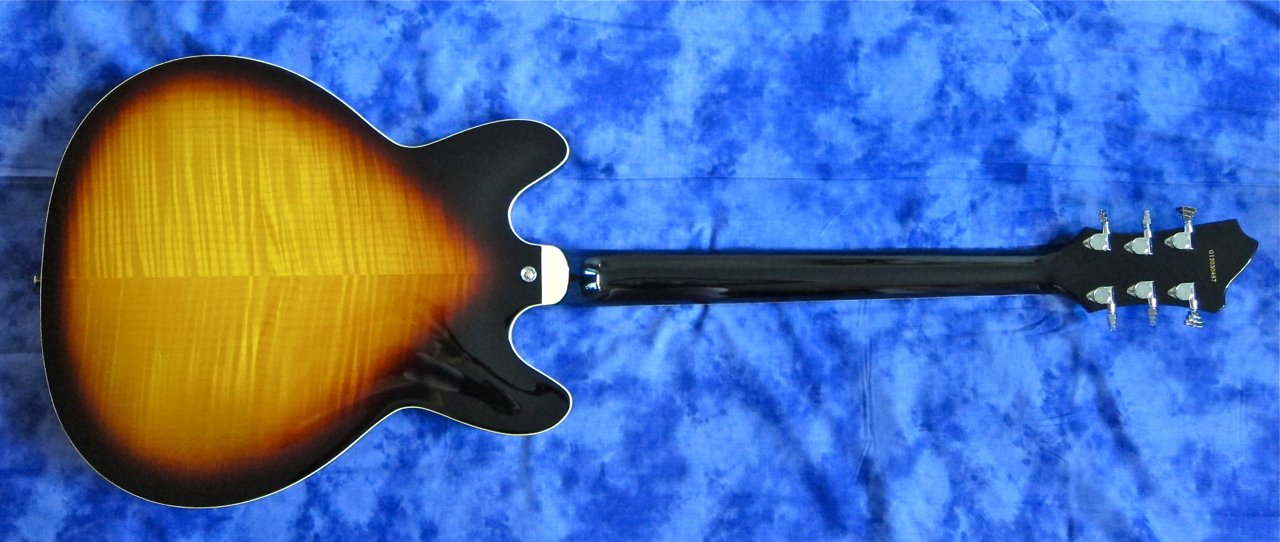
This time Kitarablogi.com takes a closer look at two Hagström models: The Viking Deluxe Baritone is a Far-Eastern-made baritone-guitar, made to please the friends of low riffage, while the brand-new Northen Swede is part of the company’s new high-end line, which is handmade in the Czech Republic.
****
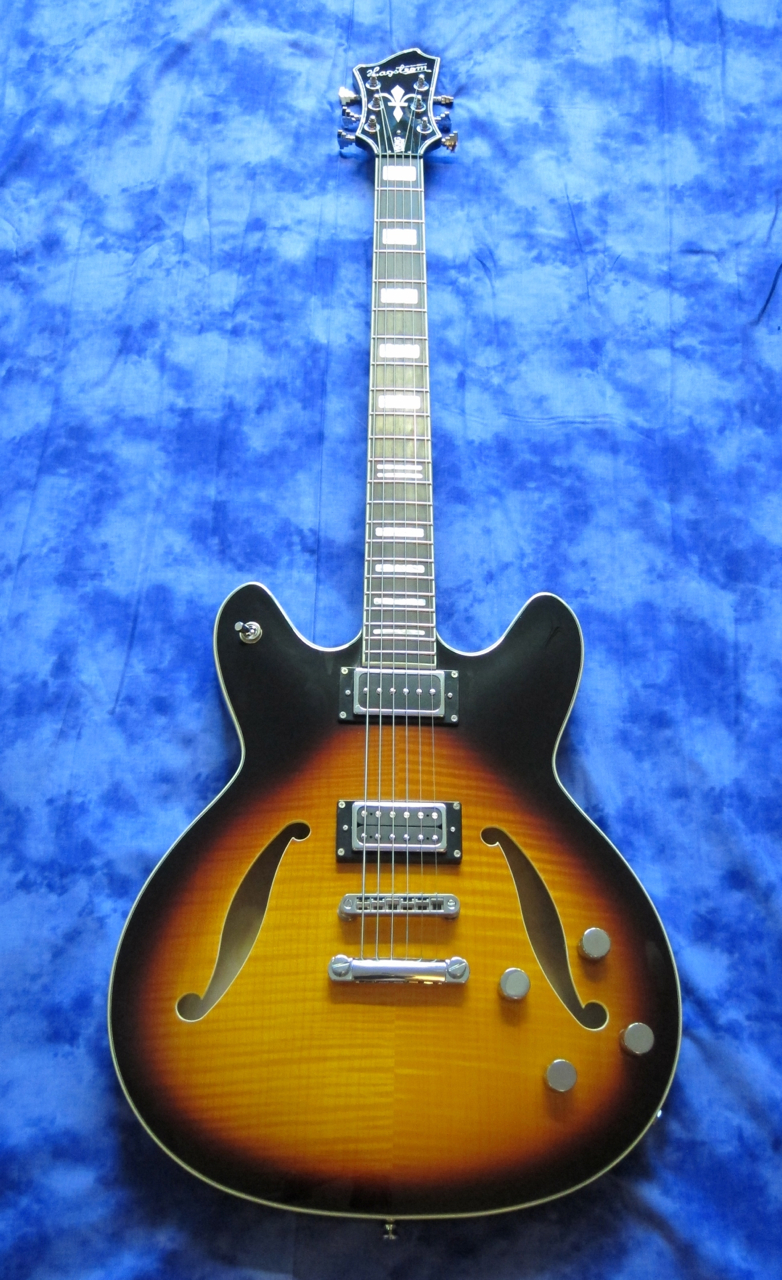
The Hagström Viking Baritone (current street price in Finland approx. 600 €) is the newest addition to the Viking-line. This long-necked beauty features the same stylish curves and semi-acoustic body as the rest of the Vikings.
The Canadian hard rock maple neck is glued into the body, which is made from flame maple plywood.
Hagström’s headstock simply oozes 1950’s glitzy panache, with its ultraclean binding and inlay work.
The top nut, on the other hand, is up to date, using self-lubricating, man-made Black Tusq.
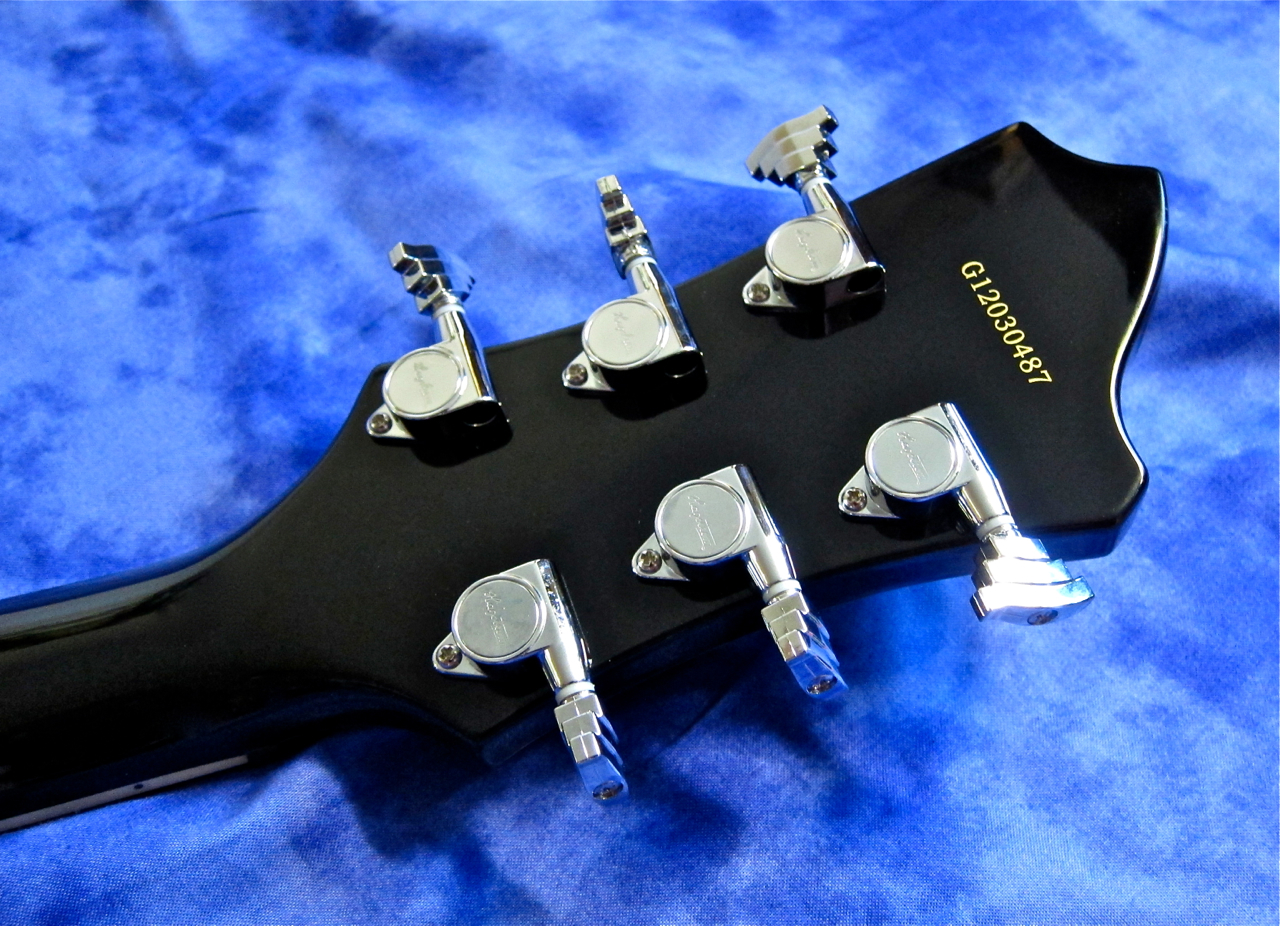
Modern sealed Hagström-tuners keep things steady.
One of Hagström’s special features is their Resinator-fingerboard. Resinator is a man-made alternative to ebony – in both looks and sound – and is made using wood fibres and resin.
The fretwork is rather good on our test sample, apart from a few fret ends, which felt a tiny bit sharpish in places.
Inside the plywood soundbox you can see the Viking Baritone’s full-length mahogany centre block.
The centre block is what turns a fully acoustic guitar into a semi. It improves attack and sustain, as well as greatly reducing the danger of howling feedback at higher volume levels.
Hagström have optimised this Viking’s choice of pickups for use in a baritone-guitar:
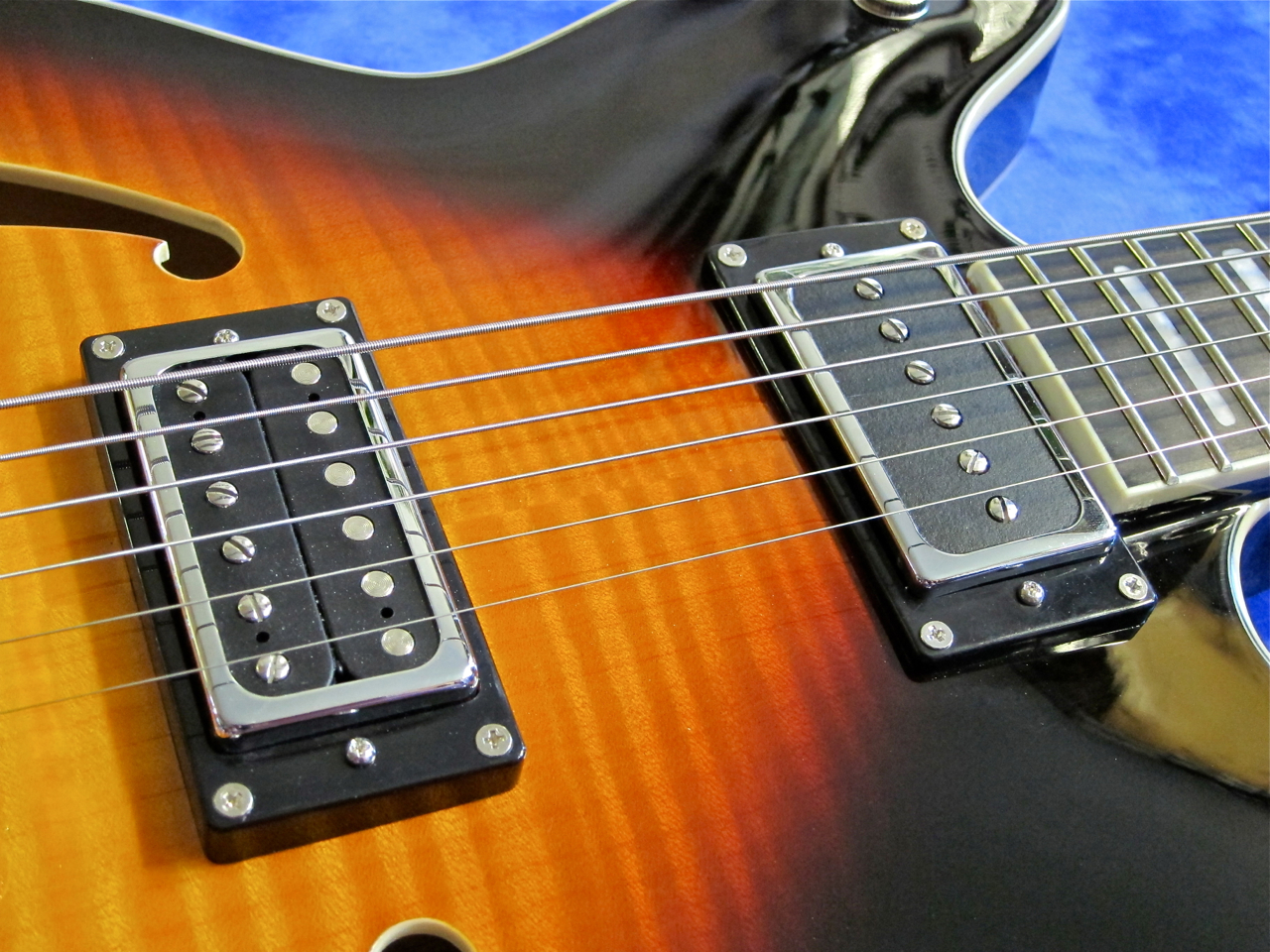
The neck pickup is Hagström’s new P-Urified unit, which is a P-90-type singlecoil in humbucker-size. Employing a singlecoil in the neck position makes great sense, as it improves tonal clarity, while steering clear of any potential mushiness.
The bridge unit is Hagström’s great Custom 58 -humbucker, whose moderate output and nice dynamic range fit the P-Urified perfectly.
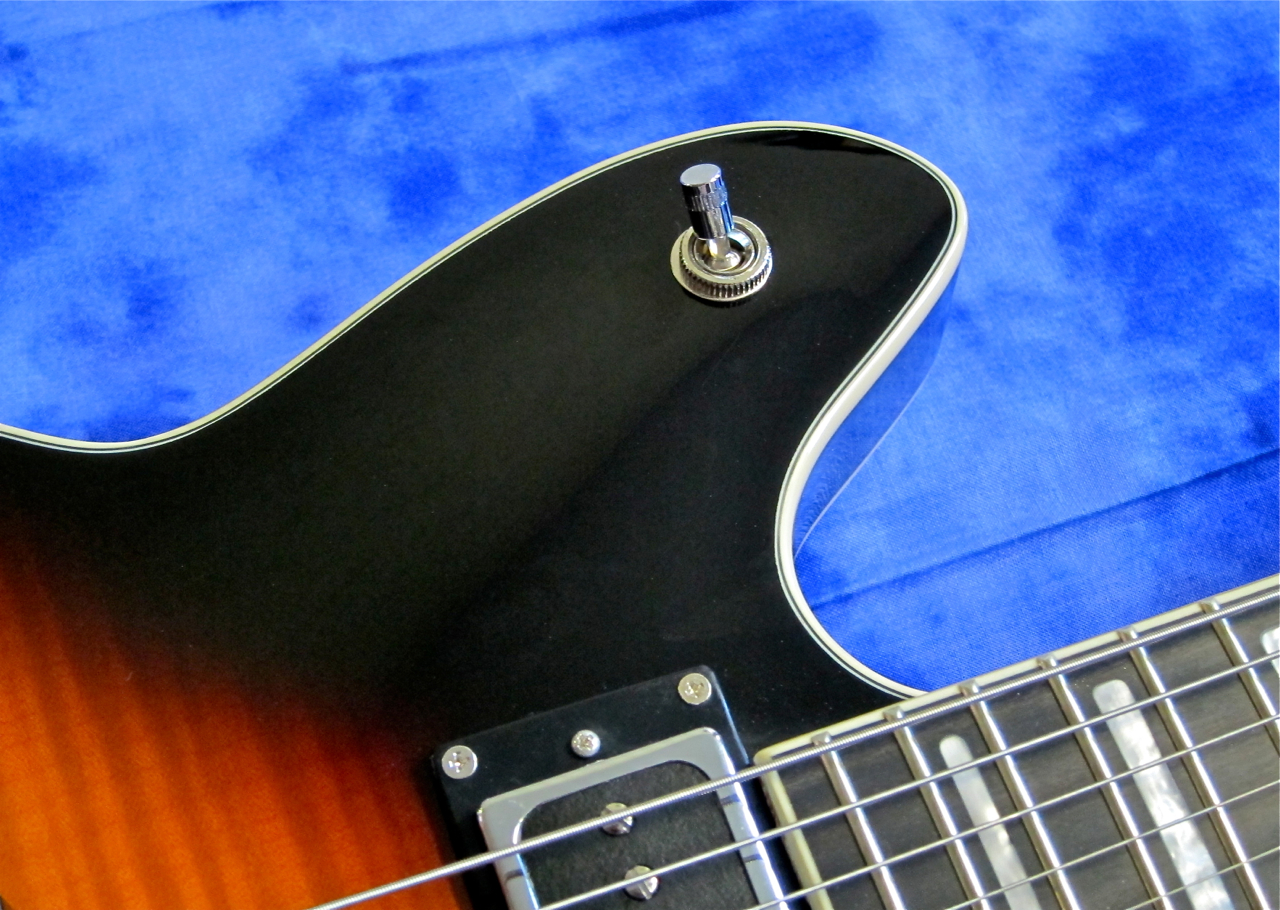
The three-way toggle sits on the Viking Baritone’s top horn.
It’s nice to see quality long-throw pots and clean workmanship inside the Viking.
The classic Gibson-type bridge and stopbar combination works fine on a semi like this.
****
Thanks to its nice, moderate weight the Hagström Viking Baritone sits comfortably in your lap, with good strapped-on balance, too, regardless of a whiff of neck-heaviness due to its long neck.
The neck profile is a fleshy, but not too fat ”D”. Due to a baritone-guitar’s longer scale length (28″/71,1 cm) a newbie will need a little time to adjust his (or her) technique, but after a few minutes or so muscle memory will take the reigns without any problems.
The Viking Baritone’s choice of pickups really does it for me, fitting this guitar’s acoustic tone to a tee. The freshness of the neck pickup, together with its deliciously woody response, will keep even the lowest runs clear and punchy. And the moderately-powered bridge humbucker adds just the right amount of bite and grit to proceedings.
I feel that Hagström’s Viking Baritone is a fine baritone for all occasions and all styles of music (well, probably apart from the most massive of high-gain applications).
Listen to these two audio clips (the pickup order is: neck – both – bridge):
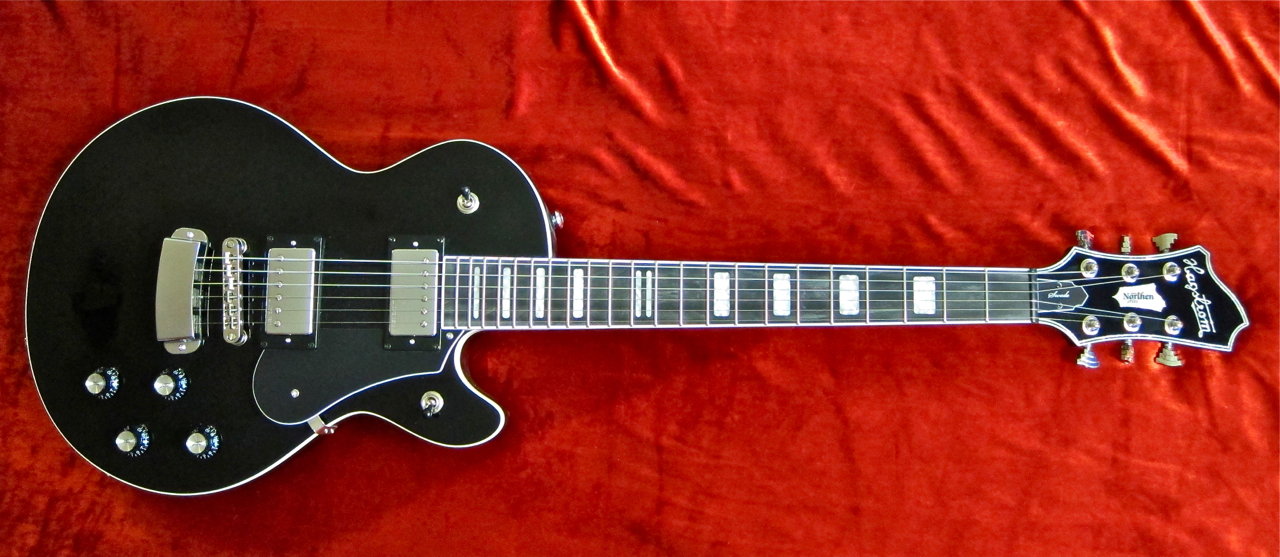
The Hagström Northen Swede (current street price in Finland approx. 1.200 €) is a high-quality, EU-made reissue of the classic Swedish model of yore.
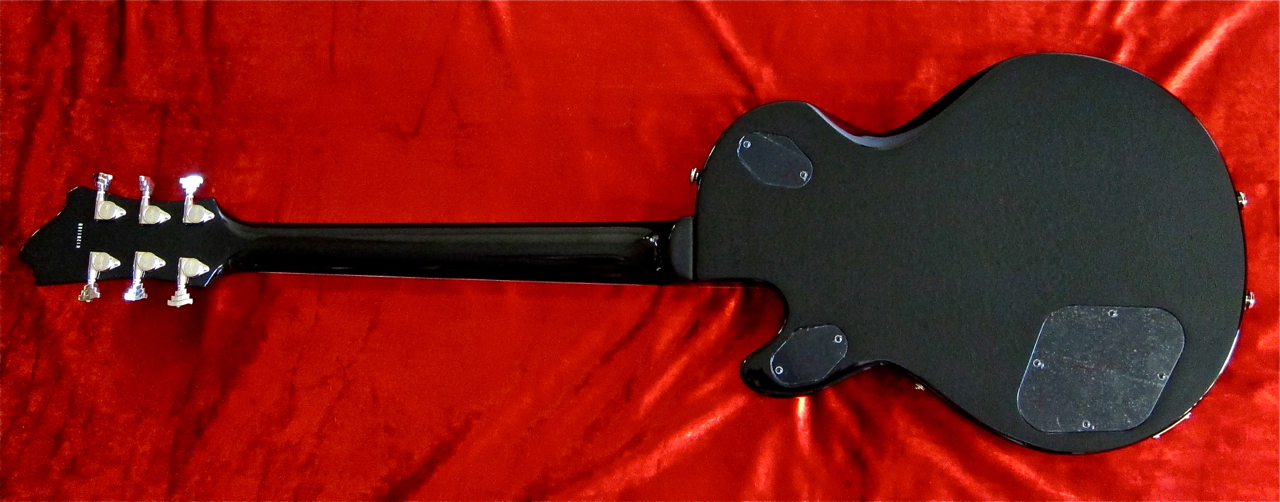
We’re talking about a set-neck solidbody, made almost completely from African mahogany (note: the cover plates look strange in this pic, because they still have their protective foils stuck on top).
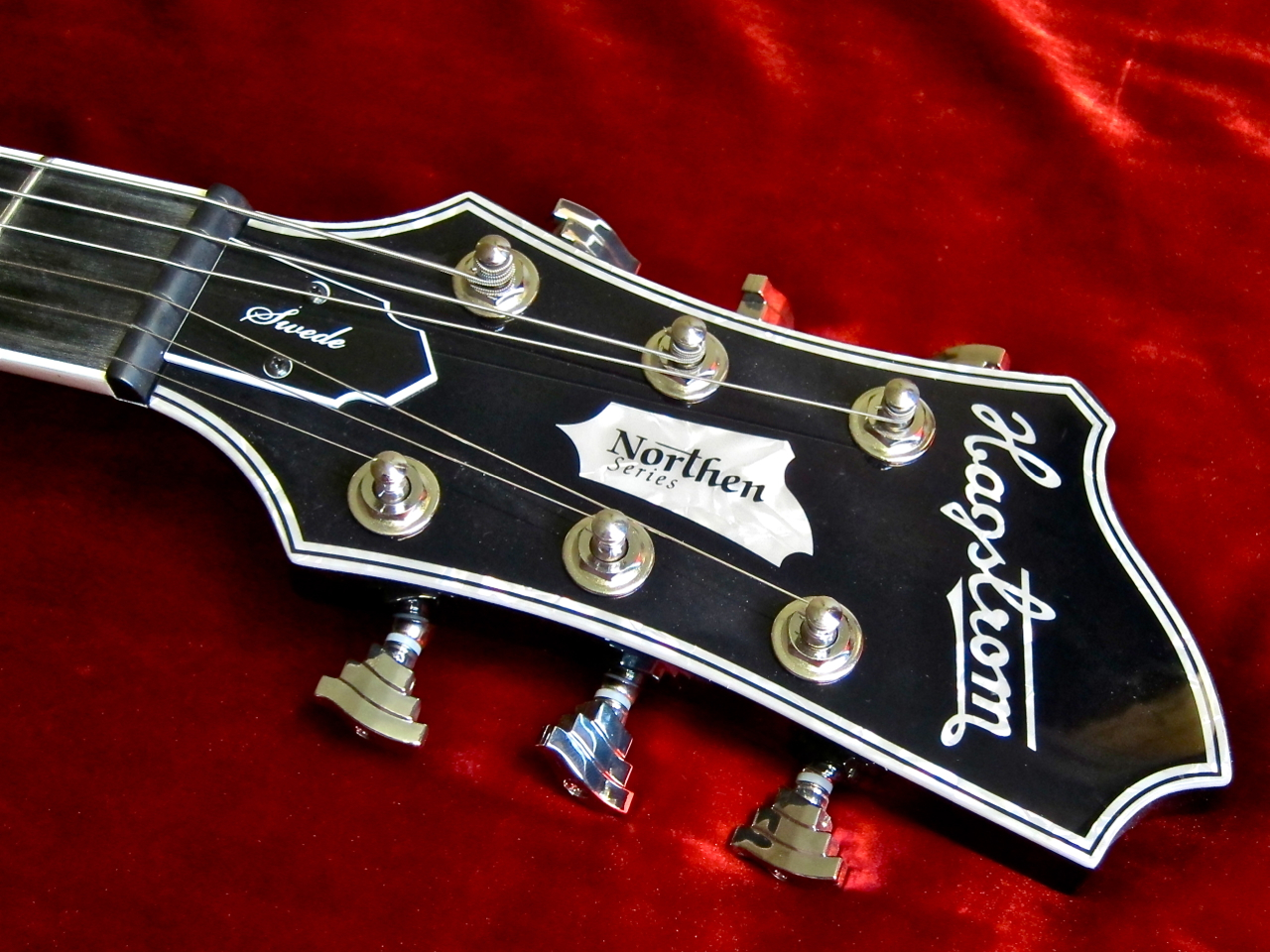
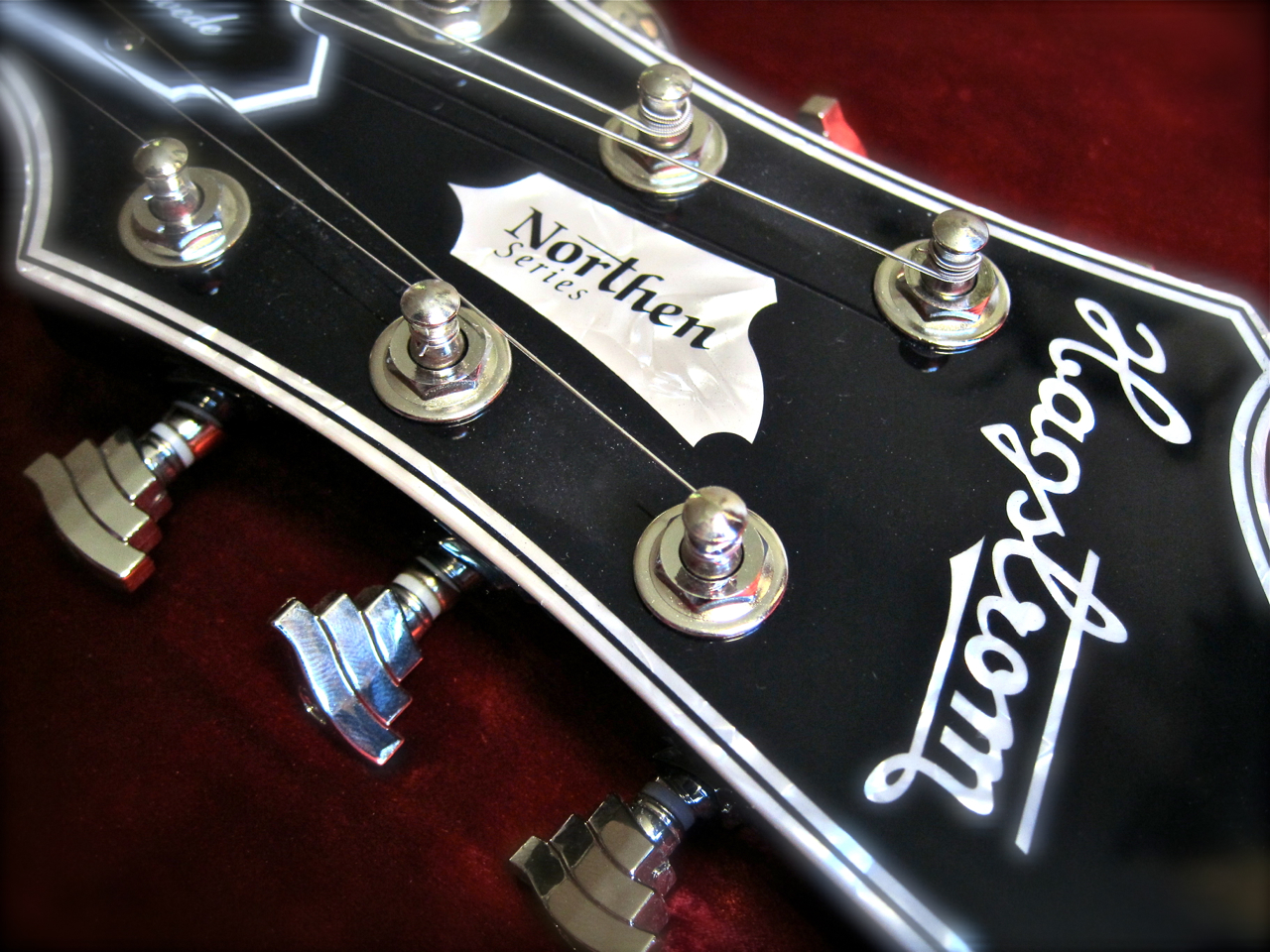
The large pearloid inlay proudly displays the Northen-series’ logo.
The Hagström-tuners have an 18:1 gear ratio and a smooth and precise feel.
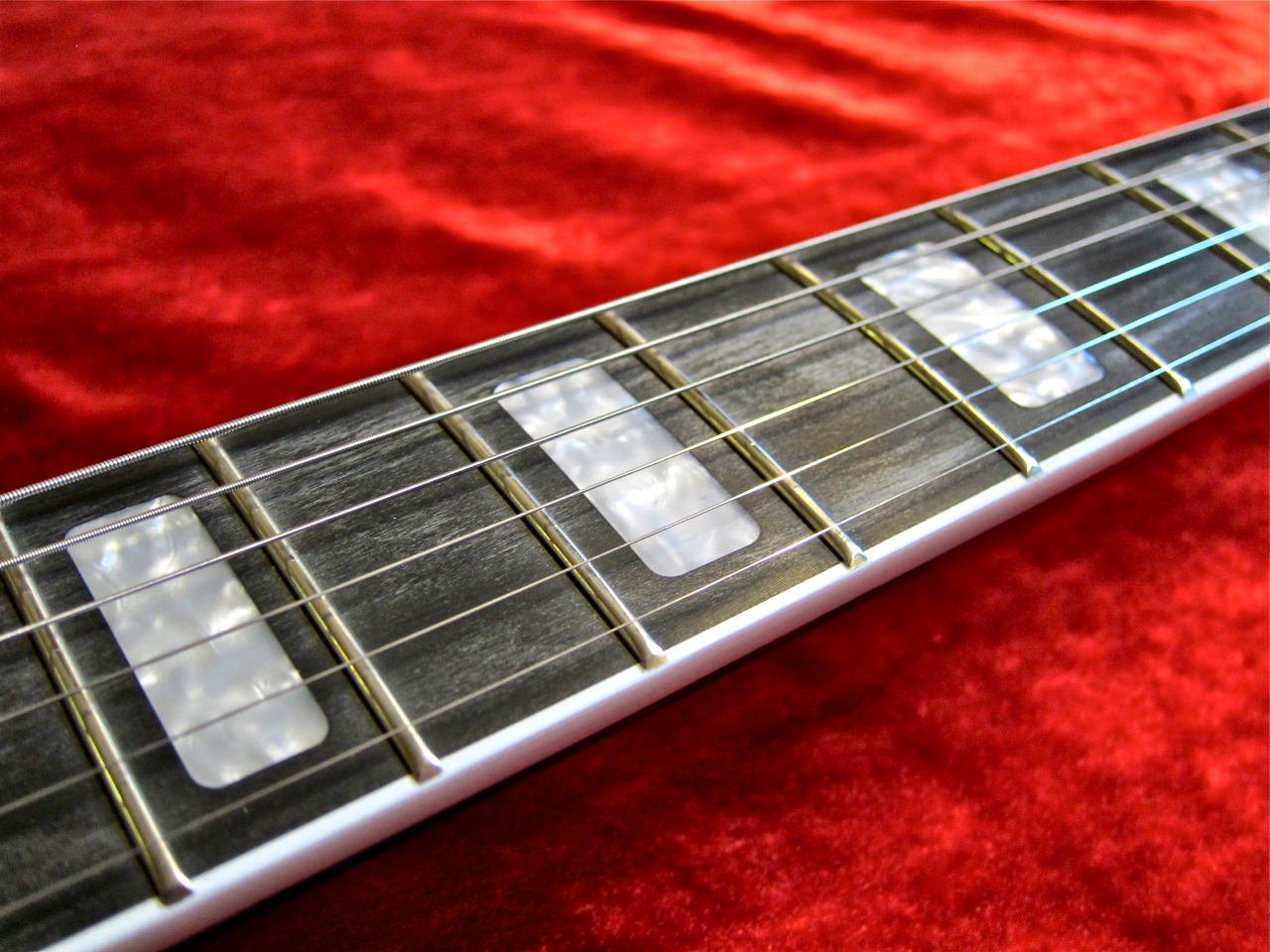
The Northen Swede’s Resinator-board looks more lively than its counterpart on the Viking Baritone. The fretwork is very good.
One special, time-tested feature of all Hagström necks is the H-Expander truss rod system. The H-Expander truss rod sits in a rigid aluminium bar with an H-shaped cross-section. The whole system is then mounted into a tight-fitting, profiled slot inside the the neck, resulting in greater rigidity and thus a better vibrational transfer than most other truss rod systems provide.
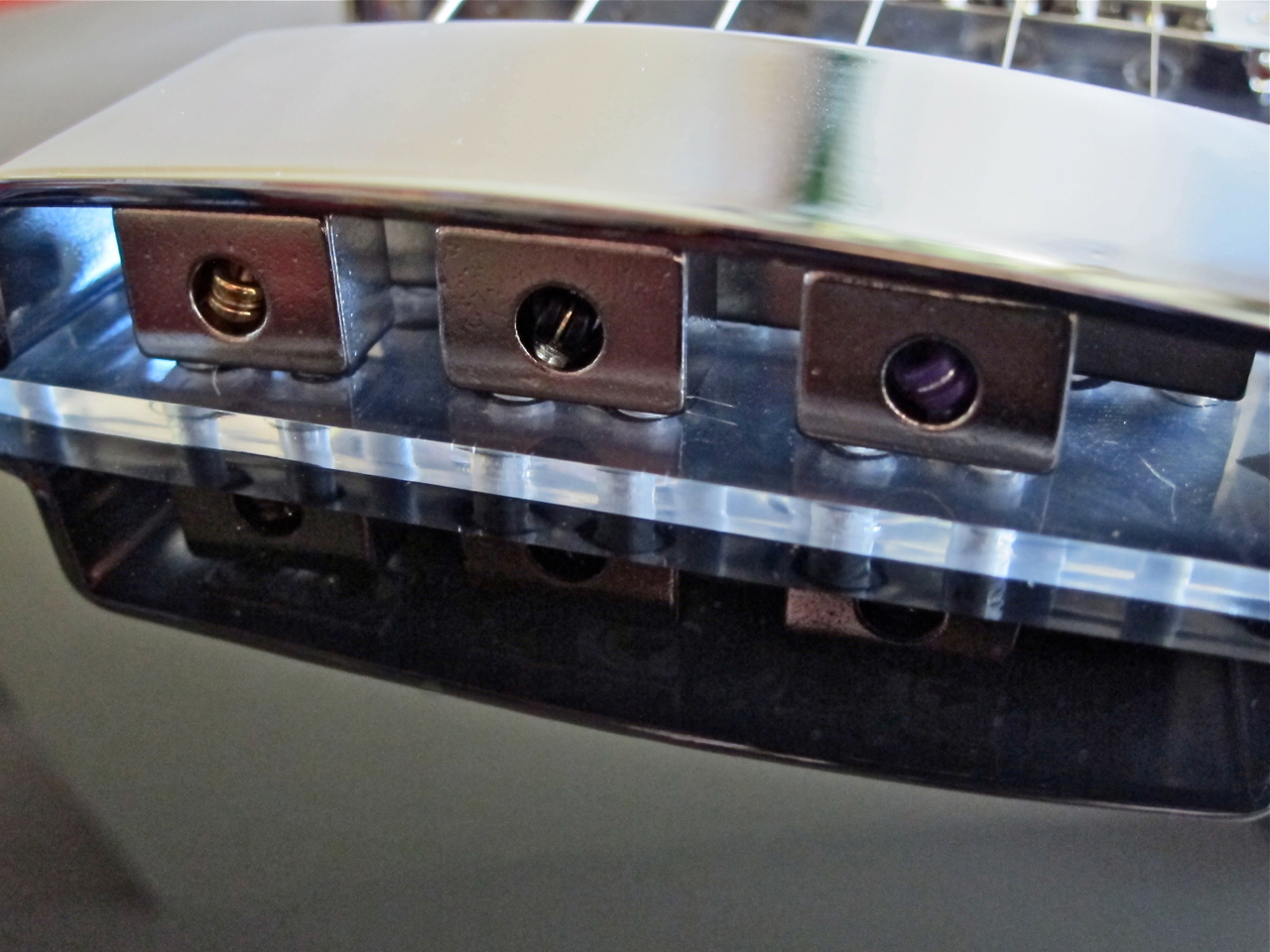
The Swede features Hagström’s idiosyncratic tailpiece, using individual string retainers mounted onto a perspex plate.
Swedish pickup-guru Johan Lundgren is the force behind the Northen Swede’s classy pickups. The guitar is equipped with a pair of No. 2 -humbuckers, which are powered by Alnico 2 magnets.
The Hagström Swede sports two three-way toggle switches: The switch on the guitar’s shoulder is your usual pickup selector, while the one on the treble-side horn is a tone filter -switch.
The tone filter’s middle position is off, with the ”up” selection giving you a mild presence roll-off, while the ”down” position results in a noticeably greater treble and high-mid cut.
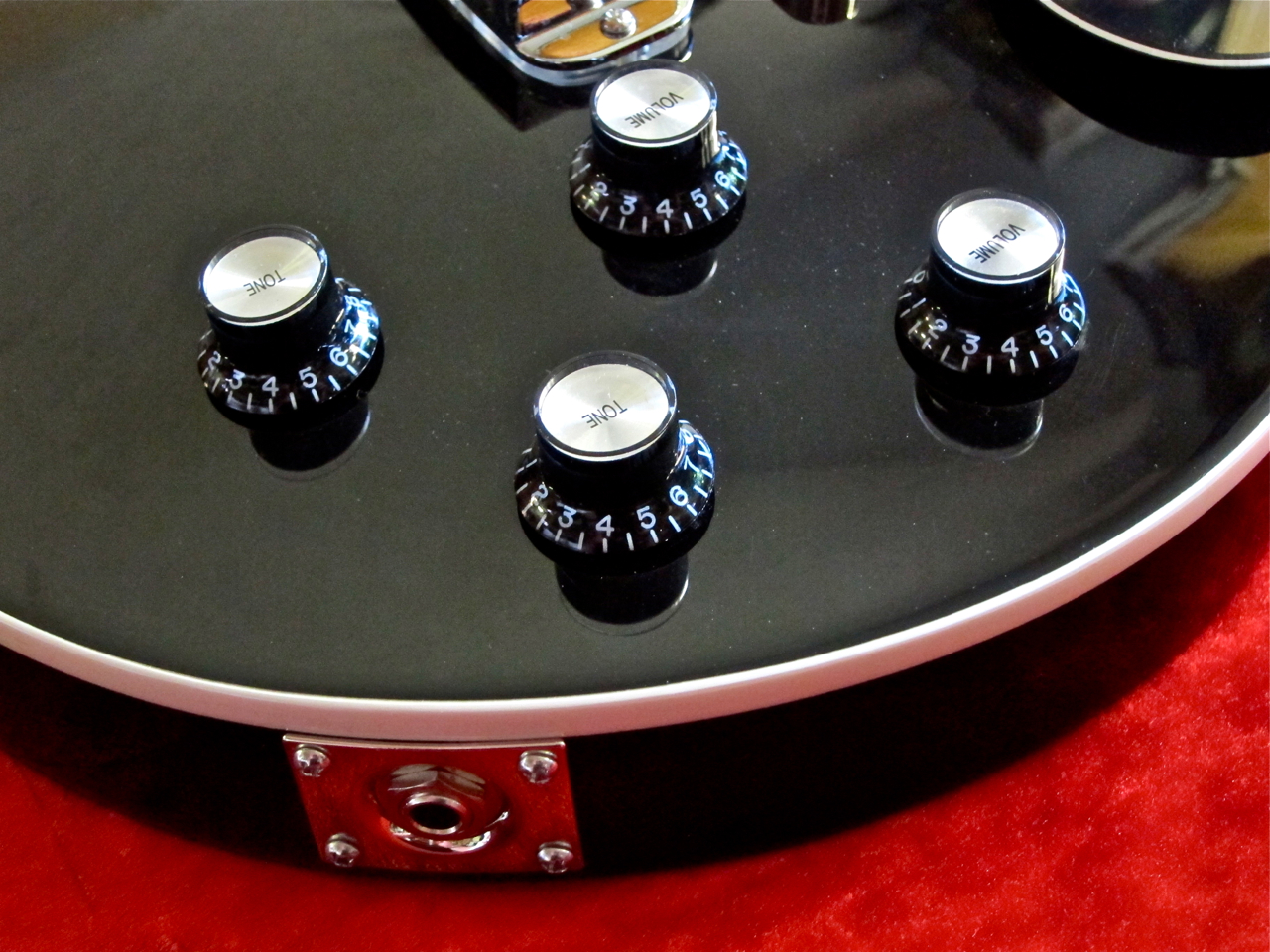
The control knobs work in the standard Les Paul -fashion, with each pickup being provided with its own set of volume and tone controls.
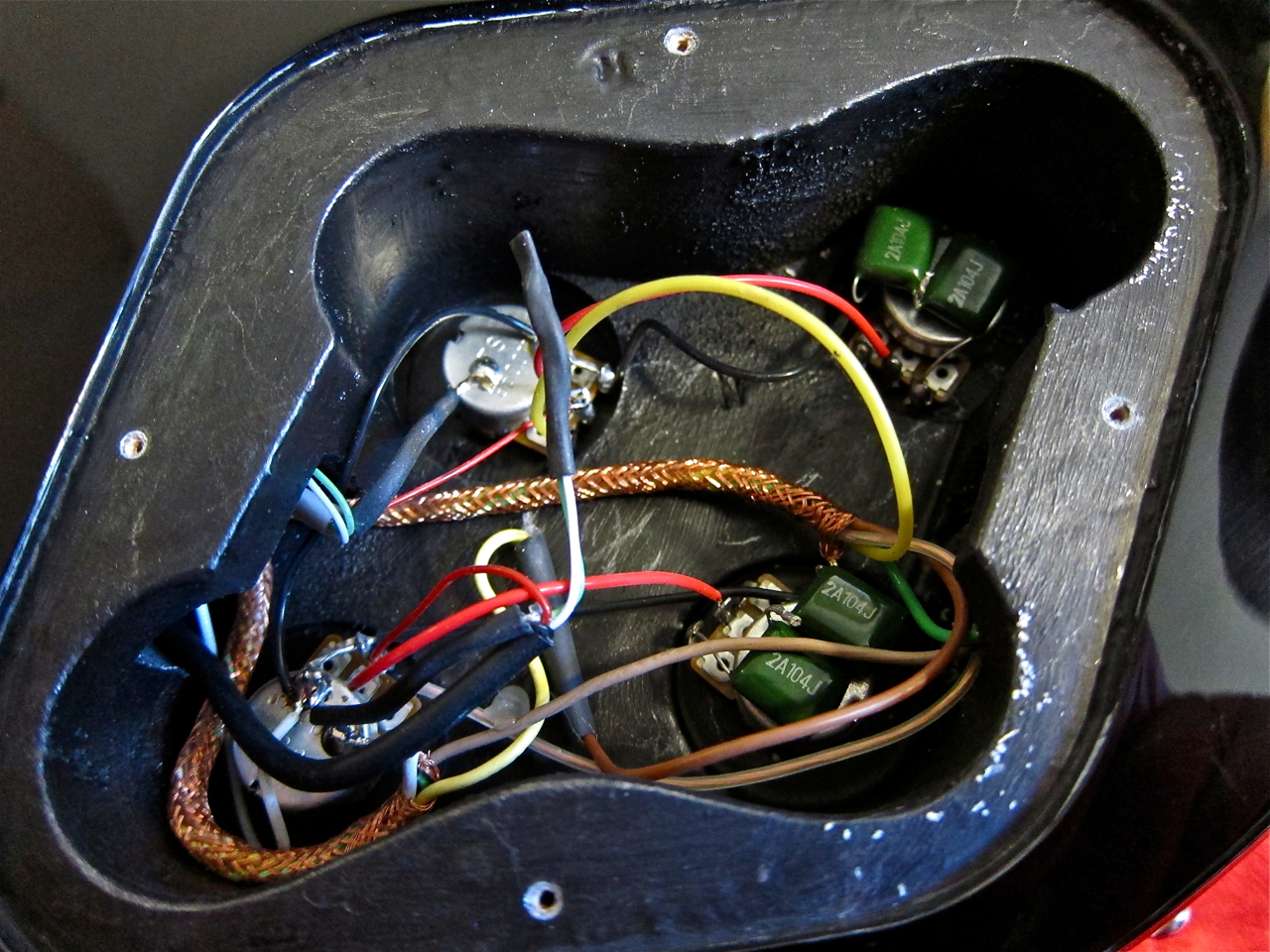
Quality components, clean soldering and thorough screening, using conductive paint and an aluminium-lined lid, get the thumbs up from this here reviewer.
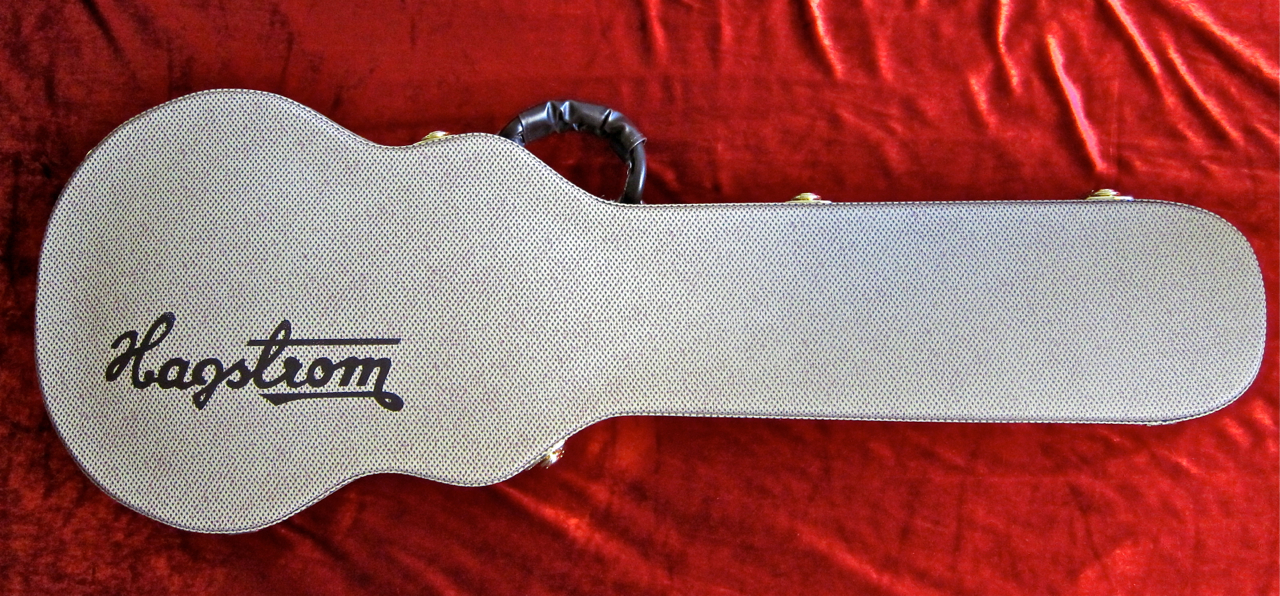
A sturdy and beautiful Hagström-case is included in the Northen Swede’s price.
****
The Hagström Northen Swede’s well-rounded neck profile feels great to me. The nicely polished frets and the ’board’s 12-inch camber make for a fast and effortless playing experience.
Thanks to the fantastic interplay between the tone filter -switch and the guitar’s controls, the tonal options afforded by this Swede are virtually limitless. The Lundgren-designed pickups have a very clear and clean basic tonal character, which enables you to make the most of the Northen Swede’s passive electronics.
In my opinion Hagström’s Northen Swede is a top-quality guitar offering a great deal of tonal variation to the discerning guitar connoisseur. In light of its Czech origin, I must say that the Northen Swede truly represents quality European workmanship at a very moderate price.
All the following audio clips have been recorded with the tone filter -switch starting at off, then going to moderate roll-off, with the last phrase using the full treble cut selection:
Tässä jutussa tutustutaan kahteen Hagström-malliin: puoliakustinen Viking Deluxe Baritone on Kauko-Idästä peräisin oleva baritonikitara matalien riffien ystäville, kun taas upouusi Northen Swede valmistetaan käsityönä Tšekinmaassa.
****
Hagström Viking Baritone (katuhinta noin 600 €) on Viking-perheen uusi, pitkäkaulainen tulokas, jolla on samat tyylikkäät muodot ja sama puoliakustinen perusrakenne kuin muissakin Viking-malleissa.
Luja vaahterakaula on liimattu kauniiseen, muotoon prässätystä vaahteravanerista valmistetuun runkoon.
Hagströmin lapa huokuu 1950-luvun jazzkitaroiden äärimmäistä tyylikkyyttä, monikerroksisella reunalistoituksellaan ja siistillä upotustyöllään.
Satula taas on laadukkaasta, kitkaa vähentävästä Black Tusq -materiaalista.
Myös Hagström-virittimet ovat nykyaikaista suljettua sorttia.
Hagström-kitaroiden erikoisuuksiin kuuluu Resinator-otelauta. Resinator on keinotekoinen materiaali puusta ja hartsista, jonka sanotaan olevan soundillisesti hyvin lähellä eebenpuuta.
Nauhatyö on toteutettu testisoittimessa hyvin siististi, ainoastaan nauhojen päät olisivat voineet olla vielä hivenen verran pyöreämmät.
Vanerikopan sisällä on paksu keskipalkki mahongista, joka kulkee kaulaliitoksesta koko matkan rungon läpi.
Keskipalkki tekee kitarasta puoliakustisen (muuten se olisi täysiakustinen). Se parantaa kitaran atakkia ja sustainea (= soinnin kestoa), ja se vähentää myös ratkaisevasti ontosta kopasta syntyvän feedback-ulinan vaaran.
Mikrofonivarustus on Viking Baritonessa optimoitu juuri baritonikäyttöä varten:
Kaulamikrofonina toimi Hagströmin uusi P-Urified-malli, joka on peeysikymppinen humbuckerkoossa. Yksikelaisen käyttö kaulan lähellä pitää matalat taajuudet siistimpänä ja parantaa soundin selkeyttä.
Tallamikrofoni taas on Hagstömin selkeä-ääninen Custom 58 -malli, joka sopii maltillisen tehonsa ansiosta erittäin hyvin P-Urified-kaltaisen kaulamikin kanssa yhteen.
Kolmiasentoinen mikkivalitsin sijaitsee Viking Baritonen yläsarvella.
Vikingin kytkennössä käytetään laadukkaita isokokoisia potentiometrejä. Työnjälki on elektroniikankin osalta hyvin siisti.
Klassinen Gibson-tyylinen tallan ja kietenpitimen yhdistelmä on toimiva ratkaisu.
****
Hyvin malttillisen painoinen Hagström Viking Baritone istuu erittäin hyvin soittajan sylissä, ja roikkuu hihnassakin melko rauhallisena erittäin lievästä kaulanpainoisuudestaan huolimatta.
Kaulaprofiili on tuhti, mutta ei missään nimessä ylipaksu ”D”. Baritonikitaran pidempi mensuuri (28″/71,1 cm) vaatii lyhyen tutustumisvaiheen, mutta lihasmuistin sisäänajon jälkeen soitto sujuu ongelmitta.
Viking Baritonen mikrofonit ovat mielestäni erinomaiset, ja ne sopivat tälle kitaralle loistavasti. Kaulamikrofonin tuoreus ja maiskuvan pähkinäinen keskialue pitää myös erittäin matalat juoksut siisteinä ja erottelevina. Maltillinen tallahumbuckeri taas pysyy hyvin dynaamisena ja avoimena.
Hagström Viking Baritone on todella maukas yleisbaritoni, joka sopii erittäin hyvin kaikille musiikkityyleille – ehkä rankimpaa Thrashia lukuunottamatta.
Tässä kaksi audiopätkää (järjestys: kaulamikki – molemmat – tallamikki):
Hagström Northen Swede (katuhinta noin 1.200 €) on eurooppalaisvalmisteinen laatuversio vanhasta ruotsalaisesta klassikkokitarasta.
Kyseessä on liimakaulainen lankkukitara, joka on veistetty otelautaa lukuunottamatta täysin afrikkalaisesta mahongista (huom: kuvassa muovikansien suojamuovit vielä paikoillaan).
Lapaan on upotettu sarjan nimeä kantava, helmiäismuovista tehty laatta.
Hagström-virittimien välityssuhde on 18:1, ja niiden tuntuma on hyvin sulava.
Northen Sweden Resinator-otelauta näyttää eloisemmalta kuin Viking Baritonen vastine. Nauhatyö on erittäin huolellinen.
Hagström-kaulojen erikoisuus piilee firman erittäin lujassa H-Expander-kaularaudassa. H-profiiliseen alumiinikuoreen asennettu kaularauta istuu erittäin tiukasti kaulapuussa, minkä ansiosta kaula värisee voimakkaamin.
Tune-o-matic-tyylisen tallan aisapari on Hagströmin oma kieltenpidin, jossa kielet ankkuroidaan erillisiin metalliblokkeihin.
Ruotsalainen mikkiguru Johan Lundgren on mies Northen Swede -mallin loistavien mikrofonien takana. Kyseessä ovat No. 2 -nimisiä kuorellisia humbuckereita, jotka rakennetaan miedoilla Alnico 2 -magneetteilla.
Hagström Swedessä on kaksi kolmiasentoista vipukytkintä: kitaran olkapäässä istuva kytkin on tavallinen mikkivalitsin, kun taas sarven kytkin on tone-filtteri.
Filtterikytkimen väliasento on neutraali, ylös-asennossa astuu kuvaan mieto preesens- ja diskanttisuodin, kun taas ala-asentolla valitaan rajumpi treble-filtteriä.
Säätimet toimivat perinteisellä, Les Paul -tyylisellä tavalla – kummallekin mikrofonille on omat volume- ja tone-säätönsä.
Laadukkaita komponentteja, siistiä juotostyötä ja toimiva häiriösuojaus grafiittimaalilla ja alumiinilla vuoratulla kannella ilahduttavat testaajan.
Laadukas Hagström laukku kuuluu Northen Sweden hintaan.
****
Hagström Northen Swede -kitaran täyteläinen kaulaprofiili istuu todella mukavasti ainakin minun käteeni. Sulavaksi työstetyt nauhat ja otelaudan loiva kaarevuus (12″) tekevät soittotuntuman erittäin helpoksi.
Tone Filter -kytkimen ja säädinosaston saumattomasta yhteistyöstä syntyy lähes rajaton soundien leikkikenttä. Lundgren-mikkien hyvin tuoreen perusäänen ansiosta pystyy hyödyntämään täysin kaikki kytkennän tuomia mahdollisuuksia.
Northen Swede on mielestäni loistava ja erittäin monipuolinen kitara laatutietoiselle, joka sopii genrelle kuin genrelle. Soittimen tšekkiläisen alkuperänsä vuoksi pidän pyydettyä hintaa hyvin kohtuullisena – Northen Swede edustaa eurooppalaista laatua reiluun hintaan.
Kaikissa seuraavissa ääniesimerkeissä soittojärjestys on Tone Filter -pois päältä –> mieto suodatus –> rajumpi diskanttileikkaus:
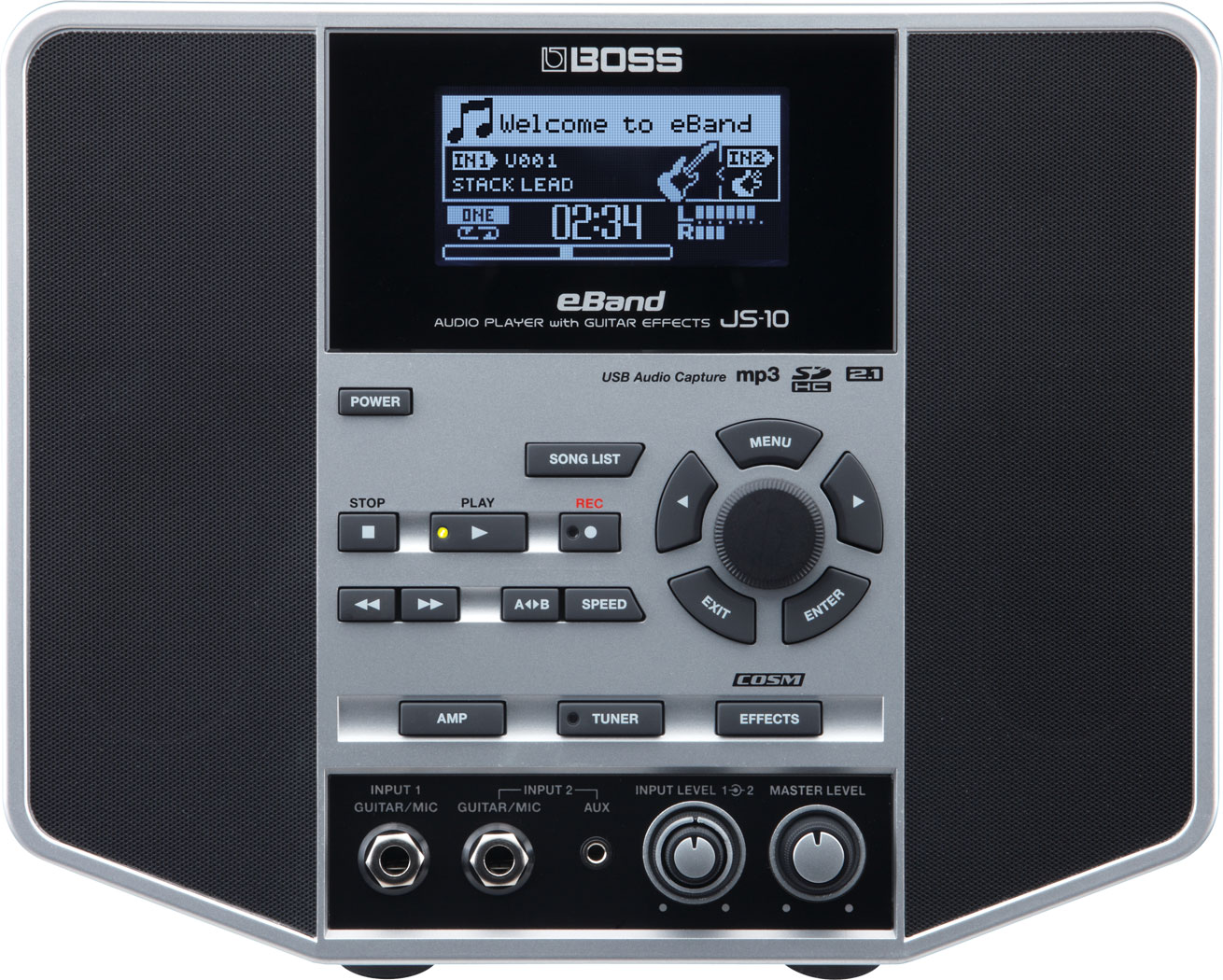
The new Boss JS-10 eBand (current RRP in Finland: 422 €) is the perfect companion for all of a guitarist’s entertainment, practicing and teaching needs.
The Boss JS-10 combines a wave-/mp3-player with a high-quality multi-effects unit – chock full with amp models and effects taken from the GT-100 – two guitar inputs, special features for practicing, as well as a full-toned 2.1 loudspeaker system.
The front panel is the eBand’s command central with a very clear and concise layout.
The playback and recording functions are catered for by the usual transport buttons we all know so well. Backing tracks (the eBand calls them songs), effects and menus can be accessed via their own buttons, and then changed using the navigation buttons and the large data wheel.
The lowest row of buttons gives you quick access to the current amp model and effect chain, as well as the digital tuner.
The lowermost, black section is home to the two instrument (or microphone) inputs. You can even plug in an outboard stereo signal source into channel two’s mini-jack if your keyboarder turns up for a little jam.
You can find all other connectors on the unit’s back:
There are two usb-port – one for connection to your computer, one for a usb-stick. You can connect a footswitch or an expression pedal to the JS-10, to switch effects on-the-fly, start or stop songs, or for wah-wah or volume pedal duties.
There is also a slot for a SD/SDHC-card. The SD-card included in the package also includes the eBand Song List Editor software, which enables you to sort and swap eBand-songs using your computer, as well as for ripping CD-tracks directly into eBand-mode (PC and MAC supported). The necessary drivers for using the JS-10 as an external sound card are also included on the SD-card.
Two analogue outputs are provided in the form of a pair of RCA-connectors and one mini-jack.
Thanks to its large woofer – installed into the unit’s base, firing down – the Boss JS-10’s sound is considerably fatter and punchier than what you’d expect from such a compact piece of gear.
****
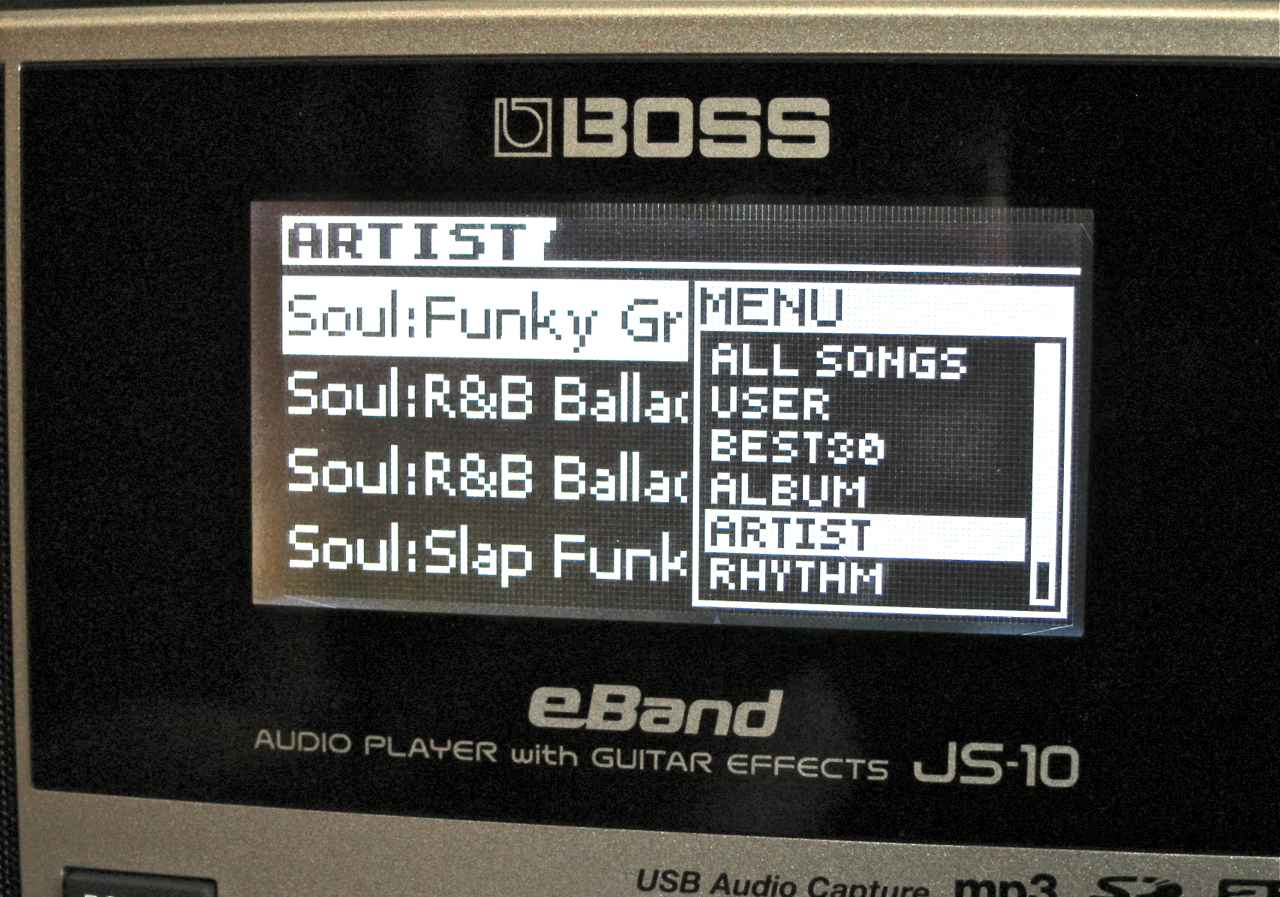
The Boss comes preloaded with a large number of eBand-songs.
eBand-songs are basically very long audio loops, sorted according to their musical genre and BPM. The library includes drums only -songs, as well as eBand-songs with full arrangements for you to solo over.
The preloaded eBand-songs are all of a very high quality and musicianship. The tracks groove thanks to the fact that they’ve been recorded using real musicians, and not just programmed midi-patterns!
Still, you are free to use whatever you choose as your backing track in the JS-10 – regardless of whether the tracks are imported using the Song List Editor or whether you’re playing them directly off a usb-stick as wave- (44,1 kHz/16 Bit) or mp3-files (64-320 kbps).
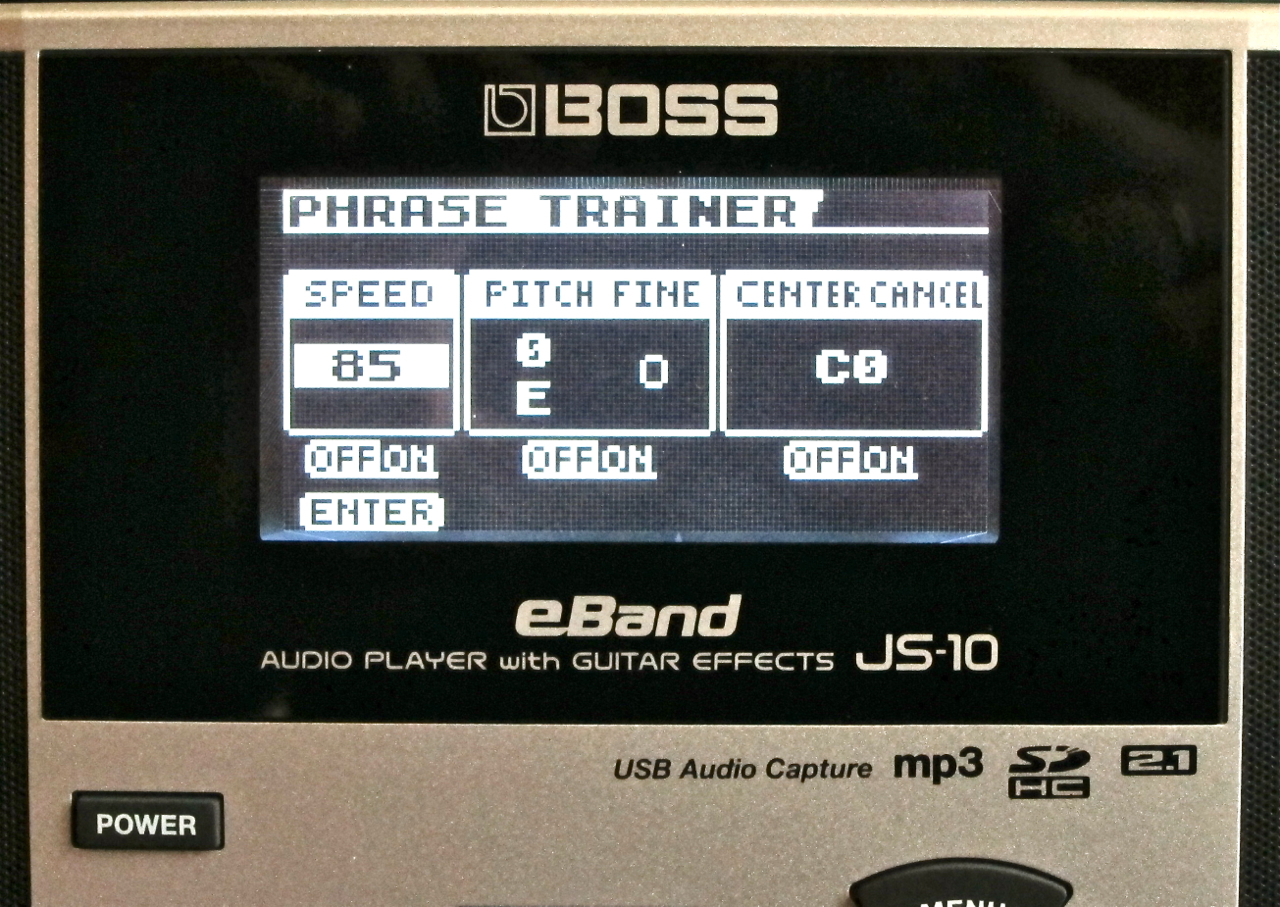
To access Boss’ Phrase Trainer -section you have to push the Speed-button:
As their names give away, Speed is used for slowing down and speeding up the playback of the current song, while Pitch is responsible for changing the pitch.
Center Cancel will be familiar to most from many Karaoke DVD-players, using phase cancellation to mute parts of the stereo image. The effect can be assigned to work only on the stereo picture’s middle…
…but one of the JS-10’s specialities is its ability to cancel out signals from elsewhere in the panorama as well (say, for example, the lead guitar in a 1960s, ping-pong-stereo recording).
How well the Phrase Trainer -section’s features work is tied directly to the technical quality and resolution of the chosen eBand-song. This means that a wave-file or a higher quality mp3 (256 or 320 kbps) will sound more natural even with larger changes, than a lower resolution mp3.
This is what the built-in tuner looks like.
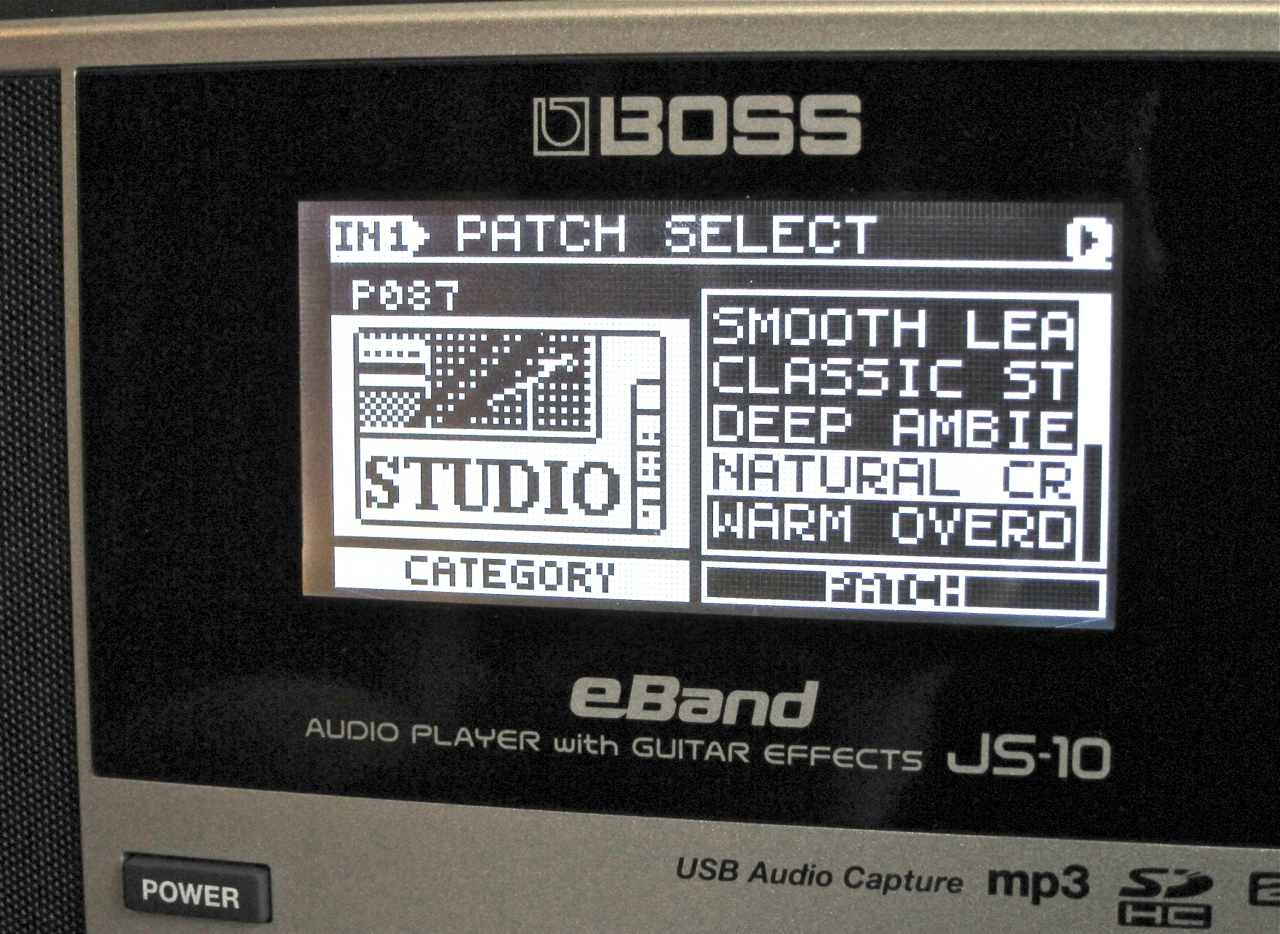
The eBand contains a long list of factory effect patches, which can be sorted according to genre. There are even a few patches for vocals and bass.
Additionally, you can also programme your own effect patches and store them in the effect section’s user library.
Each guitar input is assigned their own effect patch.
The eBand-songs already factory-loaded into the JS-10 are all tied to predetermined effect patches.
For quick editing Boss’ EZ Edit -function is most convenient. No need to fiddle with many different parameters – you simply move the cursor in the desired direction on the Solo/Backing- and Soft/Hard-axes and change the amount of ambience in the sound, and you’re set.
The Patch Edit -menu, on the other hand, gives you detailed access to all effect parameters in the signal chain.
****
There aren’t really many direct competitors to the Boss JS-10, which is kind of strange: Using the eBandin really is a faster and smoother ride than having to deal with a bunch of different devices, as well as their power supply units and connecting leads.
The Boss JS-10 is a great piece of gear, both for getting your own chops up, as well as for guitar teaching. It is straightforward in use, the effects sound great, the Phrase Trainer allows you to get to grips with devilish details, and you can check on your progress by recording your playing.
Here are three short pieces I recorded to demonstrate the quality of the eBand-songs and effects on offer:
The Zoom G5 (current price in Finland: 265 €) is the Japanese company’s brand-new flagship guitar effect pedalboard.
The easy-to-use G5 is built with the same user interface as the smaller G3 and B3 units, which were reviewd by Kitarablogi.com earlier. When in Home-view – that is when the single effects making up an effect patch are shown in the unit’s displays – the Zoom works just like like a pedalboard containing separate effects: Each effect has its own display showing an icon that gives you a good idea of the type of effect in use, and the most important parameters can be adjusted directly via three control knobs beneath each display.
The Zoom G5 broadens this idea by offering up to nine effects per patch, even though the unit only has four sets of displays, knobs and footswitches. This problem is solved by using the Scroll-buttons above the displays, which enable you to change which part of the effect chain you are currently viewing. Using the Scroll-buttons you call up the effects you want to edit (or turn on and off on-the-fly). When switching to another effect patch the G5 automatically stores your last Scroll-position, so when you return to the patch you’ve just left your choice of effects will be called up into the displays.
The plethora of different effect types on offer in the Zoom G5 is truly mind-boggling – you can choose between 145 different effect types, from a wealth of excellent amp models and basic effects to some really far out synth and sci-fi effects.
The effect patches are stored in 99 banks of three patches each. The G5 comes chock full of fine presets, but everything can be changed and overwritten by the user.
The pedal board offers two more cool features:
The first one is Zoom’s Z-Pedal which adds left-right-functionality to the traditional up-down movement. With the Z-Pedal you are able to control several effects or parameters simultaneously, which opens the door to some far-out sound manipulation.
After the digital effects, but before the analogue outputs, Zoom have placed a genuine Tube Booster to warm up your tones or boost you solos. The Tube Booster offers a whopping 16 dB of boost!
Naturally, the G5 also includes the G3’s rhythm box and cool looper.
The back panel offers all the connectors you’d expect from a pro-class digital effects pedalboard, catering for your live and studio needs.
You can update the G5’s firmware via the unit’s usb-port. You can also use your computer to design, edit and share your own effect patches, once you’ve downloaded Zoom’s free Edit & Share -software (PC & MAC).
The G5 also works as a usb-soundcard (44,1 kHz/16-bit) in conjunction with your audio-sequencer (PC & MAC). If you don’t already own recording software, don’t worry – Zoom is throwing in Steinberg’s Cubase LE 6 to get you recording right away.
****
Zoom’s G5 is a fantastic unit and easy to use. The variety of tones and effects on offer is so great that describing everything in words would take up way too much space. Suffice it to say that in my opinion Zoom’s latest offering is their best guitar pedalboard so far! In light of the sound quality on offer, as well as the unit’s sturdy physical build, the price of the Zoom G5 seems like a real bargain to me.
Here are a few soundbites using some of the factory patches:
Yksi Ampegin tämänvuotisista NAMM-uutuuksista on firman toinen pikkustäkki – Ampeg Micro-CL.
Suuren suosion saanut edeltäjä – Micro-VR (yhä saatavilla) – on pienennetty versio 1970-luvun Ampeg SVT -vahvistimesta, jolla on 200:n watin teho. Upouusi Micro-CL taas on satawattinen miniatyyri 80-luvun Ampegista (nykyinen SVT-CL).
Ampeg Micro-CL -stäkki (ovh: 505 €) tuo firman tyylikkyyttä helposti kannettavaan muotoon.
Transistorinuppi painaa vain kuusi kiloa, ja siihen kuuluva kaappi ainoastaan 15 kiloa. Koko ministäkki jää korkeudeltaan juuri ja juuri alle 80 cm – se mahtuu siis helposti tavallisen henkilöauton takakontiin.
Micro-CL-nuppi tarjoaa kaksi tuloa – yksi passiivi- ja toinen aktiivibassolle – ja kolmikaistaisen EQ-osaston.
Koska kyse on tässä myös harjoitusvahvistimesta, nuppiin on lisätty Aux-tulo (minijakki, omalla volyymisäätimellään) mp3-soittimelle. Myös kuulokelähtö löytyy etupaneelista.
Takapaneeliin on sijoitettu Micro-CL:n linjatasoinen lähtö, sekä efektilenkin liittimet.
Stäkin kaappi – Ampeg MC-210E – on rakennettu samalla Infinite Baffle -periaatteella kuin firman perinteiset, valtavankokoiset 8 x 10″ -kaapit.
Täysin suljetussa kaapissa on miniversiossa kaksi kymppituumaista kaiutinta. Etukangas on kiinnitetty autenttisesti tarranauhoilla.
Ampeg-kaappi vaikuttaa erittäin kestävältä, ja työnjälki on yhtä laadukas kuin Ampegin täysikokoisissa tuotteissa.
Takalevyltä löytyy MC-210E:n tulo.
Tässä näkyy Ampeg Micro-CL ja tavallinen bassokeissi – kyllä, stäkki on todella pieni…
****
Vaikka vahvistin onkin pienikokoinen, on syytä muistaa, että kyseessä on kuitenkin aito, satawattinen Ampeg!
Yllätyin kuinka paljon ääntä tästä pikkujärjestelmästä lähti. Olohuonekäytössä master-säädin pysyy varmasti jossain alkumetreillä (kolmosen tienoilla), muuten naapurisopu on vaarassa jäädä innokkaan bassosoiton jalkoihin.
Treenikämpässä – jossa äänitin myös tämän jutun esimerkkipätkät – kävi hyvinkin selväksi, että Micro-CL:n voimavarat riittävät mainiosti tavalliseen harjoituskäyttöön, ja jopa monille pienille keikoille.
Soundiltaankin Ampegin pienokainen on täysiverinen Ampeg: soundissa on mukana aimo annos lämpöä, ja firman vahvistimille tyyppillinen rouhea ja murea keskialue on tässäkin hyvin esillä.
Kun master-säädin on lähes täysillä, mukaan kuvaan astuu myös hyvin putki-tyylinen särö, mutta silloin korvatulppien käyttö on jo suositeltavaa.
Vaikka Ampeg Micro-CL -stäkki onkin ulkomitoiltaan erittäin söpö, se ei ole lelu vaan oikea bassovahvistin, joka tarjoaa aidon Ampeg-soundin kätevässä pakkauksessa.
Seuraavat esimerkkipätkät on soitettu Rickenbacker 4003 -bassolla (vuosimalli 1987, aina kaulamikki ensin):
Uusi Boss JS-10 eBand (suositushinta: 422 €) on kitaristin viihde-, harjoitus- ja opetuskeskus yhdessä kätevässä paketissa.
Boss JS-10:ssä yhdistyvät wav- ja mp3-soitin, efektilaite laadukkailla multiefekteillä ja vahvistinmallinnuksilla (lainattuja suoraan GT-100-pedaalista), kaksi tulokanavaa, erilaiset harjoitukseen sopivat apuvälineet, sekä laadukas 2.1-äänijärjestelmä (kokonaisteho 12 W).
eBandin etupaneeli on laitteen komentokeskus, ja sen rakenne on ilahduttavan selkeä.
Taustaraitojen toistoon – ja oman soiton äänitykseen – löytyy tutut transportti-näppäimet. Biisien ja efektien valintaan, sekä muihin menuvalintoihin ja parametrisäätöihin löytyy selkeät navigointinapit ja iso datapyörä.
Viimeiset kolme nappia tarjoavat meille kitaristeille suoran pääsyn vahvistimallinnukseen, efektiketjuun sekä viritysmittariin.
Mustataustaiseen master-osioon on sijoitettu laitteen kaksi analogista tuloa, joihin voi liittää joko sähkökitaran (tai -basson) tai laulumikrofonin. Kakkostulon mini-jakkiin (stereo) voi myös kytkeä ulkoisen mp3-soittimen tai bändikaverin synan yhteistä harjoittelua varten.
Kotelon kääntöpuolelta löytyy kaksi usb-porttia – yksi tietokonetta varten, toinen usb-tikulle.
Pedaali-jakkiin voi kytkeä joko jalkakytkimen (tai tuplapedaalin) tai ekspressiopolkimen. Kytkimellä saa potkaistua biisit käyntiin tai vaihdettua efektipatcheja ilman käsiä. Ekspressiopedaali taas toimii Boss JS-10:ssa joko wah-pedaalina tai volumesäätimenä.
Oikeassa laidassa on paikka SD/SDHC-kortille (1-32 GB). Boss eBandin mukaan tulevalla SD-kortilla on eBand Song List Editor -softa, jolla pystyy kätevästi järjestellä eBand-biisejä, siirtää niitä tietokoneen ja JS-10:n välillä sekä ripata biisejä suoraan CD:ltä eBand-muotoon usb-johdon kautta (PC ja Mac). Myös eBandin ajurit on pakattu mukaan, minkä ansiosta JS-10:tä voi käyttää ulkoisena usb-äänikorttina, ja hyödyntää eBandin laadukkaita efektejä sekvensseriäänityksissä.
Analogiset lähdöt on sijoitettu laitteen kylkeen – rca-pari sekä mini-jakki.
Ison subbarinsa ansiosta kätevän kokoisen JS-10:n soundi on huomattavasti muhkeampi ja isompi kuin luulisi näin kompaktista laitteista irtoavan.
****
Bossin mukana tulee erittäin tuhti paketti erilaisia eBand-biisejä.
Valmiit eBand-biisit ovat periaatteessa pitkiä audiolooppeja eri tyylilajeissa ja nopeuksissa. Biisikirjastosta löytyy sekä sellaisia kappaleita, jotka ovat pelkkiä rumpukomppeja, että kokonaisia bänditaustoja, joiden päälle voi sooloilla.
Valmiiden eBand-biisien laatu on erittäin korkea ja taustat groovaavat ja svengaavat kuin hirvi. Taustat on nimittäin äänitetty oikeilla soittajilla, sen sijaan että ne olisi luotu ohjelmoimalla midi-soittimia!
Taustoina voi kuitenkin käyttää myös Song List Editorilla ripattuja biisejä tai suoraan usb-tikulta soitettuja wav- (44,1 kHz/16 Bit) tai mp3-tiedostoja (64-320 kbps).
Speed-näppäimen takaa löytyy Bossin Phrase Trainer -osasto:
Speed-toiminto muuttaa soivan biisin nopeutta sekä ylös että alaspäin, ja Pitch käytetään audion transponointiin ja/tai hienovirittämiseen.
Center Cancel taas on monille tuttu karaoke-laitteista, ja se poistaa vaihemanipuloinnilla tehokkasti osan stereokuvan signaalista. Efekti voidaan kohdistaa perinteisesti stereon keskelle…
…mutta JS-10:n ässä hihassa on vapaasti kohdistettava poistaja, jolla pyyhkäistään tehokkaasti myös muualla stereo-kuvassa esiintyviä soittimia (esim. 1960-luvun ping-pong-stereossa).
Phrase Trainerin toiminta ja lopputuloksen soundi on suoraan sidoksissa audion tekniseen laatuun – siis: wav-tiedosto tai iso mp3-audio (256 tai 320 kbps) kestää isompiakin muutoksia paremmin kuin matalalla resoluutiolla pyörivä mp3.
Tältä näyttää Bossin viritysmittari.
eBandistä löytyy pitkä lista valmiita efektipatcheja, joita voi valita myös tyylilajin mukaan. Jopa muutama valmis laulu- ja bassoohjelma on mahdutettu mukaan.
Valmiiden efektien lisäksi voi luonnollisesti ohjelmoida myös omia efektipatcheja, joita pystyy kirjoittamaan muistin user-osioon.
Kummallekin tulolle on tarjolla oma efektiohjelmansa.
Laite valitsee omatoimisesti jokaiselle eBand-biisille siihen sopivan efektiohjelman.
Soundin nopeaan hienosäätimiseen voi käyttää Boss-multiefekteistä tuttua EZ Edit -toimintoa, jossa kursoria liikkumalla ristikossa saadaan nopeasti ja helposti soundi halutunlaiseksi. Ei tarvitse siis ruuvailla montaa parametriä peräkkäin, vaan tässä toimitaan pehmeä-aggressiivinen, komppi-soolo ja kuiva-kaikuisa akseleilla.
Patch Edit -ikkunoissa pääsee sitten yksityiskohtaisesti jokaisen efektiparametriin kiinni.
****
Boss JS-10:n kaltaiset laiteet ovat erittäin harvinaisia, mikä on tavallaan ihmeellistä: eBandin käyttö on nimittäin paljon sujuvampaa, nopeampaa ja siistimpää kuin kamppailu erillislaitteiden johto- ja adapteriviidakossa.
Boss JS-10 on loistava vehje, sekä harjoitteluun kotioloissa, että kitaraopetukseen. Se on erittäin mutkaton laite, jossa on hyvä soundi, toimvat Phrase Trainer -ominaisuudet, loistavat efektit, sekä mahdollisuus oman soiton äänittämiseen.
Tässä on kolme lyhyttä pätkää, joissa soitan soolo-osuudet JS-10:n omien eBand-biisien päälle:

































 Kitarablogi.com – Finland's premier Guitar and Bass blog