The Fender Telecaster’s 75th Anniversary – seven Tele-type guitars reviewed

****

Alkuperäinen suomenkielinen juttu on luettavissa TÄÄLLÄ.

****
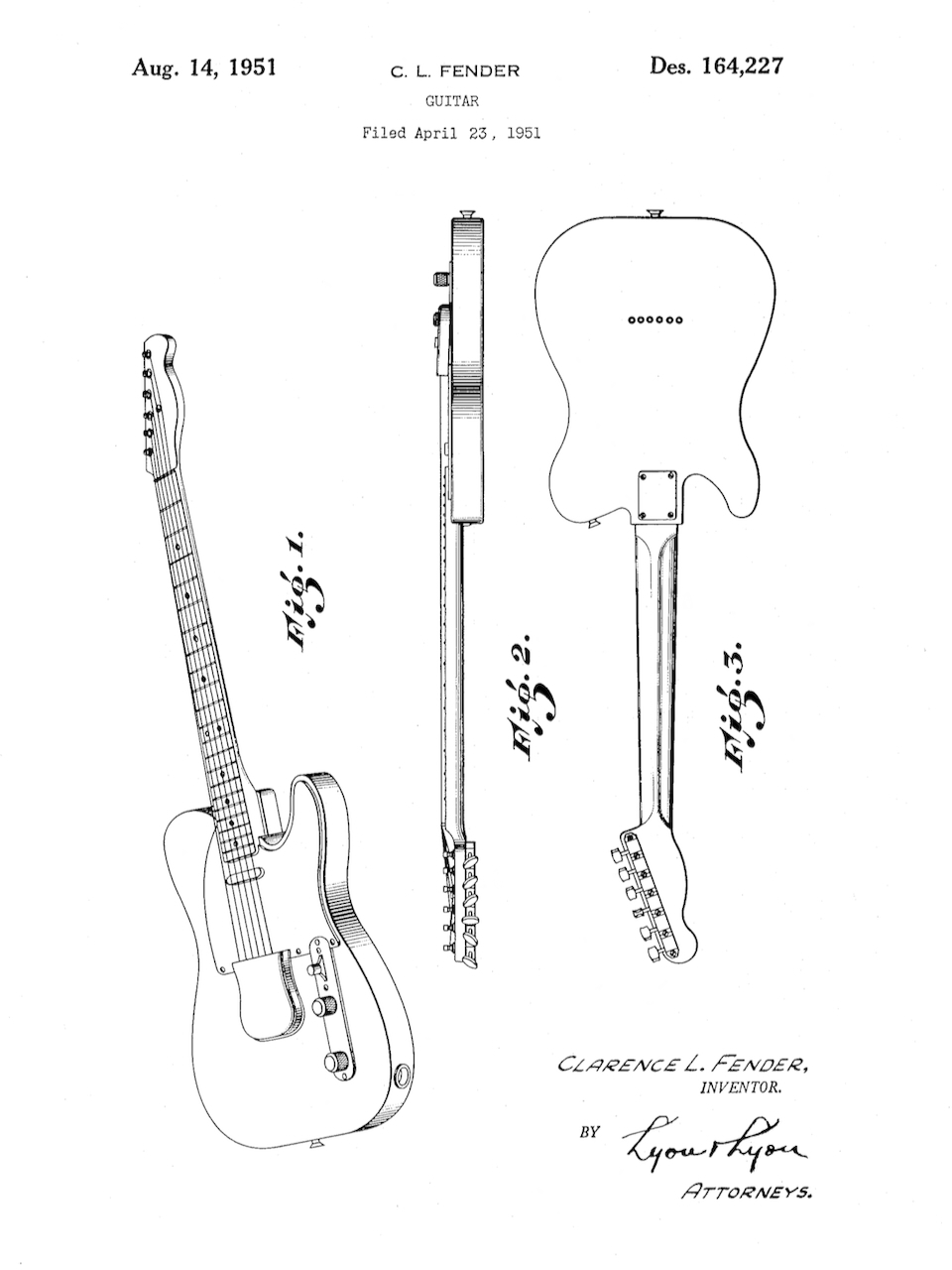
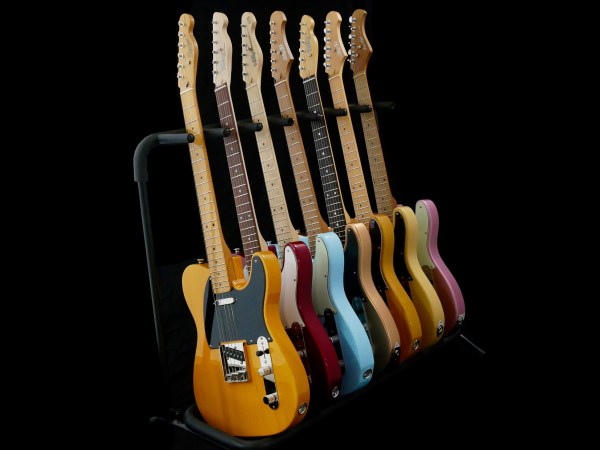
Leo Fender’s Telecaster – which started life as the Esquire and Broadcaster – turns 75 years this year. Reason enough for us to check out seven of its descendants in this review.
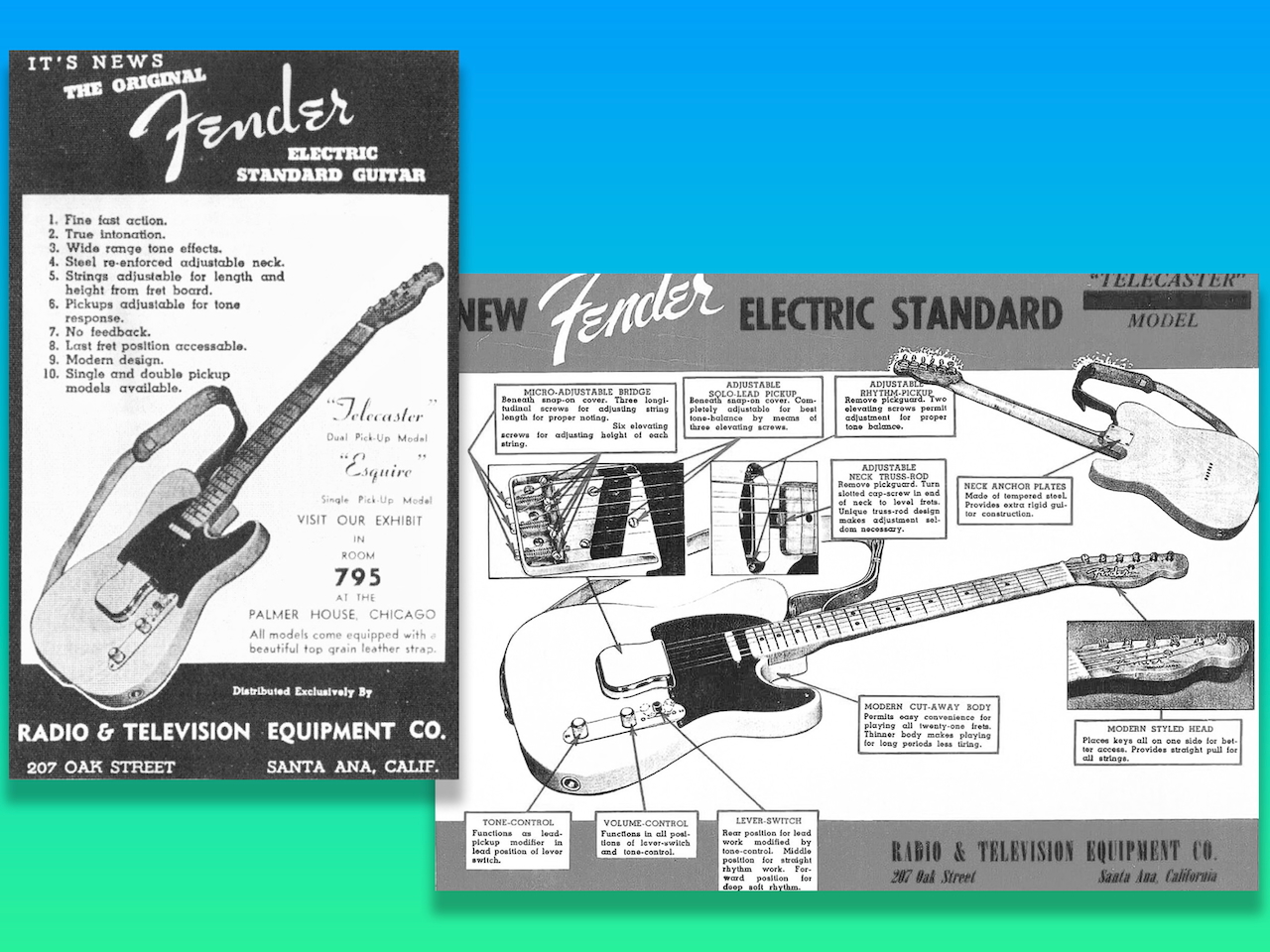
Because the Telecaster is such an old model, there is a huge range of different Tele-style instruments available today – from reissues to ultra-modern metal-style instruments. I chose six “traditional” Teles for this test, which in this context means they have a bolt-on neck, two single-coil pickups, and a traditional bridge. In addition to these, there is one instrument with the traditional neck pickup replaced with a P-90.

Let’s proceed in order of ascending price…

****

Jet Guitars JT-350 Butterscotch (Tampereen Musiikki; 299,– €)
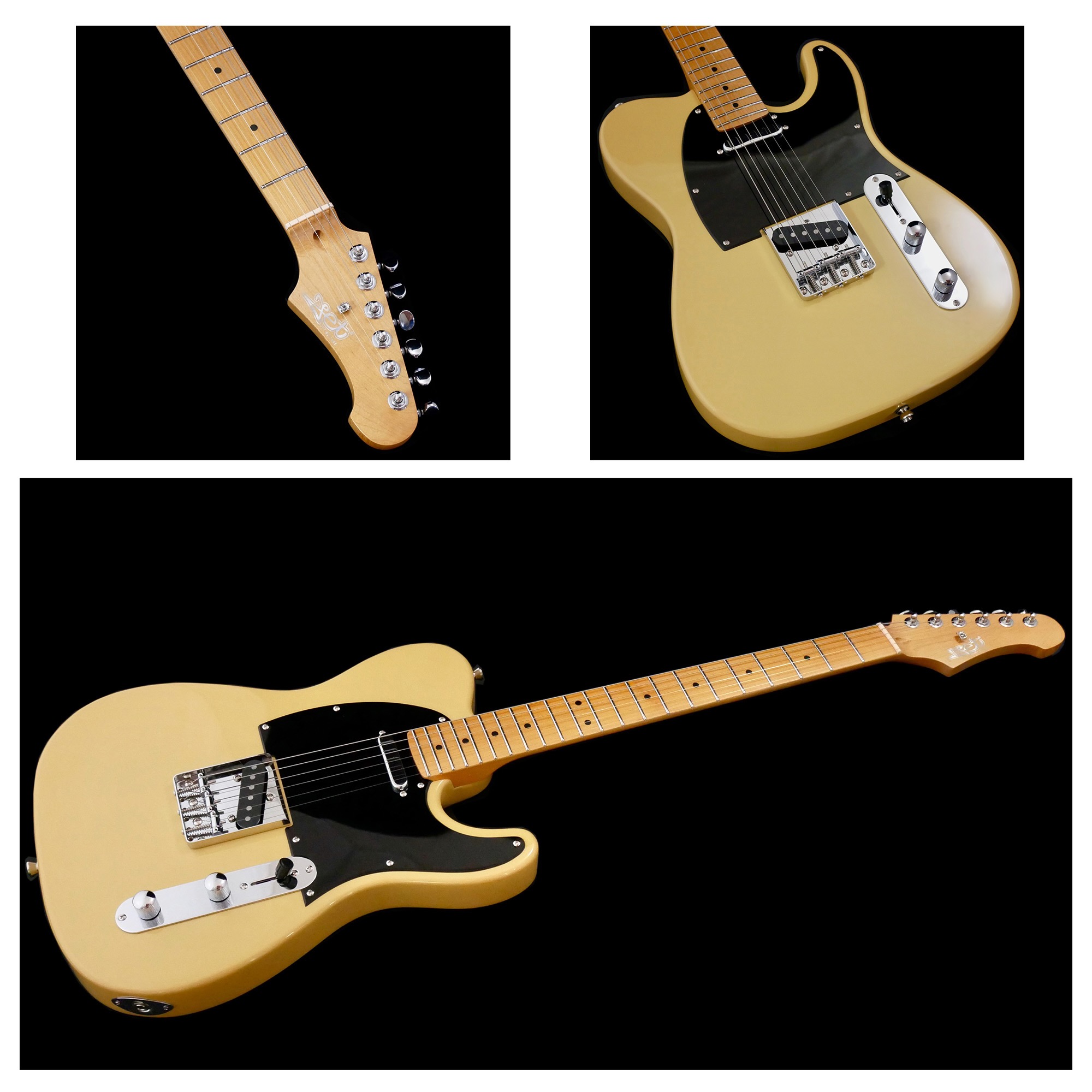
Jet Guitars is still a relatively young brand, where Slovenian design and Chinese production meet.

Jet was the first guitar brand sold in Finland to offer torrefied maple as a neck material in affordable guitars, and the Jet JT-350 Butterscotch is no exception in this regard. As its name suggests, the JT-350 Butterscotch is the company’s take on the early 1950s ”Blackguard Tele”, where the maple neck is attached to a creamy yellowish body, on which a single-layer black pickguard is installed.

However, the Jet JT-350 is not 100% traditional, with the guitar including several sensible updates. For example, the neck joint is implemented much more comfortably than the original with individual screws, as well as a rounded heel. The truss rod is two-way, which means that it can both straighten the neck and add relief to it, should this be required. The tuners are modern enclosed models.

The playing feel is positively affected by the larger-than-vintage frets, as well as the flatter fingerboard radius. In the 1950s, Messrs. Fender and Fullerton chose a relatively steep 7.25 inch curvature for the Fender fingerboards, which makes it very comfortable to pick chords, but at the same time makes it difficult to bend (especially on the high frets). Gibsons of the same era had a much gentler 12 inch radius – the neck feels slightly wider near the saddle, but string bending is much easier. Since the 1980s, Fender Instruments have often used a 9.5 inch radius, which is a very good compromise between the Fender and Gibson worlds; this is exactly the radius that can be found on the Jet JT-350 Butterscotch model.

The strings are anchored to the body in a vintage style. The Jet’s traditional bridge is a high-quality Wilkinson model with three steel bridge saddles, each with its own groove.

The Jet JT-350 offers two vintage-style alnico pickups. The height of the neck pickup can be easily changed without removing the plickguard.

The body of this Jet model is finished with a glossy varnish, while the neck has been given a very thin satin finish, which also gives the neck a modern feel.

The guitar is very comfortable to play – the neck has a medium D profile – and the review instrument is light (3.4 kg).

The JT-350’s pickups display excellent balance, a healthy vintage-style sound, and a moderate output level. This is a fairly inexpensive, but high-quality representative of its kind.

****

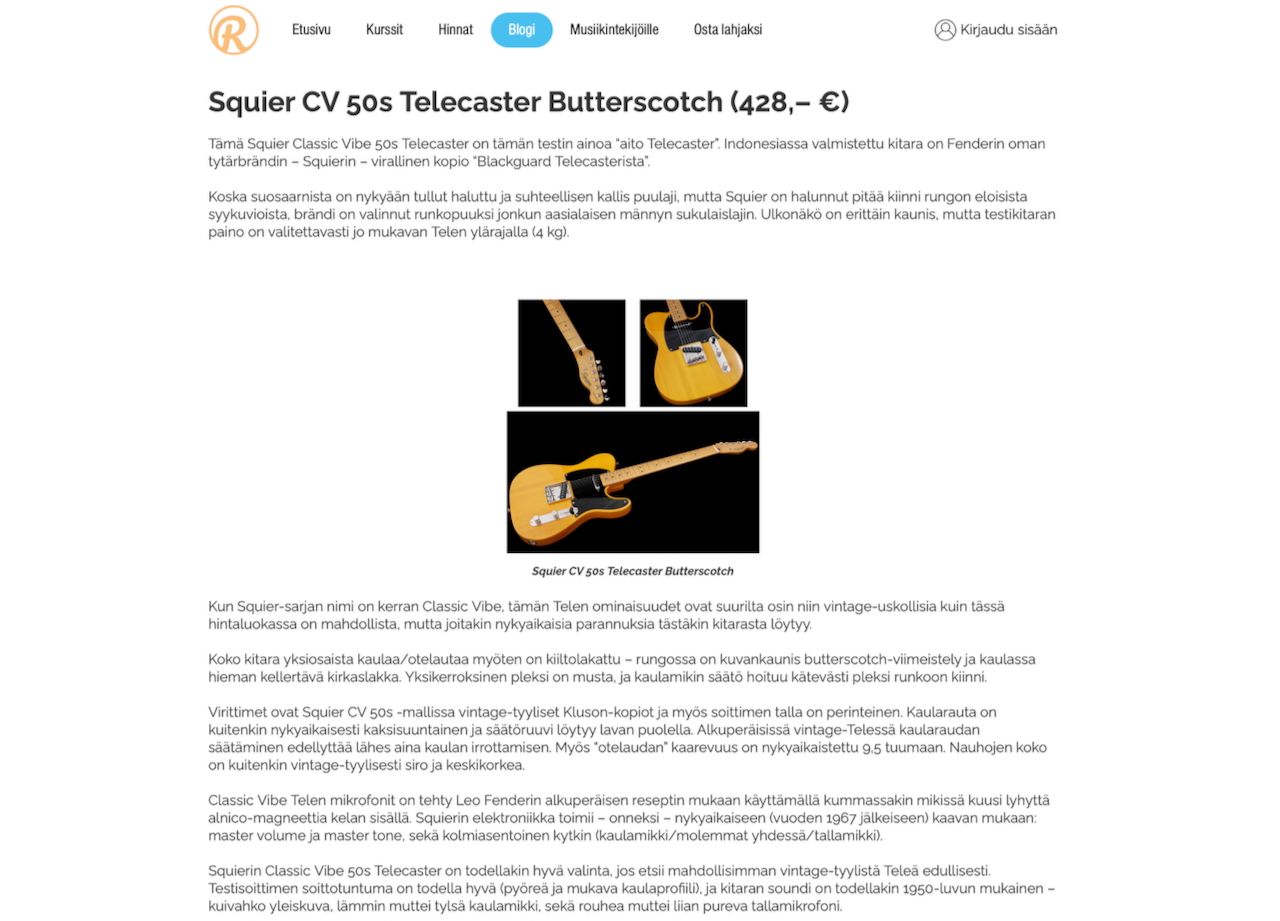
Squier CV 50s Telecaster Butterscotch (Verkkokauppa.com; 445,– €)
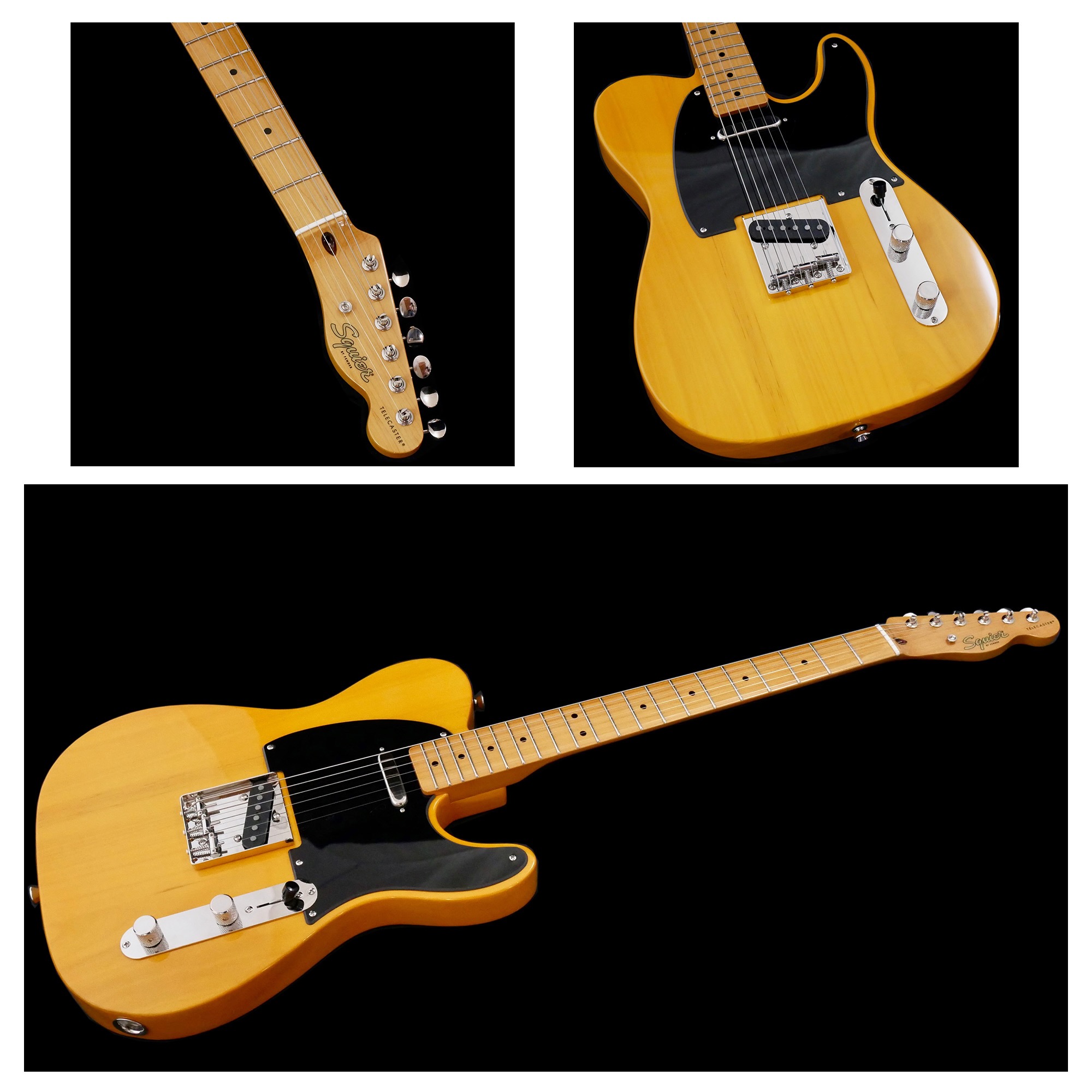
This Squier Classic Vibe 50s Telecaster is the only “genuine Telecaster” in this review. Made in Indonesia, the guitar is an official copy of the “Blackguard Telecaster” made by Fender’s own subsidiary brand – Squier.

Since swamp ash has become a sought-after and relatively expensive wood these days, but Squier wanted to keep the body’s vibrant grain patterns, the brand chose a type of Asian pine as the body wood. The appearance is very beautiful, but the weight of the test guitar is unfortunately already at the upper limit of a nice Tele (4 kg).

Since the Squier series is called Classic Vibe, the features of this Tele are kept as ”vintage” as is possible in this price range, but there are some modern improvements included this guitar as well.

The entire guitar, including the one-piece neck/fretboard, is gloss-lacquered – the body has a gorgeous butterscotch finish and the neck has a slightly yellowish clear lacquer. The single-layer pickguard is black, and the neck pickup adjustment is conveniently through the ’guard.

The tuners on the Squier CV 50s are vintage-style Kluson copies, and the bridge is also traditional. However, the truss rod is now bidirectional and the adjustment is located on the headstock side of the neck. In original vintage Teles, adjusting the neck almost always requires removing the neck. The “fingerboard” radius has also been updated to 9.5 inches. However, the fret size is narrow and medium-high in vintage style.

The Classic Vibe Tele’s pickups are made according to Leo Fender’s original recipe, using six short alnico magnets inside the coil in each pickup. Squier’s electronics, though, work according to the modern (post-1967) formula: master volume and master tone, and a three-position switch (neck pickup/both together/bridge pickup).

Squier’s Classic Vibe 50s Telecaster is a really good choice if you’re looking for a vintage-style Tele at a reasonable price. The playability of the test instrument is really good with its round and comfortable neck profile, and the guitar’s sound is truly 1950s-style – a dry overall voice, a warm but not wooly neck pickup, and a gnarly but not too biting bridge pickup.

****

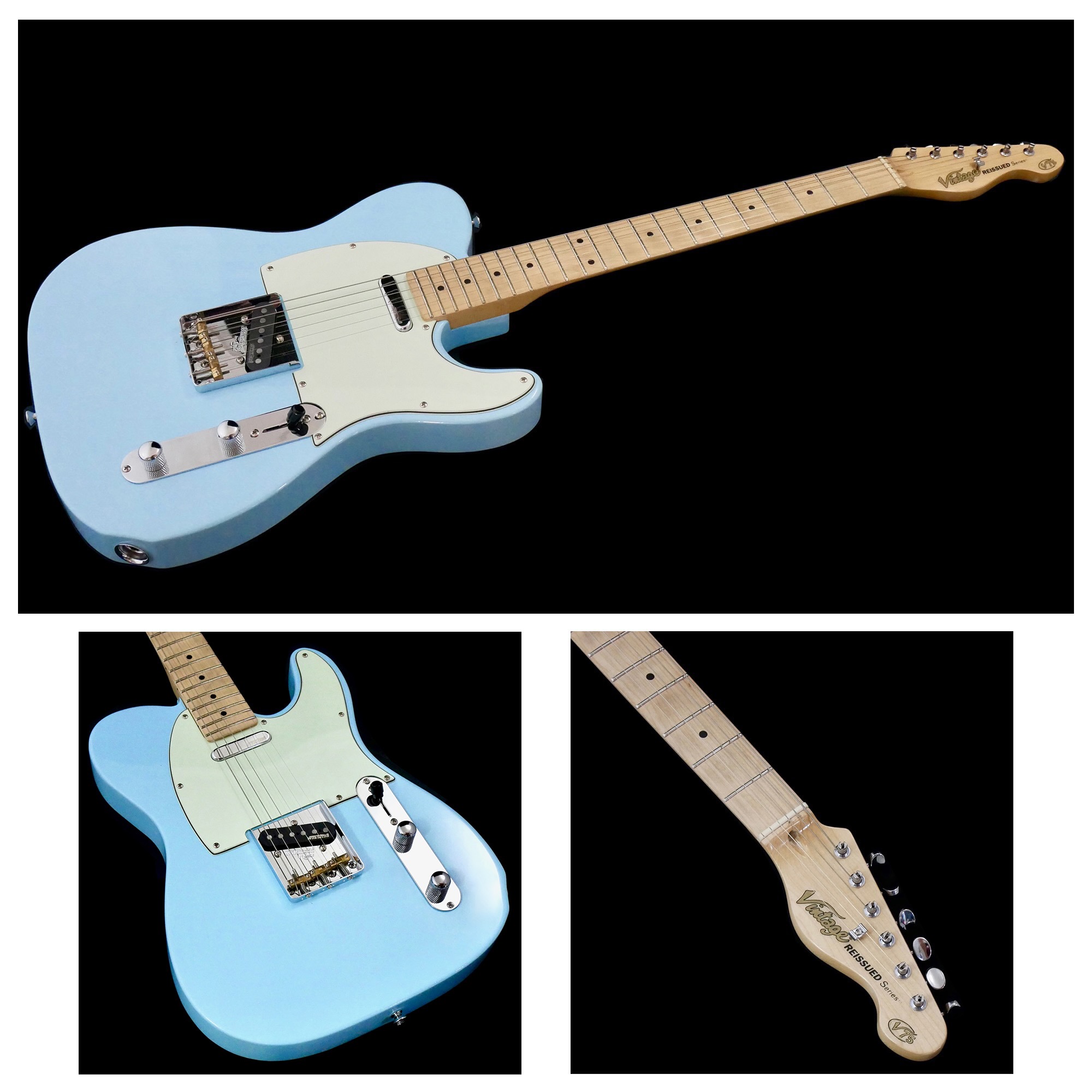
Vintage V75 Reissued Sonic Blue   (Nordsound; 469,– €)
British guitar builder Trev Wilkinson is a living legend in his field, having invented, for example, the roller nut and the Wilkinson vibrato bridge. Wilkinson is also the man behind the guitar parts that bear his name – tuners, bridges and pickups. He has also designed electric guitars and basses for the Vintage brand and Fret King, among others.

Vintage’s V75 Sonic Blue is the brand’s take on a good 1970s Telecaster, and is made in Vietnam. The alder body is finished in a glossy light blue (sonic blue), while the one-piece neck/fingerboard has been given a nice matte finish.

The metal parts and pickups are – of course – all from the Wilkinson brand’s range:

The tuners are high-quality Kluson-style vintage models, while the bridge has pre-compensated brass bridge saddles, which significantly improve the guitar’s intonation. The V75’s pickups are traditional alnico single-coils. To adjust the height of the neck pickup, you have to remove the guitar’s three-layer white pickguard, just like on old Fenders.

The Vintage V75’s double-action truss rod is accessible from the headstock end. The fingerboard radius is 10 inches, and the frets are medium-sized.

This guitar also feels and plays really well. The weight of the test instrument is moderate (3.5 kg). The neck profile is a nice slim C, which does have a slight V-neck feel near the saddle. The pickups’ output level is a bit hotter than many vintage pickups, but they have an excellent balance. The bridge pickup snarls and bites very appealingly. The quality of some original 1970s Telecasters left a lot to be desired, but I feel the Vintage V75 is a great representation of the best features from that era.

****

Tokai ATE-52 Metallic Red   (Musamaailma; 546,– €)
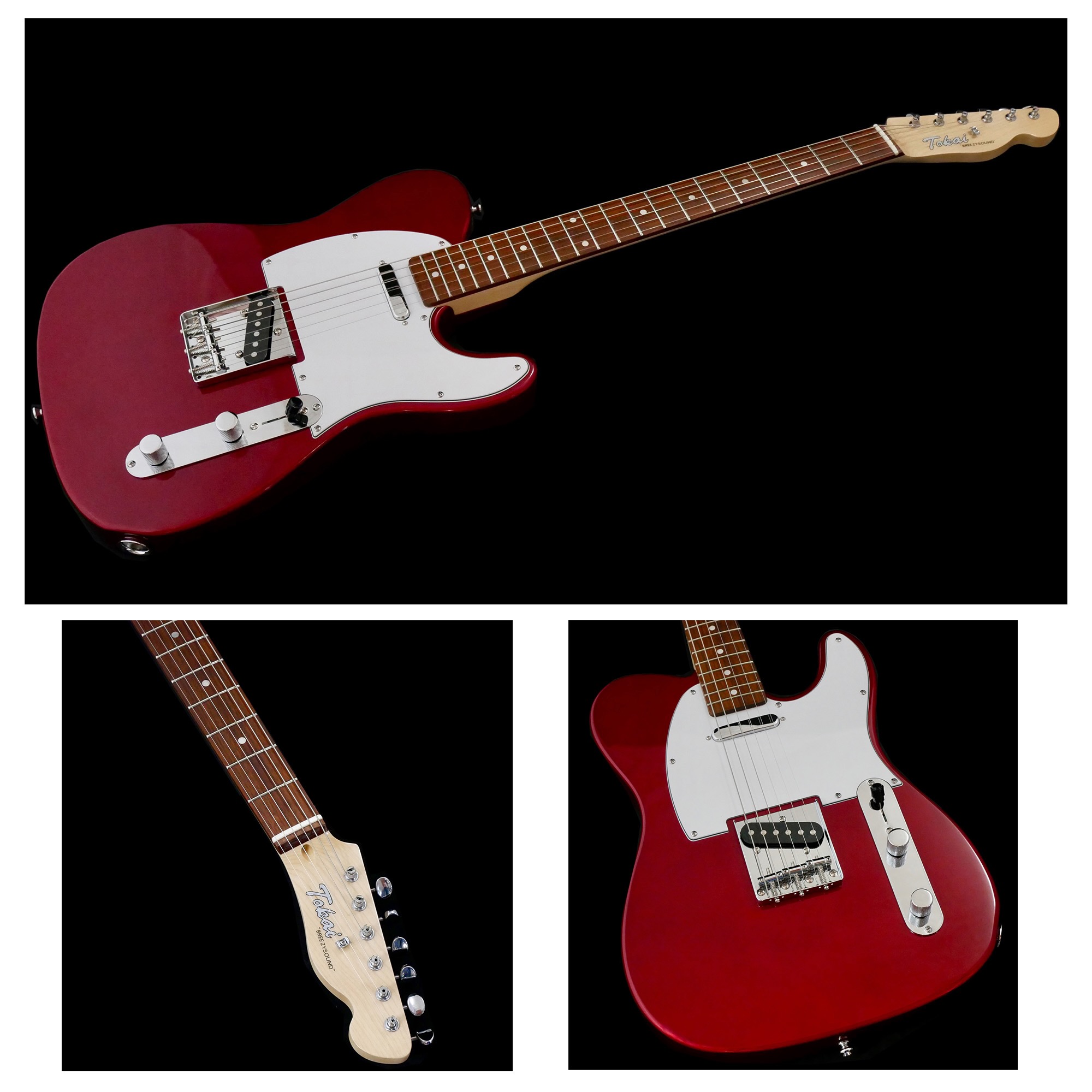
Tokai’s striking ATE-52 is a lightly updated version of a 1960s Tele. The body of the ATE-52 is alder and the bolt-on neck is carved from hard maple. The dark fingerboard is made of South American jatoba, an excellent alternative to rosewood. The body of the guitar has been given a shiny metal finish, while the neck sports a thin satin finish.

In keeping with the theme, the tuners are high-quality Kluson copies from Gotoh. The neck adjustment is conveniently done from the headstock. The high-quality Gotoh bridge offers two ways to attach the strings – they can be pulled through the body, or attached (like on Fender basses) to the back wall of the bridge (a so-called top-loader arrangement). In 1958, Fender tried to speed up the production of Telecasters with a top-loader bridge, which eliminated the need to drill the string channels and install the string ferrules. However, guitarists were very skeptical of the new solution, and Fender eventually canceled the redesign. The most legendary top-loader Tele is probably the guitar owned by Jimmy Page (Led Zeppelin), decorated with a dragon image, which he played on the entire Led Zeppelin I album, and later on the “Stairway to Heaven” guitar solo.

The Tokai ATE-52’s pickups are clearly more powerful than original vintage units and they also have a slightly more modern sound, which perhaps makes the instrument even more versatile.

The Tokai, made in China, has very good playability and ergonomics. The guitar sports a comfortable mid-range weight (3.6 kg). The neck profile is a full, but not too thick D, which sits nicely in the hand. Combined with the first-class set-up – and a 9.5-inch fingerboard radius – it makes the Tokai ATE-52 really easy to play.

Great sound and good playability – what more could you want?

****

Jet Guitars Elite JT-30 (Tampereen Musiikki; 679,– € incl. gig bag)
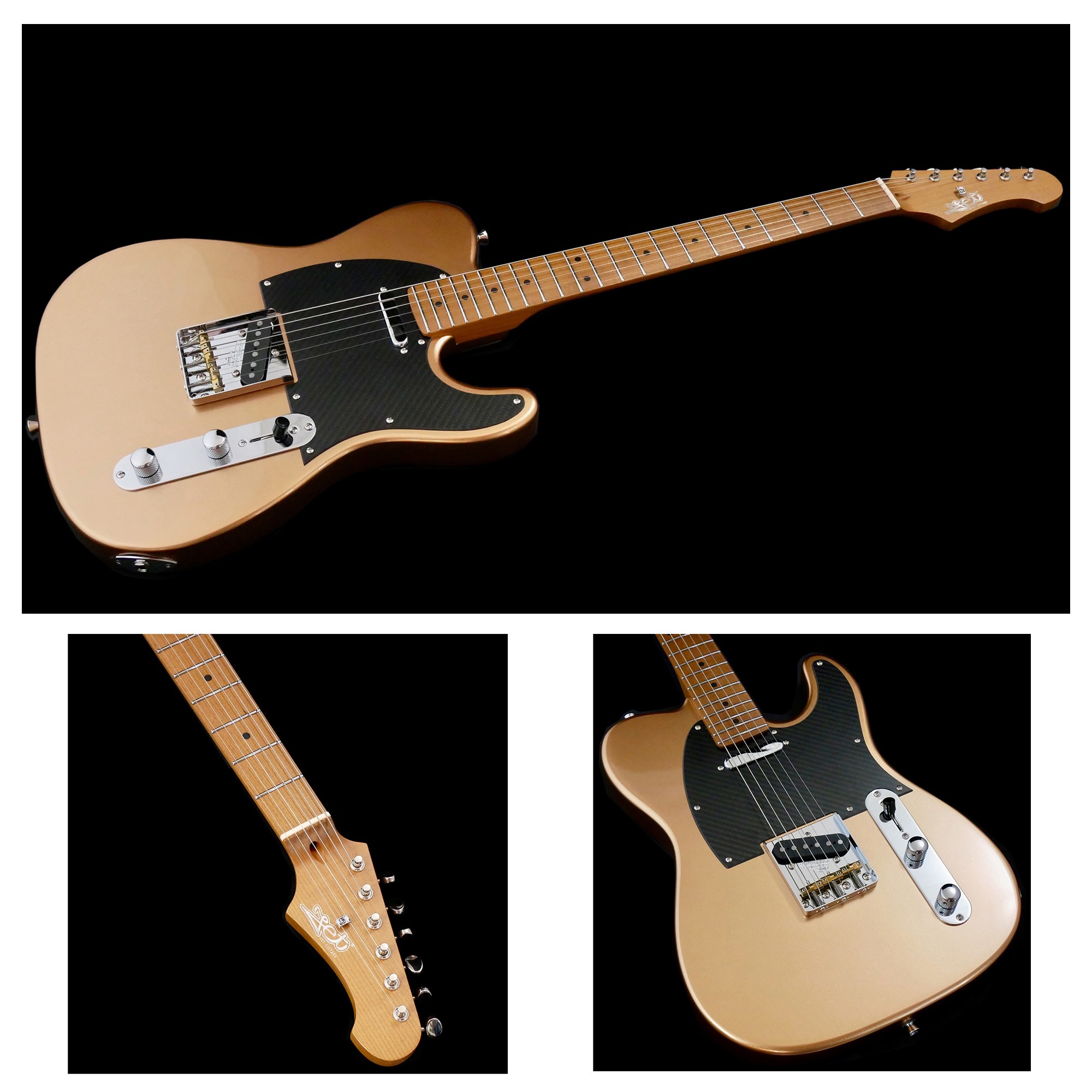
Jet Guitars Elite is the company’s new, higher-quality line. The Elite line is also made in China, but its features – such as hand-wound pickups and even higher-quality woods – aim to offer custom shop-style quality at a much more affordable price point.

The Elite JT-30’s maple neck is made of roasted quarter-sawn Canadian maple, and its fingerboard is made from the same wood. The Jet guitar’s body is carved from three adjacent pieces of alder, and it is finished in gold metallic. The neck is attached to the body traditionally with a steel plate and four wood screws, but the back of the body is noticeably thinner and more rounded around the joint and in the cutaway. The pickguard comes in a very fetching carbon fibre look.

The tuners and bridge are higher-grade Wilkinson parts – the tuners are smooth-running Kluson copies, while the bridge has pre-compensated brass bridge saddles. The guitar’s two-way truss rod is accessible from the headstock.

The Jet Elite JT-30’s hand-wound alnico pickups sound excellent. This is exactly the kind of depth and smoky midrange character that many Telecaster fans crave.

The Jet Elite is also top-notch in terms of ergonomics and playability. The test instrument is light (3.4 kg), the neck profile is comfortable (a medium D) and access to the upper frets is very easy. The fingerboard is slightly flatter than on a vintage Tele (9.5 inch radius), and the medium-sized frets make bending easy.

The Jet Guitars Elite JT-30 offers a lot of value for money, and I think you should definitely check it out.

****

Bacchus Global Tactics-STD/RSM (Nordsound; 748,– €; incl. gig bag)
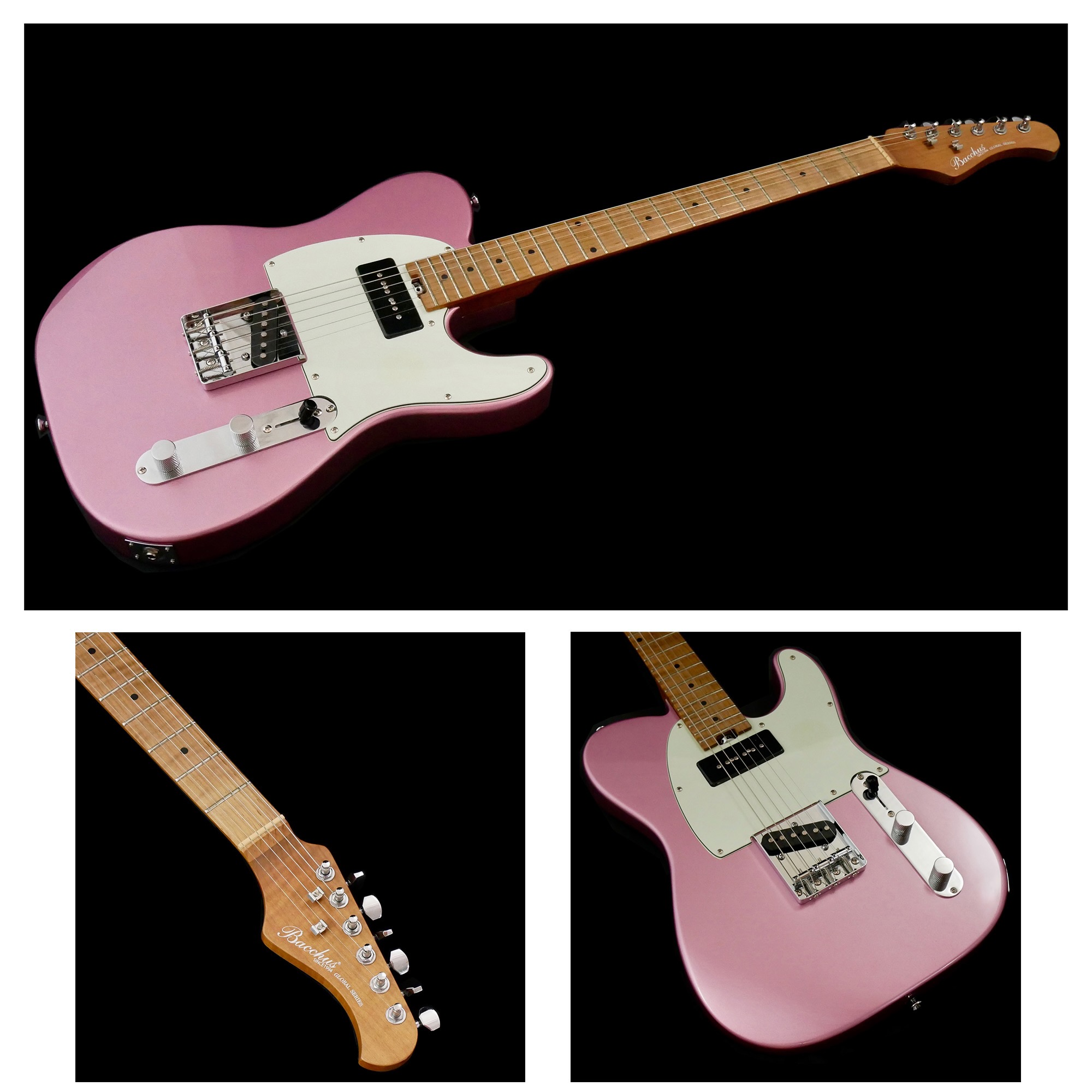
Bacchus Guitars is something of a new acquaintance for me, which is why I selected the company’s Global Tactics-STD/RSM model for this review, even though it has a P-90 single-coil pickup installed instead of a regular Tele neck pickup.

Made in Indonesia, the Global series Tactics-STD/RSM is also the only guitar in the review that has Stratocaster-style bevels on both the front and back of the body. The body of the test guitar has been given a beautiful raspberry-hued metallic colour. The neck and fingerboard of the Bacchus guitar are carved from roasted flame maple. The truss rod adjustment is done from the end of the body, with a Music Man-style adjustment wheel, without the need to remove the neck.

The tuners on the Bacchus Tactics-STD/RSM model are of the modern enclosed variety. The Bacchus also offers a traditional through-body, as well as a top-loader option for attaching strings at the bridge.

Bacchus uses its own alnico pickups on this guitar – a P-90-style single-coil is found near the neck, while a traditional Tele pickup is installed in the bridge.

The Global Tactics guitar is the lightest instrument in this review (3.3 kg), which is a very welcome feature. The neck’s nicely slim C profile, larger-than-vintage frets, and the flatter radius of the fingerboard – together with the nice set-up on the review instrument – ​​make this Bacchus model very easy to play.

The guitar’s sound is also excellent, although it is not 100% typical of a Tele, due to the model’s modified neck pickup. The P-90 sounds bigger and “wider” than the Tele’s traditional neck pickup, which allows for deeper jazz sounds or more raucous blues distortion. The bridge pickup, on the other hand, gives you a very high-quality version of a Tele’s signature twang.

The Bacchus Global Tactics-STD/RSM is a beautiful, high-quality instrument.

****

Tokai ATE-102R Vintage Natural   (Musamaailma; 1,455,– €)
I still remember the early 1980s, when Japanese instruments were considered very affordable – they weren’t cheap instruments, but they were definitely more affordable alternatives to US guitars. Those days are long gone; today, Japanese guitars and basses are known for their high quality, and the prices of the instruments reflect this fact.

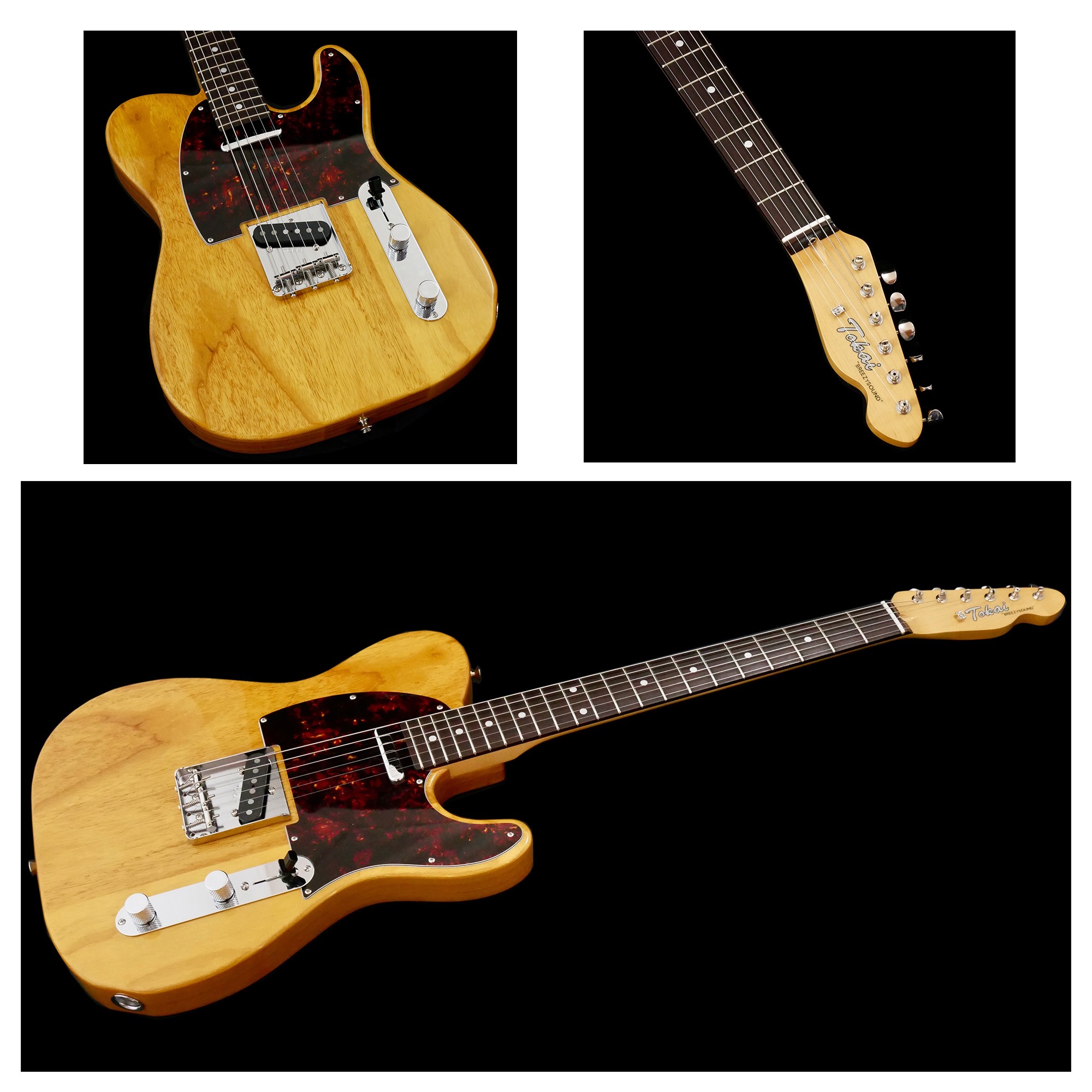
The ATE-102R Vintage Natural is Tokai Japan’s vision of a top-quality Tele with a 1970s look. Back then, it was the golden age of natural finishes, and in the case of the Telecaster, that meant vibrant-looking ash.

Even at that time, there were problems with the availability of lightweight “swamp ash,” which is why many Fender instruments from the Seventies are very heavy. Unfortunately, the availability problem is even worse today, which is why the prices of lightweight ash continue to rise.

Since Tokai definitely wants to keep the prices of its instruments player-friendlys, the ATE-102R model puts stunning looks first, which means, at least in the case of the review guitar, a relatively heavy instrument (4 kg).

The Tokai ATE-102R model has a maple neck attached to a beautiful ash body. The guitar’s fingerboard is carved from genuine rosewood, and 22 medium-jumbo sized frets are installed on it in exemplary neatness. The neck adjustment is conveniently done from the headstock side of the neck.

The metal parts come from Gotoh – the tuners are the company’s high-quality Kluson copies, while the vintage-style bridge bears the Tokai name. The ATE-102R’s pickguard is four-ply and has a tortoise-style pattern.

This Tokai uses Gotoh TL-Classic α Series alnico pickups, which are the company’s meticulous imitations of Fender’s 1950s Tele pickups – even the neck pickup’s originally thinner coil wire has been taken into account.

The neck profile of the Tokai ATE-102R model is very nice, slightly oval with a slim C, just like the one found on Teles from the early Sixties. The fretwork couldn’t be any cleaner, and the set-up on the test guitar is extremely ”fast”, but without any string rattle.

In my opinion, the ATE-102R’s sound is definitely among the best of Tele-style guitars. The guitar’s sound is almost three-dimensional, with depth in the lower register, twang in the midrange, and sparkle in the treble – all in just the right proportions.

****
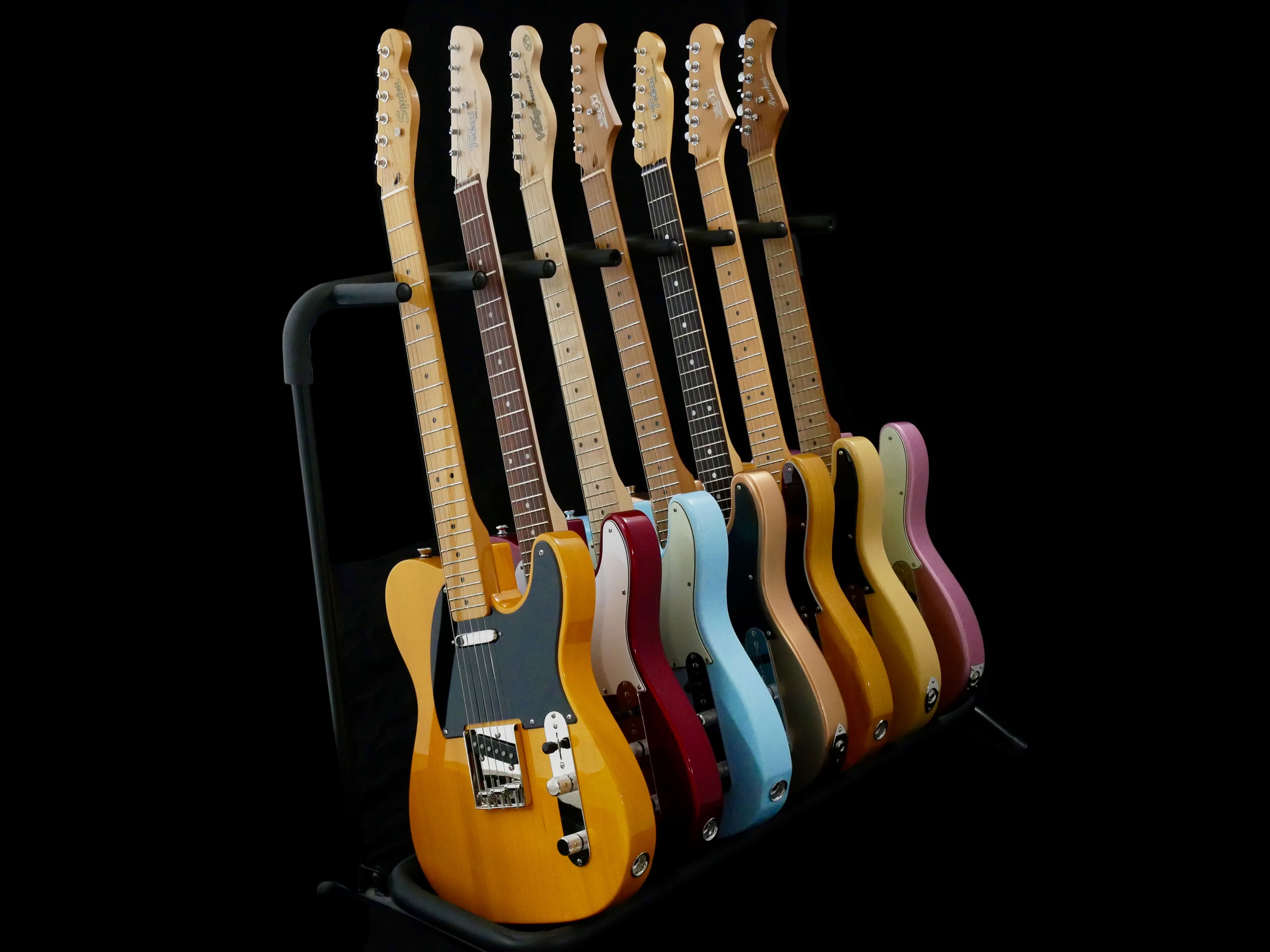
Fender Telecaster täyttää 75 vuotta – juttu tulossa Rockway-blogiin

Videossa esitetään seitsemän Tele-tyylistä kitaraa. Demobiisi on lyhyt versio Yes-bändin klassikosta ”Owner of a Lonely Heart”.

Jokainen kitara soittaa aina muutaman tahdin melodiasta, niin kuin nähdään videossa. Biisin lukuisat komppiosat on jaettu kaikkien kitaroiden väliin.

Testatut kitarat ovat:

Bacchus Guitars Global Series Tactics-STD

Jet Guitars JT-350

Jet Guitars Elite JT-30

Squier Classic Vibe 1950s Telecaster

Tokai Guitars ATE-52

Tokai Guitars ATE-102R

Vintage Brand Reissued V75

****

• Käytetyt vahvistimet: Bluetone Black Prince Reverb (soolo- ja komppikitarat), sekä Bluetone Shadows Jr (komppiosat)

• Käytetyt efektit: Joyo Vintage Overdrive (soolo- ja komppikitarat), sekä Mad Professor Simble OD, EXH Small Stone, EHX Memory Toy, UralKit Les Love, UralKit Fuzz Face, UralKit Distortion+, Boss DS-1, Boss SD-1 (komppiosat)

• Mikrofoni: Shure SM7B

Review: Four LP Standard Style Guitars

Alkuperäinen, laajempi suomenkielinen juttu on luettavissa TÄÄLTÄ.

Thanks to technological progress and cheap Asian labour, you can already get a very decent Les Paul Standard copy these days for somewhere between 500 and 700 euros.

Here are four of those guitars presented in alphabetical order. I tried to obtain one of the new Epiphone-models from their Finnish distributor for this round-up, but to no avail.

****
GrassRoots G-LP-60S Honey Sunburst

• Current price in Finland: 559, – (incl. gig bag)

• Distributor: Musamaailma

GrassRoots is a brand in the ESP Guitars family, and concentrates on traditional electric guitars and basses. Even though the LP-60S is the least expensive guitar in this round-up, it comes in its own, high-quality gig bag. The finish on our review sample is called Honey Sunburst.

The G-LP-60S’ body is made from four side-by-side pieces of mahogany, with a top crafted from maple. The flame maple veneer on the curved top looks gorgeous.

The set mahogany neck is one piece of mahogany (!), except for the top half of the headstock. The bound fretboard has been made from beautiful pau ferro, while the LP-60S’ top nut is genuine bovine bone. The fretwork looks very decent.

The machine heads are nice copies of vintage Kluson tuners. The GrassRoots’ bridge is a modernised version of a Tune-o-matic, sporting six separate small metal clips to keep the bridge saddles in place.

The LP-60S’ pickups are GrassRoots’ own GH-1G humbuckers with metal covers. Looking beneath the electronics cavity covers, we found a closed three-way toggle switch, as well as four small pots and very clean soldering.

The first thing I noticed when I picked up the GrassRoots guitar is how light it is. I don’t know if GrassRoots uses any type of weight relief on the LP-60S, but the review sample’s weight clocks in at only 3.3 kgs.

The neck profile is a very ”fast” version of Gibson’s famous 60s neck, meaning a nicely rounded, but relatively slim C-shape. Musamaailma’s in-house guitar technician has expertly set up the review guitar, resulting in a buzz-free action of only 1.6 mm (bass-E) and 1.5 mm (treble-e).

I’d describe the GrassRoots humbuckers as vintage-powered, meaning they give a lot of scope for dynamics and a nice, rounded top end response. The neck ’bucker is flutey, while the bridge pickup offers ample kick and mid-range push. The GrassRoots G-LP-60S is a versatile LP Standard style guitar, which sounds great, offers a comfortably slender neck profile, and which doesn’t weigh a tonne.

****
Green LP STD Lemon Drop

• Current price in Finland: 498, –

• Distributor: Nordsound

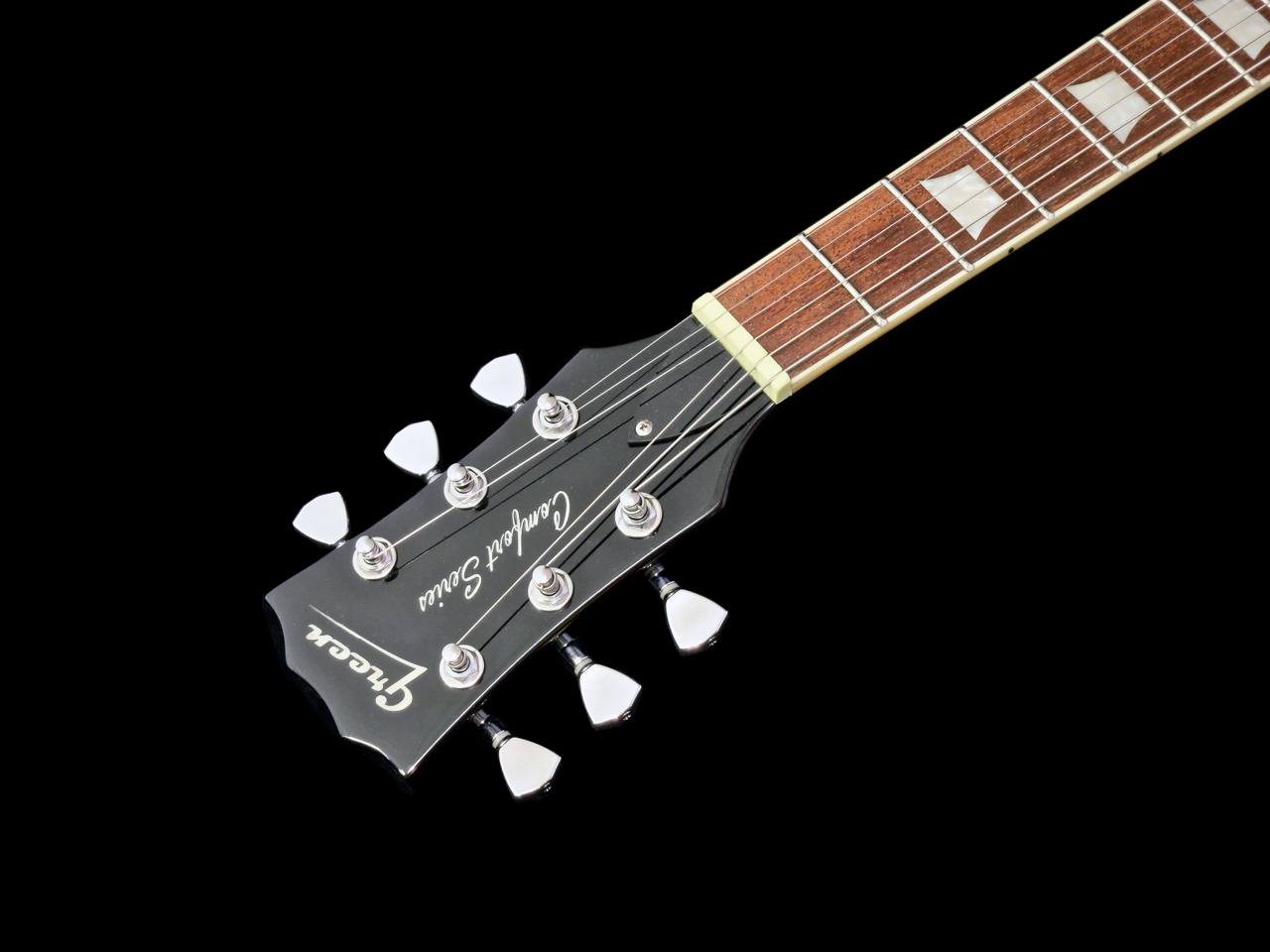
Green Guitars is a Swedish brand with Far Eastern production to keep the prices musician-friendly. Green’s LP STD model comes in a fetching Lemon Drop finish, as well as sporting a few features that differ from standard vintage-fare.

The Green’s body uses three pieces of very lively mahogany. The arched maple top has been spruced up with a tiger striped flame maple veneer. Green’s LP STD sports a deeper cutaway than its famous forebear, resulting in a more pointed horn.

The set-in neck is carved out of three side-by-side strips of mahogany, which – in all probability – should add a little stiffness to the neck. The neck wrist is protected from headstock breaks by a volute.

The Green features a set of modern tuning machines, as well as an up-to-date version of the Tune-o-matic bridge.

The bound rosewood fretboard comes with 22 well-installed medium-size frets. The nut is made from a cream coloured plastic.

Green’s LP STAD model sports a pair of open, zebra-coloured humbuckers. The electronics comprise a closed three-way toggle, as well as four small diameter pots. The soldering looks nice and clean.

Green’s neck profile is a smidgen bigger than that of the GrassRoots – I’d say the profile is somewhere halfway between a ’59 and a ’60 Gibson. The set-up on our test sample was very good, with the action clocking in at 1.7 mm (bass-E) and 1.5 mm (treble-e), without any fret buzz.

I’d describe the Green’s humbuckers as ”hot vintage”. This guitar has a big sound with a nice, fresh dose of treble. If you’re into Slash, this is the guitar I’d try out first.

****

Tokai Guitars ALS-62 Honey Burst

• Current price in Finland: 659, –

• Distributor: Tokai Guitars Nordic/Musamaailma

Tokai Guitars must be the most famous ”copy brand” in the world, whose instruments caused Fender and Gibson to do something about their sagging quality control back in the 1980s.

In addition to their top-of-the-line Japanese LS-models, Tokai also offers more affordable Chinese versions under the ALS-banner. The flame maple veneer – finished in a fetching Honey Burst – looks stunning, deep and chatoyant.

The Tokai ALS-62’s body uses four pieces of mahogany and a veneered arched maple top. In this series Tokai uses hard rock maple for their guitar necks – in this case we’re talking about a three-piece affair of neck, headstock, and neck heel.

Tokai uses jatoba as the material for its bound fretboard. We find 22 expertly-finished, medium-sized frets, as well as a genuine bone nut. The bridge is a fine version of the vintage Tune-o-matic, with a single metal bracket keeping the saddles in place. The bridge and stopbar ferrules have been sunk into the top wood for a very clean look.

The Tokai ALS-62 sports a pair of covered LSC-F-humbuckers. The electronics comprise a closed three-way toggle switch, plus four small pots. The soldering is very clean.

Tokai’s neck profile is my personal favourite, I must confess. It’s a rounded, not-too-fat 1959-style neck profile, offering your fretting had a good amount of ”meat” without too much bulk. The action is buzz-free, while being comfortably low at 1.6 mm (bass-E) and 1.4 mm (treble-e).

The Tokai ALS-62 sounds like ”the real thing”, leaving nothing to be desired. The neck pickup is creamy and flutey, while the bridge unit adds the right amount of grit to proceedings. The Tommi’s output is vintage-to-medium. This is a gorgeous guitar with a versatile sound to boot.

****

Vintage V100PGM Lemon Drop

• Current price in Finland: 576, –

• Distributor: Nordsound

Vintage Brand’s V100PGM Lemon Drop is an ”unofficial” signature guitar, offering you an affordable shot at the legendary LP played by three legends in a row – Peter Green, Gary Moore, and Kirk Hammett. The original guitar’s burst has long faded into an ”unburst” lemon drop shade, which is why the Vintage V100PGM Lemon Drop was first only available in that shade. Our test sample, on the other had, is Vintage’s view of what the guitar must have looked like brand new. So, here we have a beautiful cherry sunburst-coloured guitar, that is called ”Lemon Burst”, go figure.

Trev Wilkinson, who has designed this guitar for Vintage Brand, has added a few nifty updates to prevent the V100PGM from being a straight copy instrument:

The V100PGM’s mahogany body (three pieces) has a rounder bass-side shoulder and a much deeper cutaway that Gibson’s original. The top’s flame maple veneer sports extremely pretty and deep figuring.

The guitar’s neck – crafted from three side-by-side pieces of mahogany – is glued into the body by means of an asymmetrical neck joint, making excursions to the dusty end more comfortable.

The Vintage’s fingerboard is made from a trademarked material, called ”Lignum Rosa”, which translates from Latin as ”wood of the rose”. I can’t tell you what it actually is, but it looks and feels great, and it is home to 22 medium-sized, well-dressed frets. The top nut is Graph Tech’s NuBone material, which is a man-made alternative to ivory.

Surprisingly, the V100PGM comes with a set of Grover Deluxe vintage-type machine heads, instead of the Wilkinsons I’d have expected. The bridge on this Vintage is a Wilkinson-version of a modern Tune-o-matic.

The V100PGM comes with a pair of Wilkinson WVC-humbuckers. Like on the original, the neck unit has been installed ”upside down”, meaning with the adjustable pole screws facing the bridge, and with the wires hooked up in reverse, too. Gary Moore swapped the bridge pickup’s controls from the original bell-type to the early-Sixties ”reflectors”, because he wanted to be able to find the correct control without having to look at the guitar. This has been copied on the Vintage as well.

The V100PGM uses a closed three-way toggle switch and four small diameter pots. The soldering looks very decent.

The Vintage V100PGM comes with a slightly flatter version of a Gibson 60s C-neck, so we’re talking about a very ”fast” neck feel. The review guitars comfortable set-up gives you plenty of acoustic dynamic range at 1.9 mm (bass-E) and 1.7 mm (treble-e).

Thanks to their moderate output the Wilkinson-humbuckers offer plenty of dynamics and openness, with a nice, bell-like treble response. The neck pickup is warm, while the bridge unit sounds brighter.

On the Vintage V100PGM the three-way switch’s middle position opens the door to a wide spectrum of different tones, which differ from the usual LP middle-position sounds. With both volume controls turned up fully, you get a very wiry and bright sound, due to the out-of-phase pickups. Turning one of the volume controls down by a little, gradually adds bottom end and mid-range width. Depending on which volume knob is turned down, the resulting sounds will differ somewhat. Experimentation is allowed and will be rewarded with many different shadings. I think it’s fantastic that Vintage Brand offers somethign a bit out of the ordinary at this affordable price point.

Tulossa Rockway-blogiin: Neljä LP Standard -tyylistä kitaraa

Here’s a demo song of four LP Standard style guitars based on ZZ Top’s classic track ”Stages”.
****
The demoed guitars are:
GrassRoots G-LP-60S
Green Guitars LP Standard Lemon Drop
Tokai Guitars ALS-62
Vintage ReIssued Series V100PGM
****
• Effects used: Dunlop CryBaby Mini, Ibanez Fuzz 850 Mini, Mad Professor Simble OD, Joyo Analog Chorus, EHX Memory Toy, EHX Germanium 4 Big Muff Pi
• Amp used: Bluetone Black Prince Reverb
• Mic used: Shure SM7B
• Preamp used: Cranborne Audio Camden EC2

****

Review: Tokai TJB-55 + TJB-55 FL

The electric bass guitar – and especially a sunburst 1970 Fender Jazz Bass – was my first musical love. My father Jaroslav was the drummer of a professional show band in Germany, and as a child I was lucky to make the occasional trip to rehearsals, recording studios and some afternoon gigs with him. I loved the music, the instruments and the microphones, but most of all I loved to look at the bass player’s (Pavel) Fender Jazz with its huge chrome covers.

I took the roundabout way to becoming a bassist myself, first playing the violin, then the guitar, then the double bass and the piano. In 1985 I bought my first bass guitar – a Japanese Jazz Bass-copy, and I never looked back. That bass is still my go-to instrument.

Over time Tokai Japan instruments have become legendary in their own right. Tokai managed to offer the type of vintage-inspired instruments that guitarists and bassists in the 1970s were craving for, but couldn’t find from US manufacturers. To this day Tokai stands for top quality at a musician-friendly price.

****

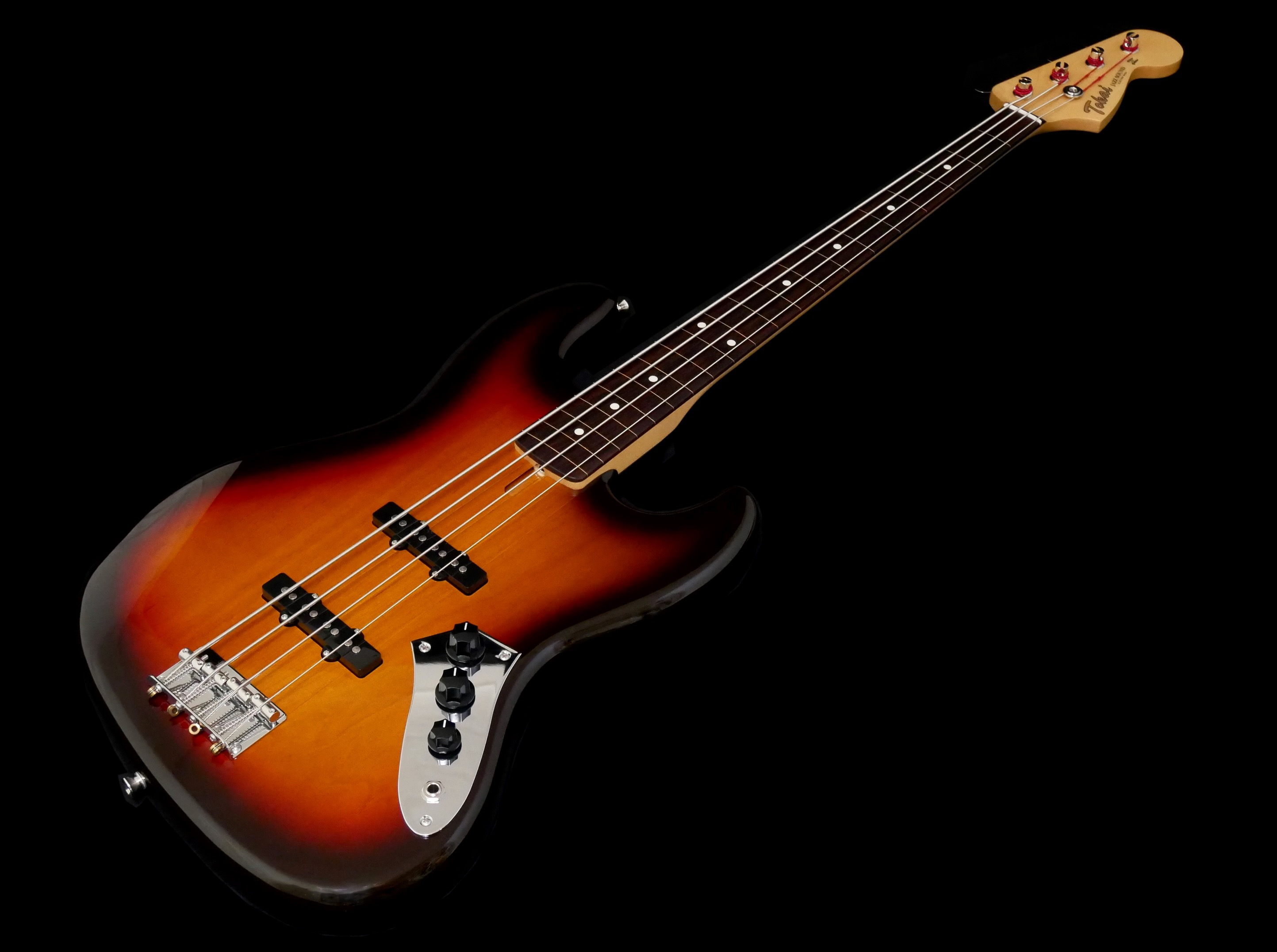
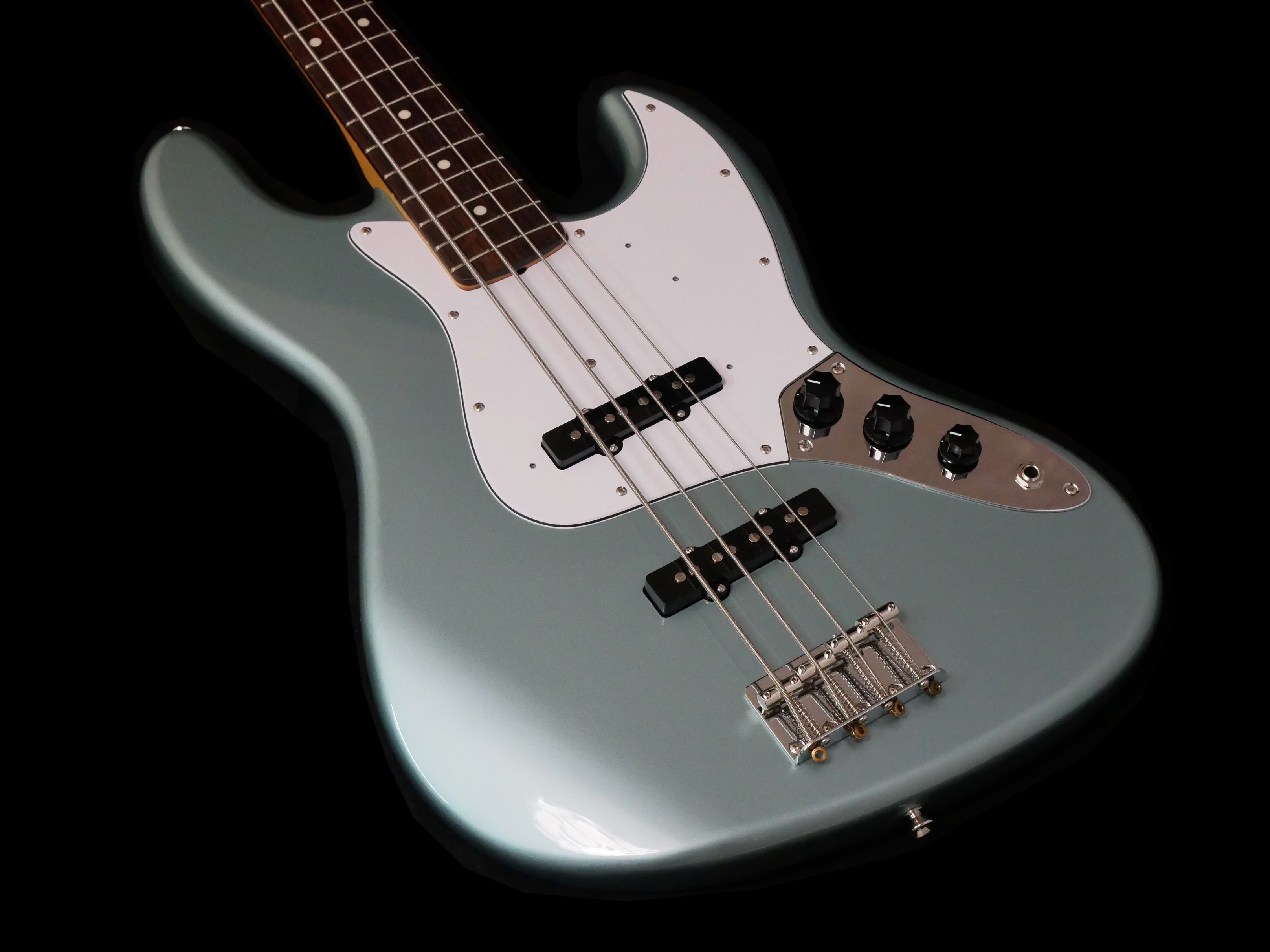
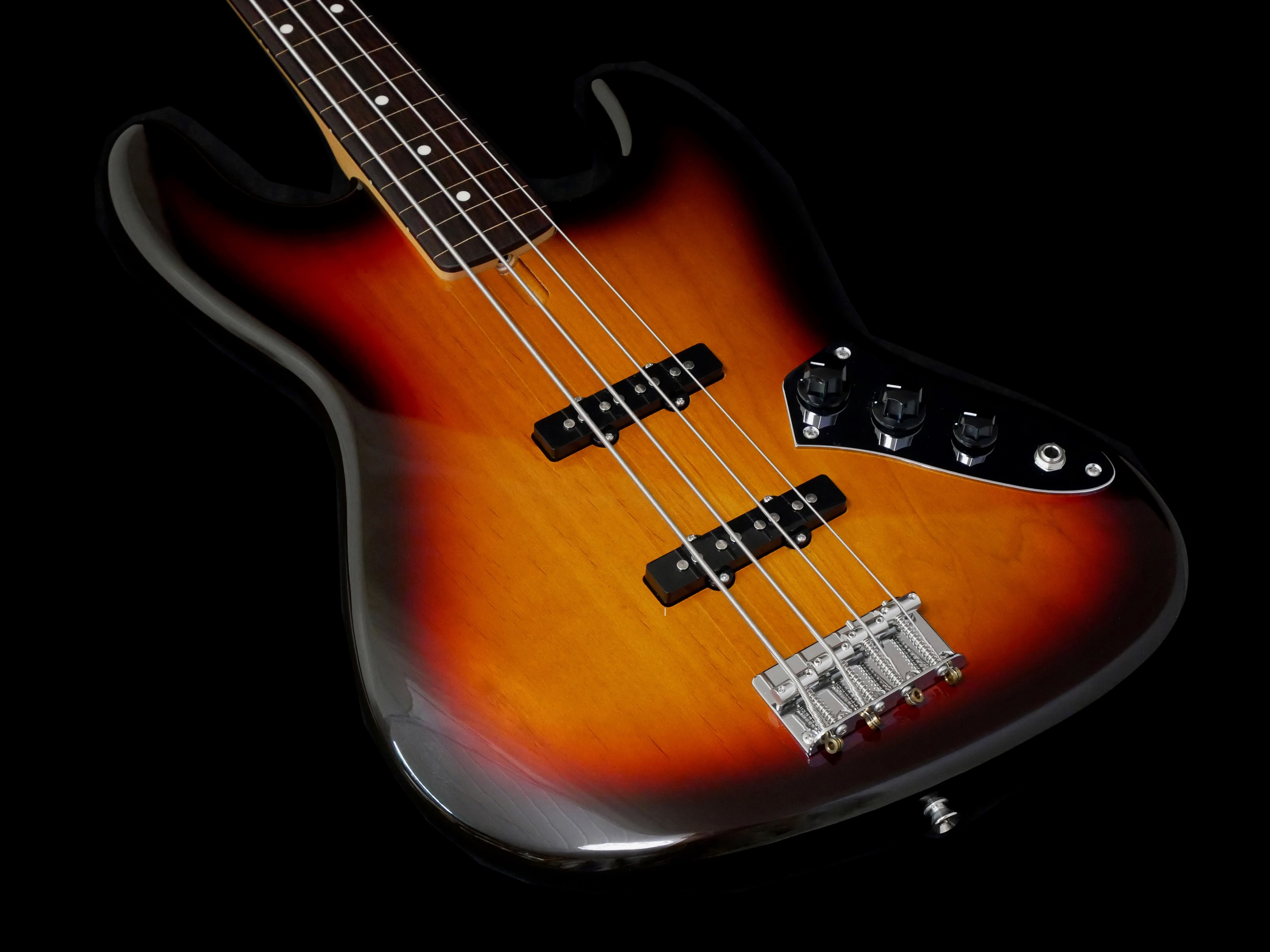
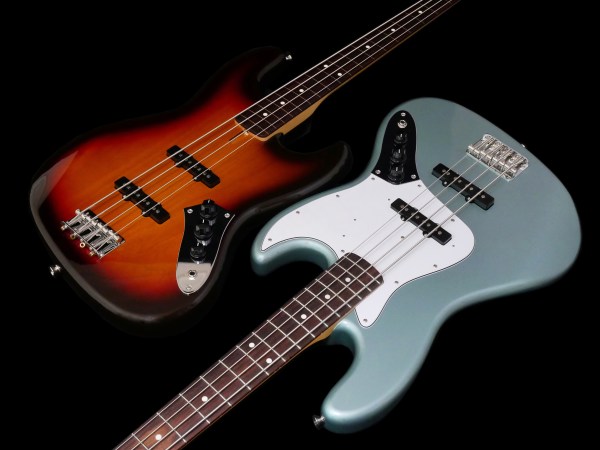
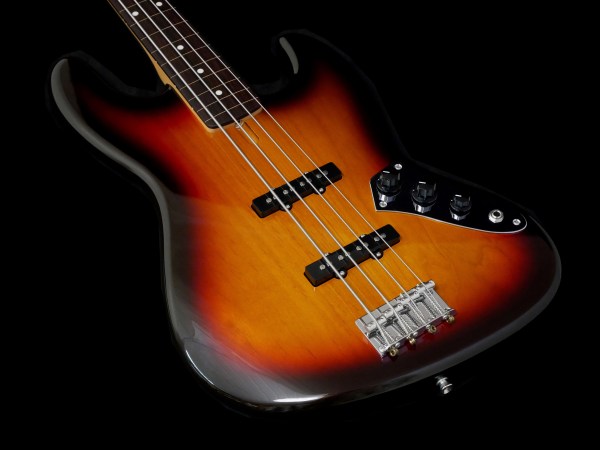
You could call the fretless Tokai TJB-55 FL (1.238,– €) Tokai’s unofficial Jaco Pastorius ”signature model” judging by its looks.

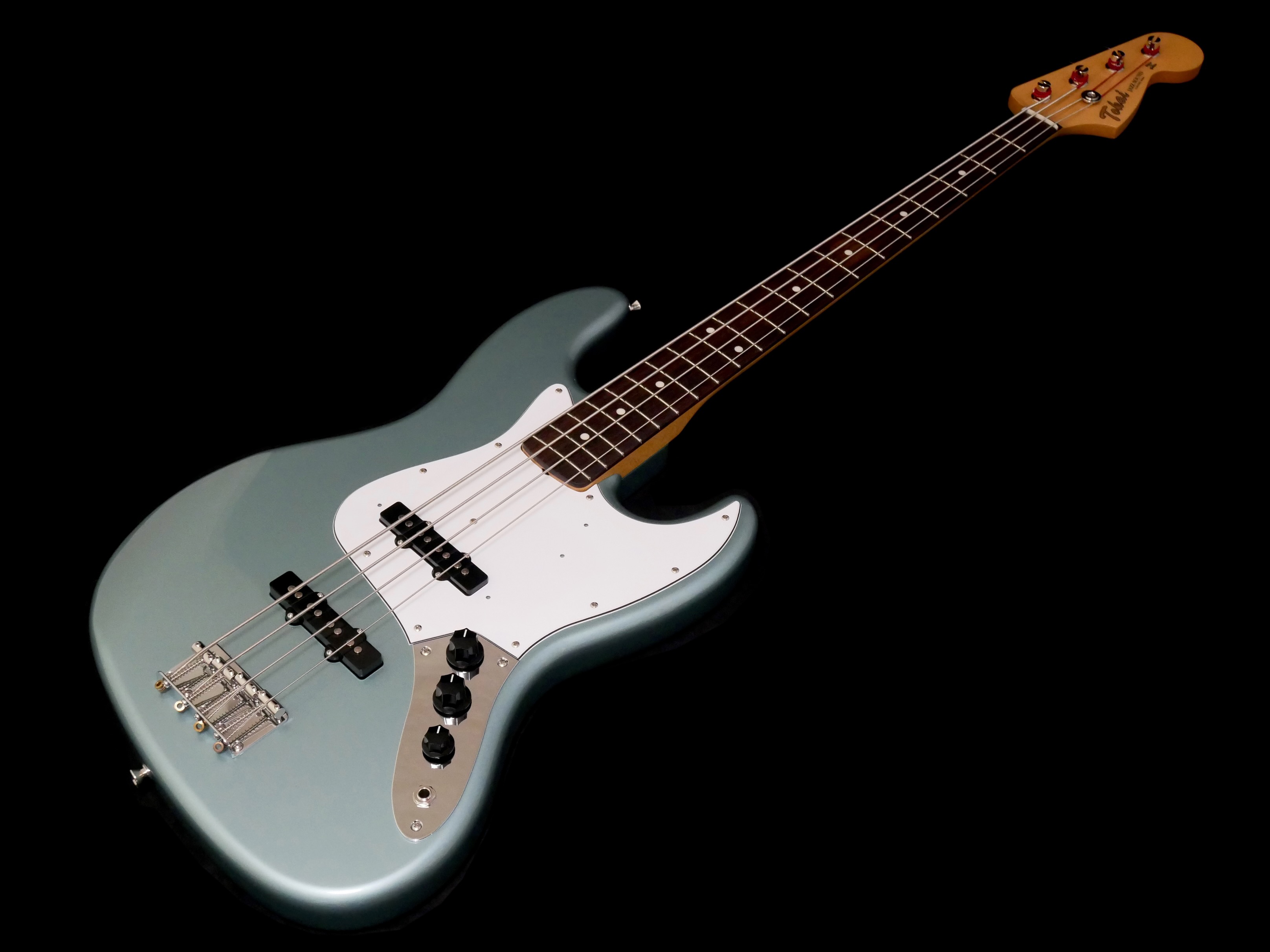
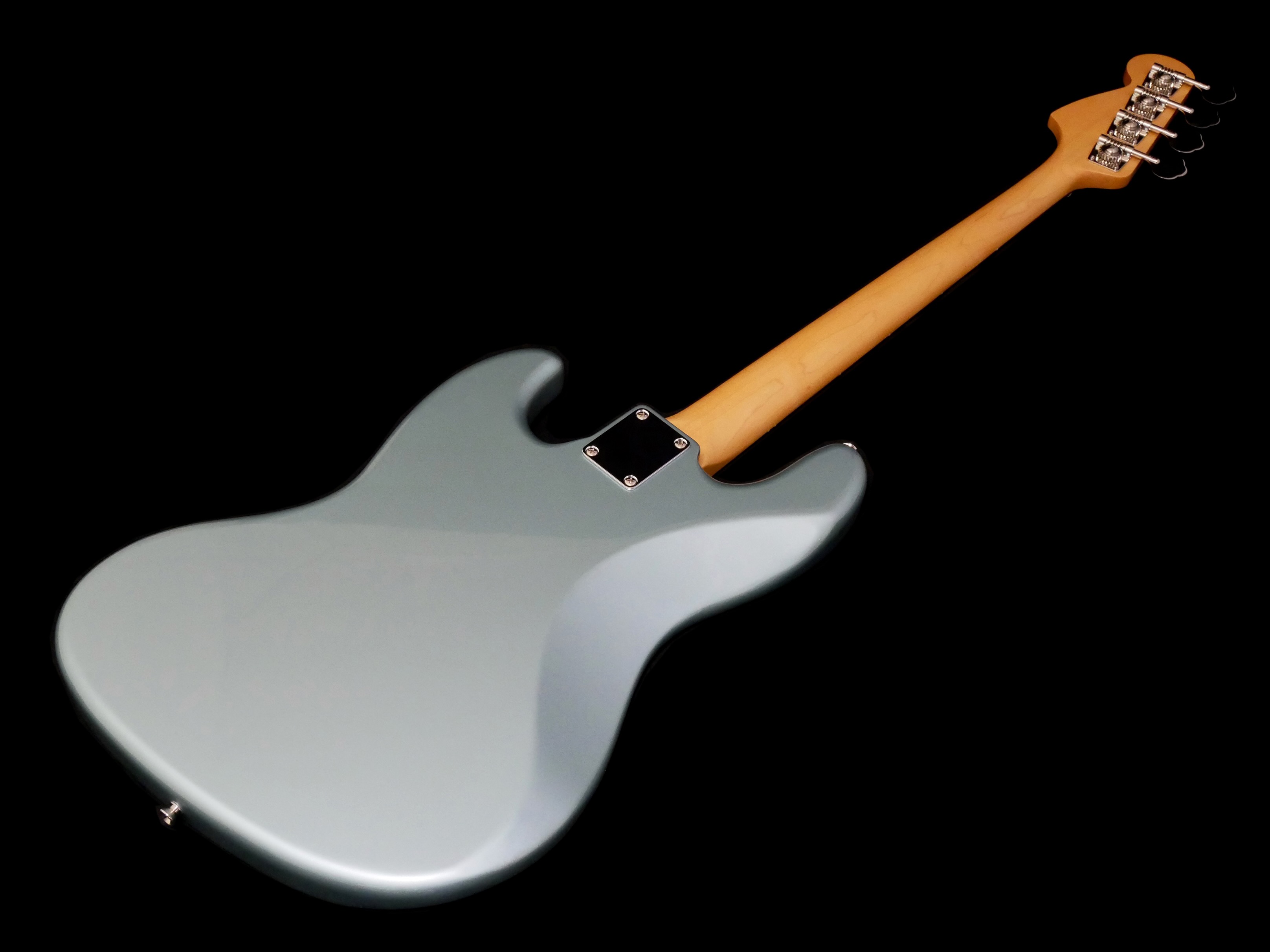
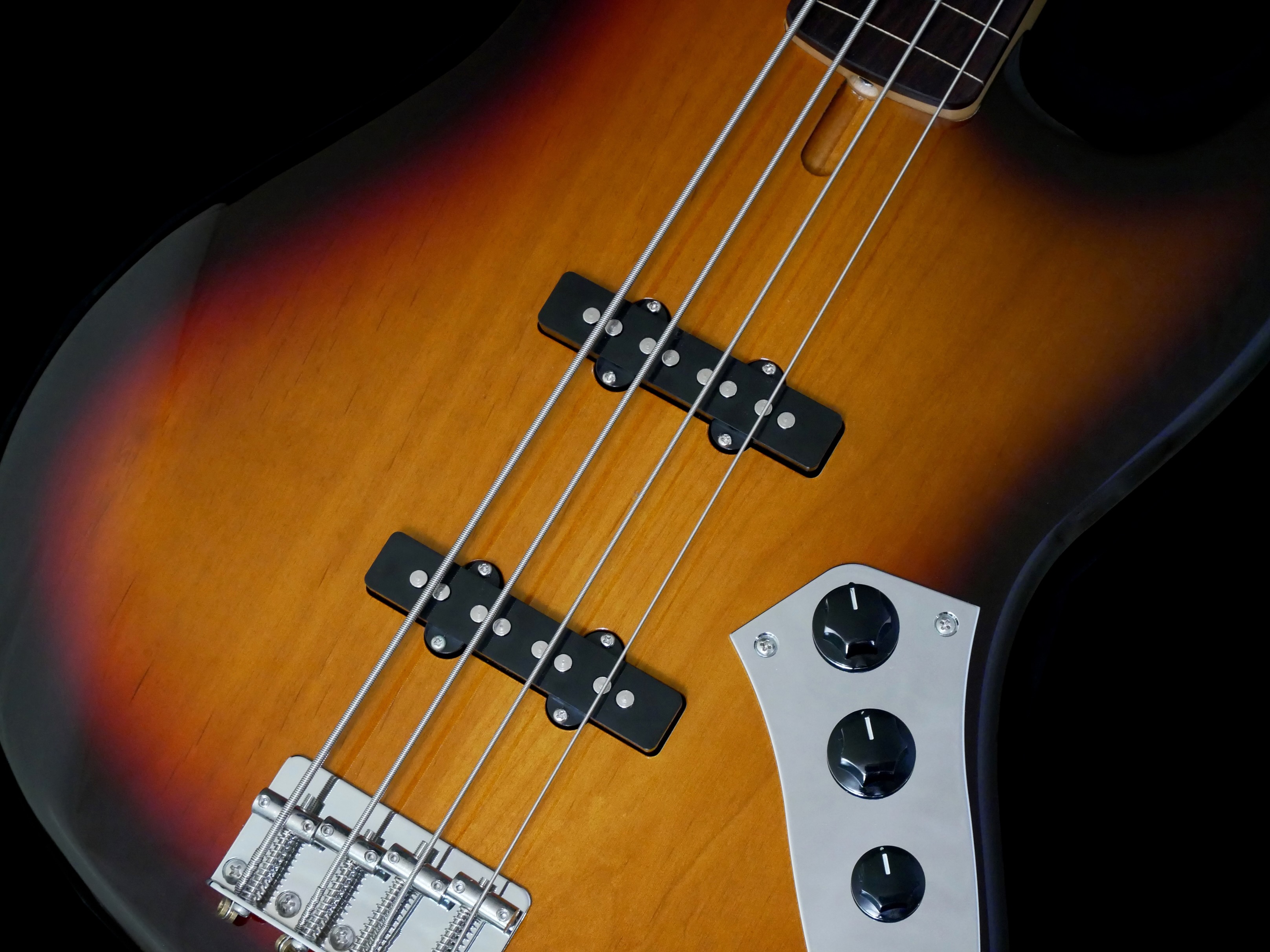
The fretted Tokai TJB-55 (999,– €) we received for this review is finished in a gorgeous metallic finish, called ocean turquoise metallic, which sits somewhere between green and silver.

The basic ingredients in both TJB-55 versions are high quality, traditional choices. True to their 1960s designation, both instruments feature alder bodies paired with maple necks.

The ribcage chamfer is very deep and soft.

In contrast to vintage basses both necks here sport a thin satin finish. This is a welcome nod to most modern bass players, who prefer matte finishes to the glossy necks from way back, which are often described as a bit sticky.

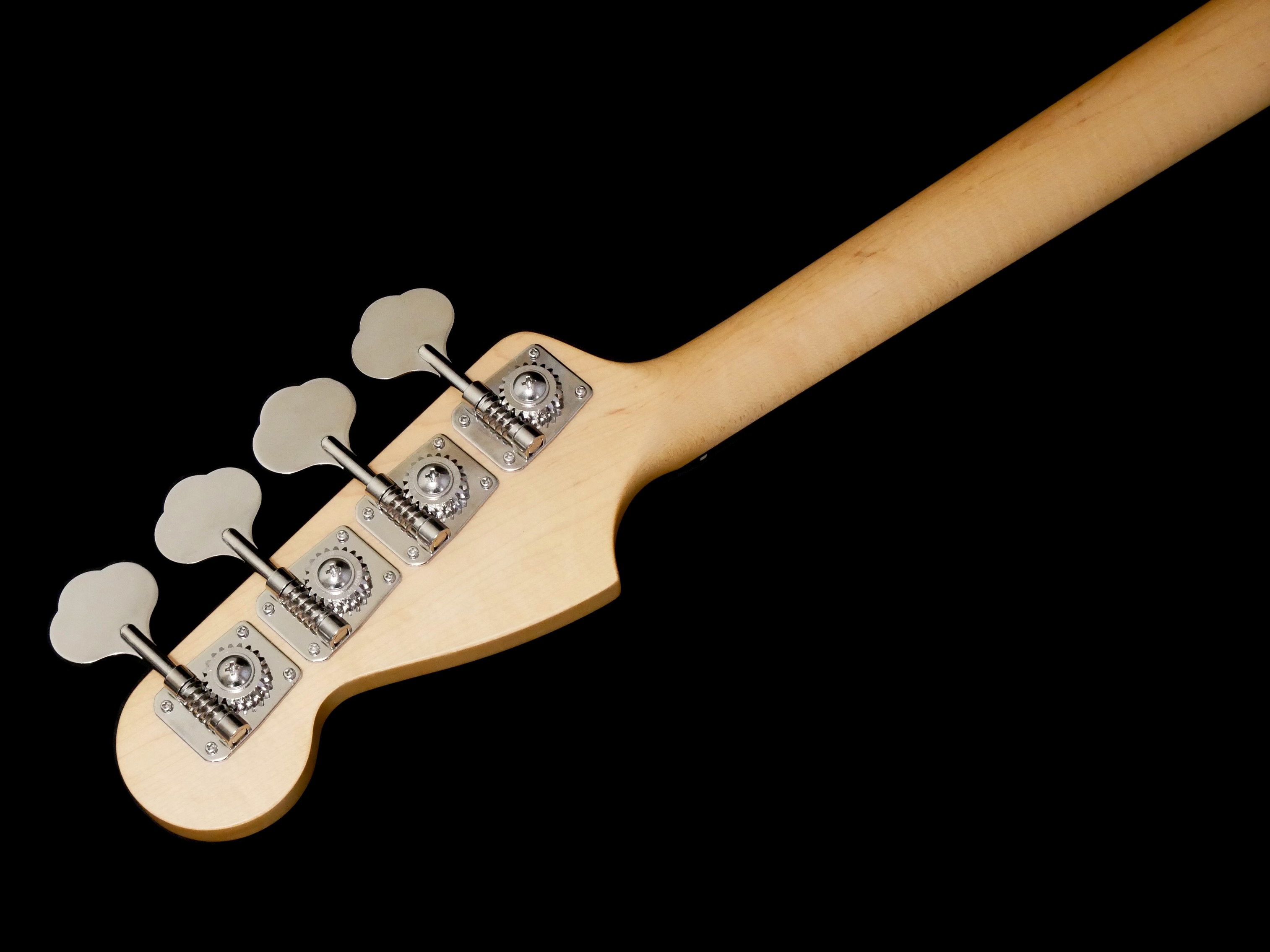
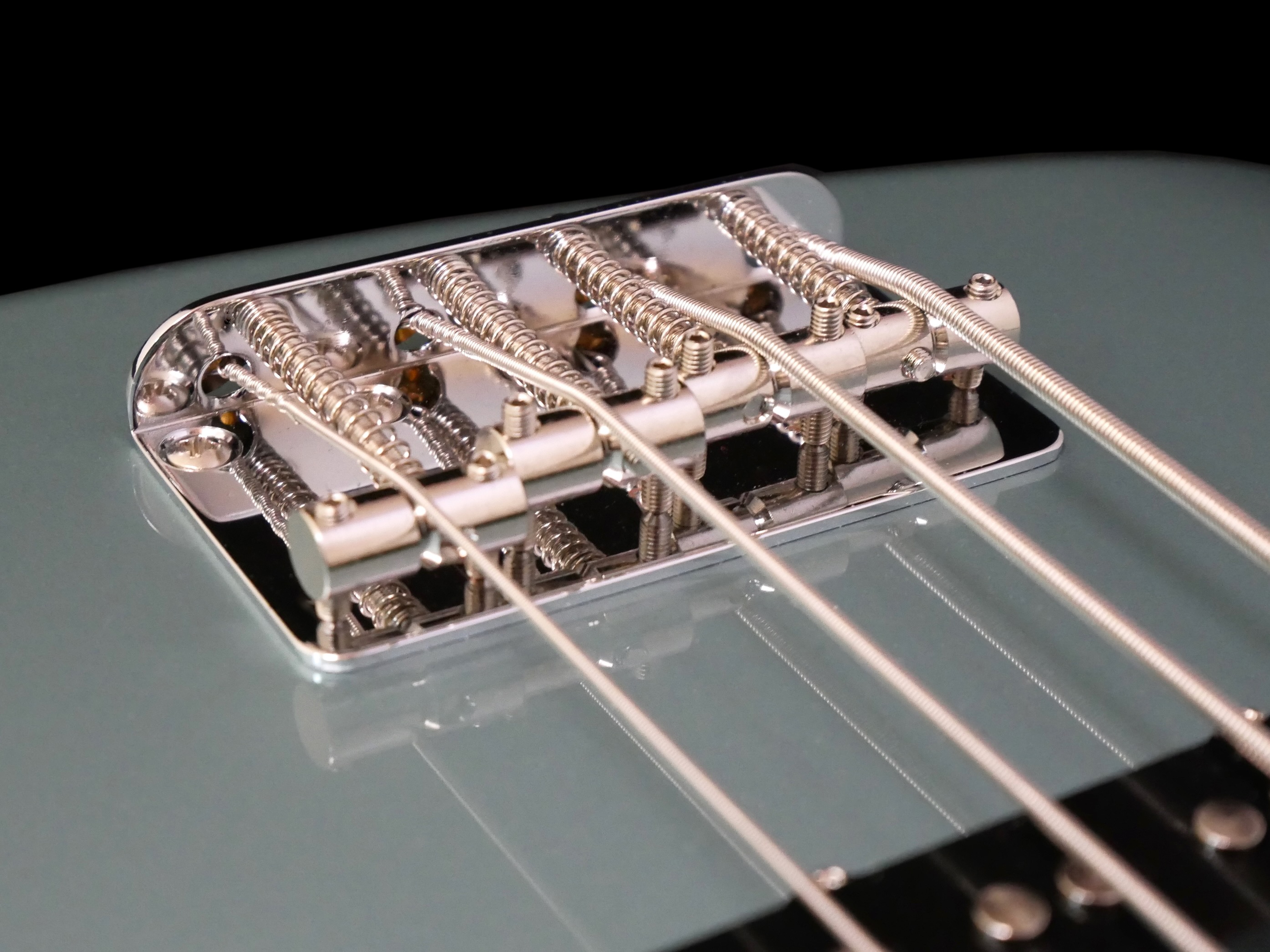
The machine heads on the TJB-55s are Gotohs which manage to retain a vintage look, while being smaller and lighter than original Klusons, Fenders or Schallers on vintage basses.

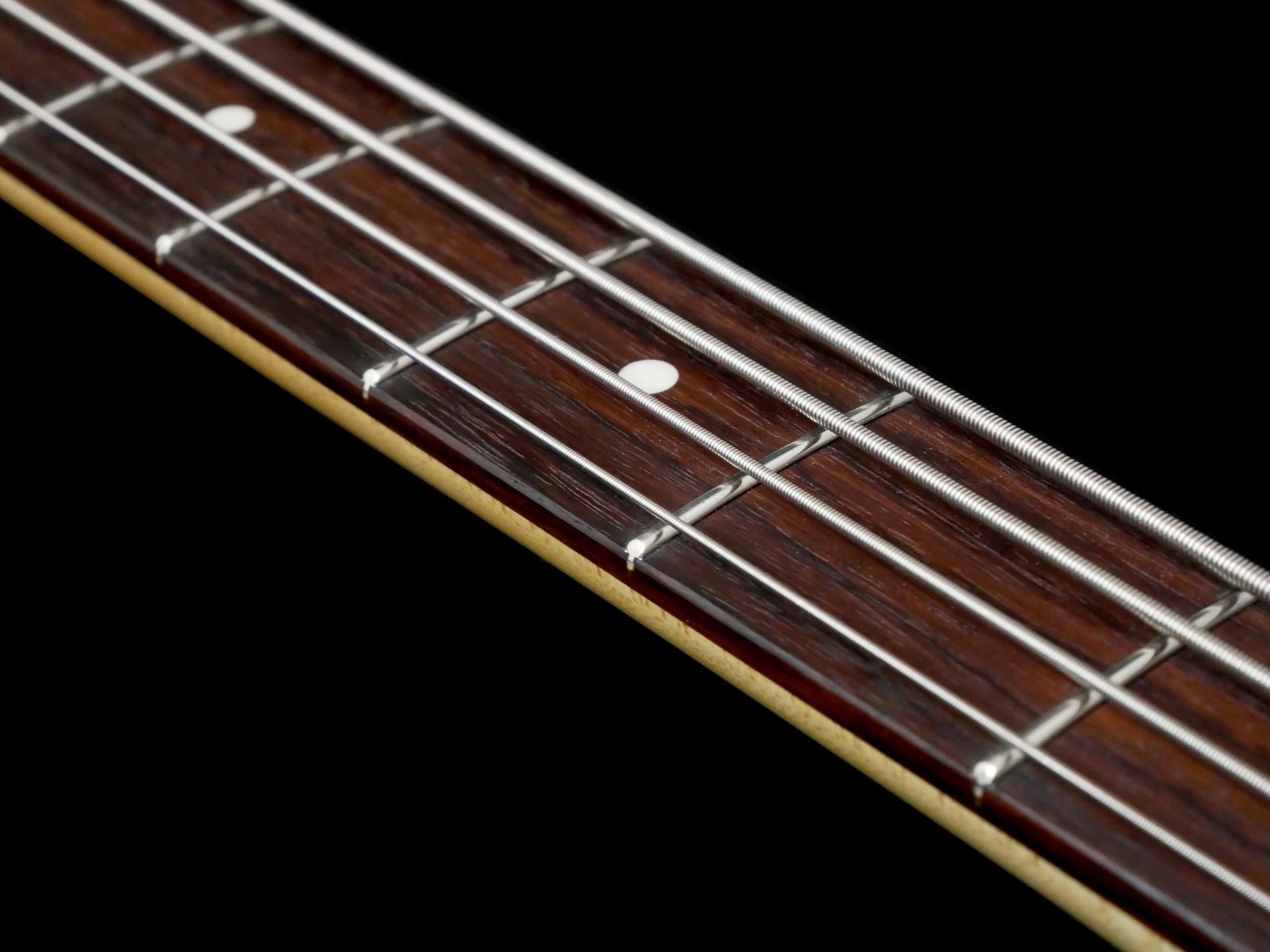
The regular Tokai TJB-55 sports 20 medium-sized frets in its beautiful rosewood fingerboard. The fretwork is top notch. 

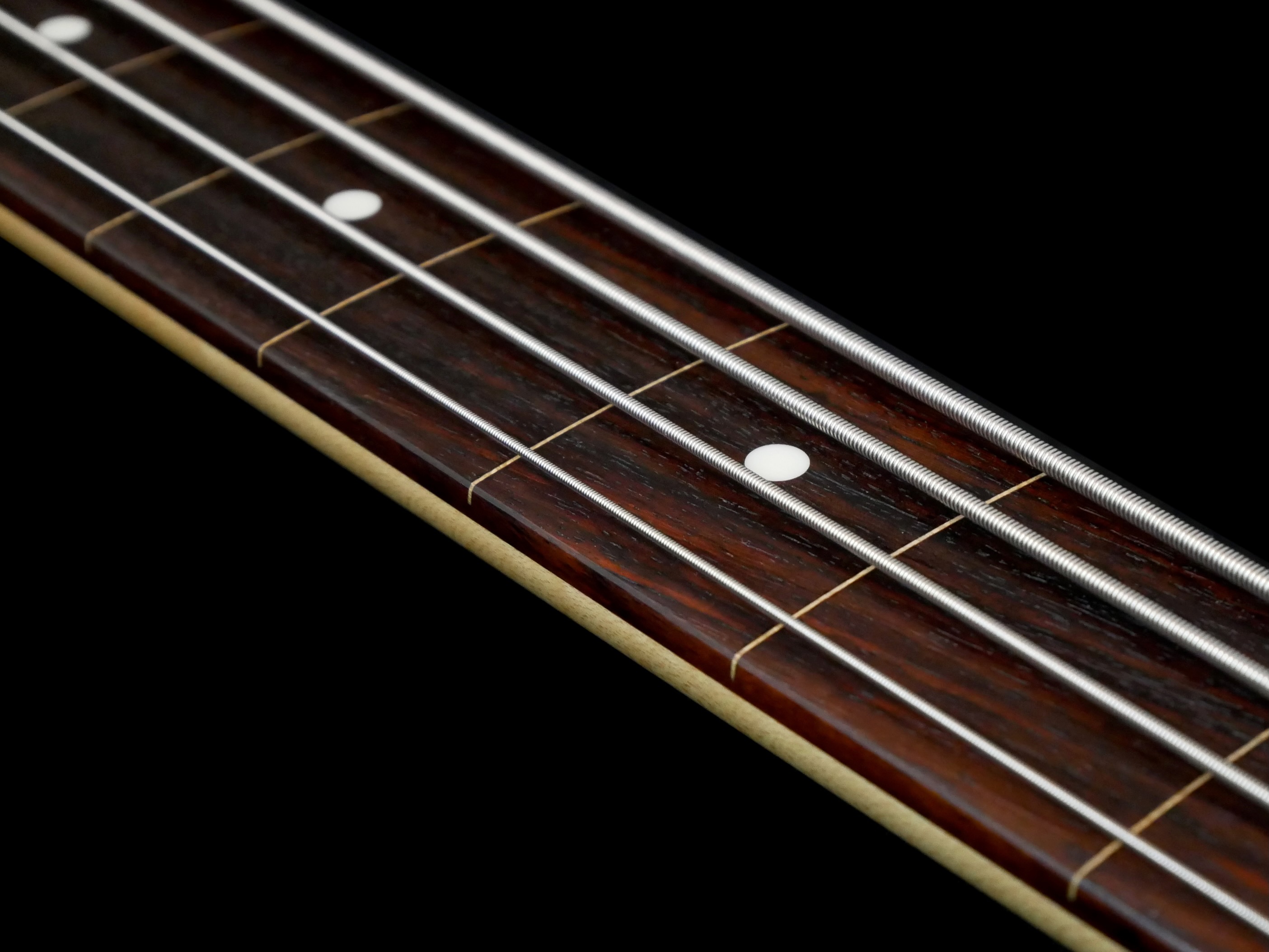
The fretless TJB-55 FL features fret lines made from maple; a welcome addition, especially for the occasional fretless player.

On forums – where else – you repeatedly find claims that rosewood might be too soft a wood for a fretless bass and roundwound bass strings. I own a well-loved and much-played 1976 Fender Precision Fretless, which – despite some light grooves in the ‘board – still plays fine.

Gotoh’s well-made version of an early-Seventies Fender bridge fits the bill on both the TJB-55 and the TJB-55 FL.

The legendary status of Jazz Basses is founded on two things – their great ergonomic properties, and their juicy yet transparent single-coil pickups.

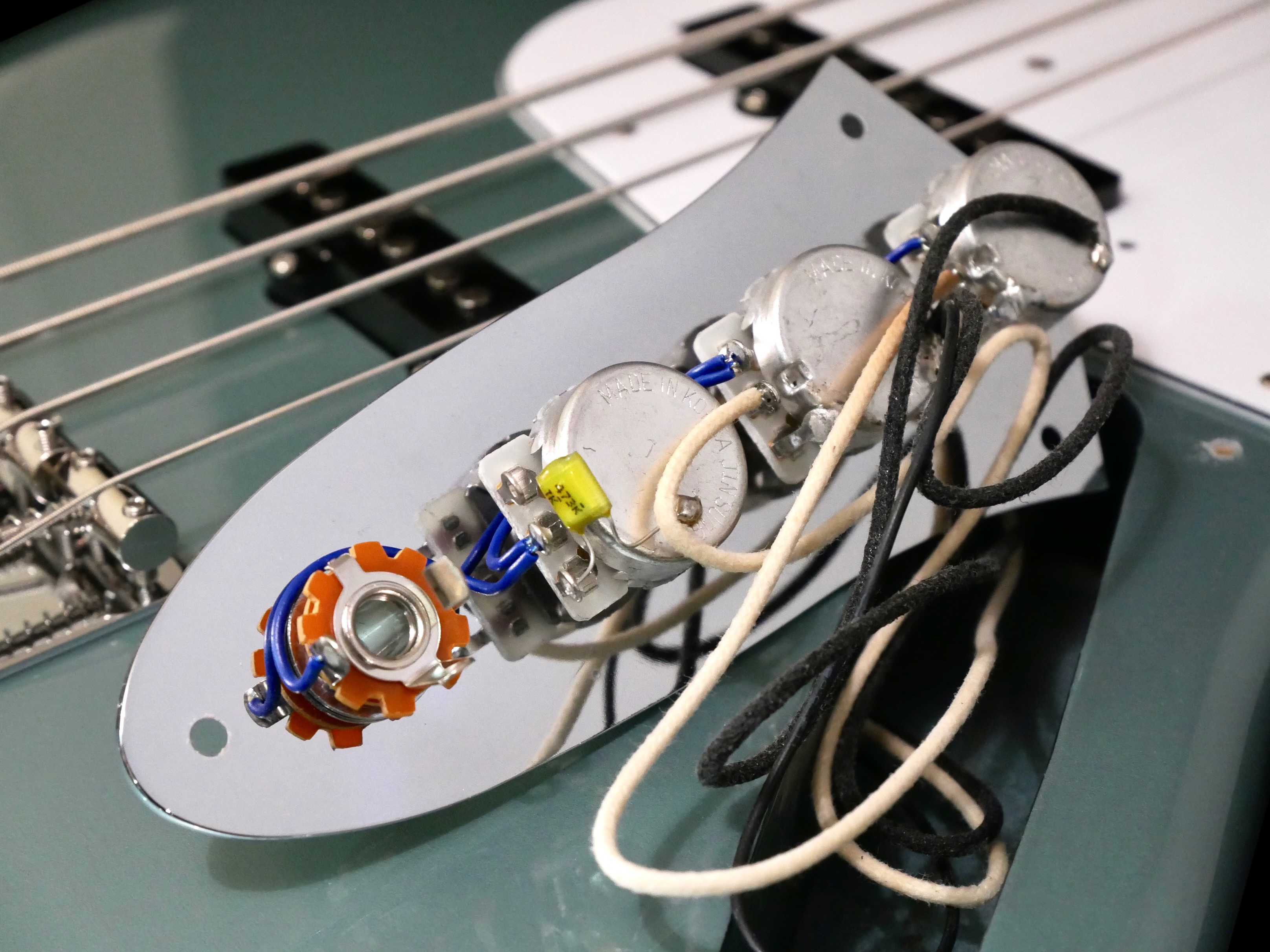
Both Tokais come with a pair of the company’s own, excellent JB-Vintage Mark III pickups that promise vintage-style tones. The bridge pickup is reverse wound/reverse polarity to the neck unit, so the combination of both pickups is humbucking.

The quality of the electronic parts and the neatness of the wiring is a sight for sore eyes. Tokai even goes as far as equipping the pickups with period-correct (early-Sixties) wires with waxed cloth insulation. 

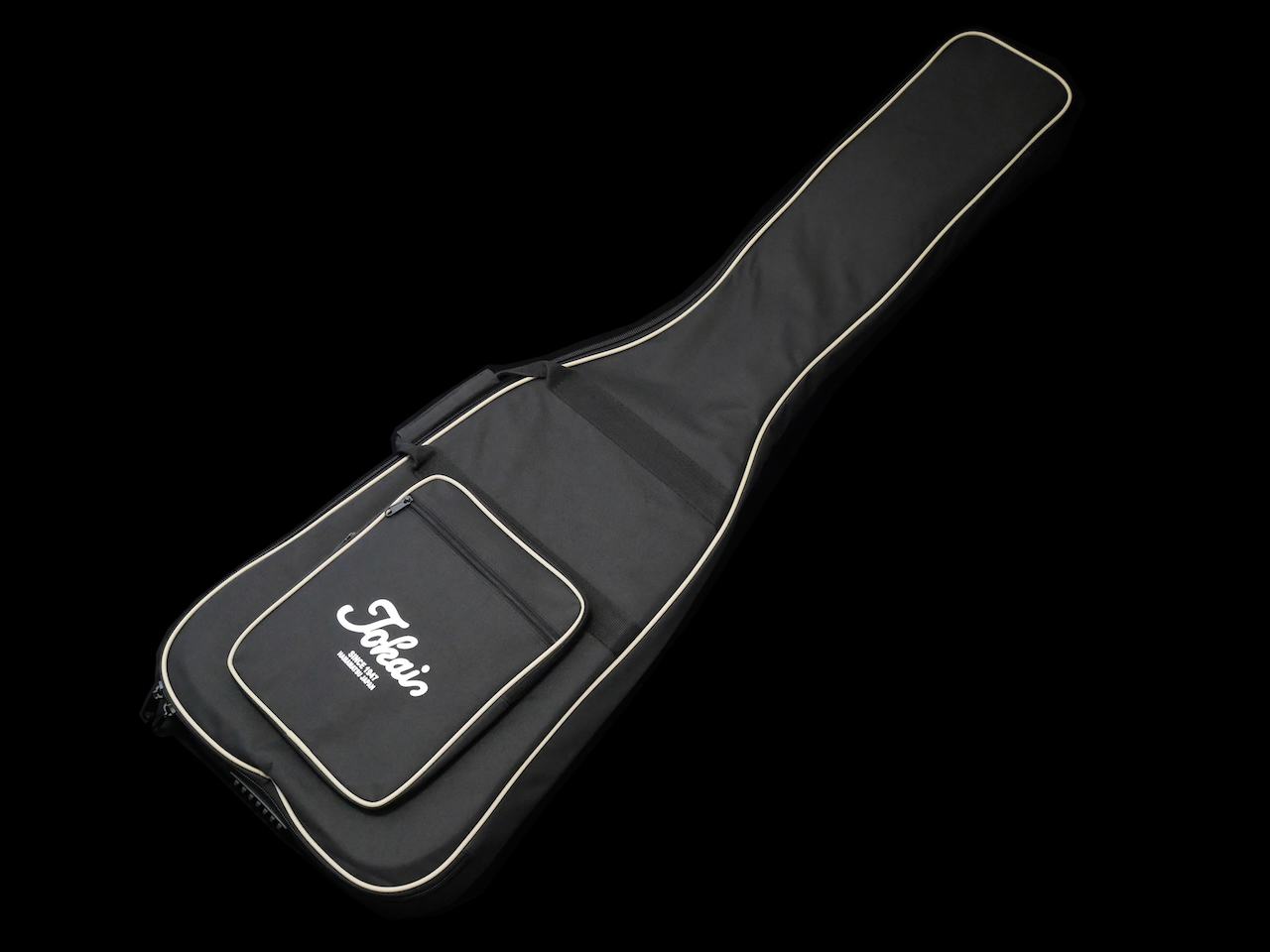
A high-quality gig bag comes supplied with both models. Inside the side pocket of the TJB-55 FL’s bag you will find a three-ply white pickguard, should you prefer that look.

****

I don’t know how Tokai does it, but it has managed – once again – to imbue both basses with heaps of that proverbial “vintage mojo”, even though we’re looking at brand-new instruments here. The combination of top notch parts, along with the company’s proven track record, seems to make for a fantastic mix in both TJB-55s.

These two Tokais offer the best of all the great features of an early-Sixties Jazz Bass. The workmanship on both TJB-55s is second to none, the playability is very comfortable, and the sounds deliver big time. If you’re looking for some top-drawer “Jazz action”, you should definitely try one of these basses out.

****

Testipenkissä: Tokai TJB-55 + TJB-55 FL

Sähköbasso – ja etenkin sunburst-värinen vuoden 1970 Fender Jazz Bass – oli elämäni ensimmäinen rakkaus. Isäni Jaroslav oli ammattirumpali saksalaisessa showbändissä, ja sain lapsena olla välillä mukana harjoituksissa, studioissa ja joissakin iltapäiväkeikoilla. Rakastin musiikkia, soittimia, mikrofoneja – mutta pääasiallinen katseenvangitseja minulle oli orkesterin basistin Pavelin Jazz-basso.

Kävin kiertotietä pitkin basistiksi; olin ensin viulisti, sitten kitaristi ja vielä kontrabasisti, mutta ensimmäinen kunnon soitin, jonka hankin omilla rahoillani vuonna 1985 oli japanilainen Jazz-basson kopio. Tämä satojen keikkojen basso on yhä minun lempisoitin.

Japanilaisista Tokai-soittimista on tullut ajan myötä legendaarisia. 1970-luvun lopussa Tokai tarjosi juuri sellaisia laadukkaita, vintage-tyylisiä sähkökitaroita ja -bassoja, joita soittajat halusivat, mutta joita ei silloin saatu Yhdysvalloista. Mutta myös nykyään japanilaiset Tokai-soittimet tarjoavat muusikoille laadukasta vintagea soittajalle ystävällisellä hintalapulla.

****

Nauhaton Tokai TJB-55 FL (1.238,– €) on kuin Tokain epävirallinen ”nimikkomalli” Jaco Pastoriukselle, legendaariselle nauhattoman Jazz-basson soittajalle.

Tämän testin nauhallinen Tokai TJB-55 (999,– €) on viimeistelty upealla metallivärillä – ocean turquoise metallic – joka on sinertevän hopea.

Molemmissa TJB-55-versioissa perusainekset ovat hyvin laadukkaita. Kuuskytluvulle uskollisesti bassojen rungot ovat leppää, kun taas ruuvikaulat veistetään kovasta vaahterasta.

Rungon mukavuusviiste on hyvin syvä ja mukava.

Kaulan viimeistely poikkea hieman vintage-reseptistä, sillä kumpikin basso tarjoaa ohuen mattapinnan muusikon otekädelle. Useat nykybasistit pitävät 1950-70-lukujen kiiltävän viimeistelyn liian ”tahmealta”, minkä vuoksi Tokai-bassojen satiinipintainen matta on hyvä valinta.

TJB-55-bassojen virittimet tulevat Gotoh:n mallistosta, ja ne yhdistävät onnistuneesti vintage-Schallereiden ulkonäköä hieman pienemmällä painolla. Lopputulos on entistäkin parempi balanssi.

Tokai TJB-55:n ruusupuiseen otelautaan on istutettu 20 medium-kokoista nauhaa. Nauhatyö on ensiluokkaista.

Tokai TJB-55 FL:n otelautaan taas on asennettu vaahteralinjat, jotka helpottavat – etenkin aloittelevan – fretless-basistin osumatarkkuutta.

Jotkut väittävät, että nauhatomaan bassoon ei sovi ruusupuuta, koska tämä puulaji olisi muka liian pehmeä nykyaikaiselle roundwound-kielille. Oma nauhaton bassoni on kuitenkin paljon soitettu vuoden 1976 Fender Precision Fretless, ja vaikka sen ruusupuuotelaudassa on pieniä uria, se ei haittaa menoa – ainakaan vielä – lainkaan.

Laadukas versio 1970-luvun Fender-tallasta istuu luonnollisesti erittäin hyvin vintage-tyliseen TJB-55 ja TJB-55 FL:ään.

Loistavan erogonomian lisäksi yksikelaisten mikrofonien maukas sointi seisoo Jazz-basson suosion keskipisteessä.

Molemmpiin Tokai-bassoihin on asennettu firman kuuluisia JB-Vintage Mark III -mikrofoneja, jotka lupaavat autenttisia 1960-luvun Jazz Bass -soundeja. Tokain mikit toimivat yhdessä käytettyinä humbuckerin tapaan hurinattomasti.

Tokai menee jopa niin pitkään, että mikrofonien johdot ovat 1960-luvun alussa käytetty malli, jossa eristys on hoidettu vahalla kyllästetyllä kangaskudoksella.

Laadukas keikkapussi kuuluu Tokai TJB-55 -bassoissa hintaan. TJB-55 FL:n mukaan tulee myös kolmikerroksinen valkoinen pleksi, jota voi asentaa itse, jos basson ”alaston” ulkonäkö ei jostain syystä miellytä.

****

En tiedä miten Tokai Japan sen tekee, mutta sekä TJB-55:ssä että TJB-55 FL:ssä on runsaasti sitä kuuluisa ”vintage-mojoa”, vaikka kyseessä on upouudet sähköbassot. Ilmeisesti näissä soittimissa kaikki laadukkaat osat ja firman pitkä kokemus vintage-kopioissa yhdistyvät suvereenisti laadukkaan lopputulokseen.

Jazz-bassojen parhaat ominaisuudet ja niiden klassisimmat soundit on onnistettu ikäänkuin tislaamaan näihin huippubassoihin. Tokain toteutus on kauttaaltaan laadukas, sekä bassojen soundit ja soitettavuus ensiluokkaista. Kannattaa siis ehdottomasti tutustua Tokai TJB-55 -bassoihin, jos on kiinnostunut pro-laadun Jazz-bassoista.

****

Tokai TJB-55 FL – Wherever I Lay My Hat

Here’s my demo of the Tokai TJB-55 FL fretless bass.
The demo is based on Pino Palladino’s classic bass part, as heard on Paul Young’s 1983 hit ”Wherever I Lay My Hat”.
Listen to the original HERE.
Find more information on the Tokai TJB-55 FL HERE.
I recorded the bass straight into my Universal Audio Volt2 interface. The light chorus was added in the DAW.

Guitar Porn: Tokai TJB-55 & TJB-55 FL

Here’s a short demo song featuring the Tokai TJB-55 regular model, as well as the lined fretless counterpart TJB-55 FL. This track is based on the Steely Dan classic ”Peg”.
The fretted Tokai TJB-55 takes the first verse, and the fretless TJB-55 FL plays in the second verse.
The bass tracks have been recorded using a Cranborne Audio Camden EC2 preamp and a Universal Audio Volt2 interface.

Pidä blogia WordPress.comissa.

Ylös ↑