• Very limited edition
• Handcrafted in Japan
• AAAAA flame maple top
• Seymour Duncan Antiquity Humbucker set
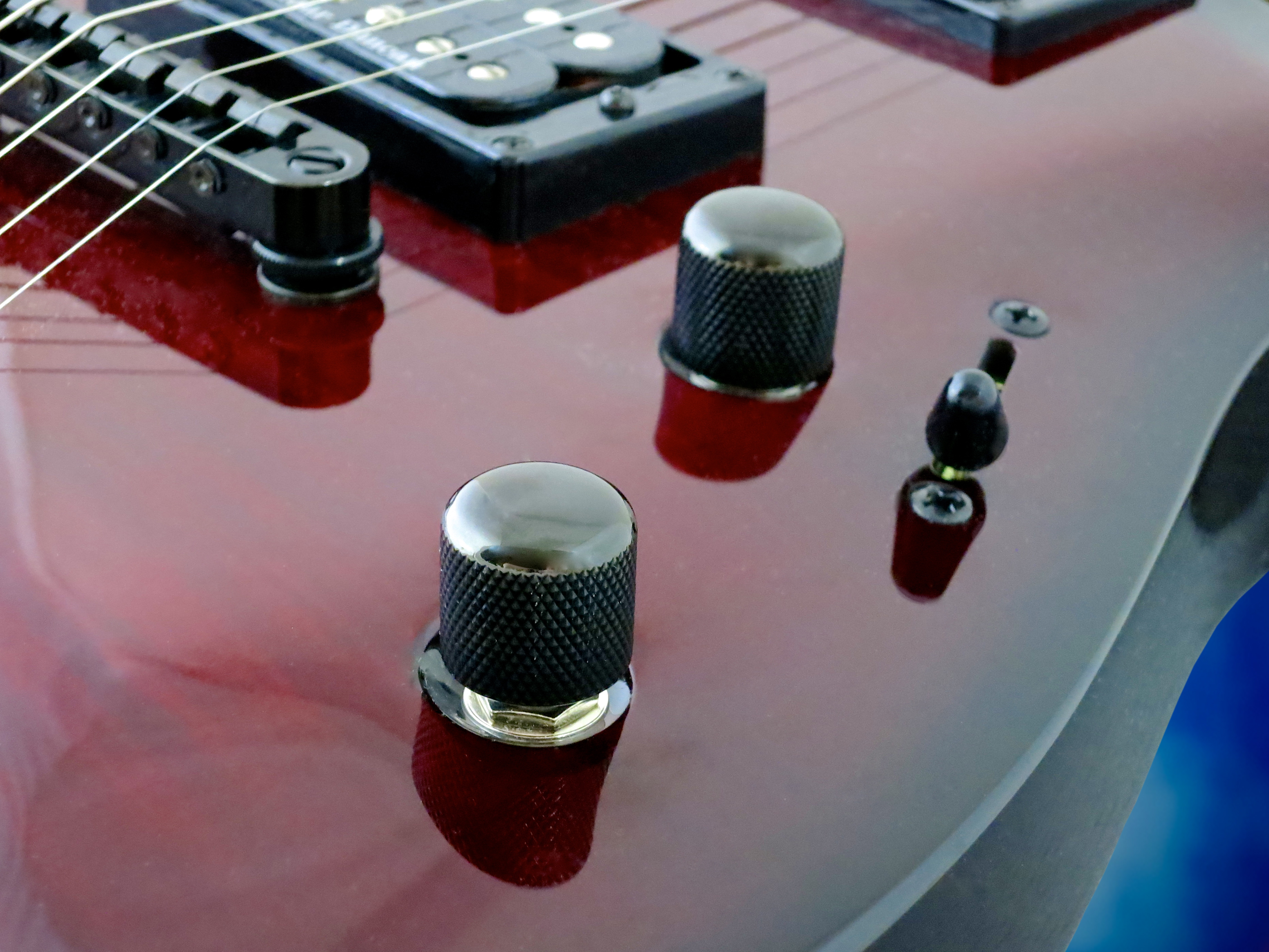
• Push/push switches in tone controls for coil-splitting
**** Demo Track
• Rhythm guitar – both pickups in split mode
• Lead guitar – starts with split neck pickup; second pass with full neck pickup
• Amp used – Juketone True Blood (handwired 5F1 Champ-clone)
• Recorded with a Shure SM57
Gretsch Guitars’ brand new Streamliner series offers access to the legendary brand name at a very affordable price point.
At the moment, the new range includes three different guitar models:
The G2622 Streamliner Center Block (also available left handed) is a centre block-equipped version of a Sixties double cutaway Country Gentleman, while the G2655 Streamliner Center Block offers you similar looks in a more compact package. The G2420 Streamliner Hollow Body, for its part, is a full-blown, big-bodied archtop guitar in a similar vein to Gretsch’s legendary 6120.
All three guitars are also available as T-versions with a Bigsby Lightning Series vibrato. The Streamliner Series is handmade in Indonesia.
****
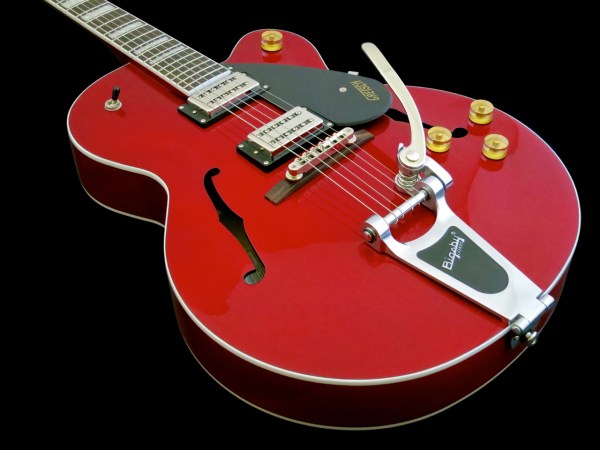
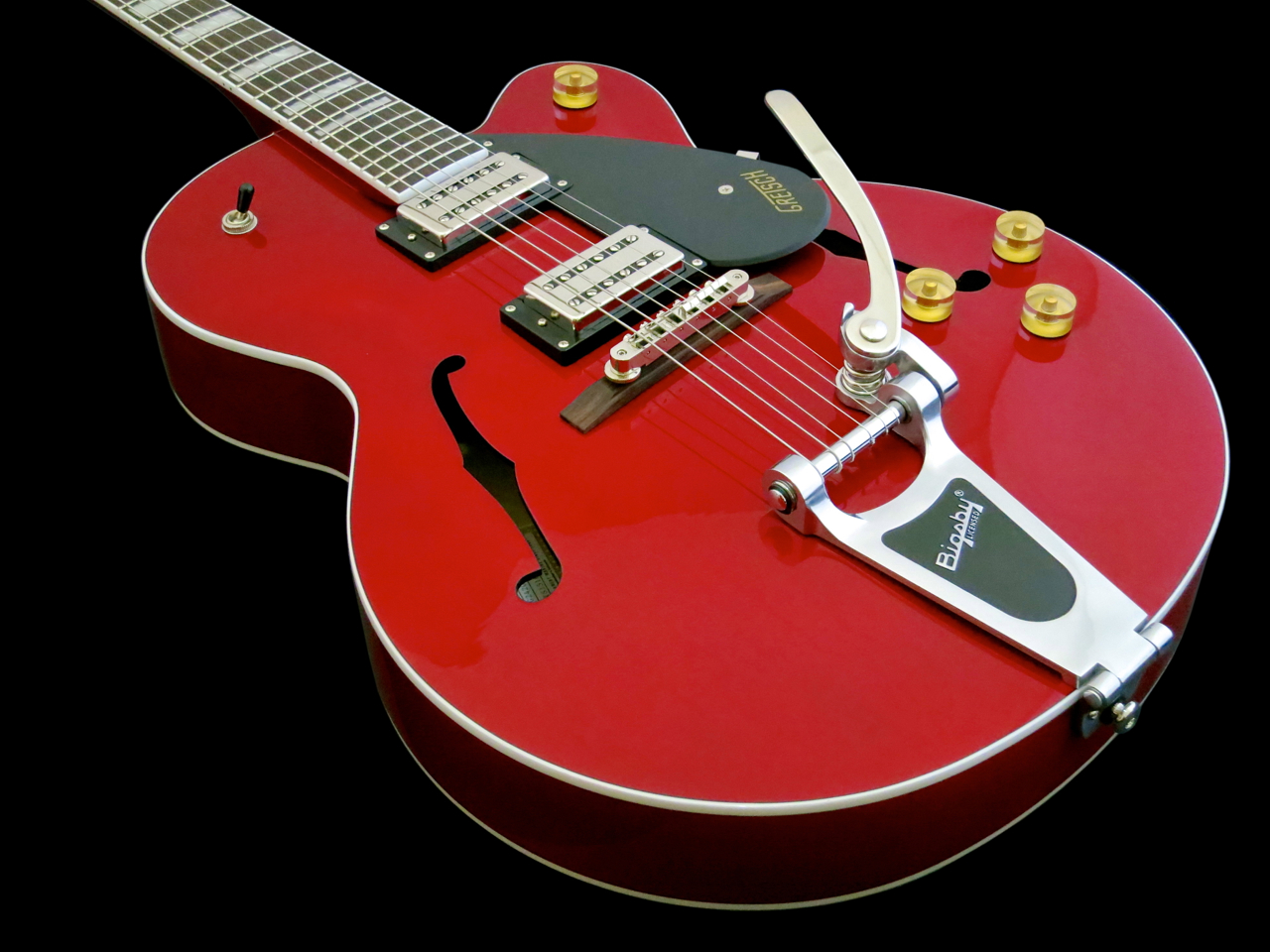
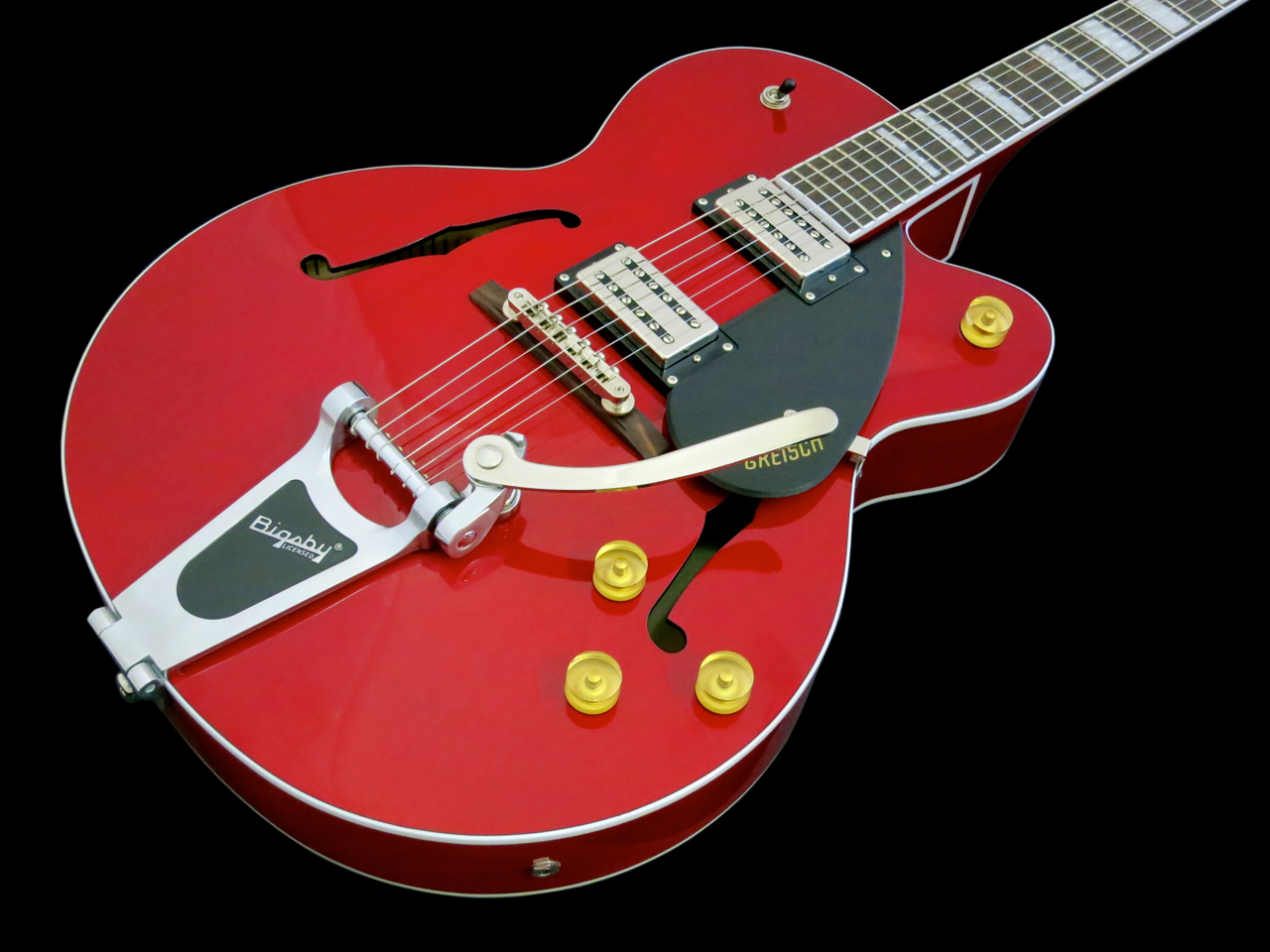
The Gretsch Streamliner G2420T Hollow Body (street price in Finland approx. 560 €) is a very foxy looking guitar, despite its quite affordable pedigree.
The G2420T can be had in see-though red or gold metallic, while the standard model (equipped with a lyre-style tailpiece) comes in brown sunburst only.
The G2420T’s full-depth body is made from steam-pressed laminated maple. The top is stiffened by Gretsch’s traditional parallel bracing.
The nato (an Asian wood species somewhat similar to mahogany) neck is glued into the body.
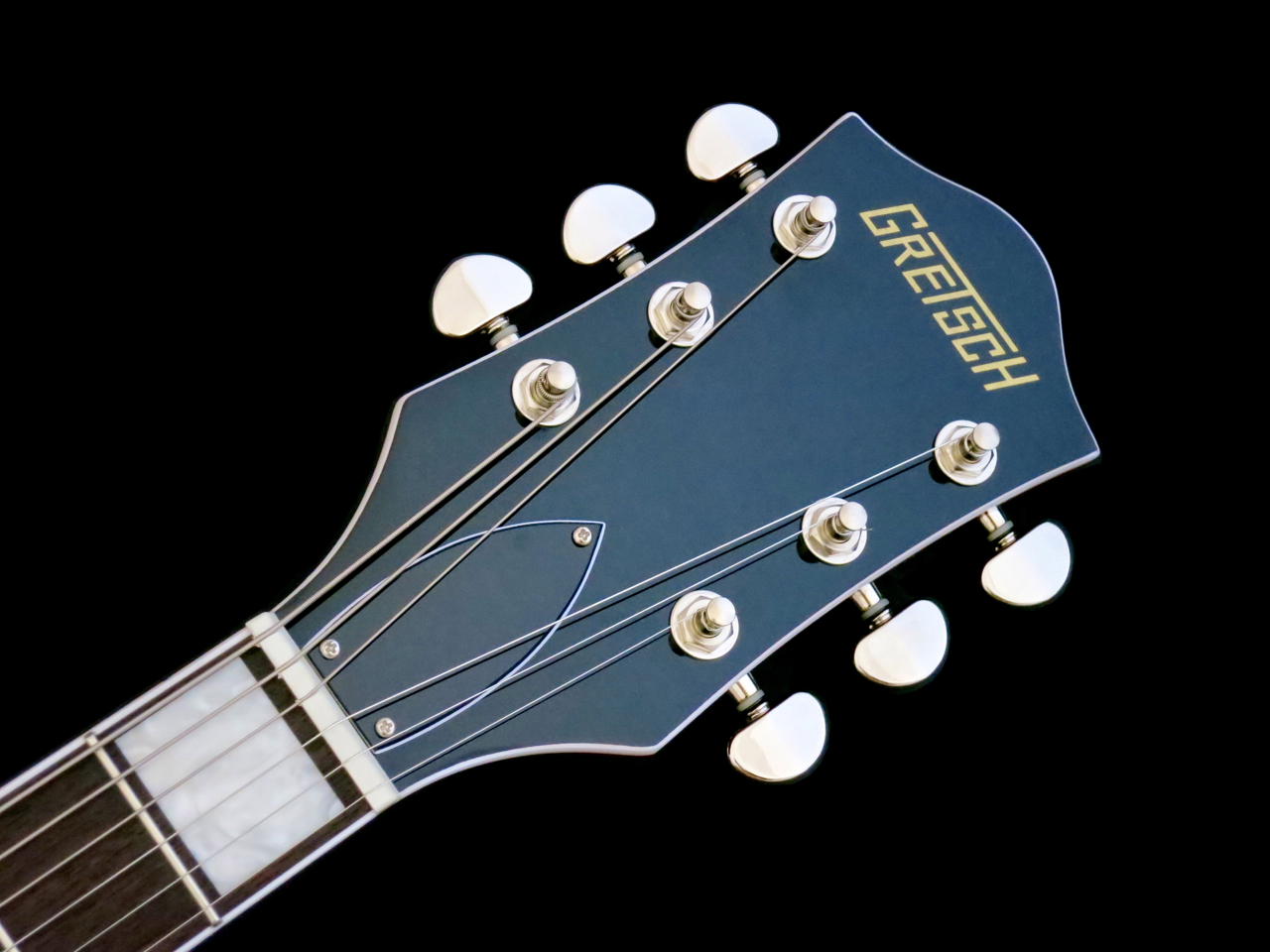
There’s plenty of binding on the Streamliner Hollow Body – in addition to the multiple binding on the body the guitar also sports a bound fretboard and even a bound headstock.
This Gretsch comes equipped with a very decent set of sealed tuning machines.
The vintage-sized frets have been neatly seated. The G2420T features large rectangular position markers made from pearloid.
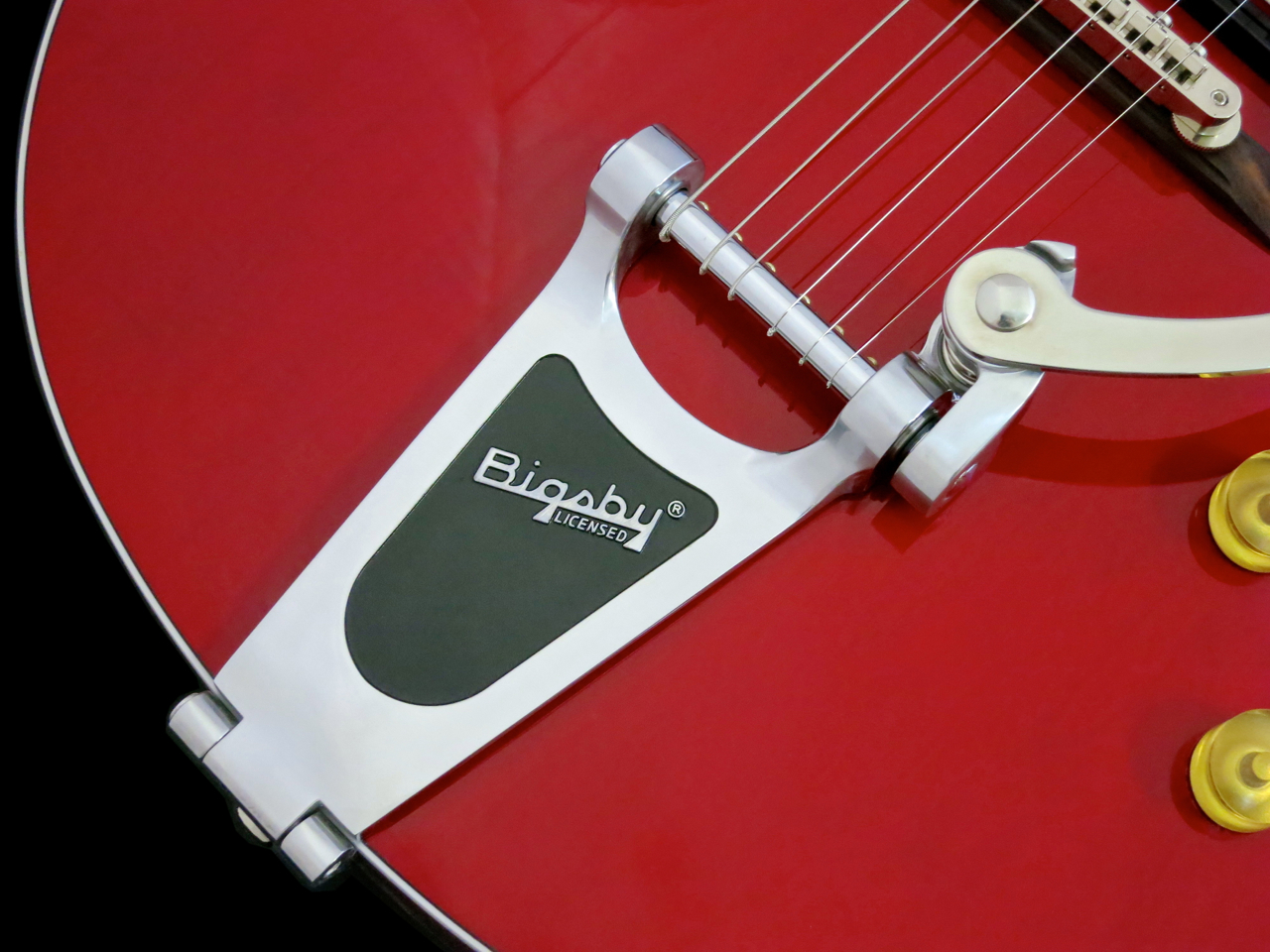
Bigsby’s mid-priced Lightning Series vibratos are produced in the Far East to exacting standards. The Bigsby B60 has been specifically designed for use with large-bodied archtops, such as the Gretsch G2420T.
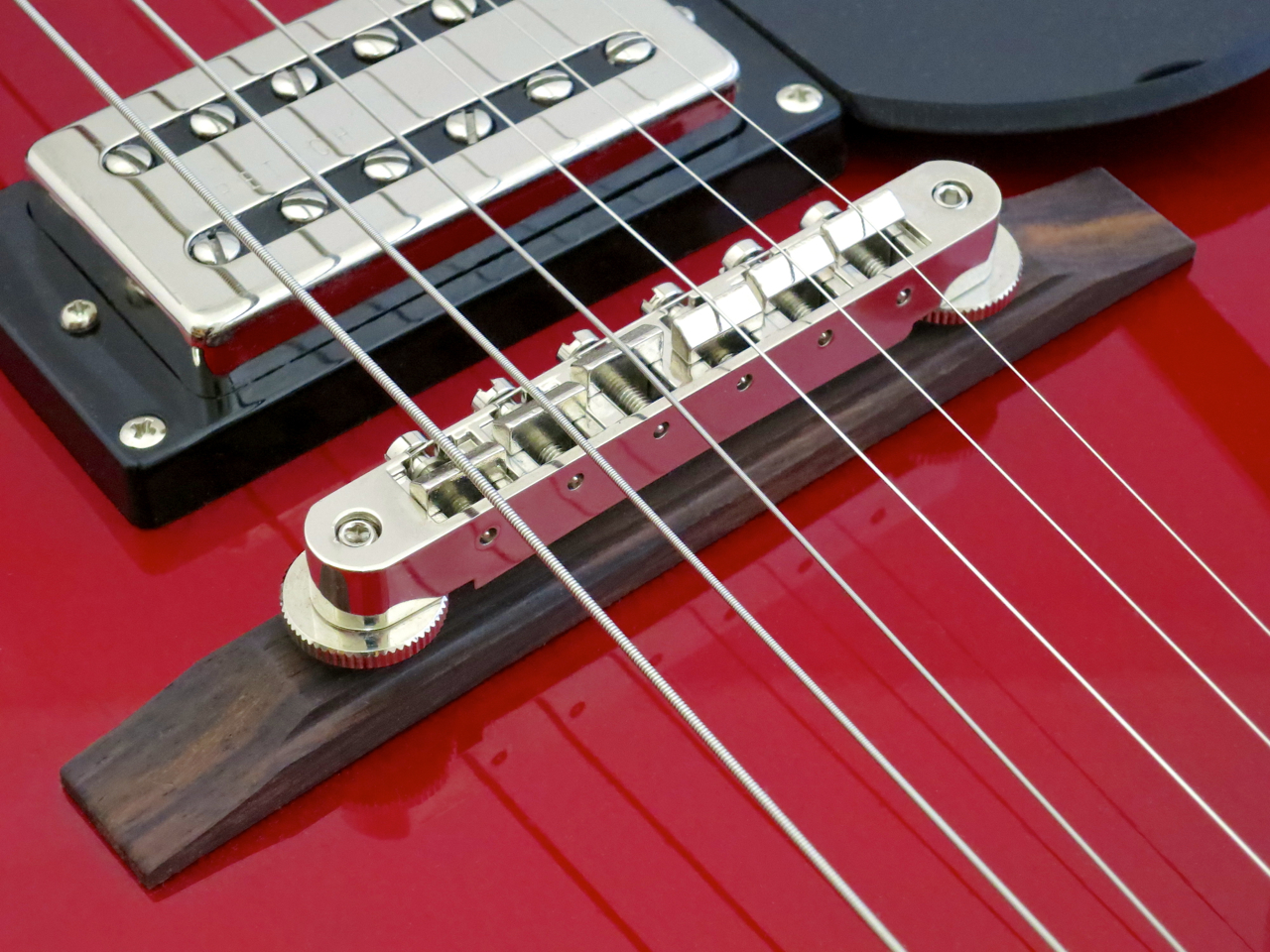
This Streamliner’s Adjusto-matic bridge may seem to be held in place simply by string pressure, but there’s more to the bridge than meets the eye. The rosewood base is ”secured”, which means reverse pinned. The bridge posts continue all the way through the rosewood base and into two holes in the guitar’s top, which keeps the whole bridge in the correct place.
The biggest difference between the Streamliner G2420T and similar models in Gretsch’s Electromatic- and Pro-ranges can be found in the new guitar’s pickups:
Depending on the ”era”, or an artists wishes, a Pro Series Model G6120 will either come with a pair of DeArmond single coils, Gretsch’s own Filter’Tron humbuckers or similar TV Jones pickups. Recent Electromatic G5420’s are now equipped with Gretsch’s new Black Top Filter’Trons, which are licensed Far Eastern copies of the original pickups.
All new Streamliners sport a pair of Broad’Tron pickups. Broad’Trons are full-sized humbuckers designed to offer a tone somewhere in-between the twang and bite of Filter’Trons and the lush warmth of PAF-style ’buckers.
The controls on the G2420T are pure Gretsch:
Below the f-hole you will find separate volume knobs for each pickup, as well as a joint master tone control. An additional master volume control is placed next to the cutaway.
****
Let me start this section by stressing how well-made this budget-Gretsch really is! The review sample wasn’t a ”review instrument”, breathed on by distributors Fender Scandinavia, instead I took the guitar straight off the wall at a local music shop (DLX Music).
The Gretsch G2420T Streamliner Hollow Body is a very cleanly put together archtop electric, and I genuinely couldn’t find anything to criticise (especially when considering the instruments pocket-friendly price). The very nice fretwork on the Streamliner is a definite plus when it comes to this guitar’s comfortable playability.
Officially Gretsch call this neck profile a ”Thin U”, but I would describe it as a very comfy D shape with a slightly flattened back.
The Bigsby B60 is buttery and doesn’t throw the Hollow Body out of tune too much, if used sensibly (a word of advice: if you’re very sensitive when it comes tuning stability, a Bigsby probably isn’t right for you). Because a Bigsby B6/B60 makes do without the additional roller of other Bigsby models, this vibrato is more sensitive and immediate in use (which is a good thing in my view). You get the all the Bigsby shine and shimmer with less ”work”.
Played acoustically, the Streamliner Hollow Body sounds just like the laminated-body archtop it is – open and dry with a strong focus on mid-range frequencies.
I feel that Gretsch’s plan of taking its new Streamliners closer towards the mainstream really seems to hit the mark. The Broad’Trons may not give you the traditional clucky, chicken picking, bright and sparkly sound of a set of Filter’Trons, but there’s still enough presence and treble left in the new pickups’ tone for a gretsch-y sound.
Thanks to the new pickups’ broader tone the Gretsch G2420T also works well for Jazz, apart from the usual Country and Rock (-abilly) genres. This clip starts with the neck pickup:
The Streamliner Hollow Body also sounds great with a light amount of crunch. There’s a nice balance between the low end and the treble in the G2420T’s sound, coupled with the dry delivery so typical of big box archtops.
You should be aware, though, that high gain settings and/or very high volume levels will result in howling feedback sooner or later. This isn’t really a fault, but rather a normal feature of this type of instrument, and the Streamliner Hollow Body isn’t any more ”problematic” than other guitars of this type.
This sound clip, too, has been recorded with Blackstar HT-1R valve combo:
Here’s the demo track off the Youtube video, whose guitar tracks were recorded using Apple Garageband’s own amp plug-ins. The lead guitar uses the bridge pickup, while the rhythm parts have been recorded using both pickups (left channel) and the neck pickup (right channel), respectively:
****
In my opinion the Gretsch Streamliner G2420T Hollow Body is one of the best full-size archtops in this price range – possibly even the best! This is a surprisingly well-made instrument that punches far above its ”weight”.
If you’re looking for the ”genuine Gretsch Sound”, warts-and-all, I would point you to the (much pricier) Electromatic Series and its Filter’Tron pickups.
One of the Streamliner Series’ main objectives, though, is to broaden and widen the appeal of these guitars, and take the Gretsch name closer to the mainstream. I feel Gretsch have succeeded very well in this endeavour!
Gretsch Guitarsin Streamliner-uutuussarja tuo legendaarisen valmistajan kitaroita uuteen, edullisempaan hintaluokkaan.
Tällä hetkellä uuteen sarjaan kuuluvat kolme mallia:
G2622 Streamliner Center Block (saatavilla myös vasenkätisenä) on keskipalkilla varustettu versio 1960-luvun Country Gentleman -kitarasta, ja G2655 Streamliner Center Block on nykyaikainen malli pienemmällä puoliakustisella rungolla. G2420 Streamliner Hollow Body taas on legendaarisen Gretsch 6120:n edullinen painos, ja juuri sellaisen Kitarablogi sai testiin.
Kaikki kolme mallia on saatavilla myös T-versiona Lightning-sarjan Bigsby-vibratolla varustettuina. Streamliner-sarja rakennetaan käsityönä Indonesiassa.
G2420:n T-versiota saa punaisena tai kultaisena, kun taas lyyra-muotoisella kieltenpitimellä varustettua perusmallia tarjotaan ruskealla liukuvärityksellä.
G2420T:n täysikokoinen runko valmistetaan kokonaan muotoon prässätystä vaahteravanerista. Kannen alta löytyy – Gretschin tapaan – kaksi pitkittäissuunnassa kulkevaa rimaa.
Nato-puusta veistetty kaula on liitetty runkoon liimaamalla.
Rungon ja otelaudan lisäksi myös Streamliner Hollow Bodyn tyylikäs viritinlapa on reunalistoitettu.
Uutuus-Gretschin virittimet ovat sulavasti toimivaa nykyaikaista sorttia.
G2420T:n vintage-tyyliset nauhat on asennettu hyvin siististi soittimen palisanteriotelautaan. Isot suorakulmiot helmiäismuovista toimivat otemerkkeinä.
Bigsbyn laadukkaat Lightning-sarjan vibratot valmistetaan kauko-idässä. Bigsby B60 on tarkoitettu nimenomaan tällaiseen isokoppaiseen orkesterikitaraan kuin Gretsch G2420T:hen.
Streamlinerin Adjusto-matic-talla näyttää vapaasti seisovalta, mutta se on ylhäältä päin varmistettu luistamista vastaan. Tallan kahdet kierretangot jatkavat tallan ruusupuujalan läpi, ja nämä ”tapit” sitten istuvat niille tarkoitetuissa pienissä rei’issä kannessa.
Suurin ero Streamliner G2420T:n ja muiden vastaavien mallien Gretschin Electromatic- ja Pro-sarjojen välillä löytyy mikrofonivarustuksesta:
Pro-sarjan G6120-kitaroissa käytetään – aikakauden tai artistin toiveiden mukaisesti – joko DeArmond-yksikelaisia, Gretschin omia Filter’Tron-humbuckereita tai TV Jonesin vastaavia mikkejä. Electromatic G5420 -malleihin asennetaan nykyään Gretschin uudet Black Top Filter’Tronit, jotka ovat kauko-idässä tehtyjä lisenssikopioita firman alkuperäisistä mikrofoneista.
Kaikissa Streamliner-soittimissa taas käytetään Broad’Tron-nimisiä, täysikokoisia humbuckereita. Broad’Troneille luvataan sellaista soundia, joka on perinteisen Filter’Tron-purevuuden ja -twangin ja PAF-tyylisten humbuckerien täyteläisyyden välimaastossa.
G2420T:n kytkentä on ehtaa Gretschiä:
F-aukon läheltä löytyy kummallekin mikrofonille oma volyymisäädin, sekä yhteinen master tone, kun taas soololoven vierestä löytyy vielä erillinen master volume.
****
Heti aluksi minun täytyy korostaa kuinka korkealla tasolla tämän testikitaran työnjälki on, eikä tässä ole kyse Fender Scandinavian lähettämästä ”tuunatusta testikitarasta”, vaan soitin on poimittu suoraan DLX Musiikin seinältä mukaan testiin!
Gretsch G2420T Streamliner Hollow Body on erittäin siististi rakennettu orkesterikitara, enkä ole löytänyt mitään mikä olisi pistänyt ikävästi silmään. Testikitaran laadukas nauhatyö saa tältä testaajalta vielä erityisen kiitoksen – kitaran soitettavuus on erinomainen, eikä mikään rämise.
Tämän Gretschin kaulaprofiili on mukava D-muoto aavistuksen verran laakealla selkäpuolella.
Bigsby B60 toimii mukavan jouhevasti ja vire säilyy ns. ”järkevässä” käytössä yllättävän hyvin (huom: Bigsby ei oikein sovi kultakorville). Koska B6/B60-vibratolla (samoin kuin lyhyemmällä B3/B30-mallilla) ei ole muiden Bigsby-mallien lisärulla, toimii tämä vibrato (hyvällä tavalla) herkemmin ja suoremmin. Bigsbyn hohtoa saa näin esiin vähemmällä ”työllä”.
Streamliner Hollow Body -mallin akustinen soundi on hyvä tyyppiesimerkki vanerikoppaisesta orkesterikitarasta – avoin, kuiva ja hieman keskialuevoittoinen.
Gretschin suunnitelma viedä Streamliner-mallit niiden Broad’Tron-mikrofonien avulla hieman lähemmäksi valtavirtaa on – ainakin minun omasta mielestäni – onnistunut varsin hyvin. On totta, ettei uusista mikeistä lähde läheskään niin kirkas, pureva ja naksahteleva soundi kuin perinteisistä Filter’Troneista, mutta Broad’Tron-humbuckereissa on kuitenkin onnistuttu säilyttämään riittävästi ylipäätä Gretsch-vivahteiseen soundiin.
Leveämmän perussoundinsa ansiosta Gretschin G2420T sopii Countryn ja varhaisen Rockin ohella myös todella hyvin Jazziin. Esimerkkipätkä alkaa kaulamikrofonista:
Myös kevyellä säröllä Streamliner Hollow Body kuulostaa mielestäni oikein mainiolta. G2420T:n soundissa bassot ja diskantit ovat hyvässä tasapainossa, ja kitara soi orkesterikitaran tavoin mukavan kuivalla äänellä.
Isoimmilla volyymeillä tällaisen kitaran kanssa alkaa tulla vastaan väistämättä feedback-ongelmia, etenkin särösoundeilla. Mutta tämä ei ole vika, vaan täysakustisen orkesterikitaran ominaisuus, eikä Streamliner Hollow Body ole siinä mielessä ”hankalampi” kuin muut.
Myös tämä pätkä on äänitetty Blackstar HT-1R putkikombolla:
Tässä vielä videon ääniraita, jossa kitararaidat on äänitetty Apple Garagebandin vahvistinplugareilla. Soolokitara käyttää tallamikrofonia, kun taas komppiraidat on soitettu sekä molemmilla mikrofoneilla (vasen kanava) että kaulamikrofonilla (oikea kanava):
****
Minun mielestäni Gretsch Streamliner G2420T Hollow Body on yksi parhaimmista orkesterikitaroista tässä hintaluokassa – ehkä jopa se paras. Tämä on yllättävän laadukas soitin, eikä mikään halpakitara.
Jos se ”aito Gretsch-soundi” on hakusessa, Electromatic-sarjan (huomattavasti kalliimpi) G5420T-malli on Filter’Tron-mikrofoniensa ansiosta varmasti se parempi valinta.
Streamliner-sarjan yksi tarkoitus on kuitenkin tarjota sellaisia Gretschejä, joilla on perinteistä laajempi vetovoima ja modernimpi soundi. Ja tässä aikeessa Gretsch on onnistunut erittäin hyvin!
Helsinkiläinen soitinkauppa ja soitinlaitteiden maahantuoja Musamaailma täyttää tänä vuonna 30 vuotta. Juhlan kunniaksi Musamaailma on järjestänyt/järjestämässä mm. arvontoja ja ale-kampanjoita.
Musamaailma on yksi pitkä-aikaisimmista ESP- ja LTD-soittimien maahantuojista, joten se ei ole ihme, että ESP on rakentanut firman vuosipäivää varten erittäin rajoitetun erän (30 kitaraa) Musamaailma-juhlamallia.
****
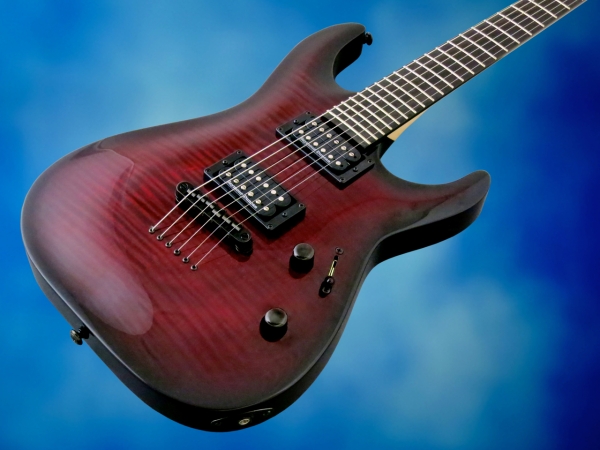
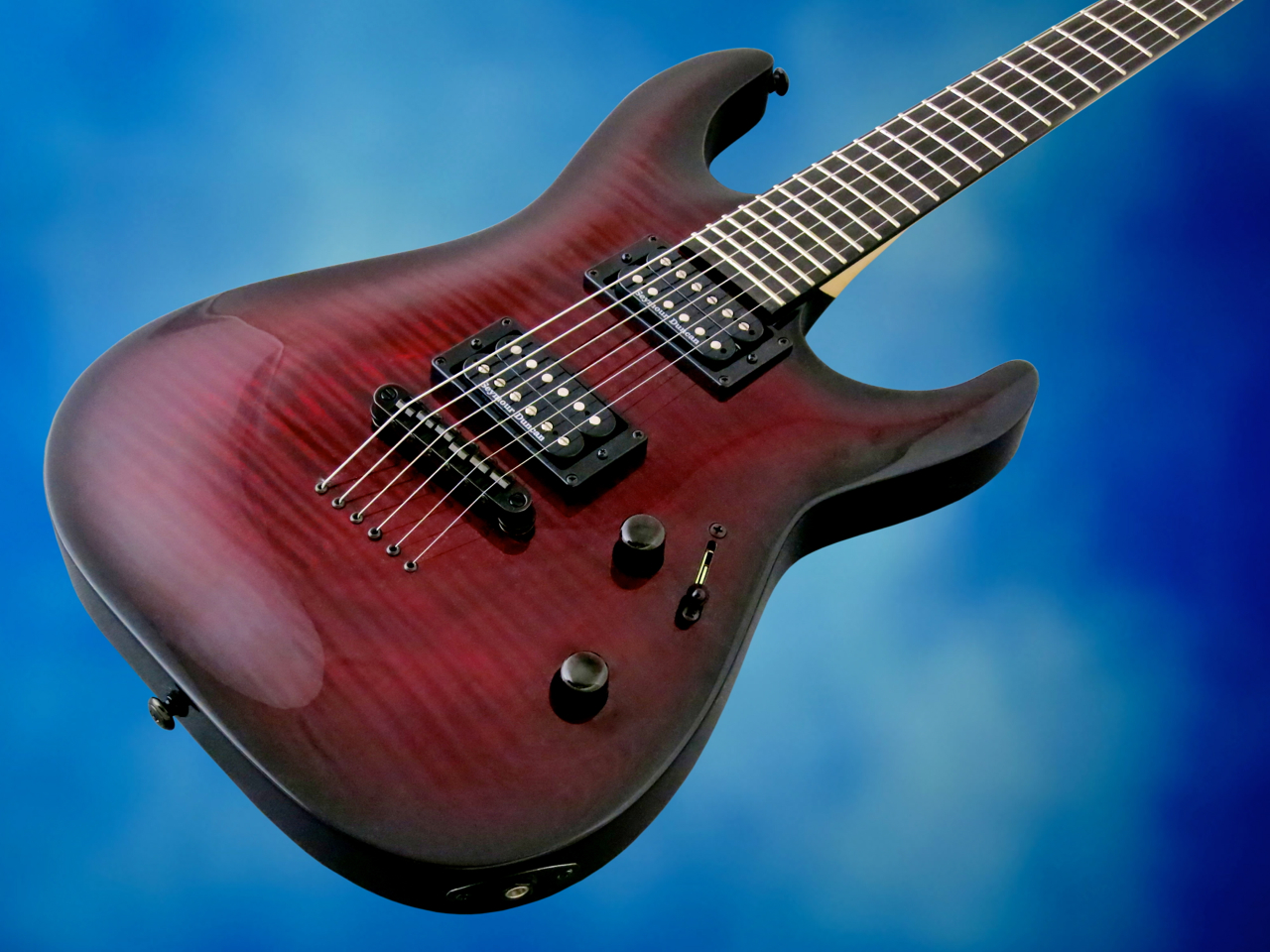
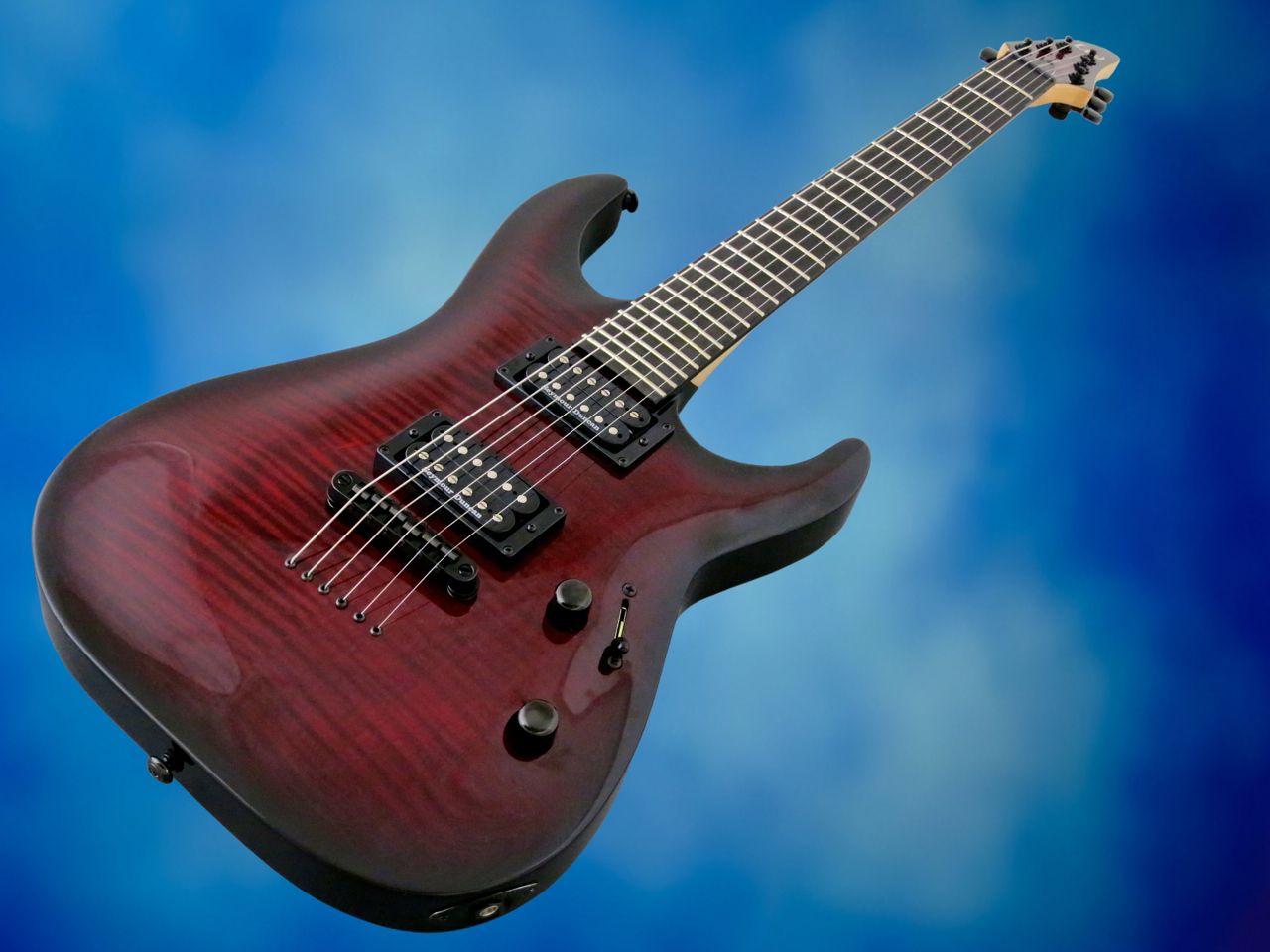
LTD MM-30 (999 €) on nykyaikainen, kahdella soololovella varustettu lankkukitara.
Runko on veistetty lepästä, johon on liimattu kaareva loimuvaahterakansi.
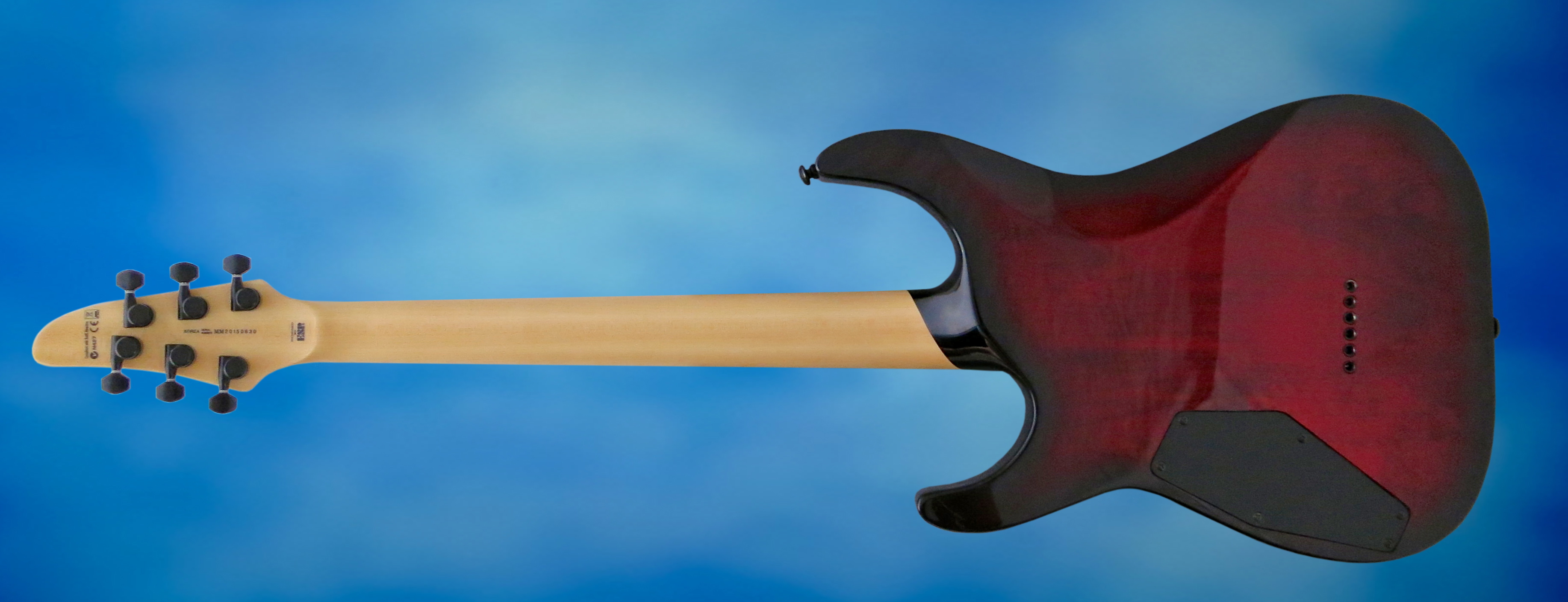
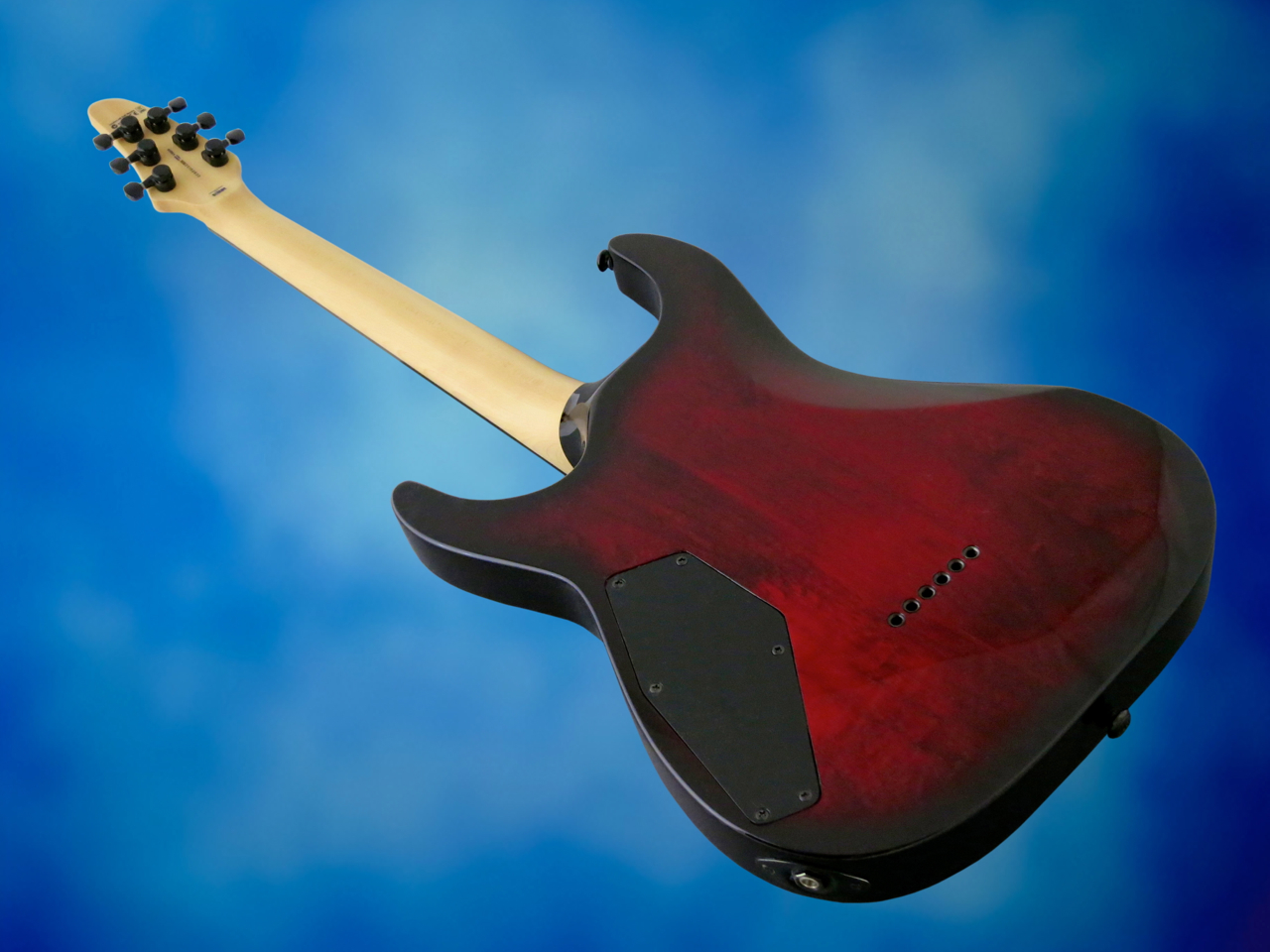
Vaahterakaula on liitetty runkoon ESP:n set-thru-liitoksella, jossa kaulapuu jatkuu rungon sisällä ihan tallan saakka.
Paremman sustainin lisäksi set-thru-liitos mahdollistaa erittäin sulavan ylimenon kaulasta runkoon, koska perinteistä kaulakorkoa ei tarvita.
MM-30:ssä otekäsi saa lisää vauhtia kaulan mattapintaisen viimeistelyn ansiosta.
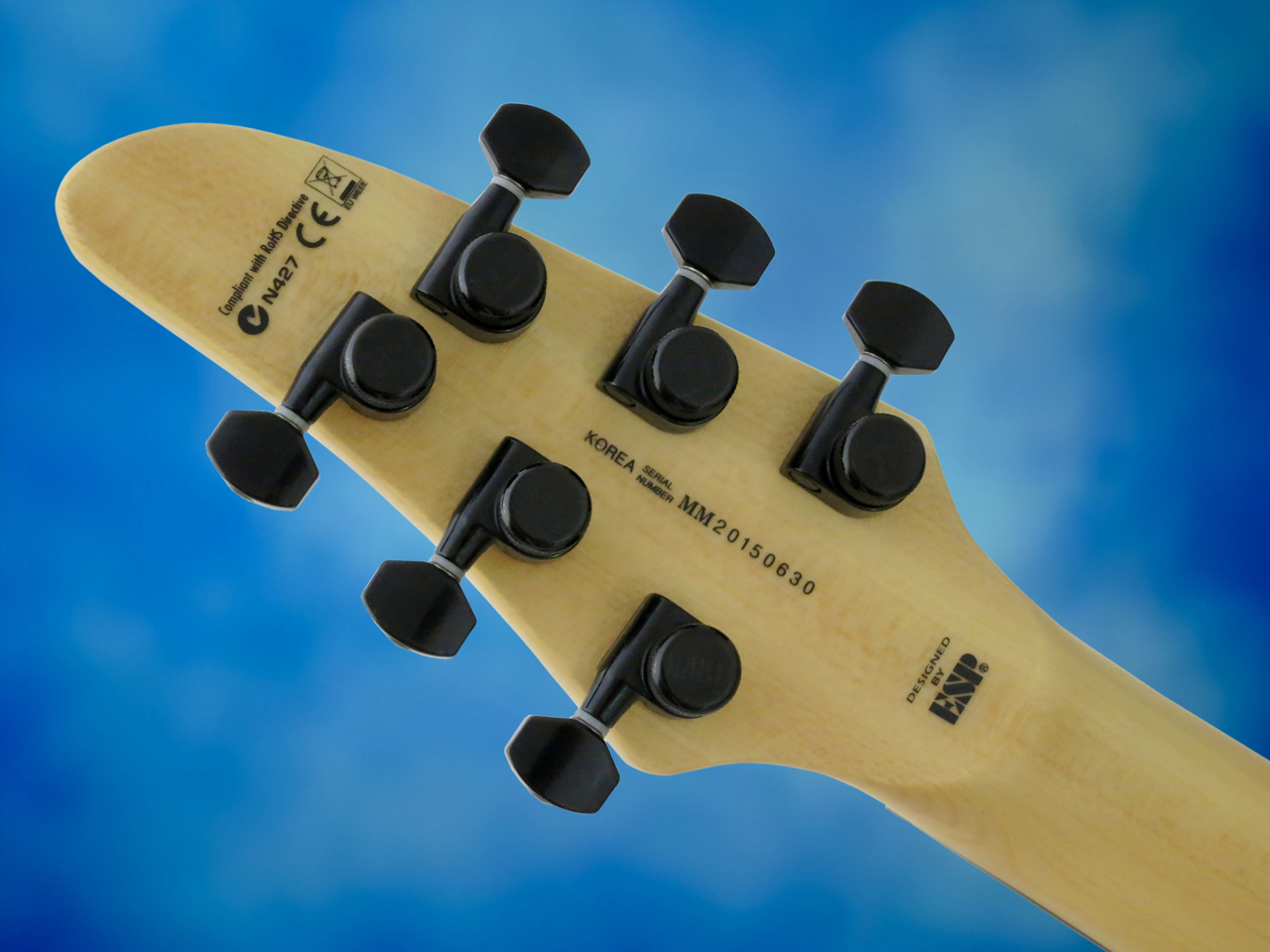
Viritinlavan etupuoleen on liimattu loimuvaahteraviilu, ja se on viimeistelty kauniilla liukuvärityksellä (see-through blood red sunburst).
LTD MM-30:n otelauta on sysimustaa eebenpuuta. Otelautaan on asennettu 24 jumbo-kokoista nauhaa, ja otelaudan radius on nykyaikaisen loiva (14 tuumaa/350 mm).
Laadukas linja jatkuu myös juhlamallin mustissa metalliosissa:
MM-30:ssä käytetään lukkovirittimiä…
…sekä lukittavaa TonePros tune-o-matic-tallaa. Kielet pujotetaan tässä mallissa rungon läpi.
ESP LTD MM-30:n mikrofonivarustus on Rock-, Fusion- ja Metal-henkinen:
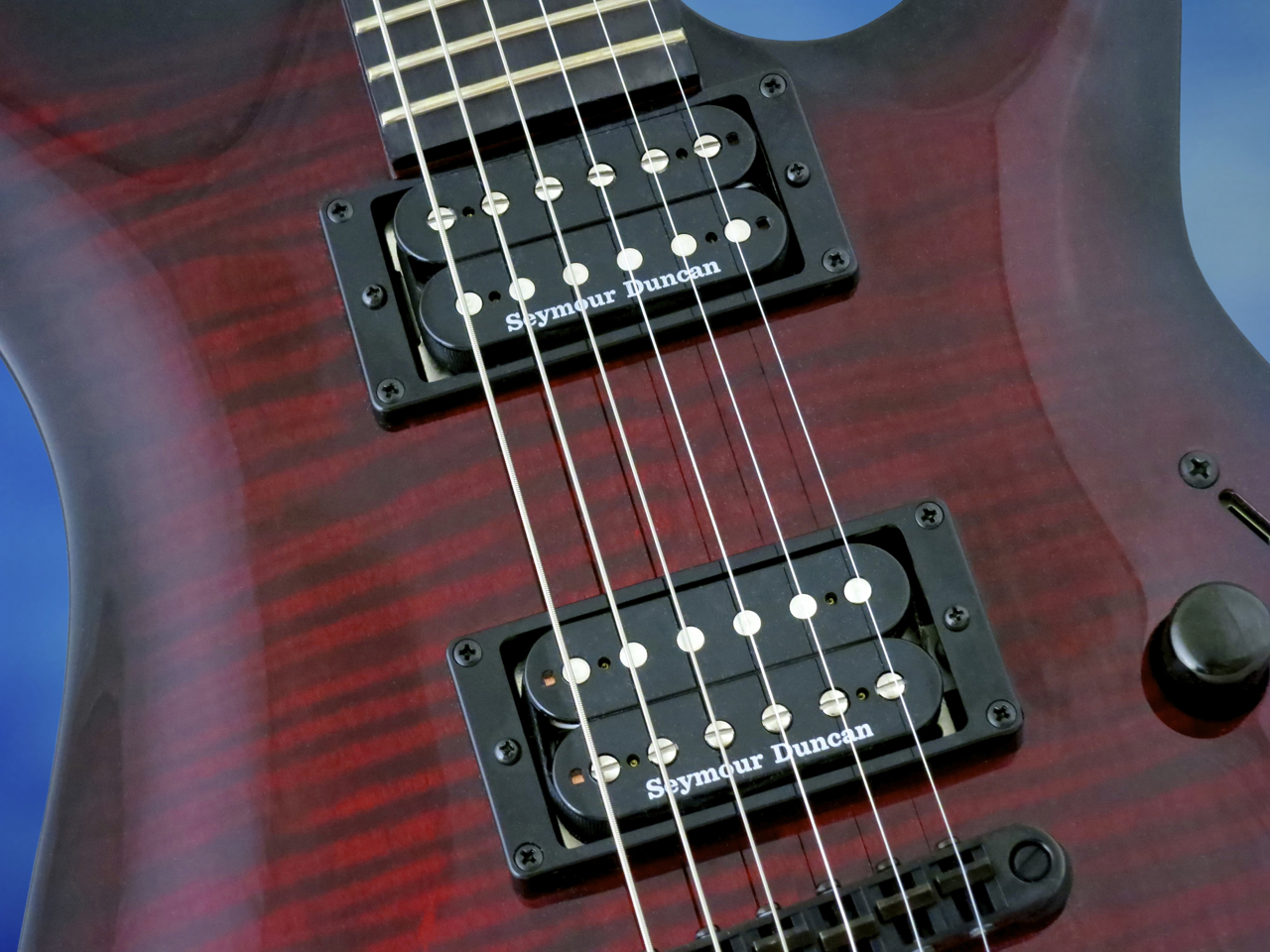
Kaulamikrofoni on Seymour Duncanin kestosuosikki ’59 Neck (SH-1N), joka tarjoaa vintageen nojaavan soundin yhdistettynä kevyesti lisättyyn tehoon. Tallamikrofoniksi taas on valittu alnicomagneetin pohjalta rakennettu tehopakkaus (resistanssi: 14,1 kilo-ohmia) nimeltään Custom 5 (SH-14).
Säädinosastolta löytyy kolmiasentoinen mikrofonikytkin, sekä master volume- ja tone-säätimet. Toneen on lisätty nostokytkin, jolla molemmat humbuckerit puolitetaan.
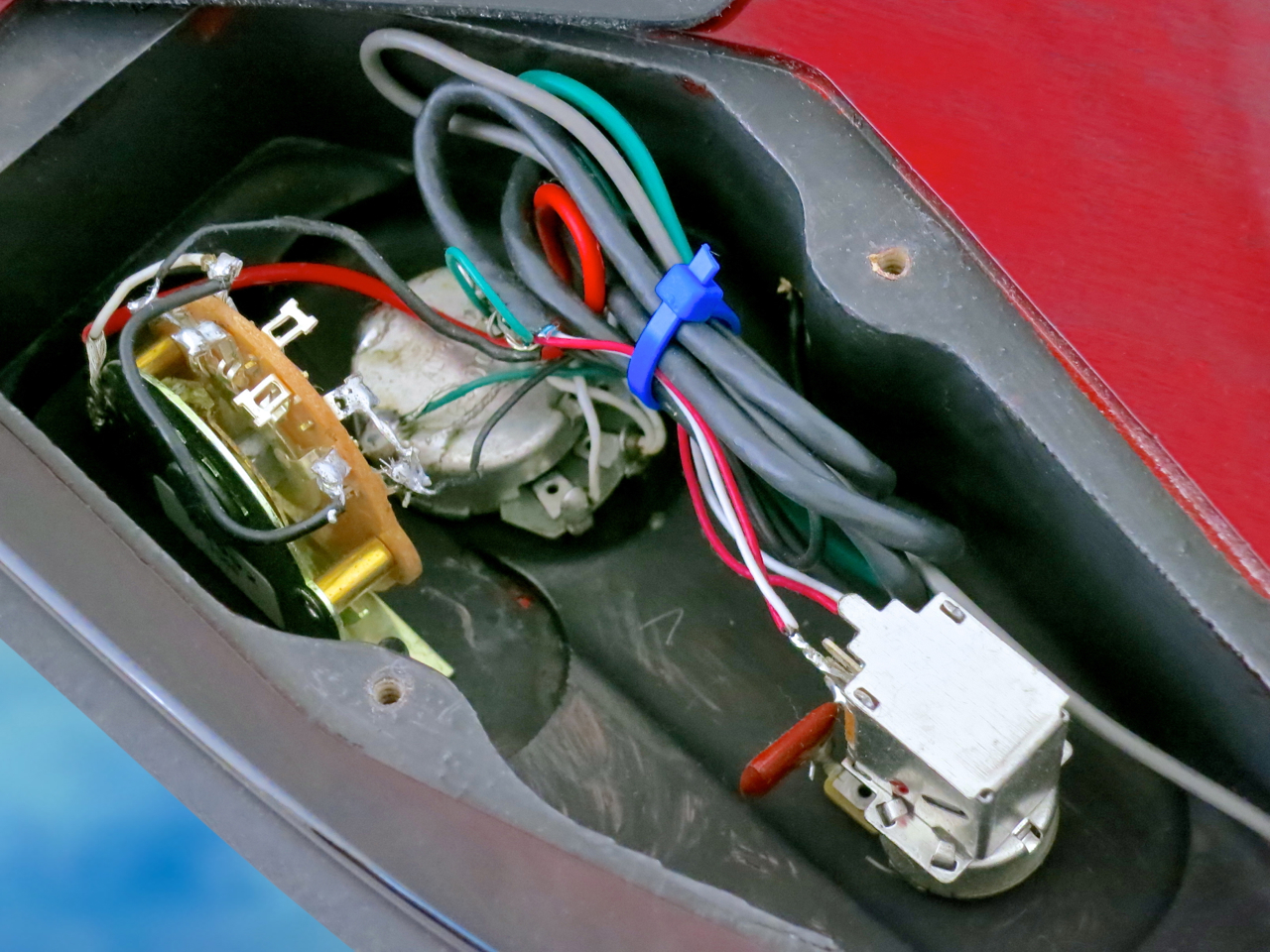
Elektroniikkalokero on suojattu ulkoisia häiriöitä vastaan grafiittipitoisella maalilla.
****
Painoltaan testikitara sijoittuu mukavasti keskiluokkaan – se ei ole erityisen kevyt, muttei liian painavakaan.
Nykyaikaisena Strato-johdannaisena MM-30:n istuu hyvin sylissä (tai hihnassa) ja sen balanssi on erinomainen.
LTD ilmoittaa tämän kitaran kaulaprofiiliksi Thin U -muodon, mikä käytännössä tarkoittaa, että kaula on jonkin verran vintagea ohuempi, mutta silti poikkileikkaukselta pyöreä (eikä laakea). Kun tähän kaulaprofiiliin lisätään vielä eebenpuuinen otelauta ja jumbo-kokoisia nauhoja, lopputulosta voi kutsua rauhallisin mielin ”vauhtikaulaksi”.
Kaula- ja tallamikrofonin hyvin eriävät luonteet voi helpoiten havaita puhtaista soundeista. Puolitetuissa vaihtoehdoissa (jotka tulevat tässä ääniklipissä ensimmäisinä) Custom 5:n turboahdettu luonne johtaa siihen, että puolitetun tallamikin soundi on (vahvan keskialueensa takia) jopa aavistuksen verran tummempi kuin kaulamikki. Myös täysissä humbucker-asetuksissa tallamikrofonin raamikas keskialue nousee selvästi esiin, mutta Custom 5 ei silti kuulosta yksitoikkoiselta tai honottavalta:
Särösoundeissa mikrofonien väliset erot – niin soundissa kuin tehon suhteen – eivät nouse niin selkeästi esille (putkisärön kompression ansiosta). Mehukkaan kaulahumbuckerin soundi sopii tässä erittäin hyvin ärhäkkäämmän tallamikrofonin kanssa yhteen:
Demobiisissä komppikitarat käyttävät puolitettuja humbuckereita – vasemmalla soivat molemmat mikit yhdessä, kun taas oikealta tulee puolitettu tallahumbuckeri yksin. Soolokitara alkaa puolitetulla kaulamikrofonilla, ennen kuin vaihdetaan (kohdalla 0’42”) täyteen tallahumbuckeriin:
****
Musamaailman kunniaksi valmistettu LTD MM-30 on mielestäni hyvin kaunis kitara, joka sopii ehkä parhaiten nykyaikaisen Rock- ja Metal-genrien virtuoosille.
Erittäin pienen valmistuserän vuoksi LTD MM-30 on myös aito keräilykohde erittäin reiluun hintaan, ja näin myös sopiva kunnianosoitus Musamaailmalle.
Tokai Guitars has built its reputation on very well-crafted and vintage-correct copies of classic models. The original Japanese Tokai instruments from the Seventies and Eighties gave most US manufacturers a good run for their money, and in some respects Tokai’s – ahem – ”versions” were even better than some of the originals from that era.
Tokai’s top-of-the-line instruments are still made in Japan. The company’s Chinese output, though, makes it possible to own a genuine Tokai guitar (or bass), even on a tighter budget.
The idea behind the brand-new Tokai Classic series is to offer very reasonably priced guitars and basses, which combine a classic look with a few modern tweaks for easier playability.
****
Kitarablogi received these three Tokai Classics for review:
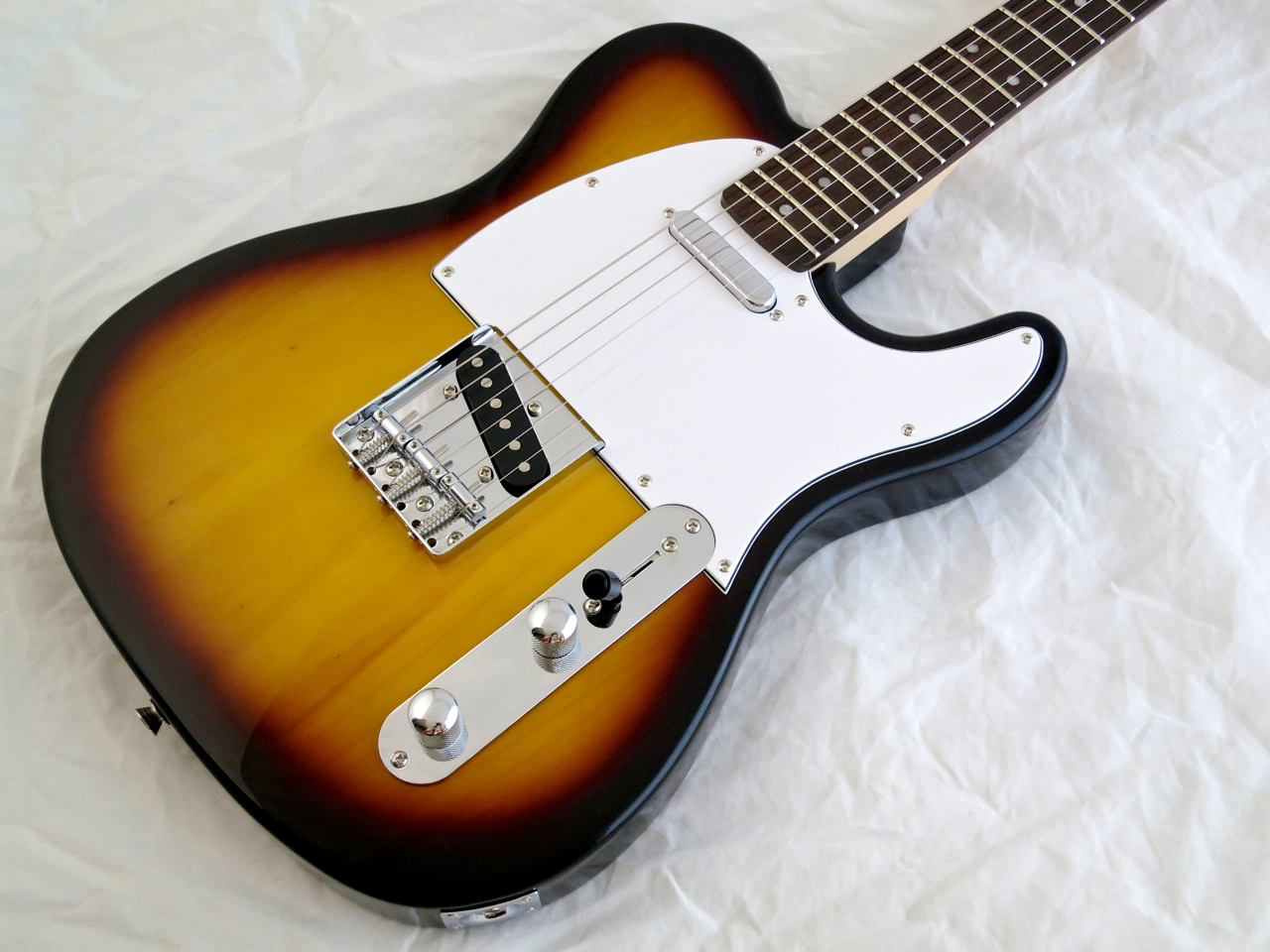
A Tokai Classic TE (current price in Finland: 249 €) in a 50s-style two-tone sunburst finish…
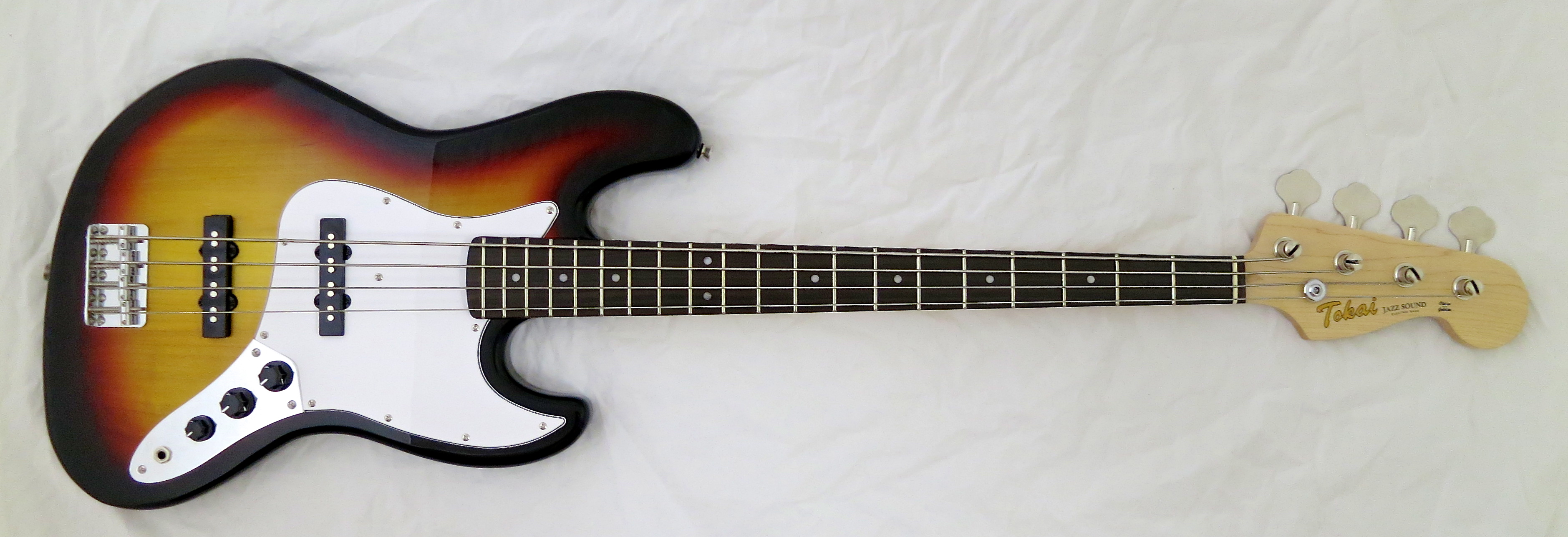
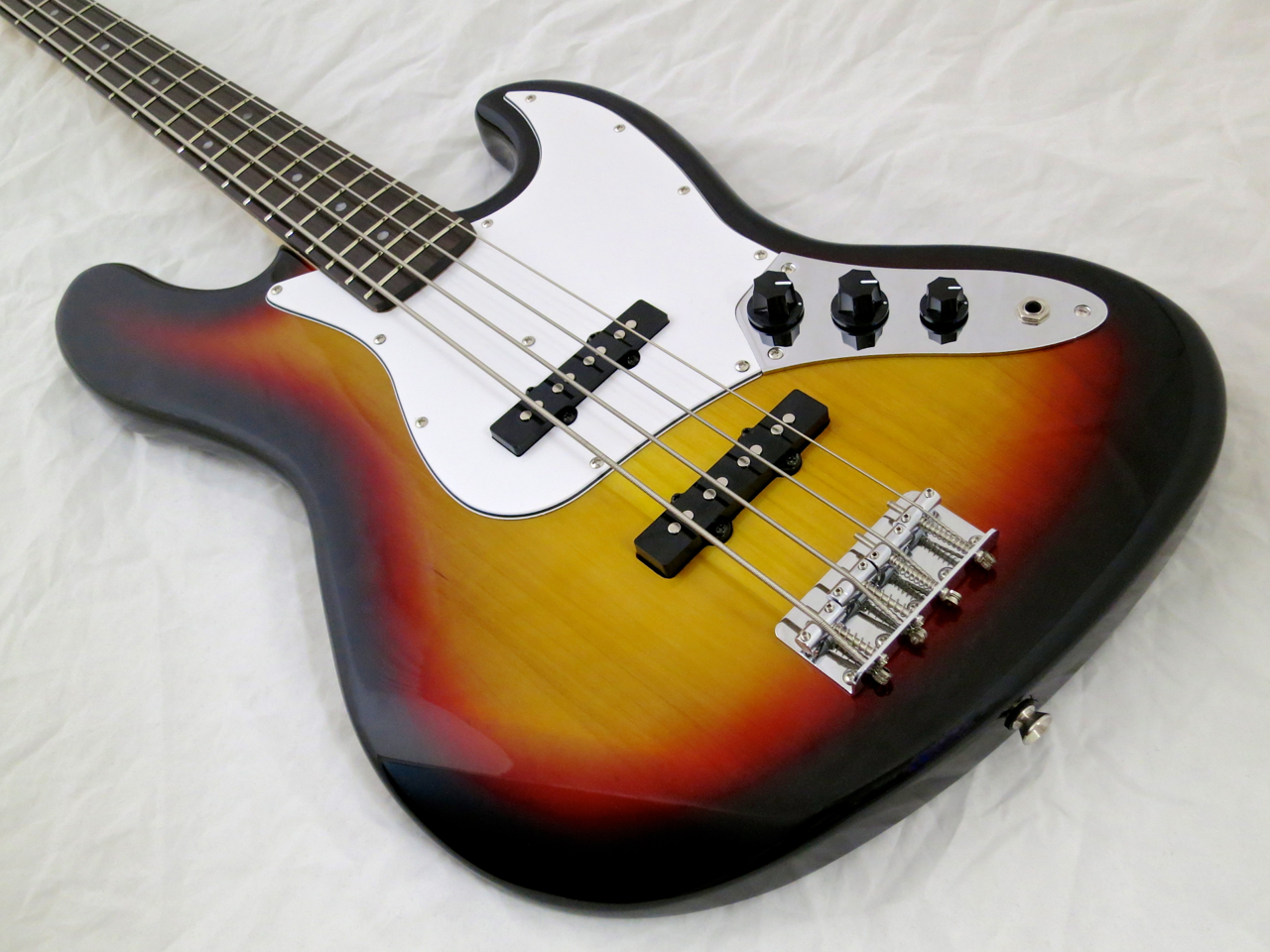
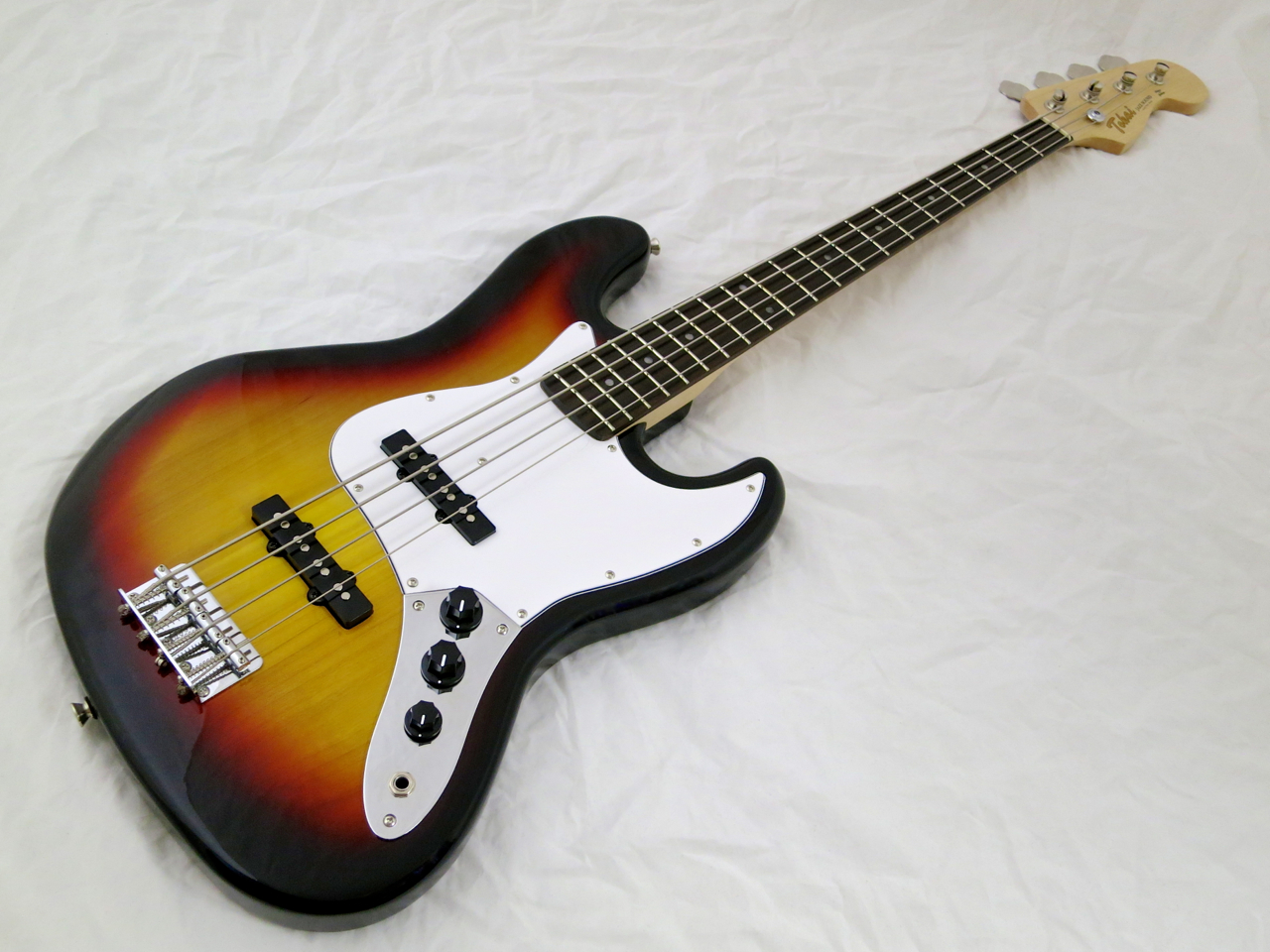
…as well as a Classic JB bass (299 €) in a fetching three-tone sunburst.
Tokai’s Classic series features bolt-on maple necks.
On the TE and ST models the face of the headstock sports a gloss finish.
The JB bass’ headstock front has received the same thin satin finish as the neck.
All Classic instruments offer easy access to the truss rod at the headstock, so you won’t have to take off the neck to make adjustments.
There’s a set of very decent Kluson-copies installed on the guitars.
The Classic JB comes with a set of Schaller-copies, which are less massive than vintage-style Klusons.
The Classic TE and ST come with a flatter-than-vintage fingerboard radius and chunkier frets, which makes the playing feel much more modern and bend-friendly.
The same goes for the Tokai Classic bass.
All Classic series bodies are made of basswood, a proven tonewood with a sound similar to alder.
The black plastic cushion beneath the neck plate protects the finish.
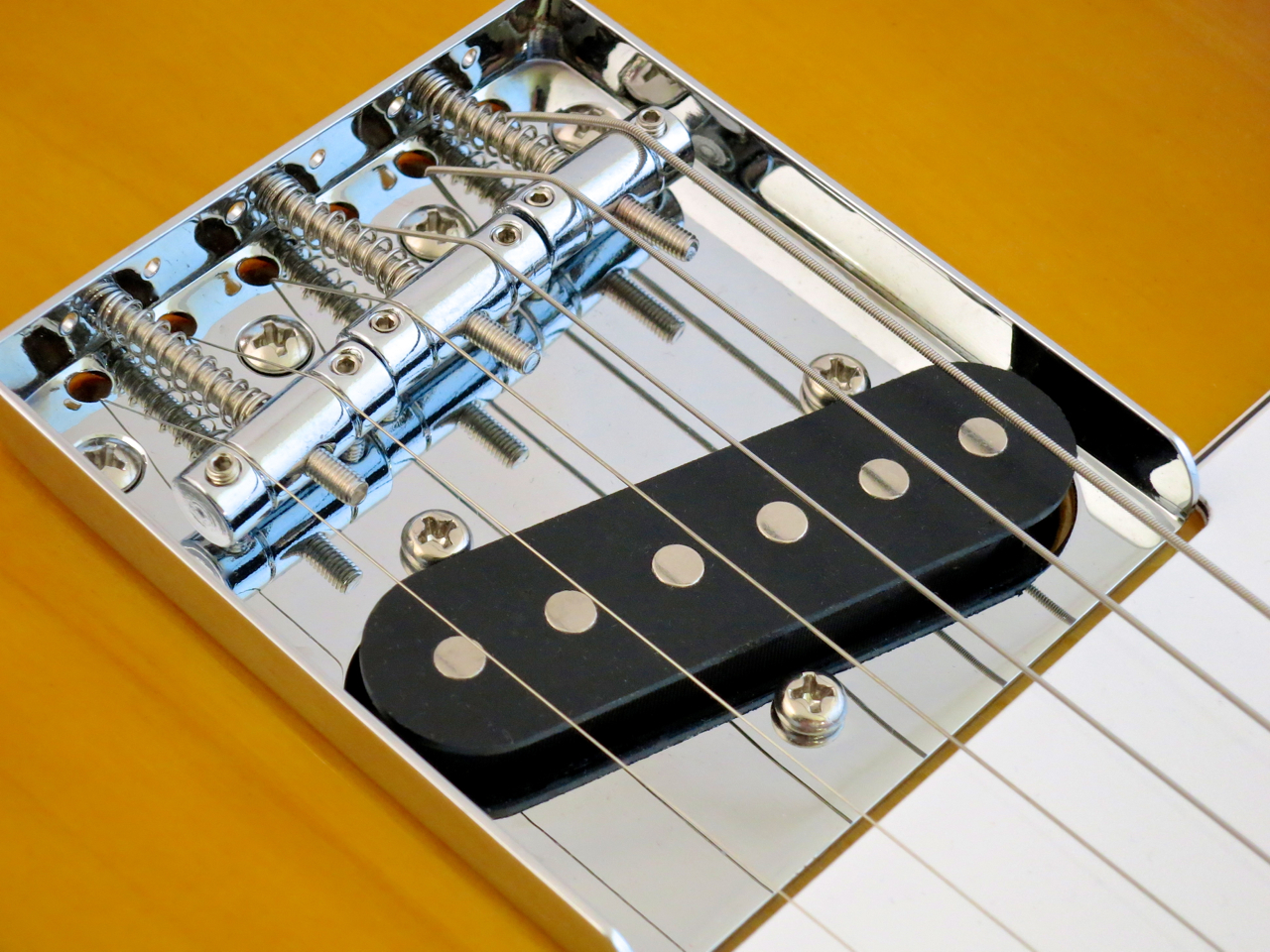
There are different versions of the three-saddle Tele-style bridge in circulation:
The Classic TE goes for the late-Sixties variety sporting three saddles with pre-set grooves for the strings.
The TE came strung the regular way, though the body, with the strings’ ball-ends anchored in ferrules. This setup is favoured by most Tele players.
Tokai’s Classic TE nevertheless offers an additional interesting feature:
It’s possible to string this guitar through the back of the bridge, too. This was a rare feature on original Fender Telecasters in 1958/59 that noticeably alters the feel and sound of the guitar.
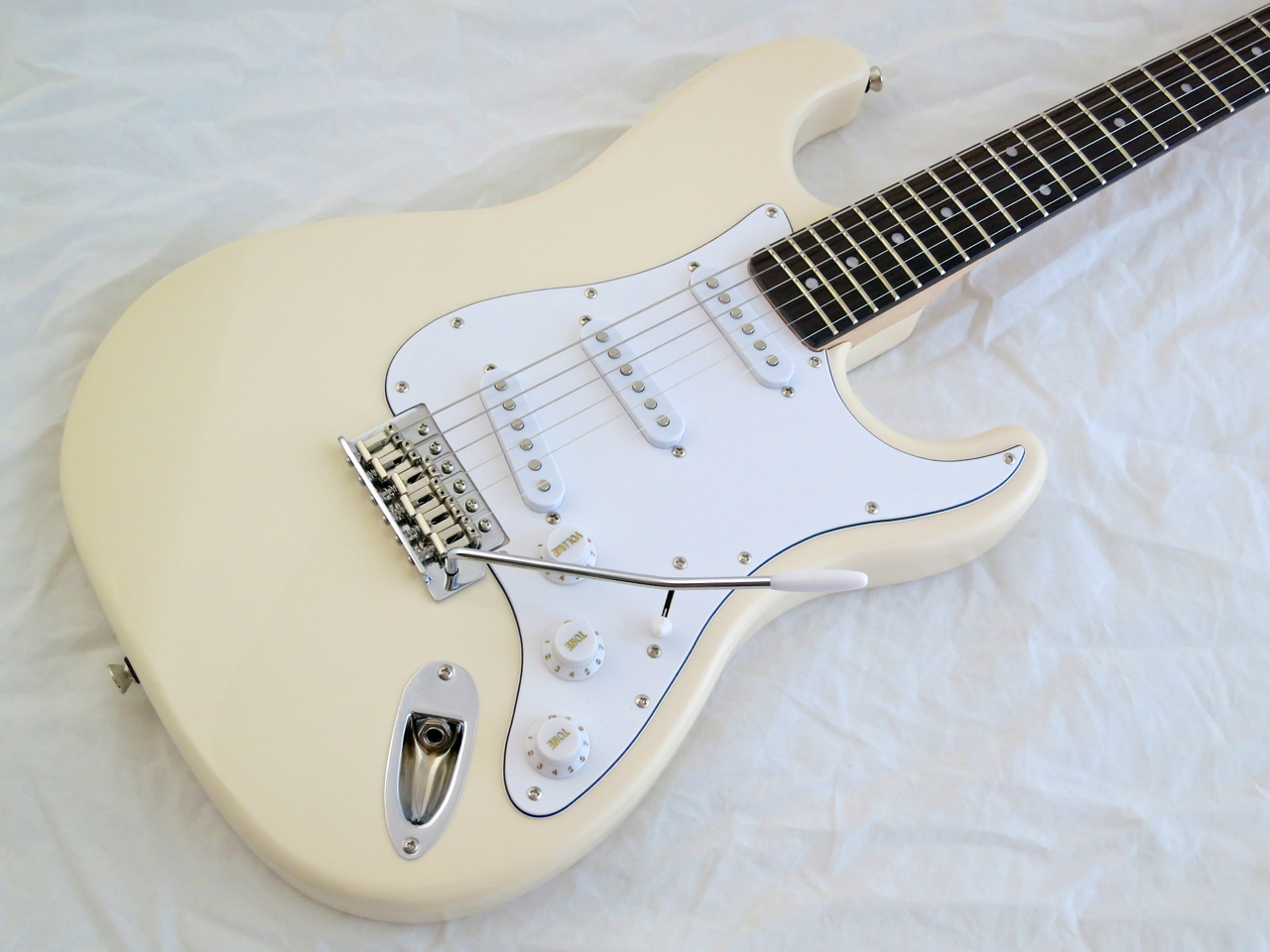
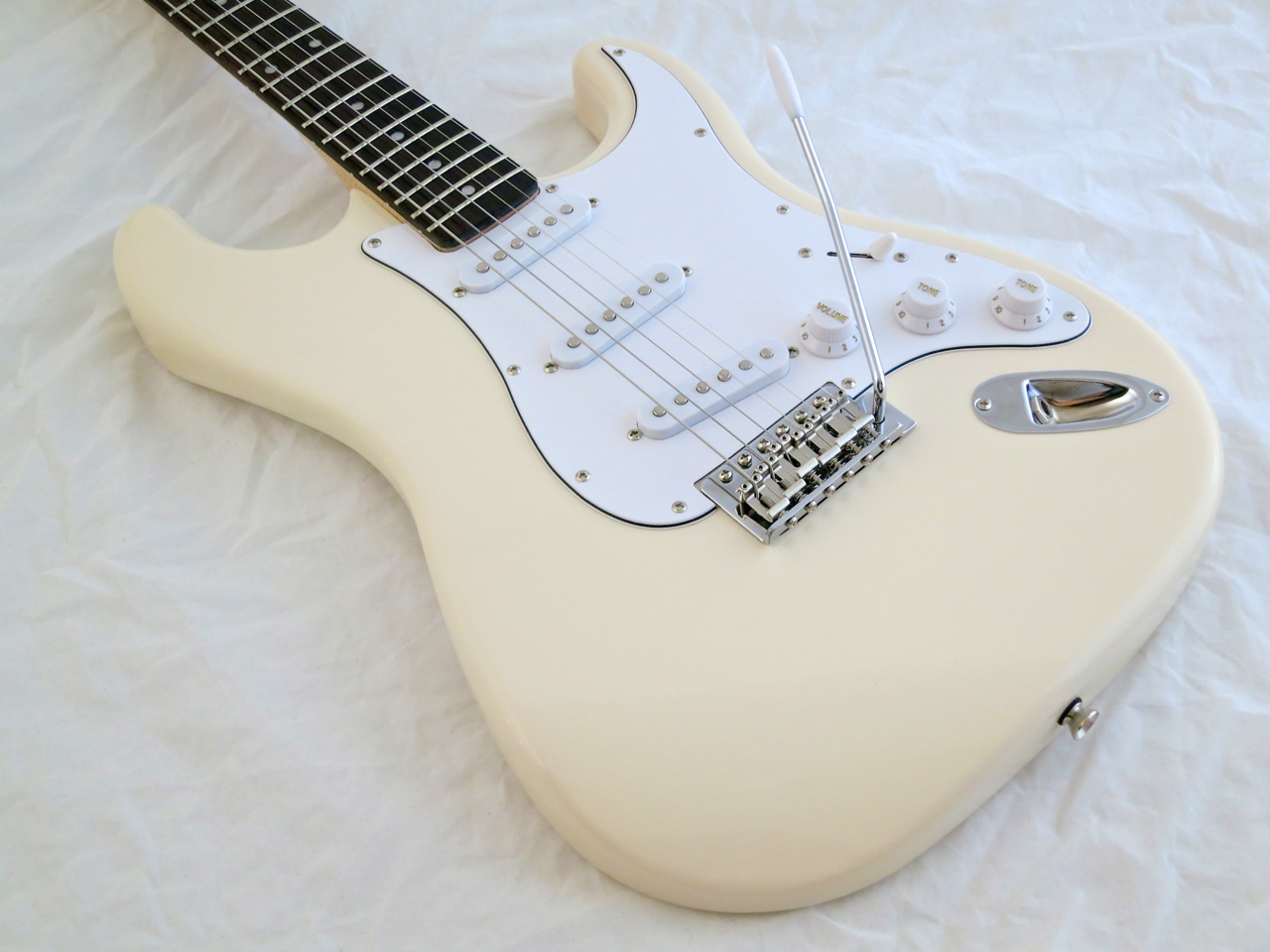
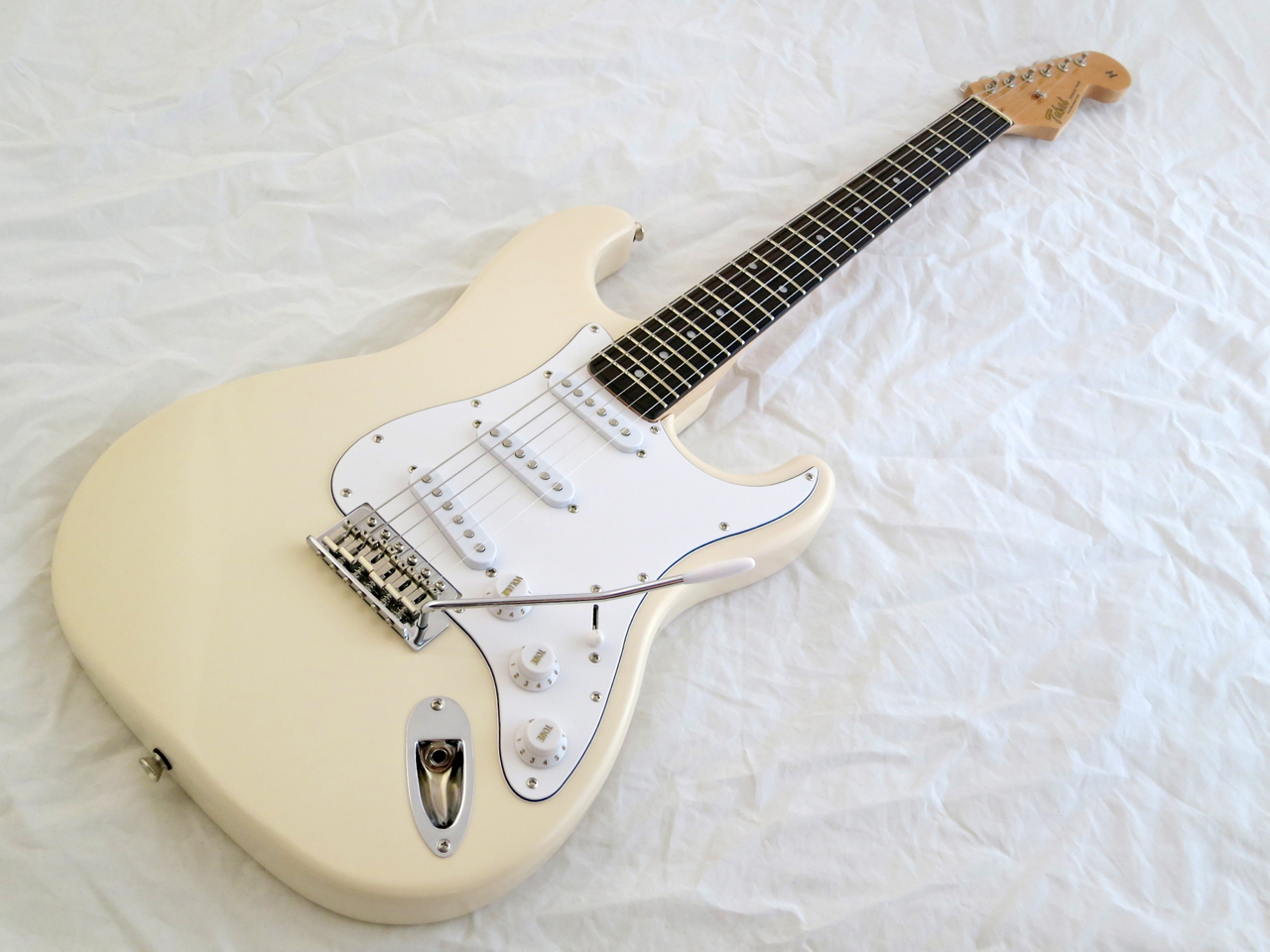
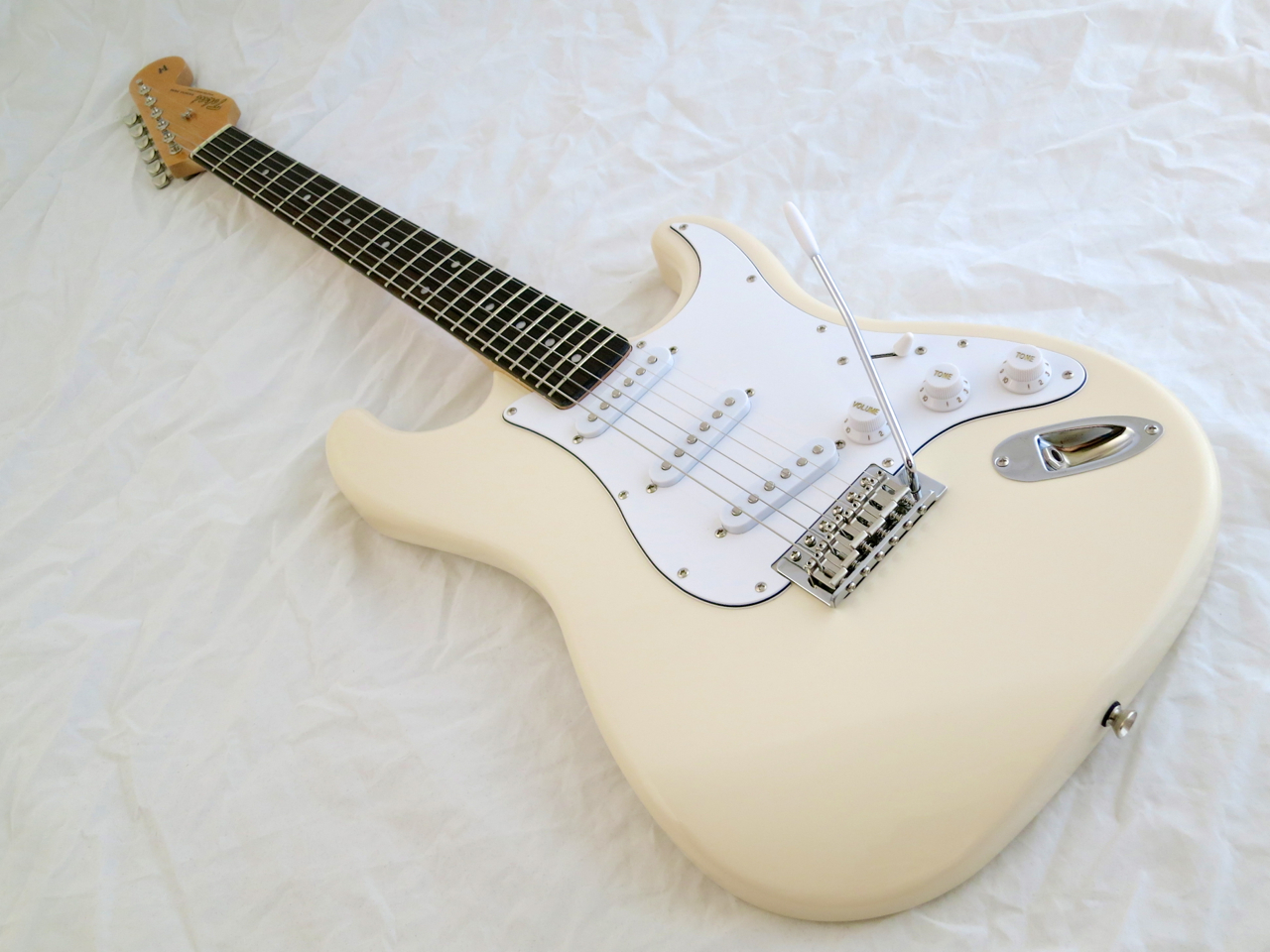
At first glance, the bridge on Tokai’s Classic ST looks like a dead-on copy of a vintage Strat vibrato.
The vibrato block, though, isn’t as chunky as on the original. It’s about the same size as the block on a Floyd Rose vibrato.
Vintage-anoraks will sniff disapprovingly at the sight of such a block, claiming that it’s bad for the tone of the guitar. Let me tell you that the review guitar’s acoustic ring and sustain were actually quite healthy. So much for preconceptions…
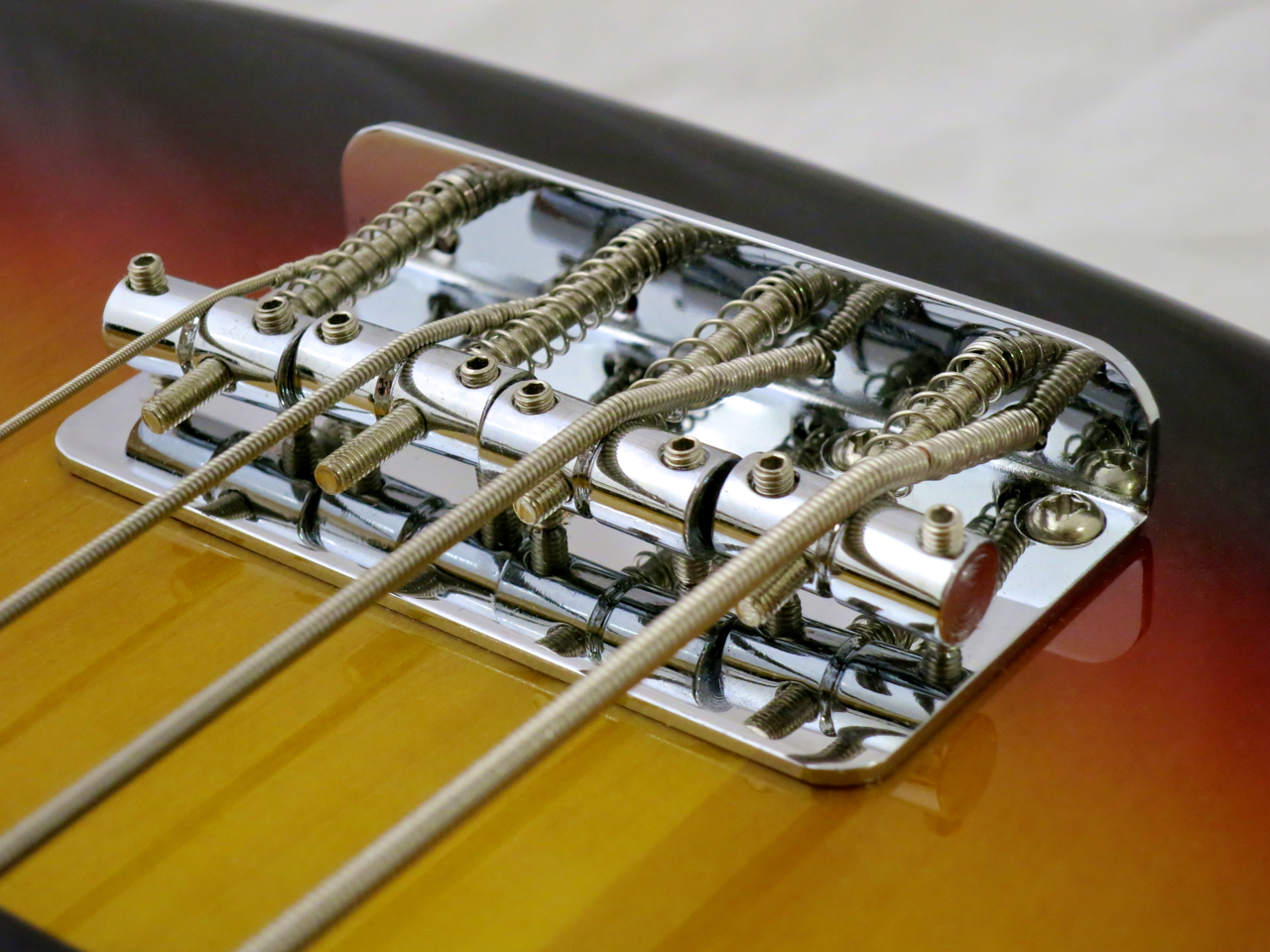
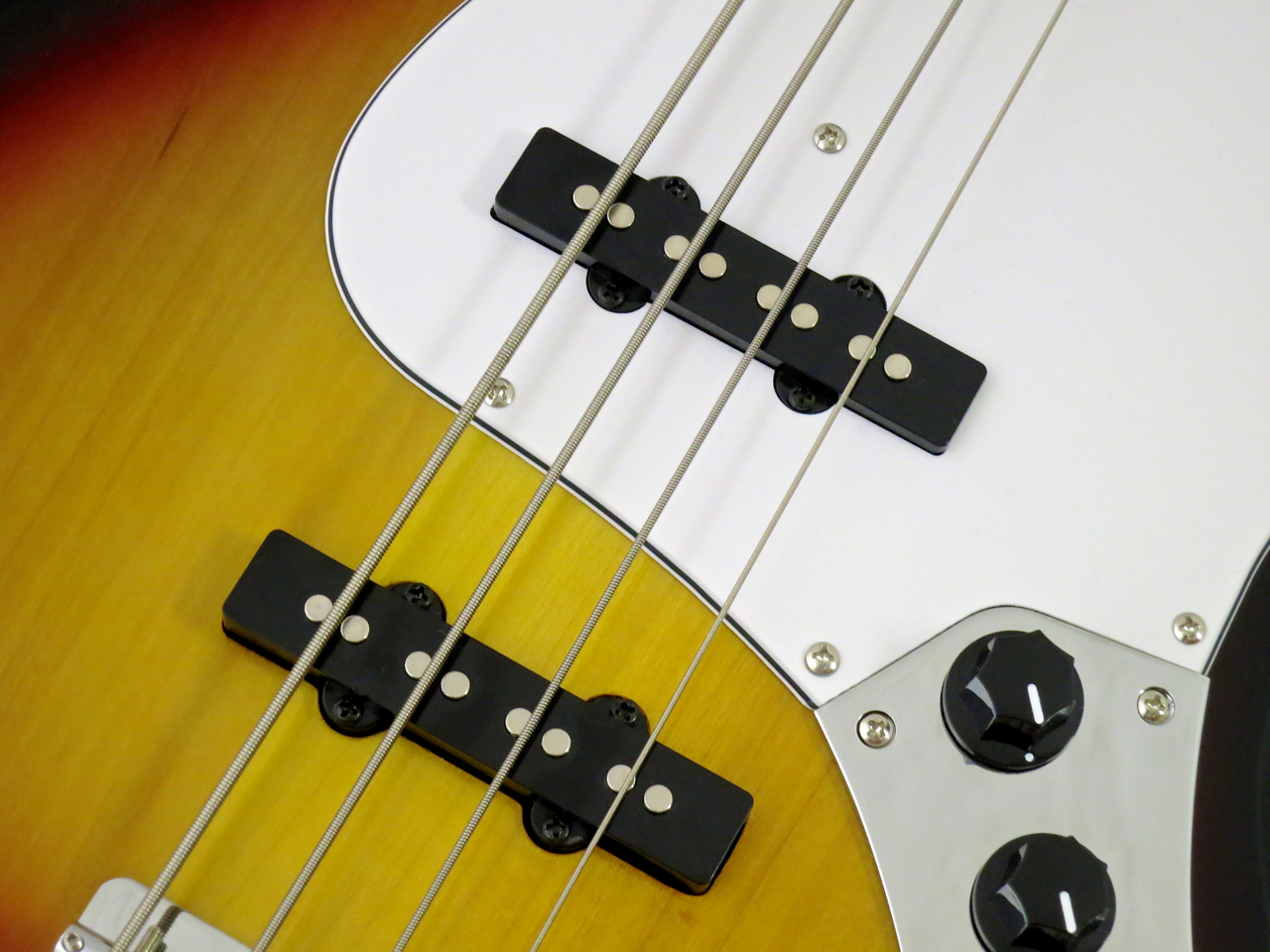
The Classic JB sports a nice copy of a 1970s Fender bass bridge.
Most self-appointed ”vintage-gurus” will tell you to steer clear at all times of ceramic Fender-style singlecoils.
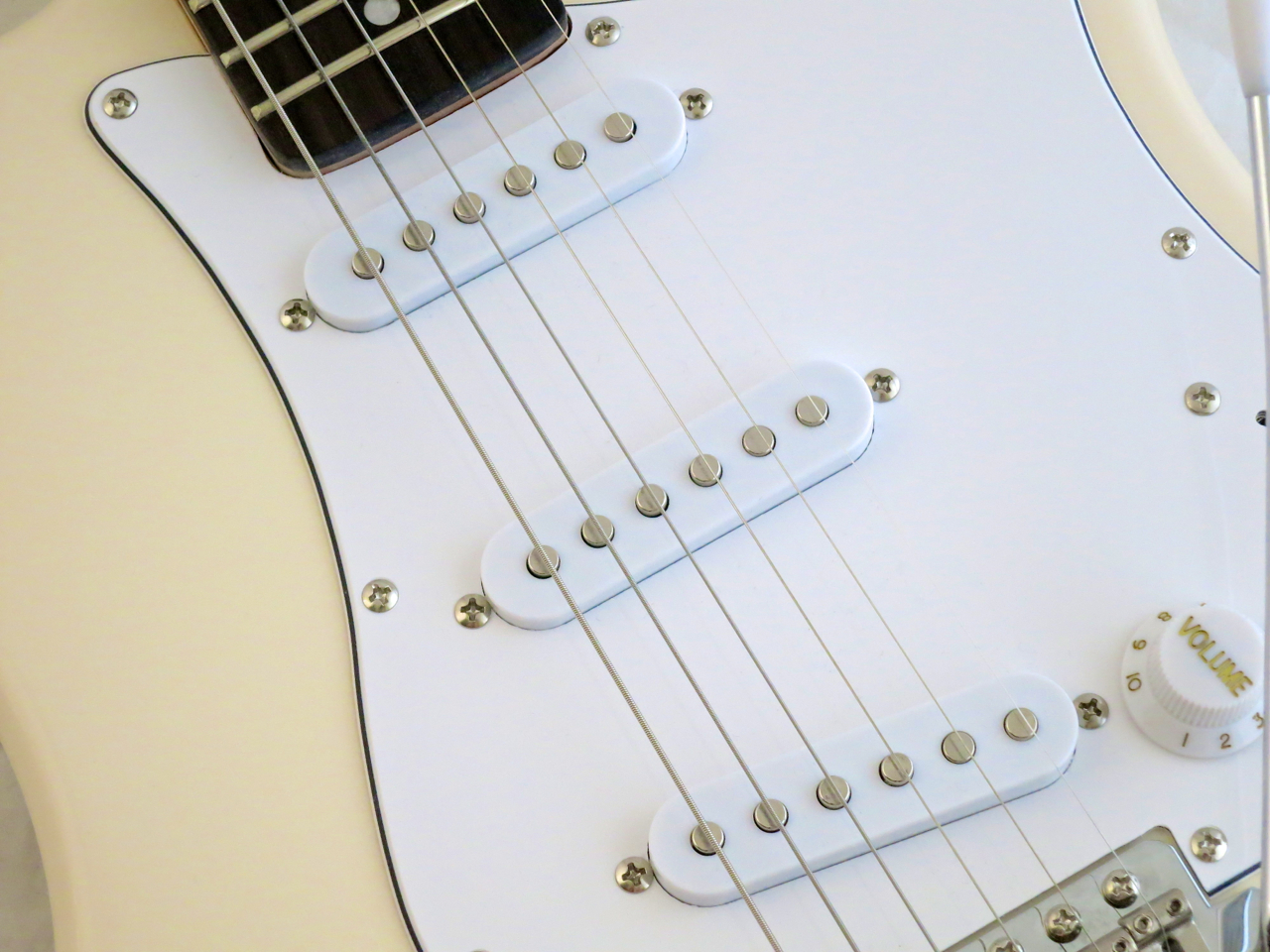
Traditionally, a Fender-type singlecoil is constructed from six small, cylindrical magnets, which are tapped into vulcanised fibre plates. Around this magnet core a coil of thin copper wire is wound to complete the pickup. In traditional pickups the polepieces you see are actually the top ends of the alnico magnets.
Tokai’s Classic series uses ceramic pickups, which are made a little differently. The polepieces aren’t magnets, but rather soft steel rods, which are in physical contact to a ceramic bar magnet (or sometimes two magnets) stuck to the bottom of each pickup.
When ceramic pickups first appeared on budget guitars in the Nineties, their sound was admittedly often very spiky, brittle and sharp. This gave ceramic singlecoils a bad name, which wasn’t all that undeserved.
But that was then, and ceramic pickups have been improved drastically since. Despite this, there’s still quite a lot of prejudice against this type of guitar pickup.
In the case of these Tokai Classic instruments, I’d suggest you approach their pickups with an open heart and open ears – you might be in for a positive surprise!
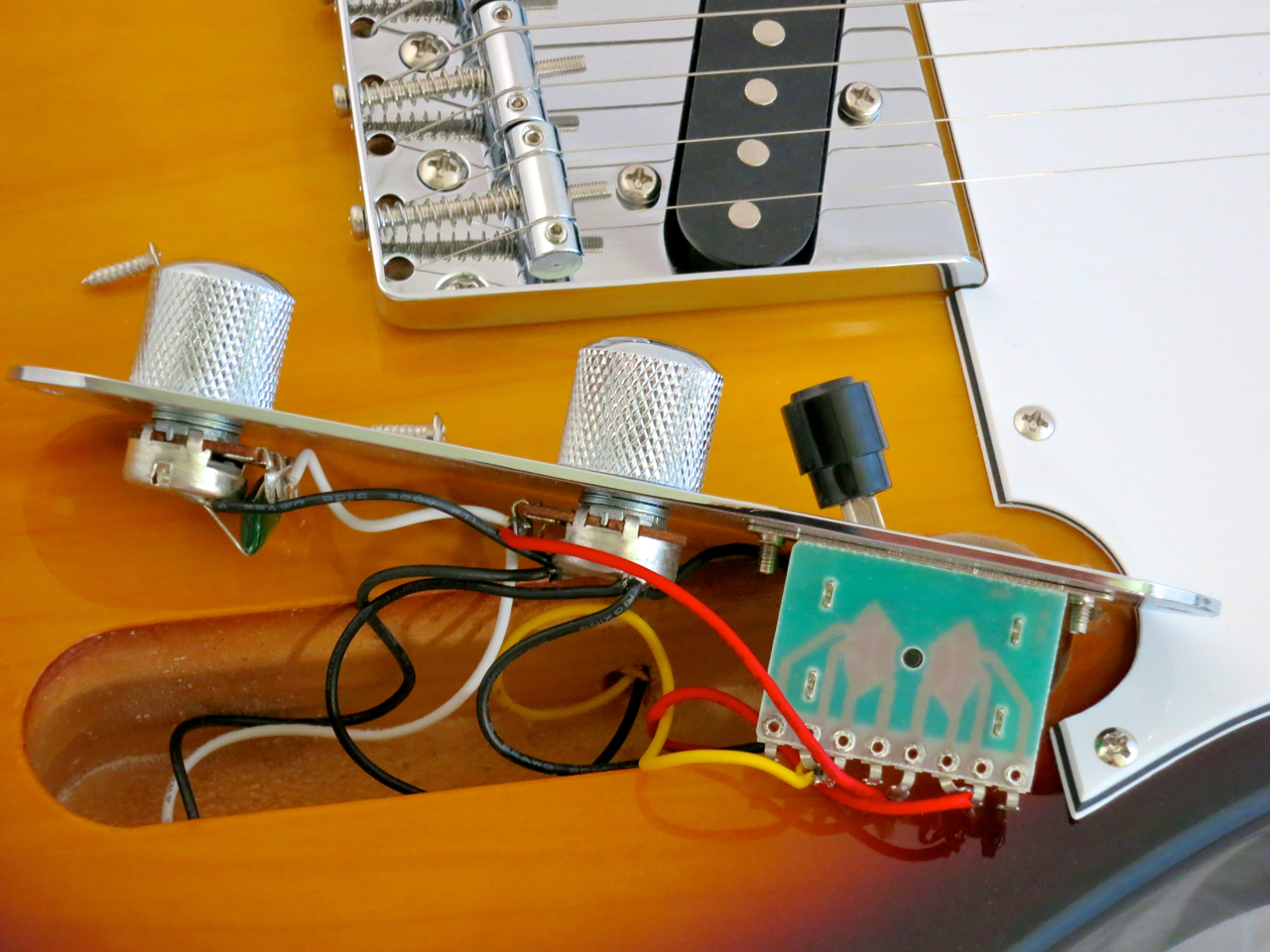
The Classic series features electronic parts of inexpensive, but very decent quality. All the switches and controls work fine, and without any hiccups.
As you can easily see from this picture, the workmanship is very clean in the Classic TE.
The rout for the Classic JB’s component cavity wasn’t quite as clean on our review sample. Luckily, this has no bearing whatsoever on the functionality of this bass guitar.
****
Tokai’s Classic TE is a very nice, well-playing Tele-style electric guitar.
Quite often, you will find uninspiring, flat and generic neck profiles on instruments in this price bracket.
The Classic TE is quite an exception, as it sports a comfortable, well-rounded and chunky neck, that still manages to stay on the right side of ”fat”. The fretwork is really great on our review sample. Combined with the bigger frets and flatter fretboard radius, this results in a slinky and bend-friendly playing feel.
Tokai’s Classic TE is no slouch in the sound department, either:
The neck pickup is warm and round, but never sounds boring or one-dimensional. The middle position of the switch will give you a cool, funky rhythm tone. The bridge pickup on its own offers enough twang for Country playing, and enough whack for the Classic Rock crowd.
****
I’d never have thought an electric guitar costing only 249 € could be as utterly inspiring as this Tokai Classic ST!
The neck feels great with its oval C-profile. The fretwork and setup make this a real player’s guitar. The vibrato works well in a vintage-style way, and the ST’s acoustic tone is woody and dynamic.
The ceramic pickups on the Tokai Classic ST are a bit hotter than the alnicos on my 50s-style Fender Stratocaster reissue. They also have a bit more sizzle and bite, but in a good way, making this more of a ”Jimi Hendrix” than a ”Buddy Holly” guitar.
****
Tokai’s Classic JB truly offers a lot of bass in a very pocket-friendly package.
The Classic JB will give you all the features you’d look for in a Jazz Bass-type instrument:
There’s the slender, distinctly tapered neck profile, the comfortable balance, and the wide variety (for a passive bass) of different sounds.
This last clip lets you listen to the video’s bass and guitar tracks in isolation. During the first half all guitar tracks are played on the Classic TE, in the second half the Classic ST takes over:
****
Tokai’s Classic Series may well prove to set a new standard for vintage-style instruments in this price range. The three reviewed guitars were well-made, well-playing instruments, and their sound was inspiring.
While the Classic series is aimed mainly at beginners, I wouldn’t be surprised if some of the instruments crept up on pub or club stages!




























 Kitarablogi.com – Finland's premier Guitar and Bass blog