
****
****
Vox V863-CA -testi on luettavissa TÄÄLLÄ.
****
Kitarablogi.com – Finland's premier Guitar and Bass blog
Juttuja kitaroista ja bassoista
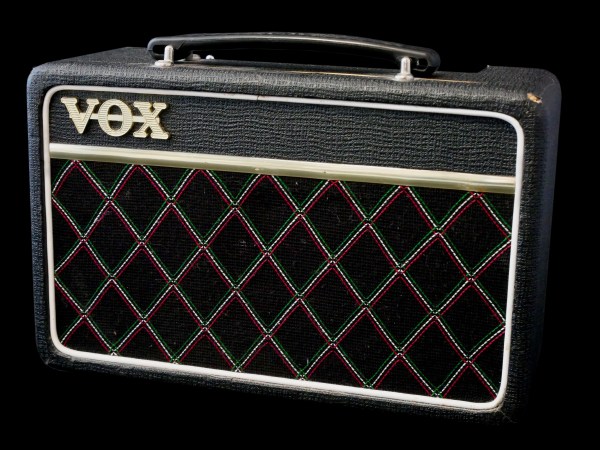
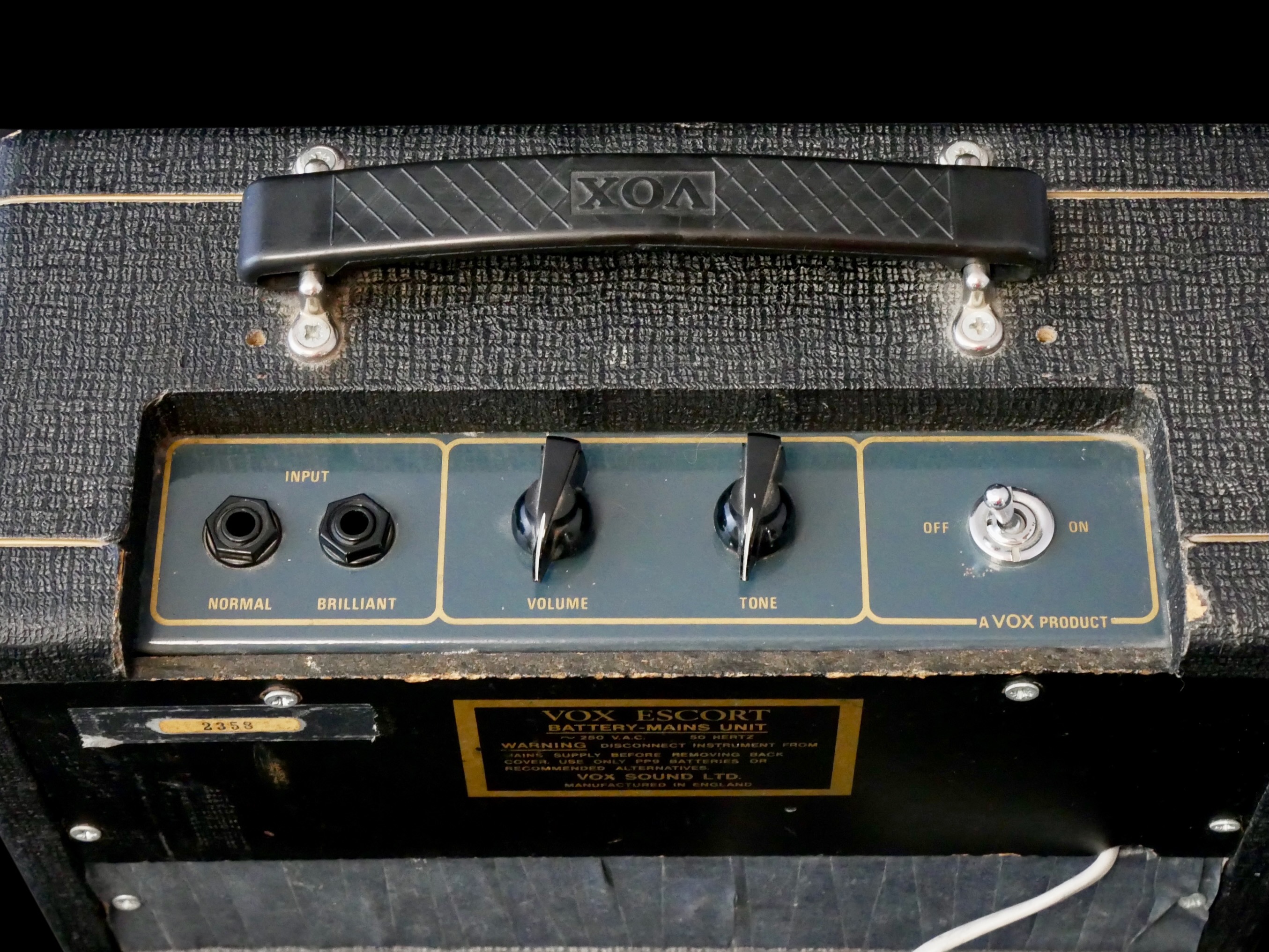
The Vox Escort Battery delivers 3.4 watts of transistorised output through a 5.5 inch speaker. It was in production from 1974 to 1983.
****
• Guitars used: Arvo Original (rhythm), Squier Sonic Stratocaster HT (rhythm), Jackson JS32 Dinky (lead)
• Pedals used: Dunlop Crybaby Mini, EHX Small Stone Nano, EHX Memory Toy, Joyo Analog Chorus, Mad Professor Simble OD, Ibanez 850 Fuzz Mini
• Microphone used: Sennheiser e 609
****
You can find more info HERE.
****
Alkuperäistä, laajempaa Rockway-juttua voi lukea TÄÄLLÄ.
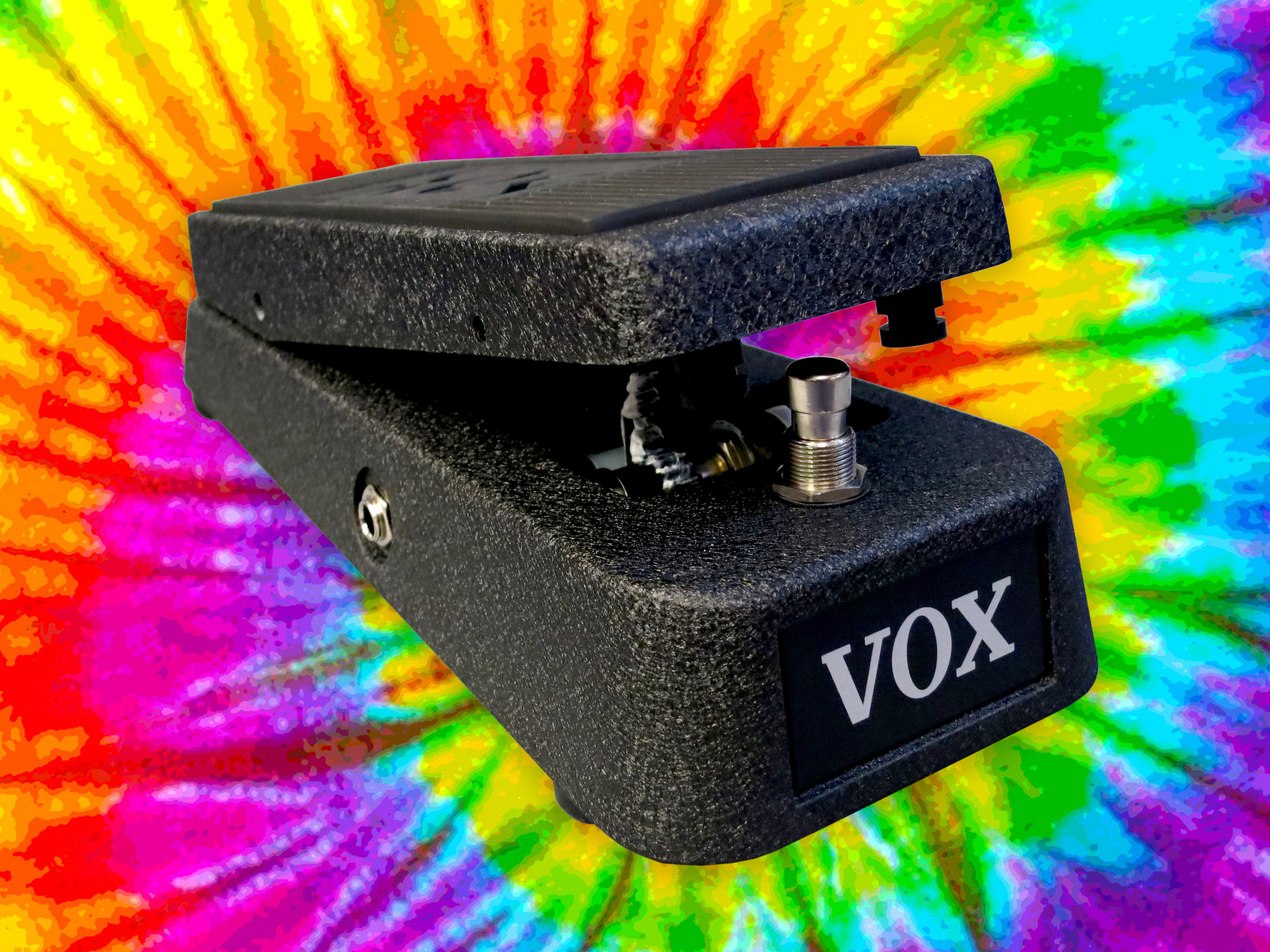
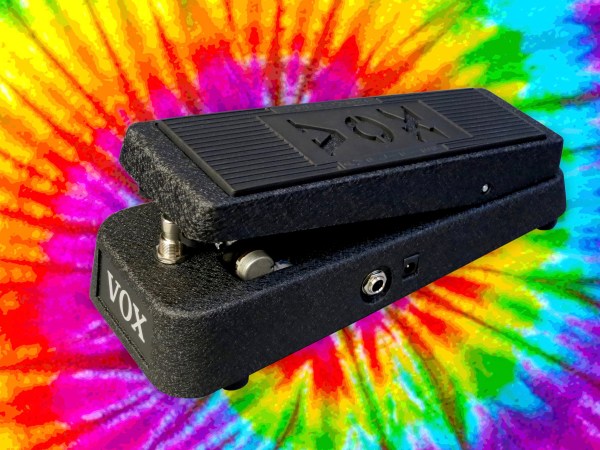
The Vox V845 is an interesting wah-pedal for at least three reasons – it’s made by the inventors of the wah-wah, it is very affordable (around 70-75 euros in Finland), and it is much lighter than regular Vox- or Dunlop-made wah-wahs (only 900 g compared to approx. 1.6 kg).
This drastic difference in weight is achieved by using a plastic core for both the main casing and the treadle. This core is then coated with an aluminium-based coating that gives the V845 the traditional look of a wah.

Electronically the Vox V845 is virtually identical to a vintage Vox-wah, apart from being built with a couple of PCBs and modern components.
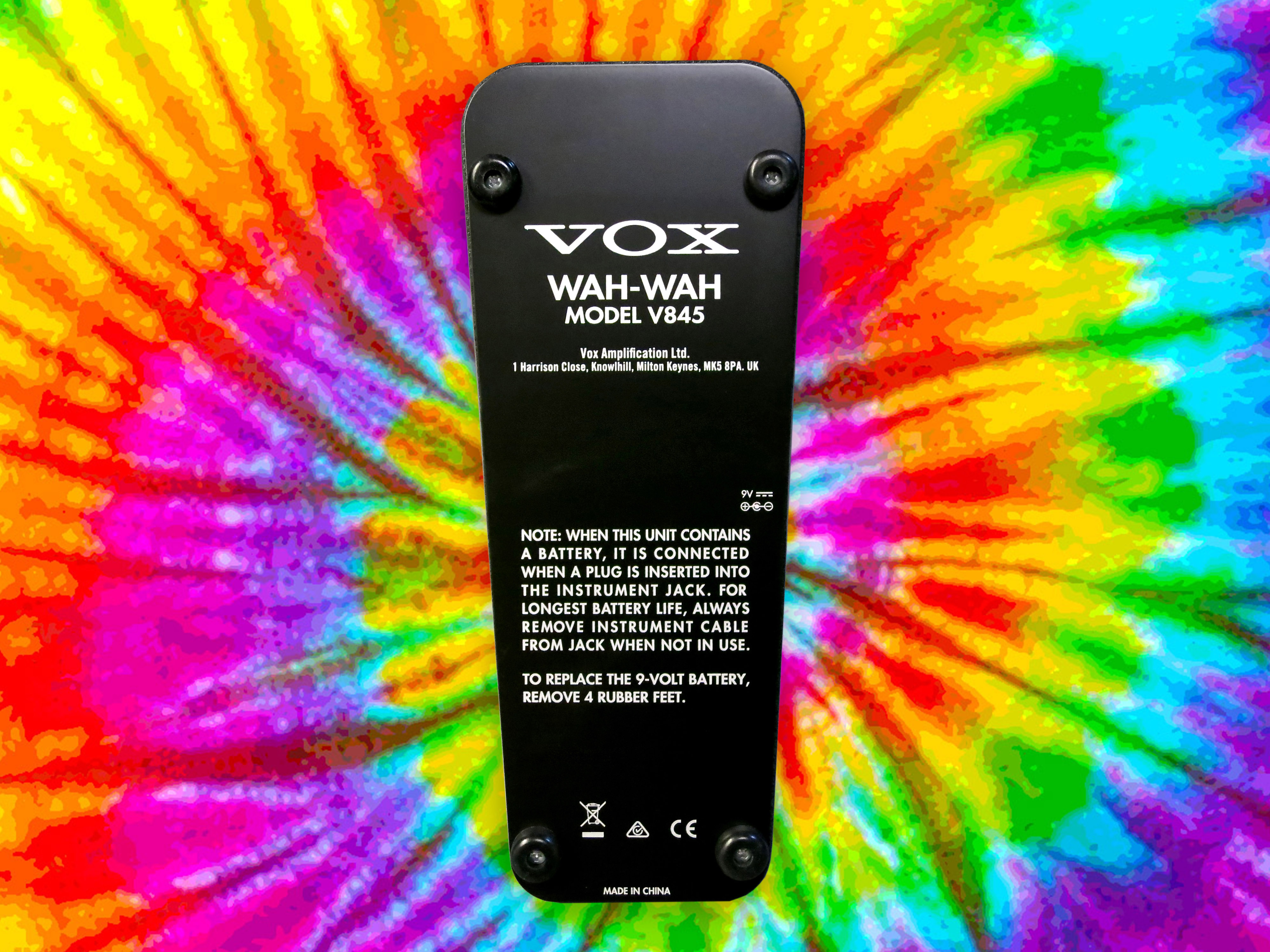
An important improvement over the originals from the 1960s and 70s is the addition of a DC input, which allows you to power the V845 from a modern power supply.

The Vox V845 looks like a wah-wah, feels like a wah-wah, so it’s no surprise that it also sounds like a genuine Vox-wah. The V845 switches on and off in the traditional way by giving the switch beneath the treadle a push in the toe-down position. The sound is big and warm, and, typical for a Vox, a little less abrasive in the top end than a standard Dunlop Cry Baby. What’s not to like?
I’ve been using the Vox V845 for four years by this point, and it hasn’t given me any trouble so far. Check it out!
****
Here are two recent recordings I’ve used the V845 on:
Silloin kun aloitin kitaran soittamista – 1970-luvulla – ”halvat” kitarat ja vahvistimet olivat yleensä huonoja. Nykypäivänä asiat ovat onneksi muuttuneet, ja edullisilla soittovehkeillä pystyy saamaan tarpeeksi hyviä soundeja, ettei innostus musiikin tekemiseen loppu.
Jos budjetti on pieni, eikä tarkoitus ole soittaa kokonaisen bändin kanssa, saa jo tällaisella kattauksella aikaiseksi ”olohuonekitaristia” tyydyttäviä soundeja.
When I first started playing guitar – in the 1970s – ”cheap” guitars and amps were generally bad. Fortunately, things have changed, and you can get satisfying sounds with relatively inexpensive equipment.
If your budget is small, and you don’t aim at playing with a whole band, a small set-up like the above will keep you going for a good while.
Juttu wah-wah-pedaaleista on nyt ilmestynyt ROCKWAY-blogiin.
****

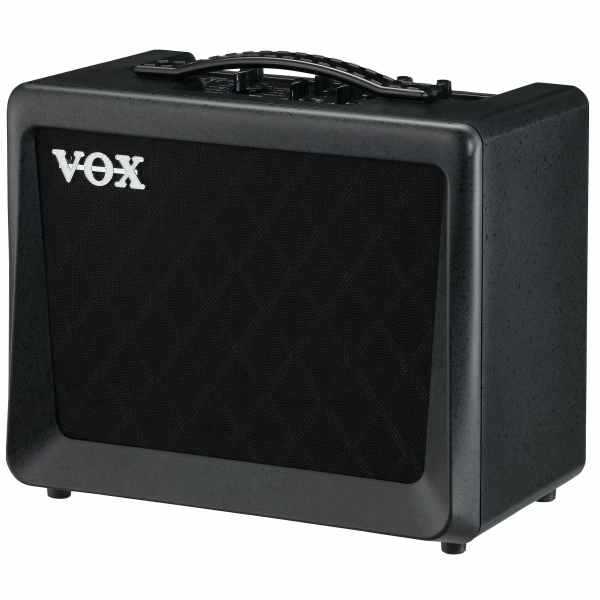
The new Vox VX15-GT (street price in Finland approx. 155 €) is an ultra-light, modelling practice amp with a 15-watt power amp.
The VX15-GT shares the control panel and signal-processing blocks with its larger brother, the VX50-GTV, but with one crucial difference. While the larger combo’s preamp section utilises Vox’ proprietary Nutube – a modern, low voltage tube – the VX15-GT uses Vox’ patented VET (Virtual Element Technology) digital modelling architecture.

The Vox VX15-GT’s astonishingly low weight (of just under four kilos) is achieved by using a special cabinet that is molded completely from ABS-plastic, as well as the use of a modern, lightweight power amplifier.
The single speaker is a 6.5-inch Vox unit.
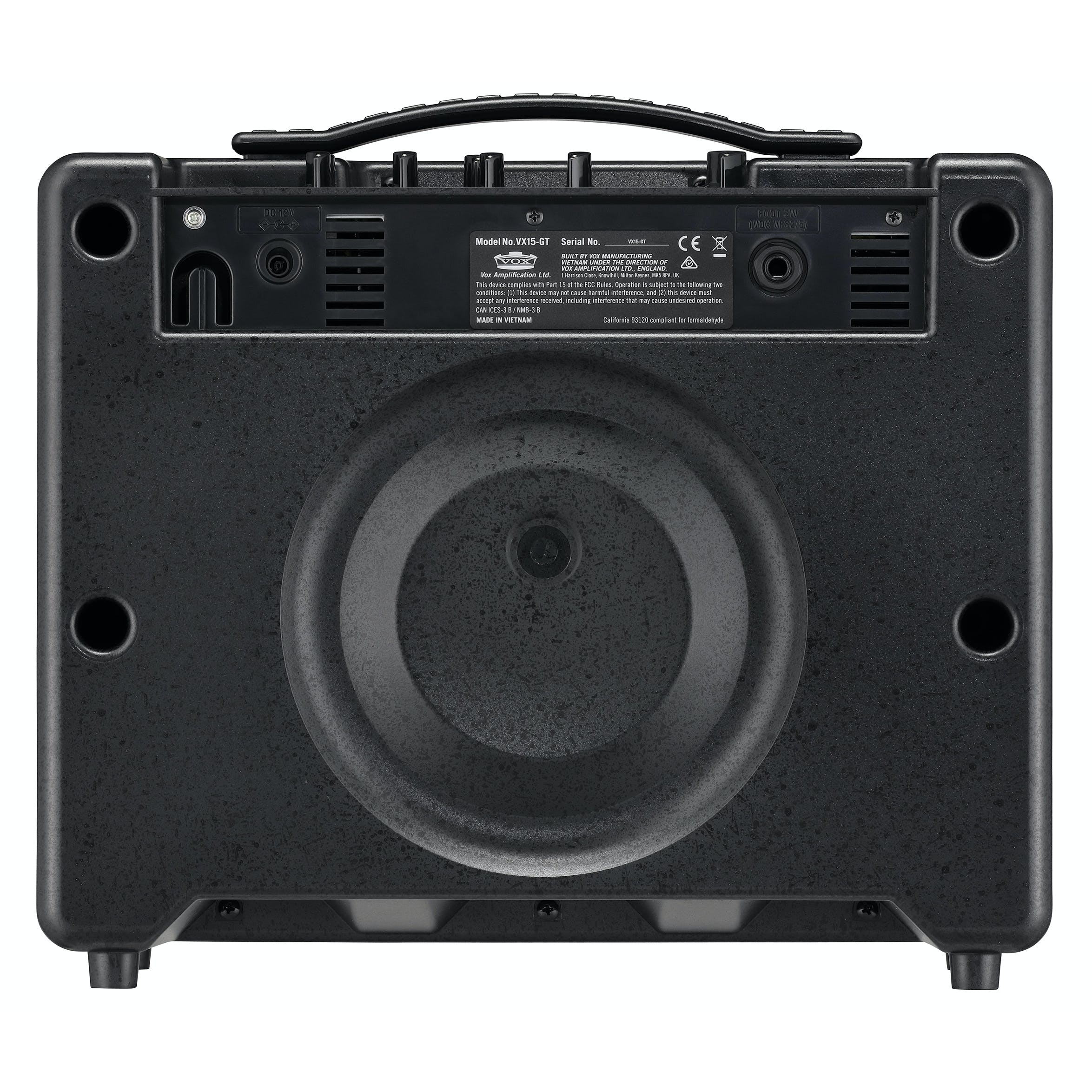
The combo is powered by 12 volts DC from an external, laptop style AC adapter.
The internal preset memory holds 11 slots for factory presets (one per amp model) plus two storable user presets. By connecting an optional Vox VFS5 footswitch the number of user presets can be increased to eight.
****
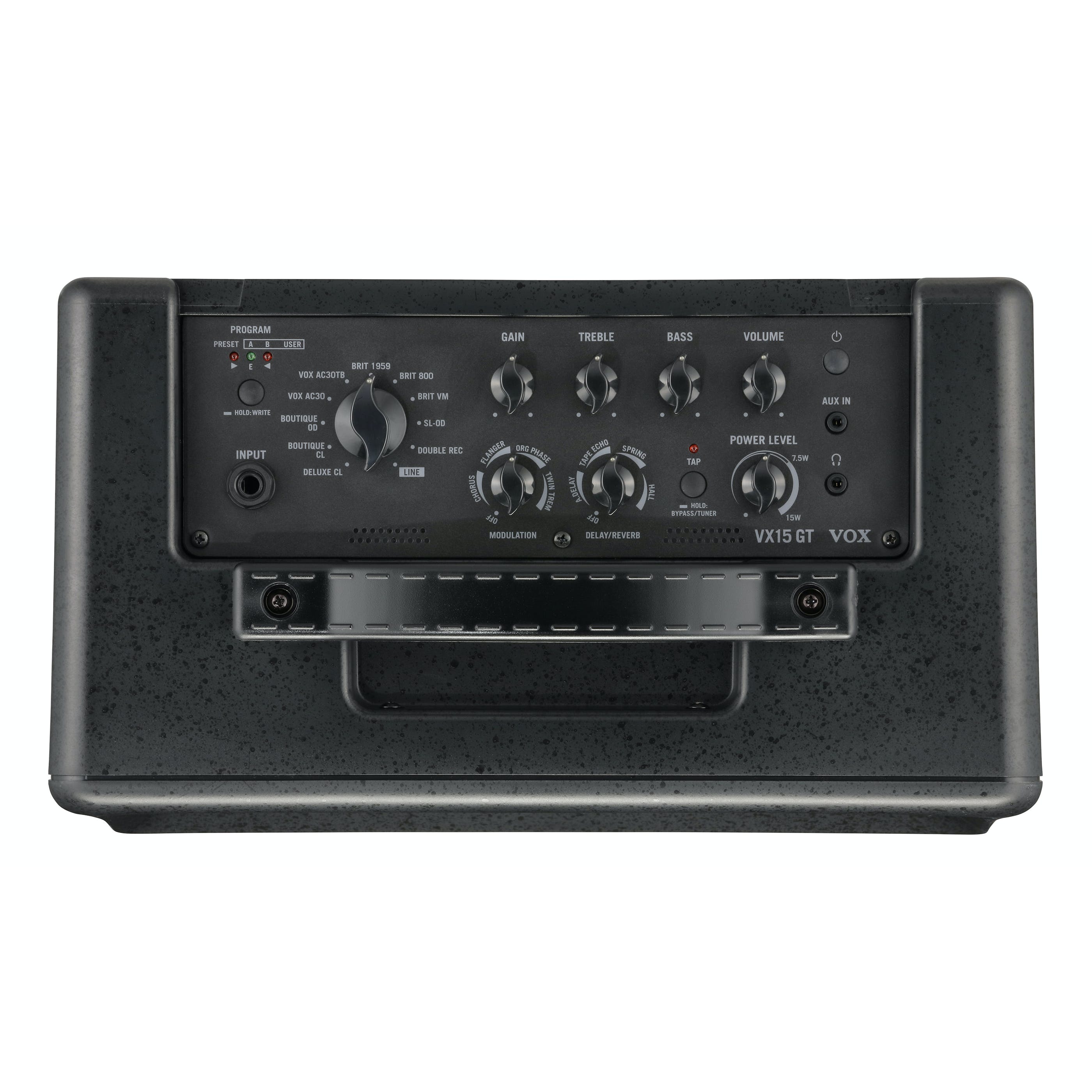
The Vox VX15-GT’s top-facing control panel sports the typical control layout of most modelling practice amps:
Starting from the left we find an E-tuner above the guitar input. The tuner LEDs double as preset programme indicators – when all LEDS are off the combo is in manual mode, with all parameters corresponding to the current knob positions. The amp selector offers you ten different amplifier models – one Fender, two Dumbles, two Voxes, three Marshalls, one Soldano and one Mesa/Boogie. The Line setting disconnects the amp modelling section, so you can use the VX15-GT to amplify a line level signal, such as a synthesiser.
The four smaller knobs in the top row control the usual amplifier functions, namely gain, two-band EQ and programme volume.
The Modulation control lets you choose and adjust one of four different modulation effects – chorus, flanger, phaser (the abbreviation ”ORG” stands for the colour orange) and tremolo. The Modulation knob sweeps each effect’s speed from very slow to very fast. Here’s an audio clip running through the four modulation types, starting with the modulation section off:
The Delay/Reverb control lets you select one out of two delays or two reverbs. This control adjusts the chosen effect’s intensity (its volume in the mix), while the delay speed and the reverb length is set using the Tap Tempo button. For this clip I have set the delay time to almost full. I start off with a dry example and then play two examples of each effect, one with low and the other with high intensity:
As a demo song I recorded short cover version of the Weeknd’s song ”Blinding Lights”. All guitar tracks were played on a Gibson Melody Maker SG and recorded with a Shure SM57. I used only the Vox VX15-GT’s own effects:
****

Once I got over the unusual, all-plastic construction of the new Vox combo, I was really taken with the range of different sounds and the decent amounts of volume the VX15-GT has to offer.
This is a very inspiring and lightweight package, which, in my view, will work best as a practice (or teaching) guitar combo or in a small home studio setting.
One ”hidden”, but very nifty, feature that I haven’t mentioned is the very efficient, built-in noise suppressor. I was able to use single-coil pickups in the highest gain settings, without any 50-cycle hum!
You cannot compare the 15 watts of solid state power output to the full-on blast of an all-valve Vox AC15, but stick a decent microphone in front of it and you could even use the VX15-GT for the occasional pub gig.
****
Street price around 155 €
Finnish distributor: EM Nordic
Pros:
+ lightweight, ABS cabinet
+ decent presets
+ wide variety of amps
+ decent effects
+ sound
Cons:
– lightweight, ABS cabinet

 Kitarablogi.com – Finland's premier Guitar and Bass blog