Why not assemble one yourself? – The ”Berka T” Experiment

I can declare freely and from the bottom of my heart that I am not the most handy when it comes to DIY and using tools! You can’t win ’em all…       😉

Still, most of us could, and probably should, try their hands at ”building” their own electric solidbody guitar or bass. I use the quotation marks here, because I’m not talking about building, as in ”raw wood”, but rather about assembling an instrument from prefabricated parts.

A self-assembled guitar is almost certainly not cheaper than buying a mass-produced item. The idea behind the whole process is rather to get a true, hands-on insight into what makes an electric guitar tick. And it’s fun…

****

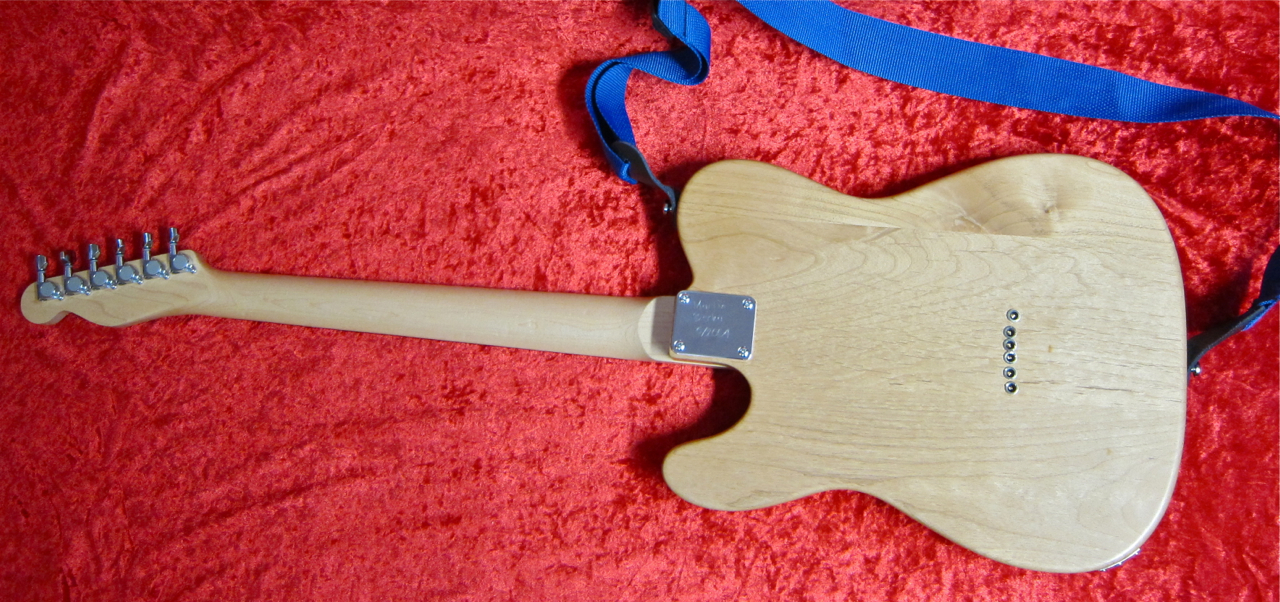
I assembled this guitar – let’s call her the ”Berka T” – in 2004. I specifically wanted to find out what kind of instrument you end up with using comparatively inexpensive parts.

I got all the ingredients for the Berka T from SP-Elektroniikka in Oulu (Finland), aiming for stripped Tele-with-pearloid-pickguard-look in an oil and wax finish.

****

The body is a three-piece alder affair, with the pieces’ grain not really matched, which is absolutely normal at this price level. The shaping is OK and the routings reasonably clean.
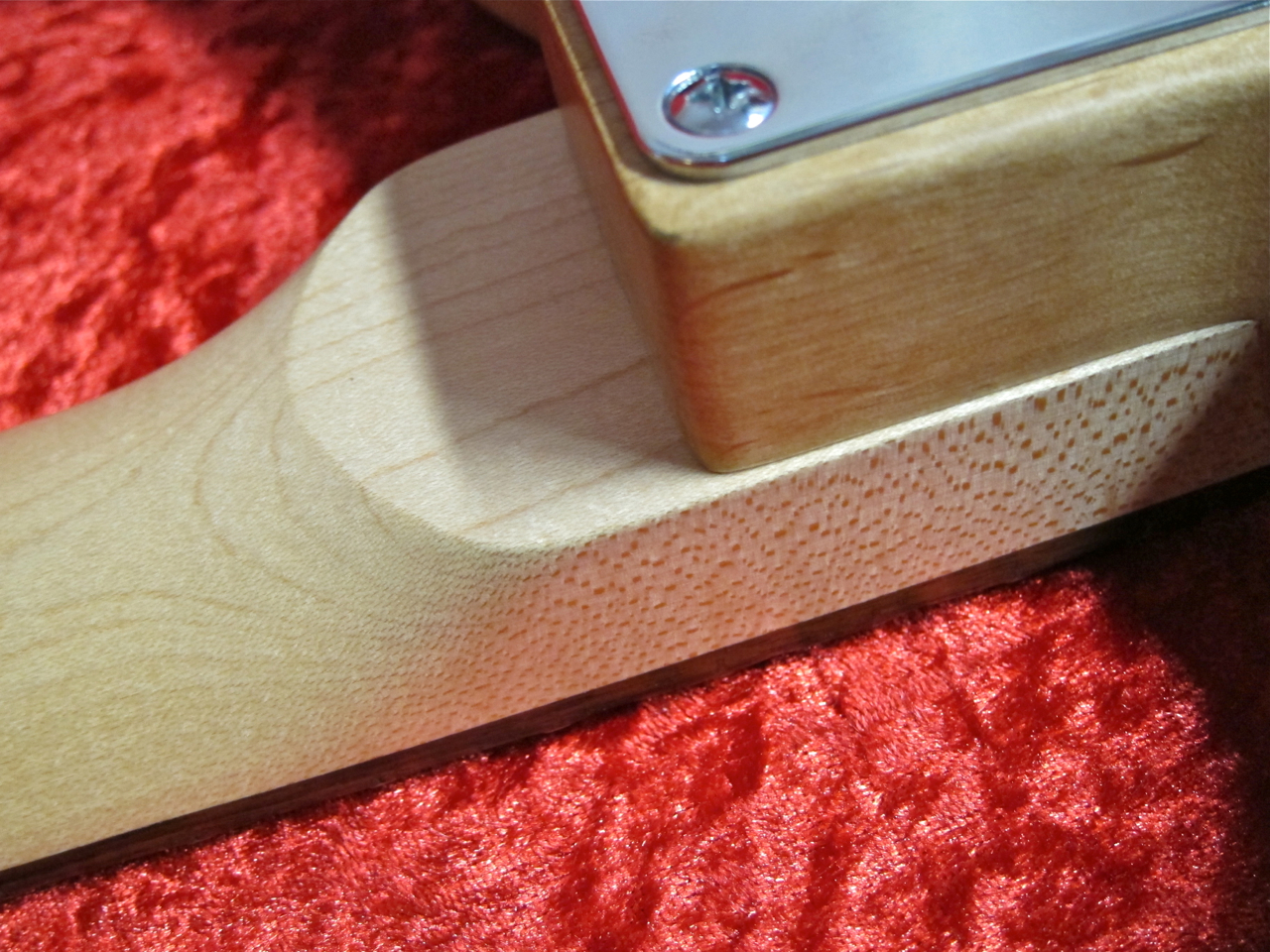
The only strange thing is that the treble facing side of the neck pocket doesn’t quite line up with the neck’s heel. I nevertheless got the neck installed correctly, but things like these can happen when buying less expensive parts.

****

The neck is maple, which I finished with wax and oil, while the fretboard is made from a nice and lively piece of sonokeling.

The ’board has a flat radius and medium-sized frets, which had been installed sufficiently well for a nice medium action.

****

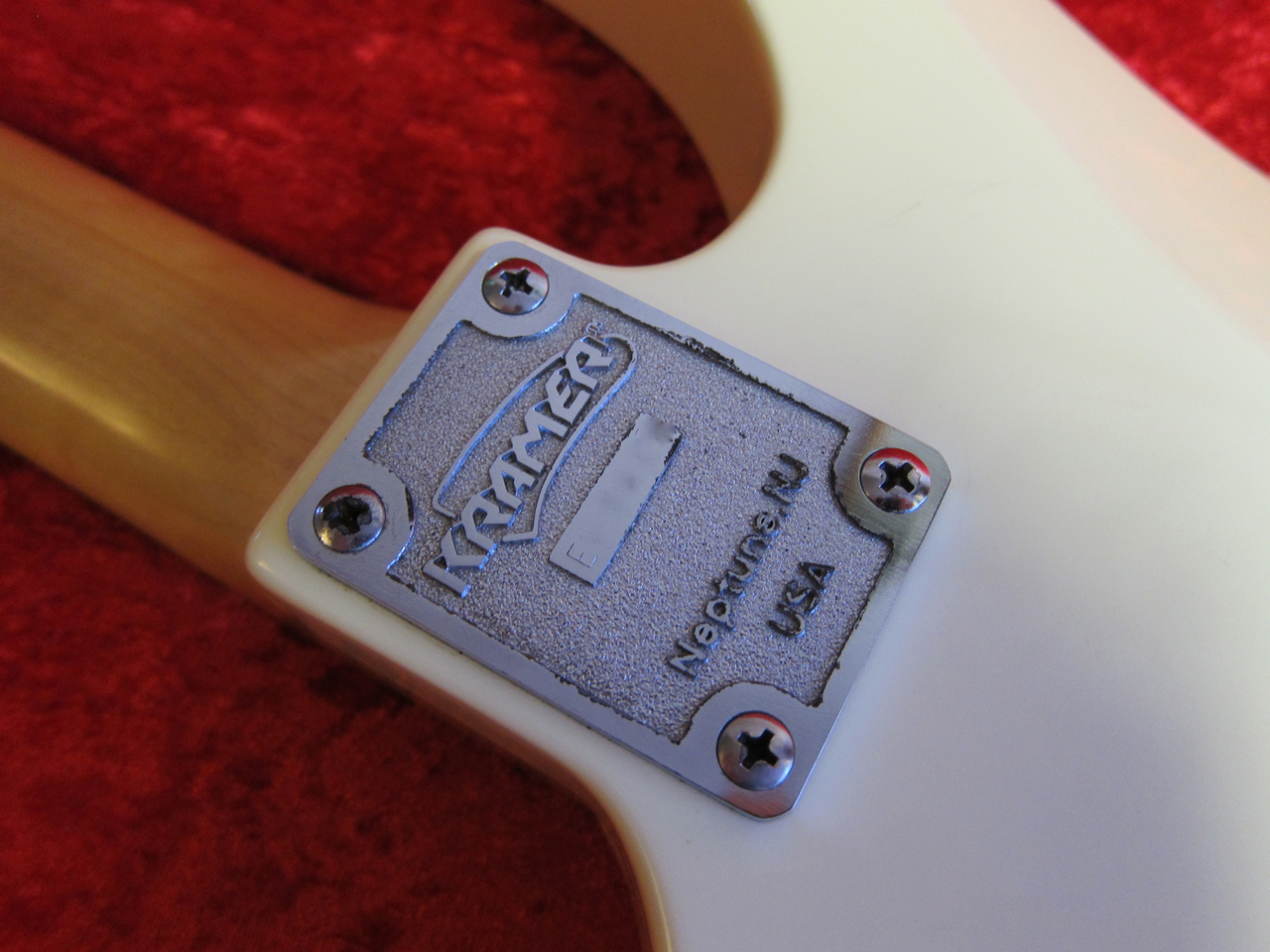
The neck has been mated to the body in time-honoured fashion via four screws and a steel plate.

****

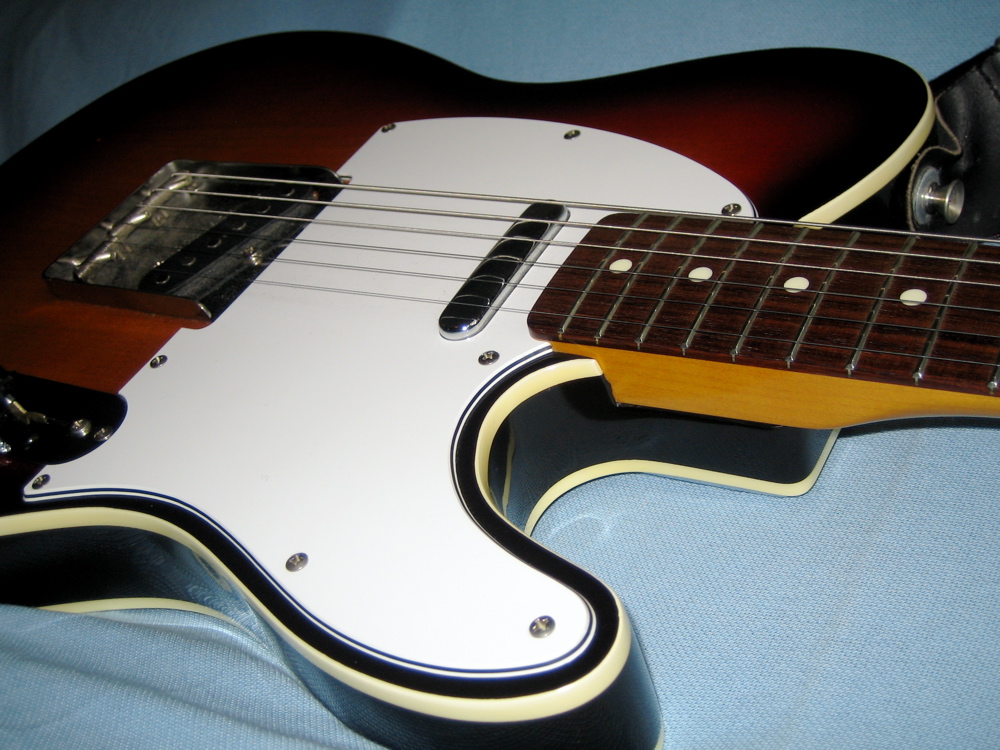
The bridge and pickups – all made by Gotoh – are decidedly non-vintage: The bridge features a thick base-plate and six separate saddles, while the singlecoil pickups are cheap units with ceramic bar magnets stuck to the bottom of their bobbins, instead of traditional alnico slug magnets.

I had to file the bridge pickup’s top plate down by a tiny little bit, because it wouldn’t fit through the bridge otherwise. Again, not untypical when using inexpensive parts.

****
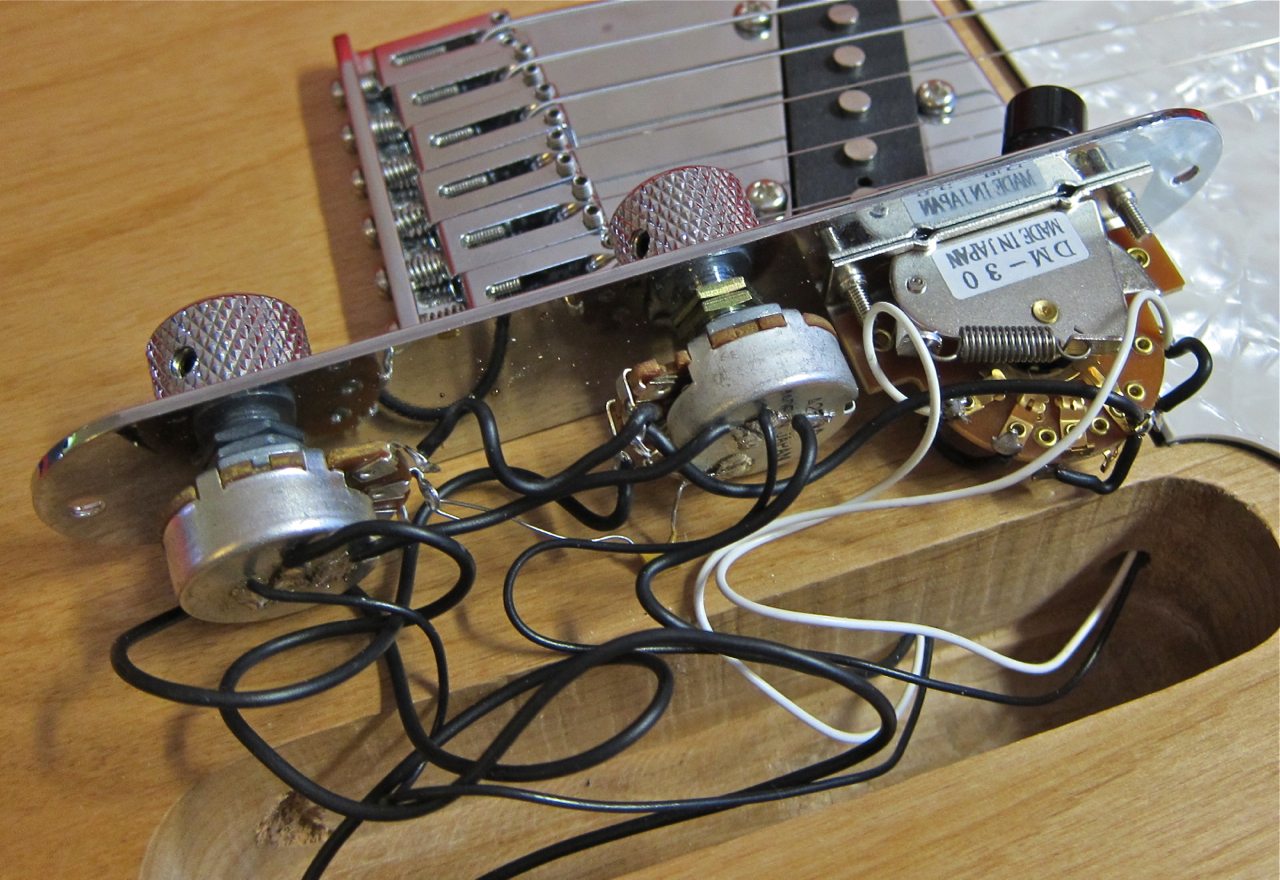
This hadn’t been my first project, so I had no problems wiring and soldering the electronic components correctly. Some companies also offer pre-wired kits for the complete newcomer.

The nice three-way switch was deeper than the body channel, so I had to gouge out a little bit of wood by hand to make the assembly fit the body.

****

I had no problems installing the modern tuners…
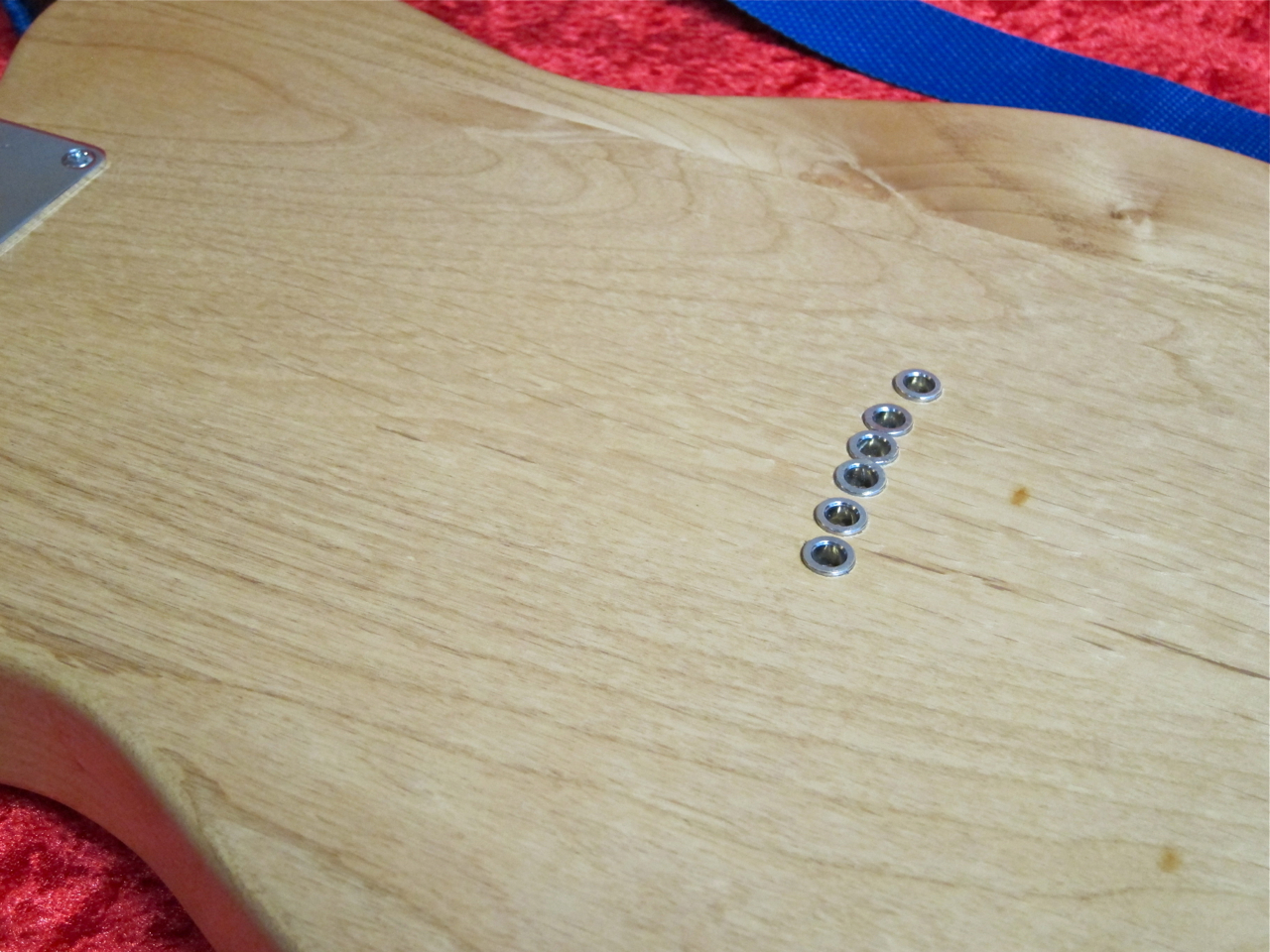
…but made a mess of a hack job of installing the string ferrules.

Mental note: Do prepare a jig! Use a drill stand for drilling the holes next time!

****

All in all, I’m rather satisfied with my Berka T! It cost a little over 300 € to make, and I learned a few new lessons during assembly.

The guitar plays well, even though I would prefer a rounder and fatter neck profile. The cheap Gotoh-pickups sound surprisingly good – they’re a little hotter and fatter than a standard vintage-style Tele-set, but still have enough spank and quack to satisfy.

Here are two soundbites:

Berka T – clean

Berka T – distortion

****

Links:

Warmoth Guitar Parts

WD Music UK

Rockinger (Germany)

Millbrook (Finland)

Kitaraporno: Kramer Pacer Custom II – 1980-luvun Superstr*to

Kramer Pacer on hyvä esimerkki 1980-luvun syntyneestä Superstr*to kitaralajista, ja sillä on kaikki tyypilliset perusominaisuudet:

Stratocaster-tyylinen runko, Gibson Explorerista lainattu lätkämailan muotoinen lapa, tallahumbuckeri, sekä Floyd Rose -vibra.

VintageKramer-sivuston mukaan tämä Pacer Custom II on American-sarjan kitara vuosilta ’87 –’89.

Alun perin (1970-luvun loppupuolella) Kramer-kitaroiden erikoisuus oli alumiinista tehty kaula. 1980-luvun loppupuolella firma oli siirtynyt kuitenkin takaisin perinteisiin puukauloihin. Kaulat ja rungot ostettiin yhteistyökumppaneilta – Pacer Custom II:n tapauksessa Japanista ESP:n tehtaalta – mutta soittimet koottiin USAssa käyttäen firman omaa elektroniikkaa sekä aitoja Floyd Roseja.

Sulava runko on tässä kitarassa poppelista, kaula vaahterasta ja otelauta palisanterista.

Tässä versiossa lapa on Kramerin teräväkärkinen malli. Palkkimainen alasvedin pitää kielet tiukasti lukkosatulaa vasten.

Paksut nauhat ja loiva otelauta kuuluvat nekin Superstr*toon – silloisen sankarikitaristin työkaluun.

Kaula on rakennettu kolmesta pitkästä vaahterapalasta…

…ja se liitetty runkoon perinteisellä tavalla ruuvaamalla.

Vaikka Floikalla varustetussa kitarassa lavan virittimet käytetään ani harvoin, ovat nekin Pacer Custom II:ssa aitoa laatutavaraa saksalaisvalmistajalta Schaller. USA-Floydin kuusiokoloavaimet on hyvä pitää aina mukanaan, sillä ilman niitä kielten vaihtaminen ei onnistuu.

Custom II:ssa on kaksi yksikelaista mikrofonia sekä yksi humbucker tallan lähellä.

Säätimet toimivat kuten normi-Stratossa – master volume, kaulan tone ja keskimikrofonin tone-säädin. Minikytkimellä saadaan kolme erilaista kytkentävaihtoehtoa tallamikrofonista: perinteinen humbucker (sarjakytkentä), yksikelainen (vain tallan puoleinen kela) sekä kirkkaampi humbucker (rinnakkaiskytkentä).

Tällaisia soundeja saa vintage-Kramerista:

Kramer Pacer Custom II – puhdas

Kramer Pacer Custom II – särö

****

Tämä kitara on mukavan kevyt soitin. Kaulan profiili on silloiselle vauhtikitaralle tyypillinen hyvin laakea ”D” – mikä on minulle hieman liian ohut ja leveä – mutta tämä Pacer on loistavassa trimmissä. Kramer Pacer Custom II on vanha laatukitara – ulkonäkö voi olla hieman vanhentunut, mutta sen soitettavuus ja soundi ovat vielä täysin ajankohtaiset.

****

Kiitos Tommi Posalle, jolle tämä Kramer kuuluu!

Can I play Metal on a Telecaster?

Of late there’ve been repeated questions about the venerable Telecaster’s suitability for Metal-playing, so I thought I should respond:

Starting in the Eighties a myth has grown that Hard Rock and Metal can only be played on guitars specially designed for these types of music. In reality there isn’t a special sub-species of instruments – if you look closely enough most ”Metal guitars” have their roots in classic models, most derived in some way from Gibson’s classics.

A Fender Telecaster is as suited for Metal as most other solidbody electrics – as long as you don’t plan on using a strictly vintage-type Tele.

A vintage Telecaster’s ”problem zones” for hard ’n’ heavy are its singlecoil pickups, its ashtray bridge, its small frets and small radius (= very convex) fingerboard.

Singlecoils suck in way too much extraneous electromagnetic noise (buzz and hum) to be of any practical use in a high-gain environment. Additionally, the metal cover on the front pickup as well as the grounding plate on the back pickup tend to induce howling feedback at extreme volume and gain settings.

A vintage Tele’s bridge is problematic when it comes to spot-on intonation, because it only features three bridge saddles. Furthermore, the relatively thin metal plate the bridge is made of also is a regular culprit when it comes to high-gain howl.

A small fingerboard radius coupled with small frets makes string-bending noticeably more difficult.

****

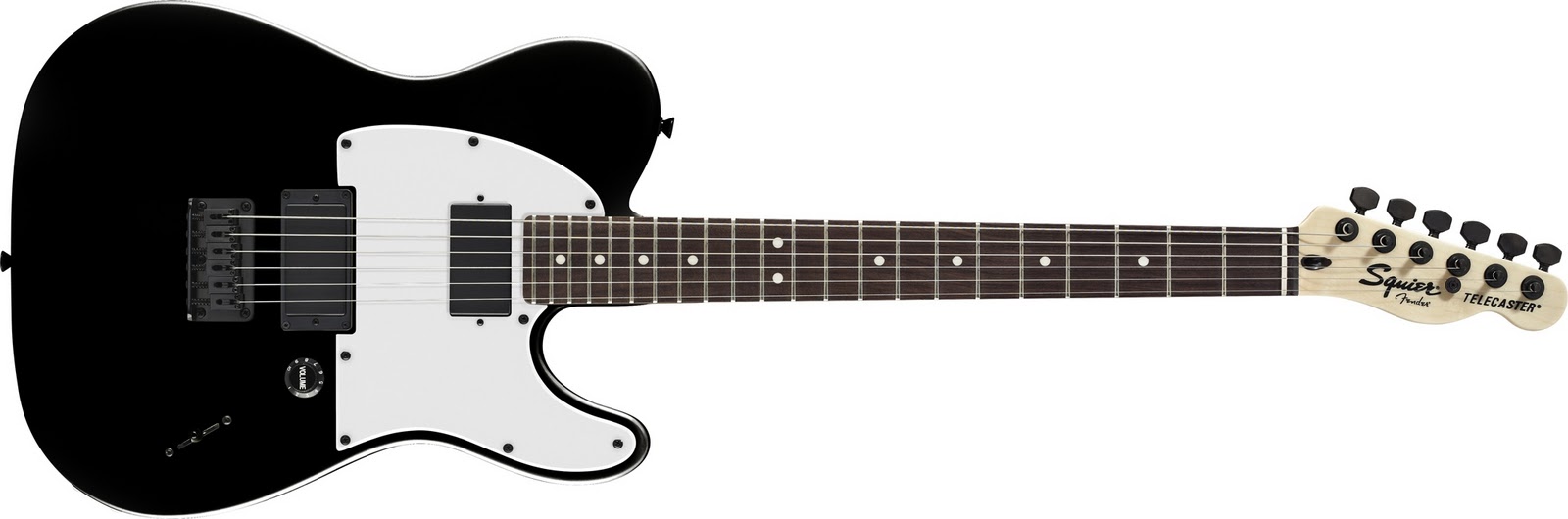
The easiest way to deal with these problems is to select a Tele-model that’s already equipped with a six-saddle-bridge, humbuckers and a flatter fingerboard with bigger frets. Good examples are:

The Squier Jim Root Telecaster

****

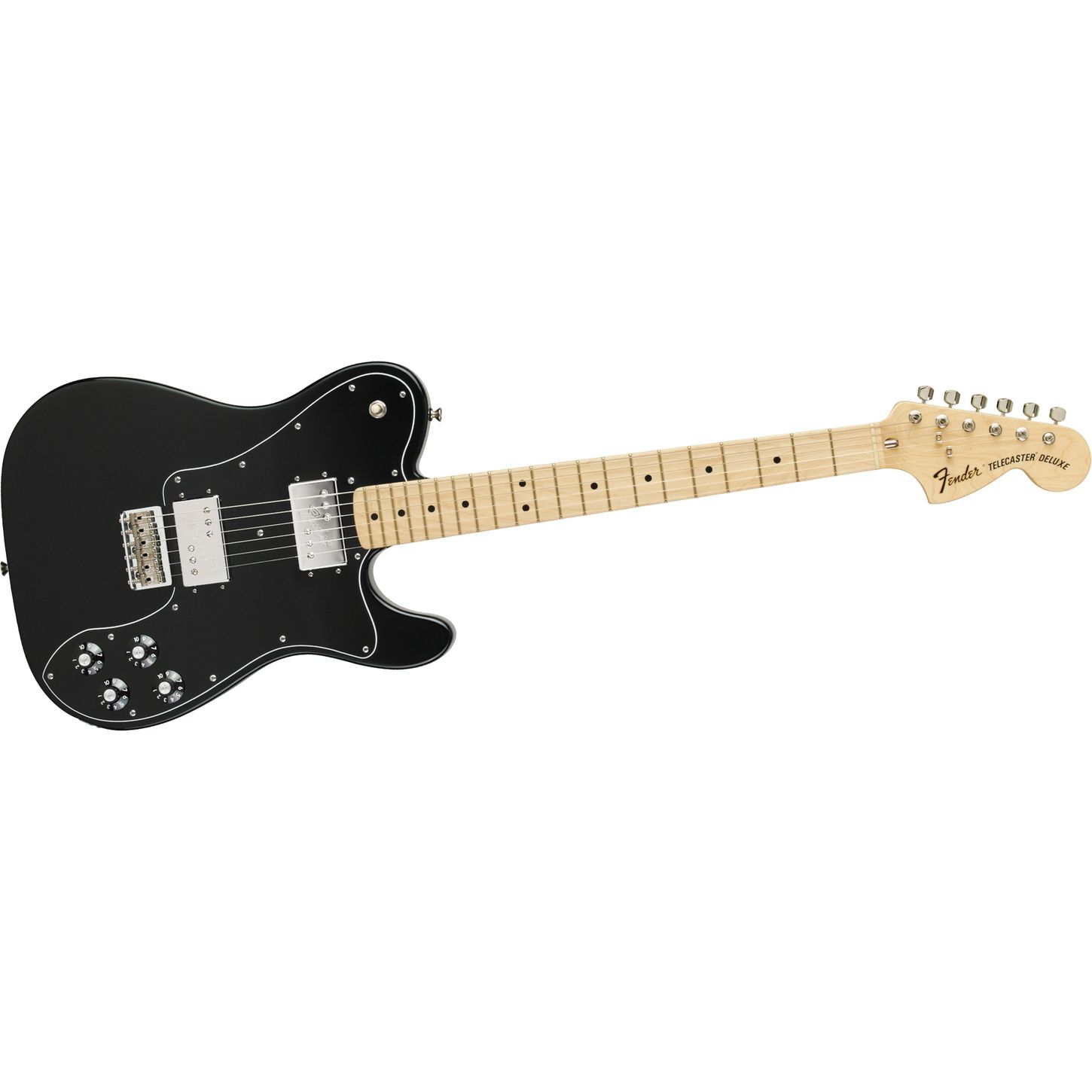
The Fender Classic ’72 Telecaster Deluxe

****

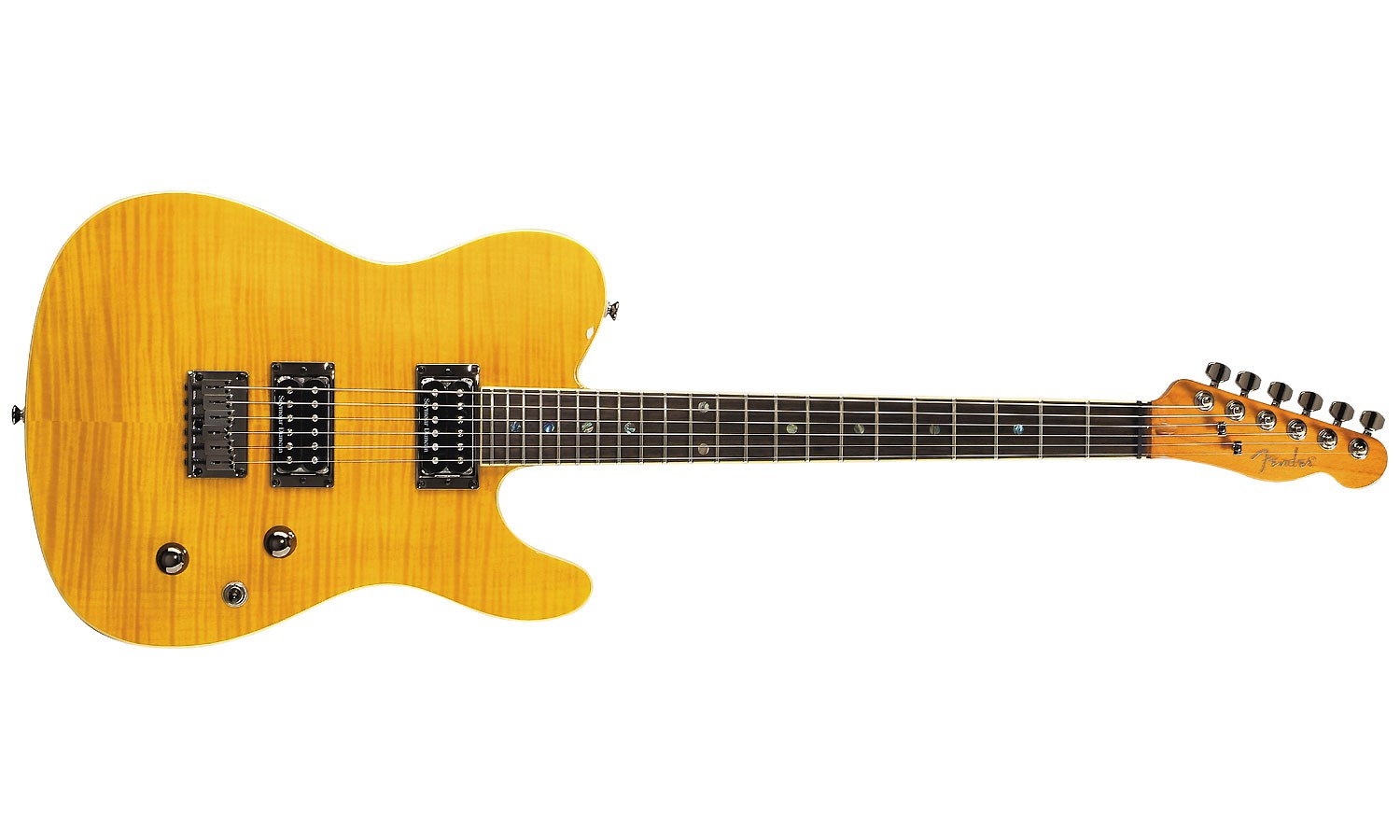
The Fender Telecaster FMT HH Special Edition

****

Sopiiko Telecaster-malli metallimiehelle?

Viime aikoina kysytään yhä useammin Telecaster-kitaran sopivuudesta Metal-musiikkiin, niin ajattelin vastata siihen:

1980-luvulla alkoi syntyä sellainen käsitys, että Hard Rock- tai Metal-soittamiseen voi käyttää vain juuri siihen tarkoitukseen sunniteltu sähkökitaraa. Todellisuudessa ei ole olemassa varsinaista Metal-kitaran alalaji, vaan käytännössä kaikilla Hard Rock -soittimilla on esi-isä jossain klassikkomallissa – usein ne ovat Gibson-klassikkojen johdannaisia.

Fender Telecaster sopii alustana yhtä hyvin Metal-soittimeksi kuin useimmat muut lankkukitarat, jos vain ei ole tarkoitus vetää täyttä moshausta vintage-tyylisellä mallilla.

Vintage Telen ”ongelmakohdat” tässä yhteydessä ovat yksikelaiset mikrofonit, laatikkomainen talla, ohuet nauhat ja hyvin kupera otelauta.

Yksikelaiset mikrofonit ottavat vastaan aivan liikkaa ulkoista huminaa ja hurinaa, minkä takia suurilla gaineilla soitetaan yleensä humbuckereilla. Tämän lisäksi etumikrofonin kuori ja tallamikrofonin alla oleva metallilevy aiheuttavat kovilla volyymillä usein feedback-ulinaa.

Vintage Telen tallassa piilee kaksi ongelmaa: intonaatio ei ole koskaan täysin kohdallaan, koska on vain kolme tallapalaa, ja suhteellisen ohut metallilevy aiheuttaa myös itse jonkin verran feedback-ongelmia.

Pienet nauhat ja otelaudan voimakas kaarevuus taas tekevät kielten venytyksistä vaikeaa.

****

Helpoin tapa ”korjata” näitä ongelmakohtia on hankkia jo valmiiksi nykyaikaistettu Telecaster-malli, jossa on kuudella tallapalalla varustettu talla, humbuckerit ja loivempi otelauta isoimmilla nauhoilla, kuten esimerkiksi:

Squier Jim Root Telecaster

****

Fender Classic ’72 Telecaster Deluxe

****

Fender Telecaster FMT HH Special Edition

****

Classic Basses, part 3: Rickenbacker 4001/4003

Rickenbacker was one of the first manufacturers to latch onto Leo Fender’s idea of an electric bass with a proper long scale.

In 1957 they introduced their first bass model, the 4000, which was the world’s first through-neck bass.

Rickenbacker’s two-pickup model – the Rickenbacker 4001 (introduced in 1961) – turned out to become one of the company’s most successful instruments.  Paul McCartney and Chris Squire are probably the bass’ best-known users – they played the 4001’s export version 4001S.

In 1979 Rickenbacker came up with a model updated for use with roundwound strings. The new bass was named the 4003 and it  featured new truss rods (Rickenbackers always have two!) and more powerful singlecoil pickups with the neck unit moved slightly closer towards the bridge.

My own Rickenbacker 4003 was built in 1987.

Except for the rosewood fretboard, a 4003 is crafted completely from maple. The neck goes all the way from the headstock to the end of the body (a so-called Through-Neck), while the body is formed by two pieces of maple glued to the neck’s sides.

Rickenbacker typically uses a reddish type of rosewood for their fingerboards, which are usually gloss-lacquered. Another typical company trait is the narrow binding, which leaves a visible gap between the binding and the neck’s finish.

The tuning machines have been made in Germany by Schaller.

Rickenbacker’s idiosyncratic bridge design includes an adjustable string mute mechanism. Setting the correct octave compensation is a little bit more complicated than it need be – you have to detune the strings to get to the adjustment screws.

Alongside the use of maple as the instrument’s main ingredient the 4003’s singlecoil pickups play a large role in this model’s throaty tone. Most users remove the bridge pickup’s metal cover, as it tends to get in the way of your right hand.

The silver metal finish is kind of rare, even though a similar bass appeared on the cover of Rickenbacker’s bass catalogue in the mid-80s. The most popular finishes are ”Fireglo” (a red sunburst), ”Jetglo” (black) ja ”Mapleglo” (natural gloss finish).

You can check out the sound of my 4003 here or here.

Klassikkobassot, osa 3: Rickenbacker 4001/4003

Rickenbacker tajusi melko nopeasti, että Leo Fenderin keksimä sähköbasso pitkällä mensuurilla ei ollutkaan niin hullu idea kuin monet väittivät.

Vuonna 1957 firma toi markkinnoilla ensimmäisen sähköbassonsa, jolla oli mallitunnus 4000 – se oli ensimmäinen basso, jossa kaula jatkoi yhtenäisenä koko rungon läpi.

Kaksimikrofonisesta sisarmallista tuli sitten oikea klassikko – Rickenbacker 4001 (tuotanto aloitettu vuonna 1961).  Paul McCartneysta ja Chris Squireistä tuli tunnetuimpia Rickenbacker-käyttäjiä – tosin he soittivat 4001:n brittiversiota 4001S.

Vuonna 1979 sai 4001 uudella kaularaudalla ja vahvemmilla mikrofoneilla varustetun rinnakaisversion nimeltään Rickenbacker 4003.

Minun oma Rickenbacker 4003 on vuosimallia 1987.

Palisanteriotelautaa lukuunottamatta 4003 on veistetty kokonaan vaahterasta. Kaula jatkuu rungon läpi (ns. Through-Neck), ja basson runko koostuu kahdesta vaahterapalasta, joita on liitetty kaulan sivuun.

Rickenbacker on aina käyttänyt hieman punertavaa palisanterilaatua otelaudoissaan. Perinteisesti firman otelautoja viimeistellään kiiltävällä kirkaslakalla. Tyyppillinen on myös otelaudan matala reunalistoitus, joka jättää osan palisanterista näkyviin.

Virityskoneistojen valmistaja on 1970-luvun loppupuolelta ollut saksalainen Schaller.

Rickenbackereissa on läheis aina firman oma, hieman omintakeinen talla, johon on integroitu myös säädettävä solukumisordino. Oktaavikompensaation säätäminen on hieman monimutkainen, koska kielet joutuu löystää sitä varten…

Korkean ”vaahterapitoisuuden” ohella on yksikelaisille mikrofoneille tärkeä rooli 4003:n jäntevässä soundissa. Monet soittajat poistavat tallamikrofonin metallisuojan, koska se on oikean käden tiellä (näin teki myös bassoni entinen omistaja).

Hopeanvärinen metalliviimeistelly on suhteellisen harvinen, vaikka juuri tämänvärinen soitin oli 1980-luvun keskivälillä Rickenbackerin bassokatalogin kannessa. Tavallisimpia väriä ovat ”Fireglo” (punainen liukuväritys), ”Jetglo” (musta) ja ”Mapleglo” (kirkaslakkaus).

Voitte kuunnella oman 4003:n sointia esimerkiksi tässä tai tässä.

Classic Basses, part 2: Fender Jazz

It took quite some time for the electric bass to really catch on. Fender introduced the Precision Bass in 1951, but had to wait for almost a whole decade, before they felt that the market was ready for a second bass guitar from the company.

In 1960 Fender released its deluxe update – the Jazz Bass.

Leo Fender listened to the most common complaints made by players and sampled their suggestions for improvements, and he addressed these issues with the new model. The Jazz has a more slender neck profile, a more ergonomic body shape and it offers a wider sound palette (thanks to its two singlecoil pickups) compared to its forebear.

The very first batch of Jazz Basses was equipped with stacked concentric controls, which offered separate volume and tone controls for each of the two pickups (see the sunburst bass above).

But already in 1961 the electronics were updated to the less fussy combination now widely known as the Jazz Bass -set-up – separate volume controls with one master tone.

The pickups are reverse wound/reverse polarity, which means that when used together they defeat transformer hum and electromagnetic buzz effectively.

While the standard version was offered in three-tone sunburst only, the Jazz Bass was ordered in Custom Color -finishes quite regularly in the 1960s, often with matching headstock faces.

From the end of the ’60s and all through the ’70s the fretboard was bound and featured large block inlays. Maple fingerboards were quite common during the ’70s.

Despite the changes in its looks the Jazz Bass’ sound always stayed excellent. Its sound is slightly more slender and transparent than that of its equally famous stablemate. The front pickup is full, but less throaty than a P-Bass’ split-coil unit. The bridge pickup has a nice, nasal timbre, and the combination is slightly hollowed out with a fresh zing, which made funky slap bass styles so fashionable.

________________________________________________________

Check out the sound of my own Squier Jazz Bass (Made in Japan, 1985) here.

Klassikkobassot, osa 2: Fender Jazz

Presarin ilmestymisen jälkeen kesti melko pitkään, ennen kuin sähköbassosta tuli riittävän suosittua, että Fender uskalsi lanseerata toisen bassomallin.

Fender Jazz -basso tuli markkinnoille vuonna 1960 firman deluxe-versiona.

Leo Fender otti soittajien parannusehdotuksia vastaan ja rakensi uuden bassonsa niiden perusteella. Uudessa Jazz-mallissa oli huomattavasti solakkaampaa kaulaprofiili, entisestäkin ergonomisempi runko sekä monipuolisempi sounditarjonta, kahden yksikelaisten mikrofonien ansiosta.

Ihan ensimmäisissä Jazz-bassoissa käytettiin päällekkäisiä säätimiä, joissa kummallakin mikrofonilla oma volume- (päällekkäinen nuppi) ja tone-säätimensä (musta rengas, katso kuva tämän jutun alussa).

Jo vuonna 1961 elektroniikka muutettiin kuitenkin niin, että kummallakin mikrofonilla oli oma volume-säätimensä, mutta molemmilla oli yhteinen master tone. Tämän järjestelmän etu on sen selkeys, ja tällaista volume/volume/tone-asetelma kutsutaan nykyään Jazz Bass -säädinasetelmaksi.

Mikrofonit on käämitty toisiinsa nähden vastakkaiseen suuntaan, ja myös niiden magneettinen polariteetti on vastakkainen, minkä ansiosta ne toimii yhdessä humbuckerina.

Vaikka perusversio myytiin kolmivärisellä liukuvärityksellä, monet Jazz-bassot tilattiin niin kutsutulla Custom Color -viimeistelyllä, jossa usein myös viritinlapa oli värillinen.

1960-luvun loppupuolella ja myös koko 1970-luvulla Jazz-bassolla oli reunalistoitettu otelauta – joka oli usein palisanterin sijaan veistetty vaahterasta – ja neliskanttiset otemerkit (joko mustia tai vaaleata helmiäismuovia).

Ulkonäöstä riipumatta soundi pysyi kuitenkin aina samana. Jazz-basso soi täyteläisesti, mutta sen ääni on kuitenkin notkeampi ja hieman selkeämpi kuin Precision-mallin sointi. Etumikrofoni on lämmin, tallamikrofoni herkullisen nasaalinen ja mikrofonien yhdistelmä pikkuisen ontto, mikä loi perustan Funk-bassistien slap-soittoon.

________________________________________________________

Oman Squier Jazz Bass:n (Made in Japan, vm. 1985) soundin voi kunnella esimerkiksi tästä.

_________________________________________________________

Klassikkokitarat, osa 3: Fender Telecaster

Fenderin Telecaster on kaikkien lankkukitaroiden äiti. Vaikka jo 1930-luvulla yksittäiset keksijät tekivät kokeiluja lankkumallisien sähkökitaroiden kanssa, onnistuivat Leo Fender ja George Fullerton luomaan vuonna 1950 perustuksen valtavalle sähkökitara-teollisuudelle.

Sittemmin Telecasterina tunnetuksi tullut malli näki päivävalon Esquire-nimisenä. Ensimmäisillä Esquireillä oli ainoastaan tallamikrofoni ja säätimien vieressä pieni painokytkin, jolla voitiin vaihdella tavallisen soundin ja bassovoittoisen presetin välillä. Muutaman viikon kuluttua painokytkin vaihtoi kolmiasentoiseen vipukytkimeen, ja tarjolla olivat bassovoittoinen soundi, tavallinen mikrofonisoundi tone-säätimellä sekä mikrofoni kytkettynä suoraan lähtöjakille.

Kun kaksimikkinen versio esiteltiin, sekin kulki lyhyen ajan nimellä Esquire, ennen kuin annettiin sille nimen Broadcaster. Helmikuussa 1951 Fender sai kuitenkin sähkeen, silloin paljon isommalta firmalta Gretsch, jossa kehotettiin Fenderiä luopumaan nimestä Broadcaster, koska Gretschillä oli Broadkaster-niminen rumpusarja ja nimi oli suojeltu tavaramerkki.

Oli siis aika löytää pysyvän nimen kitaralle. Ennen kuin uusi nimi otettiin käyttöön Fender kuitenkin käytti loppuun vanhoja logotarroja, joista poistettiin Broadcaster-kirjoituksen. Nämä kitarat kutsutaan nykyään lempinimellä ”Nocaster”.

Elokuussa 1951 kaksimikrofonisesta kitarasta tuli loppullisesti Fender Telecaster.

Telecaster on todella suoraviivainen peli, jolla on kulmikas runko ilman viisteitä ja ruuveilla kiinnitetty vaahterakaula, joko palisanteriotelaudalla tai ilman.

Etumikrofonilla on metallisuoja ja tallamikrofoni taas on ripustettu suoraan laatikkomaiseen tallaan.

Perinteisessä vintage-tallassa on vain kolme tallapalaa, mutta nykyään on olemassa monta eri versioita myös kuudella tallapaloilla. Hardcore-fanit voivat riidellä loputtomin eri Telecaster-tallojen ”paremmuudesta” – sanotaan nyt vaan, että tallapalojen materiaaliksi käytetään eri versioissa messinkiä, terästä tai valumetallia, ja materiaalilla on myös vaikutusta kitaran loppulliseen soundiin.

Vuodesta 1967 lähtien kolmiasentoisesta kytkimellä saa valittua lämmintä kaulamikrofonia yksin, kaunista ja hieman onttoa yhdistelmää molemmista mikrofonista, sekä nasaalisen jäntevää tallamikrofonia yksin. Juuri tallamikrofonista tuli countrymusiikin vakiovaruste, mutta Telecaster on paljon monipuolisempi soitin, joka soveltuu lähes kaikkeen Bluesista Rockiin. Jopa muutama metallikitaristi on nähty Telecasterin kanssa, tosin usein humbuckereilla kustomoidulla kitaralla.

Mielestäni Telecaster on loistava valinta ensisoittimeksi, jos tulee toimeen sen hieman kulmikkaan rungon kanssa. Leo Fenderin pääajatus oli luoda kitara, joka olisi mahdollisimman helppo rakentaa, helppohoitoinen ja helppo korjata. Sellainen kitara, joka olisi uskollinen työjuhta rankassakin keikkaelämässä.

On erittäin harvinnaista, että keksijä onnistuu kertaheitolla näin täydellisesti.

Save

Guitar pickup types – the basics

Almost all pickups found on electric guitars are based on electromagnetic induction, which means creating an electrical current by using a changing magnetic field and a coil of copper wire.

In contrast to a dynamo or a power generator, both the magnet and the coil are stationary in a guitar pickup. Here the guitar string’s vibrations ”mix up” the magnetic field and cause a current to flow.

The resulting weak electrical signal passes through the guitar’s controls and  – via the lead – on to the guitar amplifier, where the signal is amplified, so it can drive a speaker.

While virtually all pickups follow the same basic principles they are generally divided up into four types according to their different build:

* singlecoil pickups

* P-90

* humbucking pickups

* active pickups

****

The singlecoil pickup

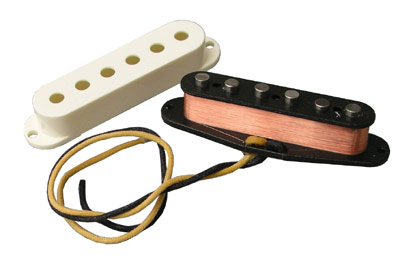
The singlecoil pickup is the oldest and most basic pickup type of all. The most common singlecoils are the ones used in Fender Telecaster and Stratocaster -guitars, where six slug magnets are stuck into two plates made from vulcanised fibre. The coil is then wound around the magnets.

These slim and tall pickups tend to have a bright, cutting sound.

Check out these examples:
Telecaster clean

Telecaster drive

****

The P-90

The P-90 is the oldest Gibson-pickup still in regular use. Even though the P-90 is also a singlecoil pickup, it is put into its own category due to its different build.

Here the coil is wound around a plastic coil former with two oblong magnets stuck on underneath. The coil is much flatter and wider than a Fender-style singlecoil.

A wider coil isn’t able to pick up high frequencies (treble) as well as a narrow one, which is why a P-90 generally has a more middly tone than a Fender-singlecoil:

LP Junior clean

LP Junior drive

The P-90 is build in two main versions. For installation on semi-solid guitars a bottom-plate with installation brackets is used in combination with the so-called dog ear -cover. On solidbody guitars the P-90 is mostly installed with two long screws through the top of the unit, and a smaller ”soap bar” cover is used.

****

The humbucker

Singlecoil pickups sound great, but they all have one problem in common – they pick up noise from transformers, fluorescent lights, computer monitors, DVD-players etc, because a copper coil always acts as an antenna.

In the mid-1950 engineers started to develop ideas for noise-free guitar pickups. These days the anoraks like to debate who came first – Ray Butts, who invented the Filtertron-pickup for Gretsch, or Gibson’s Seth Lover.

In any case, in the end Gibson’s unit became the de facto industry standard.

The Gibson-type has two coils arranged next to each other, with a single oblong magnet stuck underneath, between the coils and the pickup’s bottom plate. Because the coils are wound in opposite directions, but their magnetic polarity is different, the noise is cancelled out while the guitar string’s vibration is picked up.

The original pickups were built with metal covers, but in the mid-Sixties some Blues-players (for example Eric Clapton) discovered you could squeeze out a few more drops of treble once the cover is removed (don’t try this at home, you can easily ruin the pickup).

Thanks to its twin coils a humbucker generally sounds bigger and fatter than a singlecoil, which is great for achieving overdriven and distorted tones.

This is what a typical humbucker sounds like:

Hamer clean

Hamer drive

****

The active pickup

The main difference between an active pickup and the three other pickup types is that the active pickup is equipped with a built-in pre-amplifier. Most active pickups are humbucking and come either in the Gibson-humbucker size or shrunk to fit a Stratocaster-pickup’s dimensions.

Thanks to their preamps most active pickups have a healthy output signal with a very clean tone. Most active units’ guts are sealed with plastic resin inside their cover, making them practically immune to feedback (a loud, howling or whistling sound from the amp) even at very high volume levels. This is why active pickups are very popular in the Metal genre.

The only drawback is that your guitar won’t work without a 9 V -battery.

This is what an EMG 81 sounds like:

Schecter clean

Schecter drive

****

Why do most electric guitars have more than one pickup?

The position of a pickup on a guitar influences what the pickup ”hears”.

The closer the unit is moved towards the bridge, the brighter and sharper the sound gets. The closer you move to the end of the fretboard, the warmer and fuller the sound becomes.

If a guitar is equipped with with more than one pickup you can use a switch to quickly select the desired guitar sound – either by selecting a pickup on its own or by combining two (or even three) units.

Here I’m switching from the neck pickup to the bridge pickup and back again:

Neck-Bridge-Neck-Bridge

Pidä blogia WordPress.comissa.

Ylös ↑