Review: Tanglewood Sundance Historic TW40O-AN-E + TW40D-AN-E

Tanglewood TW40O + TW40D – ad

This review could also carry the headline: ”Tanglewood brings vintage to the masses”. Tanglewood’s Sundance Historic guitars have been designed to give you plenty of that ”pre-war” charm at very player-friendly prices. Take the two models on review, for example, which have price tags well below 700 Euros, despite even coming with on-board Fishman pickups and preamps!

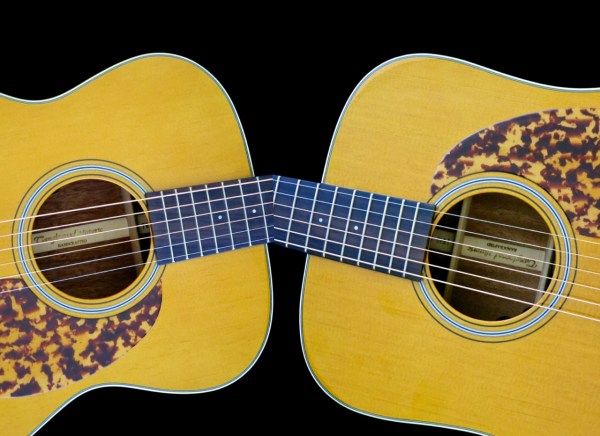
The TW40O-AN-E and the TW40D-AN-E are both quite reminiscent of certain legendary Martin-models from the 1930s and 40s.

****

Tanglewood TW40O-AN-E – full front

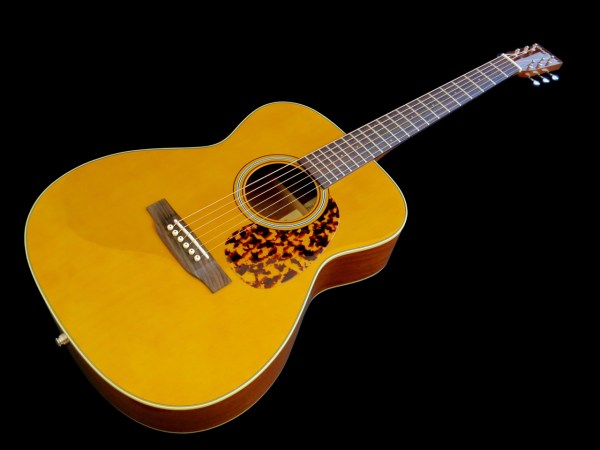
The Tanglewood TW40O–AN-E (current price in Finland 673 €) is the Sundance Historic series’ version of a Martin OM-18 model – the first Martin steel-string acoustic to feature a neck joint at the 14th fret when it was introduced in the Thirties.

Tanglewood TW40D-AN-E – full front

Tanglewood’s TW40D-AN-E (673 €) is a tip of the hat to Martin’s D-18, which is the most copied, most referenced steel-string of all time. Even Gibson went out and bought a Martin in 1960, so they could use it to reverse engineer their own Hummingbird and Dove models.

Both of these models can also be had without the pickup system for 598 Euros each.

Tanglewood TW40O-AN-E – back beauty

The necks of the TW40O and the TW40D have been built in the traditional fashion employed on classical guitars:

The neck is a one-piece mahogany affair – headstock and all – save for a separate, glued-on neck heel.

Tanglewood TW40D-AN-E – body beauty 2

The bodies are crafted using solid spruce tops and laminated mahogany rims and backs.

The ”AN” in the model designation hints at the beautiful Antique Natural finish of these Historic Series instruments.
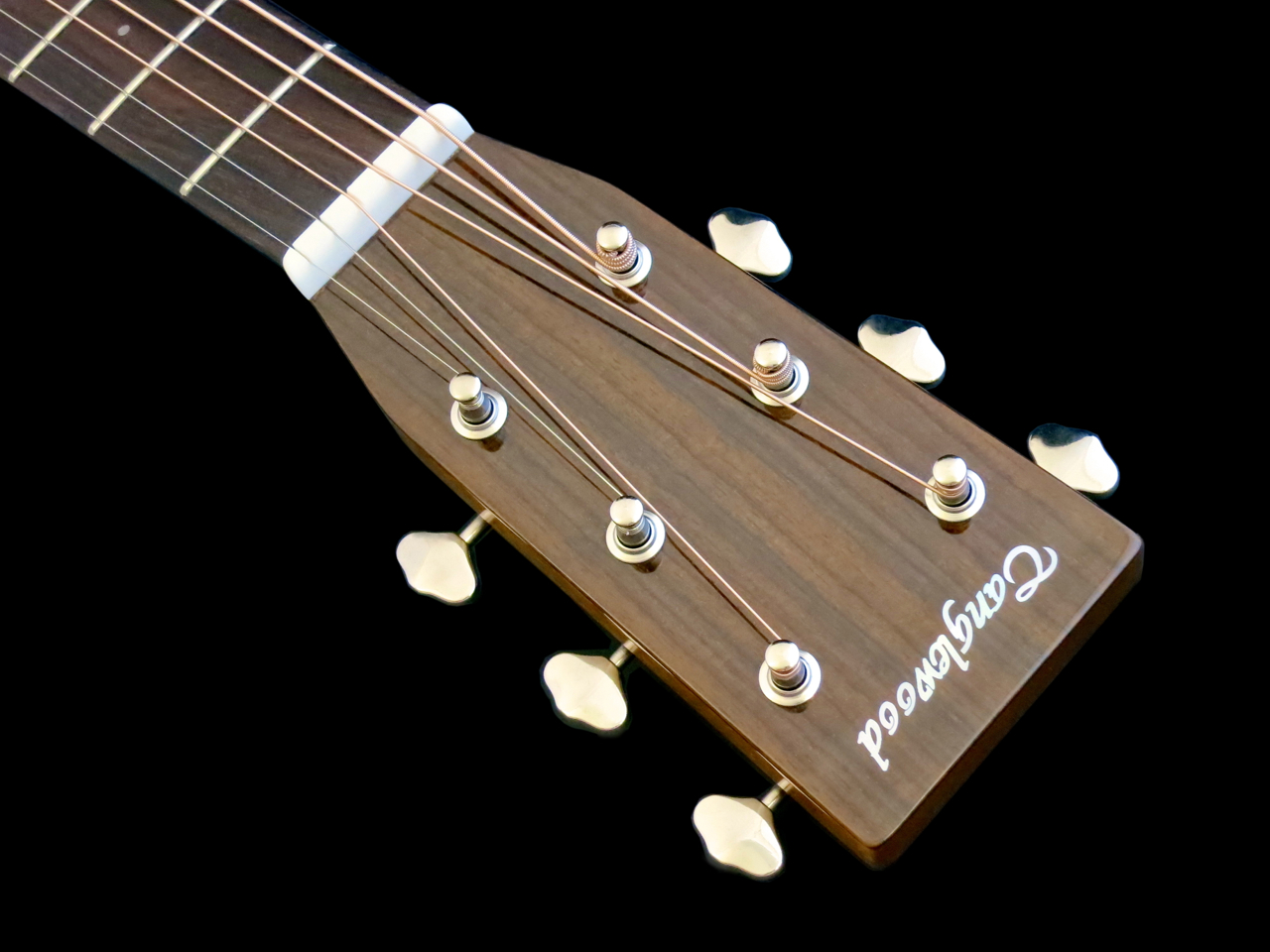
Tanglewood TW40D-AN-E – headstock

The nut is genuine bovine bone.

Tanglewood TW40O-AN-E – tuners

The machine heads are very decent copies of 1930s open-geared Grovers. They do a great job of keeping the tuning stable, but their action is a little bit stiffer than what you’re used to with modern die-cast tuners.
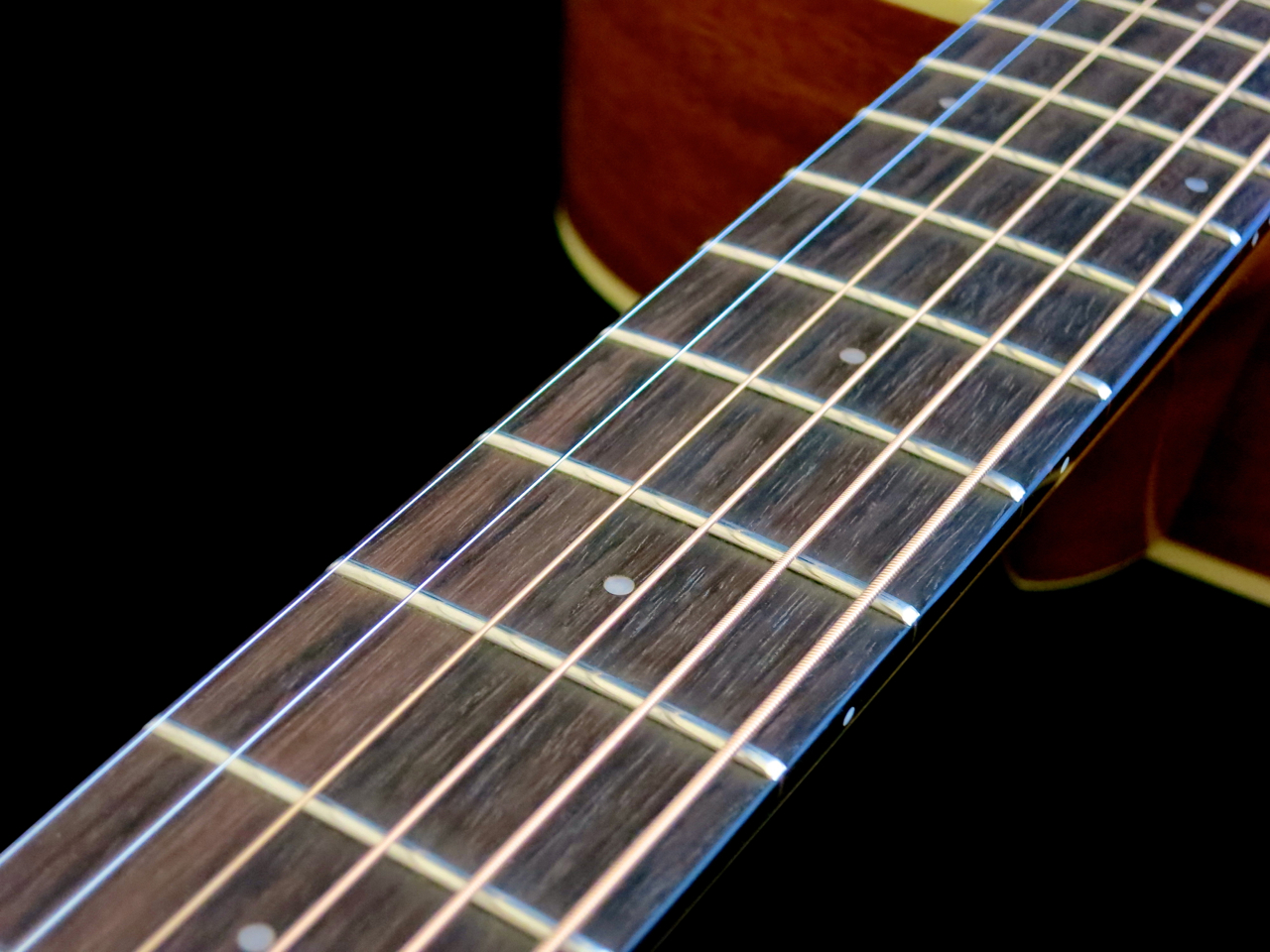
Tanglewood TW40O-AN-E – fretboard

The slender and small frets fit the vintage brief of the TW40O and TW40D to a tee.

Tanglewood TW40O-AN-E – bridge

Here’s a good example of how different two pieces of rosewood can look:

The reviewed TW40O-AN-E’s bridge is a nicely-grained light example…

Tanglewood TW40D-AN-E – bridge

…while the dreadnought carries a much darker counterpart.

The compensated bridge saddle is genuine bone on both instruments.

Tanglewood TW40O-AN-E – Fishman Sonitone

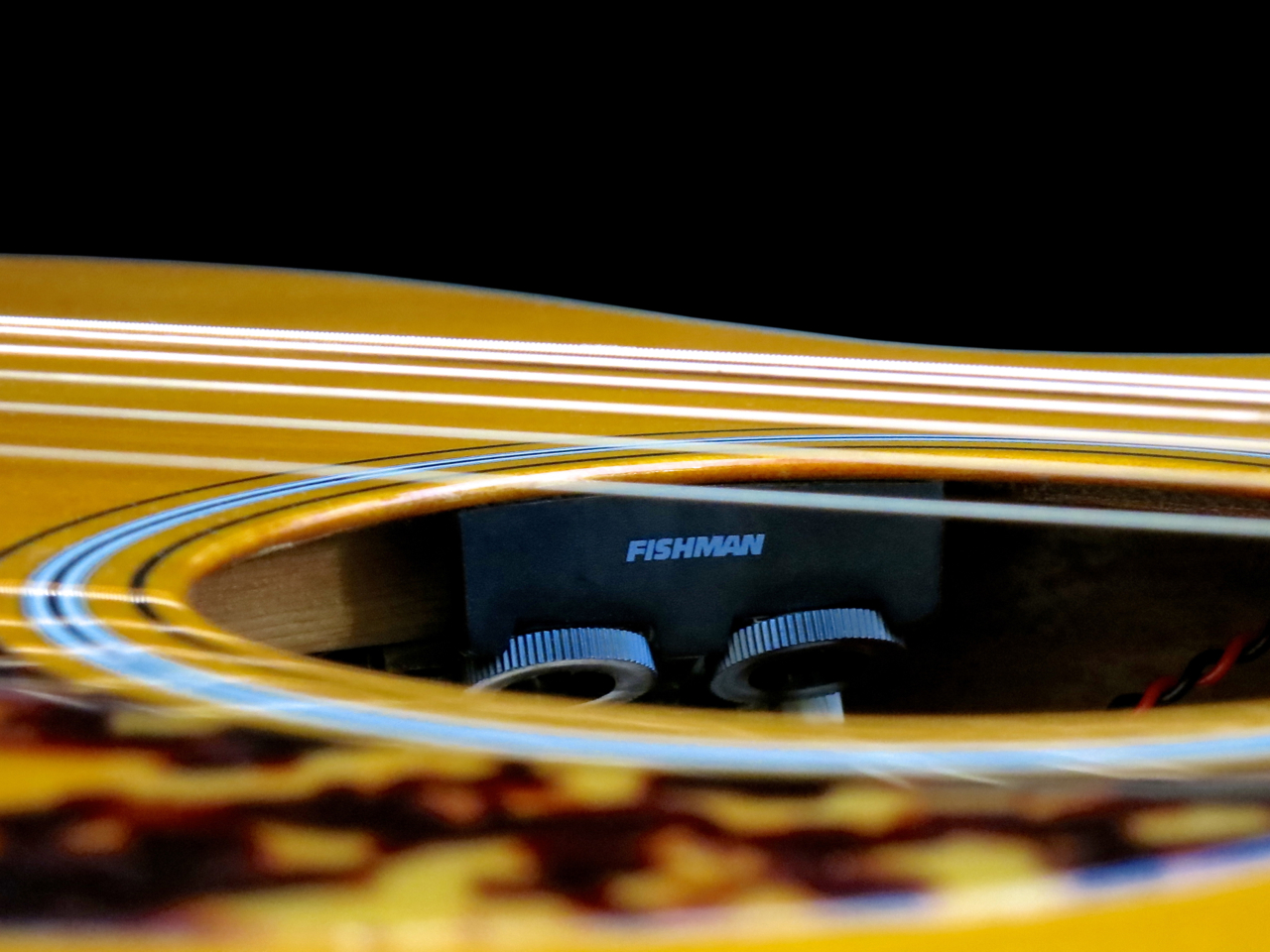
Both Sundance Historics have been equipped with a Fishman Sonitone pickup and preamp.

The piezo transducer sits beneath the bridge saddle and feeds its signal to the preamp – featuring master volume and master tone controls – that has been glued to the underside of the soundhole’s bass side edge. The Sonitone is powered by a 9 V battery, which is stowed away in its own pouch that is velcro’d to the neck block. The downside is that changing the battery is a much more involved affair than with a quick change battery compartment, but the advantage of this Fishman system is that it doesn’t spoil the guitar’s looks.
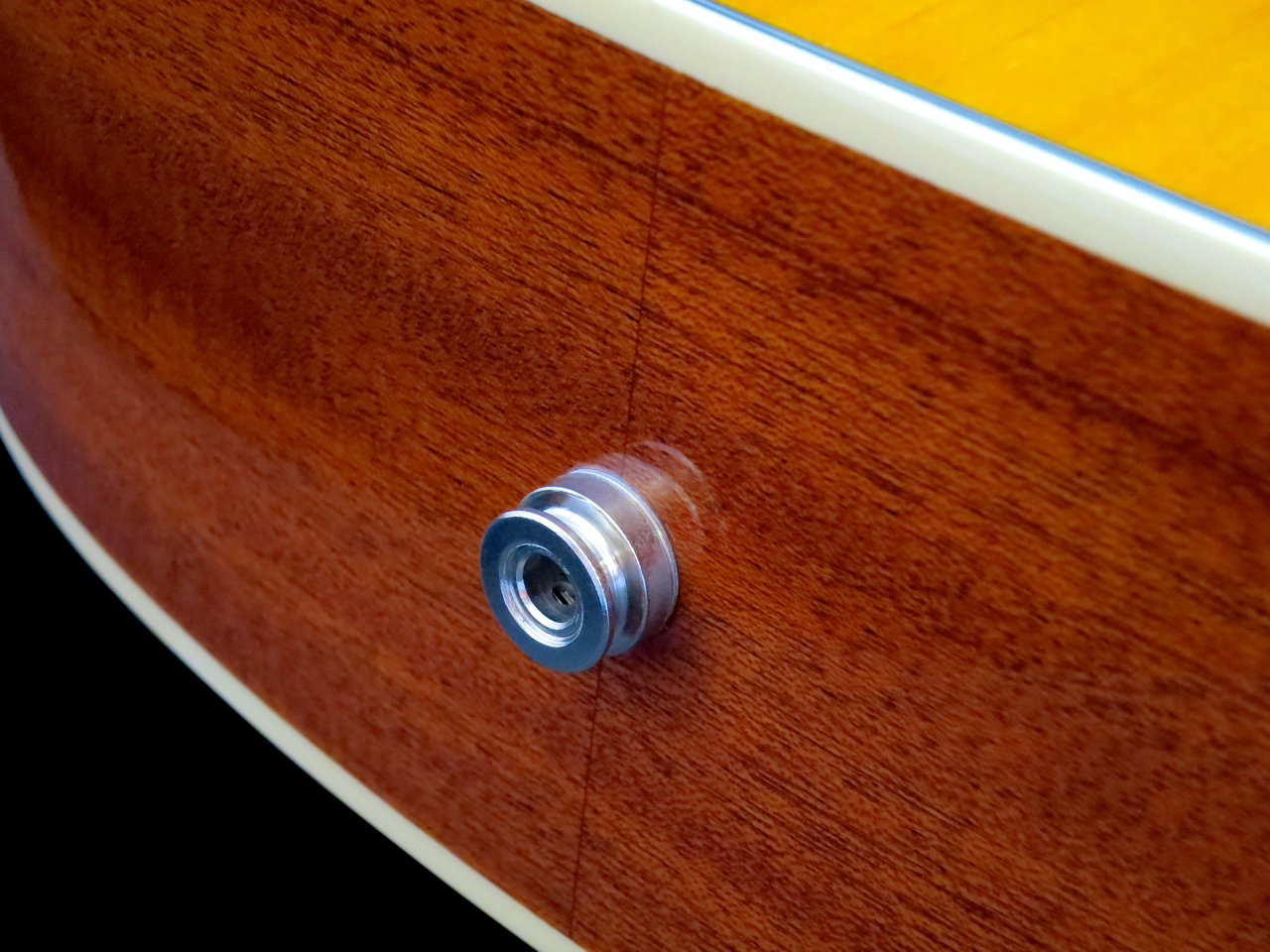
Tanglewood TW40O-AN-E – output

Both Tanglewoods sport an end pin output jack.

****

Tanglewood TW40O-AN-E – body beauty 2

The care that has quite obviously gone into building these two Tanglewood Sundance Historic guitars really puts a smile on your face. The workmanship is clean and precise, and both instruments look more expensive than they really are.

Even though both guitars are from the 500-800 Euro price bracket, Tanglewood have gone the extra mile to match the wood grain on the sides of both guitars. The tops of the shoulders look bookmatched.

The vintage brief extends to more than simple cosmetics on the TW40O-AN-E:

Vintage OM-guitars (OM stands for Orchestra Model) are known for their slightly wider necks with soft V-profiles. You will also often find a slightly wider string spacing at the bridge, which makes fingerstyle playing much easier.

Tanglewood has used these vintage specifications for their Sundance Historic OM:

The neck has a very nice, soft V-profile, with a width at the top nut of 46 mm. The low E to top e spacing at the bridge is a very comfy 58 mm, which is good news for fingerpickers, working equally well with a plectrum.

The TW40O plays like a dream with a nice set-up on our review sample (string height at the 12th fret: bass-E – 2.1 mm/treble-e – 1.9 mm).

There a lot of debate about the pros and cons of solid backs in acoustic guitars. Some claim that a solid back is almost as important as a solid top in a steel-string acoustic, while others point to the use of laminated backs in the legendary Selmer-Maccaferri guitars (and newer exponents of the Gypsy Jazz genre) or to the great sound of arched-back vintage Guilds.

My own position in this debate is that most (but not all) guitars with laminated backs a bit quieter and drier-sounding than their all-solid brethren. Nevertheless, I feel that a solid top and an overall well-crafted instrument are much more important to the sound as a whole.

An OM-sized steel-string will have a ”sweeter”, less bass-heavy tone than a Dreadnought of similar build, which is due in large part to its smaller and differently-shaped body.

Tanglewood’s TW40O has the trademark OM-sound – the guitar’s voice is open and well-balanced, with a projection akin to that of a Dreadnought, and it is very easy to record and place in a mix.

These two clips have been recorded with a pair of Shure SM57 microphones:

Fishman’s Sonitone system is a decent and easy-to-use choice to amplify your guitar on stage with the least amount of hassle:

Tanglewood TW40O-AN-E – soundhole rosette

****

Tanglewood TW40D-AN-E – body beauty 1

The original aims in designing the Dreadnought were the need for more volume and a fatter bass register. At first Martin’s D-models were aimed squarely at the ”singing cowboys”, which were so popular in the US in the 1930s and 40s. These musicians, such as Gene Autry or Hank Williams, needed loud guitars that would build a strong foundation for their vocals. This is what started the phenomenal success of the D-model, making it fairly ubiquitous in most genres of music.

Tanglewood’s TW40D-AN-E is a well-made homage to a 1930s-style D-18, both in terms of looks and sound.

The TW40D’s neck is virtually identical to the one on the TW40O – a nice soft-V affair, which is slightly wider and bigger than the neck on many contemporary steel-strings.

The craftsmanship displayed on this D is of the same high standard as on the reviewed OM, really leaving nothing to be desired in terms of the TW40D’s playability and set-up (bass-E: 2.2 mm/top-e: 1.7 mm).

We all know how a Dreadnought should sound: a big bottom end, coupled with a warm mid-range and chiming treble.

The Tanglewood TW40D doesn’t disappoint:

Fishman’s Sonitone system also works very well in the context of the TW40D-AN-E-model:
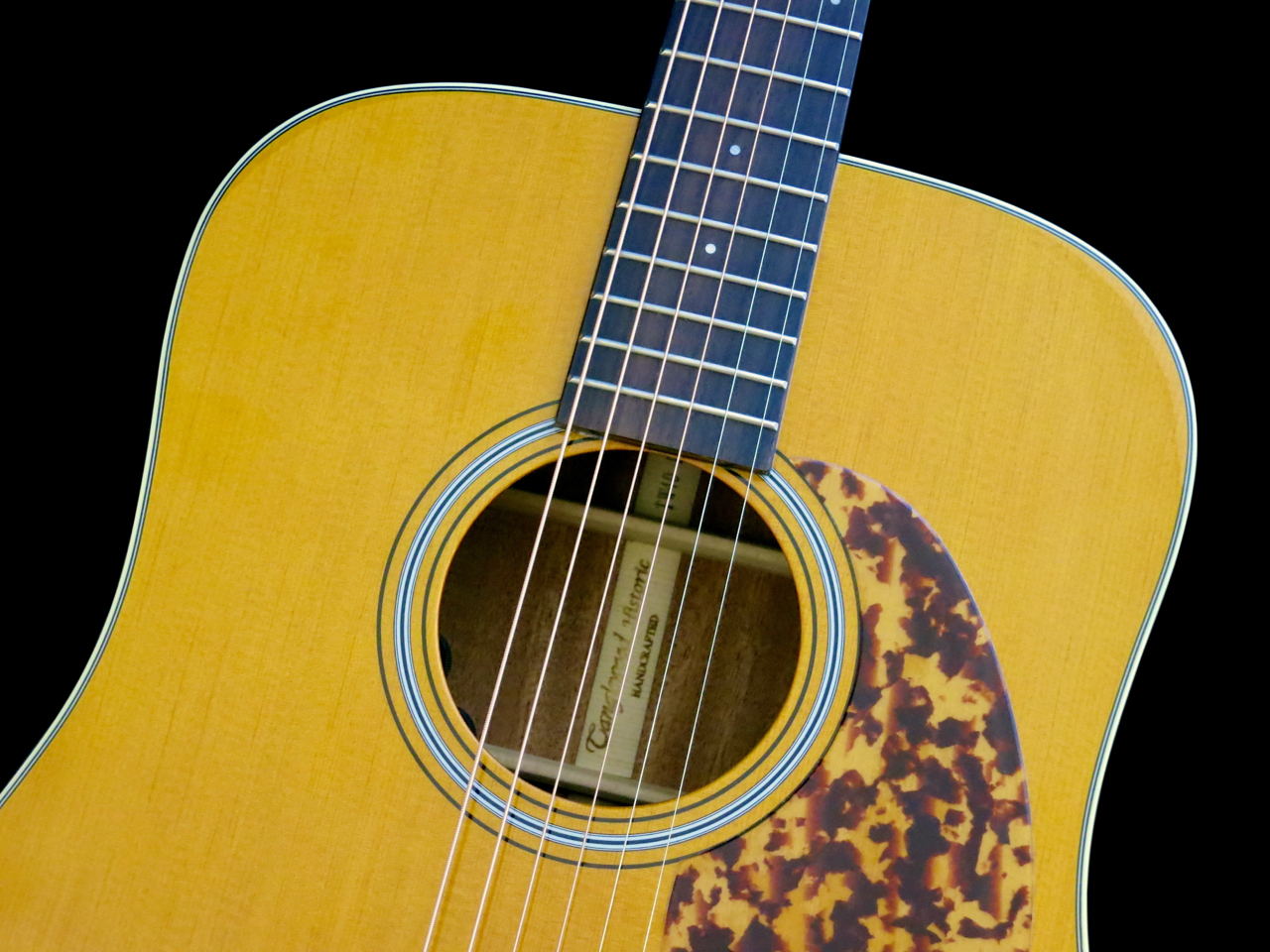
Tanglewood TW40D-AN-E – soundhole rosette 2

****

Tanglewood TW40O-AN-E – beauty shot 1

In my opinion Tanglewood’s TW40O-AN-E and TW40D-AN-E really do offer something special in their price range:

Here we have a pair of steel-string acoustics at player-friendly prices, which take the terms ”vintage” and ”historic” above and beyond mere cosmetics. Thanks to the ”vintage correct” neck dimensions and neck profiles of these two instruments, and the wider string spacing, genuinely vintage-feeling guitars become available without custom shop price tags.

These are well-made, great-sounding guitars. Too bad I have to give them back…

Tanglewood TW40D-AN-E – beauty shot 1

****

Tanglewood Sundance Historic

TW40O-AN-E – 673 €

TW40D-AN-E – 673 €

Finnish distributor: Musamaailma

****
Pros:

+ value-for-money

+ workmanship

+ authentic neck profile

+ playability

+ Fishman pickup and preamp

+ sound
Näin syntyy Bluetone-vahvistin – osa 2

Bluetone Crossroad – logic board

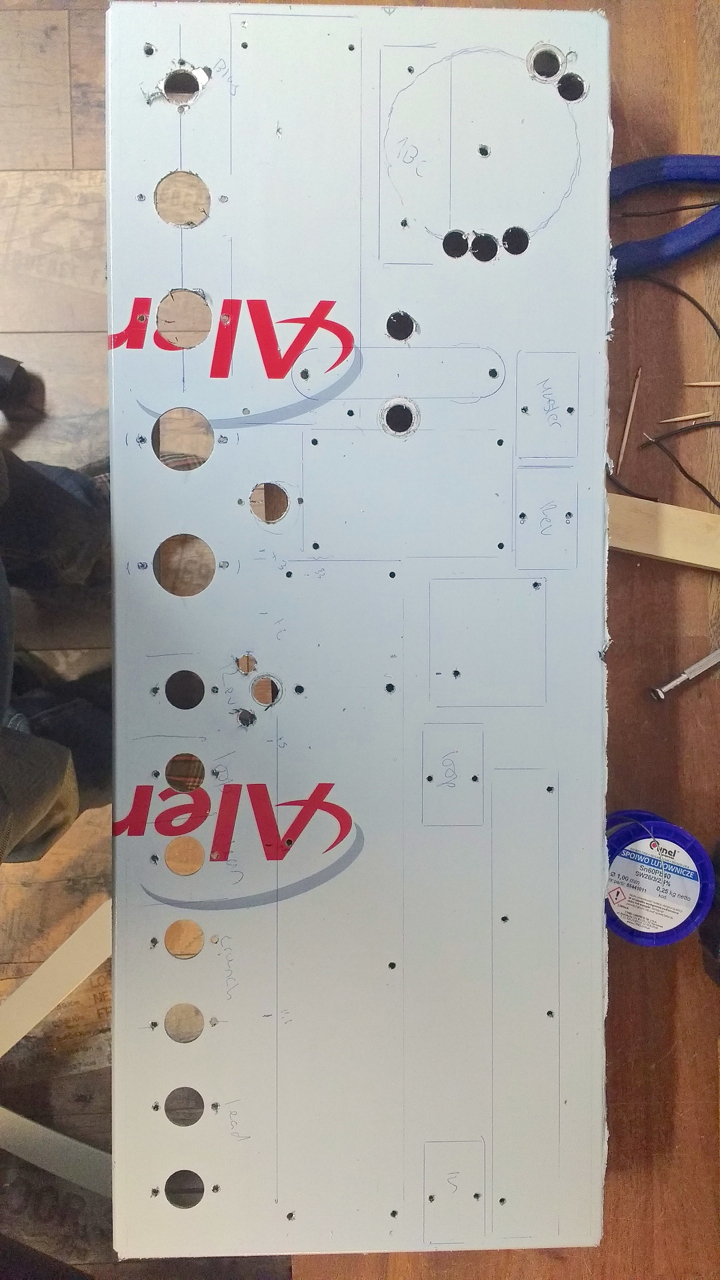
Bluetone Crossroad – layout sketch

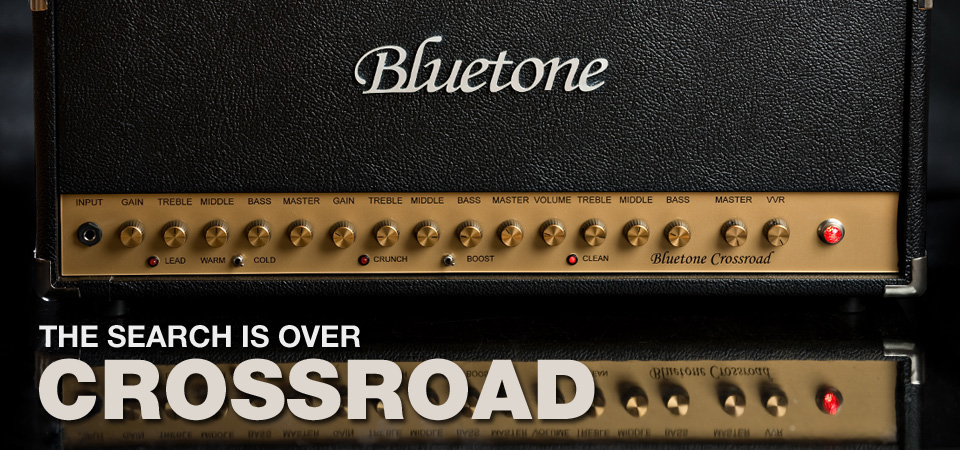
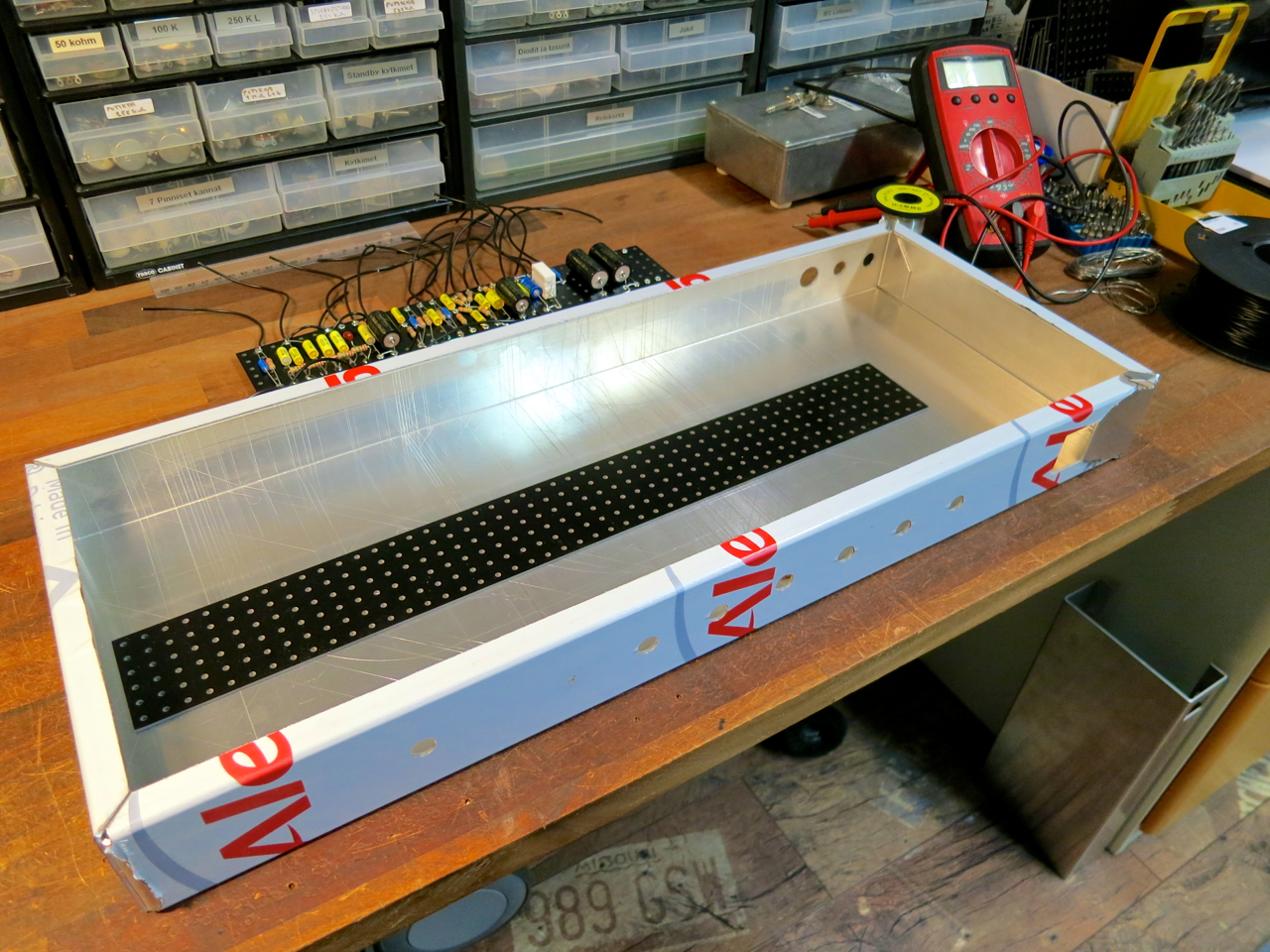
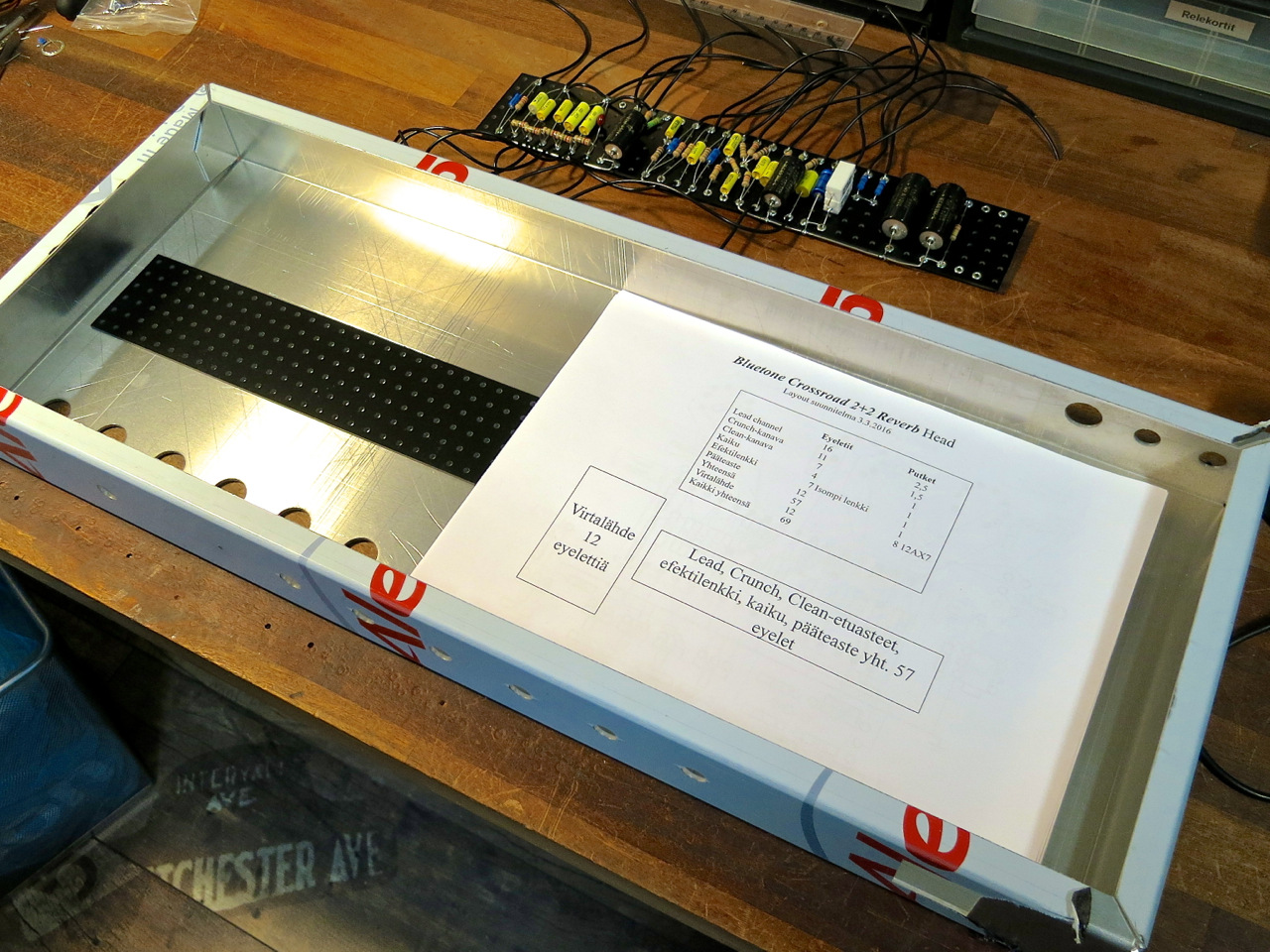
Bluetone Crossroadin kaltaisessa, hyvin monipuolisessa putkinupissa on monta eri komponenttia. Osien toimiva sijoittelu vaatii hyvää suunnittelua.

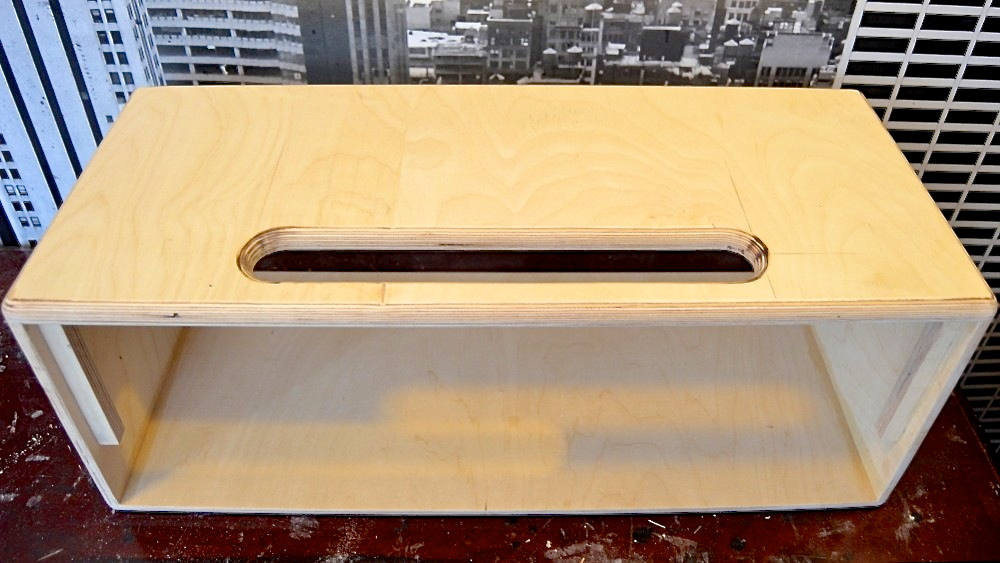
Kuvassa näkyy Matti Vauhkosen merkinnät piiri- ja eyeletlevyjä, sekä muuntajia varten. Koteloon on porattu kaikki tarvittavat reiät putkikannoille, säätimille, tuloille ja lähdöille, levyjen kiinnikkeille, sekä johtojen läpivientiin.

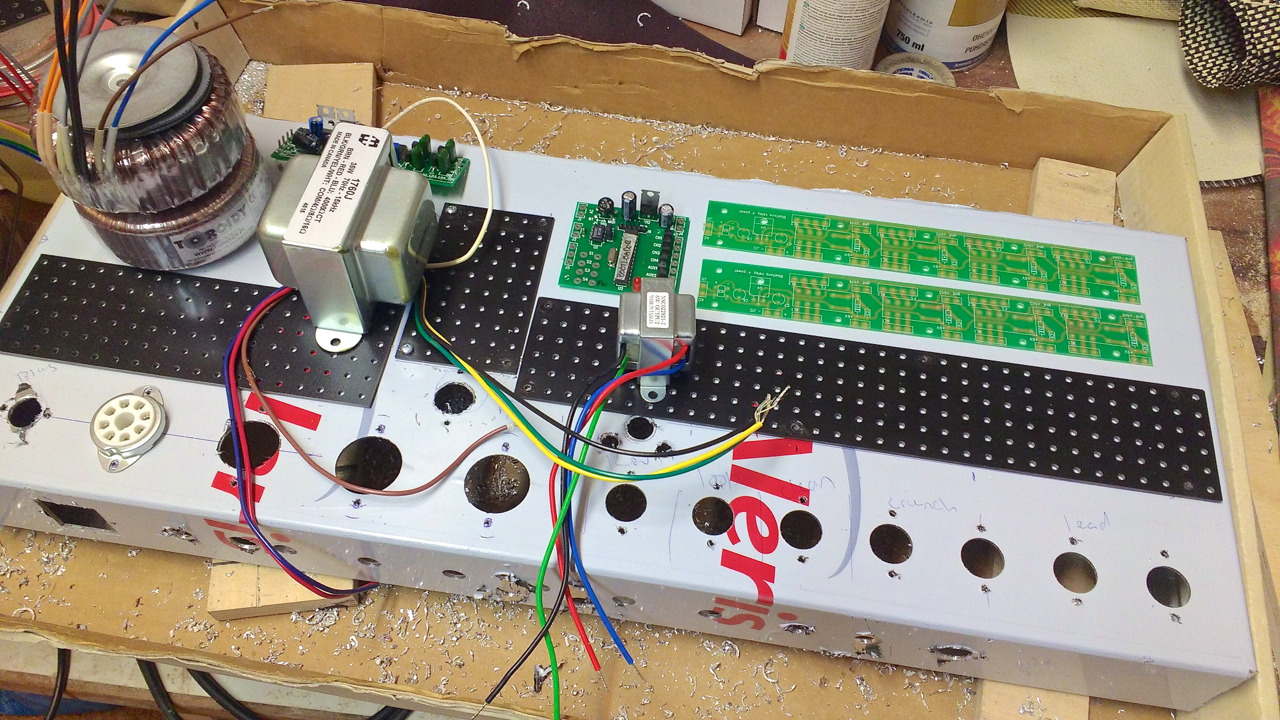
Bluetone Crossroad – layout test

Putkivahvistimen tekijän täytyy miettiä nupin suunnittelussa osien sijoittelua useasta eri näkökulmasta – ei riitä, että kaikki osat vain mahtuvat koteloon.

Esimerkiksi isokokoinen verkkomuuntaja ei saa säteillä elektromagneetista huminaa kitarasignaaliin, minkä vuoksi muuntaja ja etuvahvistimen putket sijoitetaan aina niin kauas toisistaan kuin mahdollista. Audiomuuntaja ja päätevahvistimen putket taas ei kannata sijoittaa liian lähellä etuasteputkia, koska näidenkin osien välillä syntyy elektronista häirintää. Myös audiomuuntajan kelojen oikea fyysinen suuntaaminen verkkomuuntajaa nähden pitää häiriöääniä loitolla.

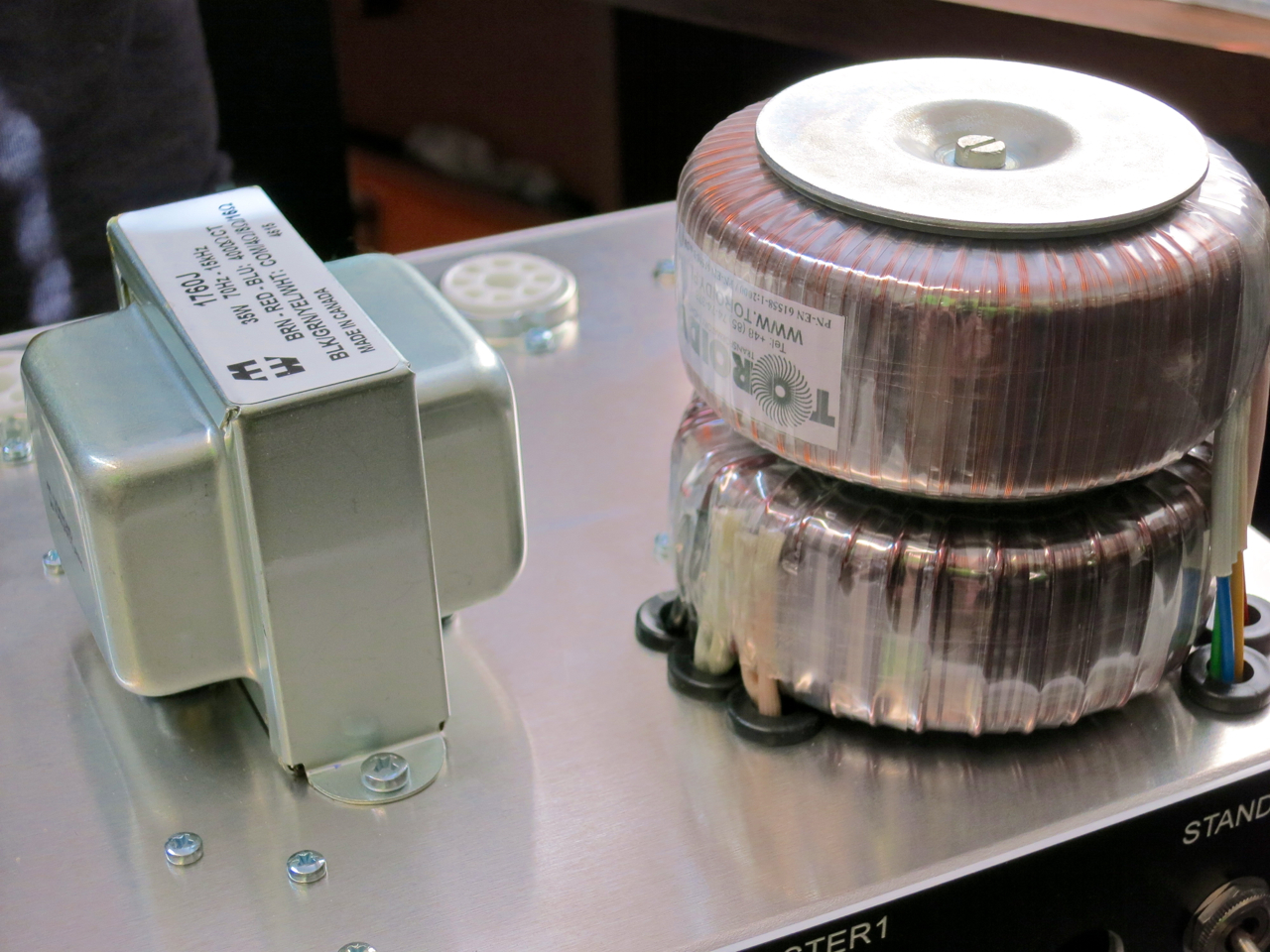
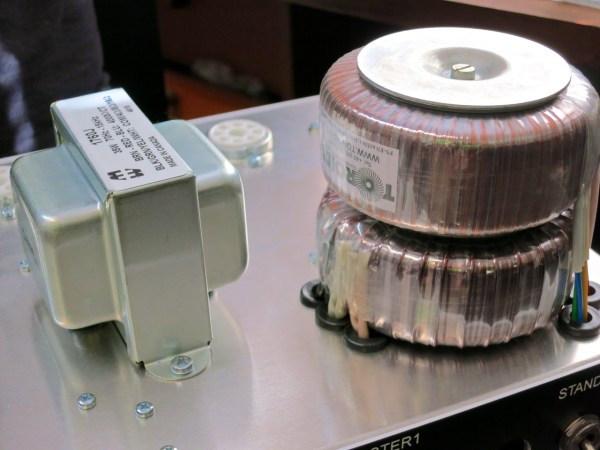
Bluetone Crossroad – transformers

Yksi Bluetone-vahvistinten erikoisuuksista on rengassydänmuuntajan (engl. toroidal transformer) käyttäminen verkkomuuntajana, mikä nähdään – ainakin vielä – melko harvoin kitaravahvistimissa.

Rengassydänmuuntajalla on useampi etu perinteiseen malliin nähden. Rengassydänmuuntaja on mm. kevyempi kuin perinteinen muuntaja samoilla spekseillä, ja laadukkaan rengassydänmuuntajan elektromagneettinen säteily on myös perinteistä huomattavasti pienempi, mikä helpottaa muuntajan sijoittelua vahvistimessa.

Tai miten Bluetonen Harry Kneckt sanoo: ”Jos Leo Fenderillä olisi ollut 1950-luvulla mahdollisuus käyttää rengassydänmuuntajia, hän olisi käyttänyt niitä. Tästä olen varma!”

Bluetone Crossroad – boards and phone jacks

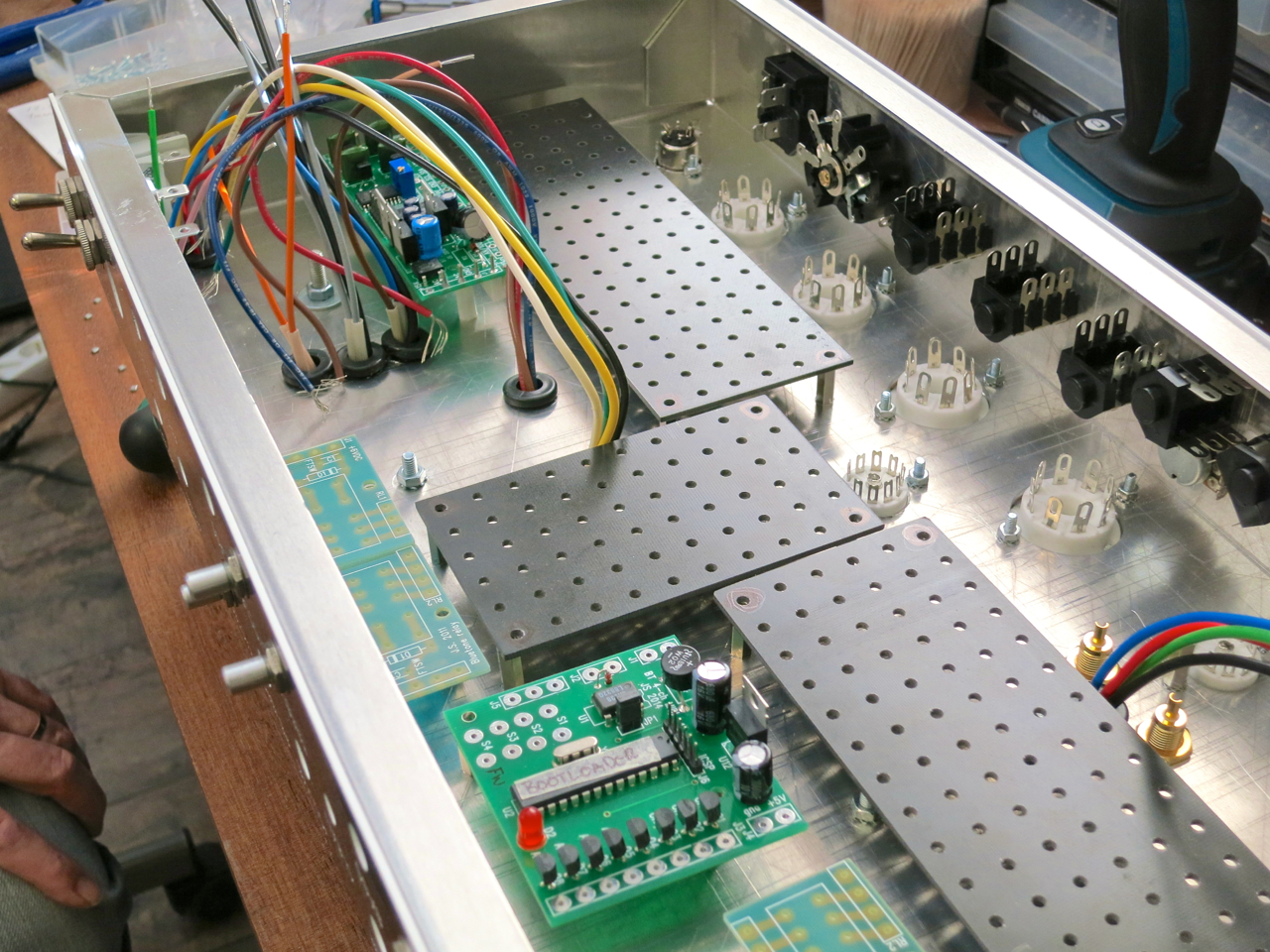
Matti Vauhkonen on ensin kiinnittänyt koteloon Crossroad-nupin muuntajat, putkikannat (näkyvät valkoisina) ja takapaneelin jakit (mustat osat).

Eyelet- ja piirilevyt on lisätty koteloon vain näitä kuvia varten havainnollistamaan niiden lopulliset sijainnit. Vaikka Bluetone-vahvistimissa kitarasignaali kulkee aina ja vain käsinjuotetun point-to-point putki- ja analogielektroniikan kautta, käytetään luonnollisesti nykyelektroniikka, kun toteutetaan sellaiset ominaisuudet kuin esimerkiksi kanavanvaihdot MIDI:llä tai pääteputkien seurantaa ja biasointia Wifin kautta.

Bluetone Crossroad – mounting control pots 3

Bluetone Crossroad – mounting control pots 2

Bluetone Crossroad – mounting the pilot light

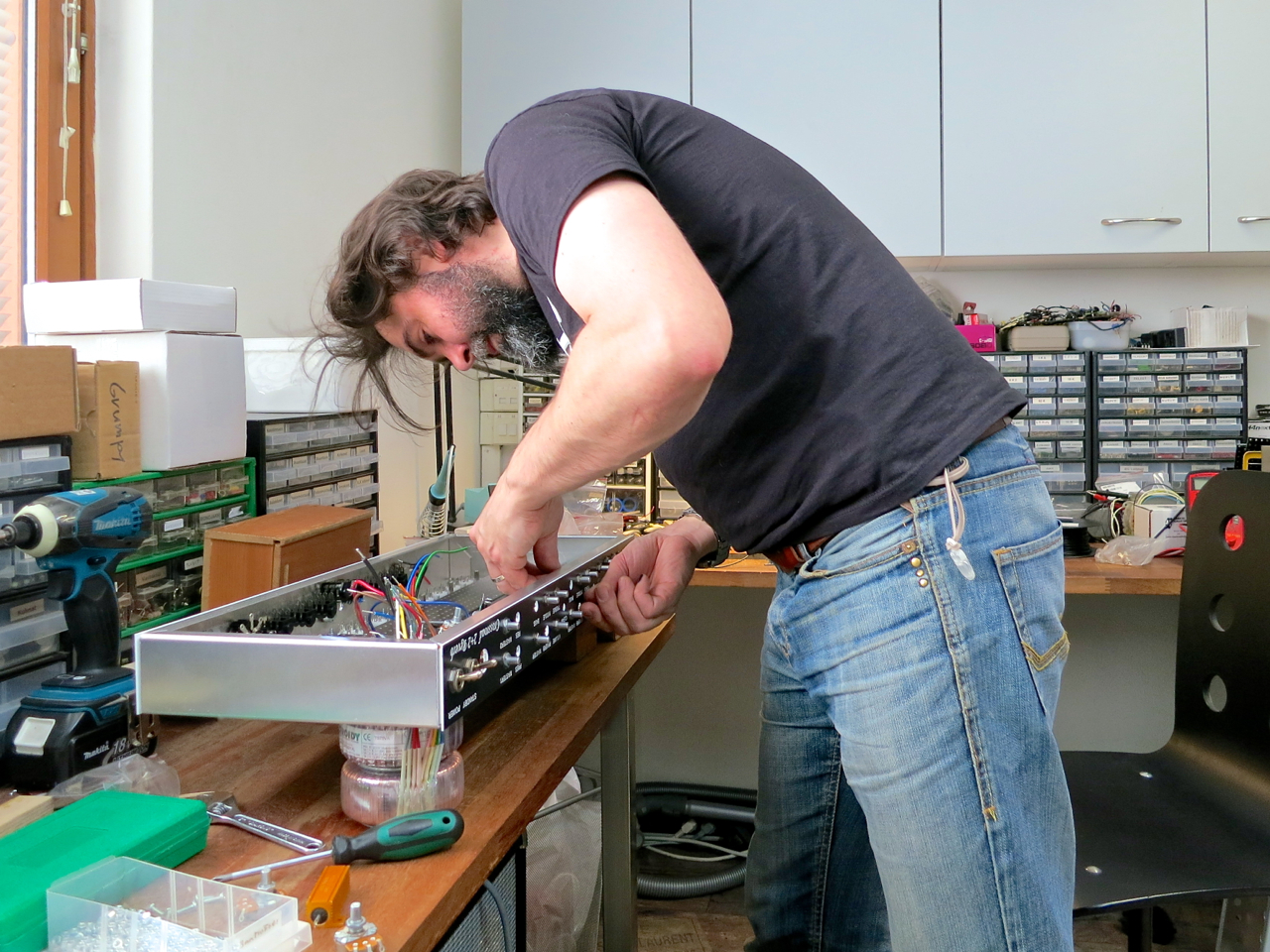
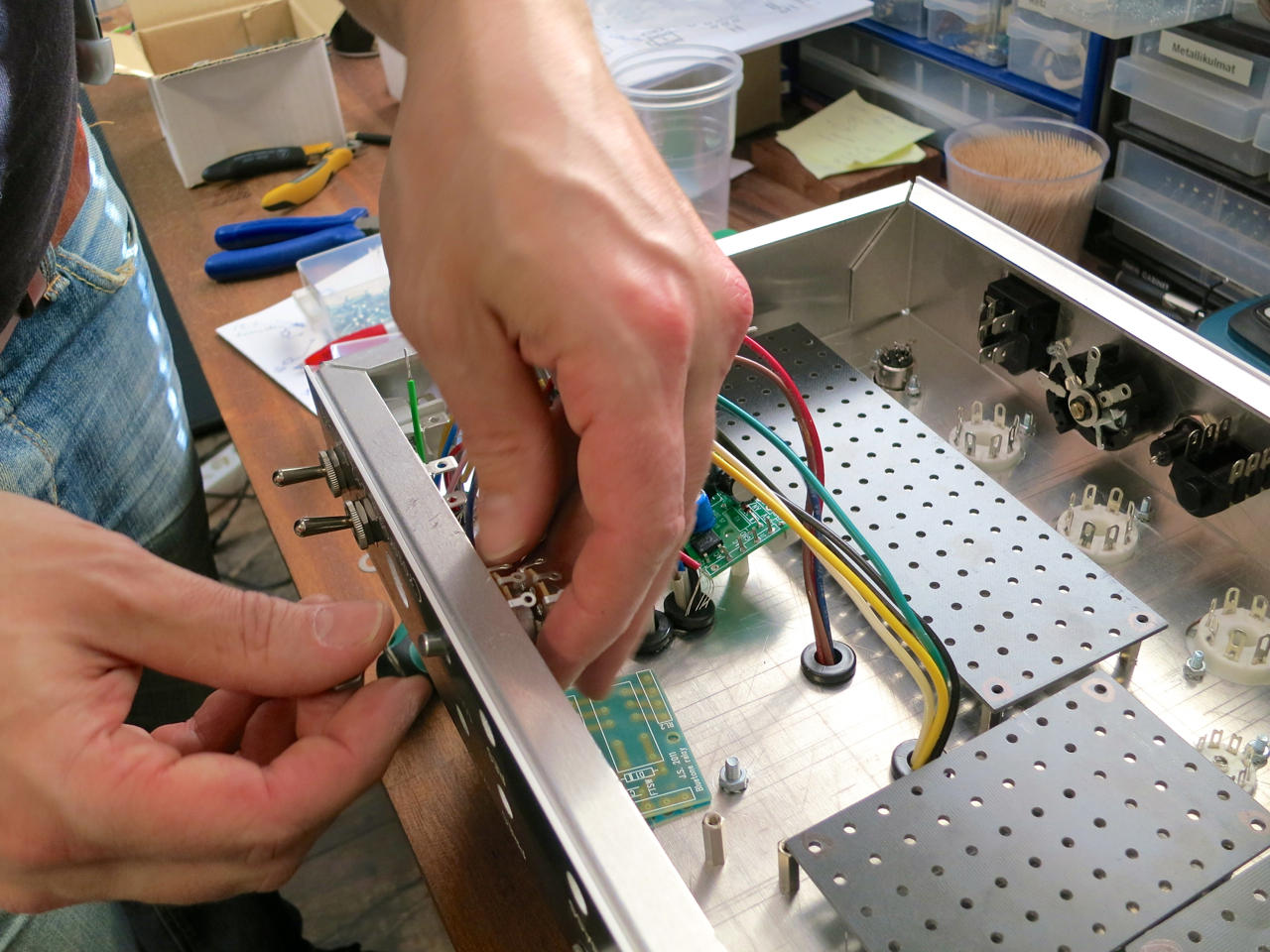
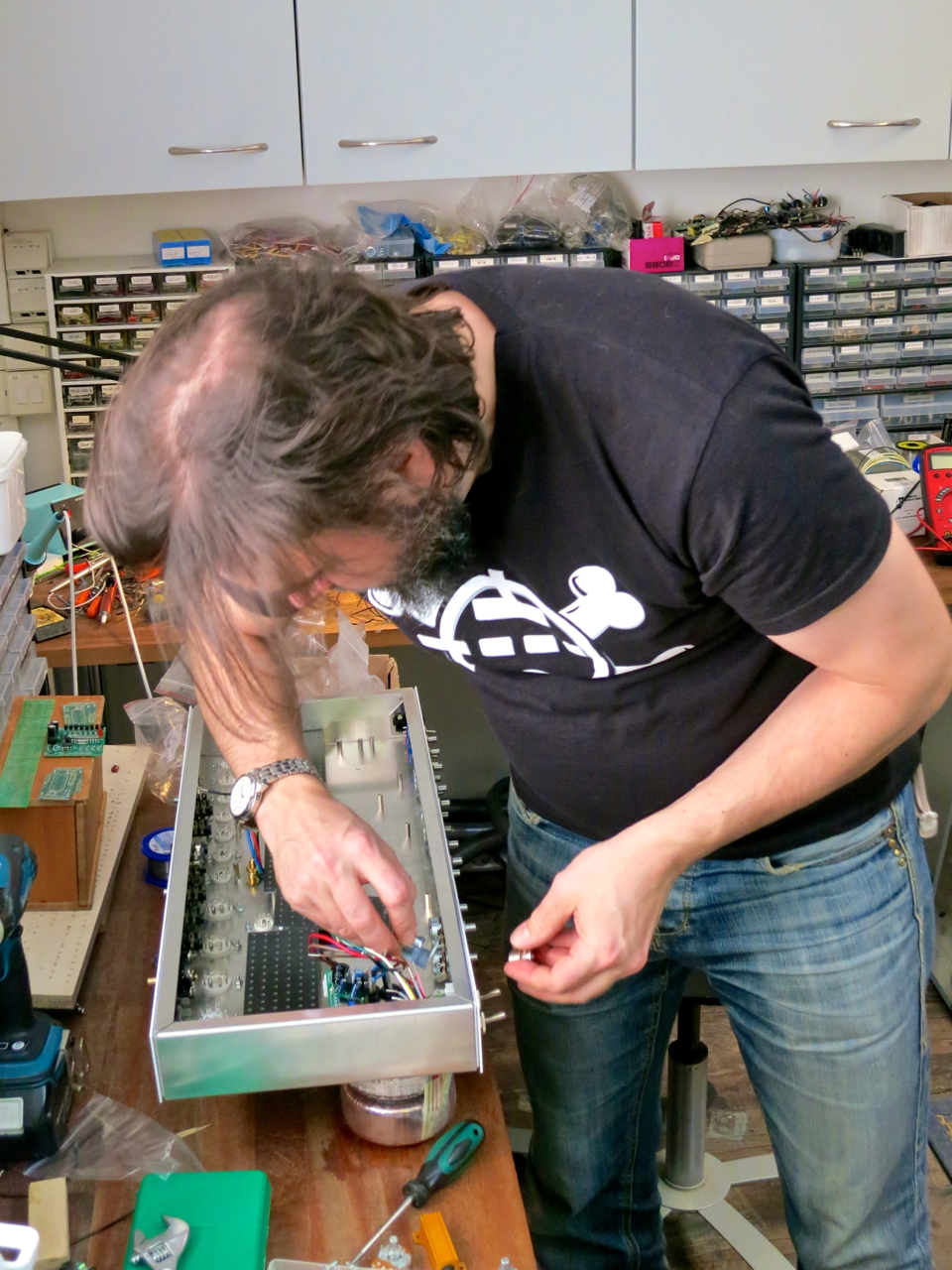
Seuraavaksi lisätään etupaneelin osia, kuten säätimet, kytkimet ja statusvalo.

Bluetone Crossroad – amp cabinet 1

Bluetone Crossroad – amp cabinet 2

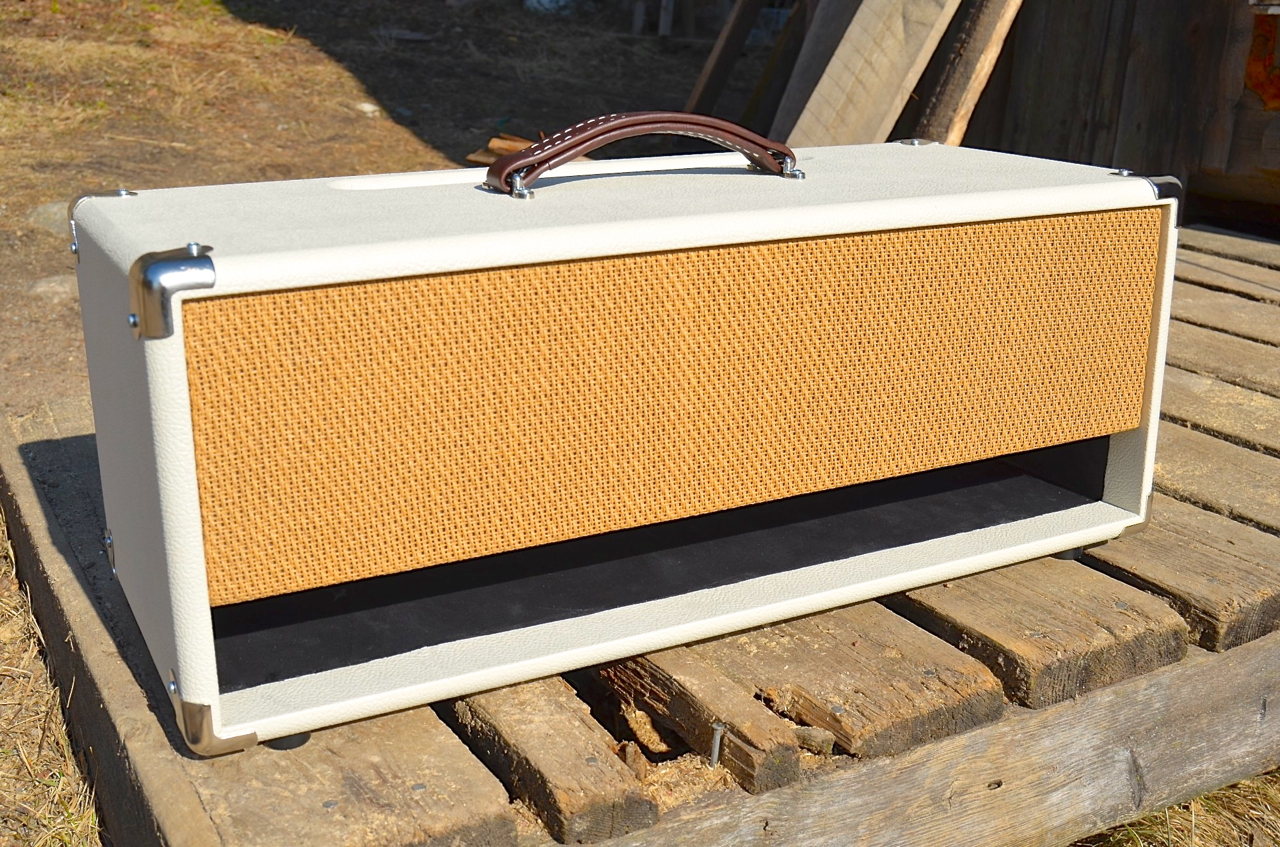
Samanaikaisesti Bluetonen alihankkija on jo saanut nupin vanerikotelon valmiiksi. Aikataulusta riippuen Bluetone valmistaa myös osan koteloista omassa verstaassa.

Bluetone Crossroad – handwired board 3

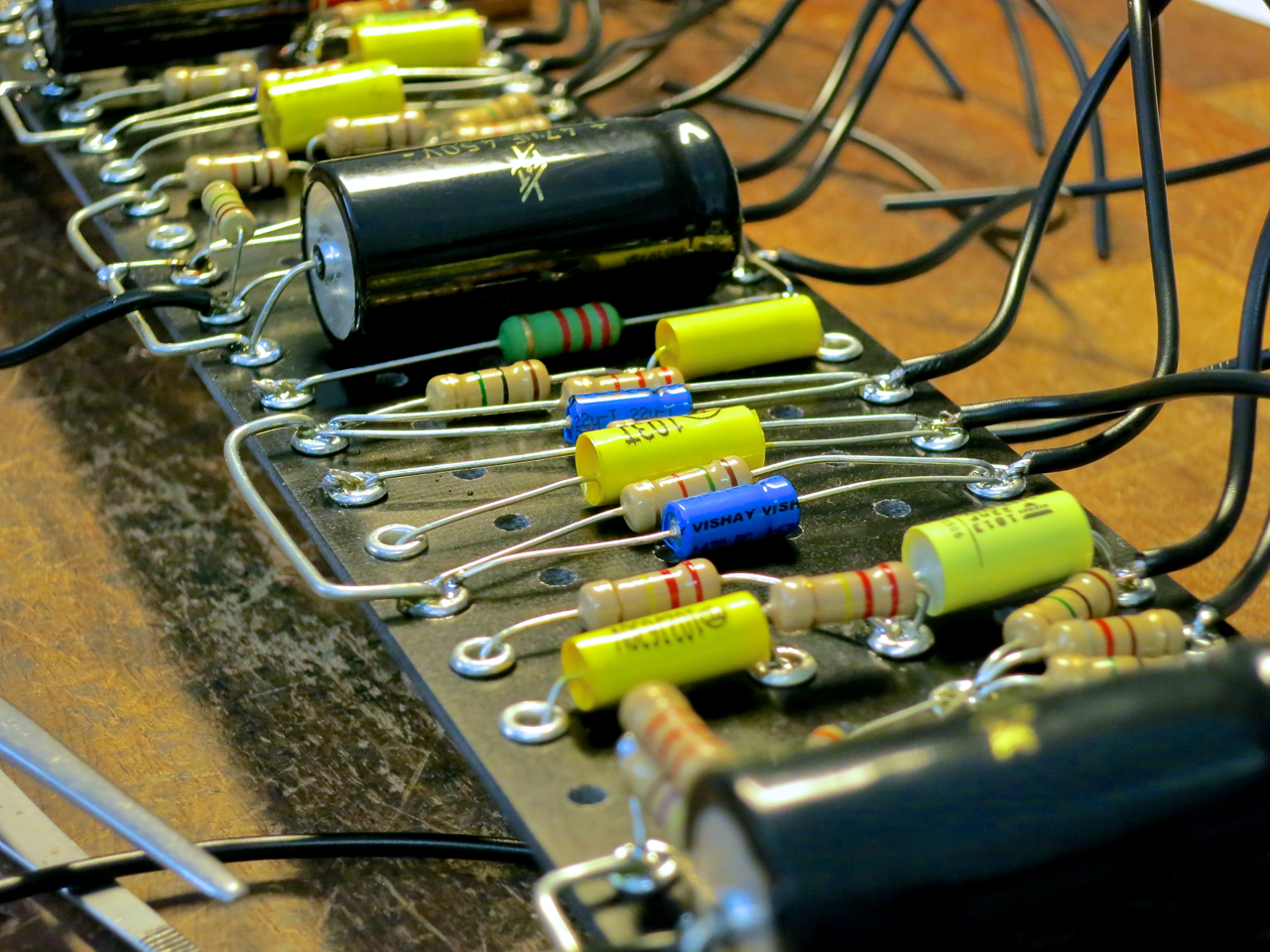
Seuraava vaihe – joka on tällä hetkellä meneillään – on vahvistimen varsinaisen ”sydämen” valmistus (tässä kuva toisesta Bluetone-mallista). Näitä point-to-point juotostöitä ei kannata tehdä kiireellä, jos halutaan välttää turhauttava ja aikaa vievä vianetsintä. Maltti on valttia myös putkivahvistimen rakentamisessa!

Testipenkissä: Tanglewood Sundance Historic TW40O-AN-E + TW40D-AN-E

Tanglewood TW40O + TW40D – ad

Tämän jutun otsikko voisi myös olla: ”Tanglewood tuo vintagea kaikkien soittajien ulottuville”. Sundance Historic -kitaroissa on nimittäin paljon vanhan ajan hohtoa, vaikka niiden hinnat pysyvät – jopa mikitettyinä – selvästi alle 700 euroa!

Kitarablogi sai testiin kaksi soitinta – TW40O-AN-E ja TW40D-AN-E – jotka muistuttavat erehdyttävästi kahta legendaarista Martin-mallia.

****

Tanglewood TW40O-AN-E – full front

Tanglewood TW40O–AN-E (673 €) on Sundance Historic -sarjan kunnianosoitus Martin OM-18 -kitaralle, joka oli 1930-luvulla ensimmäinen teräskielinen, jolla oli kaulaliitos 14. nauhan kohdalla.

Tanglewood TW40D-AN-E – full front

Tanglewood TW40D-AN-E (673 €) on saman sarjan versio Martin D-18 -mallista, joka on kopioiduin teräskielinen akustinen kautta aikojen – jopa Gibsonin Hummingbird- ja Dove-mallit kopioitiin suoraan musiikkiliikkeestä ostetulta Martin-kitaralta!

Molemmat Tanglewoodit saa myös ilman mikitystä 598 eurolla.

Tanglewood TW40O-AN-E – back beauty

TW40O:ssa ja TW40D:ssä on espanjalaisessa tyylissä rakennettu kaula, mikä tarkoittaa että kaula ja viritinlapa ovat yhdestä mahonkipalasta veistettyjä, vaan kaulakorko on lisätty jälkikäteen.

Tanglewood TW40D-AN-E – body beauty 2

Kaikukoppa taas on tehty kokopuisesta kuusikannesta ja mahonkivanerisista sivuista ja pohjasta.

Mallitunnuksen kirjainyhdistelmä ”AN” viitaa Historic-mallien kauniiseen, kellertävään ja kiiltävään viimeistelyyn (Antique Natural).

Tanglewood TW40D-AN-E – headstock

Näissä Tanglewoodeissa yläsatula on aitoa luuta.

Tanglewood TW40O-AN-E – tuners

Virittimet ovat 1930-luvun Grover-koneistojen kopioita, jotka pitävät vireen todella hyvin, mutta ovat käytössä hieman nykyaikaisia virittimiä jäykempiä.

Tanglewood TW40O-AN-E – fretboard

Myös TW40O:n ja TW40D:n sirot nauhat sopivat näiden soittimien vintage-tunnelmaan täydellisesti.

Tanglewood TW40O-AN-E – bridge

Hyvä esimerkki ruusupuun ulkonäön vaihtelevuudesta:

Tässä testissä käyneen TW40O-AN-E:n vaaleampi talla…

Tanglewood TW40D-AN-E – bridge

…ja tässä D-mallin tummempi vastine.

Molemmissa kompensoitu tallaluu on aitoa luuta.

Tanglewood TW40O-AN-E – Fishman Sonitone

Testatuissa Sundance Historic -soittimissa on helppokäyttöinen Fishman Sonitone -mikitys.

Pietsomikki on sijoitettu tallaluun alle, kun taas etuvahvistin säätimineen (volume ja tone) on liimattu ääniaukon yläreunan alle. Yhdeksän voltin paristo istuu omassa kotelossa, joka on kiinnitetty kaulablokkiin. Pariston vaihtaminen ääniaukon kautta on hieman hankalampi kuin kopan reunan läpi kiinnitetyissä paristolokeroissa, mutta isona etuna tässä on koko systeemin näkymättömyys.

Tanglewood TW40O-AN-E – output

Lähtöjakki on molemmissa malleissa yhdistetty hihnatappiin.

****

Tanglewood TW40O-AN-E – body beauty 2

On todella ilahduttavaa nähdä kuinka huolellisesti nämä kaksi Tanglewood Sundance Historic -kitaraa on tehty. Työnjälki on erittäin siisti ja viimeistely laadukas ja kaunis.

Vaikka näissä kahdessa soittimessa on kyse 500-800 euron hintaluokan teräskielisistä Tanglewoodeista, on molemmissa testikitaroissa sivujen syykuviot sovitettu yhteen, että sivujen ”hartiat” näyttävät bookmatch-peilikuvilta!

Vintage-motto ulottuu TW40O-AN-E:ssä huomattavasti pidemmälle kuin pelkästään kosmetiikkaan:

Vanhat OM-kitarat (Orchestra Model) tunnetaan siitä, että niissä on aavistuksen leveämpi, pehmeästi V-muotoinen kaulaprofiili. Myös kielten keskeinen etäisyys tallan kohdalla on usein pikkuisen isompi kuin monissa nykyaikaisissa soittimissa, mikä tekee sormisoitosta mukavamman.

Tanglewood on käyttänyt tähän Sundance Historic -malliin juuri näitä ”oikeita” vanhoja mittoja. Kaulaprofiili on pehmeä V, ja kaulan leveys on satulan kohdalla 46 mm. E-kielten etäisyys tallassa taas on ilmavat 58 milliä – kitara siis tarjoaa mukavasti tilaa sormisoitolle, mutta myös plektran käyttö onnistuu ongelmitta.

TW40O:n soitettavuus on ensiluokkaista, ja kitara saapui testiin loistavassa trimmissä (kielten korkeus 12. nauhan kohdalla: basso-E – 2,1 mm/diskantti-e – 1,9 mm).

Kitarapiireissä keskustelu täyspuisen pohjan tärkeydestä teräskielisen kitaran sointiin käy edelleen kuumana. Joidenkin mielestä kokopuinen pohja on lähes yhtä tärkeä kuin täyspuinen kansi, toiset taas viittaavat erittäin laadukkaisiin Selmer-Maccaferri-kitaroihin (Gypsy Jazz -kitarat) tai vanhoihin Guild-soittimiin, joissa on vaneripohja.

Oma näkemykseni tähän kiistakysymykseen on, että vanerista tehty pohja on usein (mutta ei aina) aavistuksen verran hiljaisempi ja soundiltaan hivenen verran kuivempi kuin kokopuinen vastine. Pidän kuitenkin teräskielisen kitaran yleissoundin kannalta huomattavasti tärkeämpänä, että kansi on täyspuinen ja että soittimen koko rakenne on laadukas ja terve.

OM-kokoisen teräskielisen pääerot dreadnoughtiin nähden ovat sen pienempi koppa ja OM-kitaran siistimpi bassorekisteri, joka tekee soittimesta erittäin helpon äänittää.

Tanglewood TW40O:lla on malliesimerkki OM-soundista – kitaran ääni on avoin, sen projektio lähes D-mallin luokkaa, ja se istuu äänitettynä erittäin nätisti miksauksissa.

Nämä kaksi esimerkkiä on äänitetty Shure SM57 -mikrofoneilla:

Fishman Sonitone -pietsojärjestelmä on hyvä ja helppokäyttöinen valinta, josta lähtee hyvin terve pietsosoundi livekäyttöä varten:

Tanglewood TW40O-AN-E – soundhole rosette

****

Tanglewood TW40D-AN-E – body beauty 1

Alkuperäisen dreadnought-kitaran lähtökohdat olivat volyymi ja reilunkokoinen bassorekisteri. Alkuperäinen kohderyhmä olivat 1930- ja 40-luvulla Yhdysvalloissa hyvin suositut ”laulavat lehmipojat”, kuten Gene Autry tai Hank Williams, jotka tarvitsivat live-esiintymisiään varten kitaroita, joissa oli potkua plektrasoitossa. Tästä alkoi D-mallien voittokulku joka kasvoi yhä vain voimakkaammaksi, kun Folk-laulajatkin löysivät tiehensä tähän isompaan vaihtoehtoon.

Tanglewoodin TW40D-AN-E on laadukas kunniaosoitus 1930-luvun D-18:lle, sekä ulkonäön että soitettavuuden kannalta.

TW40D:n kaula on käytännössä täysin identtinen TW40O:n kaulaan – kaulaprofiili on erittäin mukava pehmeä V, ja koko kaula on hieman leveämpi kuin monissa nykykitaroissa.

Testikitaran työnjälki on samalla korkealla tasolla kuin Historic-sarjan OM-mallissakin, eikä TW40D:n soitettavuudessa todellakaan löydy mitään moitittavaa (matala-E: 2,2 mm/diskantti-e: 1,7 mm).

Dreadnought-kitaran soundi on varmaan kaikille tuttu: iso basso, lämmin keskirekisteri ja helisevä diskantti – ja kaikki hyvällä potkulla höystettynä.

TW40D on todella hyvä esimerkki tästä soundista:

Fishmanin Sonitone -mikkisysteemi toimii sulavassa yhteistyössä myös TW40D-AN-E-mallissa:

Tanglewood TW40D-AN-E – soundhole rosette 2

****

Tanglewood TW40O-AN-E – beauty shot 1

TW40O-AN-E:n ja TW40D-AN-E:n myötä Tanglewood tarjoaa tässä hintasegmentissä todella harvinaista herkkua:

Tässä ovat kaksi teräskielistä akustista kitaraa soittajaystävällisillä hinnoilla, joissa käsitteet ”vintage” ja ”historic” ulottuvat todellakin pintaa syvemmälle. Erittäin mukavan kaulaprofiilin ja leveämmän kieltenvälisen etäisyyden ansiosta, myös meillä rivisoittajilla on nyt varaa kokea aidon vintagen-soittotuntuma.

Tärkein on kuitenkin näiden soittimien soundi, joka vakuutti ainakin minut täysin.

Tanglewood TW40D-AN-E – beauty shot 1

****

Tanglewood Sundance Historic -kitarat

TW40O-AN-E – 673 €

TW40D-AN-E – 673 €

Maahantuoja: Musamaailma

****
Plussat:

+ hinta-laatu-suhde

+ työnjälki

+ autenttinen kaulaprofiili

+ soitettavuus

+ Fishman-mikkisysteemi

+ soundi

Press Release: Fender The Edge Signature Stratocaster & Deluxe Amp

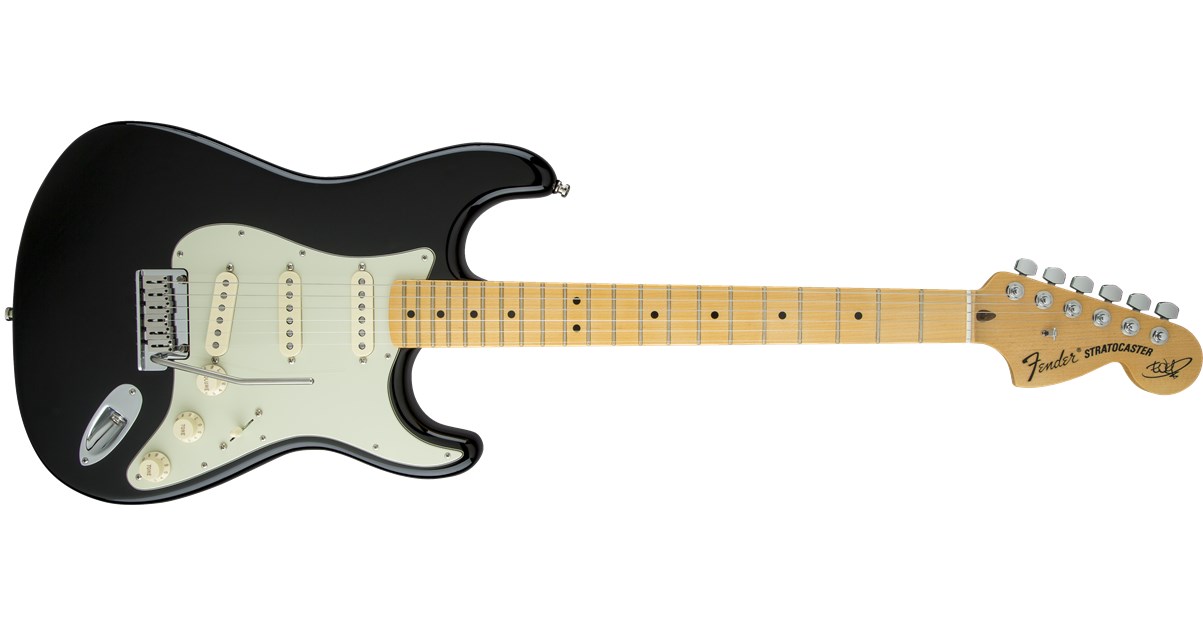
The Edge Strat is engineered for top-notch performance with versatile tone and effortless playing. Unique features include a pair of special Custom Shop Fat 50s single-coil pickups with flat pole pieces, a DiMarzio® FS-1™ bridge pickup, upgraded quartersawn maple neck with “C”-shaped profile and 9.5” maple fingerboard, modern two-point synchronized tremolo bridge with pop-in arm and fully adjustable saddles. The Edge’s signature is also included on the front of the large ‘70s-style headstock.

The elegant guitar combines the classic curves, appointments and effortless playability of the Stratocaster with modern enhancements and materials to create a dream instrument for players and U2 fans alike.

edge strat front

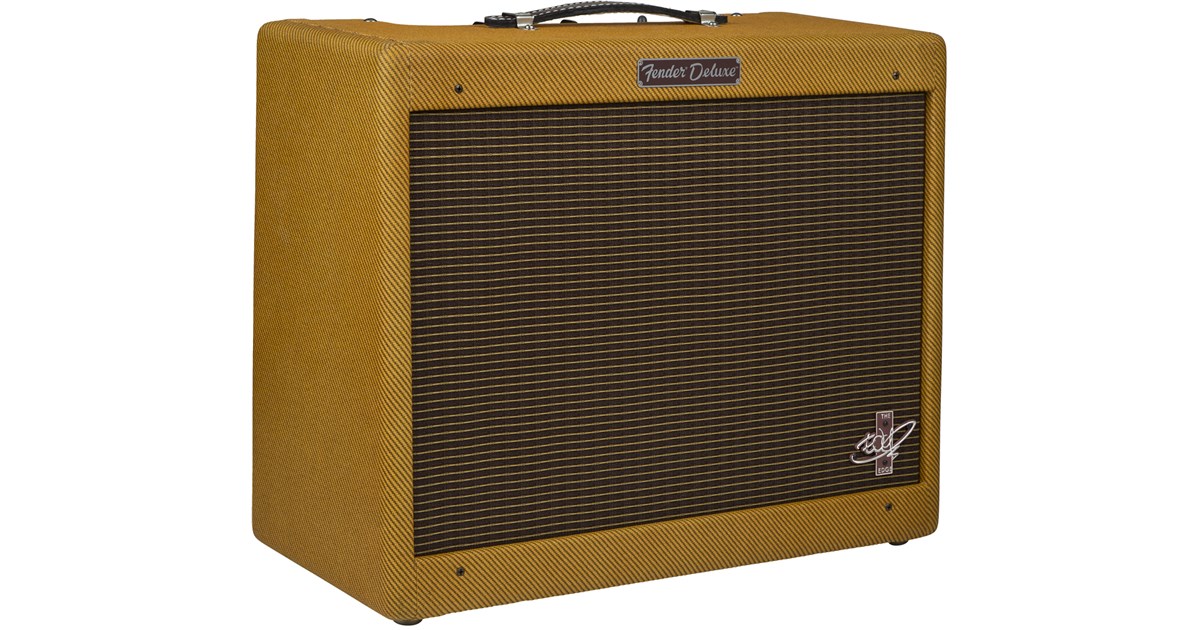
The Edge Deluxe signature model is an updated take on the classic ’57 tweed Deluxe used to craft the Edge’s sonic identity. This amp also produces the tone and articulation of the vintage Fender Deluxe amps that are an important part of the artist’s complex multi-amp effects setup.

This 12-watt hand-wired amp features modified circuitry for tighter low-end response and high-impact tone, a 12” Celestion® Blue speaker, custom-tapered volume control and altered component values that tighten up low-end frequency response. The Edge himself also hand-designed the special grille logo badge, which distinguishes the traditional tweed amp as a distinctive tool for guitarists everywhere.

edge amp angle

The Making of a Bluetone Amp – Part 1

crossroad

Bluetone Crossroad head – 1

Finland’s Bluetone Amps, which is run by Harry Kneckt and Matti Vauhkonen, has already garnered quite a reputation as a maker of high-quality valve amplifiers.

The company offers quite a large range of different models – starting with small combos, such as the Barfly, with large-wattage tube heads, such as the AcDcII– or the Bugaboo, at the other end of the spectrum. Bluetone also make bass amps, as well as guitar and bass cabinets.

Each and every Bluetone amp is made by hand, using point-to-point construction and top drawer components. This type of dedication to a pure tube signal path doesn’t mean, however, that we’re dealing with a backward-facing company. Quite the opposite is true – Bluetone amps include some of the most cutting edge features, when it comes to making their products user-friendly. One great example is a special metering tool the company sells, which makes it possible for a regular Jane or Joe to bias their amplifier’s output valves by themselves with the least possible amount of fuss.

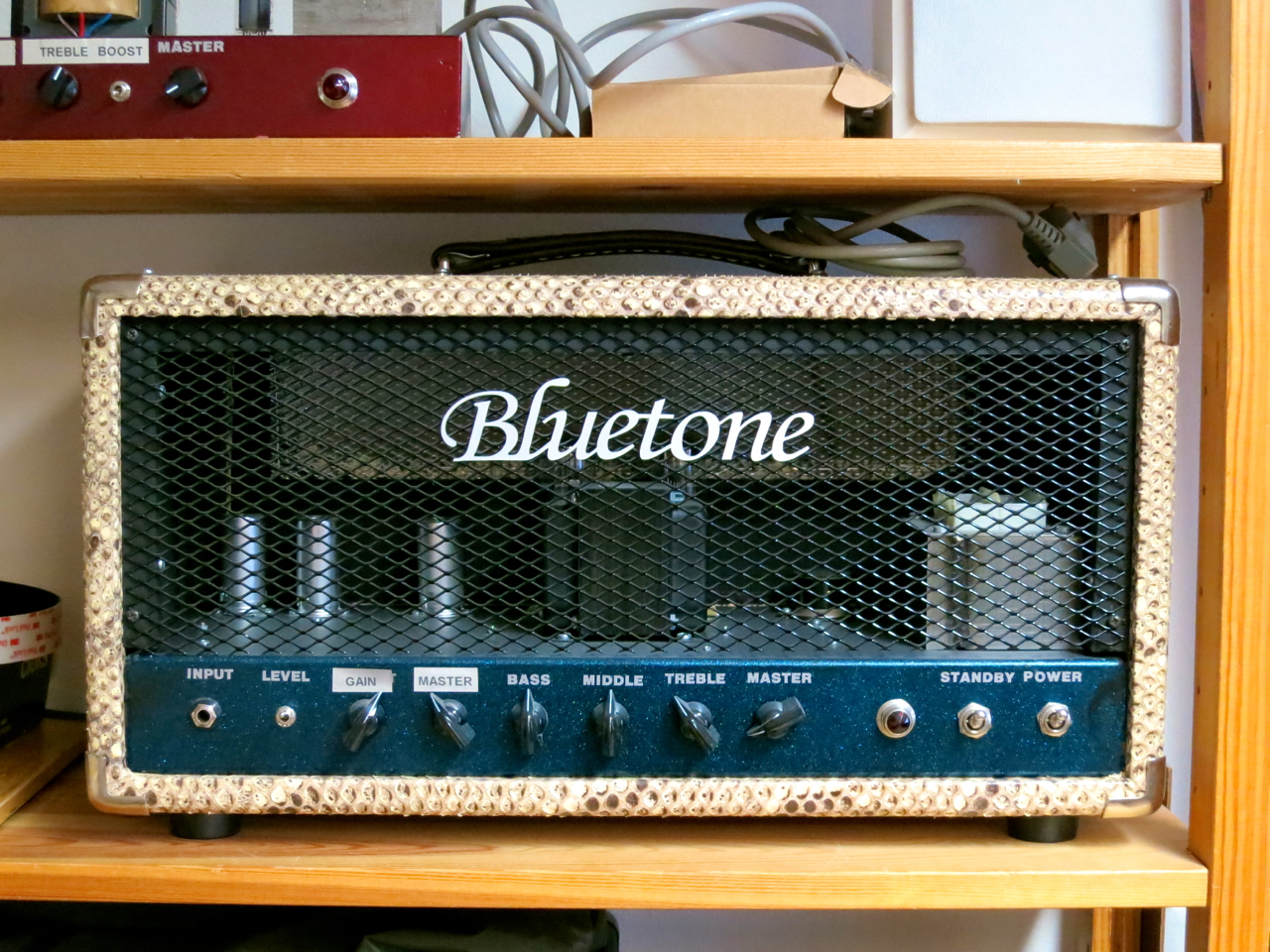
Bluetone genuine python skin

Bluetone is a genuine custom maker, because virtually all of their amps leave their workshop with customer-specified modifications. Bluetone have their basic model range, but there’s a lot of scope for customisation, both when it comes to the technical specifications as well as on the cosmetic side of things (you can even specify the font used for lettering the front panel).

Kitarablogi.com has been offered a chance to follow the making of a Bluetone head, all the way from the customer’s order to the finished product:

This specific head is basically a Bluetone Crossroad amplifier with a 2+2 power amp. Bluetone’s own 2+2 power amp uses the four output valves in two pairs, with one pair being dedicated solely to the clean channel (usually running a pair of 6V6 or 6L6 tubes), with the second pair being reserved to handle all crunchy and lead tones (normally a pair of EL34s). The advantage of Bluetone’s 2+2-system lies in the fact that you’re dealing with the ”correct” classic tones of the power valves used, so there’s no need for any modelling or tube amp ”voodoo” to achieve Marshall-type drive tones from Fender-type tubes, or vice versa.

The list of specifications on this Crossroad 2+2 is more than impressive:
• Lead-channel: modified Friedman Brown Eye-type
• Crunch-channel: modified Marshall JCM800-type
• Clean-channel: modified Fender Deluxe Reverb-type
• Bluetone’s special valve spring reverb with dedicated controls for each channel
• Bluetone’s own buffered tube-based effects loop (with level controls)
• Channel- and effects-switching controllable via MIDI
• Main valve status control and biasing using the Bluetone ABC-system (Auto Bias Control)
• Power tubes can be biased either with a Bluetone ABC-metering tool or using a mobile device app via WLAN
• Power amp has built-in Variac (think: ”EVH Brown Sound”)
• Adjustable line output
• Adjustable headphone output
• Presence- and Resonance-control in master section

This is how the journey begins:

An empty steel chassis, a fibreglass eyelet-board of the correct size, and the customer’s order, which Harry Kneckt has already used to draw the necessary schematics and put together a list of the necessary components.

Bluetone Crossroad head – 2

Review: Gretsch Streamliner G2420T Hollow Body

Gretsch Streamliner G2420T – label

Gretsch Guitars’ brand new Streamliner series offers access to the legendary brand name at a very affordable price point.

At the moment, the new range includes three different guitar models:

The G2622 Streamliner Center Block (also available left handed) is a centre block-equipped version of a Sixties double cutaway Country Gentleman, while the G2655 Streamliner Center Block offers you similar looks in a more compact package. The G2420 Streamliner Hollow Body, for its part, is a full-blown, big-bodied archtop guitar in a similar vein to Gretsch’s legendary 6120.

All three guitars are also available as T-versions with a Bigsby Lightning Series vibrato. The Streamliner Series is handmade in Indonesia.

****

Gretsch Streamliner G2420T – full front from PS LRG

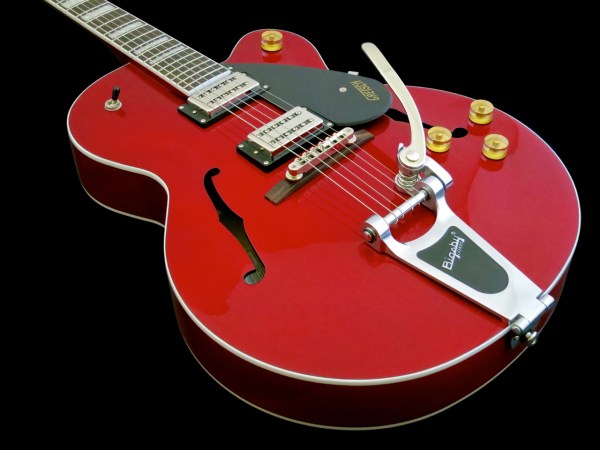
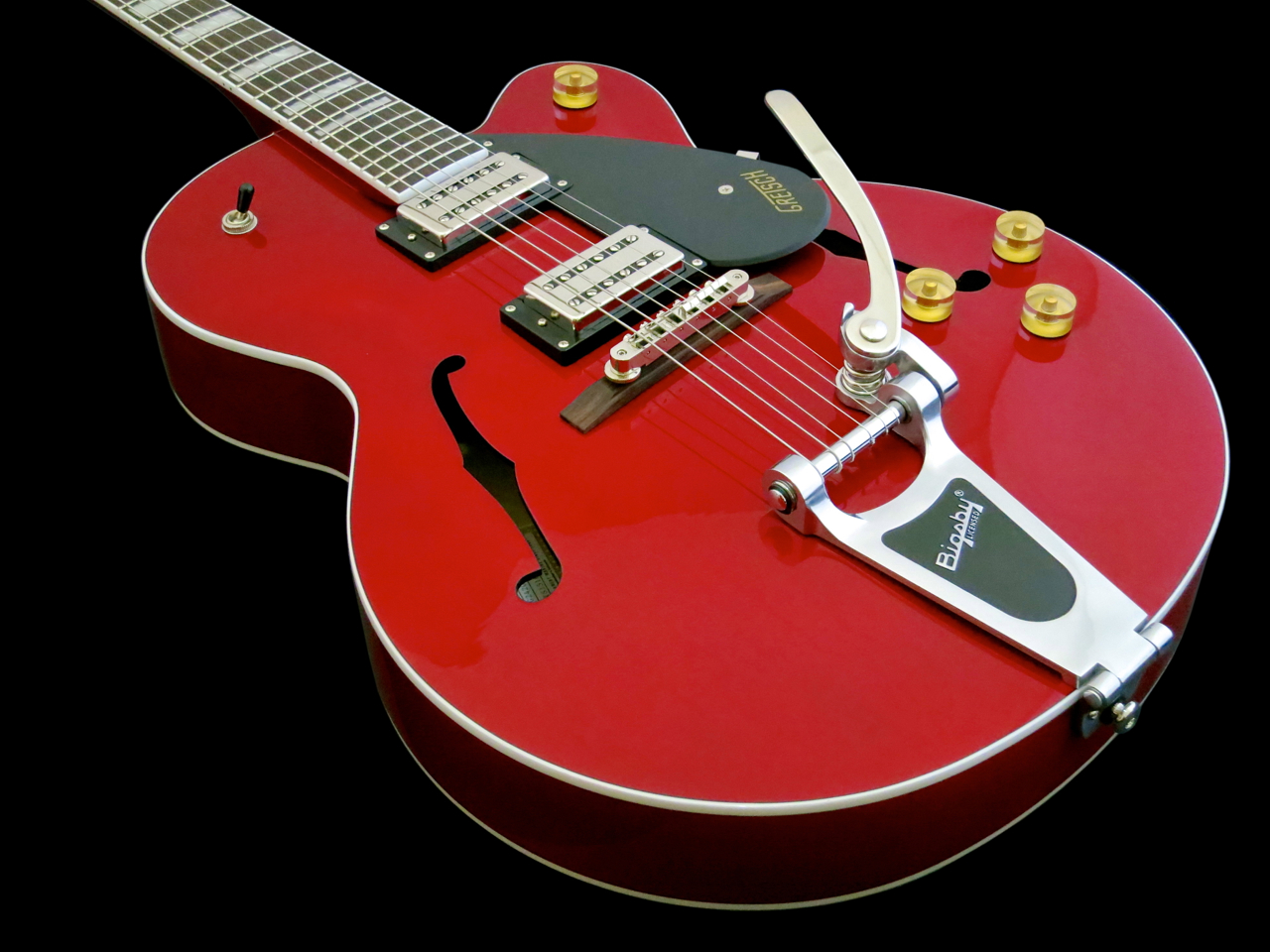
The Gretsch Streamliner G2420T Hollow Body (street price in Finland approx. 560 €) is a very foxy looking guitar, despite its quite affordable pedigree.

The G2420T can be had in see-though red or gold metallic, while the standard model (equipped with a lyre-style tailpiece) comes in brown sunburst only.

Gretsch Streamliner G2420T – back beauty

The G2420T’s full-depth body is made from steam-pressed laminated maple. The top is stiffened by Gretsch’s traditional parallel bracing.

The nato (an Asian wood species somewhat similar to mahogany) neck is glued into the body.

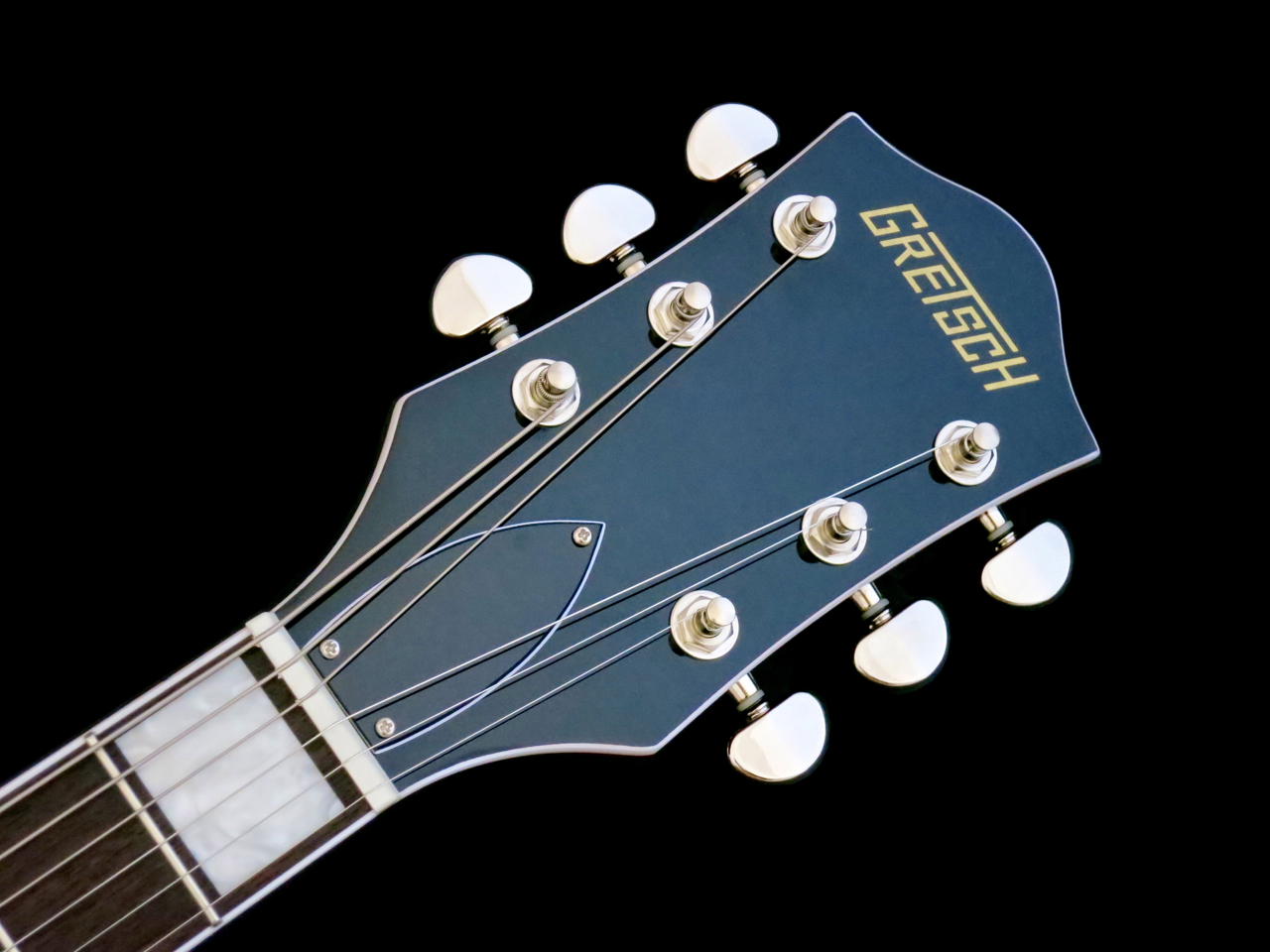
Gretsch Streamliner G2420T – headstock

There’s plenty of binding on the Streamliner Hollow Body – in addition to the multiple binding on the body the guitar also sports a bound fretboard and even a bound headstock.

Gretsch Streamliner G2420T – tuners

This Gretsch comes equipped with a very decent set of sealed tuning machines.

Gretsch Streamliner G2420T – fretboard

The vintage-sized frets have been neatly seated. The G2420T features large rectangular position markers made from pearloid.

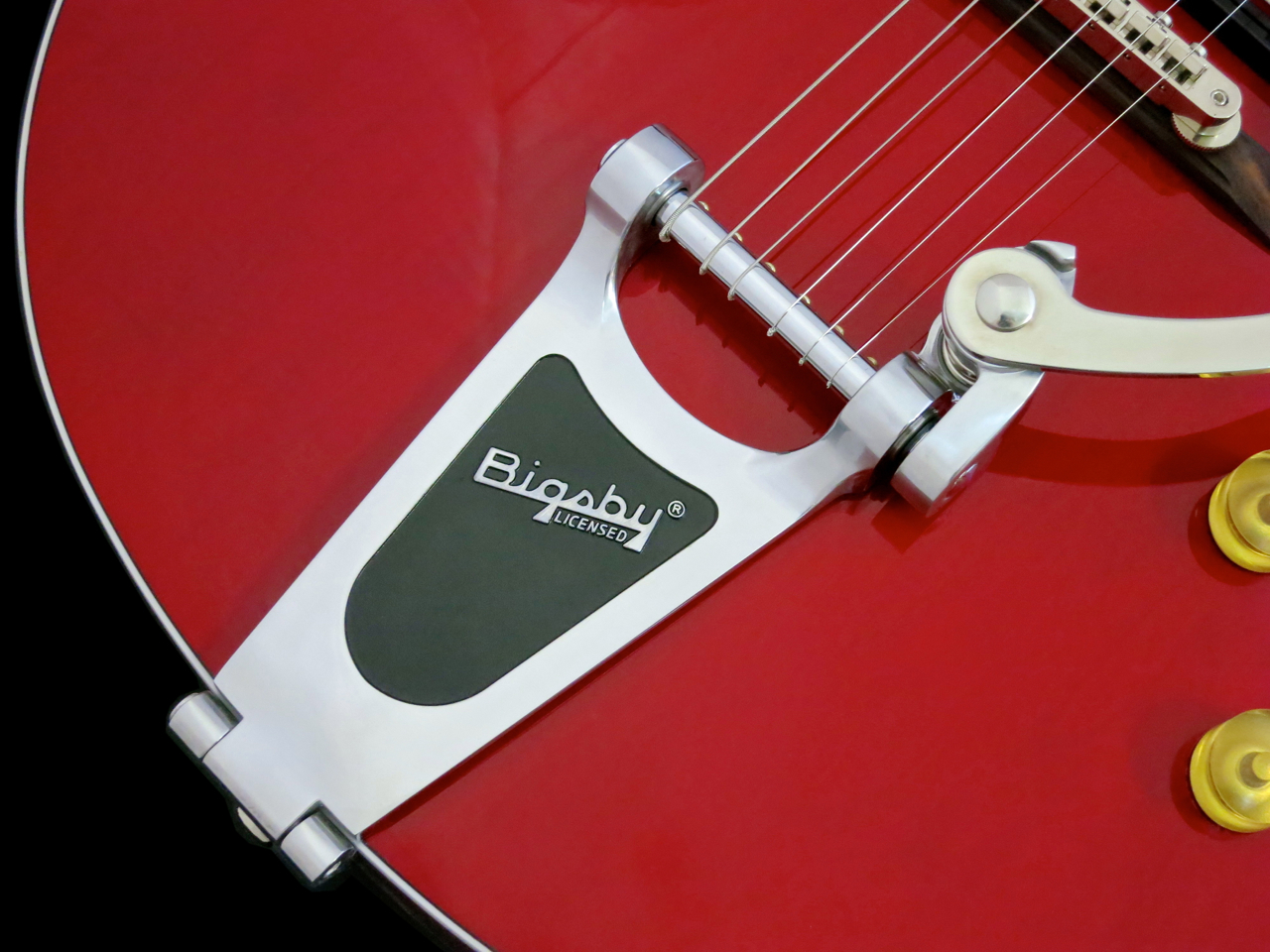
Gretsch Streamliner G2420T – Bigsby B60

Bigsby’s mid-priced Lightning Series vibratos are produced in the Far East to exacting standards. The Bigsby B60 has been specifically designed for use with large-bodied archtops, such as the Gretsch G2420T.

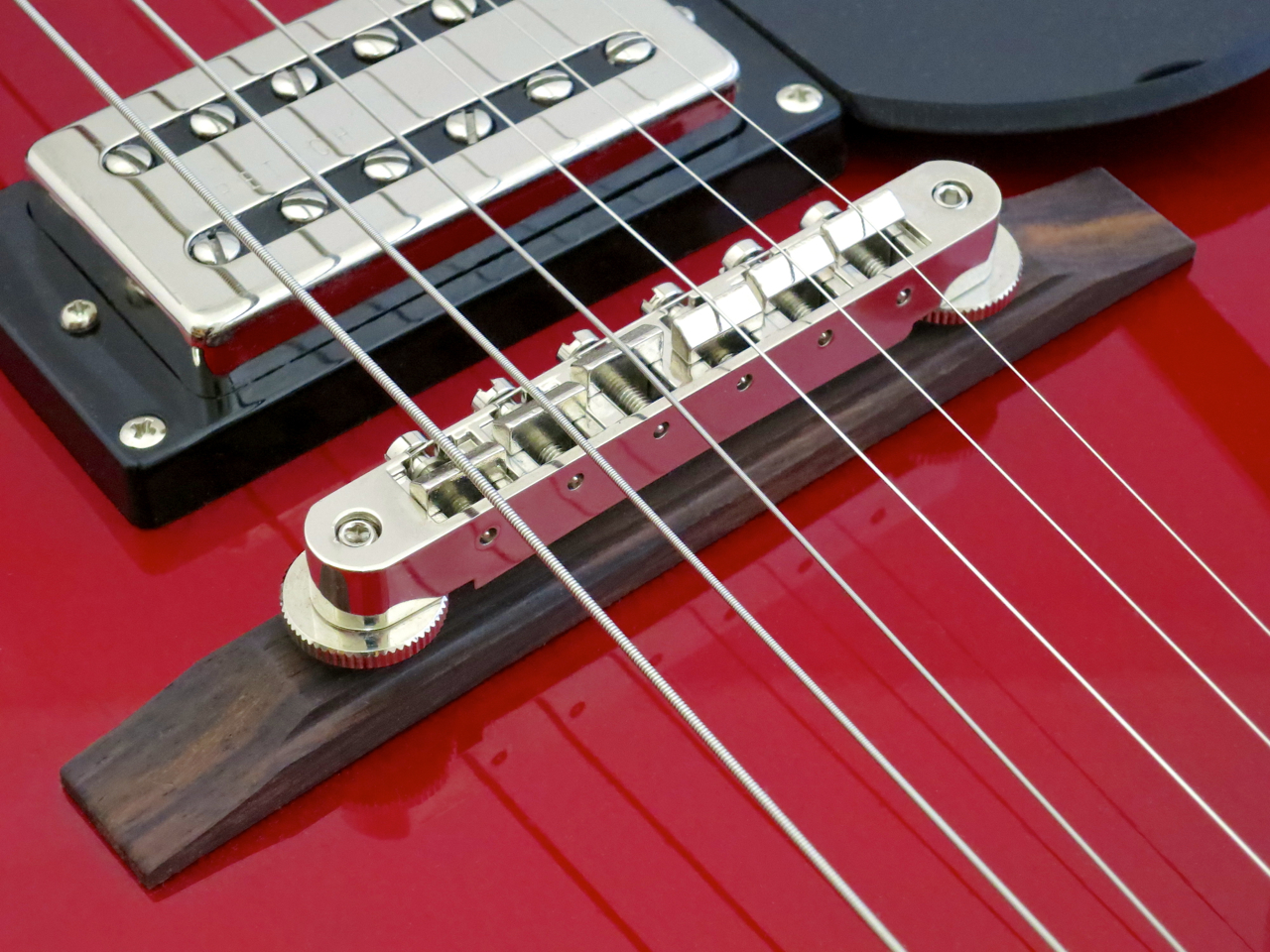
Gretsch Streamliner G2420T – Adjustomatic bridge

This Streamliner’s Adjusto-matic bridge may seem to be held in place simply by string pressure, but there’s more to the bridge than meets the eye. The rosewood base is ”secured”, which means reverse pinned. The bridge posts continue all the way through the rosewood base and into two holes in the guitar’s top, which keeps the whole bridge in the correct place.

Gretsch Streamliner G2420T – Broad'Tron pickups

The biggest difference between the Streamliner G2420T and similar models in Gretsch’s Electromatic- and Pro-ranges can be found in the new guitar’s pickups:

Depending on the ”era”, or an artists wishes, a Pro Series Model G6120 will either come with a pair of DeArmond single coils, Gretsch’s own Filter’Tron humbuckers or similar TV Jones pickups. Recent Electromatic G5420’s are now equipped with Gretsch’s new Black Top Filter’Trons, which are licensed Far Eastern copies of the original pickups.

All new Streamliners sport a pair of Broad’Tron pickups. Broad’Trons are full-sized humbuckers designed to offer a tone somewhere in-between the twang and bite of Filter’Trons and the lush warmth of PAF-style ’buckers.

Gretsch Streamliner G2420T – controls

The controls on the G2420T are pure Gretsch:

Below the f-hole you will find separate volume knobs for each pickup, as well as a joint master tone control. An additional master volume control is placed next to the cutaway.

****

Gretsch Streamliner G2420T – body beauty 2

Let me start this section by stressing how well-made this budget-Gretsch really is! The review sample wasn’t a ”review instrument”, breathed on by distributors Fender Scandinavia, instead I took the guitar straight off the wall at a local music shop (DLX Music).

The Gretsch G2420T Streamliner Hollow Body is a very cleanly put together archtop electric, and I genuinely couldn’t find anything to criticise (especially when considering the instruments pocket-friendly price). The very nice fretwork on the Streamliner is a definite plus when it comes to this guitar’s comfortable playability.

Officially Gretsch call this neck profile a ”Thin U”, but I would describe it as a very comfy D shape with a slightly flattened back.

The Bigsby B60 is buttery and doesn’t throw the Hollow Body out of tune too much, if used sensibly (a word of advice: if you’re very sensitive when it comes tuning stability, a Bigsby probably isn’t right for you). Because a Bigsby B6/B60 makes do without the additional roller of other Bigsby models, this vibrato is more sensitive and immediate in use (which is a good thing in my view). You get the all the Bigsby shine and shimmer with less ”work”.

Played acoustically, the Streamliner Hollow Body sounds just like the laminated-body archtop it is – open and dry with a strong focus on mid-range frequencies.

I feel that Gretsch’s plan of taking its new Streamliners closer towards the mainstream really seems to hit the mark. The Broad’Trons may not give you the traditional clucky, chicken picking, bright and sparkly sound of a set of Filter’Trons, but there’s still enough presence and treble left in the new pickups’ tone for a gretsch-y sound.

Thanks to the new pickups’ broader tone the Gretsch G2420T also works well for Jazz, apart from the usual Country and Rock (-abilly) genres. This clip starts with the neck pickup:

The Streamliner Hollow Body also sounds great with a light amount of crunch. There’s a nice balance between the low end and the treble in the G2420T’s sound, coupled with the dry delivery so typical of big box archtops.

You should be aware, though, that high gain settings and/or very high volume levels will result in howling feedback sooner or later. This isn’t really a fault, but rather a normal feature of this type of instrument, and the Streamliner Hollow Body isn’t any more ”problematic” than other guitars of this type.

This sound clip, too, has been recorded with Blackstar HT-1R valve combo:

Here’s the demo track off the Youtube video, whose guitar tracks were recorded using Apple Garageband’s own amp plug-ins. The lead guitar uses the bridge pickup, while the rhythm parts have been recorded using both pickups (left channel) and the neck pickup (right channel), respectively:

Gretsch Streamliner G2420T – body beauty 1c

****

Gretsch Streamliner G2420T – beauty shot

In my opinion the Gretsch Streamliner G2420T Hollow Body is one of the best full-size archtops in this price range – possibly even the best! This is a surprisingly well-made instrument that punches far above its ”weight”.

If you’re looking for the ”genuine Gretsch Sound”, warts-and-all, I would point you to the (much pricier) Electromatic Series and its Filter’Tron pickups.

One of the Streamliner Series’ main objectives, though, is to broaden and widen the appeal of these guitars, and take the Gretsch name closer to the mainstream. I feel Gretsch have succeeded very well in this endeavour!

****

Gretsch Streamliner G2420T Hollow Body

street price 560 €

Contact: Gretsch Guitars

A very warm ”thank you” to the guys at DLX Music Helsinki for supplying the review guitar!

Pros:

+ value for money

+ workmanship

+ fretwork

+ secured bridge

+ Bigsby works great

+ sound

Pidä blogia WordPress.comissa.

Ylös ↑