
****
Kitarablogi.com – Finland's premier Guitar and Bass blog
Juttuja kitaroista ja bassoista

****

Kuvat: Miloš Berka
****

Tässä alkutilanne: uuden kielisatsin lisäksi tarvitset viritysmittarin, sekä kelaamisen nopeuttajaksi pienen muovivivun. Kun kerran poistetaan kaikki kielet kitarasta, on ehkä hyvä idea myös puhdistaa soitin. Puhdistusliinalla voi myös suojata kitaraa kolhuilta. Itse käytän myös saksia yhdessä työvaiheessa (katso lopusta).
Myös nailonkielisille kitaroille on tarjolla erilaisia kielisatseja. Klassisen kitaran tapauksessa kielisatseja ei tarjota paksuuden mukaan lajiteltuna, vaan ratkaiseva kriteeri on kielten veto/jäykkyys. High tension -satsi tuntuu jäykemmältä ja soi hieman kirkkaammalta kuin low tension -satsin kielet. Myös valmiiksi kustomoituja kielipakkauksia on olemassa, joissa esimerkiksi punotut bassokielet ja kirkkaat diskanttikielet ovat peräisin saman valmistajan kahdesta eri sarjasta.
Nailonkielisessä kitarassa kielisatsin vaihtaminen ei vaikuta dramaattisesti kitaran intonaatioon tai säätöihin, kyse on enemmän eri soittotatsista ja soundista. Kokeilumielessä voi siis vaihtaa turvallisesti yhdestä lajista toiseen, niin kauan kun kielet on tarkoitettu nimenomaan klassiselle tai Flamenco-kitaralle.
Itse olen suurikokoinen mies, jolla on voimakas soittotyyli – valitsen siis high tension -kieliä.
****
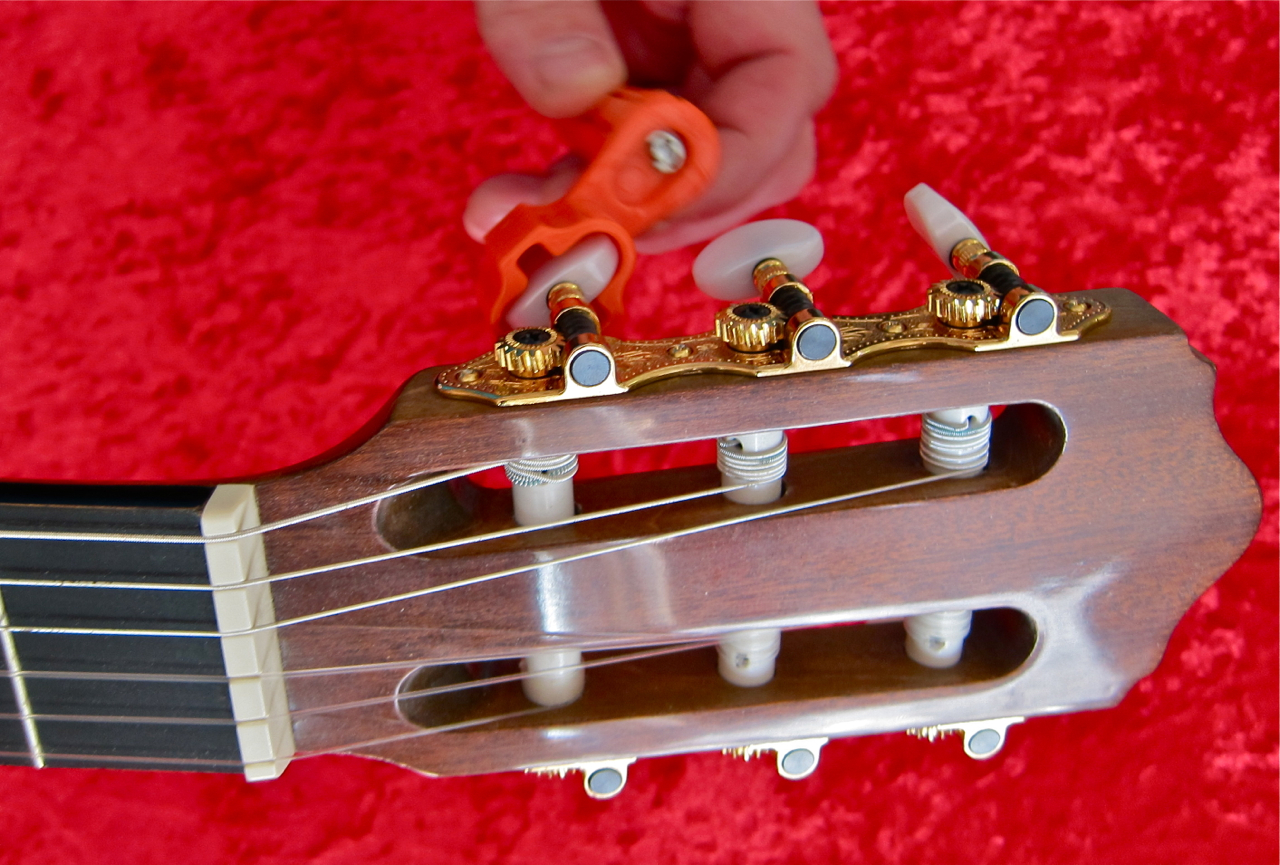
Ensin vanhat kielet löysätään kokonaan – vivulla tämä käy käden käänteessä. Jos kitarasi koneistot tuntuvat epätavallisen jäykiltä, voit lisätä pari tippaa öljyä hammasradan ja kierretangon väliin tai ehkä myös löysätä hammasratojen kiinnitysruuveja aavistuksen verran.
****

Kun kielet ovat täysin velttoja, leikkaan kielet kylmästi kahtia. Näin ei tarvitse vetää koko kieltä tallan tai virittimen läpi, ja vaihtaminen nopeutuu.
****

Avaan vanhojen kielten solmut…

…ja poistan ne sekä tallasta…
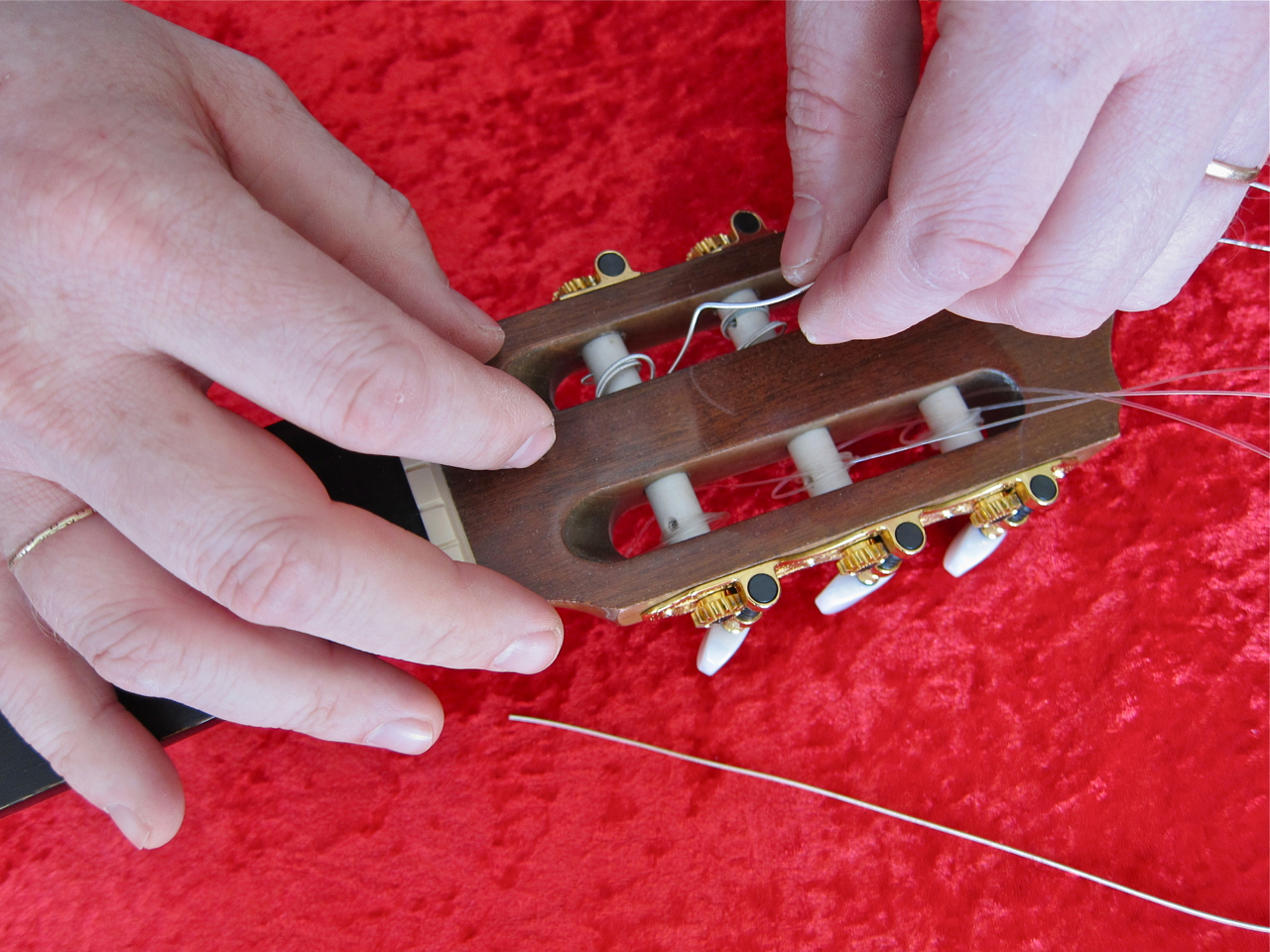
…että virittimistä.
****

Uusi kieli työnnetään ensin kaulan puoleiselta sivulta tallasta läpi.
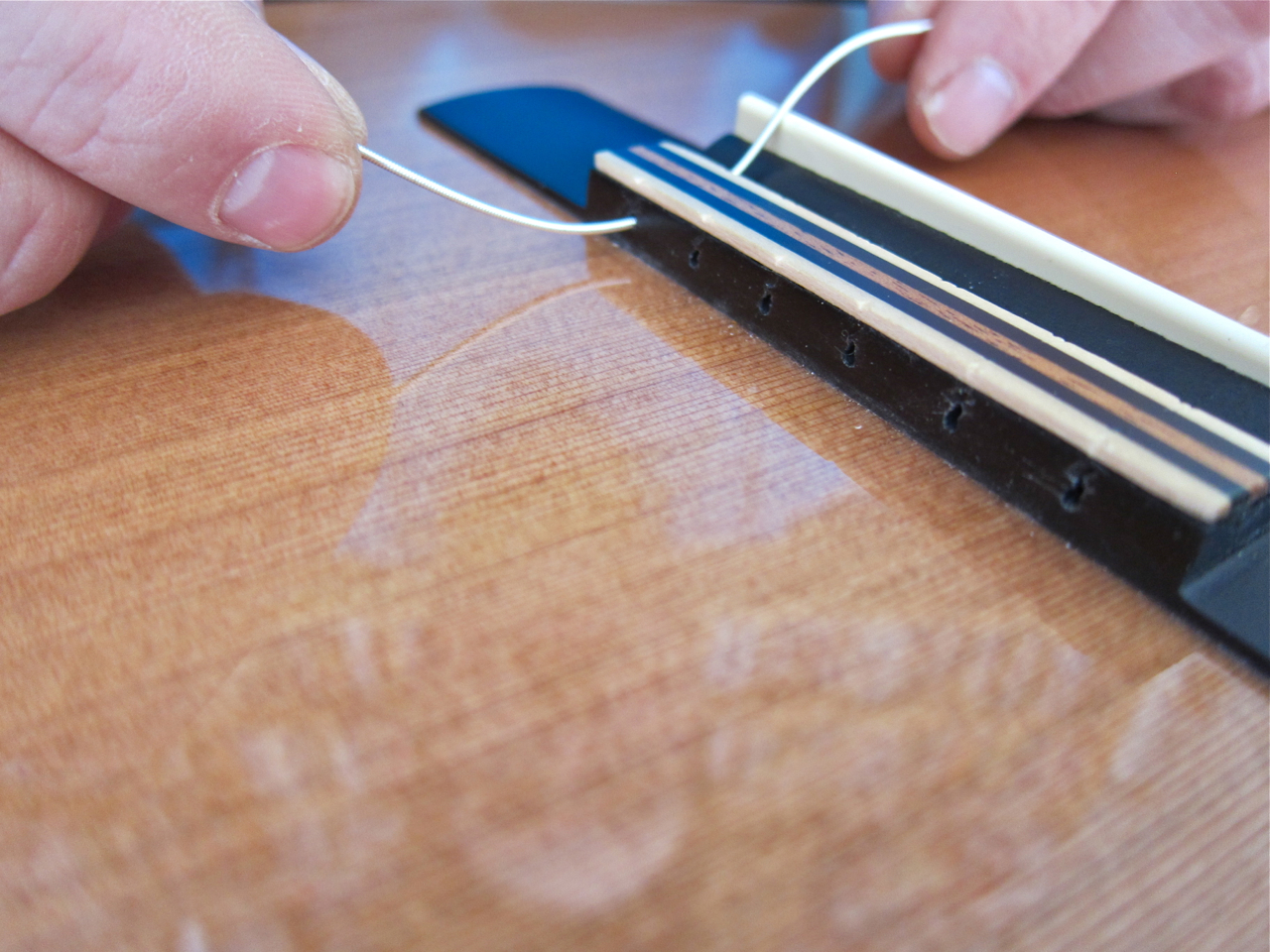
Lyhyt pätkä kielestä vedetään tallasta ulos ja ylös…

…ja vedetään ensin kerran pitkän kielipalan alitse, ja sen jälkeen muutaman kerran itsensä ympäri.
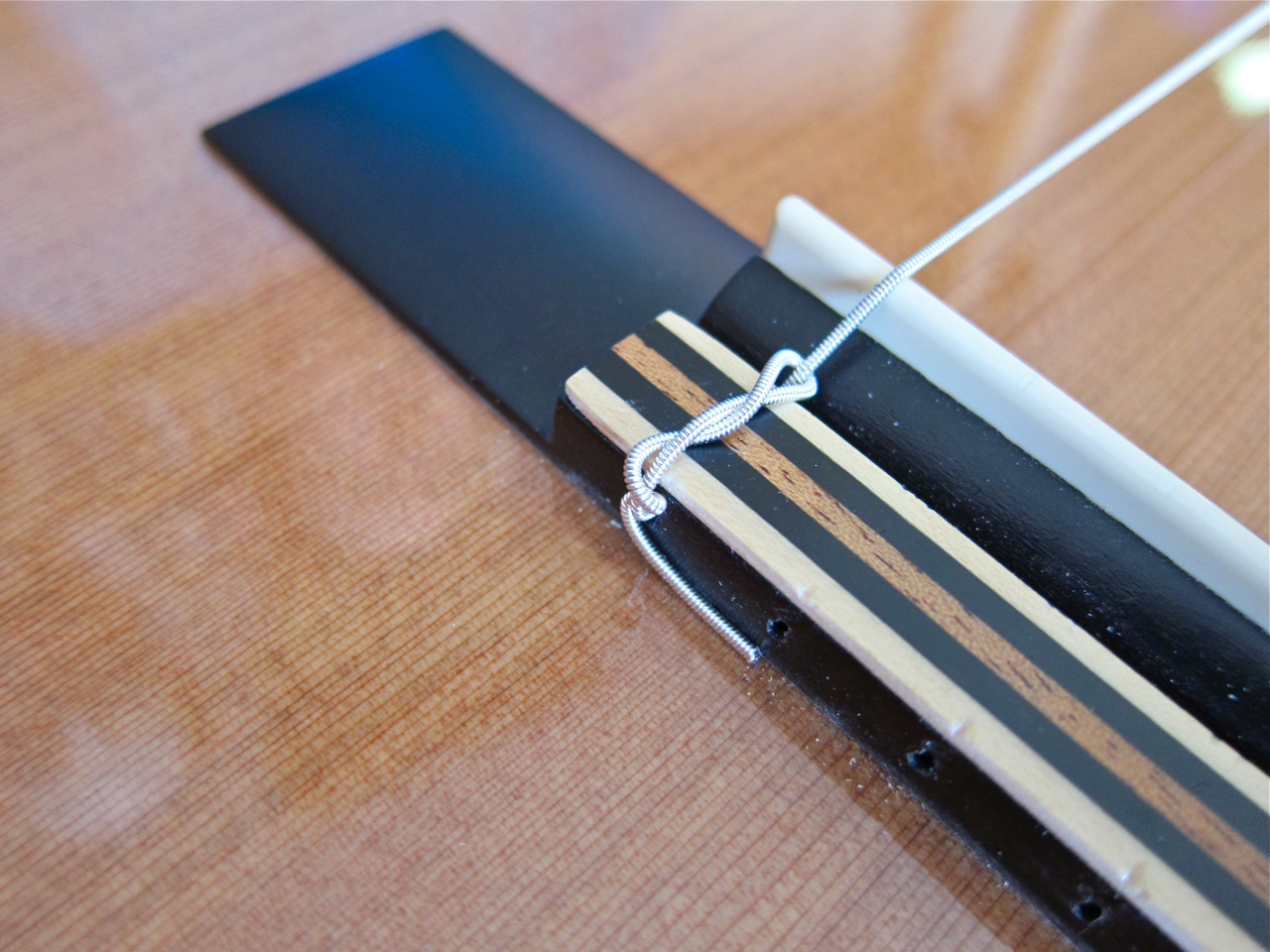
Lopputuloksen pitäisi näyttää tämänkaltaiselta.
Jotkut soittajat käyttävät bassokielillä erilaista menetelmää, jossa kielet lukitaan yhdellä isolla silmukalla. Molemmat versiot toimivat ja ovat ”sallittuja” – makukysymyksiä luultavasti. Tässä on kuva yhdestä Ramírez-kitarasta, jossa käytetään sitä toista kiinnitystapaa:

****
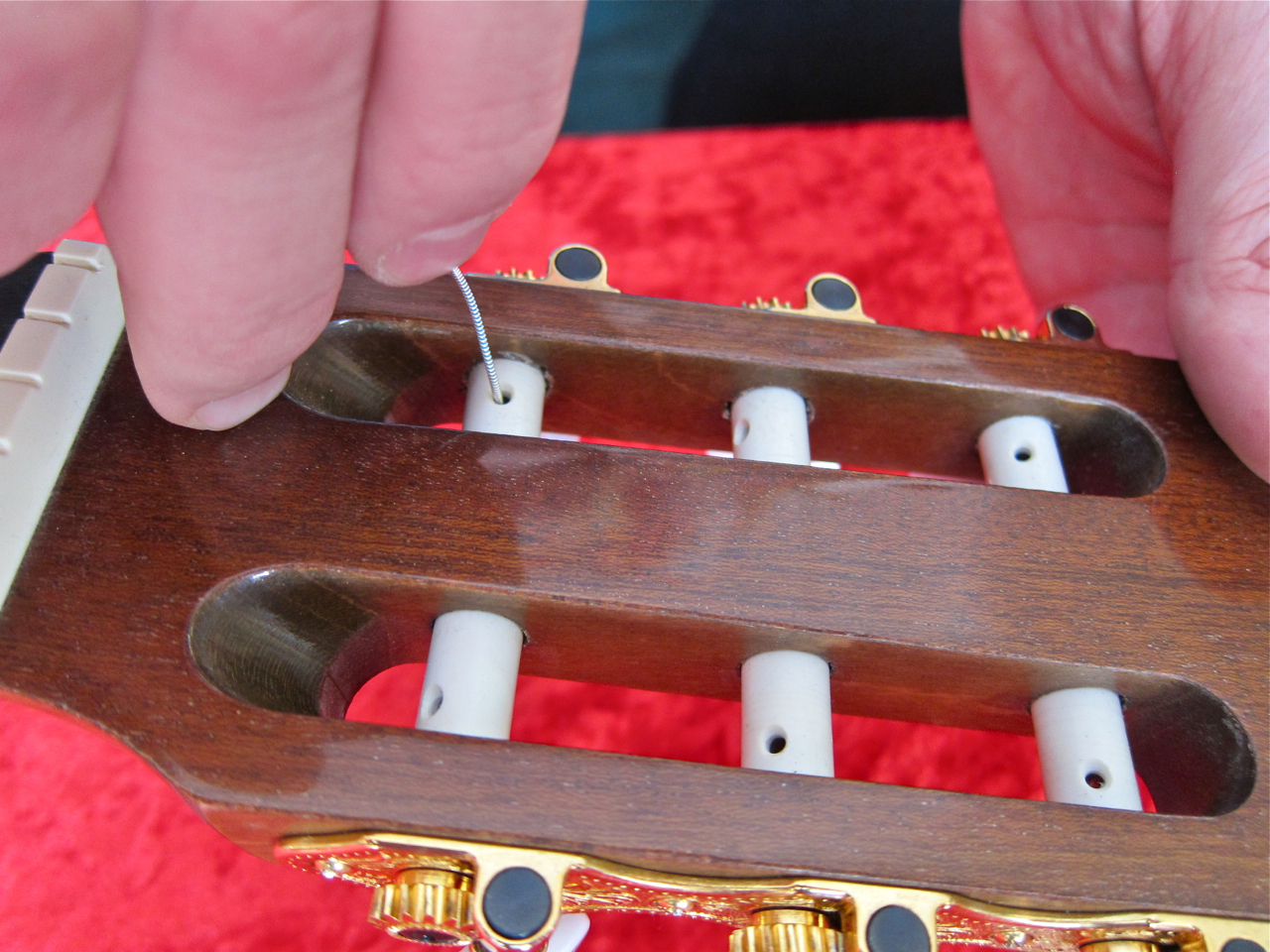
Kielen toinen pää pujotetaan virittimen läpi…

…minkä jälkeen kielen voi lukita itseensä vetämällä kielen vapaata päätä sen otelautaan menevän osaan alitse.
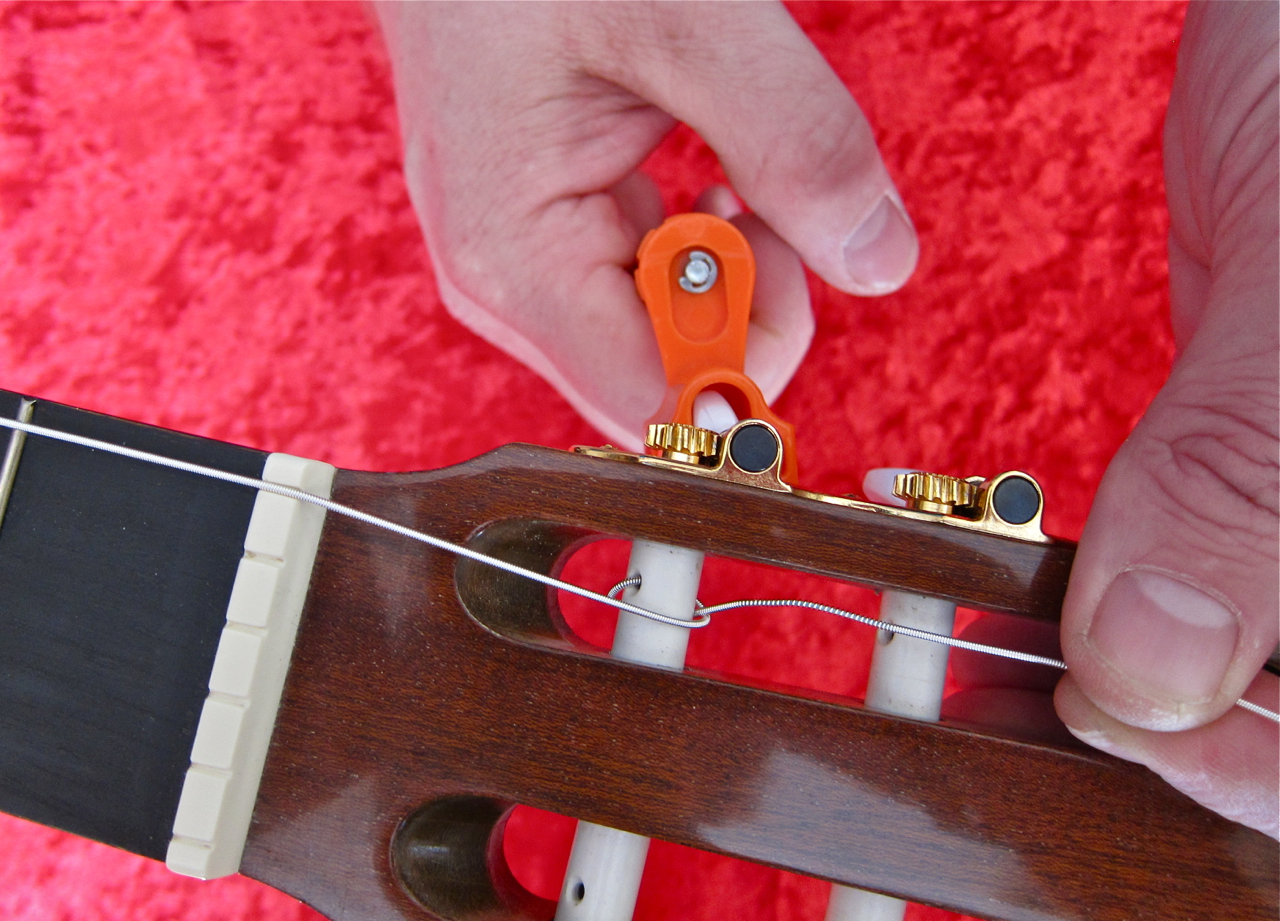
Seuraavaksi voi jo virittää uuden kielen.
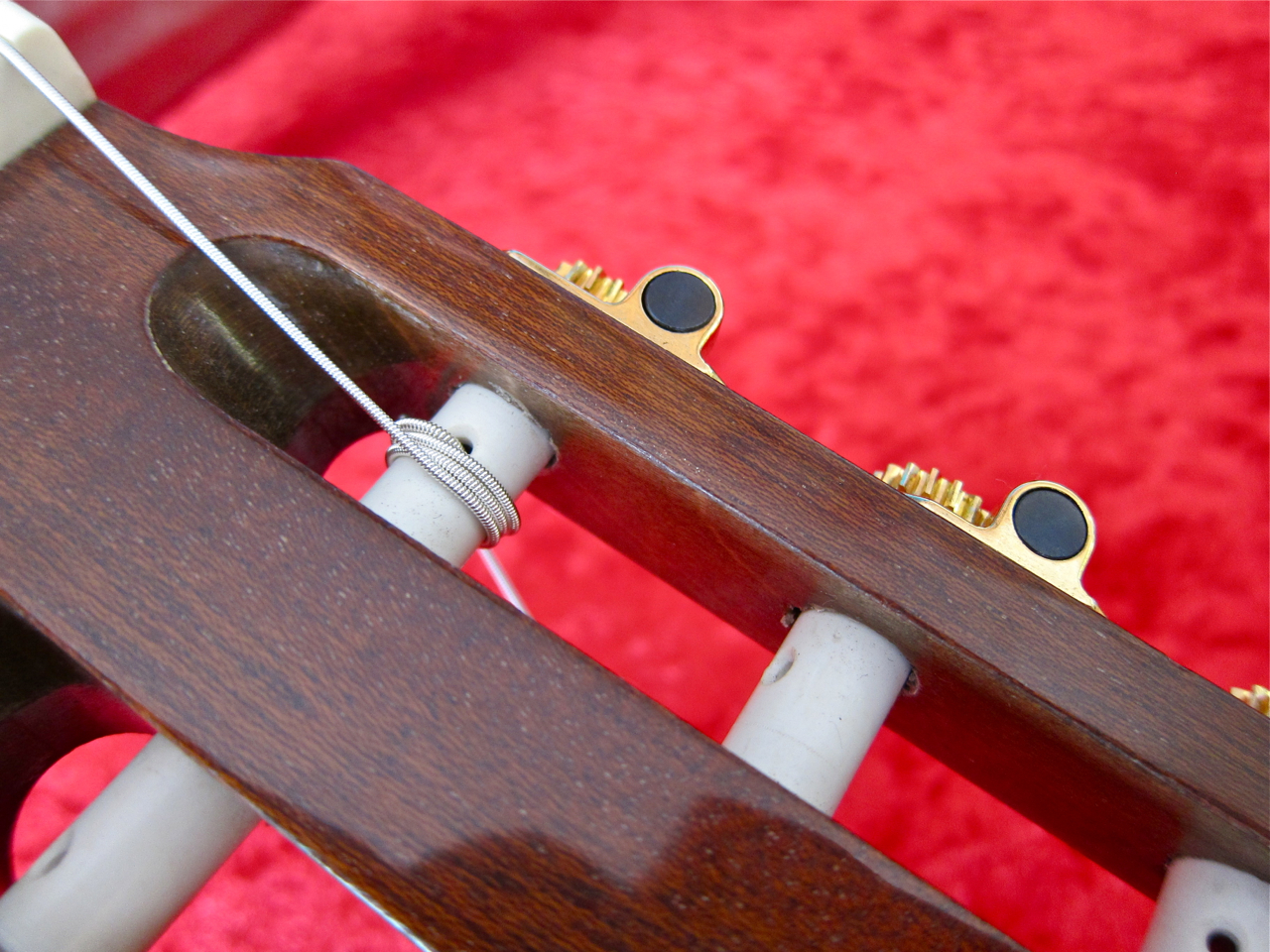
Ja tällainen on suunnilleen onnistuneen toimenpiteen lopputulos.
****
Itse aloitan aina satulan ulkoreunoista ja jatkan sieltä poispäin kielipareissa (E-e, A-h, D-g).
Ei ole yhtään huono idea venyttää uusia kieliä samalla lailla kuin teräskielisissä tai sähkökitaroissa. Tosiasia on kuitenkin, että nailonkielet tarvitsevat huomattavasti pidemmän ajan, ennen kuin ne pysyvät vireessä. Ei ole siis syytä turhautua, jos joutuu ensimmäisinä päivinä kieltenvaihdon jälkeen virittää useasti!
Muuten: useat ammattilaiskitaristit eivät vaihda nailonkielisessä heti koko satsia kerrallaan. Usein on nimittäin niin, että täysin muovista valmistetut diskanttikielet kestävät soittoa huomattavasti pidempään kuin saman satsin bassokielet, joissa on suhteellisen ohuen silkkikudoksen ympärille punottu pehmeää metallia.
Nailonkielisessä kitarassa ei voi (eikä tarvitse) säätää intonaatiota – kun uudet kielet ovat päällä, soitto voi alkaa.
Photos: Miloš Berka
****
Here’s what you need for the procedure: A string winder comes in very handy for taking off and putting on the strings, and a tuner is needed to get the guitar up to pitch. I use a pair of scissors to make life a little easier for myself (see below). A polishing cloth may come in handy for cleaning and/or protecting your guitar.
There are different string tensions available. Unlike on a steel string or an electric, you can use any type of classical guitar string on your guitar without the need for a complete set-up. A differently tensioned set won’t noticeably affect your intonation, but it will make a difference in the guitar’s feel, action and sound – feel free to experiment.
I’m a big guy with a strong touch, so I use high-tension sets…
****
First you need to slacken the strings completely. If your guitar’s tuners are particularly hard to turn, use one or two drops of light oil on the cogs, or try loosening the (black) screws which hold the cogs to the tuner posts by a tiny amount.
****
Once the strings are free from tension, I use the scissors to cut each string into two pieces. I find this makes taking the strings off a little easier, because you don’t have to feed all the string through either the tuner or the bridge for removal.
****
Untie the knot at the bridge…
…then remove the old string from the bridge…
…as well as the tuner.
****
Feed one end of the fresh string through the neck-facing side of the bridge.
Take the short end sticking out towards end of the body…
…and tie it into a sling, by first feeding the short end under the long piece and then tying to itself.
The final result should look somewhat like this.
Some guitarists use a different technique on the lower three strings, utilising only one large loop. Both ways are valid, but the slightly more elaborate way seems to work best for me.
Here’s a picture of a Ramírez strung in the other way:
****
Feed the other end of the string through the appropriate tuner…
…pull it through and lock it in by putting the string end underneath the part going to the fingerboard…
…and then wind it to pitch.
This is what the result should look like.
****
I find it easiest to string up a classical guitar from the nut upward, so I work in pairs – E-e, A-b, D-g.
You can do some string-stretching on a nylon-strung guitar, just the way you’d do it on an steel-string or electric, but in general nylon strings need much longer to settle into pitch. So, don’t be annoyed or alarmed if you have to retune rather often during the first few days of use!
By the way: Some professional classical guitarists don’t change the whole set each time. The three top strings, which are all-nylon, usually tend to stay useable for longer than the three bass strings, made of a thin fiber core and spun with soft metal.
There’s no real scope for intonation-adjustment on a classical guitar, so once the strings are on you’re ready to go.

Soundtoolsissa oli tänään ”Lauantain huumaa!”-tapahtuma, jossa juhlitiin tyylikkään myymälän uudet aukioloajat.
****


Kitara- ja bassotarjonnan lisäksi Soundtoolsilla on runsaasti studio-, keikka- ja DJ-laitteita esillä.
****
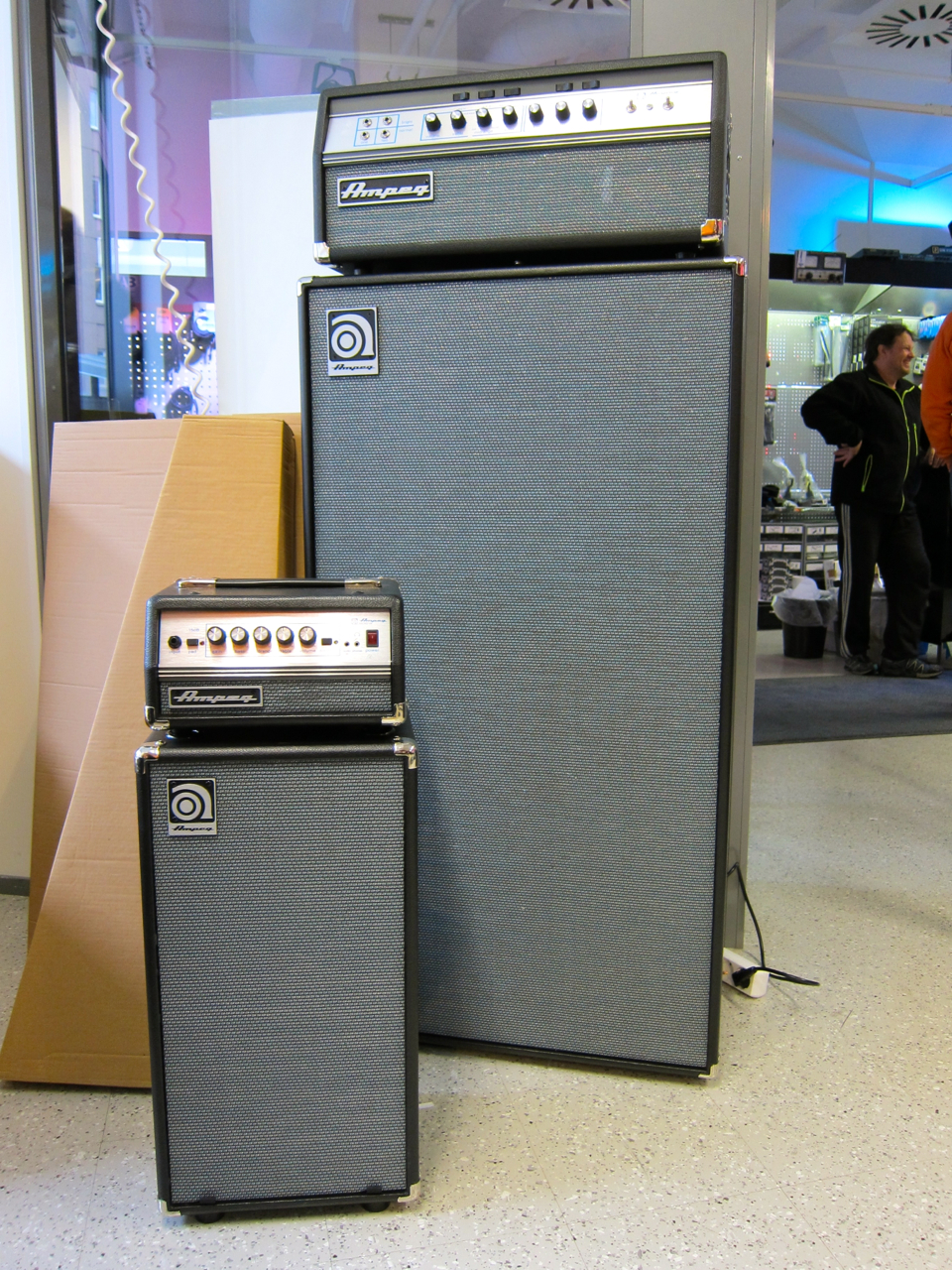
Iso Ampeg-bassostäkki ja sen pikkuveli.
****

TC Electronic edustaa nykyaikaista huipputekniikkaa.
****

Schecterin bassot.
****

Äänenpaine riittää näillä varmasti…
****

Osa Soundtoolsin laajasta Schecter-valikoimasta.
****

Lauantain kunniaksi kuultiin myös live-esityksiä…
****


The author and Senora Amalia Ramírez CEO of legendary Jose Ramírez Guitars, who celebrate their 130th anniversary this year.
****

Blackstar’s brand-new ID:Series offers full programmability.
****

Chris Martin shows off CF Martin’s new Year of the Dragon Ltd Edition model.
****

Cort displayed its Gene Simmons Signature guitar [sic!].
****

Elliott Rubinson, CEO of Armadillo Enterprises, the company behind Dean Guitars and Dime Amplifiers (amongst others).
****
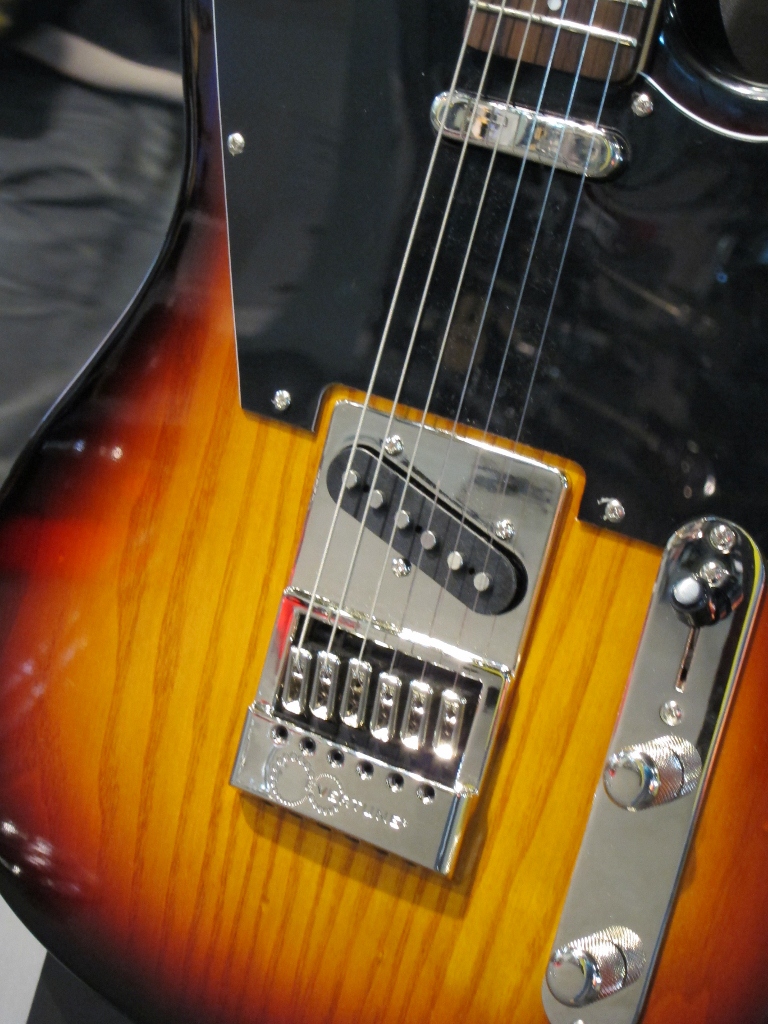
A VGS-guitar sporting an Evertune-bridge for Tele-style guitars.
****
Check back for more on Frankfurt Musikmesse 2012 on the coming weekend!


1960’s Gibson SGs
****

Colourful Hayden-head
****
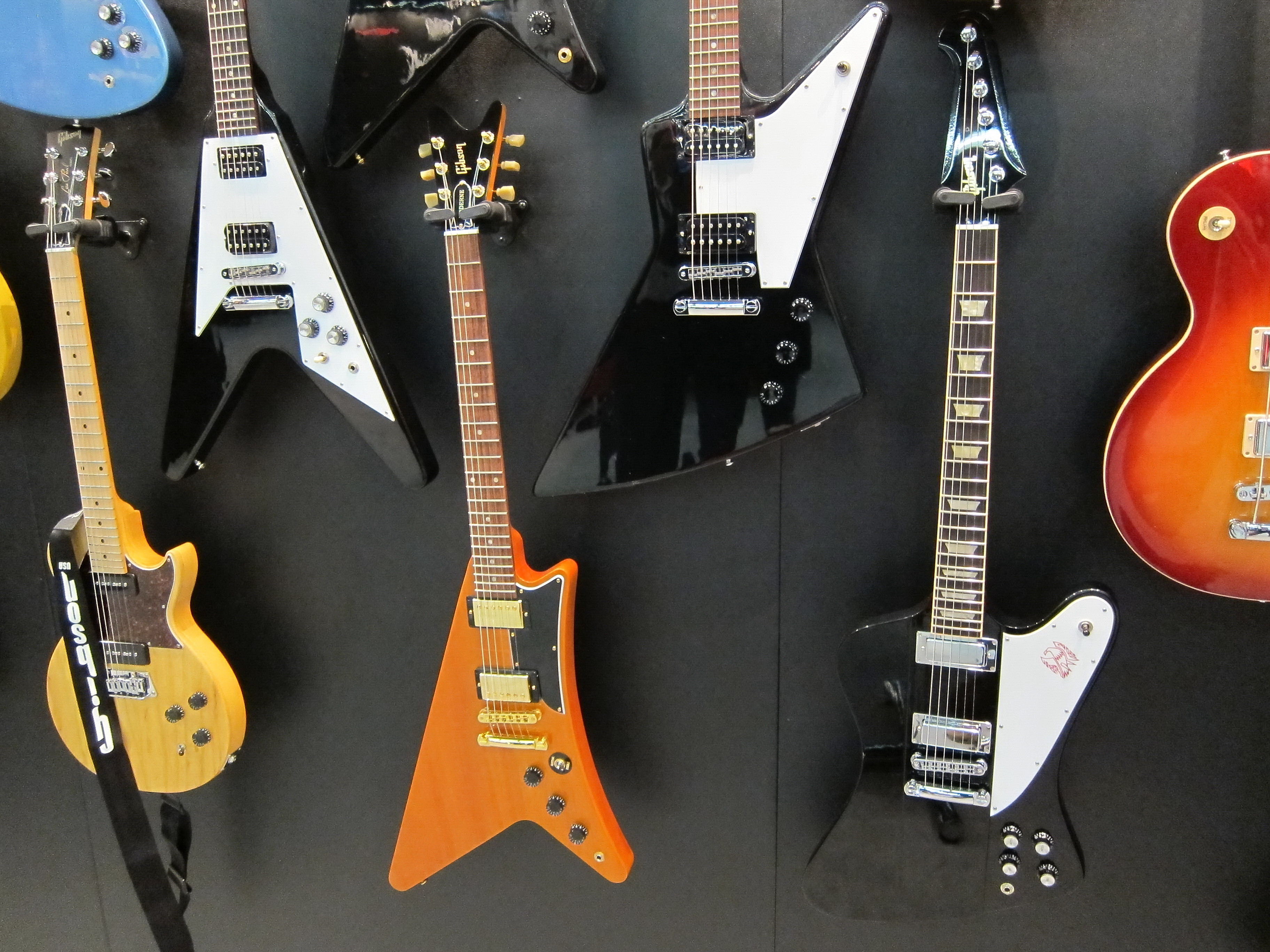
Brand-new Gibson Moderne reissue
****

Ukuleles by Lag
****
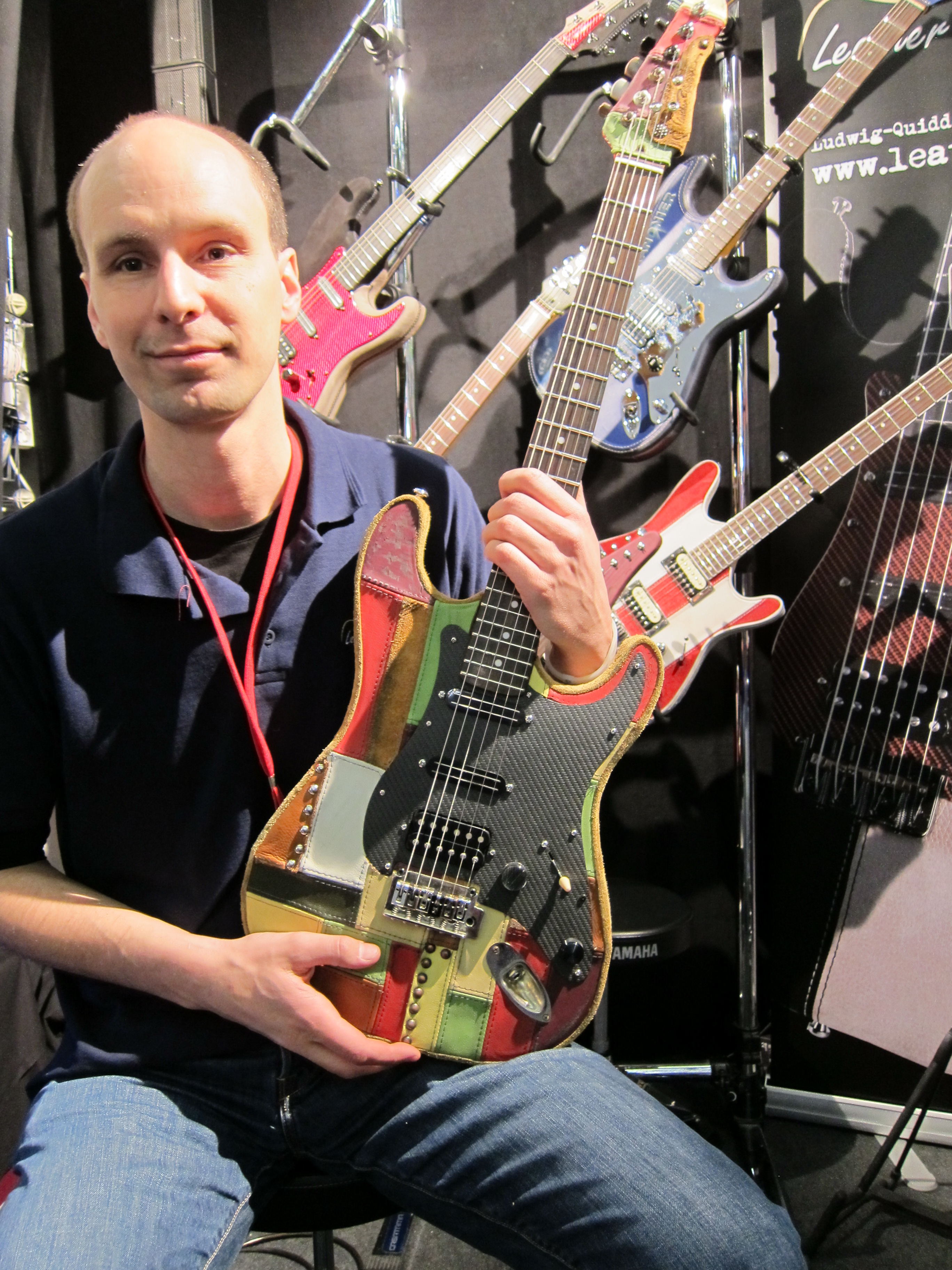
Georg Beis and his Leather Guitars
****

TC Electronic BG250 TonePrint bass combo
****

PRS Al Di Meola Signature
****
Kitarablogi.comin messuraportti ilmestyy viikonloppuna.
Kitarablogi.com’s Messe-report coming up on the weekend.


This year’s Frankfurt Musikmesse trade fair will open its door this Wednesday.
Kitarablogi.com will attend to check out all the new gear, as well as to snap a lot pics and maybe shoot the odd video or two.
Have a look at last year’s report HERE.
Frankfurtin Musikmesse 2012 avaa ovensa tänä keskiviikona.
Kitarablogi.com on paikan päällä tutustumassa vuoden uutuuksiin, ottamassa valokuvia ja kuvaamassa ehkä muutama video.
Viime vuoden messuraportti on TÄÄLLÄ.


Virolainen aikakauslehti Kitarr on tyylikäs julkaisu kitaristeille. Lehti sisältää haastatteluja, testejä, juttuja vintage-soittimista sekä vinkkejä miten tulla paremmaksi soittajaksi.
Ajakiri Kitarr -lehdellä on myös hyvin näyttävä nettisivusto, joka täydentää ja laajentaa lehden sisältöä mm. videoilla.

Kannattaa siis tutustua!

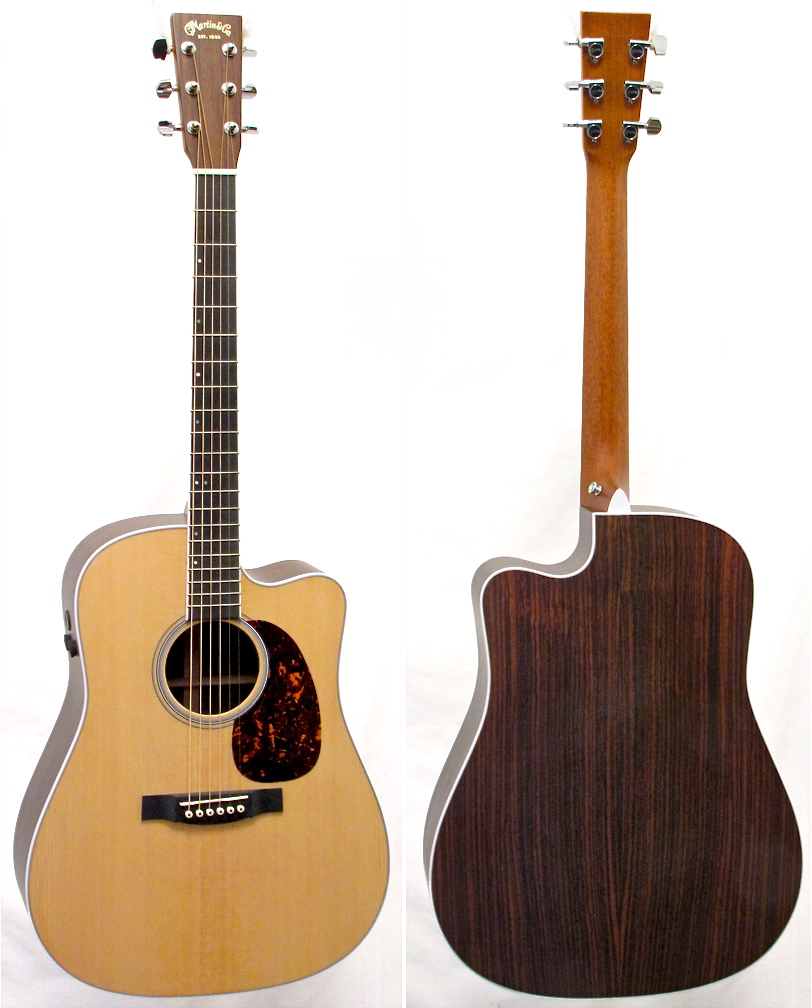
Ever wondered what the Fishman Aura F1 system installed on some Martin-guitars sounds like?
My pal Sami got a DCPA3 as his birthday present the other day, and he recorded a short demo of all nine Images for us. The sounds you’ll hear are recorded direct, using Image at full and no EQ.
The Aura F1 offers nine Images, which use convolution and modelling technology to transform the relatively bland tone of a piezo transducer into the lush timbre of an acoustic guitar recorded with a quality microphone.
****
For more info on the Martin DCPA3 go here or here.
****
****


