Review: Tanglewood TW1000N – English summary

****

Tanglewood Guitars combines British design with quality luthiery from Asia for a winning value-for-money-mix. Especially the brand’s acoustic guitars have won over many fans.

The Tanglewood TW1000N (current price in Finland: 721 €) is a real Dreadnought-beauty from the company’s Sundance-series, and features a solid spruce top mated to a laminated back and sides made of rosewood.
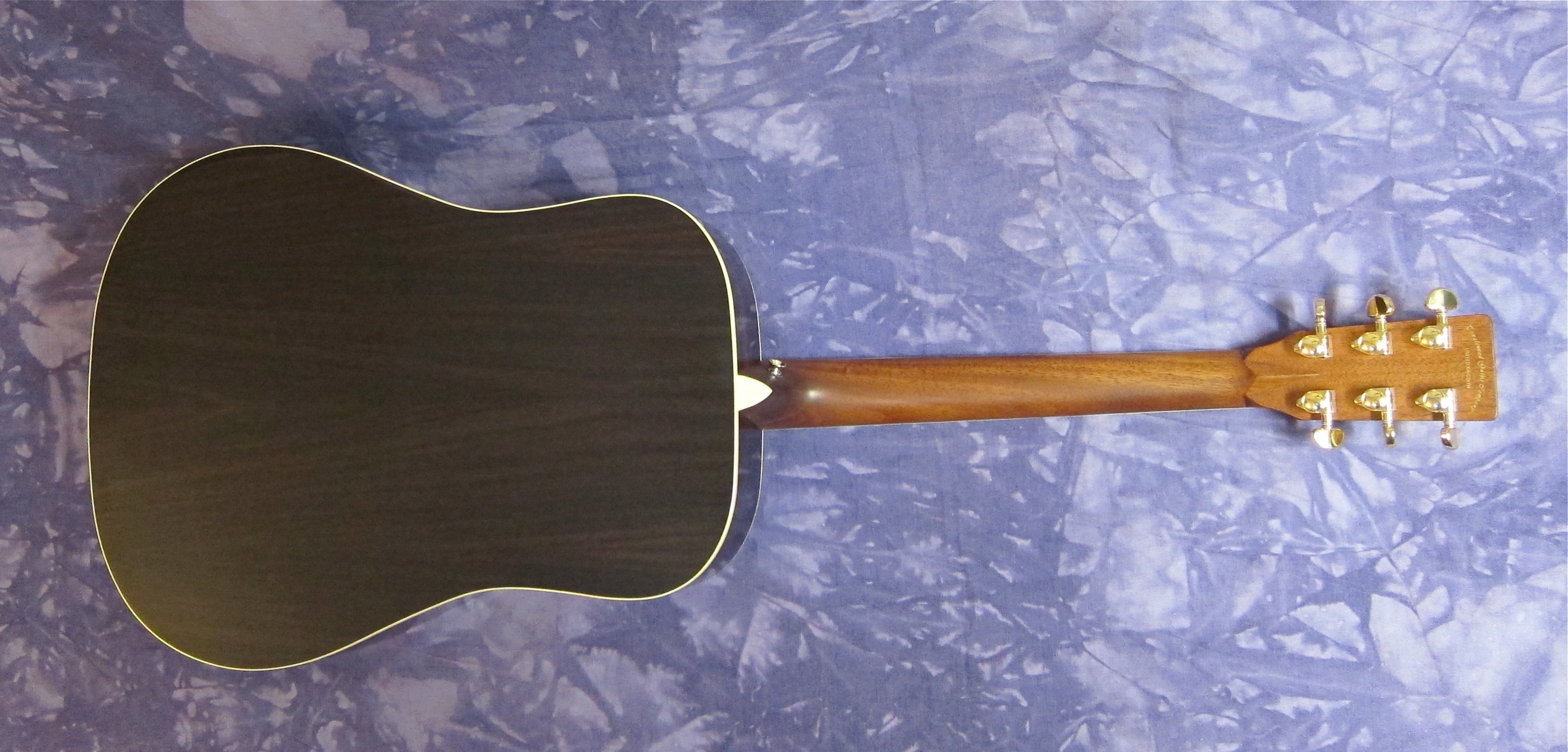
The bound headstock looks fashionably understated, sporting a rosewood veneer, as well as the company logo in abalone.

The nicely finished top nut is genuine bone.

A volute strengthens the area where the neck changes into the headstock. The gold-coloured tuners are sealed Grover Rotomatics.

The TW1000N’s neck is a one-piece mahogany affair, save for a small glued-on bit for the neck heel.
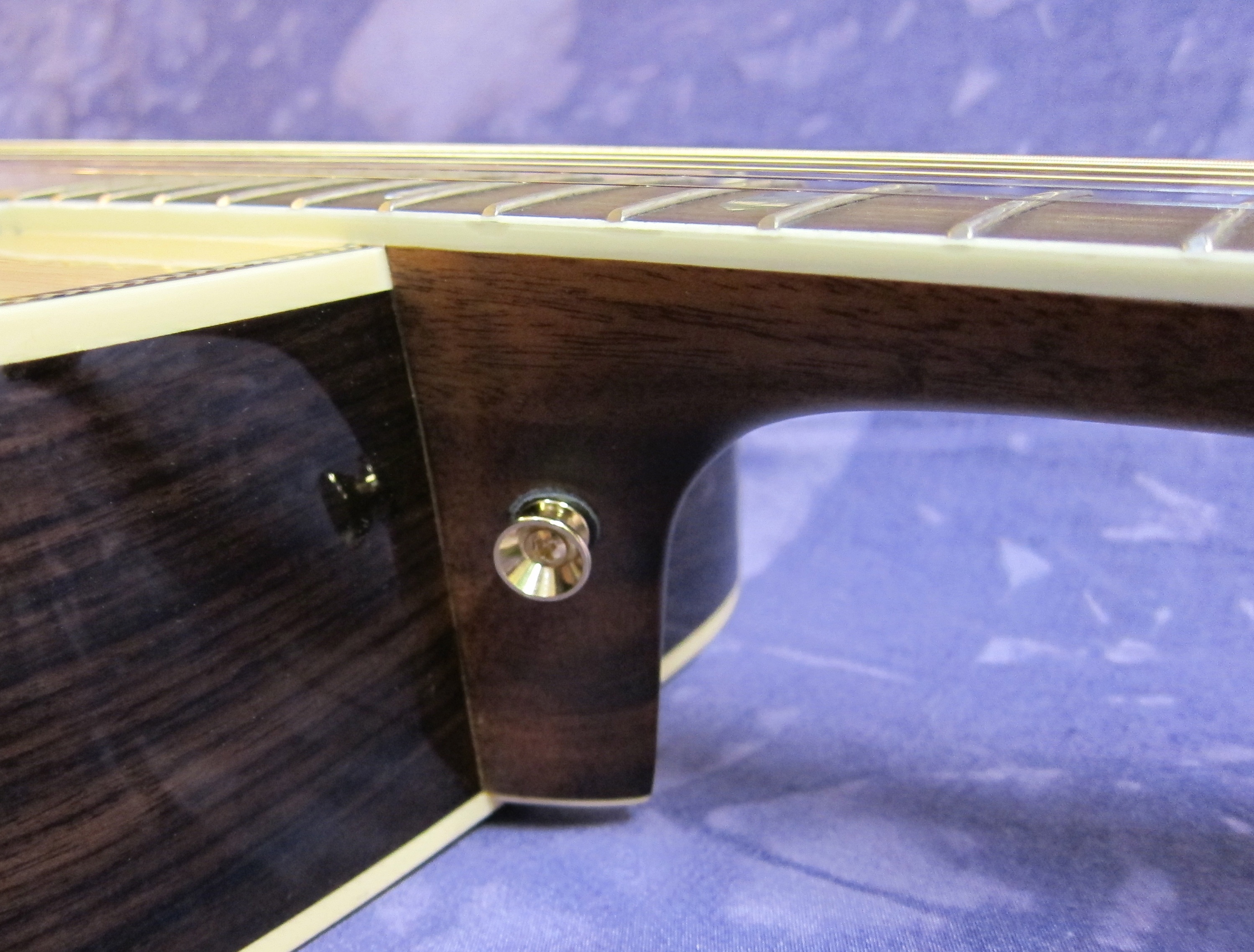
Tanglewood have added a nice little detail for the gigging guitarist – a second strap button.
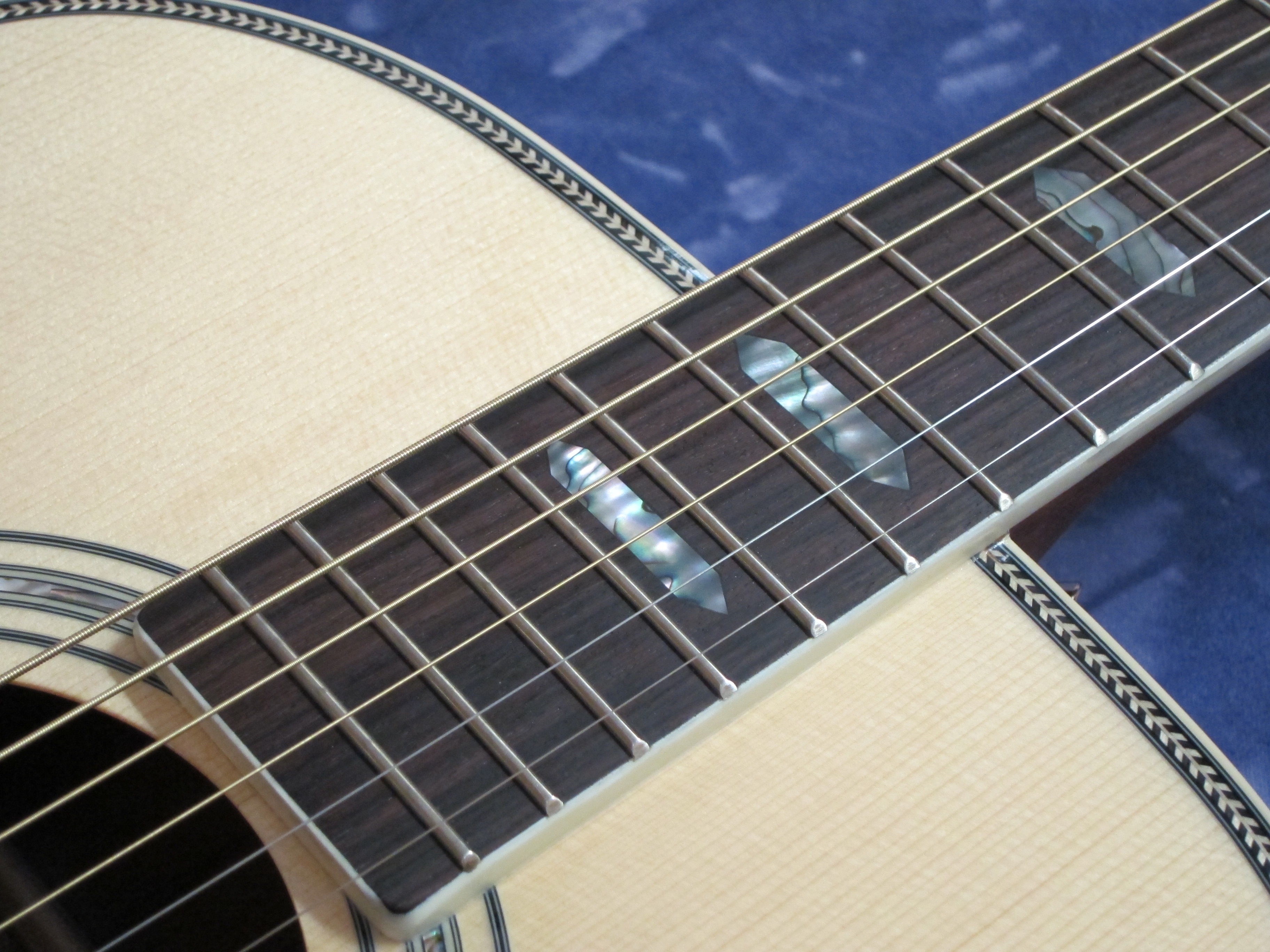
The TW1000N has been generously endowed in the looks stakes, but always with good taste. We find abalone hexagons inlaid into the nice-looking rosewood fretboard, as well as herringbone binding around the guitar’s top.

Black and white rings coupled with cleanly inlaid abalone make up the soundhole rosette.

The bridge is Tanglewood’s own design, crafted from a fine piece of rosewood on the test sample. The compensated saddle is made from genuine bone.

****

It’s not hard to fall in love with the Tanglewood TW1000N – this guitar possesses timeless beauty, is easy to play and sounds magnificent!

The neck profile is a very friendly, medium-depth ”C”, with the satin finish and the well-dressed medium frets doing their bit to keep the feel comfortably modern.

As is the case with many D-sized guitars, the TW1000 has a nice middle-of-the-road set-up, with a neck width of 44 mm at the nut and a string spacing of 53 cm (E–e), working equally well for strummers as well as pickers.

With the factory-supplied Elixir Nanoweb Light 12–53 -strings the Tanglewoodin sounds well-rounded and warm, with clear top-end definition and a dose of sparkle.

The dynamic range on offer is impressive and the guitar projects well. There’s a good whack of attack on offer, when you dig in with a plectrum, while the sound stays nicely focussed and transparent when fingerpicked.

Here are two examples recorded using a Zoom H1:

Tanglewood TW 1000 N – fingerstyle

Tanglewood TW 1000 N – strumming

In the TW1000N’s case you don’t pay through the nose for perceived status or the name on the headstock; with Tanglewood you get a great guitar for your hard-earned money.

****

Tanglewood TW1000N

Current price in Finland: 721 €

Finnish distributor: Musamaailma

****

Pros

+ workmanship

+ neck profile

+ playability

+ sound

+ value-for-money

Testipenkissä: Tanglewood TW1000N

****

Tanglewood-kitaroissa yhdistyy brittiläinen muotoilu ja laadukas aasialainen työnjälki. Etenkin firman akustiset kitarat ovat saaneet laajasti kiitosta.

Tanglewood TW1000N (721 €) on varsin näyttävä Dreadnought firman Sundance-sarjasta. Kitaran kansi on valmistettu kokopuisesta kuusesta, kun taas kopan pohja ja sivut ovat palisanterivaneria.

Reunalistoitettu viritinlapa on päällystetty palisanteriviilulla, johon on kauniisti upotettu firman logo. Muotoilu on klassisen hillitty ja tyylikäs.

Sulavasti muotoiltu satula on aitoa naudanluuta.

Timantinmuotoinen paksunnus kaulan ja lavan yhtymäkohdassa (engl.: volute) on lainattu suoraan Martin-kitaroilta. Volute pienentää tehokkaasti lavan murtumisvaara ja partantaa soittimen sustainia.

Laadukkaat suljetut virittimet ovat Grover Rotomaticit.

TW1000:n mahonkikaula on yksiosainen (!), lukuunottamatta yhtä pientä kaulan korossa käytettyä palaa.

Joskus pienet yksityiskohdat ratkaisevat: Tanglewoodia voi soittaa ”suoraan laatikosta” myös seisten, koska kaulakorkoon on lisätty hihnatappi.

TW1000:n koristelu on toteutettu tarkasti ja erittäin hyvällä maulla. Reunalistoitettuun palisanteriotelautaan on upotettu värikkäitä kuusikulmioita aidosta helmiäisestä, kun taas kannen reunaa koristavat sekä vintage-tyylinen herringbone-kuvio että kermanvaalea muovilista.

Kaikuaukolle on suotu omaa koristelunsa, jossa yhdistyvät mustat ja valkoiset renkaat sekä pikkutarkasti toteutetut helmiäisupotukset.

Myös kitaran sisällä työnjälki on ilahduttavan siistiä. Kaulaliitos on perinteinen lohenpyrstöliitos. Soittimen sarjanumero löytyy mahonkiselta kaulablokilta.

TW1000N:n lentävää lintua muistuttava talla on veistetty palisanterista. Kielitapit ovat muovia, mutta kompensoitu tallaluu on valmistettu aidosta naudanluusta.

****

On erittäin helppo ihastua Tanglewood TW1000N:ään – kitara on ajattoman kaunis, mutta myös sen soitettavuus ja ääni ovat ensiluokkaisia!

Kaulan profiili on mukavan pyöreä ”C” maltillisella paksuudella. Kaulan mattaviimeistely ja soittimen keskikokoiset nauhat tekevät soittotuntumasta nykyaikaisen kevyen.

TW1000 kulkee monen Dreadnoughtin tapaan kultaista keskitietä, ja mahdollistaa 44 mm leveällä kaulalla (satulan kohdalla) sekä 53 cm kielietäisyydellä tallassa (E–e) kitaran ongelmattoman käytön sekä sormisoitossa että plektralla soitettuna.

Tehdasasenteisella Elixir Nanoweb Light 12–53 -kielisatsillaTanglewoodin soittotuntuma on kevyt. Kitaran ääni on hyvin lämmin, mehukas ja täyteläinen, mutta samalla selkeä, avoin ja raikas.

Dynamiikkaa on tarjolla rutkasti, ja kitaran sointi projisoi esimerkkillisesti. Soundi on mukavan eloisa: plektrasoitossa atakki on tarkka ja helmeilevä, eikä sormisoitossa soundillinen balanssi koskaan harhaile liian bassovoitoiselle puolelle.

Tältä TW1000N kuulostaa Zoom H1 -tallentimella äänitettynä:

Tanglewood TW 1000 N – sormisoitto

Tanglewood TW 1000 N – plektrasoitto

Jotkut kitarat ovat hyviä soittimia hintaansa nähden. Tanglewood TW1000N on yksinkertaisesti loistava teräskielinen kitara – piste!

TW1000N:n tapauksessa ei makseta ylimääräistä ”merkkibonusta” tai ”statuslisää”, vaan tässä saa erinomaisen kitaran koko rahan edestä.

****

Tanglewood TW1000N

721 €

Maahantuoja: Musamaailma

****

Plussat

+ työnjälki

+ kaulaprofiili

+ soittotuntuma

+ soundi

+ hinta

Gibson 335-S – 1980-luvun malli uusintapainoksena

Gibson lanseeraa 1980-luvun alkupuolen erikoisuus uudestaan. Mallin nimi on Gibson 335-S, ja se näyttää tältä:

335-S:llä on lankkumallinen vaahterarunko, joka muistuttaa piennettyä ES-335-mallia. Kaulakin on vaahterasta, kun taas otelauta on värjätty grenadillo.

Mikrofoneiksi on valittu kaksi alnico II -magneeteilla varustettua Burstbuckeria – kaulahumbuckeri on hyvin mieto Burstbucker 1, ja tallamikrofonina käytetään hieman mehukkaampi Burstbucker 2 -versio.

Gibson 335-S tarjoaa kolmiasentoisen vipukytkimen lisäksi kaksi volumea sekä yhden master tonen.

Kitara on saatavilla Vintage Sunburstin lisäksi Silverburst-viimeistelyllä.

Maahantuoja: Into-Luthman

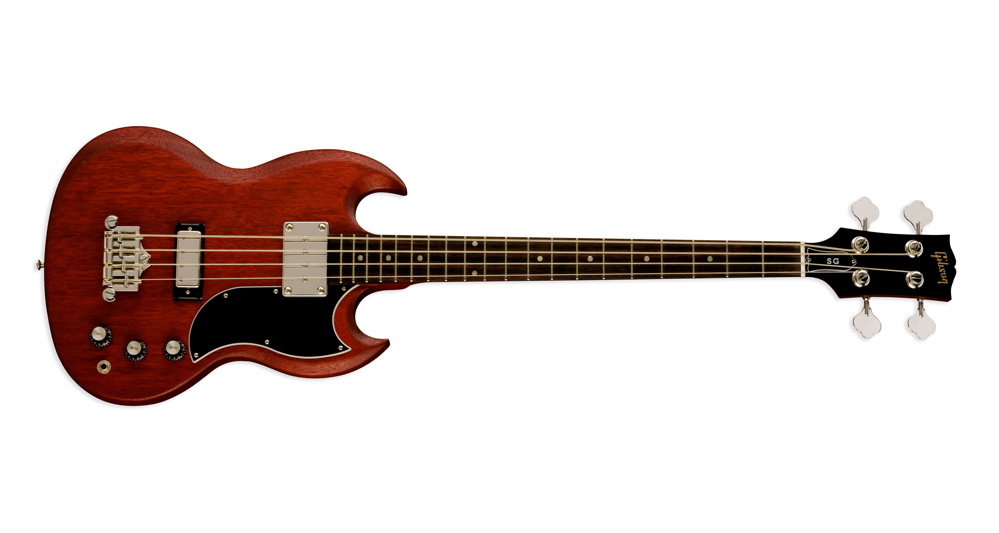
Classic Basses, part 5: The Gibson SG-bass (EB-0/EB-3)

I don’t quite know why, but the Gibson EB-3 has long seemed very exciting to me.

Probably, this is because it was the first electric bass I ever played.

I was only 14 years old, and played with architecture students – all the guys were much older than me. But I had two trump cards, which were my door into this band: a) I could play the piano and b) I was rather good at transcribing songs off records (or tape machines). The bassist was the band’s leader, and he played a genuine Gibson EB-3, which I was allowed to play a few times – wow!  🙂

In its day the Gibson EB-3 was the company’s most popular bass by far. The now legendary Thunderbird, for example, was a complete and utter flop, and only in production for six years (1963-1969). The EB-3, on the other hand, was in continuous production from 1961 all the way to 1979.

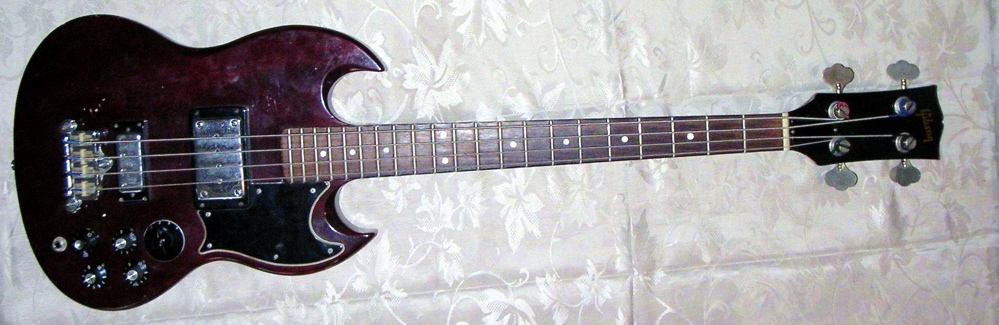
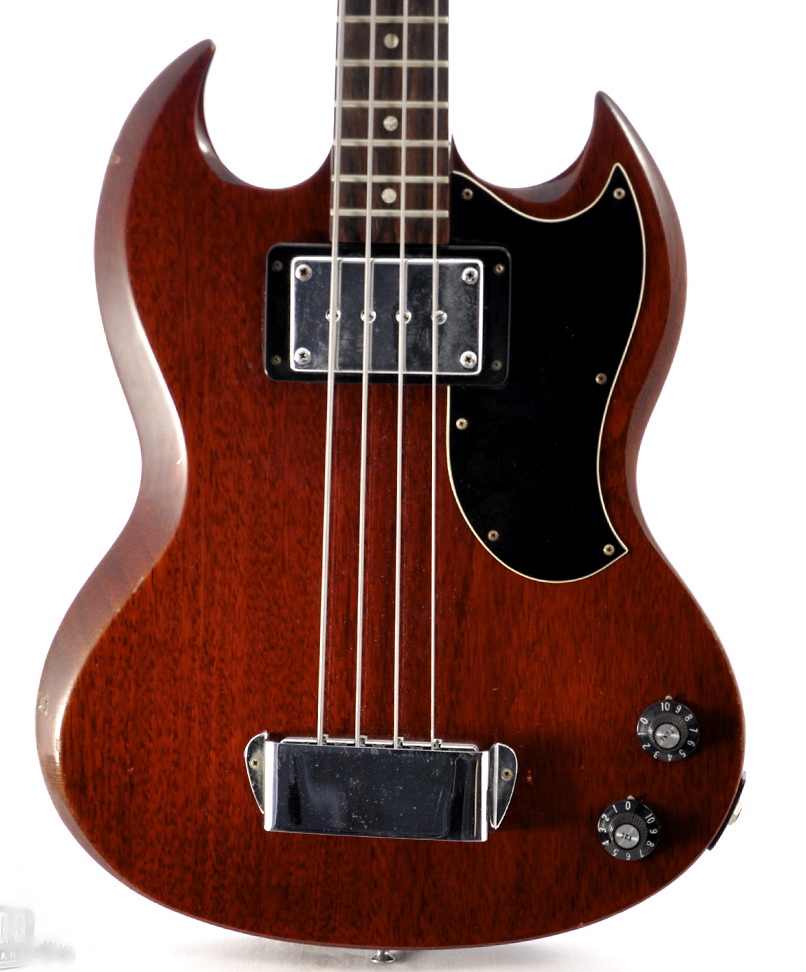
The EB-3 shared the same mahogany body, as its SG-cousins, and because it was a short-scale bass, the whole package was comfortably compact and light.

The neck pickup is a huge mother of a humbucker, with a much smaller companion mounted close to the bridge. The very first instruments had a black plastic cover on the front pickup, which was painted silver-metallic, but soon Gibson introduced a proper metal cover on the neck humbucker. The four-way rotary selector gives you each pickup on its own, both pickups together, as well as the rather strangled-sounding baritone-variant.

At the start of the Seventies the neck material was changed to maple for added strength, with the neck humbucker’s position moved to halfway between the end of the fingerboard and the bridge pickup.

During the years 1969-74 Gibson also offered a long-scale version – the EB-3L – most of which featured a spanish-style headstock (see below). Because of its longer neck the EB-3L was noticeably neck-heavy, though.

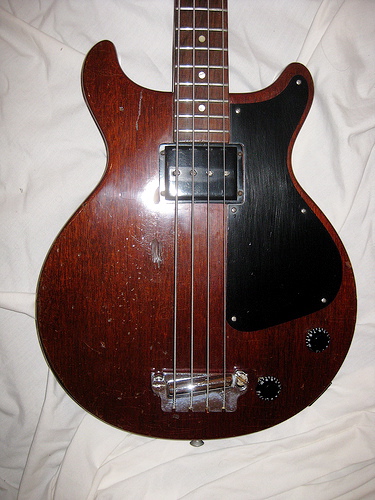
The EB-3’s kid brother is actually the model’s predecessor: the EB-0 was first introduced in 1959 with a double-cutaway Les Paul Junior -style body (see above).

In 1961 the EB-0 was changed to conform to the SG-look. In the mid-Seventies the EB-0’s single pickup was also moved closer to the bridge. From 1962 to ’65 a fuzz-equipped version was also available (the EB-0F).

****

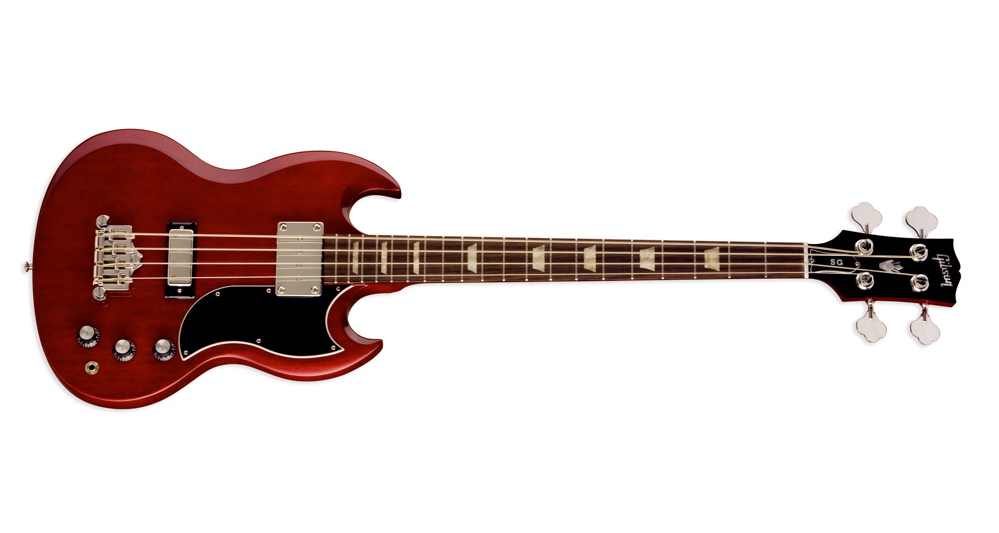
At the moment Gibson offers two USA-made SG-basses: The SG Standard Bass Faded comes in Gibson’s faded finish and sports dot inlays in the fretboard.  The SG Standard Bass is gloss-finished and features crown-style inlays. Both basses use a Jazz Bass -style volume-volume-tone-setup in place of the original four controls plus rotary switch.

****

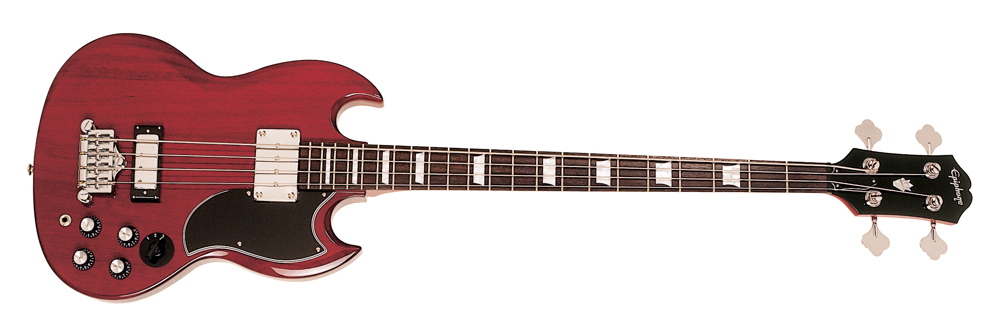
Epiphone’s cost-conscious EB-3 is only offered as in a long-scale version.

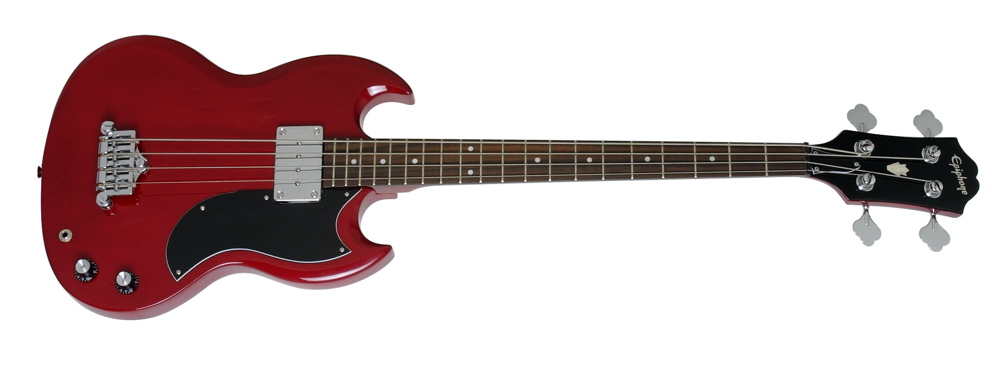
The Epiphone EB-0 is an even more affordable, bolt-on short-scale bass.

****

The fat and flexible tone of the EB-3 (as well as the EB-0) was well received by many Blues and Rock bassists in the late-Sixties and early-Seventies.

The best-known EB-3-users have been The Cream’s Jack Bruce and Free’s bassist Andy Fraser.

Here are Gibson’s own sound examples for the SG Standard Bass:

bridge pickup

both

neck pickup

Classic Basses, part 4: Gibson EB-2

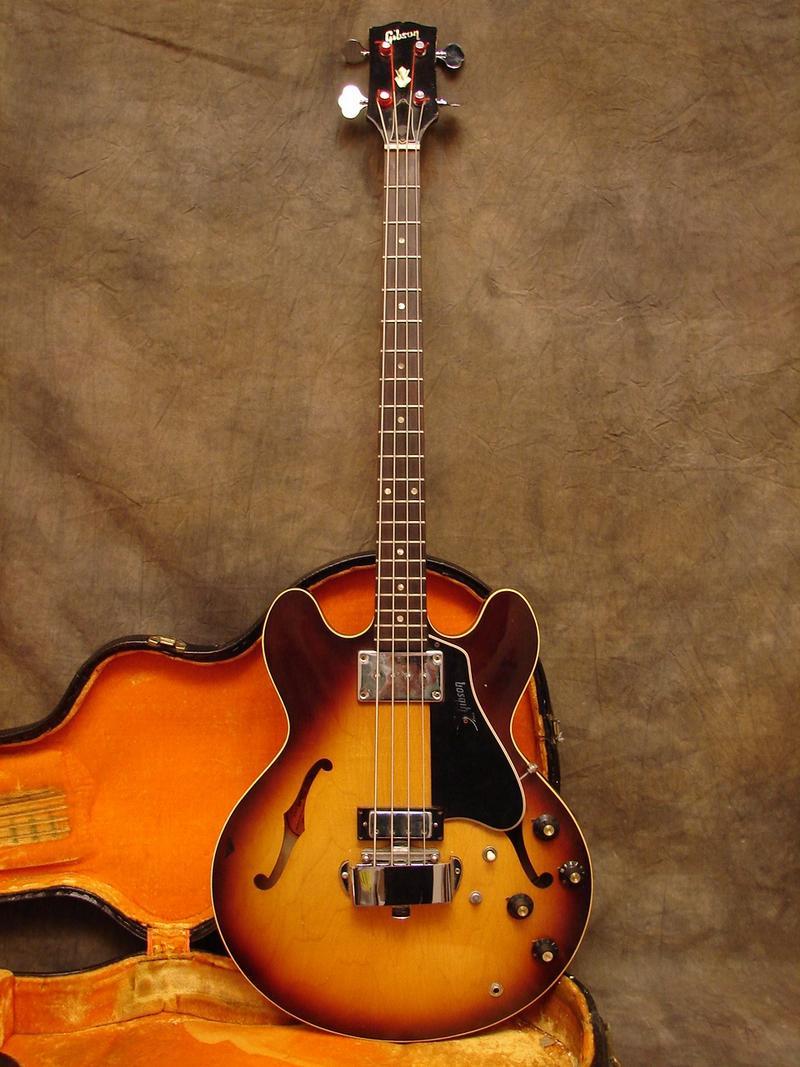
The Gibson EB-2 was the company’s bass counterpart to its classic ES-335/345/355-range of semiacoustic guitars. This short-scale bass was built with the same body as the guitars: steam-pressed maple plywood (4-ply) with a maple centre block to suppress feedback. The neck was crafted from mahogany and rosewood was used for the unbound fingerboard.

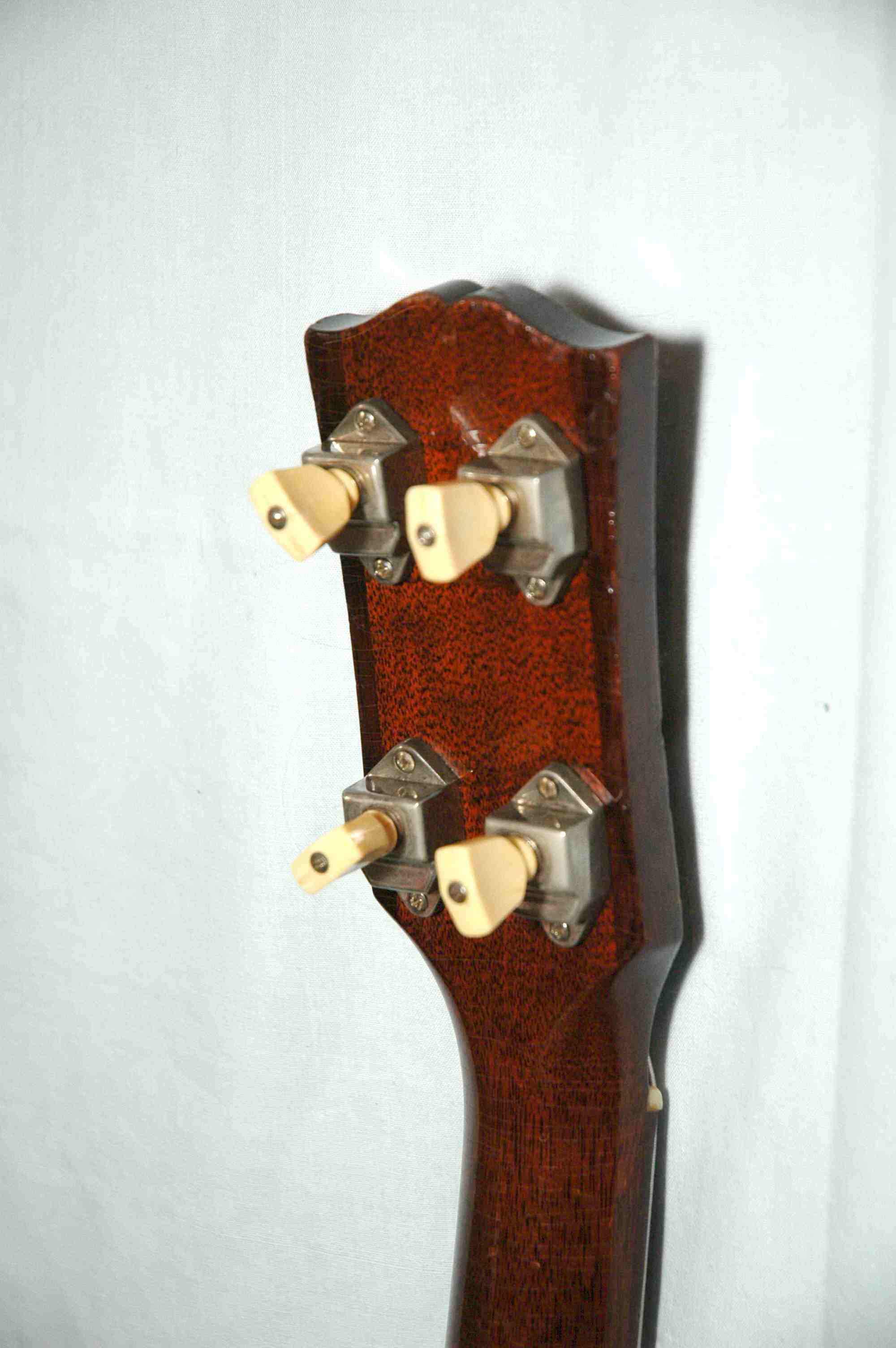
The first run of EB-2-basses (1958–’61) was equipped with back-facing, banjo-style tuning machines (until 1960), as well as a large neck humbucker with a black plastic (Bakelite) cover. A pushbutton next to the pre-compensated one-piece stud bridge engaged the ”baritone”-filter.

****

After a short break in production the EB-2 was reintroduced in 1964, now with the same metal-covered pickup as used on the EB-0/EB-3 solid-body bass.

In 1966 Gibson came out with the EB-2D – a version equipped with two pickups.

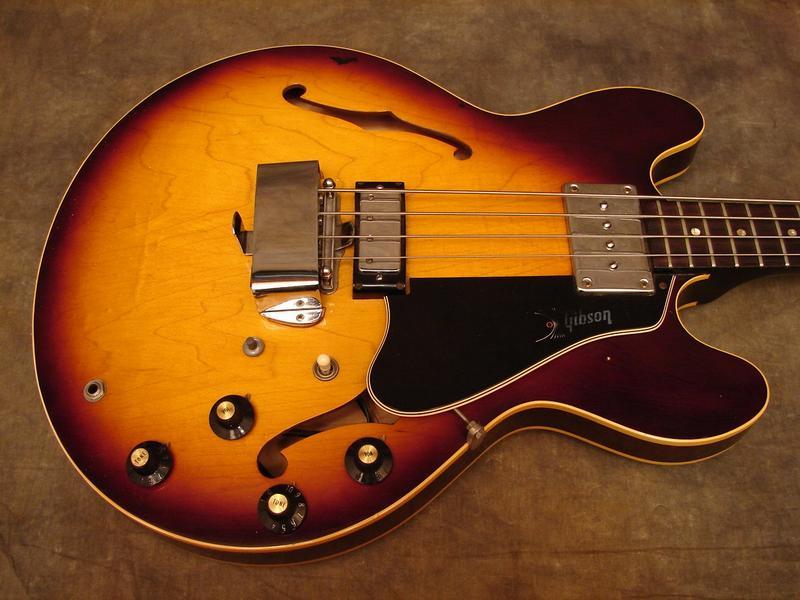
Starting in 1960, all Gibson-basses had a (detachable) mute attached to their bridges (on the photo below you can see the mute between the bridge and the bridge pickup).

Production of the Gibson EB-2 was phased out at the end of 1970, while the EB-2D stayed in production until 1972.

****

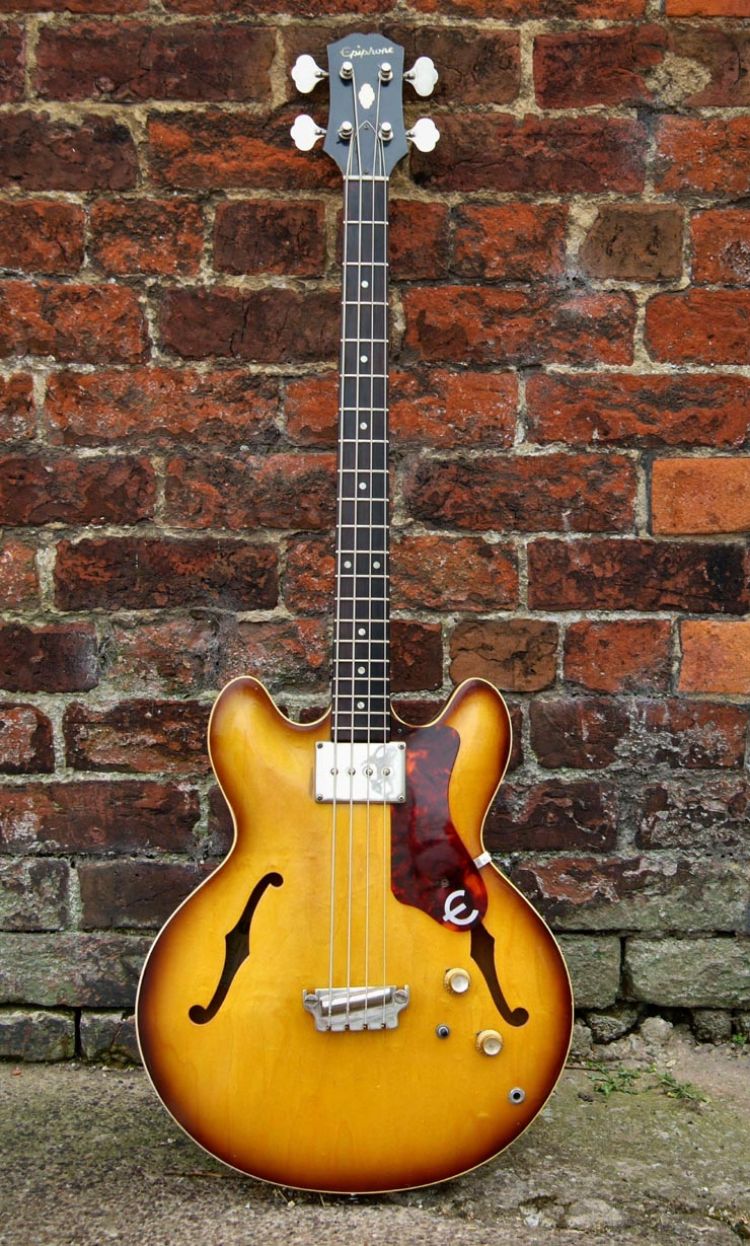
Between 1960 and 1970 Gibson also produced an alternative version of the EB-2 – the Epiphone Rivoli EBV-232.

Both the Gibson EB-2 as well as the Epiphone Rivoli were especially popular among British Blues Boom bands in the Sixties (famous users include the Yardbirds’ Paul Samwell-Smith, as well as the Animals’ Chas Chandler).

Klassikkobassot, osa 4: Gibson EB-2

Gibson EB-2 oli ES-335/345/355-mallistoon kuuluva basso. Lyhytskaalaisella bassolla oli samankokoinen runko kuin kitaramalleissa. Runko tehtiin muotoon prässätystä vaahteravanerista (neljä kerrosta), ja sen sisällä oli vaahterasta veistetty keskipalkki, joka vähensi feedbackia. Kaula oli mahonkia ja otelauta palisanteria.

Ensimmäisissä EB-2-bassoissa (1958–’61) oli taakse osoittavat, banjo-tyyliset virittimet (vuoteen 1960), sekä kaulahumbuckerilla musta muovikansi. Yksiosaisen tallan vierellä olevalla kytkimellä voi valita ”basso-” ja ”baritonisoundin” välillä.

****

Lyhyen tauon jälkeen EB-2 tuotiin takaisiin mallistoon vuonna 1964, nyt uudistetulla, metallisella mikrofonin kannella.

Kaksi vuotta myöhemmin Gibson esitteli EB-2D-version kahdella mikrofonilla.

Vuodelta 1960 kaikkiin Gibson-bassoihin asennettiin sordino, joka oli kiinnitetty suoraan tallaan (näkyy kuvassa tallan ja mikrofonin välillä).

Gibson EB-2:n tuotanto lopetettiin vuonna 1970, kun taas EB-2D pysyy mallistossa vuoteen 1972 saakka.

****

Gibson möi EB-2:lta 1960-’70 välisenä aikana myös rinnakkaisversion – Epiphone Rivoli EBV-232.

Gibson EB-2 ja Epiphone Rivoli olivat suosittuja soittimia useissa Brittiläisissä bluesbändeissä 1960-luvulla (esim. Yardbirds – Paul Samwell-Smith, Animals – Chas Chandler).

Klassikkokitarat, osa 8: Gibson Firebird

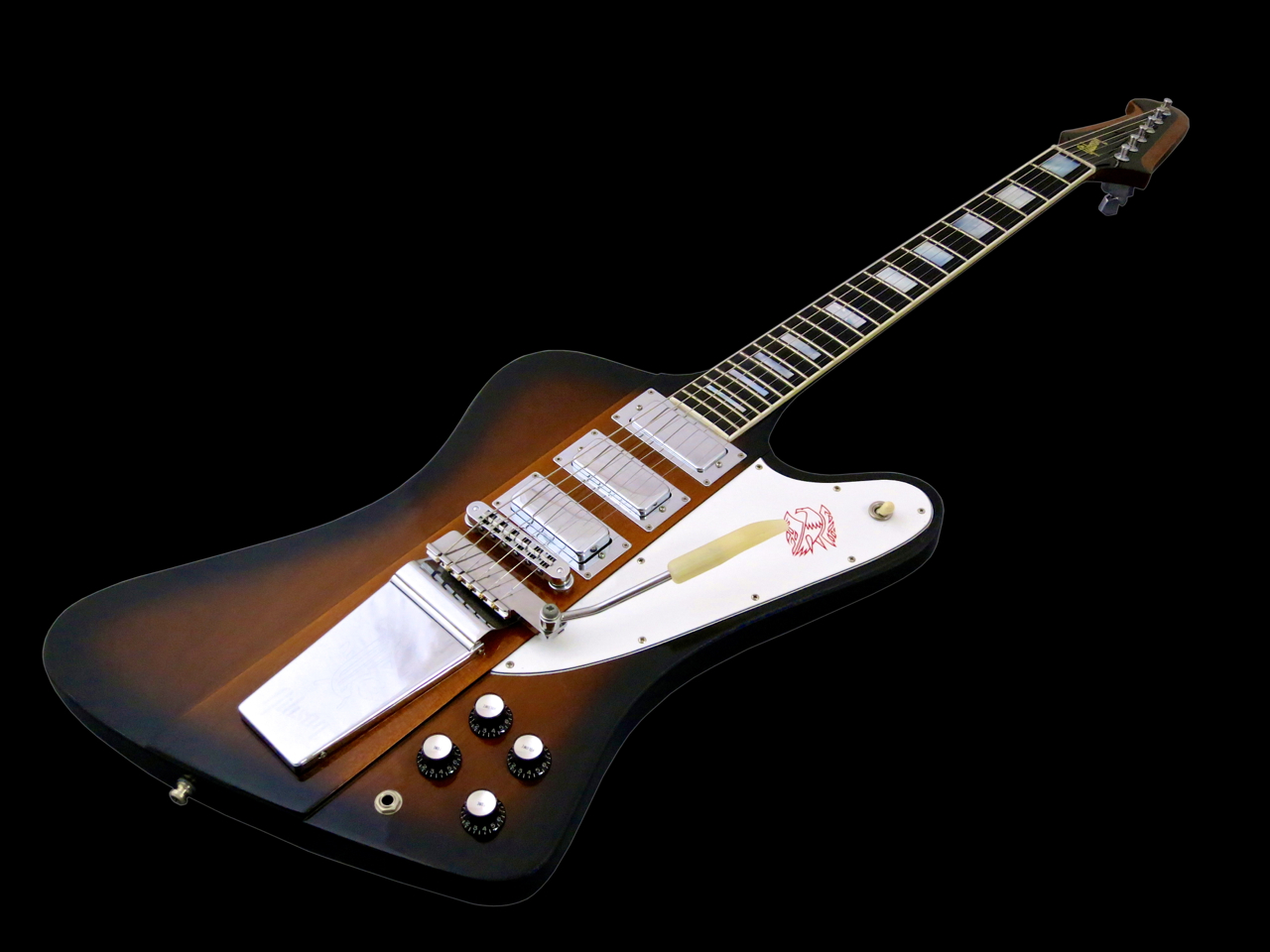
Gibson Firebird VII – beauty shot 1 – black

Tämän jutun otsikko olisi voinut olla ”Firebird: suuri tuntematon”, Gibson Firebird kun on jostain syystä firman klassikkomalleista vähiten laajasti tuttu. Syitä tähän ilmiöön ovat alkuperäisen malliston lyhyt tuotantokausi, sekä todella nimekkäiden soittajien puuttuminen Firebirdin käyttäjälistalta.

Firebird/Thunderbird-mallisto oli vuoden 1963 versio Gibsonin yrityksistä luoda moderneimman kitaran kuin Fender. Yritykset alkoivat jo vuonna 1958 Explorer- ja Flying V -malleilla. Gibsonin silloinen toimitusjohtaja, Ted McCarty, halusi luoda pramean soittimen, joka todistaisi kaikille, että firma ei ollut vanhanaikainen pitkäveteisien soittimien valmistaja. Firebird oli Gibsonin vastaus Fender Jazzmasterille.

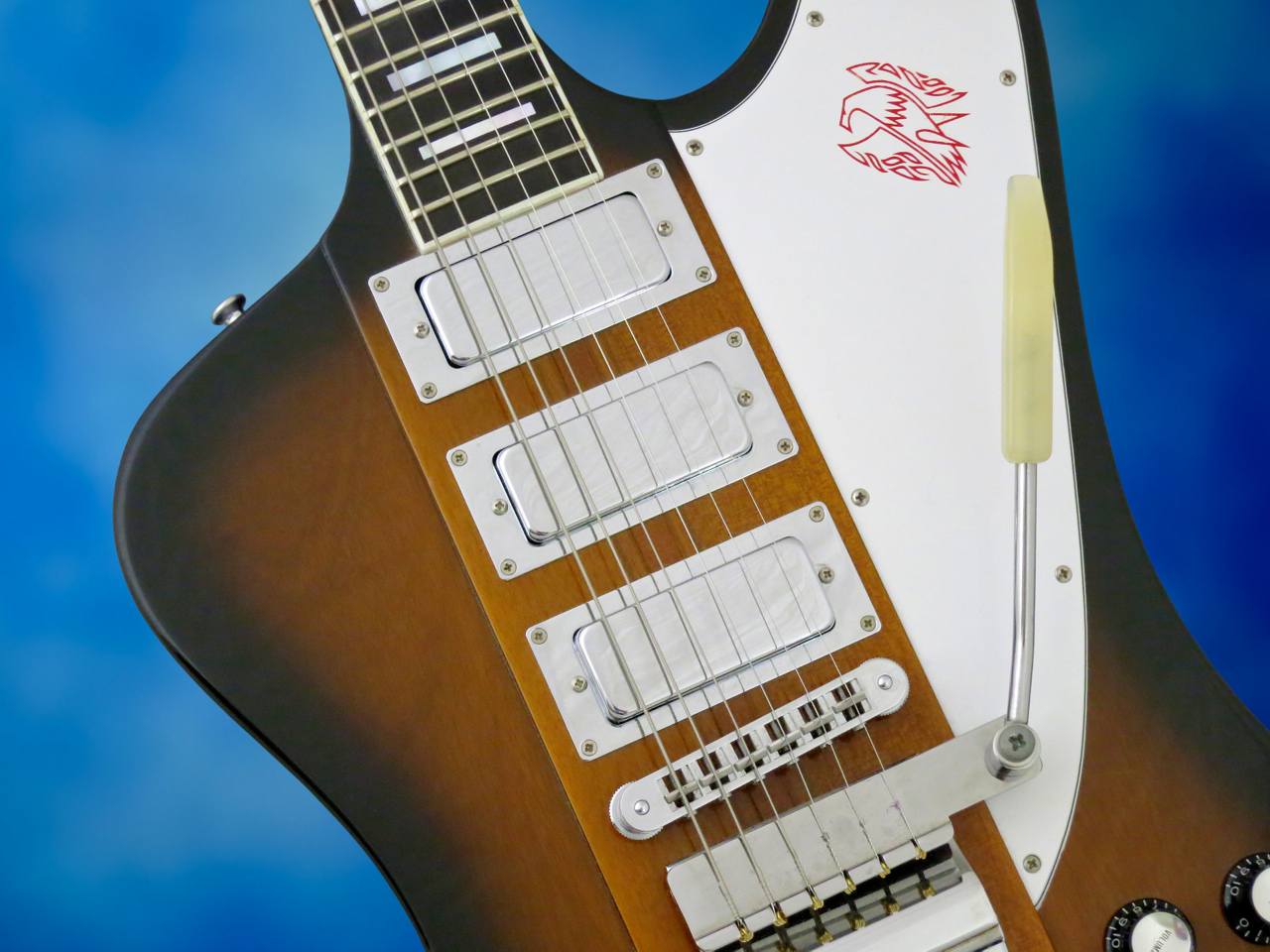
Gibson Firebird VII – pickups and Maestro

Tällä kertaa McCarty haki ulkopuolista apua: autoteollisuudesta tuttu suunnitelija Ray Dietrich sai tehtävän luoda soittimen designerin näkövinkkelistä. Dietrichin innovaatio oli ensimmäinen Firebird/Thunderbird-sarja (kuva yllä), jonka kutsutaan nykyään reverse-runkoiseksi (reverse = käänteinen), koska sen runko näyttää vähän kuin oikeankätinen kitara, joka on vasenkätisen kitaristin käytössä.

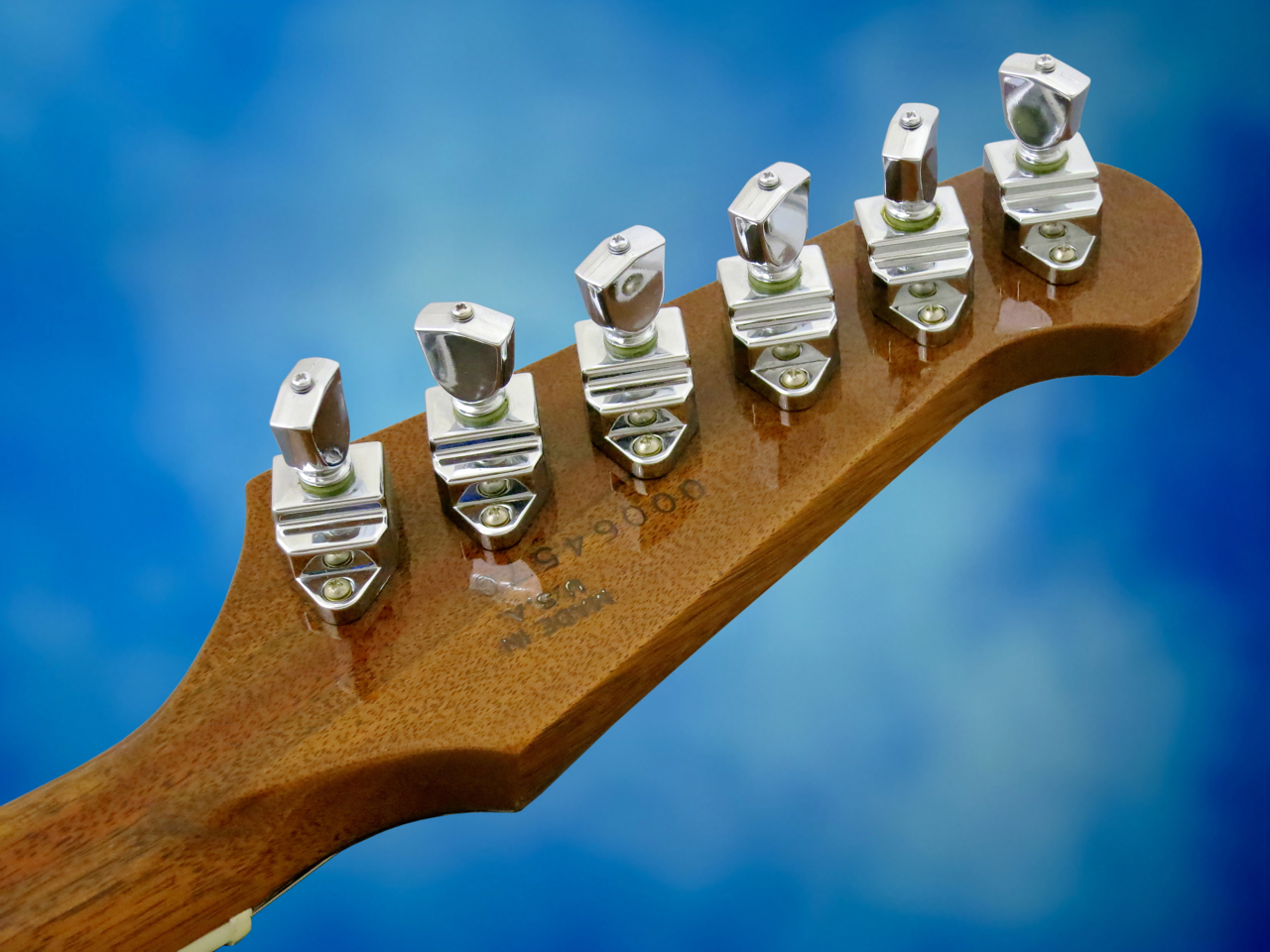
Gibson Firebird VII – tuners

Gibson päätti kokeilla firmalle uutta rakennustapaa: reverse-Firebirdeillä kaula jatkuu yhtenäisenä koko soittimen pituudella (through-neck). Tähän mahongista ja pähkinäpuusta veistettyyn  keskiosaan lisättiin mahonkiset runkosiivet. Sarjan toinen erikoisuus ovat banjo-tyyliset virittimet, joissa nupit ovat samassa linjassa viritystappien kanssa.

Alkuperäinen reverse-sarja (1963–’65) koostui neljästä mallista:

• Firebird I: yksi mini-humbuckeri tallan lähellä, palisanteriotelauta, pyöreät otemerkit, wraparound-talla

• Firebird III: kaksi mini-humbuckeria, reunalistoitettu palisanteriotelauta, pyöreät otemerkit, wraparound-talla, yksinkertainen vibrato

• Firebird V: kaksi mini-humbuckeria, reunalistoitettu palisanteriotelauta, Les Paul Standard -tyyliset otemerkit, pitkä Gibson Vibrola lyyra-kaiverruksella

• Firebird VII: kolme mini-humbuckeria, reunalistoitettu otelauta eebenpuusta,  neliskulmaiset otemerkit helmiäisistä, pitkä Gibson Vibrola lyyra-kaiverruksella, kullanväriset metalliosat

Standardiviimeistely oli kaikissa malleissa sunburst-liukuväritys, mutta ensimmäistä kertaa Gibson tarjosi asiakkailleen myös Fender-tyyliset, standardisoidut custom-värit optiona.

****

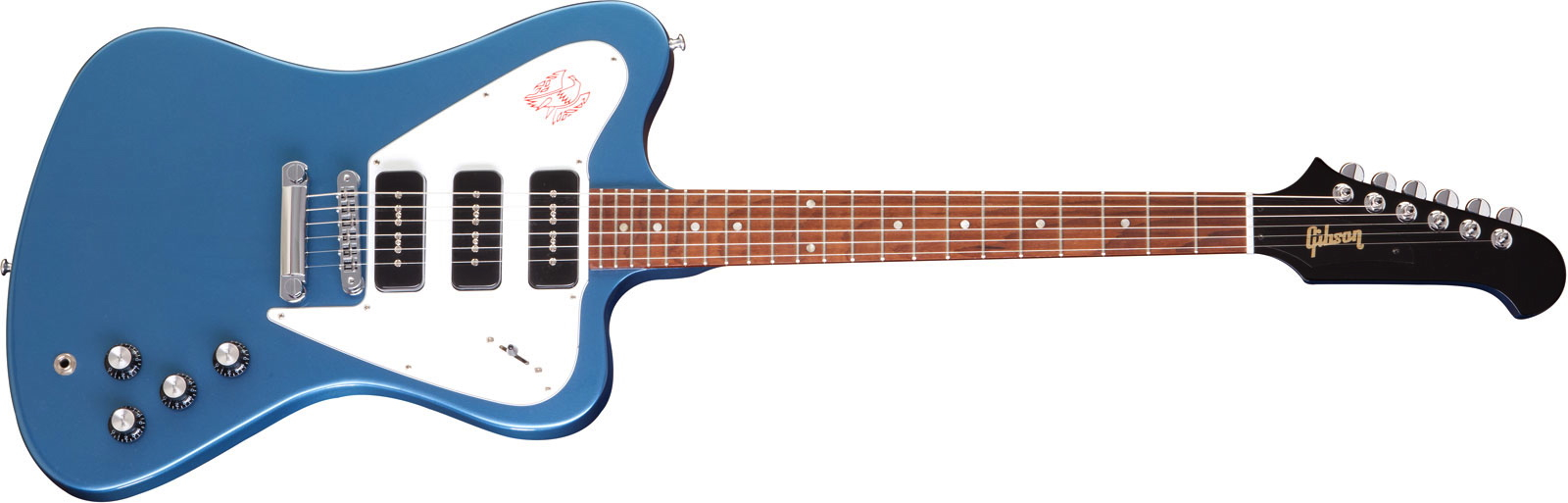
Valitettavasti Firebirdin alkuperäinen painos ei ollut kovin suosittu. Pienten myyntilukujen lisäksi Fender alkoi valittaa, että Firebirdin ulkomuoto oli rikkomus omaa Offset-waist-patenttia vastaan, ja uhkasi oikeustoimilla. Seikat johtuivat koko sarjan muuttamiseen tällaiseksi:

Kummallista kyllä, mutta non-reverse Firebirdit (1965–’69) näyttivät jopa enemmän Fender-kitaroilta kuin reverse-runkoiset vastineet. Non-reverse Firebirdeissä kaulaliitos oli muutettu takaisin Gibsonin perinteiseksi liimaliitokseksi. Firebird I- ja III-malleissa oli nyt P-90-mikrofonit – kaksi kappaletta I:ssä ja kolme III:ssa – kun taas Firebird V- and VII-malleilla oli yhä käytössä edeltäjänsä mini-humbuckerit. Otelauta oli kaikissa non-reverse Firebirdeissä palisanteria pyöreillä otemerkeillä, mutta ilman reunalistoitusta.

Firebirdin tuotantoa lopetettiin vuonna 1969 huonon myyntimenestyksen takia.

****

****

Sitemmin Firebirdit on otettu aina välillä uudelleen tuotantoon, mutta silti näitä kitaroita näkee edelleen suhteellisen harvoin.

Gibson Firebirdien tunnetuimmat soittajat ovat/olivat Johnny Winter, Phil Manzanera (Roxy Music), Brian Jones (Rolling Stones), Clarence ”Gatemouth” Brown, sekä Allen Collins (Lynyrd Skynyrd).

Gibson Firebird VII – full front

Classic Guitars, part 8: Gibson Firebird

Gibson Firebird VII – beauty shot 1 – sky

This piece could also have been titled ”The Firebird: A famous enigma”, as the Gibson Firebird is the least well-known of the company’s classic solid body electrics. The reason for this relative lack in interest is down to the short production run of the original series, as well as the fact that only a few famous guitarists have used a Firebird as their main axe.

The Firebird/Thunderbird-line of guitars and basses was the 1963-version of the ”Let’s beat Fender”-game that Gibson started in 1958 with the Flying V and the Explorer. Gibson’s then-president Ted McCarty wanted to come out with a snazzy guitar that proved that a) Gibson wasn’t a behind-the-times, old-fashioned company of old farts, and b) could compete with Fender’s current glitzy offerings (the Jazzmaster and the Jaguar) in the looks stakes.

Gibson Firebird VII – body

This time McCarty looked for help from outside the guitar industry. He hired renowned car designer Ray Dietrich to design a guitar purely from a designer’s viewpoint. What Dietrich finally came up with is now known as the ”reverse-body” Firebird-line (see picture above). These guitars (and their Thunderbird bass-brethren) are called ”reverse”, because, contrary to tradition (and ergonomical logic), the bass side of the body leans away from the neck, while the treble side is longer on the neck-facing side.

Gibson Firebird VII – tuners

Gibson decided on a novel way (for them) of building the guitar: reverse Firebirds feature a through-neck construction, with the neck and the body’s central section being crafted from the same laminated mahogany/walnut blank. The body wings are made from mahogany, while the tuners are very interesting back-facing machines.

The original run (1963–’65) of reverse Firebird-guitars comprised four models:

• Firebird I: one mini-humbucker in bridge position, unbound rosewood fretboard, dot inlays, wraparound bridge

• Firebird III: two mini-humbuckers, bound rosewood fretboard, dot inlays, dot inlays, wraparound bridge, simple vibrato

• Firebird V: two mini-humbuckers, bound rosewood fretboard, trapezoid (crown) inlays, long engraved Gibson Vibrola

• Firebird VII: three mini-humbuckers, bound ebony fretboard,  pearl block inlays, long engraved Gibson Vibrola, gold-coloured hardware

The standard finish was sunburst, but as as a Gibson-first, the Firebirds were also offered in a range of custom finishes, which weren’t very popular with the dealers, though.

****

Sadly, the reverse Firebirds weren’t selling very well. And then, when Fender started claiming Gibson had infringed on their ”offset waist”-patent and threatened a law suit, McCarty’s team decided on a swift redesign, which looked like this:

The non-reverse Firebirds (1965–’69) looked even more like a Fender-design, and abandoned the through-neck in favor of Gibson’s conventional set neck-joint. The Firebird I and III now sported P-90-pickups – two on the I and three on the III – while the Firebird V and VII stuck to their mini-humbuckers. All non-reverse models featured unbound rosewood fingerboards with dot inlays.

The non-reverse ’Birds didn’t set the guitar-playing world on fire either, so the company axed the series in 1969.

****

****

Since the mid-70s there have been plenty of reissues, as well as updated Firebird-models, but these clear-sounding guitars still tend to find favour with only a small clientele, compared to the rest of Gibson’s classics.

The best known users of Gibson Firebirds were/are Johnny Winter, Phil Manzanera (Roxy Music), Brian Jones (Rolling Stones), Clarence ”Gatemouth” Brown and Allen Collins (Lynyrd Skynyrd).

Gibson Firebird VII – full front

Kaksi joululahjaideaa

Tässä kaksi ideaa kitaristin joululahjaksi:

The Interactive Gibson Bible (2008)

Dave Hunter

(Jawbone/Outline Press, ISBN 978-1-906002-10-7)

Dave Hunterin kirja on ehkä hieman kuiva, sillä se sisältää kaikkien Gibson-sähkökitaroiden speksit, mutta ostos kannattaa jo pelkästään mukana tulevan, erinomaisen DVDn ansiosta.

DVDllä Dave Hunter ja sessioässä Carl Verheyen esittävät ja soittavat laajan kattauksen vanhoja Gibsoneita 1940-, -50 ja 60-luvuilta.

Tyylipuhdas kitaraporno – sekä silmälle että korvalle!

*******

Jeff Beck – Rock’n’Roll Party (DVD, 2010, Eagle Vision)

Jeff Beckin kunnianosoitus vuonna 2009 kuolleelle Les Paulille on suurella sydämellä toteutettu livetallenne. Beck heitti yhdessä Imelda Mayn, Mayn bändinsä ja usean yllätysvieraan kanssa kaksi upeaa keikkaa Iridium-klubissa, jossa Les Paul soitti vuosia säännöllisesti lähes kuolemaansa saakka.

Tämä levy, joka on saatavilla myös CD-versiona, pitäisi löytyä jokaisen kitaristin kokoelmasta!

Pidä blogia WordPress.comissa.

Ylös ↑