Review: Zoom H6

Zoom H6 – perspective 1

Zoom have released their new handy recorder flagship:

The Zoom H6 is a six-track mobile recorder with exchangeable microphone modules.

****

Zoom H6 – package and case

Zoom’s H6 (rrp in Finland: 398 €) comes in its own carrying case.

Zoom H6 – the set

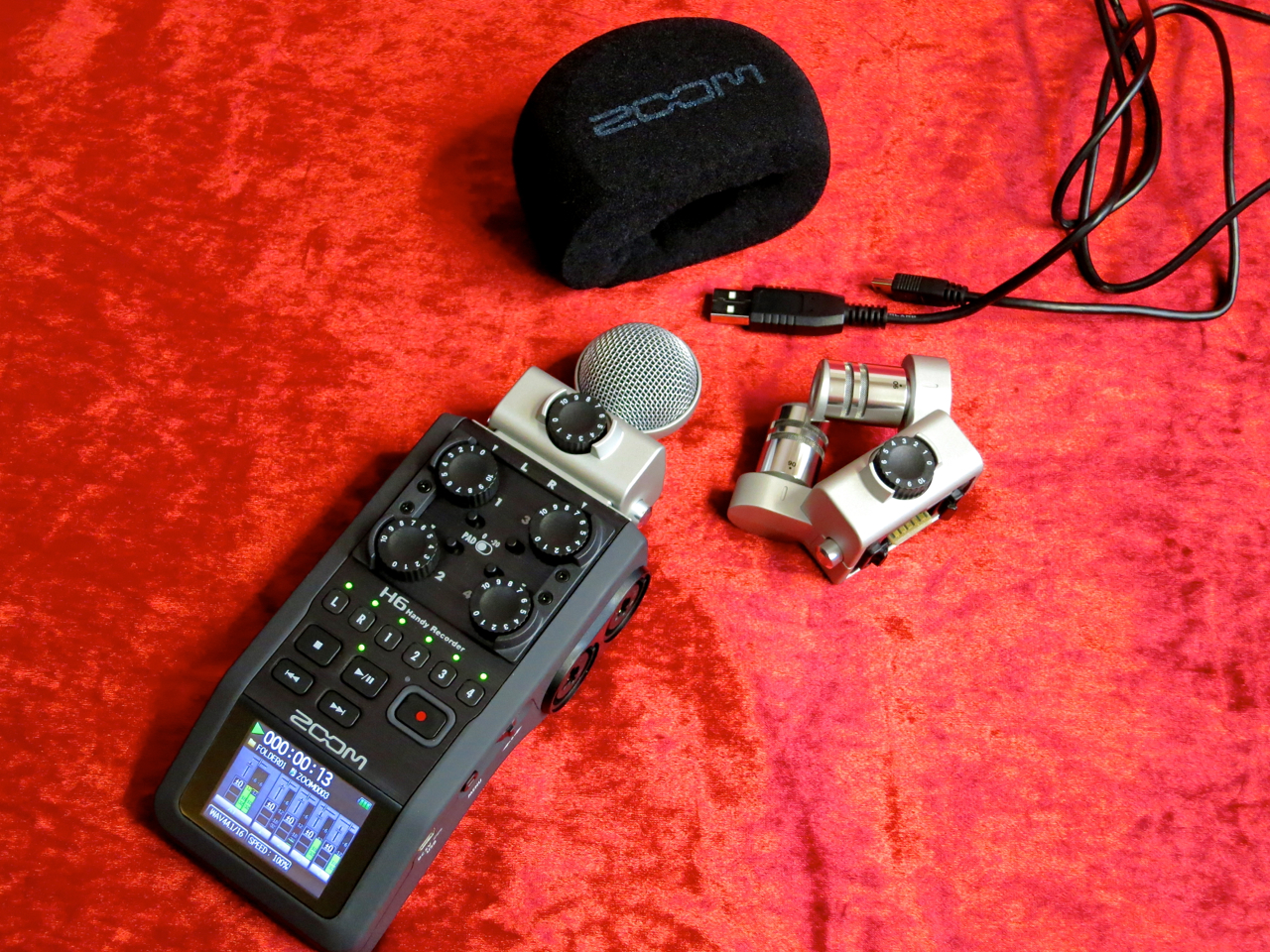
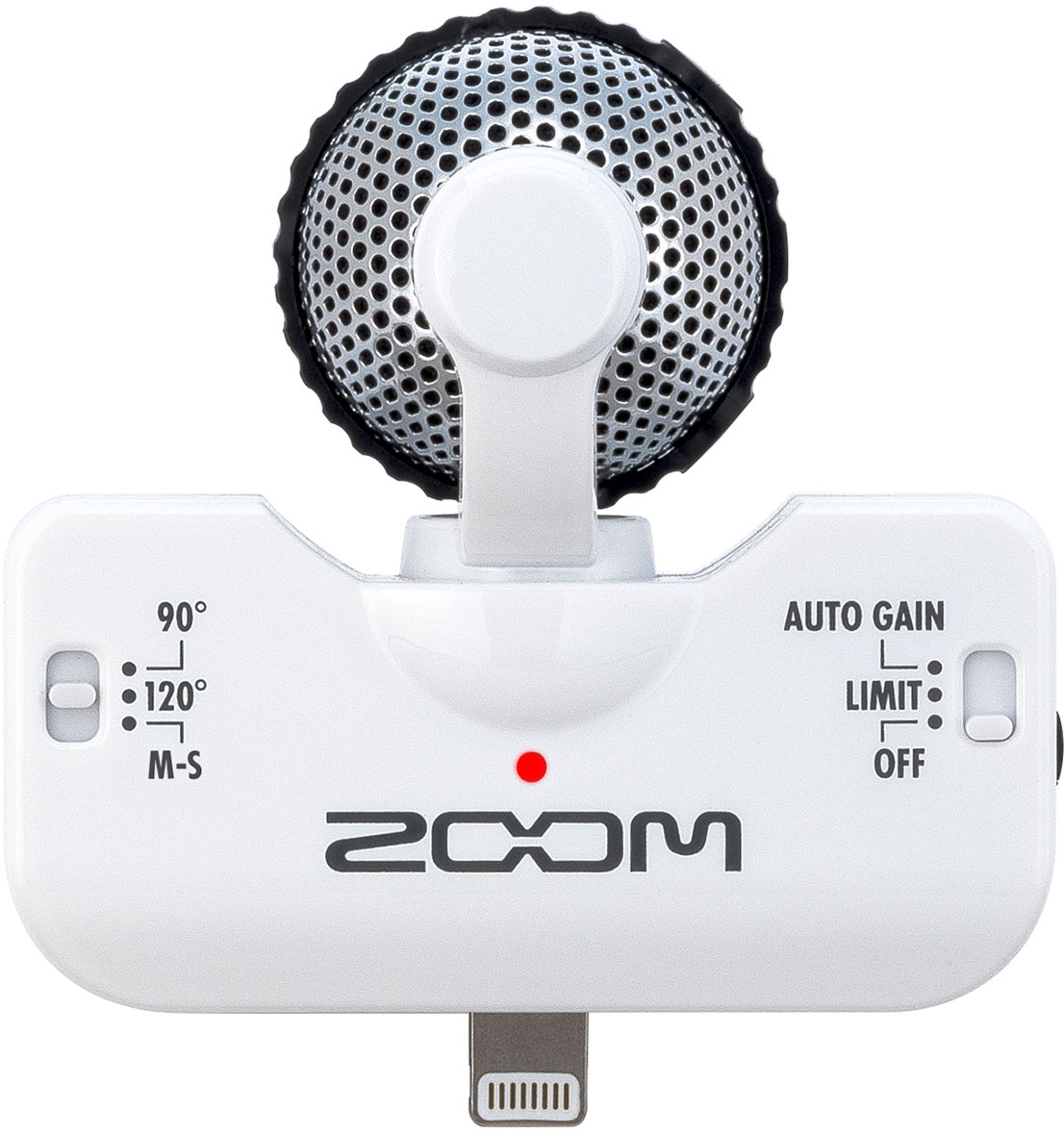
The package includes the H6 itself, two mic modules – the XYH-6 offering XY-stereo and the MSH-6 with an MS-stereo capsule – a foam windscreen, a USB-cable, four AA-size batteries and a 2 GB SD-card.

Also included is Steinberg’s Cubase LE audio-sequencer software.

h6n

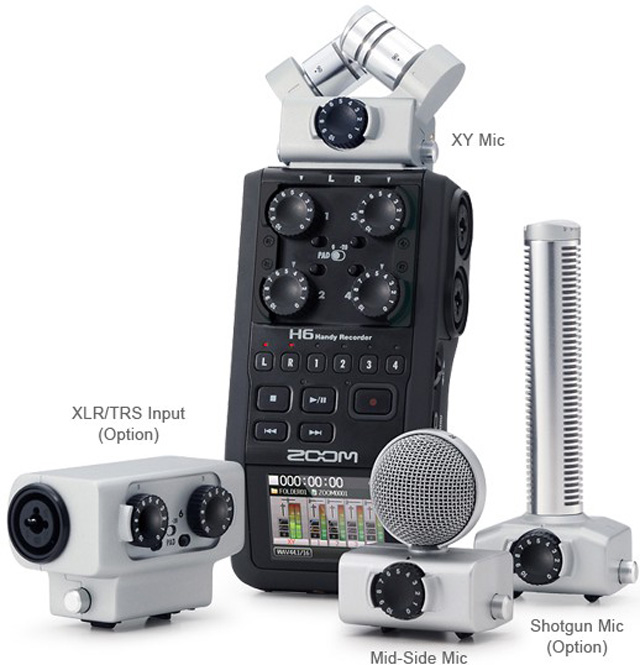
At the moment the H6 is the only field recorder offering you different exchangeable mic and preamp modules.

In addition to the supplied XY- and MS-modules you can also buy Zoom’s shotgun module (SGH-6) or a module with an additional pair of XLR-/TRS-inputs (EXH-6).

Zoom H6 – accessory pack

For this review we were also supplied with Zoom’s accessory pack for the H6 (APH-6), which contains a furry windshield for outdoor recording, as well a USB-power supply and a remote control.

****

Zoom H6 – XY-module

Except for its control panel the Zoom H6 is entirely covered in a non-slip rubbery coating, which also cuts down on handling noise during recording.

Zoom H6 – XY 90 deg

A typical Zoom-feature has been carried over into the recorder’s XY-module:

You can switch the stereo width of the XY-setup by turning the capsules. The options are the slightly narrower 90 degrees angle…

Zoom H6 – XY 120 deg

…and the wider pickup pattern of 120 degrees.

Zoom H6 – left side view

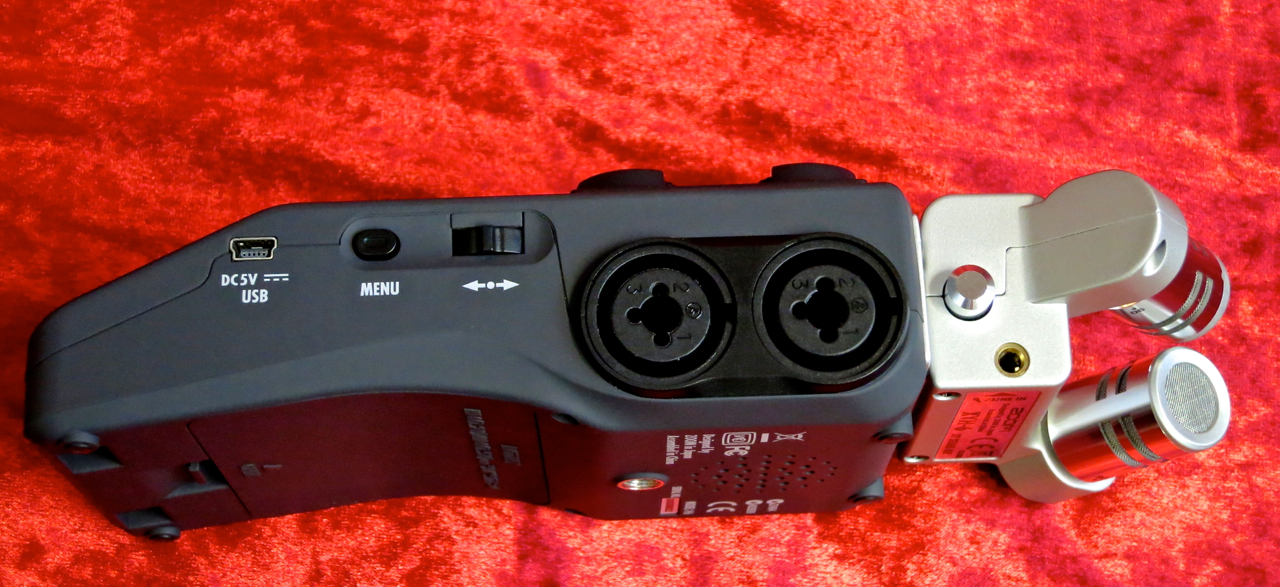
The combined XLR/TRS-connectors have been placed on both sides of the H6. The Zoom offers switchable phantom power for condenser mics.

On the left side you’ll find the access to the SD-card, as well as the headphones output and the volume control.

Zoom H6 – right side view

In addition to the recorder’s mini-USB-port the right side is home to the Menu-button and the device’s nifty navigation toggle.

Zoom H6 – back view

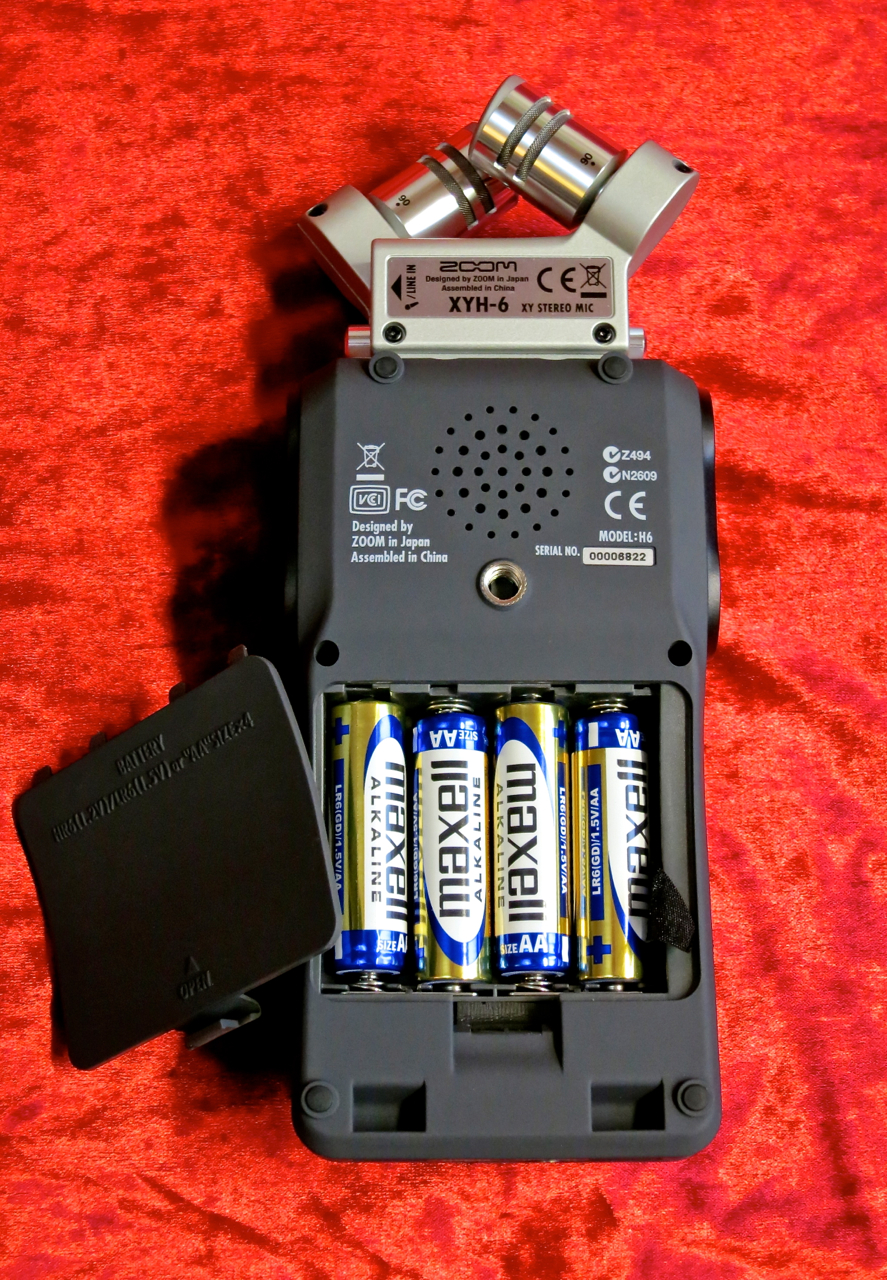
This recorder runs on four AA-size batteries, and will run for approximately 20 hours on a fresh set of alkalines.

You can place the Zoom on most camera tripods, thanks to its standardised thread. There’s also the HS-1 hot shoe adapter available, which makes it possible to mount the recorder straight onto a camera.

The small monitor speaker isn’t particularly Hi-Fi, but it’s good to have it for quick checks.

Zoom H6 – line + remote

The unit’s line level output, as well as the connector for the optional remote control, has been placed on the bottom rim of the Zoom.

****

The Zoom H6 can handle two audio formats:

Linear WAV-files offer you sample rates of 44.1, 48 or 96 kHz with 16 or 24 bits of resolution. When you choose WAV as your recording format the H6 works as a multitrack recorder, which makes it possible to do overdubs, and which allows you to mix the recorded tracks afterwards. You can do your mixdown internally, using the Zoom’s own Project Mixer, or by exporting the separate tracks to an audio-sequencer.

Another function that only works when you’ve chosen WAV as your recording format is called Backup Record. This nifty function records the input signal from the exchangeable module twice – one set of tracks uses your input gain settings and is routed to the L/R-track, as usual, while the second set is recorded with 12 dB of attenuation as the so-called Backup-track. The Backup-track is your safety in case your own settings were too hot.

The big advantage of using the H6 in MP3-mode is, of course, this mode’s greatly extended recording time, made possible by data reduction. The recorder lets you choose from many different recording quality settings between 48 and 320 kbps. When in MP3-mode you use the Zoom’s Monitor Mixer to mix all of the six inputs into one stereo file, which is the recorded. This means that, when recording using the MP3-format, the end result is always a single stereo file, instead of the separate tracks you get when running in WAV-mode.

Zoom H6 – MS-module

When you’re using the MS-module you can adjust the side-mic level, either before recording (WAV and MP3) or afterwards if you’ve recorded the module’s input signal using the Zoom’s MS-Raw-mode (WAV only).

More information on MS-stereo can be found HERE.

****

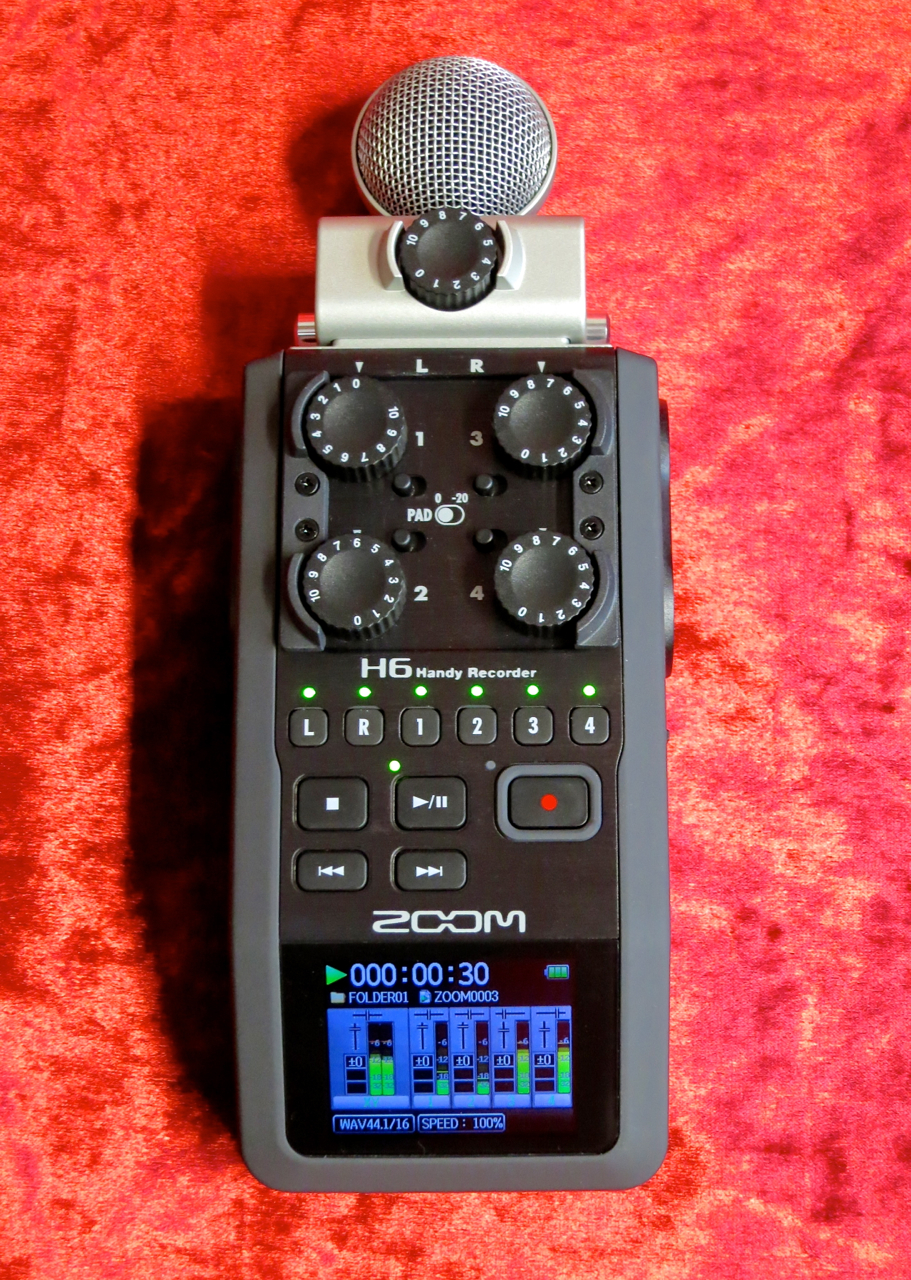
Zoom H6 – level knobs

The Zoom H6 is very easy to use, because the signal routing is fixed:

The module’s output always goes to the L/R-track (stereo), while inputs one to four are routed to their corresponding mono tracks (1-4).

Zoom H6 – display

Beneath the Gain-controls there’s a row of track status buttons, as well as the recorder’s ”transport” buttons.

Zoom H6 – monitor mixer

The Zoom’s Monitor Mixer is where you adjust the signal levels and pan positions of all the signals for monitoring.

The Monitor Mixer window also shows you the status of each channel’s bass cut, compressor/limiter and phantom power.

Zoom H6 – menu view

This is what the Menu-view looks like.

Zoom H6 – project mixer

To mix down recorded tracks you use a different internal mixer, called the Project Mixer.

The Project Mixer allows you to adjust each track’s volume and pan position, as well as the playback pitch for each track (without changing the playback speed).

****

Zoom H6 – top view

In my opinion Zoom’s H6 hits the bull’s eye:

The exchangeable mic modules give you an enormous amount of flexibility to tailor the recorder quickly to the recording situation you find yourself in. The H6 is easy to use, and the recorder’s sound quality is very, very good. Thanks to the built-in metronome and chromatic tuner it’s easy to make sure you play in time and in tune. I’ve also enjoyed the Zoom’s nice compressors and limiters, which work very musically.

To demonstrate the H6’s performance and sound I recorded a short song using the recorder’s overdub function. I used the X/Y-module (at 90 deg) to record the steel-string acoustic, and recorded two mandolin tracks and two vocals with my trusty Shure SM57.

First, I mixed the song using the Zoom’s internal mixer, after which I exported the stereo file to Garageband, where I cut off the count-in and added a little bit of reverb:

I also tried taking the other route by exporting all the separate files from the H6 into Garageband, where I remixed the song using the original tracks:

****

I used a series of sine-wave sweeps to give you an idea of the effect the side-mic level has on the stereo-width of the recorded material. The lower the side-mic level is, the narrower your stereo image gets.

Side-mic +6dB:

Side-mic -2 dB:

Side-mic -9 dB:

Side-mic -22 dB:

Side-mic off:

****

Zoom H6 – perspective 2

I think Zoom’s H6 is a great field recorder and portable multi-track studio. The H6 works great to capture your song ideas or to for quality recordings of your band rehearsals or live gigs. The Zoom makes pro-quality recording on the road possible.

****

Zoom H6

Finnish distributor: Studiotec

Zoom H6 – 398 €

APH-6 – 48 €

EXH-6 – 58 €

SGH-6 – 118 €

****

Pros:

+ exchangeable L/R-modules

+ rugged build

+ colour display

+ Overdub-, Pre Record- ja Backup Record -functions

+ quality compressor/limiter-section

****

Review: Tokai ATE-33N Thinline

****

Tokai ATE-33N Thinline – beauty shot 2

Tokai Guitars are known for their well-made copies of classic guitar and bass models.

The brand-new Tokai ATE-33N Thinline is part of Tokai’s more affordable Chinese-made range, and represents their version of a Thinline Tele-type guitar.

****

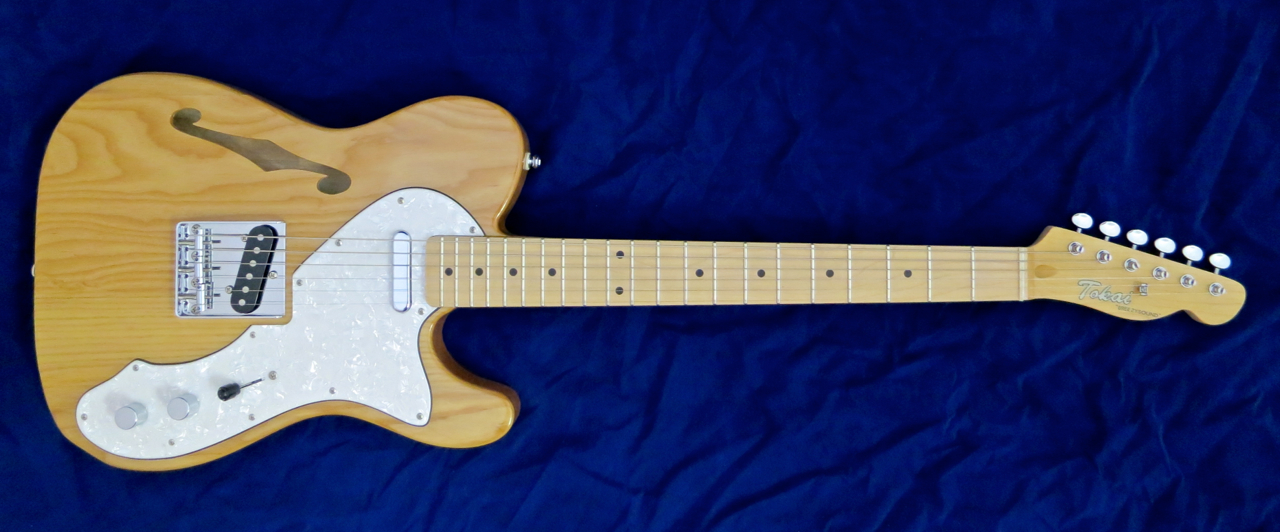
Tokai ATE-33N Thinline – full front

The Tokai ATE-33N Thinline (current price in Finland 437 €) is a real looker and will delight fans of the natural look, despite its moderate price tag.

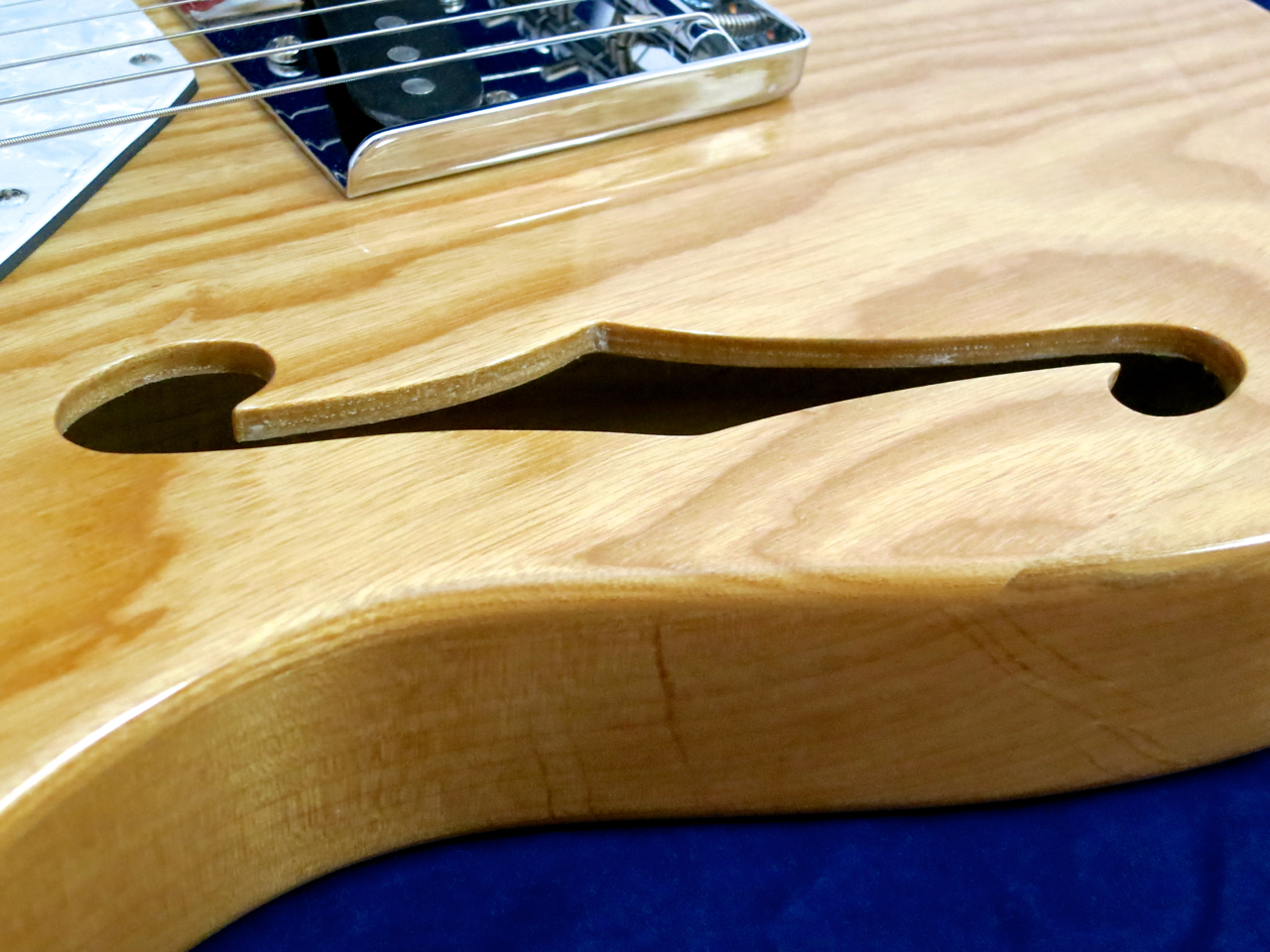
Tokai ATE-33N Thinline – f-hole

Roger Rossmeisl – known for his classic Rickenbacker designs – hit upon the concept of the Thinline Telecaster in the late 1960s when working for Fender. The original version was made with a body which featured three large pockets routed out from the back. A separate, glued-on solid piece of wood served as the body’s back.

Tokai approaches the construction of the ATE-33N Thinline the other way around: the pockets are routed into the front of the alder body, which then receives a beautiful, five millimetre thick swamp ash top. This solid ash top was made from three side-by-side pieces on our test sample, with the nicely matched grain efficiently disguising the glue lines.

Tokai ATE-33N Thinline – full back

The body of Tokai’s ATE-33N Thinline sports a gloss finish, while the neck has received a thin satin finish.

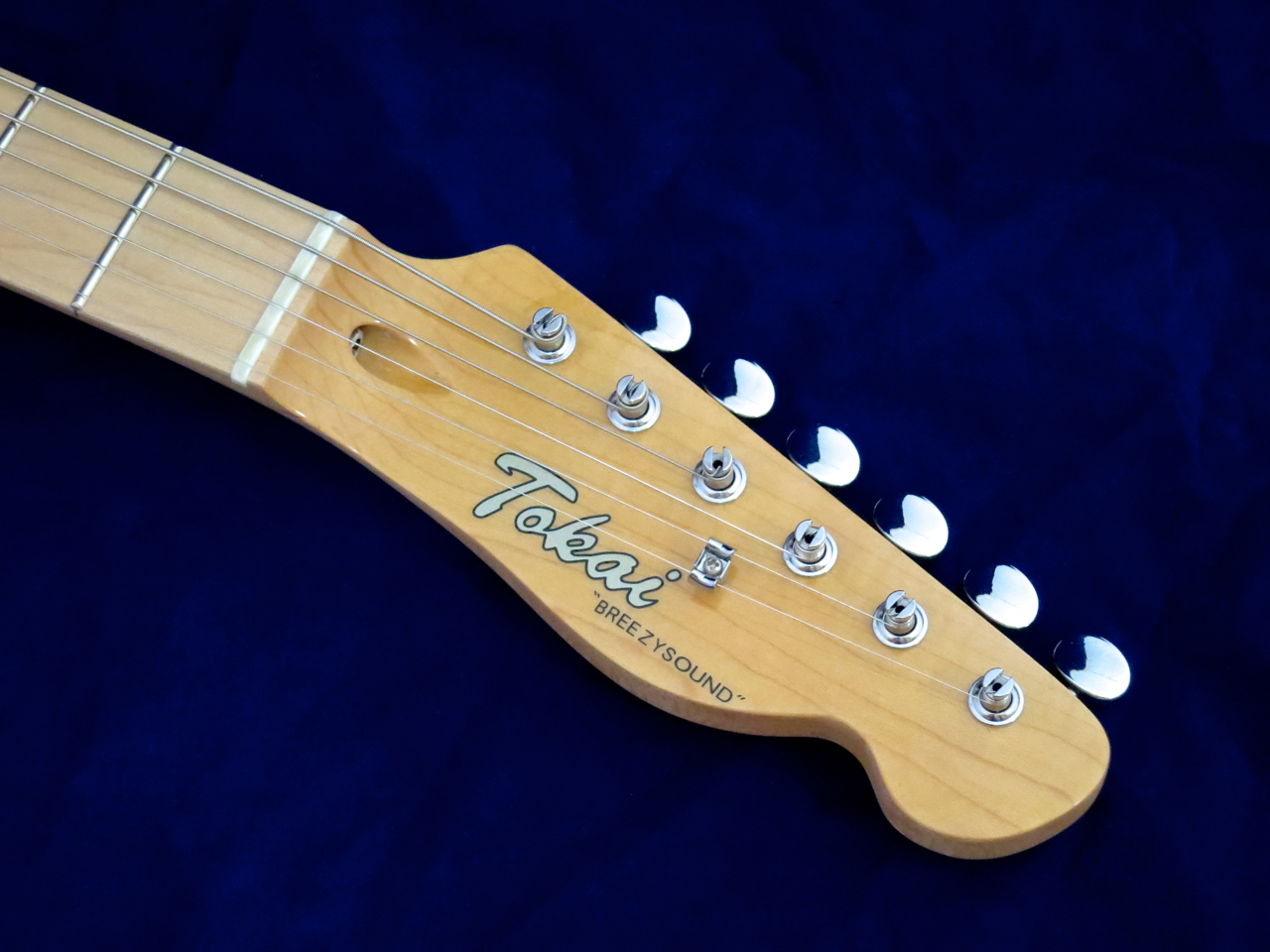
Tokai ATE-33N Thinline – headstock

This Tokai is no slave to vintage fashion – truss rod adjustment is at the headstock end of the neck, which is a far more practical solution.

Tokai ATE-33N Thinline – tuners

These nice Kluson-copies work fine.

Tokai ATE-33N Thinline – fretboard

The maple fingerboard has a larger radius (meaning it’s flatter) and fatter frets than its Sixties counterpart, making the ATE-33N easier to play. Especially string bending is far more comfortable with this type of neck.

Tokai ATE-33N Thinline – neck joint

The neck joint is a traditional four screw affair.

Tokai ATE-33N Thinline – body beauty 1

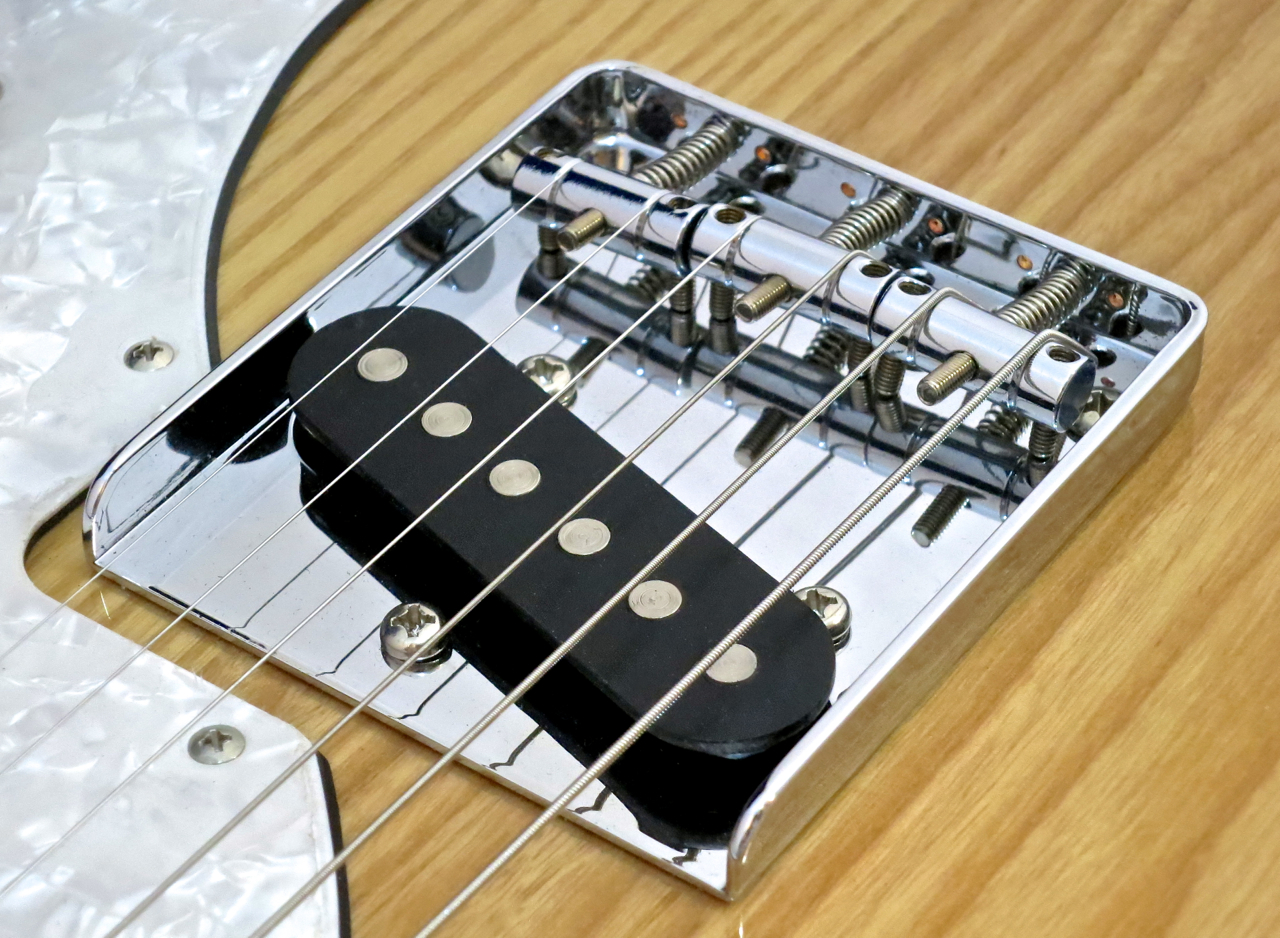
Tokai ATE-33N Thinline – bridge

From a sonic standpoint, the traditional three-saddle, bent sheet-metal bridge that doubles as a pickup frame is probably a Tele-style guitar’s most important ingredient.

With these bridges octave compensation is always a matter of compromise, but most guitarists learn to live with the design’s limitations.

Tokai ATE-33N Thinline – pickups

The ATE-33N Thinline is equipped with two singlecoil pickups that use soft steel slugs as polepieces and bar magnets stuck to the bottom of the bobbin.

Tokai ATE-33N Thinline – controls

Here’s a look at Tokai’s three-position switch and the guitar’s master volume and tone controls.

****

Tokai ATE-33N Thinline – beauty shot 1

Now seems to be the perfect time to buy an electric guitar, judging by the sheer quality displayed by the very favourably priced Tokai ATE-33N Thinline.

The ATE-33N Thinline seems to tick all the right boxes with ease:

The satin-finished maple neck feels great. It’s rounded D-profile provides a sturdy fundament for tone and sustain, and it is comfortable to play, too. This model’s well-dressed frets and the fretboard’s flatter radius make a slinky set-up possible. Our test sample measured 1.4 mm for the low E and 1.2 mm for the high e (at the 12th fret), and it played well and without string rattles all across the neck.

Played acoustically you can clearly hear the open character of the hollowed out thinline body. Naturally, a T-style thinline won’t win a shouting match over a ES-335, but the hollowed out pockets do still make a discernible difference in this Tokai.

There’s lots of talk on guitar forums about the nastiness of many budget Tele-pickups, but I can only state that Tokai’s set of Mk3-pickups perform rather well. The neck pickup is war and round, but never muddy or one-dimensional. The bridge unit dishes out the Country twang with the right amount of bite and conviction. And the Tokai also nails my favourite Tele tone – the chimey middle setting with both pickups on. This means that changing the Tokai pickups for some aftermarket brand wouldn’t be my first priority, at least…

Here’s a taste of the ATE-33N Thinline’s clean tones, starting with the neck pickup and moving on from there:

And here’s a bit of Rock riffing:

****

Tokai ATE-33N Thinline – body beauty 2

In my opinion the Tokai ATE-33N Thinline scores high in the value-for-money stakes. It is a beautiful-looking instrument that plays very well indeed.

I have to admit having some reservations about the pickups before plugging in, but the sound of the Mk3-units has really won me over. This Tokai dishes out all the T-style tones we’ve come to expect from a traditionally styled and built example.

And should you decide to upgrade the pickups, regardless, the ATE-33N Thinline will prove to be a great starting point for any such ventures.

****

Tokai ATE-33N Thinline

437 €

Finnish distributor: Musamaailma

****

Pros:

+ outstanding value for money

+ workmanship and finishing

+ playability 

+ sound

****

Tokai ATE-33N Thinline – logo

Review: Bluetone Amps Princeton Reverb

****

Bluetone Princeton Reverb – opener

Finnish boutique amp company Bluetone is yet to become a household word. Nevertheless, Bluetone’s dynamic duo of Harry Kneckt and Matti Vauhkonen have already garnered lots of praise with their all-valve designs, and the word keeps on spreading steadily.

Custom Sounds in Helsinki have recently started to stock Bluetone-amplifiers, and they were kind enough to supply Kitarablogi with a Bluetone Princeton Reverb combo for testing.

****

Bluetone Princeton Reverb – full front

The Bluetone Princeton Reverb (current price in Finland approx. 1,600 €) is Bluetone’s handwired – and slightly updated – version of a 1960s Fender Princeton Reverb (in its AA1164 guise). Bluetone’s improvements over the original issue include a post phase-inverter master volume (PPIMV), a larger speaker, as well as an external bias point. The Bluetone Princeton Reverb is rated at 15 Watts.

Bluetone’s Princeton is factory-equipped with a 12-inch WGS Black Hawk Alnico speaker, but you can order yours with a different speaker, if you wish.

Bluetone Princeton Reverb – side view

Bluetone’s cabinets are made from 15 millimetres thick Finnish birch plywood, resulting in a very sturdy, yet lightweight combo.

The level of workmanship displayed on the Princeton Reverb really doesn’t leave anything to be desired – this combo is the real boutique deal!

Bluetone Princeton Reverb – full back

True to form the cabinet is open-backed.

Bluetone Princeton Reverb – valves + transformers

Bluetone’s Princeton uses three 12AX7-valves and one 12AT7 in its preamp.

A 5AR4-valve deals with the combo’s tube rectification, while the output section employs two 6V6s.

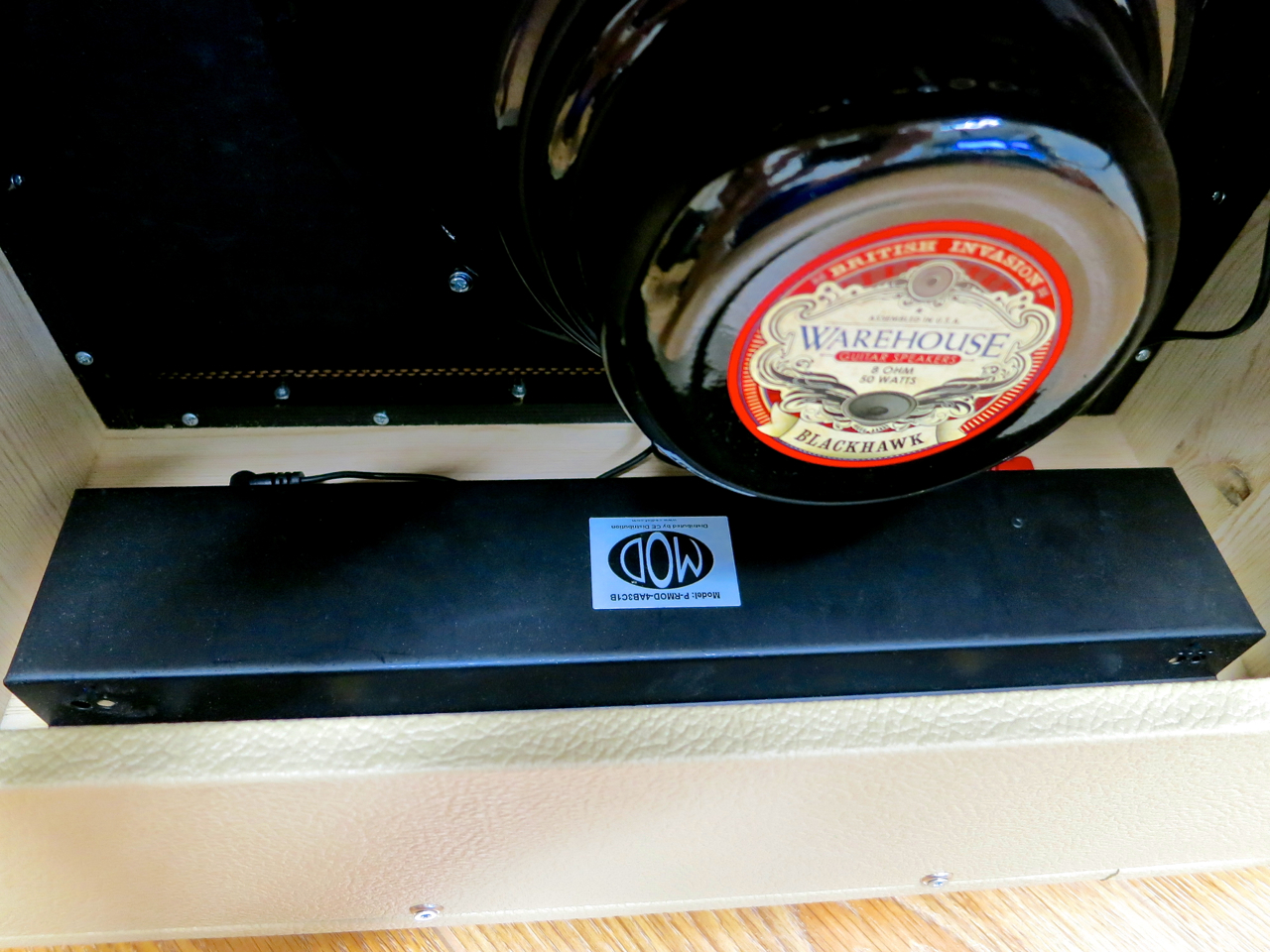
Bluetone Princeton Reverb – spring reverb

The amp’s full-length spring reverb comes from MOD Kits.

Bluetone Princeton Reverb – Warehouse Blackhawk speaker

The 50 W WGS Black Hawk speaker has originally been designed with Vox AC30-type tones in mind, and seems like a strange choice for a small Fender-style combo.

****

Bluetone Princeton Reverb – control panel

This Bluetone is a single-channel combo equipped with a three-band EQ-section, reverb and tremolo. Thanks to its master volume control you can drive the combo’s preamp hard while keeping the volume levels down.

Our test sample was one of the last pre-production models; the final series has all the front panel lettering placed below the controls for improved visibility.

Bluetone Princeton Reverb – back panel

On the back panel you’ll find two speaker outputs, plus a jack for the footswitch.

Bluetone Princeton Reverb – footswitch

This rugged footswitch comes included with the amp.

****

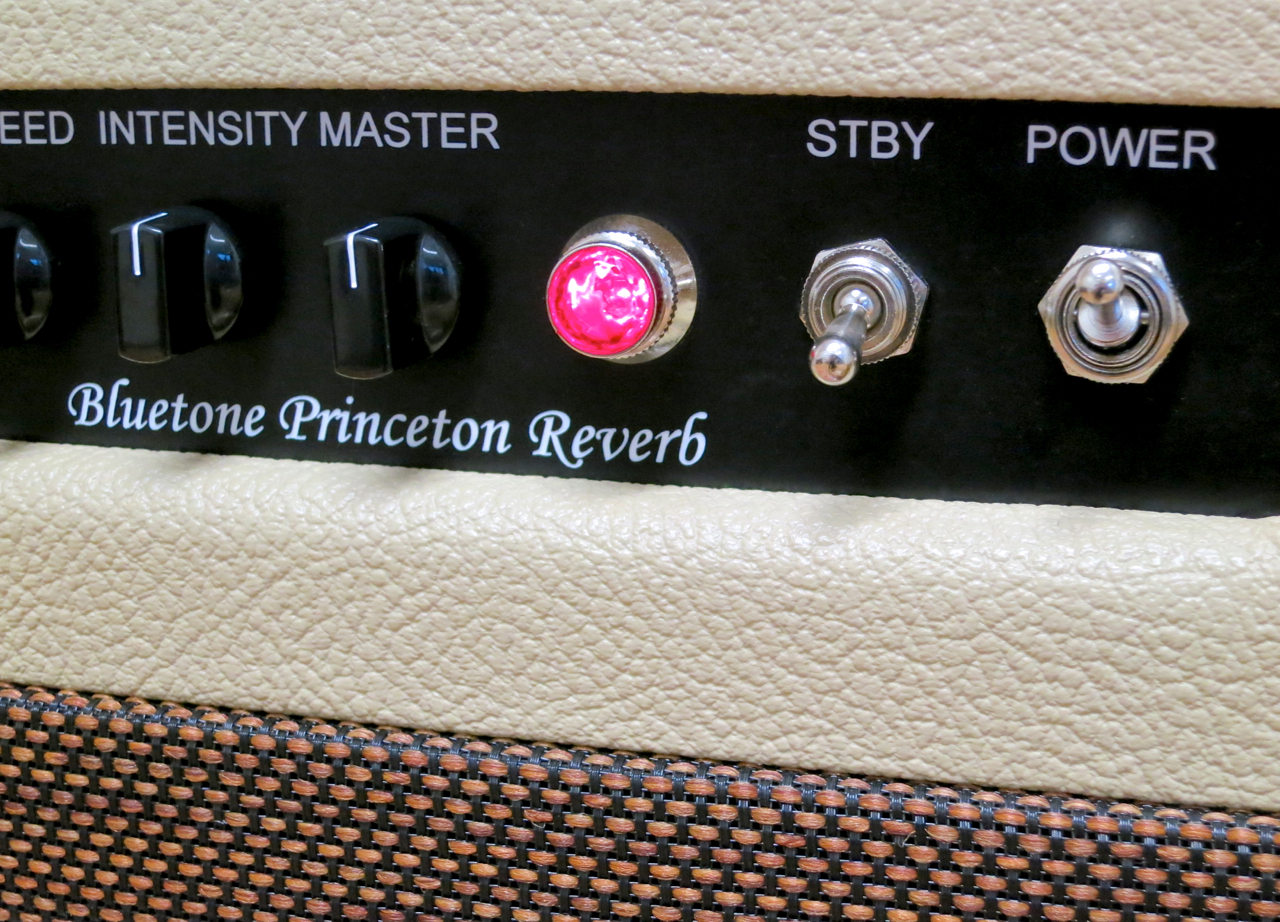
Bluetone Princeton Reverb – pilot light

For a mid-sized valve amp Bluetone’s Princeton Reverb is quite lightweight, yet it feels very sturdy.

Switch the combo on, and you’ll be surprised at the absence of mains hum and noise in general. This beauty is really quiet – great!

Many original Blackface and Silverface Fender Princetons have been modified along the way with a larger speaker. The original 10-inch Jensen sounds OK, but many find the tone to be a little too thin for their taste.

The Bluetone Princeton sounds much bigger and fatter from the get-go, thanks to its larger, 12-inch speaker.

This is what my Fender Telecaster sounds played through the Bluetone with clean amp settings:

Bluetone’s tremolo circuit sounds very tasty:

If you use the Low input there’s plenty of headroom to be had from the Princeton Reverb for clean humbucker tones (played on a Hamer USA Studio Custom):

But this little combo can also bare its fangs if you add some gain. Soundwise you’ll get just the type of distortion you’d expect from a low-powered, Fender-style amp. There’s plenty of bite with a healthy dose of compression and an open-sounding mid-range. Don’t expect oodles of cream from this combo, but if you’re after a gritty Sixties and early Seventies Blues- and Rock-vibe, the Bluetone Princeton Reverb is just the ticket.

Here’s the Telecaster, plugged into the High input, with Gain turned up all the way:

Plugging the double-humbucker Hamer into the combo’s Low input resulted in these sounds:

The Bluetone reacts very nicely to your guitar’s volume control, allowing you to turn down for clean-ish tones and turn up for overdrive:

Bluetone Princeton Reverb – front panel angle

****

Bluetone Princeton Reverb – Telecaster

In my view Bluetone’s Princeton Reverb offers genuine Finnish boutique quality at a very fair price. The workmanship is outstanding and the combo sounds fantastic. The Bluetone Princeton Reverb could be described as the ultimate Blackface-combo.

****

Bluetone Amps Princeton Reverb

Current price in Finland approximately 1,600 € (Bluetone amp cover: 50 €)

Contact: Custom Sounds Finland

****

Pros:

+ genuine custom shop quality

+ point-to-point-wiring

+ Master Volume control

+ high-quality, 12-inch speaker

+ fine reverb and tremolo-effect

+ footswitch included

Bluetone Princeton Reverb – logo

”Pisara” ja ”Fantomi” tulivat takaisin – Vox Mark III ja Mark V

markiii_rd

markv_wh

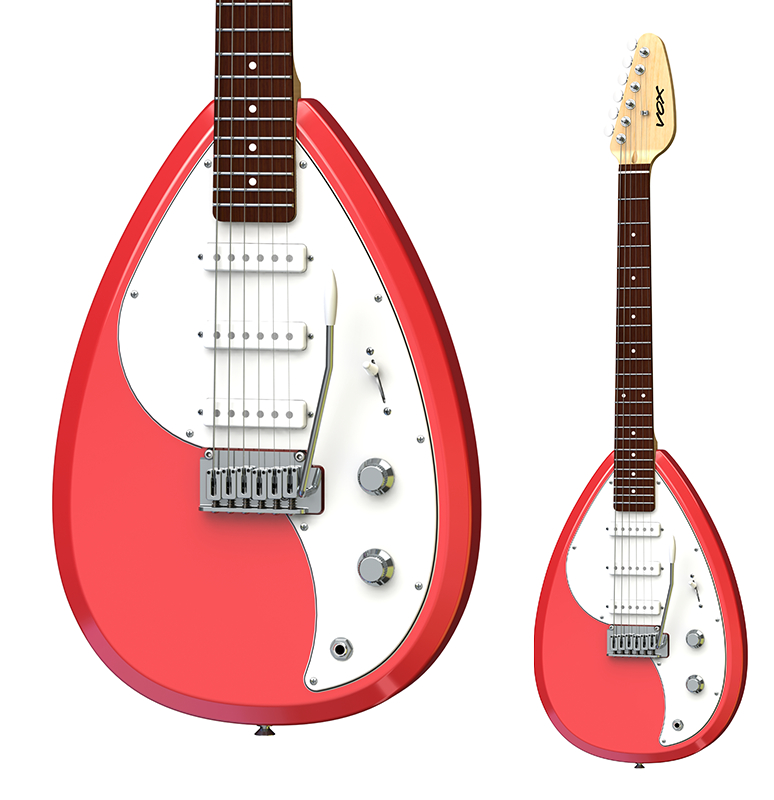
1960-luvun legendaariset Vox III– (aka Teardrop) ja Mark V -mallit (aka Phantom) ovat tulleet takaisin, uusina edullisina versioina.

Kitaroissa on ruuvikaula vaahterasta palisanteriotelaudalla, sekä lehmusrunko. Molemmat mallit ovat lyhytskaalaisia (61 cm), ja niissä on kolme yksikelaista mikrofonia ja moderni Strato-tyylinen vibratalla.

Kitaroiden lisäksi Vox tarjoaa nyt myös lyhytskaalaisia Mark III ja Mark V -bassoja.

lg_markiii_bass_sf

lg_markv_bass_bk

****

Maahantuoja: EM Nordic

Namm 2014 – Hartke HD bass combos

Hartke_HD_Combos_Family

The all-new HD Series Bass Combos pack Hartke’s revolutionary HyDrive speakers in four sleek models (HD25, HD50, HD75, HD150) ideal for bedroom practice/jam sessions and small rehearsal spaces/performance venues, and capable of greatly enriching your low-end tone. The HD combos also maintain Hartke’s commitment to producing high quality bass amplification with exceptional durability. 

 The HD25 (25 watts, 8-inch driver), HD50 (50 watts, 1-inch driver), HD75 (75 watts, 12-inch driver, 2-inch tweeter) and HD150 (150 watts, 15-inch driver, 2-inch tweeter) employ Hartke’s patented HyDrive speaker technology that utilizes a hybrid paper and aluminum cone attached to a ceramic magnet. The tone produced by the HyDrive design sparked a revolution in bass speaker technology with the paper providing warmth and roundness and the aluminum offering the punchy attack that appeals to player and listeners alike.

Packed with professional features, all of the HD Series combos are designed to be user friendly and reliable for players of all levels. Each combo offers Volume, Bass, Mid and Treble controls (7-band graphic EQ available on HD75 and HD150) on their top-mounted amplifier panels, allowing for easy adjustments. The combos feature a 1/8-inch stereo Aux input for playing along with your favorite tracks via an MP3 player and a 1⁄4-inch headphone output for more intimate practice sessions. The HD150 also has an XLR direct output for routing your signal to a mixer in both live and studio settings. In addition, the combos each have a built-in limiter to ensure constant amp operation at a safe levels. Lastly, these solid enclosures are finished in a stylish fashion, each with a sleek, perforated black metal grill and convenient transport tooling (HD25, HD50, HD75: molded strap top handle, HD150: side handles and castors).

****
Lisätiedot: EM Nordic

Testipenkissä: Blackstar HT Metal 5 + HT Metal 60

Blackstar HT Metal 60 – logo

Blackstar Amplificationin suosittu HT Venue -sarja on saanut rinnalleen uuden HT Metal -sarjan, joiden putkivahvistimet ovat suunnattuja nimenomaan rankkojen musiikkityylien soittajille.

Kitarablogi sai testiin viisiwattisen HT Metal 5 -kombon, joka on suunnattu koti-, treeni- ja studiokäyttöön, sekä tuhdin, 60-wattisen HT Metal 60 -kombon, joka on varustettu peräti kolmella kanavalla.

****

Blackstar HT Metal 5 – full front

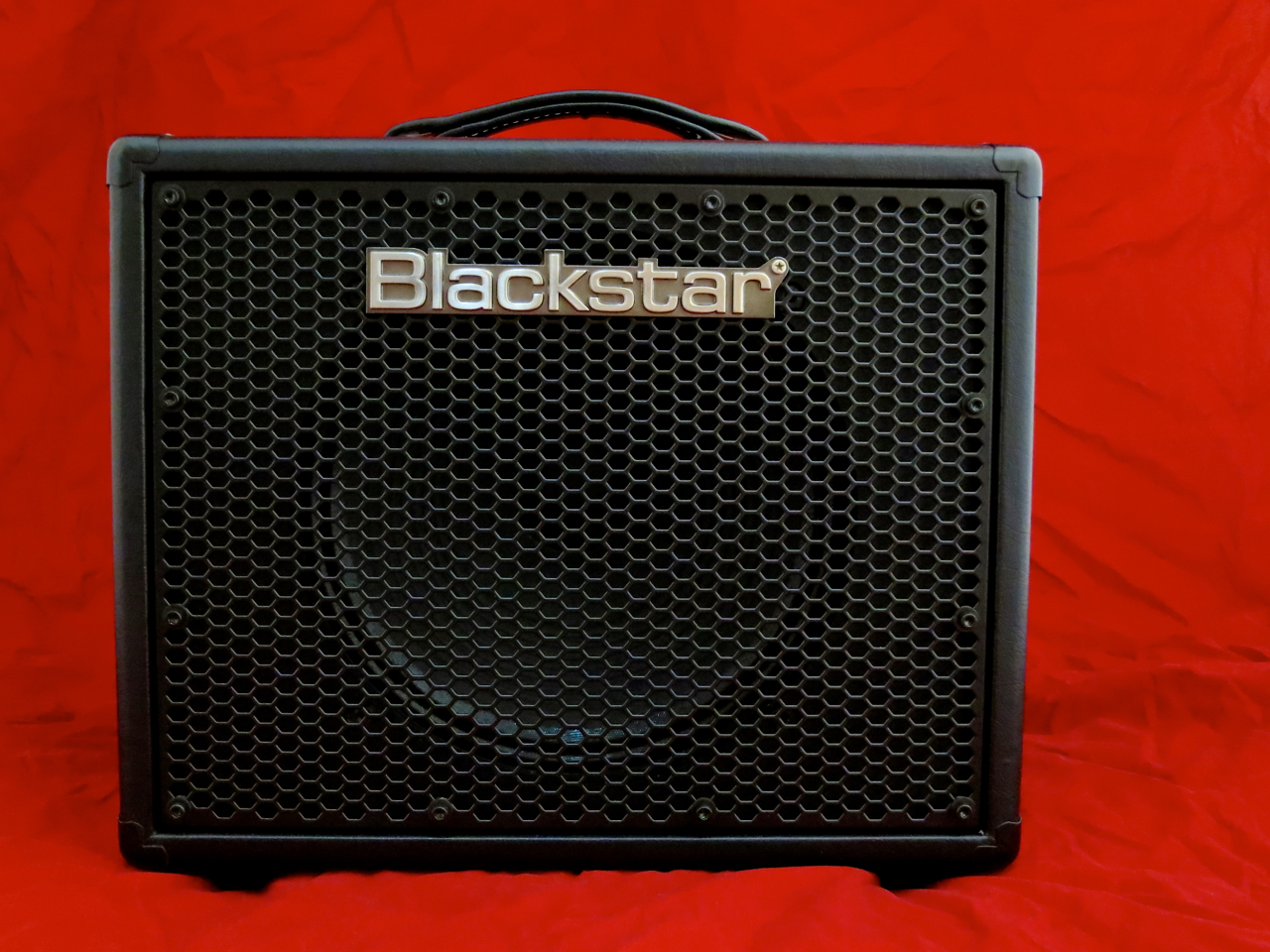
Blackstar HT Metal 5 (495 €) perustuu valmistajan suosittuun HT-5R-putkikomboon, ja uutukaisella on myös sama peruskytkentä firman omalla push-pull-periaatteella toimivalla päätevahvistimella.

HT Metal 5 käyttää kahta putkea – yksi ECC83 (tunnetaan myös tunnuksella 12AX7), sekä yksi 12BH7-malli.

HT-5R:n etukangas on vaihtunut HT Metal 5 -kombossa erittäin tukevaan metalliritilään.

Blackstar HT Metal 5 – full back

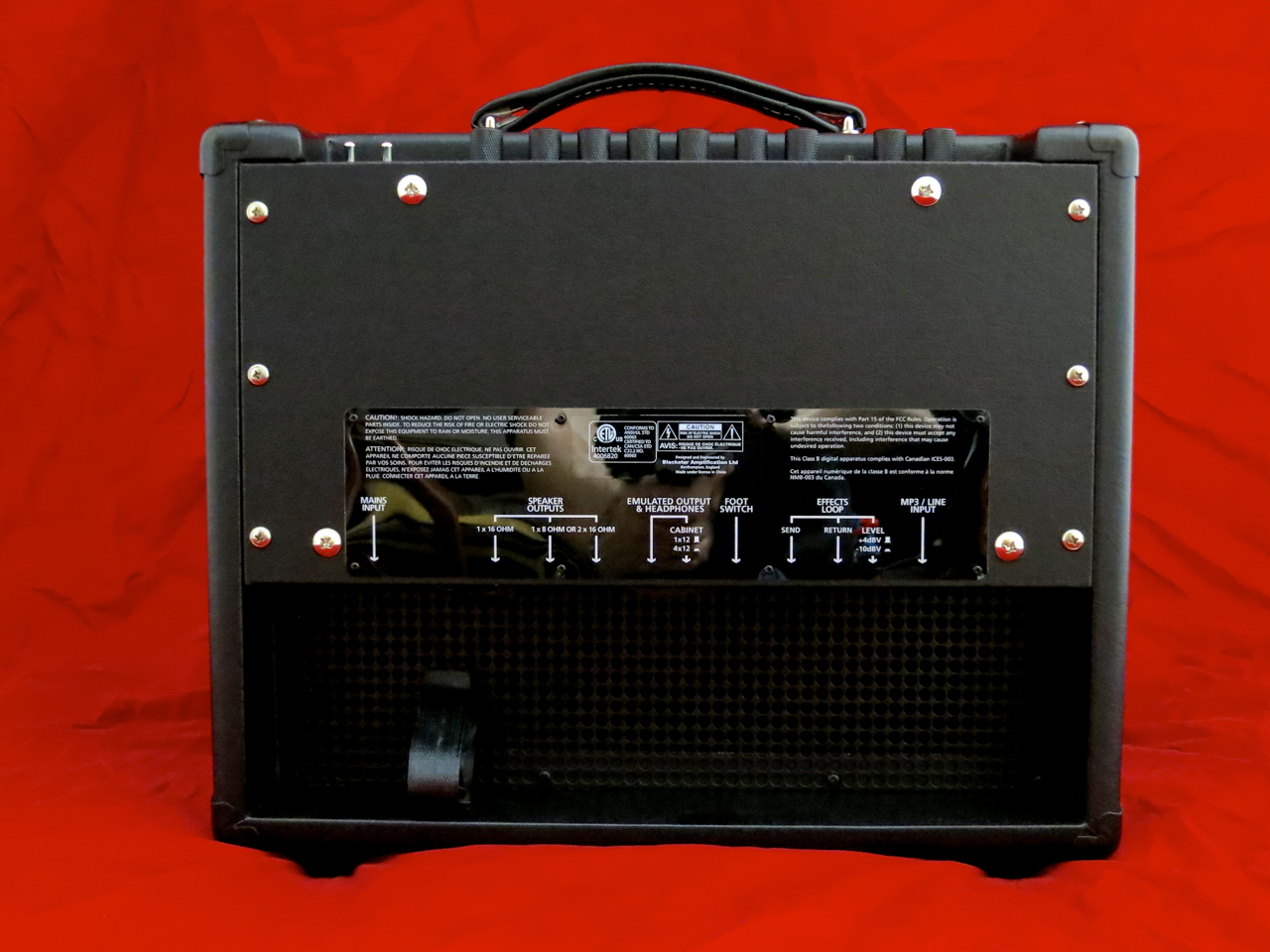
Kotelo on rakennettu puolisuojelluksi. Takaseinän alimpaan kolmasosaan on käytetty metalliritilää, jonka läpi näkyy Blackstarin Kiinassa valmistettu 12-tuumainen kaiutin.

Pieni vahvistin painaa vain 14 kiloa, ja on näin ollen helppoa kantaa kombon yhdestä nahkakahvasta.

Blackstar HT Metal 5 – control panel

Metal 5:n säädinpaneeli on erittäin selkeä:

Putkikombo tarjoaa kaksi kanavaa, jotka ovat Clean ja Overdrive. Clean-kanavassa on yksinkertainen Tone-säädin, kun taas särökanavassa on tarjolla kolmikaistainen EQ Blackstarin patentoimalla ISF-toiminnolla. ISF-säätimellä (Infinite Shape Feature) voi muuttaa vahvistimen perusluonnetta portaattomasti USA:n tyyliseltä (loudness-mainen taajuuskäyrä) brittimäiseen (paksumpi keskialue).

Viimeinen lenkki signaaliketjussa on HT Metal 5:n kaunisääninen digitaalinen kaiku.

Blackstar HT Metal 5 – back panel

Takapaneelin liittimien runsaus on suorastaan hämmästyttävä näin pienessä vahvistimessa:

Vasemmalla näkyy kombon kolme kaiutinlähtöä.

Seuraavaksi tulee Blackstarin kaiutinmallinnuksella varustettu lähtö. Lähdössä on valintanappi, jolla voi vaihtaa virtuaalisen kombo- ja stäkkisoundin välillä. Lähtö toimii myös kuulokkeilla ja/tai silloin, kun vahvistimen kaiutin on standby-kytkimellä mykistetty.

Metal 5:n efektilenkin nimellistasoa voi muuttaa -10 desibelistä +4:ään.

Oikealla reunalla näkyy kombon linjatasoista tuloa, joka sopii esimerkiksi mp3-soittimen kytkemiseen.

Blackstar HT Metal 5 – footswitch

Jalkakytkin kanavavaihtoon kuuluu Blackstar HT Metal 5 -kombon hintaan!

****

Blackstar HT Metal 60 – full front

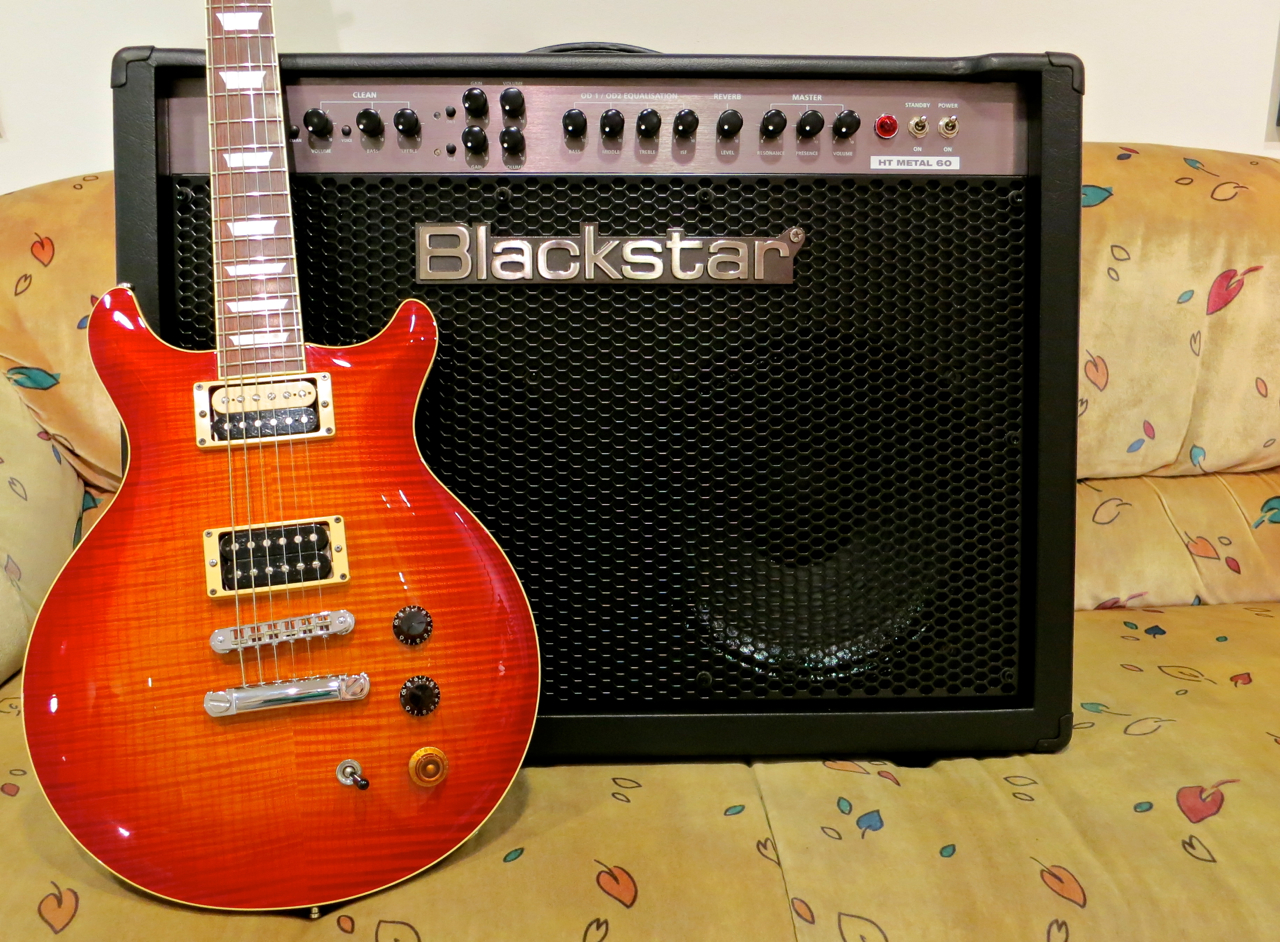
Blackstar HT Metal 60 (1.120 €) on livekäyttöön tarkoitettu kolmikanavainen voimapesä.

Putkikombon kytkentä on rakennettu kahden ECC83-etuasteputkien sekä kahden 6L6-pääteputkien ympärille.

Koteloon on asennettu kaksi Celestion-kaiutinta.

Blackstar HT Metal 60 – full back

Täysin suljetulla kotelolla haetaan HT Metal 60 -komboon stäkin tyylistä suunnattavuutta ja potkua.

Blackstar HT Metal 60 – side handle

Koska tällaisen putkikombon paino on jo huomattava (30 kg), on HT Metal 60:een lisätty kotelon sivuun upotettuja metallikahvoja, mikä on mielestäni erittäin tervetullut ratkaisu.

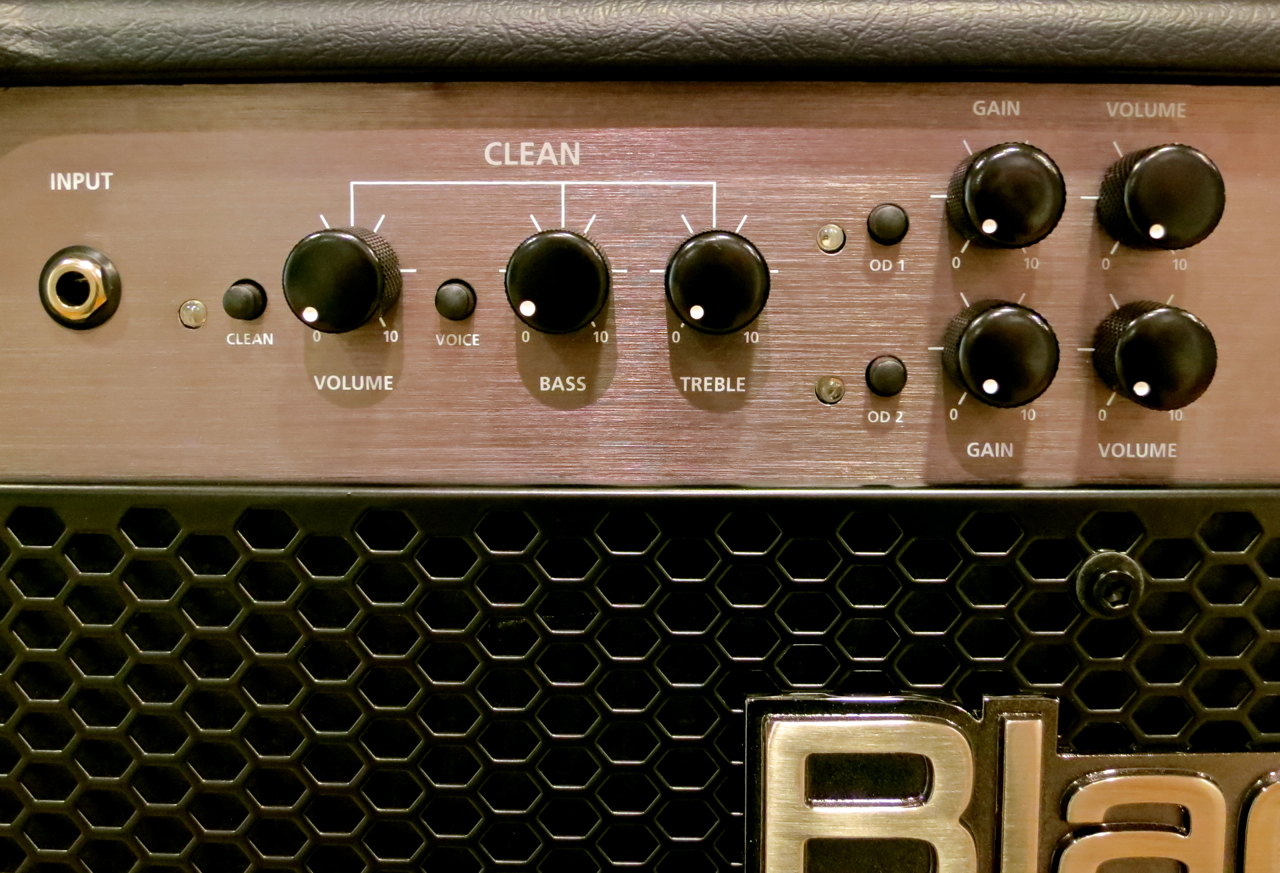
Blackstar HT Metal 60 – clean channel

Blackstarin puhdas kanava tarjoaa kaksi erilaista karakteeriä (Voice): Boutique Clean -niminen vaihtoehto toimii A-luokan kytkennöillä, ja on hieman dynaamisempi, mutta samalla myös aavistuksen verran rosoisempi, kuin isompaa puhdasta headroomia omaavaa Modern Clean -vastine.

Erillisillä Bass- ja Treble-sävynsäätimillä oman soundin löytäminen on helppoa.

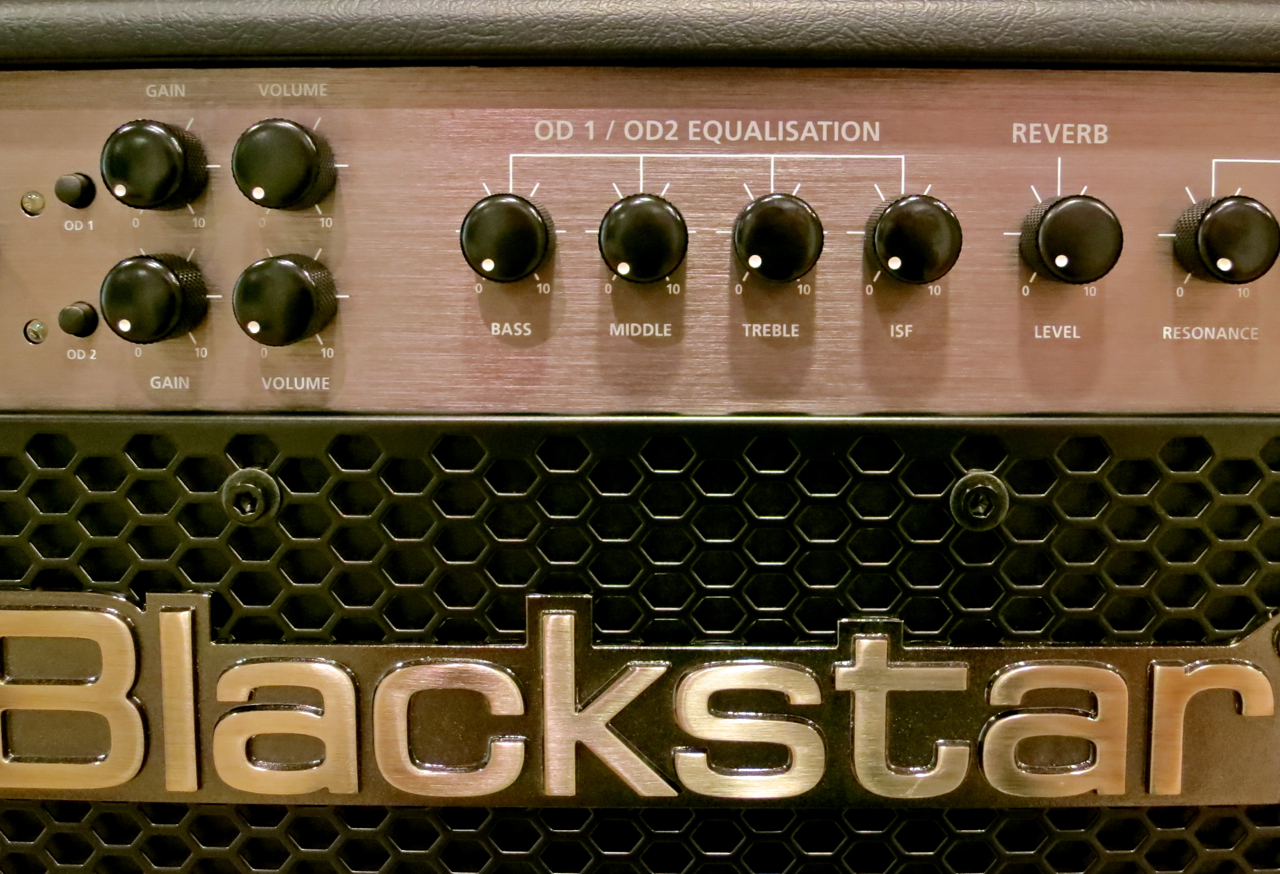
Blackstar HT Metal 60 – OD1 + OD2

HT Metal 60:n kahdella särökanavilla – OD1 ja OD2 – on yhteiset EQ:t, mutta hieman erilainen perusluonne.

OD1 tarjoaa hieman vähemmän säröä kuin OD2. Kanavan miedompi kompressio ja pikkuisen kuivempi alapää vie OD1:stä enemmän tuhtien komppiosuuksien suuntaan.

OD2:lta taas saa enemmän säröä, ja kanavan kompressio on todella kermainen. Samalla löytyy kuitenkin juuri se oikea määrä purevuutta, että kitarasoolo ei huku muun bändin alle.

Blackstar HT Metal 60 – master section

Masterosastolta löytyy digikaiun ja master volumen lisäksi vielä alamiddleen ja bassoon vaikuttava Resonance-säädin, sekä preesensaluetta muokkaava Presence-säädin.

Blackstar HT Metal 60 – back panel 1

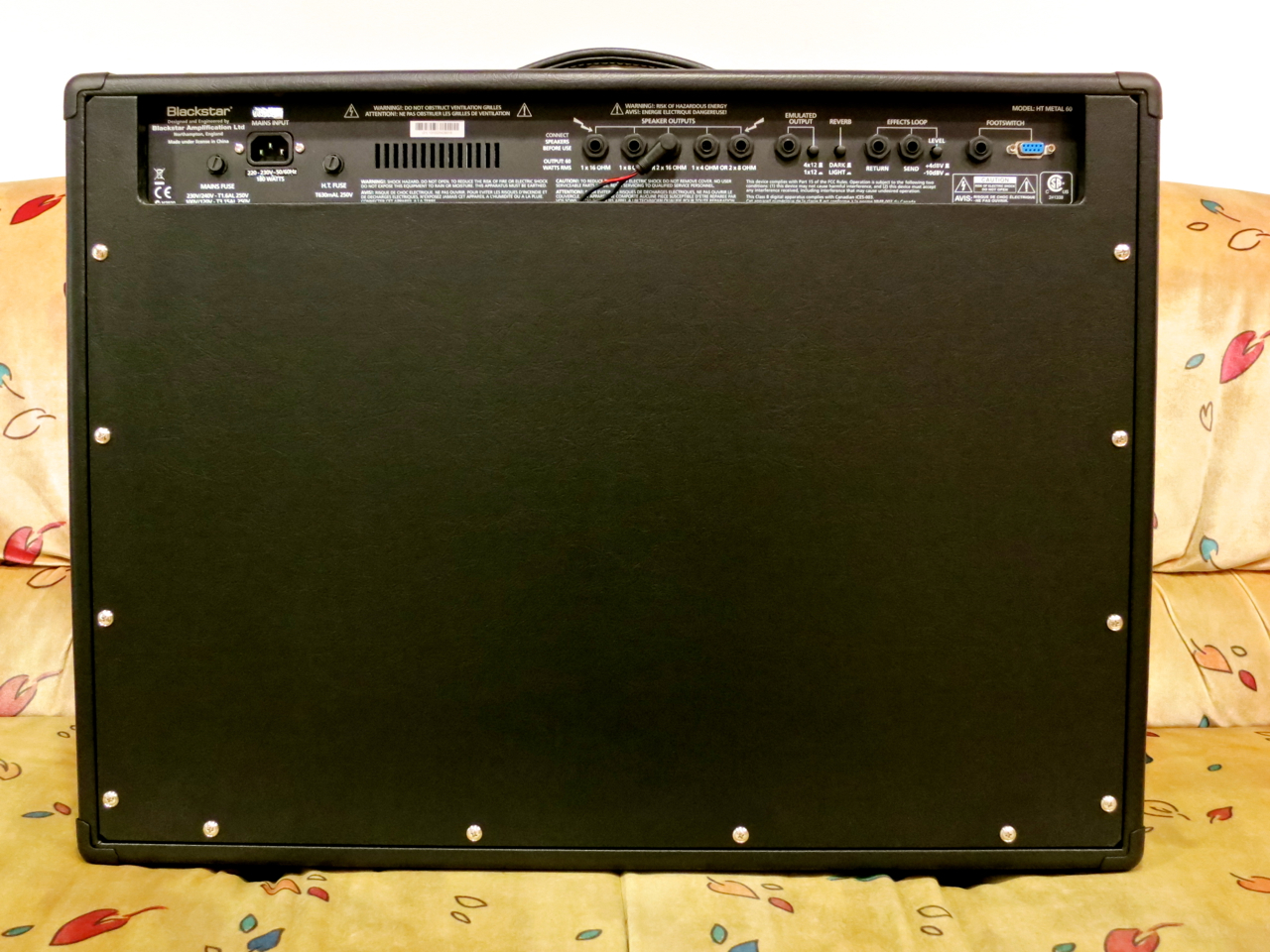
HT Metal 60 -kombon viiden kaiutinlähdön ansiosta löytyy varmasti omalle setupille se oikea vaihtoehto.

Kaiutinmallinuksella varustettu linjatasoinen lähtö, sekä Blackstarin mainio efektilenkki ovat tuttuja jo HT Metal viitosesta, mutta isossa kombossa voi myös valita kahden eri kaikusoundin välillä.

Blackstar HT Metal 60 – back panel 2

Siniseen tietokoneliittimeen menee pakettiin kuuluva reilunkokoinen FS-7-kytkinlauta (kts. alle), jolla voi vaihtaa kanavia ja kytkeä halutessa kaiun pois päältä.

Toiseen Footswitch-jakkiin voi liittää yksittäisen kytkimen, jolla saa tarvittaessa vielä lisäboostin kaikille kanaville. Lisävahvistus on säädetty valmiiksi tehtaassa, eikä sen tasoon pysty vaikuttamaan itse.

Blackstar HT Metal 60 – footswitch

****

Blackstar HT Metal 5 – opener

Blackstar HT Metal 5:n Clean-kanavalta saa soundeja putipuhtaasta mietoon Blues-säröön asti.

Volyymiä löytyy pikkukombosta enemmän kuin riittävästi olohuone- tai studiokäyttöön. Blackstarin puhdas headroom ei ole kuitenkin erityisen suuri, minkä takia humbuckereilla varustetuissa kitaroissa kitaran volume-säätimen käyttö on lähes pakollinen.

Tällainen on Hamer USA Studio Custom -kitaralla soitettu Clean-kanava äänitettynä Shure SM57 -mikrofonin kautta:

Sama pätkä äänitetty takapaneelin linjalähdön kautta:

HT Metal 5:n särökanava on erittäin mainio ja maukas. Blackstarin 12-tuumaisesta kaiuttimesta lähtee niin täyteläinen, voimakas ja dynaaminen ääni, että on vaikea uskoa, että se lähtee tällaisesta pikkustyrkkarista!

ISF-säädin täysille avattuna antaa kombolle hyvin uskottavan vanhan liiton Marshall-soundin, sekä mikrofonilla…

…että linjalähdon kautta poimittuna.

ISF nollalla tuo esiin Rectifier-tyylisiä vaihtoehoja (ensin SM57, sitten linjalähtö):

****

Blackstar HT Metal 60 – opener

Blackstar HT Metal 60 -kombon soundivalikoima on luonnollisesti pikkukomboon nähden huomattavasti laajempi.

Puhtaita soundeja on saatavilla kahtena hieman erilaisena versiona, joista Boutique Clean on se täyteläisempi vaihtoehto.

SM57:

Linjalähtö:

Modern Clean taas soi mielestäni hieman kompaktimmin ja kirkkaammin (ensin Shure SM57, sen alla linjalähdön kautta poimittuna):

OD1-kanavan esimerkkejä on soitettu drop-D-virityksessä.

Ensin ”Britti-versio” (ISF=10):

Sitten ”US-versio” (ISF=0):

Samoilla EQ-asetuksilla OD2-kanava on hieman kirkkaampi kuin ykkösvaihtoehto.

ISF=10 (”UK”):

ISF=0 (”USA”):

****

Blackstar-logo 2

Minun mielestäni HT Metal -sarja on loistava lisäys Blackstarin tuotevalikoimaan, joka ottaa nykyaikaisen Metal-soittajan tarpeet huomioon.

HT Metal 5 -kombon puhdas soundi on hyvin käyttökelpoinen, vaikka kanavalla on tarjolla headroomia vain rajoitetusti. Pikkukombon loistavuus piilee sen sijaan tämän putkivahvistimen särösoundeissa, jotka kuulostavat hämmästyttävän isoilta.

Blackstar HT Metal 60 on metallimiehen uskollinen keikkakone. Ammattitason putkikombosta löytyy sekä erittäin maukkaita puhtaita soundeja että yllin kyllin rankkaa säröä kermaisella kompressiolla höystettynä. Kovaäänisen kombon puhti riittää varmasti useimmissa tapauksissa ilman lisäkaappiakin.

****

Blackstar HT Metal 5 & HT Metal 60

HT Metal 5 – 495 €

HT Metal 60 – 1.120 €

Maahantuoja: Musamaailma

****

Blackstar HT Metal 5

Plussat:

+ työnjälki

+ Clean-kanavalla oma tone-säädin

+ OD-kanavalla kolmialueinen EQ ja ISF

+ tuhti soundi

+ linjalähtö kaiutinmallinnuksella

+ jalkakytkin kuuluu hintaan

Miinukset:

– Clean-kanavan headroom rajallinen

****

Blackstar HT Metal 60

Plussat:

+ työnjälki

+ metallikahvat

+ Clean-kanavan Voice-toiminto

+ Clean-kanavalla omat tone-säätimet

+ OD-kanavilla kolmialueinen EQ ja ISF

+ tuhti soundi

+ linjalähtö kaiutinmallinnuksella

+ FS-7-kytkinlauta kuuluu hintaan

Pidä blogia WordPress.comissa.

Ylös ↑