EBS Swedenin uusin mausterasia tuo maukasta fuzzia basistin elämään.
****
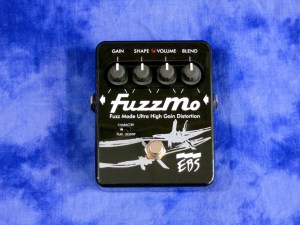
EBS FuzzMo (169,90 €) on sähköbassoille suunniteltu fuzz-tyyppinen säröpedaali.
Kiinassa rakennettu efektiloota edustaa EBS:lle tyypillistä vankkaa tekoa, sen jämäkän oloisella jalkakytkimellä ja sulavasti toimivilla potikoilla.
Elektroniikan sähköntarpeen voi tyydyttää kolmella eri tavalla:
Jos on käytössä EBS:n Drome-, Gorm-, HD- tai TD-mallinen vahvistin, voi käyttää vahvistimen tarjoamaa phantom-syöttöä TRS-plugijohdon kautta. TRS-johto tulee silloin kytkeä FuzzMo:n lähdön ja vahvistimen tulon väliin.
FuzzMo-pedaali toimii toki myös perinteisesti yhdeksän voltin paristolla, mutta pariston vaihtamiseen tarvitaan ruuvimeisseliä, koska pohjalevy on ensin irrotettava.
Kolmas vaihtoehto on käyttää Boss-standardin mukaista virtalähdettä (9 V DC, miinus keskellä).
****
Vaikka EBS:n FuzzMo muistuttaa ulkoisesti firman Billy Sheehan -pedaalia, vaikuttavat fuzz-pedaalin säätimet kuitenkin hieman toisella tavalla soundiin.
”Mieto” ei ole FuzzMo:ssa homman nimi, sillä Gain-säätimen vaikutusalue menee keskivahvasta erittäin rankkaan fuzziin. Shape-nupilla säädetään säröefektin sointia, mutta kyseessä ei ole perinteinen tone-potikka, vaan yliohjauksessa syntyvän aaltomuodon säädin. Vasemmalla äärilaidalla on tarjolla orgaanisempi ja lämpimämpi kanttiaalto, kun taas toisessa ääripäässä lootasta lähtee kirkkaampi ja purevampi kolmioaalto.
Lopulliseen särösoundiin vaikuttaa vielä FuzzMo-logon alle sijoitettu minikokoinen vipukytkin:
Kun kytkin on vasemmassa asennossa, säröpedaalin EQ-osasto on pois päältä (FLAT). Keskiasennossa särösignaalissa vaimennetaan hieman keskialueen taajuuksia, kun taas oikealla laidalla (SCOOP) syntyy Trash-tyylinen, pureva särösoundi.
Nykyaikaisissa bassoefekteissä jaetaan bassosignaali usein heti tulon jälkeen kahteen. Puolet signaalista menee efektin läpi, kun taas toinen puoli miksataan ennen pedaalin lähtöä kuivana efektoituun signaaliin. Tämän menetelmän suuri etu on, että basson alkuperäinen dynamiikka ja pyöreys säilyy miltei ehjänä efektityypistä huolimatta.
Juuri tällä tavalla toimii myös EBS FuzzMo:
Volume-säätimellä asetetaan särösignaalin voimakkuutta ja Blendillä lisätään siihen sitten oman tarpeen mukaan basson puhdasta signaalia. Etenkin bassoille tarkoitetussa fuzz-pedaalissa tällainen ominaisuus on erittäin tervetullut, koska fuzz-piirit leikkaavat toimintaperiaatteensa takia etenkin soittodynamiikkaa melko rankasti. FuzzMo-pedaalilla ei synny ongelmia puuroutumisen kanssa, jollei juuri sitä halua.
Tässä on lyhyt esimerkkipätkä sormilla soitetusta Jazz-bassosta (molemmat mikrofonit täysille avattuna) ja hyvin miedolla fuzzilla:
Plektralla soitetuille Rickenbackerille lisäsin hieman enemmän, ja hieman purevampaa, säröä:
Puhtaan signaalin annostelun ansiosta EBS:n FuzzMo toimii myös mainiosti viisikielisen basson kanssa (EMG-mikrofoneilla varustettu Yamaha BB-malli):
On muuten syytä huomauttaa, että kaikissa esimerkkipätkissä Gain-säädin pysyi alle puoleksi avattuna. EBS-pedaalista lähtee tarvittaessa vielä huomattavasti rankempia soundeja!
FuzzMo on tyypillinen EBS-pedaali – se on kestävän oloinen laite laadukkaalla soundilla, joka sopii mainiosti likaisten bassosoundien ystäville.
The humble ukulele’s popularity has been on the rise over the last few years, not least because these instruments are easy to carry around and plenty of fun to play.
This fact hasn’t gone unnoticed by British brand Tanglewood, who have recently broadened their range of ukes.
****
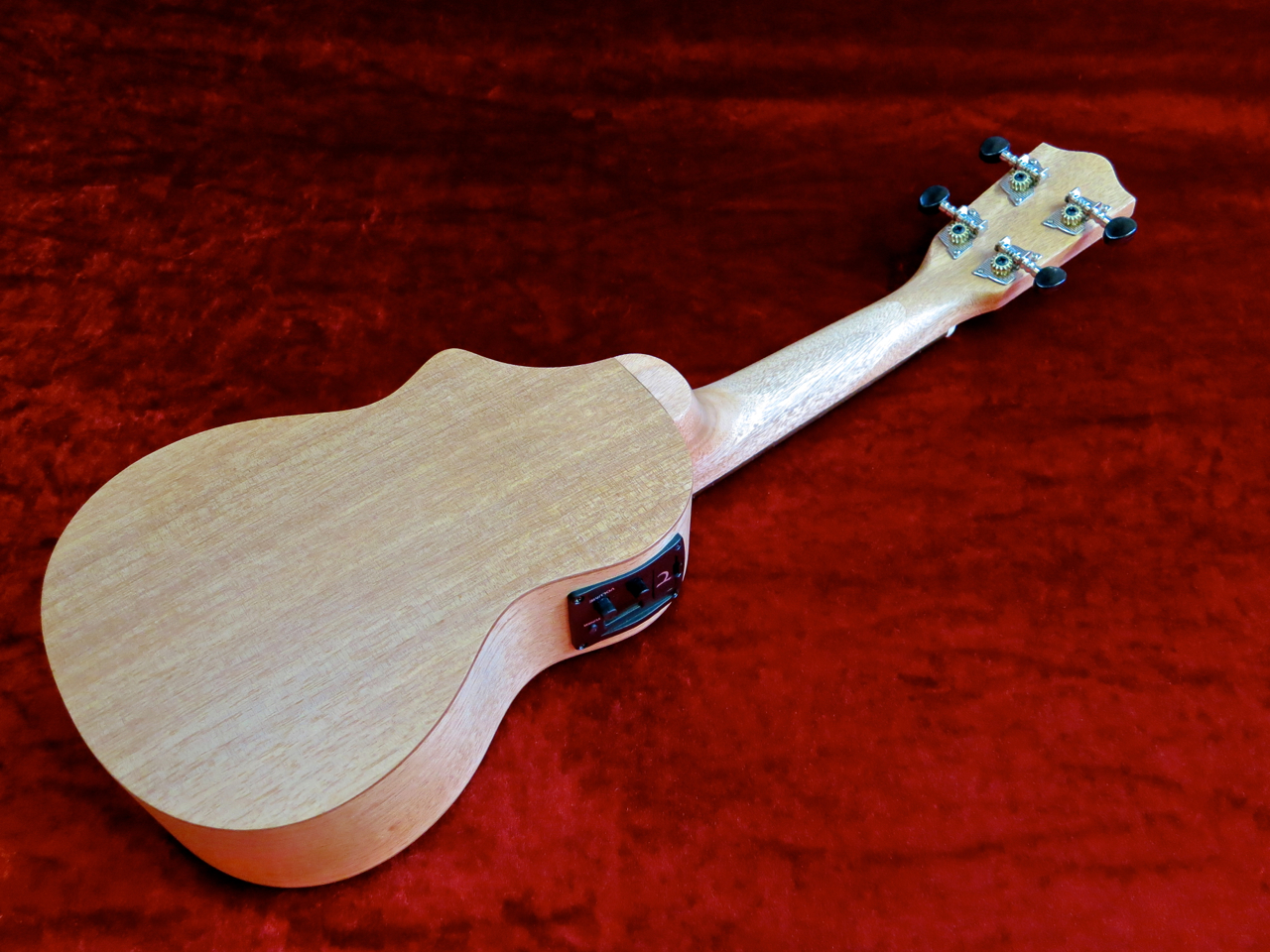
The quartet of ukes we’ve received for testing – the TU-1CE, the TU-3, the TU-3E and the TU-5 – are all part of Tanglewood’s mahogany-bodied Union-series.
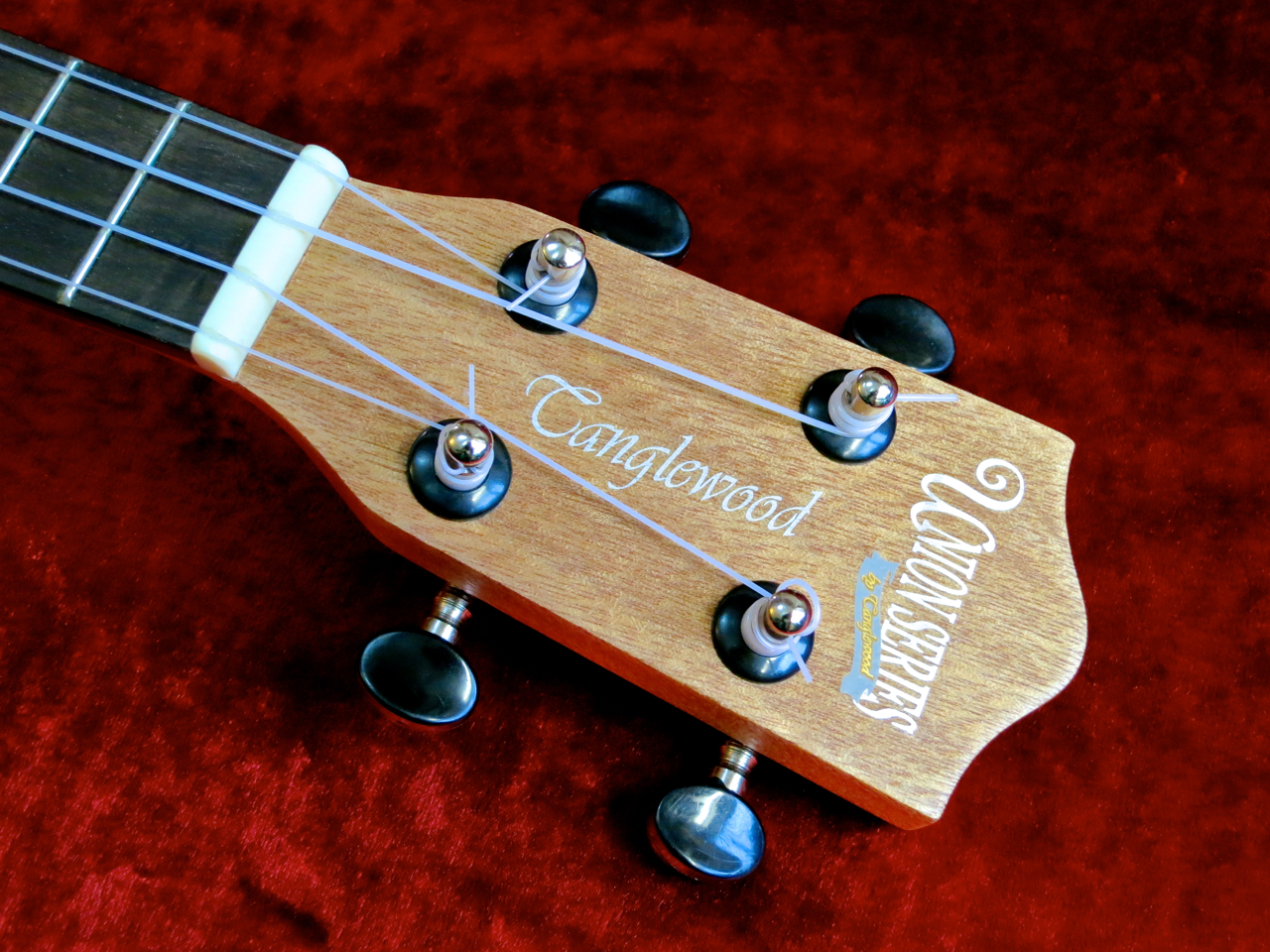
All Union-series ukuleles have mahogany necks with glued-on neck heels and headstocks.
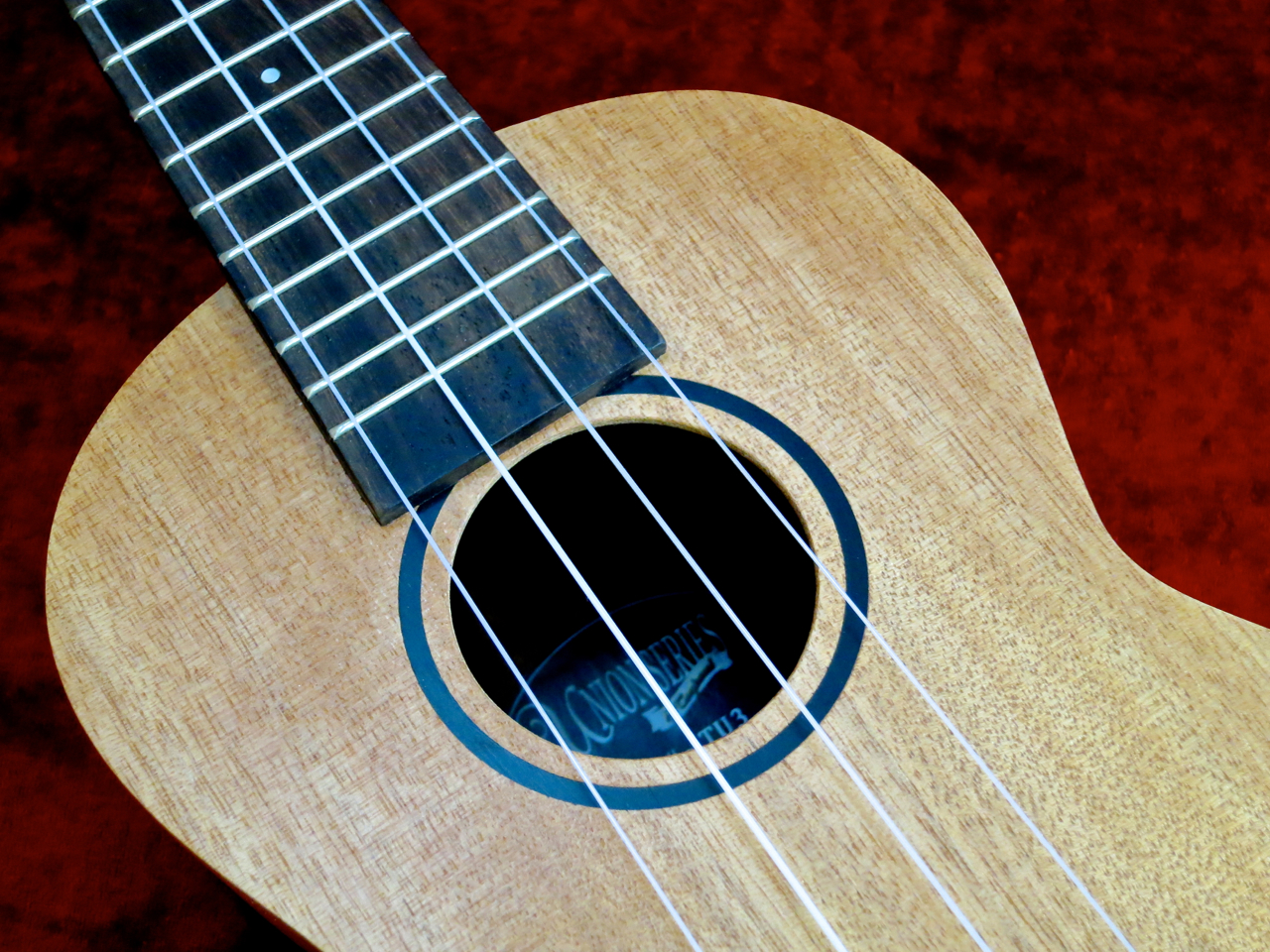
The fingerboards have been crafted from rosewood.
Tanglewood’s geared, open tuners work very well.
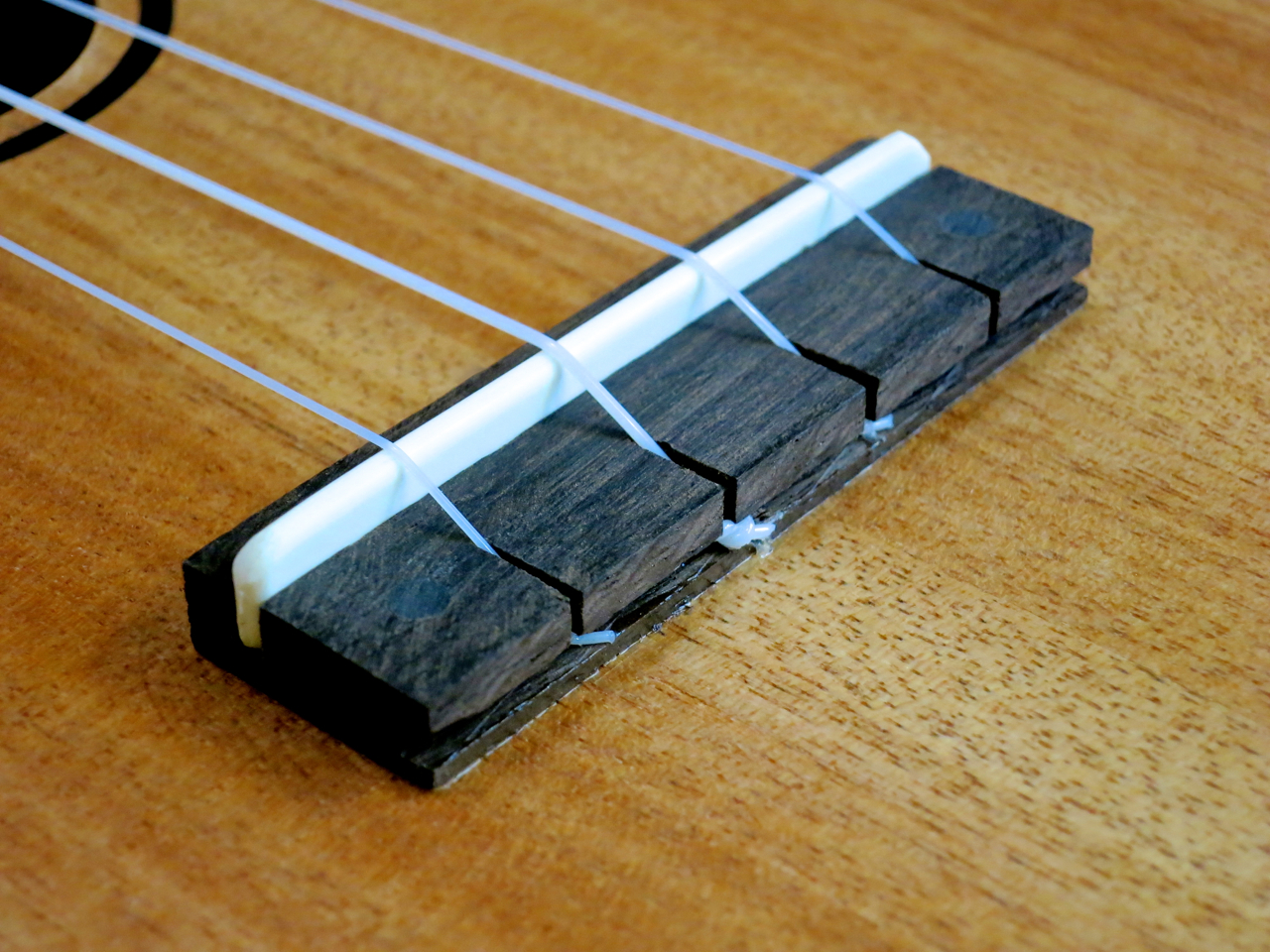
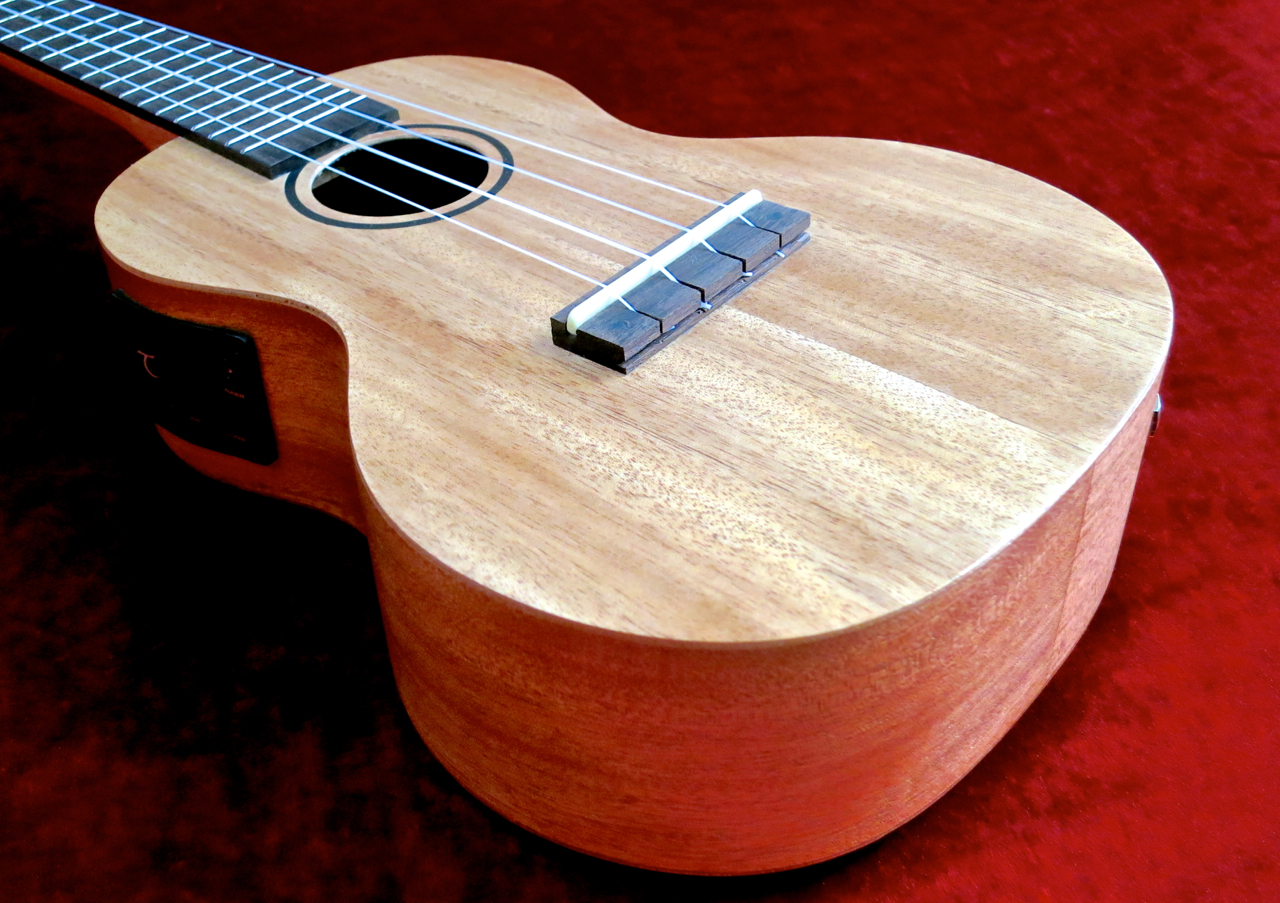
Ukuleles come with one of several different bridge designs, depending on the manufacturer.
Tanglewood has chosen the most practical ukulele bridge, which anchors the knotted string ends in little slots cut into the top of the bridge.
All Union-series ukuleles have a sound box made from laminated mahogany.
The instruments have received a clear satin finish.
****
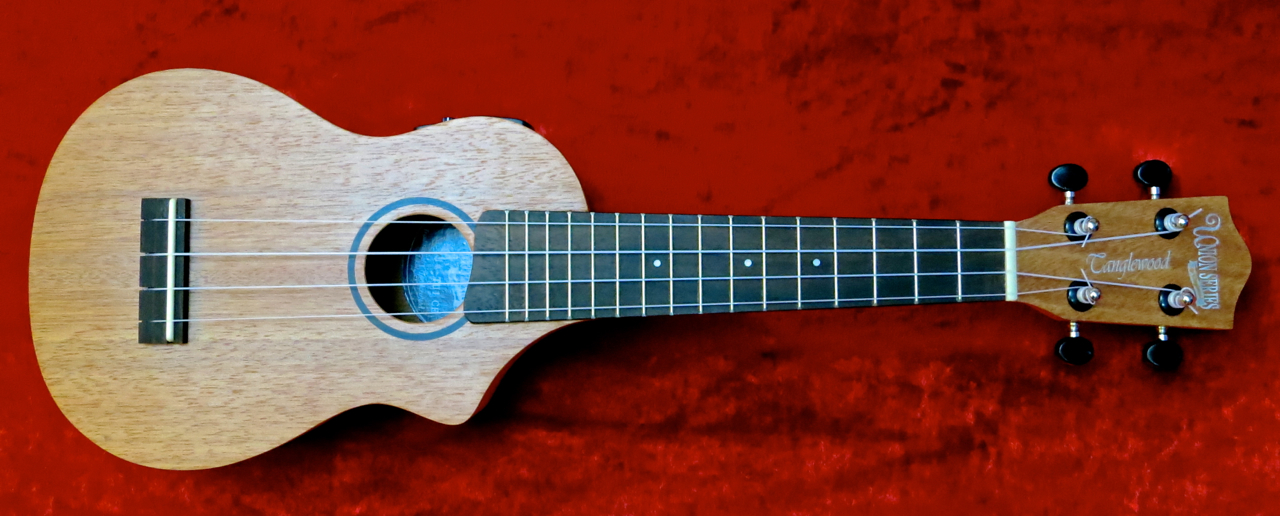
Tanglewood’s TU-1CE (current price in Finland 116 €) is a soprano ukulele with a deep cutaway. It comes with a pickup and preamp installed.
The soprano is the smallest of the common four ukulele sizes. The TU-1CE has a scale of only 34.5 cm.
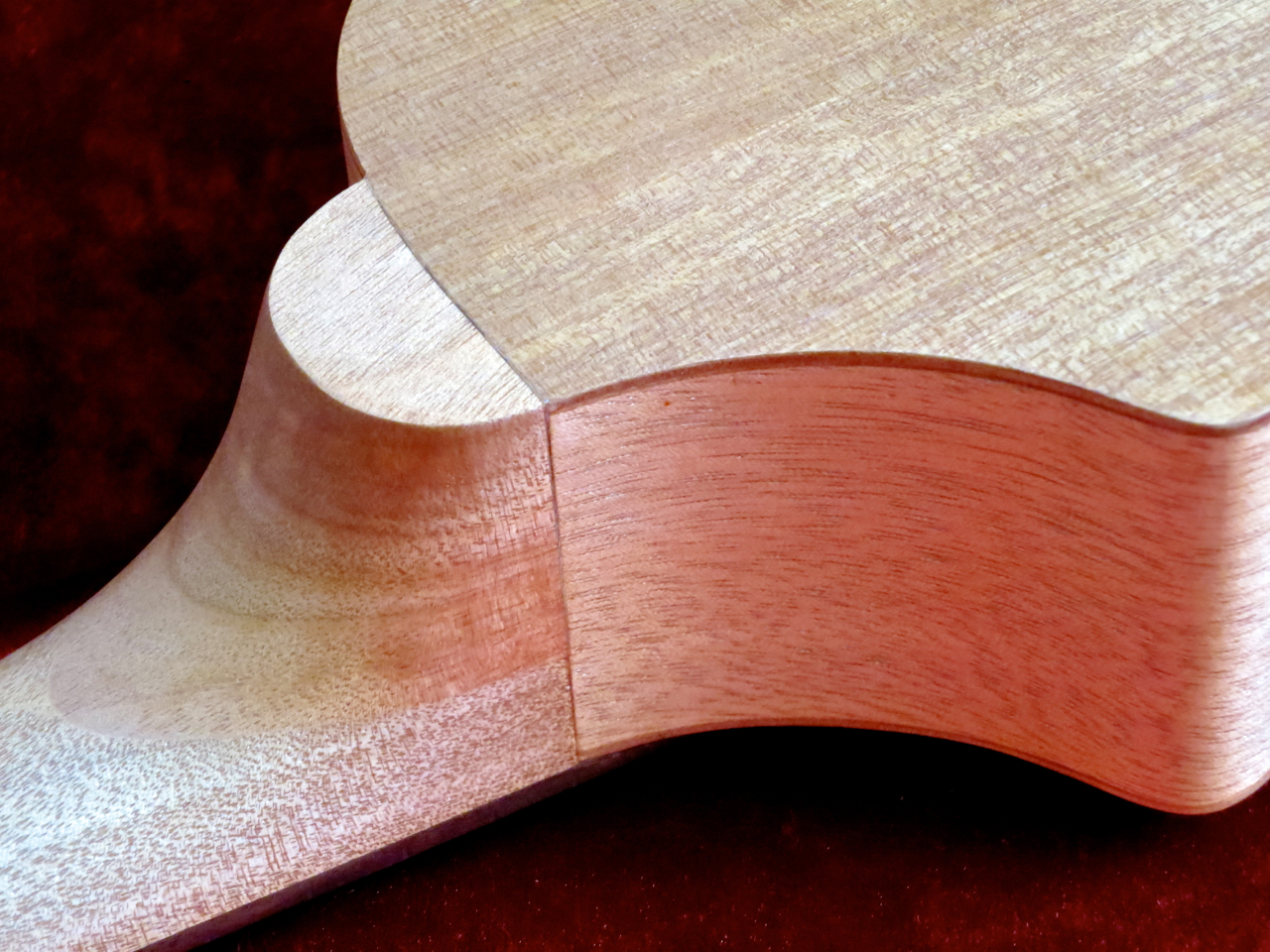
The workmanship on this Tanglewood (built in the Far East) is very good in relation to its low price. Look at that clean neck joint!
The TU-1CE sports 16 small frets, as well as dot position markers.
This soprano comes factory-equipped with top quality Aquila Nylgut strings.
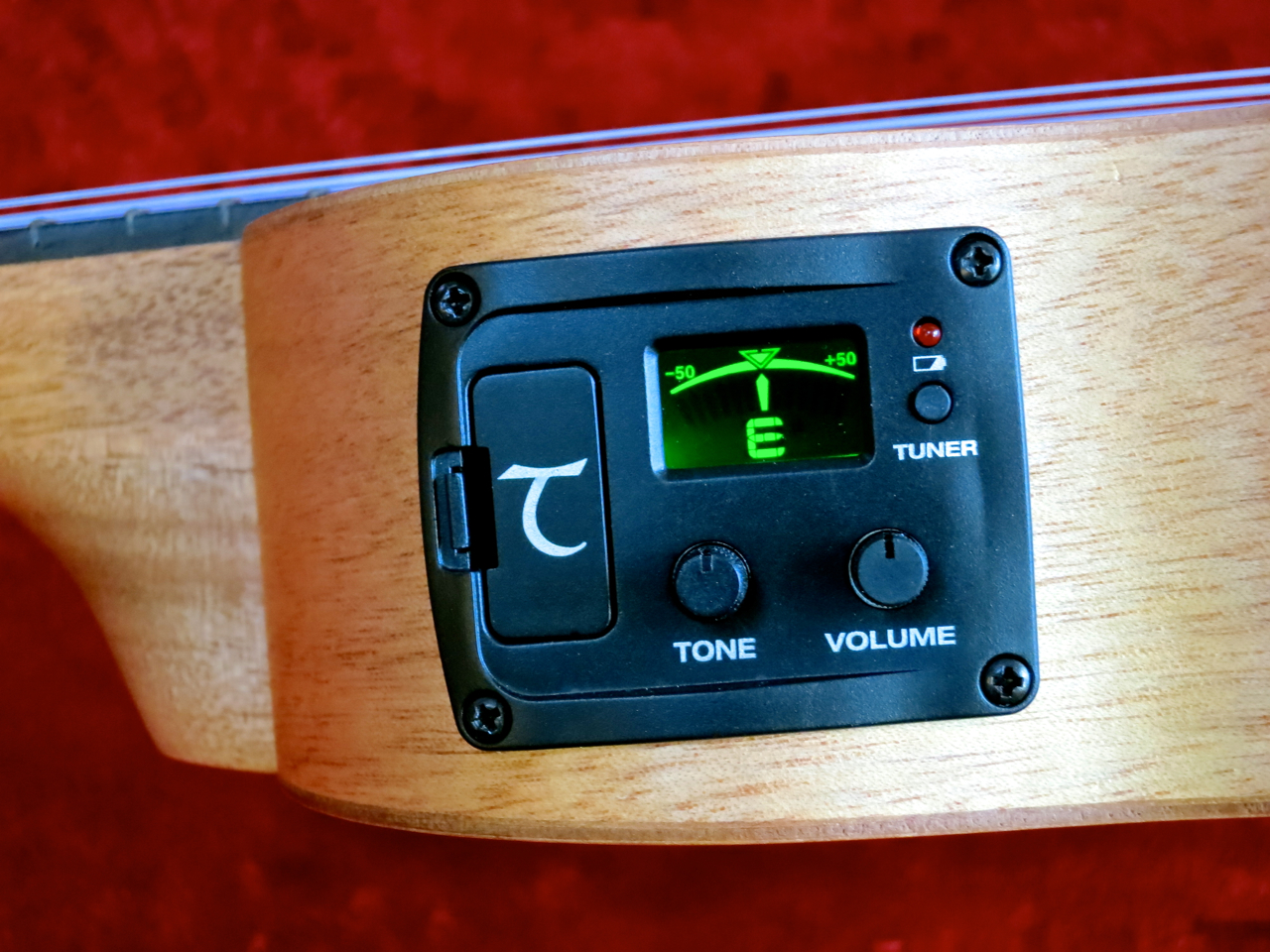
The Tanglewood’s preamplifier is powered by a button cell and offers controls for volume and tone, as well as a chromatic tuner.
****
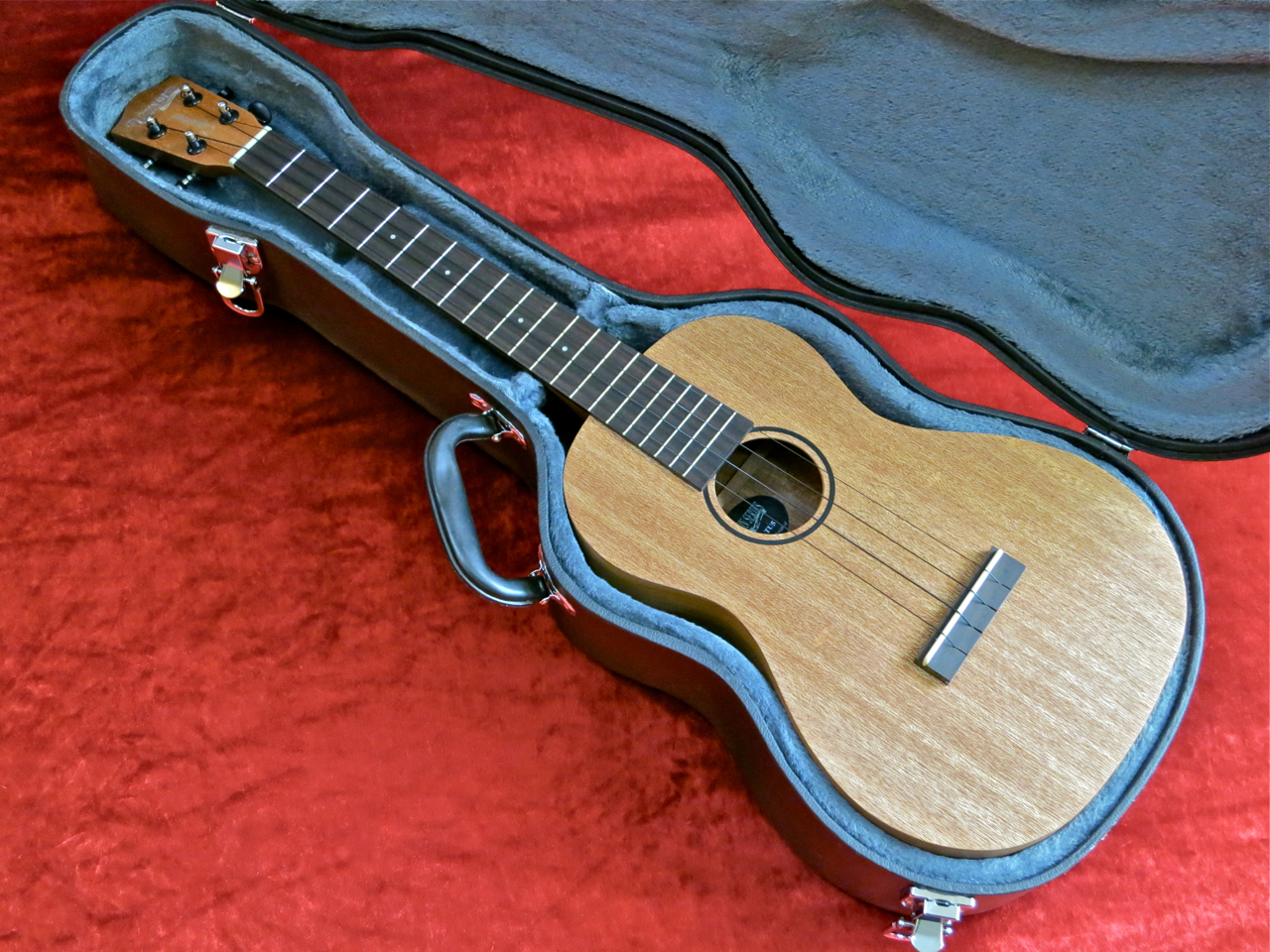
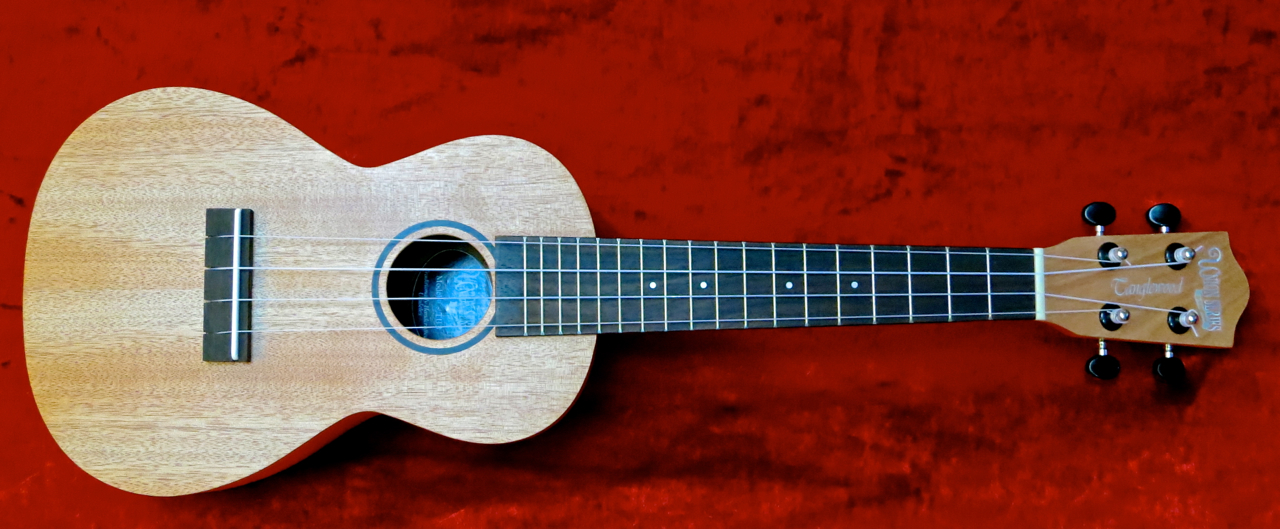
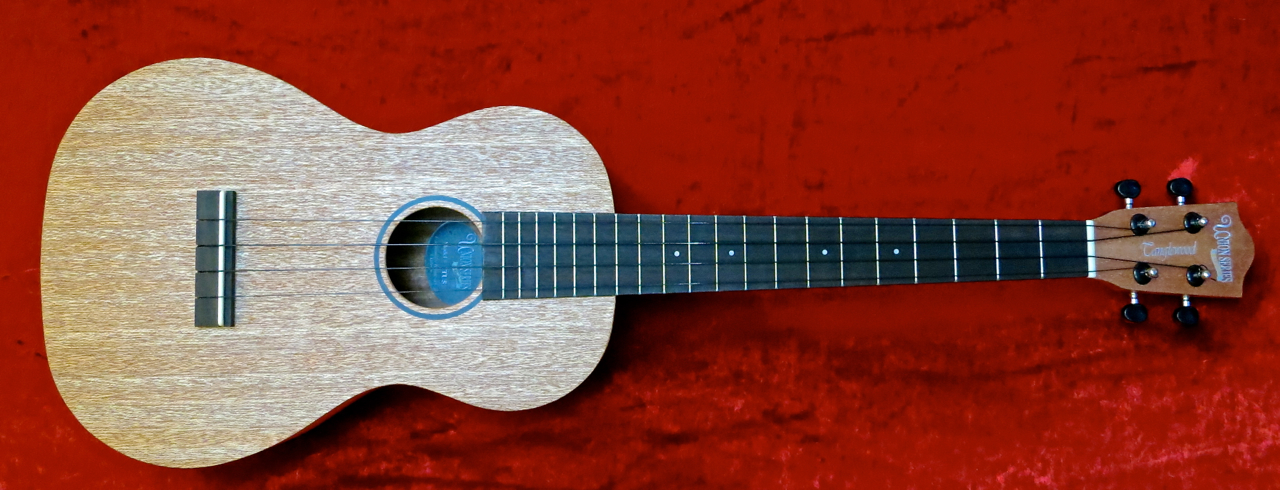
The Tanglewood TU-3 (119 €) is a concert-sized uke. A stylish hardcase is included in the price.
A Concert-ukulele is the next bigger size to a soprano.
This model has a 37.5 cm scale.
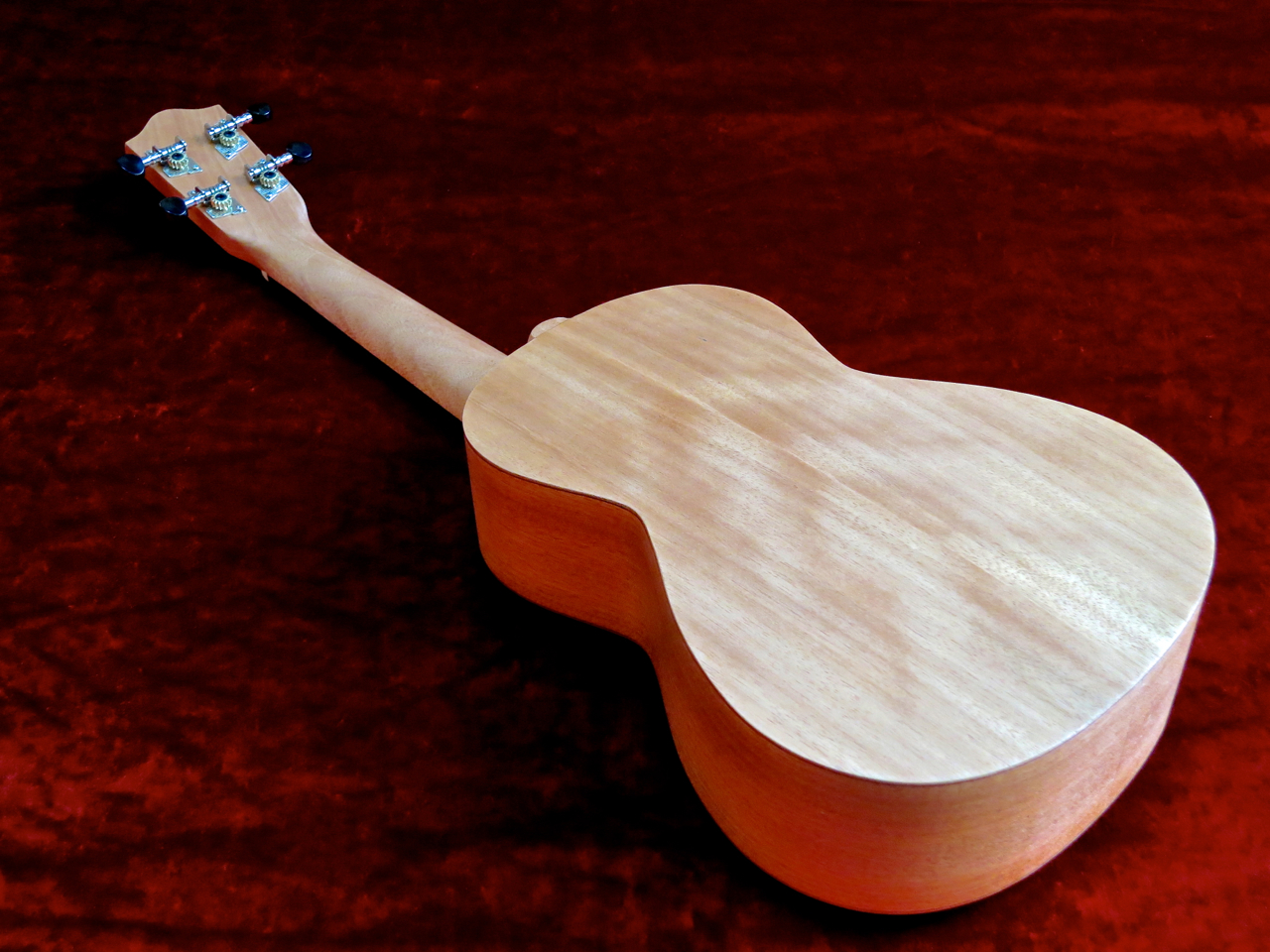
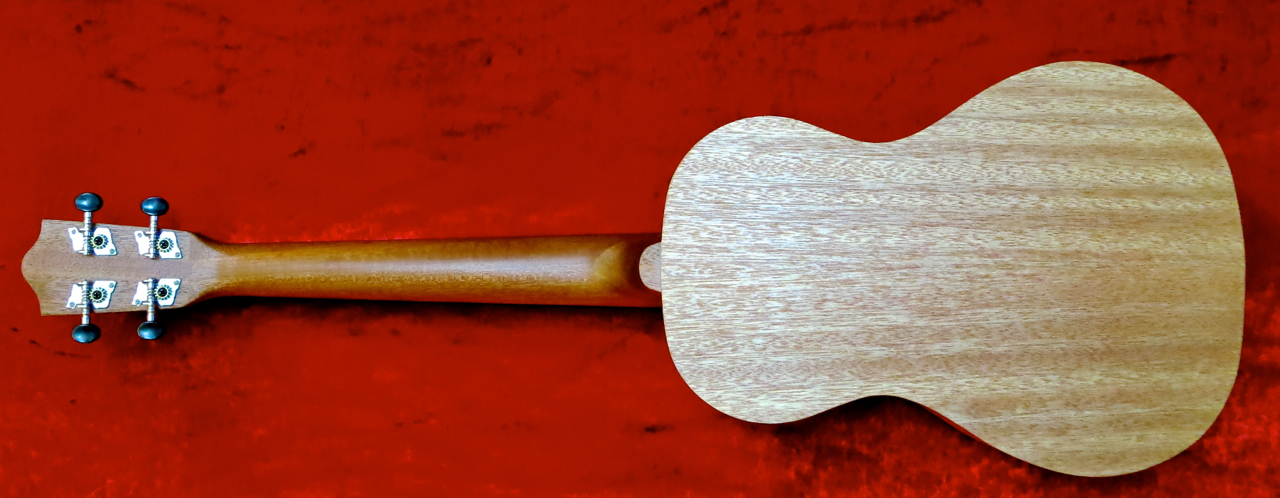
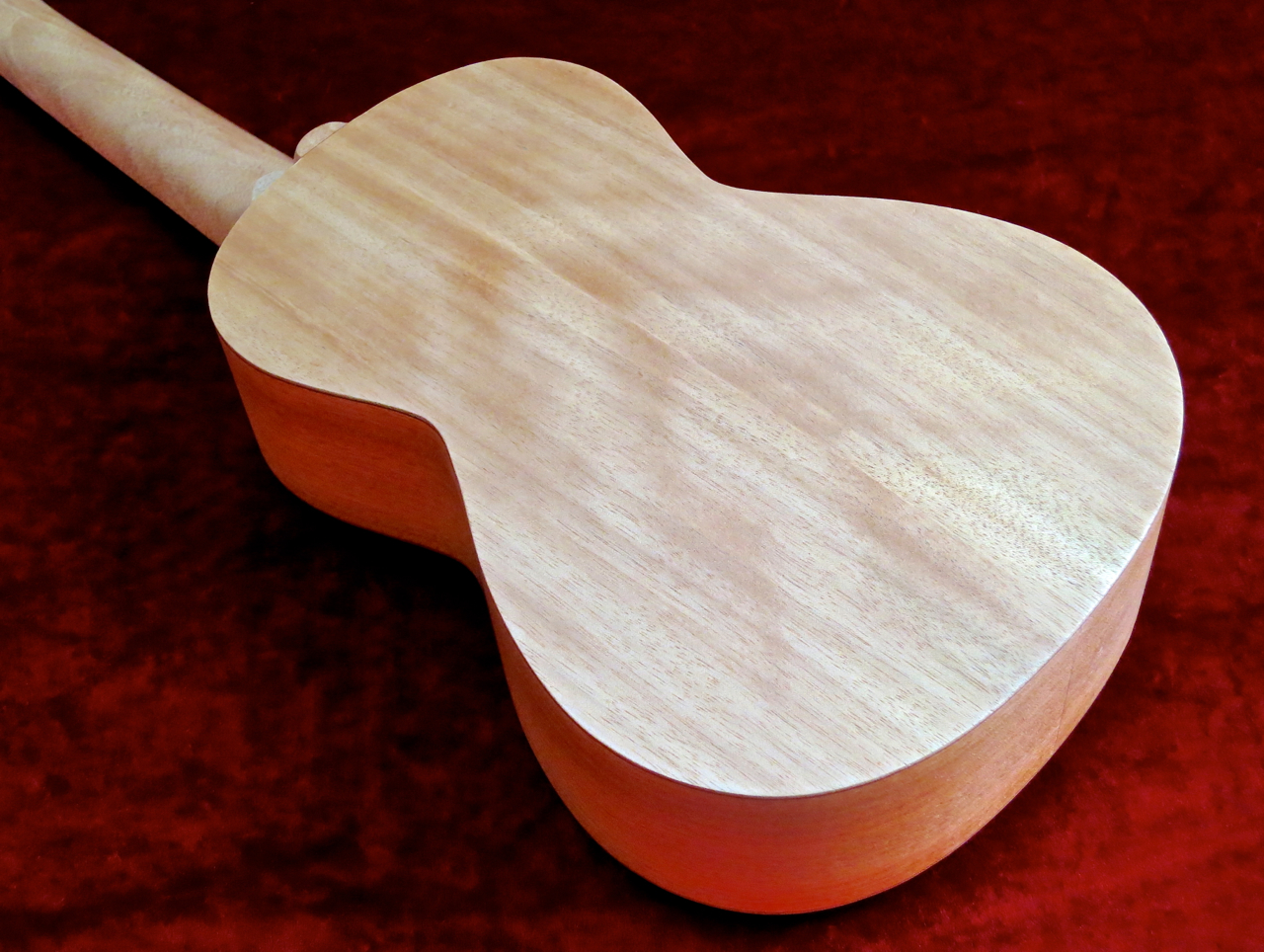
This TU-3 has an exceptionally nicely grained body…
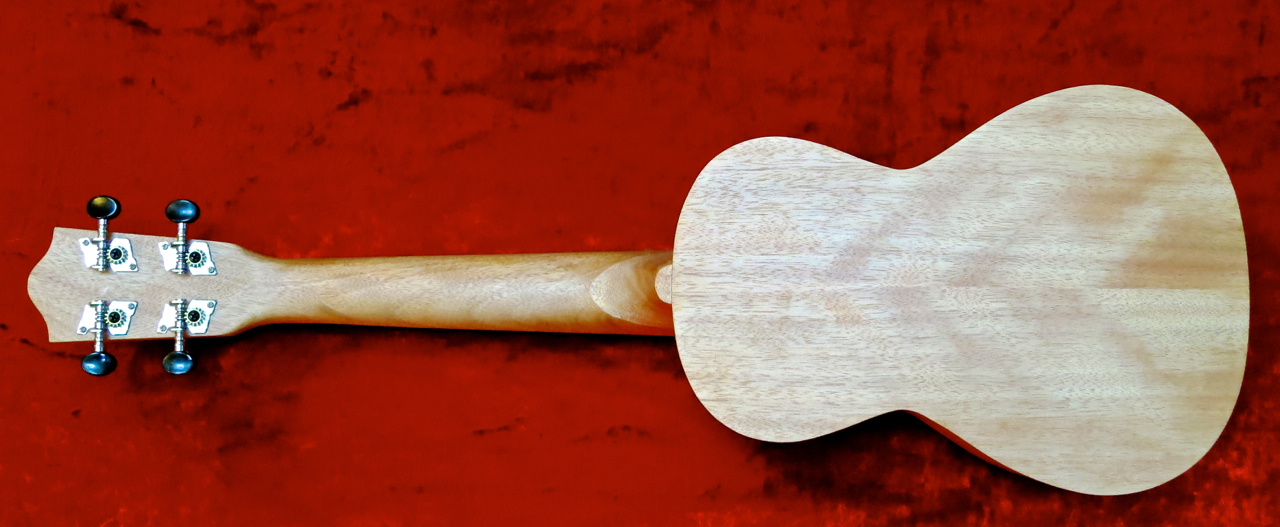
…with a highly figured back.
****
The TU-3’s electroacoustic version – the Tanglewood TU-3E (129 €) – comes equipped with the same preamp model we’ve already seen on the TU-1CE.
The TU-3E’s fingerboard offers you 18 small frets.
The simple rosette found on all Union-series ukuleles complements the organic, woody look of the instruments very well.
The output jack is situated on the lower rim.
****
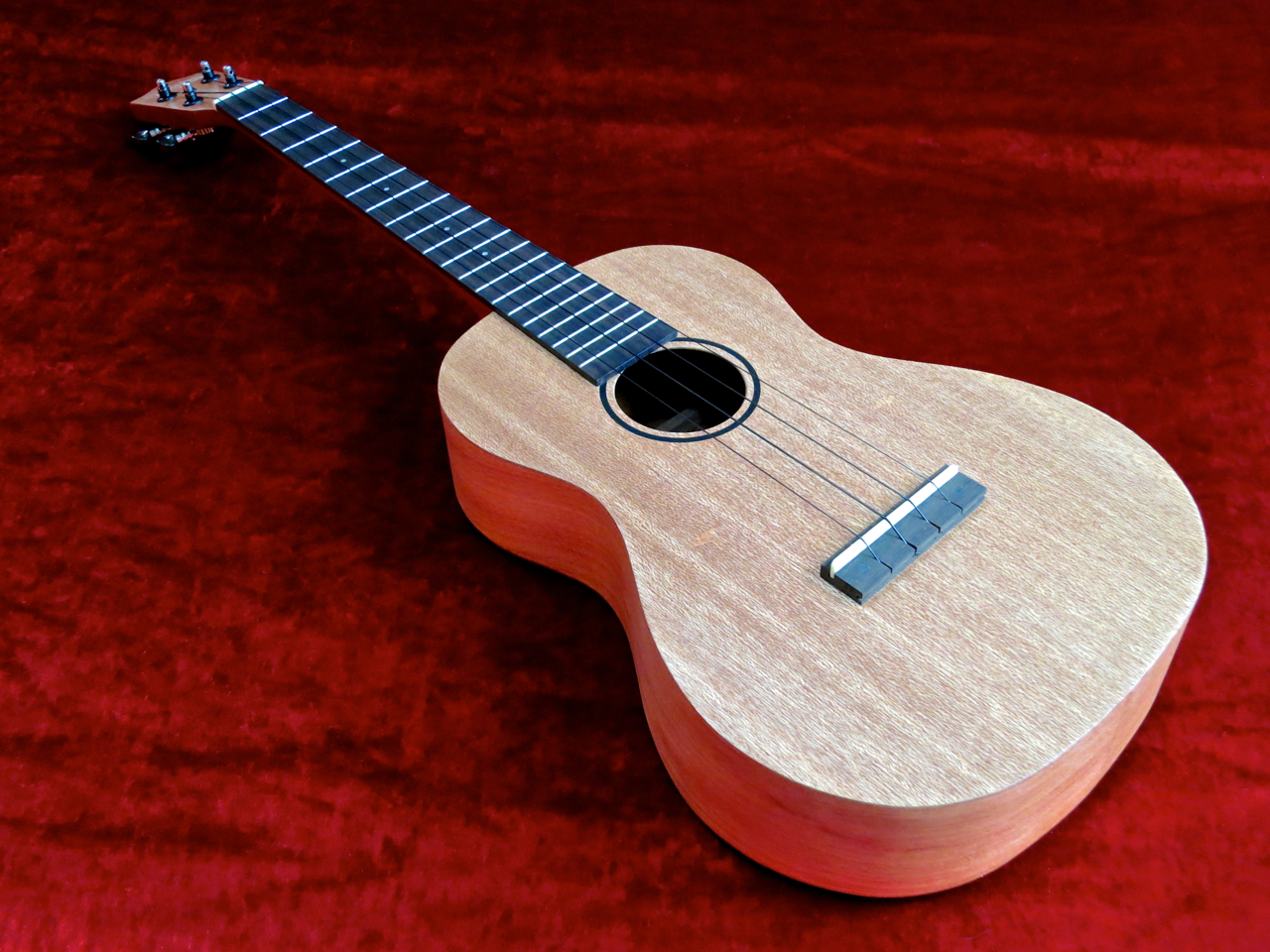
Just like the two Union concert-ukuleles, Tanglewood’s baritone uke, the TU-5-ukulelessa (149 €), also comes in its sturdy case.
The baritone is the largest traditional ukulele size, with the TU-5’s scale length measuring 51.2 cm.
The TU-5is equipped with 20 small frets. Our test sample came with a set of black nylon strings tuned to High-g-tuning (d4-g3-h3-e4), meaning that the fourth string is one octave above a regular guitar string.
****
This is what the TU-1CE sounds like when recorded with a condenser microphone:
The built-in piezo system results in a very decent direct sound:
This clips mixes the microphone with the piezo output:
****
I recorded the concert-sized Tanglewoodin TU-3 with an AKG C3000 and a Shure SM57:
****
Acoustically, the piezo-equipped TU-3E sounds virtually indentical to the all-acoustic TU-3:
Sadly, our test sample displayed some sort of trouble with its under-saddle transducer (probably an uneven bridge slot), which rendered the pickup sound rather useless, because the middle pair of strings was much louder than the two outermost strings:
Here’s a mix of the TU-3E’s electric and acoustic signals:
****
I recorded Tanglewood’s TU-5 baritone uke using an AKG C3000 condenser microphone and Shure’s dynamic model SM57:
****
Tanglewood’s Union-series ukes are well-made, lightweight instruments with a very down-to-earth charm.
Regardless of their low price tags these ukes are decent musical instruments, not toys!
I must say I enjoyed Tanglewood’s fat neck profiles a lot. These are neck a grown-up man can hold on to!
Judging by the fine performance of the TU-1CE’s pickup system, I’m willing to believe that the TU-3E’s underwhelming pickup sound is just a one-off oversight in quality control.
Still, the whole picture is really very positive, both in terms of workmanship and sound. The inclusion on classy-looking hard cases in the price of the three ”bigger” models on test makes these Tanglewoods even more enticing. In my view, Tanglewood’s Union-series ukuleles are a great, and affordable, way to get to know the Hawaiian cousin of the guitar.
Zoom have released their new handy recorder flagship:
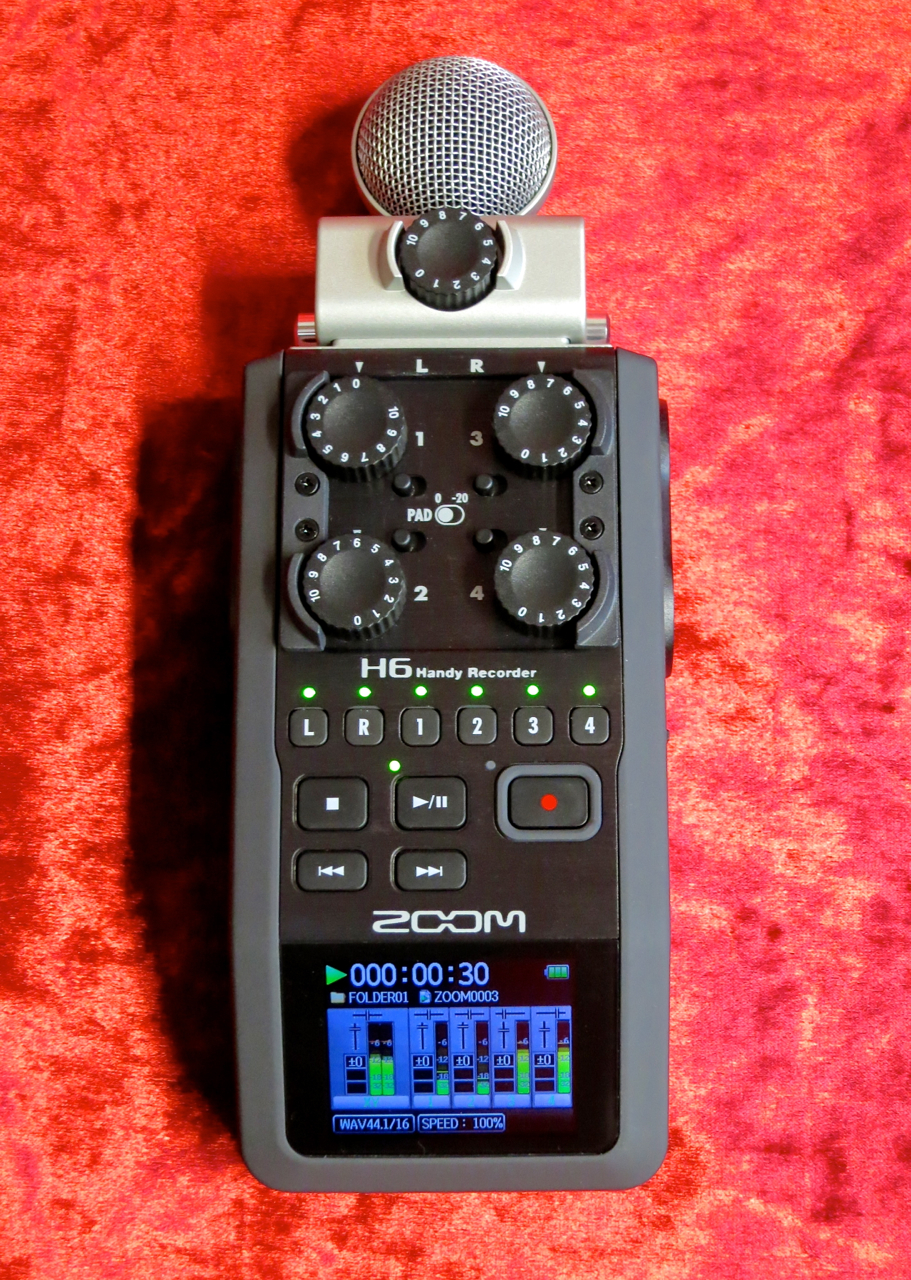
The Zoom H6 is a six-track mobile recorder with exchangeable microphone modules.
****
Zoom’s H6 (rrp in Finland: 398 €) comes in its own carrying case.
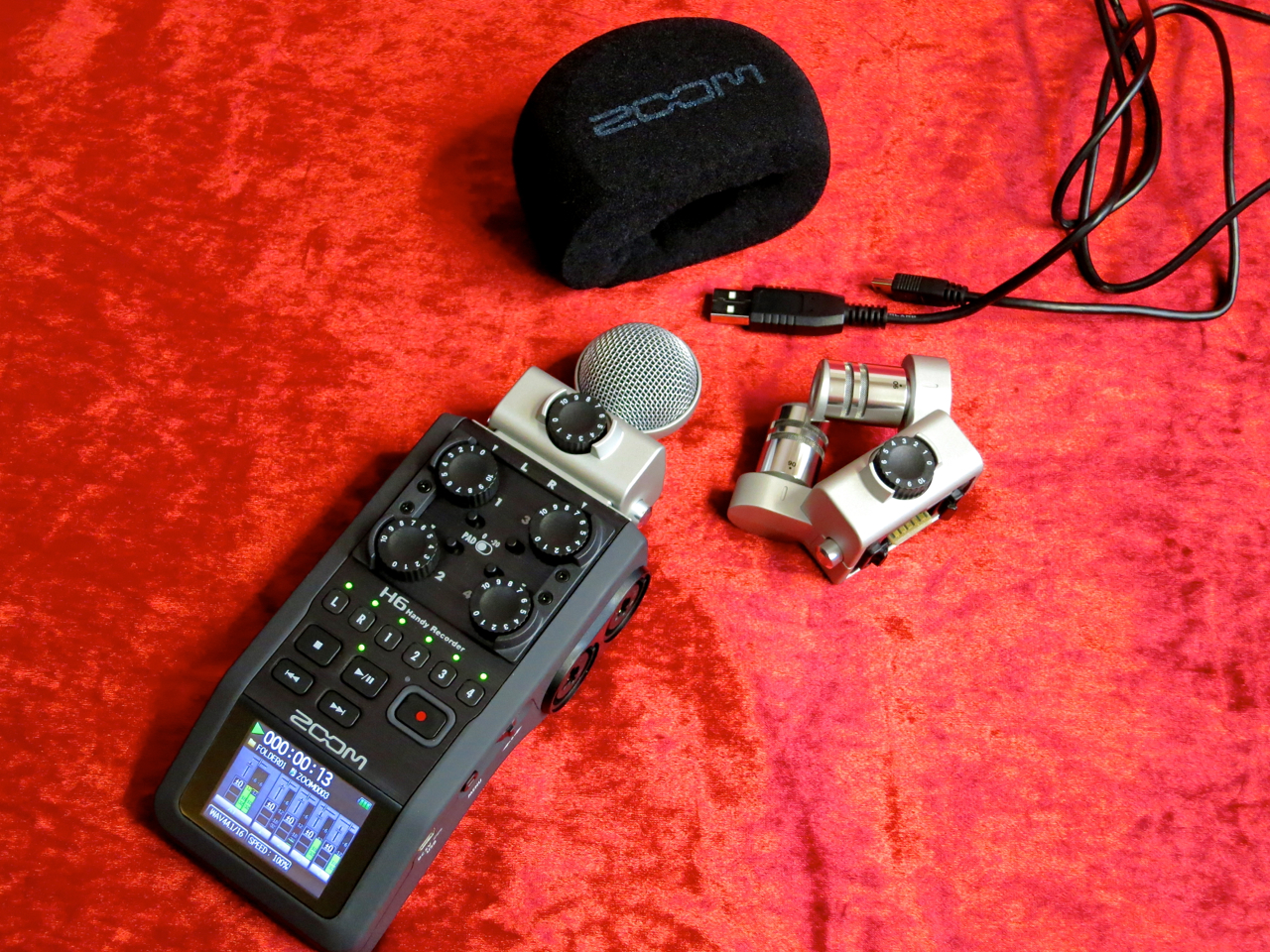
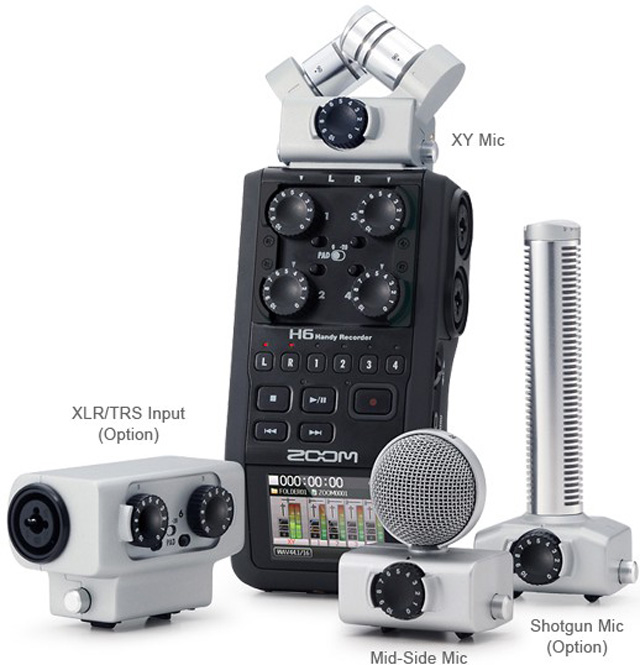
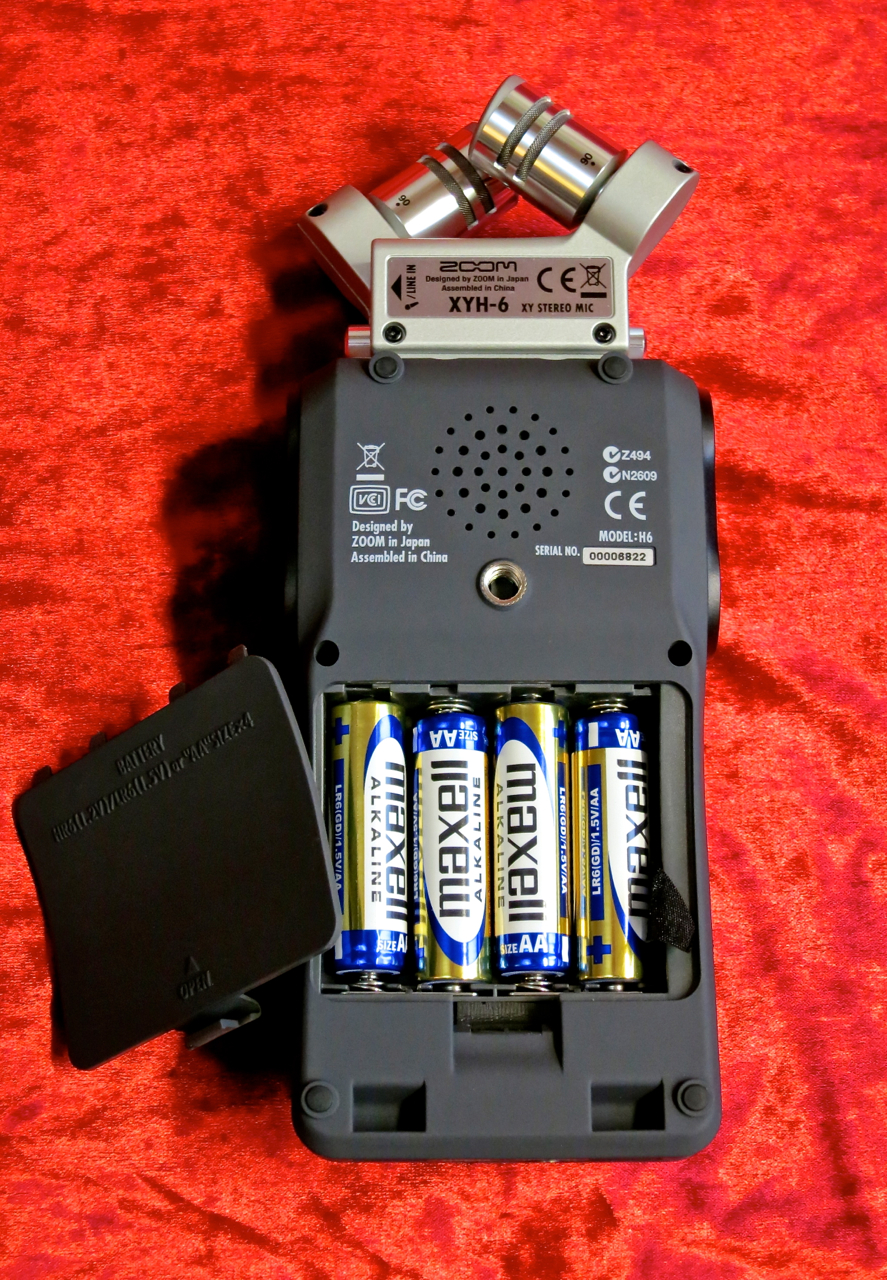
The package includes the H6 itself, two mic modules – the XYH-6 offering XY-stereo and the MSH-6 with an MS-stereo capsule – a foam windscreen, a USB-cable, four AA-size batteries and a 2 GB SD-card.
Also included is Steinberg’s Cubase LE audio-sequencer software.
At the moment the H6 is the only field recorder offering you different exchangeable mic and preamp modules.
In addition to the supplied XY- and MS-modules you can also buy Zoom’s shotgun module (SGH-6) or a module with an additional pair of XLR-/TRS-inputs (EXH-6).
For this review we were also supplied with Zoom’s accessory pack for the H6 (APH-6), which contains a furry windshield for outdoor recording, as well a USB-power supply and a remote control.
****
Except for its control panel the Zoom H6 is entirely covered in a non-slip rubbery coating, which also cuts down on handling noise during recording.
A typical Zoom-feature has been carried over into the recorder’s XY-module:
You can switch the stereo width of the XY-setup by turning the capsules. The options are the slightly narrower 90 degrees angle…
…and the wider pickup pattern of 120 degrees.
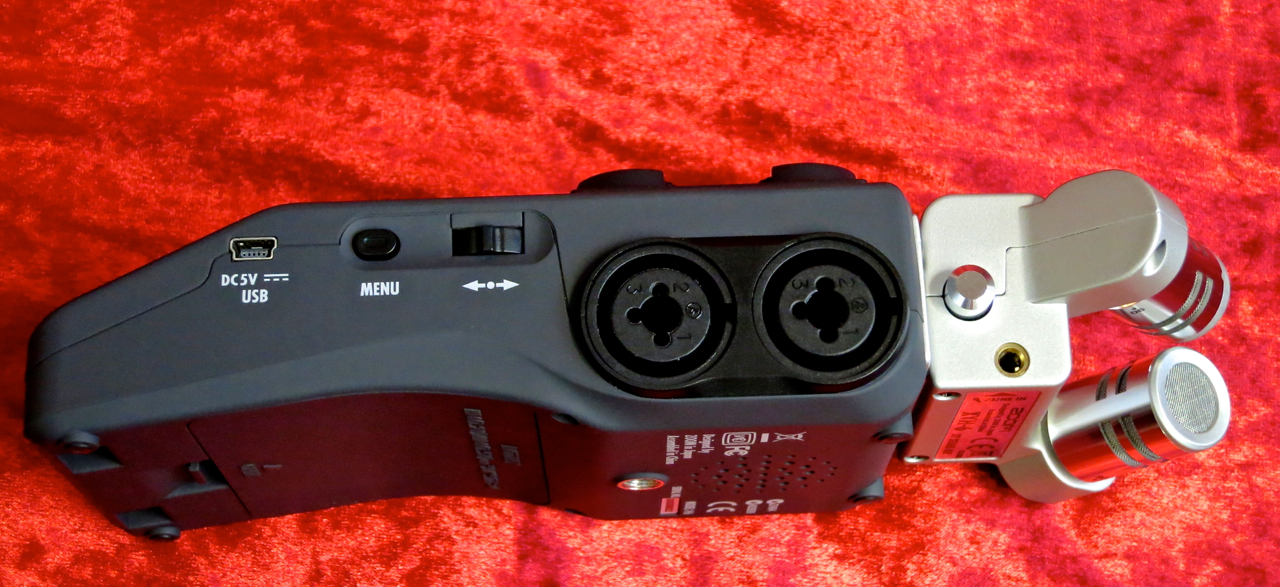
The combined XLR/TRS-connectors have been placed on both sides of the H6. The Zoom offers switchable phantom power for condenser mics.
On the left side you’ll find the access to the SD-card, as well as the headphones output and the volume control.
In addition to the recorder’s mini-USB-port the right side is home to the Menu-button and the device’s nifty navigation toggle.
This recorder runs on four AA-size batteries, and will run for approximately 20 hours on a fresh set of alkalines.
You can place the Zoom on most camera tripods, thanks to its standardised thread. There’s also the HS-1 hot shoe adapter available, which makes it possible to mount the recorder straight onto a camera.
The small monitor speaker isn’t particularly Hi-Fi, but it’s good to have it for quick checks.
The unit’s line level output, as well as the connector for the optional remote control, has been placed on the bottom rim of the Zoom.
****
The Zoom H6 can handle two audio formats:
Linear WAV-files offer you sample rates of 44.1, 48 or 96 kHz with 16 or 24 bits of resolution. When you choose WAV as your recording format the H6 works as a multitrack recorder, which makes it possible to do overdubs, and which allows you to mix the recorded tracks afterwards. You can do your mixdown internally, using the Zoom’s own Project Mixer, or by exporting the separate tracks to an audio-sequencer.
Another function that only works when you’ve chosen WAV as your recording format is called Backup Record. This nifty function records the input signal from the exchangeable module twice – one set of tracks uses your input gain settings and is routed to the L/R-track, as usual, while the second set is recorded with 12 dB of attenuation as the so-called Backup-track. The Backup-track is your safety in case your own settings were too hot.
The big advantage of using the H6 in MP3-mode is, of course, this mode’s greatly extended recording time, made possible by data reduction. The recorder lets you choose from many different recording quality settings between 48 and 320 kbps. When in MP3-mode you use the Zoom’s Monitor Mixer to mix all of the six inputs into one stereo file, which is the recorded. This means that, when recording using the MP3-format, the end result is always a single stereo file, instead of the separate tracks you get when running in WAV-mode.
When you’re using the MS-module you can adjust the side-mic level, either before recording (WAV and MP3) or afterwards if you’ve recorded the module’s input signal using the Zoom’s MS-Raw-mode (WAV only).
The Zoom H6 is very easy to use, because the signal routing is fixed:
The module’s output always goes to the L/R-track (stereo), while inputs one to four are routed to their corresponding mono tracks (1-4).
Beneath the Gain-controls there’s a row of track status buttons, as well as the recorder’s ”transport” buttons.
The Zoom’s Monitor Mixer is where you adjust the signal levels and pan positions of all the signals for monitoring.
The Monitor Mixer window also shows you the status of each channel’s bass cut, compressor/limiter and phantom power.
This is what the Menu-view looks like.
To mix down recorded tracks you use a different internal mixer, called the Project Mixer.
The Project Mixer allows you to adjust each track’s volume and pan position, as well as the playback pitch for each track (without changing the playback speed).
****
In my opinion Zoom’s H6 hits the bull’s eye:
The exchangeable mic modules give you an enormous amount of flexibility to tailor the recorder quickly to the recording situation you find yourself in. The H6 is easy to use, and the recorder’s sound quality is very, very good. Thanks to the built-in metronome and chromatic tuner it’s easy to make sure you play in time and in tune. I’ve also enjoyed the Zoom’s nice compressors and limiters, which work very musically.
To demonstrate the H6’s performance and sound I recorded a short song using the recorder’s overdub function. I used the X/Y-module (at 90 deg) to record the steel-string acoustic, and recorded two mandolin tracks and two vocals with my trusty Shure SM57.
First, I mixed the song using the Zoom’s internal mixer, after which I exported the stereo file to Garageband, where I cut off the count-in and added a little bit of reverb:
I also tried taking the other route by exporting all the separate files from the H6 into Garageband, where I remixed the song using the original tracks:
****
I used a series of sine-wave sweeps to give you an idea of the effect the side-mic level has on the stereo-width of the recorded material. The lower the side-mic level is, the narrower your stereo image gets.
Side-mic +6dB:
Side-mic -2 dB:
Side-mic -9 dB:
Side-mic -22 dB:
Side-mic off:
****
I think Zoom’s H6 is a great field recorder and portable multi-track studio. The H6 works great to capture your song ideas or to for quality recordings of your band rehearsals or live gigs. The Zoom makes pro-quality recording on the road possible.
Tokai Guitars are known for their well-made copies of classic guitar and bass models.
The brand-new Tokai ATE-33N Thinline is part of Tokai’s more affordable Chinese-made range, and represents their version of a Thinline Tele-type guitar.
****
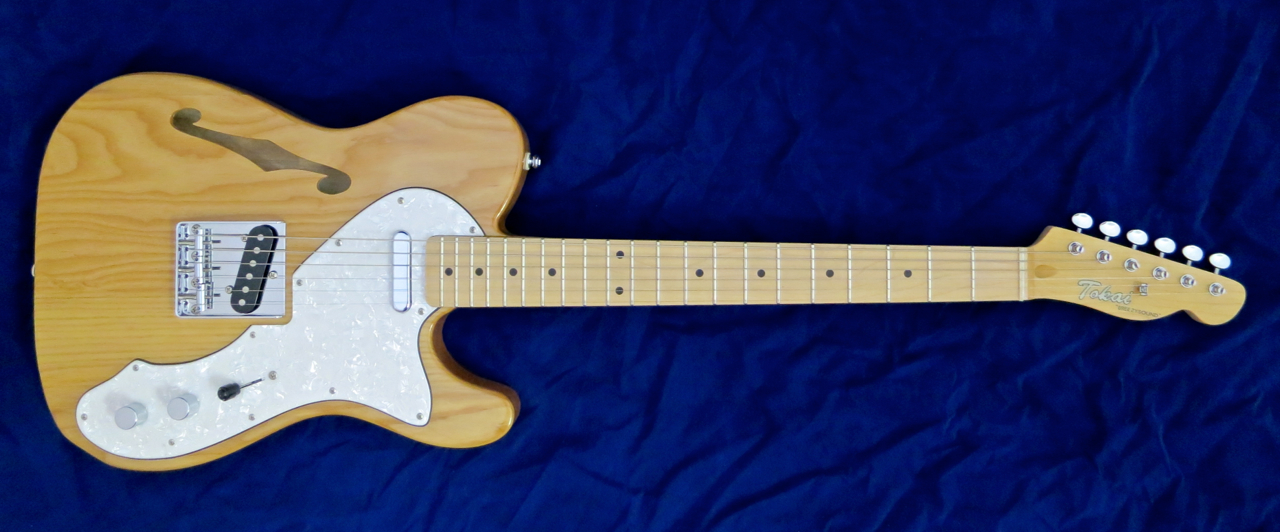
The Tokai ATE-33N Thinline (current price in Finland 437 €) is a real looker and will delight fans of the natural look, despite its moderate price tag.
Roger Rossmeisl – known for his classic Rickenbacker designs – hit upon the concept of the Thinline Telecaster in the late 1960s when working for Fender. The original version was made with a body which featured three large pockets routed out from the back. A separate, glued-on solid piece of wood served as the body’s back.
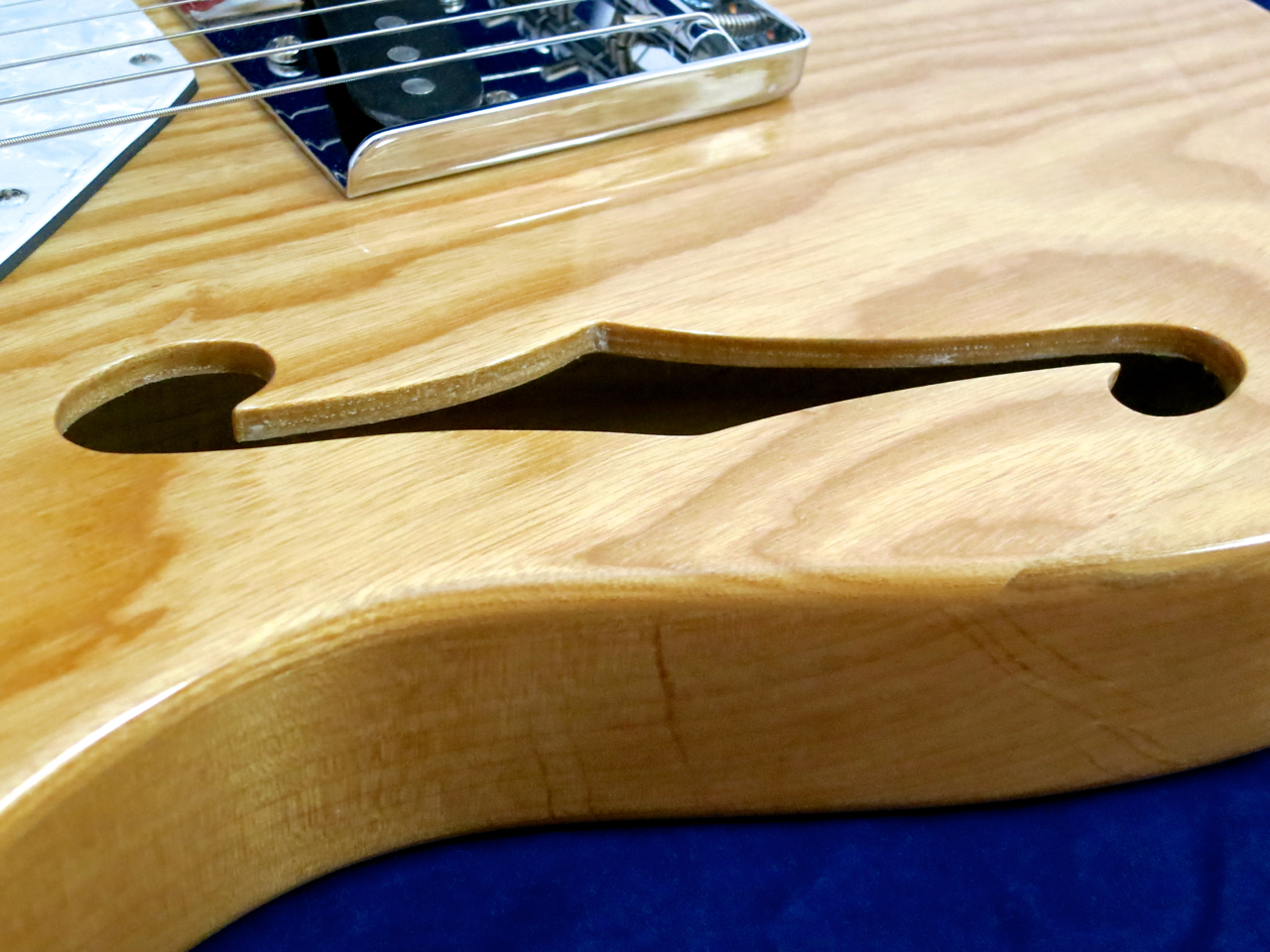
Tokai approaches the construction of the ATE-33N Thinline the other way around: the pockets are routed into the front of the alder body, which then receives a beautiful, five millimetre thick swamp ash top. This solid ash top was made from three side-by-side pieces on our test sample, with the nicely matched grain efficiently disguising the glue lines.
The body of Tokai’s ATE-33N Thinline sports a gloss finish, while the neck has received a thin satin finish.
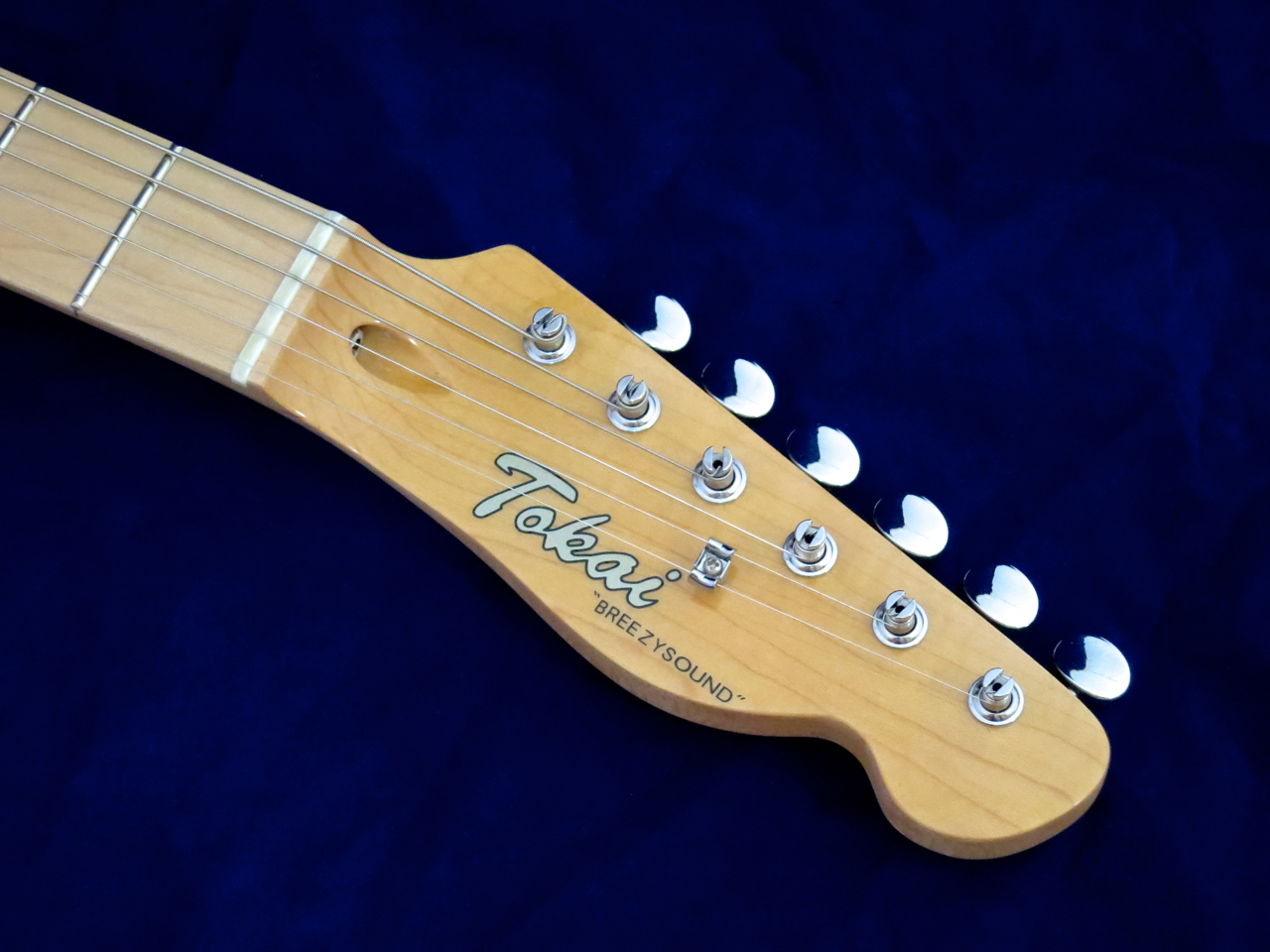
This Tokai is no slave to vintage fashion – truss rod adjustment is at the headstock end of the neck, which is a far more practical solution.
These nice Kluson-copies work fine.
The maple fingerboard has a larger radius (meaning it’s flatter) and fatter frets than its Sixties counterpart, making the ATE-33N easier to play. Especially string bending is far more comfortable with this type of neck.
The neck joint is a traditional four screw affair.
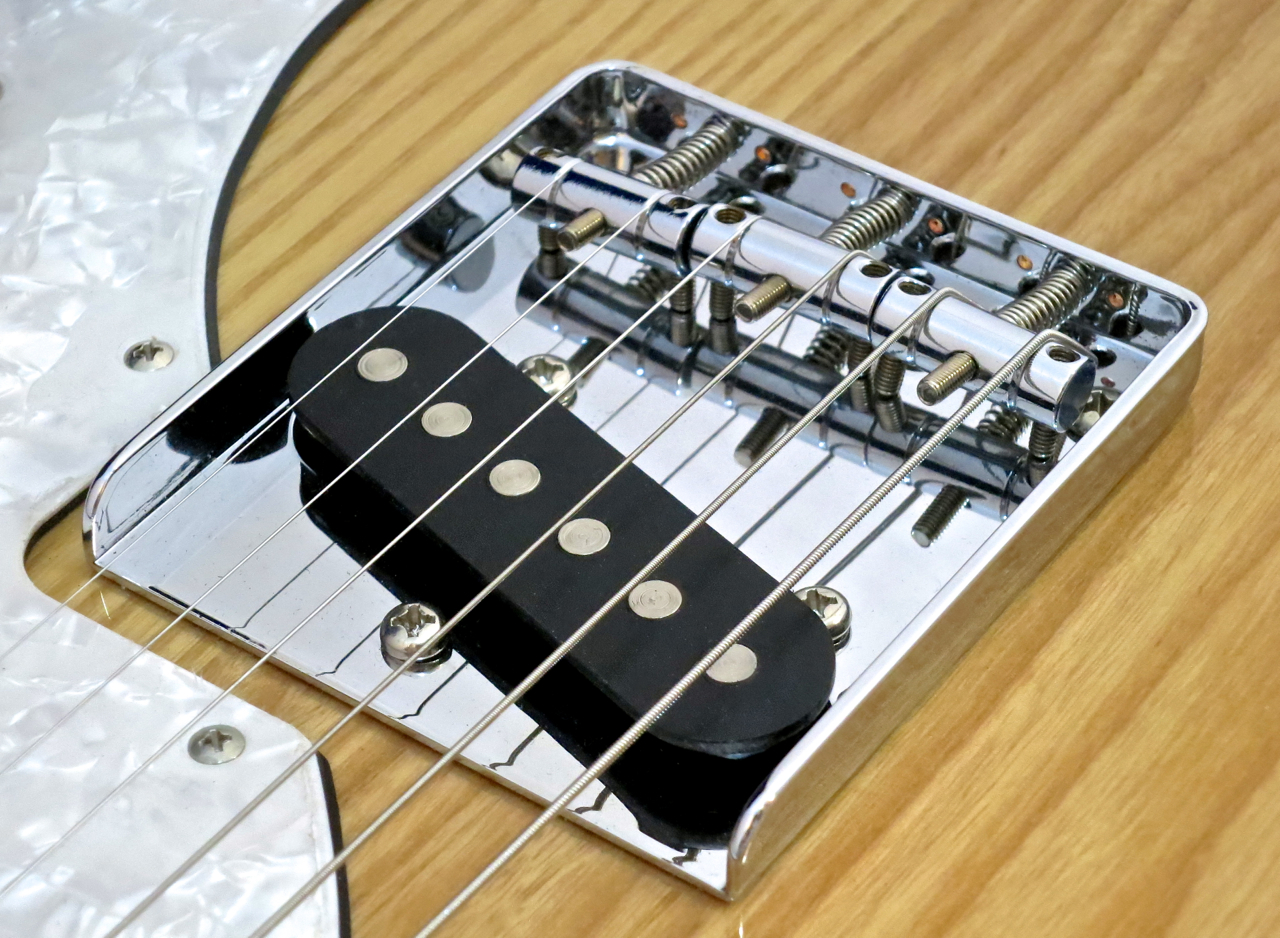
From a sonic standpoint, the traditional three-saddle, bent sheet-metal bridge that doubles as a pickup frame is probably a Tele-style guitar’s most important ingredient.
With these bridges octave compensation is always a matter of compromise, but most guitarists learn to live with the design’s limitations.
The ATE-33N Thinline is equipped with two singlecoil pickups that use soft steel slugs as polepieces and bar magnets stuck to the bottom of the bobbin.
Here’s a look at Tokai’s three-position switch and the guitar’s master volume and tone controls.
****
Now seems to be the perfect time to buy an electric guitar, judging by the sheer quality displayed by the very favourably priced Tokai ATE-33N Thinline.
The ATE-33N Thinline seems to tick all the right boxes with ease:
The satin-finished maple neck feels great. It’s rounded D-profile provides a sturdy fundament for tone and sustain, and it is comfortable to play, too. This model’s well-dressed frets and the fretboard’s flatter radius make a slinky set-up possible. Our test sample measured 1.4 mm for the low E and 1.2 mm for the high e (at the 12th fret), and it played well and without string rattles all across the neck.
Played acoustically you can clearly hear the open character of the hollowed out thinline body. Naturally, a T-style thinline won’t win a shouting match over a ES-335, but the hollowed out pockets do still make a discernible difference in this Tokai.
There’s lots of talk on guitar forums about the nastiness of many budget Tele-pickups, but I can only state that Tokai’s set of Mk3-pickups perform rather well. The neck pickup is war and round, but never muddy or one-dimensional. The bridge unit dishes out the Country twang with the right amount of bite and conviction. And the Tokai also nails my favourite Tele tone – the chimey middle setting with both pickups on. This means that changing the Tokai pickups for some aftermarket brand wouldn’t be my first priority, at least…
Here’s a taste of the ATE-33N Thinline’s clean tones, starting with the neck pickup and moving on from there:
And here’s a bit of Rock riffing:
****
In my opinion the Tokai ATE-33N Thinline scores high in the value-for-money stakes. It is a beautiful-looking instrument that plays very well indeed.
I have to admit having some reservations about the pickups before plugging in, but the sound of the Mk3-units has really won me over. This Tokai dishes out all the T-style tones we’ve come to expect from a traditionally styled and built example.
And should you decide to upgrade the pickups, regardless, the ATE-33N Thinline will prove to be a great starting point for any such ventures.
Finnish boutique amp company Bluetone is yet to become a household word. Nevertheless, Bluetone’s dynamic duo of Harry Kneckt and Matti Vauhkonen have already garnered lots of praise with their all-valve designs, and the word keeps on spreading steadily.
Custom Sounds in Helsinki have recently started to stock Bluetone-amplifiers, and they were kind enough to supply Kitarablogi with a Bluetone Princeton Reverb combo for testing.
****
The Bluetone Princeton Reverb (current price in Finland approx. 1,600 €) is Bluetone’s handwired – and slightly updated – version of a 1960s Fender Princeton Reverb (in its AA1164 guise). Bluetone’s improvements over the original issue include a post phase-inverter master volume (PPIMV), a larger speaker, as well as an external bias point. The Bluetone Princeton Reverb is rated at 15 Watts.
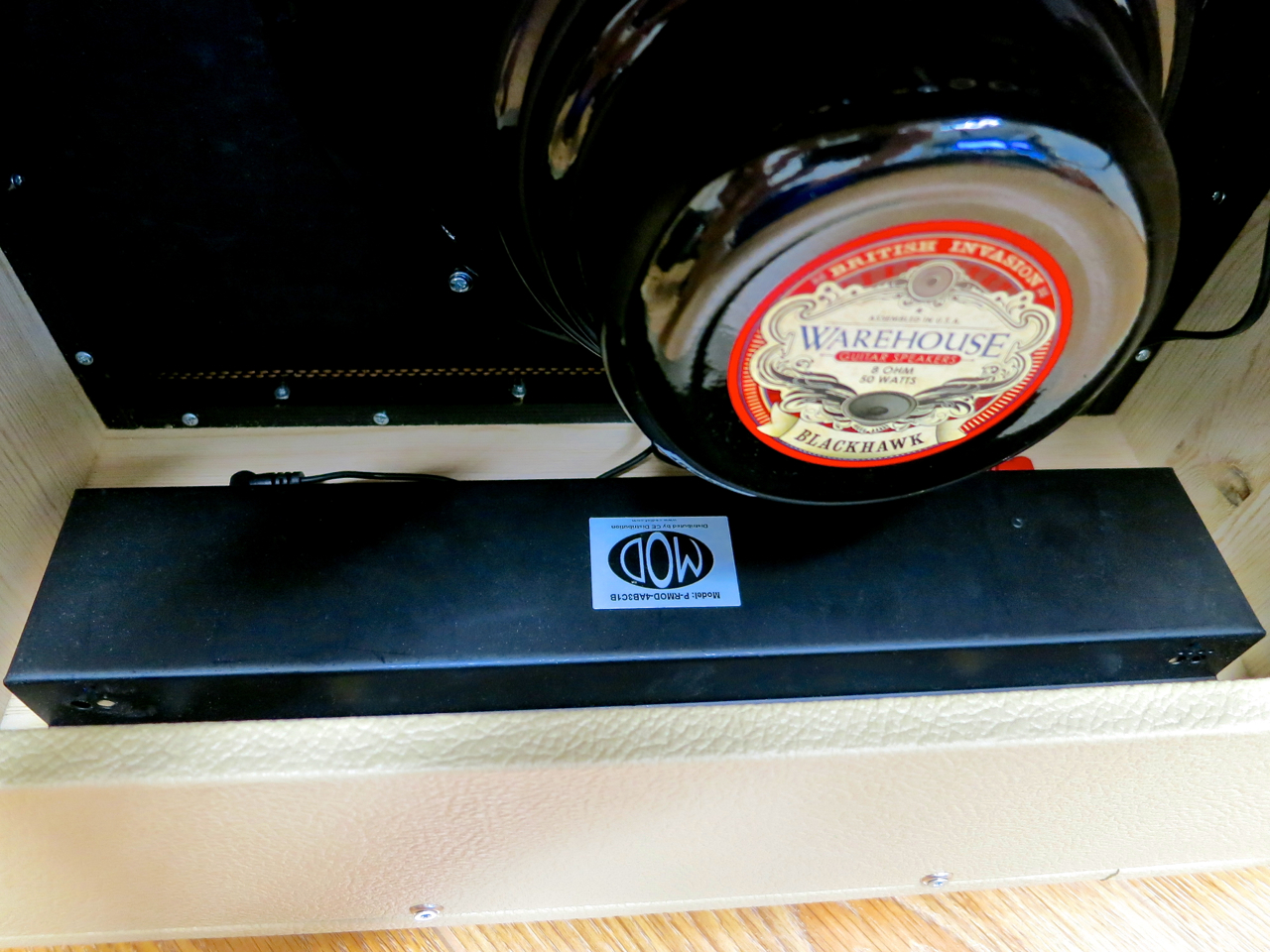
Bluetone’s Princeton is factory-equipped with a 12-inch WGS Black Hawk Alnico speaker, but you can order yours with a different speaker, if you wish.
Bluetone’s cabinets are made from 15 millimetres thick Finnish birch plywood, resulting in a very sturdy, yet lightweight combo.
The level of workmanship displayed on the Princeton Reverb really doesn’t leave anything to be desired – this combo is the real boutique deal!
True to form the cabinet is open-backed.
Bluetone’s Princeton uses three 12AX7-valves and one 12AT7 in its preamp.
A 5AR4-valve deals with the combo’s tube rectification, while the output section employs two 6V6s.
The amp’s full-length spring reverb comes from MOD Kits.
The 50 W WGS Black Hawk speaker has originally been designed with Vox AC30-type tones in mind, and seems like a strange choice for a small Fender-style combo.
****
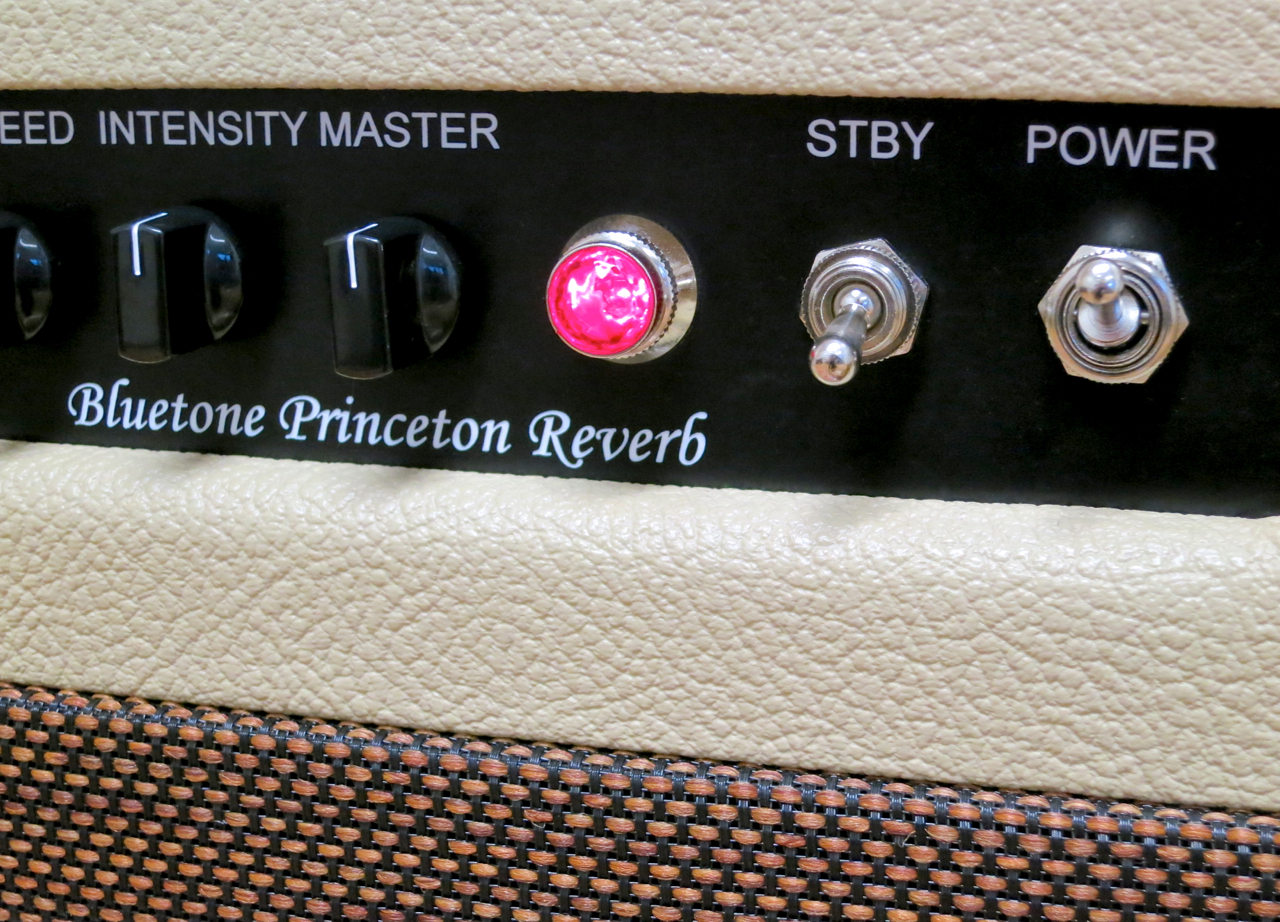
This Bluetone is a single-channel combo equipped with a three-band EQ-section, reverb and tremolo. Thanks to its master volume control you can drive the combo’s preamp hard while keeping the volume levels down.
Our test sample was one of the last pre-production models; the final series has all the front panel lettering placed below the controls for improved visibility.
On the back panel you’ll find two speaker outputs, plus a jack for the footswitch.
This rugged footswitch comes included with the amp.
****
For a mid-sized valve amp Bluetone’s Princeton Reverb is quite lightweight, yet it feels very sturdy.
Switch the combo on, and you’ll be surprised at the absence of mains hum and noise in general. This beauty is really quiet – great!
Many original Blackface and Silverface Fender Princetons have been modified along the way with a larger speaker. The original 10-inch Jensen sounds OK, but many find the tone to be a little too thin for their taste.
The Bluetone Princeton sounds much bigger and fatter from the get-go, thanks to its larger, 12-inch speaker.
This is what my Fender Telecaster sounds played through the Bluetone with clean amp settings:
Bluetone’s tremolo circuit sounds very tasty:
If you use the Low input there’s plenty of headroom to be had from the Princeton Reverb for clean humbucker tones (played on a Hamer USA Studio Custom):
But this little combo can also bare its fangs if you add some gain. Soundwise you’ll get just the type of distortion you’d expect from a low-powered, Fender-style amp. There’s plenty of bite with a healthy dose of compression and an open-sounding mid-range. Don’t expect oodles of cream from this combo, but if you’re after a gritty Sixties and early Seventies Blues- and Rock-vibe, the Bluetone Princeton Reverb is just the ticket.
Here’s the Telecaster, plugged into the High input, with Gain turned up all the way:
Plugging the double-humbucker Hamer into the combo’s Low input resulted in these sounds:
The Bluetone reacts very nicely to your guitar’s volume control, allowing you to turn down for clean-ish tones and turn up for overdrive:
****
In my view Bluetone’s Princeton Reverb offers genuine Finnish boutique quality at a very fair price. The workmanship is outstanding and the combo sounds fantastic. The Bluetone Princeton Reverb could be described as the ultimate Blackface-combo.
****
Bluetone Amps Princeton Reverb
Current price in Finland approximately 1,600 € (Bluetone amp cover: 50 €)
Saksalainen Duesenberg on valmistaja, joka on tunnettu laadukkaista kielisoittimista, joissa vintage-mainen tyylikkyys yhdistyy saumattomasti uusiin, kekseliäisiin ratkaisuihin yksityiskohdissa.
Duesenberg D-Bass on juuri tällainen soitin, sillä valmistajan mukaan bassosta saa irti sekä Presari- että Jazz-maisia soundeja firman passiivisella Mid-Shift-säätimellä.
****
Duesenberg D-Bass (1.729,90 €) on hyvä osoitus siitä, että hyväksi havaittuja perusaineksia voi yhdistellä tyylikkäästi kopioimatta muita soittimia.
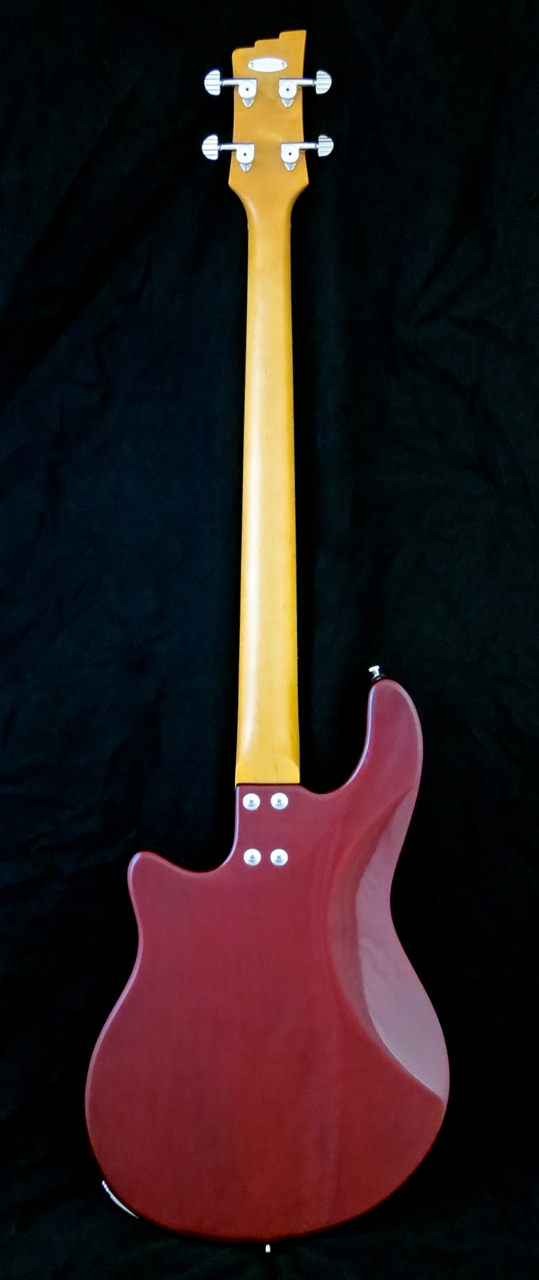
Soitin on passiivinen nelikielinen basso, jolla on ruuvikaula vaahterasta ruusupuisella otelaudalla, sekä reunalistoitettu leppärunko kaarevalla etupuolella.
Rungon syvä viiste lisää D-Basson mukavuutta.
Soittimen runko viimeistellään kiiltävällä lakkauksella, kun taas kaulassa on ohut mattapintainen viimeistely.
Minun mielestäni Duesenbergin kolmiaskelmainen viritinlapa näyttää isona bassoversiona vielä paremmalta kuin firman kitaroissa.
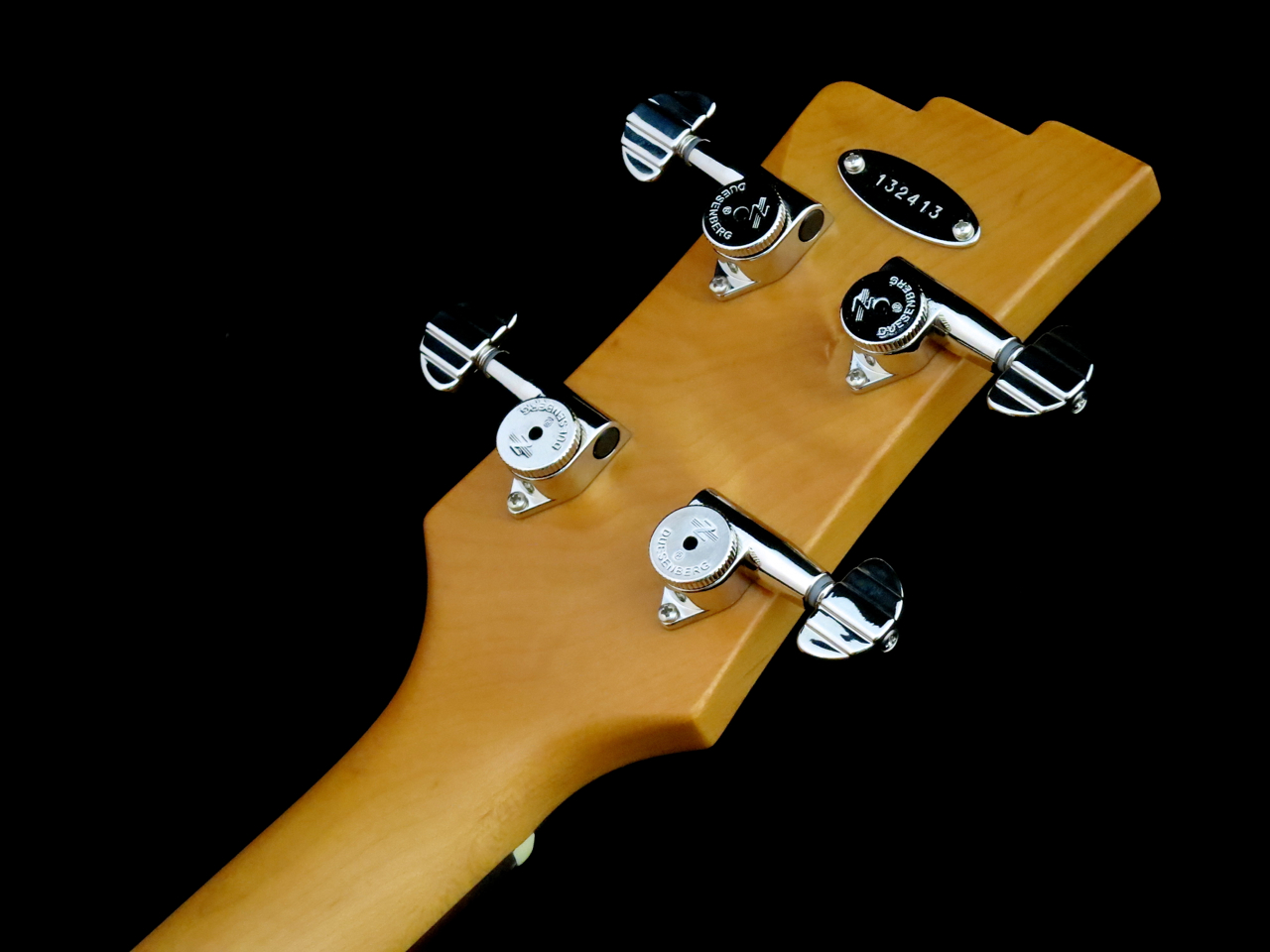
D-Bassossa käytetään Duesenbergin omia, lukittavia Z-Tuner-virittimiä, joissa kieli ensin pujotetaan virittimen akselissa olevaan käytävään, ennen kuin kieli lukitaan paikoilleen.
Duesenbergin erittäin siisti nauhatyö viimeistellään PLEK-robotilla.
D-Basson 22. nauhaan pääsee vaivattomasti sulavan kaulaliitoksen ansiosta.
Duesenbergin messinkinen talla on erittäin lujaa tekoa.
Kielten korkeuden ja intonaation lisäksi voi säätää vapaasti myös kielten väliset etäisyydet. Säätämisen jälkeen tallapalat lukitaan paikoilleen kuusiokoloruuveilla.
D-Basson kaksiosainen mikrofoni on asennettu omaa ovaaliin pleksiin.
Duesenbergin Toaster-bassomikrofonin juju piilee siinä, että jokaisessa puoliskossa on kaksi kelaa. Tässä mallissa kytketään siis kaksi humbuckeria yhteen, kun taas vanhassa Presarissa käytetään kaksi yksikelaista puoliskoa, jotka vasta yhdessä muodostavat häiriöitä torjuvan yhdistelmän.
Duesenbergin passiivinen elektroniikka löytyy basson isommasta plektrasuojasta – master volume, Mid-Shift-säädin ja master tone.
Tässä Mid-Shiftin toimintaperiaate paljastuu:
Silloin kun Mid-Shift-säädin on täysin avattu, kummankin puoliskon molempia keloja käytetään soundin tuottamisessa, mutta signaalin diskanttia suodatetaan hieman kondesaattorilla. Tästä syntyy D-Basson Presari-tyylinen soundi.
Mitä enemmän säädintä käännetään vastapäivään, sitä enemmän kummankin mikrofonipuoliskon toisen kelan signaalista vaimennetaan potentiometrin omalla vastuksella, mutta samalla kondensaattorin vaikutus vähenee. Säätimen toisessa ääripäässä syntyy siis hieman kirkkaampi ja ohuempi J-tyylinen soundi.
Seymour Duncanin sivuilla löytyy samankaltainen kytkentä, jolla kitaran humbuckeria muutetaan portaattomasti humbuckerista yksikelaiseen kytkemällä toinen kela säätimen kautta maahan.
Duesenberg D-Bassoa myydään omassa kovassa laukussaan.
****
Duesenberg-basso on kaunis soitin mukavalla keskivertopainolla ja erinomaisella tasapainolla, sekä sylissä että hihnasta roikkuen.
Kaulaprofiiliksi on valittu hyvin Presari-mainen matala, mutta leveä ”D”. Soittotuntuma on kuitenkin hyvin nopea ja nykyaikainen, koska D-Basson palisanteriotelaudan kaarevuus on melko loiva, ja myös koska käytössä ovat jumbo-kokoiset nauhat.
Ainoa huomautukseni on kosmeettisesta seikasta: Näkisin kernaasti yksi tai kaksi ruuvia lisää säätimiä kantavassa pleksissä, jotta kolmikerroksinen muovi istuisi tiukemmin D-Basson kaarevaa runkoa vasten.
Duesenbergin akustinen soundi on erinomainen, eikä soittimesta löydy lainkaan monista vintage-bassoista tuttuja soundillisia ongelmakohtia (esimerkiksi ”yli-innokas” matala G tai nopeasti ”kuoleva” korkea c).
Vahvistettu soundi on loistava, jos ei haeta aktiivisoittimista tuttua äärimmäistä muokattavuutta. Mid-Shift-säädin toimii kiitettävästi, ja sen vaikutus on paljon orgaanisempi kuin raju päälle/pois-tyypistä kelojen kytkemistä. Koska kytkentä ainoastaan filtteroi ja vaimentaa osan signaalista, Mid-Shift-säätimen ääriasentojen välillä ei myöskään synny huomattavia eroja signaalitasossa, vaan ainoastaan äänen karakteri muuttuu hieman savuisemmasta P-basson soundista vähän kirkkaampaan J-tyyliseen sointiin.
Esimerkkipätkissä soitan aina saman kuvion kahdesti – ensin Mid-Shiftiä täysin avattuna (P) ja sen jälkeen säätimellä toisessa ääriasennossa (J).
****
Duesenberg D-Bass on mielestäni upea sähköbasso laadukasta passivisoundia etsiville. Soittimen Mid-Shift-toiminto on hienovarainen, mutta silti erittäin toimiva tapa räätälöidä Duesenbergin soundia itselleen sopivaksi.
James Hetfield on muusikko, joka ei varmastikaan enää kaipaa esittelyä. Mies on Metallican keulahahmo, vokalisti, lauluntekijä ja kitaristi, ja hän on vaikuttanut ratkaisevasti koko Metal-genren kehitykseen.
Metallica-bändin kitaristit – Hetfield ja hänen kolleegansa Kirk Hammet – ovat tehneet jo pitkään yhteistyötä ESP Guitarsin kanssa. LTD James Hetfield Snakebyte on tämän yhteistyön tuorein hedelmä.
****
James Hetfield soitti Metallican alkuaikoina Gibsonin Explorer-mallia, ja kitarasankari näköään pitää edelleen kyseisen kitaran kulmikkaista muodoista.
LTD James Hetfield Snakebyte (1.096 €) on perusteellisesti päivitetty nykyaikainen metallikitara, jolla on kuitenkin selkeitä Explorer-vaikutteita.
Kitaran runko ja sen liimaliitoksella runkoon kiinnitetty kaula ovat mahonkia, kun taas Snakebyten sysimusta otelauta on veistetty eebenpuusta.
Mukavuuden – ja kevyemmän painon – nimessä LTD:n runko on Gibson-klassikkoon verrattuna pienempi.
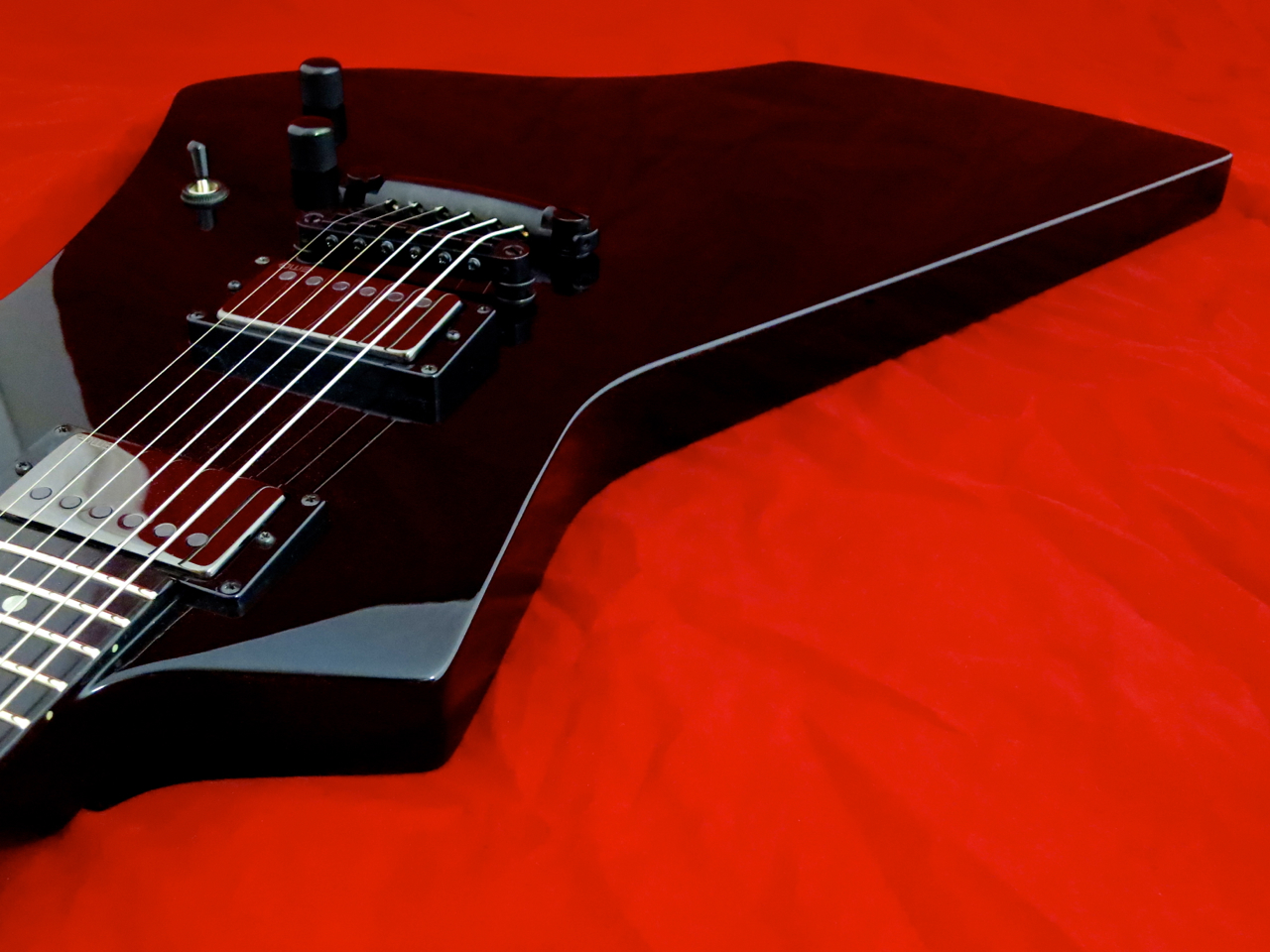
Rungon bassopuolen pitkä ja loiva viiste on vaikea vangita valokuvaan, mutta se on omiaan tekemään Hetfield-mallista mukavan.
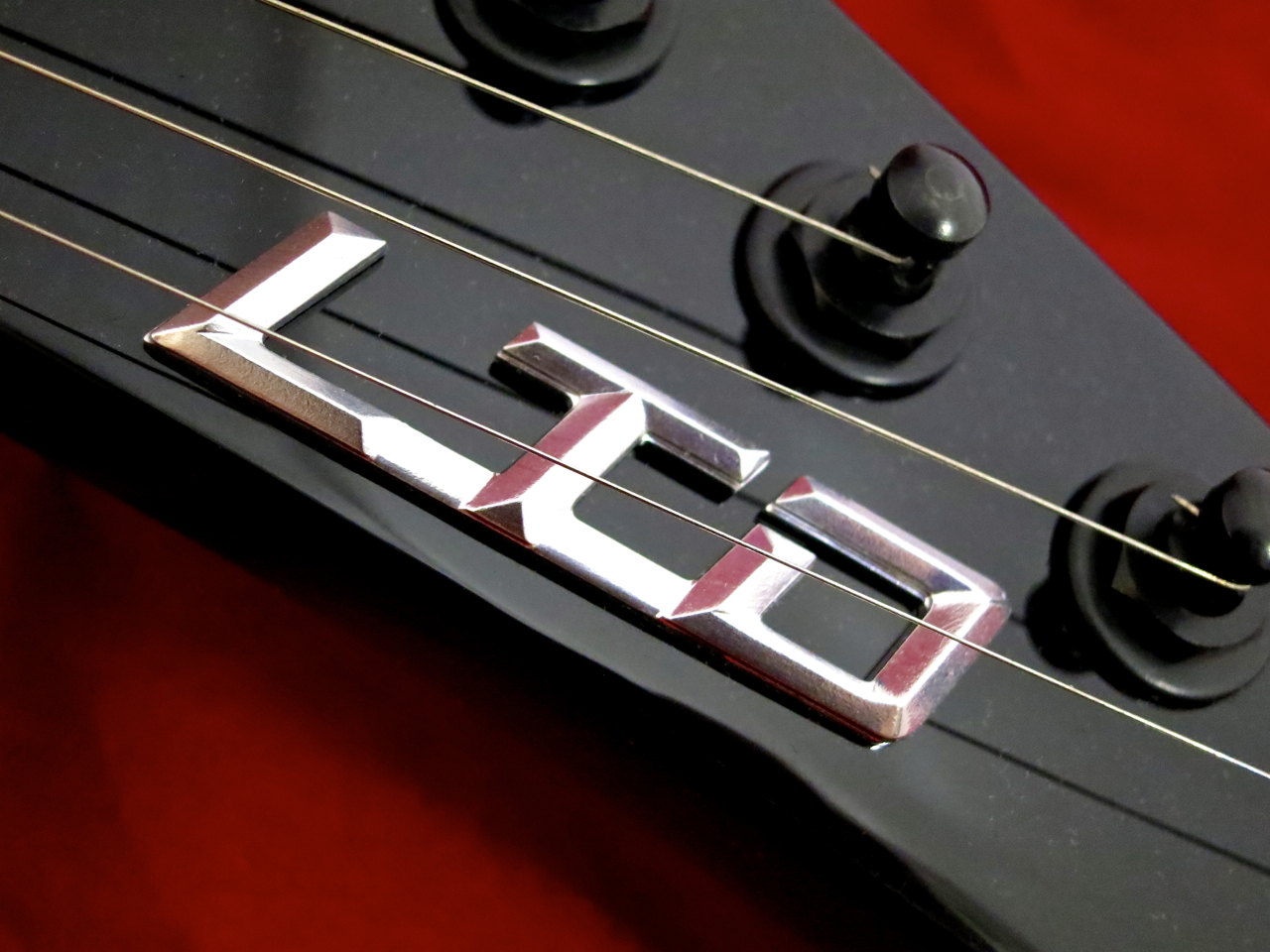
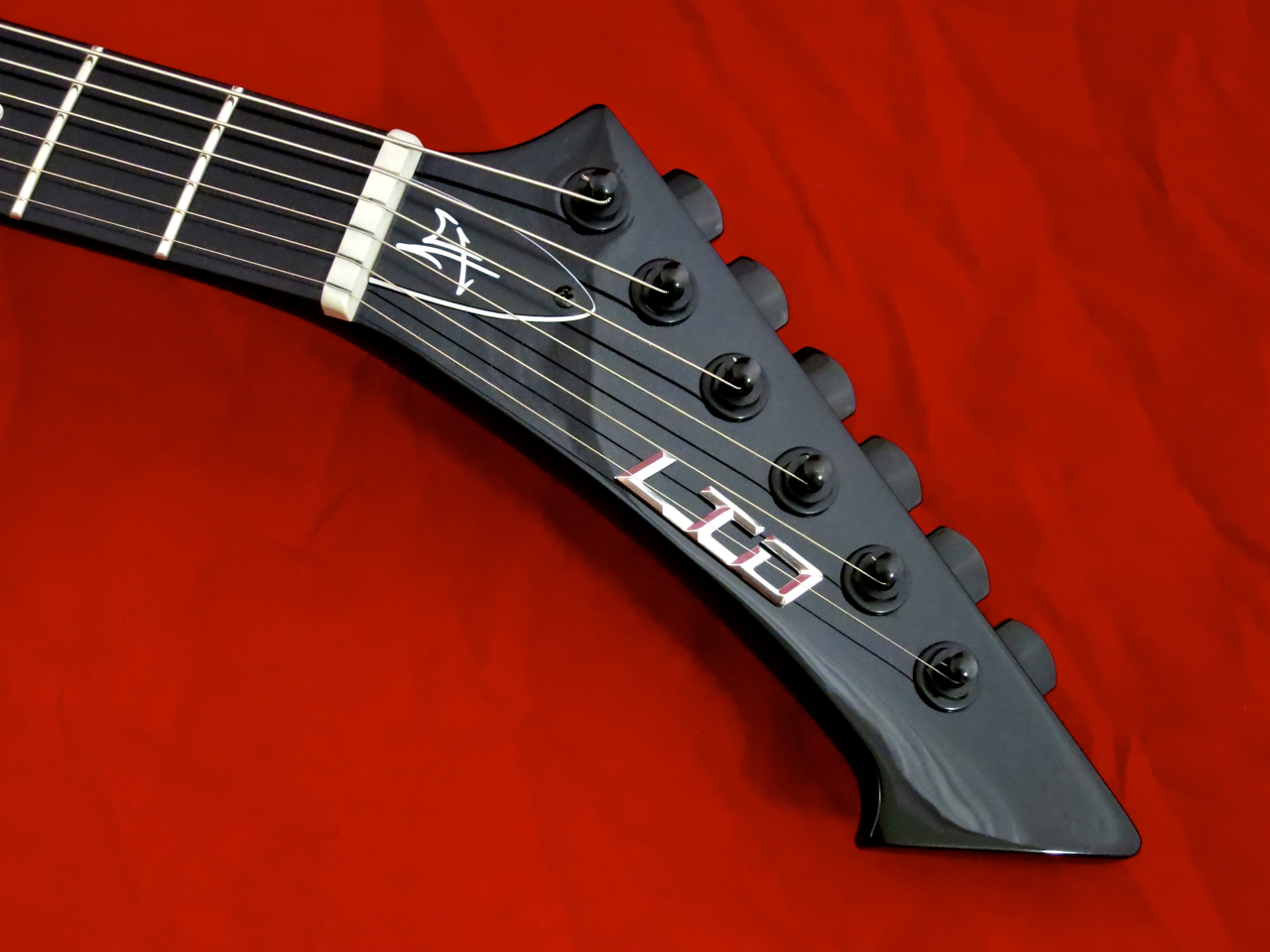
Sperzel-lukkovirittimet on valittu Snakebyte-malliin niiden laadun ja toimintavarmuuden takia.
Tone Prosin talla ja kieltenpidin lukitaan säätämisen jälkeen vankasti paikoilleen kuusiokoloruuveilla. Näin kitaran säädöt pysyvät muuttumattomina myös rankassa lavashowssa.
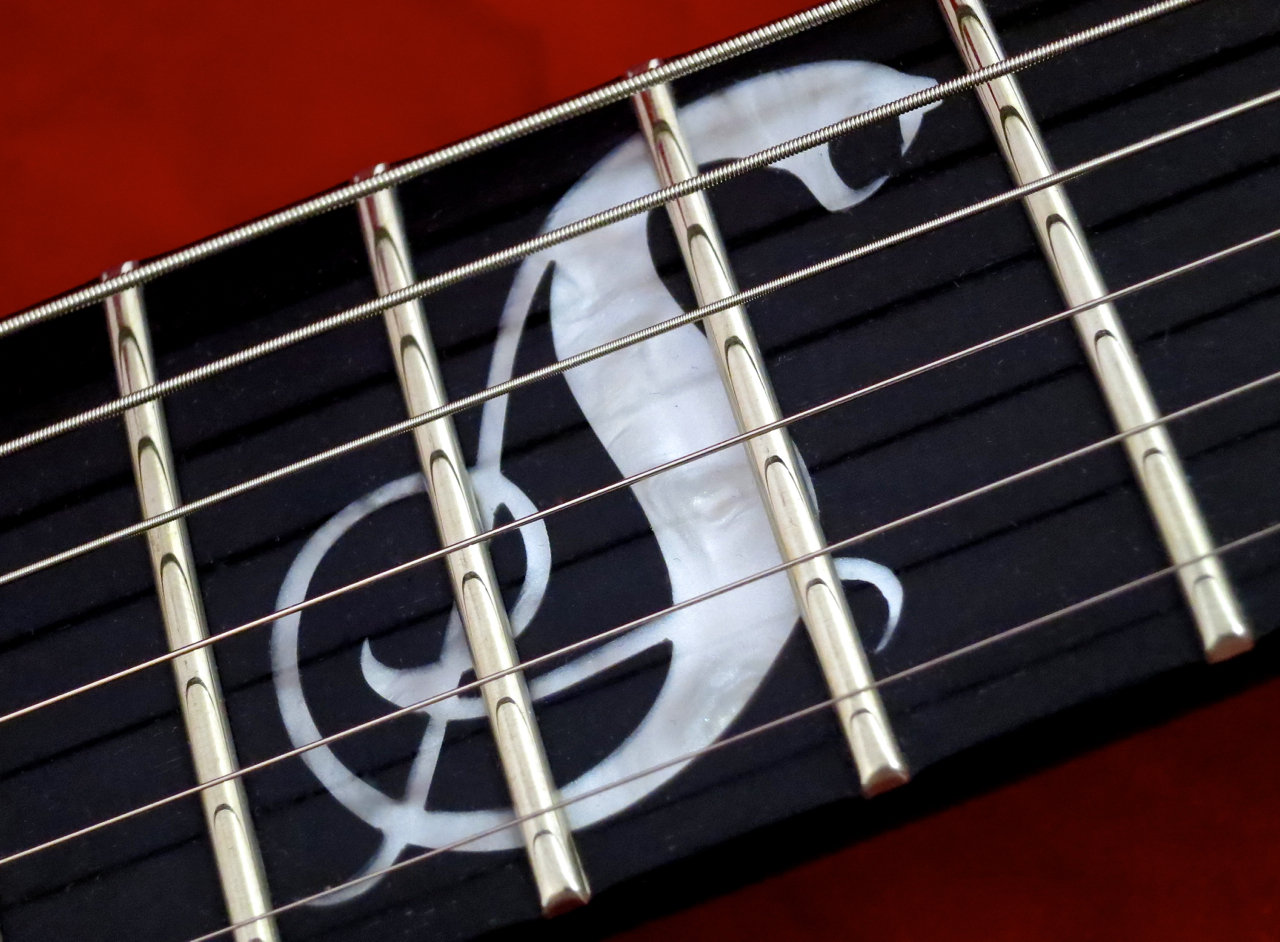
LTD Snakebyteen on asennettu 22 jumbokokoista nauhaa. Testikitaran nauhatyö oli ensiluokkaista.
James Hetfield on ollut jo todella pitkään EMG:n aktiivimikkien käyttäjä. Muutama vuosi sitten hän sai myös oman EMG JH ”Het” -humbuckersetin, joka on tietenkin käytössä myös uudessa nimikko LTD:ssä.
JH-N-kaulamikrofoni on kehitelty käyttämään EMG 60 -mikrofonia lähtökohtana, mutta Hetfield-mikissä on yksittäisiä keraamisia magneetteja ja paksumpia keloja. EMG 81 taas on toiminut JH-B-tallamikrofonin ponnahduslautana, mutta tässä käytetään keraamisten tankomagneettien lisäksi vielä teräksisiä napapaloja.
Lopputulokseksi luvataan lämpimämpi perussoundi, entistäkin enemmän lähtötehoa, sekä selkeämpää atakkia.
Aha, kaksi säädintä ja kolmiasentoinen vipukytkin – asia selvä, eikö niin…
Ei niin nopeasti! Kytkin kyllä toimii perinteisellä tavalla, mutta potikat eivät ole master volume ja master tone, vaan kummankin mikin oma volume säädin.
James Hetfieldillä ei ole tarvetta sävynsäätimeen kitarassaan, koska hänen kitarateknikkonsa säätää kaikki tärkeät vahvistin- ja efektiasetukset omatoimisesti settilistan mukaan. Mestarille jää näin soittamisen ja laulamisen lisäksi lavalla vain oikean mikrofonin valinta.
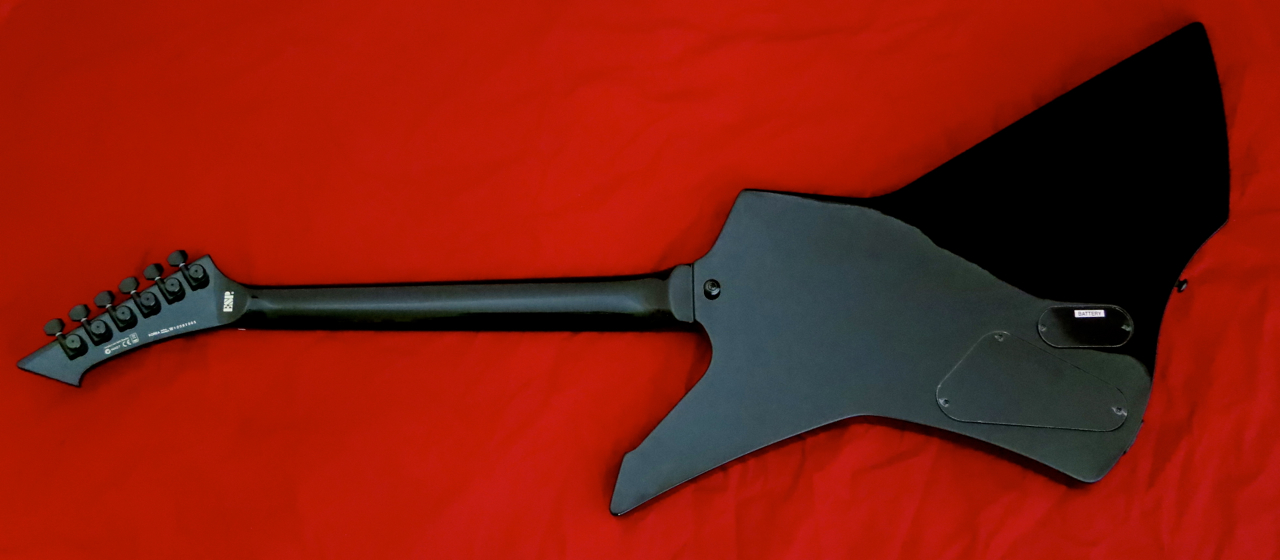
Paristolokeron kansi kiinnitetään asianmukaisesti koneruuveilla, mikä on puuruuveja huomattavasti kestävämpi ratkaisu.
****
On totta, että vuonna 1958 ilmestynyt Gibson Explorer oli melkoinen edelläkävijä uskaliaan muotoilunsa ansiosta. Mutta on myös totta, että suurikokoinen kitaraklassikko tuntuu hihnassa usein kuin mahan edessä roikkuvalta massiiviselta yöpöydältä.
Hetfieldin nimikkomalli on mielestäni onnistunut erittäin hyvin säilyttämään Explorerin metallimuusikolle niin tärkeää kulmikasta imagoa. LTD Snakebyte on kuitenkin huomattavasti kompaktimpi sähkökitara, joka on esikuvaansa nähden helpompi kantaa ja soittaa.
Hetfield Snakebyte soitettavuus on erittäin hyvällä mallilla, niin kuin pro-luokan soittimesta sopii odottaakin. Kaulaprofiiliksi on valittu mukavan täyteläinen ”C”. Tatsi on säädetty testiyksilössä mukavan kevyeksi. Kymppisatsilla kielten korkeus on 12. nauhan kohdalla 1,8 mm (matala E) ja 1,6 mm (korkea e-kieli), ja kielet soivat puhtaasti ja täysin rämisemättä koko otelaudan pituudella.
Testikitaran akustinen soundi löi minut ihanuudellaan täysin ällikällä. Äänessä on erittäin tarkka, pianomainen atakki, sekä avoin ja tasainen sustain-vaihe.
EMG:n aktiivinen ”Het” Set -parivaljakko on erittäin suuritehoinen, mutta mikrofonit tarjoavat kuitenkin hyvin kauniita ja avoimia clean-soundeja ilman häiritsevää keskialueen honottamista:
High Gain -kanavaan soitettuna LTD Snakebytestä irtoaa – yllätys, yllätys – James Hetfieldin legendaarinen Metal-soundi, josta löytyy rutkasti potkua ja preesensalueen purevuutta:
****
LTD James Hetfield Snakebyte on mielestäni selvästi pro-luokan täsmätyökalu laatutietoiselle metallimiehelle (ja -naiselle). Tämä ei ehkä ole maailman monipuolisin sähkökitara, mutta rankkojen tyylien kitaristeille se tarjoaa suorinta tie musiikilliseen nirvanaan.
Tokai Guitars on tunnettu hyvin laadukkaista ”kunnianosoituksista” klassikkokitaroille.
Upouusi Tokai ATE-33N Thinline on malliston edullisemmasta, Kiinassa valmistetusta päästä, ja se on Tokain versio puoliakustisesta T-tyylisestä kitarasta.
****
Tokai ATE-33N Thinline (437 €) tarjoaa reilusti silmänruokaa kauniin puun ystävillä, vaikka kyse ei todellakaan ole kalliista kitarasta.
Mallitunnuksen N-kirjain viitaa soittimen viimeistelyyn pelkällä kirkaslakalla (engl. natural), kun taas ohutkoppaisista puoliakustisista käytetään englannin kielessä tavallisesti Thinline-termiä.
Rickenbackeristakin tuttu Roger Rossmeisl kehitti 1960-luvun lopussa Fenderille Tele Thinline -runkoa, jossa runkoon jyrsittiin kolme kookasta koloa selkäpuolelle, ennen kun rungon takapuolelle liimattiin kokopuukansi.
Tokain menetelmä on juuri päinvastainen: leppärunkoon on jyrsitty edestä Thinlinen kolot, minkä jälkeen etupuoleen on liimattu varsin näyttävä, viiden millin paksuinen saarnikansi. Kokopuinen saarnikansi on testikitarassa tehty kolmesta vierekkäisestä palasta, jotka on sovitettu niin huolellisesti yhteen, että liimasaumat huomaa vain lähietäisyydeltä kopan reunoja katsellen.
Tokai ATE-33N Thinlinen koppa on viimeistelty kiiltävällä lakalla, kun taas soittimen vaahterakaulalla on yllään ohut satiinipintainen viimeistely.
Vaahteraotelaudan radius on isompi (= loivempi) ja kitaran nauhat paksummat kuin 1960-luvun vastineessa, mikä tekee ATE-33:sta helpompi soittaa. Etenkin kielten venytykset onnistuvat tällaisella alustalla huomattavasti helpommin.
Tokain kaulaliitos on perinteinen.
T-tyylisen kitaran soundin kannalta yksi tärkeimmistä ainesosista on se perinteinen peltitalla kolmella tallapalalla, johon tallamikrofoni on upotettu.
Vaikka tällaisen tallan intonaatio on aina jonkinnäköinen kompromissi, pidetään sitä edelleenkin kunnon Tele-soundin perustana.
Edullisessa ATE-33N Thinlinessa käytetään vintage-mikrofonien sijaan sellaiset versiot, jossa erilliset napamagneetit on korvattu mikrofonin alle kiinnitetyllä pitkällä tankomagneetilla.
Tokaissa löytyy kolmiasentoisen kytkimen vierestä master volume- ja master tone -säätimet.
****
Nykypäivänä näyttää soitinkaupoissa todellakin olevan ostajan markkinat, kun alle viidelläsadalla eurolla saa näin laadukkaan kitaran kuin Tokai ATE-33N Thinline.
Tokain ATE-33N Thinline on kuin pelkkien napakymppien kertymä:
Satiinipintainen vaahterakaula tuntuu todella hyvältä. Kaulan D-profiilissä on riittävästi massaa hyvän soundin perustaksi, mikä tekee soittotuntumasta myös mukavan. Nykyaikainen nauhoitus mahdollistaa – otelaudan loivan kaarevuuden kanssa – tässä kitarassa matalat säädöt (E: 1,4 mm/e: 1,2 mm) kymppisatsilla ilman minkäänlaisia ongelmia.
Akustisesti soitettuna Tokain Thinline-runko lisää soundiin selvästi hieman ilmavuutta keskialueessa, vaikka T-tyyliset Thinlinet eivät luonnollisesti koskaan soi akustisesti niin voimakkaasti kuin ”oikea”, isokokoinen semiakustinen.
Vaikka kitarafoorumeissa usein maristaan edullisista Tele-mikrofoneista, ovat Tokain TE-Vintage Mk3 -mikrofonit osoittautuneet käyttötestissä oikein hyvin soiviksi valinnoiksi. Etumikrofoni on lämmin ja pyöreäsoundinen, mutta ei koskaan tylsä tai mutainen, kun taas tallamikrofonista saa irti juuri sen oikean annoksen twängiä ja purevuutta. Oma suosikkisoundini Teleissä on valitsimen keskiasento, joka toimii myös tässä Tokaissa erittäin hyvin! En ainakaan itse vaihtaisi Tokain omia mikrofoneja heti muka-parempiin…
Tässä esimerkkipätkä ATE-33N Thinlinen puhtaasta soundista (kaulamikki aloittaa):
Ja tässä hieman Rock-riffailua:
****
Mielestäni Tokain ATE-33N Thinline tarjoaa erinomaista vastinetta maltillisen hintaansa nähden. Tämä kitara on laadukkaasti toteutettu, kaunis soitin erittäin mukavalla soitettavuudella.
Minun täytyy myöntää että olin testin alussa hieman skeptinen mallin edullisia mikrofoneja kohtaan, mutta huoleni osoittautui täysin turhaksi. Tokaista irtoaa kunnon Tele-soundi, joka toimii tilanteessa kuin tilanteessa (ehkä raskasta metallia lukuunottamatta).
Ja jos sydän kuitenkin tulisi kaipaamaan joskus hieman esoteerisempaa mikrofonivalintaa, tarjoaa ATE-33N Thinline ainakin todella laadukasta alustaa mikkipäivitykselle.
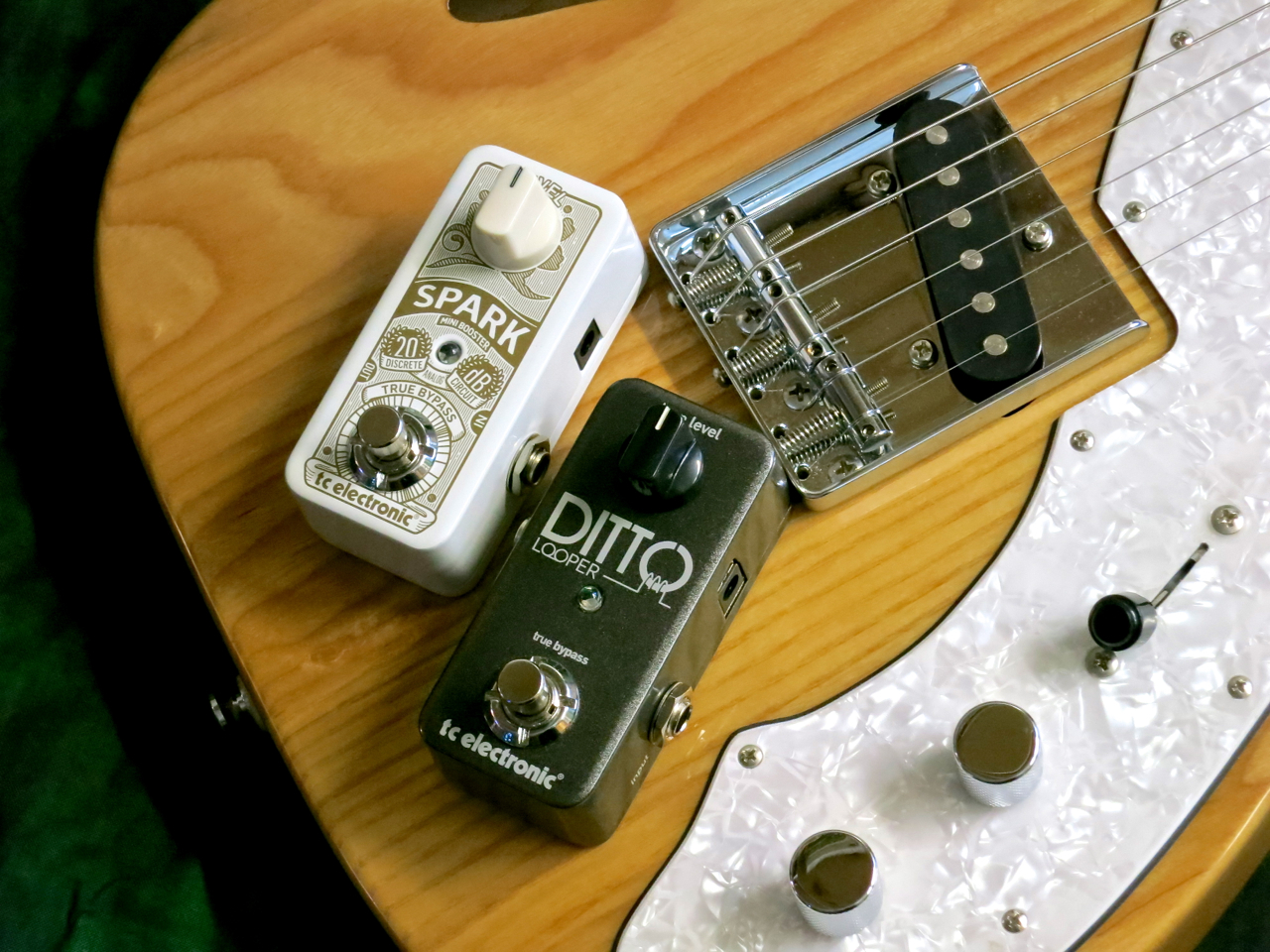
Saimme testiin kaksi erittäin kompaktia efektipedaalia TC Electronicilta:
Spark Mini Boost on kompaktin Spark Boost -boosterin vielä pienempi veli, kun taas Ditto Looper on varmaan maailman pienin loopperi.
****
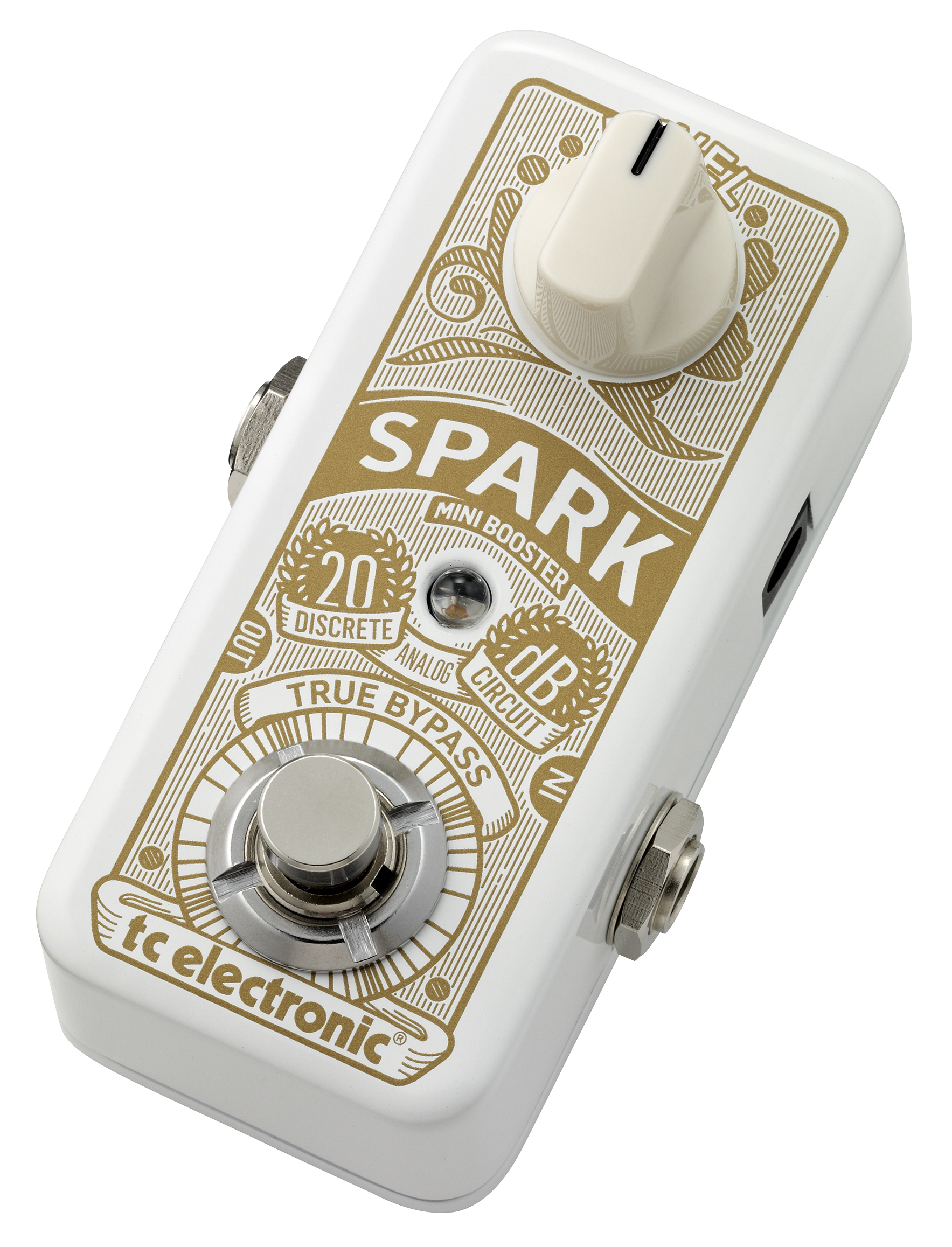
TC Electronicin Spark Mini (katuhinta noin 85 €) tarjoaa jopa 20 desibelliä signaalin vahvistusta erittäin pienessä pakkauksessa.
Näin pienen pedaalin etu on, että se vie pedaalilaudassa vain todella vähän tilaa. Kompaktiuuden ainoa haittapuoli on mielestäni se, että paristo ei mahdu pikkuiseen koteloon elektroniikan sekaan, vaan TC:n mineille täytyy aina syöttää käyttövirtaa ulkoiselta virtalähteeltä (hankittava erikseen).
Helpokäyttöisempää boosteria ei voi enää olla – Spark Minissä on vain yksi säädin, jolla säädetään halutun vahvistuksen tasoa, ja se on siinä.
Pikkuboosteri toimii true bypass -periaatteella, mikä tarkoittaa, että tulosignaali menee suoraan efektin lähtöön, aina kun boosteri on pois päältä.
Spark Minillä on kuitenkin vielä yksi ässä hihassa:
TC:n Prime Time -elektroniikka tunnistaa pidetäänkö pedaalin kytkin alas painettuna, jolloin boosteri on päällä vain niin kauan, kunnes jalka siirtyy pois kytkimestä. Lyhyellä polkaisulla taas Spark Mini toimii perinteisellä latch-tavalla, jossa ensimmäinen polkaisu laittaa efektin päälle ja toinen polkaisu kytkee sen jälleen pois.
TC Electronic Spark Mini kuulostaa erittäin hyvältä, ja tekee juuri sen, mitä tavallisesti odotan boosterilta. Puhtaassa kanavassa signaali saa puhdasta vahvistusta, kun taas pehmeästi rosoinen kanava menee reilusta boostauksesta kermaiseen säröön, niin kuin tässä pätkässä:
****
TC Electronic Ditto Looper (katuhinta noin 110 €) tarjoaa viisi (!) minuuttia looppausaikaa uskomattoman pienessä formaatissa.
Dittoon pätee sama kuin Spark Miniin – se vie erittäin vähän tilaa, mutta ulkoinen virtalähde täytyy hankkia erikseen. Onneksi TC:n pedaalien sähköt toimivat perinteisen Boss-standardin mukaisesti, minkä ansiosta sopivan virtalähteen löytäminen on helppoa.
Virtalähteen liittimen yläpuolelta löytyy muuten minikokoinen USB-portti, jonka kautta pystyy päivittämään tarvittaessa laitteen firmware-softaa.
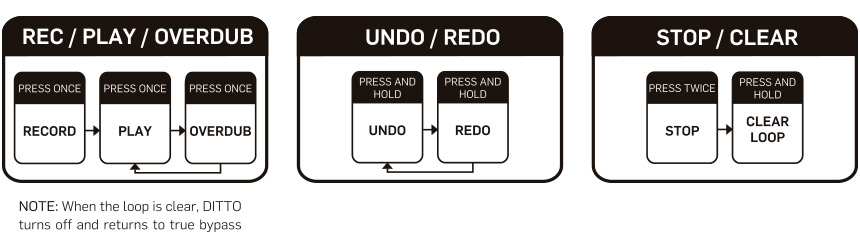
Vaikka TC:n Ditto toimii pelkästään yhdellä kytkimellä, on sen toimintalogiikka niin nerokkaan yksinkertainen, että Ditton käytöstä tulee melkein heti täysin orgaanista. Ensimmäisten muutamien minuuttien jälkeen loopataan jo kuin vanha tekijä täysin vaistonvaraisesti selkärangasta!
Myös soundin puolesta Ditto on hyvin kiitettävällä tasolla, sillä se toimittaa kompressoimatonta audiota 24-bittisellä resoluutiolla.
Loopperin käyttötilanteita on niin monia, että niiden listaaminen on täysin turhaa. Esimerkkipätkässä rakennan itselleni taustan, jonka päälle voi harjoittaa yhden tutun kappaleen soolo-osuuksien soittoa:
****
TC Electronicin Spark Mini ja Ditto ovat erittäin käteviä ja hyödyllisiä lisäyksiä jokaisen kitaristin efektiarsenaaliin. Spark Mini -boosterilla on helppoa lisätä esimerkiksi säröä yksikanavaiseen putkivahvistimeen tai saada soolot paremmin esiin. Ditto-loopperi taas on oiva kaveri harjoittamiseen (tai säveltämiseen) tai vaikkapa soolokeikoille.
****
TC Electronic Spark Mini Booster – katuhinta noin 85 €
Hagström Guitars’ new models, which had been announced at Frankfurt Musikmesse 2013, have finally arrived in Finland a few weeks ago!
Kitarablogi had the pleasure of receiving two of these guitars for testing:
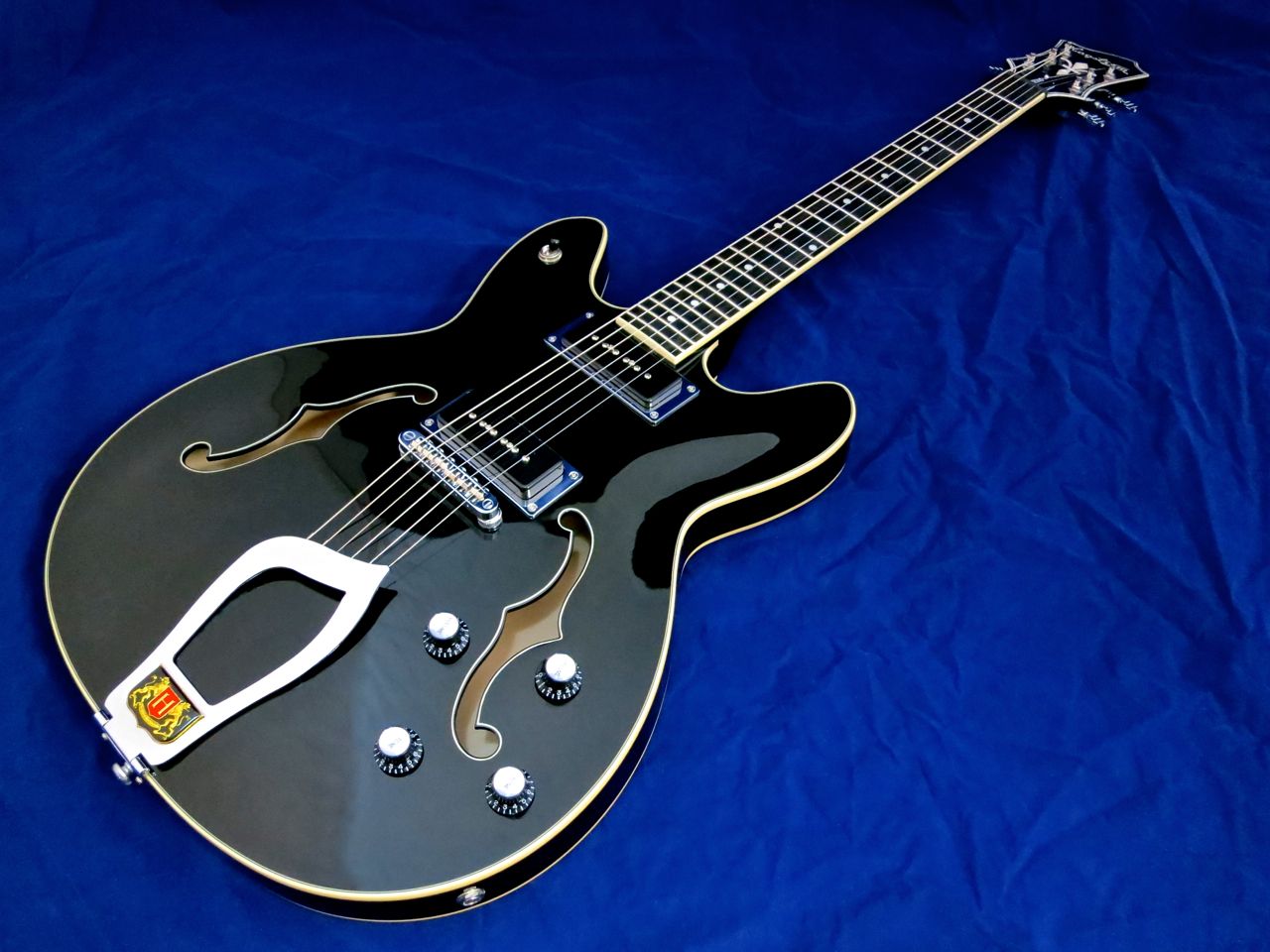
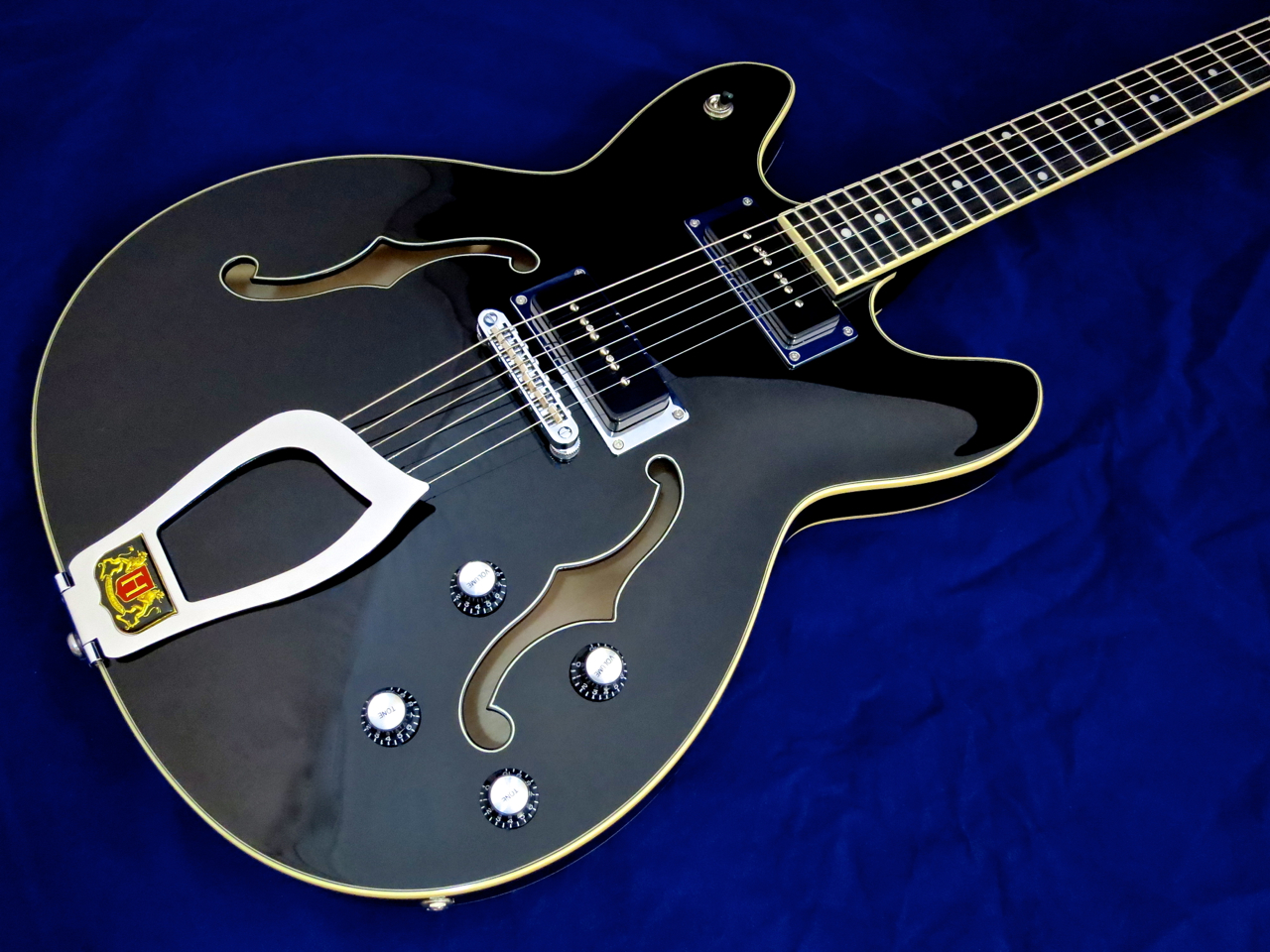
The Viking P is a new version of Hagström’s very popular semi-acoustic, and it comes equipped with two Custom P-50 singlecoil pickups.
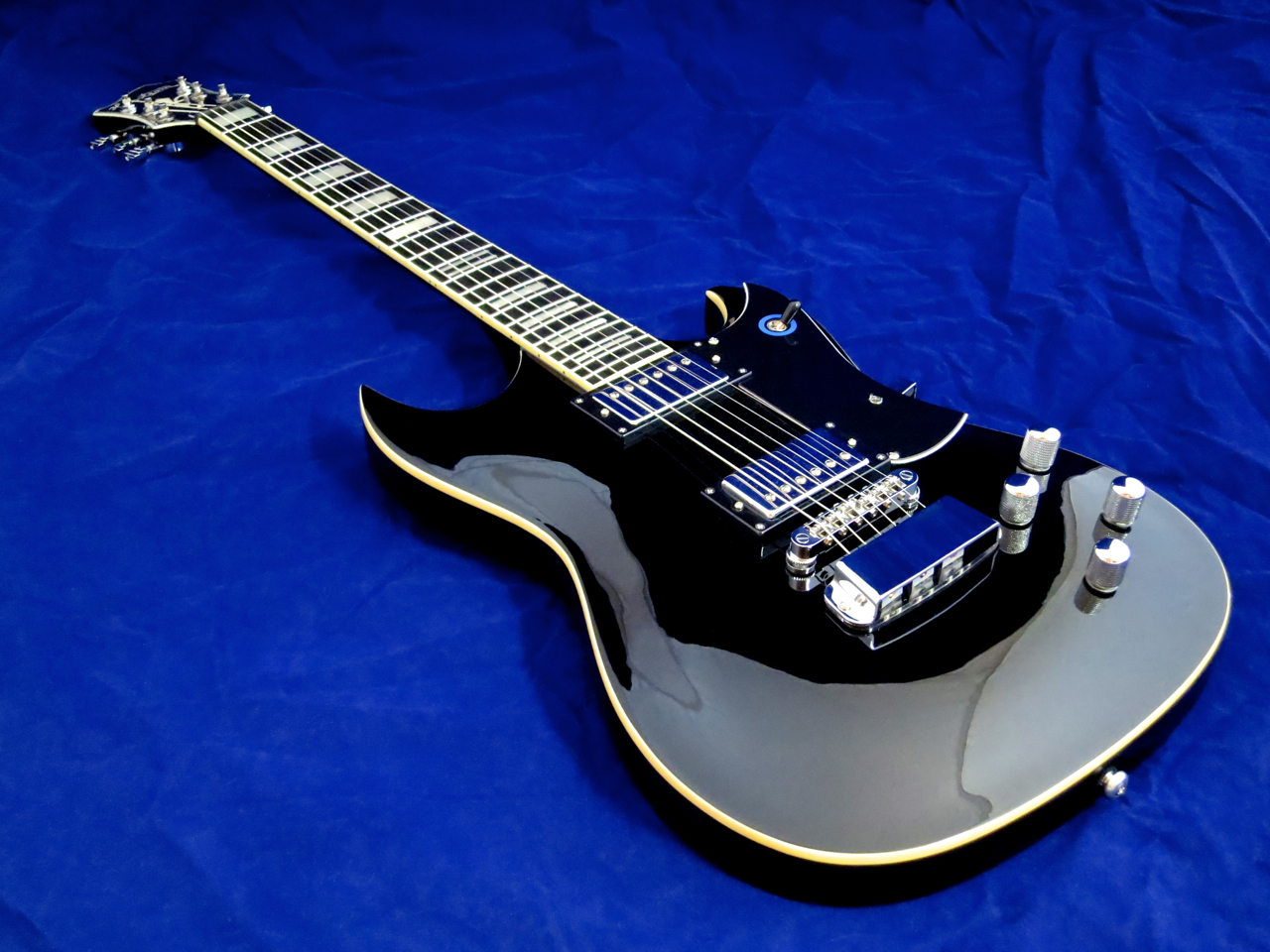
The Pat Smear Signature is a solid-body electric tailored to the Foo Fighters-guitarist’s needs.
****
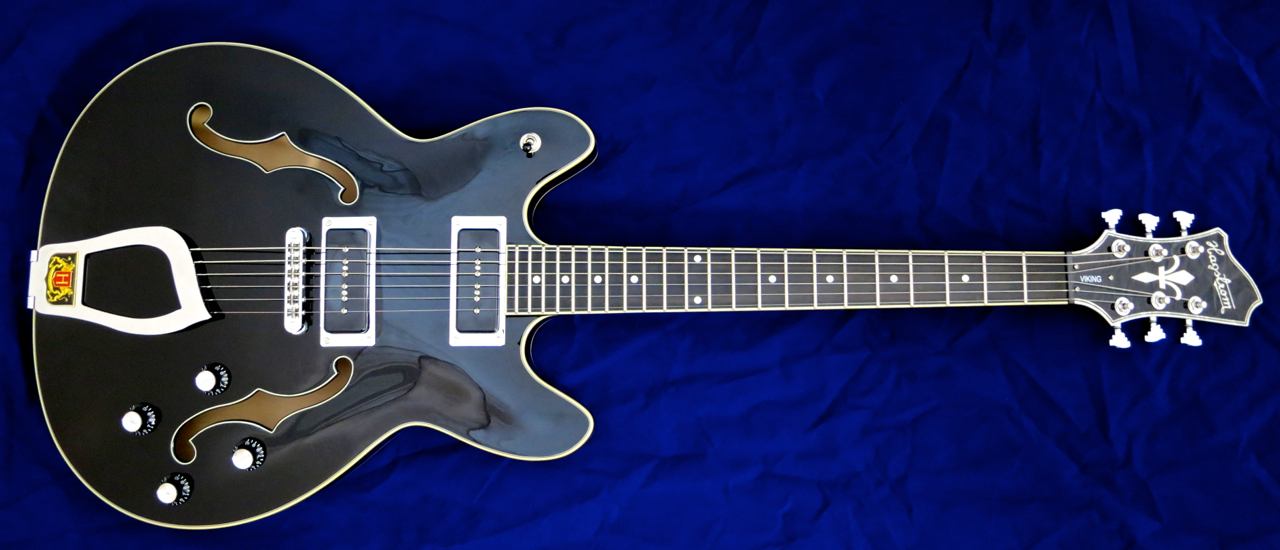
The Hagström Viking is probably the company’s best-known guitar model, not least because of Elvis Presley’s use of a Viking during his legendary ’68 Comeback Special TV show.
The brand-new Hagström Viking P (street price in Finland around 650 €) adds a pair of P-90-style singlecoils to the mix.
The Viking P’s maple neck is glued into the body, which is made in traditional style from form-pressed plywood maple.
A solid wood centre block – made of what looks like nato or meranti – runs the full length of this instrument.
”Beautiful”, ”classic” and ”timeless” are fitting adjectives to describe Hagström’s bound headstock.
Graph Tech’s self-lubricating Black Tusq-material has been chosen for the Viking P’s nut.
The Hagström-branded tuning machines are modern enclosed units that work very well.
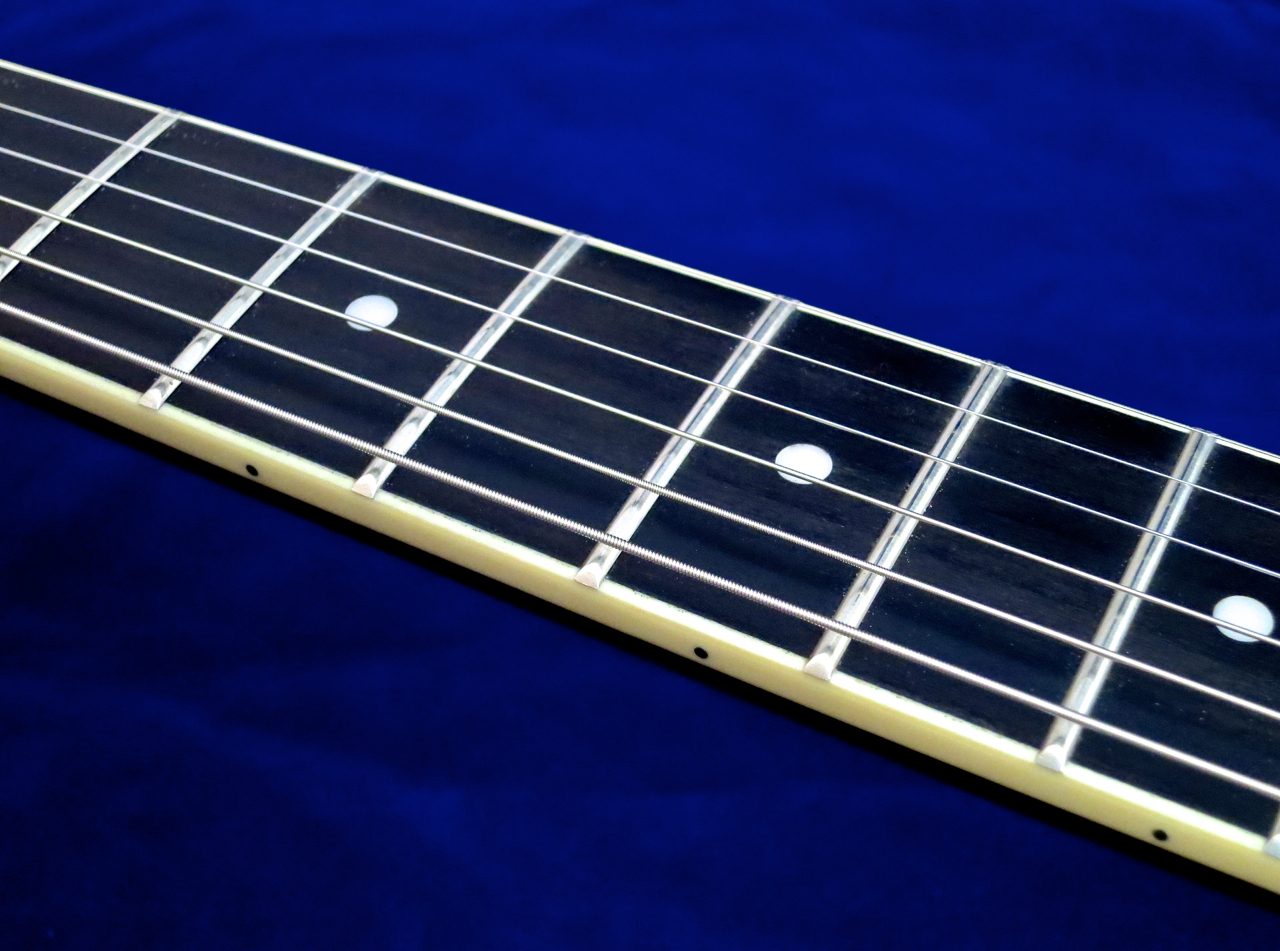
The deep black fingerboard of the Viking P has been crafted from Hagström’s proprietary Resinator-material, which is a composite of birch fibres and resin. Resinator aims to be a man-made alternative to ebony, offering similar properties in terms of stability, looks and sound.
The ’board sports 22 medium-sized frets, which have been installed cleanly and finished well.
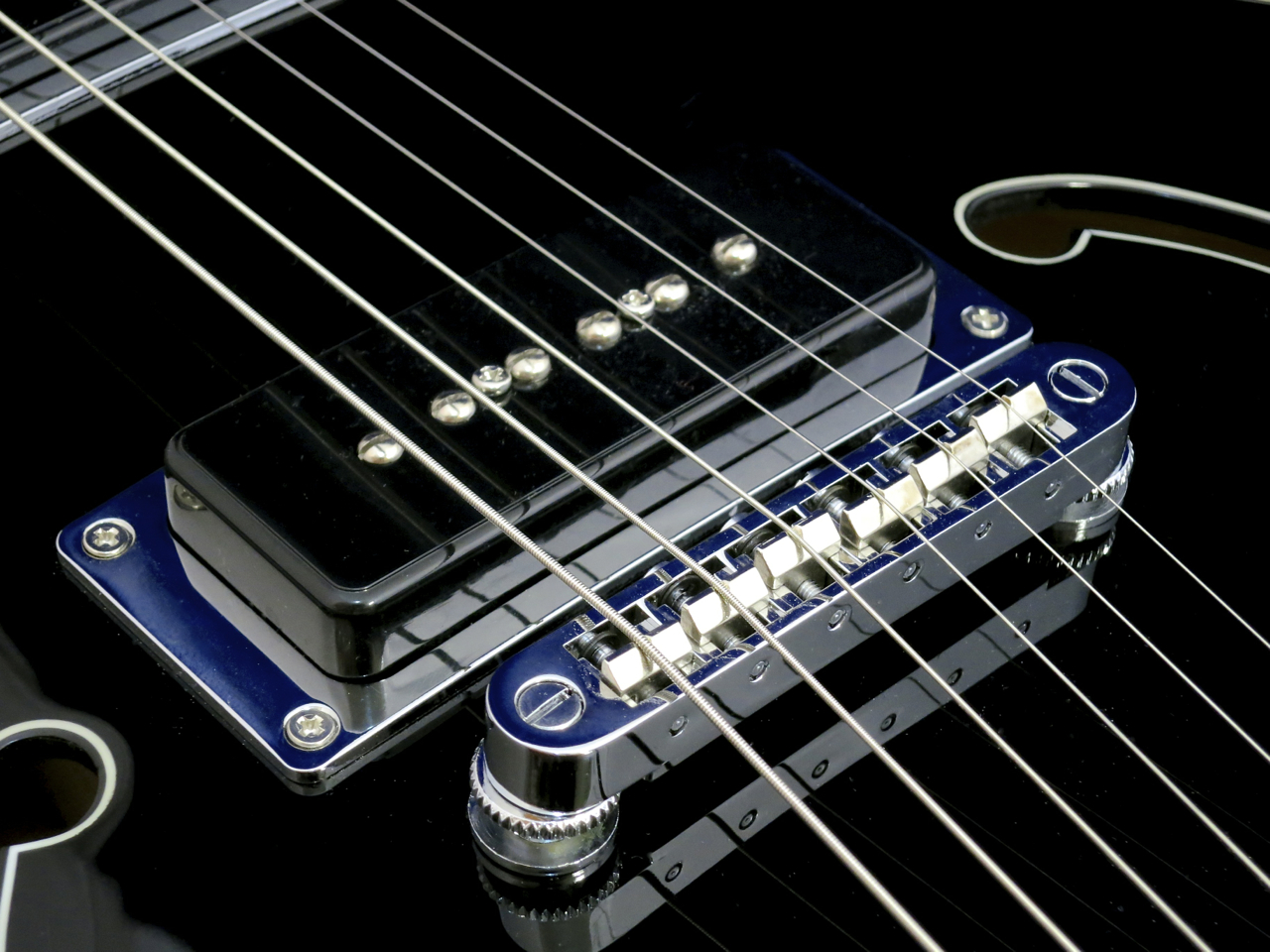
Hagström have chosen a stylish and practical way of installing their own Custom P-50 pickups on this semi:
Instead of opting for traditional, so-called dog ear covers, which are screwed to the guitar’s top, the Viking P comes with two black soap bar units. Originally developed for solid-body guitars, soap bar pickups offer the advantage of height adjustment via two Phillips-head screws placed between the adjustable pole pieces. With traditional dog ears the only means of adjusting pickup balance is by using the pole pieces – and often this leaves the bridge unit sounding a tad weaker than the neck pickup.
The three-way toggle switch has been placed on the Viking’s top horn.
The solid centre block cuts down feedback howl very effectively, and it also allows for the use of sturdy hardware.
The control setup is traditional, offering separate volume and tone pots for each pickup.
Pat liked the general shape of the F-200, but requested a thicker mahogany body with a bound maple top. In terms of thickness, we’re talking similar dimensions as on a PRS Guitars Custom 22, for example.
The Smear Signature features a set mahogany neck.
Any way you look at it – the Hagström headstock sure looks classy.
Pat Smear’s signature can be found on the back of the headstock.
It’s a Resinator fingerboard with 22 medium-sized frets on the Smear Signature also, but the position markers are large pearloid blocks here.
Mr Smear selected a pair of vintage-voiced Hagström Custom 58 -humbuckers for his signature model.
A special feature of this guitar is the toggle switch installation through a hole in the pickguard.
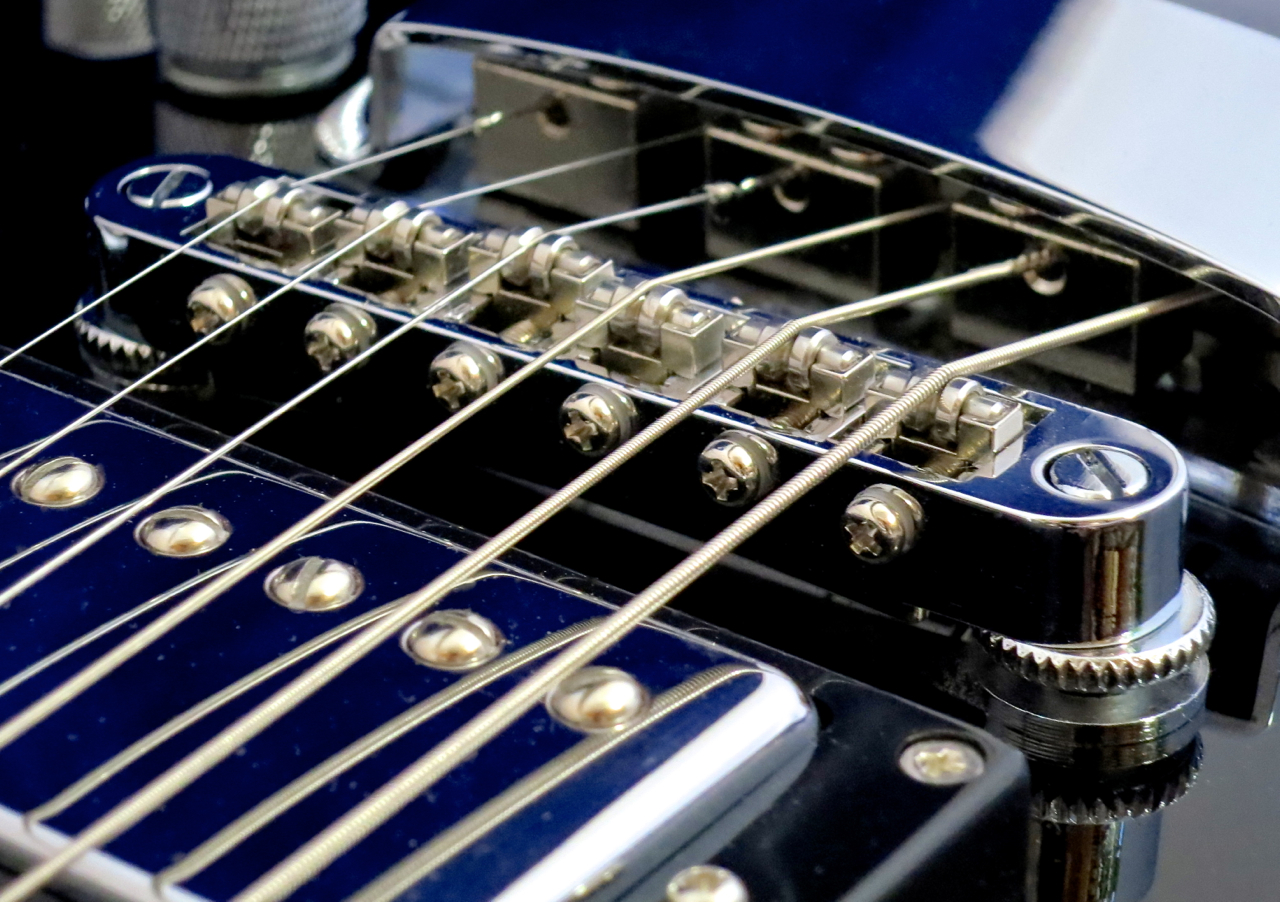
Even though the Pat Smear Signature isn’t equipped with a vibrato, the guitar comes with a roller bridge to ensure maximum tuning stability and string life.
Hagström’s idiosyncratic tailpiece is made up of six brass string retainers mounted onto a plexiglass plate.
There are four controls on the Smear-model, instead of the F-200’s single pair of master volume and master tone.
Both review guitars come with high-quality switches and pots.
****
Both review guitars suffered from a very slight bout of fretboard shrinkage due to dry weather conditions. It seems that Hagström’s Resinator composite doesn’t only look and feel like ebony, but also reacts to changes in air humidity in a similar fashion. Fretboard shrinkage isn’t a real ”fault” per se, but rather something that happens to a large proportion of new guitars. Luckily, your friendly guitar repair shop can take care of the sharpish fret ends easily and inexpensively.
The Hagström Viking P is of medium weight, and balances well in the lap or on a strap.
The neck profile is a flattish D, which feels great.
Straight out of the shipping-box the setup was spot-on. The Hagström Viking P comes factory-equipped with a 010-gauge string set. Thanks to the flat (15″) fingerboard radius and the low action (low E: 1.9 mm/high e: 1.6 mm) this Viking is a really comfortable player.
Due to its semi-acoustic build, the Viking P’s unamplified voice is quieter and closer to a solid-body than the acoustic performance of all-hollow thinlines, such as the Gibson ES-330 or the Epiphone Casino. Acoustically, the Viking P sounds clear and fresh.
Hagström’s fantastic Custom P-50 pickups add a nice shot of warmth and roundness to the mix, without clouding the Viking’s inherent clarity and dynamics.
There are great clean sounds on tap:
But the fun doesn’t end there, as the Viking P also delivers when it comes to the crunchy side of things, with its fat midrange and dynamic punch:
Due to the physical limitations inherent in single-coil pickups, high-gain sounds are always a somewhat tricky endeavour in P-90-equipped guitars. The sound is really great, but you have to decide for yourselves how much how much hum and buzz you can stomach:
****
Hagström’s Pat Smear Signature feels very comfortable, thanks to its rounded body shape and moderate weight.
This guitar’s neck is a slightly more rounded affair, when compared to the neck profile on Viking P, making it feel even better, in my opinion.
Again, the setup was great straight out of the box – a low action, such as the one on the Smear Signature (low E: 1.6 mm/high e: 1.4 mm), only works as well as it does here when the frets are level. This guitar plays like a dream.
Acoustically, this Hagström speaks with a strong and clear voice. The Smear-model features a healthy attack coupled with long and even sustain.
I really like Hagström’s vintage-voiced Custom 58-humbuckers, because their moderate output level leaves enough room for the guitar’s acoustic clarity and dynamics to shine through:
The crunchy tones of the Pat Smear Signature manage to combine clarity and Rock-muscle in a very appealing fashion:
****
These new Hagström-models are very welcome additions to the company’s range of models.
Of these two, the Viking P leans somewhat more in the vintage direction tonally, dishing out a delicious and rootsy P-90-fuelled alternative to Hagström’s regular Viking. The Pat Smear Signature is a signature model that can work for many friends of double-humbucker solid-bodies, even if you’re not familiar with the man’s oeuvre.
In any case, both Hagström-models are quality instruments at prices even the amateur can afford.
****
Hagström Viking P + Pat Smear Signature
Viking P – street price in Finland approx. 650 €
Pat Smear Signature – street price in Finland approx. 670 €



























































 Kitarablogi.com – Finland's premier Guitar and Bass blog