
****
Uusi juttu löytyy TÄSTÄ.
****
Kitarablogi.com – Finland's premier Guitar and Bass blog
Juttuja kitaroista ja bassoista
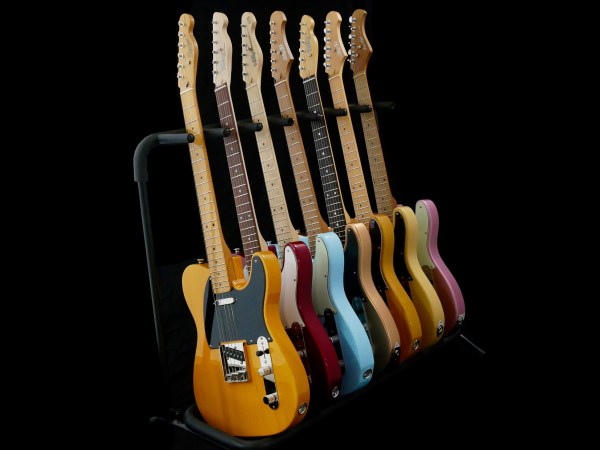
Videossa esitetään seitsemän Tele-tyylistä kitaraa. Demobiisi on lyhyt versio Yes-bändin klassikosta ”Owner of a Lonely Heart”.
Jokainen kitara soittaa aina muutaman tahdin melodiasta, niin kuin nähdään videossa. Biisin lukuisat komppiosat on jaettu kaikkien kitaroiden väliin.
Testatut kitarat ovat:
• Bacchus Guitars Global Series Tactics-STD
• Squier Classic Vibe 1950s Telecaster
****
• Käytetyt vahvistimet: Bluetone Black Prince Reverb (soolo- ja komppikitarat), sekä Bluetone Shadows Jr (komppiosat)
• Käytetyt efektit: Joyo Vintage Overdrive (soolo- ja komppikitarat), sekä Mad Professor Simble OD, EXH Small Stone, EHX Memory Toy, UralKit Les Love, UralKit Fuzz Face, UralKit Distortion+, Boss DS-1, Boss SD-1 (komppiosat)
• Mikrofoni: Shure SM7B

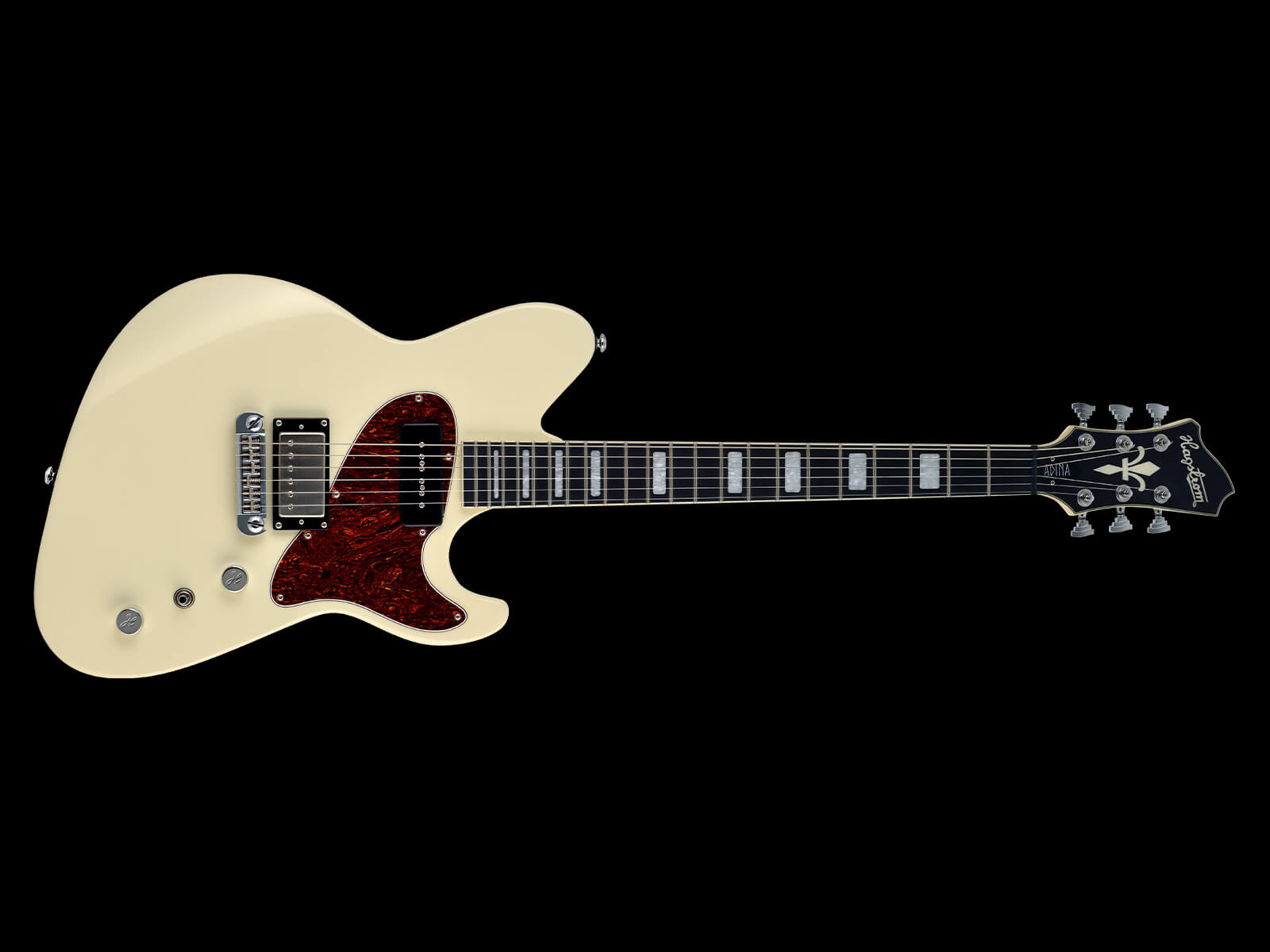
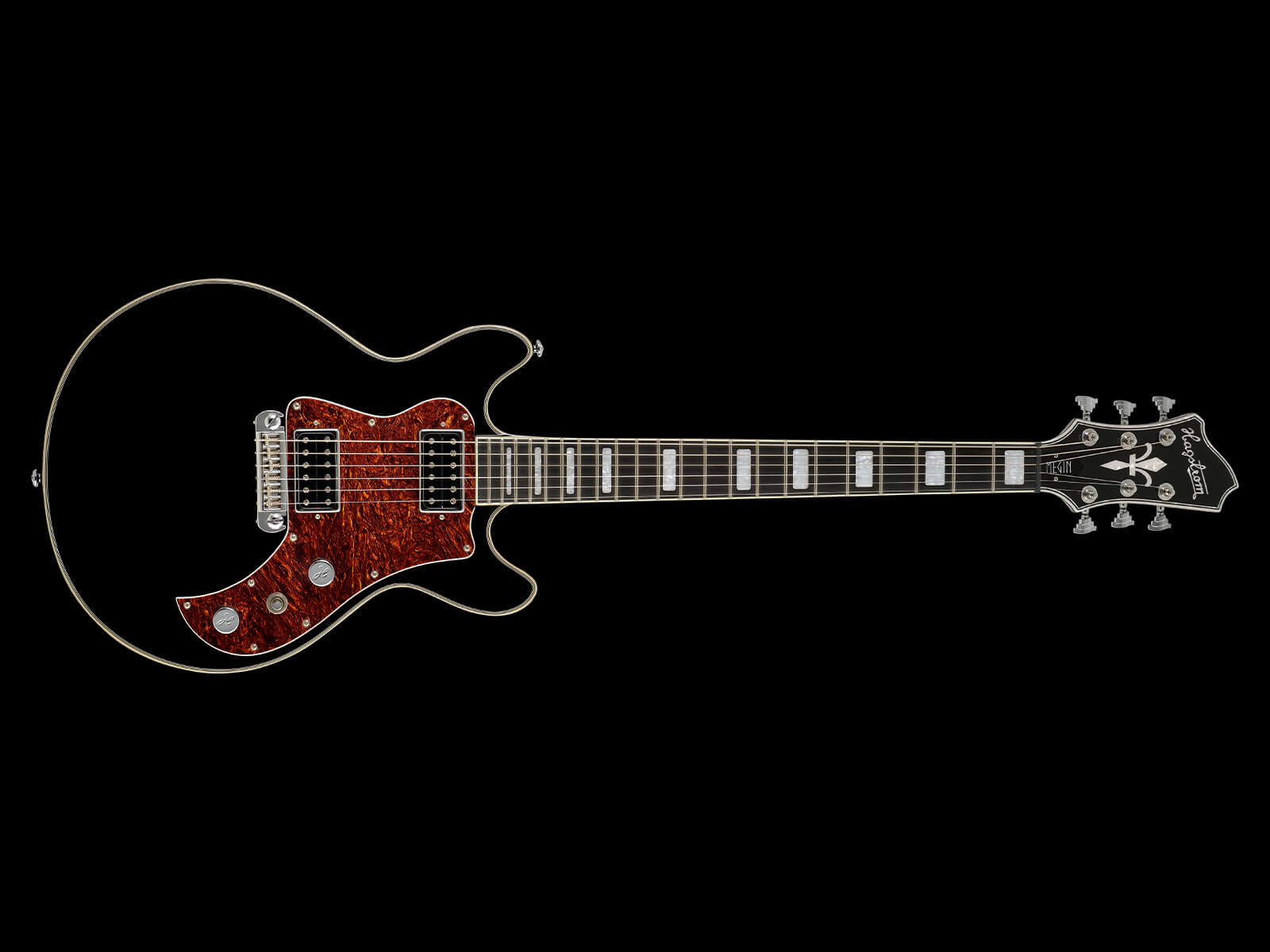
Here’s a demo of the Hagström Adina and Hagström Megin guitars.
• Amp used: Bluetone Black Prince Reverb
• Effects used: Mad Professor Simble OD, Joyo Analog Chorus, EHX Memory Toy
• Mic used: Shure SM7B
• Lead guitar parts played using each guitar’s neck pickup
Alkuperäinen suomenkielinen testi on ilmestynyt Rockway-blogissa.
****
Telecaster-style electric guitars are the cornerstone of all solid-body guitars. Although the original Fender model was released in 1950, the basic Tele is still in everyday use around the world. A simple “breadboard” body, a bolt-on neck, and two very different single-coil pickups, and that’s it.
Tele-style instruments are excellent country, blues, rock, and soul guitars, with their twangy bridge pickup sound easily recognisable.
Sometimes, however, a player wants something extra, something more than that old-school Telecaster tone.
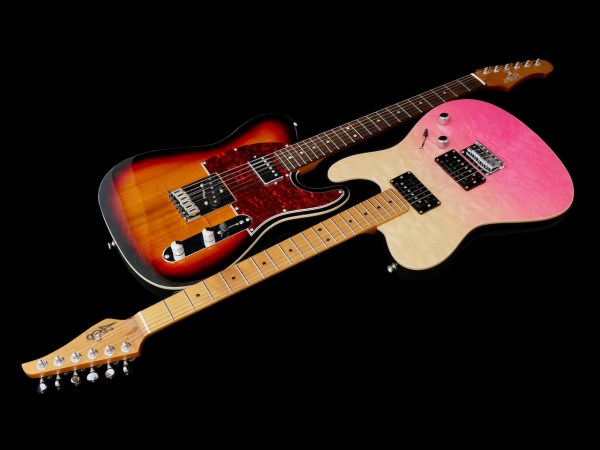
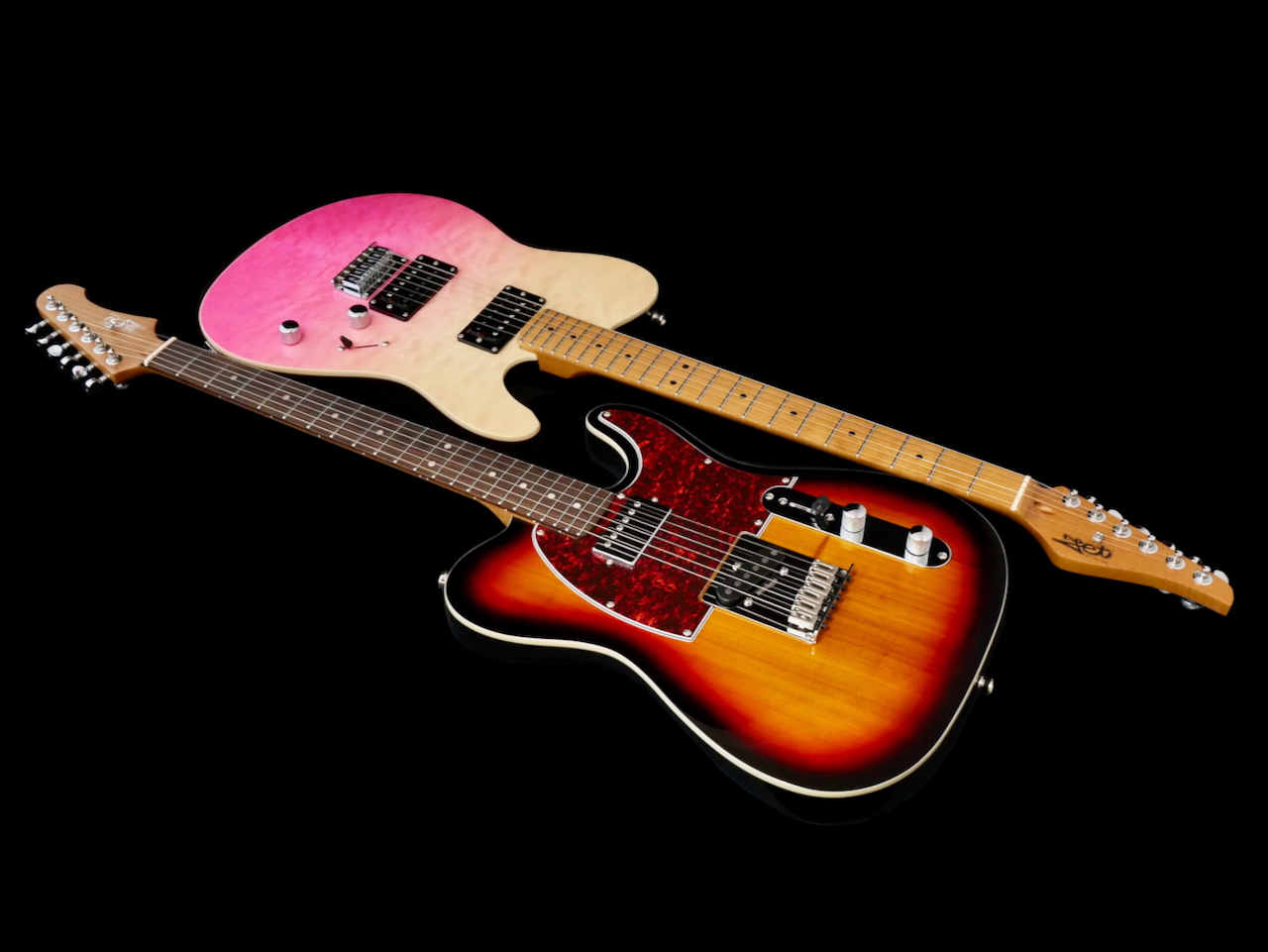
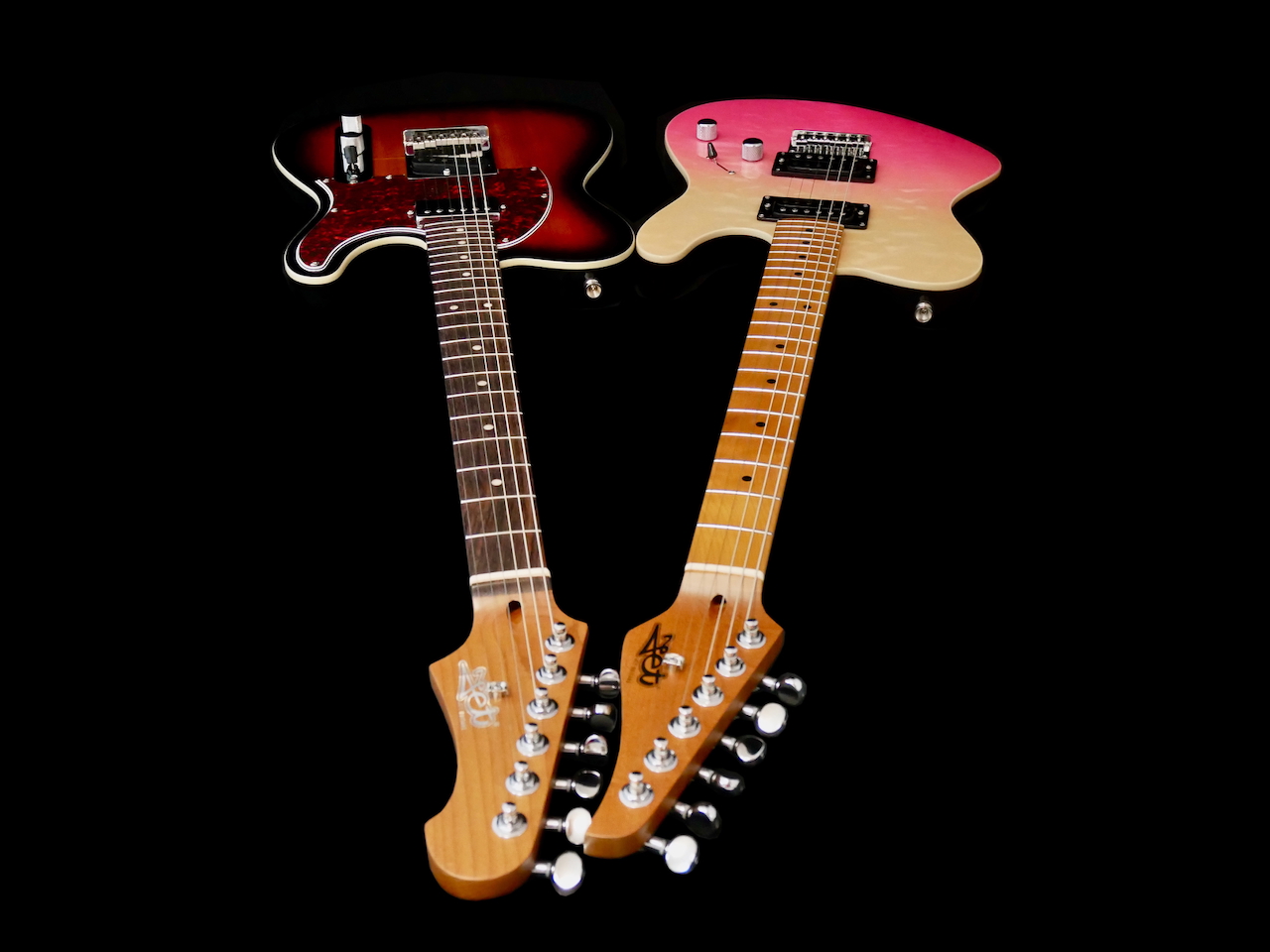
We received two affordable, yet ”factory-customised” Jet Guitars models for a review from the brand’s importer, Tampereen Musiikki.
****
There are three things that many people think deserve an upgrade on a basic Tele:
The neck pickup can sound a bit weak, the rudimentary bridge has only three adjustable saddles, and the square body can be annoyingly hard on the ribs.
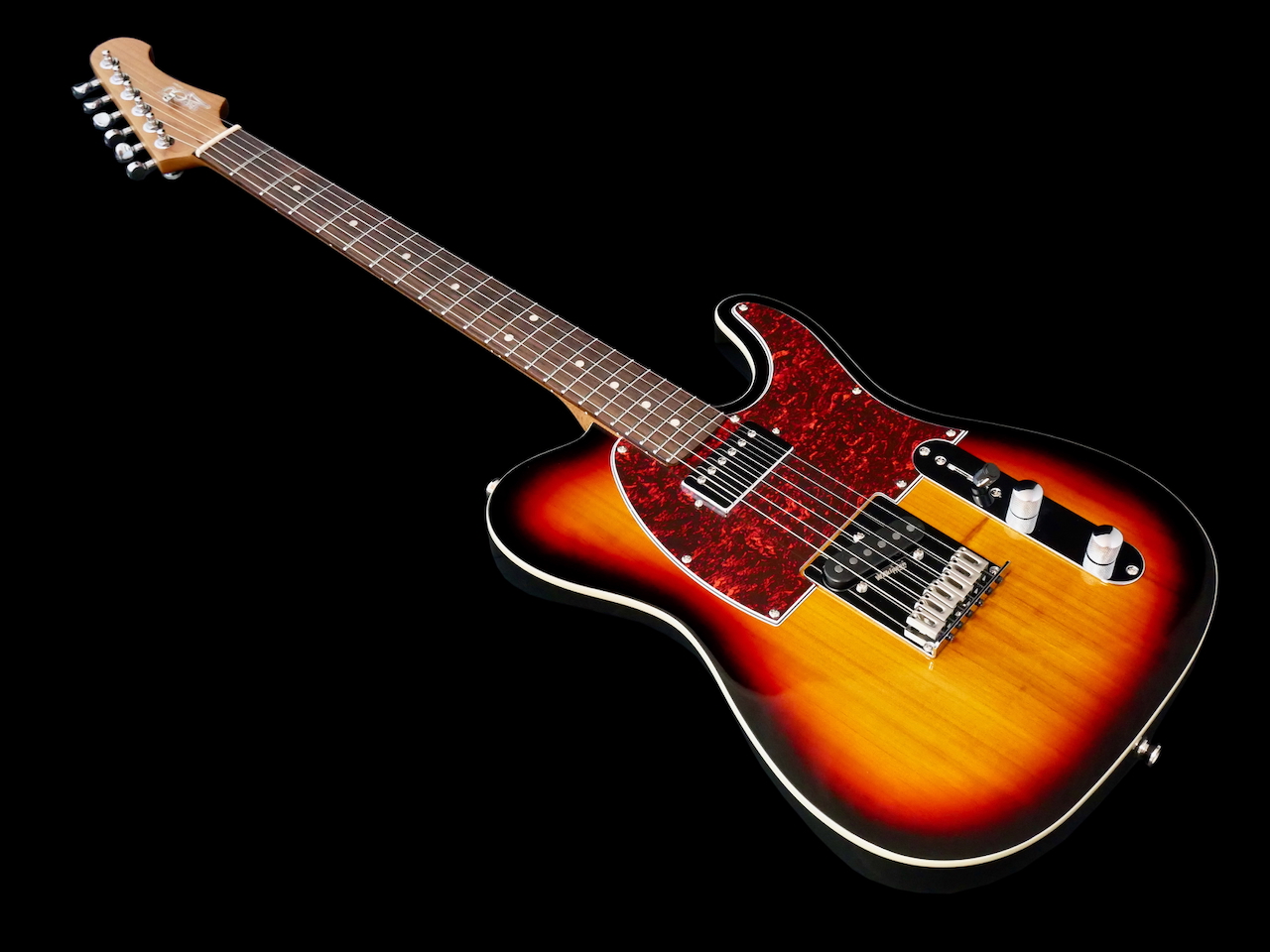
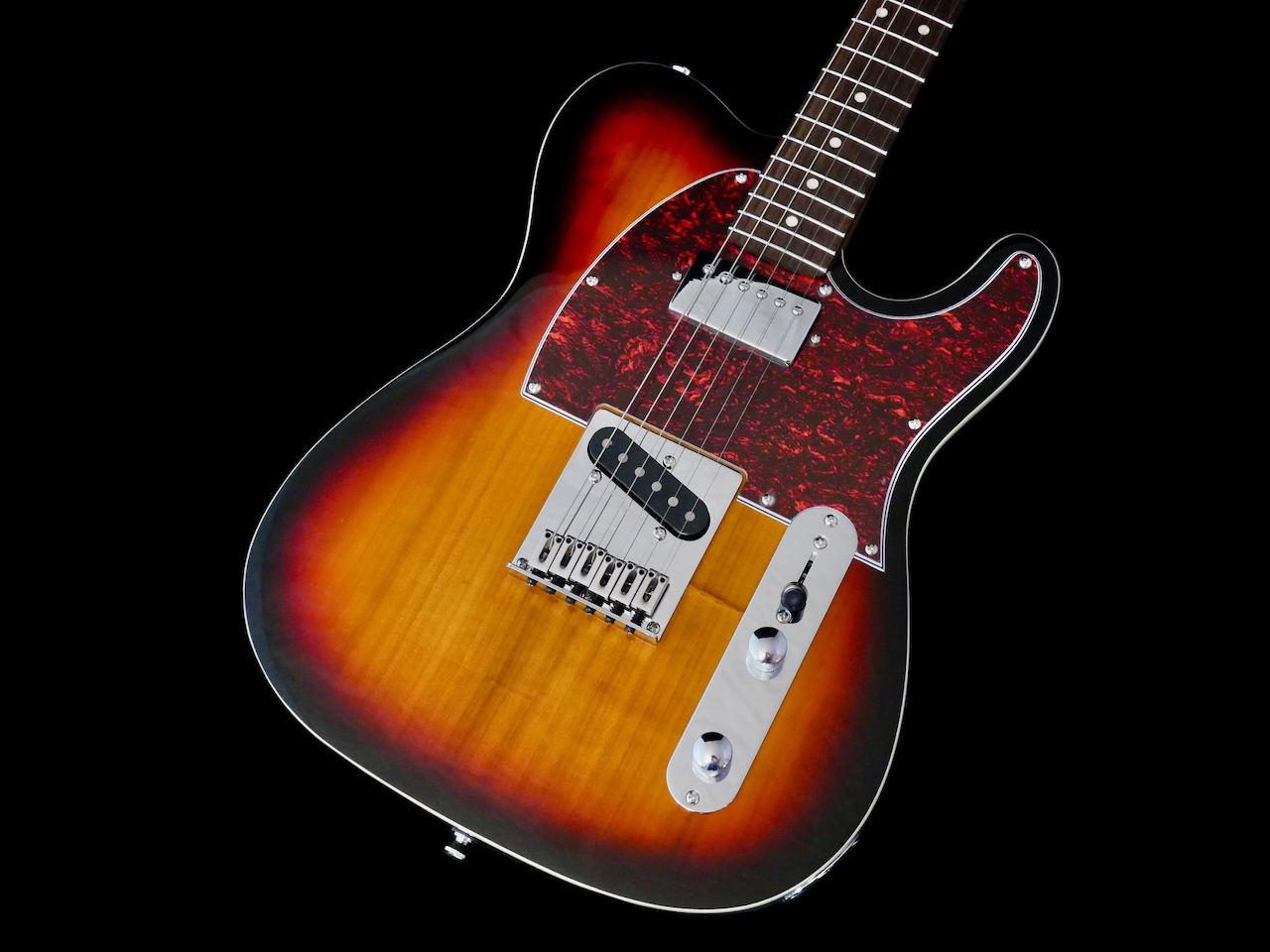
Jet Guitars’ JT-350SH (€369) stylishly takes care of these three problems.
Despite its affordable price, the JT-350SH has added many pro-level features:
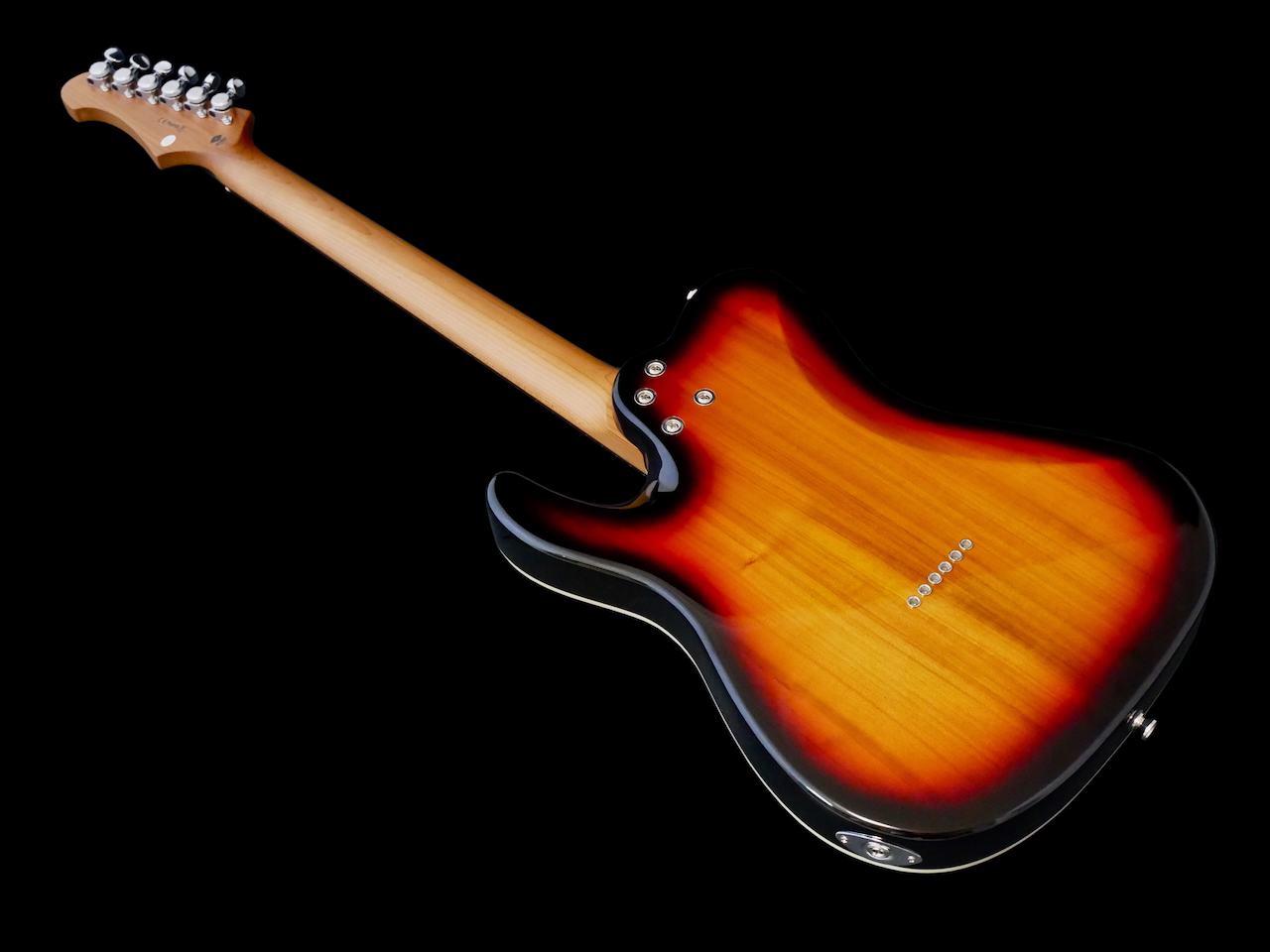
The guitar’s neck is carved from heat-treated Canadian maple, while the fingerboard is made of Indian rosewood. The neck is equipped with a dual-action truss rod, and its adjustment is conveniently done at the headstock end. Thanks to the locking tuners, changing strings is a quick task, and the instrument stays in tune very well.
The basswood body, which is bound at the front, has two bevels at the back – one in the cutaway to make it easier for the playing hand to reach the upper frets, and the other has been added to the top edge to soften the fit of the body against the player’s body. The bolt-on neck joint on the Jet JT-350SH is also rounded.
Wilkinson’s high-quality, modern six-saddle bridge is home to a traditional (alnico) Tele bridge pickup, while a full-size alnico humbucker sits in the tortoiseshell-patterned pickguard.
This SH-pickup combination (a portmanteau of “single-coil” and “humbucker”) makes a single Tele sound like two different guitars, as it offers the classic Tele bridge sound, as well as the creamy Gibson sound. It’s not entirely clear who first invented the SH-combination on a Tele, but blues guitarist Albert Collins used a custom Tele like this back in the 1960s. Rolling Stones legend Keith (“Keef”) Richards uses both modified Telecasters and second-generation 1970s Tele Customs with a factory-installed neck humbucker. In the 1980s, Andy Summers of the Police became well-known for his JT-350SH-style Fender guitar.
The Jet JT-350SH adds a pull-switch embedded in the tone knob to the standard Tele front-both-rear connection, allowing you to split the humbucker for traditional single-coil Tele sounds.
The Jet Guitars JT-350SH model’s playability is first-class, thanks to a slim neck profile, a gentler fingerboard radius (9.5 inches) and really good fretwork. The guitar arrived for review with an excellent set-up.
****
In 1979, The Who’s Pete Townshend had had enough of his heavy Gibson Les Paul Deluxe guitars from the 70s, and he sent his guitar technician, Alan Rogan, to find something better for the next tour.
Townshend had also played Telecasters in the 1960s and he remembered that this guitar model was relatively light, but at the same time very durable. However, he wanted a guitar with two humbuckers, for a thicker distorted sound.
After a few twists and turns, Alan Rogan found a new company – Schecter Guitar Research – that made both guitar parts and complete electric guitars. Rogan ordered a pair of Schecters for his boss, Townshend liked them, and “the rest is history”, as they say.
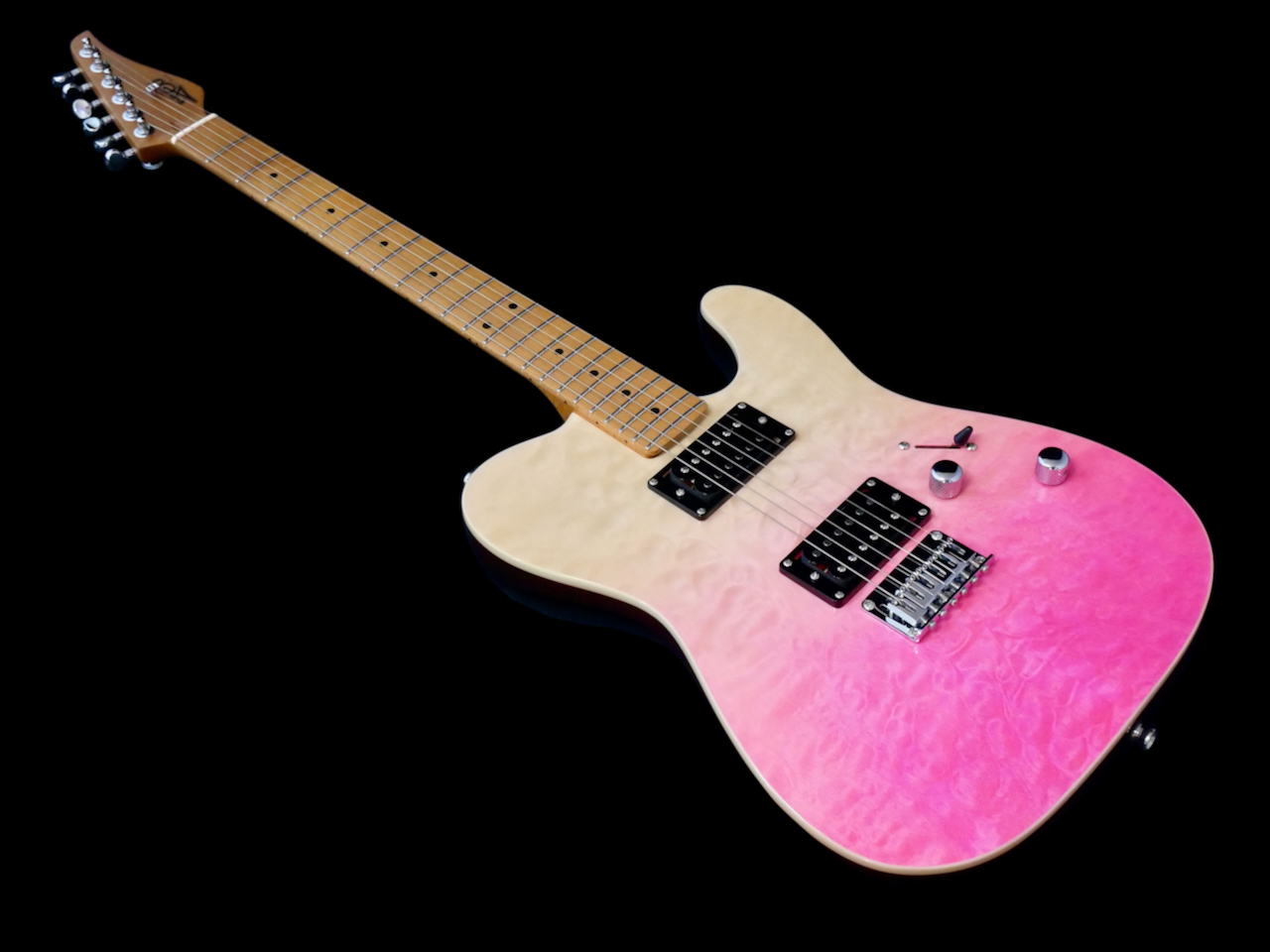
Jet Guitars’ JT-450Q (€399) is a fancy double humbucker Tele, with a few more piquant details added:
A very impressive quilted maple top with a front elbow bevel, a pink burst finish, and a split pickup with a pull-switch (in the tone control).
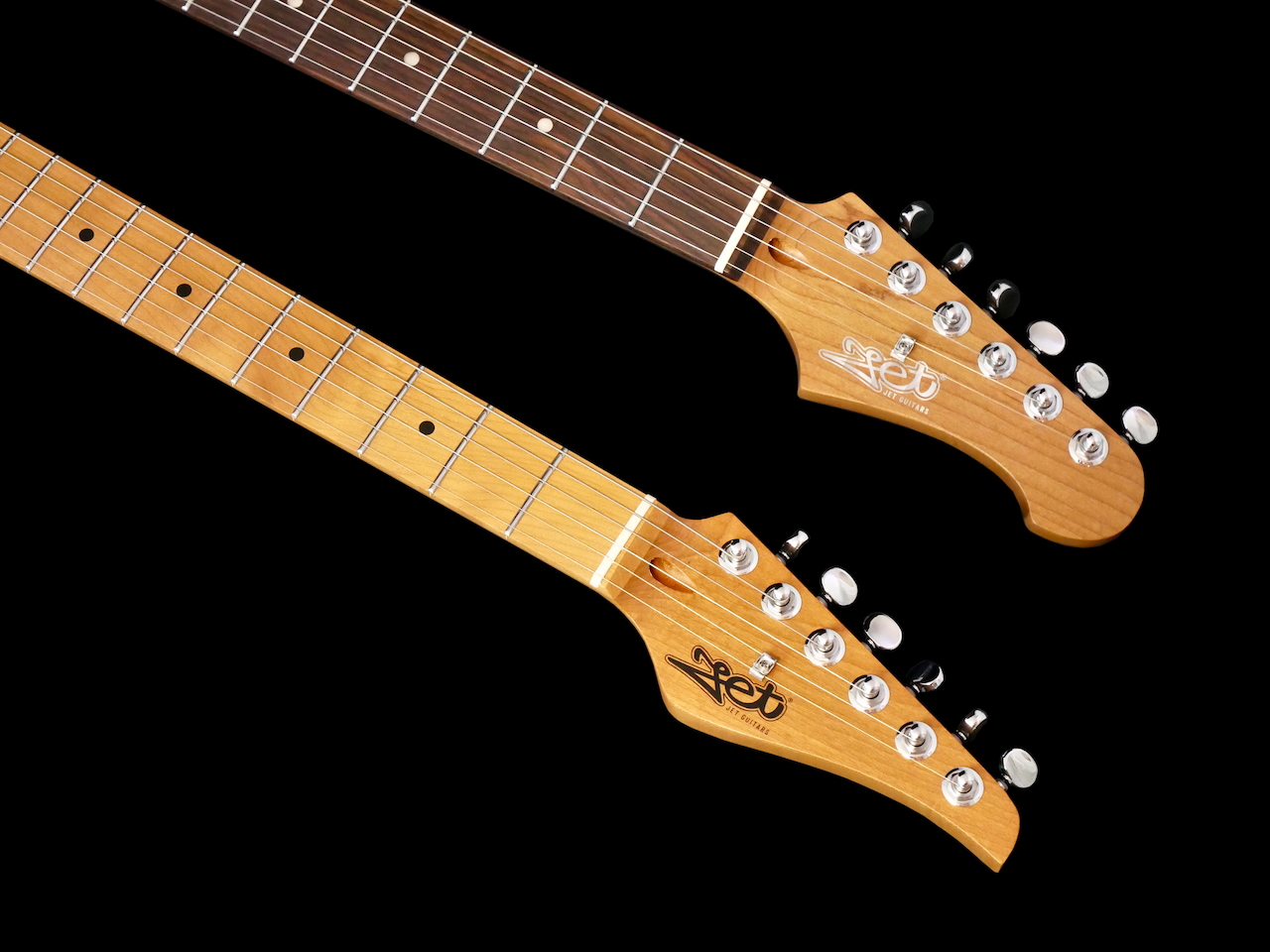
The basic components of the JT-450Q are largely the same as those of the JT-350SH model. The JT-450Q has a heat-treated maple neck with a fingerboard made of the same material. The shape of the headstock on this model is also different – it vaguely resembles the Pensa-Suhr headstock. The truss rod in this model is also dual-action and the tuners are of the locking variety. The top nut is made of genuine bovine bone on both instruments.
The body of the guitar is carved from basswood, and the JT-450Q also has a gloss finish, while the neck has a satin finish. The back of the body of the JT-450Q features the same soft bevels as seen on the JT-350SH.
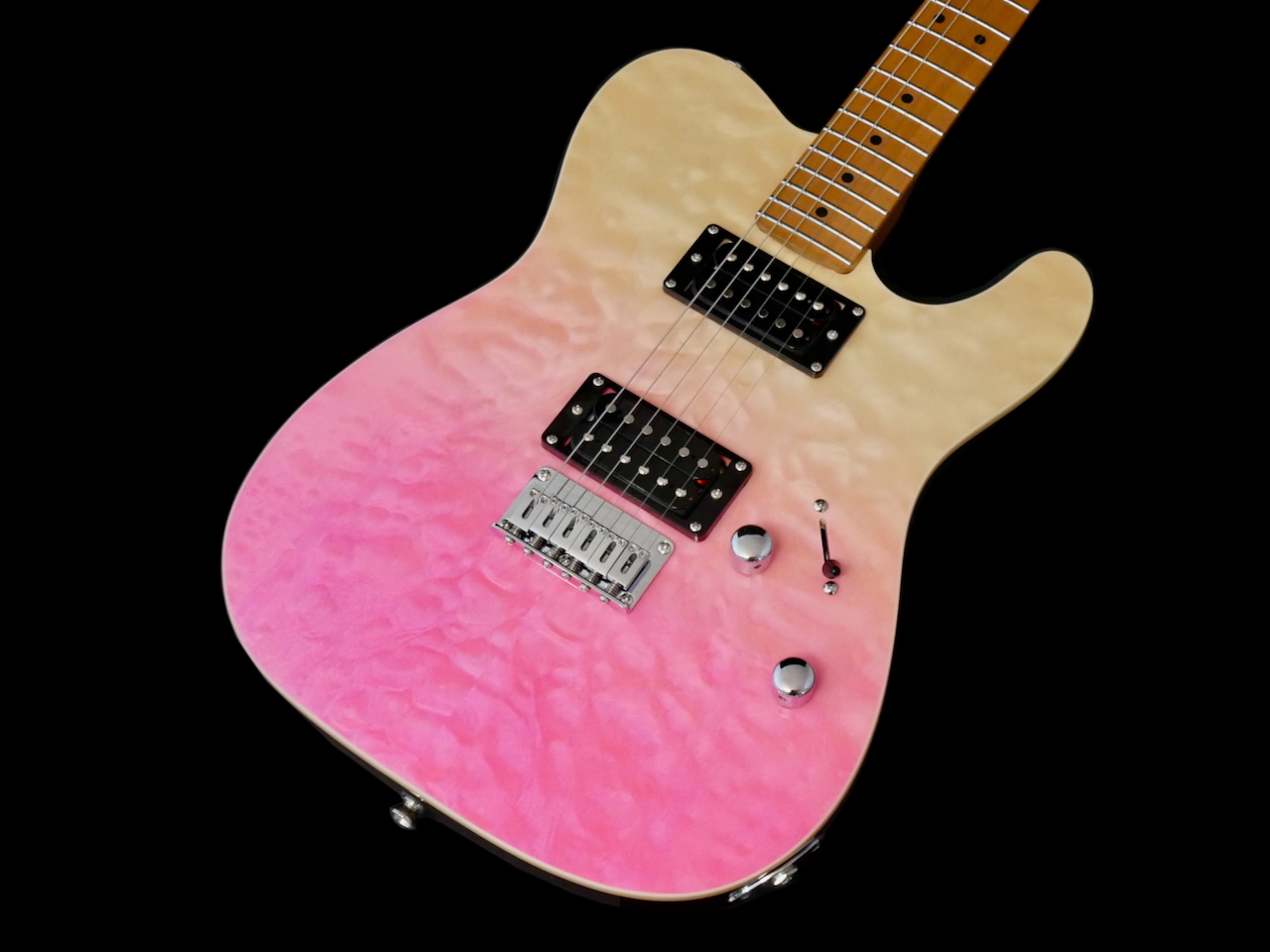
Since the Jet JT-450Q uses two humbuckers in their own frames, the guitar’s bridge is a hardtail Strat-style version. However, the strings are still strung through the body in the regular Telecaster manner.
The Jet’s coverless alnico humbuckers are connected to a three-position switch, as well as master volume and tone. As I already mentioned, the tone pot has a push-pull switch that allows you to split the double-coil pickups in half for single-coil sounds. The switch and controls are mounted at an angle, Strat-style, so that you can easily create volume swell effects with your pinky. The JT-450Q’s humbuckers are not spoiled by excessive power, which imbues them with a beautiful and dynamic sound.
In the case of the Jet JT-450Q, you can also just marvel at how such an inexpensive guitar can feel so good in the hand. The neck profile here is also a nice oval C-profile, which – in addition to the very good fretwork – makes playing effortless and fast. The low trim of the test guitars can only be achieved with very strict quality control, which seems to be up to the task at Jet Guitars.
• Guitars used: Fender ’62 Telecaster Custom reissue, Fender ’62 Stratocaster reissue, Harley Benton DC-60 Jr, Hamer USA Studio Custom
• Amp used: Bluetone Black Prince Reverb
• Microphone used: Shure SM57
****
Here’s a short demo of the four main pickup types used in solid-body electric guitars.
• Guitars used: Fender ’62 Telecaster Custom reissue, Fender ’62 Stratocaster reissue, Harley Benton DC-60 Jr, Hamer USA Studio Custom
• Amp used: Bluetone Shadows Jr.
• Microphone used: Shure SM7B
Alkuperäinen suomenkielinen versio tästä jutusta löytyy Rockway-blogissa.
****

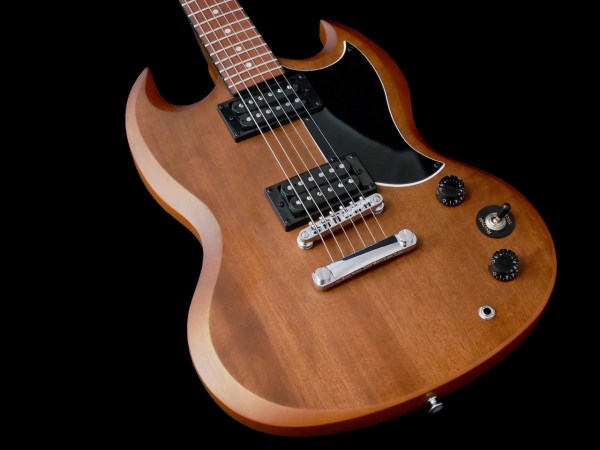
The Epiphone SG Special VE (”street price” around 240 euros in Finland) is currently the cheapest official SG replica. The letters VE stand for “Vintage Edition”, which refers to the model’s matte finish.
On the website of Epiphone’s importer – Algam Nordic – the SG Special VE is only available in matte black and matte brown (i. e. walnut), but on Epiphone’s own website the cherry red matte finish is still listed as an option. I would guess that all three options are still available at Finnish music stores.
The Epiphone SG Special VE looks a lot like the company’s own version of Gibson’s 1970s model “The SG”, especially in the walnut finish.
Should you fancy a gloss finish and chrome covered pickups, I can point you to the brand-new Epiphone SG Tribute model, which will probably replace the Special VE over time.
****
****

The Chinese SG Special VE is a very affordable instrument, which is why the guitar offers slightly unconventional detail solutions in some areas. However, the workmanship is of surprisingly high quality throughout – at least on the review instrument.
The Epiphone’s body is carved from poplar. Poplar is a basic, good instrument wood, its only ”flaw” being the wood’s dull grain pattern, which is why Music Man, for example, only uses it for solid-coloured instruments.
On the SG Special VE, this has been solved by gluing very nice looking veneers of African mahogany onto the flat middle sections of the body (front and back). This trick also preserves the traditional mahogany look of SG guitars in the VE model.

The Fender-style neck joint is a very rare solution in Gibson-style guitars these days, but it fits well on this affordable SG, especially since the joint is really tight and neat. The Epiphone SG Special VE’s neck is made of beautiful Gabon mahogany (another name for the wood is okoume). The neck is basically a one-piece affair, with a second piece added for the upper end of the headstock. The glue joint is visible below the e-string tuners.

Although this is not mentioned anywhere in the official specs, the SG Special’s reddish rosewood fingerboard has been given black plastic binding. The fingerboard is neatly fitted with 22 medium-sized frets, as well as round pearloid fingerboard inlays.
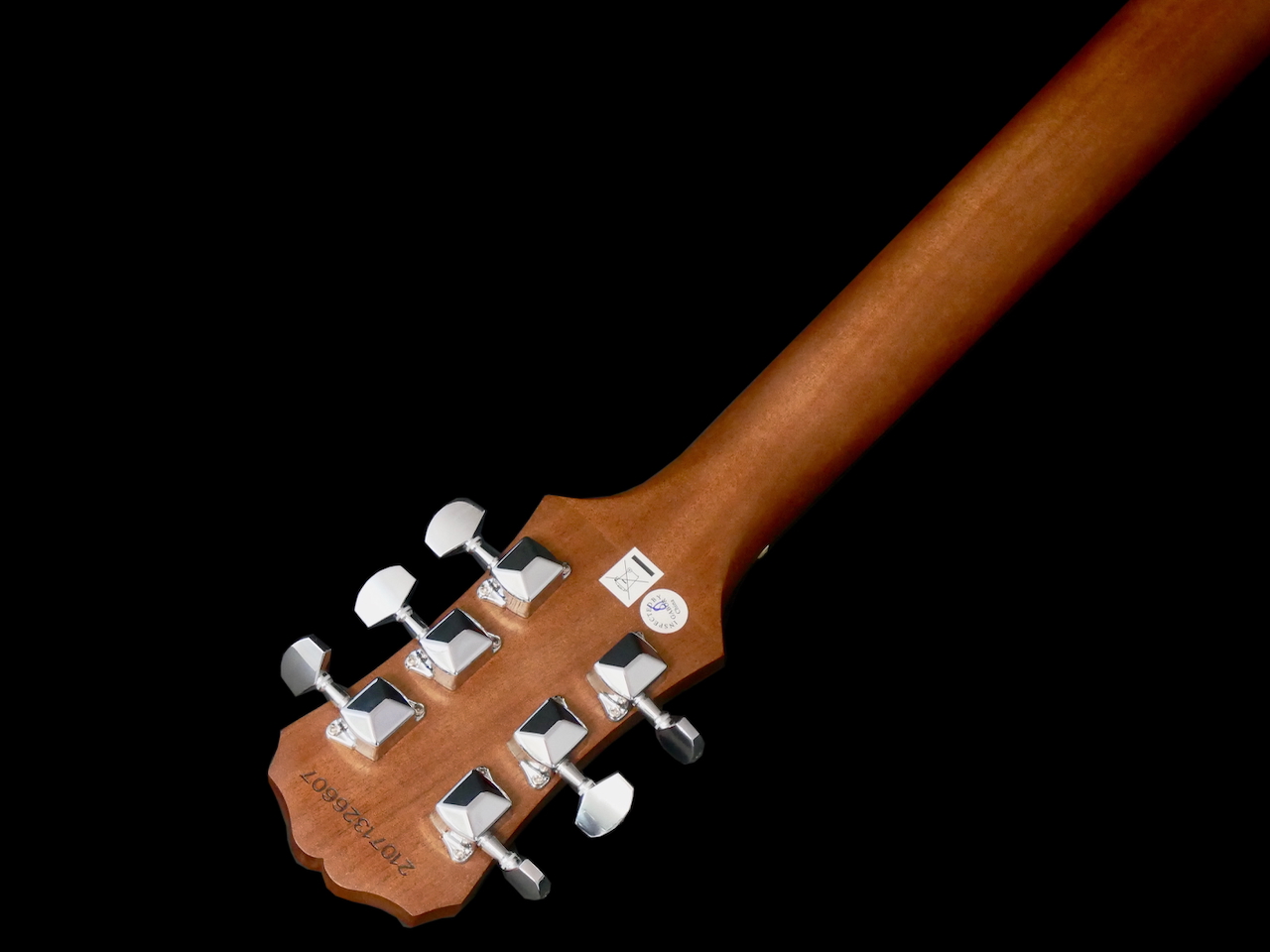
The hardware department consists of Epiphone’s Lock-Tone bridge and tailpiece, as well as inexpensive closed tuners. These machine heads are regularly criticised, for example in YouTube videos, for being ”bad at keeping the guitar in tune”.
In reality, this perceived problem is based on the fact that modern tuners usually have a tuning ratio of 18:1 or even 20:1. The pair of numbers tells us how often the tuner knob must be turned so that the tuner’s post (where the string is attached) turns one full turn. Special VE’s very affordable tuners, on the other hand, operate with a “coarse” ratio of 14:1 – the same ratio seen on many acoustic guitars from the 1970s. These old-fashioned tuners have a slightly jumpier character when it comes to tuning – it is very easy to turn past the correct pitch – and also have significantly more “play” than modern machine heads. As long as you remember to always tune each string up from flat to the correct pitch, these tuners work reasonably well, and there are no problems with tuning stability.
****
****
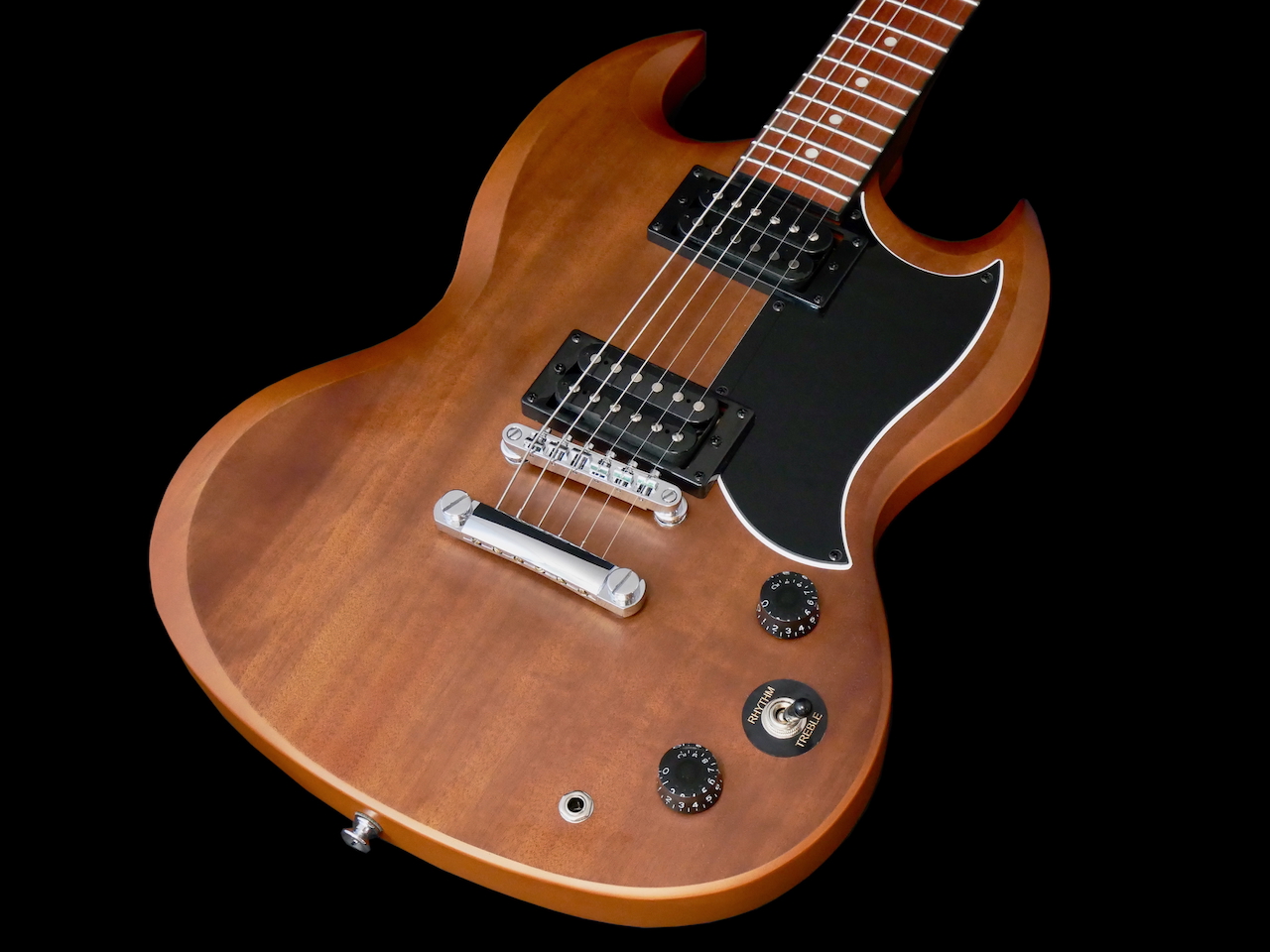
The Epiphone SG Special VE features the company’s own open 650R and 700T humbuckers, which are very powerful pickups with ceramic magnets. This pair of pickups represent Epiphone’s affordable take on Gibson’s 1970s Dirty Fingers humbuckers, and they have a very strong midrange and big bass.
Traditionally, two-pickup Gibson or Epiphone electric guitars often have a group of four controls in addition to a three-position toggle switch. For modern guitarists, a master volume control that affects the entire guitar is – especially in live situations – often a more functional solution than individual controls for each pickup. Also for beginners, a solution like the SG Special VE, which offers only master volume and master tone controls in addition to the switch, is clearly a better option.
The electronics compartment of the Epiphone test guitar is very clean, as are the solder joints. The parts themselves are – naturally – inexpensive, but I didn’t find anything to complain about in terms of functionality.

Can a guitar in this price range, with a bolt-on neck and a body made from ”the wrong type of wood”, be a real, proper SG? Comparing the Epiphone with three other SGs, I can say that the short answer is “yes!”
I find it very funny that both Gibson’s and Epiphone’s headquarters are apparently afraid to tell people about the real neck profiles of their guitars. Everywhere you look these days, it (almost) always says “slim taper D-neck”, regardless of the model. Do Epiphone’s decision-makers really think that players would be afraid of anything other than thin 90s profiles?
In reality, the neck profile of the Epiphone SG Special VE model is a nicely rounded, but not too thick D-profile, which I think suits an SG-style instrument very well.
There was nothing wrong with the review instrument’s set-up, and the guitar’s playability is more than okay, especially considering the Special VE’s low price.
The Epiphone’s balance on the strap is even slightly better than on many average SGs, because the neck sits about two centimeters deeper in the body than usual, due to the Special VE’s bolt-on neck.
The Epiphone SG body sits nicely in the lap and hangs comfortably against the player’s body when using a strap.
The review instrument’s acoustic voice is very healthy, and I didn’t find any disturbing dead spots.
If you use the Epiphone SG Special VE model with a vintage-style amplifier that doesn’t have a master volume control – like, for example, with a good Fender Champ copy – the instrument’s hot pickups get more distortion out of the amplifier, which I think is a good thing.
With effects pedals, it’s worth using the SG Special VE’s well-functioning master volume, because some effects – for example, some overdrives and many modulation effects – can easily ”clog up” with very hot pickups. But this is what controls on an electric guitar are for.
In my opinion, the Epiphone SG Special VE is a surprisingly nice guitar for the money. It offers a lot of mileage at a really budget-friendly price. If you like the look of the SG, the Special VE is definitely an instrument worth trying out.
****
****



 Kitarablogi.com – Finland's premier Guitar and Bass blog