Review: Roland Cube-10GX

****

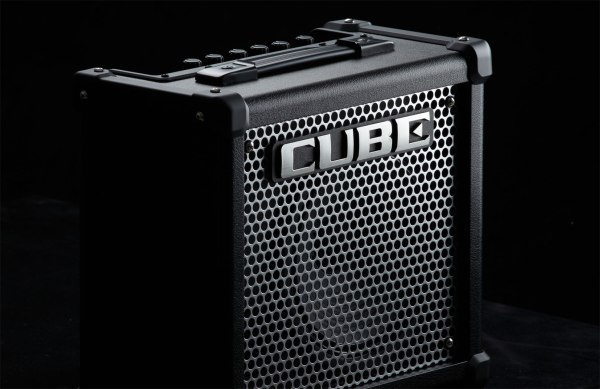
cube-10gx_angle_black_gal

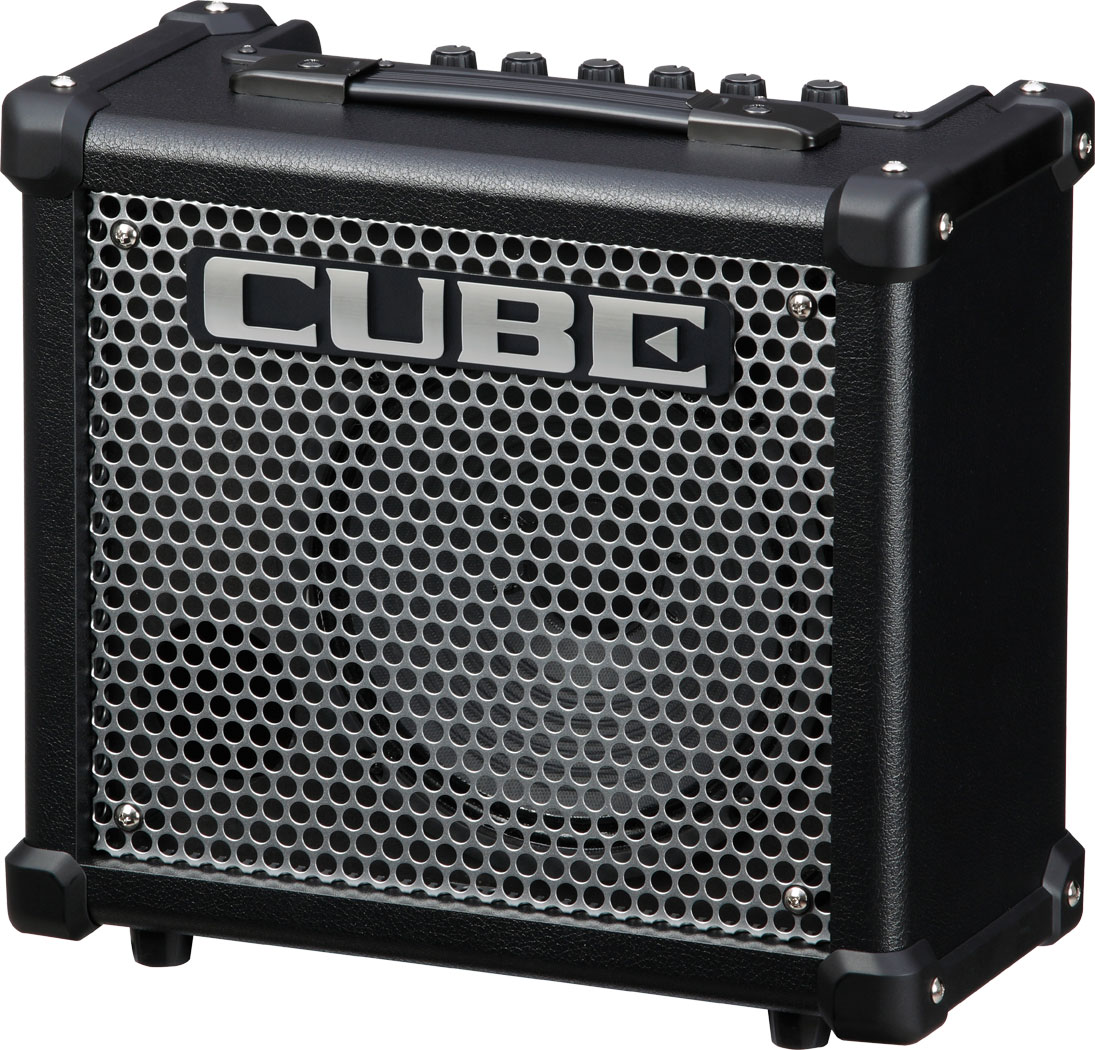
The new Roland Cube-10GX approaches the company’s popular Cube-concept from a slightly different angle.

****

cube-10gx_front_gal

The 10-watt Roland Cube-10GX (Finnish price approx. 125 €) slots into the model range right between the 3-watt Micro Cube GX and the 20-watt Cube-20GX combo.

Despite its very affordable price, the 10GX is built as sturdily as the larger Cube models, featuring chunky corner protectors, and the metal grille typical of this series.

An eight-inch speaker has been installed into the closed-back, front-ported cabinet.

cube-10gx_back_gal

The backpanel sports connections for DC In (the PSU comes included), Aux In, as well as a combined line level output/headphones jack.

cube-10gx_top_gal

The Cube-10GX combo’s architecture differs somewhat from the rest of the GX-models:

The 10GX doesn’t feature a built-in tuner or an i-Cube-Link, like the rest of the GX-models, but offers a much more open way of offering its COSM-generated amp models.
cube-kit-image_1800

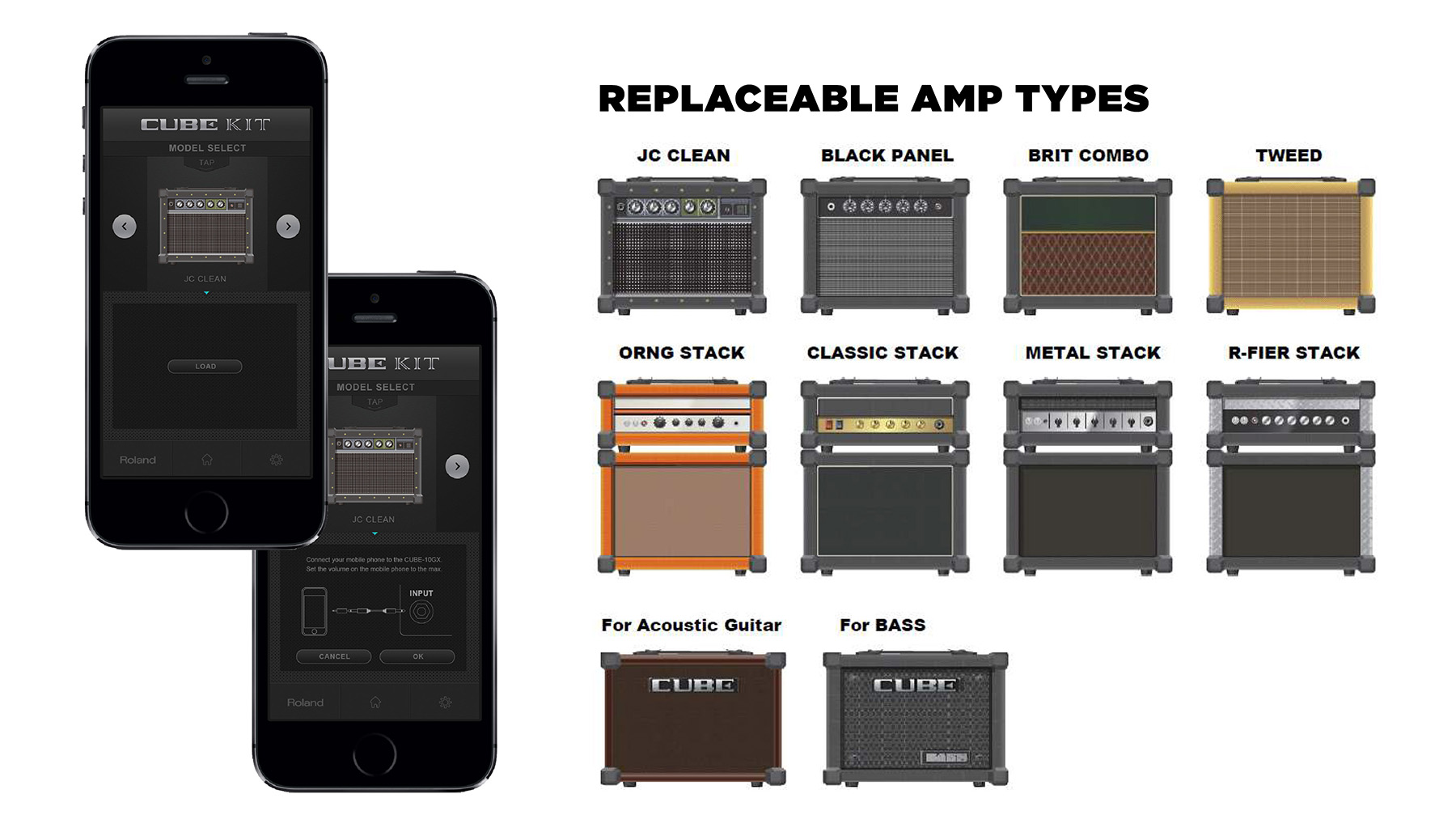
The Cube-10GX lets you choose from a number of different amp models via the new Roland Cube Kit app (Android and iOS). At the moment of writing the app offers eight guitar amp models, plus one bass amp and one amp for acoustic guitar.

Despite the fact that the control panel reads ”Clean”, ”Crunch” and ”Lead”, you can load any of the COSM amp models on offer into any of the amp’s three channels. If you’re a Jazzer, for example, you might prefer to use only clean amps, like Acoustic, JC Clean and Black Panel.

****
cube-10gx_angle_gal

Let me deal with the ”bad news” first: Sadly, the Cube-10GX offers only a single effect section, in contrast to all the other Cube GX -combos. The 10GX gives you the choice between either a chorus or a delay or a hall reverb or a (very wet) spring reverb. And there are no effect combinations on offer.

The new combo’s main focus lies in the easy-to-swap amp models, and improvements in the sound of both the amp and the COSM-models. For a 10-watter the Cube-10GX is surprisingly loud. Thanks to its much larger speaker the new combo sounds much fuller and more grown up than the Micro Cube.

The updated COSM-models sound noticeably more transparent and fresher, without any additional background hiss or noise. The 10GX’ well-designed three-band EQ section lets you tailor the sound to your requirements.

Loading a new amp model into one of the Cube-10GX’ channels via the Cube Kit app is fast and easy, and doesn’t require any special cables. You only need a fitting mini-jack adapter to hook up the guitar lead to your smartphone (or tablet). All the necessary data is then transmitted from the Android- or iOS-device to the amp via the guitar cable. The whole process takes only a few taps and a couple of seconds.

The factory default has the Jazz Chorus amp model loaded into channel 1. I’m playing my Fender Telecaster with a little chorus added from the combo:

Here’s another Jazz Chorus clip, but this time seasoned with some Surf-type spring reverb:

The Classic Stack model is the factory setting for channel 2. It is Roland’s version of a Marshall-stack. I’ve added some delay for this clip:

I loaded the Brit Combo (AC30) model into channel 2, using the Cube Kit app. I’m playing my Telecaster with some reverb from the combo:

”Orng Stack” stands for Orange-stack. This is what it sounds like, played with my Gibson Melody Maker SG:

The factory default for channel 3 is the R-fier Stack model. First a clip using the Telecaster, and then an example Played with the Melody Maker SG:

The Cube Kit’s Acoustic model provides an easy solution for amplifying your acoustic guitar. I’ve used a Tanglewood dreadnought equipped with a magnetic soundhole pickup by Seymour Duncan:

The Cube-10GX even sounds surprisingly good as a tiny bass combo (all audio clips have been recorded with a Shure SM57):

****

Roland’s Cube-10GX (and the cool Cube Kit app) makes it possible to turn this little combo into the amp you really need. A Blues player will probably load his (or her) Cube-10GX with the Black Panel-, Brit Combo-, and Tweed-models, while a Metal guitarist will prefer the chunkier COSM-models on offer (like the Classic-, Metal- and R-fier-stacks).

The Cube-10GX sounds great and is a real little shouter. Despite offering fewer built-in effects than the rest of the GX-range, the Roland Cube-10GX still offers a lot of fun at a very competitive price.

cube-header

****

Roland Cube-10GX

Price range in Finland approx. 125 €

Maahantuoja: Roland Scandinavia

****

Pros:

+ fair price

+ powerful

+ wide range of available amp models (via the Cube Kit app)

+ three-band EQ

+ sturdy build

+ sound

Cons:

– only one effect section

spring reverb offers only little scope for adjustment

Testipenkissä: Tokai ES-138/SR • ES-145G/BB • ES-162/TB

Tokai ES-162 – and case

Tokai Guitarsilla on erittäin hyvä maine laadukkaiden sähkökitaroiden ja -bassojen valmistajana. Tällä kertaa testissä kävi kolme Japanissa käsityönä valmistettua Tokai ES -sarjan soitinta hintaskaalan kalliimmasta päästä.

****

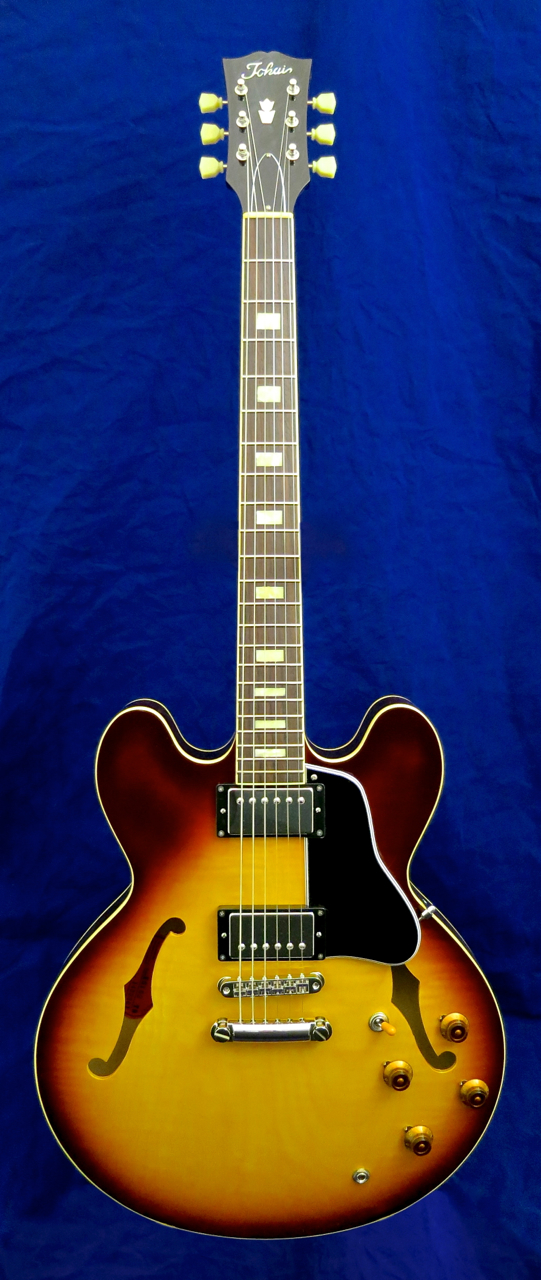
Tokai ES-138SR – full front

Tokai ES-138 (hinta: 1.368 €, sis. kovan kotelon) on firman versio vuoden 1958:n Gibson ES-335 -kitarasta, joka on saatavilla sekä punaisena että mustana.

Tokai ES-145G – full front

Tokai ES-145G (hinta: 1.431 €, sis. kovan kotelon) on kullanvärisillä metalliosilla varustettu ja kevyesti modernisoitu tulkinta aiheesta. Se on saatavana ainoastaan mustana.

Tokai ES-162TB – full front

Tokai ES-162 (hinta: 1.628 €, sis. kovan kotelon) on kolmikon kallein malli, jolla on suorakulmaiset otemerkit, tallapalat messingistä, sekä alumiininen kieltenpidin. Piste i:n päällä on kuitenkin ES-162:n viimeistely aidolla nitrolakalla. Malli on saatavana kolmivärisellä liukuvärityksellä tai punaisena.

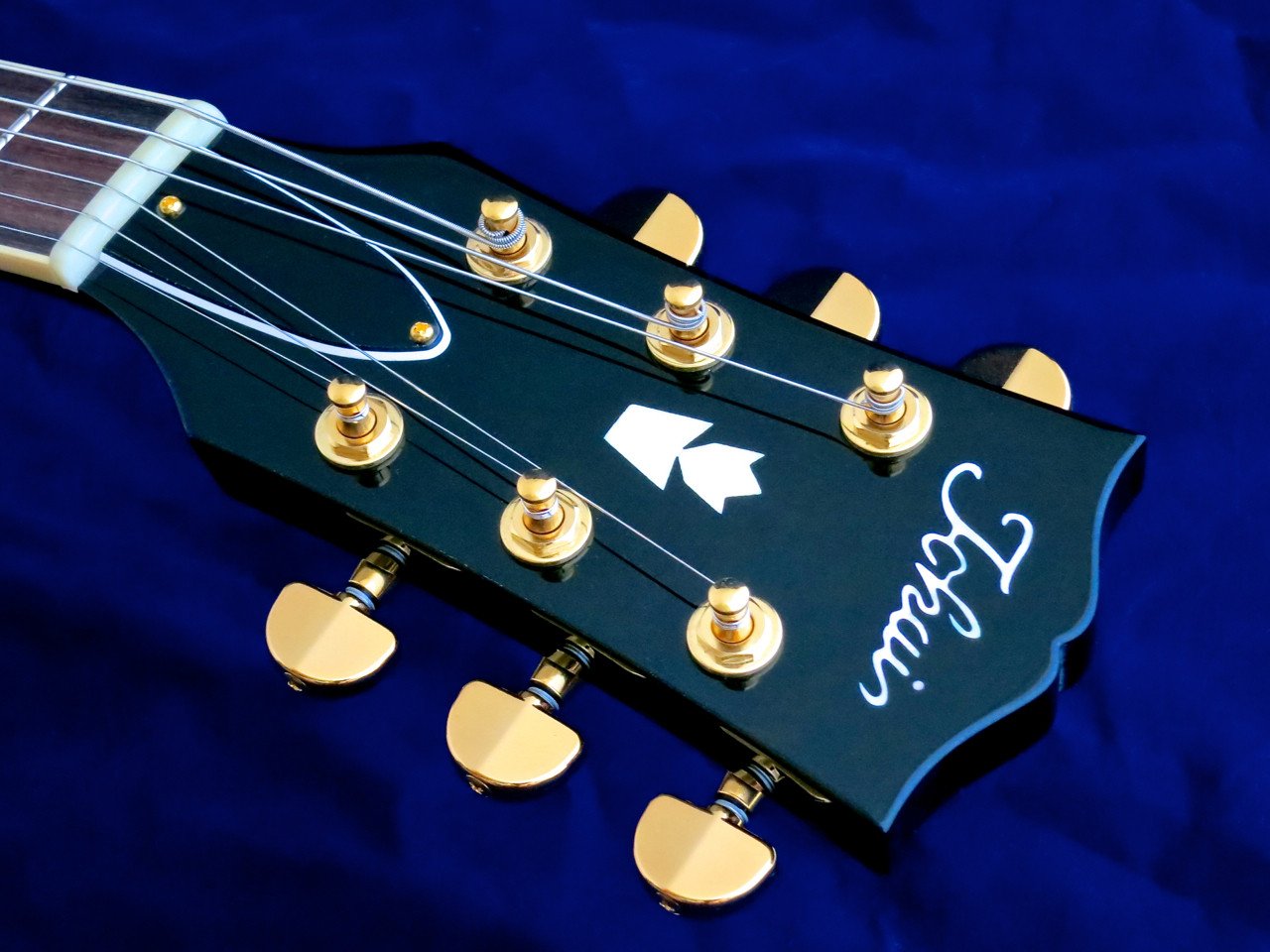
Tokai ES-138 – headstock

Tokai käyttää näissä kitaroissa Gotohin valmistamia laatuvirittimiä.

Tokai ES-138 – tuners

ES-138- ja ES-162-kitarat on varustettu Kluson-tyylisillä vintage-koneistoilla.

Tokai ES-145G – headstock

Tokai ES-145G – tuners

ES-145G:n lapaan taas on asennettu nykyaikaisia suljettuja Gotoh-virittimia.

Tokai ES-145G – fingerboard

Näissä Tokai Japan -soittimissa on yhdestä palasta veistettyjä mahonkikauloja vintage-tyylisellä, jyrkällä lapakulmalla (17 astetta).

ES-138- ja ES-145G-malleissa käytetään pieniä pyöreitä otemerkkejä reunalistoitetussa palisanteriotelaudassa.

Tokai ES-162 – fretboard

ES-162 taas on Tokain versio vuoden 1962-’64 ns. ”Block Marker” ES-335:sta, jossa upotukset ovat keskikokoisia suorakulmia.

Nauhakoko on näissä kolmessa ES-mallissa medium.

Tokai ES-138 – bridge

Kaikissa kolmessa Tokai ES -kitaroissa on Gotohin valmistama palkkimainen kieltenpidin, sekä kevyesti nykyaikaistettu versio Tune-o-Matic-tallasta.

Tokai ES-145G – bridge

ES-138:ssä ja ES-145G:ssä käytettään Gotoh LS -settiä sinkkipitoisesta valumetallista teräksisillä tallapaloilla.

ES-162:n Gotoh HLS -setti on muutaman asteen verran vintagemaisempi, kun käytössä on erittäin kevyt alumiinista valmistettu kieltenpidin, sekä kromattuja tallapaloja messingistä.

Tokai ES-162 – pickups

Kolmikon mikrofonivarustus on sama – kitaroissa on kaksi Tokai PAF-Vintage Mark II -humbuckeria.

Tokai ES-145G – controls

Huippulaadukas linja jatkuu luonnollisesti myös ES-kolmikon japanilaisissa elektroniikkaosissa.

Tokai ES-case

Tokai Japanin hienoimpia kitaramalleja myydään nykyään firman omissa laadukkaissa koteloissa.

****

Tokai ES-138 – beauty shot 1

Kirsikanpunainen puoliakustinen on yksi legendaarisimmista sähkökitaramalleista. Useimpien mielestä tämä kurvikas, muottiin prässätystä nelikerroksisesta vaahteravanerista tehty koppa on kaunein muoto ikinä.

Tokain ES-138 on kyllä upea tulkinta klassikkomallin varhaisesta versiosta, jolla on asianmukainen erikoispitkä plektrasuoja ja pyöreät otemerkit.

Vaikka ES-kitaroiden runko on pinta-alalta varsin mittava, on laadukas lajinsa edustaja kuitenkin useimmiten yllättävän kevyt. Tokai ES-138 on erittäin mukava pitää sylissä tai kantaa hihnassa, ja se asettuu hyvin nätisti tasapainoon.

Kaulaprofiili on keskituhti ”D”, joka istuu todella mukavasti ainakin minun käteeni. Nauhatyö oli testisoittimessa ensiluokkaista, ja kitara oli säädetty hyvin mukavaksi 010-kielisatsilla. ES-138:n akustinen klangi on mallityypin mukainen – ontto ja nasaali maiskuttavalla atakilla.

Täytyy kyllä sanoa, että Tokain omat PAF-tyyliset humbuckerit kuulostavat loistavilta! Lähtötaso on hyvin maltillinen ja perussoundi on mukavan avoin. Kaulamikki on lämmin, mutta erotteleva, ja valitsimen keskiasennossa soundi on ilmava. Tallahumbucker taas soi hyvin tuoreella äänellä, mutta ei ”marise” häiritsevästi keskialueella.

Tokai ES-138 – body beauty

****

Tokai ES-145G – beauty shot 1

Musta ja kultainen ES-145G on mielestäni erittäin tyylikäs soitin – Tokai ES -sarjan oikea herrasmies, joka näyttää hyvältä tilanteessa kuin tilanteessa.

Testiyksilö on aavistuksen verran painavampi kuin testissä käynyt ES-138, mutta silti vielä huomattavasti kevyempi kuin moni edullinen tulkinta samasta aiheesta.

ES-145G:n kaulaprofiili on tämän kolmikon tuhdein. Tällainen täyteläinen D-profiili antaa aitoa myöhäisen 1950-luvun makua. Kaula ei ole missään nimessä liian paksu, mutta se täyttää käden vakuuttavasti.

Työnjälki ja soitettavuus ovat myös ES-145G:ssä esimerkillisiä. Akustisesti soitettuna ES-145G:n ja ES-138:n soundit ovat käytännössä identtisiä.

Myös vahvistettuna on vaikea huomata selkeitä eroja – Tokai ES-145G soi kuin mitä erittäin laadukkaalta puoliakustiselta sopii odottaa.

Tokai ES-145G – body beauty

****

Tokai ES-162 – beauty shot 1

Testissä käynyt ES-162 on selvästi kolmikon kevyin yksilö!

ES-162:n Block Marker -ulkonäköön sopii myös kaulan autenttinen profiili, joka on ovaali ”C” ja hieman ohuempi kuin ES-138:ssa.

Työnjälki ja soitettavuus on myös ES-162:n tapauksessa ensiluokkaista.

Tämän kitaran ohut viimeistely nitrolakalla, sen kevyempi kieltenpidin, sekä tallan messingistä tehdyt tallapalat antavat Tokai ES-162:lle erittäin avoimen ja dynaamisen akustisen klangin.

Myös ”livenä” vahvistimen kanssa samassa huoneessa huomaa, että tämän kitaran soundissa on aavistuksen verran enemmän syvyyttä ja laajuutta. Mutta, kuten usein, äänitetyssä materiaalissa tämä ”kolmas ulottuvuus” katoaa melkein kokonaan, ja ES-162 kuulostaa miltei samalta kuin testikolmikon kaksi muuta mallia.

Tokai ES-162 – body beauty

****

Tokai ES-162 – label

Tokai Japan -soittimien maine on jo 1970-luvulta lähtien ollut legendaarinen, ja tämä ES-sarjan kärkkikolmikko tekee hyvinkin selväksi, että Tokain tapauksessa firman maine ja sen kitaroiden laatu käyvät saumattomasti yksi yhteen.

Tokain ES-138, ES-145G ja ES-162 tarjoavat japanilaista huippulaatua erittäin reiluun hintaan.

****

Tokai Japan -puoliakustiset

Tokai ES-138 – 1.368 € (kotelo sis. hintaan)

Tokai ES-145G – 1.431 € (kotelo sis. hintaan)

Tokai ES-162 – 1.628 € (kotelo sis. hintaan)

Maahantuoja: Musamaailma

****

Plussat:

+ japanilainen työnjälki

+ yksiosainen kaula

+ viimeistelyn taso

+ Gotoh-metalliosat

+ mikrofonien soundi

Testipenkissä: Roland Cube-10GX

****

cube-10gx_angle_black_gal

Hiljattain ilmestynyt Roland Cube-10GX on Cube-perheen uusin jäsen, joka lähestyy firman suosittua Cube-reseptiä hieman toiselta kulmalta.

****

cube-10gx_front_gal

Kymmenwattinen Roland Cube-10GX (hintaluokka 125 €) asettuu vahvistinteholtaan kolmiwattisen Micro Cube GX:n ja 20-wattisen Cube-20GX-kombon väliin.

Kymppi-GX on edullisesta hinnastaan huolimatta samaa vankkaa tekoa kuin sen isot veljeksiä. Reilunkokoiset kulmasuojat ja Cube-sarjalle tyypillinen metalliritilä suojaavat kombon tehokkaasti monilta kolhuilta.

Koteloon on asennettu kahdeksantuumainen kaiutin.

cube-10gx_back_gal

Takapaneelista löytyy virtaliittimen (verkkolaite kuuluu hintaan) lisäksi aux-tulo, sekä yhdistetty kuuloke- ja linjalähtö.

cube-10gx_top_gal

Cube-10GX-kombon arkkitehtuuri poikkeaa toisista Cube-perheen GX-malleista:

Muiden GX-kombojen viritysmittarit ja i-Cube-Link-lähdöt puuttuvat tästä mallista, mutta niiden tilalle uudessa Cubessa tarjotaan huomattavasti avoimempi rakenne COSM-vahvistinosiossa.

cube-kit-image_1800

Cube-10GX tarjoaa nimittäin uuden Roland Cube Kit -appsin kautta (Android ja iOS) kitaristeille mahdollisuuden valita ja vaihtaa oman Cuben COSM-mallinnuksia oman maun ja käyttötarpeen mukaan. Tällä hetkellä Cube Kitistä löytyy kahdeksan sähkövahvistinmallia, yksi vahvistinmalli mikitetylle akustiselle kitaralle, sekä yksi bassovahvistin.

Vaikka kombon etupaneelissa lukee sen kolmen kanavapaikkojen kohdalla Clean, Crunch ja Lead, käyttäjä saa valita appsin kautta vapaasti kanaviin juuri niitä COSM-malleja, joita hän itse haluaa – vaikkapa vain puhtaita vaihtoehtoja, kuten Acoustic, JC Clean ja Black Panel.

****

cube-10gx_angle_gal

Kerron sen ”huonon uutisen” ensin: Olisin kernaasti nähnyt myös uudessa Cube-10GX-mallissa kaksi efektiosastoa, niin kuin esimerkiksi Micro Cube GX:ssä! Kymppi-GX-kombossa voi valita joko choruksen tai viiveen tai kaiun tai (reilusti annostetun) jousikaiun, eikä yhdistelmäefektejä ole tarjolla lainkaan.

Uutuuskombon painopiste on siis selvästi vahvistimen soundissa ja entistäkin parannetuissa COSM-mallinnuksissa. Cube-10GX on yllättävän äänekäs vahvistin 10-wattiselle kombolle, ja sen kahdeksantuumaisen kaiuttimen ansiosta tämän Rolandin yleissoundi on paljon syvempi ja aikuisempi kuin esimerkiksi Micro Cubessa.

Uudistetuissa COSM-malleissa on myös selvästi rapeampi, erottelevampi soundi, ilman lisättyä kohinaa. Kymppi-GX:n musikaalisesta kolmialueisesta EQ:sta on todella paljon apua soundien muokkaamisessa.

Soundien vaihtaminen Cube Kit -appsilla onnistuu erittäin helposti ja – mikä on parasta – täysin ilman erikoisjohtoja. Tarvitaan vain puhelimen (tai tabletin) ja kitarajohdon väliin sopiva kuulokeadapteri, jolla saadaan ohjelman dataa kulkemaan Android- tai iOS-laitteen kuulokelähdöstä kitarajohdon kautta Cube-10GX:een. Muutama täppäys vaan ja valitun kanavan COSM-malli on vaihdettu uuteen.

Tehdasasetuksena kombon ykköskanavassa on valittu Roland Jazz Chorus -kombon mallinnus. Tässä soitan Fender Telecasterilla ykköskanavan läpi ja chorus-efekti on päällä:

Myös tässä käytän Jazz Chorus -mallia, mutta tällä kertaa Surf-tyylisellä jousikaiku-efektillä:

Classic Stack on kakkoskanavan tehdasasetus. Se on Rolandin COSM-versio Marshall-stäkistä, jota kuullaan tässä delay-efektillä höystettynä:

Latasin Cube Kitillä kakkoskanavalle Brit Combo -mallin (AC30). Soitan Telecasterilla ja käytän kombon kaikua:

Orange-stäkkiä matkiva Orng Stack -malli kuulostaa tällaiselta Gibson Melody Maker SG:ltä soitettuna:

Tehtaalta on asennettu kolmoskanavaan R-fier Stack -malli – siis Rectifier-meininkiä (ensin Telecasterilla, sen jälkeen Melody Maker SG:llä soitettuna):

Cube Kitin Acoustic-malli tarjoaa nopean ja helppokäyttöisen ratkaisun akustisen kitaran vahvistamiseen (tässä Tanglewood teräskielinen magneettisella Seymour Duncan -mikrofonilla):

Cube-10GX kuulostaa yllättävän isolta myös bassovahvistimena (kaikki ääninäytteet äänitetty Shure SM57:lla):

****

Rolandin Cube-10GX tarjoaa firman oivan Cube Kit -appsin ansiosta jokaiselle kitaristille juuri sen vahvistimen, jonka hän tarvitsee ja haluaa. Bluesmies (tai -nainen) voisi esimerkiksi ladata kymppi-GX:n kolmelle kanavapaikalle Black Panel-, Brit Combo-, sekä Tweed-mallit, kun taas rankan musiikin ystävä voi tehdä pikkustyrkkarista metallimusiikkiin erikoistuneen koneen (esimerkiksi valitsemalla Classic-, Metal- ja R-fier-stäkit).

Cube-10GX:stä lähtee niin paljon – ja etenkin niin laadukasta – ääntä, että tämän kombon (muihin GX-malliin nähden) supistetulla efektivalikoimalla ei ole mielestäni oikeastaan niin paljon väliä. Roland Cube-10GX tarjoaa todella paljon vahvistinta edulliseen hintaan.

cube-header

****

Roland Cube-10GX

Hintaluokka noin 125 €

Maahantuoja: Roland Scandinavia

****

Plussat:

+ edullinen

+ tehokas

+ monipuolinen vahvistintarjonta (Cube Kit -appsin kautta)

+ kolmialueinen EQ

+ tukeva rakenne

+ soundi

Miinukset:

– vain yksi efektiosasto

jousikaiun vähäinen säätövara

Review: Albion TCT35C

****

Albion TCT35 – with Telecaster

Albion Amplification is a new name on the Finnish market, even though the brand has been in existence since 2010.

Albion’s main man is genuine amp guru and bonafide living legend Steve Grindrod. Mr Grindrod left an indelible mark in the field of amplifier design as Marshall’s chief designer for over 20 years. In the beginning of the Noughties, after leaving Marshall, he also worked for Vox for a few years.

Albion was founded in 2009 as a joint venture between Grindrod and Chinese audio specialists IAG Group. Albion’s guitar and bass amplifiers are produced in their own plant in China under the direct supervision of Steve Grindrod, who has moved there from the UK.

****

Albion TCT35 – full front

The Albion TCT35C (recommended retail price in Finland: 865 €) is part of the company’s TCT-series, which is aimed directly at the guitarist who needs a versatile amp.

The TCT-series offers two-channel, all-valve amplifiers built with a very open architecture that allows for maximum flexibility. At the moment of writing, the TCT-series comprises two combos and three amp heads.

Albion TCT35 – side view 2

The TCT35C has a cabinet made of high-quality birch plywood. The panel carrying the golden script logo is a solid piece of walnut, which has received a piano black finish on our review sample (there’s also a see-through wine red version available).

The overall finishing quality is on a very high level, and the TCT35C looks rather stylish in a businesslike, slightly understated way.

The combo weighs in at about 24 kilos, which is rather moderate for an all-valve amp of this size.

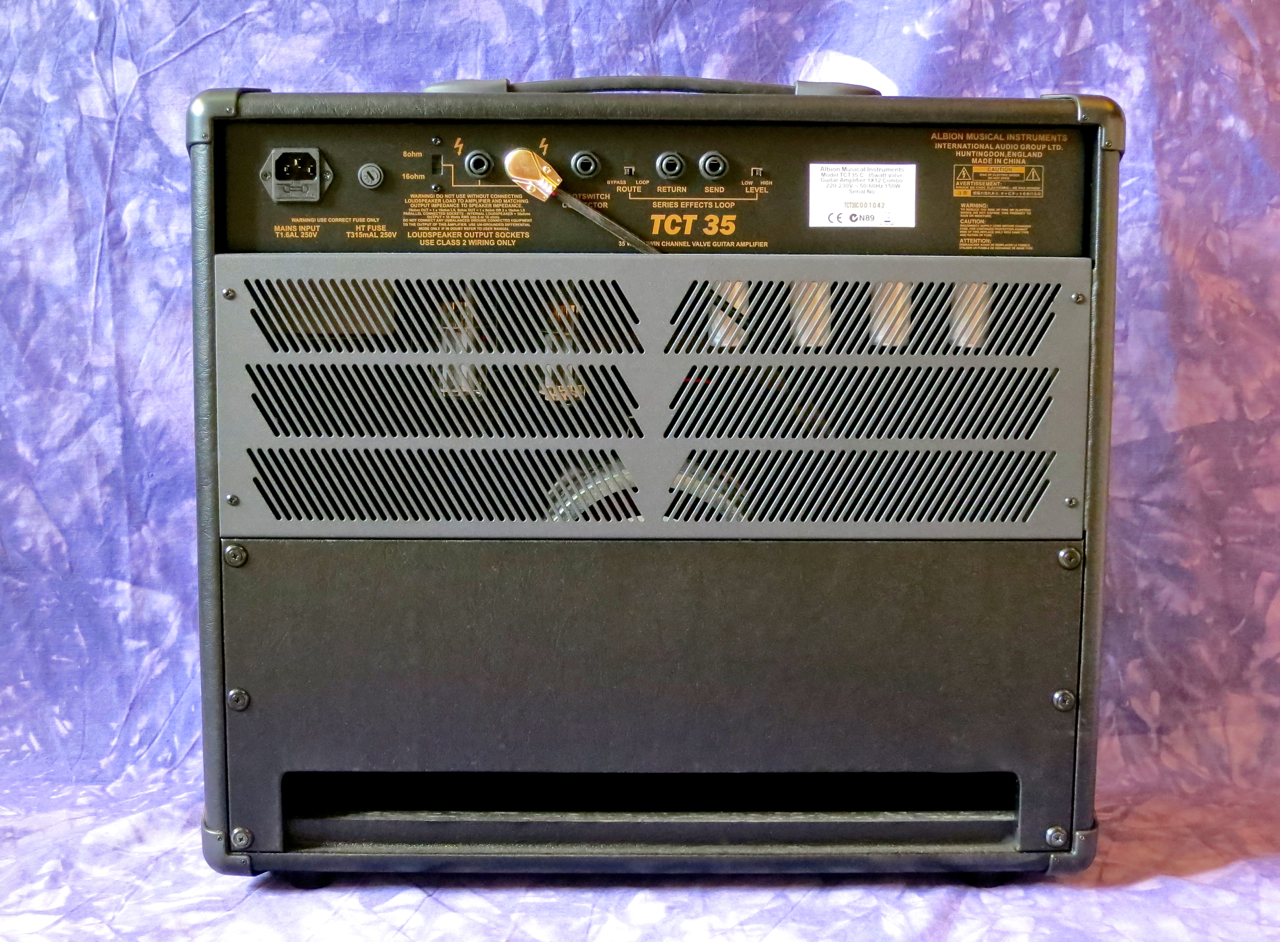
Albion TCT35 – full back

The cabinet features a half-closed back with a sturdy metall grille protecting the valves (or ”tubes”, for our North American friends).

Albion TCT35 – preamp valves

Albion’s TCT35C employs three 12AX7 valves (aka ECC83) in its preamplifier section. A fourth 12AX7 is used as the combo’s phase inverter.

Albion TCT35 – power amp valves

The power amp section churns out approximately 35 Watts of power (RMS), using a pair of 6L6 valves.

All Albion amps use IAG Group’s pro-quality audio transformers, which are well regarded by Hifi-enthusiasts and used in IAG’s Leak and Luxman valve amplifiers.

Albion TCT35 – G1280-VSR-16 speaker

Albion produces all of their PCBs, metal parts and speakers in their own factory to Steve Grindrod’s exacting specifications.

The TCT35C comes equipped with a 12-inch Albion G1280-VSR-16 speaker, which has power rating of 80 Watts and an impedance of 16 Ohms.

Albion TCT35 – footswitch

A two-switch footswitch unit comes supplied with the combo. It allows for channel switching, as well as the muting of the on-board digital reverb unit.

The unit is shipped with the output jack on the right hand side, but if you prefer to have the connector on the left, you can switch things around easily. Simply unscrew the six screws holding the footswitch assembly in the chassis, pull the assemby out, turn it around, put the switches back into the chassis and tighten the screws. Brilliantly easy!

****

Albion TCT35 – front panel

Even though both of the Albion TCT35C’s channels sport the same controls, the channels have been designed differently:

In Channel A the guitar signal is first routed through the EQ-section, before it reaches the main gain stages. In Channel B the signal first goes from the input jack to the gain section and is only then fed into the EQ-department. Even though both channels will give you sounds from clean all the way to high gain, each channel has its own distinct character and ”feel”.

One special feature of TCT-series amps are their twin gain controls – called Gain and Drive. The first amplification stage is called Gain, while the second one is called Drive, and each adds their own type of gain structure and character to a channel’s tone. By experimenting with different combinations of a channel’s Gain and Drive settings you will get a plethora of different sounds and responses to playing dynamics.

Albion TCT35 – front panel 2

The combo’s Master-section offers some additional features for even more tonal flexibility:

The Edge-control is a presence/brightness control for the power amp, which allows you to tailor the TCT35C’s bite to your own requirements. The F’BK-switch (short for ”feedback”) offers you two different power amp responses – you can either go for more bite and a very tight attack or choose a creamier delivery with much more fat compression.

Steve Grindrod has chosen to use digital reverb on his TCT-amps, because they tend to stand up better to the demands of a high gain amp.

Thanks to its output power switch you can also run the combo at only 33 % of its output power. As were dealing with a genuine valve amp here, this power drop also lowers the clean headroom and adds some tasty power amp compression to the signal.

Albion TCT35 – back panel

The TCT35C’s effects loop is deliberately using solid state technology, as Steve Grindrod aims for a clean and transparent signal transfer in this section.

****

Albion TCT35 – side view 1

The Albion TCT35C combo is an extremely flexible guitar amp, thanks to its well-designed channel architecture and its extremely efficient channel equalisers.

This isn’t a one-trick pony at all, but rather a guitar sound enthusiast’s dream machine, offering a large palette of different tones.

Despite the fact that both channels will ”do” clean as well as dirty tones, Channel B will offer you more gain than Channel A. ”Fender-style” and ”Marshall-style” are far too narrow to adequately describe the different characters provided by Channels A and B, but there are clear differences apparent in their mid-range sounds and bass responses.

The effective Channel EQs, as well as the Master-section’s Edge- and Feedback-controls add their bits to the Albion’s versatility. While the TCT35C is quite an intuitive amp to use, I’d still recommend you take your time to find out all the features and sounds this combo has to offer.

These eight audio clips only scratch the surface of what the Albion TCT35C’s tonal versatility.

Let’s start with two clean examples using Channel A; first the Stratocaster:

…followed by a Les Paul-style Hamer Studio Custom:

Here are two crunchy clips played through Channel A. First the Strat:

…and then the Hamer:

These are two crunchy clips using Channel B – the Stratocaster first:

…followed by the double-humbucker Hamer:

And as a finale two high gain examples (Channel B) – starting with the Strat:

…and finishing with the Hamer (in Drop-D):

****

Albion TCT35 – teaser

Wow, what a fantastic amp! I can’t think of any musical genre the Albion TCT35C couldn’t master.

The TCT35C is an extremely versatile valve amplifier offering loads of great sounds. Despite being quite a compact combo there’s plenty of volume on tap.

Steve Grindrod’s vast knowledge and experience in the field of amp design really shows in the way the Albion is put together, as well as in the quality of the sounds on offer in the TCT35C and in the low amounts of hiss (even in high gain settings).

****

Albion TCT35C

Current RRP in Finland – 865 € (street price approximately 800 €)

Finnish distributor: Profitron

****

Pros:

+ excellent value for money

+ versatile gain section

+ separate powerful three-band EQ-sections

+ sound

+ switchable output power

+ footswitch included

Review: Warwick LWA 1000

****

Warwick LWA 1000 – opener

German maker Warwick is offering a wide range of different bass amplifiers alongside their famous basses.

One of their newest products is the Warwick LWA 1000 – an ultra-compact, yet very powerful amp head.

****

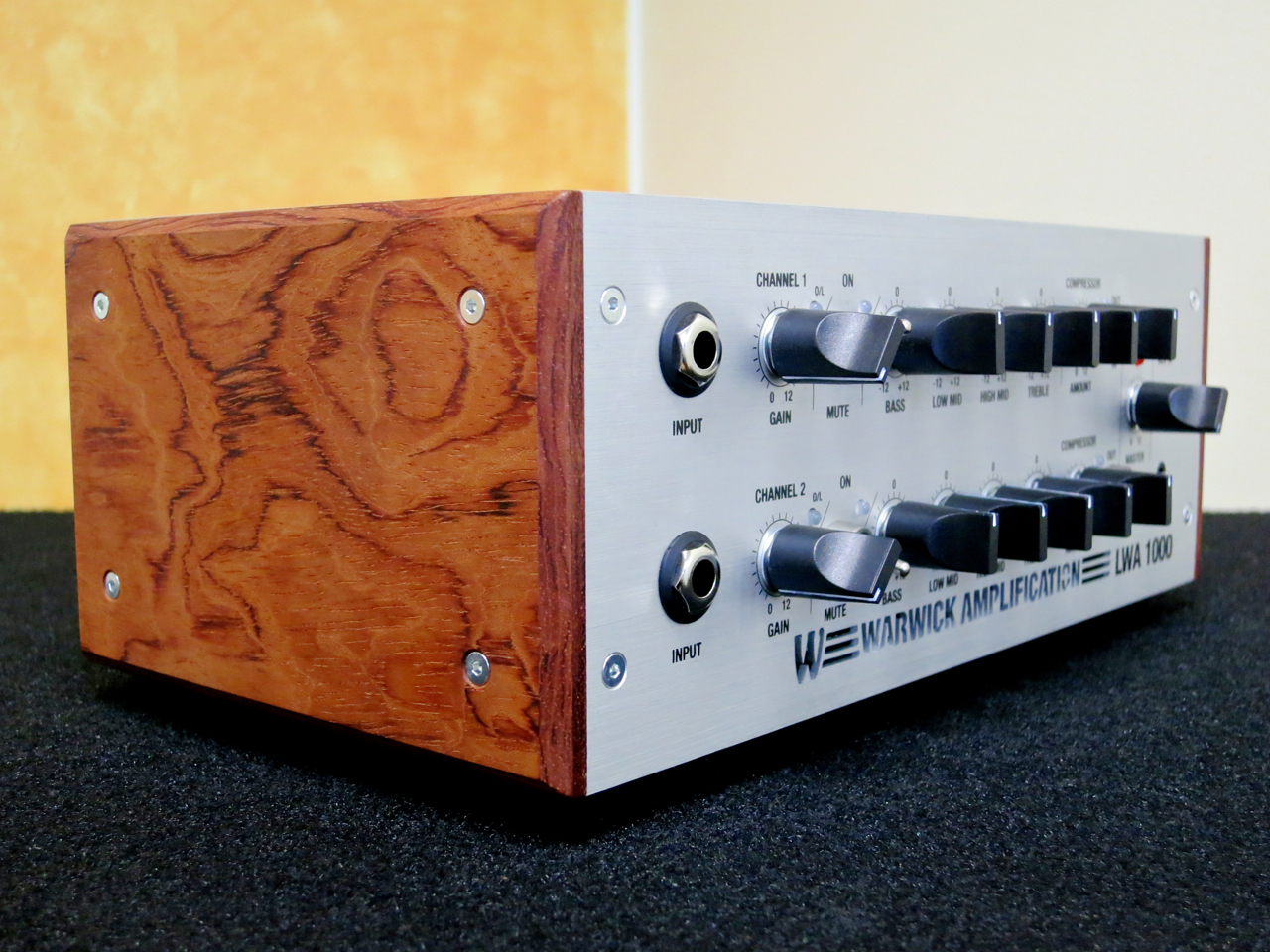
Warwick LWA 1000 – front

The Warwick LWA 1000 (current price in Finland: 789 €) is small and lightweight enough (2.75 kg) to fit into many gig bags. Optionally, you can also get a rack installation kit or a padded shoulder bag for this head.

As hinted at by its name, the LWA 1000 offers you up to 1,000 Watts of power (into a 4 Ohm cabinet, 500 W into 8 Ohms). Warwick have managed to squeeze this all into a compact package by using a Class D power amplifier.

Warwick LWA 1000 – front panel inputs

Warwick’s two-channel preamp has been transplanted from their Hellborg-series, and promises to offer audiophile sound quality from its low-noise Class A circuits.

The two channels of the LWA 1000 are identical, and they can either be used to amplify two different instruments (each plugged into their own input) or to offer two different sounds for use with a single bass (a footswitch comes included with the amp).

Warwick LWA 1000 – front panel EQs

There’s a four-band EQ section in each channel, offering up to 12 dBs of cut/boost per band.

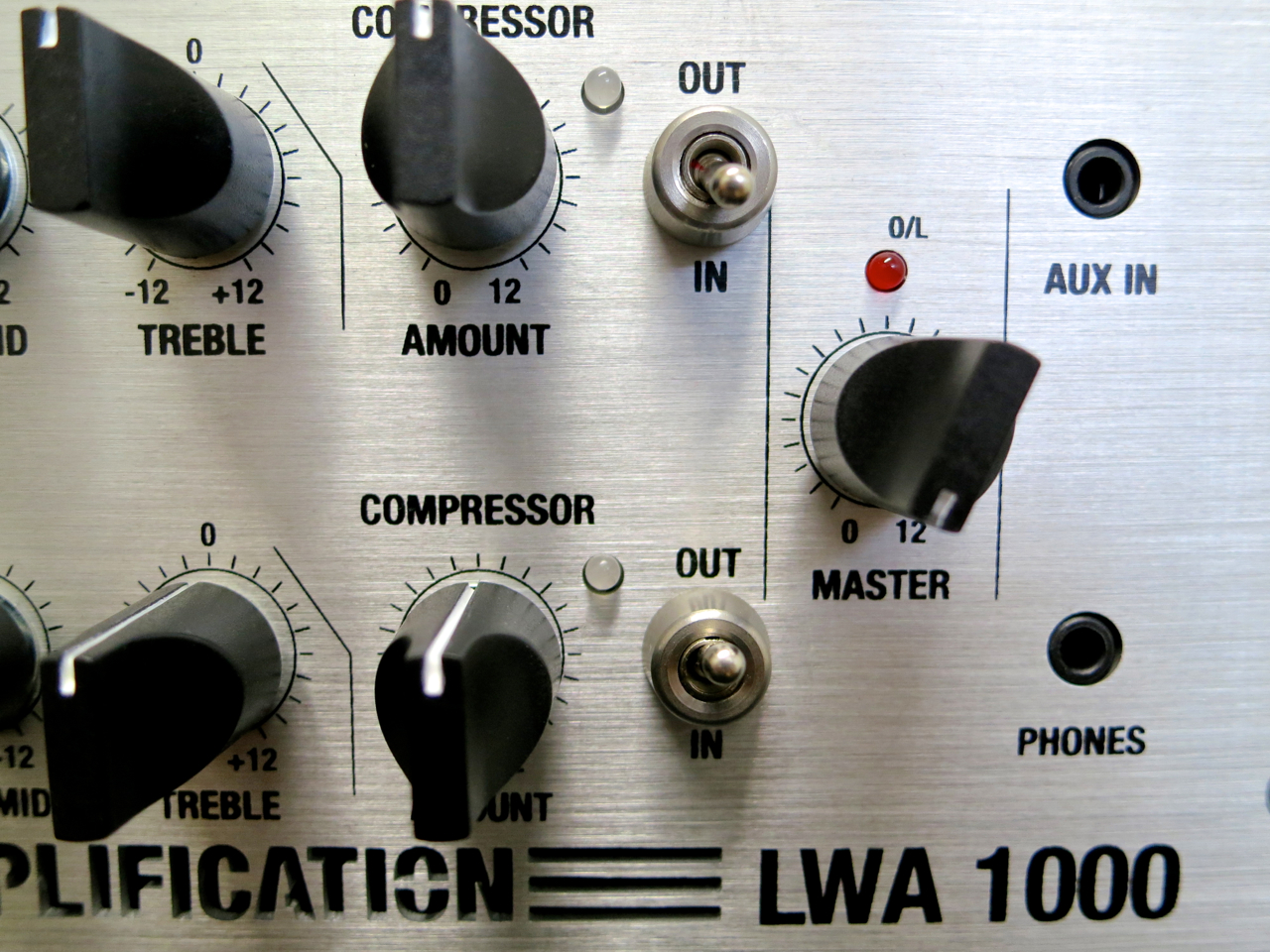
Warwick LWA 1000 – front panel comp + master

The last link in the preamps’ signal chain is Warwick’s easy-to-use compressor.

The master section offers an auxiliary input to feed your mp3-player into, as well as a headphones output for silent practice.

Warwick LWA 1000 – angle 2

The stylishly understated look of the Warwick LWA 1000 calls to mind high-end HiFi-equipment. You can get the amp head in two finishes – brushed aluminium and matte black.

Warwick LWA 1000 – back

”Lightweight and compact” doesn’t equal ”stripped-down” in the LWA’s case – this is a fully featured bass amplifier:

Of the four jacks on the back panel one is the tuner output, two are used for the effects loop, and the last one is an unbalanced, line level output. This Warwick head also sports a built-in DI-box with its dedicated Pre/Post-switch, as well as a ground lift switch for safe earth loop breaking.

Warwick LWA 1000 – angle

In addition to the amp head itself (and its power cord), the package includes a footswitch and a long, pro-quality TRS-lead (aka a stereo cable).

Warwick LWA 1000 – footswitch

You use your regular instrument lead to connect your bass to the footswitch, and the TRS-cable goes between the footswitch and either one of the LWA 1000’s channel inputs. The TRS tip carries the bass signal, while the ring connection is used to switch between amp channels.

Warwick LWA 1000 + WAC 410

I tested the Warwick LWA 1000 through a Warwick WCA 410 cabinet.

The pro-quality WCA 410 (current price in Finland: 380 €) is a chunky bass-reflex cabinet, equipped with four ten-inch speakers and a four-inch treble horn.

****

Warwick LWA 1000 – glowing

Warwick’s LWA 1000 offers truckloads of ultra-clean, quality bass tone in a very compact format. In contrast to many other bass amplifiers the LWA adds only very little unwanted colouration to your instrument’s tone.

Some bassists rely on certain sonic artifacts from their amp for their own signature sound (like tube saturation or distortion, or a non-linear frequency curve), and this is as valid an approach as others (rock on, guys!). Others – myself included – get their kicks from just the type of clean and linear amplification the Warwick LWA 1000 head provides.

The channel EQs work like a dream and the built-in compressors are musical and intuitive to use.

In the studio you will appreciate this head’s processor controlled ventilator, which works very quietly, and only springs into action when needed.

The sound clips I have recorded will give you a good idea of the sheer power this Warwick provides. If you listen closely, you can hear the metal grilles of the studio’s air conditioning system rattle along with the playing in places:

****

Warwick LWA 1000 – logo

Warwick’s LWA 1000 is just my kind of bass amplifier. The sound is very clear and dynamic, and there’s enough power on tap to shut up your guitarist.

****

Warwick LWA 1000

789 €

Finnish distributor: Musamaailma

****

Pros:

+ power

+ size

+ lightweight

+ ultra-clean tone

+ footswitch included

Review: EBS FuzzMo

EBS FuzzMo – top

The good people of EBS Sweden are now bringing a healthy dose of fuzz to the bassist’s toolbox.

****

EBS FuzzMo – angle 1

The EBS FuzzMo (current price in Finland: 169,90 €) is a fuzz-type high gain distortion developed especially for bass.

This stompbox is made in China to the EBS’ exacting standards. It’s a sturdy pedal with very positive feeling controls.

The FuzzMo can be powered in three ways:

If you use an EBS amp from the Drome-, Gorm-, HD- or TD-series, you can use a TRS-cable (aka a stereo cable) to feed phantom power from the amp to the effect pedal.

EBS FuzzMo – battery

The FuzzMo pedal also runs off a standard 9 V battery, but you will need a screwdriver to take off the base plate first.

EBS FuzzMo – angle 2

The third alternative is to employ a Boss-type power supply (9 V DC, centre negative) to fire up the stompbox.

****

EBS FuzzMo – controls

Even though the EBS FuzzMo looks somewhat similar to the company’s Billy Sheehan -pedal, the controls on the fuzz work in a different way.

The FuzzMo doesn’t do ”nice and sweet” – the Gain control offers fuzz from medium-crunchy to balls-to-the-wall-fuzz. Shape adjusts the tone of the fuzz effect – not in the way a traditional tone control does, but rather by changing the waveform of the fuzz signal. At seven o’clock the sound is quite warm and organic with the waveform approaching a square, while five o’clock is far brighter and more aggressive with the waveform resembling a triangle.

The mini-switch underneath the FuzzMo-logo (called Character) also plays an important part in the stompbox’ sound:

Switched to the left no EQ’ing is applied to the signal (FLAT). In the middle position there’s a slight attenuation of the mid-range. SCOOP on the right side results in a very Metal-style scooped-mid tone with plenty of bite.

Modern bass effects often split the bass signal at the input. One half is fed through the effect, while the other half is kept dry and mixed into the wet signal before it reaches the output. The advantage of doing things this way is that it enables you to keep your bottom end and dynamic attack intact.

This is just the way EBS’ FuzzMo works, too:

You use the Volume knob to adjust the fuzz signal’s volume level, and then use the Blend control to add the desired amount of dry bass. This feature is especially important in fuzz pedals for bass, because the hard clipping of a fuzz effect practically negates all your playing dynamics by design. With the FuzzMo there will be no problems with your tone becoming mushy, clogged up and indistinct, because the Blend control lets you restore your bass guitar’s punch and low end.

Here’s a bit recorded with a Jazz Bass (both pickups on) and a relatively low Gain setting:

In this clip I added some more fuzz and bite to a Rickenbacker played with a plectrum:

Thanks to the ability to blend in the dry signal, the EBS FuzzMo also works extremely well with a five-string (in this case a Yamaha BB with active EMGs):

Note that on all these audio clips the Gain control stayed below one o’clock. If you want you can take things much, much further with this EBS-pedal!

EBS FuzzMo – angle 3

The FuzzMo is a typical EBS-pedal – it’s a sturdy, pro-quality stompbox and it sounds great. If you’re a purveyor of sleazy, dirty and aggressive bass tones, you should definitely give this baby a spin!

****

EBS Sweden FuzzMo

169,90 €

Finnish distributor: F-Musiikki

****

Pros:

+ build quality

+ can be powered in three ways

+ sound optimised for bass

+ three-way EQ-switch

+ Blend control

+ offers a lot of gain

Cons:

– no quick access to battery

Testipenkissä: Albion TCT35C

****

Albion TCT35 – with Telecaster

Albion Amplification on Suomalaisille muusikoille uusi tuttavuus, vaikka firma on valmistunut kitara- ja bassovahvistimia jo vuodesta 2010.

Firman takana on yksi vahvistinalan suurimmista guruista, Steve Grindrod. Grindrod toimi vuodesta 1973 lähtien Marshallin pääsuunnittelijana yli 20 vuotta, minkä jälkeen hän siirtyi 2000-luvun alussa vielä muutamaksi vuodeksi Voxille.

Albion syntyi vuonna 2009 yhteistyönä Grindrodin ja kiinalaisen IAG Group -konsernin välillä. Albion-vahvistimet valmistetaan Kiinassa heidän omassa tehtaassaan Steve Grindrodin johdolla, joka asuu paikan päällä.

****

Albion TCT35 – full front

Albion TCT35C (suositushinta 865 €) kuuluu firman TCT-sarjaan, joka on suunniteltu monipuolisuutta arvostavia kitaristeja varten.

TCT-sarjan vahvistimet ovat kaksikanavaisia täysputkikoneita hyvin avoimella, ja paljon säätövaraa tarjoavalla arkkitehtuurilla. TCT-sarjaan kuuluu tällä hetkellä kaksi komboa ja kolme nuppia.

Albion TCT35 – side view 2

TCT35C:n kotelo on valmistettu laadukkaasta koivuvanerista. Albion-logoa kantava palkki on täyttä pähkinäpuuta, joka on saanut ylleen kiiltävän mustan lakkauksen (myös tummanpunainen versio on saatavilla).

Viimeistelyn taso on kiitettävän korkea ja TCT35C näyttää – ainakin omasta mielestäni – asiallisen tyylikkäältä.

Kombon paino on noin 24 kiloa, mikä on maltillista tämänkokoiselle putkikombolle.

Albion TCT35 – full back

Kotelon selkäpuoli on puoliksi avoin. Putket on sijoitettu turvallisesti metalliritilän taakse.

Albion TCT35 – preamp valves

Albionin TCT35C:ssä kolme 12AX7-putkea (toiselta nimeltään ECC83) on etuvahvistimen perustana. Vahvistimesta löytyvä neljäs 12AX7 toimii tässä kombossa päätevahvistimen vaiheenkääntäjänä.

Albion TCT35 – power amp valves

Päätevahvistin toimii kahdella 6L6-putkella, joista irtoaa noin 35 wattia (RMS) tehoa.

Albion-vahvistimissa käytetään IAG Groupin omia laadukkaita audiomuuntajia, jotka ovat ennestään tuttuja esimerkiksi Hifi-puolen Leak- ja Luxman-putkivahvistimista.

Albion TCT35 – G1280-VSR-16 speaker

Samoin kuin Albionin käyttämät piirilevyt ja metalliosat, myös firman vahvistimissa ja kaapeissa käytetyt kaiuttimet tehdään Albionin omassa tehtaassa Steve Grindrodin tarkkojen speksien mukaan.

TCT35C:hen on asennettu 12-tuumainen Albion G1280-VSR-16, jolla on 16 ohmin impedanssi ja 80 watin tehonkesto.

Albion TCT35 – footswitch

Kombon mukana tulevalla jalkakytkimellä voi vaihtaa vahvistimen kanavia, sekä mykistää kombon digitaalikaiun.

Tehtaalta kytkin toimitetaan siten, että jakki on oikealla puolella. Johdon paikan pystyy kuitenkin vaihtamaan kätevästi ja nopeasti irrottamalla ylhäällä näkyvät kuusi ruuvia, nostamalla kytkinmoduulin ulos kotelosta, ja asentamalla sen toisinpäin. Nerokasta!

****

Albion TCT35 – front panel

Albionin TCT35C tarjoaa kaksi kanavaa, joiden välillä on yksi ratkaiseva ero:

A-kanavassa signaali kulkee ensin EQ-osaston läpi, siis ennen varsinaista gain-osastoa. B-kanavassa taas signaali etenee tulojakista gain-osastoon ja vasta sen jälkeen taajuuskorjaimille. Vaikka kumpikin kanava tarjoaa soundeja puhtaasta high-gainiin, kanavat kuulostavat – ja ”tuntuvat” – juuri näiden eri reitityksien vuoksi erilaiselta.

TCT-sarjassa erikoisuutena ovat kanavien kaksi gain-säädintä – Gain ja Drive. Gain-säätimellä säädetään valitun kanavan ensimmäisen esivahvistusasteen vahvistustasoa. Toista vahvistusastetta taas kontrolloidaan Drive-säätimellä. Yhdistämällä näiden kahden vahvistuspiirien eri vaikutuksia signaaliin, saadaan luotua hyvin erityylisiä soundeja.

Albion TCT35 – front panel 2

Master-osastostakin löytyy muutama TCT35C:n monipuolisuutta tukeva ominaisuus:

Edge-säädin on päätevahvistimeen vaikuttava preesens-/diskanttisuodin, jolla soundiin saa hyvin tarkasti lisättyä oman maun mukaan purevuutta tai pehmeyttä. F’BK-kytkin (lyhenne sanasta ”Feedback”) tarjoaa kaksi erilaista päätevahvistimen perusluonetta – joko hieman purevampi, hyvin tarkalla atakilla varustettu vaihtoehto tai sitten kermaisempi versio muhkealla kompressiolla.

Grindrod on valinnut TCT-sarjaan tietoisesti digitaalisen kaiun, koska se toimii hänen mielestään paremmin tehokkaassa high gain -vahvistimessa.

Tehokytkimen ansiosta Albionin tehon voi pudottaa alhaisemmaksi studio- tai olohuonekäyttöä varten. Koska kyseessä on putkivahvistin, tehon pudottamisen (toivottu) lieveilmiö on pääteasteen alhaisempi headroom ja lisätty kompressio.

Albion TCT35 – back panel

TCT35C:n efektilenkki on toteutettu transistoritekniikalla, koska Steve Grindrod haluaa pitää signaalin mahdollisimman puhtaana tässä kohtaa signaaliketjua.

****

Albion TCT35 – side view 1

Albion TCT35C -kombo on erittäin monipuolinen peli, sen avoimen kanava-arkkitehtuurin ja erittäin tehokkaiden EQ-osastojen ansiosta.

Tämä ei todellakaan ole yhden tai kahden soundin putkivahvistin, vaan kokeilunhaluisen soundimetsästäjän unelmakone, joka kattaa varmalla otteellaan hyvin laajan spektrin soundeja.

Vaikka molemmista kanavista irtoaa sekä puhtaita että särösoundeja, tarjoaa kanava B kuitenkin selvästi enemmän gainia kuin A-kanava. ”Fender-” ja ”Marshall-tyylinen” ovat käsitteinä sinänsä liian kapeat kuvailemaan A- ja B-kanavan perusluonetta, mutta eroja kyllä löytyy etenkin keskialueen soinnissa ja basson muhkeudessa.

Erittäin tehokkaat EQ:t, sekä kombon Edge-säädin ja F’BK-kytkin lisäävät reseptiin ihan omat mausteensa. Albion-kombon käyttö on sinänsä intuitiivista, mutta vahvistin on niin monipuolinen, että kaikkiin ominaisuuksiin kannattaa todellakin tutustua rauhassa.

Nämä kahdeksan audiopätkää ovat vain pieni näyte Albion TCT35C:n tarjoamista soundeista.

Lähdetään liikkeelle kahdella puhtaalla esimerkillä A-kanavan tarjonnasta – ensin Stratocaster:

…ja sitten Les Paul-tyylinen Hamer Studio Custom:

Tässä kaksi crunch-tyylistä särövaihtoehtoa A-kanavasta – Stratocasterilla:

…ja Hamerilla soitettuna:

Tällaisia crunch-tyylisiä soundeja löysin B-kanavasta – Strato ensin:

…sitten tulee Hamer:

Ja lopuksi vielä kaksi high gain -pätkää – ensin vintage-tyylinen Stratocaster:

…ja viimeisenä humbuckereilla varustettu Hamer (drop-D-virityksessä):

****

Albion TCT35 – teaser

Vau, mikä vahvistin! En keksi mikään musiikkilajia, johon Albionin TCT35C-kombo ei sopisi.

TCT35C on erittäin monipuolinen putkivahvistin todella terveellä soundilla, joka on kompaktista koostaan huolimatta varsin kovaääninen.

Steve Grindrodin pitkän linjan vahvistinalan kokemus näkyy Albionin laadukkaassa toteutuksessa, kombon monipuolisissa ominaisuuksissa, sekä TCT35C:n erittäin alhaisessa kohinatasossa (jopa gain-säätimien äärirajoilla).

****

Albion TCT35C

Suositushinta – 865 € (arvioitu katuhinta noin 800 €)

Lisätiedot: Profitron

****

Plussat:

+ hinta-laatu-suhde

+ monipuolinen gain-rakenne

+ tehokkat kolmialueiset EQ:t

+ soundi

+ tehonpudotuskytkin

+ jalkakytkin kuuluu hintaan

Review: Marshall DSL5C

****

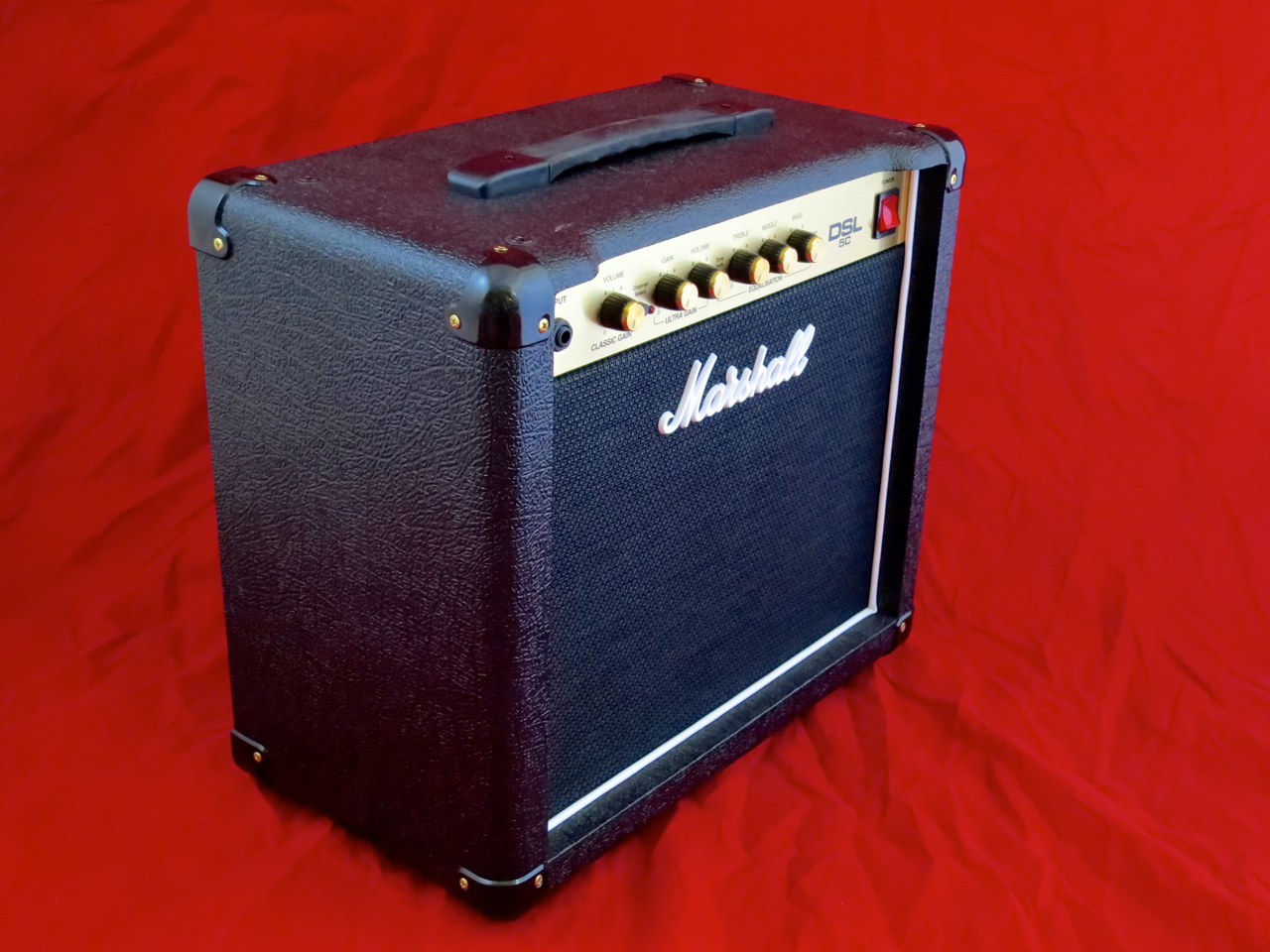
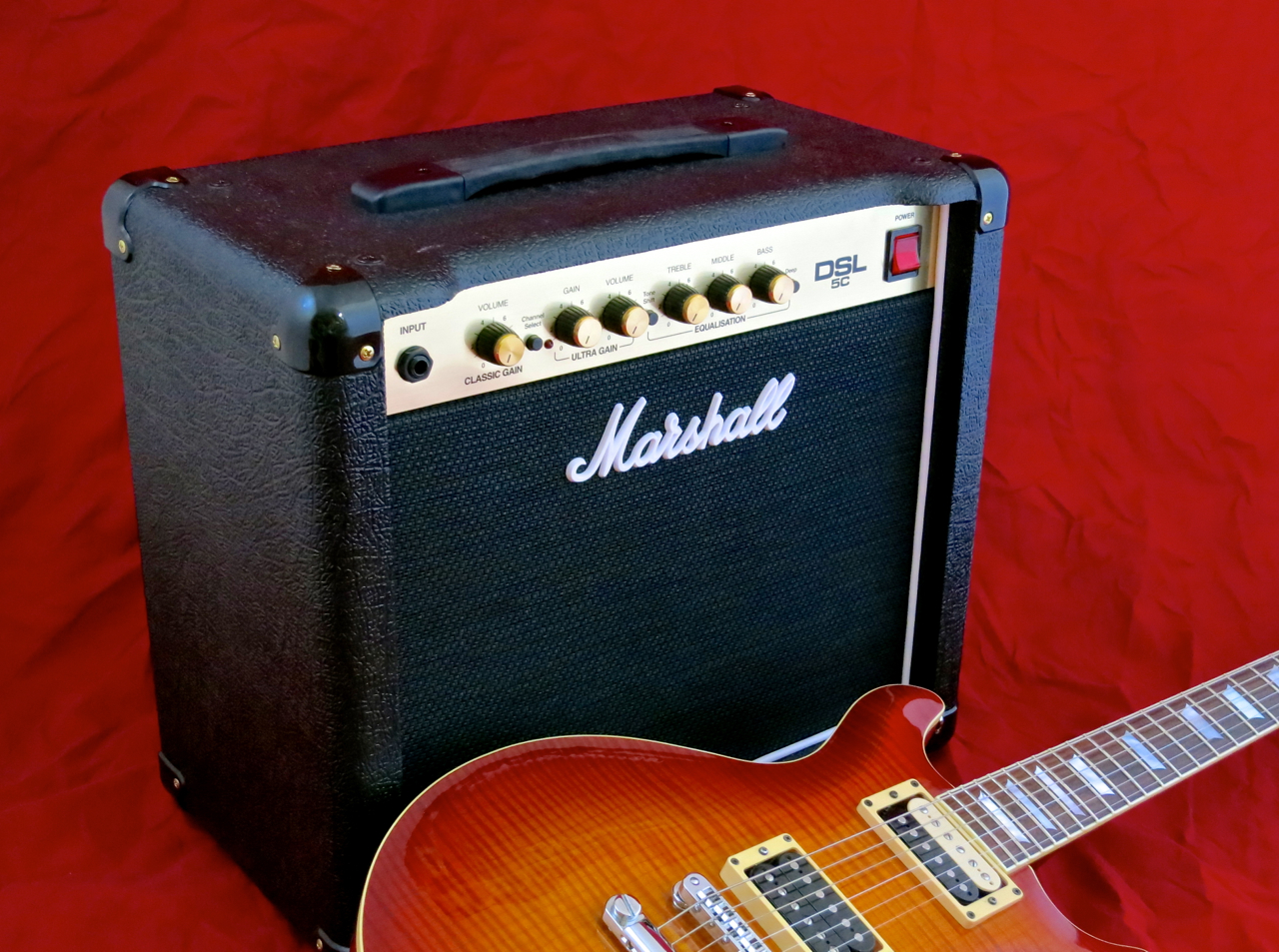
Marshall DSL5C – close-up 1

Marshall’s DSL5C combo is the newest – and smallest – member of the DSL-series.

The DSL-range has its roots in the year 1997, when Marshall introduced their – now legendary – JCM2000 Dual Super Lead -head. The JCM2000 was the first Marshall amp that combined a vintage-voiced Plexi-channel and a modern Ultra Gain -channel in one chassis.

The production run of the original DSL-series was discontinued in 2007, with the JVM-range superseding it. The new DSL-series offers the company’s most-affordable all-valve amps to date, which are produced at Marshall’s own facility in Vietnam.

****

Marshall DSL5C – full front

As you can easily guess by its name, the Marshall DSL5C (current street price in Finland around 520 €) is a five-Watt, two-channel combo.

In terms of its looks and the quality of its finish, this is a genuine Marshall. Quality control at the Vietnamese factory seems to as stringent as in Britain, and the combo looks great and feels well-made and sturdy.

Marshall DSL5C – full back

The DSL5C comes with an open back cabinet. The upper opening in the cabinet’s back is covered with a metal grille to keep stray fingers and hot tubes apart form each other.

Marshall DSL5C – valves

This little Marshall uses three preamp valves (ECC83/12AX7), plus a single power amp tube (ECC99/12BH7).

Marshall DSL5C – Celestion Ten 30

The DSL5C’s speaker is a ten-inch Celestion Ten 30, which is meant to provide a big, warm bottom-end, coupled with a healthy dose of ”Celestion grunt” and bite.

Marshall DSL5C – angle 1

This compact combo weighs less than five kilos, making it very easy to carry, using its rubberised handle.

****

Marshall DSL5C – front panel

The Marshall DSL5C is a two-channel, all-valve combo:

Channel one – Classic Gain – is voiced to give you a classic Marshall 1959 -style tone and gain structure. The Classic-channel goes from bright and clean all the way to mid-level, classic crunch. Due to the fact that this channel doesn’t have a master volume, distorted sounds can only be had at very high volume levels – unless you switch to Low Power mode (more on this further down).

True to its name, the second channel – Ultra Gain – is made for modern, saturated high-gain sounds.

Both channels share a three-band EQ-section, which means a certain amount of tonal compromises will have to be made. But thanks to the way both channels have been voiced, a shared EQ doesn’t pose any real problems in the Marshall DSL5C’s case.

Pushing in the Tone Shift switch will give you a thinned out, sharper mid-range, making it ideal for many Thrash Metal tones. Engaging Deep bolsters the bottom-end at the output stage for a fatter sound.

Marshall DSL5C – back panel

The back panel offers you an effects loop, as well as a footswitch jack for the DSL5C’s sturdy channel switch (supplied, see pic below).

There’s a very nifty speaker-emulated output designed into this Marshall combo, which works in two different ways, depending on the setting of the Power-switch:

In Full Power mode the output gives out a line level signal, which can be sent to a mixing console or your recording equipment. The speaker will run even with a plug connected to the output. In Low Power mode (the manual says 0.5 Watts, the website 1 W) the output level is changed to work with headphones, and plugging a pair of cans in will mute the speaker. The Aux In only works in Low-mode, and its signal will be sent directly to the headphones.

Marshall footswitch

****

Marshall DSL5C – close-up 2

In my opinion Marshall’s DSL5C is a fantastic-sounding little Rock- and Metal-combo, ideally suited for use in your bedroom, for practice, for recording and for backstage warm-up.

My only small niggle would be with the emulated output of our review sample, which produced more hiss than what I’d have expected. Anyhow, I was able to EQ out most of the hiss for the sound clips, meaning it really isn’t that much of a problem. And then there’s always the possibility that there was something wrong with this particular combo…

The DSL5C’s two channels enable you to get a wide variety of different Rock-, Metal- and Thrash-sounds out of this little combo, depending on your gain-, volume- and EQ-settings, but also on the power mode chosen. Going to Low Power doesn’t only drop your output levels, but also adds a lot of tasty, squashy power amp compression. This means that you can choose between very tight sounds (Full Power) and fatter, compressed tones (Low Power) by using the switch on the back panel.

All sound clips have been recorded in Full Power mode to allow for direct comparison between the miked up sound of the speaker and the speaker-emulated output.

For starters I played my Stratocaster through a clean setting on the Classic-channel (recorded with a Shure SM57):

…and here’s what the same bit sounds like recorded directly via the emulated output:

Here’s the Classic-channel and the neck pickup of my double-humbucker Hamer Studio Custom (miked up):

…and the same clip recorded direct:

Here’s my Strat into the Ultra-channel (Tone Shift off), recorded with the SM57:

…and its speaker-emulated counterpart:

This is the Hamer, tuned to Drop-D into the Ultra-channel (Tone Shift on), miked up:

…and this is the direct recorded version:

****

Marshall DSL5C – Hamer Studio Custom

Marshall’s cute and cuddly new five-watter, the DSL5C, is a great choice as a first tube combo (”My first Marshall”), as well as a precision tool for any guitarist in those situations, when high wattage is more of a problem than an advantage (like at home or in the project studio).

The DSL5C delivers genuine, all-valve Marshall-tone in a handy package, and the combo’s Vietnamese origin means it’s also very affordable.

Marshall DSL5C – angle 2

****

Marshall DSL5C

Finnish street price ca. 520 €

Finnish distributor: EM Nordic

We’d like to thank DLX Music Helsinki for the loan of the review amp!

****

Pros:

+ value-for-money

+ finish/workmanship

+ sound

+ two power modes

+ speaker-emulated output

+ footswitch included

Cons:

– noise levels of speaker-emulated output (see text)

Review: LTD James Hetfield Snakebyte

****

LTD Hetfield Snakebyte – teaser

James Hetfield is a musician, who surely needs no introduction. He is Metallica’s frontman, singer, songwriter and guitarist, and has played a very important part in the development of the Metal genre.

James Hetfield with Snakebyte

Metallica’s guitarists – Hetfield and his colleague Kirk Hammet – have long been collaborating with ESP Guitars. The LTD James Hetfield Snakebyte is the most recent fruit of this partnership.

****

LTD Hetfield Snakebyte – full front

In the early years of Metallica, James Hetfield used to play a Gibsonin Explorer, and looking at his new signature model, it’s easy to conclude that this guitar legend still holds a place in his heart for angular guitars.

LTD’s James Hetfield Snakebyte (current price in Finland: 1.098 €) is an ultra-modern Metal-machine, with a clear stylistic nod to the Explorer.

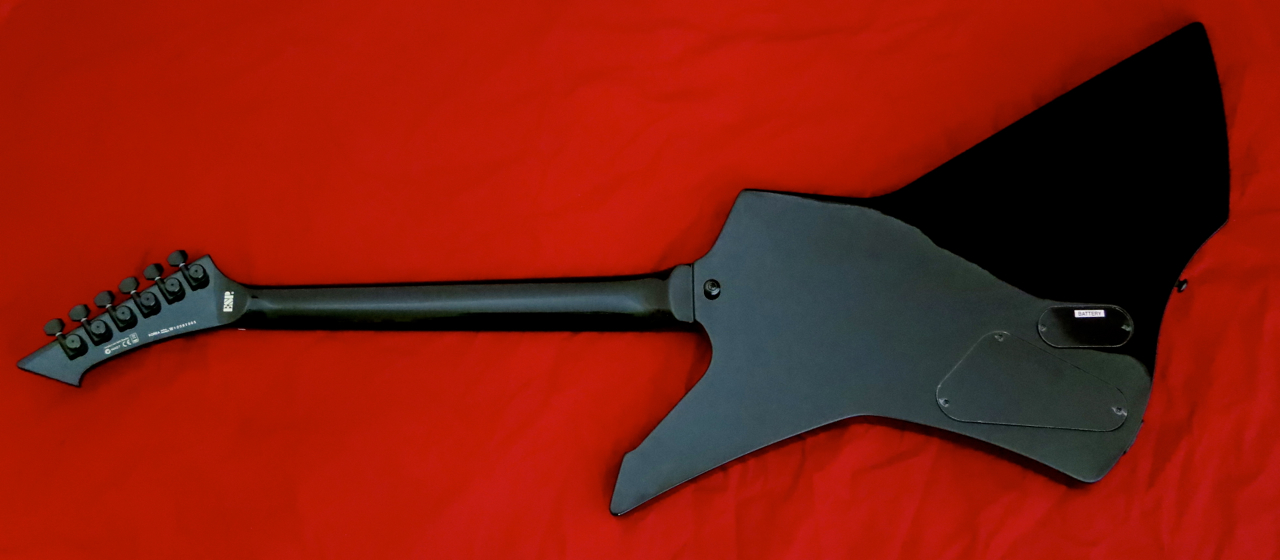
LTD Hetfield Snakebyte – full back

Both the guitar’s body and set neck have been crafted from mahogany, while dark-black ebony has been chosen for this model’s fingerboard.

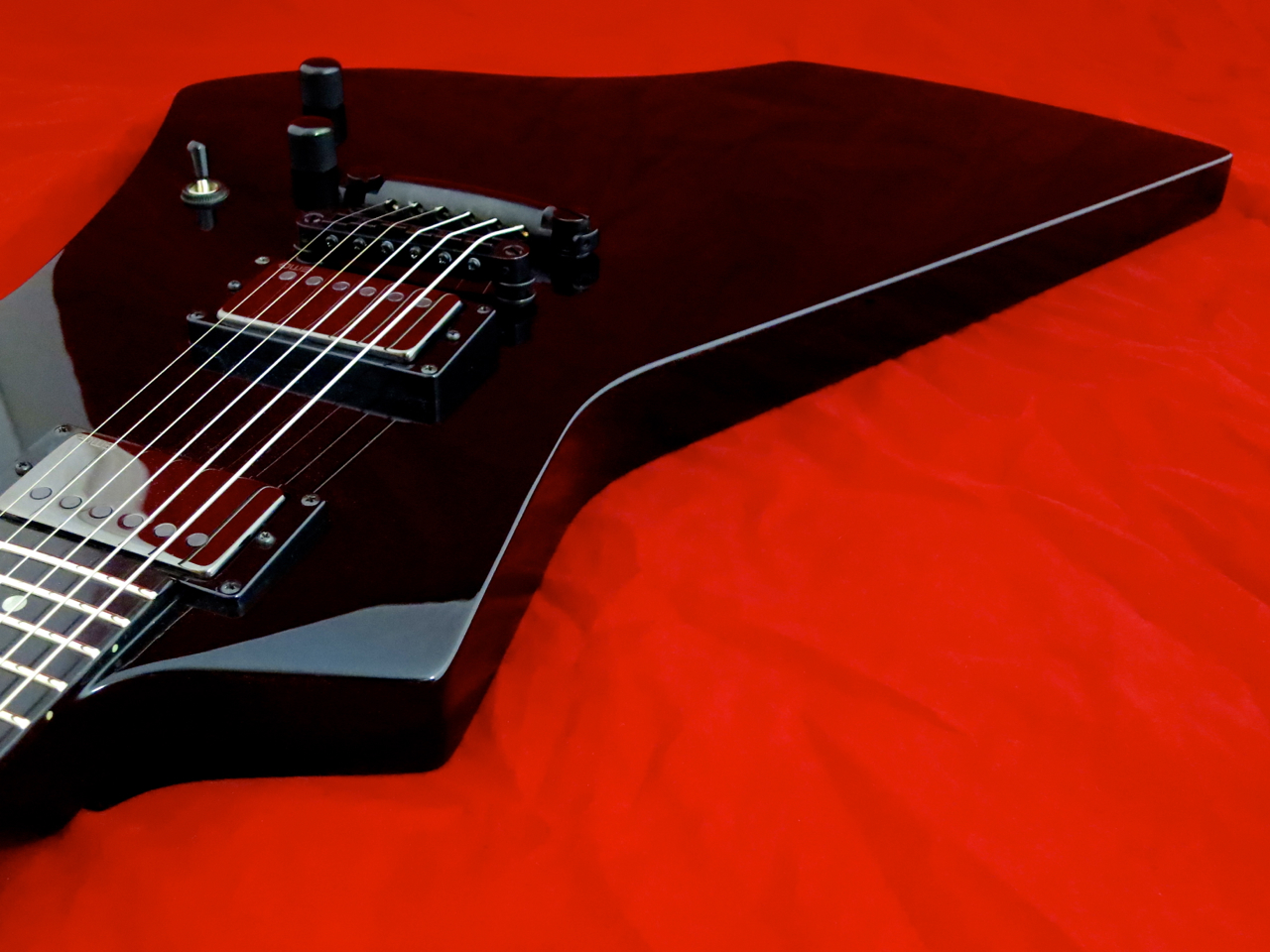
LTD Hetfield Snakebyte – bevelled top edge

The Snakebyte’s body is noticeably more compact when compared to its vintage forefather, making for a lighter and more comfortable playing experience.

There’s a long, flat chamfer on the body’s bass side, which proved hard to photograph, but which really makes a difference in terms of the Hetfield signature model’s ergonomics.

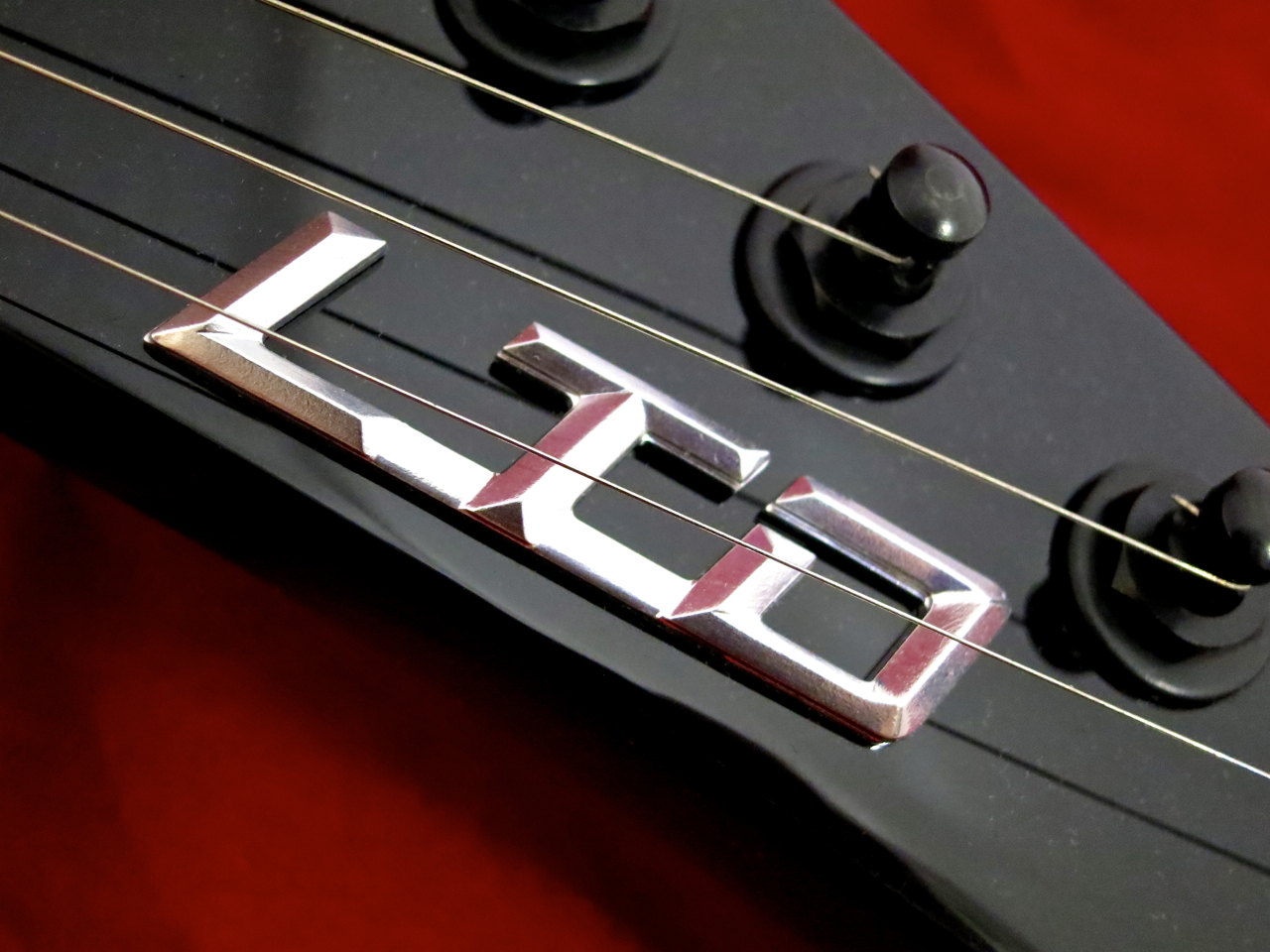
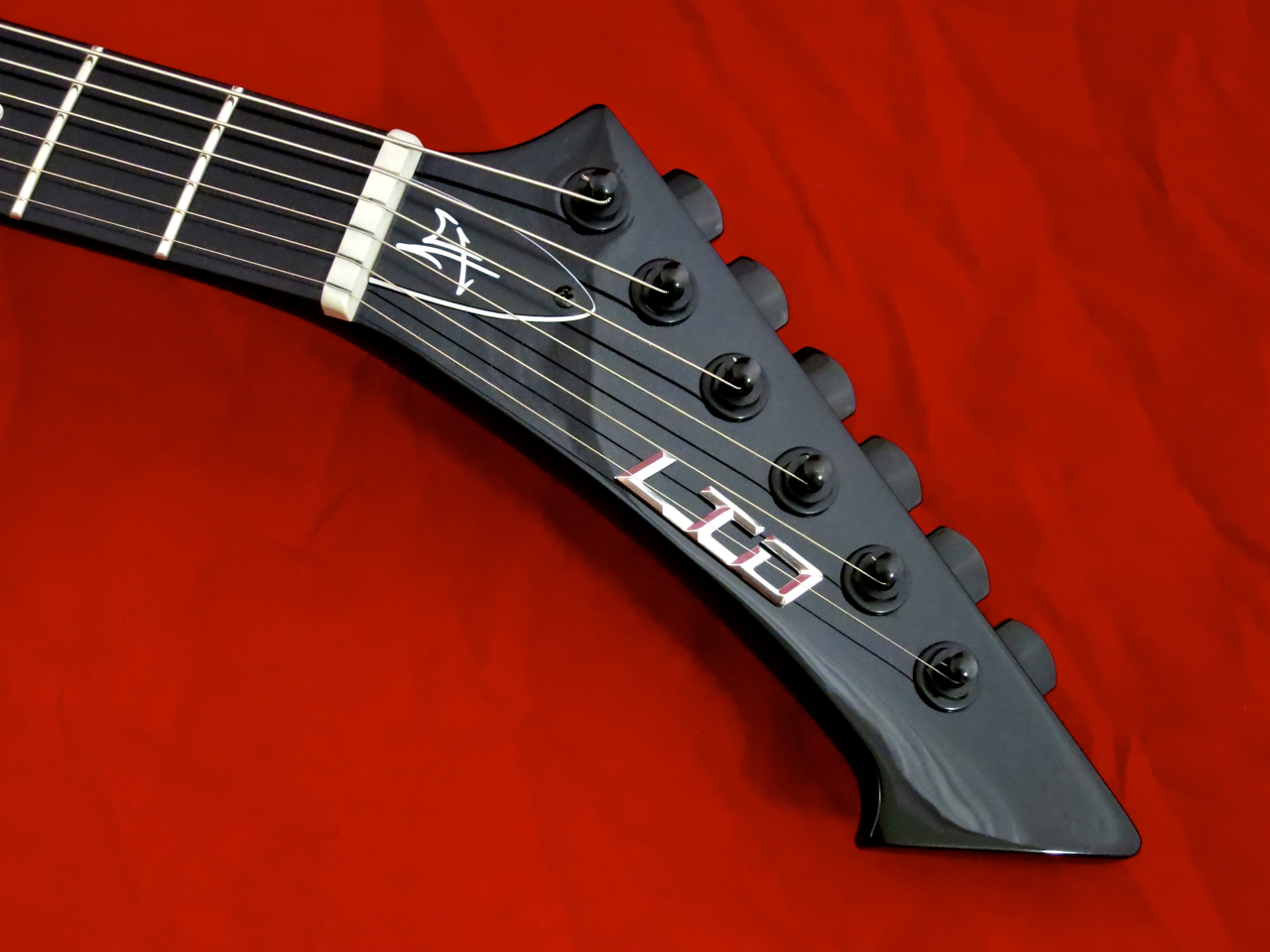
LTD Hetfield Snakebyte – headstock 2

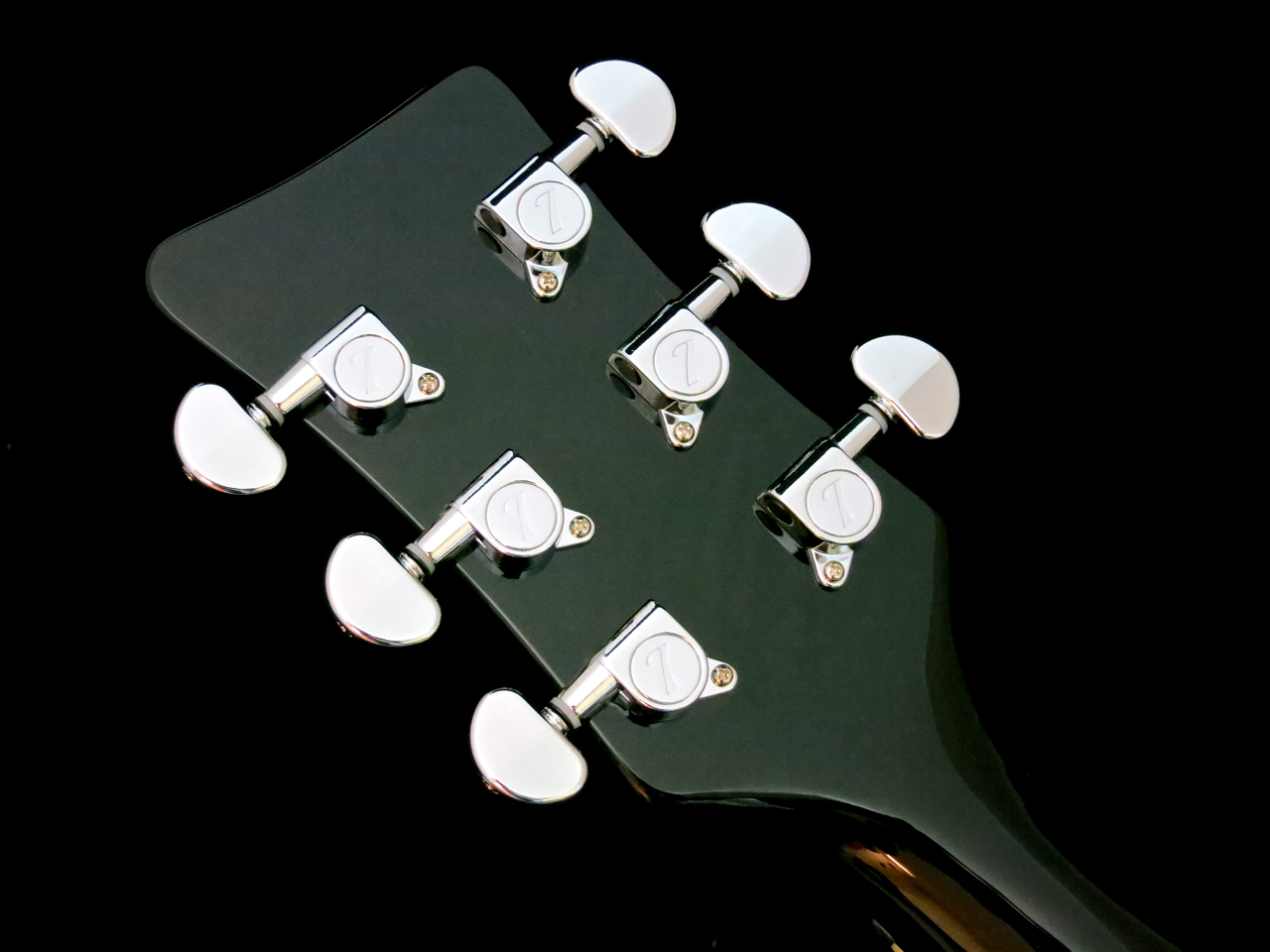
LTD Hetfield Snakebyte – tuners

A set of locking Sperzel tuning machines have been chosen for their high quality and proven tuning stability.

LTD Hetfield Snakebyte – bridge

The Tone Pros bridge and tailpiece combination is locked in place after adjustment, meaning everything will stay perfectly put even under the most demanding onstage conditions.

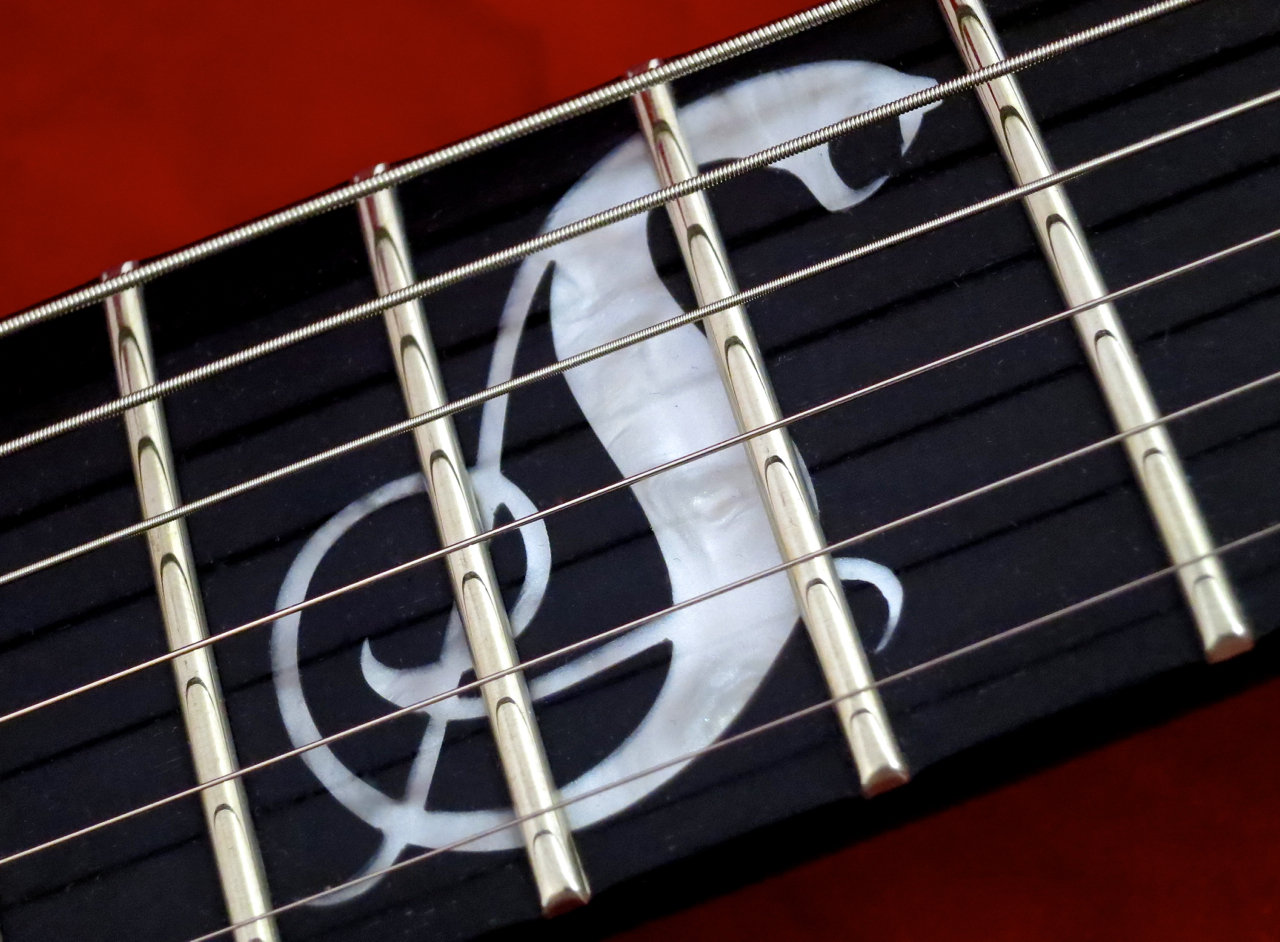
LTD Hetfield Snakebyte – fretboard

LTD’s Snakebyte sports 22 jumbo-sized frets. The fretwork is first-rate, resulting in a fast and rattle-free playing surface.

LTD Hetfield Snakebyte – EMG pickups

Active EMG-pickups have long played an important part in James Hetfield’s sound. A couple of years back EMG have introduced a signature pickup set –the EMG JH ”Het” Set – made to the legendary guitarist’s specifications, and used on this signature LTD.

The JH-Nneck humbucker has been developed based on EMG’s Model 60, but Hetfield’s humbucker uses separate ceramic magnets and fatter coils. EMG’s Model 81 has formed the basis for the JH-B signature bridge pickup, but here steel polepieces have been added to the pickup’s ceramic bar magnets.

According to EMG the ”Het” Set has a warm and organic basic tone, coupled with a very clear attack and loads of output power.

LTD Hetfield Snakebyte – controls

OK, one three-way toggle, two controls – case closed…

Hold your horses! Yes, the toggle switch works in the usual way, but the controls aren’t a master volume and a master tone, but rather two separate volumes – one knob for each pickup.

James Hetfield doesn’t need a tone control, as all his settings are dialled in by his guitar technician. This way he only has to concentrate on pickup selection, while playing and singing at the same time.

LTD Hetfield Snakebyte – control cavity

The battery compartment’s cover is held in place by machine screws and threaded inlets.

****

LTD Hetfield Snakebyte – beauty shot 1

It’s true that in 1958 Gibson’s Explorer was a trailblazer thanks to its unusual, angular design. But it’s also true that this classic model is very large and cumbersome, often feeling like a bedside table strapped to your body.

Hetfield’s LTD signature model succeeds in keeping the Explorer’s angular spirit intact. Nonetheless, the LTD Snakebyte is a much more compact affair, which makes it far more comfortable to play and easier to hold.

The Hetfield Snakebyte is a fantastic player, as you would expect from a pro-quality guitar, such as this. The neck profile is a rounded ”C”. Our review sample came with a light action, measuring 1.8 mm (bottom E) and 1.6 mm (top e) at the 12th fret (with a set of 010s), and played well and rattle-free across the whole fretboard.

I must admit I was quite surprised at the sheer beauty of this guitar’s unplugged voice. There’s a strong, piano-like attack and an open character with a long sustain-phase.

EMG’s active ”Het” Set has the power of an approaching speedboat, yet the humbuckers still manage to offer open-sounding clean tones with plenty of organic mid-range character:

Switching to a High Gain channel takes the LTD Snakebyte straight into – surprise, surprise – legendary Hetfield-Metallica-territory. There’s power and attack to boot, and ample bite to cut through:

LTD Hetfield Snakebyte – back beauty

****

LTD Hetfield Snakebyte – beauty shot 2

In my view, LTD’s James Hetfield Snakebyte is a top-notch precision tool for the Metal- and Thrash-guitarist. This probably isn’t the most versatile electric guitar ever, but if you’re into Hard ’n’ Heavy this guitar offers the most direct way to sheer sonic bliss.

****

LTD James Hetfield Snakebyte

1.096 €

Finnish distributor: Musamaailma

****

Pros:

+ workmanship

+ light weight

+ playability

+ acoustic tone

+ amplified sound

Cons:

– no tone control

LTD Hetfield Snakebyte – teaser 2

Review: Italia Fiorano Standard + Mondial Deluxe

Italia Fiorano Standard – full front

The Italia Fiorano Standard (price in Finland approx.  640 €) is a beautiful thinline, double-cutaway semi.

The Fiorano’s body is made by routing large pockets into the front of a solid mahogany body. In contrast to Italia’s Rimini 6 or Mondial Deluxe models the Fiorano doesn’t have a full centre block, though, but features an opening in the block between the guitar’s pickups. The body is then finished by glueing on a bound spruce top.

Italia Fiorano Standard – headstock

Hard rock maple is used for the Fiorano Standard’s neck.

Italia Fiorano Standard – tuners

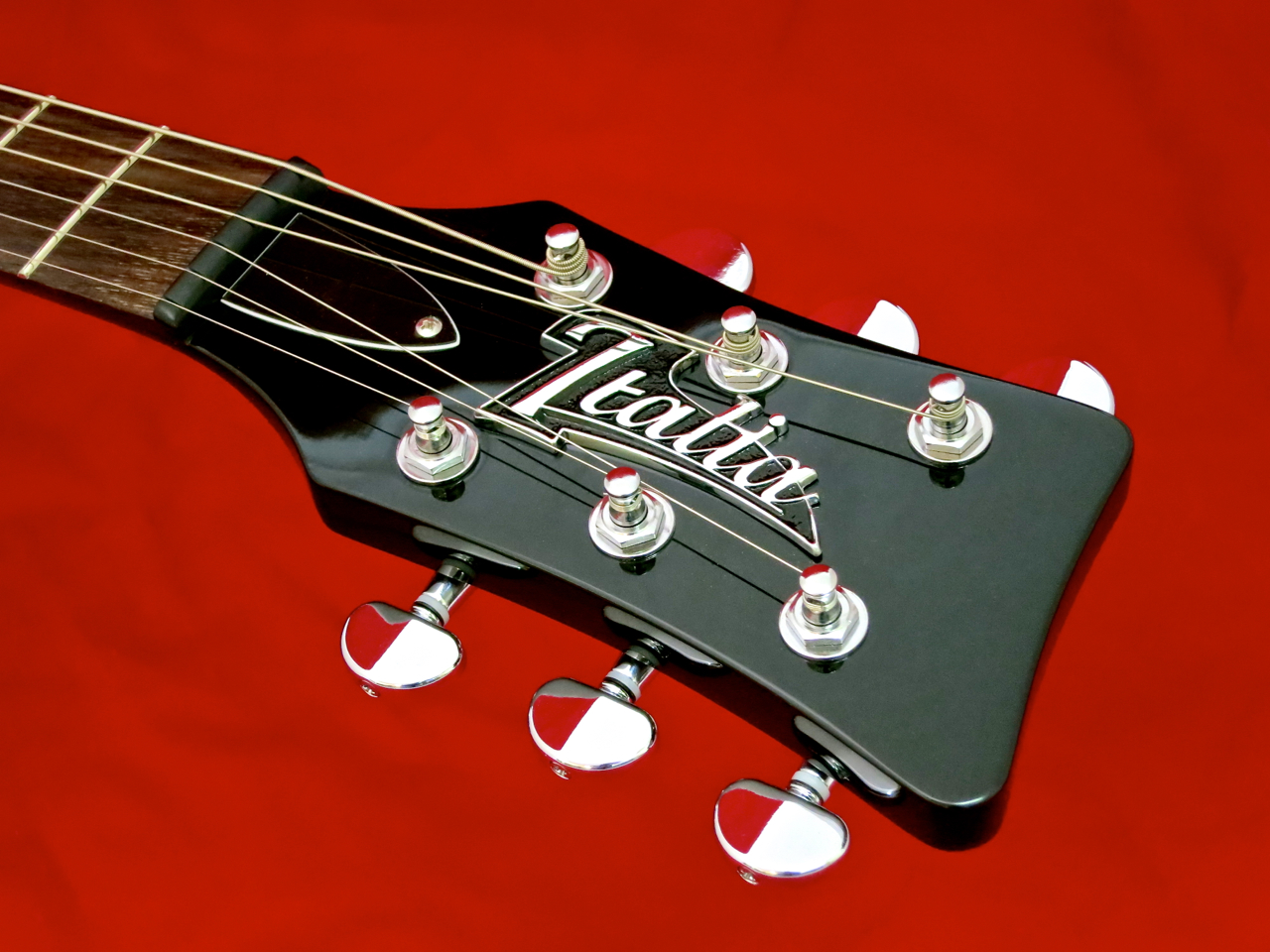
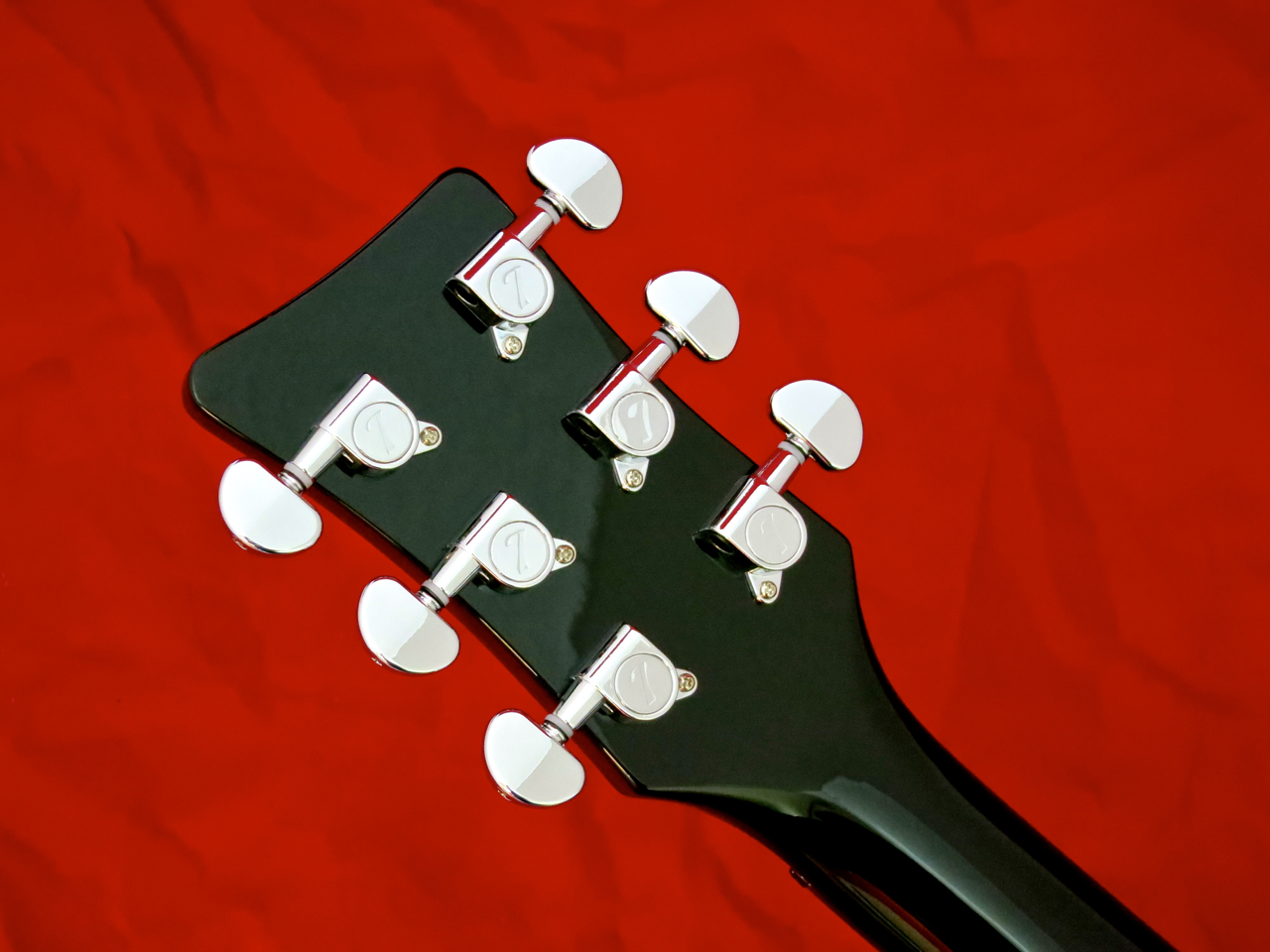
The modern tuning machines are embossed with the I-for-Italia logo, and work very nicely.

Italia Fiorano Standard – fretboard

The bound fretboard sports Italia’s stylish inlays, consisting of pearloid blocks and abalone dots.

Italia Fiorano Standard – body beauty 2

The Fiorano Standard’s neck is glued in at the 19th fret.

Italia Fiorano Standard – bridge

Great to see Italia using a modern version of the venerable Tune-o-Matic-bridge. The updated design does away with the annoying and ever-rattling piece of wire, used to keep the bridge saddles in place in the vintage version.

Italia Fiorano Standard – tailpiece

The snazzy chrome tailpiece adds its own bit of panache to this stylish semi.

Italia Fiorano Standard – pickups

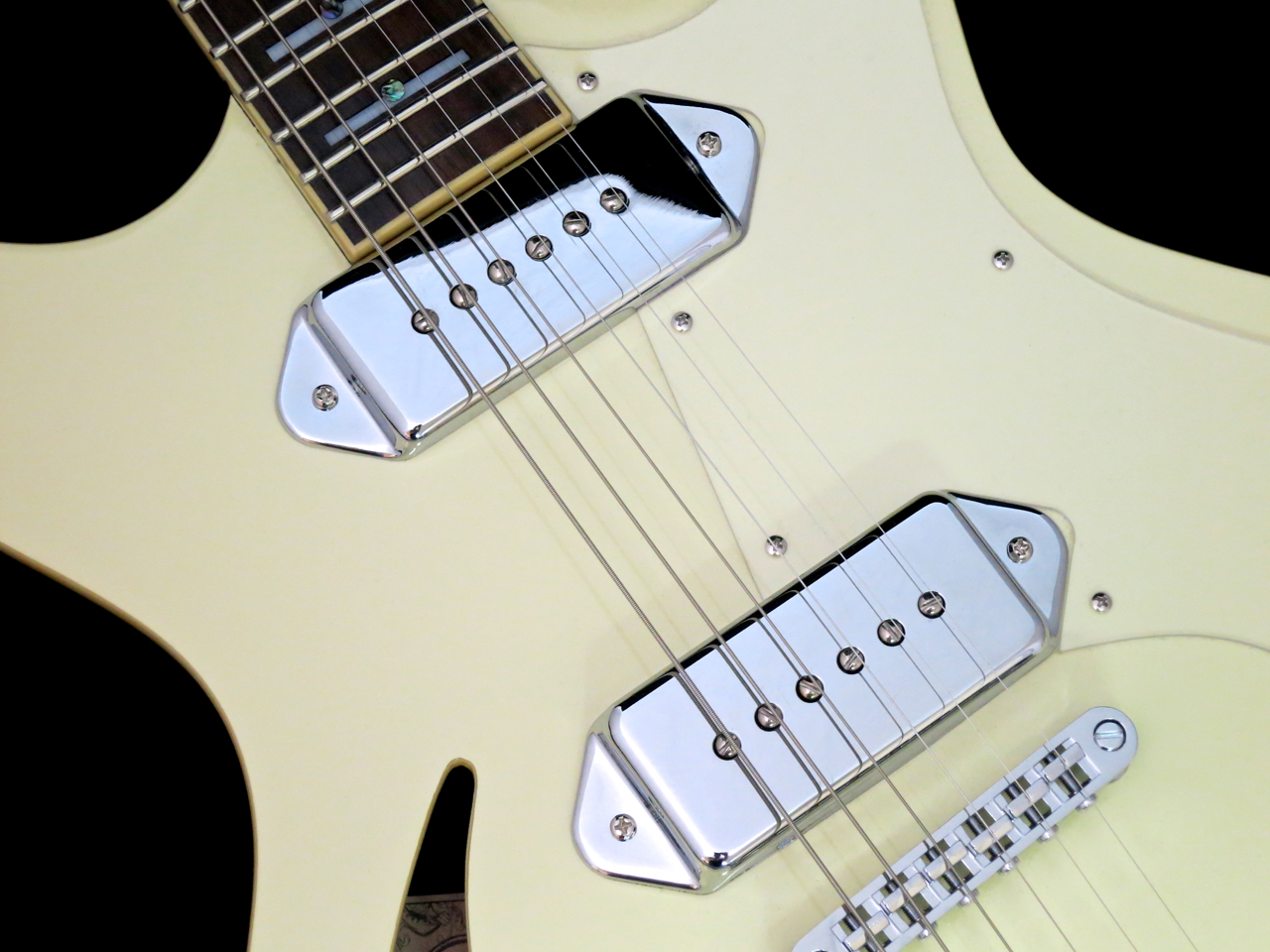
As you might know by now, I’m something of a P-90 fan. The Fiorano Standard comes equipped with not one, but two of my favourite pickups. These are made by Wilkinson and come with chromed dog-ear covers.

Italia Fiorano Standard – controls

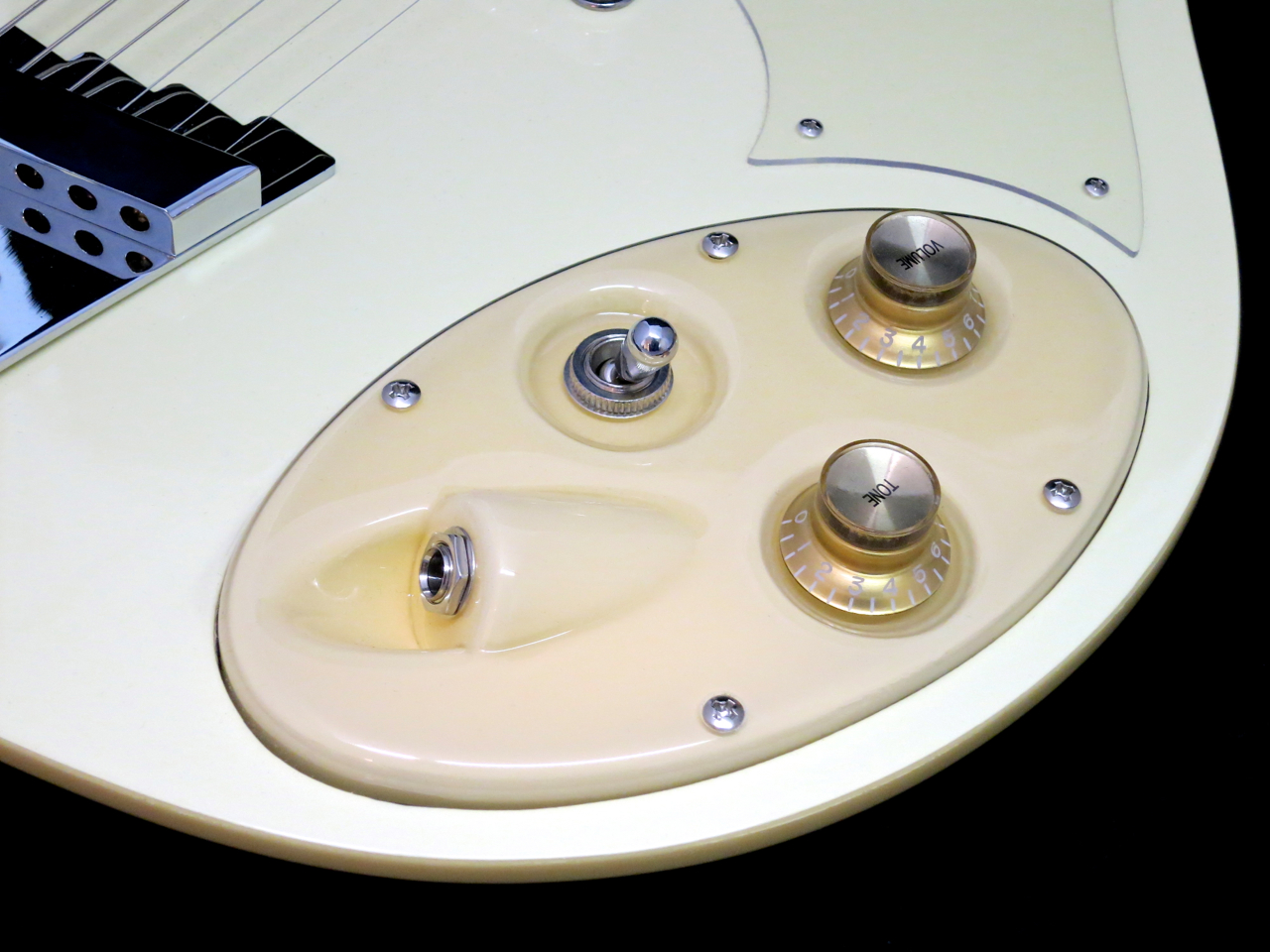
Like many of Italia’s models, the Fiorano also features a sping-suspended plastic tray as an unusual control cavity cover. The electronics comprise a three-way toggle, as well as master volume and tone controls.

****

Italia Mondial Deluxe – full front

Italia’s Mondial Deluxe (price in Finland approx. 675 €) is a genuine semiacoustic hybrid, offering you a piezo-equipped bridge (and active preamp) for acoustic-style guitar sounds alongside its traditional magnetic humbuckers.

Thinline-type mahogany body is mated to a maple top, which sports a very fetching Rickenbacker/Mosrite-style German Carve -edge. The top’s edges have been left natural, constituting what is usually called ”fake binding”.

Italia Mondial Deluxe – back beauty

The Mondial comes with a set maple neck.

You can also see the quick-release battery compartment for the 9 V battery used to power the piezo preamp.

Italia Mondial Deluxe – headstock

Italia’s top nut is made from a self-lubricating material containing graphite.

Italia Mondial Deluxe – tuners

We find the same decent-quality tuners on Mondial Deluxe as on the Fiorano.

Italia Mondial Deluxe – fingerboard

Look at the all the nice hues of blues and greens in the guitar’s abalone dots!

Italia Mondial Deluxe – piezo bridge

The Mondial’s bridge may look identical to the Fiorano’s, but this here is a piezo-equipped model. There’s a thin lead going from beneath the bridge and through the maple top to feed the piezo signal to the preamp.

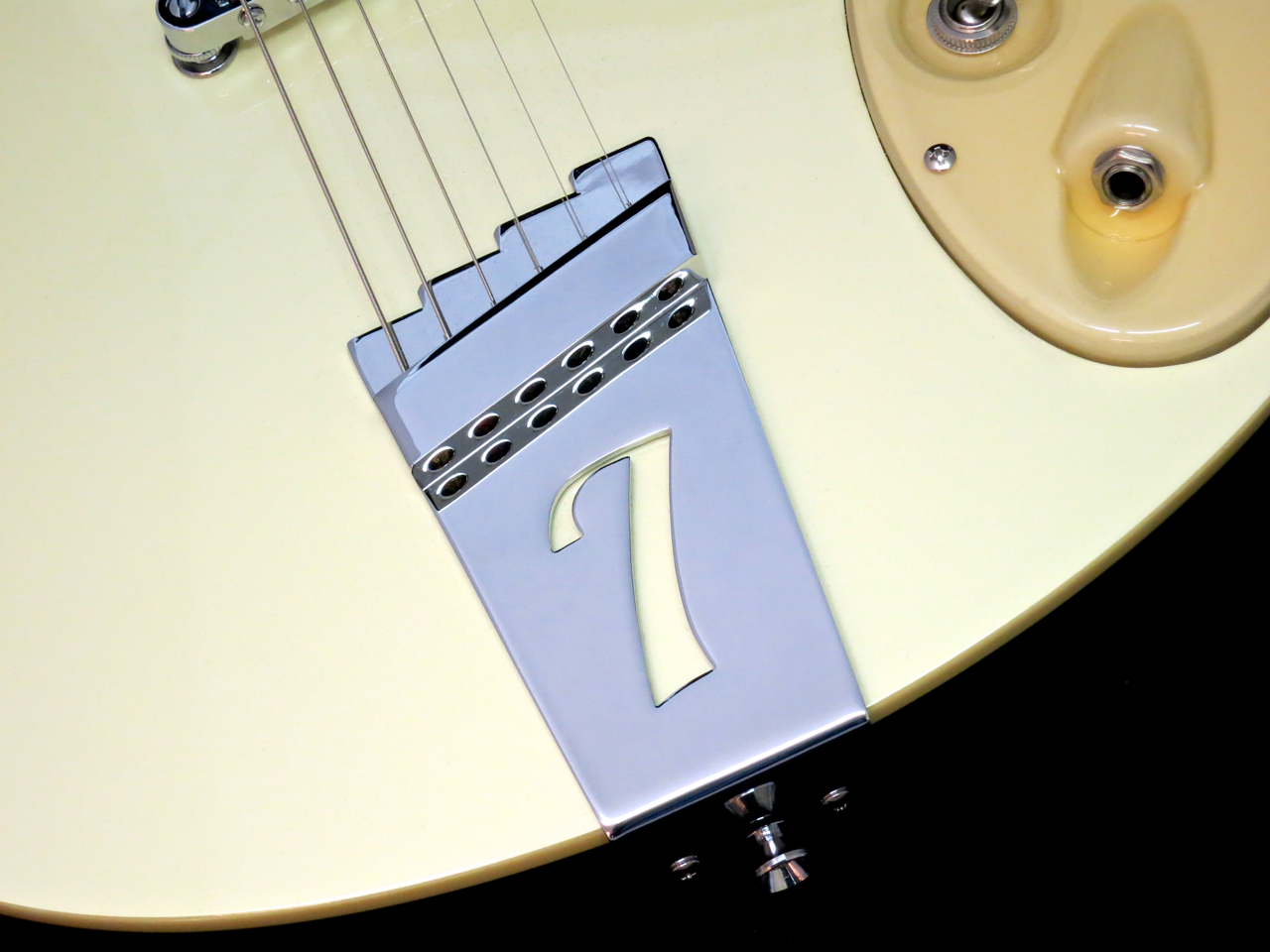
Italia Mondial Deluxe – tailpiece

”I” – stands for Italia…

Italia Mondial Deluxe – pickups

Two vintage-voiced Wilkinson WVC-humbuckers handle magnetic duties on the Mondial Deluxe.

Italia Mondial Deluxe – piezo EQ

The sliders on the guitar’s shoulder control the piezo side’s three-band EQ.

Italia Mondial Deluxe – controls

The magnetic signal is fed to a three-way toggle selector and master volume and tone controls.

There’s a dedicated volume control for the piezo signal, as well as a second output jack, enabling you to feed the acoustic side to a mixing console or a dedicated acoustic amplifier.

****

Italia Fiorano Standard – beauty shot 1+

Italia’s Fiorano Standard is just the guiar for me. It is comfortably lightweight and balances nicely. Its relatively thin body sits nicely against your belly/ribcage, even without any contouring or bevels.

The neck has a nice, mid-depth C-profile, which will feel comfortable to most players. The Fiorano arrived extremely well set-up with a slinky action (E: 1.9 mm/e: 1.7 mm).

Even if you cannot expect a thinline guitar, such as the Fiorano Standard, to out-shout a fat Jazz guitar, the Italia’s spruce-topped mahogany body results in a warm and woody acoustic voice.

In my opinion, P-90s are the best choice for a guitar of this type, because their singlecoil construction makes for a more percussive and dynamic tone than what you’d get from a creamy humbucker.

Played into a clean amp channel you’ll get a nice, clucky attack and a open, yet strong overall voice, that will fit Jazz just as well as Brit Pop, Country, Blues or early Rock’n’Roll (why not add a Bigsby, perhaps?):

If you’re after warm, rich and dynamic dirty tones P-90s are just the ticket! The Fiorano Standard will work great for any Beatles-, Kinks- or Who-inspired player, as well as George Thorogood-style electric Blues:

Italia Fiorano Standard – beauty shot 2

****

Italia Mondial Deluxe – beauty shot 1+

Italia’s Mondial Deluxe is a medium-weight instrument. The well-executed German Carve and very clean fake binding make this guitar look more expensive than it really is.

The neck’s D-profile feels really good. Thanks to its clean fretwork and fine set-up this instrument also plays great (E: 2.0 mm/e: 1.3 mm).

Unplugged, Italia’s Mondial Deluxe is rather quiet, but its fresh acoustic voice and clear attack bode well for things to come.

This hybrid’s piezo sound was the real surprise for me in this review. Italia’s piezo system simply sounds that good and genuinely ”acoustic”:

Naturally, it’s good to hear the Mondial’s magnetic side perform to equally high standards. This guitar’s vintage-voiced Wilkinsons do a fine job of translating the Mondial’s fresh unplugged voice into nice clean tones:

Switching over to the distortion channel will turn the Mondial into a Seventies-style Blues Rock machine:

Italia Mondial Deluxe – beauty shot 2

****

Italia Fiorano Standard – body beauty 1

It’s nigh on impossible not to get a crush on these Italia-guitars: Both the Fiorano Standard and the Mondial Deluxe are distinctly different from the mainstream of guitars on the market, but their design idiosyncrasies  never get in the way of easy playability and great sound. If you want to steer clear of the usual copies, bust still look for a guitar with its own charm, you should definitely check out an Italia.
Italia Mondial Deluxe – body beauty 1

****

Italia Guitars – Fiorano Standard + Mondial Deluxe

Fiorano Standard – approx. 640 €

Mondial Deluxe – approx. 675 €

Finnish distributor: R-JAM Group

****

Pros (both models):

+ idiosyncratic design

+ workmanship

+ finish

+ playability

+ sound

Pidä blogia WordPress.comissa.

Ylös ↑