Review: Schecter Solo-6 Custom

These days Schecter seems to have a fairly Hard Rock-, Metal- and Widdlemeister-image, especially over here in Finland. It’s true that many of the company’s better-known models are fast Rock-machines equipped with active pickups, but there has always been a more classic side to Schecter, too. The first production models, for example, were Pete Townshend’s Tele-style guitars, and Mark Knopfler (Dire Straits) also played a few Strato-type Schecters.

One of the current guitars, which follow classic lines, is the Solo-6 Custom.

****

The Schecter Solo-6 Custom (current price in Finland: 915 €) is by no means a straight copy, still, it clearly draws some influences from Gibson’s Les Paul Custom: the mahogany neck – made of three long stripes in the Schecter’s case – is glued to a mahogany body with a maple top.

The ”Custom” in the name points to this model’s multiply binding and ebony fretboard.
 ****

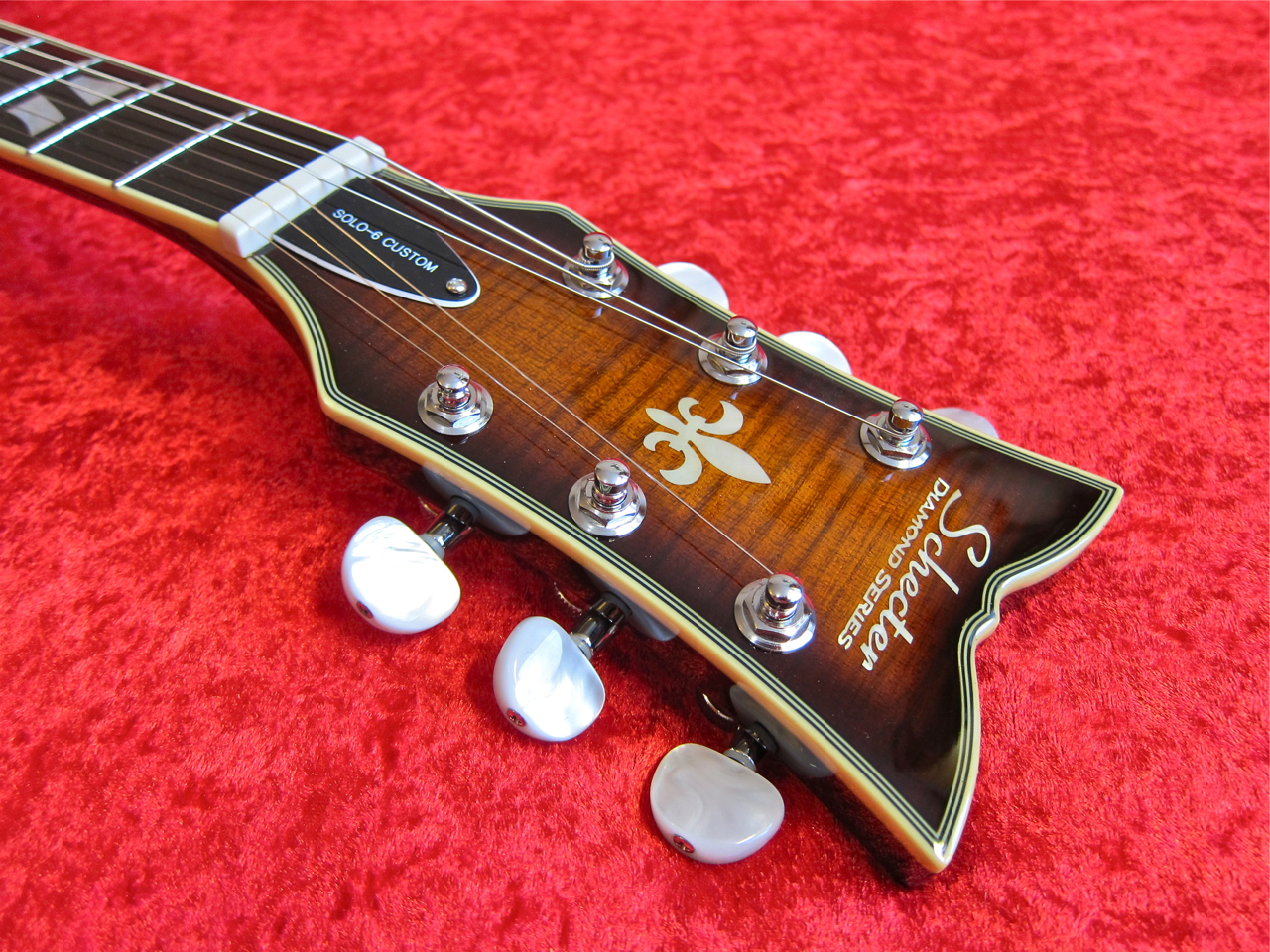
A beautiful flame maple veneer tops the Solo-6 Custom’s bound headstock. The Tusq-saddle – made from man-made bone-like material – is the right recipe for juicy tone and full-bodied sustain.
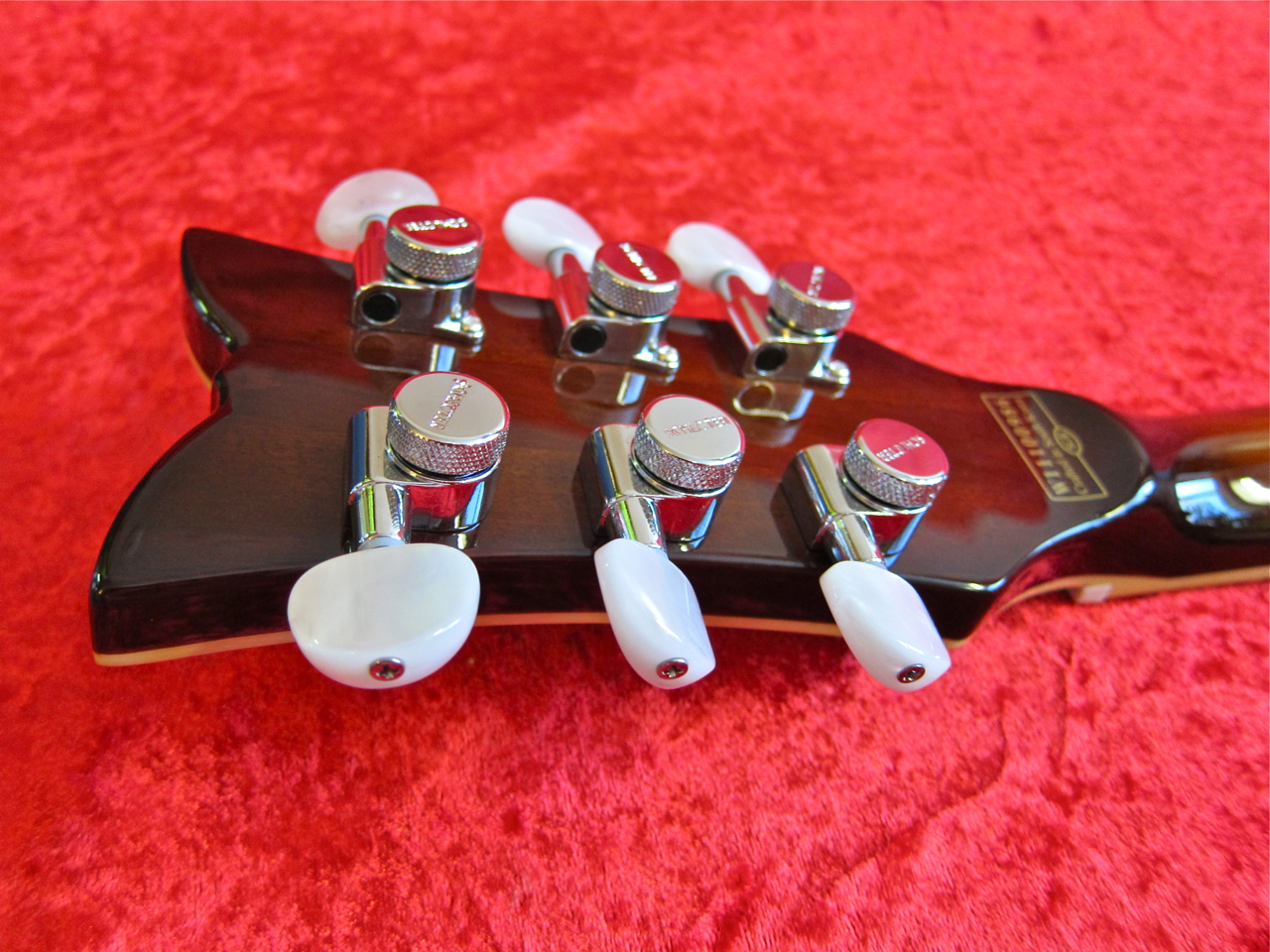
The Schecter-branded tuners are locking units, which keep the tuning rock steady.


Luscious, deep-black ebony is used as the fingerboard material, with genuine mother-of-pearl used for the inlays.
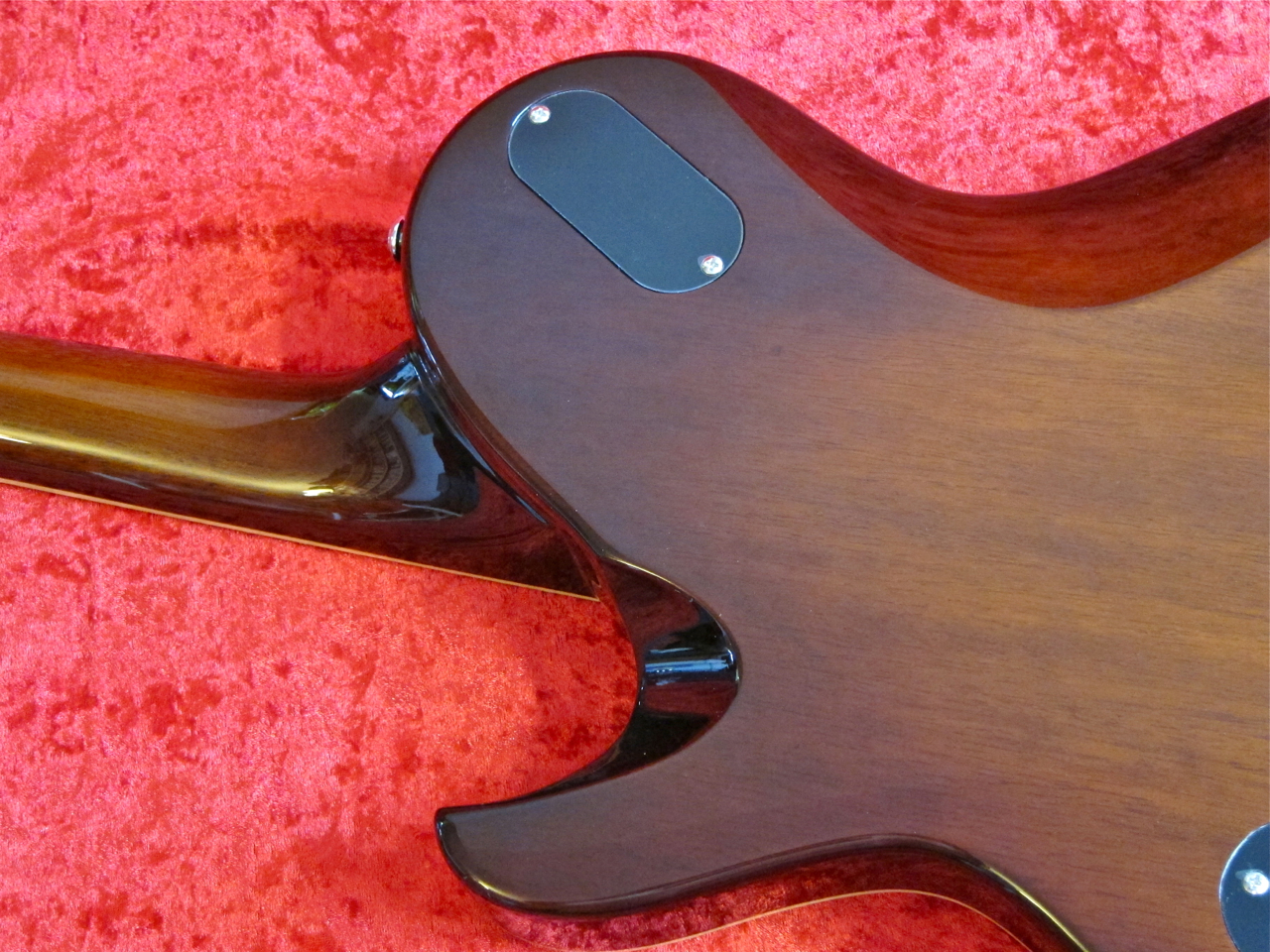
The Schecter’s asymmetrical neck joint feels very comfortable and makes it easy to reach the neck’s ”dusty end”.

****

The guitar’s nicely-shaped body sports a bound top. There are separate volume controls for the Solo-6’s humbuckers, as well as a master tone.

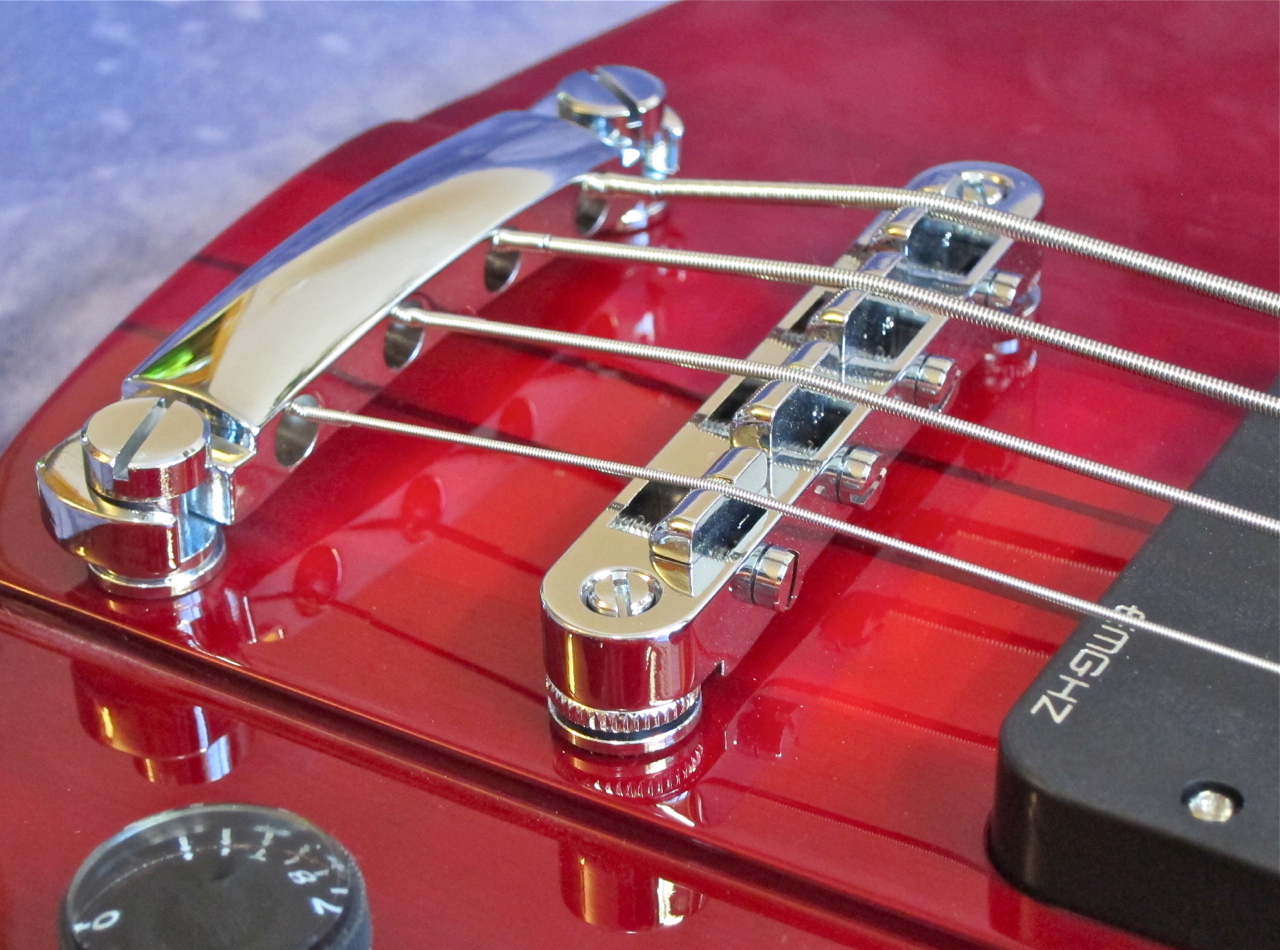
A quality Tune-o-matic and stopbar pairing completes the guitar’s hardware.

****

The humbuckers have been chosen from Seymour Duncan’s range of USA-made pickups: We find a Seymour Duncan Custom Custom [sic!] SH-11 in the bridge position – a humbucker with a somewhat hotter-than-vintage output, but whose Alnico II -magnet brings a warm bottom end and plenty of mid-range character into the mix. The best-selling ’59 SH-1N has been chosen for the neck position, promising vintage tone and output.

Schecter’s ingenious control knobs include a ribbed sure-grip surface, so sweaty live situations won’t stand in the way of total control. The tone pot’s push/pull switch splits both humbuckers in its up-position for singlecoil tones.

The Solo-6’s clean workmanship is carried over into the control cavity also. Conductive paint and a foil-lined lid take care of shielding against extraneous interference.

****

Schecter’s Solo-6 Custom is a gorgeous piece of work, with our test sample even displaying a very comfortable low weight. The instrument balances well and its back contour makes it feel comfortable against your midriff.

A full ”D” shape has been implemented as this guitar’s neck profile – there’s a reassuring amount of wood in your palm, without the neck ever too fat. Schecter’s fine workmanship and out test samples good fret job resulted in a well-playing guitar with a light and comfortable action.

Schecter’s design team must have known exactly what they were doing with regard to this model’s pickups – the results speak for themselves.

The powerful, but still pleasantly warm and juicy bridge humbucker works surprisingly well in conjunction with the vintage-type unit in the neck position on the Solo-6 Custom – regardless whether you’re using the full ’buckers or the coil-split mode. The jump in output going from the neck to the bridge pickup sounds very organic.

Splitting the humbuckers isn’t a mere afterthought in the Schecter Solo-6 Custom, but an extremely useful tool for obtaining quite authentic singlecoil sounds. Thanks to its versatility the Solo-6 Custom is a perfect choice for any guitarist, who wants to get the widest possible palette of sounds from the minimum amount of gear.

In these soundbites you get the split humbucker selections first (neck, both, bridge) followed by the full humbuckers:

Schecter Solo-6 Custom – clean

Schecter Solo-6 Custom – overdriven

This reviewer feels that the Schecter Solo-6 Custom is a well-made, classy and versatile guitar, offering plenty of bang for the Euro.

****

Schecter Solo-6 Custom

Current price in Finland: 915 €

Finnish distributor: Soundtools

Pros:

+ bang-for-the-Euro

+ workmanship

+ versatility

+ sound

+ playability 

****

****

Testipenkissä: Boss FB-2 Feedbacker/Booster

Bossin FB-2 Feedbacker/Booster (105 €) on kitaristin erikoistyökalu musikaalisen feedbackin aikaansaamiseeen. Vahvistinkierron lisäksi FB-2 toimii myös tehokkaana boosterina, joka antaa tarvittaessa reilusti lisäpotkua kitarasignaalille.

FB-2 on tyypillinen Boss-pedaali, jolla on valumetallista valmistettu kestävä runko, kytkimen läpän alle piilotettu yhdeksän voltin paristo, sekä neljä säädintä.

Boosterille ja feedbackille on omat volume-säätimensä, seuraa yleis-tone, sekä vain boost-toimintoon vaikuttava Character-säädin.

****

Boosteri kytketään päälle ja pois tavallisella lyhyellä polkaisulla, kiertäminen taas saadaan aikaiseksi pitämällä poljinta alas painettuna.

Vahvistuksen tarkkaa arvoa ei ilmoiteta missään, mutta ainakin tusinan verran desibelejä näyttää FB-2:sta lähtevän. Boosterin ”soundi” ja vaikutus riippuu luonnollisesti – tone- ja Character-asetuksien lisäksi – pitkälti käytetystä vahvistimesta. Puhtaan kanavan kanssa käytettynä boosti voi olla joko täysin puhdasta (vahvistin isolla headroomilla) tai se voi yliohjata vahvistimen (pienempi headroom), kun taas särökanavalla paljon riippuu kanavan gain-asetuksista ja headroomista. FB-2:n boosterilla voi tuoda lisää säröä signaaliin, vaikuttamatta kuitenkin soundin yleisilmeeseen, tai  sillä voi luoda rytmisoundista hyvinkin erilaisen soolosoundin.

Tone-säädin vaikuttaa yleissoundiin akselilla lämmin/muhkea–kirkas/terävä, kun taas Characteria voi säättää portaattomasti lineaarisen boostin (kaikkia taajuuksia vahvistetaan saman verran) ja vahvan mid-boostin välillä. Taajuuskorjaimien toiminta on siis yhtä tehokasta ja monipuolista kuin laite on helppokäyttöinen.


****

Boss FB-2:n Feedback-toiminnolla saadaan aikaiseksi katu-uskottava kierto jo hyvin maltillisella volyymillä.

Pedaali on lauluprosessoreista tuttujen feedback-poistajien täysi vastakohta: se analysoi salamannopeasti tulosignaalin ja vahvistaa sen alueen, joka sillä hetkellä lähtee todennäköisimmin kiertämään.

Koska kyse ei ole keinotekoisesta kierrosta – esimerkiksi sample/freeze-pohjalla – vaan aidosta feedbackista, kitaran täytyy olla kytkettynä Boss-pedaalin kautta vahvistimeen. Kokeilin FB-2:sta myös studiomonitoreiden kautta, mutta tällöin touhusta tuli monitoreiden laajemman ja tasaisemman taajuusvasteen takia hieman hankalasti kontrolloitavaa. Tämä pedaali on siis kitaraefekti ja tarvitsee kitaravahvistimen aisaparikseen.

Puhtailla vahvistinasetuksilla pedaalin soundi tuo mieleen E-Bow-tyylisiä äänimaailmoja, mutta itse käyttäisin FB-2:ta enemmän särökanavalla, koska soundi on silloin laulavampi ja koko touhua on särön tuoman kompression ansiosta selvästi helpompi hallita. Soittimen asento suhteessa kaiuttimeen muuttaa tutulla tavalla lopputulosta eli resonoiva ylätaajuus saattaa vaihtua toiseen.

Boss FB-2 on hämmästyttävä, hauska ja monipuolinen laite, joka tarjoaa sekä erittäin monikäyttöisen boosterin että helposti ohjattavan kierron.

Ääniesimerkki on äänitetty hyvin maltillisella volyymillä Roland Micro Cuben (Brit Combo -vahvistinmalli) kautta:

Boss FB-2 Feedbacker/Booster

****

Boss FB-2 Combo Drive

105 €

Maahantuoja: Roland Scandinavia

****

Plussat:

+ pieni koko

+ kaksi efektiä samassa paketissa

+ boosterin monipuolisuus

+ mahdollistaa feedbackin käytön myös kotioloissa

+ hinta

****

****

Testipenkissä: Schecter Solo-6 Custom

Schecter-soittimia luonnehditaan Suomessa usein pelkiksi Rock- ja Metal-kitaroiksi. On totta, että usea tunnettu malli on aktiivimikrofoneilla varustettu vauhtikeppi, mutta firmalla on myös toinen, klassisempi puoli. Ensimmäiset Schecter-mallit olivat Pete Townshendin Tele-tyylisiä soittimia, sekä Mark Knopflerin (Dire Straits) Strato-tyylisiä kitaroita.

Schecterin tämänhetkisestä mallistosta löytyy myös perinteiseen makuun sopivia kitaroita – niin kuin esimerkiksi Solo-6 Custom.

****

Schecter Solo-6 Custom (915 €) ei ole suora kopio, mutta kitara polveutuu selvästi Gibson Les Paulista: humbucker-kitaran liimattu kaula koostuu kolmesta pitkästä, vierekäisesta mahonkipalasta, kun taas runko koostuu mahonkipohjasta ja kaarevasta vaahterakannesta.

Custom-lisäys nimessä viittaa runsaaseen koristeluun ja eebenpuiseen otelautaan.

 ****

Viritinlavan etupuoli on koristettu loimuvaahteraviilulla ja reunalistoituksella. Kova Tusq-satula keinotekoisesta luusta parantaa kitaran soundia ja helpottaa virittämistä.

Schecter-nimellä varustetut lukkovirittimet näyttävät hyvältä ja toimivat jouhevasti.


Otelauta on tehty komeasta, sysimustasta eebenpuusta, johon on siististi upotettu aidot helmiäisotemerkit.

Schecter Solo-6:n epäsymmetrinen kaulaliitos tuntuu erittäin mukavalta, ja se mahdollistaa vapaan pääsyn ylimmille nauhoille.

****

Kauniisti muotoiltu runko on edestä reunalistoitettu. Kahdella humbuckerilla varustettu Solo-6 tarjoaa kummallekin mikrofonille oman volume-säätimensä sekä yhteisen tonen.

Laadukas tune-o-maticin ja stoptailin yhdistelmä kunnioittaa perinteitä ja hoittaa hommansa samalla sujuvasti.

****

Mikrofoneiksi on valittu kaksi varsinaista herkkupalaa Seymour Duncanin laajasta valikoimasta: tallamikiksi on valittu Seymour Duncan Custom Custom [sic!] SH-11 -mikrofoni, jossa on vintagea enemmän tehoa, mutta Alnico II -magneettinsa ansiosta lämmin botnea ja sävykäs keskialue. Kaulahumbuckerina taas toimii ’59 SH-1N -malli, joka on vintage-tyylinen mikrofoni – niin soundinsa kuin myös lähtötehonsa puolesta.

Schecterin nupeissa on kätevät liukuesteet, jotka helpottavat nopeata säätämistä, esimerkiksi pikkurilliä käytettäessä. Tone-potikkaan on piilotettu nostokytkin, joka yläasennossa puolittaa humbuckerit yksikelaisiksi.

Huolellinen ja erittäin siisti työnjälki on esillä myös Schecterin elektroniikkalokerossa. Häiriösuojaus on hoidettu Solo-6 Customissa grafiittimaalilla ja alumiinifoliolla vuorettulla kannella.

****

Schecterin Solo-6 Custom on kyllä komea ilmestys, ja testiyksilö ilahduttaa myös soittimen keveydellä. Kitara on hyvässä balanssissa ja rungon takapuolen viisteen ansiosta soitin istuu myös eritäin mukavasti kehoa vasten.

Kaulaprofiili on täyteläinen ”D”, joka pysyy kuitenkin paksuudeltaan mukavan maltillisella puolella. Huolellinen työnjälki, etenkin nauhatyössä, mahdollistaamukavan trimmin ja kevyen tatsin.

Schecterin sunnitteluosastolla on selvästi mietitty tarkkaan tämän mallin mikrofonivarustus – lopputulos on ensiluokkainen ja erittäin monipuolinen.

Tehokas, mutta silti miellyttävän lämmin ja ilmava tallahumbuckeri sopii yllättävän hyvin yhteen kaulamikiksi valitun vintage-mallin kanssa, sekä puolitetussa käytössä että humbucker-moodissa. Lähtösignaalin muutos kaulamikistä tallamikkiin kuulostaa hyvin luonnolliselta, eikä lainkaan hypi häiritsevästi silmään.

Schecter Solo-6 Customissa mikrofonien puolitus ei ole vain väkinäinen lisäominaiuus, vaan se avaa oven melko autenttisiin singlecoil-soundeihin. Tämän ansiosta Solo-6 Custom on mainio keikka- tai studiokitara, silloin kun haluaa kuljettaa mahdollisimman vähän tavaraa mukanaan, ilman soundivalikoiman kaventamista.

Soundiesimerkeissä soivat aina ensin puolitetut vaihtoehdot (kaula, molemmat ja talla) ja sen jälkeen täydet humbuckerit:

Schecter Solo-6 Custom – puhdas

Schecter Solo-6 Custom – särö

Mielestäni Schecter Solo-6 Custom on loistava, monipuolinen ja ammattilaisten vaatimuksetkin täyttävä sähkökitara, uskomattoman hyvällä hinta-laatu-suhteella.

****

Schecter Solo-6 Custom

915 euroa

Maahantuoja: Soundtools

Plussat:

+ hinta-laatu-suhde

+ työnjälki

+ monipuolisuus

+ soundi

+ soitettavuus

****

****

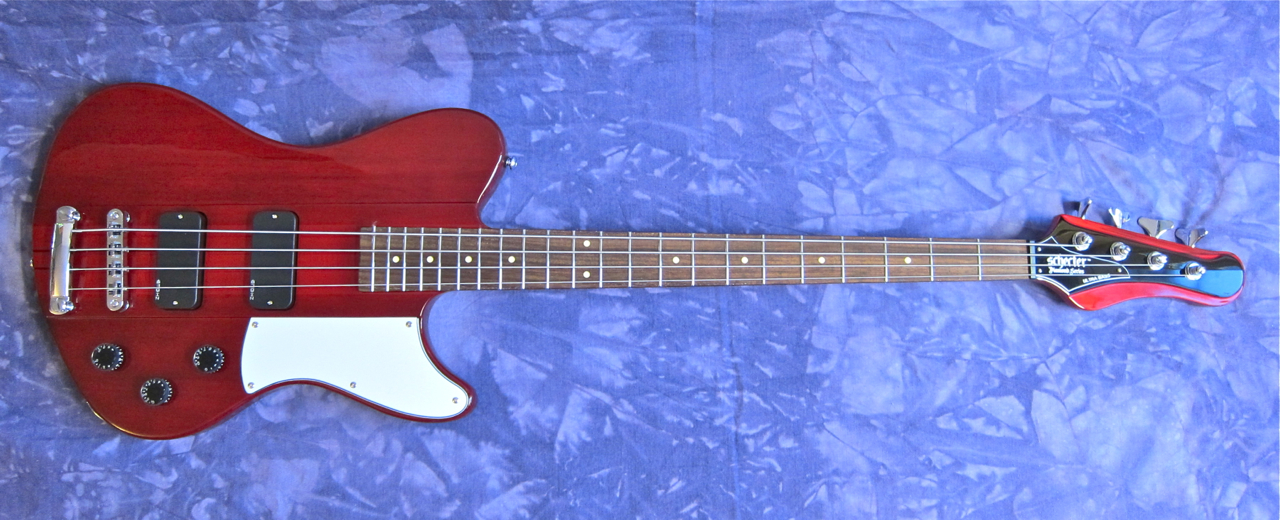
Review: Schecter Ultra Bass

The Gibson Thunderbird is a raunchily-voiced classic bass from the 1960s, even though its design isn’t really the most ergonomic. The ”reverse” body and the resulting long neck sends the T’Bird nosediving the second you let go of its neck.

Schecter’s R&D-team set about to design a bass, which would offer all the sound of said Gibson-classic, but would also feature a much better strapped-on balance. Following this brief they came up with a beauty, called the Schecter Ultra Bass.

****

The Schecter Ultra Bass (current street price in Finland: 865 €), which is part of the company’s mid-priced Diamond-range, is a long-scale bass equipped with passive electronics.

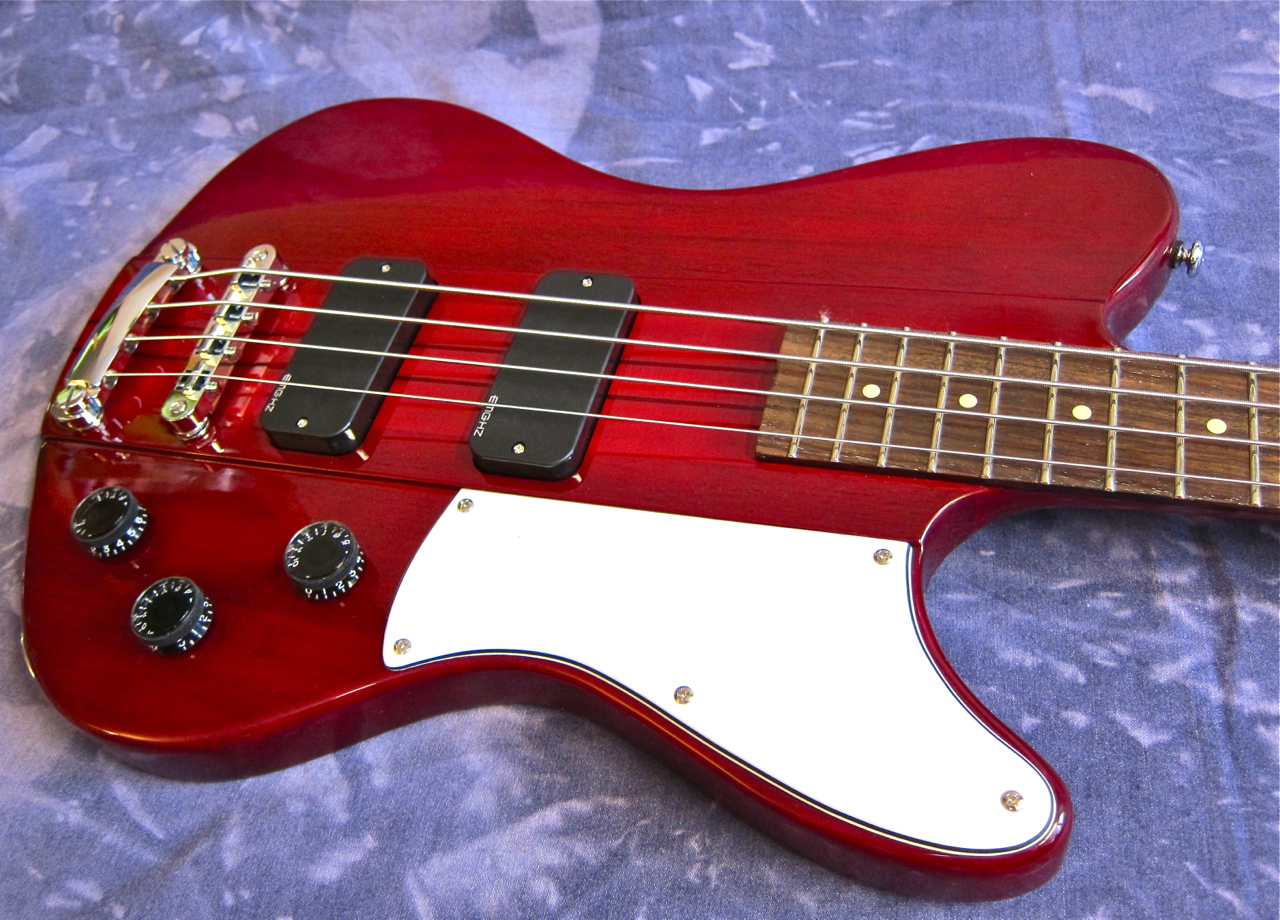
The Ultra is by no means a straight T’Bird-copy, blending successfully the body’s Gibson-type treble side to a Telecaster-style bass side. The end result pleases the eye, sits comfortably in the lap, and balances rather nicely strapped-on, because the top strap button is now noticeably closer to the headstock, compared to said classic from the Sixties.

From a sonic standpoint the through-neck-construction is vital – Schecter uses three long strips of hard rock maple set off nicely by two thinner strips of walnut.

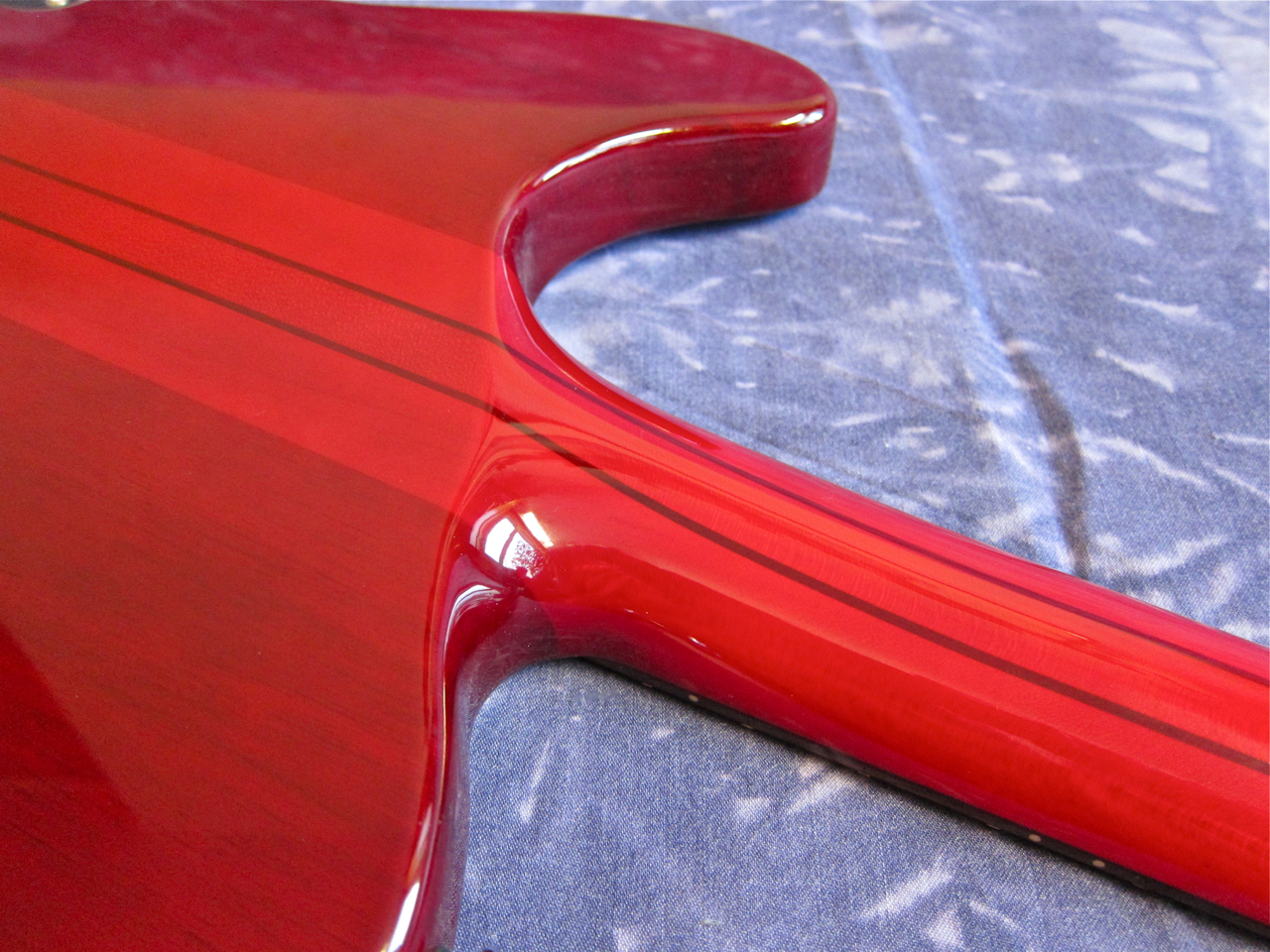
The body wings are crafted from mahogany. The front of the body sports the characteristic step between the wings and the middle formed by the through-neck, while the Ultra Bass’ flip side has been left level for added comfort.

****

Schecter have chosen smooth Grover-tuners for their Ultra Bass, which feature a ratio of 18:1.

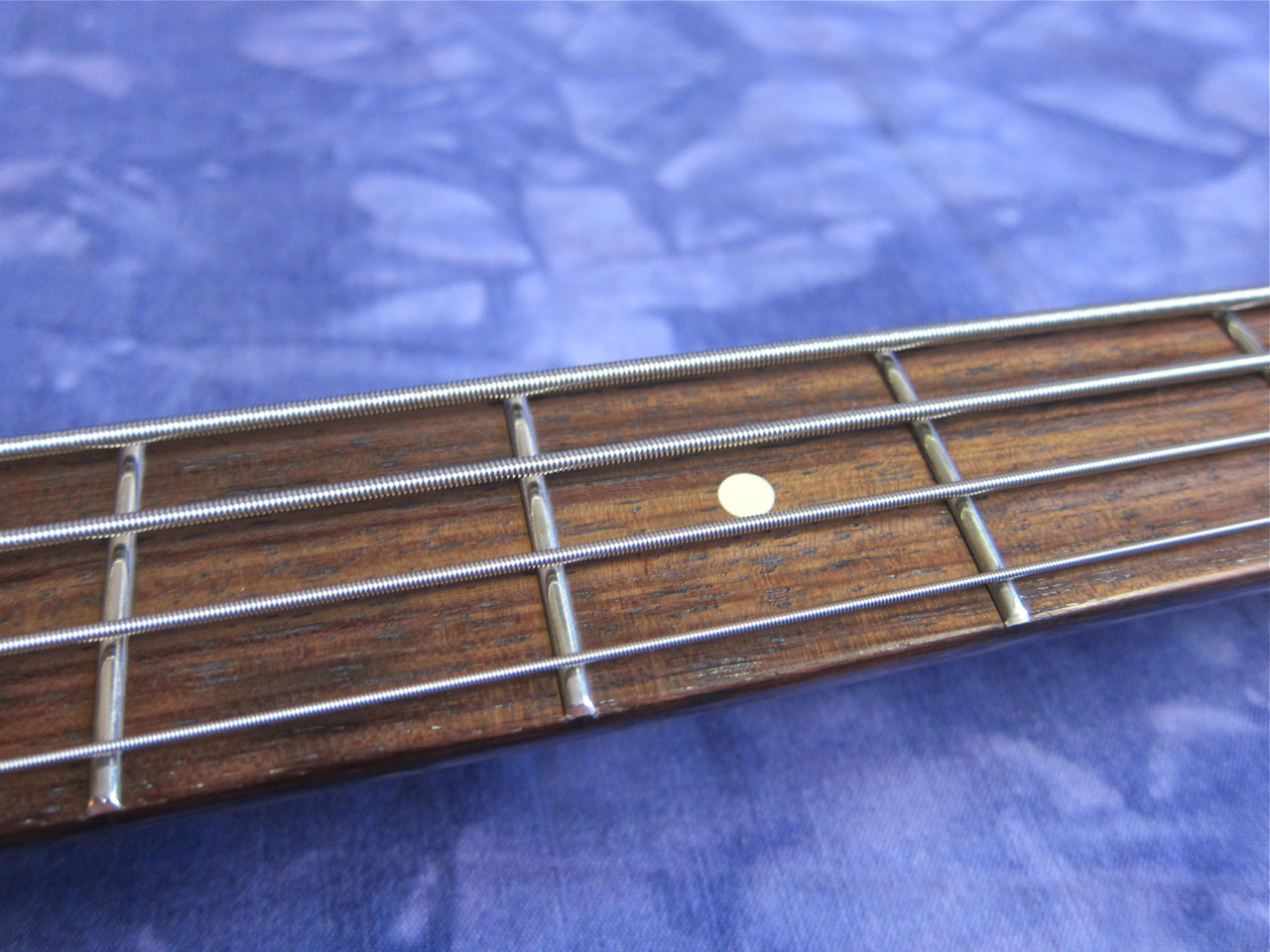
Our test sample’s beautiful rosewood fretboard has been adorned with cream-coloured dot inlays. The well-seated frets are of medium size.

A sturdy tune-o-matic and stopbar combination is a very stylish choice, fully in line with this bass’ fine looks.

****

EMG’s passive TBHZ-humbuckers are direct replacements for Thunderbird-type basses, so we can fully expect them to deliver the desired sonic goods.

The Schecter sports two separate volume knobs – one for each pickup – as well as a master tone. The output jack sits safely on its own metal plate on the rim of the body.

The Ultra’s tidy build and quality workmanship are carried along into the control cavity, which reveals three high-quality pots and neat shielding.

****

The Schecter Ultra Bass handles much easier and much calmer than the Gibson-classic, which served as its inspiration. Balance really isn’t an issue here at all, and it’s easy to find a comfortable playing position.

The Schecter’s neck profile is a slim and tapered ”C”, not miles away from a 1970s Fender Jazz. Thanks to the clean workmanship and nice set-up on our test sample the touch is light and the bass plays well.

Most importantly, though, the Ultra Bass has the characteristic growl in spades. The bottom end is fat, the mid-range slightly smokey and hoarse, and this scrumptious dish is topped of with the top-end’s silky sheen.

Just like the Thunderbird, Schecter’s Ultra Bass is simply made for Rock and heavier styles: Played with a pick, the attack punches a sizable hole into any guitar stack wall. The overall sound also takes well to a bit of overdrive, regardless of whether you’re playing with a pleck or fingerstyle.

Here are some soundbites; it’s alway the neck pickup first, then both pickups, with the bridge humbucker played on its own last in line:

Ultra Bass – fingerstyle with a light crunch

Ultra Bass – plectrum with some effects

Ultra Bass – plectrum Rock

Ultra Bass – Slap-style

Schecter is really dishing out the goods with their Ultra-model – finally, here’s a worthy update of the T’Bird-theme. It sounds fantastic, feels great, and offers very high value for a very fair price.

****

Schecter Ultra Bass

Current street price in Finland: 865 €

Finnish Distributor: Soundtools

****

Pros:

+ value-for-money

+ neck profile

+ strapped-on balance

+ workmanship

+ sound

****

****

Halt mich!

****

Halt mich!

Words: Frank D. Badenius — Music: Martin Berka

All vocals and instruments: Martin Berka.

Halt mich! © Badenius & Berka

****

Find more of my music HERE.

Kitarr.ee – etelänaapurimmekin osaavat!

Virolainen aikakauslehti Kitarr on tyylikäs julkaisu kitaristeille. Lehti sisältää haastatteluja, testejä, juttuja vintage-soittimista sekä vinkkejä miten tulla paremmaksi soittajaksi.

Ajakiri Kitarr -lehdellä on myös hyvin näyttävä nettisivusto, joka täydentää ja laajentaa lehden sisältöä mm. videoilla.

Kannattaa siis tutustua!

Pidä blogia WordPress.comissa.

Ylös ↑