Testipenkissä: Mannedesign Newport 4T

****

Mannedesign Newport 4T -aktiivibasso (883,14 €) on osa Mannen keskihintaista, Kauko-Idässä valmistettua mallistoa. Soitin on edullisempi versio italialaisesta Newport-bassosta, jolla on sama ulkonäkö mutta erilaisia detajiratkaisuja.

****
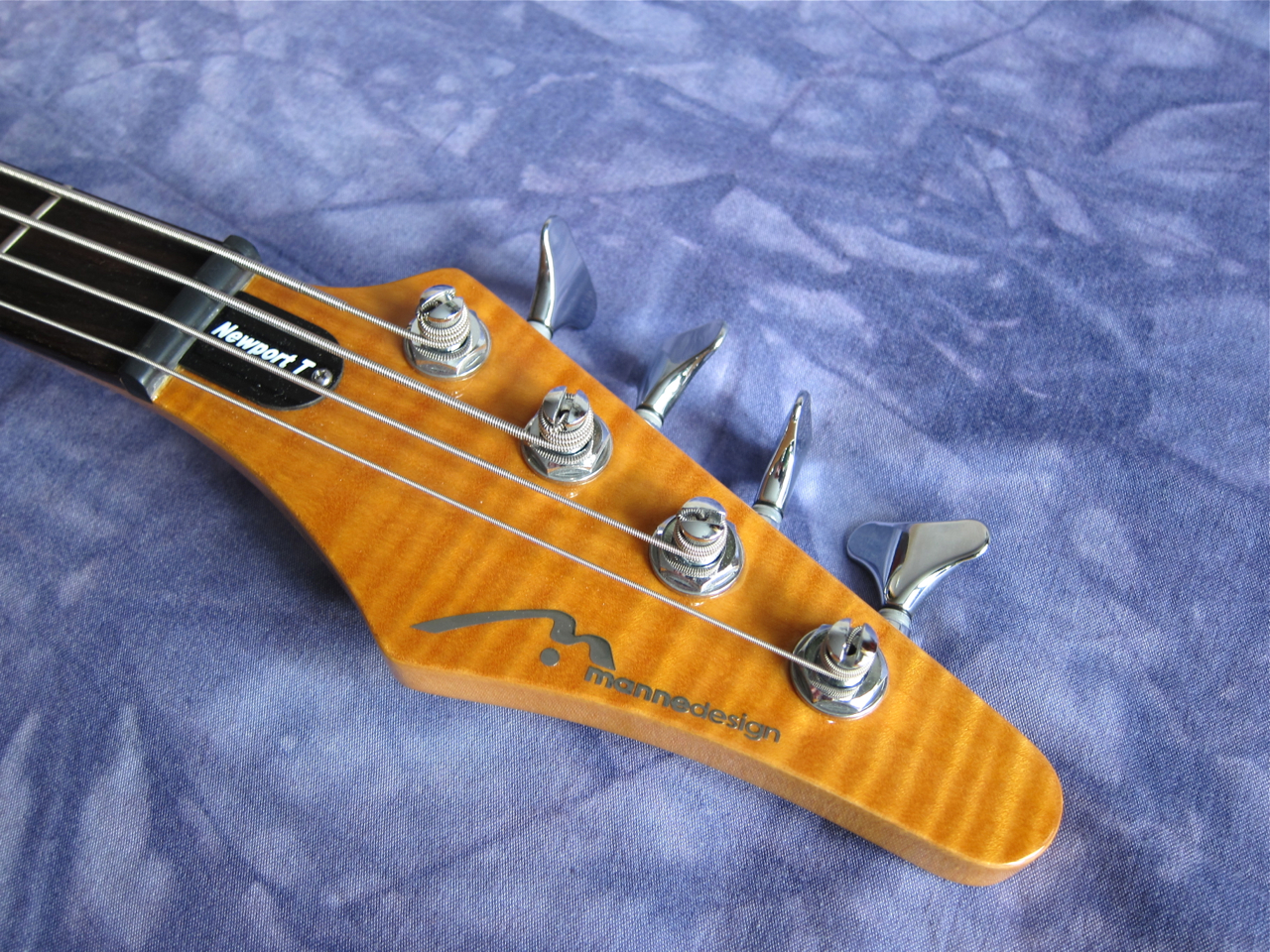
Sekä rungon että lavan etupuoleen on liimattu varsin näyttäviä loimuvaahteraviiluja, ja lopputulos on viimeistelty silmää hivelevällä, läpikuultavalla hunajanvärisellä lakalla.
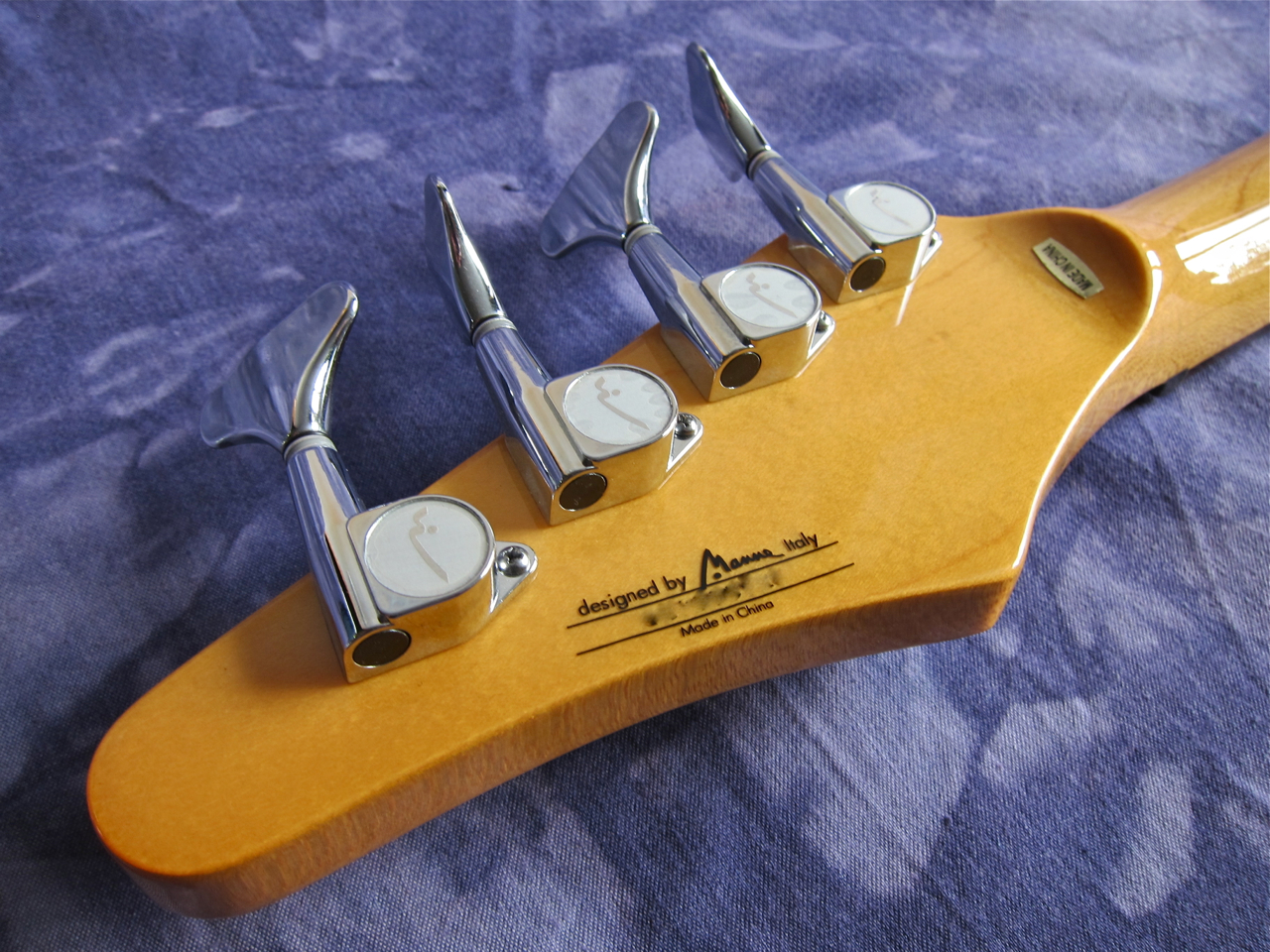
Laadukkaat Gotoh-virittimet pitävät basson mallikkaasti vireessä.

****
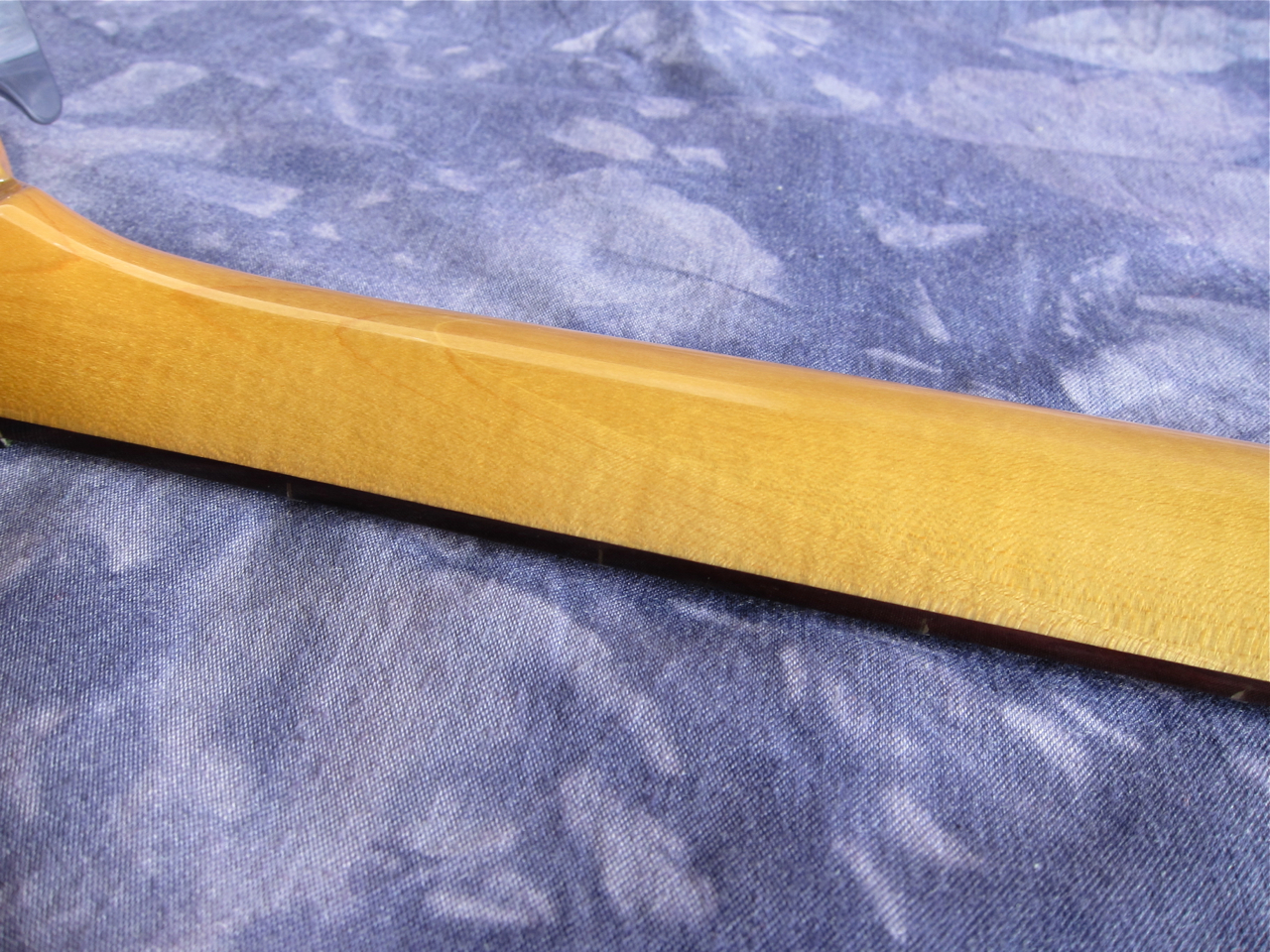
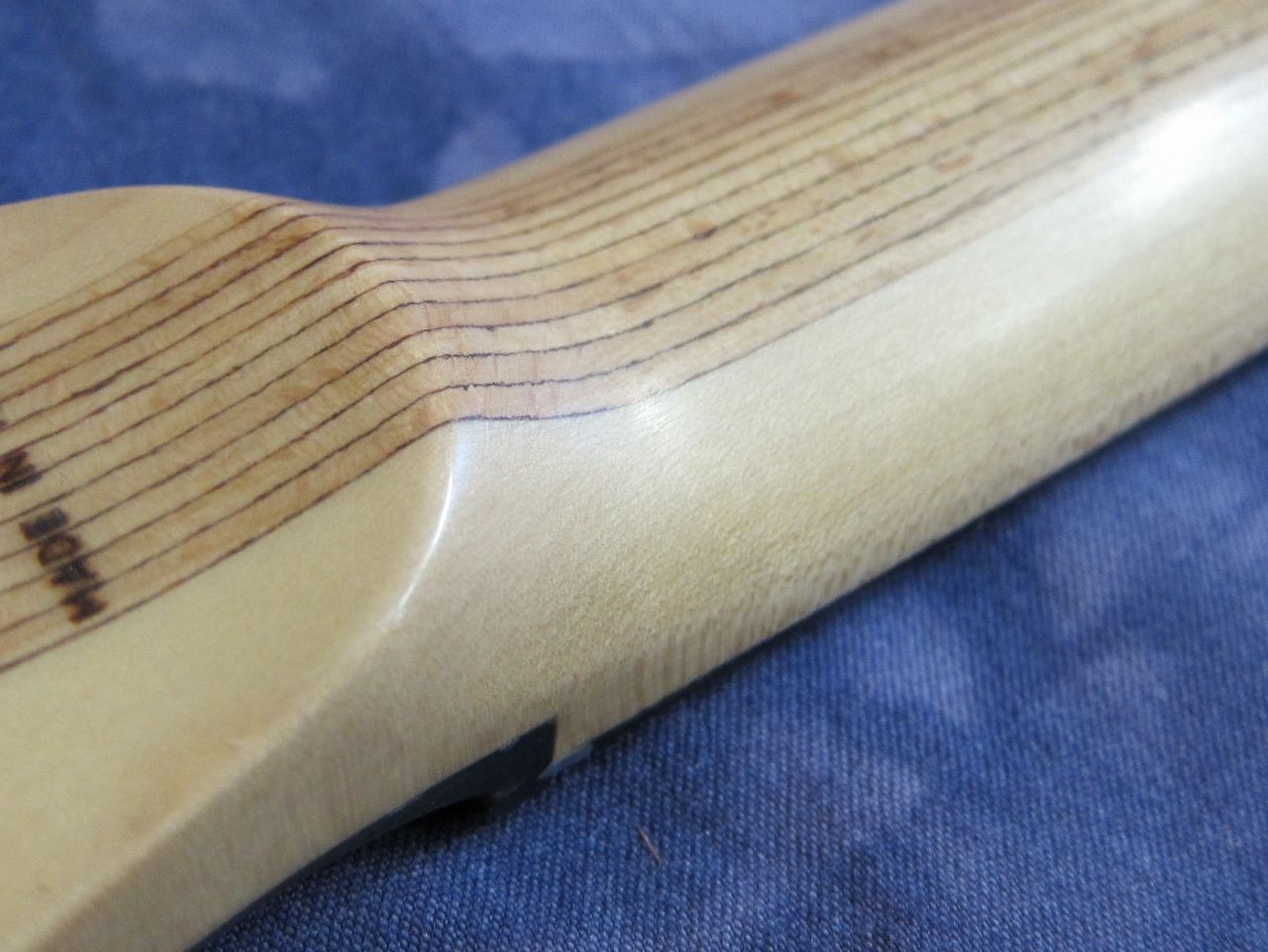
Italialaisissa Manne-soittimissa käytetään yleensä vaahterasta ja pyökistä valmistettuja multilaminaattikauloja. Newport 4T:n kaula on yksiosainen, paitsi että viritinlapaa ja kolmea ensimmäistä nauhaa varten on käytetty lisäkappaletta. Liimasauma on lähes näkymätön.

****

Mannedesign-basson kaulaliitos on aito pulttiliitos.

****

Suuri otelautaradius ja jumbo-nauhat antavat solakalle kaulalle mukavan nykyaikaisen tuntuman. Nauhatyö on hyvin kiitettävää tasoa.

****

Runko on koottu huolellisesti paksusta, kaksiosaisesta mahonkipohjasta, jolle on liimattu ohut tumma puuviilu (pähkinäpuuta?) sekä ohut vaahterakansi. Päällimmäisenä on kaunis bookmatched loimuvaahteraviilu. Custom Shop -tyylinen koristelu tavallisen pulliaisen rahapussille siis…

****
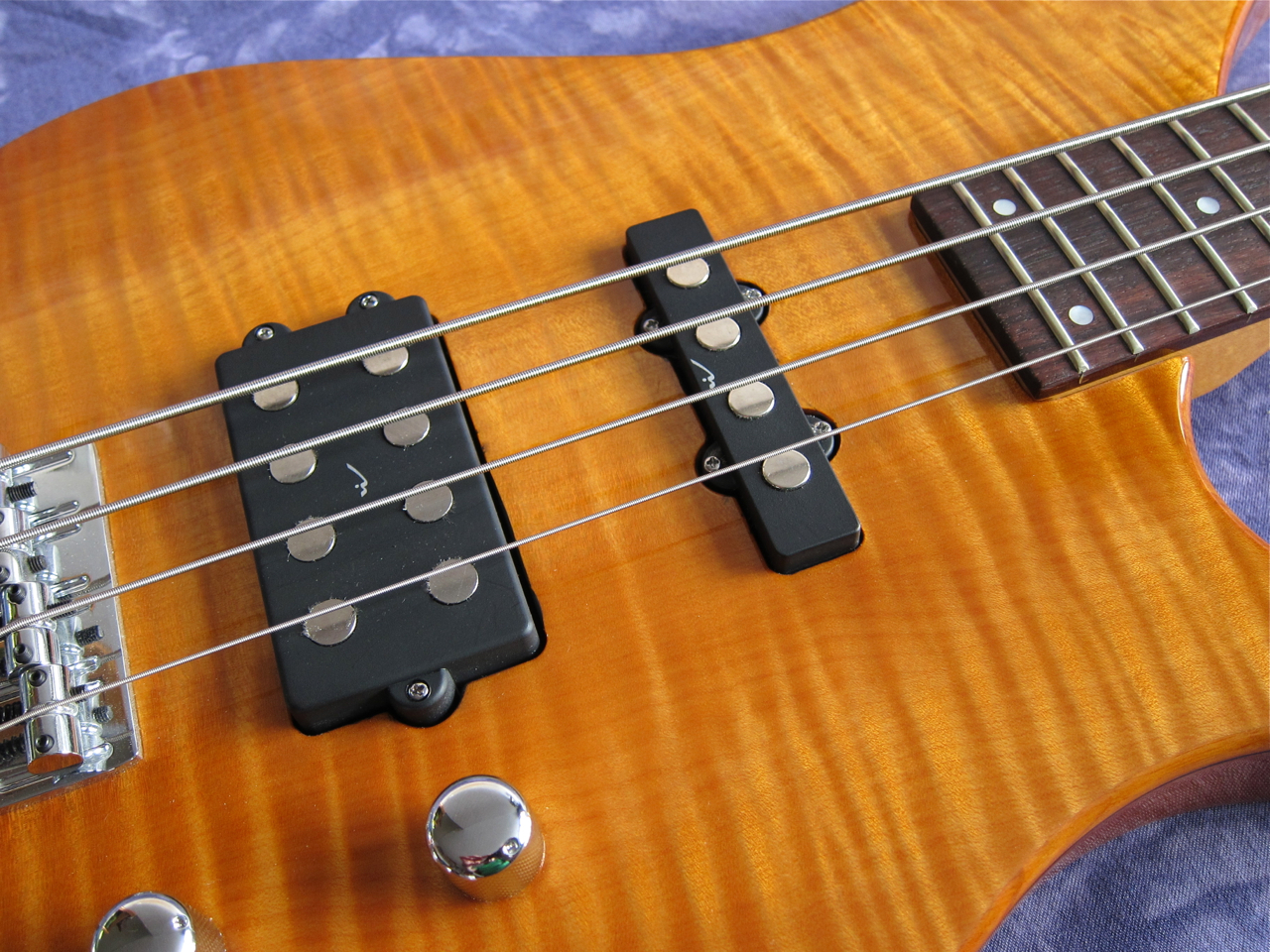
Mikrofonivarustus tulee muodikkaan Super-J/MM-yhdistelmän muodossa, jossa Mannedesignin tapauksessa keraamisella magneetilla varustettu J-kokoinen yksikelainen kaulamikrofoni saa aisaparikseen alnico-pohjaisen MM-humbuckerin.

Elektroniikkalokero näyttää ilahduttavan siistiltä ja paristolle on oma osastonsa muovikannessa.
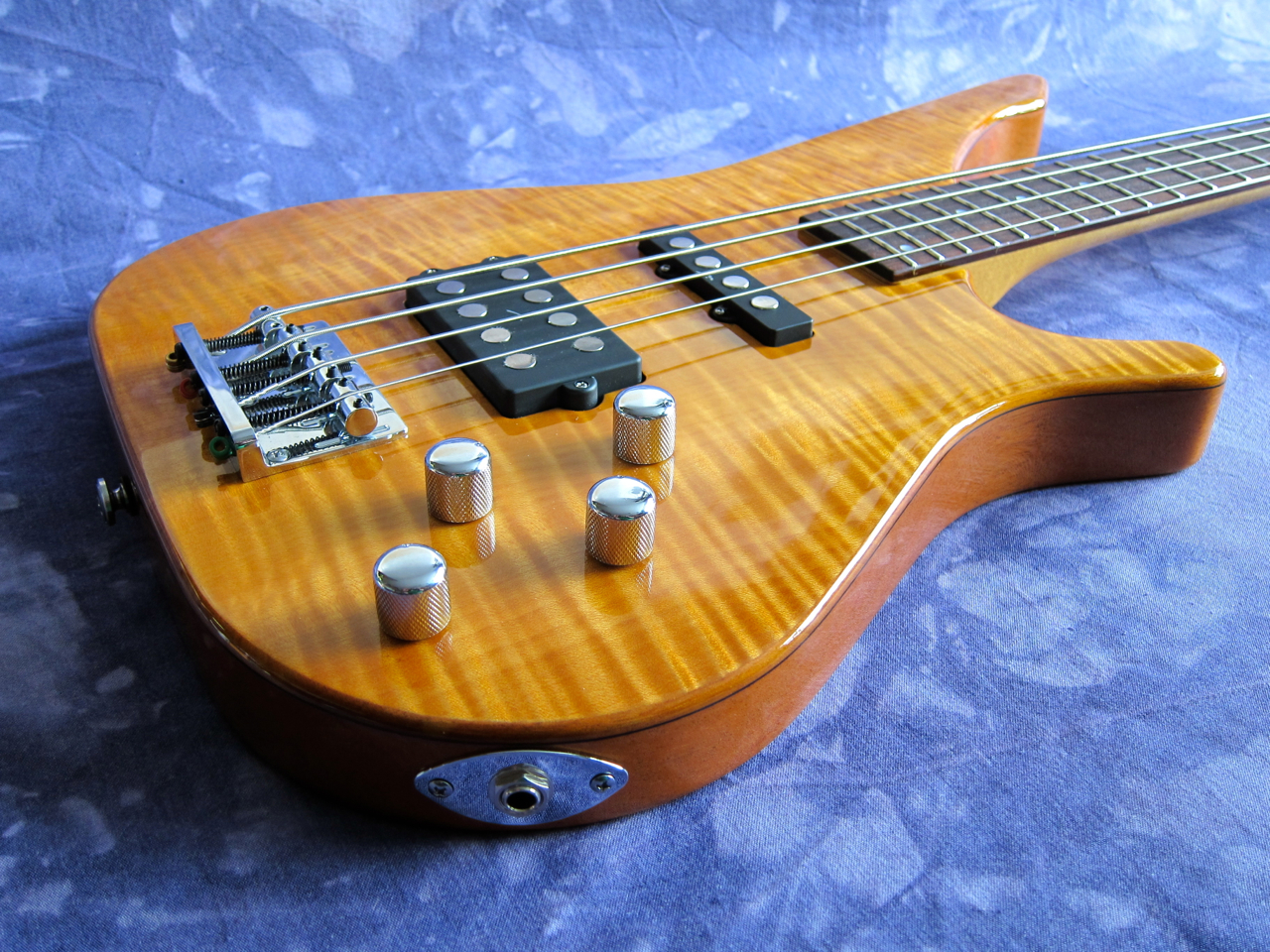
Newport 4T:lla on neljä säädintä – master volume, mikkibalanssi, basson korostus/vaimennus, sekä diskanttin korostus/vaimennus.

****

Virittimien tavoin myös Newportin talla on Gotoh:n laatuosa – vintagea jämäkämpi versio perinnetallasta.

****

Laadukas, paksusti topattu laukku kuuluu hintaan.

****

Testisoitin on mukavan kevyt yksilö. Pitkän yläsarven ansiosta Mannedesign Newport 4T:n balanssi on erinomainen myös hihnalla, ja basso asettuu nätisti haluttuun soittoasentoon.

Vaikka rungossa ei ole lainkaan Fender-kaltaisia mukavuusviistoja, Newport tuntuu huomattavasti pehmeämältä kuin esimerkiksi kulmikkuudestaan tunnettu Rickenbacker 4003. Mannen suunnittelijat ovat nimittäin hyvin huomaamattomasti lisänneet bassoonsa kaarevuuta joissakin kohdissa – esimerkiksi oikean käsivarren alla runko on ohuempi kuin muualla. Tämän ansiosta Newport on huomattavasti mukavampi tuttavuus kuin edellämainittu klassikko.

****

Newport 4T:n vahvistettu soundi on erittäin hyvässä balanssissa. Atakki ja dynamiikka ovat hyvässä kunnossa, ja sointi on vapaa häiritsevistä sivuäänistä tai resonansseista.

Hyvin laadukas aktiivinen elektroniikka oli positiivinen yllätys – taajuuskorjaimet toimivat musikaalisesti, ja etuvahvistimen kohinataso on hyvin alhainen.

Yksikelainen kaulamikrofoni poimii luonnollisesti pienen annoksen ulkoisia häiriöitä mukaan, silloin kuin se on miksattu mukaan, mutta ei lainkaan ongelmallisissa määrissä. Tehokas tallahumbuckeri tekee itsestään hieman isomman numeron, muttei koskaan pääse täysin dominoimaan ketterää kaulamikrofonia.

Tässä kolme esimerkkisoundia (järjestyksessä: kaulamikki – molemmat – tallamikki):

Mannedesign Newport 4T – plektralla

Mannedesign Newport 4T – släpsoitto

Mannedesign Newport 4T – sormisoitto

Mannedesign Newport 4T on kaunis, omaperäinen ja vahvalla äänellä puhuva keskihintainen laatusoitin, joka sopii käytännössä kaikkiin musiikkityleihin yhtä hyvin.

****

Mannedesign Newport 4T

883,14 €

Maahantuoja: Nordsound

****

Plussat:

+ kaunis muotoilu

+ työnjälki

+ soitettavuus

+ soundi

+ aktiivielektroniikan laatu

Miinukset:

– testiyksilön mikrofonien navoilla hieman metallipölyä/-puruja

****

Gibson Custom Shop – Paul Kossoff Les Paul

****

Paul Kossoff was the guitar powerhouse behind Free’s earthy Blues Rock sound.

Now Gibson Custom are honouring the late guitarist with a limited replica of his famous guitar with the release of the Paul Kossoff 1959 Les Paul Standard.

The Paul Kossoff -model is available as an aged replica or in Gibson’s VOS-format.

Paul Kossoff oli kitaristina Free-yhtiön Blues Rock -soundin kulmakivi.

Gibson Custom on hiljattain esittänyt uuden Paul Kossoff 1959 Les Paul Standard -mallinsa, joka on firman kunniaosoitus nuorena kuolleelle brittikitaristille.

Paul Kossoff -mallin saa joko täydellisenä jäljitelmänä (relic) tai Gibsonin VOS-viimeistelyllä.

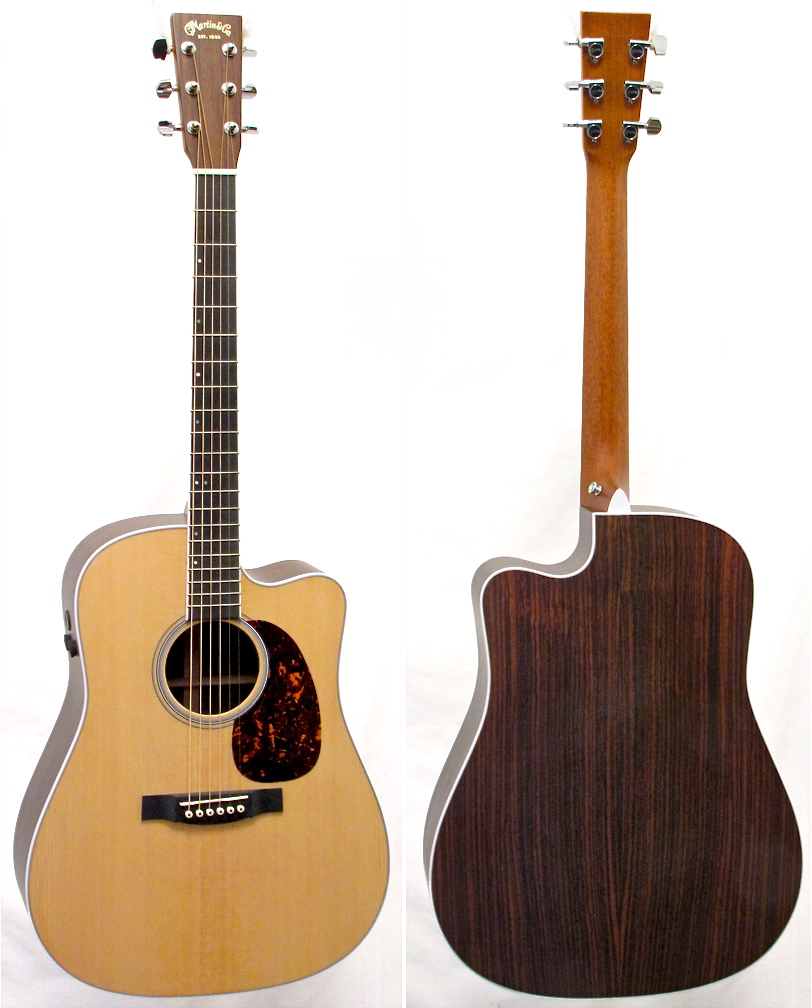
C. F. Martin DCPA3 – Fishman Aura F1 -sounds

Ever wondered what the Fishman Aura F1 system installed on some Martin-guitars sounds like?

My pal Sami got a DCPA3 as his birthday present the other day, and he recorded a short demo of all nine Images for us. The sounds you’ll hear are recorded direct, using Image at full and no EQ.

The Aura F1 offers nine Images, which use convolution and modelling technology to transform the relatively bland tone of a piezo transducer into the lush timbre of an acoustic guitar recorded with a quality microphone.

Martin DCPA3 – Aura F1

****

For more info on the Martin DCPA3 go here or here.

****

****

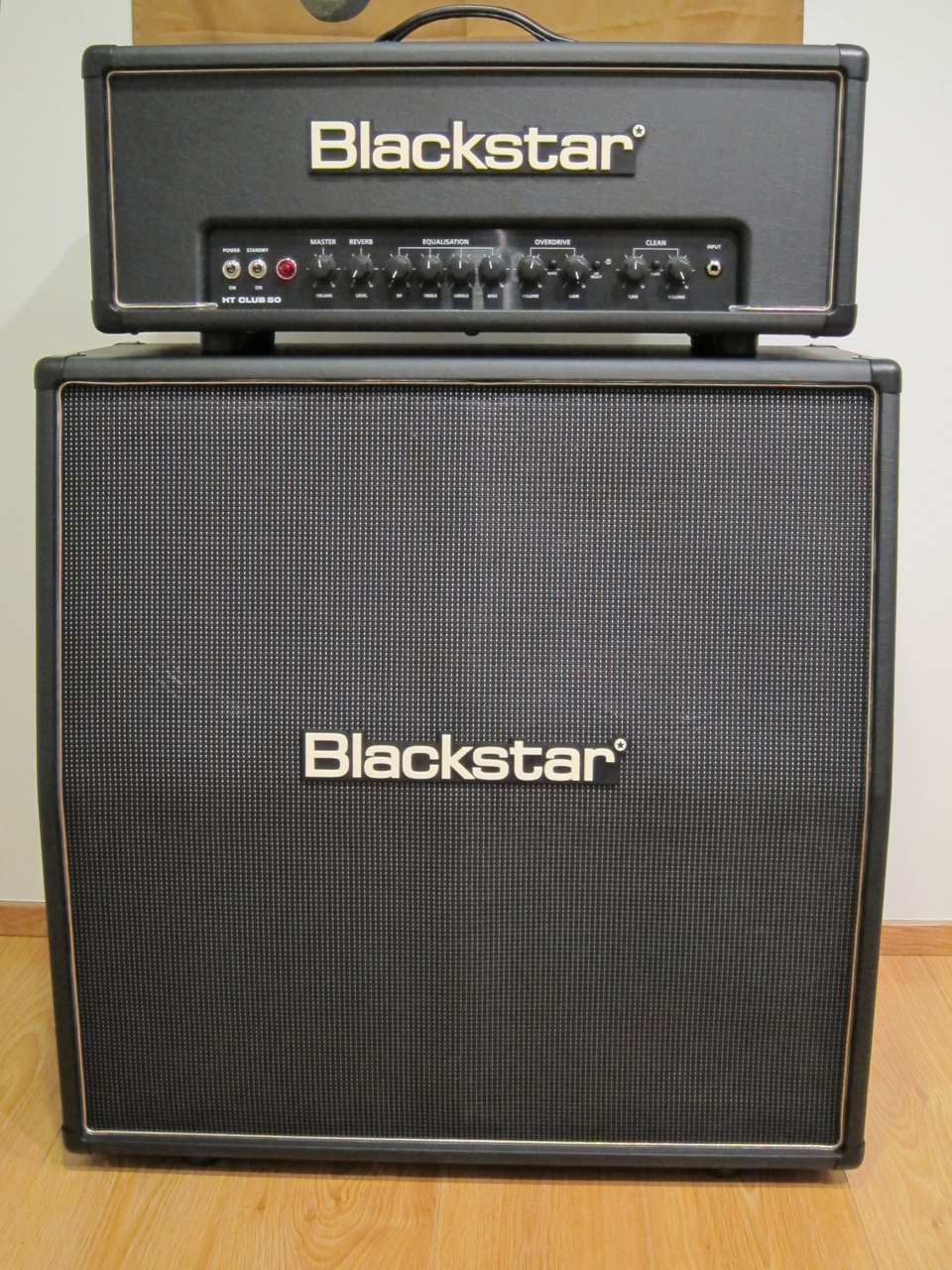
Review: Blackstar HT Club 50 and HTV-412A

Blackstar is one of the hottest guitar amp companies around at the moment. Their first Series One -heads have found their way into many a professional’s back line, due to their muscular tone and extreme versatility. Their more recent sweet little HT-5 and HT-1 combos can already be found in many studios and living-rooms around the globe.

New from Blackstar comes the HT-Venue-range. This series promises to offer more affordable amps that still aim to give you the full ”Blackstar Experience”.

****

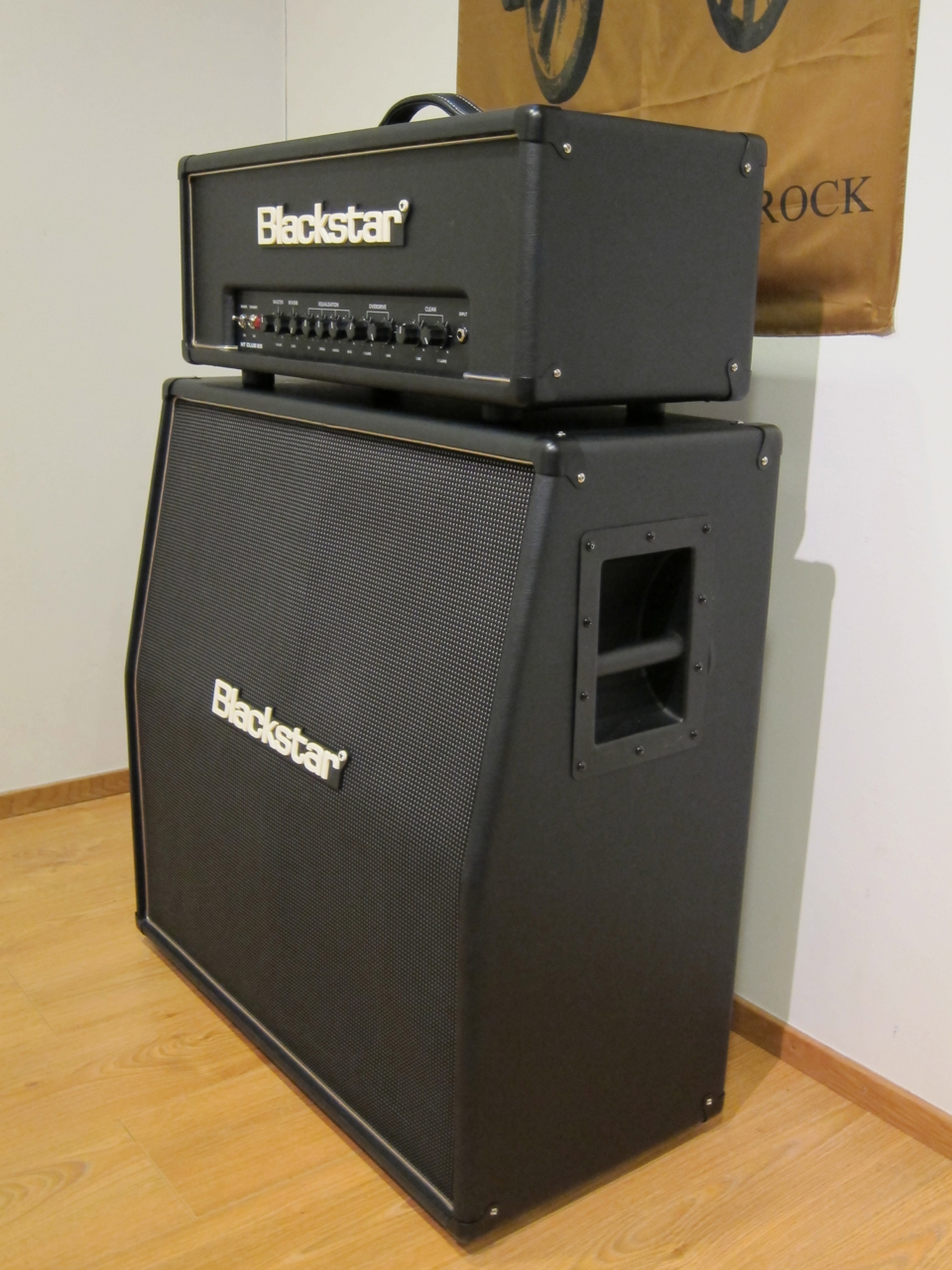
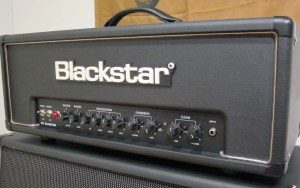
Kitarablogi.com got the 50 Watts HT Club 50 head (current price in Finland: 591 €), as well as the Celestion-equipped HTV-412A cabinet (current price in Finland: 435 €) for reviewing.

The whole Blackstar range is engineered in the UK, but built in South Korea. The Venue-half-stack looks very stylish, with somewhat more of a vintage-type charm compared to Series One models.

Workmanship is top-notch – this gear clearly made to stand the rigours of the road.

****

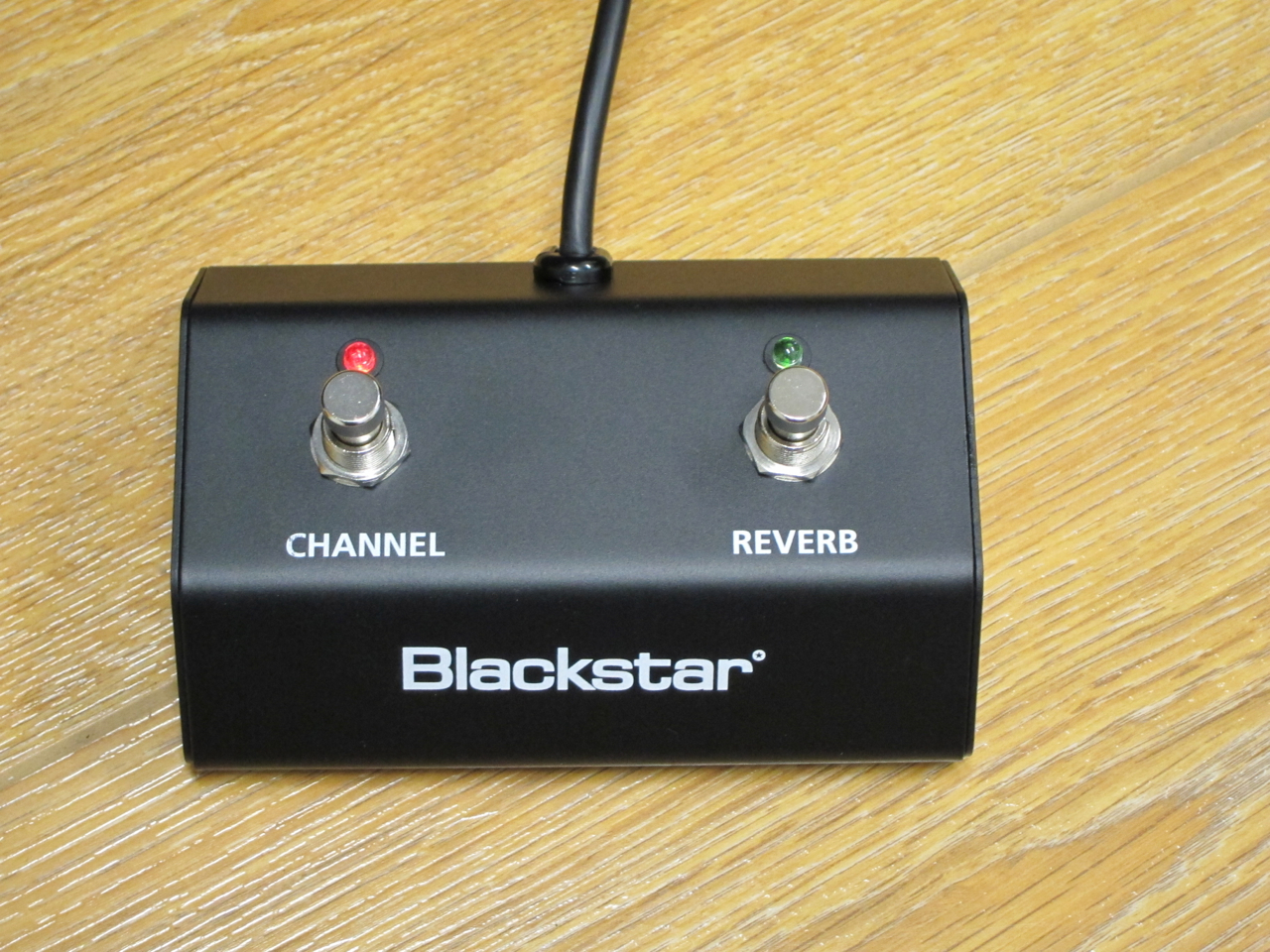
The HT Club 50’s two-switch pedal is a sturdy little number…

…but I feel that its practicality could be improved significantly with some skid-resistent material stuck to its underside.

****

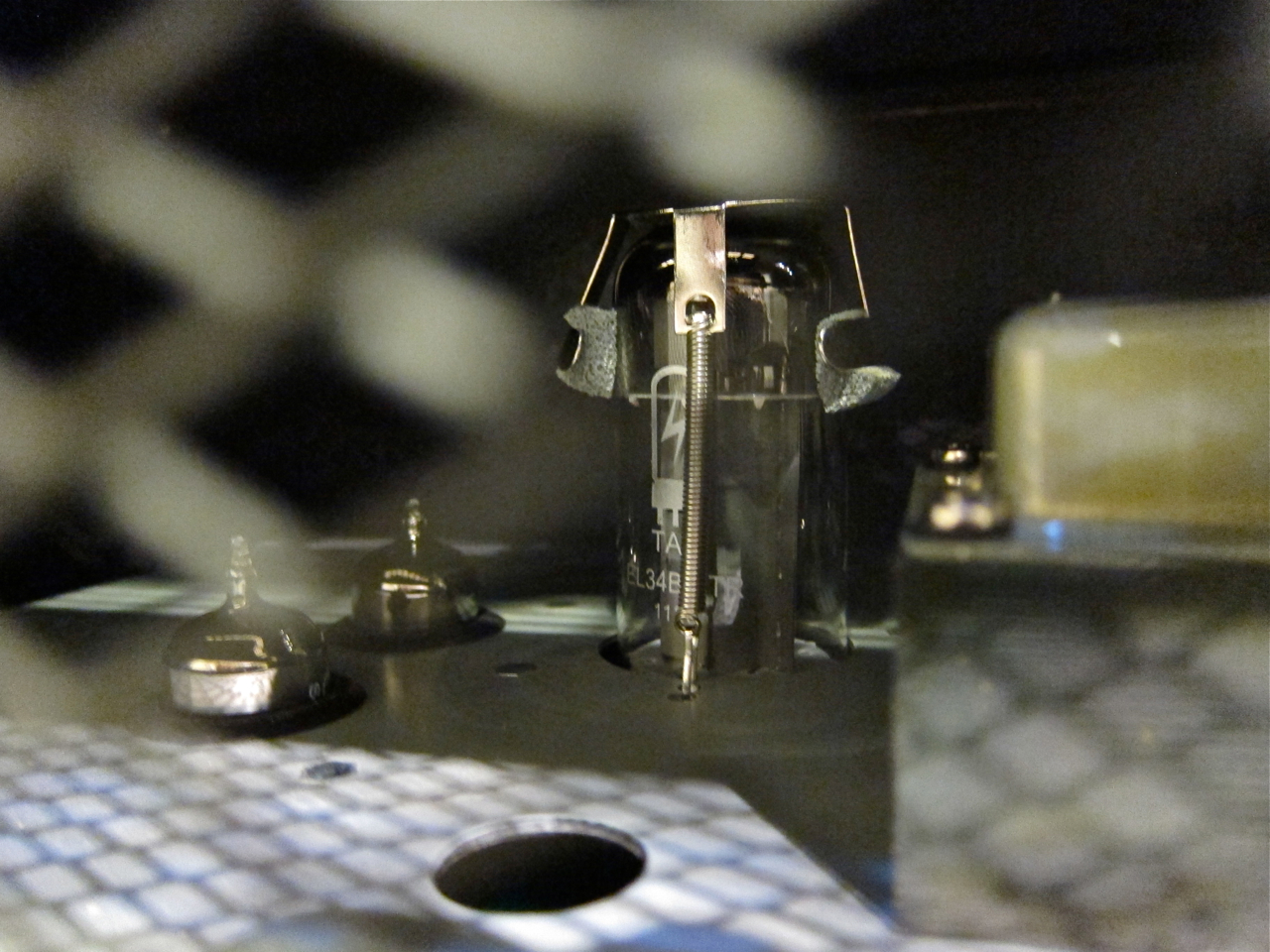
The head’s insides look very tidy, and the quality of the components used is reassuring.

We find a pair of ECC83-tubes working in the HT Club 50’s preamp, as well as twin EL34s making up the power amp section, which steers performance expectations in a Marshall-ey sort of direction.

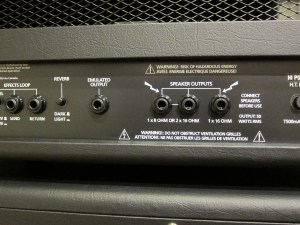
The HT Club 50 sports three cabinet outputs on its back panel for different cabinet configurations…

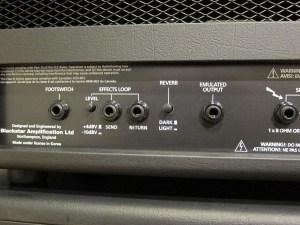
…as well as an excellent speaker-emulating direct output. The Reverb-switch offers you the choice between a full-bodied version and a leaner counterpart of the nice digital reverb’s offerings. Next to it there’s the effects loop.

****

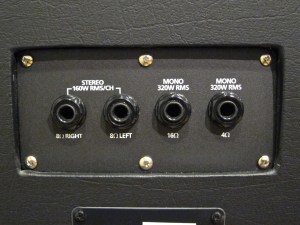
Blackstar’s angled HTV-412A cabinet can be run in mono or in stereo, the latter splitting the cabinet’s four 12″ speakers into groups of two.

****

The head is a two-channel affair, but as usual with Blackstar, each channel has its own ace up its proverbial sleeve:

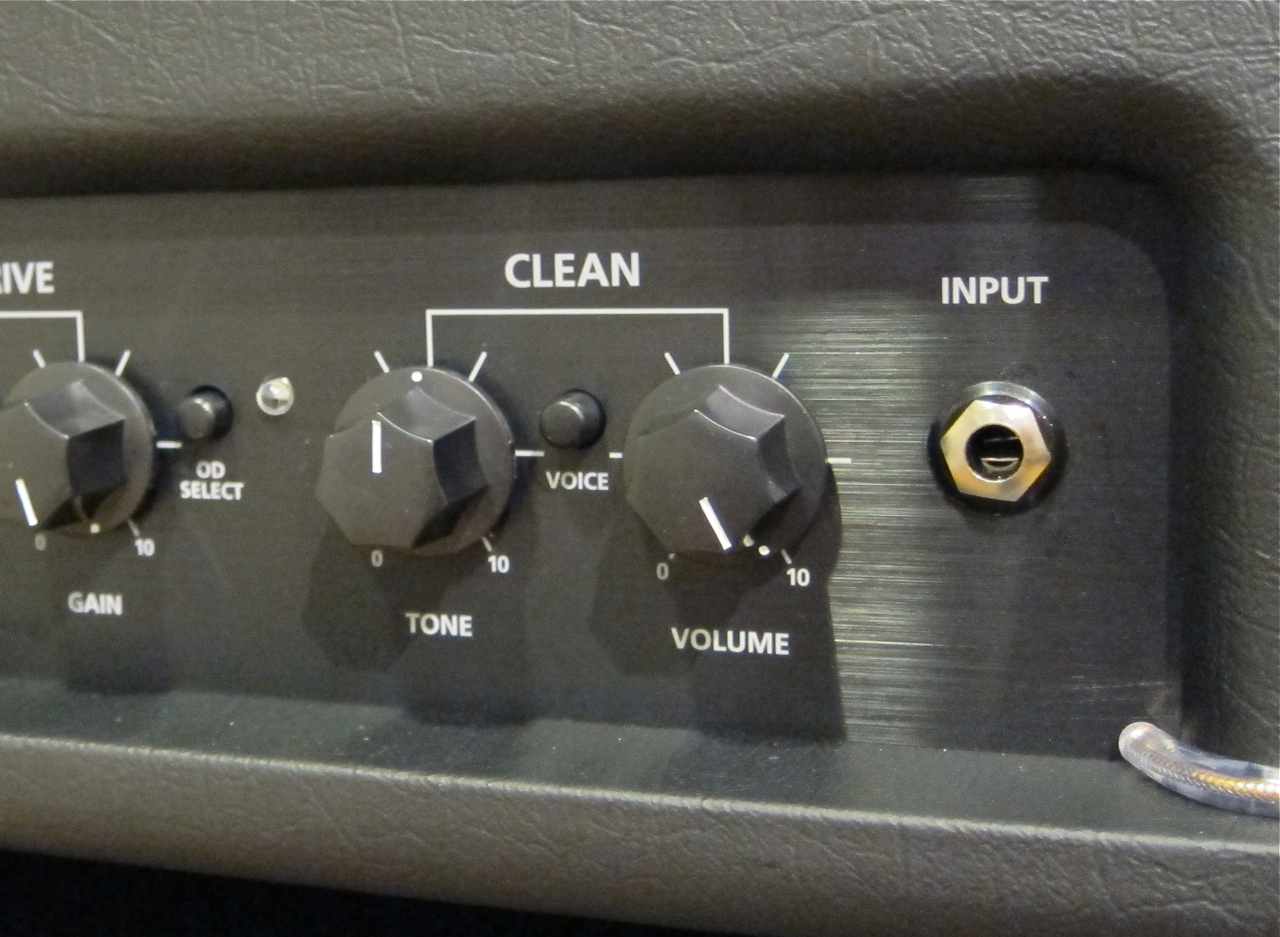
The Clean channel is ease-of-use embodied, offering only two simple controls for volume and tone. But the Voice-button opens up the gates to two different worlds of clean:

Modern Clean has headroom in spades and stays clean and transparent at virtually all gain settings, regardless of the guitar used.

Boutique Clean, on the other hand, is a much more interactive beast, with some tasty sag, compression and even overdrive on offer, once you turn up the wick a little bit (or when using hot pickups).

Strat – Modern Clean

Strat – Boutique Clean

Strat – Boutique Clean overdriven

****

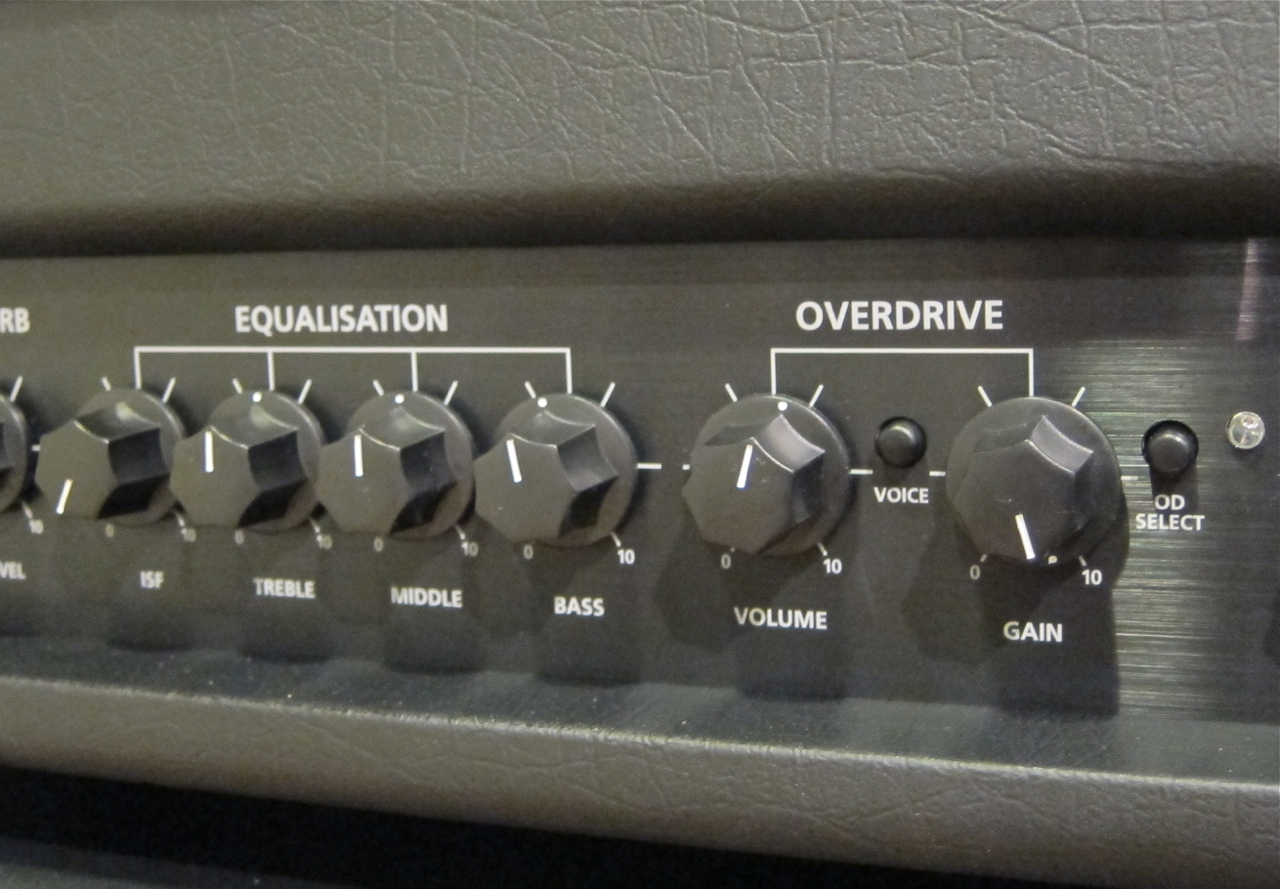
The Overdrive channel offers a bit more in terms of adjustability: Adding to the gain and channel volume knobs, it has a three-band EQ, as well as Blackstar’s ingenious ISF-control.

ISF stands for Infinite Shape Feature. While the knob may have been placed together with the tone controls, ISF offers far more than a simple tone-tweaking. With ISF at zero the amp behaves like a typical US-style amp – there’s a tight bottom end, the attack is very precise and the tone has a light loudness-curve applied. With ISF at ten the amp sounds significantly warmer with a crunchy mid-range and a healthy amount of softening sag at higher gain levels.

When you keep in mind that the Overdrive channel also is equipped with its own Voice-switch – Classic Overdrive leaning towards typical Marshall-territory, and Modern Overdrive going the Rectifier-way – the options opening up before you are sheer endless and truly staggering.

Hamer – Classic Overdrive ISF UK

Hamer – Classic Overdrive ISF USA

Strat – Modern Overdrive ISF UK

Strat – Modern Overdrive ISF USA

****

In my opinion Blackstar’s HT Club 50/HTV-412A half-stack is one of the best guitar amps out there at the moment, not even taking into account its relatively low price. It is quite rare to find an amp, which gives you great clean and overdriven tones from the get-go, without having to touch the EQ section first. Blackstar’s HT Club 50 is one such amp, where the EQ section is really only used for fine-tuning the tone, and not for rectifying the amp’s shortcomings.

Yes, there are a few finer details where corners have been slightly cut (in comparison to a Series One head) to be able to achieve the HT Club 50’s keen price point, but it still gives you the genuine Blackstar-tones and -versatility, without any foul compromises.

Due to its versatility this is one amp that’s hard to pidgeonhole into a one-trick pony. The HT Club 50 is a great choice if you appreciate versatility in a gig-worthy package.

****

Blackstar HT Club 50 & HTV-412A

Finnish distribution: Musamaailma

****

Blackstar HT Club 50

current price in Finland: 591 €

Pros:

+ price

+ workmanship

+ basic tone

+ versatility/ISF

+ power

+ reverb

Cons:

– no indicator LEDs for the Voice-buttons

– pedal slides around on hard surfaces

****

Blackstar HTV-412A

current price in Finland: 435 €

Pros:

+ price

+ workmanship

+ can be run in stereo

+ compact size

+ sensible placing of handles

****

Hot Club de Finlande and Guests @ Jazz Festival Rataplan, Antwerp 1/2012

****
Here’s a breathtaking version of Sweet Georgia Brown by Finnish Gypsy Jazz specialists Hot Club de Finlande.

Hot Club de Finlande are:

Ari-Jukka Luomaranta (rhythm-guitar), Ari Tarvainen (double-bass) and Olli Soikkeli (lead-guitar).

Guests on this track are the inimitable Vitali Imereli on violin and the Netherland’s own Paulus Schäfer on lead-guitar.

****

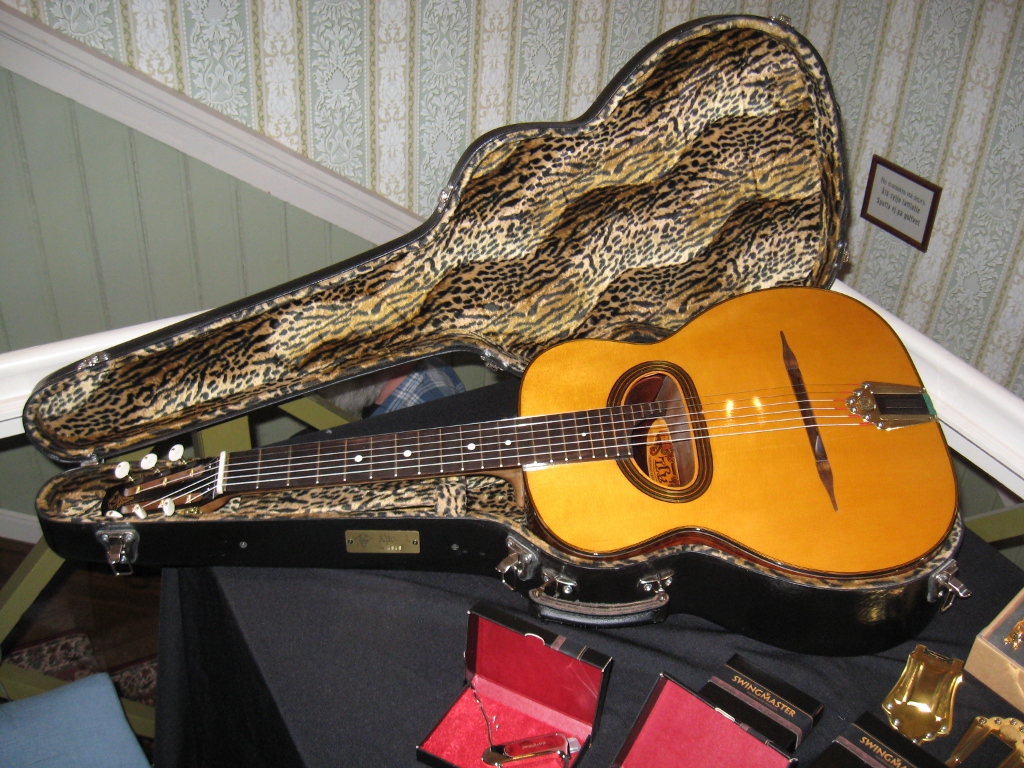
Rhythm guitarist Luomaranta is the creative genius behind AJL-Guitars, one of the top builders of Selmer-Maccaferri-style guitars in the world today. Check him out!

Testipenkissä: Blackstar HT Club 50 ja HTV-412A

Blackstar on yksi tämän hetken kuumimmista nimistä kitaravahvistimien keskuudessa. Alkuperäinen lippulaivasarja Series One on löytänyt tiensä monen ammattilaisen backlineihin erittäin terveen perussoundinsa ja monipuolisten muokkausmahdollisuuksiensa ansiosta. Myös pikkuiset HT-5 ja HT-1 -kombot laulavat nykyään jo monissa studioissa ja olohuoneissa.

Blackstarin uutuus on HT-Venue-mallisto. Sarja tarjoaa hieman edullisempia vahvistimia, joista pitää kuitenkin lähteä se aito Blackstar-soundi.

****

Testissä oli Venue-sarjan 50-wattinen HT Club 50 -nuppi (591 €) sekä neljällä 12-tuumaisella Celestionilla varustettu HTV-412A-kaappi (435 €).

Englannissa suunniteltu ja Etelä-Koreassa rakennettu puolistäkki on erittäin tyylikäs kokonaisuus, jolla on Series Oneen verrattuna hieman hillitympi, vintage-tyylinen charmi.

Työnjälki on erinomainen, ja sekä nuppi että kaappi on selvästikin suunniteltu ammattivaatimukset täyttäviksi.

****

Kahdella kytkimellä varustettu jalkakytkin on sekin vankkaa tekoa…

…mutta olisin mielelläni nähnyt sen pohjassa jotakin liukumista estävää materiaalia.

****

Nupin sisäinen siisteys ja käytettyjen komponenttien laatu vahvistavat vaikutelman tämän putkilaitteen luotettavuudesta.

HT Club 50:n etuaste on varustettu kahdella ECC83-putkella, kun taas pääteputkina toimii kaksi EL34-mallia. Liikutaan siis tässä suhteessa perinteisillä Marshall-vesillä.

HT Club 50:n takapaneeli tarjoaa kolme lähtöä erilaisia kaiutinkaappeja varten…

…sekä erinomaisen linjalähdön kaiutinsimulaatiolla. Reverb-kytkimellä voi valita luonteeltaan täyteläisemmän tai ohuemman digikaiun välillä. Myös efektilenkki löytyy takapaneelista.

****

Blackstar HTV-412A -kaappia voi käyttää myös stereona.

****

Blackstar-nuppi on kaksikanavainen, mutta kummallakin kanavalla on – firman tapaan – oma ässänsä hihassa:

Puhdas Clean-kanava näyttää hyvin simppeliltä – kanavan volume-säädin, sekä yksi master tone. Voice-kytkin antaa käyttäjälle kuitenkin mahdollisuuden valita kahden eri vahvistintyypin välillä:

Modern Clean on putipuhdas, helisevä ja runsaalla headroomilla varustettu vaihtoehto, joka pysyy vankkaasti puhtaana volumen asetuksista ja kitaratyypistä riippumatta.

Boutique Clean taas on selvästi kaksikon juurevampi tapaus, jolla volumen lisääminen – tai tehokkailla mikeillä varustetulla kitaralla soittaminen – johtavat kompressioon ja loppumetreillä myös soundin herkkullisen rosoiseen säröitymiseen.

Strat – Modern Clean

Strat – Boutique Clean

Strat – Boutique Clean särösoundi

****

Overdrive-kanavan varustus on Clean-kanavaa runsaampi: Gain- ja kanavavolume-säätimien lisäksi on tarjolla kolmialueinen EQ, sekä Blackstarin patentoima ISF-säädin.

Lyhenne ISF tulee sanoista Infinite Shape Feature. Vaikka säädin on sijoitettu EQ-osastoon, sen toiminta ulottuu paljon laajemmalle alueelle. Kun ISF on nolla-asennossa vahvistimen särökanava kuulostaa amerikkalaiselta vahvistimelta ja käyttäytyy sellaiseen tavoin – basso on hyvin tiukka, atakki on tarkka ja soundissa on kevyt loudness-tyylinen EQ-käyrä. Kun taas väännetään ISF:ää täysin auki ollaan keskellä brittiläistä meininkiä, jossa basso ja tuntuma ovat hieman löysempi ja keskialue on selvästi täyteläisempi ja lämpimämpi.

Kun tähän lisätään vielä Overdrive-kanavan Voice-kytkin, jolla pystyy valitsemaan Marshall-tyylisen Classic Overdriven sekä Rectifier-tyylisen Modern Overdriven välillä, on selvää, että Blackstar HT Club 50:n soundivaihtoehdot ovat lähes rajattomat.

Hamer – Classic Overdrive ISF UK

Hamer – Classic Overdrive ISF USA

Strat – Modern Overdrive ISF UK

Strat – Modern Overdrive ISF USA

****

Mielestäni Blackstarin HT Club 50/HTV-412A-yhdistelmä edustaa tämän hetken puolistäkkien aatelistoa, edullisesta hinnastaan huolimatta. On hyvin harvinaista, että vahvistimesta saa heti kättelyssä irti maukkaat puhtaat ja särösoundit, taajuuskorjaimiin koskematta. Blackstarin HT Club 50 on juuri sellainen harvinainen tapaus, jossa EQ:ta voi todellakin käyttää vain soundien hienosäätämiseen, eikä soundillisien epäkohtien korjailuun.

Kyllä, vanha kettu huomaa HT Venue -sarjan ja Series One -vahvistimien väliset pienet erot, mutta HT Club 50 -nupiin on silti mahdutettu mukaan koko Blackstar-maailma ilman häiritseviä kompromisseja.

Monipuolisuutensa ansiosta HT Club 50 on miltei mahdoton lokeroida, ja näin rajoittaa ainoastaan tiettyyn genreen sopivaksi. Puolistäkki on loistava valinta, kun tarvitaan monipuolista soundia järkevällä teholla myös hiukan isompia keikkoja varten.

****

Blackstar HT Club 50 & HTV-412A

Mahantuoja: Musamaailma

****

Blackstar HT Club 50

hinta: 591 €

Plussat:

+ hinta

+ työnjälki

+ perussoundi

+ monipuolisuus/ISF

+ teho

+ kaiun soundi

Miinukset:

– Voice-kytkinten asento vaikea tulkita (ei merkkivaloa)

– jalkakytkin liukuu kovalla alustalla

****

Blackstar HTV-412A

hinta: 435 €

Plussat:

+ hinta

+ työnjälki

+ toimii myös stereona

+ kompakti koko

+ kantokahvojen sijainti

****

Classic Guitars, part 9: Fender Jazzmaster and Jaguar

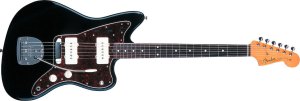
The Fender Jazzmaster was introduced in 1958 as a conscious effort to broaden Fender’s user base and appeal.

The company’s first efforts – the now legendary Telecaster and Stratocaster models – had already proven to be successful, but were then still widely perceived as bright-sounding guitars for Country & Western, as well as early Rock ’n’ Roll. Now Leo Fender and his team were aiming for the more ”serious” guitarists of the Jazz and Easy Listening genres.

Fender kept the standard long Fender-scale (25.5″), but – for the first time – added a rosewood fingerboard. The reasons for the rosewood board were both cosmetic – it looked classier than the lacquered maple of previous models – as well for tonal reasons, with rosewood imbuing the sound with a warmer timbre. The Jazzmaster was also the company’s first guitar with an enlarged version of the Strat-headstock, which was meant to combat dead spots and wolf-tones.

The body was a brand-new design premiering the company’s patented offset waist feature, meant to improve balance, especially when playing seated.

A new, front-mounted vibrato with a softer, spongier action (meant as a direct competitor to Bigsby’s models) was also devised. The vibrato – which worked with a separate, rocking bridge – was easy to adjust from the front, and also featured a locking mechanism for disabling the system (and keeping the guitar in tune even after a string breakage).

The most important changes took place in the electronics of the Jazzmaster: The pickups were clearly Fender’s attempt at getting a Gibson P-90 -type tonality, with the wide and flat coils. The controls featured two different circuits, with the normal circuit offering a 3-way toggle switch, as well as a master volume and tone control. A slide switch on the scratchplate’s upper shoulder engaged the so-called Rhythm Circuit, which switched on only the neck pickup going through its own set of volume and tone controls (above the neck pickup).

After a first wave of enthusiasm over Fender’s new top-of-the-line guitar, the Jazzmaster’s success sadly waned. Most conservative Jazz guitarists wouldn’t touch Fender’s ”plank” with a barge pole, and still considered the sound as too bright, while the company’s usual customers were perfectly happy with their more straightforward Strats and Teles.

The biggest genuine problem with Jazzmasters lies in their singlecoil pickups, which take in a lot of extraneous hum and interference (just like P-90’s do).

Modern players also tend to complain about the vibrato system’s flimsy bridge saddles, although, in fairness, one should note that this is mostly due to our modern light string gauges. The Jazzmaster-vibrato had been designed at a time when ”light gauge” meant an 012-set with a wound g-string.

Today the Jazzmaster’s appeal lies mostly in the alternative field, and not too many name players spring to mind:

Thurston Moore and Lee Ranaldo (Sonic Youth), J Mascis (Dinosaur Jr.), as well as British songwriter Elvis Costello are the most well-known Jazzmaster players.

****

In 1962 Fender took the Jazzmaster as the basis for a brand-new model, geared towards Surf and Pop guitarists – called the Fender Jaguar.

The Jaguar was Fender’s first guitar with 22 frets, and it featured a relatively short scale of 24″ (even shorter than Gibson’s usual 24.75″). The general look stayed in place, but the Jaguar was adorned with glitzy chrome control plates.

Fender took the criticisms over the Jazzmaster-pickups to heart and designed new pickups for the Jaguar. The new units are reminiscent of Strat-pickups, but feature slightly higher coils, as well as metal shielding plates that enclose most of the pickups’ bottom and sides.

The normal/Rhythm-circuit set-up stayed in place, but the normal circuit now featured three slide switches – an on/off-switch for each pickup, plus a ”strangle” switch that cuts all bottom end from the output signal.

The Jaguar originally also came equipped with a detachable mechanical string mute, which wasn’t well-received by guitar players.

Sadly, the Jaguar’s fate followed along the Jazzmaster’s lines – after a first wave of success sales dwindled in the wake of the British Invasion.

The most famous names associated with the Fender Jaguar are Carl Wilson (The Beach Boys), Kurt Cobain (Nirvana) and Johnny Marr (The Smiths, Modest Mouse).

As with the Jazzmaster, the Jaguar has seen a resurgence of sorts over the past few years, with many new and modified versions springing up, such as the Fender Blacktop Jaguar HH.

Review: Zoom R24 -multitracker

****

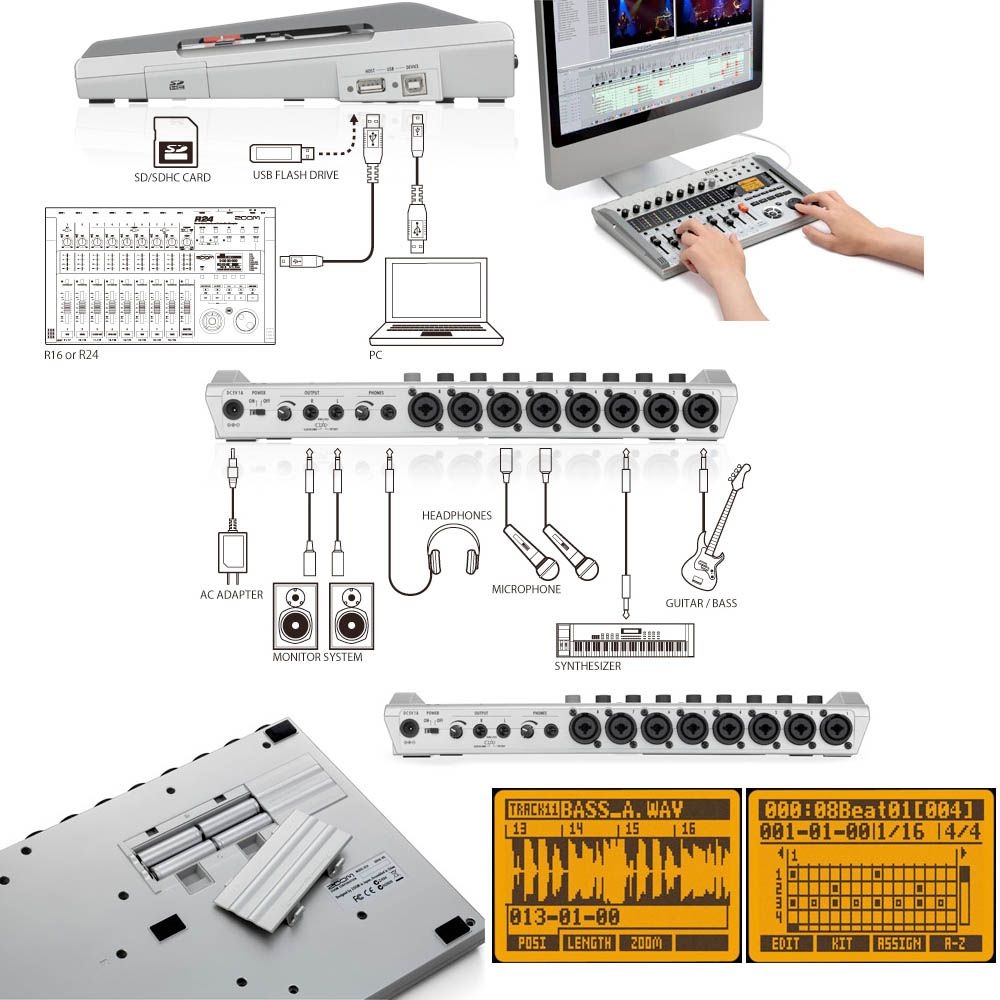
The Zoom R24 (current street price in Finland: 479 €) is a compact and very lightweight, but still quite nifty and versatile unit: The Zoom’s main purpose is to serve as a stand-alone digital multitracker (24 tracks, recording to SD-cards), but it can also be used with a computer as an external soundcard and/or a control surface for an audio sequencer (Cubase LE 5 comes included in the box).

The R24 is ready to go wherever you want to use it, thanks to its ability to run on six AA-batteries, as well as with the included, compact power supply.

This Zoom offers eight XLR/phone-combo inputs, which equals the maximum number of simultaneous recording tracks.

****

Zoom have kept the R24’s signal routing deliberately spartan and easy-to-use. Each of the inputs is hardwired to its corresponding channel fader and from there on to the corresponding recording track. It’s what-you-see-is-what-you get, basically, but with one important twist. As the R24’s mixer deals with 24 tracks, but offers only eight faders, the unit uses the same type of channel bank system, which larger digital consoles also tend to employ.

There are three fader banks (or fader planes) available for use: 1–8, 9–16 and 17–24. In the context of recording this means that each input signal can be assigned to one of the three tracks corresponding to its fader: Input 1, for example can thus be recorded either on Track 1, Track 9 or Track 17.

The R24’s inputs have been equipped ith slightly different features: Input 1 is ready to take direct signals coming froma high impedance instruments, such as an electric guitar, in addition to line level signals. Inputs 3–8 offers switchable phantom power (48 or 24 Volts), while the signal off the built-in stereo condenser mics can only be routed to Inputs 7 and 8.

But what happens if you want to record more than, say, three tracks of direct-injected guitar? No problem! The very handy Swap-button lets you swap the just-recorded track’s content with any other track you want. This means that while you have to record certain signals to certain tracks, you can then easily free up these tracks for new recordings.

****

The Zoom R24 is filled to the brim with useful features: Each mixer channel has its own 3-Band EQ section, as well as two sends to the internal send/return-effect units (Chorus and Reverb). An extremely versatile insert-effect section holds a plethora of fine guitar and bass amp models (lifted from Zoom’s own G2Nu– and B2  effects pedals), as well as algorithms tailored to vocals, drums and keyboards, plus the very useful mastering section.

The sound quality on offer is remarkable for a unit in this price bracket. It would be unrealistic to expect high-end pro-quality effects from what is basically a lower mid-price home recording device. But still, it is quite remarkable what quality you get in return for a modest outlay these days!

As the heart of your own studio, the Zoom also makes it possible to build up loop- and sample-based backings. It is also equipped with a decent built-in programmeable drum machine.

Editing, sampling and looping naturally feels a bit clumsy, when you’re used to grafic interfaces and a large computer display. But with a little persistence and some elbow grease you can achieve astonishing results on a unit such as the R24.

And as if the features so far hadn’t been enough already to make the R24 seem like a real bargain, Zoom is supplying Steinberg’s Cubase LE 5 -sequencer in the box, along with a usb-stick filled with great drum loops by Peter Erskine and Big Fish Audio.

The Zoom R24 is a handily-sized and advantageously-priced little 24-tracker, that will be perfect as you personal demo-machine, or for cutting decent recordings of your band’s rehearsals or gigs in a jiffy. The recording can the be mixed and mastered either internally in the R24 or using and audio sequencer (like Cubase).

And if one of your bandmates happens to own his/her own Zoom R24, you can even slave one machine to the other, and record a whopping 16 tracks simultaneously!

****

Zoom R24 – internal stereo mics – Taylor 110CE

****

Zoom R24

Finnish distributor: Studiotec

Street price: 479 €

Pros:

price

weight and size

ease of use

can be run on batteries

internal stereo microphones

versatile effects

• basic sound

Cons:

all-plastic build

small display

Review: Akai Chorus and Analog Delay – English summary

****

A chorus effect is produced by splitting a signal in two, and then slightly delaying one half (by less than 50 ms) and adding a tad cyclical pitch modulation to it. At the output both the dry and the effected half are summed, resulting in a lush, shimmering effect, which at times may even sound like two instruments playing at once.

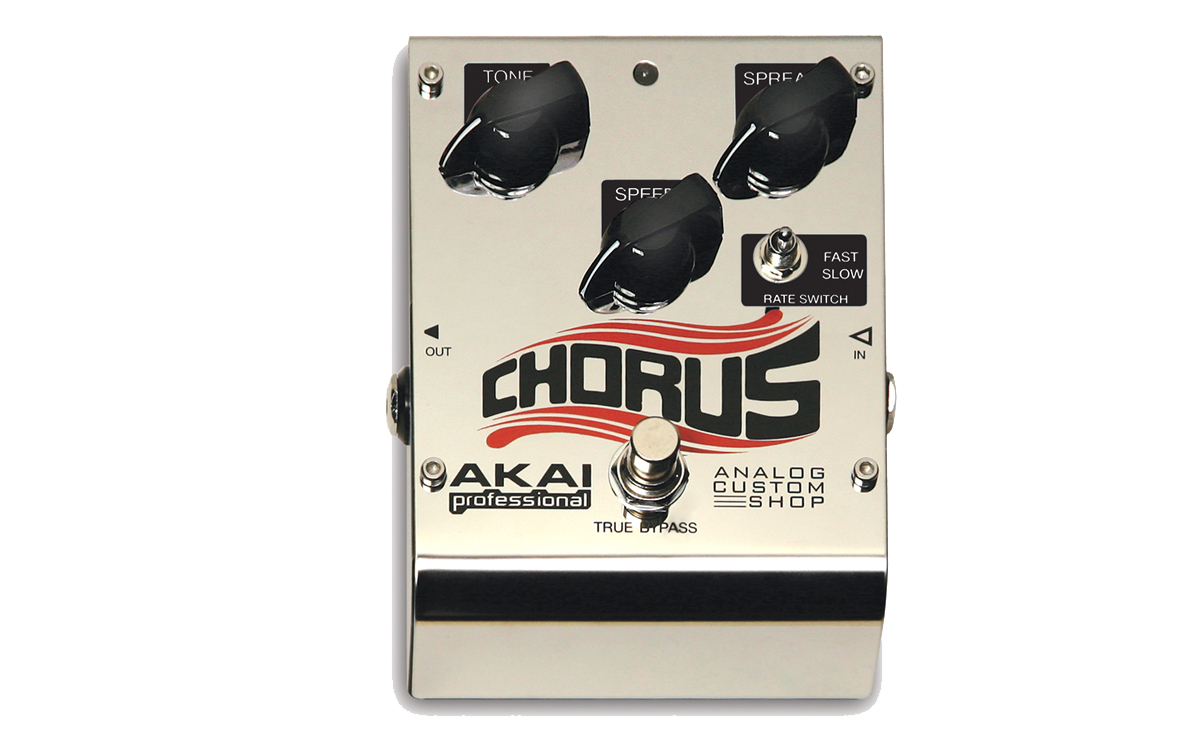
The Akai Chorus (current street price in Finland: 69 €) is an old-school analogue effect. This pedal doesn’t use A/D-converters and digital processing, deriving its tones instead from a good old condenser circuit, as well as an analogue LFO. Most anoraks feel that this is the only way to fly when it comes to chorus-pedals, even if an analogue chorus always tends to contain a tiny amount of hiss, not found in modern digital equivalents.

As with all Akai Analog Custom Shop -pedals, the Chorus also features a sturdy steel chassis and true bypass switching.

The Akai-pedals are powered by one 9 V battery or an optional, Boss-compliant power supply.

Akai’s Chorus is quite a versatile little bugger. The Rate-switch offers two different speed ranges for the LFO, and the Speed-knob takes care of fine-tuning the speed. Spread lets you determine the depth of the chorus effect, while the Tone-knob is self-explicable.

Here’s an example of the Spread-knob’s range: Akai Chorus – Spread-knob

I even tried the Akai Chorus on keyboard sounds:

Akai Delay & Chorus – Clavinet

Akai Chorus – Electric piano

I liked the Akai Chorus’ sound very much, and was positively surprised by its low hiss levels.

A stereo output option might have been great, for those of us who use stereo set-ups on stage, but this is the only drawback of the Akai-pedal, in my opinion.

Most of us do it in mono, though, and in such applications the Akai Chorus performs very nicely, indeed.

****

The first tapeless delay pedals in the Seventies were based on a chain of capacitors and timed electronic switches. The condensers record the incoming signal, while the switches feed the playback of the delayed signal, as well as passing the signal on to the next capacitor in the chain.

Because the principle behind this type of delay is reminiscent of a bucket brigade of people, working together to put out a blaze, these pedals are called bucket brigade delays.

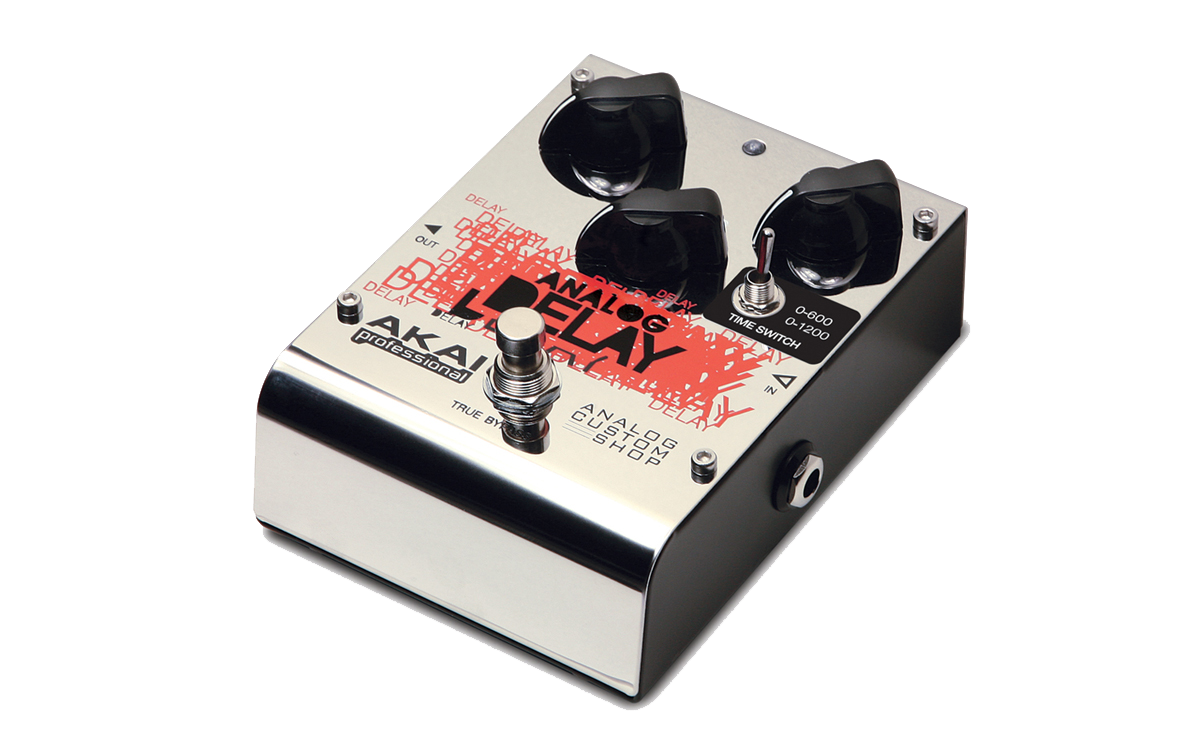
Akai’s Analog Delay (current street price in Finland: 69 €) is such a vintage-type delay.

The coolest bit about a bucket brigade delay is the sound of the delays, which are always rather lo-fi and slightly dirty, with the fidelity deteriorating further with each repeat. Clean and crisp digital delays didn’t arrive on the scene before the early Eighties.

The mini-switch on the Akai lets you choose between two different delay ranges, with the shorter one (0 – 600 ms) offering slightly crisper tones, and the longer one (0 – 1,200 ms) being a bit greasier.

The shorter delay option is perfect for slapback echoes: Akai Analog Delay – Whispering

The longer option lets you build Brian May -style walls of sound: Akai Analog Delay – guitar wall

On high Repeat-settings – two o’clock or above – the delay starts to feed back on itself, with the delay volume increasing and the sound rushing in on you like an avalanche: Akai Analog Delay – feedback avalanche

What a groovy little pedal! Akai’s Analog Delay gives you the authentic tones of a bucket brigade unit, warts and all. The increasing amounts of hiss on the longest settings are a design feature of a vintage-type delay as this, and not a fault. Something for the true lovers of earthy grime!

****

Akai Analog Delay ja Chorus – à la Mr Summers

****

Akai Analog Custom Shop -pedals

Finnish Distributor: Studiotec

****

Akai Chorus

Street price: 69 €

Pros:

+ price

+ sound

+ sturdy build

+ versatile

Cons:

– mono only

****

Akai Analog Delay

Street price: 69 €

Pros:

+ price

+ sound

+ sturdy build

+ long delay times

****

Testipenkissä: Zoom R24 -moniraituri

****

Zoom R24 (katuhinta: 479 €) on pienikokoinen ja erittäin kevyt, mutta silti hyvin näppärä ja monipuolinen laite: Zoomin päätarkoitus on toimia itsenäisenä, SD-kortti-pohjaisena 24-raiturina, mutta tämän lisäksi sitä voi käyttää myös tietokoneen aisaparina, jolloin se on ulkoinen äänikortti sekä audiosekvensserin ohjausalusta (paketissa on mukana Cubase LE 5).

R24:lla voi äänittää milloin ja missä vain, koska se toimii virtalähteen (kuluu hintaan) lisäksi myös kuudella AA-paristolla. Moniraiturin etulaitaan on upotettu myös kaksi mikrofonia – akustista soittoa pystyy siis tallentamaan stereona jopa täysin ilman lisälaiteita.

XLR/jakki-kombotuloja on tarjolla kahdeksan kappaletta, ja moniraiturilla voi äänittää samanaikaisesti enintään sen verran raitoja.

****

Zoomin reititysarkkitehtuuri on pidetty mahdollisimman yksinkertaisena. R24 toimii sen suhteen saat-mitä-näet-periaatteella, mikä tarkoittaa että jokaisen tulon signaali menee vain ja ainoastaan sen alla olevan feiderin kautta siihen kuuluvalle raidalle. Koska liukuja on vain kahdeksan, mutta raitoja tarjolla 24, käyttää Zoom digimiksereistä tuttua pankkimenetelmää, jossa säädettävät kanavat/raidat valitaan kolmesta pankista (1–8, 9–16 ja 17–24).

Tulosignaaleille tämä tarkoittaa, että äänitysvaiheessa jokaista tuloa varten on käytettävissä yksi kolmesta raidasta: esimerkiksi ykköstulon signaalin voi äänittää joko raidalle yksi, yhdeksän tai 17.

R24:n eri tuloissa on eriävät lisäominaisuudet – ykköstuloon voi kytkeä (mikrofonin tai linjasignaalin lisäksi) suoraan myös sähkökitaran tai -basson, ja tuloissa 3–8 on phantomsyötön mahdollisuus (48 tai 24 V). Sisäistä mikrofoniparia taas voi äänittää ainoastaan tulojen seitsemän ja kahdeksan raidoille.

Mutta mitä tapahtuu, jos haluaa tallentaa esimerkiksi kahdeksan sähkökitararaitaa linjasoitolla? Ei hätää – vaikka ykköstulo menee aina suoraan raidalle yksi, yhdeksän tai 17, voi Swap-toiminnolla kätevästi vaihtaa kahden raidan sisällön keskenään. Näin saadaan tässä esimerkkitapauksessa nopeasti ykköstulon raidat vapaaksi uusia kitaraäänityksiä varten.

****

Zoom R24 on varusteltu avokätisesti: jokaisessa mikserikanavassa on oma komialueinen EQ, sekä kaksi lähtöä laitteen sisäisille send-return-effekteille (chorus ja kaiku). Hyvin monipuolinen insert-efektiosasto sisälttää mm. rutkasti vahvistinmallennuksia kitaralle ja bassolle (Zoomin G2Nu– ja B2 -sarjoista), efektiketjuja laululle, rummuille ja koskettimille, sekä omia kiitettäviä masterointiefektejä.

Efektien laatu on laitteen hintaan nähden todella vaikuttava. Se ei luonnollisesti vedä vertoja pro-luokan studion kallisiin räkkilaitteisiin ja softaratkaisuihin, mutta sellaiseen R24 ei olekaan tarkoitettu. Minusta on kuitenkin uskomatonta millaista äänenlaatua saa nykypäivän pikkulaitteista!

Kotistudion keskustana Zoom tarjoaa myös mahdollisuuden rakentaa biisejä sample-/loop-pohjaisesti, ja sillä on myös oma sisäinen, ohjelmoittava rumpukone. Käyttökokemus editoinnissa, samplaamisessa sekä rumpukoneen ohjelmoimissa on pitkän sekvensserisoftien käytön jälkeen luonnollisesti hieman kankeaa, myös pienen näytön vuoksi. Mutta R24:n kohderyhmää silmällä pitäen täytyy kuitenkin myöntää, että näilläkin eväillä homma saadaan toimimaan, kun vaan käyttää ensin hieman aikaa laitteen tutustumiseen.

Houkkutelevaan pakettiin tuovat lisäarvoa Steinbergin Cubase LE 5 -audiosekvensseri (CD-ROM), sekä usb-tikullinen rumpulooppeja, joista osa on rumpali Peter Erskinen äänittämiä ja muut Big Fish Audion tuottamia.

Zoom R24 on kätevän kokoinen ja varsin edullinen 24-raituri, joka soveltuu hyvin ensistudion demokoneeksi tai vaikkapa mobiilistudioksi, jolla saadaan jopa kokonaisen rockbändin harjoitukset tai keikat mutkattomasti talteen. Zoomilla äänitettyä materiaalia voi sitten jatkotyöstää, joko R24:lla tai Cubasella.

Ja jos bändikaverilla on oma Zoom R24, laitteet voi yhdistää toisiinsa usb:llä ja tällä tavoin äänittää jopa 16 raitaa samanaikaisesti!

****

Zoom R24 – sisäiset mikit – Taylor 110CE

****

Zoom R24

Maahantuoja: Studiotec

Katuhinta: 479 €

Plussat:

hinta

kevyt

helppokäyttöinen

toimii myös paristoilla

sisäiset mikrofonit

monipuoliset efektit

• perussoundi

Miinukset:

kotelo muovia

pieni näyttö

Save

Pidä blogia WordPress.comissa.

Ylös ↑