Review: Vox AC10C1

Vox AC10C1 – with guitar 1

The new Vox AC10C1 combo amp nicely bridges the gap between the Custom Series’ AC4C1 four-watter and the 15-watt AC15C1.

****
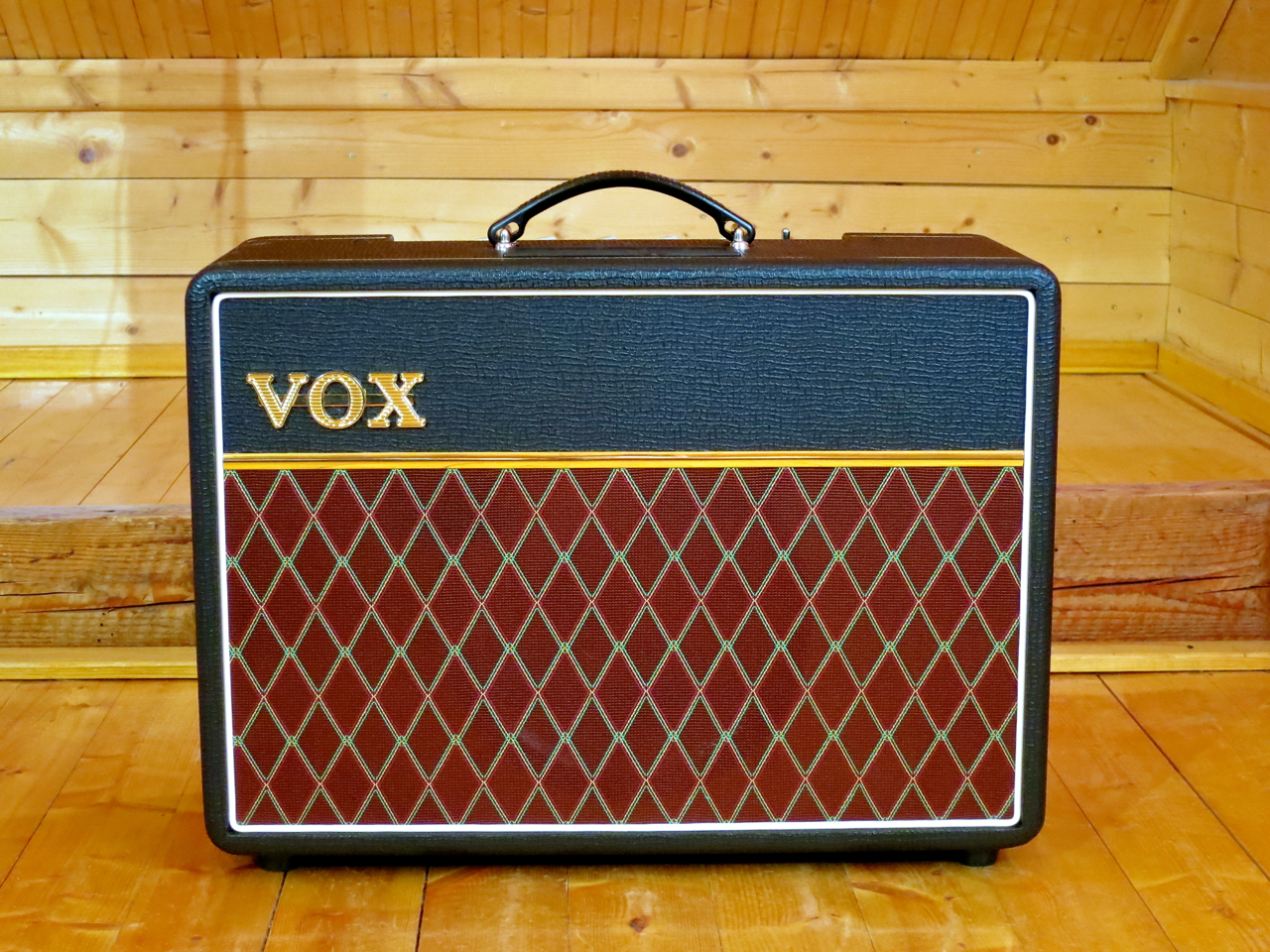
Vox AC10C1 – full front

The Vox AC10C1 (street price in Finland approx. 520 €) isn’t a copy or reissue of any of the AC10 versions from the 1950s or 60s, but rather a modern reinterpretation of the company’s Top Boost-theme in a more compact guise, and made in China, just like the rest of the Custom Series.

This being so, the new AC10C1 amp does away with the old version’s vibrato effect, adding instead such welcome modern features as a quality digital reverb, and separate Gain and (Master) Volume controls.
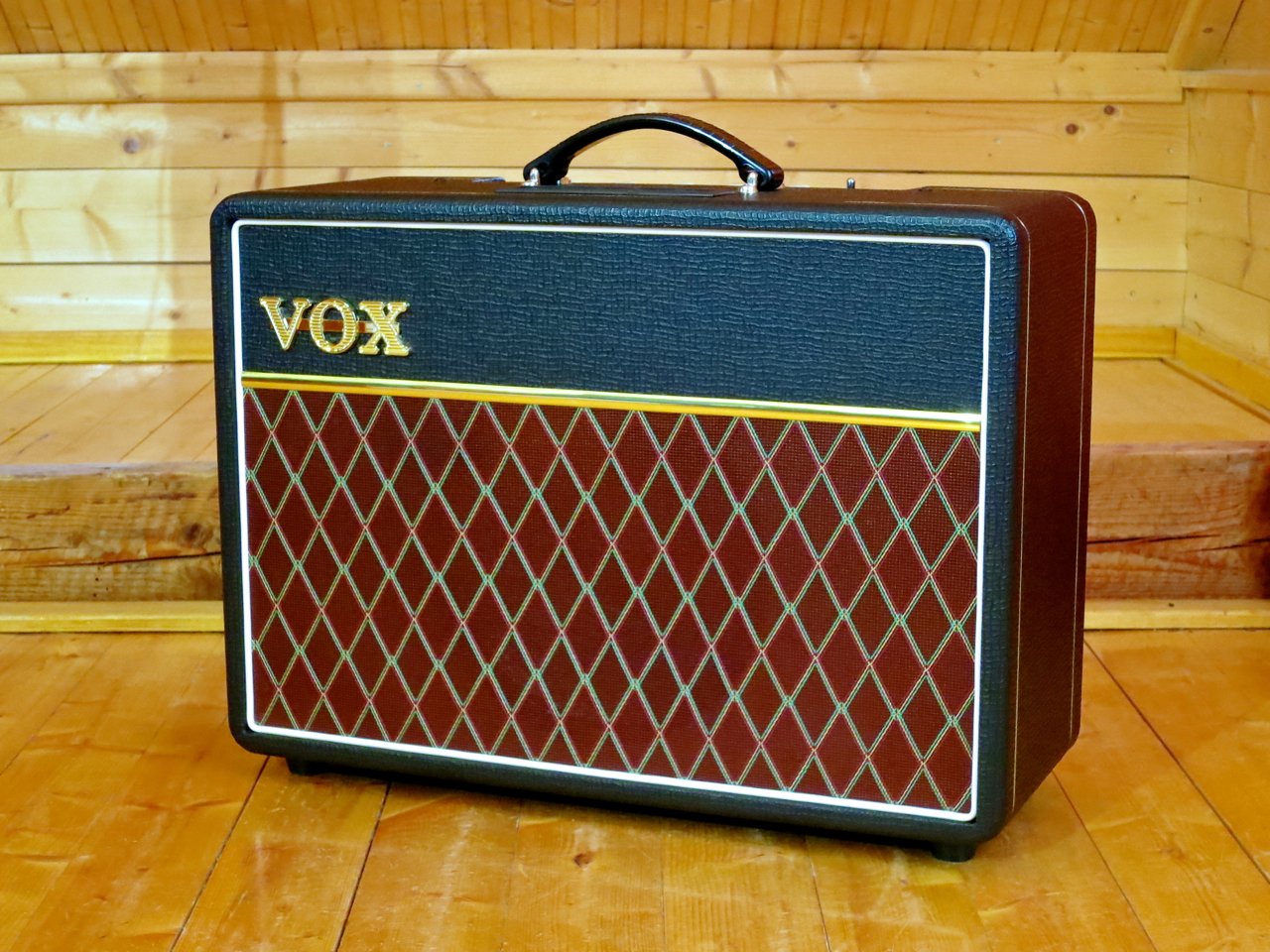
Vox AC10C1 – front angle 1

Vox’ new combo looks like a smaller version of their legendary AC30 combo, which isn’t a coincidence, I’m sure. It sports lots of black vinyl, white piping, a golden metal rail, and the famous maroon front cloth with the diamond pattern.

The AC10C1 only weighs 12 kilos, which means it’s very easy to carry by its single top handle.

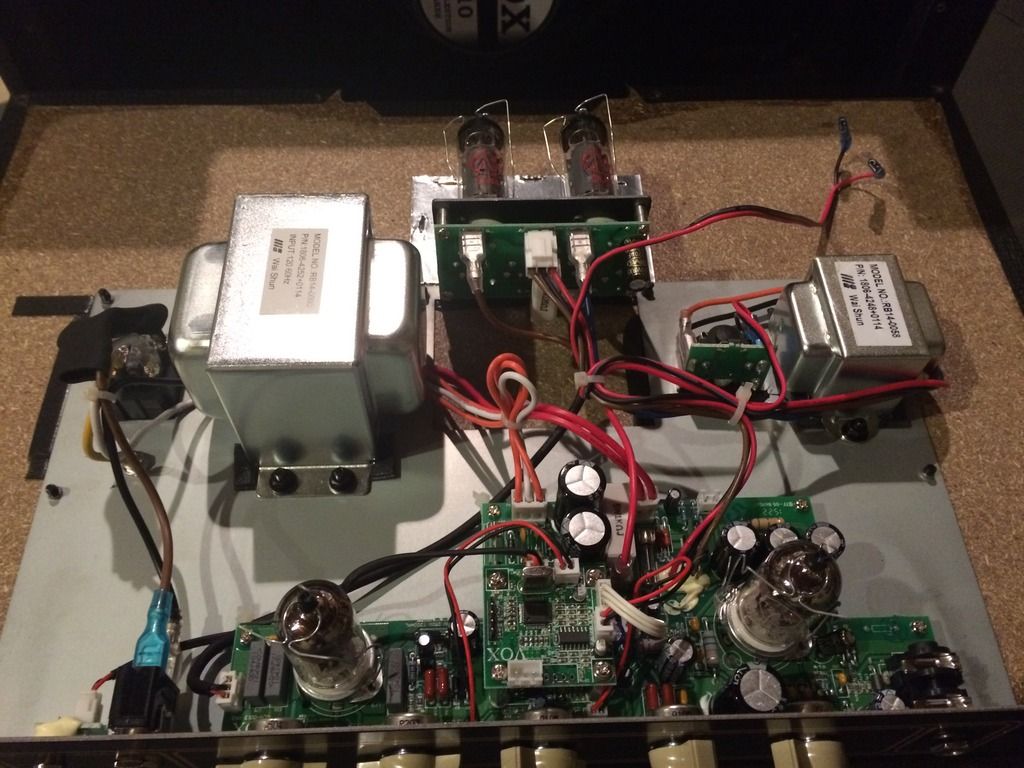
As we are looking at a production line, Chinese valve amp, it would be totally unrealistic to expect hand soldered point-to-point wiring inside this combo. The AC10C1’s electronic components – tubes and all – are mounted on three PCBs. You can have a good looks at this combo’s innards in this picture.

The little Vox’ two EL84 main amplifier valves have been placed just beneath the ventilation grille on the top (next to the handle). The preamp valves – a pair of 12AX7s – get their ventilation via a small slot at the bottom end of the cabinet’s back wall.

Vox AC10C1 – control panel LRG

The control panel sports the classic Vox chicken head knobs.

In addition to Gain and Volume, you will find a two-band EQ section, and the reverb control.
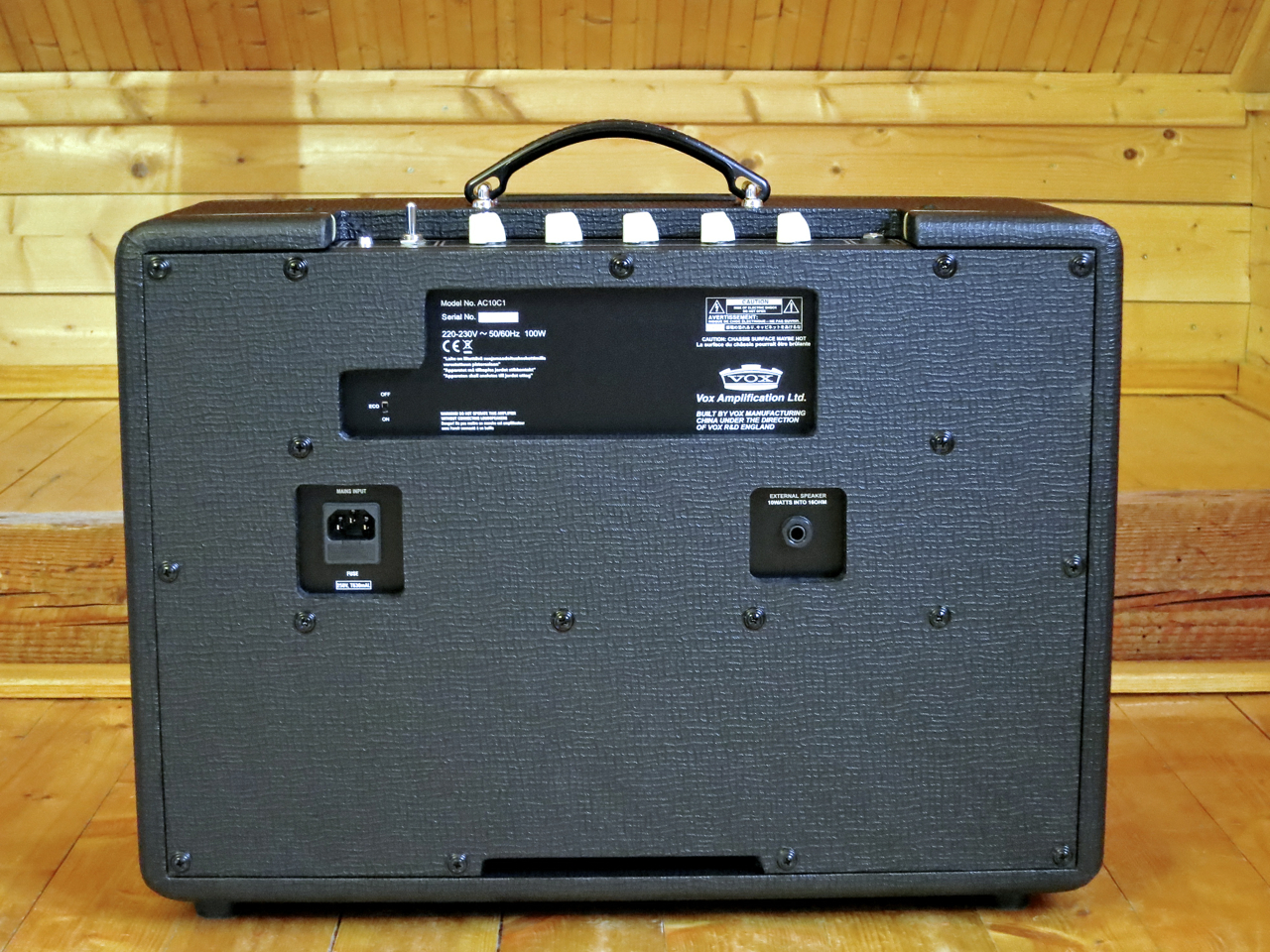
Vox AC10C1 – full back

In practical terms, the Vox AC10C1 is a closed-back combo, despite the small opening for preamp tube ventilation.

A ten-inch Celestion VX10 has been chosen as the combo’s sole speaker.

Vox AC10C1 – back panel

In the EU the new combo is sold with an Eco-feature. When the Eco-switch is set to ”on”, the AC10C1 will power off automatically if the amp isn’t played for two hours.

The AC10C1 can be connected to an external speaker cabinet, as long as the load is kept to 16 Ohms.

****

Vox AC10C1 – with guitar 2

Let me say something about the Vox AC10C1’s volume first:

This little amp is quite the belter for a combo rated at only 10 Watts! Yes, it does have a master volume control, but I still wouldn’t recommend using this Vox as a living-room amp in an apartment block. The Volume control really has to be set to 10 o’clock, or higher, to make this baby come to life.

The basic character of this Vox combo is rather bright and bitey – I had to take the Treble knob down to below 10 o’clock to find the sounds that I like.

This AC10C1 doesn’t have oodles of clean headroom, still there are some very nice clean tones to be had in the first third of the Gain control’s range, when you use Fender-type single coil pickups (Fender Stratocaster; amp gain at 10 o’clock):

Many valve amp snobs will view a digital reverb circuit as a big no-no, but in my view, the AC10C1’s reverb is one of the very best I’ve ever heard in an amp in this price range. The reverb is a digital version of a spring tank, and has a charming sense of depth. At higher settings you can even get some ”spring splash” by attacking the strings with gusto:

Due to its higher output a P-90-type pickup will require you to adjust the volume knob(s) on the guitar, if you want to achieve genuinely clean sounds. Here’s a clip of an Epiphone Casino (with Göldo P-90s), with the guitar’s volumes turned about halfway down (amp gain at 9 o’clock):

Here’s the same Casino with its volume controls set to 8 (the amp settings stay untouched):

Humbuckers, too, mean you will have to turn the guitar down a bit for clean sounds, otherwise the AC10C1 will start adding some of that famous Top Boost grit. The first clip uses a Hamer USA Studio Custom with its volume controls turned down to 5 (amp gain at 9 o’clock):

Same guitar, same amp settings, but the Hamer’s volumes have been set to 7:

You could sum up the AC10C1’s distorted sounds with one word – classic! This isn’t a high gain combo by no stretch of the imagination. This Vox feels most at home with Pop-, Blues-, and Rock-sounds of the Sixties and Seventies (and their modern descendants). If you want a piece of that classic Vox Top Boost tone (think Beatles, Queen, U2), the AC10C1 has it in spades at manageable volume levels.

Stratocaster; amp gain 3 o’clock:

Casino; amp gain 1 o’clock:

Hamer; amp gain 1 o’clock:

Stratocaster; full amp gain:

Casino; full amp gain:

Hamer; full amp gain:

****
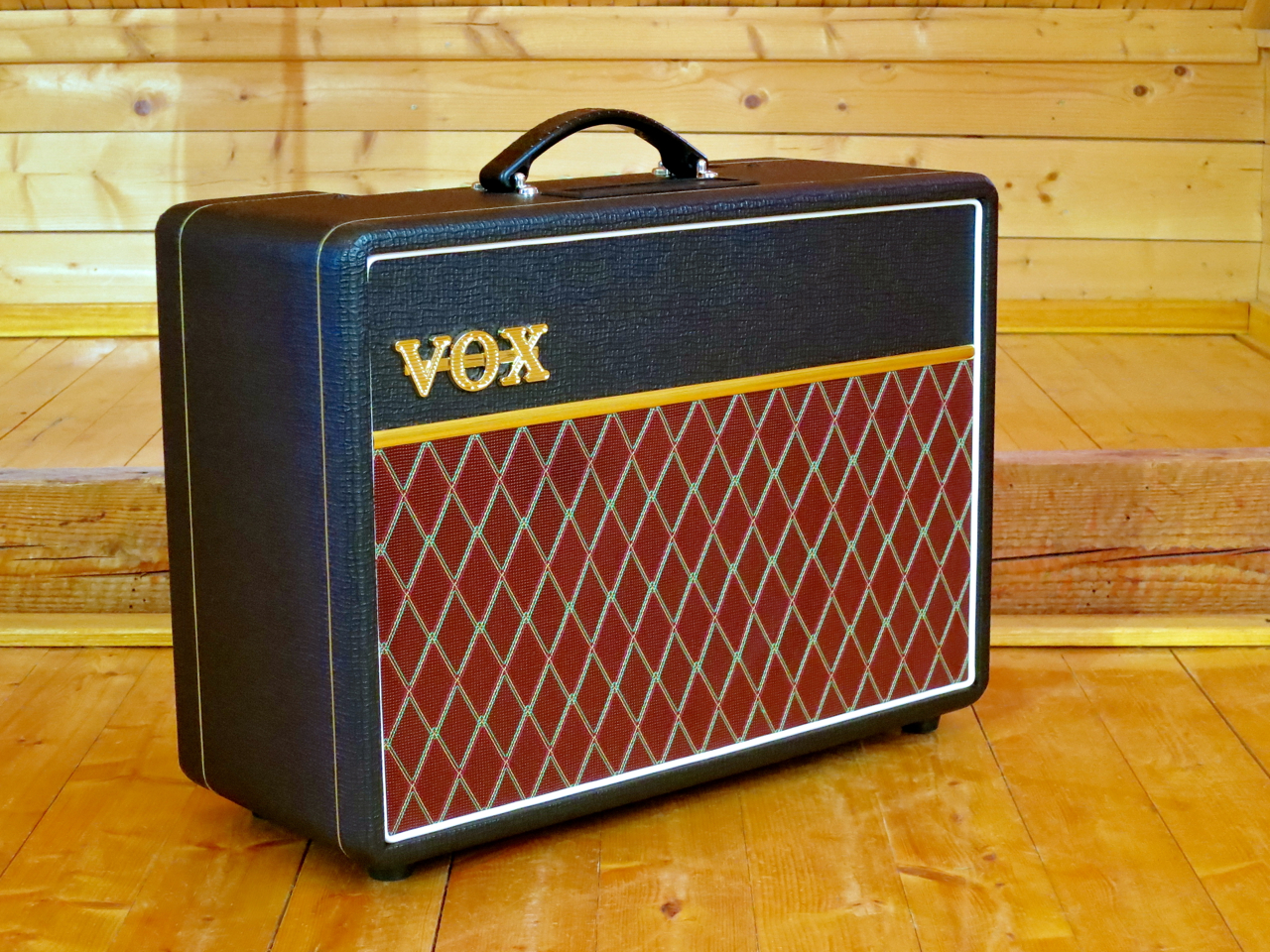
Vox AC10C1 – front angle 2

In my opinion, the Vox AC10C1 is just the ticket if you’re after genuine Vox tones in a compact, easy-to-handle package.

Clean headroom isn’t to be had in abundance, but luckily this Vox combo reacts extremely well to volume changes on the guitar. The sound cleans up nicely, while the amp retains its full vigour and liveliness.

The Vox AC10C1 is loud enough for most rehearsal situations, and you might even use it in some small venues without a mike.

For studio work, too, I feel Vox’ AC10C1 has a lot to offer, because it enables you to get chunky Vox tones with much less bleed-through into other microphones, like the drum mikes.

Vox AC10C1 – logo

****

Vox AC10C1

current street price in Finland approximately 520 €

Finnish distribution: EM Nordic

A hearty ”thank you” goes to DLX Music Helsinki for the loan of the review combo!

Pros:

+ value for money

+ compact size

+ reverb sound

+ amp sound

Cons:

– limited clean headroom
Testipenkissä: Fender Jimi Hendrix Stratocaster

Hendrix Ad

Jimi Hendrixin suosio ei näytä hiipumisen merkkejä, vaikka tämä valovoimainen kitarasankari itse kuoli jo vuonna 1970 27-vuotiaana Lontoossa. Kiinnostus Hendrixin musiikkia kohti on yhä niin suuri, että hän on sijalla yhdeksän Forbes-lehden listalla parhaiten tienaavista kuolleista henkilöistä.

Fenderin Stratocaster oli mestarin suosikkisoitin, eikä ole siis ihme, että Fender hiljattain esitteli uuden Jimi Hendrix -nimikkomallin, joka on nyt myös saatavilla Suomessakin.

Uusi meksikolainen Fender Jimi Hendrix Stratocaster ei ole kuitenkaan firman ensimmäinen kunniaosoitus legendaariselle kitaristille:

Vuonna 1980 tehtiin pieni ”epävirallinen” erä Hendrix-Stratoja (tuotantoerä vain muutama tusina) valkoisella rungolla ja vasenkätisellä, isolla viritinlavalla varustetulla kaulalla. Vuonna 1997 ilmestyi Custom Shopin 100 kitaran erä Hendrixin Monterey-Stratosta, joka oli tarkka kopio soittimesta, jota Hendrix käytti Monterey-festivaalilla 1967. Se oli käsin maalattu vasenkätiselle sopivaksi muutettu oikeankätinen Strato pienellä lavalla. Monterey Strat -settiin kuului myös flight case -laukku, nahkahihna, sekä nahasta tehty topattu pussi. Vuonna 1997 ilmestyi myös Fender USA:n Jimi Hendrix Voodoo -Strato, joka oli oikeakätiselle tarkoitettu kopio Hendrixin legendaarisesta Woodstock-kitarasta. Voodoo-Straton juju oli, että kitaran logo oli alkuperäisen peilikuva, minkä ansiosta nimikkomallin käyttäjä näytti peilin edessä enemmän Hendrixiltä.   😀

****

Fender Jimi Hendrix Stratocaster – full front

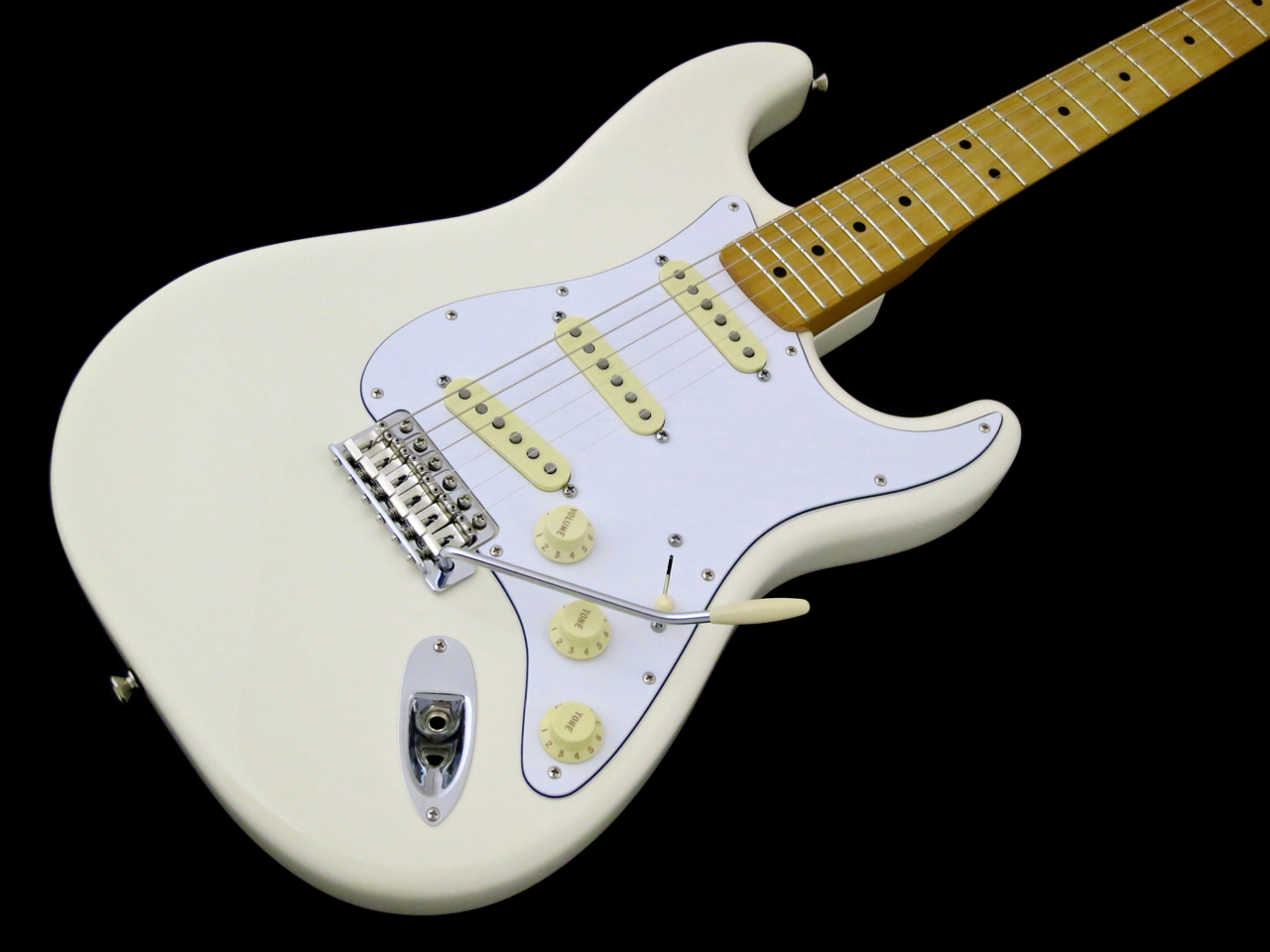
Upouudessa Fender Jimi Hendrix Stratocasterissa (hinta-arvio noin 950 €) on myös vahvoja vivahteita mestarin Woodstock-kitarasta:

Tässä tapauksessa kitaran leppärunko on saatavilla joko valkoisena tai mustana, ja siihen on liitetty yksiosainen vaahterakaula isolla, vasenkätisellä lavalla.

Fender Jimi Hendrix Stratocaster – headstock

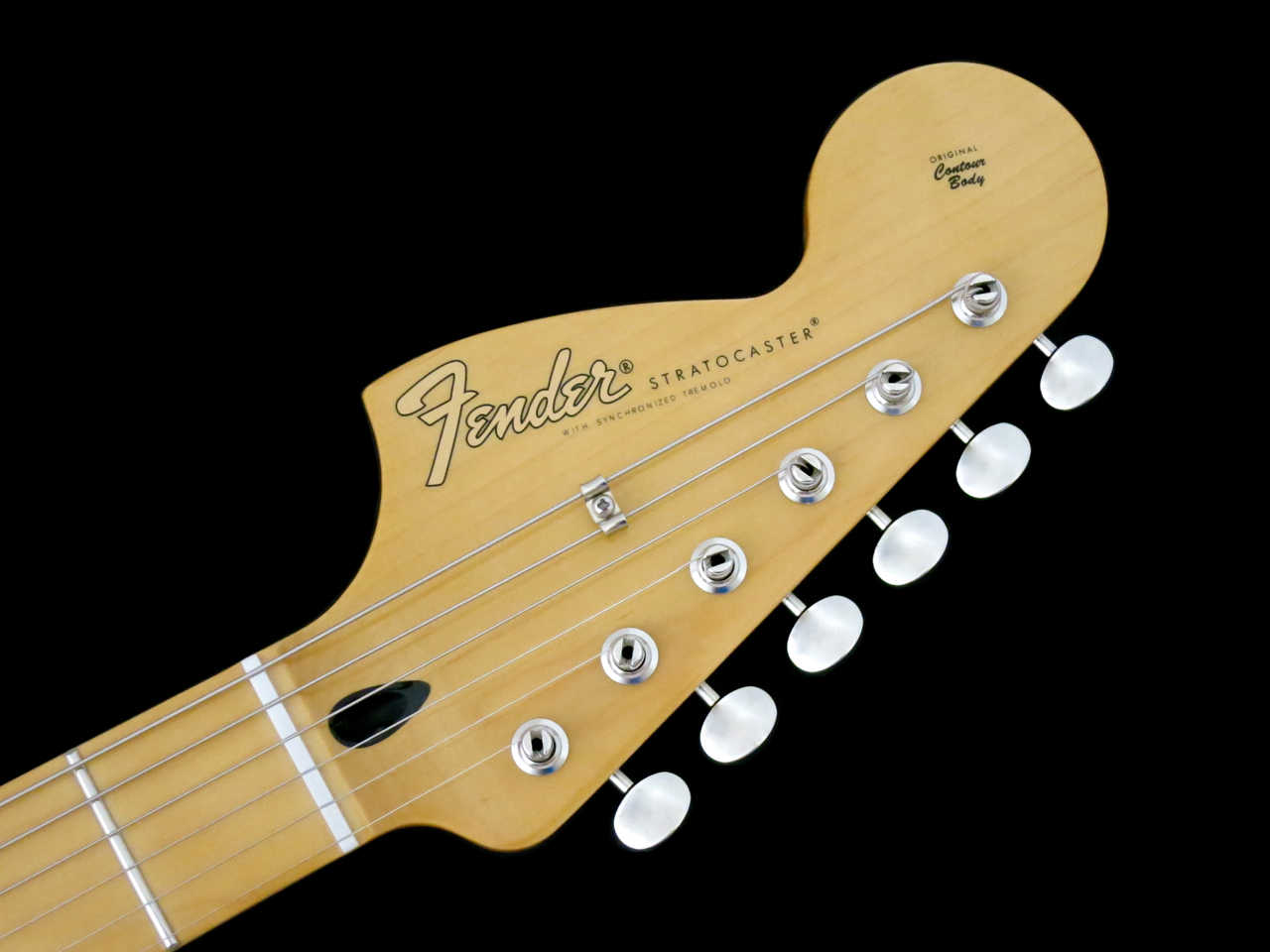
Viritinlavalta löytyy ns. transition logo 60-luvun keskiväliltä, joka on isompi kuin 50-luvun spaghetti logo, mutta vielä kultainen. Logo muuttui 60-luvun lopulla mustaksi CBS logoksi.

Nykyaikaisia parannuksia Hendrix Stratocasterissa ovat lavanpuoleinen kaularaudan säätöruuvi, sekä otelaudan loivempi kaarevuus (9,5 tuumaa), joka helpottaa kielten venytyksiä.

Fender Jimi Hendrix Stratocaster – tuners

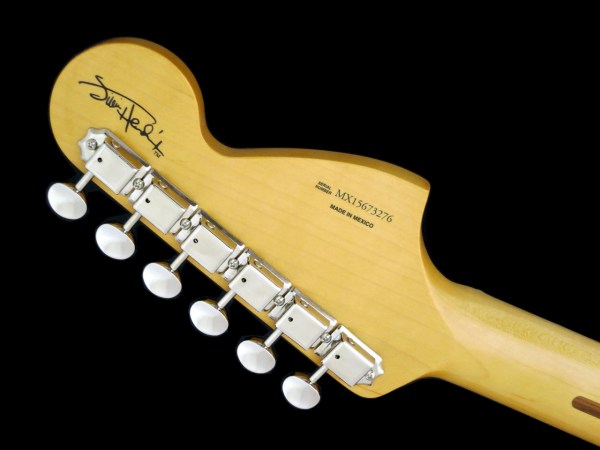
Lavan kääntöpuolelta löytyy Jimi Hendrixin nimikirjoitus, kitaran sarjanumero, sekä sulavasti toimivat Kluson-kopiot.

Fender Jimi Hendrix Stratocaster – neck plate

Kaulaliitos on hyvin perinteistä sorttia, mutta kaulalevyyn on kaiverrettu Authentic Hendrix -tuotteiden logo.

Fender Jimi Hendrix Stratocaster – pickups

Tärkein ja ratkaisevin ero rivi-Stratoon piilee Fender Jimi Hendrix -mallin mikrofoneissa:

Meksikolaisessa nimikkomallissa käytetään laadukkaita American Vintage ’65 Gray-Bottom Fender-mikrofoneja, jotka on asennettu niin kuin tämä kitara olisi vasenkätinen. Kaula- ja keskimikrofoni on siis käännetty 180 asteella. Myös tallamikrofoni on ensin käännetty, mutta tämän lisäksi se on myös asennettu käänteisen kulmaan. Tavallisesti tallamikin bassopuoli on lähempänä kaulaa, Hendrix-Stratossa taas mikin diskanttipuoli on lähempänä soittimen kaulaa.

Tämä toimenpide kääntää mikrofonien erikorkoisten magneettien järjestystä, ja se myös muuttaa tallamikin tapauksessa mitkä ylä-äänet mikki poimii kielistä.

Vasta käyttötestissä selviää onko ero kuultavissa.

Fender Jimi Hendrix Stratocaster – controls

Säädinosasto on vintage-reseptin mukainen – master volume, kaulamikin tone ja keskimikin tone – mutta Hendrix-mallissa on nykyaikainen viisiasentoinen kytkin.

American Vintage ’65 -mikkisetissä kaikki mikrofonit on käämitty samaan suuntaan, niin kuin aidoissa 60-luvun Stratoissa. Tämän takia yksikelaisten hurina ei poistu mikkiasennoissa kaksi ja neljä, niin kuin monissa nykyaikaisissa Stratocastereissa!

Fender Jimi Hendrix Stratocaster – vibrato

Vibratalla on Fenderin vintage vibrato (”Sychronized Tremolo”) teräksisillä tallapaloilla.

****

Fender Jimi Hendrix Stratocaster – beauty shot 1

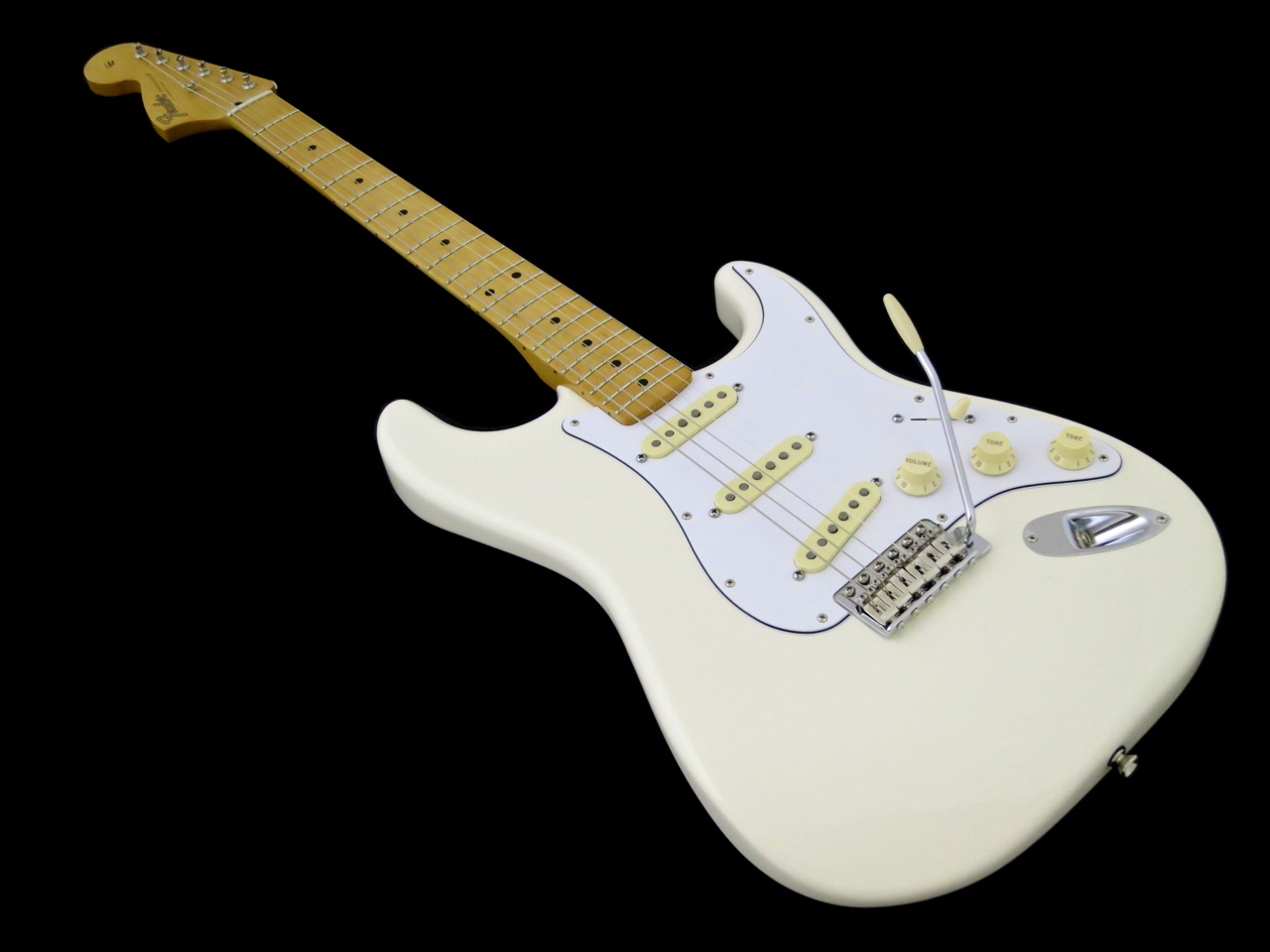
Fender Stratot tunnetaan niiden hyvästä ergonomiasta, eikä Fender Jimi Hendrix -malli poikkea tästä linjasta.

Testiyksilö on mukavasti keskipainoinen ja sen runko hyvin sulavalinjainen. Fender on valinnut 1960-luvun C-profiilin tähän Hendrix-Stratoon, joka tuntuu todella hyvältä kädessä myös hyvin maltillisen paksuutensa ansiosta.

Testikitara saapui Es-vireessä 010-satsilla, mutta sen säädöt eivät olleet täysin kohdallaan suoraan laatikosta. Vibratallan kulma oli hieman liian jyrkkä ja myös soittimen intonaatio oli bassokielillä vähän pielessä. Oikean kokoisilla ristipääruuvareilla ongelmat hoidettiin nopeasti ja helposti pois päiväjärjestykseltä. Lopputulos oli erittäin hyvin soiva sähkökitara mukavalla tatsilla (kieltenkorkeus 12. nauhalla: matala-E: 2,2 mm/diskantti-e: 1,7 mm).

Loivasta otelautaradiuksesta (9,5 tuumaa) on todellakin paljon hyötyä bendaamisessa. Kielten venyttäminen on helpompaa, eivätkä kielet rämise isoissa intervalleissa ylimpiä nauhoja vastaan kuin usein kuperammalla vintage-radiuksella (7,25 tuumaa).

En ole ihan varma kuuluuko käänteisten mikrofonien soundillisia vaikutuksia ratkaisevasti Hendrix-Stratocasterin sähköisessä soundissa.

Hendrixin tekniikon ja soundigurun, Roger Mayerin, mukaan muusikko itse oli tyytyväinen tuotantolinjan Stratoihin. Mayer on sanonut useissa haastatteluissa, että ainoat toimenpiteet, joita tehtiin juuri ostettuihin soittimiin, olivat kaulataskujen siivoaminen lakkausjäämiltä. Sen sijaan Hendrixin efekteihin tehtiin kaikenlaista kustomointia.

Oli niin tai näin, uusi Fender Jimi Hendrix -malli soi kuin laadukas Strato. Tässä ensin puhdas pätkä:

Ja tässä esimerkki Hendrix-kitaran särösoundista:

Halusin ensin kokeilla Jimi Hendrix -Stratoa nykyaikaisessa soundiympäristössä, ja äänitin tämän pienen demon. Signaaliketju on Hendrix Stratocaster –> Electro-Harmonix Germanium 4 Big Muff Pi –> Morley M2 Wah/Volume –> Blackstar HT-1R:

Äänitin sitten vielä toisen, Hendrix-tyylisen demokappaleen. Signaaliketju on tässä Hendrix Stratocaster –> Morley M2 Wah/Volume –> Electro-Harmonix Nano Big Muff Pi –> Blackstar HT-1R. Kappaleen lopussa simuloin Uni-Vibe-efektin soundia nopealla phaser-efektillä miksausvaiheessa:

Fender Jimi Hendrix Stratocaster – back beauty

****

Fender Jimi Hendrix Stratocaster – body beauty 2

Hendrixin live-soundi

Vaikka Jimi Hendrix oli – ääniteknikko Eddie Kramerin avulla – melkoinen edelläkävijä efektien käytössä studiossa, perustui hänen live-soundinsa yllättävän pieneen efektiarsenaaliin. Tässä todella lyhyt johdanto Hendrixin signaaliketjuun lavalla.

1. Marshall Model 1959 ”Plexi” -stäkki
Jimi Hendrix käytti mitä tänään kutsutaan vintage-tyylisiksi stäkeiksi, joiden vahvistimissa ei ollut high-gain säröpiirejä, eikä master volume säätimiä. Hänellä oli tavallisesti käytössä jopa kaksi 100-watista Marshall-stäkkiä, mikä tarkoitti että äänenpaine oli melkoinen. Stratollakin nämä vahvistimet menevät särölle, mutta soundi on enemmän Blues-tyylinen, kuin mitä saadaan nykyaikaisista high-gain stäkeistä.

Simuloin tätä soundia kääntämällä Blackstar HT-1R -kombon clean-kanavalla gain-säätimen reilusti auki.

2. Dallas-Arbiter Fuzz Face -säröpedaali

Fuzz-tyypinen säröpedaali on mielestäni Hendrix-soundin kannalta ratkaisevassa asemassa, koska se lisää soundiin sekä lihaksia ja kermaista sustainea että runsaasti rosoisuutta.

Englantilainen musiikkilaitteiden maahantuoja Ivor Arbiter halusi saada firmalleen 1966 oman säröpedaalin. Hän keksi Fuzz Facen rakentamalla fuzz-piirin mikrofoniständin jalkaan. Pyöreä jalka näytti kahdella säätimellään ja yhdellä jalkakytkimellään naamalta, josta pedaalin nimi tulee.

Fuzz Faceja valmistaa nykyään Jim Dunlop. Edullisia vaihtoehtoja saa myös Mooerilta tai Rowinilta. Itse käytin tässä Electro-Harmonix Nano Big Muff Pi -pedaalia:

3. Vox Wah-Wah

Hendrix käytti Vox Wahiaan tavallisesti kytkettynä Fuzz Face -särön tuloon, mutta myös fuzzin jälkeen saadaan monta käyttökelpoista soundia. Hyviä wah-pedaaleja on saatavilla esimerkiksi Bossilta, Mission Engineeringiltä tai Jim Dunlopilta.

Itse käytin tässä omaa Morley M2 Wah/Volume -pedaalia (ennen fuzzia):

4. Octavia +Uni-Vibe

Lisämausteina Hendrix käytti vielä Roger Mayerin rakentamaa Octavia-efektiä, jossa säröefekti ja yläoktaaveri tuottavat hyvin erikoisia soundeja, sekä alun perin Leslie-simulaatioksi tarkoitettua Uni-Vibe-pedaalia.

Oikean Octavia-efektin saa vain Roger Mayerilta, mutta Joyo JF-12 Voodoo Octave -tuplapedaali tarjoaa hyvin edullisen vaihtoehdon.

Korgilta saa nykyään NuVibe-nimeä kantavan Uni-Vibe-uusintapainoksen, mutta pedaali on melko kallis hankinta. Voodoo Labin Micro Vibe on jo hieman edullisempi, mutta silti laadukas ratkaisu.

Uni-Vibe-tyylisiä soundeja voi simuloida myös phaser-efektillä. Bossin PH-3 on nykyaikainen phaser-pedaali monipuolisilla ominaisuuksilla, kun taas Mooerilta saa hyvin edullisen phaserin.

Esimerkkipätkässä ketjutin miksausvaiheessa kaksi phaser-plugaria audiosekvensserissä:

Tässä vielä LINKKI Kimmo Aroluoman erinomaiselle jutulle Hendrixin signaaliketjusta, sekä toinen LINKKI pro-luokan Hendrix-pedaalilaudan testille.

Fender Jimi Hendrix Stratocaster – body beauty 1

****

Fender Jimi Hendrix Stratocaster – beauty shot 2

Jos haluaa soittaa kitaraa täysin autenttisesti Hendrixin hengessä, pitää hankkia itselleen vasenkätisten Strato, vaihtaa (tai kääntää) kitaran satula oikeankätiseksi ja soittaa sitä kitaraa sitten väärinpäin. Lopputulos on autenttinen, mutta samalla ergonomialta ongelmallinen, koska esimerkiksi säätimet ovat huonolla paikalla.

Uudelta Fender Jimi Hendrix Stratocasterilla saa vasenkätisen viritinlavan tuomaa (hieman) erilaista soittotuntumaa, sekä käännettyjen mikrofonien tuomaa (hieman) erilaista perussoundia oikeankätisen kitaran ergonomialla.

Fenderin Hendrix-malli on todella hyvä Strato, jolla voi soittaa myös muuta musiikkia kuin vain Hendrixiä, mutta Hendrix onnistuu kyllä erityisen hyvin.

Nyt pitäisi ”vain” olla mestarin pitkät sormet ja Hendrixin idearikkautta…

****

Fender Jimi Hendrix Stratocaster

hinta-arvio noin 950 €

Lisätiedot: Fender

Kiitos DLX Musiikille testikitaran lainaamisesta!

Plussat:

+ muusikkoystävällinen hinta

+ työnjälki

+ American Vintage -mikkisetti

+ soitettavuus

+ soundi

Miinukset:

– tehtaan säädöt

Fender Jimi Hendrix Stratocaster – flying

Review: J. Leachim Guitars S&T-Style + Royal

JLeachim S&T – beauty shot 2

Jan Merivirta’s J. Leachim Guitars is still a young company, yet it already has managed to gain a reputation among guitarists.

Kitarablogi.com has had the pleasure to test drive two  J.L.G.-models – a heavily relic’d S&T-Style, along with a brand-new addition to the lineup, the semiacoustic Royal.

J. Leachim has also started to import Mojotone pickups from the USA, recently – in addition to the Mojotone-equipped review guitars, I received three further instruments carrying Mojotone pickups to try out.

JLeachim Royal – beauty shot 2

****

JLeachim S&T – full front

J. Leachim Guitars have really made a mark with their heavily relic’d guitars and basses. It’s true, you can also order a ”mint” condition instrument from J.L.G., but many players have decided to go for the added mojo of a pre-worn guitar.

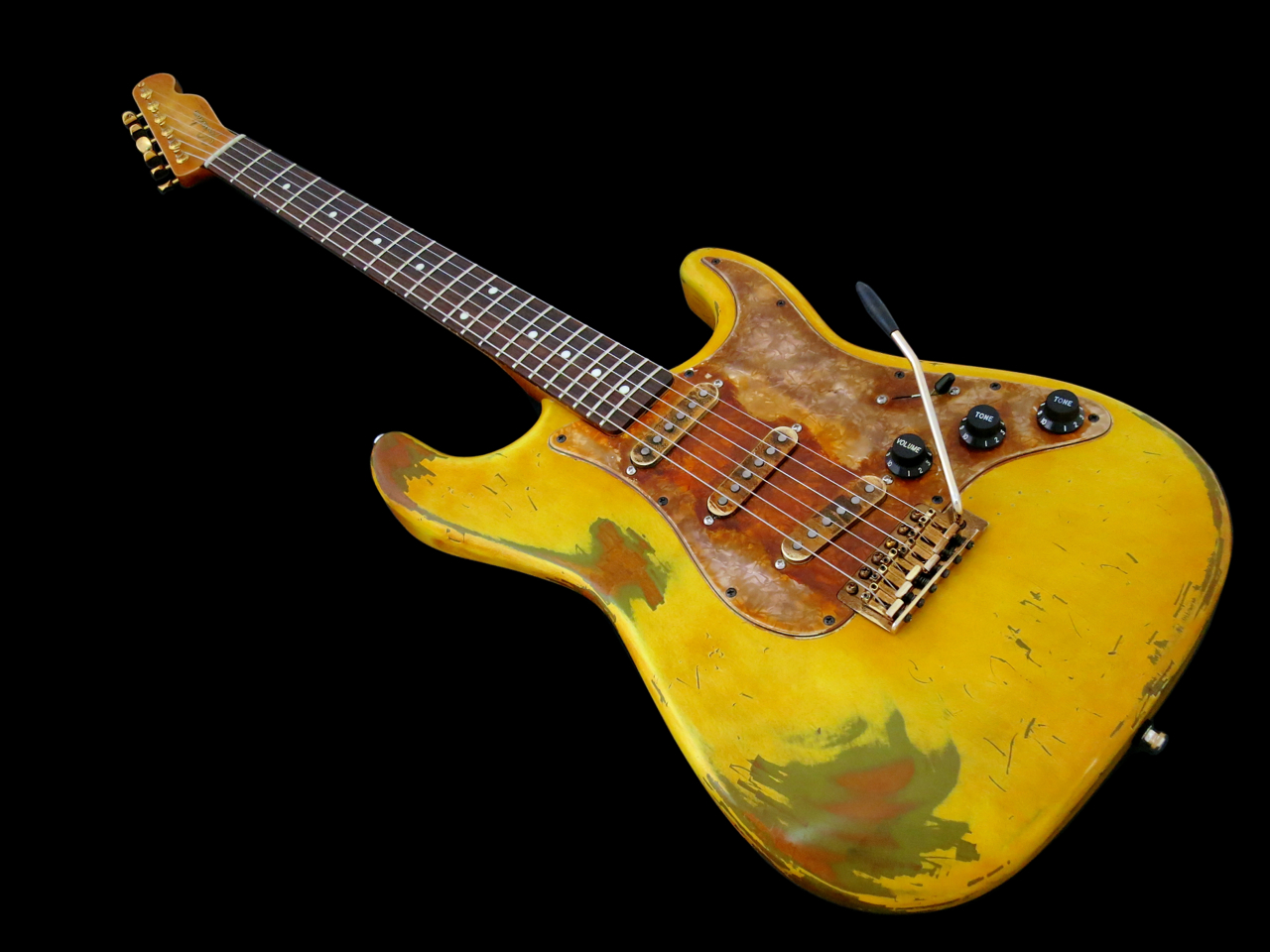
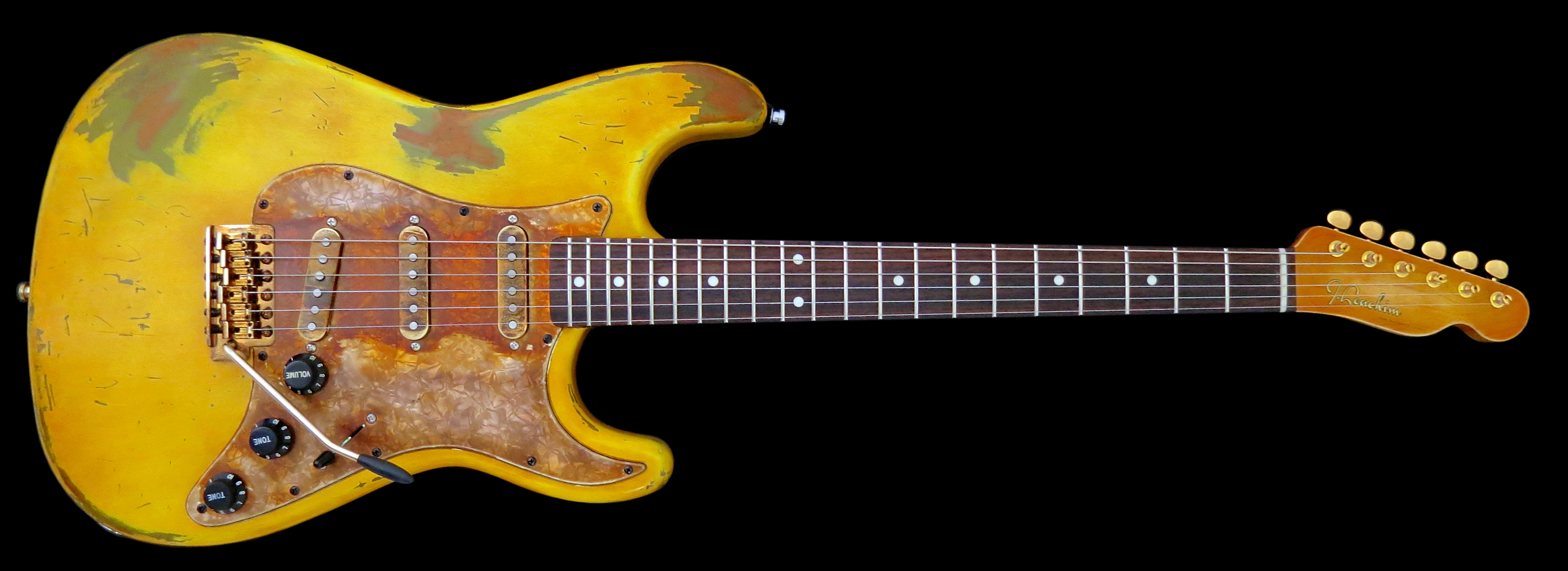
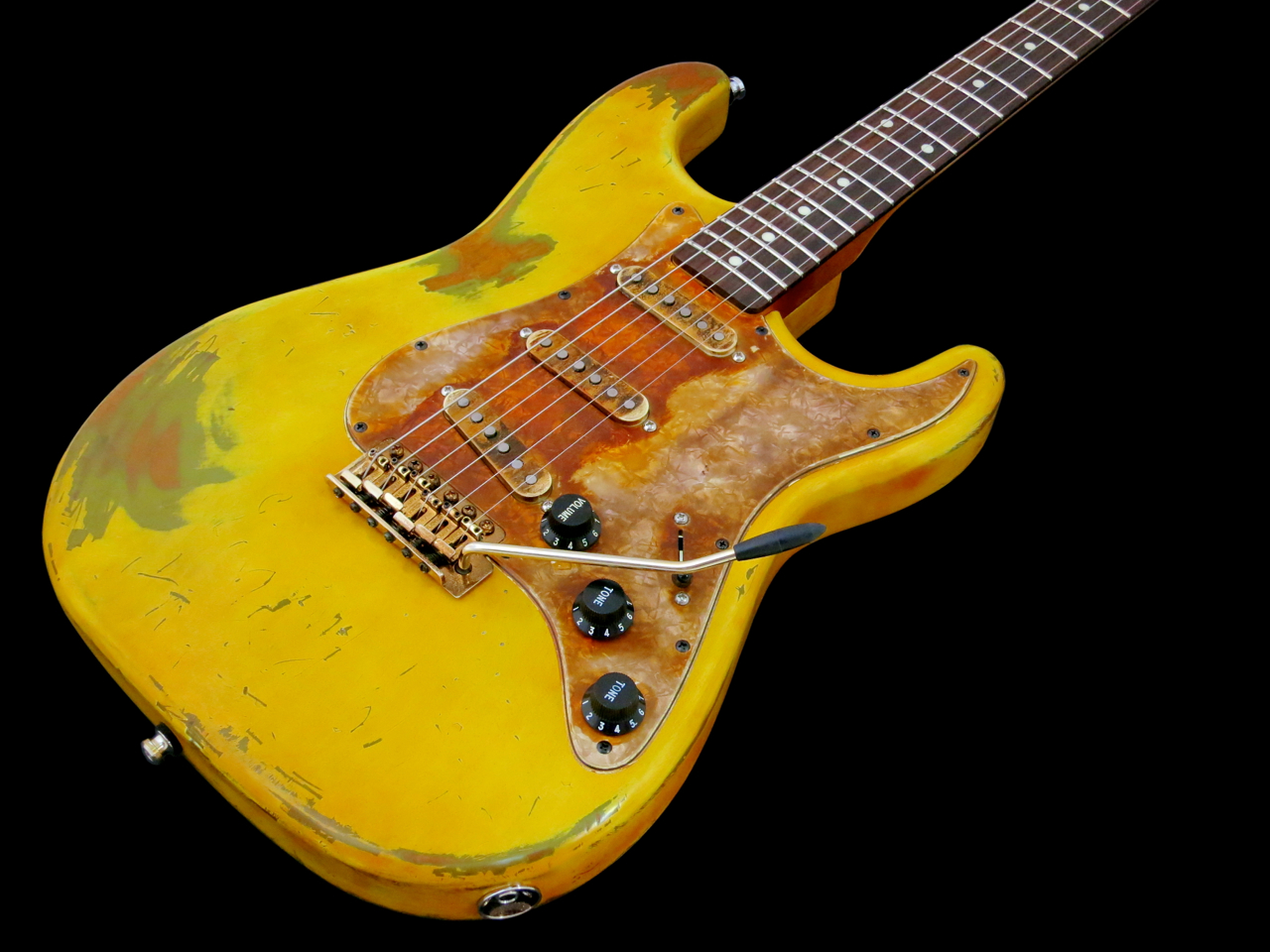
The J. Leachim S&T-Style (price approximately 1.600 €; includes a hard case and a custom-made leather strap) is such a mojo machine – a players solidbody electric, that combines a Stratocaster-type body with a Tele-style neck.

JLeachim S&T – headstock

JLeachim S&T – tuners

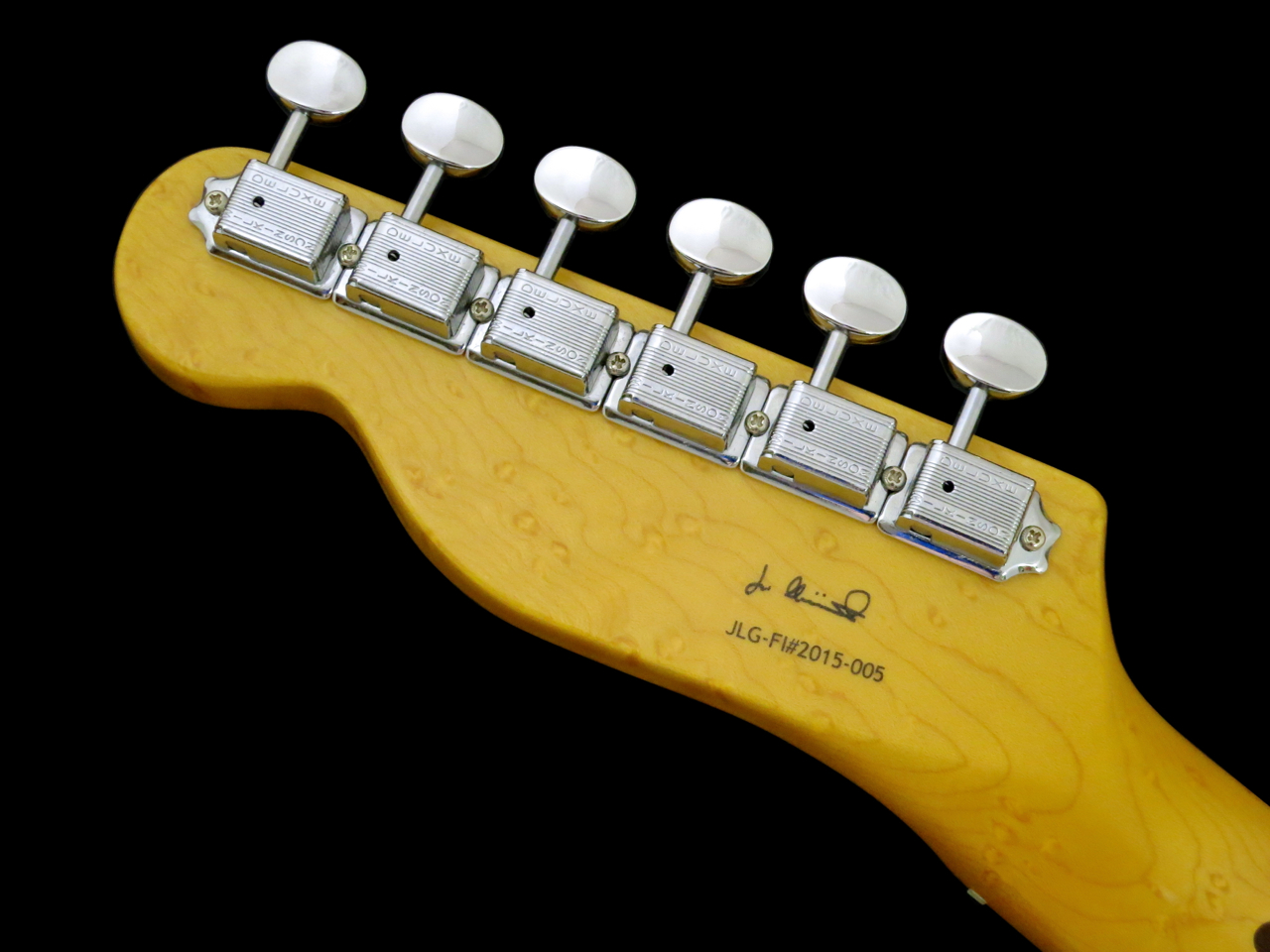
The S&T’s neck sports a relic’d satin finish, as well as a classy set of Kluson-style machine heads.

JLeachim S&T – Wilkinson vibrato

The guitar’s Wilkinson Vintage vibrato looks extremely worn, too.

This bridge is based on a vintage Fender bridge, but it features two practical improvements:

The vibrato arm is push fit with adjustable action, while the vibrato block has the string channels drilled so that they follow the octave compensation, which keeps the string pressure on the saddle uniform across all strings.

JLeachim S&T – back beauty

S&T-Style uses four vibrato springs for a very positive, muscular vibrato action that managed to stay on the right side of stiff.

JLeachim S&T – body beauty 1

The review guitar’s alder body looks like the guitar has been regularly used (and abused) on sweaty club stage for the last 50 years.

JLeachim S&T – plug receptacle

The Electrosocket jack receptacle keeps the Telecaster look, while offering much easier access for servicing and repairs that Fender’s original part.

****

JLeachim Royal – full front

The J. Leachim Royal (1.600 €; includes hard case and certificate of authenticity) is a step in a new direction for J.L.G. – it’s a thinline semiacoustic guitar.

The body shape owes a lot to the venerable Telecaster, but this isn’t a straight copy, though, as it is built in an involved, multilayered fashion.

JLeachim Royal – headstock

The Royal’s one-piece bird’s eye maple neck is a true thing of beauty.

JLeachim Royal – Wilkinson tuners

The tuners are Wilkinson’s updates of vintage Kluson machines.

JLeachim Royal – bird's eye maple neck

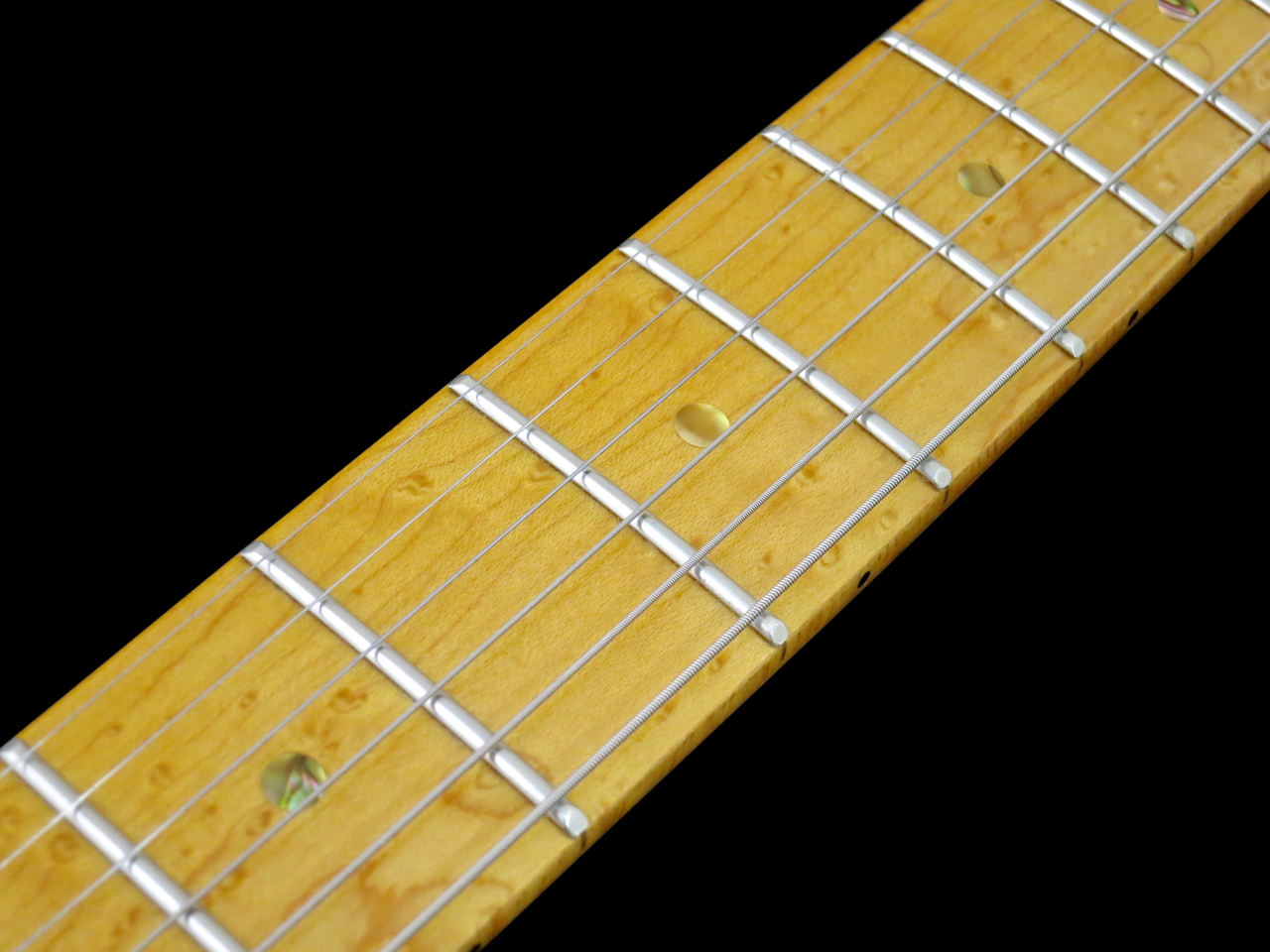
Bird’s eye maple and abalone dots – sure looks like Custom Shop-luxury to me!

JLeachim Royal – bridge

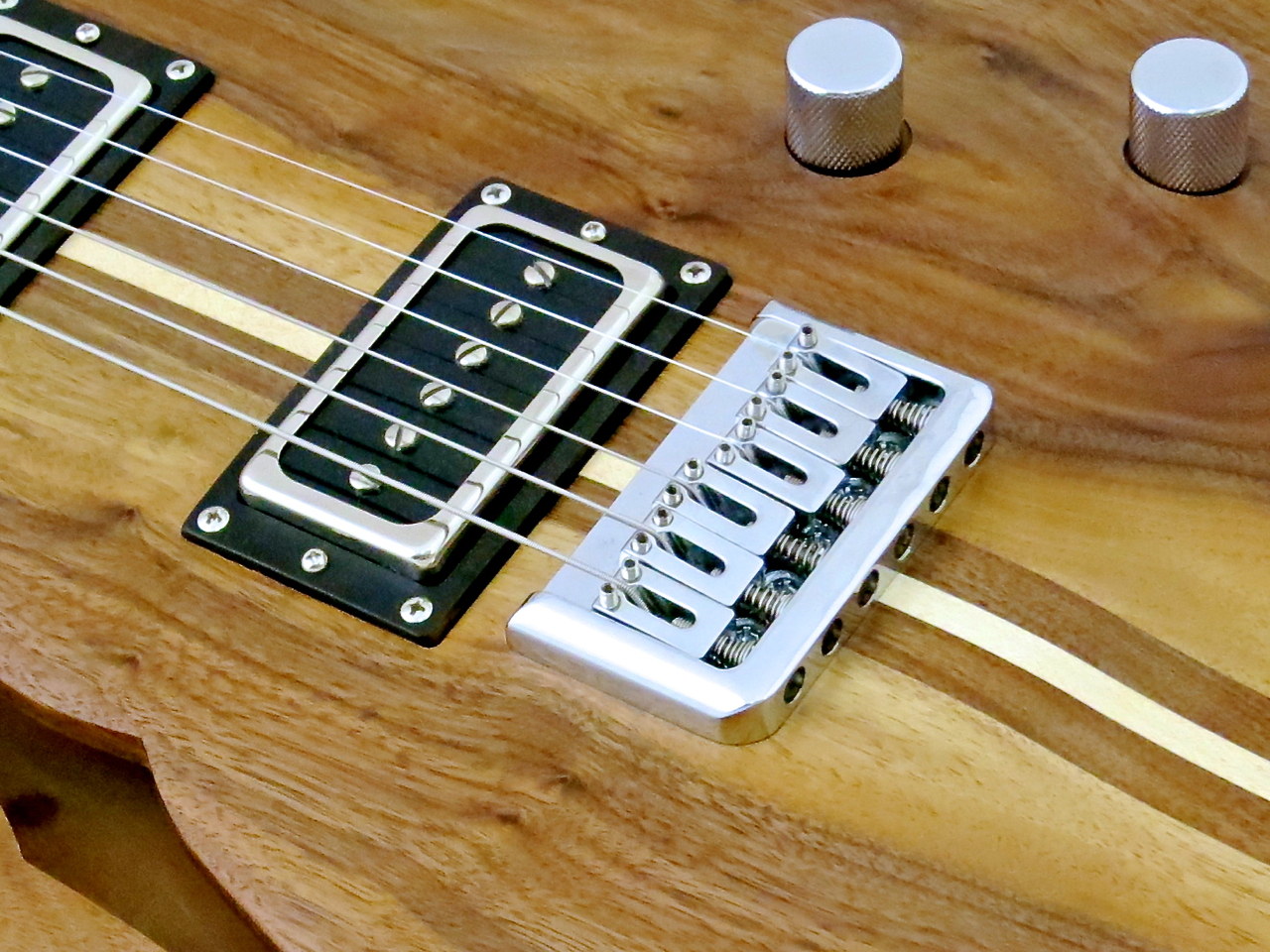
The chunky bridge on the Royal is a quality piece of hardware, but probably not the best choice on this model. The thick base means that the bridge saddles have to adjusted quite low to achieve a comfortable action. This in turn results in the sharpish height-adjustment grub screws protruding quite some way above the top of the saddles. Shorter grub screws would make this guitar more comfortable for the plectrum hand.

JLeachim Royal – body beauty 1

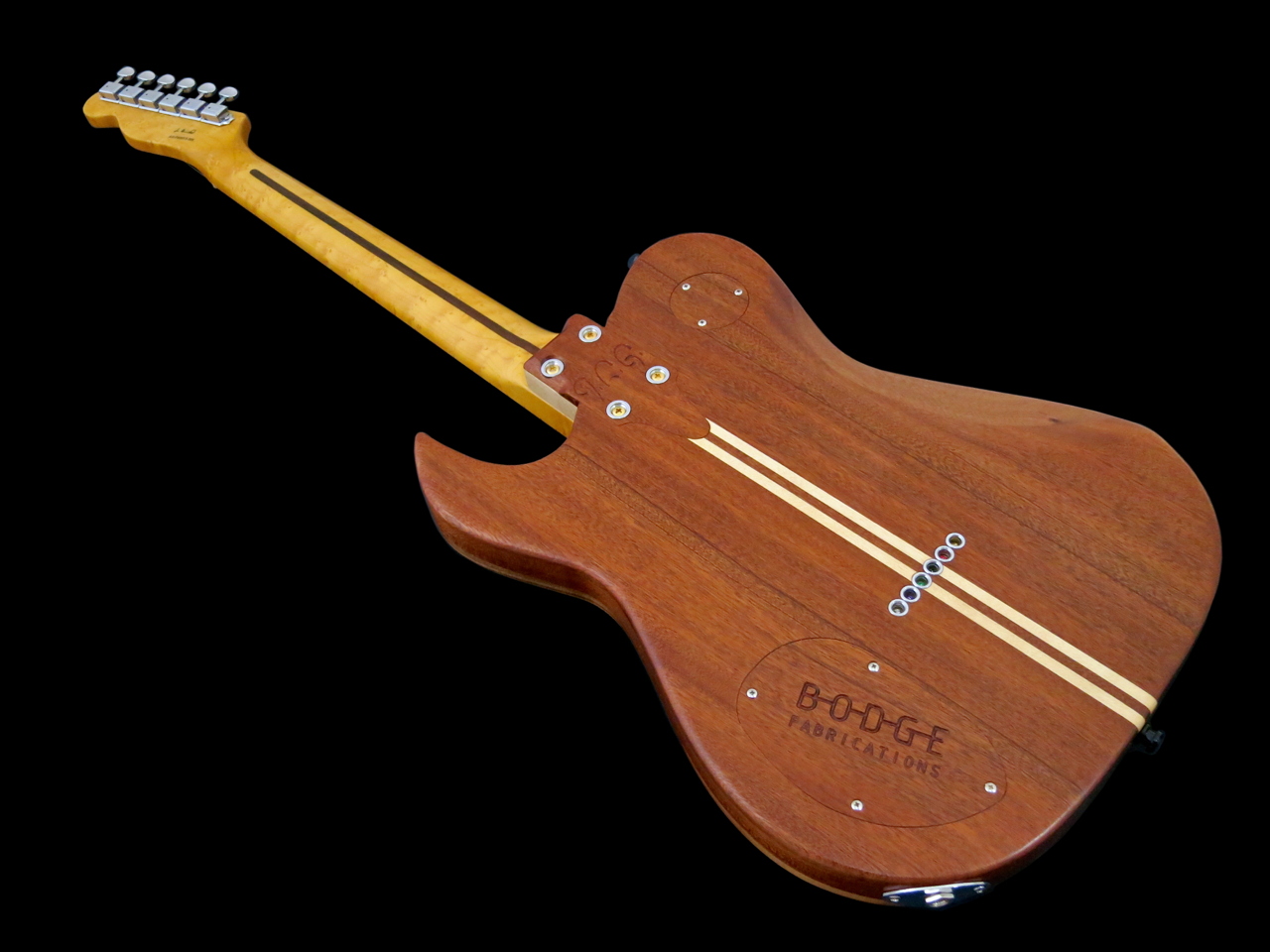
The J. Leachim Royal’s body is made in the UK (in Nottingham) by a small company called Bodge Fabrications (pun intended!).

JLeachim Royal – Bodge body

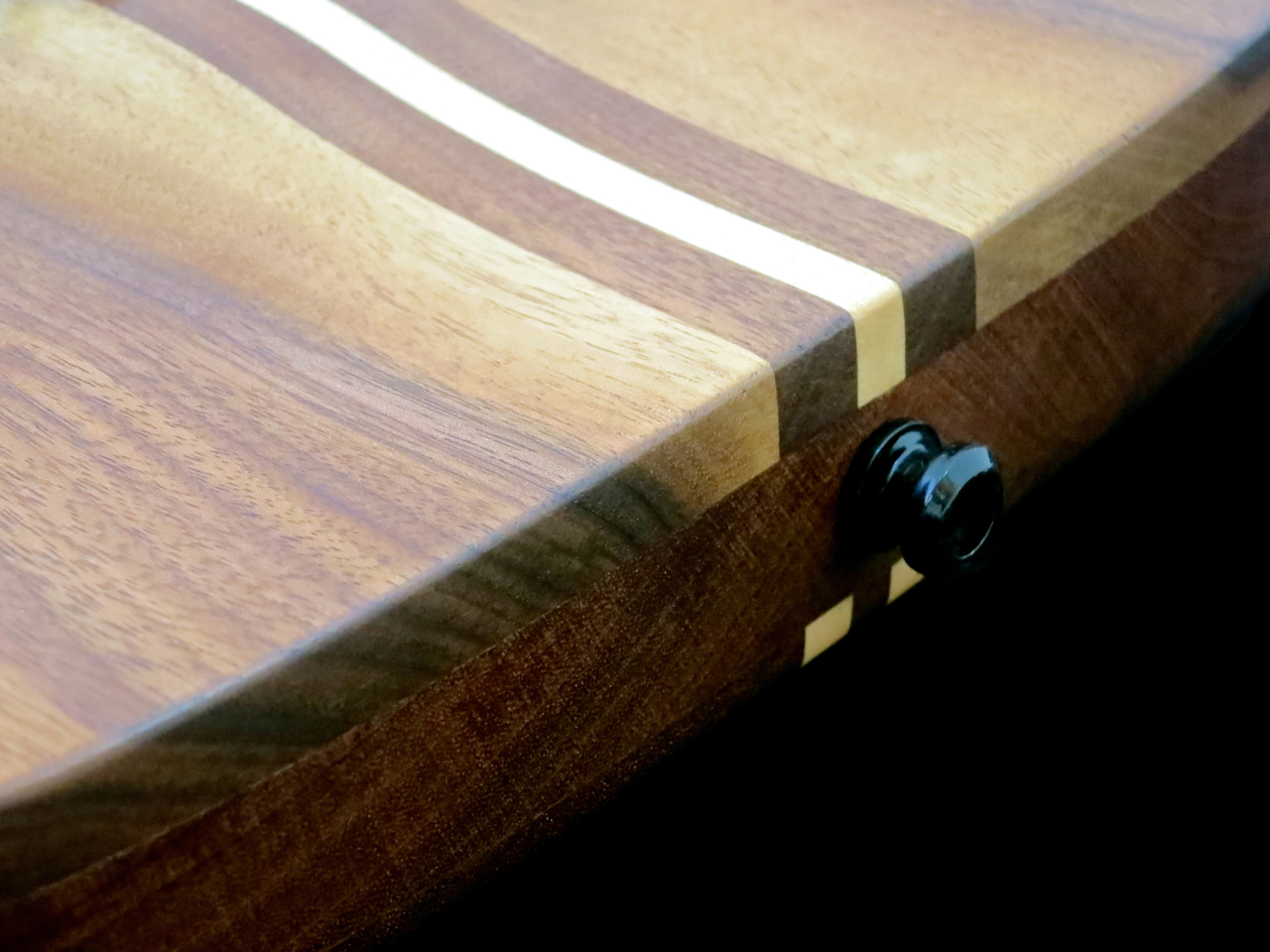
The beautifully sculpted Bodge body is a layered affair made from walnut, maple, and mahogany. If you love nice woods, like I do, this body will sen shivers of delight down your spine.

JLeachim Royal – back beauty

The back of the body features a rib cage bevel for added carrying comfort.

JLeachim Royal – neck joint

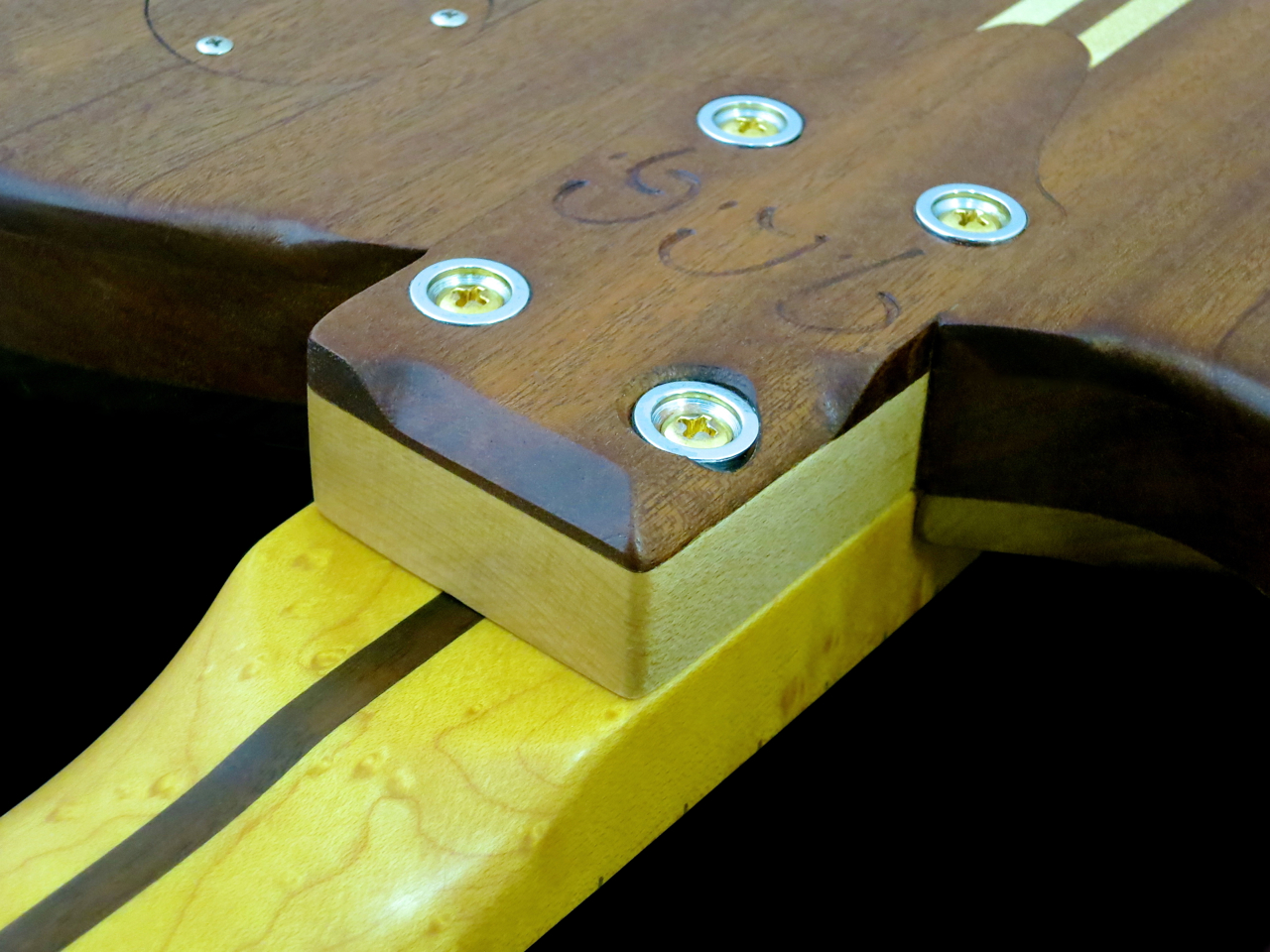
The added maple block inside the neck pocket adds stiffness to the Royal’s neck joint.

****

JLeachim S&T – beauty shot 1

J. Leachim’s S&T-Style is a very ergonomically sound instrument:

This guitar is lightweight, and sports a rounded 60s-style Tele neck that feels great. The fret-job is very smooth. This guitar is a fantastic player, and its vibrato works as smoothly as can be expected in a quality instrument in this price range.

JLeachim S&T – pickups

This S&T-Style came equipped with a Mojotone Rene Martinez Texas Strat pickup set. Rene Martinez was Stevie Ray Vaughan’s guitar technician, so it’s no wonder these pickups are specifically tailored to give you SRV-style tones.

The neck and (reverse-wound) middle pickup use Alnico III magnets for a bright sound with a sharp attack and a fantastically dynamic response. The bridge pickup is wound a little hotter and comes loaded with more powerful Alnico V magnets for a more muscular tone.

Here are two audio clips of the S&T-Style:

As a demo track I chose to record my own cover version of Stevie Ray Vaughan’s guitar solo on David Bowie’s hit China Girl (all guitar tracks have been recorded with the J.L.G S&T-Style):

****

JLeachim Royal – beauty shot 1

J.L.G.’s Royal is a classy newcomer in the company’s range of models.

The Royal is all about the feel and sound of wood. This is a guitar that’s very hard to put down once you’ve picked it up. The semiacoustic body adds a charming vocal quality to this model’s acoustic tone.

JLeachim Royal – pickups

This Royal comes with a Mojotone set of humbucker-sized P-90 pickups, which offer you a range of different sounds, from Jazz all the way to gritty Rock.

The neck pickups is built around an Alnico IV magnet, while the slightly hotter bridge pickup comes with an Alnico V magnet:

Carlos Santana used a P-90-equipped Gibson SG Special at the beginning of his career (for example at Woodstock), which prompted me to record a Santana-tinged demo track with the J. Leachim Royal:

****

JLeachim + Mojotone – teaser

Additionally, I got the chance to check out these three Mojotone pickup sets:

JLeachim + Mojotone – pickups 4

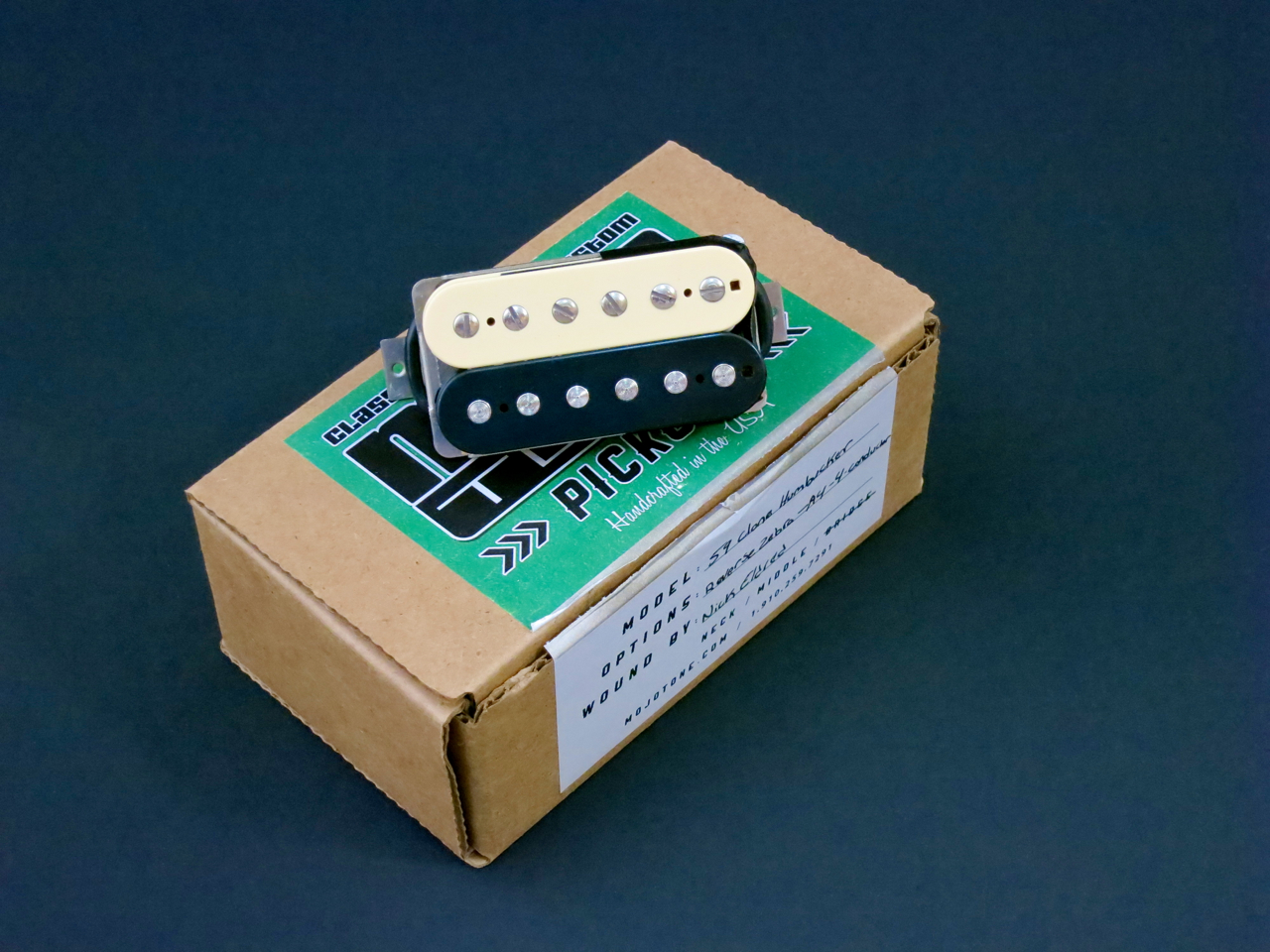
A J.L.G. TeleGacy loaded with Mojotone’s ’59 PAF Clone Reverse Zebra humbuckers:

Fender Adam Clayton JB + Mojotone 70s Clone JB pickups

A Fender Adam Clayton Signature Jazz Bass with a Mojotone 70s Clone JB Set.

JLeachim + Mojotone – pickups 3

A J.L.G. TeleGacy with a pair of covered Mojotone ’59 PAF Clone humbuckers. This guitar sported push/pull-switches to split the humbuckers for single coil type tones:

****

JLeachim S&T – body beauty 2

Finland really is blessed with a very diverse list of homegrown guitars, and J. Leachim is definitely one company to keep on your radar.

J. Leachim’s S&T-Style will make you boogie till the cows come home, and the company’s new Royal model is a beautiful new take on the Thinline Telecaster theme.

JLeachim Royal – body beauty 2

****

J. Leachim Guitars S&T-Style + Royal

S&T-Style – 1.600 €

Royal – 1.600 €

Contact: J. Leachim Guitars

****

Pros:

+ designed and hand finished in Finland

+ quality of finish

+ workmanship

+ playability

+ sound

Cons:

– protruding bridge saddle screws (Royal only)

Testipenkissä: Vox AC10C1

Vox AC10C1 – with guitar 1

Uusi Vox AC10C1 on teholtaan oiva väliaskel firman Custom-sarjassa neliwattisen AC4C1:n ja 15-wattisen AC15C1-kombon välillä.

****

Vox AC10C1 – full front

Vox AC10C1 (katuhinta noin 520 €) ei ole alkuperäisen (1950 tai 60-luvun) AC10-kombon uusintapainos, vaan uutuuskombo on Kiinassa rakennetun, nykyaikaisen Custom-sarjan jäsen.

Näin ollen AC10C1-vahvistimesta löytyy – alkuperäisen vibratoefektin sijaan – laadukas digikaiku, sekä erilliset Gain- ja (Master) Volume-säätimet.

Vox AC10C1 – front angle 1

Uusi Vox-kombo näyttää pienennetyltä versiolta firman legendaarisesta AC30-mallista – paljon mustaa vinyyliä, kultaiset ja valkoiset koristelistat, sekä vinoneliökuvioilla koristettu, ruskea etukangas.

AC10C1 painaa vain 12 kiloa, minkä ansiosta komboa on helppo kantaa sen ainoasta muovikahvasta.

Koska kyse on kiinalaisesta sarjatuotannosta, ei tässä voi odottaa käsinjuotettua, kallista point-to-point elektroniikka, vaan AC10 on toteutettu kolmella piirilevyllä, joihin myös vahvistimen putkikannat on kiinnitetty. Hyvän kuvan AC10C1:n elektroniikan arkkitehtuurista saa tästä linkistä.

Voxin kaksi EL84 päätevahvistinputkea sijaitsevat kombon kotelossa suoraan kahvan viereisen tuuletusritilän alla. Etuvahvistimen putket (2 x 12AX7) taas löytyvät kombon pohjan läheltä, jossa niille on takaseinässä toinen tuuletusaukko.

Vox AC10C1 – control panel LRG

Myös kombon säädinpaneeli on ulkonäöltään tyypillinen Vox-kombolle.

Paneeli tarjoaa Gain- ja Volume-säätimien lisäksi vielä kaksikaistaisen EQ-osaston, sekä säätimen kaiulle.

Vox AC10C1 – full back

Vox AC10C1 on käytännössä suljetulla takaseinällä varustettu kombovahvistin, vaikka takaseinässä onkin pieni tuuletusreikä.

Kaiuttimeksi on valittu yksi kymppituumainen Celestion VX10.

Vox AC10C1 – back panel

EU:ssa uutuuskomboa myydään uudella Eco-ominaisuudella. Kun Eco-kytkin on päällä-asennossa, AC10C1 menee omatoimisesti pois päältä, jos kombo on kaksi tuntia tyhjäkäynnissä.

AC10C1:n kanssa voi käyttää sellaista lisäkaappia, jolla on 16 ohmin impedanssi.

****

Vox AC10C1 – with guitar 2

Ensin sana Vox AC10C1:n tehosta:

Tämä vahvistin on 10-wattiseksi komboksi erittäin kovaääninen! Uutuus-Voxi ei mielestäni oikein sovi kerrostaloasunnon olohuonekomboksi, koska tämä AC-kymppi alkaa soida kunnolla vasta, kun Volume-säädin on avattu ainakin ”kello kymmeneen”.

Vox-kombon perusääni on melko kirkas – löysin minua miellyttäviä soundeja vasta, kun Treble-säädin oli kello 10:ssä (tai vielä enemmän kiinni).

Vaikka uutuus-Voxi ei tarjoa valtavia määriä puhdasta headroomia, löytyy Gain-säätimen alkumetreillä kuitenkin kauniita puhtaita soundeja Fender-tyylisillä yksikelaisilla mikrofoneilla varustetun kitaran kanssa (tässä soi Fender Stratocaster, AC10C1:n Gain: kello 10):

Monille putkipuristeille digitaalinen kaiku putkikombossa on kuin punainen vaate, mutta ainakin minun mielestäni Vox AC10C1 tarjoaa yhden parhaista digikaiuista tässä hintaluokassa. Kaikutyyppi on muhkea jousikaiku, joka myös ”pärskii” mukavan autenttisesti isoilla säädöillä ja kovalla atakilla:

Gibson P-90 -yksikelainen vaatii jo – isomman lähtötason takia – kitaran omien volume-namikoiden säätämistä hiukan alaspäin, jos halutaan, että AC10C1 pysyy puhtaana. Ensimmäisessä klipissä soi Epiphone Casino, ja sen omat volume-säätimet ovat puoliksi kiinni (AC10C1:n Gain: kello 9):

Tässä sama Casino, mutta omat volumet säädetty kahdeksaan:

Myös humbuckereilla täytyy säätää kitaran omat volumet alas, muuten Vox AC10:n soundi muuttuu jo hieman rosoiseksi. Tässä kaksi esimerkkiä Hamer USA Studio Custom -kitaralla:

AC10C1:n särösoundien kirjo menee hyvin vahvasti ”klassisen” puolelle. Tämä ei ole mikään high gain -kombo, vaan Voxin luontevin ympäristö ovat 60- ja 70-luvun Pop-, Blues- ja Rock-soundit. Kombo tarjoaa kätevästi tyypilliset (Top Boost) AC30-soundit kompaktissa – ja ei ihan niin kovaäänisessä – formaatissa.

Stratocaster, Gain – kello 3:

Casino, Gain – kello 1:

Hamer, Gain – kello 1:

Stratocaster, Gain täysillä:

Casino, Gain täysillä:

Hamer, Gain täysillä:

****

Vox AC10C1 – front angle 2

Vox AC10C1 on mielestäni juuri oikea vahvistin, jos etsii aitoa Vox-soundia helposti hallittavassa kokonaisuudessa.

Puhdasta headroomia ei ole tarjolla valtavasti, mutta onneksi tämä Vox reagoi todella hyvin kitaran volume-säätimillä, eikä näin saavutettu clean-soundi muutu elottomaksi tai ponnettomaksi.

Vox AC10C1 on riittävän kovaääninen bändikäyttöön treenikämpässä, ja pienissä keikkapaikoissa jopa livenä ilman mikkiä.

Myös studiokäyttöön Vox AC10C1 on mielestäni hyvä valinta, koska kombosta saa aidon Vox-soundin ratkaisevasti vähemmällä vuotoäänellä.

Vox AC10C1 – logo

****

Vox AC10C1

katuhinta noin 520 €

Lisätiedot: EM Nordic

Kiitos DLX Musiikille testikombon lainaamisesta!

Plussat:

+ hinta-laatu-suhde

+ kompakti koko

+ kaiun soundi

+ soundi

Miinukset:

– puhdas headroom rajallinen

Testipenkissä: J. Leachim Guitars S&T-Style + Royal

JLeachim S&T – beauty shot 2

Jan Merivirran perustama J. Leachim Guitars on vielä melko nuori yritys, mutta se on jo onnistunut nousemaan tietoisuuteen kitaristien keskuudessa.

Tässä jutussa testataan kahta eri J.L.G.-kitaramallia – reilusti relikoutu S&T-Style, sekä firman uusi, puoliakustinen Royal.

J. Leachim on hiljattain myös alkanut tuoda Suomeen huippulaadukkaita Mojotone-mikrofoneja USA:sta – testikitaroiden lisäksi sain vielä kolme eri Mojotone-malleilla varustettua soitinta kokeiltavaksi.

JLeachim Royal – beauty shot 2

****

JLeachim S&T – full front

J. Leachim Guitarsin erikoisalaa ovat – usein hyvin rankalla kädellä toteutetut – Relic-viimeistelyt. Totta, firmalta saa myös täysin ”koskemattomia” soittimia, mutta moni kitaristi on valinnut relikoidun J.L.G.-kitaran juuri viimeistelyn tuoman mojon vuoksi.

S&T-Style (1.600 €; laukku ja custom-hihna kuuluvat hintaan) on juuri tällainen mojo machine – soittamista varten tehty sähkökitara, jossa yhdistyvät sulavasti Fender Telecasterin kaula ja Stratocasterin runko.

JLeachim S&T – headstock

JLeachim S&T – tuners

S&T:n relikoidussa kaulassa on mattaviimeistely, sekä laadukkaat Kluson-tyyliset virittimet.

JLeachim S&T – Wilkinson vibrato

Kitaran Wilkinson Vintage -vibrato näyttää todella kuluneelta.

Vibratalla on muuten tarkka kopio vahnasta Strato-tallasta, paitsi että vibrakampea työnnetään tallassa olevaan nylonkaulukseen, jonka ansiosta kammen istuvuutta on parannettu tuntuvasti.

JLeachim S&T – back beauty

S&T-Stylen vibratallassa käytetään neljä jousta, ja tuntuma on sopivasti jämäkkä, muttei liian jäykkä.

JLeachim S&T – body beauty 1

Soittimen leppärunko näyttää kuin sitä olisi käytetty jo ainakin 50 vuotta klubikiertueilla.

JLeachim S&T – plug receptacle

Electrosocket-jakkikupin ansiosta jakin huolto tai vaihto käy paljon helpommin kuin perinne-Teleissä.

****

JLeachim Royal – full front

J. Leachim Royal (1.600 €; laukku ja aitoustodistus kuuluvat hintaan) on firmalle uusi aluevaltaus – se on thinline-tyylinen puoliakustinen sähkökitara.

Rungon muoto on eittämättä hieman Telecaster-tyylinen, mutta todellisuudessa sillä on taidokas, monikerroksinen rakenne.

JLeachim Royal – headstock

Royalin yksiosainen, linnunsilmävaahterasta veistetty kaula on erittäin kaunis.

JLeachim Royal – Wilkinson tuners

Soittimen nykyaikaiset Kluson-kopiot tulevat Wilkinsonilta.

JLeachim Royal – bird's eye maple neck

Linnunsilmävaahtera ja otemerkit abalone-helmiäisistä – tässä voisi jo puhua aidosta Custom Shop -meiningistä!

JLeachim Royal – bridge
Royalin tanakka talla on kyllä sinänsä erittäin laadukas valinta, mutta sen pohjalevy on niin jämäkkä, että tässä kitaramallissa tallapalojen korkeussäätöön tarkoitetut ruuvit jäävät törröttämään hieman liikkaa tallan yläreunan yli. Lyhyemmät ruuvit olisivat paljon mukavammat plektrakädelle.

JLeachim Royal – body beauty 1

J. Leachim Royal -kitaran puoliakustinen runko tulee pieneltä englantilaiselta soitinpajalta nimeltään Bodge Fabrications.

Tässä piilee brittihuumori, sillä sana bodge (kirjoitetaan myös botch) tarkoittaa ”möhliä”, ”hutiloida” tai ”toheloida”.

JLeachim Royal – Bodge body

Bodge-runko on nimittäin tehty erittäin huolellisesti ja kauniisti. Rungon rakenne on monikerroksinen, ja siihen käytetään pähkinäpuuta, vaahteraa, sekä mahonkia.

Rungon kansi on myös kaareva reunoissaan…

JLeachim Royal – back beauty

…ja sen kääntöpuolelta löytyy myös ns. mukavuusviiste.

JLeachim Royal – neck joint

Kaulataskuun liimattu vaahterapala lisää lujuutta Royalin ruuviliitokseen.

****

JLeachim S&T – beauty shot 1

J. Leachim S&T-Stylen ergonomia on erinomainen:

Soitin on kevyt ja sen ’60-tyylinen pyöreä Tele-kaula istuu erittäin hyvin ainakin omaan käteeni. S&T:n nauhatyö on kiitettävällä tasolla. Soittimen tatsi on kohdallaan ja kitaran vibratalla toimii niin kuin pitää tämän hintaisessa laatusoittimessa.

JLeachim S&T – pickups

Tähän S&T-Styleen on asennettu Mojotonen Rene Martinez Texas Strat -mikkisetti. Martinez oli Stevie Ray Vaughanin kitarateknikko, ja hän on kehittelyt tätä settiä juuri SRV-tyylistä musiikkia varten.

Kaula- ja keskimikrofoneilla on Alnico III -magneetteja, jotta soundissa olisi kirkas atakki, sekä erinomainen dynamiikka. Tallamikrofoni on hiukan tuhdimpaa Texas-sorttia, jossa paksummasta kelasta ja voimakkaammista Alnico V -magneeteista lähtee isompi soundi.

Tässä S&T-Stylen ääninäyteet:

Demobiisiksi äänitin oman version Stevie Ray Vaughanin kitarasoolosta David Bowien China Girl -biisissä (kaikki kitararaidat soitettu J.L.G. S&T-kitaralla):

****

JLeachim Royal – beauty shot 1

J.L.G. Royal on mielestäni upea soitin, ja J. Leachim Guitarsille onnistunut uusi aluevaltaus.

Puufaneille tämä on ihan vastustamaton sähkökitara, jossa soitettavuus ja ulkonäkö ovat erinomaisessa tasapainossa. Puoliakustisuus tuo mukavasti laulumaista klangia Royalin akustiseen sointiin.

JLeachim Royal – pickups

Royal-mallissa käytetään Mojotonen humbucker-kokoisia P-90-mikrofoneja, joista löytyy sekä Jazz- että Rock-tyylisiä soundeja.

Kaulamikrofonissa on Alnico IV -magneetti, kun taas tallamikissä käytetään Alnico V -magneettia ja hieman enemmän käämilankaa:

Carlos Santana käytti uransa alussa (esimerkiksi Woodstockissa) kahdella P-90:llä varustettua Gibson SG Special -kitaraa. Isona Santana-fanina minun piti luonnollisesti äänittää samantyylinen demobiisi J. Leachim Royalilla:

****

JLeachim + Mojotone – teaser

Sain myös nämä kolme Mojotone-mikrofoneilla varustettua soitinta kokeiltavaksi:

JLeachim + Mojotone – pickups 4

J.L.G. TeleGacy Mojotone ’59 PAF Clone Reverse Zebra -humbuckereilla:

Fender Adam Clayton JB + Mojotone 70s Clone JB pickups

Fender Adam Clayton Signature Jazz Bass, jossa oli Mojotone 70s Clone JB -mikrofonit asennettuina:

JLeachim + Mojotone – pickups 3

J.L.G. TeleGacy kuorillisilla Mojotone ’59 PAF Clone -humbuckereilla. Tämän kitaran kytkennössä oli nostokytkimet volume-potikoissa, joilla saadaan mikrofonit puolitettua:

****

JLeachim S&T – body beauty 2

Miksi mennä merta edemmäs kalaan, kun koti-Suomesta saa niin laadukkaita soittimia?

J. Leachim S&T-Stylessa on mojoa vaikka muille jakaa, kun taas J.L.G. Royal on erittäin onnistunut muunnelma Thinline Telecaster -teemasta.

JLeachim Royal – body beauty 2

****

J. Leachim Guitars S&T-Style + Royal

S&T-Style – 1.600 €

Royal – 1.600 €

Lisätiedot: J. Leachim Guitars

****

Plussat:

+ sunniteltu ja viimeistelty Suomessa

+ viimeistelyn laatu

+ työnjälki

+ soitettavuus

+ soundi

Miinukset:

– tallapalojen säätöruuvit (vain Royal-mallissa)

Review: Tokai Love Rock LC-107, LS-130F & LS-160

Tokai – badge

Kitarablogi’s year starts off with some really tasty guitars – three Japanese Tokai Love Rock models. Handcrafted Love Rocks just like these originally laid the foundation for Tokai’s legendary reputation as a maker of high-quality copies of vintage guitars.

****

Tokai LC-107 – full front large

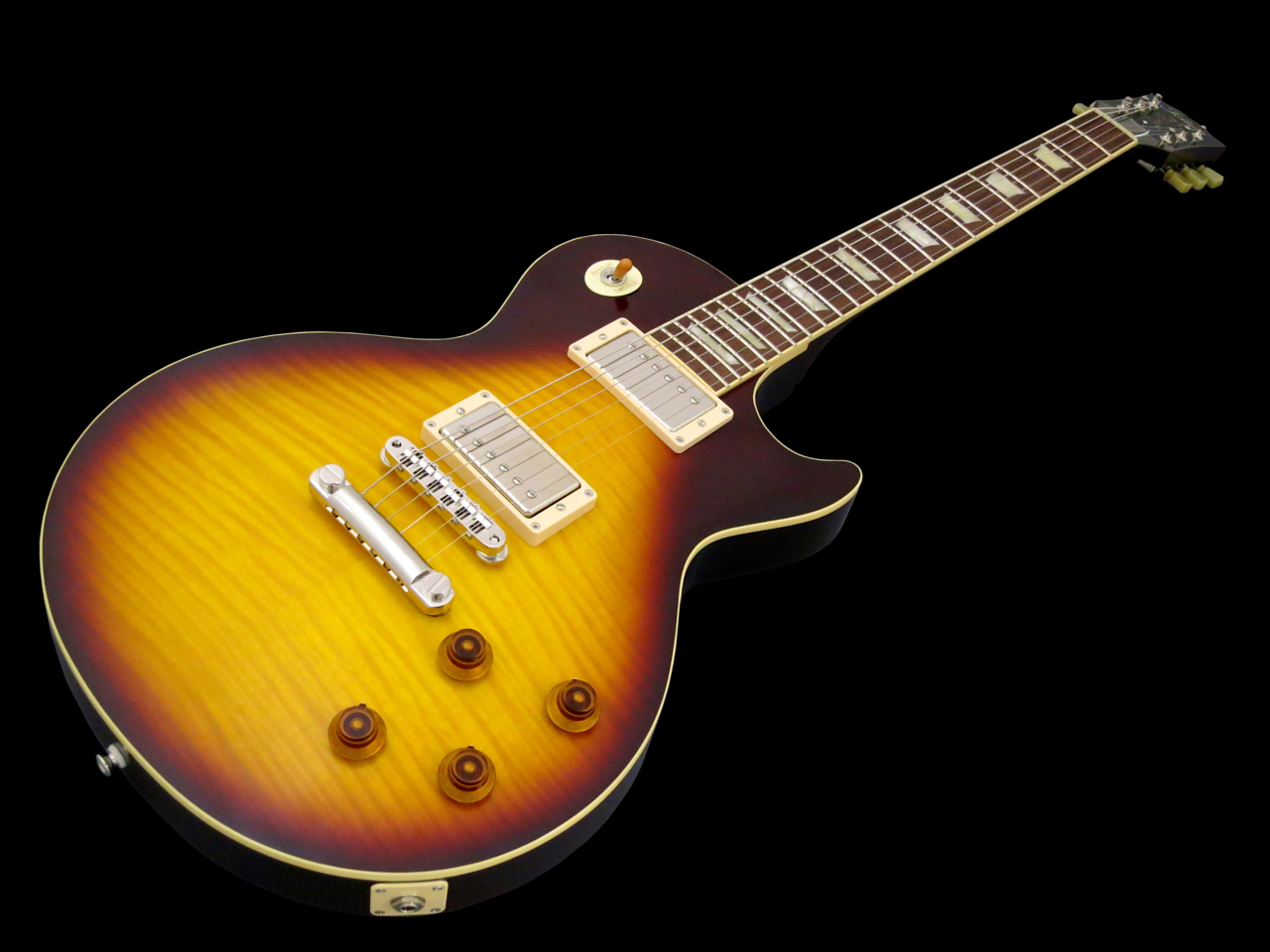
Tokai’s LC-107 (current price in Finland: 1.219 €) is the company’s gorgeous version of a Les Paul Custom.

The gold-coloured hardware fits our review sample’s tasty see-through wine red finish to a tee.

In terms of built, the Tokai LC-107 follows closely the original 1950s recipe of an LP Custom – unlike many recent original Gibsons:

The mahogany body is genuinely solid, meaning there are no hidden holes or pockets serving as weight relief. Tokai keeps the weight of their Love Rocks down by carefully selecting lightweight mahogany.

The LC-107’s curved top, too, has been carved from mahogany (!), just like Gibson did it in the Fifties.

There is one change, though, that Tokai made for environmental reasons:

The bound fingerboard is made from rosewood, not ebony.

Tokai LC-107 – back beauty

The multiply binding on both top and back add a nice dose of panache to the looks of the Tokai LC-107.

Tokai LS-130F – full front large

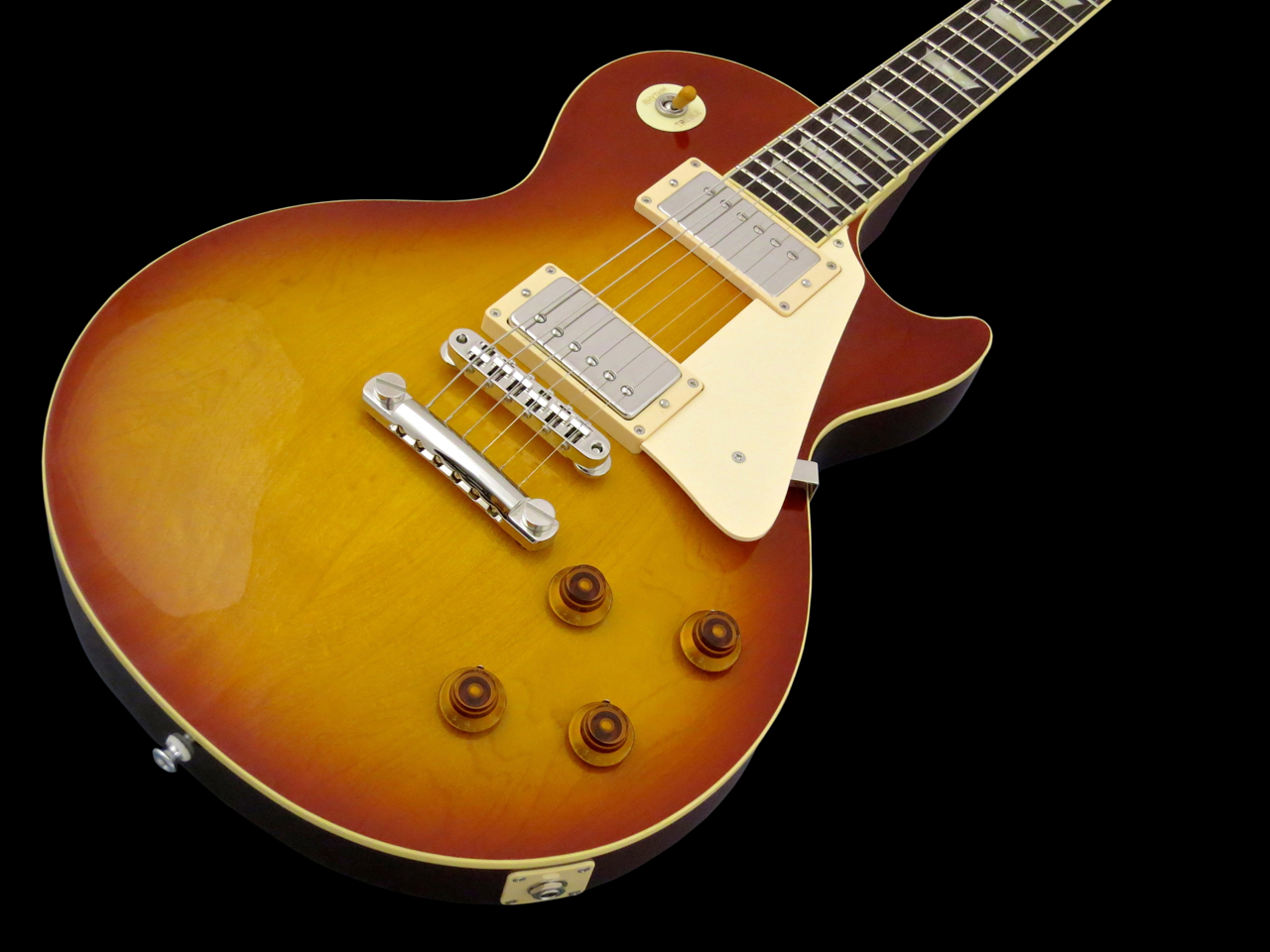
The Tokai LS-130F (1.514) is an LP Standard-type instrument with a thin satin finish.

The letter F in its name hints at the beautiful solid flame maple top of the LS-130F.

Our review instrument comes in a beautiful tobacco sunburst, whose edges may look brown at first glance, but actually turn out to be a dark, see-through violet, allowing you to see the chatoyant wood grain beneath it.

Tokai LS-130F – back beauty

The LS-130F’s neck and the back of the body have been finished in cherry red.

Tokai LS-160 – full front large

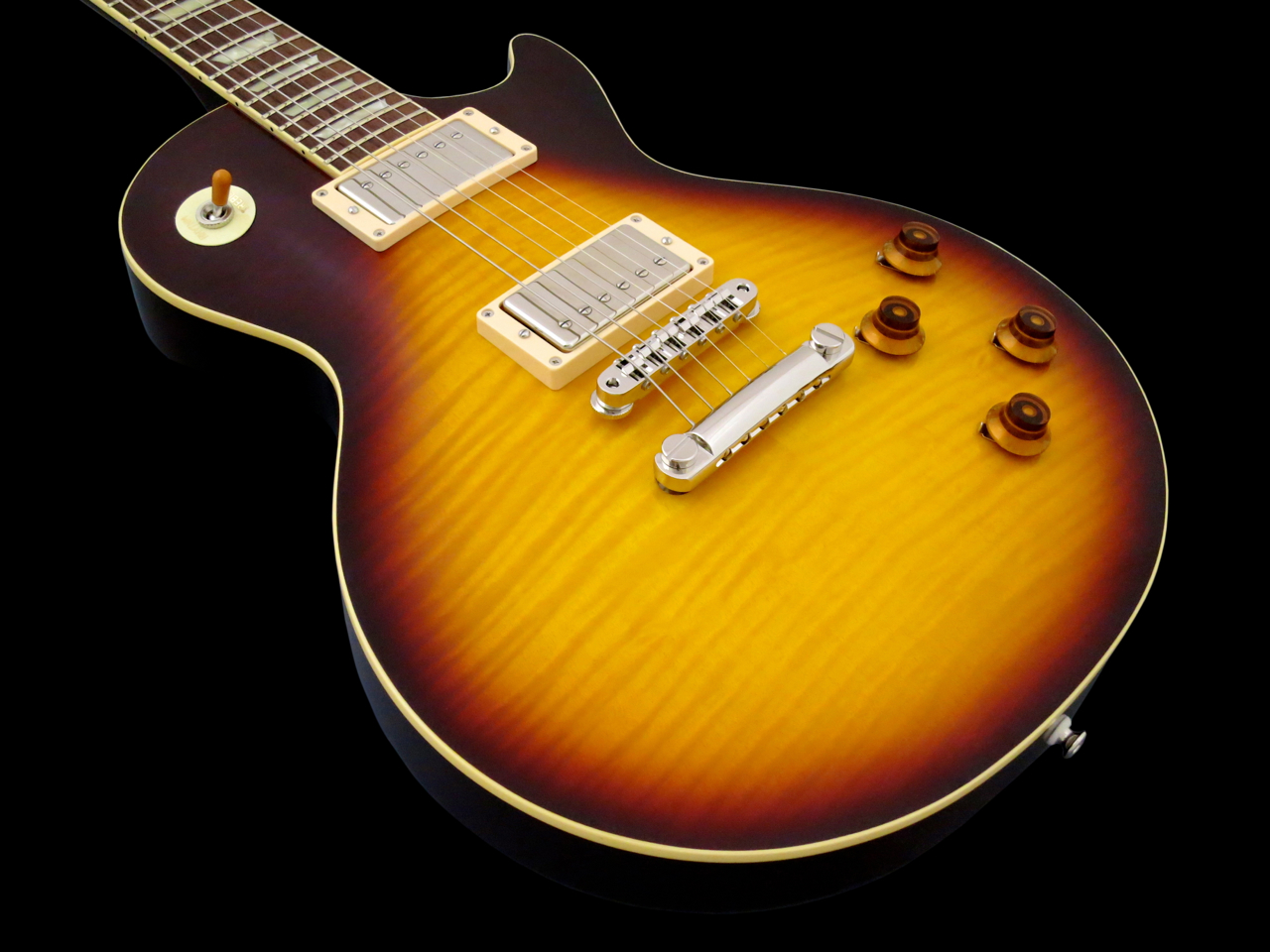
Due to the runaway popularity of tiger striped maple on Les Pauls, many younger guitarists might think that all Standards made between 1958 and ’60 have flame maple tops. Actually, there are many original ’Bursts that were produced with what is nowadays called a plain top.

Tokai’s LS-160 (1.773 €) is a stunning, top-of-the-line version of such a plain top LP.

Adding to the LS-160’s vintage-style prestige is this instrument’s nitrocellulose finish, taking this model’s specifications right back to 1958.

Tokai LC-107 – headstock

The headstock on the Tokai LC-107 sports plenty of inlay works, as well as multiple binding.

The tuners are modern sealed Gotoh heads.

Tokai LS-130F – headstock

The headstocks on both the LS-130F and the LS-160 follows the more restrained LP Standard pattern.

Tokai LS-130F – tuners

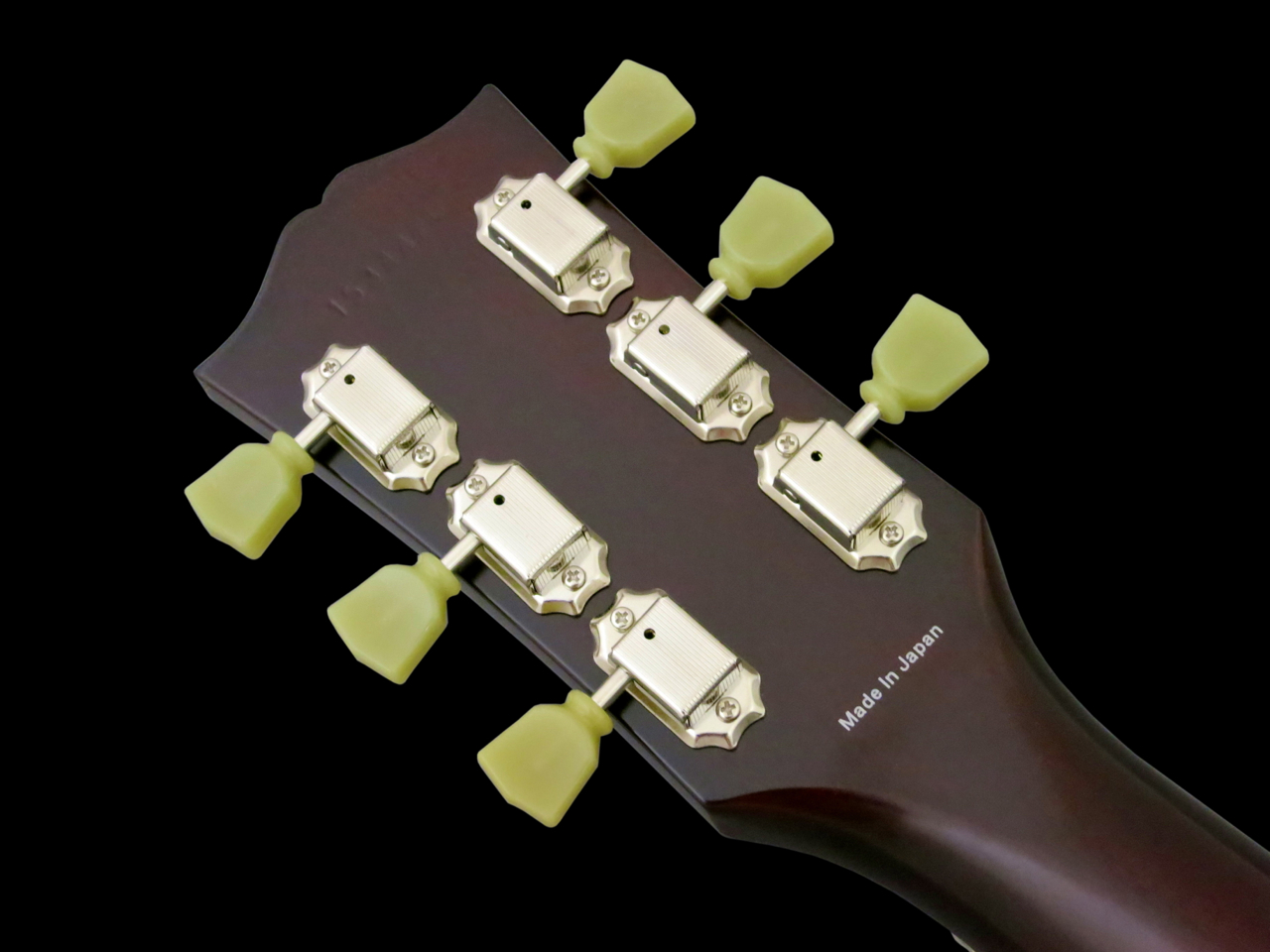
These two models come equipped with Gotoh’s quality versions of vintage Kluson tuners.

Tokai LC-107 – fretboard

The Tokai LC’s sports oblong position markers made from pearloid plastic…

Tokai LS-130F – fretboard

…while both LS’ come with crown inlays.

The fretwork on all three instruments is exemplary.

Tokai LS-160 – cutaway binding

All three guitars have long tenon neck joints, with a part of the neck extending into the neck pickup cavity.

Many players claim that this type of neck joint makes for better tone and sustain.

Tokai LC-107 – bridge

Tokai LS-160 – bridge

The tune-o-matic bridges and stopbars on all three models come from Gotoh’s Japanese hardware range.

Tokai LC-107 – pickups

The LC-107 comes with a pair of Tokai’s fabled PAF Vintage Mark II humbuckers.

Tokai LS-130F – pickups

The LS-130F and LS-160 have been equipped with a pair of Seymour Duncan ’59 Model pickups.

Tokai LS-130F – control cavity

The control cavities look clean and neat, displaying Japanese craftsmanship and parts, as well as thorough shielding with conductive paint.

Tokai Love Rock – case

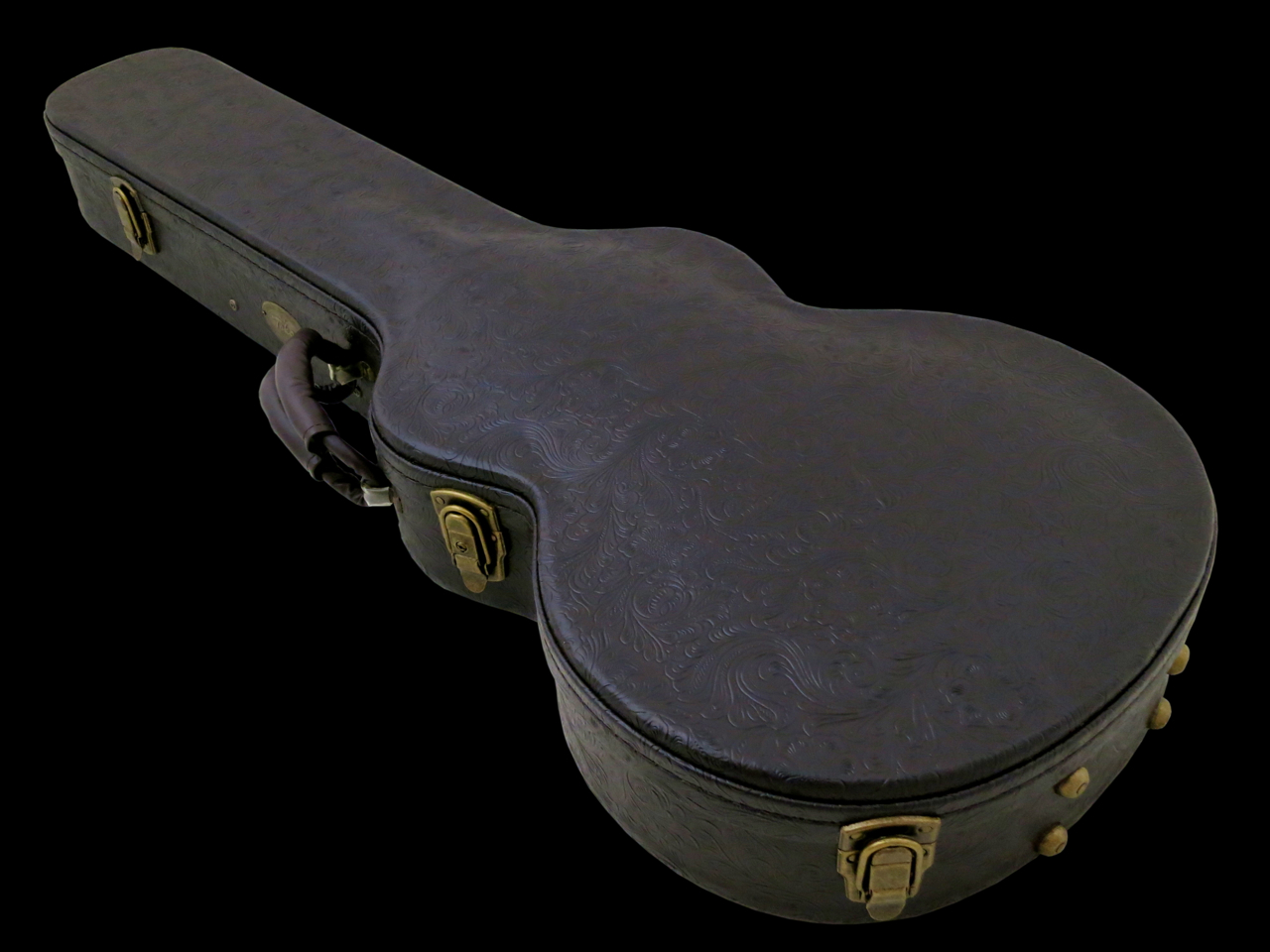
Our review trio is sold with a nice Tokai hard case included in the price.

Tokai LS-160 – pickups

Tokai LS-160 – shroud

In order to protect the LS-160’s delicate nitro finish, this model is placed inside the case in its own velours bag.

****

In terms of their playability, all three guitars – the LC-107, the LS-130F and the LS-160 – are all on an equally high level. In terms of their feel, though, close inspection reveals a few minute differences.

Tokai LC-107 – body beauty

The neck profile on the Tokai LC-107 is a medium-depth, well-rounded D-shape. LP fans would probably describe this neck as a ’59 Neck – meaning there’s enough meat on the bones for tone, but the overall dimensions are not unwieldy.

Tokai LS-130F – body beauty

Tokai’s LS-130F comes endowed with a 58 Neck, meaning the full chunky Monty. The fantastic matte finish makes this neck feel very ”fast”, despite its considerable girth.

Tokai LS-160 – body beauty

The LS-160’s neck profile is the slimmest neck of this trio. It’s what you call a 60 Neck – not as deep as a 59 Neck, and with an oval C-profile.

Despite the fact that all review instruments came strung with the same set of 010-strings, and notwithstanding identical setups (string height at the 12th fret: low E: 1.9 mm/treble e: 1.6 mm), Tokai’s LS-160 felt a little bit bendier than the LC-107 and LS-130F.

****

Tokai LC-107 – beauty shot

Played acoustically, the Tokai LC-107 had a sweet voice with nice woody mids and a little helping of shimmering highs, which is most likely down to the all-mahogany body.

Tokai’s own PAF Vintage Mark II pickups are great remakes of Gibson’s fabled late-Fifties humbuckers. Their output levels are relatively low, keeping the tone dynamic and fresh:

Tokai LS-130F – beauty shot

Tokai’s LS-130F turned out to be a little shouter, when strummed unplugged. This guitar gives you that famous freight-train-jumped-off-the-tracks-at-full speed experience that so many LP players love.

Seymour Duncan’s ’59 Model humbuckers make the LS-130F sound a little bit bigger and broader, when compared directly to the LC-107:

Tokai LS-160 – beauty shot

Unplugged the Tokai LS-160 sits right between its cousins. It isn’t as vociferous as the LS-130F, but there’s a bit more presence than what you’d find in the LC-107.

What is surprising, though, is that the LS-160 has the most ”vintage-accurate” tone of this trio, when plugged into an amplifier, even though the pickups are exactly the same as in the LS-130F. The neck pickup is dipped deep in tasty cream, while the bridge pickup is more dynamic and a bit brighter than many would expect from an LP Standard. The end result is a very versatile clean tone:

The demo track keeps the same guitars on clean rhythm duty throughout (left channel: LC-107; right channel: LS-160). The riffs and lead parts, on the other hand, change – first up is the LC-107, then the LS-130F, and the last to go is the LS-160:

****

Tokai LC-107 – flying – final version

Tokai LS-130F – flying

Tokai LS-160 – flying

Tokai’s LC-107, LS-130F and LS-160 offer you top quality for a very fair price. All three models are professional grade instruments that play like a dream and sound fantastic.

The LC-107’s woody tone makes it a good choice for Jazz- and Fusion-guitarists, but will work equally well in other genres, too.

Tokai’s LS-130F would be my choice for an all-rocking, all-riffing Love Rock. Put on your top hat and travel to Paradise City.

The LS-160 takes you all the way back to the vintage Les Pauls that have served as Tokai’s inspiration. This authentically minded vintage-style guitar is full of dynamic Bluesbreaker-mojo.

****

Tokai Love Rock

LC-107 – 1.219 € (case included)

LS-130F – 1.514 € (case included)

LS-160 – 1.773 € (case included)

Pros:

+ Made in Japan

+ workmanship

+ playability

+ sound

+ hard case included

Review: Boss SY-300

When guitar synthesisers first came into being (at the beginning of the 1970s) they all were fully analogue and used the actual guitar signal as the raw material of their output. The guitar’s output was fed into a chain of different effects, including distortion, octaving, filters and modulation, to make the sound resemble that of an analogue synth.

Many old guitar synths sound great, but they require a very clean playing technique to track cleanly, and almost all of the devices were purely monophonic (meaning: no chords).

Roland’s GK-pickup – as well as the MIDI standard – changed all that drastically:

Thanks to the GK-pickup it was (and still is) possible to make use of chords, bends and double stops, and incorporate them all in your synth performance. The GK system also makes it easy to trigger rack synths, software synths or samplers using your guitar, turning the instrument into a full-blown orchestra.

The brand-new Boss SY-300 (street price in Finland approx. 720 €) returns to the original idea of the guitar synth, but takes advantage of the huge advances that have been made in digital technology recently. Boss say the SY-300 tracks quickly and accurately, while delivering huge and fat sounds with lots of scope for editing. But the best thing about it is: The synth is polyphonic and works straight off the regular guitar signal.

****

sy_300_top_gal

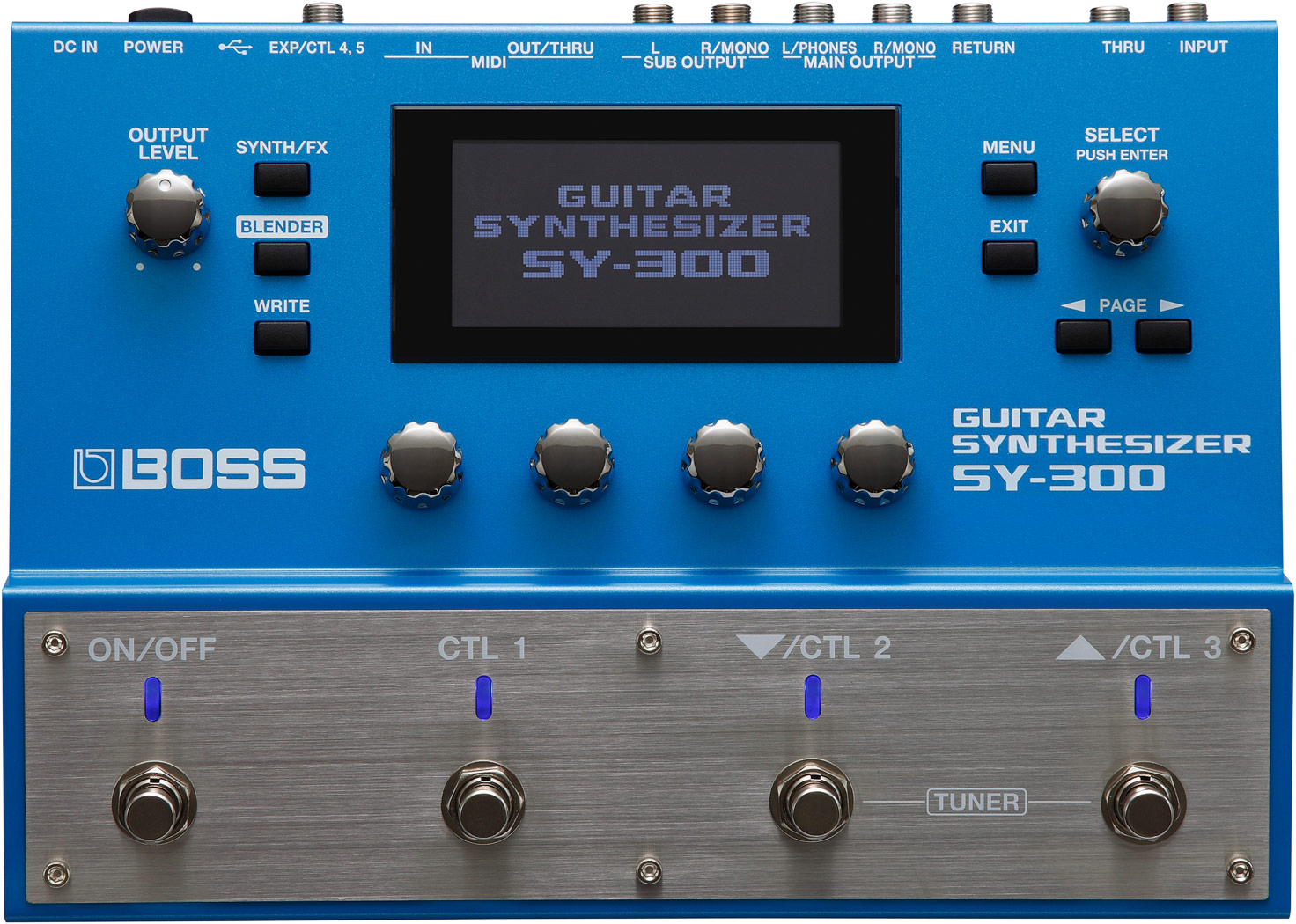
The Boss SY-300 is a chunky piece of gear and looks like a compact multi-effects unit. The external power supply unit is included in the price.

You can assign the synth’s four footswitches to different functions, but in the factory default they work as follows:

The switch on the far left is the On/Off-switch (well, actually the bypass). CTL 1 is used to change a predetermined parameter in the chosen patch (like vibrato or modulation). The last two switches (CTL 2 and CTL 3) take over patch changing duties; step on them both, and you’ll switch on the built-in digital tuner.

As we are talking about a fully featured digital piece of equipment, the amount of editable parameters is quite staggering. Luckily, the graphics-based user interface in the Boss SY-300 is well-designed, making it fairly easy to programme the synthesiser using the controller knobs beneath the display, and the navigation buttons to the right of it.

****

sy_300_back_gal

The SY-300’s well-spec’ed back panel will not leave you wanting:

Placed next to the guitar input are the phone jacks for the guitar synth’s external effects loop. The Ground/Lift-switch makes it safe and easy to break any hum-inducing earth loop. Boss even included two sets of stereo outputs in their synth. The Main Output could be sent to your onstage amplifiers, for example, while the Sub Output feed could be connected to the FOH console. The Main Output’s left output also doubles as a headphones jack.

It’s also easy to integrate the Boss guitar synth into any MIDI-setup, thanks to its two MIDI-ports. The jack labelled EXP/CTL 4,5 is for use with additional (optional) footswitches and/or expression pedals. The SY-300 is compatible with EV-5- and FS-7-pedals, as well as the FS-5U- and FS-6-footswitch units.

The Boss SY-300 can also be utilised as a versatile external soundcard, with the synth offer four different USB Audio-modes for just this purpose, like the nifty Re-Synth-mode, which works in the same way as reamping. The unit also sends and receives MIDI-data using USB. You can also edit patches, load new ones or share your settings with other SY-300 users with the free Boss Tone Studio software (Win/Mac OS).

****

Boss SY-300 signaalitie

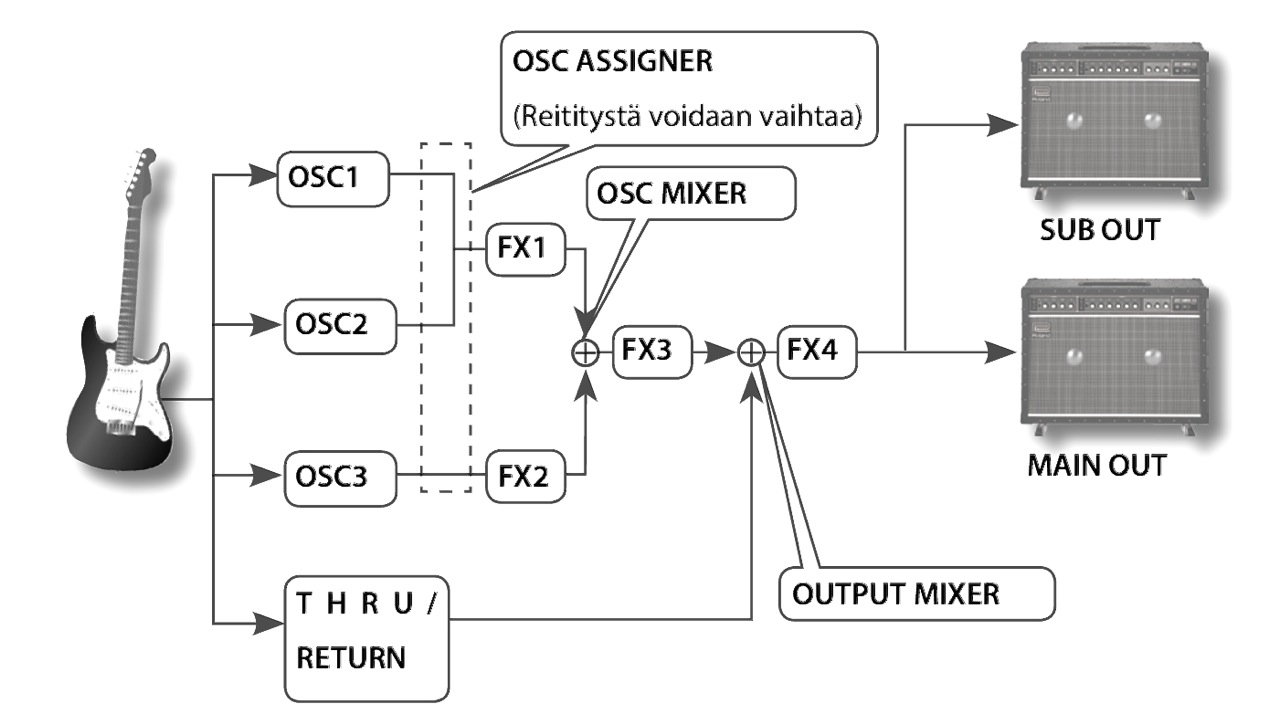
The above graphics show you the internal architecture and the signal path of the Boss SY-300. Each patch (Preset: 70; User: 99) can use up to three oscillators as sound sources (OSC1-OSC3). Each oscillator comes with a number of different waveforms to choose from (from saw to PWM, and beyond), as well as its own set of dedicated filters, LFOs and ADSR-envelope modules. A good indication of the SY-300’s versatility lies in the fact that exact placement of the oscillators in the signal path can be changed. You could have two oscillators running in parallel, with the third one placed behind the pair in series. Furthermore, the Sequencer feature makes it possible to use each oscillator as a 16-step sequencer, turning each note you play into a rhythmic and melodic pattern.

But there’s still more to come:

Boss’ new guitar synth also comes with four FX modules, each offering a very wide selection of different pro-quality effects. Depending on the chosen oscillator routing, the signal routing of the FX modules can also be changed by the user.

****

sy_300_angle_1_gal

The new Boss SY-300 is a very user-friendly device, but due to its versatility – as well as the huge amount of editable parameters – you should take some time to read the user manual, before trying to programme your own patches. Especially if you’re new to the subject of synthesis, you shouldn’t be disappointed if it takes a little time, before your creations sound the way you intended.

I’m old enough to have learned synthesiser programming in the age of polyphonic analogue synths and the Yamaha DX7, which meant I felt right at home with the SY-300.

A good test of any user interface is trying to create something completely from scratch. I chose to use the Boss synth to come up with a slightly Eastern-influenced patch, that uses two oscillators in series to produce a sitar-style twangy tone, with the third oscillator assigned to produce shimmering overtones.

The resulting patch sounds like this (a single guitar synth track, plus three tracks of Roland HandSonic-percussion):

This clip gives you some idea of the types of patches included in the factory settings:

I also recorded a demo track that uses the Boss SY-300 for everything, except for the drum tracks:

****

Boss SY-300

Boss’ new guitar synth is a fantastic piece of gear, if you’re a fan of real synthesiser sounds.

The SY-300 locks on to your guitar signal very well and it tracks like a dream, staying true to both the dynamic, as well as the melodic and harmonic content of your playing.

The SY-300 isn’t meant to replace Roland’s GK-/GR-products – if you’re after realistic-sounding, multitimbral sounds, using a GK-pickup is still the easiest and best option. The Boss SY-300 is meant as a fantastic choice if you’re looking for a genuine guitar synth – in the original sense of the term. You will get huge and fat synthesiser sounds, seasoned with great effects, from the SY-300, not pianos, violins or trumpets.

****

Boss SY-300

Street price in Finland approximately 720 €

Contact: Roland

****

Pros:

+ graphic user interface

+ polyphonic

+ three OSC-modules

+ four FX-modules

+ external effects loop

+ sound

+ USB-soundcard

Pidä blogia WordPress.comissa.

Ylös ↑