Review: Boss BR-80 Micro BR

The Boss Micro BR BR-80 is a very interesting little device packed with three different basic operating modes: It can be a full-blown digital eight-track recorder, a stereo recorder with built-in mics or a Roland eBand-compatible one-stop solution for all your practicing needs. The Boss BR-80 uses SD-HC-cards as its recording medium.

This little box of tricks is aimed mainly at guitarists, but the Micro BR offers many features that make it very useful for bass players or vocalists, too.

****

The Boss BR-80 (current price in Finland: 284 €) is only a little bit larger than most smartphones, but Boss have succeeded in keeping the device surprisingly easy to use, regardless of its feature-packed nature.

The Micro BR’s transport buttons have been placed at the bottom of the front panel, between the built-in stereo condenser microphones. Left of the display you’ll find access to the unit’s three operating modes  – MTR, eBand and Live Rec. The buttons for access to the BR-80’s menus, drum machine, tuner and effects are also found here.

Right of the display the navigation buttons are situated, as well as the data wheel.

The four push-buttons underneath the display have different functions, which relate directly to the currently selected operating mode.

The Micro BR can be powered by two AA-size batteries (or rechargable batteries) or by using an optional power supply.

The switch placed on the Boss’ bottom plate changes the 1/4-inch input’s impedance from high impedance, for use with electric guitar, to low impedance, when using an external microphone.

All of the BR-80’s inputs and outputs can be found on the unit’s sides: The left-hand side has the usb-port, the headphones/line-output and the corresponding volume control. On the other side you’ll find a 1/4-inch mono input, a mini-jack for the stereo line-level input, as well as the recording level control.

****

In MTR-mode the BR-80 works as a typical Roland/Boss multitrack recorder, offering eight tracks of simultaneous playback with a stack of eight virtual tracks (V-Track) per track (64 V-Tracks in all). One typical use for the V-Tracks would be recording eight takes of the same guitar solo from which to choose the best one during mixing.

The main screen (pictured above) shows you the signal metering and indicates which track is currently assigned to recording.

Navigating ”down” toggles you through different mixer views, so you can set fader levels and pan positions, as well as select tracks for muting or soloing.

Boss’ on-board tuner is very easy to use.

It is a real joy to work with the BR-80’s fantastic COSM-effects. In its ultra-compact league the Micro BR’s multi-effects clearly are among the best. There are 156 factory presets loaded into the BR-80, containing effects tailoured to acoustic and electric guitar, electric bass, vocals and stereo signals – and there’s also plenty of space for your own creations. The factory presets can be browsed by signal type (guitar, bass, vocals etc.) or by musical style (Jazz, 80s Metal etc).

The Boss also features a built-in drum-pattern-player, packed with loads of different drum patterns, as well as metronome clicks. You can choose from nine different drum kits. Each Song features a rhythm track (pictured above), which allows you to chain patterns into a complete drum track for your projects. Alternatively, you can also import a SMF-midifile into the pattern player – the file can contain a single pattern or even a whole drum song.

The drum track’s signal has its own mixer channel feeding straight into the master buss, and it doesn’t need to be recorded, saving you two tracks for other uses.

Once you’ve recorded all your audio, the song (drums and all audio) can then be mixed and mastered inside the BR-80. Master stereo-files can then be exported to your computer via usb or used for practising in the unit’s eBand-mode.

****

In eBand-mode the BR-80 turns into the Boss JS-8 eBand’s kid brother. eBand-mode is meant as a practising platform, with the unit playing back WAV- and MP3-files, which can either be eBand-loops (of which there are many already loaded into the Micro BR) or whole songs (either imported from your computer or recorded using the BR-80).

You can play along to the tracks or eBand-loops, utilising the unit’s COSM-effect section. If you want, you can also record your playing for later review of your improvement.

The Center Cancel -feature helps you to home in on a part you want to attenuate in a stereo mix. Regardless of its name Center Cancel can be directed to any point in the stereo field. Choosing one of three frequency bands helps to limit the cancelling to the chosen part’s musical range, keeping the rest of the music more natural in turn.

The second important feature in eBand-mode is called Speed & Pitch, which allows you to change the current loop’s or backing track’s tempo and/or pitch on the fly.

****

Live Rec is the most basic of the BR-80’s operating modes, turning the Micro BR into a portable stereo recorder that uses only its built-in, high-quality microphones.

Live Rec can be used for quickly recording new song ideas, as well as for making recordings of your rehearsals or live shows. The only tools on offer are a metronome click and the tuner.

****

The Boss BR-80 has one last ace firmly up its sleeve: The device can also be used as a usb-soundcard – along with its effects section – in your favourite audiosequencer.

Boss even include the Sonar LE -software (Windows only) along with the Micro BR.

****

In my opinion the Boss Micro BR is an amazing little box. Yes, we’ve all seen miniature stereorecorders, pocket-sized effect-units and compact multitrack machines, but the BR-80 is something special: It manages to combine successfully all of the above functions without any weak points or strange compromises.

Each of the Micro BR’s sections works at least decently: The built-in mics have a good, clean sound, the rhythm section patterns and eBand-loops really groove and inspire, the COSM-effects are fantastic (especially considering this unit’s size and price bracket), and the multi-tracker allows you to record anywhere and anytime.

And still, regardless of the wealth of features on offer here, Boss have managed (once again) to keep the Micro BR extremely easy to use.

Here’s a track I recorded, mixed and mastered using only the BR-80 for the whole process. A few instruments and a lead (cable) were all I needed in addition to the Micro BR:

Gentle Wind – Boss BR-80

****

In 1985 I owned a C-cassette four-track machine – despite it being a model from a very reputable manufacturer, it sounded completely rubbish.

In AD 2012 we are offered devices like the BR-80 – they fit in your shirt-pocket, are multi-track recorders packed full of fine effects, they can also help you improve your playing, and offer very decent stereo recording – is this fantastic, or what!?

****

Boss BR-80 Micro BR

current price in Finland: 284 €

Finnish distributor: Roland

Pros:

+ size

+ audio quality

+ quality of built-in microphones

+ quality of effects

+ eBand-mode

+ built-in drum machine

+ ease of use

+ value for money

****

Testipenkissä: Boss BR-80 Micro BR

Boss Micro BR BR-80 on hyvin mielenkiintoinen laite, kun pieneen ja kevyeen koteloon on mahdutettu peräti kolme eri käyttömoodia. BR-80 on kasiraituri, stereotallennin, sekä Rolandin eBand-formaatissa toimiva harjoituskumppani. Tallennusvälineenä toimivat SD-HC-kortit.

Bossin pääkohderyhmä ovat kitaristit, mutta Micro BR tarjoaa riittävästi hyödyllisiä ominaisuuksia myös basisteille tai laulajille.

****

Boss BR-80 (284 €) on vain vähän isompi kuin iso älypuhelin, mutta valmistaja onnistui tekemään laitteesta hyvin selkeän, sen runsaista ominaisuuksista huolimatta.

Micro BR:n alalaidasta löytyy tallentimen sisäinen stereomikrofoni, sekä kuljetusnäppäimet. Näytön vasemmanpuoleisessa alueessa valitaan ja vaihdetaan laitteen toimintatilaa – MTR, eBand tai Live Rec. Sieltä pääsee myös menuihin, sekä rumpukoneeseen, viritysmittariin ja multiefektiin käsiksi. Oikealla puolella taas sijaitsevat datapyörä ja navigointinapit.

Näytön alla olevilla neljällä napilla on eri tehtävät riippuen siitä onko BR-80 moniraituri- vai eBand-tilassa.

Micro BR saa virtansa joko kahdesta AA-kokoisesta paristosta/akusta tai erikseen ostettavista virtalähteestä.

Laitteen pohjaan upotetulla kytkimellä asetetaan kitara-/mikkitulon impedanssia tulosignaalille sopivaksi.

BR-80:n tulot ja lähdöt on sijoitettu tallentimen molempiin reunoihin: vasemmalta löytyy USB-portti, stereolähtö ja volume-säädin, kun taas oikeaan reunaan on upotettu analogiset tulot sekä tulosignaalin tasosäädin.

****

MTR-moodissa BR-80 siis toimii tyypillisen Roland/Boss-kasiraiturin lailla, sillä jokaisella raidalla on kahdeksan haamuraitaa (V-Track), joille voi äänittää esimerkiksi saman kitaraosuuden eri ottoja ja valita niistä kahdeksasta sen parhaan.

Perusnäkymä (ylläolevassa kuvassa) näyttää käyttäjälle kaikki signaalitasot, sekä mikä (tai mitkä) kanavista on tällä hetkellä valittu äänityskohdaksi.

Navigoinnin alas-napilla pääsee suoraan Micro BR:n mikserinäkymiin, jossa voi säätää kanavien tasot ja panorointi tai sooloilla ja mykistää haluamansa kanavat.

Kitaristille tarkoitetussa laitteessa täytyy myös olla kunnollinen viritysmittari, ja Bossin mittari on erittäin selkeää sorttia.

BR-80:n erinomaisten COSM-efektien kanssa on todellakin iloa työskennellä. Multiefektit kuuluvat selkeästi Micro BR -tyylisien pikkulaitteiden parhaimistoon. Tarjolla on 156 valmiita efektiä akustiselle, sähkökitaralle, bassolle, laululle ja stereo signaalille, sekä runsaasti tilaa omia efektipatchea varten. Tehdasefektit on valmiiksi lajiteltu käyttötarkoituksen (kitara, basso jne.) ja tyylin (Jazz, 80s Metal jne.) mukaan.

Bossissa on myös sisäinen rumpukone – tai ehkä paremmin sanottuna pattern playeri – joka tarjoaa runsaasti eri tyylilajin rumpukuvioita, sekä metronomiklikkejä. Käyttäjä voi valita yhdeksän eri rumpukitin välillä. Patternit pystyy ketjuttamaan Rhythm-näkymässä (ylläoleva kuva) kokonaiseksi biisiksi. Micro BR -tallentimeen voi myös tuoda SMF-muotoisia midi-tiedostoja, jotka voivat olla joko patterneja tai kokonaisia rumpu-biisejä.

Rumpukoneella on mikserissä oma stereoraitansa, jonka lähtö on kytketty masterlohkoon. Laitteen rumpuosastoa ei siis tarvitse äänittää, eikä se näin myöskään syö audioraitoja.

Valmiin biisin – audio ja rumpukone – voi lopuksi miksata ja masteroida, ja tästä syntyvän WAV-tiedoston pystyy eksportoimaan tietokoneelle tai käyttämään BR-80:n eBand-moodissa harjoittelupohjaksi.

****

eBand-tilassa BR-80:sta tulee Boss JS-8 eBand-järjestelmän pikkubroidi. Harjoitteluun tarkoitetussa eBand-moodissa Micro BR toistaa WAV- tai MP3-tiedostoja, jotka voivat olla joko eBand-formaatissa olevia audiolooppeja – joita on iso kasa jo valmiiksi ladattuina pikku-Bossissa – tai kokonaisia biisejä (esimerkiksi tietokoneelta tuotuja tai laitteella itse äänitettyä pätkiä).

Biisien ja looppien kanssa voi harjoitella soittamalla mukana – COSM-efektiosasto on luonnollisesti käytettävissä – tai sitten voi myös äänittää oman soittonsa kriittistä kuuntelua varten.

Center Cancel -toiminnolla pystyy tehokkaasti vaimentamaan (tai jopa poistamaan) halutun soittimen stereomiksauksesta. Nimestään huolimatta Center Cancel ei toimi ainoastaan keskellä stereokuvassa olevien signaalien poistajana, vaan vaimennuksen pystyy kohdistamaan tarkasti stereokuvassa. Valitsemalla vielä yhden kolmesta eri taajuuskaistasta voi pyyhkiä vain sen taajuuskaistan, jossa poistettava soitin soittaa.

Toinen eBand-tilan lisäominaisuus on Speed & Pitch, jolla voi muuttaa soivan loopin tai biisin tempoa ja/tai sävelkorkeutta.

****

Live Rec on pelkistetty BR-80:n käyttötila. Live Rec-moodissa Micro BR:stä tulee kannettava stereotallennin, joka äänittää ainoastaan laitteen sisäisillä, laadukkailla mikrofoneilla.

Live Rec on pääsääntöisesti tarkoitettu uusien ideoiden, bändiharkkojen tai omien keikkojen tallentamiseen. Apuvälineinä on tarjolla metronomi ja viritysmittari.

****

Boss BR-80:llä on vielä yksi ässä hihassa – se voi toimia myös äänityssoftan ulkoisena USB-äänikorttina, jolloin käytössä ovat myös sisäiset COSM-multiefektit.

Micro BR:n mukaan toimitetaan Sonar LE -audiosekvensseriä, joka toimii Windows-ympäristössä.

****

Mielestäni Boss Micro BR on vallan mainio laite. Stereotallentimia, pikkuisia efekti- tai harjoituslaiteita, sekä kompaktia moniraitureitakin on jo nähty aiemminkin, mutta BR-80 on silti huomiota herättävä erikoistapaus: Boss on nimittäin onnistunut pakkaamaan kaikkia toimintoja ja ominaisuuksia sulavasti samaan laitteeseen ilman häiritseviä kompromisseja.

Jokainen osa-alue toimii Micro BR:ssä ainakin kiitettävästi: sisäisillä mikrofoneilla on terve soundi, sekä rumpupatternit että eBand-loopit groovaavat –  ja ovat inspiroivia – COSM-efektilla on ilo soittaa, ja moniraiturilla voi äänittää missä ja milloin vain.

Ja jotenkin, kaikien ominaisuuksien runsaudesta huolimatta, Boss on (jälleen kerran) onnistunut pitämään käyttökynnystä todella matalalla – Micro BR on erittäin helppokäyttöinen.

Äänitin, miksasin ja masteroin tämän biisin kokonaan BR-80:ssä. Rummut tulevat Micro BR:stä samoin kaikki efektit. Muutama soitin ja yksi johto, enempää en tarvinnut:

Gentle Wind – Boss BR-80

****

Vuonna 1985 minulla oli C-kasetilla toimiva neliraituri – vaikka se oli silloin laadukas vekotin, sen soundi oli hirveä.

Vuonna 2012 meillä on Boss BR-80 – housuntaskuun mahtuva, laadukkailla efekteillä höystetty digitaalinen kasiraituri, joka on samalla myös oiva harjoitustyökalu ja stereotallennin – mahtavaa!

****

Boss BR-80 Micro BR

284 €

Maahantuoja: Roland

Plussat:

+ pieni koko

+ audiolaatu

+ sisäisten mikrofonien soundi

+ efektien laatu

+ eBand-tila

+ sisäinen rumpukone

+ helppo käyttää

+ hinta-laatu-suhde

****

Review: Boss FB-2 Feedbacker/Booster

The Boss FB-2 Feedbacker/Booster (current price in Finland: 105 €) is a specialised tool to help you achieve musical feedback at moderate volume levels. Additionally this pedal also functions as a powerful level booster. The FB-2 is a typical Boss-pedal, from the classic sturdy cast-metal casing to its four control knobs, which offer separate level controls for the booster and the feedback sections, as well as an overall tone control and the booster’s Character knob.

****

The booster is turned on and off by stepping shortly onto the footswitch. For feedback you need to hold the switch down continuously.

I couldn’t find any precise specifications for the amount of gain on offer here, but my educated guess would be at at least 12 dB. Apart from the different options afforded by the FB-2’s tone and Character controls, the booster’s ”sound” and the way it interacts with your rig is naturally dependent upon your amp settings and amp type. A clean channel on a high-headroom amp will give you a clean boost, while a low-headroom amp will tend to break up into natural distortion. Using an overdriven amp different levels of boost and/or compression will result from using this pedal. It is possible to give your signal a kick in the behind without changing your basic tone, or you can use the tone and Character controls to achieve a completely different lead tone to contrast your rhythm sound.

The tone knob works between the extremes of warm/fat and bright/sharp, while Character can take you seamlessly from a linear boost all the way to a dramatic mid-range hump. The FB-2’s tone-shaping abilities are as powerful as the pedal is easy to use.

****

Boss’ feedback function gives you credible feedback with the least amount of fuss at living-room volume.

In principle the feedback function is the exact opposite of how a vocal processor’s automatic feedback defeat works: the pedal analyses your signal constantly and then boosts the frequency which seems most likely to feed back.

Because we deal with genuine feedback – and not an effect based on sampling – the pedal’s feedbacker needs a guitar amp to function. I also tried the FB-2 using studio monitors, but the results were not entirely satisfactory, and the feedback rather hard to control – in all likeliness due to a studio monitor’s wide and linear frequency range. This pedal is a guitar effect and should be used in tandem with an amp.

Using the pedal with a clean amp reminded me slightly of E-Bow-sounds, but I feel the FB-2 works best in an overdriven context, because the sounds take on a more fluid singing timbre and the effect is more easily controlled. As usual you can influence, and change, which of the overtones is fed back by changing your position relative to the amp’s speaker.

The Boss FB-2 is an amazing, fun and useful piece of gear that offers you both a flexible booster, as well as easy-to-control feedback.

The following soundbite has been recorded at low volume levels using a Roland Micro Cube (Brit Combo -model):

Boss FB-2 Feedbacker/Booster

****

Boss FB-2 Combo Drive

Current price in Finland: 105 €

Finnish distributor: Roland Scandinavia

****

Pros:

+ small size

+ two effects in one

+ versatile booster

+ makes feedback possible at moderate volume (e.g. in the living-room)

+ price

****

****

Testipenkissä: Boss FB-2 Feedbacker/Booster

Bossin FB-2 Feedbacker/Booster (105 €) on kitaristin erikoistyökalu musikaalisen feedbackin aikaansaamiseeen. Vahvistinkierron lisäksi FB-2 toimii myös tehokkaana boosterina, joka antaa tarvittaessa reilusti lisäpotkua kitarasignaalille.

FB-2 on tyypillinen Boss-pedaali, jolla on valumetallista valmistettu kestävä runko, kytkimen läpän alle piilotettu yhdeksän voltin paristo, sekä neljä säädintä.

Boosterille ja feedbackille on omat volume-säätimensä, seuraa yleis-tone, sekä vain boost-toimintoon vaikuttava Character-säädin.

****

Boosteri kytketään päälle ja pois tavallisella lyhyellä polkaisulla, kiertäminen taas saadaan aikaiseksi pitämällä poljinta alas painettuna.

Vahvistuksen tarkkaa arvoa ei ilmoiteta missään, mutta ainakin tusinan verran desibelejä näyttää FB-2:sta lähtevän. Boosterin ”soundi” ja vaikutus riippuu luonnollisesti – tone- ja Character-asetuksien lisäksi – pitkälti käytetystä vahvistimesta. Puhtaan kanavan kanssa käytettynä boosti voi olla joko täysin puhdasta (vahvistin isolla headroomilla) tai se voi yliohjata vahvistimen (pienempi headroom), kun taas särökanavalla paljon riippuu kanavan gain-asetuksista ja headroomista. FB-2:n boosterilla voi tuoda lisää säröä signaaliin, vaikuttamatta kuitenkin soundin yleisilmeeseen, tai  sillä voi luoda rytmisoundista hyvinkin erilaisen soolosoundin.

Tone-säädin vaikuttaa yleissoundiin akselilla lämmin/muhkea–kirkas/terävä, kun taas Characteria voi säättää portaattomasti lineaarisen boostin (kaikkia taajuuksia vahvistetaan saman verran) ja vahvan mid-boostin välillä. Taajuuskorjaimien toiminta on siis yhtä tehokasta ja monipuolista kuin laite on helppokäyttöinen.


****

Boss FB-2:n Feedback-toiminnolla saadaan aikaiseksi katu-uskottava kierto jo hyvin maltillisella volyymillä.

Pedaali on lauluprosessoreista tuttujen feedback-poistajien täysi vastakohta: se analysoi salamannopeasti tulosignaalin ja vahvistaa sen alueen, joka sillä hetkellä lähtee todennäköisimmin kiertämään.

Koska kyse ei ole keinotekoisesta kierrosta – esimerkiksi sample/freeze-pohjalla – vaan aidosta feedbackista, kitaran täytyy olla kytkettynä Boss-pedaalin kautta vahvistimeen. Kokeilin FB-2:sta myös studiomonitoreiden kautta, mutta tällöin touhusta tuli monitoreiden laajemman ja tasaisemman taajuusvasteen takia hieman hankalasti kontrolloitavaa. Tämä pedaali on siis kitaraefekti ja tarvitsee kitaravahvistimen aisaparikseen.

Puhtailla vahvistinasetuksilla pedaalin soundi tuo mieleen E-Bow-tyylisiä äänimaailmoja, mutta itse käyttäisin FB-2:ta enemmän särökanavalla, koska soundi on silloin laulavampi ja koko touhua on särön tuoman kompression ansiosta selvästi helpompi hallita. Soittimen asento suhteessa kaiuttimeen muuttaa tutulla tavalla lopputulosta eli resonoiva ylätaajuus saattaa vaihtua toiseen.

Boss FB-2 on hämmästyttävä, hauska ja monipuolinen laite, joka tarjoaa sekä erittäin monikäyttöisen boosterin että helposti ohjattavan kierron.

Ääniesimerkki on äänitetty hyvin maltillisella volyymillä Roland Micro Cuben (Brit Combo -vahvistinmalli) kautta:

Boss FB-2 Feedbacker/Booster

****

Boss FB-2 Combo Drive

105 €

Maahantuoja: Roland Scandinavia

****

Plussat:

+ pieni koko

+ kaksi efektiä samassa paketissa

+ boosterin monipuolisuus

+ mahdollistaa feedbackin käytön myös kotioloissa

+ hinta

****

****

Shrinking the AC30 – Vox Escort Battery-Mains

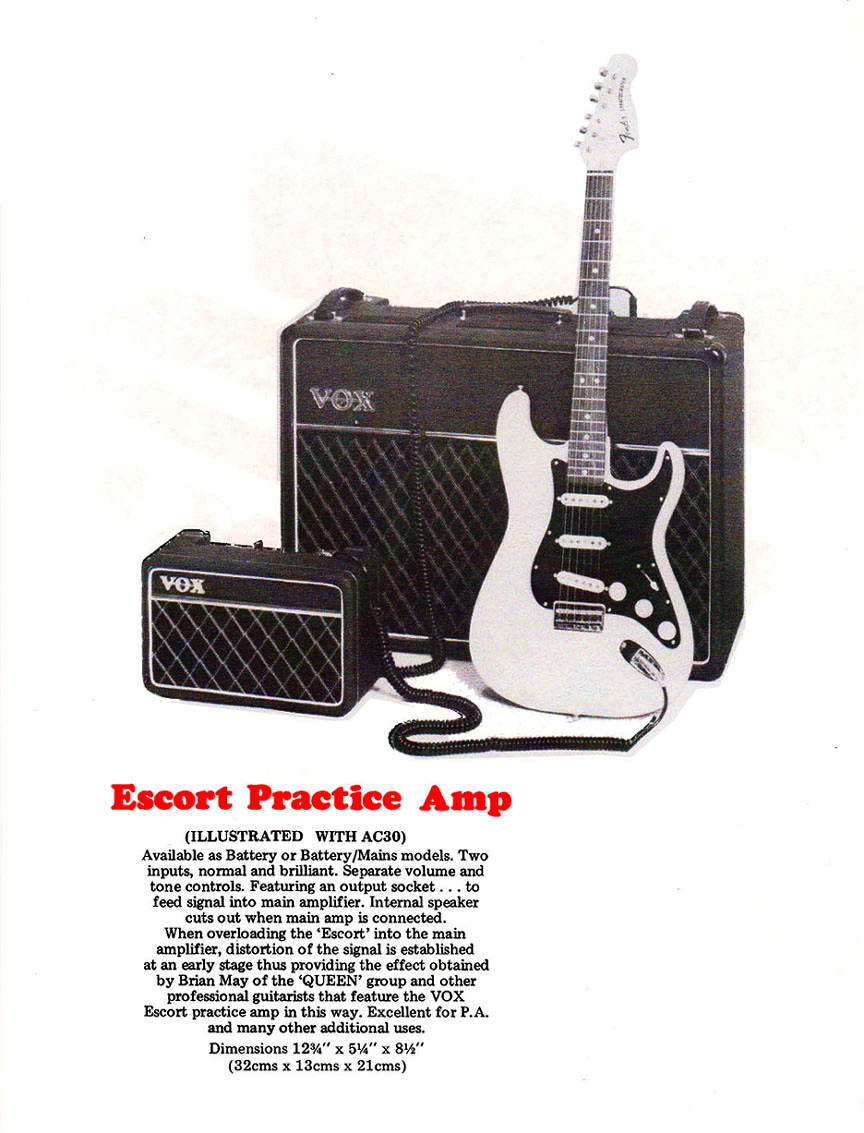
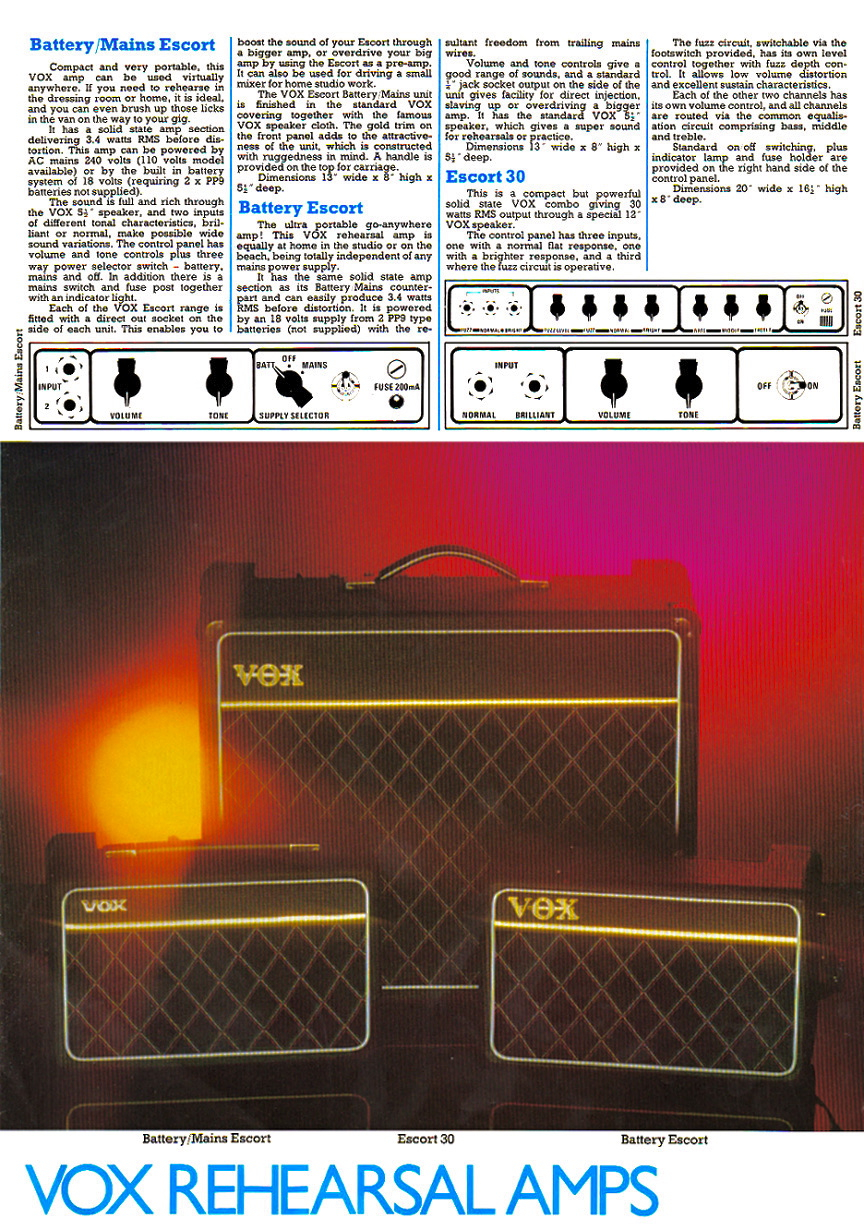
The Vox Escort came out in 1975 and was Vox’ first battery-powered practice amp. This baby-AC30 has about 3 Watts of power, which it puts out through a 5-inch Elac-speaker. The diminutive Escort stayed in the company’s line-up until 1983.

The first run of combos was battery-power only, using huge 9V -batteries, called PP9, but already in 1976 the dual-power Escort Battery-Mains -model was put into production.

****

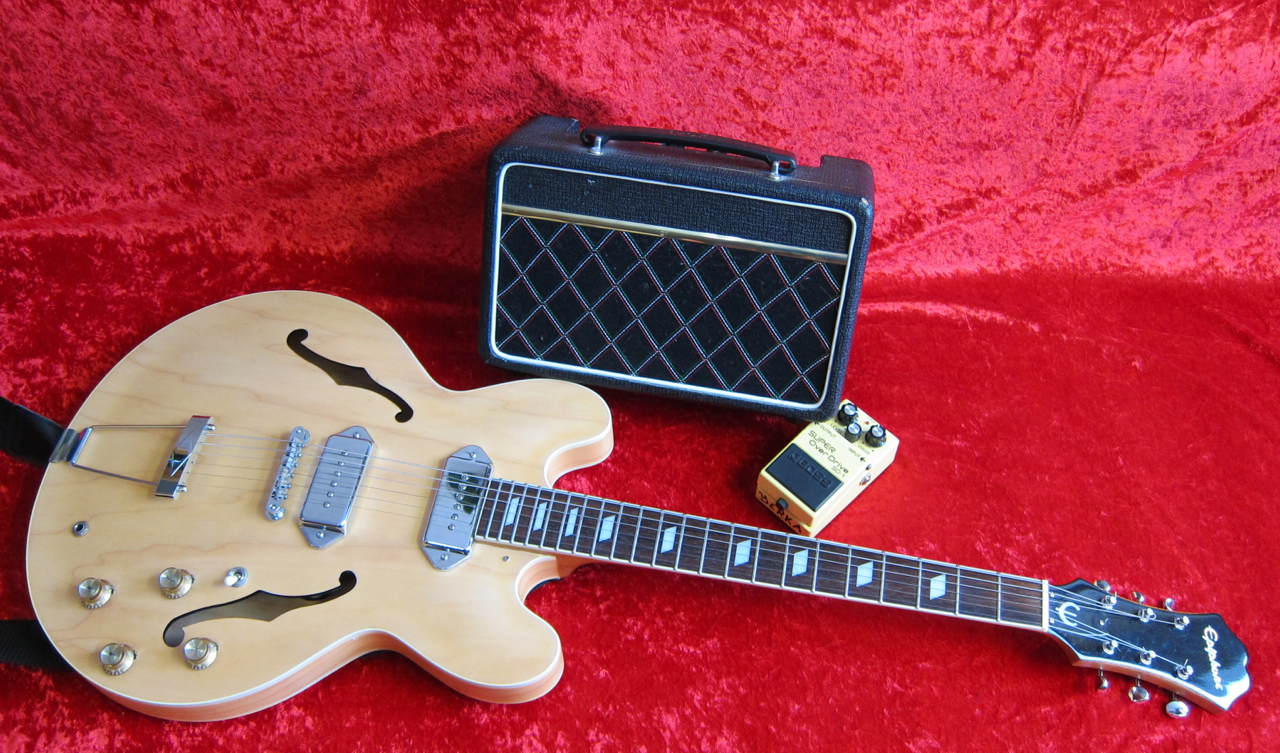
My own Vox Escort is an ex-battery-only combo, which a previous owner had already converted to AC-powered, when I bought it some ten years ago.

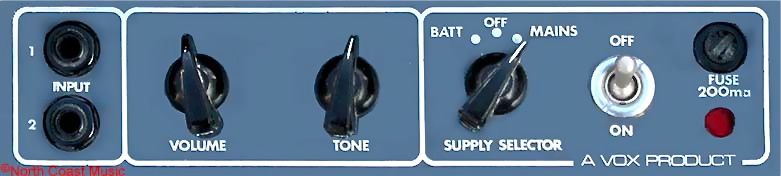
The Escort features two inputs – Normal and Brilliant – as well as two controls – Volume and Tone.

The genuine Battery-Mains-version has a slightly different layout, as well as a power-selector and a fuse compartment on the control panel:

photo: © The Vox Showroom

****

On the cabinet’s right-hand side you’ll find a line out jack for easy connection to a mixing console or – as Vox suggested – for using the Escort as a booster in front of your big amp:

****

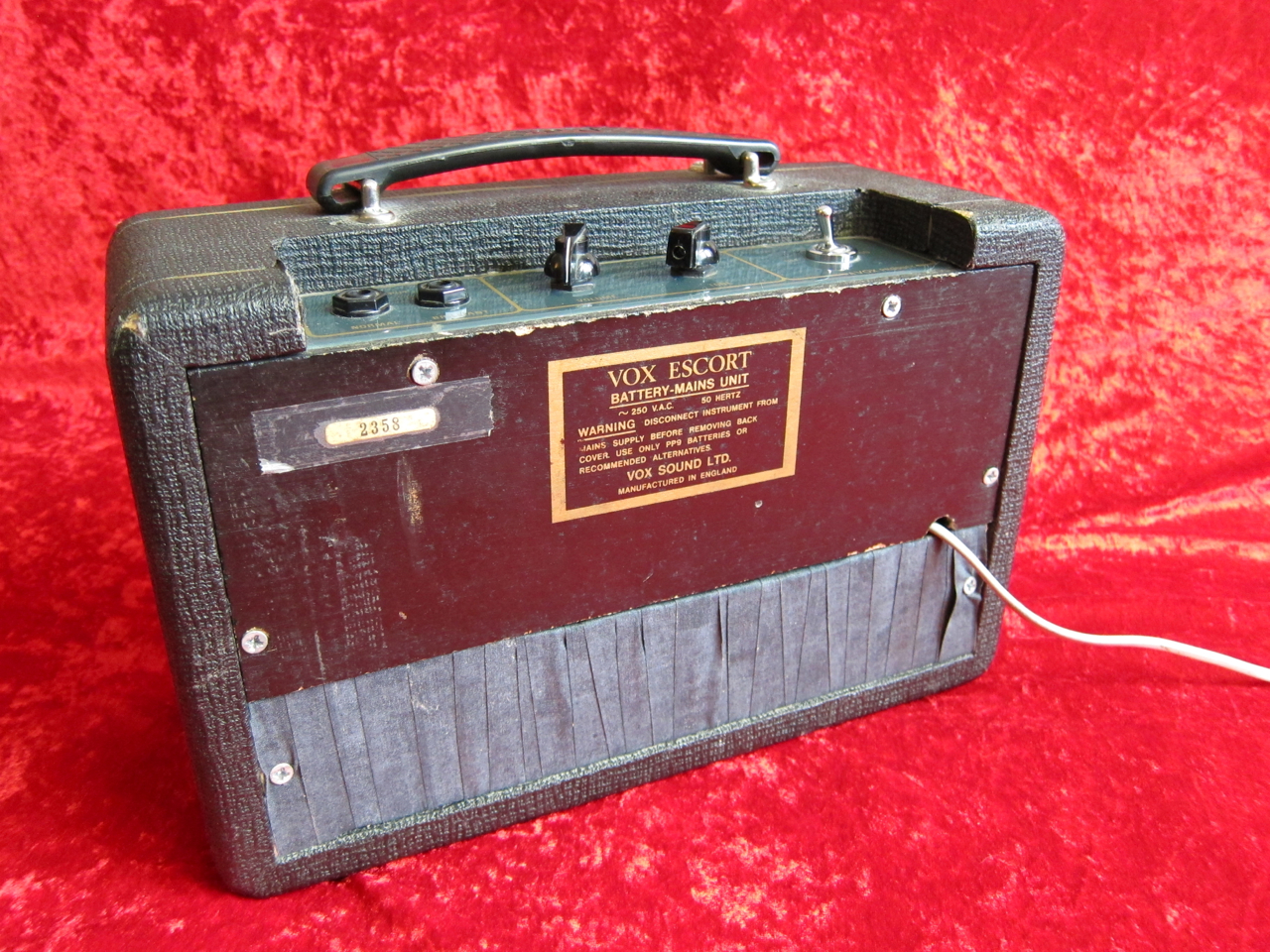
The small, lower back plate – normally providing access to the battery – is obviously not original. It would have been made of the same chipboard material, as used for the larger upper plate.

****

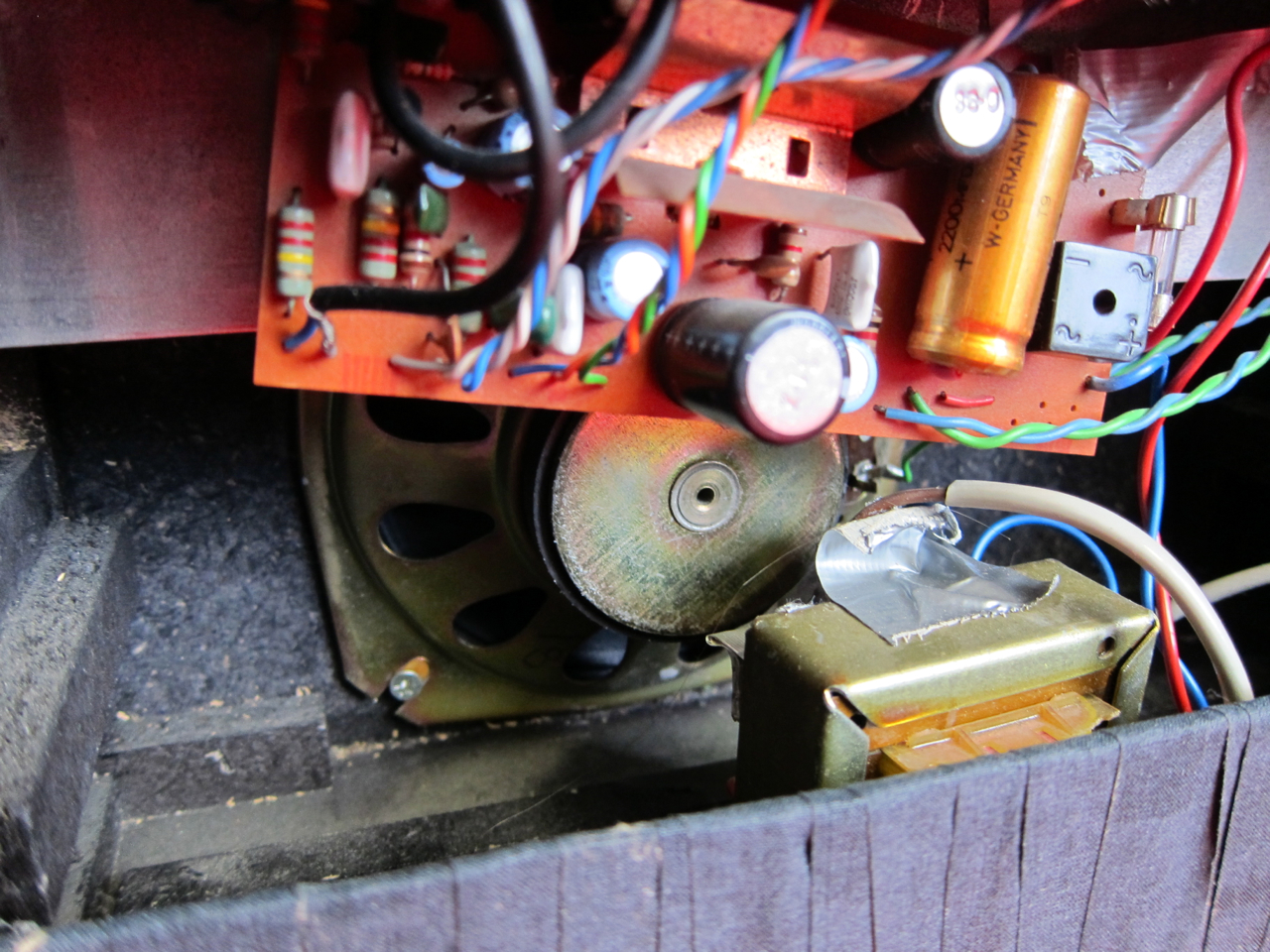
The modification to AC-only isn’t quite as neat as it could be, but the amp is in perfect working order, nonetheless. The sticky tape on the sides has been added to stop the back plates from rattling.

The transformer is screwed tightly to the cabinet’s floor, the circuit board (containing the rectifier amongst other components) is fastened to the amp chassis (slightly askew), while the 5-inch speaker is fixed to the baffle, as it should be.

****

During the latter half of the Seventies the Escort Battery-Mains got company by two larger brothers. The Escort 30 was a noticeably larger 30 Watt combo with a 12-inch speaker, as well as a built-in fuzz-channel. The Vox Super Twin featured two 5-inch speakers and a spring reverb, and was rated at 20 Watts.

****

This is what my Vox Escort sounds like:

Vox Escort & Epi Casino – clean

Vox Escort & Epi Casino & Boss SD-1 – overdrive

Signal path:

Epiphone Casino –> Boss SD-1 –> Vox Escort (Normal) –> 2 x Samson C02 –> Focusrite Saffire 6 USB –> iMac/Garageband ’11

Reverb was added at mixdown.

****

In Vox’ current line-up the closest equivalent to the Escort would be the Pathfinder 10.

Vox Escort Battery-Mains – AC30:n pikkuveli

Vox Escort ilmestyy vuonna 1975 ja oli firman ensimmäinen paristokäyttöinen harjoitusvahvistin. Mini-Voxissa on noin kolmen watin verran tehoa, ja kotelossaan viisituumainen Elac-kaiutin. Pikkuinen Escort pysyi mallistossa vuoteen 1983 saakka.

Ensimmäiset kombot käyttivät vain isokokoisia yhdeksän voltin PP9-paristoja, mutta jo vuonna 1976 lisättiin Escort Battery-Mains -malli tuotantoon, jota on voitu käyttää myös verkkovirralla.

****

Oma Vox Escort on verkkovirtaa varten modattu paristoversio, ja ostin sitä vuosituhannen alussa Soitin Huttuselta.

Escortilla on kaksi tuloa – Normal ja Brilliant – sekä kaksi säädintä – Volume ja Tone.

Battery-Mains-versiossa on vielä virransyötölle valintakytkin sekä sulakepesä paneelissa:

kuva: © The Vox Showroom

****

Kotelon sivussa on linjalähtö, joko mikseriä varten tai (niin kuin Vox ehdotti) jos halusi käyttää Escortia boosterina vahvistimen edessä:

****

Pienempi takalevy, jonka takana paristo sijaitsi, ei ole enää alkuperäinen minun kombossani. Alkuperäinen oli samasta mustasta lastulevystä kuin isompi takalevy.

****

Modaus paristo-Escortista verkkovirta-versioon ei ole ehkä niin siisti kuin voisi olla, mutta kuitenkin täysin toimiva. Teipit vaimentavat takalevyen resonoinnin.

Muuntaja on kiinnitetty pohjaan, ylhäällä roikkuu tasasuuntajan ja virransyönnin piirilevy, ja viisituumainen kaiutin on etulevyssä kiinni.

****

1970-luvun loppupuolella Escort Battery-Mains sai vielä kaksi isoa veljeä rinnallaan. Escort 30 oli isompi, 30-wattinen kombo 12-tuumaisella kaiuttimella ja sisäänrakennetulla fuzzilla. Vox Super Twin taas oli kahdella 5-tuumaisella kaiuttimella varustettu 20-wattinen kombo, jolla oli jopa jousikaiku.

****

Ja täältä oma Vox Escort kuulostaa:

Vox Escort & Epi Casino – puhdas

Vox Escort & Epi Casino & Boss SD-1 – särö

Signaalitie:

Epiphone Casino –> Boss SD-1 –> Vox Escort (Normal) –> 2 x Samson C02 –> Focusrite Saffire 6 USB –> iMac/Garageband ’11

Kaiku on lisätty miksausvaiheessa.

****

Hyvin samankaltainen kombo Voxin nykyisessä mallistossa on Pathfinder 10.

NAMM 2012 – Boss GT-100

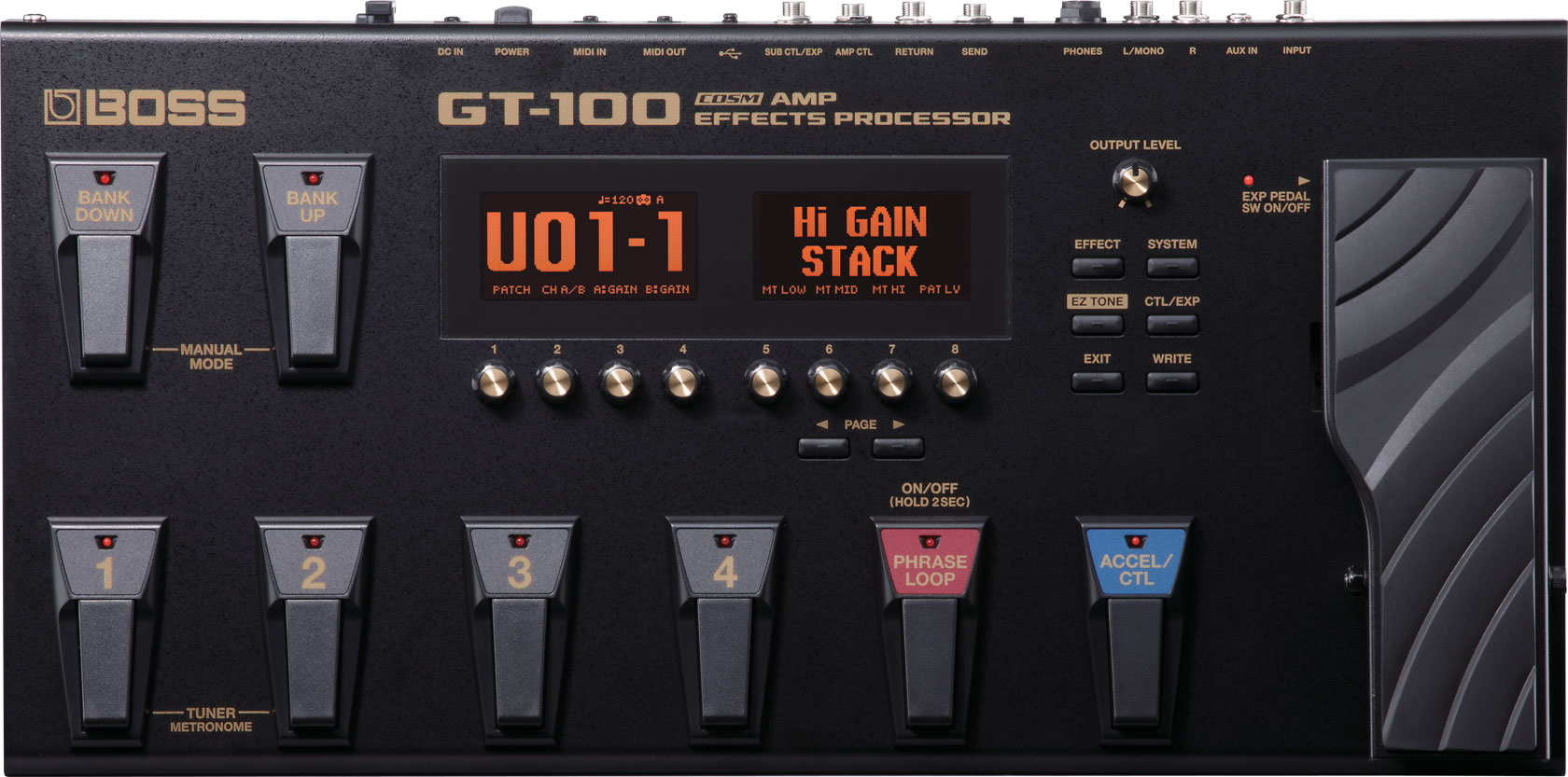
Odotettu seuraaja GT-10:lle on saapunut. Tutustu uuteen BOSS-efektien lippulaivaan GT-100:an, joka ylpeilee uuden sukupolven vahvistinmalleilla, jotka sytyttävät henkiin vanhat vintage-vahvistimet sekä tarjoaa uusia COSM-soundeja, jotka kurottavat tulevaisuuteen. Käyttöliittymää on parannettu ainutlaatuisella kaksois-LCD-systeemillä ja EZ TONE toimintoa on laajennettu uusilla AMP CUSTOMIZE ja OD/DS CUSTOMIZE toiminnoilla. GT-100 on prosessoinnin voimapesä, joka venyy klassisesta futuristiseen mukavassa, jämäkässä, tien päällä kestävässä rungossa.

  • Edistykselliset COSM-vahvistimet, jotka mallintavat vintage-vahvistinsoundeja ja tuottavat ei-koskaan-aiemmin kuultuja ääniä
  • Kaksois-LCD yksinkertaiseen ja oivaltavaan työskentelyyn suoralla kosketuksella jokaiseen parametriin
  • Parannettu EZ TONE toiminto graafisella TONE GRID näytöllä uusien soundien luomiseen; AMP CUSTOMIZE ja OD/DS CUSTOMIZE antavat luoda helposti originaaleja vahvistimia ja säröjä muuntamalla niiden käyttäytymistä
  • Varta vasten kehitetty ACCEL-poljin usean parametrin yhdenaikaiseen ohjaamiseen

****

Maahantuoja: Roland

Review: Boss BC-2 Combo Drive – English summary

****

The legendary Vox AC30 was the first successful British guitar amplifier.

Originally the 2 x 12 -combo had been designed especially for The Shadows, aiming at a louder and cleaner tone than what their old AC15s could provide. It didn’t take long, though, for experimentally inclined guitarists to realise they could get nicely toasted drive sounds out of the amp, especially when using a distortion- or treble booster -pedal in front of the combo.

In addition to the Shadows, famous AC30-users are (or have been) The Beatles, The Kinks, Queen, Bryan Adams, Tom Petty and U2’s The Edge.

The famous combo’s greatest drawback – in its original guise – is the lack of a master volume control, meaning meaty, overdriven tones only could be had at great volume.

Luckily, these days we have the wonders of digital amp modelling at our disposal, which means classic tones without the need for ripping one’s head off.

****

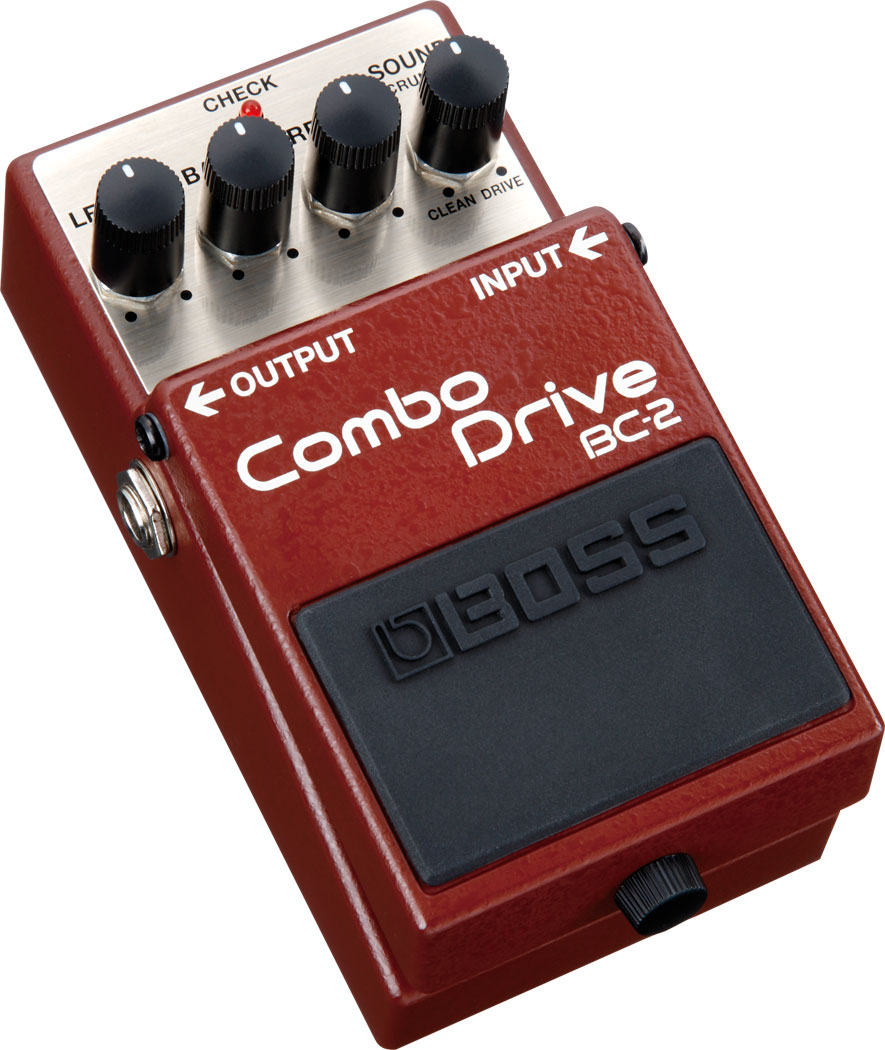
The new Boss BC-2 Combo Drive -pedal (current price in Finland: 106 €) is specialised in producing the whole range of AC30-type sounds. You’re supposed to use it like a regular overdrive pedal in front of your amp or, say, a recording interface. The BC-2 can be run on either a 9 V battery or a regular Boss power supply (not included).

The BC-2 is very easy to use. The Sound-control works similarly to a distortion pedal’s gain knob. Next up you’ll find controls for treble and bass, as well as the master volume control, labelled ”Level”.

****

The sound of the digital Boss BC-2 is astonishingly close to the valve-driven original combo.

Clean sounds have the same type of dry mid-range and slight boxiness of the original, along with its clarity and presence bite. Just the ticket for playing British guitar instrumentals:

Shadowy Wonderland – Boss BC-2

U2’s guitar wizard The Edge often uses his AC30s inside their fabulous gray area of slightly roasted sounds, where the guitar sounds almost clean, but breaks up nicely. The BC-2 has no problems in delivering fine examples of these types of tones:

Proud Echoes – Boss BC-2

Turning the Sound knob all the way up gives you the legendary tones of Queen’s Brian May in all their throaty and creamy glory. Boss have managed to build in both the extra amount of gain produced by a virtual overdrive plugged into the virtual amp, as well as the resonance of an AC30’s cabinet running at full tilt. Here’s what I came up with using only a maple-necked Fender Stratocaster, the BC-2 and a sprinkling of reverb from the sequencer:

The Queen’s Pomp – Boss BC-2

My tests really left nothing to be desired – the Boss BC-2 is a very satisfying pedal for seekers AC30-style tones.

****

Boss BC-2 Combo Drive

106 €

Finnish distributor: Roland Scandinavia

****

Pros

+ small size

+ tones

+ flexibility

+ price

****

Testipenkissä: Boss BC-2 Combo Drive

****

Englantilainen Vox AC30 on legendaarinen kombovahvistin, ja ensimmäinen menestyksekäs brittivahvistin.

Alun perin kombo oli sunnitteltu The Shadowsia varten, ja tarkoitus oli tuottaa mahdollisimman kovaääninen ja puhdas rautalankasoundi. Kitaristit kuitenkin huomasivat hyvin pian, että mallista saa myös mahtavia puolilikaisia soundeja, sekä treble-boosterin (tai säröpedaalin) kanssa myös varsin maukkaita, tiheitä särösoundeja.

Käyttäjäkaartiin kuuluvat The Shadowsin lisäksi esimerkiksi The Beatles, The Kinks, Queen, Bryan Adams, Tom Petty ja U2:n The Edge.

Vanhojen AC30-kombojen suurin ongelma oli, ettei vahvistimessa ollut master volume -säädintä, minkä seurauksena vahvistimen omat säröt sai esiin vain todella kovilla volyymeillä.

Onneksi meillä on tänä päivänä digitaalinen mallinnusteknologia, jolla legendaarisien vahvistimien soundeihin pääsee käsiksi helposti ja korvia särkemättä.

****

Upouusi Boss BC-2 Combo Drive (106 €) on erikoistunut AC30-tyylisiin soundeihin. Pedaali kytketään tavallisen kitaraefektin tavoin vahvistimen tuloon (tai tietokoneen äänikorttiin). Pedaali toimii joko 9 V -paristolla tai virtalähteellä (ei kuulu hintaan).

BC-2:n käyttö on erittäin helppoa. Sound-säädin vastaa käytännössä säröpedaalin gain-säädintä. Sen jälkeen on tarjolla kaksikaistainen EQ-osasto, ja signaalitien lopussa on volume-säädin nimeltään Level.

****

Digitaalisen Boss BC-2:n soundi on ällistyttävän lähellä legendaarista putkikäyttöistä esikuvaansa.

Puhtaissa soundeissa on se alkuperäisestä kombosta tuttu keskialueen kuivuus ja laatikkomaisuus, sekä diskantin maukas ja hieman rouhea purevuus. Juuri tämä soundi on aidon brittirautalangan peruspilari:

Kaunis varjojen maa – Boss BC-2

U2-yhtyeen kitaristi The Edge käyttää usein AC30:n laajaa ”harmaata” breakup-aluetta, jossa kitarasoundi ei ole enää täysin puhdas, vaan kevyt särö maustaa signaalin juuri tälle vahvistimelle tunnusomaisella rapeudella. Nämäkin soundit saa BC-2:sta kuulolle helposti ja yllättävän autenttisesti:

Ylpeys ja toistot – Boss BC-2

Kun vääntää Sound-säädintä vielä enemmän auki, esillä astuvat yhä maukkaampia särösoundeja. Kasvavalla gain-määrällä myös esikuvan tuttu laulava nasaalisuus nousee hienosti esiin. Boss on nimittäin mallintanut myös AC30:n avoimen kaapin tuoman lisävärin taitavasti BC-2:ssa. Pedaalin Drive-soundeja voi käyttää esimerkiksi rakentaakseen Brian May -tyylisiä kitarasymfonioitat:

Kuningattaren loisto – Boss BC-2

Kokeilujeni perusteella voin vain todeta, että Boss BC-2 on mielestäni erittäin onnistunut pedaali AC30-soundeja kaipaavalle.

****

Boss BC-2 Combo Drive

106 €

Maahantuoja: Roland Scandinavia

****

Plussat

+ pieni koko

+ soundi

+ monipuolisuus

+ hinta

****

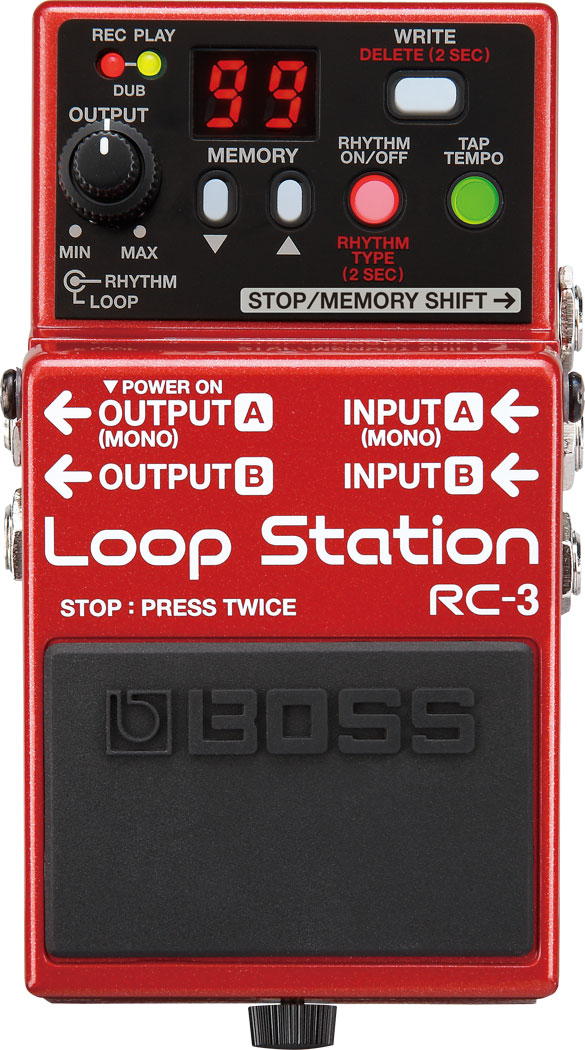
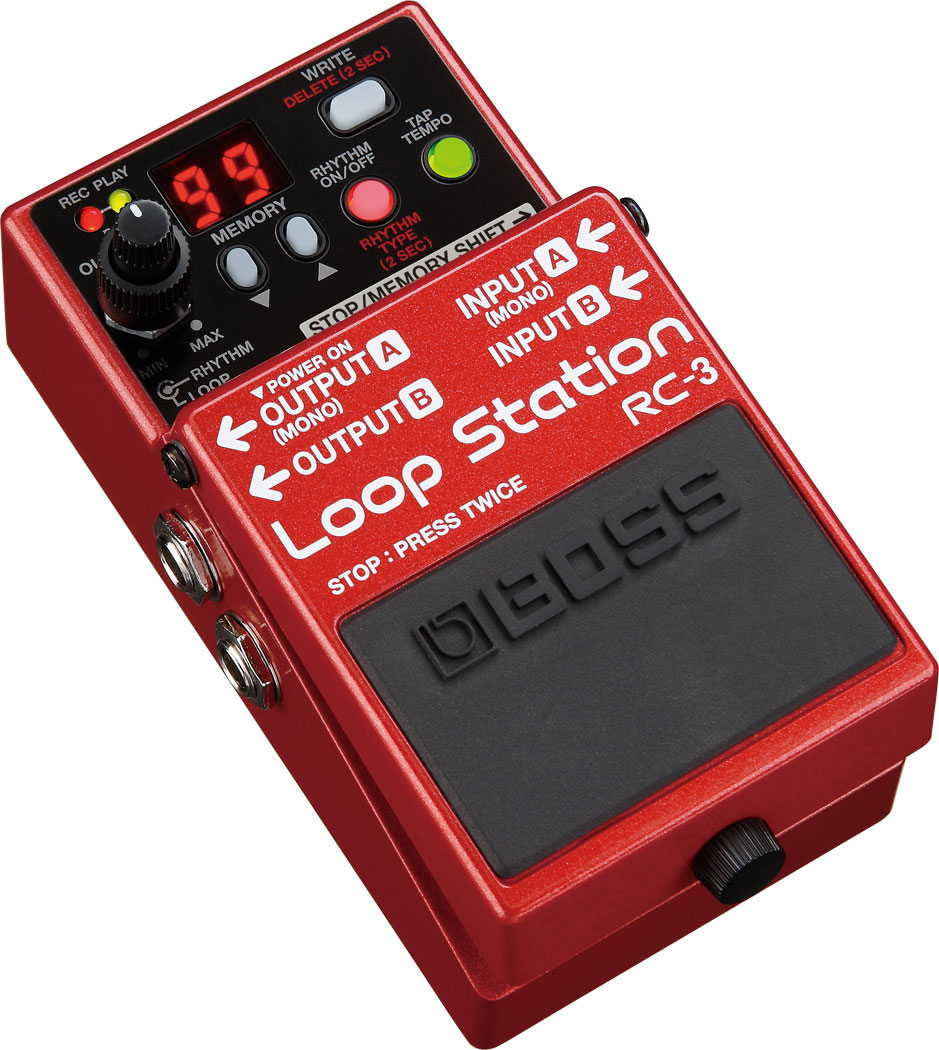
Review: Boss RC-3 Loop Station – English summary

The speed of technological progress in the field of musical equipment is simply astounding. Boss have introduced their new, extremely compact looper pedal – the RC-3 Loop Station – which offers a whopping three hours of sampling time in 44.1 kHz/16-bit linear wave-format.

One of the RC-3’s coolest features is the way the pedal instantly synchs up loops that were recorded ”freehand” (without a click, that is) with its internal drum machine. Everything happens on-the-fly without missing a beat.

The Boss RC-3 can also be used to ”fly in” one-shot samples into your performance. This means you could fly in a dive-bomb sample while playing a guitar solo on a stop-tail guitar, for example.

****

The RC-3 is a great looper with many different possible uses. Apart from looping and the flying in of sounds, one possible application could be as a sturdy playback machine for one-man acts or clinicians, as the pedal offers three hours of sampling time and 99 memory slots.

****

Boss RC-3 Loop Station

Current price in Finland: 203 €

Finnish distributor: Roland Scandinavia

****

Pros

+ small footprint

+ clean sound

+ large memory

+ intuitive in use

Cons

– small display 

****

Pidä blogia WordPress.comissa.

Ylös ↑