
Lisätiedot: EM Nordic
Kitarablogi.com – Finland's premier Guitar and Bass blog
Juttuja kitaroista ja bassoista

****
Bassovahvistimiin keskittyvän Eden Electronicsin tuotteita on jälleen saatavilla Suomessa.
Monille basisteille Eden on jo tuttu nimi, joka tuo mieleen USA:ssa valmistettuja huippuluokan vahvistimia ja kaappeja. Edenilla on kuitenkin mallistossaan myös hyvin kompakteja ratkaisuja, joihin ei tarvitse ison staran budjettia.
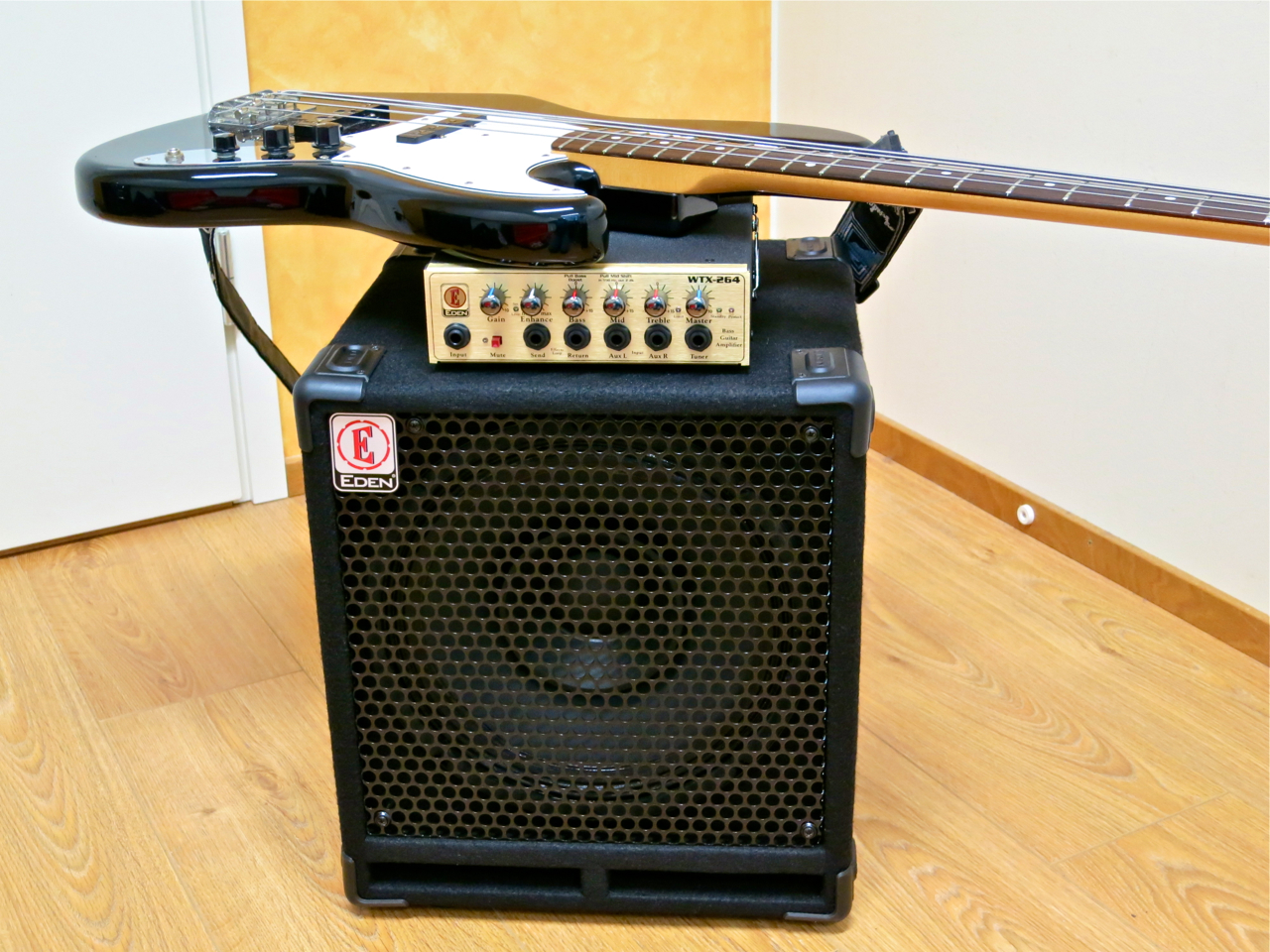
Onko koskaan ollut parempi aika olla basisti kuin nykyään? Tänä päivänä ei välttämättä tarvitse roudata valtavia nuppeja ja kaappeja saadakseen lavalle tai studiolle ison bassosoundin.
Hyvä esimerkki tästä on Eden Electronicsin Gig Ready -bundle, jolla on mallitunnus EGRW1264. Edenin EGRW1264-setti (katuhinta noin 790 €) tarjoaa peräti 260 wattia laatusoundia erittäin kompaktissa muodossa.

Settiin kuuluu myös topattu olkalaukku nupille. Basso yhteen käteen, kaappi toiseen ja nuppi ollalle – roudaus ei ole koskaan ollut näin helppoa.
****

Eden EGRW1264 -setti koostuu WTX-264-nupista ja EX112-kaapista. Molemmat valmistetaan lisenssillä Kiinassa, minkä ansiosta setin hinta on muusikoille niin ystävällinen.
Tällä hetkellä setin nuppia tai kaappia ei voi (vielä?) ostaa Suomessa erikseen.

Eden WTX-264 on 260-wattinen (300 W peak), D-luokan päätevahvistimella varustettu bassonuppi. Laite on ultrakevyt ja painaa vain kaksi kiloa. Jatkuvasti pyörivä tuuletin on vastuussa nupin asianmukaisesta jäähdytyksestä.
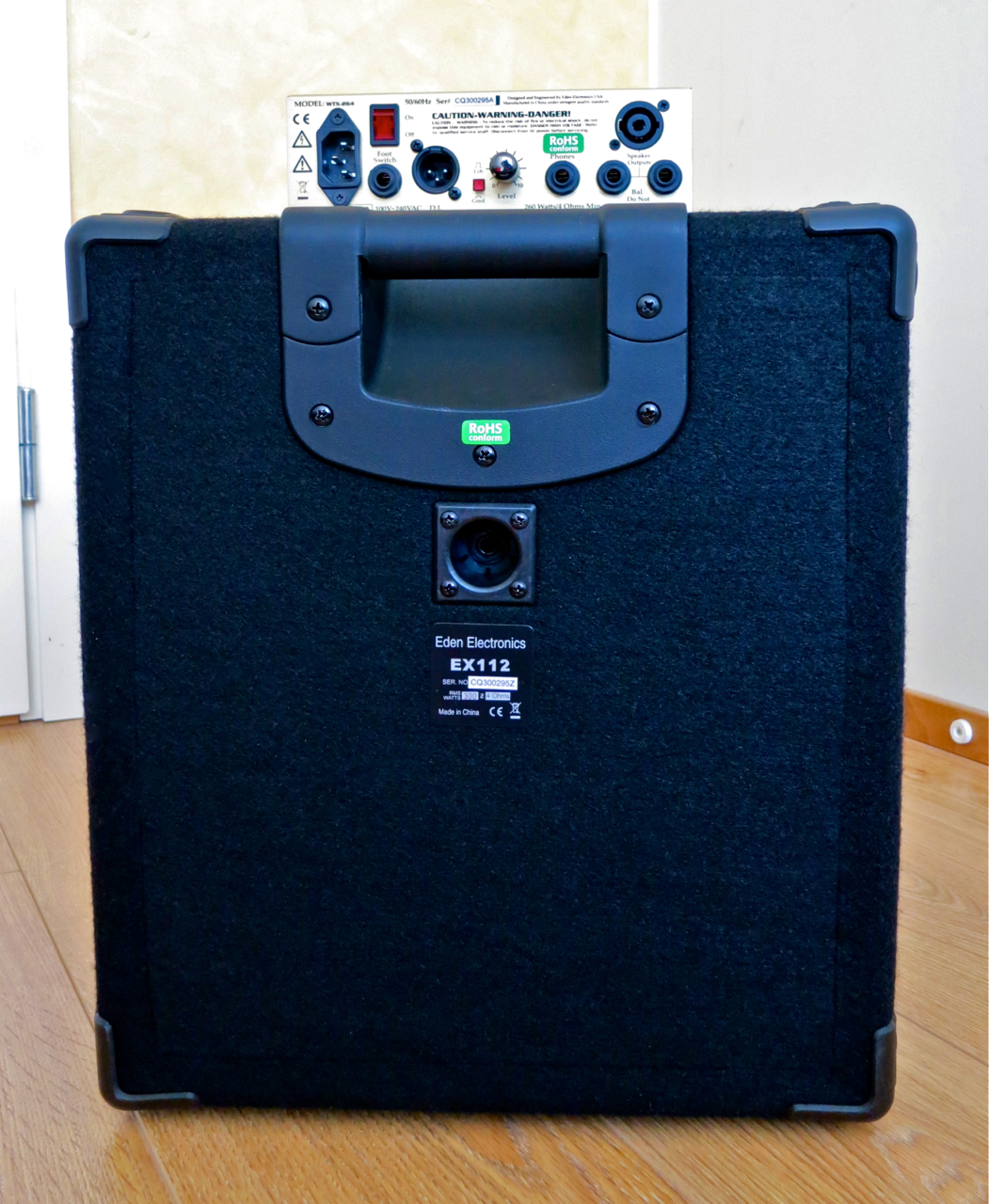
Edenin EX112-kaappi on sekin painoltaan varsinainen kärpässarjalainen. Mattopäällysteinen kaappi painaa vain 15 kiloa, ja sitä on erittäin helppo kantaa sen kahvasta. Refleksikaapin 12-tuumainen kaiutin on firman omasta tuotannosta.
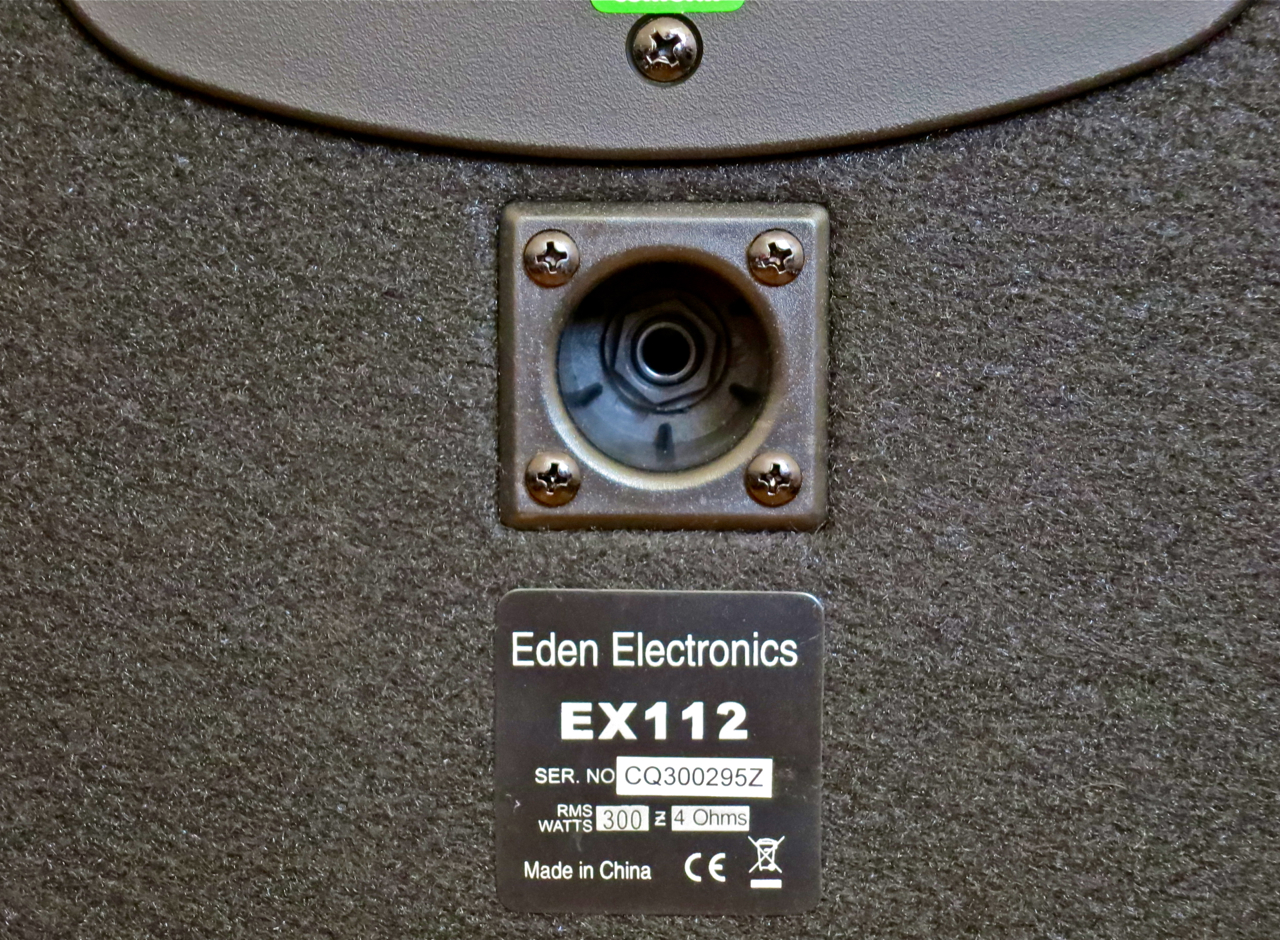
EX112:n tehonkestoksi ilmoitetaan 300 wattia, ja sen impedanssi on neljä ohmia. Kaapilla on plugitulo.
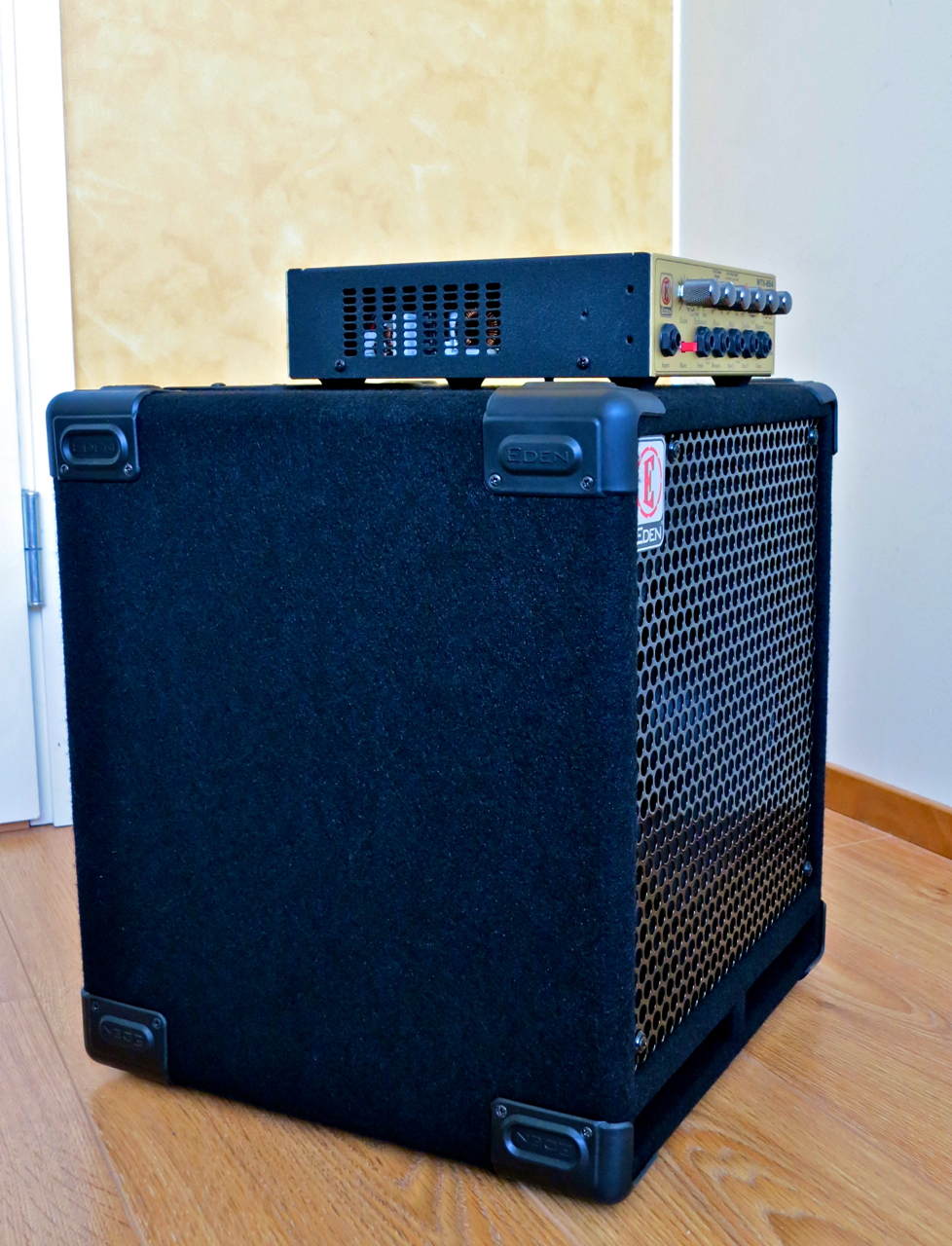
Eden-kaapissa on reilunkokoiset kulmasuojat mustasta muovista, sekä kaiuttimen edessä erittäin vahva metalliritilä.
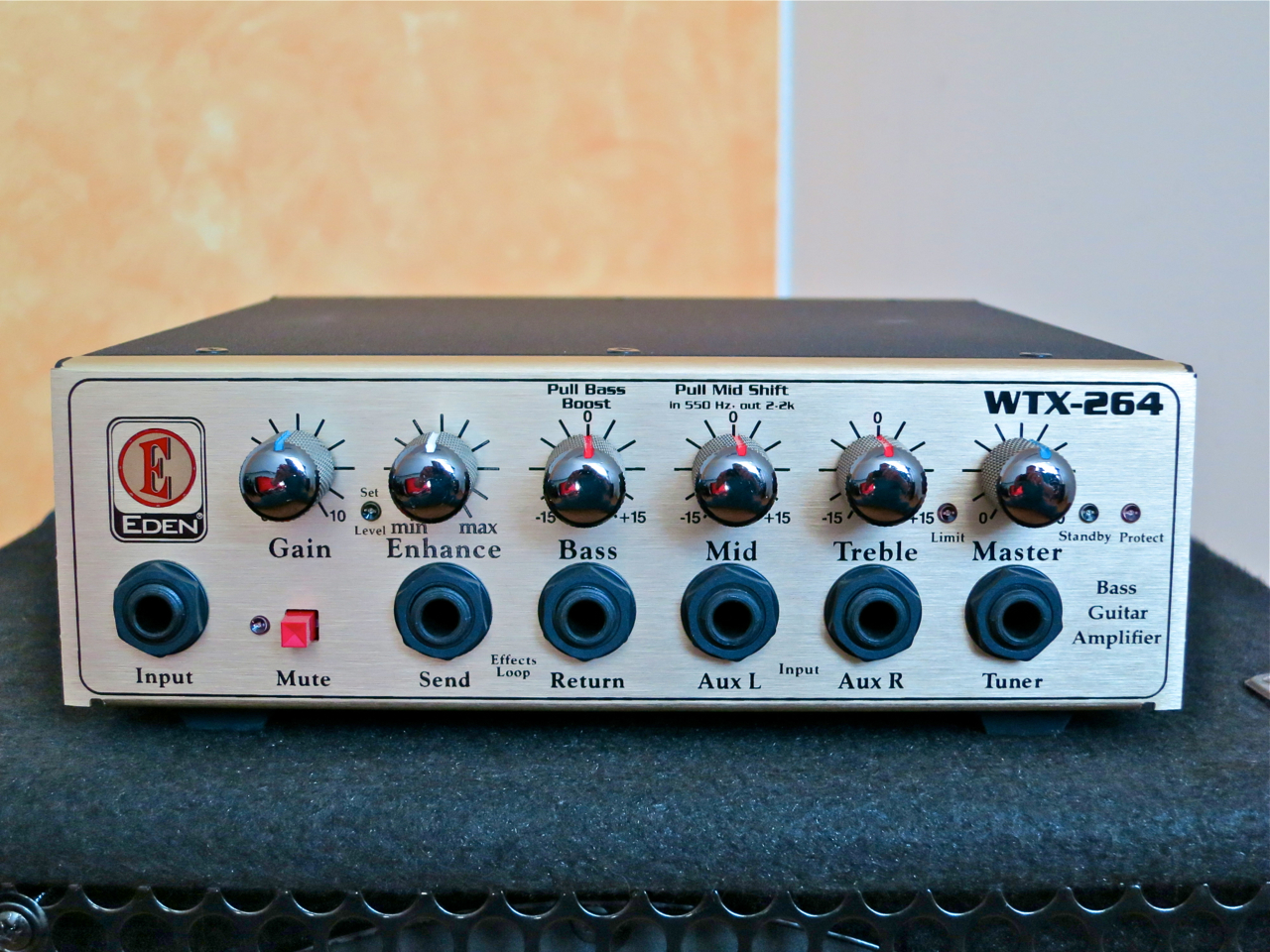
Vaikka Eden WTX-264 on pinikokoinen nuppi, sillä on kuitenkin täysi kattaus ominaisuuksien suhteen:
Heti nupin gain-säätimen jälkeen tulee Edenin kuuluisa Enhance-säädin, jolla säädetään erikoisfiltterin vaikutusta. Enhance-säätimellä lisätään soundiin hyvin matalat bassot ja preesensalueen keskikaistaa, samanaikaisesti kun (hyvin usein) kumisevat alemman keskialueen taajuudet vaimennetaan. Lopputulos on hyvällä tavalla tuotetun-kuuloinen, amerikkalainen bassosoundi.
Enhance-sätimeen on myös piilotettu nupin automaattisen kompressorin päälle/pois-painokytkin. Oivaa kompressoria voi säätää vähemmän/enemmän-periaatteella muuttamalla signaalin gainea.
Kolmialueisen EQ-osaston bassokaistan ja keskialueen säätimiin on upotettu nostokytkin. Bass-nupin nostokytkimellä laitetaan tarvittaessa WTX-264:n dynaaminen bassoboosteri päälle, kun taas keskialueen säädin antaa valintamahdollisuuden EQ:n keskitaajuuden suhteen (500 Hz tai 2 kHz).
Säätimien alle on sijoitettu efektilenkin, aux-tulon ja viritymittarilähdön liittimet, sekä nupin punainen mykistyskytkin.

Tältä Edenin Enhance-, Bass Boost ja Mid-Shift-toiminnot kuulostavat käytännössä (soitan tässä passiivista Jazz-bassoani):
Neutraaliasento –-> Enhance –-> Bass Boost –-> Mid-Shift

Takapaneelista löytyy kaappilähtöjen ja kuulokelähdön lisäksi vielä tulo jalkakytkimelle – tuplapedaalilla voi mykistää vahvistimen ja/tai laittaa lennossa Enhance-toiminnon päälle tai pois – sekä balansoitu XLR-lähtö mikserille omalla signaalitason säätimellä.

****
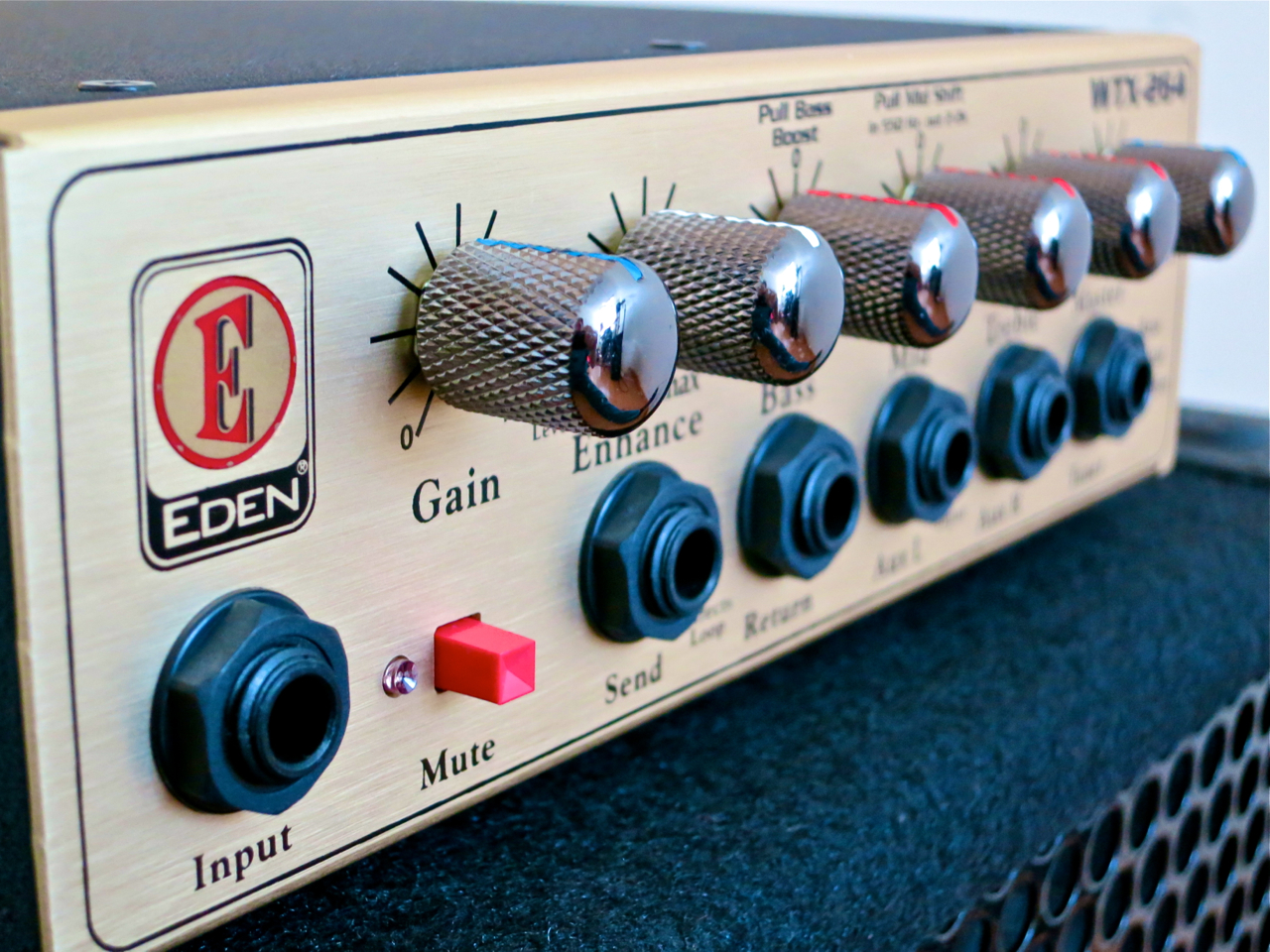
Eden EGRW1264 on vallan mainio pikkustäkki, jolla on riittävästi tehoa pieniä ja keskikokoisia keikkoja varten, ja joka on studioissa ihan kuin kotonaan. Kovaotteisessa Metal-bändissä tulevat varmasti jossain vaiheessa fysiikan lait vastaan, mutta muuten en näe mitään rajoiteitta Eden-stäkin käytössä.
Enhance-toiminto toimii hyvin, jos sitä annostellaan maltillisesti – täysin avattuna sointi voi muuttaa jo hieman ponnettommaksi. Loistavalla EQ-osastolla saa sitten säädettyä omat soundit kohdalleen.
Sisäänrakennettu kompressoi on maukas ”säädä-kerran-ja-unohda-sen-jälkeen” tapaus, joka kiinteyttää bassosoittosi mukavan musikaalisella ja tuoreella otteella.
Jos tekee mieli laadukasta, amerikkalaistyylistä soundia, niin Edenin pikkustäkki on mielestäni erinomainen – ja varsin edullinenkin – portti siihen maailmaan.
Tässä muutama esimerkki Eden EGRW1264 -setin soundeista (soitettu japanilaisella Jazz-bassolla):
****
Eden EGRW1264 Gig Ready -pikkustäkki
katuhinta noin 790 €
Maahantuoja: EM Nordic
Kiitos DLX Musiikille testilaitteiden lainaamisesta!
****
Plussat:
+ hinta-laatu-suhde
+ erittäin kompakti
+ kevyt
+ topattu laukku kuuluu hintaan
+ työnjälki
+ soundi
Miinukset:
– tuulettimen käyntiääni voi olla häiritsevä studiossa

****
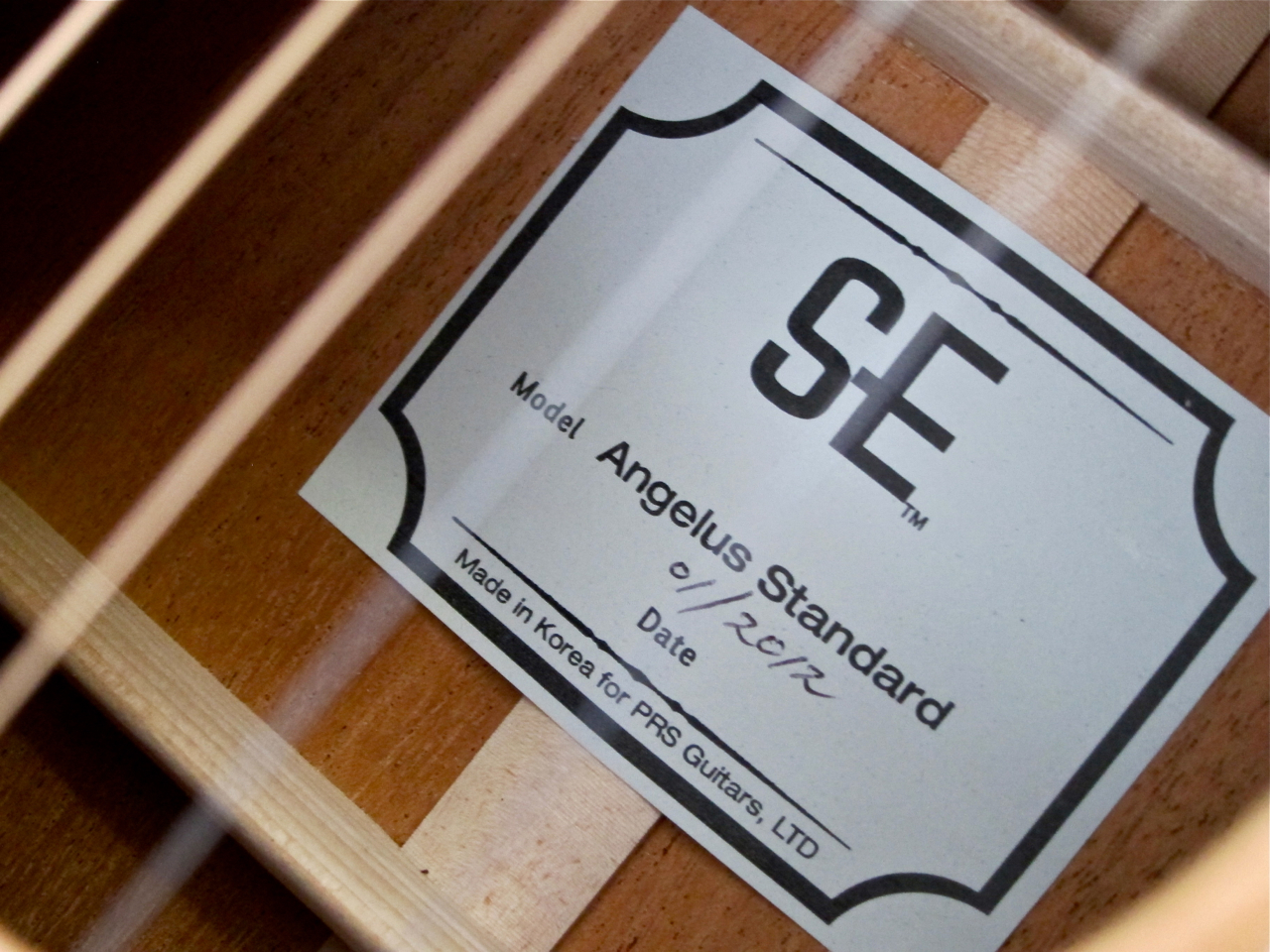
The SE Angelus Standard is a Grand Auditorium -sized steel-string acoustic from PRS Guitars’ brand-new SE Acoustic -range.
A special feature on all PRS SE steel-strings is their proprietary top bracing pattern which seamlessly combines the best bits of traditional x- and fan-bracing patterns. The end result should be a very dynamic and open-sounding acoustic tone.
****

The PRS SE Angelus Standard (current street price in Finland approx. 730 €) is a beautiful and stylish piece of work.
A Grand Auditorium’s body has about the same cubic content as a Dreadnought. Its rounder shape with a more slender waist makes it more comfortable to play, and also produces a different basic voicing. Grand Auditoriums tend to sound more open with added clarity in the lower midrange (between 600 – 800 Hz) compared to a Dreadnought, making them easier to record.

The SE Angelus Standard is crafted from solid sitka spruce for the top and solid mahogany for the body’s back. The rims are pressed from mahogany plywood, adding a little sturdiness.
Mahogany is also the material of choice for the Angelus’ neck.

It’s surprising to see how well PRS’ traditional headstock looks on an acoustic guitar. In the SE Angelus’ case the headstock features a rosewood veneer, as well as white binding.
The top nut has been carved from genuine bovine bone.

The tuners are the same quality units PRS also uses for their SE electrics.
The SE Angelus’ neck is a three-piece affair, with a long piece making up the bulk of the neck, and two small added pieces for the headstock and the neck heel, respectively.
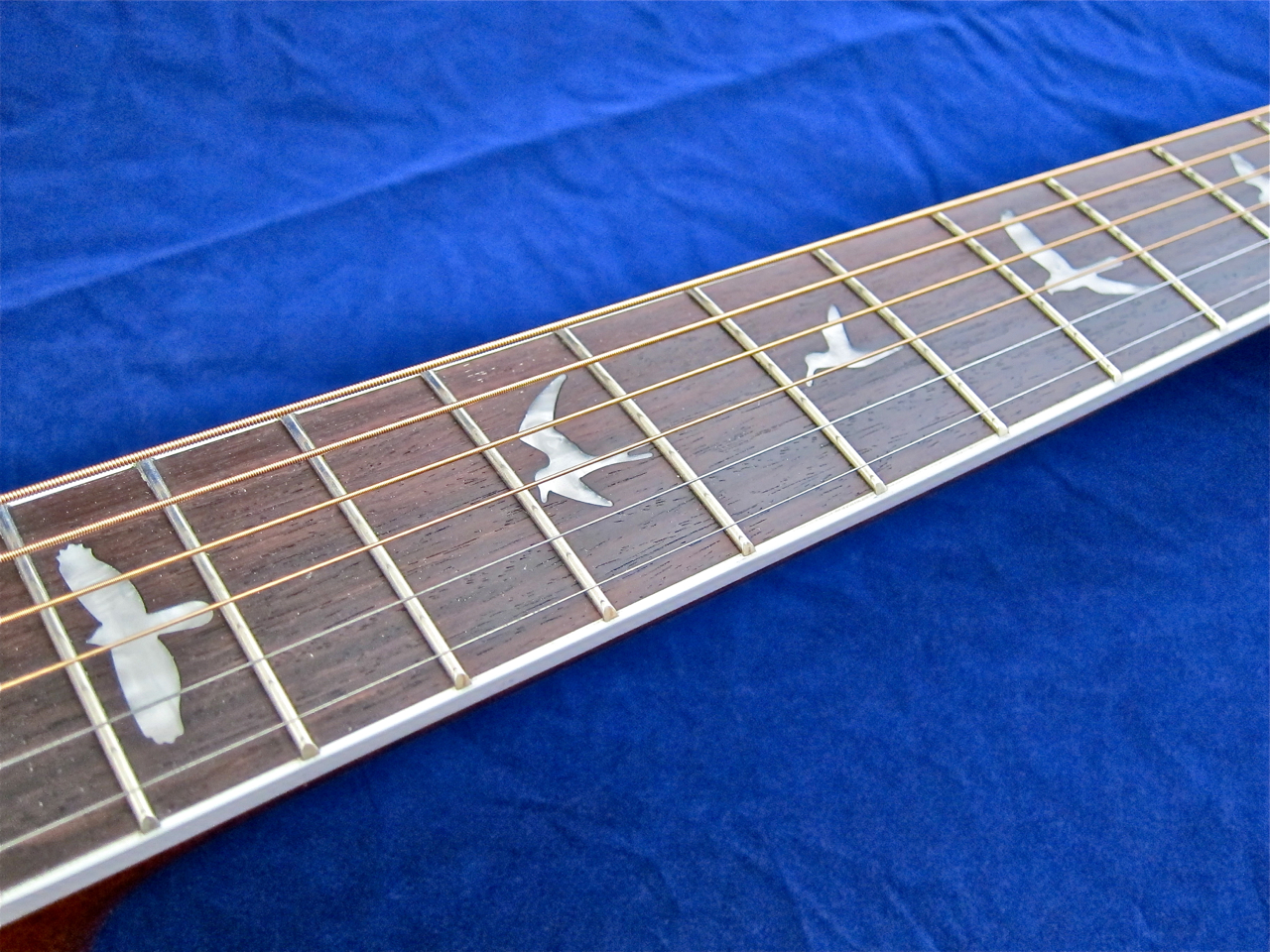
The bound rosewood fingerboard sports beautiful bird-inlays and well-finished narrow frets.
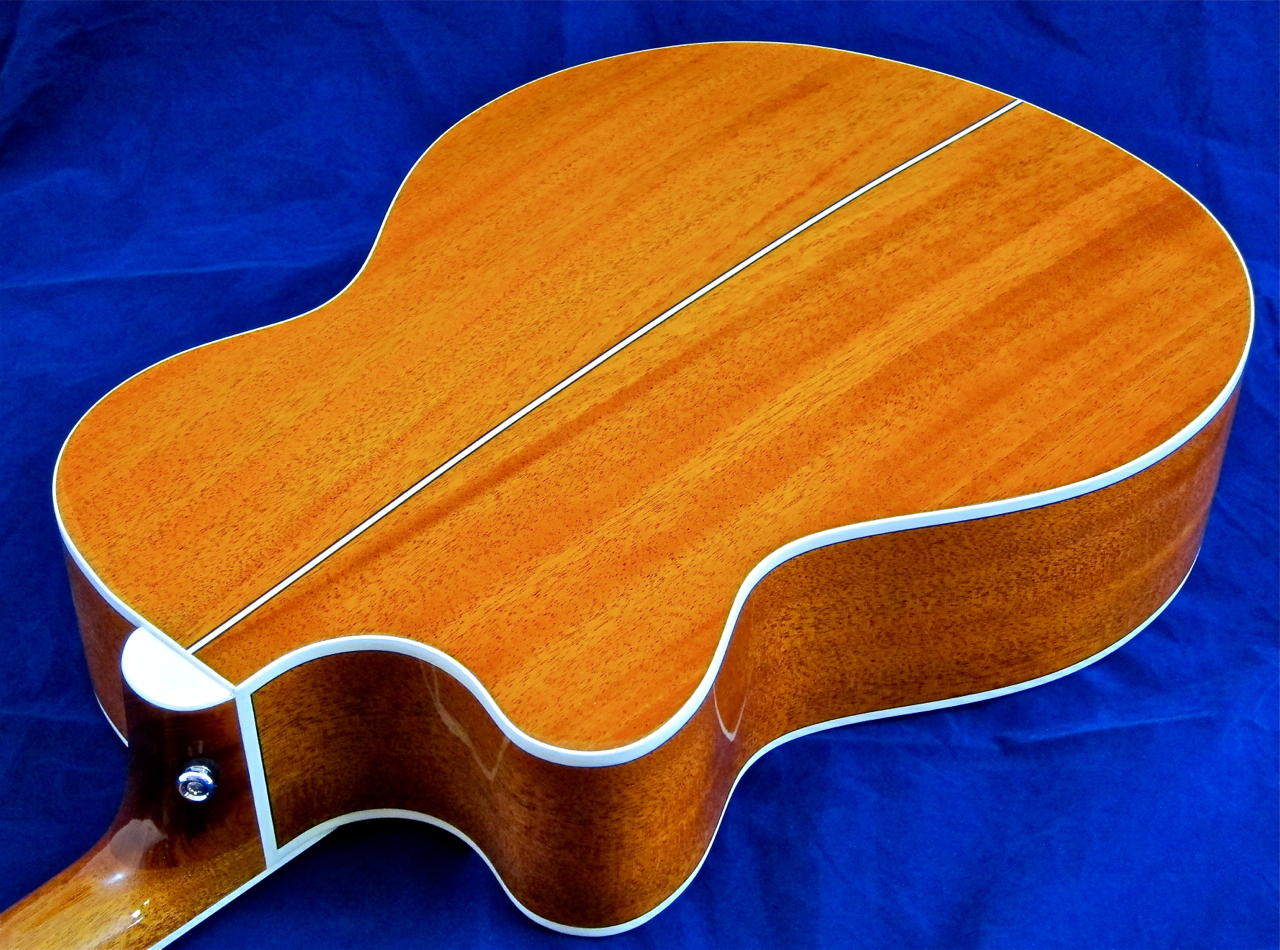
The mahogany used for body construction is gorgeous – the honey-hued wood looks good enough to eat underneath the thinly applied transparent lacquer.
By the way: A second strap button comes as standard on the SE Angelus.

Here’s a view of the Angelus’ rounded cutaway – a typical feature on many Grand Auditorium sized instruments.
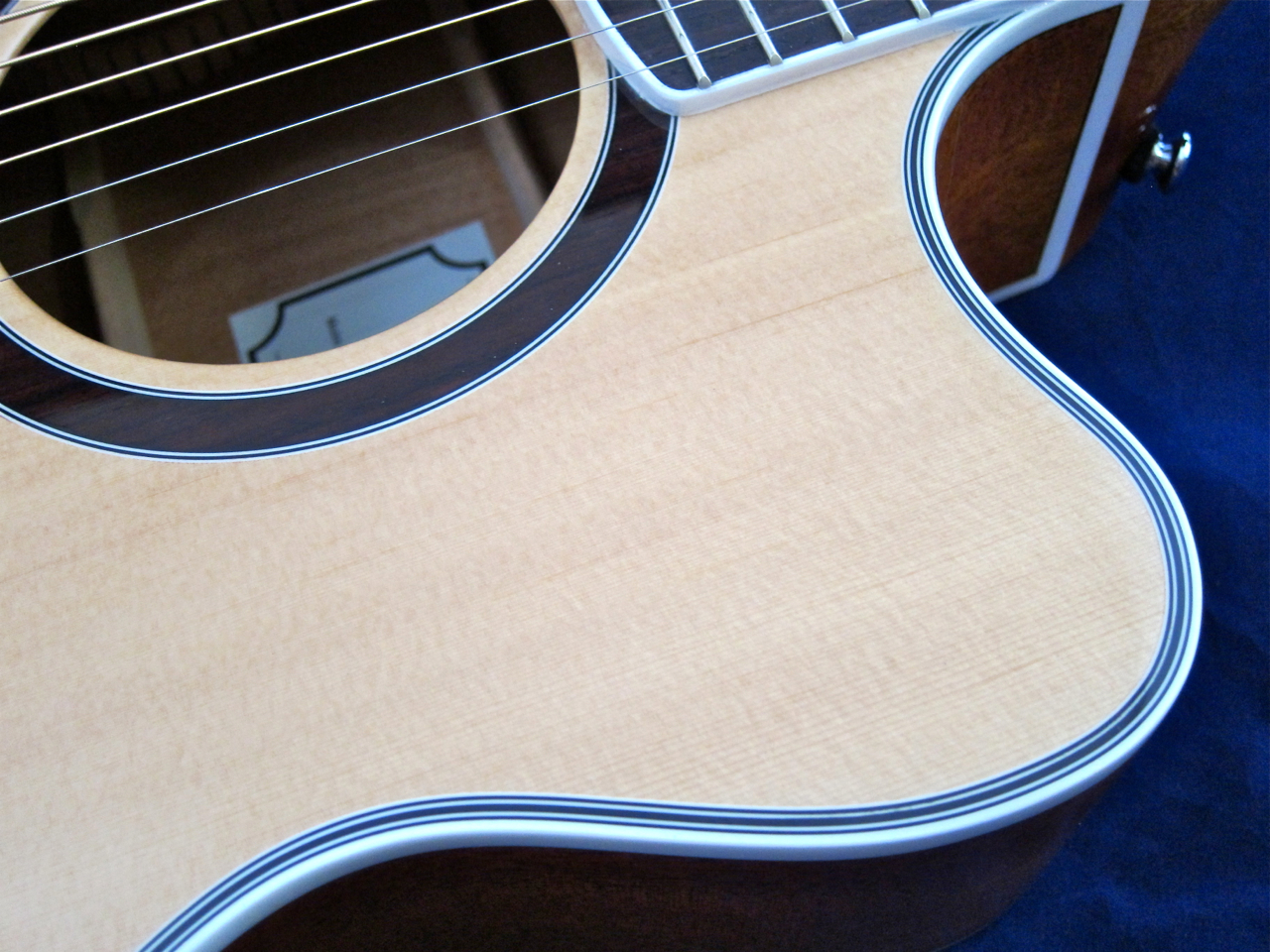
The top’s black and white binding looks very crisp.
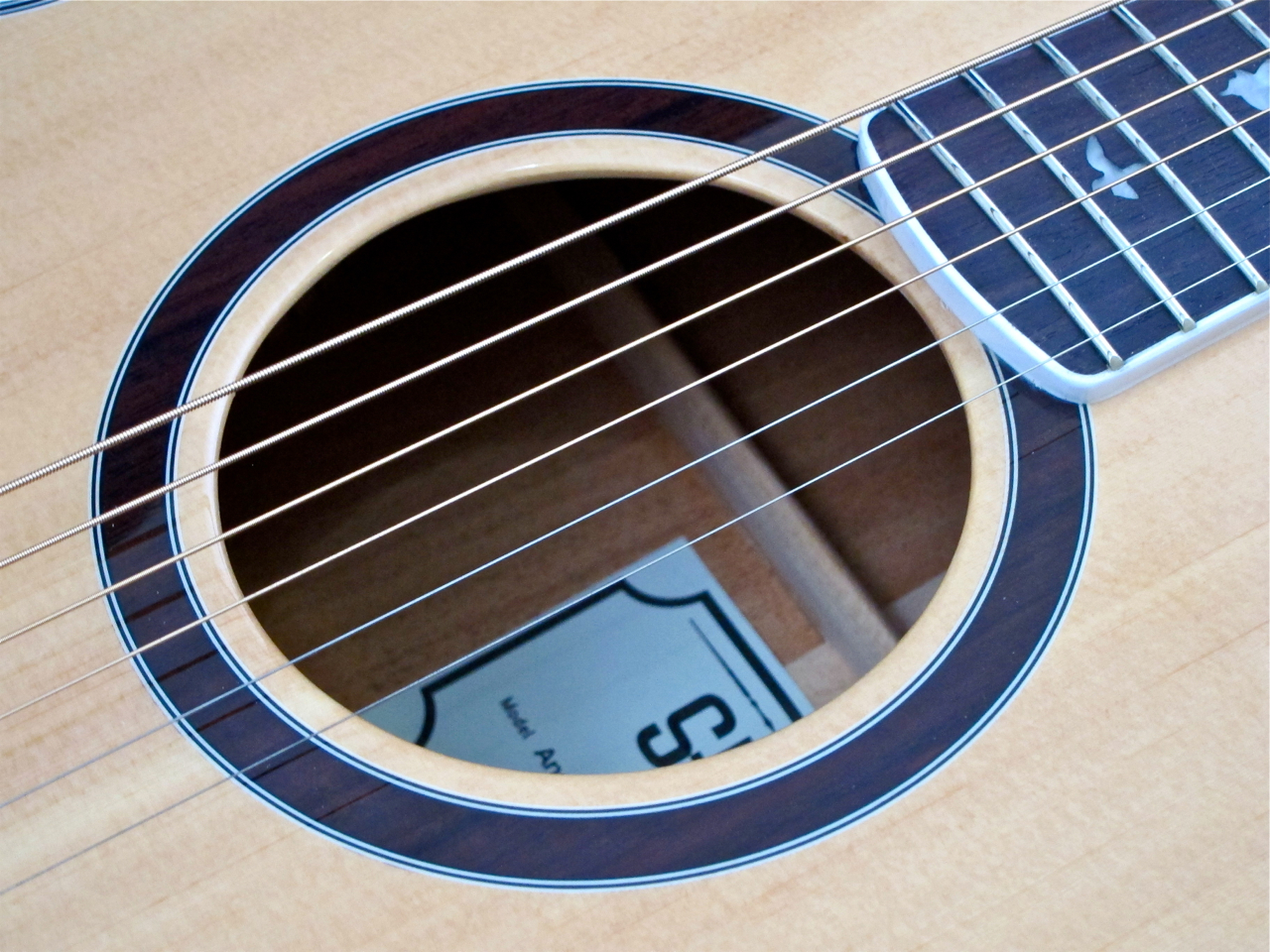
A rosewood rosette adds a tad of understated charm to proceedings.
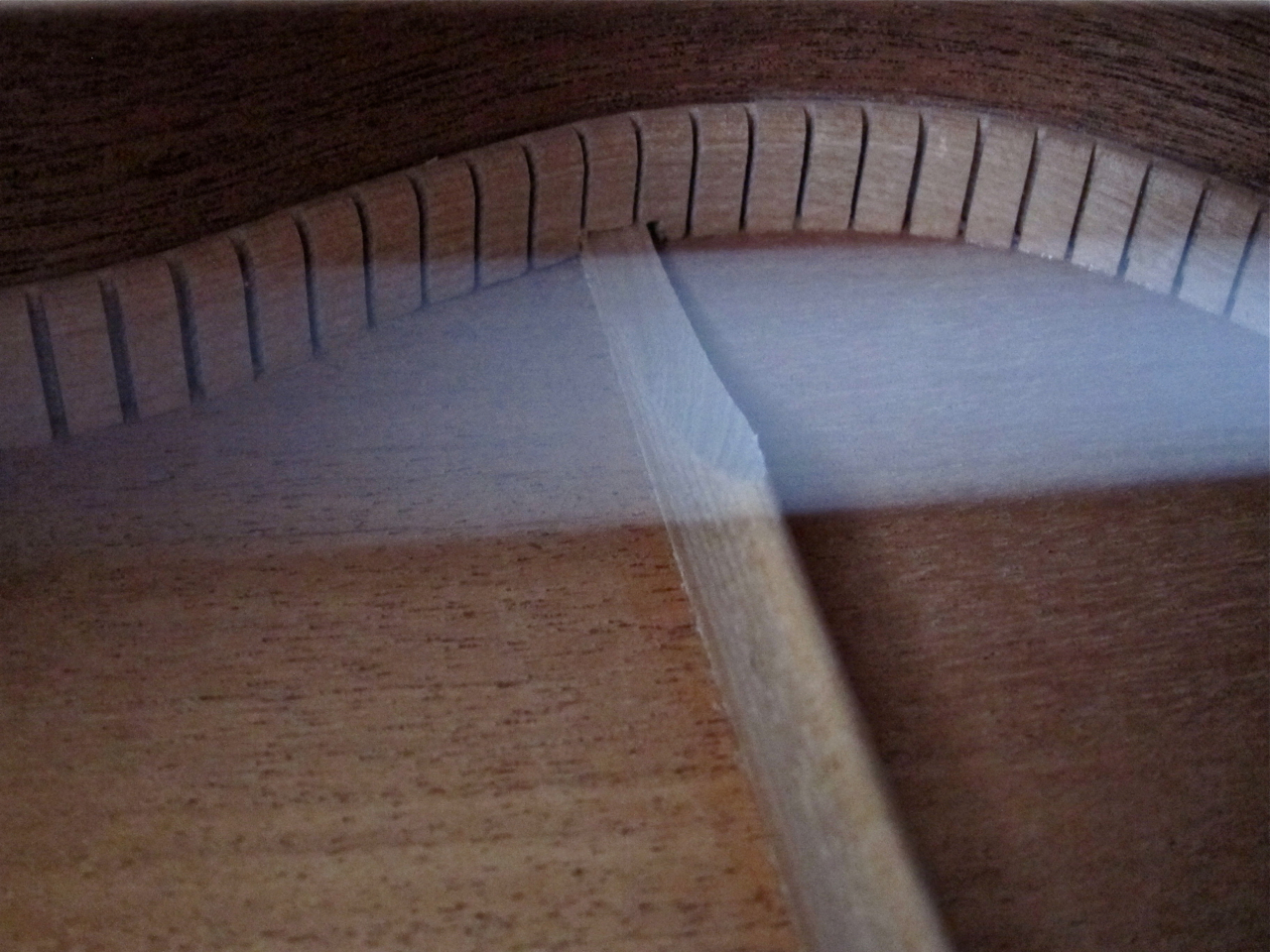
The SE Angelus displays extremely clean workmanship throughout – even on the inside!

The compensated saddle in the guitar’s rosewood bridge is made from tone-enhancing genuine bone.
****

But the PRS SE Angelus Standard isn’t just nice to look at, this guitar is also a sheer joy to play!
The instrument is lightweight, and just touching it already gives you a sense of this guitar’s eagerness to resonate.
PRS have made a wise decision in my opinion, when it came to choosing a neck profile for the Angelus: This neck is an unabashedly steel-string acoustic type of neck. No foul compromises to win over electric players – the Angelus’ neck profile is a chunky affair somewhere between a D- and a U-shaped cross-section.
If you’re new to steel-string acoustics – or just used to the feel of many electroacoustic guitars – the first impression might be a slight bit disconcerting, but fear not! In the long run a big neck will help your left-hand technique, and it’s the right choice for big tone as well.
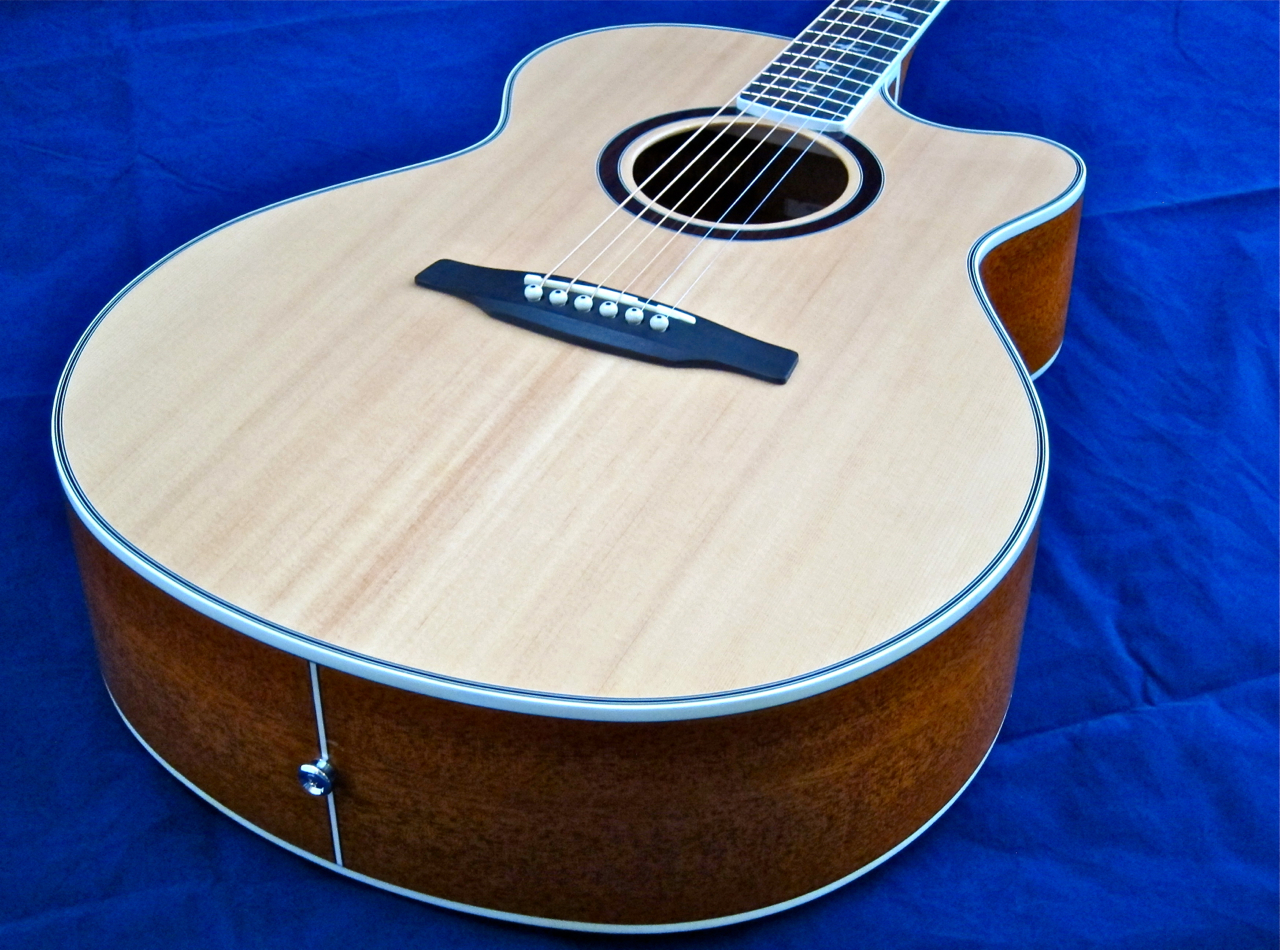
And what a tone it is! I can only heap praise upon the Angelus’ tone, sustain and dynamics – what a beautiful open sound!
String-to-string balance is outstanding, regardless of playing style or chosen register. It’s not often that you find a brand-new guitar with such a mature voice from the get-go – especially in this price bracket!
I also recorded the SE Angelus with different recording set-ups, and can only report that it is almost impossible to get a bad (or muddy) sound out of this instrument.
This is what the Angelus sounds like when recorded with a Zoom Q2HD:
…and here are two clips, which I recorded using an AKG C3000 condenser mic close to the guitar, pointing at the 14. fret, paired with a Samson C02 at shoulder height facing towards the bridge (–> Focusrite Saffire 6 USB –> Apple Garageband):
****
PRS SE Angelus Standard
current street price in Finland approx. 730 €
Distributor: EM Nordic
Thanks to DLX Music Helsinki for the loan of the review instrument!
****
Pros:
+ solid top and back
+ chunky neck profile
+ playability
+ open and dynamic tone
+ workmanship
+ bang-for-the-Euro
****
****
SE Angelus Standard on Grand Auditorium -kokoinen teräskielinen akustinen kitara PRS Guitarsin upouudesta SE Acoustic -mallistosta.
PRS SE -teräskielisten erikoisuus piilee firman omassa erikoisrimoituksessa, jossa käytetään saumattomasti X-rimoituksen ja fan-rimoituksen parhaita elementtejä. Lopputuloksena pitäisi syntyä erittäin dynaaminen ja avoin akustinen klangi.
****
PRS SE Angelus Standard (katuhinta noin 730 €) on erittäin komea ja tyylikäs ilmestys suositussa Grand Auditorium -koossa.
Grand Auditorium -kitaroissa kopan tilavuus on kutakuinkin sama Dreadnought-kitaroiden kanssa. Pyöreämmän ulkomuodon ja kapeamman vyötärön ansiosta Grand Auditorium kuitenkin istuu sylissä vielä Dreadnoughtia mukavammin. Lisäksi kopan muodolla on myös vaikutusta sointiin – Grand Auditorium -kitarat soivat yleensä avoimemmin ja ilman kumisevaa keskirekisteriä (noin 600 – 800 Hz) kuin Dreadnought-soittimet, minkä ansiosta nitä on hyvin helppo äänittää.
SE Angelus Standardin koppa on veistetty kokopuisesta sitkakuusikannesta ja mahonkipohjasta. Kopan reunat ovat muotoon prässätystä mahonkivanerista, mikä lisää niihin jäykkyyttä.
Myös Angeluksen kaula valmistetaan mahongista.
PRS:n perinteinen lapamuoto istuu yllättävän hyvin myös akustiseen kitaraan. SE Angeluksen tapauksessa lapa on reunalistoitettu valkoisella muovilla, ja päällystetty kuvankauniilla palisanteriviilulla (palisanteri = ruusupuu).
Satula on veistetty aidosta naudanluusta.
Suljetut virittimet ovat samat laadukkaat mallit, joita käytetään myös SE-sähkökitaroissa.
SE Angeluksen kaula koostuu yhdestä pitkästä palasta, johon on liimattu kaksi lisäpalaa – yksi muodostaa lavan, kun taas toinen on kaulan korko.
Palisanteriotelauta on reunalistoitettu ja koristeltu taitavasti PRS-sähkökitaroista tutuilla lintu-upotuksilla. Sekä upotus- että nauhatyö on toteutettu erittäin siististi.
Kun kerran käytetään laadukasta puuta, on ilo myös näyttää se kaikille. Koppa on viimeistelty erittäin ohuesti kirkaslakalla – mahongin hunajankultainen sävy on varsinaista silmänruokaa.
SE Angelus Standardissa toinen hihnatappi on muuten vakiovaruste – hyvä niin!
Kuten monilla Grand Auditorium -kitaroilla myös Angeluksella on pyöreä soololovi.
Kuusikansi on reunalistoitettu monikerroksisilla mustavalkoisella muovilistoilla.
Tumma palisanterirosetti huokuu hillittyä tyylikyyttä.
Myös kopan sisällä jatkuu SE Angeluksen esimerkkillisen siisti linja.
Samoin kuin satula, myös palisanteritallan kompensoitu tallaluu on aitoa luuta.
****
PRS SE Angelus Standard -kitaraa ei ole ainoastaan kiva katsella, vaan sillä on myös ilo soittaa!
Kitara on hyvin kevyt, ja jo pelkästä kosketuksesta käy selväksi, että tämä soitin resonoi vapaasti.
PRS on Angeluksen kaulaprofiilin kohdalla tehnyt mielestäni parhaan mahdollisen päätöksen: Angelus Standardin kaula on nimittäin täysverinen teräskielisen kaula. Tässä ei tehdä minkäänlaisia kompromisseja tai myönnytyksiä sähkökitaristien suuntaan, vaan tarjoilla on on täyteläinen ja vankka D:n ja U:n risteytys.
Ensikertalaiselle – tai tavalliseen elektroakustiseen tottuneille – ensivaikutelma voi tuntua hivenen verran liian lihaksikkaalta, mutta muutaman soittominuutin jälkeen soittaja alkaa arvostaa kaulan mukavaa täyteläisyytä. Tuhti kaula tukee hyvää soittotekniikkaa, ja se parantaa myös roimasti kitaran yleissointia.
Ja mikä sointi tästä kitarasta lähteekin! Soundia ja soittodynamiikan toistoa voi kuvailla vain ylistyssanoilla, niin upeasti, kauniisti ja avoimesti SE Angelus Standard soi.
Kielet ovat esimerkkillisesti tasapainossa toisiaan, sekä volyymiä, että sävyä katsoen, ja loistava tasapaino säilyy ehjänä soittotekniikasta tai -rekisteristä riippumatta. On hyvin harvinaista saada suoraan pakasta vedettyä teräskielistä syliin, joka soi alusta asti näin hyvin – etenkin tässä hintaluokassa!
Kokeilin SE Angelus Standardia myös erilaisilla äänityskalustoilla, ja oli lähes mahdotonta saada tästä kitarasta huonoa tai tunkkaista soundia.
Tältä Angelus kuulostaa Zoom Q2HD:llä äänitettynä:
SE Angelus – plektralla – Q2HD
…ja tässä ovat kaksi pätkää, joissa käytin AKG C3000 -mikrofonia edestä, lähellä 14. nauhaa, sekä Samson C02-mikrofonia minun oikean olkapään yllä, osoittamassa kitaran tallaa kohti (–> Focusrite Saffire 6 USB –> Apple Garageband):
****
PRS SE Angelus Standard
katuhinta noin 730 €
Maahantuoja: EM Nordic
Kiitos DLX Music Helsingille testiyksilön lainaamisesta!
****
Plussat:
+ kokopuinen kansi ja pohja
+ tuhti kaulaprofiili
+ soitettavuus
+ avoin ja dynaaminen soundi
+ työnjälki
+ hinta-laatu-suhde
****

This time Kitarablogi.com takes a closer look at two Hagström models: The Viking Deluxe Baritone is a Far-Eastern-made baritone-guitar, made to please the friends of low riffage, while the brand-new Northen Swede is part of the company’s new high-end line, which is handmade in the Czech Republic.
****

The Hagström Viking Baritone (current street price in Finland approx. 600 €) is the newest addition to the Viking-line. This long-necked beauty features the same stylish curves and semi-acoustic body as the rest of the Vikings.
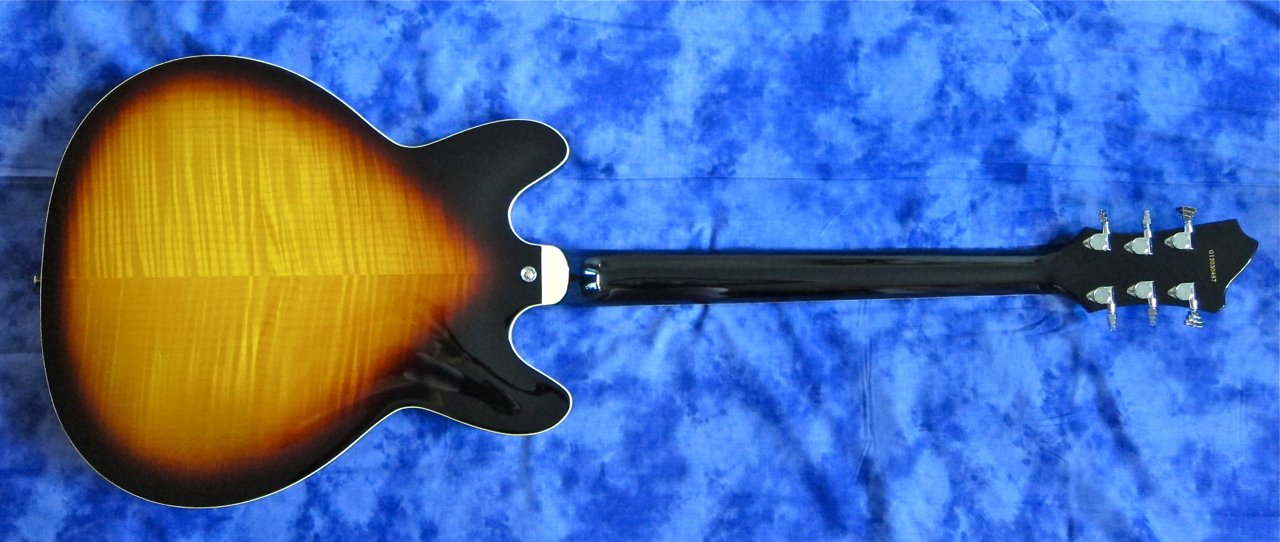
The Canadian hard rock maple neck is glued into the body, which is made from flame maple plywood.

Hagström’s headstock simply oozes 1950’s glitzy panache, with its ultraclean binding and inlay work.
The top nut, on the other hand, is up to date, using self-lubricating, man-made Black Tusq.
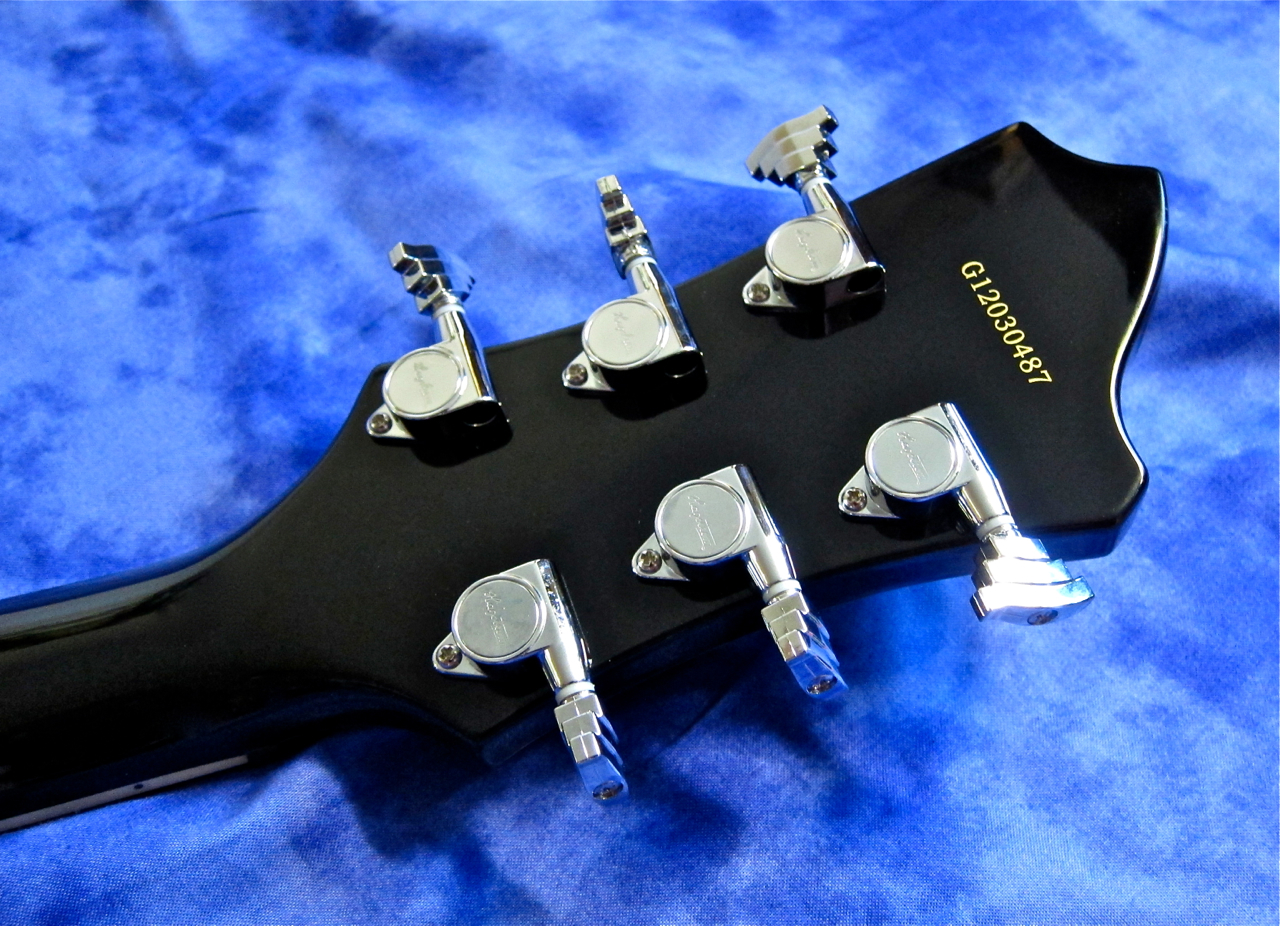
Modern sealed Hagström-tuners keep things steady.

One of Hagström’s special features is their Resinator-fingerboard. Resinator is a man-made alternative to ebony – in both looks and sound – and is made using wood fibres and resin.
The fretwork is rather good on our test sample, apart from a few fret ends, which felt a tiny bit sharpish in places.

Inside the plywood soundbox you can see the Viking Baritone’s full-length mahogany centre block.
The centre block is what turns a fully acoustic guitar into a semi. It improves attack and sustain, as well as greatly reducing the danger of howling feedback at higher volume levels.
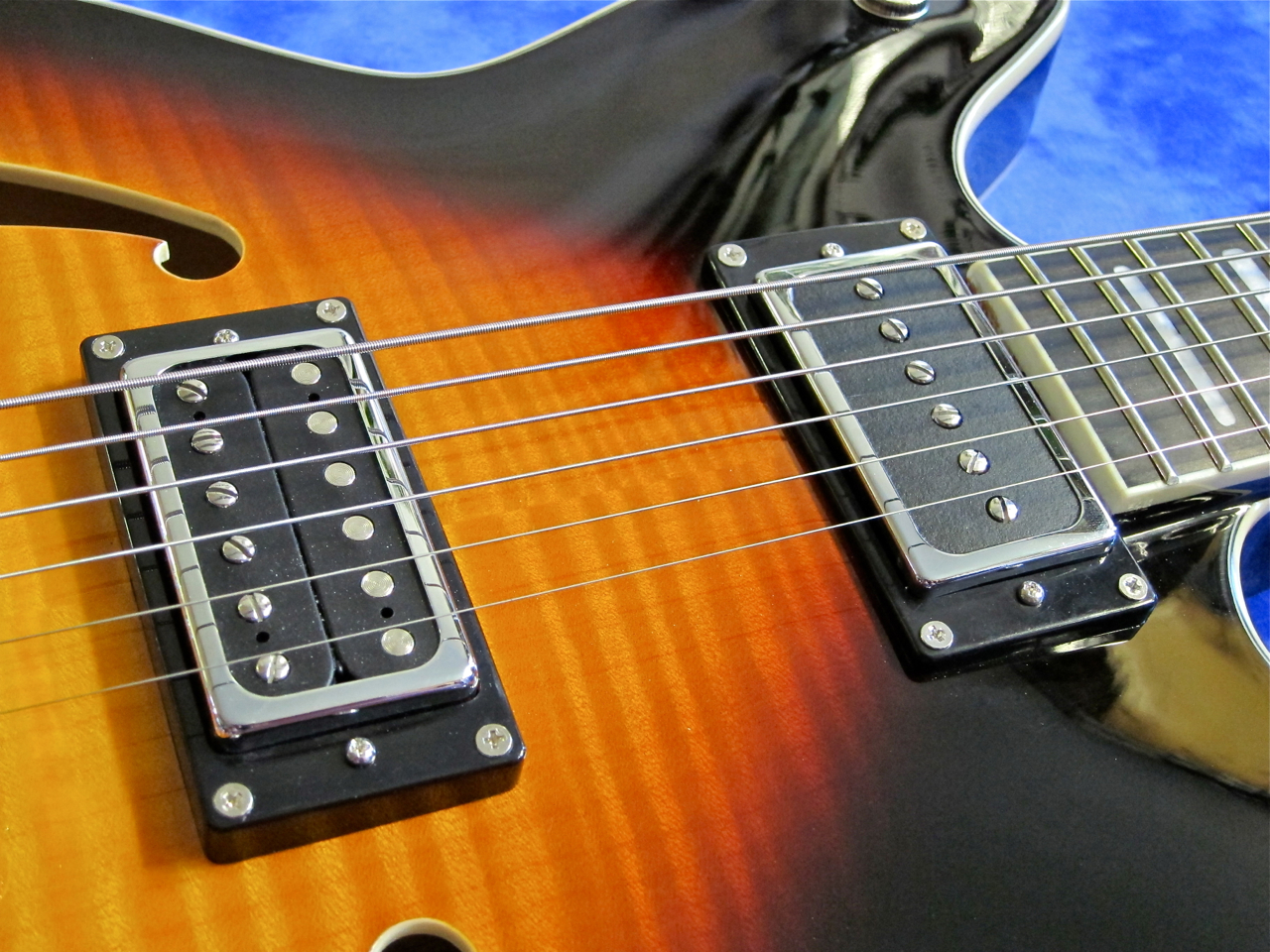
Hagström have optimised this Viking’s choice of pickups for use in a baritone-guitar:
The neck pickup is Hagström’s new P-Urified unit, which is a P-90-type singlecoil in humbucker-size. Employing a singlecoil in the neck position makes great sense, as it improves tonal clarity, while steering clear of any potential mushiness.
The bridge unit is Hagström’s great Custom 58 -humbucker, whose moderate output and nice dynamic range fit the P-Urified perfectly.
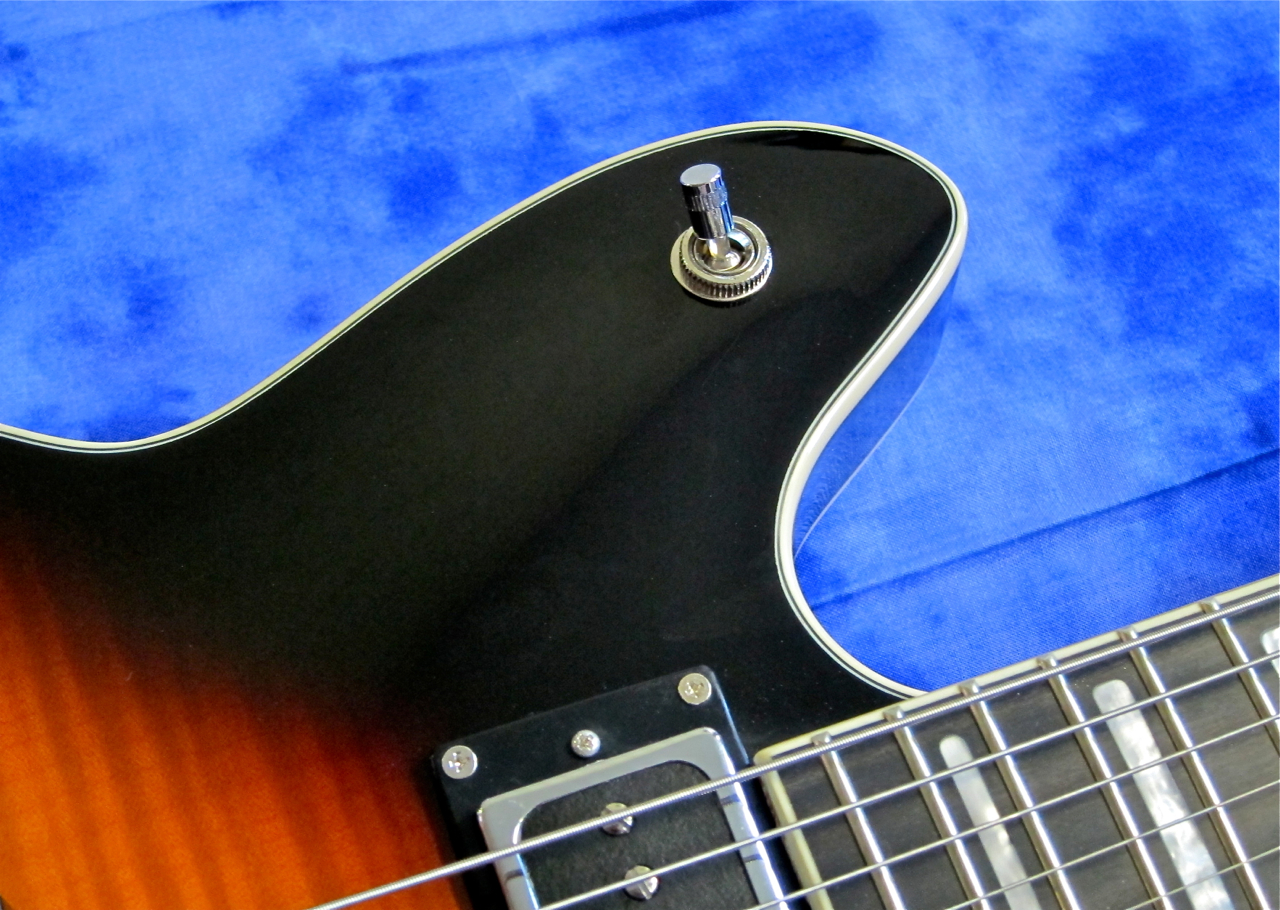
The three-way toggle sits on the Viking Baritone’s top horn.

It’s nice to see quality long-throw pots and clean workmanship inside the Viking.

The classic Gibson-type bridge and stopbar combination works fine on a semi like this.
****
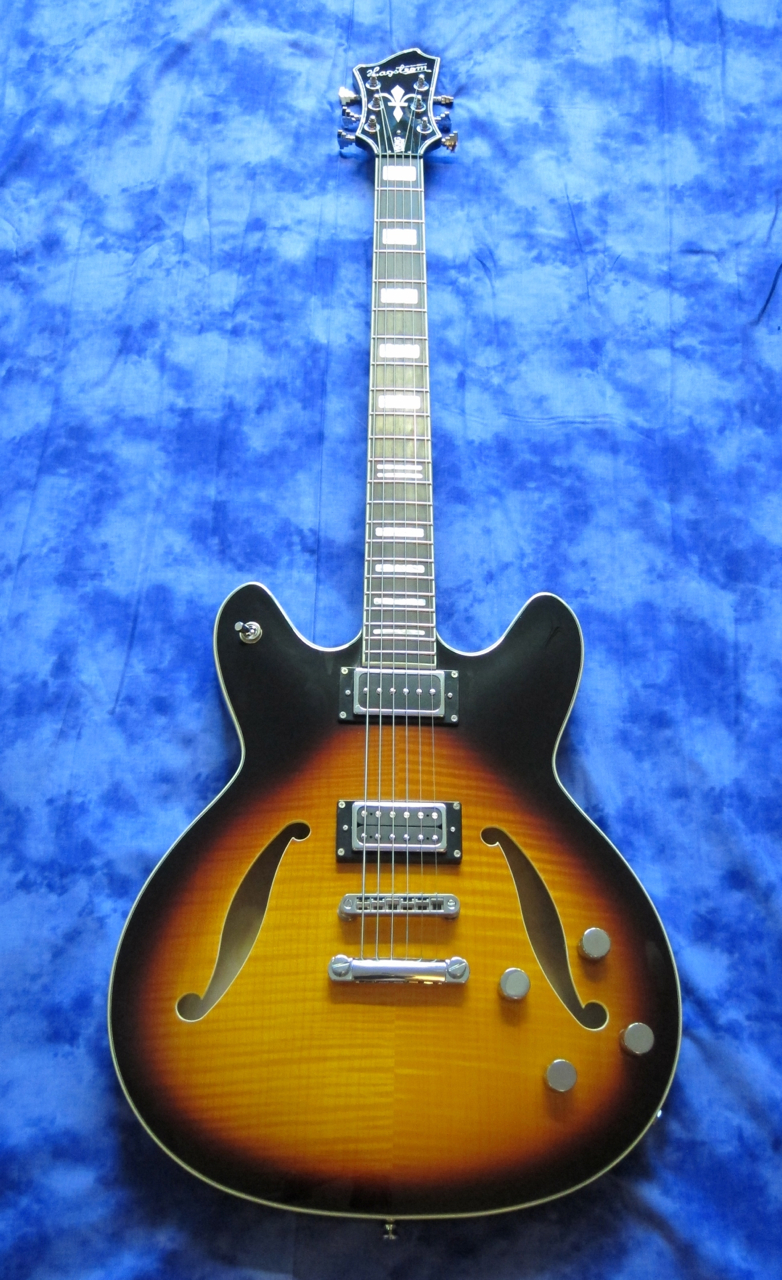
Thanks to its nice, moderate weight the Hagström Viking Baritone sits comfortably in your lap, with good strapped-on balance, too, regardless of a whiff of neck-heaviness due to its long neck.
The neck profile is a fleshy, but not too fat ”D”. Due to a baritone-guitar’s longer scale length (28″/71,1 cm) a newbie will need a little time to adjust his (or her) technique, but after a few minutes or so muscle memory will take the reigns without any problems.
The Viking Baritone’s choice of pickups really does it for me, fitting this guitar’s acoustic tone to a tee. The freshness of the neck pickup, together with its deliciously woody response, will keep even the lowest runs clear and punchy. And the moderately-powered bridge humbucker adds just the right amount of bite and grit to proceedings.
I feel that Hagström’s Viking Baritone is a fine baritone for all occasions and all styles of music (well, probably apart from the most massive of high-gain applications).
Listen to these two audio clips (the pickup order is: neck – both – bridge):
Hagström Viking Deluxe Baritone – clean
Hagström Viking Deluxe Baritone – crunchy
****
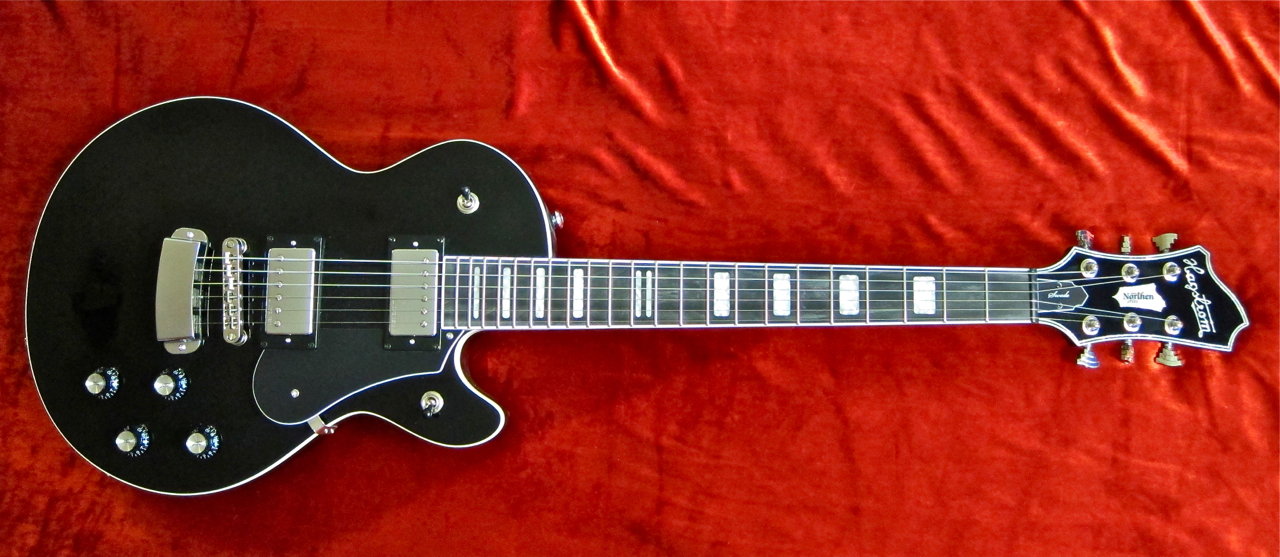
The Hagström Northen Swede (current street price in Finland approx. 1.200 €) is a high-quality, EU-made reissue of the classic Swedish model of yore.
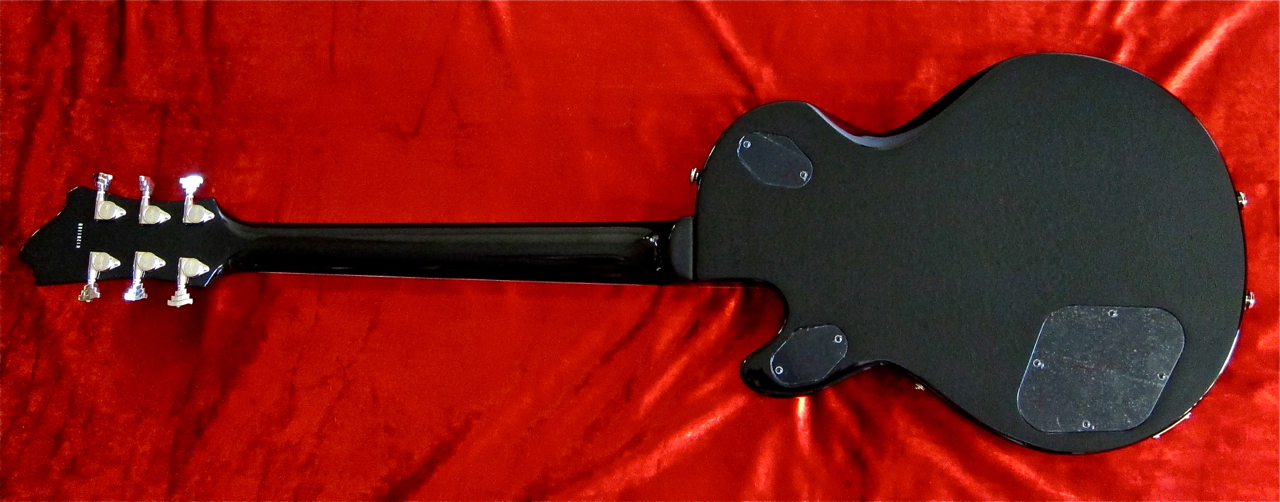
We’re talking about a set-neck solidbody, made almost completely from African mahogany (note: the cover plates look strange in this pic, because they still have their protective foils stuck on top).
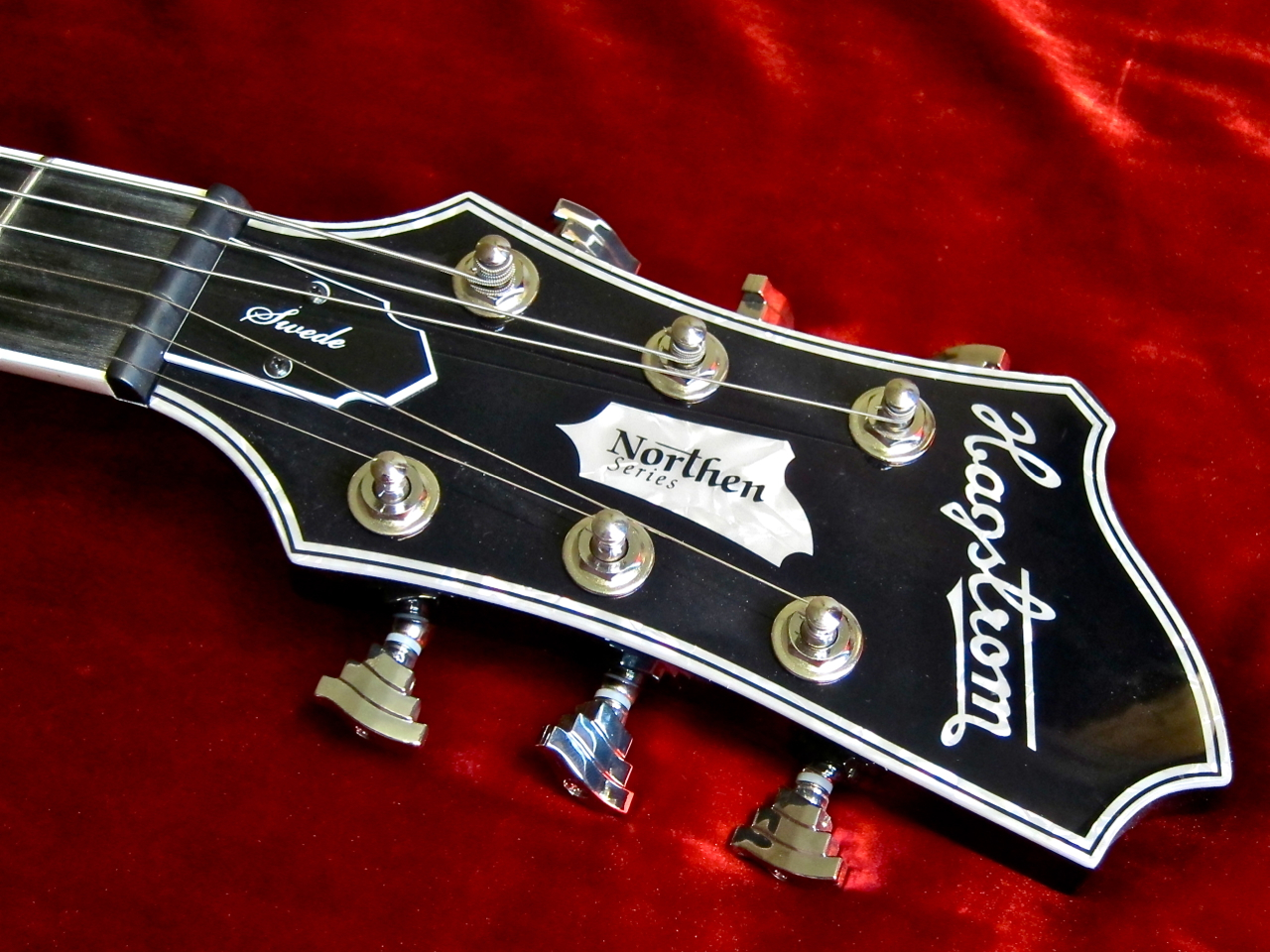
The large pearloid inlay proudly displays the Northen-series’ logo.

The Hagström-tuners have an 18:1 gear ratio and a smooth and precise feel.
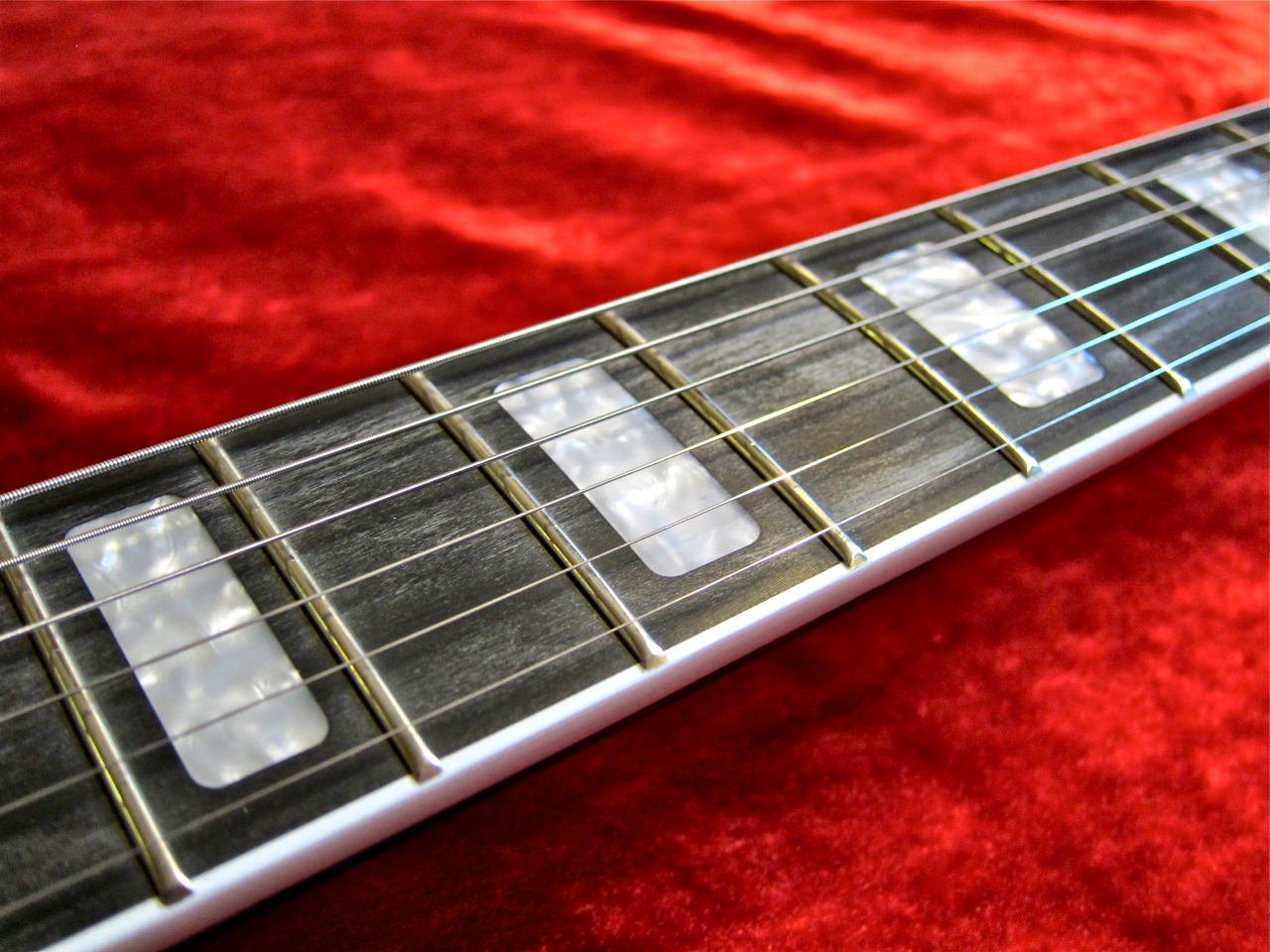
The Northen Swede’s Resinator-board looks more lively than its counterpart on the Viking Baritone. The fretwork is very good.
One special, time-tested feature of all Hagström necks is the H-Expander truss rod system. The H-Expander truss rod sits in a rigid aluminium bar with an H-shaped cross-section. The whole system is then mounted into a tight-fitting, profiled slot inside the the neck, resulting in greater rigidity and thus a better vibrational transfer than most other truss rod systems provide.
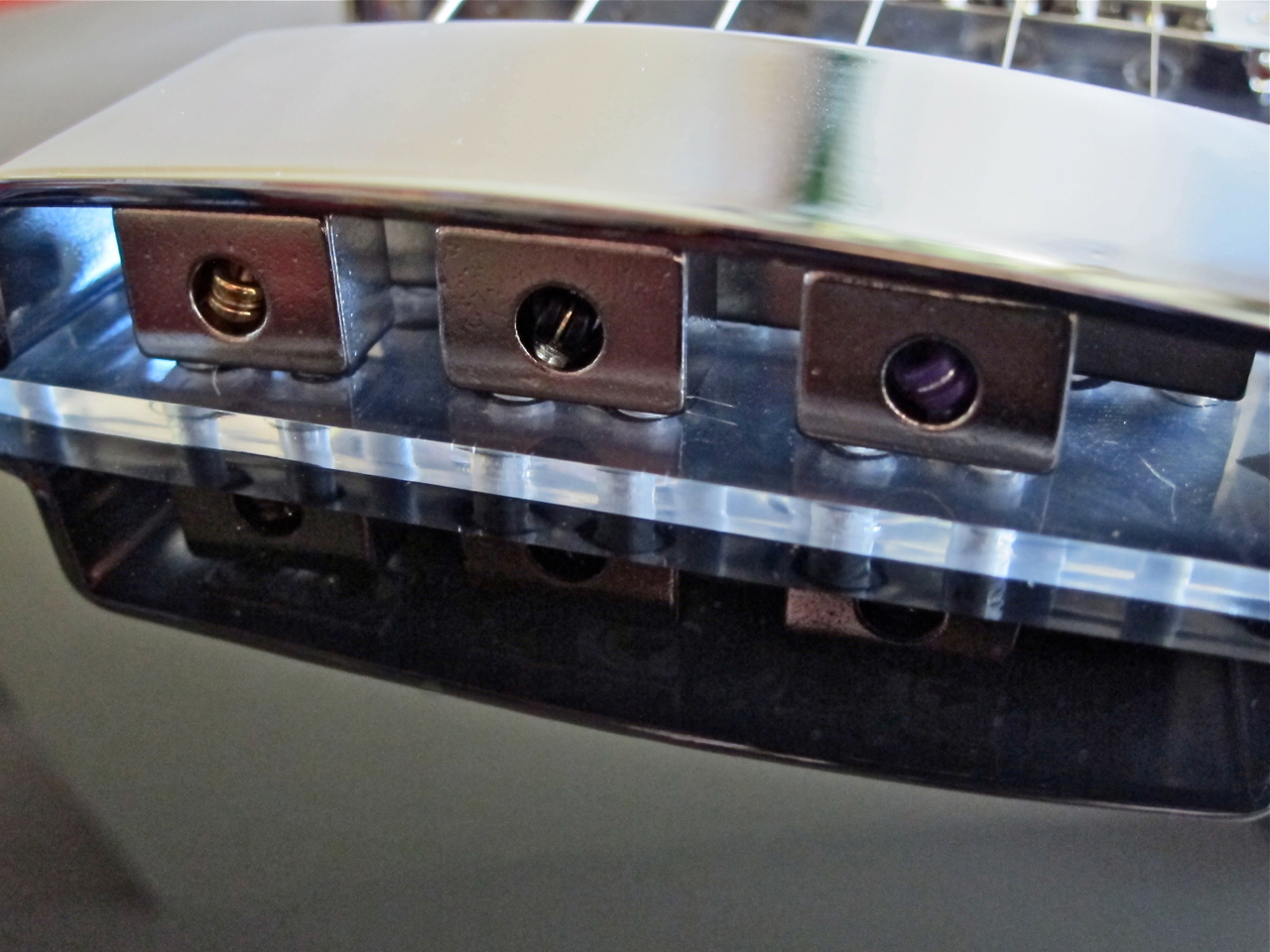
The Swede features Hagström’s idiosyncratic tailpiece, using individual string retainers mounted onto a perspex plate.

Swedish pickup-guru Johan Lundgren is the force behind the Northen Swede’s classy pickups. The guitar is equipped with a pair of No. 2 -humbuckers, which are powered by Alnico 2 magnets.
The Hagström Swede sports two three-way toggle switches: The switch on the guitar’s shoulder is your usual pickup selector, while the one on the treble-side horn is a tone filter -switch.
The tone filter’s middle position is off, with the ”up” selection giving you a mild presence roll-off, while the ”down” position results in a noticeably greater treble and high-mid cut.
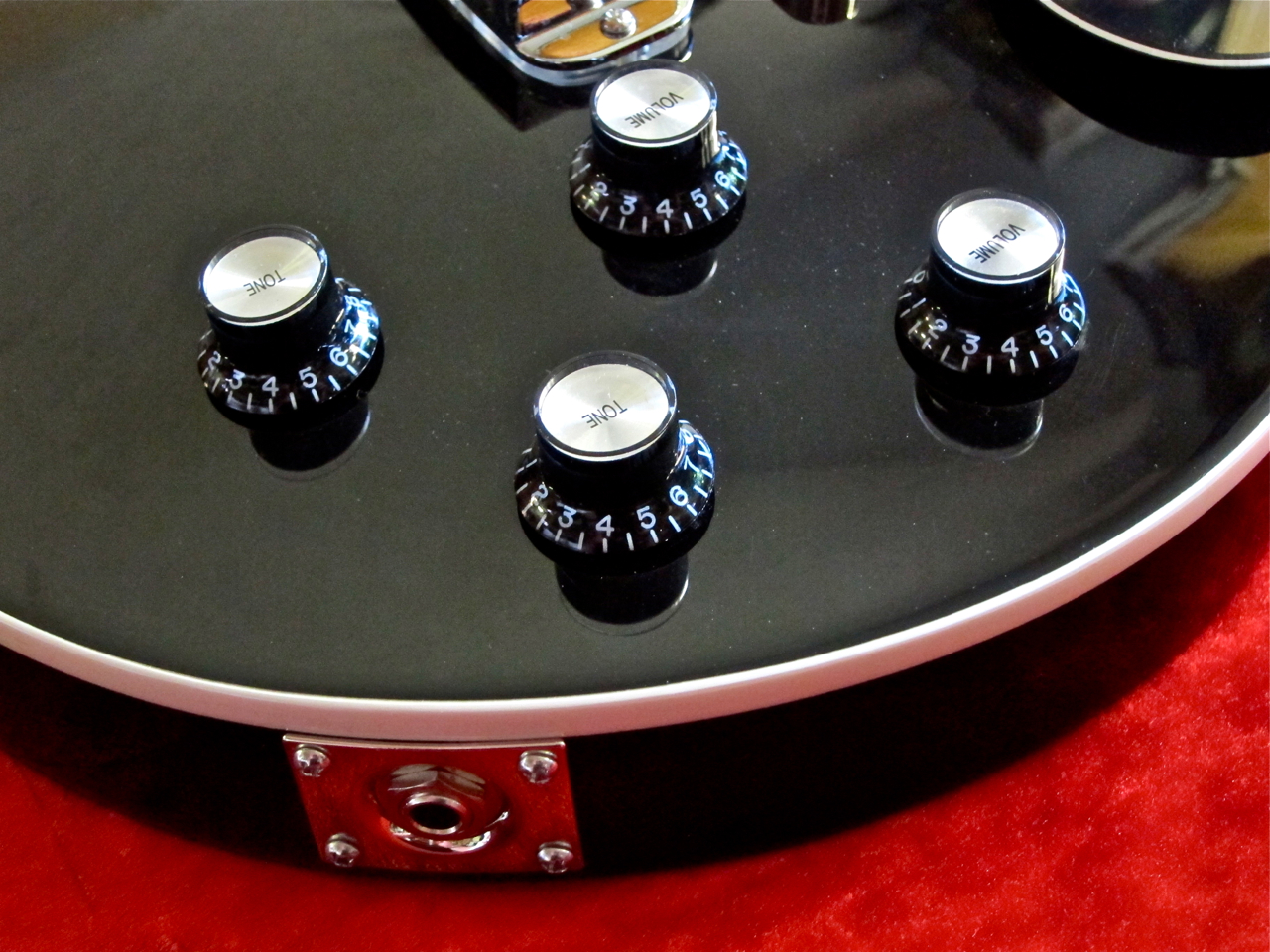
The control knobs work in the standard Les Paul -fashion, with each pickup being provided with its own set of volume and tone controls.
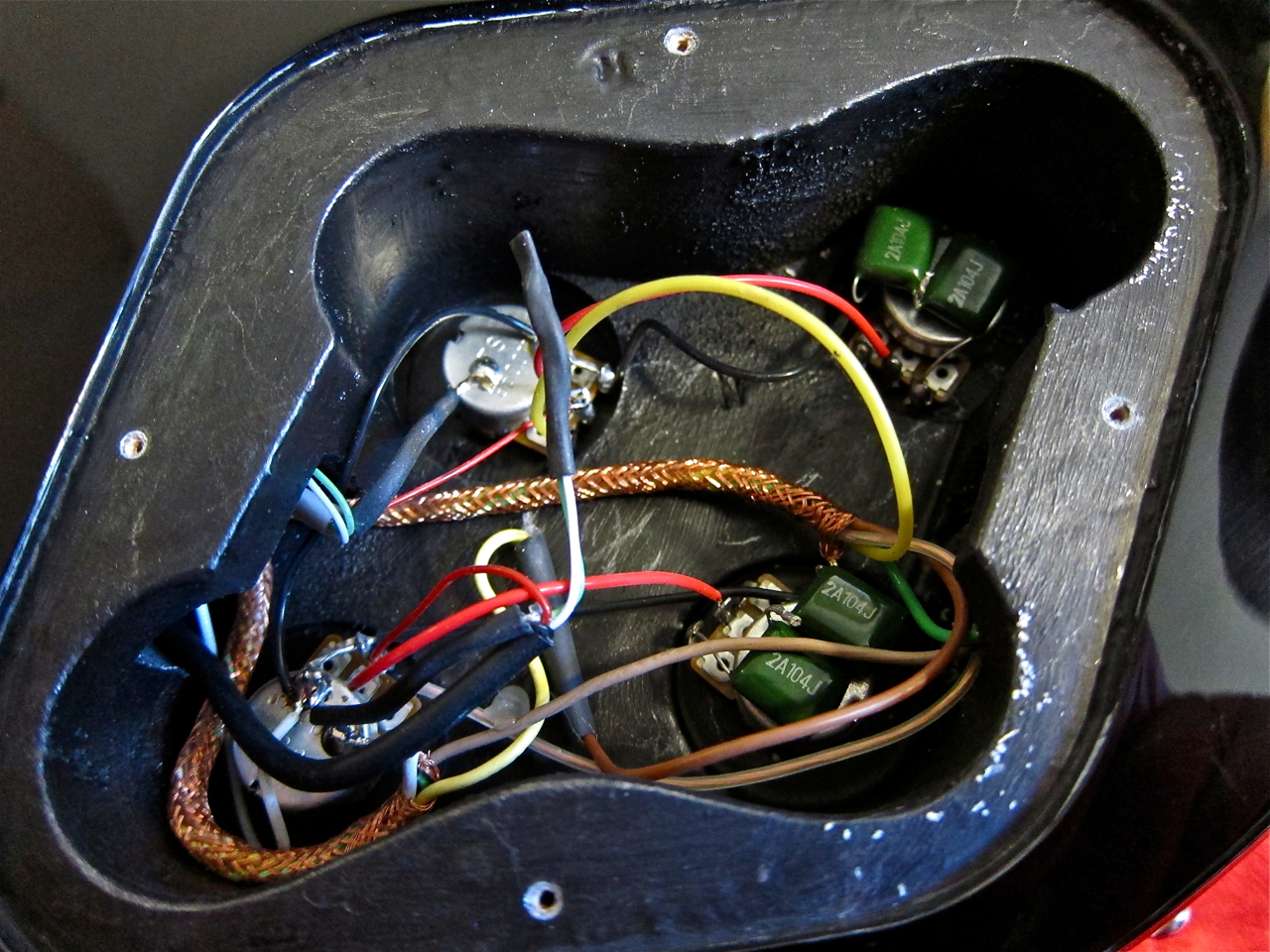
Quality components, clean soldering and thorough screening, using conductive paint and an aluminium-lined lid, get the thumbs up from this here reviewer.
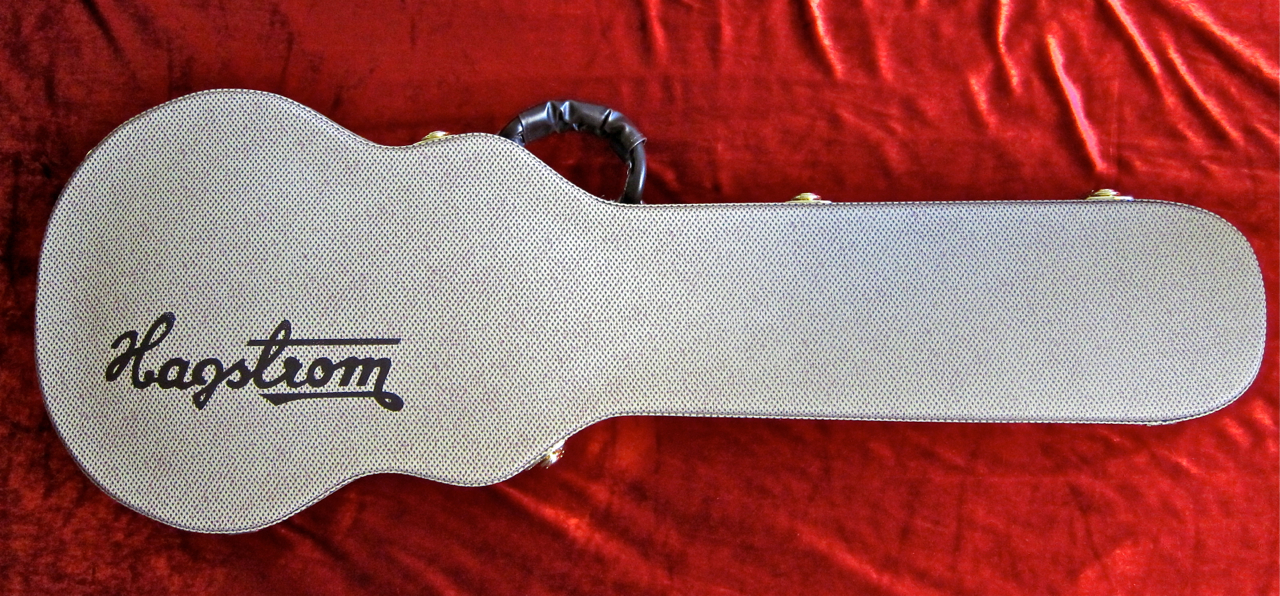
A sturdy and beautiful Hagström-case is included in the Northen Swede’s price.
****

The Hagström Northen Swede’s well-rounded neck profile feels great to me. The nicely polished frets and the ’board’s 12-inch camber make for a fast and effortless playing experience.
Thanks to the fantastic interplay between the tone filter -switch and the guitar’s controls, the tonal options afforded by this Swede are virtually limitless. The Lundgren-designed pickups have a very clear and clean basic tonal character, which enables you to make the most of the Northen Swede’s passive electronics.
In my opinion Hagström’s Northen Swede is a top-quality guitar offering a great deal of tonal variation to the discerning guitar connoisseur. In light of its Czech origin, I must say that the Northen Swede truly represents quality European workmanship at a very moderate price.
All the following audio clips have been recorded with the tone filter -switch starting at off, then going to moderate roll-off, with the last phrase using the full treble cut selection:
Hagström Northen Swede – neck pickup/clean
Hagström Northen Swede – both/clean
Hagström Northen Swede – bridge pickup/clean
Hagström Northen Swede – neck pickup/crunchy
Hagström Northen Swede – both/crunchy
Hagström Northen Swede – bridge pickup/crunchy
****
…and here we have both Hagströms in action:
Hagström Viking Baritone + Northen Swede – the video’s audio
****
Hagström-guitars
Finnish distributor: EM Nordic
A big thank you to DLX Music Helsinki for the loan of the review instruments!
****
Hagström Viking Deluxe Baritone
Current street price in Finland about 600 €
Pros:
+ sound
+ playability
+ workmanship
+ weight
+ pickups
Cons:
– fingerboard binding felt a tad angular on test sample
****
Hagström Northen Swede
current street price in Finland about 1.200 €
Pros:
+ made in the EU
+ sound
+ versatility
+ Lundgren-pickups
+ workmanship
+ playability
+ weight
****
Tässä jutussa tutustutaan kahteen Hagström-malliin: puoliakustinen Viking Deluxe Baritone on Kauko-Idästä peräisin oleva baritonikitara matalien riffien ystäville, kun taas upouusi Northen Swede valmistetaan käsityönä Tšekinmaassa.
****
Hagström Viking Baritone (katuhinta noin 600 €) on Viking-perheen uusi, pitkäkaulainen tulokas, jolla on samat tyylikkäät muodot ja sama puoliakustinen perusrakenne kuin muissakin Viking-malleissa.
Luja vaahterakaula on liimattu kauniiseen, muotoon prässätystä vaahteravanerista valmistetuun runkoon.
Hagströmin lapa huokuu 1950-luvun jazzkitaroiden äärimmäistä tyylikkyyttä, monikerroksisella reunalistoituksellaan ja siistillä upotustyöllään.
Satula taas on laadukkaasta, kitkaa vähentävästä Black Tusq -materiaalista.
Myös Hagström-virittimet ovat nykyaikaista suljettua sorttia.
Hagström-kitaroiden erikoisuuksiin kuuluu Resinator-otelauta. Resinator on keinotekoinen materiaali puusta ja hartsista, jonka sanotaan olevan soundillisesti hyvin lähellä eebenpuuta.
Nauhatyö on toteutettu testisoittimessa hyvin siististi, ainoastaan nauhojen päät olisivat voineet olla vielä hivenen verran pyöreämmät.
Vanerikopan sisällä on paksu keskipalkki mahongista, joka kulkee kaulaliitoksesta koko matkan rungon läpi.
Keskipalkki tekee kitarasta puoliakustisen (muuten se olisi täysiakustinen). Se parantaa kitaran atakkia ja sustainea (= soinnin kestoa), ja se vähentää myös ratkaisevasti ontosta kopasta syntyvän feedback-ulinan vaaran.
Mikrofonivarustus on Viking Baritonessa optimoitu juuri baritonikäyttöä varten:
Kaulamikrofonina toimi Hagströmin uusi P-Urified-malli, joka on peeysikymppinen humbuckerkoossa. Yksikelaisen käyttö kaulan lähellä pitää matalat taajuudet siistimpänä ja parantaa soundin selkeyttä.
Tallamikrofoni taas on Hagstömin selkeä-ääninen Custom 58 -malli, joka sopii maltillisen tehonsa ansiosta erittäin hyvin P-Urified-kaltaisen kaulamikin kanssa yhteen.
Kolmiasentoinen mikkivalitsin sijaitsee Viking Baritonen yläsarvella.
Vikingin kytkennössä käytetään laadukkaita isokokoisia potentiometrejä. Työnjälki on elektroniikankin osalta hyvin siisti.
Klassinen Gibson-tyylinen tallan ja kietenpitimen yhdistelmä on toimiva ratkaisu.
****
Hyvin malttillisen painoinen Hagström Viking Baritone istuu erittäin hyvin soittajan sylissä, ja roikkuu hihnassakin melko rauhallisena erittäin lievästä kaulanpainoisuudestaan huolimatta.
Kaulaprofiili on tuhti, mutta ei missään nimessä ylipaksu ”D”. Baritonikitaran pidempi mensuuri (28″/71,1 cm) vaatii lyhyen tutustumisvaiheen, mutta lihasmuistin sisäänajon jälkeen soitto sujuu ongelmitta.
Viking Baritonen mikrofonit ovat mielestäni erinomaiset, ja ne sopivat tälle kitaralle loistavasti. Kaulamikrofonin tuoreus ja maiskuvan pähkinäinen keskialue pitää myös erittäin matalat juoksut siisteinä ja erottelevina. Maltillinen tallahumbuckeri taas pysyy hyvin dynaamisena ja avoimena.
Hagström Viking Baritone on todella maukas yleisbaritoni, joka sopii erittäin hyvin kaikille musiikkityyleille – ehkä rankimpaa Thrashia lukuunottamatta.
Tässä kaksi audiopätkää (järjestys: kaulamikki – molemmat – tallamikki):
Hagström Viking Deluxe Baritone – puhdas
Hagström Viking Deluxe Baritone – säröllä
****
Hagström Northen Swede (katuhinta noin 1.200 €) on eurooppalaisvalmisteinen laatuversio vanhasta ruotsalaisesta klassikkokitarasta.
Kyseessä on liimakaulainen lankkukitara, joka on veistetty otelautaa lukuunottamatta täysin afrikkalaisesta mahongista (huom: kuvassa muovikansien suojamuovit vielä paikoillaan).
Lapaan on upotettu sarjan nimeä kantava, helmiäismuovista tehty laatta.
Hagström-virittimien välityssuhde on 18:1, ja niiden tuntuma on hyvin sulava.
Northen Sweden Resinator-otelauta näyttää eloisemmalta kuin Viking Baritonen vastine. Nauhatyö on erittäin huolellinen.
Hagström-kaulojen erikoisuus piilee firman erittäin lujassa H-Expander-kaularaudassa. H-profiiliseen alumiinikuoreen asennettu kaularauta istuu erittäin tiukasti kaulapuussa, minkä ansiosta kaula värisee voimakkaamin.
Tune-o-matic-tyylisen tallan aisapari on Hagströmin oma kieltenpidin, jossa kielet ankkuroidaan erillisiin metalliblokkeihin.
Ruotsalainen mikkiguru Johan Lundgren on mies Northen Swede -mallin loistavien mikrofonien takana. Kyseessä ovat No. 2 -nimisiä kuorellisia humbuckereita, jotka rakennetaan miedoilla Alnico 2 -magneetteilla.
Hagström Swedessä on kaksi kolmiasentoista vipukytkintä: kitaran olkapäässä istuva kytkin on tavallinen mikkivalitsin, kun taas sarven kytkin on tone-filtteri.
Filtterikytkimen väliasento on neutraali, ylös-asennossa astuu kuvaan mieto preesens- ja diskanttisuodin, kun taas ala-asentolla valitaan rajumpi treble-filtteriä.
Säätimet toimivat perinteisellä, Les Paul -tyylisellä tavalla – kummallekin mikrofonille on omat volume- ja tone-säätönsä.
Laadukkaita komponentteja, siistiä juotostyötä ja toimiva häiriösuojaus grafiittimaalilla ja alumiinilla vuoratulla kannella ilahduttavat testaajan.
Laadukas Hagström laukku kuuluu Northen Sweden hintaan.
****
Hagström Northen Swede -kitaran täyteläinen kaulaprofiili istuu todella mukavasti ainakin minun käteeni. Sulavaksi työstetyt nauhat ja otelaudan loiva kaarevuus (12″) tekevät soittotuntuman erittäin helpoksi.
Tone Filter -kytkimen ja säädinosaston saumattomasta yhteistyöstä syntyy lähes rajaton soundien leikkikenttä. Lundgren-mikkien hyvin tuoreen perusäänen ansiosta pystyy hyödyntämään täysin kaikki kytkennän tuomia mahdollisuuksia.
Northen Swede on mielestäni loistava ja erittäin monipuolinen kitara laatutietoiselle, joka sopii genrelle kuin genrelle. Soittimen tšekkiläisen alkuperänsä vuoksi pidän pyydettyä hintaa hyvin kohtuullisena – Northen Swede edustaa eurooppalaista laatua reiluun hintaan.
Kaikissa seuraavissa ääniesimerkeissä soittojärjestys on Tone Filter -pois päältä –> mieto suodatus –> rajumpi diskanttileikkaus:
Hagström Northen Swede – kaulamikki/puhdas
Hagström Northen Swede – molemmat/puhdas
Hagström Northen Swede – tallamikki/puhdas
Hagström Northen Swede – kaulamikki/säröllä
Hagström Northen Swede – molemmat/säröllä
Hagström Northen Swede – tallamikki/säröllä
****
Ja tässä soivat molemmat Hagströmit yhdessä:
Hagström Viking Baritone + Northen Swede – videon audioraita
****
Hagström-kitarat
Maahantuoja: EM Nordic
Kiitos DLX Music Helsingille testisoittimien lainasta!
****
Hagström Viking Deluxe Baritone
katuhinta noin 600 €
Plussat:
+ soundi
+ soitettavuus
+ työnjälki
+ paino
+ mikrofonit
Miinukset:
– testikitarassa hieman kulmikas otelaudan reunalistoitus
****
Hagström Northen Swede
katuhinta noin 1.200 €
Plussat:
+ valmistettu EU:ssa
+ soundi
+ monipuolisuus
+ Lundgren-mikrofonit
+ työnjälki
+ soitettavuus
+ paino
****

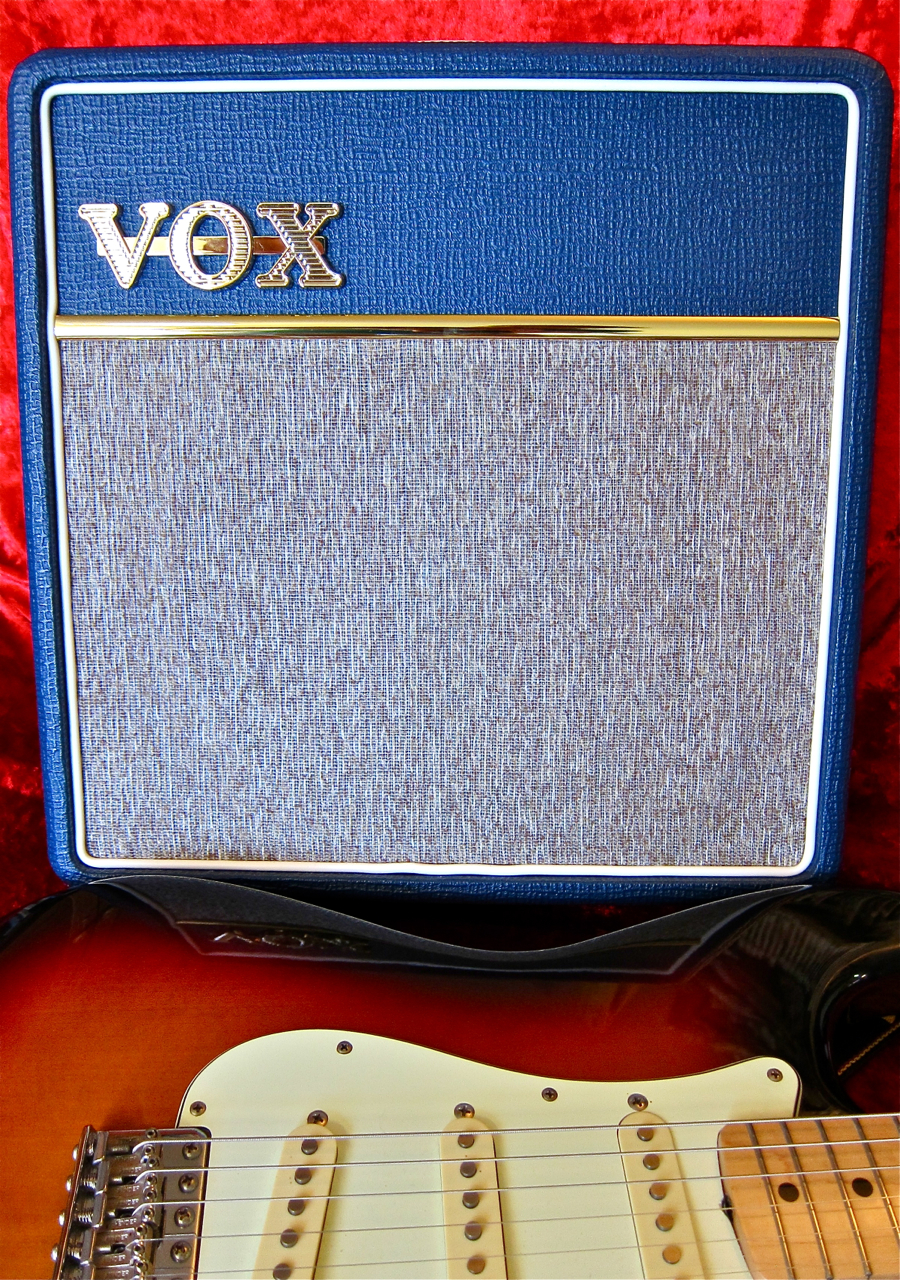
This is what it looks like – the brand-new Vox AC4 C1 Blue. I can already hear many of you thinking “What? Another AC4? Is it any different to the white AC4 TV?”
Granted, it is somewhat bewildering that Vox have several similarly named products in their range, so let me run you through the differences quickly:
At the moment of writing there are five different Vox AC4 valve amplifiers available. The Vox AC4 TV – which is available in three different guises – is the most affordable alternative, and aimed at the same market segment as ultra-compact modelling combos, such as the Roland Micro Cube.
At the other end of the price spectrum you can find the Vox AC4 HW, which is a very stylish hand-wired (HW) combo for the vintage fanatic. Just like the Sixties original, the AC4 HW is also equipped with a 12” Celestion speaker.
The new AC4 C1 Blue conveniently slots into the range between the two other AC4s. Vox’ C–series comprises new versions of the company’s most famous models, updated with nifty modern features.
****
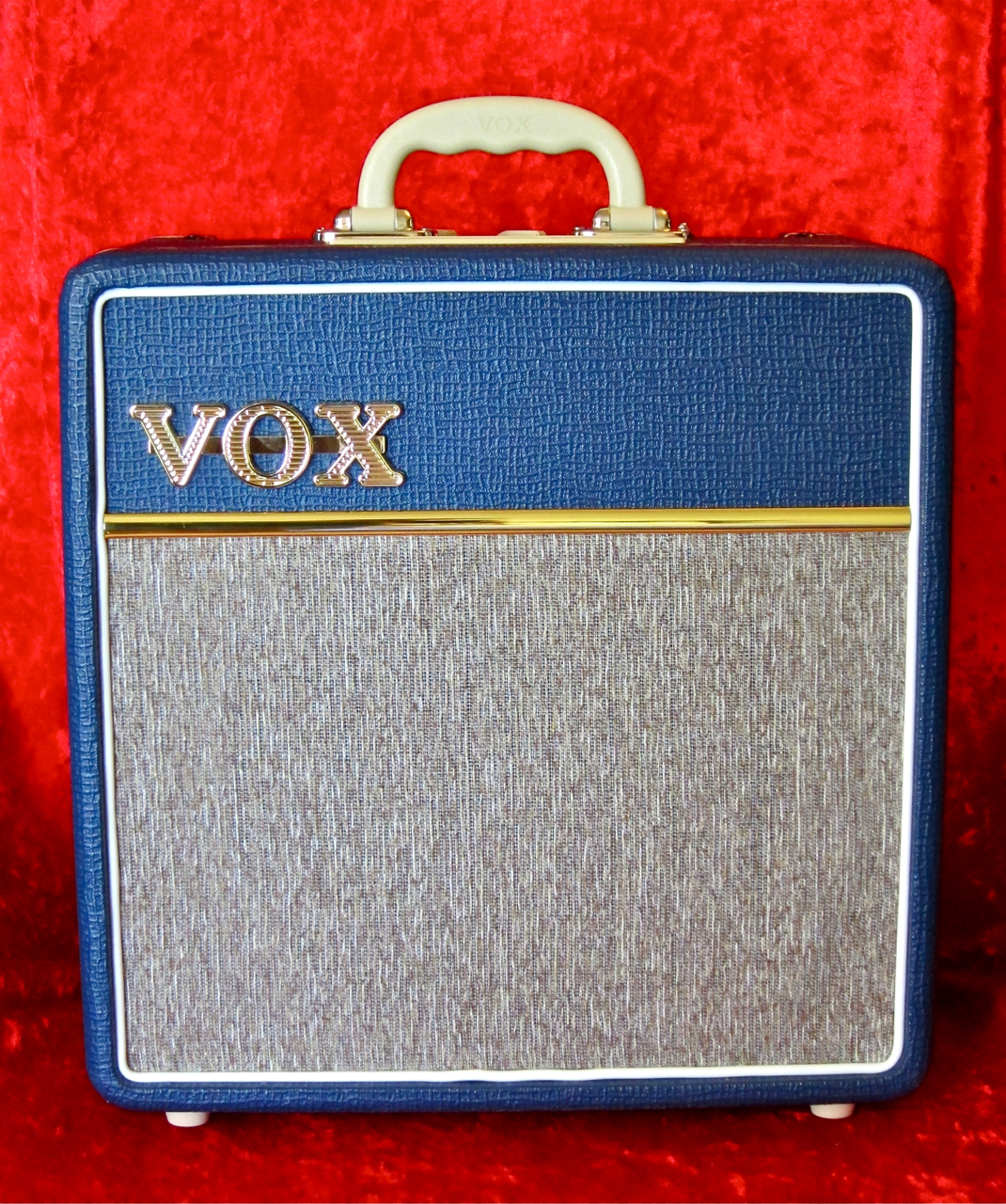
The Vox AC4 Blue (current street price in Finland 349 €) is a very beautiful combo amp, sporting the blue vinyl finish found on one special run from the Sixties, complete with the salt-and-pepper grille cloth.
Two 12AX7 valves are making up the preamplifier section, while the power amp is utilizing a single EL84. Output power is rated at four Watts (RMS) using a 16 Ohms speaker impedance.

The combo’s almost completely closed from the back. The back panel sports only two connectors – one for the power lead and another for connection of an external speaker. Ventilation is provided by a small opening right at the bottom of the combo’s back, as well as the customary small grille next to the carrying handle.
As is the case in quite a number of modern small valve combos, access to the valves is rather restricted in the AC4 C1 Blue. To change preamp valves you have to completely take off the whole back wall to get to the valves, which sit directly on the PCB-board. The owner’s manual recommend leaving valve exchanges to qualified service personnel to avoid the risk of an electric shock.
The Vox AC4 Blue comes equipped with the same special design already used successfully in the AC4 TV – a 10-inch Celestion VX10.

The front panel comprises controls for gain, bass, treble and master volume.
****
Vox has aimed to deliver genuine Top Boost –tone in a small package, and the AC4 C1 Blue really dishes out the goods. This little combo gives you all the legendary AC30 sounds, but at volume levels that fit your living room or home studio to a tee.
The AC4 C1 BL’s clean tones have plenty of jangle, coupled with Vox’ typical dose of grit and attitude. If your’re using powerful humbuckers, you’d better turn down your guitar’s volume a bit, unless you want to drive the combo into light Blues-overdrive.
For my taste the little Vox could do with a little bit less bite in the top end, but I got the trebles reigned in easily with the Treble-knob.
Upping the gain gets you into overdriven territory fairly quickly – from creamy Blues all the way to early Heavy Metal via Seventies Classic Rock. For out-and-out Nu-Metal the Vox AC4 Blue isn’t really the right amp, it just wasn’t designed to dish out that much grunt. For Brian May –type fat lead tones I’d recommend using a distortion pedal in front of the combo.
With its four Watts the AC4 C1 Blue has just enough power to annoy your neighbours – and for small gigs you could stick a microphone in front of it.
Here are a few soundbites (all clips start from the neck pickup):
****
Vox AC4 C1 Blue
current street price in Finland 349 €
Finnish distributor: EM Nordic
A big thank you goes to DLX Music Helsinki for the loan of the review amp!
Pros:
+ genuine Vox Top Boost -sounds
+ small size
+ Master Volume knob
+ cool looks
+ value-for-money
Cons:
– exchanging valves difficult
****
****

****

The PRS Studio -model, which was introduced last year, bundles all the improvements of the last few years in one single instrument. The Studio sports a long list of new – or improved – features, such as the Narrowfield-humbuckers.
****

In Gibson-speak ”studio” usually means a less expensive, slightly scaled-down model. In the PRS Studio’s case the word ”studio” denotes a guitar that is meant to be very versatile.
The PRS Studio (current price in Finland around 3,000 €) is a set-neck electric guitar, with the company’s traditional 25-inch (63,5 cm) scale. A great-looking flame maple top comes as standard on the Studio. PRS offer several different colour finishes, as well as a choice between a wraparound bridge or a PRS vibrato.
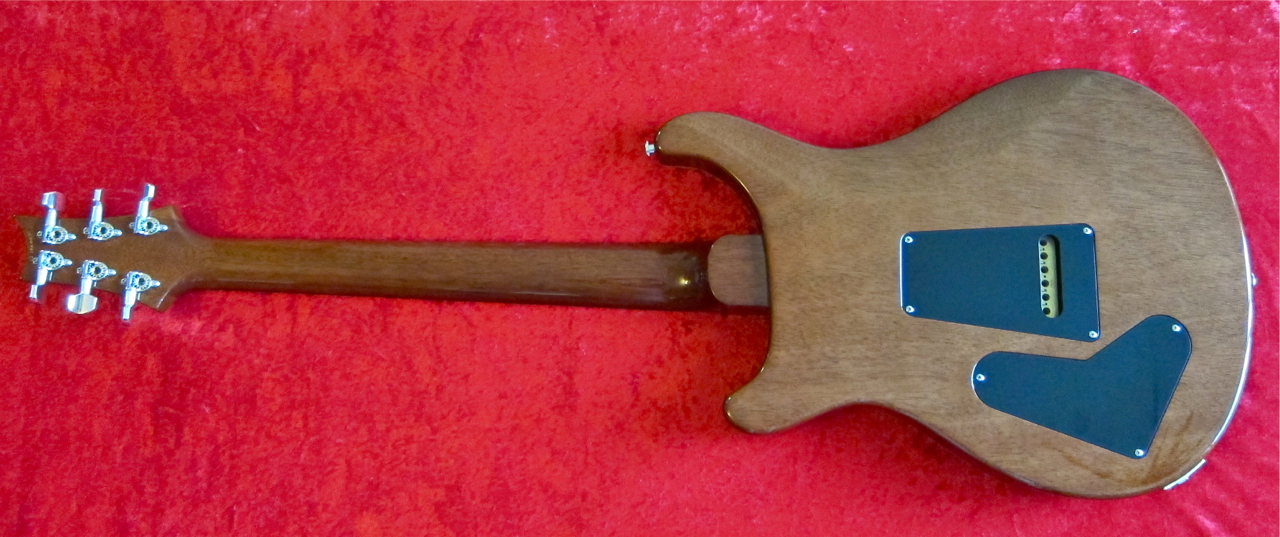
Both the neck and the back of the body are crafted from top-quality mahogany. The Studio is offered with two new neck profiles: The fuller version is called Pattern Neck, while its slimmer counterpart is designated as Pattern Thin.
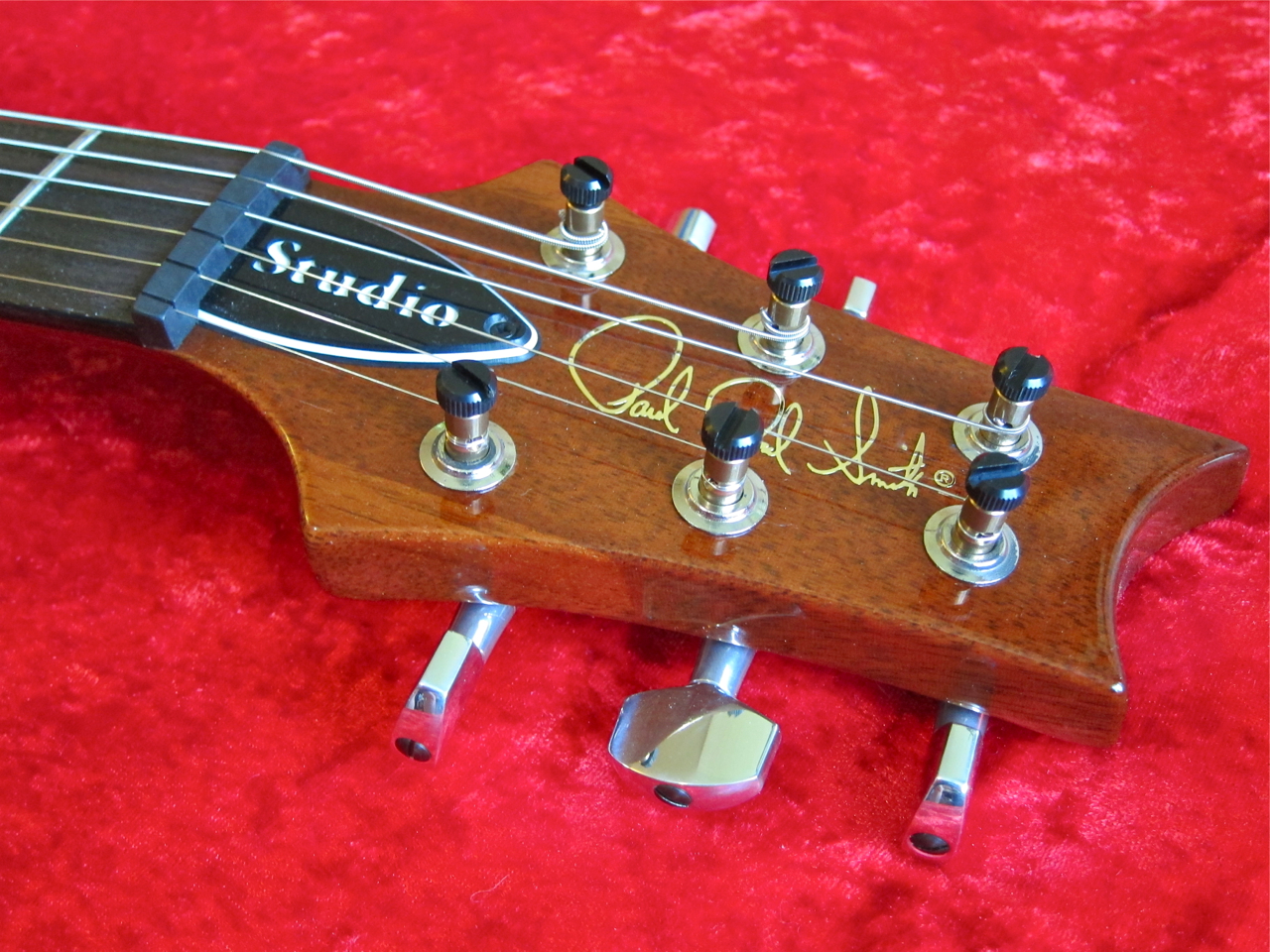
The new PRS Phase III locking tuners feature brass string posts and bushings with a much tighter fit.

I assumed that the reason for the open casings was weight reduction, but I was wrong. In one of PRS’ You Tube videos Mr Smith states that the main reason for this design change were the cool looks.

The company’s new bird inlays are standard on the Studio-model – cream coloured outlines filled with walnut.
The fretwork on our test sample was truly exemplary.

Here’s a good look at PRS’ customary neck joint – its big heel is good for sustain.

Over the past decades the PRS body shape has become a classic design in itself.

A breath-taking view for most guitar connoisseurs – the famous ”fake” binding, which is achieved by leaving the rim of the maple top unstained.
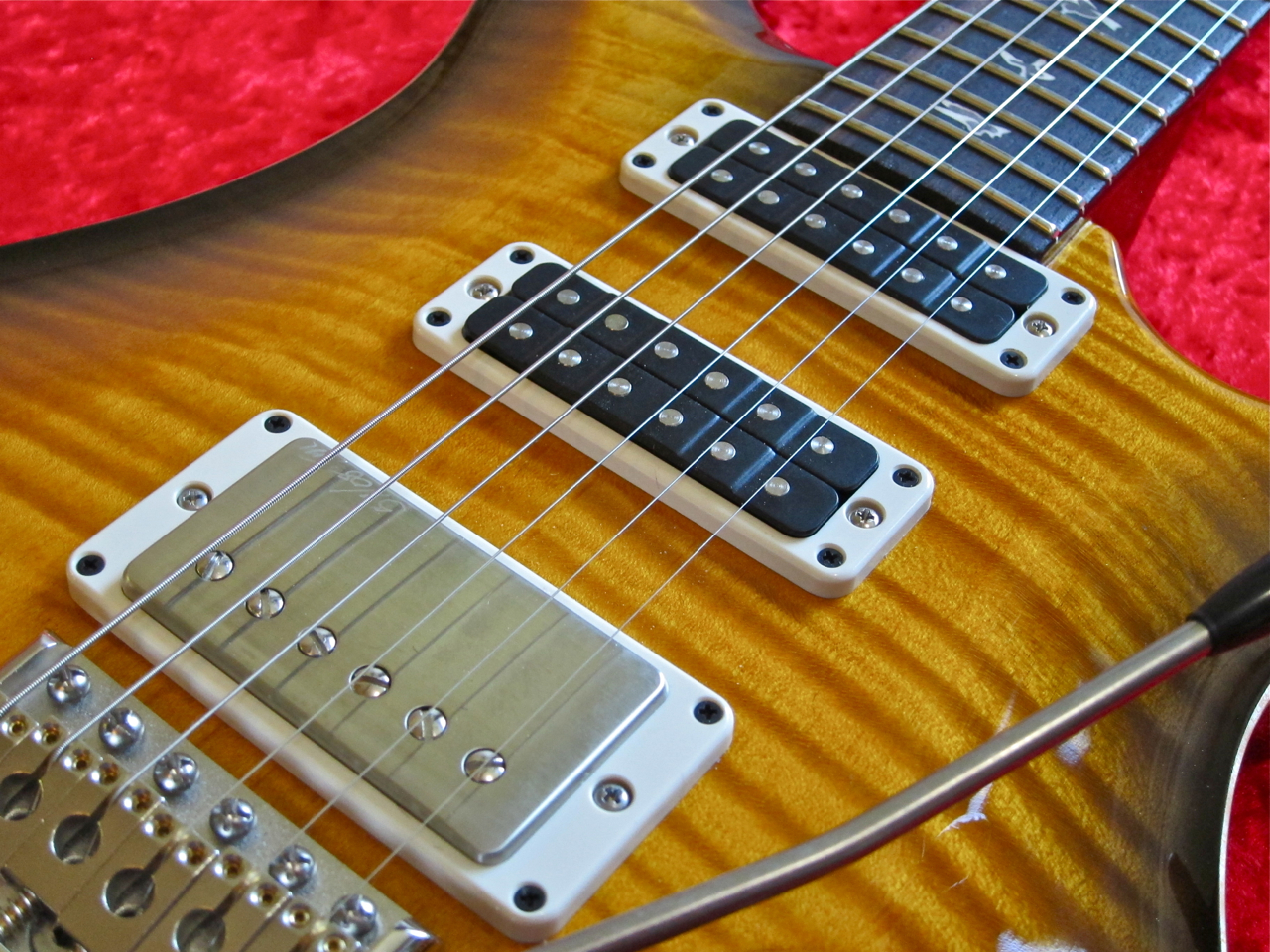
In the last years PRS has given its pickups a thorough overhaul, which has spawned a few new models: The Studio comes equipped with the new PRS 57/08 -humbucker in the bridge position. Many PRS-fans claim that this is the company’s best-ever vintage-type humbucker. The 57/08’s metal cover is brushed aluminium, and bridge versions have their model number deliberately engraved upside-down.
The brand new Narrowfield-humbuckers are very special beasts, indeed, with a sound of their own. The Narrowfield has a full-size humbucker’s output level and warm basic character, but thanks to its much narrower magnetic window the higher-mids and treble range both sound fresher and more transparent.

A push-pull-switch inside the tone control lets you split the bridge pickup.

PRS’ vintage-style vibrato is a fine improvement on Leo Fender’s original Stratocaster-bridge.

The vibrato block is milled from solid brass.

This is what the review sample’s control cavity looks like – not the cleanest PRS I’ve ever seen. Luckily the sawdust doesn’t seem to hamper the guitar’s functionality.

A classy hard case rounds out this package.
****

According to Paul Reed Smith himself, the Studio’s new Pattern neck profile is actually a return to the very beginning of PRS Guitars, when PRS was a tiny little workshop. The Pattern Neck isn’t miles away from the famous Wide-Fat-profile, but it is clearly rounder with much less shoulders to it.
The Studio’s ergonomics and playability can be summed up in one word – fantastic. The guitar is feather-light, and its slender body with the long upper horn balances perfectly on a strap – despite the neck joining the body at the 20th fret.
The PRS vibrato comes set up with four springs and works buttery and precisely with perfect return-to-pitch.
Acoustically the Studio performs like a true PRS – there’s a good dose of Gibson-ish set-neck character, mixed with a drier and and tighter attack. The warm, well-rounded, but fresh character is carried evenly across the whole fretboard.
The Narrowfield-pickups are a very interisting new breed. They don’t pretend to be sound like Strat-sized ’buckers, but give you plenty of humbucker warmth, coupled with more presence and a nice top end sheen. The Narrowfields work well in combinations, where you’d normally expect a couple of Fender-style singlecoils. In my opinion this is the first time I’ve heard a guitar, where a third humbucker makes tonal sense.
The moderately-powered PRS 57/08 -humbucker is the perfect partner for the Narrowfields, because it, too, has a fresh and dynamic tone. Splitting the 57/08 even gives you quite credible Fender-sound approximations.
The soundbites all start with the neck pickup on its own, flicking through all the switch positions with the bridge humbucker split. The final two repeats are the middle-plus-bridge and bridge-alone selections with the full humbucker in use:
****

Three thousand Euros is quite a lot of money for one guitars. True, but I feel the PRS Studio is really worth each Cent – it is a guitar crafted to the highest standards from top-quality materials. The result is one of the best guitars coming from a large-volume manufacturer. Outstanding playability, coupled with the fantastic tone of the new pickups put this PRS in a league of its own.
****
PRS Guitars Studio
Current price in Finland: approx. 3,000 €
Finnish distributor: EM Nordic
A big thank you to DLX Music Helsinki for the loan of the review sample!
Pros:
• sheer quality
• workmanship
• playability
• smooth vibrato
• sound
• versatility
Cons:
• sawdust in the control cavity
****



 Kitarablogi.com – Finland's premier Guitar and Bass blog