Blackstar Amplificationin uutuustuote on minikokoinen harjoitusvahvistin nimeltään Fly 3.
Blackstar Fly 3 on kolmewattinen, kaksikanavainen kitarakombo, joka toimii virtalähteellä tai paristoilla. Fly 3 tarjoaa sekä puhtaan että särökanavan. Harjoituskombossa on Blackstarin patentoitu ISF-säädin, sekä nauhakaiku-tyylinen viive-efekti. Kaiuttimen halkaisia on kolme tuumaa.
Kaiutinmallinnuksella varustettu kuuloke-/linjalähtö mahdollistaa hiljaista harjoittelua, sekä suoria linjaäänityksiä kotistudiossa.
Blackstar Fly 3 -komboon voi hankkia myös Fly 103 -nimisen lisäkaappin, joka tekee harjoitusvahvistimesta oivan stereosysteemin – joko kitaran soittoa tai musiikin kuuntelua varten.
From a guitarist’s standpoint, Finland truly is the land where milk and honey flow. In relation to its tiny population Finland is home to an unbelievable number of first-rate guitar-, effects- and amp-makers.
One such boutique-level amp brand is Hehku Customs from the town of Pori (on the western coast). Hehku’s team consists of chief designer Jarmo Välimäki, as well as Markku Penttilä and Juha Heljakka, who are in charge of R & D, sales and marketing.
There are several examples of different custom amps the company has built on Hehku’s website. Prices for custom amps start at about roughly 1,300 €. Hehku Custom’s cabinet sizes and shapes are standardised, but all other details can be tailoured to each customers wishes and requirements. ”The basic idea is that we want to make our customers’ wildest dreams come true!” says Jarmo Välimäki.
****
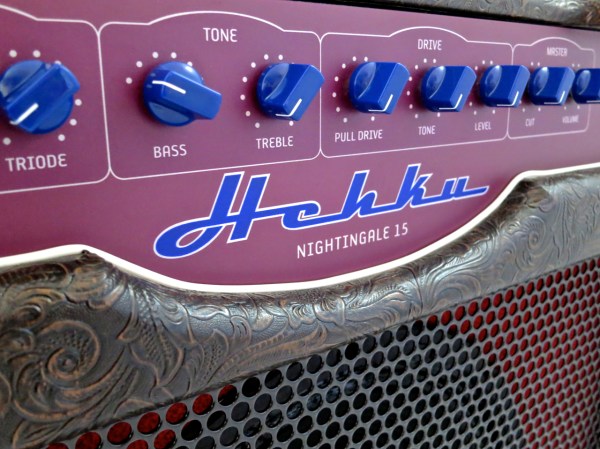
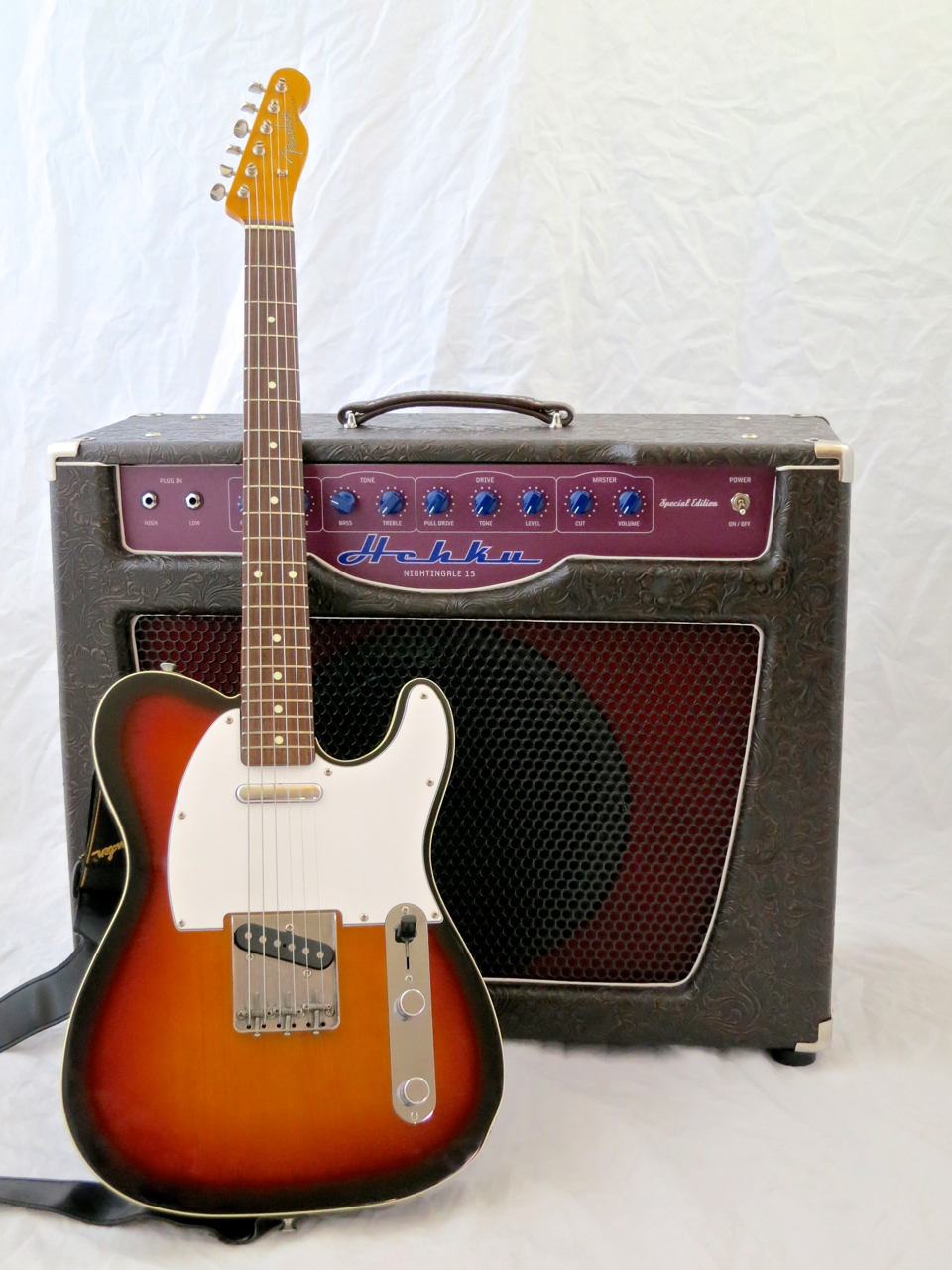
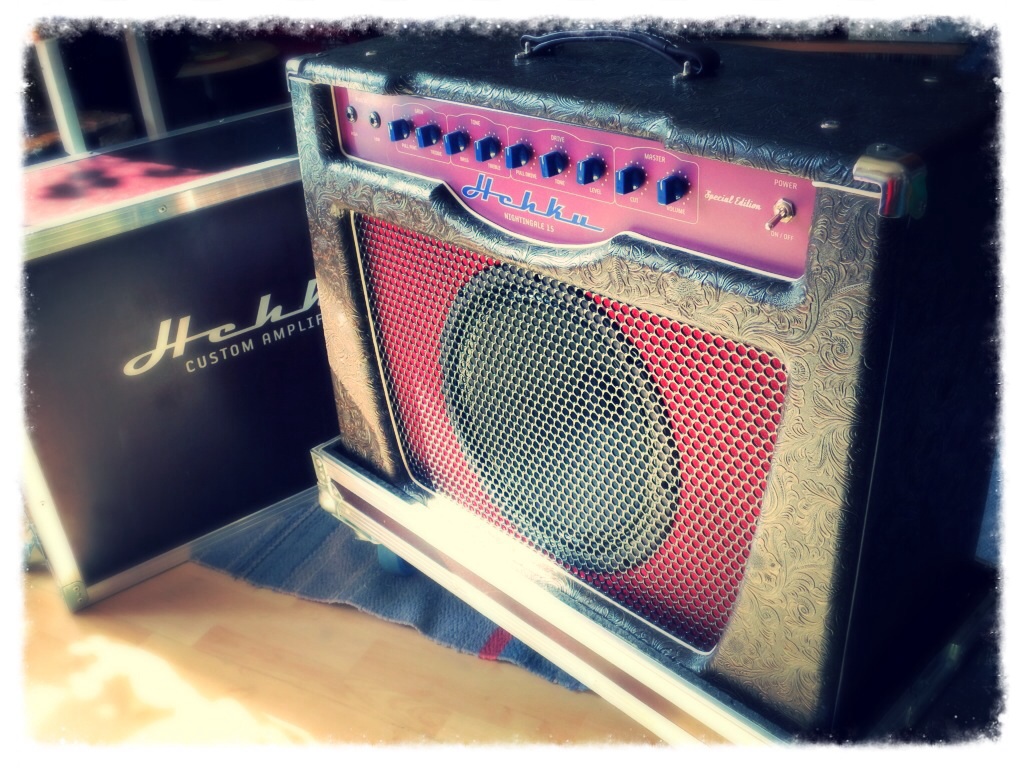
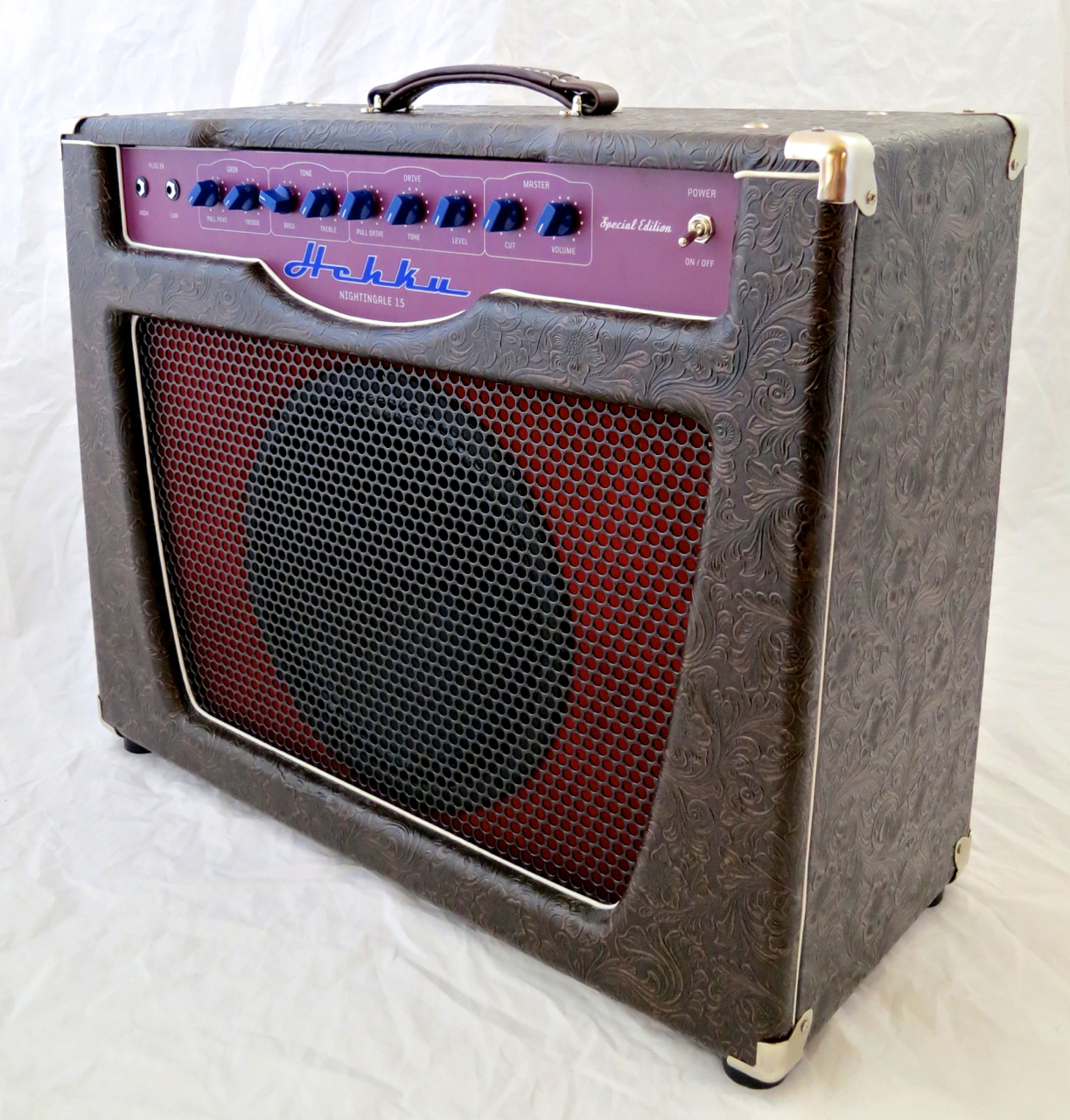
Kitarablogi got a 15-watt Hehku Nightingale 15 combo for testing. This is Hehku Custom’s first standardised model without custom options.
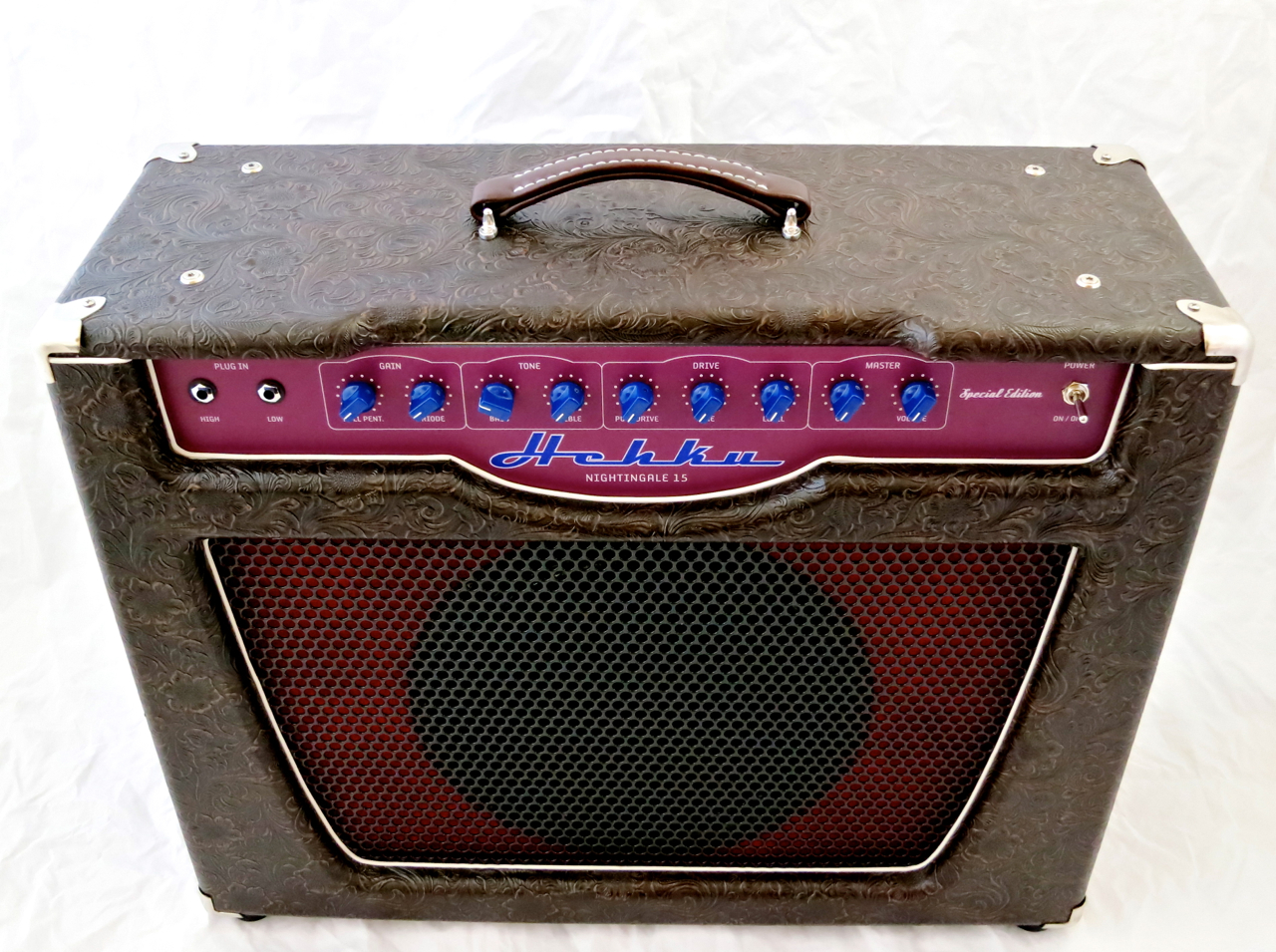
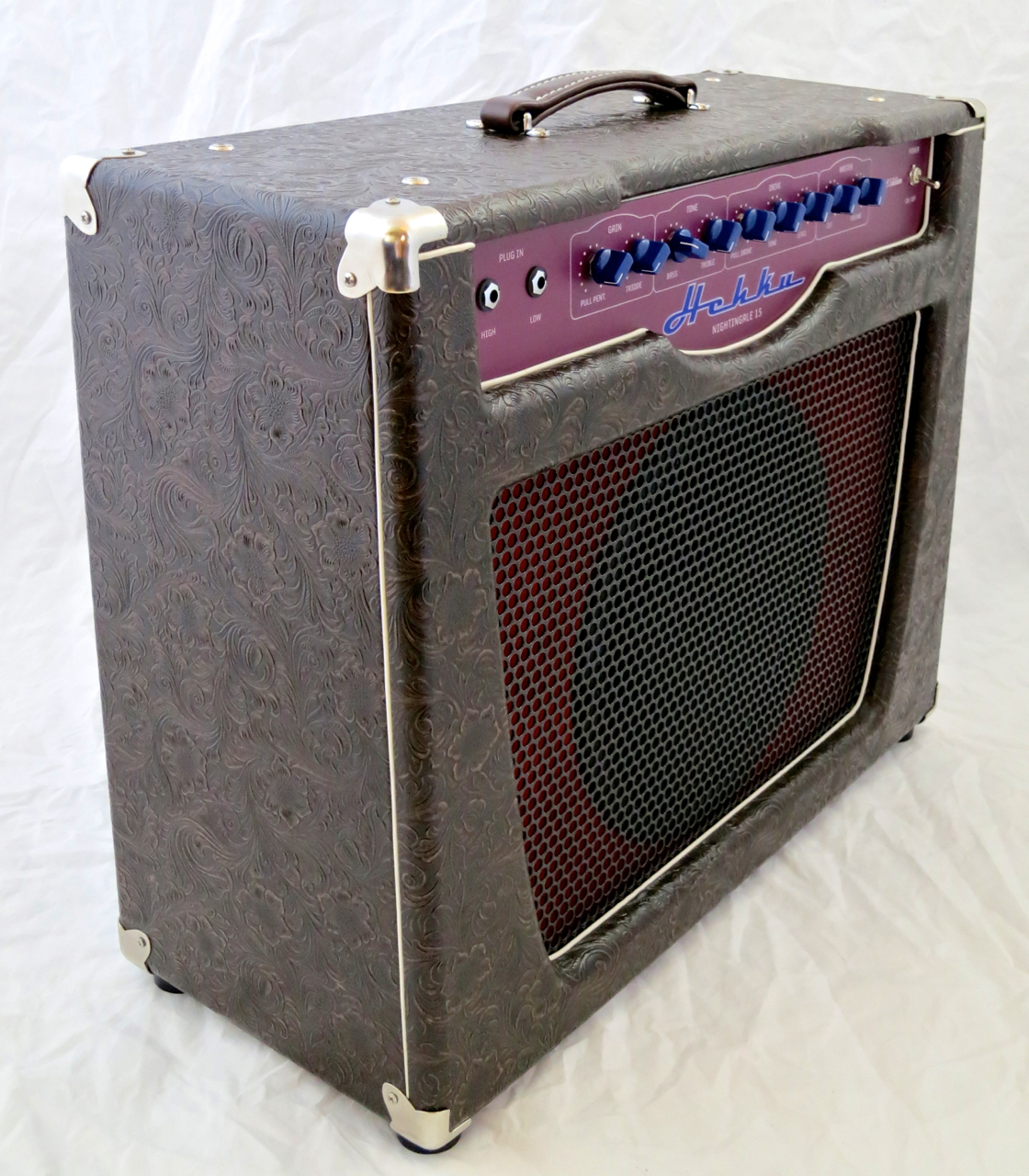
The Nightingale 15 (combo approx.:1,950 €, head approx.: 1,750 €) is a hand-made, all-valve combo with a single 12-inch speaker, and represents many features typical of Hehku’s design philosophy.
The Nightingale’s cool and original looks make it clear from the off that this combo isn’t your typical Fender Tweed clone.
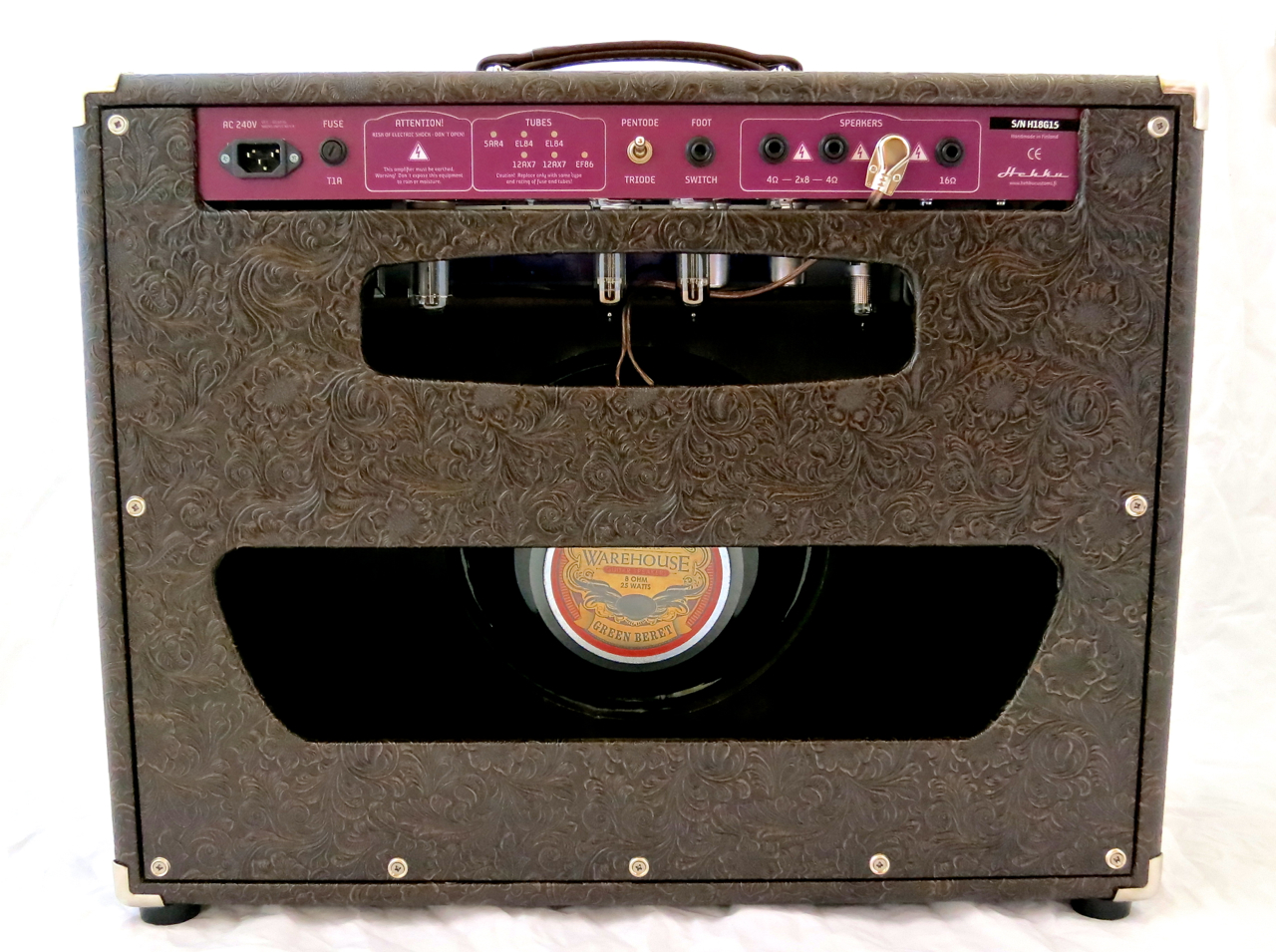
The Hehku Nightingale is an open-backed combo with easy valve access. All Hehku cabinets are made from Finnish birch ply, which is an outstanding material, both in terms of strength as well as sound.
Birch ply is also relatively lightweight, which is why the Nightingale is easy to carry by its single top handle.
Hehku also offers professional transport cases to go with their amps and cabinets. A road case for the Nightingale 15 would set you back around 260 €.
****
Hehku’s Nightingale 15 is a very special case for a two channel combo, because its signal path is in series the whole way through.
Most vintage (-style) amps have two discrete channels with separate controls and functions (like ”Normal” and ”Tremolo”), and no channel switching capabilities. Modern amps, on the other hand, may share a single EQ section between two channels, but they offer channel switching, and separate gain and volume settings for each channel.
Hehku’s Nightingale takes its own, idiosyncratic path by offering two switchable channels in a cascading set-up. This means that the Clean channel’s triode and pentode gain settings, as well as this channels two-band EQ (six-position rotary Bass, active Treble), also influence the Drive channel’s tone and response.
You can either use the control panel’s push/pull-switches or the compact footswitch unit (included with the amp) to select triode- and pentode-modes, and to switch from Clean to Drive.
The Nightingale’s back panel sports a handy valve chart for easy orientation.
There’s also a triode/pentode switch for the power amp valves – switching to triode-mode the combo’s output power drops from fifteen to seven watts, and it also changes the amp’s tone somewhat.
Thanks to its four speaker outputs you will be able to connect the Nightingale to virtually any external guitar cabinet you can find.
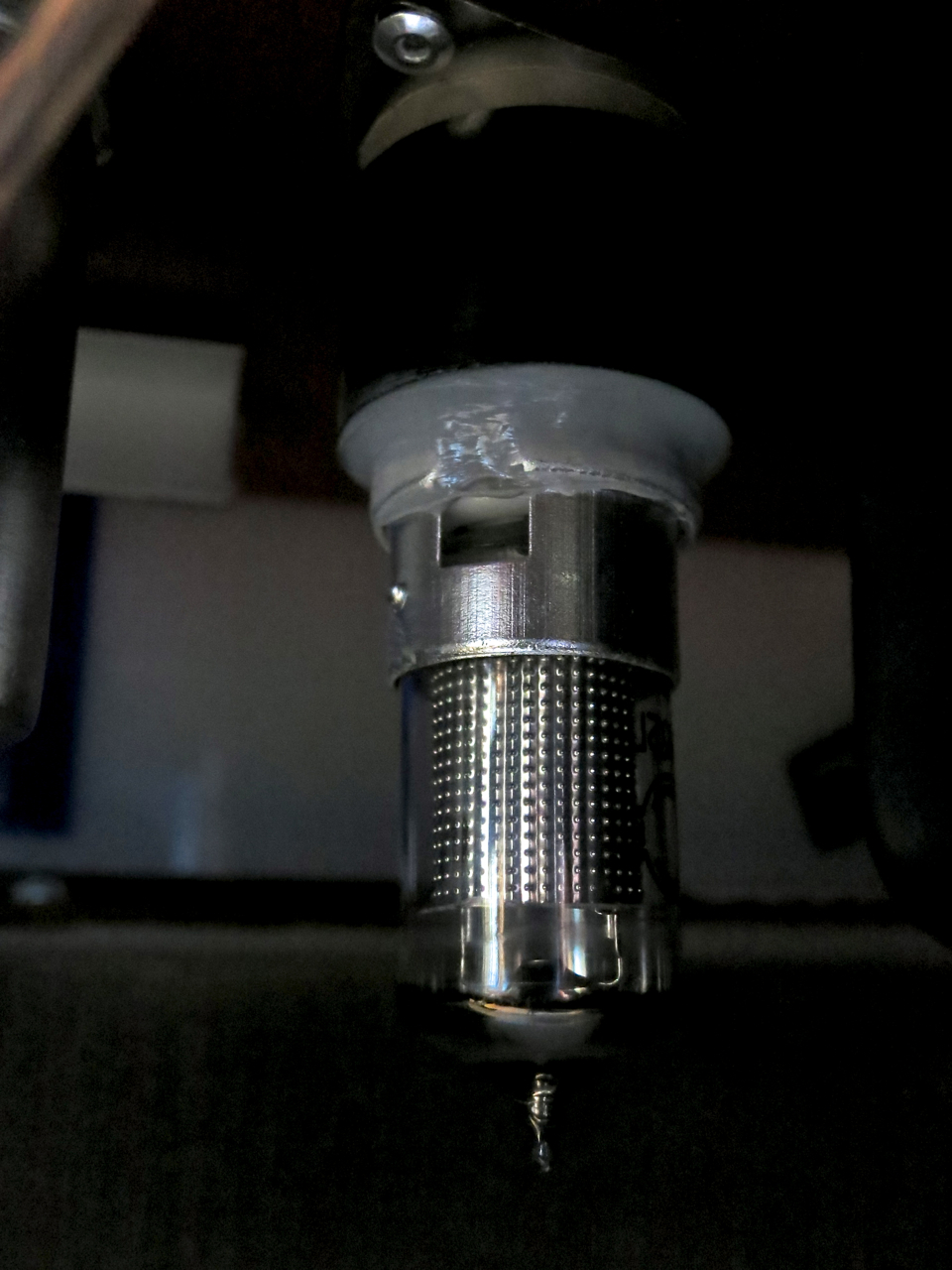
The clean channel is constructed around a EF86-type pentode. The EF86 (aka the 6267) is known for its great tone, and it can be found in some vintage Vox amps, as well as in Matchless and Dr Z amps. But due to its microphonic nature this tube type is not widely used.
Hehku Customs has solved this problem by using a damper made from silicone, which decouples the EF86 from the mechanical vibrations of the combo.
Overdrive (and phase inversion) duties are handled by a pair of 6N2P-valves, which are Russian, military-spec’ed relatives of the 12AX7/ECC83, offering a slightly different gain structure and sound.
The Nightingale uses a tube rectifier designed around a type 5AR4.
The power amp section runs on a pair of EL84s. You could also drop in two Russian (military) 6P15P/EL83-types, and thanks to the fact that the Hehku Nightingale is self-biasing, you can do this without the need for an amp technician.
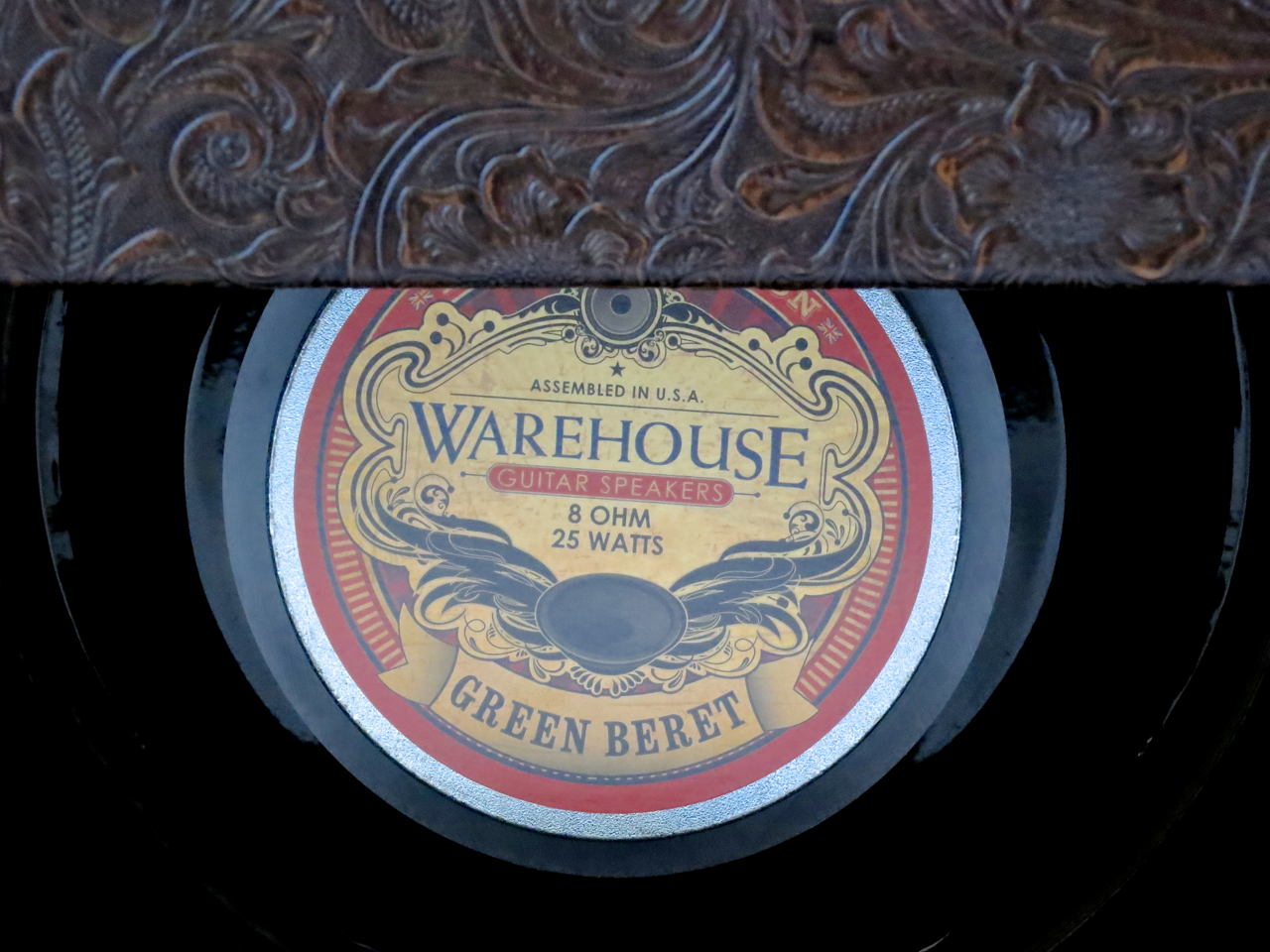
A quality 12-inch speaker from Warehouse, the Green Beret, has been selected for its British sound.
****
With its factory set-up (6N2P + EL84), the Hehku Nightingale 15’s clean channels has plenty of headroom, even for twin humbucker guitars. The six-step Bass-rotary and the combo’s active Treble control offer you a lot of leeway to tune the tone to your requirements. Tonally, the Nightingale’s clean delivery is more ”Vox” than ”Blackface”.
The Nightingale’s overdriven tones are extremely tasty, too. There’s a very juicy mid-range, coupled with a healthy dose of top end grit, which will surely satisfy any fan of classic Rock and Blues sounds.
Here’s a clip recorded with my vintage-reissue Fender Telecaster – you will hear: clean (triode) –> clean (pentode) –> overdriven (triode) –> overdriven (pentode); the power amp runs in pentode-mode:
And here’s a similar clip played with my Hamer USA Studio Custom:
****
Hehku’s Jarmo Välimäki also supplied me with a set of alternative valves (12AX7 + 6P15P), and the difference in tone and dynamics is easy to hear:
With the alternative set, there’s much less headroom on offer. Even the Telecaster will drive the clean channel into break-up (in pentode-mode), with the Hamer stepping clearly into Blues-overdrive territory.
These valves add more gain to the drive channel, and also result in a slightly flabbier bass and sharper treble. The Nightingale 15 sounds great this way, too, even though my own preferences lean more into the direction of the factory set-up.
Here’s a clip with the Telecaster (the control settings have stayed unchanged, only the valves have been swapped):
And here’s the sound of the amp played with the Hamer’s two humbuckers:
****
In my view, the Hehku Customs Nightingale 15 is a fantastic all-valve combo with its own voice and an interestingly idiosyncratic overall concept. I like Hehku’s eye for detail, and the fact that the company go their own way in terms of looks and electronic design. The Nightingale is a top-drawer amp, offering its own distinctive looks and sounds, without the need to resort to snake oil or nostalgic tube voodoo.
Hehku’s Nightingale is a modern, hand-made valve combo, with a clear and easy-to-understand lay-out, as well as a very interesting and interactive signal path. The Nightingale is not about trying to imitate any specific vintage amp’s sounds – this amp is a true creative tool, setting you on your path to your personal guitar tone nirvana.
The Nightingale 15 sure isn’t cheap, but in light of the fact that this is a hand-made Finnish product, you can only call the price tag very fair!
Earlier this year, Blackstar Amplification have released their new ID:Core series, which comprises three stereophonic practice amps (at the moment of writing).
Blackstar’s ID:Core combos are powered by the same modelling technology used in the company’s full-blown ID-series. The ID:Core amps simply take this technology to a smaller format.
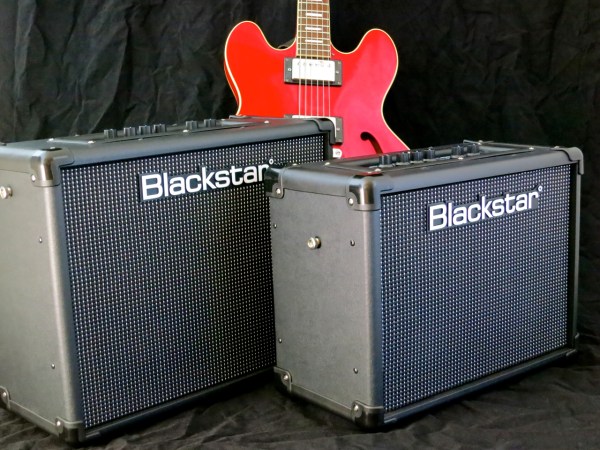
Kitarablogi had the pleasure of testing the new series’ middle model – the ID:Core 20 (2 x 10 W) – as well as the largest member of the ID:Core family – the ID:Core 40 (2 x 20 W).
****
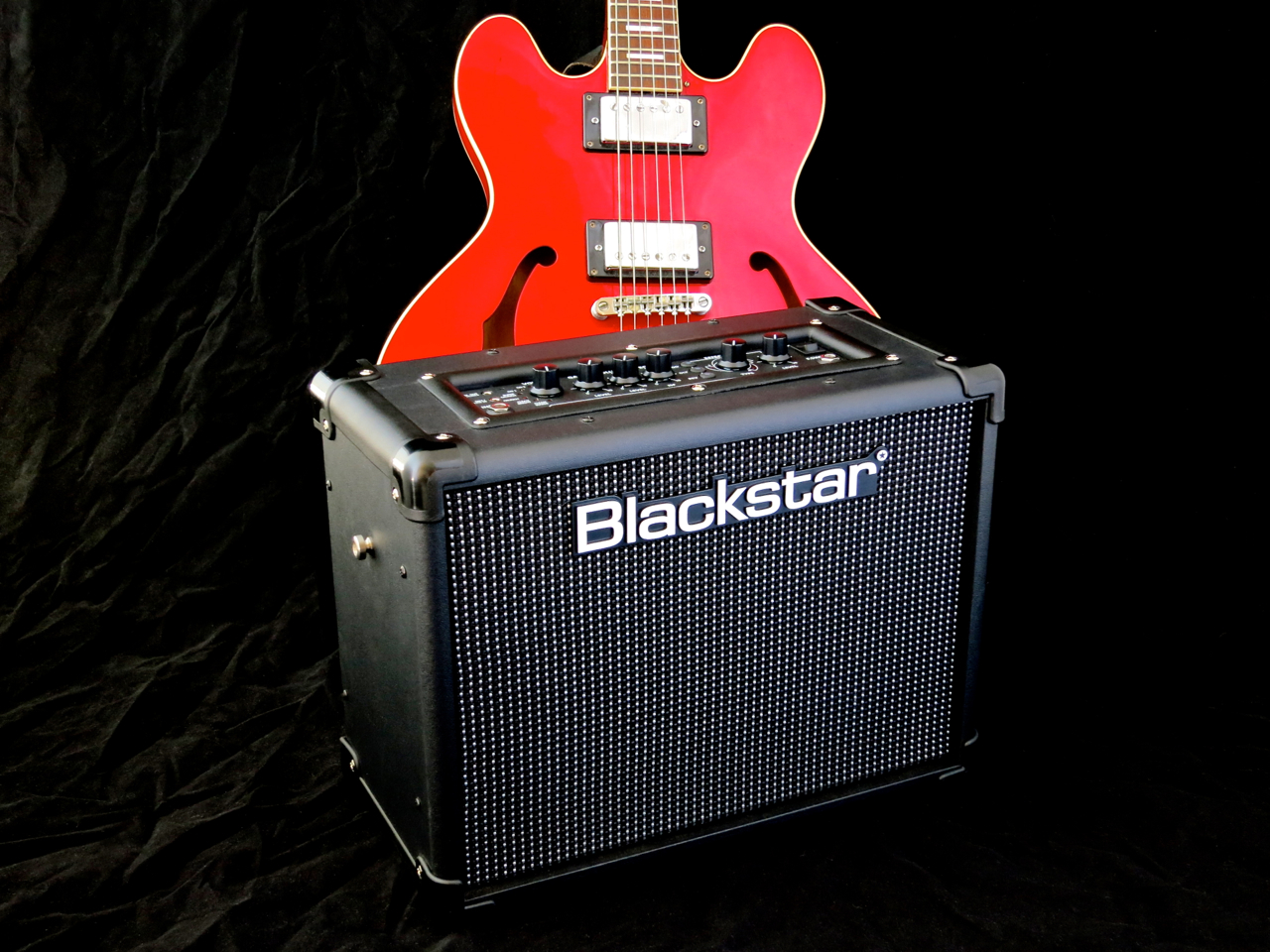
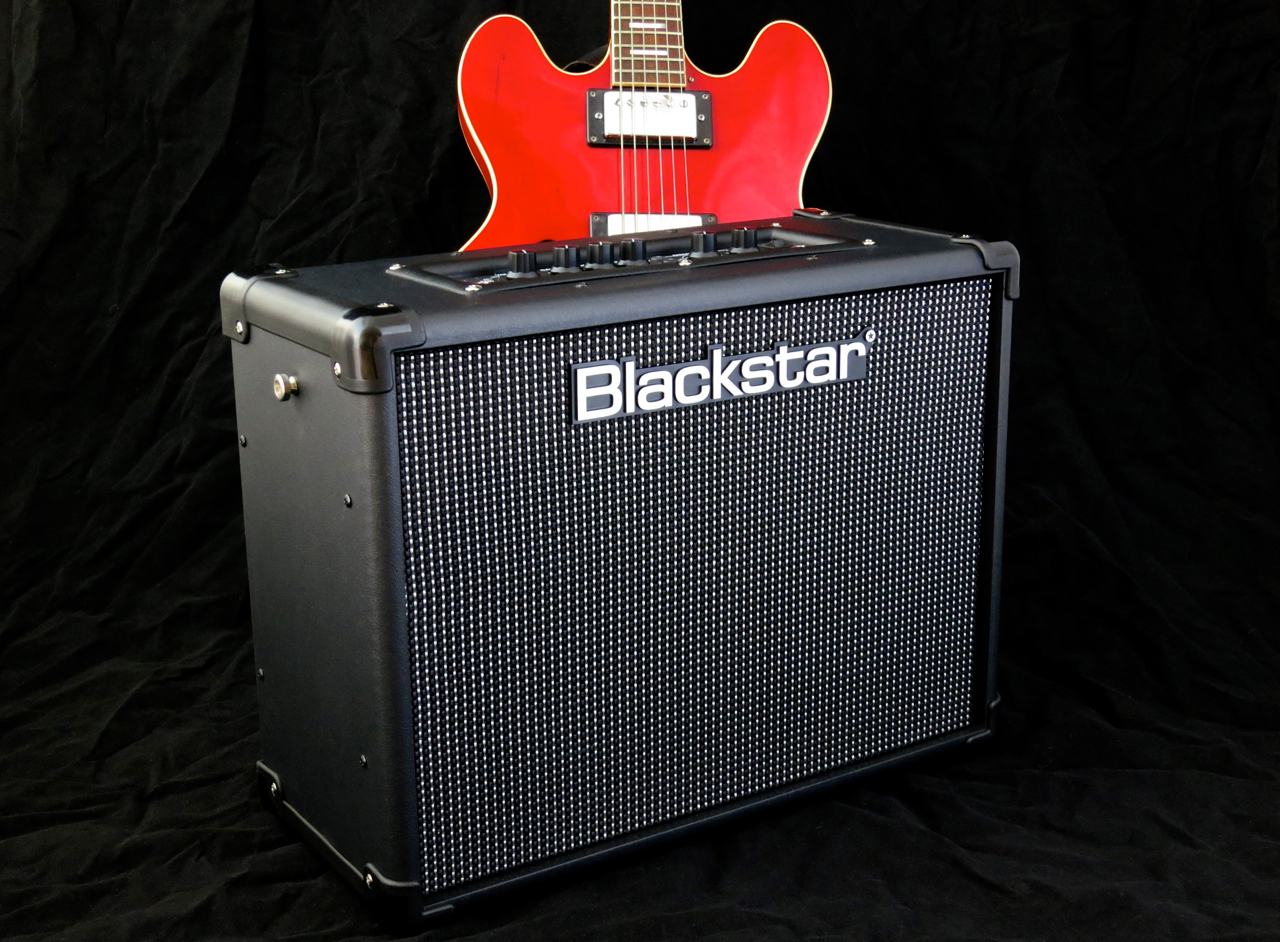
The Blackstar ID:Core 20 (current price in Finland:149 €) comes equipped with a pair of five-inch speakers.
The larger Blackstar ID:Core 40 combo (current price in Finland:195 €) uses two 6.5-inch speakers to get its message across.
Except for the differences in power amp-, cabinet- and speaker-sizes, the rest of the specifications are identical in these two guitar combos. To make this review more readable I will concentrate on the Blackstar ID:Core 40, and mention any possible differences found in the ID:Core 20.
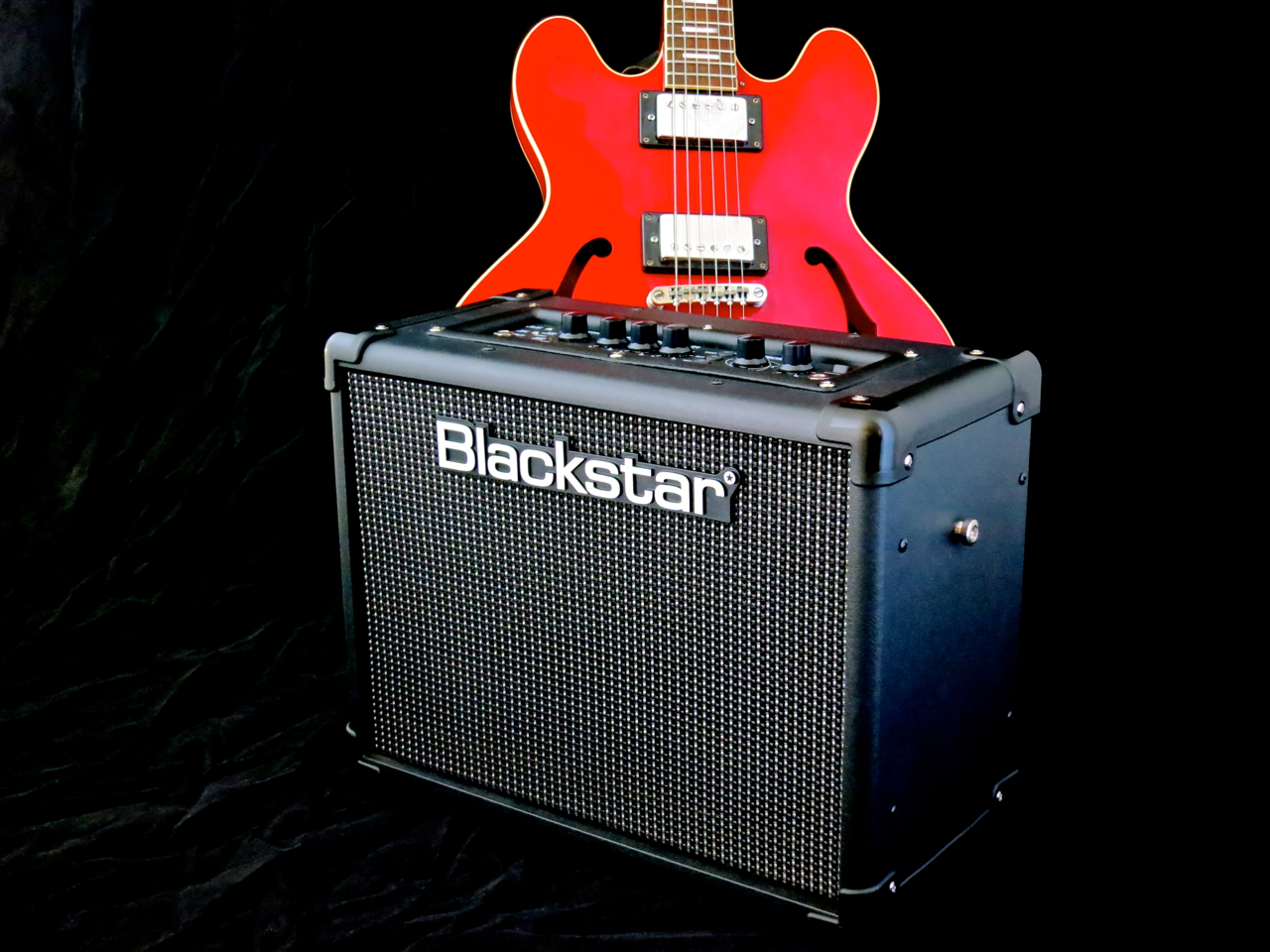
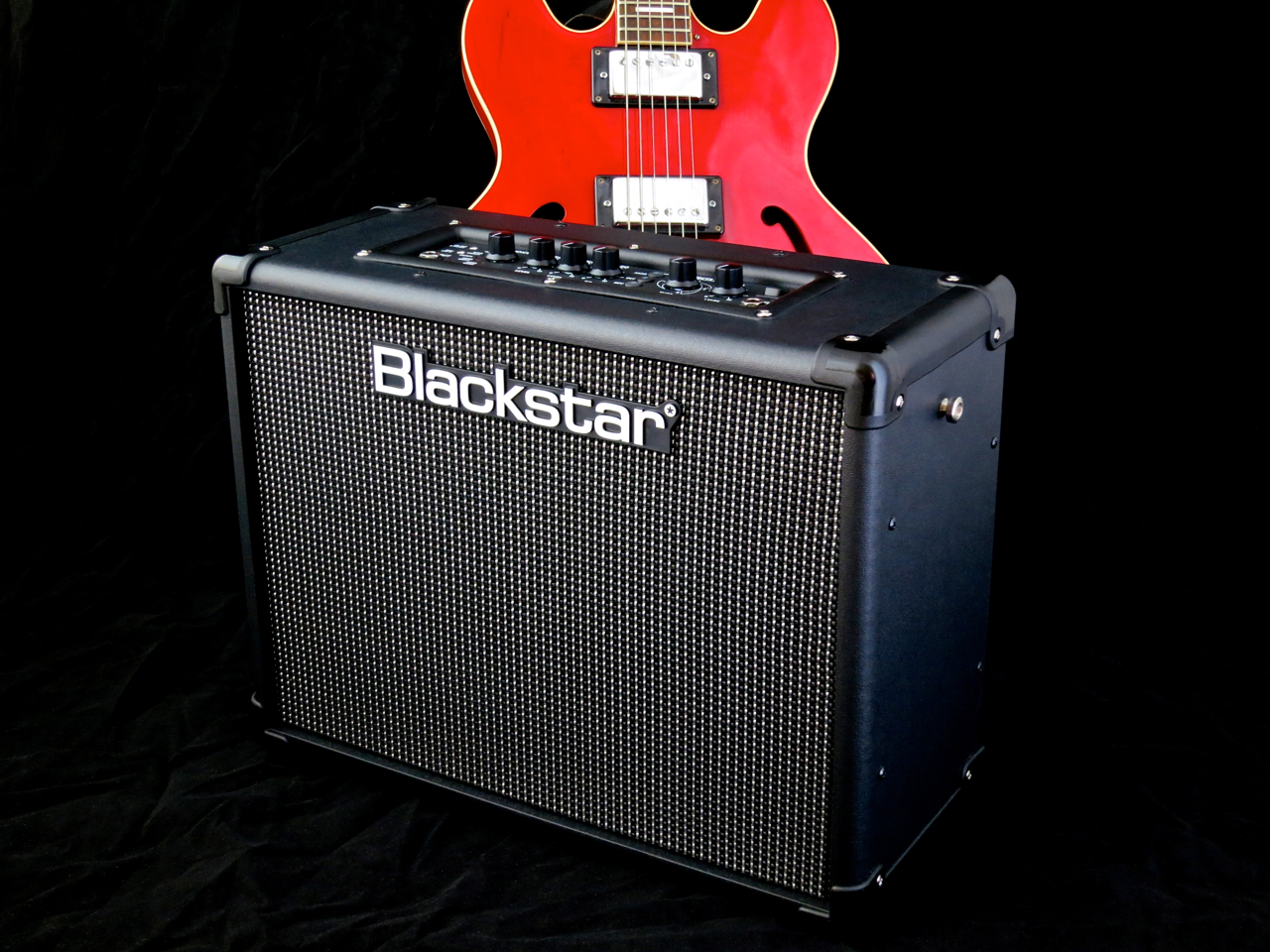
The new Blackstar combo has a very handy size, and it is easy to carry. In addition to the carrying strap, you will find the power supply unit and a quick start guide in the shipping box. You can download the full owner’s manual as a PDF-file from Blackstar’s website or HERE.
Even though the ID:Core series, naturally, isn’t really built to withstand the rigours of touring, these combo’s are rather sturdy little numbers. These may be mere practice amps, but toys they are most definitely not!
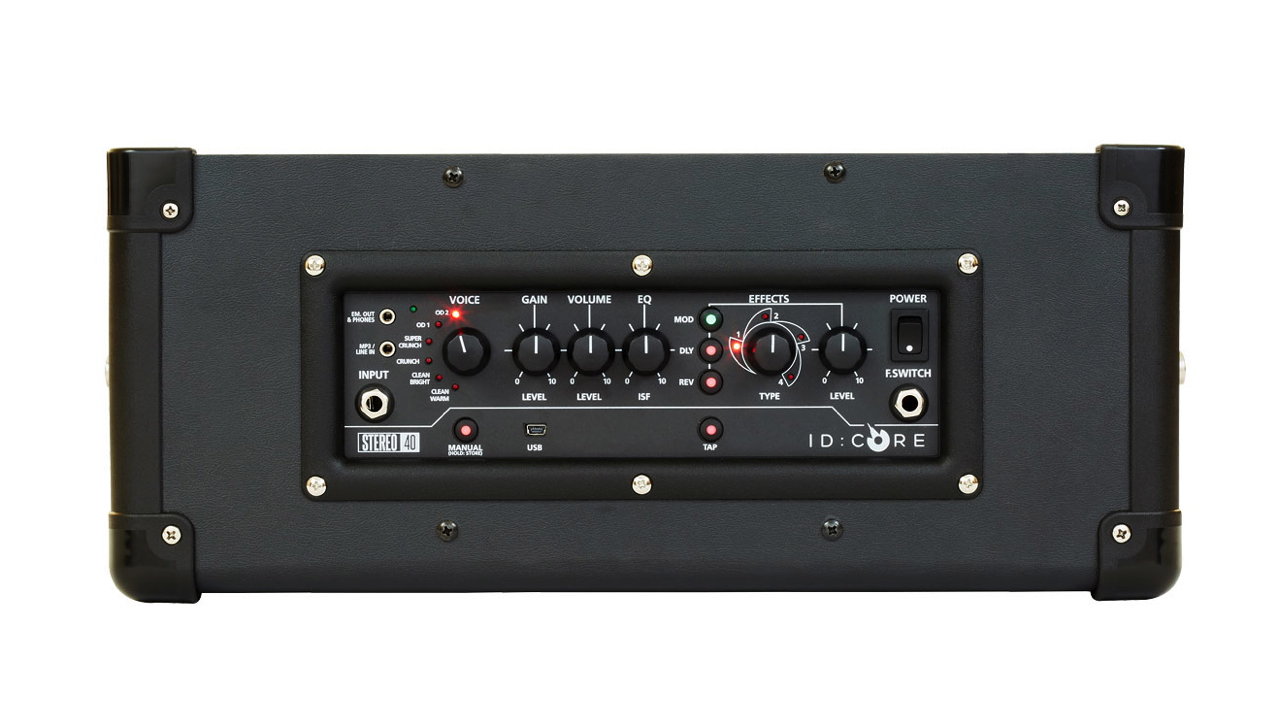
The electronics have been installed into the ID:Core’s top.
All the controls, push-buttons and inputs/outputs are identical throughout the whole series, with the exception of the smallest combo (the ID:Core 10) not offering the option of connecting a FS-11 footswitch unit (not included).
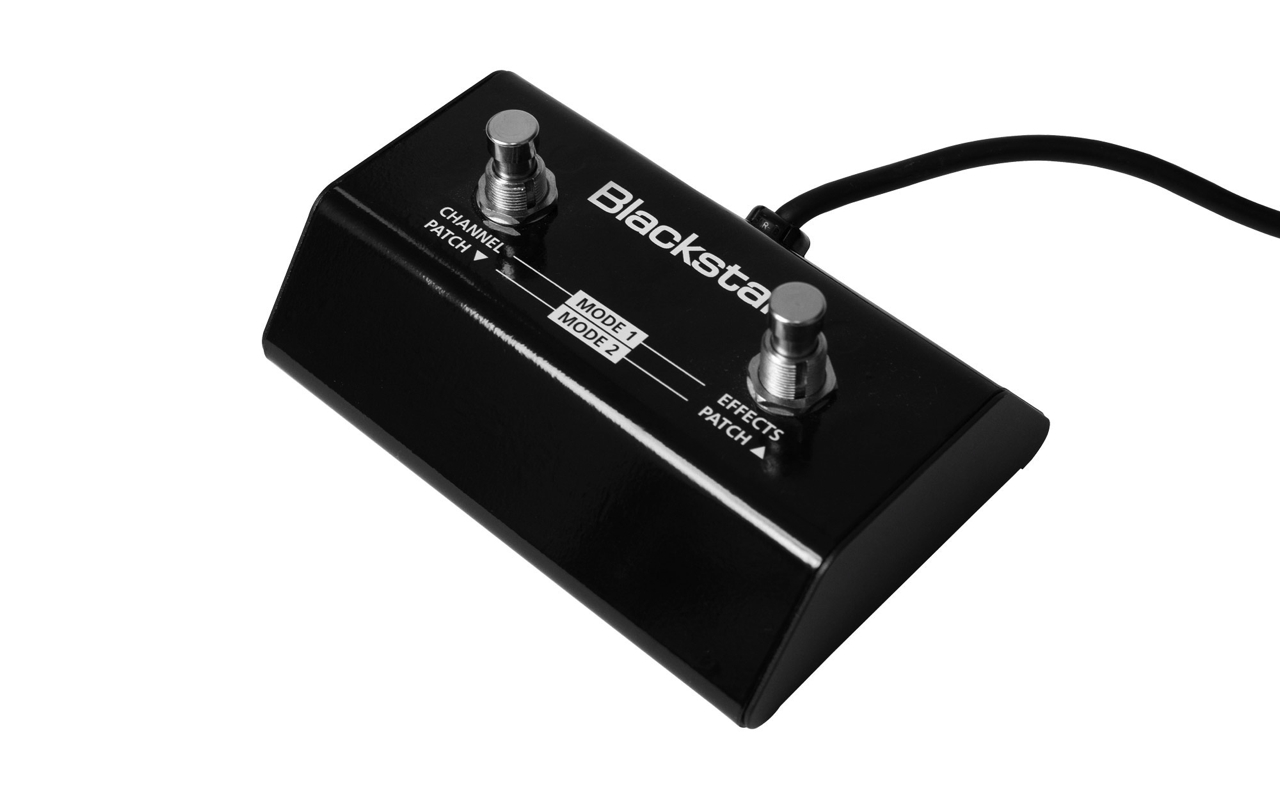
The ID:Core 40’s factory default uses the FS-11’s left switch for switching between two Voice-channels, with the right switch functioning as an effect mute for the selected channel.
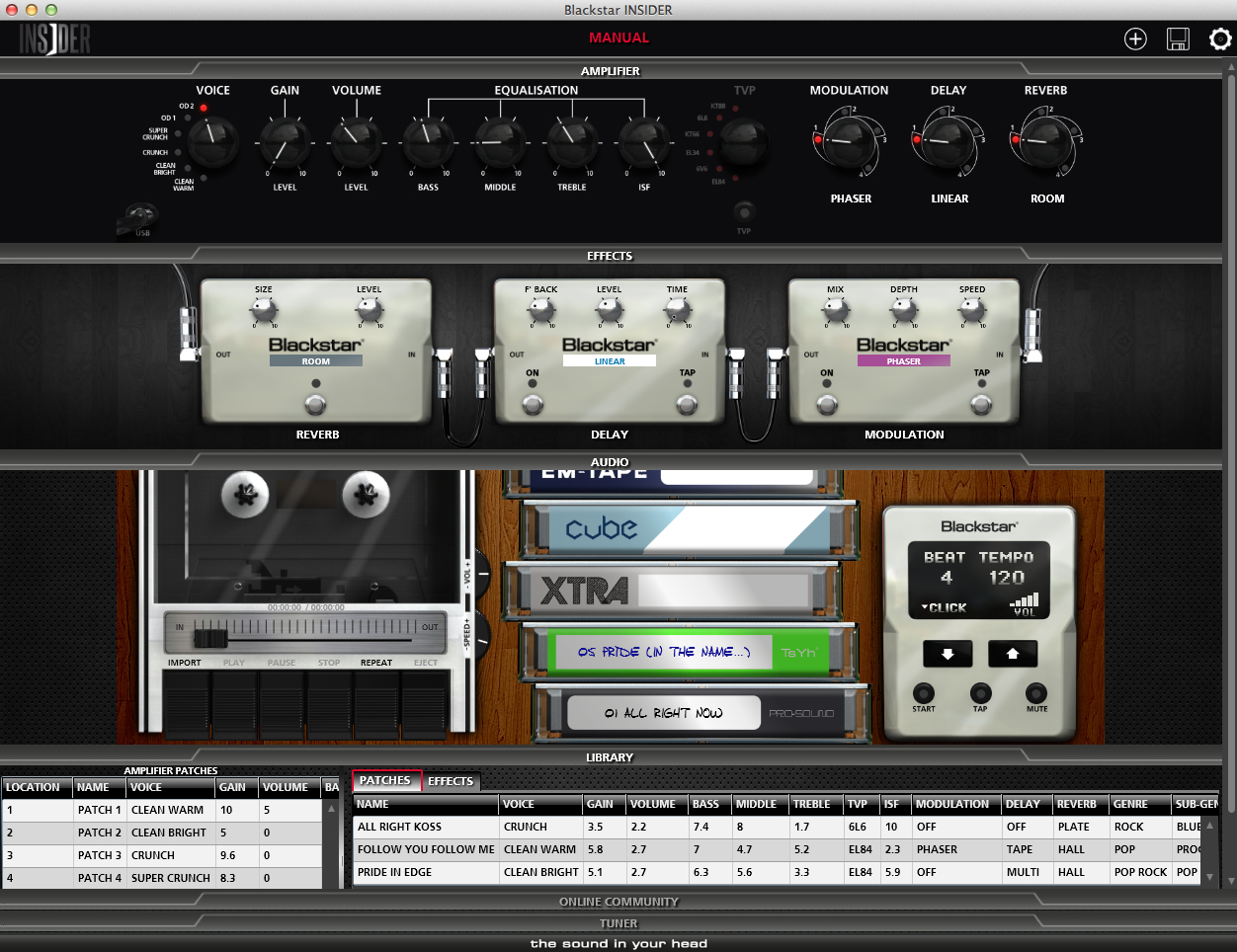
The free Blackstar Insider -software (PC and Mac) also lets you select a different footswitch mode that offers you all Voice-channels, and which uses the two switches to step through all the channels, either up (right switch) or down (left switch).
****
The ID:Core 40 is very easy to use:
The Voice-selector lets you choose one of the combo’s six Voice-channels (= digital amp models). In Preset-mode calling up a channel automatically recalls all the stored preset settings, like gain, ISF or effects. In Manual-mode switching to a different Voice only changes the selected amp type, with the other settings staying the way you have manually set them.
Naturally, all presets can be adjusted by the user, and the changes can then be stored in the ID:Core combo’s memory, wiping the factory preset in the process.
The new Blackstar-combos also come equipped with a digital tuner, which springs to life when you hold down the Manual- and Tap-buttons simultaneously for a couple of seconds. In Tuner-mode the combo’s red Voice-LEDs represent the six guitar strings, while the LEDs in the Effect-buttons tell you whether the pitch is flat (REV), sharp (MOD) or right on the money (DLY).
By downloading Blackstar’s Insider-software you get access to additional features of the ID:Core combo via its mini-USB-port (Hey, Blackstar: Why isn’t a USB-cable included with the amp?):
The most crucial of the additional functions, in terms of the combo’s tone, is the access to its internal three-band EQ. The combo only offers you a physical knob for the ISF-setting, which lets you change the amp’s character from bright-ish ”American” (ISF = 0) to chunkier ”British” (ISF = 10). The Insider-programme also lets you fine-tune each preset’s Bass, Middle and Treble EQ-settings.
Insider also allows you to create you own ID:Core-presets, save as many as you like, and send them to your combo for use. But note that each preset is always tied to the Voice-channel used as its basic ingredient. This means that an ID:Core combo will always offer six different Voice-channels – you cannot load six different Warm Clean patches, or six OD1 Metal sounds, into the combo’s six Voice-channels.
If you want, you can set up an Insider-account, which enables you to share your own patches with other ID:Core users around the globe.
The Blackstar Insider software also includes some tools for practicing. There’s a simple rhythm box, as well as a music player (looking like an old cassette recorder), which even allows you to change a music file’s tempo and/or loop a certain part.
Insider’s tuning section gives you an on-screen, graphically-enhanced version of the combo’s internal tuner.
Thanks to its USB-connectivity you can also use the ID:Core combos as an external sound-card for direct recording to your audio sequencer. You can even configure the combo for re-amping (using the Insider-software), but I wasn’t quite satisfied with the way the ID:Core performed as a sound-card (at least with the tested firmware version). I’d like to see an even shorter audio latency, as well as a hotter audio signal, before I would seriously consider using the ID:Core for direct recording.
****
Blackstar’s advertisements are placing quite a lot of emphasis on the ID:Core series’ Superwide Stereo function. With Superwide Stereo turned on (factory default, you can also switch it off via Insider) especially the delays and reverbs sound impressively lush. You feel enveloped in a cloud of sound, with some of it seeming to even come from behind you.
Actually, the ID:Core’s effects aren’t really stereophonic at all – you shouldn’t expect ping-pong delays, or anything of that sort. In reality, these Blackstar combos have a signal path that is completely monophonic, up to the point the signal reaches the power amp section (and headphone amp). It is only at this point that a stereo signal is created from the mono by splitting the mono signal in two, and by changing the phase of one of the signals. The result is a lush, broad, and fairly natural ”stereo” sound.
This method of creating ”fake stereo” has long been used in analogue modulation effects. There’s nothing ”wrong” or ”deceitful” in doing things this way, and Blackstar’s Superwide Stereo sure sounds impressive, but I’m not sure I’d want to trumpet this amp series’ ”stereo-ness” so loudly.
But now to the most important aspect of an amp – it’s tone:
I could sum it all up by saying that the amps sound great! Regardless of the fact that we’re talking about very pocket-friendly practice amps here, the sounds and dynamic response Blackstar’s excellent ID-modelling technology dishes out will leave you with a big grin on your face. Six well-chosen Voices and 12 quality effect types shouldn’t leave anybody wanting.
The ID:Core 40, naturally, sounds noticeably ”bigger”, compared to the ID:Core 20, with its smaller speakers and cabinet. Nonetheless, you get the feeling that both combos make the most of their respective wattage. Miked up both combos sound virtually the same.
The following sound clips have been recorded with the Blackstar ID:Core 40, using the factory presets as a basis, which I then fine-tuned to my liking. I played these clips on my Kasuga (a Japanese ES-335 copy from the Seventies), recording the sound with two dynamic Shure microphones.
Clean Warm:
Clean Bright:
Crunch:
Super Crunch:
OD1:
OD2:
****
Blackstar have successfully managed to transfer the great sounds of their ”grown-up” ID Series amps to the ID:Core practice combos. Together with Blackstar’s Insider-software, the ID:Core 20 and ID:Core 40 combos are fully-spec’ed and inspiring tools for practice, home recording, teaching and warm-up. You get genuine Blackstar tone in a handy package!
The new Roland Cube-10GX approaches the company’s popular Cube-concept from a slightly different angle.
****
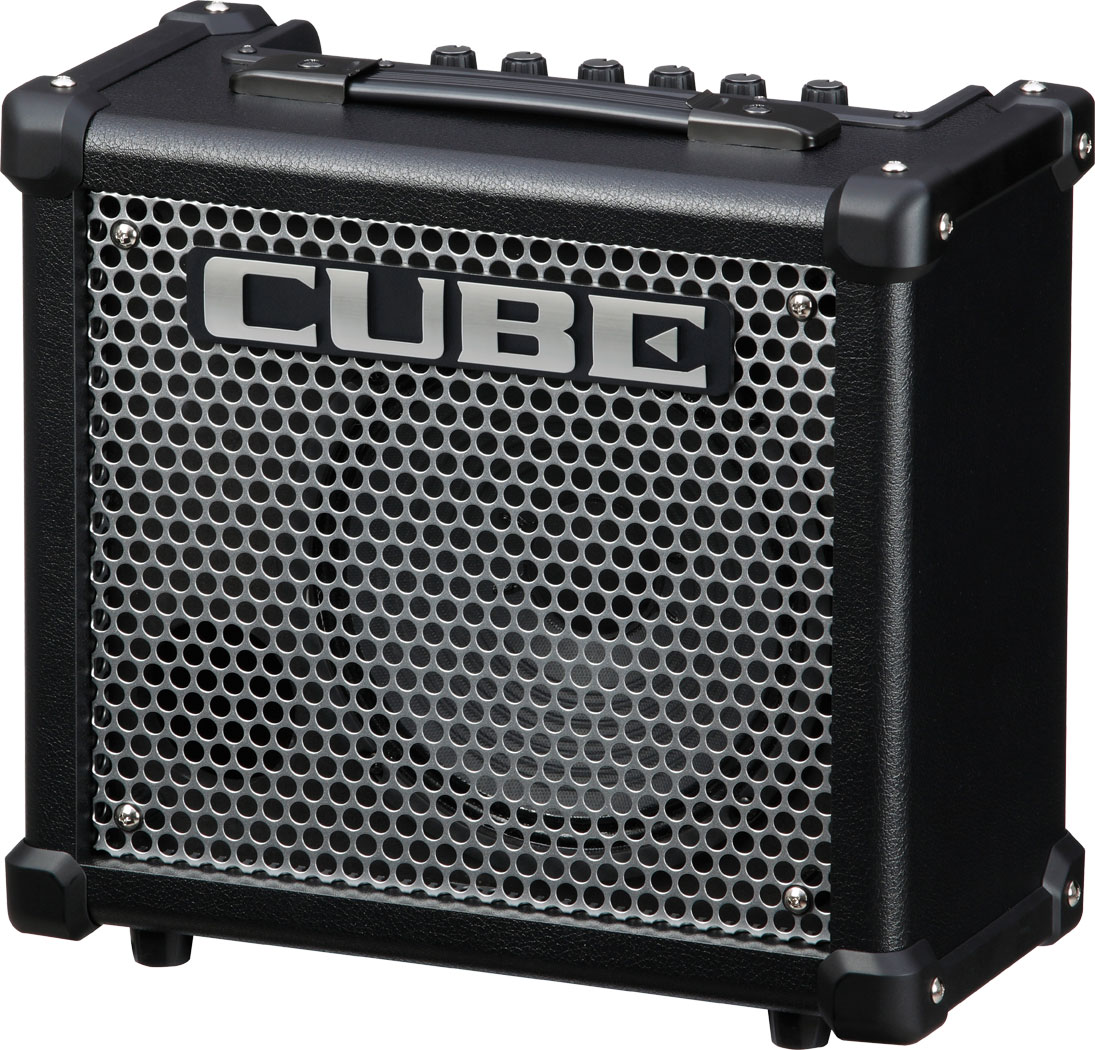
The 10-watt Roland Cube-10GX (Finnish price approx. 125 €) slots into the model range right between the 3-watt Micro Cube GX and the 20-wattCube-20GX combo.
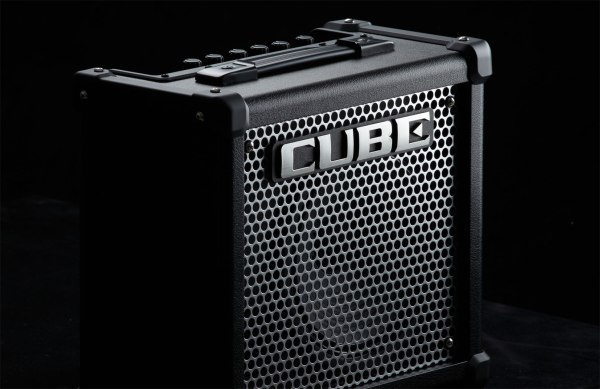
Despite its very affordable price, the 10GX is built as sturdily as the larger Cube models, featuring chunky corner protectors, and the metal grille typical of this series.
An eight-inch speaker has been installed into the closed-back, front-ported cabinet.
The backpanel sports connections for DC In (the PSU comes included), Aux In, as well as a combined line level output/headphones jack.
The Cube-10GX combo’s architecture differs somewhat from the rest of the GX-models:
The 10GX doesn’t feature a built-in tuner or an i-Cube-Link, like the rest of the GX-models, but offers a much more open way of offering its COSM-generated amp models.
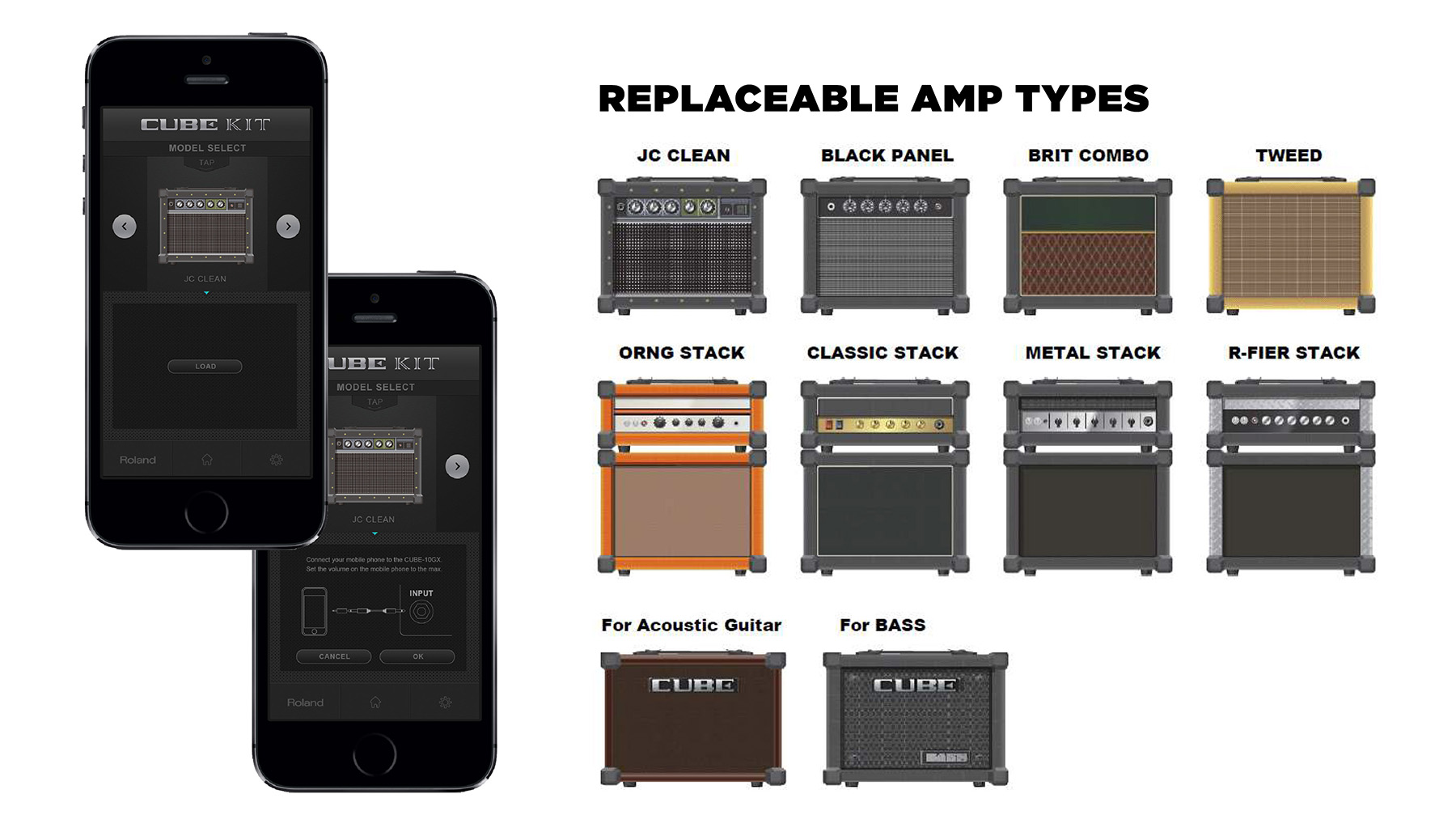
The Cube-10GX lets you choose from a number of different amp models via the new Roland Cube Kit app (Android and iOS). At the moment of writing the app offers eight guitar amp models, plus one bass amp and one amp for acoustic guitar.
Despite the fact that the control panel reads ”Clean”, ”Crunch” and ”Lead”, you can load any of the COSM amp models on offer into any of the amp’s three channels. If you’re a Jazzer, for example, you might prefer to use only clean amps, like Acoustic, JC Clean and Black Panel.
****
Let me deal with the ”bad news” first: Sadly, the Cube-10GX offers only a single effect section, in contrast to all the other Cube GX -combos. The 10GX gives you the choice between either a chorus or a delay or a hall reverb or a (very wet) spring reverb. And there are no effect combinations on offer.
The new combo’s main focus lies in the easy-to-swap amp models, and improvements in the sound of both the amp and the COSM-models. For a 10-watter the Cube-10GX is surprisingly loud. Thanks to its much larger speaker the new combo sounds much fuller and more grown up than the Micro Cube.
The updated COSM-models sound noticeably more transparent and fresher, without any additional background hiss or noise. The 10GX’ well-designed three-band EQ section lets you tailor the sound to your requirements.
Loading a new amp model into one of the Cube-10GX’ channels via the Cube Kit app is fast and easy, and doesn’t require any special cables. You only need a fitting mini-jack adapter to hook up the guitar lead to your smartphone (or tablet). All the necessary data is then transmitted from the Android- or iOS-device to the amp via the guitar cable. The whole process takes only a few taps and a couple of seconds.
The factory default has the Jazz Chorus amp model loaded into channel 1. I’m playing my Fender Telecaster with a little chorus added from the combo:
Here’s another Jazz Chorus clip, but this time seasoned with some Surf-type spring reverb:
The Classic Stack model is the factory setting for channel 2. It is Roland’s version of a Marshall-stack. I’ve added some delay for this clip:
I loaded the Brit Combo (AC30) model into channel 2, using the Cube Kit app. I’m playing my Telecaster with some reverb from the combo:
”Orng Stack” stands for Orange-stack. This is what it sounds like, played with my Gibson Melody Maker SG:
The factory default for channel 3 is the R-fier Stack model. First a clip using the Telecaster, and then an example Played with the Melody Maker SG:
The Cube Kit’s Acoustic model provides an easy solution for amplifying your acoustic guitar. I’ve used a Tanglewood dreadnought equipped with a magnetic soundhole pickup by Seymour Duncan:
The Cube-10GX even sounds surprisingly good as a tiny bass combo (all audio clips have been recorded with a Shure SM57):
****
Roland’s Cube-10GX (and the cool Cube Kit app) makes it possible to turn this little combo into the amp you really need. A Blues player will probably load his (or her) Cube-10GX with the Black Panel-, Brit Combo-, and Tweed-models, while a Metal guitarist will prefer the chunkier COSM-models on offer (like the Classic-, Metal- and R-fier-stacks).
The Cube-10GX sounds great and is a real little shouter. Despite offering fewer built-in effects than the rest of the GX-range, the Roland Cube-10GX still offers a lot of fun at a very competitive price.
Yksi Blackstar Amplificationin tämänvuotisista uutuuksista on firman ID:Core-sarja, johon kuuluu kolme stereofonista harjoitusvahvistinta.
Blackstarin ID:Core-komboissa pyörii firman ID-vahvistimista tuttu digitaalinen mallinnusteknologia, nyt vain kompaktissa koossa, sekä stereopäätteellä höystettynä.
Kitarablogi sai tällä kertaa sarjan keskimmäisen mallin – ID:Core 20 (2 x 10 W) – sekä malliston isoimman kombovahvistimen – ID:Core 40 (2 x 20 W) – arvioittavaksi.
****
Blackstar ID:Core 20 -kombon (149 €) koteloon on asennettu kaksi viisituumaista kaiutinta.
Hieman isommassa Blackstar ID:Core 40:ssa (195 €) taas löytyy kaksi 6,5-tuumaista ämyriä.
Muilta ominaisuuksilta parivaljakko on identtinen. Keskityn tässä jutussa selkeyden nimessä enemmän ID:Core 40:een, mutta tulen mainitsemaan mahdollisia eroja ID:Core 20:een jos ja kun niitä löytyy.
Uusi Blackstar-kombo on kätevän kokoinen ja kevyt kantaa. Paketissa löytyy kantohihnan ohella myös vahvistimen verkkolaite, sekä lyhyt pikaohje käyttöönottoon. Täydellisen käyttöohjeen kaikille ID:Core-mallille voi ladata PDF-muotoisena joko Blackstarin nettisivuilta tai TÄÄLTÄ.
Vaikka ID:Core-sarja ei luonnollisesti ole luotu kestämään suuren Rock-kiertueen kolhuja, tuntuvat molemmat kombot melko kestävältä. Näistäkin Blackstareista lelumaisuus on hyvin kaukana!
ID:Core-vahvistimien säädinpaneeli on upotettu kombojen kanteen.
Säädin- ja liitinvalikoima on kaikissa kolmessa mallissa sama, paitsi että pienimmässä mallissa (ID:Core 10) ei ole liitintä FS-11-jalkakytkimelle (ei kuulu hintaan).
ID:Core 40:n tehdasasetuksilla FS-11 toimii niin, että vasemmalla kytkimellä vaihdetaan kahden vahvistinkanavan välillä edestakaisin, kun taas oikealla laitetaan valitun kanavan efektit joko päälle tai pois.
Ilmaisella Blackstar Insider -softalla (PC ja Mac) pystyy myös valitsemaan vaihtoehtoisen jalkakytkinmoodin, jossa kaikki kombon kanavat ketjutetaan ja vaihdetaan kytkimillä eteen- tai taaksepäin läpi.
****
ID:Core 40 -komboa on erittäin helppo käyttää:
Voice-kytkimellä valitaan yhden vahvistimen kuudesta vahvistinmallista/kanavasta. Preset-moodissa kanavan valinta on samalla tallennettujen presettien valinta, joka palauttaa kaikki muut vahvistin- ja efektiasetukset kombon muistista. Manual-moodissa taas Voice-kytkimen pyöriminen aiheuttaa pelkästään vahvistintyypin vaihtamista, kaikki muut asetukset – niin kuin esimerkiksi Gain, ISF tai efektivalinnat – pysyvät muuttumattomina.
Jokaista presettia pystyy luonnollisesti editoimaan, ja muutokset voi tallentaa ID:Coren muistiin valitun presetin tilalle.
Uudet Blackstar-kombot tarjoavat myös sisäisen viritysmittarin kitaralle, jonka saa päälle painamalla samanaikaisesti Manual- ja Tap-napit. Viritintilassa ID:Coren punaiset Voice-ledit ilmaisevat juuri viritettävän kielen (E, A, D, jne.), kun taas Effect-nappien ledistä näkee onko kieli viritetty liian matalaksi (REV), liian korkeaksi (MOD) tai oikeaan vireeseen (DLY).
Lataamalla itselleen Blackstarin Insider-softan käyttäjä pääsee käsiksi muutamaan lisätoimintoon kombon usb-portin kautta (usb-johto on hankittava erikseen):
Soundin kannalta tärkein näistä on varmaan kombon sisäinen, kolmikaistainen EQ-osasto, johon ei pysty vaikuttamaan suoraan vahvistimen säätimien kautta. ID:Core-komboissa itse on fyysisenä säätimenä tarjolla ainoastaan se kokonaisvaltaisesti vaikuttava ISF-säädin, jolla vahvistimen karakteeria voi muuttaa purevammasta jenkkityylistä (ISF = 0) selvästi muhkeampaan brittimeininkiin (ISF = 10). Insider-ohjelman kautta voi säätää myös kombon sisäiseen softaan upotetut basso-, middle- ja diskanttisäätimet.
Insider-softalla pystyy myös luomaan ja tallentamaan niin monta omaa patchia kuin haluaa, ja lähettää niitä usb:n kautta ID:Core-komboon presettiksi. Täytyy vain huomata, että myös Insiderista lähetettyjä patcheja voi kombossa tallentaa ainoastaan siihen Voice-kanavaan, joka on toiminut oman patchin perustana. Tämä tarkoittaa, että myös Insider-softallakaan ei ole mahdollista ladata ID:Core-vahvistimeen kuutta eri Warm Clean -patchiä tai vaikkapa täyslaidallisen OD1-metallisoundeja.
Kun perustaa ensin oman Insider-tilin, pystyy laitamaan omia patcheja esille muille ID:Core-käyttäjille ladattavaksi ja imuroimaan itselleen toisten tekemiä presettejä.
Blackstar Insiderissä on myös harjoitusosio, joka tarjoaa sekä yksinkertaisen rytmikoneen että mahdollisuuden tuoda musiikkikirjastolta tiedostoja softan omaan playeriin. Hauskasti kassettisoittajan näköisellä soittimella pystyy muuttamaan soitetun biisin tempoa ja/tai loopata halutun pätkän.
Insiderilla pääsee myös käyttämään kombon sisäistä viritysmittaria.
USB-väylän ansiosta ID:Core-vahvistimia voi käyttää myös äänikorttina audiosekvensseriä varten. Vaikka uutuuskomboja pystyy konfiguroimaan Insider-softalla jopa reampingia varten, usb-väylän audiokäyttö ei mielestäni ole (ainakaan testatussa firmware-versiossa) kombojen vahvin osa-alue. Toivoisin vielä jonkin verran lyhyempää latency-viivettä, sekä hieman kuumempaa signaalitasoa audiosignaaliin, jotta homma toimisi täysin vakuuttavasti.
****
Blackstar mainostaa näkyvästi ID:Core-sarjan Superwide Stereo -ominaisuutta, ja kyllä, kun Superwide on päällä (tehdasasetusta voi myös muuttaa Insider-softalla) kitarasoundit – ja etenkin kaiut ja viiveet – kuulostavat todella makeilta. Soittaja on ikään kuin soundin ympäröimä, kaiku vaikuttaa tulevan jopa kitaristin takaa.
Kyse ei kuitenkaan ole siitä, että ID:Core-kombojen efektit olisivat stereofonisia, ja esimerkiksi delayt tai modulaatioefektit kulkisivat stereokuvassa vasemman ja oikean kanavan välillä edestakaisin. Totuus on, että näiden Blackstar-vahvistimien signaalitie on monona aina siihen asti, kunnes se saapuu päätevahvistimen (ja kuulokevahvistimen) eteen. Siinä kohdassa vasta luodaan keinotekoista stereovaikutelmaa splittaamalla signaali kahtia ja muuttamalla yhden kanavan vaihetta hieman suhteessa toiseen kanavaan. Siitä syntyy hyvin luonnollisen kuulostava, avoin tilavaikutelma.
Tässä menetelmässä ei ole mitään ”väärää”, ”huonoa” tai ”kiellettyä” – juuri näin toimivat lähes kaikkien analogisten (modulaatio-) efektipedaalien ”stereolähdöt”! Minusta Blackstarin Superwide-toiminto onkin erittäin hyvänkuuloinen lisäys, mutta olisin henkilökohtaisesti Blackstaria varovaisempi mainostamaan sitä ”oikeaksi” stereoksi.
Mutta nyt pääasiaan – siis vahvistinmallinnuksien ja kitaraefektien soundiin:
Voisi sanoa lyhyeksi, että kyllä toimii! Vaikka kyse onkin melko edullisista harjoitusvahvistimista, tarjoavat Blackstarin ID:Core-sarjalaiset täyden kattauksen loistavia, ID-teknologialla mallinnettuja vahvistimia, sekä 12 maukasta efektiä.
ID:Core 40 soundaa isomman kotelonsa ja isompien kaiuttimiensa ansiosta luonnollisesti vähän muhkeammalta kuin sen pienempi veli, vaikka ID:Core 20:n soundi onkin yllättävän iso noin pieneksi komboksi. Lähimikitettyinä tai linjasoiton kautta näiden kahden mallien väliset erot kuitenkin häviävät täysin.
Käytin näitä esimerkkipätkiä varten Blackstar ID:Core 40:n presettejä pohjaksi, joita editoin kevyesti oman makuni mukaan. Soitin japanilaisella puoliakustisella kitaralla 1970-luvulta (ES-335:n kopio), ja kombo on mikitetty kahdella dynaamisella mikrofonilla.
Clean Warm:
Clean Bright:
Crunch:
Super Crunch:
OD1:
OD2:
****
Blackstar on onnistunut oikein kiitettävästi pakkaamaan ”isojen” ID-vahvistimien loistavat soundit ID:Core-sarjan harjoitusvahvistimiin. Yhdessä oivan Insider-softan kanssa, sekä ID:Core 20 että ID:Core 40 tarjoavat tuhdin ja inspiroivan paketin ensimmäiseksi kitaravahvistimeksi, työkaluksi opetuskäyttöön tai vaikkapa kotistudion työjuhdaksi. Tässäpä aito Blackstar-soundi kätevässä koossa!
Kymppi-GX on edullisesta hinnastaan huolimatta samaa vankkaa tekoa kuin sen isot veljeksiä. Reilunkokoiset kulmasuojat ja Cube-sarjalle tyypillinen metalliritilä suojaavat kombon tehokkaasti monilta kolhuilta.
Koteloon on asennettu kahdeksantuumainen kaiutin.
Takapaneelista löytyy virtaliittimen (verkkolaite kuuluu hintaan) lisäksi aux-tulo, sekä yhdistetty kuuloke- ja linjalähtö.
Cube-10GX-kombon arkkitehtuuri poikkeaa toisista Cube-perheen GX-malleista:
Muiden GX-kombojen viritysmittarit ja i-Cube-Link-lähdöt puuttuvat tästä mallista, mutta niiden tilalle uudessa Cubessa tarjotaan huomattavasti avoimempi rakenne COSM-vahvistinosiossa.
Cube-10GX tarjoaa nimittäin uuden Roland Cube Kit -appsin kautta (Android ja iOS) kitaristeille mahdollisuuden valita ja vaihtaa oman Cuben COSM-mallinnuksia oman maun ja käyttötarpeen mukaan. Tällä hetkellä Cube Kitistä löytyy kahdeksan sähkövahvistinmallia, yksi vahvistinmalli mikitetylle akustiselle kitaralle, sekä yksi bassovahvistin.
Vaikka kombon etupaneelissa lukee sen kolmen kanavapaikkojen kohdalla Clean, Crunch ja Lead, käyttäjä saa valita appsin kautta vapaasti kanaviin juuri niitä COSM-malleja, joita hän itse haluaa – vaikkapa vain puhtaita vaihtoehtoja, kuten Acoustic, JC Clean ja Black Panel.
****
Kerron sen ”huonon uutisen” ensin: Olisin kernaasti nähnyt myös uudessa Cube-10GX-mallissa kaksi efektiosastoa, niin kuin esimerkiksi Micro Cube GX:ssä! Kymppi-GX-kombossa voi valita joko choruksen tai viiveen tai kaiun tai (reilusti annostetun) jousikaiun, eikä yhdistelmäefektejä ole tarjolla lainkaan.
Uutuuskombon painopiste on siis selvästi vahvistimen soundissa ja entistäkin parannetuissa COSM-mallinnuksissa. Cube-10GX on yllättävän äänekäs vahvistin 10-wattiselle kombolle, ja sen kahdeksantuumaisen kaiuttimen ansiosta tämän Rolandin yleissoundi on paljon syvempi ja aikuisempi kuin esimerkiksi Micro Cubessa.
Uudistetuissa COSM-malleissa on myös selvästi rapeampi, erottelevampi soundi, ilman lisättyä kohinaa. Kymppi-GX:n musikaalisesta kolmialueisesta EQ:sta on todella paljon apua soundien muokkaamisessa.
Soundien vaihtaminen Cube Kit -appsilla onnistuu erittäin helposti ja – mikä on parasta – täysin ilman erikoisjohtoja. Tarvitaan vain puhelimen (tai tabletin) ja kitarajohdon väliin sopiva kuulokeadapteri, jolla saadaan ohjelman dataa kulkemaan Android- tai iOS-laitteen kuulokelähdöstä kitarajohdon kautta Cube-10GX:een. Muutama täppäys vaan ja valitun kanavan COSM-malli on vaihdettu uuteen.
Tehdasasetuksena kombon ykköskanavassa on valittu Roland Jazz Chorus -kombon mallinnus. Tässä soitan Fender Telecasterilla ykköskanavan läpi ja chorus-efekti on päällä:
Myös tässä käytän Jazz Chorus -mallia, mutta tällä kertaa Surf-tyylisellä jousikaiku-efektillä:
Classic Stack on kakkoskanavan tehdasasetus. Se on Rolandin COSM-versio Marshall-stäkistä, jota kuullaan tässä delay-efektillä höystettynä:
Latasin Cube Kitillä kakkoskanavalle Brit Combo -mallin (AC30). Soitan Telecasterilla ja käytän kombon kaikua:
Tehtaalta on asennettu kolmoskanavaan R-fier Stack -malli – siis Rectifier-meininkiä (ensin Telecasterilla, sen jälkeen Melody Maker SG:llä soitettuna):
Cube Kitin Acoustic-malli tarjoaa nopean ja helppokäyttöisen ratkaisun akustisen kitaran vahvistamiseen (tässä Tanglewood teräskielinen magneettisella Seymour Duncan -mikrofonilla):
Rolandin Cube-10GX tarjoaa firman oivan Cube Kit -appsin ansiosta jokaiselle kitaristille juuri sen vahvistimen, jonka hän tarvitsee ja haluaa. Bluesmies (tai -nainen) voisi esimerkiksi ladata kymppi-GX:n kolmelle kanavapaikalle Black Panel-, Brit Combo-, sekä Tweed-mallit, kun taas rankan musiikin ystävä voi tehdä pikkustyrkkarista metallimusiikkiin erikoistuneen koneen (esimerkiksi valitsemalla Classic-, Metal- ja R-fier-stäkit).
Cube-10GX:stä lähtee niin paljon – ja etenkin niin laadukasta – ääntä, että tämän kombon (muihin GX-malliin nähden) supistetulla efektivalikoimalla ei ole mielestäni oikeastaan niin paljon väliä. Roland Cube-10GX tarjoaa todella paljon vahvistinta edulliseen hintaan.
















 Kitarablogi.com – Finland's premier Guitar and Bass blog