Changing strings on a steel-string guitar

String change steel string – start

Here’s what you need:

In addition to a fresh set of strings, you should have a wire cutter and a tuner at the ready. An inexpensive string winder makes the process much faster.

A steel rule will come in handy, should you want to double-check your ”before” and ”after” setups. Measure your string height at the 12th fret (top of fret to bottom of string) before taking the old strings off. That way you will be able to use the steel rule to ascertain that your setup has stayed unchanged. Alternatively, you could also measure the neck relief at the seventh fret directly, by using a capo at the first fret, while pressing down the low E-string at the 14th fret.

Ideally, though, you should stick to the exact same string gauge (and even string brand) to avoid inadvertently changing the playability of your acoustic guitar.
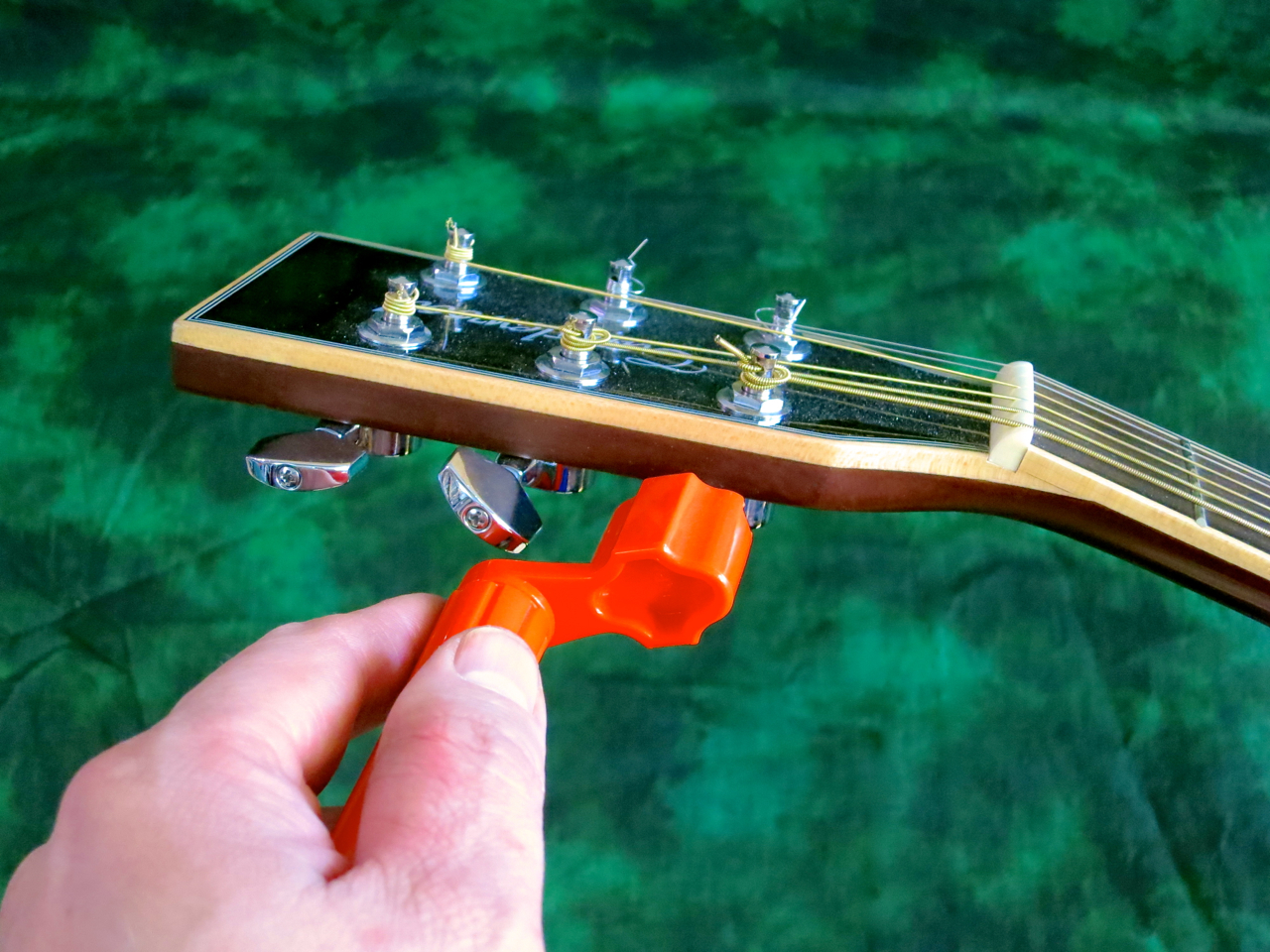
String change steel string – loosening string

I find it most convenient to take off all strings at once.

There are some people who claim that taking all six strings off at the same time may cause damage to your instrument. Let me tell you, I have been changing strings on steel-string guitars since 1977, always removing the whole set at once, and have never had any problems at all. Even Martin Guitars suggest you do it this way in their own video, and they should know!

String change steel string – cutting old string

Once the strings are completely loose and flabby, I cut them in half.

This isn’t something you must do, but I find the shorter lengths easier to handle, than having to deal with the whole string.

String change steel string – winder pin puller

For the largest part, steel-string acoustics come with pin bridges. The bridge pins – made out of plastic, bone, wood or even metal – keep the ball-ends locked into place.

Most string winders sport a small cut-out for lifting the bridge pins. I’d suggest, though, that you first try extracting the pins by hand, because, very often, the ball-ends have jammed the pins in place fairly tightly. Trying to pull them out directly might damage your string winder or the bridge pins, or, even worse, the bridge itself.

String change steel string – push end in

Most of the time you will be able to extract the bridge pins by hand:

Start by pushing the ball-end down (into the body) by a centimetre, or so.
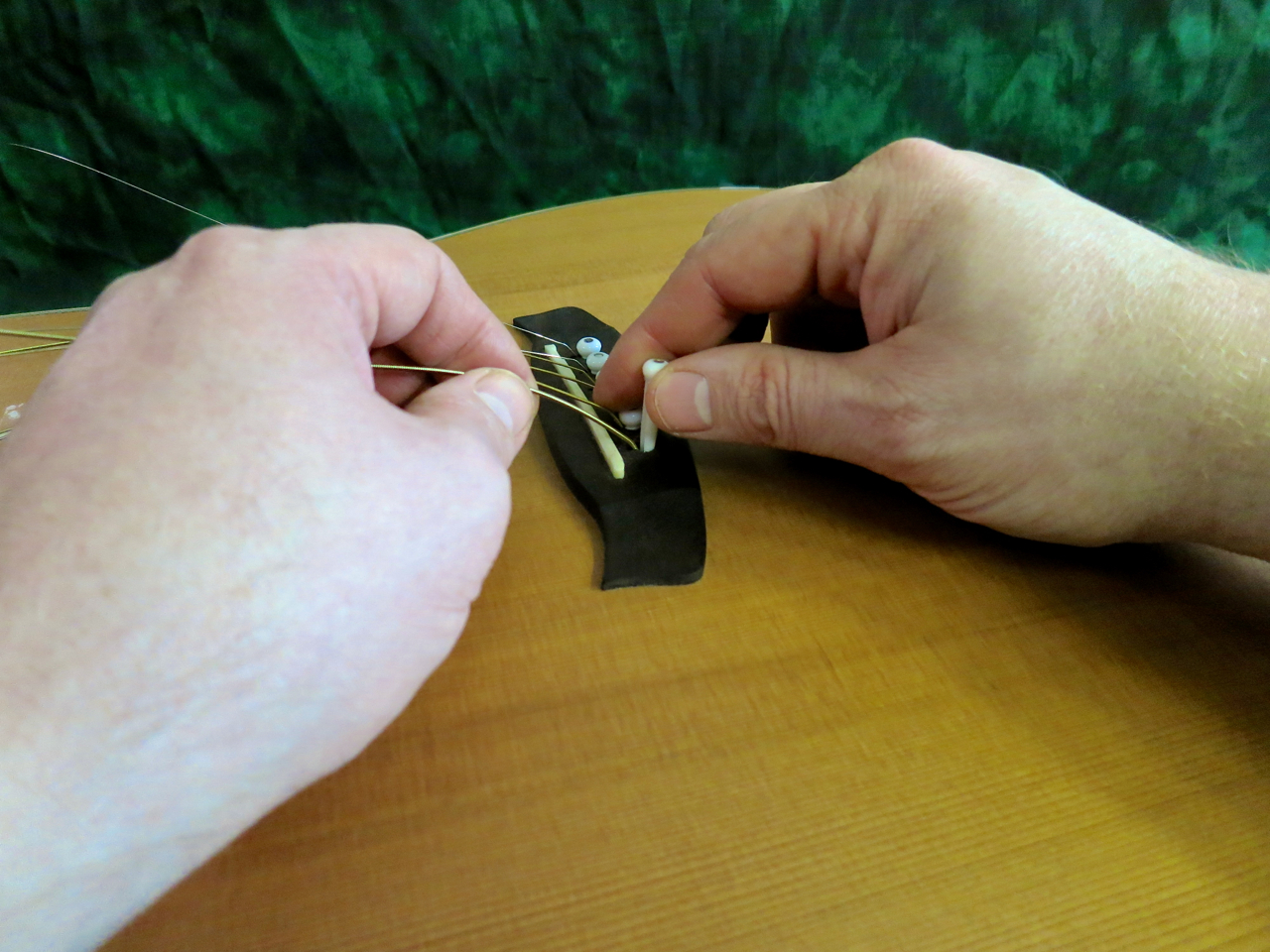
String change steel string – pull pin out 1

Usually, this is all that’s needed to unjam the bridge pin.
String change steel string – pull pin out 2

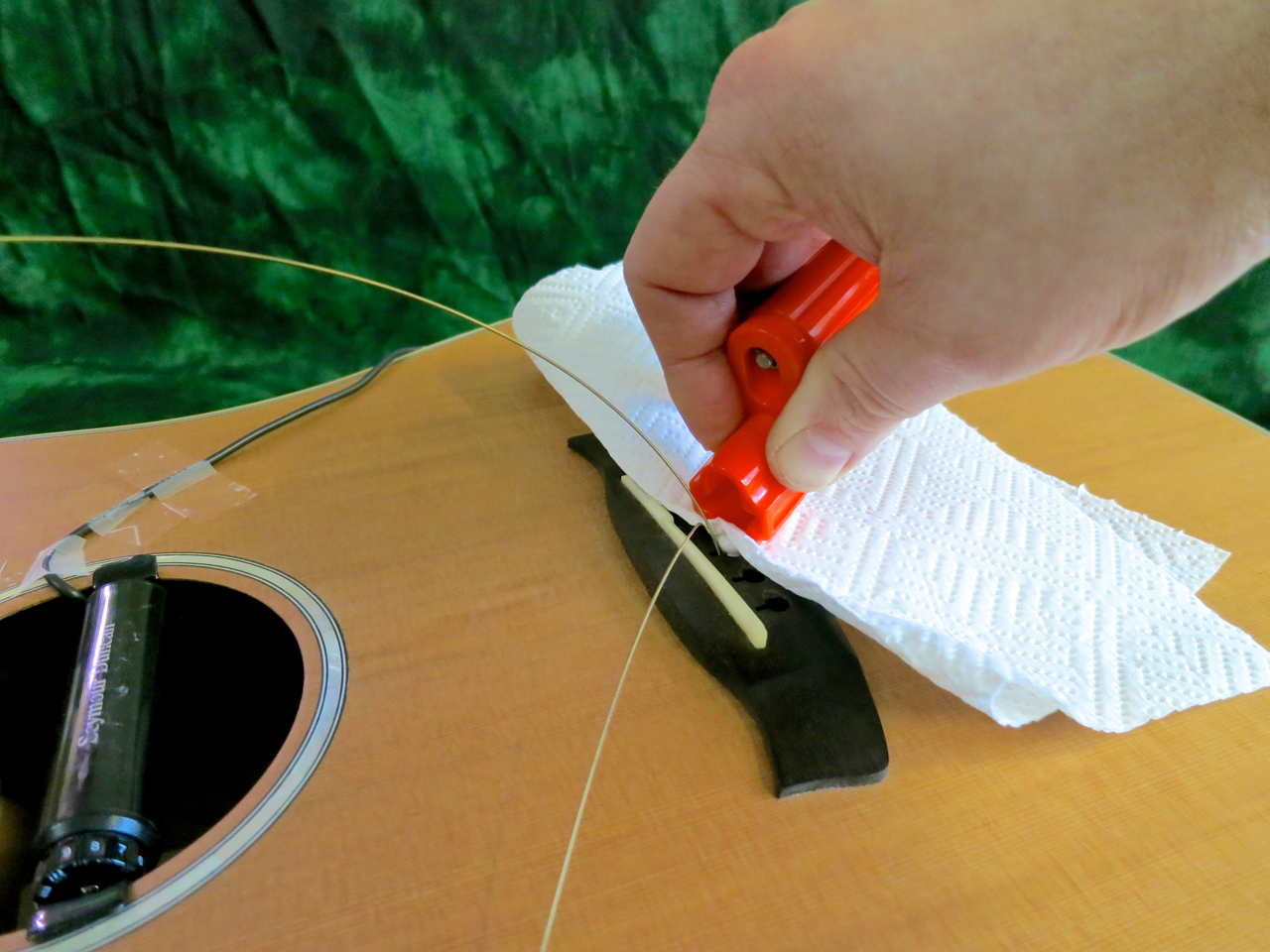
If a pin really is stuck, and can’t be lifted out with your fingers, I’d strongly suggest using a piece of tissue paper (or a piece of cloth) as a cushion to protect the pin and the bridge’s surface.

tak-n20-bridge

Some acoustic guitars come equipped with a pinless bridge – most notable Ovation and some Takamines. With these bridges, all you have to do is pull the ball-ends out of the back of the bridge.

String change steel string – take string off machine head

At the headstock end you have to untie the strings and take them off the tuner posts.

If your guitar’s fretboard and/or bridge feel (or look) a little dry, now would be the perfect time for applying a little fretboard oil.

String change steel string – put pin in

You start putting on a new string by feeding the ball-end into the appropriate bridge hole, while inserting the bridge pin.

String change steel string – pull on string

By pulling the string up a little, while holding the pin down, you will conveniently get the ball-end to jam the bridge pin in place.

String change steel string – stringing 1

Next you feed the string through the tuner’s post…

String change steel string – stringing 2

…pull the string away from the body, and around the post…

String change steel string – stringing 3

…and, finally, lock the string end in place.
String change steel string – stringing 4

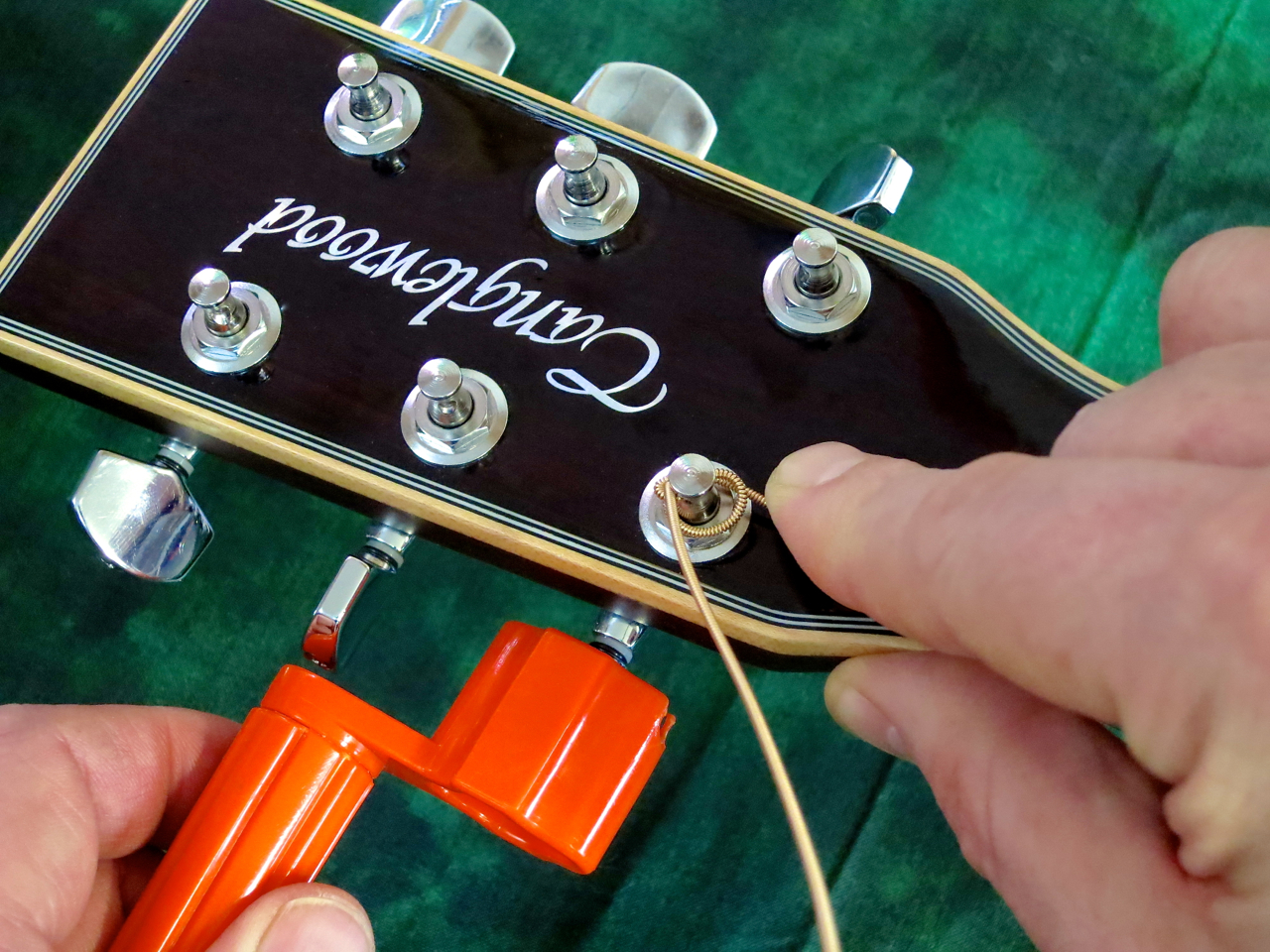
Keep the string pressed downwards, while you’re turning the crank. Each new winding should pass under the one before it.

String change steel string – keep pin in place

When the string starts getting taut, I move my hand from the headstock to the bridge, to make sure the bridge pin stays firmly in place.

String change steel string – cut off end

I’d recommend cutting off the surplus string in close proximity to the tuning post. Then I bend the stub down towards the headstock face. Be careful, a cut-off string is very sharp!

I put on the fresh strings in pairs, working my way away from the nut – first the two e-strings, then the pair of A and b, and lastly the D- and g-strings.

String change steel string – strings on machine heads

This is what the result should look like at the headstock end.
String change steel string – pin height

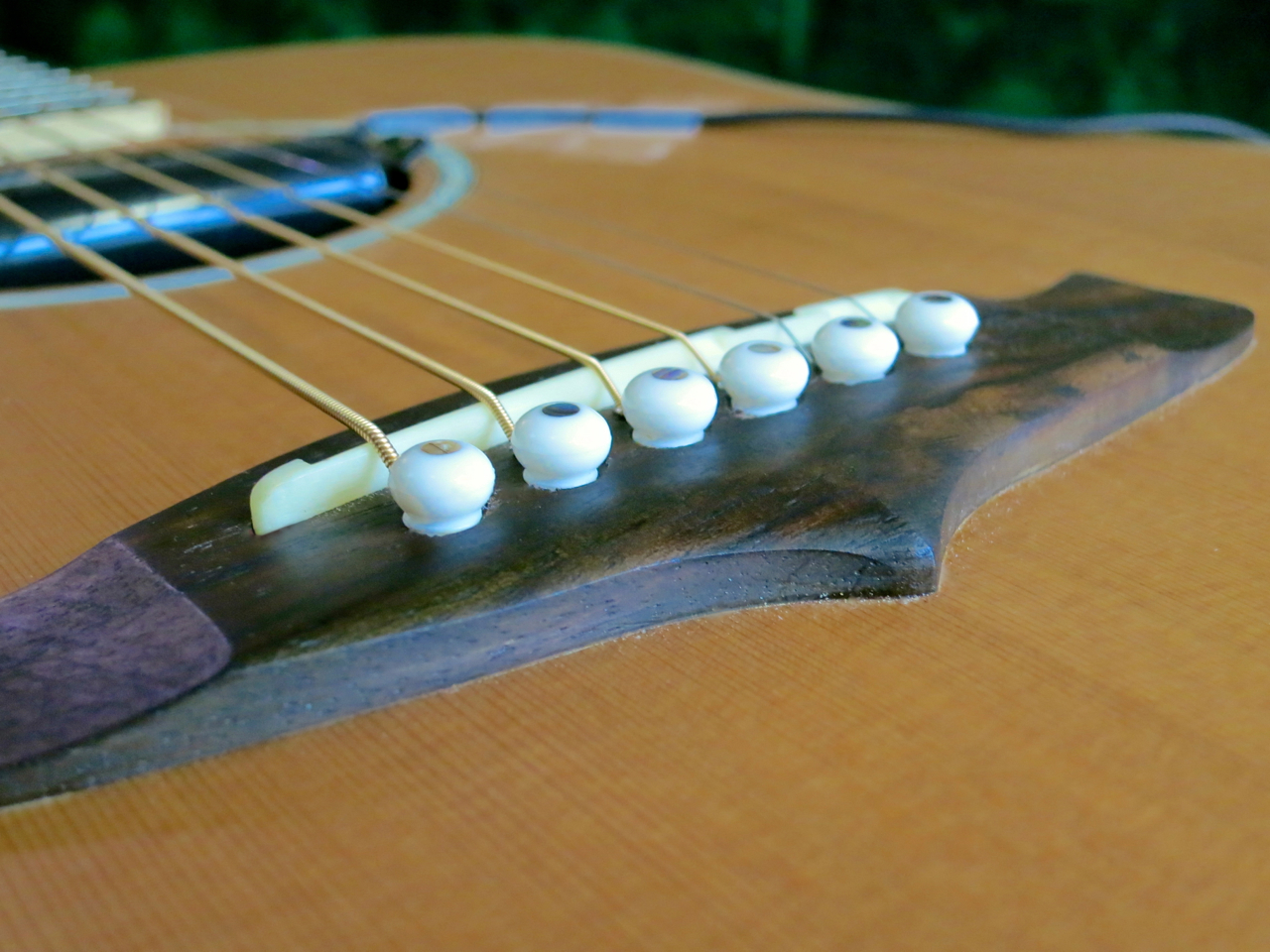
The bridge pins should sit at a uniform height above the surface of the bridge.
String change steel string – string stretching

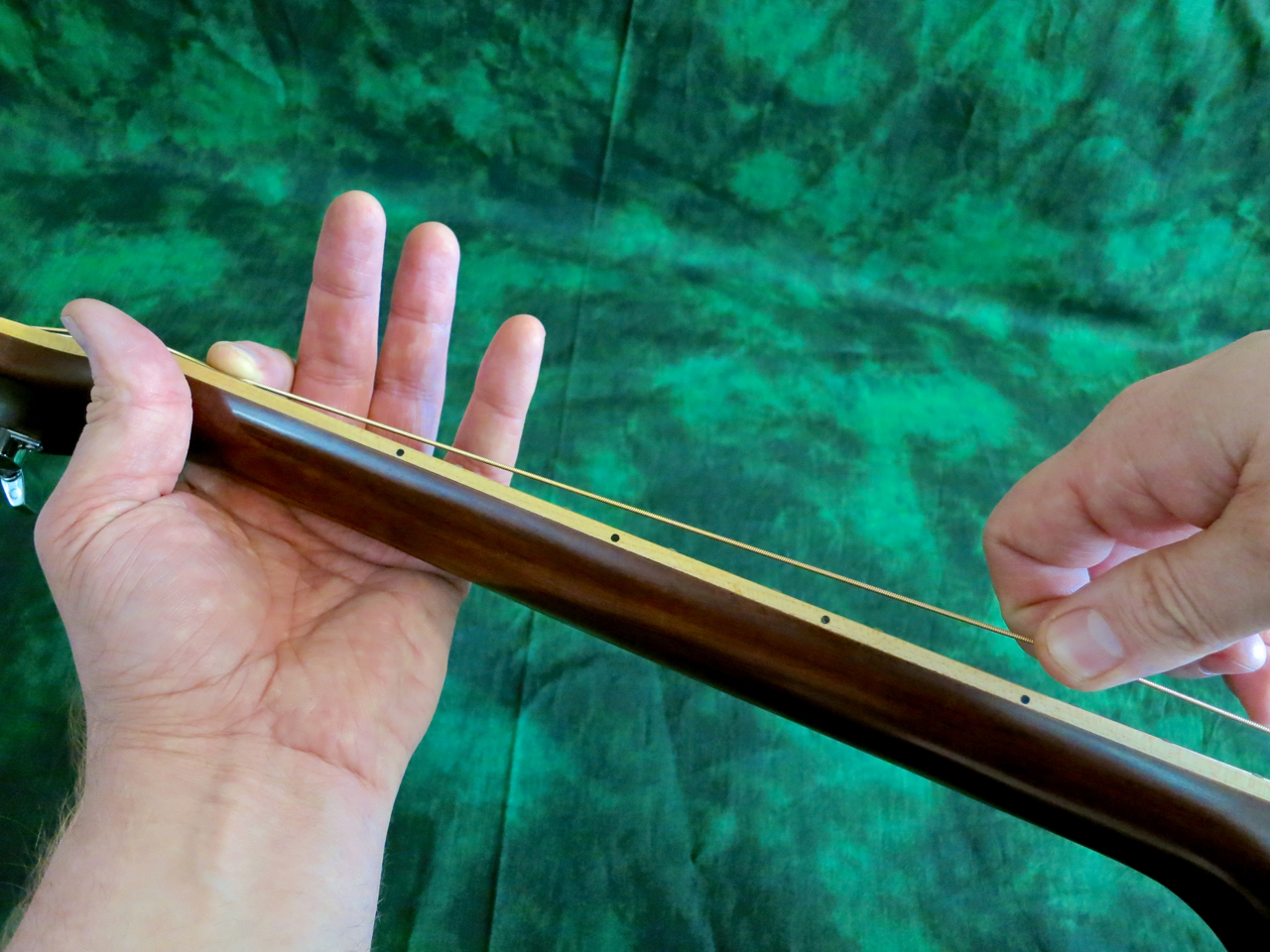
Getting new strings to stay in tune is a much faster process, if you stretch each string carefully. It works like this: First you tune to pitch, then you stretch each string, and retune again. Once you’ve repeated this process four to five times, you should be ready to go.

Your fretting hand should hold down the string you’re stretching at the first or second fret to avoid damage to the top nut.

****

Once the guitar is in tune you could check the string action at the 12th fret and compare it with the values measured with the old string set.

If the action is noticeably higher, chances are you’ve put on a heavier gauge set of strings. You need to compensate for the stronger string pull by tightening the truss rod (with the correct tool) by a quarter of a turn (or half a turn, at the most).

If the action is noticeably lower, chances are you’ve put on a lighter gauge set of strings. You need to compensate for the weaker string pull by loosening the truss rod (with the correct tool) by a quarter of a turn (or half a turn, at the most).

The truss rod is meant solely for neck relief adjustment. Even though adjusting the neck relief does have an impact on the action, string height adjustment isn’t really what the truss rod is meant for. Adjusting the action on a steel-string acoustic is usually a job for a luthier, and is achieved by changing the height of the bridge saddle.
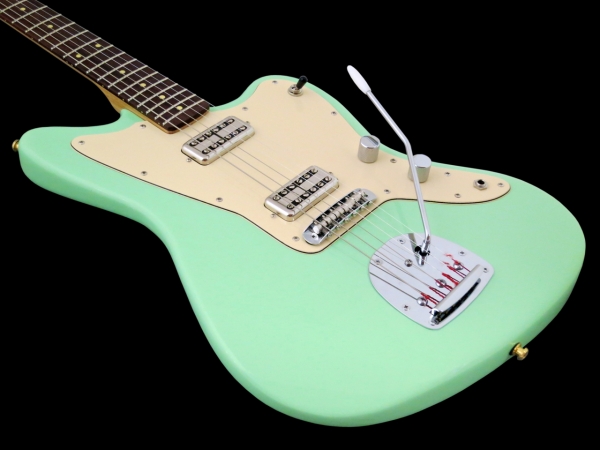
Review: J. Leachim Guitars Jazzcaster

JLeachim 2

J Leachim Jazzcaster – beauty shot – black

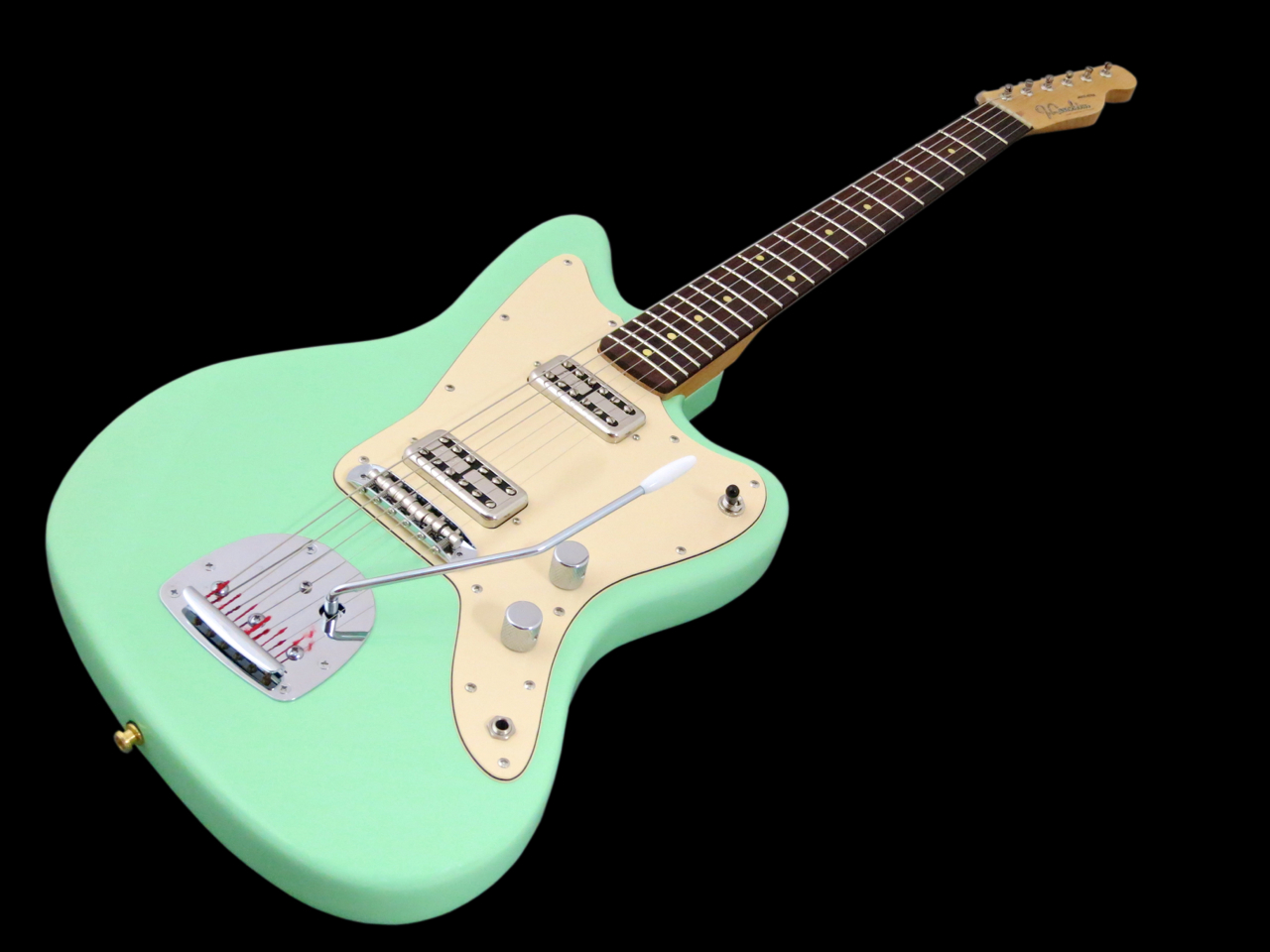
You could call J. Leachim Guitars Finland’s answer to Nash Guitars. Just like the American maker, JLG, too, don’t make their guitars from scratch, from the raw wood. Instead, J. Leachim assembles guitars from bought in unfinished necks and bodies, as well as parts and hardware sourced from a number of reputable sources. J. Leachim Guitars’ forte lies in their finish work, and the relicing of guitars.

J. Leachim’s main man, Jan Merivirta, supplied Kitarablogi.com with an example of his Jazzcaster model, which sports a pristine, “NOS” nitro finish.

****

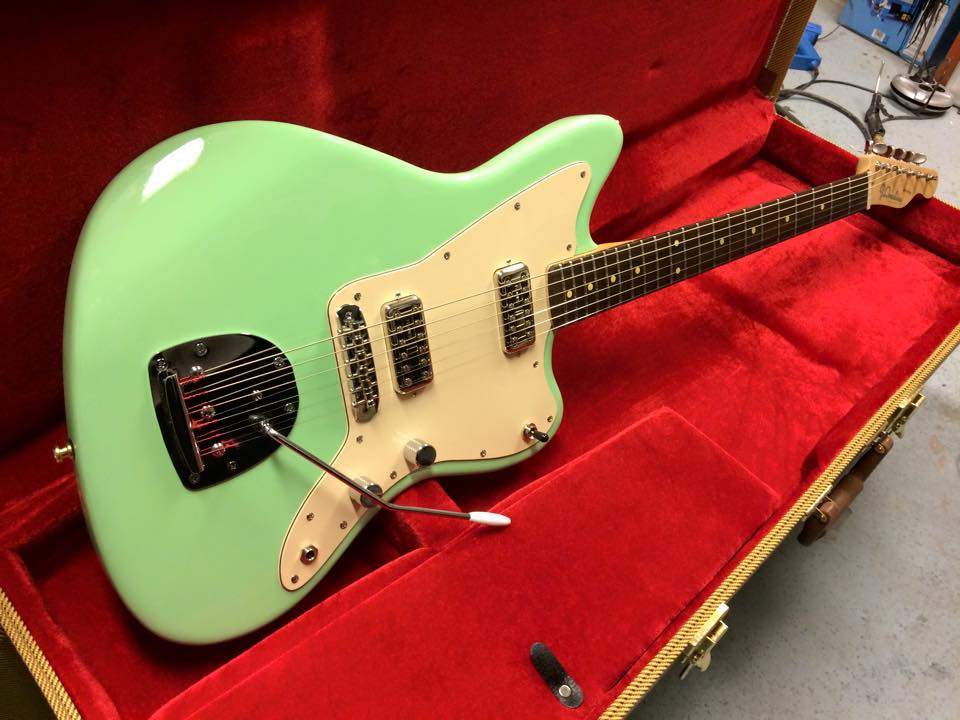
J Leachim Jazzcaster – full front – final med

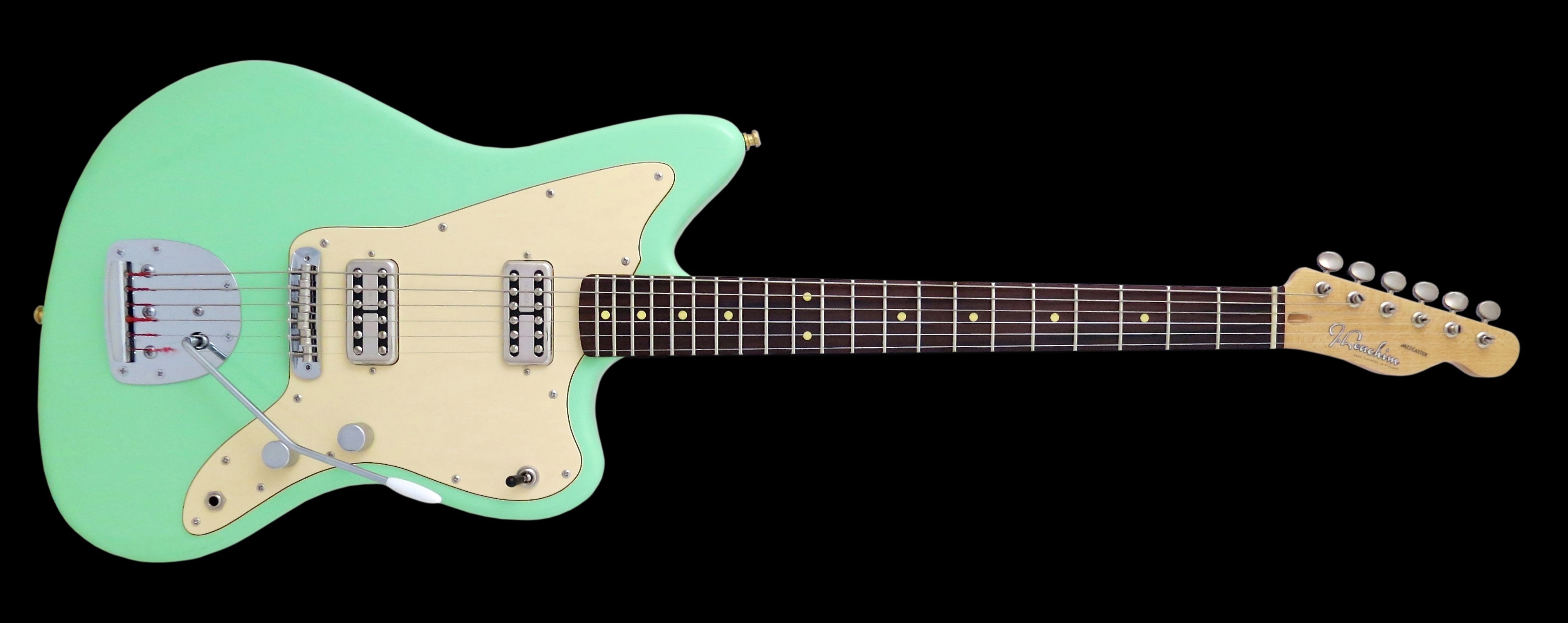
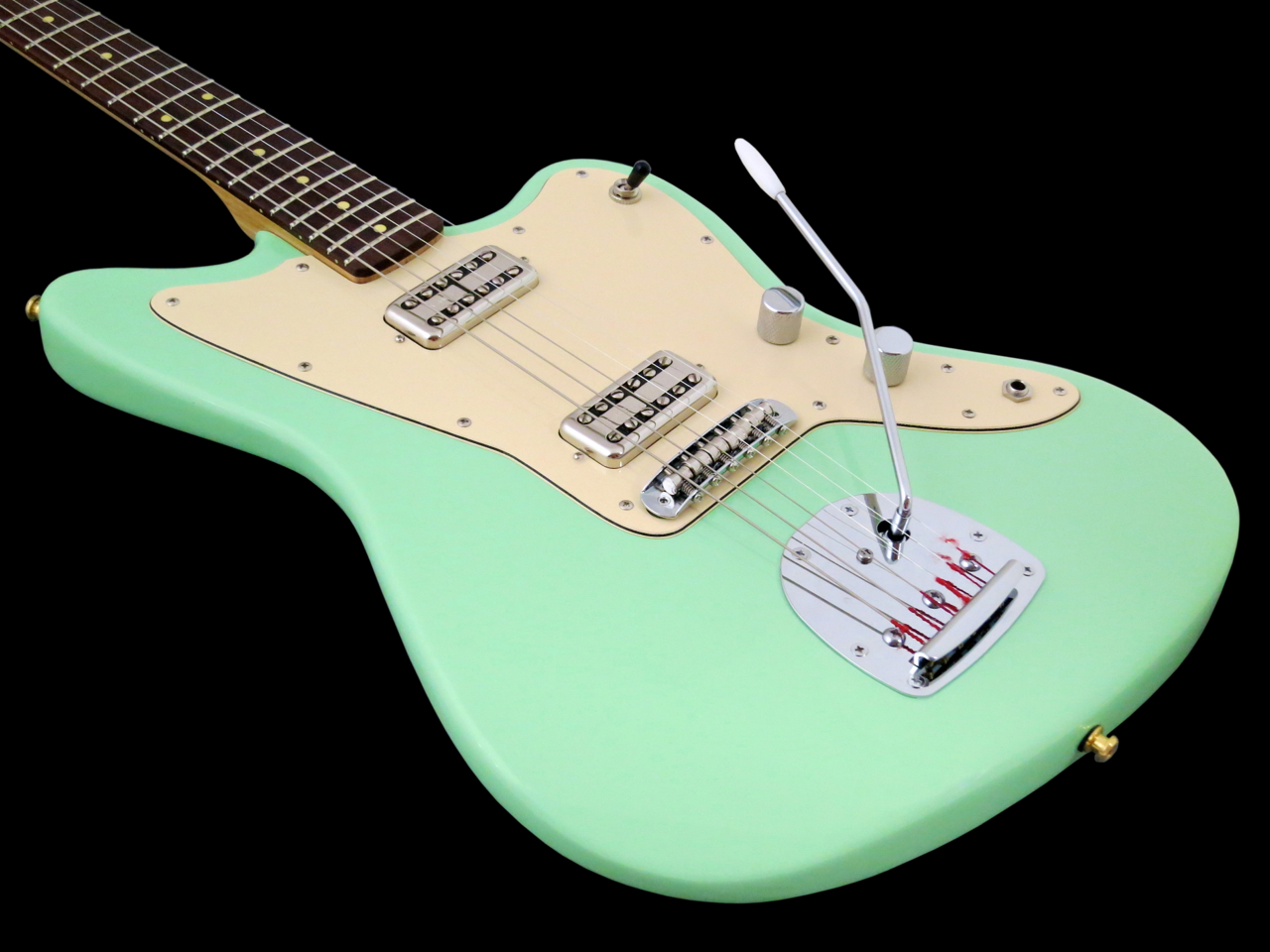
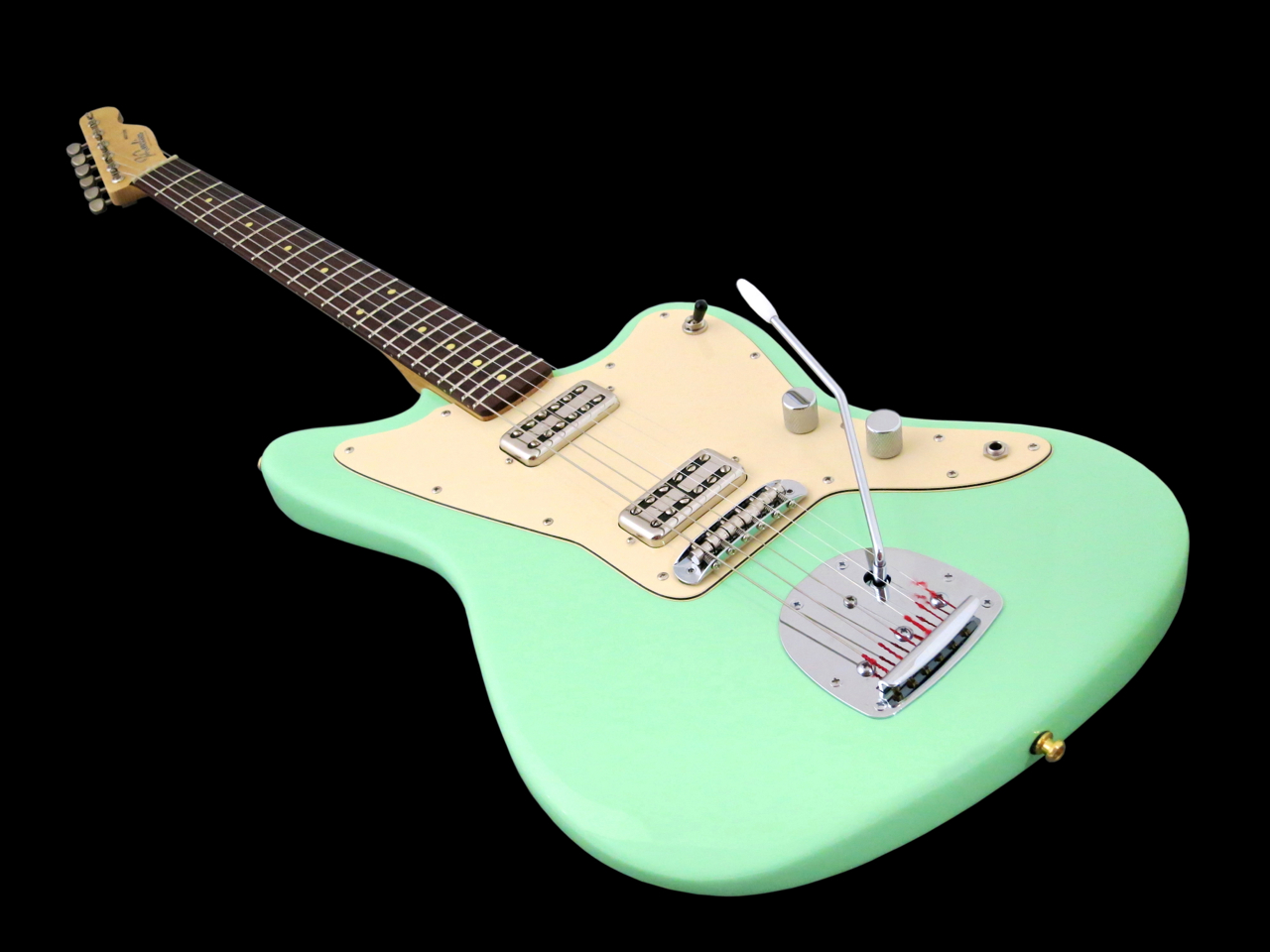
The J. Leachim Guitars Jazzcaster (prices start from approx. 1,300 €; hard case incl.) is a very enticing mix of different classic guitars:

The Jazzcaster’s maple neck has been sourced from Northwest Guitars. It’s a Tele-style neck sporting jumbo frets, as well as a modern fretboard radius of 9.5 inches.

The Guitarbuild body has been crafted from very lightweight swamp ash. Filtertron-sized pickup routs have been added at the J. Leachim workshop.

J Leachim Jazzcaster – neck joint

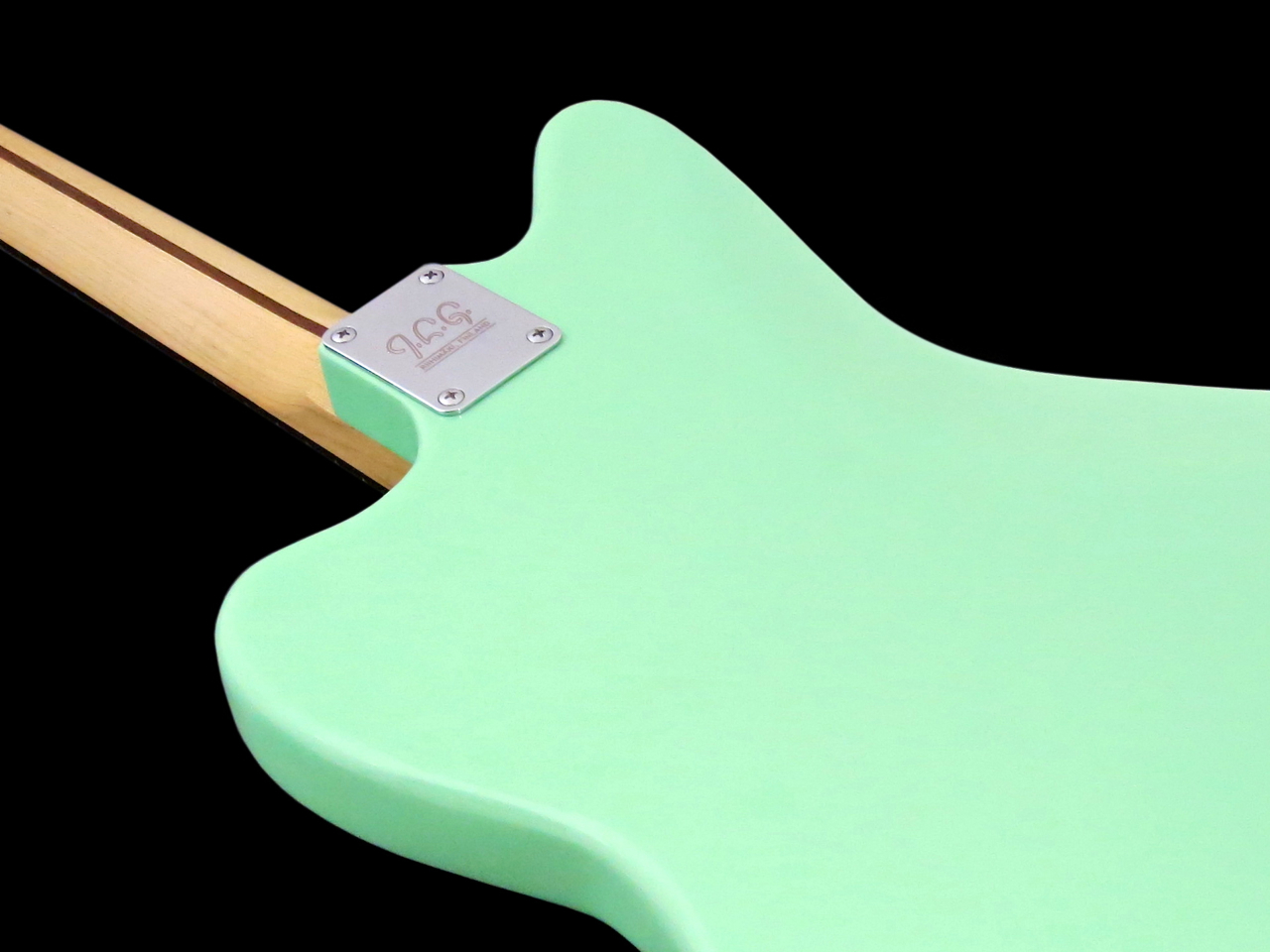
J. Leachim Guitars clearly know how to use nitro lacquer properly:

The body has received an exquisite, thinly applied gloss finish in Surf Green, while the neck has been finished with a thin satin clear coat.

J Leachim Jazzcaster – headstock

The fretwork on the Jazzcaster is great. The rosewood fingerboard comes with 21 jumbo-sized frets.

The top nut has been carved from a piece of genuine bovine bone. Some may find the nut’s shaping a tad angular, but I don’t mind; it’s only cosmetics, after all.

J Leachim Jazzcaster – tuners

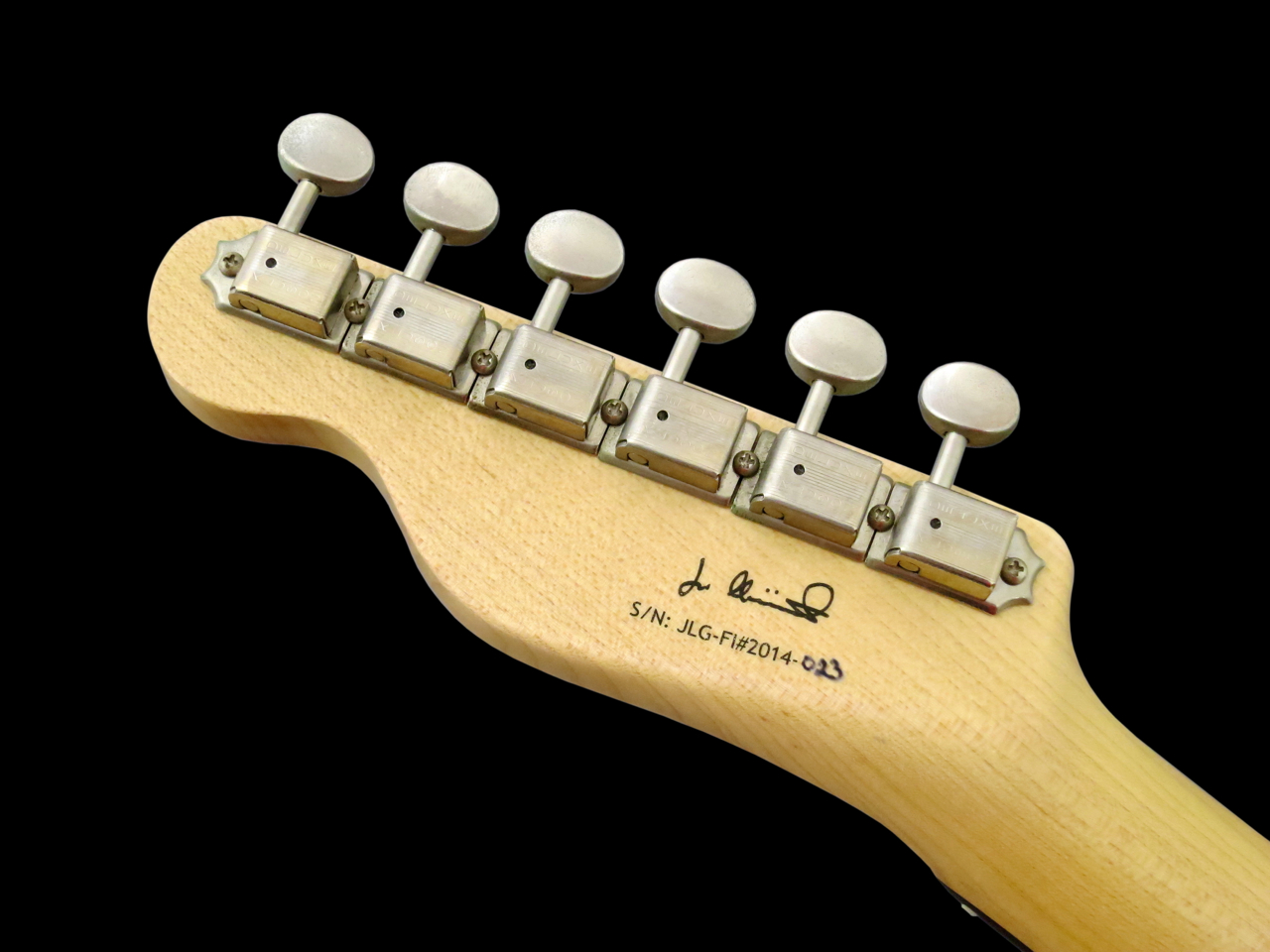
A nice set of lightly-aged Klusons takes care of tuning duties on this J. Leachim model.

J Leachim Jazzcaster – bridge

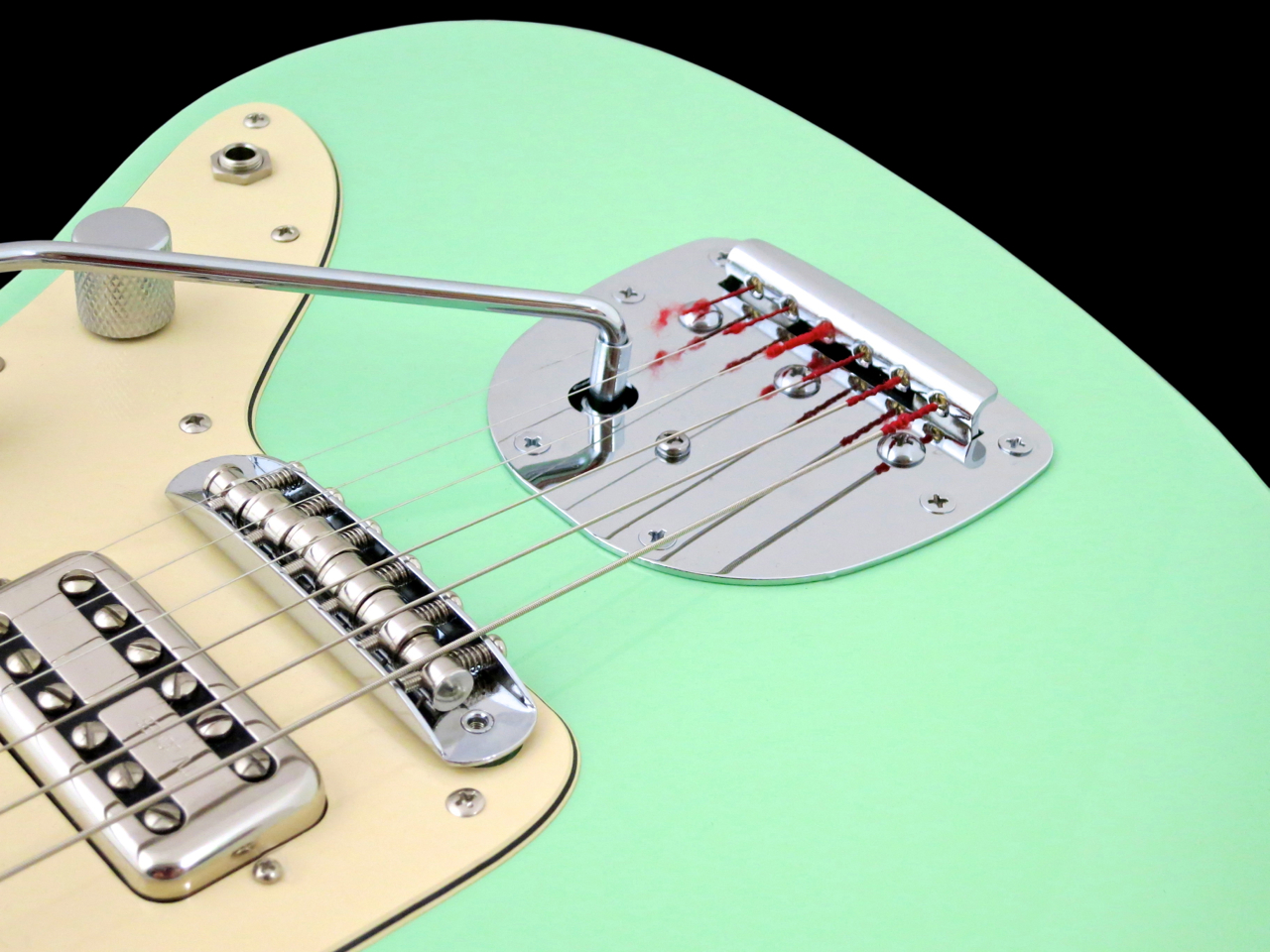
The Jazzcaster’s bridge and vibrato tailpiece have both been sourced from WD Music:

The vibrato is a version of the Fender Jazzmaster/Jaguar-vibrato, albeit without the original’s lock-off mechanism. The original locking mechanism is notoriously difficult to set up properly, so leaving it off is actually a good thing (in the view of most guitarists).

Many guitarists today dislike the original Jazzmaster-bridge, too, because the individual height-adjustment screws on the bridge saddles tend to work themselves loose with modern (light gauge) strings. Originally, this bridge – as well as the vibrato – has been designed to work with the stiffer string sets of the late 1950s (mostly 012 or 013 sets). With a set of 010s or 009s the Jazzmaster-bridge’s adjustment screws tend to rattle a lot.

Many modern makers – like J. Leachim Guitars – substitute the Jazzmaster-bridge with a Fender Mustang-bridge for this very reason. The Mustang-bridge is a direct replacement, and it uses differently sized bridge saddles to preset the fretboard radius permanently, so nothing can work itself loose and rattle.

J Leachim Jazzcaster – pickups

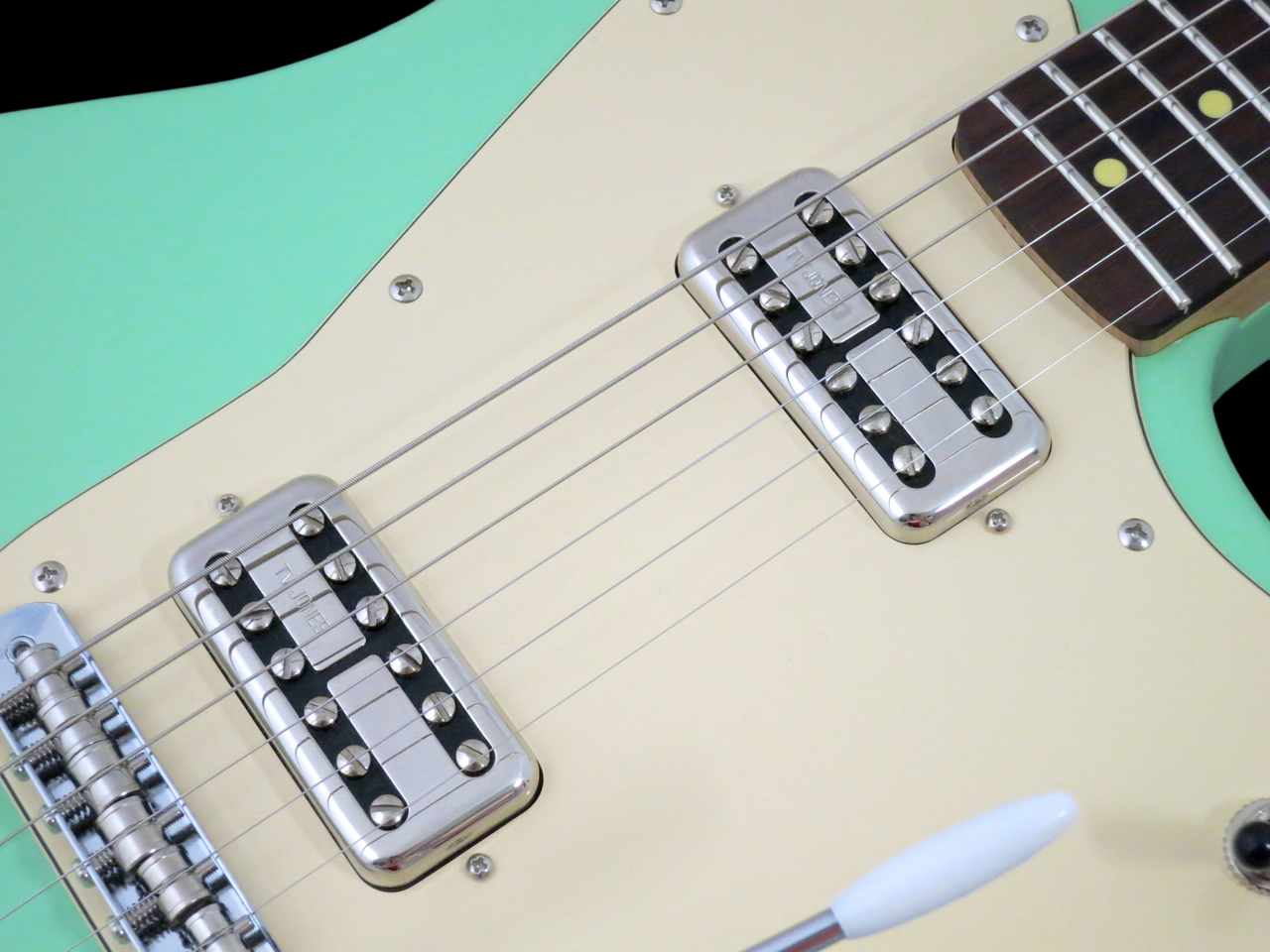
Gretsch Filtertron-style pickups are the ”in” thing at the moment.

J. Leachim’s Jazzcaster comes with a pair of TV Jones-pickups – there’s a vintage-type TV Classic in the neck position, and a more powerful Powertron model placed near the bridge.

J Leachim Jazzcaster – controls

The customer who ordered this particular Jazzcaster specified a reverse tone control (working clockwise), so this is what can be found on this instrument.

J. Leachim Guitars use a stereo phone jack, which keeps a firmer grip on the guitar lead’s plug, as well as making sure you always have a good connection to ground.

****

J Leachim Jazzcaster – body beauty 2

In my view, the J. Leachim Jazzcaster very successfully blends the ergonomics of the Jazzmaster body with a Gretschy tone. Thanks to its very smooth Jazzmaster-vibrato, the JLG Jazzcaster has a more open sound than, for example, a Cabronita Telecaster.

The Jazzcaster plays like a dream, as long as you’re willing to live with the typical, well-known compromises of the Jazzmaster/Jaguar-vibrato.

With modern, slinky strings, big bends – especially, when played higher up the neck – can quite easily make the high e-string jump out of its bridge groove. In a way this isn’t so much a fault, but more of a feature of this vibrato system, because the strings cross the bridge at a relatively shallow angle. With the stiff string sets of the late Fifties the system works fine, but for huge Blues bends with a contemporary 010-gauge set you should maybe invest in an additional bridge roller.

I would like to see a smoother taper on the tone control, though. On the review instrument the treble roll-off was more a matter of on or off, with everything happening right at the end of of the knob’s travel.

The Jazzcaster has a beautiful acoustic tone, with a bell-like ring and an open, yet firm body.

TV Jones’ acclaimed Filtertron-style pickups seem like a perfect fit for this model, adding a good deal of chime and twang, without sounding too bright or biting. Being humbuckers, the TV Jones pickups are also immune against hum and buzz, unlike a traditional Jazzmaster’s singlecoil units, which are not a million miles removed from a Gibson P-90.

This clip gives you an idea of the J. Leachim Jazzcaster’s clean sounds (starting with the neck pickup):

When plugged into an overdriven channel, the Jazzcaster wins you over with a chunky, aggressive and compact voice, which is just the ticket for Seventies-style Rock or Punk. Famous Filtertron-users in the Rock genre include AC/DC’s original rhythm guitarist Malcom Young, and the Who’s Pete Townshend, who frequently used Gretsch guitars as his ”secret weapon” in the studio.

Here’s the track from the Youtube-video – ”Seabird Flavour (Homage to Peter Green)”:

There are three rhythm parts – left channel (neck pickup), centre (neck pickup), and right channel (both pickups) – as well as the lead part, which uses both pickups (and the vibrato tailpiece).

J Leachim Jazzcaster – body beauty

****

J Leachim Jazzcaster – beauty shot 2

In my view, J. Leachim’s Jazzcaster is a beautiful, and very well-made, Fender-inspired guitar, with a sound that’s all its own. You could think the Jazzcaster was only for Jazz or Country, but in reality this fine guitar covers a much wider area of musical styles.

In any case, J. Leachim Guitars is yet another Finnish guitar brand worth keeping on your radar.

****

J. Leachim Guitars Jazzcaster

Price approx. 1,300 € (incl. hard case)

Contact: J. Leachim Music

****

Pros:

+ workmanship

+ finish

+ playability

+ smooth vibrato action

+ sound

Cons:

shallow string angle across bridge (read the review)

tone control could work smoother

Testipenkissä: J. Leachim Guitars Jazzcaster

JLeachim 2

J Leachim Jazzcaster – beauty shot – black

Riihimäkiläistä J. Leachim Guitarsia voisi kutsua Suomen vastineeksi amerikkalaiselle Nash Guitarsille. Samoin kuin Nash Guitarsissa myös JLG:ssäkään ei rakenneta soittimia suoraan raa’asta puusta, vaan firmassa keskitytään puolivalmiiden runkojen ja kaulojen viimeistelyyn, osien relikointiin (jos toivottu), sekä kitaroiden kokoamiseen.

Saimme J. Leachimin pomolta, Jan Merivirralta, juuri valmistuneen Jazzcaster-mallin, joka on yksi firman ei-relikoiduista soittimista.

****

J Leachim Jazzcaster – full front – final med

J. Leachim Guitarsin Jazzcaster (hintaluokka noin 1.300 €; kova laukku kuuluu hintaan) on mielenkiintoinen ja tutunoloinen yhteentörmäys eri klassikkokitaroiden aineksista:

Jazzcasterin kaula on Northwest Guitarsilta hankittu nykyaikainen Tele-kaula jumbonauhoilla, sekä (alkuperäistä hieman loivemmalla) 9,5-tuumaisella otelaudan radiuksella.

Erittäin kevyt suosaarnirunko tulee Guitarbuildin valikoimasta, ja siihen on lisätty J. Leachimin pajassa oikean mittaiset kolot Filtertron-tyypisille mikeille.

J Leachim Jazzcaster – neck joint

J. Leachimissä tiedetään ilmiselvästi miten nitrolakkaa käytetään oikein:

Rungon erittäin ohut, kiiltävä Surf Green -viimeistely on suorastaan herkullisen näköinen, kun taas kaulan satiinipinta tuntuu todella mukavalta.

J Leachim Jazzcaster – headstock

Jazzcasterin nauhatyö on kiitettävällä tasolla. Ruusupuiseen otelautaan on asennettu 21 jumbo-kokoista nauhaa.

Soittimen satula on aitoa naudanluuta. Satulan ulkoreunojen kulmikkuus on pelkästään kosmeettinen makuasia, joka ei ainakaan minua haittaa pätkäkään.

J Leachim Jazzcaster – tuners

Tässä J. Leachim soittimessa käytetään hienoja – ja kevyesti vanhoitettuja – Kluson-virittimiä.

J Leachim Jazzcaster – bridge

Jazzcasterin talla ja vibrato tulevat WD Musicilta:

Vibrato on firman versio Fenderin Jazzmaster/Jaguar-vibrasta. Tarkkasilmäinen lukija on varmaan jo huomannut, että tässä versiossa alkuperäinen lukitusnappi puuttuu. Monien mielestä tämä on kuitenkin hyvä asia, koska alkuperäisen Fender-vibran lukitusmekanismi on melko hankala säätää toimivaksi.

Nykykitaristeille alkuperäinen Jazzmaster-tallakin on usein harmaiden hiuksien aiheuttaja. Tallapalojen yksittäiset säätöruuvit toimivat nimittäin suhteellisen hyvin ainoastaan 1950-luvun paksuilla kielisatseilla. Kevyillä nykysatseilla pikkuruiset säätöruuvit alkavat usein löystyä omatoimisesti soiton aikana, ja räminä voi alkaa.

Helpoin lääke tähän ongelmaan on käyttää Jazzmaster-tallan sijaan Fender Mustang -kitaran tallaa – se on muuten samanlainen, mutta Mustang-tallassa otelaudan kaarevuutta kompensoidaan eripaksuisilla tallapaloilla.

J Leachim Jazzcaster – pickups

Gretsch Filtertron -tyyliset humbuckerit ovat tällä hetkellä erittäin ”in”.

J. Leachim Jazzcasteriin on asennettu kaksi TV Jones -mallia – vintage-tyylinen TV Classic on valittu kaulamikrofoniksi, kun taas tallamikrofonina toimii selvästi alkuperäistä tuhdimpi Powertron.

J Leachim Jazzcaster – controls

Tilaajan toiveesta tässä Jazzcasterissa on käänteisesti toimiva tone-potikkaa.

J. Leachim Guitarsin stereojakki pitää plugia tiukasti paikoillaan ja lisää maadoituksen toimintavarmuutta.

****

J Leachim Jazzcaster – body beauty 2

Tämä Jazzcaster-kitara yhdistää onnistuneesti Jazzmasterin ergonomiaa ja soitettavuutta Gretsch-maiseen soundiin. Sulavasti toimivan vibran ansiosta J. Leachim -kitaran soinnissa on kuitenkin hieman enemmän avoimuutta kuin sellaisissa risteyksissä kuin esimerkiksi Cabronita Teleissä.

Jazzcasterin soitettavuus on ensiluokkaista, kun vaan ottaa huomioon Jazzmaster- ja Jaguar-faneille tutut rajoitukset:
Nykyaikaisilla (lue: ohuilla) kielillä suuret Blues-venytykset (etenkin ylänauhoilla) nostavat usein korkean e-kielen ulos tallapalan uralta. Tämä on enemmän ominaisuus kuin vika, koska Jazzmaster-vibra – jossa kielet menevät tallan yli suhteellisen loivassa kulmassa – on suunniteltu 1950-luvun lopussa käytettäväksi hiotun 013-kielisatsin kanssa. Isot bendaukset 010-satsilla onnistuvat tällä vibratolla esimerkiksi asentamalla vibratoon kieliä alas vetävän lisärullan.

Ainoa pieni kritiikkikohta koskee tässä kitarassa tone-säätimen toimintaa, jossa diskantin vaimennus tapahtuu vasta ihan liikeradan lopussa.

Jazzcasterin kaunis akustinen ääni on kellomaisen helisevä ja hyvin avoin, muttei missään nimessä liian kevyt.

TV Jonesin Filtertron-tyyliset mikrofonit ovat mielestäni todella hyvä valinta tähän malliin, koska ne lisäävät soundiin oman twänginsä, joka on kuitenkin vähemmän pureva kuin esimerkiksi perinteinen Telecaster-tallamikki. Kaksikelaisina TV Jonesit ovat myös hyvin immuuneja ulkoisia häiriöitä vastaan, jotka voivat olla tavallisissa Jazzmaster-mikrofoneissa oikea riesa.

Tässä esimerkkejä J. Leachim Jazzcasterin puhtaista soundeista (alkaen kaulamikrofonista):

Särön kanssa Jazzcasterista lähtee loistavan ärhäkkä ja sopivan kompakti ääni, joka sopii mainiosti jopa 1970-luvun Rockiin ja Punkiin. Tunnetuin Filtertron-käyttäjä Rock-piireissä on ollut varmaan AC/DC:n Malcom Young. Myös Pete Townshend (The Who) käytti 70-luvulla usein Gretsch-kitaroita Filtertron-mikeillä ”salaisena aseena” studiossa, juuri niiden erikoisen särösoundin takia.

Viimeiseksi vielä videon ääniraita – ”Seabird Flavour (Homage to Peter Green)”:

Biisissä on kolme komppikitaraa – vasen kanava (kaulamikki), keskellä (kaulamikki) ja oikea kanava (molemmat yhdessä) – sekä molempia mikrofoneja (ja myös vibratallaa) käyttävä soolokitara.

J Leachim Jazzcaster – body beauty

****

J Leachim Jazzcaster – beauty shot 2

J. Leachim Jazzcaster on mielestäni hyvin kaunis ja laadukas Fender-henkinen kitara omalla soundilla ja virtaviivaistetulla elektroniikalla. Ensisilmäyksellä Jazzcasteria voisi ehkä lokeroida pelkäksi Jazz- ja Country-kitaraksi, mutta todellisuudessa kitaran soundilliset antimet kattavat huomattavasti laajemman kirjon musiikkityylejä.

J. Leachim Guitars on joka tapauksessa yksi suomalainen tekijä lisää, jota tästedes kannattaa pitää silmällä.

****

J. Leachim Guitars Jazzcaster

Hintaluokka 1.300 € (sis. kovan laukun)

Lisätiedot: J. Leachim Music

****

Plussat:

+ työnjälki

+ viimeistely

+ soitettavuus

+ pehmeästi toimiva vibrato

+ soundi

Miinukset:

– kielten loiva kulma tallan yli (katso teksti)

– tone-säätimen ”jyrkkyys”

Review: Jericho Guitars Fusion

Usually, we get the products we review from the Finnish distributors, or directly from Finnish guitar- or amp-makers.

This time, though, I was approached by guitarist Jaakko Rytsölä. Jaakko had ordered a guitar for himself, liked what he got, and is now thinking seriously about importing this brand, in partnership with Espoo-based company Guitarworx.

Jericho Guitars – who are based in Plano, Texas – are a brand specialising exclusively in long-scale baritone electric guitars. Jericho use what they call a ping-pong manufacturing process: The raw tonewood is hand-selected at a wood supplier in British Columbia (Canada), and then sent to a manufacturer in South Korea for all the basic neck and body work. The half-finished guitars are then shipped back to Texas, where they are assembled and set up. According to Jericho, this process results in high-quality instruments with a player-friendly price tag.

Jericho have already caused quite a few waves with their Avenger model, which is squarely aimed at the Hard ’n’ Heavy crowd. Now the company has introduced a new model, called the Jericho Fusion. We received a preproduction version of the Jericho Fusion Black And Gold-version for review.

****

Jericho Fusion – full front – smaller

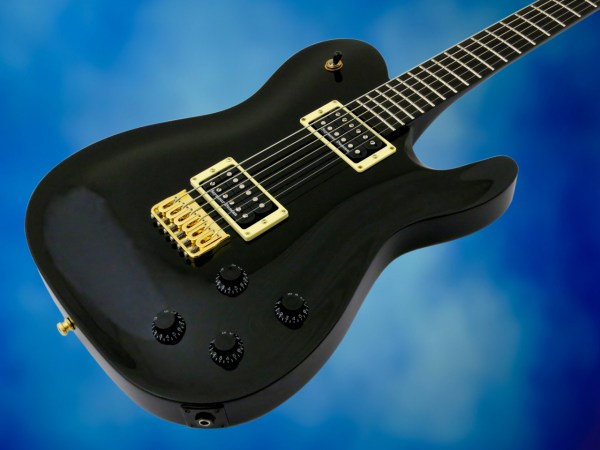
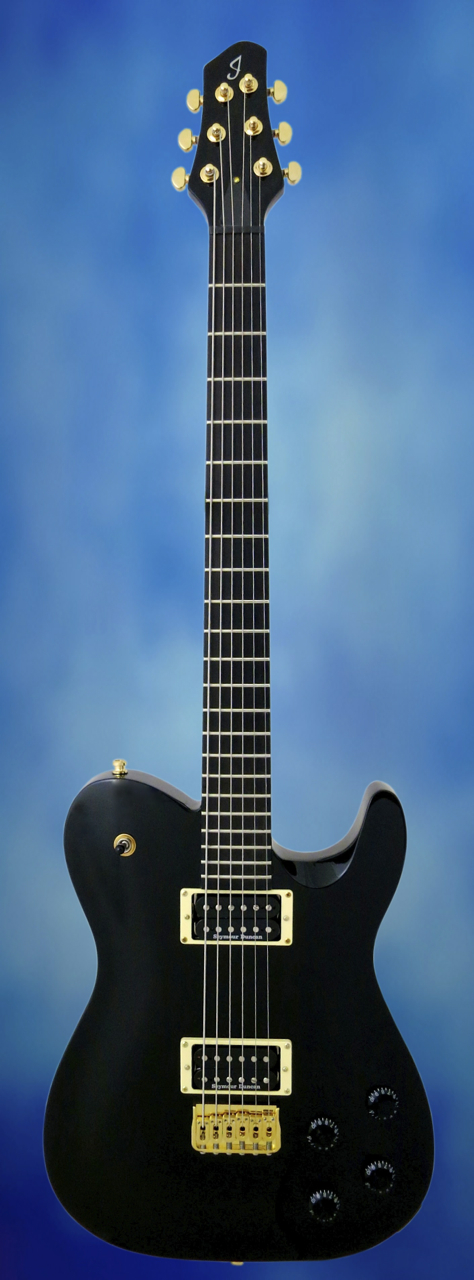
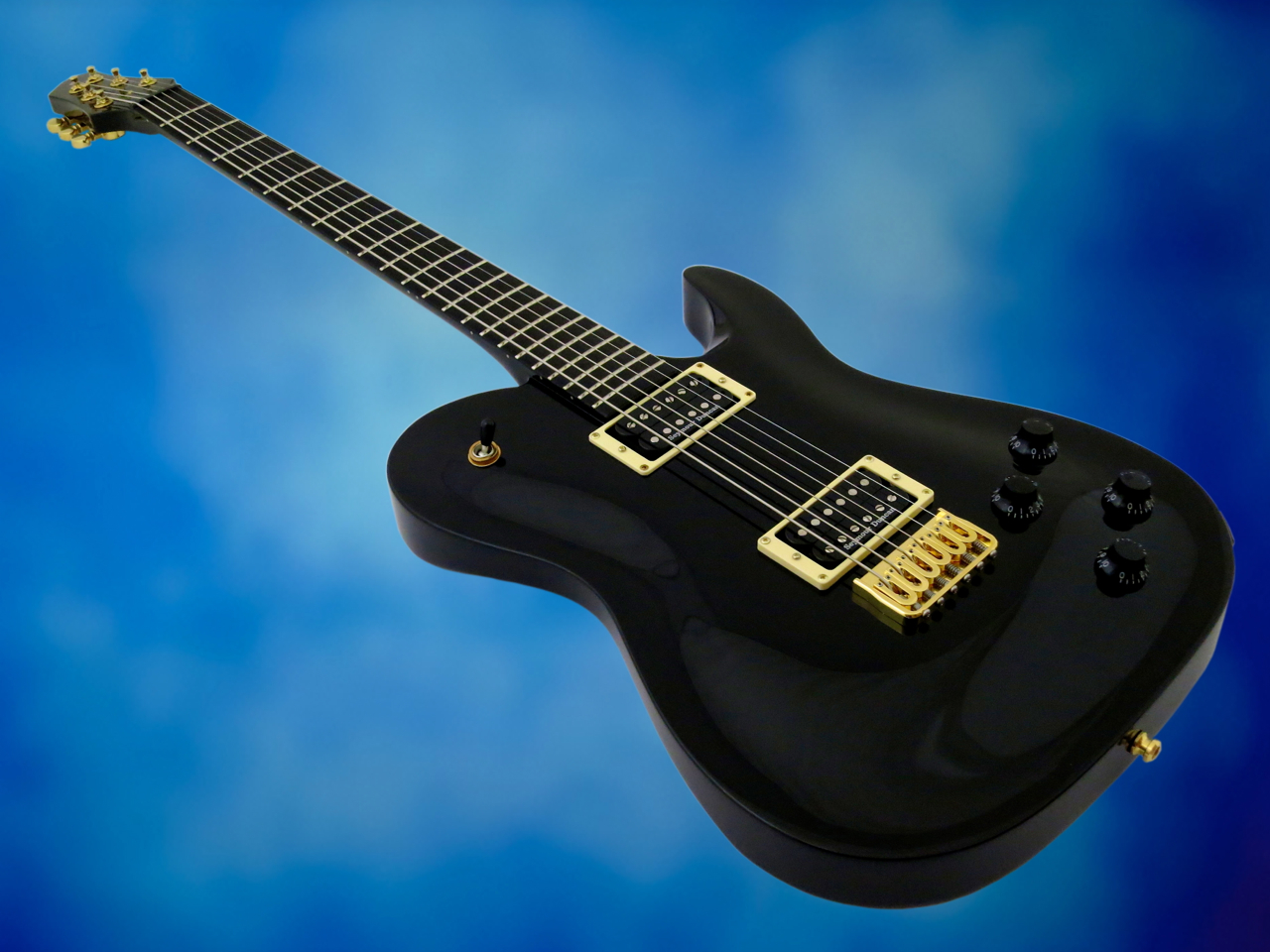
The Jericho Fusion (price in Finland approximately 999 €) is a sleek and elegant baritone guitar, with a body outline that is based on the venerable Fender Telecaster.

The Fusion has a three-piece mahogany set neck, as well as a mahogany body with a contoured front.

The Fusion has a scale length of 26.9″, which means 68.3 cm in the metric system.

Jericho Fusion – back beauty

The body’s back features a generous rib cage chamfer.

Jericho Fusion – headstock

Jericho’s headstock design looks very nice, and offers almost straight string pull, which is a definite plus for tuning stability.

The Fusion comes with a self-lubricating black Graph Tech Tusq XL nut.

Jericho Fusion – tuners

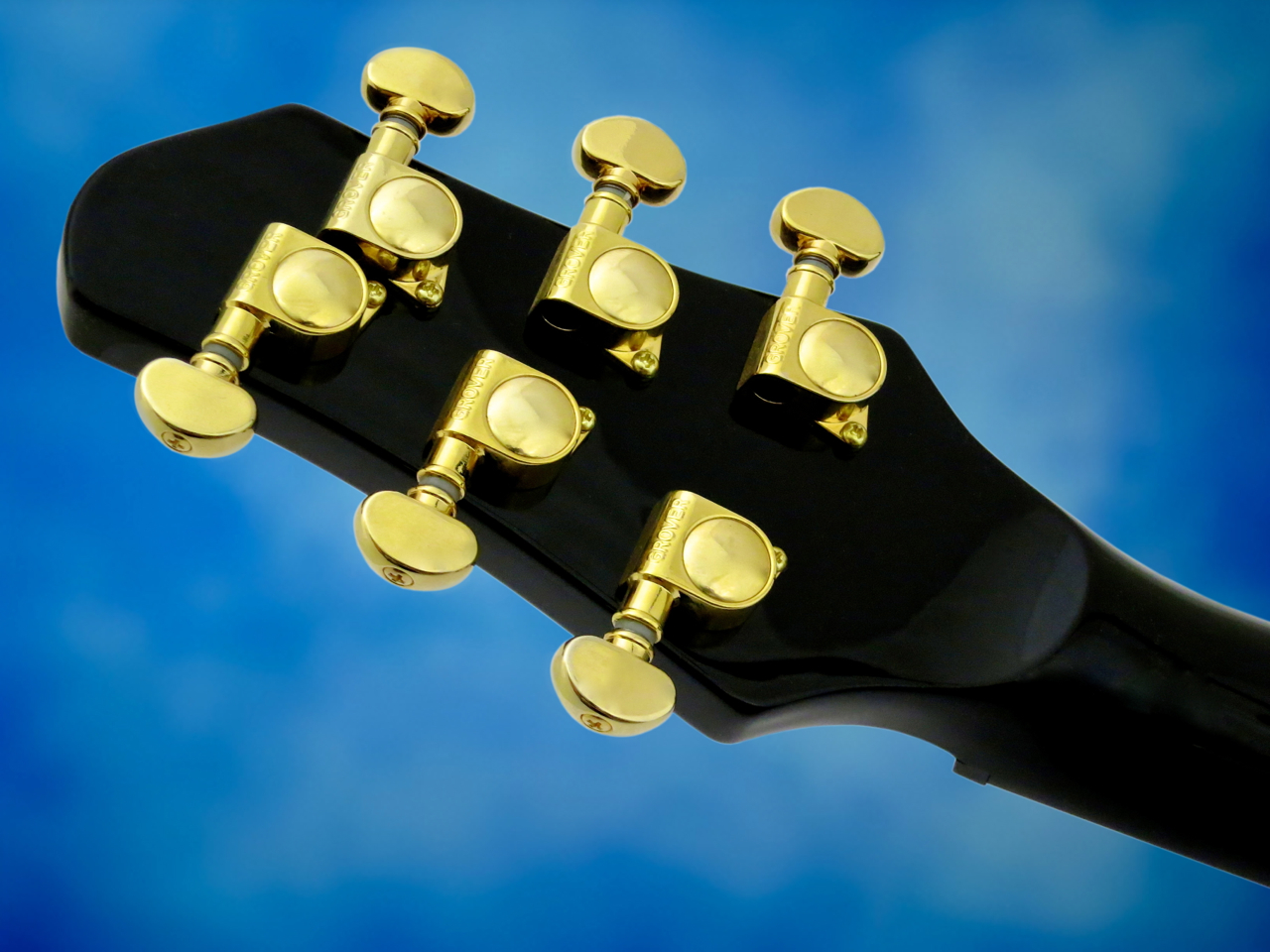
A set of golden Grover Rotomatics keeps the tuning solid.

Jericho Fusion – fingerboard

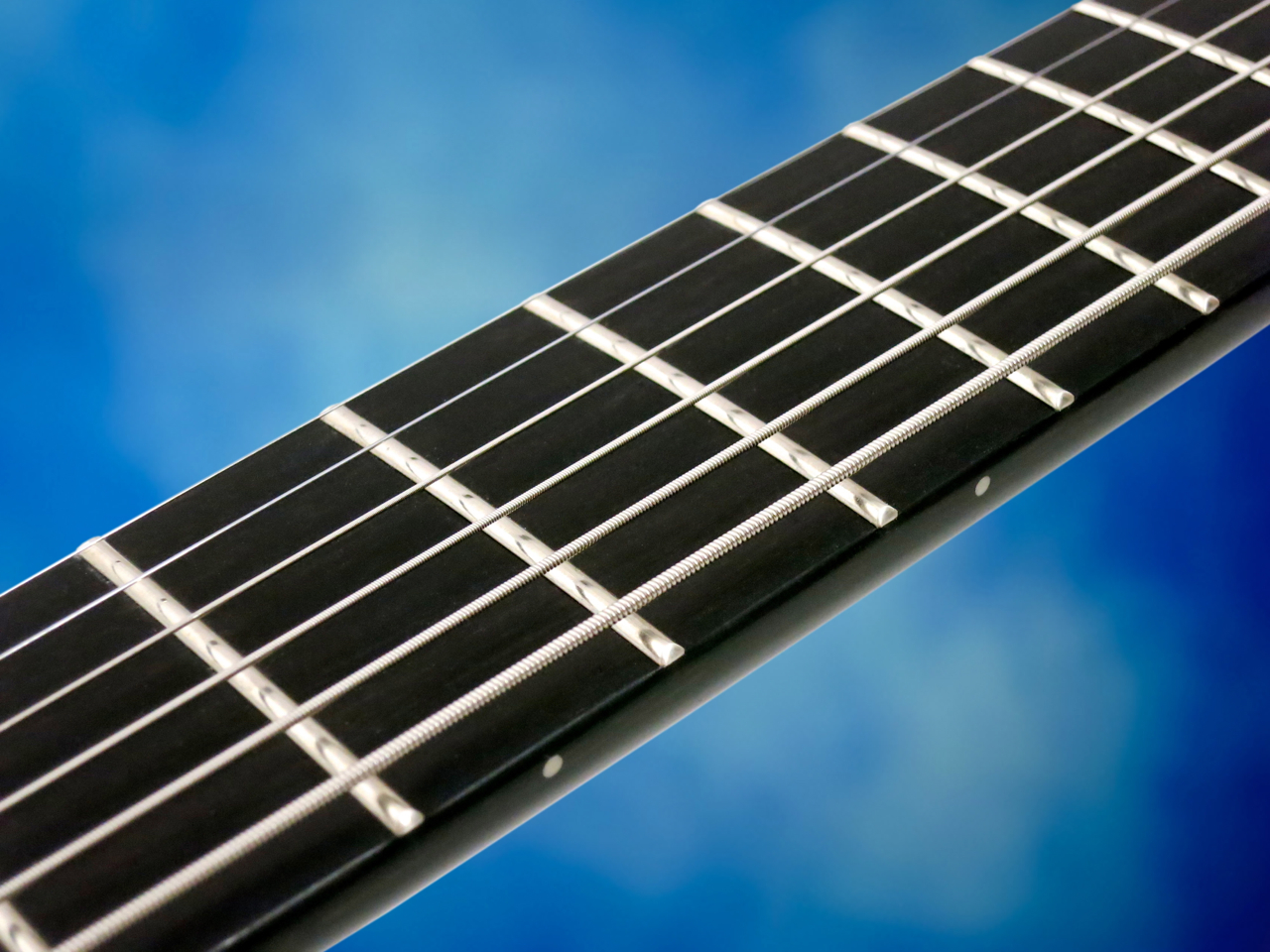
The black ebony fretboard sports 22 medium-sized frets.

Jericho Fusion – bridge

The bridge is a chunky Hipshot design, constructed from a machined brass base and stainless steel bridge saddles.

Jericho Fusion – pickups

The Jericho Fusion comes equipped with a classic pair of Seymour Duncan humbuckers – a ’59-model in the neck position, and a Custom TB-5 at the bridge.

Jericho Fusion – controls

The guitar’s controls are configured in traditional Les Paul-style, giving you independent volume and tone controls for each pickup.

Jericho Fusion – control cavity NEW

A look under the hood reveals quality components and clean workmanship. Our preproduction review guitar has regular Les Paul-style wiring, but production models will come with push/pull-pots for splitting the humbuckers.

****

Jericho Fusion – beauty shot 2

The Jericho Fusion is a great player. Actually – and this might come as a bit of a surprise – it is very easy for the guitarist to adjust to the longer-than-usual scale length. After a minute or two, you simply forget about the longer scale, and just get on with playing.

The guitar’s neck profile is a neither too slim, nor too fat, ”D”. Our review sample had a comfortable medium weight, and it came with a very low and slinky setup.

While Jericho’s Avenger was designed to be a balls-to-the-wall Metal-machine, the new Fusion model covers much more musical and tonal ground, thanks to its less powerful pickups. Don’t worry, the Jericho Fusion can do the head-banging stuff with aplomb, too, but this guitar also holds very lush clean tones in store, should you be so inclined.

Here’s a short clip of all three toggle switch settings (starting at the neck), played through a clean amplifier:

And here’s the audio track from the You Tube-video:

Jericho Fusion – body beauty

****

Jericho Fusion – beauty shot – NEW

Jericho Guitars’ Fusion is a great-playing, versatile modern baritone electric. This guitar is well-made, no-nonsense tone machine for the player who wants to go low or even lower. Let’s hope that Jericho’s instruments will soon become more widely available in Finland.

****

Jericho Guitars Fusion

Price in Finland: c. 999 €

Tiedustelut: Guitarworx

****

Pros:

+ elegant design

+ workmanship

+ playability

+ sound

Pidä blogia WordPress.comissa.

Ylös ↑