Review: Zoom MS-50G

****
The Zoom Corporation’s super-compact 9000-series digital multieffects caused quite a stir in the early 1990s. The company’s recent Zoom MultiStomp MS-50G (current rrp in Finland: 99 €) carries on this heritage by managing to squeeze most of the large Zoom G5’s processing power (reviewed in August 2012) into one regular-size single pedal.
****
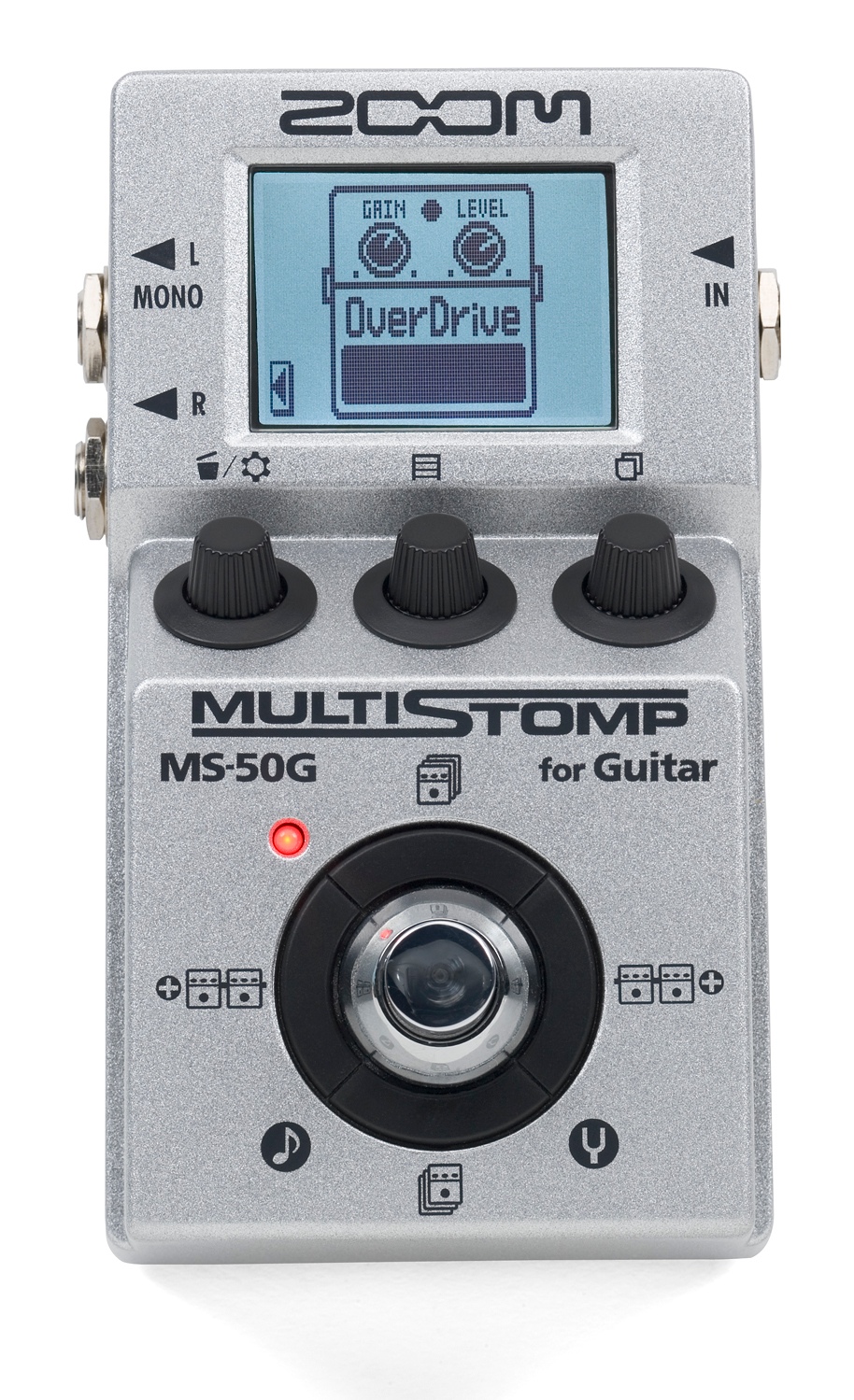
It may sound unbelievable, but it really is true – this small box holds in store a whopping 50 memory slots for your own effect patches. Each effect patch can consist of a signal chain of up to six different effects. The MS-50G offers you 55 different effect types to choose from – featuring everything from compressors and modulation effects all the way to distortions, amp modelling and whacky special effects. Naturally, the MultiStomp also comes equipped with a digital tuner.
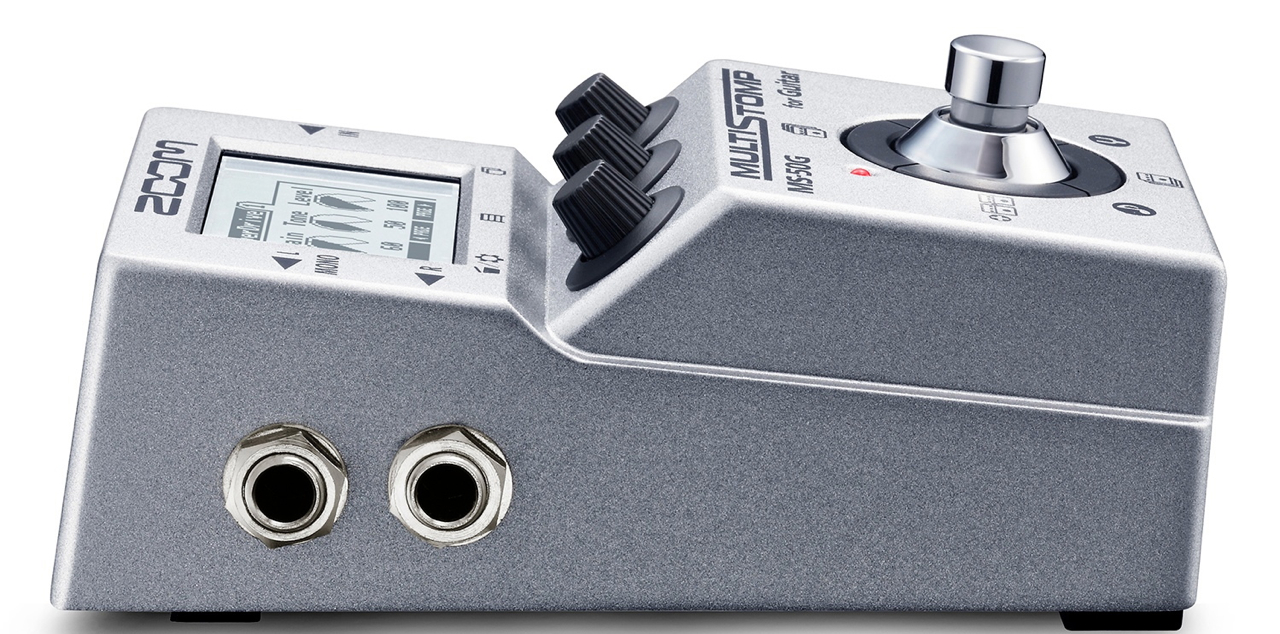
The Zoom MS-50G’s metal casing and its single foot switch feel reasonably chunky. The three parameter control knobs have been mounted at an angle underneath the LCD-display, out of the way of your foot’s path.
The pedal can be used in mono or in stereo. There is no headphones output on the MultiStomp, because it is meant to be used either as a standard guitar effect in front of your amp (or plugged into the effects loop) or for recording, connected straight to the front end of your soundcard or mixing console.

This compact Zoom is powered by two AA-sized batteries, giving you about seven hours of continuous use. Powering the pedal using a PSU (optional) is the more environmentally friendly way of doing things, and Zoom have made it easy for us by sticking to the Boss-standard (9 V, centre plus), making it easy to integrate the MS-50G into your existing pedal board.
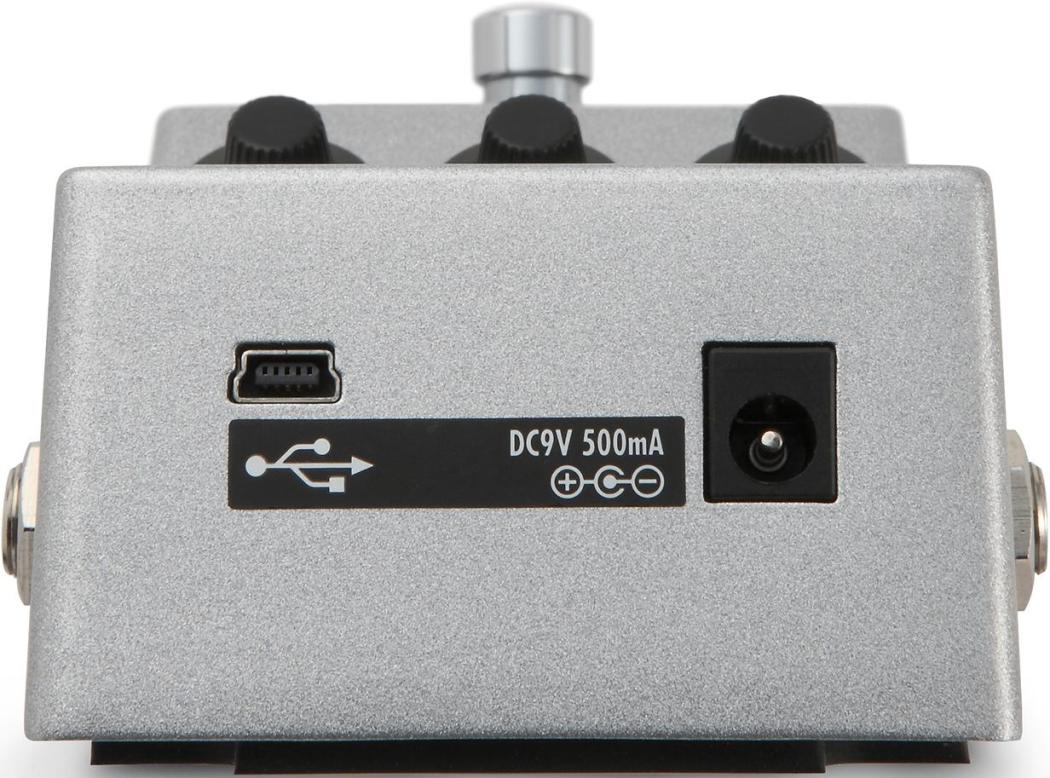
The USB-port on the front of the MultiStomp makes it possible to update the unit’s firmware.
****
There are two main ways of using the Zoom MS-50G’s effect patches:
The first way would be to manually select one patch, and the use the left/right cursor keys to choose the one effect in this patch (like chorus, distortion or delay) that you want to be able to turn on and off using the foot switch while performing. The unit automatically stores which effect you have selected in each given effect patch, so the next time you call up this patch you will already have your chosen effect connected to the foot switch.
The second way of using the Zoom is by utilising the MS-50G’s A/B-mode. A/B-mode allows you to select all the effect patches you will want to use, and put them in a running order by assigning a letter to each of the chosen effects (e. g.: ”SynthStar: A”, ”AsiaPalace: B”, ”PitchDist: C” etc). Once you’ve got your list in order, you can use the foot switch to hop through your list (starting from letter ”A” going up the alphabet). At the end of your list pressing the foot switch will get you back to the first patch in your list.
****
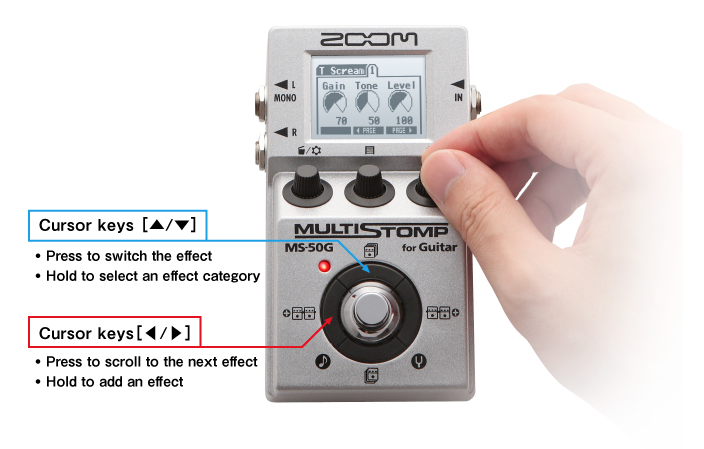
Very compact multieffects usually require a slightly steeper initial learning curve than larger boards, because the limited number of controls and push buttons always means you first have to get to grips with the unit’s user interface. Luckily, thanks to its logical structure and well-designed graphics the MultiStomp is an easy piece of gear to master.

I especially like the Effect Chain view, which makes changes to the order of effects inside a patch very easy. You simply lift the chosen module using the virtual magnet, and drop it where you want it to go.
****

Regardless of its compact size, the Zoom MS-50G MultiStomp is a fully-fledged member of the company’s G-series of guitar multieffects. While the MultiStomp won’t offer you all of the great features and effect types of its larger brethren – the G3 and G5 – the sheer amount of processing power and tasty effects on offer here is truly amazing. For the price of a decent single effect the MS-50G offers you a huge palette of different effects, while only taking up very little space on your pedal board.
****
I used a Tokai SG-75 plugged into the Zoom MS-50G to record all the guitar tracks on the YouTube video:
All of the other soundbites have been lifted from Kitarablogi’s reviews of the Zoom G3 and the larger G5:
Fender Stratocaster – detune – delay
Fender Stratocaster – dirty Tweed – tremolo
Tokai LC-85 – fixed wah – Marshall-type
Tokai LC-85 – phaser – Blackface-style
****
Zoom MS-50G MultiStomp
Current RRP in Finland 99 €
Finnish distributor: Studiotec
****
Pros:
+ value-for-money
+ sound
+ compact size
+ easy to use
+ versatile
Testipenkissä: TC Electronic Flashback X4

****

TC Electronicin uusi Flashback X4 (katuhinta noin 260 €) on hyvin suositun pienikokoisen Flashback-pedaalin isoveli. Pikkupedaalin erinomaista äänenlaatua on luonnollisesti pidetty ennallaan myös uutuudessa, mutta X4 tarjoaa sen lisäksi muutaman uuden efektityypin (ja peräti neljä TonePrint-paikkaa), kolme muistipaikkaa omille asetuksille, sekä neljä jalkakytkintä, jotka helpottavat työskentelyä etenkin 40 sekunnin loopperin kanssa.
Isompi fyysinen olemus on mahdollistanut myös kytkimien ja säätimien huomattavasti väljempää asettelua, mikä sekin lisää roimasti käyttömukavuutta.
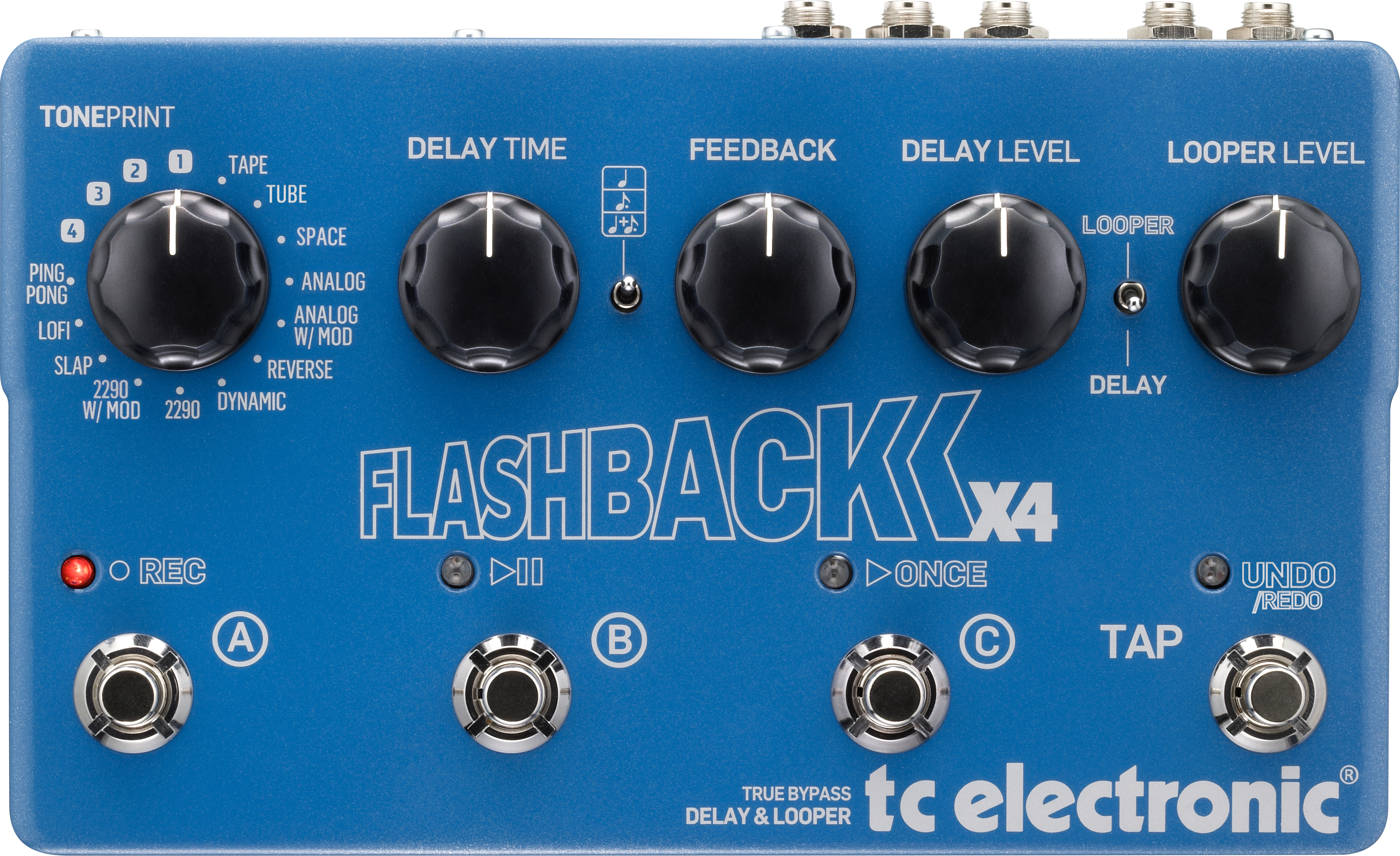
Efektikäytössä valitaan jalkakytkimillä yhden efektiohjelman Flashback X4:n kolmesta – vapaasti muunneltavista – paikoista (A, B tai C). Valitun ohjelmapaikan punainen ledi syttyy ja Tap-kytkimen yllä oleva ledi vilkuu ohjelmoidun tempon mukaan. Luonnollisesti tempoa voi säätää lennossa, joko painamalla Tap-kytkintä tai käyttämällä Delay Time -säädintä.
Loopperi-tilassa neljän jalkakytkimen tarjoaman edun huomaa heti, koska X4:ssä jokaista loopperi-toimintoa varten on varattu oma kytkin.

Flashback X4 tarjoaa myös lisää monipuolisuutta liitettävyytensä puolesta:
Midi-portit mahdollistavat Flashbackin saumatonta sulauttamista olemassa olevaan midi-kytkentäjärjestelmään. X4 ottaa vastaan sekä Midi Clock -tahdistusta, että Program Change -käskyjä efektiohjelmavaihtojen kauko-ohjailua varten.
USB-portin kautta voi ladata TonePrint-ohjelmia TC:n nettisivuilta (biimaus älypuhelimesta toimii myös), sekä päivittää tulevaisuudessa Flashbackin käyttöjärjestelmää.
X4:een voi littää myös ekspressiopolkimen, jolla pystyy säätämään Delay Time-, Feedback- ja Delay Level -asetukset lennossa. Käyttäjällä on vapaat kädet valita yhden, kaksi tai kaikki kolme parametriä säädettäväksi polkimella.
****

TC Electronic Flashback X4 -pedaali on saattu erittäin käyttäjäystävälliseksi, rasian monipuolisuudesta huolimatta.
X4:n äänenlaatu on ammattilaistasoa, ja uudet efektityypit tuovat laitteelle lisäarvoa. Pidän siitä, että TC Electronic on soundin lisäksi hyödyntänyt myös joidenkin alkuperäislaitteiden persoonaallisia ominaisuuksia: esimerkiksi (Roland-nauhakaikua muistuttavan) Space-efektin Feedbackin avaaminen täysille johtaa siihen, että viive-hännän volyymi alkaa nousta ihan särölle asti.
Subdevision-kytkin on oiva työkalu, jolla saa vaivattomasti rakennettua myös hieman monimutkaisempia delay-rykelmiä.
X4:n loopperia on sekin erittäin helppo käyttää laitteen neljän kytkinten ansiosta, ja iso plussa tulee myös siitä, että Flashbackissa voi myös käyttää viive-efektejä looppauksen yhteydessä.
****
Tältä Flashback X4:n efektityypit kuulostavat:
****
TC Electronicin Flashback X4 on mielestäni miltei täydellinen kattaus viive-efektien ystäville. Jotkut kaipaisivat ehkä vielä looppien tallennusmahdollisuutta, mutta muuten X4 ei kyllä jätä millään lailla toivomisen varaa. Pedaalin käytettävyyttä on saatu hämmästyttävän helpoksi ja sen äänenlaatu on ensiluokkainen. Laitteen kolme ohjelmapaikkaa helpottavat kitaristin elämää livetilanteissa, kun tärkeimmät viive-efektit saa tallennettua etukäteen valmiiksi omaa käyttöä varten.
****
TC Electronic Flashback X4
katuhinta noin 260 €
Maahantuoja: Soundtools
****
Plussat:
+ kestävä rakenne
+ monipuolisuus
+ äänenlaatu
+ helppokäyttöinen
+ hinta-laatu-suhde
Miinukset:
– looppeja ei voi tallentaa tai eksportoida
****
Testipenkissä: Zoom MS-50G
****
Japanilaisen Zoomin 9000-sarjan tuotteet olivat 1990-luvulla maailman ensimmäiset huippukompaktit multiefektit kitaralle. Uusi Zoom MultiStomp MS-50G (suositushinta 99 €) jatkaa tätä perinnettä mahduttamalla ison G5-pedaalilaudan (testattu heinäkuussa) digitaalista mallinnusteknologiaa perinteisen pikkuefektin koteloon.
****
Uskomatonta, mutta totta – pikkuloota tarjoaa 50 vapaasti editoitavaa ohjelmapaikkaa, ja jokaisessa efektiohjelmassa (patch) voi ketjuttaa jopa kuusi efektiä peräkkäin. Tarjolla on 55 eri efektityyppiä kompressoreista modulaatioefekteihin ja säröpedaaleista vahvistinmallinnuksiin. Myös kunnon viritysmittari löytyy MultiStompista.
Zoom MS-50G:n metallinen kotelo ja jalkakytkin tuntuvat hyvin kestäviltä. Säätimet on asennettu kynnyksen taakse, siten ettei niihin vahingossa osu kengänpohjalla.
Pedaalissa on kaksi lähtöä, koska sitä voi käyttää joko mono- tai stereofonisena. MultiStompissa ei ole lainkaan kuulokelähtö, sillä se on tarkoitettu puhtaasti lattiaefektiksi livekäytössä tai kytkettäväksi äänikorttiin tai mikseriin studiokäyttöä varten.
Pikku-Zoomi saa käyttövirtansa kahdesta AA-paristosta, joilla luvataan noin seitsemän tunnin yhtäjaksoista soittoaikaa. Virtalähteen (ei kuulu hintaan) käyttö on kuitenkin ympäristöystävällisempi vaihtoehto, ja kun kerran laite on sähkösyötössään Boss-standardiin yhteensopiva, ei tule ongelmia pedaalilautojenkaan virtalähteiden kanssa.
MultiStompin etureunasta löytyy myös USB-portti, joka mahdollistaa laitteen firmewaren päivittämistä.
****
Zoom MS-50G:n efektiohjelmia voi käyttää kahdella eri tavalla:
Ensimmäinen tapa on valita yksi haluttu efektiohjelma, jonka jälkeen pystyy siirtämään navigointinäppäimillä siihen yksittäisiä efektejä, joita haluaa laittaa soiton aikana päälle ja pois MultiStompin jalkakytkimellä (esimerkiksi efektiketjun särö tai chorus). Laite muistaa omatoimisesti jokaisen efektiohjelman kohdalla, mikä yksittäinen efekti oli viimeiseksi valittu päälle/pois-kytkettäväksi, ja tuo efektiketjun seuraavalla kerralla jälleen samalla tavalla näkyviin.
Toinen tapa on käyttää Zoomia A/B-tilassa. A/B-tilassa valitaan ohjelmalistalta niitä efektiohjelmia, joita halutaan käyttää, asettamalla niille järjestyksen kirjaimilla (esimerkiksi: ”SynthStar: A”, ”AsiaPalace: B”, ”PitchDist: C” jne.). Valinnan jälkeen jalkakytkimen polkaisu vaihtaa yhdestä ohjelmasta seuraavaan järjestyskirjainten aakkosjärjestyksessä. Viimeisen efektiohjelman kohdalla hypitään kytkinpolkaisulla takaisin valittujen ohjelminen alkuun.
****
Hyvin kompaktissa efektilaitteessa täytyy aina ensin oppia laitteen käyttölogiikka, koska yleensä runsaat ominaisuudet ja parametrit ovat ohjailtavia rajoitetulla määrällä painikkeita ja säätimiä. Lyhyen tutustumisajan jälkeen Zoomin MultiStompilla tulee kuitenkin erittäin hyvin toimeen, sen loogisen käyttöliittimen ja hyvän graafisen toteutuksen ansiosta.
Erinomainen Effect Chain -näkymä auttaa suuresti hahmottamaan jokaisen efektiohjelman signaalitietä. Virtuaalisen magneetin avulla voi muuttaa yksittäisten efektien järjestystä ”nostamalla” niitä ja siirtämällä niitä yhdestä paikasta toiseen.
****
Pienestä koostaan huolimatta on Zoom MS-50G MultiStomp firman G-sarjan kitaraefektien täysikasvuinen jäsen. Vaikka pikku-Zoomi ei tarjoa kaikkia isoveljiensä – G3 ja G5 – hienouksia ja myös sen efektien määrä on hieman supistettu, on tässä tarjottujen efektien runsaus ja soundin laatu suorastaan ällistyttävä. Perinteisen lattiaefektin hinnalla saadaan tässä siis laadukas multiefekti, joka vie kuitenkin vain yhden pedaalin verran tilaa.
****
Äänitin Zoom MS-50G:llä ja yhdellä sähkökitaralla (Tokai SG-75) Youtube-videon kaikki kitaraosuudet:
Muita soundiesimerkkejä lainasin tällä kertaa Kitarablogin aiemmista Zoom G3- ja G5-jutuista:
Fender Stratocaster – detune – delay
Fender Stratocaster – dirty Tweed – tremolo
Tokai LC-85 – fixed wah – Marshall-type
Tokai LC-85 – phaser – Blackface-style
****
Zoom MS-50G MultiStomp
suositushinta 99 €
Maahantuoja: Studiotec
****
Plussat:
+ hinta-laatu-suhde
+ soundi
+ kompakti
+ helppokäyttöinen
+ monipuolinen


Review: TC Electronic Röttweiler + The Dreamscape

****

TC Electronic’s Röttweiler-distortion (current street price in Finland 129 €) specializes in brutal distortion sounds, and doesn’t waste any time on sissy stuff.
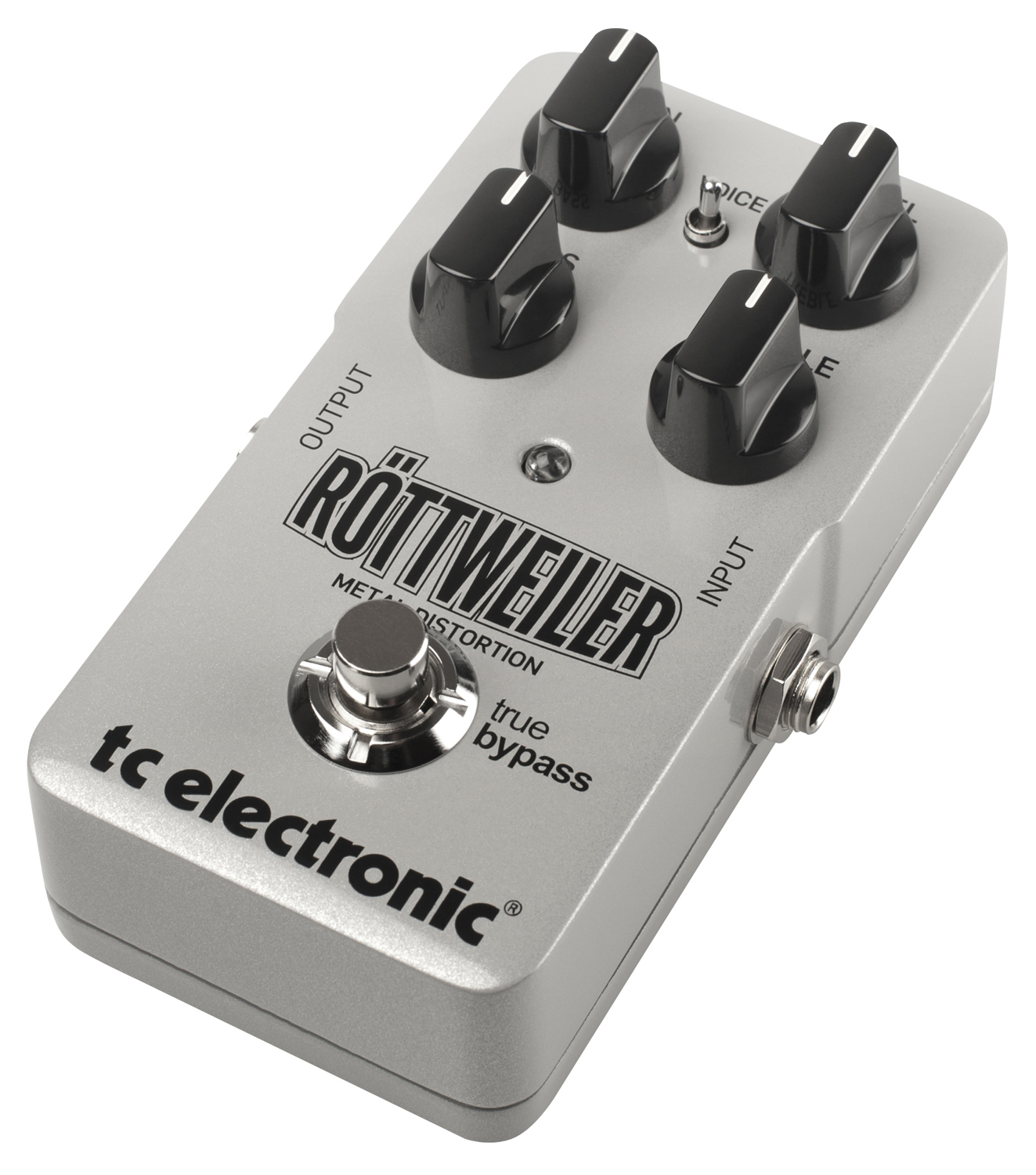
The gain control takes you from quite a lot of distortion to complete über-Metal-mayhem – so don’t go looking for besuited and well-behaved Blues-tones here. The Voice-switch gives you two different shades of brutal: One selection is fatter in the mid-range for more classic Hard Rock and Metal stuff, while the other selection gives you the scooped out tones favoured in many contemporary styles. The pedal also offers bass and treble controls for fine-tuning your tone.
The TC Electronic Röttweiler is a brilliant tool for the Metal-aficionado, which turns any amp into a high-gain monster stack.
Here are three sound clips, which Miloš Berka recorded using a seven-string Schecter into a clean amp setting:
****

TC Electronic’s The Dreamscape (current street price in Finland 245 €) is John Petrucci’s signature effect pedal. It contains six different modulation effects, as well as one memory slot for a Tone Print.
The Dreamscape can be run in mono as well as in stereo. If you take off the bottom plate you’ll gain access to two tiny switches – one allows you to select either true or buffered bypass, while the other enables you to set the pedal to wet signal only, which is handy if you use the Dreamscape in a parallel effects loop.
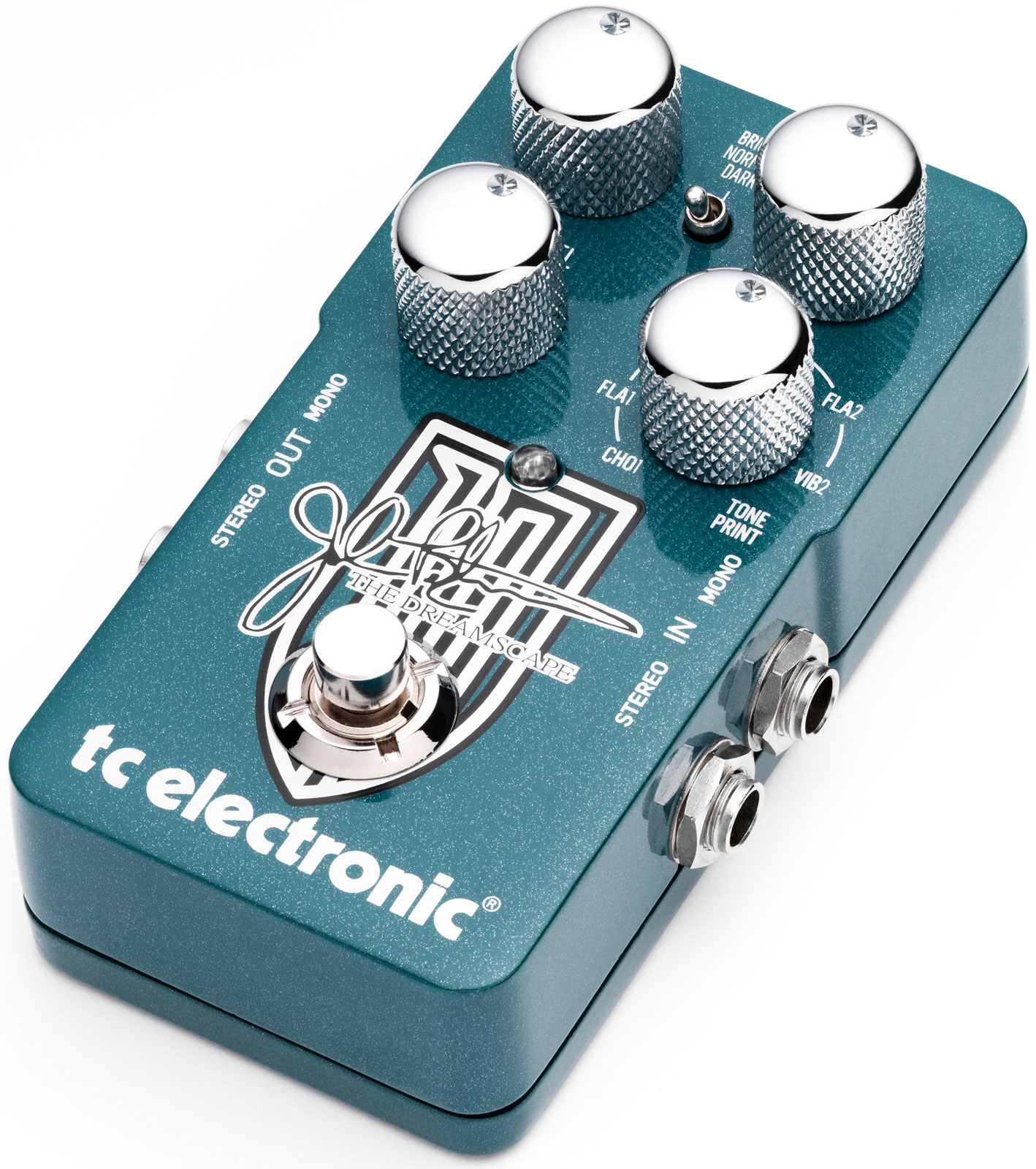
The Dreamscape comprises controls for depth, speed and level. A three-way mini-toggle lets you select between three different EQ curves – from soft and dark to bright and upfront.
John Petrucci has chosen and grouped the six effects in such a way that the effects numbered ”1” are suited to his clean styles, while the second variations go with his overdriven tones. Personally, I wouldn’t draw so drastic a line, as I got great results with any of the six effects in all types amp of settings. This pedal’s main idea is in offering two distinctly different versions each of the three effect types included – namely chorus, flanger and vibrato – that behave and sound different to each other.
Here are some example sounds I recorded using a Fender Stratocaster:
At 245 € the TC Electronic Dreamscape is the priciest Tone Print -pedal to date. Some of the price will surely be a signature pedal premium. But you shouldn’t forget the fact that John Petrucci’s pedal also offers six different effects plus one Tone Print -slot in one compact package. Looking at the Dreamscape from this angle makes the higher retail price sound much more reasonable.
****
TC Electronic guitar pedals
Finnish Distributor: Soundtools
****
Röttweiler Distortion
current street price 129 €
Pros:
+ compact
+ specialized tool for Metal
+ great sound
+ versatile in its own genre
Cons:
– Voice-switch in a tight spot
****
The Dreamscape
current street price 245 €
Plussat:
+ compact
+ six modulation effects
+ Tone Print -enabled
+ versatile
+ also works in stereo
Cons:
– higher price than other Tone Print -pedals
– Bright-switch in a tight spot
****
Testipenkissä: TC Electronic Röttweiler + The Dreamscape
****
TC Electronicin Röttweiler-särö (katuhinta 129 €) on erikoistunut rankkoihin soundeihin, eikä haaskaa aikaa turhalle hienostelulle.
Gain-säätimen vaikutusalue ulottuu kovasta säröstä vielä kovempaan — Blues-tyylisiä pikkusärösoundeja on Röttweilerilta siis turha etsiä. Kaksiasentoinen Voice-kytkin tarjoaa kaksi eri perussoundia: off-asennossa keskialue on tuhdimpi klassisia Hard Rock- ja Metal-soundeja varten, kun taas on-asennossa Röttweilerista lähtevät purevammat Thrash-soundit, joissa on selvästi vähemmän matalaa keskialuetta (engl. scooped mids). Soundien hienosäätöön pedaali tarjoaa vielä sävynsäätimet bassolle ja diskantille.
TC Electronic Röttweiler on loistava erikoistyökalu metallimusiikin ystäville, joka saa jokaisen vahvistimen kuulostamaan tulikuumalta high gain -stäkiltä.
Tässä kolme esimerkkisoundia, joita Miloš Berka soitti seitsenkielisillä Schecterillä puhtaan vahvistimeen:
****
TC Electronic The Dreamscape (katuhinta 245 €) on John Petruccin nimikkopedaali, joka sisältää kuusi modulaatioefektiä sekä yhden Tone Print -muistipaikan.
Dreamscape-pedaalia voi käyttää sekä mono- että stereofonisissä ympäristöissä. Pohjalevyn alla löytyy muista Tone Print -efekteistä tutut kaksi minikytkintä, jolla voi valita suoran tai bufferoidun bypass-tilan välillä, sekä kytkeä efektoimattoman signalin kokonaan pois pedaalin lähtöistä, kun käyttää rinnakaiskytkennöllä olevaa efektilenkkiä.
Dreamscapen säätimillä voi vaikuttaa valitun efektin syvyteen (depth), vatkauksen nopeuteen (speed), sekä pedaalin lähtötasoon. Kolmiasentoinen minikytkin tarjoaa efektoidun signaalin kolmella eri kirkkaudella – tummasta ja miedosta Dark-vaihtoehdosta kirkkaan ja selkeään Bright-valintaan.
John Petruccin valitsemat efektit on ryhmitetty kitarasankarin omien tarpeiden mukaan niin, että kolmen efektin ykkösvaihtoehto on sellainen, jonka Petrucci käyttää puhtaissa soundeissa, ja kakkonen on tarkoitettu särösoundeille. Itse en vetäisi rajan ollenkaan niin tiukasti, sillä sain kaikilla kuudella efektillä hyviä soundeja aikaiseksi. Pedaalin juju on mielestäni juuri siinä, että jokaisesta efektityypistä on olemassa kaksi erilaisia versiota, joilla on hieman erilainen soundi, ja jotka reagoivat eri tavalla säätöihin.
Olen äänittänyt tällaiset pätkät Fender Stratocasterilla:
TC Electronic The Dreamscape on 245:llä eurolla kallein Tone Print -pedaali. Osa hinnasta on luultavasti nimikkomallin lisäys, mutta toisaalta tarjoaa tämä pedaali samassa paketissa peräti kuusi erilaista, laadukasta modulaatioefektiä sekä yhden Tone Print -muistipaikan. Pedaalin monipuolisuuden valossa hinta ei kuulostaa enää kovin pahalta.
****
TC Electronic -kitarapedaaleja
Maahantuoja: Soundtools
****
Röttweiler Distortion
katuhinta 129 €
Plussat:
+ kompakti
+ erikoistunut Metal-musiikkiin
+ hyvä soundi
+ omassa genressään monipuolinen
Miinukset:
– Voice-kytkin ahtaassa paikassa
****
The Dreamscape
katuhinta 245 €
Plussat:
+ kompakti
+ kuusi modulaatioefektiä
+ Tone Print -muistipaikka
+ monipuolinen
+ stereofoninen
Miinukset:
– muita Tone Print -pedaaleja korkeampi hinta
– Bright-kytkin ahtaassa paikassa
****
Review: Akai Drive3 Fuzz – Blues Overdrive – Deluxe Distortion

To a guitarist overdrive- and distortion-pedals are like handbags to women – you can never have too many!
No wonder, as distortions and overdrives vary widely in character and sound, while being the most important ingredients in most players’ tone.
The Akai Analog Custom Shop’s new range of effect pedals has recently arrived in Finland, which provided a handy opportunity for test-driving three of their shiny boxes.
****

The Akai Drive3 Fuzz (current street price in Finland: 69 €) is Akai’s stylish solution to all your fuzzy needs.
The Drive3 monicker alludes to one special treat, called up by the mini-switch on the face of the pedal: the Fuzz-pedal is equipped with two different fuzz circuits – in Warm-mode the signal is run through a diode-based circuit, while Muffy (named in honour of a certain Electro-Harmonix classic) uses an LED to break up the sound. The centre position, named Boost, runs the signal through both circuits at once, which boosts the signal significantly, while providing yet another colour to play with.

All Analog Custom Shop pedals use bent stainless steel for their chassis, giving them a very sturdy and trustworthy feel. The whole range is build with true bypass, meaning that whenever a pedal is switched off, the signal is routed directly from the input to the output.
The Akai pedals are powered either via a 9 V battery (included) or a Boss-type power supply (optional).

The fuzz-effect is the forefather of all distortion pedals, and works by mercilessly clipping and overloading its internal circuit. It is the caveman of distortions and solves every job by using a big club, and loving it.
This is why fuzz-pedals tend to completely run the show once they’re engaged, negating much in the way of a guitar’s own character and inherent dynamics in the process.
The Akai Drive3 Fuzz is a stonking fuzz-pedal, and surprisingly versatile, mostly thanks to the Drive3-switch and its useful tone control. Set to Warm the Fuzz’ sound is just that and creamier than what I would have expected. The Muffy mode, on the other hand, gives you plenty of unruly bite. In Boost the Akai Fuzz turns into the mother-of-all-fuzz-pedals, a dense über-fuzz pumped up with an additional 6 dB worth of boost.
Rough and edgy is the name of the game with compression levels bordering on the insane – just what the doctor ordered! Keeping the fuzz control below 9 o’clock you can even play chords, but the Akai Fuzz’ bread and butter are dirty power chords and snarling lead lines – just like it should be. Fuzz-a-licious!
This is what my Strat sounded like played through the Akai Fuzz (all guitar tracks): Akai Drive3 Fuzz
****

The Akai Blues Overdrive (current street price in Finland: 69 €) is the company’s offering for the purist. You only have to deal with two knobs – Drive and Level – that’s it.

The Akai Blues Overdrive’s sound is precisely what I look for in a good overdrive effect. The Drive-pot takes you from a warm clean boost all the way to creamy and chunky Bluesrock, with many different shadings along the way.
The pedal preserves all of your chosen instrument’s character, and responds very nicely to different playing techniques and dynamics, as well as to volume control use. Because of the Blues Overdrive’s warm nature I never felt the need for a tone control on the pedal.
This is truly a fine overdrive with a high goosebumps-factor!
Here’s my Strat plugged into the Blues Overdrive: Akai Blues Overdrive
****

If ultimate versatility floats your boat, Akai’s Analog Custom Shop also has the right pedal for you: the Akai Deluxe Distortion (current street price in Finland: 79 €) is a control freak’s wet dream, offering 3-Band EQ (with adjustable mids), as well as switches for Drive3-selection, EQ-Mode, High Cut and Dir Rec (= direct recording).
Just as in the Fuzz pedal, the Drive3-feature allows you to select either diode- or LED-distortion, as well as using them both in conjunction. The High Cut switch is self-explanatory, cutting some top end off of the signal. The EQ-Mode-switch gives you access to three different types of EQ-curves, so you can tailor your sound more precisely to your needs. Dir Rec, for its part, engages the pedal’s analogue speaker-simulator, should you decide to inject the Deluxe Distortion directly into a mixing console or a soundcard.

Akai’s Deluxe Distortion is a versatility monster, with plenty of gain on offer to cover all bases. Coupled with the excellent EQ-section the pedal opens the door to the whole gamut of distortion tones:
– 70s Rock? No problem, man!
– Creamy Fusion-solos? Here we go!
– Mercilessly cutting Thrash Metal? Covered!
– Demented detuned Doom-riffs? Count it in!
In the highest gain settings there’s some hiss creeping into the picture, naturally, but it’s not really a problem. If you want one distortion pedal to do it all, you should definitely check out the Akai Deluxe Distortion!
Again, a Strat has been used for this bit: Akai Deluxe Distortion
****
Akai Analog Custom Shop pedals
Finnish distributor: Studiotec
****
Akai Drive3 Fuzz
street price: 69 €
Pros:
+ price
+ sound
+ sturdy build
+ versatility
****
Akai Blues Overdrive
street price: 69 €
Pros:
+ price
+ sound
+ sturdy build
+ dynamics
****
Akai Deluxe Distortion
street price: 79 €
Pros:
+ price
+ sound
+ sturdy build
+ versatility
+ speaker simulation
Cons:
– some hiss in higher Drive-settings
****
 Kitarablogi.com – Finland's premier Guitar and Bass blog