Testipenkissä: Halla Custom Hallabird

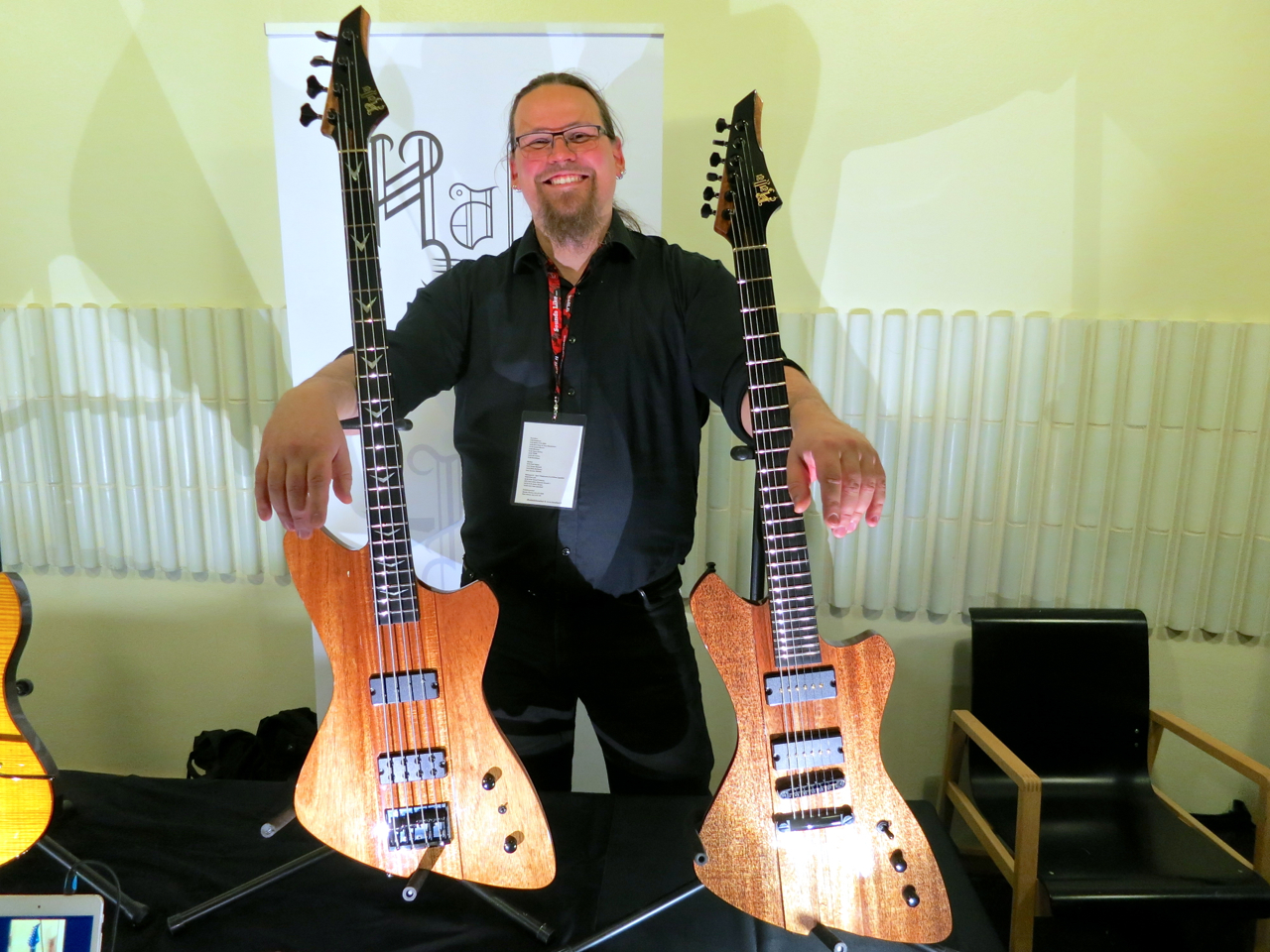
Näin Halla Customin Hallabird-kitaran ensi kertaa vuoden alussa pidetyssä Tonefestissä, jossa se oli esillä soitinrakentaja-artesaani Ville Mattilan ständillä samantyylisen basson kanssa.

Siitä bassosta koko Hallabird-ajatus lähti alun perin liikkeelle. Ville oli rakentanut omaan käyttöönsä Gibson Thunderbirdiltä vaikutteita saaneen sähköbasson. Ville sai keikoilla niin paljon myönteistä palautetta uudesta bassostaan, että hän päätti tehdä samoilla designperiaatteilla myös sähkökitaran.

****

Halla Customin Hallabird (3,700 €; mm. kova laukku kuluu hintaan) on käsintehty kaula-läpi-rungon kitara täydellisellä natural-viimeistelyllä.

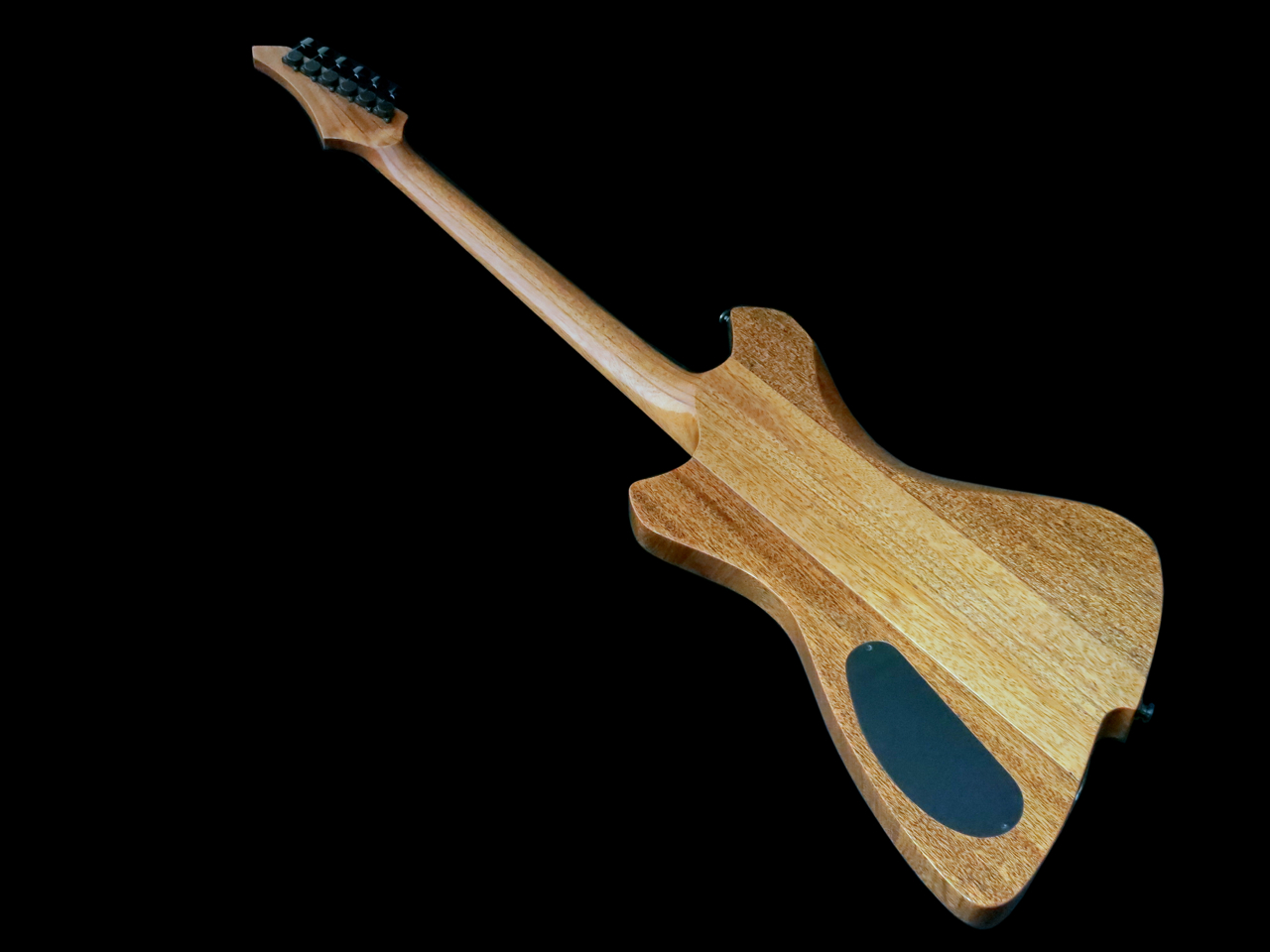
Kitaran kaula on kasattu yhdeksästä vierekkäisestä puurimasta, jossa afrikkalainen mahonki (khaya ivorensis) ja pähkinäpuu vuorottelevat. Kaulan perusrakenne on siis hyvin Gibson-tyylinen, mutta mensuurin suhteen Hallabird lähtee omille teilleen. Tässä custom-kitarassa on nimittäin erikoispitkä mensuuri (kielten soivan osan pituus), joka on 67 senttimetreillä kaksi senttiä Strato-mesuuria pidempi.

Kitaran tyylikäs ja solakka runko muodostuu kahdesta khaya-palasta.
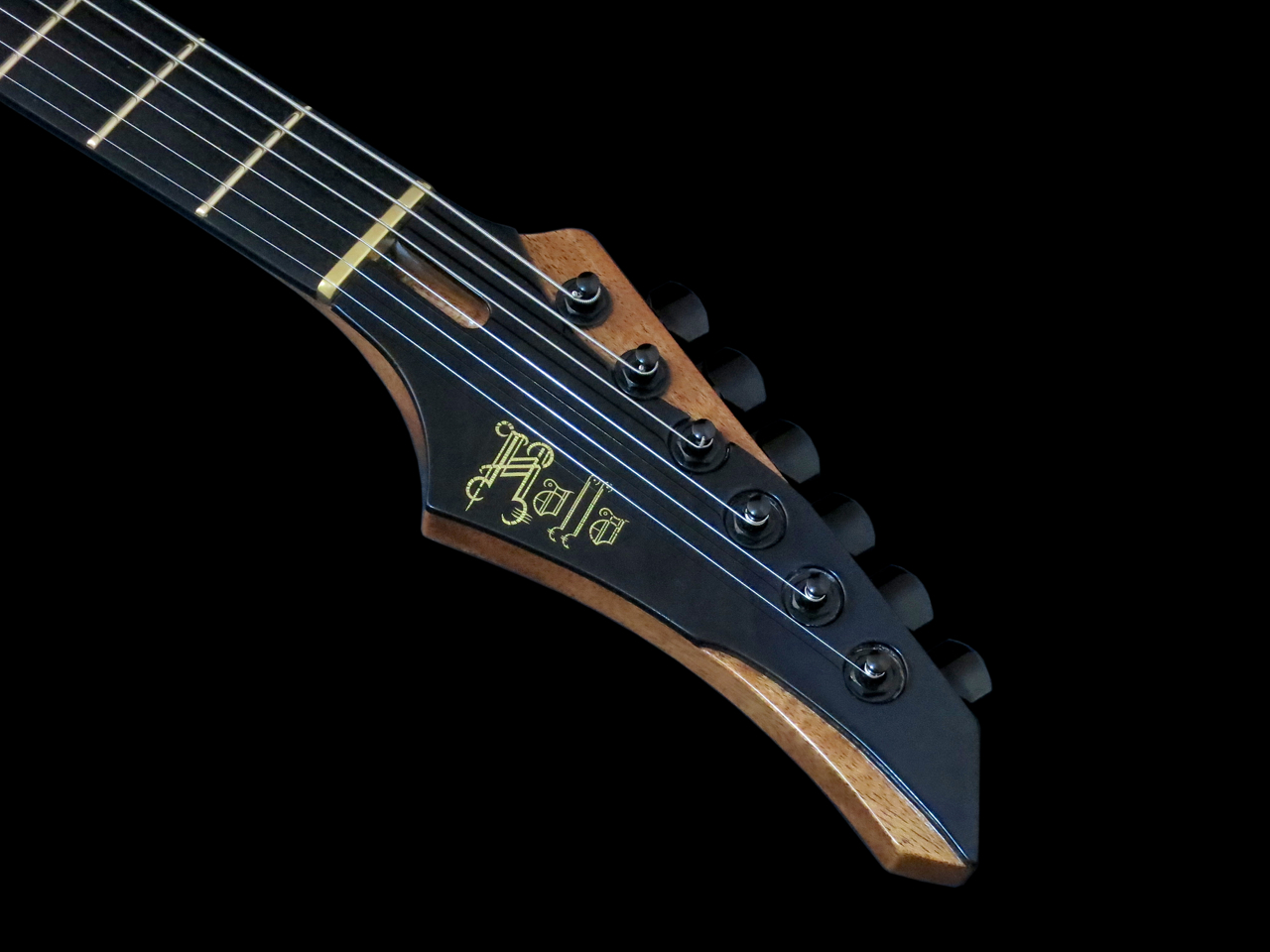
Hallabird-mallin mustat metalliosat tulevat Gotohilta. Soittimen messinkisatula lisää avoimien kielten soittoon hieman diskanttia. En ole tähän mennessä koskaan kohdannut näin sulavasti muotoiltua messinkisatulaa.

Kaksisuuntaista kaularautaa pääsee säätämään tässä Halla Custom -kitarassa viritinlavalta.

Hallabirdin eebenpuiseen otelautaan on asennettu 24 kiiltävää Jescar Evo jumbonauhaa. Nauhatyön laatu on esimerkillinen. Tällaista laatua on miltei mahdotonta löytää edes kalliimmissa tuotantolinjan soittimissa.
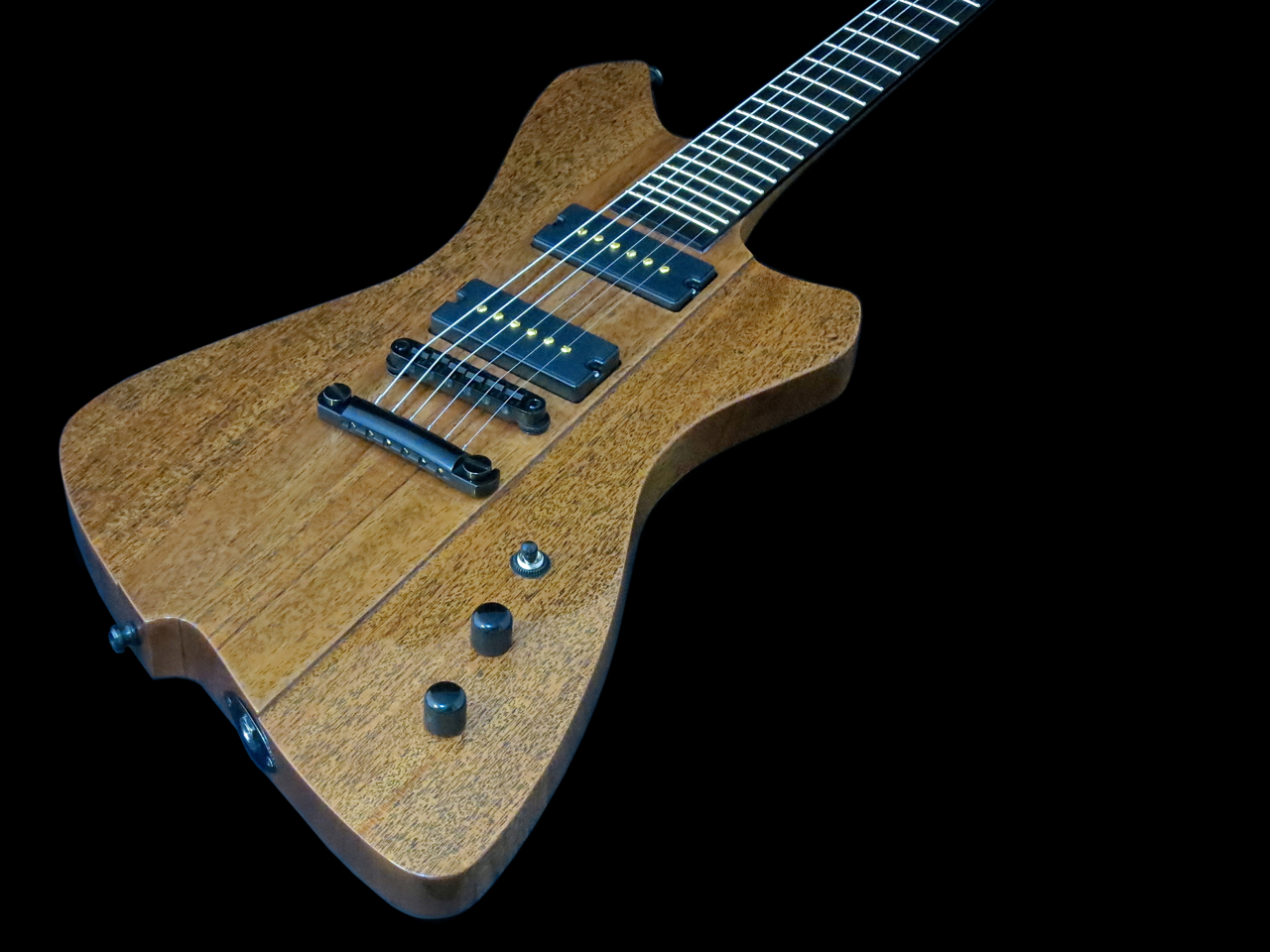
Virittimien tavoin myös Hallabirdin tune-o-matic-talla ja palkkimainen kieltenpidin ovat laadukkaita Gotoh-osia.

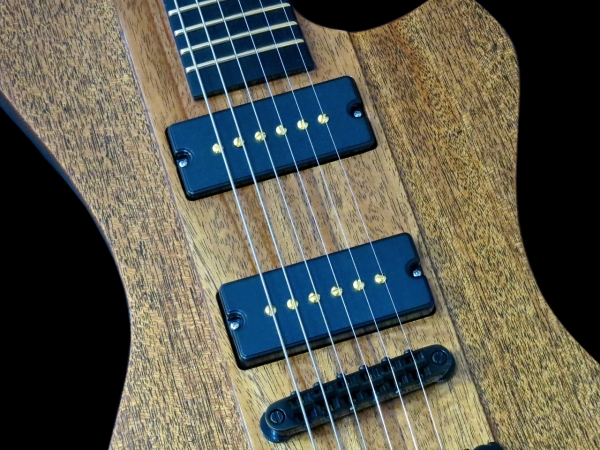
Ville Mattila käyttää monissa Halla Custom -malleissa oman pajan mikrofoneja. Hallabirdistä löytyy kaksi P-90-tyylistä mikkiä, jotka on sovitettu taitavasti EMG-tyylisiin muovikuoriin. Yhteiskäytössä mikit toimivat humbuckerin tavoin. Mikrofonien kultaiset naparuuvit ovat hieno yksityiskohta, joka sopii hyvin yhteen mallin Jescar EVO -nauhojen ja afrikkalaisen mahongin kanssa.

Hallabirdin säätimissä piilee vielä yksi mielenkiintoinen yksityiskohta. Kitaran kolmiasentoinen vipukytkin ja myös sen mastervolume (ilman treble-bleediä) toimivat odotetusti, mutta toisen mustan nupin alta paljastuukin kolmiasentoinen kiertokytkin. Ville kutsuu tätä kytkintä impedanssikytkimeksi, joka vaikuttaa sekä kitarasignaalin diskanttipitoisuuteen että volume-säätimen käyttäytymiseen. Impedanssikytkimellä pystyy siis hienovirittämään volume-säätimen tuntumaa omaan musiikkigenreen ja vahvistimeen sopivaksi.

****
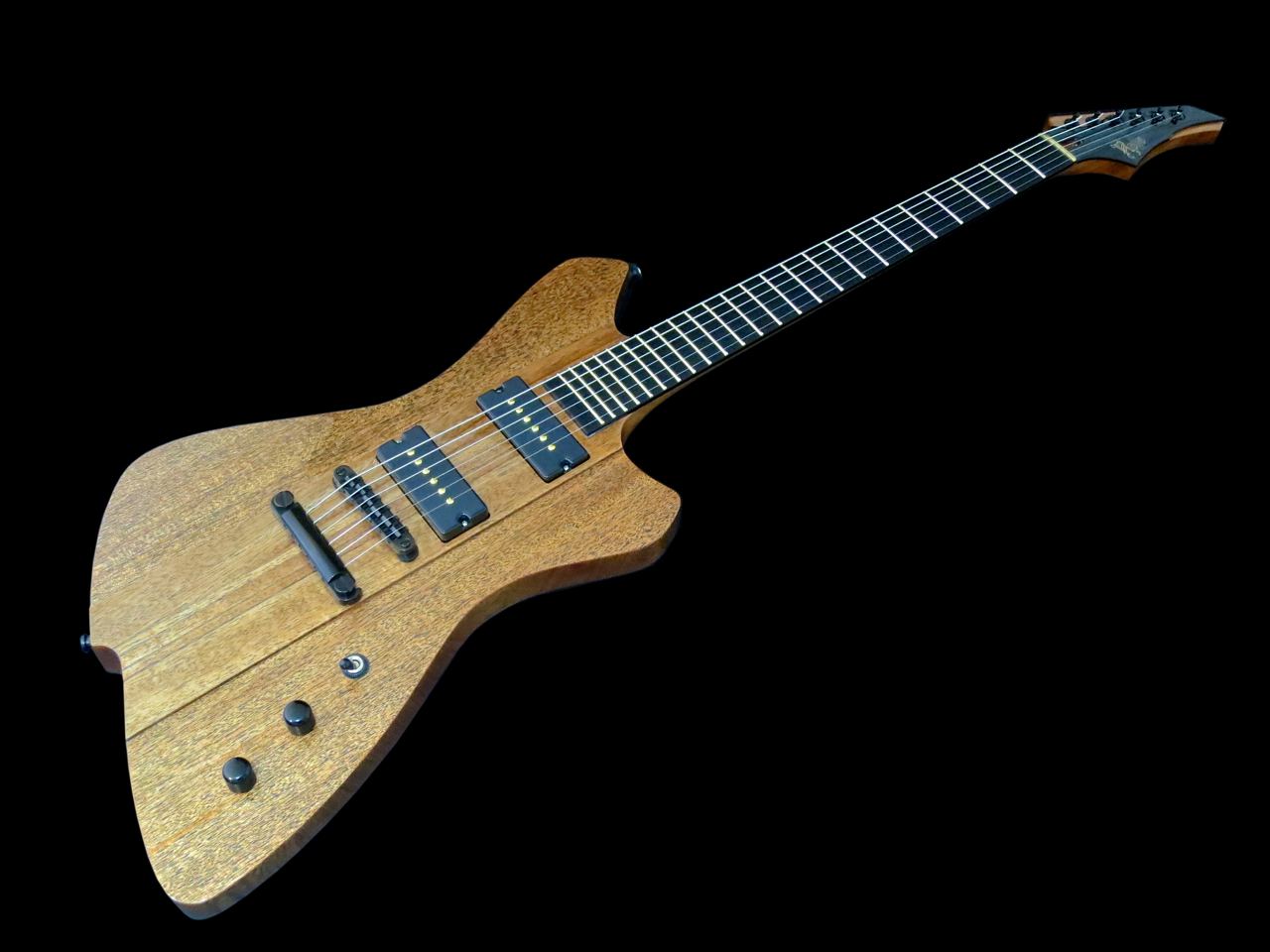
Halla Customin Hallabird on helvetinmoinen kitara. Ville Mattila on onnistunut luomaan sellaisen soittimen, joka näyttää samalla tutulta ja tuoreelta. Kitara on samanaikaisesti hillitty ja huomiota herättävä tapaus. Työnjälki on ensiluokkaista pienintä yksityiskohtaa myöten.

Pitkiä sessiot tai keikat eivät tunnu missään, koska Hallabird on niin kevyt. Non-reverse rungon ansiosta Hallabirdin tasapaino hihnassa on myös hyvin mukava, erikoispitkästä kaulasta huolimatta.

Kaulaprofiili on mukavan lihaksikas ja pyöreä, ilman että se tuntuisi kömpelöltä. Erinomaisen nauhatyön ja loistavan trimmin ansiosta kitaran kymppisetti tuntuu erittäin nopealta ja kevyeltä. Veikkaisin, että tällaisella setupilla monet soittajat eivät edes huomaisi testikitaran pidempää mensuuria. Asiakas pystyy kuitenkin tilaamaan oman unelmakitaransa omien speksien mukaan.

Hallabirdissä on tarkka, pianomainen atakki, sekä pitkä ja tasainen sustain. Kielten välinen erottelevuus on ensiluokkainen, jopa hyvin tiheitä sointuja soitettaessa. Soundissa on erinomainen balanssi lämmön ja avoimuuden välillä.

P-90-tyyliset mikrofonit ovat oiva valinta, jos hakusessa on humbuckerin soundillinen leveys ja voima yhdistettyinä yksikelaisen mikin dynamiikkaan. Vaikka sen ulkonäkö on melko ”rock”, pystyy Hallabirdillä kuitenkin liikkumaan ongelmitta myös kantrimusiikin tai Jazzin piireissä.

Nämä kaksi ääniklippiä on äänitetty 1980-luvun Boss SD-1 säröpedaalilla ja Bluetone Shadows Jr. -putkikombolla:

Demobiisissä käytin komppikitaroissa 80-luvun Ibanez SC10 chorusta, sekä Morleyn M2 Wah -pedaalia soolo-osuuksissa. Vahvistin oli tässäkin Shadows Jr.:

****

Halla Customin Hallabird on hyvin kaunis ja erittäin hyvin soiva käsintehty sähkökitara, joka on suomalaisen kitararakennuksen huipputason loistokas hedelmä. Hallabirdin Rock-asenteen takana löytyy hyvin monipuolinen soitin vaativalle soittajalle.

Luonnollisesti, tällaisella huippulaadulla on aina myös hintansa. Mutta vastineeksi saa tässä aidon boutique-luokan soittimen, jonka takana seisoo osaava ja omistautunut käsityöläinen.

****

Halla Custom Hallabird
Käsintehty kaula-läpi-rungon kitara

3,700 € – hintaan sisältyy: kova laukku, boutique-luokan kitarajohto, laadukas hihna (Schaller-lukoilla), yksi ilmainen säätökäynti (6-12 kk jälkeen), sekä elinikäinen tekninen tuki

Lisätiedot: Halla Custom Instruments

Plussat:

+ suomalaista käsityötä

+ työnjälki

+ soitettavuus

+ soundi

****

Halla Customsin Ville Mattila on Suomen Soitinrakentajien Killan jäsen.HmSave

Save

Save

Save

Save

Save

Save

Save

Save

Save

Save

Save

Save

Save

Save

Save

Save

Save

Save

Save

Save

Save

Review: Hagström Fantomen

You could call Hagström’s Fantomen (Swedish for The Phantom) a signature guitar of sorts, as it has been designed in collaboration with Swedish Metal band Ghost.

In terms of its outline the Fantomen is not a million miles removed from Gibson’s forgotten Seventies classic the RD, which was sunk by the ill-advised addition of active electronics. The Hagström Fantomen, in contrast, has been designed as a straightforward and practical, yet versatile, electric guitar for the Rock and Metal guitarist. Let’s take a look…

****

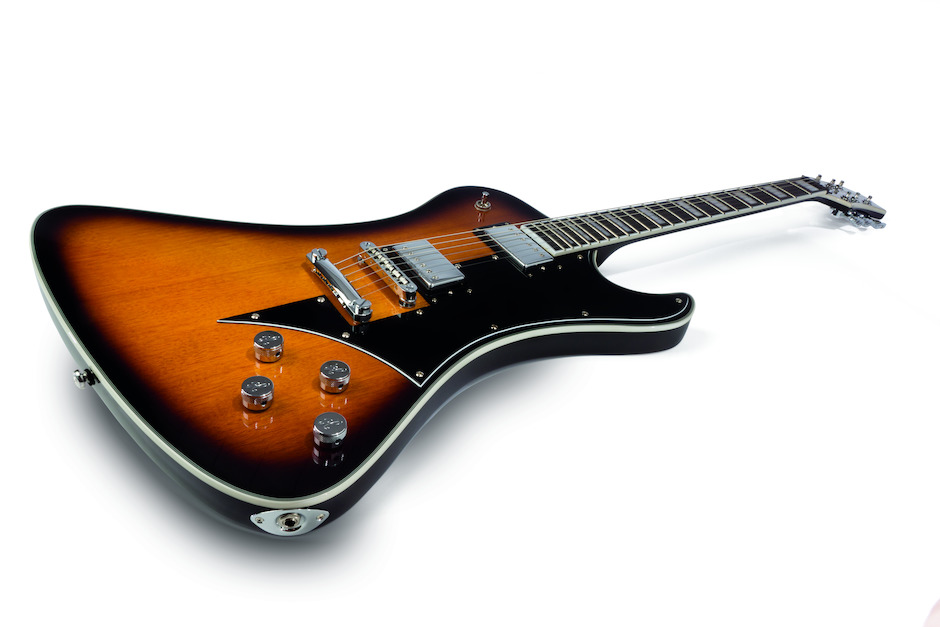
The Hagström Fantomen (current price in Finland ca. 850 €) marries a set mahogany neck to a relatively thin mahogany body (3.5 cm/1.38″).

The Fantomen is available in black and white finishes, too, but I must say that the sunburst finish on our test sample is a stunner, really showing off the two-piece body’s wood grain.

The front of the body sports multi-ply binding, while a comfortable ribcage chamfer has been added to the back.

Hagström’s stylish headstock is a bona fide design classic, as are the stepped tuner buttons.

Two special features are included in all Hagström models:

The Hagström H-Expander truss rod is an ingenious piece of engineering. The adjustable rod sits inside a metal rail with an H-shaped cross-section. The entire assembly is then inserted into a slot of the same shape that has been cut into the neck wood. The H-Expander requires less wood to be removed than any of the other traditional truss rod designs, which is a good thing for the structural integrity of the neck, which in turn benefits the guitar’s tone and sustain.

Hagström has also long been favouring its proprietary Resinator-material for all of the company’s fingerboards. Long before the recent ban of genuine rosewoods was even on the horizon, Hagström found a way to bond sustainable wood slivers and resin into man-made ebony, calling the material Resinator.

The Fantomen has a Fender-style scale of 64.8 cm (25.5″) and offers 22 medium-jumbo frets on its 15-inch radius fretboard.

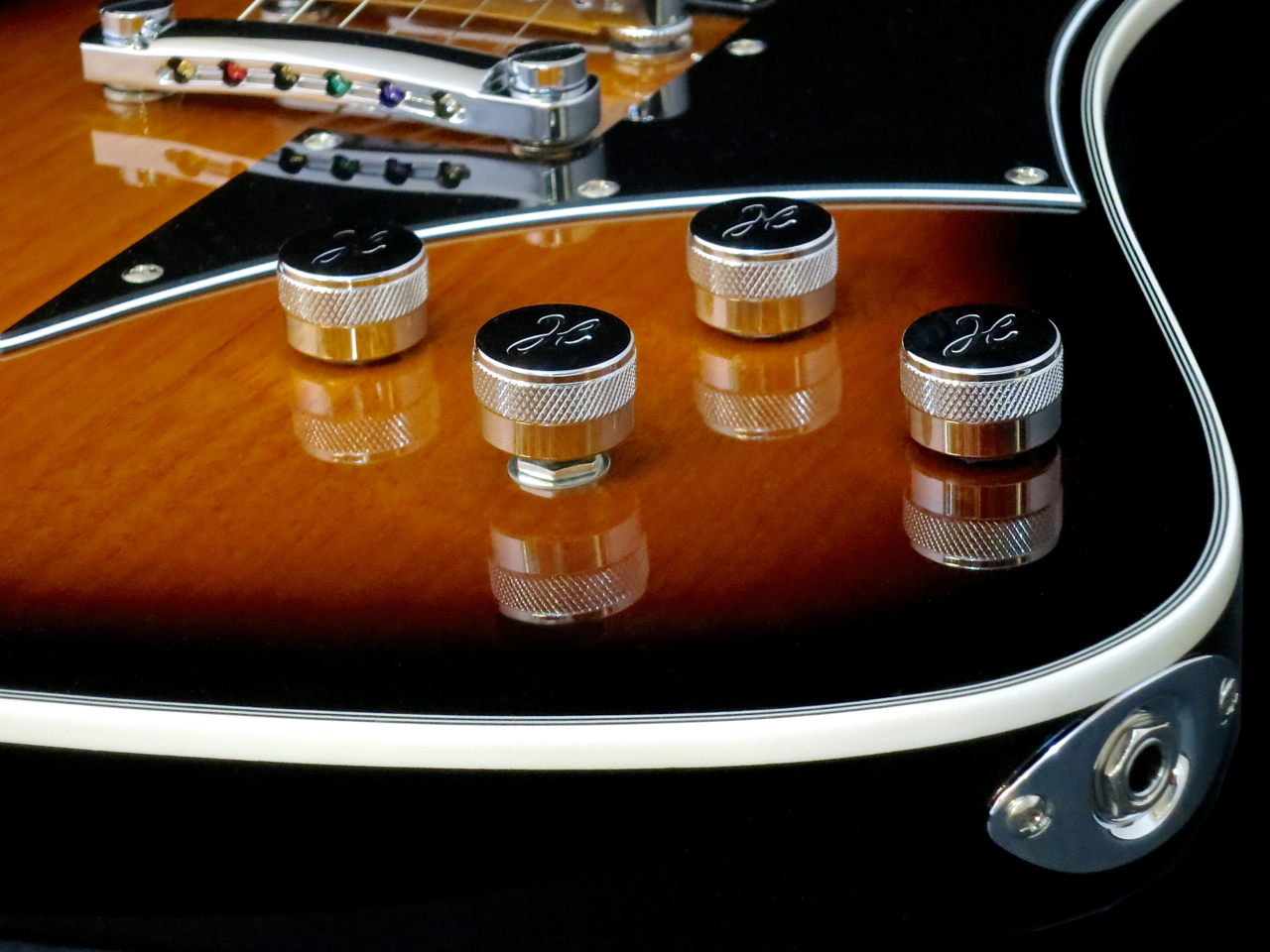
The chrome hardware further comprises a tune-o-matic-type bridge and a stopbar tailpiece, as well as a set of Hagström’s H-embossed knurled control knobs.

For their Fantomen model Hagström turned to Swedish pickup guru Johan Lundgren, who designed a set of Far Eastern Lundgren Designed humbuckers for the model.

The neck humbucker is loaded with an Alnico II magnet, while the bridge unit uses a stronger Alnico V version.

The Gibson-type control setup of two volumes and two tones is further augmented by push/pull-switches in the tone controls that split the humbuckers.

****

For such a comparatively large-bodied guitar the Hagström Fantomen is rather comfortable to ”wear” and play. Our test sample’s weight is on the moderate side of medium.

The neck profile is a slim D and the excellent, buzz-free setup makes the test sample a real player. The fretwork is very competent, even though our test guitar’s frets would have benefitted from a few minutes more attention during polishing. Straight out of the box there’s a tiny amount of coarseness you can feel during bends, which will disappear by itself, though, simply by playing the Fantomen regularly.

The decision to use humbuckers with a moderate output level in the Fantomen really pays off. The tones this Hagström delivers are nuanced, dynamic and three-dimensional. The Fantomen is a guitar that faithfully translates a player’s touch into music, meaning it can be gentle just as well as aggressive. The coil splits go a long way in providing fairly authentic single-coil sounds for those Fendery moments.

Here is a clip showing you the six main pickup selections played through a Bluetone Shadows Jr. boutique combo. The full humbucker settings come first:

The demo song was recorded using a Juketone True Blood amp (Tweed Champ clone) and a Bluetone Shadows Jr. combo. No pedals were used:

****

Even though the Fantomen was designed in collaboration with a Metal band, Hagström haven’t fallen into the trap of creating a one-dimensional, balls-to-the-wall screamer. The looks may say ”Rock”, but Hagström’s Fantomen also offers fine clean tones, turning this model into a great all-rounder.

****

Hagström Fantomen

Current price in Finland approx. 850 €

Finnish distributor: EM Nordic

Pros:

+ workmanship

+ sound

+ versatility

+ value for money

Cons:

– gigbag not includedSave

Save

Save

Save

Save

Save

Save

Save

Save

Save

Save

Review: Halla Custom Hallabird

I first saw the Halla Custom Hallabird at this year’s Tonefest, where luthier-artisan Ville Mattila displayed it alongside its bass brother.

It was actually the bass that served as the original impetus for the Hallabird. Ville had made a slightly Gibson Thunderbird-influenced bass for his own use. The bass got so much positive attention that Ville decided to put more bread on the water, which is why he developed a guitar model along the same design ideas.

****

The Halla Custom Hallabird (3,700 €; including case and more, see below) is a handmade neck-through guitar with a flawless clear finish.

The through neck is made from nine long strips of wood – African mahogany (khaya ivorensis) offset with walnut. While the neck construction follows Gibson’s lead, the Hallabird takes its own path when it comes to scale length. This custom guitar comes with an extra long scale length of 67 cm (that’s approximately 26.37 inches for our Imperial readers).

The streamlined body wings have been crafted from khaya, too.

The Hallabird comes equipped with black Gotoh-hardware. This guitar also sports a brass nut to insert a little brightness into the open strings. This is probably the smoothest brass nut I’ve seen in my guitar-playing life.

Access to the two-way truss rod is from the headstock end on this Halla Custom guitar.

Twenty-four gleaming Jescar Evo jumbo frets have been installed into the Hallabird’s ebony fingerboard. The fretwork is nothing short of excellent – this is one of the areas where a handcrafted guitar tends to outshine production models, regardless of their price.

Gotoh’s hardware is known for its consistently high quality, and the Hallabird’s TOM-bridge and stopbar are no exception.

Ville Mattila mostly uses his own pickups in his Halla Custom guitars. The Hallabird comes equipped with a pair of handmade P-90s, niftily placed inside EMG-style plastic covers. The pickups are reverse-wound/reverse-polarity, meaning they act as a humbucker, when used together. The pickups’ golden polepieces look great with the Jescar EVOs and the khaya mahogany.

The Hallabird’s electronics are a little bit different than what you’d expect, judging by the knobs. There’s a three-way toggle for pickup selection, as well as a master volume control (sans treble bleed). What looks like a tone control is in fact what Ville calls a three-way impedance rotary. While the rotary switch minutely changes the treble content of the overall signal, it clearly influences the volume control’s roll-off taper. This allows you to fine-tune the way the guitar’s volume control reacts to your playing style and your amplifier.

****

Halla Custom’s Hallabird is one heck of a guitar. It is one of these rare cases, where a new design manages to look classic and fresh at the same time. A guitar that is understated, yet flashy. The quality of workmanship is excellent down to the smallest details.

The Hallabird is very lightweight, making it an ideal choice for long sessions or gigs. Thanks to the guitar being a non-reverse design, the Hallabird balances very nicely despite its longer-than-usual neck.

The neck profile is reassuringly round and chunky, without feeling clunky or unwieldy. Thanks to the outstanding fretwork the Hallabird came with a setup that made a set of 010s feel very slinky, even on the extra long scale neck. I’m quite sure many players won’t even notice the extra scale length, but if you wanted to order something more ordinary, I’m sure that Ville would happily oblige.

Acoustically, the Hallabird displays a piano-like attack with a long and even sustain. Note separation is excellent, even with complex chords, and there’s a great balance between warmth and clarity.

P-90s are a fantastic choice if you need humbucker-type power and girth, coupled to a single-coil’s dynamics. Even though its looks are probably a little ”too Rock”, the Hallabird can glide effortlessly into Country and Jazz mode, and then turn into a Rock machine at the proverbial drop of a hat.

These two clips have been recorded using a 1980s Boss SD-1 and a Bluetone Shadows Jr. boutique combo:

For the demo song I used a 1980s Ibanez SC10 chorus pedal on the rhythm guitars, and a Morley M2 Wah for the lead, through the Shadows Jr.:

****

Halla Custom’s Hallabird is a great-sounding and classy-looking guitar, made by somebody who clearly knows what he is doing. Don’t be fooled by the Classic Rock looks – this is a very versatile instrument for the discerning player.

Naturally, handcrafted quality like this never comes cheap. This is a true boutique guitar, made by a trained luthier-artisan highly dedicated to his craft.

****

Halla Custom Hallabird
Handmade neck-through electric guitar

3,700 € – includes hard case, high-end guitar cable, quality strap (with Schaller locks), one free setup (after 6-12 months of use), and lifetime tech support

Contact: Halla Custom Instruments

Pros:

+ handcrafted in Finland

+ workmanship

+ playability

+ sound

****

Halla Customs’ Ville Mattila is a member of the Guild of Finnish Luthiers.HmSave

Save

Save

Save

Save

Save

Save

Save

Save

Save

Save

Save

Save

Nyt myös Suomessa – Chapman Guitars

Musamaailman tiedote:

Chapman Guitars tulee!

”Greetings, I’m Rob Chappers!”

Nämä sanat ovat tärähtäneet kitaristien tärykalvoille Rob Chapmanin YouTube-kanavasta jo yli 200 miljoonaa kertaa.
Nyt meillä on ilo ja kunnia ilmoittaa, että miehen perustama Chapman Guitars -kitaramerkki rantautuu Suomeen Musamaailman maahantuomana! Vielä tämän kuun aikana meille tulee mahtavia Chapman ML1 Pro Modern- sekä Chapman ML3 Pro Modern -kitaramalleja. Myöhemmin kesällä valikoima laajenee lisää.

Save

Now on Soundcloud: Halla Custom Hallabird

Halla Custom Hallabird
Handmade neck-through electric guitar

• Made in Finland
• 9-stripe khaya/walnut through-neck
• khaya body wings
• long scale – 67 cm/ 26.37″
• ebony fingerboard
• brass nut
• 24 Jescar Evo frets
• two-way truss rod
• black Gotoh hardware
• two Halla Custom P-90 pickups
• three-way toggle, master volume, three-way impedance switch
Contact: halla.tv/

Amp used – Bluetone Shadows Jr.
Pedals used – 1980s Ibanez SC10 Chorus (rhythm guitars), Morley M2 Wah (lead guitar)
Mic used – Shure SM57

Save

Review: Tokai TST-50 Modern

Tokai Guitars’ extremely well-made Japanese – uhm – tributes to classic electric guitars from the 1950s and ’60s were one of the main reasons why industry giants, such as Fender and Gibson, started their own Far Eastern brands, like Squier and Epiphone, in the Eighties.

Yet Tokai doesn’t cling slavishly to the past, instead the company is also regularly coming up with up-to-date versions of their best-loved models. Their newest updated Strat-style electric is the Tokai TST-50 Modern (999 €; comes with a hard case), which was developed in cooperation with Tokai Guitars Nordic.

****

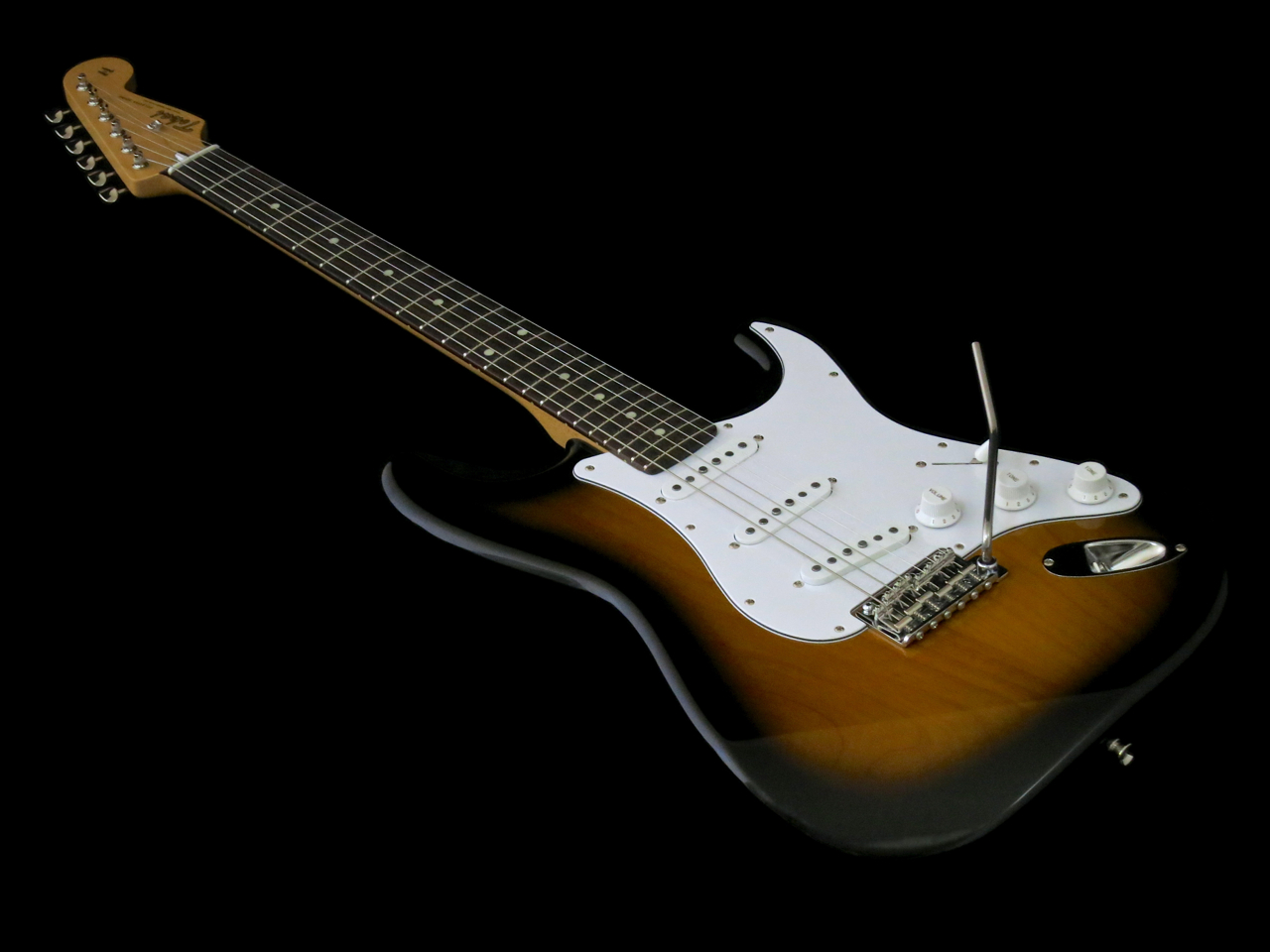
You could be forgiven to think the TST-50 Modern was a cracking 1960s reissue model at first glance, especially as some of the basic ingredients are virtually identical:

We find a bolt-on maple neck with a rosewood fretboard, and a premium class alder body adorned with a beautiful two-tone sunburst finish.

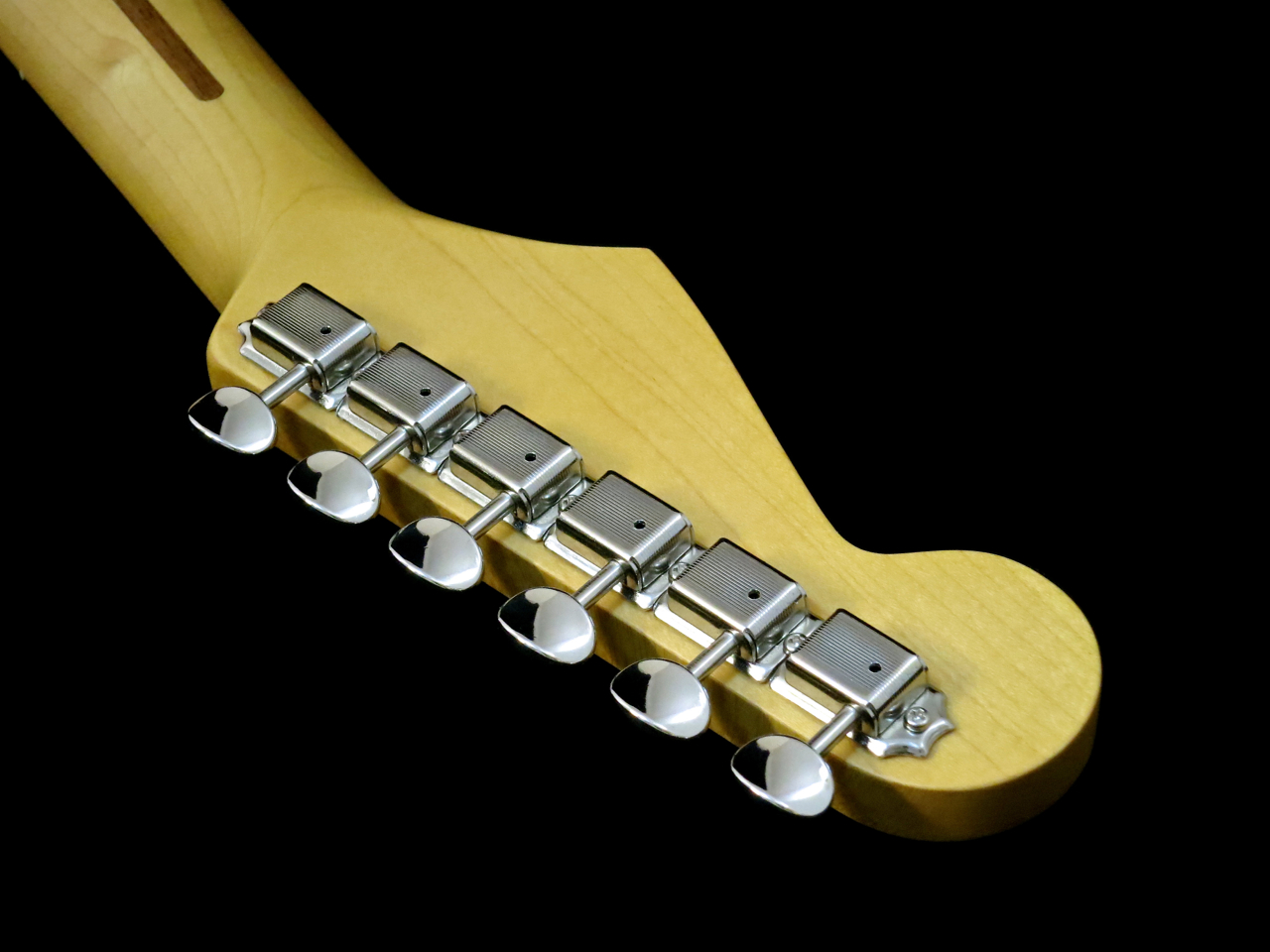
But a closer look at the headstock gives us a clue that this isn’t a run-of-the-mill TST-50:

A bullet truss rod adjuster on the TST-50 Modern allows you to tweak your neck relief without having to detach the neck from the body, as on vintage style S-type guitars. But despite the bullet truss rod, Tokai have chosen – wisely, in my opinion – to stick with the original four-screw neck attachment.

The Tokai TST-50 Modern comes with a 9.5 inch fingerboard radius, which means that the feel is slightly flatter than on vintage Stratocasters (that usually feature a 7.25 inch radius), but still more curved, and thus more Fender-ish, than Gibson’s flatter 12 inch radius. The TST-50 Modern also sports chunkier frets (Dunlop 6105), making it easier to play than the thin wire used on vintage originals. In combination with the flatter fingerboard radius the bigger frets also make string bending a great deal less work. As a final flourish this models gives you an additional fret (22 instead of 21).

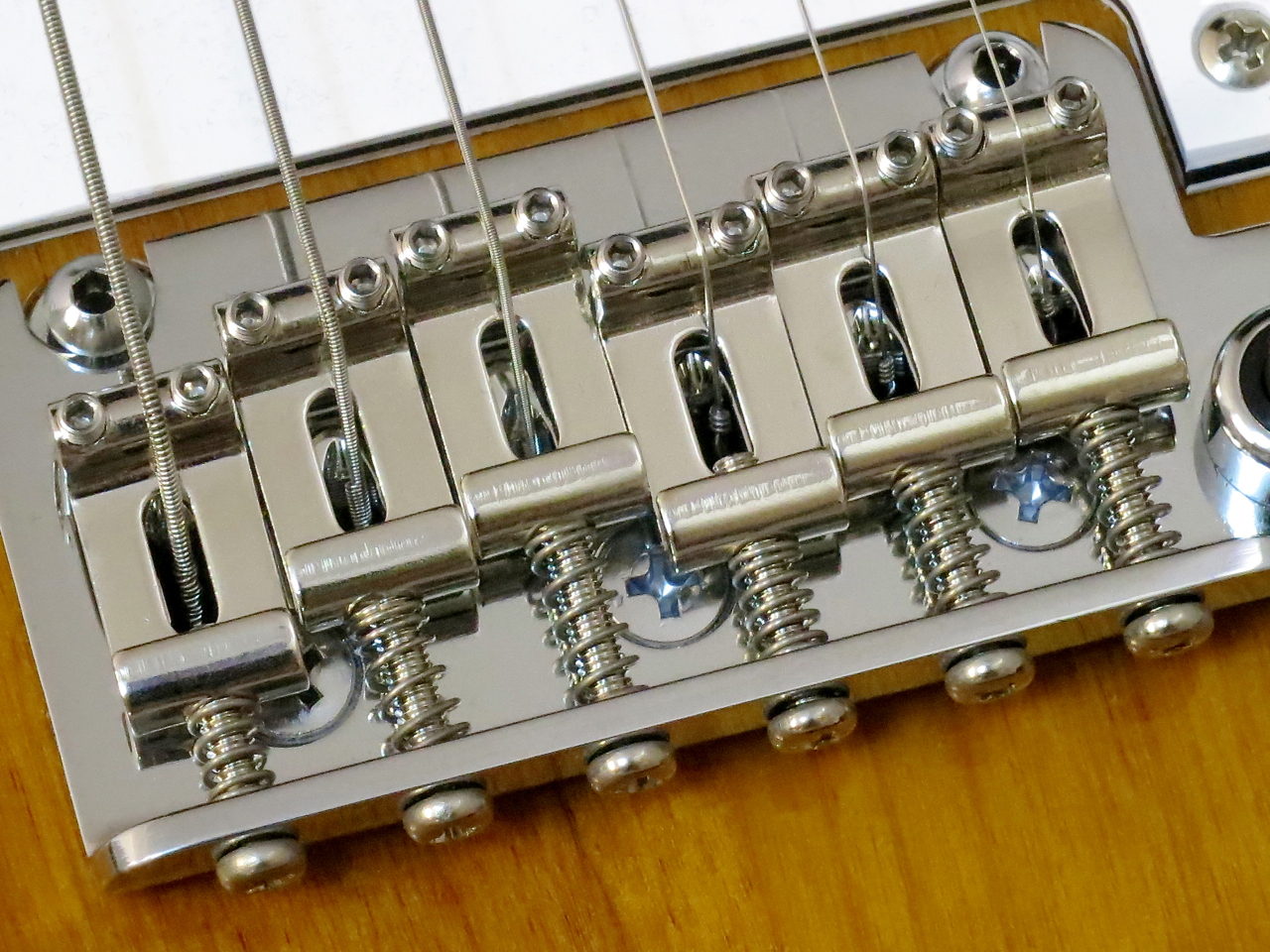
The classic six-screw Stratocaster vibrato bridge was a huge engineering achievement back in 1954. No other vibrato offered that much travel, coupled with excellent sound and very fair return to pitch.

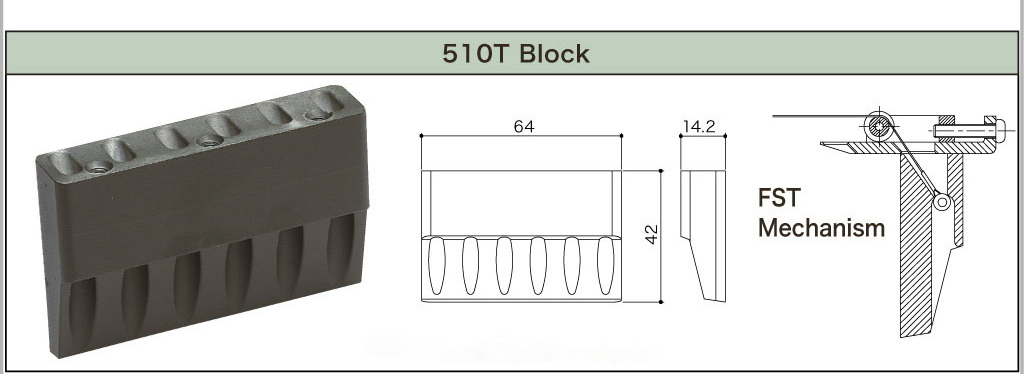
Now – 60 years later – many players do look for an even smoother and more precise ride, than what the vintage model can offer. For these guitarists the Tokai TST-50 Modern offers a modern, two-post vibrato bridge – the Gotoh 510T model.

Gotoh’s 510T-vibrato comes with the company’s groundbreaking FST-block. The string channels inside the FST-block have been drilled much deeper than in a vintage block, which anchors the ball ends much closer to the bridge plate. The strings then pass the bridge plate at a shallow angle, without being pressed hard against the plate’s sharp edges. Thanks to Gotoh’s FST-system the vibrato’s return to pitch is improved vastly, because the strings’ ball ends stay in place firmly. Additionally, this system cuts down significantly on string breakages due to friction between the strings and the bridge’s base plate (like normally seen on vintage Strat bridges).

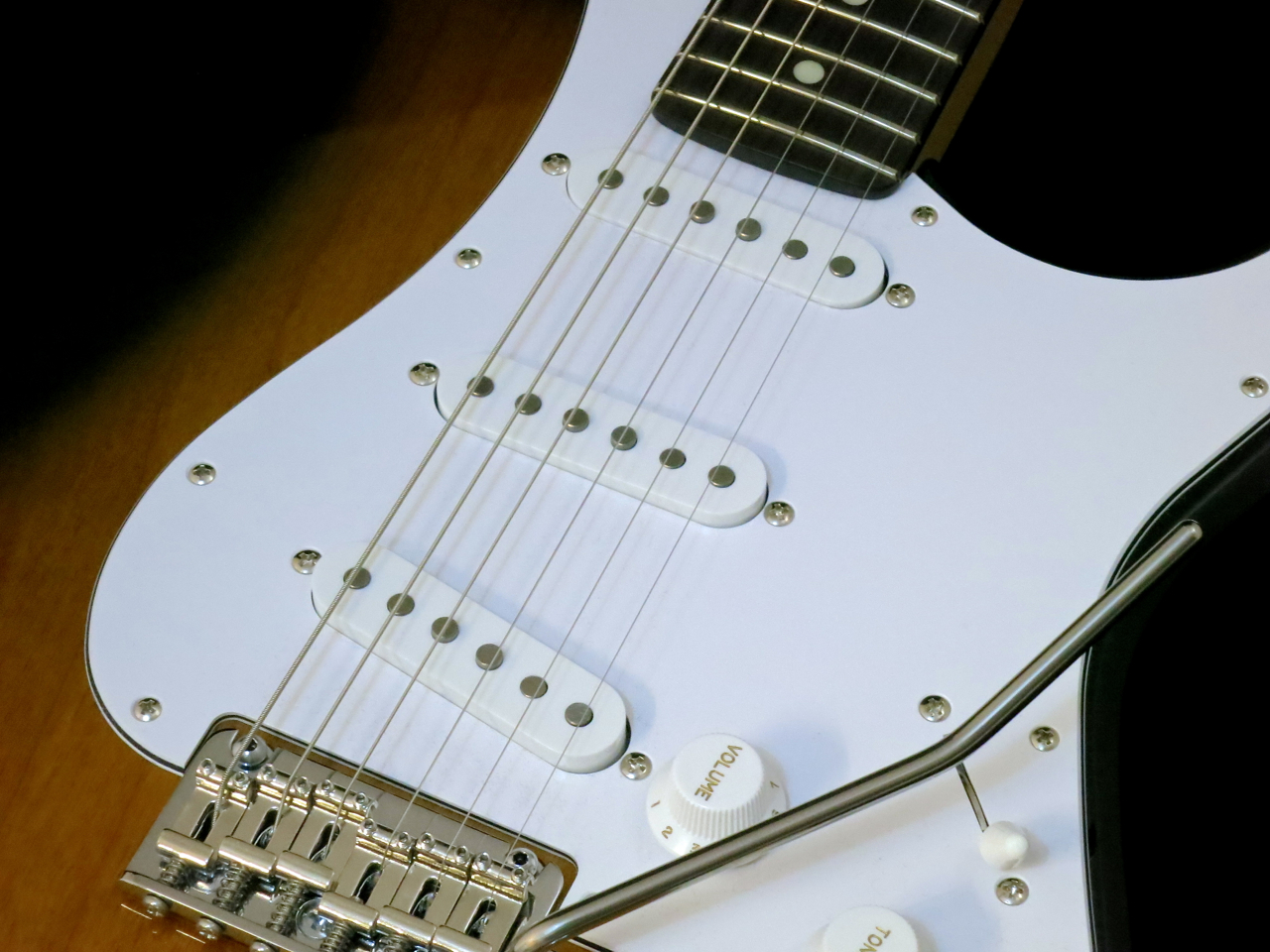
When it comes to its pickups and control layout, Tokai’s TST-50 Modern follows a classic footpath – a trio of Tokai’s acclaimed Vintage ST pickups, along with a five-way switch, a master volume, and tone controls for the neck and middle pickups. Hidden beneath the three-layer scratchplate there’s a humbucker routing, in case you want to customise you guitar further.

****

Vintage or modern, fans of Strat-style guitars expect a high level of ergonomics from their instrument, and Tokai’s Japanese TST-models never disappoint. All the body contours have been copied from the famous 1957/58 originals – it doesn’t get any more streamlined than this.

The satin-finished neck features an oval C-profile, which is just the Sixties-type of neck shape I enjoy the most on an S-style guitar. Thanks to the flatter fretboard radius and the medium-jumbo frets, the playing feels of the TST-50 Modern is similar to that of a well-loved, much-played, and refretted vintage model (but without any scratches or dents, of course).

The Gotoh 510T vibrato works like a dream. It’s smooth and precise, but doesn’t add any unwelcome metallic overtones or sharpness to the sound (unlike some Floyd Rose bridges).

The Tokai TST-50 Modern sounds like a top-drawer Strat should.

Here’s a clip with the Tokai TST-50 Modern plugged into a hand-wired Tweed Champ clone (a Juketone True Blood):

I’ve used Electro-Harmonix’ Germanium 4 Big Muff Pi and Nano Big Muff Pi pedals on the demo track (in addition to the Tokai and a Blackstar HT-1R valve combo):

****

Gear reviewers often face criticism for not ”dishing the dirt” on the equipment they test, but in the Tokai TST-50 Modern’s case there isn’t really anything negative to write about. This is an extremely well-made updated version of the most famous electric guitar of them all. The Tokai combines modern playability with delicious vintage sounds.

****
Tokai Guitars TST-50 Modern

999 € (quality hard case included)

Finnish distribution: Musamaailma

Pros:

+ Japanese craftsmanship

+ sensible updates

+ playability

+ sound

+ outstanding value-for-money

Save

Save

Save

Save

Save

Save

Save

Save

Save

Save

Save

Save

Save

Save

Save

Save

Save

Pidä blogia WordPress.comissa.

Ylös ↑