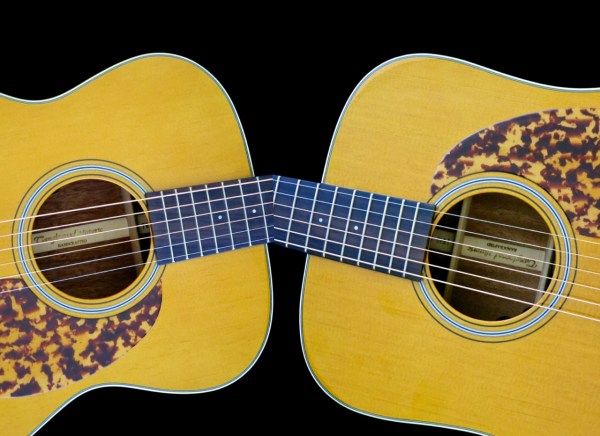
This review could also carry the headline: ”Tanglewood brings vintage to the masses”. Tanglewood’s Sundance Historic guitars have been designed to give you plenty of that ”pre-war” charm at very player-friendly prices. Take the two models on review, for example, which have price tags well below 700 Euros, despite even coming with on-board Fishman pickups and preamps!
The TW40O-AN-E and the TW40D-AN-E are both quite reminiscent of certain legendary Martin-models from the 1930s and 40s.
****
The Tanglewood TW40O–AN-E (current price in Finland 673 €) is the Sundance Historic series’ version of a Martin OM-18 model – the first Martin steel-string acoustic to feature a neck joint at the 14th fret when it was introduced in the Thirties.
Tanglewood’s TW40D-AN-E (673 €) is a tip of the hat to Martin’s D-18, which is the most copied, most referenced steel-string of all time. Even Gibson went out and bought a Martin in 1960, so they could use it to reverse engineer their own Hummingbird and Dove models.
Both of these models can also be had without the pickup system for 598 Euros each.
The necks of the TW40O and the TW40D have been built in the traditional fashion employed on classical guitars:
The neck is a one-piece mahogany affair – headstock and all – save for a separate, glued-on neck heel.
The bodies are crafted using solid spruce tops and laminated mahogany rims and backs.
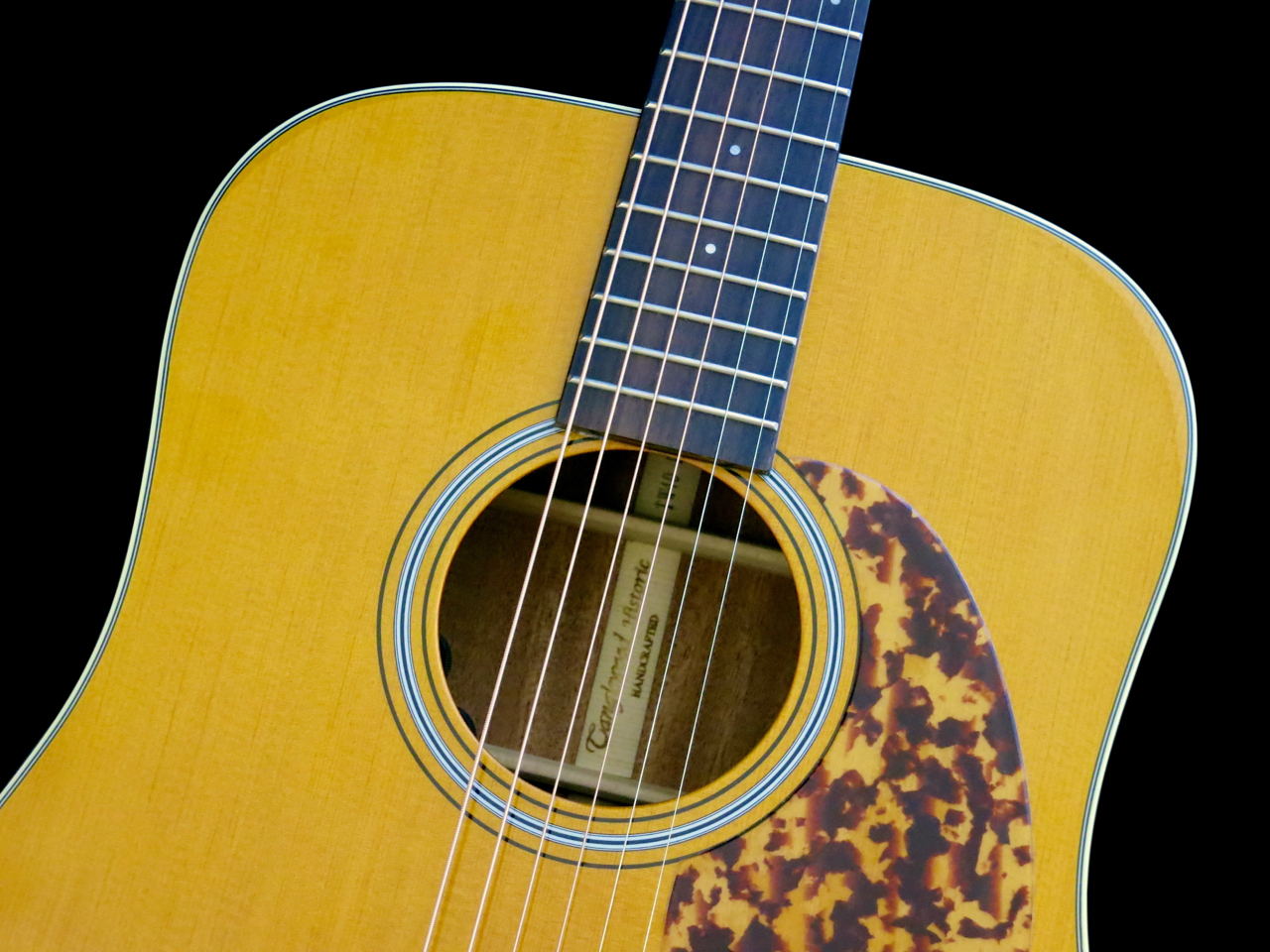
The ”AN” in the model designation hints at the beautiful Antique Natural finish of these Historic Series instruments.
The nut is genuine bovine bone.
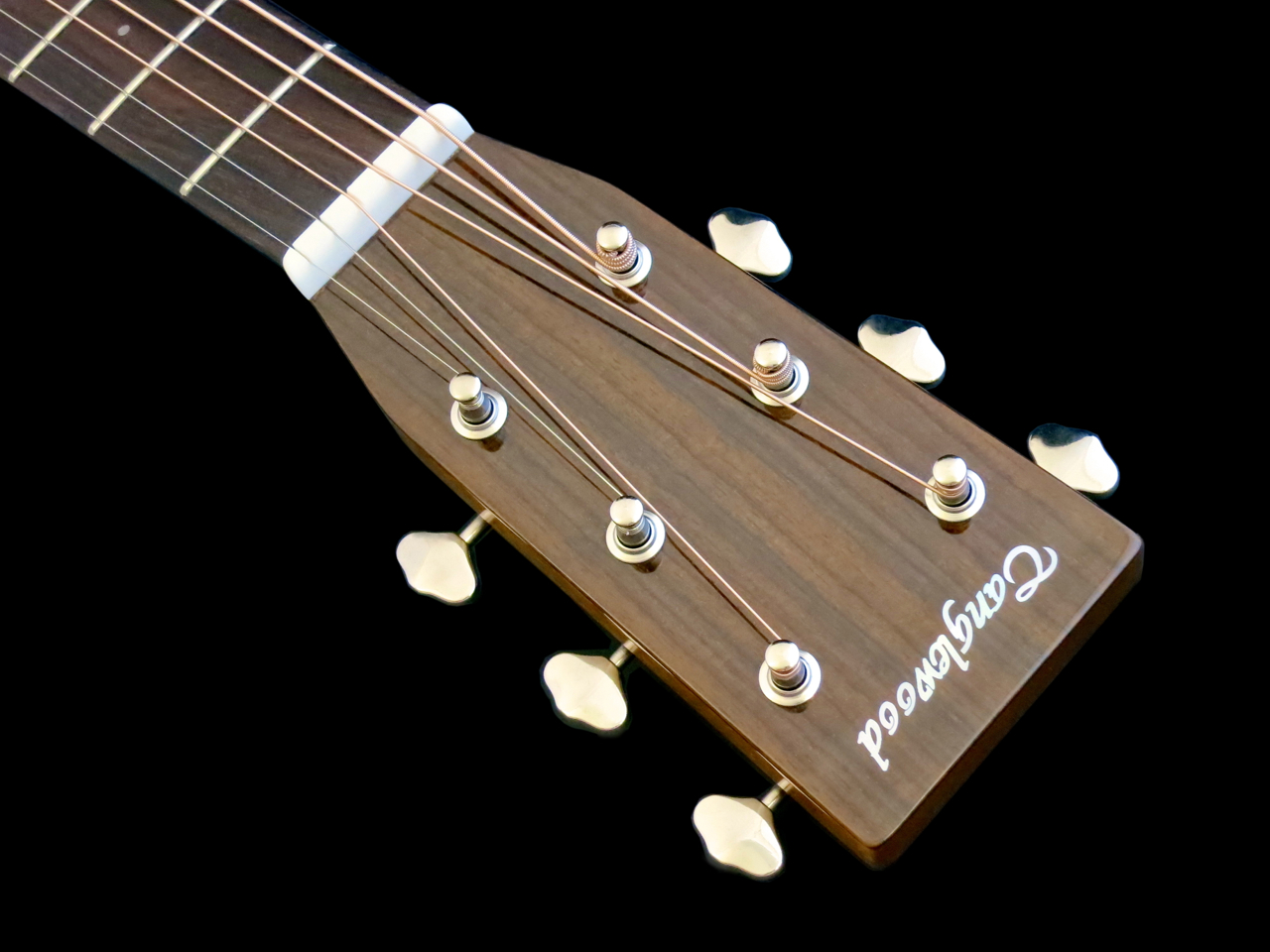
The machine heads are very decent copies of 1930s open-geared Grovers. They do a great job of keeping the tuning stable, but their action is a little bit stiffer than what you’re used to with modern die-cast tuners.
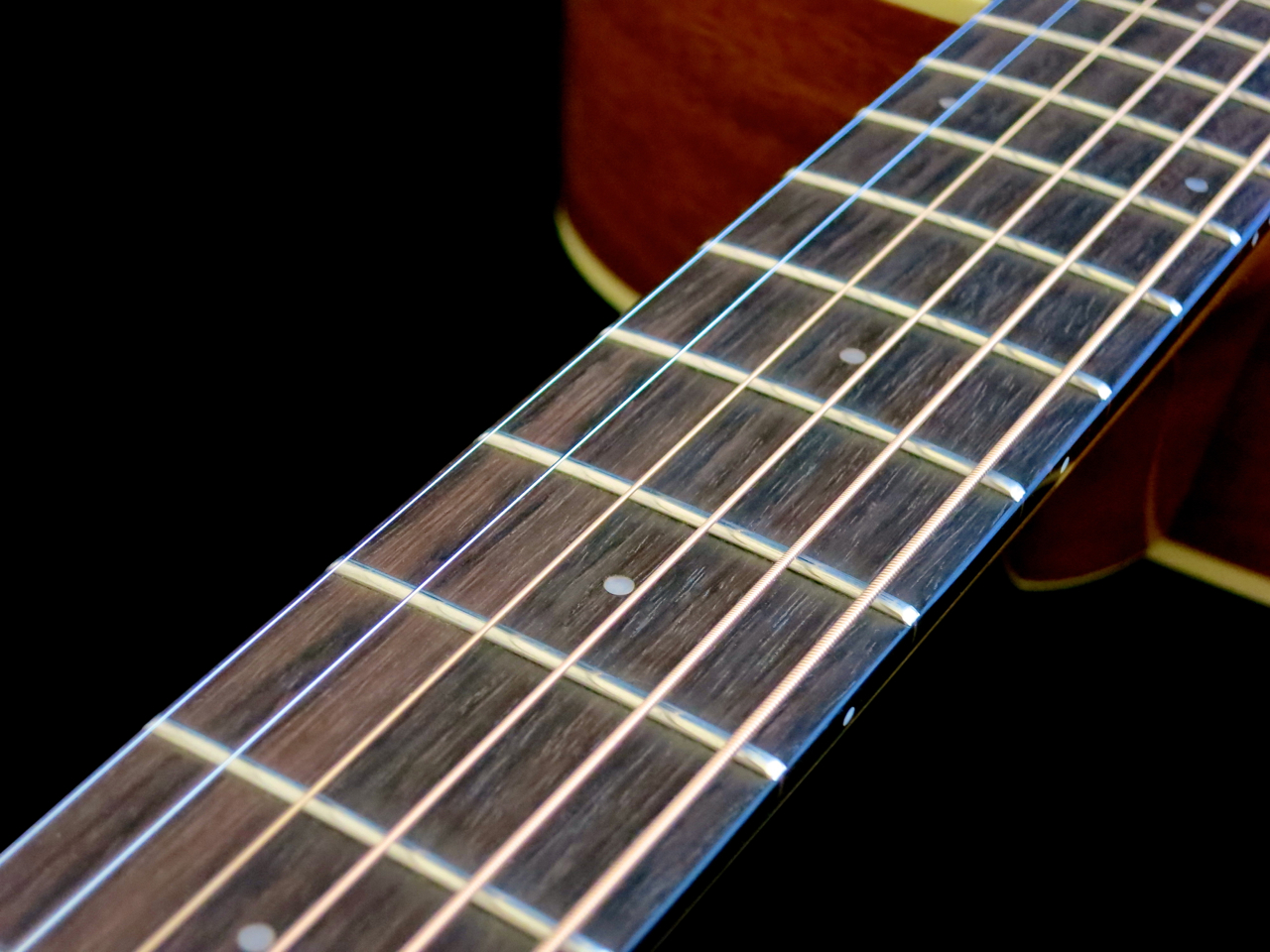
The slender and small frets fit the vintage brief of the TW40O and TW40D to a tee.
Here’s a good example of how different two pieces of rosewood can look:
The reviewed TW40O-AN-E’s bridge is a nicely-grained light example…
…while the dreadnought carries a much darker counterpart.
The compensated bridge saddle is genuine bone on both instruments.
Both Sundance Historics have been equipped with a Fishman Sonitone pickup and preamp.
The piezo transducer sits beneath the bridge saddle and feeds its signal to the preamp – featuring master volume and master tone controls – that has been glued to the underside of the soundhole’s bass side edge. The Sonitone is powered by a 9 V battery, which is stowed away in its own pouch that is velcro’d to the neck block. The downside is that changing the battery is a much more involved affair than with a quick change battery compartment, but the advantage of this Fishman system is that it doesn’t spoil the guitar’s looks.
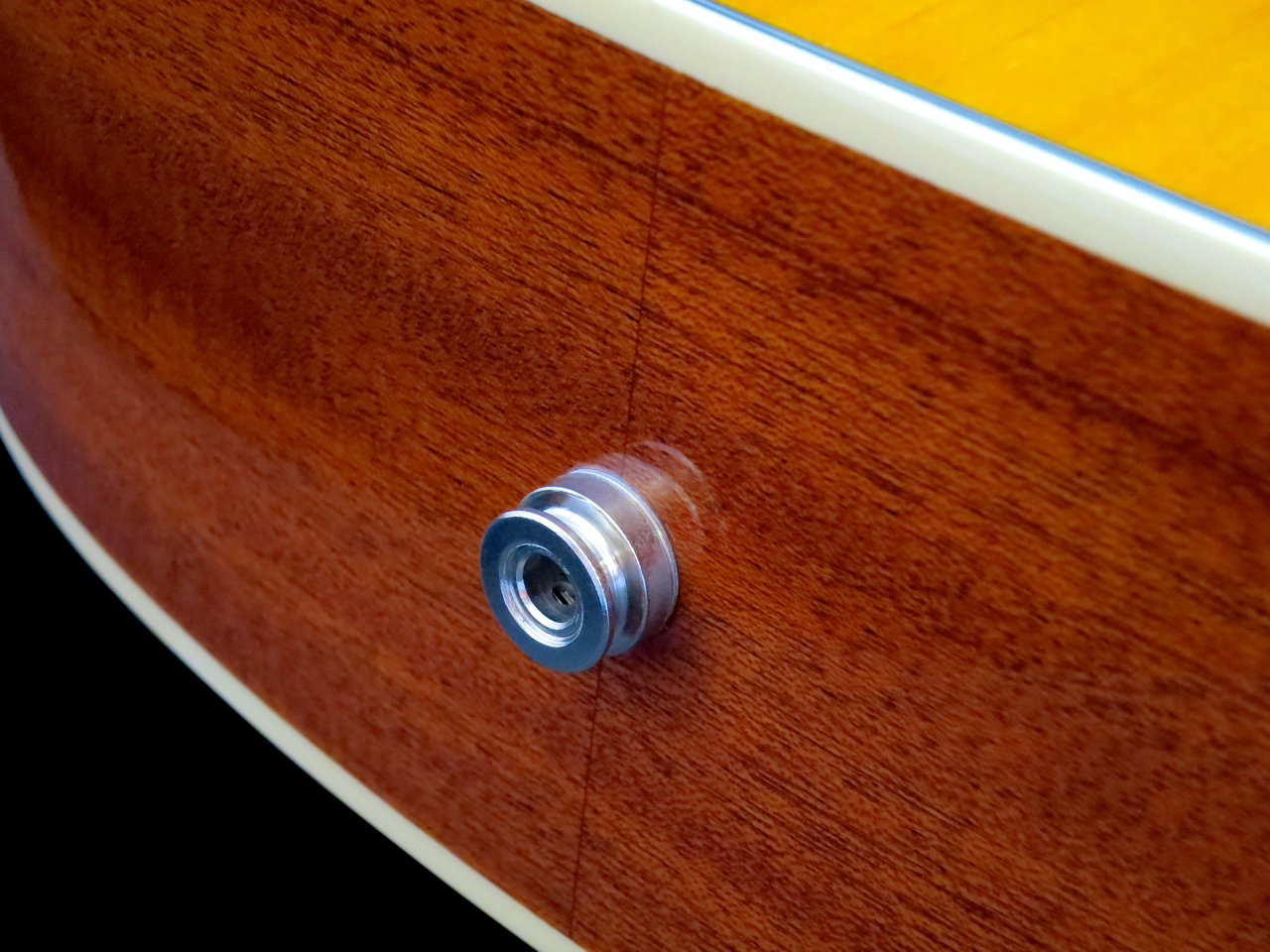
Both Tanglewoods sport an end pin output jack.
****
The care that has quite obviously gone into building these two Tanglewood Sundance Historic guitars really puts a smile on your face. The workmanship is clean and precise, and both instruments look more expensive than they really are.
Even though both guitars are from the 500-800 Euro price bracket, Tanglewood have gone the extra mile to match the wood grain on the sides of both guitars. The tops of the shoulders look bookmatched.
The vintage brief extends to more than simple cosmetics on the TW40O-AN-E:
Vintage OM-guitars (OM stands for Orchestra Model) are known for their slightly wider necks with soft V-profiles. You will also often find a slightly wider string spacing at the bridge, which makes fingerstyle playing much easier.
Tanglewood has used these vintage specifications for their Sundance Historic OM:
The neck has a very nice, soft V-profile, with a width at the top nut of 46 mm. The low E to top e spacing at the bridge is a very comfy 58 mm, which is good news for fingerpickers, working equally well with a plectrum.
The TW40O plays like a dream with a nice set-up on our review sample (string height at the 12th fret: bass-E – 2.1 mm/treble-e – 1.9 mm).
There a lot of debate about the pros and cons of solid backs in acoustic guitars. Some claim that a solid back is almost as important as a solid top in a steel-string acoustic, while others point to the use of laminated backs in the legendary Selmer-Maccaferri guitars (and newer exponents of the Gypsy Jazz genre) or to the great sound of arched-back vintage Guilds.
My own position in this debate is that most (but not all) guitars with laminated backs a bit quieter and drier-sounding than their all-solid brethren. Nevertheless, I feel that a solid top and an overall well-crafted instrument are much more important to the sound as a whole.
An OM-sized steel-string will have a ”sweeter”, less bass-heavy tone than a Dreadnought of similar build, which is due in large part to its smaller and differently-shaped body.
Tanglewood’s TW40O has the trademark OM-sound – the guitar’s voice is open and well-balanced, with a projection akin to that of a Dreadnought, and it is very easy to record and place in a mix.
These two clips have been recorded with a pair of Shure SM57 microphones:
Fishman’s Sonitone system is a decent and easy-to-use choice to amplify your guitar on stage with the least amount of hassle:
****
The original aims in designing the Dreadnought were the need for more volume and a fatter bass register. At first Martin’s D-models were aimed squarely at the ”singing cowboys”, which were so popular in the US in the 1930s and 40s. These musicians, such as Gene Autry or Hank Williams, needed loud guitars that would build a strong foundation for their vocals. This is what started the phenomenal success of the D-model, making it fairly ubiquitous in most genres of music.
Tanglewood’s TW40D-AN-E is a well-made homage to a 1930s-style D-18, both in terms of looks and sound.
The TW40D’s neck is virtually identical to the one on the TW40O – a nice soft-V affair, which is slightly wider and bigger than the neck on many contemporary steel-strings.
The craftsmanship displayed on this D is of the same high standard as on the reviewed OM, really leaving nothing to be desired in terms of the TW40D’s playability and set-up (bass-E: 2.2 mm/top-e: 1.7 mm).
We all know how a Dreadnought should sound: a big bottom end, coupled with a warm mid-range and chiming treble.
The Tanglewood TW40D doesn’t disappoint:
Fishman’s Sonitone system also works very well in the context of the TW40D-AN-E-model:
****
In my opinion Tanglewood’s TW40O-AN-E and TW40D-AN-E really do offer something special in their price range:
Here we have a pair of steel-string acoustics at player-friendly prices, which take the terms ”vintage” and ”historic” above and beyond mere cosmetics. Thanks to the ”vintage correct” neck dimensions and neck profiles of these two instruments, and the wider string spacing, genuinely vintage-feeling guitars become available without custom shop price tags.
These are well-made, great-sounding guitars. Too bad I have to give them back…
Tämän jutun otsikko voisi myös olla: ”Tanglewood tuo vintagea kaikkien soittajien ulottuville”. Sundance Historic -kitaroissa on nimittäin paljon vanhan ajan hohtoa, vaikka niiden hinnat pysyvät – jopa mikitettyinä – selvästi alle 700 euroa!
Kitarablogi sai testiin kaksi soitinta – TW40O-AN-E ja TW40D-AN-E – jotka muistuttavat erehdyttävästi kahta legendaarista Martin-mallia.
****
Tanglewood TW40O–AN-E (673 €) on Sundance Historic -sarjan kunnianosoitus Martin OM-18 -kitaralle, joka oli 1930-luvulla ensimmäinen teräskielinen, jolla oli kaulaliitos 14. nauhan kohdalla.
Tanglewood TW40D-AN-E (673 €) on saman sarjan versio Martin D-18 -mallista, joka on kopioiduin teräskielinen akustinen kautta aikojen – jopa Gibsonin Hummingbird- ja Dove-mallit kopioitiin suoraan musiikkiliikkeestä ostetulta Martin-kitaralta!
Molemmat Tanglewoodit saa myös ilman mikitystä 598 eurolla.
TW40O:ssa ja TW40D:ssä on espanjalaisessa tyylissä rakennettu kaula, mikä tarkoittaa että kaula ja viritinlapa ovat yhdestä mahonkipalasta veistettyjä, vaan kaulakorko on lisätty jälkikäteen.
Kaikukoppa taas on tehty kokopuisesta kuusikannesta ja mahonkivanerisista sivuista ja pohjasta.
Virittimet ovat 1930-luvun Grover-koneistojen kopioita, jotka pitävät vireen todella hyvin, mutta ovat käytössä hieman nykyaikaisia virittimiä jäykempiä.
Myös TW40O:n ja TW40D:n sirot nauhat sopivat näiden soittimien vintage-tunnelmaan täydellisesti.
Hyvä esimerkki ruusupuun ulkonäön vaihtelevuudesta:
Tässä testissä käyneen TW40O-AN-E:n vaaleampi talla…
…ja tässä D-mallin tummempi vastine.
Molemmissa kompensoitu tallaluu on aitoa luuta.
Testatuissa Sundance Historic -soittimissa on helppokäyttöinen Fishman Sonitone -mikitys.
Pietsomikki on sijoitettu tallaluun alle, kun taas etuvahvistin säätimineen (volume ja tone) on liimattu ääniaukon yläreunan alle. Yhdeksän voltin paristo istuu omassa kotelossa, joka on kiinnitetty kaulablokkiin. Pariston vaihtaminen ääniaukon kautta on hieman hankalampi kuin kopan reunan läpi kiinnitetyissä paristolokeroissa, mutta isona etuna tässä on koko systeemin näkymättömyys.
Lähtöjakki on molemmissa malleissa yhdistetty hihnatappiin.
****
On todella ilahduttavaa nähdä kuinka huolellisesti nämä kaksi Tanglewood Sundance Historic -kitaraa on tehty. Työnjälki on erittäin siisti ja viimeistely laadukas ja kaunis.
Vaikka näissä kahdessa soittimessa on kyse 500-800 euron hintaluokan teräskielisistä Tanglewoodeista, on molemmissa testikitaroissa sivujen syykuviot sovitettu yhteen, että sivujen ”hartiat” näyttävät bookmatch-peilikuvilta!
Vintage-motto ulottuu TW40O-AN-E:ssä huomattavasti pidemmälle kuin pelkästään kosmetiikkaan:
Vanhat OM-kitarat (Orchestra Model) tunnetaan siitä, että niissä on aavistuksen leveämpi, pehmeästi V-muotoinen kaulaprofiili. Myös kielten keskeinen etäisyys tallan kohdalla on usein pikkuisen isompi kuin monissa nykyaikaisissa soittimissa, mikä tekee sormisoitosta mukavamman.
Tanglewood on käyttänyt tähän Sundance Historic -malliin juuri näitä ”oikeita” vanhoja mittoja. Kaulaprofiili on pehmeä V, ja kaulan leveys on satulan kohdalla 46 mm. E-kielten etäisyys tallassa taas on ilmavat 58 milliä – kitara siis tarjoaa mukavasti tilaa sormisoitolle, mutta myös plektran käyttö onnistuu ongelmitta.
TW40O:n soitettavuus on ensiluokkaista, ja kitara saapui testiin loistavassa trimmissä (kielten korkeus 12. nauhan kohdalla: basso-E – 2,1 mm/diskantti-e – 1,9 mm).
Kitarapiireissä keskustelu täyspuisen pohjan tärkeydestä teräskielisen kitaran sointiin käy edelleen kuumana. Joidenkin mielestä kokopuinen pohja on lähes yhtä tärkeä kuin täyspuinen kansi, toiset taas viittaavat erittäin laadukkaisiin Selmer-Maccaferri-kitaroihin (Gypsy Jazz -kitarat) tai vanhoihin Guild-soittimiin, joissa on vaneripohja.
Oma näkemykseni tähän kiistakysymykseen on, että vanerista tehty pohja on usein (mutta ei aina) aavistuksen verran hiljaisempi ja soundiltaan hivenen verran kuivempi kuin kokopuinen vastine. Pidän kuitenkin teräskielisen kitaran yleissoundin kannalta huomattavasti tärkeämpänä, että kansi on täyspuinen ja että soittimen koko rakenne on laadukas ja terve.
OM-kokoisen teräskielisen pääerot dreadnoughtiin nähden ovat sen pienempi koppa ja OM-kitaran siistimpi bassorekisteri, joka tekee soittimesta erittäin helpon äänittää.
Tanglewood TW40O:lla on malliesimerkki OM-soundista – kitaran ääni on avoin, sen projektio lähes D-mallin luokkaa, ja se istuu äänitettynä erittäin nätisti miksauksissa.
Nämä kaksi esimerkkiä on äänitetty Shure SM57 -mikrofoneilla:
Fishman Sonitone -pietsojärjestelmä on hyvä ja helppokäyttöinen valinta, josta lähtee hyvin terve pietsosoundi livekäyttöä varten:
****
Alkuperäisen dreadnought-kitaran lähtökohdat olivat volyymi ja reilunkokoinen bassorekisteri. Alkuperäinen kohderyhmä olivat 1930- ja 40-luvulla Yhdysvalloissa hyvin suositut ”laulavat lehmipojat”, kuten Gene Autry tai Hank Williams, jotka tarvitsivat live-esiintymisiään varten kitaroita, joissa oli potkua plektrasoitossa. Tästä alkoi D-mallien voittokulku joka kasvoi yhä vain voimakkaammaksi, kun Folk-laulajatkin löysivät tiehensä tähän isompaan vaihtoehtoon.
Tanglewoodin TW40D-AN-E on laadukas kunniaosoitus 1930-luvun D-18:lle, sekä ulkonäön että soitettavuuden kannalta.
TW40D:n kaula on käytännössä täysin identtinen TW40O:n kaulaan – kaulaprofiili on erittäin mukava pehmeä V, ja koko kaula on hieman leveämpi kuin monissa nykykitaroissa.
Testikitaran työnjälki on samalla korkealla tasolla kuin Historic-sarjan OM-mallissakin, eikä TW40D:n soitettavuudessa todellakaan löydy mitään moitittavaa (matala-E: 2,2 mm/diskantti-e: 1,7 mm).
Dreadnought-kitaran soundi on varmaan kaikille tuttu: iso basso, lämmin keskirekisteri ja helisevä diskantti – ja kaikki hyvällä potkulla höystettynä.
TW40D on todella hyvä esimerkki tästä soundista:
Fishmanin Sonitone -mikkisysteemi toimii sulavassa yhteistyössä myös TW40D-AN-E-mallissa:
****
TW40O-AN-E:n ja TW40D-AN-E:n myötä Tanglewood tarjoaa tässä hintasegmentissä todella harvinaista herkkua:
Tässä ovat kaksi teräskielistä akustista kitaraa soittajaystävällisillä hinnoilla, joissa käsitteet ”vintage” ja ”historic” ulottuvat todellakin pintaa syvemmälle. Erittäin mukavan kaulaprofiilin ja leveämmän kieltenvälisen etäisyyden ansiosta, myös meillä rivisoittajilla on nyt varaa kokea aidon vintagen-soittotuntuma.
Tärkein on kuitenkin näiden soittimien soundi, joka vakuutti ainakin minut täysin.
The new Vox AC10C1 combo amp nicely bridges the gap between the Custom Series’ AC4C1 four-watter and the 15-watt AC15C1.
****
The Vox AC10C1 (street price in Finland approx. 520 €) isn’t a copy or reissue of any of the AC10 versions from the 1950s or 60s, but rather a modern reinterpretation of the company’s Top Boost-theme in a more compact guise, and made in China, just like the rest of the Custom Series.
This being so, the new AC10C1 amp does away with the old version’s vibrato effect, adding instead such welcome modern features as a quality digital reverb, and separate Gain and (Master) Volume controls.
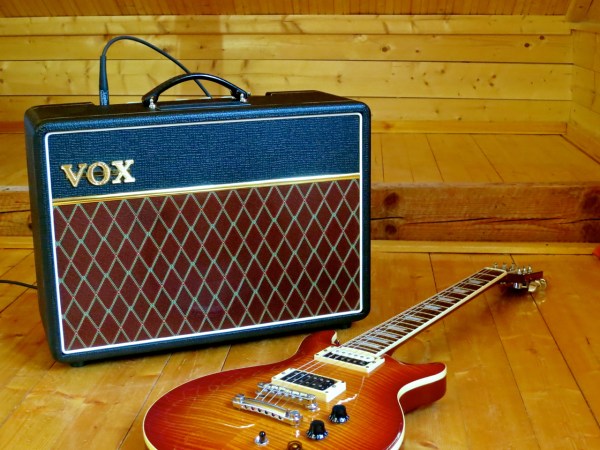
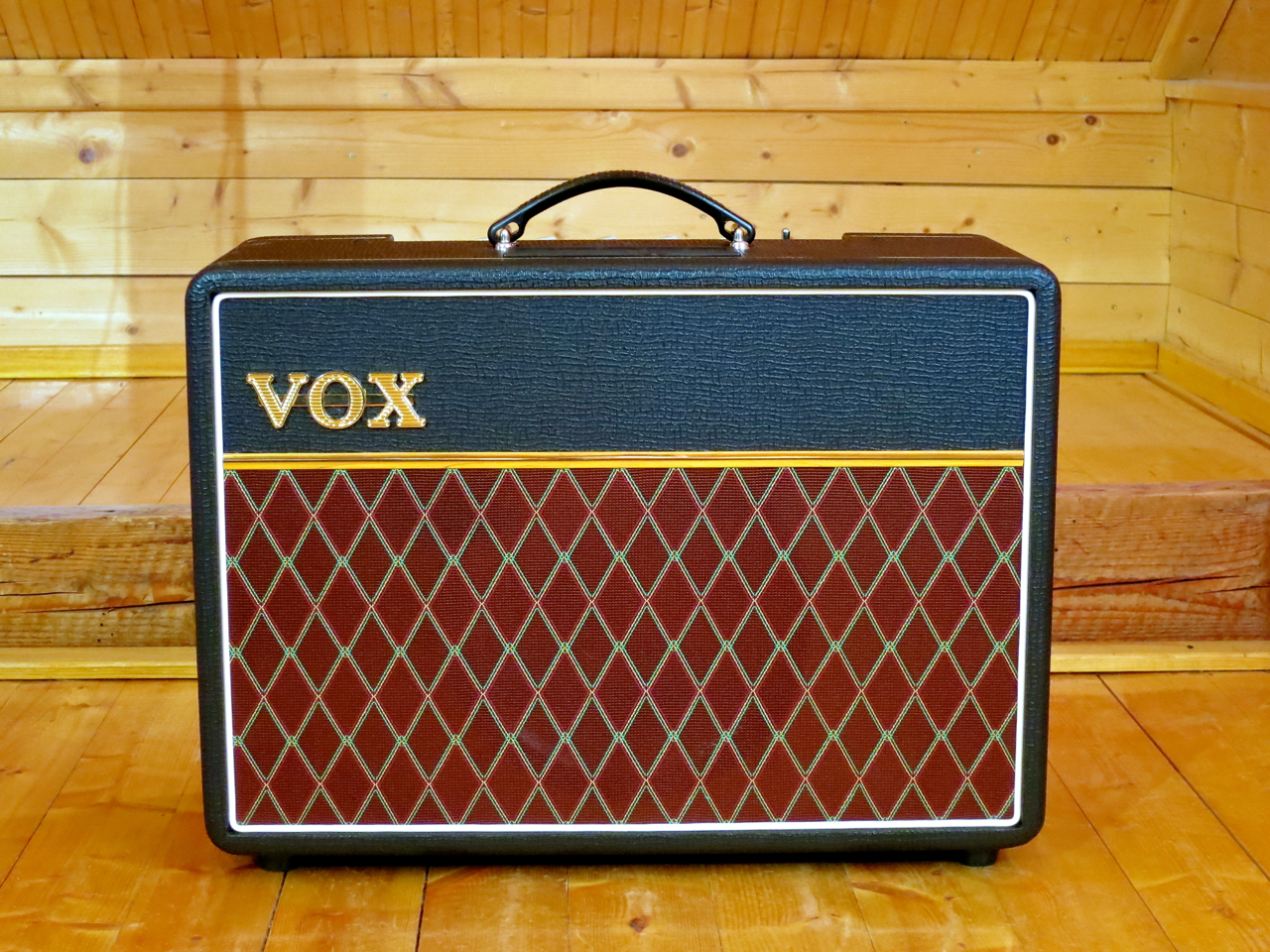
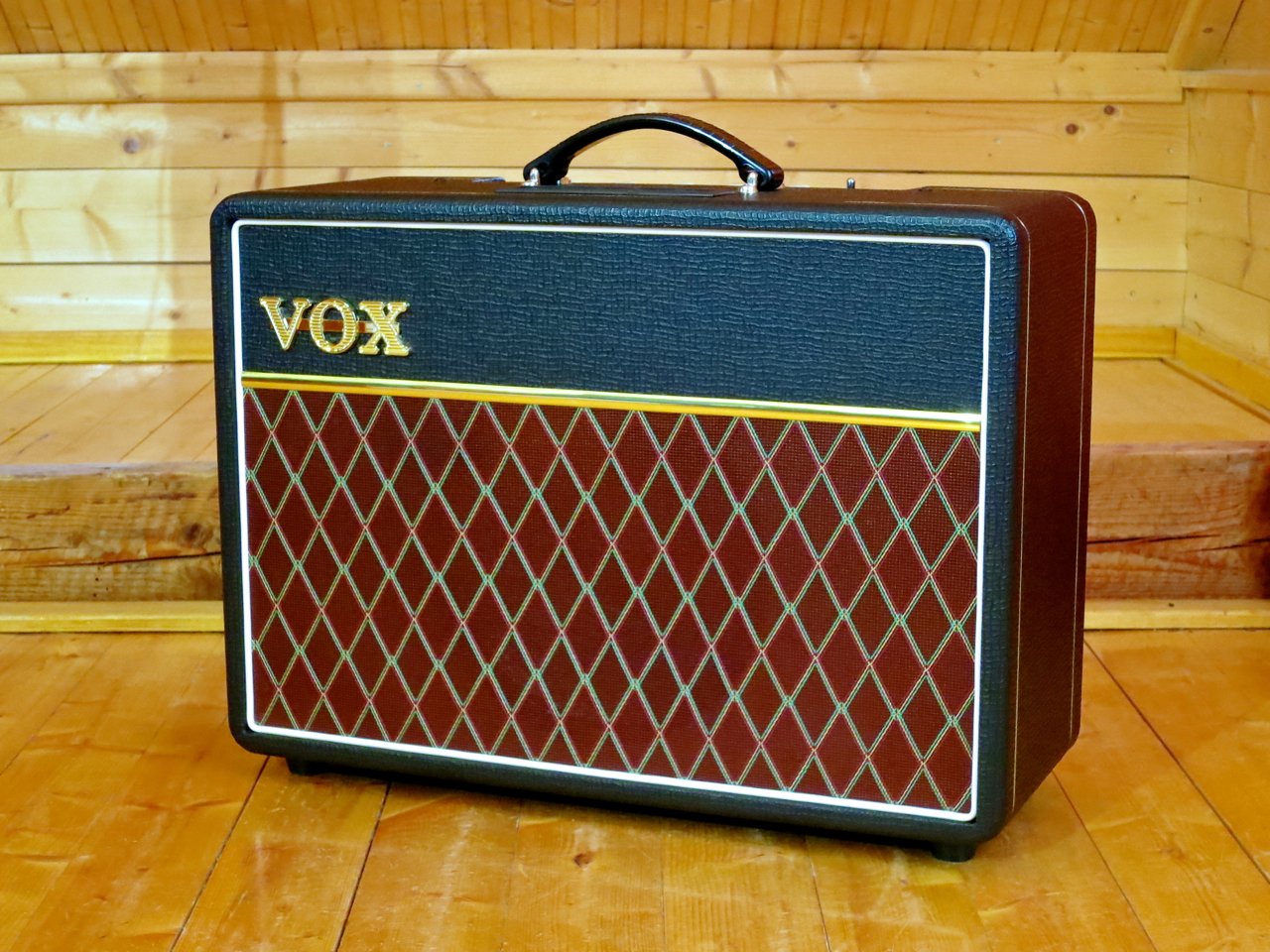
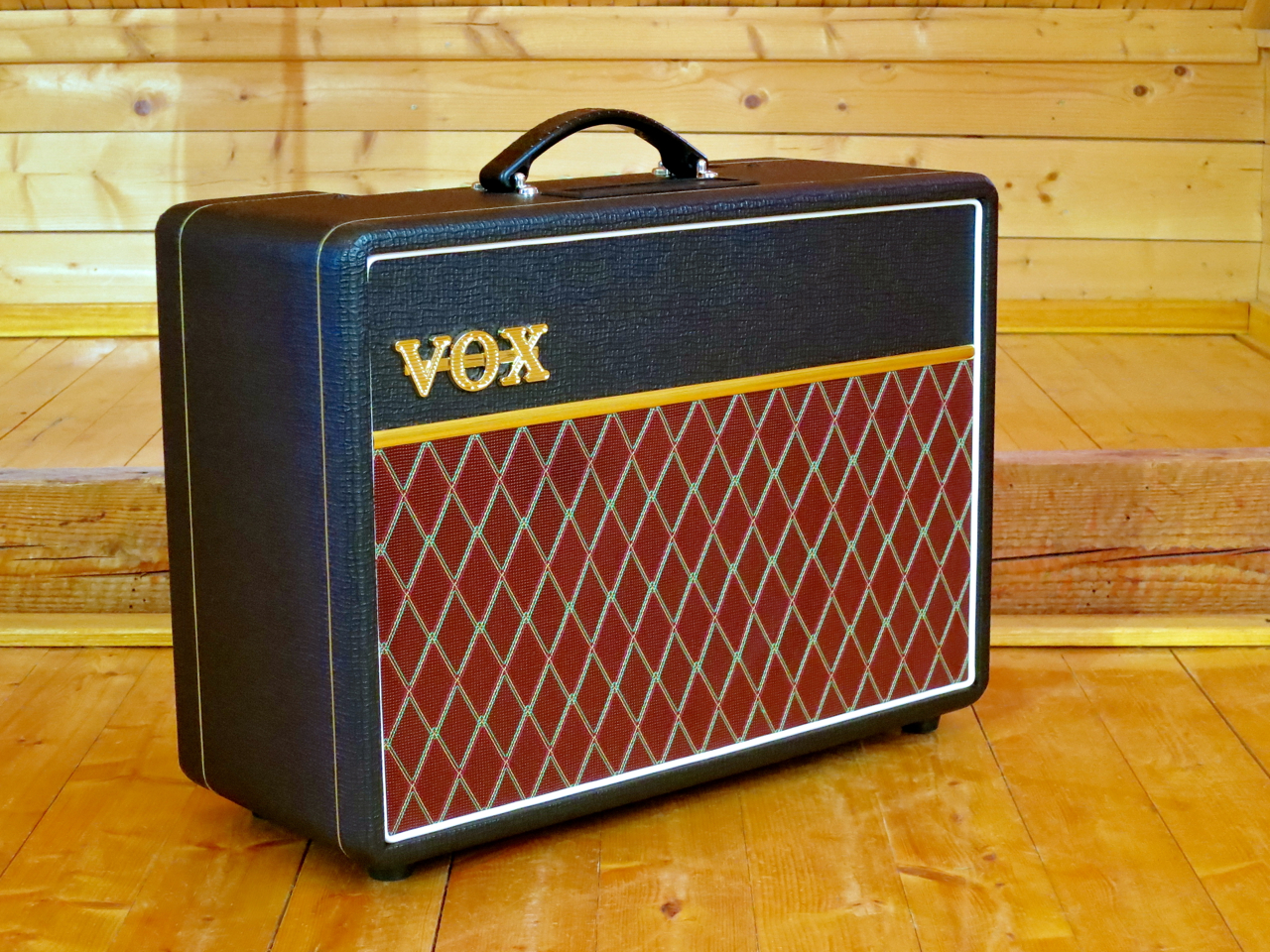
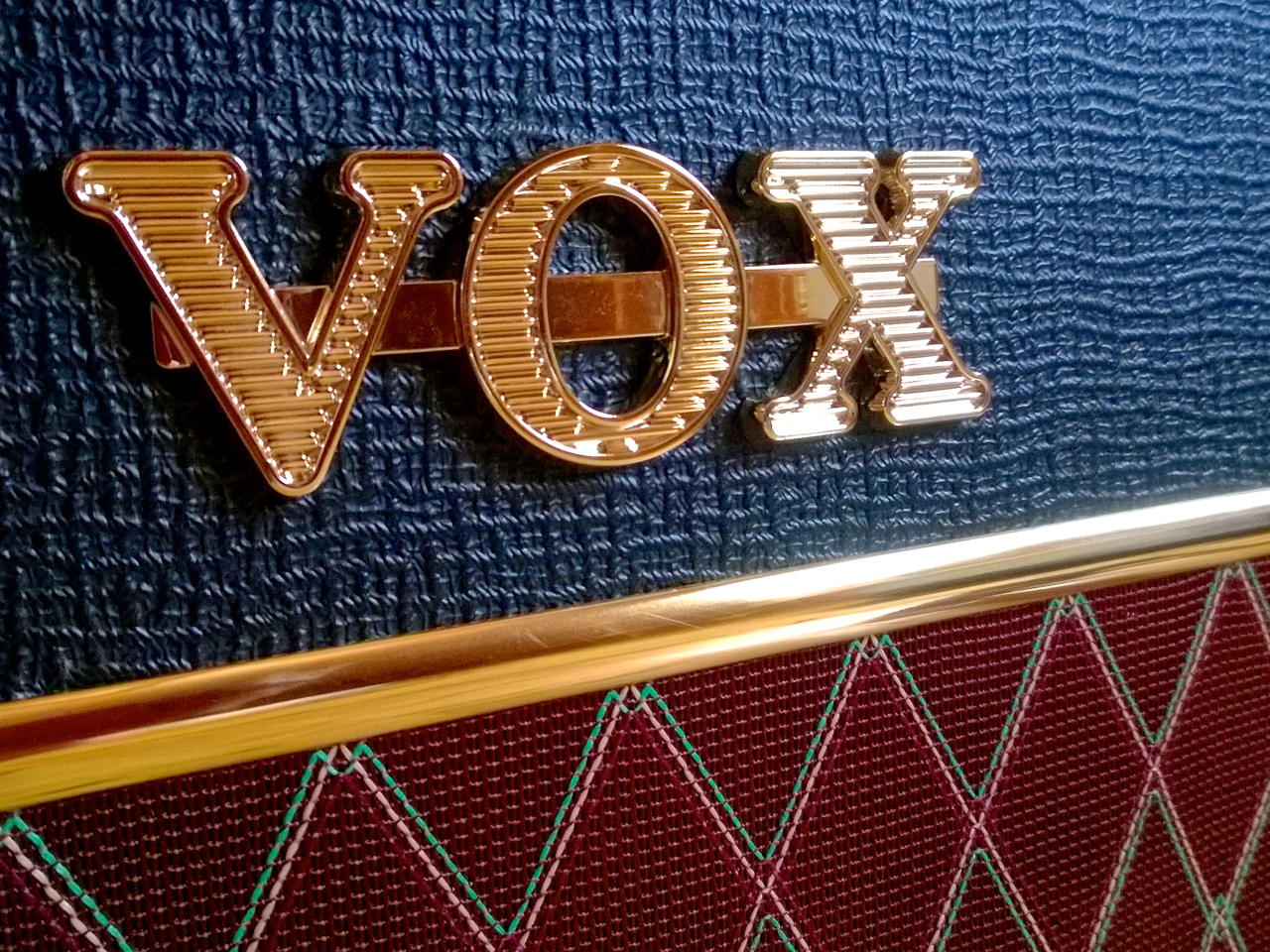
Vox’ new combo looks like a smaller version of their legendary AC30 combo, which isn’t a coincidence, I’m sure. It sports lots of black vinyl, white piping, a golden metal rail, and the famous maroon front cloth with the diamond pattern.
The AC10C1 only weighs 12 kilos, which means it’s very easy to carry by its single top handle.
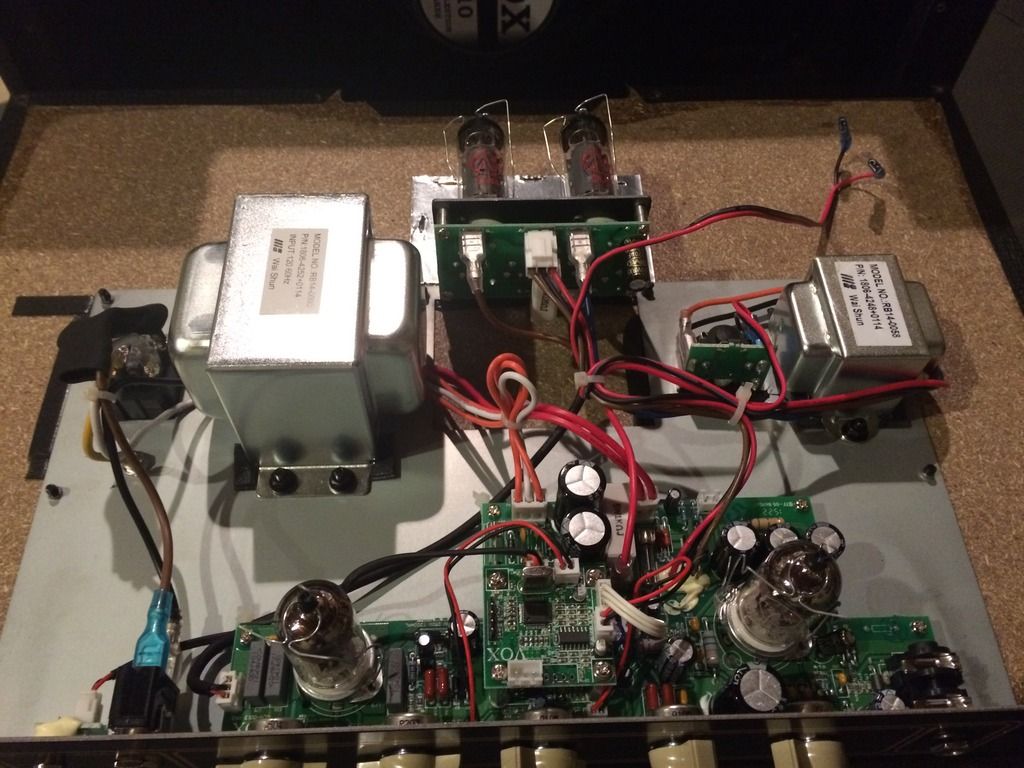
As we are looking at a production line, Chinese valve amp, it would be totally unrealistic to expect hand soldered point-to-point wiring inside this combo. The AC10C1’s electronic components – tubes and all – are mounted on three PCBs. You can have a good looks at this combo’s innards in this picture.
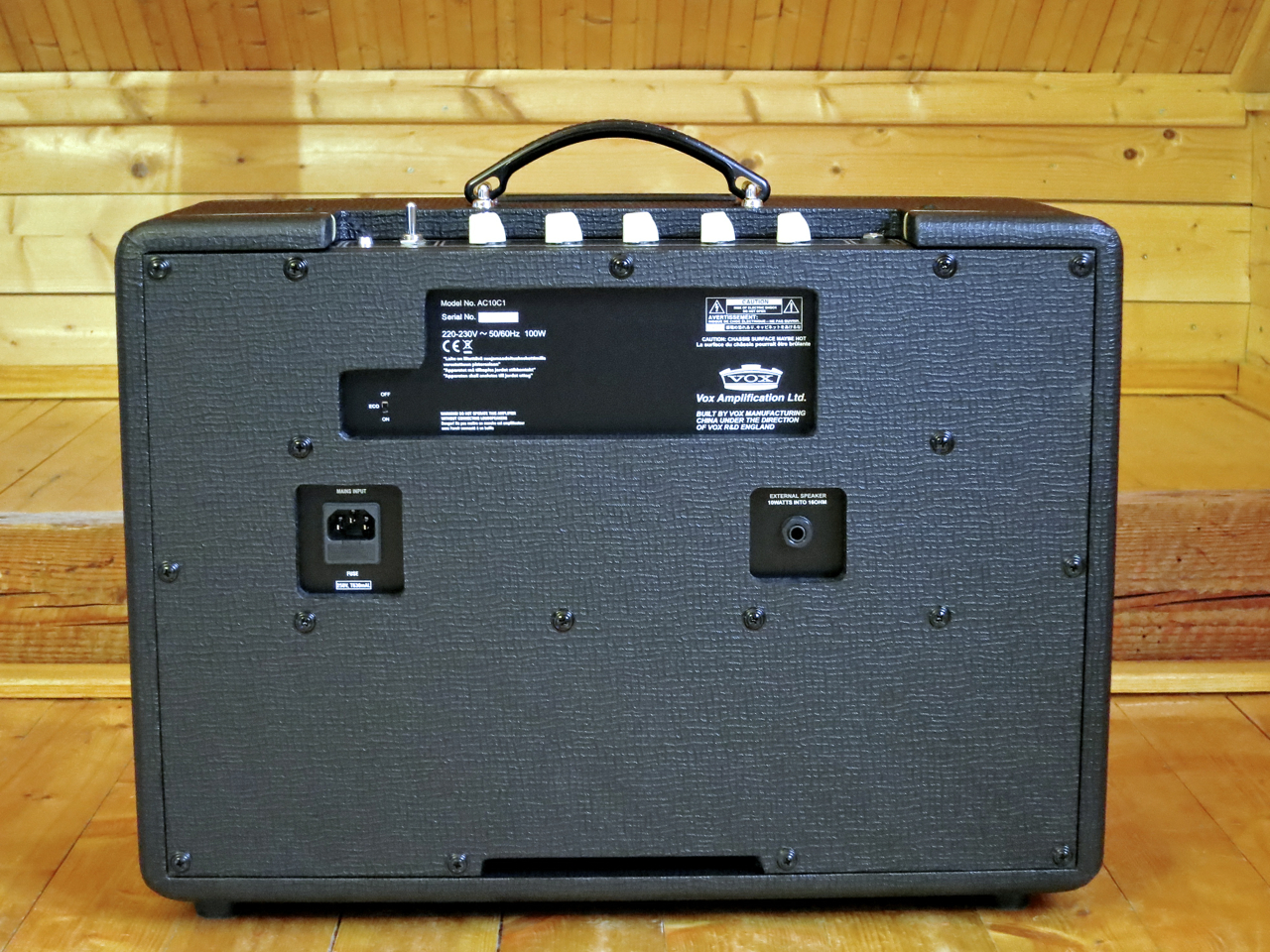
The little Vox’ two EL84 main amplifier valves have been placed just beneath the ventilation grille on the top (next to the handle). The preamp valves – a pair of 12AX7s – get their ventilation via a small slot at the bottom end of the cabinet’s back wall.
The control panel sports the classic Vox chicken head knobs.
In addition to Gain and Volume, you will find a two-band EQ section, and the reverb control.
In practical terms, the Vox AC10C1 is a closed-back combo, despite the small opening for preamp tube ventilation.
A ten-inch Celestion VX10 has been chosen as the combo’s sole speaker.
In the EU the new combo is sold with an Eco-feature. When the Eco-switch is set to ”on”, the AC10C1 will power off automatically if the amp isn’t played for two hours.
The AC10C1 can be connected to an external speaker cabinet, as long as the load is kept to 16 Ohms.
****
Let me say something about the Vox AC10C1’s volume first:
This little amp is quite the belter for a combo rated at only 10 Watts! Yes, it does have a master volume control, but I still wouldn’t recommend using this Vox as a living-room amp in an apartment block. The Volume control really has to be set to 10 o’clock, or higher, to make this baby come to life.
The basic character of this Vox combo is rather bright and bitey – I had to take the Treble knob down to below 10 o’clock to find the sounds that I like.
This AC10C1 doesn’t have oodles of clean headroom, still there are some very nice clean tones to be had in the first third of the Gain control’s range, when you use Fender-type single coil pickups (Fender Stratocaster; amp gain at 10 o’clock):
Many valve amp snobs will view a digital reverb circuit as a big no-no, but in my view, the AC10C1’s reverb is one of the very best I’ve ever heard in an amp in this price range. The reverb is a digital version of a spring tank, and has a charming sense of depth. At higher settings you can even get some ”spring splash” by attacking the strings with gusto:
Due to its higher output a P-90-type pickup will require you to adjust the volume knob(s) on the guitar, if you want to achieve genuinely clean sounds. Here’s a clip of an Epiphone Casino (with Göldo P-90s), with the guitar’s volumes turned about halfway down (amp gain at 9 o’clock):
Here’s the same Casino with its volume controls set to 8 (the amp settings stay untouched):
Humbuckers, too, mean you will have to turn the guitar down a bit for clean sounds, otherwise the AC10C1 will start adding some of that famous Top Boost grit. The first clip uses a Hamer USA Studio Custom with its volume controls turned down to 5 (amp gain at 9 o’clock):
Same guitar, same amp settings, but the Hamer’s volumes have been set to 7:
You could sum up the AC10C1’s distorted sounds with one word – classic! This isn’t a high gain combo by no stretch of the imagination. This Vox feels most at home with Pop-, Blues-, and Rock-sounds of the Sixties and Seventies (and their modern descendants). If you want a piece of that classic Vox Top Boost tone (think Beatles, Queen, U2), the AC10C1 has it in spades at manageable volume levels.
Stratocaster; amp gain 3 o’clock:
Casino; amp gain 1 o’clock:
Hamer; amp gain 1 o’clock:
Stratocaster; full amp gain:
Casino; full amp gain:
Hamer; full amp gain:
****
In my opinion, the Vox AC10C1 is just the ticket if you’re after genuine Vox tones in a compact, easy-to-handle package.
Clean headroom isn’t to be had in abundance, but luckily this Vox combo reacts extremely well to volume changes on the guitar. The sound cleans up nicely, while the amp retains its full vigour and liveliness.
The Vox AC10C1 is loud enough for most rehearsal situations, and you might even use it in some small venues without a mike.
For studio work, too, I feel Vox’ AC10C1 has a lot to offer, because it enables you to get chunky Vox tones with much less bleed-through into other microphones, like the drum mikes.
****
Vox AC10C1
current street price in Finland approximately 520 €
Uusi Vox AC10C1 on teholtaan oiva väliaskel firman Custom-sarjassa neliwattisen AC4C1:n ja 15-wattisen AC15C1-kombon välillä.
****
Vox AC10C1 (katuhinta noin 520 €) ei ole alkuperäisen (1950 tai 60-luvun) AC10-kombon uusintapainos, vaan uutuuskombo on Kiinassa rakennetun, nykyaikaisen Custom-sarjan jäsen.
Näin ollen AC10C1-vahvistimesta löytyy – alkuperäisen vibratoefektin sijaan – laadukas digikaiku, sekä erilliset Gain- ja (Master) Volume-säätimet.
Uusi Vox-kombo näyttää pienennetyltä versiolta firman legendaarisesta AC30-mallista – paljon mustaa vinyyliä, kultaiset ja valkoiset koristelistat, sekä vinoneliökuvioilla koristettu, ruskea etukangas.
AC10C1 painaa vain 12 kiloa, minkä ansiosta komboa on helppo kantaa sen ainoasta muovikahvasta.
Koska kyse on kiinalaisesta sarjatuotannosta, ei tässä voi odottaa käsinjuotettua, kallista point-to-point elektroniikka, vaan AC10 on toteutettu kolmella piirilevyllä, joihin myös vahvistimen putkikannat on kiinnitetty. Hyvän kuvan AC10C1:n elektroniikan arkkitehtuurista saa tästä linkistä.
Voxin kaksi EL84 päätevahvistinputkea sijaitsevat kombon kotelossa suoraan kahvan viereisen tuuletusritilän alla. Etuvahvistimen putket (2 x 12AX7) taas löytyvät kombon pohjan läheltä, jossa niille on takaseinässä toinen tuuletusaukko.
Myös kombon säädinpaneeli on ulkonäöltään tyypillinen Vox-kombolle.
Paneeli tarjoaa Gain- ja Volume-säätimien lisäksi vielä kaksikaistaisen EQ-osaston, sekä säätimen kaiulle.
Vox AC10C1 on käytännössä suljetulla takaseinällä varustettu kombovahvistin, vaikka takaseinässä onkin pieni tuuletusreikä.
Kaiuttimeksi on valittu yksi kymppituumainen Celestion VX10.
EU:ssa uutuuskomboa myydään uudella Eco-ominaisuudella. Kun Eco-kytkin on päällä-asennossa, AC10C1 menee omatoimisesti pois päältä, jos kombo on kaksi tuntia tyhjäkäynnissä.
AC10C1:n kanssa voi käyttää sellaista lisäkaappia, jolla on 16 ohmin impedanssi.
****
Ensin sana Vox AC10C1:n tehosta:
Tämä vahvistin on 10-wattiseksi komboksi erittäin kovaääninen! Uutuus-Voxi ei mielestäni oikein sovi kerrostaloasunnon olohuonekomboksi, koska tämä AC-kymppi alkaa soida kunnolla vasta, kun Volume-säädin on avattu ainakin ”kello kymmeneen”.
Vox-kombon perusääni on melko kirkas – löysin minua miellyttäviä soundeja vasta, kun Treble-säädin oli kello 10:ssä (tai vielä enemmän kiinni).
Vaikka uutuus-Voxi ei tarjoa valtavia määriä puhdasta headroomia, löytyy Gain-säätimen alkumetreillä kuitenkin kauniita puhtaita soundeja Fender-tyylisillä yksikelaisilla mikrofoneilla varustetun kitaran kanssa (tässä soi Fender Stratocaster, AC10C1:n Gain: kello 10):
Monille putkipuristeille digitaalinen kaiku putkikombossa on kuin punainen vaate, mutta ainakin minun mielestäni Vox AC10C1 tarjoaa yhden parhaista digikaiuista tässä hintaluokassa. Kaikutyyppi on muhkea jousikaiku, joka myös ”pärskii” mukavan autenttisesti isoilla säädöillä ja kovalla atakilla:
Gibson P-90 -yksikelainen vaatii jo – isomman lähtötason takia – kitaran omien volume-namikoiden säätämistä hiukan alaspäin, jos halutaan, että AC10C1 pysyy puhtaana. Ensimmäisessä klipissä soi Epiphone Casino, ja sen omat volume-säätimet ovat puoliksi kiinni (AC10C1:n Gain: kello 9):
Tässä sama Casino, mutta omat volumet säädetty kahdeksaan:
Myös humbuckereilla täytyy säätää kitaran omat volumet alas, muuten Vox AC10:n soundi muuttuu jo hieman rosoiseksi. Tässä kaksi esimerkkiä Hamer USA Studio Custom -kitaralla:
AC10C1:n särösoundien kirjo menee hyvin vahvasti ”klassisen” puolelle. Tämä ei ole mikään high gain -kombo, vaan Voxin luontevin ympäristö ovat 60- ja 70-luvun Pop-, Blues- ja Rock-soundit. Kombo tarjoaa kätevästi tyypilliset (Top Boost) AC30-soundit kompaktissa – ja ei ihan niin kovaäänisessä – formaatissa.
Stratocaster, Gain – kello 3:
Casino, Gain – kello 1:
Hamer, Gain – kello 1:
Stratocaster, Gain täysillä:
Casino, Gain täysillä:
Hamer, Gain täysillä:
****
Vox AC10C1 on mielestäni juuri oikea vahvistin, jos etsii aitoa Vox-soundia helposti hallittavassa kokonaisuudessa.
Puhdasta headroomia ei ole tarjolla valtavasti, mutta onneksi tämä Vox reagoi todella hyvin kitaran volume-säätimillä, eikä näin saavutettu clean-soundi muutu elottomaksi tai ponnettomaksi.
Vox AC10C1 on riittävän kovaääninen bändikäyttöön treenikämpässä, ja pienissä keikkapaikoissa jopa livenä ilman mikkiä.
Myös studiokäyttöön Vox AC10C1 on mielestäni hyvä valinta, koska kombosta saa aidon Vox-soundin ratkaisevasti vähemmällä vuotoäänellä.















 Kitarablogi.com – Finland's premier Guitar and Bass blog