Maahantuoja: F-Musiikki
In pictures – AJL-Guitars


(picture courtesy of AJL-Guitars)
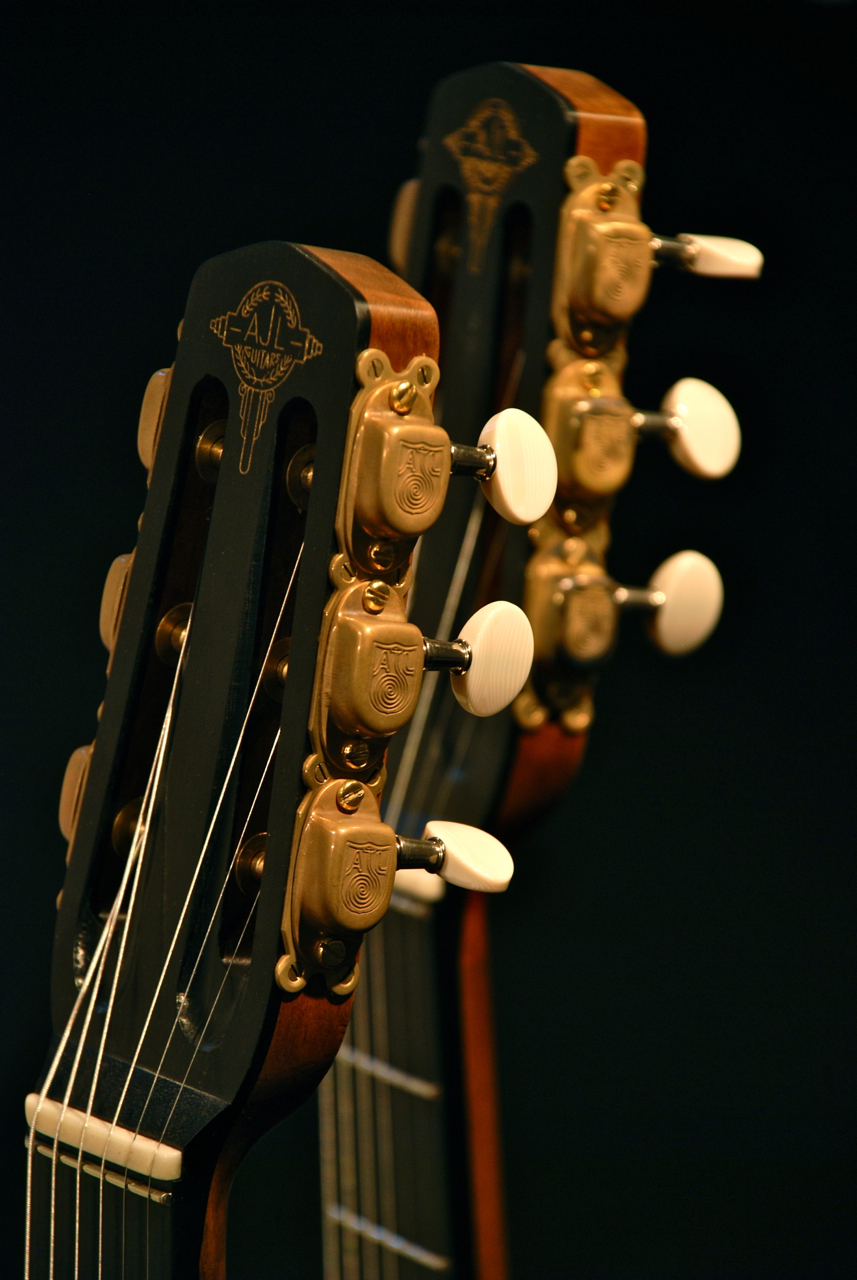
(picture courtesy of AJL-Guitars)

(picture courtesy of AJL-Guitars)
****
In the autumn of 2013 Kitarablogi had the pleasure of visiting Ari-Jukka Luomaranta’s AJL-Guitars workshop in Kokkola.
Here are some of the pictures I took on that occasion:

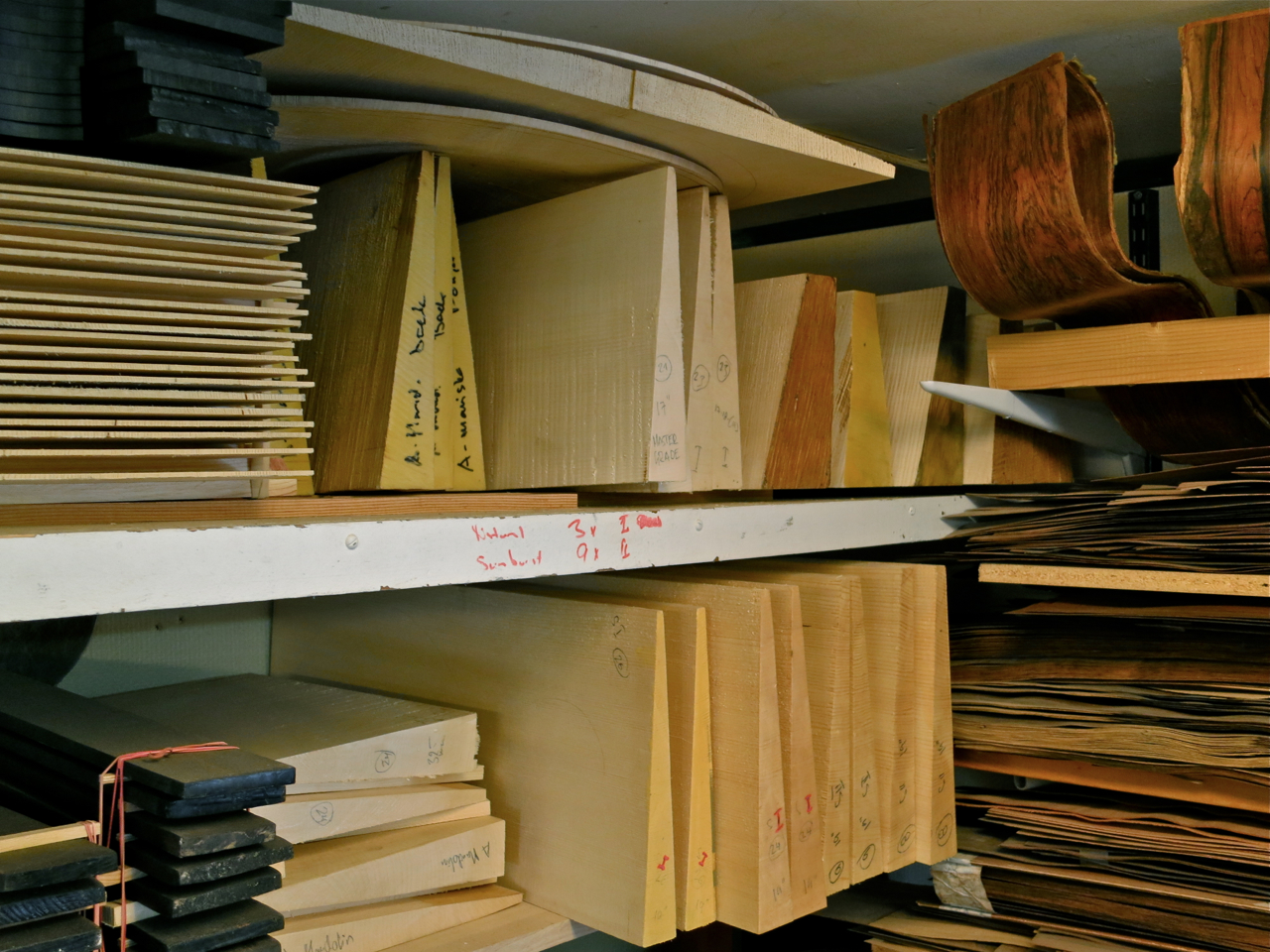


(picture courtesy of AJL-Guitars)


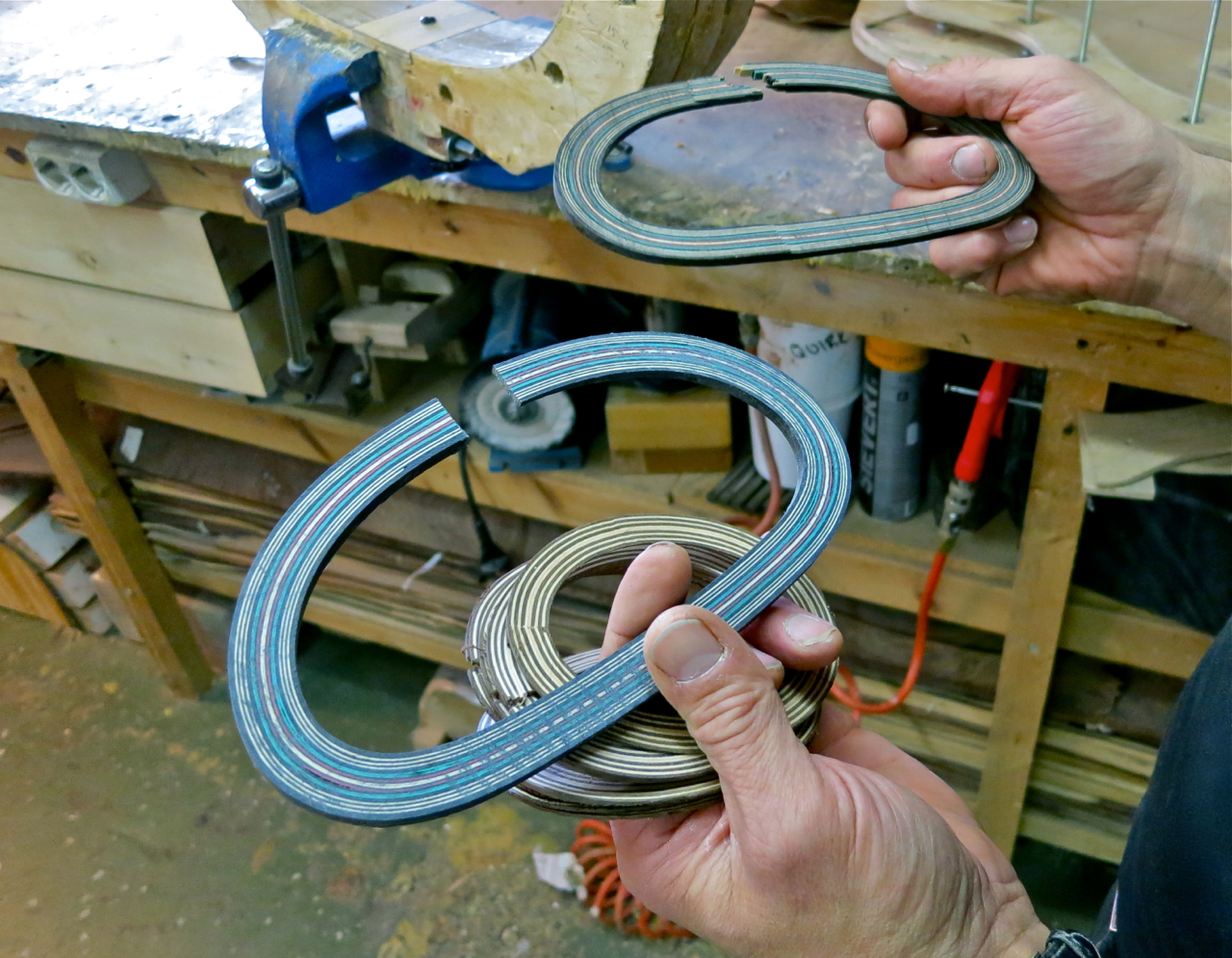

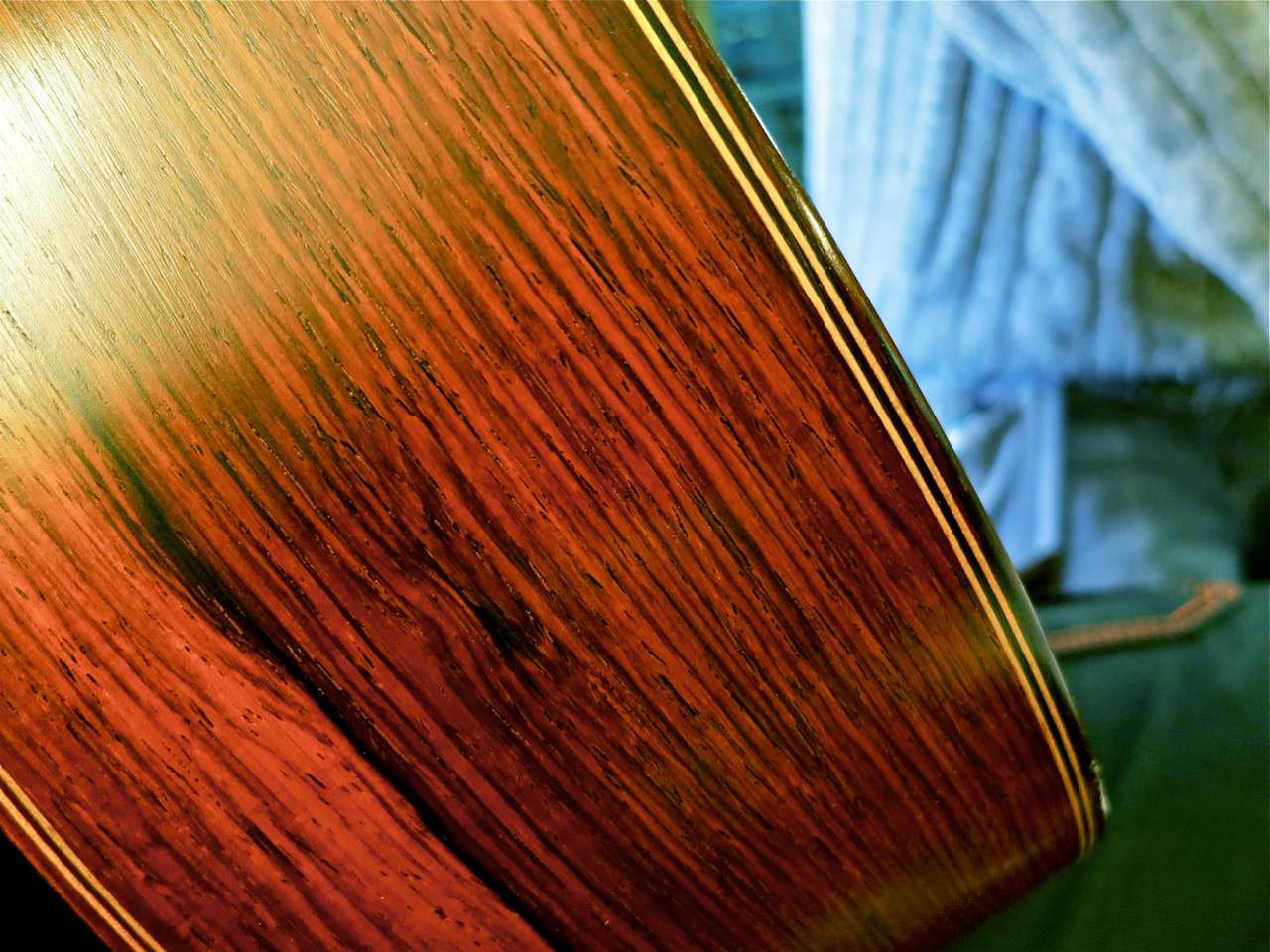


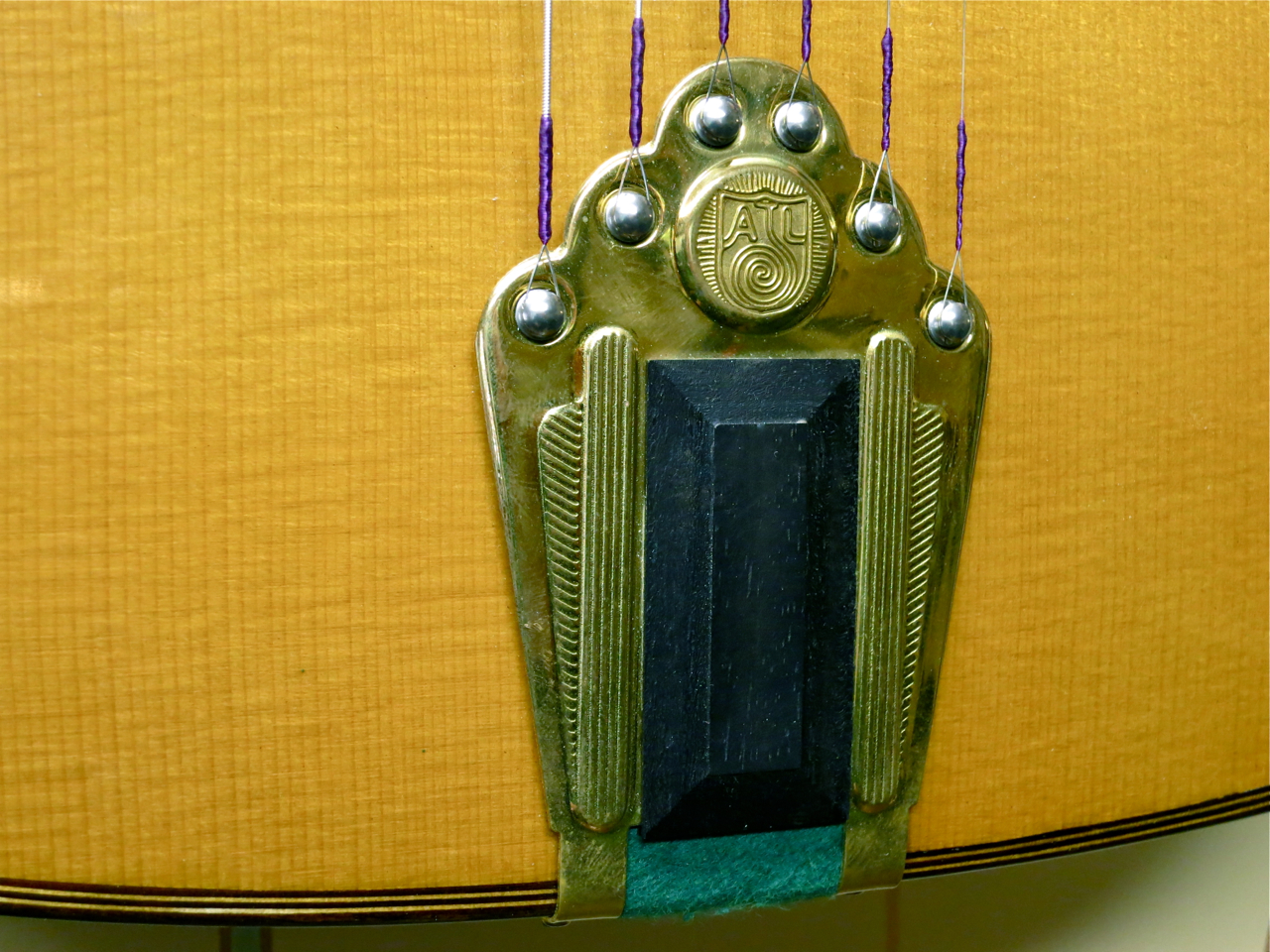


(picture courtesy of AJL-Guitars)
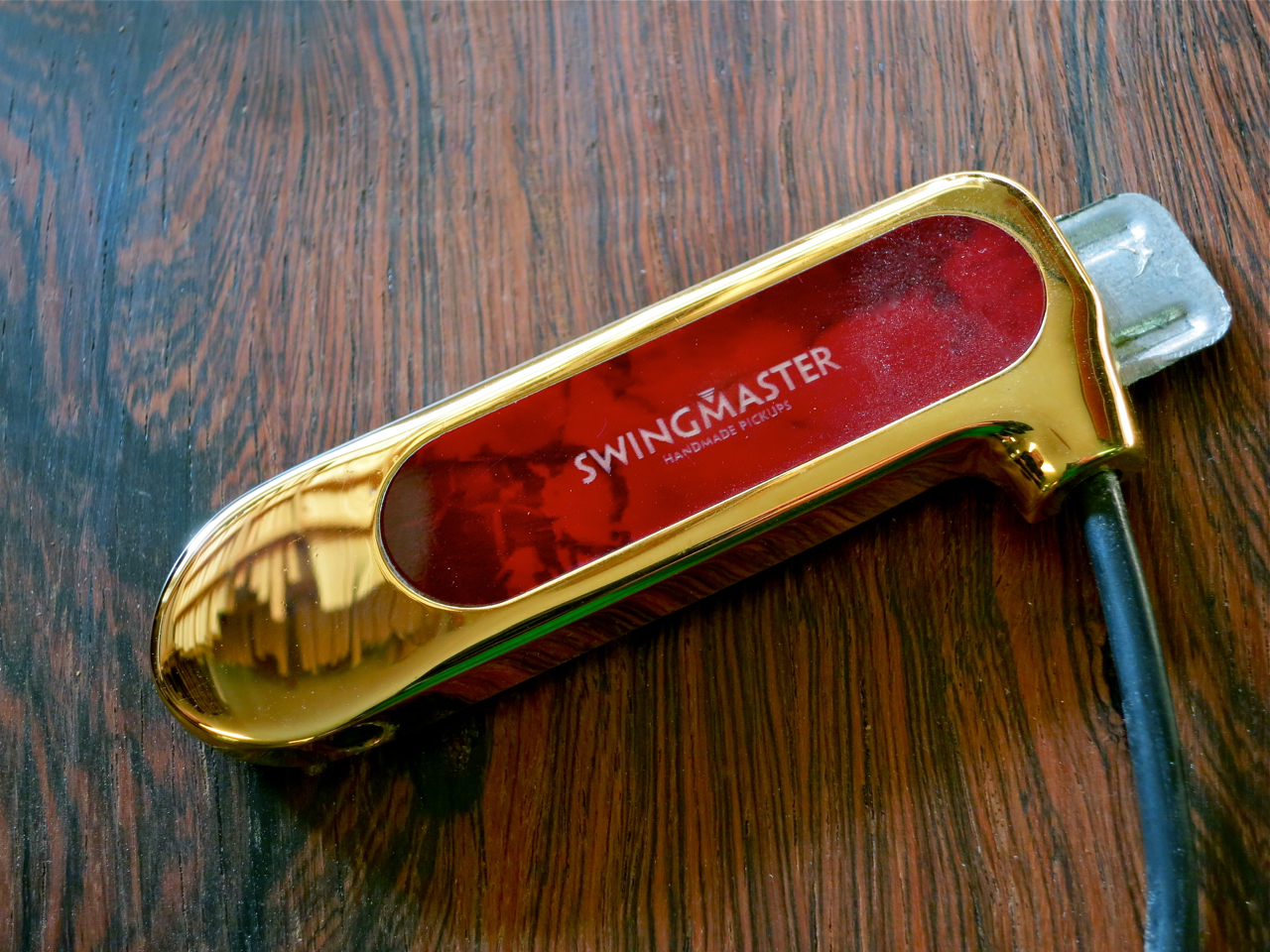


Find out more about AJL-Guitars on their WEBSITE or on FACEBOOK.
AJL-Guitars will also be at The Holy Grail Guitar Show in Berlin, Germany, in November!
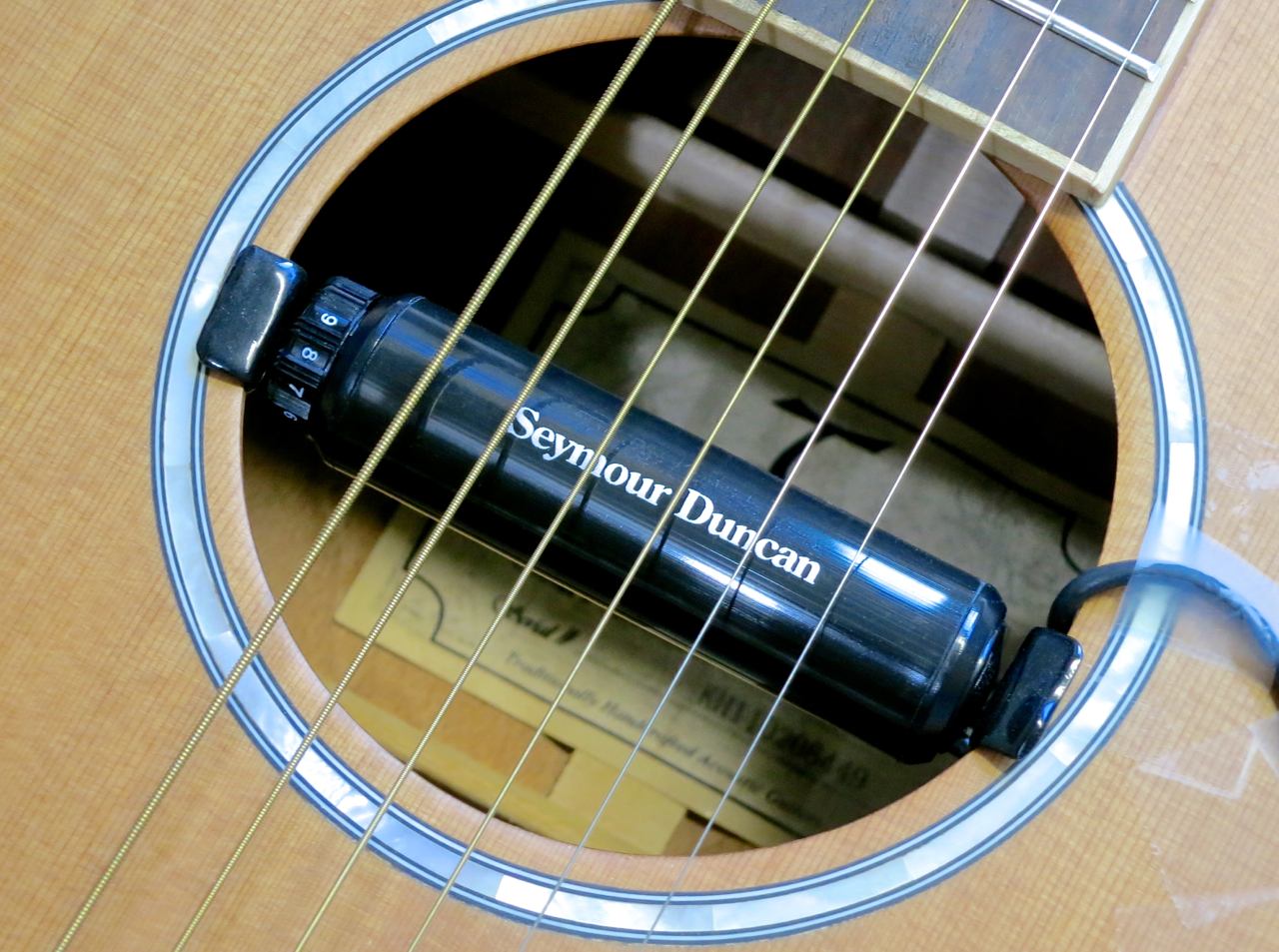
Seymour Duncan SA-1 Acoustic Tube in action!
Ostin itselleni hiljattain Seymour Duncanin SA-1 Acoustic Tube -mikrofonin, koska etsin helppoa mikkiratkaisua akustisia keikkoja varten. Huomasin, että netistä löytyy melko vähän tietoa tästä magneettisesta mikrofonista, siksi tämä tietoisku:
SA-1 on humbuckermikki kahdella päällekkäisillä keloilla (ns. stack-rakenne), jolla on sisäänrakennettu volume-säädin.
Pidän siitä, että Acoustic Tube -mikrofonilla on vain lyhyt johto, joka loppuu laadukkaan jakkiin. Jakkia voi kiinnittää esimerkiksi kitarahihnaan, ja sitten voi käyttää tavallista kitarajohtoa SA-1:stä DI-boksiin, mikseriin tai akustiseen vahvistimeen.
Parasta tässä mikrofonissa on kuitenkin sen soundi, joka on yllättävän luonnollinen, kun ottaa huomioon, että kyseessä on suhteellisen edullinen, pelkästään magneettisesti toimiva mikki.
Lisätietoja saa Musamaailmalta.
****
****
I recently went out and bought myself a Seymour Duncan SA-1 Acoustic Tube pickup, because I needed an easy-to-use pickup solution for acoustic live gigs. Strangely, there’s not that much information on this pickup available on the Internet, which is why I decided to give you a short decription of the SA-1:
The SA-1 is a stacked humbucker pickup featuring a built-in volume control.
I like the fact that Duncan’s Acoustic Tube comes with only a short pickup lead that ends in a high-quality phone jack. You can tape the jack to your guitar strap and then run a normal guitar cable from the SA-1 to your DI Box, mixing console or acoustic amplifier.
The best thing about this soundhole pickup is its sound, though, which is very natural and offers plenty of sparkle – especially considering that the SA-1 is a relatively affordable, purely magnetic pickup.
Seymour Duncan products are distributed in Finland by Musamaailma.

Review: Zoom H6


Zoom have released their new handy recorder flagship:
The Zoom H6 is a six-track mobile recorder with exchangeable microphone modules.
****

Zoom’s H6 (rrp in Finland: 398 €) comes in its own carrying case.
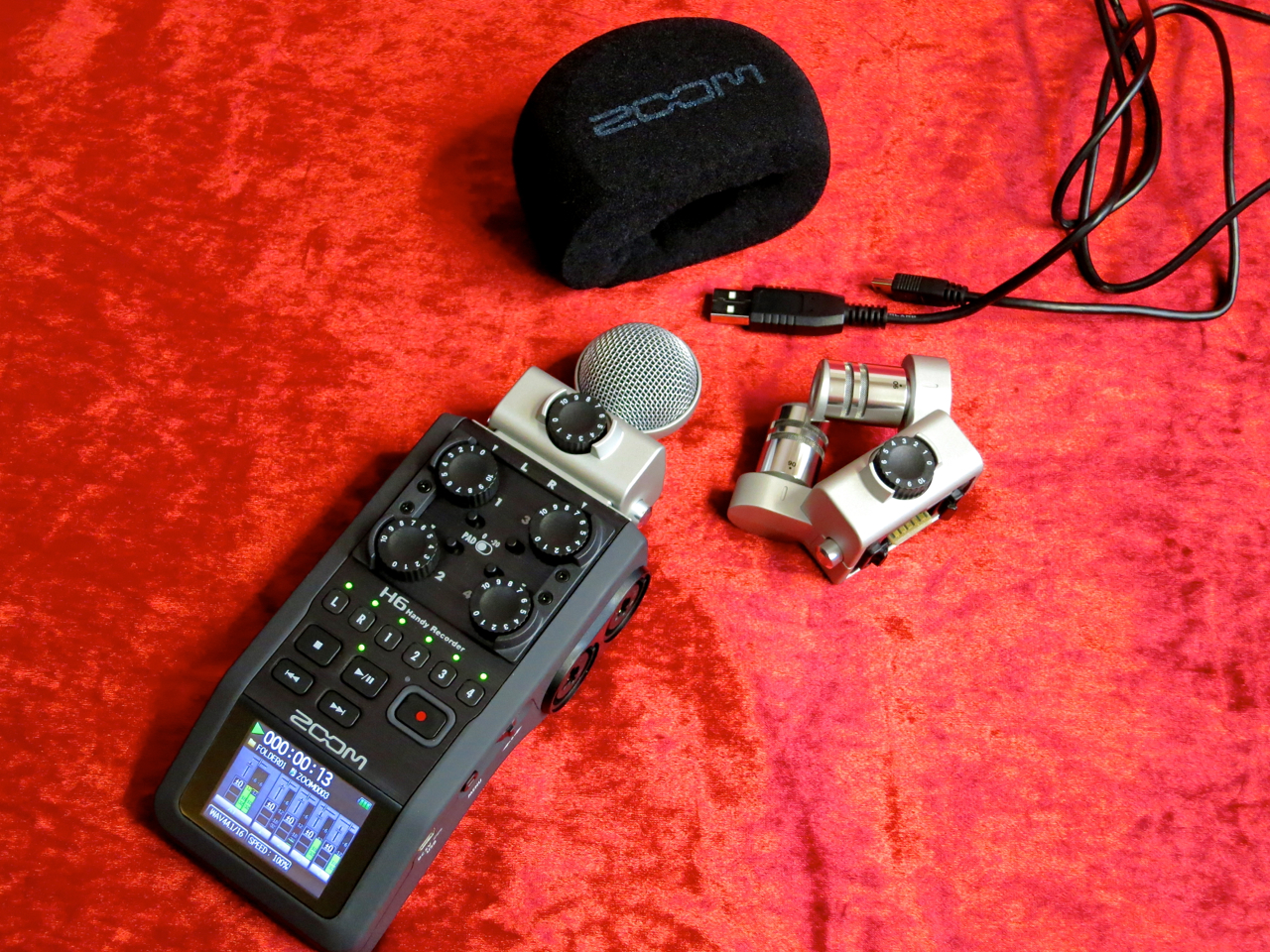
The package includes the H6 itself, two mic modules – the XYH-6 offering XY-stereo and the MSH-6 with an MS-stereo capsule – a foam windscreen, a USB-cable, four AA-size batteries and a 2 GB SD-card.
Also included is Steinberg’s Cubase LE audio-sequencer software.
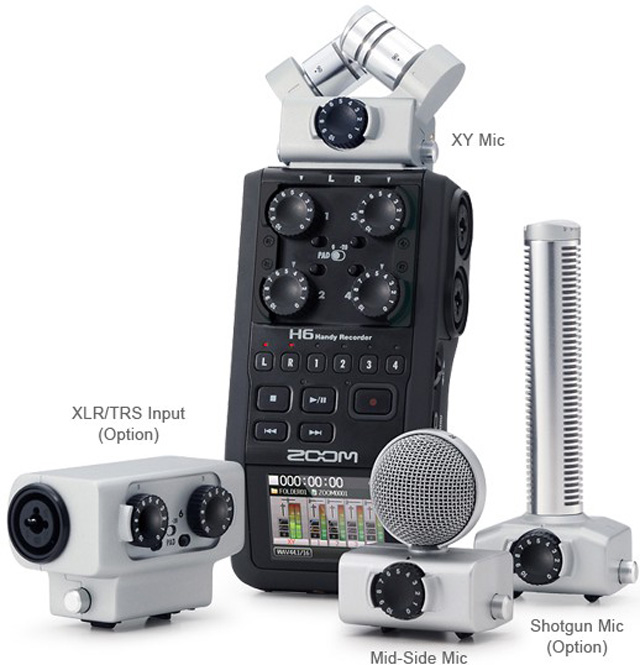
At the moment the H6 is the only field recorder offering you different exchangeable mic and preamp modules.
In addition to the supplied XY- and MS-modules you can also buy Zoom’s shotgun module (SGH-6) or a module with an additional pair of XLR-/TRS-inputs (EXH-6).

For this review we were also supplied with Zoom’s accessory pack for the H6 (APH-6), which contains a furry windshield for outdoor recording, as well a USB-power supply and a remote control.
****

Except for its control panel the Zoom H6 is entirely covered in a non-slip rubbery coating, which also cuts down on handling noise during recording.

A typical Zoom-feature has been carried over into the recorder’s XY-module:
You can switch the stereo width of the XY-setup by turning the capsules. The options are the slightly narrower 90 degrees angle…

…and the wider pickup pattern of 120 degrees.

The combined XLR/TRS-connectors have been placed on both sides of the H6. The Zoom offers switchable phantom power for condenser mics.
On the left side you’ll find the access to the SD-card, as well as the headphones output and the volume control.
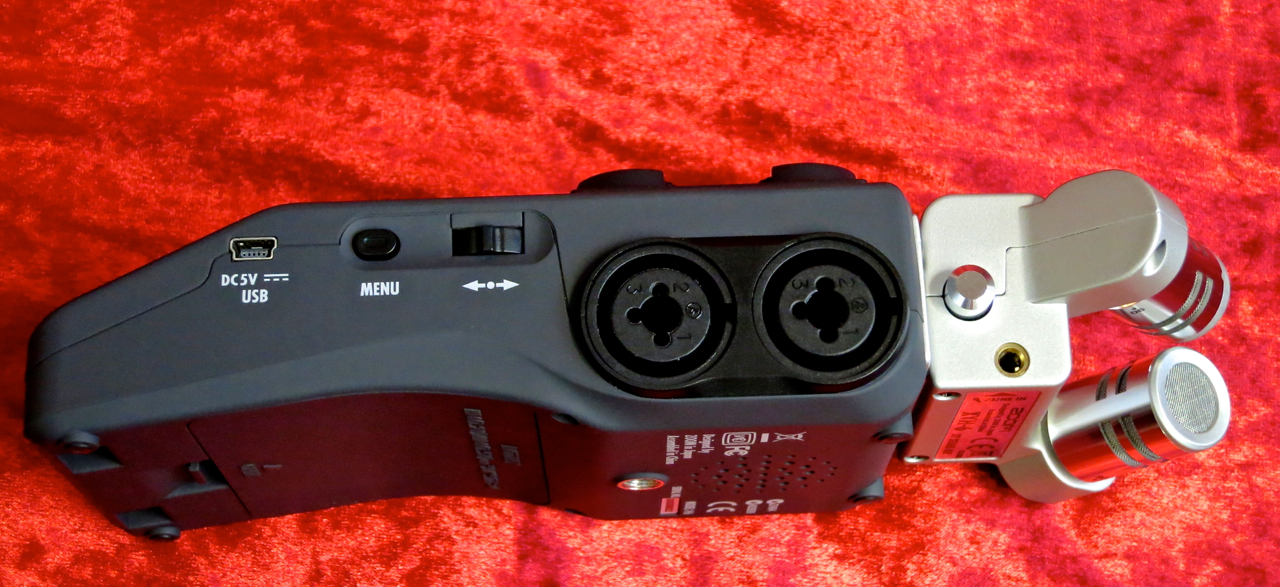
In addition to the recorder’s mini-USB-port the right side is home to the Menu-button and the device’s nifty navigation toggle.
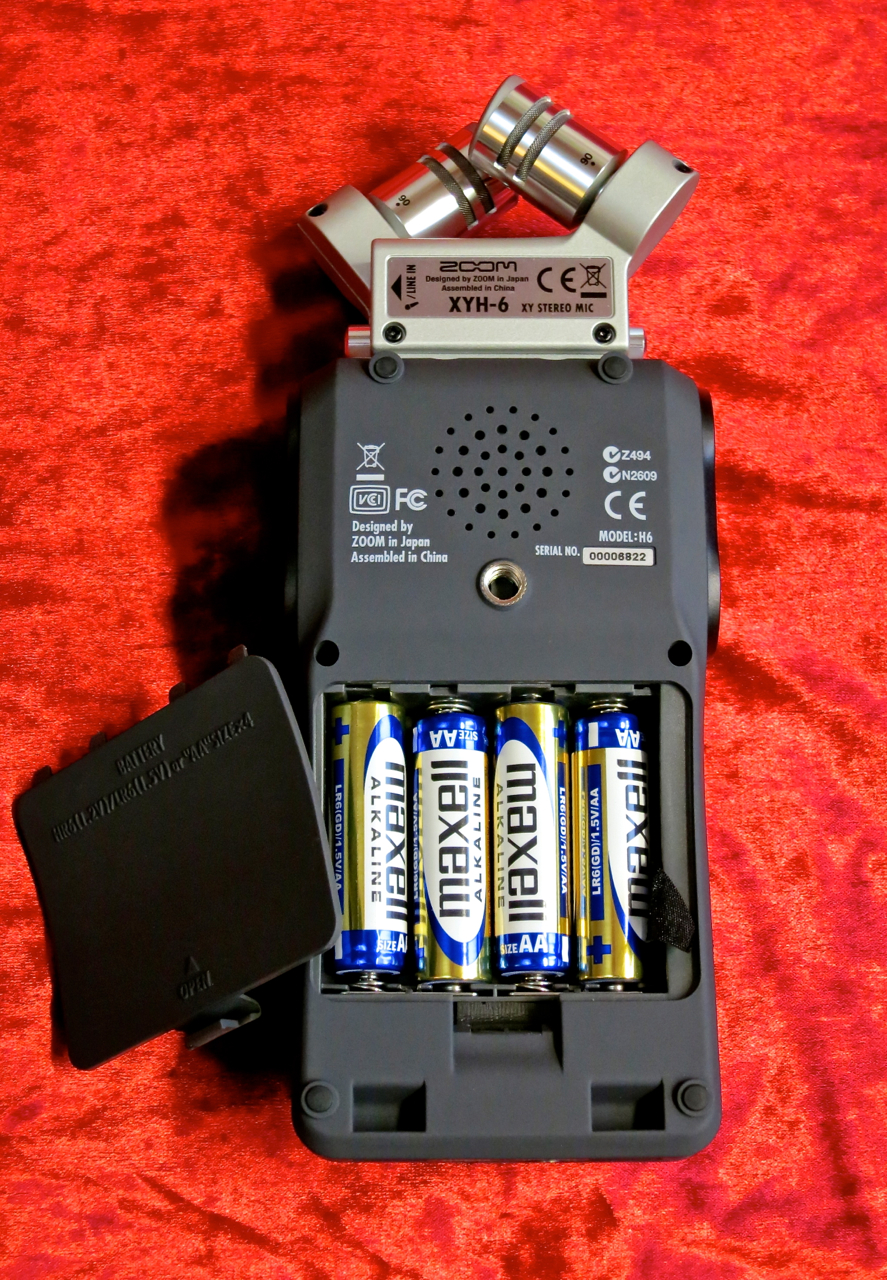
This recorder runs on four AA-size batteries, and will run for approximately 20 hours on a fresh set of alkalines.
You can place the Zoom on most camera tripods, thanks to its standardised thread. There’s also the HS-1 hot shoe adapter available, which makes it possible to mount the recorder straight onto a camera.
The small monitor speaker isn’t particularly Hi-Fi, but it’s good to have it for quick checks.

The unit’s line level output, as well as the connector for the optional remote control, has been placed on the bottom rim of the Zoom.
****
The Zoom H6 can handle two audio formats:
Linear WAV-files offer you sample rates of 44.1, 48 or 96 kHz with 16 or 24 bits of resolution. When you choose WAV as your recording format the H6 works as a multitrack recorder, which makes it possible to do overdubs, and which allows you to mix the recorded tracks afterwards. You can do your mixdown internally, using the Zoom’s own Project Mixer, or by exporting the separate tracks to an audio-sequencer.
Another function that only works when you’ve chosen WAV as your recording format is called Backup Record. This nifty function records the input signal from the exchangeable module twice – one set of tracks uses your input gain settings and is routed to the L/R-track, as usual, while the second set is recorded with 12 dB of attenuation as the so-called Backup-track. The Backup-track is your safety in case your own settings were too hot.
The big advantage of using the H6 in MP3-mode is, of course, this mode’s greatly extended recording time, made possible by data reduction. The recorder lets you choose from many different recording quality settings between 48 and 320 kbps. When in MP3-mode you use the Zoom’s Monitor Mixer to mix all of the six inputs into one stereo file, which is the recorded. This means that, when recording using the MP3-format, the end result is always a single stereo file, instead of the separate tracks you get when running in WAV-mode.
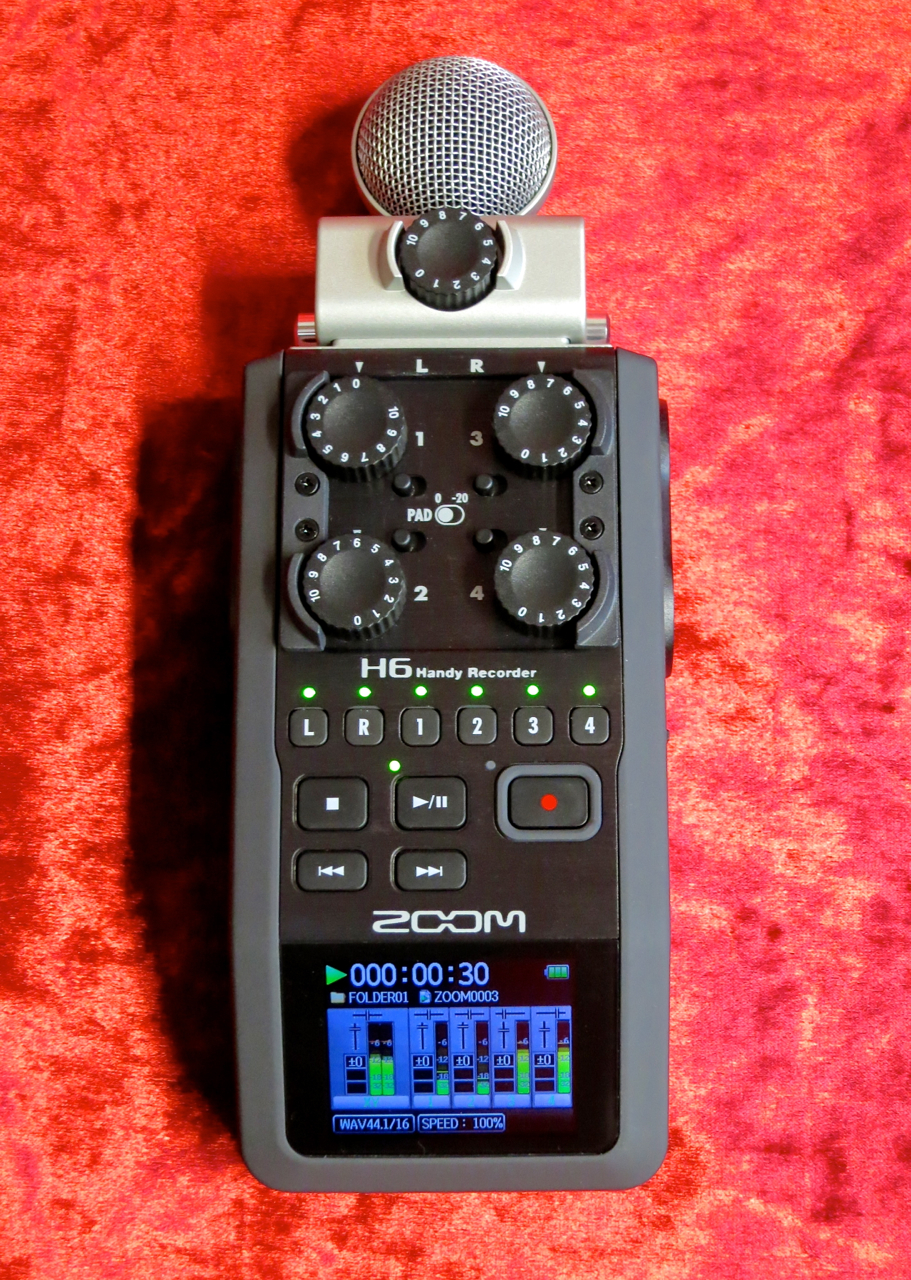
When you’re using the MS-module you can adjust the side-mic level, either before recording (WAV and MP3) or afterwards if you’ve recorded the module’s input signal using the Zoom’s MS-Raw-mode (WAV only).
More information on MS-stereo can be found HERE.
****

The Zoom H6 is very easy to use, because the signal routing is fixed:
The module’s output always goes to the L/R-track (stereo), while inputs one to four are routed to their corresponding mono tracks (1-4).

Beneath the Gain-controls there’s a row of track status buttons, as well as the recorder’s ”transport” buttons.

The Zoom’s Monitor Mixer is where you adjust the signal levels and pan positions of all the signals for monitoring.
The Monitor Mixer window also shows you the status of each channel’s bass cut, compressor/limiter and phantom power.

This is what the Menu-view looks like.

To mix down recorded tracks you use a different internal mixer, called the Project Mixer.
The Project Mixer allows you to adjust each track’s volume and pan position, as well as the playback pitch for each track (without changing the playback speed).
****

In my opinion Zoom’s H6 hits the bull’s eye:
The exchangeable mic modules give you an enormous amount of flexibility to tailor the recorder quickly to the recording situation you find yourself in. The H6 is easy to use, and the recorder’s sound quality is very, very good. Thanks to the built-in metronome and chromatic tuner it’s easy to make sure you play in time and in tune. I’ve also enjoyed the Zoom’s nice compressors and limiters, which work very musically.
To demonstrate the H6’s performance and sound I recorded a short song using the recorder’s overdub function. I used the X/Y-module (at 90 deg) to record the steel-string acoustic, and recorded two mandolin tracks and two vocals with my trusty Shure SM57.
First, I mixed the song using the Zoom’s internal mixer, after which I exported the stereo file to Garageband, where I cut off the count-in and added a little bit of reverb:
I also tried taking the other route by exporting all the separate files from the H6 into Garageband, where I remixed the song using the original tracks:
****
I used a series of sine-wave sweeps to give you an idea of the effect the side-mic level has on the stereo-width of the recorded material. The lower the side-mic level is, the narrower your stereo image gets.
Side-mic +6dB:
Side-mic -2 dB:
Side-mic -9 dB:
Side-mic -22 dB:
Side-mic off:
****

I think Zoom’s H6 is a great field recorder and portable multi-track studio. The H6 works great to capture your song ideas or to for quality recordings of your band rehearsals or live gigs. The Zoom makes pro-quality recording on the road possible.
****
Zoom H6
Finnish distributor: Studiotec
Zoom H6 – 398 €
APH-6 – 48 €
EXH-6 – 58 €
SGH-6 – 118 €
****
Pros:
+ exchangeable L/R-modules
+ rugged build
+ colour display
+ Overdub-, Pre Record- ja Backup Record -functions
+ quality compressor/limiter-section
****
Testipenkissä: Zoom H6
Zoomilla on uusi pikkutallentimien lippulaiva:
Zoom H6 on kuusiraitainen kannettava tallennin, joka tarjoaa vaihtomoduulien kautta erilaisia mikrofoniratkaisuja.
****
Zoom H6 (suositushinta 398 €) myydään omassa kätevässä laukussa.
Laukun sisältä löytyy H6:n runko, kaksi mikrofonimoduulia – XY-stereota tarjoava XYH-6 ja MS-stereomikrofoni MSH-6 – vaahtomuovinen tuulisuoja, USB-johto, neljä AA-paristoa, sekä 2 GB:n SD-kortti.
Tämän lisäksi pakettiin kuuluu myös Cubase LE -softasekvensseri.
H6 on tällä hetkellä ainoa kämmenkokoinen tallennin, joka tarjoaa mahdollisuuden vaihtaa tallentimen mikrofonivarustusta erilaisilla moduuleilla.
Lisävarusteena voi ostaa itselleen XY- ja MS-moduulien lisäksi Zoomiin sopiva haulikkomikki (SGH-6) tai sitten kaksi XLR/TRS-lisätuloja tarjoavaa vaihtoehtoa (EXH-6).
Testiin saatiin myös Zoomin kätevä lisävarustepaketti (APH-6), josta löytyy karvainen tuulisuoja ulkotyöskentelyä varten, sekä H6:lle sopiva USB-virtalähde ja langallinen kauko-ohjain.
****
Zoom H6:n metallista etupaneelia lukuun ottamatta laitteen runkoa on päällystetty käsittelyääniä vaimentavalla kumimaisella kuorella.
Yksi Zoom-tallentimille tyypillisistä ominaisuuksista löytyy myös XY-moduulista:
Mikrofonikapseleiden kulmaa voi säätää kääntämällä. Vaihtoehtoina tarjotaan hieman kapeampaa 90:n asteen kulmaa…
…sekä leveämpi 120:n asteen asentoa.
H6:n XLR/TRS-kombiliitimet on sijoitettu kätevästi laitteen molempiin kylkiin. Tuloista voi lähettää tarvittaessa phantom-virtaa kondensaattorimikrofoneja varten.
Vasen kylki tarjoaa tulojen lisäksi muistikorttipaikan, kuulokelähdön, sekä volumesäätimen.
Oikeasta kyljestä taas löytyy minikokoisen USB-portin lisäksi vielä Zoomin Menu-nappi ja H6:n sulavasti toimiva navigointivipu.
Laitteen pohjaan on upotettu sen paristolokero neljälle AA-kokoisille paristoille. Alkaliparistoilla H6 toimii noin 20 tuntia.
Standardisoidun kierteensä ansiosta Zoomin voi kiinnittää suoraan tavalliseen kamerajalustaan, tai HS-1-kamera-adapterilla myös suoraan kameran salamakiinnikkeeseen.
Zoom H6:lla on myös pieni sisäinen monitorikaiutin.
Zoomin linjalähtö, sekä H6:n liitin kauko-ohjaimelle on sijoitettu tallentimen etureunaan.
****
Zoom H6 käyttää kahta audioformaattia:
Lineaariset WAV-tiedostot tarjoavat 44,1:n, 48:n tai 96:n kilohertsin näytetaajuudet 16- tai 24-bittisinä. Kun WAV on valittu äänitysformaatiksi, tallennin toimii moniraiturina, jolloin jälkiäänittäminen (engl. overdubbing) ja raitojen miksaaminen äänityksen jälkeen – joko H6:n omalla mikserillä (Project Mixer) tai audiosekvensserillä – on mahdollinen.
Myös Zoomin mainiota Backup Record -toimintoa varten formaatiksi täytyy valita WAV-vaihtoehto. Backup Record äänittää vaihtomoduulin signaalin samanaikaisesti sekä normaalina tallennuksena L/R-stereoraidalle että varmuuden vuoksi 12 desibeliä hiljaisempana ns. BU-raidalle. Jos on esimerkiksi live-tilanteessa tullut laitettua mikkimoduulin gain-asetuksia vahingossa liian isoksi, on Backupin ansiosta kuitenkin hyvin todennäköistä, että L/R-raidasta löytyy myös särötön versio.
MP3-tilan suuri etu on luonnollisesti, että datakompressoitu tiedostomuoto antaa roimasti enemmän tallennusaikaa. Zoomissa voi valita mp3-laadun 48:n ja 320:n kbps välillä. Kun mp3-on valittu äänitysformaatiksi H6:n kaikki tulosignaalit miksataan kuuntelumikserillä (engl. monitor mixer) yhdeksi valmiiksi stereotiedostoksi. MP3-tilan äänityksessä syntyy siis aina vain yksi valmis stereotiedosto, eikä WAV-tilan tavoin erillisiä raitoja.
Tallentimen MS-moduulilla äänittäessä voi säätää stereokuvan laajuutta säätämällä sivumikrofonin (side-mic) signaalitasoa, joko ennen äänitystä (WAV ja mp3) tai ns. MS-Raw-moodissa (vain WAV) vasta miksausvaiheessa.
Lisää tietoa MS-stereosta saa TÄSTÄ.
****
Zoomin H6 on helppoa käyttää, sillä tallentimen signaalireititys on kiinteä:
Moduulin signaali menee L/R-stereoraidalle, kun taas muiden tulojen (1-4) signaalit äänitetään niille kuuluville monoraidoille (1-4).
Gain-säätimien alapuolella sijaitsevat raitojen tilanapit, sekä tallentimen isokokoiset näppäimet ”nauhakuljetusta” varten.
Äänitysvaiheessa käytössä on Zoomin Monitor Mixer, jossa säädetään kuuntelutasoa ja -panorointia.
Kuuntelumikserissä voi myös nähdä, ovatko tulojen bassoleikkurit, kompressorit ja phantom-syötöt päällä vai pois.
Tällainen on H6:n selkeä Menu-näkymä.
Valmiin materiaalin miksausta varten tallentimella on oma mikseri nimellä Project Mixer.
Tarjolla on raitojen tason säätö ja panorointi, ja sen lisäksi jokaisen raidan reaaliaikainen transponointi (toistonopeus pysyy muuttumattomana).
****
Mielestäni Zoom H6 on täysosuma:
Vaihtomoduulien käyttö on nerokas tapa laajentaa tallentimen käyttökohteita. H6 on helppo käyttää, ja sen tarjoama äänenlaatu on hyvin kiitettävällä tasolla. Sisäisen metronomin ja viritysmittarin ansiosta äänitys pysyy myös taimissa ja vireessä. Erityiskiitos kuuluu Zoom H6:n monipuolisille ja laadukkaille kompressori- ja limitteri-efekteille, jotka toimivat erittäin musikaalisella tavalla.
Äänitin kokeiluksi yhden akustisen demobiisin päällesoittoja käyttäen. Teräskielistä akustista kitaraa poimin talteen Zoomin XY-moduulilla (90 asteen kulma), minkä jälkeen äänitin kaksi lauluosuutta ja kaksi mandoliiniraitaa dynaamisella Shure SM57 -mikrofonilla.
Miksasin biisin ensin H6:n omalla mikserillä, minkä jälkeen vein stereomiksauksen Garagebandiin, jossa poistin sisäänlaskun ja lisäsin hieman yleiskaikua:
Tämän jälkeen vein biisin yksittäiset raidat Garagebandiin, ja miksasin biisiä uudelleen sekvensserillä:
****
Käytin sarjan siniaalto-sweepejä MS-moduulin sivumikrofonin asetuksien havainnollistamiseen. Mitä pienempi sivumikin taso on, sitä kapeammaksi stereokuva muuttuu.
Side-mic +6dB:
Side-mic -2 dB:
Side-mic -9 dB:
Side-mic -22 dB:
Side-mic off:
****
Zoom H6 on mielestäni loistava taskustudio, joka toimii yhtä hyvin biisintekovälineenä kuin myös mainiona keikka- tai harjoitustallentimena. Se on erittäin onnistunut paketti paljon liikkuvalle muusikoille, jolla voi syntyä helposti jopa julkaisukelpoista materiaalia.
****
Zoom H6
Maahantuoja: Studiotec
Zoom H6 – 398 €
APH-6 – 48 €
EXH-6 – 58 €
SGH-6 – 118 €
****
Plussat:
+ vaihdettavat moduulit
+ vankkaa tekoa
+ värinäyttö
+ Overdub-, Pre Record- ja Backup Record -toiminnot
+ laadukkat kompressorit/limitterit
****
Review: Mannedesign PFM + RDV

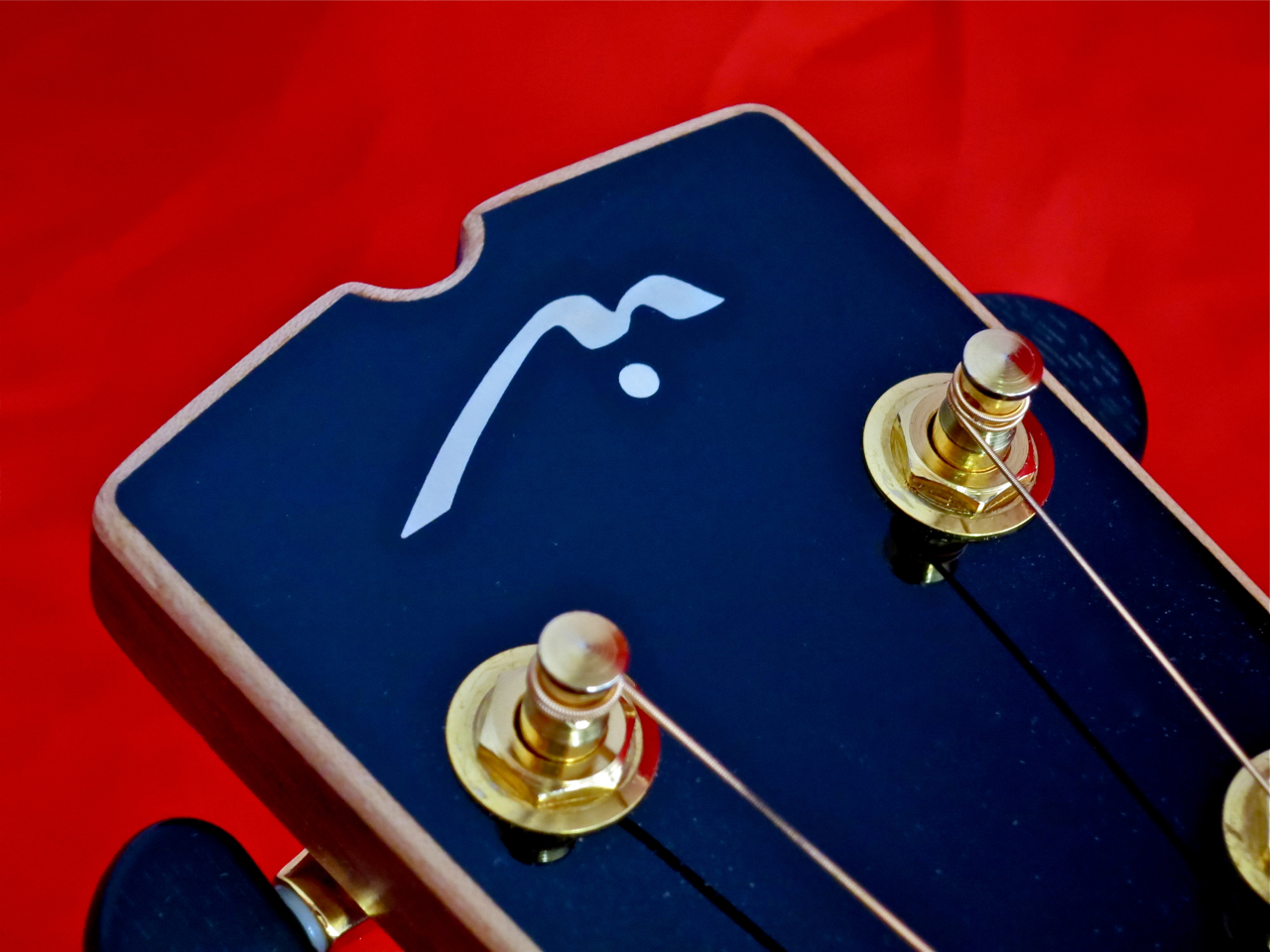
Mannedesign is the more affordable, Far Eastern-produced brand of Italian company Manne Guitars.
Apart from Mannedesign’s wide array of electric guitars and basses the brand’s model range also includes several steel-string acoustics, two of which are featured in this review:
The Parlour-sized Mannedesign PFM and Roberto Dalla Vecchia’s signature-Dreadnought, the RDV.
****

The Mannedesign PFM (660 €) is an all-solid, small-bodied instrument for the Blues-, Folk- and Roots-guitarist, who is looking for a vintage-toned guitar.
The deep and rich matte finish on the PFM’s cedar top embues the instrument with a good dose of street credibility.

The mahogany neck is one-piece, save for the upper half of the headstock, and a another piece used to get the neck heel up to its full length. The neck joint is a the 12th fret, just like it was on many guitars in the 1930s.
The back and rims of the soundbox have been crafted from beautiful solid mahogany.
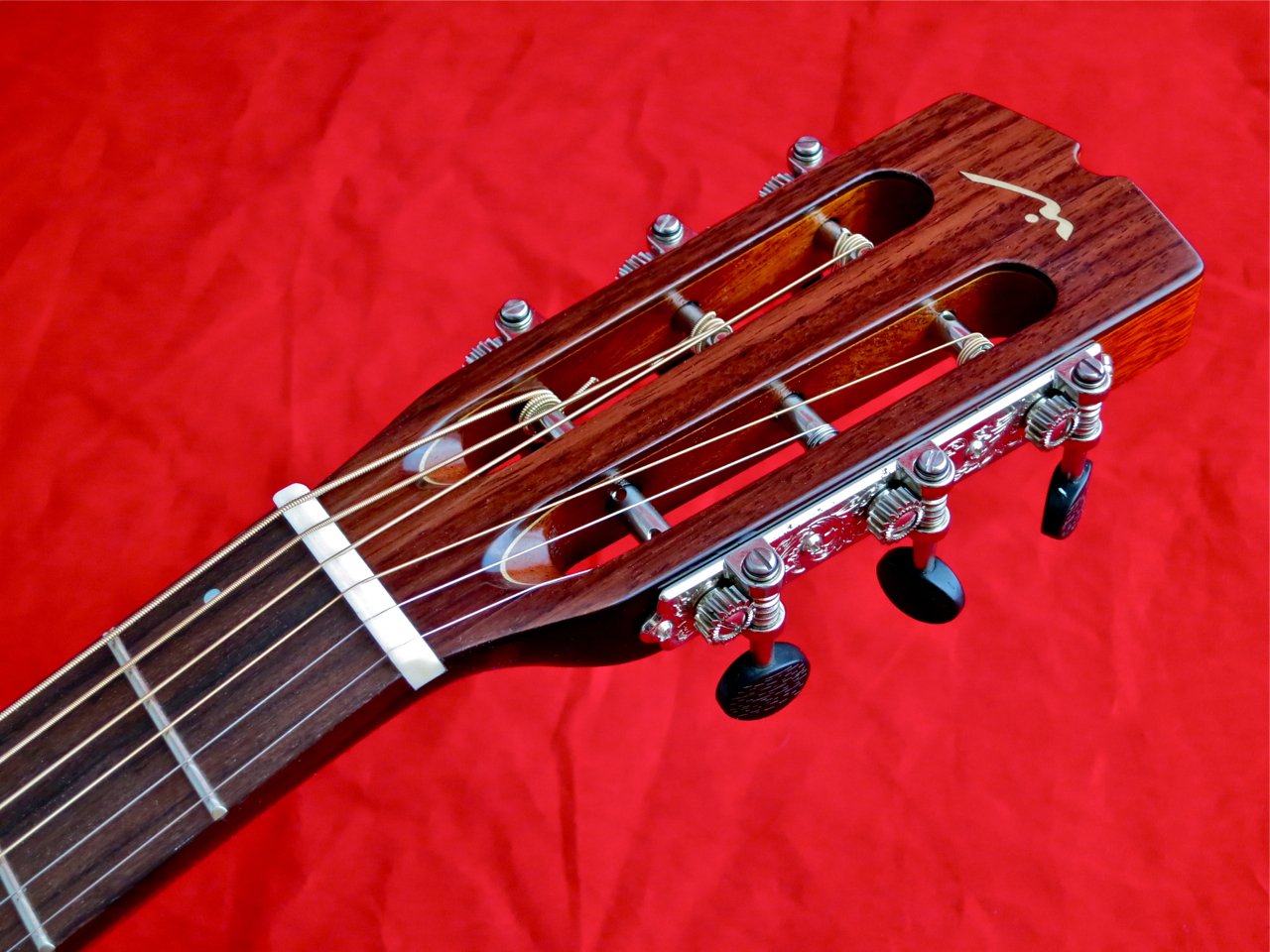
The headstock sports a rosewood veneer, which has been beautifully inlaid with a maple Mannedesign-logo.
TRhe top nut has been carved from genuine bone.

Gotoh supplies this model’s quality open tuning machines, which are a well-designed update on vintage tuners.

The Mannedesign’s rosewood fingerboard holds 19 well-seated, medium-sized frets.

The PFM’s body has been adorned with stylish flame maple binding, while the guitar’s beautiful rosette sports abalone inlays.
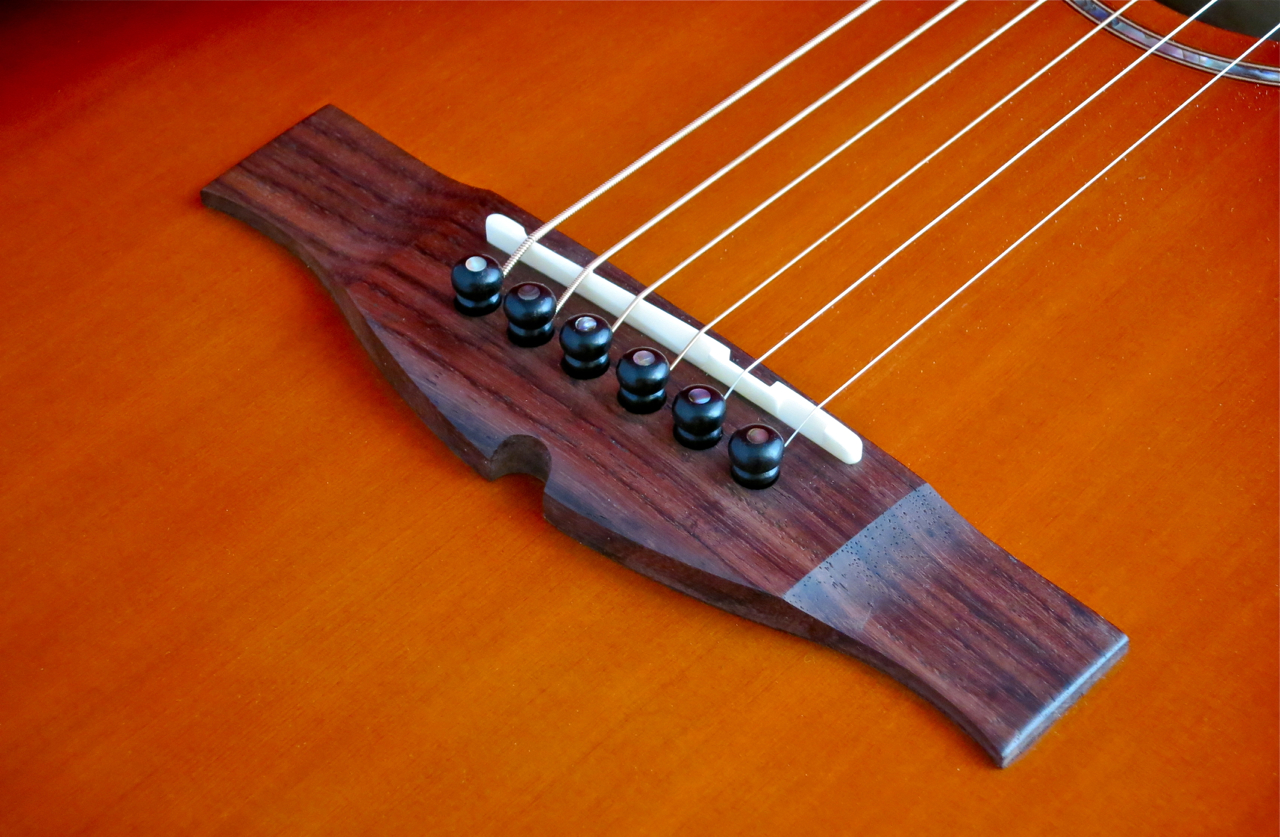
The characteristic dip of the Mannedesign’s headstock is mirrored in the rosewood bridge’s design.
The compensated bridge saddle has been made – just like the top nut – from bovine bone, which is still one of the best materials for this purpose.

****

Roberto Della Vecchia is an Italian Fingerstyle-wizard – I can only recommend hopping over to his website to check the man out!
Della Vecchia’s Mannedesign RDV -signature model (950 €) is a gorgeous Dreadnought guitar carefully crafted from traditional materials. AA-quality sitka spruce is used for the guitar’s solid top.

The RDV’s mahogany neck is one-piece, save for a separate bit used to make up the neck heel.
The solid Indian rosewood used for the back and the rims is stunningly beautiful.
The body of the guitar comes with a gloss finish, while the neck has been finished with a matte lacquer.

The headstock facing is black ebony, inlaid with a mother-of-pearl Mannedesign-logo.
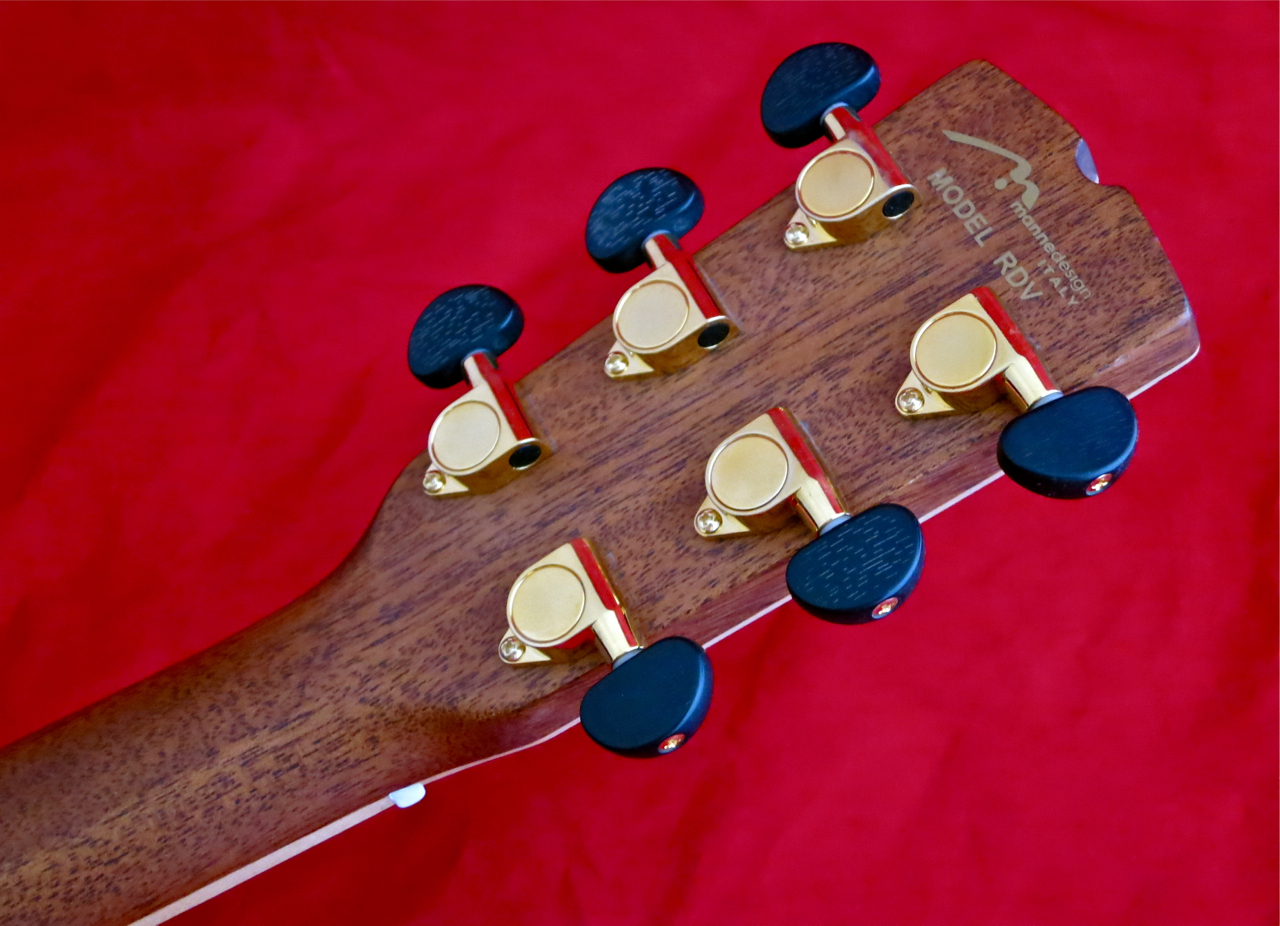
The RDV comes equipped with gold-coloured Gotoh tuners with ebony-styled plastic tuning buttons.

Maple binding frames the ebony fingerboard. The RDV is equipped with 20 medium-sized frets.

The back’s centre line has been inlaid with a very beautiful black-and-white motif.
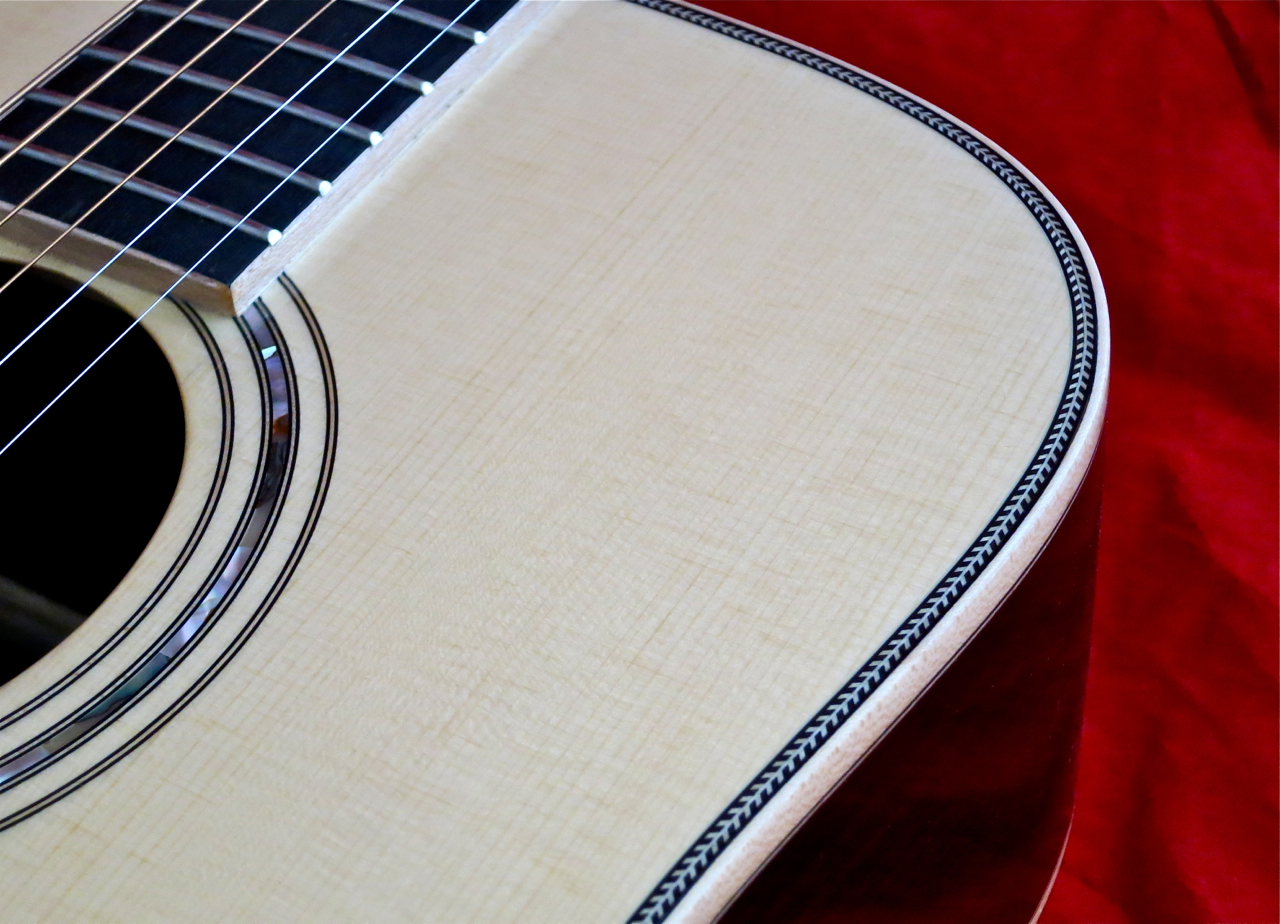
In addition to the maple edge binding the top also sports very crisp-looking herringbone purfling.
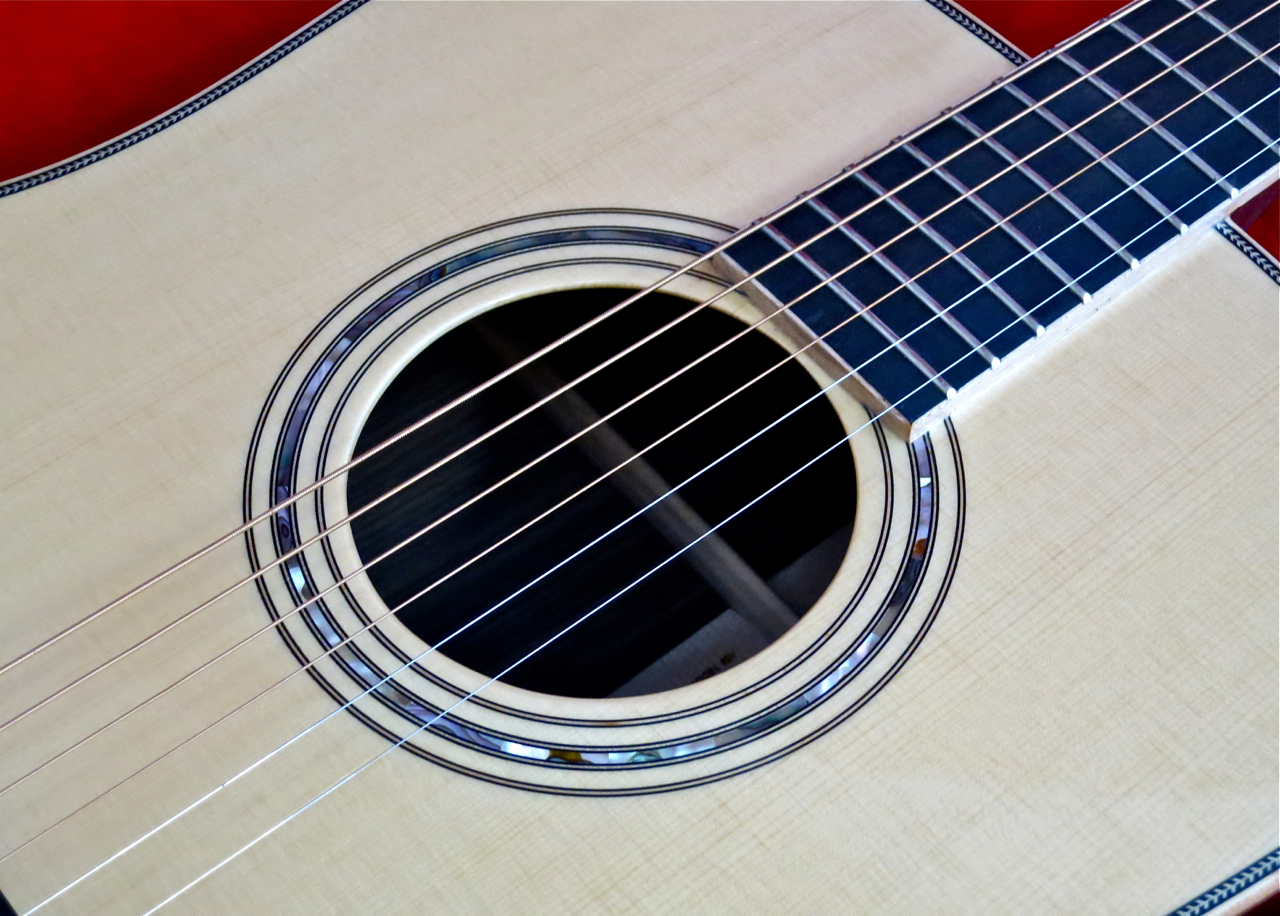
The rosette’s central ring is made up of genuine mother-of-pearl.

The RDV’s bridge is the same design we’ve already seen on the PFM, but this time crafted from deep black ebony.

****
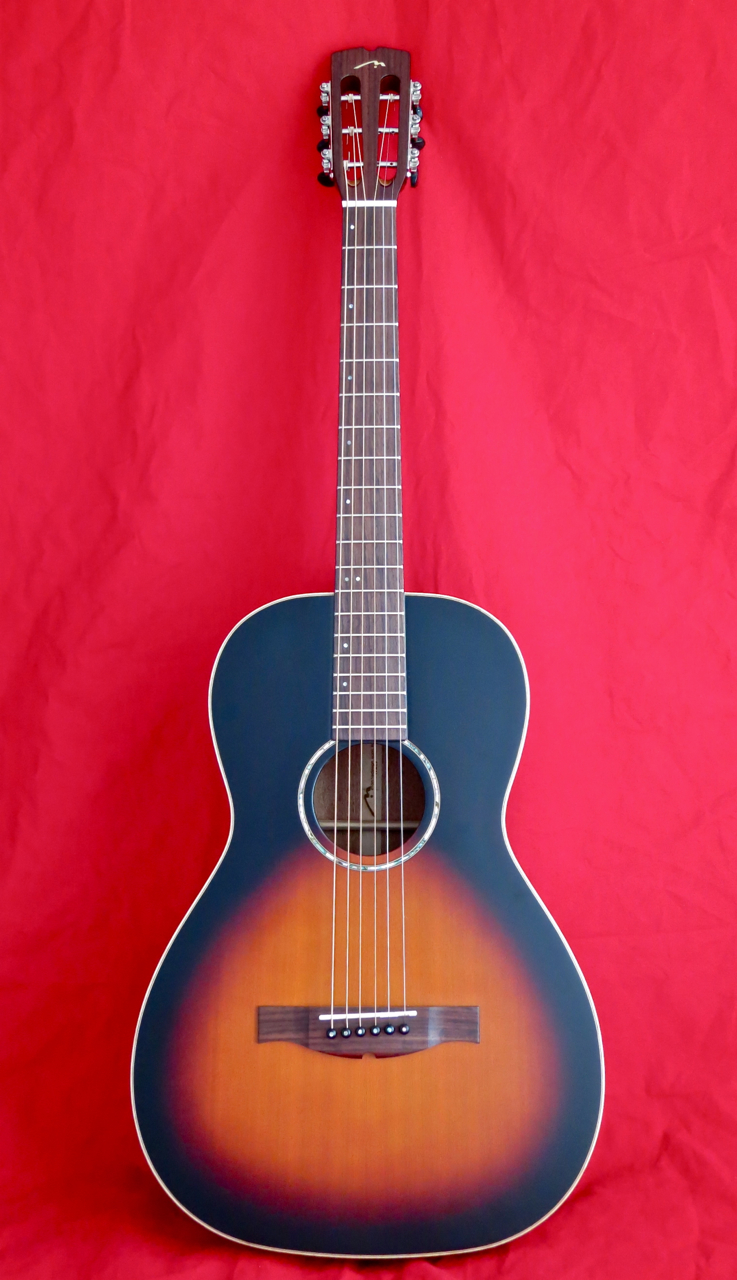
As most do Parlour-sized guitars, the Mannedesign PFM has a medium-length scale of 63 cm, which makes bending the 012-gauge strings relatively easy to bend. Instead of a ”vintage-correct” – and often loathed – V-profile neck, Mannedesign have opted for a more sensible and nice-feeling middle-of-the-road D-profile. The guitar’s nut width measures 4,4 cm, while the string spacing (E to e) at the bridge stands at 5,4 cm – good for both plectrum player, as well as fingerstylists. The test sample was set up with a very friendly action (E: 1,9 mm/e: 1,5 mm).
The Mannedesign PFM is a typical Parlour-guitar in the best possible sense. The guitar’s sound is quite dry and has a barking attack, with a strong and slightly nasal overall mid-range focus. Fingerstyle-guitarists will love the relatively light bass register, which keeps things transparent. When using a plack, you will be positively surprised by how well the PFM is able to cut through and project – great for Ragtime and early Blues. The Mannedesign PFM also records really well, because it doesn’t clutter the low-mid and bass registers.

****

The Mannedesign RDV has the long scale (63 cm) typical of a Dreadnought. Roberto Della Vecchia requested a slightly wider-than-usual string spread at the bridge (5,9 cm) to accommodate the needs of fingerstyle players. The neck profile is a very nice, oval C. The Della Vecchia model’s set-up was superb, with a nice and comfortable action (E: 2,0 mm/e: 1,5).
Rosewood-bodied Dreads often turn out to be great ”shouters”, which also holds true for the RDV’s healthy volume levels. There’s plenty of lush bass on tap, with a warm mid-range and shimmering top-end to boot. The Mannedesign RDV is a prime exponent of the famous Dreanought-sound, offering you volume, character and dynamics in spades.


****
Mannedesign-instruments still have a rather low profile here in Finland. Still, based on this review I can only recommed a closer look at the brand’s acoustic offerings.
****
Mannedesign PFM + RDV
PFM – 660 €
RDV – 950 €
Finnish distributor: Nordsound
****
Pros (both models):
+ value-for-money
+ workmanship
+ playability
+ sound
****


Review: Yamaha THR5A, THR10C and THR10X

****

Yamaha’s popular series of THR practice amps has recently got three new members:
The brass-metallic coloured THR5A is a 5 Watts combo aimed specifically at electroacoustic guitars, and features digital microphone modelling, amongst other things.
The regular Yamaha THR10 has now gotten two sister models. The black THR10C concentrates on ”classic” and ”boutique” tones to satisfy the friends of classic Sixties and Seventies Rock and Blues. The army-green THR10X is aimed squarely at the connoisseurs of all things hard and heavy, concentrating on Hard Rock-, Metal- and Thrash-tones.
****
The main design concept is uniform across the THR-range:

All combos have a sturdy metal chassis with plastic sides. The overall design clearly takes a lot of cues from today’s high-end tube Hi-Fi gear.
All THRs come equipped with a digital tuner.

All of the small amps feature a built-in USB-soundcard, which can be utilised for recording purposes (Steinberg’s Cubase AI comes with each amp), as well as for using the amp as your personal stereo system.
With the help of Yamaha’s THR Editor software you can also programme your own amp settings via the USB-port. As an added bonus, the THR Editor gives you access to some hidden functions (like the noise gate, or in the THR5A’s case also additional effects) that cannot be accessed from the front panel.

The Yamahas can be run on AA-batteries, if necessary. The THR5A’s battery compartment has been placed on the combo’s back…

…while on all THR10-models it has been sunk into the amp’s base plate.
Naturally, a quality, laptop-type PSU is supplied with all models.
****

Regardless of the fact that the Yamaha THR5A (current price in Finland: 199,99 €) is one of the world’s smallest acoustic amps, it is still packed chock-full with tasty features.

The THR5A offers you four different virtual microphones to turn your piezo’s tone into the sound of a mic’ed up acoustic. Three settings are meant for steel-string acoustics, with the fourth being reserved for nylon-string electroacoustic guitars.
The last Mic Type selection reads ”EG Clean”, being a clean electric guitar amp model for your occasional Jazz Box meanderings.
The Blend-control lets you change the balance between the dry piezo signal and the modelled virtual mic.
Offering only a single master tone the THR5A’s EQ-section is rather spartan, but the effect section is far better endowed: The Effect knob gives you compression, chorus or a combination of both. Delay/Reverb delivers delay, reverb and a combination effect.
You can adjust delay times using the Tap Tempo button on the far left.
****

The vintage-inclined Yamaha THR10C (current price in Finland: 299,99 €) is larger than the THR5A, and it also offers more features.

The THR10C comes loaded with five guitar amp models, whose names already give you a very good idea of their soundscape:.
In addition, there’s one bass amp model, as well as a setting for acoustic guitar. The neutral sounding Flat-selection is a good choice if you want to amplify a synth or digital piano.
The THR10C’s EQ-section is a three-band affair, while the effect department offers eight different effects. Turning the Effect-knob gives you access to a chorus, a flanger, a phaser and a tremolo effect. Delay/Reverb offers you tape echo, spring reverb, hall reverb, as well as a echo/reverb-combination setting.
All THR10-models sport five memory slots to store your favourite amp settings.
The Output-section offers you two volume controls, with one being the guitar section’s master volume and the other dealing with the signal coming in via USB (or the auxiliary input).
****

It may be small, but it still is fierce – the Yamaha THR10X (current price in Finland: 299,99 €) is tailoured to all Rock and Metal.

The THR10X’s Amp-department holds in store five high gain amp models, each with its own tonal footprint, with differences in areas such as bass punch and overall compression.
A Clean model is also supplied for the occasional ballad or two, along with a Bass amp and the Flat setting.
The THR10X features the same type of three-band EQ as it’s sister model.
The effect department is also nearly identical, save for the THR10X’s brighter Delay-effect.
****

I think it’s great that Yamaha have designed their entire THR-range as stereophonic combos, because this way the amps also have a clear appeal as ”lifestyle accessories”. As pure guitar amps, stereo brings out the depth in some effects, especially reverbs, but when used as a personal micro-Hi-Fi stereo is the only way to go.
Yamaha’s decades-long experience in the Hi-Fi-field really shows in the sound of these small combos. The sound is full, clear, punchy and dynamic. The tiny THR5A already sounds better than most built-in computer sound systems, even if the breadth of the stereo picture isn’t as wide, and the bass response as deep as in the larger combos. The THR10s really hit the sonic jackpot, and will blow many micro-Hi-Fis off the table, hands down. For a guitarist the THR-series is a stylish way to combine an mp3-boombox with a practice amp.
****
THR5A
I must admit that the THR5A’s raison d’être is not quite clear to me. At home you normally wouldn’t need to use and amp with an acoustic guitar, but on the other hand this tiny combo really doesn’t cut it at, say, a pub gig. Maybe the THR5A is meant mainly for busking.
On the other hand I can’t deny that this dwarf’s virtual microphones sound surprisingly realistic, so maybe this combo’s main function is to serve as a specialised soundcard in your home or project studio. The amp’s cool mic modelling really manages to turn those dry and upfront piezo tones into something organic and beautiful.
The effects also sound very good.
I have recorded these examples with a Zoom H1 recorder. I played a Taylor 110CE:
Yamaha THR5A – Condenser + Compressor + Hall
Yamaha THR5A – Dynamic + Compressor + Hall
Yamaha THR5A – Tube + Compressor + Hall
****
THR10C
Ooh, man, I really dig this combo! I wouldn’t change a single amp model on the Yamaha THR10C – each sounds great and has plenty of depth and character.
The effects also sound great, with the spring reverb coming over especially realistically.
These three examples have been recorded using a Les Paul -style guitar:
Yamaha THR10C – British Blues + Hall
Yamaha THR10C – Class A + Chorus + Tape Echo
Yamaha THR10C – Deluxe + Tremolo + Spring Reverb
****
THR10X
Some jokers occasionally quip that all Heavy and Metal guitar tones sound alike.
The truth is nevertheless that there are all sorts of different types of overdriven and distorted guitar tones to be found in Hard Rock, Metal and Thrash. The most distinct differences are usually found in the mid-range character and the bass response of saturated distortion tones.
To my knowledge, Yamaha’s THR10X is the world’s first and only practice amp devoted specifically to full-on Hard Rock and Metal. And what a great job it does!
These three examples have been recorded using a Les Paul -style guitar:
Yamaha THR10X – Brown II + Hall
Yamaha THR10X – Power II + Flanger + Delay
Yamaha THR10X – Southern Hi + Phaser + Delay
****

In my opinion these new THR-models are a great move by Yamaha. These specialised combos will satisfy those guitarists who have wished for more of their own genre in the same combo, while leaving the successful basic models – the THR5 and THR10 – untouched, and the overall concept of the THR-series intact.
****
Three new Yamaha THR -models
• THR5A – 199,99 €
• THR10C and THR10X – 299,99 €
Finnish distributor: F-Musiikki
****
Pros (all models):
+ sturdy chassis
+ USB-soundcard
+ quality of amp/mic models
+ quality of effects
+ great sound as micro-Hi-Fis
+ value-for-money
Testipenkissä: Mannedesign PFM + RDV
Mannedesign on italialaisen Manne Guitarsin edullisempi, Kauko-Idässä valmistettu kitaramerkki.
Mannedesignin valikoimaan kuuluu sähkösoittimien ohella myös pieni akustisten kitaroiden mallisto, josta valittiin tällä kertaa kaksi kitaraa testiin: Parlour-kokoinen Mannedesign PFM, sekä Roberto Dalla Vecchian nimikko-Dreadnought RDV.
****
Kauttaaltaan kokopuinen Mannedesign PFM (660 €) on suunniteltu Blues-, Folk- ja juurimusiikin ystäville, jotka hakevat soittimestaan juuri sitä autenttista 1930-luvun soundia.
Setrikannen mattaviimeistelty tumma sunburst-väritys antaa kitaralle hienosti lisää katu-uskottavuutta.
PFM-mallin mahonkikaula on veistetty yhdestä pitkästä palasta, johon on lisätty viritinlavan yläosa, sekä toinen pala kaulakorkoa varten. Kaulan ja rungon liitoskohta on perinteen mukaisesti 12. nauhan kohdalla.
Rungon sivut ja pohja on tehty kauniista mahongista.
Lavan etupuoli on päällystetty palisanterilla, johon on upotettu vaahterasta veistetty Mannedesign-logo.
Satula aitoa naudanluuta.
Ladukkaat vintage-tyyliset virittimet tulevat Gotohilta. Nykyaikaisena parannuksena niissä löytyy virittimien kireyttä säätävät ruuvit.
Mannedesignin palisanteriotelautaan on siististi asennettu 19 keskikokoista nauhaa.
PFM-mallin koppa on koristeltu upealla loimuvaahtera-reunalistoituksella. Rosetti taas on taidokkaasti kasattu aidoista helmiäispaloista.
Palisanteritallan alareuna on ikäänkuin viritinlavan yläreunan peilikuva – molemmissa on pyöreä lovi.
Kompensoitu tallaluu on – satulan lailla – tehty naudanluusta, mikä on edelleenkin yksi parhaista materiaaleista tähän tarkoitukseen.
****
Roberto Della Vecchia on italialainen Fingerstyle-mestari, jonka tuotantoon kannattaa ehdottomasti tutustua!
Della Vecchian Mannedesign RDV -nimikkomalli (950 €) on erittäin tyylikäs, perinteisistä ainesosista tehty Dreadnought-teräskielinen. Kitaran kokopuiseen kanteen käytetään laadukasta AA-luokan sitkakuusta.
RDV:n mahonkikaula on veistetty yhdestä palasta, lukuunottamatta kaulakorkoa, joka on ekologisista syistä erillinen pala.
Rungon kokopuiset sivut ja pohja on veistetty kuvankauniista intialaisesta palisanterista.
Kitaran koppa on viimeistelty kiiltävällä lakalla, kun taas kaulassa on satiinipintainen viimeistely.
Reunalistoitetun lavan koristeeksi käytetään eebenpuuta, sekä helmiäisesta tehtyä upotusta.
Kullanvärisillä Gotoh-virittimillä on eebenpuuta matkivia muovinuppeja.
Eebenpuisen otelaudan reunalistoitus on vaahteraa. RDV:ssä on 20 keskikokoista nauhaa.
Rungon pohjaan on upotettu hieno mustavalkoinen keskilinjan koriste. Reunalistoitus on veistetty vaahterasta.
Kannessa käytetään vaahterareunalistan lisäksi vielä kaunista herringbone-koristereunaa.
Rosetin keskimmäiseen renkaaseen on käytetty aitoja helmiäispaloja.
RDV:n talla on samanmuotoinen kuin PFM-mallissa käytetty vastine, mutta tällä kertaa se on veistetty sysimustasta eebenpuusta.
****
Mannedesign PFM -mallilla on Parlour-kitaroille tyypillinen keskipitkä mensuuri (63 cm), jonka ansiosta kitaran 012-satsin kieliä pystyy venyttämään vielä suhteellisen helposti. Mielipiteitä usein jakaavan, perinteisen V-tyylisen kaulaprofiilin sijaan PFM on varustettu yleispätevällä – ja hyvin mukavalla – D-profiililla. Kaulan leveys on satulan kohdalla 4,4 cm, ja E-kielten välinen etäisyys tallassa 5,4 cm – tämän kitaran kanssa tulee siis hyvin helposti toimeen. Testikitaran tatsia oli säädetty erittäin mukavaksi (E: 1,9 mm/e: 1,5 mm).
Mannedesign PFM on tyypillinen Parlour-kitara sanan parhaassa merkityksessä. Kitaran soinnissa on hyvin kuiva ja yskivä atakki, sekä keskialuevoittoinen, hieman honottava yleissoundi. Sormisoittoa harrastavat Folk-kitaristit tykkävät varmasti PFM-mallin kevyestä bassorekisteristä, koska sen ansiosta soiton erottelevuus säilyy kaikissa tilanteissa. Plektrasoitossa taas tämän Mannedesignin jäntevä sointi lyö itsensä hyvin läpi, ja sen soundi sopii erinomaisesti Ragtime-musiikkiin tai varhaiseen Blues-meininkiin. Äänityskäytössäkin PFM voi olla loistava työkalu, jolla saadaan komppikitarat istutettua ilmaavammin miksaukseen.
****
Mannedesign RDV -kitaralla on luonnollisesti Dreadnoughtin perinteinen pitkä mensuuri (65 cm). Roberto Della Vecchian erikoistoive oli sormityylille mukavampi, väljempi E-kielten välinen etäisyys (5,9 cm) kuin monissa muissa tämän lajin kitaroissa. Näin oikealle kädelle on tuntuvasti enemmän tilaa toteuttaa myös hieman hankalampia sovituksia. Kaulaprofiili on ainakin minun käteeni mukavasti sopiva ovaali C. Myös Della Vecchia -malli saapui testiin loistavassa trimmissä (E: 2,0 mm/e: 1,5).
Palisanterikoppainen Dread’ kuusikannella on yleensä melkoinen voimanpesä, niin kuin esimerkiksi Mannedesignin RDV. Täällä tarjotaan hyvin muhkeata bassorekisteriä, lämmintä keskialuetta sekä hyvin tuoretta diskantin loistoa. RDV on loistava esimerkki laadukkaasta Dreadnought-soundista, ja se tarjoaa sekä paljon volyymiä että tarkkaa ja hyvin eloisaa dynamiikan toistoa.
****
Mannedesign-soittimilla on Suomessa vielä melko matala profiili. Tämän testin perusteella voin kuitenkin vain suositella lämpimästi lähempää tutustumista brändin akustisiin kitaroihin.
****
Mannedesign PFM + RDV
PFM – 660 €
RDV – 950 €
Maahantuoja: Nordsound
****
Plussat (molemmat mallit):
+ hinta-laatu-suhde
+ työnjälki
+ soitettavuus
+ soundi
****
 Kitarablogi.com – Finland's premier Guitar and Bass blog