Tässä videossa ei ole käytetty efektipedaaleja.Alkuperäinen Musicmaster Bass 1970-luvulta oli bassolle tarkoitettu harjoitusvahvistin.
Fenderin alkuperäinen Musicmaster Bass -kombo oli mielenkiintoinen tapaus. Musicmasteria oli ajateltu alkavalle basistille sopivaksi harjoitusvahvistimeksi, ja sitä myytiin jopa paketissa samannimisen ”halpabasson” kanssa. Kombo oli kuitenkin jonkinasteinen pettymys, sillä sen soundi oli suhteellisen ponneton ja potkuton.
Viime vuosina jotkut kitaristit ovat kuitenkin alkaneet nähdä Musicmaster-komboa edulliseksi mahdollisuudeksi päästä käsiiksi aitoon Silverface-soundiin. Totta, tämä kombo on varsin riisuttu ilmestys, mutta se on kuitenkin täysputkikone. Lisäksi se ei ole keräilymalli, minkä ansiosta Musicmasterin modaaminen omaan tarpeisiin ei tunnu lainkaan pahalta ratkaisulta.
Tästä ilmiöstä meidän stoori alkaa:
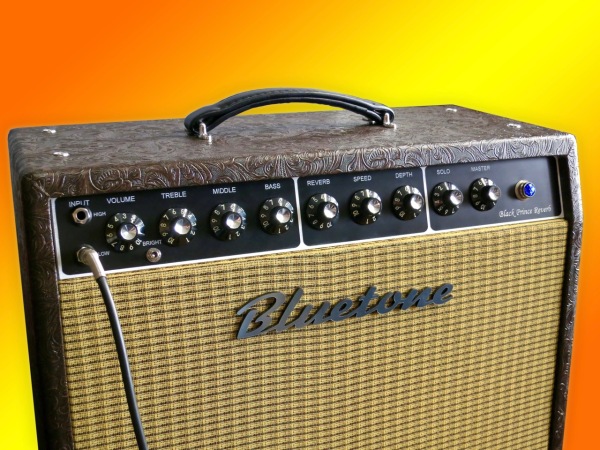
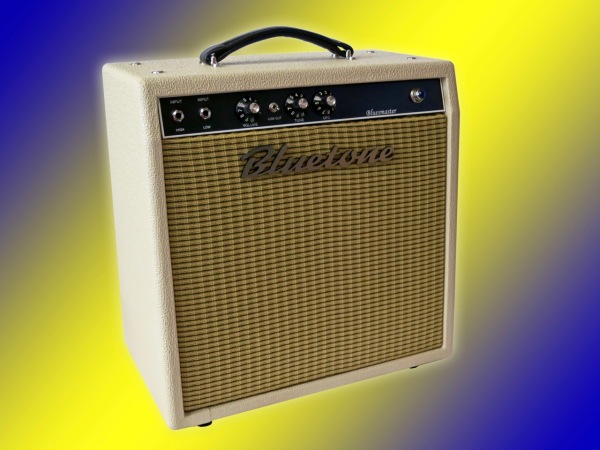
Suomalainen vahvistinpaja Bluetone on hiljattain alkanut valmistaa oman käsintehdyn ja parannetun version Fender Musicmasterista. Uutukainen on tarkoitettu nimenomaan kitaristille. Uuden kombon nimi on Bluetone Bluesmaster, ja sen hinta on – valituista optioista riippuen – jossain 960 ja 1.190 euron välillä.
Bluesmasterin signaalitie on periaatteessa sama kuin alkuperäisessä styrkkarissa, mutta muutamalla parannuksilla, kuten Low Cut -bassoleikkuri ja Bluetonen oma OPC-tehosäädin. Kolmiasentoisen OPC:n (Output Power Control) ansiosta Bluesmasterin lähtötehoa pystyy pudottamaan jopa vain kahteen wattiin, ilman että kombon soundi muuttuisi ratkaisevasti.
Koska alkuperäinen Musicmaster oli tarkoitettu halpavehkeeksi, Fenderin insinöörit poistivat kaikki ylimääräiset komponentit, jotka eivät olleet välttämättömiä saada bassosignaalia vahvistetuksi kaiuttimelle. Ehkä epätavallisin ratkaisu oli toteuttaa Musicmasterin vaiheenkääntäjää muuntajalla, kun se hoidetaan yleisesti putkella.
Niin kuin näkee kuvassa (yllä) Bluetone on käyttänyt samaa ratkaisua myös uudessa Bluesmasterissa. Putkien lisäksi – yksi 12AX7-putki (etuaste), sekä kaksi 6V6GT-putkia (pääte) – siellä näkyy kolme muuntajaa. Piennemmät niistä ovat vaiheenkääntäjä ja audiomuuntaja, kun taas se isompi musta kapistus on kombon sähkönsyöttöä varten.
Kitaristien suosituin modifikaatio vanhaan Musicmasteriin on alkuperäisen Fender-kaiuttimen vaihtaminen johonkin soundilta tukevampaan.
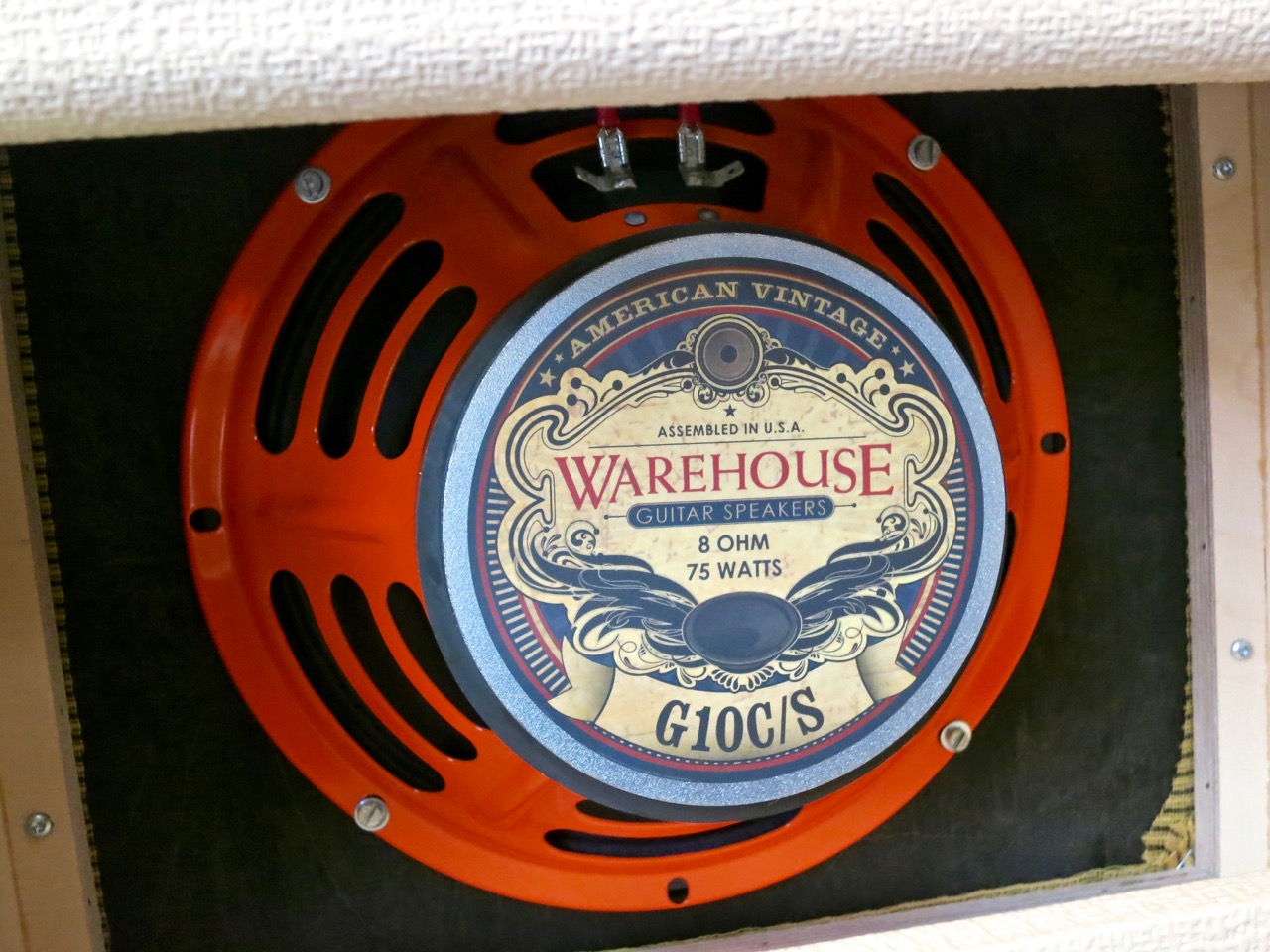
Bluetonen Bluesmasterissa on jo valmiiksi asennettu alkuperäistä laadukkaampi ämyri. Kymmenentuumainen Warehouse Guitar Speakerin G10C/S kuuluu WGS:n American Vintage -mallistoon, ja sitä tunnetaan sen selkeästä ja lämpimästä soundista. Tämä malli tykkää myös efektipedaaleista. Bluetone tarjoaa optiona myös toisentyypistä kaiutinta Bluesmasteriin (tsekkaa Bluetonen tuotesivulta).
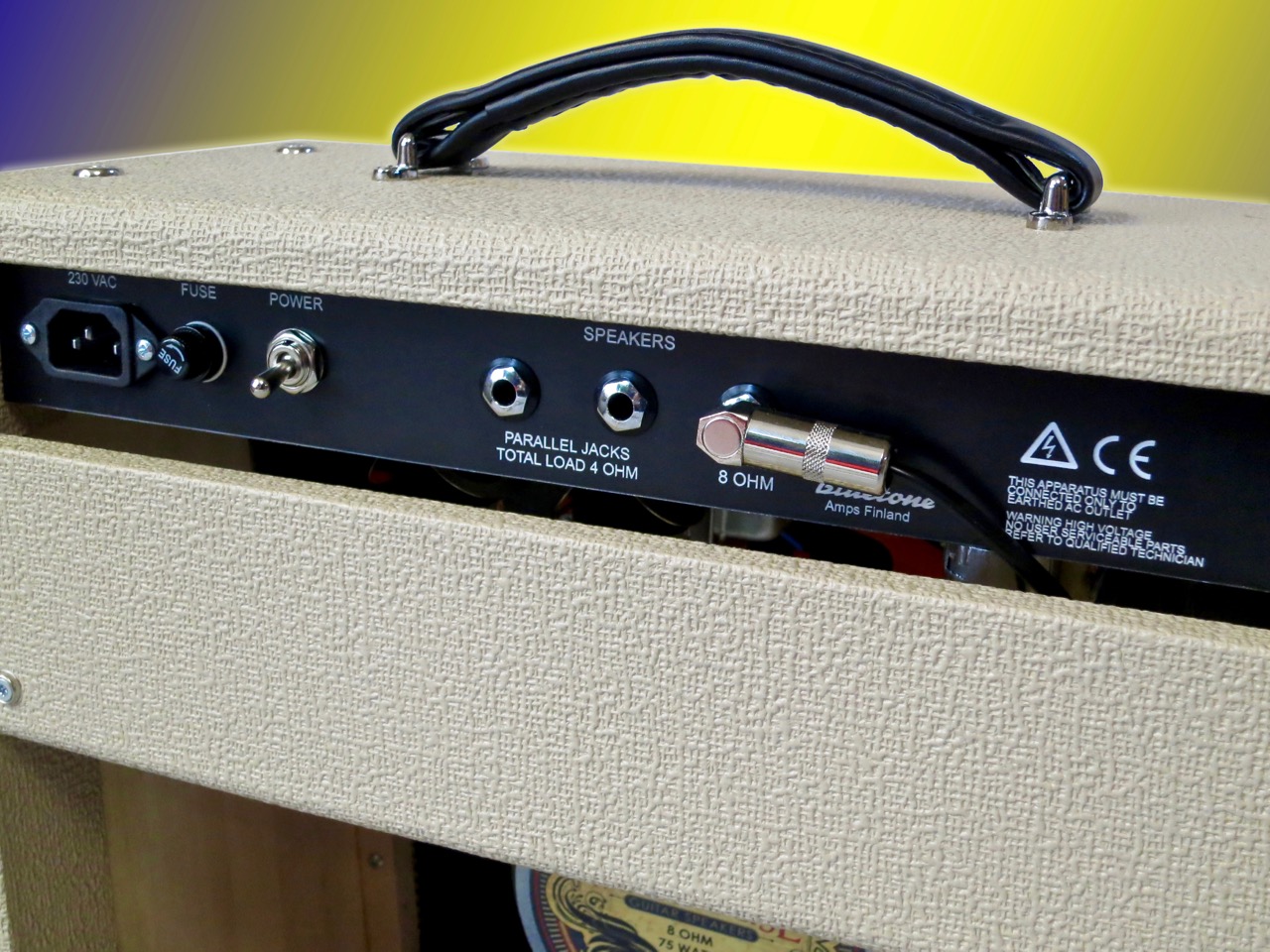
Takapaneeliin on asennettu virtakytkimen ja pääsulakkeen lisäksi ainoastaan kolme kaiutinlähtöä.
****
Vaikka Bluetone Bluesmaster -kombo voi vaikuttaa ensituntumalta hieman kuivakkaalta ja suorasukkaiselta, se lisää eittämättä jotain maagista lisämaustetta soundiin.
Vahvistin lisää nimittäin annoksen hienon musikaalista kompressiota jo puhtaaseen meininkiin. En puhu sellaisesta kompressiosta, joka puristaa nuottien atakkia kasaan, vaan tässä vahvistin ikäänkuin lisää nuotien häntäpäähän lisää eloa. Bluesmasterista saa näin enemmän sustainia vaikkapa puhtaaseen kantri- ja bluessoittoon, ilman että atakin napakkuus kärsisi tästä.
Koska Bluesmasterissa on kyse matalatehoisesta putkivahvarista ilman master volyymiä, kannattaa mielestäni ehdottomasti kokeilla rauhassa läpi minkätyypisiä soundeja saa aikaiseksi Volume-säätimellä, sekä vaihtamalla Low- ja High-tulojakkien välillä.
Bluetonen Bluesmaster-kombo ei tarjoa massivisiä määriä puhdasta headroomia, mutta sen sijaan siltä saa esillä todella herkullisia reunasärösoundeja, jotka reagoivat erinomaisesti soittajan dynamiikkaan ja kitaran volume-säätimeen. Kombo toimii hyvin myös efektipedaaleilla.
Volume-säätimen ”loppumetreillä” pikkukombosta lähtevät myös maukkaita särösoundeja. Huom: koska kyseessä on non-master volume kombo, Bluesmaster soi täydellä säröllä suhteellisen isolla äänellä, jopa kaksiwattisena, ja voi silloin olla liian äänekäs kerrostaloon.
• Komppikitarat: Gibson Les Paul Junior (vasen kanava), Fender Stratocaster (keskellä), Fender Telecaster (oikea kanava)
• Soolokitara: Hamer USA Studio Custom
****
Uusi Bluetone Bluesmaster lunastaa kaikken mitä se lupaa. Minun mielestäni tämä on erinomainen Silverface-tyylinen putkikone blueskitaristille. Bluesmaster on käsintehty laatuvahvistin, joka tarjoaa rutkasti parempaa työnjälkeä kuin esikuvansa, ja joka on valmiiksi modattu kitaristille sopivaksi. Bluesmasterin ”riisuttu” olemus myös tarkoittaa, että soittimesi soundi pysyy mallikkaasti ehjänä matkalla tulojakista kaiuttimeen.
No effect pedals were used on the guitar parts in this demo.The original Fender Musicmaster Amp is a practice bass amp from the 70s and early 80s.
Fender’s original Musicmaster Bass amplifier was an odd concoction. The Musicmaster Amp was meant as a practice amplifier for beginning bassists – and sometimes even sold in a pack with the starter bass guitar of the same name – but it fell strangely flat of expectaions. The amp was underpowered and sounded flabby and uninspiring as a bass amp.
More recently, though, guitarists on the hunt for good bargains have come to realise that the Musicmaster Amp is a relatively inexpensive way to buy a genuine ”silverface” Fender. It’s a stripped-down valve amp for sure, but it still deliveres a lot of character, when used with an electric guitar. And because it isn’t a collectable Fender model, people feel free to modify the original for their own purposes.
This is where it starts to get interesting:
Finnish boutique amp maker Bluetone has released its own handcrafted and improved version of the Fender Musicmaster a few weeks ago, meant expressly for guitarists. This new guitar combo is called the Bluetone Bluesmaster, and it will set you back between 960 to 1,190 euros, depending on your chosen options and finish.
The signal path closely follows that of the original, but the Bluetone Bluesmaster adds such handy features as a Low Cut switch and the company’s own three-way rotary OPC-switch. The OPC-circuit (Output Power Control) enables you to drop the Bluesmaster’s output power from its full 10-12 watts down to something like 2 watts, virtually without any negative impact on the amplifier’s tone.
The original Musicmaster amp had been designed to reflect its low price tag. Fender’s engineers got rid of any components that weren’t strictly necessary to get the audio signal from the input to the speaker. Their most interesting – and quite unique, as it turns out – decision was to use an audio transformer for phase inverter-duties, instead of the much more common option of using a valve.
As you can see in the photo above, Bluetone has used the same basic design for the new Bluesmaster combo. Next to the three tubes – a single 12AX7 for the preamp, and a pair of 6V6GTs for the power amp – there are three (!) transformers. Two small ones for phase inversion and signal output, respectively, as well as a larger toroidal transformer for the combo’s power requirements.
The favourite modification on old Musicmasters is swapping the weedy-sounding original Fender for a beefier speaker.
The Bluetone Bluesmaster does this for you and comes workshop-equipped with a 10-inch Warehouse Guitar Speaker G10C/S. The G10C/S is part of WGS’s American Vintage range and is known for its clear, but round top end, as well as for its pedal-friendliness and smooth breakup. Other speakers are available as an option, too (see Bluetone’s website).
Apart from the power switch, the back panel offers a trio of speaker outputs.
****
Although the Bluetone Bluesmaster seems very straightforward and upfront at the beginning, there really is some sort of magic tone thing going on with this all-valve combo.
The sound may seem a bit dryish at first, but you will quickly notice a very enticing dose of juicy compression, even on very clean tones. This compression isn’t the ducking type, well known from many master volume amps and distortion pedals, which ducks the note attack and squashes the whole signal. Here we have a Country- and clean Blues-friendly type of compression that seems to lift the sustain phase of each ringing note.
Because this is a relatively low-powered tube combo without separate gain and master volume controls, it really makes sense to experiment with the Bluesmaster’s High- and Low-inputs and the combo’s volume control, to get the full picture of what sounds you can glean from which combination of guitar and settings.
The Bluetone Bluesmaster doesn’t offer tons of clean headroom, instead it has that magic clean-but-breaking-up tone zone down to a tee. The combo also works well with effect pedals.
There are also some chunky overdrive and distortion voicings available in the higher reaches of the Bluesmaster’s Volume-control. You should be aware, though, that, this being a non-master volume combo, running this amp at full tilt even at only 2 watts of output might get you into trouble with your neighbours in a block of flats.
• Rhythm guitars: Gibson Les Paul Junior (left), Fender Stratocaster (middle), Fender Telecaster (right)
• Lead guitar: Hamer USA Studio Custom
****
The Bluetone Bluesmaster does what it says on the proverbial tin. In my opinion, this is a very nice and straightforward silverface-inspired Blues amp for guitar. The excellent build quality and very sensible modifications and improvements result in a quality tube combo that will surely give you a lifetime of aural pleasure.
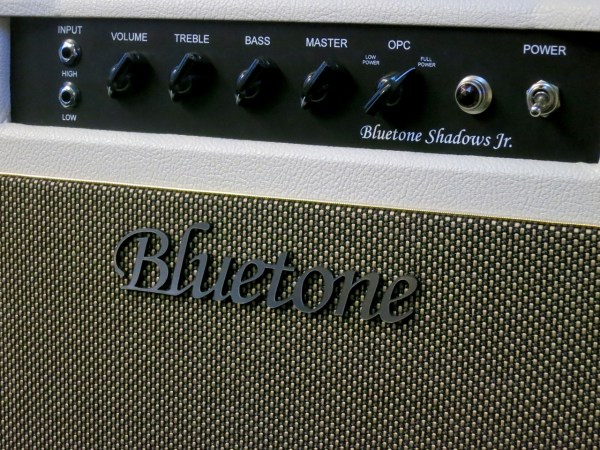
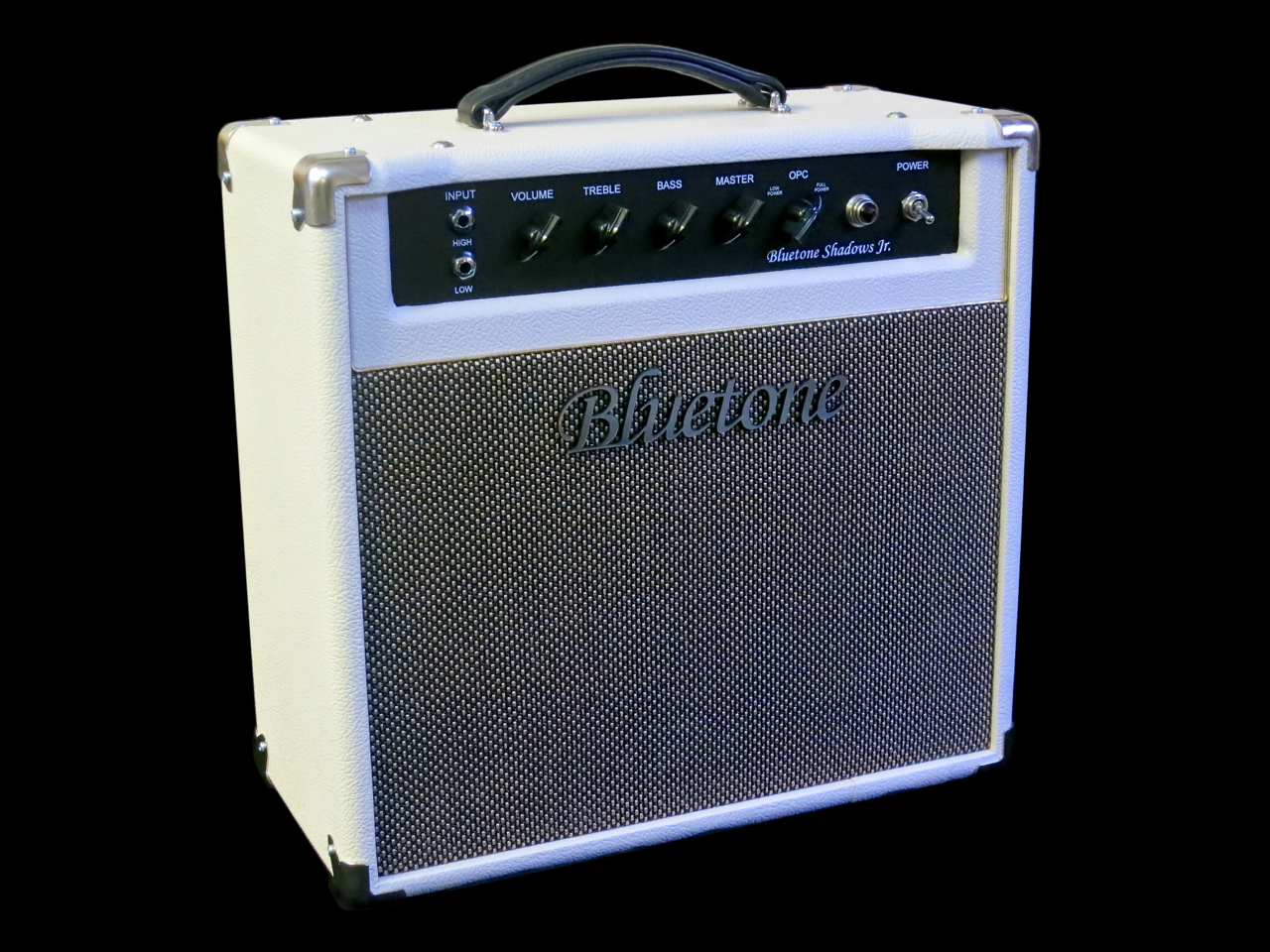
The Bluetone Shadows Jr. (combo starting at around 1,300 €) is a hand-built, all-valve guitar combo, whose sound is based on the classic Vox AC15. Instead of being a straight, slavish copy, though, the Shadows Jr. incorporates many of the up-to-date features that have made Bluetone such a well-regarded boutique maker.
****
The Shadows Jr. has the clean and business-like looks that active players truly appreciate. You don’t want to be slowed down on stage by a control panel that’s hard to decipher. The Bluetone is clarity itself.
This is a single-channel all-valve combo running in Class AB mode giving you maximum output power at just over 10 watts.
The Shadows Jr. is designed around a trio of 12AX7 preamp tubes and a pair of EL84s powering the speaker. The combo’s power valves are cathode-biased, which means that swapping tubes won’t necessitate a trip to your friendly amp technician.
Bluetone is one of the very few amp makers who use torroidal power transformers. These doughnut-shaped devices (the black thing in the upper left corner) are lighter and more dependable than traditional transformer designs, and they offer more exact tolerances. As a valve amp is highly dependable on a stable and electronically quiet power supply for superior tone, Bluetone decided on using torroidal transformers early on, and they’ve never looked back.
The Warehouse Guitar Speakers Green Beret is an excellent choice for a strongly Brit-flavoured combo. Bluetone break in all of the speakers they use with low-frequency sine waves.
Despite being a compact single-channel combo amp (weighing only around 10 kg), the Bluetone Shadows Jr. offers an amazing amount of different clean and gain tones, thanks in no small part to the amp’s PPIMV master volume and the three-step OPC-switch.
PPIMV stands for ”post-power inverter master volume”, which is the preferred way of master volume design at Bluetone Amps, because it eats up the least amount of an amplifier’s tone, when in use. And if you turn the master volume knob all the way up, a PPIMV design makes the master volume ”disappear” electronically, making it completely transparent.
OPC, on the other hand, stands for ”output power control”. On the Shadows Jr. you have a choice of three settings, giving you 0.2, two or the full 10 watts of power, respectively. The magic of the OPC circuit is that it will turn volume levels down very noticeably without changing the tonal character of your settings, while also leaving almost all of the dynamics intact. Many lesser output power designs will turn a clean setting into an overdriven sound when you select a lower output level. The Shadows Jr. will sound almost the same on ten, two or 0.2 watts – the small tonal differences are the result of the speaker being driven differently. With the OPC at the lowest setting you will get approximately 95 percent of the full ”Shadows Jr. experience” at bedroom/apartment block volume levels. That’s fantastic!
The back panel gives you a choice of using the internal speaker or an external 4- or 8-ohm cabinet.
Bluetone have also included their tasty buffered, switchable effects loop with a dedicated volume control. When the loop is not in use, the circuit can also serve as a handy lead boost.
****
Are you looking for a cool little tone machine with a strong Vox-y flavour, and no-compromise build quality? You should do yourself a favour and try the Bluetone Shadows Jr.
The Shadows Jr. ticks all the right boxes:
You get that classic clean tone with that sweet mid-range ”attitude”. A clean tone that is lively, but never glassy or brittle.
With the front-end volume near the other extreme you’ll get overdrive and distortion that is more gritty and dynamic – think later era Beatles, windmilling Townshend, or multilayered May – than creamy and compressed.
But don’t forget to check out the wide scope of break-up Blues and Rock ’n’ Roll sounds to be had between 11 and 2 o’clock on the volume (gain) control (depending on the guitar used). You’re in for hours of wailing soloing and chunky rhythms without ever needing an overdrive stompbox.
Here’s a Gibson Les Paul Junior on its own:
Demo track number one features two rhythm guitar tracks – a Fender Stratocaster (stereo left) and a Gibson Les Paul Junior (right) – as well as a Hamer USA Studio Custom on lead duty:
The second demo track features a Gibson Les Paul Junior (rhythm left), an Epiphone Casino (rhythm right), and a Fender Telecaster (lead guitar):
****
The Bluetone Shadows Jr. is a fantastic little tone machine for the Vox-inclined player, who likes warm clean tones, dynamic break-up sounds, and gritty late-Sixties/early-Seventies dirt.
The build quality is miles ahead of any mass-produced guitar amplifier – this is a handcrafted boutique-grade valve amp. Modern additions like the PPIMV master volume, the OPC circuit, and the switchable effects loop, also raise this amp above any vintage-style copies.
For many the crucial question with low-wattage amps is volume. How loud is the Bluetone Shadows Jr?
Let’s just say that if you’ve only ever tried 10-watt tranny combos before you’re in for quite a surprise! These are ten (-plus) watts of British-style valve amp majesty, with every last ounce of loudness wrung out of the power amp and speaker.
With the OPC and the master on full, this little chap will easily get you into trouble with your neighbours in your block of flats on clean tones alone. If you don’t need 100 percent clean tones, the Shadows Jr. will easily get you through many rehearsals and gigs in small venues. And there’s always the option to stick a mic in front of the speaker.
So, don’t expect a Heavy Metal-type volume onslaught, but be prepared for some serious business.
• Handmade in Finland
• All-valve Class AB single-channel combo
• 10 W, 2 W or 0.2 W of output power (OPC)
• Diode recitified
• Two-band EQ
• PPIMV Master Volume
• Built-in buffered FX loop/booster
• 3 x ECC83 (12AX7) & 2 x EL84
• One 10-inch WGS Green Beret speaker (25 Watts/8 Ohms)
****
Demo Track
All guitars recorded with the Bluetone Shadows Jr. (no pedal effects used). Delay and reverb added during mixdown.
• Rhythm guitars: Fender Stratocaster (left channel) & Gibson Les Paul Junior (right channel)
• Lead guitar: Hamer USA Studio Custom
• Digital practice and recording amp
• 40 W power (2x 20 W)
• Speakers: 2x 6.5″
• 21 Amp models
• 47 Effects
• Controls for Gain, Volume, Treble, Bass & Master
• Three layer buttons
• Tap button
• USB recording output
• Aux input
• Headphone output
• Digital chromatic tuner
• Bluetooth audio streaming
• Easy WIFI firmware and feature updates
• Editing and sharing via Fender Tone app (iOS & Android)
****
Demo tracks recorded with a pair of Shure SM57s.
Guitars used – Fender (Japan) ’62 Telecaster Custom reissue & Hamer USA Studio Custom
Valetonin Dapper-mallisto on sarja erittäin kompakteja multiefektejä, jotka on tarkoitettu paljon matkustavan kitaristin työkaluiksi. Dapper-perheen laitteet toimivat joko isomman efektilaudan korvaajana vahvistimen edessä tai vaihtoehtoisesti niillä voi myös soittaa suoraan linjaan ilman vahvistinta.
Inspiraation lähteenä on selvästi toiminut Tech 21:n Fly Rig 5, mutta Valeton Dapperien ominaisuuksien lähempi tarkastelu paljastaa merkittäviä eroja niiden esikuvaan nähden.
Tässä testissä keskitytään sähkökitaralle tarkoitettuihin Dapper-efekteihin, mutta myös sähköbassolle ja mikitetylle akustisille kitaralle on tarjolla omat efektilankkunsa.
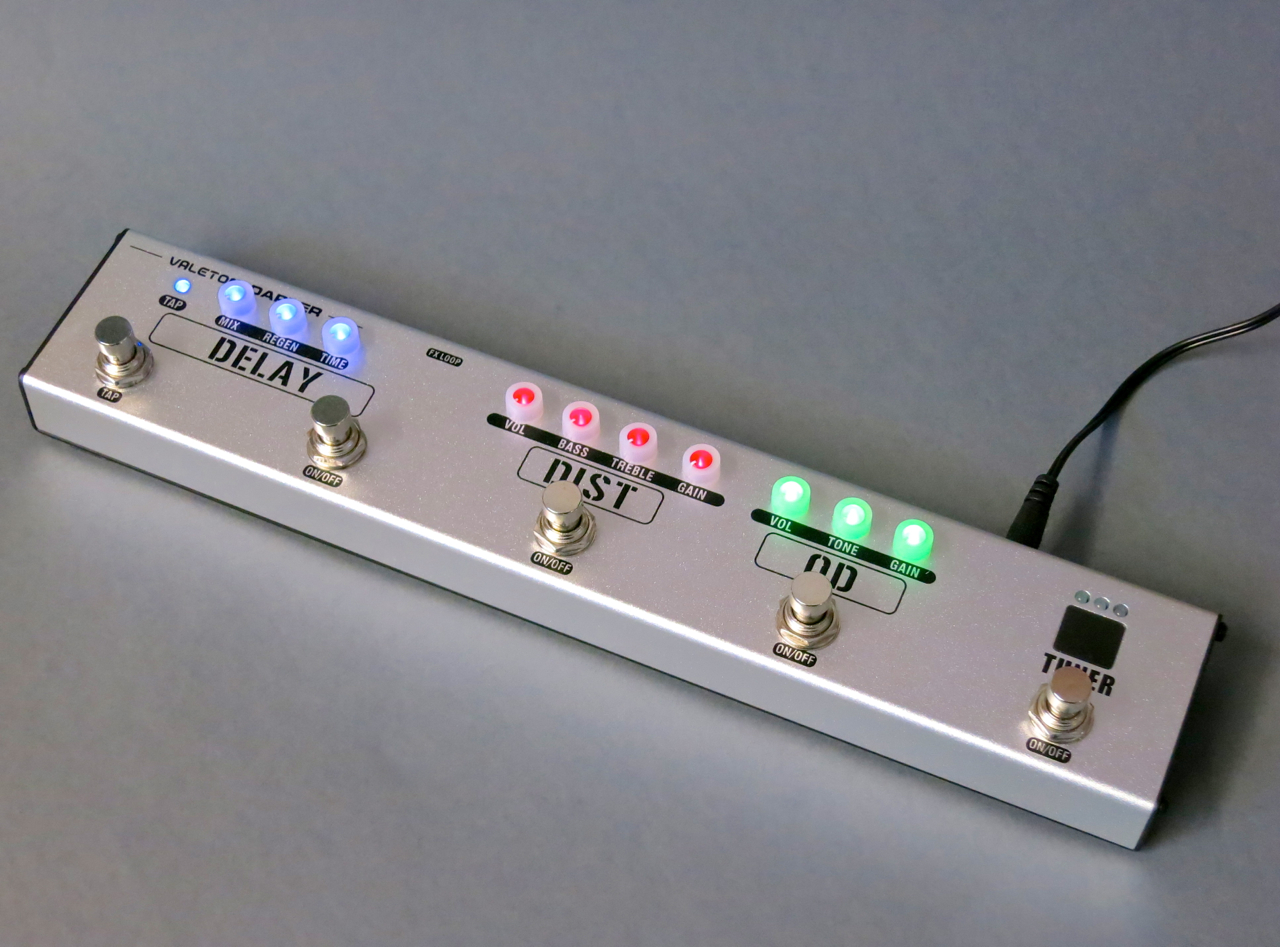
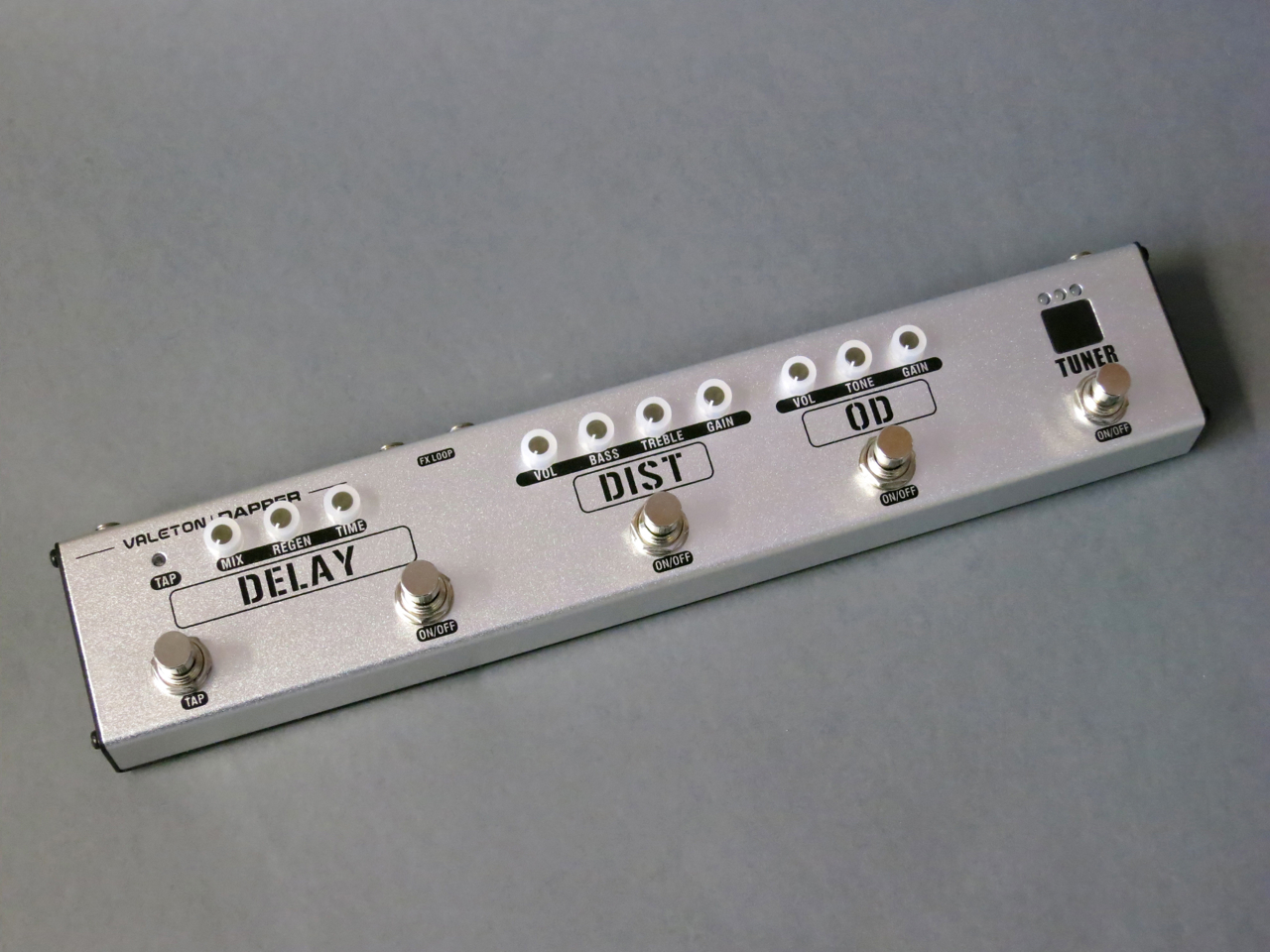
Perus-Dapperissa (169 €) on neljä efektiä samassa, kestävän oloisessa metallikotelossa. Tarjolla on viritysmittari (joka mykistää käytön aikana Dapperin lähdön), kaksi eri säröä, sekä delay-viive tap tempo -toiminnolla. Säröefekteistä ketjussa ensimmäisenä on miedompi overdrive (OD) ja toisena purevampi distortion (DIST).
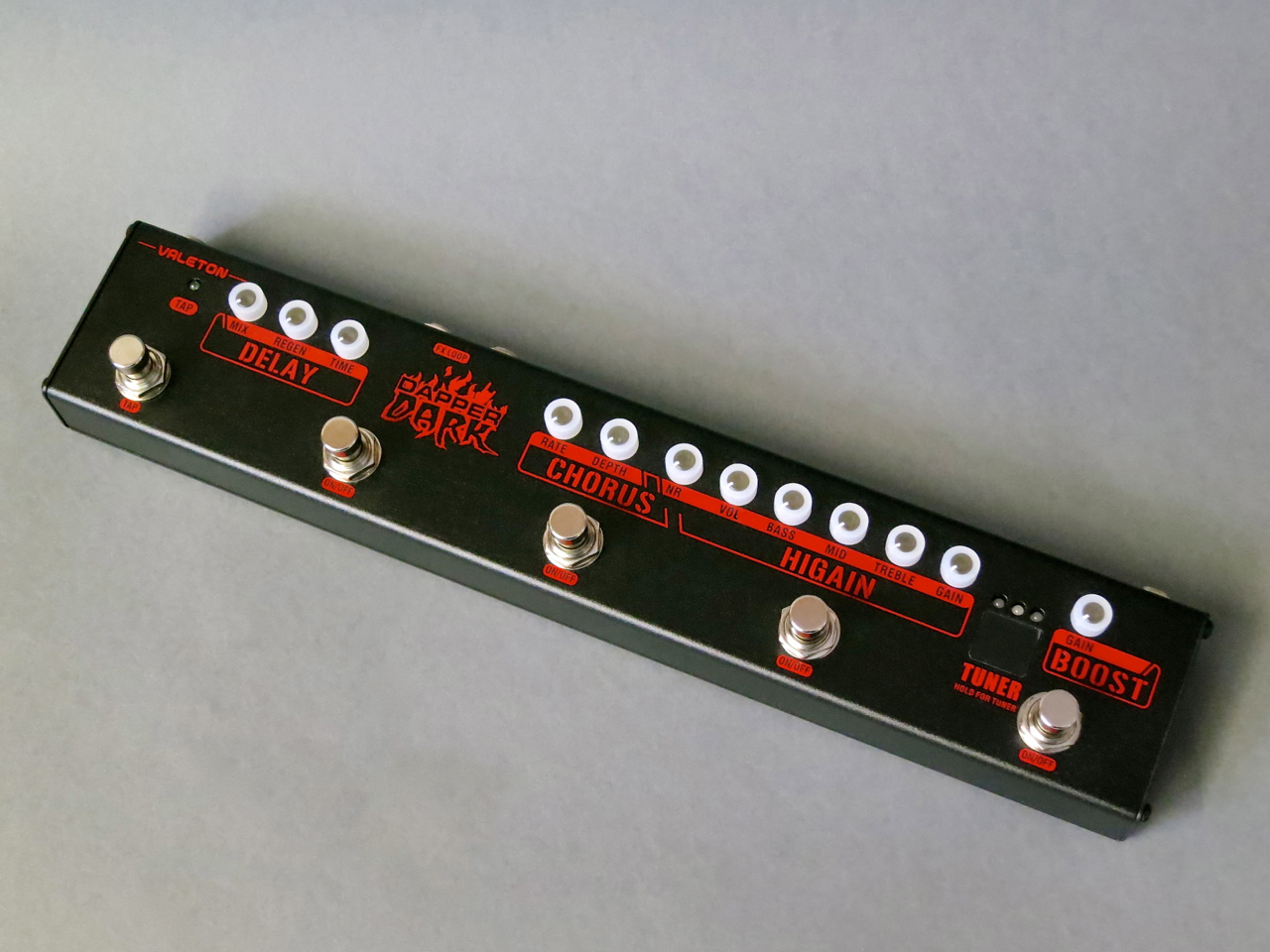
Valeton Dapper Dark (179 €) on raskaamman musiikin kitarasoundeihin erikoistunut viiden efektin versio perus-Dapperista. Signaaliketjun alkuun on sijoitettu säädettävä boosteri sekä viritysmittari. Näistä kumpikin käyttää samaa jalkakytkintä – lyhyt polkaisu kytkee boostin päälle tai pois, kun taas hieman pidemmäksi ajaksi alas painettuna kytkin aktivoi viritysmittarin ja mykistää lähtösignaalin. Dark-version high-gain-särö tarjoaa kolmikaistaisen sävynsäädön, sekä oivan, älykkään kohinaportin (NR = noise reduction), joka on asetettu särön perään. Kohinaportista löytyy reilusti säätövaraa, minkä ansiosta on erittäin helppoa löytää kitaraan, soundiin ja soittotyyliin sopivat säädöt. Signaaliketjun häntäpäästä löytyy lisäksi vielä muhkea chorus ja tap-tempolla varustettu delay.
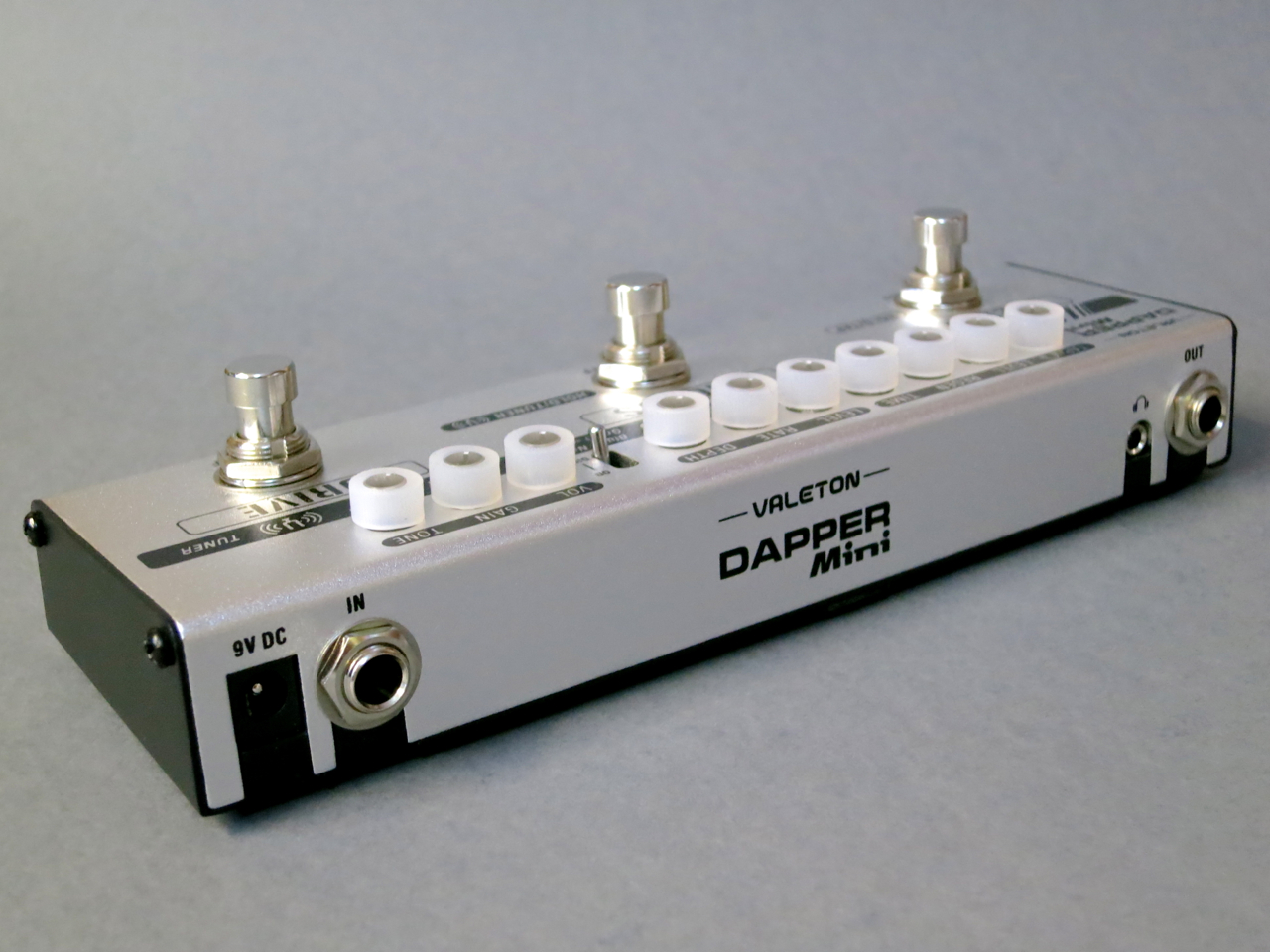
Valeton Dapper Mini (99 €) on perus-Dapperin pienempi veli, jossa siinäkin on kuitenkin tarjolla peräti neljä efektiä. Dapper Minin viritysmittari on piilotettu chorus-kytkimen taakse, eikä sille ole Minin pienemmässä kotelossa omaa näyttöä. Näytön sijaan Mini käyttää viritystilassa multiefektin taustavalaistuja säätimiä sävelkorkeuden ja vireen ilmaisuun. Varsinaiseen äänenmuokkaukseen Dapper Mini tarjoaa kolme palikkaa: säröosastossa (DRIVE) voi mikrokytkimellä valita overdrive- ja distortion-tyylisen särön välillä. Seuraavaksi löytyy chorus-efekti ja viimeisenä tulee delay. Myös Dapper Minissä viiveelle on tarjolla tap tempo, mutta se on tilasyistä piilotettu delay-osaston kytkimeen, mikä tekee sen käytöstä hiukan monimutkaisempaa isompiin Dappereihin verrattuna.
Sekä Dapperin, että Dapper Darkin takapaneelista löytyy ulkoisille efekteille efektilenkki, joka sijaitsee signaaliketjussa juuri ennen delaytä. Molemmissa “isoissa” Dappereissa on myös sisäinen kytkettävä kaappimallinnus, minkä ansiosta niiden kautta voi soittaa myös suoraan PA-järjestelmän mikseriin.
Valeton Mini taas tarjoaa kaksi eri lähtöä – isosta Out-jakista tuleva signaali on ilman kaappisimulaatiota ja se on tarkoitettu vahvistimeen syötettäväksi. Kuulokelähdön signaalissa taas on kaappimallinnus miellyttävää harjoittelua varten. Kuulokesignaalille löytyy myös oma volumesäädin.
Kaikki kolme Dapper-efektiä toimivat Boss-standardin mukaisella virtalähteellä (9V/500 mA; kuuluu pakettiin).
Minusta testissä käyneet kolme sähkökitara-Dapperia ovat todella hyödyllisiä pelejä paljon liikkuvalle kitaristille, ja ne voivat keikalla toimia myös hienosti varakalustona, jos soittajan päälaitteistoon sattuisi tulemaan jokin yllättävä vika. Näiden multiefektien tarjoamat efektit edustavat vankkaa peruslaatua, joilla saa hoidettua keikan kuin keikan kunnialla.
Jostain syystä äärimmäisen kompakti Dapper Mini puhuttelee minua ehkä eniten, koska se sisältää juuri ne kolme efektiä, joita itse tarvitsen keikalla eniten (kaksikanavaisen, jousikaiulla varustetun kombon lisäksi) – särön, choruksen ja viiveen. Toisaalta kahden jalkakytkimen tuplatoiminnot tekevät Ministä eittämättä tietyissä tilanteissa aavistuksen verran kömpelön. Pätevä sveitsiläinen linkkuveitsi se on joka tapauksessa.
En voi kiistää, etteikö täysikokoisen Valeton Dapperin käyttö olisi Mini-versiota selvästi mukavampaa. Perus-Dapperin suurena etuna ovat myös sen kaksi erillistä särömoduulia, jotka tarjoavat yhdessä laajemman skaalan soundeja, etenkin kun niitä voi käyttää myös samanaikaisesti. Valetonin eteen vielä wah-pedaali ja Dapperin looppiin erillinen chorus-poljin, ja tarjolla on jo varsin kattava soundivalikoima Pop-, Rock- tai tanssibändin kitaristille. Ja jos vahvistin on mennyt rikki, voi Valeton Dapper -lankun kytkeä suoraan tiskiin.
Koska kyseessä on heavymusiikin erikoistyökalu, on Valeton Dapper Darkissa sen high-gain-särö ja boosteri keskeisissä rooleissa. Darkin säröosasto on sopivan rankka ja armoton, ja sen sävynsäätimistä löytyy reilusti säätövaraa, minkä ansiosta sen tuottamat soundit sopivat kaikkeen vanhan koulukunnan kasarihevistä moderniin extended range -mättöön. Boosterilla leadit saa nostettua sopivasti esille, ja särömoduulin perään sijoitettu, musikaalisesti toimiva kohinaportti on tällaisessa multiefektissä miltei pakollinen varustus.
Valetonin Dapper-mallisto tarjoaa mielestäni todella käytännönläheisiä, kompakteja ja hyväsoundisia efektiratkaisuja kitaristeille, joita ei todellakaan ole hinnalla pilattu.







 Kitarablogi.com – Finland's premier Guitar and Bass blog