• Handmade in Finland
• Approx. 20 Watts of output power
• Single-channel valve amp
• Three-band EQ with Presence switch
• Valve-driven MOD spring reverb
• Valve-driven tremolo effect with Speed and Depth controls
• PPI Master Volume control
• Single 10-inch WGS Retro speaker
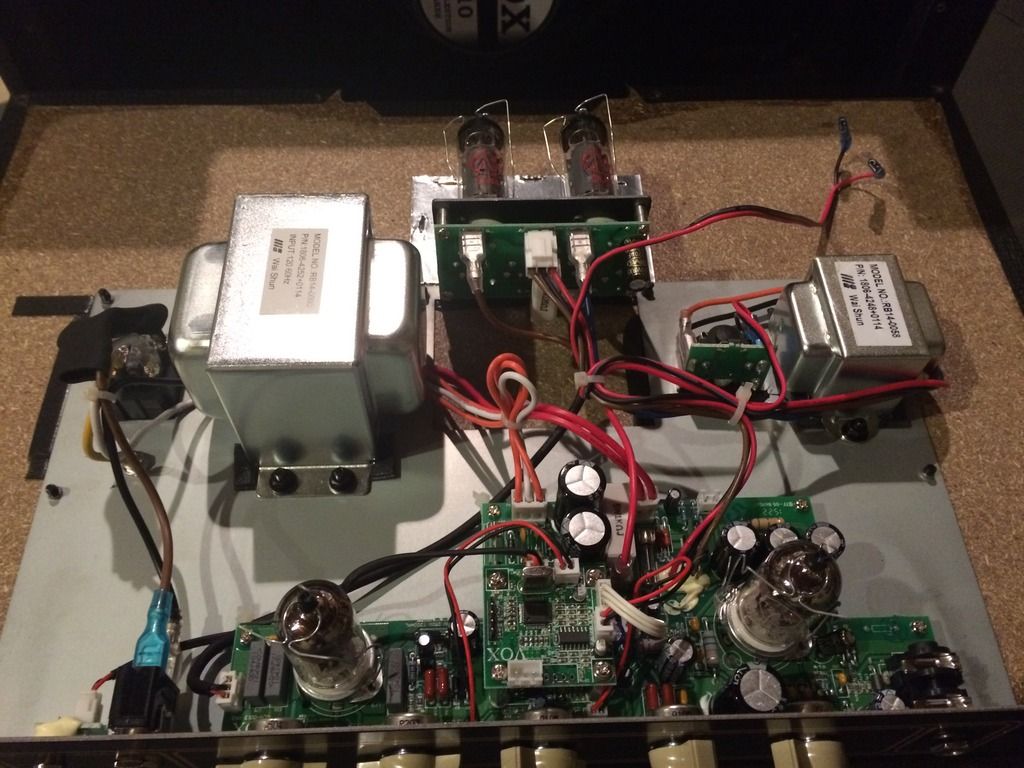
• Four preamp valves (3 x 12AX7; 1 x 12AT7)
• Two power valves (2 x 6V6GT)
• Can also be run with two 6L6GC power valves (25-30 W output)
• More info at: www.bluetone.fi/en/black-prince/
****
Demo Track (inspired by ”I Wish It Would Rain Down” by Phil Collins)
• Rhythm Guitar tracks – Fender Stratocaster
• Lead Guitar – Hamer USA Studio Custom
• Joyo JF-37 Analog Chorus
• Joyo JF-01 Vintage Overdrive
• Recorded with a Shure SM57
Vox Amplification’s new AV-series comprises three affordable guitar combos. The Vox AV15, AV30 and AV60 – named according to their power amp wattage – are modelling valve hybrid amplifiers that combine the best elements of solid state and tube technology.
****
****
KitarablogiDotCom took the smallest of the trio, the Vox AV15 (street price in Finland approx. 269 €) for a spin.
The AV15 is a compact little combo (height: 37 cm, width: 45 cm, depth: 23 cm), weighing in at just below eight kilos.
The combo’s cabinet has taken a big leaf out of the book of hi-fi speaker construction. Normally a guitar cab is meant to add its own bit of tonal modification into the mix, but when dealing with a modelling amplifier meant to imitate a number of different amp and speaker configurations, the more linear frequency response of a bass reflex cabinet is highly desirable.
The only thing you’ll find on the Vox AV15’s back panel is the connector for the amp’s external power supply unit (12 VDC, included).
****
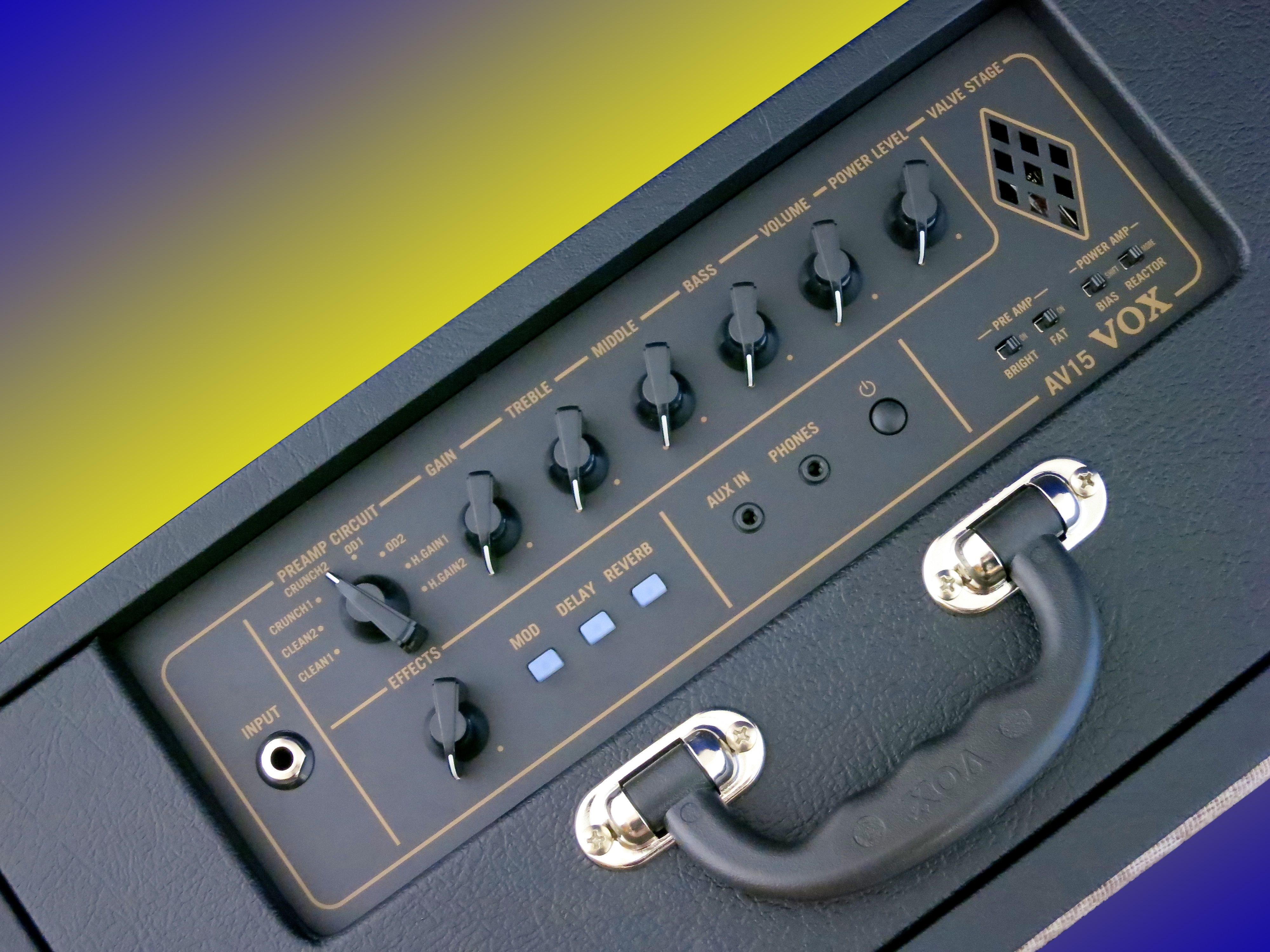
The Preamp Circuit-switch lets you select one of the eight amp models offered by the Vox. The selection takes you from Fender Twin-style cleans, and Vox- and Marshall-type crunch, all the way to Rectifier-like high gain tones.
You can fine-tune your tone using the three-band EQ section. The AV15 also comes equipped with an effects section made up of three different effects – reverb, delay and chorus (called modulation on the front panel). You are free to choose any or all of the effects. Each effect allows you to control a second parameter (in addition to the effect level) by keeping the respective effect’s effect button depressed while turning the Effects-control. You can change the modulation speed of the chorus, the delay time for the delay effect, and the length of the reverb tail of the reverb effect. The effects are the only digital bits in the AV-combo’s architecture, the rest of the Vox’ signal path – including the amp modelling – is kept all-analogue.
Here are three short clips illustrating the AV15’s effects (Gibson Les Paul Junior, Shure SM57):
CHORUS (with a little added reverb)
DELAY
REVERB
It may seem a bit unusual, but the AV15 features three different ”volume controls”, which all have a different bearing on the combo’s sound:
The Gain-knob sets the signal level before the signal is sent to the preamp’s valve stage. Low Gain settings result in a clean sound, while higher Gain settings will lead to preamp break-up and (depending on the chosen amp model) distortion. The Volume-control adjusts the signal level right in front of the power amp’s tube stage. Lower Volume settings will give you a clean and dynamic signal, while higher settings will bring in some power amp compression and saturation (= distortion). The last volume knob – called Power Level on the Vox AV15 – determines the final volume level in your room (or in your headphones).
While its bigger siblings – the AV30 and the AV60 – feature two valves in their architecture (one for the preamp, one for the power amp), the smaller Vox AV15 makes do with just a single tube for both pre- and power amp duties. This is made possible by the way the good-old 12AX7-valve is constructed, offering you two triodes in one single tube. This means, you can split this valve type to perform two jobs simultaneously.
This Vox’ Valve Stage-section features four small slider switches that you can use to modify the way the two valve stages react and sound:
The Pre Amp side of things sports a Bright-switch for adding sparkle to your top end, as well as a Fat-switch that will boost the bass response.
The switches labelled ”Power Amp” really do make a significant difference to this combo’s ”feel”. The Bias- and Reactor-switches let you select how much the power amp’s tube section is ”pushed” and how much power amp compression will be audible.
Listen to these two sound clips – clean and crunch – to get an idea of how the Valve Stage switches change the combo’s sound (Gibson Les Paul Junior, Shure SM57). Both clips start with all the switches in the left position. Then I put one switch after the other to its right position (starting with the Bright-switch, and continuing left to right):
****
Snobbism seems to be the fashion of the day – we’ve got cork sniffers, we’ve got vinyl snobs, and we’ve got valve amp anoraks.
But in our heart of hearts, most of us ”old farts” would have been more than happy, if we would have had such a great-sounding and versatile amp as the Vox AV15 when we started playing in the 1970s and 80s! The AV15 really wins you over with its array of inspiring tones and its affordable price tag.
The Vox AV15 is a real amp, not a plastic toy sucking all of the sheer joy of playing out of an eager novice. Vox AV-series hybrid combos can also serve more advanced players as fun living room amps, they can be used for backstage warm-up, and they also make a good figure as home studio amps (as you can hear in the demo songs).
In my opinion Vox Amplification’s new AV15 is a fine choice as a practice amp, for guitar teachers, or for school bands. The affordable Vox AV15 is easy to use and sounds great.
Vox Amplificationin upouusi AV-sarja koostuu kolmesta edullisesta kombovahvistimesta kitaralle. Lähtötehonsa mukaan nimetyt Vox AV15-, AV30- ja AV60 -vahvistimet ovat mallintavia putkihybridejä, jotka yhdistävät puolijohde- ja putkielektroniikan parhaimpia puolia.
****
****
Kitarablogi sai testiin Vox AV15 -kombon (arvioitu katuhinta noin 269 €), joka on AV-perheen kuopus.
AV15 on mukavan kompakti kokonaisuus (korkeus: 37 cm, leveys: 45 cm, syvyys: 23 cm), ja se painaa vain hieman alle kahdeksan kiloa.
Vahvistinkotelon (= kaiutinkaapin) rakenne on selvästi ottanut inspiraatiota hifi-kaapeista. Tavallisesti kitarakaappi antaa oman lisämausteensa lopulliselle kitarasoundille, mutta AV-sarjan kaltaisissa mallintavissa vahvistimissa refleksikaapin lineaarisempi taajuusvaste auttaa useiden eri soundien jäljittämisessä.
Vox AV15:n takaseinästä löytyy ainoastaan virtaliitin kombon mukana tulevalle ulkoiselle virtalähteelle (12 V DC).
****
Preamp Circuit -kytkimellä saa valittua yhden Vox-kombon kahdeksasta vahvistinmallista. Tarjolla on riittävästi vaihtoehtoja Fender Twin -tyylisestä cleanista, sekä Vox- ja Marshall-mallinnuksien kautta jopa Rectifier-tyyliseen High Gain -meininkiin.
Vahvistinsoundien maustamiseksi tämä Voxi tarjoaa kolmikaistaisen EQ-osaston, sekä kolme efektiä (chorus, viive, kaiku). Kaikkia kolmea efektiä voi käyttää samanaikaisesti. Jokaisessa efektissä pystyy säätämään efektitason lisäksi vielä toisen parametrin (pitämällä efektinappia alas painettuna, samalla kun kääntää Effects-säädintä) – vatkaamisnopeutta choruksessa, viiveaikaa delayssä, sekä kaiun pituutta reverbissä. AV-kombon efektit ovat muuten vahvistimen ainoat digitaalisesti toteutetut osat, Voxin muu signaalitie – mallinnusta myöten – on täysin analoginen.
Tässä kolme lyhyttä pätkää efektiosaston soundeista (Gibson Les Paul Junior, Shure SM57):
CHORUS (ja pieni annos kaikua)
DELAY
REVERB
Hieman epätavallisesti löytyy AV15-kombosta jopa kolme eri ”volyymi-säädintä”, joiden toiminta vaikuttaa soundiin eri lailla:
Gain-säätimellä säädetään tulosignaalin tasoa, ennen kun signaali menee etuvahvistimen putkiasteelle. Pienillä Gain-asetuksilla soundi pysyy puhtaana, kun taas isommat Gain-asetukset tuovat signaaliin rosoisuutta ja/tai (vahvistinmallista riippuen) selkeätä etuastesäröä. Kombon Volume-säätimen rooli taas on säätää etuvahvistimesta tulevan signaalin tasoa juuri ennen päätevahvistimen putkiastetta. Pienillä Volume-asetuksilla signaali pysyy puhtaampana ja dynaamisempana, kun taas isot Volume-asetukset lisäävät signaaliin hieman kompressiota ja päätevahvistimen saturaatiota (= säröä). Power Level -nupilla sitten säädetään kuinka kovalla kitarasoittosi kuuluu kaiuttimen (tai kuulokkeiden) kautta.
Vaikka AV30:ssä ja AV60:ssä on kahdet putket – yksi etu- ja toinen päätevahvistimelle – Vox AV15 tulee toimeen vain yhdellä putkella, joka toimii sekä etu- että päätevahvistimessa. Tämän mahdollistaa perinteikkään 12AX7-putken nerokas rakenne, joka tarjoaa kaksi erillistä triodia samassa kuoressa, minkä ansiosta tätä putkityyppiä voi ja saa splitata.
Valve Stage -osio tarjoaa neljä liukukytkintä, joilla voi vaikuttaa suoraan putkiasteiden toimintaan ja soundiin:
Etuvahvistimelle (Pre Amp) löytyy sekä Bright-kytkin diskantin lisäämiseksi että Fat-kytkin, jolla bassontoistoa saadaan muhkeammaksi.
Päätevahvistimen (Power Amp) kytkimillä on vielä suurempi vaikutus vahvistimen soundiin ja ”tuntumaan”. Bias- ja Reactor-kytkimillä valitaan kuinka ”kuumana” päätevahvistimen putkipuolikas toimii ja miten dynaamisesti päätevahvistin reagoi etuvahvistimesta tulevaan signaaliin.
Tässä kaksi ääniesimerkkiä – clean ja crunch – joissa aloitetaan kaikilla kytkimillä vasemmassa asennossa, ja jossa laitan sitten kytkimet peräkkäin (aloitan Bright-kytkimestä) oikeaan asentoon (Gibson Les Paul Junior, Shure SM57):
****
Snobismi näyttää olevan tällä hetkellä muodissa – on viinisnobismi, on vinyylisnobismi, on putkisnobismi.
Mutta kun ollaan ihan rehellisiä olen ihan varma, että moni meistä ”vanhoista pieruista” olisi ollut enemmän kuin onnellinen, jos hänellä olisi ollut aloittelijana 1970-/80-luvun taitteessa ollut näin hieno vekotin kuin Vox AV15! AV15 on nimittäin hyvin monipuolinen – ja todella hyvällä soundillaan vakuuttava – hybridikombo erittäin soittajaystävällisellä hinnalla.
Vox AV15 on kunnon vahvistin kunnon soundilla, eikä muovinen lelu, joka lannistaisi kitarauntuvikon heti alkumetreillä. Varttuneellekin soittajalle AV-sarjalaiset voivat olla järkevä hankinta olohuonekomboksi tai backstage-lämmittelyyn, ja myös kotistudiossa AV15-kombosta on paljon iloa (kuten demobiiseissä kuulee).
BLUES-demo
Komppikitarat: Fender Telecaster (vasen kanava) ja Epiphone Casino (oikea kanava)
Soolokitara: Fender Stratocaster
ROCK-demo
Komppikitarat: Fender Telecaster (vasen kanava) ja Gibson Les Paul Junior (oikea kanava)
Minun mielestäni Vox Amplificationin AV-uutuussarja on oiva valinta esimerkiksi omaksi harjoitusvahvistimeksi, opetuskäyttöön tai vaikkapa bändikerholaisille. Edullinen Vox AV15 on helppo käyttää ja se kuulostaa mielestäni todella hyvältä.
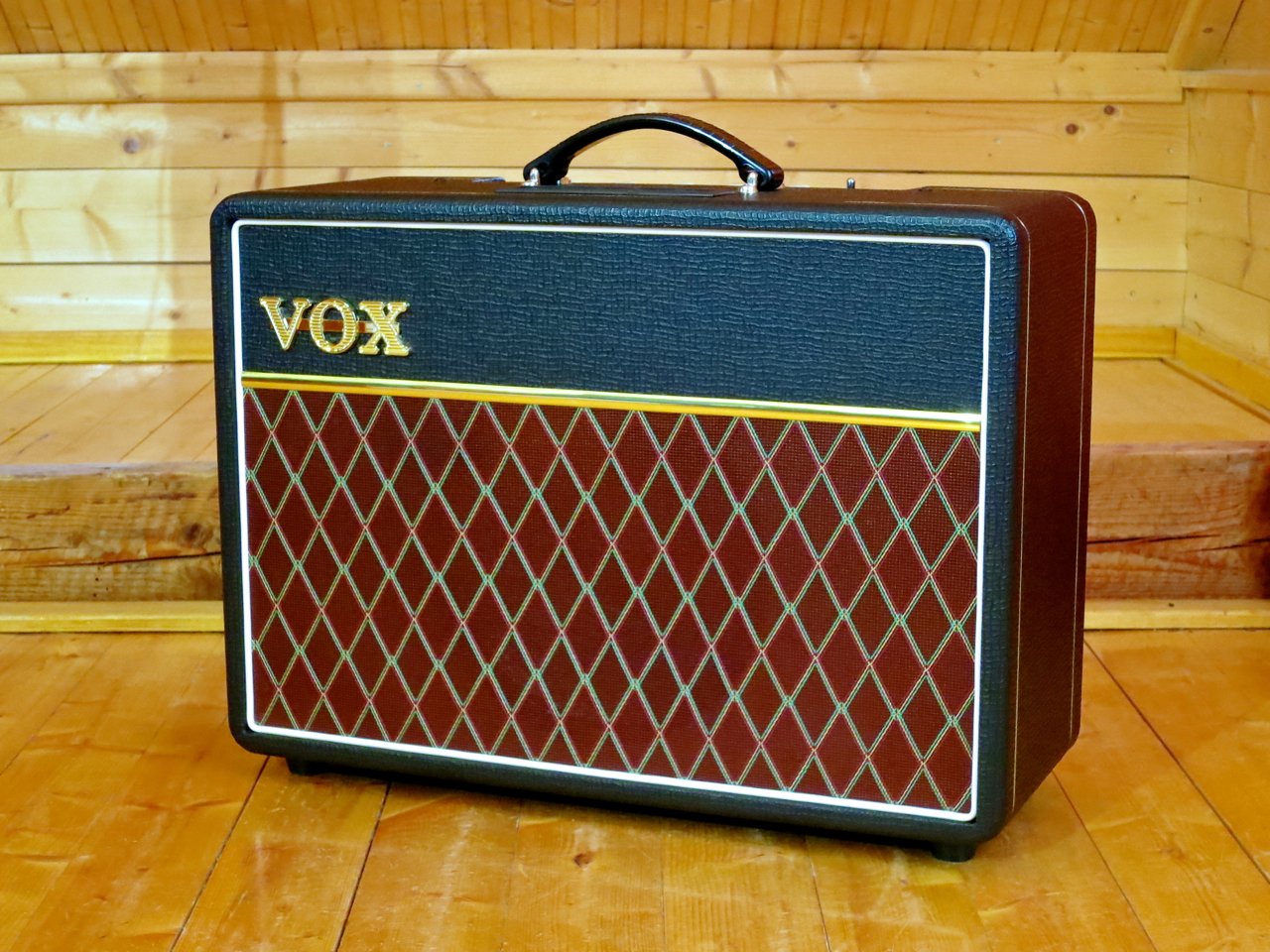
The new Vox AC10C1 combo amp nicely bridges the gap between the Custom Series’ AC4C1 four-watter and the 15-watt AC15C1.
****
The Vox AC10C1 (street price in Finland approx. 520 €) isn’t a copy or reissue of any of the AC10 versions from the 1950s or 60s, but rather a modern reinterpretation of the company’s Top Boost-theme in a more compact guise, and made in China, just like the rest of the Custom Series.
This being so, the new AC10C1 amp does away with the old version’s vibrato effect, adding instead such welcome modern features as a quality digital reverb, and separate Gain and (Master) Volume controls.
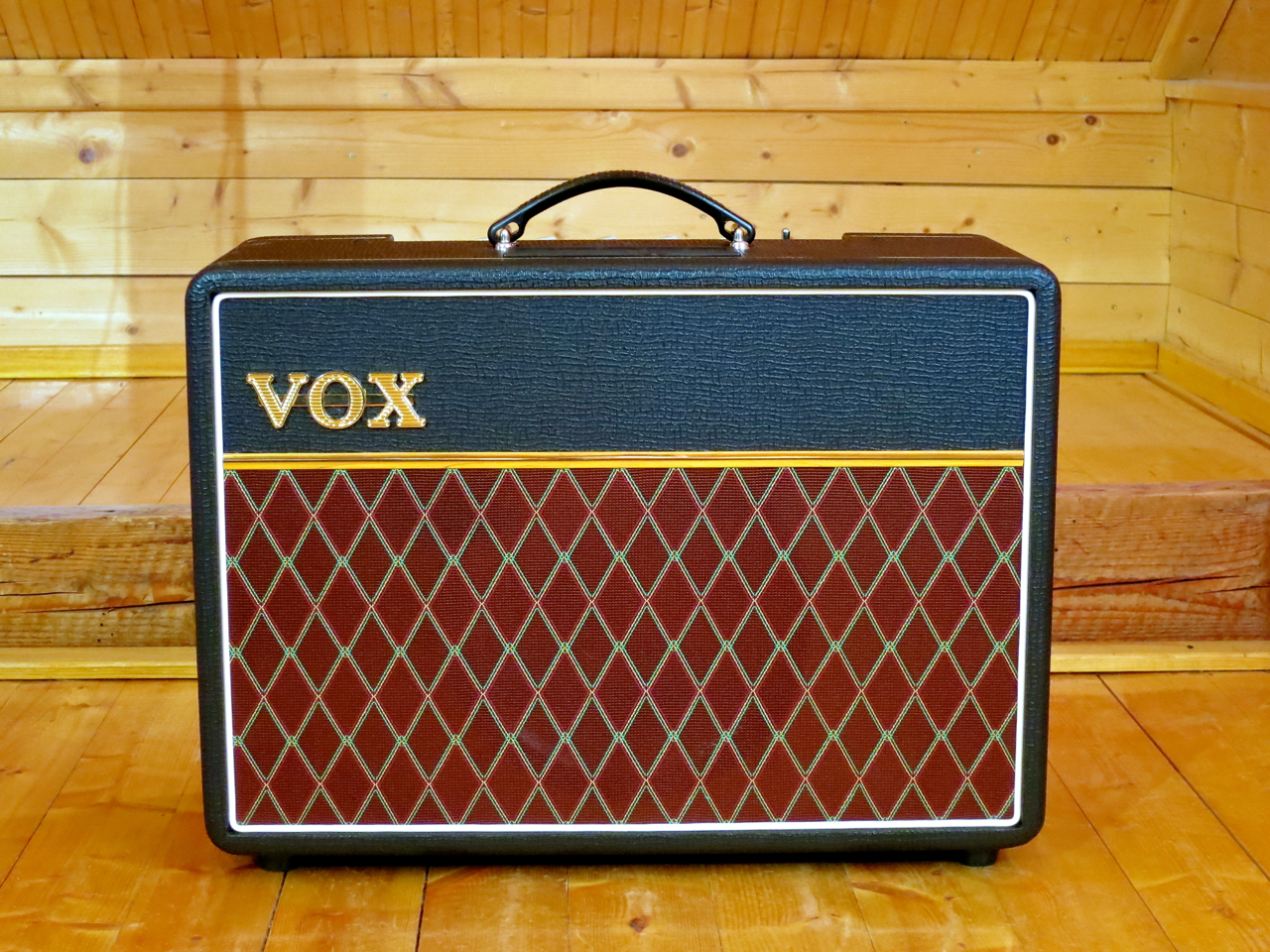
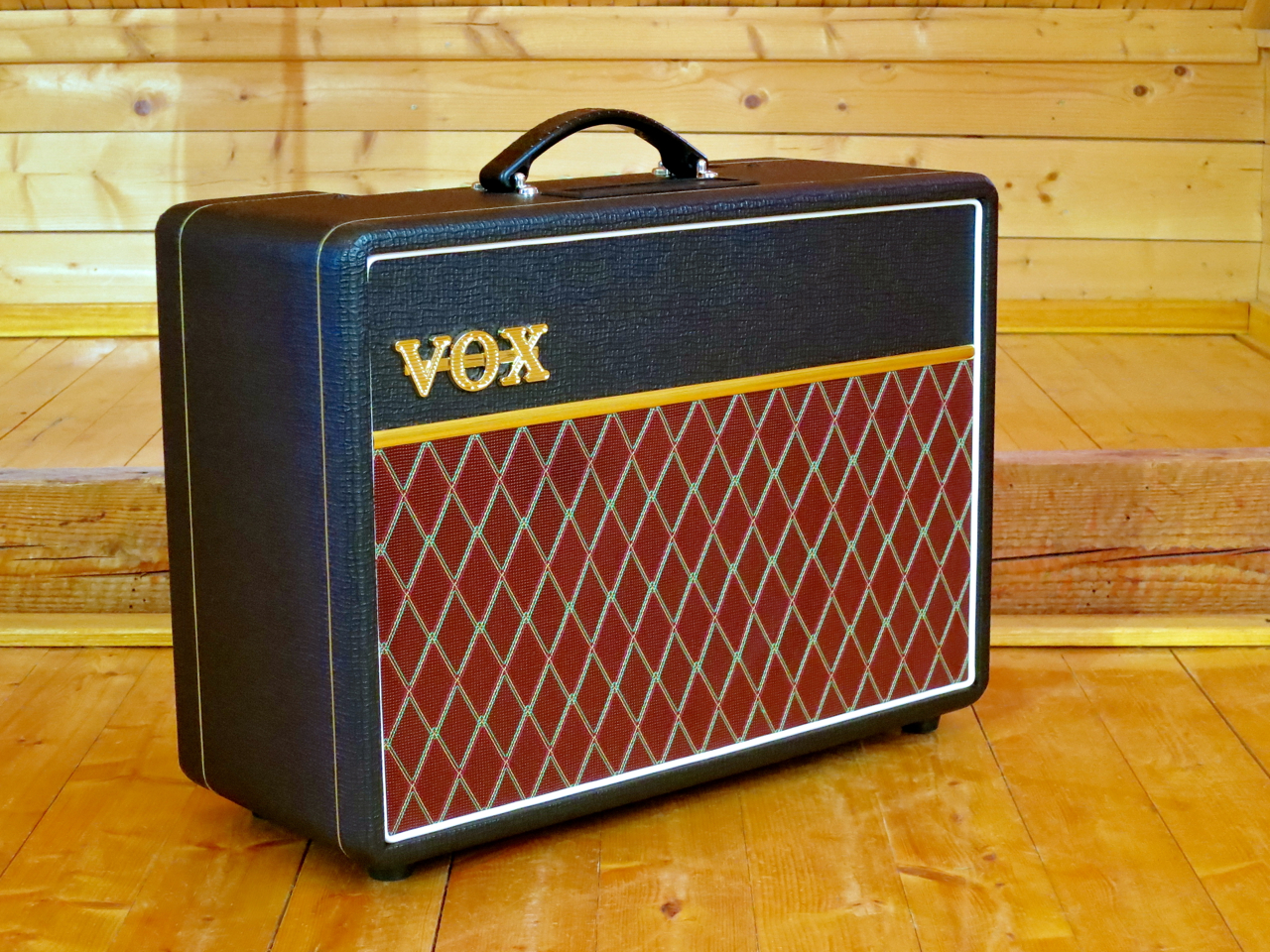
Vox’ new combo looks like a smaller version of their legendary AC30 combo, which isn’t a coincidence, I’m sure. It sports lots of black vinyl, white piping, a golden metal rail, and the famous maroon front cloth with the diamond pattern.
The AC10C1 only weighs 12 kilos, which means it’s very easy to carry by its single top handle.
As we are looking at a production line, Chinese valve amp, it would be totally unrealistic to expect hand soldered point-to-point wiring inside this combo. The AC10C1’s electronic components – tubes and all – are mounted on three PCBs. You can have a good looks at this combo’s innards in this picture.
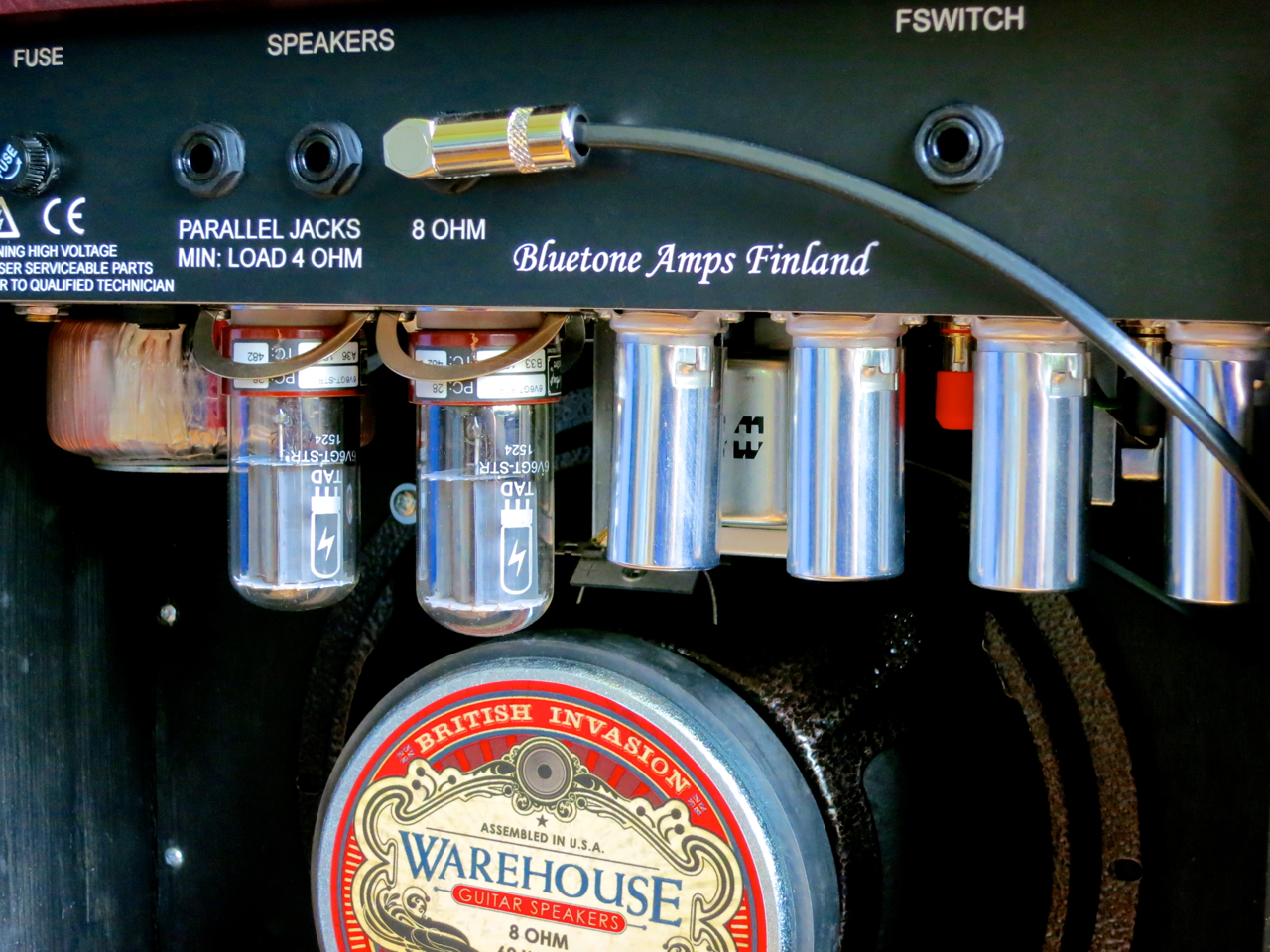
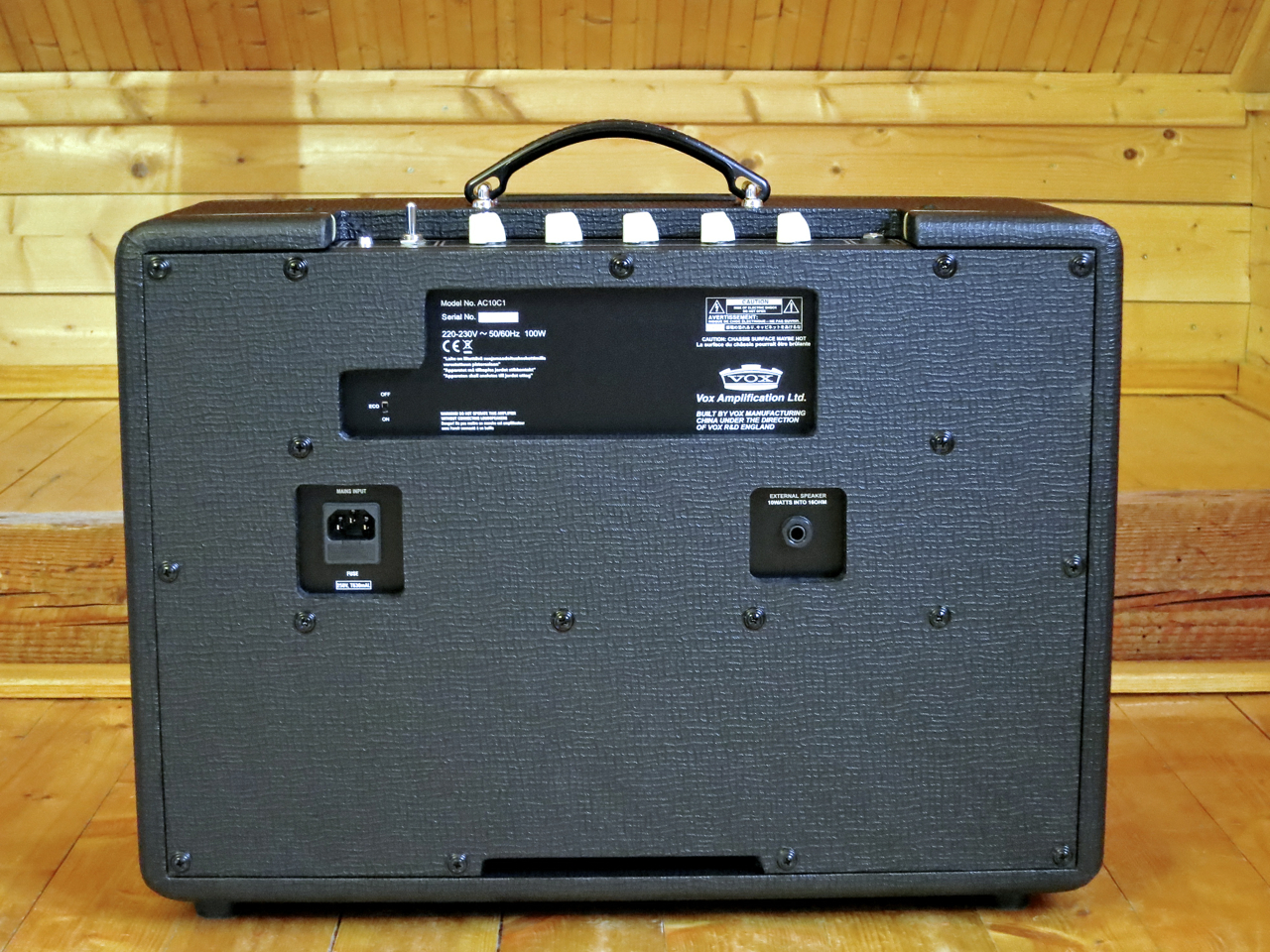
The little Vox’ two EL84 main amplifier valves have been placed just beneath the ventilation grille on the top (next to the handle). The preamp valves – a pair of 12AX7s – get their ventilation via a small slot at the bottom end of the cabinet’s back wall.
The control panel sports the classic Vox chicken head knobs.
In addition to Gain and Volume, you will find a two-band EQ section, and the reverb control.
In practical terms, the Vox AC10C1 is a closed-back combo, despite the small opening for preamp tube ventilation.
A ten-inch Celestion VX10 has been chosen as the combo’s sole speaker.
In the EU the new combo is sold with an Eco-feature. When the Eco-switch is set to ”on”, the AC10C1 will power off automatically if the amp isn’t played for two hours.
The AC10C1 can be connected to an external speaker cabinet, as long as the load is kept to 16 Ohms.
****
Let me say something about the Vox AC10C1’s volume first:
This little amp is quite the belter for a combo rated at only 10 Watts! Yes, it does have a master volume control, but I still wouldn’t recommend using this Vox as a living-room amp in an apartment block. The Volume control really has to be set to 10 o’clock, or higher, to make this baby come to life.
The basic character of this Vox combo is rather bright and bitey – I had to take the Treble knob down to below 10 o’clock to find the sounds that I like.
This AC10C1 doesn’t have oodles of clean headroom, still there are some very nice clean tones to be had in the first third of the Gain control’s range, when you use Fender-type single coil pickups (Fender Stratocaster; amp gain at 10 o’clock):
Many valve amp snobs will view a digital reverb circuit as a big no-no, but in my view, the AC10C1’s reverb is one of the very best I’ve ever heard in an amp in this price range. The reverb is a digital version of a spring tank, and has a charming sense of depth. At higher settings you can even get some ”spring splash” by attacking the strings with gusto:
Due to its higher output a P-90-type pickup will require you to adjust the volume knob(s) on the guitar, if you want to achieve genuinely clean sounds. Here’s a clip of an Epiphone Casino (with Göldo P-90s), with the guitar’s volumes turned about halfway down (amp gain at 9 o’clock):
Here’s the same Casino with its volume controls set to 8 (the amp settings stay untouched):
Humbuckers, too, mean you will have to turn the guitar down a bit for clean sounds, otherwise the AC10C1 will start adding some of that famous Top Boost grit. The first clip uses a Hamer USA Studio Custom with its volume controls turned down to 5 (amp gain at 9 o’clock):
Same guitar, same amp settings, but the Hamer’s volumes have been set to 7:
You could sum up the AC10C1’s distorted sounds with one word – classic! This isn’t a high gain combo by no stretch of the imagination. This Vox feels most at home with Pop-, Blues-, and Rock-sounds of the Sixties and Seventies (and their modern descendants). If you want a piece of that classic Vox Top Boost tone (think Beatles, Queen, U2), the AC10C1 has it in spades at manageable volume levels.
Stratocaster; amp gain 3 o’clock:
Casino; amp gain 1 o’clock:
Hamer; amp gain 1 o’clock:
Stratocaster; full amp gain:
Casino; full amp gain:
Hamer; full amp gain:
****
In my opinion, the Vox AC10C1 is just the ticket if you’re after genuine Vox tones in a compact, easy-to-handle package.
Clean headroom isn’t to be had in abundance, but luckily this Vox combo reacts extremely well to volume changes on the guitar. The sound cleans up nicely, while the amp retains its full vigour and liveliness.
The Vox AC10C1 is loud enough for most rehearsal situations, and you might even use it in some small venues without a mike.
For studio work, too, I feel Vox’ AC10C1 has a lot to offer, because it enables you to get chunky Vox tones with much less bleed-through into other microphones, like the drum mikes.
****
Vox AC10C1
current street price in Finland approximately 520 €
Uusi Vox AC10C1 on teholtaan oiva väliaskel firman Custom-sarjassa neliwattisen AC4C1:n ja 15-wattisen AC15C1-kombon välillä.
****
Vox AC10C1 (katuhinta noin 520 €) ei ole alkuperäisen (1950 tai 60-luvun) AC10-kombon uusintapainos, vaan uutuuskombo on Kiinassa rakennetun, nykyaikaisen Custom-sarjan jäsen.
Näin ollen AC10C1-vahvistimesta löytyy – alkuperäisen vibratoefektin sijaan – laadukas digikaiku, sekä erilliset Gain- ja (Master) Volume-säätimet.
Uusi Vox-kombo näyttää pienennetyltä versiolta firman legendaarisesta AC30-mallista – paljon mustaa vinyyliä, kultaiset ja valkoiset koristelistat, sekä vinoneliökuvioilla koristettu, ruskea etukangas.
AC10C1 painaa vain 12 kiloa, minkä ansiosta komboa on helppo kantaa sen ainoasta muovikahvasta.
Koska kyse on kiinalaisesta sarjatuotannosta, ei tässä voi odottaa käsinjuotettua, kallista point-to-point elektroniikka, vaan AC10 on toteutettu kolmella piirilevyllä, joihin myös vahvistimen putkikannat on kiinnitetty. Hyvän kuvan AC10C1:n elektroniikan arkkitehtuurista saa tästä linkistä.
Voxin kaksi EL84 päätevahvistinputkea sijaitsevat kombon kotelossa suoraan kahvan viereisen tuuletusritilän alla. Etuvahvistimen putket (2 x 12AX7) taas löytyvät kombon pohjan läheltä, jossa niille on takaseinässä toinen tuuletusaukko.
Myös kombon säädinpaneeli on ulkonäöltään tyypillinen Vox-kombolle.
Paneeli tarjoaa Gain- ja Volume-säätimien lisäksi vielä kaksikaistaisen EQ-osaston, sekä säätimen kaiulle.
Vox AC10C1 on käytännössä suljetulla takaseinällä varustettu kombovahvistin, vaikka takaseinässä onkin pieni tuuletusreikä.
Kaiuttimeksi on valittu yksi kymppituumainen Celestion VX10.
EU:ssa uutuuskomboa myydään uudella Eco-ominaisuudella. Kun Eco-kytkin on päällä-asennossa, AC10C1 menee omatoimisesti pois päältä, jos kombo on kaksi tuntia tyhjäkäynnissä.
AC10C1:n kanssa voi käyttää sellaista lisäkaappia, jolla on 16 ohmin impedanssi.
****
Ensin sana Vox AC10C1:n tehosta:
Tämä vahvistin on 10-wattiseksi komboksi erittäin kovaääninen! Uutuus-Voxi ei mielestäni oikein sovi kerrostaloasunnon olohuonekomboksi, koska tämä AC-kymppi alkaa soida kunnolla vasta, kun Volume-säädin on avattu ainakin ”kello kymmeneen”.
Vox-kombon perusääni on melko kirkas – löysin minua miellyttäviä soundeja vasta, kun Treble-säädin oli kello 10:ssä (tai vielä enemmän kiinni).
Vaikka uutuus-Voxi ei tarjoa valtavia määriä puhdasta headroomia, löytyy Gain-säätimen alkumetreillä kuitenkin kauniita puhtaita soundeja Fender-tyylisillä yksikelaisilla mikrofoneilla varustetun kitaran kanssa (tässä soi Fender Stratocaster, AC10C1:n Gain: kello 10):
Monille putkipuristeille digitaalinen kaiku putkikombossa on kuin punainen vaate, mutta ainakin minun mielestäni Vox AC10C1 tarjoaa yhden parhaista digikaiuista tässä hintaluokassa. Kaikutyyppi on muhkea jousikaiku, joka myös ”pärskii” mukavan autenttisesti isoilla säädöillä ja kovalla atakilla:
Gibson P-90 -yksikelainen vaatii jo – isomman lähtötason takia – kitaran omien volume-namikoiden säätämistä hiukan alaspäin, jos halutaan, että AC10C1 pysyy puhtaana. Ensimmäisessä klipissä soi Epiphone Casino, ja sen omat volume-säätimet ovat puoliksi kiinni (AC10C1:n Gain: kello 9):
Tässä sama Casino, mutta omat volumet säädetty kahdeksaan:
Myös humbuckereilla täytyy säätää kitaran omat volumet alas, muuten Vox AC10:n soundi muuttuu jo hieman rosoiseksi. Tässä kaksi esimerkkiä Hamer USA Studio Custom -kitaralla:
AC10C1:n särösoundien kirjo menee hyvin vahvasti ”klassisen” puolelle. Tämä ei ole mikään high gain -kombo, vaan Voxin luontevin ympäristö ovat 60- ja 70-luvun Pop-, Blues- ja Rock-soundit. Kombo tarjoaa kätevästi tyypilliset (Top Boost) AC30-soundit kompaktissa – ja ei ihan niin kovaäänisessä – formaatissa.
Stratocaster, Gain – kello 3:
Casino, Gain – kello 1:
Hamer, Gain – kello 1:
Stratocaster, Gain täysillä:
Casino, Gain täysillä:
Hamer, Gain täysillä:
****
Vox AC10C1 on mielestäni juuri oikea vahvistin, jos etsii aitoa Vox-soundia helposti hallittavassa kokonaisuudessa.
Puhdasta headroomia ei ole tarjolla valtavasti, mutta onneksi tämä Vox reagoi todella hyvin kitaran volume-säätimillä, eikä näin saavutettu clean-soundi muutu elottomaksi tai ponnettomaksi.
Vox AC10C1 on riittävän kovaääninen bändikäyttöön treenikämpässä, ja pienissä keikkapaikoissa jopa livenä ilman mikkiä.
Myös studiokäyttöön Vox AC10C1 on mielestäni hyvä valinta, koska kombosta saa aidon Vox-soundin ratkaisevasti vähemmällä vuotoäänellä.
When I wrote the original (Finnish) version of this review, the company behind this guitar lead, Spindeco Oy, had been making tentative noises about marketing the cable using the Spin X brand name. Since then I have been informed that Spindeco won’t start marketing this lead, after all. The cable will continue to be sold as the Mad Professor RED Cable – same specifications, different colour.
For the sake of clarity, the English version the review will refer to the product as the Spin X cable, too.
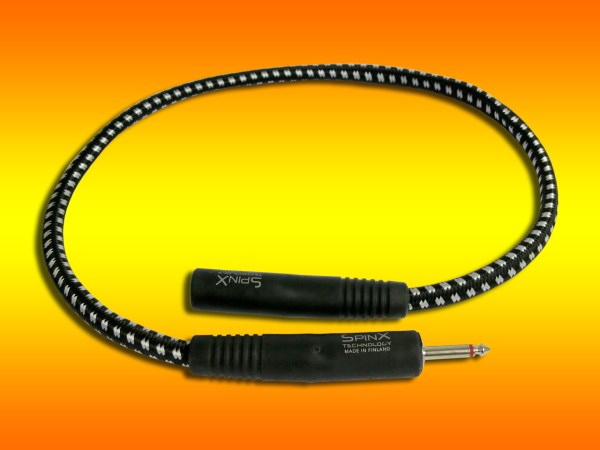
Seldom has there been this amount of Internet chatter and general hysteria about any guitar accessory, as there has been about the Finnish Spin X cable, which is only a guitar lead of approximately 75 cm length, with two giant 1/4-inch connectors (a female input; a male output).
The Spin X cable (sold for 129 € as the RED Cable by Mad Professor) is manufactured by a Finnish company called Spindeco Oy. The cable promises to improve the efficiency of its conductors by means of a nano-electrical phenomenon, known as the electron spin. Special graphite-coated conductors are meant to rearrange the signal-carrying electrons in such a way, that the signal flow is improved. Spindeco claim that the main benefit of this technology in a guitar lead is an improved phase correlation between the different frequency bands of the signal. Apparently, traditional leads tend to pass high frequencies quicker than low frequencies, which tend to arrive at the amplifier with a very tiny time lag.
Using the benefits of the noble search engine, I quickly ascertained that the electron spin is, in fact, no voodoo, but rather generally acknowledged quantum physics. Still, we guitarists are interested in audible results; we ask questions like:
Does the Spin X cable do what it says on the tin? Is there truly a discernible difference in sound? Do I have to own one if I want to be a Tone God?
****
I was given a Spin X cable for reviewing purposes.
There’s been some rumours about miniature transformers, or buffers, inside the lead’s giant connectors, which is why I had to take a closer look inside. Nope, it’s just a bunch of different conductors – some left unused – attached with traditional soldering tin!
The short length of the Spin X cable has also been the centre of some speculation. Guitarists have been asking: ”Why is it just a short extension cord, instead of a full-length guitar lead?”
Take a closer look at these pictures (click on them for a larger view), and the answer becomes rather obvious:
It seems that Spin X relies on two identical conductors to function in the desired way. One is the hot (signal) conductor, while the other goes to earth (ground). But using this type of cable results in a less-than-ideal setup, when it comes to mains hum and electromagnetic interference.
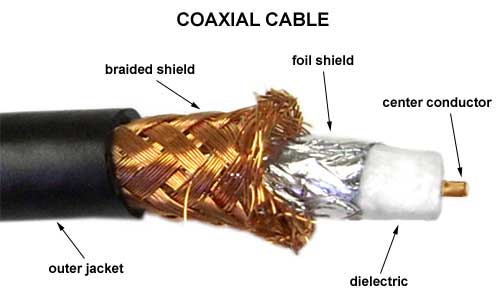
Traditional guitar cables are built as coaxial leads, where a centre conductor carries the guitar signal. The centre conductor runs inside a layer of insulation, which in turn is covered by one (or several) shields. The shield is connected to ground and serves two purposes – one: its the audio signal’s earth; two: it’s a Faraday cage that shields the signal conductor from extraneous interference, like mains hum.
If you connect only the Spin X cable to an amp, and turn up the volume, you will be greeted by an unacceptable amount of hum and microphonics, but as soon as you plug your regular lead into the Spin X, all the noises disappear. This means that the Spin X needs the traditional, coaxial guitar lead to do away with all the interference.
****
The Spin X cable seemed reasonably rugged and well made.
The only thing that bothered me in the road-worthiness department were the badly secured strain relief cuffs in both connectors of our review sample.
****
I wanted to find out, whether you could ”measure” any real speeding up of the guitar signal in the confines of a home studio. I came up with the following setup:
I recorded the acoustic sound of a Fender Stratocaster using an AKG C3000 condenser microphone onto the left channel of a stereo signal, while direct-injecting the high-impedance guitar signal going through a Whirlwind Leader cable into my sound card.
As you can see above, the DI’ed guitar signal (waveform on the bottom) is a tiny bit behind the miked up acoustic sound.
This picture shows clearly that the Spin X doesn’t ”speed up” the guitar signal in any way noticeable in a standard audio sequencer.
The listening test also doesn’t reveal any noticeable differences between using only the traditional lead or adding the Spin X cable. If anything, adding the Spin X might even add a minuscule amount of time lag to proceedings, at least to my ears:
****
I then recorded a series of sound clips, using my trusty Blackstar HT-1R valve combo. In each clip the first half is played through just the traditional Whirlwind lead, while the second half has the Spin X cable added into the signal chain.
For comparison purposes here’s a clip of a Fender Stratocaster DI’ed into the sequencer (first half Whirlwind only; second half Whirlwind plus Spin X):
A Strat through the Blackstar:
Gibson LP Junior:
Hamer USA Studio Custom:
Gibson Melody Maker SG:
****
Next I took the Spin X to the guitarist of Rock-Ola & The Freewheelers. Sami Saarinen went through several different vintage and custom shop guitars and amps at band rehearsal volumes – both straight into the amp, as well as using a pedalboard.
The differences in sound between using only a traditional guitar lead and adding the Spin X cable seemed a little bit more pronounced using Sami’s setup at higher volume levels, compared to what I could make out in my home studio.
****
For the last bit I wanted to make sure that the Spin X cable’s function was not dependent on valve technology:
I borrowed my son’s Marshall MG30CFX combo for a short test run. All sound clips start with only the Whirlwind cable connected; the Spin X comes in at the halfway point.
Fender Telecaster (neck pickup):
Both pickups:
Bridge pickup:
****
Based on my tests I have to state that the Spin X cable really does add a little ”something” to the sound. The Spin X’ effect is more easily spotted with a quality guitar and a quality amp at slightly higher volume levels. It also seems that the tonal effects are more pronounced in singlecoil-equipped guitars – like a Stratocaster, a Telecaster, a Les Paul Junior, or a non-reverse Firebird – than when using humbucker-carrying guitar models.
The Spin X’ ”sound” is similar to the effect a buffer amp has on a long signal chain. You will get a slightly more refined top end, a whiff of added presence and openness, as well as a tighter and more pronounced bass. Strats and Teles will sound a tiny bit more HiFi, while a P-90 pickup will lose a little of its lower-mid congestion.
The Spin X seems to make the signal louder by an inkling, but this could also be a mere psychoacoustic effect, caused by the added presence.
****
There’s no simple and straight answer to the question, whether the Spin X cable genuinely ”improves” your tone. Many Rockabilly, Punk or Metal guitarists wouldn’t want to make their guitars sound ”more polite”. Some styles and genres simply demand a gritty, unruly top end, and some chunky mid-range grind.
For some tone hounds and sound aesthetes, however – players following the in the footsteps of guitarists, such as David Gilmour, Michael Landau or Eric Johnson – the Spin X cable’s tiny tonal changes might make all the difference.
In any case, it is up to you to decide how much this minuscule fine-tuning of your guitar signal is worth to you.
****
Spin X Cable
For more info on the Mad Professor RED Cable go HERE.























 Kitarablogi.com – Finland's premier Guitar and Bass blog