
Lisätiedot: Fender
Kitarablogi.com – Finland's premier Guitar and Bass blog
Juttuja kitaroista ja bassoista

Lisätiedot: Fender

Why do we need intonation adjustment?
On string instruments, the fret spacing along the fretboard is calculated according to a mathematical formula. This formula is theoretical, though, and doesn’t take into account variables, such as string tension (tuning), string thickness (gauge) and string height (action). These variables make the actual pitch of a string, which is pressed down against a fret, deviate from the theoretically correct pitch. To compensate for this pitch offset, you need some sort of intonation adjustment that sets the correct intonation (or octave compensation) for each string.

On acoustic guitars correct intonation is achieved by an angled bridge saddle, often carefully shaped to fine-tune the compensation further.
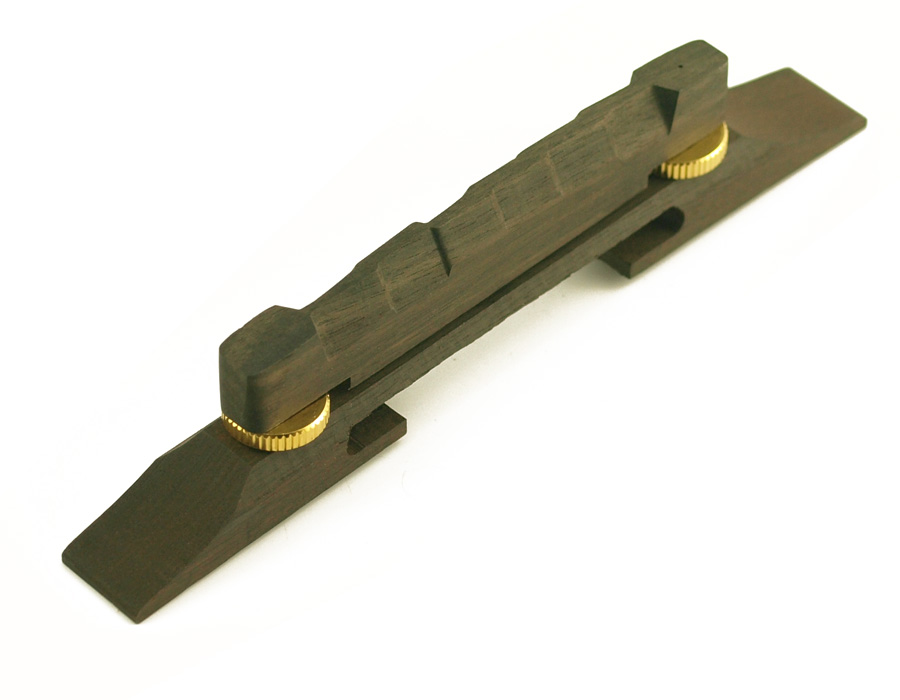
Early electric guitars were basically modified archtop acoustics, which carried on using traditional rosewood (or ebony) archtop bridges with carved ”steps” presetting the intonation. Overall intonation adjustment was carried out by moving the whole bridge carefully closer to (or further away from) the neck.
****

The advent of the – much clearer-sounding – solidbody electric guitar necessitated a more precise approach to the problem of intonation adjustment.

Leo Fender’s novel Esquire/Broadcaster/Telecaster-bridge featured a mounting plate for the bridge pickup, as well as individual action adjustment for each string, and octave compensation in string pairs.
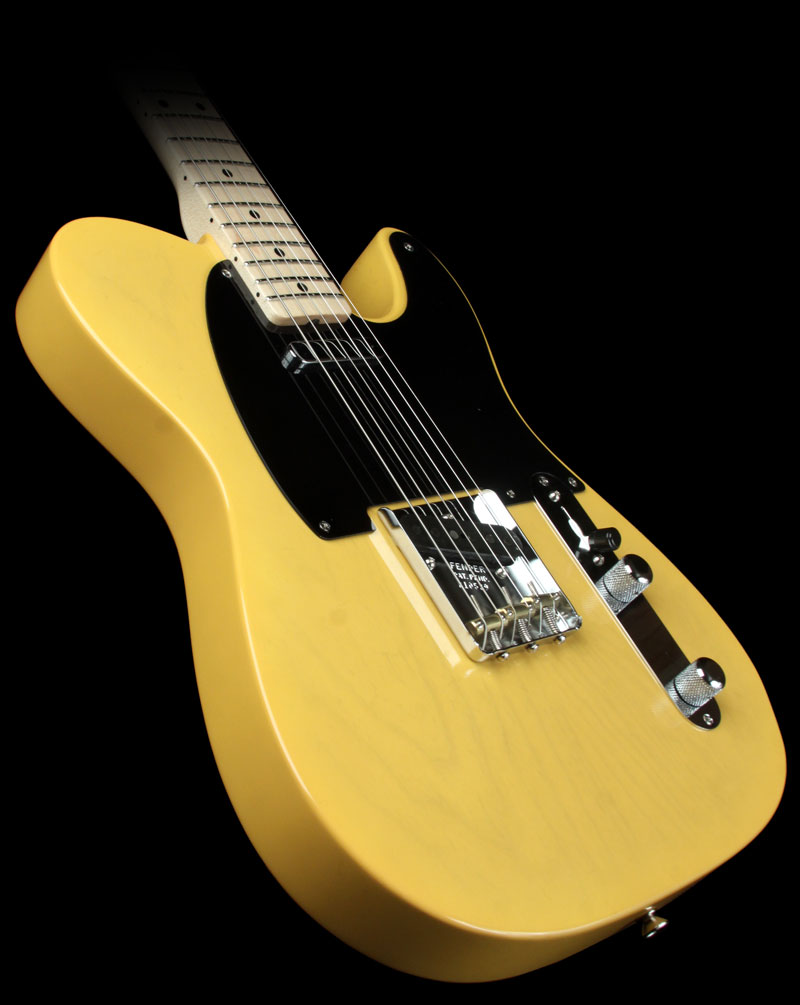
Fender’s Telecaster bridge assembly plays a huge part in this model’s distinctive, twangy tone, laying the foundation for the model’s classic status.


Over the course of the 1950s and 60s, Fender experimented with different saddles – smooth brass, smooth steel, threaded steel, and steel saddles with a single notch per string – but the basic, three-saddle formula stayed firmly in place. You got fantastic tone, but not perfectly spot-on intonation.
****

Twenty years after the original launch of Fender’s first solidbody electric, things had evolved.
In 1952 the original three-saddle bridge was less of a compromise, because the regular string sets of that time (012s or 013s) had a wound g-string. With a wound g-string the biggest step in intonation adjustment was between the b- and the g-string, and, as they were catered for by different saddles, a good, working compromise could be found.
By the late Sixties, ”slinky” string sets with plain g-strings had become the norm. This shifted the intonation step between the highest wound string and the lowest plain string onto a single, rigid bridge saddle (for the D- and g-string).
Fender retained the traditional three-saddle bridge on its standard Telecaster, but introduced six-saddle bridges on many of its new models in the Seventies. Pictured above is the six-saddle bridge from a (second version) Custom Telecaster (introduced in 1972).
Although this bridge finally offered perfect intonation, some players criticised this type of bridge for ”sounding” thinner (or brighter) than the original version. This might also have been due to changes in the precise specifications of the bridge pickup at that time, though.


More recent six-saddle designs by makers like Hipshot, Gotoh or Fender are based on a thicker bridge plate. These are perfectly serviceable, modern designs, which offer precise intonation. Many Tele-anoraks still steer clear of these bridge types, however, because the more rigid bridge plate tends to tame the bridge pickup’s twang noticeably.
****
Another approach to better intonation on a Telecaster is to keep the twang-enhancing three-saddle ashtray bridge in place, but modify the saddles.

Pickup specialist Joe Barden came up with angled brass saddles in his design for the late Tele-master Danny Gatton.
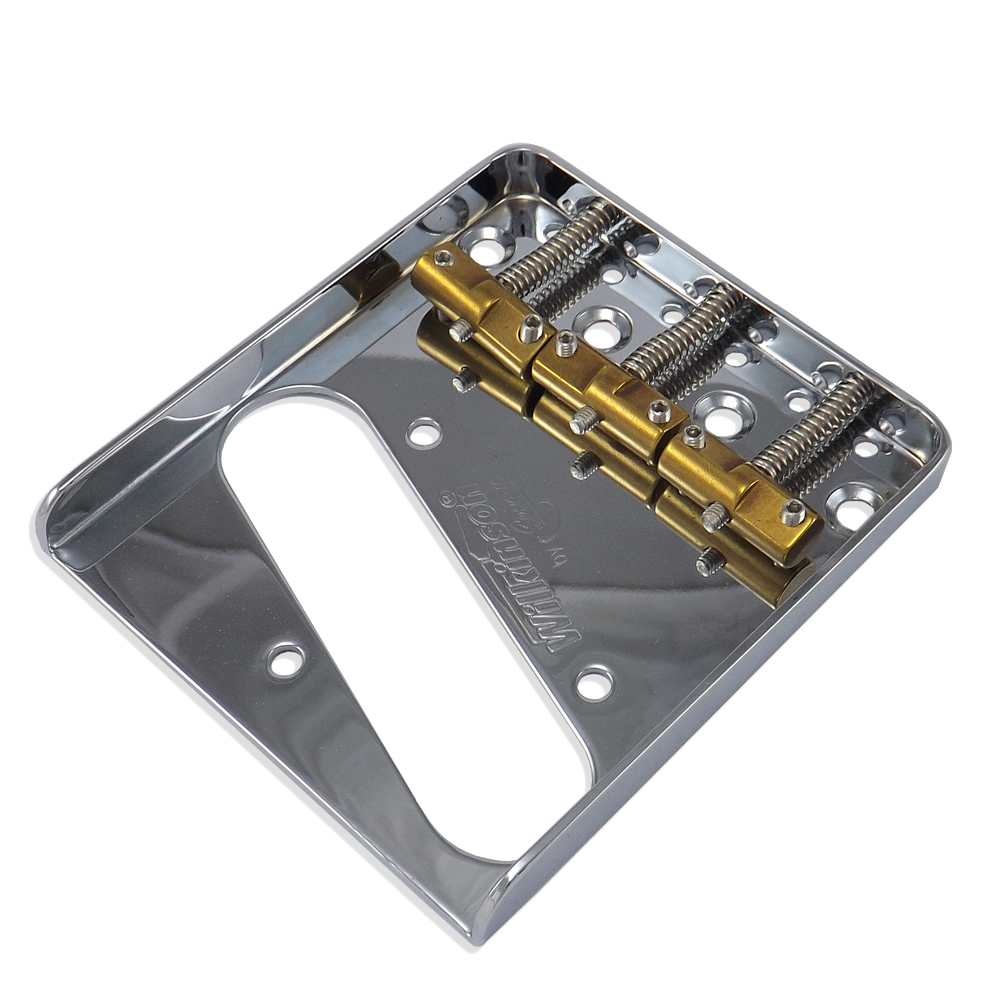

Wilkinson’s and Graph Tech’s designs have two different, preset jump-off points per saddle – one for each string.
These three approaches (Barden, Wilkinson, and Graph Tech) work very well in providing good intonation, while keeping the Telecaster-tone intact, as long as you use string sets with a plain g-string.

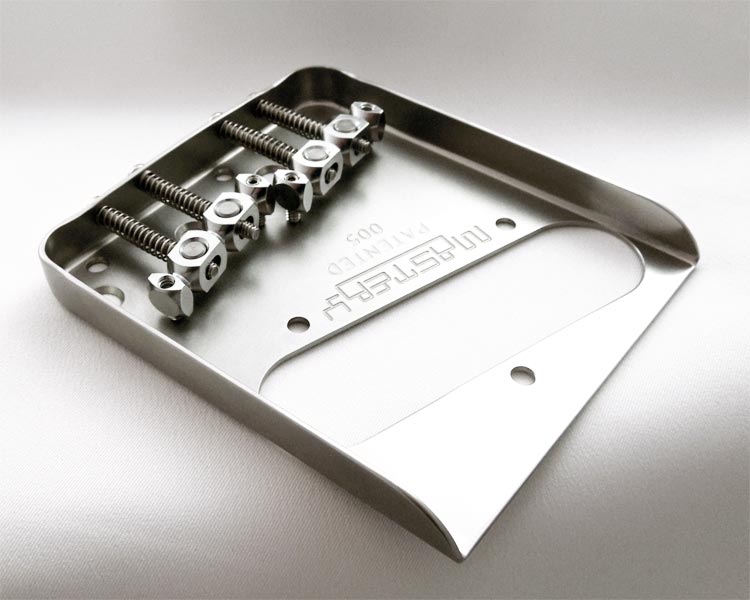
If you want to retain your three-saddle twang, but want to have more freedom in choosing your string gauges, the best way to go are saddles with an angle adjustment. Good examples are Wilkinson’s replacement brass saddles (above), or this stainless steel Tele-bridge by Mastery.
****
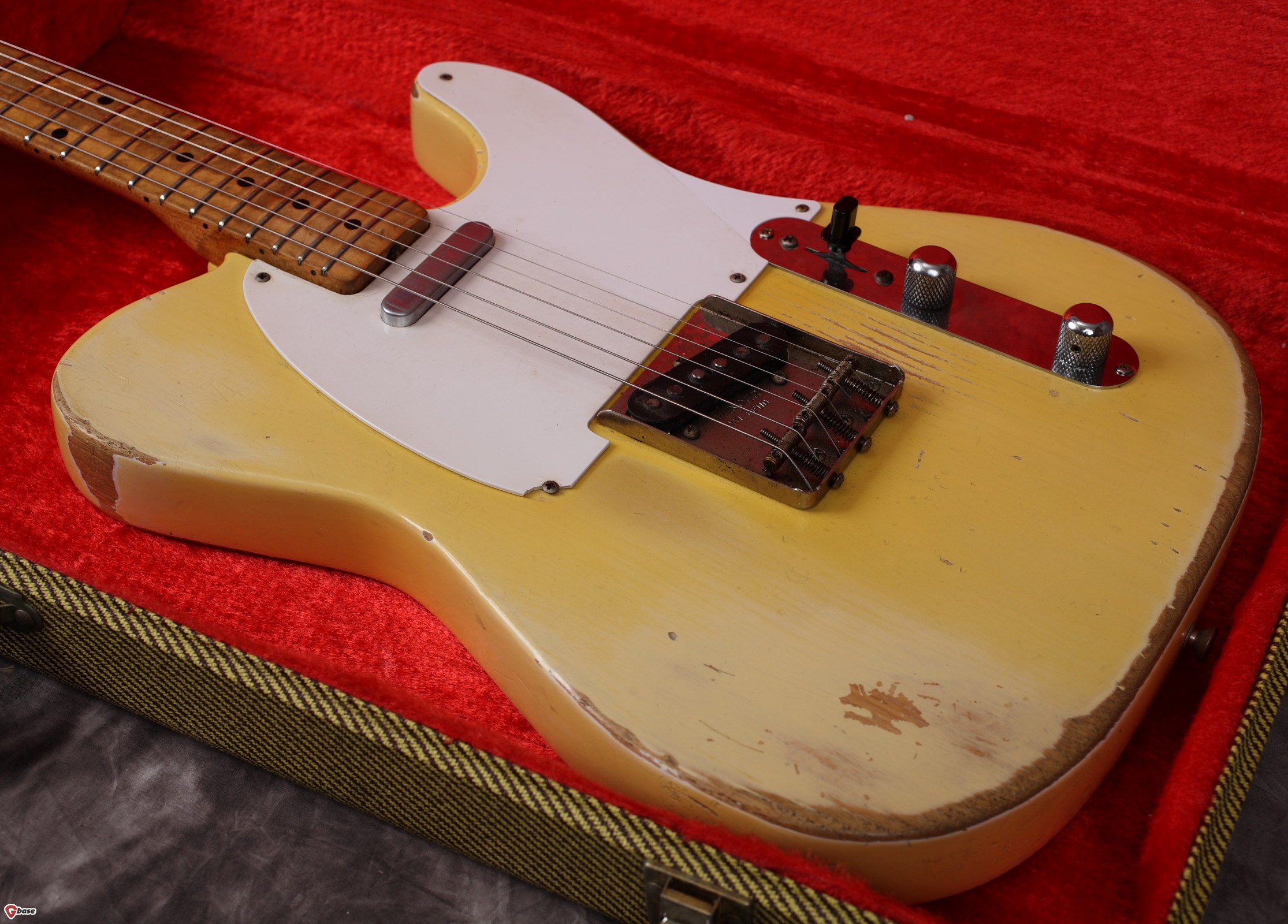
How come that the vintage-type Fender Telecaster, with all its intonation flaws, is still in production and still very successful? The answer is that people have always been creative in working out solutions to design shortcomings.
In the Telecaster’s case this means finding a way to ”sweeten” the guitar’s slightly flawed intonation.
Here are three (of a myriad of) possible approaches:
1.) The fifty percent approach
After you’ve put on a set of new strings, use your digital tuner to set the (12th fret) intonation correctly for both E-strings, as well as the g-string (I call them the most critical strings). Then tune your guitar by tuning the open E-strings and the g-string to pitch. The remaining three strings (A, D, and b) are then tuned, so that the pitch at the seventh fret is correct (giving you E, a, and f#).
The A-, D-, and b-strings will be a little off in their intonation going up (or down) from the seventh fret, but overall the pitch will be much sweeter, than if you had tuned these strings to their correct open string pitches. You can then fine-adjust your sweetening by ear, using first position chords as a reference.
2.) Tuner sweetening
After you’ve put on a set of new strings, use your digital tuner to set the (12th fret) intonation, so that each string pair is slightly off in an approximately even way. With the E- and A-pair this would mean that the E-string’s intonation comes out slightly sharp, while the A-string’s intonation is a tiny bit flat. The next pair would see the D-string a bit flat, while the (plain) g-string is a tad sharp. The last pair would have the b-string a bit sharpish, with the e-string a little flat. Then tune the guitar by tuning all strings, so the pitch is correct at the seventh fret.
Now all strings will be a little off in their intonation going up (or down) from the seventh fret, but overall the pitch will be much sweeter, than if you had tuned them to their correct open string pitches. You can then fine-adjust your sweetening by ear, using first position chords as a reference.
3.) Sweetening to the A
After you’ve put on a set of new strings, use your digital tuner to set the (12th fret) intonation, so that each string pair is slightly off in an approximately even way. With the E- and A-pair this would mean that the E-string’s intonation comes out slightly sharp, while the A-string’s intonation is a tiny bit flat. The next pair would see the D-string a bit flat, while the (plain) g-string is a tad sharp. The last pair would have the b-string a bit sharpish, with the e-string a little flat. Then tune your guitar by first tuning the open A-string to pitch. Next, tune all the other strings by ear, using the A-string as your reference:
• E-string at the fifth fret against open A
• D-string at the seventh fret against open A (or A-string 12th fret harmonic)
• g-string at the second fret against open A (or A-string 12th fret harmonic)
• b-string at the tenth fret against open A (or A-string 12th fret harmonic)
• e-string at the fifth fret against open A (or A-string 12th fret harmonic)
You can then fine-adjust your sweetening by ear, using first position chords as a reference.
****
Remember, none of the above tuning tips is set in granite. Tuning and intonating a three-saddle Telecaster is a dark art, and most players have developed their own way of sweetening their guitar’s intonation. Let your ears be your guide!


****

Vuorensaku is a guitar maker from the Finnish town of Jyväskylä. Luthier-Artisan Saku Vuori repairs and builds all types of string instruments. Vuorensaku also winds his own brand of custom pickups.
When it comes to handcrafted instruments, Vuorensaku isn’t relying on any specific range of models, instead this is a true custom workshop which makes one-offs according to its customers’ wishes.
Saku Vuori is a member of The Guild of Finnish Luthiers.
****

Saku sent us a recently finished solidbody electric for review – a very cool crossbreed of a Seventies Fender Telecaster Deluxe and a Fifties Gibson ES-5 Switchmaster. Vuorensaku’s guitars usually are designated by their serial number only, but for the sake of simplicity I will name this instrument the ”Vuorensaku T-Style Custom”.

The T-Style Custom has been crafted from quality tonewoods:
The bolt-on neck has been carved from a piece of lightly flamed Canadian hard rock maple, and it features an Indian rosewood fretboard. The bound-top body consists of two pieces of very lightweight African mahogany. The centre glue line is virtually impossible to make out, thanks to Vuorensaku’s extremely crisp workmanship.

The Vuorensaku’s nut is crafted from genuine moose bone.
The fretboard comes with a modern, bend-friendly radius (9.5″) and sports 21 medium-sized stainless steel frets.
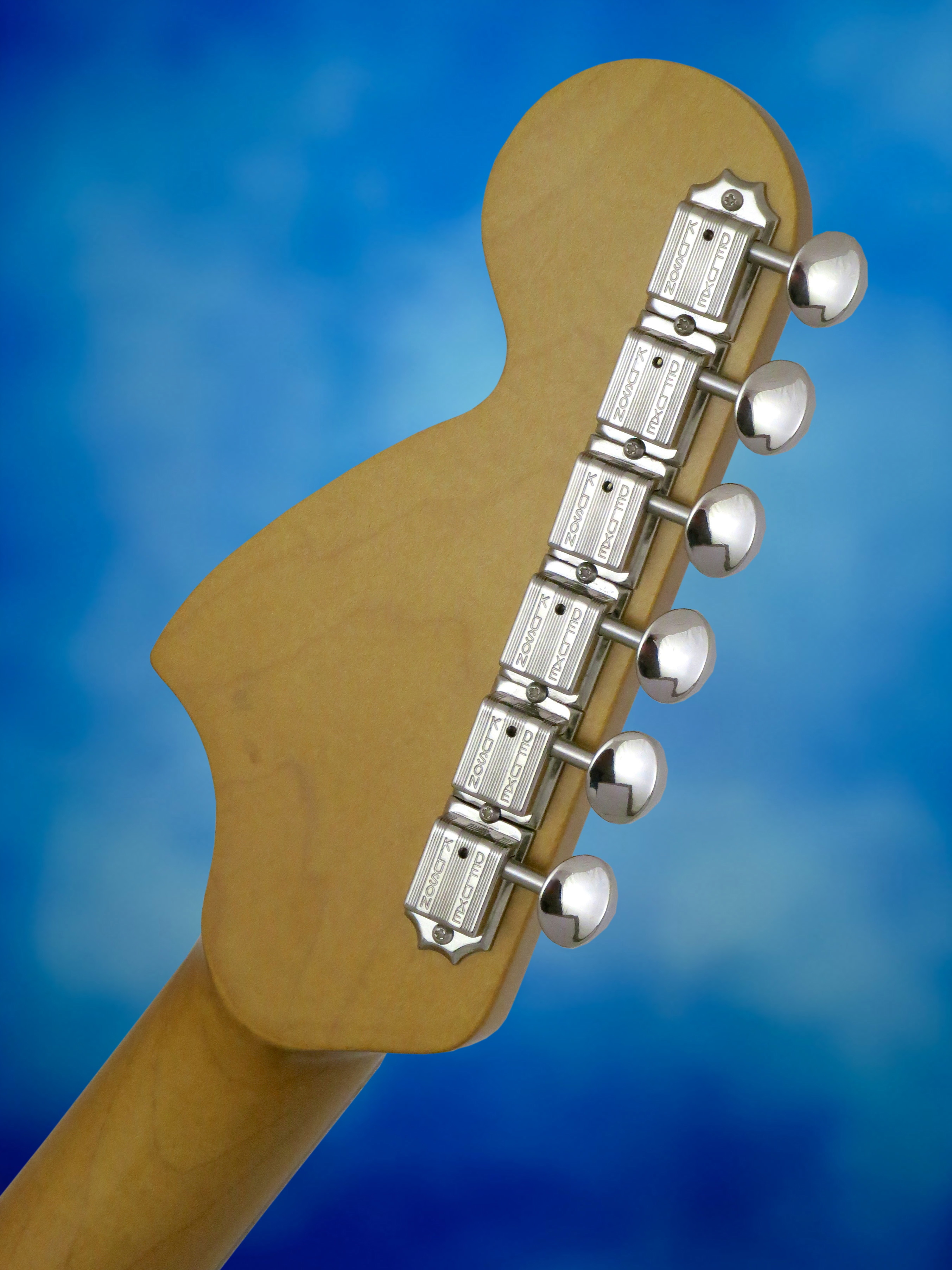
The T-Style Custom’s updated Kluson Deluxe-tuners may have that famous vintage look, but they work much more smoothly than their forebears from the 1950s.

The neck joins the body in time-honoured fashion, using four wood screws and a rectangular steel plate.
Thanks to the T-Style Custom’s satin nitro-finish this instruments simply oozes with natural elegance, feeling very friendly to the touch.

Kluson’s fantastic Half-Size Tele-bridge is a clever way of bringing genuine Tele Twang to non-Tele guitars, as well as making it possible to use this type of bridge in combination with different bridge pickups.
Many guitarists still favour the (almost archaic) three-saddle Telecaster-bridge for its gorgeous tone, especially when it comes with three brass saddles (like this Kluson does). The threads for the intonation screws on the T-Style Custom’s bridge have been deliberately cut at an angle to improve the guitar’s intonation.
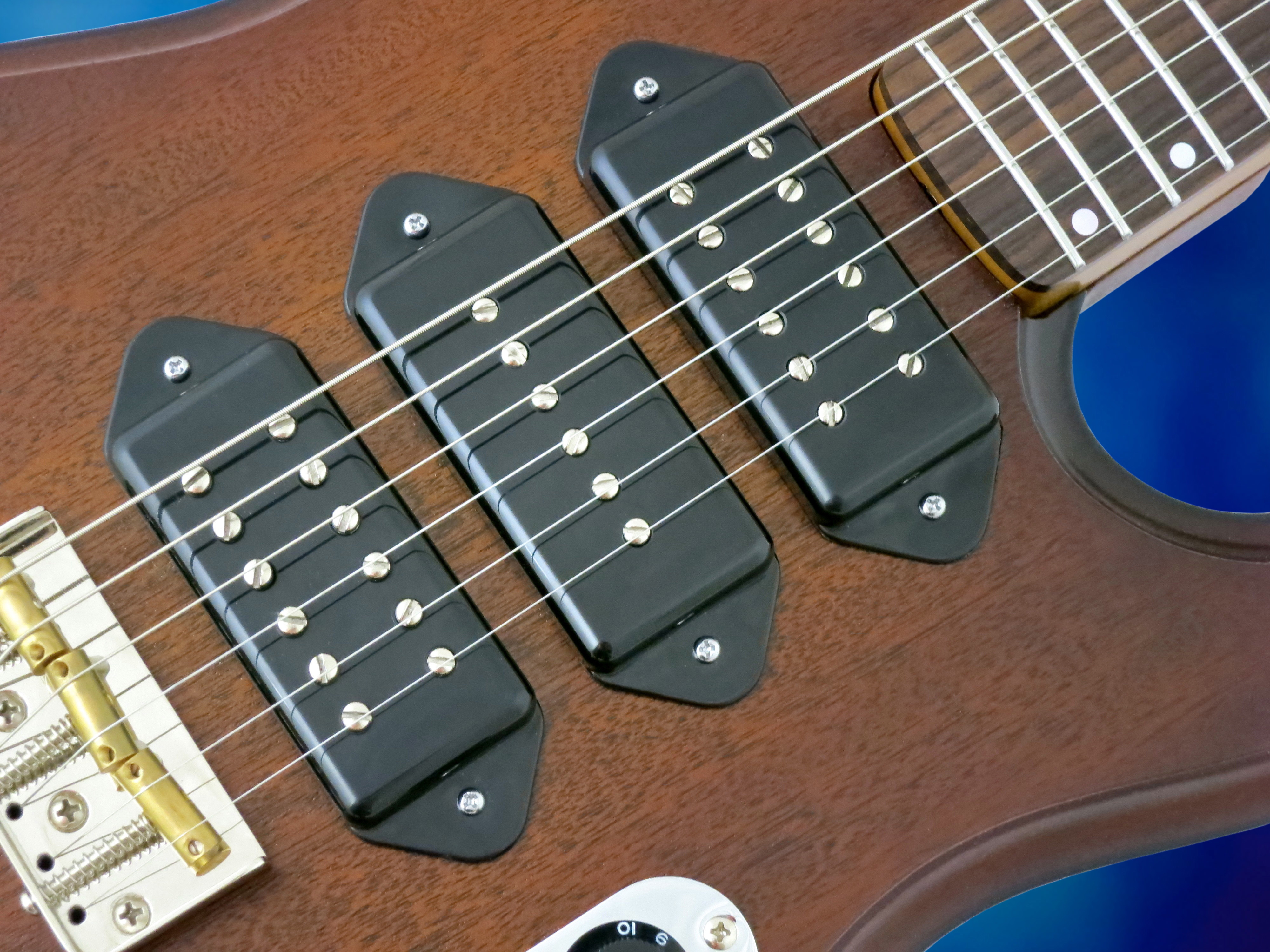
Vuorensaku’s customer specified three Dog Ear-pickups for his dream guitar, so a set of said pickups was sourced from another Finnish maker – Rautia Guitars from Joensuu.
Veijo Rautia’s Dog Ear-set comprises a pair of splittable humbuckers for the neck and bridge positions, as well as a P-90-type singlecoil in the middle.

The control panel has been turned the ”wrong” way around to facilitate easy master volume access.
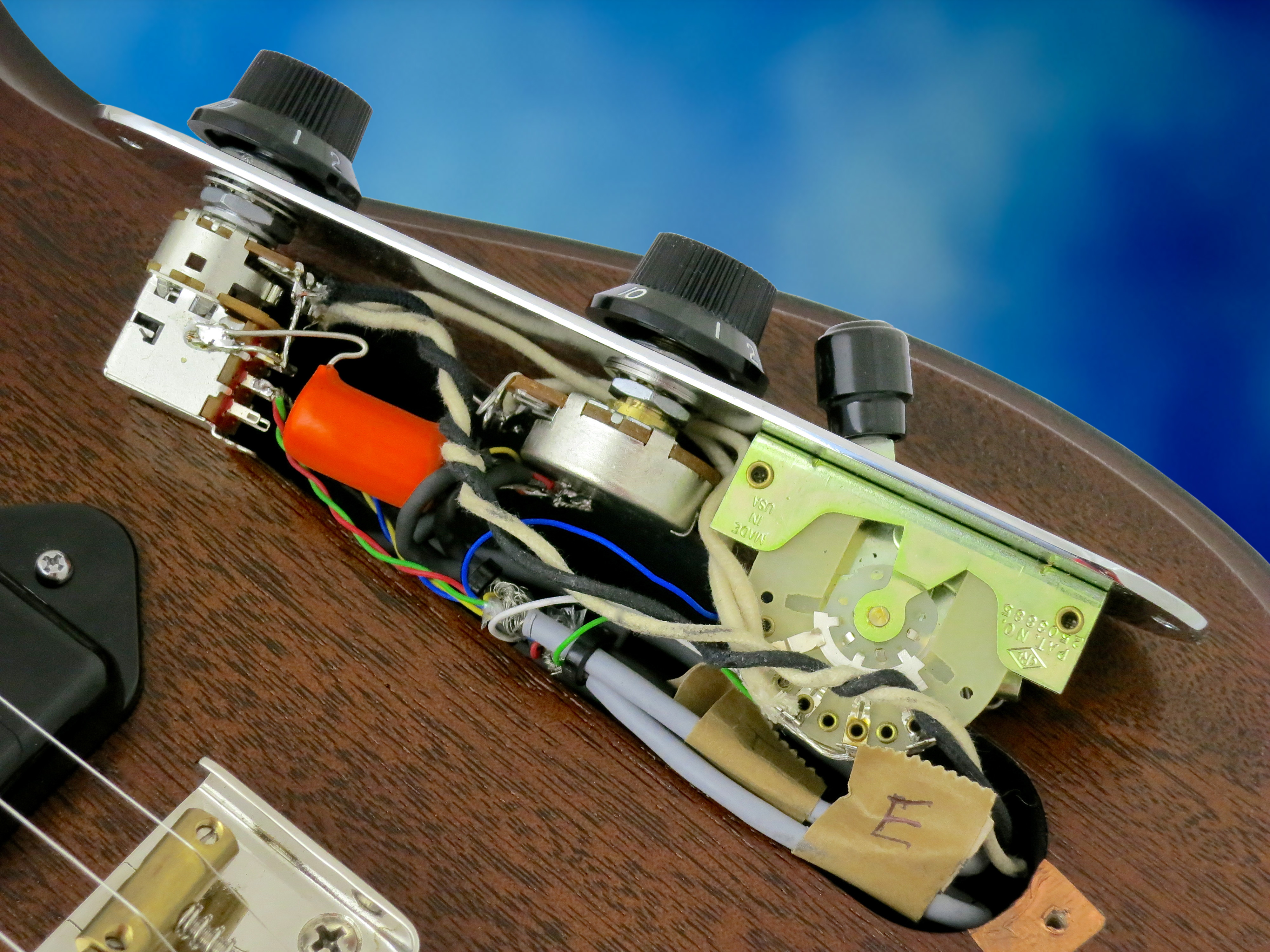
Ingeniously, Saku Vuori has managed to fit all the necessary components into the guitar’s small traditional Tele control cavity:
The volume control comes equipped with a push/pull-switch for splitting the humbuckers. The five-way blade switch works like on a Fender Strat. As you can easily see from the photo the workmanship is very clean and the components are of top quality.
****
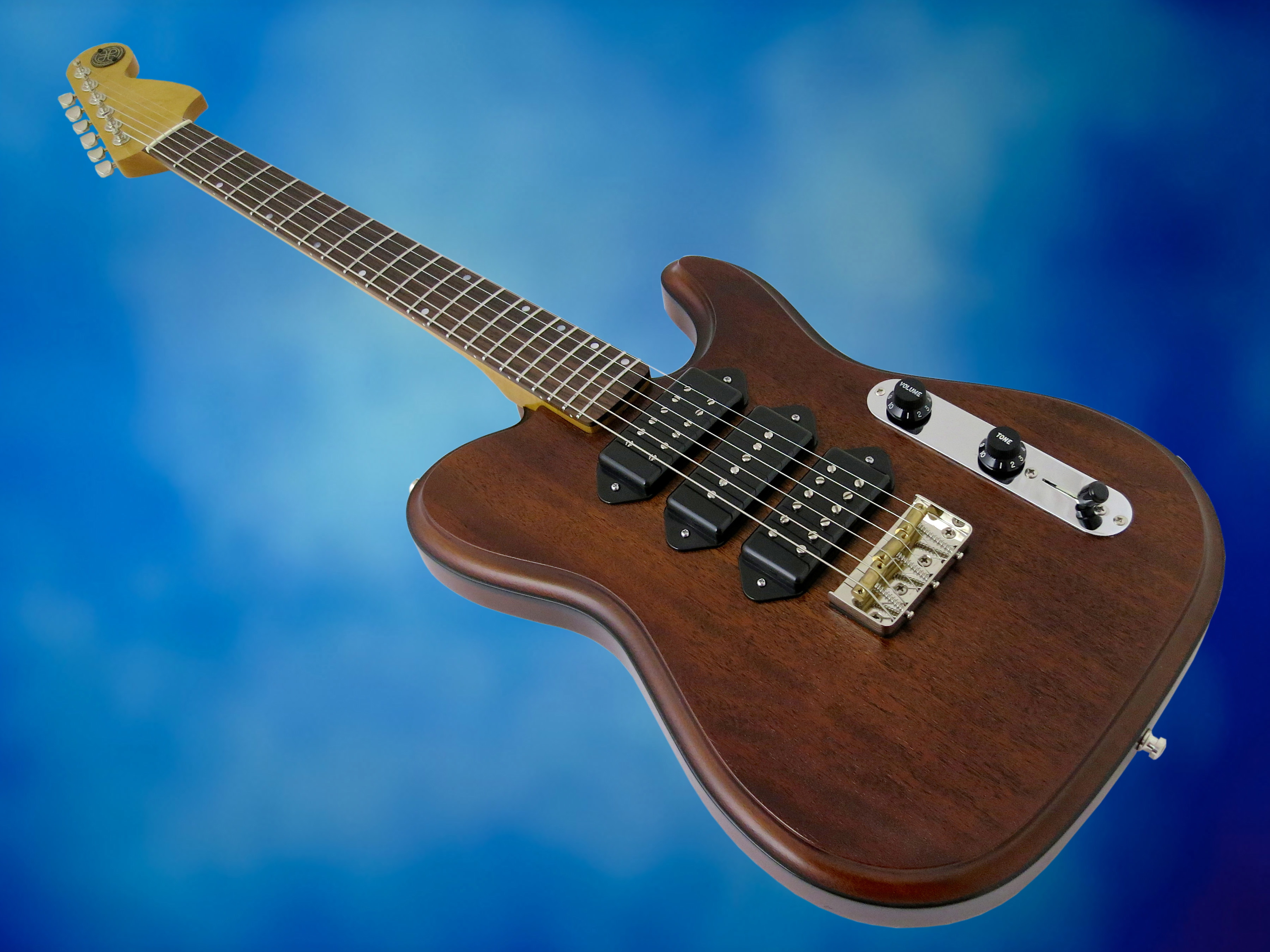
The Vuorensaku T-Style Custom scores top marks for workmanship and playability! Handmade instruments of such high calibre always possess that little something extra, a special feel that is nigh on impossible to find in a mass-produced guitar.
The T-Style Custom is a lightweight instrument. With a slippery nylon strap you might even notice a hint of neck-heaviness, but nothing a nice leather strap couldn’t get to grips with easily.
The fat C-profile of this Vuorensaku’s neck is just what the doctor ordered. The combination of this profile with the modern fretboard radius and the gorgeous fretwork, makes for a fantastic playing feel that’s fast and easy to control. The setup was superb with a set of 010s and a low action (low-E: 2.1 mm/high-e: 1.5 mm).
Acoustically, the Vuorensaku sounds just like the prime exponent of a Fender-type guitar it is – open and ringing.
Played amplified, the T-Style Custom offers a broader, much more diverse picture, which isn’t really surprising, as the Vuorensaku comes equipped with a completely different set of pickups, compared to your run-of-the-mill Tele. The guitar’s three pickups, five-way switch, and humbucker split gives you a very cool selection of different Gibson- and Fender-style tones.
I love this Vuorensaku to bits, but I found a small point to moan about, too. The bridge pickup’s signal level is noticeably weaker than that of the neck pickup. This isn’t due to any shoddy workmanship, though, but rather down to the Dog Ear-type of pickup mounting, and a phenomenon many Gibson- and Epiphone-owners are well aware of. It’s very hard for a reviewer to criticise a custom-ordered guitar, because there’s always the possibility that the guitar was meant to perform in this way. Still, if this were my instrument, I’d ask Saku Vuori to add a small plastic shim (1.5-2 mm) beneath the bridge pickup to raise it closer to the strings.
The Rautia Guitars Dog Ear-set sounds fantastic. Thanks to the moderate output of the humbuckers, there’s never any danger of the sound getting mushy or ill-defined. The ’buckers also sound great in split-mode, and combining the two humbuckers with a rude-sounding P-90 in the middle position can only be described as a stroke of genius.
This clip gives you an idea of the guitar’s sounds with the humbuckers split (starting with the neck pickup):
Here we have a similar clip featuring the full humbuckers:
And to round it off, here’s the audio from the You Tube-video:
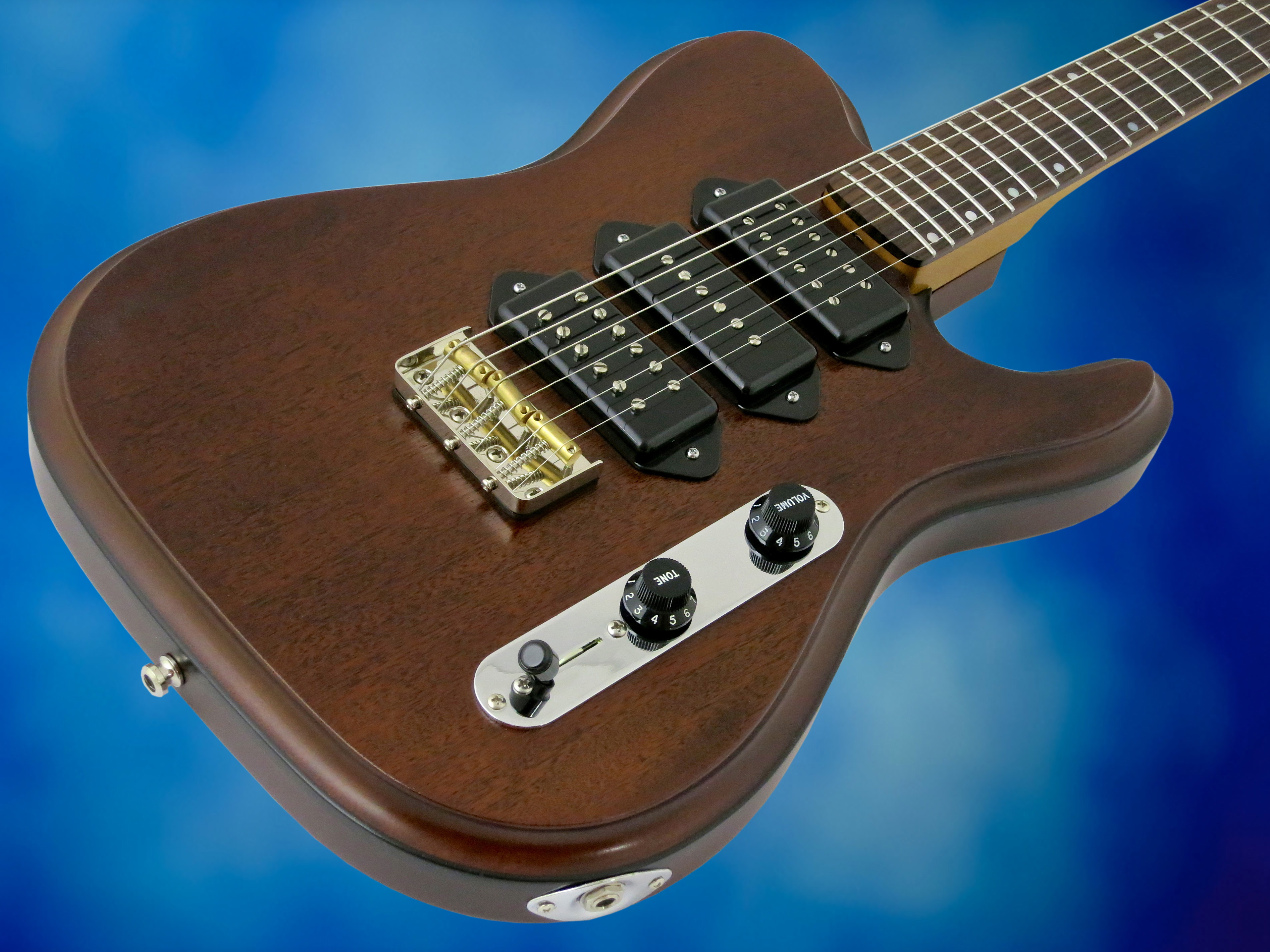
What a guitar! The Vuorensaku T-Style Custom is another excellent example of the fantastic quality of Finnish guitar-making. Too bad the owner wants his guitar back…
****
Vuorensaku T-Style Custom
Price range for a similar guitar: 2,500 – 3,000 €
A big ”thank you” goes to the promoter of the Rockkaamo Festival, Mr Jani Savolainen, for the loan of his guitar!
Pros:
+ Made in Finland
+ handcrafted
+ workmanship
+ playability
+ sound
Cons:
– balance between neck and bridge pickup


****
Vuorensaku on yhden miehen soitinpaja Jyväskylästä. Kielisoitinartesaani Saku Vuori korjaa ja rakentaa kaikenlaisia kielisoittimia. Tämän lisäksi Vuorensakulta saa myös käsintehtyjä kitaramikrofoneja.
Vuorensakulla ei ole valmista mallistoa, vaan yritys on aito custom-paja, jossa soittimet syntyvät käsityönä asiakkaiden toiveiden mukaan.
Saku Vuori on Suomen Soitinrakentajien Killan jäsen.
****
Sain Sakulta testiin hiljattain valmistuneen sähkökitaran, joka on erittäin puoleensavetävä yhteentörmäys 1970-luvun Telecaster Deluxesta ja 50-luvun Gibson ES-5 Switchmasterista. Soittimella ei ole virallista nimeä (vaan ainoastaan sarjanumero), mutta kutsun sitä tätä testiä varten Vuorensaku T-Style Customiksi.
T-Style Customin perustana toimivat laadukkaat soitinpuut:
Ruuvikaula on veistetty miedosti liekehtivästä kanadalaisesta vaahterasta, ja otelauta on intialaista ruusupuuta. Kitaran reunalistoitettu runko taas on tehty hyvin kevyestä afrikkalaisesta mahongista. Runko on tehty kahdesta vierekkäisestä palasta, mutta liimasaumaa on miltei mahdoton havaita – erittäin tarkkaa työtä siis.
Vuorensakun satula on valmistettu aidosta hirvenluusta.
Otelaudan radius on nykyaikainen (9,5 tuumaa), ja siihen on asennettu 21 keskikokoista nauhaa ruostumattomasta teräksestä.
T-Style Customin nykyaikaisissa, kromatuissa Kluson Deluxe -virittimissä on vintage-tyylinen ulkonäkö, mutta ne toimivat huomattavasti sulavammin kuin 1950-luvun alkuperäiset painokset.
Tässä kitarassa käytetään perinteistä Fender-kaulaliitosta neljällä puuruuvilla ja suorakulmaisella teräslevyllä.
T-Style Customin mattapintaisen nitrolakkaviimeistelyn ansiosta soitin näyttää (ja tuntuu) erittäin orgaaniselta ja aistikkaalta.
Klusonin loistava Half-size Tele -talla mahdollistaa perinteisen Telecaster-tallan yhdistämistä muihin soitintyyppeihin tai mikrofoneihin.
Monien kitaristien mielestä alkuperäinen Telecaster-talla kolmella messinkitallapalallaan on soundillaan yhä paras talla sähkökitaralle. T-Style Customin Kluson-tallassa tallapalojen kierteet on leikattu tahallaan vinosti, mikä auttaa kitaran intonaatiossa.
Vuorensakun asiakas toivoi omaan kitaraansa kolmen mikrofonin Dog Ear -setin, ja sellainen löytyi toisen suomalaispajan, joensuulaisen Rautia Guitarsin, valikoimasta.
Veijo Rautian mikrofonisettiin kuuluu kaksi puolitettavaa humbuckeria (kaula- ja tallamikki), sekä yksikelainen P-90 (keskimikki).
Käännetty paneeli helpottaa pääsyä volume-potikkaan.
Saku Vuori on onnistunut mahduttamaan kaikki komponentit perinteisen (ahtaan) Tele-koloon:
Volume-potikkaan on piilotettu nostokytkin humbuckerien puolitusta varten. Viisiasentoinen kytkin taas toimii Strato-tyylisesti. Kuten kuvastakin näkyy, työnjälki on erittäin siisti ja käytetyt osat erittäin laadukkaita.
****
Vuorensaku T-Style Custom -kitaran työnjälki ja soitettavuus on ensiluokkaista. Huippulaadukkaassa käsintehdyssä soittimessa on aina ”se jokin”, mikä on miltei mahdoton löytää suuren sarjatuotannon kitaroista.
T-Style Custom on hyvin kevyt soitin. Erittäin kevyen mahonkirungon takia on jopa huomattavissa lievä taipumus kaulapainoisuuteen liukkaan nylonhihnan kanssa. Nahkahihna tekee tästä taipumuksesta kuitenkin tehokkaasti lopun.
Tämän Vuorensakun lihaksikas kaulaprofiili (iso C) on juuri minun makuun. Yhdessä 9,5-tuumaisen otelautaradiuksen ja huipputrimmattujen teräsnauhojen kanssa, tästä muodostuu erittäin nopea ja tarkka soittoalusta. Kitara saapui testiin hyvin mukavassa trimmissä (matala E-kieli: 2,1 mm/korkea e-kieli: 1,5 mm).
Vuorensakun akustinen klangi on – yllätys, yllätys – hyvin Fender-mainen ja avoin.
Vahvistimen kautta soitettuna T-Style Custom -kitaran luonne eroaa luonnollisesti rivi-Telestä, koska Vuorensakun mikrofonivarustus on erilainen. Kolmen mikin, viisiasentoisen kytkimen ja humbuckerien puolituksen yhteispelistä saa yhdeksän hienoa laatusoundia Gibsonin ja Fenderin soundimaailmoista.
Pidän tästä Vuorensakusta kovasti, mutta löysin kuitenkin myös yhden kritiikkikohdan – tallamikrofoni on hieman hiljaisempi kuin kaulamikki. Tämä ei kuitenkaan ole laatuvika, vaan dog ear -kiinnitykseen liittyvä – ja monelta vanhalta Gibsonilta ja Epiphonelta tuttu – ongelma. Asiakkaan toiveiden mukaan tehtyä custom-soitinta on hyvin vaikea kritisoida tällaisissa asioissa, koska voi hyvinkin olla, että kitaraa on tarkoitettu juuri tällaiseksi. Jos tämä olisi minun soitin, pyytäisin kuitenkin tallamikrofonin alle noin kahden millin paksuisen muovilevyn, jolla koko tallamikrofonia saisi nostettua lähemmäs kieliä.
Rautia Guitars Dog Ear -setin soundi on vallan mainio. Humbuckereiden maltillisen tehon ansiosta soundi ei mene koskaan tukkoon. Mikrofonit kuulostavat hyviltä myös puolitettuina. Yksikelainen P-90-mikrofoni sopii soundiltaan ja teholtaan loistavasti settiin.
Tässä on audiopätkä kitaran soundivaihtoehdoista, silloin kun humbuckerit on puolitettu (alkaa kaulamikrofonilla):
Ja tässä samankaltainen pätkä täysillä humbuckerilla:
Lopuksi vielä You Tube -videon ääniraita:
Oli todella suuri ilo saada tutustua tähän Vuorensaku-kitaraan. Tämä soitin on jälleen yksi loistava esimerkki suomalaisen soitinrakennustaidon erittäin korkeasta tasosta. Valitettavasti minun on pakko palauttaa tämä kitara…
****
Vuorensaku T-Style Custom
hintaluokka noin 2.500 – 3.000 €
Suuri kiitos Rockkaamo-festivaalin pääpromoottorille Jani Savolaiselle kitaran lainaamisesta!
Plussat:
+ kotimainen
+ käsintehty
+ työnjälki
+ soitettavuus
+ soundi
Miinukset:
– kaula- ja tallamikrofonin keskenäinen balanssi
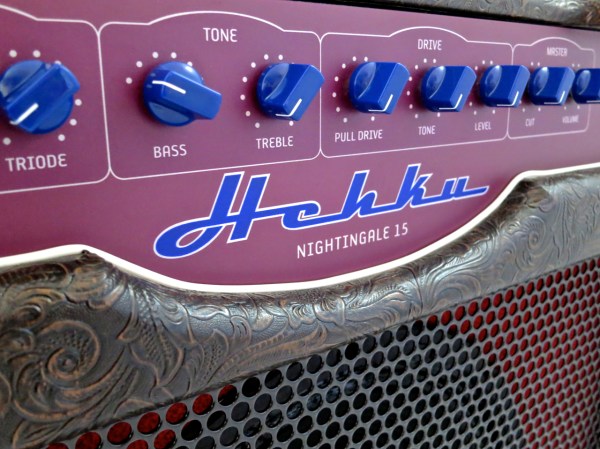
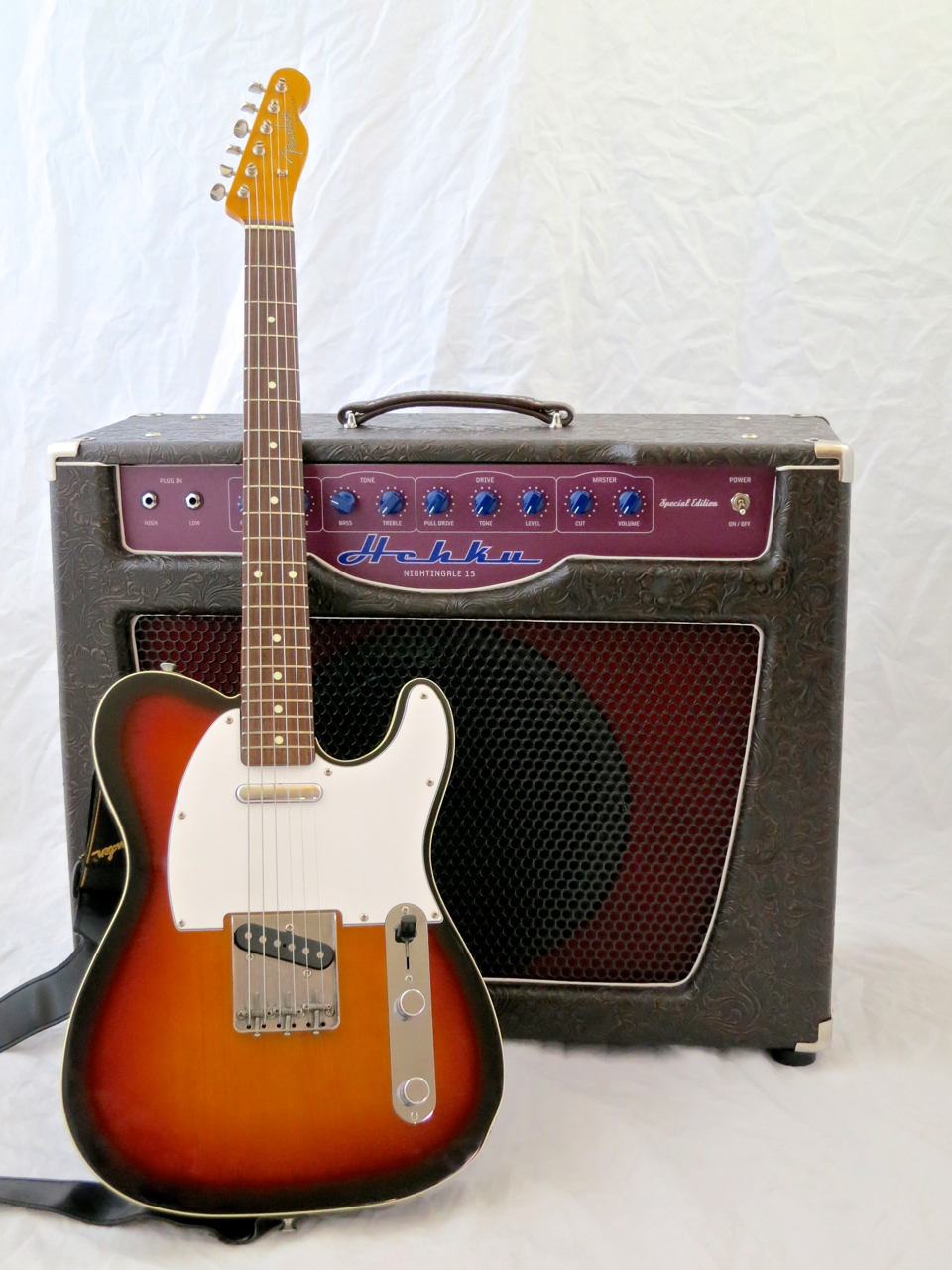
From a guitarist’s standpoint, Finland truly is the land where milk and honey flow. In relation to its tiny population Finland is home to an unbelievable number of first-rate guitar-, effects- and amp-makers.
One such boutique-level amp brand is Hehku Customs from the town of Pori (on the western coast). Hehku’s team consists of chief designer Jarmo Välimäki, as well as Markku Penttilä and Juha Heljakka, who are in charge of R & D, sales and marketing.
There are several examples of different custom amps the company has built on Hehku’s website. Prices for custom amps start at about roughly 1,300 €. Hehku Custom’s cabinet sizes and shapes are standardised, but all other details can be tailoured to each customers wishes and requirements. ”The basic idea is that we want to make our customers’ wildest dreams come true!” says Jarmo Välimäki.
****

Kitarablogi got a 15-watt Hehku Nightingale 15 combo for testing. This is Hehku Custom’s first standardised model without custom options.
The Nightingale 15 (combo approx.: 1,950 €, head approx.: 1,750 €) is a hand-made, all-valve combo with a single 12-inch speaker, and represents many features typical of Hehku’s design philosophy.
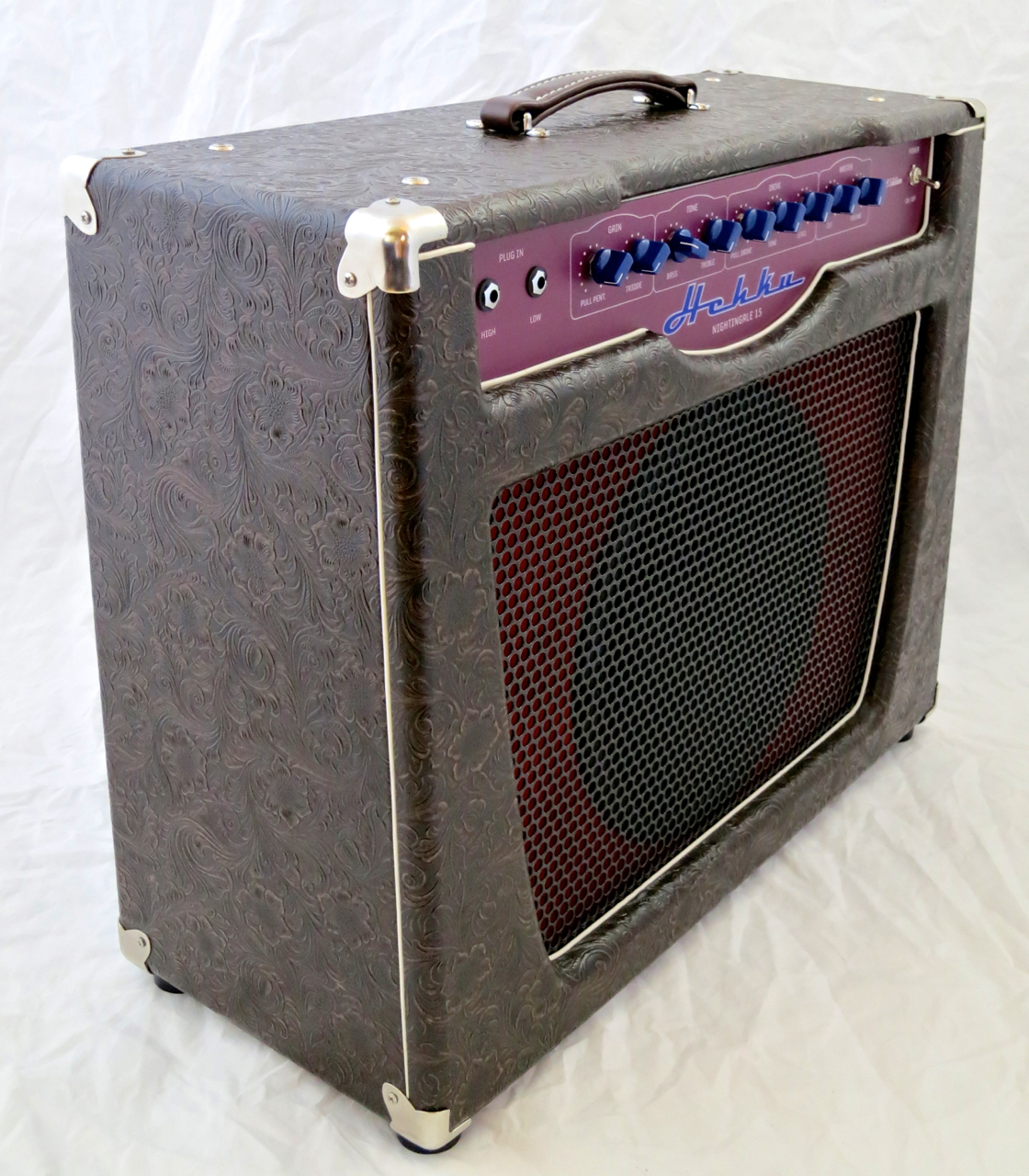
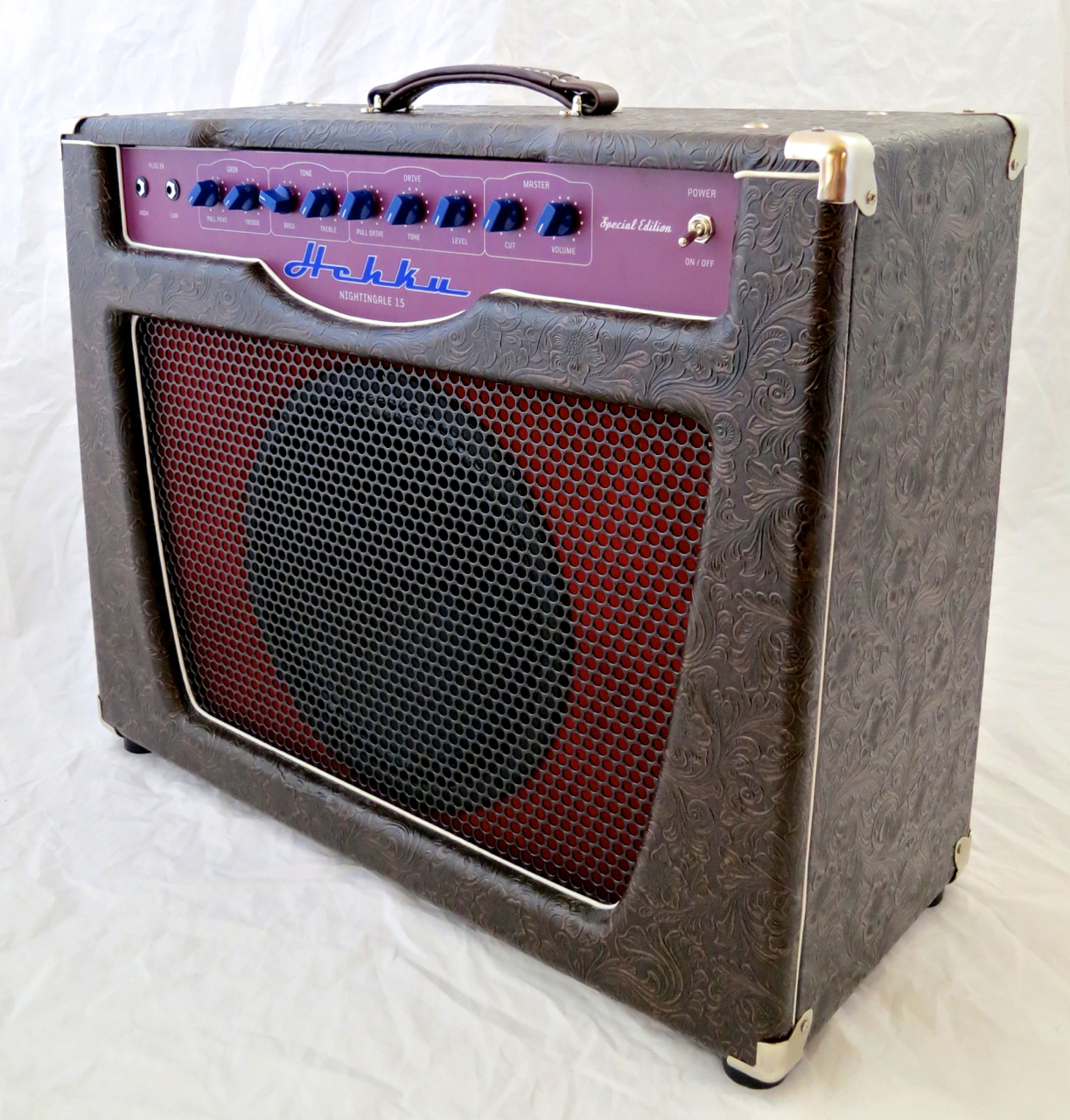
The Nightingale’s cool and original looks make it clear from the off that this combo isn’t your typical Fender Tweed clone.
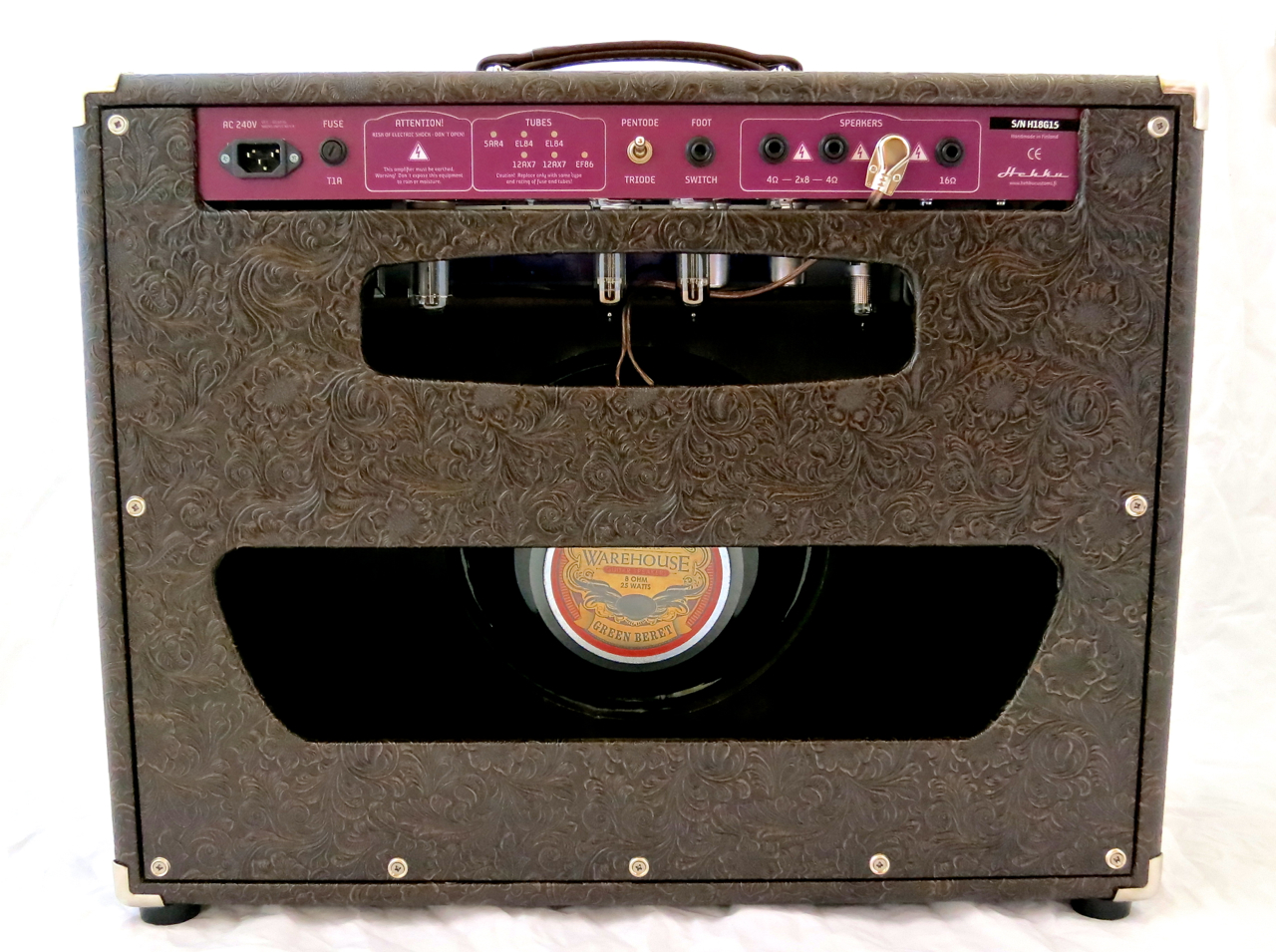
The Hehku Nightingale is an open-backed combo with easy valve access. All Hehku cabinets are made from Finnish birch ply, which is an outstanding material, both in terms of strength as well as sound.
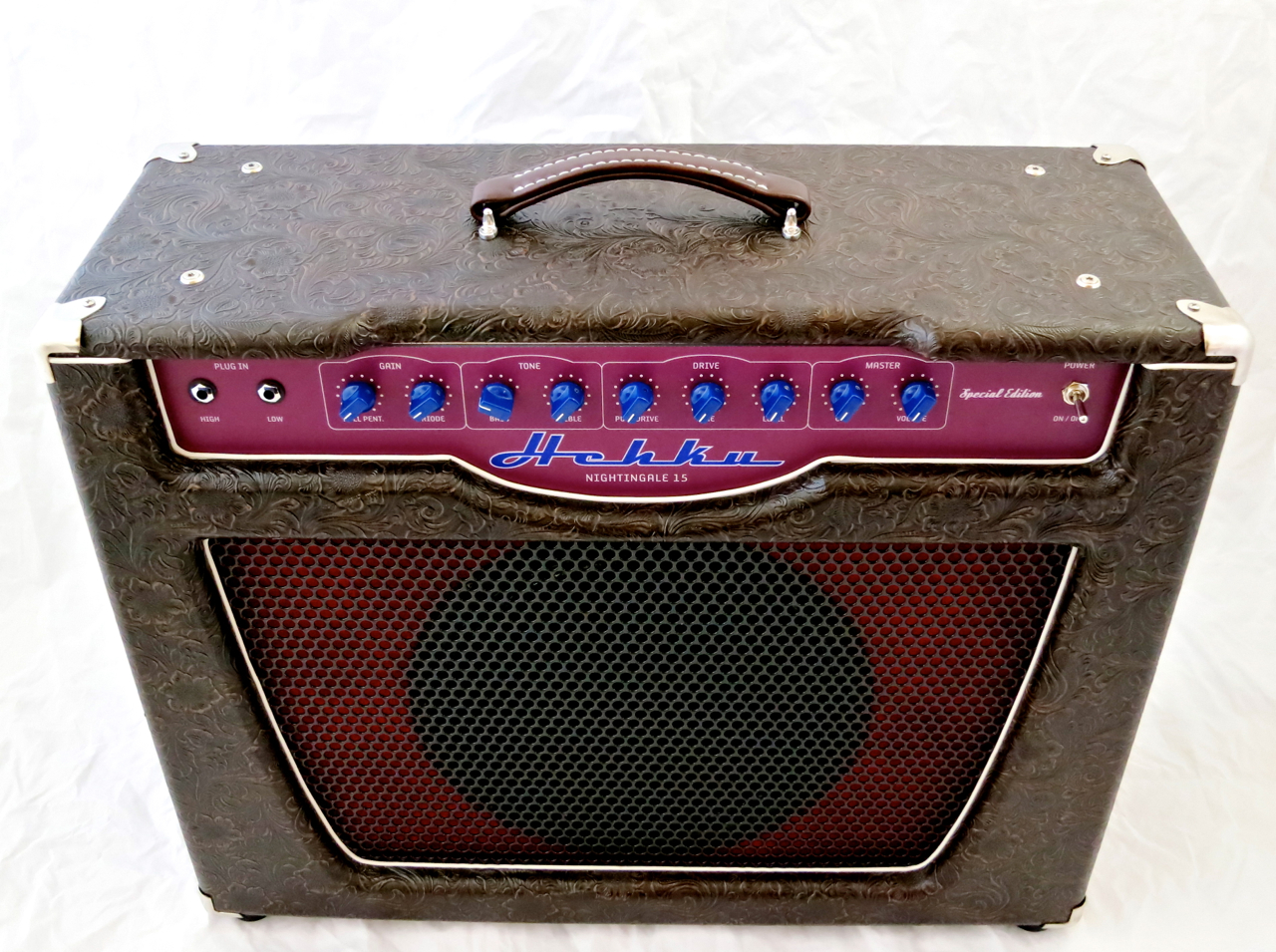
Birch ply is also relatively lightweight, which is why the Nightingale is easy to carry by its single top handle.
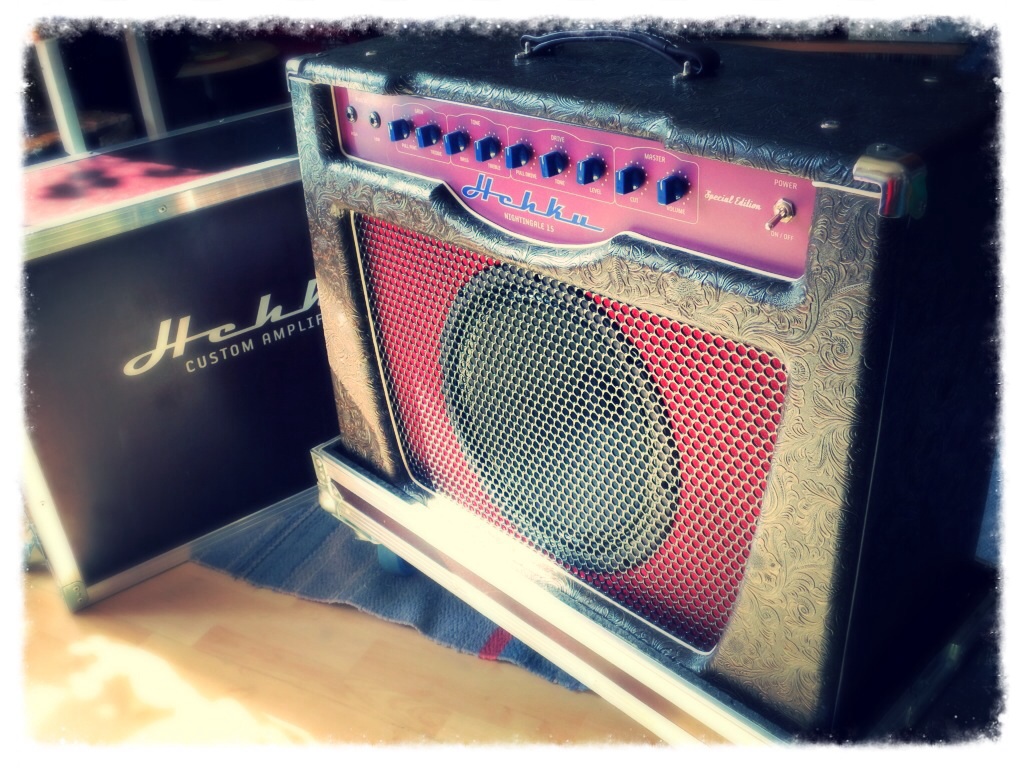
Hehku also offers professional transport cases to go with their amps and cabinets. A road case for the Nightingale 15 would set you back around 260 €.
****

Hehku’s Nightingale 15 is a very special case for a two channel combo, because its signal path is in series the whole way through.
Most vintage (-style) amps have two discrete channels with separate controls and functions (like ”Normal” and ”Tremolo”), and no channel switching capabilities. Modern amps, on the other hand, may share a single EQ section between two channels, but they offer channel switching, and separate gain and volume settings for each channel.
Hehku’s Nightingale takes its own, idiosyncratic path by offering two switchable channels in a cascading set-up. This means that the Clean channel’s triode and pentode gain settings, as well as this channels two-band EQ (six-position rotary Bass, active Treble), also influence the Drive channel’s tone and response.

You can either use the control panel’s push/pull-switches or the compact footswitch unit (included with the amp) to select triode- and pentode-modes, and to switch from Clean to Drive.

The Nightingale’s back panel sports a handy valve chart for easy orientation.
There’s also a triode/pentode switch for the power amp valves – switching to triode-mode the combo’s output power drops from fifteen to seven watts, and it also changes the amp’s tone somewhat.
Thanks to its four speaker outputs you will be able to connect the Nightingale to virtually any external guitar cabinet you can find.
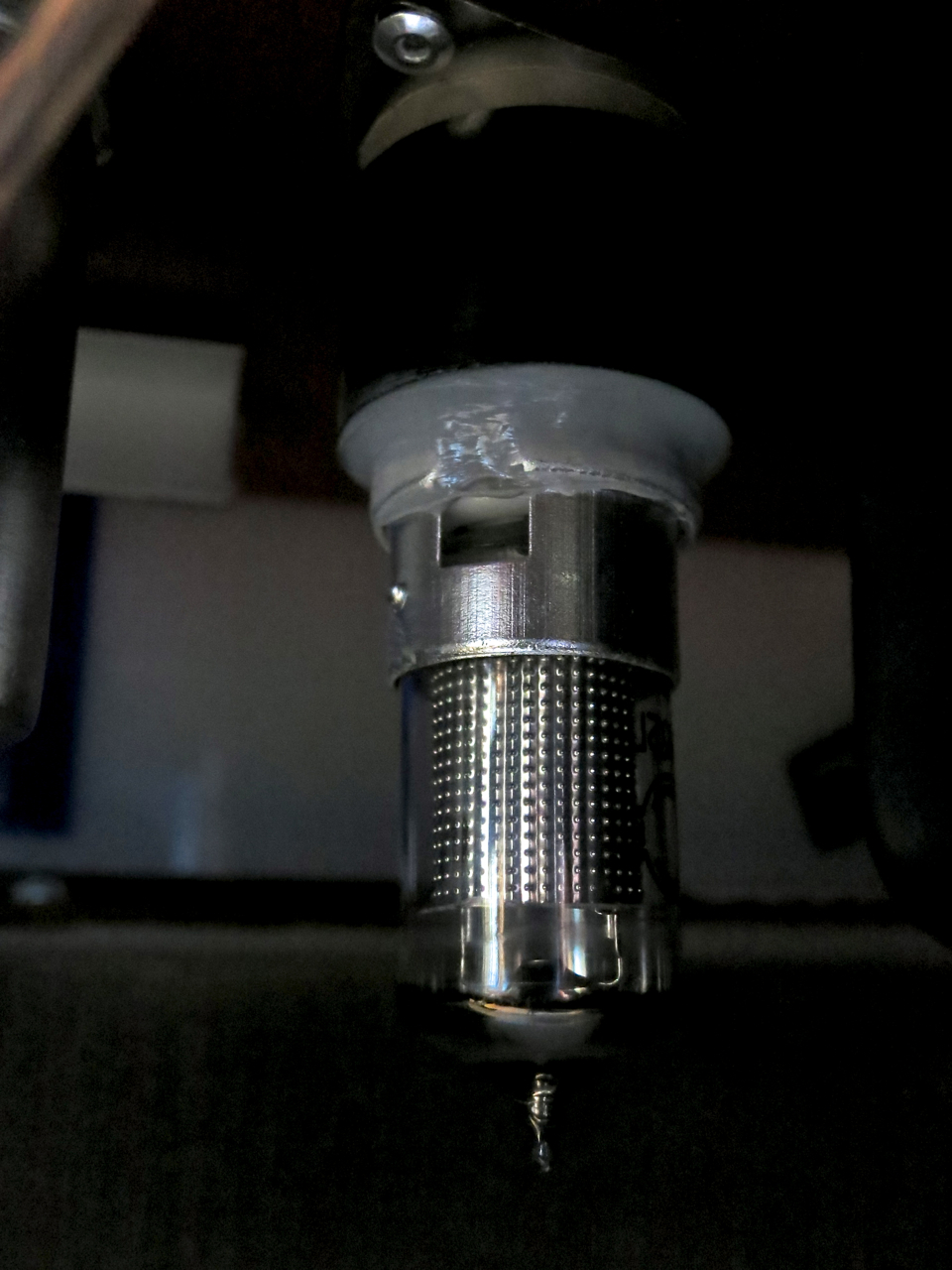
The clean channel is constructed around a EF86-type pentode. The EF86 (aka the 6267) is known for its great tone, and it can be found in some vintage Vox amps, as well as in Matchless and Dr Z amps. But due to its microphonic nature this tube type is not widely used.
Hehku Customs has solved this problem by using a damper made from silicone, which decouples the EF86 from the mechanical vibrations of the combo.

Overdrive (and phase inversion) duties are handled by a pair of 6N2P-valves, which are Russian, military-spec’ed relatives of the 12AX7/ECC83, offering a slightly different gain structure and sound.

The Nightingale uses a tube rectifier designed around a type 5AR4.

The power amp section runs on a pair of EL84s. You could also drop in two Russian (military) 6P15P/EL83-types, and thanks to the fact that the Hehku Nightingale is self-biasing, you can do this without the need for an amp technician.
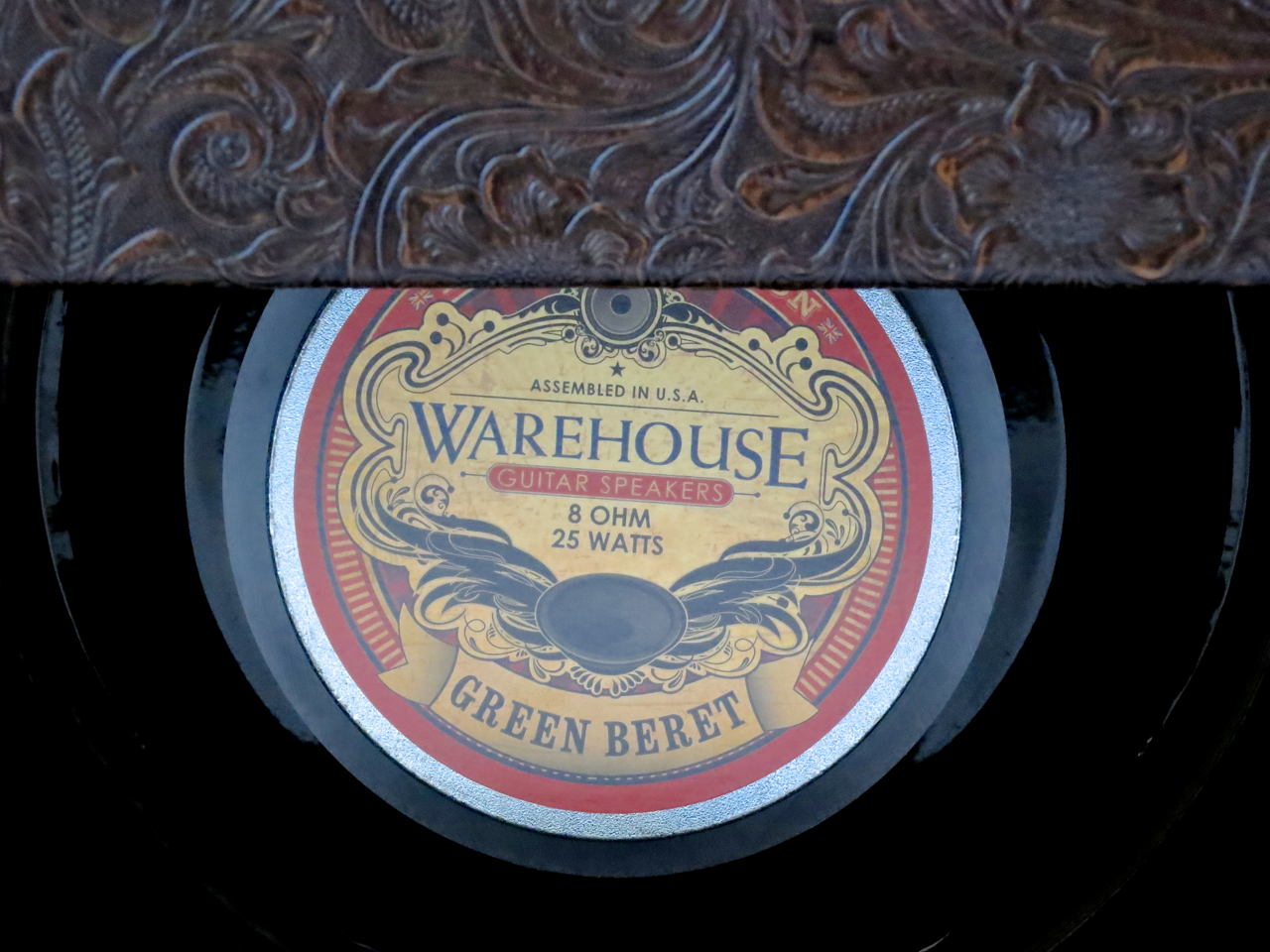
A quality 12-inch speaker from Warehouse, the Green Beret, has been selected for its British sound.
****
With its factory set-up (6N2P + EL84), the Hehku Nightingale 15’s clean channels has plenty of headroom, even for twin humbucker guitars. The six-step Bass-rotary and the combo’s active Treble control offer you a lot of leeway to tune the tone to your requirements. Tonally, the Nightingale’s clean delivery is more ”Vox” than ”Blackface”.
The Nightingale’s overdriven tones are extremely tasty, too. There’s a very juicy mid-range, coupled with a healthy dose of top end grit, which will surely satisfy any fan of classic Rock and Blues sounds.
Here’s a clip recorded with my vintage-reissue Fender Telecaster – you will hear: clean (triode) –> clean (pentode) –> overdriven (triode) –> overdriven (pentode); the power amp runs in pentode-mode:
And here’s a similar clip played with my Hamer USA Studio Custom:
****
Hehku’s Jarmo Välimäki also supplied me with a set of alternative valves (12AX7 + 6P15P), and the difference in tone and dynamics is easy to hear:
With the alternative set, there’s much less headroom on offer. Even the Telecaster will drive the clean channel into break-up (in pentode-mode), with the Hamer stepping clearly into Blues-overdrive territory.
These valves add more gain to the drive channel, and also result in a slightly flabbier bass and sharper treble. The Nightingale 15 sounds great this way, too, even though my own preferences lean more into the direction of the factory set-up.
Here’s a clip with the Telecaster (the control settings have stayed unchanged, only the valves have been swapped):
And here’s the sound of the amp played with the Hamer’s two humbuckers:
****

In my view, the Hehku Customs Nightingale 15 is a fantastic all-valve combo with its own voice and an interestingly idiosyncratic overall concept. I like Hehku’s eye for detail, and the fact that the company go their own way in terms of looks and electronic design. The Nightingale is a top-drawer amp, offering its own distinctive looks and sounds, without the need to resort to snake oil or nostalgic tube voodoo.
Hehku’s Nightingale is a modern, hand-made valve combo, with a clear and easy-to-understand lay-out, as well as a very interesting and interactive signal path. The Nightingale is not about trying to imitate any specific vintage amp’s sounds – this amp is a true creative tool, setting you on your path to your personal guitar tone nirvana.
The Nightingale 15 sure isn’t cheap, but in light of the fact that this is a hand-made Finnish product, you can only call the price tag very fair!
****
Hehku Customs Nightingale 15
approximately 1.950 €
Contact: Hehku Custom
****
Pros:
+ voluptious appearance
+ workmanship
+ hand-crafted
+ Made in Finland
+ idiosyncratic channel lay-out
+ sound

****

The new Roland Cube-10GX approaches the company’s popular Cube-concept from a slightly different angle.
****

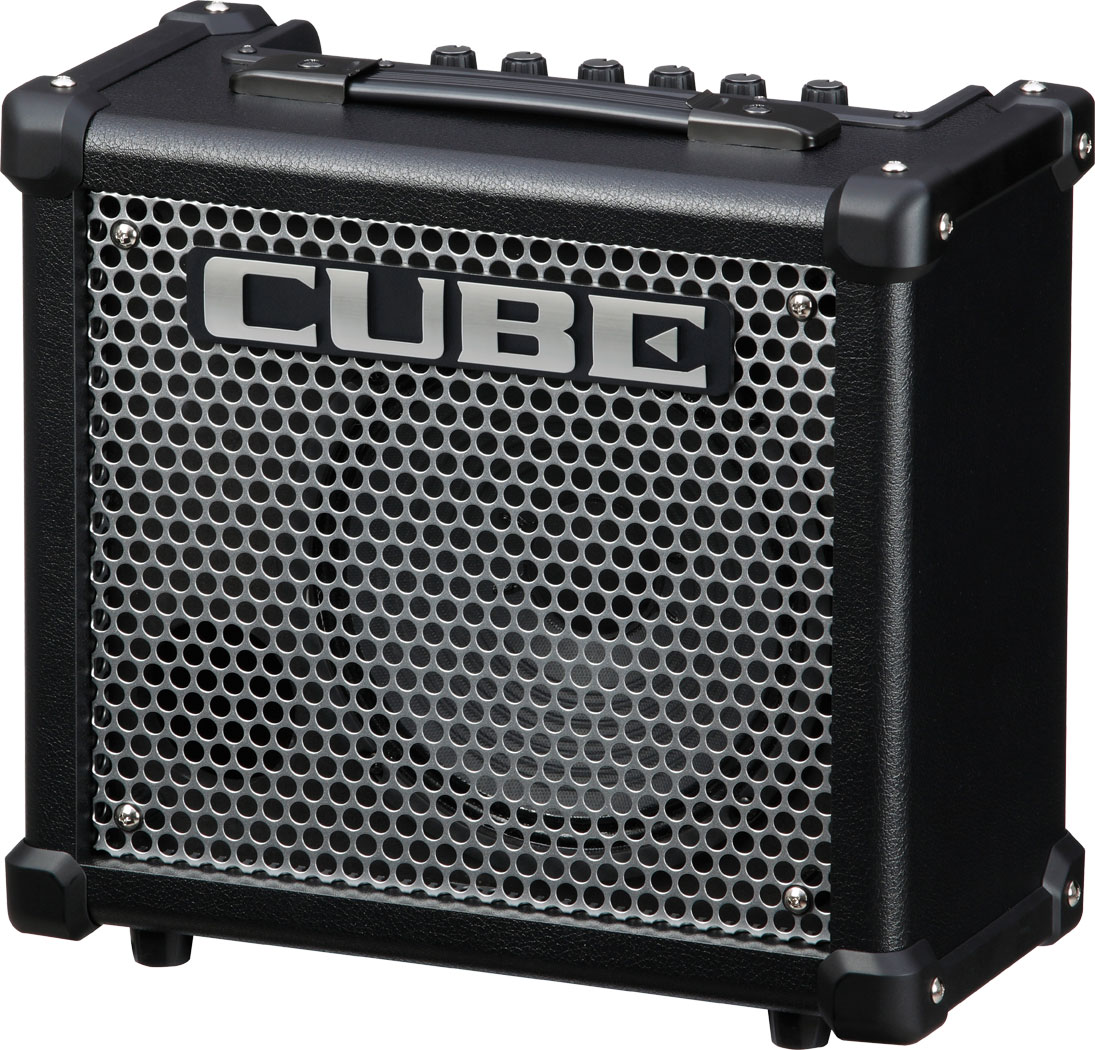
The 10-watt Roland Cube-10GX (Finnish price approx. 125 €) slots into the model range right between the 3-watt Micro Cube GX and the 20-watt Cube-20GX combo.
Despite its very affordable price, the 10GX is built as sturdily as the larger Cube models, featuring chunky corner protectors, and the metal grille typical of this series.
An eight-inch speaker has been installed into the closed-back, front-ported cabinet.

The backpanel sports connections for DC In (the PSU comes included), Aux In, as well as a combined line level output/headphones jack.

The Cube-10GX combo’s architecture differs somewhat from the rest of the GX-models:
The 10GX doesn’t feature a built-in tuner or an i-Cube-Link, like the rest of the GX-models, but offers a much more open way of offering its COSM-generated amp models.
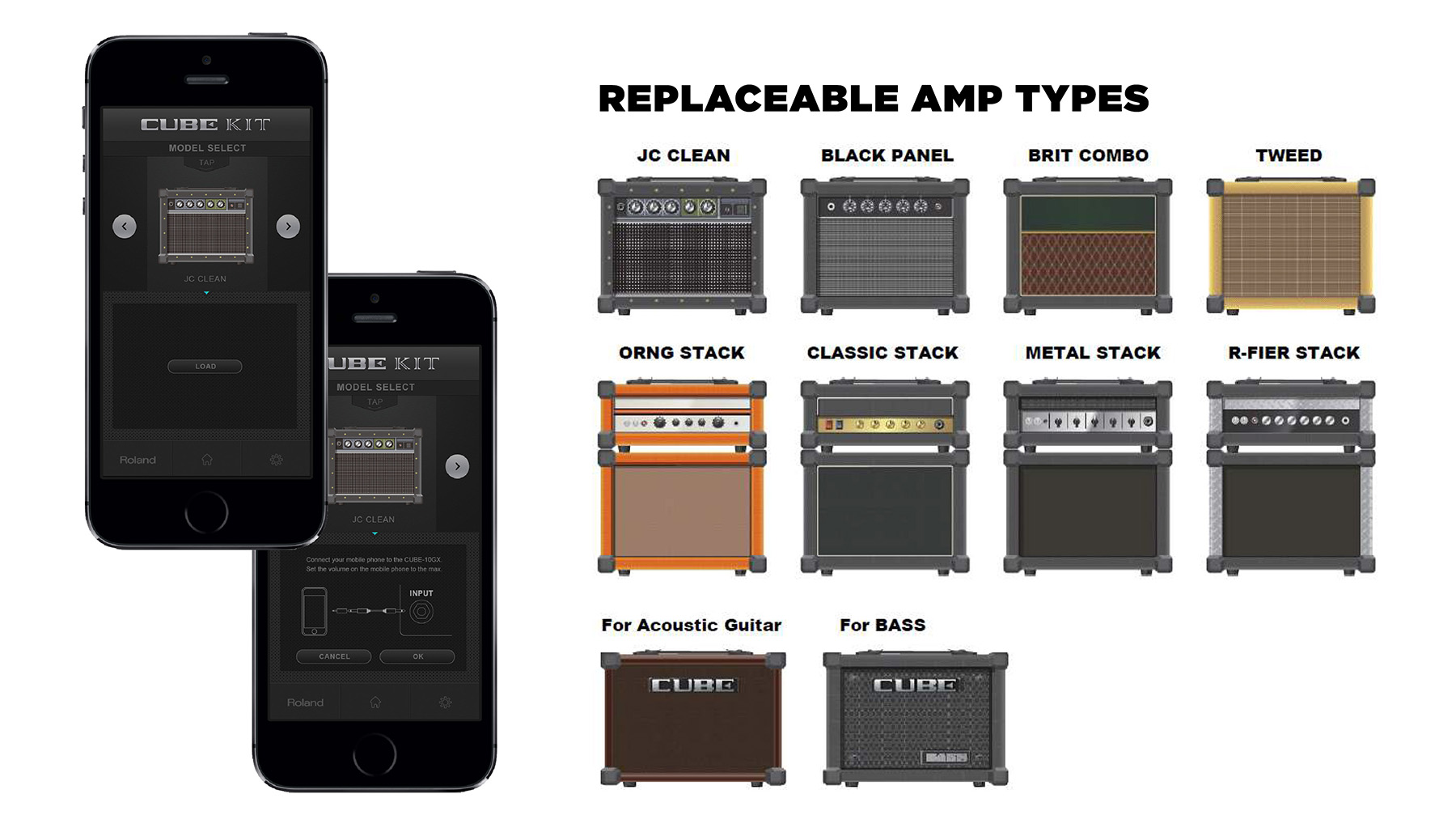
The Cube-10GX lets you choose from a number of different amp models via the new Roland Cube Kit app (Android and iOS). At the moment of writing the app offers eight guitar amp models, plus one bass amp and one amp for acoustic guitar.
Despite the fact that the control panel reads ”Clean”, ”Crunch” and ”Lead”, you can load any of the COSM amp models on offer into any of the amp’s three channels. If you’re a Jazzer, for example, you might prefer to use only clean amps, like Acoustic, JC Clean and Black Panel.
****
Let me deal with the ”bad news” first: Sadly, the Cube-10GX offers only a single effect section, in contrast to all the other Cube GX -combos. The 10GX gives you the choice between either a chorus or a delay or a hall reverb or a (very wet) spring reverb. And there are no effect combinations on offer.
The new combo’s main focus lies in the easy-to-swap amp models, and improvements in the sound of both the amp and the COSM-models. For a 10-watter the Cube-10GX is surprisingly loud. Thanks to its much larger speaker the new combo sounds much fuller and more grown up than the Micro Cube.
The updated COSM-models sound noticeably more transparent and fresher, without any additional background hiss or noise. The 10GX’ well-designed three-band EQ section lets you tailor the sound to your requirements.
Loading a new amp model into one of the Cube-10GX’ channels via the Cube Kit app is fast and easy, and doesn’t require any special cables. You only need a fitting mini-jack adapter to hook up the guitar lead to your smartphone (or tablet). All the necessary data is then transmitted from the Android- or iOS-device to the amp via the guitar cable. The whole process takes only a few taps and a couple of seconds.
The factory default has the Jazz Chorus amp model loaded into channel 1. I’m playing my Fender Telecaster with a little chorus added from the combo:
Here’s another Jazz Chorus clip, but this time seasoned with some Surf-type spring reverb:
The Classic Stack model is the factory setting for channel 2. It is Roland’s version of a Marshall-stack. I’ve added some delay for this clip:
I loaded the Brit Combo (AC30) model into channel 2, using the Cube Kit app. I’m playing my Telecaster with some reverb from the combo:
”Orng Stack” stands for Orange-stack. This is what it sounds like, played with my Gibson Melody Maker SG:
The factory default for channel 3 is the R-fier Stack model. First a clip using the Telecaster, and then an example Played with the Melody Maker SG:
The Cube Kit’s Acoustic model provides an easy solution for amplifying your acoustic guitar. I’ve used a Tanglewood dreadnought equipped with a magnetic soundhole pickup by Seymour Duncan:
The Cube-10GX even sounds surprisingly good as a tiny bass combo (all audio clips have been recorded with a Shure SM57):
****
Roland’s Cube-10GX (and the cool Cube Kit app) makes it possible to turn this little combo into the amp you really need. A Blues player will probably load his (or her) Cube-10GX with the Black Panel-, Brit Combo-, and Tweed-models, while a Metal guitarist will prefer the chunkier COSM-models on offer (like the Classic-, Metal- and R-fier-stacks).
The Cube-10GX sounds great and is a real little shouter. Despite offering fewer built-in effects than the rest of the GX-range, the Roland Cube-10GX still offers a lot of fun at a very competitive price.

****
Roland Cube-10GX
Price range in Finland approx. 125 €
Maahantuoja: Roland Scandinavia
****
Pros:
+ fair price
+ powerful
+ wide range of available amp models (via the Cube Kit app)
+ three-band EQ
+ sturdy build
+ sound
Cons:
– only one effect section
– spring reverb offers only little scope for adjustment
****
Hiljattain ilmestynyt Roland Cube-10GX on Cube-perheen uusin jäsen, joka lähestyy firman suosittua Cube-reseptiä hieman toiselta kulmalta.
****
Kymmenwattinen Roland Cube-10GX (hintaluokka 125 €) asettuu vahvistinteholtaan kolmiwattisen Micro Cube GX:n ja 20-wattisen Cube-20GX-kombon väliin.
Kymppi-GX on edullisesta hinnastaan huolimatta samaa vankkaa tekoa kuin sen isot veljeksiä. Reilunkokoiset kulmasuojat ja Cube-sarjalle tyypillinen metalliritilä suojaavat kombon tehokkaasti monilta kolhuilta.
Koteloon on asennettu kahdeksantuumainen kaiutin.
Takapaneelista löytyy virtaliittimen (verkkolaite kuuluu hintaan) lisäksi aux-tulo, sekä yhdistetty kuuloke- ja linjalähtö.
Cube-10GX-kombon arkkitehtuuri poikkeaa toisista Cube-perheen GX-malleista:
Muiden GX-kombojen viritysmittarit ja i-Cube-Link-lähdöt puuttuvat tästä mallista, mutta niiden tilalle uudessa Cubessa tarjotaan huomattavasti avoimempi rakenne COSM-vahvistinosiossa.
Cube-10GX tarjoaa nimittäin uuden Roland Cube Kit -appsin kautta (Android ja iOS) kitaristeille mahdollisuuden valita ja vaihtaa oman Cuben COSM-mallinnuksia oman maun ja käyttötarpeen mukaan. Tällä hetkellä Cube Kitistä löytyy kahdeksan sähkövahvistinmallia, yksi vahvistinmalli mikitetylle akustiselle kitaralle, sekä yksi bassovahvistin.
Vaikka kombon etupaneelissa lukee sen kolmen kanavapaikkojen kohdalla Clean, Crunch ja Lead, käyttäjä saa valita appsin kautta vapaasti kanaviin juuri niitä COSM-malleja, joita hän itse haluaa – vaikkapa vain puhtaita vaihtoehtoja, kuten Acoustic, JC Clean ja Black Panel.
****
Kerron sen ”huonon uutisen” ensin: Olisin kernaasti nähnyt myös uudessa Cube-10GX-mallissa kaksi efektiosastoa, niin kuin esimerkiksi Micro Cube GX:ssä! Kymppi-GX-kombossa voi valita joko choruksen tai viiveen tai kaiun tai (reilusti annostetun) jousikaiun, eikä yhdistelmäefektejä ole tarjolla lainkaan.
Uutuuskombon painopiste on siis selvästi vahvistimen soundissa ja entistäkin parannetuissa COSM-mallinnuksissa. Cube-10GX on yllättävän äänekäs vahvistin 10-wattiselle kombolle, ja sen kahdeksantuumaisen kaiuttimen ansiosta tämän Rolandin yleissoundi on paljon syvempi ja aikuisempi kuin esimerkiksi Micro Cubessa.
Uudistetuissa COSM-malleissa on myös selvästi rapeampi, erottelevampi soundi, ilman lisättyä kohinaa. Kymppi-GX:n musikaalisesta kolmialueisesta EQ:sta on todella paljon apua soundien muokkaamisessa.
Soundien vaihtaminen Cube Kit -appsilla onnistuu erittäin helposti ja – mikä on parasta – täysin ilman erikoisjohtoja. Tarvitaan vain puhelimen (tai tabletin) ja kitarajohdon väliin sopiva kuulokeadapteri, jolla saadaan ohjelman dataa kulkemaan Android- tai iOS-laitteen kuulokelähdöstä kitarajohdon kautta Cube-10GX:een. Muutama täppäys vaan ja valitun kanavan COSM-malli on vaihdettu uuteen.
Tehdasasetuksena kombon ykköskanavassa on valittu Roland Jazz Chorus -kombon mallinnus. Tässä soitan Fender Telecasterilla ykköskanavan läpi ja chorus-efekti on päällä:
Myös tässä käytän Jazz Chorus -mallia, mutta tällä kertaa Surf-tyylisellä jousikaiku-efektillä:
Classic Stack on kakkoskanavan tehdasasetus. Se on Rolandin COSM-versio Marshall-stäkistä, jota kuullaan tässä delay-efektillä höystettynä:
Latasin Cube Kitillä kakkoskanavalle Brit Combo -mallin (AC30). Soitan Telecasterilla ja käytän kombon kaikua:
Orange-stäkkiä matkiva Orng Stack -malli kuulostaa tällaiselta Gibson Melody Maker SG:ltä soitettuna:
Tehtaalta on asennettu kolmoskanavaan R-fier Stack -malli – siis Rectifier-meininkiä (ensin Telecasterilla, sen jälkeen Melody Maker SG:llä soitettuna):
Cube Kitin Acoustic-malli tarjoaa nopean ja helppokäyttöisen ratkaisun akustisen kitaran vahvistamiseen (tässä Tanglewood teräskielinen magneettisella Seymour Duncan -mikrofonilla):
Cube-10GX kuulostaa yllättävän isolta myös bassovahvistimena (kaikki ääninäytteet äänitetty Shure SM57:lla):
****
Rolandin Cube-10GX tarjoaa firman oivan Cube Kit -appsin ansiosta jokaiselle kitaristille juuri sen vahvistimen, jonka hän tarvitsee ja haluaa. Bluesmies (tai -nainen) voisi esimerkiksi ladata kymppi-GX:n kolmelle kanavapaikalle Black Panel-, Brit Combo-, sekä Tweed-mallit, kun taas rankan musiikin ystävä voi tehdä pikkustyrkkarista metallimusiikkiin erikoistuneen koneen (esimerkiksi valitsemalla Classic-, Metal- ja R-fier-stäkit).
Cube-10GX:stä lähtee niin paljon – ja etenkin niin laadukasta – ääntä, että tämän kombon (muihin GX-malliin nähden) supistetulla efektivalikoimalla ei ole mielestäni oikeastaan niin paljon väliä. Roland Cube-10GX tarjoaa todella paljon vahvistinta edulliseen hintaan.
****
Roland Cube-10GX
Hintaluokka noin 125 €
Maahantuoja: Roland Scandinavia
****
Plussat:
+ edullinen
+ tehokas
+ monipuolinen vahvistintarjonta (Cube Kit -appsin kautta)
+ kolmialueinen EQ
+ tukeva rakenne
+ soundi
Miinukset:
– vain yksi efektiosasto
– jousikaiun vähäinen säätövara
Lisätiedot: Roland Suomi

****

Mission Engineering on kalifornialainen laadukkaiden pedaalien ja vahvistinkaappien valmistaja.

Mission Engineeringin valikoimasta löytyy monta erilaista volume- ja ekspressiopedaalia.
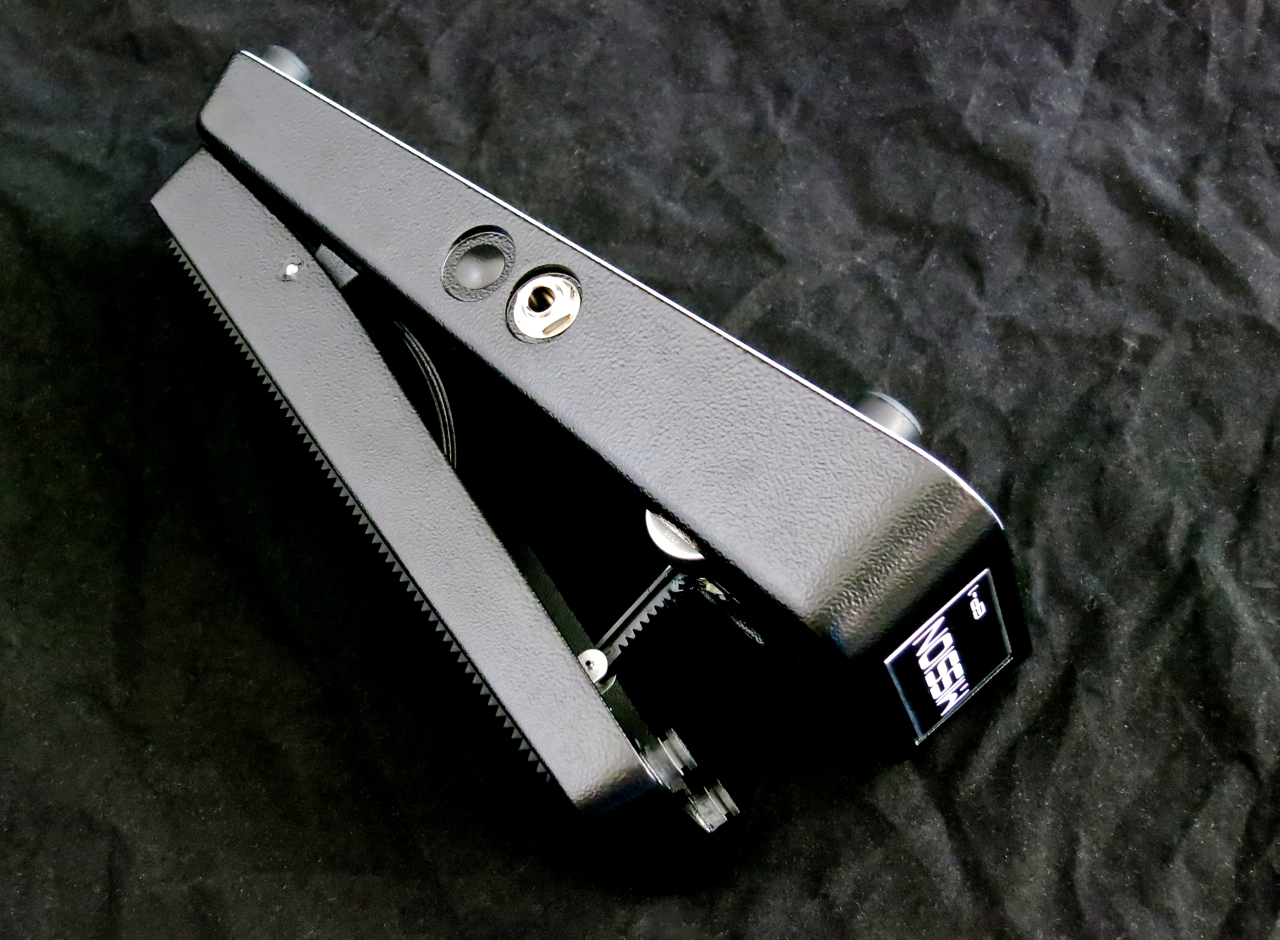
Ekspressiopedaali-valikomasta löytyy sekä yleiskäyttöön sopivia malleja (lisäkytkimellä tai ilman) että tietylle multiefektille tai mallintavalle vahvistimelle (Line 6, Eleven Rack, G-System, jne.) valmiiksi räätälöityjä pedaaleja.
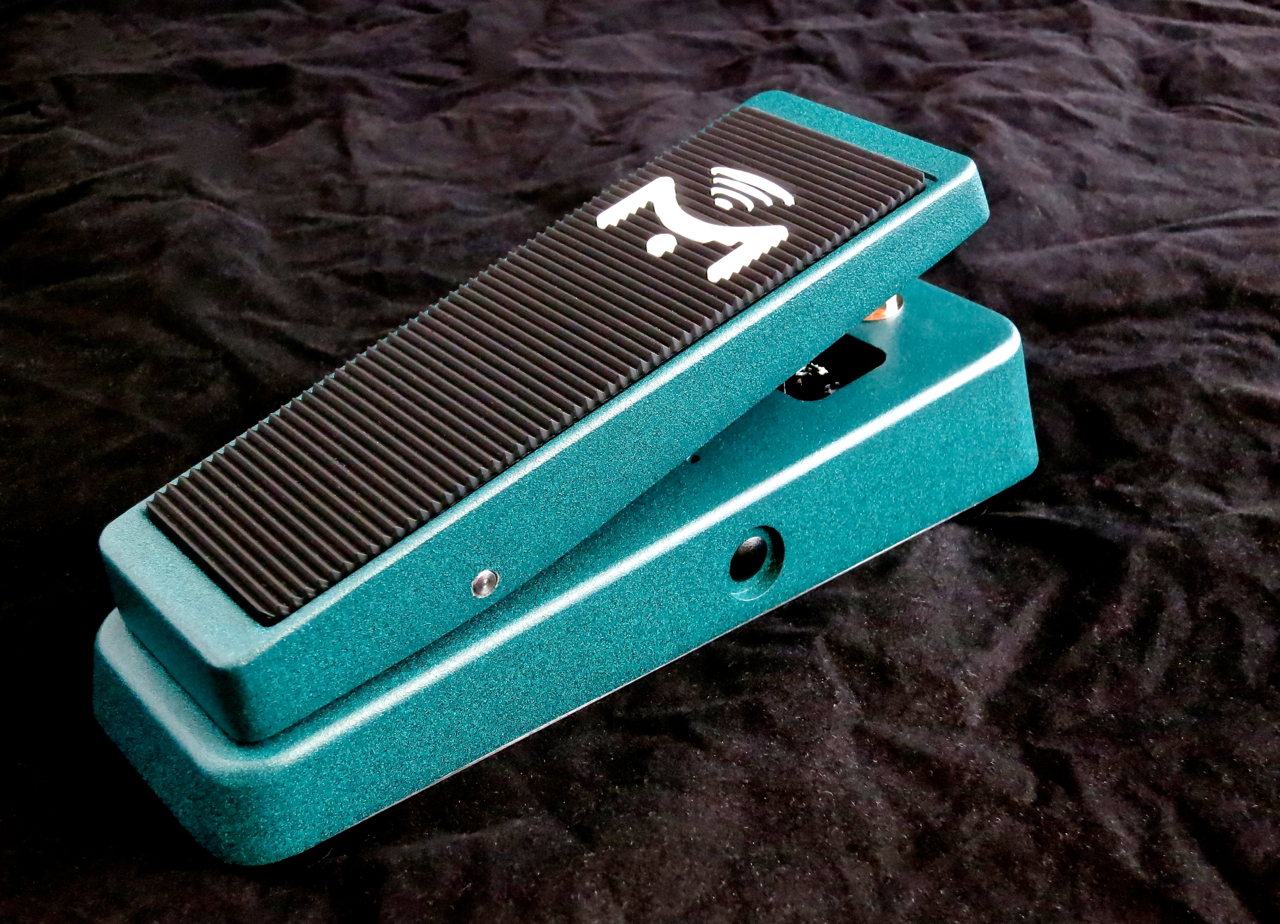
Mission Engineering -pedaalit on selvästi rakennettu kestämään rankempaakin käyttöä, ja firman laaja värivalikoima tarjoaa runsaasti vaihtoehtoja perinteisen tylsään mustaan.
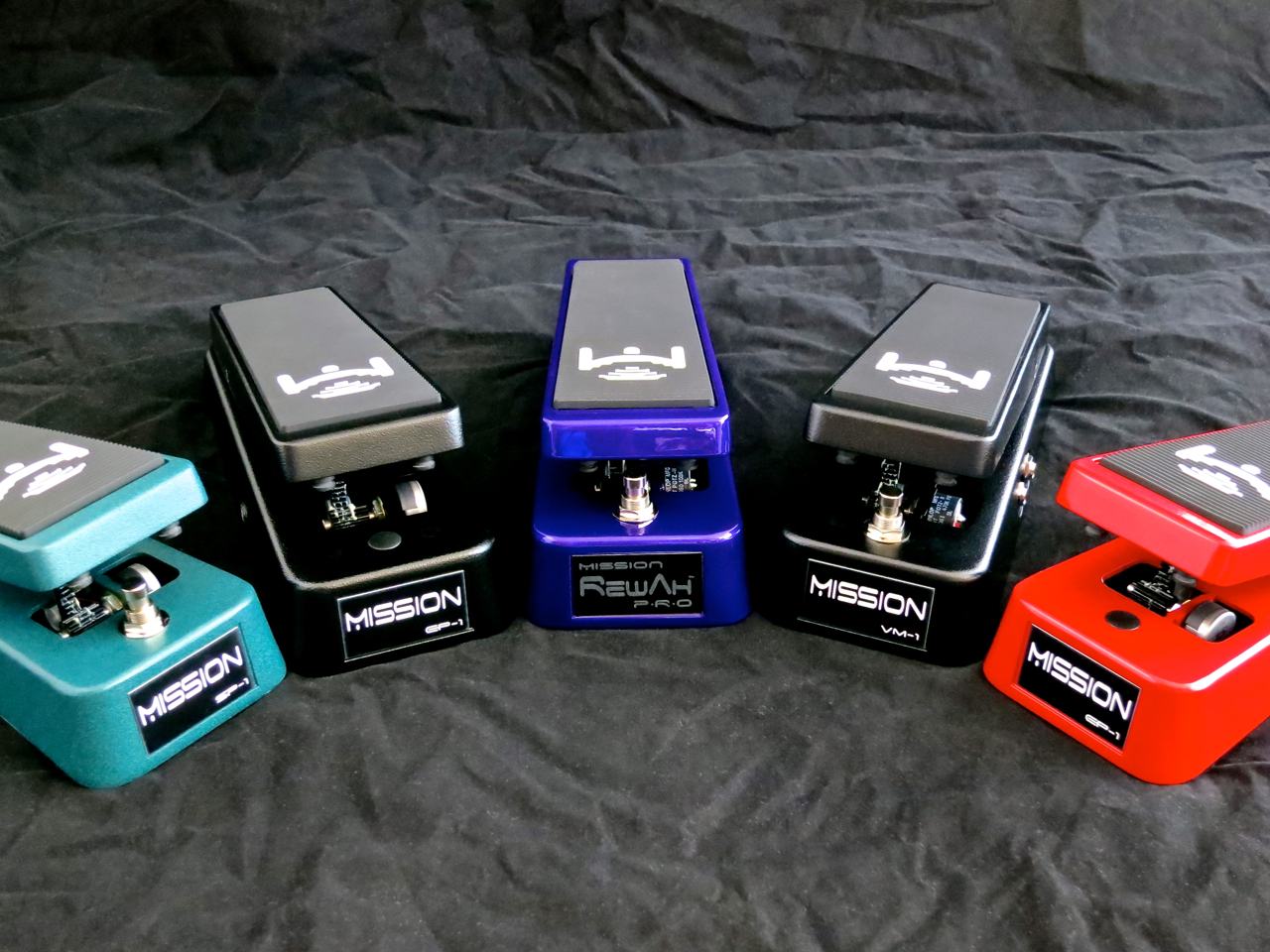
Ekspressiopedaalien hinnat alkavat 137 eurosta (EP1BK), kun taas firman volumepedaalien hinnat alkavat 154 eurosta (VM1BK).
Kokeilemani Mission-pedaalit toimivat – mallista riippumatta – erittäin sulavasti ja tarkasti.
****

Mission Engineering -pedaalien kruunujalokivi on kuitenkin firman ReWah Pro -wah-wah (307 €).
Tämä pedaali näyttää hyvin tyylikkäältä, mutta vaikuttaa ulkoisesti kuitenkin tavalliselta, harmittomalta wahilta.

Missionin ReWah Pro -efektiä voi käyttää 9 voltin paristolla tai Boss-standardin mukaisella virtalähteellä.

Pariston vaihtamisessa täyttyy irrottaa ReWahin koko metallipohja ristipääruuvarilla. Tämä seikka hidastaa pariston vaihtoa, mutta ratkaisu on mekaanisesti kestävämpi kuin muovinen paristolokero. Yhtenäinen metallilevy suojaa myös efektin elektroniikkaa tehokkaammin ulkoisia häiriöitä vastaan.
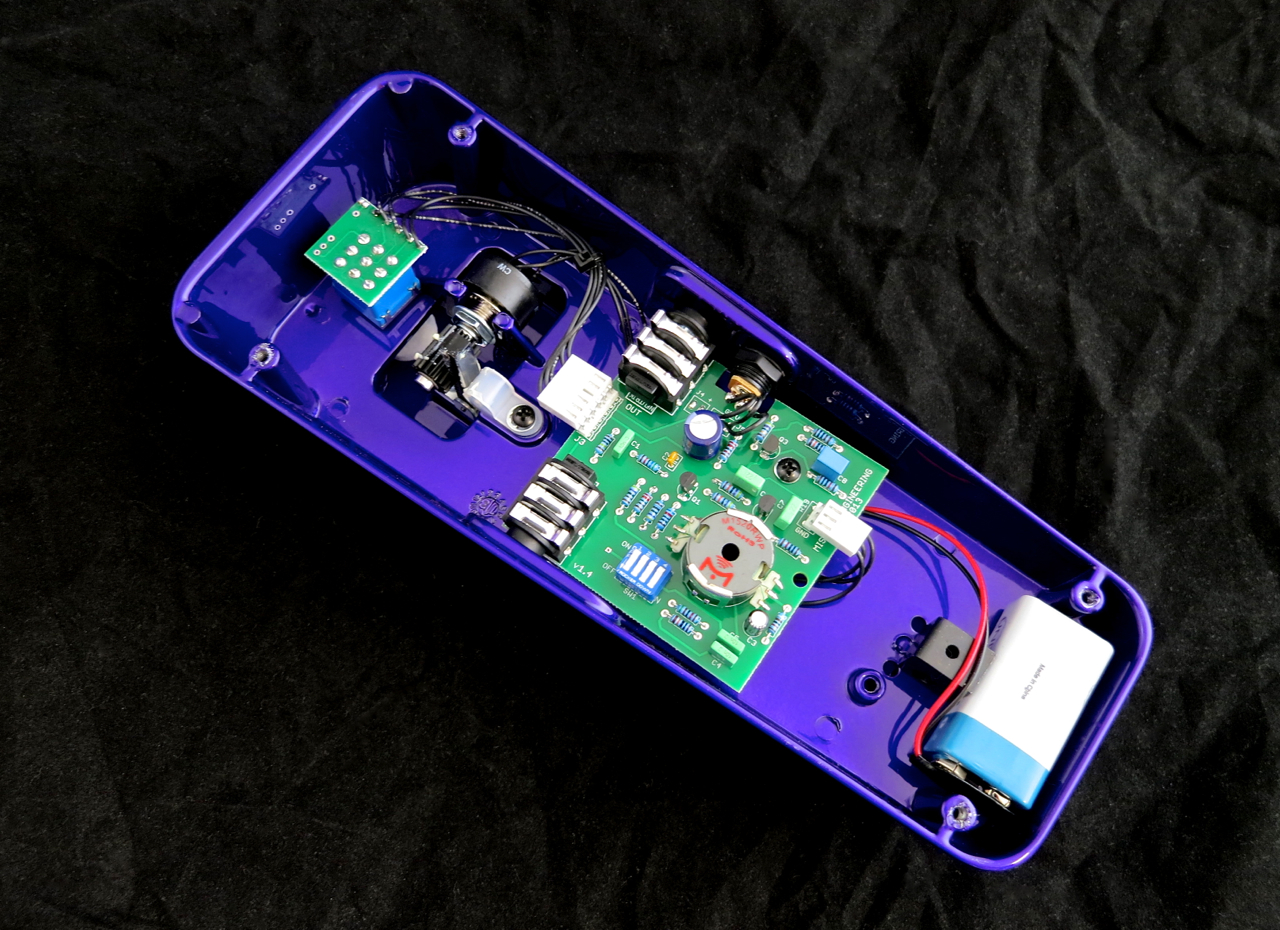
Tämän wah-wahin sisäkalut on asennettu hyvin huolellisesti ja siististi.

Paristo löytyy perinteisestä paikastaan kitaristin kantapään alla.

Mission Engineering käyttää erittäin laadukkaita Dunlop-potentiometrejä pedaaleissaan.

ReWah Pron salaisuus löytyy tästä – tämä pedaali ei ole jonkun tietyn vintage-wahin kopio, vaan moderni ja monipuolinen työkalu laatutietoiselle kitaristille:
Mission käyttää omaa, erikoisvalmisteista kelaa, jolla on samankaltainen induktanssi ja vastus kuin klassikkomalleissa, mutta huomattavasti muhkeampi bassotoisto ja pienempi saturaatio kuin yleisesti käytössä olevissa wah-keloissa.
Tämän lisäksi ReWah Pro tarjoaa neljä pikkuista kytkintä, joilla wahin filtterin ja esivahvistuksen käyttäytymistä voi muuttaa:
• Ykköskytkin lisää soundiin pienen annoksen herkullista säröä.
• Kakkoskytkimellä muutetaan filtterin keskitaajuutta hivenen verran matalammaksi, ja samalla suodinta kavennetaan. Soundi muuttuu hieman nasaalisemmaksi.
• Kolmoskytkin vetää suotimen keskitaajuutta melko voimakkaasti alas, jonka seurauksena syntyy selkeästi bassovoittoisempi wah-soundi.
• Neloskytkimellä säädetään elektroniikan vahvistusta pienemmäksi ja filtterin kaistaa leveämmäksi. Soundi muuttuu puhtaammaksi.
ReWah Pro -pedaalin kytkimet voi käyttää joko yksitellen tai kaikissa mahdollisissa yhdistelmissä. Kokeileminen todella kannattaa!
****

Voi pojat! Minulla ei ole ollut pitkään näin hauskaa kuin Mission Engineering ReWah Pro -pedaalin kanssa!
Tämän wahin soundi on jo tehdasasetuksilla niin hyvä, että soitto loppuu vasta, kun pakarat alkavat krampata. Tämä pedaali tekee riippuvaiseksi!
Ja mikä on parasta, ovat Mission-wahin erittäin alhainen omakohina ja sen toimiva häiriösuojaus.
Tässä on lyhyt pätkä puhtaan kanavaan soitetusta wahista, jossa käytän Fender Telecaster -kitaraa ja ReWahin tehdasasetukset:
Kun kääntää kytkimet 1-3 on-asentoon, sama yhdistelmä kuulostaa tältä:
Tässä esimerkissä ReWah-pedaali on laitettu takaisin tehdasasetuksiin (kaikki kytkimet ”off”). Efekti toimii tässä pelkästään filtterinä (”fixed wah”), kitara on Hamer Studio Custom, ja särökanava on valittu:
Ja vielä kauniisti laulava kitarasoolo:

****

Onko Mission Engineering ReWah Pro maailman paras wah-wah? Pedaali kuuluu kiistämättä ainakin kärkikolmikkoon, laadukkaan soundinsa ja kestävän olemuksensa ansiosta.
ReWah Pron hinta on kiistämättä kova, mutta pedaali tarjoaa omasta mielestäni reilusti vastinetta rahalle. Kun etsit mahdollisimman laadukasta wah-wahia, kannattaa ehdottomasti tutustua tähän pedaaliin!
****
Mission Engineering ReWah Pro
307 €
Maahantuoja: Musamaailma
****
Plussat:
+ kestävänoloinen
+ true bypass
+ audiofiilitason elektroniikka
+ erittäin monipuolinen
+ soundi

Kitaristin näkökulmasta Suomi on suorastaan se tarunhohtoinen luvattu maa. Asukaslukuun suhtautettuna täällä on uskomaton määrä soitinpajoja, sekä efektien ja vahvistimien valmistajia.
Yksi tällainen custom-vahvistimia rakentava firma on porilainen Hehku Customs. Hehkun puuhamiehiä ovat Jarmo Välimäki, joka vastaa suunnittelusta, valmistuksesta ja huollosta, sekä Markku Penttilä ja Juha Heljakka, jotka ovat vastuussa tuotekehittelystä, markkinoinnista ja myynnistä.
Hehkun kotisivulla esitellään muutamia asiakkaille rakennettuja custom-vahvistimia. Custom-tilauksissa (hinnat alk. 1.300 €) vain kabinettien koot ja muodot ovat vakiona, kaikki muu on neuvoteltavissa: ”Ajatuksena on, että koitamme toteuttaa soittajan villeimmätkin haaveet, joten voidaan neuvotella kaikenlaisista optioista.” sanoo Jarmo Välimäki.
****
Kitarablogi sai testattavaksi 15-wattisen Hehku Nightingale 15 -kombon, joka on Hehku Customsin ensimmäinen ”sarjavalmisteinen” kitarakombo ilman custom-optioita.
Nightingale 15 (1.950 €, nuppi: 1.750 €) on 12-tuumaisella kaiuttimella varustettu käsintehty putkikombo, joka edustaa täydellisesti Hehku-vahvistimien filosofiaa, sekä ulkonäön että signaalitien kannoilta.
Nightingalen uskalias, mutta erittäin kaunis värimaailma, sekä kombon pronssireliefia muistuttava päällyste tekevät heti selväksi, että Hehku-vahvistimessa ei ole kyse vanhan Tweed-Fenkun kloonista.
Hehku Nightingale -kombossa on avoin takaseinä, ja putkiin pääsee käsiksi vaivattomasti. Hehkujen kotelot valmistetaan aina suomalaisesta koivuvanerista, mikä on erinomainen materiaali sekä kotelon kestävyyttä että vahvistimen soundia ajatellen.
Koivuvaneri on myös suhteellisen kevyt materiaali, minkä ansiosta Nightingalea pystyy kantamaan mukavasti kombon ainoasta kahvasta.
Hehku tarjoaa myös huippulaadukkaita kuljetuskoteloita vahvistimilleen. Nightingale 15 -kombolle sopiva malli maksaa noin 260 euroa.
****
Hehku Nightingale 15 on hyvin erikoinen kaksikanavainen putkikombo, koska vahvistimen koko signaalitie on kytketty sarjaan.
Monissa vintage-vahvistimissa on kaksi rinnakkaista, toisista riippumattomaa kanavaa (esim. ”Normal” ja ”Tremolo”), joiden välillä ei voi vaihtaa lennossa (paitsi erillisellä A/B-polkimella). Nykyaikaisemmissa kitarastyrkareissa taas voi olla ehkä yhteinen EQ, mutta puhtaan ja särökanavan gainea ja volyymiä pystyy säätämään erikseen.
Hehkun Nightingale taas toimii niin, että puhtaan puolen asetukset – tässä tapauksessa triodi- ja pentodi-kytkennän gain-asetukset, sekä vahvistimen kuusipykäläinen Bass-säädin ja aktiivinen Treble-EQ – vaikuttavat suoraan myös Drive-kanavan soundiin.
Triodi- ja pentodikytkennän välillä voi vaihtaa – ja Drive-kanavan laittaa päälle – joko suoraan etupaneelista nostokytkimillä tai kombon mukaan tulevalla kompaktilla jalkakytkimellä.
Nightingalen selkeän putkikartan ansiosta kombon eri putkien sijainti selviää nopeasti.
Takapaneelista löytyy myös triodi/pentodi-kytkin pääteputkille. Triodimoodissa kombon nimellisteho putoaa 15 watista seitsemän wattiin, ja samalla myös Hehkun soundi muuttuu hieman.
Takapaneelin tarjoamasta kaiutinlähtöjen runsaudesta kitaristi taas iloitsee silloin, kun haluaa käyttää komboa toisen kaapin kanssa.
Puhdas kanava on rakennettu EF86-nimisen pentodiputken ympärille. EF86 (myös tunnettu nimellä 6267) on soundiltaan erinomainen putki, jota löydetään myös joissakin vanhoissa Voxissa, sekä Matchless- ja Dr Z -vahvistimissa, mutta sitä käytetään nykyään melko harvoin, koska tämä malli on yleensä melko mikrofoninen (herkkä mekaaniselle tärylle).
Hehku Customs on ratkaissut ongelman tehokkaasti käyttämällä EF86:lle tärinää vaimentavaa silikoniadapteria.
Säröpuolelta (ja vaiheenkäntämisestä) ovat vastuussa kaksi 6N2P-putkea, jotka ovat venäläisiä, military-speksattuja 12AX7/ECC83-putkien sukulaisia, joilla on kuitenkin hieman toisenlainen soundi ja erilainen gain-rakenne.
Nightingalessa tasasuuntausta hoidetaan 5AR4-putkella.
Tämän Hehkun päätevahvistin käyttää pari EL84-putkea. Myös pääteputket voi vaihtaa venäläisiin military-malleihin 6P15P/EL83, ja koska Nightingale on itsebiasoiva vahvistin, pääteputkien vaihtamiseen ei tarvita tekniikon apua.
Warehousen laadukas 12-tuumainen Green Beret -kaiutin tarjoaa valmistajan mukaan brittiläistyylistä soundia.
****
Tehdasvarustuksella (6N2P + EL84) Hehku Nightingale 15 -kombon puhtaassa soundissa riittää headroomia jopa kahdella humbuckerilla varustetulle kitaralle. Kuusipykäläinen Bass-säädin ja aktiivinen Treble-potikka antavat runsaasti vaihtoehtoja, jolla jokainen voi löytää oman soundinsa. Hehkun puhdas äänimaailma on selvästi lähempänä Voxia kuin ”mustanaama” Fenderiä.
Nightingalen särösoundikin on vallan mainio. Kombo kuulostaa herkullisen mehevältä ja diskantissa on juuri sopivasti rouheutta klassikko-Blues- ja Rock-soundeihin.
Tässä pätkässä soi vintage-tyylinen Fender Telecaster – järjestys on: puhdas (triodi) –> puhdas (pentodi) –> särö (triodi) –> särö (pentodi); päätevahvistin toimii pentodikytkennässä:
Ja tässä samankaltainen pätkä Hamer USA Studio Custom -kitaralla soitettuna:
****
Kokeilin myös Jarmo Välimäeltä saatuja vaihtoputkia (12AX7 + 6P15P), ja ero on selvästi kuultavissa:
Puhdas headroom on vähentänyt tuntuvasti. Telecasterilla ollaan jo breakup-särön maailmassa pentodikytkennässä, kun taas Hamerin soundi menee silloin jo selvästi särön puolelle.
Särökanavalla tarjoaa näillä putkilla myös enemmän säröä, hieman löysempää bassorekisteriä, sekä enemmän diskantin purevuutta. Oikein mainio kattaus tämäkin, vaikka tehdasputkisto on ehkä hieman enemmän minun makuun.
Ensimmäisessä pätkässä kuullaan jälleen Telecaster (samoilla asetuksilla, vain putket on vaihdettu):
Ja tässä on Hamerilla soitettu humbucker-pätkä:
****
Hehku Customsin Nightingale 15 on mielestäni loistava täysputkikombo omalla äänellä ja omilla detaljiratkaisuilla. Tykkään myös Hehkun konseptista rakentaa putkivahvistimia, joilla on oma, huikea ulkonäkö ja soundi, mutta ilman turhan muka-nostalgista ”putkivoodooa”.
Hehku Nightingale on nykyaikainen, käsintehty putkikombo, jolla on erittäin selkeä säädin- ja takapaneeli, ja mielenkiintoisen interaktiivisesti toimiva signaalitie. Idea ei ole matkia jonkun tietyn kitaralegendan tai klassikkovahvistimen soundeja, vaan luoda erittäin toimivan perustan Hehku-käyttäjän omalle soundille.
Nightingale 15:n hinta on mielestäni kohdallaan, kun tässä puhutaan kuitenkin laadukkaan suomalaisen käsityön helmestä.
PS: Olen kuulut huhuja vielä tänä keväänä ilmestyvästä Hehku-kombosta trubaduureille, jossa olisi erillisiä kanavia kitaralle ja laululle. Kannattaa varmasti tsekata säännöllisesti Hehkun Facebook-sivua…
****
Hehku Customs Nightingale 15
hinta: 1.950 €
Lisätiedot: Hehku Custom
****
Plussat:
+ uhkea ulkonäkö
+ työnjälki
+ käsintehty
+ kotimainen
+ omaleimainen kytkentä
+ soundi
 Kitarablogi.com – Finland's premier Guitar and Bass blog