Review: Vuorensaku T-Style Custom

****

Vuorensaku T headstock – preview – mid

Vuorensaku is a guitar maker from the Finnish town of Jyväskylä. Luthier-Artisan Saku Vuori repairs and builds all types of string instruments. Vuorensaku also winds his own brand of custom pickups.

When it comes to handcrafted instruments, Vuorensaku isn’t relying on any specific range of models, instead this is a true custom workshop which makes one-offs according to its customers’ wishes.

Saku Vuori is a member of The Guild of Finnish Luthiers.

****

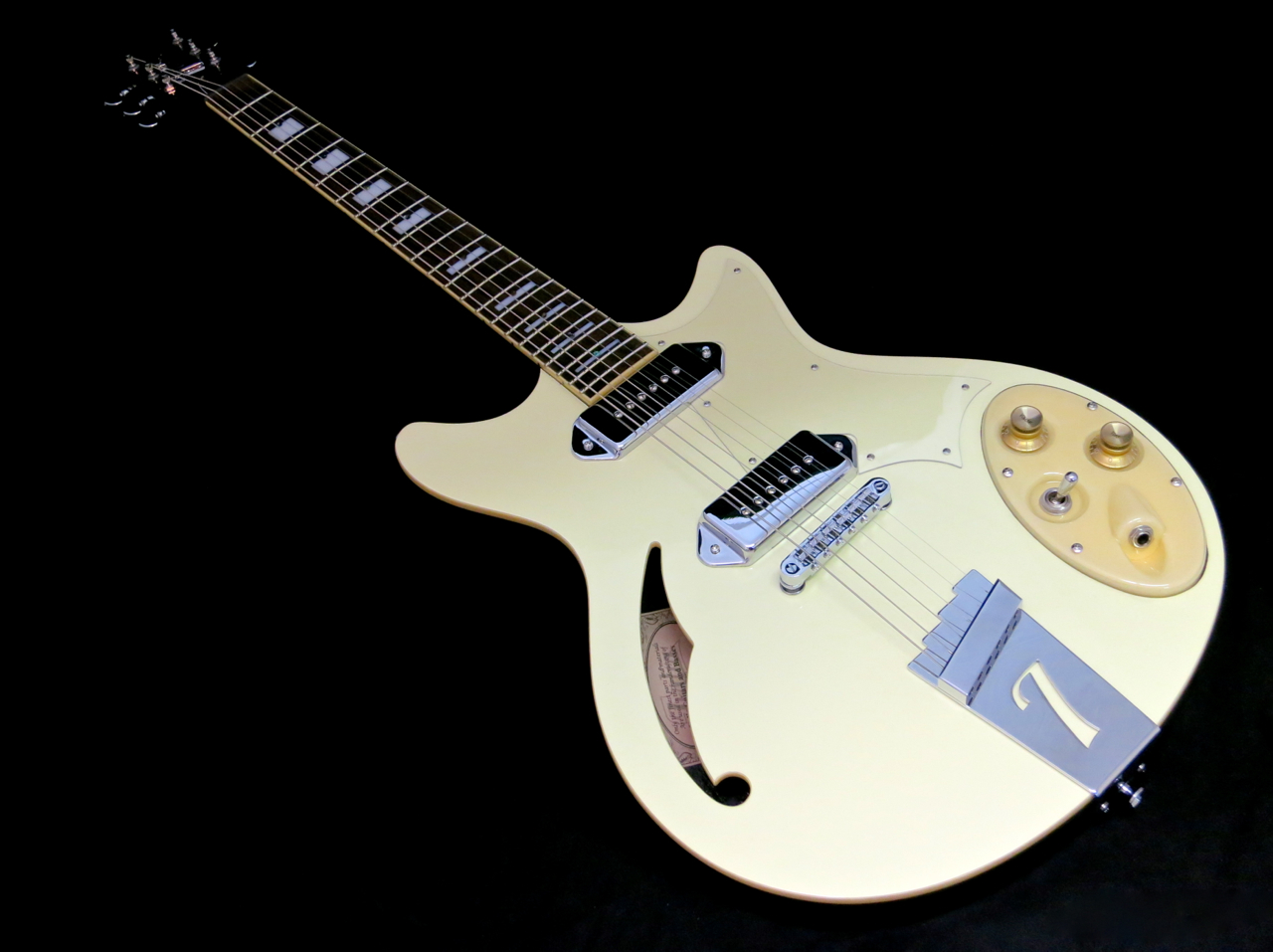
Vuorensaku T-Style – full front – bgr

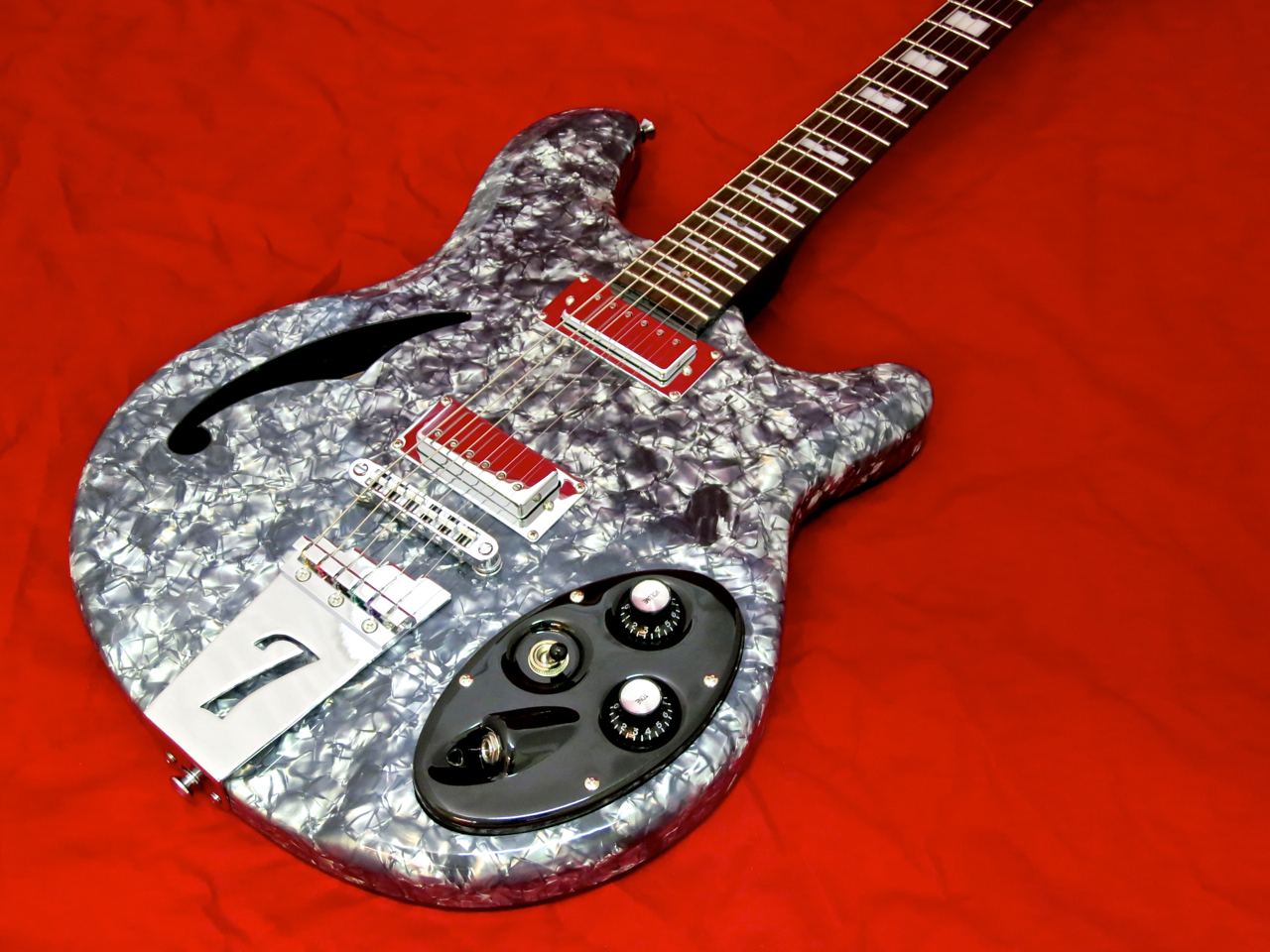
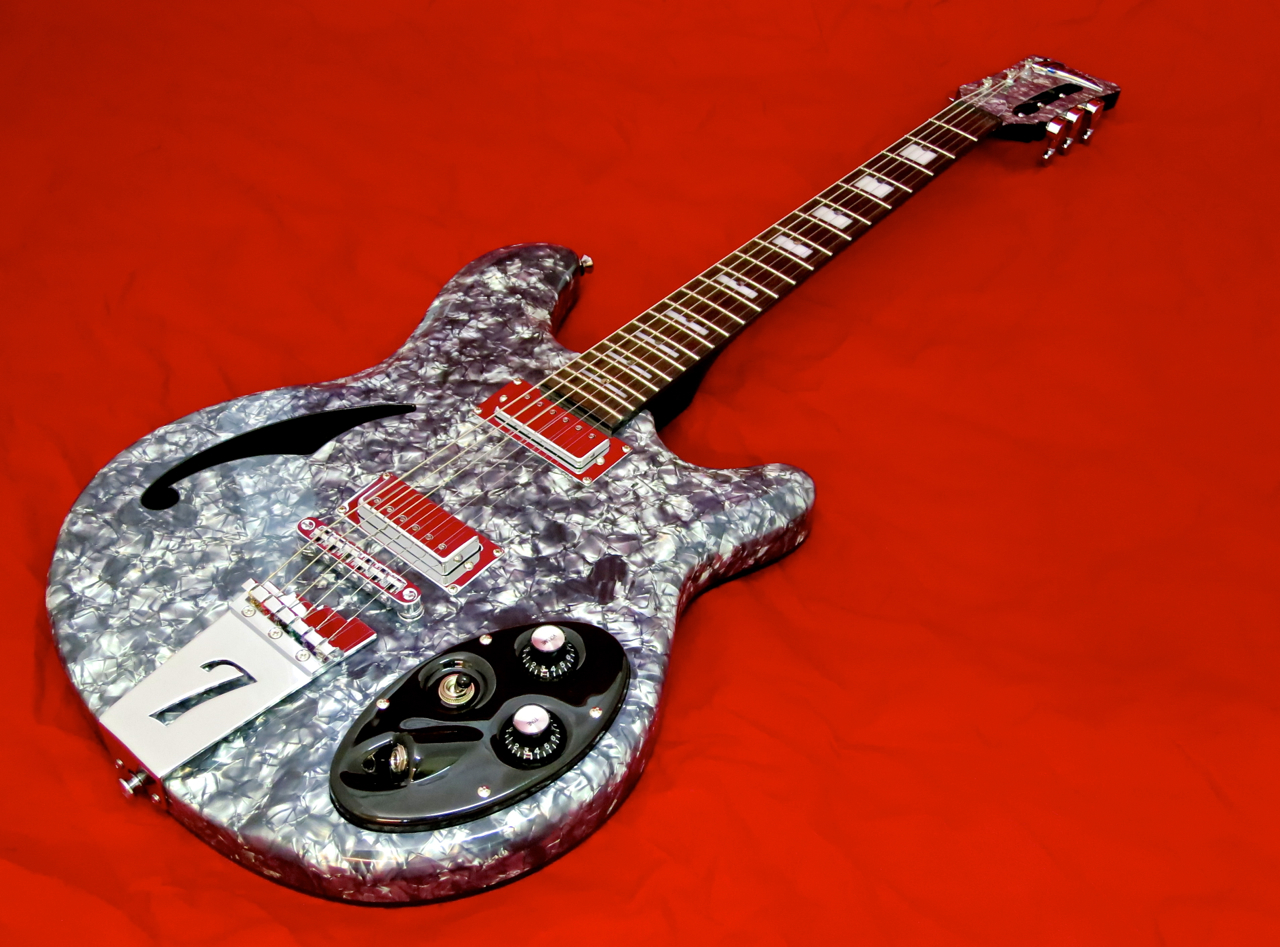
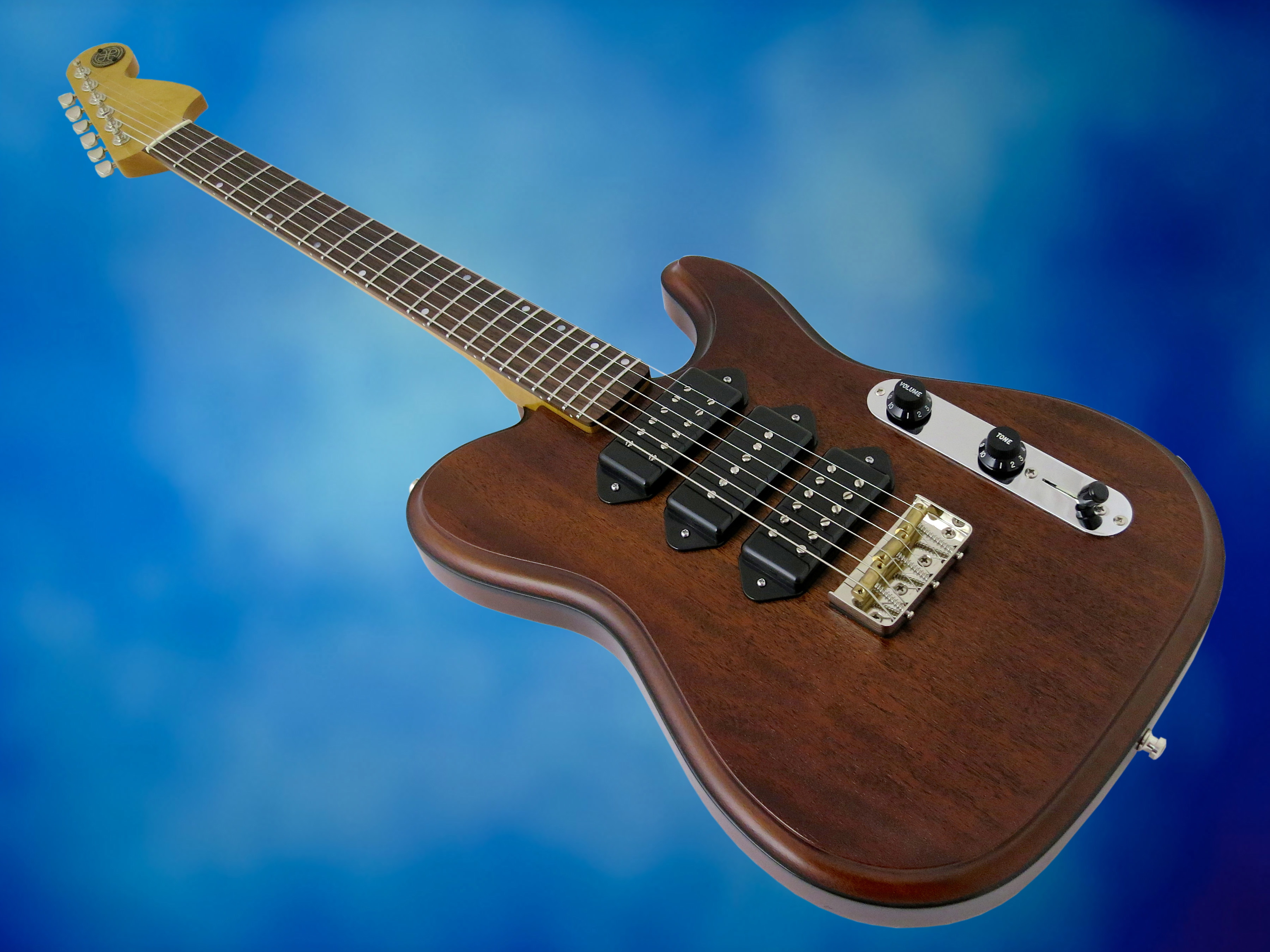
Saku sent us a recently finished solidbody electric for review – a very cool crossbreed of a Seventies Fender Telecaster Deluxe and a Fifties Gibson ES-5 Switchmaster. Vuorensaku’s guitars usually are designated by their serial number only, but for the sake of simplicity I will name this instrument the ”Vuorensaku T-Style Custom”.

Vuorensaku T-Style – full back – bgr

The T-Style Custom has been crafted from quality tonewoods:

The bolt-on neck has been carved from a piece of lightly flamed Canadian hard rock maple, and it features an Indian rosewood fretboard. The bound-top body consists of two pieces of very lightweight African mahogany. The centre glue line is virtually impossible to make out, thanks to Vuorensaku’s extremely crisp workmanship.

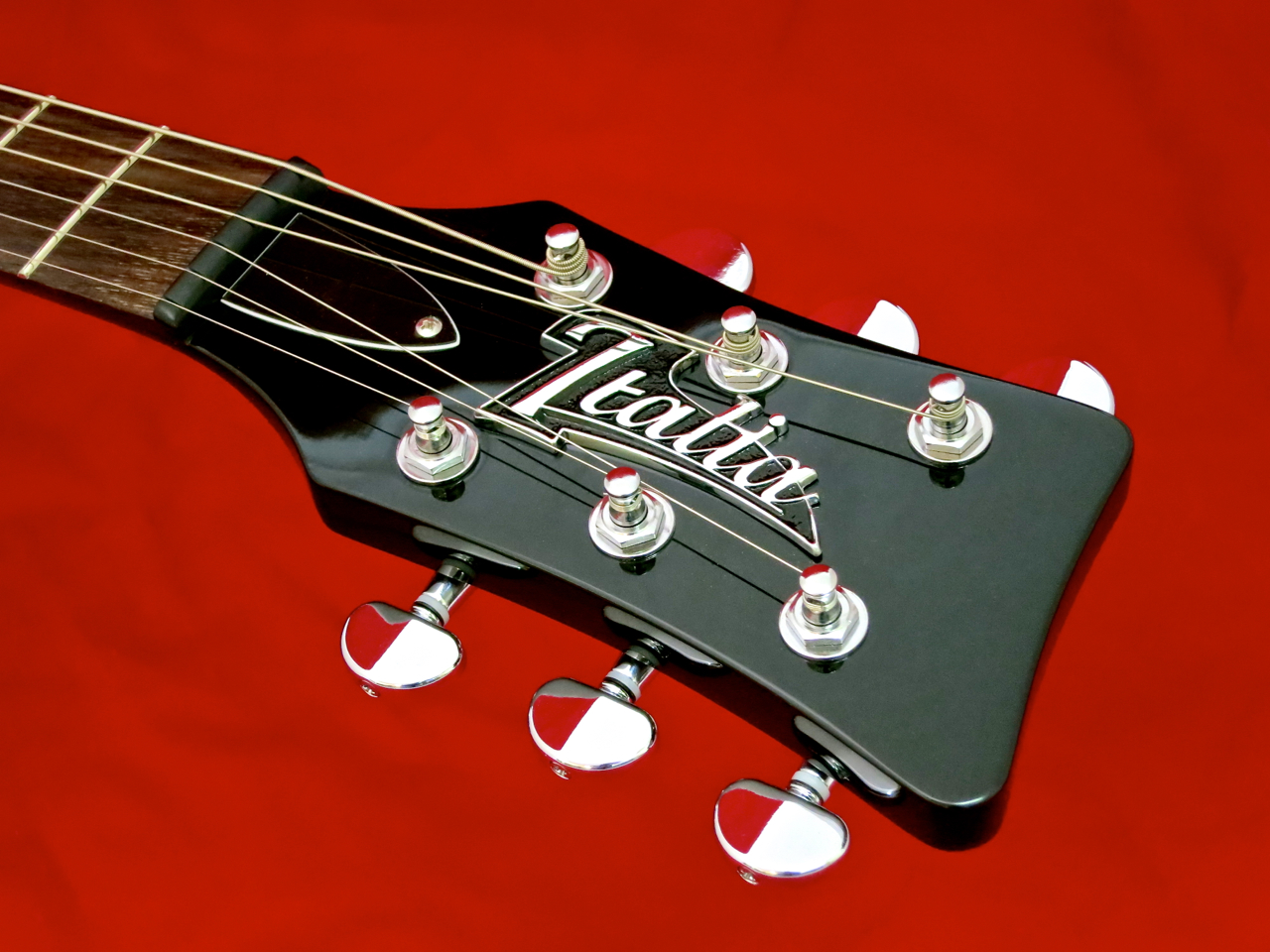
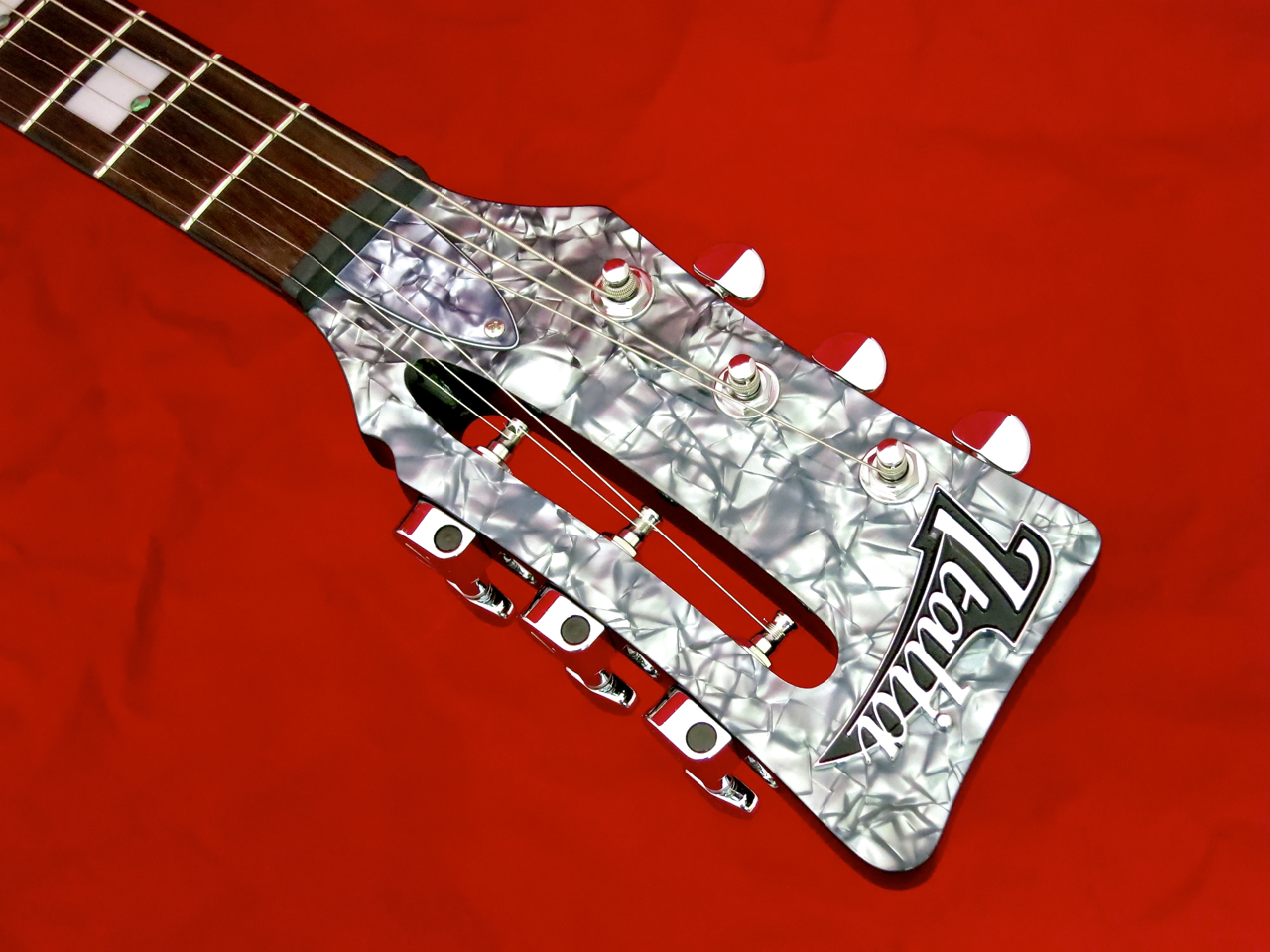
Vuorensaku T-Style – headstock – bgr

The Vuorensaku’s nut is crafted from genuine moose bone.

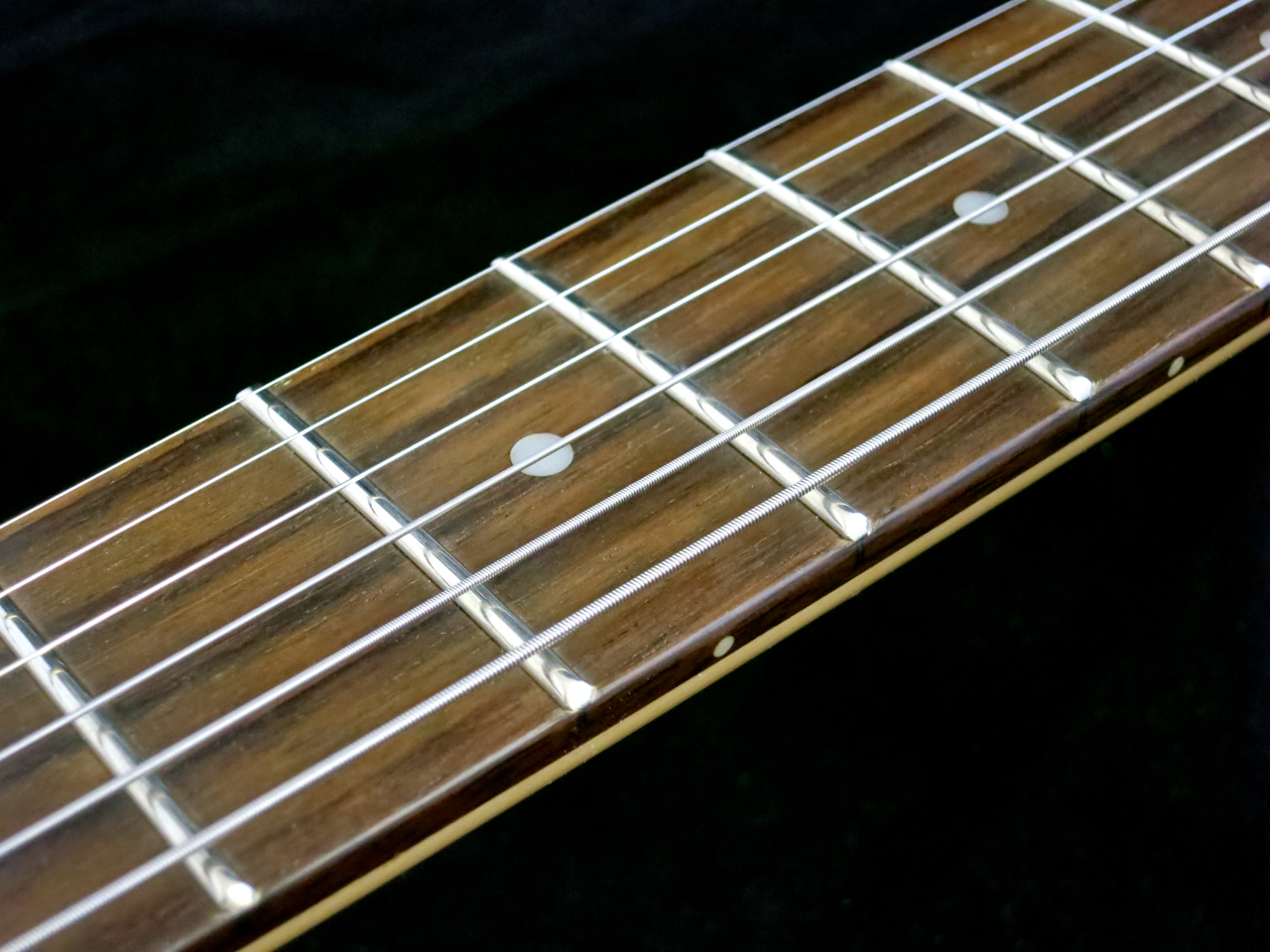
The fretboard comes with a modern, bend-friendly radius (9.5″) and sports 21 medium-sized stainless steel frets.
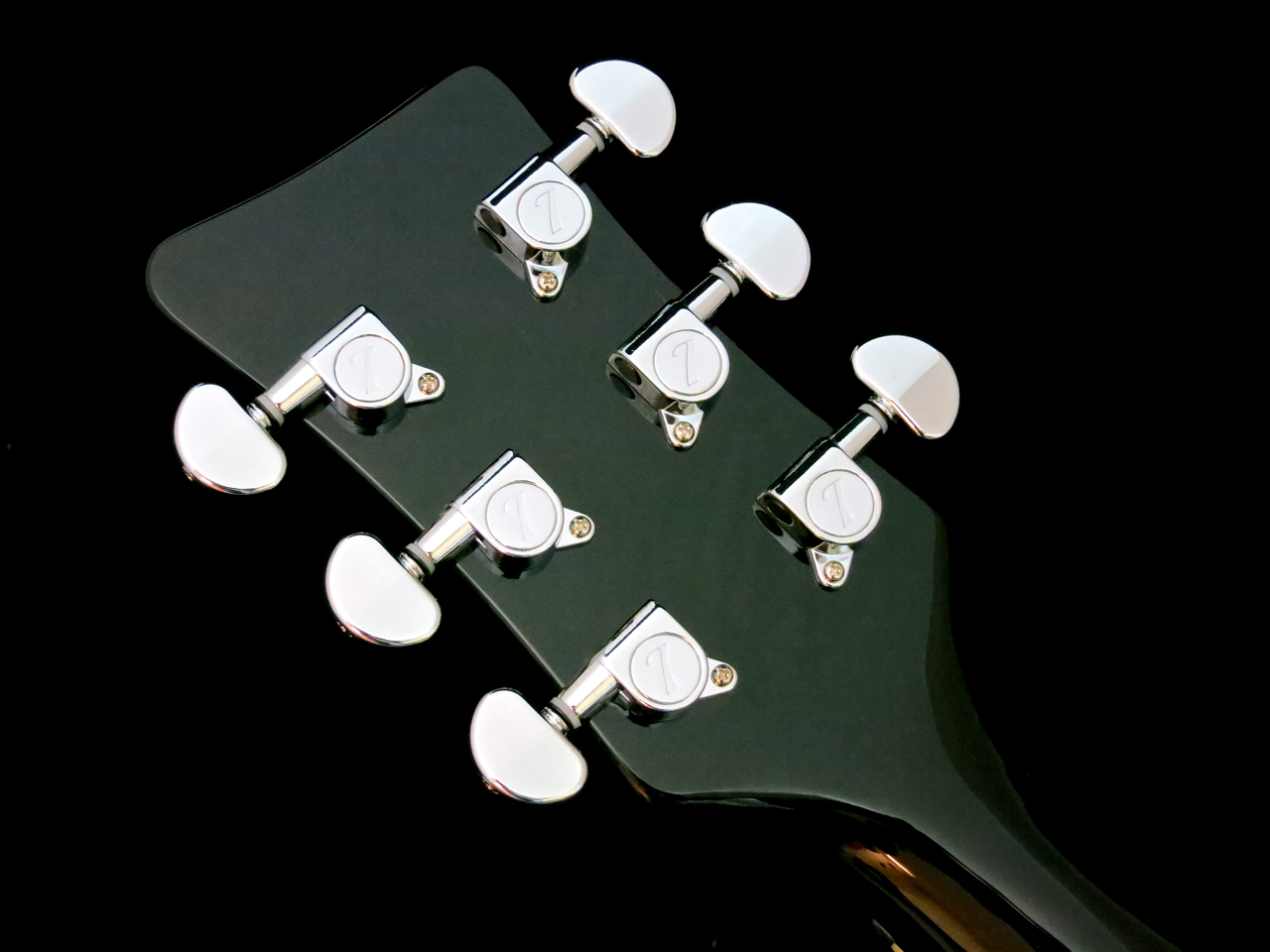
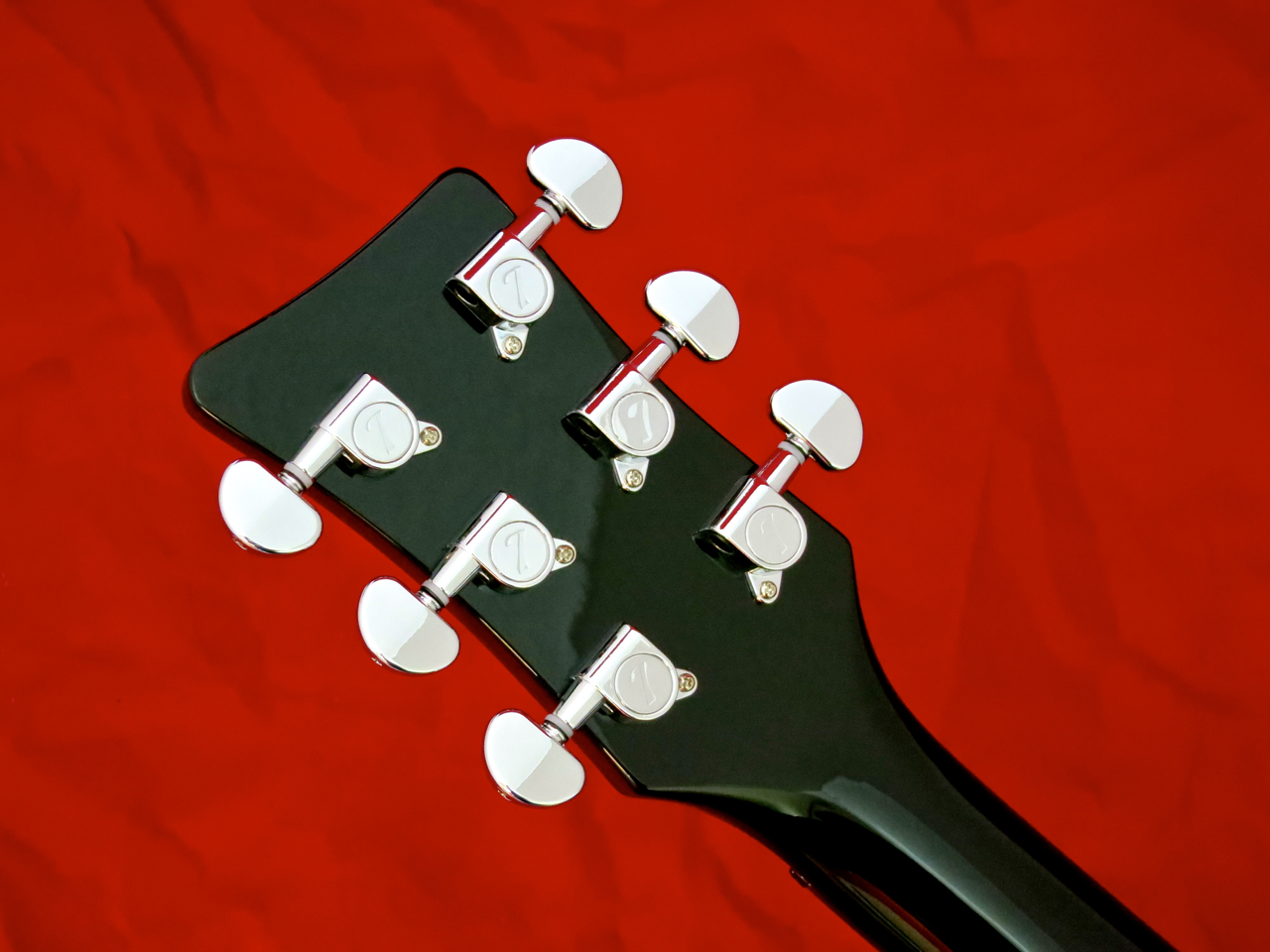
Vuorensaku T-Style – tuners – bgr

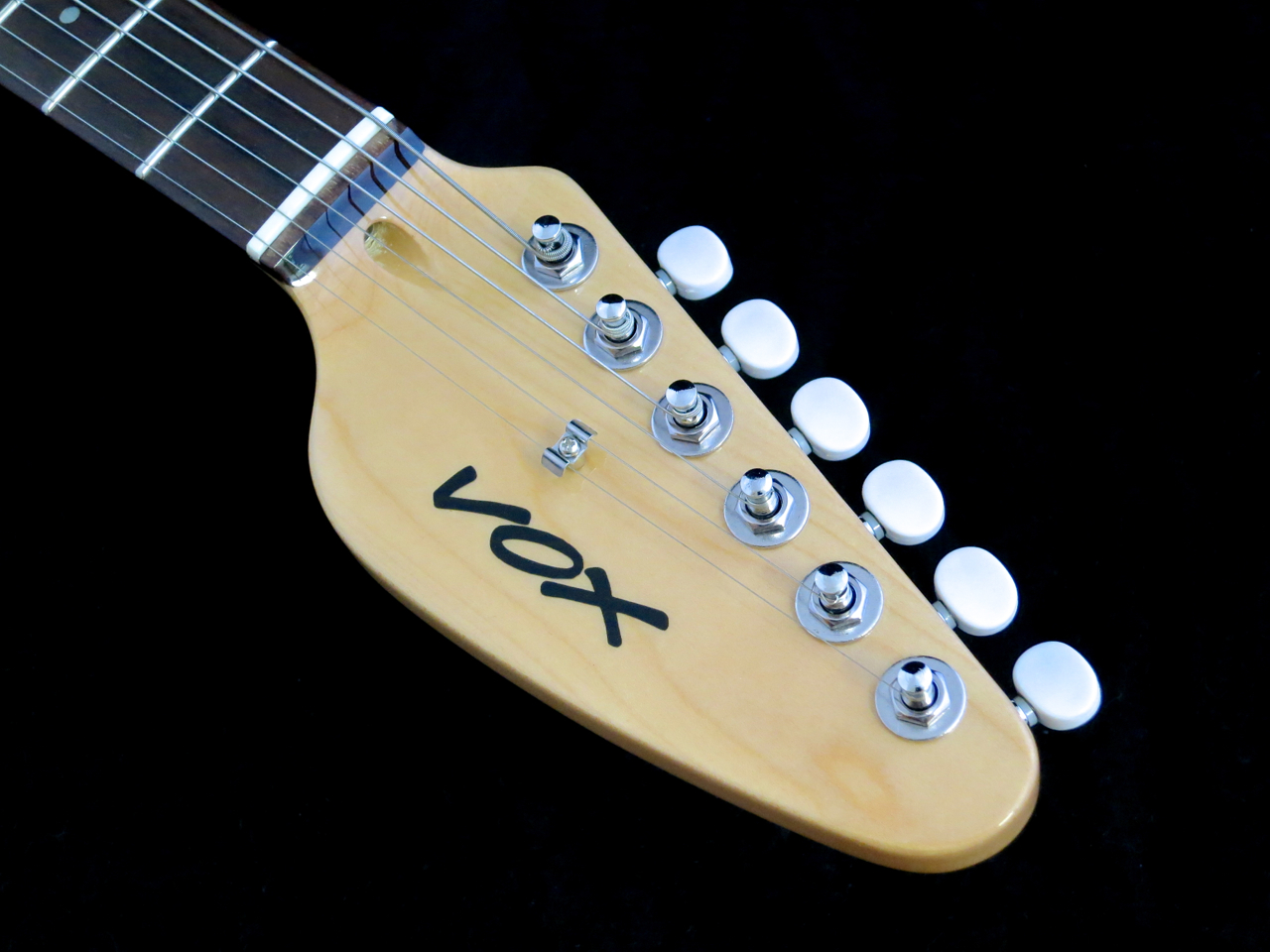
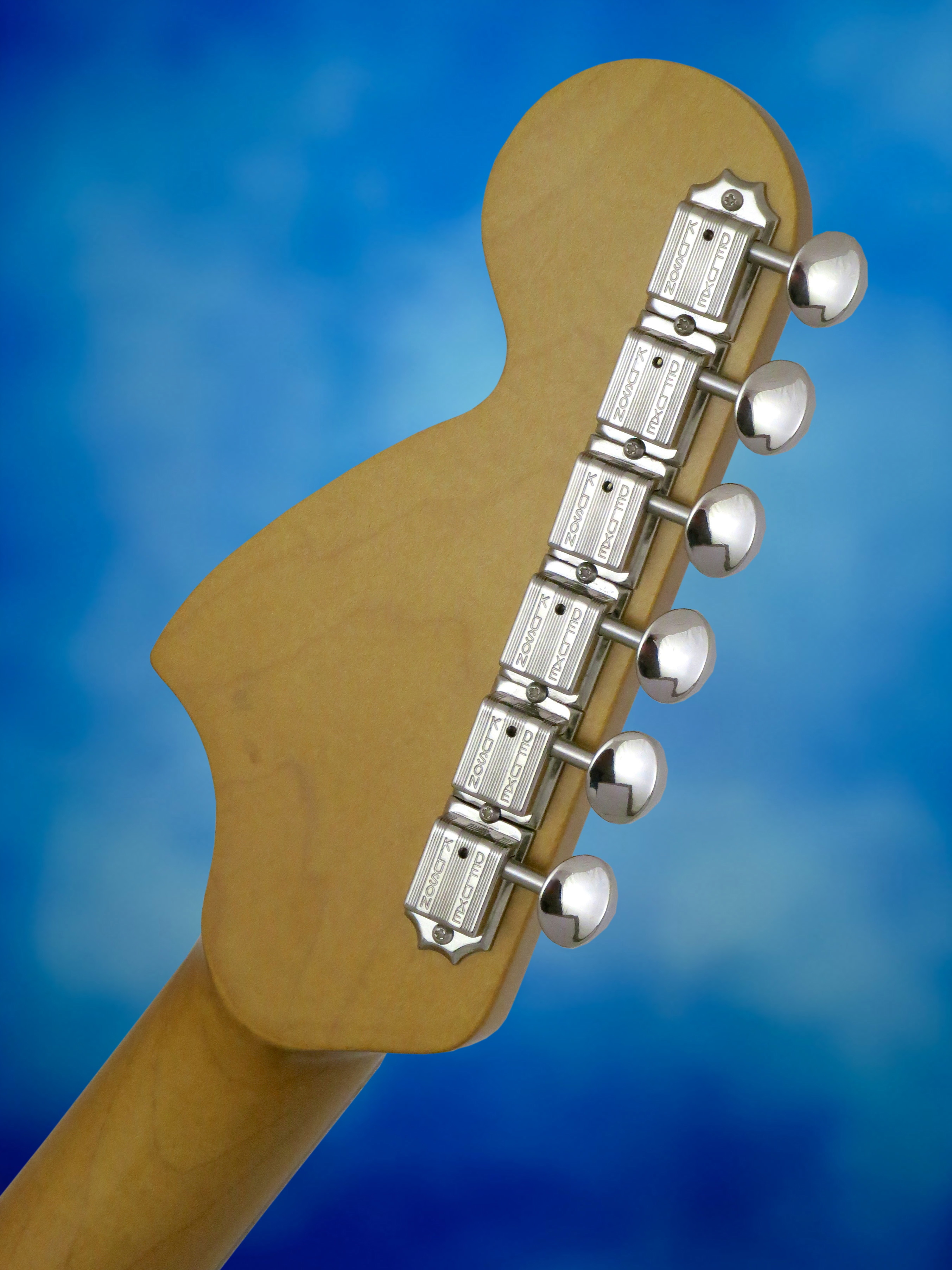
The T-Style Custom’s updated Kluson Deluxe-tuners may have that famous vintage look, but they work much more smoothly than their forebears from the 1950s.

Vuorensaku T-Style – back beauty – bgr

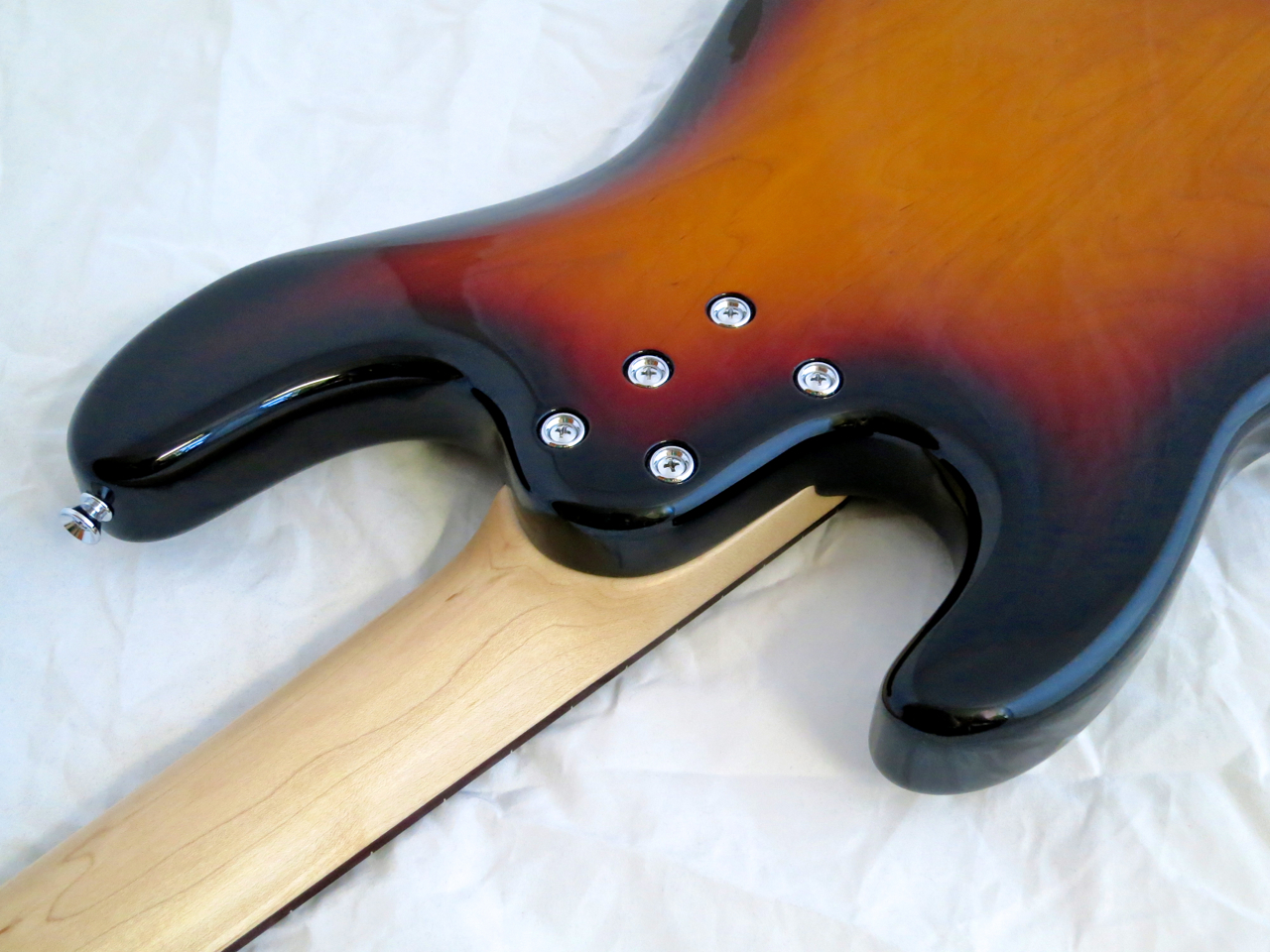
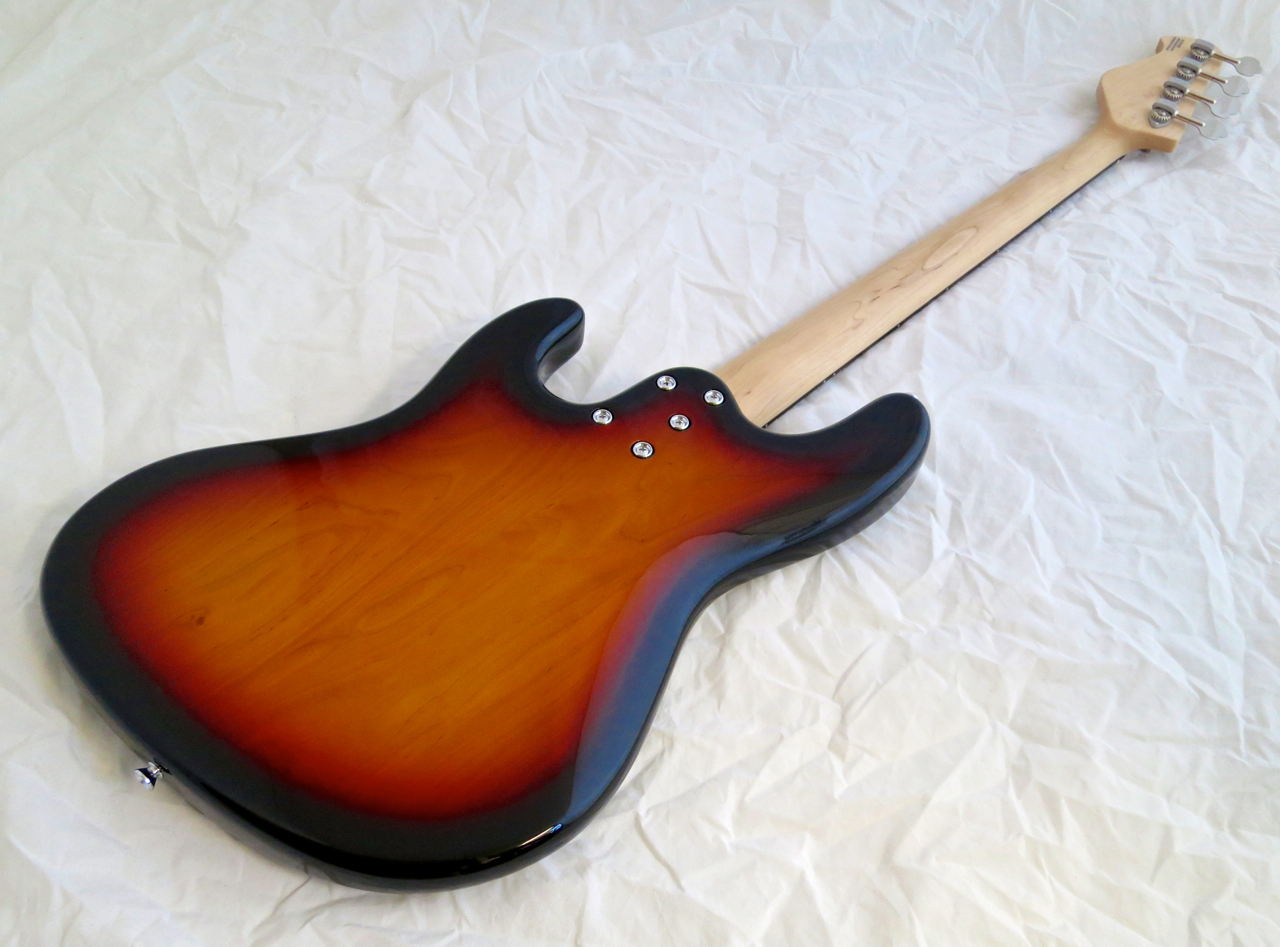
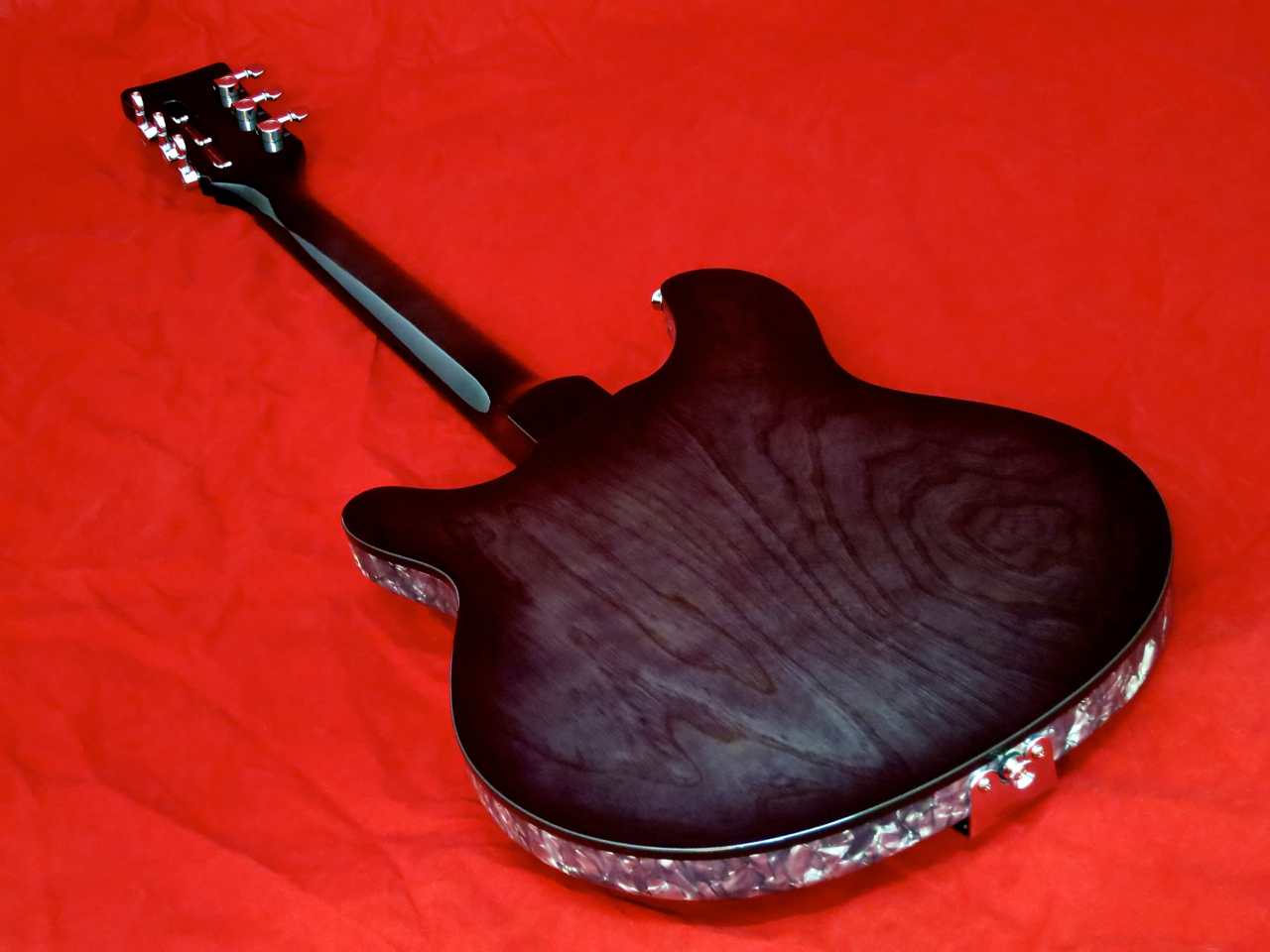
The neck joins the body in time-honoured fashion, using four wood screws and a rectangular steel plate.

Thanks to the T-Style Custom’s satin nitro-finish this instruments simply oozes with natural elegance, feeling very friendly to the touch.

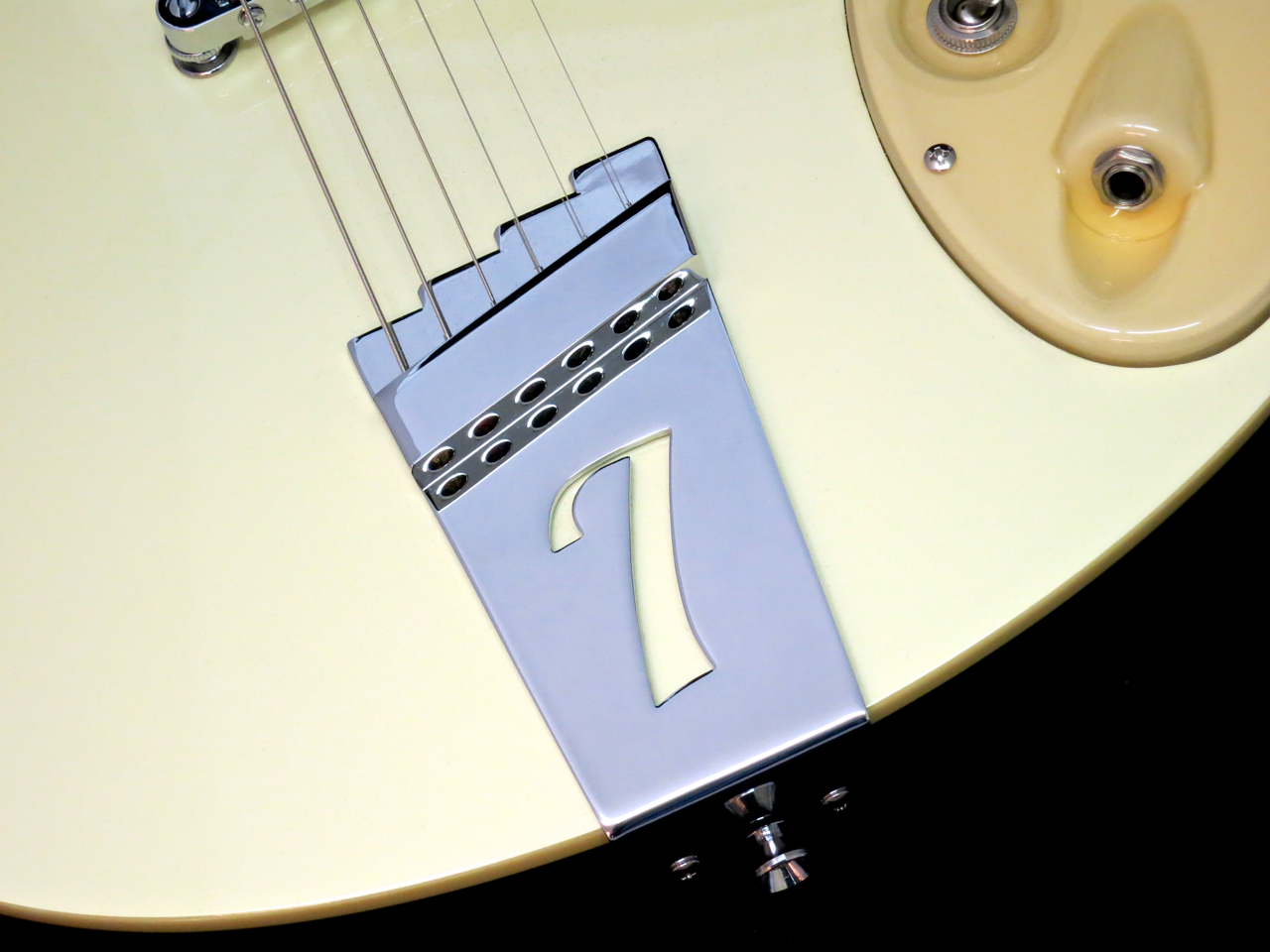
Vuorensaku T-Style – bridge

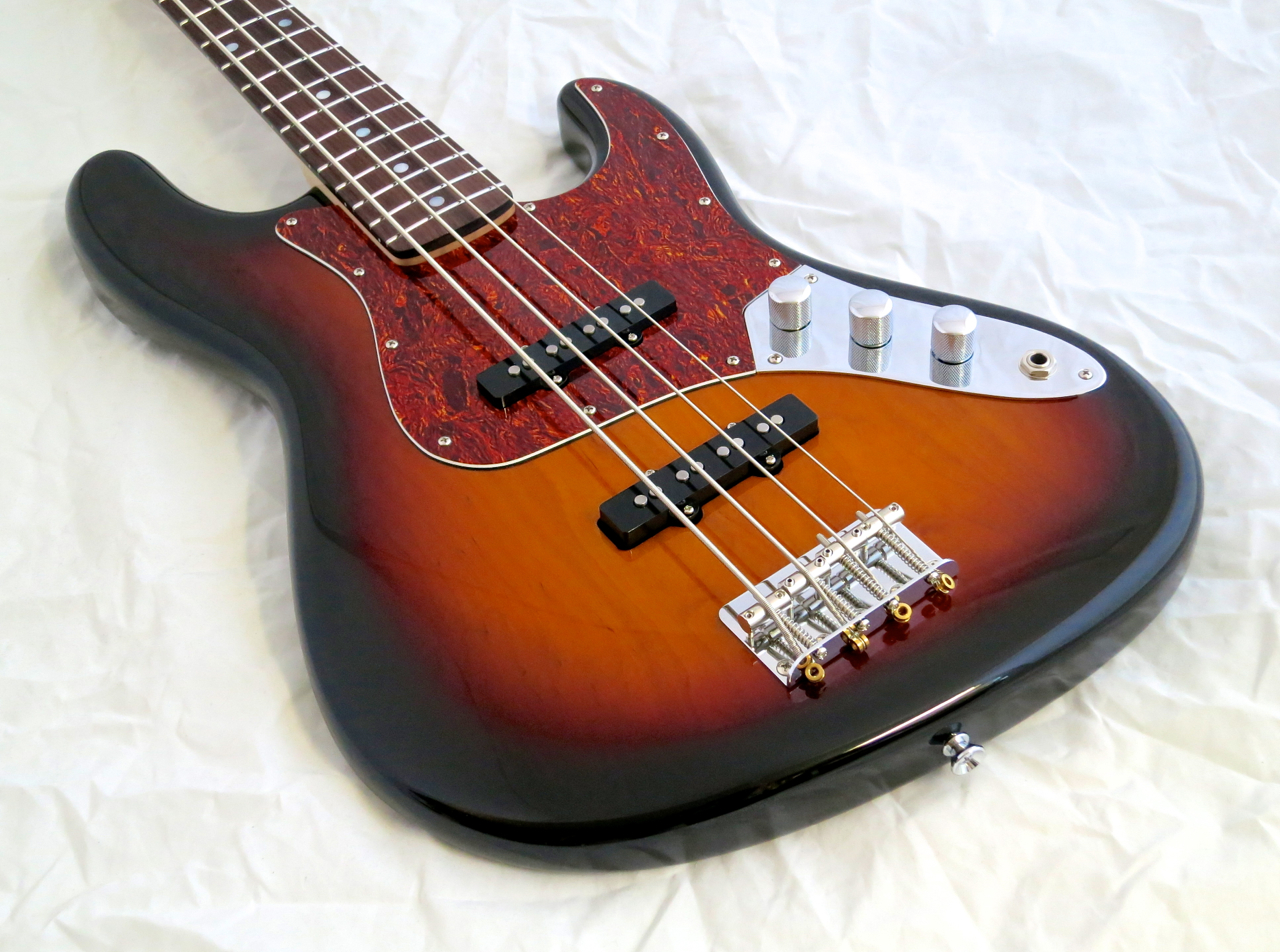
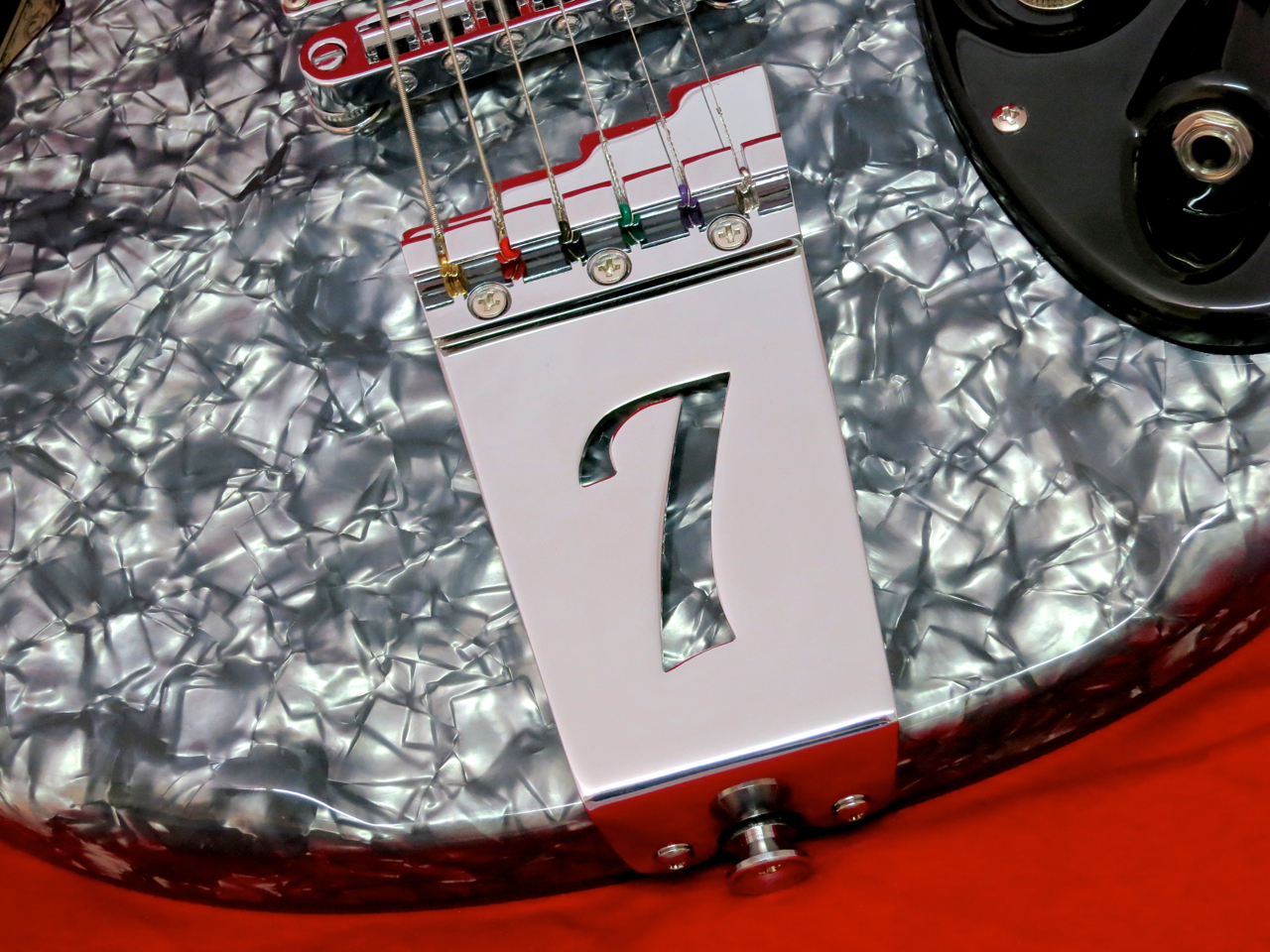
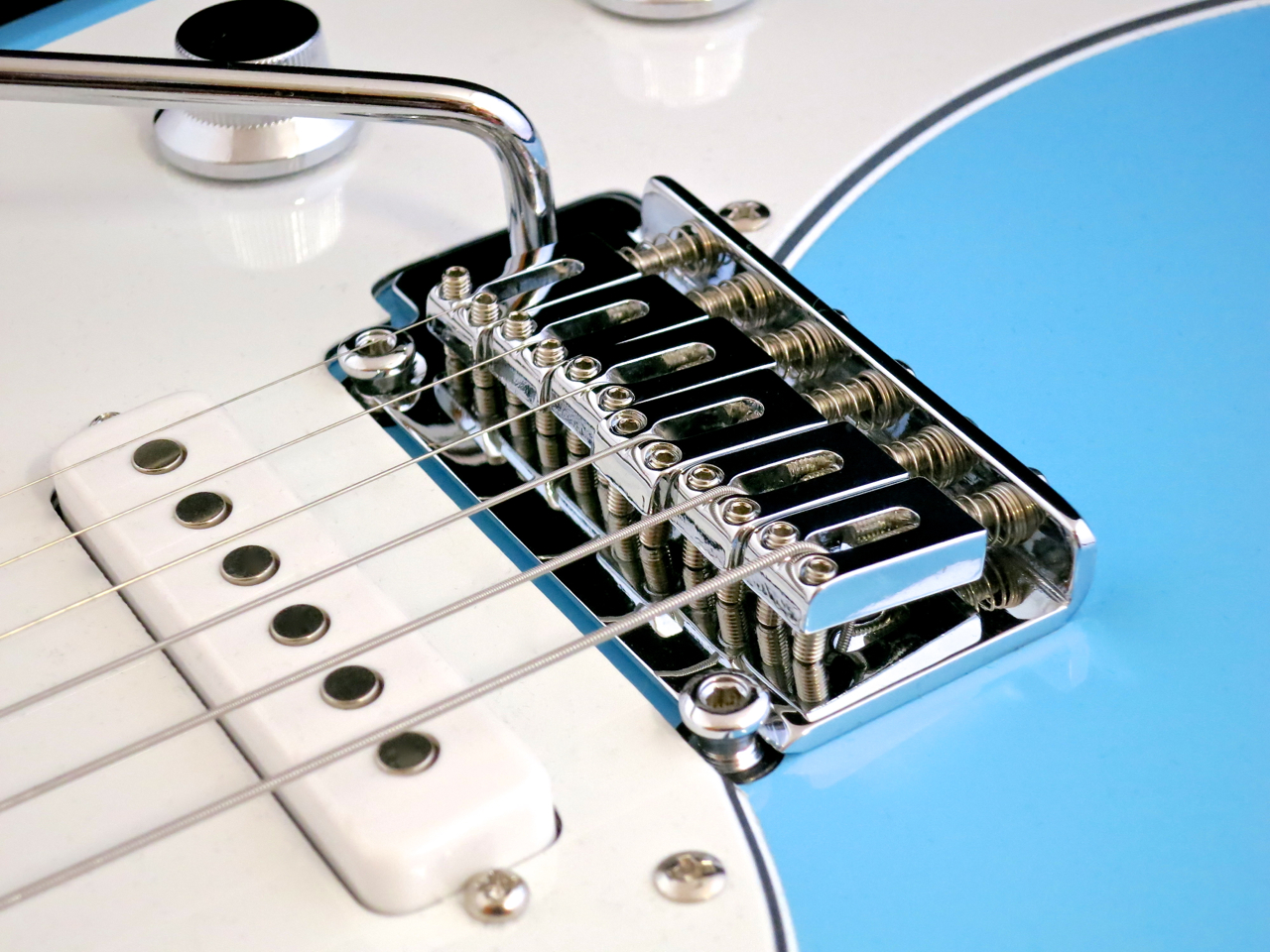
Kluson’s fantastic Half-Size Tele-bridge is a clever way of bringing genuine Tele Twang to non-Tele guitars, as well as making it possible to use this type of bridge in combination with different bridge pickups.

Many guitarists still favour the (almost archaic) three-saddle Telecaster-bridge for its gorgeous tone, especially when it comes with three brass saddles (like this Kluson does). The threads for the intonation screws on the T-Style Custom’s bridge have been deliberately cut at an angle to improve the guitar’s intonation.
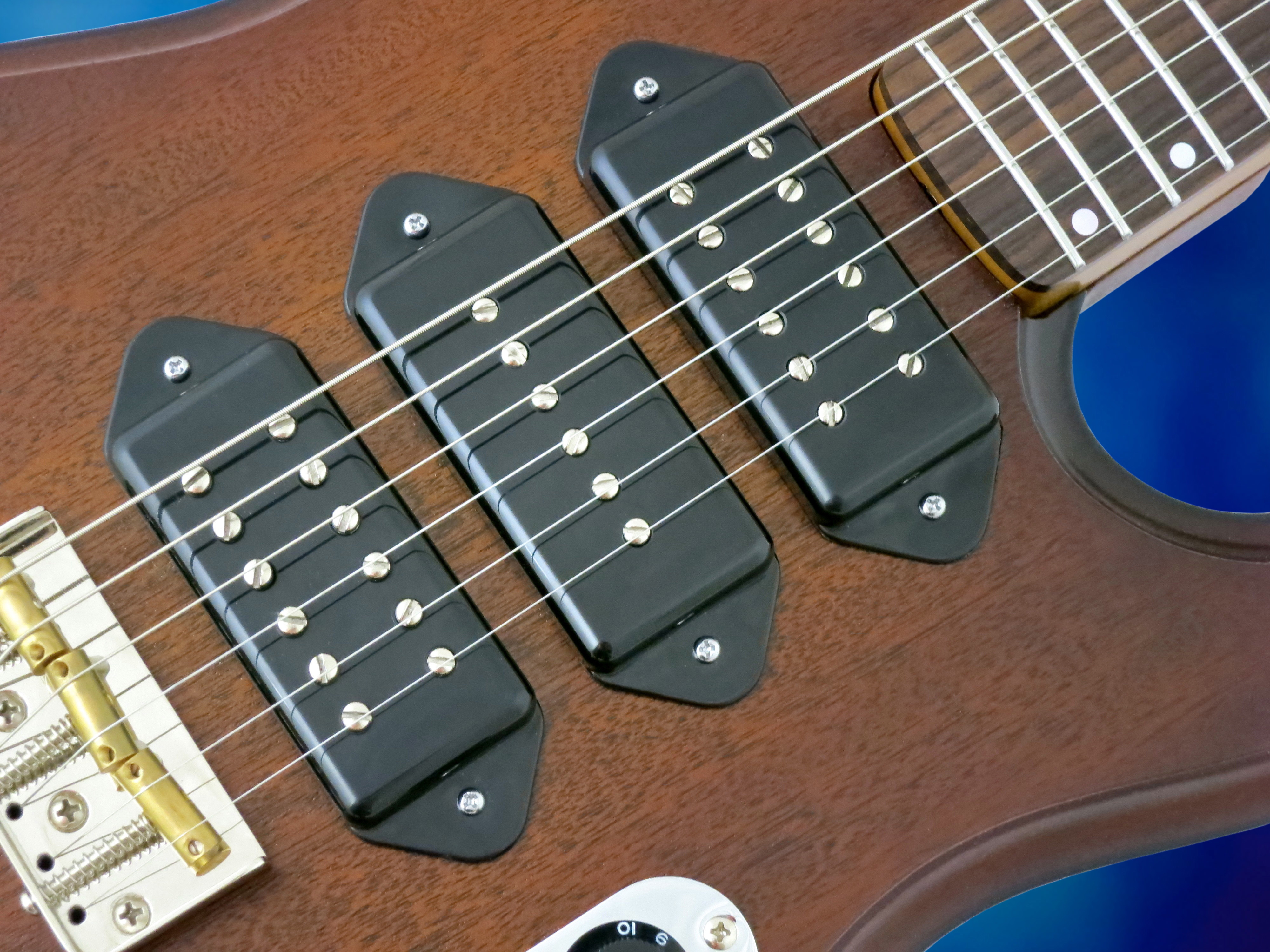
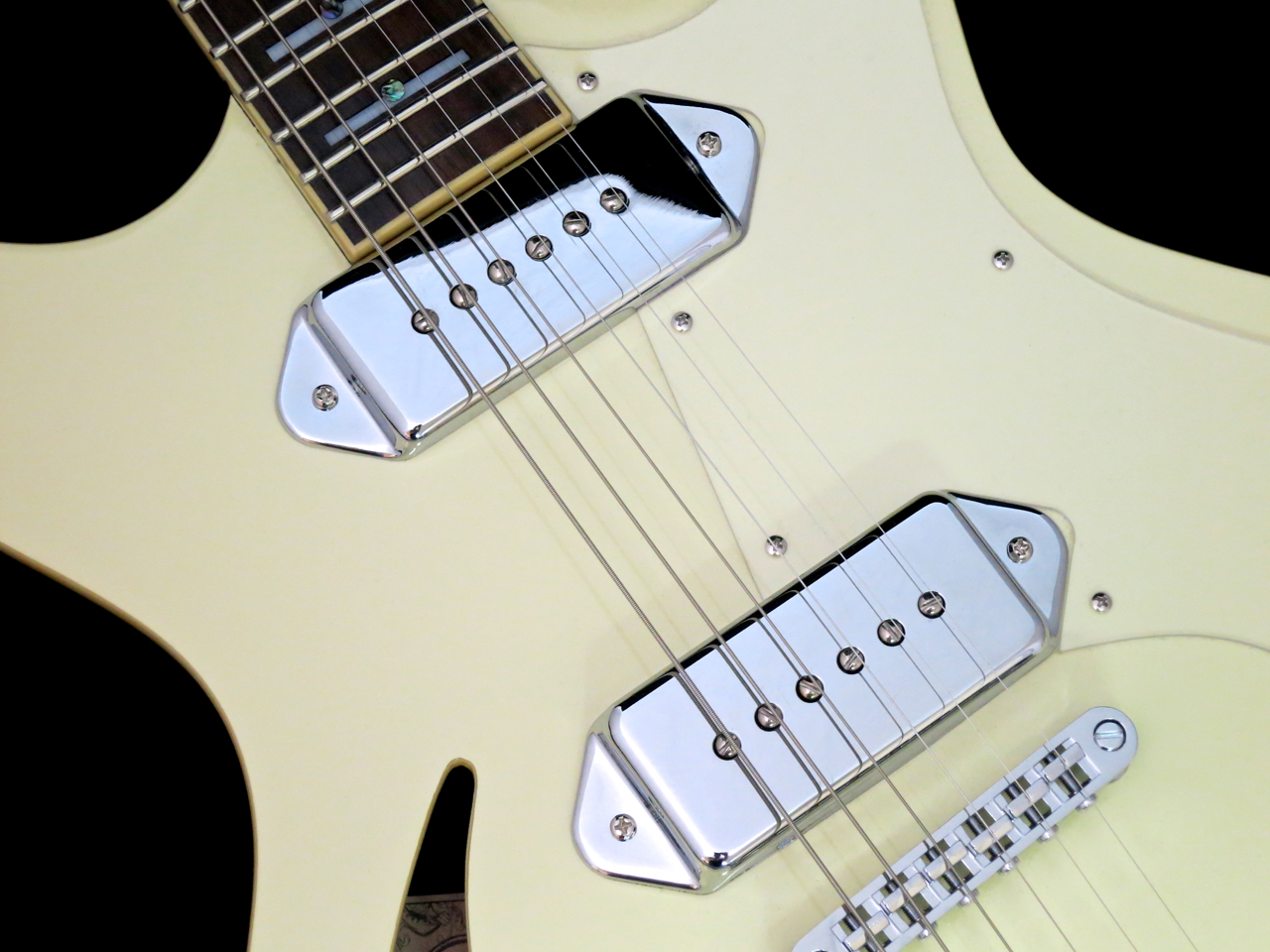
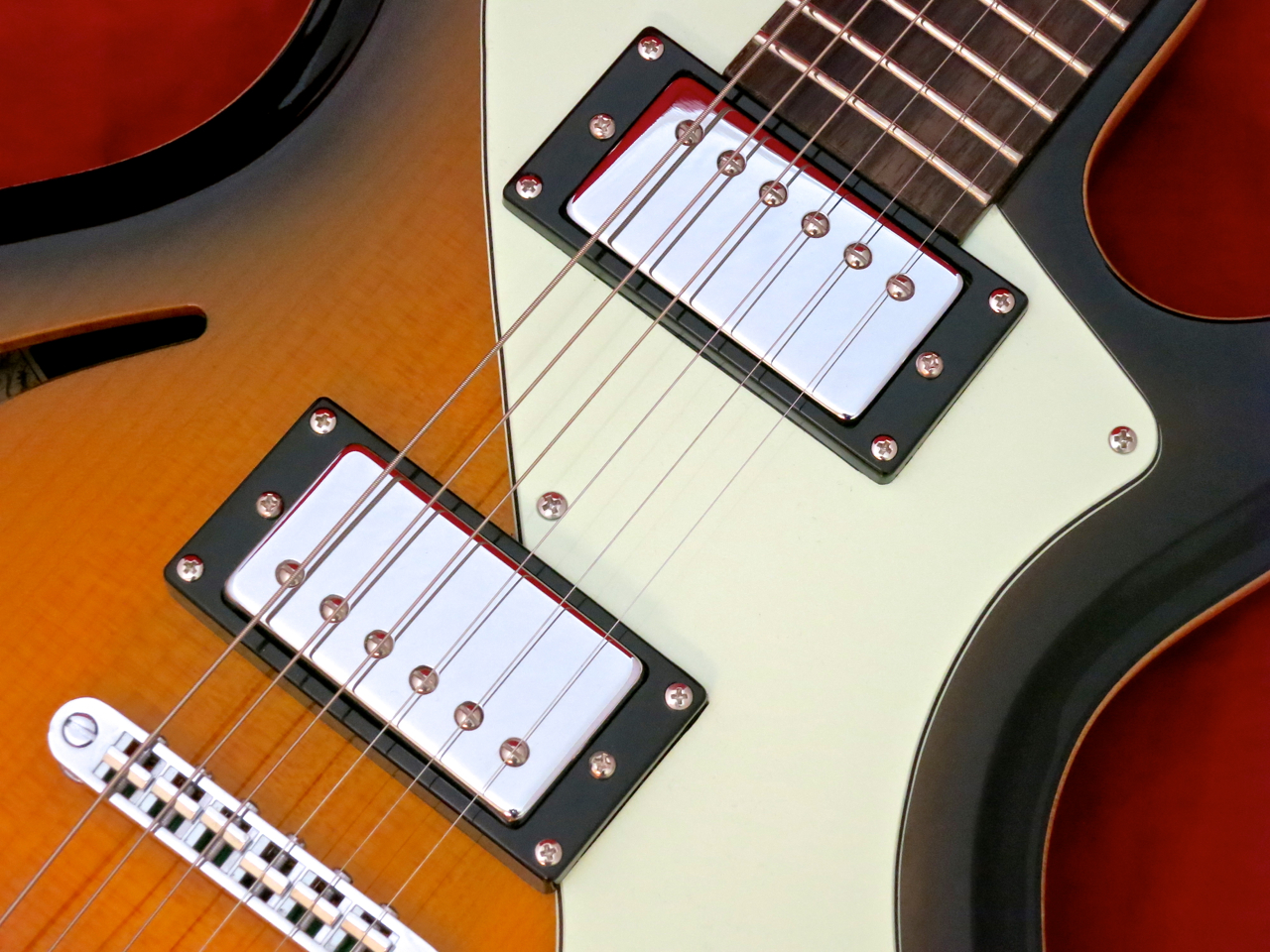
Vuorensaku T-Style – pickups 1 – bgr

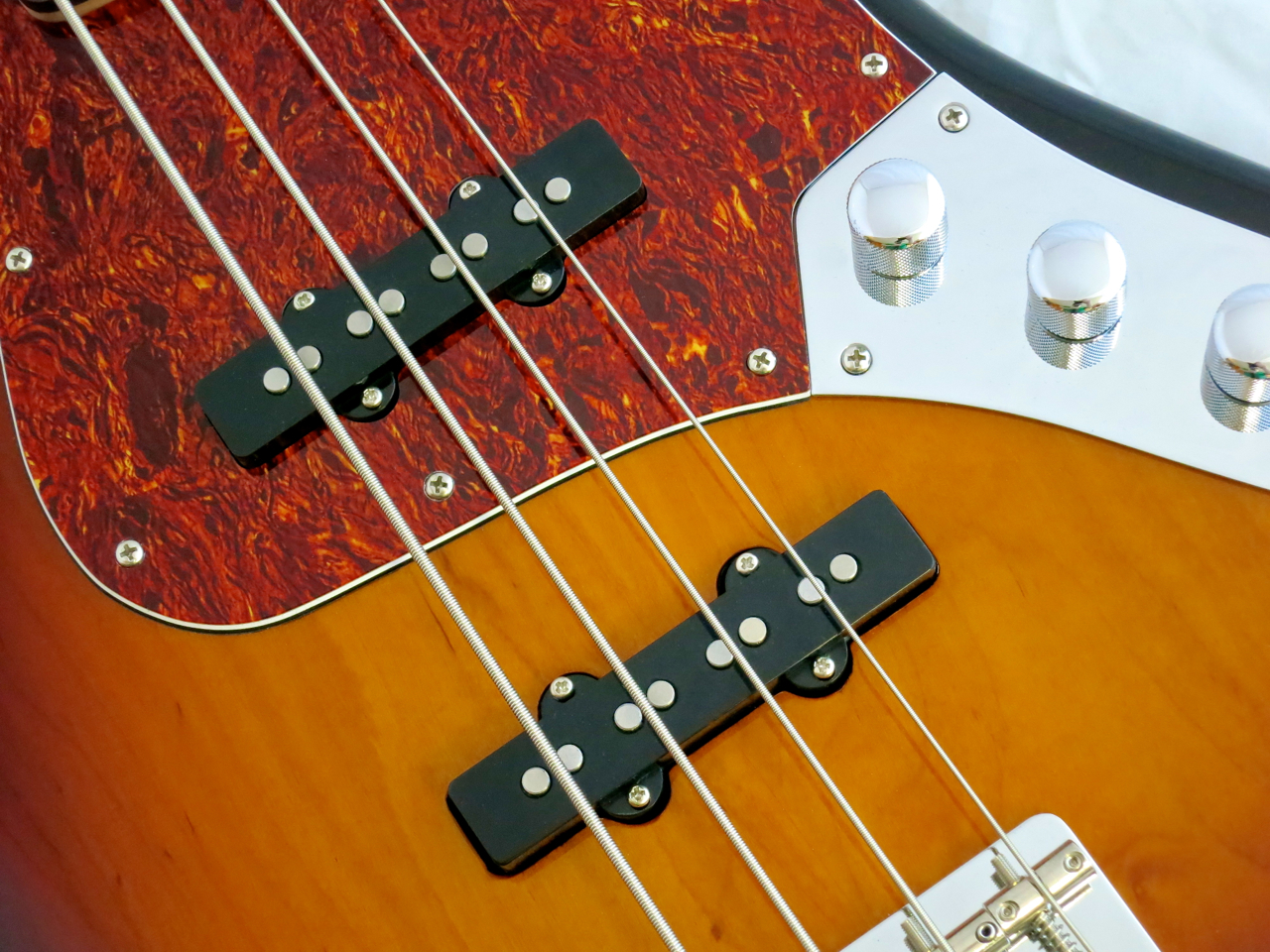
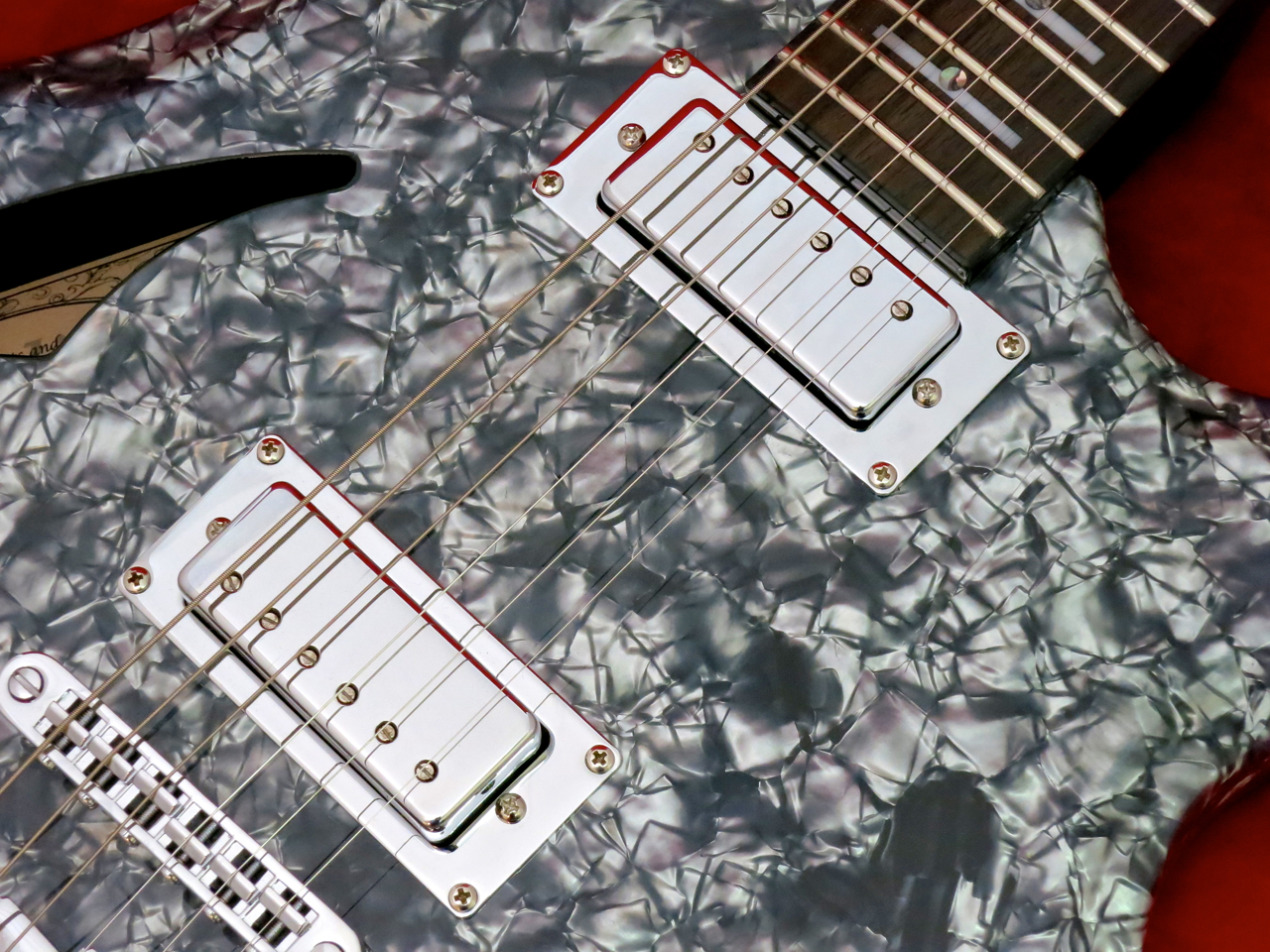
Vuorensaku’s customer specified three Dog Ear-pickups for his dream guitar, so a set of said pickups was sourced from another Finnish maker – Rautia Guitars from Joensuu.

Veijo Rautia’s Dog Ear-set comprises a pair of splittable humbuckers for the neck and bridge positions, as well as a P-90-type singlecoil in the middle.

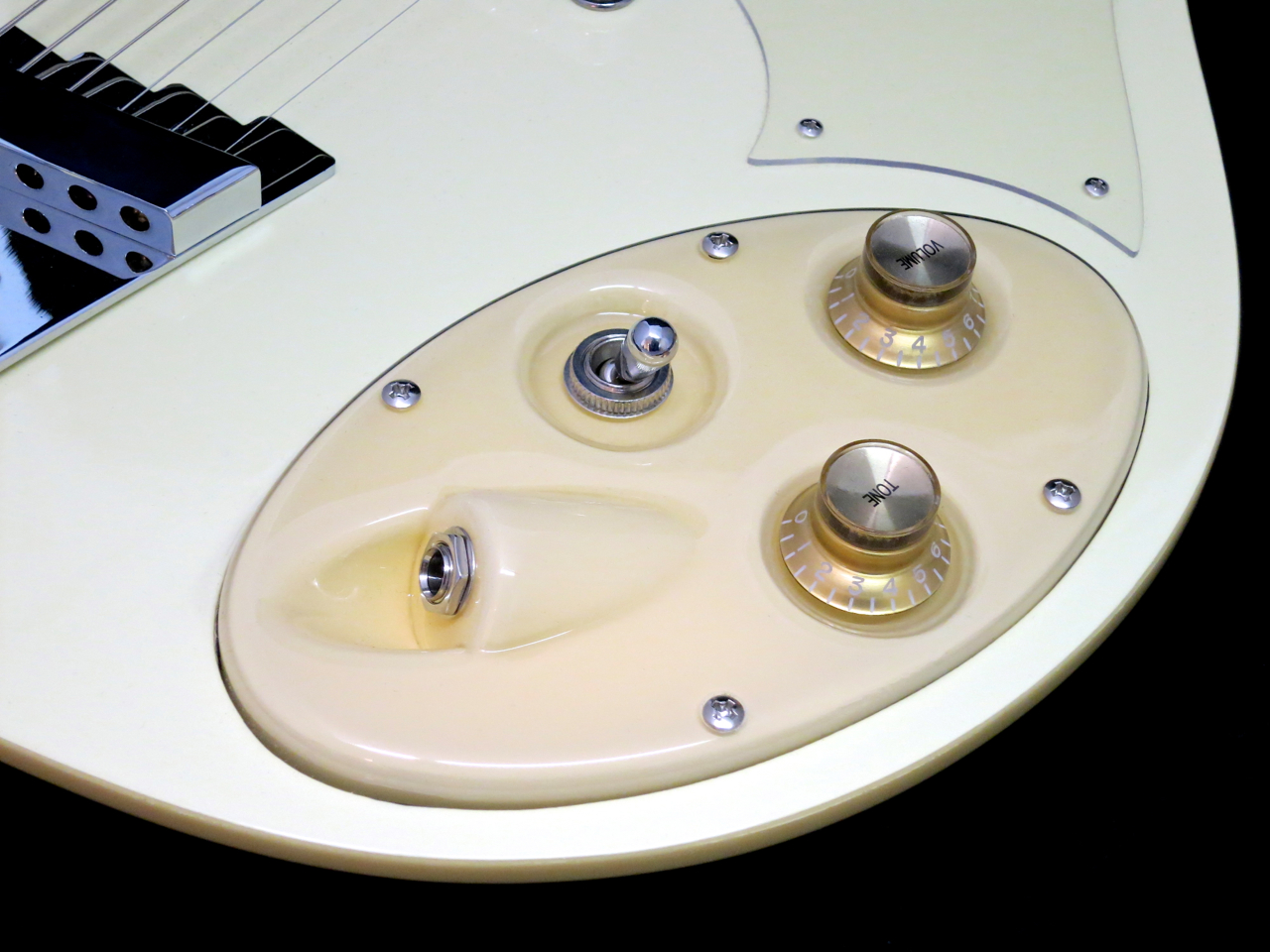
Vuorensaku T-Style – controls – bgr

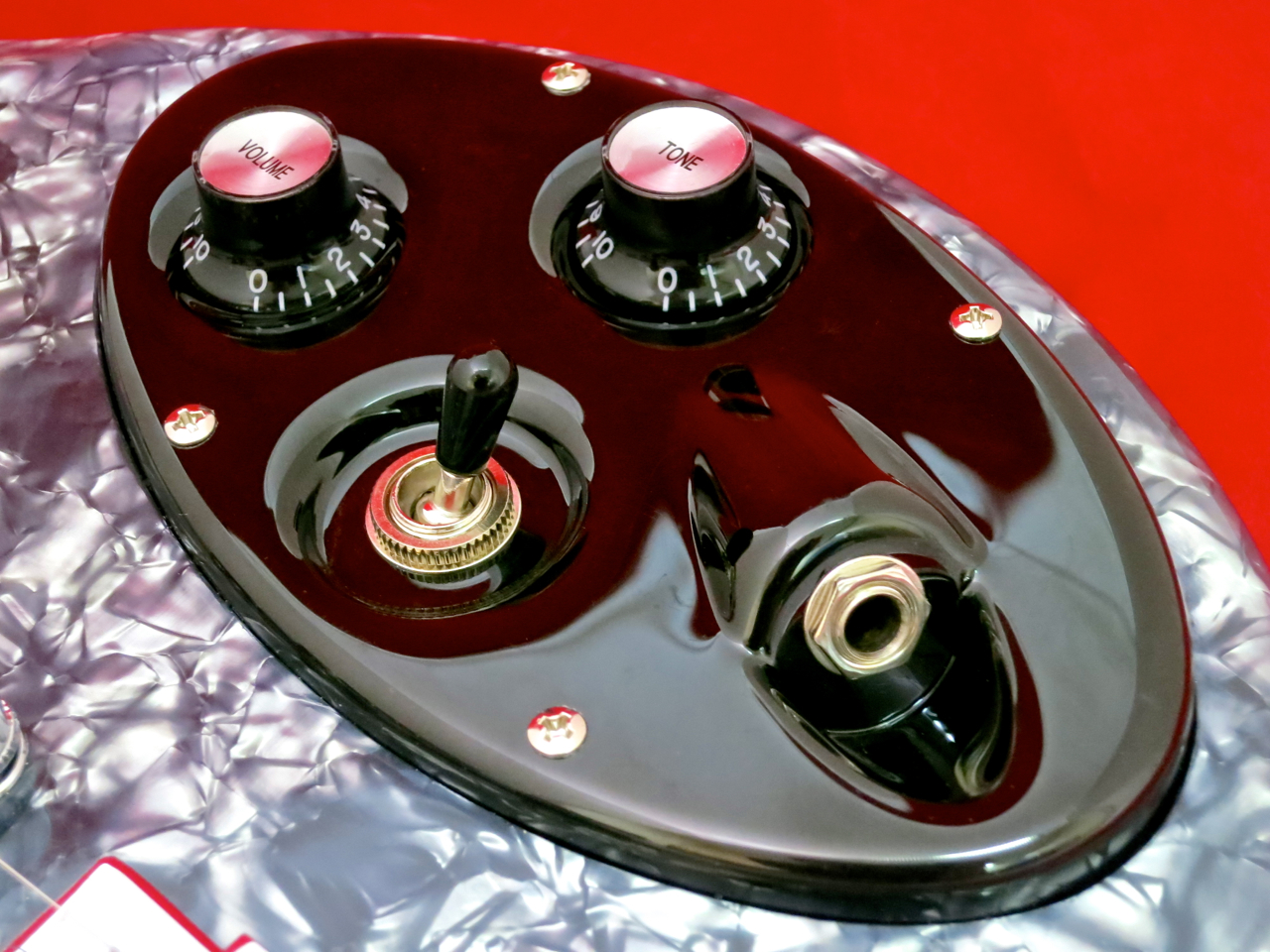
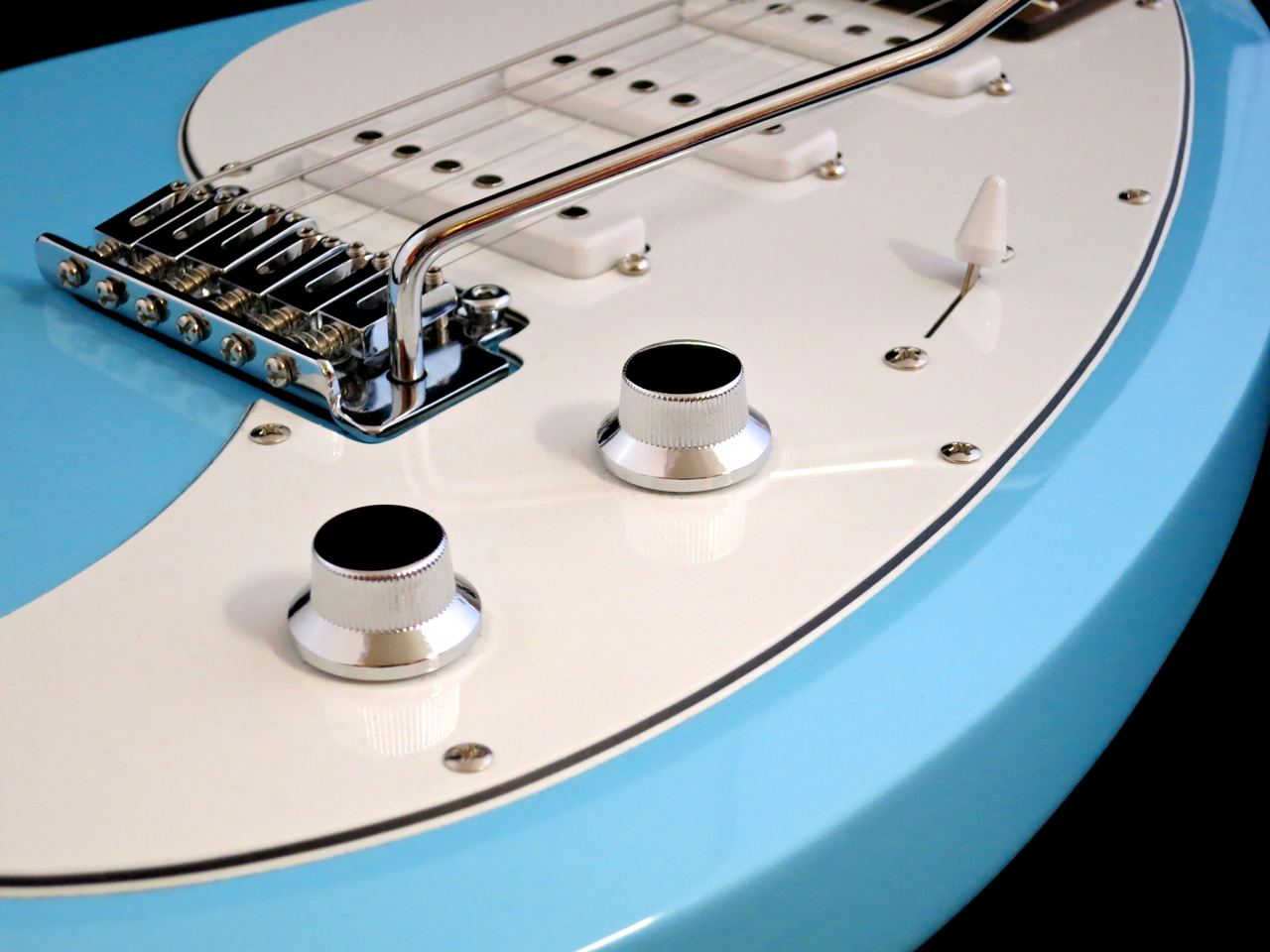
The control panel has been turned the ”wrong” way around to facilitate easy master volume access.
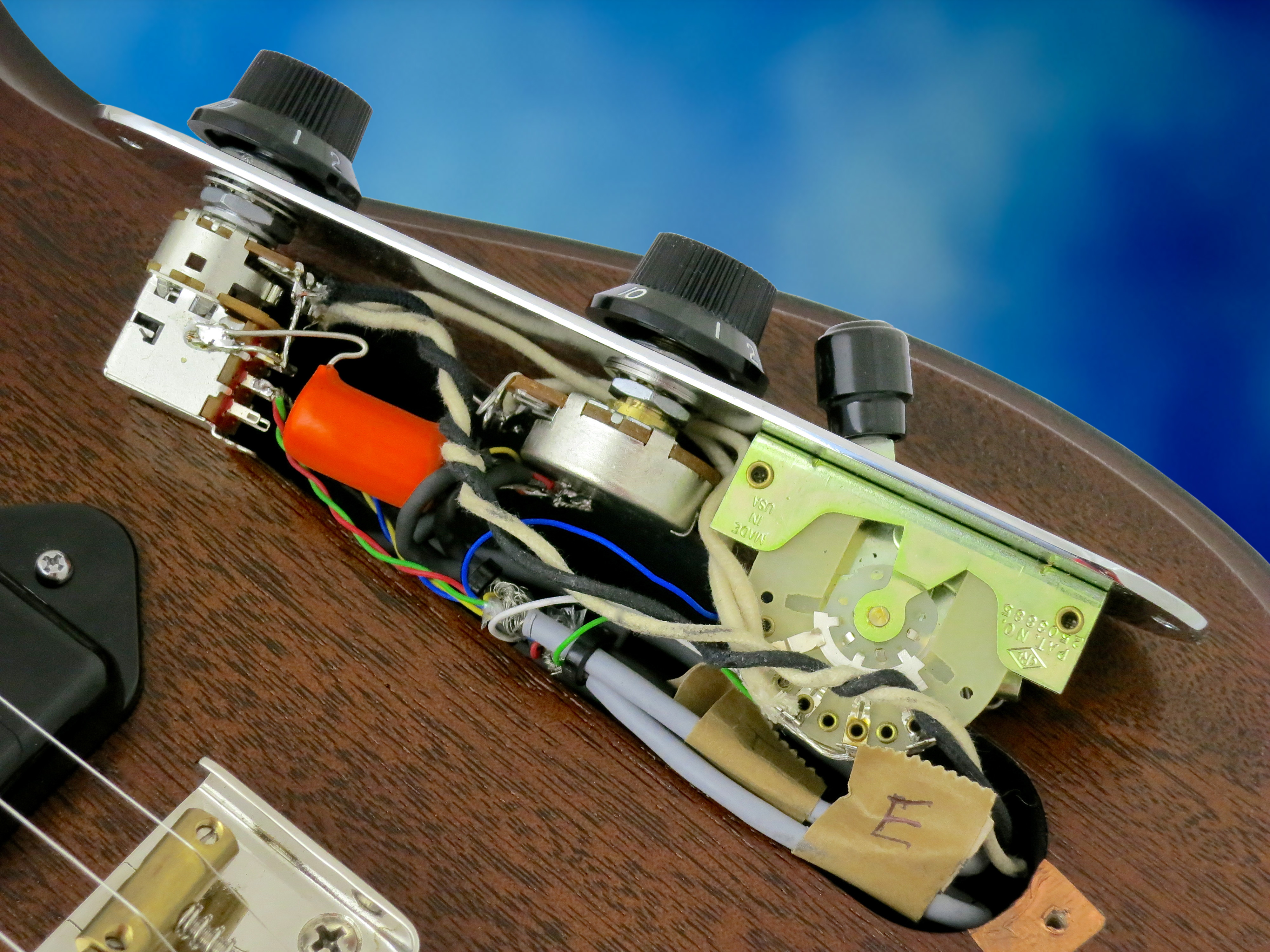
Vuorensaku T-Style – electronics – bgr

Ingeniously, Saku Vuori has managed to fit all the necessary components into the guitar’s small traditional Tele control cavity:

The volume control comes equipped with a push/pull-switch for splitting the humbuckers. The five-way blade switch works like on a Fender Strat. As you can easily see from the photo the workmanship is very clean and the components are of top quality.

****
Vuorensaku T-Style – beauty 2 – bgr

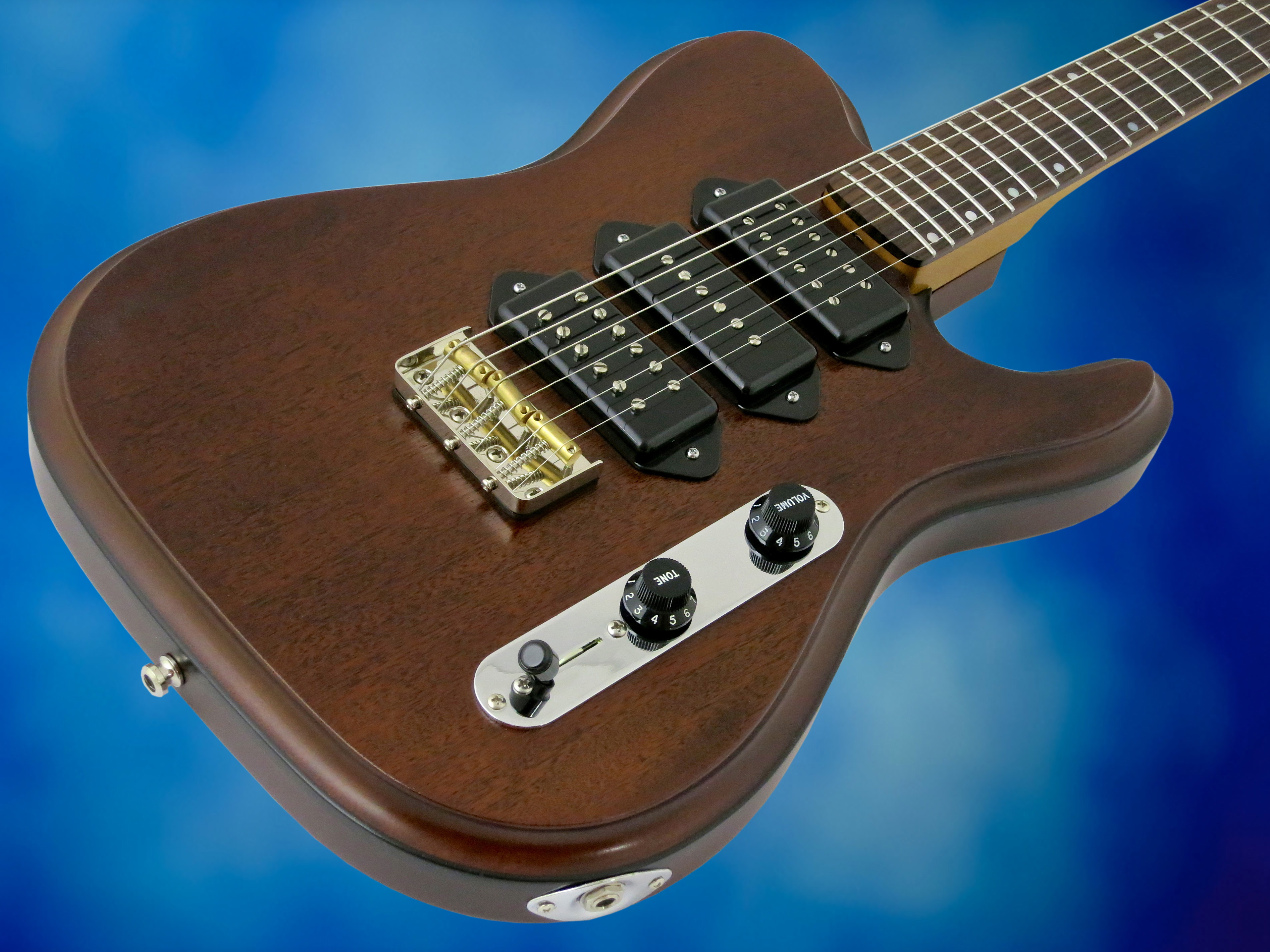
The Vuorensaku T-Style Custom scores top marks for workmanship and playability! Handmade instruments of such high calibre always possess that little something extra, a special feel that is nigh on impossible to find in a mass-produced guitar.

The T-Style Custom is a lightweight instrument. With a slippery nylon strap you might even notice a hint of neck-heaviness, but nothing a nice leather strap couldn’t get to grips with easily.

The fat C-profile of this Vuorensaku’s neck is just what the doctor ordered. The combination of this profile with the modern fretboard radius and the gorgeous fretwork, makes for a fantastic playing feel that’s fast and easy to control. The setup was superb with a set of 010s and a low action (low-E: 2.1 mm/high-e: 1.5 mm).

Acoustically, the Vuorensaku sounds just like the prime exponent of a Fender-type guitar it is – open and ringing.

Played amplified, the T-Style Custom offers a broader, much more diverse picture, which isn’t really surprising, as the Vuorensaku comes equipped with a completely different set of pickups, compared to your run-of-the-mill Tele. The guitar’s three pickups, five-way switch, and humbucker split gives you a very cool selection of different Gibson- and Fender-style tones.

I love this Vuorensaku to bits, but I found a small point to moan about, too. The bridge pickup’s signal level is noticeably weaker than that of the neck pickup. This isn’t due to any shoddy workmanship, though, but rather down to the Dog Ear-type of pickup mounting, and a phenomenon many Gibson- and Epiphone-owners are well aware of. It’s very hard for a reviewer to criticise a custom-ordered guitar, because there’s always the possibility that the guitar was meant to perform in this way. Still, if this were my instrument, I’d ask Saku Vuori to add a small plastic shim (1.5-2 mm) beneath the bridge pickup to raise it closer to the strings.

The Rautia Guitars Dog Ear-set sounds fantastic. Thanks to the moderate output of the humbuckers, there’s never any danger of the sound getting mushy or ill-defined. The ’buckers also sound great in split-mode, and combining the two humbuckers with a rude-sounding P-90 in the middle position can only be described as a stroke of genius.

This clip gives you an idea of the guitar’s sounds with the humbuckers split (starting with the neck pickup):

Here we have a similar clip featuring the full humbuckers:

And to round it off, here’s the audio from the You Tube-video:
Vuorensaku T-Style – body beauty 1 – bgr

What a guitar! The Vuorensaku T-Style Custom is another excellent example of the fantastic quality of Finnish guitar-making. Too bad the owner wants his guitar back…

****

Vuorensaku T-Style Custom

Price range for a similar guitar: 2,500 – 3,000 €

A big ”thank you” goes to the promoter of the Rockkaamo Festival, Mr Jani Savolainen, for the loan of his guitar!

Pros:

+ Made in Finland

+ handcrafted

+ workmanship

+ playability

+ sound

Cons:

– balance between neck and bridge pickup

Vuorensaku T-Style – body beauty 2 – bgr

Testipenkissä: Vuorensaku T-Style Custom

****

Vuorensaku T headstock – preview – mid

Vuorensaku on yhden miehen soitinpaja Jyväskylästä. Kielisoitinartesaani Saku Vuori korjaa ja rakentaa kaikenlaisia kielisoittimia. Tämän lisäksi Vuorensakulta saa myös käsintehtyjä kitaramikrofoneja.

Vuorensakulla ei ole valmista mallistoa, vaan yritys on aito custom-paja, jossa soittimet syntyvät käsityönä asiakkaiden toiveiden mukaan.

Saku Vuori on Suomen Soitinrakentajien Killan jäsen.

****

Vuorensaku T-Style – full front – bgr

Sain Sakulta testiin hiljattain valmistuneen sähkökitaran, joka on erittäin puoleensavetävä yhteentörmäys 1970-luvun Telecaster Deluxesta ja 50-luvun Gibson ES-5 Switchmasterista. Soittimella ei ole virallista nimeä (vaan ainoastaan sarjanumero), mutta kutsun sitä tätä testiä varten Vuorensaku T-Style Customiksi.

Vuorensaku T-Style – full back – bgr

T-Style Customin perustana toimivat laadukkaat soitinpuut:

Ruuvikaula on veistetty miedosti liekehtivästä kanadalaisesta vaahterasta, ja otelauta on intialaista ruusupuuta. Kitaran reunalistoitettu runko taas on tehty hyvin kevyestä afrikkalaisesta mahongista. Runko on tehty kahdesta vierekkäisestä palasta, mutta liimasaumaa on miltei mahdoton havaita – erittäin tarkkaa työtä siis.

Vuorensaku T-Style – headstock – bgr

Vuorensakun satula on valmistettu aidosta hirvenluusta.

Otelaudan radius on nykyaikainen (9,5 tuumaa), ja siihen on asennettu 21 keskikokoista nauhaa ruostumattomasta teräksestä.

Vuorensaku T-Style – tuners – bgr

T-Style Customin nykyaikaisissa, kromatuissa Kluson Deluxe -virittimissä on vintage-tyylinen ulkonäkö, mutta ne toimivat huomattavasti sulavammin kuin 1950-luvun alkuperäiset painokset.

Vuorensaku T-Style – back beauty – bgr

Tässä kitarassa käytetään perinteistä Fender-kaulaliitosta neljällä puuruuvilla ja suorakulmaisella teräslevyllä.

T-Style Customin mattapintaisen nitrolakkaviimeistelyn ansiosta soitin näyttää (ja tuntuu) erittäin orgaaniselta ja aistikkaalta.

Vuorensaku T-Style – bridge

Klusonin loistava Half-size Tele -talla mahdollistaa perinteisen Telecaster-tallan yhdistämistä muihin soitintyyppeihin tai mikrofoneihin.

Monien kitaristien mielestä alkuperäinen Telecaster-talla kolmella messinkitallapalallaan on soundillaan yhä paras talla sähkökitaralle. T-Style Customin Kluson-tallassa tallapalojen kierteet on leikattu tahallaan vinosti, mikä auttaa kitaran intonaatiossa.

Vuorensaku T-Style – pickups 1 – bgr

Vuorensakun asiakas toivoi omaan kitaraansa kolmen mikrofonin Dog Ear -setin, ja sellainen löytyi toisen suomalaispajan, joensuulaisen Rautia Guitarsin, valikoimasta.

Veijo Rautian mikrofonisettiin kuuluu kaksi puolitettavaa humbuckeria (kaula- ja tallamikki), sekä yksikelainen P-90 (keskimikki).

Vuorensaku T-Style – controls – bgr

Käännetty paneeli helpottaa pääsyä volume-potikkaan.

Vuorensaku T-Style – electronics – bgr

Saku Vuori on onnistunut mahduttamaan kaikki komponentit perinteisen (ahtaan) Tele-koloon:

Volume-potikkaan on piilotettu nostokytkin humbuckerien puolitusta varten. Viisiasentoinen kytkin taas toimii Strato-tyylisesti. Kuten kuvastakin näkyy, työnjälki on erittäin siisti ja käytetyt osat erittäin laadukkaita.

****

Vuorensaku T-Style – beauty 2 – bgr

Vuorensaku T-Style Custom -kitaran työnjälki ja soitettavuus on ensiluokkaista. Huippulaadukkaassa käsintehdyssä soittimessa on aina ”se jokin”, mikä on miltei mahdoton löytää suuren sarjatuotannon kitaroista.

T-Style Custom on hyvin kevyt soitin. Erittäin kevyen mahonkirungon takia on jopa huomattavissa lievä taipumus kaulapainoisuuteen liukkaan nylonhihnan kanssa. Nahkahihna tekee tästä taipumuksesta kuitenkin tehokkaasti lopun.

Tämän Vuorensakun lihaksikas kaulaprofiili (iso C) on juuri minun makuun. Yhdessä 9,5-tuumaisen otelautaradiuksen ja huipputrimmattujen teräsnauhojen kanssa, tästä muodostuu erittäin nopea ja tarkka soittoalusta. Kitara saapui testiin hyvin mukavassa trimmissä (matala E-kieli: 2,1 mm/korkea e-kieli: 1,5 mm).

Vuorensakun akustinen klangi on – yllätys, yllätys – hyvin Fender-mainen ja avoin.

Vahvistimen kautta soitettuna T-Style Custom -kitaran luonne eroaa luonnollisesti rivi-Telestä, koska Vuorensakun mikrofonivarustus on erilainen. Kolmen mikin, viisiasentoisen kytkimen ja humbuckerien puolituksen yhteispelistä saa yhdeksän hienoa laatusoundia Gibsonin ja Fenderin soundimaailmoista.

Pidän tästä Vuorensakusta kovasti, mutta löysin kuitenkin myös yhden kritiikkikohdan – tallamikrofoni on hieman hiljaisempi kuin kaulamikki. Tämä ei kuitenkaan ole laatuvika, vaan dog ear -kiinnitykseen liittyvä – ja monelta vanhalta Gibsonilta ja Epiphonelta tuttu – ongelma. Asiakkaan toiveiden mukaan tehtyä custom-soitinta on hyvin vaikea kritisoida tällaisissa asioissa, koska voi hyvinkin olla, että kitaraa on tarkoitettu juuri tällaiseksi. Jos tämä olisi minun soitin, pyytäisin kuitenkin tallamikrofonin alle noin kahden millin paksuisen muovilevyn, jolla koko tallamikrofonia saisi nostettua lähemmäs kieliä.

Rautia Guitars Dog Ear -setin soundi on vallan mainio. Humbuckereiden maltillisen tehon ansiosta soundi ei mene koskaan tukkoon. Mikrofonit kuulostavat hyviltä myös puolitettuina. Yksikelainen P-90-mikrofoni sopii soundiltaan ja teholtaan loistavasti settiin.

Tässä on audiopätkä kitaran soundivaihtoehdoista, silloin kun humbuckerit on puolitettu (alkaa kaulamikrofonilla):

Ja tässä samankaltainen pätkä täysillä humbuckerilla:

Lopuksi vielä You Tube -videon ääniraita:

Vuorensaku T-Style – body beauty 1 – bgr

Oli todella suuri ilo saada tutustua tähän Vuorensaku-kitaraan. Tämä soitin on jälleen yksi loistava esimerkki suomalaisen soitinrakennustaidon erittäin korkeasta tasosta. Valitettavasti minun on pakko palauttaa tämä kitara…

****

Vuorensaku T-Style Custom

hintaluokka noin 2.500 – 3.000 €

Suuri kiitos Rockkaamo-festivaalin pääpromoottorille Jani Savolaiselle kitaran lainaamisesta!

Plussat:

+ kotimainen

+ käsintehty

+ työnjälki

+ soitettavuus

+ soundi

Miinukset:

– kaula- ja tallamikrofonin keskenäinen balanssi

Vuorensaku T-Style – body beauty 2 – bgr

Review: Italia Fiorano Standard + Mondial Deluxe

Italia Fiorano Standard – full front

The Italia Fiorano Standard (price in Finland approx.  640 €) is a beautiful thinline, double-cutaway semi.

The Fiorano’s body is made by routing large pockets into the front of a solid mahogany body. In contrast to Italia’s Rimini 6 or Mondial Deluxe models the Fiorano doesn’t have a full centre block, though, but features an opening in the block between the guitar’s pickups. The body is then finished by glueing on a bound spruce top.

Italia Fiorano Standard – headstock

Hard rock maple is used for the Fiorano Standard’s neck.

Italia Fiorano Standard – tuners

The modern tuning machines are embossed with the I-for-Italia logo, and work very nicely.

Italia Fiorano Standard – fretboard

The bound fretboard sports Italia’s stylish inlays, consisting of pearloid blocks and abalone dots.

Italia Fiorano Standard – body beauty 2

The Fiorano Standard’s neck is glued in at the 19th fret.

Italia Fiorano Standard – bridge

Great to see Italia using a modern version of the venerable Tune-o-Matic-bridge. The updated design does away with the annoying and ever-rattling piece of wire, used to keep the bridge saddles in place in the vintage version.

Italia Fiorano Standard – tailpiece

The snazzy chrome tailpiece adds its own bit of panache to this stylish semi.

Italia Fiorano Standard – pickups

As you might know by now, I’m something of a P-90 fan. The Fiorano Standard comes equipped with not one, but two of my favourite pickups. These are made by Wilkinson and come with chromed dog-ear covers.

Italia Fiorano Standard – controls

Like many of Italia’s models, the Fiorano also features a sping-suspended plastic tray as an unusual control cavity cover. The electronics comprise a three-way toggle, as well as master volume and tone controls.

****

Italia Mondial Deluxe – full front

Italia’s Mondial Deluxe (price in Finland approx. 675 €) is a genuine semiacoustic hybrid, offering you a piezo-equipped bridge (and active preamp) for acoustic-style guitar sounds alongside its traditional magnetic humbuckers.

Thinline-type mahogany body is mated to a maple top, which sports a very fetching Rickenbacker/Mosrite-style German Carve -edge. The top’s edges have been left natural, constituting what is usually called ”fake binding”.

Italia Mondial Deluxe – back beauty

The Mondial comes with a set maple neck.

You can also see the quick-release battery compartment for the 9 V battery used to power the piezo preamp.

Italia Mondial Deluxe – headstock

Italia’s top nut is made from a self-lubricating material containing graphite.

Italia Mondial Deluxe – tuners

We find the same decent-quality tuners on Mondial Deluxe as on the Fiorano.

Italia Mondial Deluxe – fingerboard

Look at the all the nice hues of blues and greens in the guitar’s abalone dots!

Italia Mondial Deluxe – piezo bridge

The Mondial’s bridge may look identical to the Fiorano’s, but this here is a piezo-equipped model. There’s a thin lead going from beneath the bridge and through the maple top to feed the piezo signal to the preamp.

Italia Mondial Deluxe – tailpiece

”I” – stands for Italia…

Italia Mondial Deluxe – pickups

Two vintage-voiced Wilkinson WVC-humbuckers handle magnetic duties on the Mondial Deluxe.

Italia Mondial Deluxe – piezo EQ

The sliders on the guitar’s shoulder control the piezo side’s three-band EQ.

Italia Mondial Deluxe – controls

The magnetic signal is fed to a three-way toggle selector and master volume and tone controls.

There’s a dedicated volume control for the piezo signal, as well as a second output jack, enabling you to feed the acoustic side to a mixing console or a dedicated acoustic amplifier.

****

Italia Fiorano Standard – beauty shot 1+

Italia’s Fiorano Standard is just the guiar for me. It is comfortably lightweight and balances nicely. Its relatively thin body sits nicely against your belly/ribcage, even without any contouring or bevels.

The neck has a nice, mid-depth C-profile, which will feel comfortable to most players. The Fiorano arrived extremely well set-up with a slinky action (E: 1.9 mm/e: 1.7 mm).

Even if you cannot expect a thinline guitar, such as the Fiorano Standard, to out-shout a fat Jazz guitar, the Italia’s spruce-topped mahogany body results in a warm and woody acoustic voice.

In my opinion, P-90s are the best choice for a guitar of this type, because their singlecoil construction makes for a more percussive and dynamic tone than what you’d get from a creamy humbucker.

Played into a clean amp channel you’ll get a nice, clucky attack and a open, yet strong overall voice, that will fit Jazz just as well as Brit Pop, Country, Blues or early Rock’n’Roll (why not add a Bigsby, perhaps?):

If you’re after warm, rich and dynamic dirty tones P-90s are just the ticket! The Fiorano Standard will work great for any Beatles-, Kinks- or Who-inspired player, as well as George Thorogood-style electric Blues:

Italia Fiorano Standard – beauty shot 2

****

Italia Mondial Deluxe – beauty shot 1+

Italia’s Mondial Deluxe is a medium-weight instrument. The well-executed German Carve and very clean fake binding make this guitar look more expensive than it really is.

The neck’s D-profile feels really good. Thanks to its clean fretwork and fine set-up this instrument also plays great (E: 2.0 mm/e: 1.3 mm).

Unplugged, Italia’s Mondial Deluxe is rather quiet, but its fresh acoustic voice and clear attack bode well for things to come.

This hybrid’s piezo sound was the real surprise for me in this review. Italia’s piezo system simply sounds that good and genuinely ”acoustic”:

Naturally, it’s good to hear the Mondial’s magnetic side perform to equally high standards. This guitar’s vintage-voiced Wilkinsons do a fine job of translating the Mondial’s fresh unplugged voice into nice clean tones:

Switching over to the distortion channel will turn the Mondial into a Seventies-style Blues Rock machine:

Italia Mondial Deluxe – beauty shot 2

****

Italia Fiorano Standard – body beauty 1

It’s nigh on impossible not to get a crush on these Italia-guitars: Both the Fiorano Standard and the Mondial Deluxe are distinctly different from the mainstream of guitars on the market, but their design idiosyncrasies  never get in the way of easy playability and great sound. If you want to steer clear of the usual copies, bust still look for a guitar with its own charm, you should definitely check out an Italia.

Italia Mondial Deluxe – body beauty 1

****

Italia Guitars – Fiorano Standard + Mondial Deluxe

Fiorano Standard – approx. 640 €

Mondial Deluxe – approx. 675 €

Finnish distributor: R-JAM Group

****

Pros (both models):

+ idiosyncratic design

+ workmanship

+ finish

+ playability

+ sound

Review: Amfisound Raudus Bass

Amfisound Guitars is a small company from the northern Finnish town of Oulu. Run by two master luthiers, Amfisound offers a surprisingly wide variety of different guitar and bass models, as well doing a lot of customising and repair jobs. Kitarablogi visited Amfisound’s workshop late last year – read all about it HERE.

Amfisound have introduced a new bass model recently, called the Raudus Bass, which is the subject of this review.

****

Amfisound Raudus Bass – full front

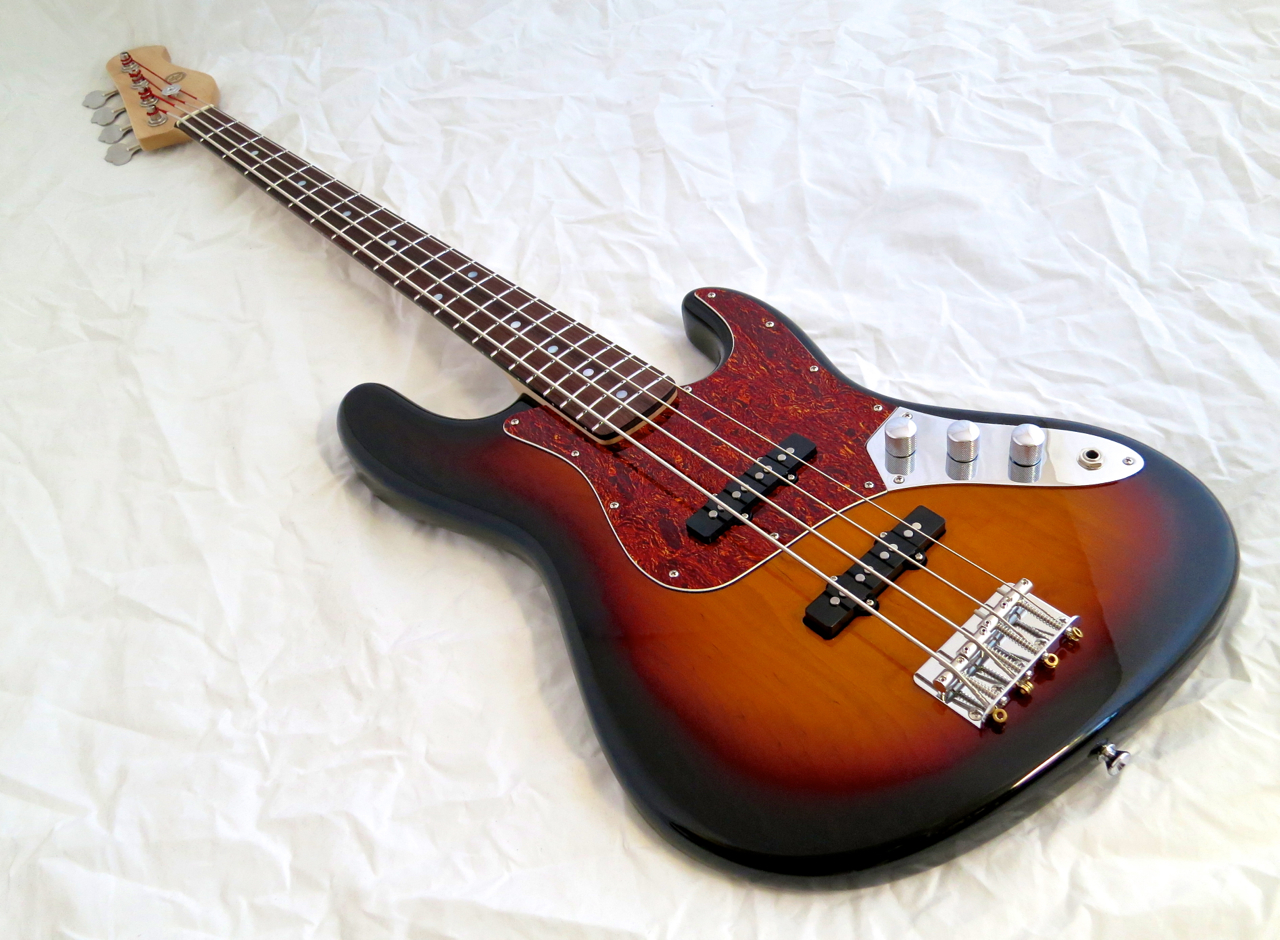
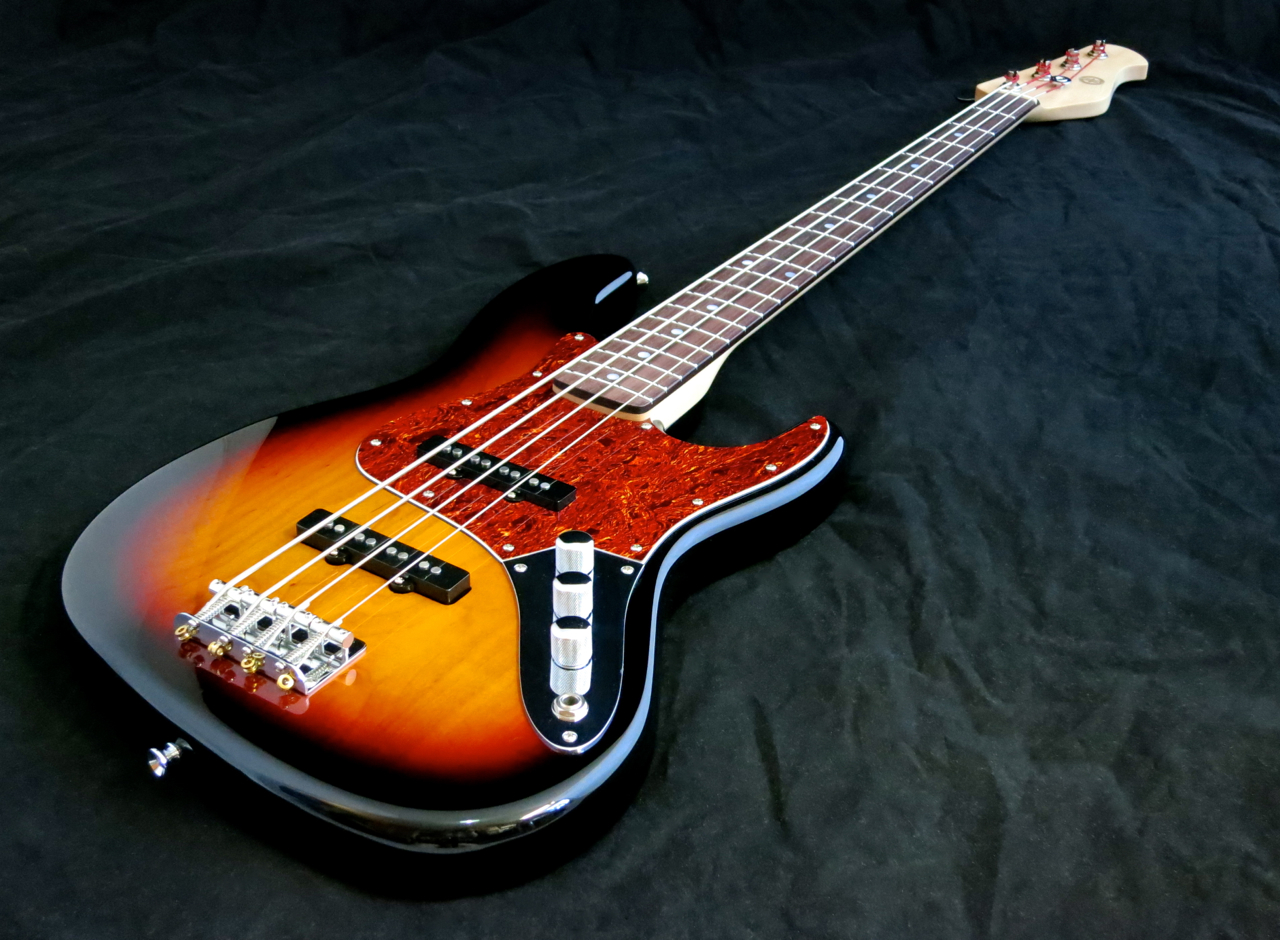
The Amfisound Raudus Bass (prices for EU-customers starting from 2,520 €) clearly takes its inspiration from Fender’s classic Jazz Bass, but this new Finnish (passive) bass offers a number of modern updates and improvements. The easiest things to notice on first sight are probably the added 21st fret and the much deeper cutaway.

Amfisound Raudus Bass – full back

The Raudus sports a body made from Finnish alder and a bolt-on maple neck.

The neck comes finished in a very thin satin lacquer, while the body is gloss finished in a glorious tri-colour sunburst.

Amfisound Raudus Bass – headstock

Our review sample of the Amfisound Raudus features two differences to the basic model – different tuning machines and different pickups.

Amfisound Raudus Bass – tuners

This Raudus comes equipped with a set of Hipshot’s UltraLite tuners (additional charge: 50 €), which are built from aircraft-grade aluminium. The UltraLite machines work extremely smoothly and precisely, and they efficiently cut down on surplus headstock weight, which is a good thing on such a traditionally-inspired long scale bass, such as the Raudus.

The two-way truss rod is accessed from the headstock side of the neck.

Amfisound Raudus Bass – fretboard

The outstanding standard of workmanship displayed in the Raudus-model’s fretwork, is but one of many points bearing clear testament to the world-class standard of Finnish luthiery! This is genuine custom shop quality.

The fretboard is made of Indian rosewood, and it’s sporting 21 medium-jumbo sized frets.

Amfisound Raudus Bass – neck joint

Amfisound’s rounded body heel makes excursions to the dusty end of the neck very comfortable, indeed.

Amfisound Raudus Bass – bridge

The bridge is a quality copy of the original, late-Sixties Fender bridge – if it ain’t broken, don’t fix it.

Amfisound Raudus Bass – pickups

The review sample comes with a set of Jarno Salo Pickups from Finland. The basic version uses Swedish Lundgrens.

Amfisound Raudus Bass – controls

This instrument offers you Jazz Bass-type controls – separate volume-knobs for each pickup, plus a master tone-control.

Amfisound Raudus Bass – electronics

Amfisound’s workmanship is spot-on and very crisp – even under the hood.

Amfisound Raudus Bass – body beauty 2

The list of available custom options from Amfisound is very long, and includes (in the Raudus-model’s case) an ash body, different bridges and/or tuners, as well as active Glockenklang-electronics (among other things). For more detailed information you should contact Amfisound’s Tomi or Sampo.

There’s also a five-string Raudus on offer, which is built with a longer scale of 35 inches.

****

Amfisound Raudus Bass – beauty shot 1

Amfisound’s Raudus Bass is a real corker of an instrument, with its sound and playability second to none.

The flatter-than-vintage fingerboard radius (9.5″) gives the slender neck a suitably modern playing feel. Thanks to Amfisound’s exemplary fretwork, our review sample’s low action (E: 2.0 mm/g: 1.6 mm) was completely free of annoying fret buzz or string rattle.

I’m a devoted Jazz Bass-fan, which made me feel right at home playing the Raudus. Yes, it’s true that the Amfisound offers much better top fret access, but overall this new bass feels like a dear old friend.

And this bass’ sound is outstanding, too, dishing out oodles of classic, Jazz Bass-style tones.

Jarno Salo’s excellent pickups are singlecoil designs, with the bridge pickup being reverse-wound and reverse-polarity in relation to the neck unit. This means that using both pickups together gets rid of any possible electromagnetic hum and buzz (from transformers, lighting or displays).

In terms of sound, these Salo-pickups really give you all those classic tones you’d expect from a bass such as this.

Listen to these three audio clips. Each clip has the neck pickup first, followed by both pickups on, and the bridge pickup going last:
Amfisound Raudus Bass – back beauty 1

****

Amfisound Raudus Bass – beauty shot 2

The Amfisound Raudus Bass is a very fine example Finnish luthiery, there’s no two ways about this. Finns must be very lucky to find such fine instruments right at their doorstep!

****

Amfisound Guitars Raudus Bass

Prices starting from 2,520 € (EU-customers) & 2,032 € (outside the EU)

Hard case included.

Contact: Amfisound Guitars

****

Pros:

+ Made in Finland

+ handmade 

+ workmanship

+ playability

+ sound

Review: Italia Maranello Classic + Rimini 6

italiaLogo

Now Italia Guitars are finally available in Finland!

Italia is a new brand on the Finnish market, even though these guitars have been available in many EU-countries for 15 years already. Italia Guitars is the joint effort of South Korean guitar factory Mirr Music and British guitar guru Trev Wilkinson. Wilkinson’s list of achievements is long and illustrious, including inventions such as the Wilkinson-vibrato and his roller nut, as well as instrument designs for Vintage (by JHS) and his own Fret-King brand.

The basic concept behind Italia Guitars is to come up with instruments that are imbued with the quirky charm of European electric guitars from the Fifties and Sixties, but which feature up-to-date playability and reliable electronics.

Italia’s distributor in Finland is R-JAM Group.

****

Italia Maranello Classic – full front

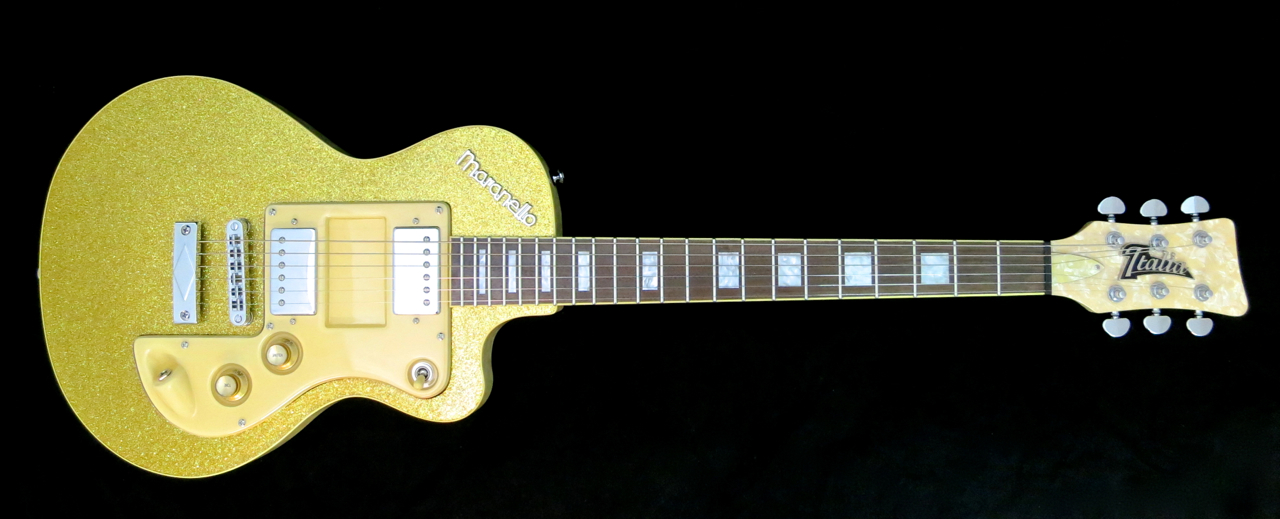
The Italia Maranello Classic (price in Finland around 640 €) is this brand’s best-known model, which has even found its way into the hands (and heart) of British songwriter and slide guitarist Chris Rea.

This model takes its inspiration from Hagström’s first solidbody electric, the P46, which has also been sold in North America under the Guyatone banner. In terms of its looks, the Maranello is a dead ringer for the P46, but the Italia’s electronic department clearly has been streamlined to make it a more sensible affair.

Italia Maranello Classic – full back

The Maranello Classic is quite a looker, sporting many hallmarks of classic Sixties designs.

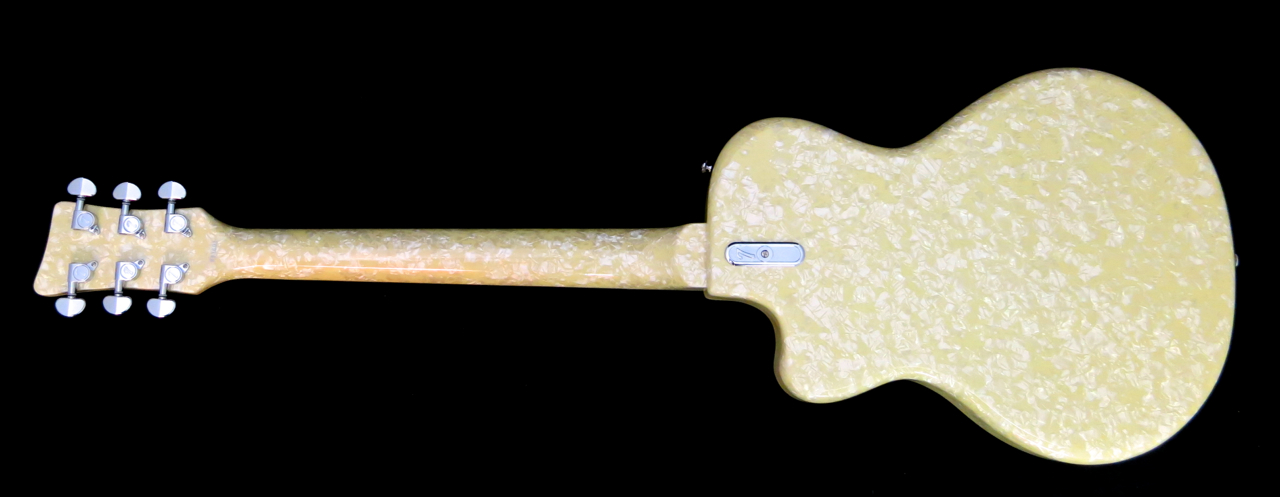
The agathis body’s curved front comes in a gold sparkle metal finish, while the back of the body, as well as the neck, have received a pearloid coating.

Italia Maranello Classic – neck plate

The maple neck is screwed onto the body with two screws, which can be found beneath a snazzy cover plate.

Italia Maranello Classic – headstock

A truss rod access at the headstock end, as well as a self-lubricating top nut are distinctly modern features…

Italia Maranello Classic – tuners

…as are the Maranello’s sealed tuning machines.

Italia Maranello Classic – fingerboard

The position markers are large block inlays. The bound rosewood fingerboard sports 22 medium-jumbo frets.

Italia Maranello Classic – bridge

This Italia comes with a modern, Wilkinson-branded tune-o-matic bridge. The tailpiece, which rests on ferules, has been lifted straight off the old trapezes used in some Gibson- and Epiphone-semis.

Italia Maranello Classic – pickups 2

The Maranello Classic comes equipped with a pair of Wilkinson WVC-humbuckers, which are Trev Wilkinson’s own version of the legendary PAF-humbucker.

Italia Maranello Classic – controls

All of the electronic parts on the Maranello – pickups, controls, and all – have been mounted onto a large cover-plate made stiff plastic, which is height adjustable, thanks to being suspended on top of metal springs.

This is an idea originally used on the Hagström P46. Italia Guitars are using a smaller, oval version of this – holding only the pickup switch, as well as the controls – on some of their other models.

Italia Maranello Classic – body beauty 1

****

Italia Rimini 6 – full front

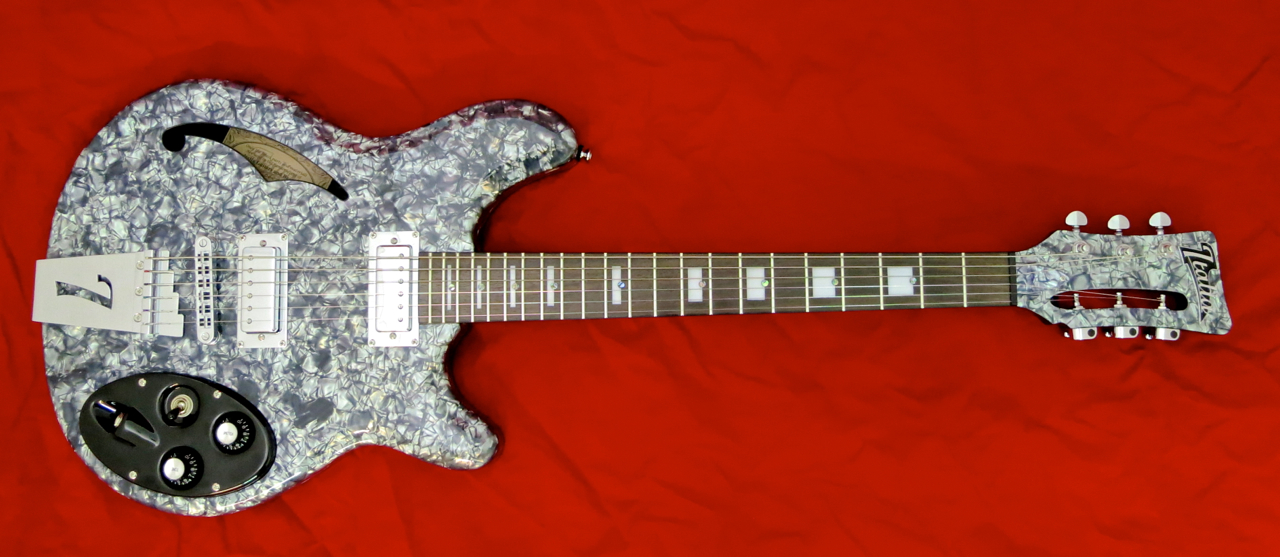
Italia’s Rimini 6 (price in Finland around 645 €) is rather reminiscent of the Rickenbacker 360, although it isn’t a straight copy of this classic guitar at all .

The Rimini 6 has a semiacoustic body made from solid agathis. The body blank is then routed out from the back, creating large cavities to both sides of a solid centre block. The body is then completed by glueing on a solid ash back.

Our review sample comes in a very fetching ”black” pearloid finish (some would call it ”bowling ball” or ”mother of toilet seat”), but you can also get your Rimini in a traditional colour finish, such as sunburst (sans the pearloid).

Italia Rimini 6 – back beauty 2

The black sunburst finish of the Rimini’s back shows off its beautiful grain nicely.

The model is built with a set maple neck.

Italia Rimini 6 – headstock

The headstock on the Italia Rimini 6 doffs its hat in Rickenbacker’s direction:

The legendary US brand had come up with a very nifty design for the headstocks of their 12-string electrics, which has the normally-tuned strings fixed to tuners installed to the headstock’s underside (like the Rimini’s bass strings), while the octave-strings are fed to tuning heads installed from the side (like the Rimini’s treble strings).

Italia Rimini 6 – tuners

The Rimini’s modern tuners carry Italia Guitars’ stylised I-logo.

Italia Rimini 6 – fingerboard

Simple, but beautiful – the position markers combine blocks with small abalone-dots.

Italia Rimini 6 – bridge

The Rimini 6 is equipped with a modern version of the tune-o-matic bridge, too.

Italia Rimini 6 – tailpiece

The large, chromed tailpiece adds still more visual bling to proceedings.

Italia Rimini 6 – pickups

I believe we can expect to hear some suitably fresh tones from the Rimini 6’s alnico-powered Wilkinson WMC-minihumbuckers.

Italia Rimini 6 – controls

The guitar’s controls comprise a three-way toggle switch, as well as controls for master volume and master tone.

Italia Rimini 6 – electronics

Removing the plastic tray gives us a good look at Italia’s clean workmanship and the very decent components used.

Italia Rimini 6 – body beauty 1

****

Italia Maranello Classic – beauty shot 1

The Italia Maranello Classic has a shape and weight similar to a Gibson Les Paul, even though the Maranello features a slightly longer scale (63.5 cm/25″). Depending on your playing style, the placement of the toggle switch right beneath the neck pickup might lead to some involuntary pickup switching, at least in the very beginning.

I really like this guitar’s fat and round D-profile, giving you something to hold on to.

The Maranello Classic had received a pro setup (at Guitarworx) before leaving R-Jam Group’s headquarters, which resulted in a very comfortable action (E: 2.0 mm/e: 1.4 mm) without any annoying rattling.

The Maranello’s acoustic tone contains more than a hint of semi-style hollowness, no doubt thanks to the large pickup and electronics routing and the huge plastic scratchplate/tray.

Some of this open acoustic character is also carried over into the Maranello Classic’s amplified sounds, which adds a welcome degree of liveliness. Wilkinson’s alnico-equipped WVC-humbuckers have a nice vintage-style tonality at moderate output levels.

Modern Metal- and Hard Rock-styles aren’t probably the best environment for this Italia-model, because the Maranello’s large plastic cover tends to add a slight bit of microphonics. On the other hand, I don’t think this guitar is aimed at the Thrash-metaller. Instead, the Maranello Classic is a great guitar for classic Blues, Rock, Jazz and Pop!

Italia Maranello Classic – back beauty 1

****

Italia Rimini 6 – beauty shot 1

Wow, what a compact and lightweight guitar! The Rimini 6 feels great, both played seated and standing up with a strap, and balances very nicely.

The neck has an oval, C-type profile, and comes with a Rickenbacker-style scale (62.8 cm/24.75″). The medium-jumbo frets, as well as the great setup and low action (E: 1.9 mm/e: 1.3 mm), result in a very light and fast touch, turning this guitar into a natural extension of the player’s body.

Acoustically, the Rimini 6 sounds very open and fresh.

Like the P-90, a minihumbucker could be described as a sonic compromise between a Fender-style singlecoil and a full-blown humbucker. The minihumbucker’s great advantage over the P-90 lies in the former’s immunity against electromagnetic interference.

This Italia has fine ringing tone with a piano-like attack, which is never brittle or grating. These Wilkinson-pickups sound fantastic and offer enough output to take you from authentic Sixties-sounds (think Beatles, Byrds and early Who) all the way to more grittier stuff (think Paul Weller or Peter Buck).

Italia Rimini 6 – back beauty 1

****

Italia Maranello Classic – body beauty 2

Italia Guitars’ Maranello Classic ja Rimini 6 are quality instruments, which manage to combine vintage looks and quirkiness with easy playability and great tone.If you’re on the lookout for a cool guitar off the beaten track, you should really give one of these Italia-models a try!

Italia Rimini 6 – body beauty 2

****

Italia Guitars – Maranello Classic + Rimini 6

Maranello Classic – approx. 640 €

Rimini 6 – pearloid-version (as tested) approx. 645 €, basic version approx. 615 €

Finnish distributor: R-JAM Group

****

Pros (both models):

+ cool, idiosyncratic design

+ workmanship
+ quality of finish

+ playability

+ sound

Cons (only Maranello):

– small dark spot in finish next to output jack

Testipenkissä: Italia Fiorano Standard + Mondial Deluxe

Italia Fiorano Standard – full front

Italia Fiorano Standard (noin 640 €) on hyvin nätti, kahdella soololovella varustettu thinline-tyypinen puoliakustinen sähkökitara.

Fioranon kokopuiseen mahonkirunkoon on edestä työstetty isoja resonanssikoloja. Toisin kuin esimerkiksi Rimini 6- tai Mondial Deluxe -mallissa, Fioranon koppaan ei kuitenkaan jätetty seisomaan yhtä yhtenäistä keskipalkkia, vaan basso- ja diskanttipuolen kolojen väliin on avoin käytävä kitaran mikrofonien välissä. Viimeiseksi koppa on suljettu reunalistoitetulla kuusikannella.

Italia Fiorano Standard – headstock

Fioranon kaula veistetään vaahterasta.

Italia Fiorano Standard – tuners

Italia-logolla varustetut nykyaikaiset virittimet toimivat sulavasti ja moitteettomasti.

Italia Fiorano Standard – fretboard

Reunalistoitetun palisanteriotelautaan on upotettu firman typpisiä otemerkkejä helmiäismuovista ja aidosta abalonesta.

Italia Fiorano Standard – body beauty 2

Fiorano Standardin kaula on liitetty runkoon perinteisesti liimaamalla. Liitoskohta on 19. nauhan kohdalla.

Italia Fiorano Standard – bridge

Nykyaikaisessa tune-o-matic-tallassa tallapalat on kiinnitetty suoraan tallan runkoon, ilman sitä – vanhanaikaisista versioista tuttua – usein häiritsevästi rämisevää metallijousta.

Italia Fiorano Standard – tailpiece

Puoliakustiselle kitaralle näyttävästi kiiltävä kieltenpidin sopii kuin nakutettu.

Italia Fiorano Standard – pickups

Täyttyy myöntää, että olen itse aikamoinen P-90-mikrofonien fani. Italia-kitarassa löytyy heti kaksi, Wilkinsonin valmistamaa kappaletta, joilla on kromattuja metallikansia.

Italia Fiorano Standard – controls

Useissa Italia-malleissa elektroniikka on asennettu jousitettuun muovilaatikkoon, niin kuin Fiorano Standardissakin, jolla on master volume- ja tone-säätimien lisäksi myös kolmiasentoinen vipukytkin.

****

Italia Mondial Deluxe – full front

Italia Mondial Deluxe (noin 675 €) on aito, puoliakustinen hybridikitara, jolla on magneettisien humbucker-mikrofonien lisäksi piezomikrofonilla varustettu talla, ja ”akustiselle” signaalille oma etuvahvistin.

Thinline-paksuiseen mahonkikoppaan on liimattu vaahterakansi, jolla on yläreunoissa Rickenbacker/Mosrite-tyylinen German Carve -kaiverrus. Lisäkoristeeksi on jätetty kannen reunat sivulta värjäämättä, joka antaa kannelle vaikutelman reunalistoituksesta (ns. fake binding).

Italia Mondial Deluxe – back beauty

Mondialin vaahterakaula on liimattu soittimen runkoon.

Kuvassa näkyy myös runkoon upotettu paristolokero piezon etuvahvistimen käyttämälle yhdeksän voltin paristolle.

Italia Mondial Deluxe – headstock

Italian satula on tehty kitkaa vähentävästä, grafiittipitoisesta muoviseoksesta.

Italia Mondial Deluxe – tuners

Mondial Deluxessa käytetään samaa laadukasta viritinmallia kuin Fioranossa.

Italia Mondial Deluxe – fingerboard

Tässä kuvassa näkyy hyvin abalonen kauniita vihreitä ja sinisiä sävyjä.

Italia Mondial Deluxe – piezo bridge

Vaikka Mondialin talla näyttää ihan samalta kuin Fioranon vastine, se on piezomikrofonilla varustettu malli. Tallan alla kulkee ohut johto vaahterakannen läpi aktiiviseen etuvahvistimeen.

Italia Mondial Deluxe – tailpiece

”I” – niin kuin Italia…

Italia Mondial Deluxe – pickups

Mondial Deluxe on varustettu kahdella, vintage-henkisellä Wilkinson WVC -humbuckerilla.

Italia Mondial Deluxe – piezo EQ

Kolmikaistaisen piezo-EQ:n liukusäätimet sijaitsevat kaulamikrofonin ylläpuolella.

Italia Mondial Deluxe – controls

Humbuckerien signaali syötetään passiivielektroniikan läpi, joka koostuu kolmiasentoisesta vipukytkimestä, sekä master volumesta ja tonesta.

Piezosignaalille on varattu oma volume-säädin ja oma jakkilähtö, jonka ansiosta kitaran ”akustinen” signaali voidaan lähettää esimerkiksi PA-mikserille tai omalle, akustiselle kitaralle erikoistuneelle vahvistimelle.

****

Italia Fiorano Standard – beauty shot 1+

Italia Fiorano Standard on selvästi sähkökitara minun makuun. Se on mukavan kevyt ja hyvässä tasapainossa. Suhteellisen ohut runko istuu eritäin hyvin soittajan kehoa vasten, vaikka tässä mallissa ei ole ns. mukavuusviiste rungon takapuolella.

Kaulan profiiliksi on valittu sellainen keskipaksu C-profiili, joka tuntuu varmasti lähes jokaisen kitaristin kädessä hyvin mukavalta. Fioranon kaikki säädöt olivat prikulleen kohdillaan ja soittimen kevyt tatsi tekee soittotuntumasta vaivattoman (E: 1,9 mm/e: 1,7 mm).

Vaikka tällaisen thinlie-tyylisen puoliakustisen akustinen volyymi ei luonnollisesti vedä vertaa oikealle orkesterikitaralle, Fioranon Standardin kuusikannella varustettu mahonkirunko antaa tälle soittimelle herkullisesti jazzahtavan, kuivan perusluonteen.

Minun mielestäni P-90-mikrofonit ovat tällaiselle soittimelle juuri se oikea valinta, koska näiden yksikelaisten soundi on hieman perkussiivisempi ja dynaamisempi kuin esimerkiksi tyypillisissä humbuckereissa.

Puhtaassa soinnissa on mukana herkullisen helmeilevä atakki ja hyvin avoin, mutta silti vahva yleisklangi, joka sopii Jazzin ohella myös todella hyvin Brit-Poppiin, Country-musiikkiin, Bluesiin tai vaikkapa varhais-Rock-n-Rolliin:

P-90-mikkien lämmin, rikas ja dynaaminen luonne on juuri se oikea lähtökohta autenttisille kuuskytluvun Beatles-, Kinks- tai Who-soundeille, sekä George Thorogood -tyyliselle sähkö-Bluesille:

Italia Fiorano Standard – beauty shot 2

****

Italia Mondial Deluxe – beauty shot 1+

Painonsa suhteen Italian tyylikäs Mondial Deluxe sijoittuu hyvään keskikastiin. Huolellisuutta vaativa kannen kaiverrus ja sen ”reunalistoitus” on toteutettu erittäin siististi, samoin kitaran kuvankaunis sunbust-väritys. Mondial Deluxe vaikuttaa kalliimmalta kitaralta kuin mikä se todellisuudessa on.

Kaulan D-profiili tuntuu erittäin hyvältä. Tässä Italia-soittimessakin nauhatyön laatu ja testisoittimen soittotuntuma ovat todella kiitettävällä tasolla (kielikorkeus E: 2,0 mm/e: 1,3 mm).

Akustisesti soitettuna Mondial Deluxe on suhteellisen hiljainen, mutta sen äänessä on lupaavalta kuulostava tuorehko soundi selkeällä atakilla.

Tämän hybridikitaran piezoääni oli minulle erittäin positiivinen yllätys, juuri soundin ”akustisuuden” ansiosta. Näin hyvälle piezosoundille löytyy varmasti paljon käyttöä:

Mallikkaasti hoidetun piezopuolen jälkeen on luonnollisesti vakuuttava huomata, että myös Mondialin ”sähköinen” puoli kuulostaa tosi hyvältä. Vintage-tyyliset, tehoiltaan maltilliset Wilkinson-humbuckerit onnistuvat välittämään tämän Italian tuoretta perusluonnetta uskollisesti eteenpäin:

Mondialin säröpuolelta taas löytyy erittäin maukkaita 1970-luvun Blues Rock- ja Heavy-soundeja:

Italia Mondial Deluxe – beauty shot 2

****

Italia Fiorano Standard – body beauty 1

Näihin Italia-kitaroihin on erittäin helppoa tykästyä: Fiorano Standard ja Mondial Deluxe ovat sopivan erilaisia, mutta tämä erilaisuus ei seiso hyvän soitettavuuden ja loistavan soundin tiellä. Jos etsit jotain vintage-kopioista poikkeavaa sähkökitaraa, jolla on samalla sekä omaleimainen charmi että nykyaikainen soitettavuus, kannattaa mielestäni tutustua lähemmin Italia-malleihin.

Italia Mondial Deluxe – body beauty 1

****

Italia Guitars – Fiorano Standard + Mondial Deluxe

Fiorano Standard – noin 640 €

Mondial Deluxe – noin 675 €

Maahantuoja: R-JAM Group

****

Plussat (molemmat mallit):

+ omintakeinen design

+ työnjälki

+ viimeistely

+ soitettavuus

+ soundi

Testipenkissä: Amfisound Raudus Bass

Amfisound Guitars on kahden soitinrakentajamestarin yhdessä vetämä soitinpaja Oulun Haukiputaalta, joka tarjoaa erittäin laajan valikoiman omia soitinmalleja, sekä kattavat korjaus- ja kustomointipalvelut. Löydät Kitarablogi-jutun viime talven Amfisound-vierailusta TÄÄLTÄ.

Amfisoundilta on hiljattain ilmestynyt uusi bassomalli nimeltään Raudus Bass, jota on saatu nyt testiin.

****

Amfisound Raudus Bass – full front

Amfisound Raudus Bass -mallin (hinnat alkaen 2.520 €) lähtökohtana on nähtävästi toiminut Fenderin Jazz-basso, mutta tämä uusi suomalainen passiivibasso tarjoaa monia nykyaikaisia päivityksiä, joita on esikuvasta turha hakea. Helpoiten havaittavissa ovat varmaan rungon huomattavasti syvempi soololovi ja otelautaan lisätty 21. nauha.

Amfisound Raudus Bass – full back

Raudus-basson runko veistetään suomalaisesta lepästä ja sen kaula on vaahteraa.

Kaulaa viimeistellään ohuella, mattapintaisella lakkauksella, kun taas runko komeilee kiiltävässä, kolmivärisessä sunburstissaan.

Amfisound Raudus Bass – headstock

Testattu Amfisound Raudus on hyvin lähellä mallin perusversiota, lukuun ottamatta testisoittimen virittimet ja mikrofonit.

Amfisound Raudus Bass – tuners

Tähän Raudukseen on asennettu – maksullisena optiona (50 €) – Hipshotin höyhenenkevyet UltraLite-virittimet, joita valmistetaan lentokoneiden valmistuksessa käytetystä alumiinista. UltraLite-virittimet toimivat erittäin tarkasti, ja ne parantavat (alhaisen painonsa ansiosta) ergonomisesti rakennetun Raudus-mallin tasapainoa vielä entisestään.

Basson kaksisuuntaista kaularautaa säädetään kätevästi lavan puolelta.

Amfisound Raudus Bass – fretboard

Tämän Amfisoundi-soittimen esimerkillinen nauhatyö on vain yksi Rauduksen lukuisista kohdista, jotka kielivät suomalaisen soitinrakennustaidon huimasta tasosta! Tällaiseen laatuun massatuotetut soittimet yksinkertaisesti eivät yllä.

Otelauta on intialaista ruusupuuta, ja nauhojen koko on medium-jumbo.

Amfisound Raudus Bass – neck joint

Amfisoundin sulavaa ruuviliitosta käytetään luonnollisesti myös firman uudessa Raudus-bassossa.

Amfisound Raudus Bass – bridge

Fenderin alun perin kehittämä bassotalla on monien mielestä yhä se paras vaihtoehto.

Amfisound Raudus Bass – pickups

Testisoittimeen on asennettu suomalaiset Jarno Salo Pickups -mikrofonit. Perusversiossa löytyy ruotsalaisia Lundgren-mikkejä.

Amfisound Raudus Bass – controls

Säätimet toimivat Jazz-bassosta tutulla tavalla – kummallekin mikrofonille on oma volume-säädin, ja niiden lisäksi löytyy yhteinen master tone.

Amfisound Raudus Bass – electronics

Amfisoundin erittäin laadukas ja siisti työ on nähtävissä myös elektroniikkalokeron kannen alta.

Amfisound Raudus Bass – body beauty 2

Amfisoundin mahdollisien custom-optioiden lista on erittäin pitkä, ja se tarjoaa Raudus Bass -mallin tapauksessa mm. saarnirunkoa, erilaisia talla- ja viritinratkaisuja, tai vaikkapa aktiivista Glockenklang-elektroniikkaa. Tarkempia tietoja optioista ja niiden hinnoista saa ottamalla yhteyttä suoraan Amfisoundin Tomiin tai Sampoon.

Raudus-basso on myös saatavilla viisikielisenä versiona pidemmällä 35-tuumaisella mensuurilla.

****

Amfisound Raudus Bass – beauty shot 1

Amfisoundin Raudus on kyllä upea ja kevyt soitin, jossa soitettavuus ja soundi ovat mielestäni prikulleen kohdallaan.

Otelaudan hieman vintagea loivempi radius (9,5 tuumaa) antaa solakalle kaulalle sopivasti nykyaikaista tuntumaa. Amfisoundin esimerkillinen nauhatyö mahdollisti testibassossa hyvin matalan kielenkorkeuden (E: 2,0 mm/g: 1,6 mm) ilman minkäänlaista räminää.

Koska olen vanha Jazz-basson fani, Raudus tuntui heti ensikättelyssä vanhalta ystävältä. Totta, ylimpiin nauhoihin pääsee Amfisoundilla alkuperäistä paremmin, mutta muuten ergonomia ja soittimen tuntuma on hyvin lähellä vanhaa klassikkoa.

Eikä Raudus jätä soundiltaan lainkaan toivomisen varaa, vaan tarjolla on erittäin maukas kattaus erilaisia klassikkosoundeja.

Alkuperäisten tavalla myös Jarno Salon mikrofonit ovat yksikelaisia, jotka on kuitenkin käämitty toistensa nähden vastasuuntaan. Tämä tarkoittaa, että yksikelaisten poimimat hurinat ja sirinät katoavat aina täysin, kun molemmat mikrofonit ovat täysillä.

Soundillisesti Salo-mikrofoneissa löytyy juuri se oikea ”vanhan liiton” meininki, joka sopii erittäin hyvin tähän perinnetietoiseen Amfisound-bassoon.

Tässä kolme esimerkkipätkää (järjestys jokaisessa pätkässä: kaulamikrofoni –> molemmat –> tallamikrofoni):

Amfisound Raudus Bass – back beauty 1

****

Amfisound Raudus Bass – beauty shot 2

Testin perusteella voin vain todeta, että Amfisoundin Raudus Bass todellakin edustaa suomalaista osaamista ja laatua parhaimmillaan. Miksi mennä merta edemmäs kalaan, kun tällainen, käsintehty laatubasso löytyy Suomessa?

****

Amfisound Guitars Raudus Bass

Hinnat alkaen 2.520 € (laadukas kova laukku kuuluu hintaan)

Lisätiedot: Amfisound Guitars

****

Plussat:

+ aitoa suomalaista laatua

+ käsintehty

+ työnjälki

+ soitettavuus

+ soundi

Review: Vox Mark III + Mark V

****

Vox Mark III – headstock logo

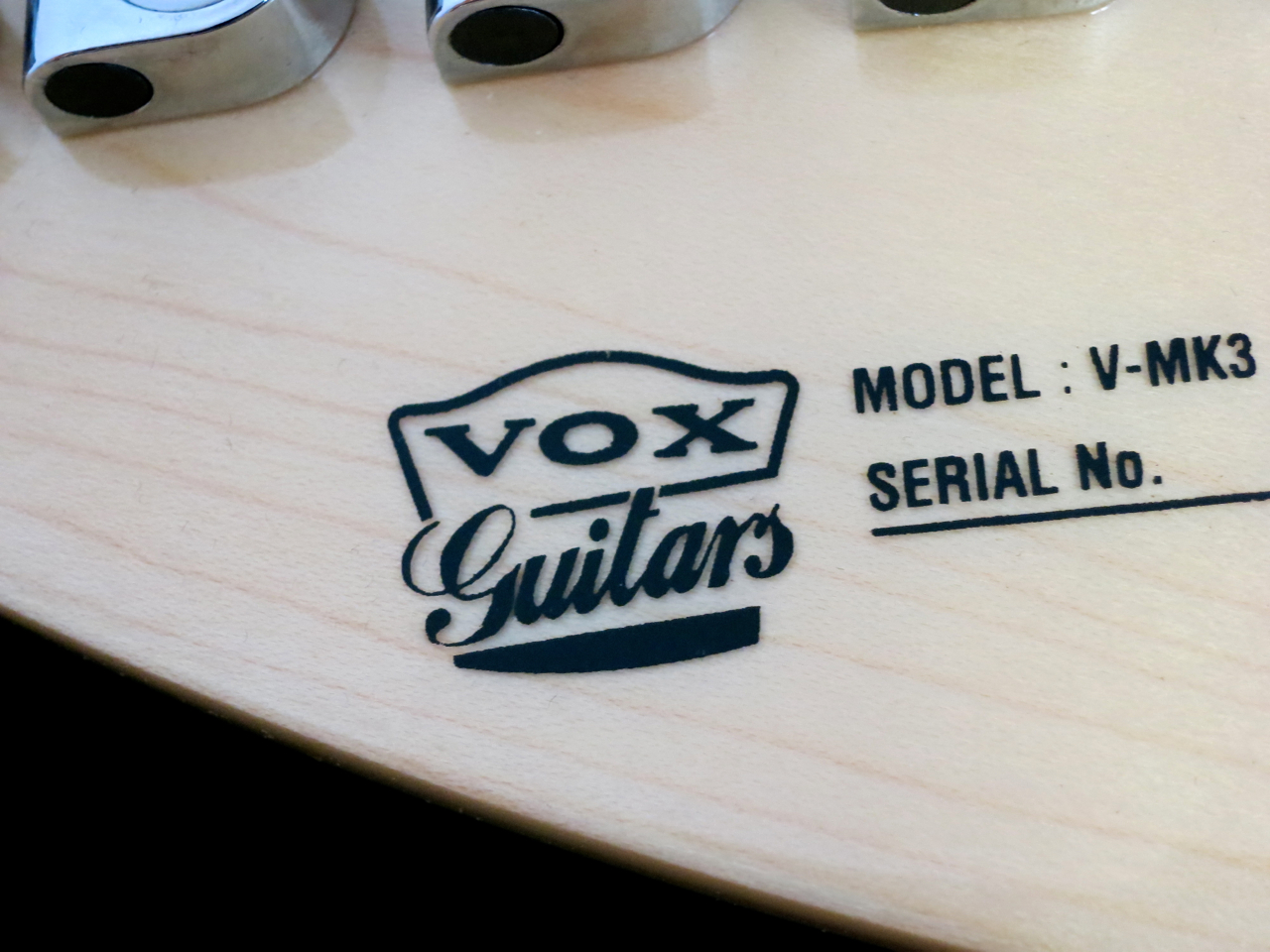
Vox’ legendary Sixties guitars, the Mark III and the Mark V – aka the Vox Teardrop (Mark III) and the Vox Phantom (Mark V) – have made a comeback! These Brit Boom-guitars have claimed their place in history as the chosen axes of the Rolling Stones’ original lead guitarist Brian Jones (Mark III) and Tony Hicks (Mark V) of the Hollies.

But the best news is that these new versions come at quite affordable prices!

****

Vox Mark III – full front

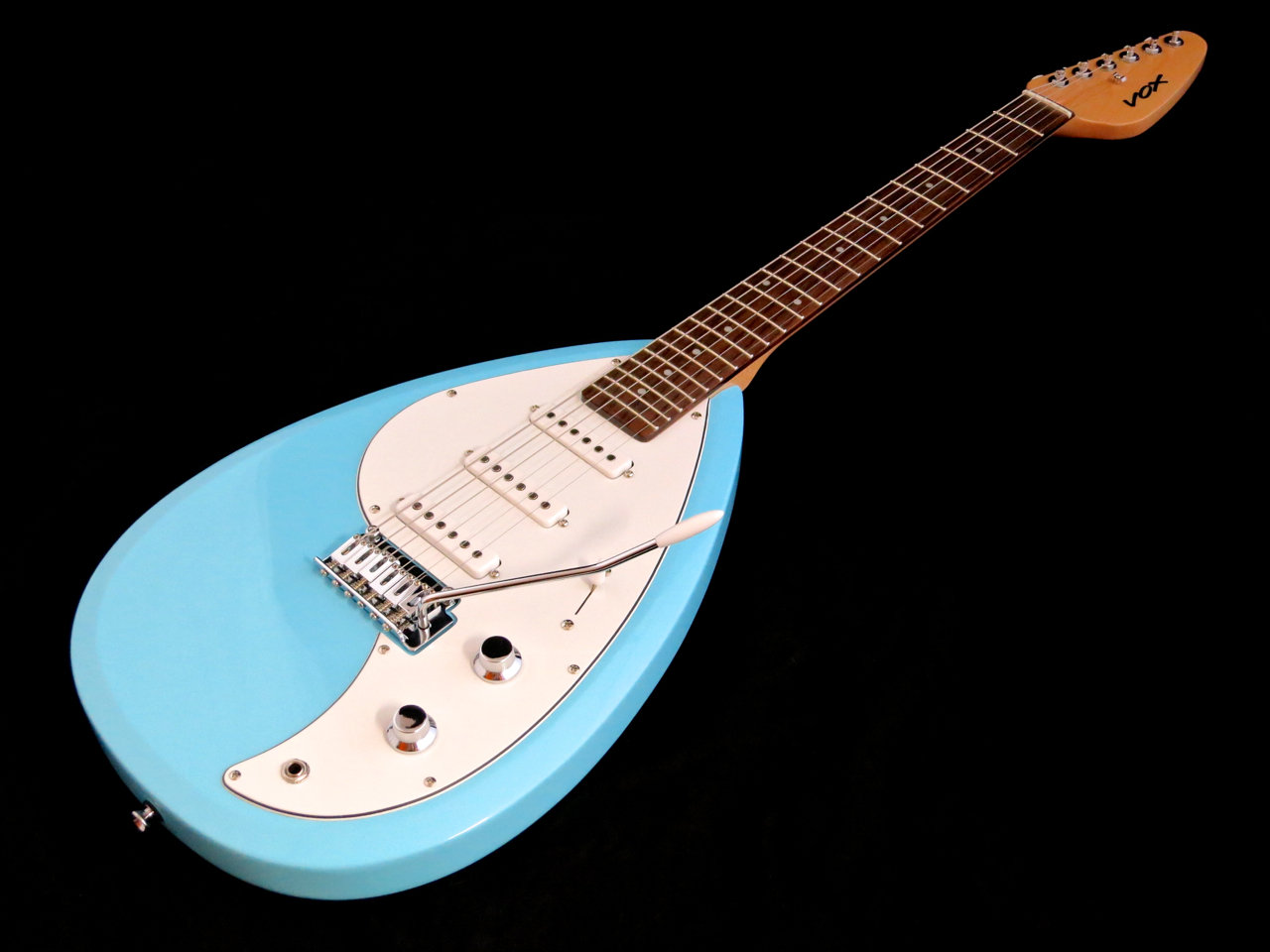
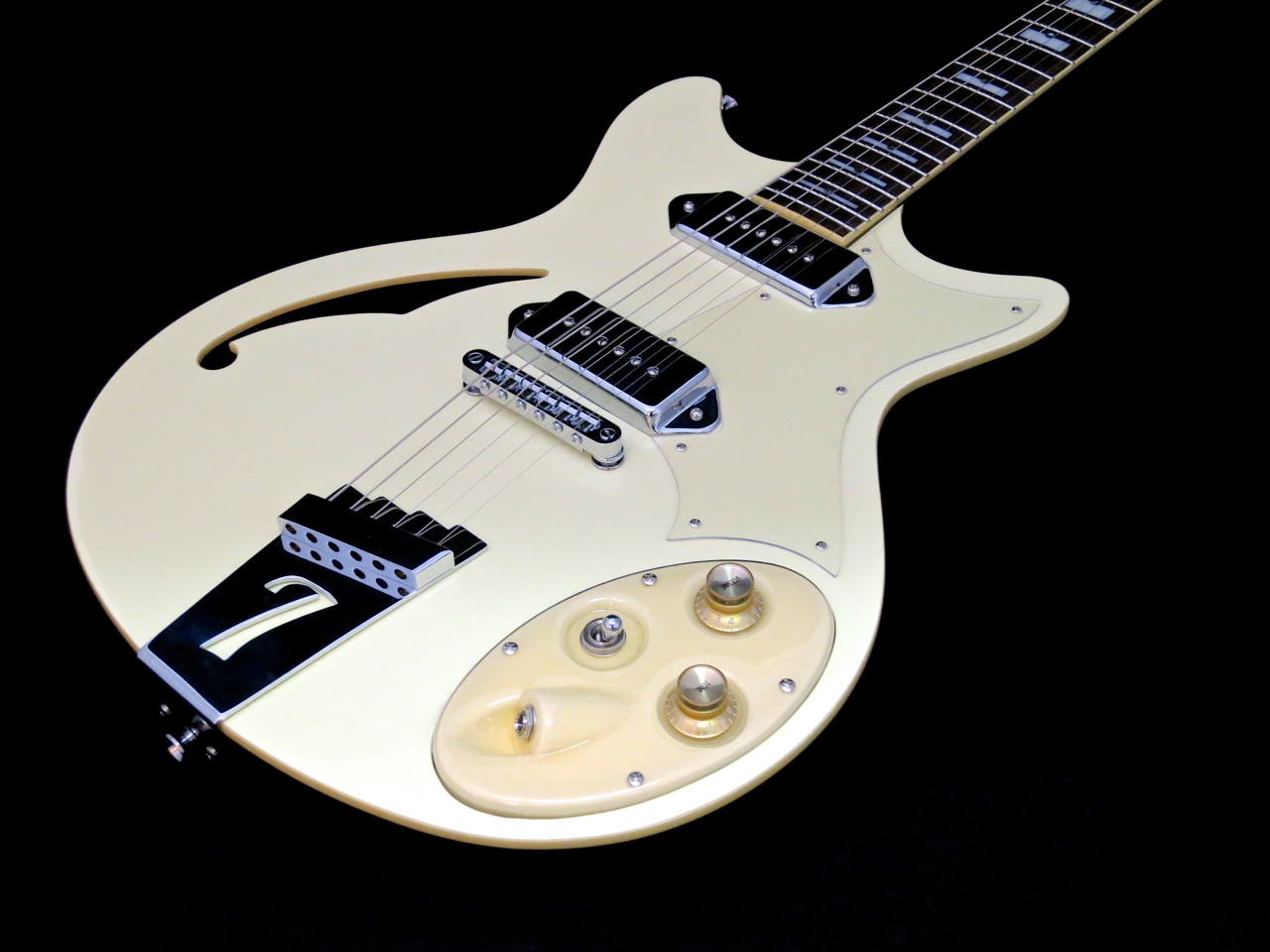
The Vox Mark III (current price in Finland approx. 355 €) sports a symmetrical body, which calls to mind old lutes or the Greek bouzouki.

This reissue comes with a short 22-inch scale (610 mm), making it an ideal beginner’s instrument.

Vox Mark III – full back

The Teardrop is build from a basswood body and a bolt on maple neck. The fretboard is crafted from rosewood.

Vox Mark III – headstock

The new, smaller version of the legendary Vox-headstock cuts down on neck weight and thus improves the guitar’s balance.

Vox Mark III – tuners

The Mark III is equipped with a set of modern sealed tuning machines that sport off-white buttons.

Vox Mark III – vibrato

Both Voxes comes with a modern two-post vibrato bridge.

Vox Mark III – vibrato springs

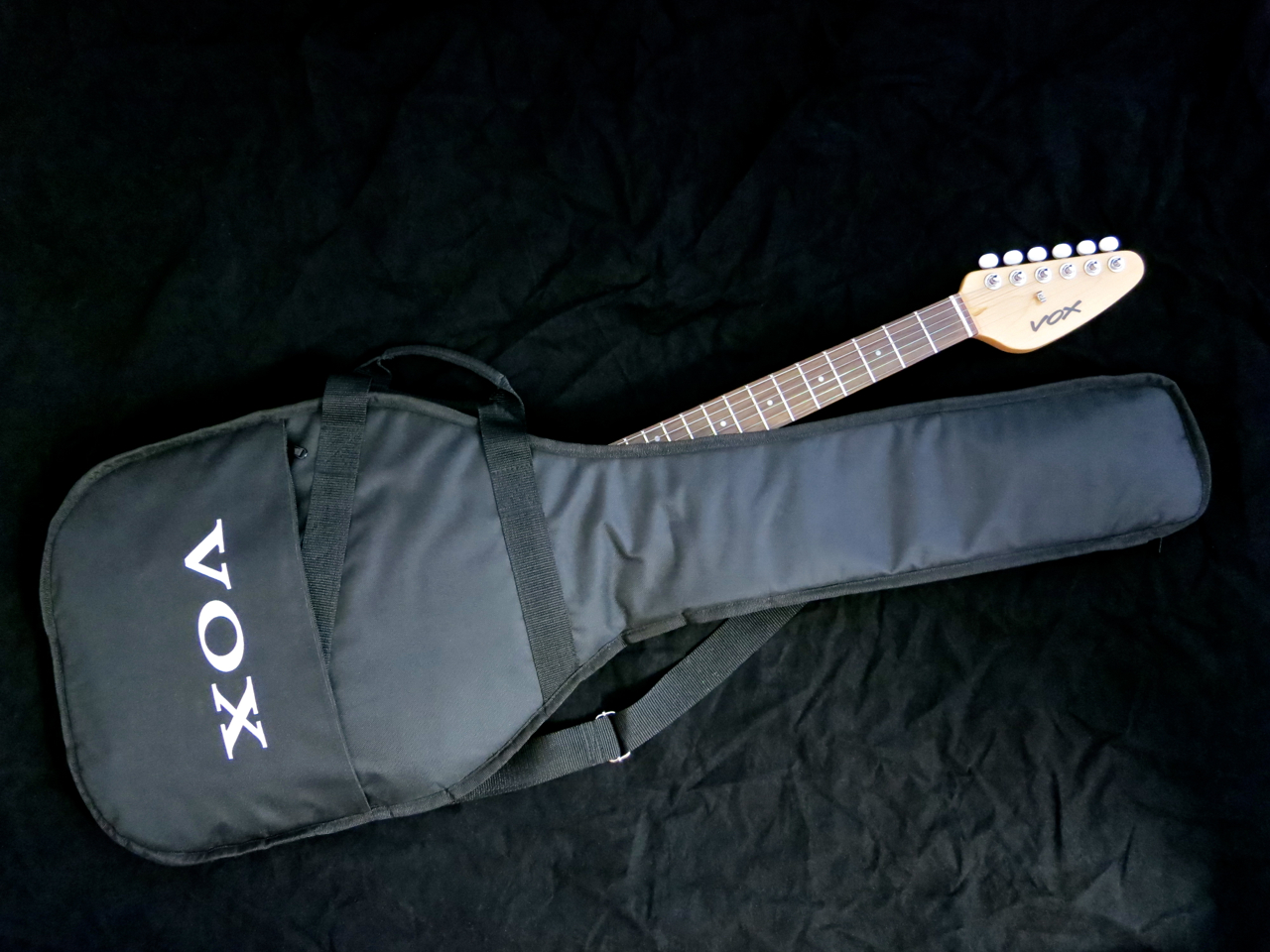
Three springs are factory-installed, but you can find a fourth spring in the gig bag, should you desire a firmer feel.

Vintage-snobs probably will scoff at the narrow tremolo block used in this vibrato. There are claims that this type of block diminishes sustain, but on the other hand Floyd Rose systems also use narrow blocks and nobody’s complaining.

Vox Mark III – pickups

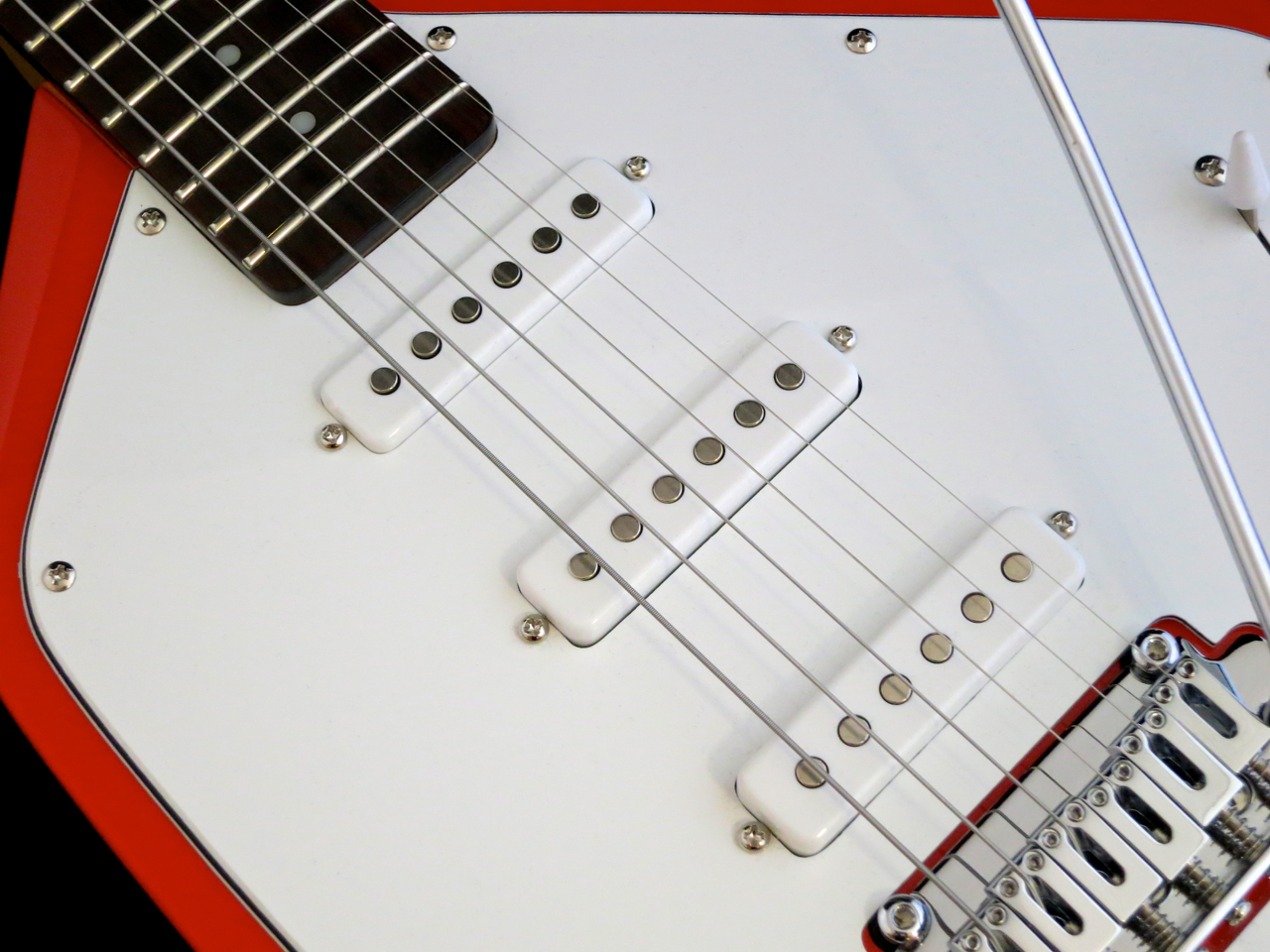
There are three singlecoil pickups mounted to the three-ply scratchplate, meaning we’re in for a nice, sprightly vintage tone in all likelihood.

Vox Mark III – controls

The traditional passive electronics comprise a five-way switch, as well as a master volume and a tone control.

****

Vox Mark V – full front

The basic ingredients for the angular Vox Mark V (current price in Finland approx. 355 €) are virtually the same as in the Mark III.

Vox Mark V – full back

There’s a rib cage contour in the Phantom’s basswood body, too.

Vox Mark V – headstock

Both Mark-models feature gloss-finished maple necks with truss rod access at the headstock.

Vox Mark V – vibrato

The vibrato bridge is surrounded the large pickguard of the Mark V.

Vox Mark V – frets

Both Voxes display very decent fretwork, which isn’t always a given in this affordable price bracket. The frets have been polished to a gleam and all ends have been rounded off carefully.

Vox Mark V – pickups

Vox Mark V Phantom is equipped with the same pickups…

Vox Mark V – controls

…and the same controls as the Mark III Teardrop.

Vox Mark III – gigbag

Both Vox Marks are sold with a nice gig bag!

****

Vox Mark III – beauty shot 2

The Vox Mark III is a very compact electric guitar, with our test sample also being nicely light in weight. Due to its very rounded body the Terdrop probably isn’t the most comfortable ”sofa guitar”, but on a strap everything feels hunky dory.

The whole vibe is quite reminiscent of, say a Fender Mustang, no doubt because of the Mark III’s short-scale, gloss-finished neck with its round D-profile. With the factory set of 010-gauge strings bending is very effortless. Our test sample’s very low – but buzz free – action (E: 1,6 mm/e: 1,3 mm) pays testament to Vox’ workmanship. Used in moderation the vibrato works decently, but don’t expect Floyd Rose-style return to pitch.

The Vox Mark III rings very nicely with a fresh and firm acoustic voice.

The clean tones of the Vox Teardrop works great in a Sixties-style poppy, jangly context or for funky workouts:

Add some overdrive for some nice, sinewy vintage Rock-sounds:

Vox Mark III – back beauty

****

Vox Mark V – beauty shot 2

The Vox Mark V doesn’t seem to want to fit in you lap – it takes a while to get comfortable, when playing sitting down. Our lightweight test samples’ strapped-on balance proved to be excellent, though.

In most respects the Phantom feels very similar to the Mark III, with its comfortable, vintage-style neck. Straight out of the gig bag our test sample’s intonation was a bit fruity on a couple of strings, but this was corrected in no time with the correct screwdriver. The action was set quite low (E: 1,6 mm/e: 1,1 mm) on the Mark V, too. And again, as with the Teardrop, the Phantom still rang nice and true without any rattling. Well done, Vox! Should you prefer a slightly firmer feel, I’d suggest moving up to a 011-gauge string set.

Both Voxes sound almost indentical – acoustically, as well as amped up.

This is the Mark V Phantom’s clean delivery, played through a small Marshall combo:

I really like the gritty and slightly rude Rock-sounds you can get from the Mark V:

Vox Mark V – back beauty

****

Vox Mark III – beauty shot 1

Due to their unconvetionally-shaped bodies, Vox’ Mark range always runs the slight risk of being regarded as mere ”poser guitars”, better suited to music videos that to actually making music.

This is far from the truth, though, because these new versions of the Mark III and Mark V really deliver nicely vintage-tinged sounds for the Pop, Beat, Blues, and Classic Rock genres. In view of their pocket-friendly prices, quality workmanship, quirky looks and great sounds, I can only applaud Vox for bringing back the classic Teardrop and Phantom models. Try one!

Vox Mark V – beauty shot 1

****

Vox Mark-series guitars

Vox Mark III Teardrop – 355 €

Vox Mark V Phantom – 355 €

Finnish distributor: EM Nordic

A big thank you goes to DLX Music Helsinki for the loan of the review guitars!

****

Pros (both models):

+ classic looks

+ workmanship

+ playability

+ sound

+ gig bag included in price

Cons (both models):

– not the most natural ”sofa guitars”

Vox Mark III – Vox crest

Pidä blogia WordPress.comissa.

Ylös ↑