
Huomenna: Roland AC-33RW

Kitarablogi.com – Finland's premier Guitar and Bass blog
Juttuja kitaroista ja bassoista


Amongst Chinese-made acoustic brands Walden is a special case. The company’s instruments aren’t just Walden-branded rebadged OEM-guitars, instead they are crafted at their own factory to their very own specifications and using their very own methods.
Walden’s main man is American luthier Jonathan Lee, who not only knows how to make fine acoustic instruments, but also affords special attention to things such as working conditions at the Walden plant, as well as environmental issues; or, as the man himself put it in a recent Guitarist-interview: ”I want to go to bed at night and not wake up sweating about being a bad guy and getting kicked out of the gates by [Saint] Peter!”
Based on Jonathan Lee’s experience as a boutique builder, Walden Guitars feature an enticing mix of old-school and contemporary building methods: For example, all Waldens sport graphite (or fibreglass) reinforced bolt-on necks, as well as traditional scalloped X-bracing for their tops.
****

The Walden G630CE (current street price in Finland approx. 450 €, including a Walden-gigbag) is a Grand Auditorium -sized cutaway acoustic-electric.
A Grand Auditorium’s body has approximately the same cubic capacity as a Dreadnought, but its more curvaceous outline with its slimmer waist generally results in a tighter, more focussed bass and a slightly chimier character, compared to a typical D.

The G630CE is part of Walden’s satin-finished Natura-range. Its body is made from a solid Western Red cedar top and laminated Indian rosewood rims and back.
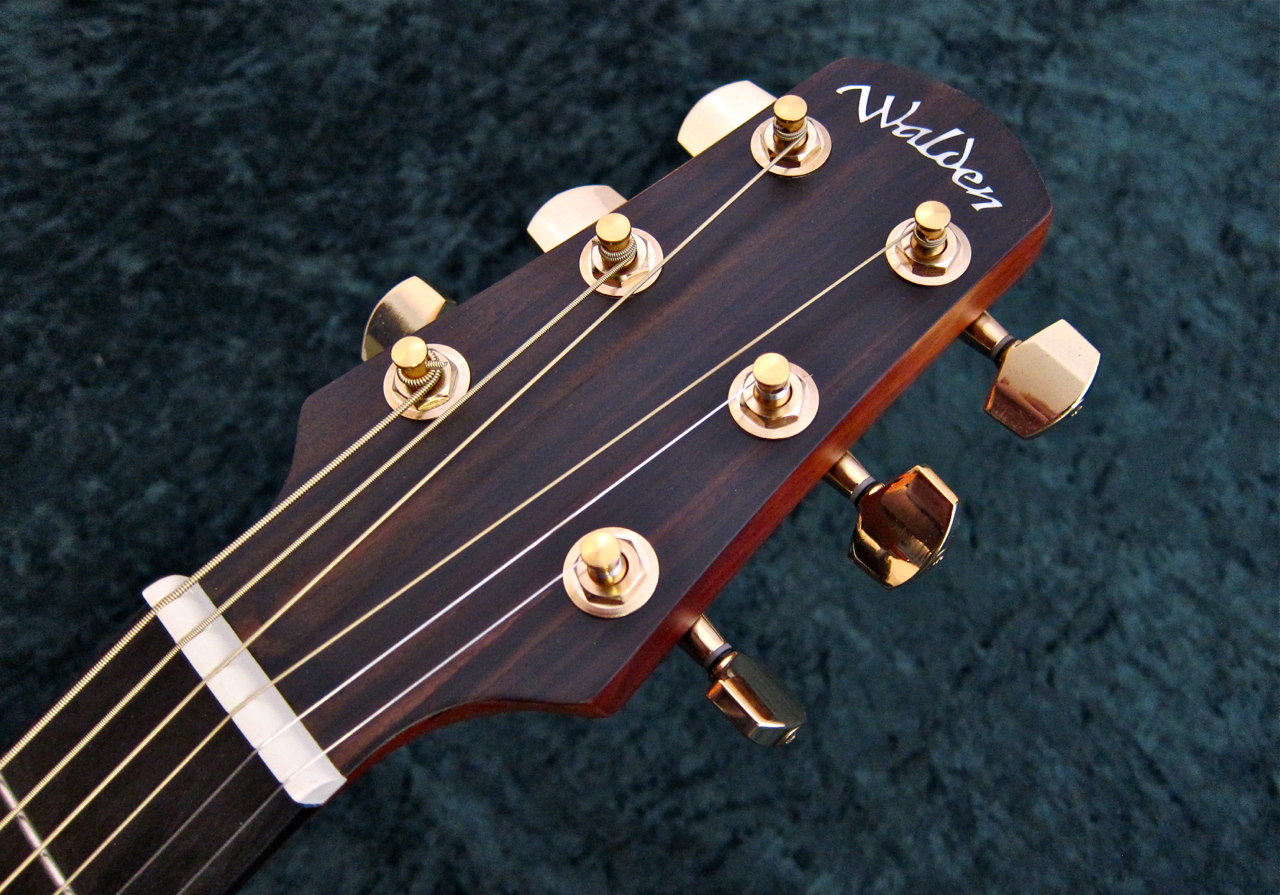
The elegant headstock sports a beautiful rosewood veneer. The top nut is supplied by Graph Tech, using their Fossalite material, which claims to sound like vintage bone.
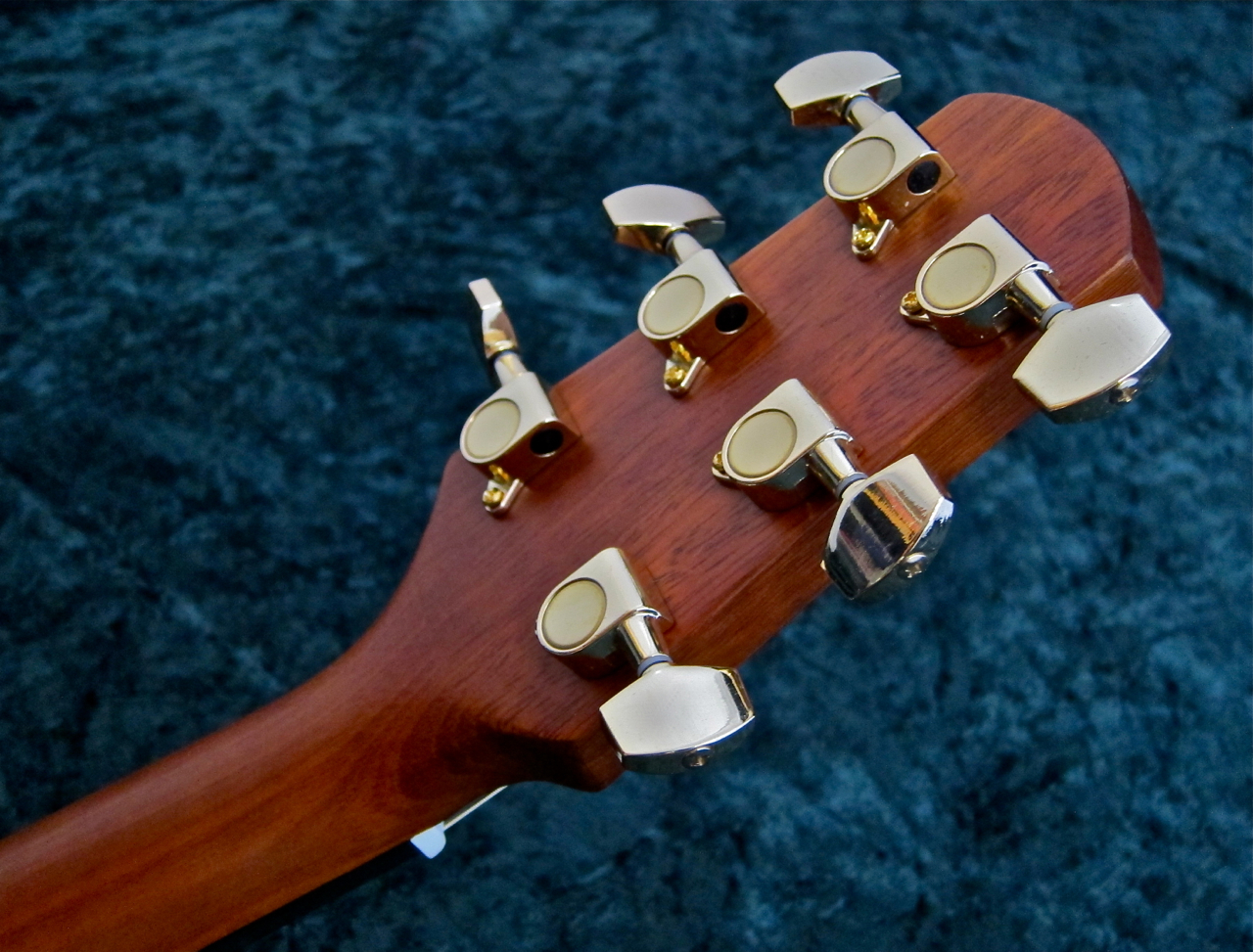
The Walden’s mahogany neck is a three-piece affair comprising a single long piece for the bulk of the neck, with two additional pieces for the neck heel and the headstock (the glue line is just above the neck’s wrist).
The sealed golden tuners do a good job of keeping the guitar in tune.

The nice dark and dense rosewood fingerboard is bound in black plastic and equipped with 20 small frets.
Hidden beneath the ’board lies the two-way truss rod, as well as the two fibreglass rods on either side of it. Added neck rigidity is a good thing for two reasons – the neck stays straight with less stress on the truss rod, and the guitar’s sustain is improved.

The rosewood back is a real stunner, with the gorgeous wood grain being enhanced by the satin finish and the crisp black-and-white binding. The rosewood cap on the neck heel is a stylish little detail.

The neck bolt is clearly visible in the mahogany neck block. Walden is one of the very few Asian manufacturers to use this modern type of neck joint, which is favoured by Taylor Guitars among others. In Jonathan Lee’s view the sonic difference between a well-executed bolt-on neck joint compared to a traditional dovetail job is practically negligible. And who am I to disagree ?
The G630CE’s extremely reasonable price is visible in the slightly rough look of the kerfed linings inside the soundbox. But this is only a minor cosmetic issue which doesn’t affect the playability or the mechanical soundness of the instrument at all.

There can be no complaints about the cedar top on this Walden whatsoever – this is a fine piece of wood with a very regular grain and tightly spaced annual rings.
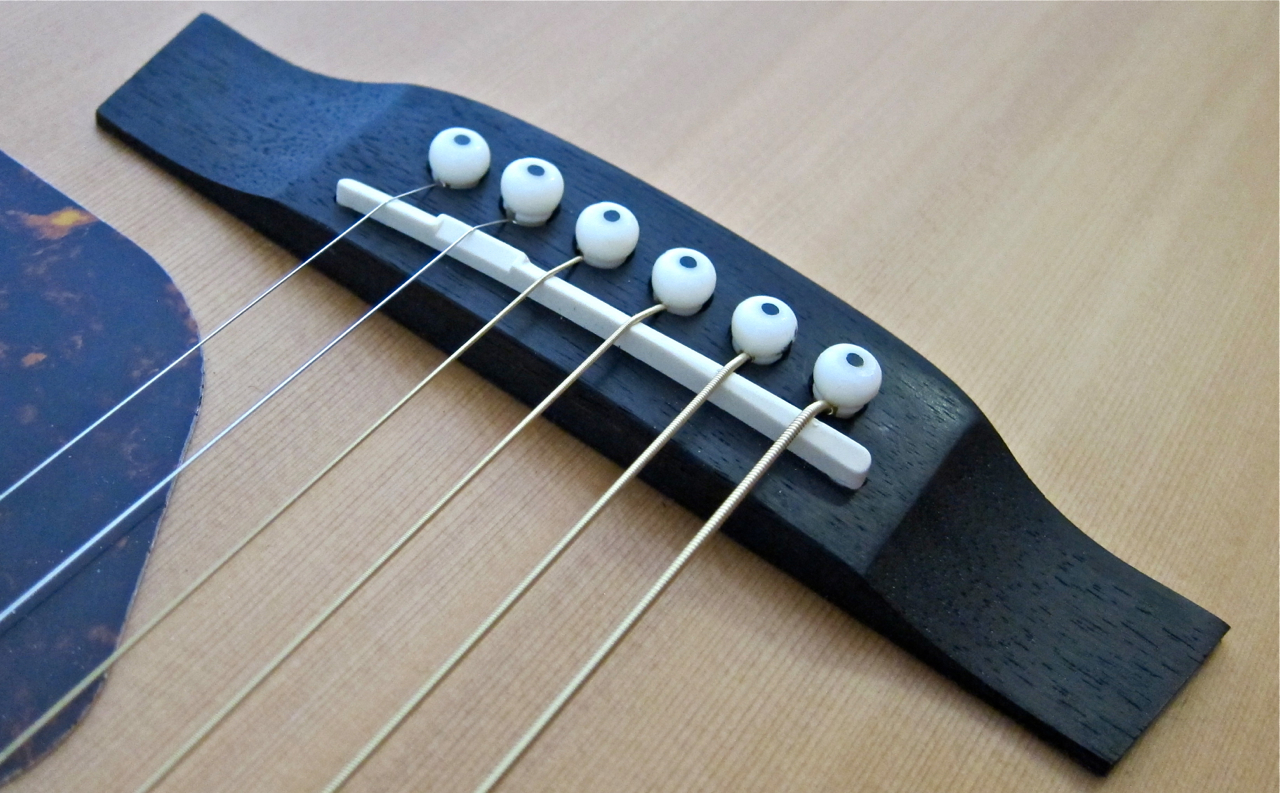
The elegantly designed rosewood bridge holds a compensated Graph Tech Fossalite bridge saddle.
Beneath the saddle lied the guitar’s B-Band under-saddle transducer…
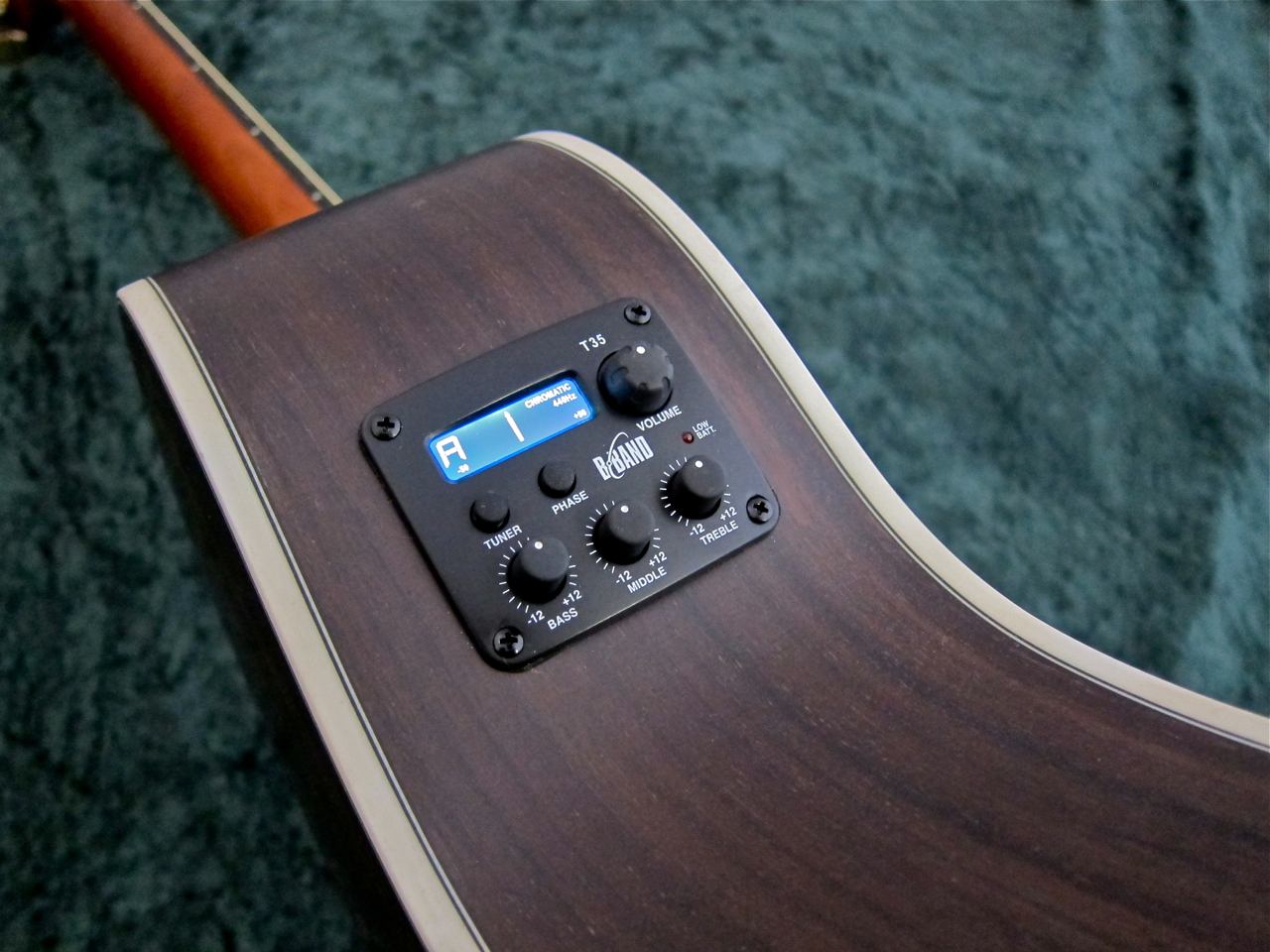
…which works in conjunction with B-Band’s own T35 preamp.
The T35 offers three-band equalisation, a phase switch to combat feedback howl, as well as a backlit a chromatic tuner. You can use the tuner without a lead plugged into the output jack.

The G630CE is equipped with an endpin output jack. The quick release battery compartment has been placed on the lower rim of the Walden.
****

Walden’s Madera-series is direct result of Jonathan Lee’s tireless efforts and perserverence in his quest to build ecologically sustainable acoustic guitars. It took Lee several years to get everything lined up and find the right suppliers for this venture. Now, with the Madera-series, Walden Guitars is offering 100% FSC-certified instruments at prices that won’t cost you an arm and a leg.
At the moment the Madera-range comprises six Dreadnought and Grand Auditorium models with full FSC-certification. We chose the Walden CD4040-CERT – a Dreadnought – for this review.
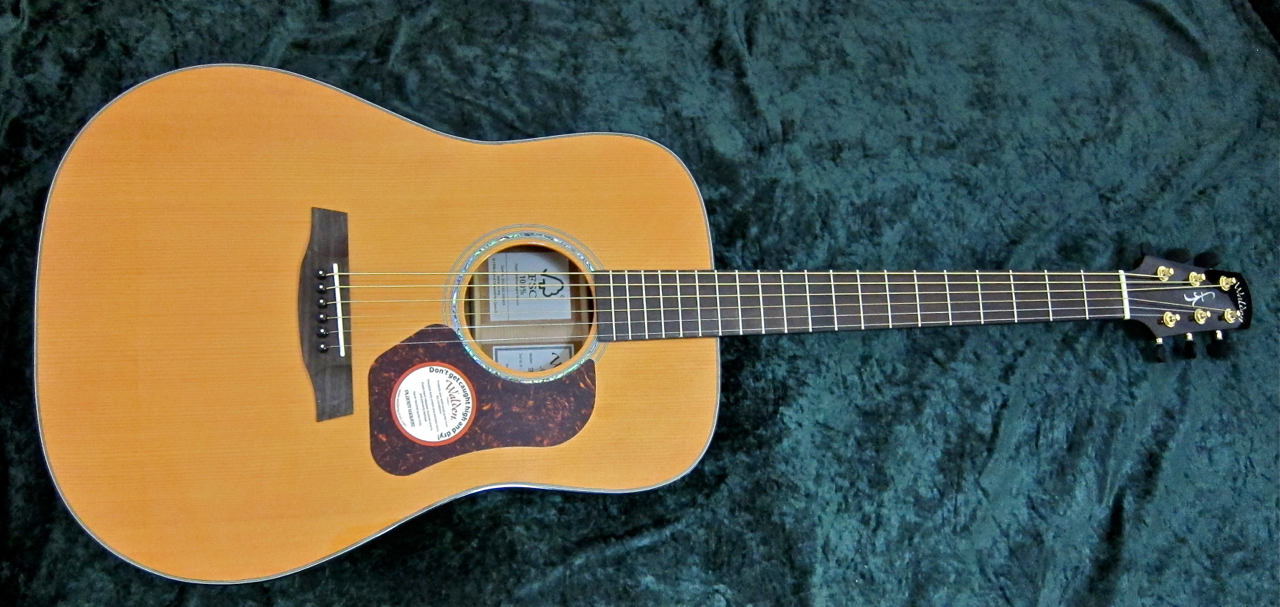
The Walden CD4040-CERT (Current street price in Finland approx. 950 €, including a Walden-case, a humidifier and a second bridge saddle) could be described as Jonathan Lee’s take on the venerable Martin D-18. This classy guitar uses solid sitka spruce for the top and solid South American mahogany for the sides and back.
The yellowish finish adds a certain vintage air to this model’s looks.

Walden use South American katalox (swartzia cubensis) – as an ecologically sustainable alternative to ebony – for its Madera-series bridges, fingerboards and headstock overlays. The beautiful headstock inlay is a stylised version of the Chinese character for the word ”tree” (mù: 木).
The CD4040-CERT’s saddle is made from genuine bone.
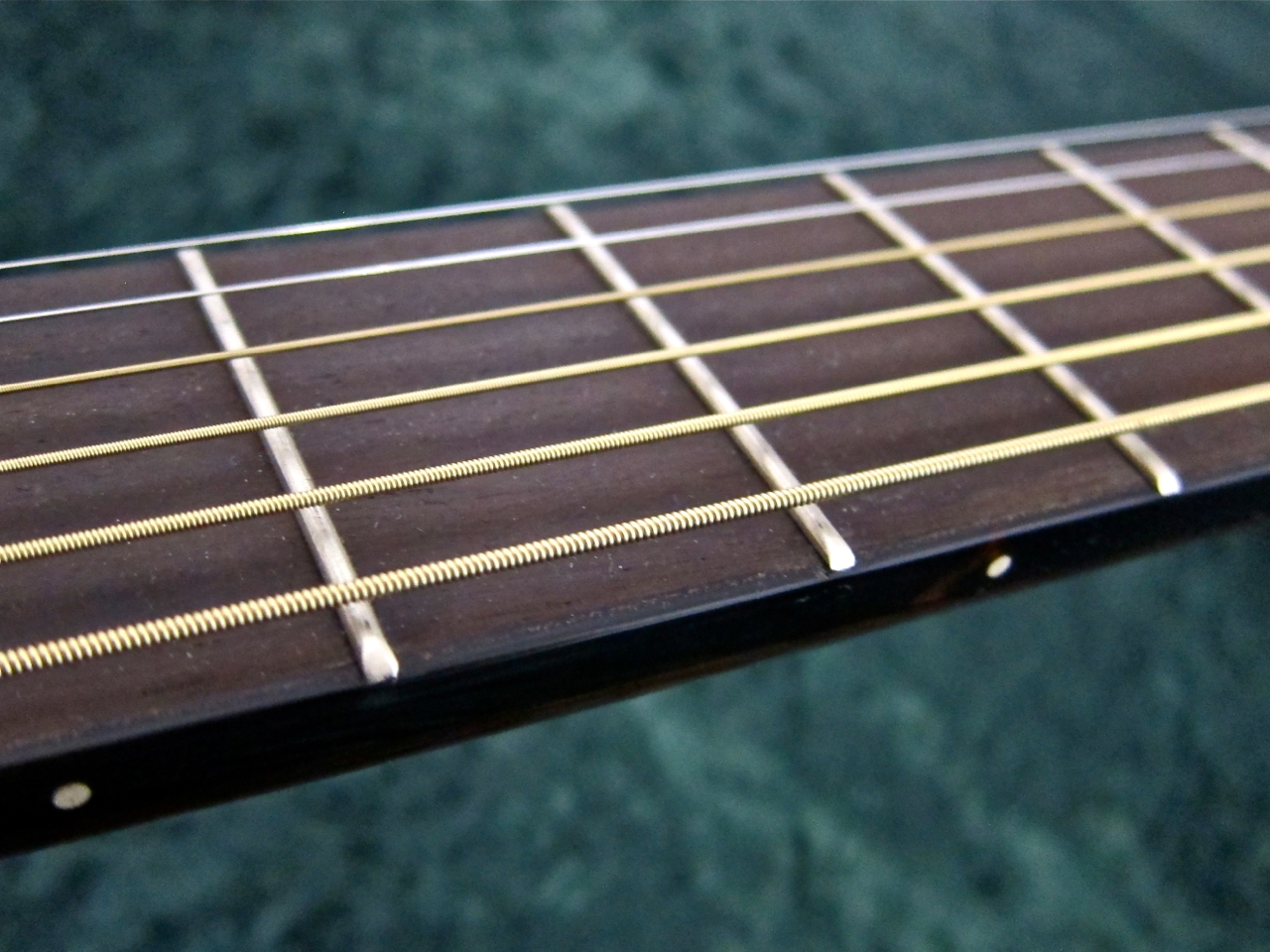
The fretboard is equipped with 20 traditionally-sized small frets.
On its top models – an the CD4040-CERT certainly qualifies as such – Walden use a pair of graphite rods to stiffen the mahogany neck.

On our test sample the interior displays the same high degree of care that has also been afforded to the guitar overall.
In line with the CD4040’s vintage looks the guitar’s neck bolt has been hidden behind a Walden-branded mahogany plate.
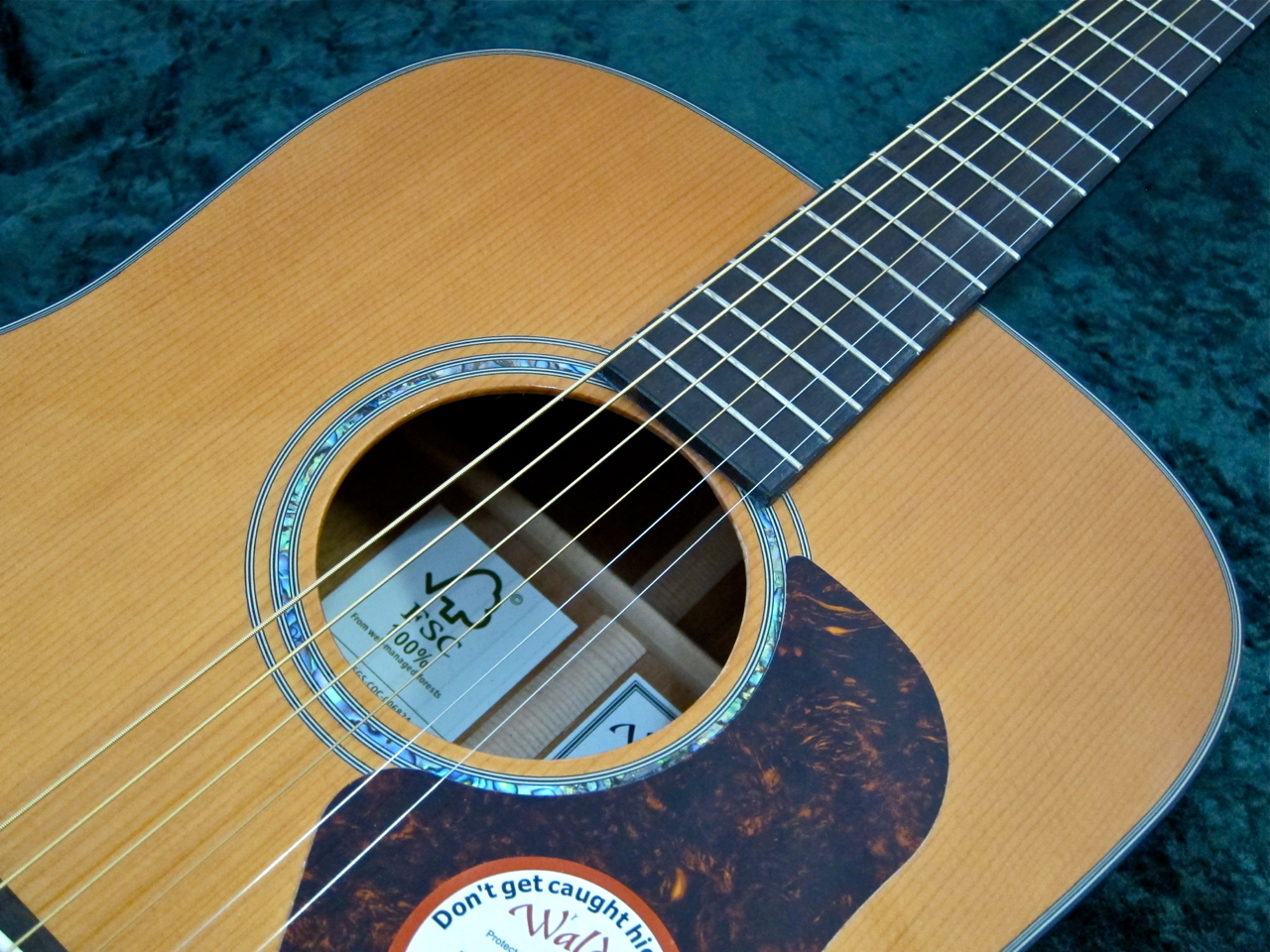
The rosette is a very elegant mix of black and white rings and abalone inlays.

The bridge’s katalox is somewhat lighter in colour than the piece used for the CD4040-CERT’s fingerboard. The compensated saddle has been carved from bone.

Here you can see a crisp vintage-style look at its best.
****

The Walden G630CE sits extremely comfortably in your lap, and its well-applied satin finish feels pleasant to the touch.
The neck profile is contemporary in a very good way: There’s enough meat on offer to hold on to comfortably, without the neck feeling fat or angular. I would describe the profile as a medium-sized, oval ”C”.
The string spread at the bridge is wide enough for fingerstylists without alienating the plectrum strumming punters. Our test sample’s string height was set to a very comfortable level (E = 2,0 mm/e = 1,6 mm).
The G630CE sings with a beautiful acoustic tone – its tight and sinewy bottom end nicely leaves space for this guitar’s clear midrange and bell-like top end. There’s a good deal of volume on tap, even if this guitar probably won’t win over a good Dreadnought in a head-to-head shouting match.
The B-Band-system goes a very long way in keeping the Walden’s acoustic timbre intact, and the amplified tones are far more realistic than you might expect from an under-saddle pickup.
Here are a few soundbites I recorded for you:
Walden G630CE – acoustic – fingerstyle
Walden G630CE – B-Band – fingerstyle
Walden G630CE – acoustic – plectrum
Walden G630CE – B-Band – plectrum

****

Need I spell it out? One word is enough to describe the feel of the Walden CD4040-CERT – classic. We all know what a gloss-finished Dreadnought feels like, don’t we?
On this model the neck profile is almost identical to that of the G630CE, but the CD4040 adds a whiff more thickness to the recipe. The test sample’s action is a tad higher than on the Grand Auditorium (E = 2,5/e = 2,0 mm), which will surely delight the Country and Bluegrass fans among you. The CD4040’s playability is still top-notch and effortless, but the slightly higher action gives you that bit more purchase, dynamics and volume-before-string-rattle.
Walden’s CD4040-CERT is a beautiful-looking and -sounding guitar – and it’s also quite loud. The bottom end is fat and muscular, without ever mushing out, while the midrange is vocal and clear. Put a good helping of silky bright icing on top of this, and your in for a true tonal feast.
Even though this guitar arrived for review straight off the wall of a music shop, I never got a feeling of overt newness or tightness from this instrument. Instead this Walden sounds and feels like an already ”broken in” steel-string, and breathes freely.
Here are two examples I recorded:
Walden CD4040-CERT – fingerstyle

****
Based on my test drive I can only recommend checking out a Walden or two.
Walden’s G630CE is a very well-built acoustic-electric, which feels and sounds great. The B-Band T35 looks like the perfect match for this model, thanks to its natural tone and low background noise level.
The Walden CD4040-CERT is further proof – if needed – of the quality levels Chinese guitar manufacturers are able to achieve today. This Walden really is a pro-level instrument offered at an extremely fair price. But the best thing about the CD4040-CERT is that it shows without a doubt that building an eco-friendly quality guitar is possible in this market segment!
****
Walden Guitars
Finnish distributor: EM Nordic
A big thank you to DLX Music Helsinki for the loan of the test intsruments!
****
Walden G630CE
street price approx. 450 €
Pros:
+ value-for-money
+ overall workmanship (see below)
+ playability
+ acoustic sound
+ amplified sound
Cons:
– kerfed linings a little rough in places
****
Walden CD4040-CERT
street price approx. 950 €
Pros:
+ 100% FSC-certified
+ value-for-money
+ workmanship
+ playability
+ sound
****
Walden on Kiinassa rakennettujen akustisten kitarabrändien joukossa melko harvinainen tapaus. Firman soittimet eivät nimittäin ole brändättyjä OEM-soittimia, joita tehdään joissain anonyymissä soitinpajassa, vaan kitarat tulevat Walden Guitarsin omalta tehtaalta, jossa rakennetaan ainoastaan firman omia soittimia firman omilla menetelmillä.
Waldenin takana on Jonathan Lee, yhdysvaltalainen kitaranrakentaja, ja hänelle on – hyvien kielisoittimien lisäksi – tärkeätä myös työläistensä turvallisuus ja työolot, sekä firman ympäristövastuu. Tai kuten mies itse sanoi hiljattain yhdessä hastattelussa: ”Haluan pystyä nukkumaan rauhassa, enkä miettiä pitääkö Pyhä Pietari minun kohdalla taivaan portit lukossa, kun joskus kuolen.”
Jonathan Leen kokemuksen ansiosta Walden-soittimet ovat tuore sekoitus parhaista perinneratkaisuista ja uusista menetelmistä: kaikkien Walden Guitarsin ominaisuuksiin kuuluu esimerkiksi grafiitilla (tai lasikuitutangoilla) vahvistettu pulttikaula, sekä perinteiden mukaan koverrettu kannen rimoitus (ns. scalloped bracing).
****
Walden G630CE (katuhinta noin 450 €, sis. topatun Walden-kitarapussin) on soololovella varustettu, mikitetty teräskielinen, tällä hetkellä hyvin suositussa, Grand Auditorium -koossa.
Grand Auditorium -malleissa kopan tilavuus on hyvin samankokoinen Dreadnoughttiin verrattuna, mutta sen kurvikkaammalla ulkomuodolla on selvä vaikutus soundiin, jolla on usein tiukempi bassorekisteri ja tuorempi yleisilme kuin D-kitaroissa yleensä.
G630CE kuuluu Waldenin mattalakattuun Natura-sarjaan, ja sen koppa on rakennettu kokopuisesta setrikannesta, sekä palisanterivanerista sivuja ja pohjaa varten.
Soittimen viritinlapaa on koristeltu palisanteriviilulla. G630CE:n satula taas on tehty Graph Techin uudesta Fossalite-materiaalista, jonka soundin sanotaan olevan hyvin lähellä vanhaa luuta.
Waldenin kaula on veistetty mahongista: yhteen yhtenäiseen pitkään palaan on lisätty erillinen korkopala, sekä lapa (liimasauma on E-virittimien alapuolella).
Suljetut kultaiset virittimet tuntuvat jouhevalta, ja ne pitävät kitaran hyvässä vireessä.
Tummaa ja tiheänlaatuista palisanteriotelautaa on reunalistoitettu mustalla muovilla. Otelautaan on asennettu 20 pienikokoista nauhaa.
Otelaudan alla löytyvät, sekä Waldenin kaksisuuntainen kaularauta, että (kaularaudan molemmin puolen) kaksi, kaulapuuhun upotettua lasikuitutankoa. Lujempi kaula soi paremmin ja pysyy varmemmin suorana.
Kuvankaunis palisanterikoppa on koristeltu valkoisilla ja mustilla muovilistoilla. Kaulakoron pieni palisanterikoriste on sekin hyvin tyylikäs.
Kaulapultin pää on selvästi näkyvissä mahonkisessa kaulablokissa. Walden on yksi harvoista aasialaisista kitaramerkeistä, joka käyttä tätä – Taylor-kitaroista tuttua – nykyaikaisempaa menetelmää. Jonathan Leen mukaan soundillinen ero hyvin tehdyn pulttiliitoksen ja perinteisen liimaliitoksen välillä on miltei olematon.
G630CE:n edullinen hinta näkyy kopan sisällä muutamissa pienissa yksityiskohdissa, jotka eivät kuitenkaan ole ratkaisevia kitaran soitettavuuden tai soundin kannalta.
Waldenin setrikansi – tai oikeasti jättituijakansi (western red cedar = thuja plicata = jättituija) – on erittäin laadukasta sorttia tasaisilla vuosirenkailla.
Kitaran talla on palisanteria. Tallaluu on – samoin kuin satula – Graph Techin Fossalitesta tehty.
Tallaluun alle on sijoitettu B-Band-mikrofoni…
…joka toimii yhteistyössä B-Bandin T35-etuvahvistimen kanssa.
T35 tarjoaa kolmekaistaisen EQ:n, vaiheenkääntäjän feedback-ulinaa vastaan, sekä kromaattisen viritysmittarin, joka toimii myös silloin, kun johto ei ole kytkettynä kitaraan.
G630CE:n lähtö on yhdistetty hihnatappiin. Paristolokero taas on upotettu soittimen alareunaan.
****
Waldenin Madera-sarja on Jonathan Leen sitkeyden ja pitkän etsinnän suora tulos. Leen visio oli rakentaa ekologisesti vastuullisen Walden-sarjan, jossa kaikki käytetyt puut tulevat kestävästä metsähoidosta. Kesti muutamia vuosia, ennen kuin Walden sai rakennettua sellaista luotettavaa toimitusketjua, jossa kaikki puut ovat FSC-sertfioituja, sekä soitinrakentamiseen sopivia.
Walden Madera -sarja tarjoaa tällä hetkellä kuutta Dreadnought- ja Grand Auditorium -mallia, jotka ovat kaikki sataprosenttisesti FSC-sertifioituja. Valitsimme testiin Walden CD4040-CERT -nimisen Dreadnought-kitaran.
Walden CD4040-CERT (katuhinta noin 950 €, sis. kovan kotelon, kostuttajan ja toisen tallaluun) on Jonathan Leen näkemys Martin D-18 -tyylisestä teräskielisestä. Klassiseen tapaan koppa on rakennettu täyspuisesta sitkakuusesta ja täyspuisesta Etelä-Amerikkalaisesta mahongista.
Kellertävän kiiltävä viimeistely antaa kauniille kuusikannelle sopivasti vanhan ajan hohtoa.
Walden käyttää Madera-kitaroissaan katalox-nimistä (swartzia cubensis) kestävää vaihtoehtoa eebenpuulle tallassa, otelaudassa ja viritinlavan viiluna. Kaunis upotus on tyylitelty versio kiinalaisesta sanasta puulle (mù: 木).
CD4040-CERT:n satula on veistetty luusta.
Reunalistoitettuun otelautaan on siististi asennettu 20 pienikokoista nauhaa.
Koska kyse on yhdestä Waldenin huippumalleista, käytetään CD4040:n tapauksesta kaksi grafiittitankoa mahonkikaulan lujittamiseen.
Tässä mallissa työnjälki on erittäin siisti.
Vintage-ulkonäköön sopii myös Walden-logolla varustettu ohut puulevy, jonka takana kaulaliitoksen pultti on piilotettu.
Soittimella on tyylikäs rosetti helmiäisrenkaalla, sekä monikerroksinen reunalistoitus kilpikonnakuvioisella ulkokerroksella.
Tallan katalox-pala on hieman vaaleampi kuin CD4040:n otelauta. Tallaluu on oikeasta naudanluusta veistetty.
Tällainen on vintage-look parhaimmillaan.
****
Walden G630CE istuu erittäin mukavasti sylissä, ja sen satiinipintainen viimeistely tuntuu hyvin miellyttävältä.
Tämän kitaran kaulaprofiili on positiivisella tavalla nykyaikainen: se tarjoaa sopivasti leveyttä ja pyöreyttä, olematta kuitenkaan kulmikas tai paksu. Profiili voisi luonnehtia ovaaliksi C:ksi.
Kielten välinen etäisyys on valittu hyvin, ja kitara sopii näin ollen loistavasti, sekä plektrasoittoon, että näppäilyyn. Testiyksilön tatsi oli säädetty mukavan kevyeksi (E = 2,0 mm/e = 1,6 mm).
G630CE soi kauniilla akustisella äänellä – jäntevä bassorekisteri antaa loistavasti tilaa kitaran siistille keskialueelle ja helisevälle diskantille. Volyymi löytyy sekin riittävästi, vaikka tämä soitin ei huuda niin kovalla äänellä kuin jotkut Dreadnoughtit.
B-Band-järjestelmän tarjoama vahvistettu signaali tarjoaa pelkäksi tallamikrofonia käyttäväksi systeemiksi yllättävän luonnollisen version Walden-kitaran akustisesta luonteesta.
Tässä muutama esimerkki, sekä akustisesta äänestä, että linjasoitosta T35-etuvahvistimen kautta:
Walden G630CE – akustisesti – näppäily
Walden G630CE – B-Band – näppäily
Walden G630CE – akustisesti – plektralla
Walden G630CE – B-Band – plektralla
****
Walden CD4040-CERT -mallin tuntumaa voisi kuvaila sanalla ”klassinen” – kaikki tietävät varmasti miltä perinteinen D-malli kiiltävällä viimeistelyllä tuntuu sylissä.
Kaulaprofiili on tässä soittimessa hyvin samankaltainen kuin G630CE-mallissa, vaikka CD4040 lisää reseptiin vielä hieman paksuutta. Kieltenkorkeus on D-mallin testiyksilössä hieman korkeampi (E = 2,5/e = 2,0 mm) kuin Grand Auditoriumissa, mutta soittotuntuma on myös CD4040:n tapauksessa erittäin mukava.
Monet Country- ja Bluegrass-soittajat suosivat hieman korkeammaksi laitettuja kieliä, koska niiden ansiosta saadaan soittimesta enemmän volyymiä irti, ilman että kielet rämisevät nauhoja vasten.
Waldenin CD4040-CERT on sekä kaunis- että kovaääninen kitara – tästä löytyy potkua vaikka muille jakaa. Bassorekisteri on mehevä, mutta tarkka, keskialue taas on täyteläinen, mutta silti selkeä, ja päälle vielä helisevä diskanttikuorrutus.
Vaikka kitara on otettu testiin suoraan musiikkiliikeen seinältä, sen soitossa ei ole minkäänlaista kireyttä tai epätasaisuutta, vaan tämä Walden soi (ja tuntuu) kuin hyvin ”auki soitettu” teräskielinen.
Tässä kaksi esimerkkipätkää Walden CD4040-CERTin soundista:
Walden CD4040-CERT – plektralla
****
Tämän testin perusteella voi vain suositella kaikille tutustumista Walden Guitarsin soittimiin.
Walden G630CE on edullinen, mutta siististi rakennettu elektroakustinen kitara, joka tuntuu todella mukavalta ja soi erittäin kauniisti. Waldenin käyttämä T35 B-Band -järjestelmä tuntuu loistavalta valinnalta, sen luonnollisen äänen ja kohinattoman signaalin ansiosta.
Walden CD4040-CERT on kiinalaisen kitararakennuksen oikea taidonnäyte. Tämä on pro-luokan Dreadnought erittäin maltillisella hinnalla. Ja mitä parasta, se on valmistettu kokonaan kestävistä, FSC-sertifiouduista puista!
****
Walden Guitars – teräskieliset
Maahantuoja: EM Nordic
Kiitos DLX Musiikki Helsingille testisoittimien lainaamisesta!
****
Walden G630CE
katuhinta noin 450 €
Plussat:
+ hinta-laatu-suhde
+ työnjälki (pienellä rajoituksella, kts. alhaalla)
+ soitettavuus
+ akustinen soundi
+ vahvistettu soundi
Miinukset:
– muutama hiukan epäsiisti rima kopassa
****
Walden CD4040-CERT
katuhinta noin 950 €
Plussat:
+ 100% FSC-sertifioitu
+ hinta-laatu-suhde
+ työnjälki
+ soitettavuus
+ soundi
****

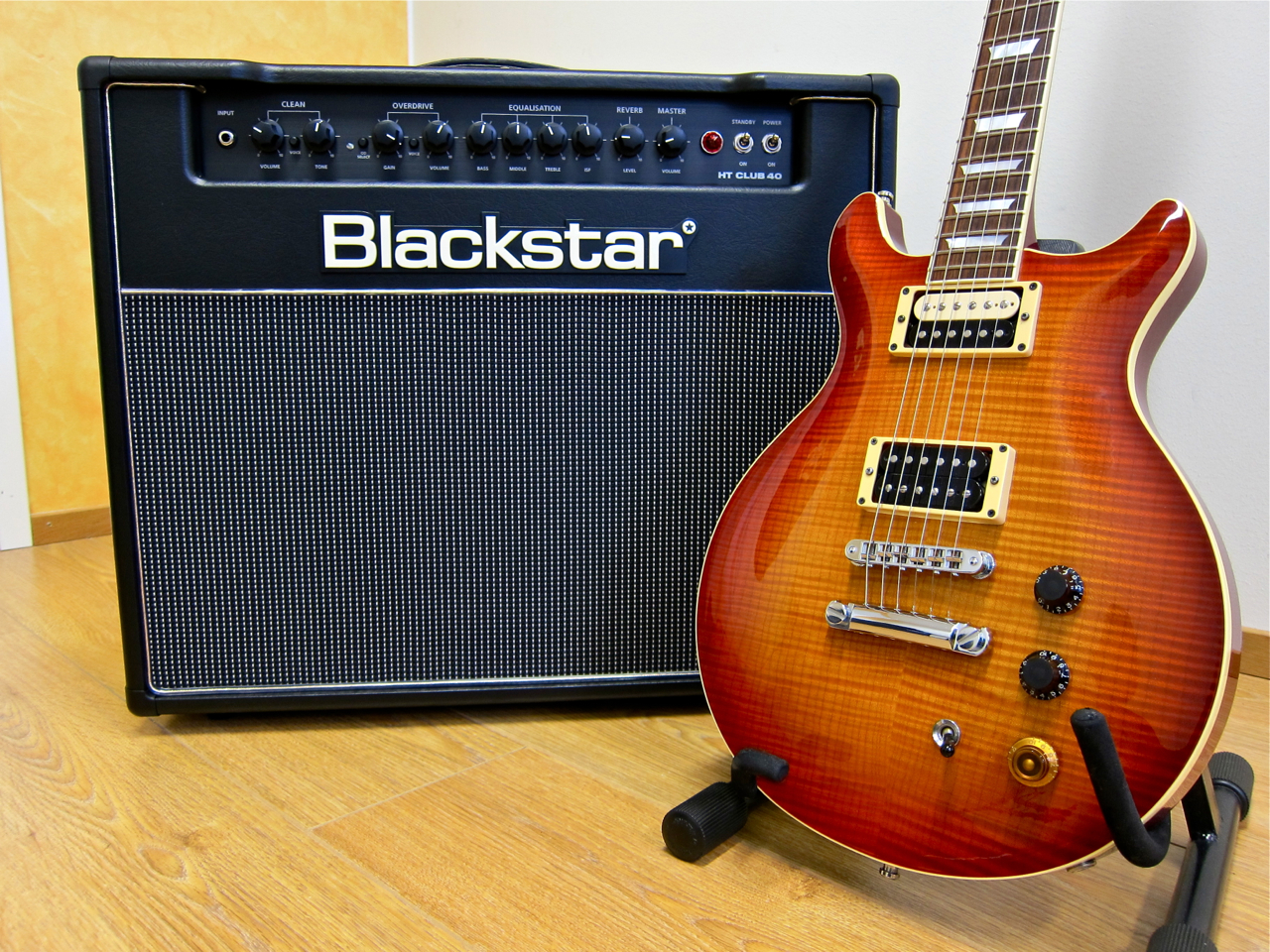
British company Blackstar Amplification have earned a reputation for producing versatile, reliable, no-nonsense valve amplifiers for the modern player. Their ever-growing roster of endorsers from a wide variety of different musical styles is an irrefutable testament to this.
This time Kitarablogi will take a closer look at the Blackstar HT Club 40 combo (current price in Finland 694 €), which looks like the perfect workhorse for the gigging guitarist.
****

As indicated by its name, the Blackstar HT Club 40 is a 40-Watt valve combo. The preamp is designed around two ECC83-valves, while the power amp uses a pair of EL34s.
This made-in-China combo is a two-channel affair and comes equipped with a single 12-inch speaker.

One of Blackstar’s trademarks is the clean and crisp, unfussy look – the HT Club 40 means business, and it’s ready to go.

This mid-sized combo weighs in at about 24 kilos, which makes it relatively easy to move around.

The combo’s back is almost fully closed, which makes achieving stack-like tonalities from a combo amplifier easier.
Because of the very small opening – and the compulsory metal safety grille – changing valves is rather tedious, as you will have to remove the whole back panel for the procedure.
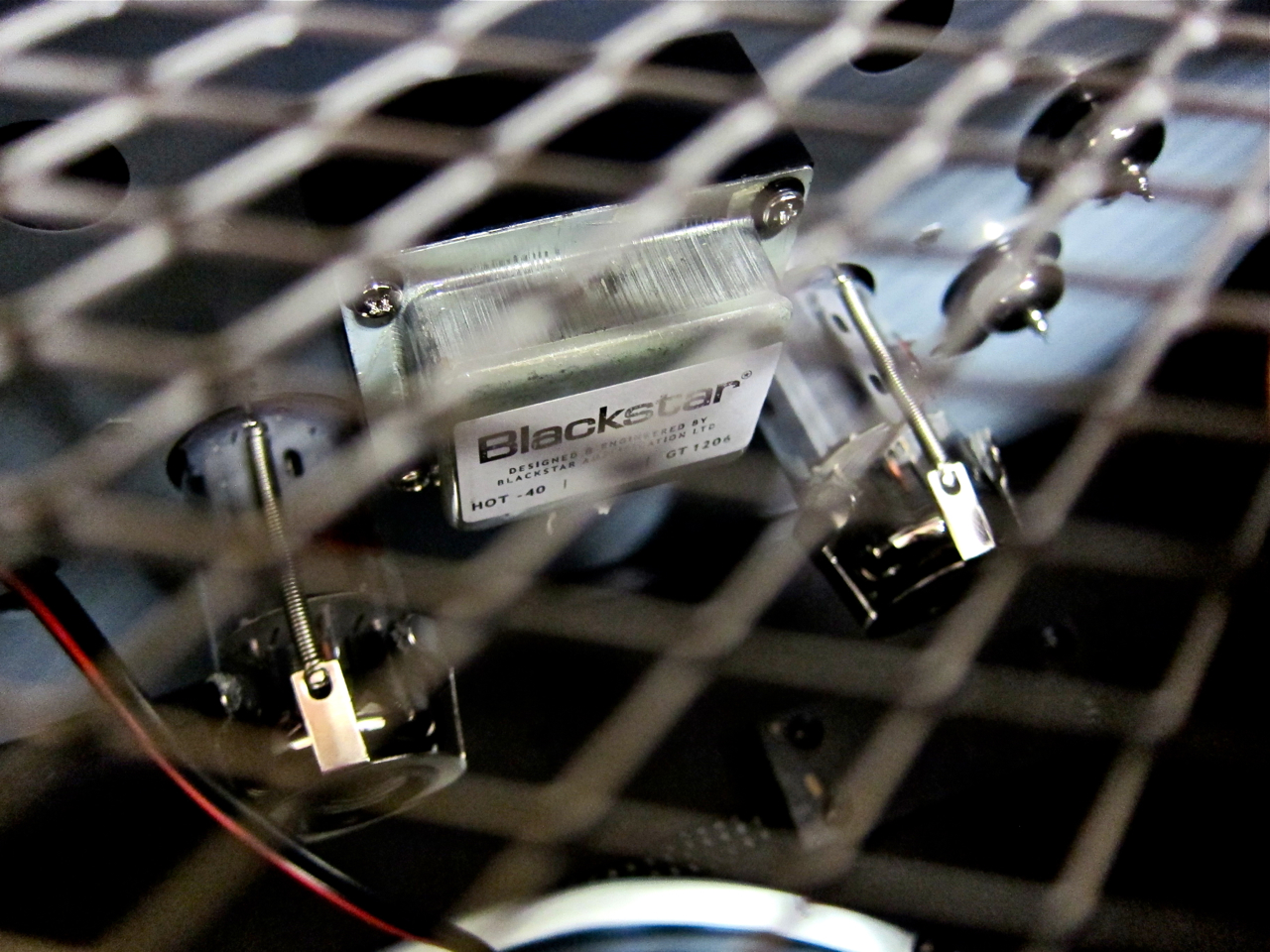
Looking in through the grille you can spot the valves…

…as well as the combo’s quality transformers.
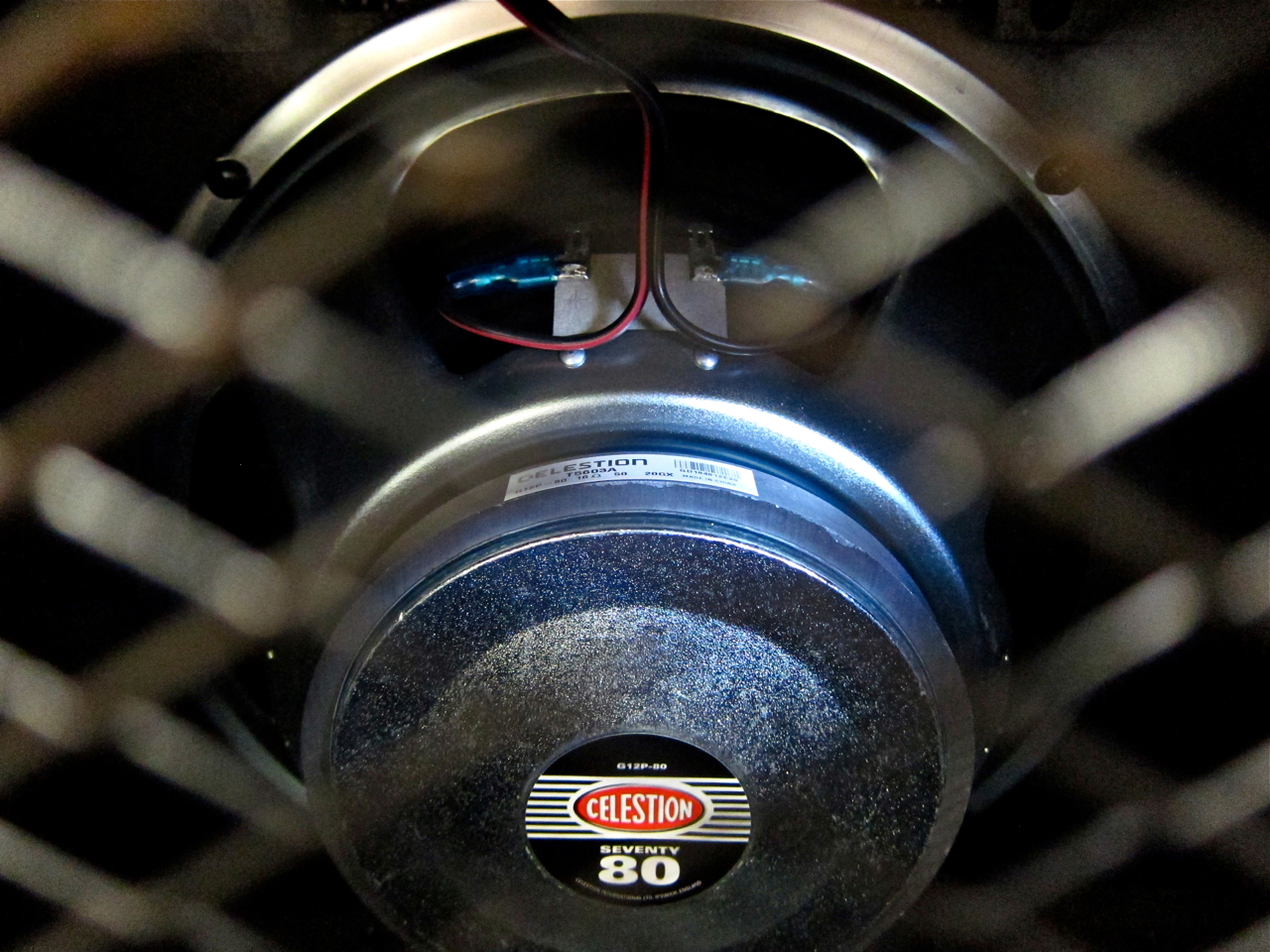
Blackstar have chosen a Celestion Seventy 80 -speaker for the HT Club 40 – a speaker highly regarded for its dynamic and open sound.
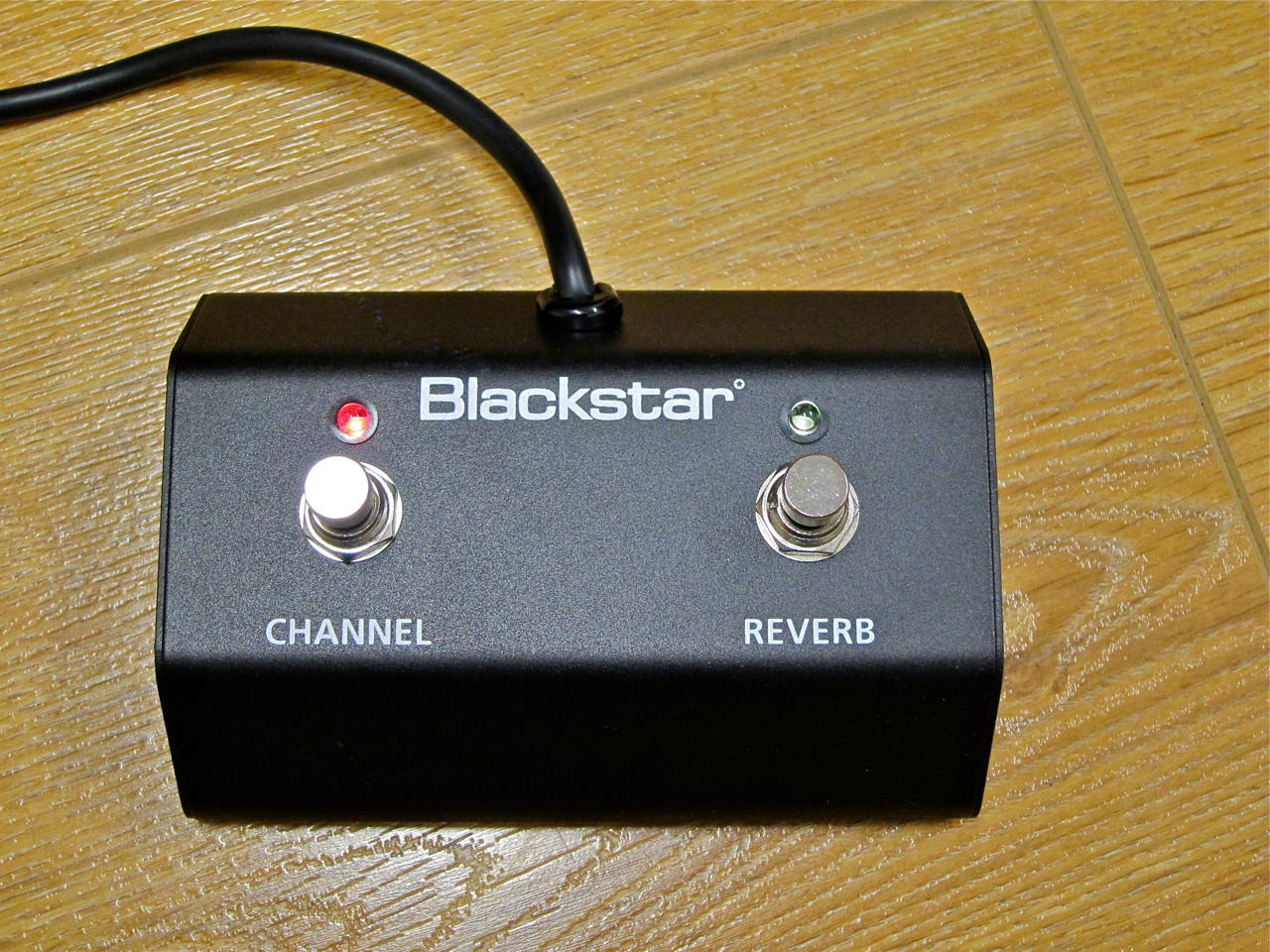
A sturdy FS-5 footswitch unit is included in the price.
****
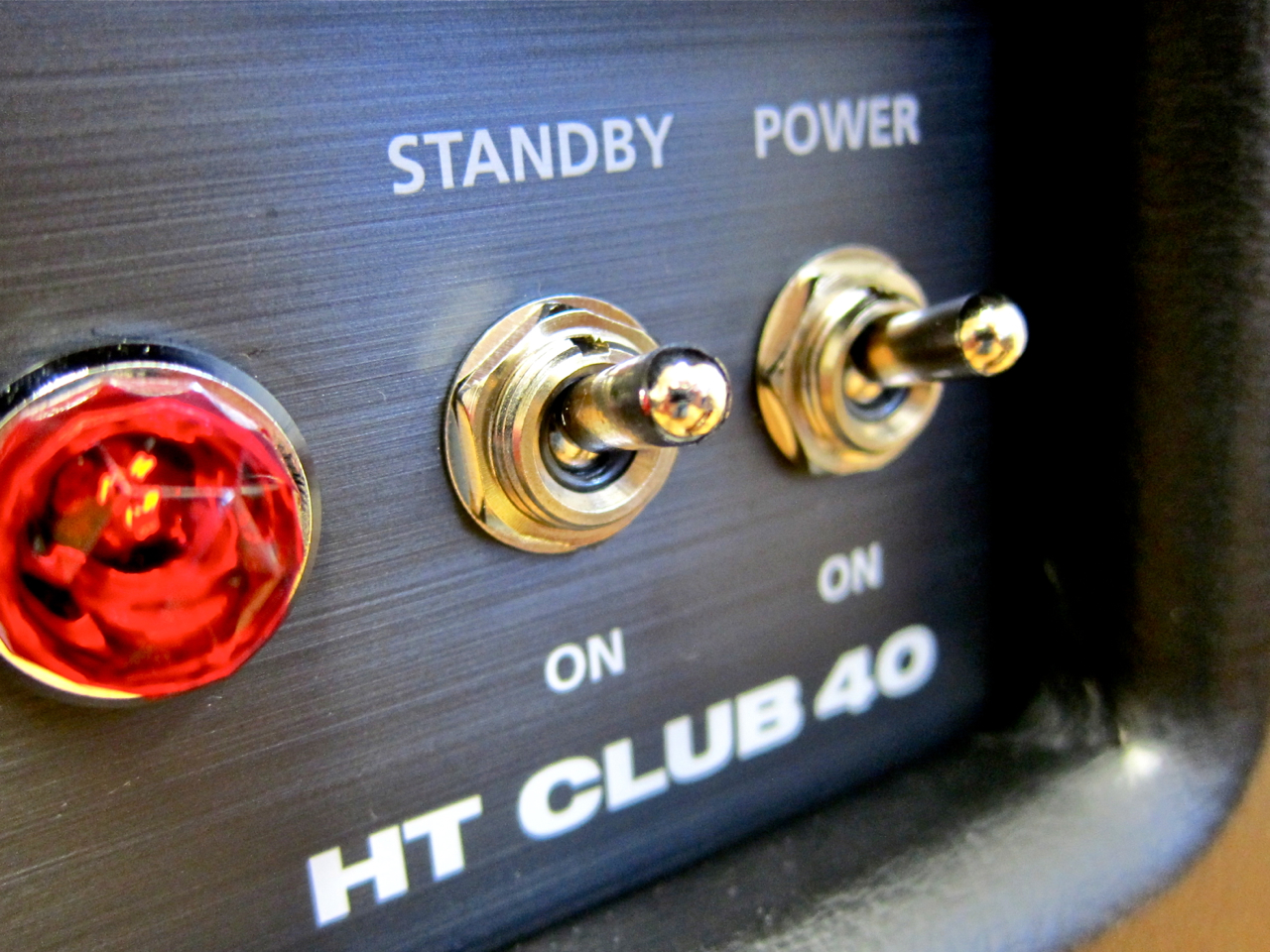
Even though the Blackstar HT Club 40 is called a two-channel combo, the amp’s many features offer the player a wider palette of sounds than he (or she) might expect from such a compact design.

The clean channel offers you two controls – Volume (gain) and a simple Tone knob. The channel’s Voice switch gives you two different versions of the clean channel.
Boutique Clean has the HT Club 40 working in Class A -mode, which even lets you dial in a good dose of grainy dirt using the Volume knob.
In Modern Clean the amp runs in Class AB, and offers a fatter bass, and a far cleaner overall tone, even at high Volume settings.
****
The overdrive side offers you separate gain and volume controls, enabling you to get even the most distorted tones at moderate volume levels. This channel is also equipped with its own Voice switch.
Classic Overdrive takes the Blackstar into classic Seventies and Eighties Marshall-territory – the sounds are chunky and tight.
Modern Overdrive gives you more gain, a bigger bass register, as well as a creamy and vocal mid-range.

The overdrive channel also offers a far more versatile EQ-section than the clean channel.
In addition to the fine three-band EQ, Blackstar have included their patented ISF-feature. The settings of the ISF-knob (ISF = Infinite Shape Feature) directly influence the EQ-section’s tonality, as well as the overall tonal response. ISF set to zero (Blackstar call this the USA-setting) results in a very tight bass response with a sharper treble zing, compared to ISF at ten (UK), which sounds fuller and fatter.
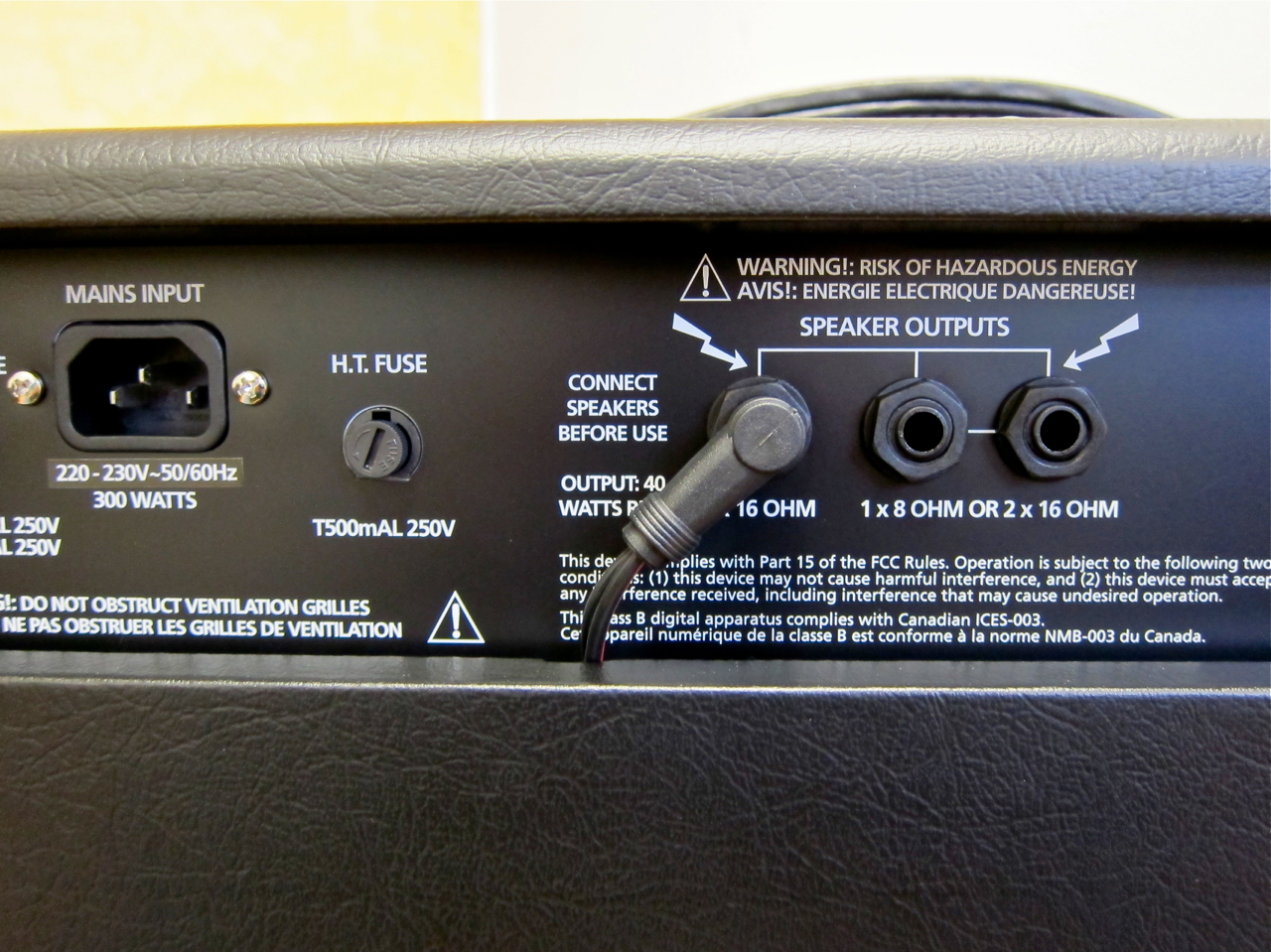
The back panel offers you three different speaker outputs…

…a speaker-simulated line out, an effects loop, and the Reverb switch that lets you choose from two different reverb characteristics. The HT Club 40’s fine reverb is digital.
****

Here are some Blackstar HT Club 40 sounds I recorded using a Hamer USA Studio Custom and a Gibson Les Paul Junior:
Gibson Les Paul Junior – Modern Clean
Hamer Studio Custom – Modern Clean
Gibson Les Paul Junior – Boutique Clean (Volume at full)
Hamer Studio Custom – Boutique Clean (Volume at full)
Gibson Les Paul Junior – Classic Overdrive
Hamer Studio Custom – Classic Overdrive
Hamer Studio Custom – Modern Overdrive
****
The Blackstar HT Club 40 is a joy to work with! The combo dishes out a plethora of quality tones, and it proved very intuitive and easy to use.
In effect, the HT Club 40 really offers you four quality amps in one package:
Modern Clean is a Fender-like (or Mesa/Boogie-type) clean channel with oodles of headroom. Boutique Clean embodies Class A interactivity – there’s less clean headroom, but the amp reacts organically to your playing dynamics, as well as the volume knob setting on your guitar. Classic Overdrive is the place to go to for all your classic Blues Rock, Hard Rock and Metal needs, with Modern Overdrive catering for the current gain-saturated mosh-pit crowd.
In my opinion the Blackstar HT Club 40 is a fantastic choice for the guitarist on the move. It will give you great tones on stage, as well as in the studio, where using a moderately-sized amp may prove to be a more workable solution than going for a full blown stack.
****
Blackstar HT Club 40
Current price in Finland: 694 €
Finnish distributor: Musamaailma
****
Pros:
+ bang-for-the-Euro
+ sound
+ versatility
+ speaker-simulated line out
+ workmanship


