Testipenkissä: Carvin VL300 Legacy 3

Tämä juttu on ilmestynyt alun perin ilmaisessa SoundCheck-nettilehdessä, jossa voi ladata myös PDF-version artikkelista.

****

****

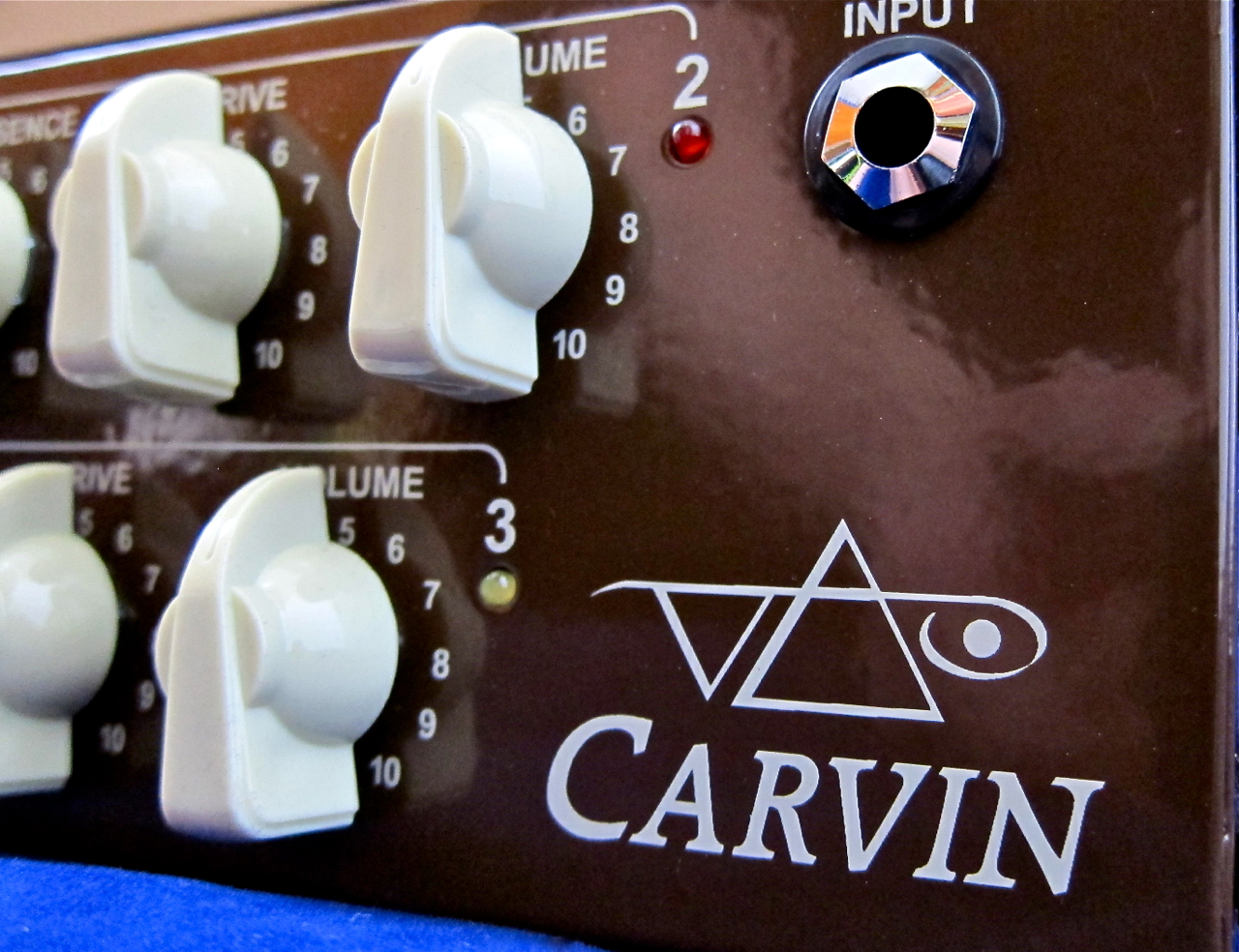
Carvin Legacy 3 – Carvin-logo

Steve Vain ja Carvinin pitkän yhteistyön tuorein hedelmä on kompakti kolmikanavainen nuppi.

****

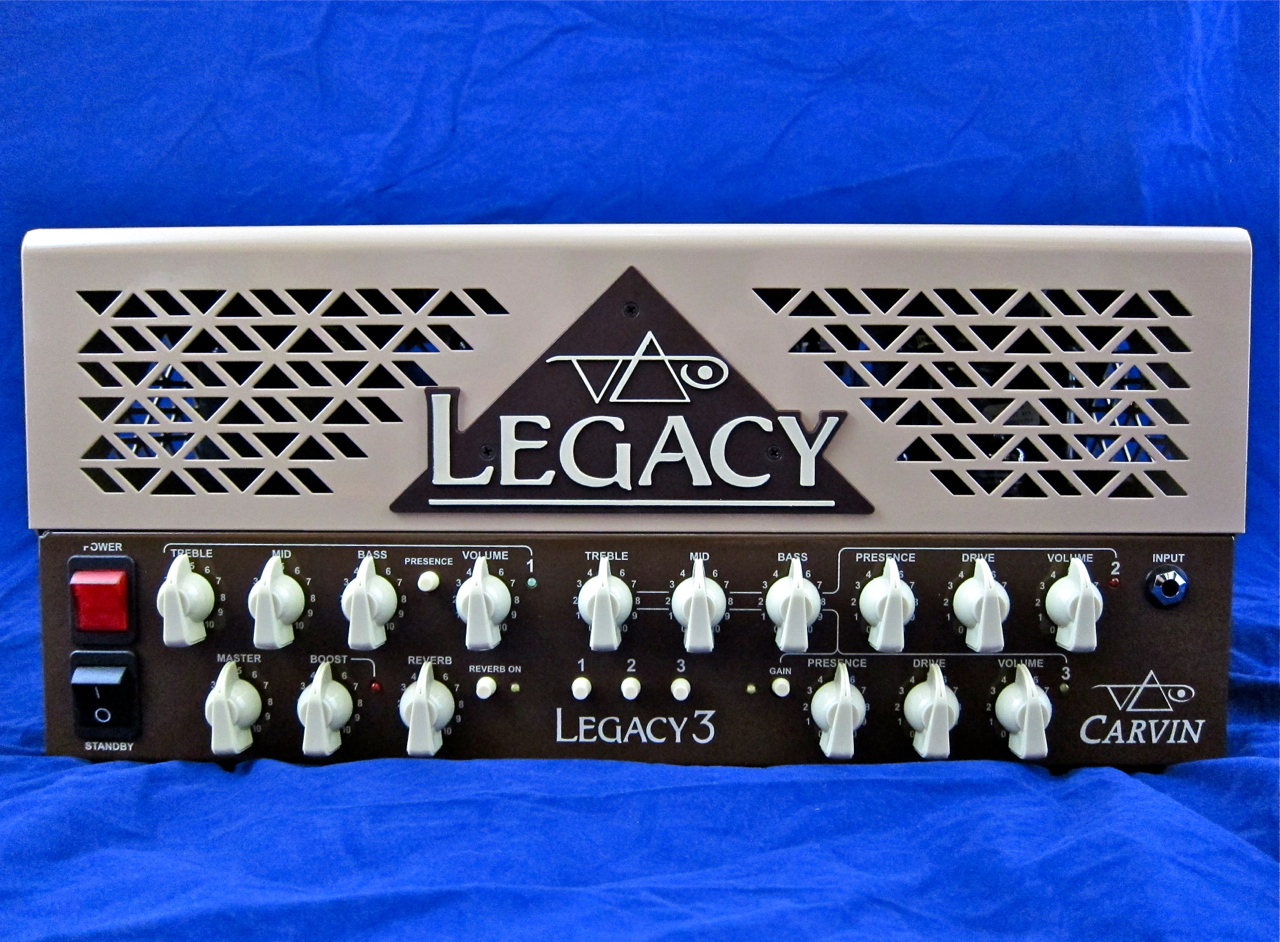
Carvin Legacy 3 – full front

Carvin VL300 Legacy 3 (1.495 €) on rakennettu vankkaan, kokonaan metallista valmistetuun koteloon, mutta on silti yllättävän helppo roudata, kompaktin kokonsa ja alhaisen painonsa (13 kg) ansiosta. Lisävarusteena saatavilla kulmaraudoilla voi nupin jopa sijoittaa kätevästi laiteräkkiin.
Standardiväritys on maitokahvin ruskea, mutta lisävarusteena voi saada myös vaaleanvihreän yläosan nuppiin (”Vai Green”).
Etuvahvistimessa on neljä 12AX7-putkea, kun taas päätevahvistimen tehdasvarustus muodostuu neljästä EL34-mallista. Takapaneelin bias-kytkimen ansiosta päätevahvistinputket voi vaihtaa ongelmitta myös 5881- tai 6L6GC-tyyppisiin, jos haetaan enemmän Fender- tai Mesa Boogie -tyylisiä soundeja.

****

Carvin Legacy 3 – Channel 1
Carvin Legacy 3 on kolmikanavainen nuppi, joka onnistuu tarjoamaan melko laajan kattauksen erilaisia soundeja.
Ykköskanava on varattu kokonaan puhtaita soundeja varten, ja se tarjoaa volume-säätimen lisäksi kolmikaistaisen taajuuskorjaimen, sekä Presence-kytkimen.

Carvin Legacy 3 – Channels 2 + 3
Kakkos- ja kolmoskanavalla on kummallakin omat säätimet gaineille (Drive), volumelle ja preesensille, mutta kolmialueinen EQ on yhteinen. Kolmoskanavalla on tämän lisäksi vielä painokytkin, jolla voi lisätä vielä gainia.

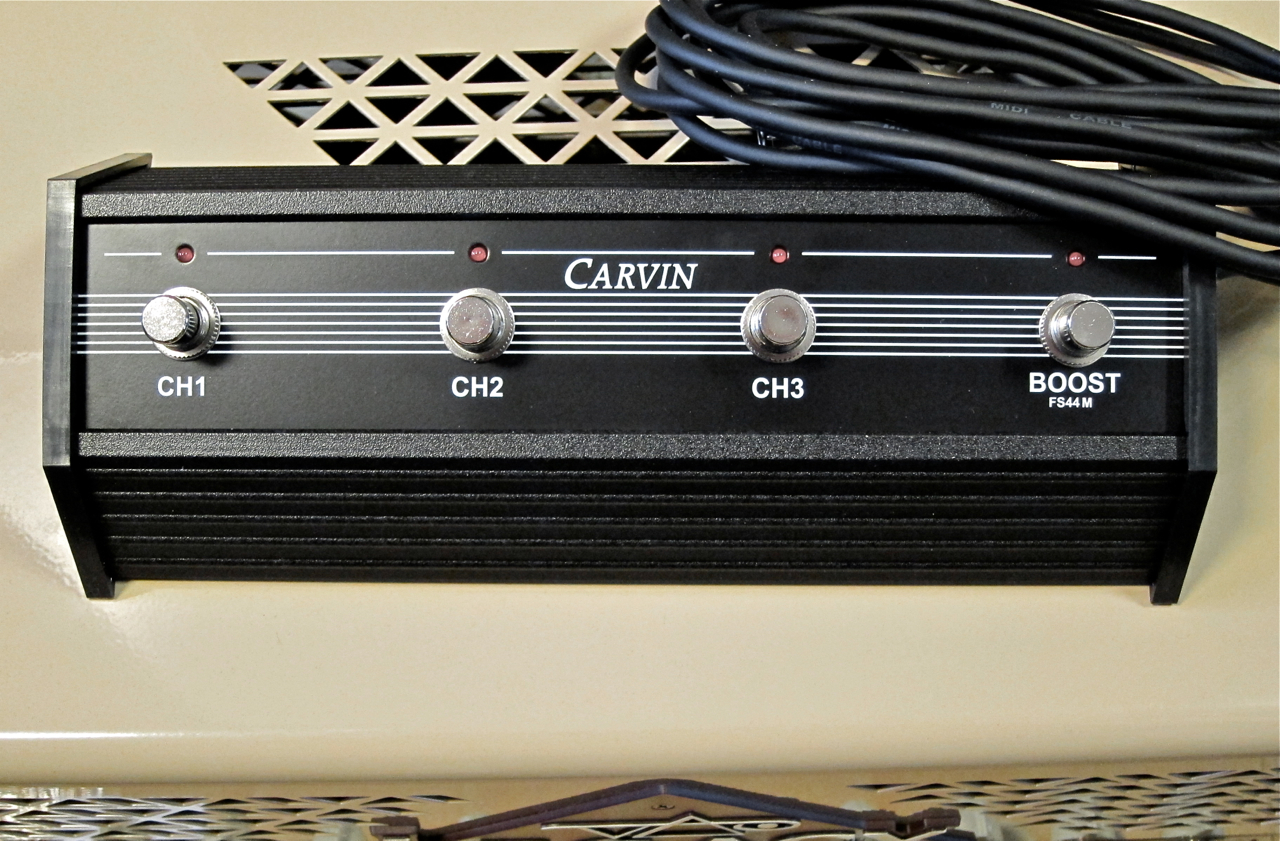
Carvin Legacy 3 – footswitch
Kanavia voi vaihtaa joko etupaneelista nappia painamalla tai sitten midillä tai Carvinin omalla FS44M-jalkakytkimellä, joka on maksullinen lisävaruste. Valitun kanavan tunnistaa sekä etupaneelin selkeistä merkkiledeistä että laitteen sisään asennetuista ledivalaistuksesta, joka muuttaa väriään valitun kanavan mukaan.
Master-osasto on sijoitettu ykköskanavan säätimien alle, ja sieltä löytyvät master-säätimen lisäksi vielä jalkakytkimellä valittava boosteri, sekä nupin digikaiun säätö.
Kaiun saa päälle ja pois kanavakohtaisesti – nuppi muistaa jokaisen kanavan kohdalla viimeisen asetuksen – mutta kaiun signaalitasoa ei voi tallentaa. Tämä ei kuitenkaan ole ongelma, koska särökanavissa kaiun signaalitaso on säädetty valmiiksi selvästi alhaisemmaksi kuin ykköskanavassa.

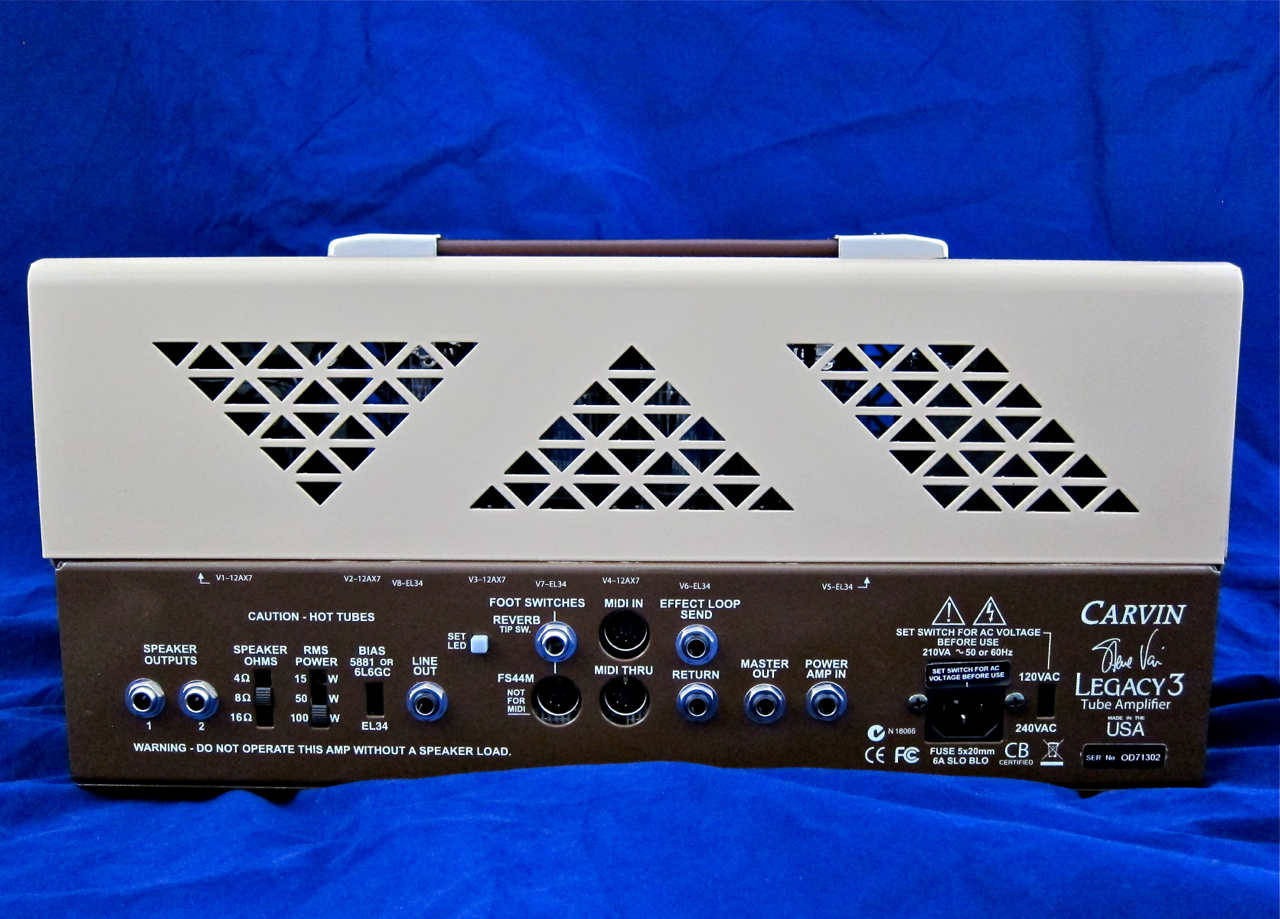
Carvin Legacy 3 – full back

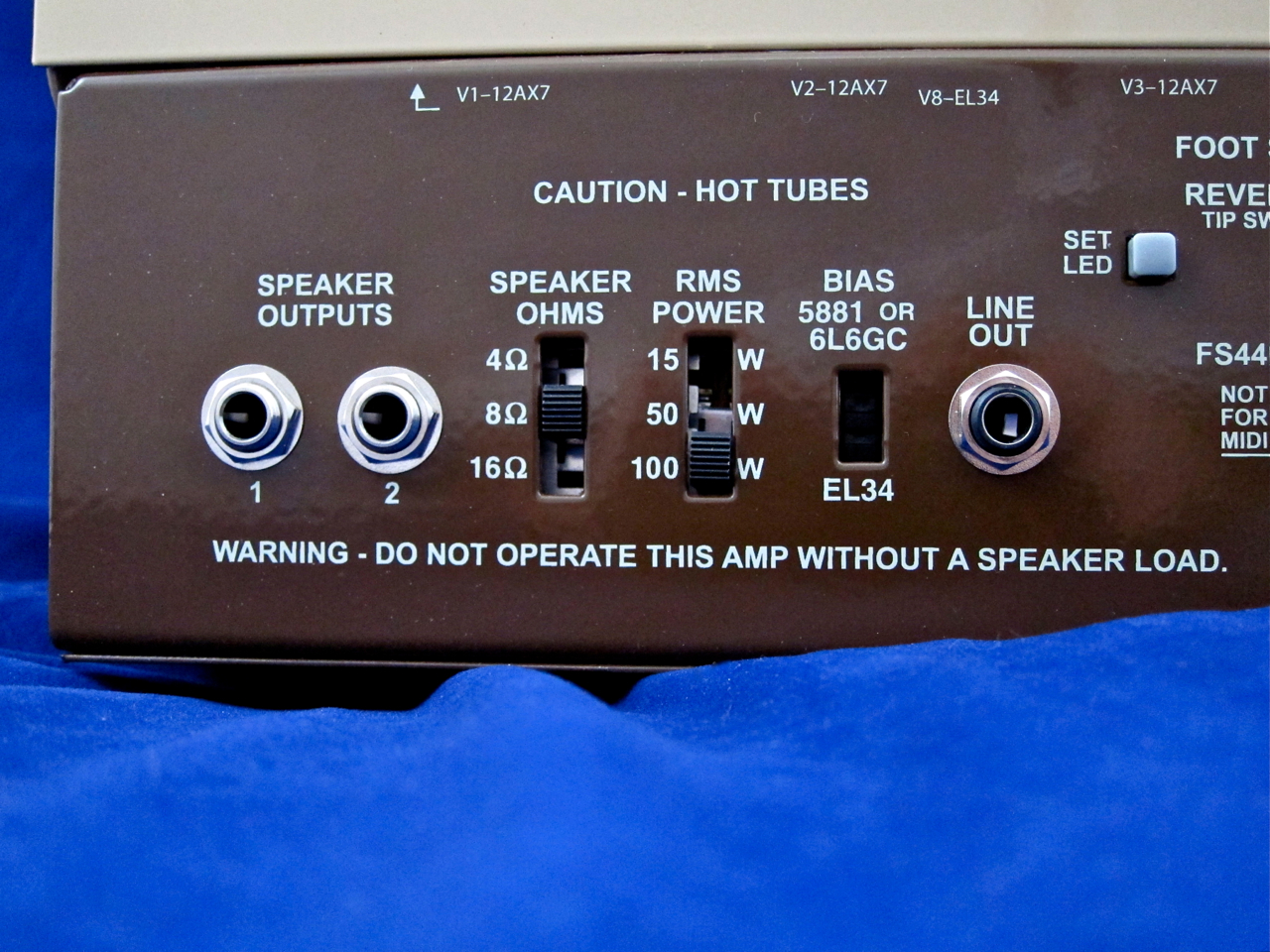
Carvin Legacy 3 – back panel 1
Bias-kytkimen lisäksi Legacy 3:n takapaneeli tarjoaa vielä muita kytkimiä ja liittimiä, joilla nuppia saa sulautettua sujuvasti omaan signaaliketjuun.
Carvinin kaiutinlähtöjen impedanssin voi valita kolmiasentoisella kytkimellä (neljä, kahdeksan tai 16 ohmia), samoin vahvistimen päätetehon (15, 50 tai 100 wattia).

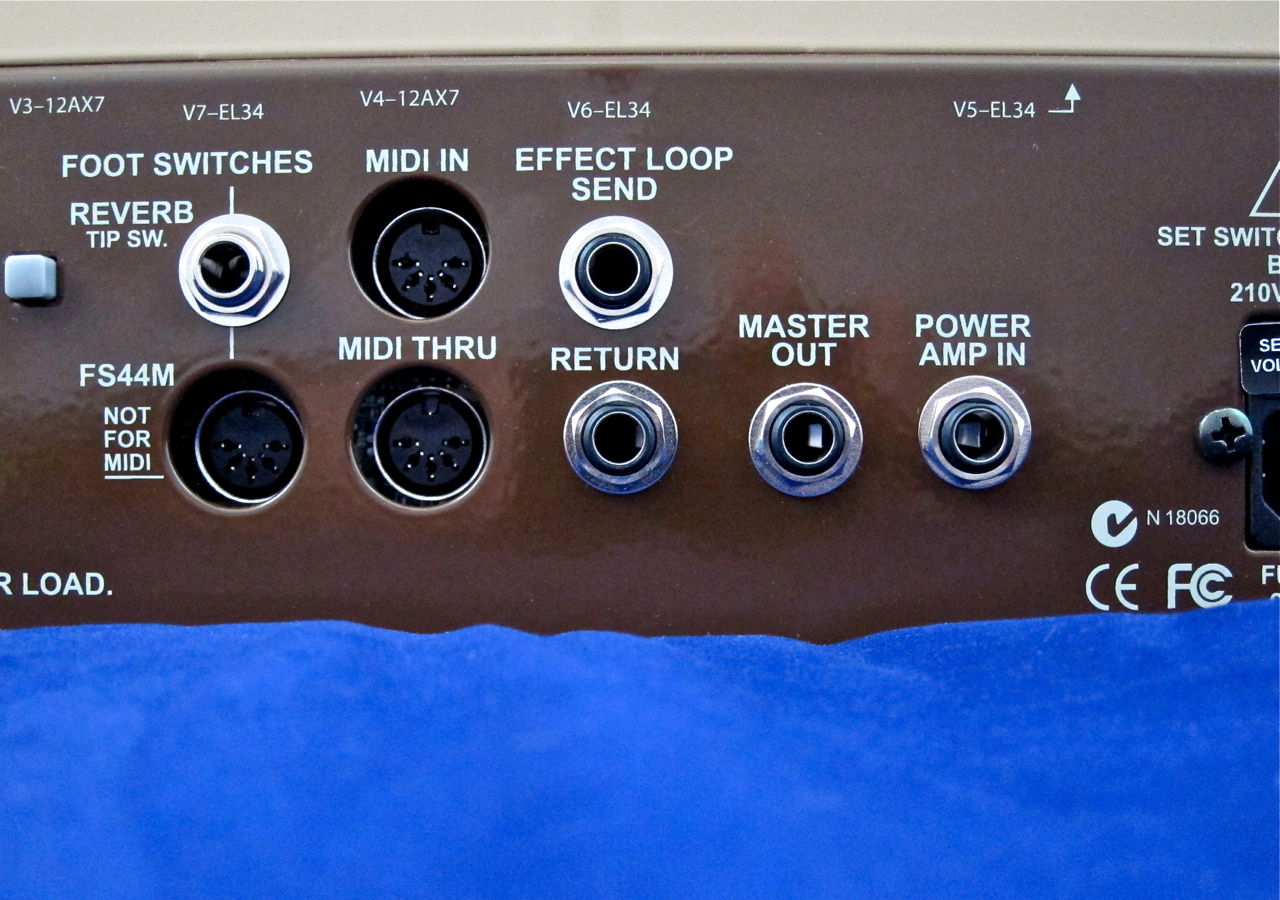
Carvin Legacy – back panel 2
Linjalähdön lisäksi nuppi tarjoaa peräti kaksi efektilenkkiä, joista yksi (Effect Loop) on sijoitettu perinteisellä tavalla etuvahvistimen ja master säätimen väliin, kun taas toinen (Master Out – Power Amp In) sijoittuu master-säätimen ja päätevahvistimen välille.

****

Carvin Legacy 3 – logo badge
Testasin Carvin Legacy 3 -nupin vaahterakaulaisella Fender Stratocasterilla ja Hamer USA Studio Custom -kitaralla Zilla Cabsin 2 x 12” -kaapin kautta, ja tulokset puhuvat hyvin selkeää kieltä – tässä on kyseessä pro-luokan vahvistin.
Pidin kovasti siitä, että Steve Vai -mallista löytää mutkattomasti halua­mansa soundit, ilman että vahvistin pakottaisi soittajaa liikaa yhteen tiettyyn suuntaan.
Legacyn puhdas kanava on erittäin lähellä omaa ihanne-clean-soundia – sointi on lämmin, avoin ja putipuhdas. Kimaltava diskantti lisää kauniisti helmeilevän klikin jokaisen nuotin atakkiin, ilman häiritsevää purevuutta. Ykköskanavan taajuuskorjaimet toimivat musikaalisella tavalla.
Kakkos- ja kolmoskanava lähtevät soundillisesti samalta kermaisesti yliohjautuvalta viivalta, ja Drive-säätimen alkumetreillä crunch-soundin saa mallikkaasti myös hyvin puhtaaksi ruuvaamalla kitaran volume-säätimen pienemmälle.
Oman Presence-säätimen lisääminen kummallekin särökanaville on mainio apuväline, jos halutaan saavuttaa samalla särön määrällä kaksi erilaista soundia.
Lisäämällä gainia säröön astuu yhä voimakkaammin esiin myös kauniisti laulava paksu kompressio, joka toimii loistavasti Steve Vai -tyyliseen sooloiluun ja kitara-akrobatiaan. Nu-Metal-kitaristeille voi toki olla hieman vaikeaa saada tästä nupista riittävän brutaalia ja tarkkaa atakkia matalaan riffailuun, tällaiseen touhuun tämä Carvin ei yksinkertaisesti ole suunniteltu. Mutta Steve Vain jalanjäljissä kulkevalle kitarasankarille Legacy 3 luo loistavat perusteet oman soundin löytämiselle – myös tehokkaan EQ-osaston ansiosta.

Tässä muutama esimerkkisoundi:

Fender Stratocaster – kanava 1

Fender Stratocaster – kanava 2

Fender Stratocaster – kanava 3

Hamer Studio Custom – kanava 1

Hamer Studio Custom – kanava 2

Hamer Studio Custom – kanava 3

****

Carvin Legacy 3 – front angle

Carvin Legacy 3 on laatupeli, joka sopii mainiosti sekä lavalle että studioon. Paljon keikkailevalle kitaristille nupin keveys, sekä mahdollisuus laittaa vahvistin räkkiin ovat erittäin tervetulleita ominaisuuksia. Tehon puolitus tai sen pudottaminen jopa vain 15:lle watille mahdollistavat Carvinin käytön monissa eri paikoissa, tilanteissa ja kokoonpanoissa, ilman että oma soundi kärsisi.
Legacy 3 soveltuu Vai-tyylisen kitarataituruuden lisäksi myös monille muille musatyyleille, joissa arvostetaan Carvin-nupin laadukkaita soundeja ja kolmen kanavan tuomaa monipuolisuutta.

****

Carvin VL300 Legacy 3

1.495 EUR

Maahantuoja: Vantaan Musiikki

****

Plussat:
+ työnjälki
+ paino
+ koko
+ soundi
+ monipuolisuus
+ kaiun soundi

Testipenkissä: Zoom MS-50G

****

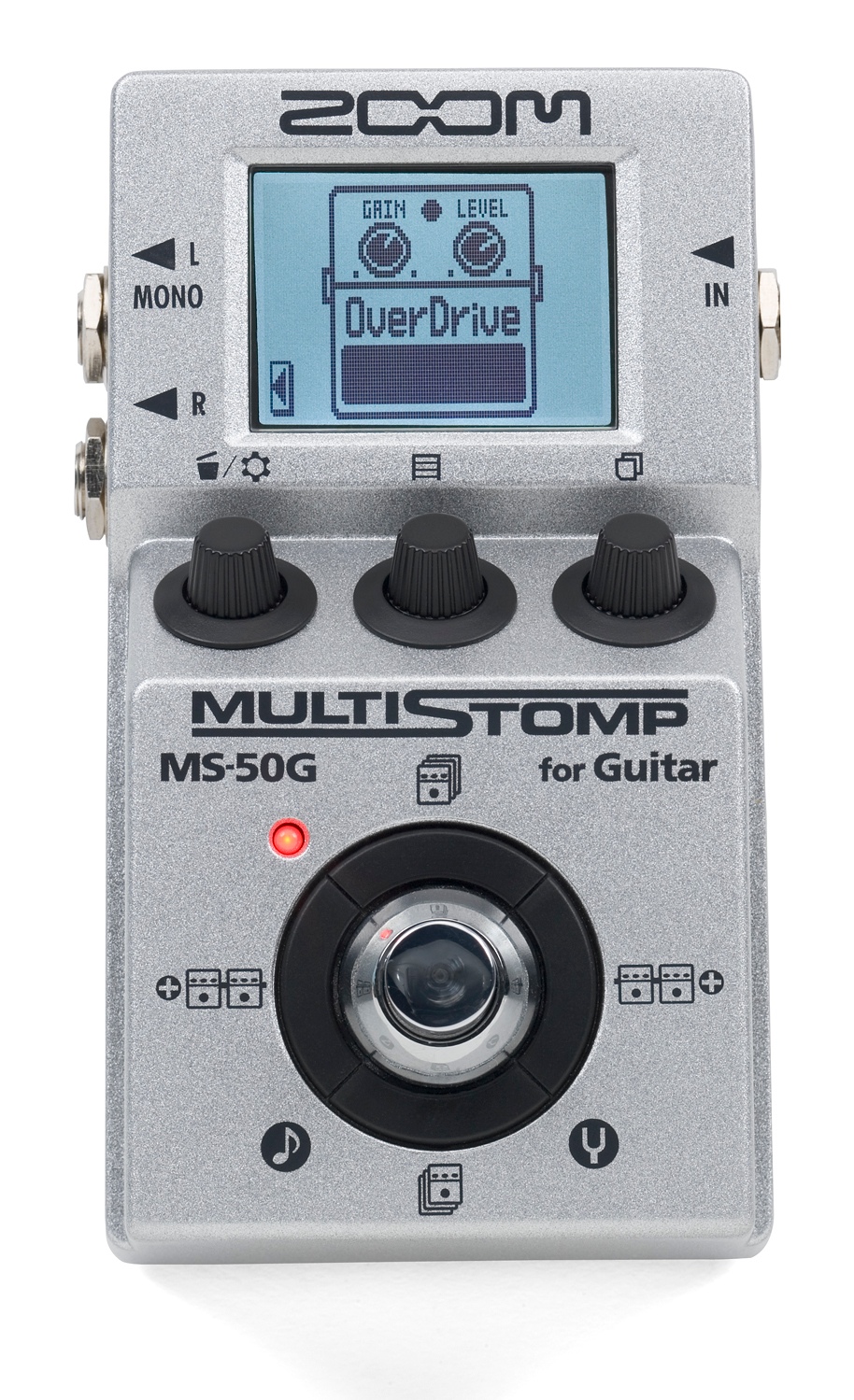
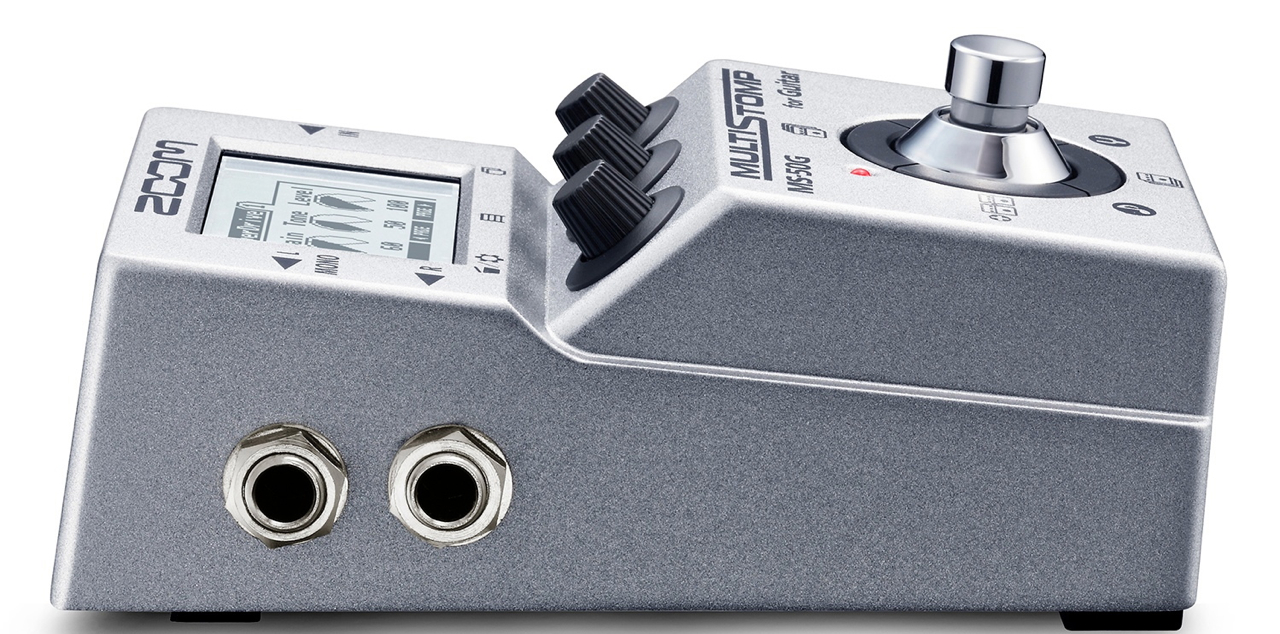
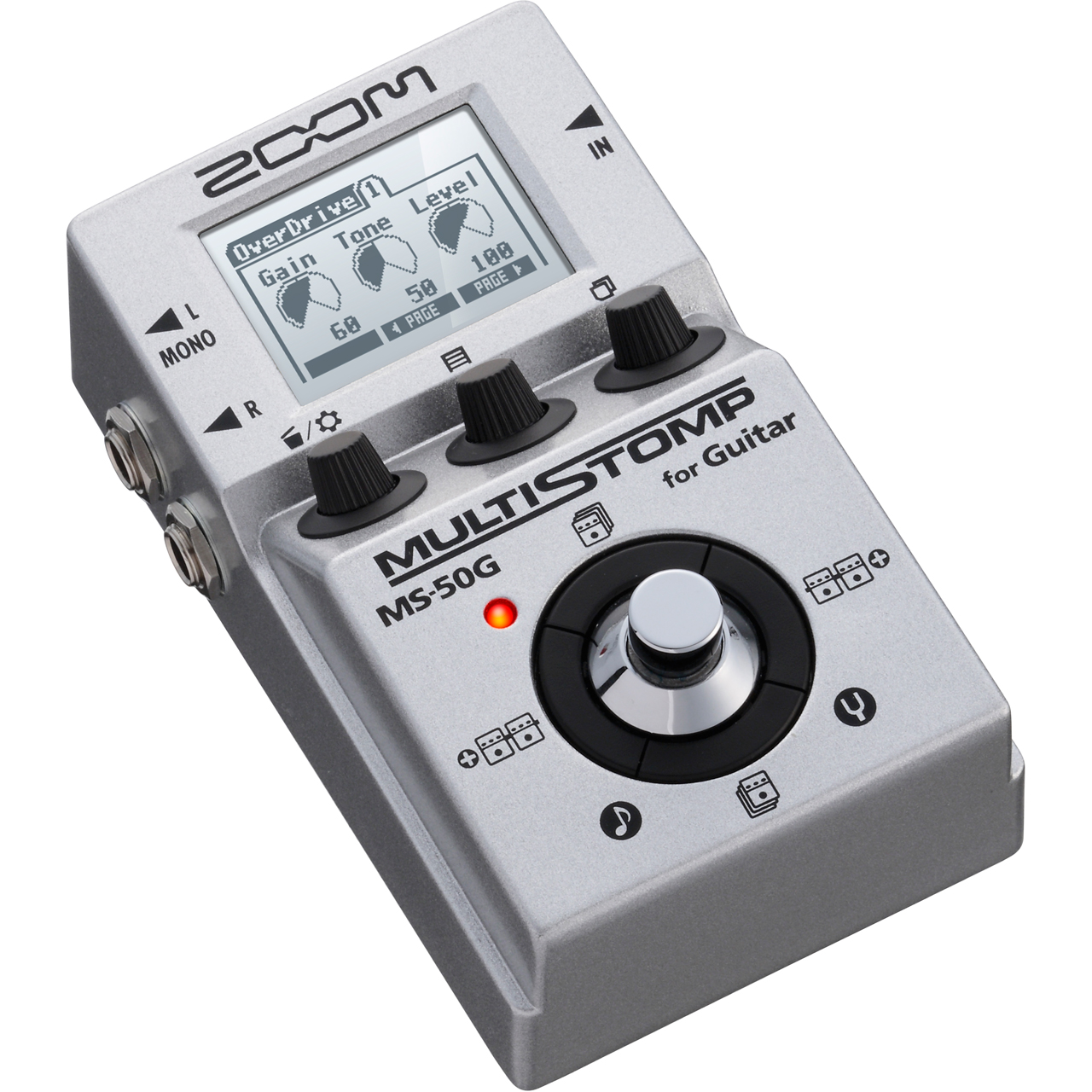
Japanilaisen Zoomin 9000-sarjan tuotteet olivat 1990-luvulla maailman ensimmäiset huippukompaktit multiefektit kitaralle. Uusi Zoom MultiStomp MS-50G (suositushinta 99 €) jatkaa tätä perinnettä mahduttamalla ison G5-pedaalilaudan (testattu heinäkuussa) digitaalista mallinnusteknologiaa perinteisen pikkuefektin koteloon.

****

Uskomatonta, mutta totta – pikkuloota tarjoaa 50 vapaasti editoitavaa ohjelmapaikkaa, ja jokaisessa efektiohjelmassa (patch) voi ketjuttaa jopa kuusi efektiä peräkkäin. Tarjolla on 55 eri efektityyppiä kompressoreista modulaatioefekteihin ja säröpedaaleista vahvistinmallinnuksiin. Myös kunnon viritysmittari löytyy MultiStompista.

Zoom MS-50G:n metallinen kotelo ja jalkakytkin tuntuvat hyvin kestäviltä. Säätimet on asennettu kynnyksen taakse, siten ettei niihin vahingossa osu kengänpohjalla.

Pedaalissa on kaksi lähtöä, koska sitä voi käyttää joko mono- tai stereofonisena. MultiStompissa ei ole lainkaan kuulokelähtö, sillä se on tarkoitettu puhtaasti lattiaefektiksi livekäytössä tai kytkettäväksi äänikorttiin tai mikseriin studiokäyttöä varten.

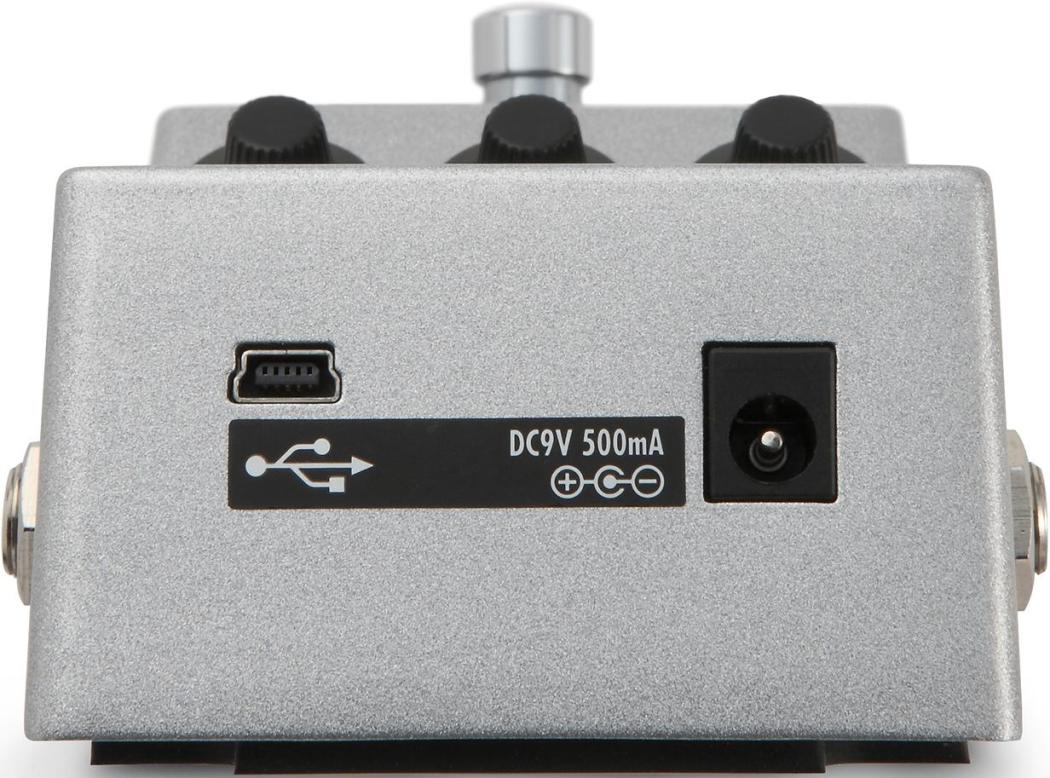
Pikku-Zoomi saa käyttövirtansa kahdesta AA-paristosta, joilla luvataan noin seitsemän tunnin yhtäjaksoista soittoaikaa. Virtalähteen (ei kuulu hintaan) käyttö on kuitenkin ympäristöystävällisempi vaihtoehto, ja kun kerran laite on sähkösyötössään Boss-standardiin yhteensopiva, ei tule ongelmia pedaalilautojenkaan virtalähteiden kanssa.

MultiStompin etureunasta löytyy myös USB-portti, joka mahdollistaa laitteen firmewaren päivittämistä.

****

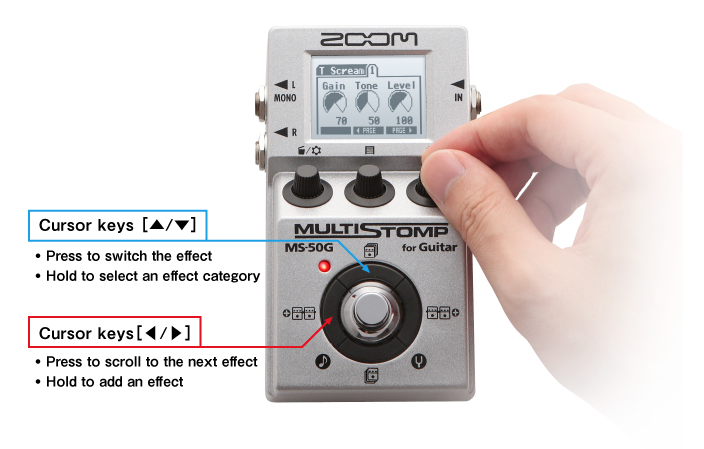
Zoom MS-50G:n efektiohjelmia voi käyttää kahdella eri tavalla:

Ensimmäinen tapa on valita yksi haluttu efektiohjelma, jonka jälkeen pystyy siirtämään navigointinäppäimillä siihen yksittäisiä efektejä, joita haluaa laittaa soiton aikana päälle ja pois MultiStompin jalkakytkimellä (esimerkiksi efektiketjun särö tai chorus). Laite muistaa omatoimisesti jokaisen efektiohjelman kohdalla, mikä yksittäinen efekti oli viimeiseksi valittu päälle/pois-kytkettäväksi, ja tuo efektiketjun seuraavalla kerralla jälleen samalla tavalla näkyviin.

Toinen tapa on käyttää Zoomia A/B-tilassa. A/B-tilassa valitaan ohjelmalistalta niitä efektiohjelmia, joita halutaan käyttää, asettamalla niille järjestyksen kirjaimilla (esimerkiksi: ”SynthStar: A”, ”AsiaPalace: B”, ”PitchDist: C” jne.). Valinnan jälkeen jalkakytkimen polkaisu vaihtaa yhdestä ohjelmasta seuraavaan järjestyskirjainten aakkosjärjestyksessä. Viimeisen efektiohjelman kohdalla hypitään kytkinpolkaisulla takaisin valittujen ohjelminen alkuun.

****

Hyvin kompaktissa efektilaitteessa täytyy aina ensin oppia laitteen käyttölogiikka, koska yleensä runsaat ominaisuudet ja parametrit ovat ohjailtavia rajoitetulla määrällä painikkeita ja säätimiä. Lyhyen tutustumisajan jälkeen Zoomin MultiStompilla tulee kuitenkin erittäin hyvin toimeen, sen loogisen käyttöliittimen ja hyvän graafisen toteutuksen ansiosta.

Erinomainen Effect Chain -näkymä auttaa suuresti hahmottamaan jokaisen efektiohjelman signaalitietä. Virtuaalisen magneetin avulla voi muuttaa yksittäisten efektien järjestystä ”nostamalla” niitä ja siirtämällä niitä yhdestä paikasta toiseen.

****

Pienestä koostaan huolimatta on Zoom MS-50G MultiStomp firman G-sarjan kitaraefektien täysikasvuinen jäsen. Vaikka pikku-Zoomi ei tarjoa kaikkia isoveljiensä – G3 ja G5 – hienouksia ja myös sen efektien määrä on hieman supistettu, on tässä tarjottujen efektien runsaus ja soundin laatu suorastaan ällistyttävä. Perinteisen lattiaefektin hinnalla saadaan tässä siis laadukas multiefekti, joka vie kuitenkin vain yhden pedaalin verran tilaa.

****

Äänitin Zoom MS-50G:llä ja yhdellä sähkökitaralla (Tokai SG-75) Youtube-videon kaikki kitaraosuudet:

Zoom MS-50G

Muita soundiesimerkkejä lainasin tällä kertaa Kitarablogin aiemmista Zoom G3- ja G5-jutuista:

Fender Stratocaster – detune – delay

Fender Stratocaster – dirty Tweed – tremolo

Tokai LC-85 – fixed wah – Marshall-type

Tokai LC-85 – phaser – Blackface-style

MS Crunch – Stratocaster

Volume Pad – LP-tyylinen

Oct-Lead – Stratocaster

DZ Drive – Stratocaster

****

Zoom MS-50G MultiStomp

suositushinta 99 €

Maahantuoja: Studiotec

****

Plussat:

+ hinta-laatu-suhde

+ soundi

+ kompakti

+ helppokäyttöinen

+ monipuolinen

Testipenkissä: Blackstar HT Club 40

Brittiläinen Blackstar Amplification on saavuttanut verrattaen nopeasti maineen monipuolisten, nykyaikaisten ja luotettavien putkivahvistimien valmistajana. Yhä laajentuva endorserikatras – josta löytyy niin erityylisiä nimiä kuin Manic Street Preachers ja Dimmu Borgir – kertoo sekin jotain merkin arvostuksesta.

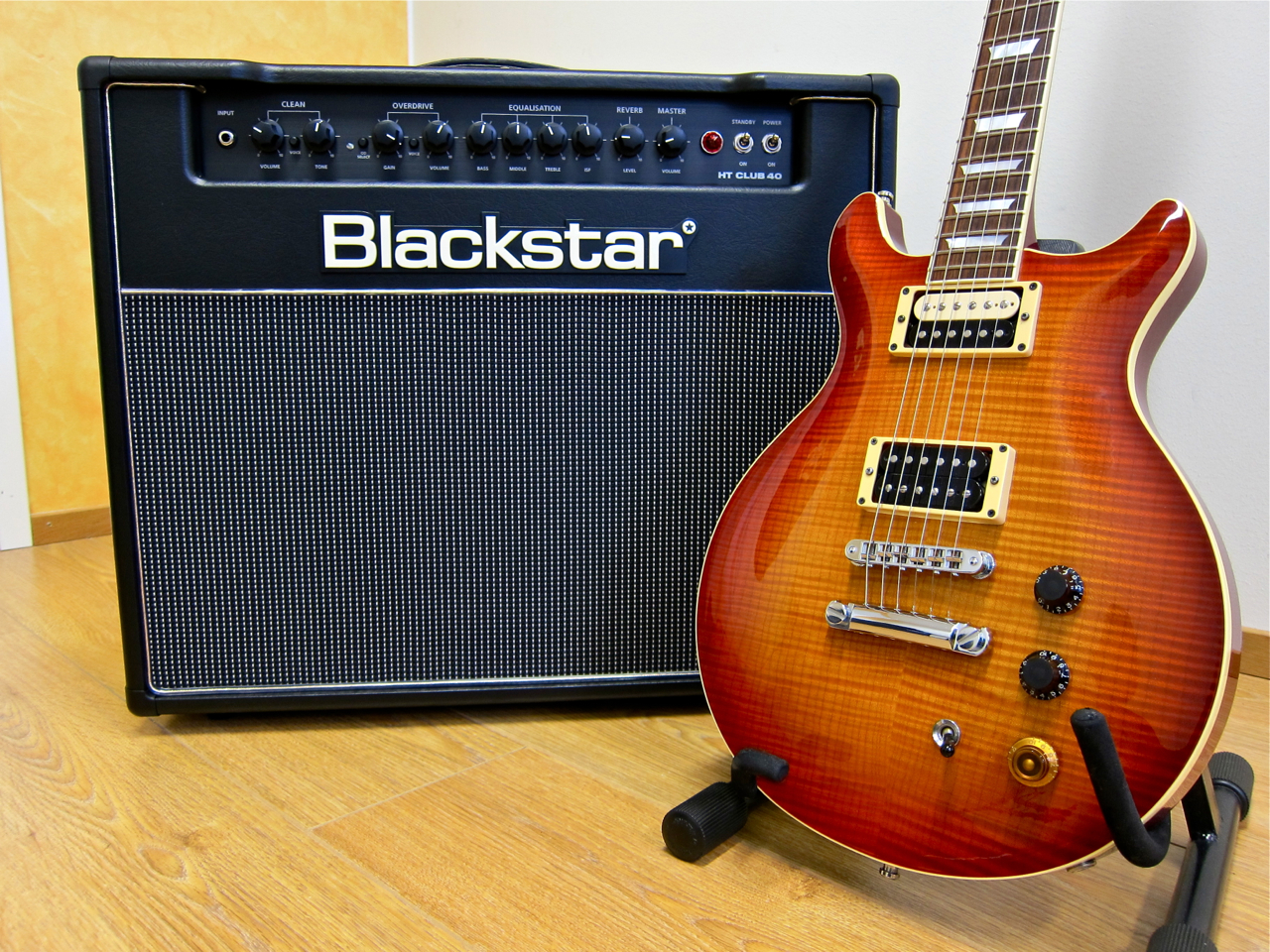
Tällä kertaa katsomme hieman tarkemmin Blackstarin HT Club 40 -komboa (694 €), joka on tarkoitettu keikkailevan kitaristin uskolliseksi työjuhdaksi.

****

Nimensä mukaisesti Blackstar HT Club 40 on 40-wattinen kitarakombo, joka on toteutettu täysputkikytkennällä. Etuvahvistimessa toimivat kaksi ECC83-putkia, kun taas päätevahvistin saa voimansa kahdelta EL34-tyypiltä.
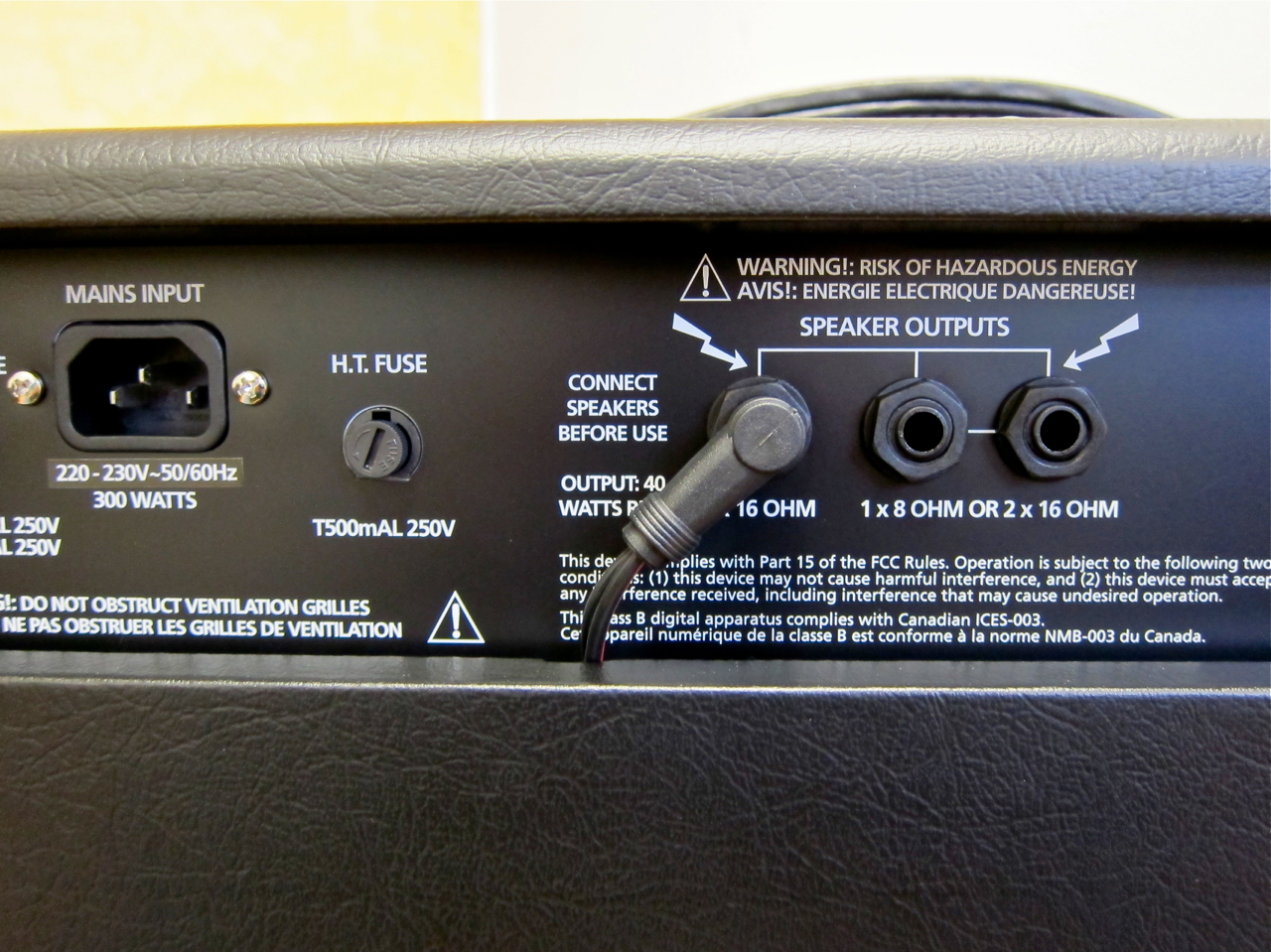
Kiinassa valmistettu kombo on kaksikanavainen, ja se on varustettu yhdellä 12-tuumaisella kaiuttimella.

Blackstar-kombojen selkeä, siisti ja kaunis olemus on sekin noussut jo yhdeksi firman tavaramerkiksi, ja HT Club 40 jatkaa tätä linjaa.

Blackstarin keskikokoinen kombo painaa hieman yli 24 kiloa, mikä on vielä hyvin roudausystävällinen putkikomboksi.

Lähes kokonaan suljetun kotelon ansiosta, kombosta saa tyypillisten kombosoundien lisäksi myös hyvin uskottavia stäkkisoundeja.
Pienen aukon – ja nykyaikaisten turvallisuusmääräyksien – takia putkien vaihtaminen on hieman työlästä, koska koko takapaneeli on ensin irrotettava, ennen kuin putkiin pääsee käsiksi.

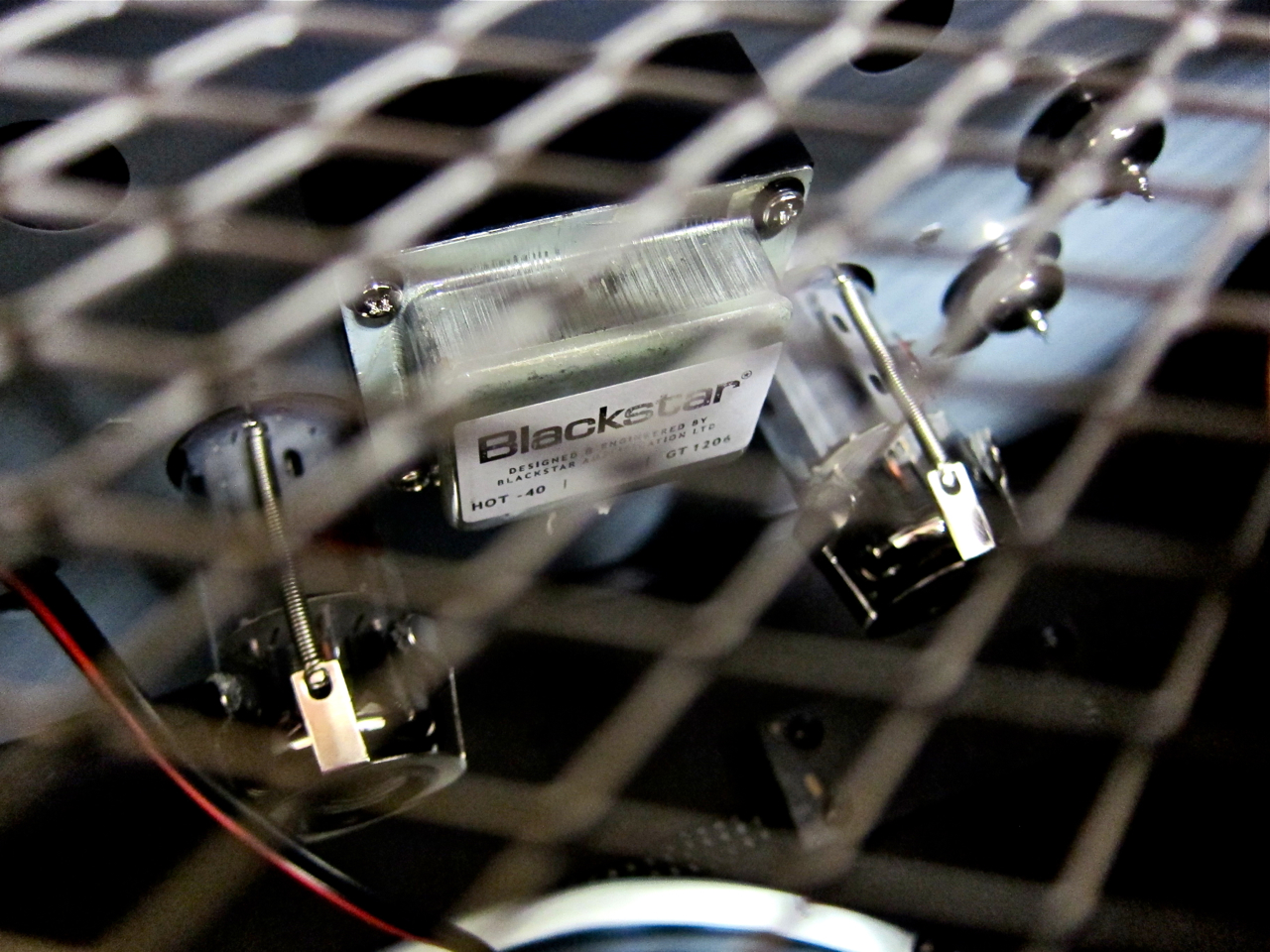
Metalliritilän läpi näkyy kombon putket…

…sekä sen laadukkaat muuntimet.

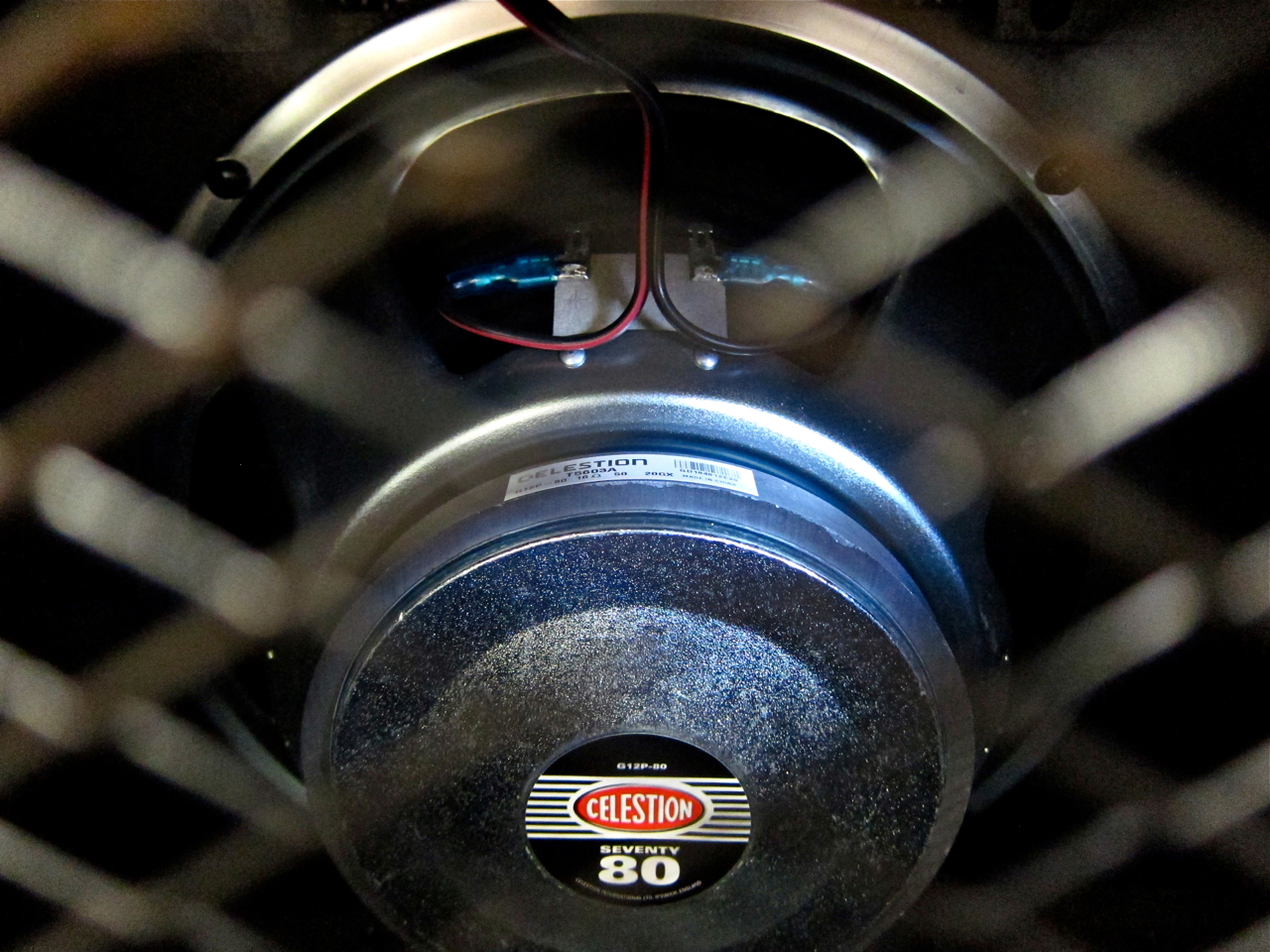
Kombon kaiuttimeksi on valittu Celestionin Seventy 80 -malli, joka on tunnettu sen dynaamisesta ja avoimesta perusluonteestaan.

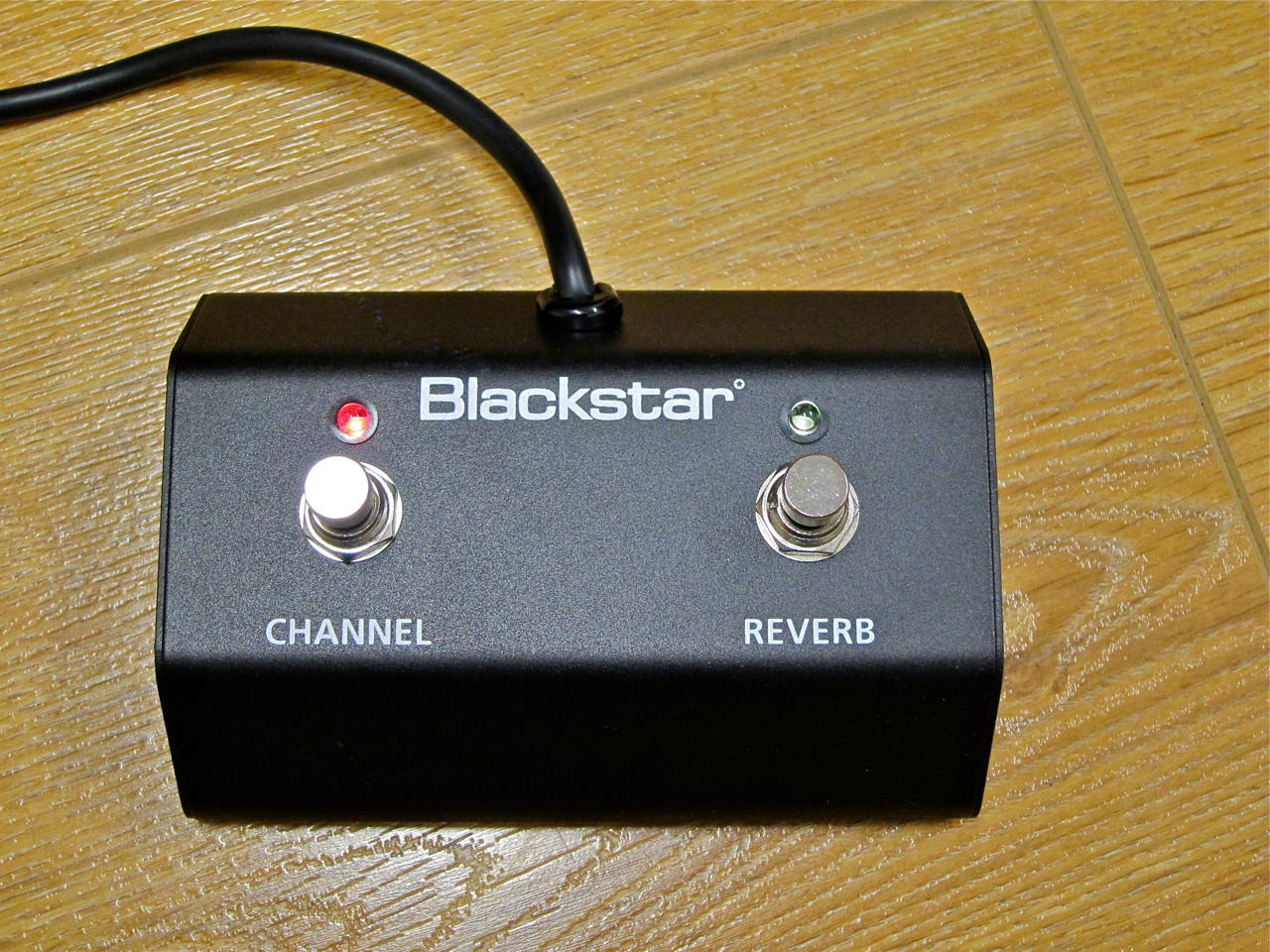
Suoraviivainen ja kestävänoloinen Blackstar FS-5 -jalkakytkin kuuluu hintaan.

****

Vaikka Blackstar HT Club 40 kutsutaankin kaksikanavaiseksi komboksi, on vahvistin – runsaiden ominaisuuksiensa ansiosta – huomattavasti monipuolisempi kuin luulisi.

Puhdas kanava tarjoaa vain kaksi säädintä – Volume (gain) ja helppokäyttöinen Tone. Voice-kytkimellä saa kuitenkin muutettua puhtaan kanavan luonetta perusteellisesti.

Boutique Clean -nimisessä tilassa HT Club 40 toimii tyypillisen A-luokan kitaravahvistimen tavoin, jossa Volume-säätimen avaaminen lisää ensin vain hieman kompressiota ja rosoisuutta, mutta säätimen loppumetreillä soundi muuttuu selvästi säröiseksi.

Modern Cleanissä kombo toimii AB-luokan periaatteella, jolloin bassorekisteri on muhkeampi, ja signaali pysyy siistinä miltein koko Volume-säätimen skaalalla.

****

Särökanava tarjoaa erilliset Gain- ja Volume-säätimet, minkä ansiosta rankkoihin särösoundeihin pääsee käsiksi myös hyvin maltillisellä volyymitasolla. Myös tässä kanavassa on oma Voice-kytkin.

Classic Overdrive vie Blackstarin soundia klassiseen 1970- ja 80-luvun Marshall-alueeseen – soundi on rouhea ja kiinteä.

Modern Overdrive lisää menoon sekä hieman gainia että aimon annoksen potkua ja laulavaa keskirekisteriä.

Särökanavan EQ-osasto on huomattavasti runsaammin varusteltu kuin Clean-kanavan yksittäinen Tone-säädin.

Säröpuolelta löytyy kunnon kolmialueinen taajuuskorjain, sekä Blackstarin patentoitu ISF-kytkentä. ISF-säätimellä (ISF = Infinite Shape Feature) pystyy vaikuttamaan portaattomasti EQ-osaston luonteeseen ja soundiin. Nolla-asento (Blackstar kutsuu sitä USA:ksi) tarjoaa tiukempaa bassorekisteriä ja purevampaa diskanttia kuin täyteläisempi UK-vaihtoehto ISF-säätimen toisessa ääripäässä.

Takapaneelista löytyy kaiutinlähtöjen lisäksi vielä…

…linjalähtö kaiutinsimulaatiolla, efektilenkki, sekä Reverb-kytkin, jolla voi valita yhden kahdesta laadukkaasta digikaiun luonteesta.

****

Tällaisia soundeja irtosi Blackstar HT Club 40 -kombosta, kun soitin sen läpi Hamer USA Studio Custom ja Gibson Les Paul Junior kitarani:

Gibson Les Paul Junior – Modern Clean

Hamer Studio Custom – Modern Clean

Gibson Les Paul Junior – Boutique Clean (Volume täysillä)

Hamer Studio Custom – Boutique Clean (Volume täysillä)

Gibson Les Paul Junior – Classic Overdrive

Hamer Studio Custom – Classic Overdrive

Hamer Studio Custom – Modern Overdrive

****

Blackstar HT Club 40 -komboa on ilo soittaa!  Vahvistin tarjoaa yllin kyllin erilaisia laatusoundeja, ja käyttökokemus on hyvin intuitiivinen ja helppo.

HT Club 40:ssä on ikäänkuin neljä erilaista vahvistinta samassa kuoressa:

Modern Clean on Fender- (tai Mesa/Boogie-tyylinen) putipuhdas valinta isolla headroomilla. Boutique Clean taas tarjoaa kaikki interaktiivisen A-luokan vahvistimen ilot – puhdas headroom ei ole tarjolla niin paljon, mutta vahvistin reagoi hyvin mukavasti soittodymaniikkalle ja kitaran volume-säätimelle. Classic Overdrivesta saa irti kaikki klassisen Bluesrockin, Hard Rockin ja Metallin soundeja, kun taas Modern Overdrive tyydyttää varmasti nykyaikaiset kitarasankarit.

Mielestäni Blackstar HT Club 40 on loistava valinta ravintola- ja klubikeikoille, sekä studiossa, jossa vuotoäänien minimoimiseksi keskikokoinen kombo voikin olla parempi valinta kuin iso stäkki.

****

Blackstar HT Club 40

694 €

Maahantuoja: Musamaailma

****

Plussat:

+ hinta-laatu-suhde

+ soundi

+ monipuolisuus

+ linjalähtö kaiutinmallinnuksella

+ työnjälki

Review: EBS Classic Session 30

EBS Sweden’s latest product – the Session 30 – is the company’s smallest bass combo to date, and meant for practicing, recording and home use.

****

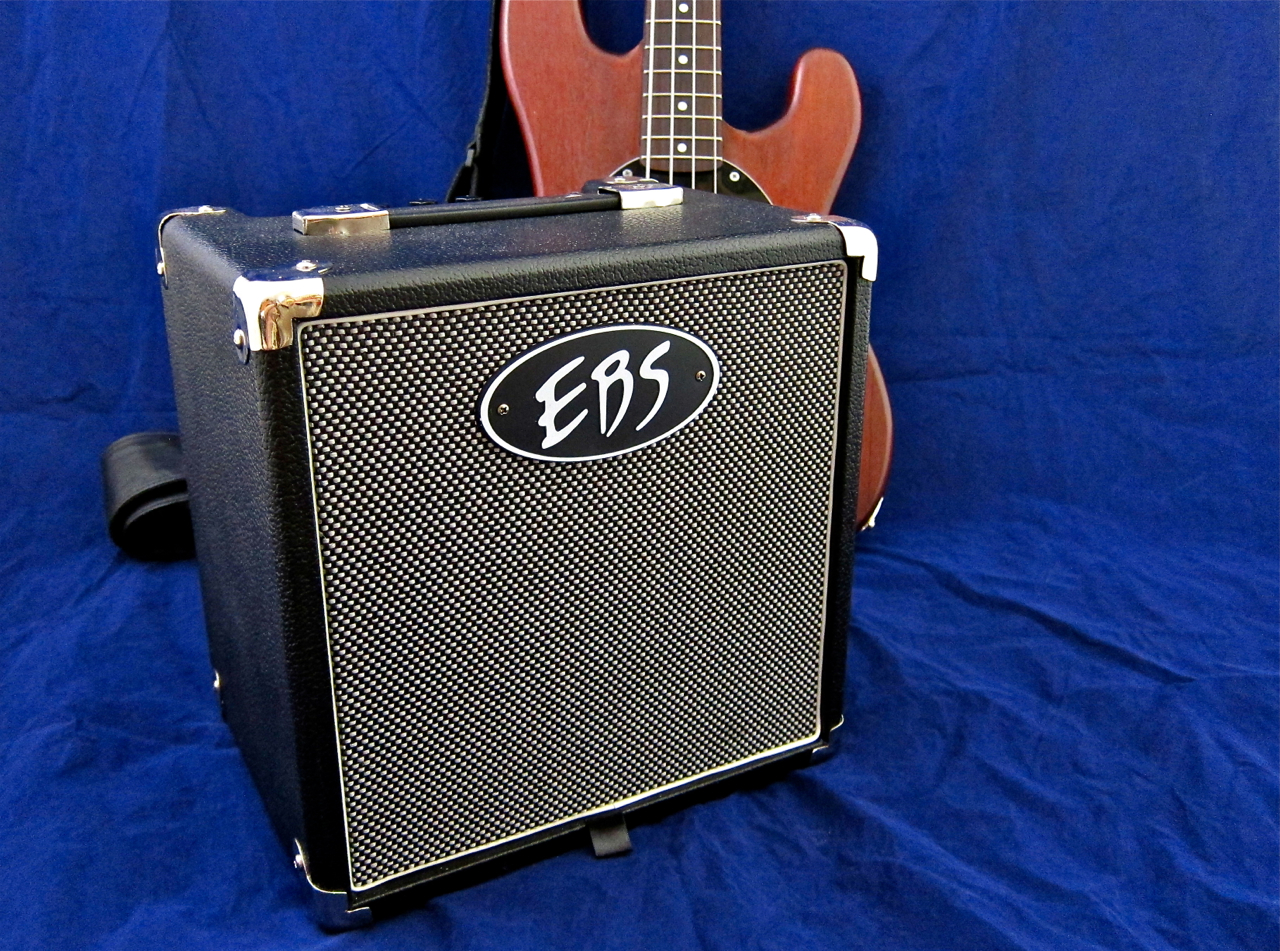
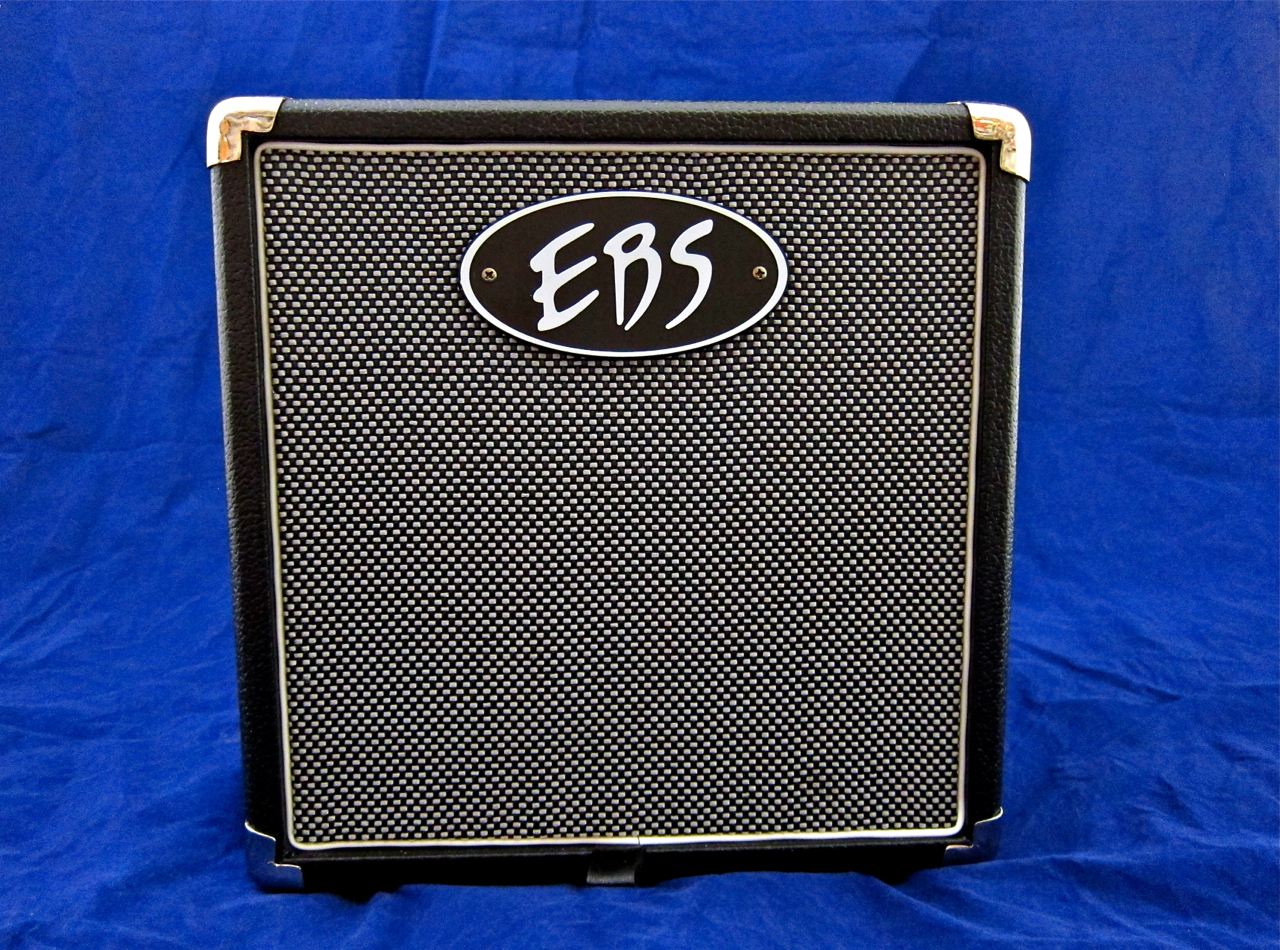
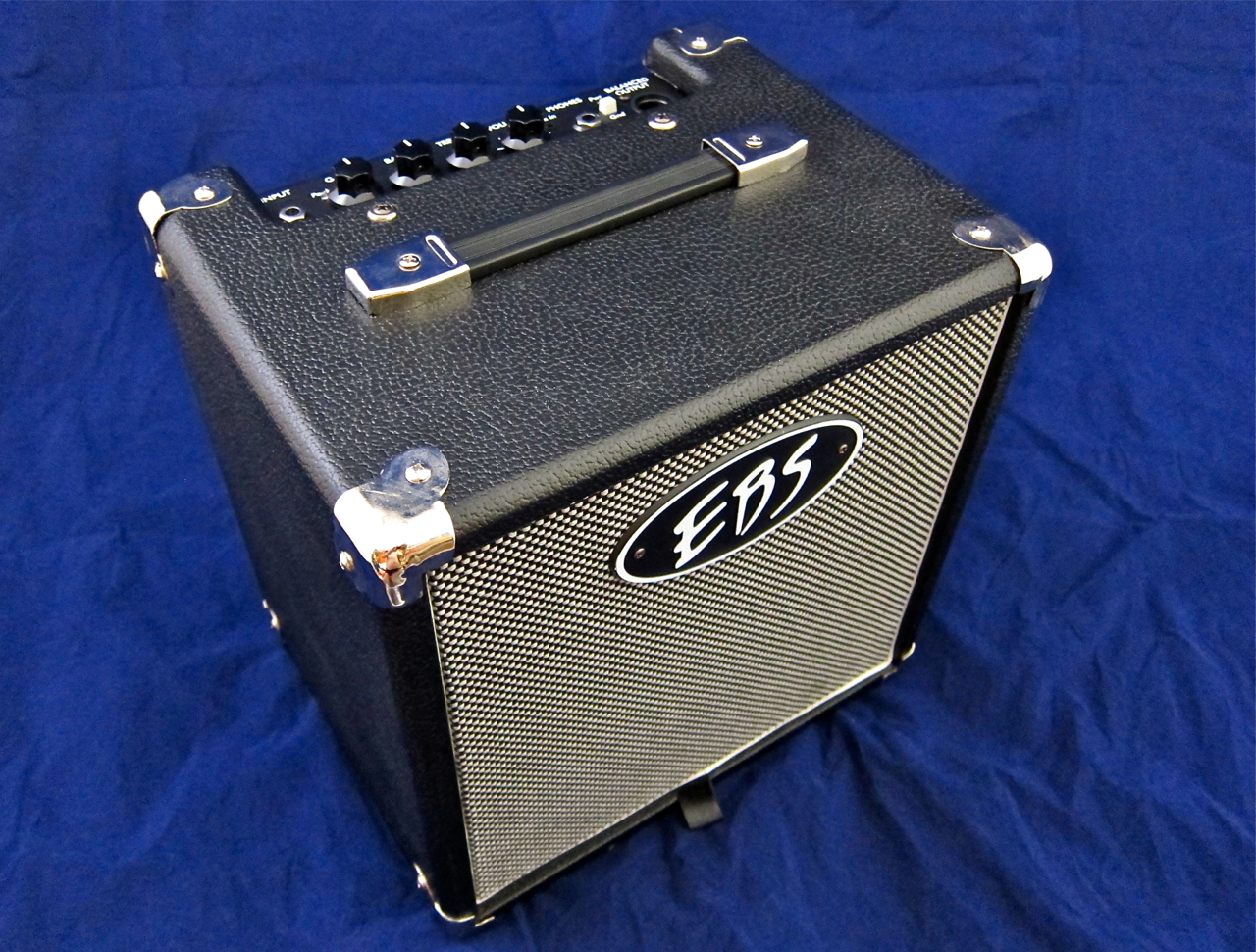
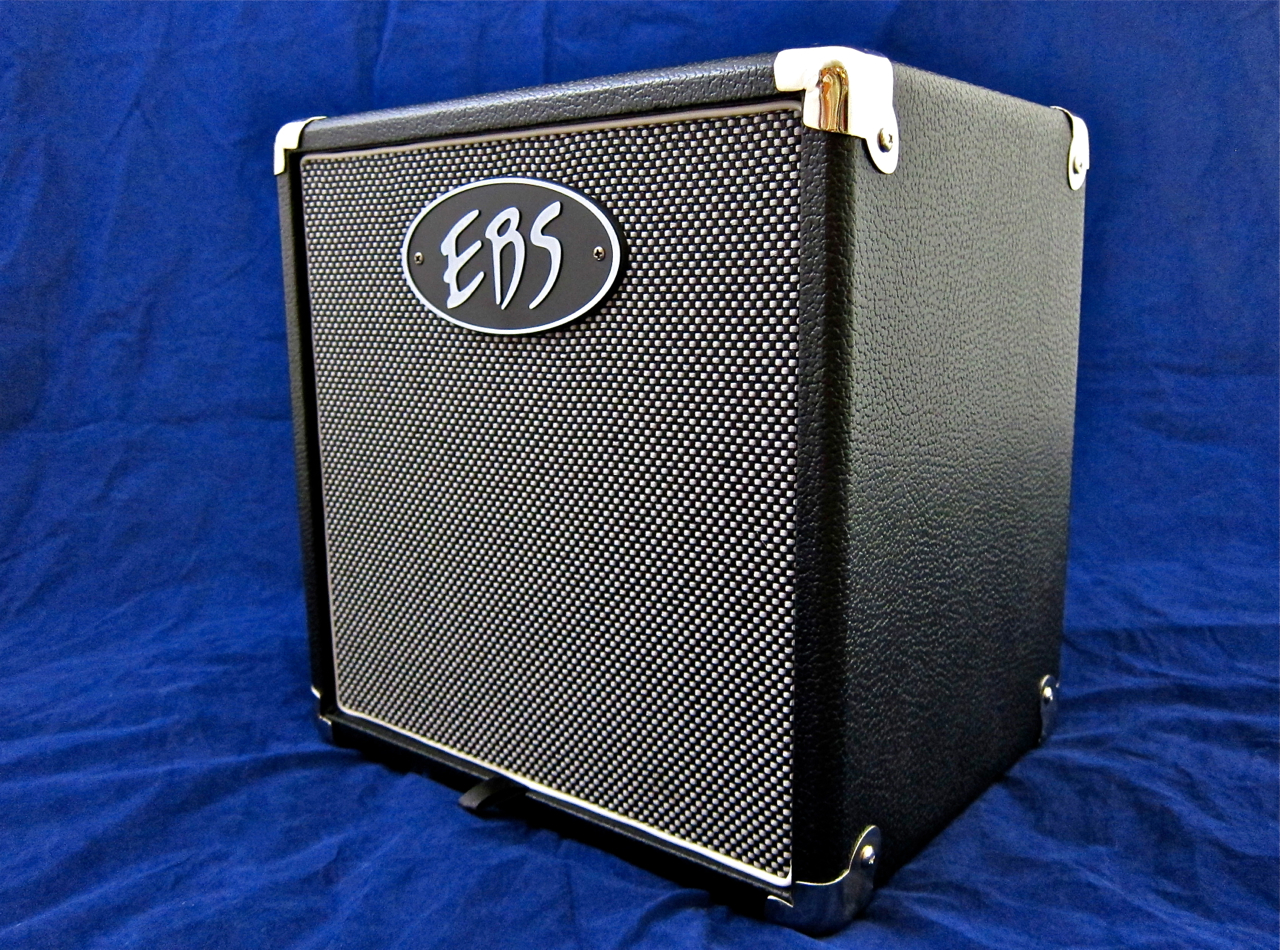
The diminutive and lightweight EBS Classic Session 30 (current price in Finland approx. 169 €) is part of EBS’ Made-in-China Classic-series.

As its name suggests, the Session 30 offers 30 Watts of rms-power.

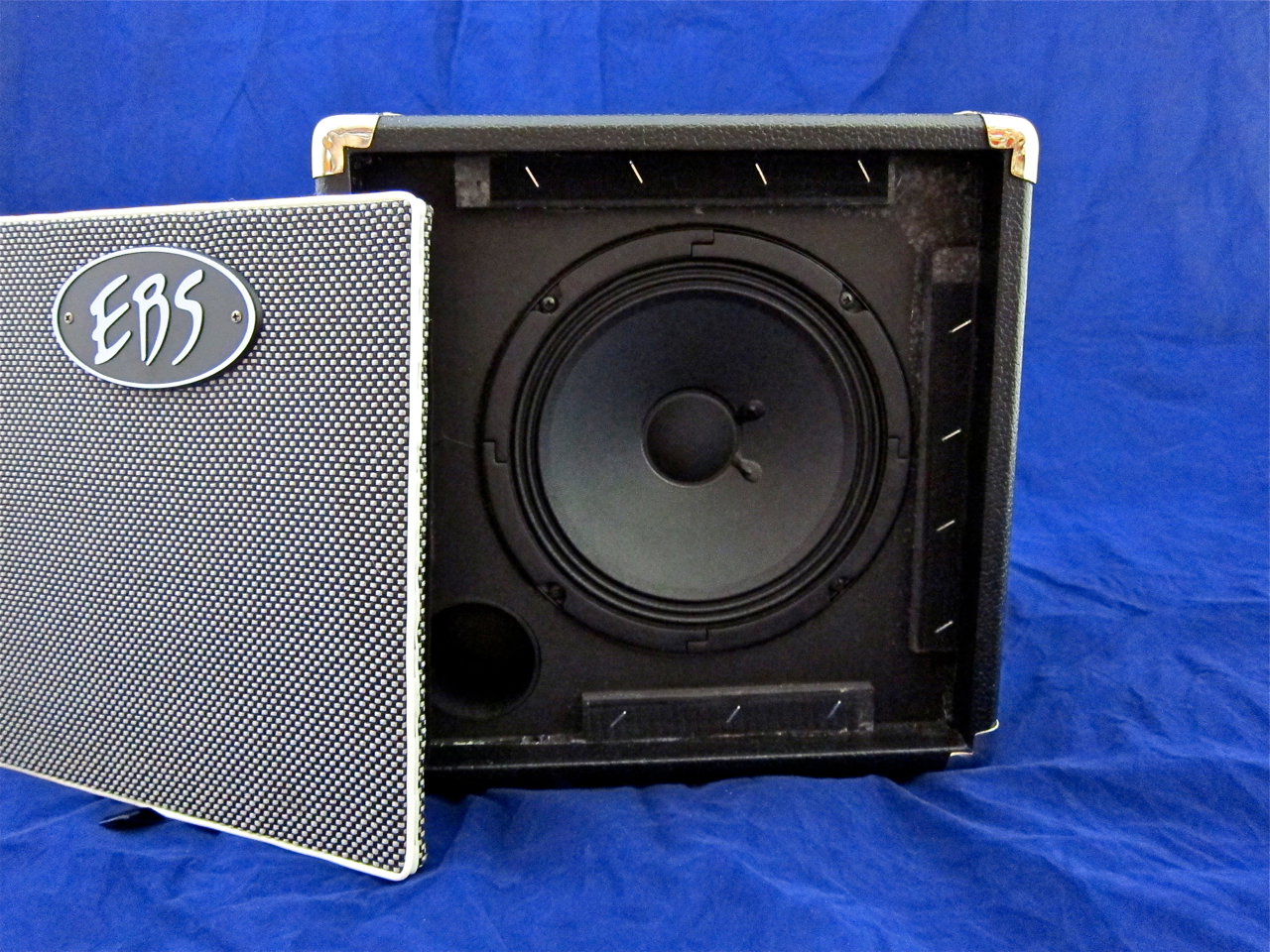
Its eight-inch speaker sits in a front-ported baffle. The stylish grille cloth is attached in a traditional way using velcro.

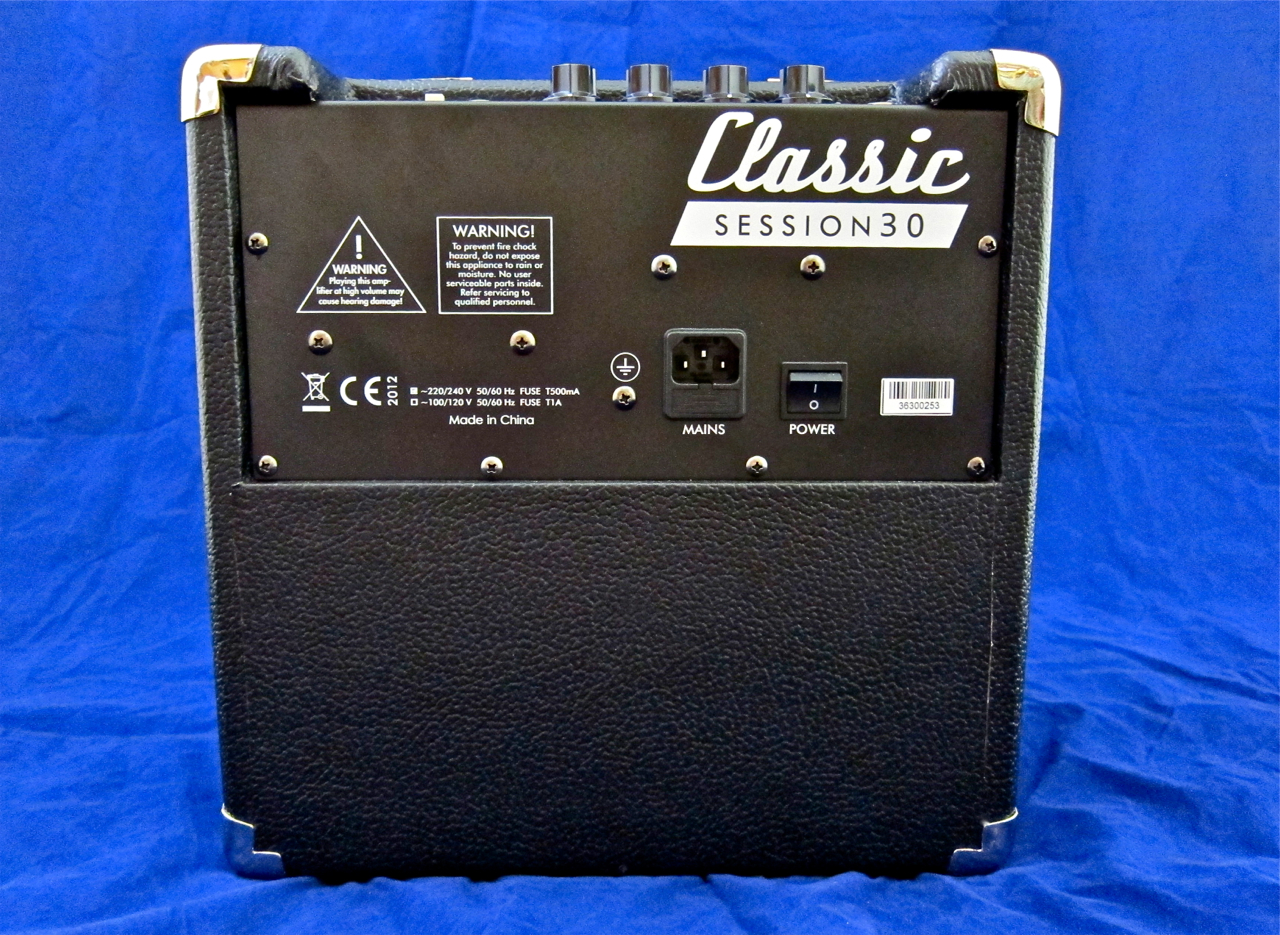
The combo’s back is fully closed. EBS have added a separate grounding point next to the power connector, which may come in handy in the studio for combatting mains hum.

The Session 30 weighs just under nine kilos, so it is very easy to carry around by its top handle.

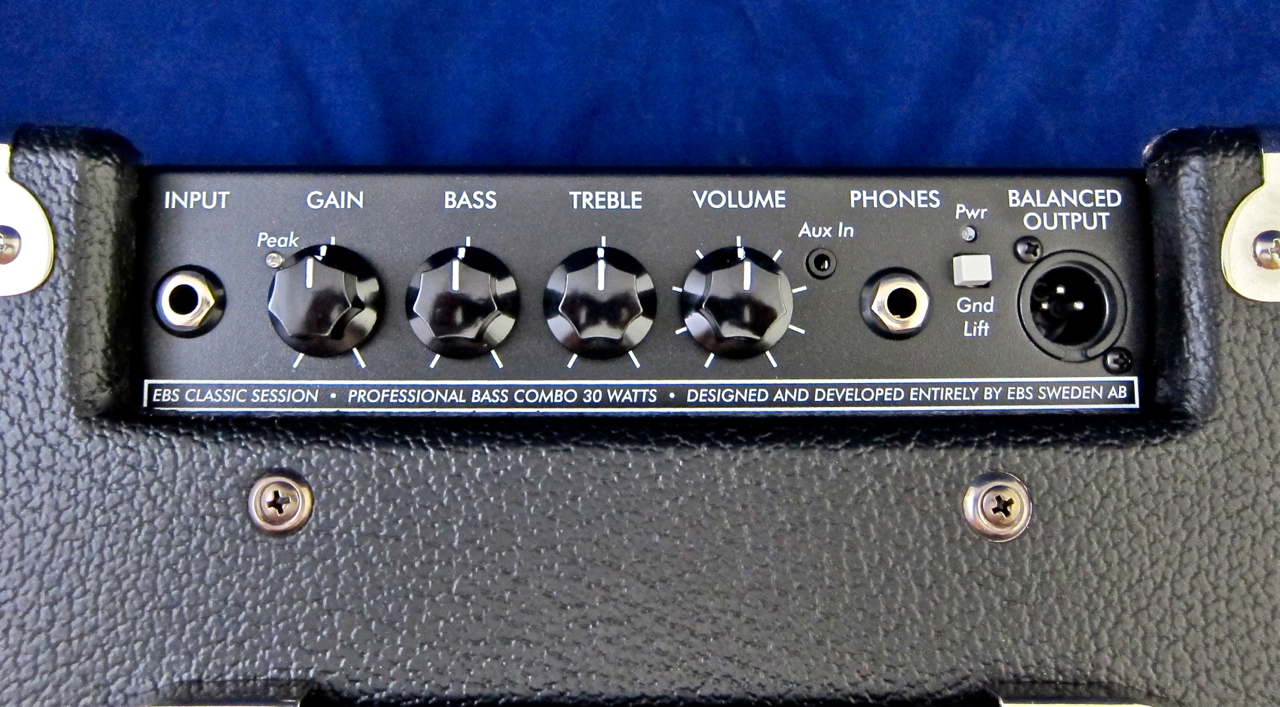
The control panel comprises of four control knobs – with a peak indicator next to the gain control.

For practicing, EBS have added a mini-jack, so you can connect an mp3-player, as well as a full-sized headphones output.

A very rare feature in this price range is the combo’s balanced XLR-output, which makes the Session 30 handy as a studio DI-box with its own monitor. Using the Ground Lift -switch enables you to break possible earth loops safely.

****

It would be completely unrealistic to expect a mighty roar from such a tiny bass combo.

But I must stress that the EBS Classic Session 30 really delivers the good in terms of its sound quality. This isn’t a murky-sounding piece of junk, but a great little tool – regardless of its very fair price.

This little ’un delivers genuine EBS Classic Series -tone at levels fit for tuition and home use. The bass register is warm, the mid-range tone clear, and the top end has a nice, soft silkiness to it.

The eight-inch speaker and small cabinet will show you the white flag, if the combo is taken to its limits, by vibrating and buzzing, but used sensibly, the EBS Session 30 holds its own nicely.

The combo’s XLR-output works great, and sends a healthy, pristine signal to your console or sound-card.

In my opinion, the EBS Classic Session 30 is a fine little practice amp and a handy tool in the small project studio.

****

The sound bites were recorded by mixing the combo’s DI-signal with the sound picked up by a condenser mic placed in front of the speaker:

1985 Squier Jazz Bass

1989 Höfner 500/1

1987 Rickenbacker 4003

****

EBS Classic Session 30

169 €

Finnish distributor: F-Musiikki

****

Pros:

+ value-for-money

+ size

+ weight

+ sound

+ DI-output

****

Review: Zoom Q2HD

****

The Zoom Q2HD (current rrp in Finland: 205 €) is the company’s brand-new lightweight video recorder. Aside from full-HD video recording this new unit also offers MS-stereo.

In MS-stereo two different microphone types are used to create two discrete signals, called Mid and Sides. The advantages of MS are that placement of the two mics in relation to each other isn’t as critical for overall phase coherence as in other techniques, and that you can adjust the amount of room in relation to the mid-signal during mixing.

Classic MS-stereo uses a cardioid microphone for picking up the mid-signal with a bidirectional mic turned 90 degrees (= shooting sideways) to record the side-sound. You will get a stereo sound picture from these two discrete signals by ”decoding” them: The mid-mic’s signal will be sent to the mixing console and panned dead centre. The sides-mic’s signal must be split to two channels, with one being panned hard left, and the other hard right with its polarity switched.

But, luckily, the Zoom Q2HD’s user won’t have to bother with the technical background, because you are only required to set the correct recording level and choose the stereo width you want from one of the five different options (mono to 150 deg) .

Naturally, the Q2HD can also record with Auto Gain (three settings: Concert, Solo and Meeting), and its high-pass filter will keep low end rumbling at bay.

Zoom’s Q2HD records incoming audio as linear wave-files (44,1/48/96 kHz, 16/24-bit) or using AAC-compression (64–320 kbps, 48 kHz). The unit also allows you to record audio-only files.

****

The Q2HD is a typical Zoom video recorder in the sense that it is used with the unit in a vertical position. All inputs, outputs and controls have been placed on the recorder’s sides, while all transport and menu functions are controlled using the buttons below the crisp two-inch display. There’s even a tiny loudspeaker built in for a quick preview of the recorded material.

The camera uses a 3.2-inch CMOS-sensor with five million pixels, and a fixed focus and aperture (1,32 m – ∞, F: 3,2). There are three lighting presets on offer – Auto, Concert Lighting ja Night – a well as a digital zoom (4 x).

The video is processed and stored in H.264/Mpeg-4-format as MOV-files.

****

The Zoom Q2HD is extremely user-friendly: all of its menu-icons fit onto one screen, and the device’s parameters have been kept to a minimum. The unit’s well-made graphics enhance the user-experience nicely.

The Q2HD is powered by two AA-batteries (or rechargeables), giving you approximately two hours of video filming or four hours of audio recording.

****

You can watch recorded video in a slightly larger format using Zoom’s Landscape-feature (see picture above).

Zoom’s Q2HD also lets you perform the most basic of video editing inside the recorder itself , offering Divide- and Trim-operations.

****

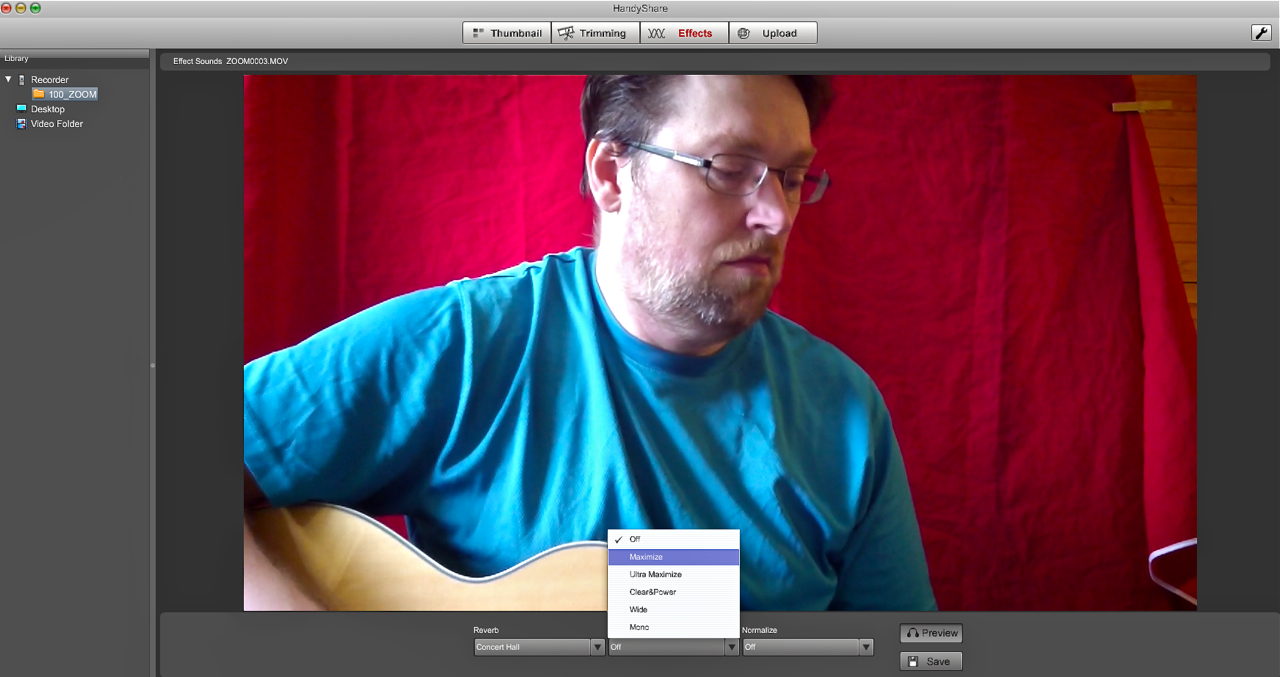
Zoom also supply their basic Handy Share software on the mini-SD-card that comes with the recorder. The software works on both Windows- (XP 32-bit or better) and Mac-run computers (Mac OSX 10.4.6 or better).

Handy Share offers basic video editing…

…as well as audio processing using reverb, compression and normalisation. The audio effects can be previewed before rendering them to the video-file.

Zoom’s Handy Share is quite OK for starters, even though many free video editing programmes, like Windows’ Movie Maker or Apple’s iMovie, will offer a lot more features and larger scope for adjustment.

****

The Zoom Q2HD can also be used as a stereophonic usb-microphone, or as a webcam for chatting or live-streaming (for example via UStream). In streaming mode Zoom’s handy delay-parameter allows you to compensate for audio-video-offsets (bad synchronisation).

****

In my opinion the Zoom Q2HD is a nice little tool for making You Tube -videos.

Although the video quality of some digital still cameras is even better than that of the Zoom, the Q2HD’s far superior audio will swing many buying decisions.

The Zoom Q2HD’s clean and clear audio will enable you to make full-HD net videos you can listen to, as well as watch.

The following audio snippets were recorded to give you an idea of what the different stereo-width settings sound like. The distance between the Q2HD and the acoustic guitar stays the same from clip to clip:

Mono

30 deg

60 deg

90 deg

120 deg

150 deg

****

Zoom Q2HD

205 €

Finnish distributor: Studiotec

Pros:

* HD-video

* quality MS-stereo sound

* easy to use

* lightweight

* can also be used as an MS-stereo usb-microphone

* can be used to stream video

****

Review: Roland GA-112

****

One of Roland’s many new products for 2012 is the GA-112 – a COSM-based guitar combo using the company’s modelling technology to come up with a sound all of its own.

The GA-112 – as well as its larger 2 x 12″ brother, the GA-212 – utilises a specially designed COSM-model called Progressive Amp. Progressive Amp promises to give you the full scale of possible amp tones – from ultra-clean all the way to bone-crushingly dirty – from a single digital amp model, using only the gain-control and the combo’s EQ.

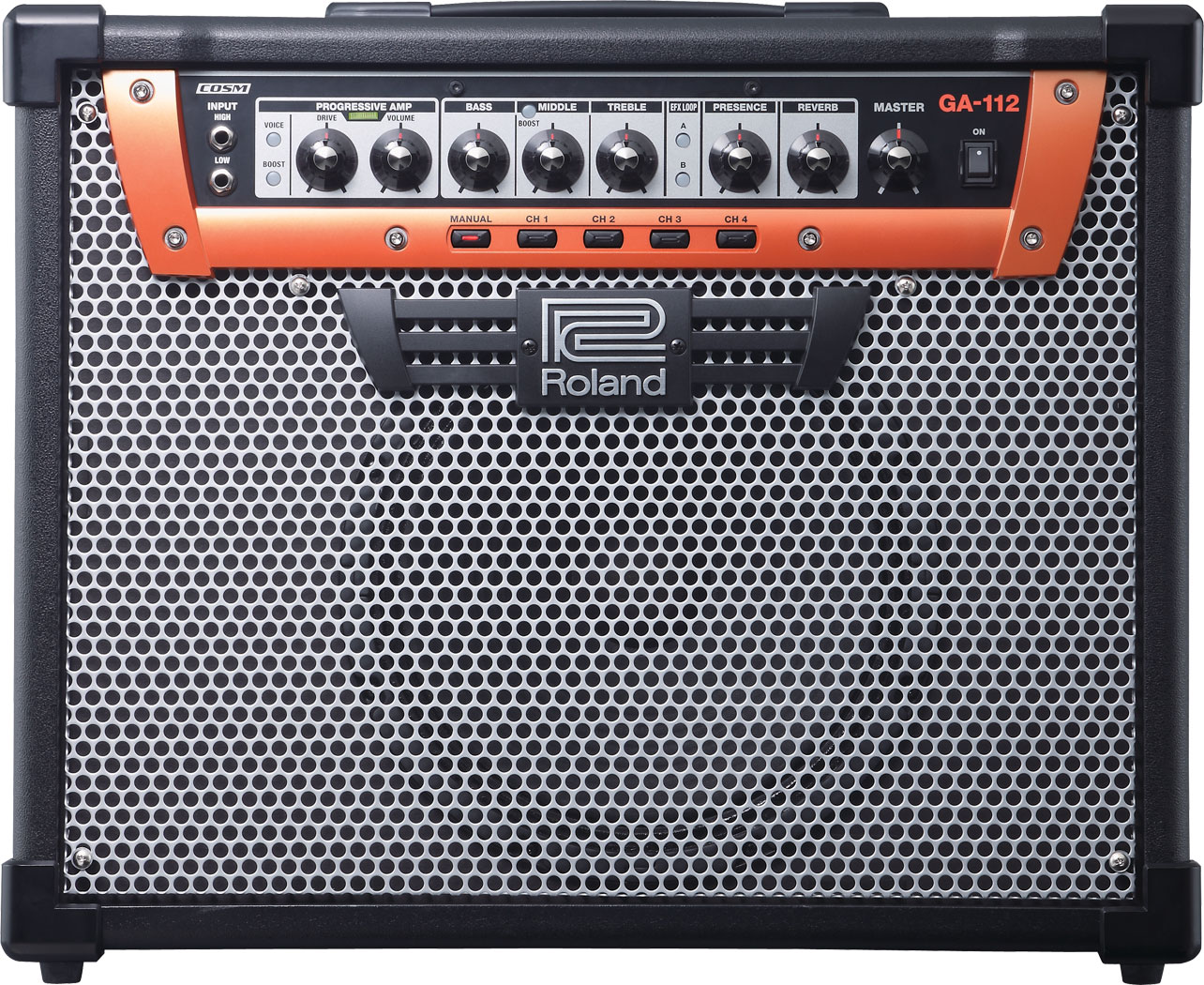
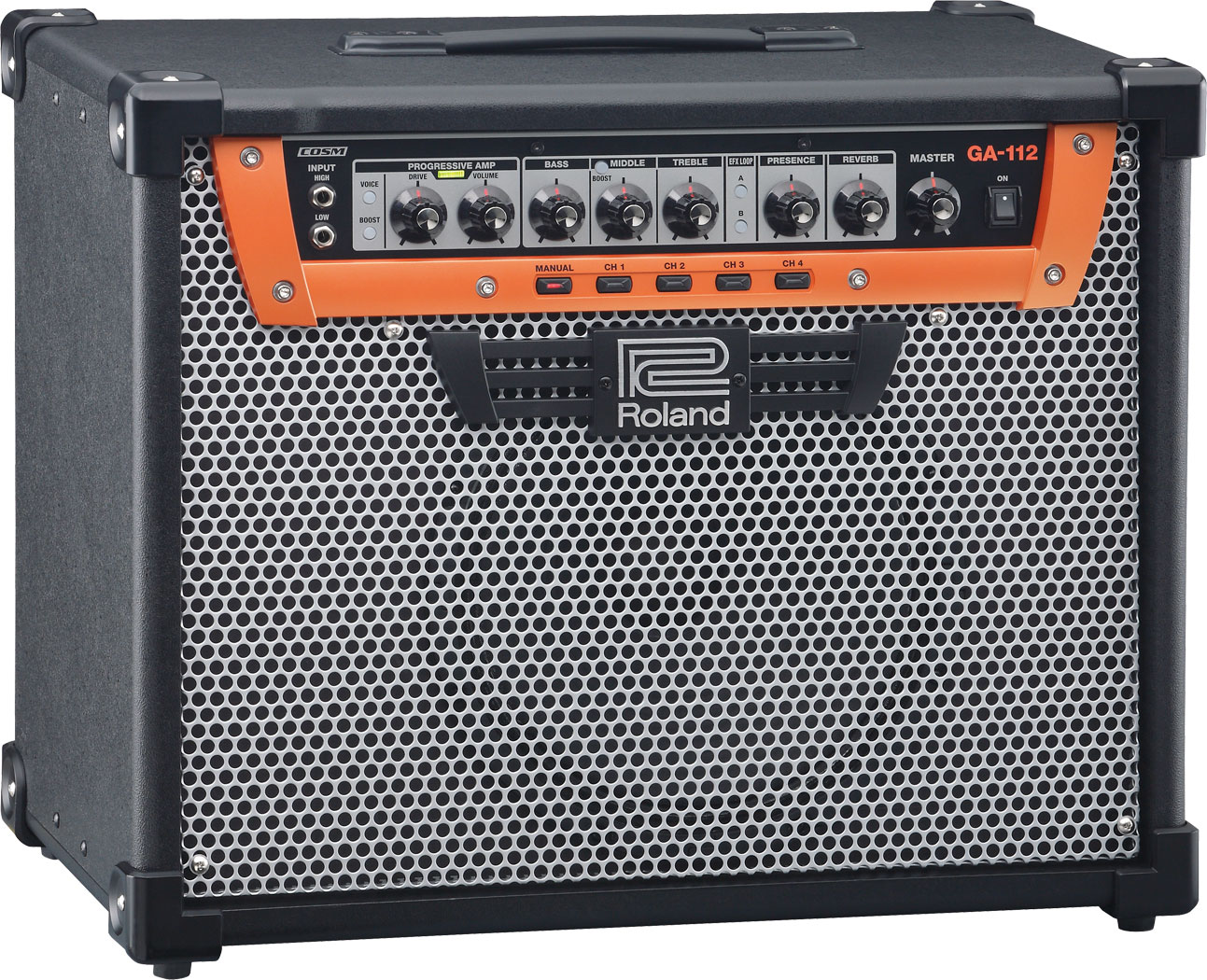
The 100-Watt Roland GA-112’s (current price in Finland: 844 €) looks combine many features from older Roland guitar amps.

The front panel is somewhat reminiscent of the legendary Jazz Chorus combo, while the cabinet’s black vinyl cover, as well as the extremely sturdy metal speaker grille have been borrowed from the company’s long-running Cube-range.

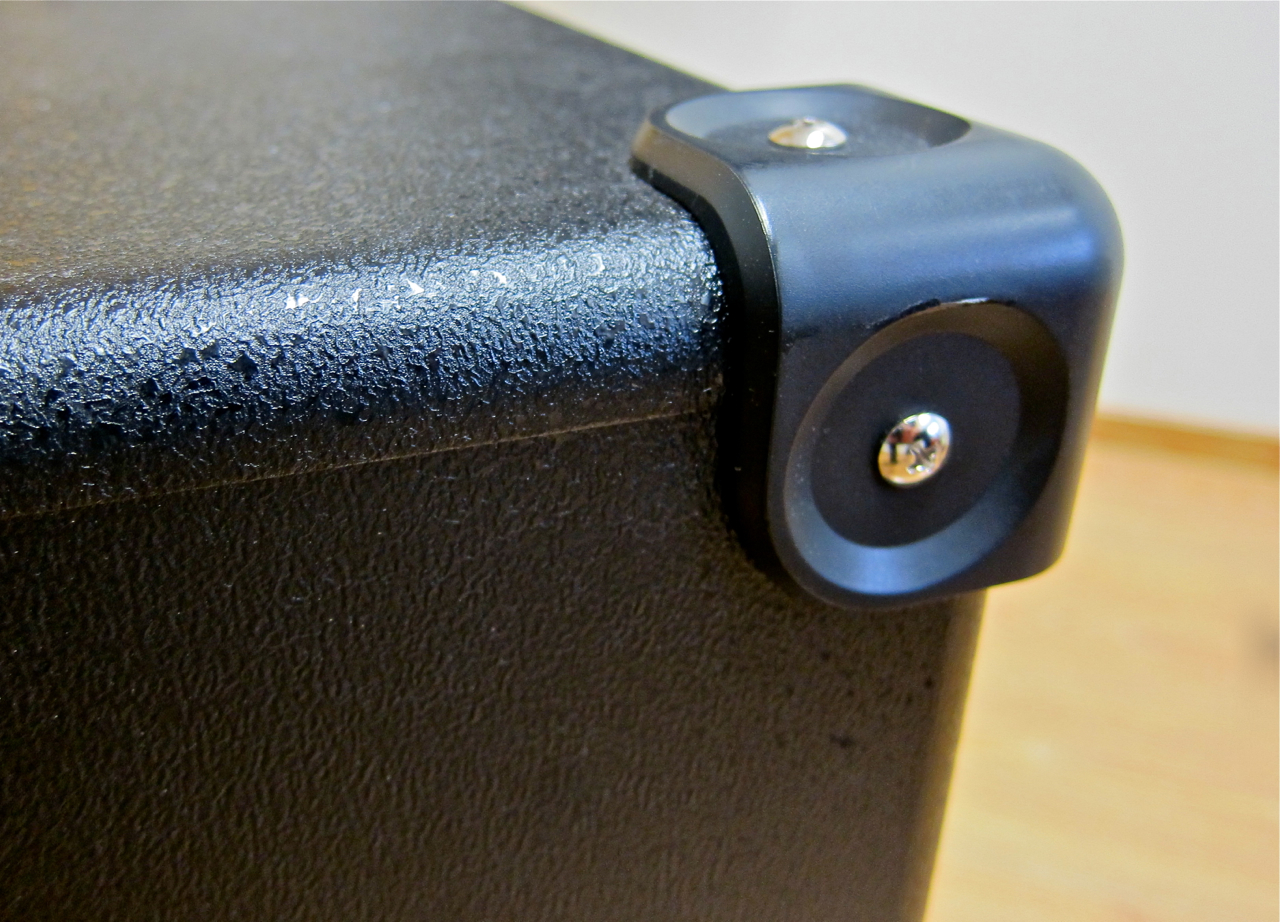
The GA-112’s chunky plastic corner protectors are designed to withstand the rough life of a gigging amplifier.

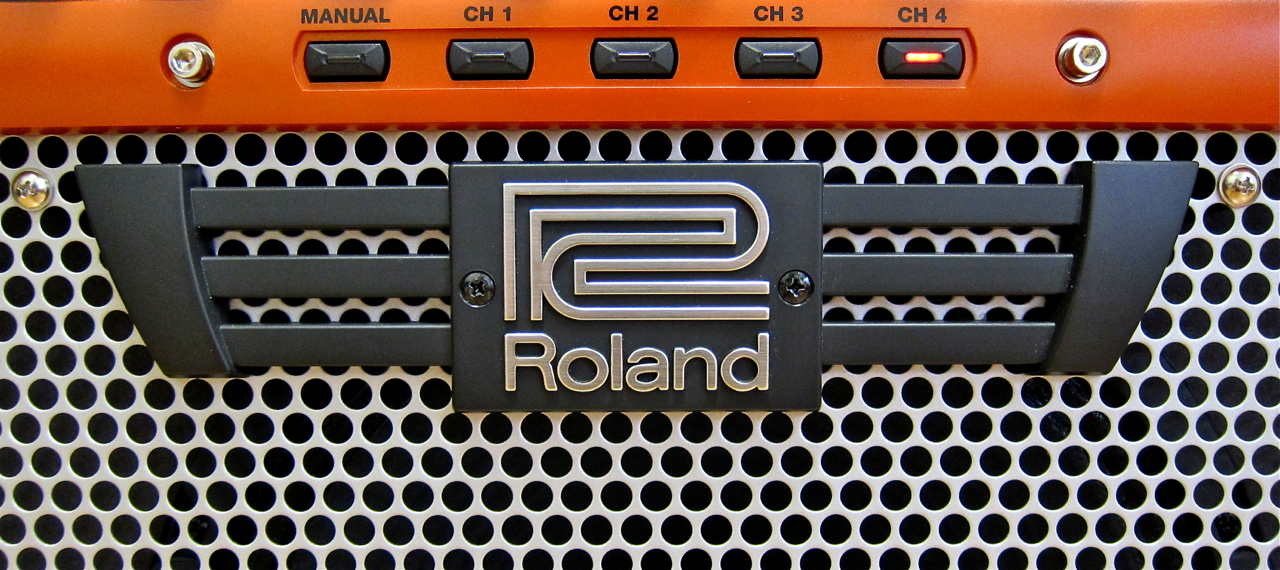
This Roland is equipped with a fully-digital preamp section offering a whopping five channels – four user-storable selections, plus the current control knob settings in Manual-mode.

Regardless of all the digital circuitry inside, the GA-112’s front panel is very clean and easy to understand. All push-buttons are backlit, and all the knobs for storable parameters (meaning all, but the Master Volume) have been equipped with red position LEDs. This combo’s settings are easy to read even on a completely darkened stage.

Apart from its two input jacks, the front section offers two buttons – Boost and Voice, which adds a slight loudness EQ-curve to the signal.

The Progressive Amp -section’s oblong LED-indicator is a great way to keep you in the picture in regard to the character of the current amp channel/settings, by changing its colour according to the gain setting. A green light, for example, tells you that you are paddling safely in totally clean waters, while purple or white means you are sailing close to distortion meltdown.

The EQ-section is a three-band affair with an added mid-boost for fattening up your tone.

Before travelling onward to the Presence- and reverb-controls your signal can be send to either or both of the GA-112’s effect loops. Both loops’ on/off-status is stored channel-specifically along with all the other channel data, which means that changing channels also automatically switches the loops on or off.

The GA-combo’s only internal effect is its lushly-voiced digital reverb.

Roland’s GA-112 stores all changes to one channel’s settings automatically each time you switch to another channel, which makes the combo quite intuitive to work with.

The effect loops have been placed alongside all the other connectors on the back panel.

You can choose between a parallel and a series signal path for each loop, and set the correct nominal signal level (-10 dB or +4 dB) for your chosen outboard effects.

The back panel also gives you a tuner output and a line level output for connection to a mixer. You can also daisy-chain two GA-112s for large venues.

For full switching control on-stage you have to buy Roland’s own GA-FC-footcontroller, which allows you to switch channels, turn the boost on or off, as well as switch on/off the effect loops and the reverb.

It would have been a nice move, though, if Roland had included a simple up/down-footswitch for channel-switching with the amp.

****

Roland’s GA-112 isn’t your traditional modelling amp, as it doesn’t feature heaps of different models of famous amps, vintage and new, or loads of different internal effects. The approach has been radically different here.

The GA-112’s main advantages are its healthy basic sound, as well as the Progressive Amp’s huge versatility and tweakability, giving you everything from totally clean to full-on metal.

The Roland isn’t about the authenticity of vintage amp models when compared to the physical originals from yesteryear. This is a modelling amp that isn’t modelling any specific amps, but uses it digital power to offer the guitarist a blank canvas with a large palette of colours.

The Roland GA-112 makes a great job of offering most guitarists their sound with the minimal amount of fuss and a practically flat learning curve.

Warm Jazz-cleans or biting Country-picking can be dialled in in no time. Organic and dynamically rich Trad Blues and Seventies Rock can also be had. And the GA-112’s merciless Metal-riffing will have you headbanging until the janitor takes the main fuse hostage.

Roland’s two switching effect loops open up many interesting possiblilities for seasoning your tones.

I suggest you make a beeline for your nearest Roland-dealer, if you are interested in making the GA-112 your personal command centre on-stage or in the studio.

****

Here are a couple of examples using the Roland GA-112 without any external effects:

Stratocaster – clean

Kasuga semi – clean

Stratocaster – overdriven

Kasuga semi – overdriven

Stratocaster – full gain

Kasuga semi – lead sound

****

Roland GA-112

844 €

Finnish distribution: Roland Scandinavia

****

Pros:

+ basic sound

+ extremely wide scale of gain

+ programmable

+ two effect loops

+ power

+ sturdy build

Cons:

– footcontroller optional

****

Review: ESP Eclipse II FM FT Distressed

****

A pre-aged guitar – to some people it’s the daftest idea ever, while others think relicing imbues the instrument with its own type of charm.

But one thing is clear: artificial ageing is here to stay!

This time we will take a new-old ESP for a spin – the Eclipse II FM FT Distressed.

****

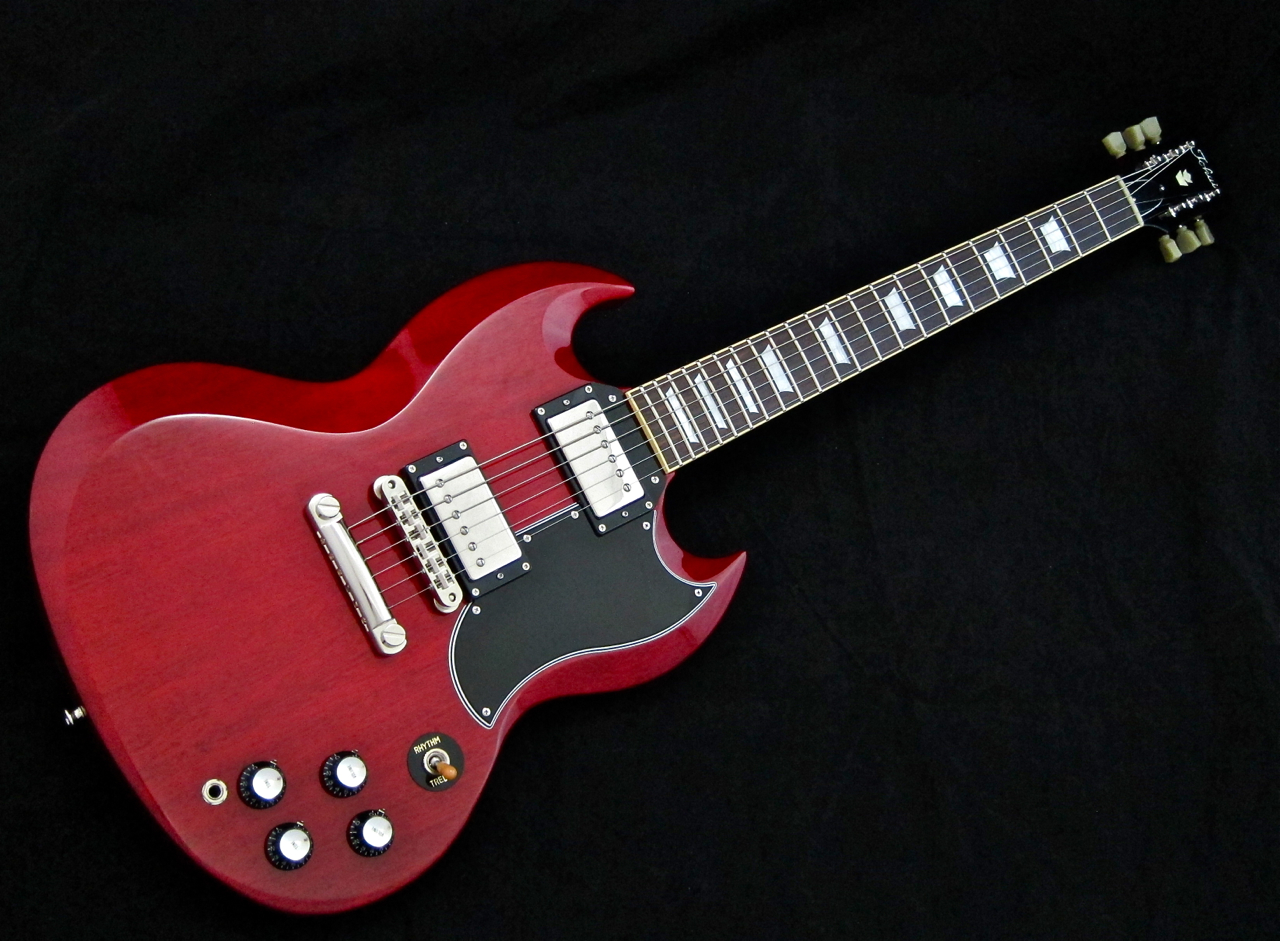
The ESP Eclipse II Distressed (current price in Finland: 1.889 €) is a Japanese quality instrument treated to look and feel like a 50-year-plus veteran of the stage and studio.

The rather realistic impression is achieved not only by dings, dents and scratches, but also by using a laqcuer that looks old and sunken in.

The flip side of the Eclipse II Distressed’s body has also received lots of scratches and a bout of artificial belt buckle rash. The neck, though, has been left fairly clean.

The mahogany looks scrumptious, and the finish does its bit to underscore the lively wood grain.

ESP have restrained themselves from adding over-the-top finish cracks, which is a good decision, in my opinion.

The Gotoh-machines look traditional, but are in fact up-to-date locking tuners.

The Eclipse’s beautiful rosewood ’board and jumbo-sized frets have been left untouched by relicing – this is a brand-new guitar with a pristine playing feel, great!

The neck joint is a traditional set-in job.

This viewing angle makes it easy to spot all the dents in the sunken in finish (click the picture for a larger view).

The Distressed-model comes fitted with Seymour Duncans: The neck unit is a ’59-model, while a Duncan JB -humbucker has been installed near the bridge.

The brushed metal covers fit the ESP’s lightly-aged look to a tee.

The neck pickup’s tone control is equipped with a push/push-switch that splits the humbuckers in the up-position.

Everything’s hunky-dory in the control cavity – quality parts, clean workmanship and thorough shielding wherever you look.

The tune-o-matic-type bridge and the guitars tailpiece are quality parts made by Gotoh.

The ESP Eclipse II Distressed is sold in its own, beautiful case.

****

Many players complain about the weight of a good deal of LP-type electrics, which can give you a sore shoulder or a hurting back. I can only suggest that these guitarists take a stoll to their friendly ESP-dealer, if this test sample is anything to go by!

I don’t know whether it’s in the wood selection or whether ESP employ an Emmental-method (like Gibson) for weight-relief – by drilling large-diameter holes into the mahogany before gluing the maple top on – but this ESP is the most lightweight LP-style guitar I have ever played!

The neck profile is a very friendly medium-depth ”D”, not far removed from Gibson’s 60s-neck. The sunken-in finish feels smooth and fast, and the fine fretwork and large fretboard radius make for an easy playability.

It’s hard to gauge whether this is due to the relicing or not, but the ESP Eclipse II Distressed feels really live. The guitar breathes and resonates freely, and its fine acoustic tone has a nice warmth and a sinewy midrange.

Seymour Duncan’s ’59/JB-pairing is an excellent choice for the ESP Eclipse II. The pickups have a good balance between themselves, and manage to convey this instrument’s tonefulness onwards to the amp with fine detail. The ability to split the ’buckers adds three fresh and springy selections to your arsenal.

Both sound examples start with the split neck pickup, followed by the full neck pickup, and so on:

ESP Eclipse II Distressed – clean

ESP Eclipse II Distressed – distorted

Regardless of your stance towards pre-aged guitars, there’s no denying that ESP’s Eclipse II Distressed is a fine, high-quality instrument, with its own hefty dose of charm. Shame we had to give it back…

****

ESP Eclipse II FM FT Distressed 

Current price in Finland: 1.889 €

Finnish distributor: Musamaailma

Pros:

+ looks

+ sound

+ weight

+ playability

+ coil-split 

+ workmanship

****

Pidä blogia WordPress.comissa.

Ylös ↑