Review: Boss Waza Craft BD-2W + SD-1W

bd-2w_angle_zoom_gal

sd-1w_side_zoom_gal

Boss’ Waza Craft pedals are the company’s brand-new all-analogue, top-of-the line compact effects. The Waza Craft range has been designed to give the quality-conscious guitarist the full boutique-pedal experience in the well-loved Boss format.

The Japanese word ”waza” can be translated as art, artistry or technology, and hints at the fact that the three new pedals (the overdrives reviewed here, plus the DM-2W delay) are a return to old-school, all-analogue circuitry, and that the effects are factory-modded for your convenience.

****
bd-2w_top_gal

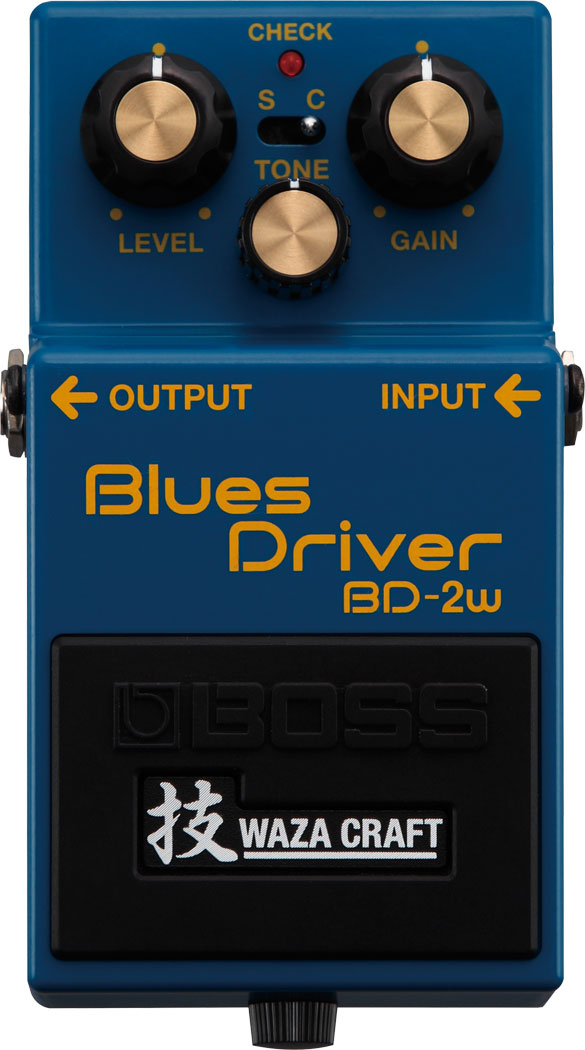
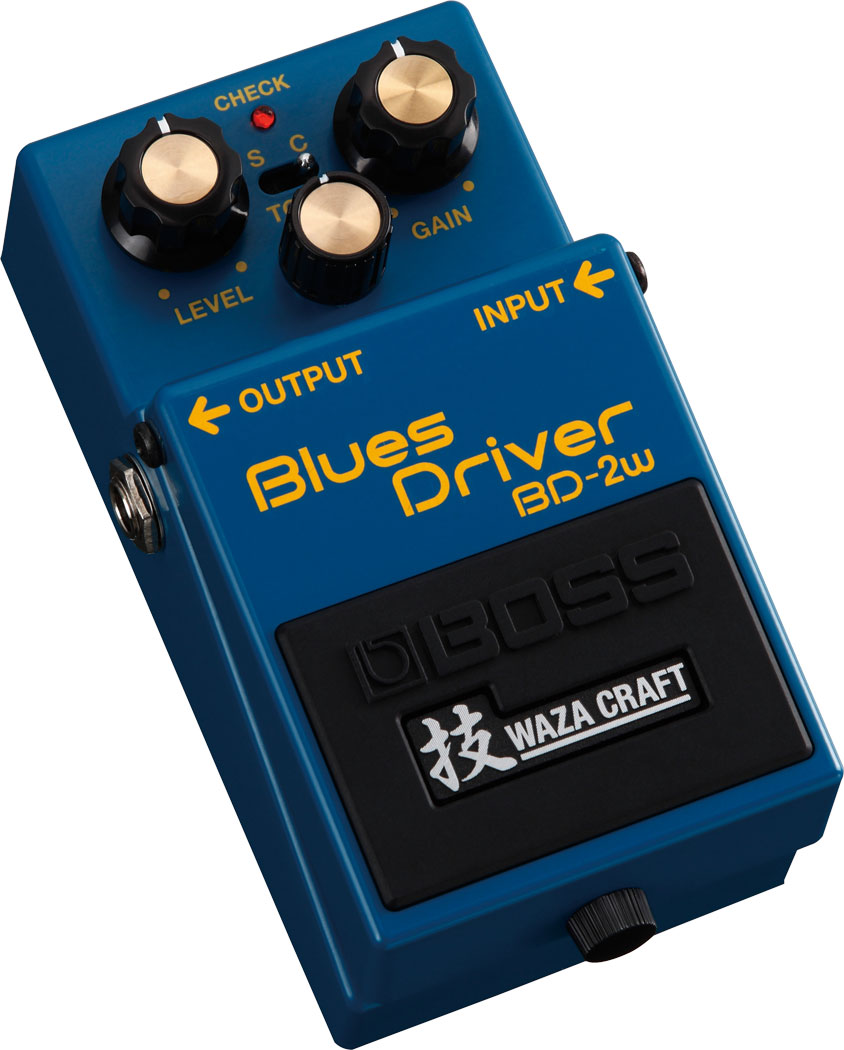
The Boss Blues Driver BD-2W Waza Craft (current price in Finland around 155 €) is a ”waza-treated” update of the popular Blues Driver overdrive.

In the late 1970s Boss came up with the now-legendary, compact guitar pedal format, which has since become an industry standard. The typical Boss pedal is made from a cast metal casing with the quick-access battery compartment tucked away beneath the pedal’s switch flap.

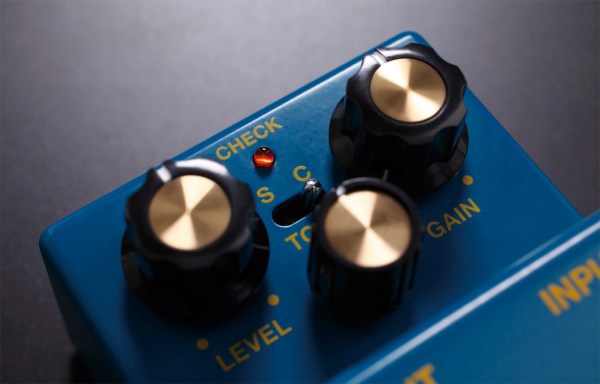
The BD-2W comes with the standard three controls for Gain, Tone and Level.

The Waza Craft range’s special feature lies in their twin mode set-up. You can use the mini-switch to toggle between Standard- and Custom-mode. Standard will give you a boutique version of the regular Boss Blues Driver experience, while Custom ups the ante by offering you a wider dynamic range, as well as a warmer tonality with added top-end sparkle.

The first clip gives you an idea of the BD-2W’s sound with the Gain control at 12 o’clock. The first half is played in Standard-mode, switching over to Custom-mode for the second half:

For the second clip I turned Gain up to full:
bd-2w_angle_gal

****

sd-1w_top_gal

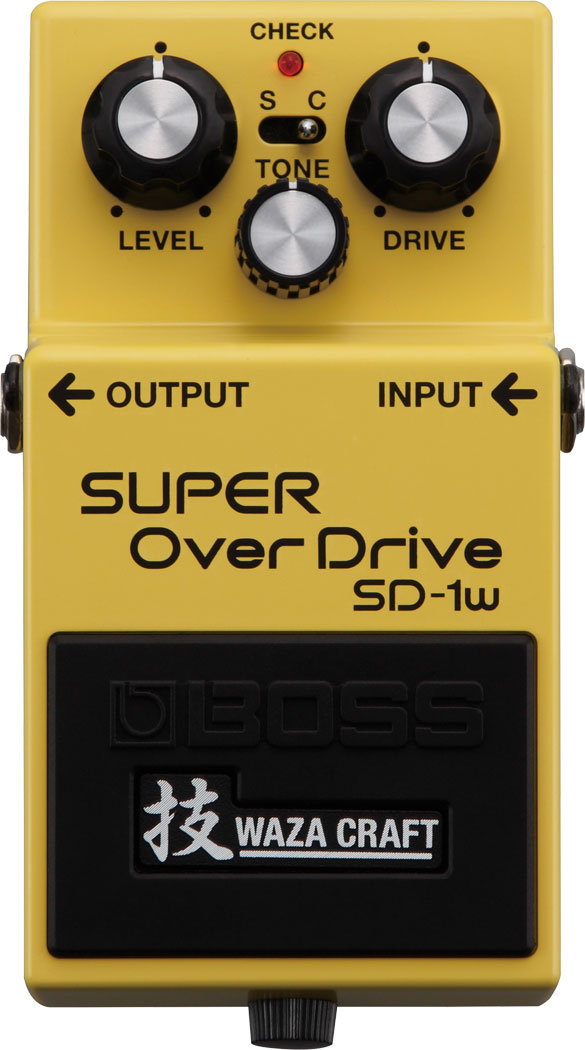
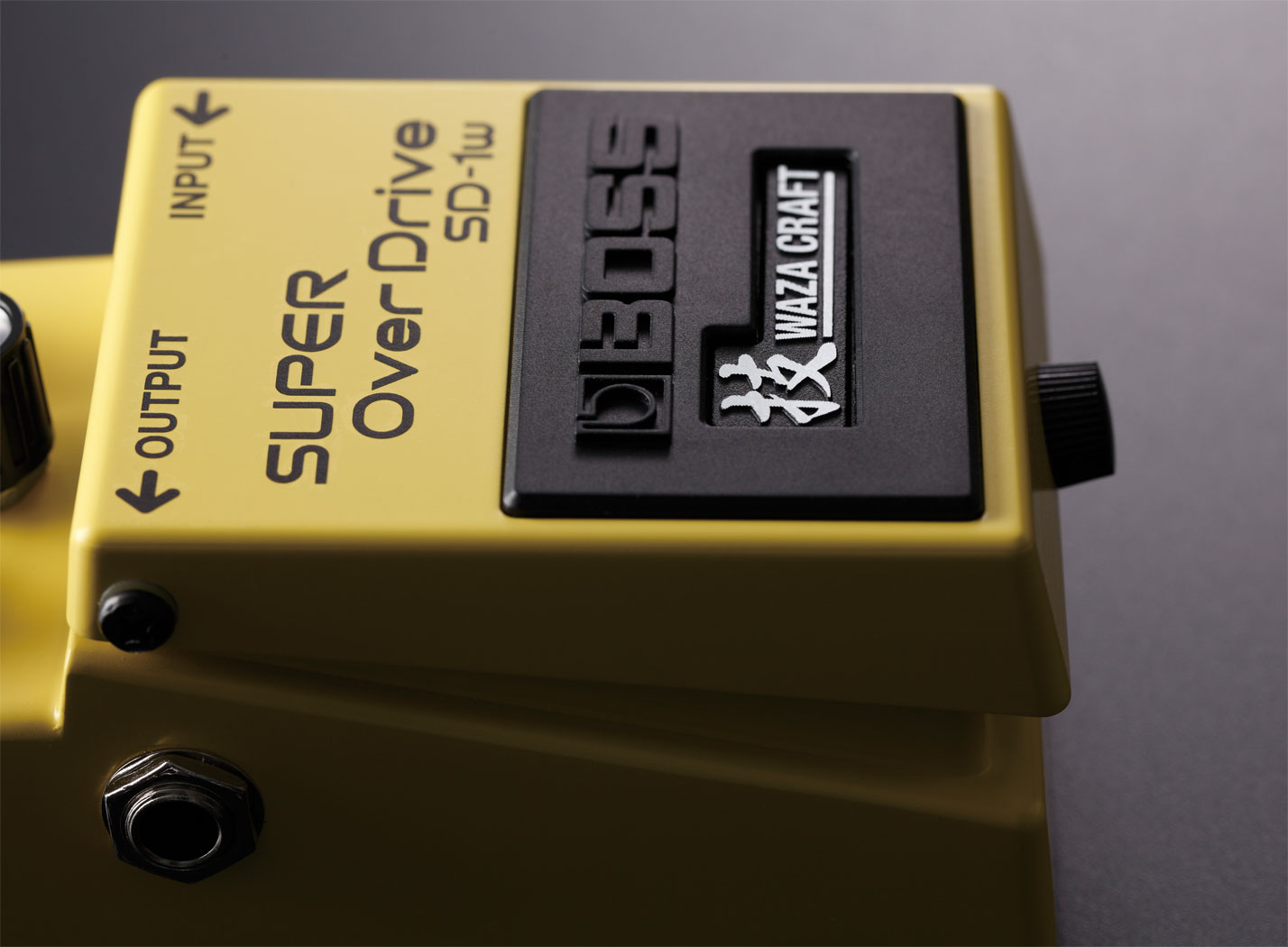
The Boss Super OverDrive SD-1W Waza Craft (current price in Finland around 155 €) is the top-of-the-line version of the company’s yellow-clad classic.

The name gives it away – we’re looking at an overdrive stompbox, so we should expect a dynamic performance with a dense mid-range. As a rule of thumb, distortion-type effects tend to have more bite and a creamier compression than an overdrive.

The Boss SD-1W, too, sports three controls – Drive, Tone and Level – and a mode switch. Standard-mode is meant to give you an upmarket counterpart of the regular SD-1 pedal, while Custom-mode promises a wider frequency range (especially handy for ultra-low tunings).

Here’s a clip of the SD-1W with Drive set to 12 o’clock. Standard-mode comes first, followed by Custom-mode:

And this will give you an idea of this pedal’s sound with Drive turned all the way up:

sd-1w_angle_gal

****

bd-2w_angle_2_gal

What do terms like ”boutique-pedal” and ”premium range” really mean?

In the case of the Waza Craft pedals the answer lies in both the sound and the ”feel” of these effects:

Both overdrive boxes sound even creamier than the standard versions, while also adding a small degree of clarity to proceedings. These premium versions also manage to keep hiss levels even lower than their ”ordinary” counterparts. Both the BD-2W and the SD-1W feel somewhat more organic and responsive, when compared to their (well-made) standard range brethren. The overdrive tones are very natural, and both effects react very nicely to changes in playing dynamics or guitar volume settings. You never get the feeling of the effect being pasted on, instead there’s a real interaction going on between the player, his guitar and the effect pedal.

In isolation Boss’ Waza Craft overdrives might even seem a little underwhelming, but when you A/B them with their standard series counterparts the differences become quite clear rather quickly. Don’t get me wrong, the standard versions are reliable industry standards with a more than decent sound, but for the ultimate Boss-experience you should take the path to Waza Craft.

sd-1w_angle_2_gal

****

Boss BD-2W + SD-1W Waza Craft

approx. 155 €

Finnish distribution: Roland Suomi

****

Pros:

+ classic format

+ all-analogue

+ two modes

+ sound

Review: JAM Pedals

JAM Pedals is a Greek maker of boutique effect pedals, whose products are now available in Finland, too (distributed by R-Jam Group).

JAM Pedals’ products are all-analogue, built by hand from first-rate components. Some models even rely on hard to come by NOS-chips and -transistors for their sound.

Most JAM-models can also be ordered in point-to-point versions, or with customised specifications and/or artwork.

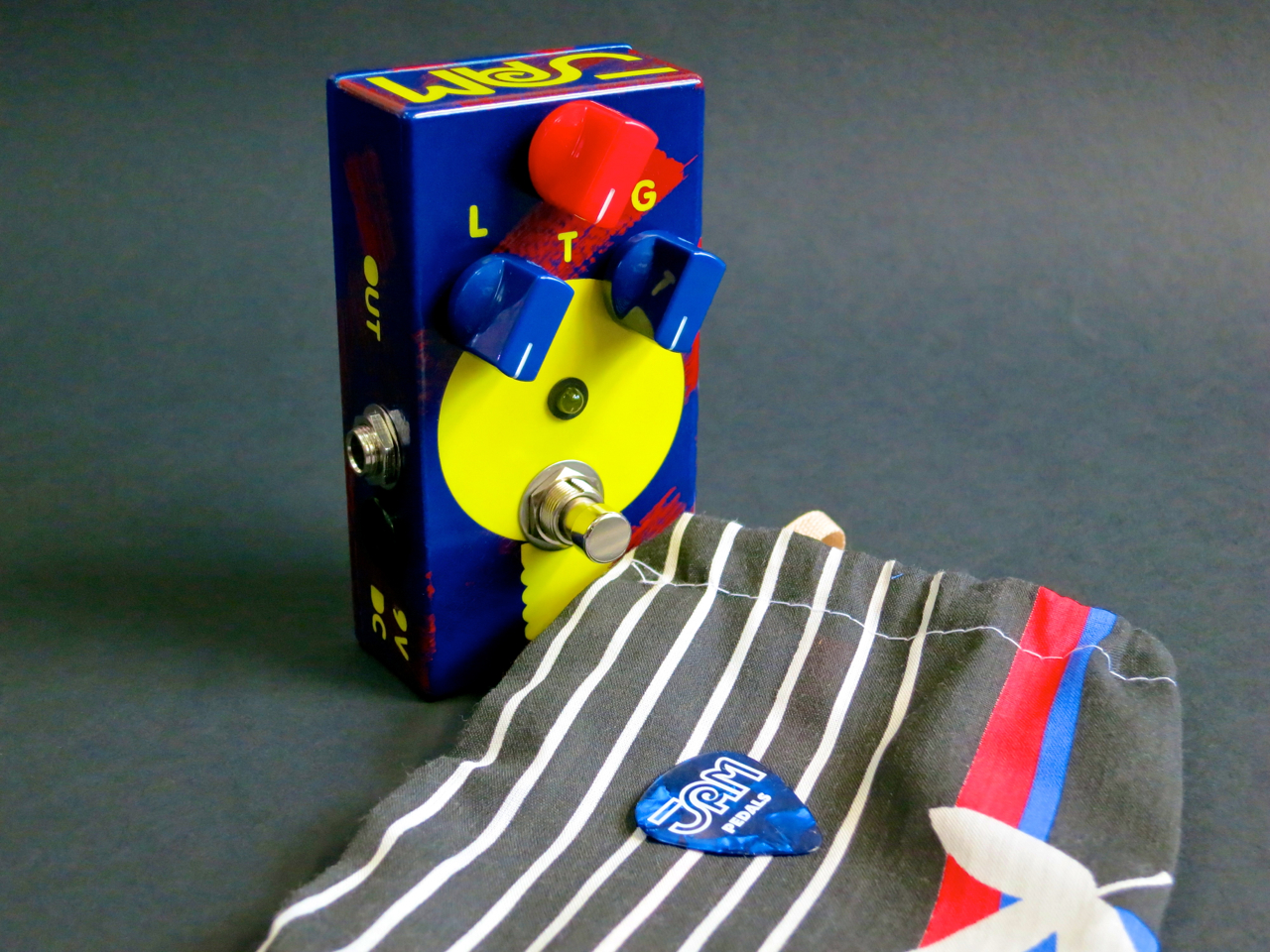
All JAM Pedals come in hand-painted, unique designs, and are delivered with a cloth sack for storage, as well as a JAM-logo’d plectrum.

All the effects tested in this review run on a nine volt battery or a (Boss-type) power supply (not included).

****

Jam pedals – Tube Dreamer 58 + bag

JAM Pedals offers four different versions of its Tube Dreamer overdrive pedal.

Their compact Tube Dreamer 58 is the company’s take on the ultimate Ibanez Tube Screamer 808 pedal. The circuit is built around an original JRC4558D-chip.

Jam pedals – Tube Dreamer 58 pic 1

The JAM Tube Dreamer 58 (current price in Finland: 185 €) wins you over with a healthy dose of that classic, creamy Tube Screamer mid-range. The TD58’s forte, though, is the vastly improved dynamic range of the JAM-model, and the more organic, amp-like overdrive structure, achieved by using three diodes for asymmetrical clipping.

This sound clip – like all the others in this review – has been recorded using a Fender Stratocaster and a Blackstar HT-1R valve combo:

Jam pedals – Tube Dreamer 58 pic 2

****

Jam pedals – Tube Dreamer+ and bag

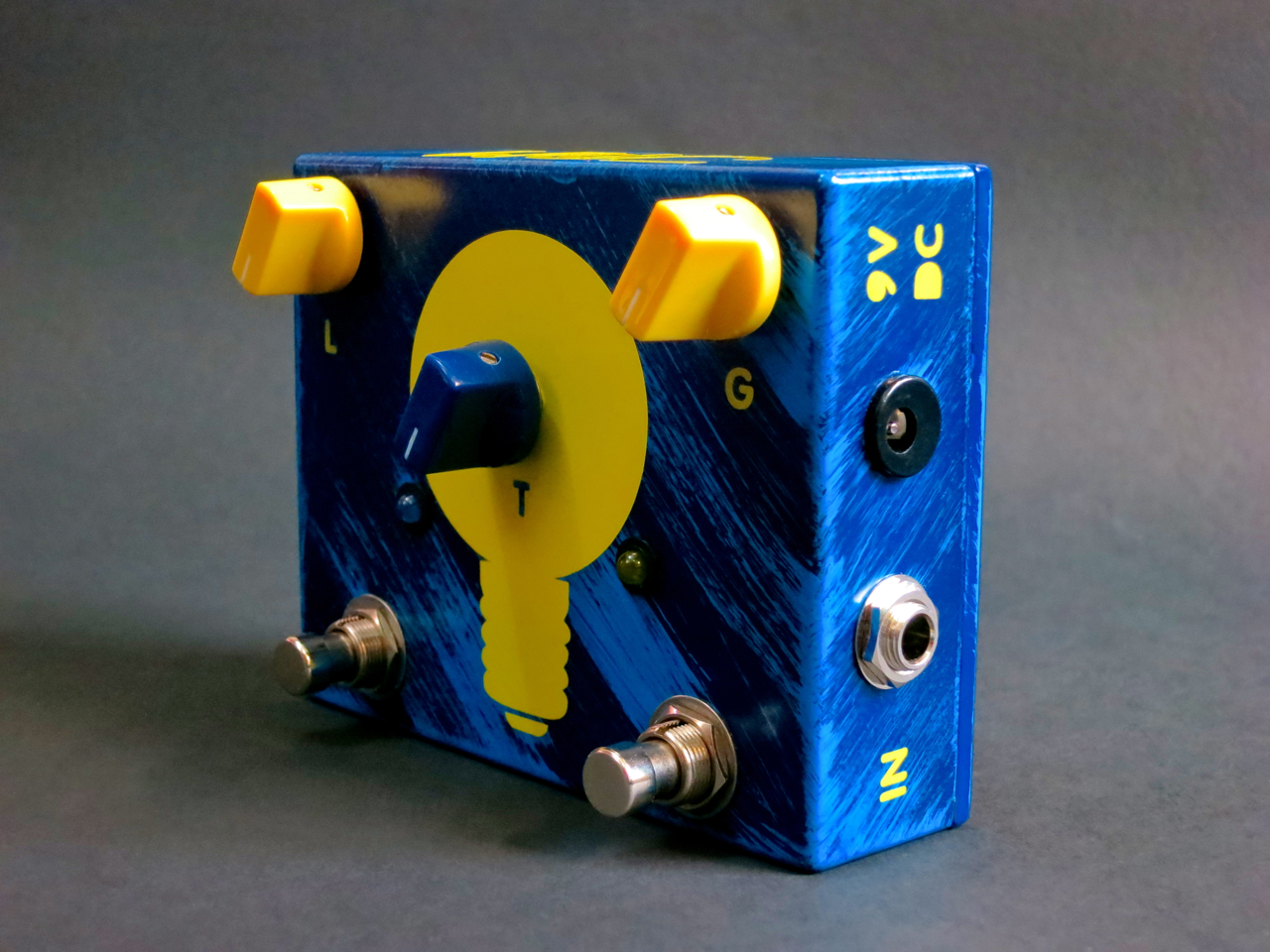
The flagship model Tube Dreamer pedal is called the JAM Tube Dreamer+ (current price in Finland: 225 €), and is the deluxe version of the JAM Tube Dreamer 72, which is designed a ”secret chip”.

Jam pedals – Tube Dreamer+ pic 1

The Plus-version adds a high-gain-/boost-circuit (left footswitch) on top of the moderate-gain overdrive section (right footswitch).

The Tube Dreamer+ is shipped with the high-gain circuit adding only more gain to proceedings, but you can also adjust the high-gain circuit’s internal trimmer to deliver copious amounts of signal boost, whenever it is switched on.

In terms of its sound, the Tube Dreamer+ gives more than a passing nod to 1970s Blues Rock and Heavy Metal. Despite its high-gain boost, this JAM-model hasn’t been designed for contemporary Thrash Metal.

Jam pedals – Tube Dreamer+ pic 2

****

Jam pedals – Red Muck + bag

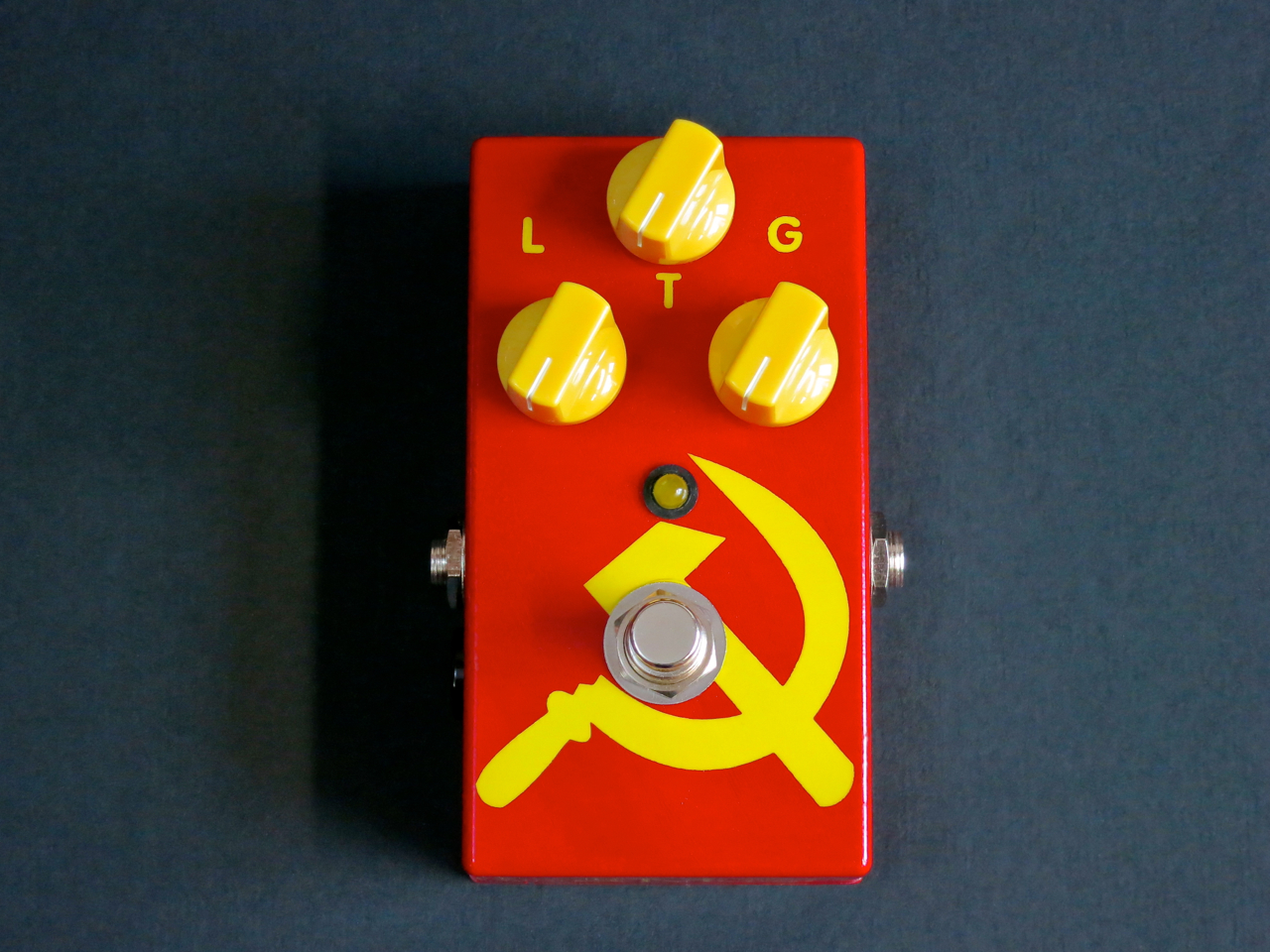
JAM Pedals’ stompbox fuzz is called Red Muck, and it comes in a Soviet-inspired colour scheme, complete with hammer and sickle graphics.

Jam pedals – Red Muck pic 1

The starting points for the Red Muck fuzz’ (current price in Finland: 209 €) tone were the classic, early Big Muff -sounds.

JAM has refined the original fuzz character to come up with a much more versatile pedal. JAM’s Red Muck reacts extremely well to changes in the guitar’s volume knob settings, while the overall delivery is noticeably fatter and creamier, when compared to many other fuzz-effects. This pedal also takes well to full chords, and doesn’t mush up so quickly.

I have to admit that JAM’s Red Muck has quickly become my favourite fuzz box.

Listen for the tonal changes, as I slowly raise the volume control at the beginning of this clip:

Jam pedals – Red Muck pic 2

****

Jam pedals – Waterfall + bag

The JAM WaterFall (259 €) is a dual-function effect pedal, offering chorus and vibrato in one compact package.

Jam pedals – Waterfall pic 1

The two effects in the WaterFall have been designed around two legendary Panasonic-chips (the MN3101 and the MN3007), on which some of the earliest Boss modulation effects were also based.

The mini-switch on the right is for selecting the effect – chorus or vibrato (v) – while the switch on the opposite side lets you choose between a milder, vintage (-) version of the chosen effect, or its more drastic, modern counterpart.

The WaterFall’s chorus is simply superb, sounding very natural and musical:

Vibrato may not be the most-commonly used effect, but the WaterFall’s reading must surely be one of the sweetest-sounding there is:

Jam pedals – Waterfall pic 2

****

Jam pedals – Ripple + bag

JAM Pedals’ The Ripple (199 €) is an easy-to-use phaser. There’s only a single Speed-control for the effect, and that’s all.

Jam pedals – Ripple pic 1

This is one lush-sounding phaser – you can’t get more musical than this! The Ripple has a rich and organic tone, broadening your guitar sound, yet it never seems to usurp the show or hog the limelight.

Jam pedals – Ripple pic 2

****

Jam pedals – Delay Llama + bag

The Delay Llama?! The guys at JAM HQ sure do have a sense of humour!

JAM’s Delay Llama (265 €) is an analogue, lo-fi delay pedal in the spirit of the early Eighties.

Jam pedals – Delay Llama pic 1

The Delay Llama features a classic bucket-brigade circuit, which uses an updated version Panasonic’s legendary MN3205-chip. The maximum delay time offered is approximately 600 ms. An internal trim port allows you to adjust the maximum number of repeats available from the Repeats-control.

The Delay Llama will bring sonic fulfilment to fans of the BBD-sound – there’s plenty of grease on tap, and each new repeat degenerates noticeably from the one before. Factory settings even allow for the Repeat-control to cause infinite and distorting feedback loops, something for the fans of psychedelic and experimental music.

Jam pedals – Delay Llama pic 2

****

Jam pedals – teaser

In my opinion, these JAM Pedals offer the genuine boutique pedal experience at fair prices! They sound great, they look cool, their noise floor is low, and the pedals consume surprisingly little (battery) power. Give them a try!

****

JAM Pedals

effect pedals from Greece

Tube Dreamer 58 – 185 €

Tube Dreamer+ – 225 €

Red Muck – 209 €

WaterFall – 259 €

The Ripple – 199 €

Delay Llama – 265 €

****

Pros:

+ handmade

+ hand-painted

+ sound

+ low power consumption

Review: Hughes & Kettner Red Box 5

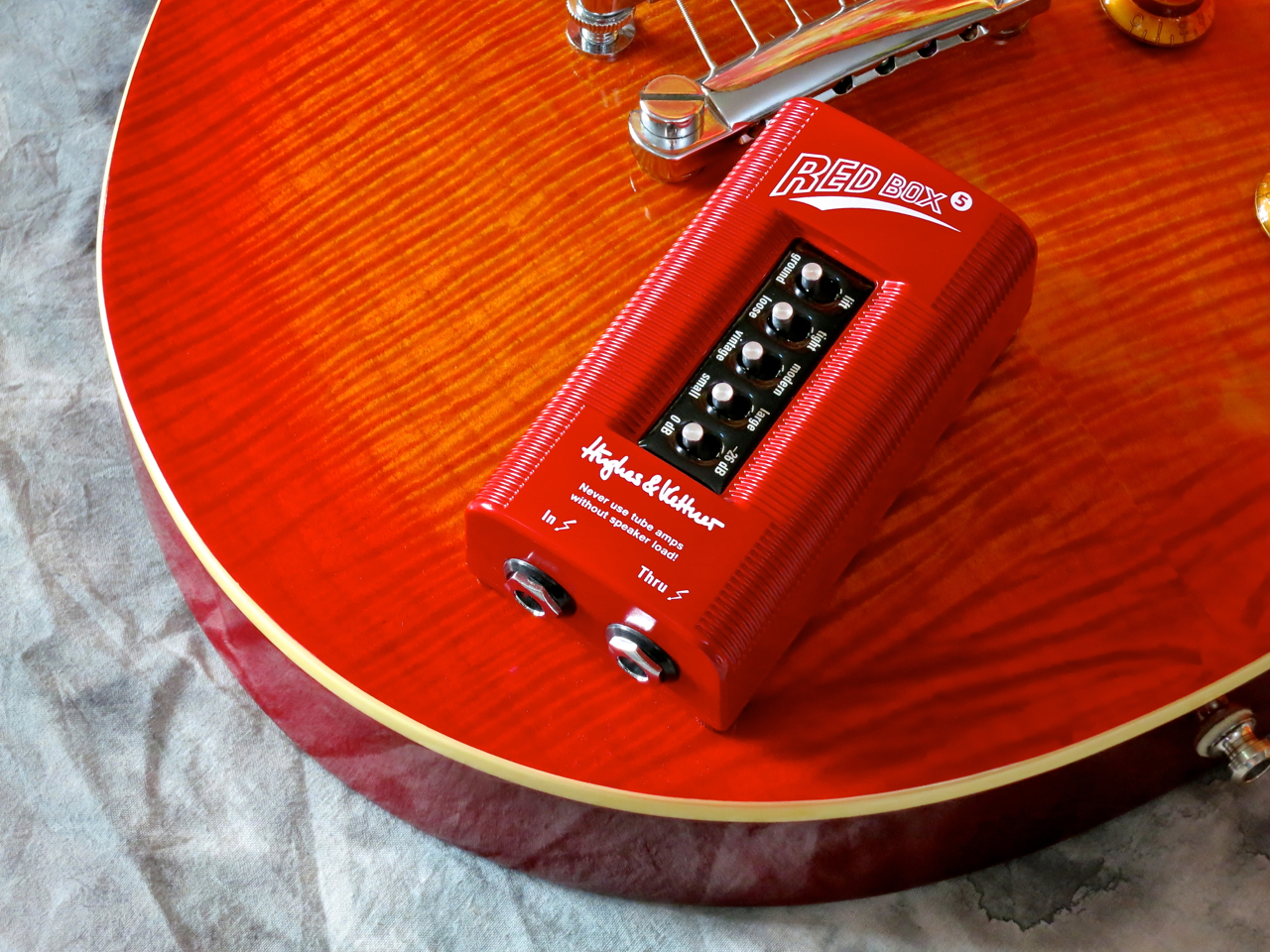
Hughes & Kettner Red Box 5 – opener

Hughes & Kettner’s Red Box has been a runaway success, ever since the first version was introduced in the late Eighties.

The Red Box is a specialised DI-box for your guitar amp. Traditionally, DI-boxes are meant to transform the high impedance signal of an electric guitar (or bass) into a low impedance signal fit for direct connection to a recording (or PA) console.

The Red Box, on the other hand, is inserted between the amp’s speaker output and the speaker (cabinet). Hughes & Kettner’s analogue cabinet modelling then makes it possible to send the sound of a miked up guitar speaker to the mixing desk (or sound card) without having to actually put a microphone in front of the amp’s speaker.

Hughes & Kettner haven’t been resting on their laurels, though. They have updated and improved the Red Box every once in a while, with the most recent version being the Red Box 5 tested here.

****

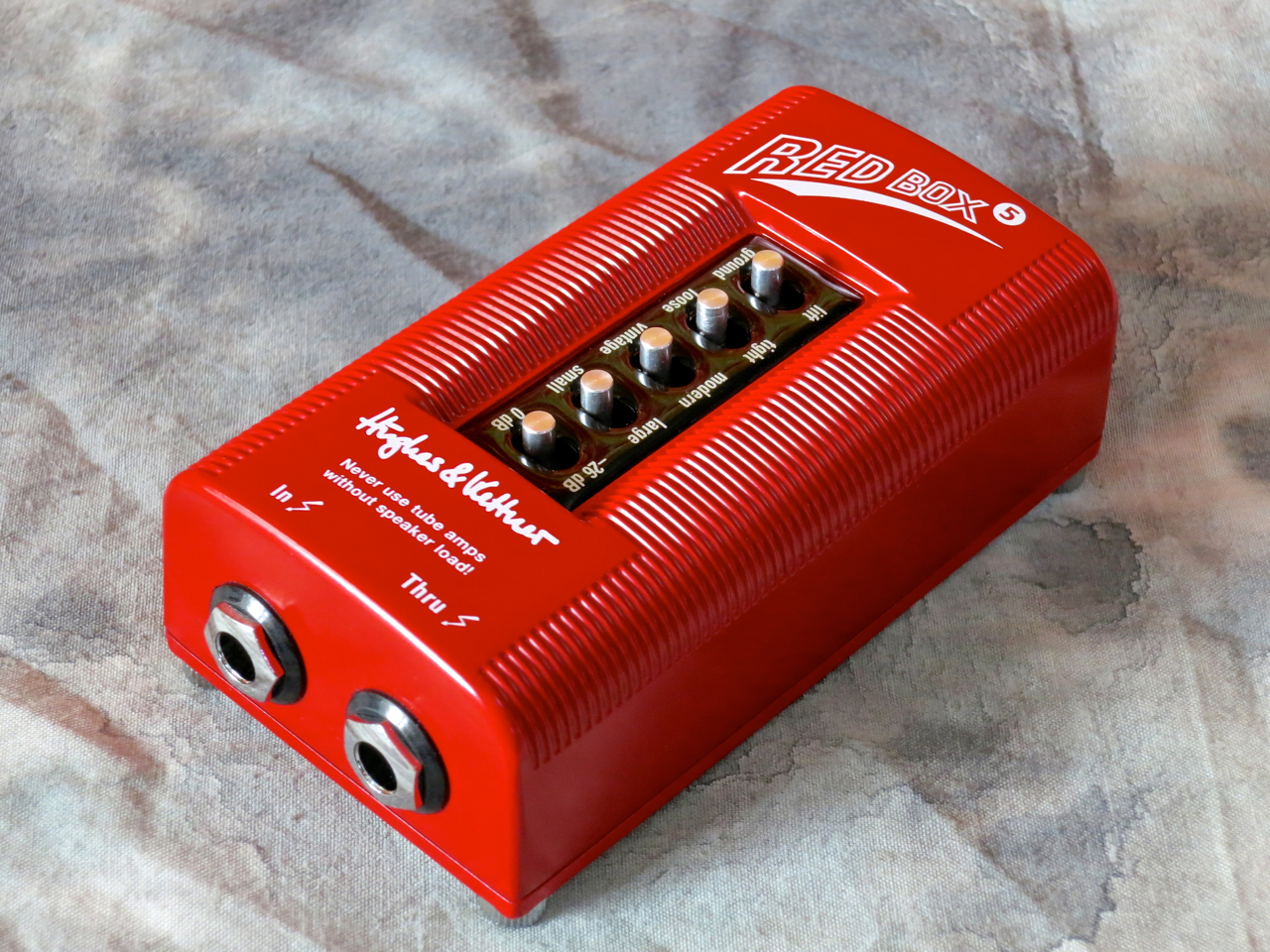
Hughes & Kettner Red Box 5 – full

The Hughes & Kettner Red Box 5 (current price in Finland: 89,90 €) feels like a sturdy little blighter in its very compact cast-metal casing.

The Red Box’ switch panel has been sunk into the unit’s face, keeping the switches secure from mechanical damage or accidental changes to the settings.

Hughes & Kettner Red Box 5 – bottom view

Guitarists and guitar techs will rejoice in the fact that this little helper isn’t finicky when it comes to its power supply:

The Hughes & Kettner works just as well running on an internal 9 volts block, as it does powered by phantom power off the mixer, an external PSU. The Red Box will work with voltages from 9 to 12 V DC (centre negative) or even AC. So, finding a wall wart for this device should be a piece of cake!

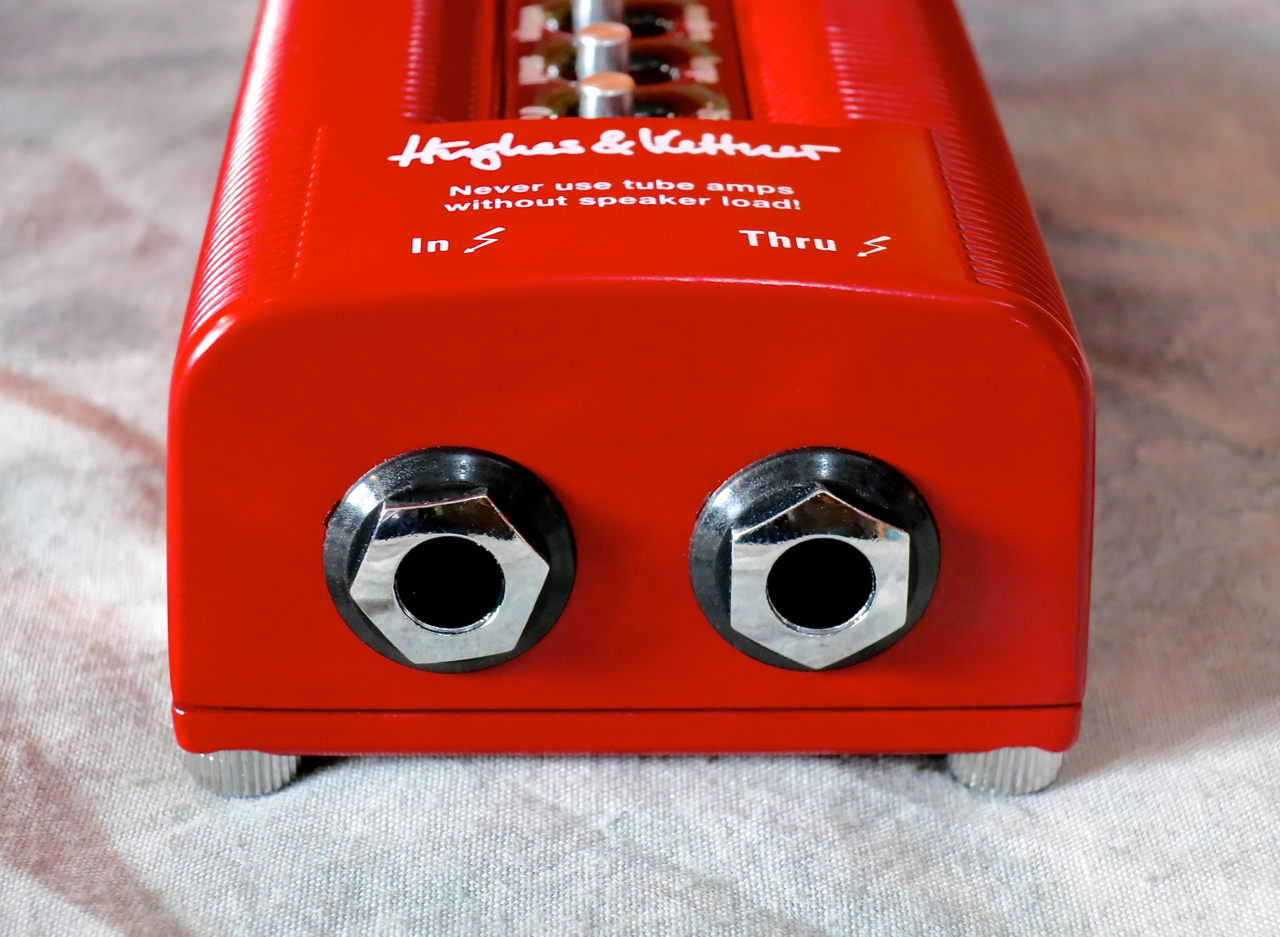
Hughes & Kettner Red Box 5 – speaker jacks

The speaker connectors have been placed at the Hughes & Kettner’s bottom end:

The amp’s speaker output is connected to the Red Box’ In-jack, while the Thru-jack will send an unadulterated signal to your speaker (cabinet).

It is very important that you don not confuse the Red Box – which is a DI-box – with a dummy load! If you’re using a valve amplifier (or a hybrid with a tube power amp) you really have to make sure to have the correct speaker load (in ohms) connected, whenever you use the amp. Using the Red Box without a speaker or dummy load will fry your amp’s power section or audio transformer!

Hughes & Kettner Red Box 5 – XLR + DC

The Red Box’ top end holds the balanced XLR DI-output, as well as the power supply (not included) connector.

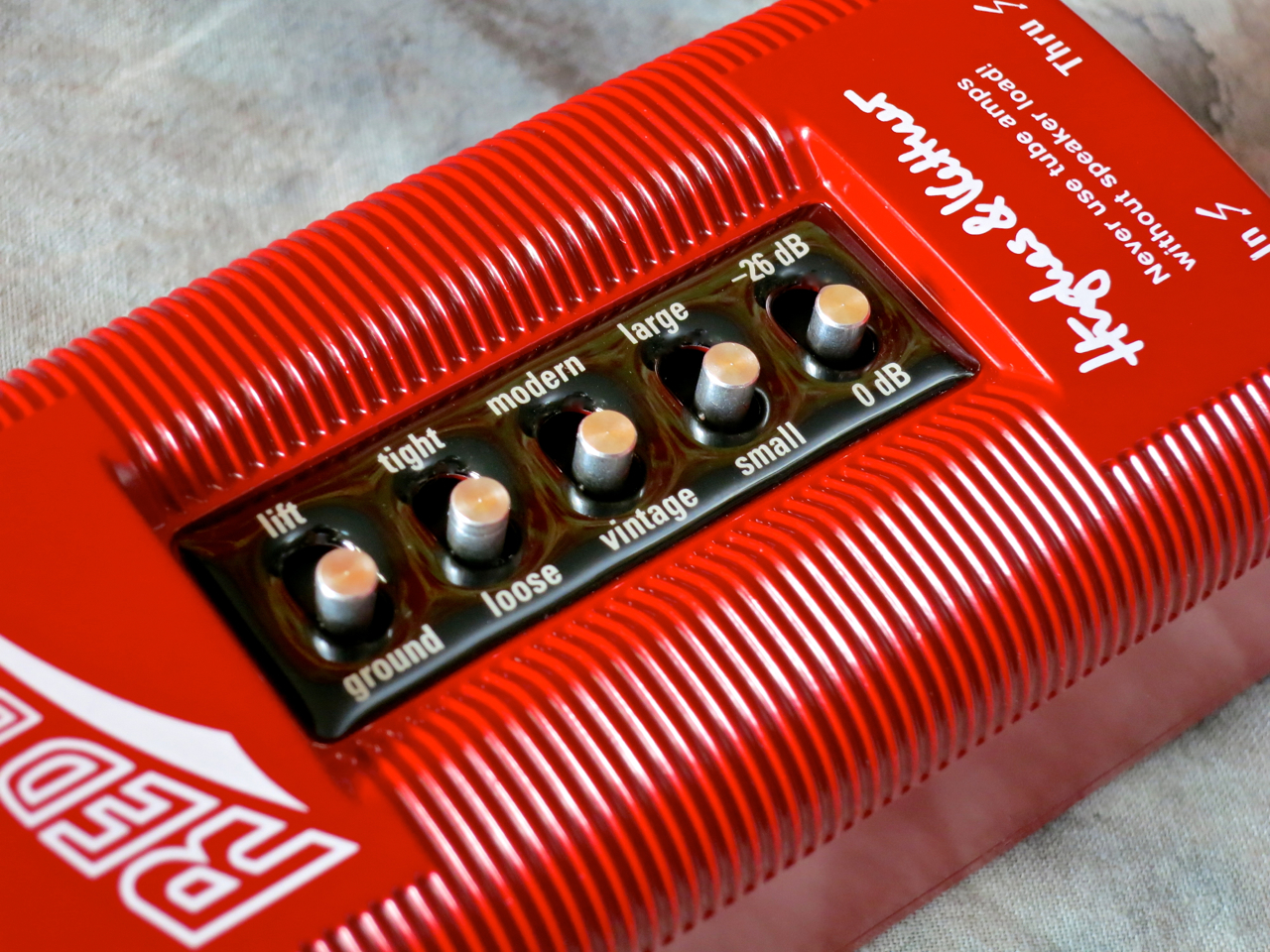
Hughes & Kettner Red Box 5 – switches

The Hughes & Kettner unit offers you five switches to tailor the DI-box’ output to your specific requirements:

There’s a ground lift switch (to cut any humming ground loops), a bass response switch, modern or vintage pre-EQ, a switch for the size of the virtual cabinet, as well as a 26 dB pad to prevent the DI-signal from overloading the console’s input.

Hughes & Kettner Red Box 5 – baggie

A black velvet bag is also thrown in with the Red Box.

****

Hughes & Kettner Red Box 5 – angle left

A ”great guitar sound” is probably one of our universe’s most subjective matters. Any guitar signal chain offers plenty of different variables. When you throw in the chosen cabinet, as well as the microphone and its placement relative to the speaker, the options available are virtually infinite. Nobody in their right mind can demand that a small DI-box, such as the Red Box 5, can actually offer any and all of the tonal options theoretically possible.

The Hughes & Kettner Red Box 5 raison d’être is to offer a handful of ”Best of” miked cabinet sounds, straight off of the amp’s speaker output to the mixing console (or sound card), without the hassle of having to set up a physical microphone, or having to account for the different sound characteristics of different rooms (for example on a tour). And in this the Red Box 5 truly excels.

To give you an idea of how well the Red Box 5’s sound stands up to a physical microphone, I have recorded a few clips simultaneously using a Shure SM57 and the Red Box. I used a Blackstar HT-1R running into an Änäkäinen Rumble speaker. The Red Box 5 was set to ”loose”, ”vintage” and ”large”.

Here’s a clean example, close-miked with the Shure:

And here’s the same example recorded direct with the Red Box:

Next I went for a crunchy amp sound; here’s the close-miked version:

And this is the same example DI’d through the Hughes & Kettner:

****

Hughes & Kettner Red Box 5 – angle right

Hughes & Kettner’s Red Box 5 is a fabulous tool, especially for onstage use. No need to put up a mic anymore, which means no more feedback and bleed problems. The Red Box 5 will give you consistently excellent DI’d guitar amp tones with the least amount of hassle.

****

Hughes & Kettner Red Box 5

Current price in Finland: 89,90 €

Finnish distribution: F-Musiikki

****

Pros:

+ very compact size

+ multiple means of power supply

+ different tonal options

+ pro-quality cabinet modelling

Review: Änäkäinen Rumble 1 x 12

Änäkäinen Rumble Cream – logo 2

Puuverstas Änäkäinen’s Rumble 1 x 12 -cabinet (prices in Finland start around 580 €) offers a few fresh ideas on how to come up with a cracking guitar tone.

The fathers of the Rumble-concept are cabinet maker Kari Änäkäinen (try saying: Curry ANNA-kay-nun), who is also gigging as a guitarist and bassist, and Kuusankoski’s very own tube amp guru, Triodipaja’s proprietor Lassi Ukkonen (LUSS-cee OO-cow-nun). The guys hit upon the basic idea for the Rumble cabinet, when Kari asked Lassi to calculate the correct cubic content for a lightweight bass cabinet he was building for himself. The bass cabinet turned out very well and set the duo on the path to coming up with the Rumble.

****

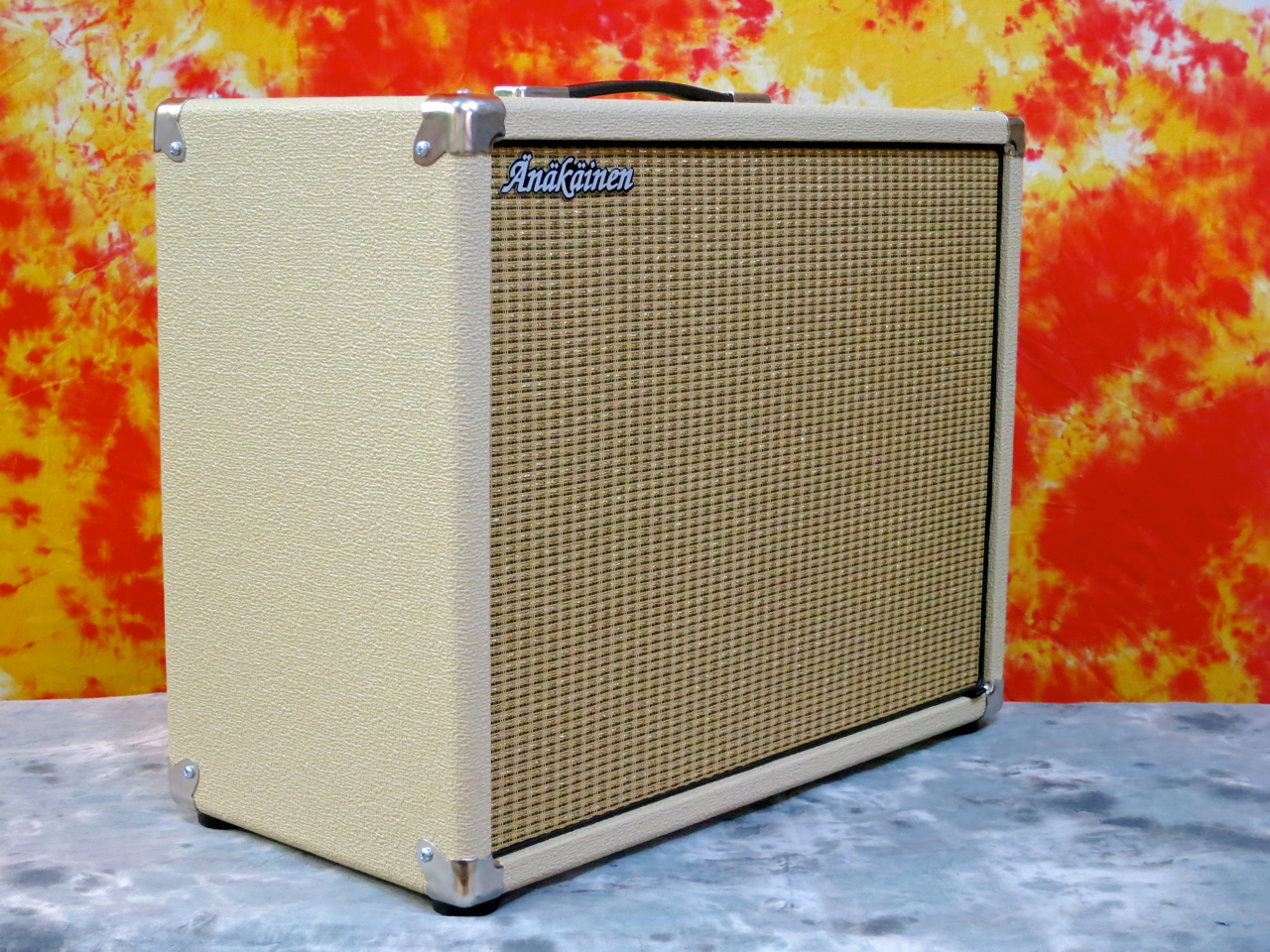
Änäkäinen Rumble Cream – angle right

When it comes to the cosmetics of his Rumble cabinets, Kari Änäkäinen is a dyed-in-the-wool vintage fan.

Änäkäinen Rumble Cream – back angle

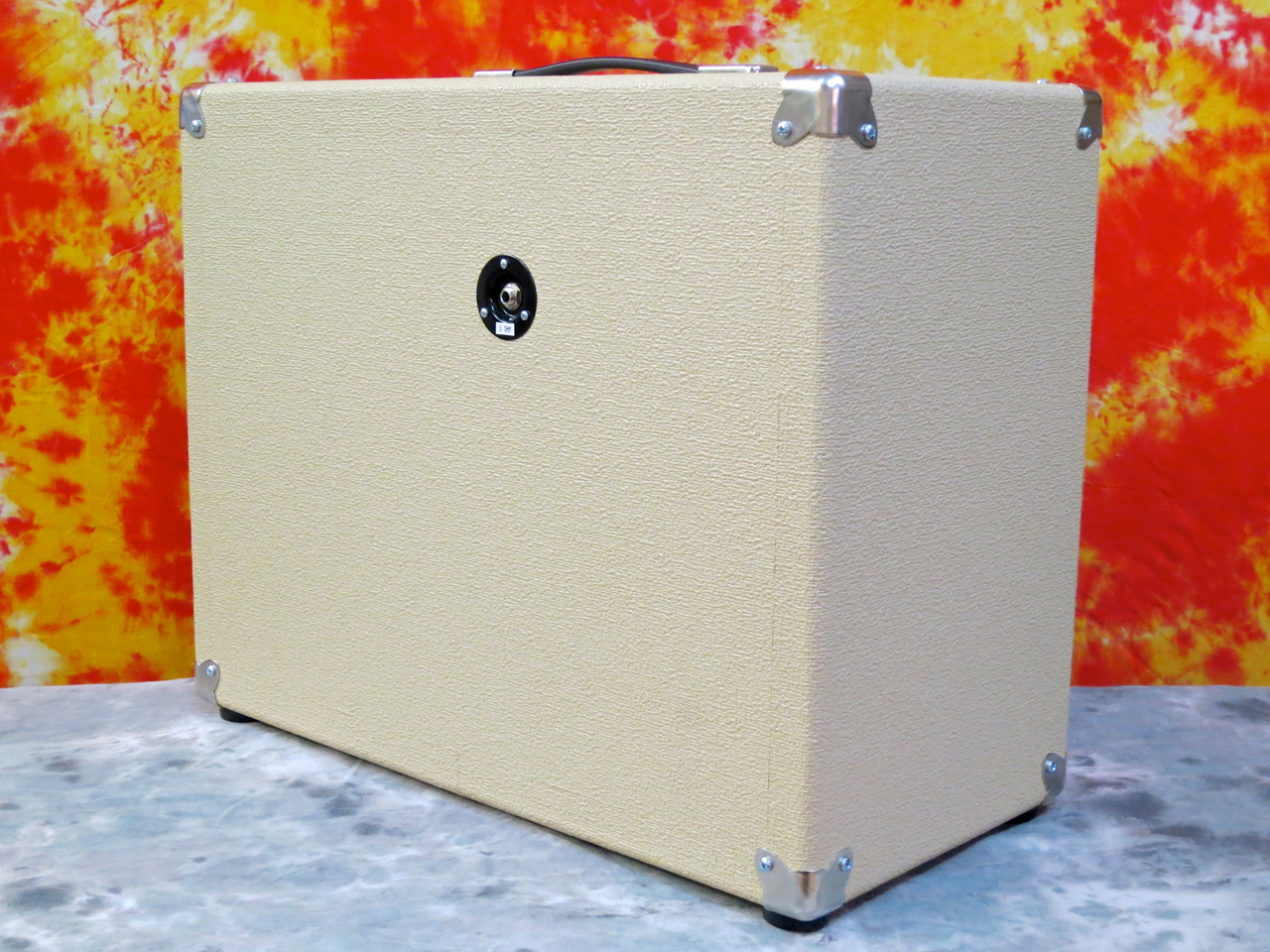
We received two different Rumble 1 x 12 cabinets for this review – one comes in a fetching ”Fender Blonde” look…

Änäkäinen Rumble Black – front angle left

…while the other clearly points in the direction of moody Marshall-ness.

Änäkäinen Rumble Black – back angle

The Rumbles sport metal corner protectors.

Änäkäinen Rumble Black – input

Here you can see the impedance sticker affixed to the sturdy jack plate.

Änäkäinen Rumble Cream – front cloth off

Currently, Kari Änäkäinen gives you a choice of five different speaker models for your personal cabinet.

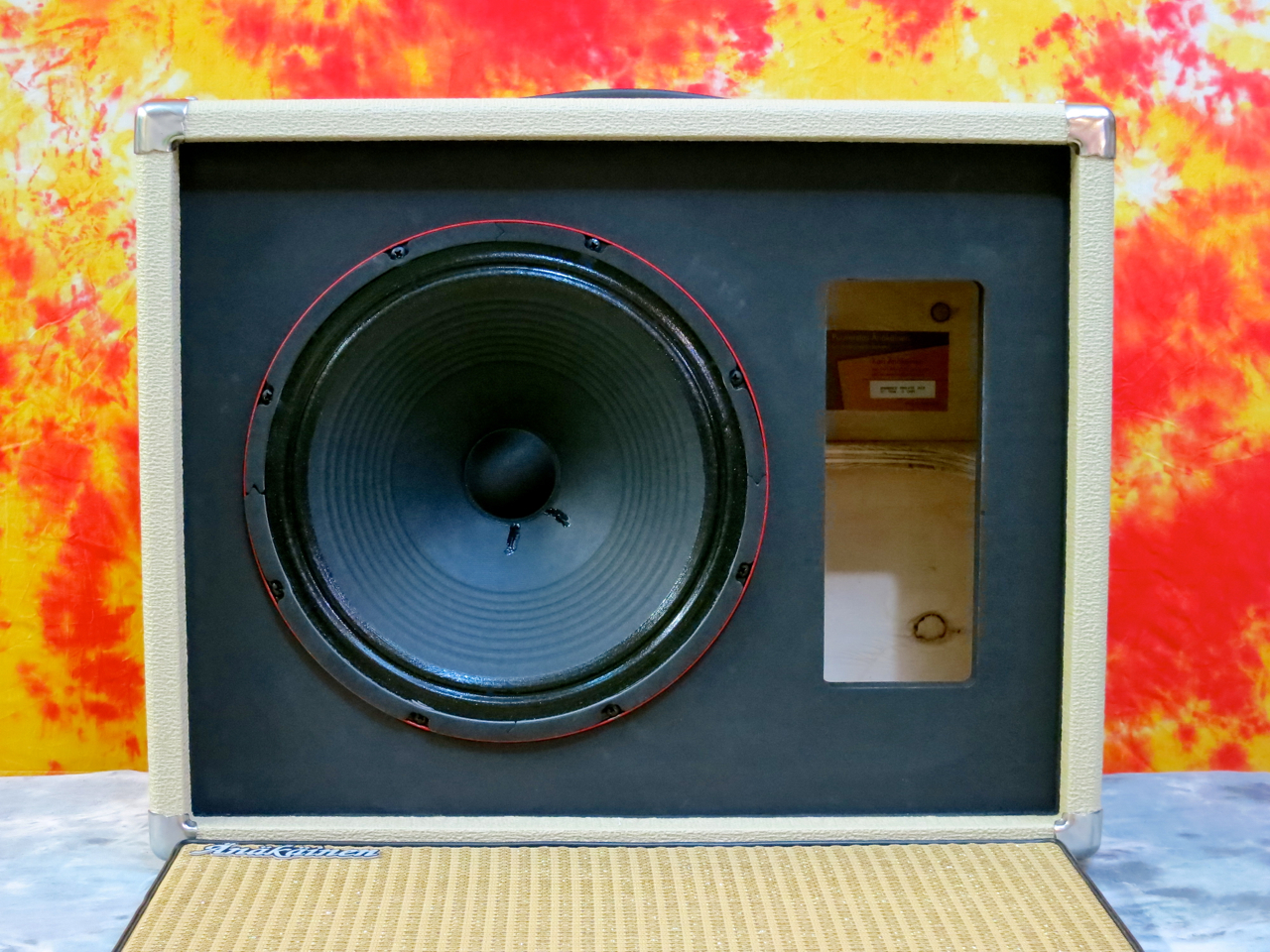
The cream-coloured Rumble came equipped with an Eminence Private Jack -speaker (50 W/8 Ω).

Änäkäinen Rumble Black – front cloth off

A WGS:n Reaper (30 W/8 Ω) was chosen for the black counterpart.

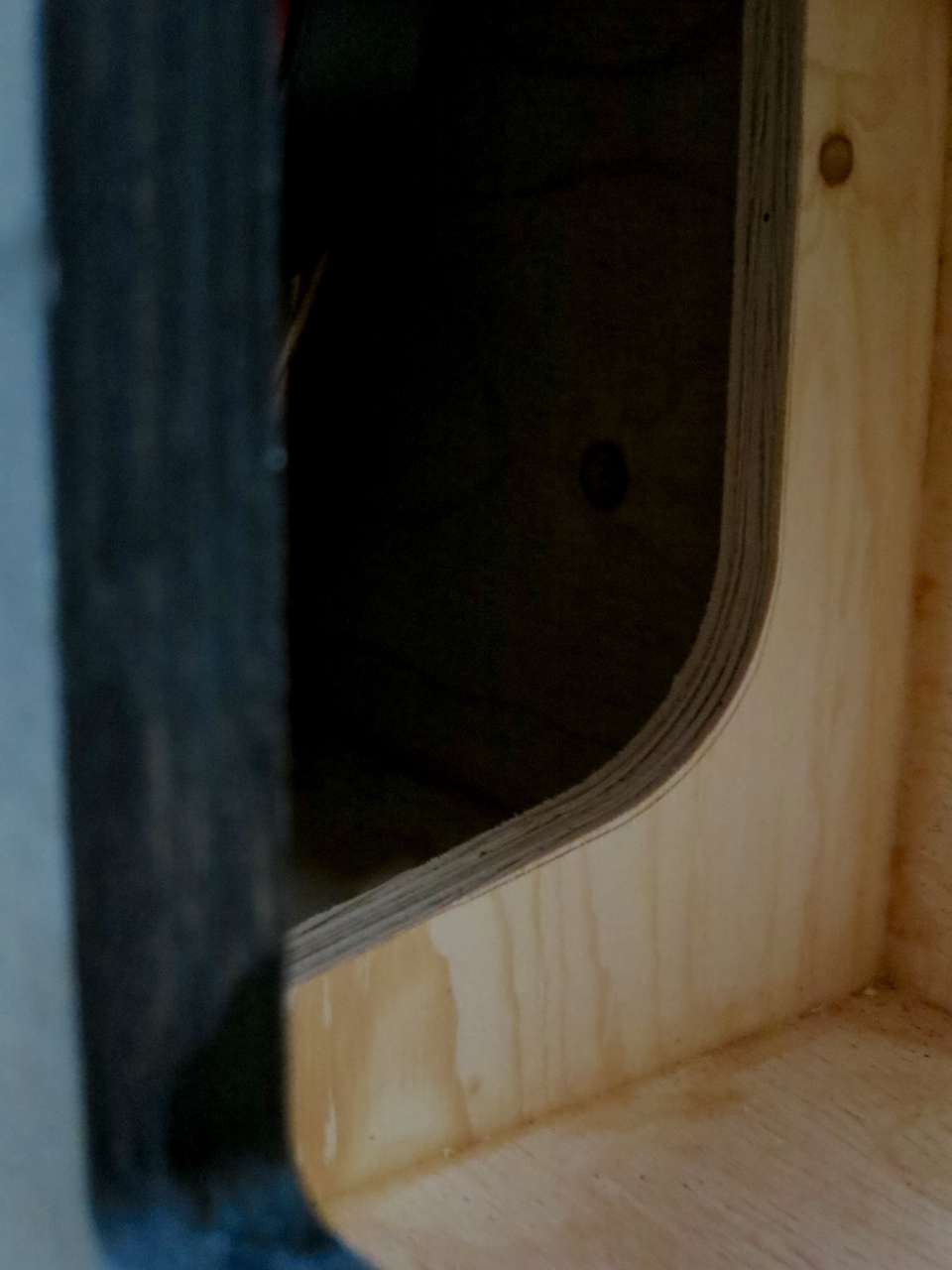
As you can see in these pictures, one of the special features of all Rumbles is the large rectangular port on one side of the cabinet. The basic idea has been borrowed from bass-reflex speaker, which are often used in Hifi- and bass (amp) cabinet designs. In the Rumble the opening is mainly used for sound dispersion, as the speaker doesn’t feature any internal reflectors, tunnels or a ”tuned” bass port.

Änäkäinen Rumble Cream – struts 1

The details of the cabinet build is also a little bit different to your run-of-the-mill guitar cab. The cabinet itself is crafted from Finnish conifer plywood with a thickness of 15 millimetres.

The advantages of conifer plywood are its quality, abundance and light weight. Most other cabinet makers will claim that this type of plywood is too soft and pliable for cabinet-making, but Kari has found his own solution to this problem: He uses internal struts and supports made from the same material.

Änäkäinen Rumble Cream – struts 2

The speaker baffle, on the other hand, is made from very sturdy, 18 millimetre thick Finnish birch plywood.

The whole speaker cabinet is constructed using only glue joints and wood dowels. The only screws in an Änäkäinen Rumble are those keeping the speaker, the jack plate and the corner protectors in place.

Änäkäinen Rumble Cream – top handle

The Rumble’s low weight of approximately 12 kilos is easy to lift by the cab’s top handle.

****

Änäkäinen Rumble Cream – front left

The first – completely subjective – impression I got from using the Rumble 1 x 12 was of a ”loud”, ”big” and ”musical” sounding cab. The Änäkäinen even made my tiny Blackstar HT-1R sound like a full-size tube amp.

The Rumble gets across a healthy shot of warmth and transparency – just like many other quality cabinets – but its special, front-ported construction adds an amazing amount of spread and directivity to the sound that is all its own. The sound dispersion is neither too narrowly focussed, nor is there any sound getting ”lost” behind the cab. Thanks to its front port, the Rumble delivers a larger-than-life, Cinemascope-style sound.

The Eminence-loaded blonde Rumble sings beautifully with a warm and creamy voice:

Änäkäinen Rumble Black – front angle right

Thanks to the WGS Reaper -speaker inside the black-clad Rumble 1 x 12, this cab has a somewhat more aggressive British accent. This added bite isn’t quite as pronounced when you stick to clean amp settings, but it will help your Rock riffs to cut through more easily:

****

Änäkäinen Rumble Black – logo 2

I must say I really like these Änäkäinen Rumbles a lot! They deliver excellent, boutique-class tones at a very fair price. If you need a relatively compact guitar cab with a big sound, you should really consider going for a Rumble!

****

Änäkäinen Rumble 1 x 12

Finnish prices starting around 580 €

Made by Puuverstas Änäkäinen

****

Pros:

+ workmanship

+ a functional, non-mainstream concept

+ wide, yet focussed sound

+ rich bottom end

+ different speaker options

Testipenkissä: Boss Waza Craft BD-2W + SD-1W

bd-2w_angle_zoom_gal

sd-1w_side_zoom_gal

Uusien Boss Waza Craft -pedaalien on tarkoitus antaa laatutietoiselle kitaristille sen ultimatiivisen, boutique-tyylisen Boss-elämyksen.

Japanilainen sana ”waza” tarkoittaa taidetta, taidokkuutta ja tekniikka, mikä uudessa Boss-sarjassa viittaa siihen, että ensinnäkin sarjan pedaaleissa käytetään vanhan liiton analogitekniikka, ja toiseksi sarjan efektit (tällä hetkellä: tässä jutussa testatut kaksi säröpedaalia, plus DM-2W-viive) ovat valmiiksi modattuja firman tehtaassa.

****

bd-2w_top_gal

Boss Blues Driver BD-2W Waza Craft (noin 155 €) on täysanaloginen, päivitetty versio Bossin suositusta Blues-säröstä.

Boss on keksinyt 1970-luvun lopussa efektipedaaleilleen tämän kompaktin muodon ja rakenteen, josta on tullut sittemmin alan standardi. Tyypilliseen Boss-pedaaliin kuuluu valumetallinen runko, sekä pedaaliläpän alta löytyvä paristokotelo.

BD-2W tarjoaa kolme säädintä: Gain-säätimellä määrätään särön määrää, Tone-potikalla soundin kirkkautta, ja Level-säätimellä taas asetetaan efektille haluttu lähtötaso.

Waza Craft -pedaalien pikkukytkimellä valitaan Standard- ja Custom-tilan välillä. Standard-tilassa BD-2W käyttäytyy dynamiikan ja soundin kannalta kuin perinteinen Boss Blues Driver, kun taas Custom-tilassa on tarjoilla entistäkin laajempi dynamiikka, sekä lämpimämpi ja avoimempi soundi.

Tässä soundiesimerkissä Gain-nuppi on avattu kello 12. Soitan kaksi samankaltaista pätkää – ensin Standard-tilassa, ja sen jälkeen Custom-tilassa:

Toisessa äänitteessä pedaalin Gain-potikka on avattu täysille:

bd-2w_angle_gal

****

sd-1w_top_gal

Boss Super OverDrive SD-1W Waza Craft (noin 155 €) on keltaisen klassikkosärön boutique-versio.

Nimensä mukaisesti tässä on kyse overdrive-säröstä, eli odottavissa on dynaaminen ja keskialueella rikas särösoundi. Distortion-säröt taas ovat yleensä purevampia ja vahvemmin kompressoivia kuin overdrive-pedaalit.

Myös SD-1W tarjoaa kolme säädintä – Drive, Tone ja Level – sekä kaksiasentoisen minikytkimen. Standard-tilassa odotettavissa on premium-luokan versio legendaarisesta SD-1-soundista, kun taas Custom-tilassa soundiin on lisätty enemmän bassorekisteriä.

Tässä ensin yksi esimerkkipätkä, jossa SD-1W:n Drive-säädin on avattu puoleen. Ensin käytän efektiä Standard-tilassa, minkä jälkeen soitan samankaltaisen riffin Custom-tilassa:

Seuraavassa klipissä Super OverDriven Drive-säädin on avattu täysille:

sd-1w_angle_gal

****

bd-2w_angle_2_gal

Mitä tarkoittavat käsitteet ”boutique-pedaali” ja ”premium-luokan efekti”?

Waza Craft -pedaalien tapauksessa vastaus on sekä kuultavissa että tuntuvissa:

Molemmissa testatuissa säröpedaaleissa soundi on vielä entistäkin kermaisempi ja selkeämpi. Efektien oma kohina on näissä premium-versioissa saatu vielä aavistuksen verran alemmas. Sekä BD-2W että SD-1W tuntuvat myös vielä orgaanisemmilta kuin niiden (perushyvät) tavalliset rinnakkaisversiot. Särösoundi on erittäin luonnollinen ja hyvin herkkä muutoksiin soittodynamiikassa tai kitaran volyymipotikan asetuksessa. Säröefekti ei tunnu millään lailla päälle liimatulta, vaan kitaran ja pedaalin välille syntyy luonnollinen ja hyvin musikaalinen vuoropuhelu.

Waza Craft -säröjen ensivaikutelma ei ehkä ole niin korostetun erilainen kuin mikä ehkä odottaisi, mutta suorassa A/B-vertailussa rivipedaalien ja Waza Craft -sarjalaisten väliset erot ovat helposti havaittavissa. Tavallisetkin Boss-efektit toimivat mielestäni moitteettomasti, mutta Waza Craft -säröissä on kiistämattä vielä luokkaa makeampi soundi.

sd-1w_angle_2_gal

****

Boss BD-2W + SD-1W Waza Craft

hinnat noin 155 €

Maahantuoja: Roland Suomi

****

Plussat:

+ tuttu formaatti

+ täysin analogiset

+ kaksi toimitilaa

+ soundi

Testipenkissä: Hughes & Kettner Red Box 5

Hughes & Kettner Red Box 5 – opener

Ensimmäinen versio Hughes & Kettnerin Red Boxista ilmestyi jo 1980-luvun loppupuolella, ja nerokkaasta laitteesta tuli nopeasti menestystuote.

Red Box on kitaravahvistimelle tarkoitettu erikois-DI-boksi. Perinteisen DI-boksin leipätyö on muunnella soittimesta lähtöistä korkeaimpendanssista signaalia mikserille sopivaksi matalaimpendanssi-signaaliksi.

Red Box taas kytketään kitaravahvistimen kaiutinlähdön ja kaiuttimen väliin, ja sen ansiosta saadaan kaiutinmallinnuksella höystettyä signaalia suoraan mikseriin, täysin ilman kaiuttimen eteen laitettavia mikrofoneja.

Hughes & Kettnerin tuotekehitys on edennyt vuosikymmenien mittaan jo Red Box -vitosversioon – oli siis korkea aikaa tutkiskella päivitetyn laitteen toimintaa ja soundia.

****

Hughes & Kettner Red Box 5 – full

Hughes & Kettner Red Box 5 (89,90 €) tuntuu hyvin kestävänoloiselta, sen kompaktin, valumetallisen kotelonsa ansiosta.

Red Boxin koteloon upotettu kytkinpaneeli suojaa kytkimiä tehokkaasti mekaaniselta rasitukselta, sekä tahattomilta asetusmuutoksilta.

Hughes & Kettner Red Box 5 – bottom view

Kitaristin ja teknikon iloksi uusille Red Boxeille voi syöttää monenlaista sähköä:

Tämä Hughes & Kettner toimii sekä 9 voltin paristolla, mikserin phantomsyötöllä tai ulkoisen virtalähteen sähköllä, jolloin Red Boxiin voi syöttää 9-12 volttia joko tasavirtana (miinus keskellä) tai vaihtovirtana. Sopivan verkkolaitteen löytäminen ei siis pitäisi olla tässä tapauksessa ongelma!

Hughes & Kettner Red Box 5 – speaker jacks

Hughes & Kettnerin alareunasta löytyy boksin kaiutinliittimet:

Vahvistimesta tuleva kaiutinjohto kytketään In-tuloon, kun taas Thru-lähdön signaali menee eteenpäin kaiuttimelle.

On erittäin tärkeä korostaa, että Red Box 5 ei ole keinokuorma, vaan ainoastaan DI-boksi! Jos käytössä on putkivahvistin (tai putkipäätteellä varustettu hybridi), vahvistinta saa ainoastaan käyttää sopivalla (= oikea ohmiarvo) kaiuttimella/kaiutinkaapilla tai keinokuormalla, riippumatta siitä käytetäänkö Red Boxia vai ei. Putkivahvistimen käyttäminen ilman asianmukaista kuormaa rikkoo (käytännössä väistämättä) laitteen audiomuuntajan!

Hughes & Kettner Red Box 5 – XLR + DC

Red Boxin yläreunaan on asennettu laitteen balansoitu XLR-lähtö mikserille, sekä liitin virtalähteelle.

Hughes & Kettner Red Box 5 – switches

Hughes & Kettnerin viidellä kytkimellä voi hienosäätää DI-boksin toimintaa ja soundia:

Tarjolla on maalenkin katkaisin, bassokarakteerikytkin, modern/vintage-valitsin, kaappikokokytkin (small: kombo; large: 4 x 12 -kaappi), sekä 26:n desibelin padi DI-signaalille.

Hughes & Kettner Red Box 5 – baggie

Pakkauksesta löytyy myös musta samettipussi kuljetusta varten.

****

Hughes & Kettner Red Box 5 – angle left

”Hyvä kitarasoundi” on ehkä yksi maailmankaikkeuden subjektiivisimmista asioista. Signaaliketjussa sinänsä on tavallisesti jo suuri määrä muuttuvia tekijöitä. Kun soppaan lisätään vielä kaapin mikitykseen käytetty mikrofoni, sen asento kaiuttimeen nähden ja mikin etäisyys, soundien kirjosta tulee miltei ääretön. Olisi täysin kohtuutonta vaatia tämänkaltaisesta DI-boksista samankaltaiset laajat muokkausmahdollisuudet.

Hughes & Kettner Red Box 5:n idea onkin tarjota käyttäjälle mahdollisimman luonnollisen kuuloisia Best of -vaihtoehtoja tyypillisistä kitarakaappisoundeista, suoraan vahvistimesta mikseriin, täysin ilman mikkiasetuksesta tai huoneakustiikasta johtuvia häiriötekijöitä. Ja juuri siinä Red Box 5 onnistuu mielestäni loistavasti.

Seuraavissa klipeissä on samat pätkät vertailun vuoksi äänitetty sekä ”akustisesti” Shure SM57 -mikrofonilla että suoraan Red Boxilla. Käytin Blackstar HT-1R -vahvistinta ja Änäkäinen Rumble -kaappia. Hughes & Kettnerin kytkimillä oli valittu asetukset ”loose”, ”vintage” ja ”large”.

Tässä on lähimikitetty puhdas pätkä:

Tällaiselta sama pätkä kuulostaa Red Box 5:llä äänitettynä:

Shurella poimittu särösoundi oli tällainen:

Sama pätkä suoraan Hughes & Kettnerin kautta äänitettynä:

****

Hughes & Kettner Red Box 5 – angle right

Hughes & Kettner Red Box 5 on mainio työkalu etenkin lavalla. Red Box 5:llä pääsee viimein mikrofonin kanssa häsläämisestä, ja se poistaa näin myös tehokkaasti mikrofonin feedback- ja vuoto-ongelmat. Jäljellä jää erittäin laadukas kitarasoundi päivästä toiseen.

****

Hughes & Kettner Red Box 5

89,90 €

Maahantuoja: F-Musiikki

****

Plussat:

+ kompakti koko

+ toimii paristolla, verkkolaitteella (AC + DC) tai phantomsyötöllä

+ eri soundivaihtoehdot

+ laadukas kaiutinmallinnus

Testipenkissä: Änäkäinen Rumble 1 x 12

Änäkäinen Rumble Cream – logo 2

Puuverstas Änäkäisen Rumble 1 x 12 -kaappi (hinnat alk. 580 €) tarjoaa tuoreita suomalaisia ratkaisuja hyvän kitarasoundin perustaksi.

Rumble-konseptin takana ovat puuseppä Kari Änäkäinen, jolla itse on myös kitaristi- ja basistitausta, sekä kuusankoskelaisen Triodipajan vetäjä Lassi Ukkonen. Rumble-kitarakaapin suunnittelu alkoi puolivahingossa, kun Kari päätti rakentaa itselleen kevyen ja kompaktin bassokaapin ja pyysi Lassia laskemaan hänelle siihen oikeat mitat. Onnistuneen bassokaapin perusteella syntyi idea tarjota kitaristille laadukkaita, kompakteja ja kevyitä vahvistinkaappeja. Yksi Änäkäisen ensimmäisistä asiakkaista muusikkopuolelta oli kitaralegenda Juha Björninen.

****

Änäkäinen Rumble Cream – angle right

Rumble-kaappien kosmetiikan suhteen Kari Änäkäinen on vannoutunut vintage-mies.

Änäkäinen Rumble Cream – back angle

Saimme testiin kaksi Rumblea, joista toisella on Fender Blonde -tyylinen ulkonäkö (kermanvärinen päällystys ja beesi etukangas)…

Änäkäinen Rumble Black – front angle left

…ja toisella enemmän Marshallin suuntaan nojaava värimaailma.

Änäkäinen Rumble Black – back angle

Rumble-kaapeissa on metalliset kulmasuojat.

Änäkäinen Rumble Black – input

Vankantekoiseen jakkilevyyn on liimattu selkeä impedanssitarra.

Änäkäinen Rumble Cream – front cloth off

Kari Änäkäinen tarjoaa asiakkailleen viisi erilaista 12-tuumaista kaiutinmallia, joista voi valita sopivan elementin omaan kaappiin.

Testissä käyneeseen kermanvaaleaan Rumbleen oli asennettu Eminence Private Jack -kaiutin (50 W/8 Ω).

Änäkäinen Rumble Black – front cloth off

Mustaan Rumbleen taas on valittu WGS:n Reaper-malli (30 W/8 Ω).

Kuten näistä kuvista näkyy, yksi Rumble-kaappien erikoisuuksista on kaiuttimen viereen sijoitettu ääniaukko. Idea on lainattu useissa basso- ja hifikaapeissa käytetystä refleksirakenteesta, vaikka Rumbleissa ei ole ääntä heijastavia väliseiniä tai viritettyä bassoputkea.

Änäkäinen Rumble Cream – struts 1

Rumble-kaappien perusrakennekin poikkeaa tavallisesta kitarakaapista, sillä kotelo on tehty kotimaisesta, 15-millisestä havuvanerista.

Havuvanerin edut ovat sen laadukkuus, hyvä saatavuus, ja etenkin materiaalin kevyt paino. Monille valmistajille havuvaneri on kitara- ja bassokaappien tekoon hieman liian taipuisa, mutta Kari Änäkäinen on löytynyt tähän ratkaisun – samasta materiaalista tehdyt sisäiset tuet.

Änäkäinen Rumble Cream – struts 2

Kaiutinta kantava etuseinä taas on leikattu 18-millisestä, suomalaisesta koivuvanerista.

Koko kotelo on toteutettu täysin ilman ruuveja, ainoastaan liimaliitoksilla ja puutapeilla. Rumble-kaappien ainoat ruuvit käytetään kaiuttimen, jakkilevyn ja kulmasuojien kiinnityksissä.

Änäkäinen Rumble Cream – top handle

Rumble-kaappi on hyvin kompakti ilmestys, joka painaa vain noin 12 kiloa.

****

Änäkäinen Rumble Cream – front left

Tämä perustuu vain subjektiiviseen vaikutukseen, mutta ensimmäiset sanat jotka tulivat Rumble-kaappien kokeilussa mieleen olivat ”äänekäs”, ”iso” ja ”musikaalinen”. Änäkäinen Rumble saa jopa oman Blackstar-pikkuvahvarin (HT-1R) kuulostamaan täysikokoiselta, aikuiselta putkivahvistimelta.

Rumblessa löytyy se sama lämpö ja avoimuus kuin monissa avoimissa kaapeissa/komboissa, mutta sen erikoisen rakenteen ansiosta äänen suuntavuus on huomattavasti parannettu. Tässä ei katoa puolet soundista johonkin kaapin taakse. Samalla etupuolen ääniaukon ansiosta syntyy sellainen herkullinen, huonetta täyttävä ”laajakulma-soundi”.

Eminence-kaiuttimella varustettu blondi-Rumble soi täyteläisellä ja kermaisella äänellä:

Änäkäinen Rumble Black – front angle right

Mustalla Rumblella taas on – WGS Reaper -kaiuttimen ansiosta – vahva Britti-aksentti. Tämä kaappi on hieman ärhäkämpi ja sillä on purevampi preesensalue. Puhtailla vahvistinasetuksilla ero testikaappien välillä ei ole ehkä niin selkeä kuin särösoundeissa:

****

Änäkäinen Rumble Black – logo 2

Tämän testin perusteella voin vain todeta, että Änäkäinen Rumble -kaappi tarjoaa aitoa suomalaista boutique-laatua reiluun hintaan. Rumble todella kuulostaa isommalta kuin mikä se on.

****

Änäkäinen Rumble 1 x 12

Hinnat alkaen 580 €

Valmistaja: Puuverstas Änäkäinen

****

Plussat:

+ työnjälki

+ valtavirrasta poikkeava, toimiva konsepti

+ laaja, mutta silti fokusoitu soundi

+ bassotoisto

+ saatavilla eri kaiuttimilla

Review: Hehku Custom Nightingale 15

Hehku Nightingale 15 – opener

From a guitarist’s standpoint, Finland truly is the land where milk and honey flow. In relation to its tiny population Finland is home to an unbelievable number of first-rate guitar-, effects- and amp-makers.

One such boutique-level amp brand is Hehku Customs from the town of Pori (on the western coast). Hehku’s team consists of chief designer Jarmo Välimäki, as well as Markku Penttilä and Juha Heljakka, who are in charge of R & D, sales and marketing.

There are several examples of different custom amps the company has built on Hehku’s website. Prices for custom amps start at about roughly 1,300 €. Hehku Custom’s cabinet sizes and shapes are standardised, but all other details can be tailoured to each customers wishes and requirements. ”The basic idea is that we want to make our customers’ wildest dreams come true!” says Jarmo Välimäki.

****

Hehku Nightingale 15 – full front

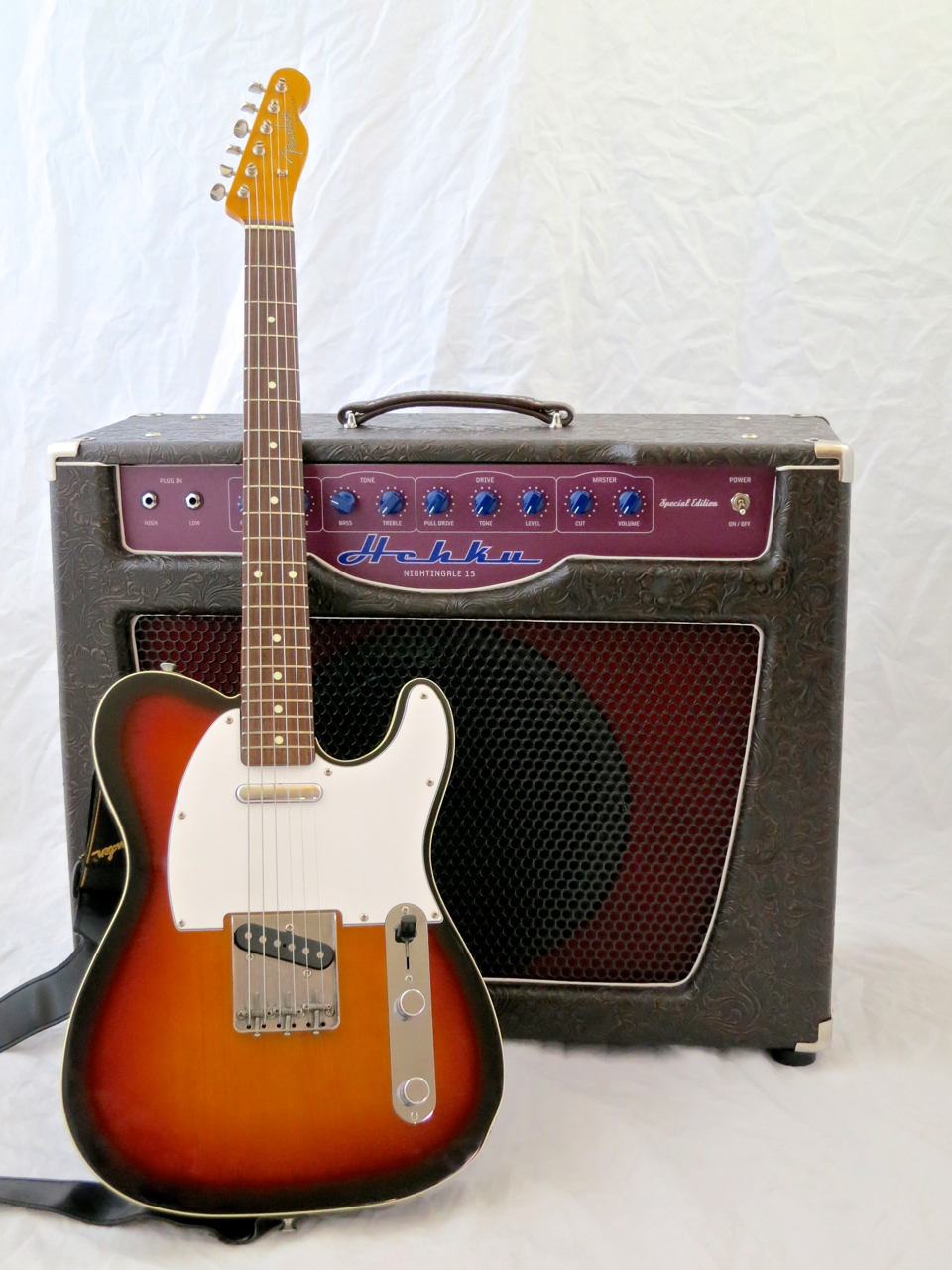
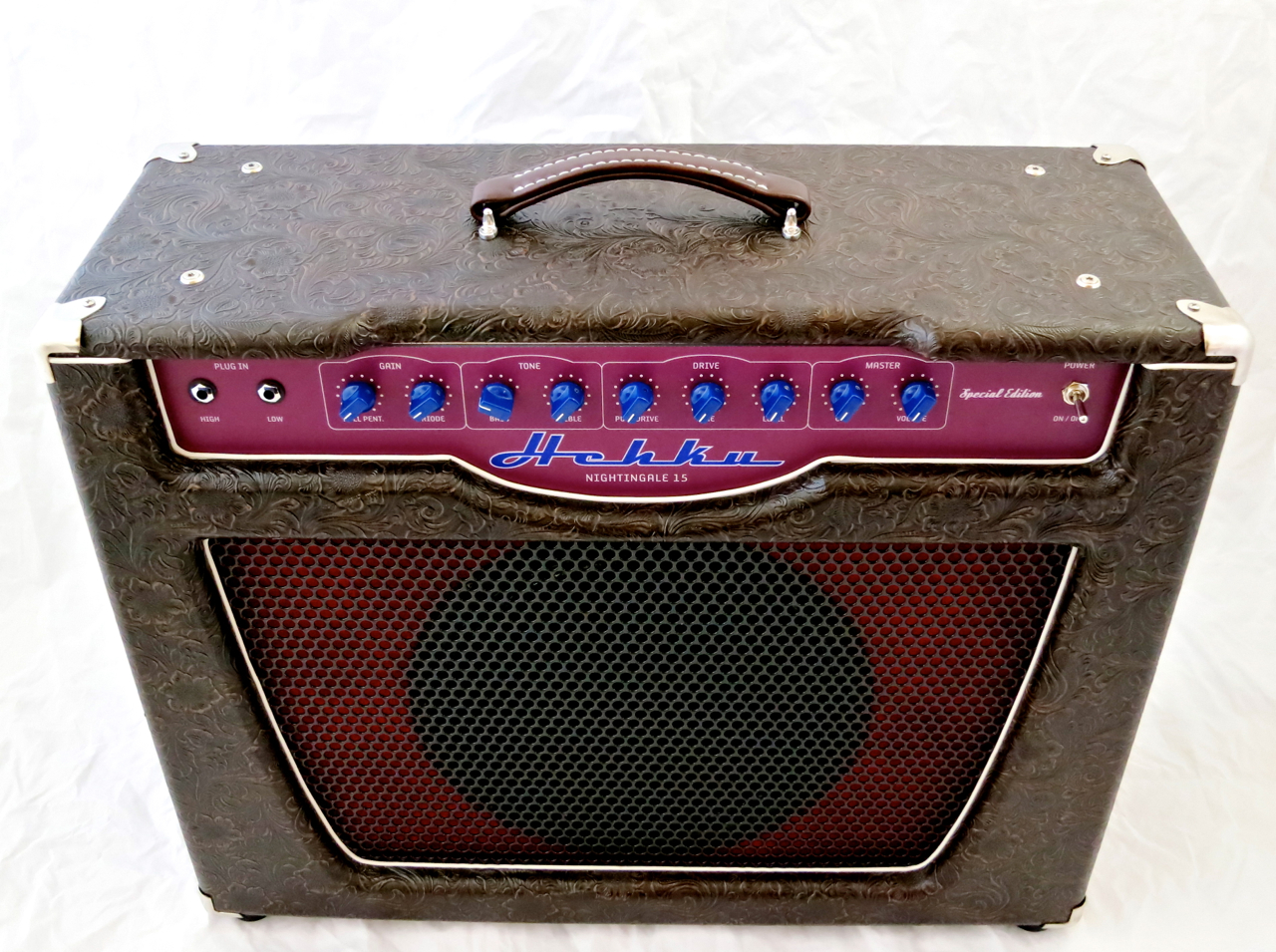
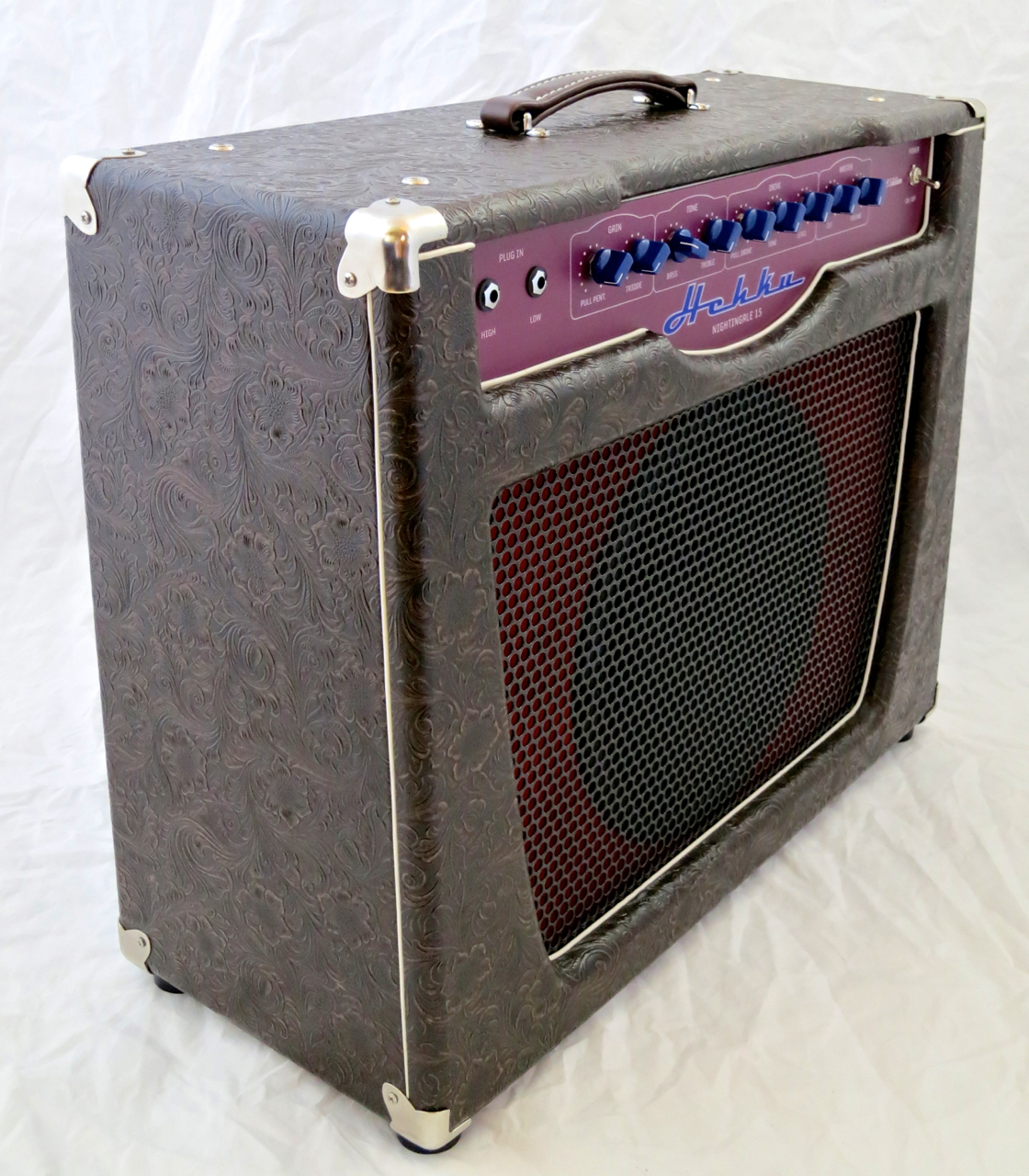
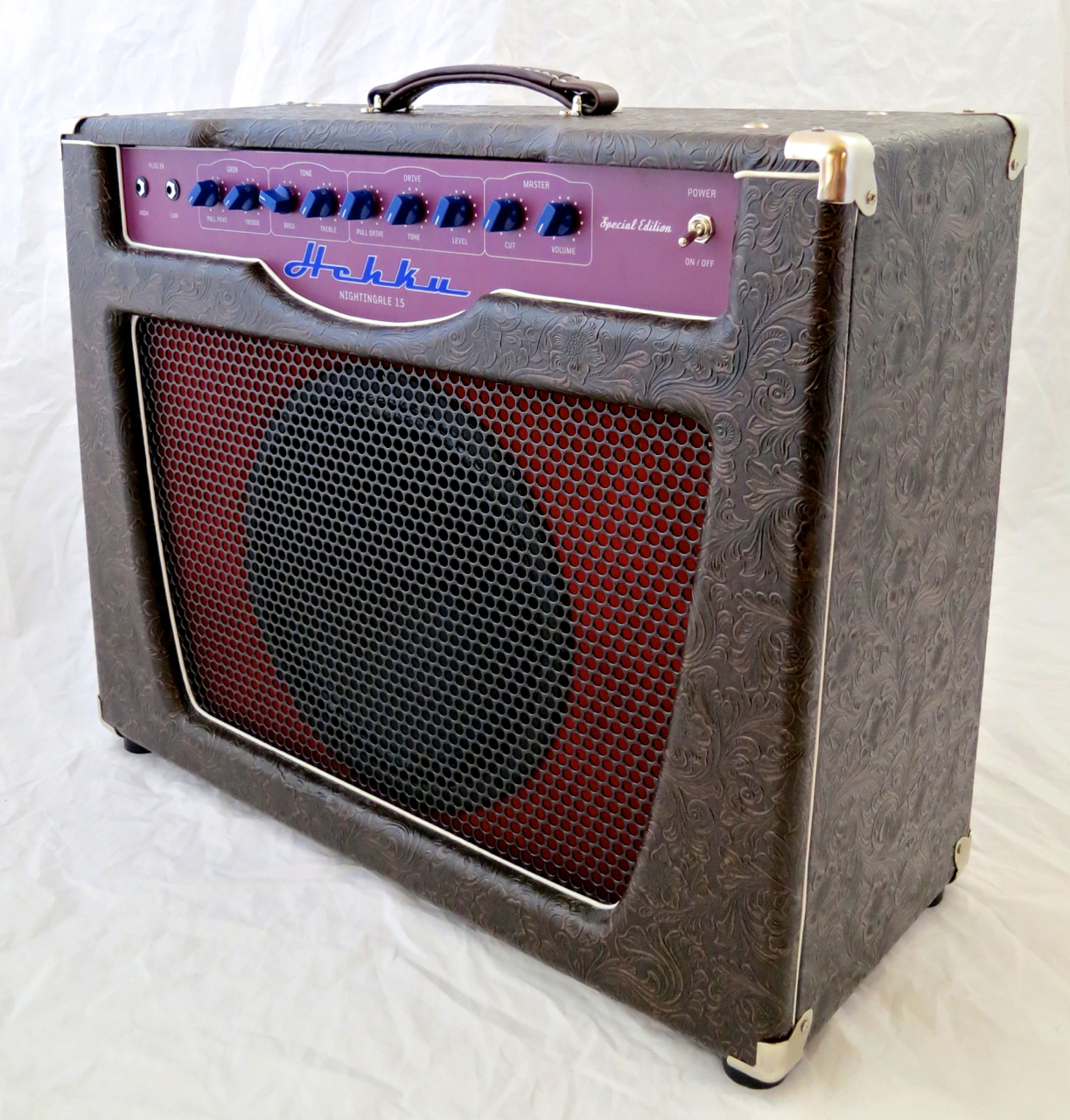
Kitarablogi got a 15-watt Hehku Nightingale 15 combo for testing. This is Hehku Custom’s first standardised model without custom options.

The Nightingale 15 (combo approx.: 1,950 €, head approx.: 1,750 €) is a hand-made, all-valve combo with a single 12-inch speaker, and represents many features typical of Hehku’s design philosophy.

The Nightingale’s cool and original looks make it clear from the off that this combo isn’t your typical Fender Tweed clone.

Hehku Nightingale 15 – full back

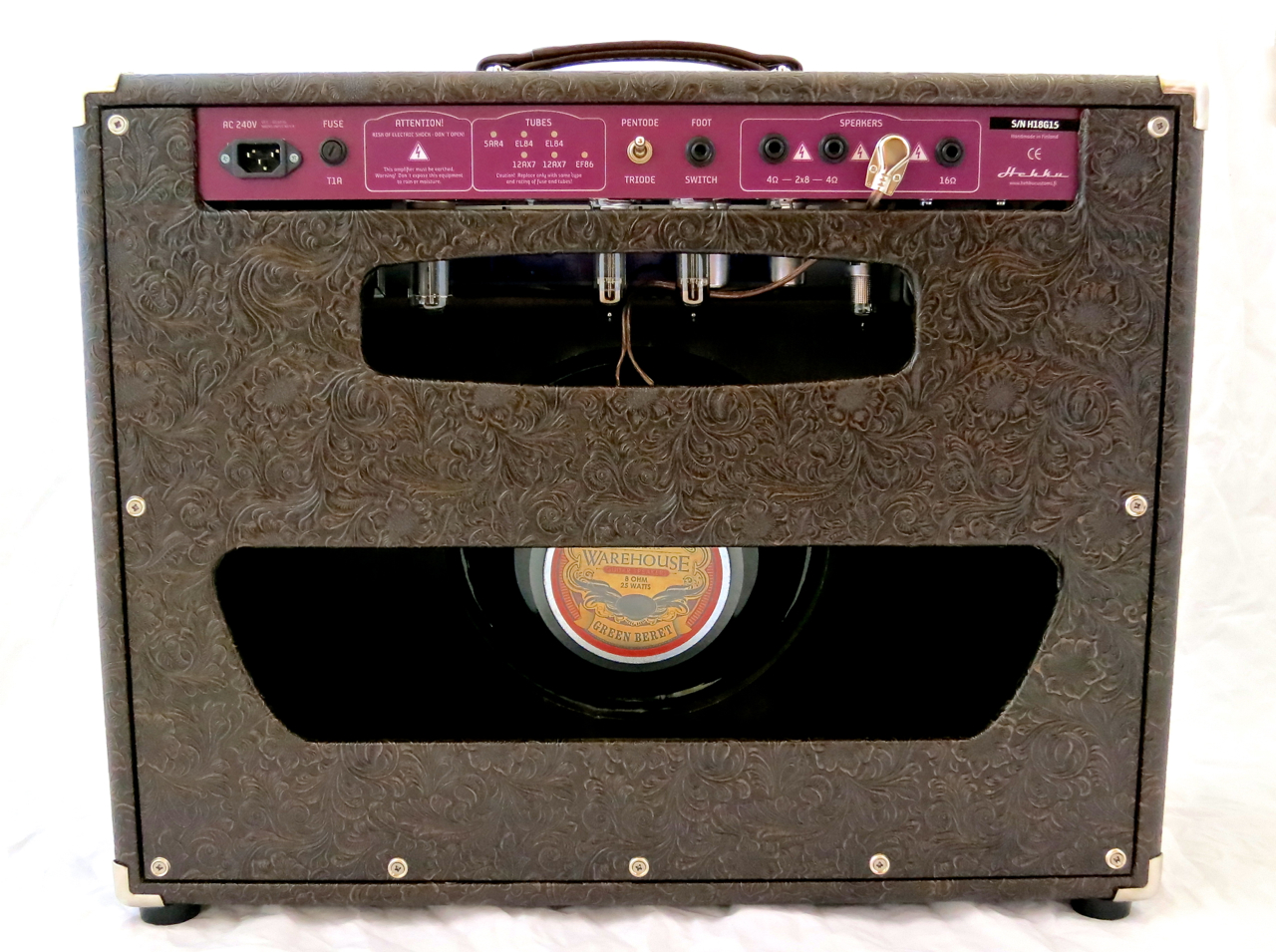
The Hehku Nightingale is an open-backed combo with easy valve access. All Hehku cabinets are made from Finnish birch ply, which is an outstanding material, both in terms of strength as well as sound.

Hehku Nightingale 15 – top handle

Birch ply is also relatively lightweight, which is why the Nightingale is easy to carry by its single top handle.

Hehku Nightingale 15

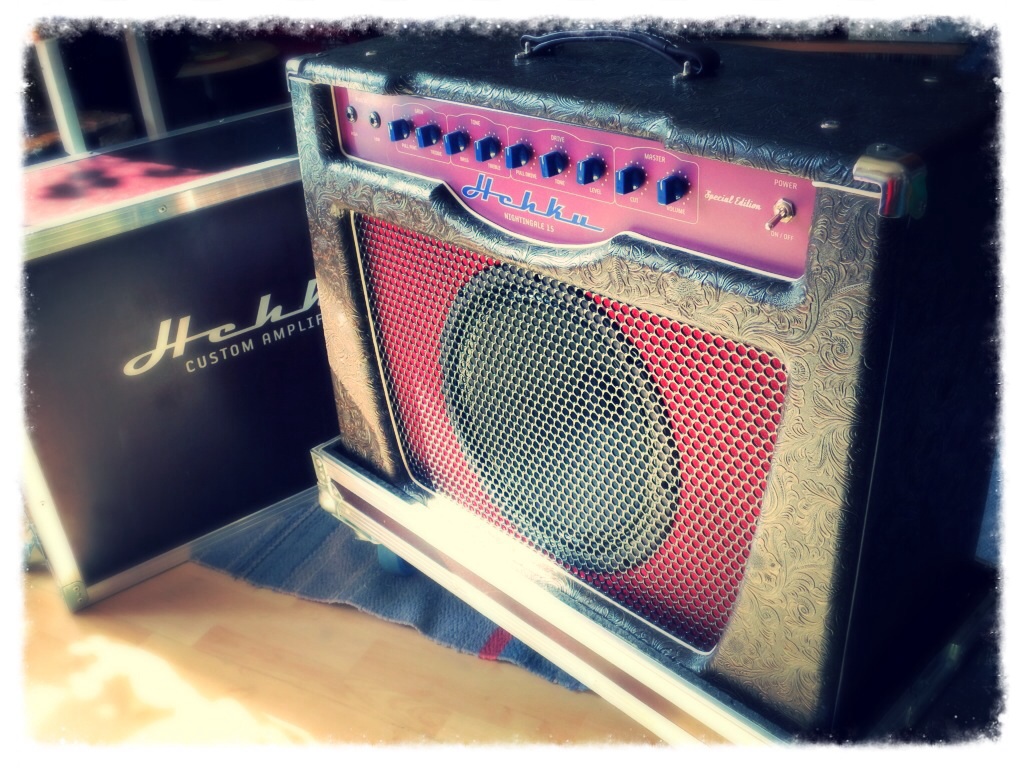
Hehku also offers professional transport cases to go with their amps and cabinets. A road case for the Nightingale 15 would set you back around 260 €.

****

Hehku Nightingale 15 – full control panel

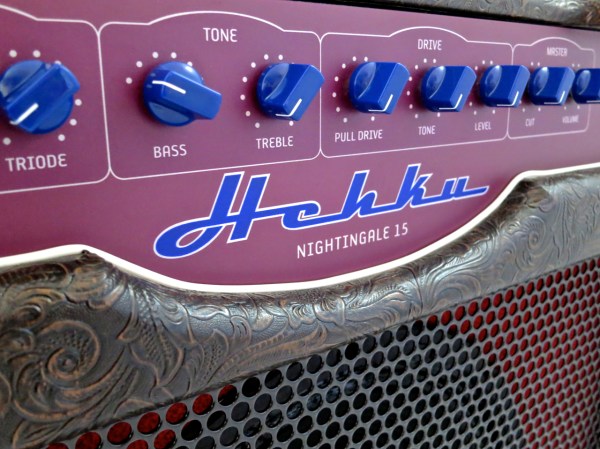
Hehku’s Nightingale 15 is a very special case for a two channel combo, because its signal path is in series the whole way through.

Most vintage (-style) amps have two discrete channels with separate controls and functions (like ”Normal” and ”Tremolo”), and no channel switching capabilities. Modern amps, on the other hand, may share a single EQ section between two channels, but they offer channel switching, and separate gain and volume settings for each channel.

Hehku’s Nightingale takes its own, idiosyncratic path by offering two switchable channels in a cascading set-up. This means that the Clean channel’s triode and pentode gain settings, as well as this channels two-band EQ (six-position rotary Bass, active Treble), also influence the Drive channel’s tone and response.

Hehku Nightingale 15 – footswitch + valves

You can either use the control panel’s push/pull-switches or the compact footswitch unit (included with the amp) to select triode- and pentode-modes, and to switch from Clean to Drive.

Hehku Nightingale 15 – back panel

The Nightingale’s back panel sports a handy valve chart for easy orientation.

There’s also a triode/pentode switch for the power amp valves – switching to triode-mode the combo’s output power drops from fifteen to seven watts, and it also changes the amp’s tone somewhat.

Thanks to its four speaker outputs you will be able to connect the Nightingale to virtually any external guitar cabinet you can find.

Hehku Nightingale 15 – EF86 preamp valve

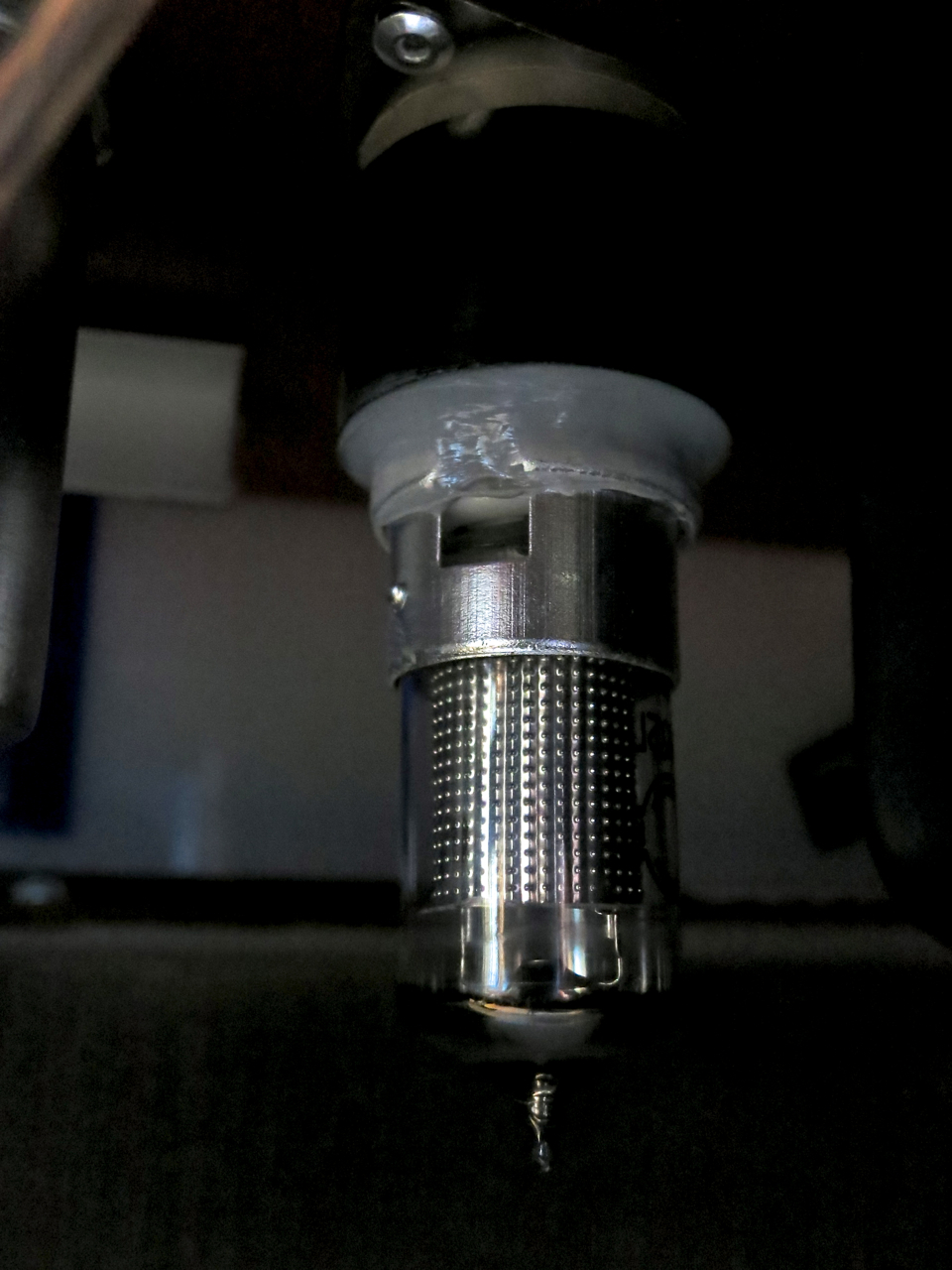
The clean channel is constructed around a EF86-type pentode. The EF86 (aka the 6267) is known for its great tone, and it can be found in some vintage Vox amps, as well as in Matchless and Dr Z amps. But due to its microphonic nature this tube type is not widely used.

Hehku Customs has solved this problem by using a damper made from silicone, which decouples the EF86 from the mechanical vibrations of the combo.

Hehku Nightingale 15 – preamp valves + switches

Overdrive (and phase inversion) duties are handled by a pair of 6N2P-valves, which are Russian, military-spec’ed relatives of the 12AX7/ECC83, offering a slightly different gain structure and sound.

Hehku Nightingale 15 – 5AR4 rectifier tube

The Nightingale uses a tube rectifier designed around a type 5AR4.

Hehku Nightingale 15 – power amp valves

The power amp section runs on a pair of EL84s. You could also drop in two Russian (military) 6P15P/EL83-types, and thanks to the fact that the Hehku Nightingale is self-biasing, you can do this without the need for an amp technician.

Hehku Nightingale 15 – Warehouse-speaker

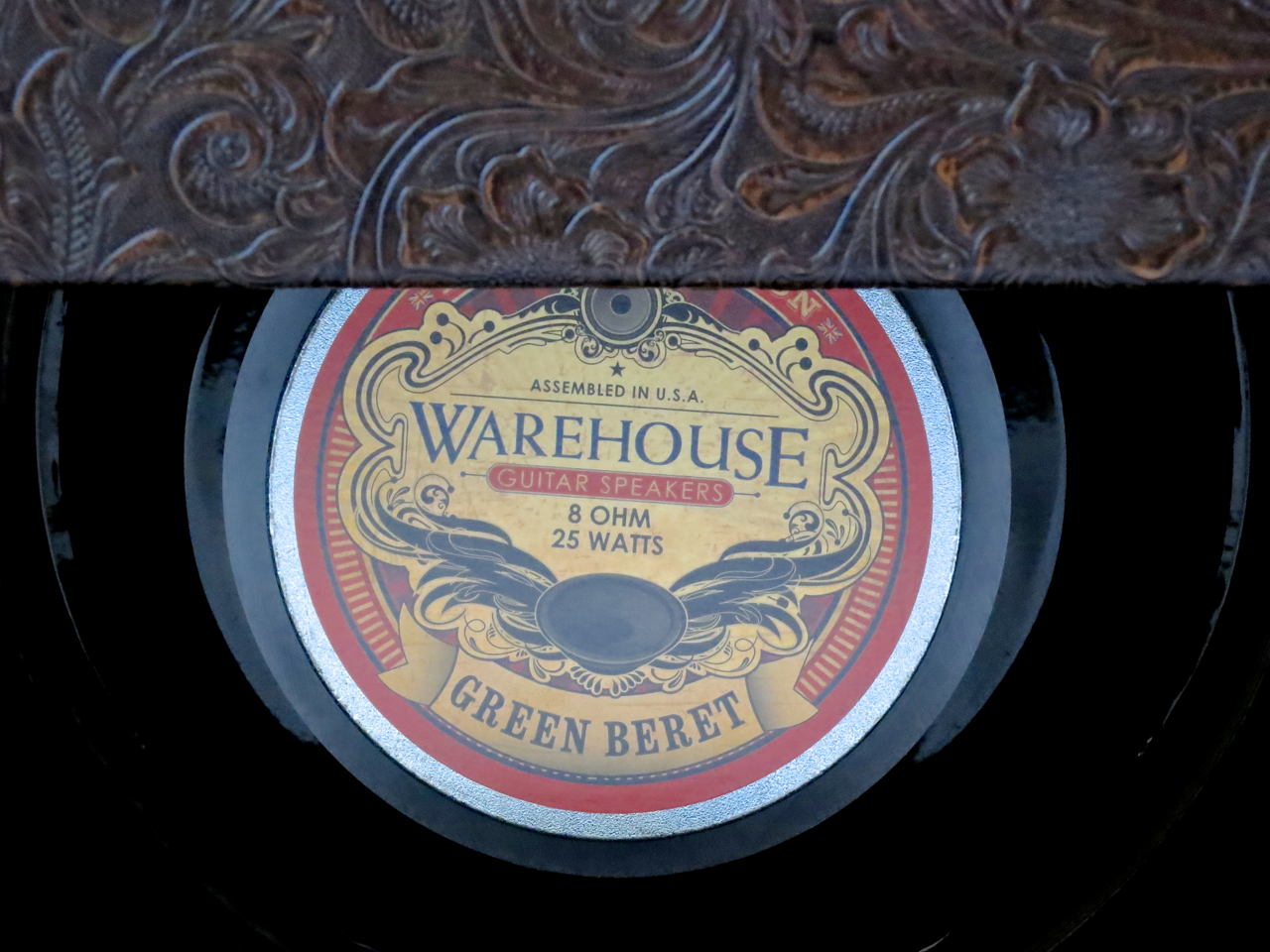
A quality 12-inch speaker from Warehouse, the Green Beret, has been selected for its British sound.

****

With its factory set-up (6N2P + EL84), the Hehku Nightingale 15’s clean channels has plenty of headroom, even for twin humbucker guitars. The six-step Bass-rotary and the combo’s active Treble control offer you a lot of leeway to tune the tone to your requirements. Tonally, the Nightingale’s clean delivery is more ”Vox” than ”Blackface”.

The Nightingale’s overdriven tones are extremely tasty, too. There’s a very juicy mid-range, coupled with a healthy dose of top end grit, which will surely satisfy any fan of classic Rock and Blues sounds.

Here’s a clip recorded with my vintage-reissue Fender Telecaster – you will hear: clean (triode) –> clean (pentode) –> overdriven (triode) –> overdriven (pentode); the power amp runs in pentode-mode:

And here’s a similar clip played with my Hamer USA Studio Custom:

Hehku Nightingale 15 – full angle

****

Hehku’s Jarmo Välimäki also supplied me with a set of alternative valves (12AX7 + 6P15P), and the difference in tone and dynamics is easy to hear:

With the alternative set, there’s much less headroom on offer. Even the Telecaster will drive the clean channel into break-up (in pentode-mode), with the Hamer stepping clearly into Blues-overdrive territory.

These valves add more gain to the drive channel, and also result in a slightly flabbier bass and sharper treble. The Nightingale 15 sounds great this way, too, even though my own preferences lean more into the direction of the factory set-up.

Here’s a clip with the Telecaster (the control settings have stayed unchanged, only the valves have been swapped):

And here’s the sound of the amp played with the Hamer’s two humbuckers:

Hehku Nightingale 15 – reverse angle

****

Hehku Nightingale 15 – logo

In my view, the Hehku Customs Nightingale 15 is a fantastic all-valve combo with its own voice and an interestingly idiosyncratic overall concept. I like Hehku’s eye for detail, and the fact that the company go their own way in terms of looks and electronic design. The Nightingale is a top-drawer amp, offering its own distinctive looks and sounds, without the need to resort to snake oil or nostalgic tube voodoo.

Hehku’s Nightingale is a modern, hand-made valve combo, with a clear and easy-to-understand lay-out, as well as a very interesting and interactive signal path. The Nightingale is not about trying to imitate any specific vintage amp’s sounds – this amp is a true creative tool, setting you on your path to your personal guitar tone nirvana.

The Nightingale 15 sure isn’t cheap, but in light of the fact that this is a hand-made Finnish product, you can only call the price tag very fair!

****

Hehku Customs Nightingale 15

approximately 1.950 €

Contact: Hehku Custom

****

Pros:

+ voluptious appearance

+ workmanship

+ hand-crafted

+ Made in Finland

+ idiosyncratic channel lay-out

+ sound

Review: Tokai ES-138/SR • ES-145G/BB • ES-162/TB

Tokai ES-162 – and case

Tokai Guitars have a well-earned reputation for making high-quality electric guitars and basses, often ”inspired” by vintage designs. This time we got three semis from the very top of Tokai’s Japanese model range for review.

****

Tokai ES-138SR – full front

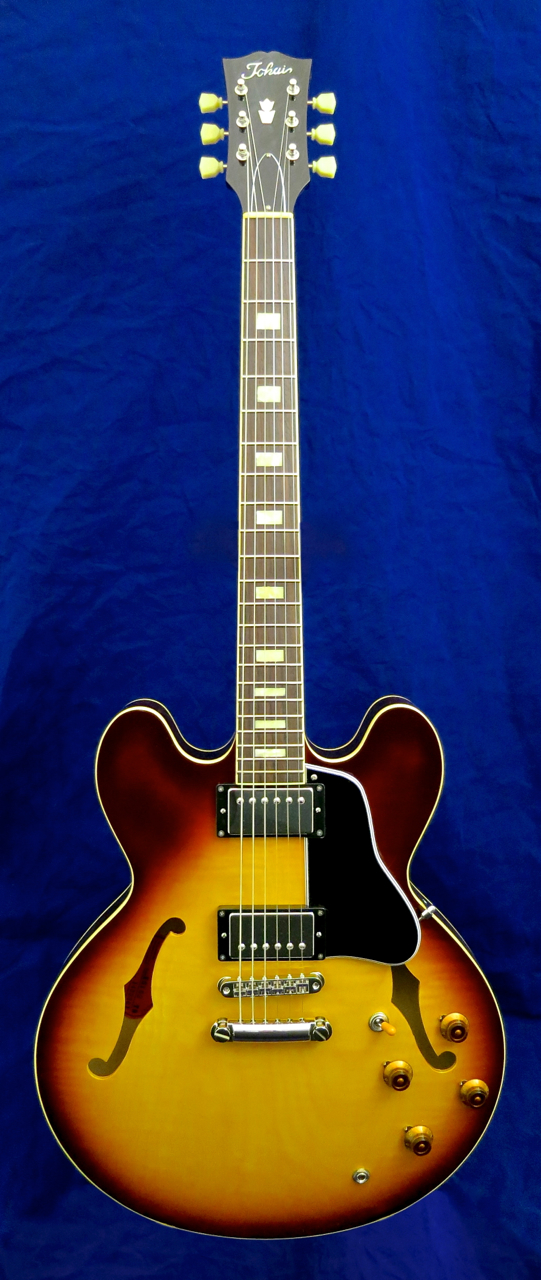
The Tokai ES-138 (current price in Finland: 1,368 €, incl. hard case) is the company’s version of a 1958 Gibson ES-335, available in either see-through red or piano black.

Tokai ES-145G – full front

Tokai’s ES-145G (current price in Finland: 1,431 €, incl. hard case) is a lightly updated variation on the theme, which comes equipped with gold-coloured hardware and a black finish.

Tokai ES-162TB – full front

The Tokai ES-162 (current price in Finland: 1,628 €, incl. hard case) is the most expensive model of the three on review. The ES-162 comes with post-1962 style small block markers, brass bridge saddles, and a light aluminium stopbar. The icing on the cake is this model’s vintage-style nitrocellulose finish – you can choose between a tri-burst and red.

Tokai ES-138 – headstock

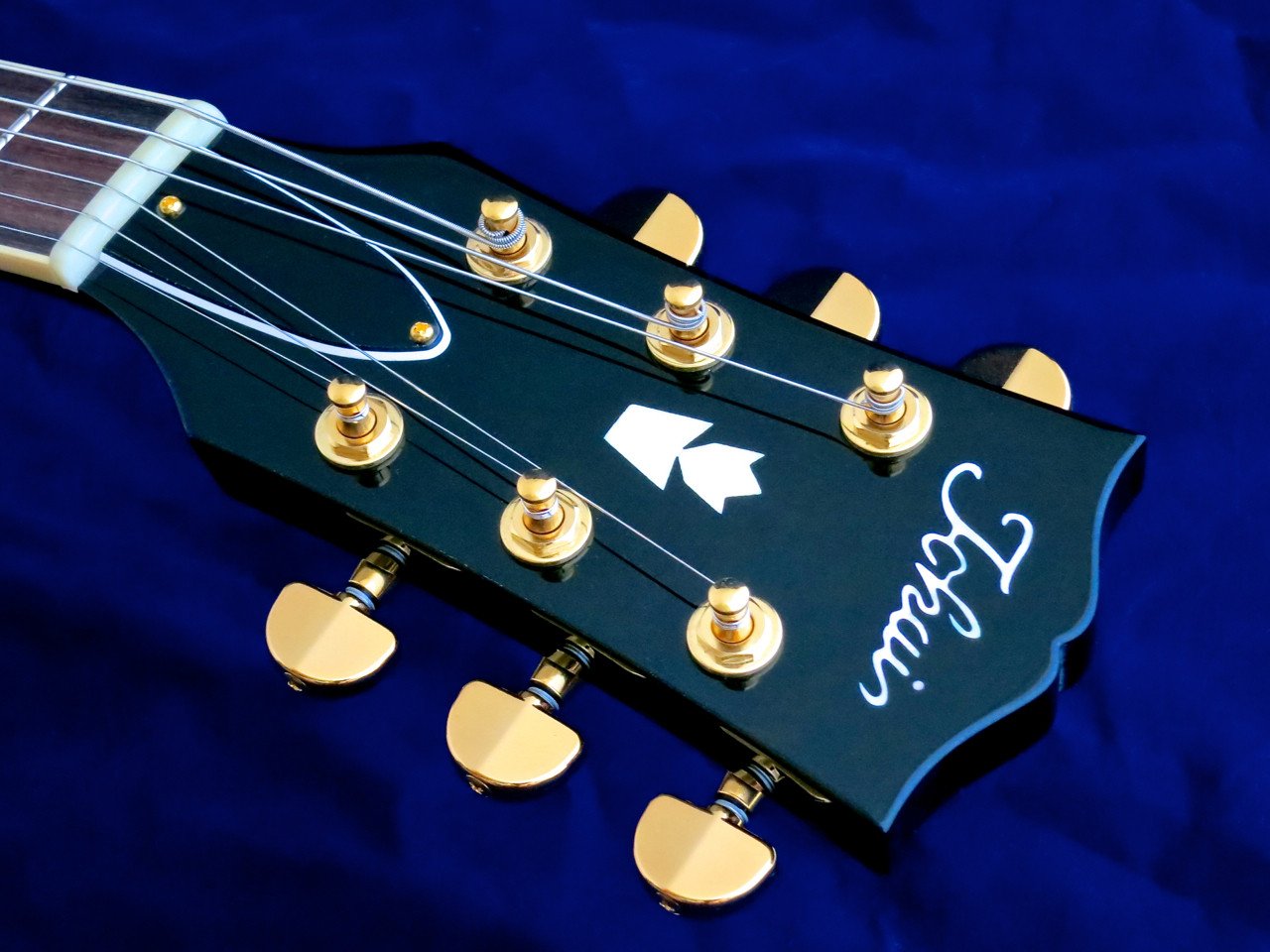
Tokai use top-drawer Gotoh tuners on the three tested models.

Tokai ES-138 – tuners

The ES-138 and ES-162 come equipped with vintage-style Kluson-copies.

Tokai ES-145G – headstock

Tokai ES-145G – tuners

For the ES-145G Tokai have chosen a set of modern enclosed Gotohs.

Tokai ES-145G – fingerboard

These Tokai Japan -instruments all come with a one-piece mahogany neck, complete with a vintage-correct, steep headstock angle (17 degrees).

The bound rosewood fretboards on the ES-138 and ES-145G models sport dot markers.

Tokai ES-162 – fretboard

As the ES-162 is Tokai’s version of a 1962-’64 ”Block Marker” ES-335, this guitar comes with small rectangular inlays made of pearloid.

All three instruments come fitted with medium-size frets.

Tokai ES-138 – bridge

Tokai’s ES-guitars come with Gotoh Tune-o-matic-bridges and stopbar tailpieces.

Tokai ES-145G – bridge

On the ES-138 and the ES-145G we find Gotoh’s LS-series hardware – die-cast (Zamac) parts with steel bridge saddles.

The ES-162 goes one step more ”vintage” by using a Gotoh HLS -set, comprising an ultra-light aluminium stopbar tailpiece and chrome-plated brass saddles on the bridge.

Tokai ES-162 – pickups

This guitar trio is equipped with the same pickups – a pair of Tokai PAF-Vintage Mark II -humbuckers.

Tokai ES-145G – controls

All the electronic components are top quality Japanese parts.

Tokai ES-case

Certain Tokai Japan -models are now sold in Finland complete with Tokai’s cool hard cases.

****

Tokai ES-138 – beauty shot 1

The cherry red semi-acoustic is one of guitardom’s most iconic electric models. For many this curvy and well-rounded body, made from heat-pressed maple plywood, is the most beautiful body style ever.

Tokai’s ES-138 recreates this classic guitar in its earliest guise (c. 1958), complete with dot markers and a long pickguard, which extends past the bridge.

Even though an ES-335-type body is comparatively large (but thin), many of the best semi-acoustics are surprisingly lightweight. The Tokai ES-138 is very comfortable to play – both seated and strapped on – and balances superbly.

This model’s neck profile is a medium-thick ”D”, which feels great (at least in my hand). The fret job on the test sample was excellent, the set-up spot-on, and the action very light (with a set of 010s). The ES-138’s acoustic tone is typical of this type of guitar – very hollow and nasal with a clicking attack.

Tokai’s own rendition of the classic PAF-humbucker is superb, there’s no two ways about this! The output signal is moderate, and the basic sound is very open and dynamic. The neck pickup has a warm, round tone, but doesn’t mush up. The middle position on the selector switch gives you a very balanced and open sound. The bridge humbucker on its own sounds fresh and crispy, with not even a hint of annoying mid-range ”nagging”.
Tokai ES-138 – body beauty

****

Tokai ES-145G – beauty shot 1

The black-and-gold ES-145G sure looks very stylish – this is the distinguished gentleman in Tokai’s ES-range, who keeps his cool and looks dapper, no matter what.

Our test sample was the heaviest guitar of this trio, but still much, much lighter than may lesser contenders.

The ES-145G’s neck profile is also the chunkiest. This D-profile is a real palm-filler, giving you a real taste of late-Fifties goodness, and managing to stay just on the right side of ”fat”.

The workmanship displayed, and playability offered by the ES-145G are simply superb. Played acoustically there’s not a lot of difference between the ES-145G and the ES-138.

Through an amp, the ES-145G sounds just like a quality semi-acoustic should – humbucker power, balanced by a clean mid-range.

Tokai ES-145G – body beauty

****

Tokai ES-162 – beauty shot 1

Our review sample of the Tokai ES-162 is a real featherweight!

The ES-162’s Block Marker -personality is completed by an authentic early-Sixties style neck profile. It’s an oval ”C” that is less of a handful than the ES-138’s neck.

Top marks for the ES-162’s workmanship, finish and playability – this is a first-rate instrument.

This model’s thin nitro lacquer, its lightweight tailpiece, as well as the brass saddles on the Tune-o-matic combine into a very open-sounding and dynamic acoustic performance.

Standing in the same room with your amp, it is easy to notice an added degree of 3D-depth and scope in the guitar’s amplified tone. Interestingly – as is so often the case – recording the sound doesn’t seem to fully convey this added tonal dimension. You have to experience the ES-168 ”in the flesh” to get the full picture; the recordings sound remarkably similar to the other two models’ performances.

Tokai ES-162 – body beauty

****

Tokai ES-162 – label

The reputation of Tokai Japan -instruments has been legendary among players and collectors ever since the 1970s. This trio of ES-semis makes it crystal-clear that Tokai actually deserves this reputation thanks to the superb quality of it’s Made-in-Japan guitars.

Tokai’s ES-138, ES-145G and ES-162 offer you genuine Japanese quality at very fair prices.

****

Tokai Japan semi-acoustic electrics

Tokai ES-138 – 1,368 € (hard case included)

Tokai ES-145G – 1,431 € (hard case included)

Tokai ES-162 – 1,628 € (hard case included)

Finnish distributor: Musamaailma

****

Pros:

+ Japanese workmanship

+ one-piece neck

+ superb finish and set-up

+ Gotoh-hardware

+ authentic tone

Review: Roland Cube-10GX

****

cube-10gx_angle_black_gal

The new Roland Cube-10GX approaches the company’s popular Cube-concept from a slightly different angle.

****

cube-10gx_front_gal

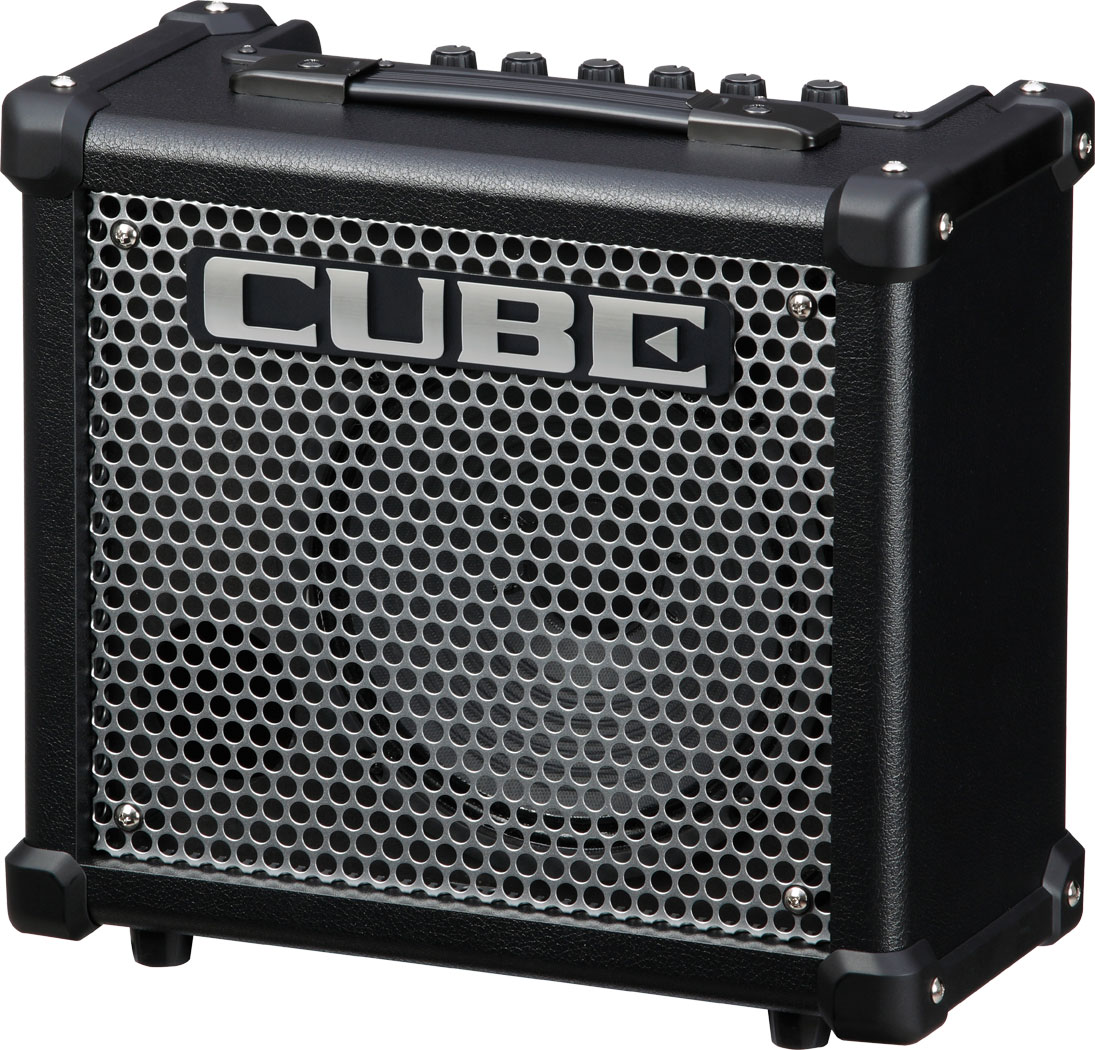
The 10-watt Roland Cube-10GX (Finnish price approx. 125 €) slots into the model range right between the 3-watt Micro Cube GX and the 20-watt Cube-20GX combo.

Despite its very affordable price, the 10GX is built as sturdily as the larger Cube models, featuring chunky corner protectors, and the metal grille typical of this series.

An eight-inch speaker has been installed into the closed-back, front-ported cabinet.

cube-10gx_back_gal

The backpanel sports connections for DC In (the PSU comes included), Aux In, as well as a combined line level output/headphones jack.

cube-10gx_top_gal

The Cube-10GX combo’s architecture differs somewhat from the rest of the GX-models:

The 10GX doesn’t feature a built-in tuner or an i-Cube-Link, like the rest of the GX-models, but offers a much more open way of offering its COSM-generated amp models.

cube-kit-image_1800

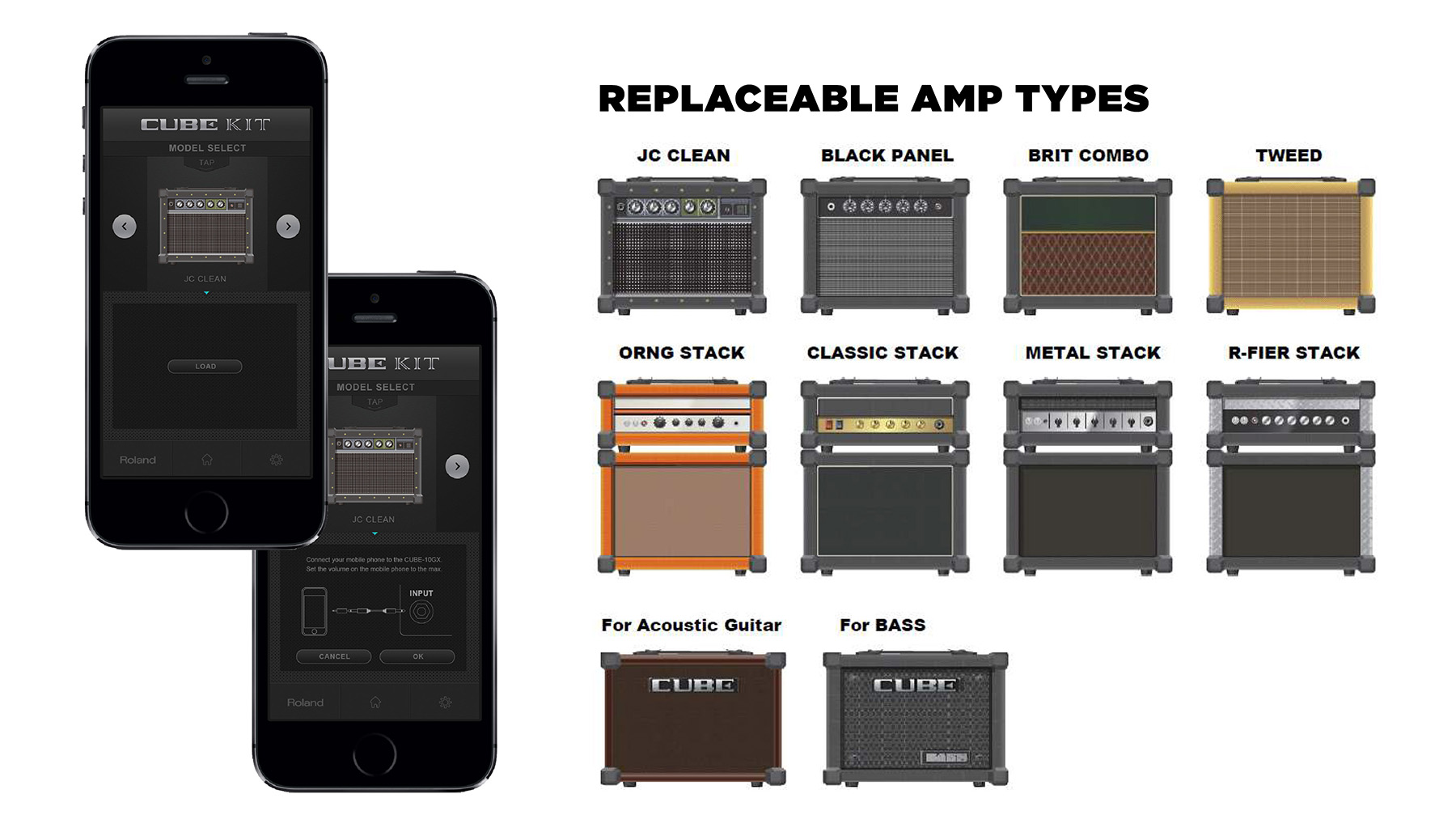
The Cube-10GX lets you choose from a number of different amp models via the new Roland Cube Kit app (Android and iOS). At the moment of writing the app offers eight guitar amp models, plus one bass amp and one amp for acoustic guitar.

Despite the fact that the control panel reads ”Clean”, ”Crunch” and ”Lead”, you can load any of the COSM amp models on offer into any of the amp’s three channels. If you’re a Jazzer, for example, you might prefer to use only clean amps, like Acoustic, JC Clean and Black Panel.

****

cube-10gx_angle_gal

Let me deal with the ”bad news” first: Sadly, the Cube-10GX offers only a single effect section, in contrast to all the other Cube GX -combos. The 10GX gives you the choice between either a chorus or a delay or a hall reverb or a (very wet) spring reverb. And there are no effect combinations on offer.

The new combo’s main focus lies in the easy-to-swap amp models, and improvements in the sound of both the amp and the COSM-models. For a 10-watter the Cube-10GX is surprisingly loud. Thanks to its much larger speaker the new combo sounds much fuller and more grown up than the Micro Cube.
The updated COSM-models sound noticeably more transparent and fresher, without any additional background hiss or noise. The 10GX’ well-designed three-band EQ section lets you tailor the sound to your requirements.

Loading a new amp model into one of the Cube-10GX’ channels via the Cube Kit app is fast and easy, and doesn’t require any special cables. You only need a fitting mini-jack adapter to hook up the guitar lead to your smartphone (or tablet). All the necessary data is then transmitted from the Android- or iOS-device to the amp via the guitar cable. The whole process takes only a few taps and a couple of seconds.

The factory default has the Jazz Chorus amp model loaded into channel 1. I’m playing my Fender Telecaster with a little chorus added from the combo:

Here’s another Jazz Chorus clip, but this time seasoned with some Surf-type spring reverb:

The Classic Stack model is the factory setting for channel 2. It is Roland’s version of a Marshall-stack. I’ve added some delay for this clip:

I loaded the Brit Combo (AC30) model into channel 2, using the Cube Kit app. I’m playing my Telecaster with some reverb from the combo:

”Orng Stack” stands for Orange-stack. This is what it sounds like, played with my Gibson Melody Maker SG:

The factory default for channel 3 is the R-fier Stack model. First a clip using the Telecaster, and then an example Played with the Melody Maker SG:

The Cube Kit’s Acoustic model provides an easy solution for amplifying your acoustic guitar. I’ve used a Tanglewood dreadnought equipped with a magnetic soundhole pickup by Seymour Duncan:

The Cube-10GX even sounds surprisingly good as a tiny bass combo (all audio clips have been recorded with a Shure SM57):

****

Roland’s Cube-10GX (and the cool Cube Kit app) makes it possible to turn this little combo into the amp you really need. A Blues player will probably load his (or her) Cube-10GX with the Black Panel-, Brit Combo-, and Tweed-models, while a Metal guitarist will prefer the chunkier COSM-models on offer (like the Classic-, Metal- and R-fier-stacks).

The Cube-10GX sounds great and is a real little shouter. Despite offering fewer built-in effects than the rest of the GX-range, the Roland Cube-10GX still offers a lot of fun at a very competitive price.

cube-header

****

Roland Cube-10GX

Price range in Finland approx. 125 €

Maahantuoja: Roland Scandinavia

****

Pros:

+ fair price

+ powerful

+ wide range of available amp models (via the Cube Kit app)

+ three-band EQ

+ sturdy build

+ sound

Cons:

– only one effect section

spring reverb offers only little scope for adjustment

Pidä blogia WordPress.comissa.

Ylös ↑