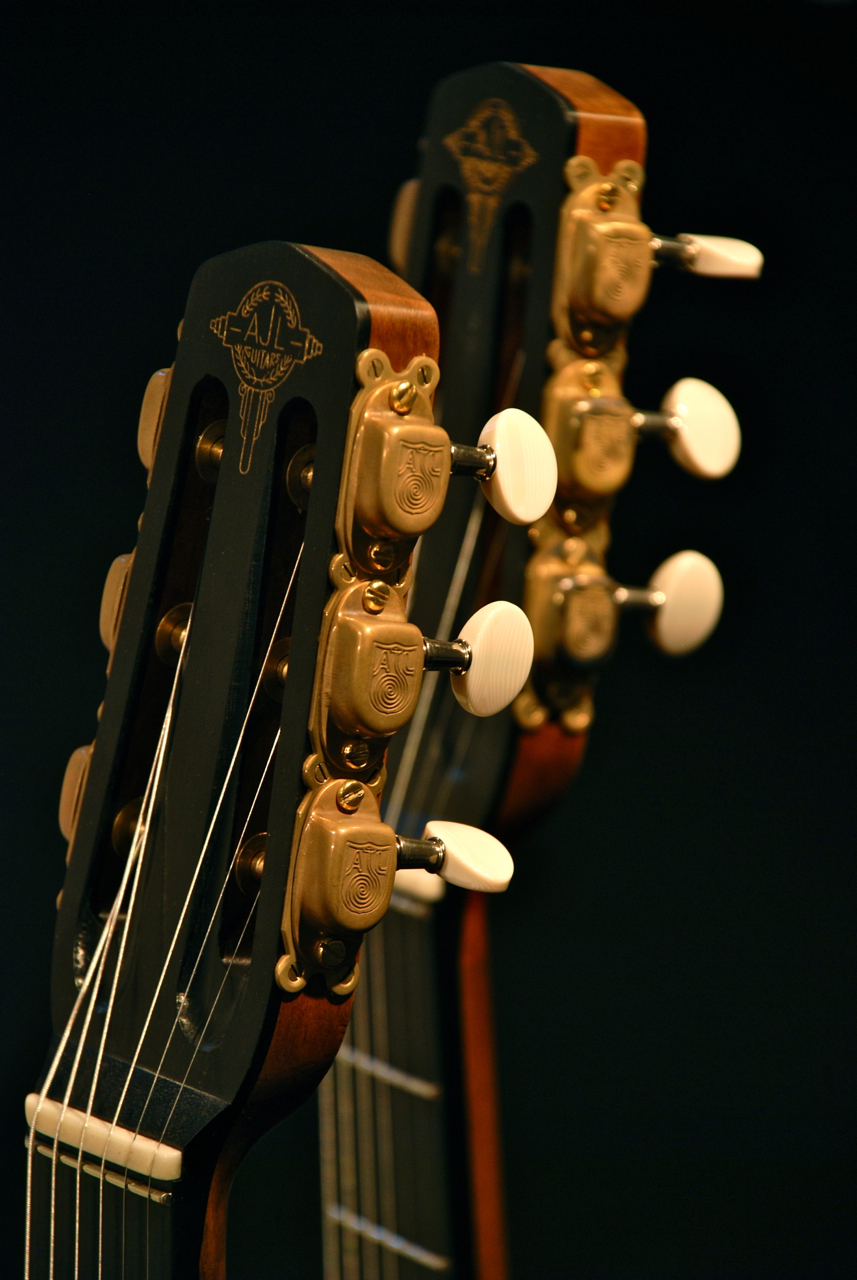
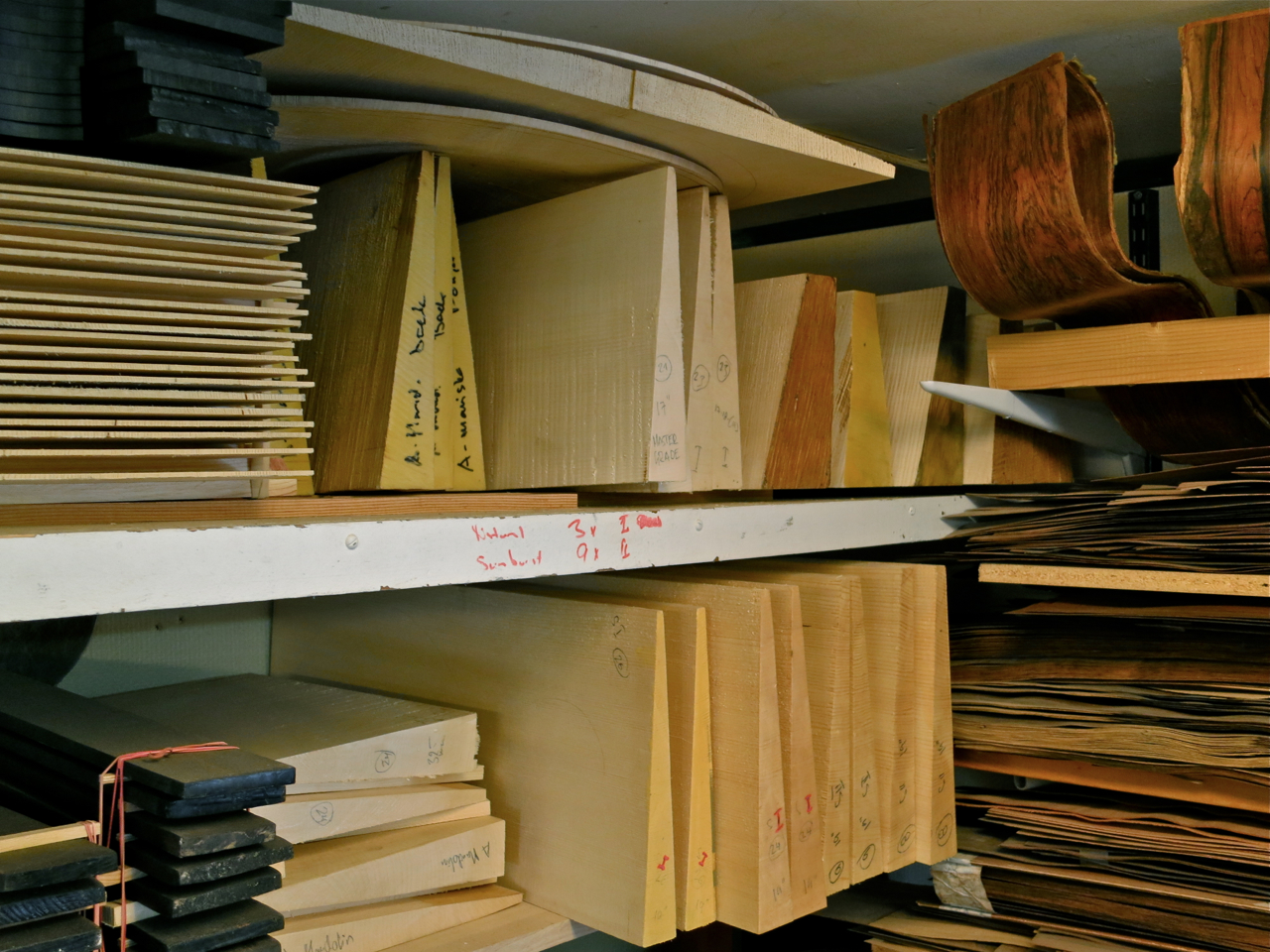
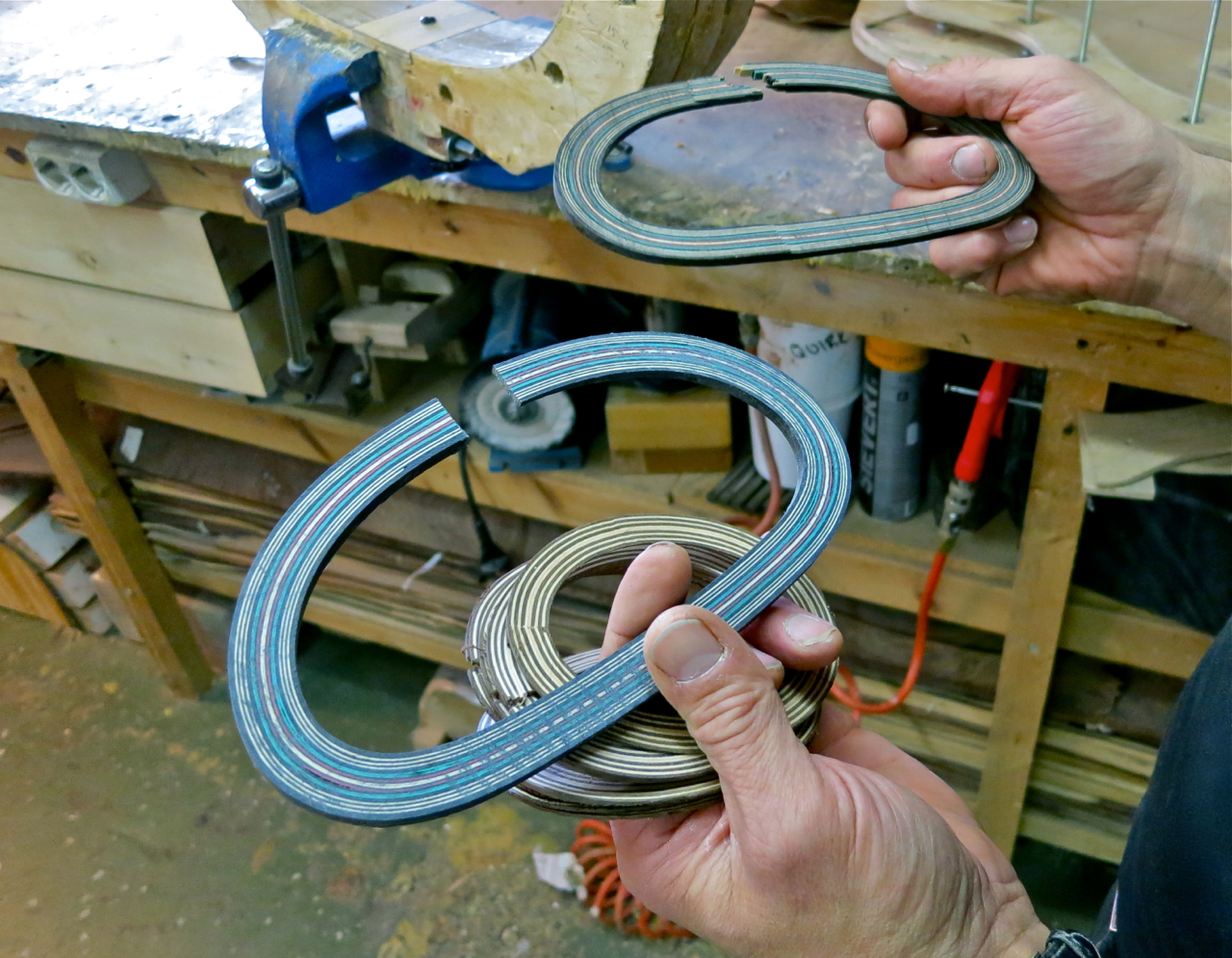
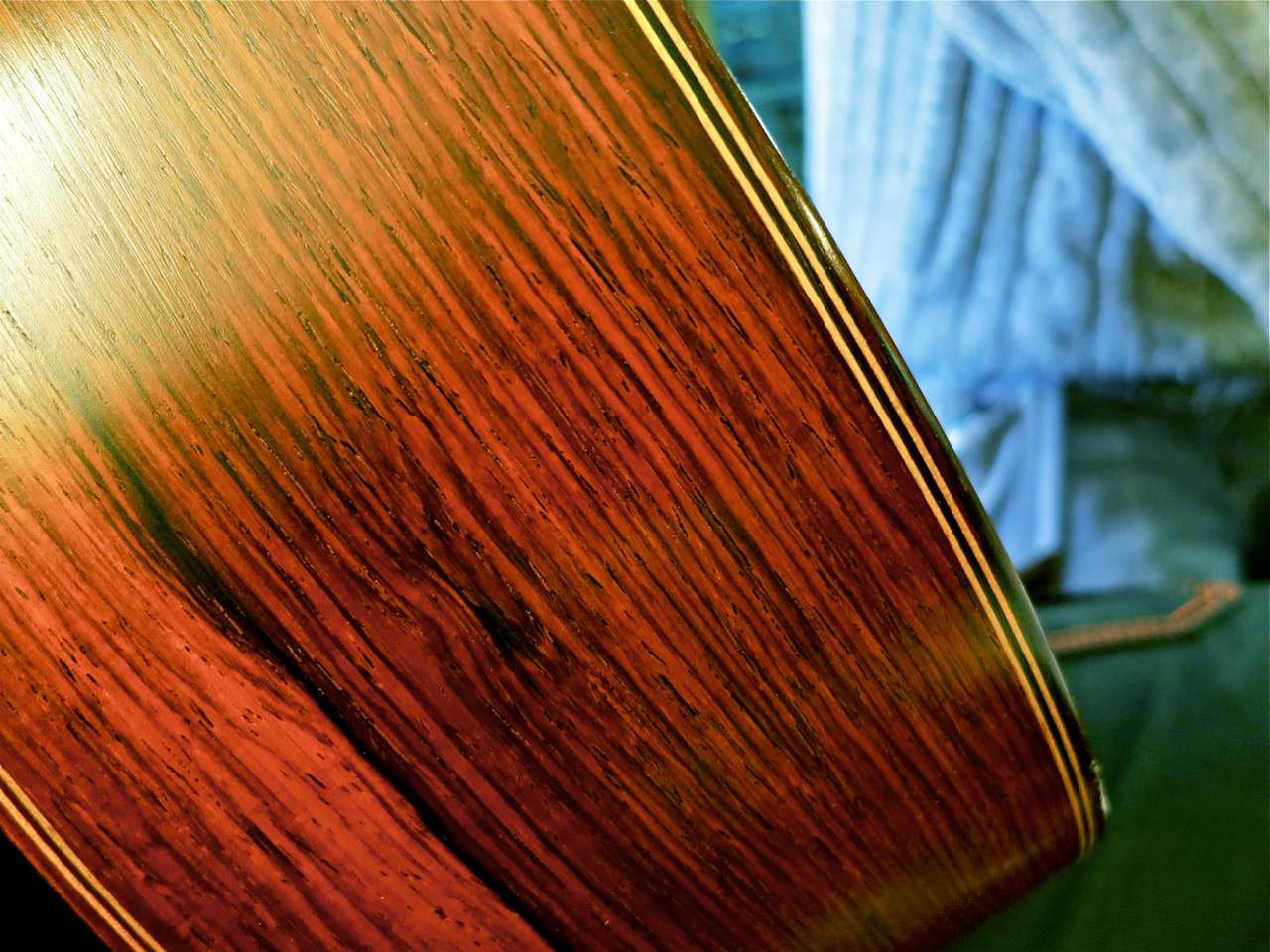
In the autumn of 2013 Kitarablogi had the pleasure of visiting Ari-Jukka Luomaranta’s AJL-Guitars workshop in Kokkola.
Here are some of the pictures I took on that occasion:
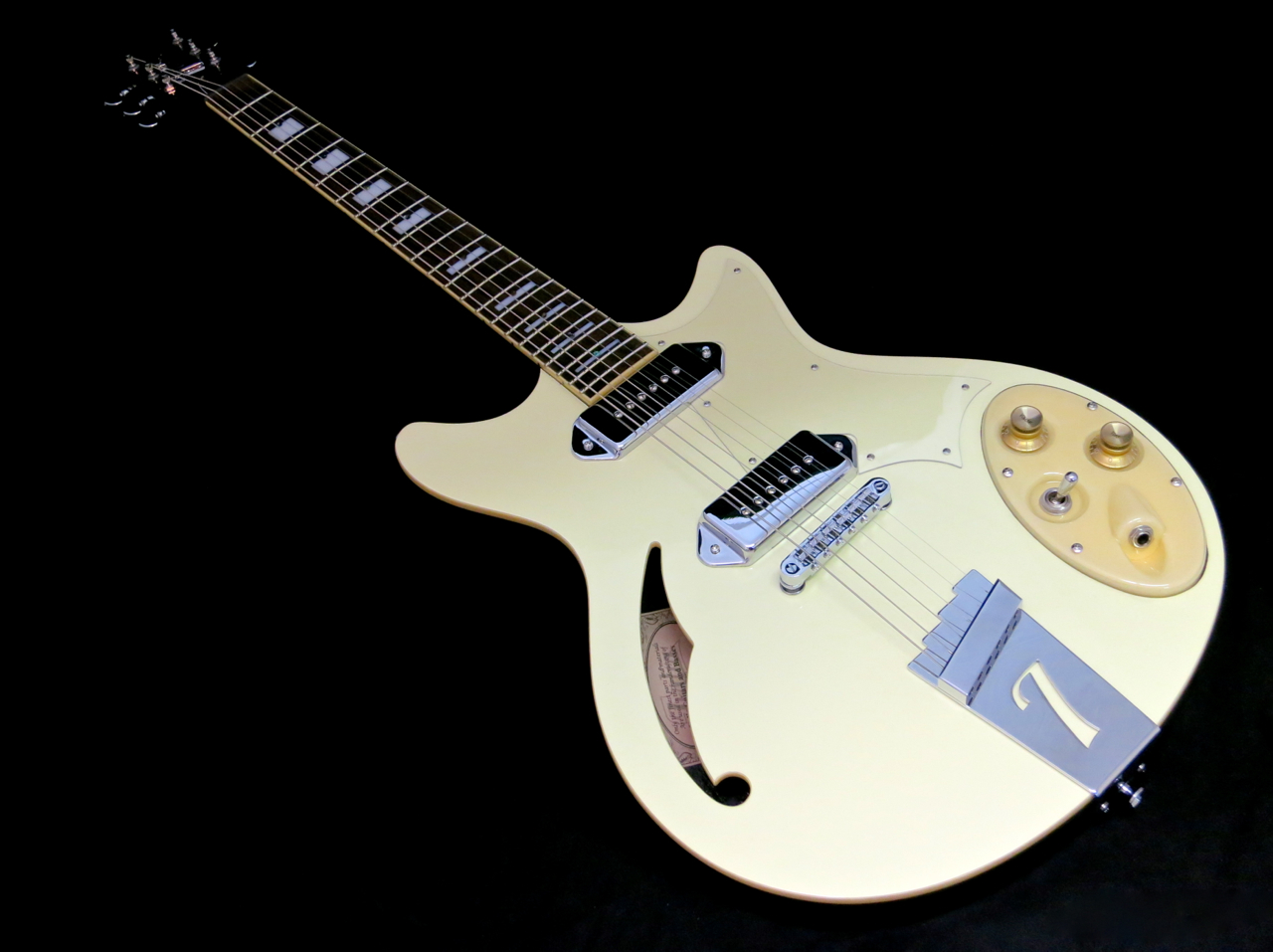
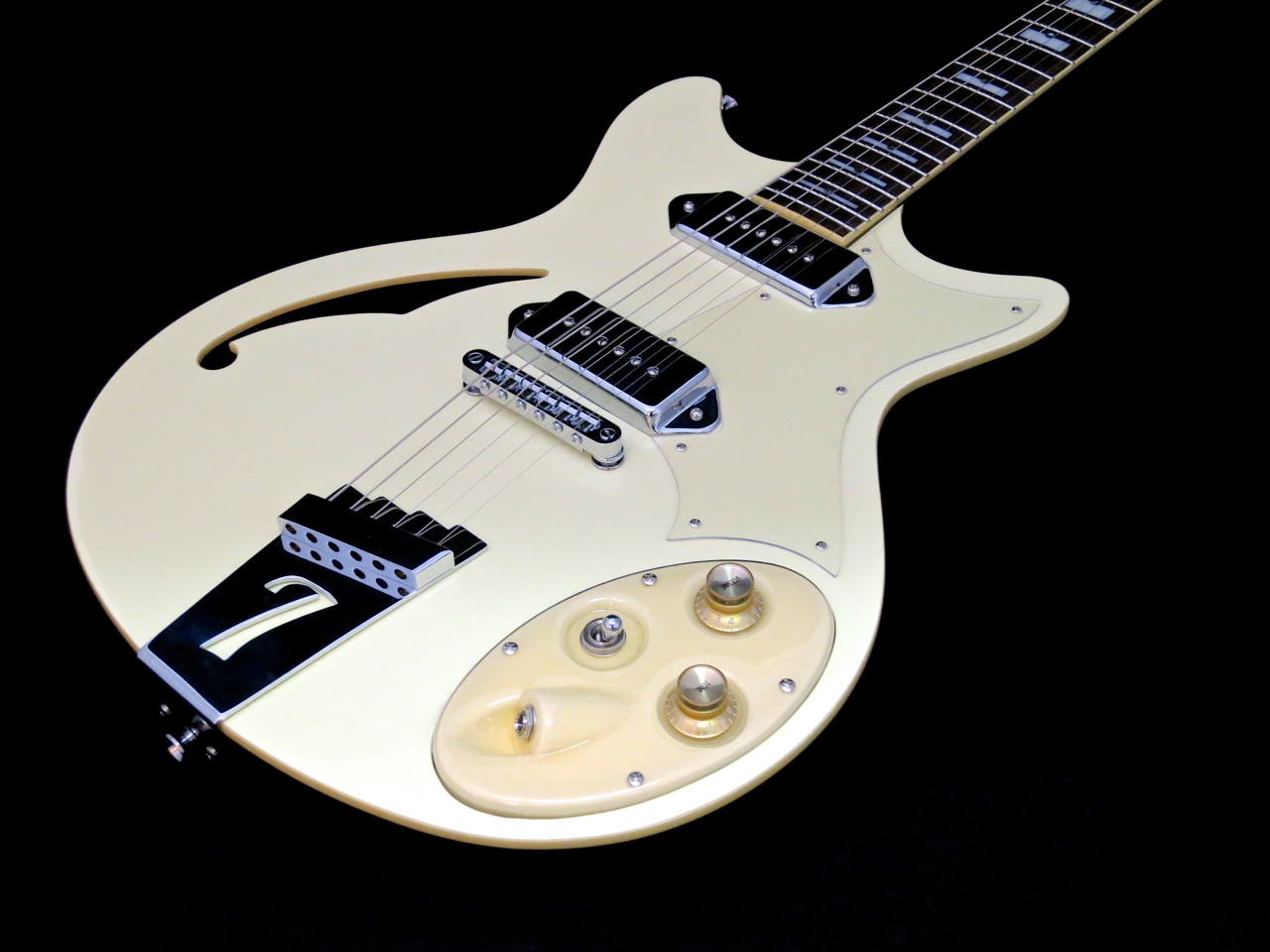
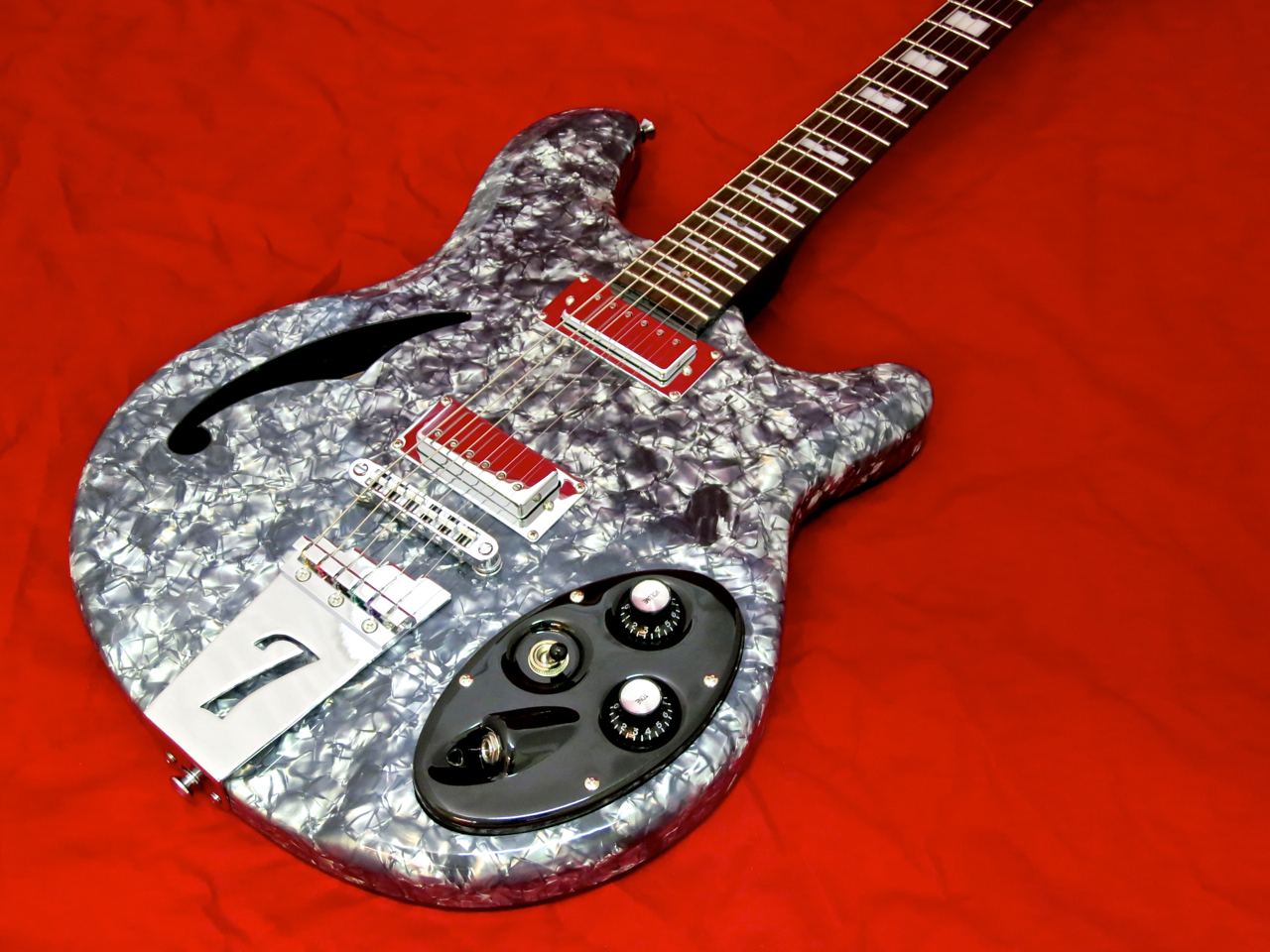
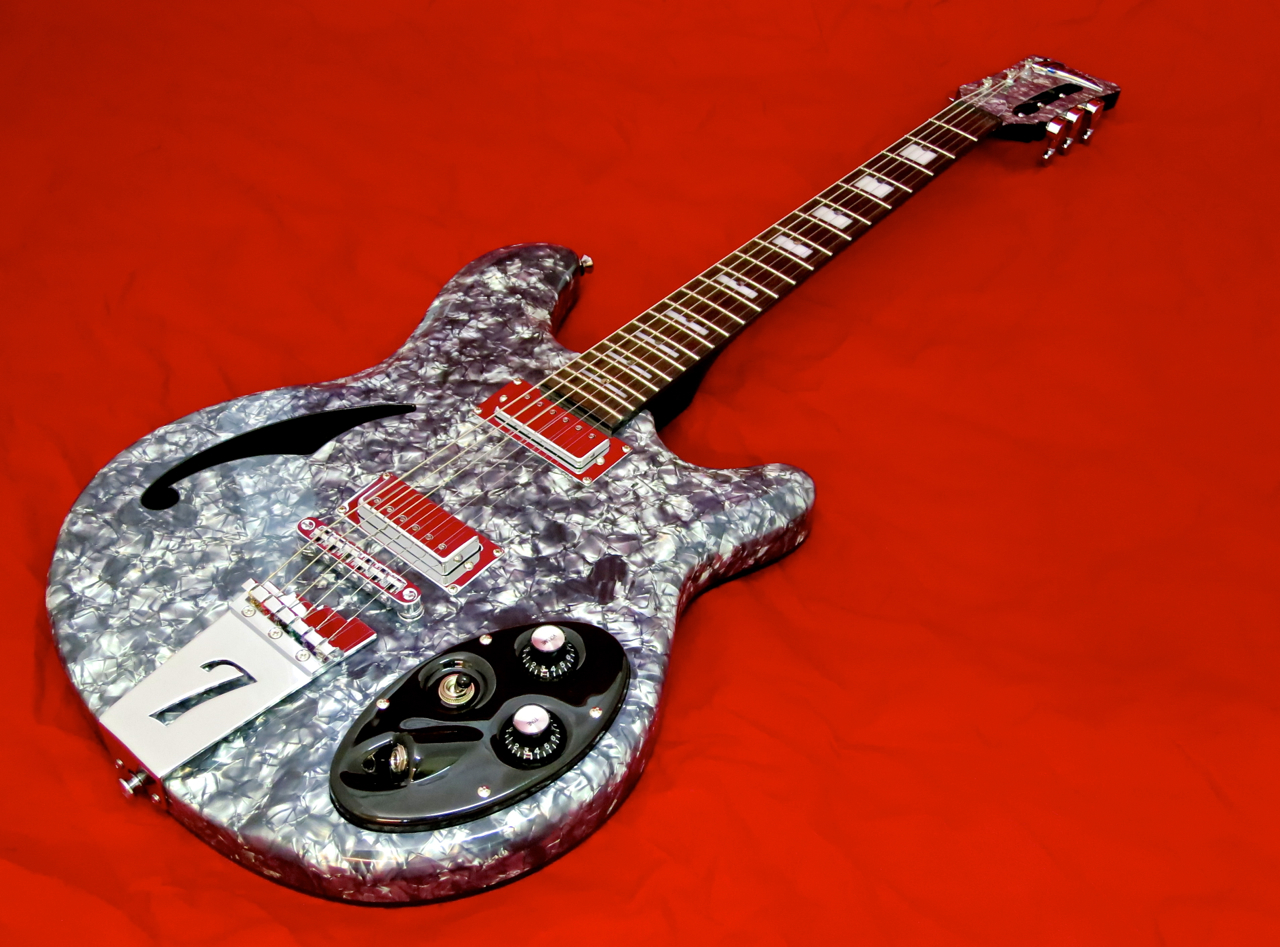
TheItalia Fiorano Standard (price in Finland approx. 640 €) is a beautiful thinline, double-cutaway semi.
The Fiorano’s body is made by routing large pockets into the front of a solid mahogany body. In contrast to Italia’s Rimini 6 or Mondial Deluxe models the Fiorano doesn’t have a full centre block, though, but features an opening in the block between the guitar’s pickups. The body is then finished by glueing on a bound spruce top.
Hard rock maple is used for the Fiorano Standard’s neck.
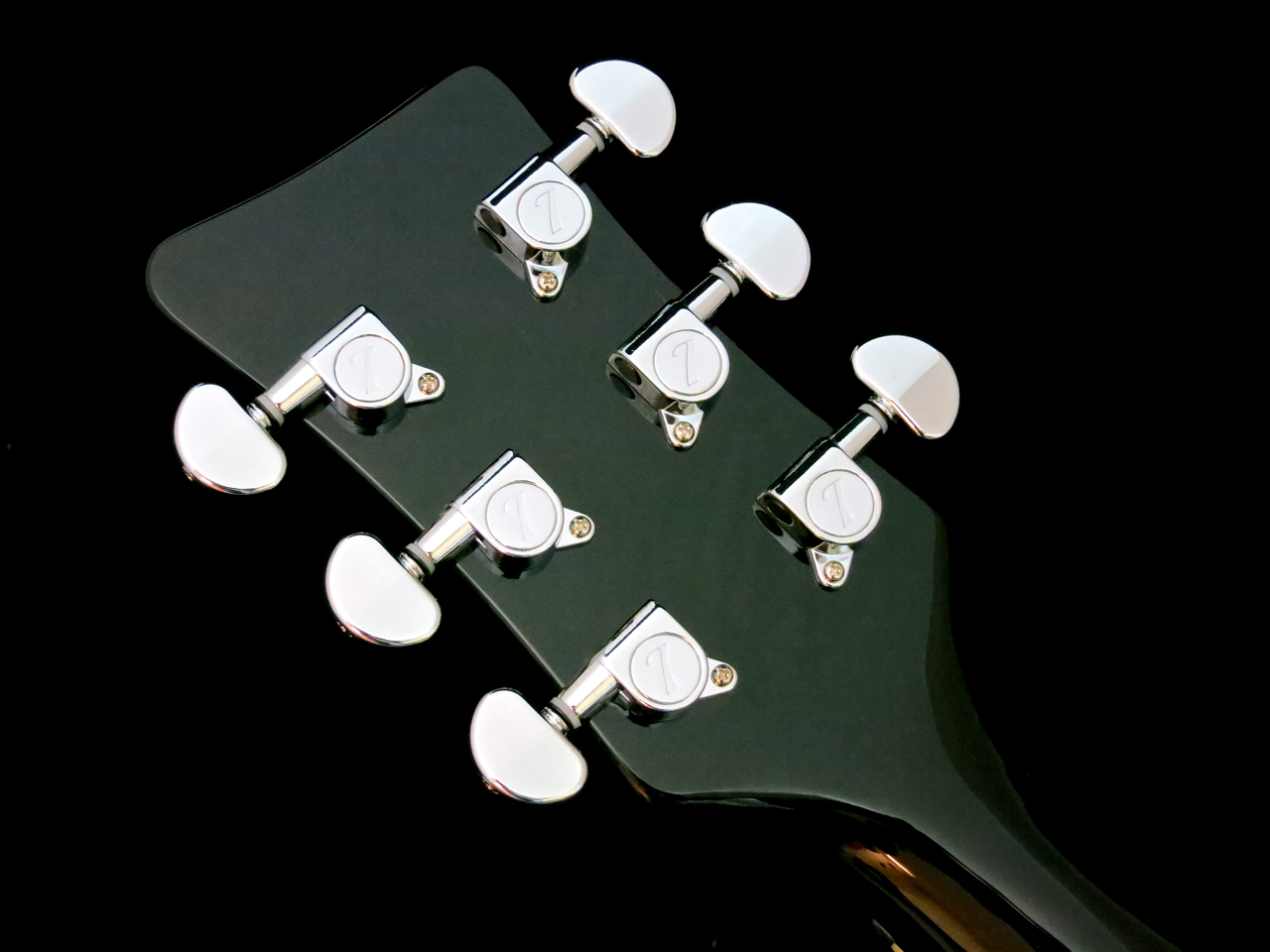
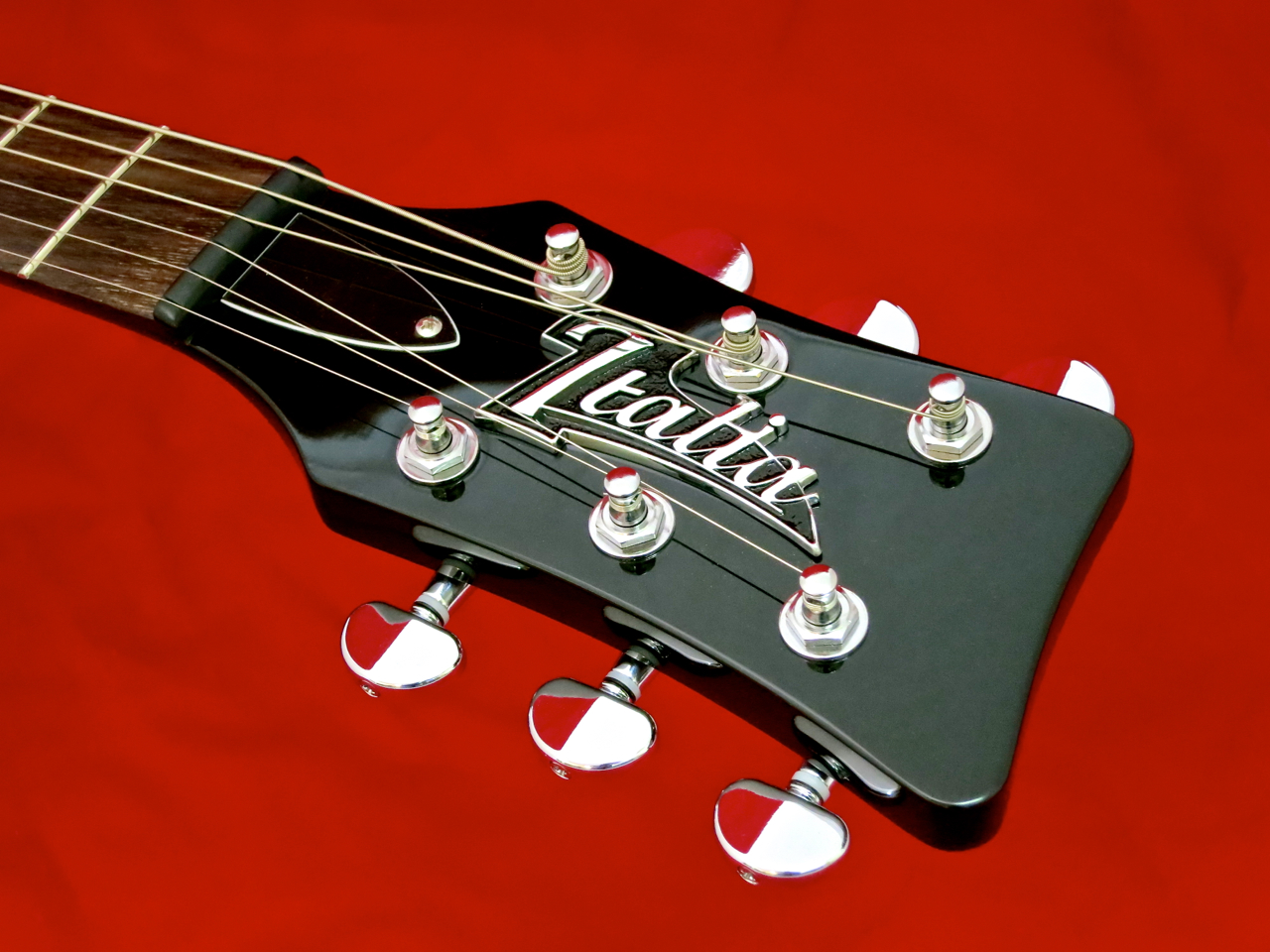
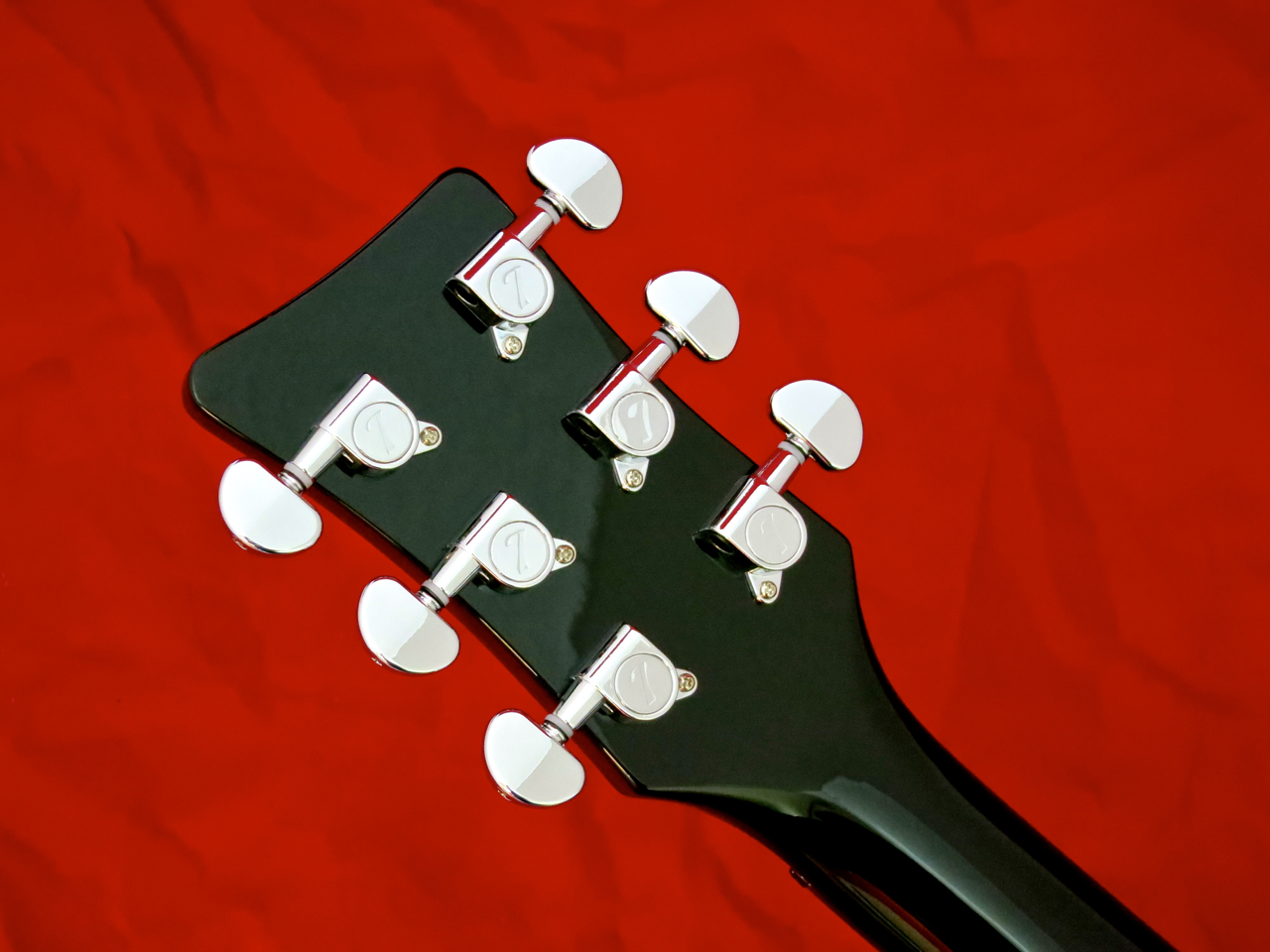
The modern tuning machines are embossed with the I-for-Italia logo, and work very nicely.
The bound fretboard sports Italia’s stylish inlays, consisting of pearloid blocks and abalone dots.
The Fiorano Standard’s neck is glued in at the 19th fret.
Great to see Italia using a modern version of the venerable Tune-o-Matic-bridge. The updated design does away with the annoying and ever-rattling piece of wire, used to keep the bridge saddles in place in the vintage version.
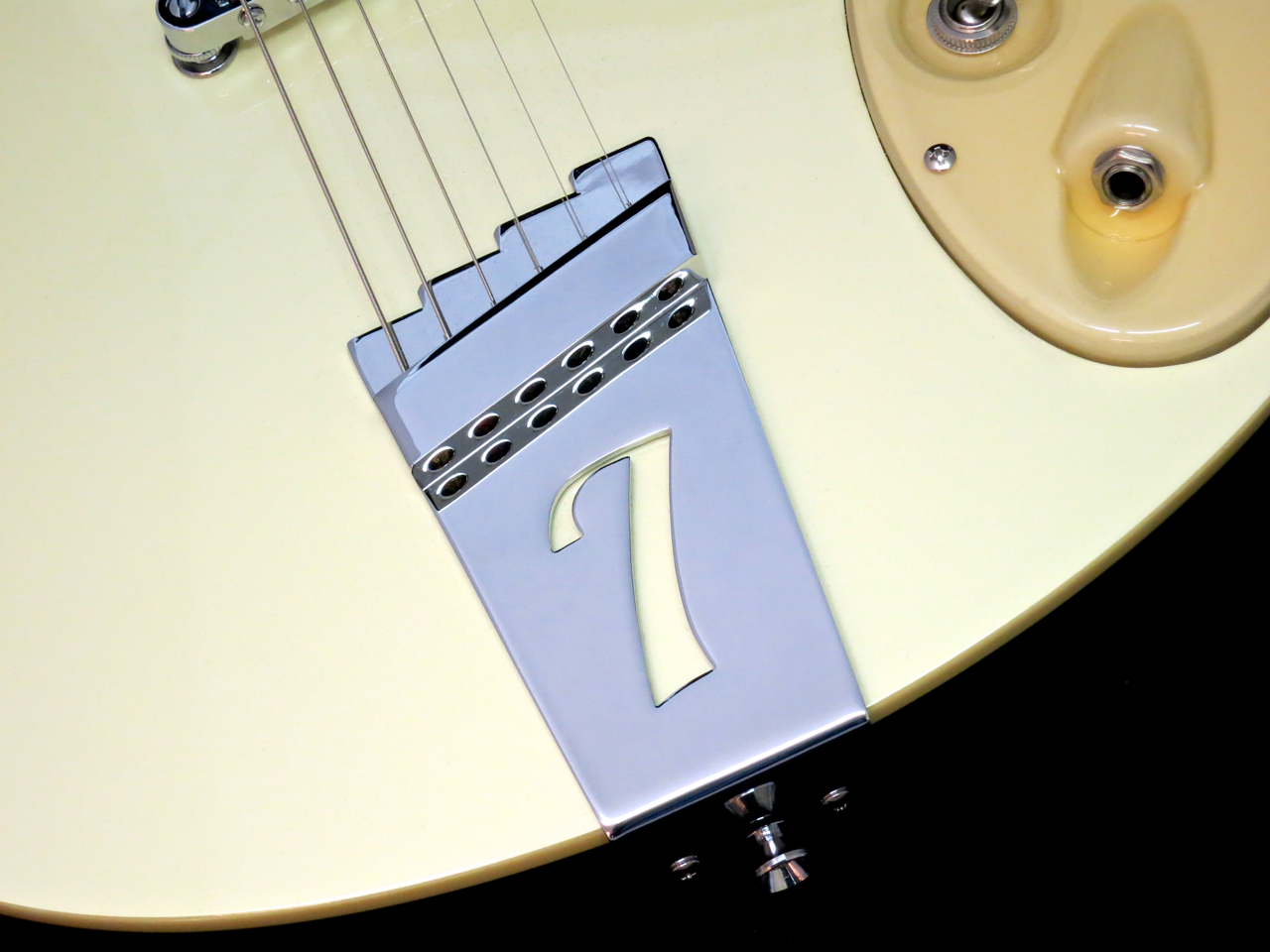
The snazzy chrome tailpiece adds its own bit of panache to this stylish semi.
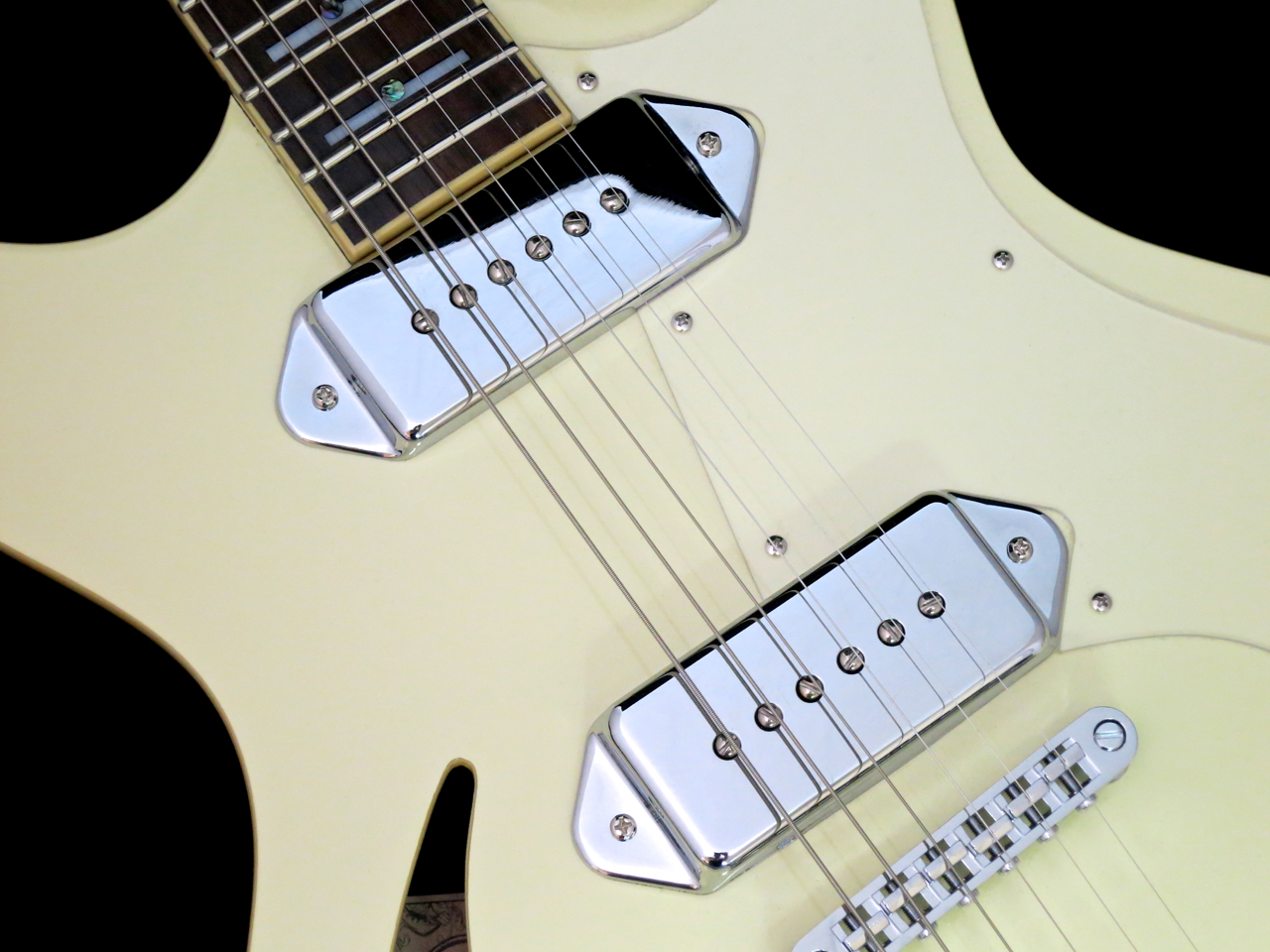
As you might know by now, I’m something of a P-90 fan. The Fiorano Standard comes equipped with not one, but two of my favourite pickups. These are made by Wilkinson and come with chromed dog-ear covers.
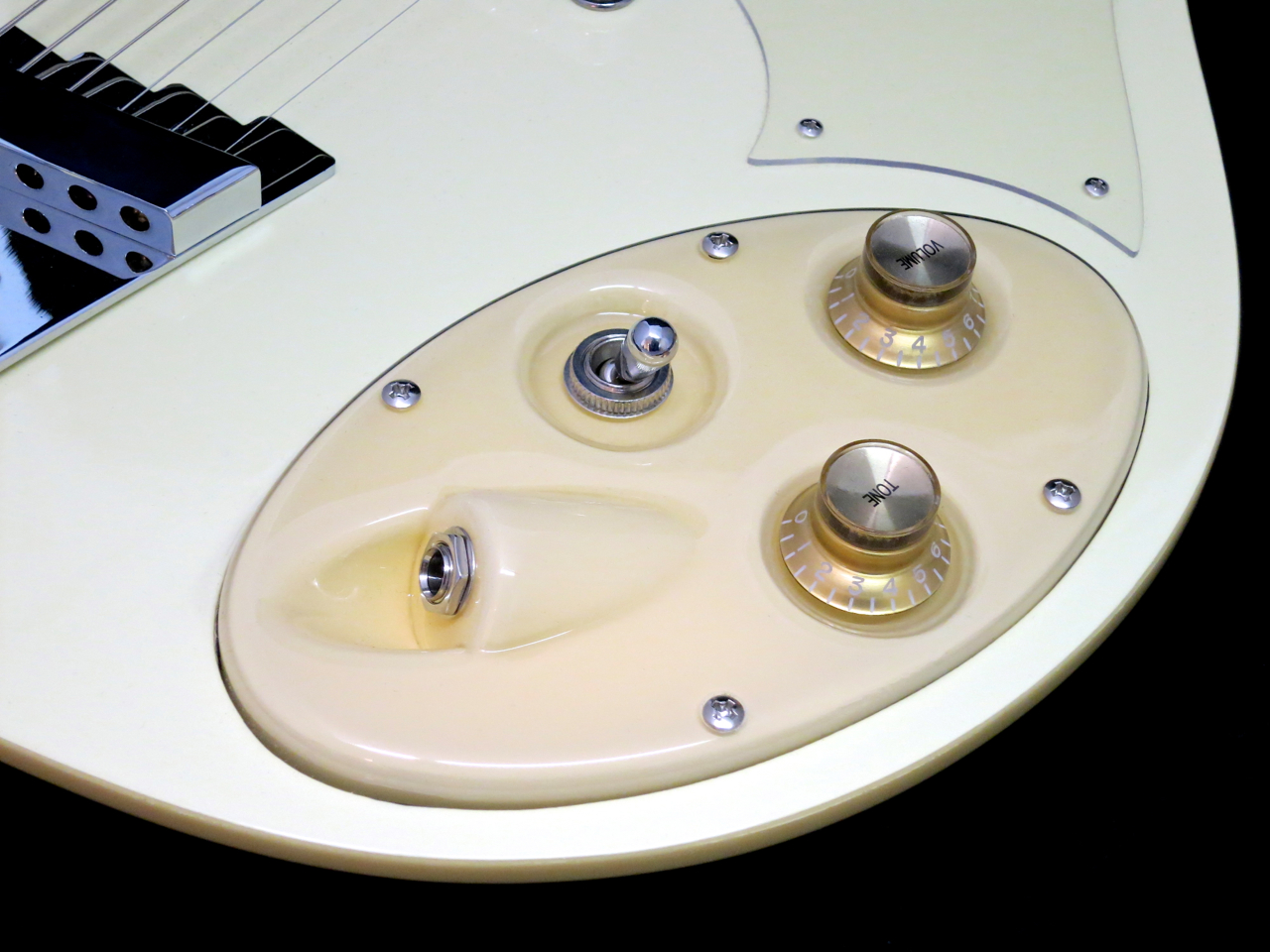
Like many of Italia’s models, the Fiorano also features a sping-suspended plastic tray as an unusual control cavity cover. The electronics comprise a three-way toggle, as well as master volume and tone controls.
****
Italia’s Mondial Deluxe (price in Finland approx. 675 €) is a genuine semiacoustic hybrid, offering you a piezo-equipped bridge (and active preamp) for acoustic-style guitar sounds alongside its traditional magnetic humbuckers.
Thinline-type mahogany body is mated to a maple top, which sports a very fetching Rickenbacker/Mosrite-style German Carve -edge. The top’s edges have been left natural, constituting what is usually called ”fake binding”.
The Mondial comes with a set maple neck.
You can also see the quick-release battery compartment for the 9 V battery used to power the piezo preamp.
Italia’s top nut is made from a self-lubricating material containing graphite.
We find the same decent-quality tuners on Mondial Deluxe as on the Fiorano.
Look at the all the nice hues of blues and greens in the guitar’s abalone dots!
The Mondial’s bridge may look identical to the Fiorano’s, but this here is a piezo-equipped model. There’s a thin lead going from beneath the bridge and through the maple top to feed the piezo signal to the preamp.
”I” – stands for Italia…
Two vintage-voiced Wilkinson WVC-humbuckers handle magnetic duties on the Mondial Deluxe.
The sliders on the guitar’s shoulder control the piezo side’s three-band EQ.
The magnetic signal is fed to a three-way toggle selector and master volume and tone controls.
There’s a dedicated volume control for the piezo signal, as well as a second output jack, enabling you to feed the acoustic side to a mixing console or a dedicated acoustic amplifier.
****
Italia’s Fiorano Standard is just the guiar for me. It is comfortably lightweight and balances nicely. Its relatively thin body sits nicely against your belly/ribcage, even without any contouring or bevels.
The neck has a nice, mid-depth C-profile, which will feel comfortable to most players. The Fiorano arrived extremely well set-up with a slinky action (E: 1.9 mm/e: 1.7 mm).
Even if you cannot expect a thinline guitar, such as the Fiorano Standard, to out-shout a fat Jazz guitar, the Italia’s spruce-topped mahogany body results in a warm and woody acoustic voice.
In my opinion, P-90s are the best choice for a guitar of this type, because their singlecoil construction makes for a more percussive and dynamic tone than what you’d get from a creamy humbucker.
Played into a clean amp channel you’ll get a nice, clucky attack and a open, yet strong overall voice, that will fit Jazz just as well as Brit Pop, Country, Blues or early Rock’n’Roll (why not add a Bigsby, perhaps?):
If you’re after warm, rich and dynamic dirty tones P-90s are just the ticket! The Fiorano Standard will work great for any Beatles-, Kinks- or Who-inspired player, as well as George Thorogood-style electric Blues:
****
Italia’s Mondial Deluxe is a medium-weight instrument. The well-executed German Carve and very clean fake binding make this guitar look more expensive than it really is.
The neck’s D-profile feels really good. Thanks to its clean fretwork and fine set-up this instrument also plays great (E: 2.0 mm/e: 1.3 mm).
Unplugged, Italia’s Mondial Deluxe is rather quiet, but its fresh acoustic voice and clear attack bode well for things to come.
This hybrid’s piezo sound was the real surprise for me in this review. Italia’s piezo system simply sounds that good and genuinely ”acoustic”:
Naturally, it’s good to hear the Mondial’s magnetic side perform to equally high standards. This guitar’s vintage-voiced Wilkinsons do a fine job of translating the Mondial’s fresh unplugged voice into nice clean tones:
Switching over to the distortion channel will turn the Mondial into a Seventies-style Blues Rock machine:
****
It’s nigh on impossible not to get a crush on these Italia-guitars: Both the Fiorano Standard and the Mondial Deluxe are distinctly different from the mainstream of guitars on the market, but their design idiosyncrasies never get in the way of easy playability and great sound. If you want to steer clear of the usual copies, bust still look for a guitar with its own charm, you should definitely check out an Italia.
****
Italia Guitars – Fiorano Standard + Mondial Deluxe
Amfisound Guitars is a small company from the northern Finnish town of Oulu. Run by two master luthiers, Amfisound offers a surprisingly wide variety of different guitar and bass models, as well doing a lot of customising and repair jobs. Kitarablogi visited Amfisound’s workshop late last year – read all about it HERE.
Amfisound have introduced a new bass model recently, called the Raudus Bass, which is the subject of this review.
****
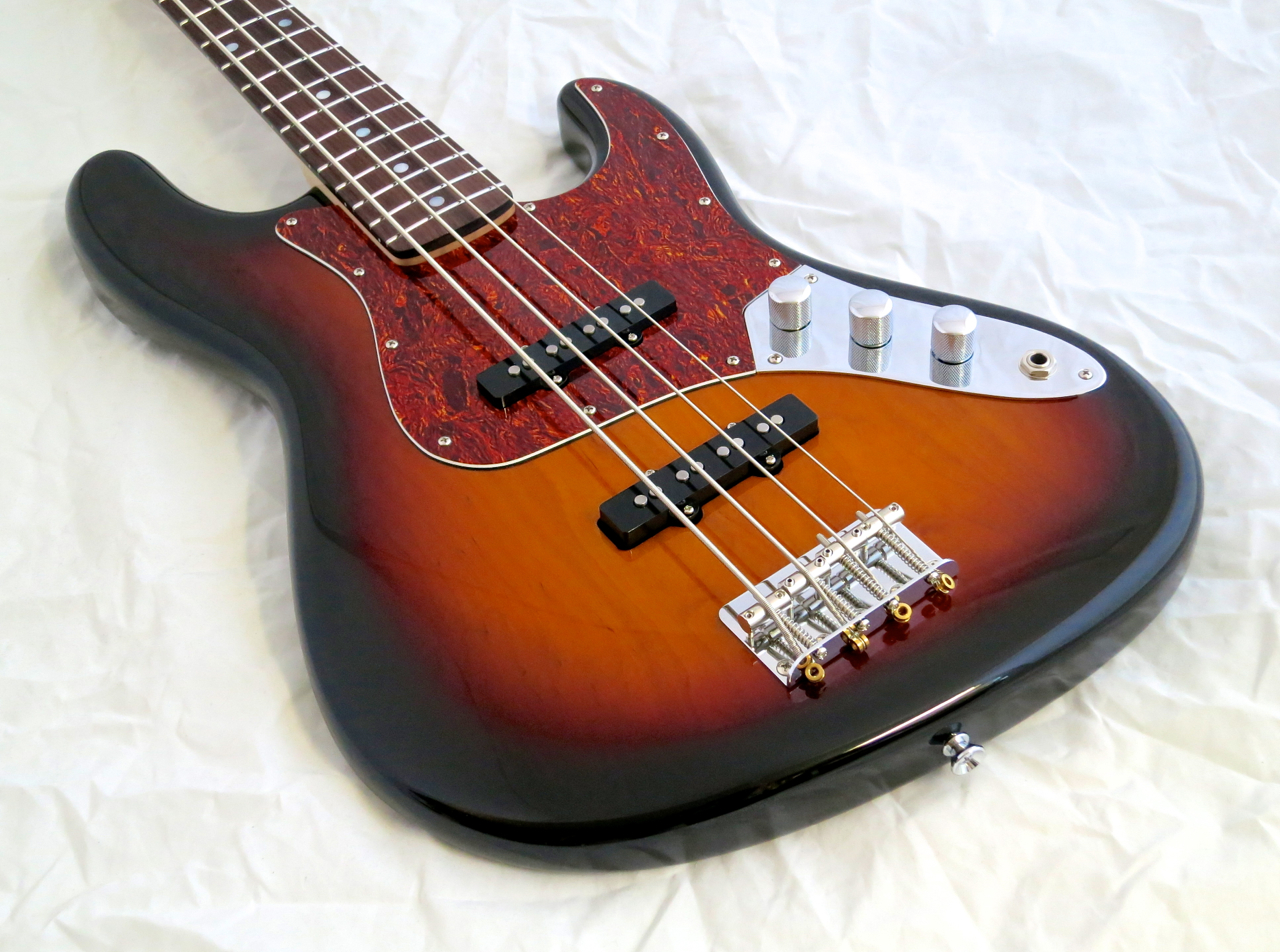
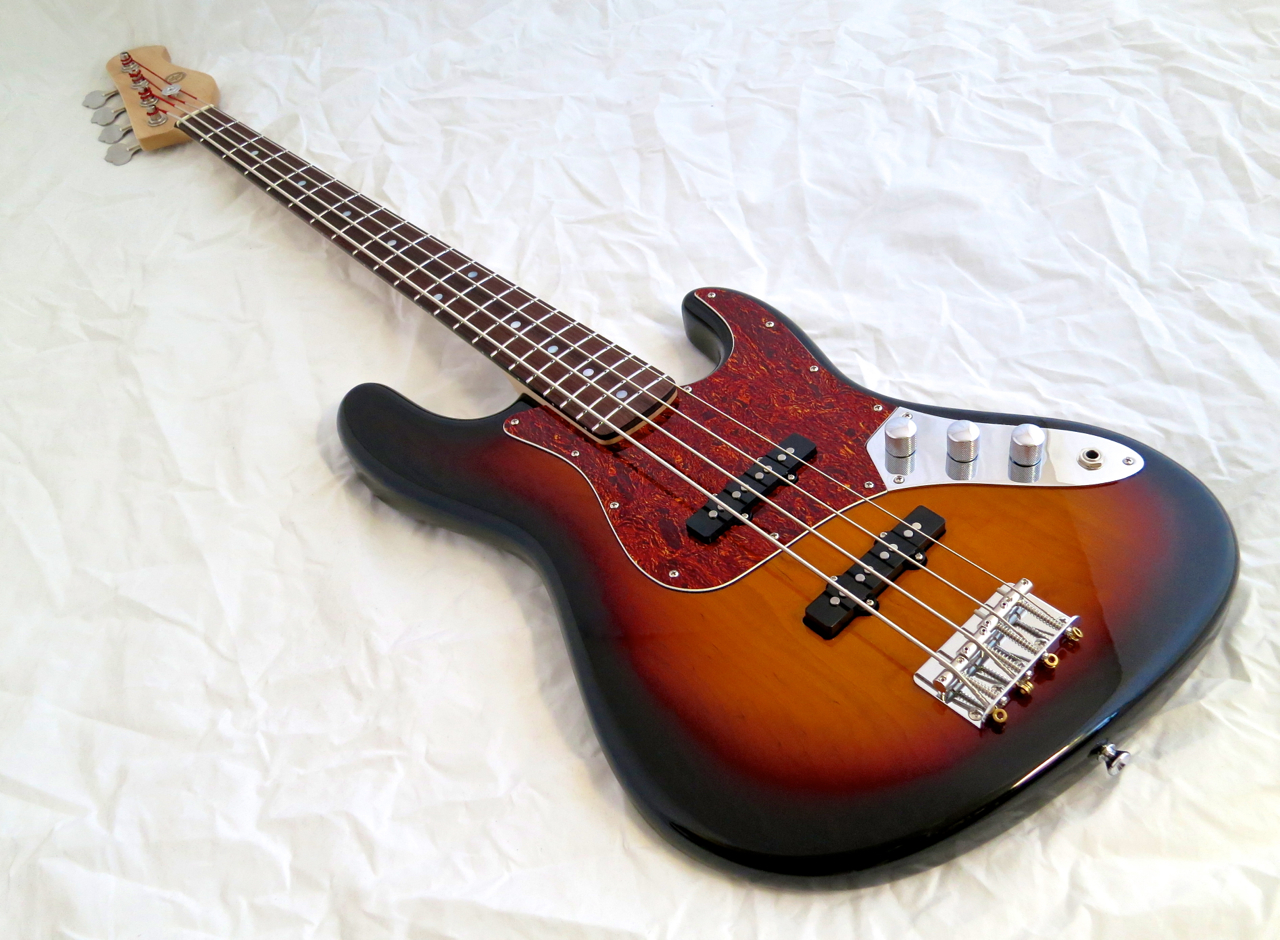
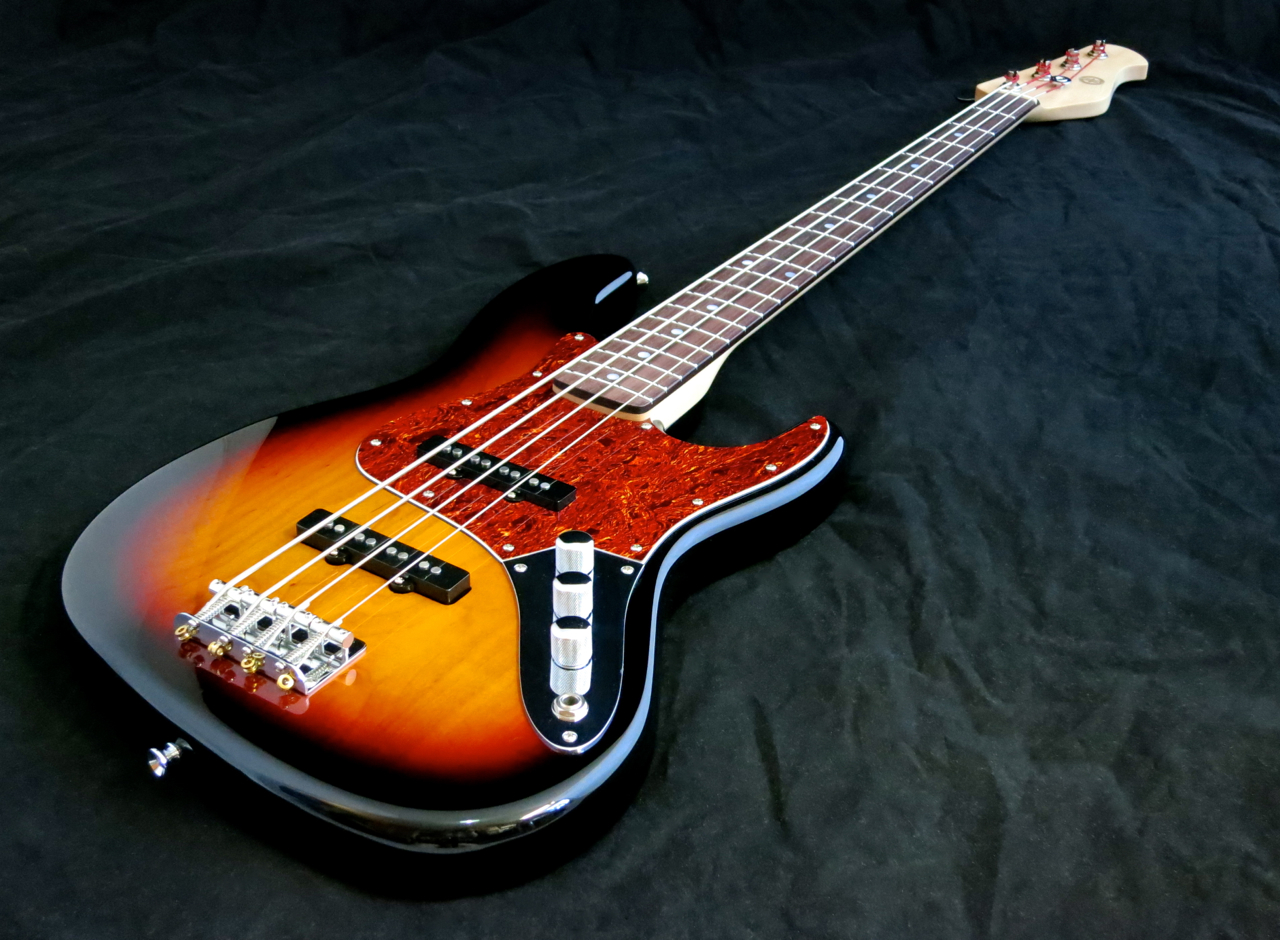
The Amfisound Raudus Bass (prices for EU-customers starting from 2,520 €) clearly takes its inspiration from Fender’s classic Jazz Bass, but this new Finnish (passive) bass offers a number of modern updates and improvements. The easiest things to notice on first sight are probably the added 21st fret and the much deeper cutaway.
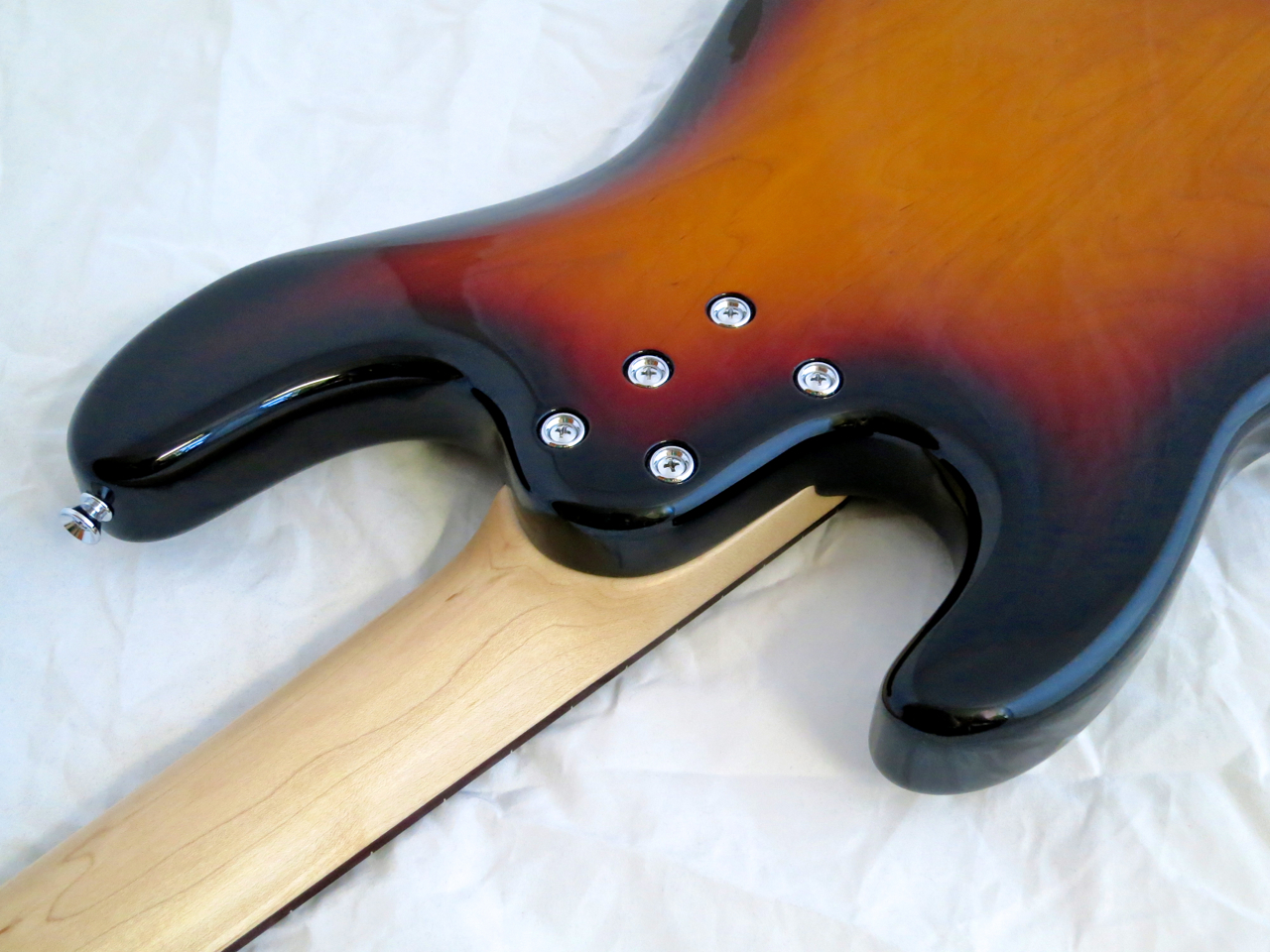
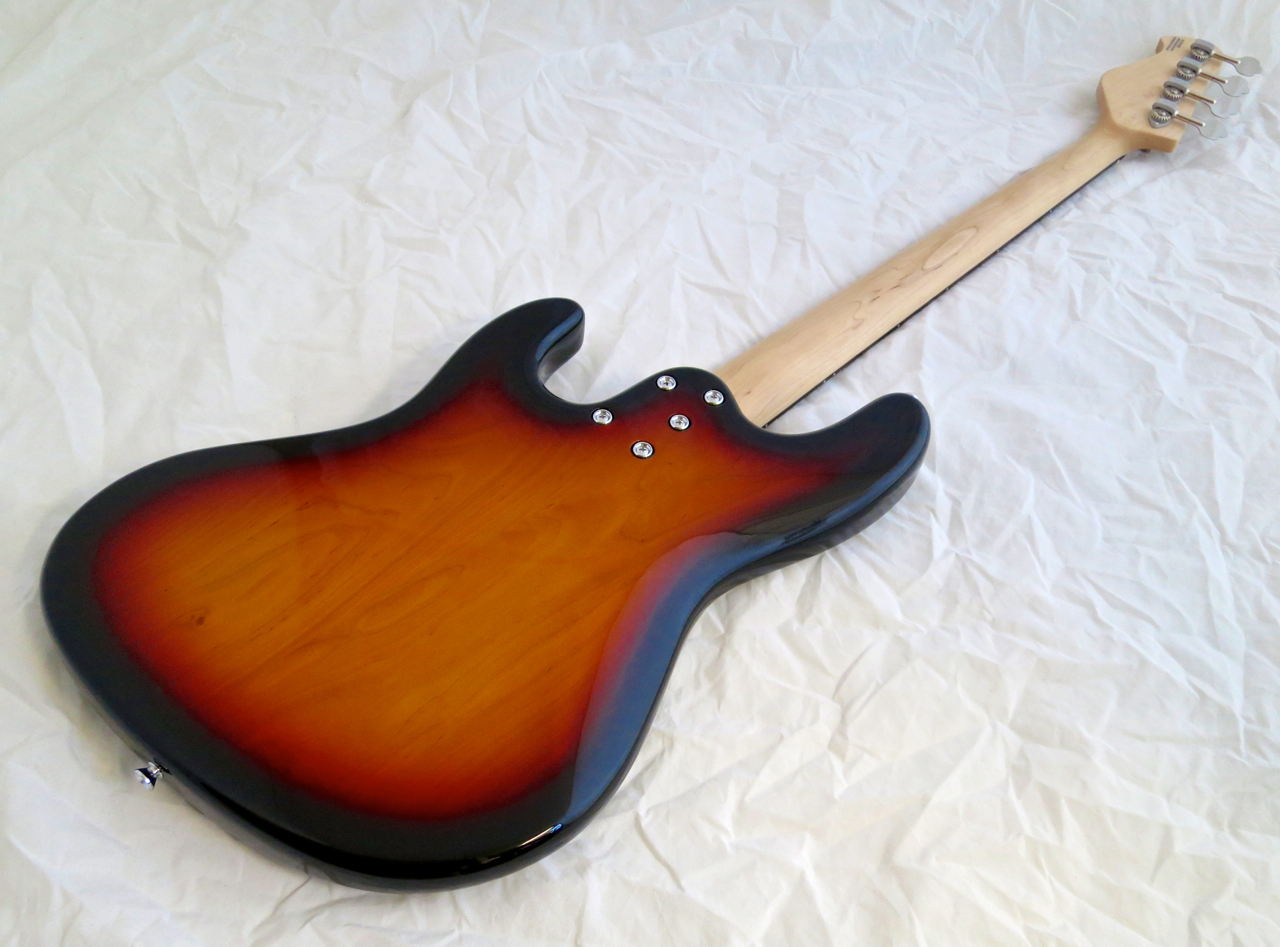
The Raudus sports a body made from Finnish alder and a bolt-on maple neck.
The neck comes finished in a very thin satin lacquer, while the body is gloss finished in a glorious tri-colour sunburst.
Our review sample of the Amfisound Raudus features two differences to the basic model – different tuning machines and different pickups.
This Raudus comes equipped with a set of Hipshot’s UltraLite tuners (additional charge: 50 €), which are built from aircraft-grade aluminium. The UltraLite machines work extremely smoothly and precisely, and they efficiently cut down on surplus headstock weight, which is a good thing on such a traditionally-inspired long scale bass, such as the Raudus.
The two-way truss rod is accessed from the headstock side of the neck.
The outstanding standard of workmanship displayed in the Raudus-model’s fretwork, is but one of many points bearing clear testament to the world-class standard of Finnish luthiery! This is genuine custom shop quality.
The fretboard is made of Indian rosewood, and it’s sporting 21 medium-jumbo sized frets.
Amfisound’s rounded body heel makes excursions to the dusty end of the neck very comfortable, indeed.
The bridge is a quality copy of the original, late-Sixties Fender bridge – if it ain’t broken, don’t fix it.
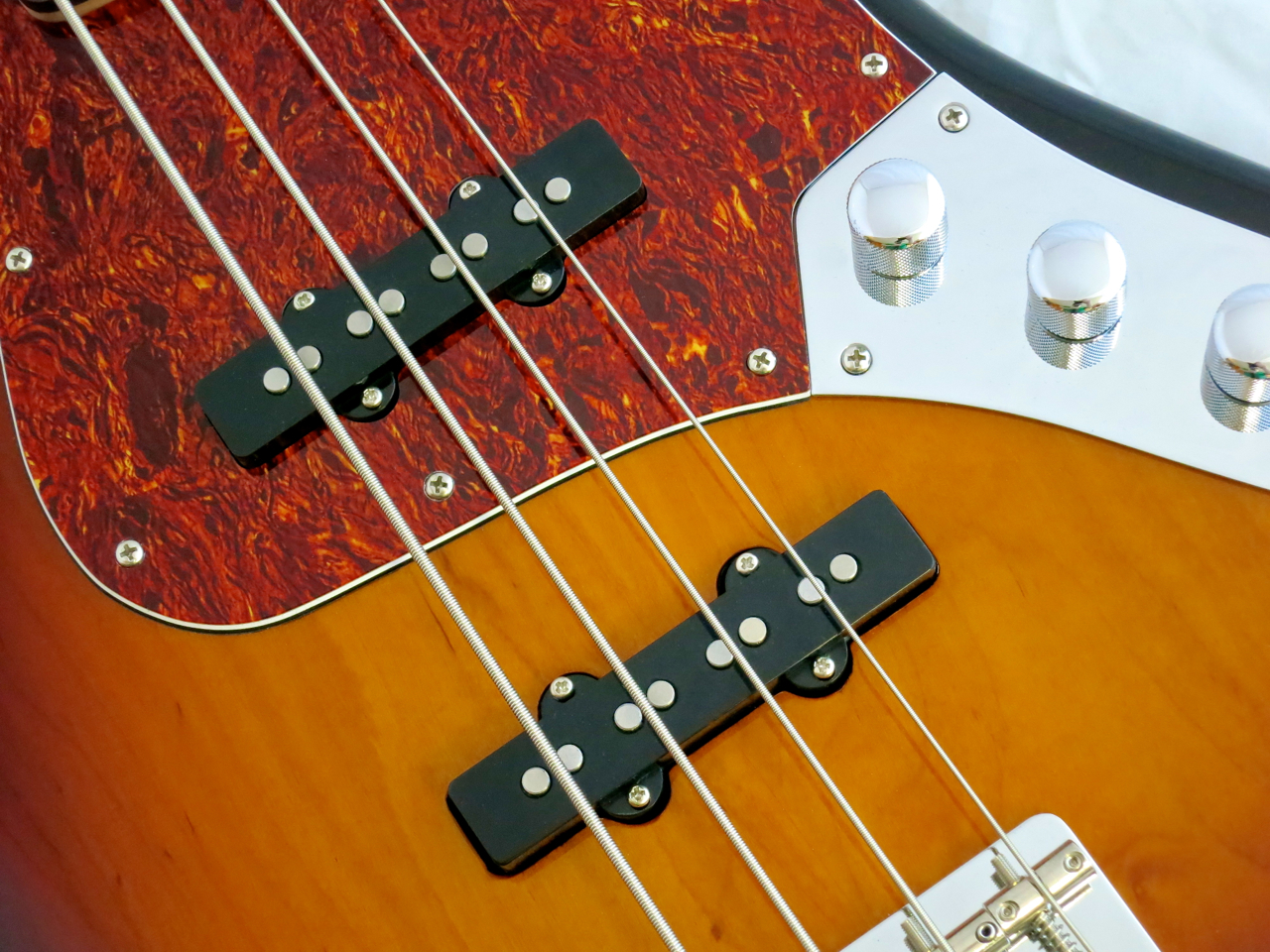
The review sample comes with a set of Jarno Salo Pickups from Finland. The basic version uses Swedish Lundgrens.
This instrument offers you Jazz Bass-type controls – separate volume-knobs for each pickup, plus a master tone-control.
Amfisound’s workmanship is spot-on and very crisp – even under the hood.
The list of available custom options from Amfisound is very long, and includes (in the Raudus-model’s case) an ash body, different bridges and/or tuners, as well as active Glockenklang-electronics (among other things). For more detailed information you should contact Amfisound’s Tomi or Sampo.
There’s also a five-string Raudus on offer, which is built with a longer scale of 35 inches.
****
Amfisound’s Raudus Bass is a real corker of an instrument, with its sound and playability second to none.
The flatter-than-vintage fingerboard radius (9.5″) gives the slender neck a suitably modern playing feel. Thanks to Amfisound’s exemplary fretwork, our review sample’s low action (E: 2.0 mm/g: 1.6 mm) was completely free of annoying fret buzz or string rattle.
I’m a devoted Jazz Bass-fan, which made me feel right at home playing the Raudus. Yes, it’s true that the Amfisound offers much better top fret access, but overall this new bass feels like a dear old friend.
And this bass’ sound is outstanding, too, dishing out oodles of classic, Jazz Bass-style tones.
Jarno Salo’s excellent pickups are singlecoil designs, with the bridge pickup being reverse-wound and reverse-polarity in relation to the neck unit. This means that using both pickups together gets rid of any possible electromagnetic hum and buzz (from transformers, lighting or displays).
In terms of sound, these Salo-pickups really give you all those classic tones you’d expect from a bass such as this.
Listen to these three audio clips. Each clip has the neck pickup first, followed by both pickups on, and the bridge pickup going last:
****
The Amfisound Raudus Bass is a very fine example Finnish luthiery, there’s no two ways about this. Finns must be very lucky to find such fine instruments right at their doorstep!
****
Amfisound Guitars Raudus Bass
Prices starting from 2,520 € (EU-customers) & 2,032 € (outside the EU)
Now Italia Guitars are finally available in Finland!
Italia is a new brand on the Finnish market, even though these guitars have been available in many EU-countries for 15 years already. Italia Guitars is the joint effort of South Korean guitar factory Mirr Music and British guitar guru Trev Wilkinson. Wilkinson’s list of achievements is long and illustrious, including inventions such as the Wilkinson-vibrato and his roller nut, as well as instrument designs for Vintage (by JHS) and his own Fret-King brand.
The basic concept behind Italia Guitars is to come up with instruments that are imbued with the quirky charm of European electric guitars from the Fifties and Sixties, but which feature up-to-date playability and reliable electronics.
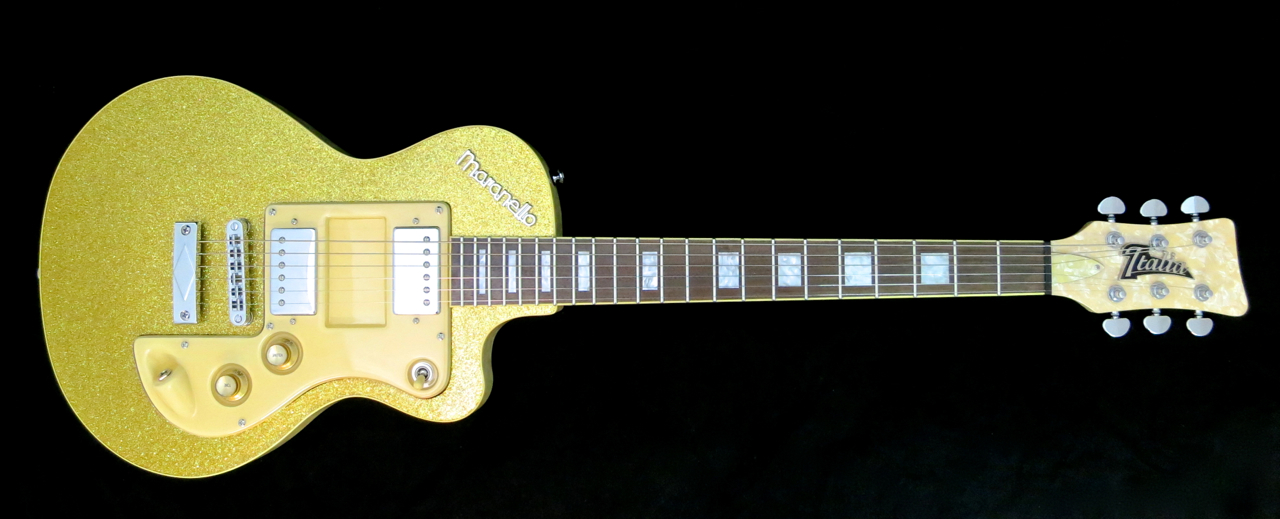
The Italia Maranello Classic (price in Finland around 640 €) is this brand’s best-known model, which has even found its way into the hands (and heart) of British songwriter and slide guitarist Chris Rea.
This model takes its inspiration from Hagström’s first solidbody electric, the P46, which has also been sold in North America under the Guyatone banner. In terms of its looks, the Maranello is a dead ringer for the P46, but the Italia’s electronic department clearly has been streamlined to make it a more sensible affair.
The Maranello Classic is quite a looker, sporting many hallmarks of classic Sixties designs.
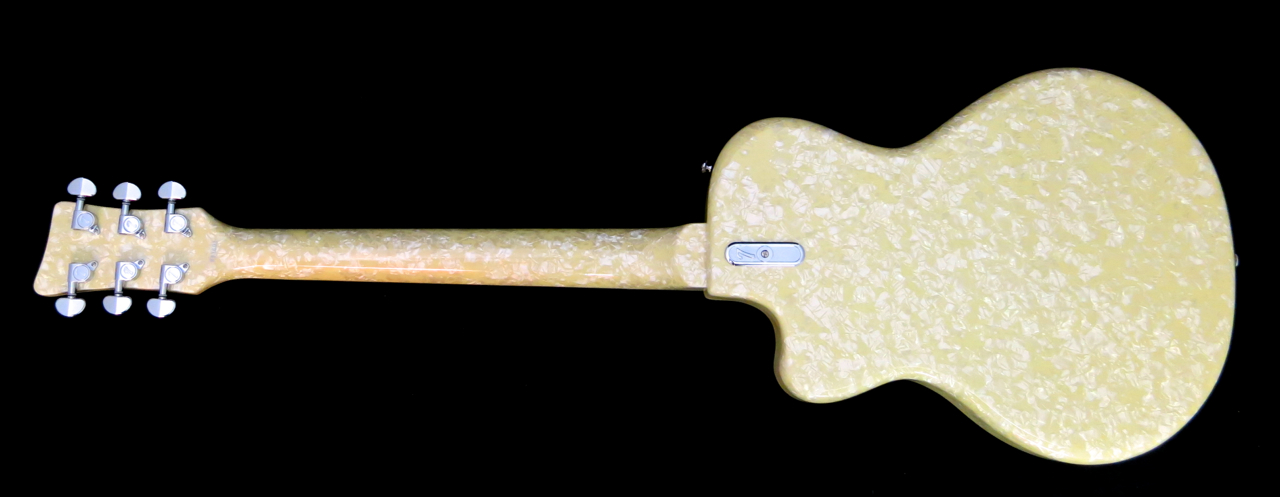
The agathis body’s curved front comes in a gold sparkle metal finish, while the back of the body, as well as the neck, have received a pearloid coating.
The maple neck is screwed onto the body with two screws, which can be found beneath a snazzy cover plate.
A truss rod access at the headstock end, as well as a self-lubricating top nut are distinctly modern features…
…as are the Maranello’s sealed tuning machines.
The position markers are large block inlays. The bound rosewood fingerboard sports 22 medium-jumbo frets.
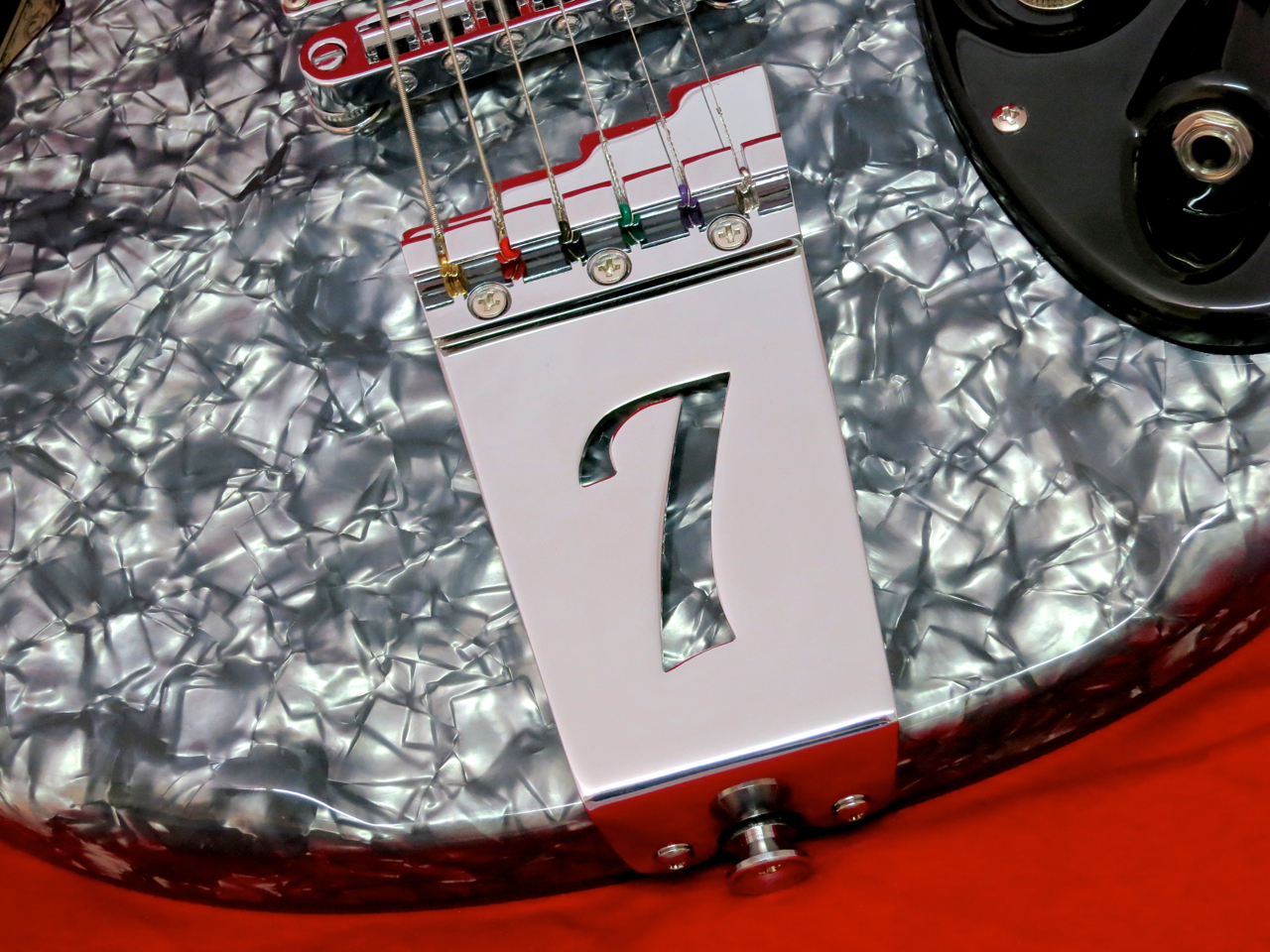
This Italia comes with a modern, Wilkinson-branded tune-o-matic bridge. The tailpiece, which rests on ferules, has been lifted straight off the old trapezes used in some Gibson- and Epiphone-semis.
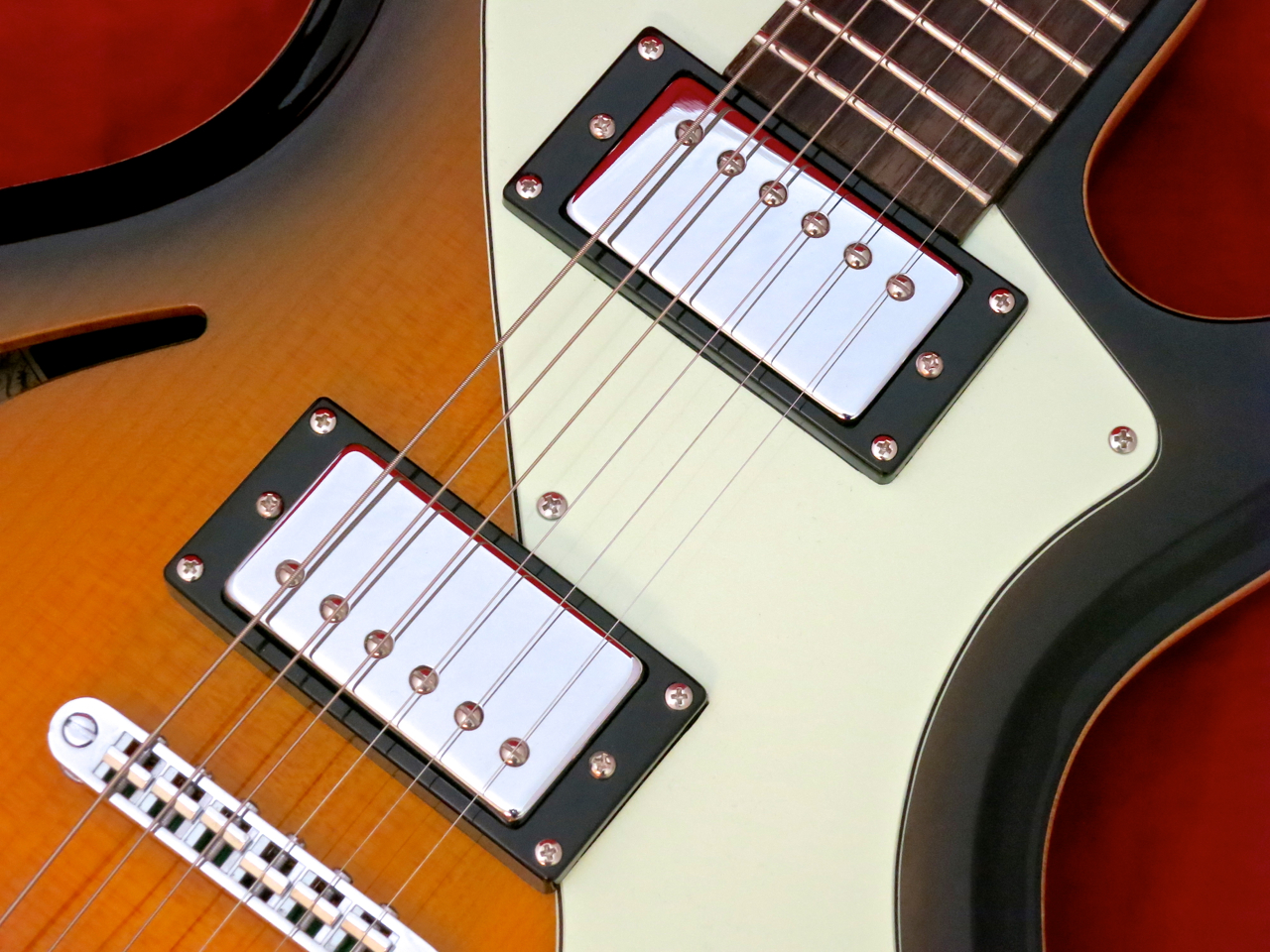
The Maranello Classic comes equipped with a pair of Wilkinson WVC-humbuckers, which are Trev Wilkinson’s own version of the legendary PAF-humbucker.
All of the electronic parts on the Maranello – pickups, controls, and all – have been mounted onto a large cover-plate made stiff plastic, which is height adjustable, thanks to being suspended on top of metal springs.
This is an idea originally used on the Hagström P46. Italia Guitars are using a smaller, oval version of this – holding only the pickup switch, as well as the controls – on some of their other models.
****
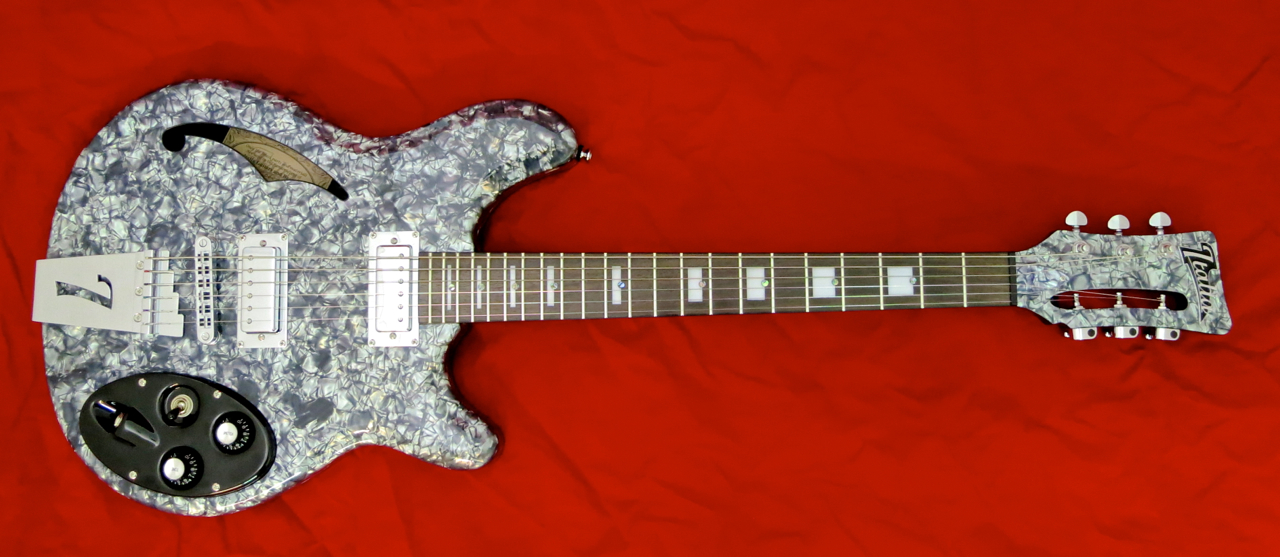
Italia’s Rimini 6 (price in Finland around 645 €) is rather reminiscent of the Rickenbacker 360, although it isn’t a straight copy of this classic guitar at all .
The Rimini 6 has a semiacoustic body made from solid agathis. The body blank is then routed out from the back, creating large cavities to both sides of a solid centre block. The body is then completed by glueing on a solid ash back.
Our review sample comes in a very fetching ”black” pearloid finish (some would call it ”bowling ball” or ”mother of toilet seat”), but you can also get your Rimini in a traditional colour finish, such as sunburst (sans the pearloid).
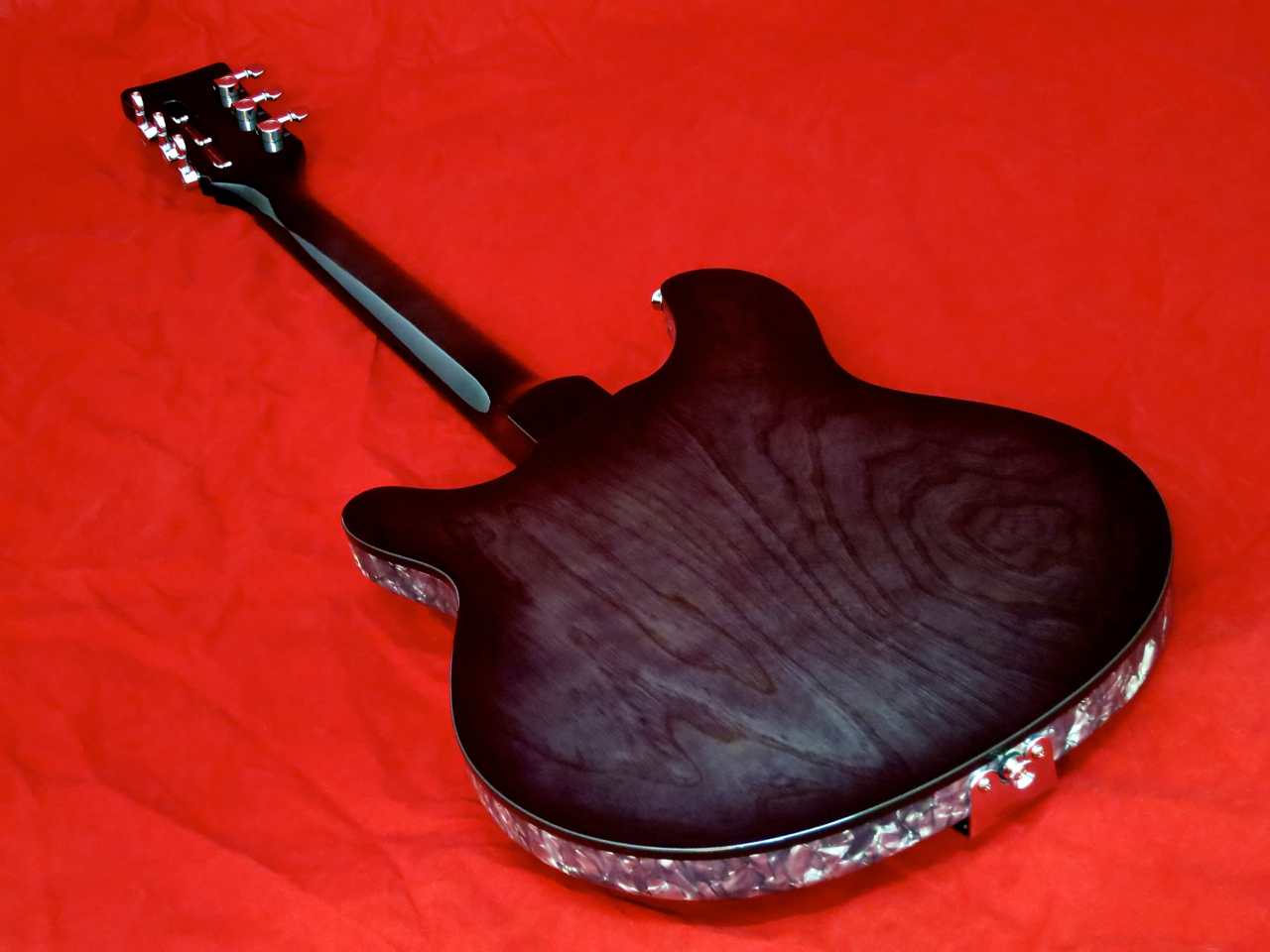
The black sunburst finish of the Rimini’s back shows off its beautiful grain nicely.
The model is built with a set maple neck.
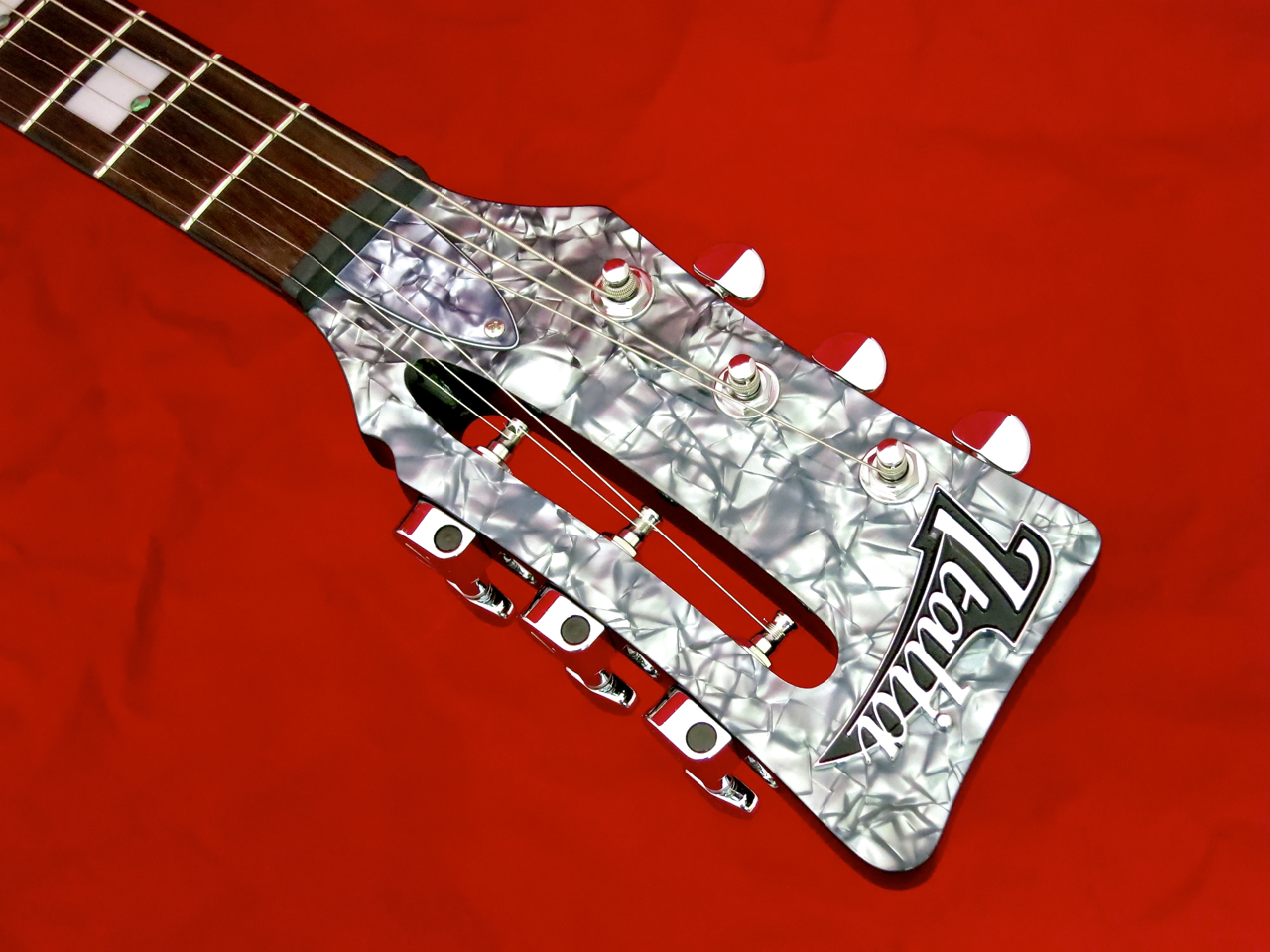
The headstock on the Italia Rimini 6 doffs its hat in Rickenbacker’s direction:
The legendary US brand had come up with a very nifty design for the headstocks of their 12-string electrics, which has the normally-tuned strings fixed to tuners installed to the headstock’s underside (like the Rimini’s bass strings), while the octave-strings are fed to tuning heads installed from the side (like the Rimini’s treble strings).
The Rimini’s modern tuners carry Italia Guitars’ stylised I-logo.
Simple, but beautiful – the position markers combine blocks with small abalone-dots.
The Rimini 6 is equipped with a modern version of the tune-o-matic bridge, too.
The large, chromed tailpiece adds still more visual bling to proceedings.
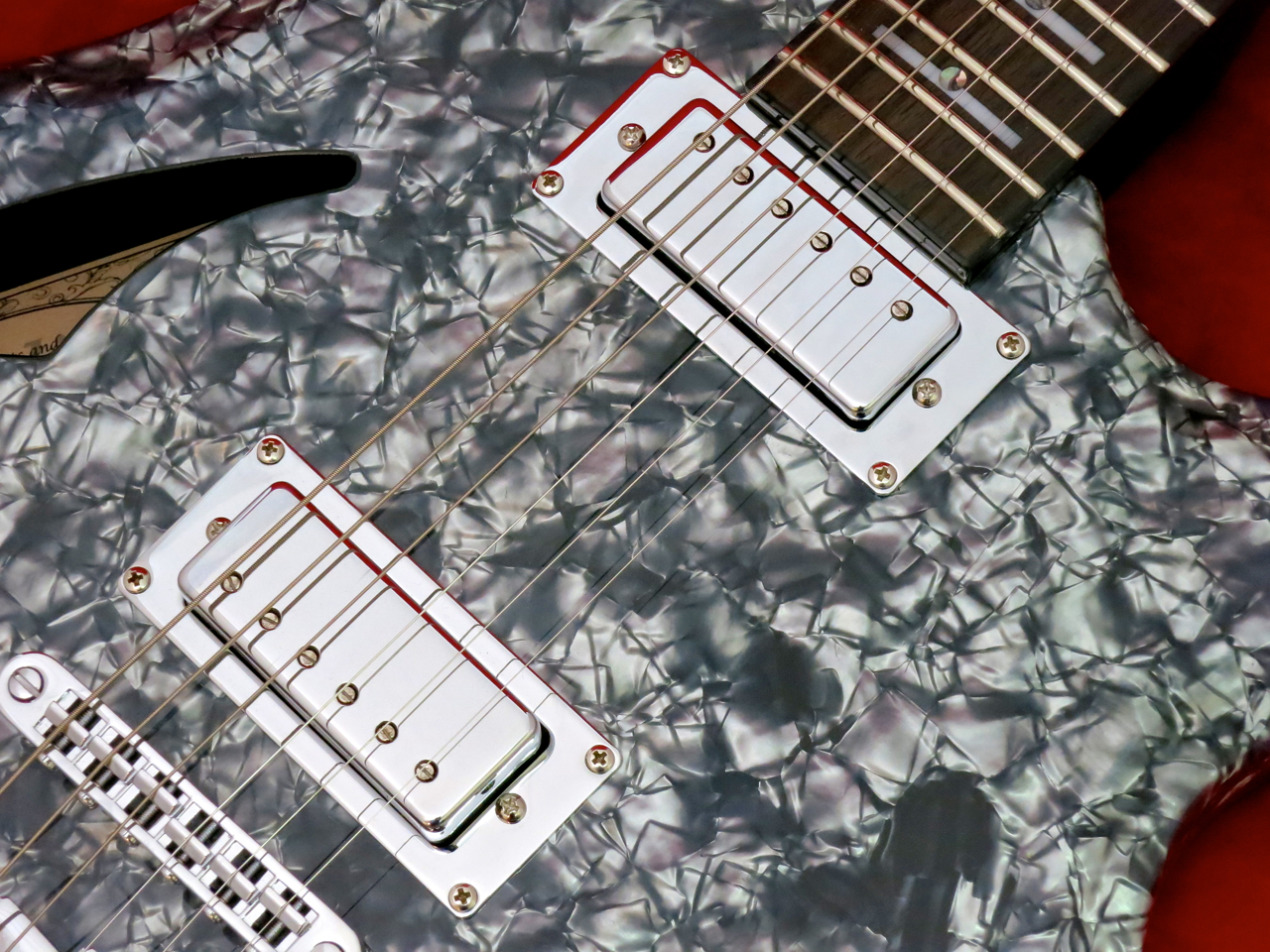
I believe we can expect to hear some suitably fresh tones from the Rimini 6’s alnico-powered Wilkinson WMC-minihumbuckers.
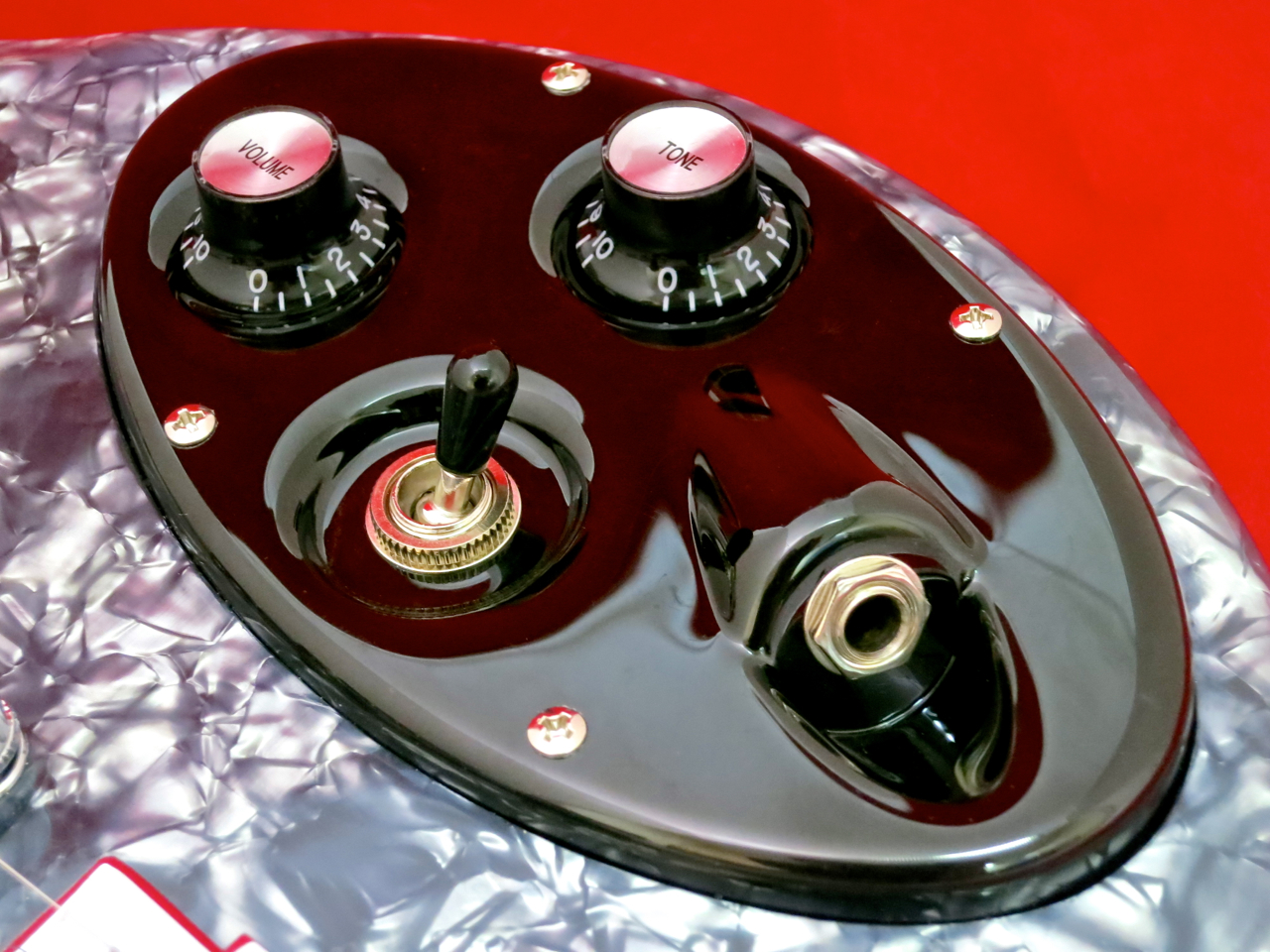
The guitar’s controls comprise a three-way toggle switch, as well as controls for master volume and master tone.
Removing the plastic tray gives us a good look at Italia’s clean workmanship and the very decent components used.
****
The Italia Maranello Classic has a shape and weight similar to a Gibson Les Paul, even though the Maranello features a slightly longer scale (63.5 cm/25″). Depending on your playing style, the placement of the toggle switch right beneath the neck pickup might lead to some involuntary pickup switching, at least in the very beginning.
I really like this guitar’s fat and round D-profile, giving you something to hold on to.
The Maranello Classic had received a pro setup (at Guitarworx) before leaving R-Jam Group’s headquarters, which resulted in a very comfortable action (E: 2.0 mm/e: 1.4 mm) without any annoying rattling.
The Maranello’s acoustic tone contains more than a hint of semi-style hollowness, no doubt thanks to the large pickup and electronics routing and the huge plastic scratchplate/tray.
Some of this open acoustic character is also carried over into the Maranello Classic’s amplified sounds, which adds a welcome degree of liveliness. Wilkinson’s alnico-equipped WVC-humbuckers have a nice vintage-style tonality at moderate output levels.
Modern Metal- and Hard Rock-styles aren’t probably the best environment for this Italia-model, because the Maranello’s large plastic cover tends to add a slight bit of microphonics. On the other hand, I don’t think this guitar is aimed at the Thrash-metaller. Instead, the Maranello Classic is a great guitar for classic Blues, Rock, Jazz and Pop!
****
Wow, what a compact and lightweight guitar! The Rimini 6 feels great, both played seated and standing up with a strap, and balances very nicely.
The neck has an oval, C-type profile, and comes with a Rickenbacker-style scale (62.8 cm/24.75″). The medium-jumbo frets, as well as the great setup and low action (E: 1.9 mm/e: 1.3 mm), result in a very light and fast touch, turning this guitar into a natural extension of the player’s body.
Acoustically, the Rimini 6 sounds very open and fresh.
Like the P-90, a minihumbucker could be described as a sonic compromise between a Fender-style singlecoil and a full-blown humbucker. The minihumbucker’s great advantage over the P-90 lies in the former’s immunity against electromagnetic interference.
This Italia has fine ringing tone with a piano-like attack, which is never brittle or grating. These Wilkinson-pickups sound fantastic and offer enough output to take you from authentic Sixties-sounds (think Beatles, Byrds and early Who) all the way to more grittier stuff (think Paul Weller or Peter Buck).
****
Italia Guitars’ Maranello Classic ja Rimini 6 are quality instruments, which manage to combine vintage looks and quirkiness with easy playability and great tone.If you’re on the lookout for a cool guitar off the beaten track, you should really give one of these Italia-models a try!
Italia Fiorano Standard (noin 640 €) on hyvin nätti, kahdella soololovella varustettu thinline-tyypinen puoliakustinen sähkökitara.
Fioranon kokopuiseen mahonkirunkoon on edestä työstetty isoja resonanssikoloja. Toisin kuin esimerkiksi Rimini 6- tai Mondial Deluxe -mallissa, Fioranon koppaan ei kuitenkaan jätetty seisomaan yhtä yhtenäistä keskipalkkia, vaan basso- ja diskanttipuolen kolojen väliin on avoin käytävä kitaran mikrofonien välissä. Viimeiseksi koppa on suljettu reunalistoitetulla kuusikannella.
Fioranon kaula veistetään vaahterasta.
Italia-logolla varustetut nykyaikaiset virittimet toimivat sulavasti ja moitteettomasti.
Reunalistoitetun palisanteriotelautaan on upotettu firman typpisiä otemerkkejä helmiäismuovista ja aidosta abalonesta.
Fiorano Standardin kaula on liitetty runkoon perinteisesti liimaamalla. Liitoskohta on 19. nauhan kohdalla.
Nykyaikaisessa tune-o-matic-tallassa tallapalat on kiinnitetty suoraan tallan runkoon, ilman sitä – vanhanaikaisista versioista tuttua – usein häiritsevästi rämisevää metallijousta.
Puoliakustiselle kitaralle näyttävästi kiiltävä kieltenpidin sopii kuin nakutettu.
Täyttyy myöntää, että olen itse aikamoinen P-90-mikrofonien fani. Italia-kitarassa löytyy heti kaksi, Wilkinsonin valmistamaa kappaletta, joilla on kromattuja metallikansia.
Useissa Italia-malleissa elektroniikka on asennettu jousitettuun muovilaatikkoon, niin kuin Fiorano Standardissakin, jolla on master volume- ja tone-säätimien lisäksi myös kolmiasentoinen vipukytkin.
****
Italia Mondial Deluxe (noin 675 €) on aito, puoliakustinen hybridikitara, jolla on magneettisien humbucker-mikrofonien lisäksi piezomikrofonilla varustettu talla, ja ”akustiselle” signaalille oma etuvahvistin.
Thinline-paksuiseen mahonkikoppaan on liimattu vaahterakansi, jolla on yläreunoissa Rickenbacker/Mosrite-tyylinen German Carve -kaiverrus. Lisäkoristeeksi on jätetty kannen reunat sivulta värjäämättä, joka antaa kannelle vaikutelman reunalistoituksesta (ns. fake binding).
Mondialin vaahterakaula on liimattu soittimen runkoon.
Kuvassa näkyy myös runkoon upotettu paristolokero piezon etuvahvistimen käyttämälle yhdeksän voltin paristolle.
Italian satula on tehty kitkaa vähentävästä, grafiittipitoisesta muoviseoksesta.
Mondial Deluxessa käytetään samaa laadukasta viritinmallia kuin Fioranossa.
Tässä kuvassa näkyy hyvin abalonen kauniita vihreitä ja sinisiä sävyjä.
Vaikka Mondialin talla näyttää ihan samalta kuin Fioranon vastine, se on piezomikrofonilla varustettu malli. Tallan alla kulkee ohut johto vaahterakannen läpi aktiiviseen etuvahvistimeen.
”I” – niin kuin Italia…
Mondial Deluxe on varustettu kahdella, vintage-henkisellä Wilkinson WVC -humbuckerilla.
Kolmikaistaisen piezo-EQ:n liukusäätimet sijaitsevat kaulamikrofonin ylläpuolella.
Humbuckerien signaali syötetään passiivielektroniikan läpi, joka koostuu kolmiasentoisesta vipukytkimestä, sekä master volumesta ja tonesta.
Piezosignaalille on varattu oma volume-säädin ja oma jakkilähtö, jonka ansiosta kitaran ”akustinen” signaali voidaan lähettää esimerkiksi PA-mikserille tai omalle, akustiselle kitaralle erikoistuneelle vahvistimelle.
****
Italia Fiorano Standard on selvästi sähkökitara minun makuun. Se on mukavan kevyt ja hyvässä tasapainossa. Suhteellisen ohut runko istuu eritäin hyvin soittajan kehoa vasten, vaikka tässä mallissa ei ole ns. mukavuusviiste rungon takapuolella.
Kaulan profiiliksi on valittu sellainen keskipaksu C-profiili, joka tuntuu varmasti lähes jokaisen kitaristin kädessä hyvin mukavalta. Fioranon kaikki säädöt olivat prikulleen kohdillaan ja soittimen kevyt tatsi tekee soittotuntumasta vaivattoman (E: 1,9 mm/e: 1,7 mm).
Vaikka tällaisen thinlie-tyylisen puoliakustisen akustinen volyymi ei luonnollisesti vedä vertaa oikealle orkesterikitaralle, Fioranon Standardin kuusikannella varustettu mahonkirunko antaa tälle soittimelle herkullisesti jazzahtavan, kuivan perusluonteen.
Minun mielestäni P-90-mikrofonit ovat tällaiselle soittimelle juuri se oikea valinta, koska näiden yksikelaisten soundi on hieman perkussiivisempi ja dynaamisempi kuin esimerkiksi tyypillisissä humbuckereissa.
Puhtaassa soinnissa on mukana herkullisen helmeilevä atakki ja hyvin avoin, mutta silti vahva yleisklangi, joka sopii Jazzin ohella myös todella hyvin Brit-Poppiin, Country-musiikkiin, Bluesiin tai vaikkapa varhais-Rock-n-Rolliin:
P-90-mikkien lämmin, rikas ja dynaaminen luonne on juuri se oikea lähtökohta autenttisille kuuskytluvun Beatles-, Kinks- tai Who-soundeille, sekä George Thorogood -tyyliselle sähkö-Bluesille:
****
Painonsa suhteen Italian tyylikäs Mondial Deluxe sijoittuu hyvään keskikastiin. Huolellisuutta vaativa kannen kaiverrus ja sen ”reunalistoitus” on toteutettu erittäin siististi, samoin kitaran kuvankaunis sunbust-väritys. Mondial Deluxe vaikuttaa kalliimmalta kitaralta kuin mikä se todellisuudessa on.
Kaulan D-profiili tuntuu erittäin hyvältä. Tässä Italia-soittimessakin nauhatyön laatu ja testisoittimen soittotuntuma ovat todella kiitettävällä tasolla (kielikorkeus E: 2,0 mm/e: 1,3 mm).
Akustisesti soitettuna Mondial Deluxe on suhteellisen hiljainen, mutta sen äänessä on lupaavalta kuulostava tuorehko soundi selkeällä atakilla.
Tämän hybridikitaran piezoääni oli minulle erittäin positiivinen yllätys, juuri soundin ”akustisuuden” ansiosta. Näin hyvälle piezosoundille löytyy varmasti paljon käyttöä:
Mallikkaasti hoidetun piezopuolen jälkeen on luonnollisesti vakuuttava huomata, että myös Mondialin ”sähköinen” puoli kuulostaa tosi hyvältä. Vintage-tyyliset, tehoiltaan maltilliset Wilkinson-humbuckerit onnistuvat välittämään tämän Italian tuoretta perusluonnetta uskollisesti eteenpäin:
Mondialin säröpuolelta taas löytyy erittäin maukkaita 1970-luvun Blues Rock- ja Heavy-soundeja:
****
Näihin Italia-kitaroihin on erittäin helppoa tykästyä: Fiorano Standard ja Mondial Deluxe ovat sopivan erilaisia, mutta tämä erilaisuus ei seiso hyvän soitettavuuden ja loistavan soundin tiellä. Jos etsit jotain vintage-kopioista poikkeavaa sähkökitaraa, jolla on samalla sekä omaleimainen charmi että nykyaikainen soitettavuus, kannattaa mielestäni tutustua lähemmin Italia-malleihin.
****
Italia Guitars – Fiorano Standard + Mondial Deluxe
Amfisound Guitars on kahden soitinrakentajamestarin yhdessä vetämä soitinpaja Oulun Haukiputaalta, joka tarjoaa erittäin laajan valikoiman omia soitinmalleja, sekä kattavat korjaus- ja kustomointipalvelut. Löydät Kitarablogi-jutun viime talven Amfisound-vierailusta TÄÄLTÄ.
Amfisoundilta on hiljattain ilmestynyt uusi bassomalli nimeltään Raudus Bass, jota on saatu nyt testiin.
****
Amfisound Raudus Bass -mallin (hinnat alkaen 2.520 €) lähtökohtana on nähtävästi toiminut Fenderin Jazz-basso, mutta tämä uusi suomalainen passiivibasso tarjoaa monia nykyaikaisia päivityksiä, joita on esikuvasta turha hakea. Helpoiten havaittavissa ovat varmaan rungon huomattavasti syvempi soololovi ja otelautaan lisätty 21. nauha.
Raudus-basson runko veistetään suomalaisesta lepästä ja sen kaula on vaahteraa.
Kaulaa viimeistellään ohuella, mattapintaisella lakkauksella, kun taas runko komeilee kiiltävässä, kolmivärisessä sunburstissaan.
Testattu Amfisound Raudus on hyvin lähellä mallin perusversiota, lukuun ottamatta testisoittimen virittimet ja mikrofonit.
Tähän Raudukseen on asennettu – maksullisena optiona (50 €) – Hipshotin höyhenenkevyet UltraLite-virittimet, joita valmistetaan lentokoneiden valmistuksessa käytetystä alumiinista. UltraLite-virittimet toimivat erittäin tarkasti, ja ne parantavat (alhaisen painonsa ansiosta) ergonomisesti rakennetun Raudus-mallin tasapainoa vielä entisestään.
Tämän Amfisoundi-soittimen esimerkillinen nauhatyö on vain yksi Rauduksen lukuisista kohdista, jotka kielivät suomalaisen soitinrakennustaidon huimasta tasosta! Tällaiseen laatuun massatuotetut soittimet yksinkertaisesti eivät yllä.
Otelauta on intialaista ruusupuuta, ja nauhojen koko on medium-jumbo.
Amfisoundin sulavaa ruuviliitosta käytetään luonnollisesti myös firman uudessa Raudus-bassossa.
Fenderin alun perin kehittämä bassotalla on monien mielestä yhä se paras vaihtoehto.
Säätimet toimivat Jazz-bassosta tutulla tavalla – kummallekin mikrofonille on oma volume-säädin, ja niiden lisäksi löytyy yhteinen master tone.
Amfisoundin erittäin laadukas ja siisti työ on nähtävissä myös elektroniikkalokeron kannen alta.
Amfisoundin mahdollisien custom-optioiden lista on erittäin pitkä, ja se tarjoaa Raudus Bass -mallin tapauksessa mm. saarnirunkoa, erilaisia talla- ja viritinratkaisuja, tai vaikkapa aktiivista Glockenklang-elektroniikkaa. Tarkempia tietoja optioista ja niiden hinnoista saa ottamalla yhteyttä suoraan Amfisoundin Tomiin tai Sampoon.
Raudus-basso on myös saatavilla viisikielisenä versiona pidemmällä 35-tuumaisella mensuurilla.
****
Amfisoundin Raudus on kyllä upea ja kevyt soitin, jossa soitettavuus ja soundi ovat mielestäni prikulleen kohdallaan.
Otelaudan hieman vintagea loivempi radius (9,5 tuumaa) antaa solakalle kaulalle sopivasti nykyaikaista tuntumaa. Amfisoundin esimerkillinen nauhatyö mahdollisti testibassossa hyvin matalan kielenkorkeuden (E: 2,0 mm/g: 1,6 mm) ilman minkäänlaista räminää.
Koska olen vanha Jazz-basson fani, Raudus tuntui heti ensikättelyssä vanhalta ystävältä. Totta, ylimpiin nauhoihin pääsee Amfisoundilla alkuperäistä paremmin, mutta muuten ergonomia ja soittimen tuntuma on hyvin lähellä vanhaa klassikkoa.
Eikä Raudus jätä soundiltaan lainkaan toivomisen varaa, vaan tarjolla on erittäin maukas kattaus erilaisia klassikkosoundeja.
Alkuperäisten tavalla myös Jarno Salon mikrofonit ovat yksikelaisia, jotka on kuitenkin käämitty toistensa nähden vastasuuntaan. Tämä tarkoittaa, että yksikelaisten poimimat hurinat ja sirinät katoavat aina täysin, kun molemmat mikrofonit ovat täysillä.
Soundillisesti Salo-mikrofoneissa löytyy juuri se oikea ”vanhan liiton” meininki, joka sopii erittäin hyvin tähän perinnetietoiseen Amfisound-bassoon.
Tässä kolme esimerkkipätkää (järjestys jokaisessa pätkässä: kaulamikrofoni –> molemmat –> tallamikrofoni):
****
Testin perusteella voin vain todeta, että Amfisoundin Raudus Bass todellakin edustaa suomalaista osaamista ja laatua parhaimmillaan. Miksi mennä merta edemmäs kalaan, kun tällainen, käsintehty laatubasso löytyy Suomessa?
****
Amfisound Guitars Raudus Bass
Hinnat alkaen 2.520 € (laadukas kova laukku kuuluu hintaan)
Vox’ legendary Sixties guitars, the Mark III and the Mark V – aka the Vox Teardrop (Mark III) and the Vox Phantom (Mark V) – have made a comeback! These Brit Boom-guitars have claimed their place in history as the chosen axes of the Rolling Stones’ original lead guitarist Brian Jones (Mark III) and Tony Hicks (Mark V) of the Hollies.
But the best news is that these new versions come at quite affordable prices!
****
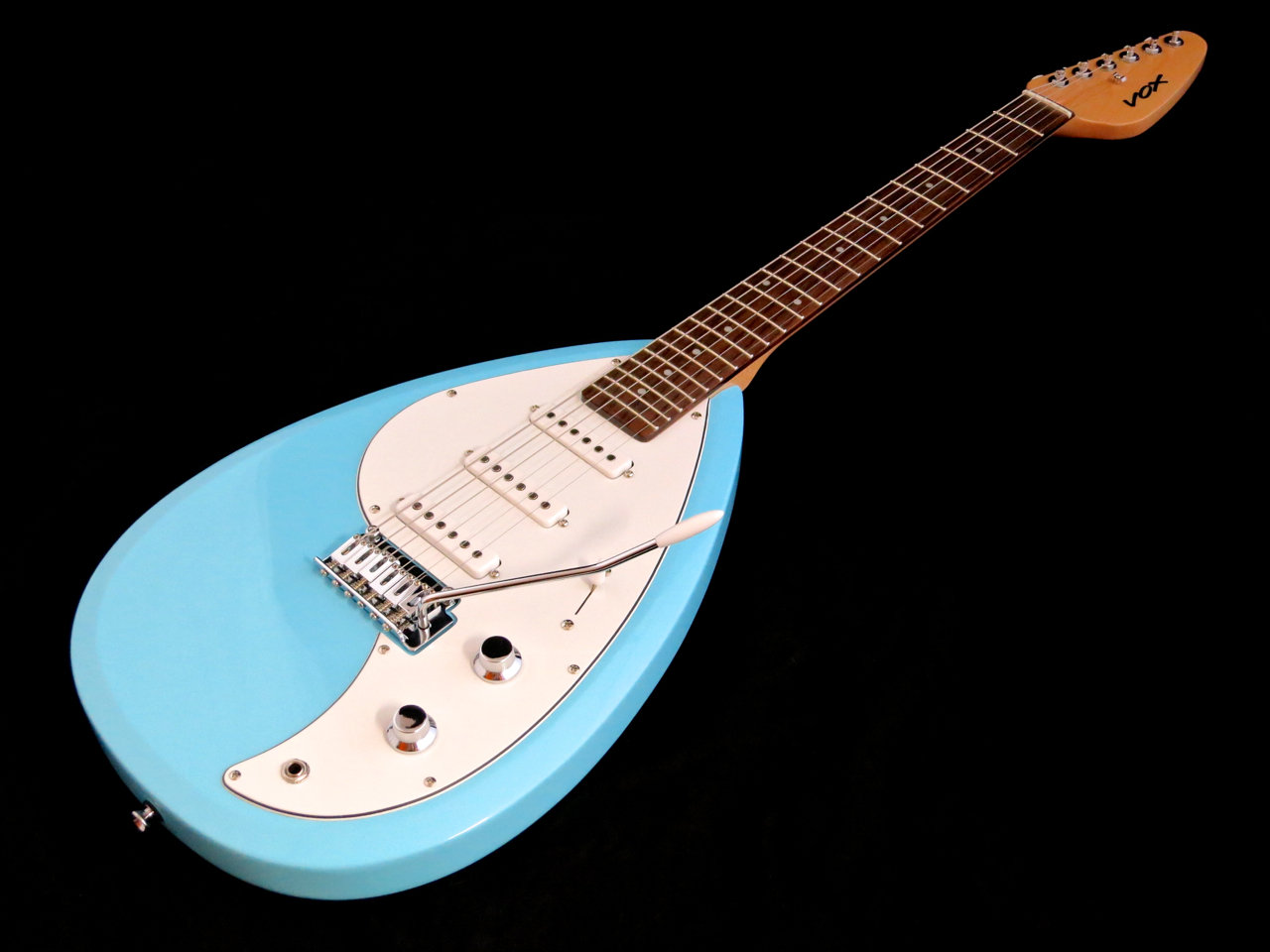
The Vox Mark III (current price in Finland approx. 355 €) sports a symmetrical body, which calls to mind old lutes or the Greek bouzouki.
This reissue comes with a short 22-inch scale (610 mm), making it an ideal beginner’s instrument.
The Teardrop is build from a basswood body and a bolt on maple neck. The fretboard is crafted from rosewood.
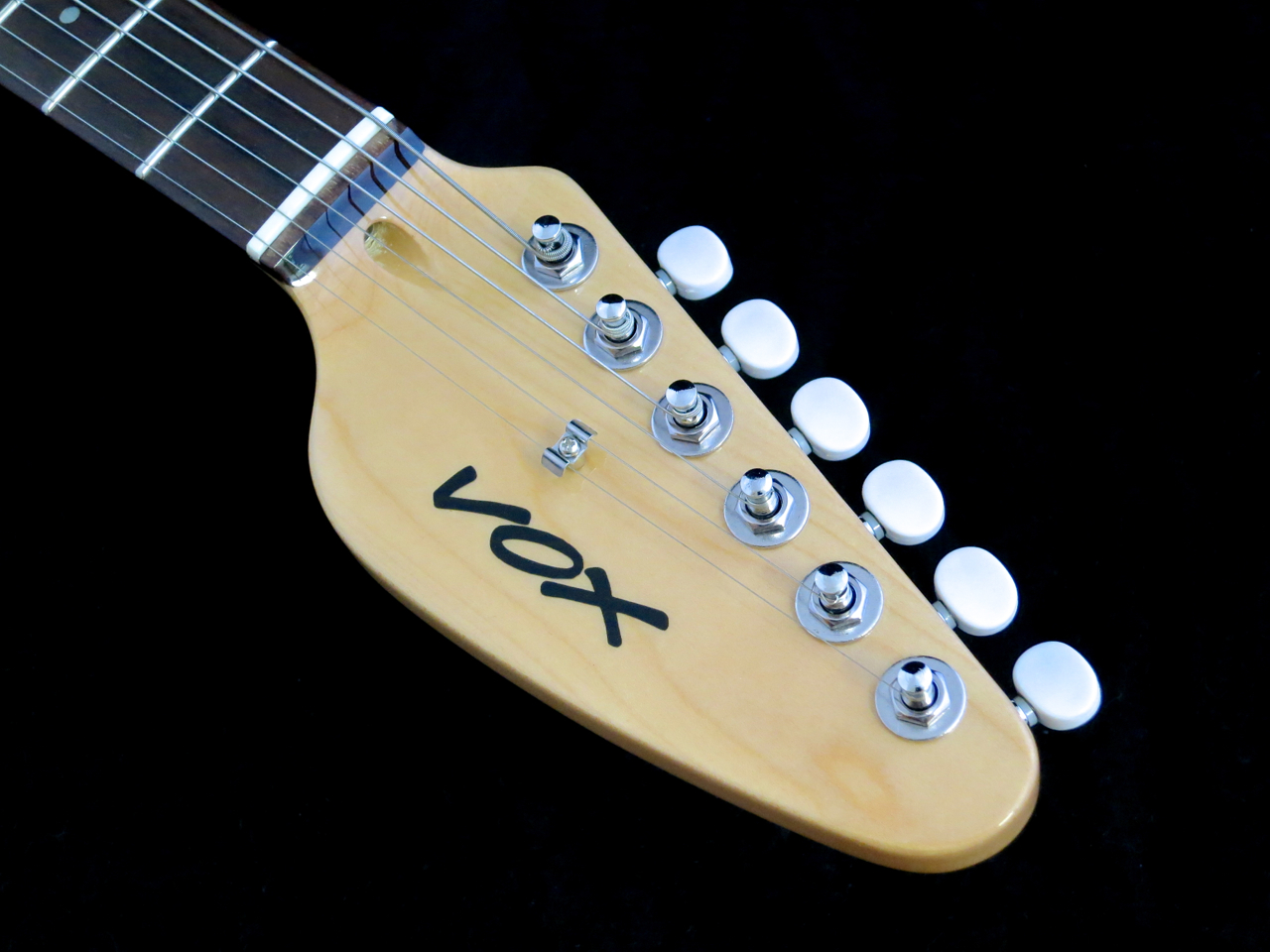
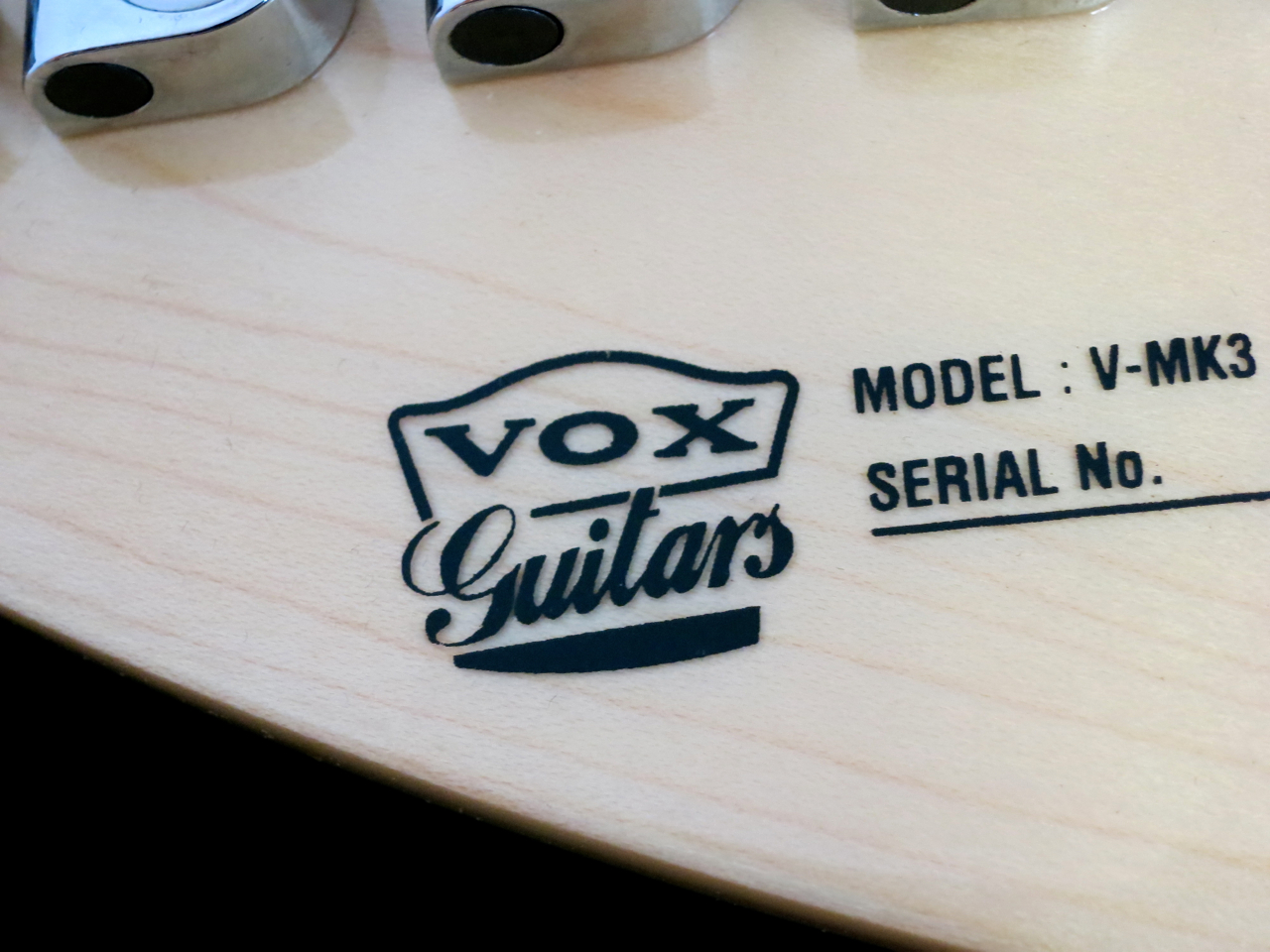
The new, smaller version of the legendary Vox-headstock cuts down on neck weight and thus improves the guitar’s balance.
The Mark III is equipped with a set of modern sealed tuning machines that sport off-white buttons.
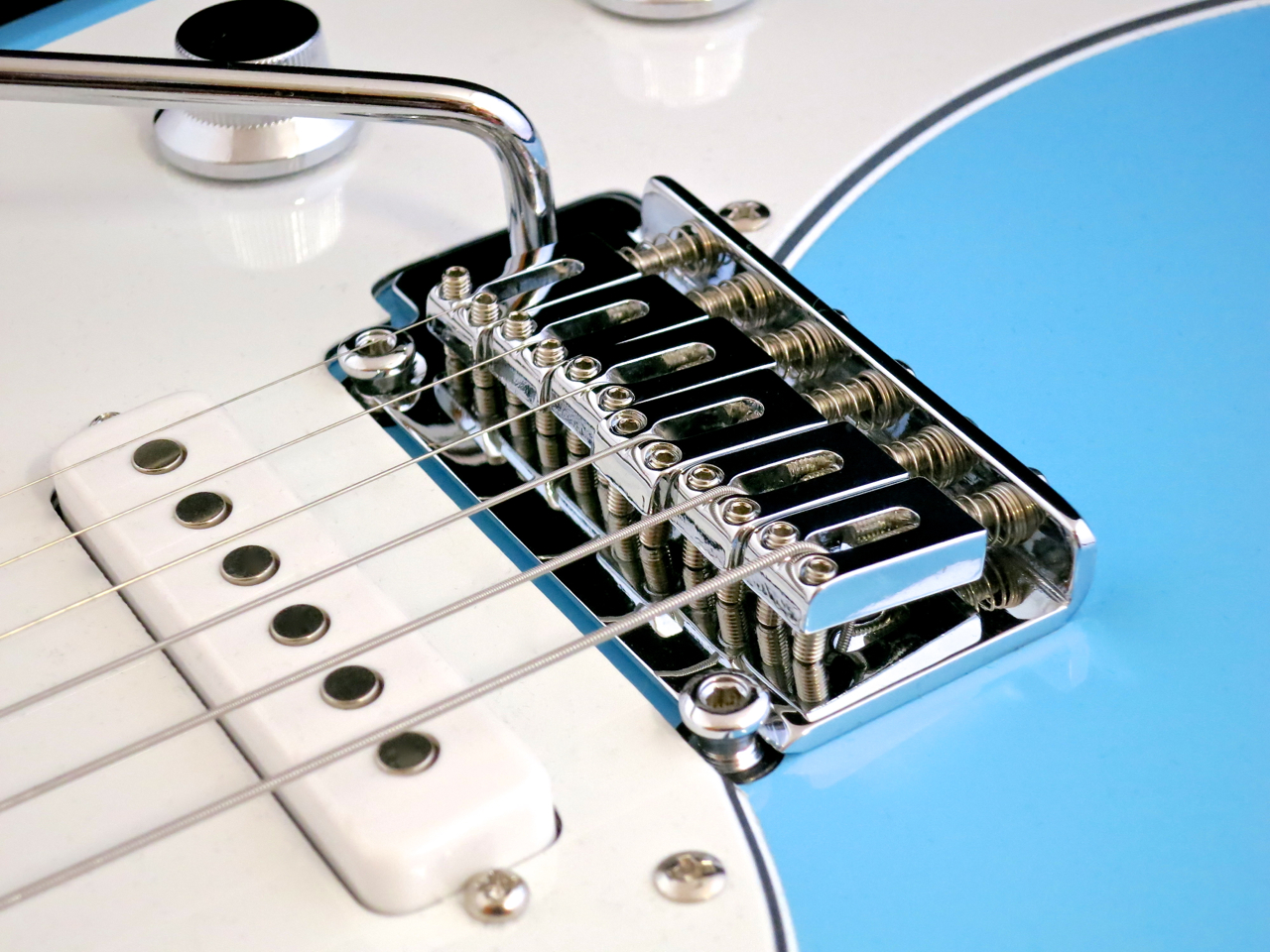
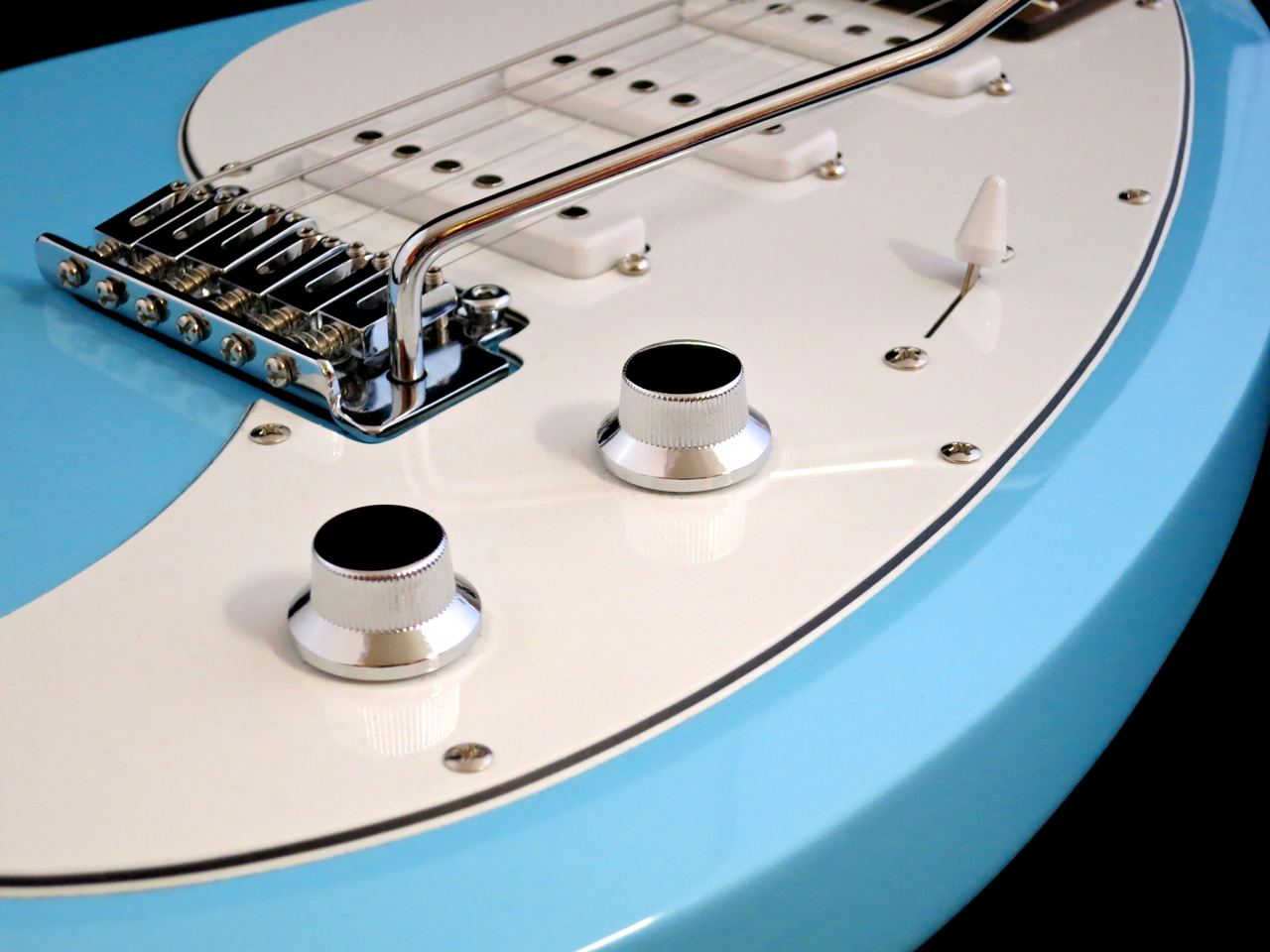
Both Voxes comes with a modern two-post vibrato bridge.
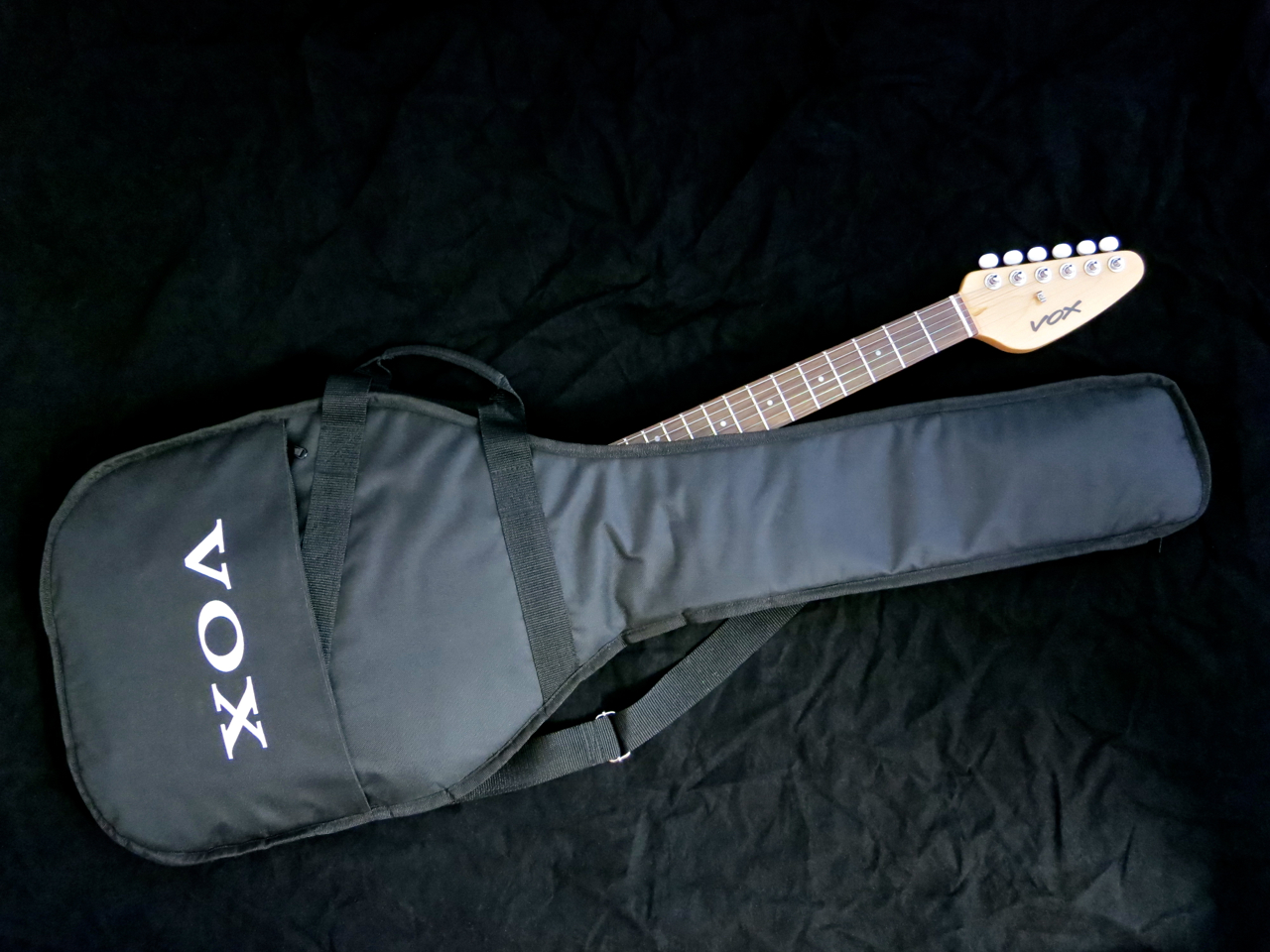
Three springs are factory-installed, but you can find a fourth spring in the gig bag, should you desire a firmer feel.
Vintage-snobs probably will scoff at the narrow tremolo block used in this vibrato. There are claims that this type of block diminishes sustain, but on the other hand Floyd Rose systems also use narrow blocks and nobody’s complaining.
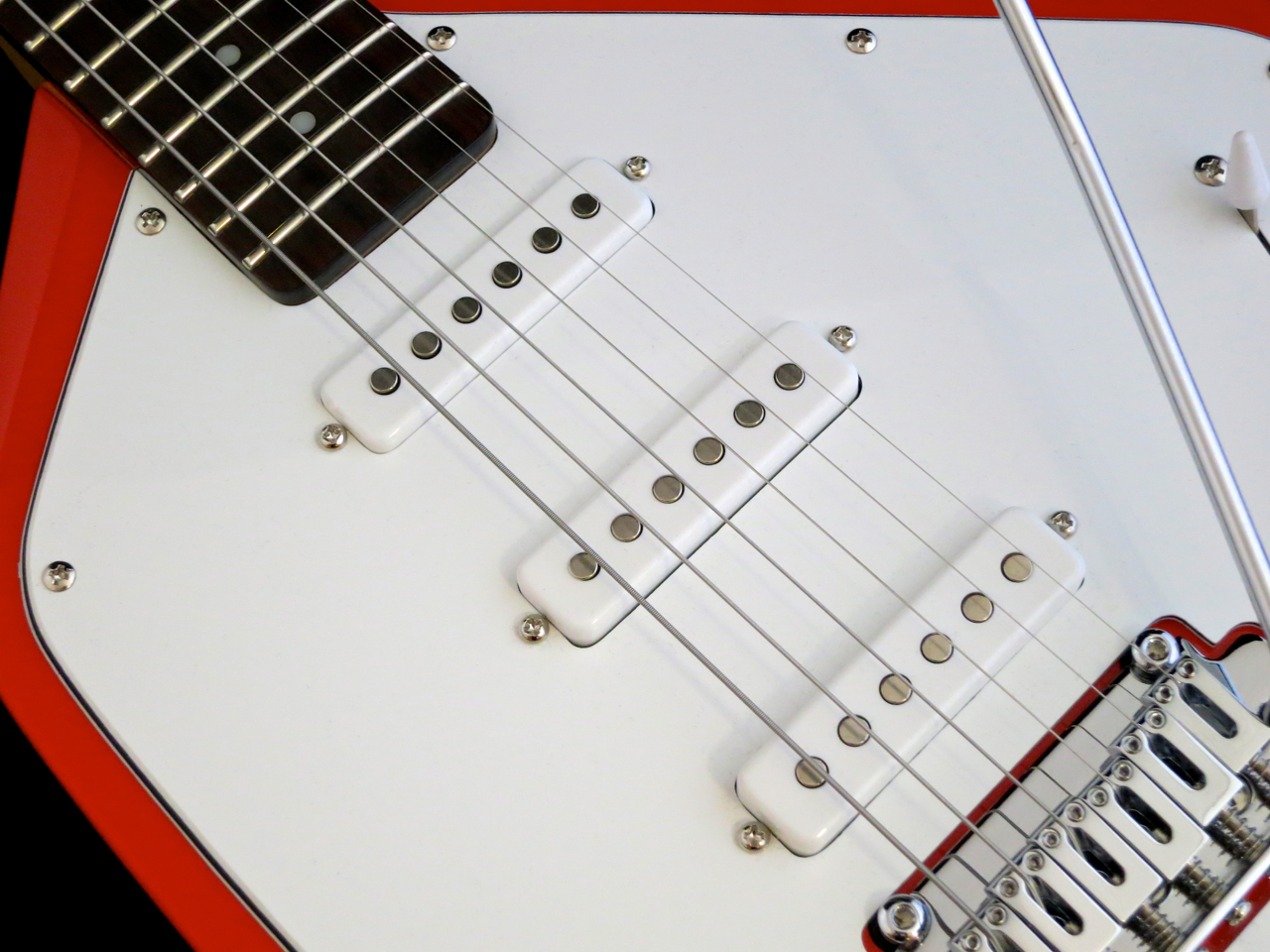
There are three singlecoil pickups mounted to the three-ply scratchplate, meaning we’re in for a nice, sprightly vintage tone in all likelihood.
The traditional passive electronics comprise a five-way switch, as well as a master volume and a tone control.
****
The basic ingredients for the angular Vox Mark V (current price in Finland approx. 355 €) are virtually the same as in the Mark III.
There’s a rib cage contour in the Phantom’s basswood body, too.
Both Mark-models feature gloss-finished maple necks with truss rod access at the headstock.
The vibrato bridge is surrounded the large pickguard of the Mark V.
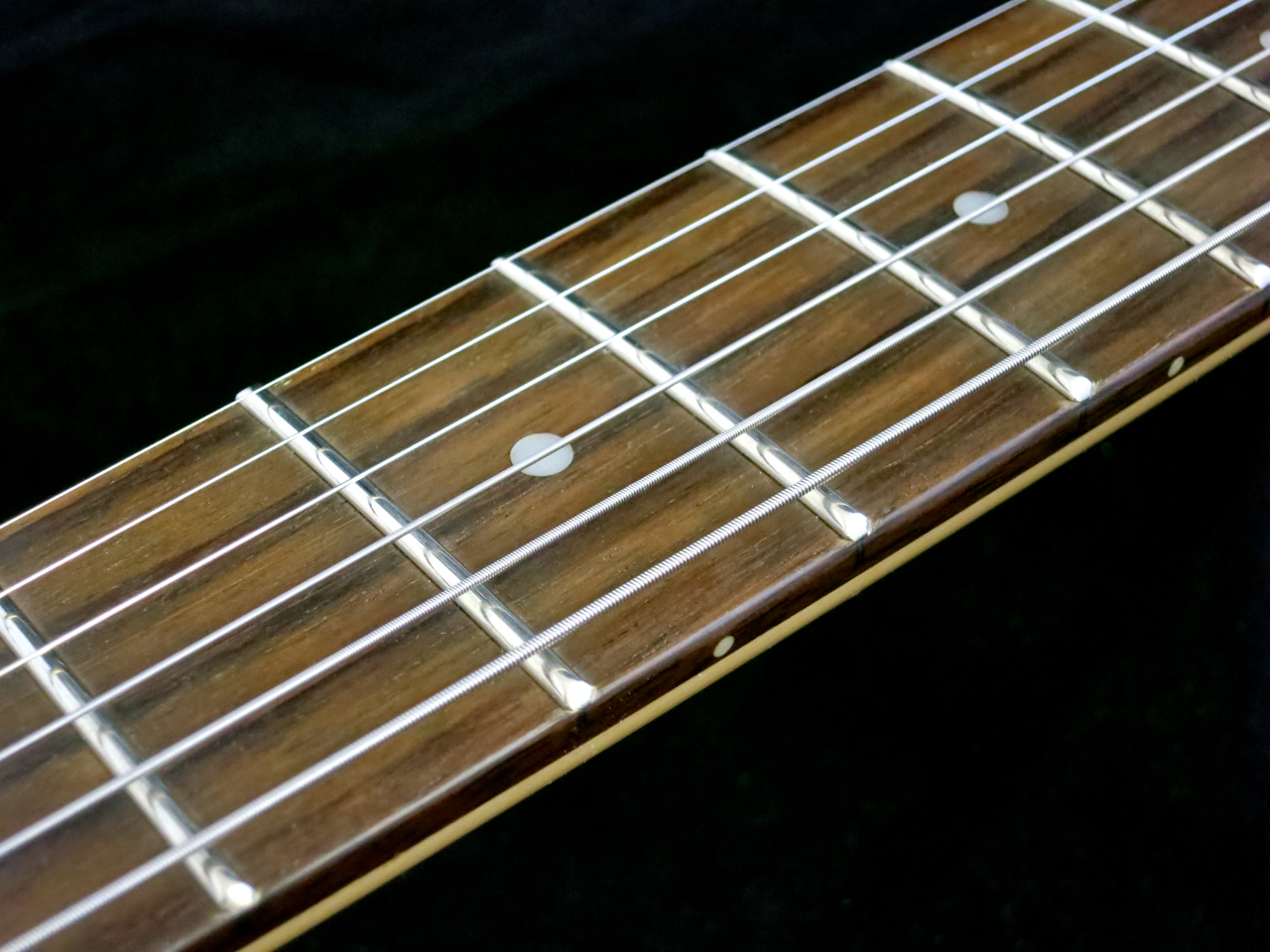
Both Voxes display very decent fretwork, which isn’t always a given in this affordable price bracket. The frets have been polished to a gleam and all ends have been rounded off carefully.
Vox Mark V Phantom is equipped with the same pickups…
…and the same controls as the Mark III Teardrop.
Both Vox Marks are sold with a nice gig bag!
****
The Vox Mark III is a very compact electric guitar, with our test sample also being nicely light in weight. Due to its very rounded body the Terdrop probably isn’t the most comfortable ”sofa guitar”, but on a strap everything feels hunky dory.
The whole vibe is quite reminiscent of, say a Fender Mustang, no doubt because of the Mark III’s short-scale, gloss-finished neck with its round D-profile. With the factory set of 010-gauge strings bending is very effortless. Our test sample’s very low – but buzz free – action (E: 1,6 mm/e: 1,3 mm) pays testament to Vox’ workmanship. Used in moderation the vibrato works decently, but don’t expect Floyd Rose-style return to pitch.
The Vox Mark III rings very nicely with a fresh and firm acoustic voice.
The clean tones of the Vox Teardrop works great in a Sixties-style poppy, jangly context or for funky workouts:
Add some overdrive for some nice, sinewy vintage Rock-sounds:
****
The Vox Mark V doesn’t seem to want to fit in you lap – it takes a while to get comfortable, when playing sitting down. Our lightweight test samples’ strapped-on balance proved to be excellent, though.
In most respects the Phantom feels very similar to the Mark III, with its comfortable, vintage-style neck. Straight out of the gig bag our test sample’s intonation was a bit fruity on a couple of strings, but this was corrected in no time with the correct screwdriver. The action was set quite low (E: 1,6 mm/e: 1,1 mm) on the Mark V, too. And again, as with the Teardrop, the Phantom still rang nice and true without any rattling. Well done, Vox! Should you prefer a slightly firmer feel, I’d suggest moving up to a 011-gauge string set.
Both Voxes sound almost indentical – acoustically, as well as amped up.
This is the Mark V Phantom’s clean delivery, played through a small Marshall combo:
I really like the gritty and slightly rude Rock-sounds you can get from the Mark V:
****
Due to their unconvetionally-shaped bodies, Vox’ Mark range always runs the slight risk of being regarded as mere ”poser guitars”, better suited to music videos that to actually making music.
This is far from the truth, though, because these new versions of the Mark III and Mark V really deliver nicely vintage-tinged sounds for the Pop, Beat, Blues, and Classic Rock genres. In view of their pocket-friendly prices, quality workmanship, quirky looks and great sounds, I can only applaud Vox for bringing back the classic Teardrop and Phantom models. Try one!
Italia Guitarsin soittimet ovat viimeinkin rantautuneet Suomeen!
Suomalaisille Italiat ovat uusi tuttavuus, vaikka firman kitaroita on myyty Keski-Euroopassa jo yli 15 vuotta. Italia Guitars on nimekkään eteläkorealaisen Mirr Music -soitintehtaan ja maineikkaan englantilaisen kitaragurun Trev Wilkinsonin yhteistyön hedelmä. Wilkinson on monessa liemessä keitetty kitara- ja bassosuunnittelija, jonka ansioluettelosta löytyy esimerkiksi sellaiset kohteet kuin Wilkinson-vibratalla ja -rullasatula, Vintage by JHS -kitarat ja -bassot, sekä miehen oma Fret-King-soitinmerkki.
Italia Guitarsin peruskonsepti on luoda laadukkaita omintakeisia kitaroita, jotka muistuttavat 1960-luvun kunnianhimoisia eurooppalaisia luomuksia, mutta joilla on samalla nykypäivän soitettavuus ja luotettavuus.
Italia-soittimia tuo maahan espoolainen yritys nimeltään R-JAM Group.
****
Italia Maranello Classic (hinta noin 640 €) on valmistajan tunnetuin malli, ja se on löytänyt tiensä jopa brittiläisen lauluntekijän ja slidekitaristin Chris Rean käsiin ja sydämeen.
Esikuvana on selvästi toiminut Hagströmin ensimmäinen lankkukitara P46, joka myytiin Pohjois-Amerikassa myös Guyatone-brändin soittimena. Maranellon ulkonäkö vastaa pitkälti Hagström-klassikkoa, mutta Italian sähköosasto on selvästi virtaviivaistettu.
Maranello Classic ei ole mikään seinäkukkanen, vaan tästä prameasta luomuksesta saa aimo annoksen kyyskytluvun estetiikkaa!
Agathis-rungon (kauri-puu) kaareva etupuoli komeilee kultaisella metallivärillään, kun taas sen takapuoli – samoin kuin kitaran vaahterakaula – on saanut ylleen helmiäispäällystyksen.
Kaula on kiinnitetty runkoon kahdella ruuvilla, jotka jäävät pitkänomaisen koristelevyn alle piiloon.
Lavanpuoleinen pääsy ryhtyrautaan ja grafiittipitoinen satula ovat uudenaikaisia parannuksia…
…samoin kuin Maranellon kapseloidut virittimet.
Maranello Classicin otemerkit tehdään helmiäismuovista. Reunalistoitettuun palisanteriotelautaan on asennettu 22 medium-jumbo-kokoista nauhaa.
Italia-kitaran talla on nykyaikainen tune-o-matic-talla Wilkinsonin tuotevalikoimasta. Metalliholkkien päälle asennettu kieltenpidin taas on lainattu suoraan puoliakustisten Gibson- ja Epiphone-kitaroiden trapetseista.
Maranello Classicin mikrofonivarustus koostuu kahdesta Wilkinson WVC -humbuckerista, jotka ovat Trev Wilkinsonin oma versio legendaarisesta PAF-mikrofonista.
Maranellossa kitaran koko elektroniikka mikrofoneineen päivineen on asennettu isokokoiseen muovilevyyn (tai enemminkin -laatikkoon), joka on kiinnitetty runkoon puuruuveilla ja puristusjousilla.
Idea tulee alkuperäisesta Hagström P46 -soittimesta. Italia Guitars on soveltanut tätä useassa muussa kitaramallissa, joissa käytetään soikeata muovilevyä säätimien, valintakytkimen ja lähtöjakin kiinnittämiseen.
****
Italia Rimini 6 (hinta noin 645 €) on hyvin Rickenbacker 360 -mallia muistuttava ilmestys, olematta kuitenkaan kyseisen mallin suora kopio.
Rimini 6:n puoliakustinen runko tehdään täyspuisesta agathiksesta, johon jyrsitään isoja taskuja rungon takapuolelta. Lopuksi runko suljetaan umpipuisella saarnilevyllä.
Testisoittimen rungon ja lavan etupuolet on päällystetty haitarimaisesti ”mustalla” helmiäispinnoitteella (engl. pearloid tai perloid), mutta Riministä saa myös versioita tavallisilla väri- tai sunburst-viimeistelyillä (siis: ilman perloidia).
Riminin takapuolella taas näkyvät puun syykuviot kauniin mustan liukuvärityksen läpi.
Tämän mallin kaula on veistetty vaahterasta, ja se liitetään runkoon perinteisellä liimaliitoksella.
Italia Rimini 6:n lapa viittaa sekin vahvasti Rickenbackerin suuntaan:
Legendaarisen yhdysvaltalaisen merkin 12-kielisissä kitaroissa käytetään hyvin kompaktia lapamallia, jossa peruskielien virityskoneistot asennetaan tavalliseen tapaan viritystappeja ylöspäin (niin kuin Riminin bassopuolella) ja oktaavikielien virittimet taas on asennettu sivuttain (niin kuin Riminin diskanttipuolella).
Riminin nykyaikaisissa virittimissä näkyy Italia Guitarsin I-logo.
Yksinkertaisia, mutta kauniita – suorakulmiot helmiäismuovista yhdistettyinä pyöreiden abalone-merkkien kanssa.
Myös Rimini 6 -kitarassa käytetään nykyaikaista tune-o-matic-tallaa.
Näyttävä kieltenpidike lisää soittimeen vielä pikkuannoksen blingiä.
Riminin kahdelta Wilkinson WMC -minihumbuckerilta voi varmasti odottaa perushumbuckeria raikkaampaa soundia. WMC-mikrofoneissa käytetään Alnico V -magneetteja.
Master volume, master tone, sekä kolmiasentoinen vipukytkin – siinä Italian virtaviivaistettu elektroniikkakattaus.
Muovilevyn poistamisen jälkeen paljastuvat Italia Guitarsin siisti työ ja laadukkaat osat.
****
Italian Maranello Classic tuntuu ulkomitoiltaan ja painoltaan melko samansuuntaiselta kuin keskiverto-Les Paul, vaikka Maranellon mensuuri onkin hivenen verran pidempi (63,5 cm/25 tuumaa). Soittotyylistä riippuen mikrofonikytkin voi tuntua – ainakin aluksi – olevan hieman plektrakäden tiellä, mutta ajan kanssa siihen varmaan tottuu.
Tykkäsin erittäin paljon kaulan lihaksikkaasta D-profiilista, joka onnistuu olemaan tuhti, muttei kömpelö.
Jokainen Italia-kitara tarkistetaan ja säädetään Espoon Guitarworxissa, ennen kuin soitin lähtee R-Jamin varastolta. Maranello Classic saapui siis testiin huippukunnossa: tatsi oli säädetty hyvin mukavaksi (E: 2,0 mm/e: 1,4 mm) ja kitara soi myös akustisena täysin ilman minkäänlaista ylimääräistä räminää.
Maranellon akustisessa soundissa on tietty avoimuus ja mukavan ontto klangi, joka johtuu hyvin todennäköisesti isosta mikrofoni- ja elektroniikkakolosta, sekä soittimen muovisesta kannesta.
Tämä puoliakustinen vivahde säilyy myös jonkin verran Maranello Classicin vahvistetussa soundissa, mikä lisää sointiin sopivasti avoimuutta ja eloisuutta. Alnico-magneeteilla varustetut Wilkinson WVC -mikrofonit soivat vintage-tyylisen lämpimästi ja maltillisella teholla.
Nyky-Metallin ja -Hard Rockin high-gain-soundeihin tämä Italia ei ehkä ihan sovi, sillä Maranellon suuri, hieman resonoiva muovikansi lisää luonnollisesti humbuckerien kiertoherkkyyttä, mutta se ei tunnukaan olevan tämän soittimen kohderyhmä. Sellaiseen klassiseen Blues-, Rock-, Jazz- ja Pop-menoon tämä kitara kuitenkin sopii kuin nenä päähän!
****
Vau, mikä kevyt ja mukavan kompaktin-tuntuinen kitara! Rimini 6 istuu hyvin mukavasti soittajan kehoa vasten ja roikkuu loistavassa tasapainossa hihnassa.
Kaulan ovaali C-profiili, Riminin Rickenbacker-tyylinen mensuuri (62,8 cm/24,75 tuumaa), sen medium-jumbo nauhat, sekä testiyksilön loistava trimmi (E: 1,9 mm/e: 1,3 mm), johtavat erittäin nopeaan ja mukavaan soittotuntumaan, jossa soittimesta todellakin tulee kitaristin luonnollinen jatke.
Rimini 6:n akustinen soundi on erittäin tuore ja avoin.
P-90-mikrofonien lailla myös minihumbuckereita voisi kuvailla Fender-tyylisen yksikelaisen ja täysikokoisen humbuckerin täydelliseksi kompromissiksi. Mutta toisin kuin P-90, joka on yksikelainen, minihumbucker-mikrofoni ei poimi elektromagneettisia häiriöitä ympäristöstään.
Tämän Italian vahvistettu ääni on mukavan raikas ja kiinteä, mutta se pysyy samalla täysin vapaana häiritsevästä piikkisyydestä. Loistavien Wilkinson-mikrofonien terve signaaliteho mahdollistaa autenttisien 1960-luvun soundien (Beatlesien, Byrdsien ja varhaisen Whon jalanjäljissä) lisäksi myös huomattavasti rosoisempaa menoa (Paul Weller–Peter Buck-akselilla).
****
Testin perusteella voi todeta, että Italia Guitarsin Maranello Classic- ja Rimini 6 -malleissa peloton kuuskytluvun muotoilu ei seiso hyvän soitettavuuden tai soundin tiellä. Molemmat kitarat ovat erittäin mukavia, laadukkaita ja hyvin soivia nykyaikaisia soittimia, joihin mielestäni kannattaa tutustua.
****
Italia Guitars – Maranello Classic + Rimini 6
Maranello Classic – noin 640 €
Rimini 6 – testattu Perloid-versio noin 645 €, perusversio noin 615 €


















































 Kitarablogi.com – Finland's premier Guitar and Bass blog
