Kitaraporno: Kramer Pacer Custom II – 1980-luvun Superstr*to

Kramer Pacer on hyvä esimerkki 1980-luvun syntyneestä Superstr*to kitaralajista, ja sillä on kaikki tyypilliset perusominaisuudet:

Stratocaster-tyylinen runko, Gibson Explorerista lainattu lätkämailan muotoinen lapa, tallahumbuckeri, sekä Floyd Rose -vibra.

VintageKramer-sivuston mukaan tämä Pacer Custom II on American-sarjan kitara vuosilta ’87 –’89.

Alun perin (1970-luvun loppupuolella) Kramer-kitaroiden erikoisuus oli alumiinista tehty kaula. 1980-luvun loppupuolella firma oli siirtynyt kuitenkin takaisin perinteisiin puukauloihin. Kaulat ja rungot ostettiin yhteistyökumppaneilta – Pacer Custom II:n tapauksessa Japanista ESP:n tehtaalta – mutta soittimet koottiin USAssa käyttäen firman omaa elektroniikkaa sekä aitoja Floyd Roseja.

Sulava runko on tässä kitarassa poppelista, kaula vaahterasta ja otelauta palisanterista.

Tässä versiossa lapa on Kramerin teräväkärkinen malli. Palkkimainen alasvedin pitää kielet tiukasti lukkosatulaa vasten.

Paksut nauhat ja loiva otelauta kuuluvat nekin Superstr*toon – silloisen sankarikitaristin työkaluun.

Kaula on rakennettu kolmesta pitkästä vaahterapalasta…
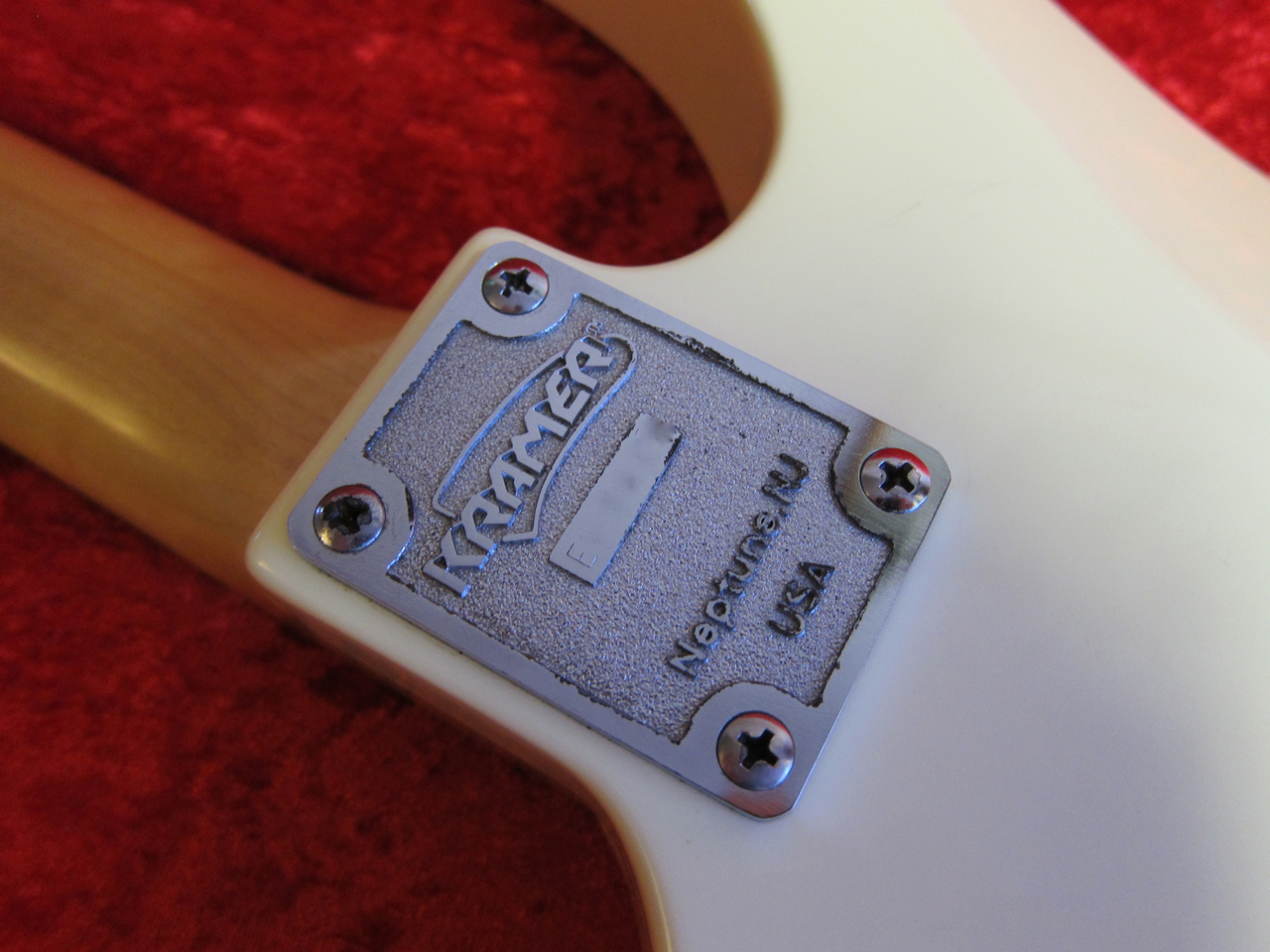
…ja se liitetty runkoon perinteisellä tavalla ruuvaamalla.

Vaikka Floikalla varustetussa kitarassa lavan virittimet käytetään ani harvoin, ovat nekin Pacer Custom II:ssa aitoa laatutavaraa saksalaisvalmistajalta Schaller. USA-Floydin kuusiokoloavaimet on hyvä pitää aina mukanaan, sillä ilman niitä kielten vaihtaminen ei onnistuu.

Custom II:ssa on kaksi yksikelaista mikrofonia sekä yksi humbucker tallan lähellä.

Säätimet toimivat kuten normi-Stratossa – master volume, kaulan tone ja keskimikrofonin tone-säädin. Minikytkimellä saadaan kolme erilaista kytkentävaihtoehtoa tallamikrofonista: perinteinen humbucker (sarjakytkentä), yksikelainen (vain tallan puoleinen kela) sekä kirkkaampi humbucker (rinnakkaiskytkentä).

Tällaisia soundeja saa vintage-Kramerista:

Kramer Pacer Custom II – puhdas

Kramer Pacer Custom II – särö

****

Tämä kitara on mukavan kevyt soitin. Kaulan profiili on silloiselle vauhtikitaralle tyypillinen hyvin laakea ”D” – mikä on minulle hieman liian ohut ja leveä – mutta tämä Pacer on loistavassa trimmissä. Kramer Pacer Custom II on vanha laatukitara – ulkonäkö voi olla hieman vanhentunut, mutta sen soitettavuus ja soundi ovat vielä täysin ajankohtaiset.

****

Kiitos Tommi Posalle, jolle tämä Kramer kuuluu!

Review: Tanglewood TW1000N – English summary

****

Tanglewood Guitars combines British design with quality luthiery from Asia for a winning value-for-money-mix. Especially the brand’s acoustic guitars have won over many fans.

The Tanglewood TW1000N (current price in Finland: 721 €) is a real Dreadnought-beauty from the company’s Sundance-series, and features a solid spruce top mated to a laminated back and sides made of rosewood.

The bound headstock looks fashionably understated, sporting a rosewood veneer, as well as the company logo in abalone.

The nicely finished top nut is genuine bone.

A volute strengthens the area where the neck changes into the headstock. The gold-coloured tuners are sealed Grover Rotomatics.

The TW1000N’s neck is a one-piece mahogany affair, save for a small glued-on bit for the neck heel.

Tanglewood have added a nice little detail for the gigging guitarist – a second strap button.

The TW1000N has been generously endowed in the looks stakes, but always with good taste. We find abalone hexagons inlaid into the nice-looking rosewood fretboard, as well as herringbone binding around the guitar’s top.

Black and white rings coupled with cleanly inlaid abalone make up the soundhole rosette.

The bridge is Tanglewood’s own design, crafted from a fine piece of rosewood on the test sample. The compensated saddle is made from genuine bone.

****

It’s not hard to fall in love with the Tanglewood TW1000N – this guitar possesses timeless beauty, is easy to play and sounds magnificent!

The neck profile is a very friendly, medium-depth ”C”, with the satin finish and the well-dressed medium frets doing their bit to keep the feel comfortably modern.

As is the case with many D-sized guitars, the TW1000 has a nice middle-of-the-road set-up, with a neck width of 44 mm at the nut and a string spacing of 53 cm (E–e), working equally well for strummers as well as pickers.

With the factory-supplied Elixir Nanoweb Light 12–53 -strings the Tanglewoodin sounds well-rounded and warm, with clear top-end definition and a dose of sparkle.

The dynamic range on offer is impressive and the guitar projects well. There’s a good whack of attack on offer, when you dig in with a plectrum, while the sound stays nicely focussed and transparent when fingerpicked.

Here are two examples recorded using a Zoom H1:

Tanglewood TW 1000 N – fingerstyle

Tanglewood TW 1000 N – strumming

In the TW1000N’s case you don’t pay through the nose for perceived status or the name on the headstock; with Tanglewood you get a great guitar for your hard-earned money.

****

Tanglewood TW1000N

Current price in Finland: 721 €

Finnish distributor: Musamaailma

****

Pros

+ workmanship

+ neck profile

+ playability

+ sound

+ value-for-money

Testipenkissä: Tanglewood TW1000N

****

Tanglewood-kitaroissa yhdistyy brittiläinen muotoilu ja laadukas aasialainen työnjälki. Etenkin firman akustiset kitarat ovat saaneet laajasti kiitosta.

Tanglewood TW1000N (721 €) on varsin näyttävä Dreadnought firman Sundance-sarjasta. Kitaran kansi on valmistettu kokopuisesta kuusesta, kun taas kopan pohja ja sivut ovat palisanterivaneria.

Reunalistoitettu viritinlapa on päällystetty palisanteriviilulla, johon on kauniisti upotettu firman logo. Muotoilu on klassisen hillitty ja tyylikäs.

Sulavasti muotoiltu satula on aitoa naudanluuta.

Timantinmuotoinen paksunnus kaulan ja lavan yhtymäkohdassa (engl.: volute) on lainattu suoraan Martin-kitaroilta. Volute pienentää tehokkaasti lavan murtumisvaara ja partantaa soittimen sustainia.

Laadukkaat suljetut virittimet ovat Grover Rotomaticit.

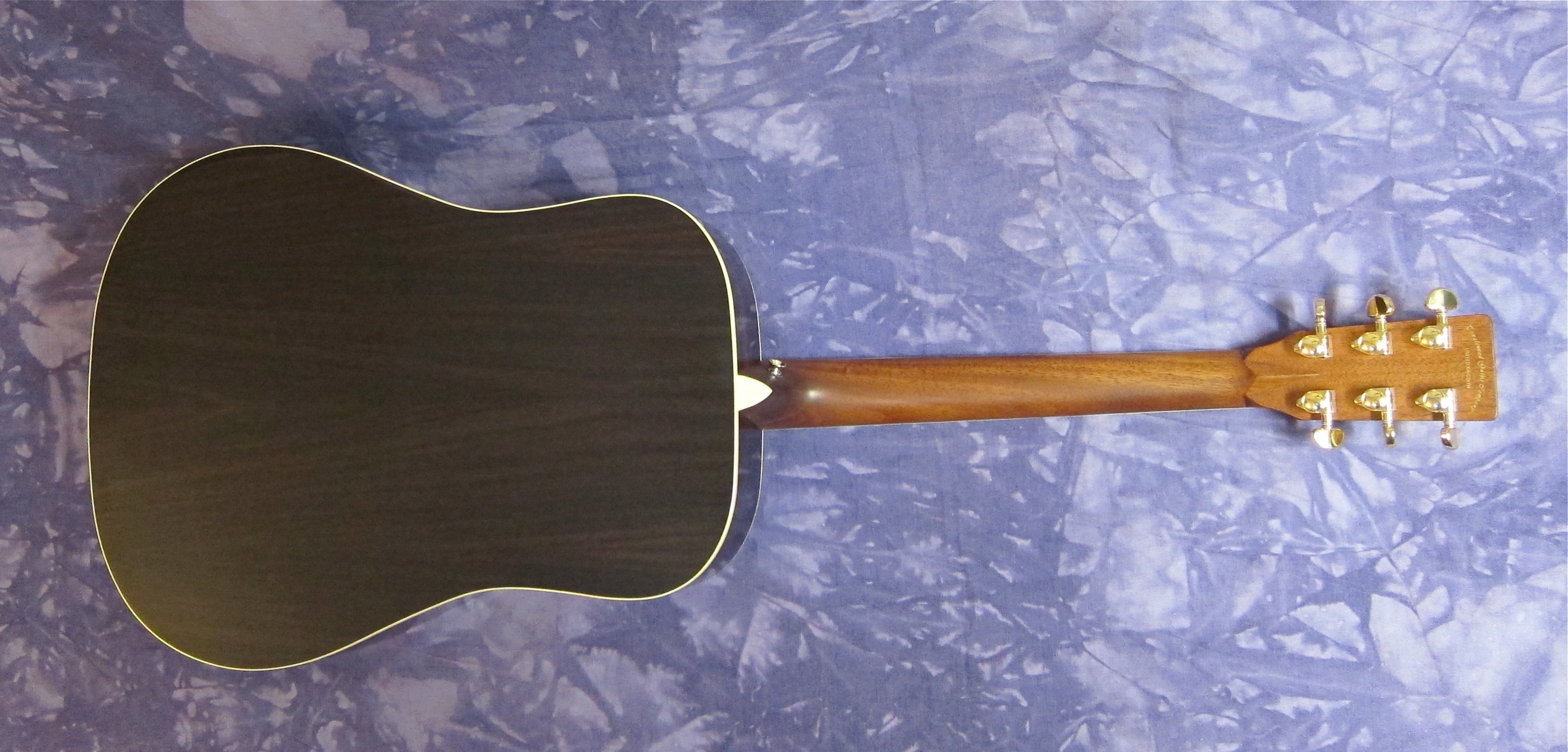
TW1000:n mahonkikaula on yksiosainen (!), lukuunottamatta yhtä pientä kaulan korossa käytettyä palaa.

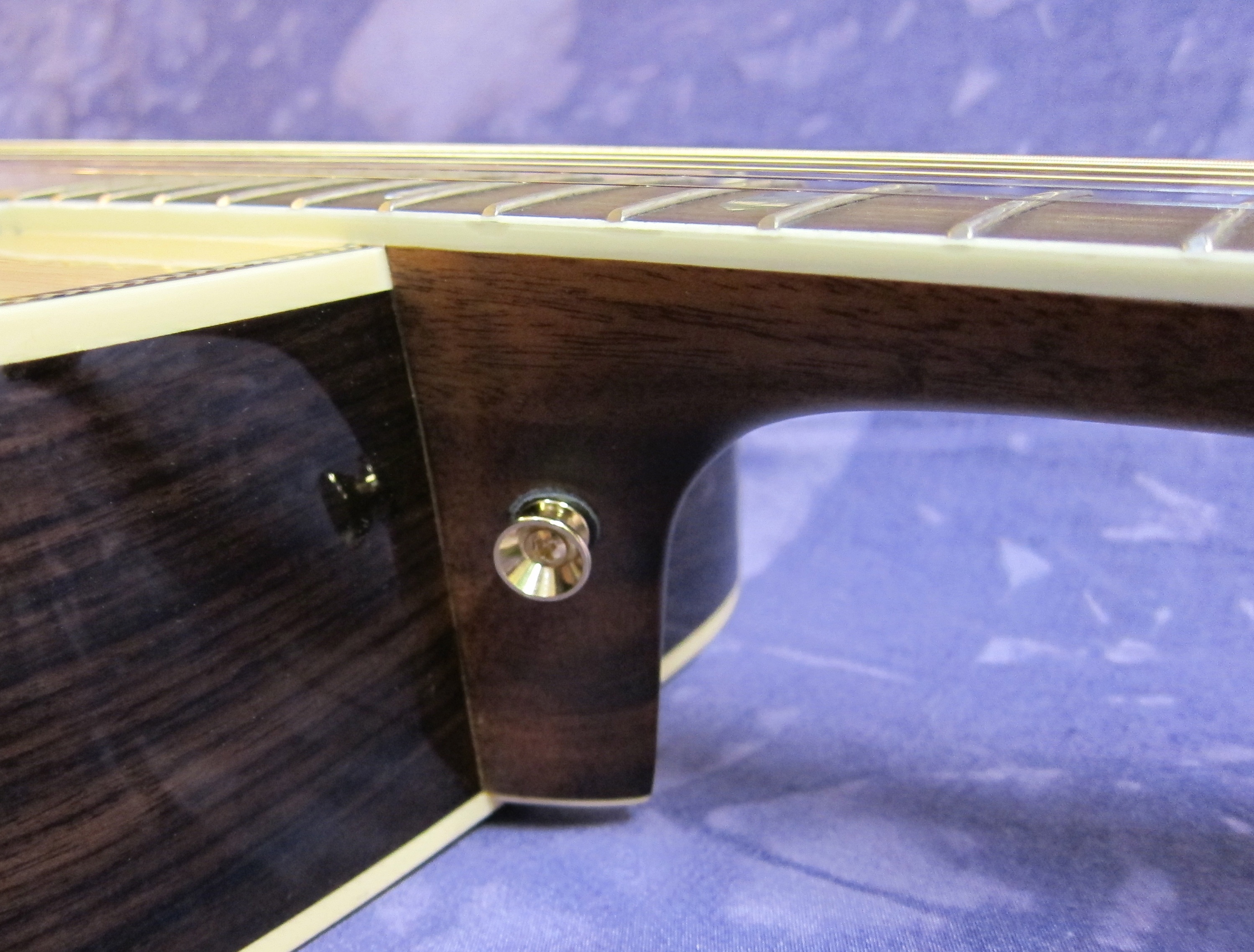
Joskus pienet yksityiskohdat ratkaisevat: Tanglewoodia voi soittaa ”suoraan laatikosta” myös seisten, koska kaulakorkoon on lisätty hihnatappi.

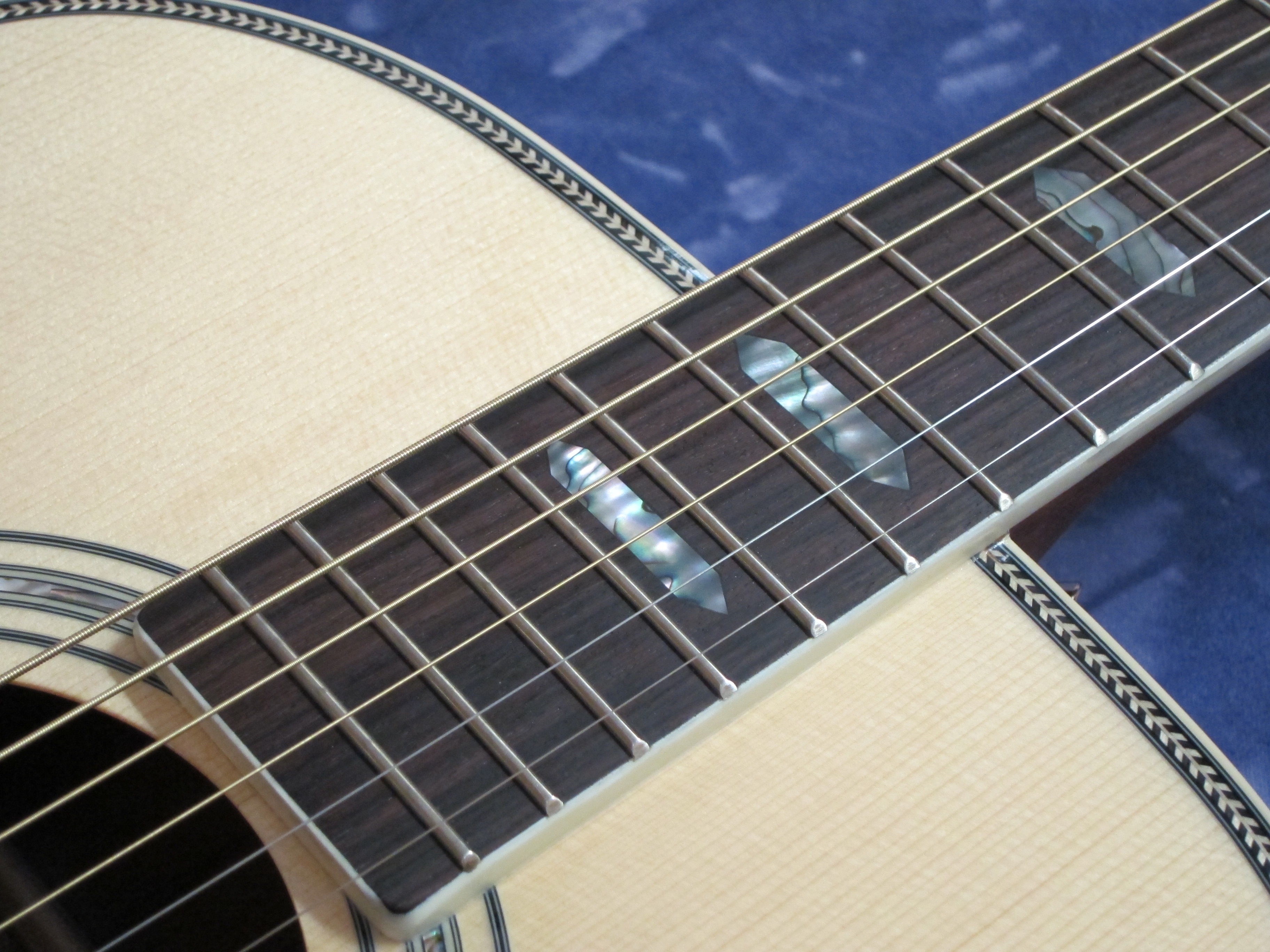
TW1000:n koristelu on toteutettu tarkasti ja erittäin hyvällä maulla. Reunalistoitettuun palisanteriotelautaan on upotettu värikkäitä kuusikulmioita aidosta helmiäisestä, kun taas kannen reunaa koristavat sekä vintage-tyylinen herringbone-kuvio että kermanvaalea muovilista.

Kaikuaukolle on suotu omaa koristelunsa, jossa yhdistyvät mustat ja valkoiset renkaat sekä pikkutarkasti toteutetut helmiäisupotukset.

Myös kitaran sisällä työnjälki on ilahduttavan siistiä. Kaulaliitos on perinteinen lohenpyrstöliitos. Soittimen sarjanumero löytyy mahonkiselta kaulablokilta.

TW1000N:n lentävää lintua muistuttava talla on veistetty palisanterista. Kielitapit ovat muovia, mutta kompensoitu tallaluu on valmistettu aidosta naudanluusta.

****

On erittäin helppo ihastua Tanglewood TW1000N:ään – kitara on ajattoman kaunis, mutta myös sen soitettavuus ja ääni ovat ensiluokkaisia!

Kaulan profiili on mukavan pyöreä ”C” maltillisella paksuudella. Kaulan mattaviimeistely ja soittimen keskikokoiset nauhat tekevät soittotuntumasta nykyaikaisen kevyen.

TW1000 kulkee monen Dreadnoughtin tapaan kultaista keskitietä, ja mahdollistaa 44 mm leveällä kaulalla (satulan kohdalla) sekä 53 cm kielietäisyydellä tallassa (E–e) kitaran ongelmattoman käytön sekä sormisoitossa että plektralla soitettuna.

Tehdasasenteisella Elixir Nanoweb Light 12–53 -kielisatsillaTanglewoodin soittotuntuma on kevyt. Kitaran ääni on hyvin lämmin, mehukas ja täyteläinen, mutta samalla selkeä, avoin ja raikas.

Dynamiikkaa on tarjolla rutkasti, ja kitaran sointi projisoi esimerkkillisesti. Soundi on mukavan eloisa: plektrasoitossa atakki on tarkka ja helmeilevä, eikä sormisoitossa soundillinen balanssi koskaan harhaile liian bassovoitoiselle puolelle.

Tältä TW1000N kuulostaa Zoom H1 -tallentimella äänitettynä:

Tanglewood TW 1000 N – sormisoitto

Tanglewood TW 1000 N – plektrasoitto

Jotkut kitarat ovat hyviä soittimia hintaansa nähden. Tanglewood TW1000N on yksinkertaisesti loistava teräskielinen kitara – piste!

TW1000N:n tapauksessa ei makseta ylimääräistä ”merkkibonusta” tai ”statuslisää”, vaan tässä saa erinomaisen kitaran koko rahan edestä.

****

Tanglewood TW1000N

721 €

Maahantuoja: Musamaailma

****

Plussat

+ työnjälki

+ kaulaprofiili

+ soittotuntuma

+ soundi

+ hinta

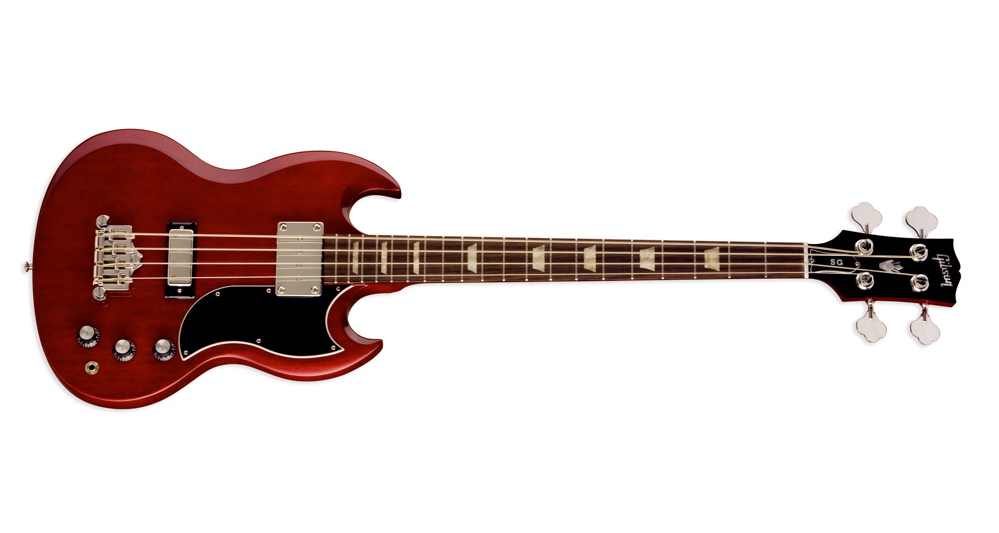
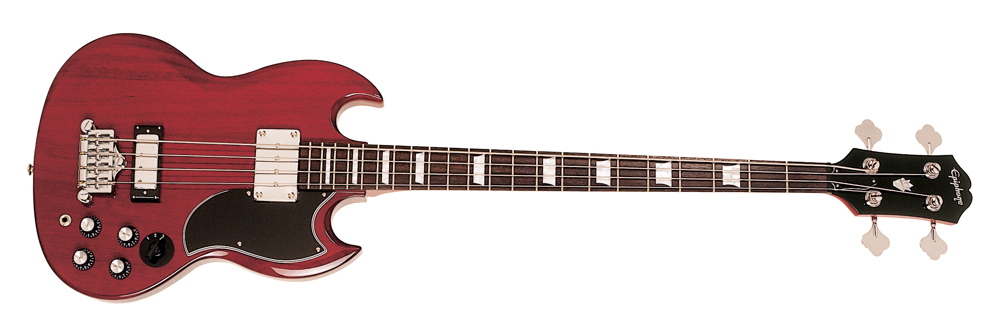
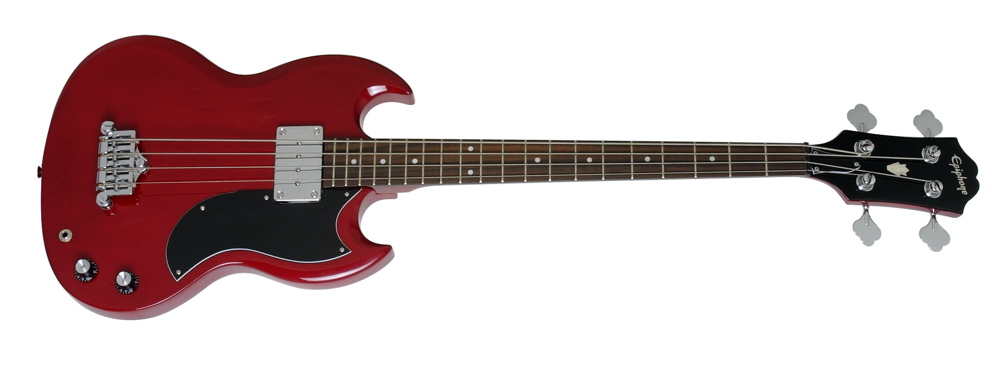
Classic Basses, part 5: The Gibson SG-bass (EB-0/EB-3)

I don’t quite know why, but the Gibson EB-3 has long seemed very exciting to me.

Probably, this is because it was the first electric bass I ever played.

I was only 14 years old, and played with architecture students – all the guys were much older than me. But I had two trump cards, which were my door into this band: a) I could play the piano and b) I was rather good at transcribing songs off records (or tape machines). The bassist was the band’s leader, and he played a genuine Gibson EB-3, which I was allowed to play a few times – wow!  🙂

In its day the Gibson EB-3 was the company’s most popular bass by far. The now legendary Thunderbird, for example, was a complete and utter flop, and only in production for six years (1963-1969). The EB-3, on the other hand, was in continuous production from 1961 all the way to 1979.

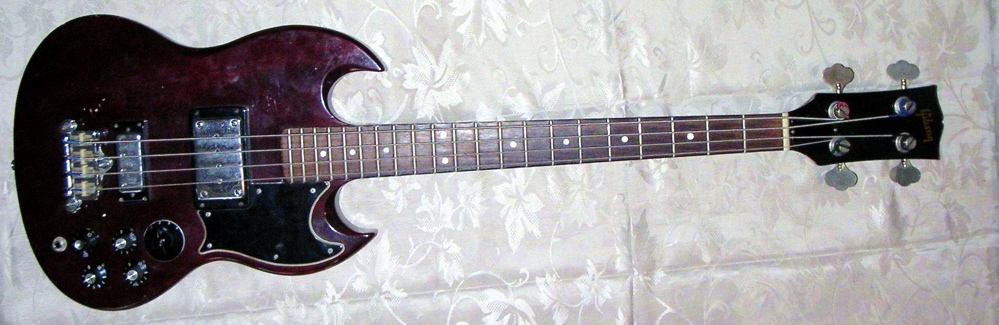
The EB-3 shared the same mahogany body, as its SG-cousins, and because it was a short-scale bass, the whole package was comfortably compact and light.

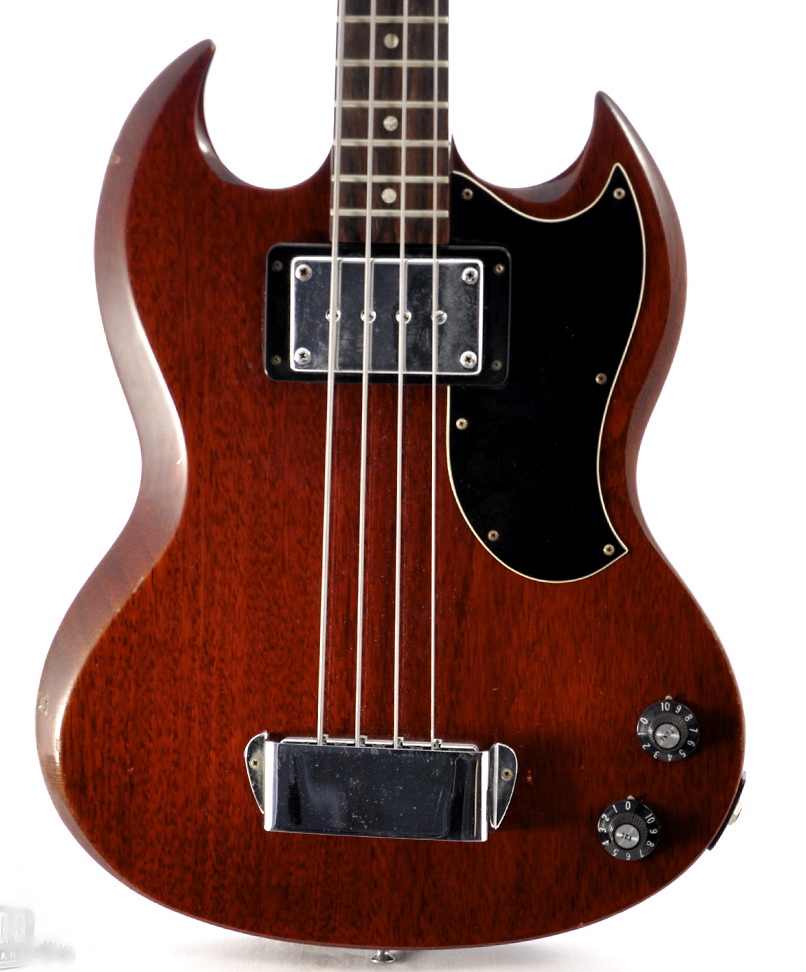
The neck pickup is a huge mother of a humbucker, with a much smaller companion mounted close to the bridge. The very first instruments had a black plastic cover on the front pickup, which was painted silver-metallic, but soon Gibson introduced a proper metal cover on the neck humbucker. The four-way rotary selector gives you each pickup on its own, both pickups together, as well as the rather strangled-sounding baritone-variant.

At the start of the Seventies the neck material was changed to maple for added strength, with the neck humbucker’s position moved to halfway between the end of the fingerboard and the bridge pickup.

During the years 1969-74 Gibson also offered a long-scale version – the EB-3L – most of which featured a spanish-style headstock (see below). Because of its longer neck the EB-3L was noticeably neck-heavy, though.

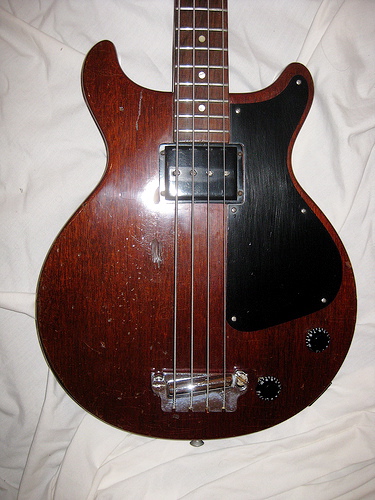
The EB-3’s kid brother is actually the model’s predecessor: the EB-0 was first introduced in 1959 with a double-cutaway Les Paul Junior -style body (see above).

In 1961 the EB-0 was changed to conform to the SG-look. In the mid-Seventies the EB-0’s single pickup was also moved closer to the bridge. From 1962 to ’65 a fuzz-equipped version was also available (the EB-0F).

****

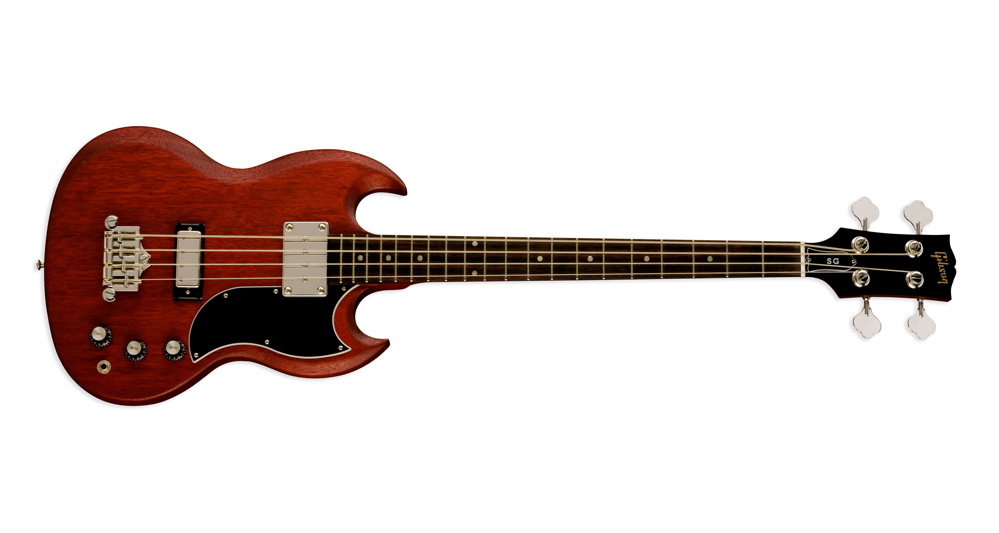
At the moment Gibson offers two USA-made SG-basses: The SG Standard Bass Faded comes in Gibson’s faded finish and sports dot inlays in the fretboard.  The SG Standard Bass is gloss-finished and features crown-style inlays. Both basses use a Jazz Bass -style volume-volume-tone-setup in place of the original four controls plus rotary switch.

****

Epiphone’s cost-conscious EB-3 is only offered as in a long-scale version.

The Epiphone EB-0 is an even more affordable, bolt-on short-scale bass.

****

The fat and flexible tone of the EB-3 (as well as the EB-0) was well received by many Blues and Rock bassists in the late-Sixties and early-Seventies.

The best-known EB-3-users have been The Cream’s Jack Bruce and Free’s bassist Andy Fraser.

Here are Gibson’s own sound examples for the SG Standard Bass:

bridge pickup

both

neck pickup

Gibson – syyllinen vai syntipukki?

Keskiviikona (24.08.2011) Gibson sai kutsumattomia yllätysvieraita – yhdysvaltalaiset ympäristöviranomaiset mukanaan aseistautunut poliisin erikoisryhmä.

Tehtiin laajamittainen kotietsintä, koska firmaa epäillään ilmeisesti Lacey Act -lain vastaisien puutuotteiden maahantuomisesta ja niiden käyttämisestä.

Viranomaiset lähettivät kaikki työntekijät kotiin, ja takavarikoivat ison määrän kitaroita sekä (intialaisesta) palisanterista ja eebenpuusta tehdyt aihiot.

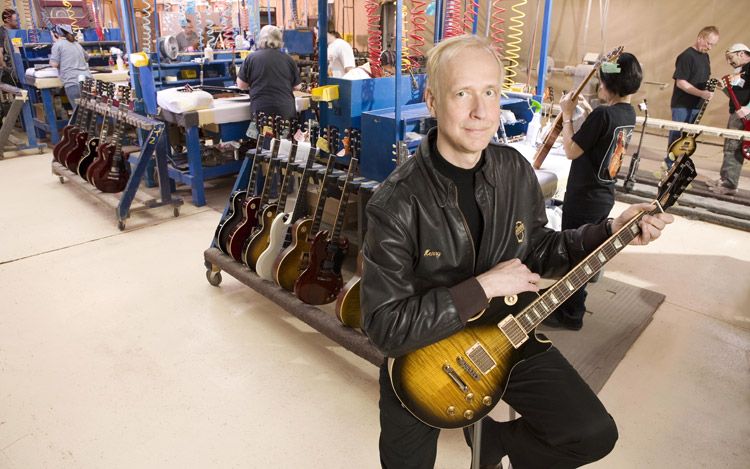
Gibsonin toimitusjohtajan, Henry Juszkiewiczin, mukaan kyseinen puutavara ei olisi koskaan voitu tuoda edes maahan, jos se olisi ollut hämärästä alkuperästä. USA:n tulliviranomaiset ovat hänen mukaan tarkistaneet jokaisen erän siihen, onko se Lacey Actin mukainen, ja myös Intian viranomaisilta olisi tullut ”puhtaat paperit”. Aihiot oli ostettu FSC-sertifioidulta kauppiaalta.

Tämä isku Gibsonia vastaan oli jo toinen: marraskuussa 2009 viranomaiset takavarikoivat kitaroita ja afrikkalaista eebenpuuta. Tässä tapauksessa ei ole vieläkään saatu täyttä selvyyttä fiman rikkomuksista, koska ”liittovaltio jarruttaa tahallaan oikeudenkäynnin”, näin Juszkiewicz tiedotustilaisuudessa eilen.

On hyvin vaikea arvioida kuka on tässä jutussa ”oikeassa”, onko Lacey Actissa todella järkeä ja leivotaanko tässä Gibsonista syyllinen.

Mutta totta on myös, että lähes jokainen amerikkalainen kitaravalmistaja käyttää samoja raaka-aineita kuin Gibson, mutta muut ovat saaneet tähän mennessä tehdä töitään ilman viranomaisten ratsiat.

Odotetaan miten tämä kaikki kehittyy eteenpäin…

Gibsonin tiedote ja Henry Juszkiewiczin tiedotustilaisuus on TÄSSÄ.

Details in English, as well as Gibson CEO Henry Juszkiewicz’s press conference, are linked HERE.

Gibson Flying V – tai: kaksi vuosikymmentä etuajassa

Vuonna 1957 Ted McCartyn mitta oli täynnä. Gibsonin toimitusjohtajaa ärsyttivät ainaiset puheet firman vanhanaikaisuudesta ja tylsyydestä muiden valmistajien ja joidenkin kitaristien keskuudessa. Etenkin Fenderin tuomat uudet tuulet kitaroiden valmistuksessa ja markkinoinnissa saivat McCartya uskomaan, että Gibson tarvitsi jotain mullistavan uutta mallistossansa.

Pidettiin kokonainen sarja aivoriihi-istuntoja, jossa yritettiin löytää mahdollisimman omanlaatuisia kitaroita. Pomo itse keksi tällaiset muodot:

Kun ensimmäinen prototyyppi oli valmis, joku nauroi ”Hehee, tämä näyttää lentävältä V-kirjaimelta!”, ja siinä olikin uutukaiselle sopiva nimi.

Kun Flying V näytettiin ensimmäistä kerta NAMMissa (1958, samalla esiteltiin myös Explorer-mallin), varsin erikoinen kitara oli yksi messujen kohokohtista. Kaula ja runko veistettiin korina-puusta ja metalliosat olivat kullattuja.

Ongelma oli vain, että omintakeinen kitara oli aikansa edellä, minkä takia siitä ei tullut myyntimenestys. Alkuperäinen painos (1958–’59) jäi alle 100 kappaletta, ja myös niistä jotkut käytettiin vain mainoskylttinä joidenkin musiikkiliikeiden edessä.

Kuuskytluvun keskivaiheella musiikkimaku oli jo muuttanut sen verran raskaampaan suuntaan, että Gibson päätti yrittää uudestaan. Uusi Flying V oli mahongista, ja sillä oli perinteinen Gibson-kieltenpidin. Myös säätimet oli hieman eri järjestyksessä tässä uusintapainoksessa (katso alle).

Jimi Hendrix käytti juuri sellaista 60-luvun mallia, aina kun halusi Stratoa paksumpia soundeja.

Mutta vasta 1970-luvulla, kun Hard Rock ja Metal keksittiin, tuli Veestä muodikas lavakitara, sekä lavakarismansa että Gibson-soundinsa ansiosta.

Ja se lentää yhä vain eteenpäin; juuri tällä hetkellä Gibson tarjoaa upouuden seitsenkielisen Veen aktiivimikityksellä rankkaan riffitykseen.

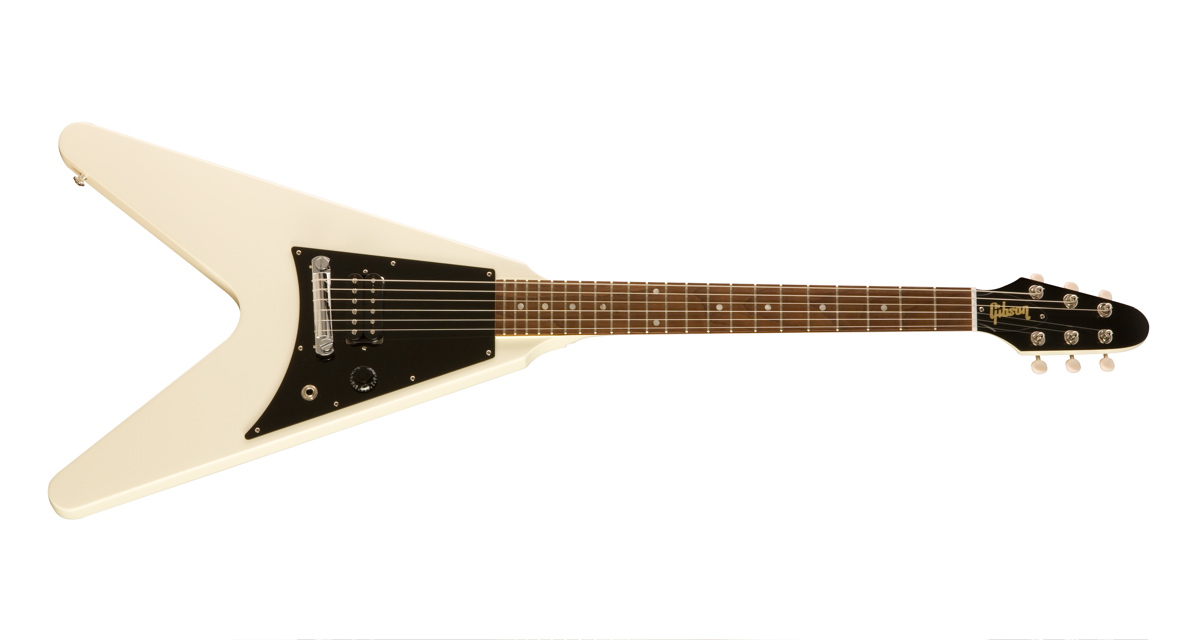
Myös uudesta, laajennetusta Melody Maker -sarjasta löytyy Flying V – Flying V Melody Maker – jolla on mahonkikaula, vaahterarunko, tallahumbucker omalla volume-säätimellä sekä yksinkertainen wraparound-talla – that’s it.

Flying V:n ainoa huono ominaisuus on, ettei mallia voi soittaa istuen. Toisaalta, kukahan moshaa istuen?

😉

The Gibson Flying V, or: Two Decades Ahead Of Its Time

In 1957 Gibson’s then president, Ted McCarty, grew tired of the company being slagged off as ”boring old farts” by some of its competitors. Especially the fresh touch brought to guitar-making (and marketing) by young upstarts Fender, made McCarty determined that something had to be done to put the ”stuffy” image behind them.

They held a series of brain-storming sessions with a view to coming up with the most outrageous designs imaginable. Ted McCarty himself came up with this:

When the first prototype was built somebody said (laughing, no doubt): ”Hey, this thing looks like a flying Vee!”, and the name stuck.

When the Flying V was first shown at the Winter NAMM show in 1958 – along with its sister model the Explorer – it sure was the show-stopper McCarty had hoped for, with its radical shape, korina neck and body and gold parts.

The problem was the model was way ahead of its time, and didn’t really sell well in its original form. Less than 100 Flying V’s were shipped to dealers during 1958-9, with some ending up as shop signs (!) to draw in customers.

In the mid-60s times had changed, though, and heavier music was becoming en vogue, so Gibson decided to reissue the Flying V, albeit with a standard stop-tailpiece, a different control layout and the company’s customary mahogany used for the body and neck.

It was this version that Jimi Hendrix used whenever he needed a fatter sound than his Stratocaster could provide him with.

But it was really only with the advent of Hard Rock and Metal in the 1970s that the Vee really took off as a fashionable guitar, as it offered both cool looks and fat Gibson-tone in the right proportions.

Since then the Flying V has never really left us; right now, for example, Gibson are offering an EMG-equipped, active 7-string version for ultra-brutal riffing.

And brand-new is a budget version of the Vee, called the Flying V Melody Maker, which gives you the essence of what the Vee’s about in a nutshell: a mahogany neck glued to a maple body, one powerful humbucker, a single volume control and a simple wraparound bridge topping it all off – that’s it.

The Flying V only has one single drawback – you can’t play the model sitting down. But then again, headbanging doesn’t really work sitting down…

😉

Pidä blogia WordPress.comissa.

Ylös ↑