The Bluetone Black Prince Reverb guitar combo sees the boutique amp makers from Helsinki branch out into a new and interesting direction.
All the Bluetone models we have known thus far have been (and still are) produced as pure and genuine custom-made valve amplifiers.
This means that each new amp is ordered by the customer based on a certain Bluetone configuration on their website – like an à la carte-menu. The chosen model is then tweaked according to the customer’s wishes, and there are plenty of different options available – from the details of the amplifier’s internal specifications all the way to the type of finish of the cabinet and the font on the control panel.
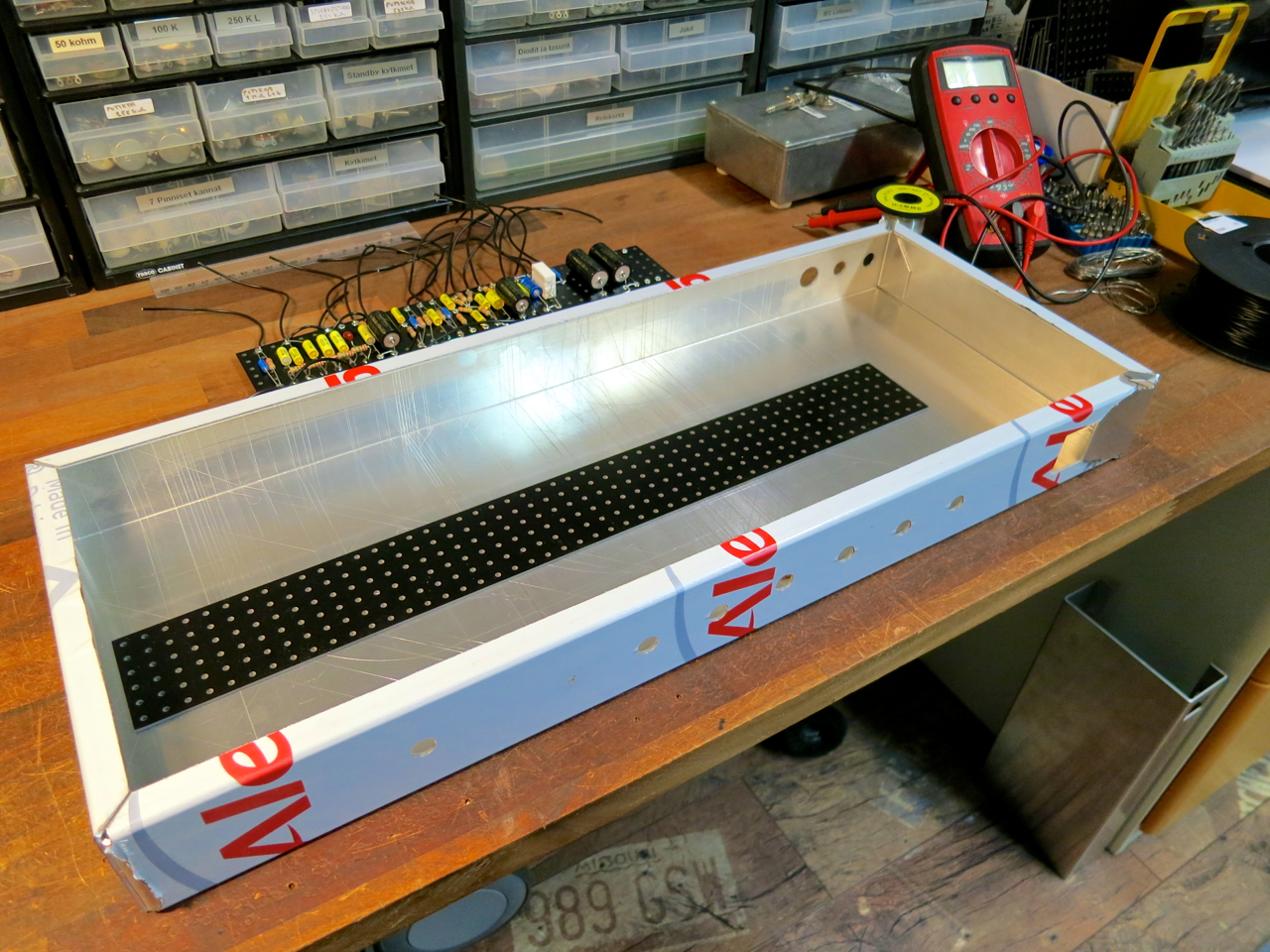
Due to the nature of custom amps, such as these, every Bluetone Custom amp is built completely by hand, starting with a clean slate – meaning: an empty metal chassis, and an empty fibreglass eyelet-board.
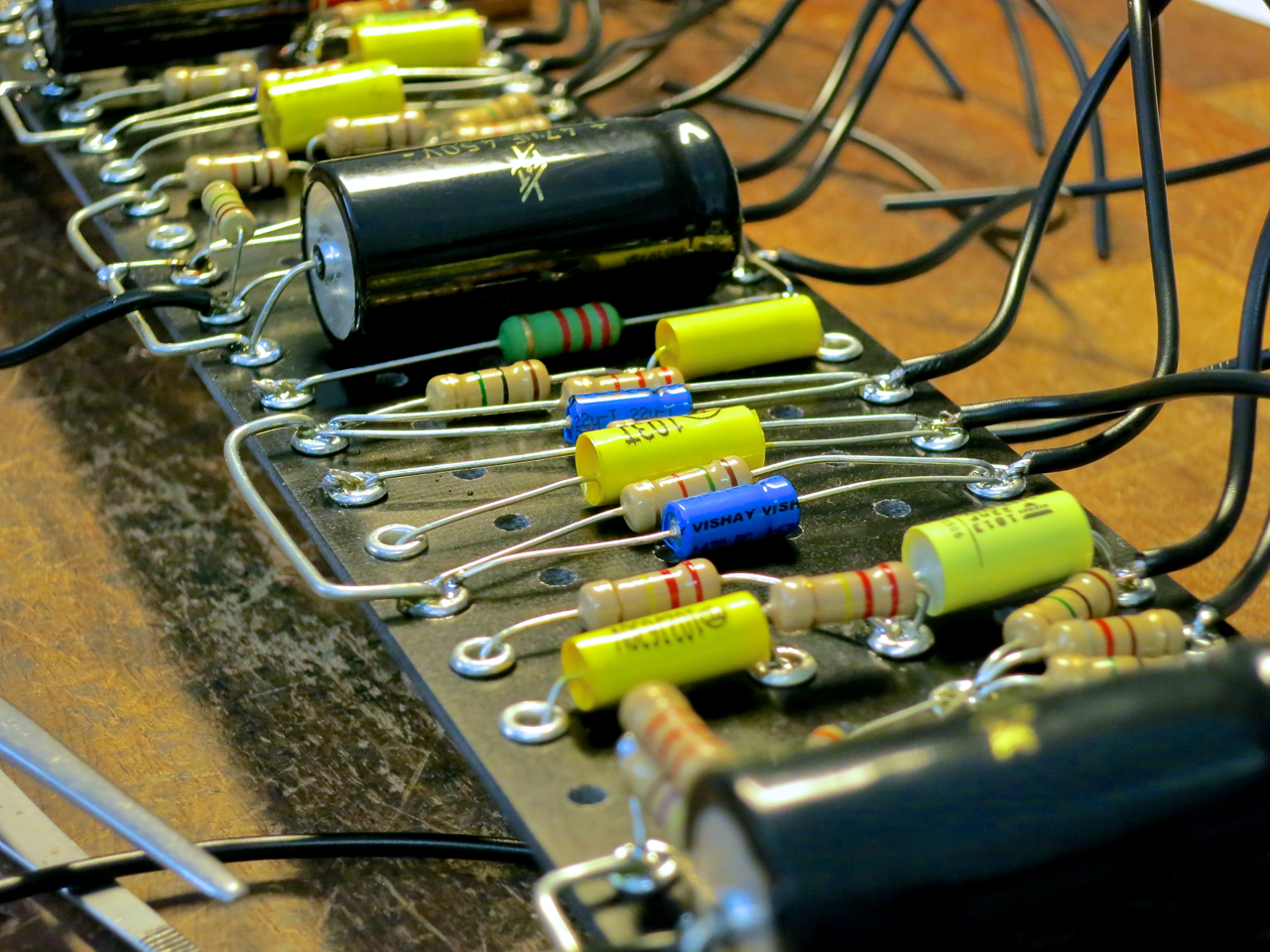
The board is then riveted at the right spots to take all the necessary wiring and electronic components going into this specific custom order. Everything is soldered into place by hand (point-to-point).
This is a very involved and time-consuming process, requiring a steady hand and a keen eye, which of course is reflected in the price of a Bluetone Custom amp. The advantage of building this type of point-to-point amp is, of course, that it gives the customer free reign to have his dream amp built.
Bluetone’s dynamic duo – Harry Kneckt and Matti Vauhkonen – have recently decided to launch a second model range alongside their strictly custom-made amps. The new range will include a few models that will be made and sold ”as is”, with only very limited options to choose from.
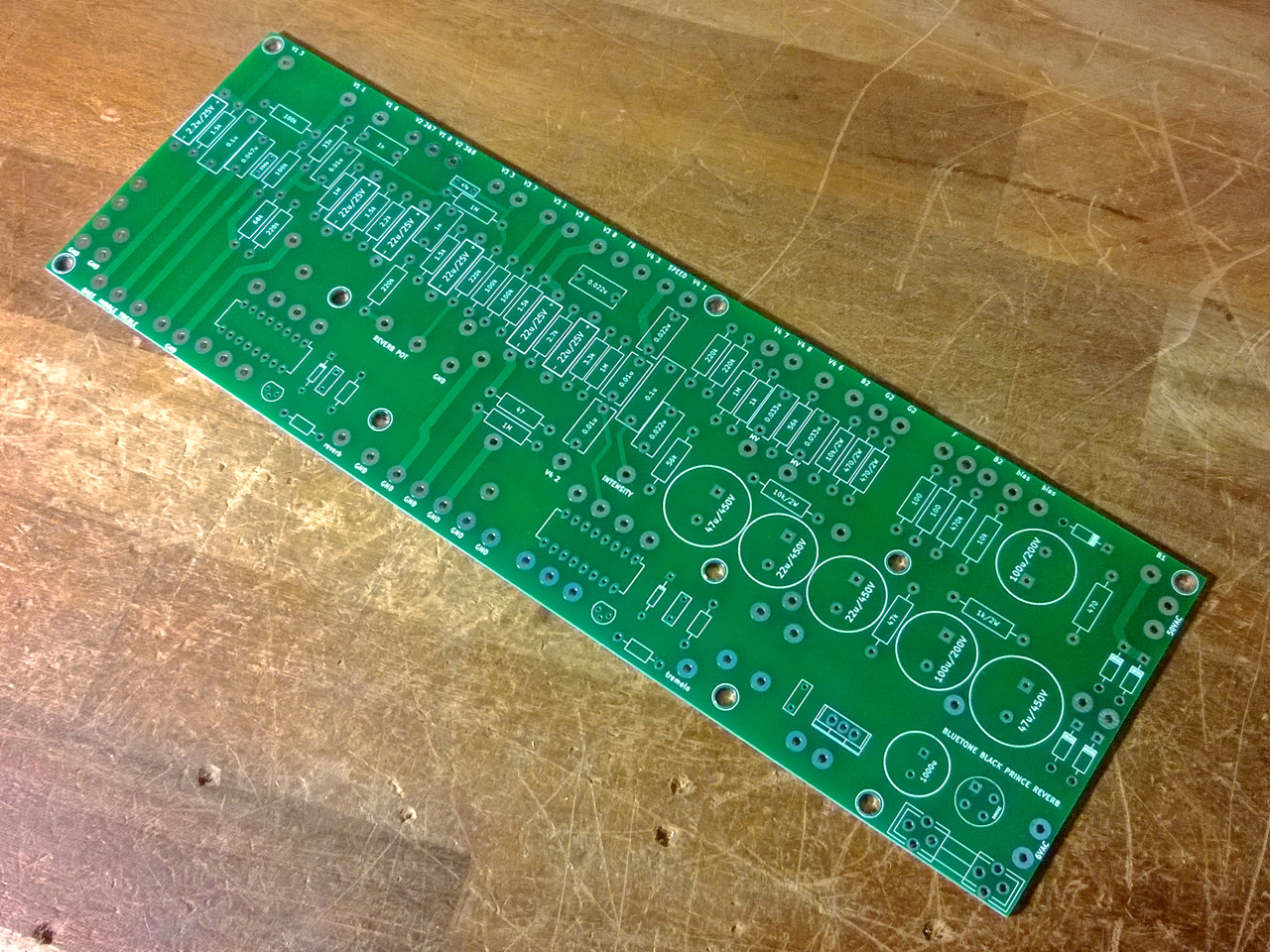
These new amps will be made using so-called hybrid boards.
Bluetone’s hybrid boards are very sturdy PCBs made of fibreglass, and are of a considerably higher quality than what you’d find in mass-produced valve amplifiers. Each component’s place on the hybrid is clearly labelled, and some of the ”wiring” is already incorporated into the board itself. In contrast to many mass-produced affordable amps, Bluetone’s new range will see all tubes and transformers mounted securely to the metal chassis (like on their custom-made amps, too), and not directly on the PCB (like on many affordable Far Eastern designs).
The rest of the building process is virtually identical to the more costly custom-made amplifiers – the components are fitted to the hybrid board by hand (from the top) and hand-soldered to the board. Thanks to the hybrid board the new amplifier range will be much easier and faster to produce, which will be reflected in the pricing of the new hybrid amps vis-à-vis the point-to-point custom orders.
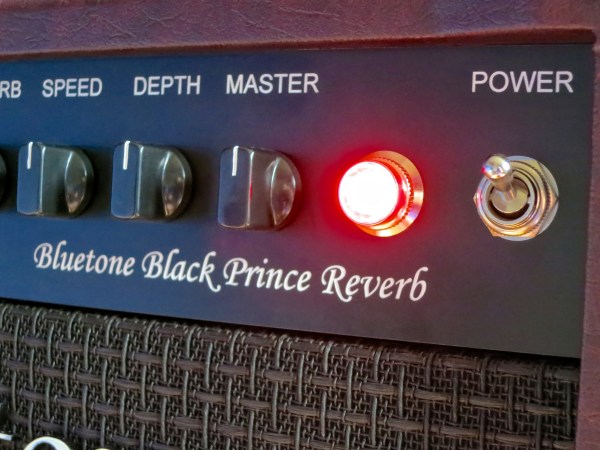
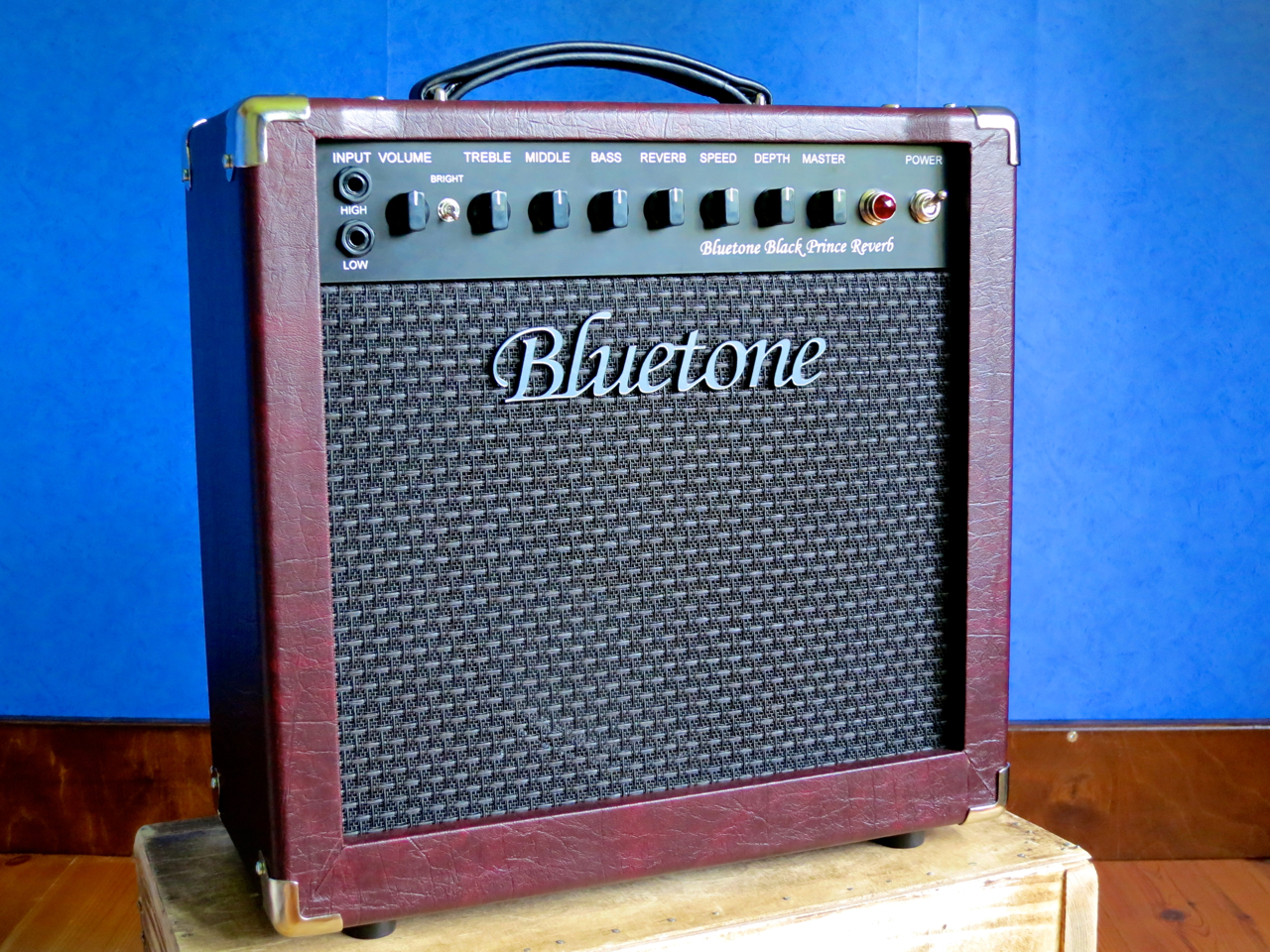
This compact and handy combo takes a lot of inspiration from Fender’s legendary ”Blackface” Princeton Reverb (version AA1164), but due to the Bluetone’s many refinements you can’t really call the Black Prince a straight copy.
In addition to the basic version in wine red tolex, you can also order the Black Prince Reverb in genuine tweed, or with an oiled cabinet made from mahogany (both at extra cost).
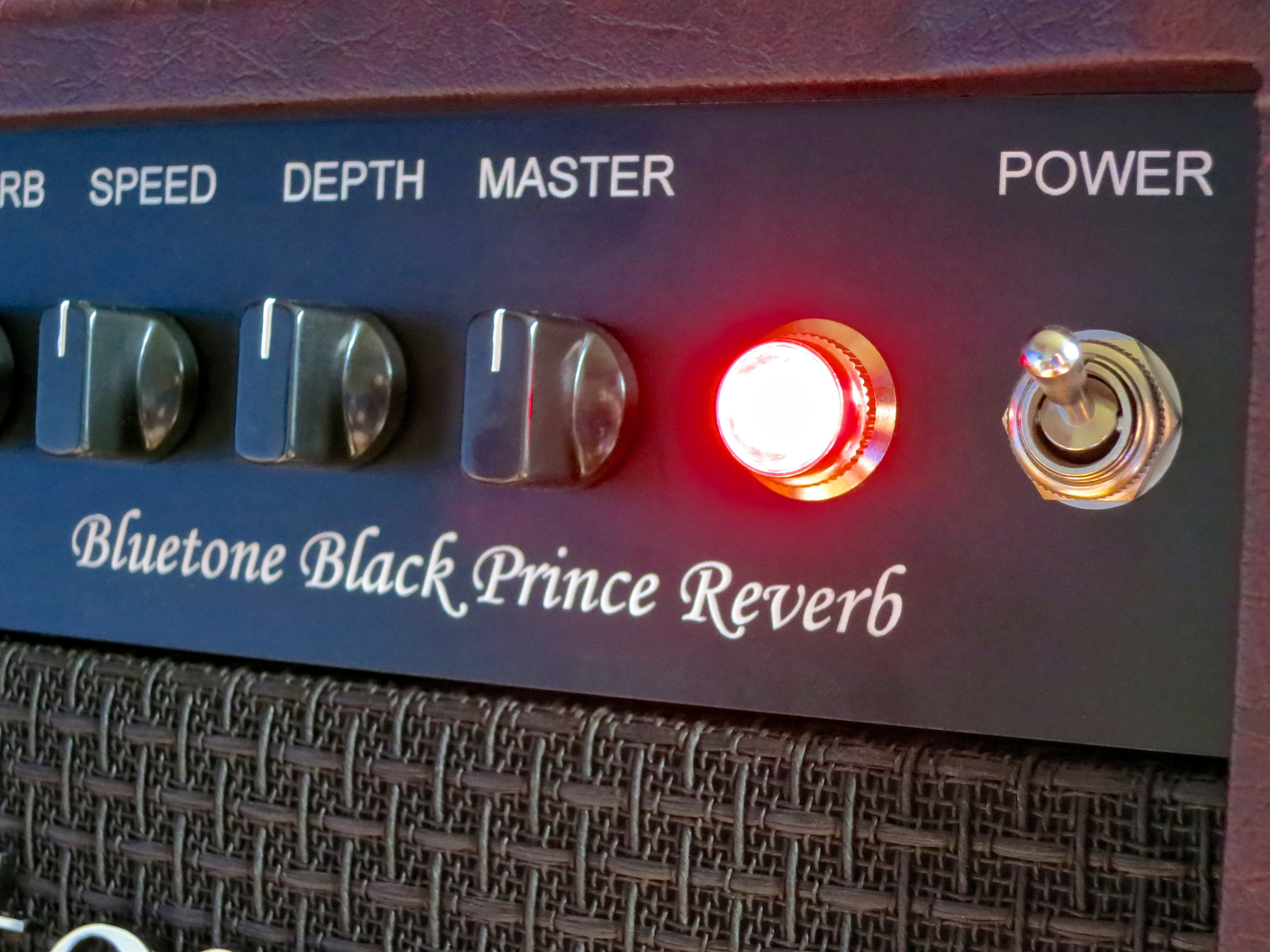
I very much like the businesslike and sober look of the Blacktone’s front panel. Everything is clearly labelled, which can be a great plus on a dimly lit stage.
The Bluetone Black Prince Reverb offers two different inputs for singlecoil and humbucker-equipped guitars (High and Low). The EQ-section is a three-band affair, with an additional Bright switch to liven up dull sounding pickups.
Even though the Black Prince Reverb is such a compact combo, it still featured both a genuine, valve-driven spring reverb and a tube tremolo.
Bluetone uses a post phase-inverter master volume in most of their designs, because it has the least negative impact on an amp’s tone and feel.
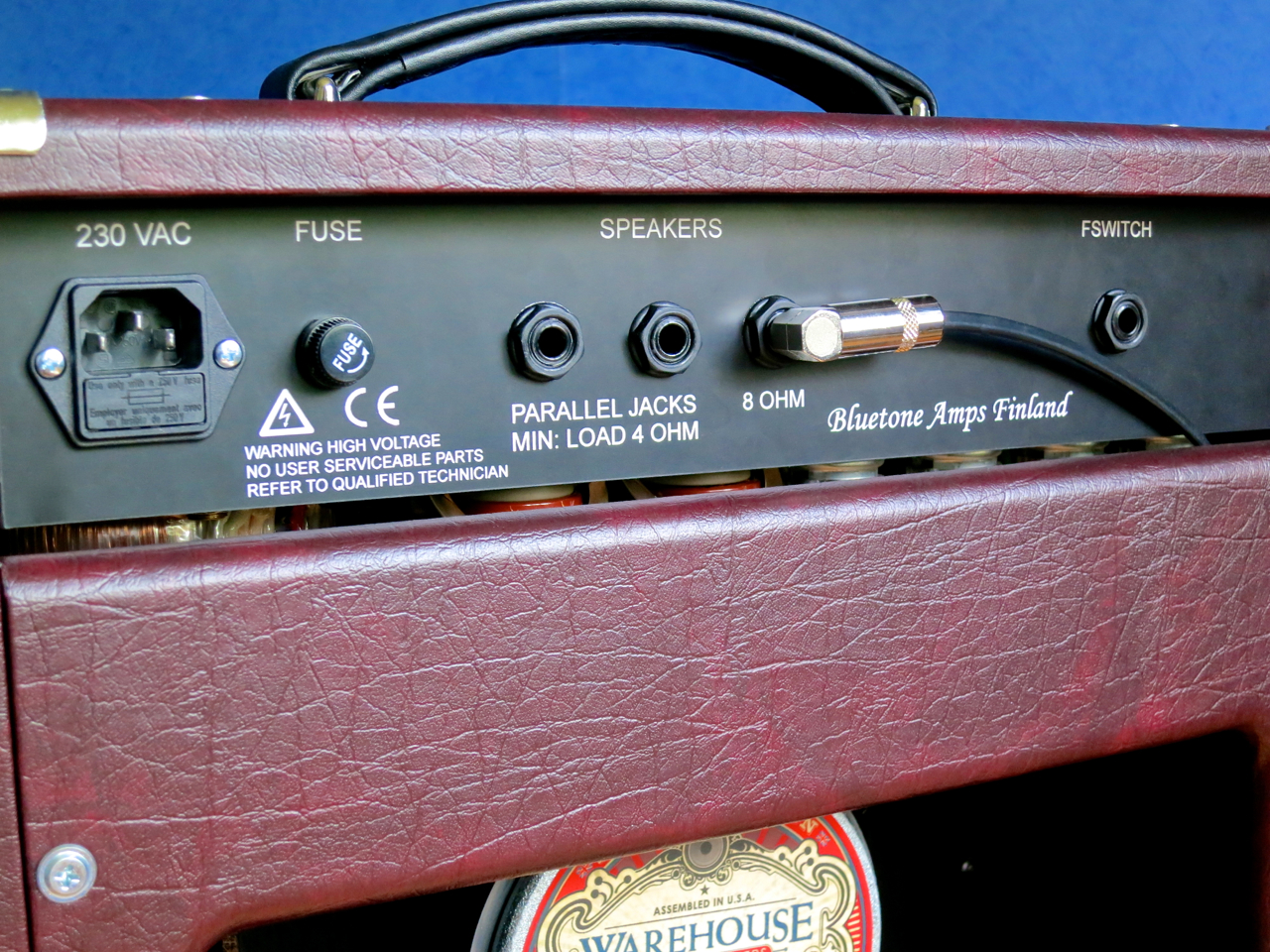
There’s a Fender-style open back on the Black Prince.
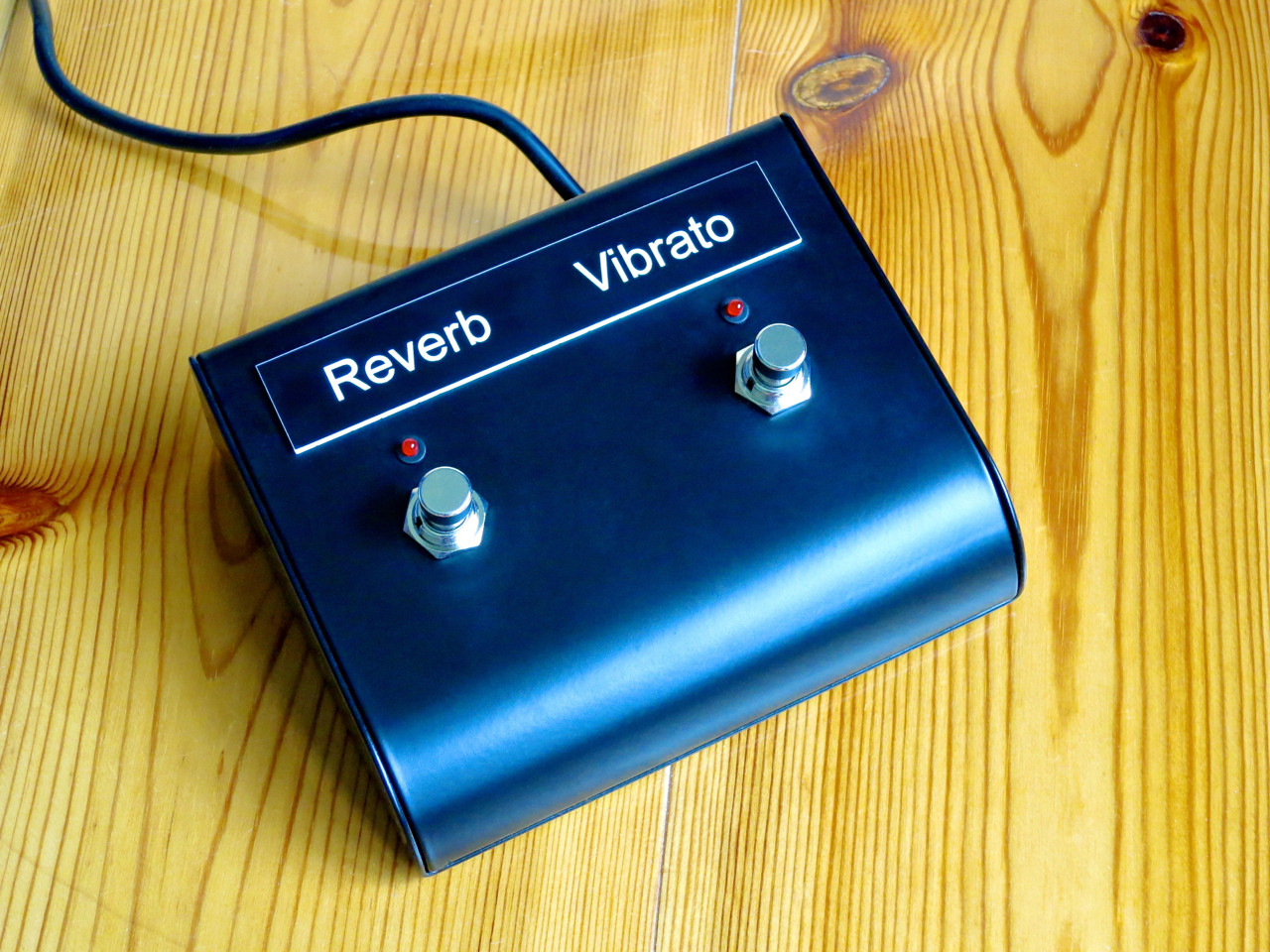
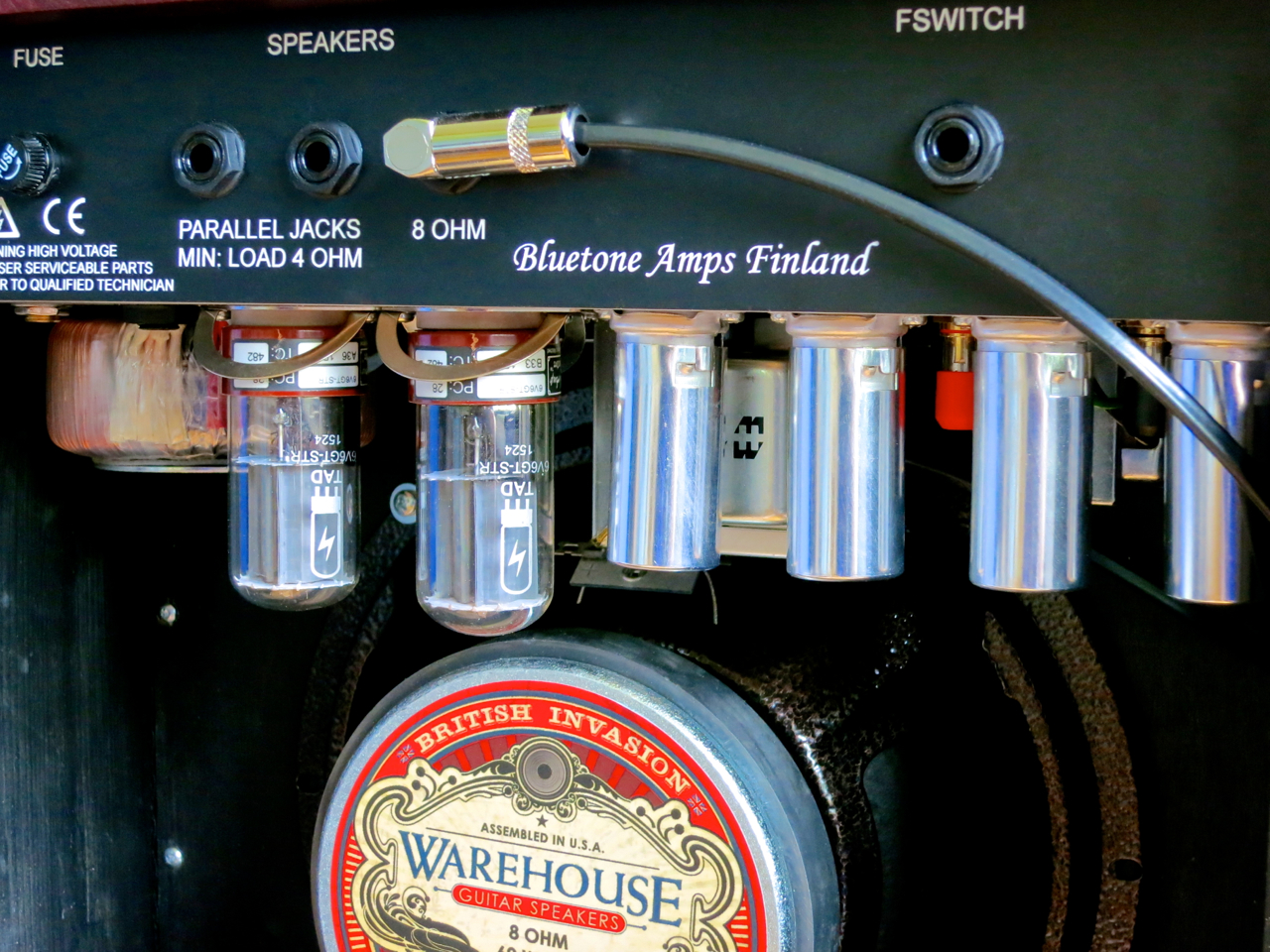
The back panel sports outputs for additional speakers, as well as the jack for the combo’s two-button footswitch unit (included).
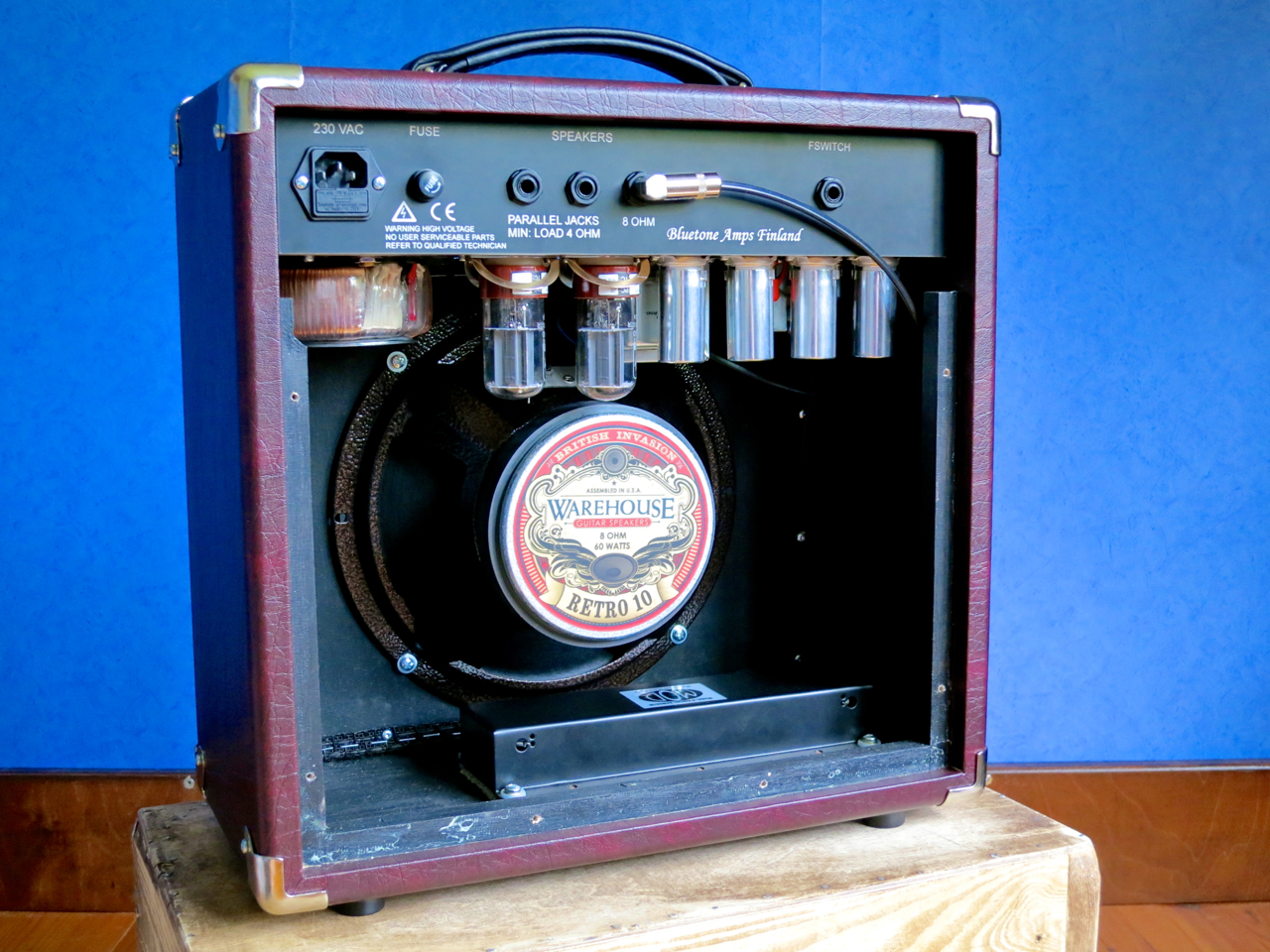
This is what the Bluetone looks like with the open back removed.
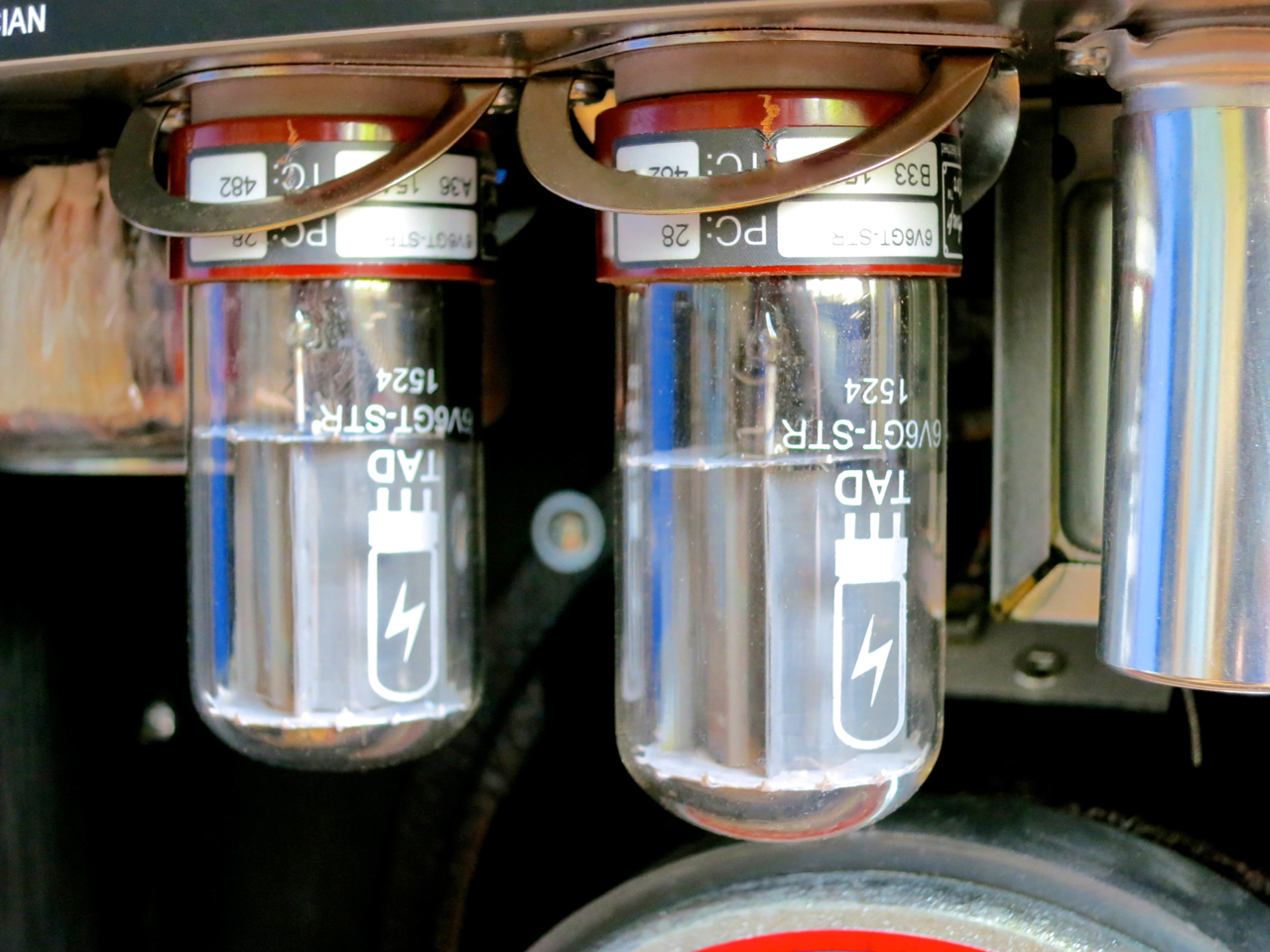
The Black Prince Reverb combo is an all-valve machine, loaded with the following tube types (from right to left):
The first 12AX7 is the combo’s preamp valve. The spring reverb circuit uses a 12AT7 and a 12AX7 valve. The 12AX7 works as the amp’s phase-inverter and tremolo tube.
The Black Prince leaves Bluetone’s workshop equipped with a pair of 6V6GT power valves, which will translate to about 20 watts of output. You can also re-bias this amp for a pair of 6L6GCs, which would boost the output to almost 30 watts.
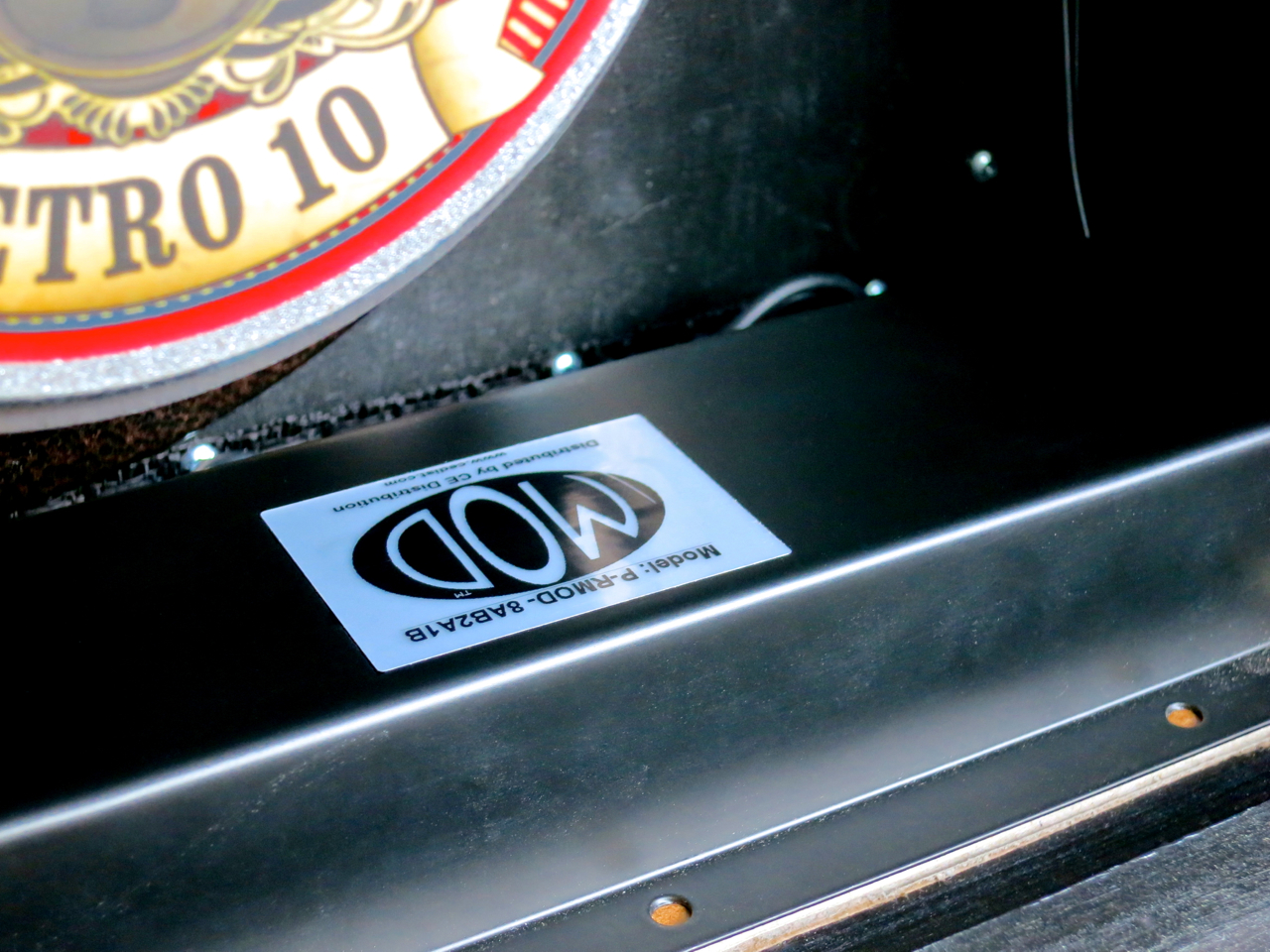
This combo’s short reverb tank is supplied by MOD.
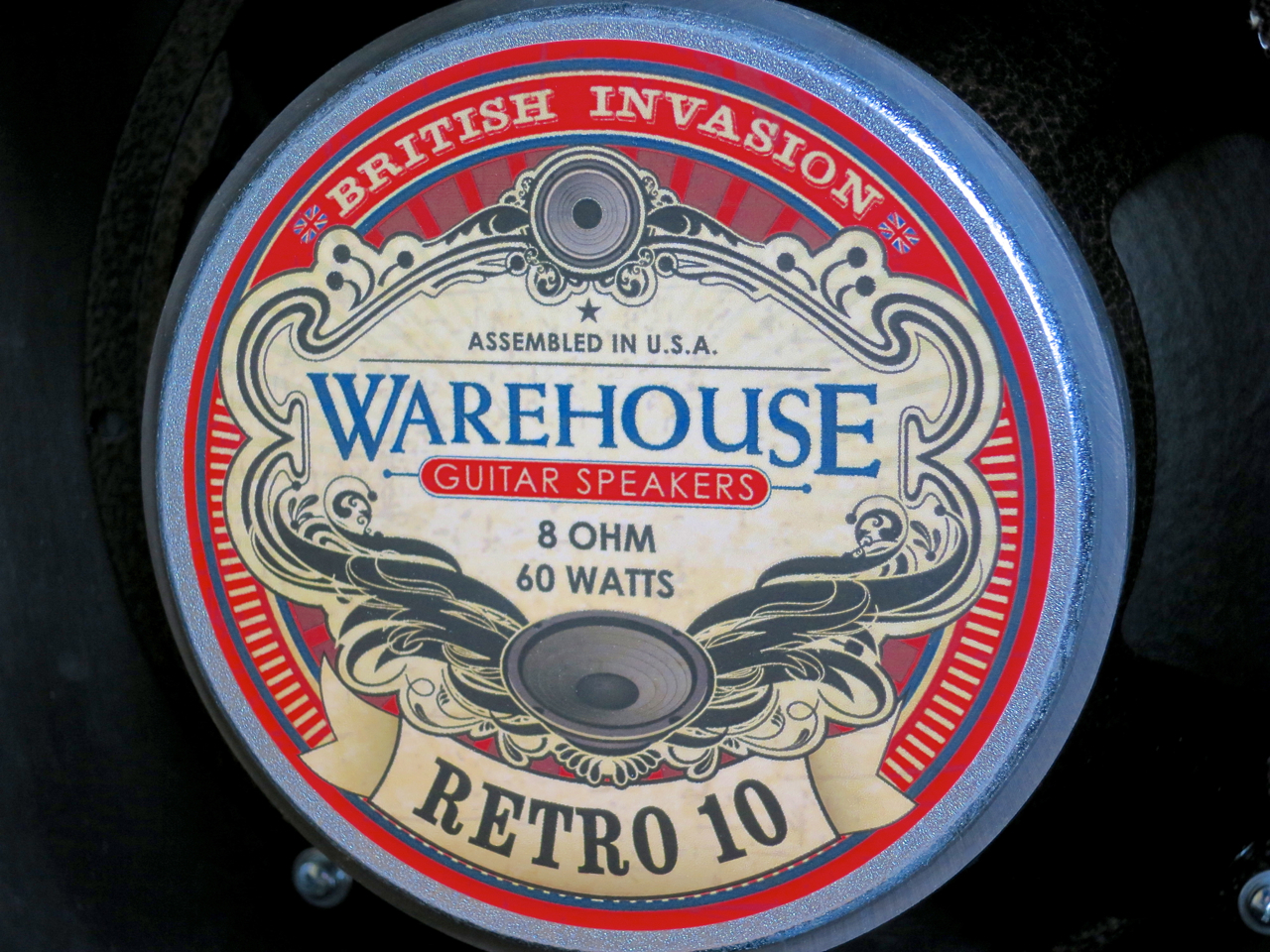
Bluetone have chosen a Warehouse Guitar Speakers Retro 10-speaker for their new combo, even though this model is distinctly different from the old Jensen speakers in vintage Fender designs.
This choice is, of course, deliberate and based upon many listening tests:
The WGS Retro, which is made to withstand far more output than this combo can deliver, keeps the Black Prince Reverb’s tones clean and dynamic under all circumstances. This speaker’s British character also makes the Bluetone-combo sound larger and fatter than you’d expect.
****
Oh, boy, this is a sound you cannot get enough of! At least in my case only a minute or two of playing the Black Prince was enough to make me consider getting myself in debt.
It’s hard to put into words what that special ingredient is, but this is what a clean electric guitar should sound like! This combo sounds clean, fresh and dynamic, but never clinical, cold or brittle. There a good dose of chime, but it doesn’t hurt your ears. The bass strings sound big, but never mushy.
The sound of the short MOD reverb tank is surprisingly dense and complex, and there’s more than enough of it to satisfy Surf Music fans. The Black Prince Reverb’s tremolo works like a treat, too, offering you anything from slow and soft to machine-gun mania.
Here’s a clip, recorded with a Fender Telecaster, gives you an idea of the Bluetone Black Prince Reverb’s dry tone, as well as its spring reverb and tremolo effects:
The Black Prince also excels in keeping your guitar’s own character intact. These three clips feature a Fender Telecaster…
…an Epiphone Casino…
…and a 1970s Japanese ”lawsuit” copy of a Gibson ES-335:
This combo’s fantastic clean tone is a fantastic platform for pedal addicts. The demo track was recorded using an analogue chorus pedal, a tube screamer-type overdrive, as well as the amp’s built-in reverb and tremolo.
The rhythm parts were played on a Fender Stratocaster, while the lead was played on a Hamer USA Studio Custom:
****
In my view, Bluetone’s Black Prince Reverb is a top-drawer choice as a combo for use at home or in the studio. It’s also great for smaller gigs, when too much noise on stage can be a problem, or you can mike it up for larger venues.
The Black Prince Reverb is a nicely compact boutique-grade valve combo offering fantastic cleans, as well as fine reverb and tremolo effects.
This amp hasn’t been spoiled by unnecessary ”tube voodoo” or distracting graphic. I’m all for the clean and understated looks this Bluetone has to offer!
This is a handmade, Finnish boutique combo, offered at a very fair price.
Olli Viitasaari is a young luthier from Järvenpää in the south of Finland.
After completing his training at IKATA, Olli has been working on his own electric guitar model (in addition to doing repairs and customising jobs), which he since displayed at Fuzz Guitar Show (Gothenburg, Sweden) and Turenki Tonefest (Finland).
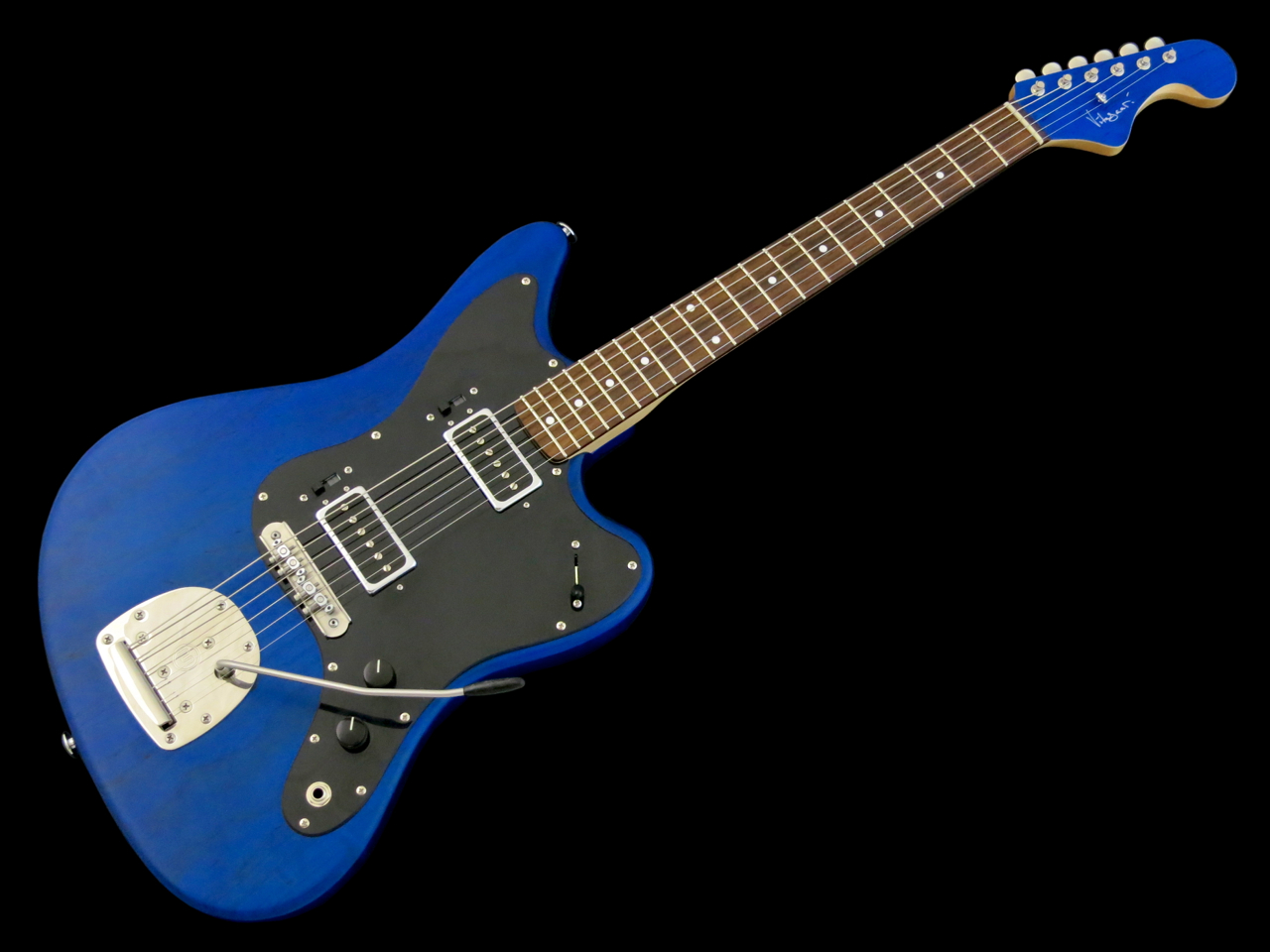
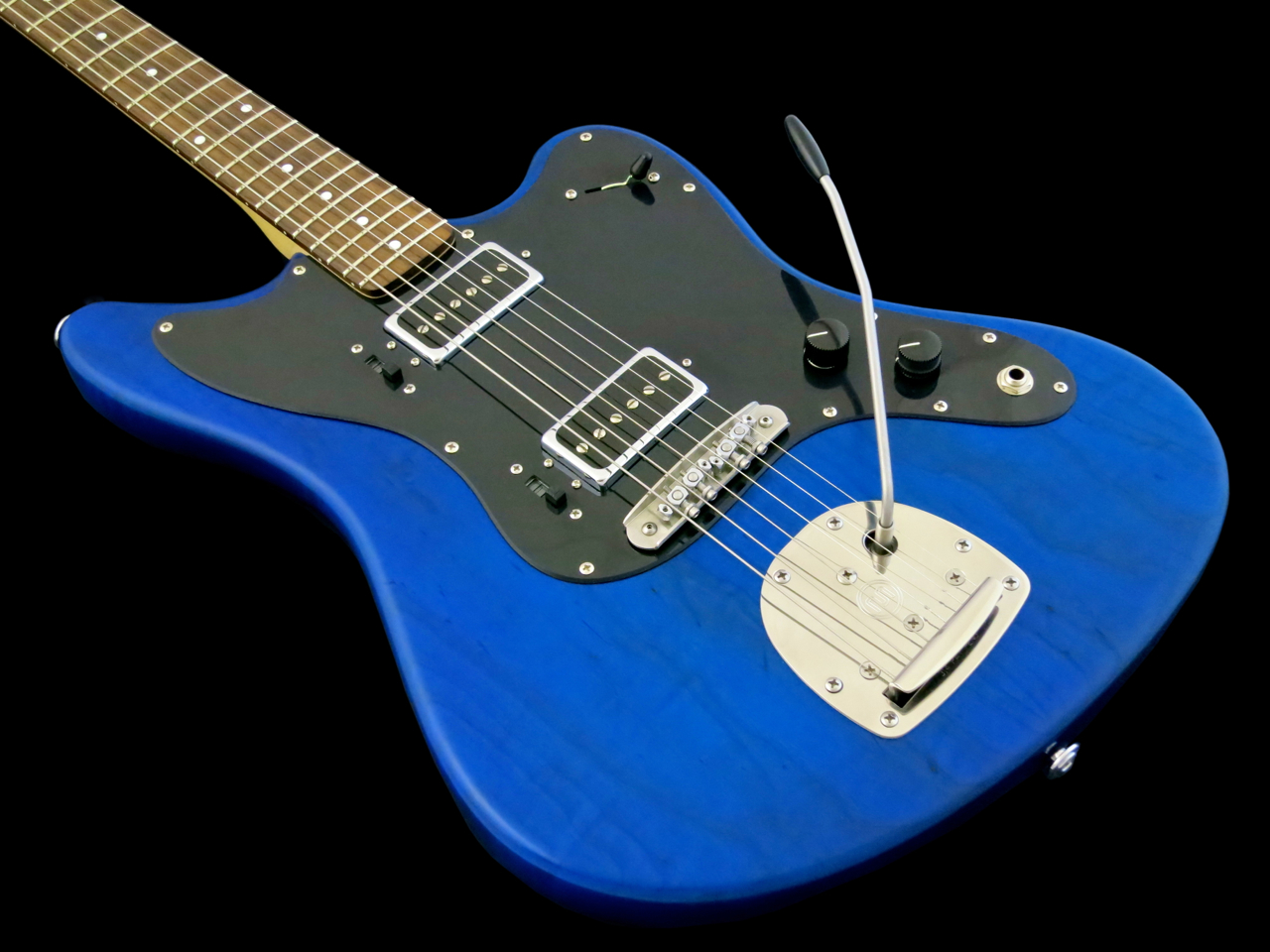
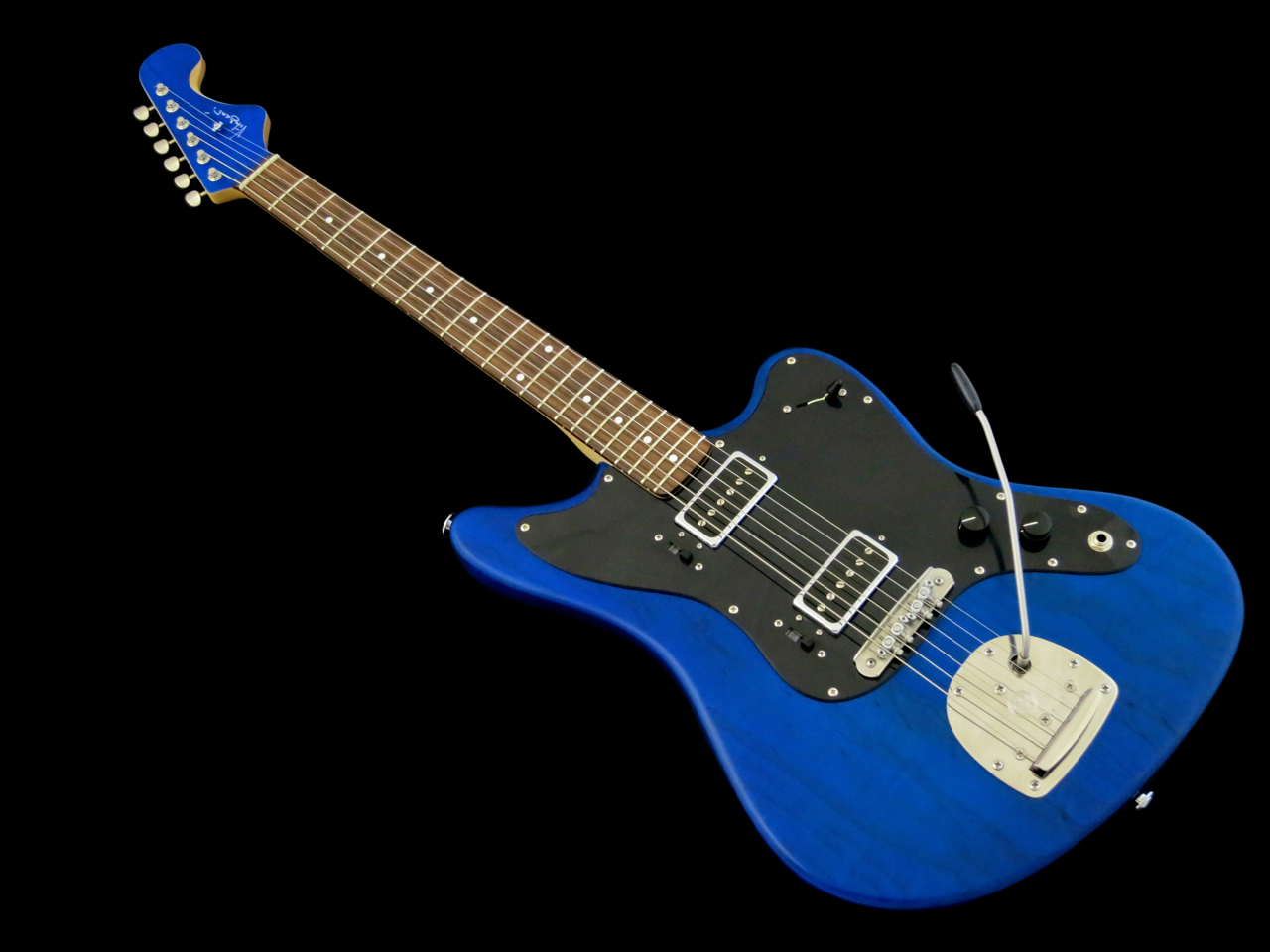
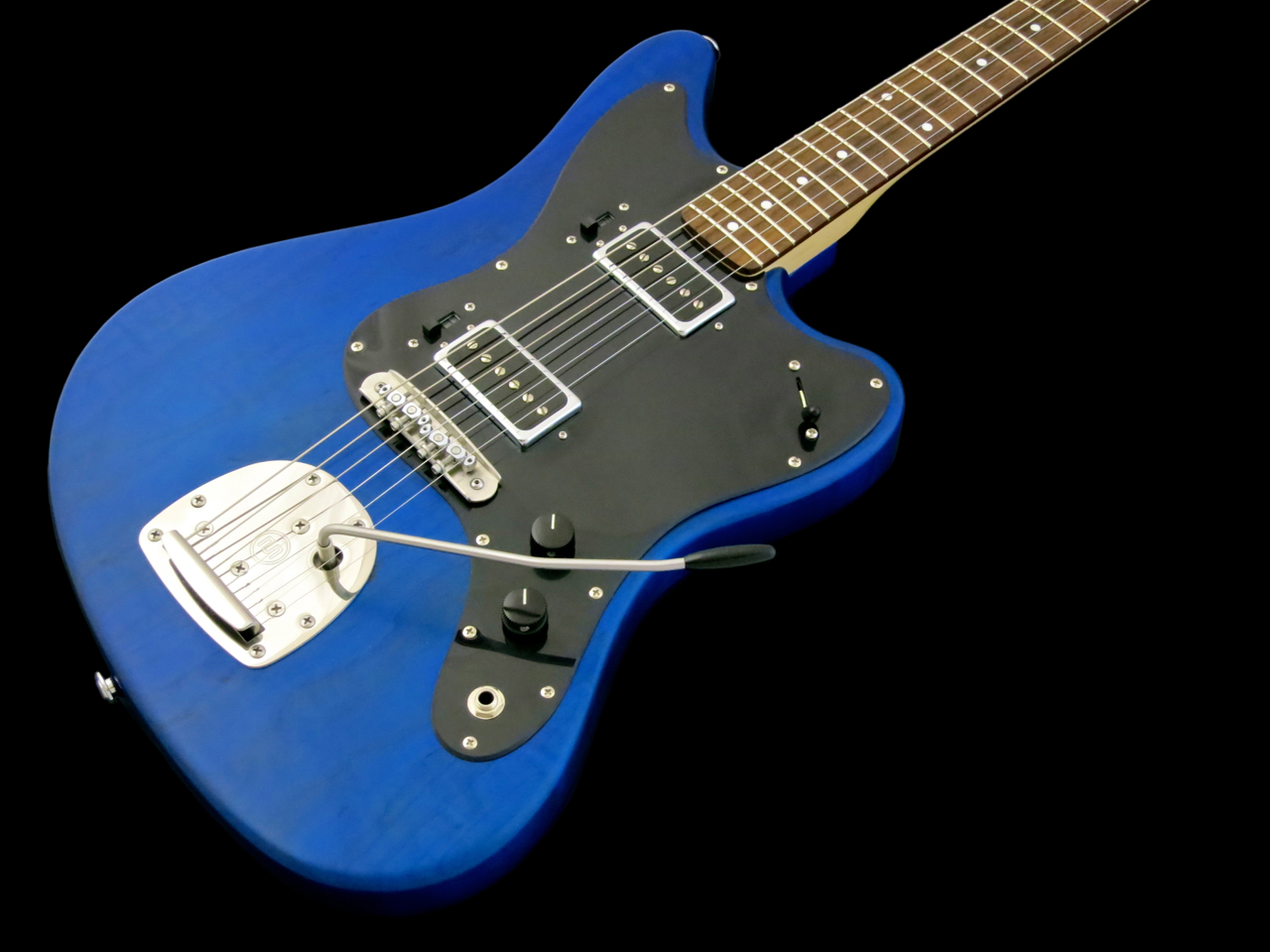
Olli’s guitar model is called the Viitasaari OM (OM = Offset Model, prices starting from 2,500 €; a Hiscox case is included), and it represents Olli’s vision of the perfect Jazzmaster-style guitar. Guitarists have reacted very positively to the Viitasaari OM, and there are already a few guitars in active use by Finnish and Swedish guitarists.
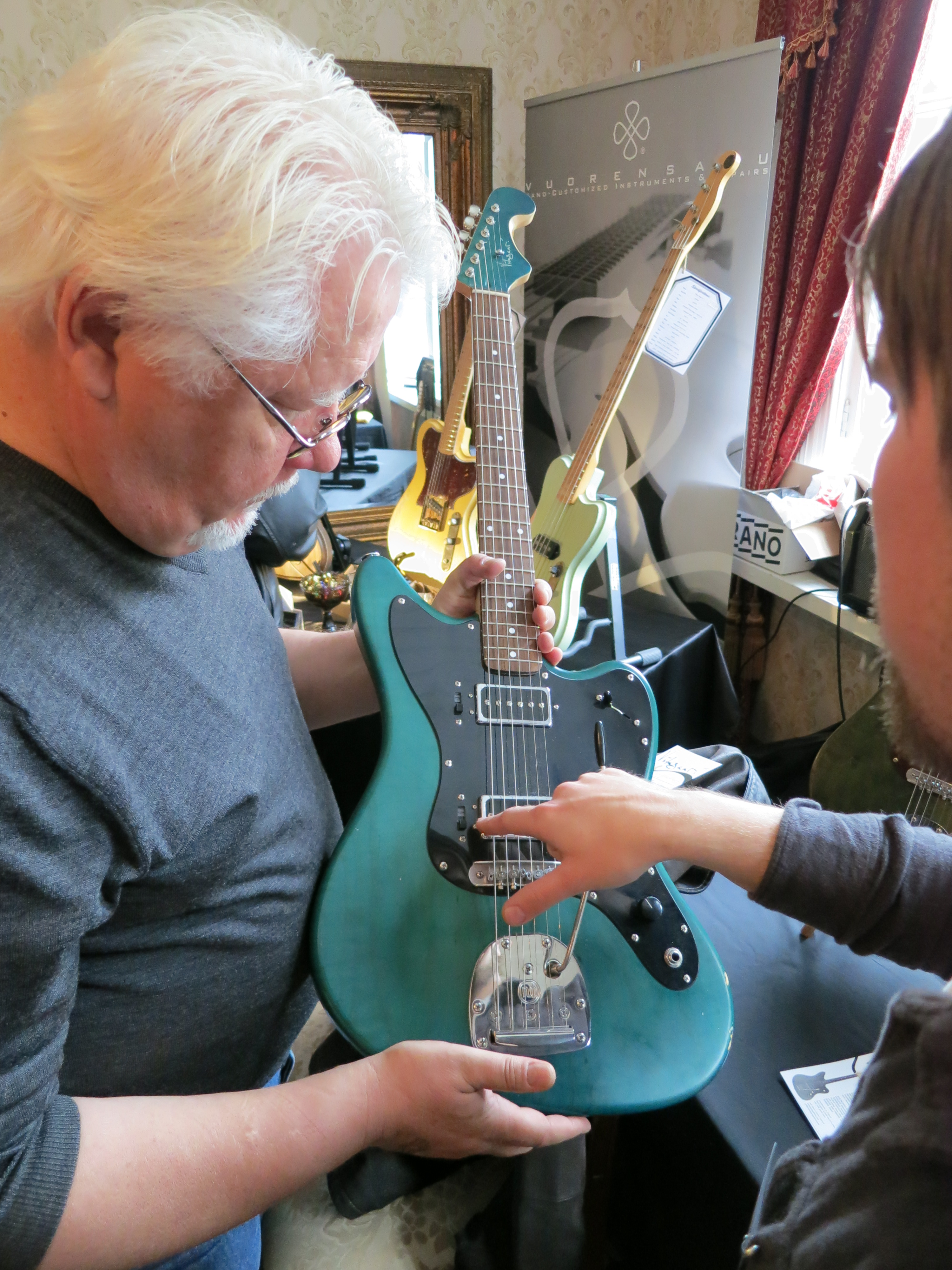
Kitarablogi.com would like to thank Mr. Juha Pöysä for the loan of his personal guitar!
****
The basic building blocks of the Viitasaari OM use the tried and trusted recipe of its 1950s forefather:
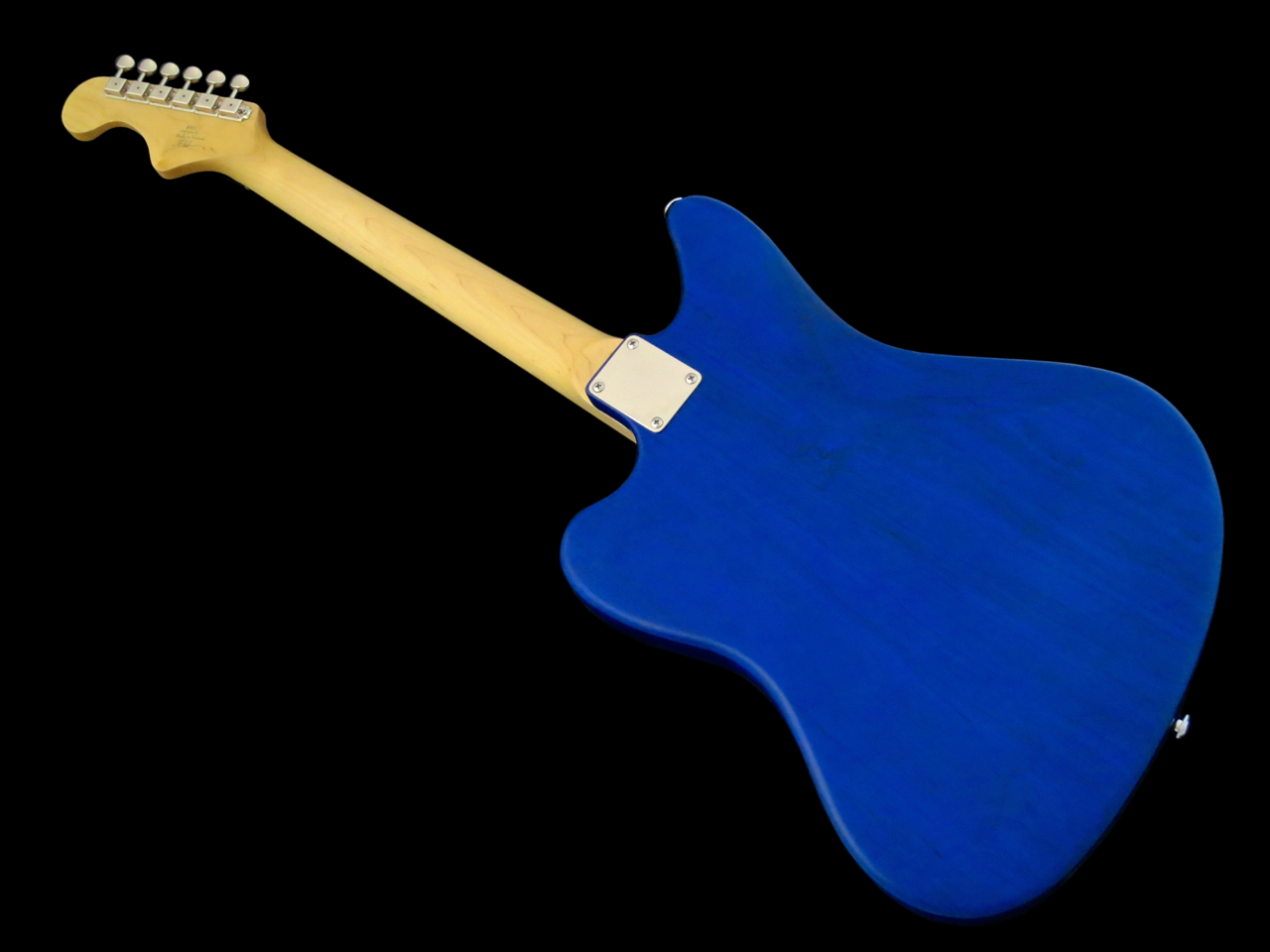
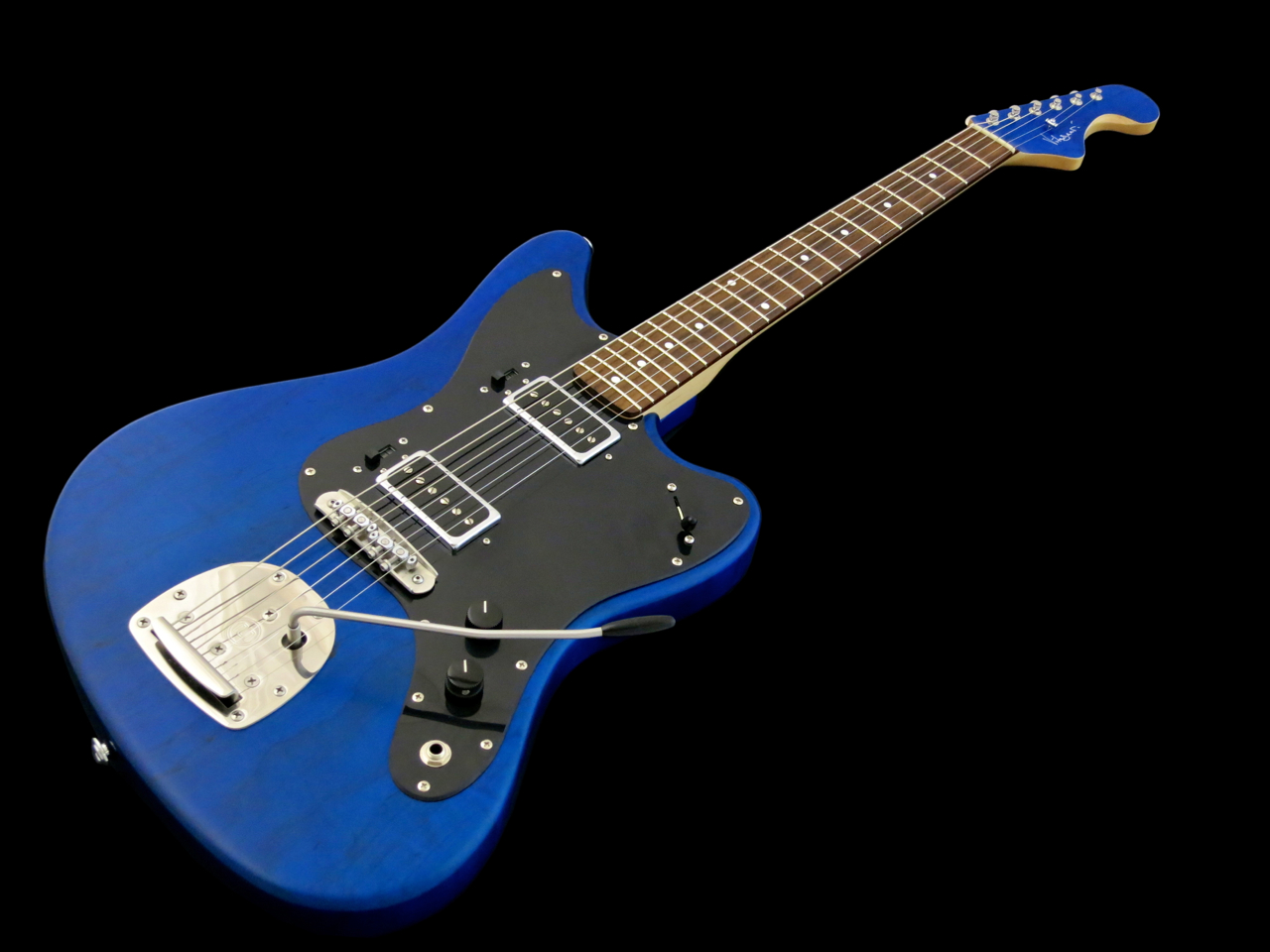
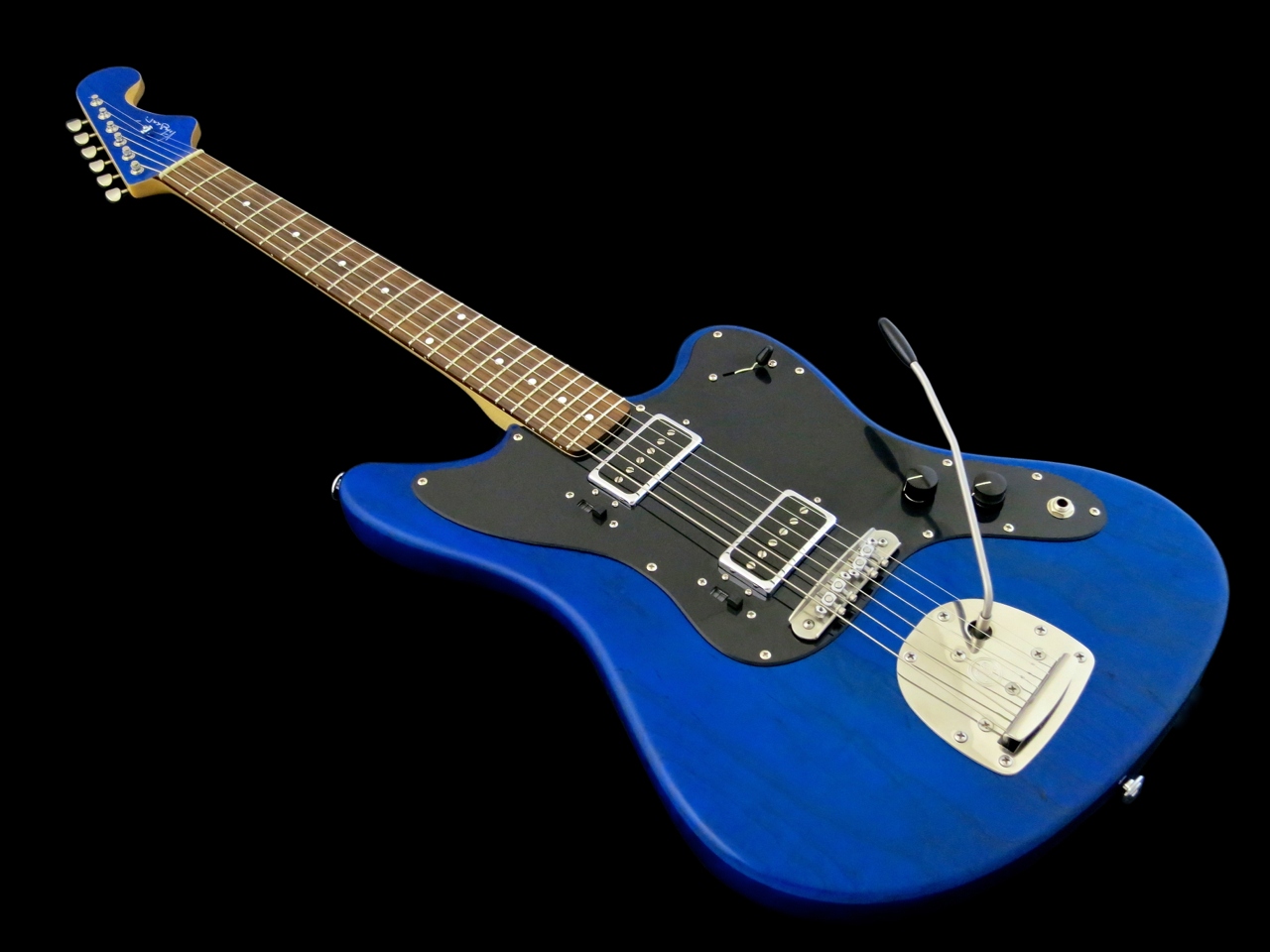
The OM’s body is made from alder, while the bolt-on neck has been carved from hard rock maple. The fretboard is rosewood.
The first indication that this isn’t your run-in-the-mill Fender-clone lies in the scale length. Olli has chosen 25 inches for his model, which places this guitar’s scale length in the same territory as a PRS – right in the middle between traditional Fender and traditional Gibson.
As Viitasaari Guitars is a true boutique builder there’s plenty of options for the customer to choose from, both in terms of pickups and electronics, as well as the guitar’s finish.
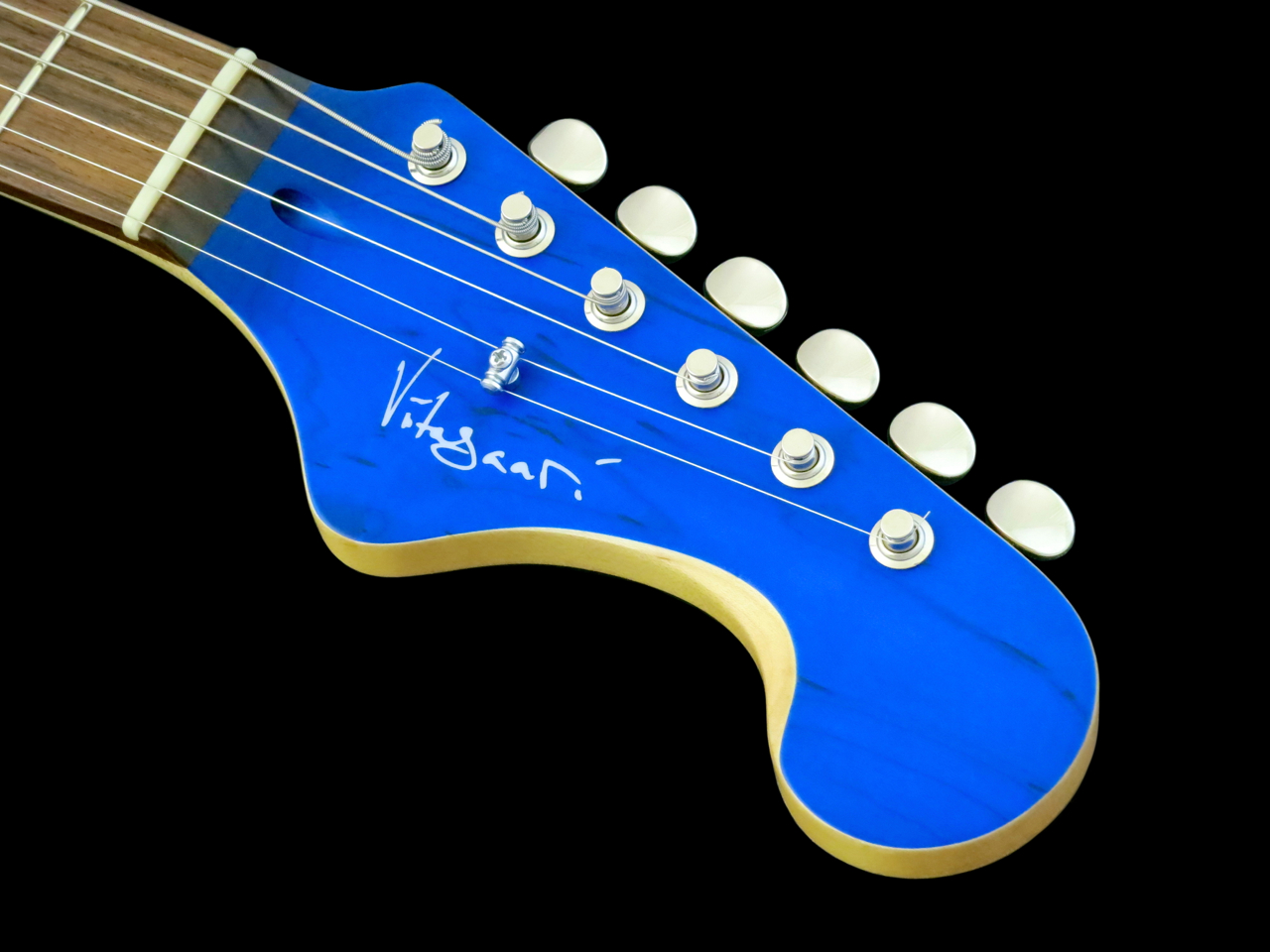
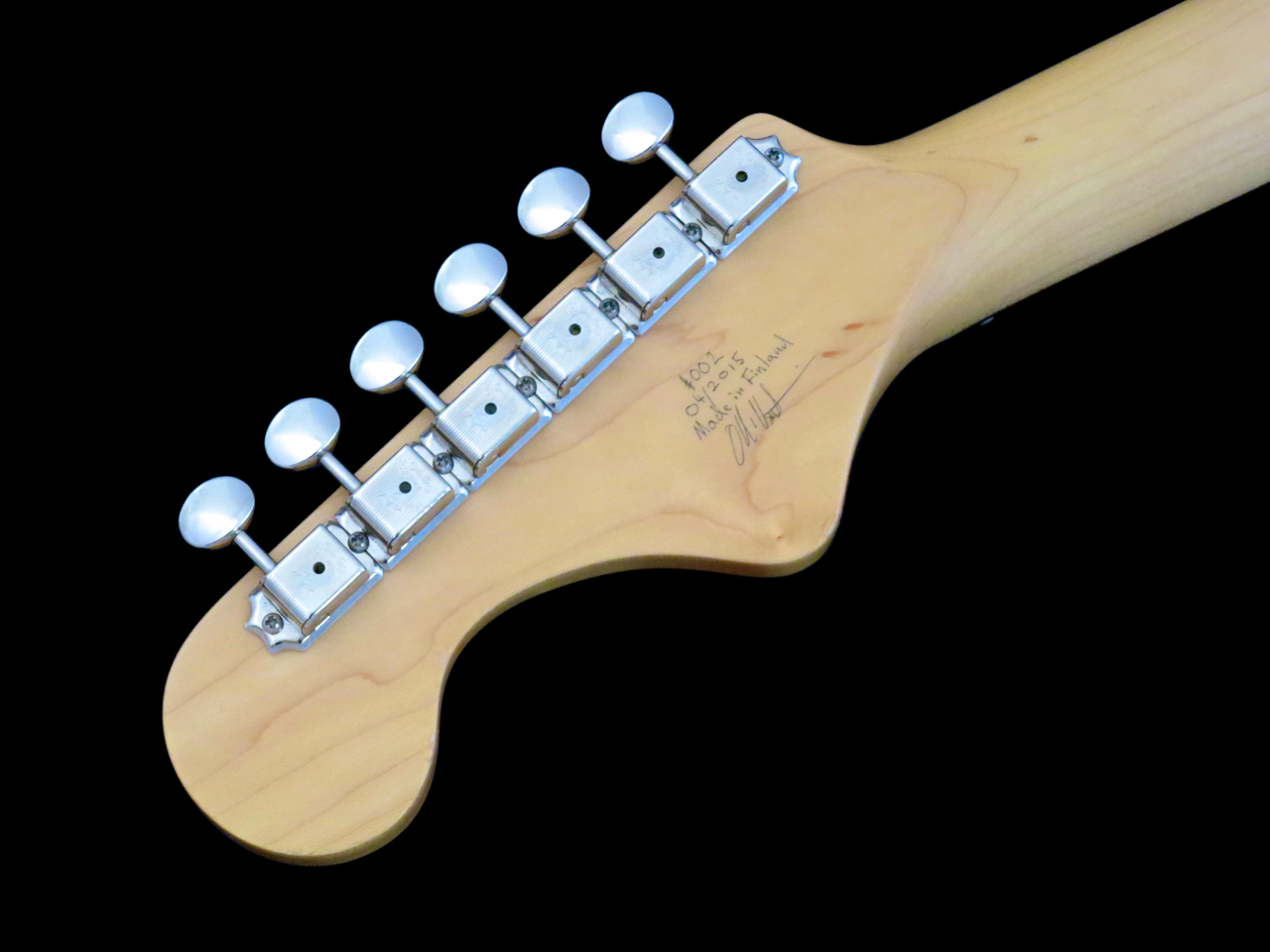
Juha Pöysä’s OM comes in a very fetching blue satin finish for the body, and a natural satin finish for the neck. The customer can also specify gloss finishes or oil-based finishes for his (or her) own guitar.
This guitar sports a set of Gotoh HAP-tuners, which combine vintage looks with height-adjustable tuner posts.
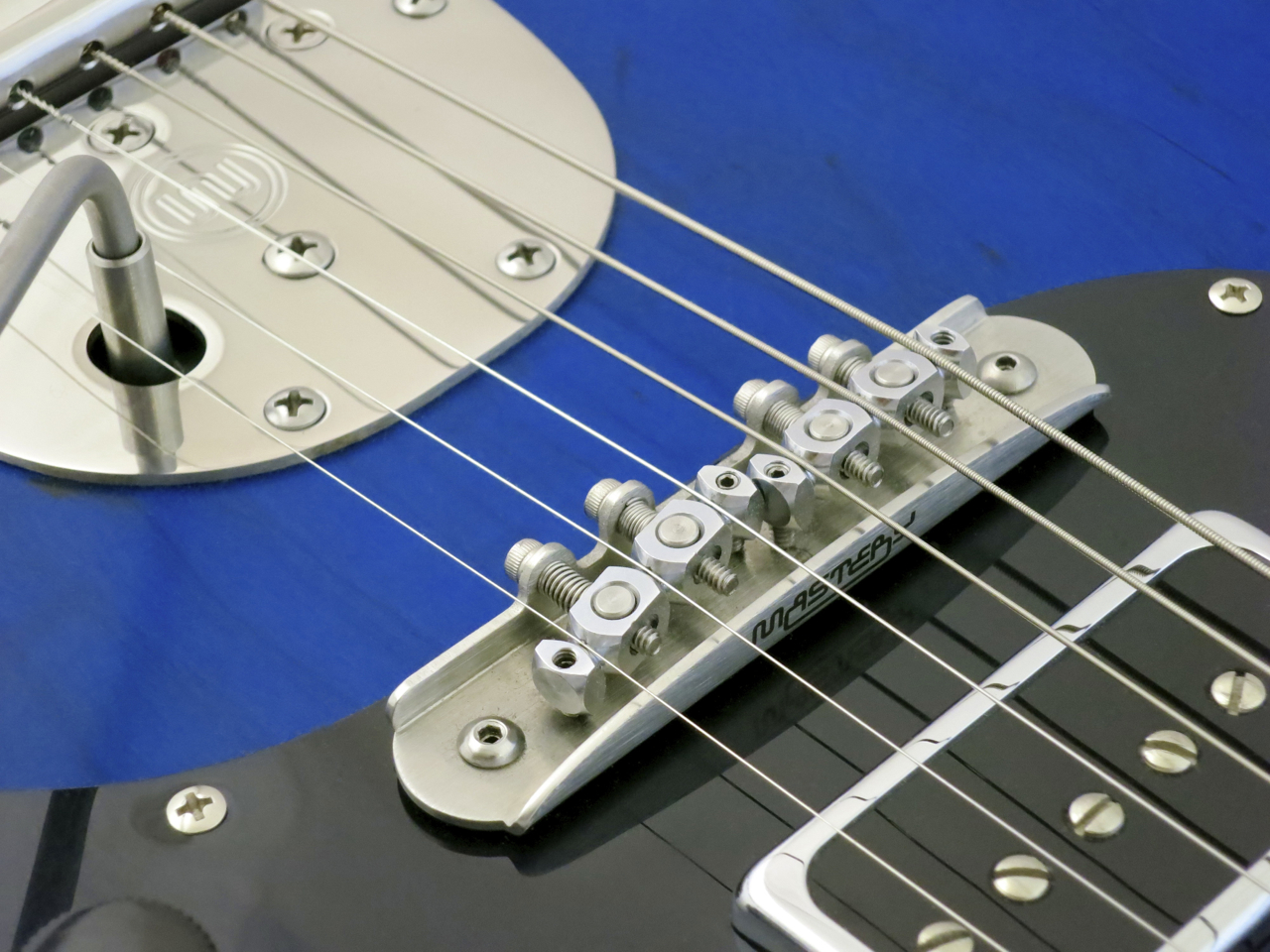
Leo Fender’s original Jazzmaster/Jaguar-vibrato is both loved and loathed among guitarists. Players tend to love the soft and slightly spongy action, but often tend to find the original design’s many quirks and idiosyncrasies extremely annoying.
Fender’s original design features tiny grub screws for the height-adjustment of the bridge’s separate bridge saddles. These screws often tend to work loose during playing, causing rattles and involuntary changes in string action. Additionally, there’s only a relatively shallow string angle over the bridge, exacerbating the string rattling, and sometimes even causing a string to jump out of position, especially with modern light gauge strings. In extreme cases, a bridge saddle may even turn upside down in the middle of a solo.
US-based hardware company Mastery has put a stop to all these problems by redesigning the Offset Bridge from the ground up. Naturally, this fantastic system has been chosen for the Viitasaari OM.
The OM’s 9.5-inch radius and fatter-than-vintage frets give the Viitasaari a modern playing feel.
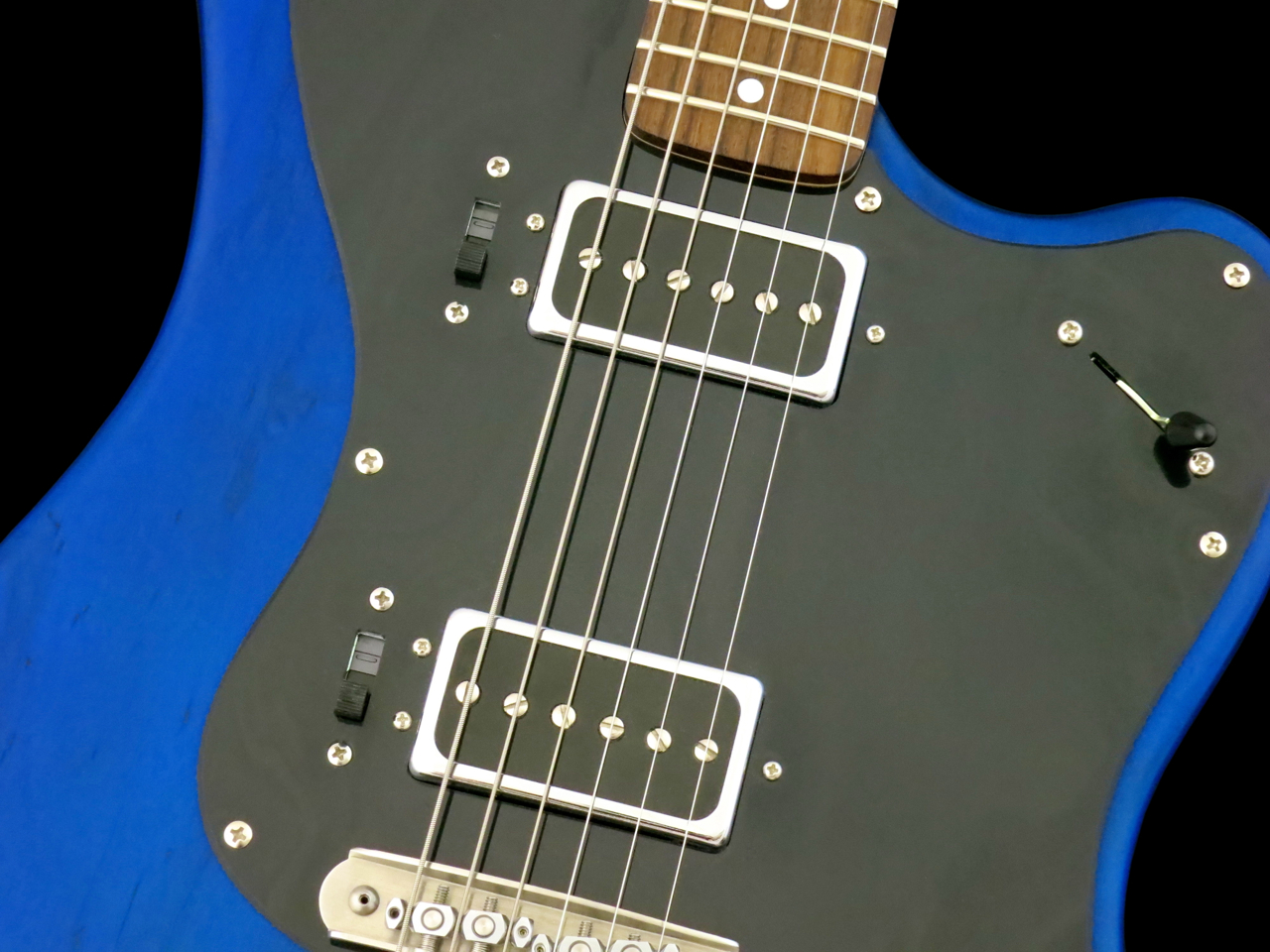
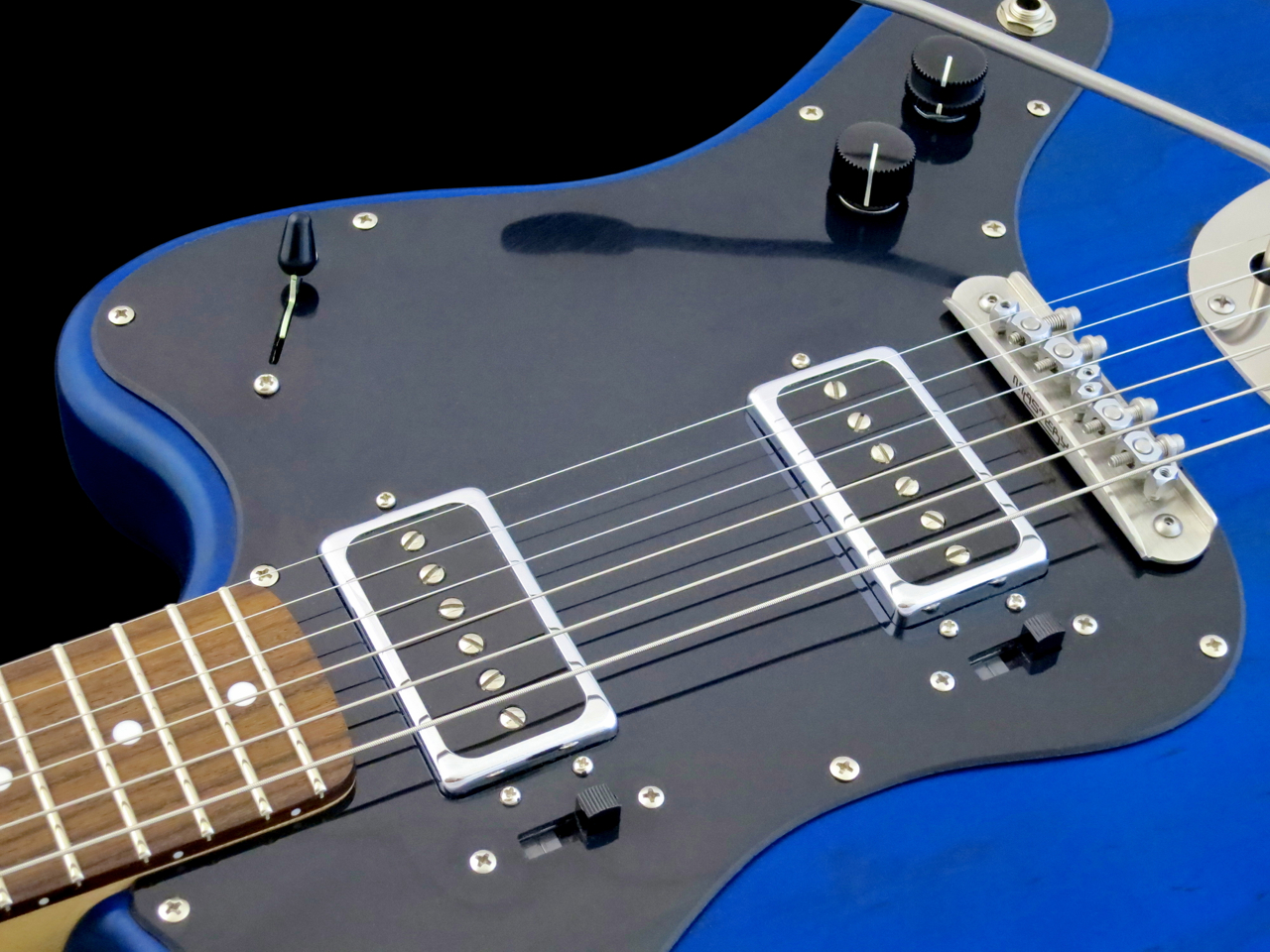
The two P-90-type pickups have been developed especially for the Viitasaari OM by Olli and Finnish pickup maker Jarno Salo.
The special feature of these Viitasaari/Salo-pickups are their dual coil taps, giving you three different basic sounds (and output levels) per pickup. A slide switch above each pickup lets you select between the full coil and the two coil tapped variations.
You can choose between a three-way blade switch (as on the reviewed instrument) or a three-way rotary for the pickup selector.
The controls are master volume and master tone. You can also specify a built-in fuzz effect as an option, which is then activated by a push/pull-switch inside the tone control.
****
The Viitasaari OM is a top-drawer boutique guitar; it is lightweight and easy to play.
Comparing a Viitasaari to a mass-produced guitar makes the differences blatantly obvious – even though the Jazzmaster/Jaguar-shape is already a very ergonomic design, Olli Viitasaari’s craftsmanship takes the smoothness to new levels. The OM feels like a natural extension of the player’s body.
The workmanship and finish on this guitar couldn’t possibly be any neater – you could call t exemplary. The playing feel with the 0105 [sic!] set of strings is precise and bendy at the same time.
Mastery’s Offset vibrato system really is the best that has happened to the offset-vibrato since its inception in 1958. This is how the bridge and vibrato should have been designed right from the start! The Mastery Offset takes all the whammy abuse you can throw at it without any untoward side effects – no tuning problems, no strings jumping about. No wonder so many Jazzmaster and Jaguar-players have already updated to the Mastery Offset-system.
The clean sound of the Viitasaari OM is Fender-ish in its fresh brightness and clean midrange, even though these P-90s are slightly more powerful than Fender Jazzmaster pickups. We get a high quality version of the Jazzmaster-tone with clearly less hum and buzz, thanks to the fine Viitasaari/Salo-pickups.
Using the coil taps will give you two quieter and slightly more rounded versions of the full pickup tone.
Here are the neck pickup’s three variations:
And the same for the bridge pickup:
As we all know, P-90s love chunky overdrive sounds, which opens the Viitasaari OM up to all sorts of tasty crunch tones:
I feel the coil taps are especially useful in distorted Rock/Blues-settings, making it possible to go from rhythm to lead playing without having to step onto an effects pedal. The shorter coil variations cool things down nicely, while the full coil gives you a ”boost” in volume and bite for lead guitar parts.
Here are the neck pickup’s three variations:
And the same for the bridge pickup:
In recorded the demo track’s guitar parts using a T-Rex Replicator analogue tape delay:
****
What a gorgeous guitar! To me the Viitasaari OM is simply the best Jazzmaster-type guitar I have ever played.
The workmanship is boutique grade and the OM plays like a dream. The Master vibrato is the icing on the cake, taking this design to new levels.
In my view the best thing about the OM, though, is the way Olli has incorporated double coil taps in his design. The OM takes the lead/rhythm idea of the original Jazzmaster, but transforms it into something that actually works much better in a modern context.
Danish effects specialists T-Rex have caused an enormous stir with their newest guitar pedal. Their new stompbox – called the Replicator – is a genuine, all analogue tape delay, hand-assembled in Denmark. These days tape echoes in themselves are rather rare beasts, but T-Rex ups the ante by giving us the first tape delay with a built-in tap tempo function!
****
What is a tape delay?
The tape delay was the first studio effect invented (back when Rock ’n’ Roll was in its infancy), and it was produced by ”misusing” an open-reel tape recorder (hence the name).
The magnetic tape recorder – originally called the Magnetophon – was a German invention from the 1930s, which used a plastic tape coated with magnetisable material as its recording medium.
An empty – or wiped – magnetic tape has all the metal particles in its magnetisable surface pointing in the same direction. The result is silence (in theory) – or rather: some tape hiss.
During recording the recording head transforms the incoming audio signal into magnetic bursts of different strength, wavelength and polarity, and magnetises the tape’s metal particles, rearranging them into different magnetic clusters. During playback these ”magnetic ripples” are picked up by the playback head and translated back into an audio signal.
In tape recorders, such as open-reel studio machines or C-Cassette recorders, many different factors affect the audio quality of the playback. These factors include things such as the physical condition of the tape, tape width, tape speed, the condition of the parts involved in the mechanical transport of the tape, as well as the exact position of the playback head in relation to the tape.
Most C-Cassette players have/had only two heads – one erase head, plus a combined recording and playback head – but reel-to-reel tape recorders in the studio usually came with at least three heads (erase, record, playback). Thanks to the separate recording and playback heads the studio engineer was able to listen to the recording in progress as it sounded on the tape, while it was being recorded (to listen for tape distortion or tape defects/drop-outs).
Because there is a small physical distance between the recording and playback head, there’s always a short audible delay between the signal being recorded and the playback off the tape. The length of this delay is directly dependent on the distance between the two heads, as well as on the tape speed.
In the end, a recording engineer somewhere hit upon the bright idea to use the studio’s backup tape machine as an ”effect processor”. The engineer used the main recorder in the usual way, to record the song’s final (live-) mix off the mixing console’s master buss. The spare tape recorder was fed only the instruments and vocal parts (from the mixer) which needed to receive tape delay. If you mixed the output of the second recorder’s playback head into the recording desk you got a single delay effect. By feeding a small portion of the delay signal back into the delay tape machine’s input you could get multiple delays.
Tape delays meant for live use usually come with more than one playback head, which makes it easier to fine-tune the length of the echo effect, and which makes rhythmic delay patterns possible. Almost all mobile tape echoes use tape loops as their recording medium.
The T-Rex Replicator comes equipped with four tape heads:
The black head is the erase head, next in line is the record head, followed by two playback heads.
****
The T-Rex Replicator (current price in Finland:849 €) comes in its own, vintage-themed ”vinyl leather” carrying bag, which contains the Replicator itself, as well as its power supply, a second tape loop cartridge, the owner’s manual, and a set of cotton swabs (for cleaning the heads with a drop of isopropyl alcohol).
The Replicator is quite a rugged pice of gear, made to withstand onstage use.
The 24 VDC power supply, though, seemed a little weedy in comparison.
The back panel offers the following connectors:
There are the input and output jacks, as well as two connectors for expression pedals, should you want to control the delay time (tape speed) and/or the feedback on the fly.
The little Kill Dry-switch mutes the dry (uneffected) signal in the Replicator’s output. This is a very handy feature, should you want to run the Replicator connected to a parallel effect loop, or to a mixing desk using a send/return-bus.
The T-Rex Replicator offers you six controls and four footswitches to control its functions:
The On/Off-switch does what it says on the tin. When the delay effect is off the Replicator’s tape loop stops running.
The Heads-switch gives you access to the effect’s three delay modes by switching the playback heads on or off. A green light means you’re using the long mode (delay times of approx. 250 – 1.200 ms), red stands for short mode (125 – 600 ms), while orange means you’re running both playback heads simultaneously for a rhythmic delay pattern.
Stepping onto the Chorus-switch will introduce deliberate wow and flutter (tape speed fluctuations) to produce a chorus-style effect that can be fine-tuned with the corresponding control.
Tap Tempo does what it says on the tin. Although this is quite a normal feature on digital delay units, the Tap Tempo-switch on the Replicator is huge news for tape delay fans. T-Rex have developed a system to control the unit’s motor digitally, making it possible, for the first time, to synchronise a tape delay precisely on the fly.
The Saturate-control holds a pivotal role for the sound of the Replicator’s delays. Depending on its settings the effect can either be clean and dynamic or greasy and overdriven.
Adjusting the Delay Time- and Feedback-controls on the fly can produce some wild and wonderful effects (in Feedback’s case up to and including self-oscillation).
****
Despite being a child of the Sixties, who has used a tape echo as the main effect in his first band’s PA-system, I have to admit that I’ve grown accustomed to the clarity and precision of digital effects. My first reaction when I tried out the Replicator for this review was ”Is it supposed to sound like this, or is there something wrong?”
Alas, it didn’t take long for the memories of a distant past to return, and I started to really enjoy the genuine old-school tones emanating from the Replicator. You should remember, though, that the Replicator is meant as a handy, portable tool for the guitarist or keyboard player. You shouldn’t expect Queen-style ultra-long, studio quality delay sounds from a compact unit such as this.
Tape speed is of course the most important variable, when it comes to the audio quality of the delay effects – short delay times (= faster running tape loop) will naturally result in cleaner and more stable sounds than long delay times (= a slow running tape).
The first audio clip has been recorded with the shortest possible delay time, while the second clip lets you hear the Replicator running at maximum delay (both clips feature all three head modes):
In my view, the T-Rex Replicator is a portable tape delay of professional quality. You should keep in mind, though, that a genuine analogue tape echo is always (!) a low-fi device in comparison to a digital delay pedal. But it is exactly this authenticity, the slight greasiness, and the sense of unpredictability a genuine tape echo conveys, that makes the Replicator such an enjoyable piece of equipment. The T-Rex’ delay never sounds tacked on, instead it becomes a natural part of your guitar signal’s harmonic content.
I’d say it is hard to overemphasise the advantages this unit’s tap tempo-function brings. The Replicator makes synching your delay child’s play.
I used the T-Rex Replicator to record two demo tracks, which show off the effect’s sounds in different musical contexts:
Demo Track 1
Demo Track 2
****
There’s no beating about the bush about this – the single restrictive factor to seeing the Replicator creep into the pedalboard of each and every guitarist is the unit’s steep price. Most players will baulk at a price tag of over 800 euros for a ”lo-fi effect”, and rather opt for one of the numerous tape delay modellers, like the Strymon El Capistan.
The Replicator, which is lovingly assembled by hand in Denmark, will find most of its clientele among vintage collectors and well-heeled boutique guitar and amp connoisseurs. If you run your original 1950s guitar through an equally vintage amplifier, running an authentic, mechanical tape delay unit will be like the icing on the cake. Especially, if the tape delay is as reliable and easy to use as the T-Rex Replicator.
Is the T-Rex Replicator the best genuine tape delay ever? To my knowledge, there are currently three different new tape echo models on the market – each of them sound great. I would pick the Replicator, though, because it is small enough to fit on a medium-to-large pedalboard, and because of its nifty tap tempo feature.
• fully programmable digital amp head
• Frank Gambale’s signature presets
• fully-featured amp, cabinet and microphone modelling
• wide range of digital effects
• stereo power amp section (2 x 150 W @ 8 ohm; 2 x 250 W @ 4 ohm)
****
Demo Track
• two clean rhythm guitars – Fender Telecaster (left channel) & Kasuga ES-335 copy (right channel)
• two auto-wah/filter rhythm guitars – Fender Stratocaster (left) & Gibson Melody Maker SG (right)
• lead guitar – Gibson Melody Maker SG
• all guitar tracks recorded direct using Frank Gambale presets (no added effects) via the Multiamp’s balanced XLR-output
Tähän mennessä kaikki Bluetone-mallit olivat puhtaasti kokonaan custom-periaatteella rakennettuja pelejä.
Se tarkoittaa, että firman sivustolta löytyy useita valmiita konfiguraatioita – ikään kuin à la carte -ruokalista – joista asiakas valitse hänelle sopivamman kustomoinnin lähtökohdaksi. Ja näitä lisäoptioita löytyy runsaasti – oman vahvistimen tarkoista sisäisistä ominaisuuksista kotelon viimeistelyyn ja säädinpaneelin fonttiin.
Tällainen valinnan runsaus tarkoittaa, että Bluetone custom-vahvistimen teko lähtee aina ns. tyhjästä pöydästä – sopivan kokoisesta metallikotelosta ja tyhjästä lasikuituisesta reikälevystä.
Reikälevystä tehdään ns. eyelet board lisäämällä oikeisiin kohteisiin popniittejä, joihin elektroniikan komponentit ja tarvittavat johdot juotetaan käsin kiinni (= point-to-point-rakenne).
Tämä on hyvin monimutkainen ja aikaa vievä prosessi, mikä näkyy luonnollisesti valmiin tuotteen hinnassa. Point-to-point-tekotapa kuitenkin antaa Bluetonen asiakkaille kustomoinnissa käytännössä vapaat kädet.
Bluetonen johtokaksikko – Harry Kneckt ja Matti Vauhkonen – on hiljattain päättänyt laittaa firman custom-vahvistimien rinnalle uuden sarjan, joka tulee tarjoamaan muutamia ”valmiita” vahvistinmalleja, joille on tarjolla vain hyvin rajattu määrä valittavia lisäoptioita.
Uutuusmalleissa voi virtaviivaistaa kokoonpanoprosessia käyttämällä elektroniikan alustana ns. hybridilevyä.
Bluetonen hybridilevyt ovat lasikuituisia, ja erittäin laadukkaita ja kestäviä, eikä niitä voi verrata massatuotannossa käytettäviin, heppoisiin piirilevyihin. Jokaisen komponentin paikka on tarkoin merkattu, ja monet osien välisistä ”johdotuksista” on hybridilevyssä jo valmiiksi olemassa. Uutuusvahvistimien putket ja muuntimet asennetaan kuitenkin edelleen tukevasti vahvarin metallikoteloon, eikä piirilevylle (niin kuin monissa halpavahvistimissa).
Muu valmistus tapahtuu uusissa malleissa ihan samalla tavalla kuin Bluetonen custom-peleissä – komponentit lisätään käsin (ylhäältä) hybridilevylle ja ne juotetaan käsin paikoilleen. Hybridilevyn ansiosta vahvistin valmistuu vain huomattavasti nopeammin ja helpommin, mikä tullaan näkemään myös hintaerona hybridilevy- ja point-to-point-mallien välillä.
Kätevän kokoisen, yksikanavaisen boutique-kombon inspiraationa on toiminut Fender ”Blackface” Princeton Reverb (versio AA1164), mutta Bluetone-vahvistimessa on niin monta parannusta, ettei Black Princen tapauksessa voi edes puhua kopiosta.
Viininpunaisella tolexilla päällystetyn perusversion lisäksi tarjotaan Black Prince -kombo (lisämaksua vastaan) myös aidolla tweed-kankaalla tai öljytyllä (täyspuisella) mahonkikotelolla.
Tykkään itse kovasti Bluetonen hyvin asiallisen näköisestä etupaneelista, jossa jokainen säädin ja kytkin on selkeästi merkitty. Hektisissä live-tilanteissa selkeä etupaneeli voi olla kullan arvoinen.
Bluetone Black Prince Reverb tarjoaa singlecoil- ja humbucker-kitaroille omat tulojakit (High ja Low). EQ-osasto tarjoaa kolme säädettävää kaistaa, sekä lisäksi Bright-kytkimen, josta saa tarvittaessa vielä enemmän eloisuutta preesensalueelle.
Vaikka kyse on melko kompaktista putkikombosta, löytyy Black Prince Reverbistä sekä aito, putkivahvistettu jousikaiku, että putkitremolo.
Bluetone käyttää vahvistimissaan aina PPIMV-kytkennällä (post phase-inverter master volume) toimivia master volume -säätimiä, koska tällä tavalla toteutettu master volume vaikuttaa vähiten vahvistimen soundiin.
Black Prince -kombon takaseinä on Fender-tyylisesti avoin.
Takapaneelista löytyy lähtöjä lisäkaiuttimille, sekä liitin kombon mukaan tulevalle jalkakytkimelle.
Tällainen on näky, kun takaseinä on irrotettu Bluetone-kombosta.
Black Prince Reverb on täysputkikone ja putkivarustus on seuraavanlainen (oikealta vasempaan):
Ensimmäinen 12AX7 on kombon etuasteputki. Kaiun send ja return toimivat yhden 12AT7- ja yhden 12AX7-putken varassa. Viimeinen 12AX7 hoitaa sekä vahvarin vaiheenkääntämistä että tremolo-efektin tuotantoa.
Black Prince lähtee Bluetonen pajalta kahdella 6V6GT-pääteputkella, jotka tuottavat noin 20 wattia lähtötehoa. Tätä komboa pystyy myös käyttämään – biasoinnin jälkeen – kahdella 6L6GC-putkella, jolloin lähtöteho nousee lähelle 30 wattia.
Tämän kombon lyhyt jousikaikutankki tulee MOD:n valikoimasta.
Bluetone on valinnut Warehouse Guitar Speakersin Retro 10 -kaiuttimen uutuuskomboonsa, vaikka tämä on ihan erilainen kaiutin kuin vanhoissa Fendereissä käytetty Jensen.
Valinta oli kuitenkin tietoinen ja monien kokeilujen tulos:
Tehonkestoltaan ehkä hieman ”ylimitoitettu” WGS Retro varmistaa, että Black Prince Reverbin soundi pysyy mahdollisimman puhtaana ja dynaamisena. ”Britti-soundiin” viritetty luonne taas tekee Bluetone-kombon soundista tukevamman ja isomman.
****
Voi pojat, tästä soundista voi tulla riippuvainen! Ainakin minun tapauksessani vain muutaman soinnun soittaminen riitti herättämään ajatuksia pikalainan ottamisesta.
On hyvin vaikea kuvailla tarkoin, mitä se on, mutta juuri tällaiselta puhtaan sähkökitaran pitää soida! Soundi on puhdas ja dynaaminen, mutta ei koskaan kylmä tai kliininen. Kombon sointi on kuulas ja raikas, muttei ärsyttävän terävä. Bassokielet soivat tukevasti, mutta ne pysyvät kuitenkin selkeinä.
Lyhyen MOD-jousikaiun soundi on yllättävän monitahoinen ja tiheä, ja sitä on tarjolla hyvinkin runsaasti. Myös Black Prince Reverbin tremolo toimii esimerkillisesti – tarjolla on kaikenlaisia tremolomuotoja kevyestä ja hitaasta hyvin nopeaan ja rankkaan vatkaukseen.
Tässä pätkässä esitetään Telecasterilla Bluetone Black Prince Reverb -kombon kuivaa soundia, sekä kombon kaiku- ja tremolo-efektit:
Black Prince säilyttää myös mallikkaasti eri kitaroiden soundillisia eroja. Näissä kolmessa pätkissä soivat Fender Telecaster…
…Epiphone Casino…
…ja japanilainen 1970-luvun kopio Gibson ES-335 -mallista:
Kombon erittäin terve puhdas soundi toimii myös todella hyvin efektipedaalien kanssa. Demobiisissä on käytetty – Black Princen oman tremolon ja kaiun lisäksi – analogista chorus-pedaalia, sekä Tube Screamer -tyylinen säröpedaali.
Komppikitarana toimii Fender Stratocaster, kun taas soolo-osuudet on soitettu Hamer USA Studio Custom -kitaralla:
****
Bluetone Black Prince Reverb on mielestäni erittäin laadukas valinta koti- ja studiovahvistimeksi, sekä sellaisille keikoille, joissa ei tarvita lavalla suuria äänenvoimakkuuksia (tai joissa mikitys ja monitorointi toimii hyvin).
Black Prince Reverb on kätevän kokoinen boutique-luokan putkikombo loistavalla clean soundilla, täyteläisellä jousikaiulla ja tyylikkäällä tremolo-efektillä.
Vahvistinta ei ole pilattu lapsellisella putkivoodoolla tai sekavalla graafisella toteutuksella, vaan vankalla asialinjalla mennään – ja hyvä niin!
Tämä on käsintehty, kotimainen laatuvahvistin. Tämän valossa pidän Black Prince Reverbin hintaa jopa melko edullisena.
Olli Viitasaari on nuori soitinrakentaja, jolla on oma paja Järvenpäässä.
IKATA:sta valmistunut Viitasaari on kehittänyt – korjaus- ja customointihommien ohella – omaa sähkökitaramallia, joka oli jo esillä viime (ja tämän) vuoden Fuzz Show:ssa, sekä viime syksyn Turenki Tonefestillä.
Kitaran nimi on Viitasaari OM (OM = Offset Model, hinnat alk. 2.500 €; Hiscox-laukku kuuluu hintaan) ja se edustaa Ollin näkemystä huippulaadukkaasta ihanne-Jazzmasterista. Yleisö on ottanut uuden mallin hyvin vastaan, ja useampi Viitasaari OM on jo suomalaisten ja ruotsalaisten kitaristien aktiivikäytössä.
Kitarablogi haluaisi kiittää muusikko Juha Pöysää henkilökohtaisen kitaransa lainaamisesta tätä juttua varten!
****
Viitasaari OM -kitara lähtee liikkeelle tutuilla – ja hyväksi havaituilla – Fender-peruspalikoilla:
OM:n runko on veistetty lepästä, ja soittimen ruuvikaulaan taas käytetään vaahteraa. Otelauta on ruusupuuta.
Ensimmäinen ero vanhaan Fender-klassikkoon on uutuuskitaran hieman lyhyempi mensuuri. Viitasaari käyttää PRS-kitaroistakin tuttua 25 tuuman mensuuria, joka edustaa toimivaa välimaastoa Fender- ja Gibson-maailmojen välissä.
Koska Viitasaari Guitars on aito custom-paja, jää asiakkaille rutkasti valinnanvaraa, esimerkiksi viimeistelyn suhteen.
Juha Pöysän OM on viimeistelty kokonaan mattalakkauksella. Rungon ja viritinlavan väriksi on valittu erittäin kaunis, läpikuultava sininen. Olli Viitasaari tarjoaa kuitenkin myös kiiltäviä lakkauksia, sekä öljyviimeistelyt OM-mallin vaihtoehdoiksi.
Kitaran virittimiksi on valittu Gotoh HAP -koneistot, joiden tappien korkeutta pystyy säätämään vapaasti.
Leo Fenderin alkuperäistä Jazzmaster/Jaguar-vibratoa sekä rakastetaan että vihataan kitaristipiireissä. Vibraton todella pehmeää toimintaa arvostetaan, mutta alkuperäisen erillisen tallan toteutus saa oikeutetusti paljon kritiikkiä niskaan.
Pienten tallapalojen korkeussäätöruuvit löystyvät usein soiton aikana, mikä sotkee kitaran säädöt. Lisäksi kielten loiva kulma tallan yli aiheuttaa tallapalojen resonointia. Nykyaikaisten ohuiden kielten kanssa alkuperäisellä Jazzmaster-vibratolla tulee vielä lisää ongelmia – kielet hyppivät helposti ulos tallapalojen matalista urista (etenkin venytyksissä), ja joskus koko tallapala voi soiton aikana kääntyä yllättäen ylösalaisin.
Yhdysvaltalainen valmistaja Mastery on poistanut näitä ongelmia tehokkaasti omalla loistavalla Offset Bridge -tallalla, minkä vuoksi tämä systeemi onkin oiva valinta Viitasaari OM -malliin.
Soittimen loivempi otelautaradius (9,5 tuumaa) sekä vintagea korkeammat nauhat antavat OM:lle nykyaikaisen soittotuntuman.
Viitasaari-kitarassa käytetään kahta humbucker-kokoista P90-mikrofonia, jotka on kehitetty yhteistyössä Jarno Salon kanssa.
Näissä Viitasaari/Salo-mikrofoneissa on erikoisuutena tupla-coil-tap-ominaisuus, mikä tarkoittaa että mikrofonin kelasta voi käyttää kokonaisen kelan lisäksi kahta variaatiota, joissa käytetään vain osaa koko kelasta. Näistä kolmesta vaihtoehdoista voi valita sopivan kummallekin mikille kolmiasentoisilla liukukytkimillä.
OM-mallin kolmiasentoisen mikrofonikytkennän voi toteuttaa joko kiertokytkimellä tai (niin kuin tässä) vipukytkimellä.
Säätimet ovat master volume ja master tone. Lisäoptiona on myös saatavilla sisäistä fuzz-säröä, joka laitetaan päälle tone-säätimeen piilotetulla nostokytkimellä.
****
Testissä käynyt Viitasaari OM on kevyt, mukavantuntuinen ja helpposoittoinen peli.
Ero Viitasaaren ja liukuhihnakitaran välillä on hyvin selvä – jo valmiiksi ergonomiset ja sulavat offset-muodot muuttuvat käsintehdyssä kitarassa ylellisen pehmeäksi kokemukseksi. Soittimesta tulee kitaristin kehon luonnollinen jatke.
Työnjälki ja viimeistely on ensiluokkaista ja esimerkillistä. Soittotuntuma on 0105-kielisatsilla [sic!] tarkka, mutta kevyt.
Masteryn Offset-järjestelmää ei voi mielestäni kehua liikkaa! Juuri näin pehmeästi ja tarkasti homman olisi pitänyt toimia jo vuodessa 1958. Mastery-järjestelmä kestää mukisematta kovaakin kyytiä, ilman että kielet hyppäsivät paikasta toiseen, ja myös täysin ilman vireongelmia. Eikä ihmekään, että monet nimekkäät Jazzmaster- ja Jaguar-soittajat ovat jo vaihtaneet omissa soittimissa alkuperäisen tallan ja vibraton Mastery Offset -järjestelmään.
Viitasaari OM -mallin puhdas soundi on Fender-tyylisesti raikas. Soundi on erittäin laadukas versio klassisesta Jazzmaster-soundista, vaikka P90-mikrofonien lähtötaso onkin hieman korkeampi kuin Fender Jazzmaster -mikeissä. Viitasaari/Salo-mikit ovat myös tuntuvasti vähemmän herkkiä häiriöille kuin klassikkokitaran mikrofonit.
Coil-tap-asetuksilla saa täyden kelan soundin lisäksi kaksi hieman hiljaisempaa ja tummepaa vaihtoehtoa.
Tässä kaulamikrofonin kolme vaihtoehtoa:
Ja sama tallamikrofonilla:
P90-mikrofoneja sopivat tunnetusti myös erittäin hyvin särökäyttöön, ja Viitasaarestakin lähtevät rouheat ja hyvällä tavalla purevat Rock-soundit:
Viitasaari OM:n coil-tap-kytkimet mahdollistavat mielestäni juuri särösoundeissa sellaista rhythm/lead-lähestymistapaa, ilman että tarvitsee polkaista säröpedaalia päälle ja pois. Lyhyempi mikrofonikela antaa mukavasti hieman siistimmät ja vaimeammat soundit, ja soolo-osuuksia varten voi vaihtaa liukukytkimellä täydelle P90-mikille.
Tässä kaulamikrofonin kolme vaihtoehtoa:
Ja sama tallamikillä:
Demobiisin kitararaidat on äänitetty T-Rex Replicator -nauhakaiun läpi:
****
Minun mielestäni Viitasaari OM on loistava sähkökitara. Se on yksinkertaisesti paras Jazzmaster-tyylinen kitara, jota olen koskaan kokeillut.
Työnjälki on ehtaa boutique-laatua ja OM:n soitettavuus on ensiluokkainen. Mastery on tehnyt sellaisen vibraton, jota voi ja kehtaakin käyttää vakavastikin.
Parasta OM-mallissa on minusta kuitenkin elektroniikan toteutus, jossa alkuperäinen Jazzmasterin ajatus nopeasta vaihtamisesta komppi- ja soolosoundien välillä on säilytetty, mutta samalla viety nykyaikaan tarjoamalla kolme eri perussoundia kummallekin mikrofonille.
Farida M-2NS + B-10E
• solid tops (M-2NS: cedar; B-10E: spruce)
• mahogany backs and sides
• set mahogany necks
• rosewood fretboards
• rosewood bridges with compensated bridge saddles
• Farida B-10E equipped with Fishman Isys pickup and preamp
**** Demo Track
• left rhythm guitar: M-2NS parlour
• right rhythm guitar: B-10E round shoulder dreadnought
• all tracks recorded with a pair of Shure SM57 microphones








 Kitarablogi.com – Finland's premier Guitar and Bass blog