Review: Blackstar HT Metal 5 + HT Metal 60

Blackstar HT Metal 60 – logo

Blackstar Amplification’s very popular HT Venue-series has recently been joined by the company’s brand-new HT Metal-range, which offers you valve amplifiers tailored specifically to the needs of Metal-guitarists.

Kitarablogi has received the compact five Watt HT Metal 5-combo – meant for use at home, for warm-up and in the studio – and the chunky three-channel, 60 Watt HT Metal 60 -combo for this review.

****
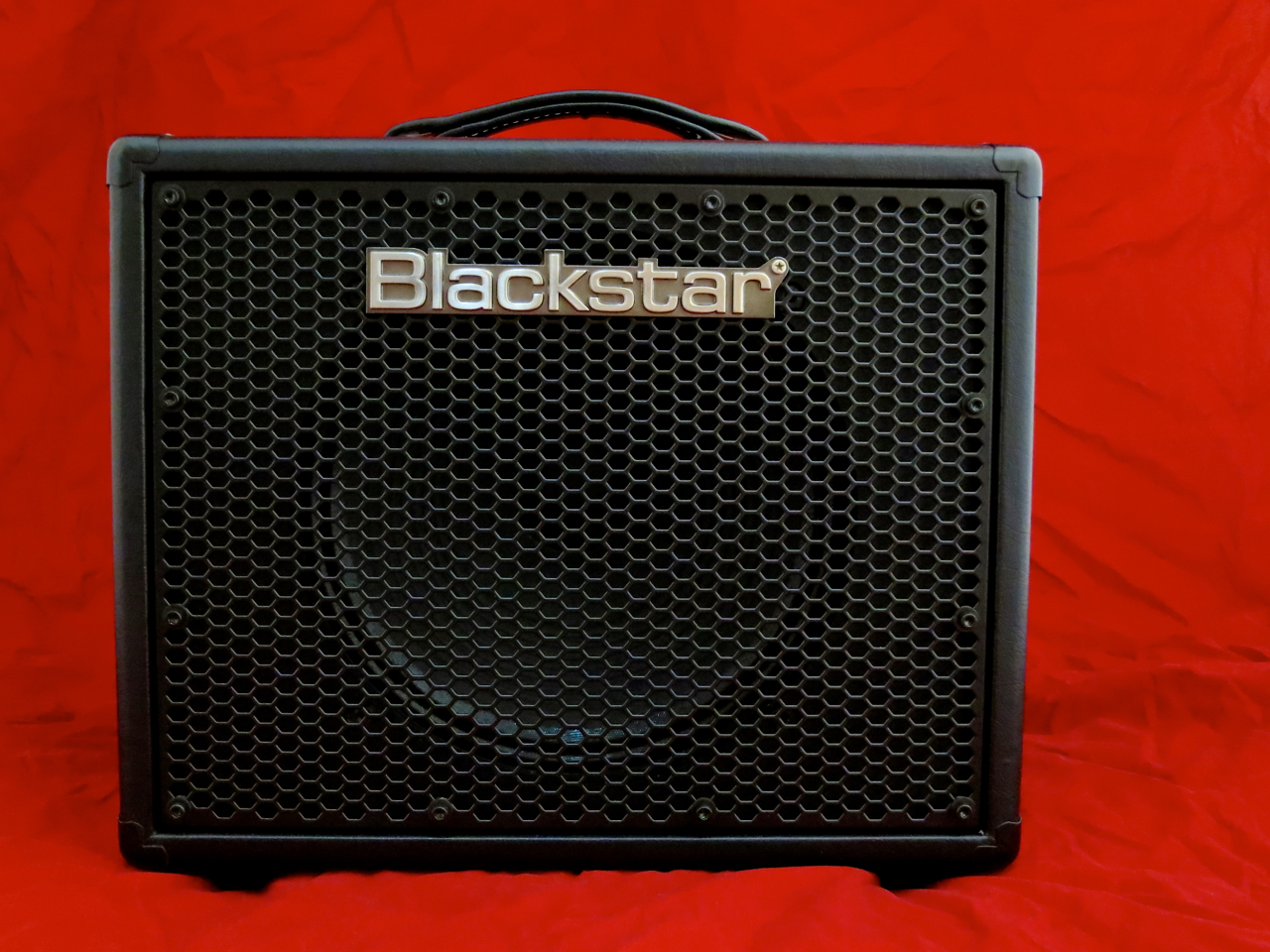
Blackstar HT Metal 5 – full front

The Blackstar HT Metal 5 (street price around 450 €) is based on the company’s extremely successful HT-5R-valve combo, with the new amp sharing the older model’s main architecture and push-pull power amp.

The HT Metal 5 uses two different valves to amplify your guitar signal – one is an ECC83 (aka 12AX7), the other a model 12BH7.

Instead of a woven speaker cloth – like on the HT-5R – the HT Metal 5-combo sports a very sturdy metal grille.
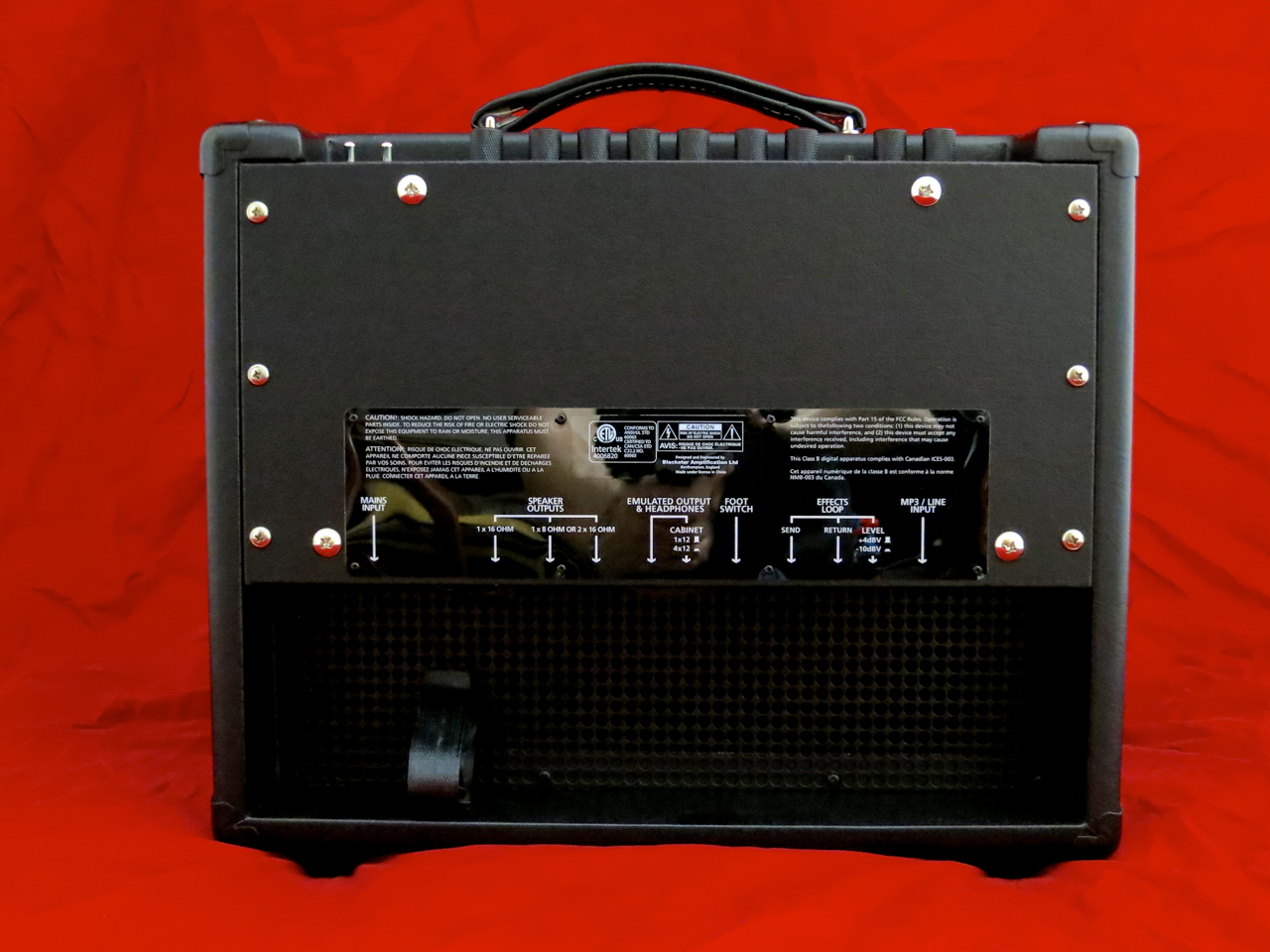
Blackstar HT Metal 5 – full back

The cabinet is a half-closed affair. The lower third of the back is covered by a metal grille, through which you can spot this Blackstar’s Chinese 12-inch speaker.

This compact combo weighs only 14 kilos, making it very easy to lift and carry around by its single top handle.

Blackstar HT Metal 5 – control panel

The Metal 5’s control panel looks like this (click for a larger picture):

This valve combo features two channels, called Clean and Overdrive. The Clean channel is equipped with a simple tone control, while Overdrive comes with a full 3-band EQ, as well as Blackstar’s patented ISF-control. Turning the ISF-control (ISF stands for Infinite Shape Feature) you can go from a USA-type response (with a loudness-style sound) all the way to what is known as a British tone (with its fatter mid-range).

The HT Metal 5 also comes equipped with a very nice digital reverb.
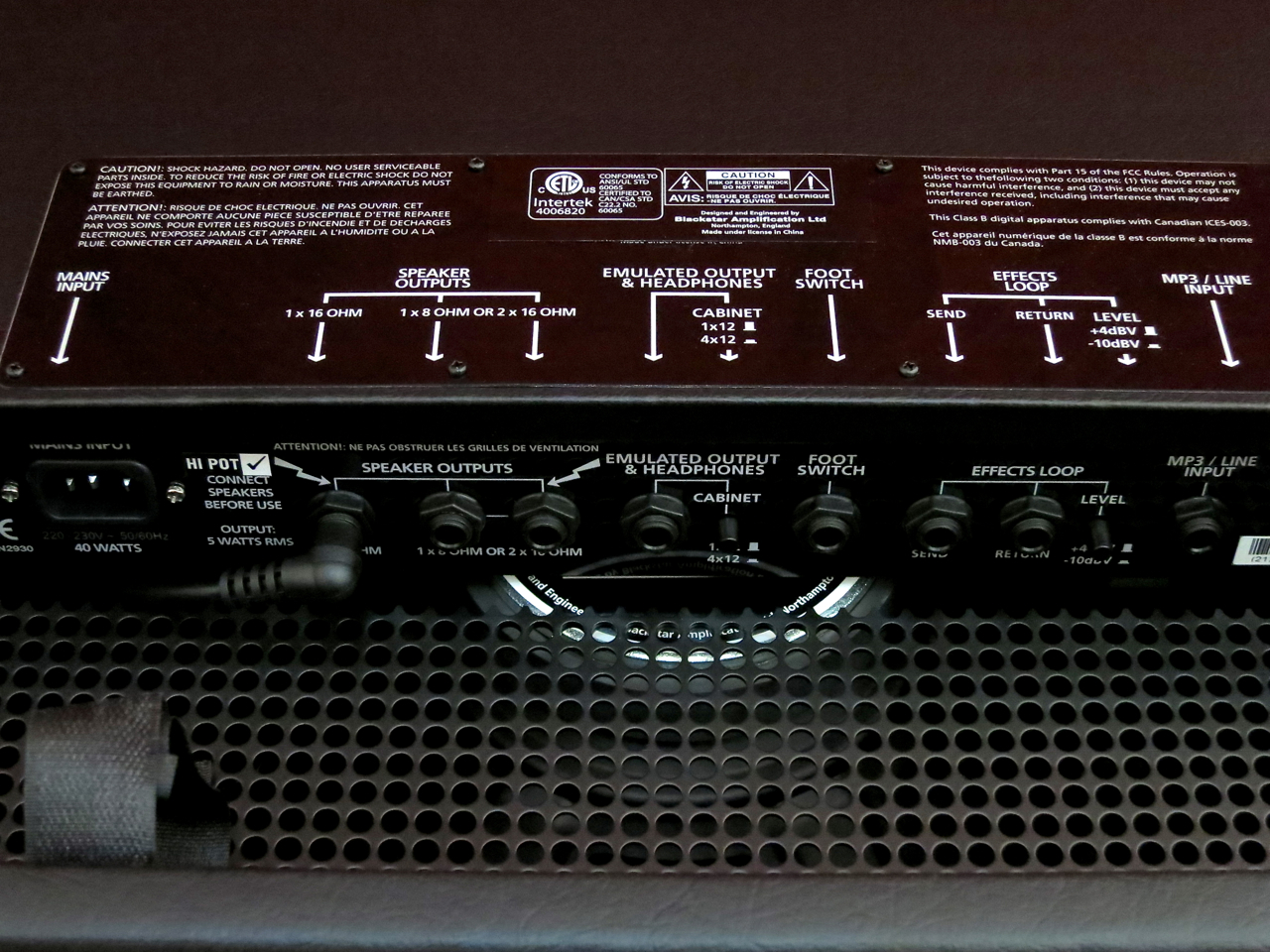
Blackstar HT Metal 5 – back panel

It is rather surprising to find so many different connectors and pushbuttons on such a small amp:

On the left, you will find the combo’s three speaker outputs.

Next up is Blackstar’s speaker-emulated output. A switch lets you choose between a virtual combo and an emulated stack sound. This output also works with headphones, and when the combo runs on standby.

The effects loop on the Metal 5 can be switched from a nominal signal level of -10 dB to +4 dB.

The line input on the far right allows you to connect your mp3-player to the combo.

Blackstar HT Metal 5 – footswitch

A footswitch for channel switching is included in the price of Blackstar HT Metal 5!

****

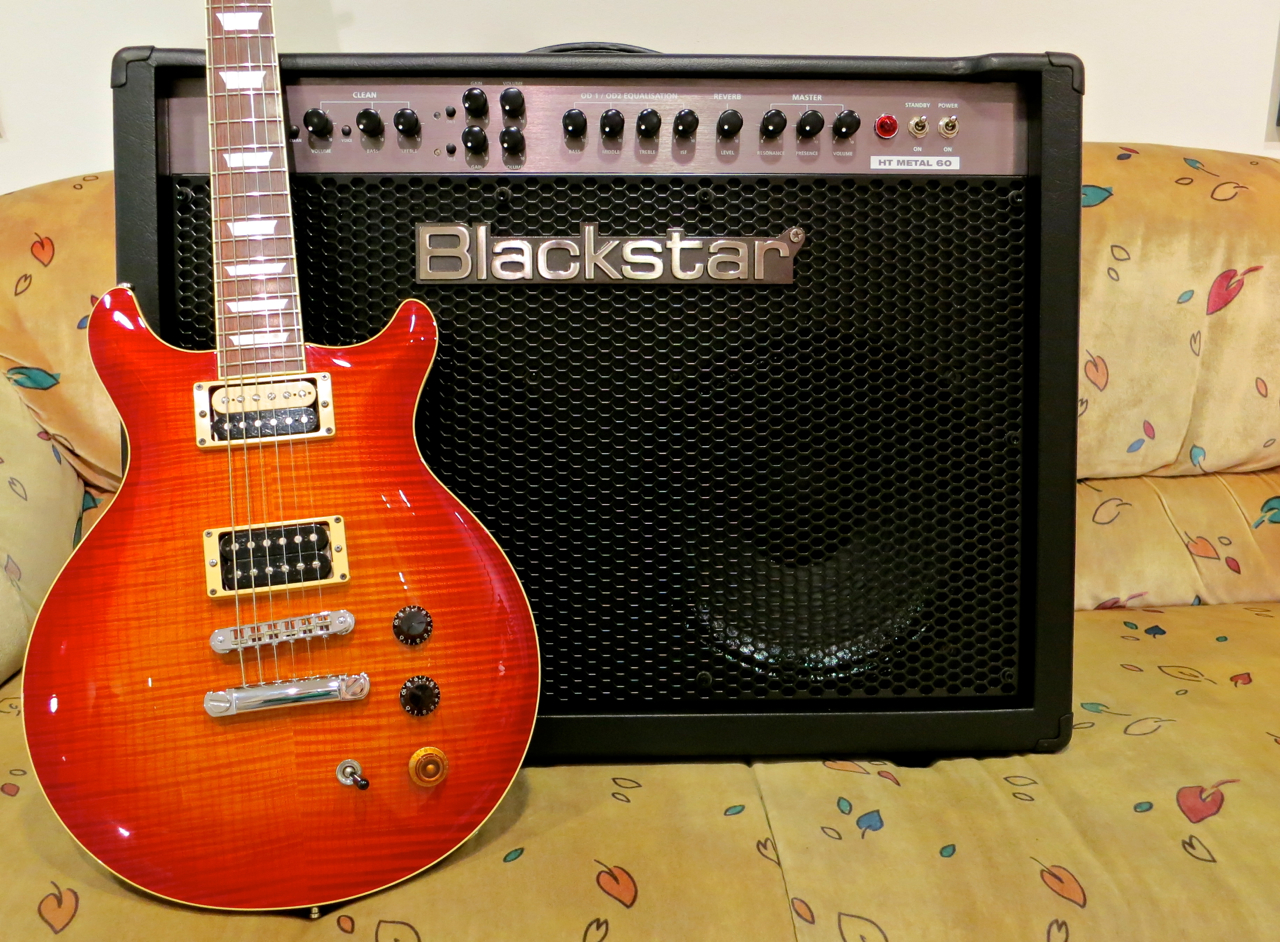
Blackstar HT Metal 60 – full front

Blackstar’s HT Metal 60 (street price around 1.000 €) is a three-channel powerhouse meant for live use.

This combo is build around a pair of ECC83-preamp valves and two 6L6s in the power amp.

The HT Metal 60 is equipped with two 12-inch Celestion speakers.
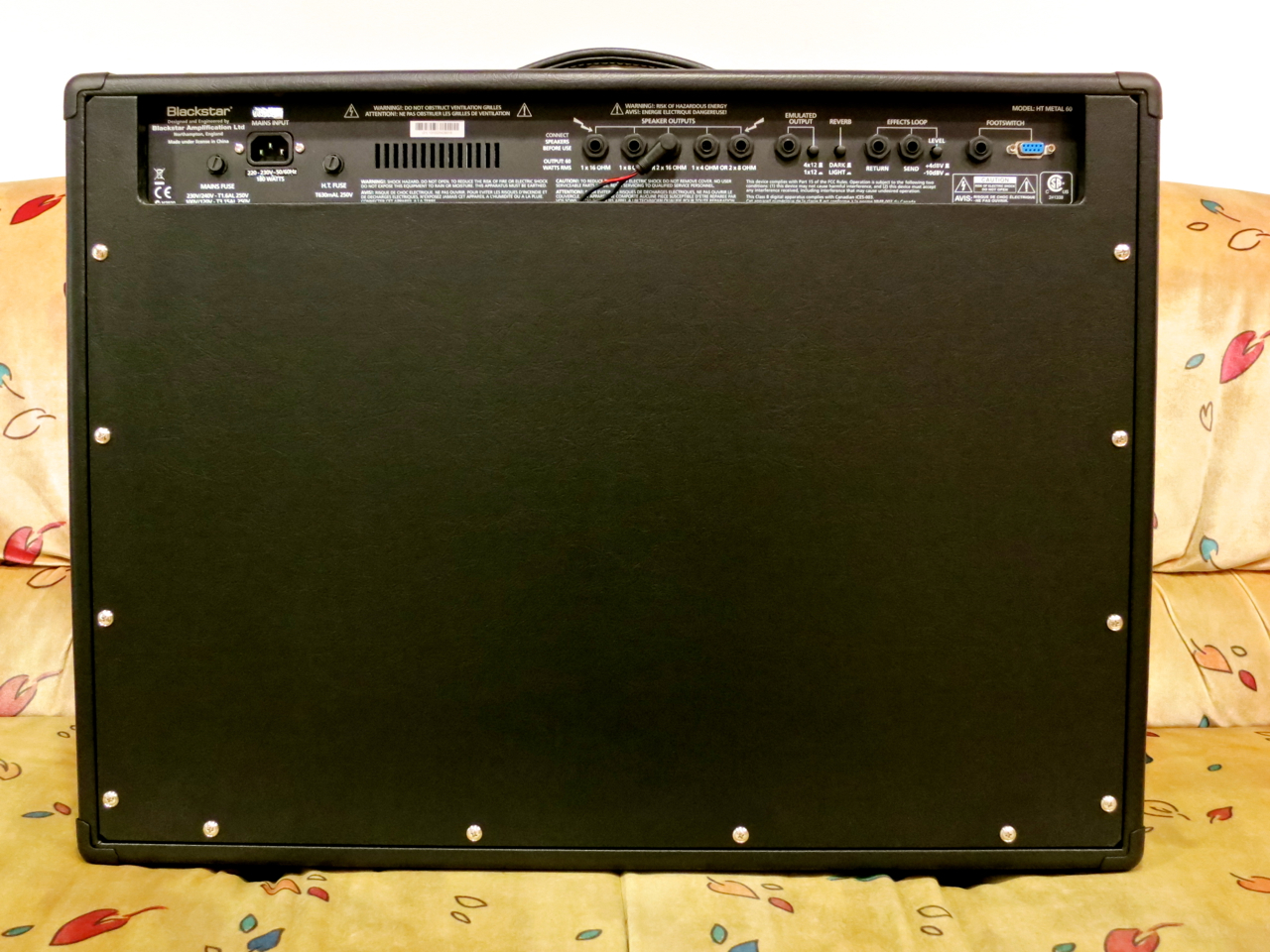
Blackstar HT Metal 60 – full back

The closed-back cabinet aims at giving this amp a stack-style tonality and punch.

Blackstar HT Metal 60 – side handle

Because of the considerable weight (30 kg) of a large tube combo, such as this, the HT Metal 60 has been equipped with two metal handles, installed into the amp’s sides.
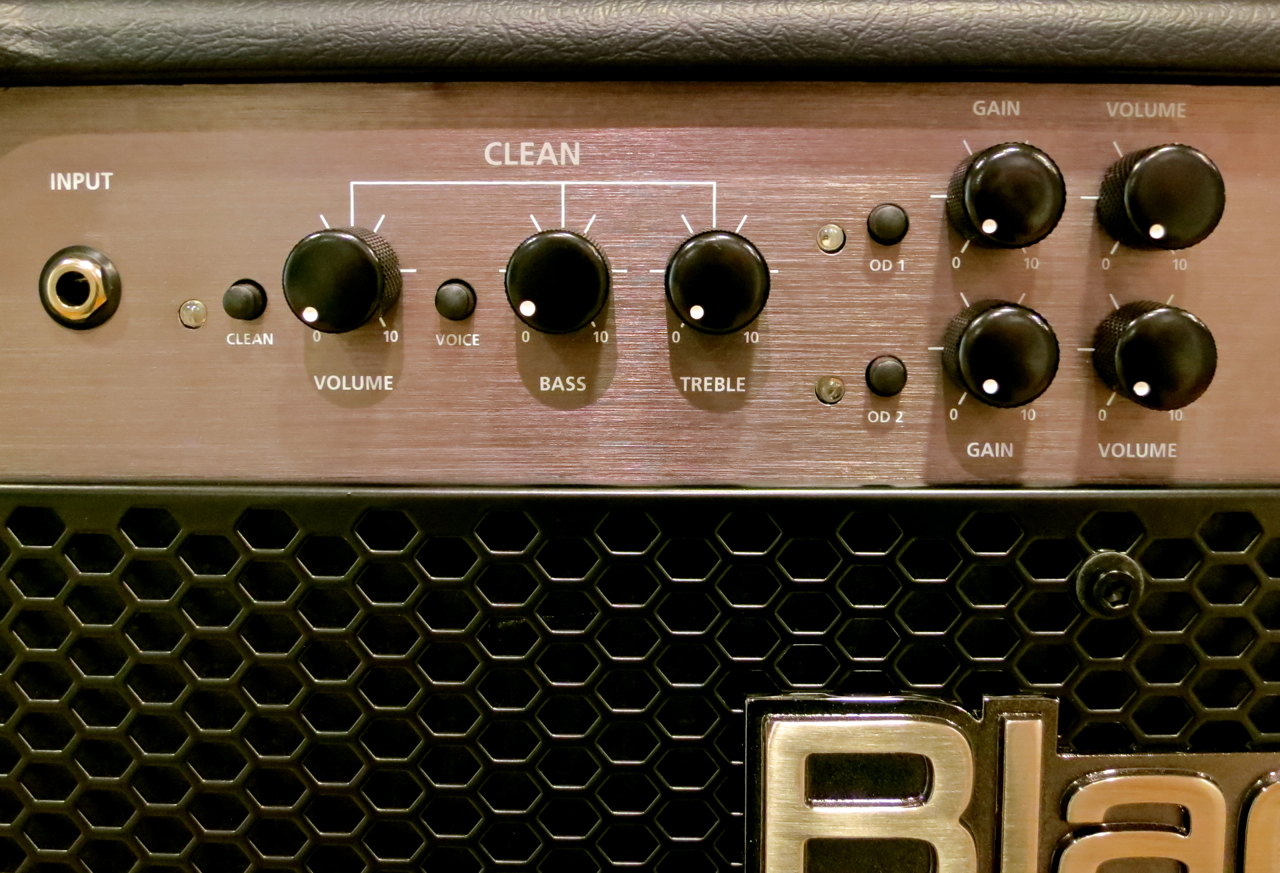
Blackstar HT Metal 60 – clean channel

You can choose between two different tonal characters in this Blackstar’s Clean channel, using the Voice-switch: Boutique Clean puts the amp in Class A mode, giving you a very dynamic response, but with less clean headroom than the voicing called Modern Clean.

The channel’s Bass- and Treble-controls make it very easy to find your sound.
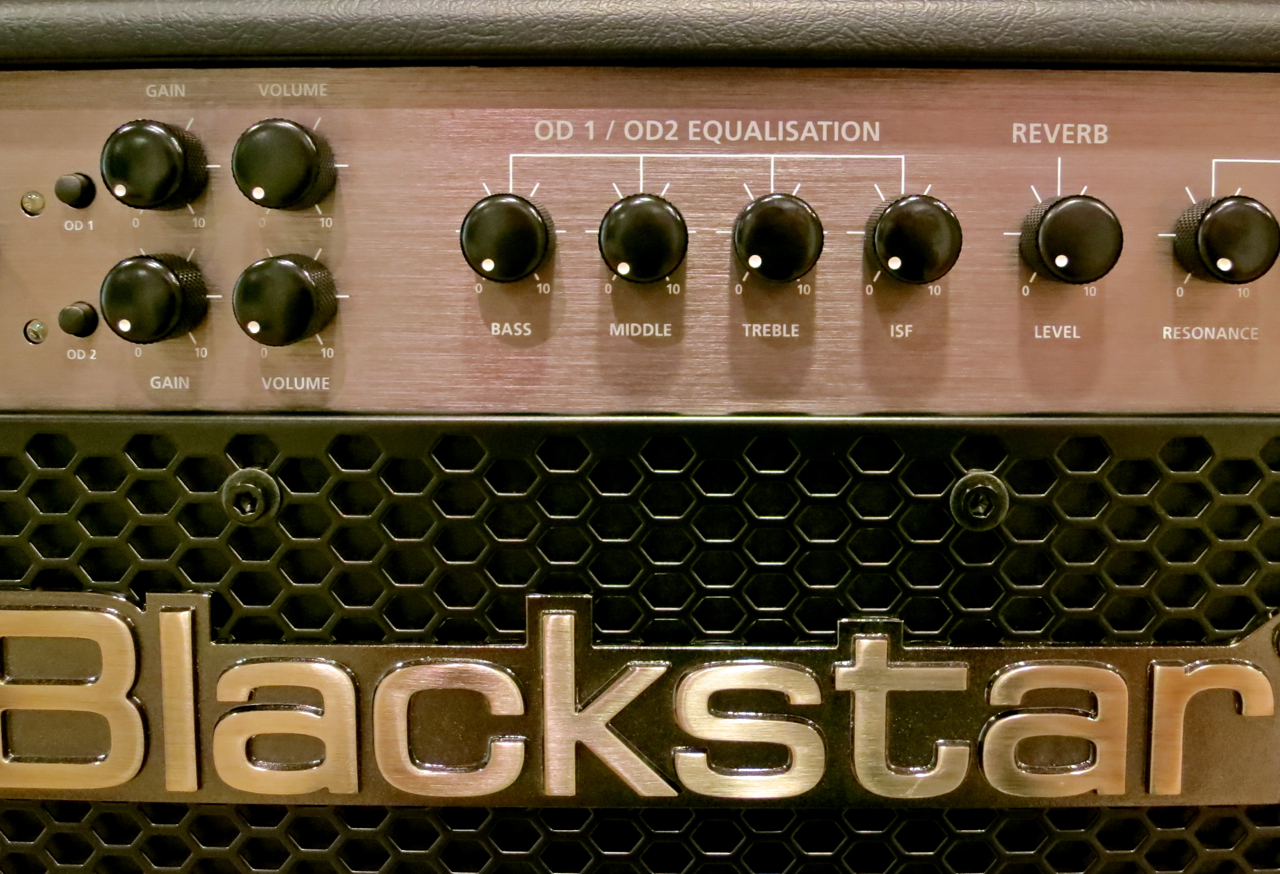
Blackstar HT Metal 60 – OD1 + OD2

The HT Metal 60 offers you two distinct overdrive channels – named OD1 and OD2 – which share the three-band-plus-ISF equalisation section.

OD1 has a tad less gain than OD2. Thanks to its slightly less compressed sound, as well as its drier bottom end, OD1 is the ideal choice for chunky and precise rhythm parts.

OD2’s massive gain reserves are combined with very creamy compression, but there’s plenty of bite here, too, to make sure your lead lines cut through with authority.

Blackstar HT Metal 60 – master section

The master section comprises controls for the HT Metal 60’s digital reverb, overall resonance and presence, as well as master volume.

Blackstar HT Metal 60 – back panel 1

You can connect the HT Metal 60 to virtually any other speaker cabinet, thanks to the five speaker outputs found on the back panel.

In addition to Blackstar’s well-designed speaker-emulated output, and the combo’s effects loop, there’s also a switch to access two different types of reverb (labelled ”light” and ”dark”).

Blackstar HT Metal 60 – back panel 2

The blue D-SUB-port is meant for the combo’s chunky FS-7-board (included, see below), that handles channel-switching duties and allows you to turn off the reverb on the fly.

The regular Footswitch-jack allows you to connect an additional footswitch to activate the combo’s internal boost. This boost is factory preset, and its amount cannot be changed by the user.

Blackstar HT Metal 60 – footswitch

****

Blackstar HT Metal 5 – opener

The Clean-channel on the Blackstar HT Metal 5 takes you from totally clean all the way to a mild Blues-crunch.

There’s more than enough volume on tap for living room and studio use. There’s a limited amount of clean headroom, though, which means that you will have to turn down the volume pot on a humbucker-equipped guitar.

This clip is played on a Hamer USA Studio Custom into the Blackstar’s Clean-channel, and recorded using a Shure SM57:

Here’s what the same clip sounds like recorded direct via the speaker-emulated output:

The HT Metal 5 dishes out delicious overdriven and distorted tones by the bucket load. Blackstar’s 12-inch speaker sounds fat and muscular, and makes it hard to believe that you’re listening to such a compact little combo!

Turning the ISF-control up full gives you a great Marshall-style tone, regardless of whether you’re using a mic…

…or the built in DI-output.

With ISF turned to zero the sound leans heavily in a Rectifier-type direction (first the SM57-clip, then the speaker-emulated output):

****
Blackstar HT Metal 60 – opener

Blackstar’s HT Metal 60 naturally offers a much wider tonal palette than its small brother.

You can get two different types of clean sounds, with Boutique Clean being the rounder alternative of the two.

SM57:

Line output:

Modern Clean comes across as brighter and somewhat more compact (first the Shure SM57 -clip, then the speaker emulated output):

Here’s an example of the OD1-channel with the guitar tuned to drop-D.

First the ”British” version (ISF=10):

Then its ”US” counterpart (ISF=0):

With the exact same EQ settings, OD2 has more bite.

ISF=10 (”UK”):

ISF=0 (”USA”):

****

Blackstar-logo 2

In my view, Blackstar’s new HT Metal-series is a fantastic addition to the company’s line-up, which takes the needs of modern Metal-guitarists into full account.

The HT Metal 5’s clean sound is very decent, even if the available headroom isn’t on a par with some larger amps. The distortion-channel is really where it’s all at with this compact combo – you will be floored by the big and fearless nature of the Metal 5’s mighty roar!

The Blackstar HT Metal 60 is the workingman’s Metal-combo. This is a professional grade combo offering both very tasty clean tones, as well as bone-crushingly powerful overdrive and distortion with spades of creamy compression. In all but the largest of venues this combo’s volume levels will surely be more than sufficient, even without adding any external cabinets.

****

Blackstar HT Metal 5 & HT Metal 60

HT Metal 5 – street price ca 450 €

HT Metal 60 – street price ca 1.000 €

Finnish distributor: Musamaailma

****

Blackstar HT Metal 5

Pros:

+ workmanship and finish

+ separate tone-control for Clean-channel

+ OD-channel’s 3-band EQ and ISF

+ big tone

+ speaker-emulated DI-output

+ footswitch inluded

Cons:

– Clean-channel’s restricted headroom

****

Blackstar HT Metal 60

Pros:

+ workmanship and finish

+ metal grips

+ Clean-channel’s Voice-feature

+ Clean-channel has own EQ-section

+ OD-channels’ 3-band EQ and ISF

+ big tone

+ speaker-emulated DI-output

+ FS-7-board included

Review: Boss OD-1X + DS-1X

od-1x + DS-1x

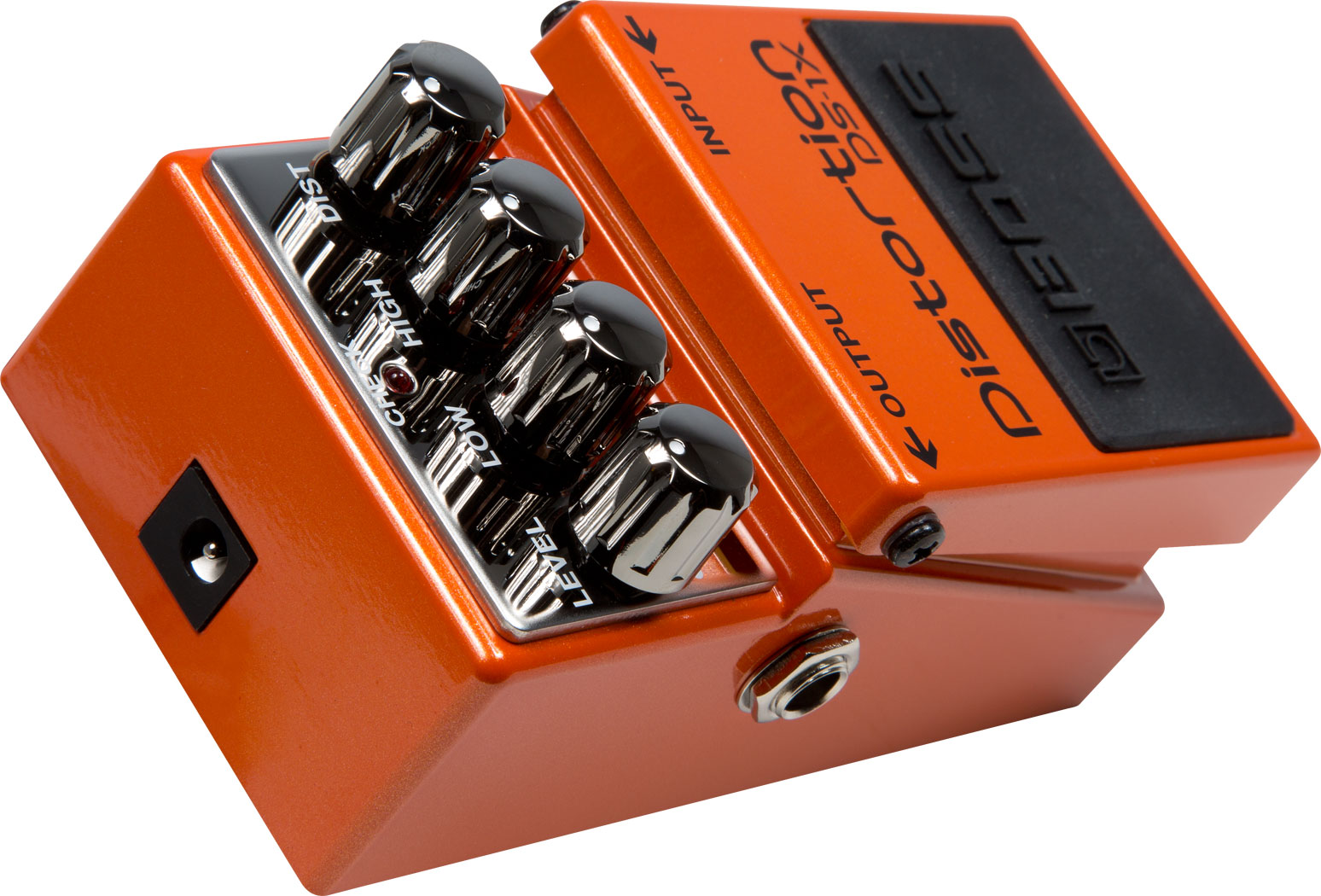
Boss unveiled two Special Edition pedals at NAMM 2014. These new stompboxes are updates on two classic Boss-models, and are called the OD-1X Overdrive and the DS-1X Distortion. These deluxe versions promise more gain, a tighter attack, and an even more versatile EQ-section.

****

od-1x_back_angle_gal

What is the difference between a fuzz, an overdrive and a distortion?

The fuzz pedal is the granddaddy of everything ”brang”, and it works in a rather neanderthal way, by means of brutal transistor overload. The resulting tone of transistors clipping sounds quite edgy and fuzzy (hence the name), and tends to work much better on solos and riffs, than it does on chords. A good early example would be the memorable riff on the Rolling Stones’ hit ”Satisfaction”.

The terms ”overdrive” and ”distortion” describe effects that try to mimick the way tube amp distortion sounds. In the beginning both terms were used as general descriptions of valve distortion-type stompboxes, but thanks to Boss’ way of labelling their pedals, the use of the terms has now become standardised: An overdrive effect usually offers moderate gain and less compression, resulting in a more dynamic tone, while a distortion pedal will give you more gain, more bite and more squashy compression.

od-1x_top_gal

Early on, Boss also came up with the idea of giving specific colours to specific effect types – an overdrive pedal, for example, is always yellow.

The brand-new Boss OD-1X Overdrive (155 €) represents the next generation of overdrive stompboxes, with its much more versatile range of sounds. In addition to the Drive- and Level-controls, you will find a very powerful two-band EQ-section.

****

ds-1x_back_angle_gal

Both new Special Edition-pedals are based on Boss’ patented digital MDP-technology (Multi-Dimension Processing). MDP allows for the lightning-fast, multi-band processing of the guitar signal that is needed to keep the attack tight and chords free from sonic mud. There’s added clarity and note separation, even at the higher gain levels these new pedals provide.
ds-1x_top_gal

The tangerine-coloured Boss DS-1X Distortion (155 €) offers you four control knobs – Distortion, High, Low and Level. Its sound has been optimised to also work fabulously with seven- or eight-string guitars.

Both pedals can be run either using a 9 V block (an alkaline battery will give you about nine hours of continuous playing time) or a power supply (not included).

****

od-1x_angle_3_gal

You can get all the legendary Boss-overdrive sounds (think SD-1 and OD-3) from the OD-1X, too. The difference here is the much more versatile EQ-section, which gives you way more scope for fine-tuning your tone, and a bit more overdrive at the extreme end of the Drive-control. This leads to a very tasty and dynamic overdrive sound that is more open than what your traditional, mid-range focussed overdrive pedal has to offer.

Here’s anice example of the OD-1X’s lush bass register (Vox Mark III, Drive 9 o’clock, High 10 o’clock, Low 2 o’clock):

A bridge humbucker will surely benefit from a sprinkle of added top end (Hamer USA Studio Custom, Drive 9 o’clock, High 11 o’clock, Low 12 o’clock):

Turn up Drive to full, and even a small Marshall-combo’s clean channel will sound like a stack. I used the Vox-guitar for this:

And here’s the Hamer with a similar setting:

****

ds-1x_angle_3_gal

Boss’ new DS-1X broadens the sound palette of a traditional DS-1 in a very appealing way. There’s oozes of the type of tasty, chewey compression heard on so many great tracks. The DS-1X adds a much deeper low end, better note separation, a tighter attack and a more versatile two-band EQ to proceedings.

It’s clear right from the start that the DS-1X offers much more gain than its overdrive-sibling (Vox Mark III, Dist 9 o’clock):

Using humbuckers you will clearly notice the nice and creamy compression setting in (Hamer, Dist 9 o’clock):

Even though the pedal’s Distortion-control is on full in this clip, almost all of the hiss you can hear comes from the amp’s clean channel, not the DS-1X (Vox Mark III):

The DS-1X’s deep, but tight bass register is just the ticket for playing low Metal-riffs (Hamer, Dist full):

****

od-1x_ds-1x_boxes_gal

It’s a known fact that a guitarist can never own too many overdrive and distortion pedals! But thanks to these new Boss Special Edition-pedals you might be able to cut down the number of pedals on your pedalboard, after all, because the OD-1X and DS-1X cover such a large amount of musical ground. Regardless of whether you’re after a mild Blues-overdrive or insanely distorted, ultra-low Thrash-riffs, these two pedals will do it all in style.

****

Boss OD-1X + DS-1X – Special Edition -säröpedaalit

OD-1X: 155 €

DS-1X: 155 €

Finnish distributor: Roland

****

Pros (both pedals):

+ sound

+ larger gain reserves

+ two-band EQ

+ very precise attack

+ low levels of hiss

Review: Italia Maranello Classic + Rimini 6

italiaLogo

Now Italia Guitars are finally available in Finland!

Italia is a new brand on the Finnish market, even though these guitars have been available in many EU-countries for 15 years already. Italia Guitars is the joint effort of South Korean guitar factory Mirr Music and British guitar guru Trev Wilkinson. Wilkinson’s list of achievements is long and illustrious, including inventions such as the Wilkinson-vibrato and his roller nut, as well as instrument designs for Vintage (by JHS) and his own Fret-King brand.

The basic concept behind Italia Guitars is to come up with instruments that are imbued with the quirky charm of European electric guitars from the Fifties and Sixties, but which feature up-to-date playability and reliable electronics.

Italia’s distributor in Finland is R-JAM Group.

****

Italia Maranello Classic – full front

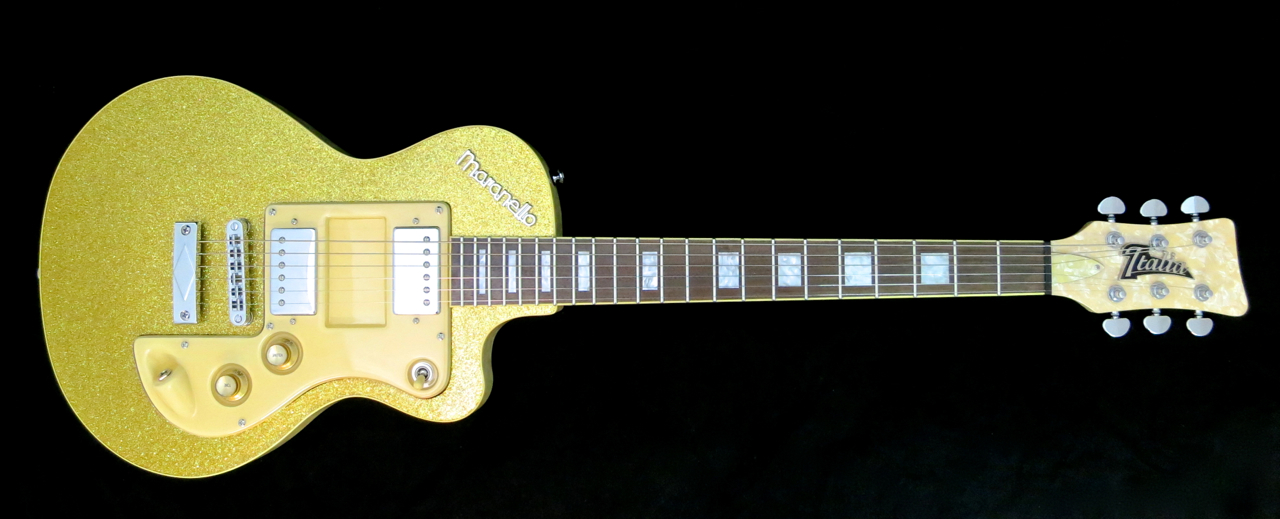
The Italia Maranello Classic (price in Finland around 640 €) is this brand’s best-known model, which has even found its way into the hands (and heart) of British songwriter and slide guitarist Chris Rea.

This model takes its inspiration from Hagström’s first solidbody electric, the P46, which has also been sold in North America under the Guyatone banner. In terms of its looks, the Maranello is a dead ringer for the P46, but the Italia’s electronic department clearly has been streamlined to make it a more sensible affair.

Italia Maranello Classic – full back

The Maranello Classic is quite a looker, sporting many hallmarks of classic Sixties designs.

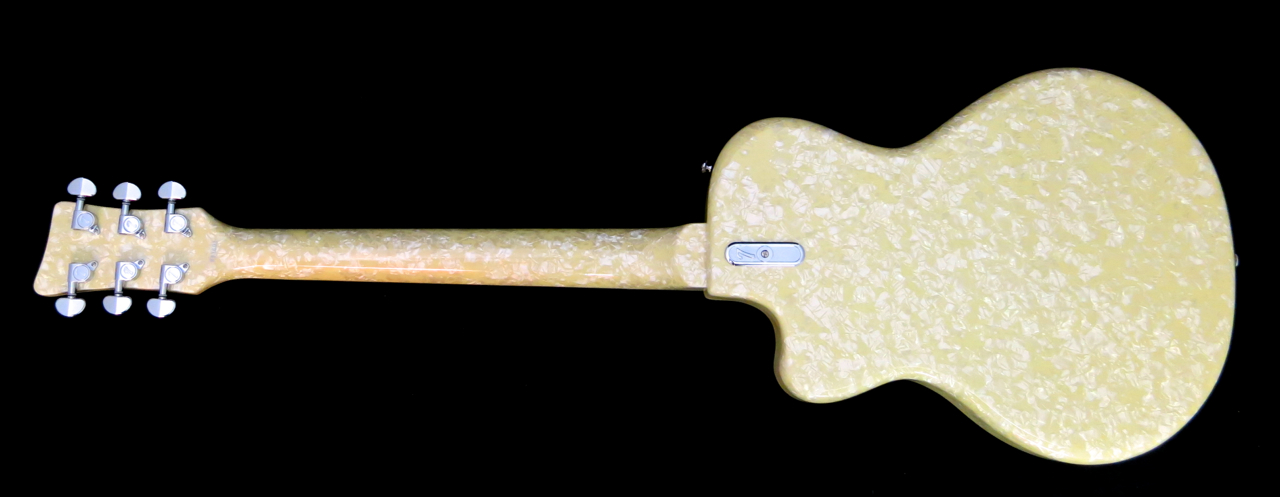
The agathis body’s curved front comes in a gold sparkle metal finish, while the back of the body, as well as the neck, have received a pearloid coating.

Italia Maranello Classic – neck plate

The maple neck is screwed onto the body with two screws, which can be found beneath a snazzy cover plate.

Italia Maranello Classic – headstock

A truss rod access at the headstock end, as well as a self-lubricating top nut are distinctly modern features…

Italia Maranello Classic – tuners

…as are the Maranello’s sealed tuning machines.

Italia Maranello Classic – fingerboard

The position markers are large block inlays. The bound rosewood fingerboard sports 22 medium-jumbo frets.

Italia Maranello Classic – bridge

This Italia comes with a modern, Wilkinson-branded tune-o-matic bridge. The tailpiece, which rests on ferules, has been lifted straight off the old trapezes used in some Gibson- and Epiphone-semis.

Italia Maranello Classic – pickups 2

The Maranello Classic comes equipped with a pair of Wilkinson WVC-humbuckers, which are Trev Wilkinson’s own version of the legendary PAF-humbucker.

Italia Maranello Classic – controls

All of the electronic parts on the Maranello – pickups, controls, and all – have been mounted onto a large cover-plate made stiff plastic, which is height adjustable, thanks to being suspended on top of metal springs.

This is an idea originally used on the Hagström P46. Italia Guitars are using a smaller, oval version of this – holding only the pickup switch, as well as the controls – on some of their other models.

Italia Maranello Classic – body beauty 1

****

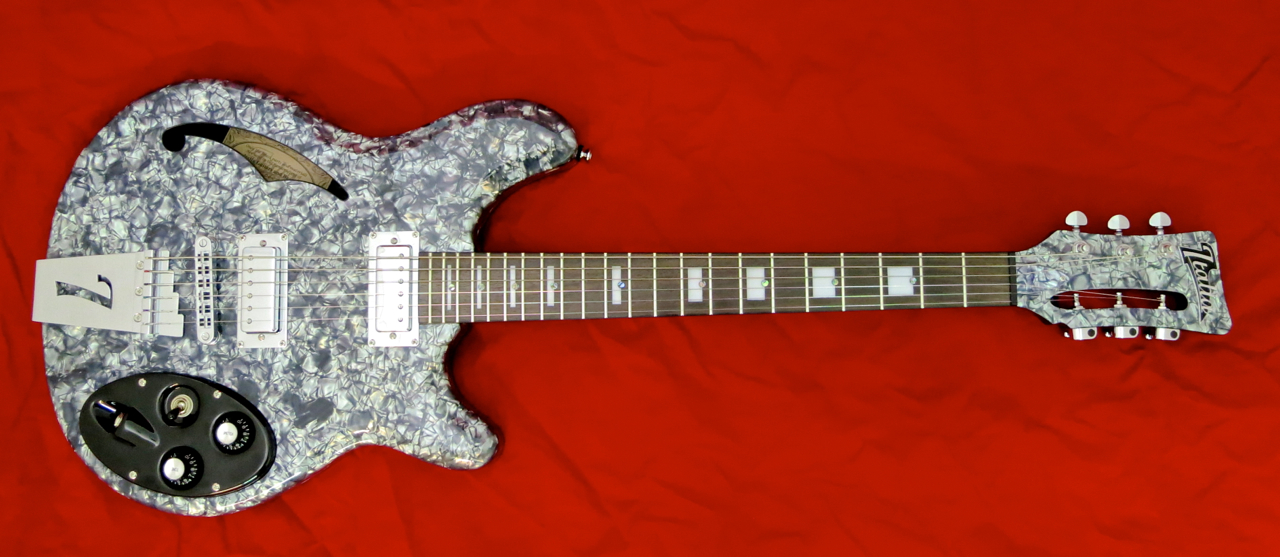
Italia Rimini 6 – full front

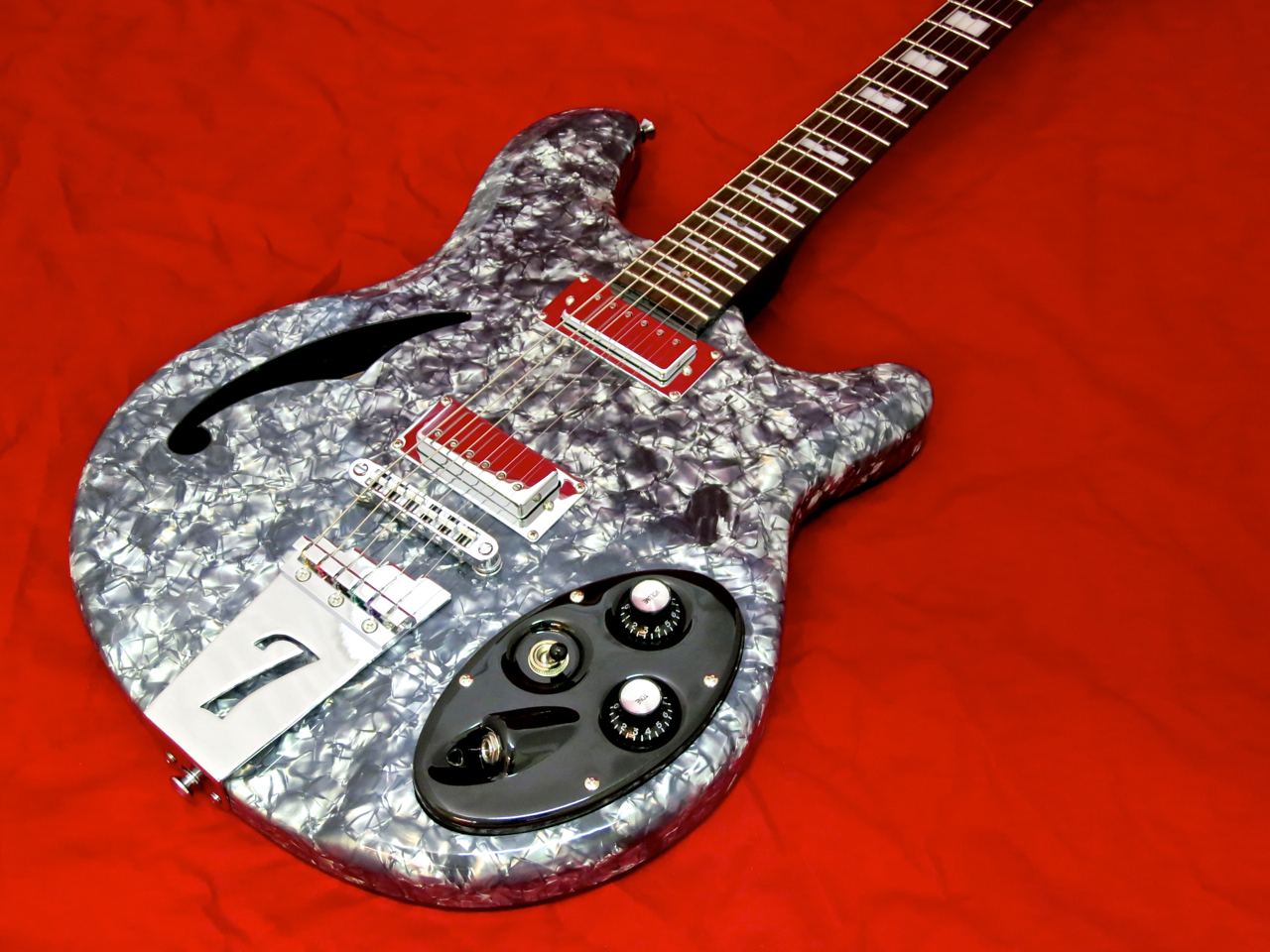
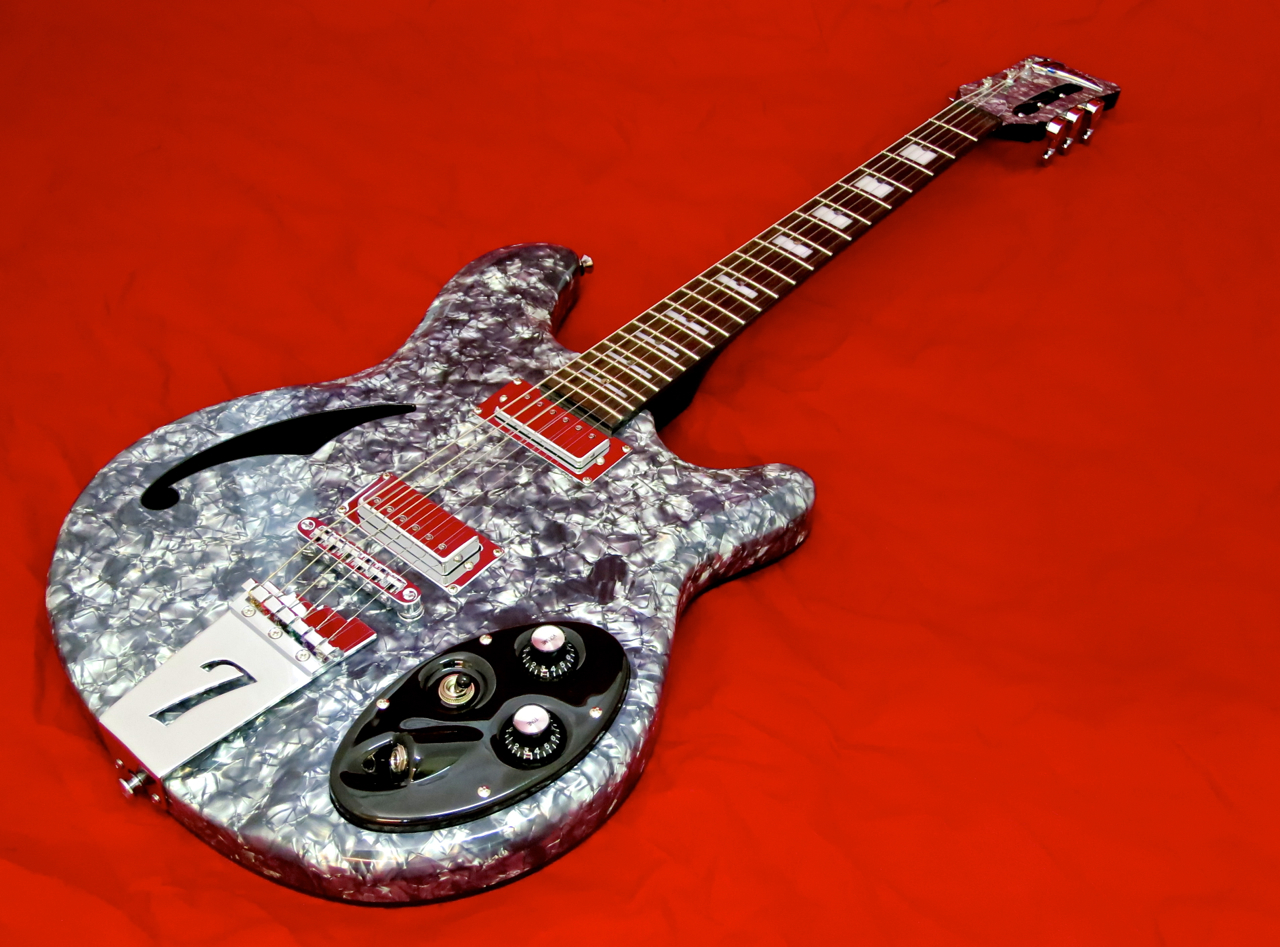
Italia’s Rimini 6 (price in Finland around 645 €) is rather reminiscent of the Rickenbacker 360, although it isn’t a straight copy of this classic guitar at all .

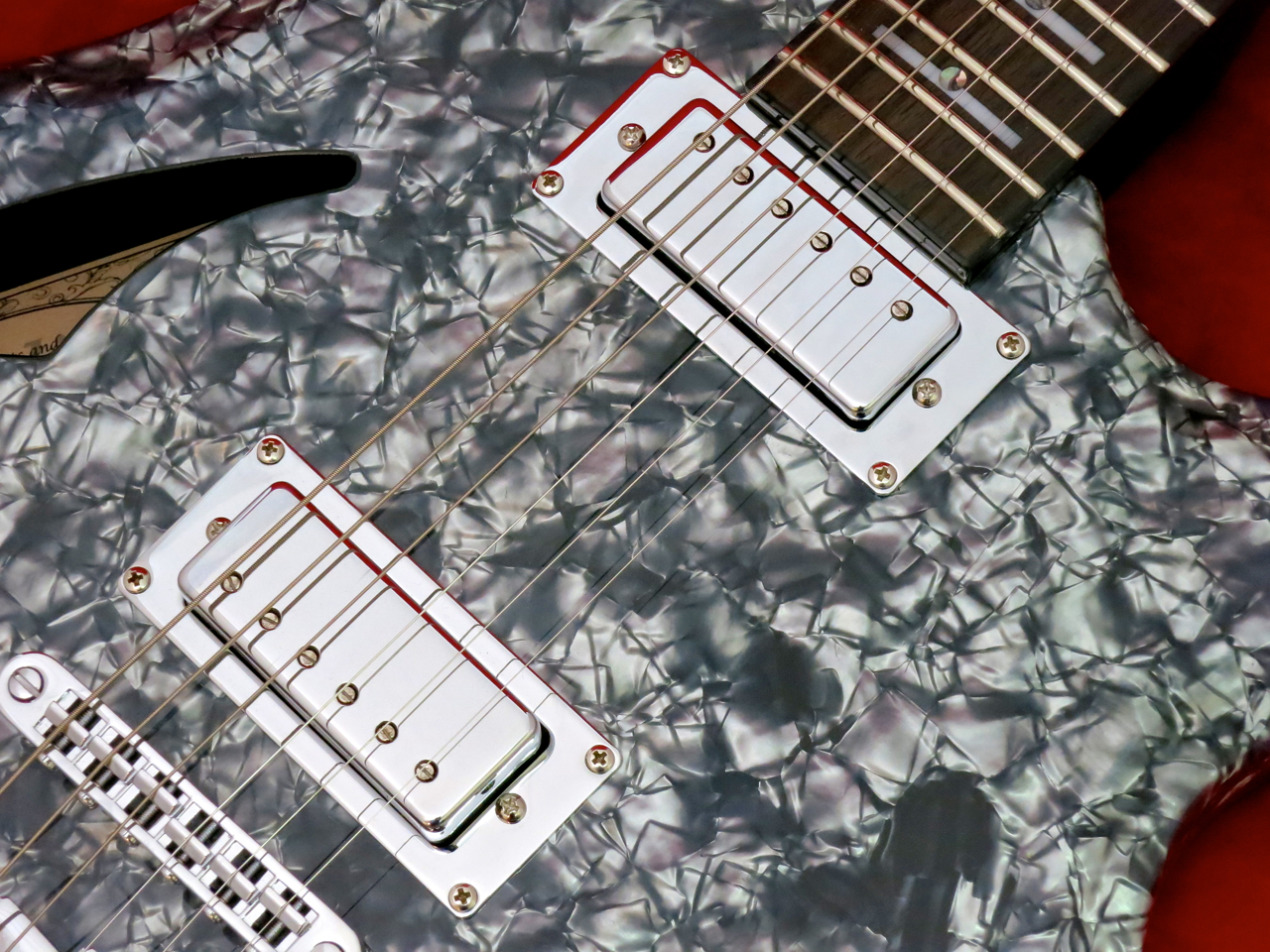
The Rimini 6 has a semiacoustic body made from solid agathis. The body blank is then routed out from the back, creating large cavities to both sides of a solid centre block. The body is then completed by glueing on a solid ash back.

Our review sample comes in a very fetching ”black” pearloid finish (some would call it ”bowling ball” or ”mother of toilet seat”), but you can also get your Rimini in a traditional colour finish, such as sunburst (sans the pearloid).

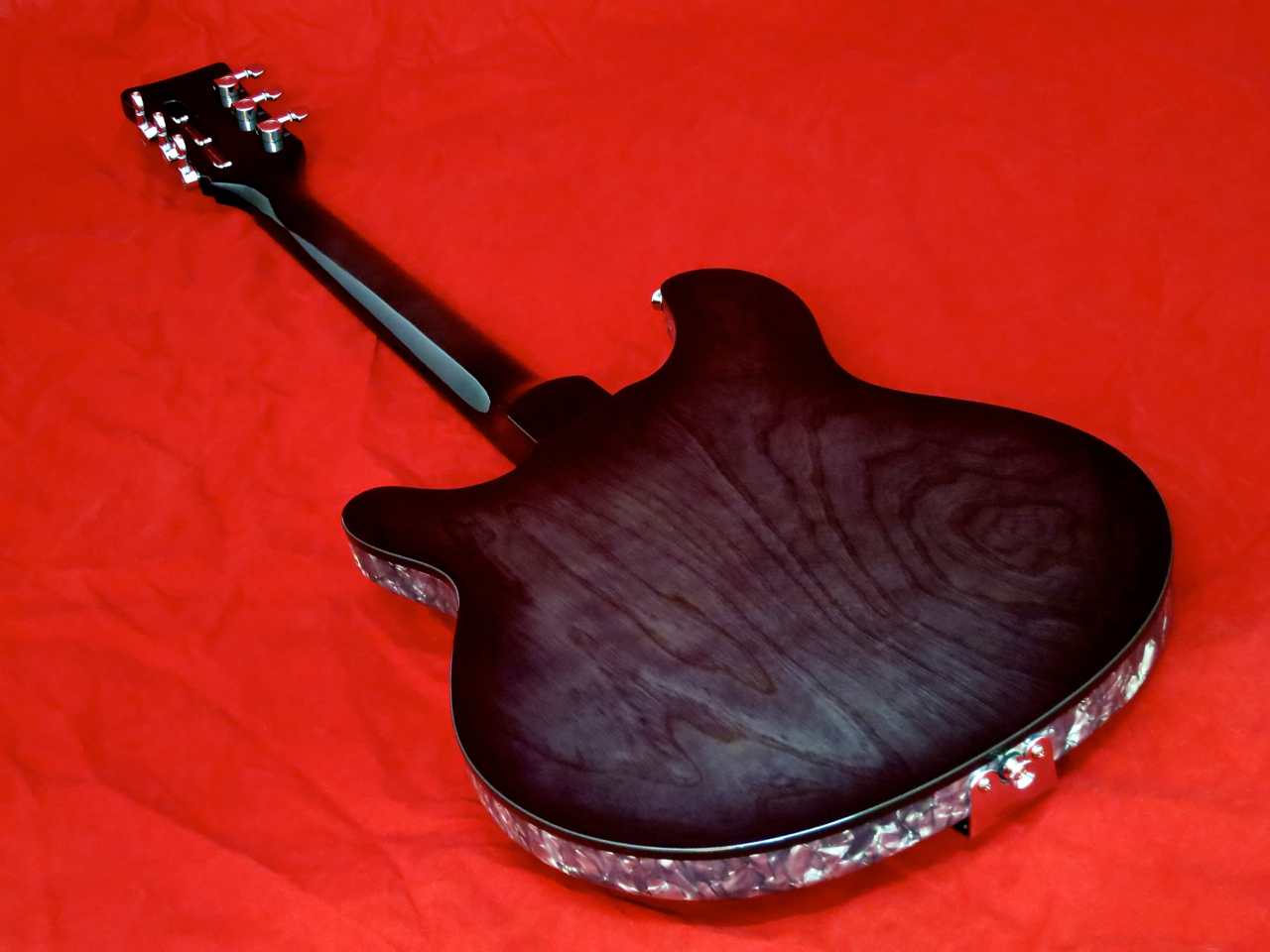
Italia Rimini 6 – back beauty 2

The black sunburst finish of the Rimini’s back shows off its beautiful grain nicely.

The model is built with a set maple neck.

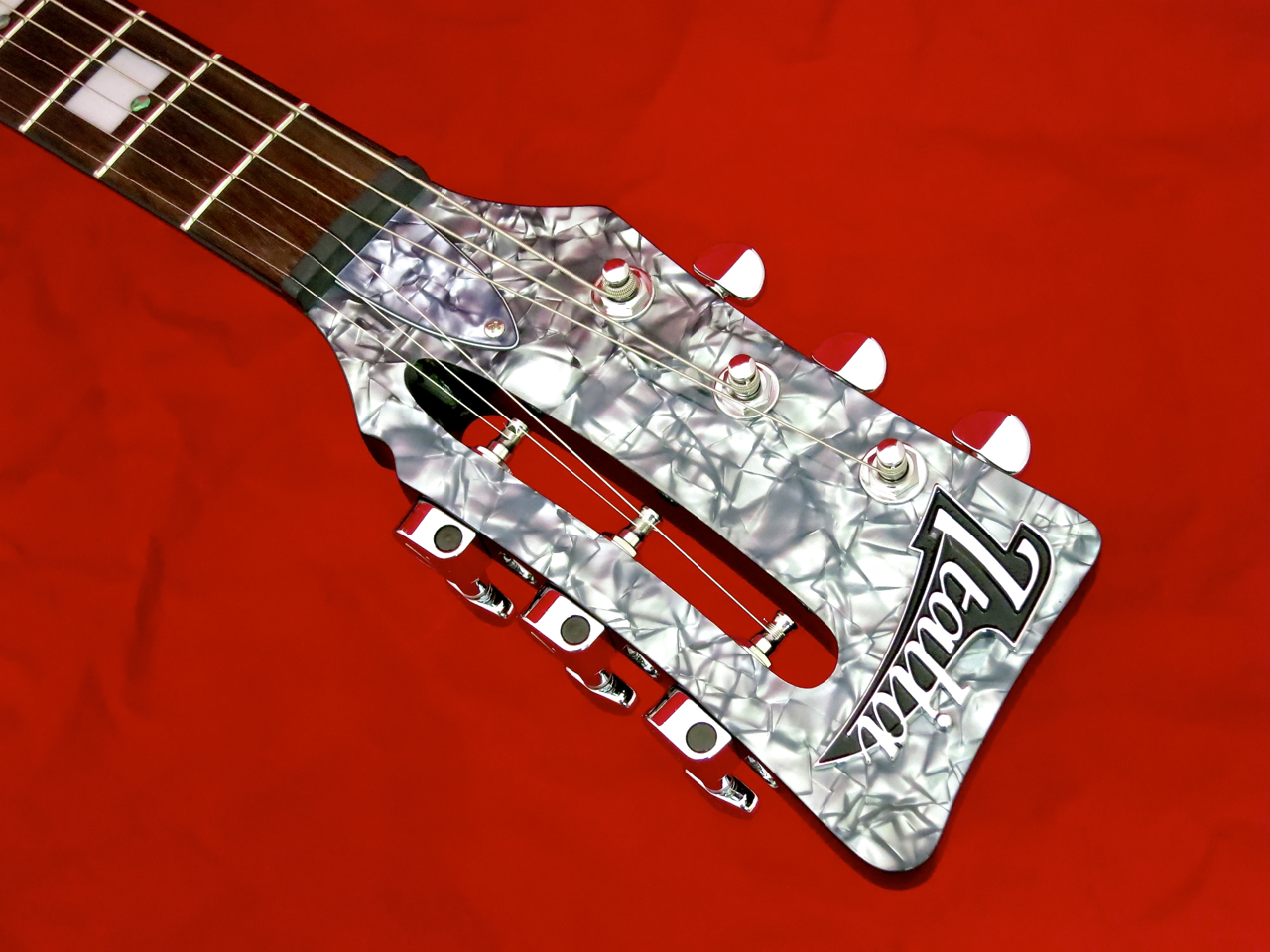
Italia Rimini 6 – headstock

The headstock on the Italia Rimini 6 doffs its hat in Rickenbacker’s direction:

The legendary US brand had come up with a very nifty design for the headstocks of their 12-string electrics, which has the normally-tuned strings fixed to tuners installed to the headstock’s underside (like the Rimini’s bass strings), while the octave-strings are fed to tuning heads installed from the side (like the Rimini’s treble strings).

Italia Rimini 6 – tuners

The Rimini’s modern tuners carry Italia Guitars’ stylised I-logo.

Italia Rimini 6 – fingerboard

Simple, but beautiful – the position markers combine blocks with small abalone-dots.

Italia Rimini 6 – bridge

The Rimini 6 is equipped with a modern version of the tune-o-matic bridge, too.

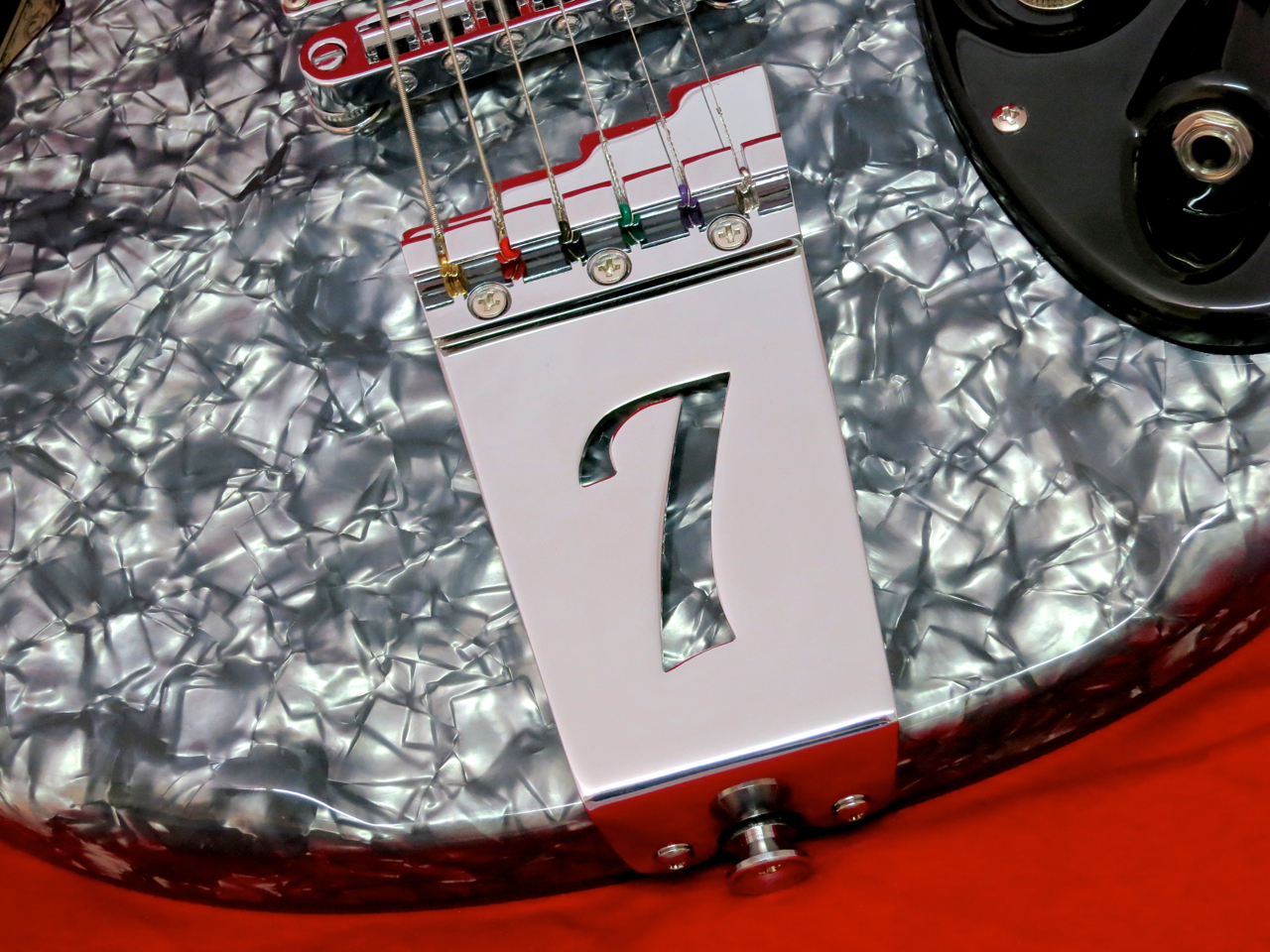
Italia Rimini 6 – tailpiece

The large, chromed tailpiece adds still more visual bling to proceedings.

Italia Rimini 6 – pickups

I believe we can expect to hear some suitably fresh tones from the Rimini 6’s alnico-powered Wilkinson WMC-minihumbuckers.

Italia Rimini 6 – controls

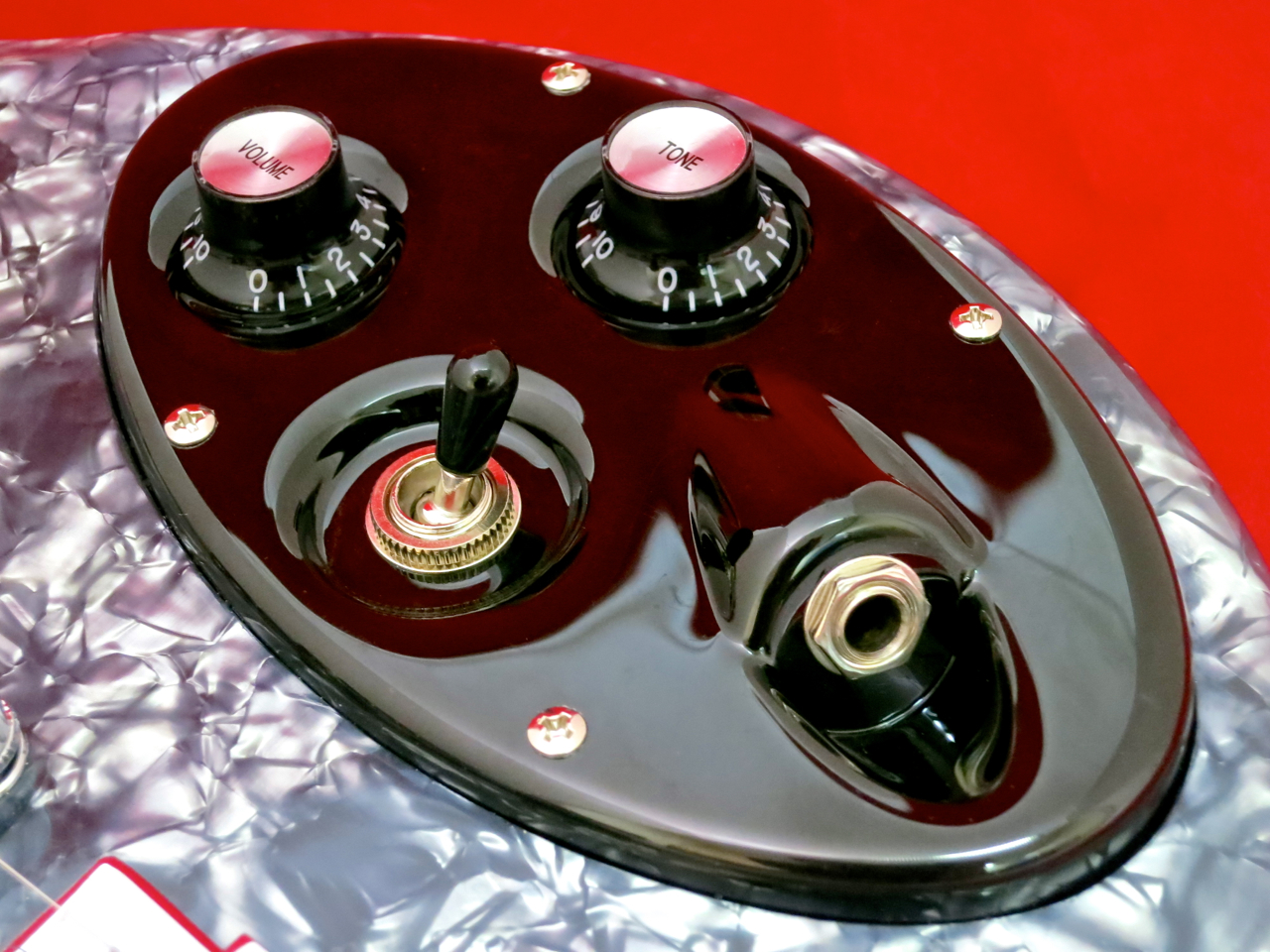
The guitar’s controls comprise a three-way toggle switch, as well as controls for master volume and master tone.

Italia Rimini 6 – electronics

Removing the plastic tray gives us a good look at Italia’s clean workmanship and the very decent components used.

Italia Rimini 6 – body beauty 1

****

Italia Maranello Classic – beauty shot 1

The Italia Maranello Classic has a shape and weight similar to a Gibson Les Paul, even though the Maranello features a slightly longer scale (63.5 cm/25″). Depending on your playing style, the placement of the toggle switch right beneath the neck pickup might lead to some involuntary pickup switching, at least in the very beginning.

I really like this guitar’s fat and round D-profile, giving you something to hold on to.

The Maranello Classic had received a pro setup (at Guitarworx) before leaving R-Jam Group’s headquarters, which resulted in a very comfortable action (E: 2.0 mm/e: 1.4 mm) without any annoying rattling.

The Maranello’s acoustic tone contains more than a hint of semi-style hollowness, no doubt thanks to the large pickup and electronics routing and the huge plastic scratchplate/tray.

Some of this open acoustic character is also carried over into the Maranello Classic’s amplified sounds, which adds a welcome degree of liveliness. Wilkinson’s alnico-equipped WVC-humbuckers have a nice vintage-style tonality at moderate output levels.

Modern Metal- and Hard Rock-styles aren’t probably the best environment for this Italia-model, because the Maranello’s large plastic cover tends to add a slight bit of microphonics. On the other hand, I don’t think this guitar is aimed at the Thrash-metaller. Instead, the Maranello Classic is a great guitar for classic Blues, Rock, Jazz and Pop!

Italia Maranello Classic – back beauty 1

****

Italia Rimini 6 – beauty shot 1

Wow, what a compact and lightweight guitar! The Rimini 6 feels great, both played seated and standing up with a strap, and balances very nicely.

The neck has an oval, C-type profile, and comes with a Rickenbacker-style scale (62.8 cm/24.75″). The medium-jumbo frets, as well as the great setup and low action (E: 1.9 mm/e: 1.3 mm), result in a very light and fast touch, turning this guitar into a natural extension of the player’s body.

Acoustically, the Rimini 6 sounds very open and fresh.

Like the P-90, a minihumbucker could be described as a sonic compromise between a Fender-style singlecoil and a full-blown humbucker. The minihumbucker’s great advantage over the P-90 lies in the former’s immunity against electromagnetic interference.

This Italia has fine ringing tone with a piano-like attack, which is never brittle or grating. These Wilkinson-pickups sound fantastic and offer enough output to take you from authentic Sixties-sounds (think Beatles, Byrds and early Who) all the way to more grittier stuff (think Paul Weller or Peter Buck).

Italia Rimini 6 – back beauty 1

****

Italia Maranello Classic – body beauty 2

Italia Guitars’ Maranello Classic ja Rimini 6 are quality instruments, which manage to combine vintage looks and quirkiness with easy playability and great tone.If you’re on the lookout for a cool guitar off the beaten track, you should really give one of these Italia-models a try!

Italia Rimini 6 – body beauty 2

****

Italia Guitars – Maranello Classic + Rimini 6

Maranello Classic – approx. 640 €

Rimini 6 – pearloid-version (as tested) approx. 645 €, basic version approx. 615 €

Finnish distributor: R-JAM Group

****

Pros (both models):

+ cool, idiosyncratic design

+ workmanship

+ quality of finish

+ playability

+ sound

Cons (only Maranello):

– small dark spot in finish next to output jack

Testipenkissä: Mission Engineering ReWah PRO

****

Mission Engineering – opener

Mission Engineering on kalifornialainen laadukkaiden pedaalien ja vahvistinkaappien valmistaja.

Mission Engineering EP-1 – red no switch

Mission Engineeringin valikoimasta löytyy monta erilaista volume- ja ekspressiopedaalia.

Mission Engineering EP-1 – spring

Ekspressiopedaali-valikomasta löytyy sekä yleiskäyttöön sopivia malleja (lisäkytkimellä tai ilman) että tietylle multiefektille tai mallintavalle vahvistimelle (Line 6, Eleven Rack, G-System, jne.) valmiiksi räätälöityjä pedaaleja.

Mission Engineering SP-1 – green

Mission Engineering -pedaalit on selvästi rakennettu kestämään rankempaakin käyttöä, ja firman laaja värivalikoima tarjoaa runsaasti vaihtoehtoja perinteisen tylsään mustaan.

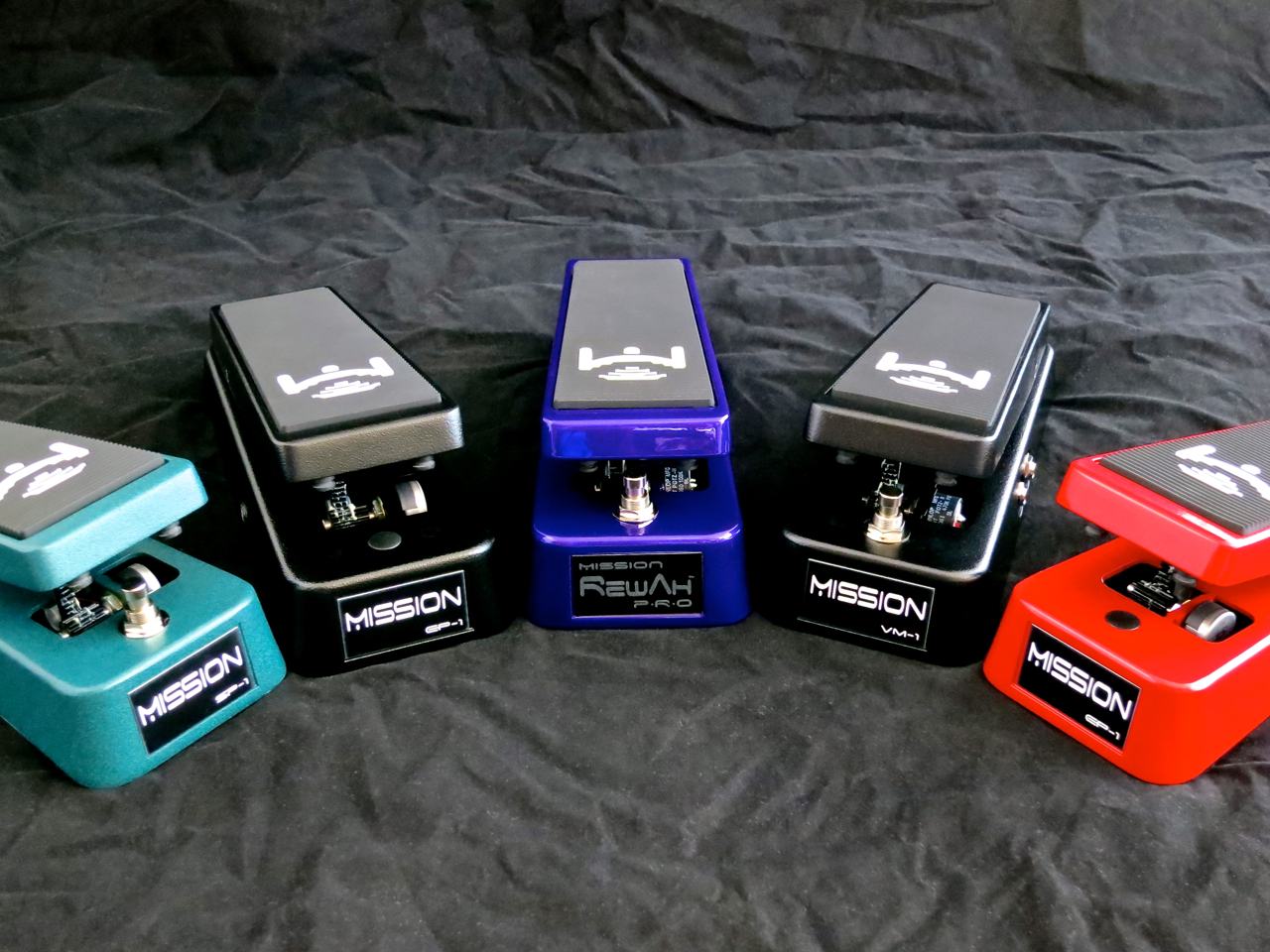
Mission Engineering – all pedals

Ekspressiopedaalien hinnat alkavat 137 eurosta (EP1BK), kun taas firman volumepedaalien hinnat alkavat 154 eurosta (VM1BK).

Kokeilemani Mission-pedaalit toimivat – mallista riippumatta – erittäin sulavasti ja tarkasti.

****

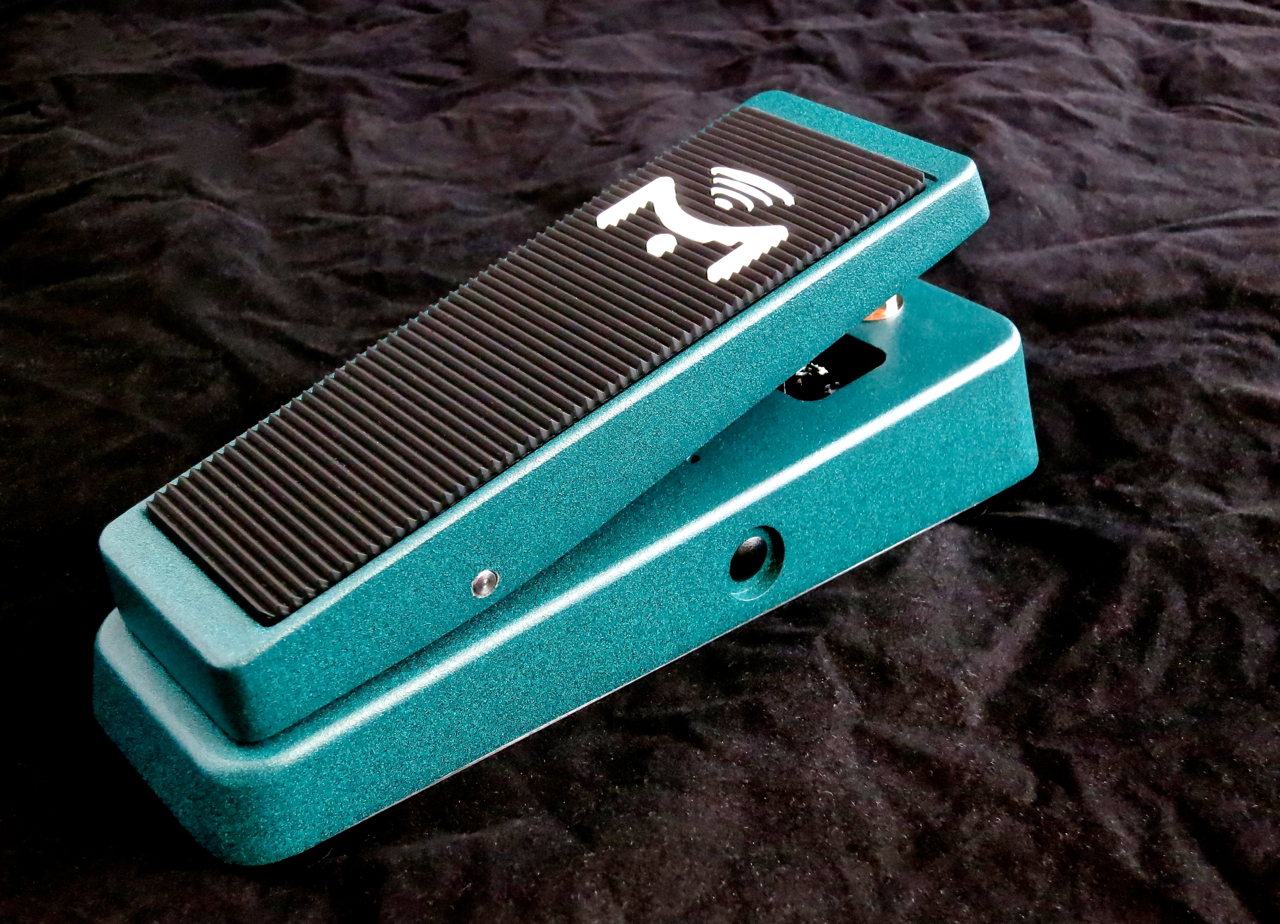
Mission Engineering ReWah PRO – front angle

Mission Engineering -pedaalien kruunujalokivi on kuitenkin firman ReWah Pro -wah-wah (307 €).

Tämä pedaali näyttää hyvin tyylikkäältä, mutta vaikuttaa ulkoisesti kuitenkin tavalliselta, harmittomalta wahilta.

Mission Engineering ReWah PRO – power supply input

Missionin ReWah Pro -efektiä voi käyttää 9 voltin paristolla tai Boss-standardin mukaisella virtalähteellä.

Mission Engineering ReWah PRO – base plate

Pariston vaihtamisessa täyttyy irrottaa ReWahin koko metallipohja ristipääruuvarilla. Tämä seikka hidastaa pariston vaihtoa, mutta ratkaisu on mekaanisesti kestävämpi kuin muovinen paristolokero. Yhtenäinen metallilevy suojaa myös efektin elektroniikkaa tehokkaammin ulkoisia häiriöitä vastaan.

Mission Engineering ReWah PRO – electronics 1

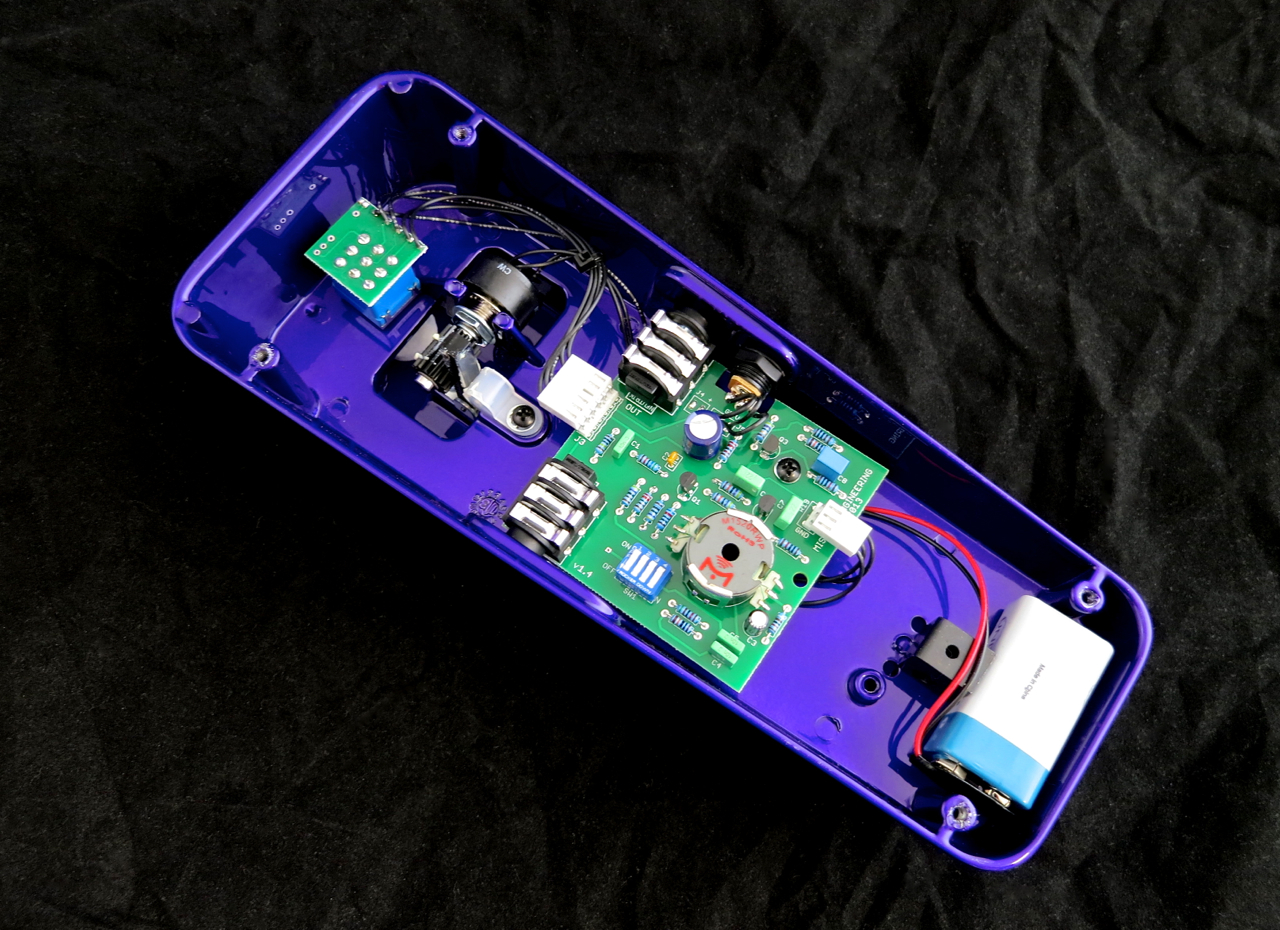
Tämän wah-wahin sisäkalut on asennettu hyvin huolellisesti ja siististi.

Mission Engineering ReWah PRO – battery

Paristo löytyy perinteisestä paikastaan kitaristin kantapään alla.

Mission Engineering ReWah PRO – Dunlop pot

Mission Engineering käyttää erittäin laadukkaita Dunlop-potentiometrejä pedaaleissaan.

Mission Engineering ReWah – switches

ReWah Pron salaisuus löytyy tästä – tämä pedaali ei ole jonkun tietyn vintage-wahin kopio, vaan moderni ja monipuolinen työkalu laatutietoiselle kitaristille:

Mission käyttää omaa, erikoisvalmisteista kelaa, jolla on samankaltainen induktanssi ja vastus kuin klassikkomalleissa, mutta huomattavasti muhkeampi bassotoisto ja pienempi saturaatio kuin yleisesti käytössä olevissa wah-keloissa.

Tämän lisäksi ReWah Pro tarjoaa neljä pikkuista kytkintä, joilla wahin filtterin ja esivahvistuksen käyttäytymistä voi muuttaa:

• Ykköskytkin lisää soundiin pienen annoksen herkullista säröä.

• Kakkoskytkimellä muutetaan filtterin keskitaajuutta hivenen verran matalammaksi, ja samalla suodinta kavennetaan. Soundi muuttuu hieman nasaalisemmaksi.

• Kolmoskytkin vetää suotimen keskitaajuutta melko voimakkaasti alas, jonka seurauksena syntyy selkeästi bassovoittoisempi wah-soundi.

• Neloskytkimellä säädetään elektroniikan vahvistusta pienemmäksi ja filtterin kaistaa leveämmäksi. Soundi muuttuu puhtaammaksi.

ReWah Pro -pedaalin kytkimet voi käyttää joko yksitellen tai kaikissa mahdollisissa yhdistelmissä. Kokeileminen todella kannattaa!

****

Mission Engineering ReWah PRO – electronics 2

Voi pojat! Minulla ei ole ollut pitkään näin hauskaa kuin Mission Engineering ReWah Pro -pedaalin kanssa!

Tämän wahin soundi on jo tehdasasetuksilla niin hyvä, että soitto loppuu vasta, kun pakarat alkavat krampata. Tämä pedaali tekee riippuvaiseksi!

Ja mikä on parasta, ovat Mission-wahin erittäin alhainen omakohina ja sen toimiva häiriösuojaus.

Tässä on lyhyt pätkä puhtaan kanavaan soitetusta wahista, jossa käytän Fender Telecaster -kitaraa ja ReWahin tehdasasetukset:

Kun kääntää kytkimet 1-3 on-asentoon, sama yhdistelmä kuulostaa tältä:

Tässä esimerkissä ReWah-pedaali on laitettu takaisin tehdasasetuksiin (kaikki kytkimet ”off”). Efekti toimii tässä pelkästään filtterinä (”fixed wah”), kitara on Hamer Studio Custom, ja särökanava on valittu:

Ja vielä kauniisti laulava kitarasoolo:

Mission Engineering ReWah PRO – switches alternative

****

Mission Engineering ReWah PRO – reverse front angle

Onko Mission Engineering ReWah Pro maailman paras wah-wah? Pedaali kuuluu kiistämättä ainakin kärkikolmikkoon, laadukkaan soundinsa ja kestävän olemuksensa ansiosta.

ReWah Pron hinta on kiistämättä kova, mutta pedaali tarjoaa omasta mielestäni reilusti vastinetta rahalle. Kun etsit mahdollisimman laadukasta wah-wahia, kannattaa ehdottomasti tutustua tähän pedaaliin!

****

Mission Engineering ReWah Pro

307 €

Maahantuoja: Musamaailma

****

Plussat:

+ kestävänoloinen

+ true bypass

+ audiofiilitason elektroniikka

+ erittäin monipuolinen

+ soundi

Testipenkissä: Hehku Custom Nightingale 15

Hehku Nightingale 15 – opener

Kitaristin näkökulmasta Suomi on suorastaan se tarunhohtoinen luvattu maa. Asukaslukuun suhtautettuna täällä on uskomaton määrä soitinpajoja, sekä efektien ja vahvistimien valmistajia.

Yksi tällainen custom-vahvistimia rakentava firma on porilainen Hehku Customs. Hehkun puuhamiehiä ovat Jarmo Välimäki, joka vastaa suunnittelusta, valmistuksesta ja huollosta, sekä Markku Penttilä ja Juha Heljakka, jotka ovat vastuussa tuotekehittelystä, markkinoinnista ja myynnistä.

Hehkun kotisivulla esitellään muutamia asiakkaille rakennettuja custom-vahvistimia. Custom-tilauksissa (hinnat alk. 1.300 €) vain kabinettien koot ja muodot ovat vakiona, kaikki muu on neuvoteltavissa: ”Ajatuksena on, että koitamme toteuttaa soittajan villeimmätkin haaveet, joten voidaan neuvotella kaikenlaisista optioista.” sanoo Jarmo Välimäki.

****

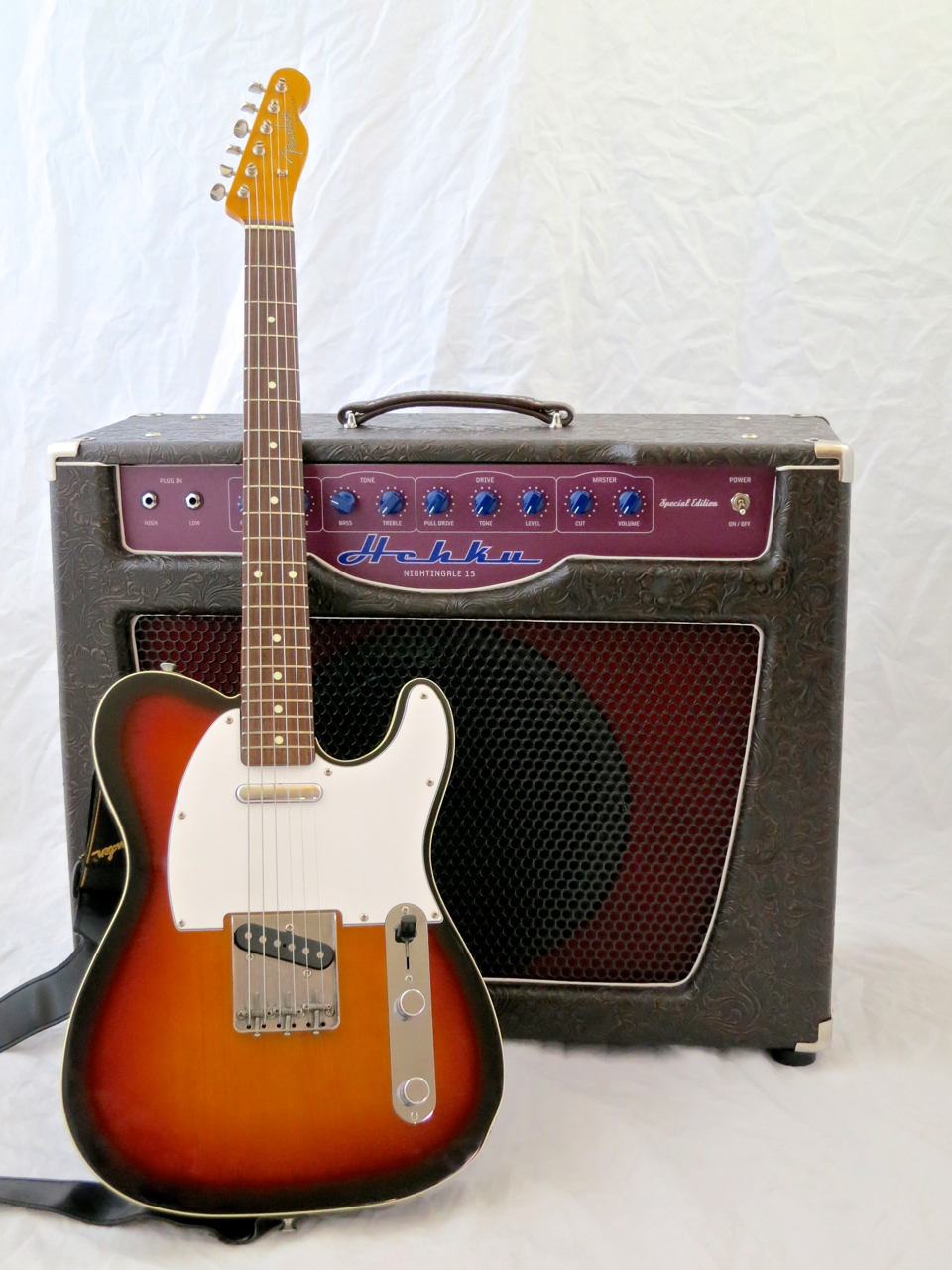
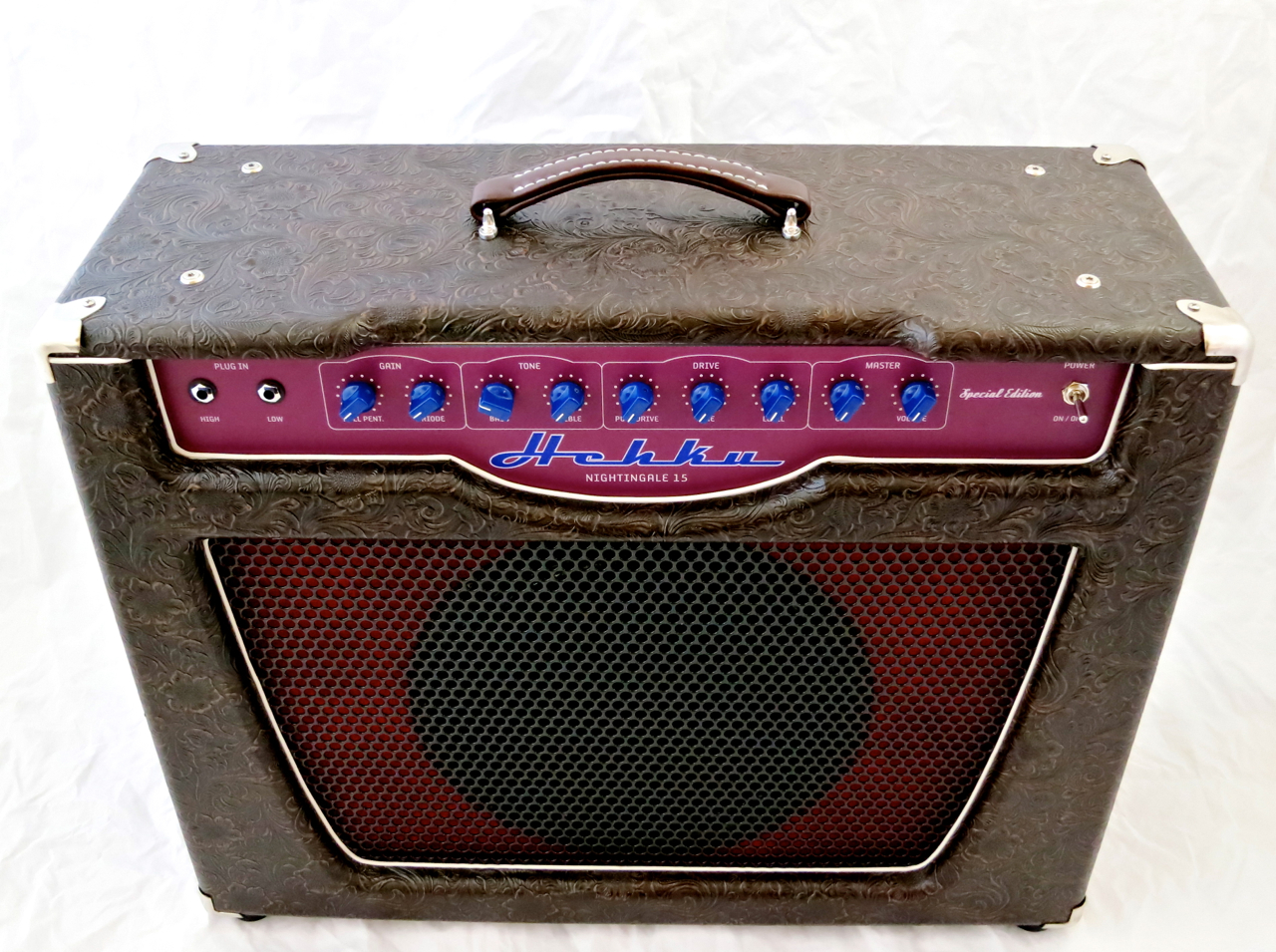
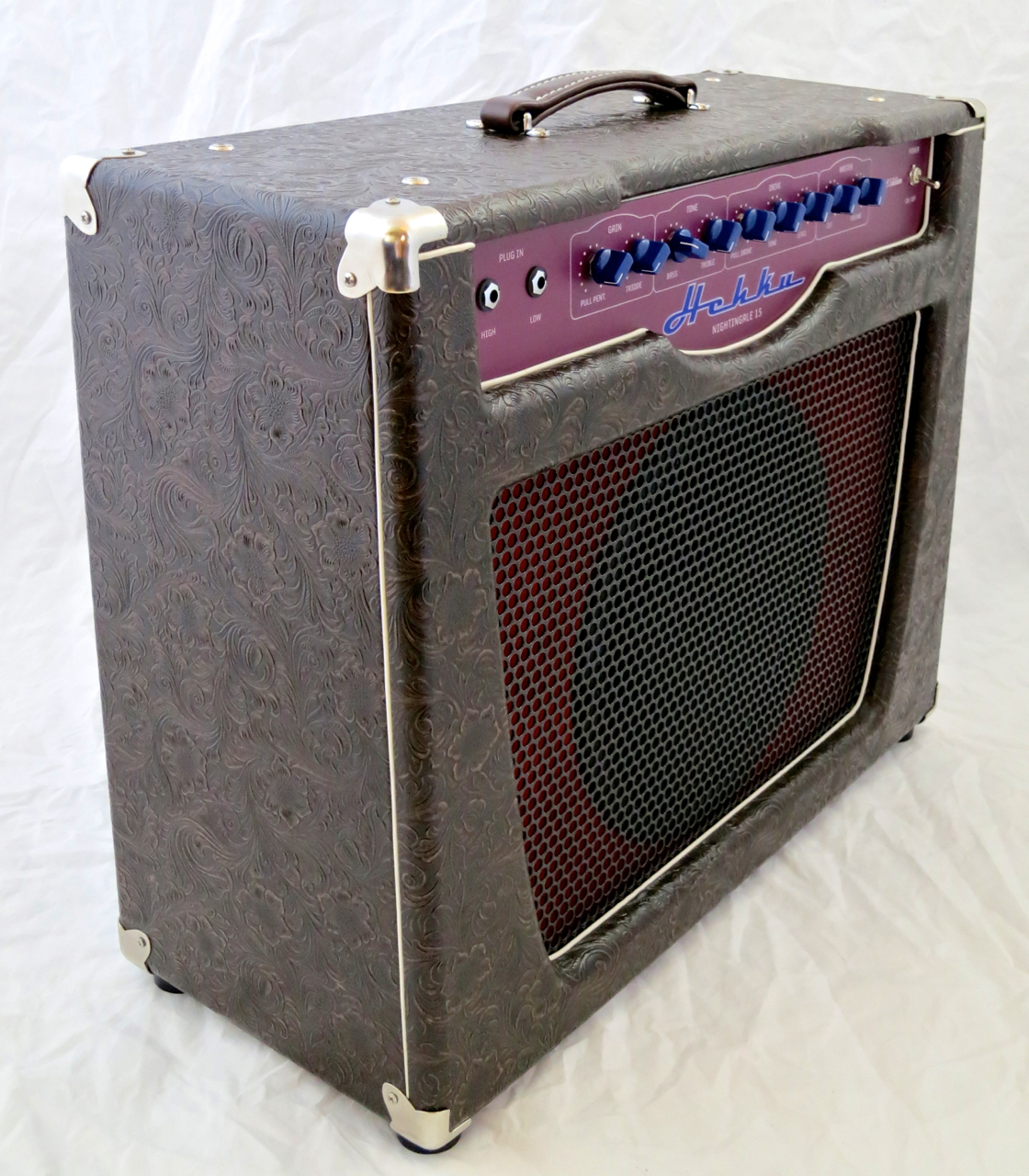
Hehku Nightingale 15 – full front

Kitarablogi sai testattavaksi 15-wattisen Hehku Nightingale 15 -kombon, joka on Hehku Customsin ensimmäinen ”sarjavalmisteinen” kitarakombo ilman custom-optioita.

Nightingale 15 (1.950 €, nuppi: 1.750 €) on 12-tuumaisella kaiuttimella varustettu käsintehty putkikombo, joka edustaa täydellisesti Hehku-vahvistimien filosofiaa, sekä ulkonäön että signaalitien kannoilta.

Nightingalen uskalias, mutta erittäin kaunis värimaailma, sekä kombon pronssireliefia muistuttava päällyste tekevät heti selväksi, että Hehku-vahvistimessa ei ole kyse vanhan Tweed-Fenkun kloonista.

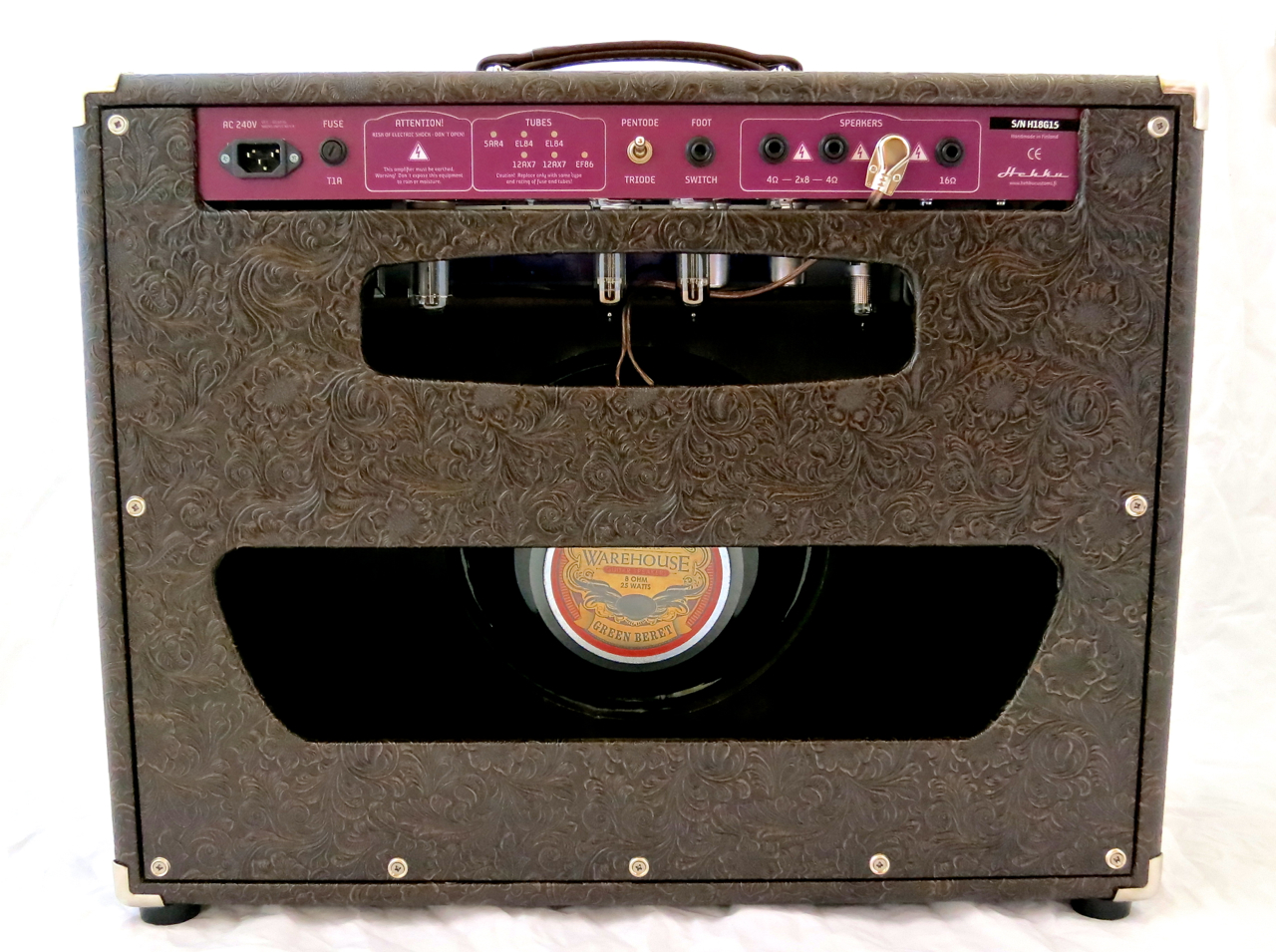
Hehku Nightingale 15 – full back

Hehku Nightingale -kombossa on avoin takaseinä, ja putkiin pääsee käsiksi vaivattomasti. Hehkujen kotelot valmistetaan aina suomalaisesta koivuvanerista, mikä on erinomainen materiaali sekä kotelon kestävyyttä että vahvistimen soundia ajatellen.

Hehku Nightingale 15 – top handle

Koivuvaneri on myös suhteellisen kevyt materiaali, minkä ansiosta Nightingalea pystyy kantamaan mukavasti kombon ainoasta kahvasta.

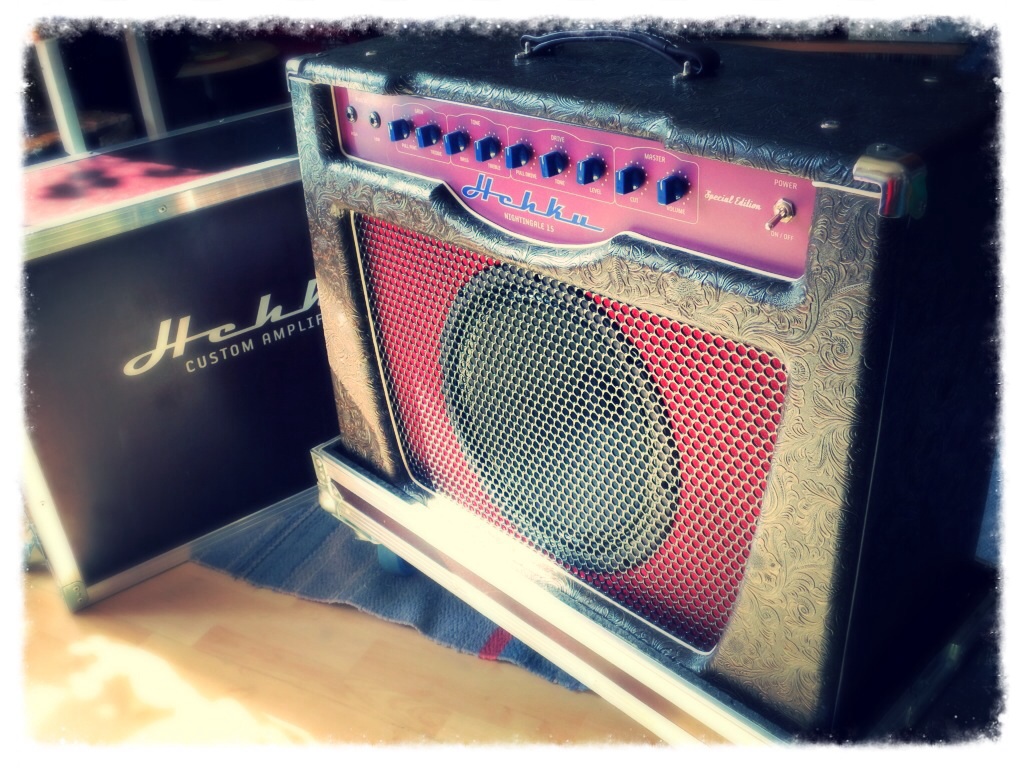
Hehku Nightingale 15

Hehku tarjoaa myös huippulaadukkaita kuljetuskoteloita vahvistimilleen. Nightingale 15 -kombolle sopiva malli maksaa noin 260 euroa.

****

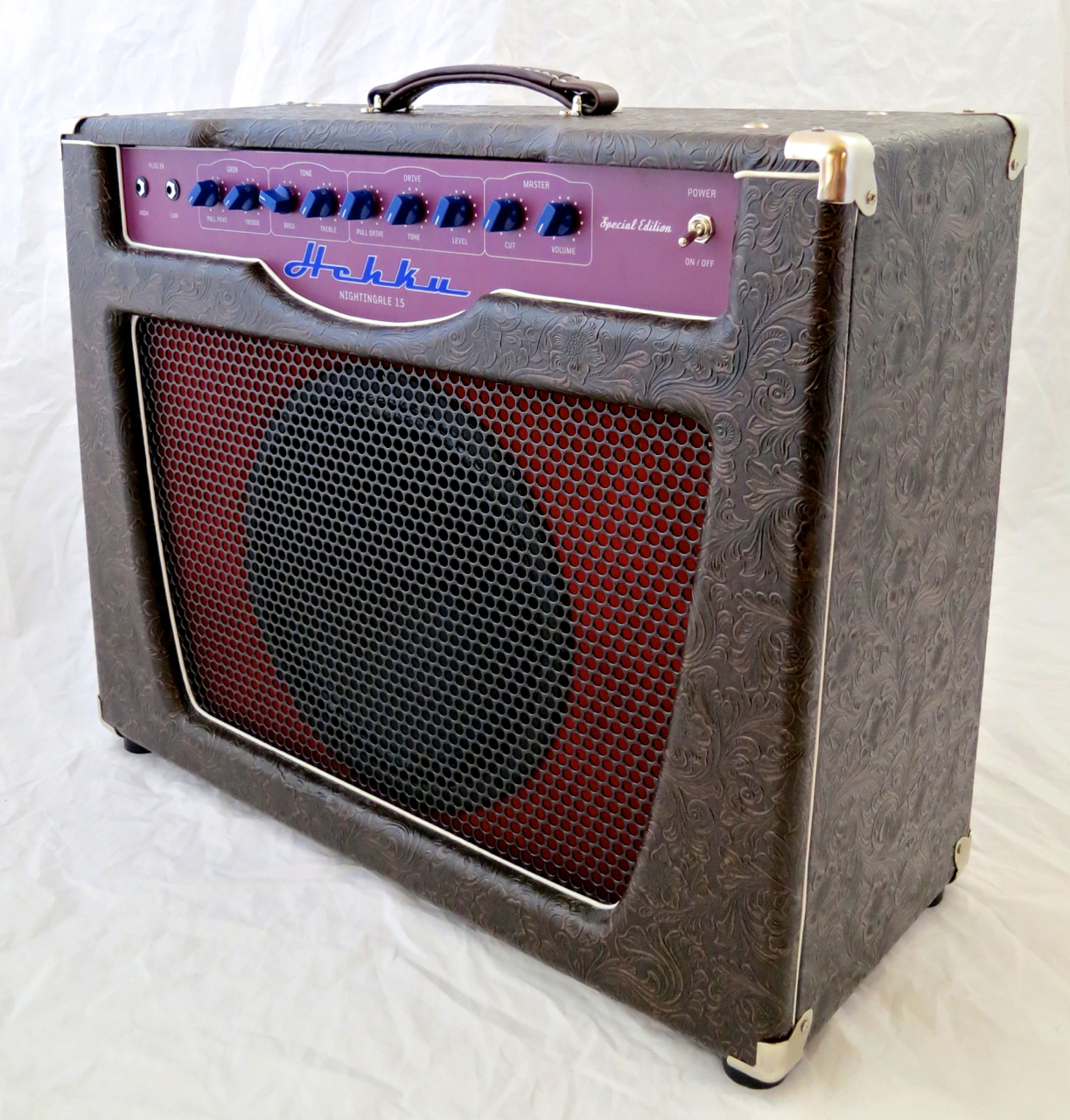
Hehku Nightingale 15 – full control panel

Hehku Nightingale 15 on hyvin erikoinen kaksikanavainen putkikombo, koska vahvistimen koko signaalitie on kytketty sarjaan.

Monissa vintage-vahvistimissa on kaksi rinnakkaista, toisista riippumattomaa kanavaa (esim. ”Normal” ja ”Tremolo”), joiden välillä ei voi vaihtaa lennossa (paitsi erillisellä A/B-polkimella). Nykyaikaisemmissa kitarastyrkareissa taas voi olla ehkä yhteinen EQ, mutta puhtaan ja särökanavan gainea ja volyymiä pystyy säätämään erikseen.

Hehkun Nightingale taas toimii niin, että puhtaan puolen asetukset – tässä tapauksessa triodi- ja pentodi-kytkennän gain-asetukset, sekä vahvistimen kuusipykäläinen Bass-säädin ja aktiivinen Treble-EQ – vaikuttavat suoraan myös Drive-kanavan soundiin.

Hehku Nightingale 15 – footswitch + valves

Triodi- ja pentodikytkennän välillä voi vaihtaa – ja Drive-kanavan laittaa päälle – joko suoraan etupaneelista nostokytkimillä tai kombon mukaan tulevalla kompaktilla jalkakytkimellä.

Hehku Nightingale 15 – back panel

Nightingalen selkeän putkikartan ansiosta kombon eri putkien sijainti selviää nopeasti.

Takapaneelista löytyy myös triodi/pentodi-kytkin pääteputkille. Triodimoodissa kombon nimellisteho putoaa 15 watista seitsemän wattiin, ja samalla myös Hehkun soundi muuttuu hieman.

Takapaneelin tarjoamasta kaiutinlähtöjen runsaudesta kitaristi taas iloitsee silloin, kun haluaa käyttää komboa toisen kaapin kanssa.

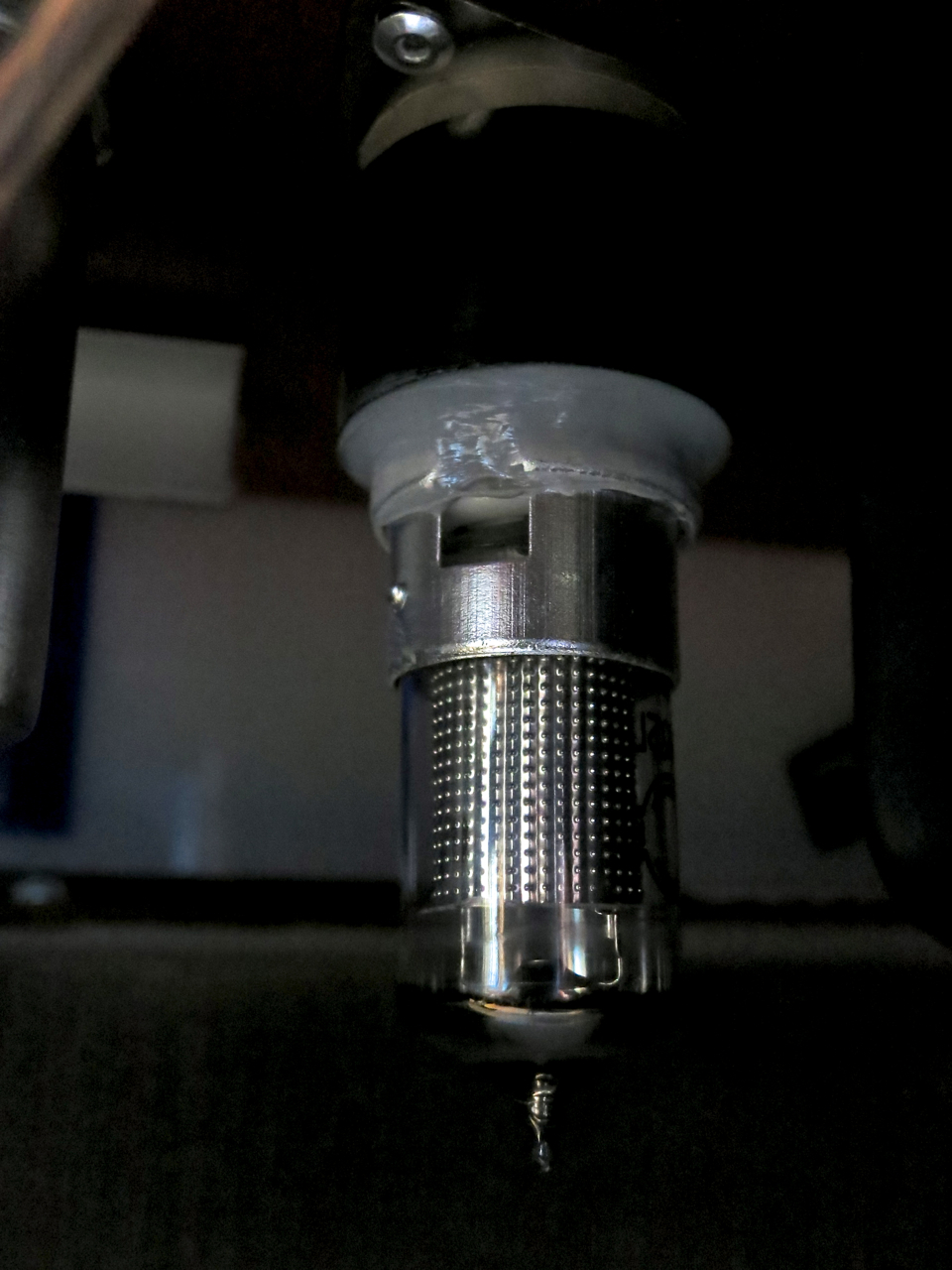
Hehku Nightingale 15 – EF86 preamp valve

Puhdas kanava on rakennettu EF86-nimisen pentodiputken ympärille. EF86 (myös tunnettu nimellä 6267) on soundiltaan erinomainen putki, jota löydetään myös joissakin vanhoissa Voxissa, sekä Matchless- ja Dr Z -vahvistimissa, mutta sitä käytetään nykyään melko harvoin, koska tämä malli on yleensä melko mikrofoninen (herkkä mekaaniselle tärylle).

Hehku Customs on ratkaissut ongelman tehokkaasti käyttämällä EF86:lle tärinää vaimentavaa silikoniadapteria.

Hehku Nightingale 15 – preamp valves + switches

Säröpuolelta (ja vaiheenkäntämisestä) ovat vastuussa kaksi 6N2P-putkea, jotka ovat venäläisiä, military-speksattuja 12AX7/ECC83-putkien sukulaisia, joilla on kuitenkin hieman toisenlainen soundi ja erilainen gain-rakenne.

Hehku Nightingale 15 – 5AR4 rectifier tube

Nightingalessa tasasuuntausta hoidetaan 5AR4-putkella.

Hehku Nightingale 15 – power amp valves

Tämän Hehkun päätevahvistin käyttää pari EL84-putkea. Myös pääteputket voi vaihtaa venäläisiin military-malleihin 6P15P/EL83, ja koska Nightingale on itsebiasoiva vahvistin, pääteputkien vaihtamiseen ei tarvita tekniikon apua.

Hehku Nightingale 15 – Warehouse-speaker

Warehousen laadukas 12-tuumainen Green Beret -kaiutin tarjoaa valmistajan mukaan brittiläistyylistä soundia.

****

Tehdasvarustuksella (6N2P + EL84) Hehku Nightingale 15 -kombon puhtaassa soundissa riittää headroomia jopa kahdella humbuckerilla varustetulle kitaralle. Kuusipykäläinen Bass-säädin ja aktiivinen Treble-potikka antavat runsaasti vaihtoehtoja, jolla jokainen voi löytää oman soundinsa. Hehkun puhdas äänimaailma on selvästi lähempänä Voxia kuin ”mustanaama” Fenderiä.

Nightingalen särösoundikin on vallan mainio. Kombo kuulostaa herkullisen mehevältä ja diskantissa on juuri sopivasti rouheutta klassikko-Blues- ja Rock-soundeihin.

Tässä pätkässä soi vintage-tyylinen Fender Telecaster – järjestys on: puhdas (triodi) –> puhdas (pentodi) –> särö (triodi) –> särö (pentodi); päätevahvistin toimii pentodikytkennässä:

Ja tässä samankaltainen pätkä Hamer USA Studio Custom -kitaralla soitettuna:

Hehku Nightingale 15 – full angle

****

Kokeilin myös Jarmo Välimäeltä saatuja vaihtoputkia (12AX7 + 6P15P), ja ero on selvästi kuultavissa:

Puhdas headroom on vähentänyt tuntuvasti. Telecasterilla ollaan jo breakup-särön maailmassa pentodikytkennässä, kun taas Hamerin soundi menee silloin jo selvästi särön puolelle.

Särökanavalla tarjoaa näillä putkilla myös enemmän säröä, hieman löysempää bassorekisteriä, sekä enemmän diskantin purevuutta. Oikein mainio kattaus tämäkin, vaikka tehdasputkisto on ehkä hieman enemmän minun makuun.

Ensimmäisessä pätkässä kuullaan jälleen Telecaster (samoilla asetuksilla, vain putket on vaihdettu):

Ja tässä on Hamerilla soitettu humbucker-pätkä:

Hehku Nightingale 15 – reverse angle

****

Hehku Nightingale 15 – logo

Hehku Customsin Nightingale 15 on mielestäni loistava täysputkikombo omalla äänellä ja omilla detaljiratkaisuilla. Tykkään myös Hehkun konseptista rakentaa putkivahvistimia, joilla on oma, huikea ulkonäkö ja soundi, mutta ilman turhan muka-nostalgista ”putkivoodooa”.

Hehku Nightingale on nykyaikainen, käsintehty putkikombo, jolla on erittäin selkeä säädin- ja takapaneeli, ja mielenkiintoisen interaktiivisesti toimiva signaalitie. Idea ei ole matkia jonkun tietyn kitaralegendan tai klassikkovahvistimen soundeja, vaan luoda erittäin toimivan perustan Hehku-käyttäjän omalle soundille.

Nightingale 15:n hinta on mielestäni kohdallaan, kun tässä puhutaan kuitenkin laadukkaan suomalaisen käsityön helmestä.

PS: Olen kuulut huhuja vielä tänä keväänä ilmestyvästä Hehku-kombosta trubaduureille, jossa olisi erillisiä kanavia kitaralle ja laululle. Kannattaa varmasti tsekata säännöllisesti Hehkun Facebook-sivua

****

Hehku Customs Nightingale 15

hinta: 1.950 €

Lisätiedot: Hehku Custom

****

Plussat:

+ uhkea ulkonäkö

+ työnjälki

+ käsintehty 

+ kotimainen

+ omaleimainen kytkentä

+ soundi

Pidä blogia WordPress.comissa.

Ylös ↑