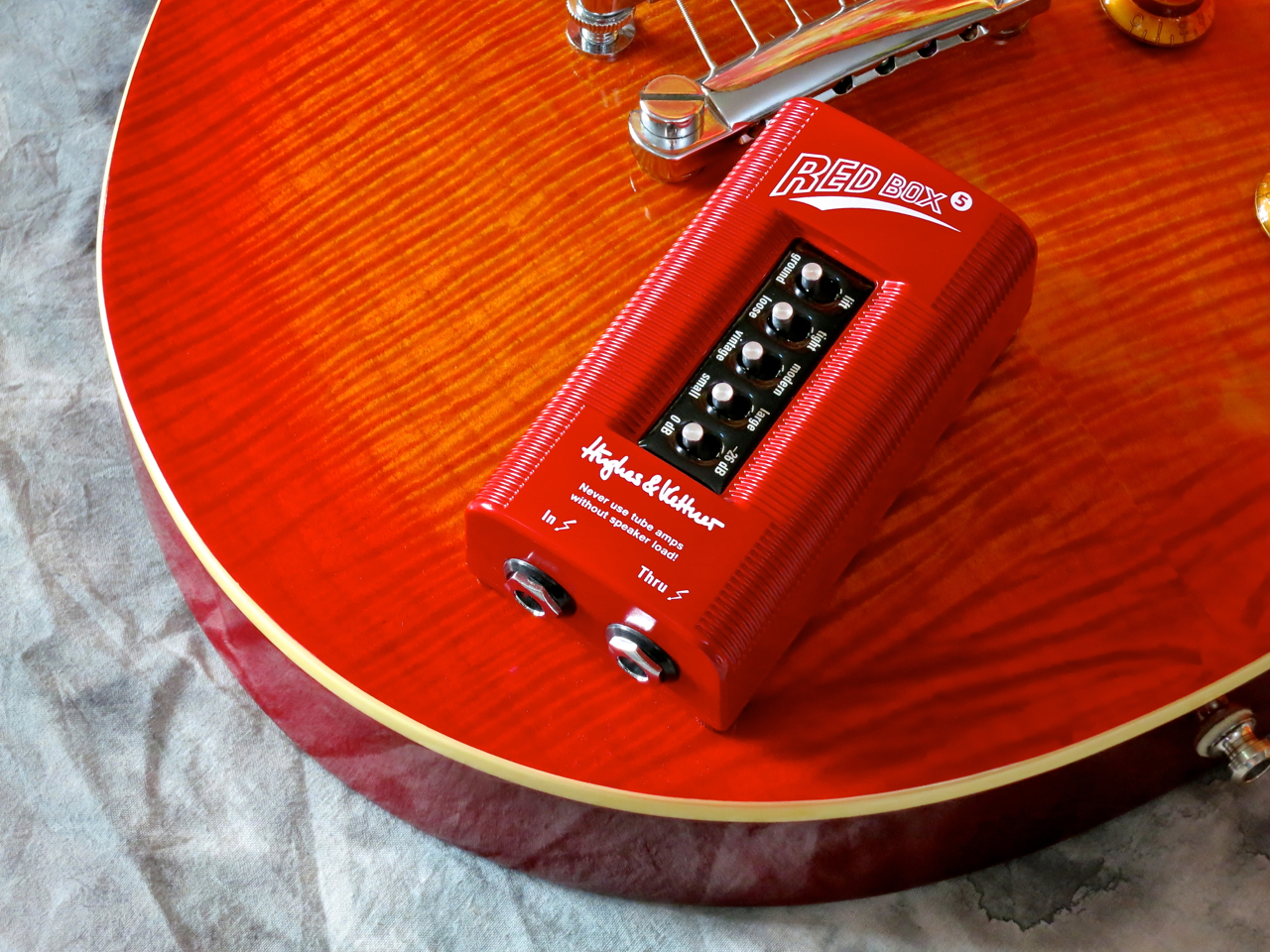
Testipenkissä: Hughes & Kettner Red Box 5

Hughes & Kettner Red Box 5 – opener

Ensimmäinen versio Hughes & Kettnerin Red Boxista ilmestyi jo 1980-luvun loppupuolella, ja nerokkaasta laitteesta tuli nopeasti menestystuote.

Red Box on kitaravahvistimelle tarkoitettu erikois-DI-boksi. Perinteisen DI-boksin leipätyö on muunnella soittimesta lähtöistä korkeaimpendanssista signaalia mikserille sopivaksi matalaimpendanssi-signaaliksi.

Red Box taas kytketään kitaravahvistimen kaiutinlähdön ja kaiuttimen väliin, ja sen ansiosta saadaan kaiutinmallinnuksella höystettyä signaalia suoraan mikseriin, täysin ilman kaiuttimen eteen laitettavia mikrofoneja.

Hughes & Kettnerin tuotekehitys on edennyt vuosikymmenien mittaan jo Red Box -vitosversioon – oli siis korkea aikaa tutkiskella päivitetyn laitteen toimintaa ja soundia.

****

Hughes & Kettner Red Box 5 – full

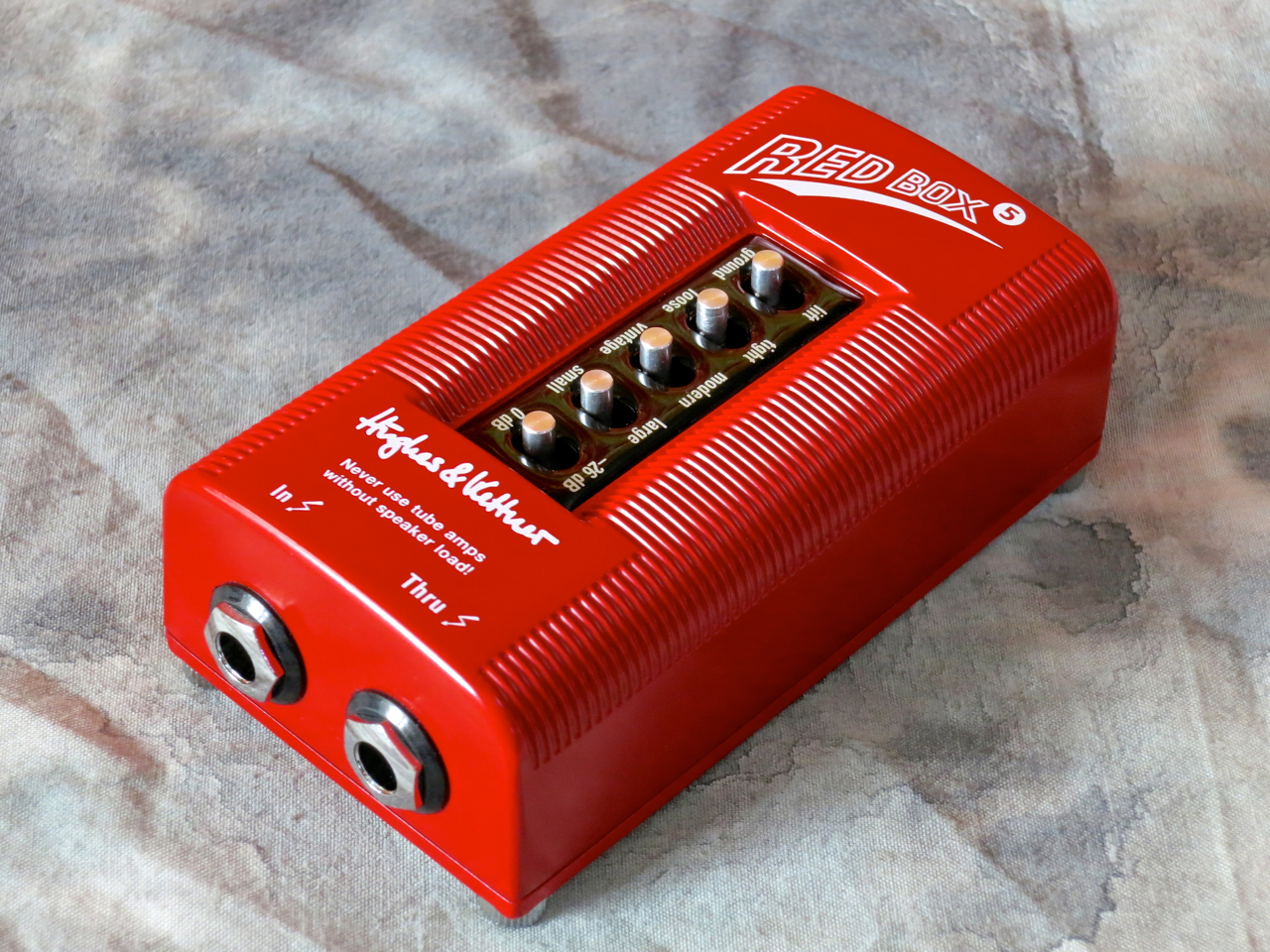
Hughes & Kettner Red Box 5 (89,90 €) tuntuu hyvin kestävänoloiselta, sen kompaktin, valumetallisen kotelonsa ansiosta.

Red Boxin koteloon upotettu kytkinpaneeli suojaa kytkimiä tehokkaasti mekaaniselta rasitukselta, sekä tahattomilta asetusmuutoksilta.

Hughes & Kettner Red Box 5 – bottom view

Kitaristin ja teknikon iloksi uusille Red Boxeille voi syöttää monenlaista sähköä:

Tämä Hughes & Kettner toimii sekä 9 voltin paristolla, mikserin phantomsyötöllä tai ulkoisen virtalähteen sähköllä, jolloin Red Boxiin voi syöttää 9-12 volttia joko tasavirtana (miinus keskellä) tai vaihtovirtana. Sopivan verkkolaitteen löytäminen ei siis pitäisi olla tässä tapauksessa ongelma!

Hughes & Kettner Red Box 5 – speaker jacks

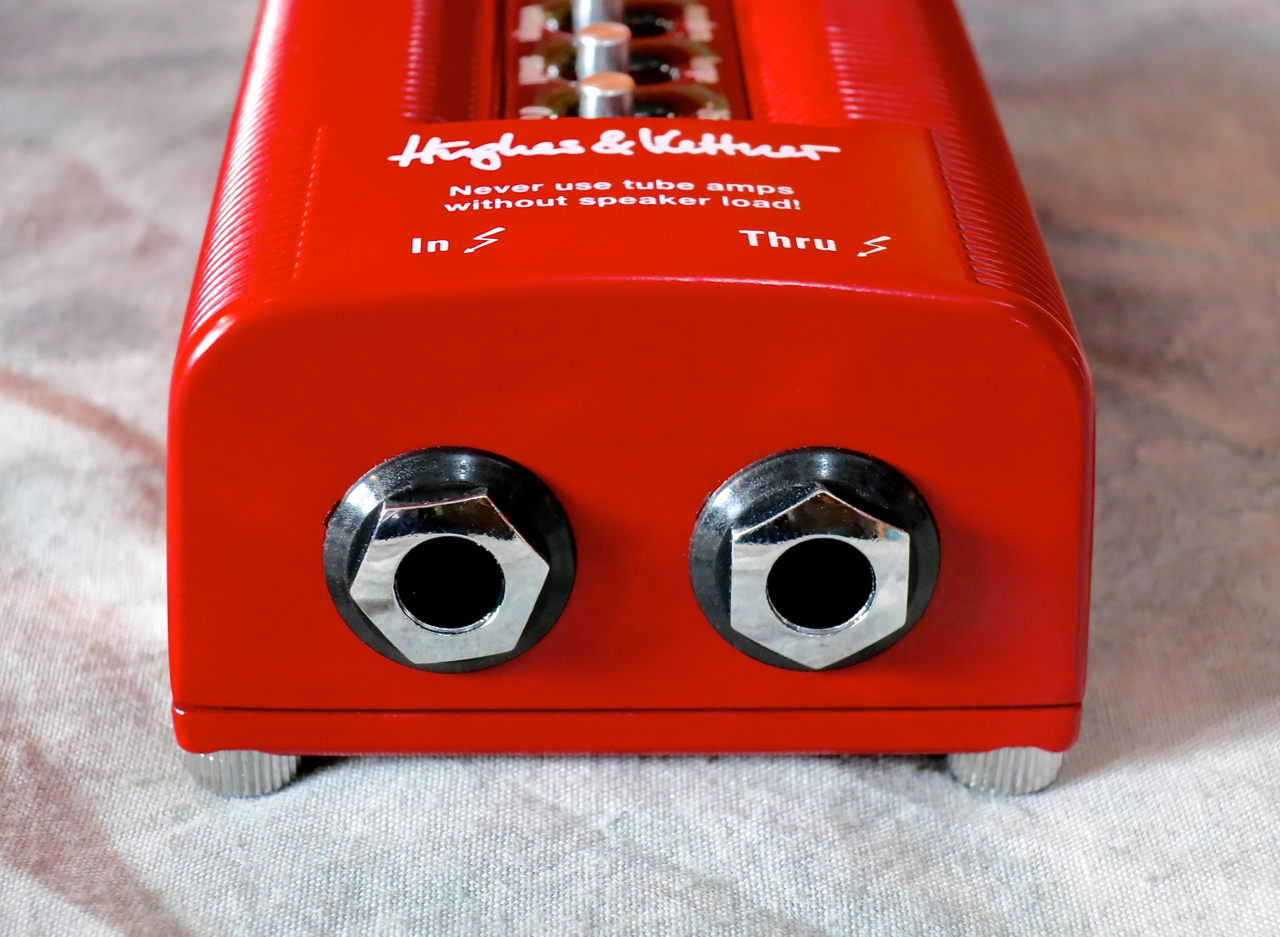
Hughes & Kettnerin alareunasta löytyy boksin kaiutinliittimet:

Vahvistimesta tuleva kaiutinjohto kytketään In-tuloon, kun taas Thru-lähdön signaali menee eteenpäin kaiuttimelle.

On erittäin tärkeä korostaa, että Red Box 5 ei ole keinokuorma, vaan ainoastaan DI-boksi! Jos käytössä on putkivahvistin (tai putkipäätteellä varustettu hybridi), vahvistinta saa ainoastaan käyttää sopivalla (= oikea ohmiarvo) kaiuttimella/kaiutinkaapilla tai keinokuormalla, riippumatta siitä käytetäänkö Red Boxia vai ei. Putkivahvistimen käyttäminen ilman asianmukaista kuormaa rikkoo (käytännössä väistämättä) laitteen audiomuuntajan!

Hughes & Kettner Red Box 5 – XLR + DC

Red Boxin yläreunaan on asennettu laitteen balansoitu XLR-lähtö mikserille, sekä liitin virtalähteelle.

Hughes & Kettner Red Box 5 – switches

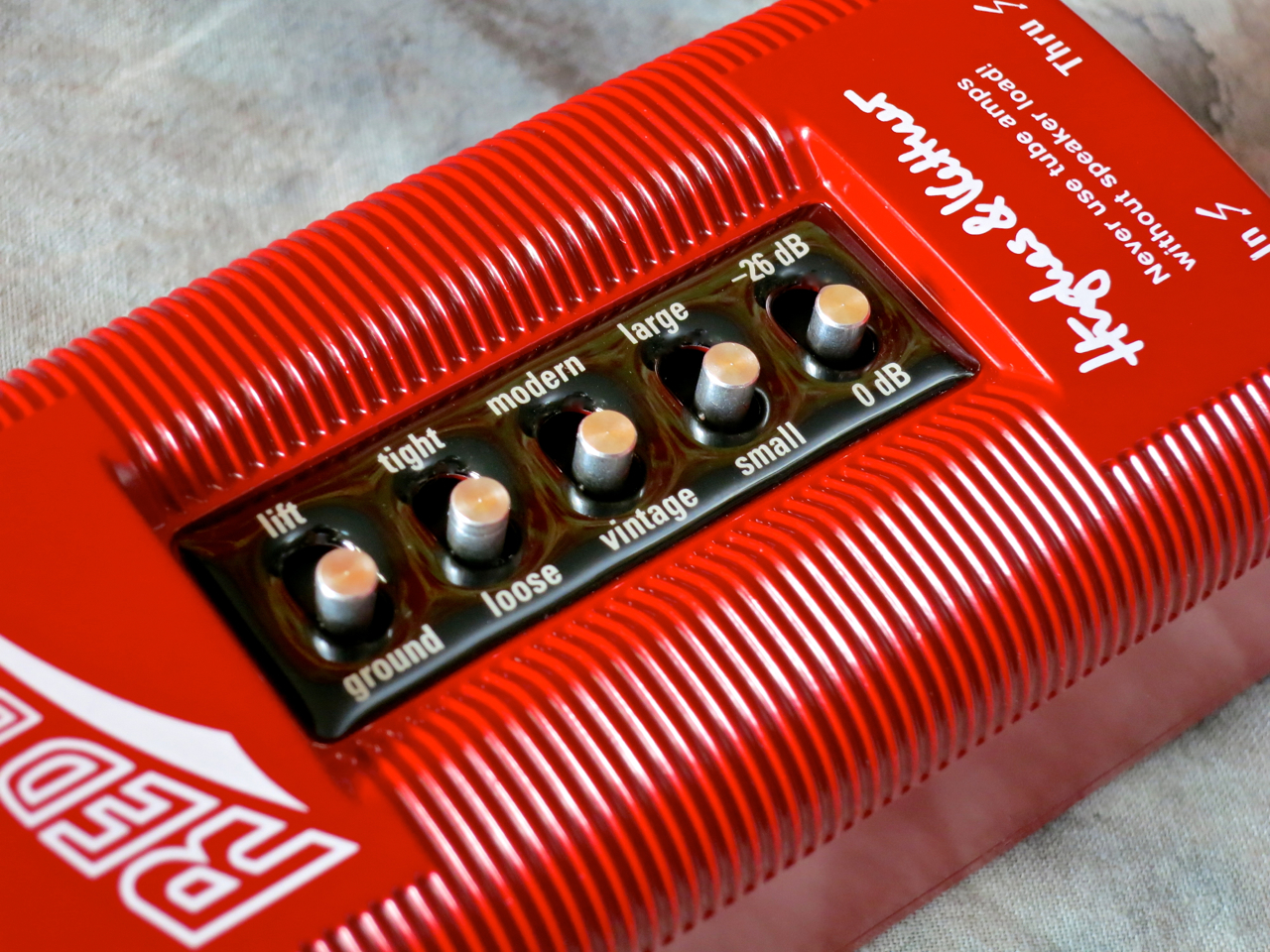
Hughes & Kettnerin viidellä kytkimellä voi hienosäätää DI-boksin toimintaa ja soundia:

Tarjolla on maalenkin katkaisin, bassokarakteerikytkin, modern/vintage-valitsin, kaappikokokytkin (small: kombo; large: 4 x 12 -kaappi), sekä 26:n desibelin padi DI-signaalille.

Hughes & Kettner Red Box 5 – baggie

Pakkauksesta löytyy myös musta samettipussi kuljetusta varten.

****

Hughes & Kettner Red Box 5 – angle left

”Hyvä kitarasoundi” on ehkä yksi maailmankaikkeuden subjektiivisimmista asioista. Signaaliketjussa sinänsä on tavallisesti jo suuri määrä muuttuvia tekijöitä. Kun soppaan lisätään vielä kaapin mikitykseen käytetty mikrofoni, sen asento kaiuttimeen nähden ja mikin etäisyys, soundien kirjosta tulee miltei ääretön. Olisi täysin kohtuutonta vaatia tämänkaltaisesta DI-boksista samankaltaiset laajat muokkausmahdollisuudet.

Hughes & Kettner Red Box 5:n idea onkin tarjota käyttäjälle mahdollisimman luonnollisen kuuloisia Best of -vaihtoehtoja tyypillisistä kitarakaappisoundeista, suoraan vahvistimesta mikseriin, täysin ilman mikkiasetuksesta tai huoneakustiikasta johtuvia häiriötekijöitä. Ja juuri siinä Red Box 5 onnistuu mielestäni loistavasti.

Seuraavissa klipeissä on samat pätkät vertailun vuoksi äänitetty sekä ”akustisesti” Shure SM57 -mikrofonilla että suoraan Red Boxilla. Käytin Blackstar HT-1R -vahvistinta ja Änäkäinen Rumble -kaappia. Hughes & Kettnerin kytkimillä oli valittu asetukset ”loose”, ”vintage” ja ”large”.

Tässä on lähimikitetty puhdas pätkä:

Tällaiselta sama pätkä kuulostaa Red Box 5:llä äänitettynä:

Shurella poimittu särösoundi oli tällainen:

Sama pätkä suoraan Hughes & Kettnerin kautta äänitettynä:

****

Hughes & Kettner Red Box 5 – angle right

Hughes & Kettner Red Box 5 on mainio työkalu etenkin lavalla. Red Box 5:llä pääsee viimein mikrofonin kanssa häsläämisestä, ja se poistaa näin myös tehokkaasti mikrofonin feedback- ja vuoto-ongelmat. Jäljellä jää erittäin laadukas kitarasoundi päivästä toiseen.

****

Hughes & Kettner Red Box 5

89,90 €

Maahantuoja: F-Musiikki

****

Plussat:

+ kompakti koko

+ toimii paristolla, verkkolaitteella (AC + DC) tai phantomsyötöllä

+ eri soundivaihtoehdot

+ laadukas kaiutinmallinnus

Testipenkissä: Änäkäinen Rumble 1 x 12

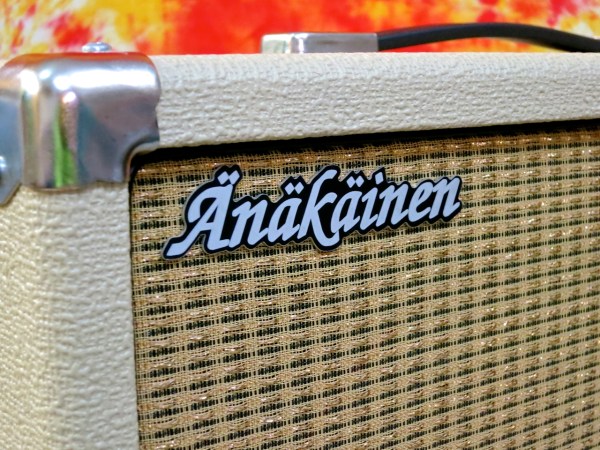
Änäkäinen Rumble Cream – logo 2

Puuverstas Änäkäisen Rumble 1 x 12 -kaappi (hinnat alk. 580 €) tarjoaa tuoreita suomalaisia ratkaisuja hyvän kitarasoundin perustaksi.

Rumble-konseptin takana ovat puuseppä Kari Änäkäinen, jolla itse on myös kitaristi- ja basistitausta, sekä kuusankoskelaisen Triodipajan vetäjä Lassi Ukkonen. Rumble-kitarakaapin suunnittelu alkoi puolivahingossa, kun Kari päätti rakentaa itselleen kevyen ja kompaktin bassokaapin ja pyysi Lassia laskemaan hänelle siihen oikeat mitat. Onnistuneen bassokaapin perusteella syntyi idea tarjota kitaristille laadukkaita, kompakteja ja kevyitä vahvistinkaappeja. Yksi Änäkäisen ensimmäisistä asiakkaista muusikkopuolelta oli kitaralegenda Juha Björninen.

****

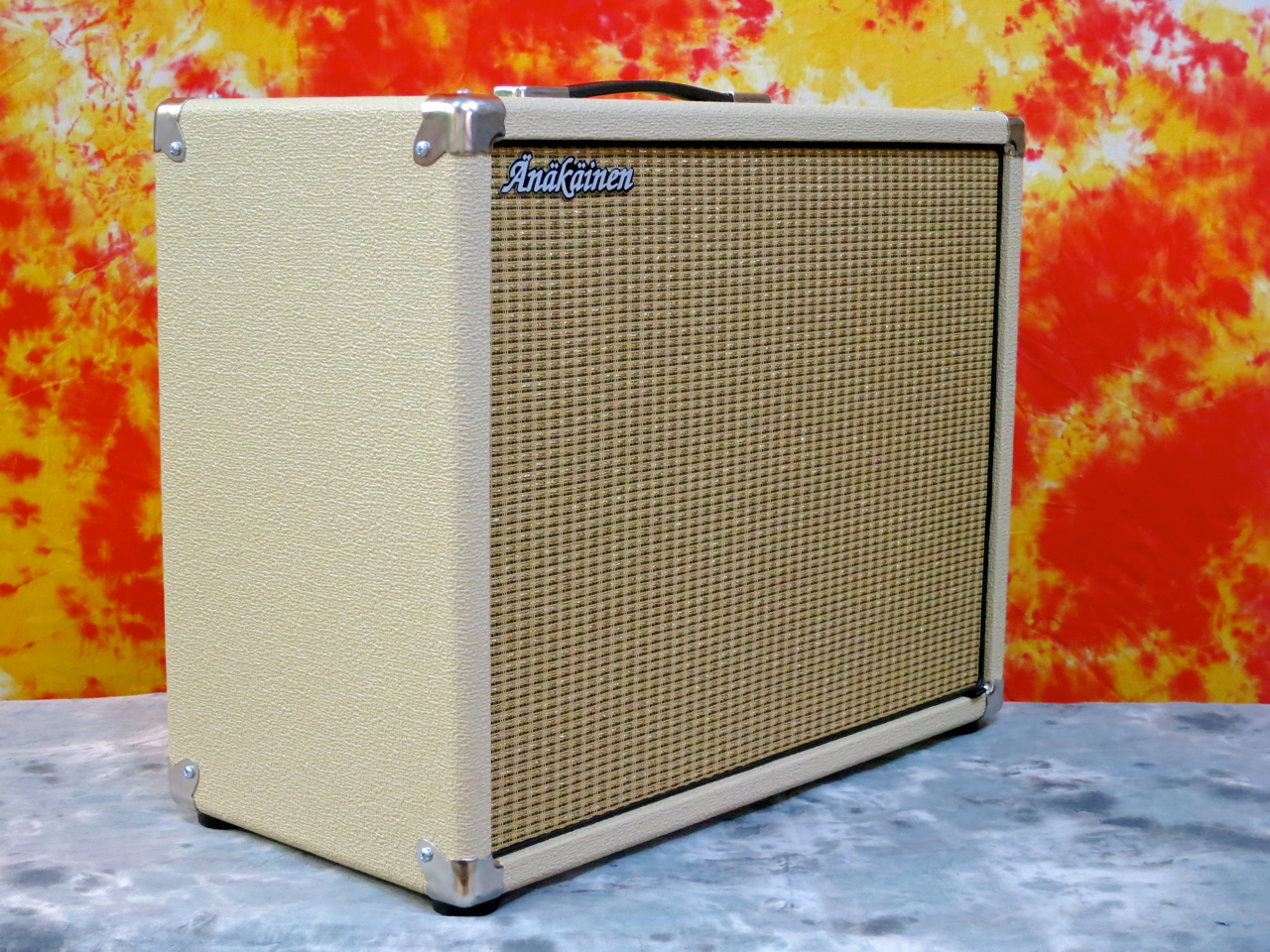
Änäkäinen Rumble Cream – angle right

Rumble-kaappien kosmetiikan suhteen Kari Änäkäinen on vannoutunut vintage-mies.

Änäkäinen Rumble Cream – back angle

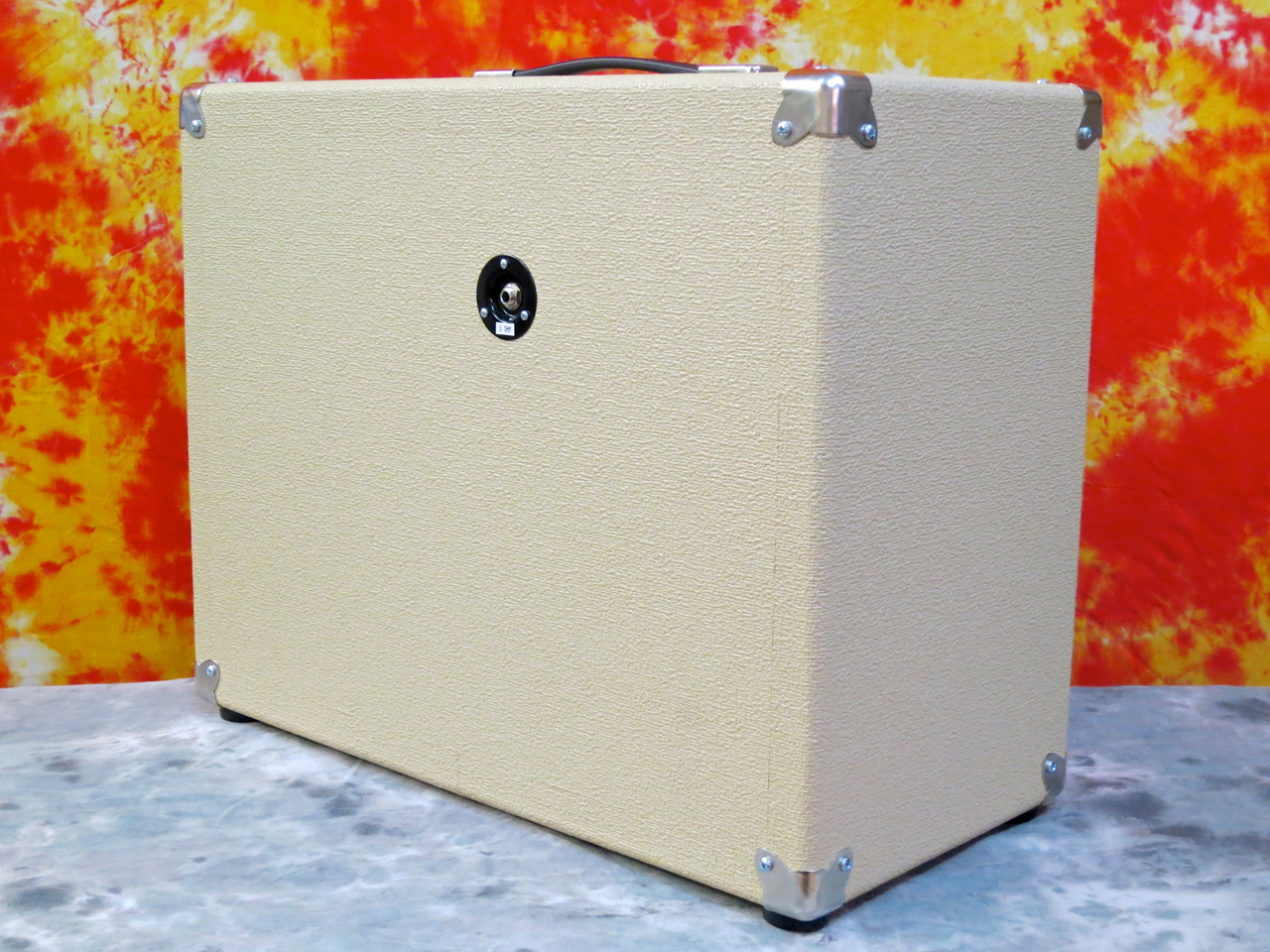
Saimme testiin kaksi Rumblea, joista toisella on Fender Blonde -tyylinen ulkonäkö (kermanvärinen päällystys ja beesi etukangas)…

Änäkäinen Rumble Black – front angle left

…ja toisella enemmän Marshallin suuntaan nojaava värimaailma.

Änäkäinen Rumble Black – back angle

Rumble-kaapeissa on metalliset kulmasuojat.

Änäkäinen Rumble Black – input

Vankantekoiseen jakkilevyyn on liimattu selkeä impedanssitarra.

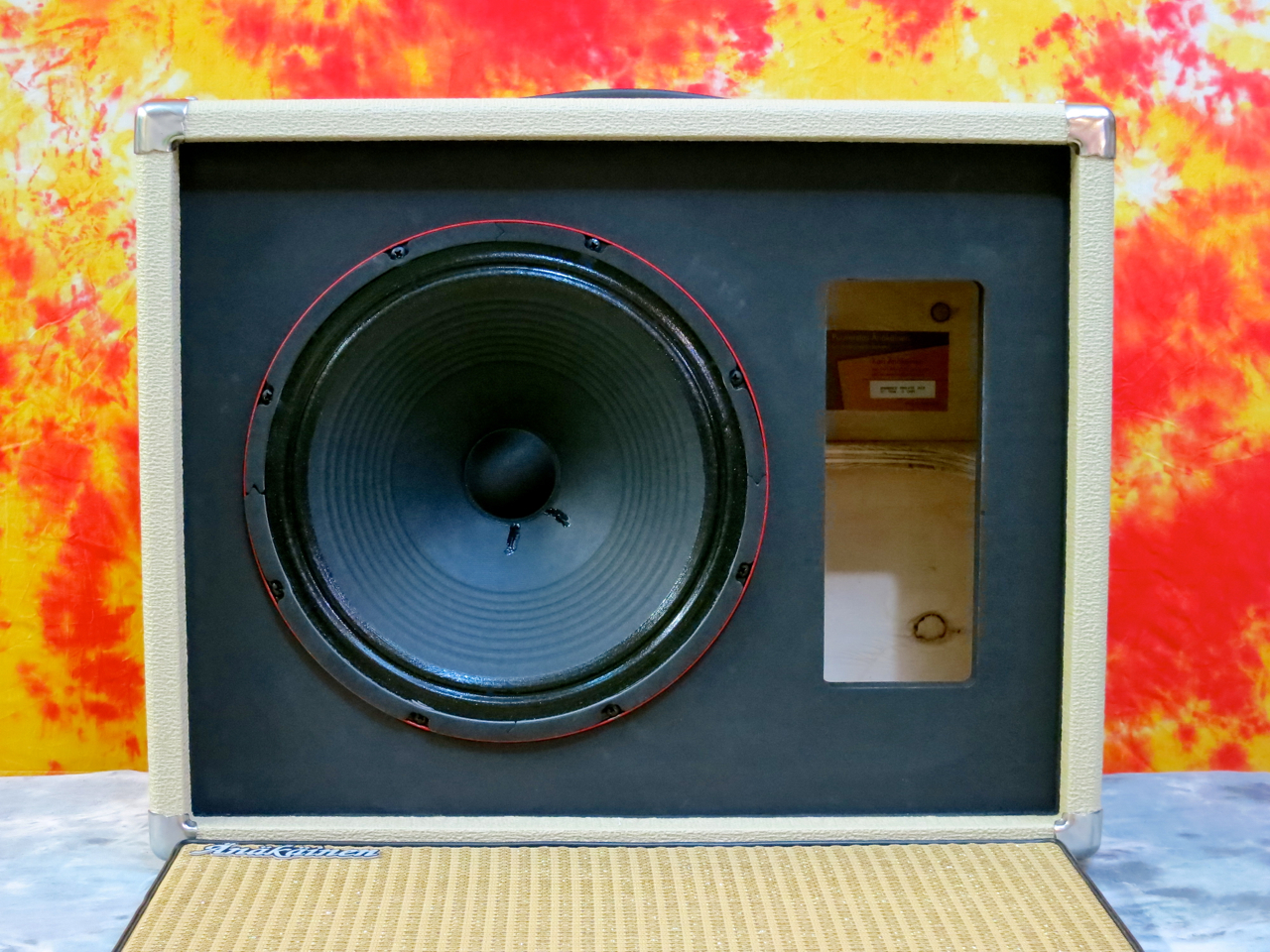
Änäkäinen Rumble Cream – front cloth off

Kari Änäkäinen tarjoaa asiakkailleen viisi erilaista 12-tuumaista kaiutinmallia, joista voi valita sopivan elementin omaan kaappiin.

Testissä käyneeseen kermanvaaleaan Rumbleen oli asennettu Eminence Private Jack -kaiutin (50 W/8 Ω).

Änäkäinen Rumble Black – front cloth off

Mustaan Rumbleen taas on valittu WGS:n Reaper-malli (30 W/8 Ω).

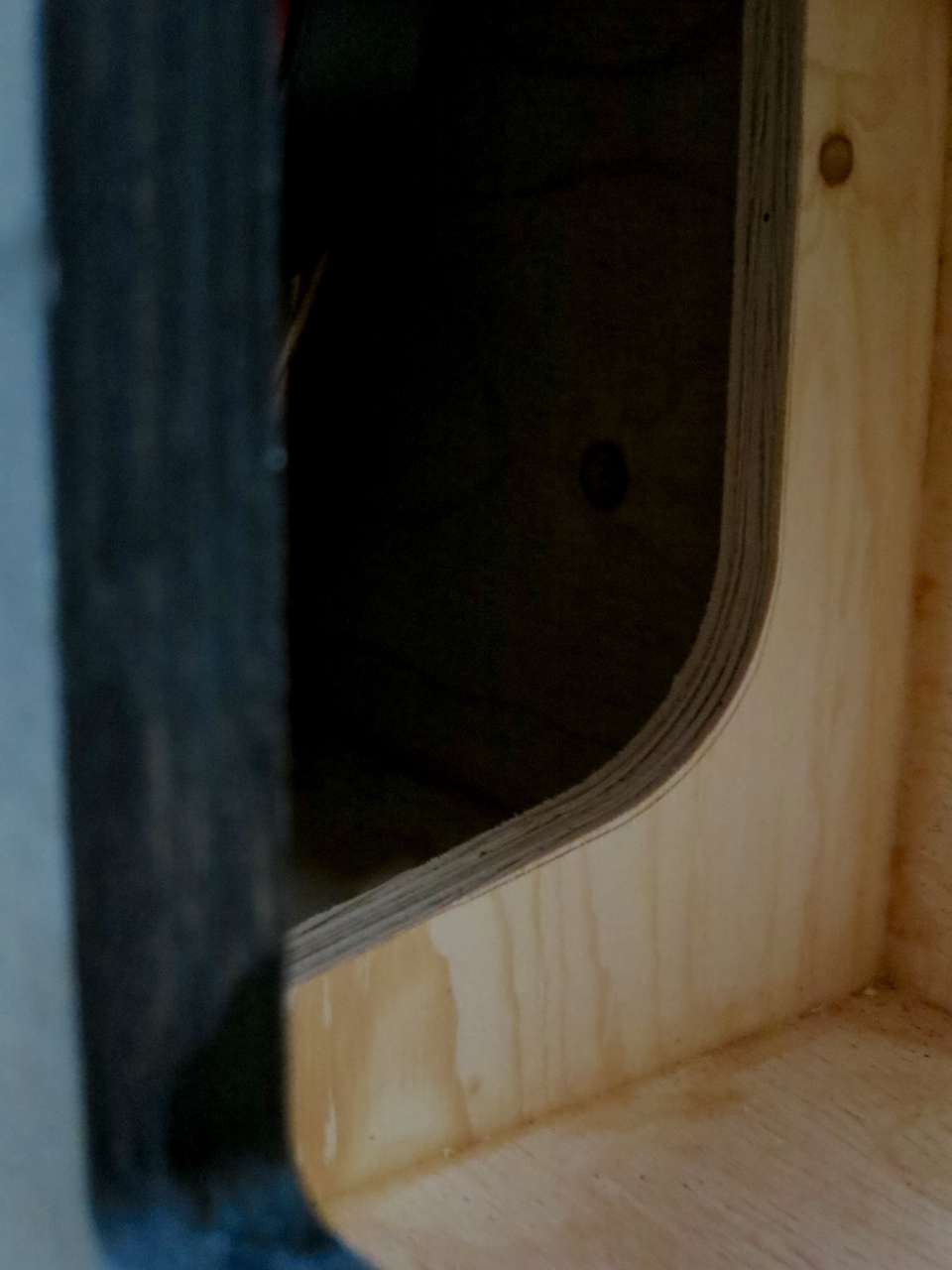
Kuten näistä kuvista näkyy, yksi Rumble-kaappien erikoisuuksista on kaiuttimen viereen sijoitettu ääniaukko. Idea on lainattu useissa basso- ja hifikaapeissa käytetystä refleksirakenteesta, vaikka Rumbleissa ei ole ääntä heijastavia väliseiniä tai viritettyä bassoputkea.

Änäkäinen Rumble Cream – struts 1

Rumble-kaappien perusrakennekin poikkeaa tavallisesta kitarakaapista, sillä kotelo on tehty kotimaisesta, 15-millisestä havuvanerista.

Havuvanerin edut ovat sen laadukkuus, hyvä saatavuus, ja etenkin materiaalin kevyt paino. Monille valmistajille havuvaneri on kitara- ja bassokaappien tekoon hieman liian taipuisa, mutta Kari Änäkäinen on löytynyt tähän ratkaisun – samasta materiaalista tehdyt sisäiset tuet.

Änäkäinen Rumble Cream – struts 2

Kaiutinta kantava etuseinä taas on leikattu 18-millisestä, suomalaisesta koivuvanerista.

Koko kotelo on toteutettu täysin ilman ruuveja, ainoastaan liimaliitoksilla ja puutapeilla. Rumble-kaappien ainoat ruuvit käytetään kaiuttimen, jakkilevyn ja kulmasuojien kiinnityksissä.

Änäkäinen Rumble Cream – top handle

Rumble-kaappi on hyvin kompakti ilmestys, joka painaa vain noin 12 kiloa.

****

Änäkäinen Rumble Cream – front left

Tämä perustuu vain subjektiiviseen vaikutukseen, mutta ensimmäiset sanat jotka tulivat Rumble-kaappien kokeilussa mieleen olivat ”äänekäs”, ”iso” ja ”musikaalinen”. Änäkäinen Rumble saa jopa oman Blackstar-pikkuvahvarin (HT-1R) kuulostamaan täysikokoiselta, aikuiselta putkivahvistimelta.

Rumblessa löytyy se sama lämpö ja avoimuus kuin monissa avoimissa kaapeissa/komboissa, mutta sen erikoisen rakenteen ansiosta äänen suuntavuus on huomattavasti parannettu. Tässä ei katoa puolet soundista johonkin kaapin taakse. Samalla etupuolen ääniaukon ansiosta syntyy sellainen herkullinen, huonetta täyttävä ”laajakulma-soundi”.

Eminence-kaiuttimella varustettu blondi-Rumble soi täyteläisellä ja kermaisella äänellä:

Änäkäinen Rumble Black – front angle right

Mustalla Rumblella taas on – WGS Reaper -kaiuttimen ansiosta – vahva Britti-aksentti. Tämä kaappi on hieman ärhäkämpi ja sillä on purevampi preesensalue. Puhtailla vahvistinasetuksilla ero testikaappien välillä ei ole ehkä niin selkeä kuin särösoundeissa:

****

Änäkäinen Rumble Black – logo 2

Tämän testin perusteella voin vain todeta, että Änäkäinen Rumble -kaappi tarjoaa aitoa suomalaista boutique-laatua reiluun hintaan. Rumble todella kuulostaa isommalta kuin mikä se on.

****

Änäkäinen Rumble 1 x 12

Hinnat alkaen 580 €

Valmistaja: Puuverstas Änäkäinen

****

Plussat:

+ työnjälki

+ valtavirrasta poikkeava, toimiva konsepti

+ laaja, mutta silti fokusoitu soundi

+ bassotoisto

+ saatavilla eri kaiuttimilla

Review: Hehku Custom Nightingale 15

Hehku Nightingale 15 – opener

From a guitarist’s standpoint, Finland truly is the land where milk and honey flow. In relation to its tiny population Finland is home to an unbelievable number of first-rate guitar-, effects- and amp-makers.

One such boutique-level amp brand is Hehku Customs from the town of Pori (on the western coast). Hehku’s team consists of chief designer Jarmo Välimäki, as well as Markku Penttilä and Juha Heljakka, who are in charge of R & D, sales and marketing.

There are several examples of different custom amps the company has built on Hehku’s website. Prices for custom amps start at about roughly 1,300 €. Hehku Custom’s cabinet sizes and shapes are standardised, but all other details can be tailoured to each customers wishes and requirements. ”The basic idea is that we want to make our customers’ wildest dreams come true!” says Jarmo Välimäki.

****

Hehku Nightingale 15 – full front

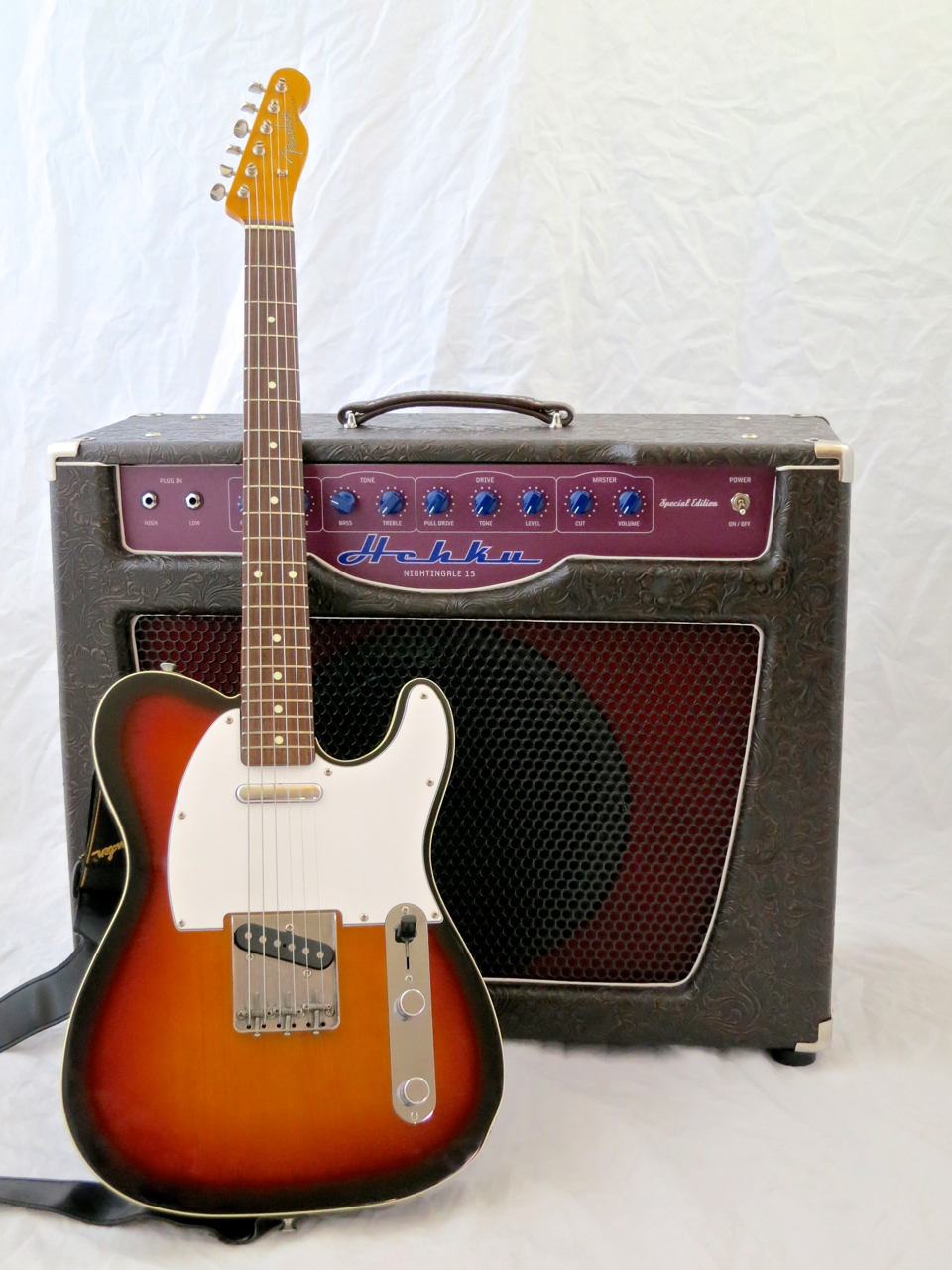
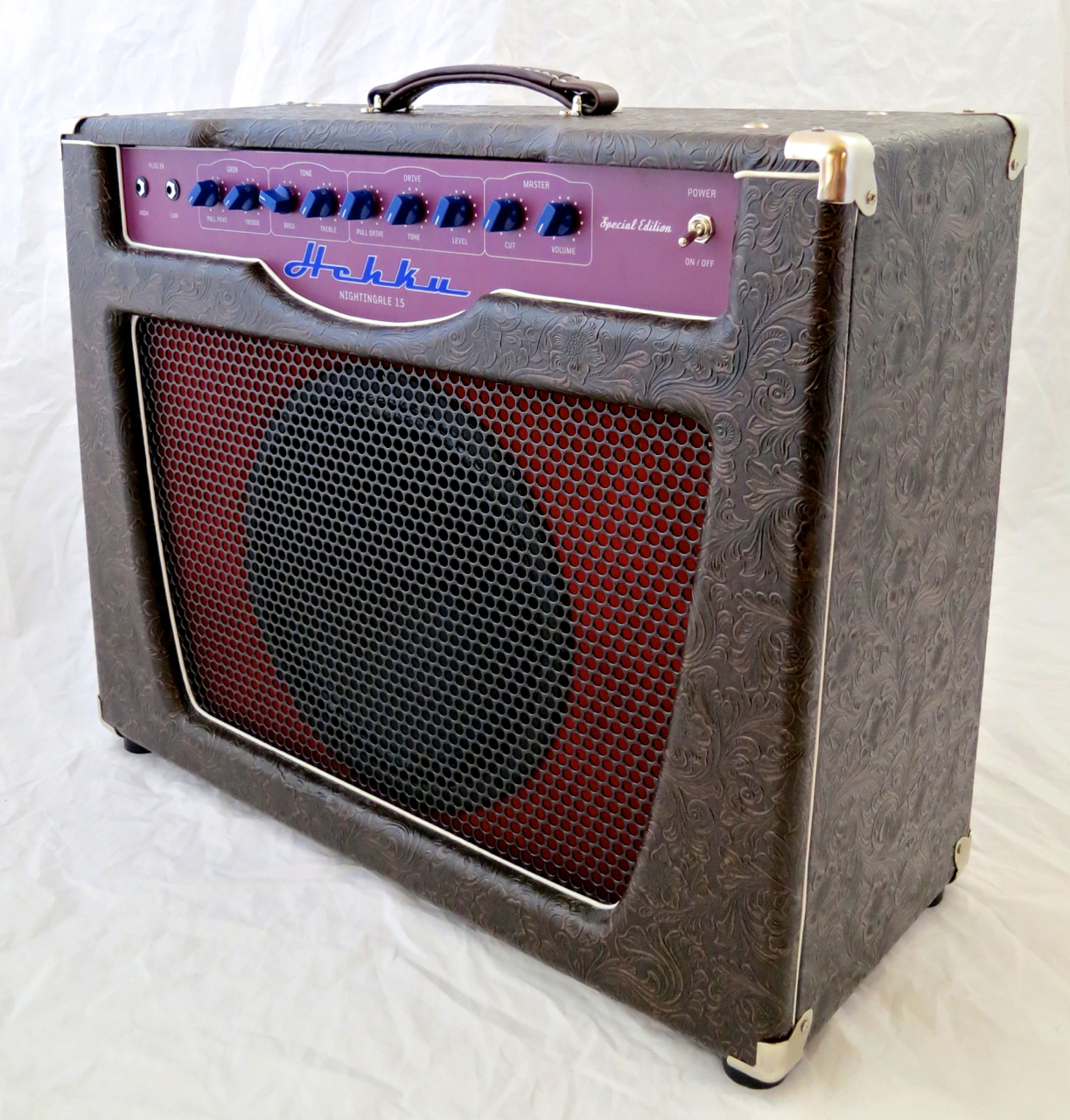
Kitarablogi got a 15-watt Hehku Nightingale 15 combo for testing. This is Hehku Custom’s first standardised model without custom options.

The Nightingale 15 (combo approx.: 1,950 €, head approx.: 1,750 €) is a hand-made, all-valve combo with a single 12-inch speaker, and represents many features typical of Hehku’s design philosophy.

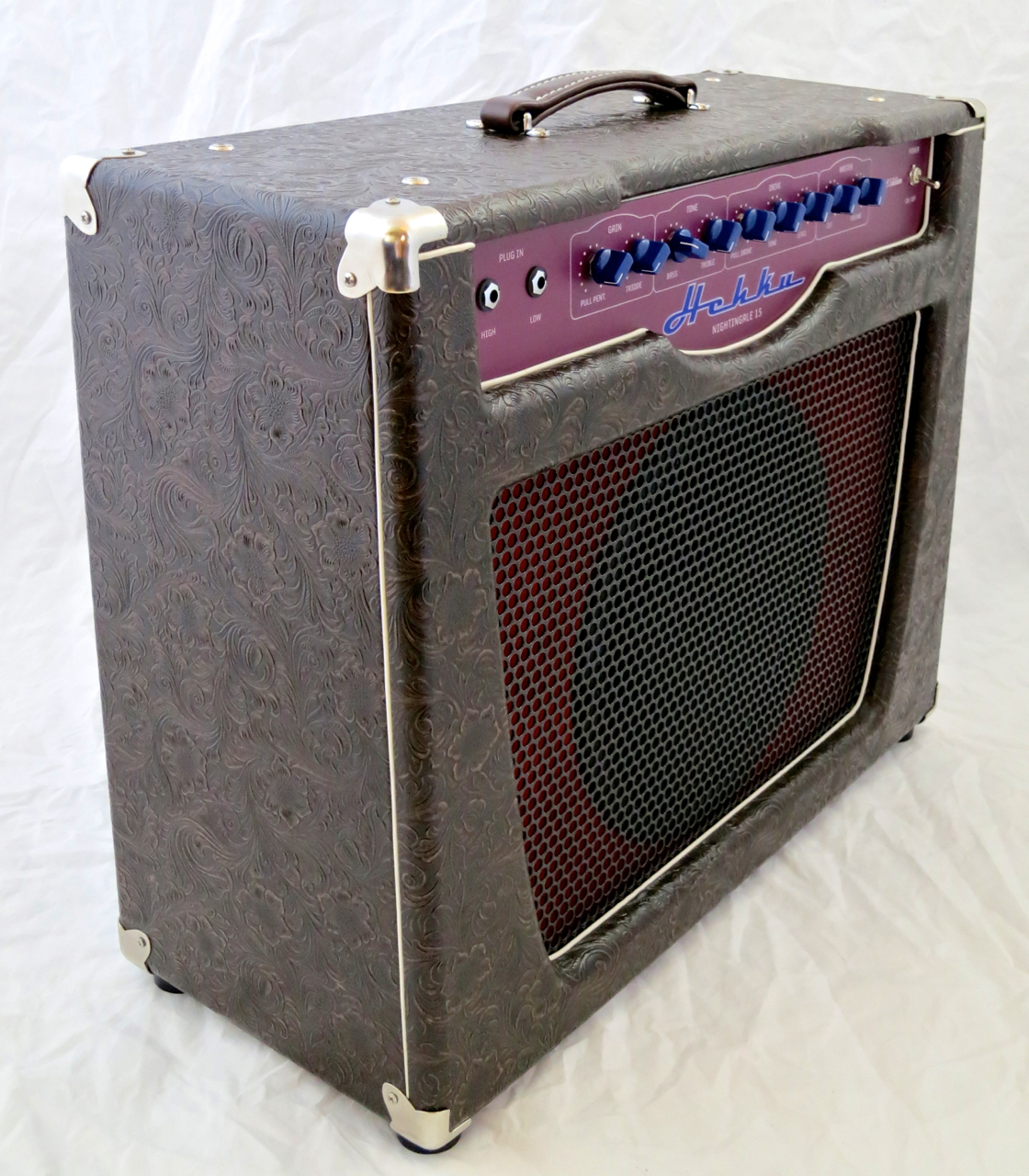
The Nightingale’s cool and original looks make it clear from the off that this combo isn’t your typical Fender Tweed clone.

Hehku Nightingale 15 – full back

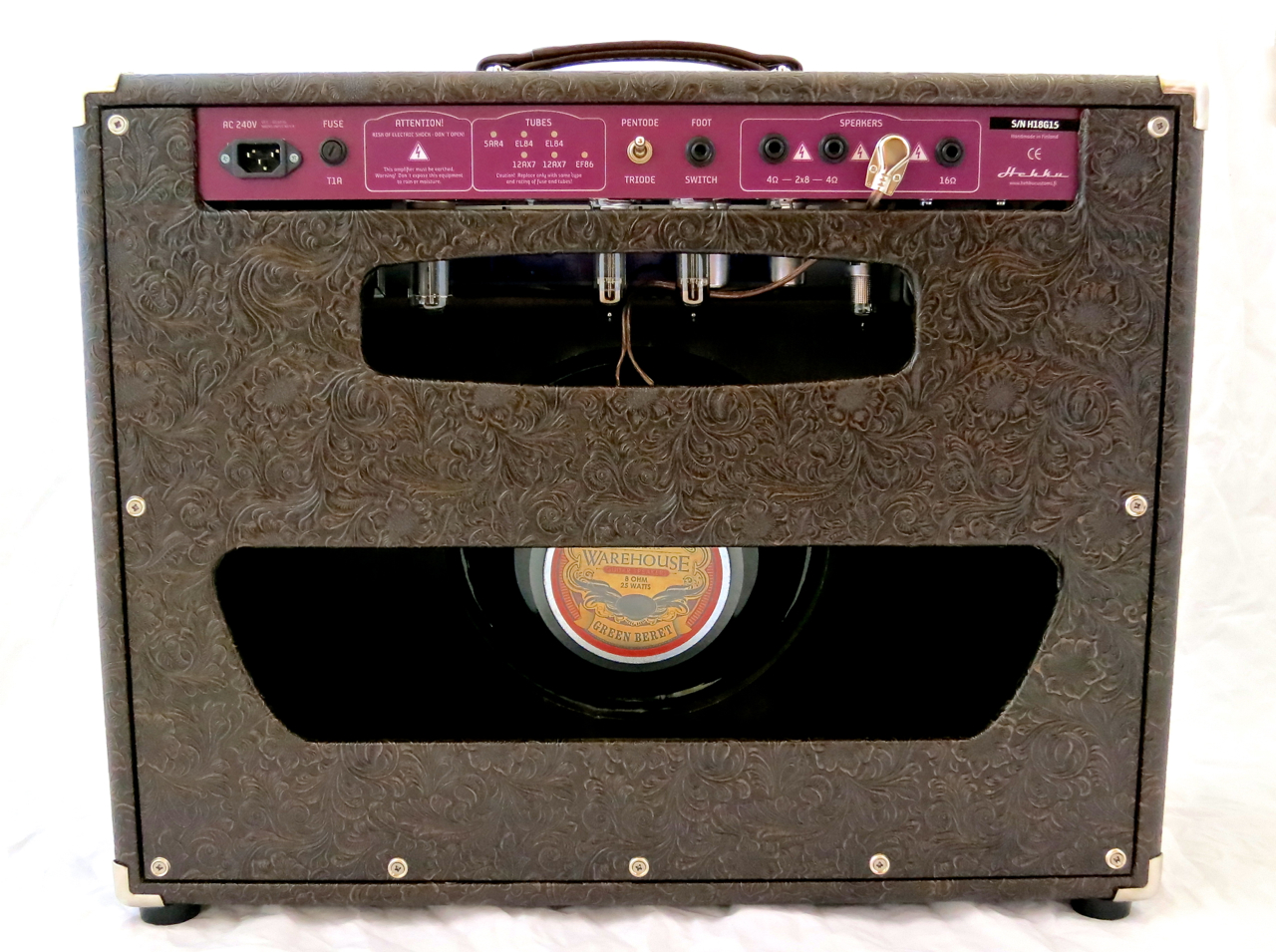
The Hehku Nightingale is an open-backed combo with easy valve access. All Hehku cabinets are made from Finnish birch ply, which is an outstanding material, both in terms of strength as well as sound.

Hehku Nightingale 15 – top handle

Birch ply is also relatively lightweight, which is why the Nightingale is easy to carry by its single top handle.

Hehku Nightingale 15

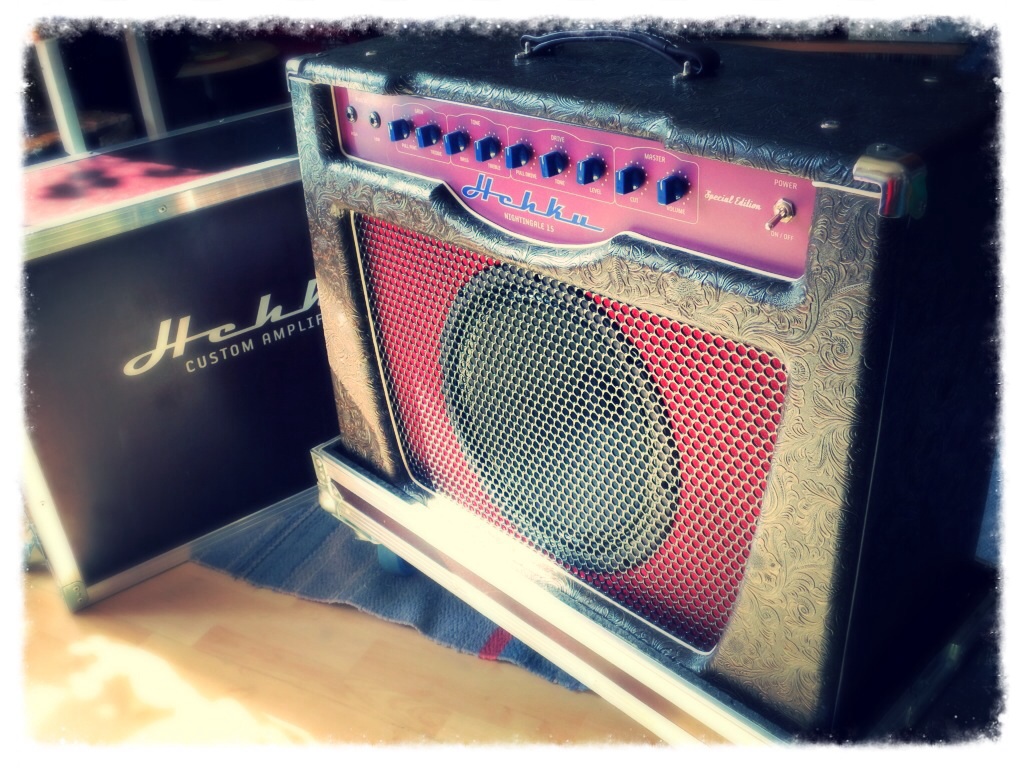
Hehku also offers professional transport cases to go with their amps and cabinets. A road case for the Nightingale 15 would set you back around 260 €.

****

Hehku Nightingale 15 – full control panel

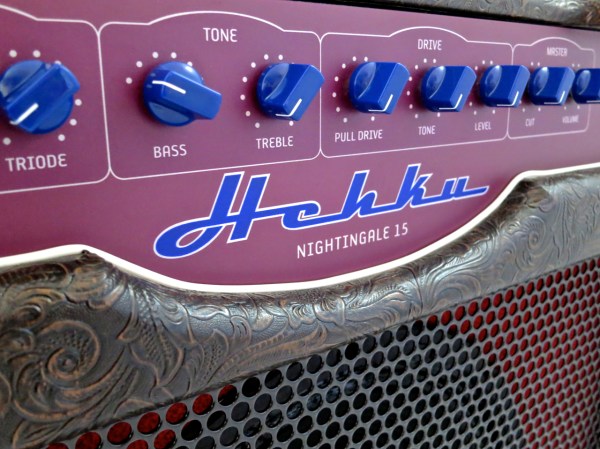
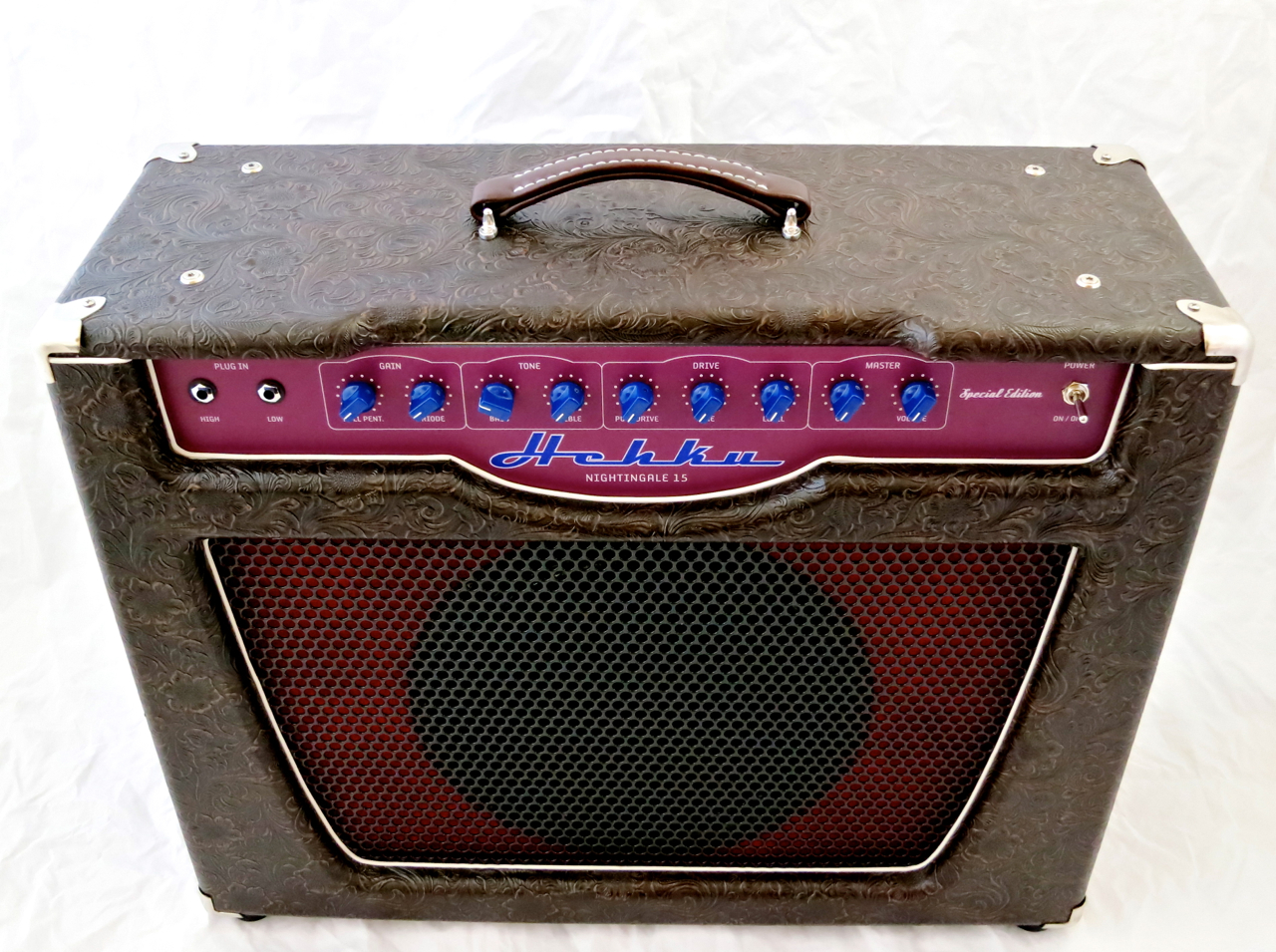
Hehku’s Nightingale 15 is a very special case for a two channel combo, because its signal path is in series the whole way through.

Most vintage (-style) amps have two discrete channels with separate controls and functions (like ”Normal” and ”Tremolo”), and no channel switching capabilities. Modern amps, on the other hand, may share a single EQ section between two channels, but they offer channel switching, and separate gain and volume settings for each channel.
Hehku’s Nightingale takes its own, idiosyncratic path by offering two switchable channels in a cascading set-up. This means that the Clean channel’s triode and pentode gain settings, as well as this channels two-band EQ (six-position rotary Bass, active Treble), also influence the Drive channel’s tone and response.

Hehku Nightingale 15 – footswitch + valves

You can either use the control panel’s push/pull-switches or the compact footswitch unit (included with the amp) to select triode- and pentode-modes, and to switch from Clean to Drive.

Hehku Nightingale 15 – back panel

The Nightingale’s back panel sports a handy valve chart for easy orientation.

There’s also a triode/pentode switch for the power amp valves – switching to triode-mode the combo’s output power drops from fifteen to seven watts, and it also changes the amp’s tone somewhat.

Thanks to its four speaker outputs you will be able to connect the Nightingale to virtually any external guitar cabinet you can find.

Hehku Nightingale 15 – EF86 preamp valve

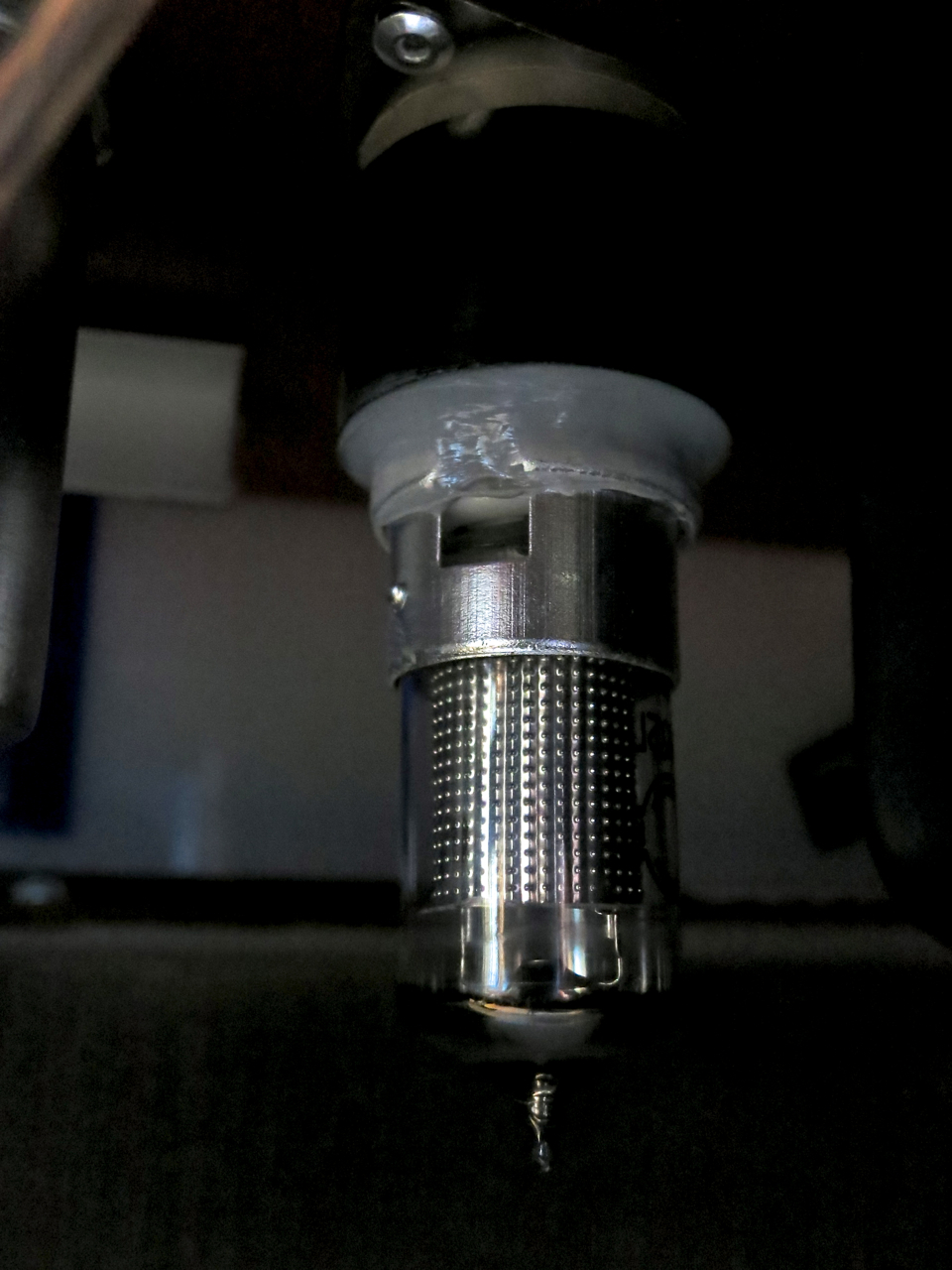
The clean channel is constructed around a EF86-type pentode. The EF86 (aka the 6267) is known for its great tone, and it can be found in some vintage Vox amps, as well as in Matchless and Dr Z amps. But due to its microphonic nature this tube type is not widely used.

Hehku Customs has solved this problem by using a damper made from silicone, which decouples the EF86 from the mechanical vibrations of the combo.
Hehku Nightingale 15 – preamp valves + switches

Overdrive (and phase inversion) duties are handled by a pair of 6N2P-valves, which are Russian, military-spec’ed relatives of the 12AX7/ECC83, offering a slightly different gain structure and sound.

Hehku Nightingale 15 – 5AR4 rectifier tube

The Nightingale uses a tube rectifier designed around a type 5AR4.

Hehku Nightingale 15 – power amp valves

The power amp section runs on a pair of EL84s. You could also drop in two Russian (military) 6P15P/EL83-types, and thanks to the fact that the Hehku Nightingale is self-biasing, you can do this without the need for an amp technician.

Hehku Nightingale 15 – Warehouse-speaker

A quality 12-inch speaker from Warehouse, the Green Beret, has been selected for its British sound.

****

With its factory set-up (6N2P + EL84), the Hehku Nightingale 15’s clean channels has plenty of headroom, even for twin humbucker guitars. The six-step Bass-rotary and the combo’s active Treble control offer you a lot of leeway to tune the tone to your requirements. Tonally, the Nightingale’s clean delivery is more ”Vox” than ”Blackface”.

The Nightingale’s overdriven tones are extremely tasty, too. There’s a very juicy mid-range, coupled with a healthy dose of top end grit, which will surely satisfy any fan of classic Rock and Blues sounds.

Here’s a clip recorded with my vintage-reissue Fender Telecaster – you will hear: clean (triode) –> clean (pentode) –> overdriven (triode) –> overdriven (pentode); the power amp runs in pentode-mode:

And here’s a similar clip played with my Hamer USA Studio Custom:

Hehku Nightingale 15 – full angle

****

Hehku’s Jarmo Välimäki also supplied me with a set of alternative valves (12AX7 + 6P15P), and the difference in tone and dynamics is easy to hear:

With the alternative set, there’s much less headroom on offer. Even the Telecaster will drive the clean channel into break-up (in pentode-mode), with the Hamer stepping clearly into Blues-overdrive territory.

These valves add more gain to the drive channel, and also result in a slightly flabbier bass and sharper treble. The Nightingale 15 sounds great this way, too, even though my own preferences lean more into the direction of the factory set-up.

Here’s a clip with the Telecaster (the control settings have stayed unchanged, only the valves have been swapped):

And here’s the sound of the amp played with the Hamer’s two humbuckers:

Hehku Nightingale 15 – reverse angle

****

Hehku Nightingale 15 – logo

In my view, the Hehku Customs Nightingale 15 is a fantastic all-valve combo with its own voice and an interestingly idiosyncratic overall concept. I like Hehku’s eye for detail, and the fact that the company go their own way in terms of looks and electronic design. The Nightingale is a top-drawer amp, offering its own distinctive looks and sounds, without the need to resort to snake oil or nostalgic tube voodoo.

Hehku’s Nightingale is a modern, hand-made valve combo, with a clear and easy-to-understand lay-out, as well as a very interesting and interactive signal path. The Nightingale is not about trying to imitate any specific vintage amp’s sounds – this amp is a true creative tool, setting you on your path to your personal guitar tone nirvana.

The Nightingale 15 sure isn’t cheap, but in light of the fact that this is a hand-made Finnish product, you can only call the price tag very fair!

****

Hehku Customs Nightingale 15

approximately 1.950 €

Contact: Hehku Custom

****

Pros:

+ voluptious appearance

+ workmanship

+ hand-crafted

+ Made in Finland

+ idiosyncratic channel lay-out

+ sound

Testipenkissä: Tech 21 Fly Rig 5

****

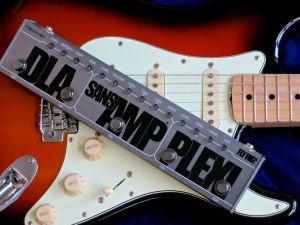
Tech 21 Fly Rig 5 – with Strat

Tech 21 NYC on firma monien oivien soittolaitteiden takana, esimerkiksi SansAmp-sarjan analogiset vahvistin- ja kaappimallintajat, Bass Driver DI-boksi ja Trademark-vahvistimet ovat firman käsialaa. Kaikille näille tuotteille on yhteistä se, että ne ovat erittäin toimivia ja helppokäyttöisiä ratkaisuja sellaisiin pulmiin, joita ammattikitaristi kohtaa päivittäin.

Tech 21:n uusin laite on suunnattu paljon lentokeikkoja tekevän kitaristin tarpeisiin. Megakompaktin, metallinhohtoisen, pedaalilaudan kaltaisen uutuuslaitteen nimi on Fly Rig 5.

****

Tech 21 Fly Rig 5 – full top

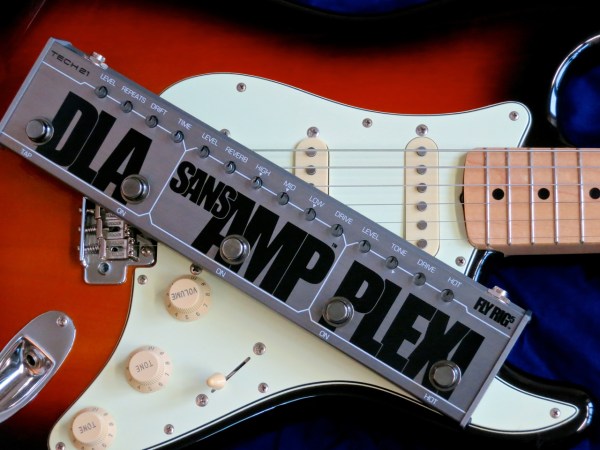
Kuten näkyy tämän jutun avauskuvasta, Tech 21 Fly Rig 5 (299 €) ei ole todellakaan koolla pilattu. Pikkulauta sopii helposti gigbägin etutaskuun, sekä monen kitaralaukun tarvikeosastoon. Vahvistimen vuokraaminen keikkapaikalla ei ole enää tarpeellista – nyt täytyy pakata mukaan enää kitara, Fly Rig –lauta, muutama johto, sekä viritysmittari. Ja ei kun menoksi.

Fly Rig 5:n ulkokuori on valmistettu kokonaan metallista, ja sen paneelin harjattu pinta näyttää erittäin tyylikkäältä.

Tech 21 Fly Rig 5 – with PSU

Pikkulauta toimii 12 voltin tasavirralla (150 mA/miinus keskellä) ja sen virtalaite kuuluu (luonnollisesti) hintaan.

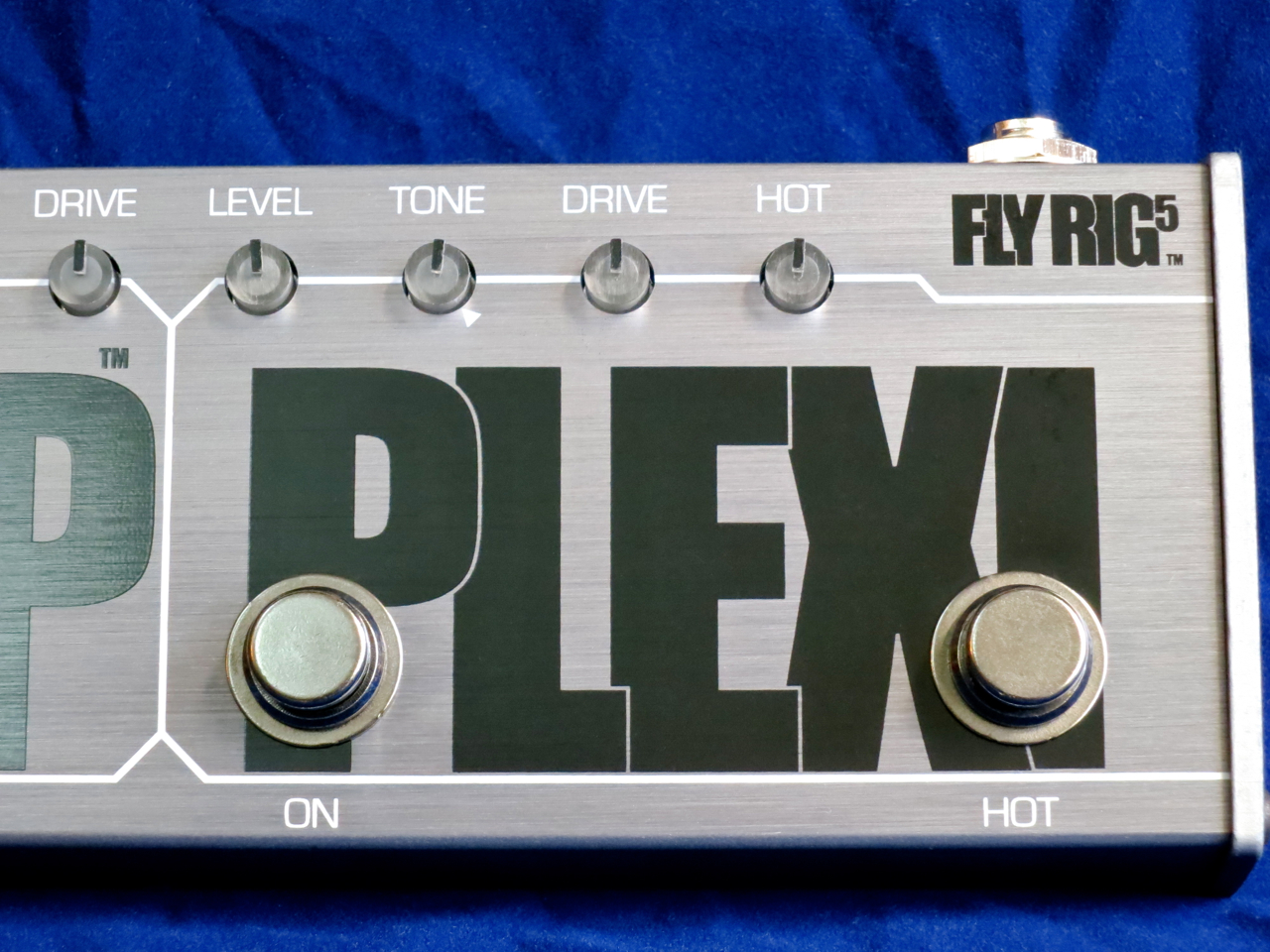
Tech 21 Fly Rig 5 – Plexi + Hot

Tech 21: uutukaisen nimeksi on valittu Fly Rig 5, koska lautaan on mahdutettu viisi erilaista efektiä/toimintaa.

Kaksi ensimmäistä efektiä löytyy Plexi-osiosta: Hot on säädettävä boosteri, josta saa tarvittaessa jopa 21 dB lisävahvistusta signaaliin. Toinen toiminta on Tech 21:n mallinnus vanhasta Marshall Plexi –kitaranupista (lainattu firman Hot-Rod Plexi-pedaalista), joka tarjoaa säädöt gainille (Drive), tonelle ja lähtötasolle (level).

Tech 21 Fly Rig 5 – SansAmp

Fly Rigin seuraava osio on SansAmp-osasto, joka pohjautuu Tech 21:n legendaarisiin analogeihin SansAmp-pedaleihin. SansAmpiin sisältyy analoginen vahvistin- ja kaappimallinnus kolmialueisilla taajuuskorjaimilla, sekä kaunisääninen kaiku.

Tech 21 Fly Rig 5 – DLA

Viimeisen osion nimi on DLA (lyhenne englanninkielisestä sanasta delay), ja se tarjoaa viive-efektin tap tempo –toiminnolla. Drift-säätimellä voi lisätä signaaliin portaattomasti nauhakaiun-tyylistä huojuntaa.

Tech 21 Fly Rig 5 – front panel

****

Tech 21 Fly Rig 5 – Tech 21 logo

Tech 21:n Fly Rig 5 on erittäin helppo käyttää: Jokainen jalkakytkin ja säädin on nimetty selkeästi. Tämän lisäksi jokaisen osion säätimet loistavat – jokainen omassa värissä – silloin kun kyseinen efekti tai toiminto on päällä.

Laudan erittäin kompakti koko vaatii kuitenkin yhden pienen hinnan: säätimet ovat suhteellisen pieniä, mikä vaatii ainakin nakkisormiselta hieman tarkkuutta niitä säätäessä. Toisaalta, kun omat asetukset on kerran löydetty, niitä ei varmaan lähdetä muuttamaan keskellä keikkaa – ja keikkakoneeksi Fly Rig on suunniteltu.

Soundillisesti Tech 21:n uutukainen täyttää ammattikitaristin vaatimukset kiitettävästi. Fly Rigin soundi on erinomainen ja sen eri efektit kattavat varmasti lähes jokaisen kitaristin perustarpeet keikkatilanteessa. Plexi-tyylinen särökanava, SansAmp-mallinnus, boosteri, viive ja kaiku erittäin kompaktissa paketissa tekevät Fly Rig 5:stä oivan työkalun Jazz-, Blues-, Rockabilly-, Pop- tai Rock-kitaristeille. Metalli-miehet tarvitsevat luultavasti enemmän säröä, sekä varmaan myös kohinaportin, genren soundeja varten, mutta he eivät luultavasti olekaan tämän laudan varsinainen kohderyhmä.

Tässä pätkässä soitan kaikki Fly Rig 5:n efektejä läpi vaahterakaulaisella Fender Stratocasterilla. Ihan alussa Fly Rig on kokonaan pois päältä:

Seuraavaksi samankaltainen audioesimerkki, tällä kerralla humbuckereilla varustetulla Hamer USA Studio Custom -kitaralla, jossa on enemmän säröä ja pidempi viiveaika:

Tässä olen simuloinut vanhaa nauhakaiku-soundia DLA-osion Drift-toiminnolla:

Fly Rigissä on myös yksi ”piilotettu” ominaisuus: DLA-osiota pystyy myös käyttää choruksena. Chorus-efekti syntyy hyvin lyhyestä viiveestä, jossa on mieto syklinen vireen huojunta. Lyhyellä Time-asetuksella ja lisäämällä hieman Driftiä signaaliin syntyy hieno chorus-efekti (soitan tässä Stratolla):

Tech 21 Fly Rig 5 – angle 2 + lights

****

Tech 21 Fly Rig 5 – all on

Jos soitat usein pistekeikkoja ulkomailla, eikä budjetti tai taustaryhmä anna myöten raahata vahvistintasi kaikkialle mukaan, Tech 21 Fly Rig 5 on kuin juuri sinulle tehty.

Tässä on onnistettu pakkaamaan kaikki tärkeimmät efektit ja ominaisuudet, joita keikkaileva kitaristi tavallisesti tarvitsee, yhteen kompaktiin pedaalilautaan. Ja lopputulos kuulostaa erittäin hyvältä ja inspiroivalta.

Joillekin vintage-ystäville Fly Rig varmasti voi tuntua liian modernilta, koska sillä ei ole sitä vintage-voodoa. Mutta jos tarvitset toimivan, käytännönläheisen ja ongelmavapaan ratkaisun, millä saat musiikkisi yleisölle, Tech 21:n Fly Rig 5 on kerrassaan loistava valinta!

****

Tech 21 NYC Fly Rig 5

299 €

Maahantuoja: Musamaailma

****

Plussat:

+ kestävän-oloinen metallikotelo

+ koko

+ paino

+ ominaisuudet

+ soundi

+ vastinetta rahalle

Miinukset:

– säätimien pienuus

Tech 21 Fly Rig 5 – angle 1

Review: Tech 21 Fly Rig 5

****

Tech 21 Fly Rig 5 – with Strat

Tech 21 NYC is the company behind many groundbreaking products, such as the SansAmp range of amp modelling stomp boxes, the Bass Driver DI or the all-analogue modelling guitar amps of the Trademark series.

What all these products have in common is that they’re no-nonsense tools to make the life of the gigging and recording guitarist (and bassist) easier.

Tech 21’s newest product is designed to do away with the need to hire a guitar amp for fly-in gigs. It’s an ultra-compact and sleek, pedalboard-style device called the Fly Rig 5.

****

Tech 21 Fly Rig 5 – full top

As you can see from the picture at the start of this review, the Tech 21 Fly Rig 5 (current price in Finland: 299 €) is extremely compact. It will fit in the pouch of a gig bag, as well as in the accessories compartment of many guitar cases. Just pack your guitar, the Fly Rig, a couple of cables and your tuner – and you’re ready to roll!

The Fly Rig 5’s sturdy housing is completely made from metal, and its brushed fascia gives it a cool modern look.

Tech 21 Fly Rig 5 – with PSU

The unit runs on 12 Volts of DC-power (150 mA/centre negative) and the power supply unit is (naturally) included.

Tech 21 Fly Rig 5 – Plexi + Hot

Tech 21 call their new creation the Fly Rig 5, because it features five different main functions/effects.

Two of these functions are grouped together under the Plexi banner. The first one, labelled Hot, is an adjustable clean boost of up to a whopping 21 dB. Secondly, you will find an analogue model of a Marshall Plexi head (based on the Hot-Rod Plexi pedal), with its controls comprising Drive, Tone and Level.

Tech 21 Fly Rig 5 – SansAmp

The next section is called SansAmp and includes Tech 21’s legendary analogue amp (and miked up cabinet) emulator (with three-band EQ), as well as a reverb effect.

Tech 21 Fly Rig 5 – DLA

The last section is labelled DLA (short for delay) and offers you a delay effect with tap tempo. Thanks to the Drift-control you can also dial in grungy tape echo-type wow and flutter.

Tech 21 Fly Rig 5 – front panel

****

Tech 21 Fly Rig 5 – Tech 21 logo

Tech 21’s Fly Rig 5 is really very easy to use: All the controls and footswitches are clearly labelled, and the control knobs of each section light up in a different colour to give you an easy to read visual clue as to which sections are currently on and which are turned off.
There’s one very minor trade-off due to the über-compact nature of this ’board, and that’s the small, slightly fiddly nature of the control knobs. On the other hand, you’re hardly likely to make major adjustments to your settings in the middle of a gig – and gigging is what the Fly Rig was conceived for.

In terms of its sound and performance, Tech 21’s newcomer easily fulfills the high standards guitarists have come to expect of the products of this company. The Fly Rig 5 sounds awesome and does exactly what it says on the tin. This combination of SansAmp, Plexi-style overdrive, booster, delay and reverb delivers the goods for the large majority of guitarists – be it Jazz, Blues, Rockabilly, Pop or Rock, the Fly Rig delivers! Metal and Thrash guitarists will most probably demand more gain and the inlusion of a noise gate, but I’d reckon that the metal crowd aren’t really the intended target group for this type of ’board.

Here’s a run-through of all of the Fly Rig 5’s effects, played on a maple-necked Fender Stratocaster. The clip starts with the Fly Rig turned off:

Here’s a similar run-through using a humucker-equipped Hamer USA Studio Custom, adding a bit more overdrive and a longer delay time:

The Delay-section’s Drift-control makes it easy to simulate tape echo effects:

A ”hidden” feature of the Fly Rig 5 is the possibility to use the Delay-section as a chorus effect. Because a chorus is basically nothing more than a slightly wobbly, very slightly offset doubling of the guitar signal, you can achieve this effect by setting the Delay-section’s Time-control to something very short, and using the Drift-control to adjust the chorus’ depth. Here’s an audio clip of a chorus setting, played with a Strat:

Tech 21 Fly Rig 5 – angle 2 + lights

****

Tech 21 Fly Rig 5 – all on

If you play a lot of fly-in gigs, and have neither the budget nor the manpower to lug a large guitar rig across the globe, Tech 21 NYC’s Fly Rig 5 is a true godsend.

It offers the most important features and effects a guitarist needs on stage or in the studio. And — most importantly – it sounds really great and inspiring.

True, using a device like the Fly Rig may not be as ”authentic” as using a real amp in the eyes of some anoraks, because Tech 21’s brand-new tool doesn’t have the ”kudos” of a mythical vintage amp. But if you’re after a pro-quality, lightweight, no-nonsense solution that will get your sound to the audience with the least amount of fuss and hassle, Tech 21’s Fly Rig 5 is hard to beat!

****

Tech 21 NYC Fly Rig 5

299 €

Finnish distributor: Musamaailma

****

Pros:

+ sturdy, all-metal construction

+ size

+ weight

+ features

+ sound

+ value for money

Cons:

– tiny control knobs

Tech 21 Fly Rig 5 – angle 1

Review: Albion TCT35C

****

Albion TCT35 – with Telecaster

Albion Amplification is a new name on the Finnish market, even though the brand has been in existence since 2010.

Albion’s main man is genuine amp guru and bonafide living legend Steve Grindrod. Mr Grindrod left an indelible mark in the field of amplifier design as Marshall’s chief designer for over 20 years. In the beginning of the Noughties, after leaving Marshall, he also worked for Vox for a few years.

Albion was founded in 2009 as a joint venture between Grindrod and Chinese audio specialists IAG Group. Albion’s guitar and bass amplifiers are produced in their own plant in China under the direct supervision of Steve Grindrod, who has moved there from the UK.

****

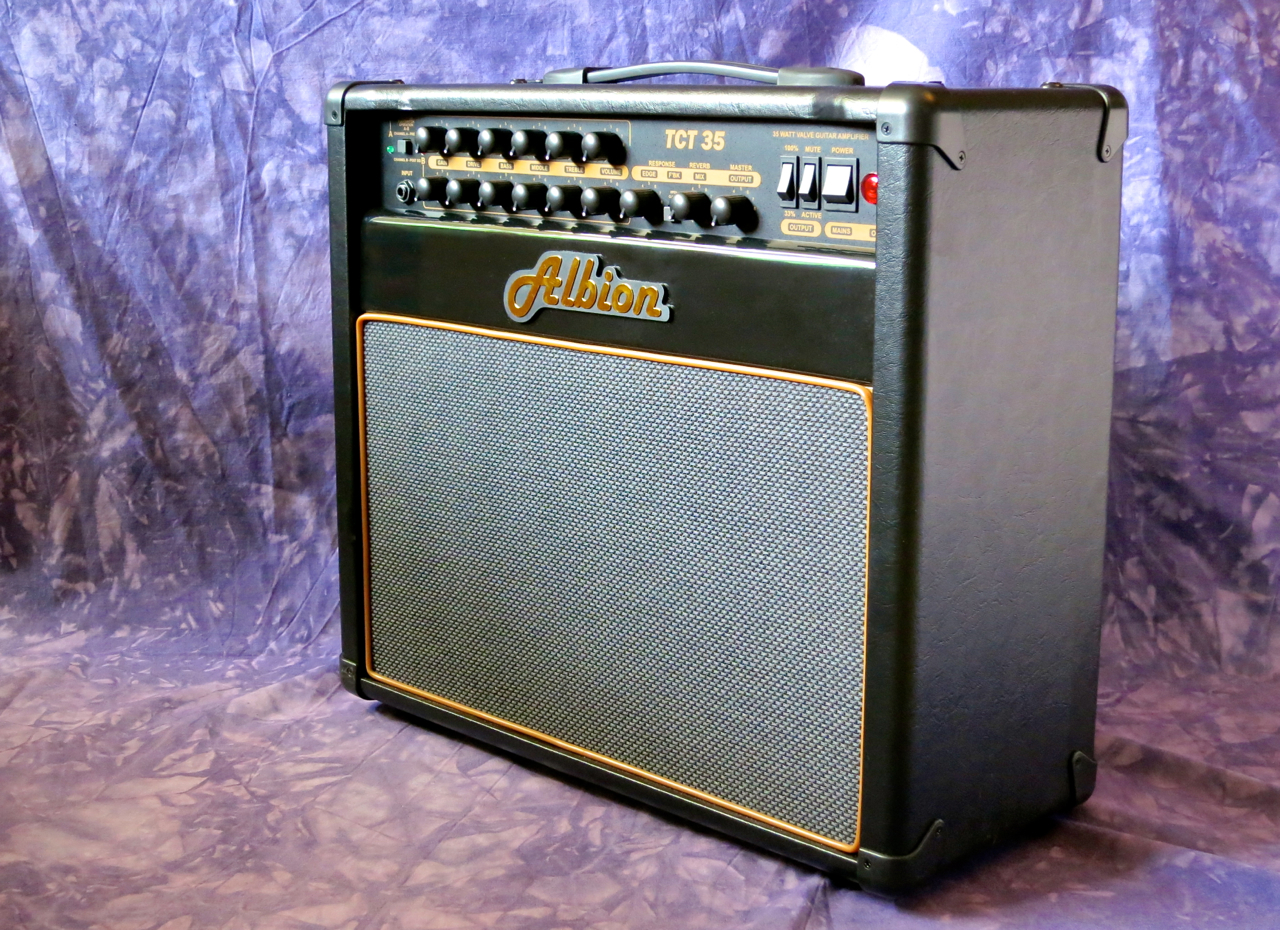
Albion TCT35 – full front

The Albion TCT35C (recommended retail price in Finland: 865 €) is part of the company’s TCT-series, which is aimed directly at the guitarist who needs a versatile amp.

The TCT-series offers two-channel, all-valve amplifiers built with a very open architecture that allows for maximum flexibility. At the moment of writing, the TCT-series comprises two combos and three amp heads.

Albion TCT35 – side view 2

The TCT35C has a cabinet made of high-quality birch plywood. The panel carrying the golden script logo is a solid piece of walnut, which has received a piano black finish on our review sample (there’s also a see-through wine red version available).

The overall finishing quality is on a very high level, and the TCT35C looks rather stylish in a businesslike, slightly understated way.

The combo weighs in at about 24 kilos, which is rather moderate for an all-valve amp of this size.

Albion TCT35 – full back

The cabinet features a half-closed back with a sturdy metall grille protecting the valves (or ”tubes”, for our North American friends).

Albion TCT35 – preamp valves

Albion’s TCT35C employs three 12AX7 valves (aka ECC83) in its preamplifier section. A fourth 12AX7 is used as the combo’s phase inverter.

Albion TCT35 – power amp valves

The power amp section churns out approximately 35 Watts of power (RMS), using a pair of 6L6 valves.

All Albion amps use IAG Group’s pro-quality audio transformers, which are well regarded by Hifi-enthusiasts and used in IAG’s Leak and Luxman valve amplifiers.

Albion TCT35 – G1280-VSR-16 speaker

Albion produces all of their PCBs, metal parts and speakers in their own factory to Steve Grindrod’s exacting specifications.

The TCT35C comes equipped with a 12-inch Albion G1280-VSR-16 speaker, which has power rating of 80 Watts and an impedance of 16 Ohms.

Albion TCT35 – footswitch

A two-switch footswitch unit comes supplied with the combo. It allows for channel switching, as well as the muting of the on-board digital reverb unit.

The unit is shipped with the output jack on the right hand side, but if you prefer to have the connector on the left, you can switch things around easily. Simply unscrew the six screws holding the footswitch assembly in the chassis, pull the assemby out, turn it around, put the switches back into the chassis and tighten the screws. Brilliantly easy!

****

Albion TCT35 – front panel

Even though both of the Albion TCT35C’s channels sport the same controls, the channels have been designed differently:

In Channel A the guitar signal is first routed through the EQ-section, before it reaches the main gain stages. In Channel B the signal first goes from the input jack to the gain section and is only then fed into the EQ-department. Even though both channels will give you sounds from clean all the way to high gain, each channel has its own distinct character and ”feel”.

One special feature of TCT-series amps are their twin gain controls – called Gain and Drive. The first amplification stage is called Gain, while the second one is called Drive, and each adds their own type of gain structure and character to a channel’s tone. By experimenting with different combinations of a channel’s Gain and Drive settings you will get a plethora of different sounds and responses to playing dynamics.

Albion TCT35 – front panel 2

The combo’s Master-section offers some additional features for even more tonal flexibility:

The Edge-control is a presence/brightness control for the power amp, which allows you to tailor the TCT35C’s bite to your own requirements. The F’BK-switch (short for ”feedback”) offers you two different power amp responses – you can either go for more bite and a very tight attack or choose a creamier delivery with much more fat compression.

Steve Grindrod has chosen to use digital reverb on his TCT-amps, because they tend to stand up better to the demands of a high gain amp.

Thanks to its output power switch you can also run the combo at only 33 % of its output power. As were dealing with a genuine valve amp here, this power drop also lowers the clean headroom and adds some tasty power amp compression to the signal.

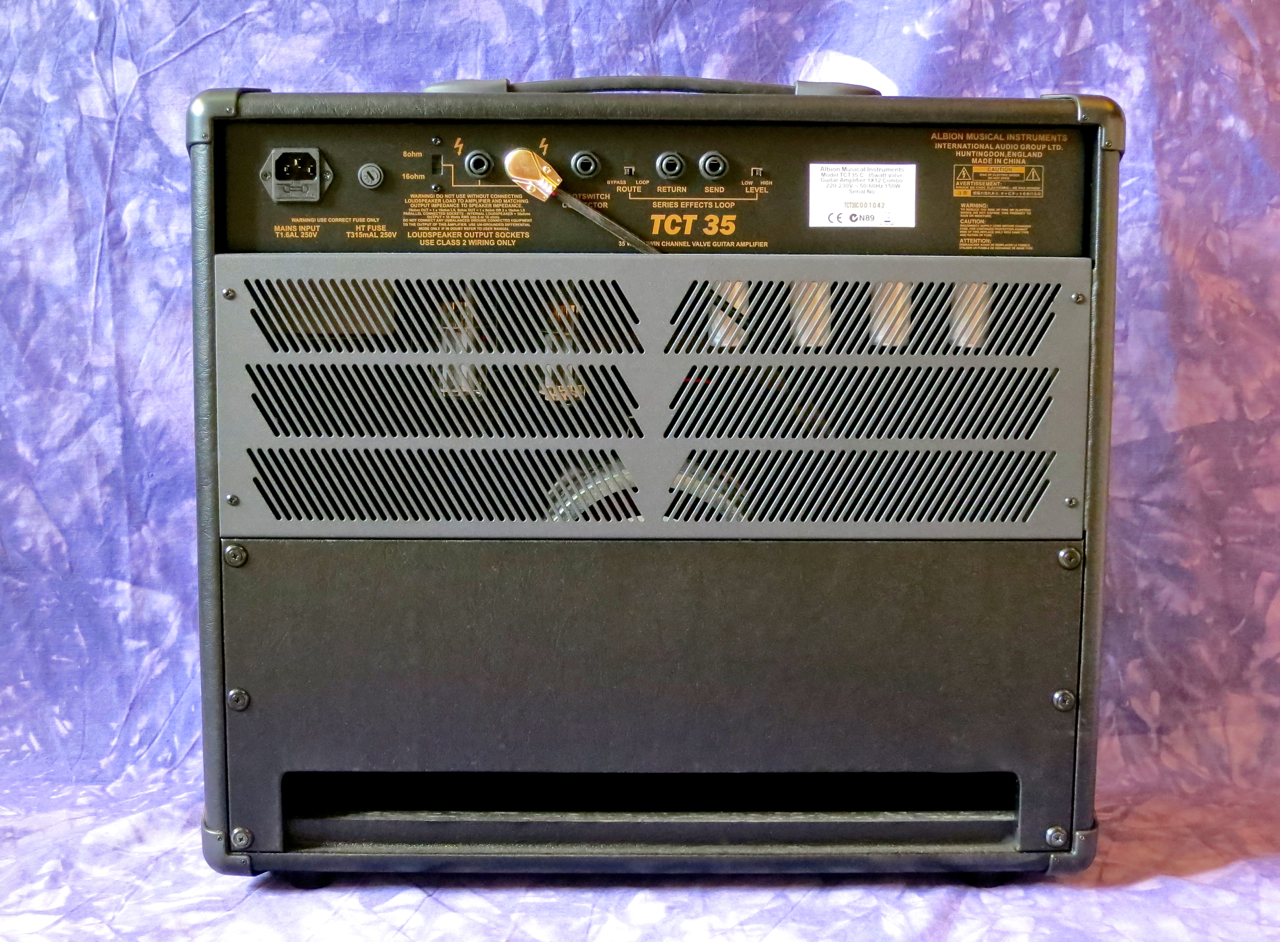
Albion TCT35 – back panel

The TCT35C’s effects loop is deliberately using solid state technology, as Steve Grindrod aims for a clean and transparent signal transfer in this section.

****

Albion TCT35 – side view 1

The Albion TCT35C combo is an extremely flexible guitar amp, thanks to its well-designed channel architecture and its extremely efficient channel equalisers.

This isn’t a one-trick pony at all, but rather a guitar sound enthusiast’s dream machine, offering a large palette of different tones.

Despite the fact that both channels will ”do” clean as well as dirty tones, Channel B will offer you more gain than Channel A. ”Fender-style” and ”Marshall-style” are far too narrow to adequately describe the different characters provided by Channels A and B, but there are clear differences apparent in their mid-range sounds and bass responses.

The effective Channel EQs, as well as the Master-section’s Edge- and Feedback-controls add their bits to the Albion’s versatility. While the TCT35C is quite an intuitive amp to use, I’d still recommend you take your time to find out all the features and sounds this combo has to offer.

These eight audio clips only scratch the surface of what the Albion TCT35C’s tonal versatility.

Let’s start with two clean examples using Channel A; first the Stratocaster:

…followed by a Les Paul-style Hamer Studio Custom:

Here are two crunchy clips played through Channel A. First the Strat:

…and then the Hamer:

These are two crunchy clips using Channel B – the Stratocaster first:

…followed by the double-humbucker Hamer:

And as a finale two high gain examples (Channel B) – starting with the Strat:

…and finishing with the Hamer (in Drop-D):

****

Albion TCT35 – teaser

Wow, what a fantastic amp! I can’t think of any musical genre the Albion TCT35C couldn’t master.

The TCT35C is an extremely versatile valve amplifier offering loads of great sounds. Despite being quite a compact combo there’s plenty of volume on tap.

Steve Grindrod’s vast knowledge and experience in the field of amp design really shows in the way the Albion is put together, as well as in the quality of the sounds on offer in the TCT35C and in the low amounts of hiss (even in high gain settings).

****

Albion TCT35C

Current RRP in Finland – 865 € (street price approximately 800 €)

Finnish distributor: Profitron

****

Pros:

+ excellent value for money

+ versatile gain section

+ separate powerful three-band EQ-sections

+ sound

+ switchable output power

+ footswitch included

Review: Warwick LWA 1000

****

Warwick LWA 1000 – opener

German maker Warwick is offering a wide range of different bass amplifiers alongside their famous basses.

One of their newest products is the Warwick LWA 1000 – an ultra-compact, yet very powerful amp head.

****

Warwick LWA 1000 – front

The Warwick LWA 1000 (current price in Finland: 789 €) is small and lightweight enough (2.75 kg) to fit into many gig bags. Optionally, you can also get a rack installation kit or a padded shoulder bag for this head.

As hinted at by its name, the LWA 1000 offers you up to 1,000 Watts of power (into a 4 Ohm cabinet, 500 W into 8 Ohms). Warwick have managed to squeeze this all into a compact package by using a Class D power amplifier.

Warwick LWA 1000 – front panel inputs

Warwick’s two-channel preamp has been transplanted from their Hellborg-series, and promises to offer audiophile sound quality from its low-noise Class A circuits.

The two channels of the LWA 1000 are identical, and they can either be used to amplify two different instruments (each plugged into their own input) or to offer two different sounds for use with a single bass (a footswitch comes included with the amp).

Warwick LWA 1000 – front panel EQs

There’s a four-band EQ section in each channel, offering up to 12 dBs of cut/boost per band.

Warwick LWA 1000 – front panel comp + master

The last link in the preamps’ signal chain is Warwick’s easy-to-use compressor.

The master section offers an auxiliary input to feed your mp3-player into, as well as a headphones output for silent practice.

Warwick LWA 1000 – angle 2

The stylishly understated look of the Warwick LWA 1000 calls to mind high-end HiFi-equipment. You can get the amp head in two finishes – brushed aluminium and matte black.

Warwick LWA 1000 – back

”Lightweight and compact” doesn’t equal ”stripped-down” in the LWA’s case – this is a fully featured bass amplifier:

Of the four jacks on the back panel one is the tuner output, two are used for the effects loop, and the last one is an unbalanced, line level output. This Warwick head also sports a built-in DI-box with its dedicated Pre/Post-switch, as well as a ground lift switch for safe earth loop breaking.

Warwick LWA 1000 – angle

In addition to the amp head itself (and its power cord), the package includes a footswitch and a long, pro-quality TRS-lead (aka a stereo cable).

Warwick LWA 1000 – footswitch

You use your regular instrument lead to connect your bass to the footswitch, and the TRS-cable goes between the footswitch and either one of the LWA 1000’s channel inputs. The TRS tip carries the bass signal, while the ring connection is used to switch between amp channels.

Warwick LWA 1000 + WAC 410

I tested the Warwick LWA 1000 through a Warwick WCA 410 cabinet.

The pro-quality WCA 410 (current price in Finland: 380 €) is a chunky bass-reflex cabinet, equipped with four ten-inch speakers and a four-inch treble horn.

****

Warwick LWA 1000 – glowing

Warwick’s LWA 1000 offers truckloads of ultra-clean, quality bass tone in a very compact format. In contrast to many other bass amplifiers the LWA adds only very little unwanted colouration to your instrument’s tone.

Some bassists rely on certain sonic artifacts from their amp for their own signature sound (like tube saturation or distortion, or a non-linear frequency curve), and this is as valid an approach as others (rock on, guys!). Others – myself included – get their kicks from just the type of clean and linear amplification the Warwick LWA 1000 head provides.

The channel EQs work like a dream and the built-in compressors are musical and intuitive to use.

In the studio you will appreciate this head’s processor controlled ventilator, which works very quietly, and only springs into action when needed.

The sound clips I have recorded will give you a good idea of the sheer power this Warwick provides. If you listen closely, you can hear the metal grilles of the studio’s air conditioning system rattle along with the playing in places:

****

Warwick LWA 1000 – logo

Warwick’s LWA 1000 is just my kind of bass amplifier. The sound is very clear and dynamic, and there’s enough power on tap to shut up your guitarist.

****

Warwick LWA 1000

789 €

Finnish distributor: Musamaailma

****

Pros:

+ power

+ size

+ lightweight

+ ultra-clean tone

+ footswitch included

Review: EBS FuzzMo

EBS FuzzMo – top

The good people of EBS Sweden are now bringing a healthy dose of fuzz to the bassist’s toolbox.

****

EBS FuzzMo – angle 1

The EBS FuzzMo (current price in Finland: 169,90 €) is a fuzz-type high gain distortion developed especially for bass.

This stompbox is made in China to the EBS’ exacting standards. It’s a sturdy pedal with very positive feeling controls.

The FuzzMo can be powered in three ways:

If you use an EBS amp from the Drome-, Gorm-, HD- or TD-series, you can use a TRS-cable (aka a stereo cable) to feed phantom power from the amp to the effect pedal.

EBS FuzzMo – battery

The FuzzMo pedal also runs off a standard 9 V battery, but you will need a screwdriver to take off the base plate first.

EBS FuzzMo – angle 2

The third alternative is to employ a Boss-type power supply (9 V DC, centre negative) to fire up the stompbox.

****

EBS FuzzMo – controls

Even though the EBS FuzzMo looks somewhat similar to the company’s Billy Sheehan -pedal, the controls on the fuzz work in a different way.

The FuzzMo doesn’t do ”nice and sweet” – the Gain control offers fuzz from medium-crunchy to balls-to-the-wall-fuzz. Shape adjusts the tone of the fuzz effect – not in the way a traditional tone control does, but rather by changing the waveform of the fuzz signal. At seven o’clock the sound is quite warm and organic with the waveform approaching a square, while five o’clock is far brighter and more aggressive with the waveform resembling a triangle.

The mini-switch underneath the FuzzMo-logo (called Character) also plays an important part in the stompbox’ sound:

Switched to the left no EQ’ing is applied to the signal (FLAT). In the middle position there’s a slight attenuation of the mid-range. SCOOP on the right side results in a very Metal-style scooped-mid tone with plenty of bite.

Modern bass effects often split the bass signal at the input. One half is fed through the effect, while the other half is kept dry and mixed into the wet signal before it reaches the output. The advantage of doing things this way is that it enables you to keep your bottom end and dynamic attack intact.

This is just the way EBS’ FuzzMo works, too:

You use the Volume knob to adjust the fuzz signal’s volume level, and then use the Blend control to add the desired amount of dry bass. This feature is especially important in fuzz pedals for bass, because the hard clipping of a fuzz effect practically negates all your playing dynamics by design. With the FuzzMo there will be no problems with your tone becoming mushy, clogged up and indistinct, because the Blend control lets you restore your bass guitar’s punch and low end.

Here’s a bit recorded with a Jazz Bass (both pickups on) and a relatively low Gain setting:

In this clip I added some more fuzz and bite to a Rickenbacker played with a plectrum:

Thanks to the ability to blend in the dry signal, the EBS FuzzMo also works extremely well with a five-string (in this case a Yamaha BB with active EMGs):

Note that on all these audio clips the Gain control stayed below one o’clock. If you want you can take things much, much further with this EBS-pedal!

EBS FuzzMo – angle 3

The FuzzMo is a typical EBS-pedal – it’s a sturdy, pro-quality stompbox and it sounds great. If you’re a purveyor of sleazy, dirty and aggressive bass tones, you should definitely give this baby a spin!

****

EBS Sweden FuzzMo

169,90 €

Finnish distributor: F-Musiikki

****

Pros:

+ build quality

+ can be powered in three ways

+ sound optimised for bass

+ three-way EQ-switch

+ Blend control

+ offers a lot of gain

Cons:

– no quick access to battery

Testipenkissä: Albion TCT35C

****

Albion TCT35 – with Telecaster

Albion Amplification on Suomalaisille muusikoille uusi tuttavuus, vaikka firma on valmistunut kitara- ja bassovahvistimia jo vuodesta 2010.

Firman takana on yksi vahvistinalan suurimmista guruista, Steve Grindrod. Grindrod toimi vuodesta 1973 lähtien Marshallin pääsuunnittelijana yli 20 vuotta, minkä jälkeen hän siirtyi 2000-luvun alussa vielä muutamaksi vuodeksi Voxille.

Albion syntyi vuonna 2009 yhteistyönä Grindrodin ja kiinalaisen IAG Group -konsernin välillä. Albion-vahvistimet valmistetaan Kiinassa heidän omassa tehtaassaan Steve Grindrodin johdolla, joka asuu paikan päällä.

****

Albion TCT35 – full front

Albion TCT35C (suositushinta 865 €) kuuluu firman TCT-sarjaan, joka on suunniteltu monipuolisuutta arvostavia kitaristeja varten.

TCT-sarjan vahvistimet ovat kaksikanavaisia täysputkikoneita hyvin avoimella, ja paljon säätövaraa tarjoavalla arkkitehtuurilla. TCT-sarjaan kuuluu tällä hetkellä kaksi komboa ja kolme nuppia.

Albion TCT35 – side view 2

TCT35C:n kotelo on valmistettu laadukkaasta koivuvanerista. Albion-logoa kantava palkki on täyttä pähkinäpuuta, joka on saanut ylleen kiiltävän mustan lakkauksen (myös tummanpunainen versio on saatavilla).

Viimeistelyn taso on kiitettävän korkea ja TCT35C näyttää – ainakin omasta mielestäni – asiallisen tyylikkäältä.

Kombon paino on noin 24 kiloa, mikä on maltillista tämänkokoiselle putkikombolle.

Albion TCT35 – full back

Kotelon selkäpuoli on puoliksi avoin. Putket on sijoitettu turvallisesti metalliritilän taakse.

Albion TCT35 – preamp valves

Albionin TCT35C:ssä kolme 12AX7-putkea (toiselta nimeltään ECC83) on etuvahvistimen perustana. Vahvistimesta löytyvä neljäs 12AX7 toimii tässä kombossa päätevahvistimen vaiheenkääntäjänä.

Albion TCT35 – power amp valves

Päätevahvistin toimii kahdella 6L6-putkella, joista irtoaa noin 35 wattia (RMS) tehoa.

Albion-vahvistimissa käytetään IAG Groupin omia laadukkaita audiomuuntajia, jotka ovat ennestään tuttuja esimerkiksi Hifi-puolen Leak- ja Luxman-putkivahvistimista.

Albion TCT35 – G1280-VSR-16 speaker

Samoin kuin Albionin käyttämät piirilevyt ja metalliosat, myös firman vahvistimissa ja kaapeissa käytetyt kaiuttimet tehdään Albionin omassa tehtaassa Steve Grindrodin tarkkojen speksien mukaan.

TCT35C:hen on asennettu 12-tuumainen Albion G1280-VSR-16, jolla on 16 ohmin impedanssi ja 80 watin tehonkesto.

Albion TCT35 – footswitch

Kombon mukana tulevalla jalkakytkimellä voi vaihtaa vahvistimen kanavia, sekä mykistää kombon digitaalikaiun.

Tehtaalta kytkin toimitetaan siten, että jakki on oikealla puolella. Johdon paikan pystyy kuitenkin vaihtamaan kätevästi ja nopeasti irrottamalla ylhäällä näkyvät kuusi ruuvia, nostamalla kytkinmoduulin ulos kotelosta, ja asentamalla sen toisinpäin. Nerokasta!

****

Albion TCT35 – front panel

Albionin TCT35C tarjoaa kaksi kanavaa, joiden välillä on yksi ratkaiseva ero:

A-kanavassa signaali kulkee ensin EQ-osaston läpi, siis ennen varsinaista gain-osastoa. B-kanavassa taas signaali etenee tulojakista gain-osastoon ja vasta sen jälkeen taajuuskorjaimille. Vaikka kumpikin kanava tarjoaa soundeja puhtaasta high-gainiin, kanavat kuulostavat – ja ”tuntuvat” – juuri näiden eri reitityksien vuoksi erilaiselta.

TCT-sarjassa erikoisuutena ovat kanavien kaksi gain-säädintä – Gain ja Drive. Gain-säätimellä säädetään valitun kanavan ensimmäisen esivahvistusasteen vahvistustasoa. Toista vahvistusastetta taas kontrolloidaan Drive-säätimellä. Yhdistämällä näiden kahden vahvistuspiirien eri vaikutuksia signaaliin, saadaan luotua hyvin erityylisiä soundeja.

Albion TCT35 – front panel 2

Master-osastostakin löytyy muutama TCT35C:n monipuolisuutta tukeva ominaisuus:

Edge-säädin on päätevahvistimeen vaikuttava preesens-/diskanttisuodin, jolla soundiin saa hyvin tarkasti lisättyä oman maun mukaan purevuutta tai pehmeyttä. F’BK-kytkin (lyhenne sanasta ”Feedback”) tarjoaa kaksi erilaista päätevahvistimen perusluonetta – joko hieman purevampi, hyvin tarkalla atakilla varustettu vaihtoehto tai sitten kermaisempi versio muhkealla kompressiolla.

Grindrod on valinnut TCT-sarjaan tietoisesti digitaalisen kaiun, koska se toimii hänen mielestään paremmin tehokkaassa high gain -vahvistimessa.

Tehokytkimen ansiosta Albionin tehon voi pudottaa alhaisemmaksi studio- tai olohuonekäyttöä varten. Koska kyseessä on putkivahvistin, tehon pudottamisen (toivottu) lieveilmiö on pääteasteen alhaisempi headroom ja lisätty kompressio.

Albion TCT35 – back panel

TCT35C:n efektilenkki on toteutettu transistoritekniikalla, koska Steve Grindrod haluaa pitää signaalin mahdollisimman puhtaana tässä kohtaa signaaliketjua.

****

Albion TCT35 – side view 1

Albion TCT35C -kombo on erittäin monipuolinen peli, sen avoimen kanava-arkkitehtuurin ja erittäin tehokkaiden EQ-osastojen ansiosta.

Tämä ei todellakaan ole yhden tai kahden soundin putkivahvistin, vaan kokeilunhaluisen soundimetsästäjän unelmakone, joka kattaa varmalla otteellaan hyvin laajan spektrin soundeja.

Vaikka molemmista kanavista irtoaa sekä puhtaita että särösoundeja, tarjoaa kanava B kuitenkin selvästi enemmän gainia kuin A-kanava. ”Fender-” ja ”Marshall-tyylinen” ovat käsitteinä sinänsä liian kapeat kuvailemaan A- ja B-kanavan perusluonetta, mutta eroja kyllä löytyy etenkin keskialueen soinnissa ja basson muhkeudessa.

Erittäin tehokkaat EQ:t, sekä kombon Edge-säädin ja F’BK-kytkin lisäävät reseptiin ihan omat mausteensa. Albion-kombon käyttö on sinänsä intuitiivista, mutta vahvistin on niin monipuolinen, että kaikkiin ominaisuuksiin kannattaa todellakin tutustua rauhassa.

Nämä kahdeksan audiopätkää ovat vain pieni näyte Albion TCT35C:n tarjoamista soundeista.

Lähdetään liikkeelle kahdella puhtaalla esimerkillä A-kanavan tarjonnasta – ensin Stratocaster:

…ja sitten Les Paul-tyylinen Hamer Studio Custom:

Tässä kaksi crunch-tyylistä särövaihtoehtoa A-kanavasta – Stratocasterilla:

…ja Hamerilla soitettuna:

Tällaisia crunch-tyylisiä soundeja löysin B-kanavasta – Strato ensin:

…sitten tulee Hamer:

Ja lopuksi vielä kaksi high gain -pätkää – ensin vintage-tyylinen Stratocaster:

…ja viimeisenä humbuckereilla varustettu Hamer (drop-D-virityksessä):

****

Albion TCT35 – teaser

Vau, mikä vahvistin! En keksi mikään musiikkilajia, johon Albionin TCT35C-kombo ei sopisi.

TCT35C on erittäin monipuolinen putkivahvistin todella terveellä soundilla, joka on kompaktista koostaan huolimatta varsin kovaääninen.

Steve Grindrodin pitkän linjan vahvistinalan kokemus näkyy Albionin laadukkaassa toteutuksessa, kombon monipuolisissa ominaisuuksissa, sekä TCT35C:n erittäin alhaisessa kohinatasossa (jopa gain-säätimien äärirajoilla).

****

Albion TCT35C

Suositushinta – 865 € (arvioitu katuhinta noin 800 €)

Lisätiedot: Profitron

****

Plussat:

+ hinta-laatu-suhde

+ monipuolinen gain-rakenne

+ tehokkat kolmialueiset EQ:t

+ soundi

+ tehonpudotuskytkin

+ jalkakytkin kuuluu hintaan

Review: Marshall DSL5C

****

Marshall DSL5C – close-up 1

Marshall’s DSL5C combo is the newest – and smallest – member of the DSL-series.

The DSL-range has its roots in the year 1997, when Marshall introduced their – now legendary – JCM2000 Dual Super Lead -head. The JCM2000 was the first Marshall amp that combined a vintage-voiced Plexi-channel and a modern Ultra Gain -channel in one chassis.

The production run of the original DSL-series was discontinued in 2007, with the JVM-range superseding it. The new DSL-series offers the company’s most-affordable all-valve amps to date, which are produced at Marshall’s own facility in Vietnam.

****

Marshall DSL5C – full front

As you can easily guess by its name, the Marshall DSL5C (current street price in Finland around 520 €) is a five-Watt, two-channel combo.

In terms of its looks and the quality of its finish, this is a genuine Marshall. Quality control at the Vietnamese factory seems to as stringent as in Britain, and the combo looks great and feels well-made and sturdy.

Marshall DSL5C – full back

The DSL5C comes with an open back cabinet. The upper opening in the cabinet’s back is covered with a metal grille to keep stray fingers and hot tubes apart form each other.

Marshall DSL5C – valves

This little Marshall uses three preamp valves (ECC83/12AX7), plus a single power amp tube (ECC99/12BH7).

Marshall DSL5C – Celestion Ten 30

The DSL5C’s speaker is a ten-inch Celestion Ten 30, which is meant to provide a big, warm bottom-end, coupled with a healthy dose of ”Celestion grunt” and bite.

Marshall DSL5C – angle 1

This compact combo weighs less than five kilos, making it very easy to carry, using its rubberised handle.

****

Marshall DSL5C – front panel

The Marshall DSL5C is a two-channel, all-valve combo:

Channel one – Classic Gain – is voiced to give you a classic Marshall 1959 -style tone and gain structure. The Classic-channel goes from bright and clean all the way to mid-level, classic crunch. Due to the fact that this channel doesn’t have a master volume, distorted sounds can only be had at very high volume levels – unless you switch to Low Power mode (more on this further down).

True to its name, the second channel – Ultra Gain – is made for modern, saturated high-gain sounds.

Both channels share a three-band EQ-section, which means a certain amount of tonal compromises will have to be made. But thanks to the way both channels have been voiced, a shared EQ doesn’t pose any real problems in the Marshall DSL5C’s case.

Pushing in the Tone Shift switch will give you a thinned out, sharper mid-range, making it ideal for many Thrash Metal tones. Engaging Deep bolsters the bottom-end at the output stage for a fatter sound.

Marshall DSL5C – back panel

The back panel offers you an effects loop, as well as a footswitch jack for the DSL5C’s sturdy channel switch (supplied, see pic below).

There’s a very nifty speaker-emulated output designed into this Marshall combo, which works in two different ways, depending on the setting of the Power-switch:

In Full Power mode the output gives out a line level signal, which can be sent to a mixing console or your recording equipment. The speaker will run even with a plug connected to the output. In Low Power mode (the manual says 0.5 Watts, the website 1 W) the output level is changed to work with headphones, and plugging a pair of cans in will mute the speaker. The Aux In only works in Low-mode, and its signal will be sent directly to the headphones.

Marshall footswitch

****

Marshall DSL5C – close-up 2

In my opinion Marshall’s DSL5C is a fantastic-sounding little Rock- and Metal-combo, ideally suited for use in your bedroom, for practice, for recording and for backstage warm-up.

My only small niggle would be with the emulated output of our review sample, which produced more hiss than what I’d have expected. Anyhow, I was able to EQ out most of the hiss for the sound clips, meaning it really isn’t that much of a problem. And then there’s always the possibility that there was something wrong with this particular combo…

The DSL5C’s two channels enable you to get a wide variety of different Rock-, Metal- and Thrash-sounds out of this little combo, depending on your gain-, volume- and EQ-settings, but also on the power mode chosen. Going to Low Power doesn’t only drop your output levels, but also adds a lot of tasty, squashy power amp compression. This means that you can choose between very tight sounds (Full Power) and fatter, compressed tones (Low Power) by using the switch on the back panel.

All sound clips have been recorded in Full Power mode to allow for direct comparison between the miked up sound of the speaker and the speaker-emulated output.

For starters I played my Stratocaster through a clean setting on the Classic-channel (recorded with a Shure SM57):

…and here’s what the same bit sounds like recorded directly via the emulated output:

Here’s the Classic-channel and the neck pickup of my double-humbucker Hamer Studio Custom (miked up):

…and the same clip recorded direct:

Here’s my Strat into the Ultra-channel (Tone Shift off), recorded with the SM57:

…and its speaker-emulated counterpart:

This is the Hamer, tuned to Drop-D into the Ultra-channel (Tone Shift on), miked up:

…and this is the direct recorded version:

****

Marshall DSL5C – Hamer Studio Custom

Marshall’s cute and cuddly new five-watter, the DSL5C, is a great choice as a first tube combo (”My first Marshall”), as well as a precision tool for any guitarist in those situations, when high wattage is more of a problem than an advantage (like at home or in the project studio).

The DSL5C delivers genuine, all-valve Marshall-tone in a handy package, and the combo’s Vietnamese origin means it’s also very affordable.

Marshall DSL5C – angle 2

****

Marshall DSL5C

Finnish street price ca. 520 €

Finnish distributor: EM Nordic

We’d like to thank DLX Music Helsinki for the loan of the review amp!

****

Pros:

+ value-for-money

+ finish/workmanship

+ sound

+ two power modes

+ speaker-emulated output

+ footswitch included

Cons:

– noise levels of speaker-emulated output (see text)

Pidä blogia WordPress.comissa.

Ylös ↑