Review: Zoom MS-50G

****

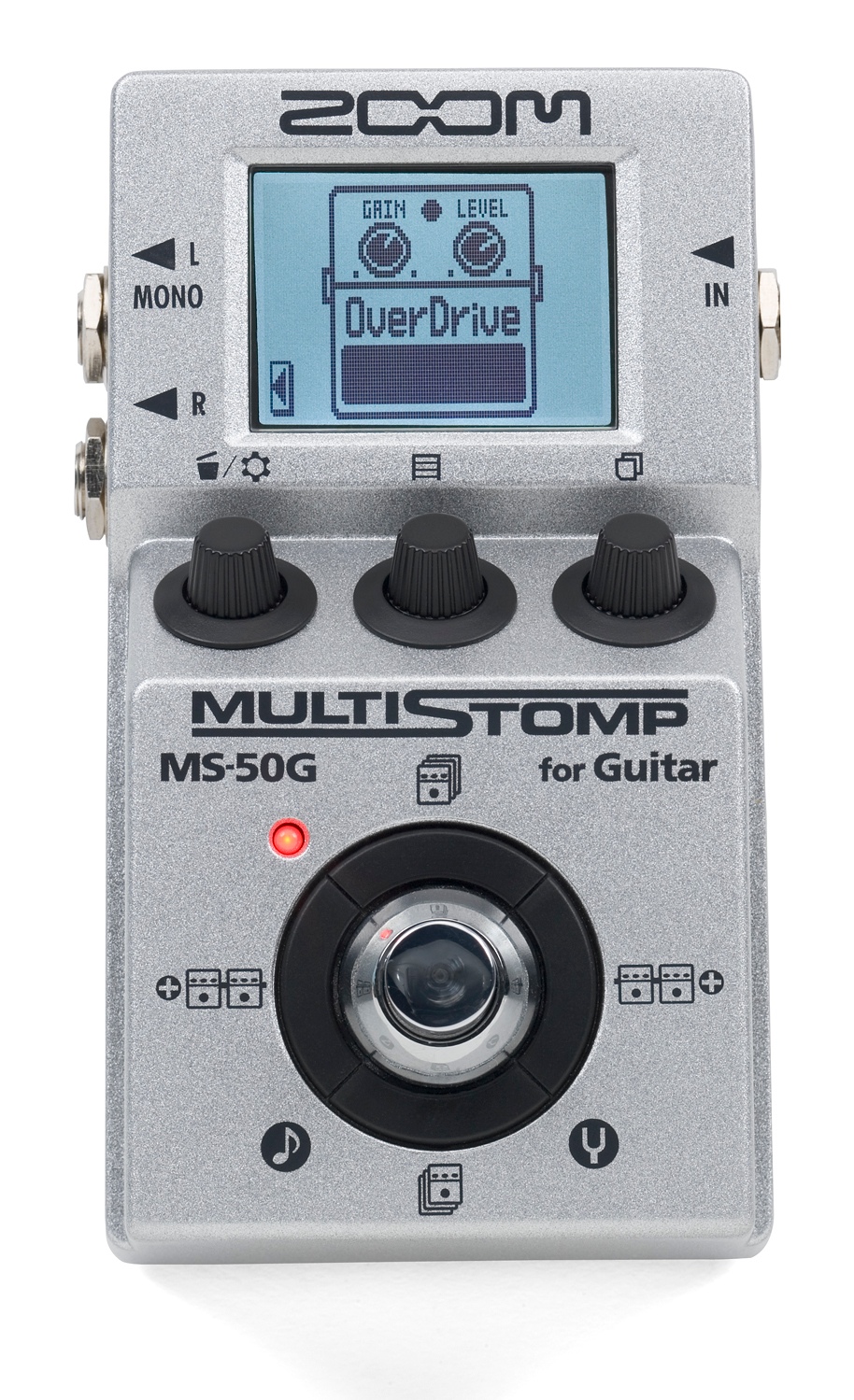
The Zoom Corporation’s super-compact 9000-series digital multieffects caused quite a stir in the early 1990s. The company’s recent Zoom MultiStomp MS-50G (current rrp in Finland: 99 €) carries on this heritage by managing to squeeze most of the large Zoom G5’s processing power (reviewed in August 2012) into one regular-size single pedal.

****

It may sound unbelievable, but it really is true – this small box holds in store a whopping 50 memory slots for your own effect patches. Each effect patch can consist of a signal chain of up to six different effects. The MS-50G offers you 55 different effect types to choose from – featuring everything from compressors and modulation effects all the way to distortions, amp modelling and whacky special effects. Naturally, the MultiStomp also comes equipped with a digital tuner.

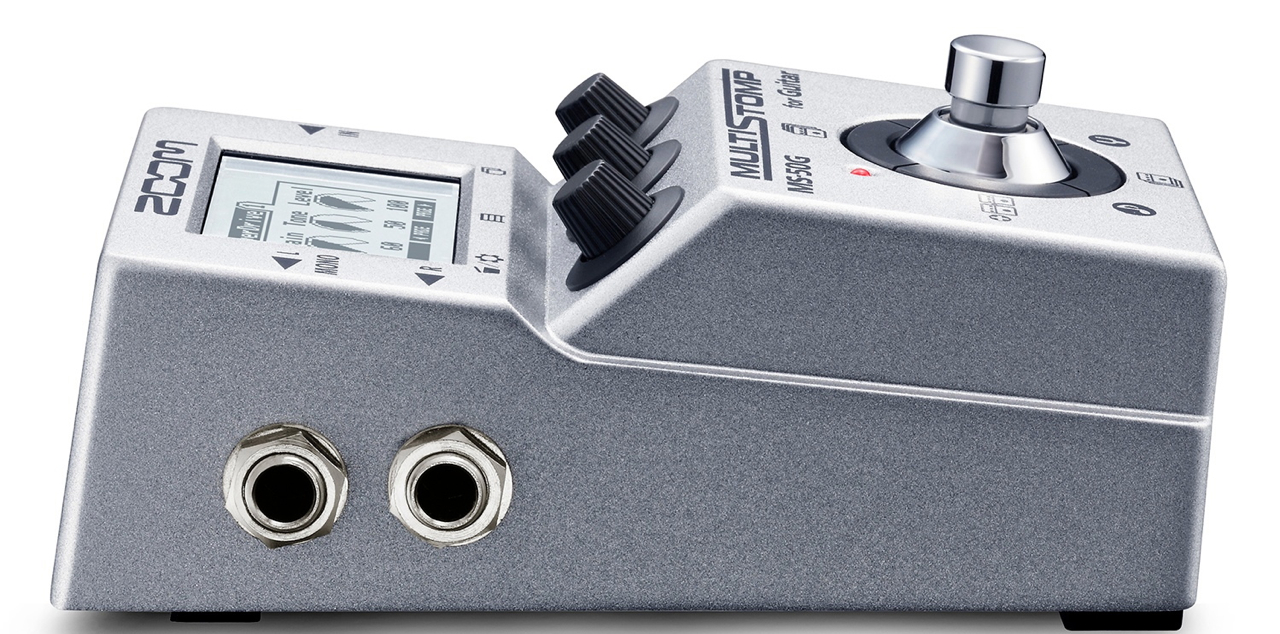
The Zoom MS-50G’s metal casing and its single foot switch feel reasonably chunky. The three parameter control knobs have been mounted at an angle underneath the LCD-display, out of the way of your foot’s path.

The pedal can be used in mono or in stereo. There is no headphones output on the MultiStomp, because it is meant to be used either as a standard guitar effect in front of your amp (or plugged into the effects loop) or for recording, connected straight to the front end of your soundcard or mixing console.

This compact Zoom is powered by two AA-sized batteries, giving you about seven hours of continuous use. Powering the pedal using a PSU (optional) is the more environmentally friendly way of doing things, and Zoom have made it easy for us by sticking to the Boss-standard (9 V, centre plus), making it easy to integrate the MS-50G into your existing pedal board.

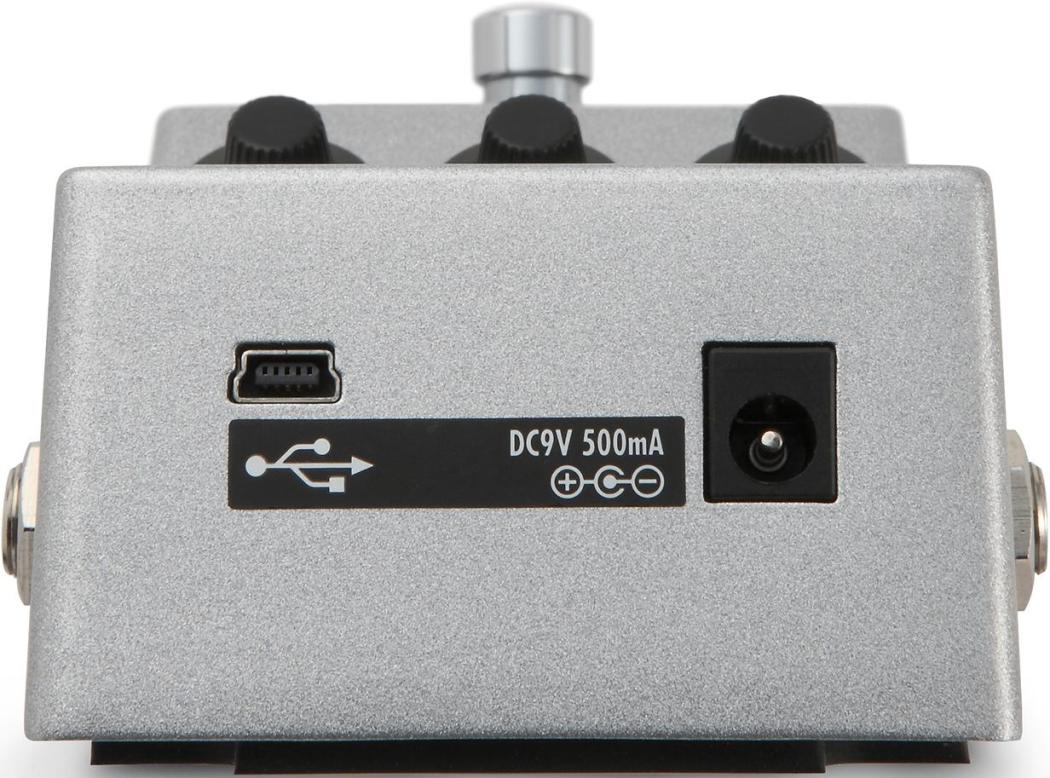
The USB-port on the front of the MultiStomp makes it possible to update the unit’s firmware.

****

There are two main ways of using the Zoom MS-50G’s effect patches:

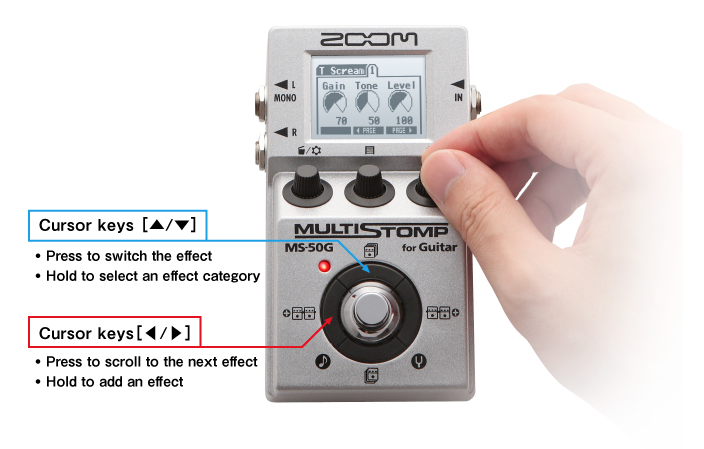
The first way would be to manually select one patch, and the use the left/right cursor keys to choose the one effect in this patch (like chorus, distortion or delay) that you want to be able to turn on and off using the foot switch while performing. The unit automatically stores which effect you have selected in each given effect patch, so the next time you call up this patch you will already have your chosen effect connected to the foot switch.

The second way of using the Zoom is by utilising the MS-50G’s A/B-mode. A/B-mode allows you to select all the effect patches you will want to use, and put them in a running order by assigning a letter to each of the chosen effects (e. g.: ”SynthStar: A”, ”AsiaPalace: B”, ”PitchDist: C” etc). Once you’ve got your list in order, you can use the foot switch to hop through your list (starting from letter ”A” going up the alphabet). At the end of your list pressing the foot switch will get you back to the first patch in your list.

****

Very compact multieffects usually require a slightly steeper initial learning curve than larger boards, because the limited number of controls and push buttons always means you first have to get to grips with the unit’s user interface. Luckily, thanks to its logical structure and well-designed graphics the MultiStomp is an easy piece of gear to master.

I especially like the Effect Chain view, which makes changes to the order of effects inside a patch very easy. You simply lift the chosen module using the virtual magnet, and drop it where you want it to go.

****

Regardless of its compact size, the Zoom MS-50G MultiStomp is a fully-fledged member of the company’s G-series of guitar multieffects. While the MultiStomp won’t offer you all of the great features and effect types of its larger brethren – the G3 and G5 – the sheer amount of processing power and tasty effects on offer here is truly amazing. For the price of a decent single effect the MS-50G offers you a huge palette of different effects, while only taking up very little space on your pedal board.

****

I used a Tokai SG-75 plugged into the Zoom MS-50G to record all the guitar tracks on the YouTube video:

Zoom MS-50G

All of the other soundbites have been lifted from Kitarablogi’s reviews of the Zoom G3 and the larger G5:

Fender Stratocaster – detune – delay

Fender Stratocaster – dirty Tweed – tremolo

Tokai LC-85 – fixed wah – Marshall-type

Tokai LC-85 – phaser – Blackface-style

MS Crunch – Stratocaster

Volume Pad – LP-type guitar

Oct-Lead – Stratocaster

DZ Drive – Stratocaster

****

Zoom MS-50G MultiStomp

Current RRP in Finland 99 €

Finnish distributor: Studiotec

****

Pros:

+ value-for-money

+ sound

+ compact size

+ easy to use

+ versatile

Review: Schecter Hellraiser Studio Acoustic

****

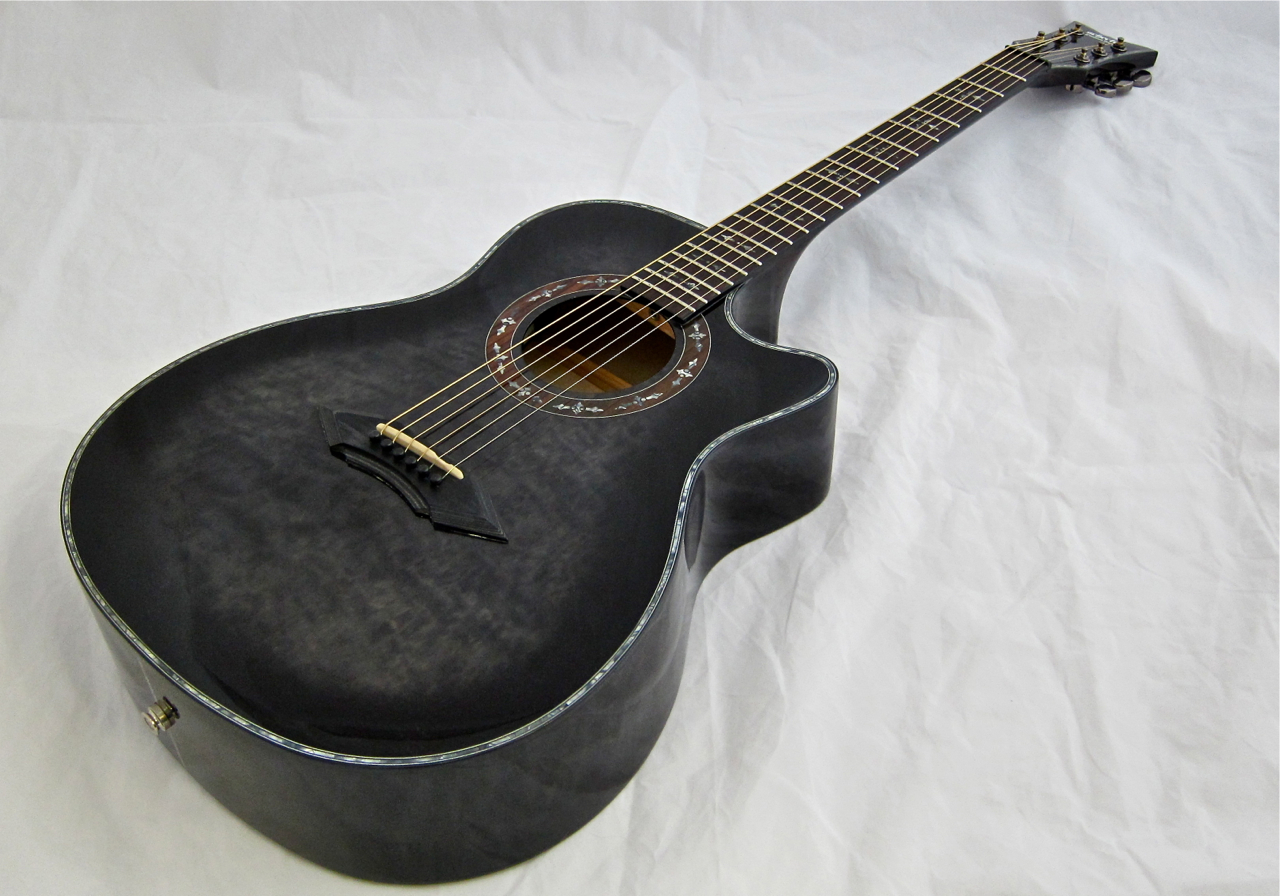
Schecter Hellraiser Studio Acoustic – body angle 2

Schecter probably aren’t known so much as manufacturers of acoustic guitars, but they do carry a few acoustic-electric models in their current line-up. We picked up a new model from Schecter’s Hellraiser range for a review – the Hellraiser Studio Acoustic.

****

Schecter Hellraiser Studio Acoustic – full front

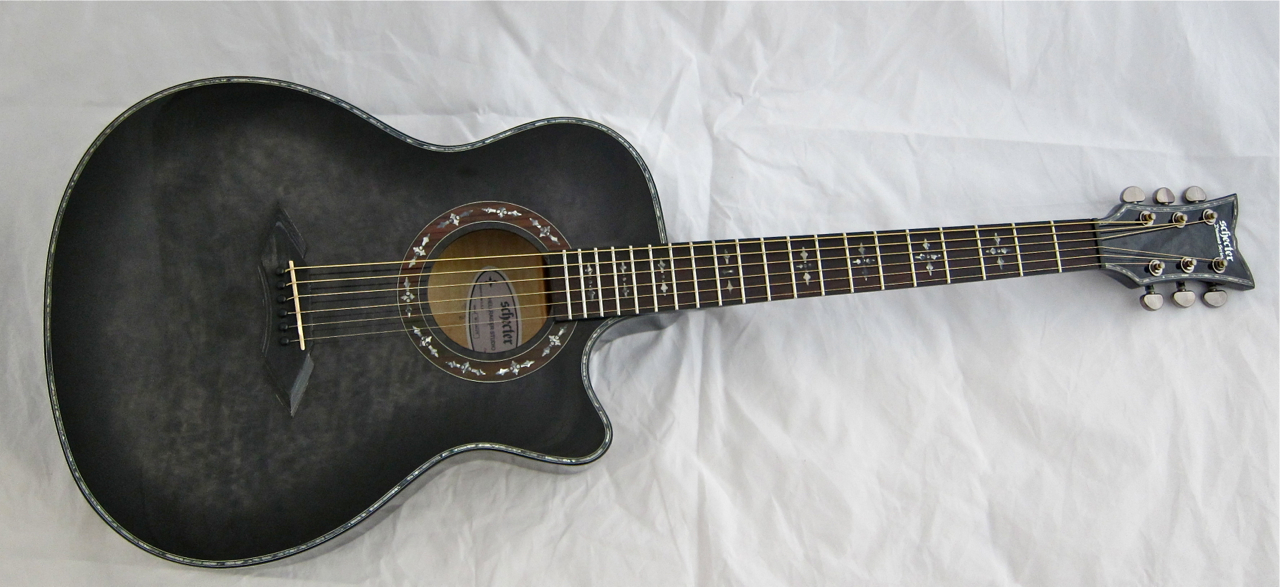
The Schecter Hellraiser Studio Acoustic (current street price in Finland approx. 600 €) is a stunning looker with a Grand Auditorium -sized, full-depth body.

Schecter Hellraiser Studio Acoustic – full back

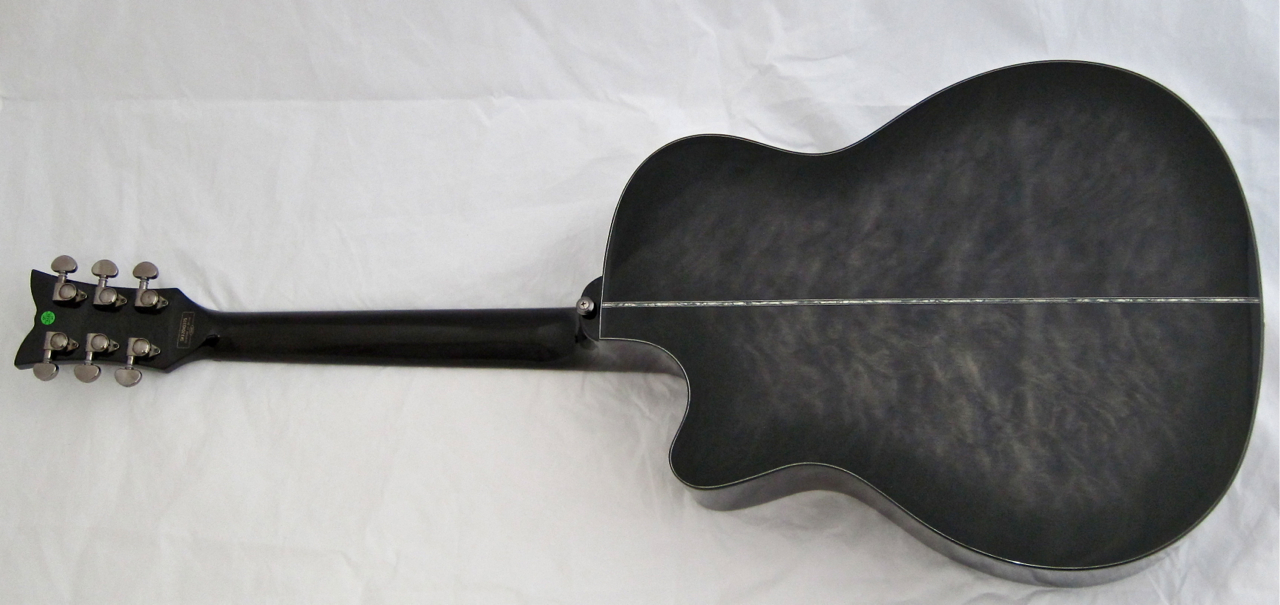
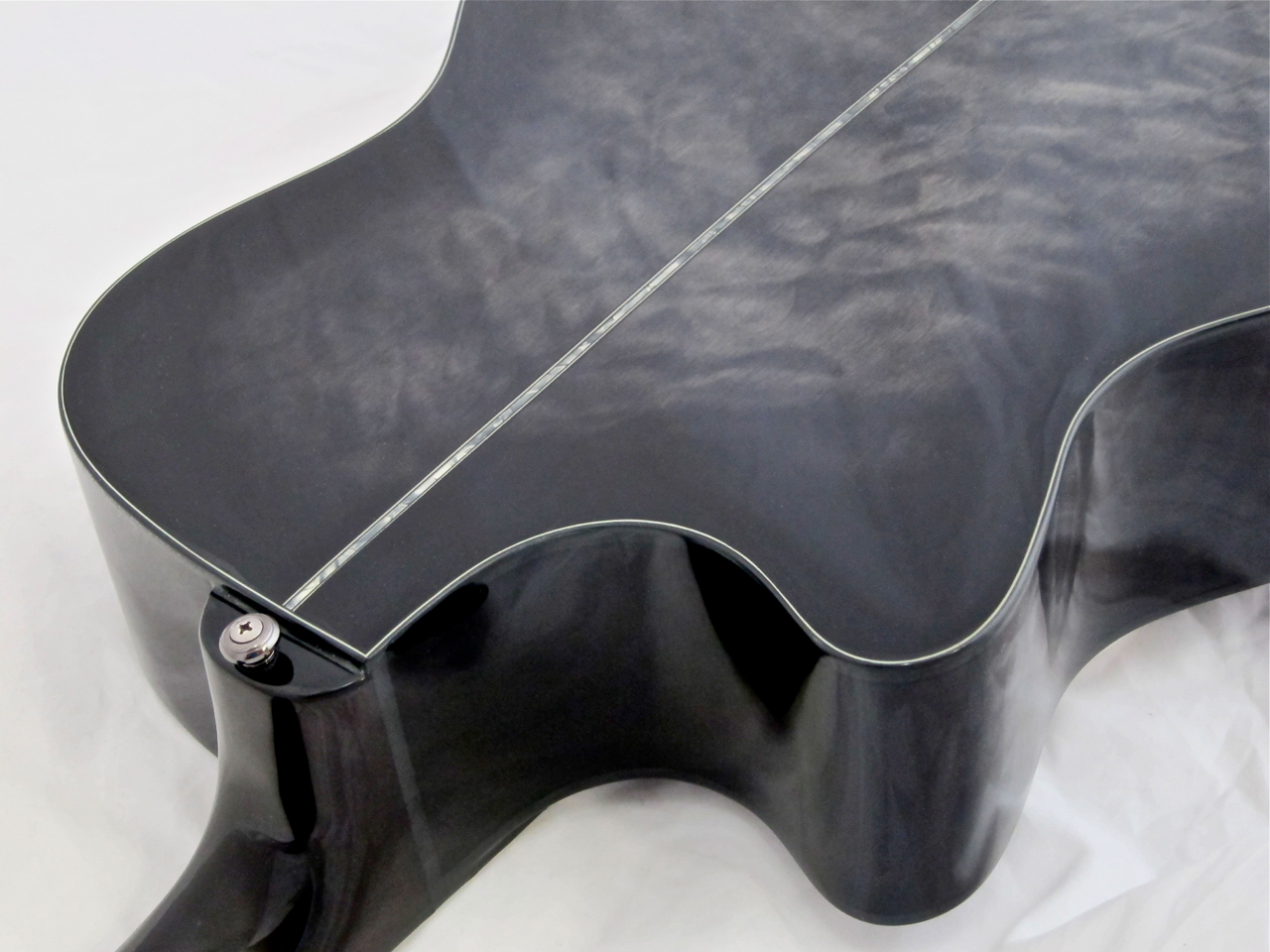
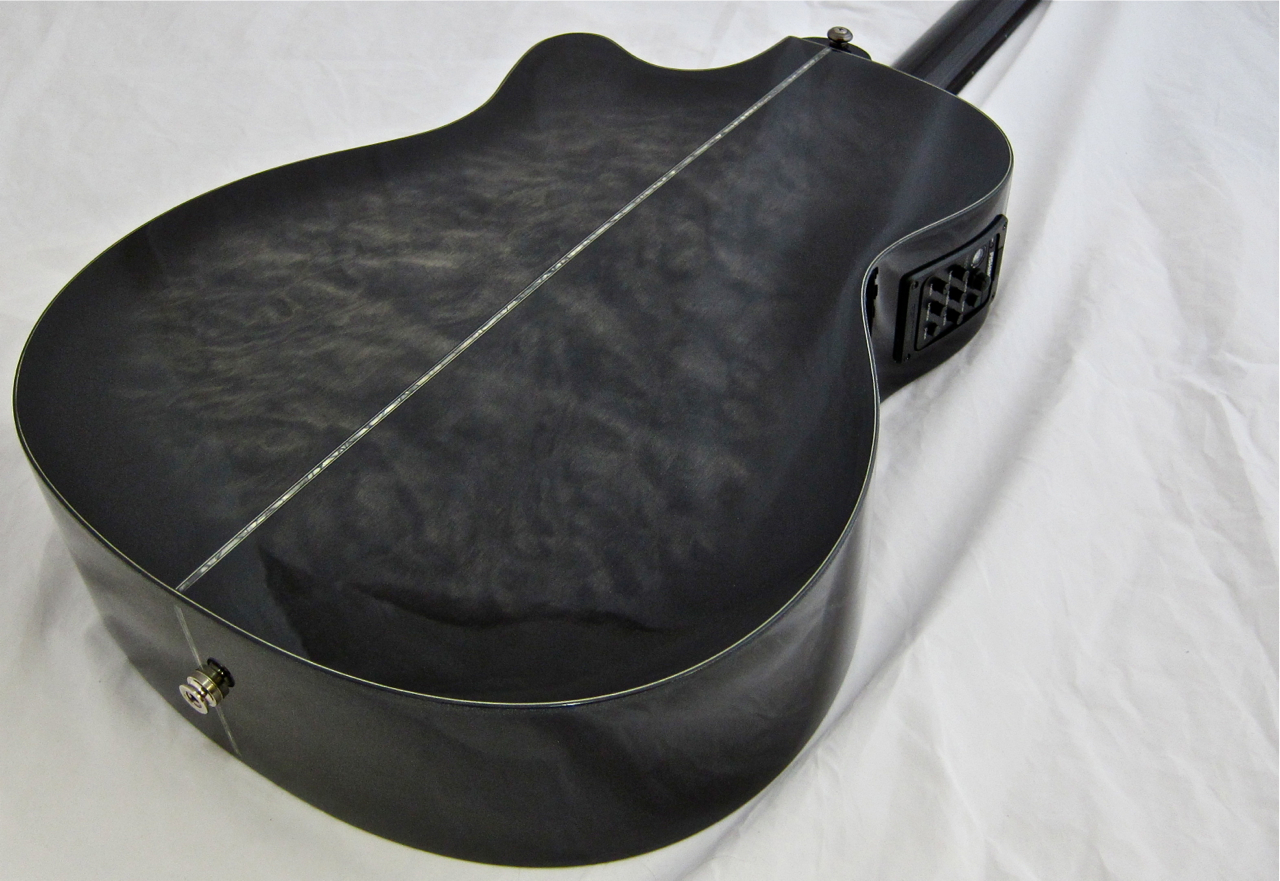
The whole body – top, rims and back – is crafted from beautiful, laminated quilted maple. Our review sample sports a fetching see-through-black gloss finish.

The glued-in neck, which is finished in solid gloss black, is made from mahogany.

Schecter Hellraiser Studio Acoustic – headstock

Judging by its headstock shape, Schecter seems to be aiming the Hellraiser Studio squarely at the Rock and Metal crowd. The headstock features intricate binding in luscious grey pearloid framed by black and white strips of plastic.

Schecter Hellraiser Studio Acoustic – Grovers

The sealed Grover-tuners sport a cool and moody black chrome finish.

Schecter Hellraiser Studio Acoustic – fretboard

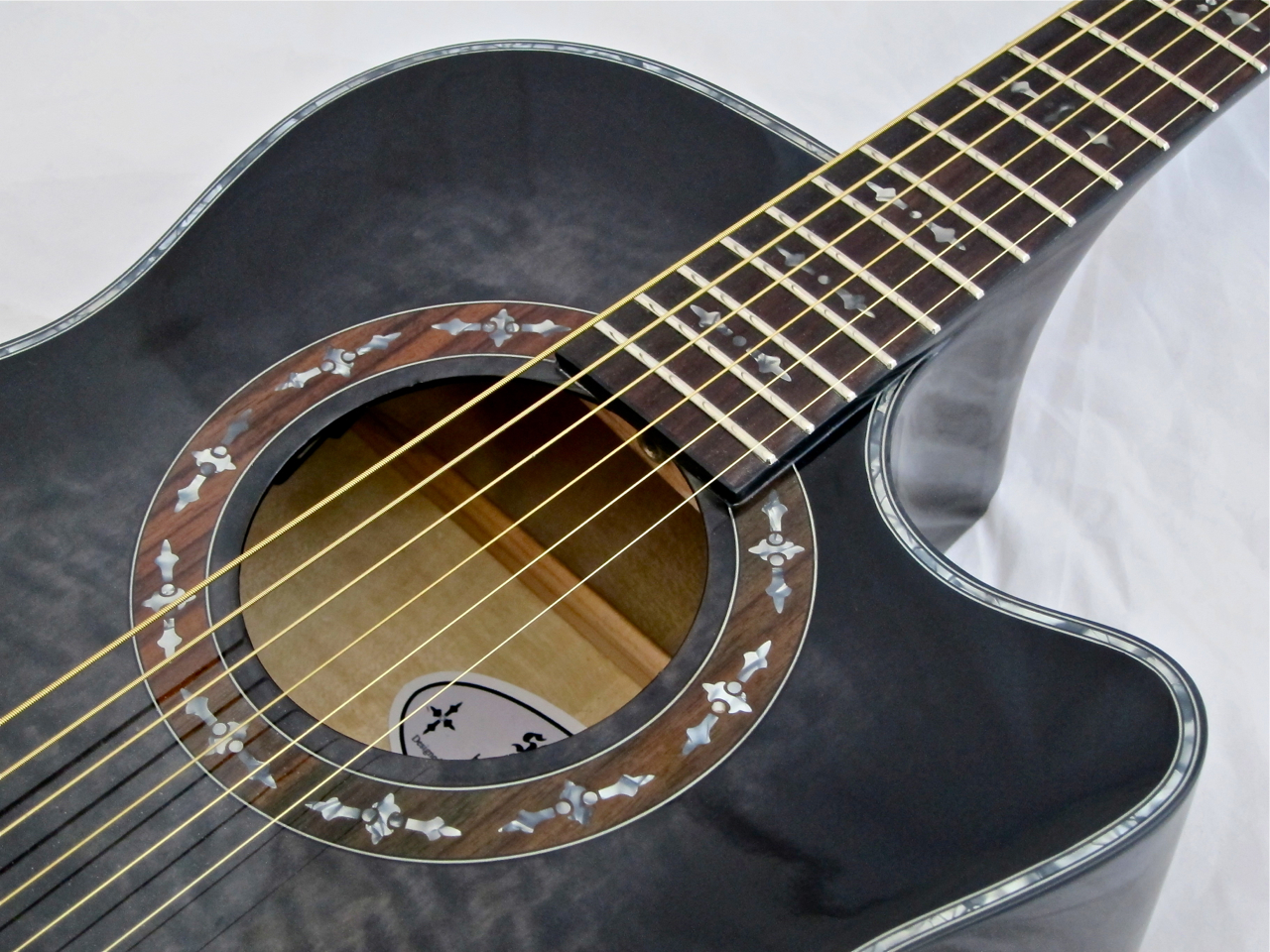
The bound rosewood fretboard comes equipped with 20 jumbo-sized frets, giving the guitar an effortless modern playing feel.

The Hellraiser Studio’s ’board is adorned with cleanly executed gothic-style cross inlays, made from grey pearloid.

Schecter Hellraiser Studio Acoustic – binding on back

The stylish dark pearloid theme is carried over onto the soundbox – seen here in the back’s centre line.

Schecter’s Hellraiser Studio comes factory-equipped with a second strap button.

Schecter Hellraiser Studio Acoustic – body side view

The guitar’s flowing lines are a thing of beauty.

Schecter Hellraiser Studio Acoustic – kerfed linings

The test sample’s bracings and kerfed linings look well made, even if there are a couple of glue specks in places.

Schecter Hellraiser Studio Acoustic – soundhole rosette 2

The gothic theme continues in the rosewood rosette’s inlays.

Schecter Hellraiser Studio Acoustic – bridge 2

A very dark finish is a double-edged sword for any manufacturer, because any tiny imperfection shows up more clearly. On the review instrument a tiny amount of white glue can be seen seeping out from under the bridge – the only small slip-up on this nicely-finished guitar.

The bridge is an interesting design, made from a composite material based on wood and black resin. The octave-compensated bridge saddle is Graph Tech’s man-made alternative to ivory, called Tusq.

The under-saddle-transducer is a Fishmanin Sonicore piezo pickup.

Schecter Hellraiser Studio Acoustic – Fishman PreSys+

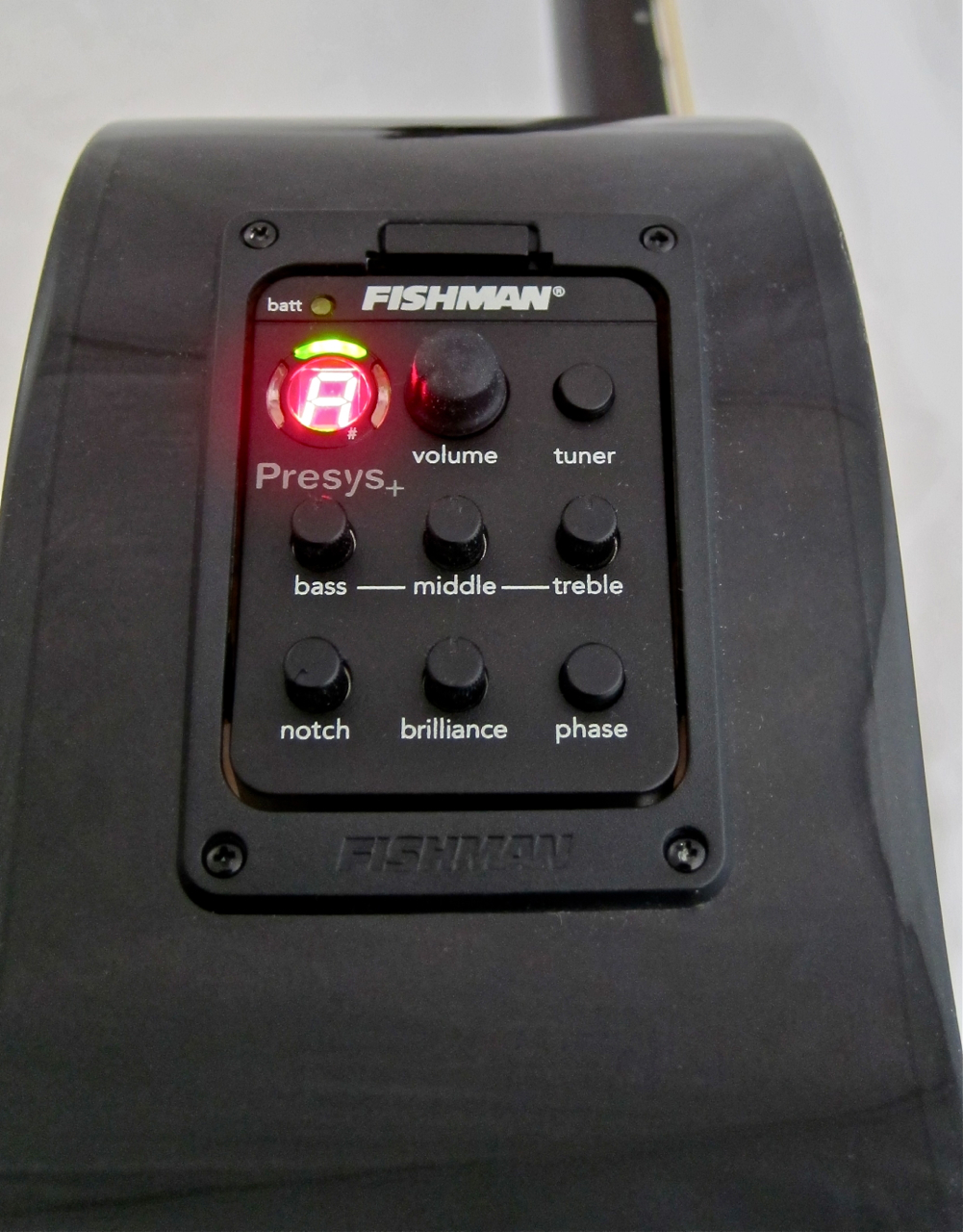
The UST’s signal is sent to a Fishman PreSys+ preamp featuring four-band EQ – bass, middle, treble and brilliance – a notch filter (to combat feedback or annoying stage resonances), a phase reverse switch (also for feedback removal), as well as a chromatic tuner, which also works without the guitar lead plugged in.

Schecter Hellraiser Studio Acoustic – preamp opened

The PreSys+ makes battery changes a doddle.

****

Schecter Hellraiser Studio Acoustic – beauty shot

Even though the Schecter Hellraiser Studio Acoustic is aimed at Rock musicians, Schecter haven’t chosen an overtly ”electric” neck profile for this steel-string – which is good in my opinion. The guitar’s well-rounded, medium D-profile feels great, giving you ample flesh to hold on to.

Sadly, our review sample suffers from some minor fretting issues, which lead to the high-e string buzzing at the first and 14. frets. Otherwise the set-up is good and the guitar plays well.

Nowadays it seems that many manufacturers have found out how to put together a good-sounding acoustic guitar using a laminated body. The Schecter Hellriser Studio is a good example of this. Even though you cannot find the out-and-out volume and punch of an all-solid shouter in a laminated steel-string, this Schecter really manages to hold its own, and do so with panache.

The all-maple body gives you a lively tone with a tight, sinewy bottom end, a clear mid-range (typical of maple-bodied steel-strings), as well as a nicely rounded top end. I see the Hellraiser Studio as a great choice for accompanying vocals, as the guitar’s clarity leaves ample space in the frequency spectrum for the singer.

The Fishman Sonicore/PreSys+ is a high-quality combination that sounds great right off the bat, without even touching the EQ. Fishman have managed to filter out most of the infamous nasal quack and attack click, so often found on lesser piezo systems. Thanks to this the Hellraiser’s EQ is freed up to fine-tune your (already great) basic tone, instead of having to combat any annoying tonal problems inherent in the original signal.

I recorded the following examples both acoustically (using an AKG C3000) and direct (with the Fishman’s EQ flat):

Fingerstyle – miked up (AKG C3000)

Fingerstyle –  PreSys+

Plectrum – miked up

Plectrum – PreSys+

Schecter Hellraiser Studio Acoustic – back beauty

The review guitar’s fretting (or neck?) problem really is a shame, because overall this Schecter is an extremely nice acoustic-electric. Schecter are known for their stringent quality control, so maybe this here was the one guitar that slipped through.

Schecter’s Hellraiser Studio Acoustic is a beautiful instrument, offering easy playability and a great sound. The guitar’s clear voice records very well – regardless of whether you’re using a microphone or the fantastic on-board Fishman-system. I can only recommend a test run!

****

Schecter Hellraiser Studio Acoustic

Current street price in Finland approx. 600 €

Finnish distributor: Soundtools

****

Pros:

+ beautiful design

+ overall workmanship

+ playability

+ acoustic tone

+ pro-quality Fishman-electronics

Cons:

– some fretting issues on review sample

– some glue visible at bridge

Schecter Hellraiser Studio Acoustic – beauty shot 2

Review: Roland AC-33RW

****

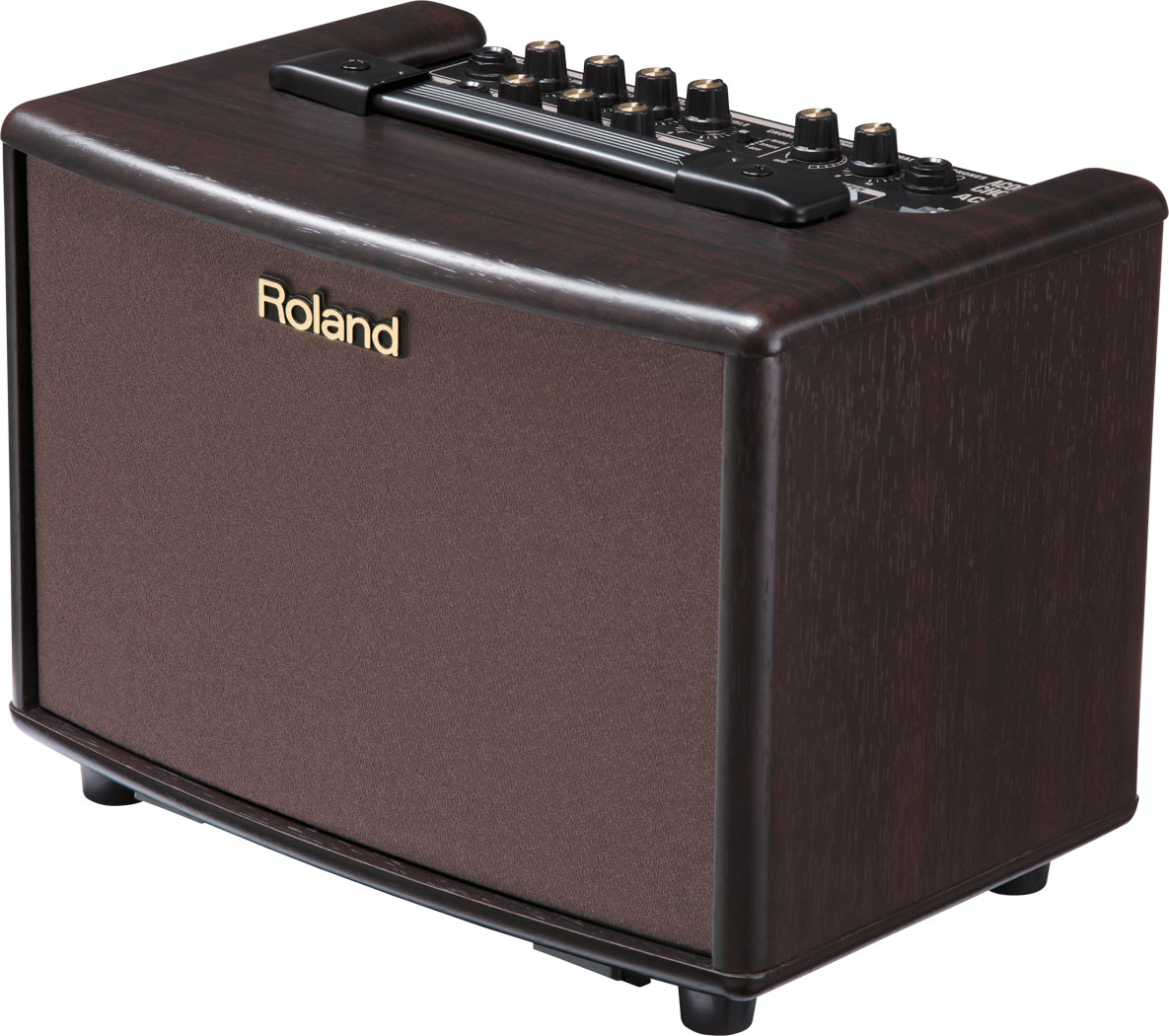
ac-33-rw_front_gal

Roland’s AC-33RW (current price in Finland: 467 €) is the new sister model to the all-black AC-33. The acoustic combo is finished in a faux-rosewood finish – the same kind as seen on many pieces of furniture.

ac-33-rw_angle_2_gal

The AC-33RW is the company’s smallest amplifier for acoustic guitar and vocal. It can be plugged into a wall socket, using the power adapter included with the amp. Alternatively, the AC-33 also runs on eight AA-size batteries, giving you somewhere between eight and nine hours of continuous use (depending on the type of battery used).

The AC-33RW weighs only a little over four and a half kilos, but is still able to dish out a whopping 30 Watts of power (20 W, if run on batteries)! The cabinet comes equipped with a pair of five-inch speakers, with a bass reflex port placed between them.

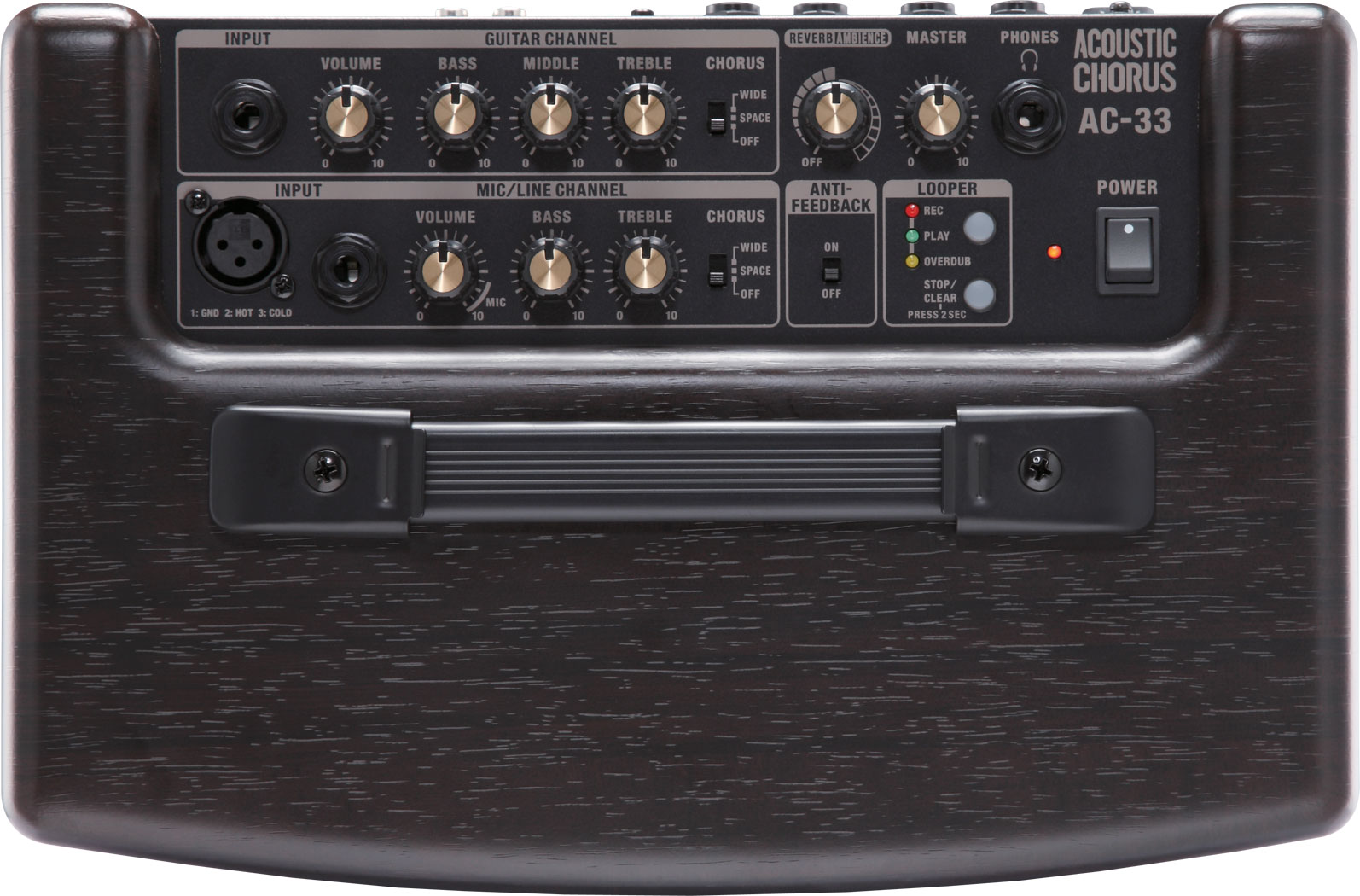
ac-33-rw_top_gal

There are two channels on offer in the AC-33RW:

The Guitar-channel, which is meant for use with an electro-acoustic guitar, comprises a volume knob, as well as three-band EQ. The second channel is called Mic/Line, and it is best used for the amplification of a dynamic microphone or a line level sound source (which could also be a second acoustic guitar). Mic/Line only offers you two-band equalisation in addition to its volume control. By the way, you cannot use both of the Mic/Line-channel’s inputs simultaneously! Plugging into the phone jack mutes the XLR-input.

Both channels feature a nice, switchable chorus-effect in two different permutations – Space is a light chorus setting, while Wide will give you quite a fat chorus sound.

The AC-33RW’s master section offers you an automatic anti-feedback circuit, a looper with 40 seconds of recording time, a headphones output for quiet practising, the Reverb/Ambience-control, as well as the master volume.

ac-33-rw_back_gal

Regardless of its diminutive size, Roland’s AC-33RW sports a well-equipped back panel, too:

Next to the power supply input you will find two foot switch connectors. With two (optional) twin foot-switches you can control all looper functions, as well as turn on/off the chorus and/or reverb effects on the fly.

The amp’s output can be sent to a mixing console or a sound-card via the stereophonic line output. The Line Out signal is routed pre-master, meaning you can use the Roland freely as your stage monitor, without inadvertently changing the signal level going to the front-of-house mixer.

The Aux In offers you a choice of two different connectors (RCA and mini-jack), and even has its own level control. The incoming signal is also send through the looper, meaning you can even use your mp3-player to provide the raw material for your live loops.

Roland AC-33 RW

The additional fold-out stand angles the combo for a better listening position, whenever the Roland is placed on the floor.

****

ac-33-rw_room_guitar_gal

The Roland AC-33RW is a very nifty little combo for acoustic guitarists and solo performers. The amp sounds clean and clear, and dishes out a surprising amount of wallop for its compact size. There’s enough power on tap for busking and small-scale, bistro-type gigs. For larger venues I’d suggest turning to one of Roland’s larger models – like the Roland AC-60 – because otherwise the usual din in a pub will most likely drown out your playing.

I tried both channels using the same guitar (a Tanglewood TW1000HSRE), and found out that they’re voiced slightly differently. The Guitar-channel has a perceivable presence lift, while Mic/Line sounds more neutral (with both channel-EQs set to neutral).

There are two small points I’d like to raise, though:

Even if the life of an acoustic performer most probably isn’t as rough as a Rock gig, I would have liked to have seen corner protectors on the AC-33RW. As it stands, you will have to be rather careful not to bump into things with the combo during set-up and teardown, if you want to preserve the Roland’s pristine looks. My second point of criticism concerns the global Reverb/Ambience-control. It would be nice to be able to set different amounts of reverb for each channel – either via separate channel sends or a reverb balance knob. The compromise on offer now is workable, but having different reverb-levels for guitar and vocals would be just that bit more convenient.

I recorded some AC-33RW sounds by miking up the combo:

Fingerstyle with Ambience

Plectrum with Wide-chorus and Reverb

Vocals and guitar

Even though this small unit has been designed specifically to work with modern acoustic-electric preamps, I also tested the AC-33RW with a magnetic soundhole pickup (Seymour Duncan Woody). The Guitar-channel didn’t really offer enough preamp gain for this application, but Line/Mic worked rather nicely:

Magnetic soundhole pickup (Mic/Line-channel)

****

The Roland offers a great basic sound, nice effects, and all the most important features. The combo works really well. I’d warmly suggest buying a set of foot-switches to make the most of the AC-33’s cool looper.

Regardless of its small size, the Roland AC-33RW really is a fine little amp for acoustic performers in small settings.

****

Roland AC-33RW

Current price in Finland: 467 €

Finnish Distribution: Roland Scandinavia

****

Pros:

+ size

+ weight

+ power

+ sound

+ effect quality

+ looper

+ value-for-money

Cons:

– global Reverb-control

– no corner protectors

Testipenkissä: Schecter Hellraiser Studio Acoustic

****

Schecter Hellraiser Studio Acoustic – body angle 2

Schecter Guitars ei ole ehkä kovin tunnettu akustisista kitaroistaan, mutta firman mallistosta löytyy tosiaan muutama elektroakustinen teräskielinen. Saimme testiin Hellraiser-sarjan uuden akustisen jäsenen – Hellraiser Studio Acoustic.

****

Schecter Hellraiser Studio Acoustic – full front

Schecter Hellraiser Studio Acoustic (katuhinta noin 600 €) on hyvin näyttävä soitin Schecterin omalla designilla, joka on lähellä Grand Auditorium -mallia, mutta aavistuksen verran syvemmällä kopalla.

Schecter Hellraiser Studio Acoustic – full back

Koppa on valmistettu kauniista (quilt maple) loimuvaahteravanerista, ja se on saanut ylleen see-through-black-nimistä kiiltävää liukuväritystä.

Koppaan on liimattu mahonkikaula, jolla on kiiltävä musta viimeistely.

Schecter Hellraiser Studio Acoustic – headstock

Schecterin kohderyhmä on lavan ulkonäön perusteella luultavasti Rock- ja Metal-musiikkia soittavat kitaristit. Lapa on koristeltu erittäin siistillä reunalistoituksella, johon on käytetty helmiäismuovia.

Schecter Hellraiser Studio Acoustic – Grovers

Laadukkaiden Grover-virittimien tummaa viimeistelyä kutsutaan mustaksi kromiksi.

Schecter Hellraiser Studio Acoustic – fretboard

Reunalistoitettuun palisanteriotelautaan on asennettu 20 jumbo-kokoista nauhaa, joiden ansiosta kitaran soittotuntuma on hyvin nykyaikainen ja vaivaton.

Hellraiser Studio -akustisella on otelaudassa myös erittäin siistejä gootti-tyylisiä upotuksiä tummasta helmiäismuovista.

Schecter Hellraiser Studio Acoustic – binding on back

Tyylikäs helmiäis-teema jatkuu myös pohjan keskiviivassa, ja sitä säestää kaunis reunalistoitus.

Hellraiser Studiolla on muuten jo valmiiksi asennettu toinen hihnatappi (mikä ei ole akustisissa kitaroissa lainkaan itsestäänselvyys).

Schecter Hellraiser Studio Acoustic – body side view

Schecterin sulavamuotoinen runko on hyvin kaunis. Kitaran kärjekäs talla sopii hyvin soittimen gootti-tyyliseen ilmeeseen.

Schecter Hellraiser Studio Acoustic – kerfed linings

Testiyksilön kaikki rimoitukset näyttävät hyvin siisteiltä, vaikka siellä täällä näkyykin pieniä liimatahroja.

Schecter Hellraiser Studio Acoustic – soundhole rosette 2

Soittimen näyttävässä, palisanterista veistetystä rosetissa on samanlaisia upotuksia kuin otelaudassa.

Schecter Hellraiser Studio Acoustic – bridge 2

Hyvin tumma viimeistely on valmistajan näkökulmasta aina hieman hankala, koska pienetkin epäsiisteydet näkyvät niin hyvin. Testiyksilön tallan alta pursuava valkoinen liima on ainoa lipsahdus Schecterin muuten kiitettävässä viimeistelyssä.

Itse talla on mielenkiintoinen, mustasta hartsista ja puusta valmistettu nykyaikainen komposiittitalla, ja Schecterin omaa suunnittelua. Kompensoitu satula on tehty Graph Techin, norsunluuta muistuttavasta, keraamisesta Tusq-materiaalista.

Tallaluun alle on sijoitettu Fishmanin Sonicore-piezomikrofoni.

Schecter Hellraiser Studio Acoustic – Fishman PreSys+

Mikrofonin signaali vahvistetaan ja muokataan laadukkaalla Fishman PreSys+ -etuvahvistimella. Tarjolla on nelikaistainen taajuuskorjain – bass, middle, treble ja brilliance – kuoppasuodatin (notch filter, jolla voi poistaa feedbackia aiheuttavan taajuuden), vaihekääntäjä (phase) feedbackia vastaan, sekä kroomaattinen viritysmittari (toimii myös ilman johtoa).

Schecter Hellraiser Studio Acoustic – preamp opened

Paristonvaihto käy PreSys-etuvahvistimessa erittäin kätevästi ja nopeasti.

****

Schecter Hellraiser Studio Acoustic – beauty shot

Vaikka Schecter Hellraiser Studio Acoustic on selvästi rokkarille suunnattu kitara, on se onneksi saanut kunnon teräskielisen kaulaprofiilin. Kyseessä on mukavan täyteläinen, keskipaksu D-kaula, jonka ansiosta käsi saa kunnon otteen soitettaessa, eikä väsy niin nopeasti kuin joidenkin ”vauhtikaulojen” kanssa.

Valitettavasti testiyksilössä on jotain pientä häikkää nauhoituksessa, jonka takia ylä-e-kieli sirisee häiritsevästi ensimmäisen nauhan ja myös 14. nauhan kohdalla, muuten kitara soi puhtaasti ja hyvin.

Nykyään monet valmistajat ilmiselvästi osaavat myös tehdä hyvin soivia vanerikoppaisia teräskielisiä kitaroita. Tämä Schecter on hyvä esimerkki tästä. Vaikka sellaista täyspuisen soittimen todella kovaa potkua ja äänekkyyttä ei luonnolliseti löydy vanerikoppaisesta kitarasta, on Schecteriun Hellraiser Studio todellakin yllättävän voimakasääninen ja eloisa tapaus.

Vaahterakopan soundissa on tiukka bassotoisto, tälle puulajille tyypillinen siisti keskialue, sekä kauniisti soiva diskantti. Mielestäni Hellraiser Studio sopii erittäin hyvin lauluäänen komppaamiseen, koska sen erotteleva sointi jättää laululle riittävästi tilaa.

Fishmanin Sonicore/PreSys+ -yhdistelmä on erittäin laadukas tapaus, joka kuulostaa jo hyvin terveeltä EQ:t neutraaliasennossa. Fishman on onnistunut hyvin pitämään piezomikrofoneja yleisesti vaivaavaa marisevaa nasaalisuutta suurilta osin aisoissa. Tämän ansiosta PreSysin taajuuskorjaimia ei tarvitse haaskata huonon perusäänen korjailuun, vaan voi keskittyä kokonaan hyvän perussoundin hienosäätämiseen.

Äänitin seuraavat esimerkit samanaikaisesti sekä akustisesti (AKG C3000 -mikrofonilla) että linjasoittona (EQ:t neutraaliasennossa):

Näppäily – mikitetty (AKG C3000)

Näppäily –  linjasoitto

Plektralla – mikitetty

Plektralla – linjasoitto

Schecter Hellraiser Studio Acoustic – back beauty

Testiyksilön pieni nauhaongelma on mielestäni todella harmillinen, koska muuten tämä Schecter on erittäin sympaattinen tapaus. Toivottavasti kyse on niin sanotusta ”maanantaikappaleesta”, joka on jostain kumman syystä läpäissyt Schecterin laadunvalvontajärjestelmää.

Muuten Schecter Hellraiser Studio Acoustic on nimittäin erittäin kaunis ja hyvin soiva elektroakustinen kitara. Helpposoittoisen Schecterin raikas ääni on helppo tallentaa, joko perinteisesti mikittämällä studiomikrofonilla tai käyttämällä soittimen tarjoamaa laadukasta Fishman-etuvahvistinta. Kokeilemisen arvoinen soitin siis!

****

Schecter Hellraiser Studio Acoustic

katuhinta noin 600 €

Maahantuoja: Soundtools

****

Plussat:

+ tyylikäs ulkonäkö

+ työnjälki (paitsi nauhatyö testikitarassa)

+ soittotuntuma

+ akustinen ääni

+ laadukas Fishman-etuvahvistin

Miinukset:

– nauhaongelmat testisoittimessa

– liimajäljet tallan alla

Schecter Hellraiser Studio Acoustic – beauty shot 2

Testipenkissä: Roland AC-33RW

****

ac-33-rw_front_gal

Roland AC-33RW (467 €) on mustan AC-33:n uusi sisarmalli ruusupuu-tyylisellä viimeistelyllä. Pikkukombo ei ole päällystetty oikealla ruusupuulla (tai palisanterilla), vaan tässä käytetään monista huonekaluistakin tuttua keinotekoista materiaalia.

ac-33-rw_angle_2_gal

Rolandin AC-33RW on firman pienikokoisin kombovahvistin akustiselle kitaralle ja laululle. Se toimii sekä omalla virtalähteellä (kuuluu pakettiin) että kahdeksalla AA-paristolla, jolloin sen käyttöaikaa on – käytetystä paristotyypistä riippuen – jossain kahdeksan ja yhdeksän tunnin välimaastossa.

Painoa on AC-33:lla vain hieman yli neljä ja puoli kiloa – oikea kärpässarjalainen siis – mutta tehoa löytyy peräti 30 wattia (20 W paristoilla)! Stereofonisesta kombosta löytyy kaksi viisituumaista kaiutinta, ja kotelossa on bassorefleksiaukko niiden välissä.

ac-33-rw_top_gal

AC-33RW tarjoaa kaksi kanavaa yhtäaikaiseen käyttöön:

Guitar-kanava on tarkoitettu elektroakustiselle kitaralle, ja sillä on volume-säätimen lisäksi kolmialueinen EQ-osasto. Toinen kanava on Mic/Line-kanava, johon voi kytkeä laulumikrofonin tai vaikkapa toisen mikillä varustetun kitaran. Mic/Line-kanava tarjoaa vain kaksialueisen EQ:n soundin hienosäätämiseen. Kanavan kaksi tuloa ei voi muuten käyttää samanaikaisesti – kun jakkituloon kytketään jakki, kombo automaattisesti mykistää XLR-tulon signaalia.

Molemmissa kanavissa on tarjolla chorus-efekti kahtena eri versiona, joista Space-vaihtoehto on se miedompi ja Wide taas se leveämpi ja täyteläisempi versio.

AC-33RW:n master-lohkosta löytyy Rolandin automaattinen Anti-Feedback kierronesto, kätevä 40 sekunnin loopperi, kuulokelähtö, Reverb/Ambience-säädin kaiulle, sekä master volume.

ac-33-rw_back_gal

Vaikka tämä Roland on kooltaan melko pieni, on AC-33RW:n takapaneeliin kuitenkin lisätty mukavasti liittimiä:

Virtalähden tulon vierestä löytyy peräti kaksi jalkakytkimille tarkoitettua tuloa. Kahdella tuplapedaalilla pystyy ohjata kaikkia loopperin toimintoja, sekä kytkeä chorus- ja kaiku-efektejä päälle ja pois lennossa.

Stereofonisesta linjalähdöstä voi lähettää AC-33:n signaalin mikserille tai vaikkapa äänikortille. Line Outin signaali haarautuu lähdöille ennen master volumea, minkä ansiosta Rolandia pystyy käyttämään henkilökohtaisena monitorina lavalla, samalla kun ääni menee ison PA:n kautta yleisölle.

Aux In -tulo tarjoaa ulkoiselle äänilähteelle kaksi eri liitintyyppiä – RCA ja pikkujakki – sekä oman tasosäätimen. Aux-tulon signaali menee loopperin kautta päätevahvistimeen, joten senkin pystyy looppaamaan.

Roland AC-33 RW

Taitettavalla metallijalalla voi kallistaa kombon viistosti ylöspäin, mikä edesauttaa lattialla seisovan pikkukombon kuulemista.

****

ac-33-rw_room_guitar_gal

Roland AC-33RW on erittäin näppärä pikkukombo akustiselle kitaristille ja trubaduurille. Kombon ääni on siisti ja raikas, ja yllättävän äänekäs. AC-33:n teholla pystyy vetämään mukavasti katusoittoa ja pieneimuotoisia keikkoja, esimerkiksi sivistyneessä kahvilassa tai pikkubaarissa. ”Oikealle” ravintola- tai baarikeikalle lähtisin trubaduurina kuitenkin mieluummin pikkukombon isoveljen (esimerkiksi Roland AC-60:n) kanssa, muuten ääni ja kitara jäävät helposti volyymiltään tavallisen hauskanpidon aiheuttaman metelin alakynteen.

Kokeilin samalla kitaralla (Tanglewood TW1000HSR E – testi tulossa) molemmat kanavat ja huomasin, että kanavilla on hieman erilainen perusluonne. Guitar-kanava kuulostaa neutraaliasennossa selvästi raikkaammalta kuin neutraalimpi Mic/Line-kanava.

Kaksi pientä kritiikkikohtaa löytyy testin perusteella:

Vaikka meiniki akustisen kitaran kanssa varmaan ei olekaan niin villi kuin Rock-keikoissa, näkisin kuitenkin mielellään myös akustisissa vahvistimissa sähköpuolelta tuttuja kulmasuojia. Nyt täytyy koko ajan varoa roudattaessa, ettei lyö vahvistimen kulmia vahingossa auki. Toinen parannusehdotukseni koskee kaiun säädintä, joka on AC-33:ssä yhteinen molemmille kanaville. Olisi kiva nähdä joko kummallekin kanavalle omaa kaikulähtöä tai kanaville yhteistä balanssi-säädintä, jolla voisi säätää esimerkiksi laulukanavalle enemmän kaikua kuin kitarakanavalle. Tällä hetkellä kaiun määrä on yhteinen, ja näin ollen kompromissi (jonka kanssa voi kuitenkin elää).

Äänitin seuraavat pätkät mikittämällä komboa:

näppäily ja Ambience-kaiku

plektra ja Wide-chorus ja Reverb-kaiku

laulu ja kitara

Vaikka pikku-Roland on tarkoitettu käyttöön nimenomaan nykyaikaisille etuvahvistimille, kokeilin sitä myös magneettisen, kaikuaukkoon menevän mikrofonin kanssa (Seymour Duncan Woody – testi tulossa). Guitar-kanavassa esivahvistus riitti vain juuri ja juuri, mutta Mic/Line-kanavalla pärjättiin melko hyvin:

magneettinen kaikuaukomikki (Mic/Line-kanava)

****

Rolandin perussoundi on mielestäni erittäin terve, efektit kuulostavat nekin myös todella hyvältä, ja kaikki toimii niin kuin pitää. Loopperia varten suosittelisin lämpimästi sopivan tuplajalkakytkimen hankkimista, koska loopperin ohjaaminen käy sitten paljon sulavammin.

Pienestä koostaan huolimatta AC-33RW on kunnon vahvistin, joka sopii mainiosti pienimuotoiseen esiintymiseen.

****

Roland AC-33RW

467 €

Maahantuoja: Roland Scandinavia

****

Plussat:

+ koko

+ paino

+ teho

+ soundi

+ efektien soundi

+ loopperi

+ hinta-laatu-suhde

Miinukset:

– kanavilla yhteinen Reverb-säädin

– ei kulmasuojia

Review: Walden G630CE + CD4040-CERT

Walden CD4040-CERT – logo

Amongst Chinese-made acoustic brands Walden is a special case. The company’s instruments aren’t just Walden-branded rebadged OEM-guitars, instead they are crafted at their own factory to their very own specifications and using their very own methods.

Walden’s main man is American luthier Jonathan Lee, who not only knows how to make fine acoustic instruments, but also affords special attention to things such as working conditions at the Walden plant, as well as environmental issues; or, as the man himself put it in a recent Guitarist-interview: ”I want to go to bed at night and not wake up sweating about being a bad guy and getting kicked out of the gates by [Saint] Peter!”

Based on Jonathan Lee’s experience as a boutique builder, Walden Guitars feature an enticing mix of old-school and contemporary building methods: For example, all Waldens sport graphite (or fibreglass) reinforced bolt-on necks, as well as traditional scalloped X-bracing for their tops.

****

Walden G630CE – gigbag

The Walden G630CE (current street price in Finland approx. 450 €, including a Walden-gigbag) is a Grand Auditorium -sized cutaway acoustic-electric.

A Grand Auditorium’s body has approximately the same cubic capacity as a Dreadnought, but its more curvaceous outline with its slimmer waist generally results in a tighter, more focussed bass and a slightly chimier character, compared to a typical D.

Walden G630CE – full front

The G630CE is part of Walden’s satin-finished Natura-range. Its body is made from a solid Western Red cedar top and laminated Indian rosewood rims and back.

Walden G630CE – headstock

The elegant headstock sports a beautiful rosewood veneer. The top nut is supplied by Graph Tech, using their Fossalite material, which claims to sound like vintage bone.

Walden G630CE – tuners

The Walden’s mahogany neck is a three-piece affair comprising a single long piece for the bulk of the neck, with two additional pieces for the neck heel and the headstock (the glue line is just above the neck’s wrist).

The sealed golden tuners do a good job of keeping the guitar in tune.

Walden G630CE – nut + frets

The nice dark and dense rosewood fingerboard is bound in black plastic and equipped with 20 small frets.

Hidden beneath the ’board lies the two-way truss rod, as well as the two fibreglass rods on either side of it. Added neck rigidity is a good thing for two reasons – the neck stays straight with less stress on the truss rod, and the guitar’s sustain is improved.

Walden G630CE – close-up back

The rosewood back is a real stunner, with the gorgeous wood grain being enhanced by the satin finish and the crisp black-and-white binding. The rosewood cap on the neck heel is a stylish little detail.

Walden G630CE – neck bolt

The neck bolt is clearly visible in the mahogany neck block. Walden is one of the very few Asian manufacturers to use this modern type of neck joint, which is favoured by Taylor Guitars among others. In Jonathan Lee’s view the sonic difference between a well-executed bolt-on neck joint compared to a traditional dovetail job is practically negligible. And who am I to disagree ?

The G630CE’s extremely reasonable price is visible in the slightly rough look of the kerfed linings inside the soundbox. But this is only a minor cosmetic issue which doesn’t affect the playability or the mechanical soundness of the instrument at all.

Walden G630CE – body close-up

There can be no complaints about the cedar top on this Walden whatsoever – this is a fine piece of wood with a very regular grain and tightly spaced annual rings.

Walden G630CE – bridge

The elegantly designed rosewood bridge holds a compensated Graph Tech Fossalite bridge saddle.

Beneath the saddle lied the guitar’s B-Band under-saddle transducer…

Walden G630CE – B-Band T35

…which works in conjunction with B-Band’s own T35 preamp.

The T35 offers three-band equalisation, a phase switch to combat feedback howl, as well as a backlit a chromatic tuner. You can use the tuner without a lead plugged into the output jack.

Walden G630CE – output jack

The G630CE is equipped with an endpin output jack. The quick release battery compartment has been placed on the lower rim of the Walden.

****

Walden CD4040-CERT – guitar + case

Walden’s Madera-series is direct result of Jonathan Lee’s tireless efforts and perserverence in his quest to build ecologically sustainable acoustic guitars. It took Lee several years to get everything lined up and find the right suppliers for this venture. Now, with the Madera-series, Walden Guitars is offering 100% FSC-certified instruments at prices that won’t cost you an arm and a leg.

At the moment the Madera-range comprises six Dreadnought and Grand Auditorium models with full FSC-certification. We chose the Walden CD4040-CERT – a Dreadnought – for this review.

Walden CD4040-CERT – full front

The Walden CD4040-CERT (Current street price in Finland approx. 950 €, including a Walden-case, a humidifier and a second bridge saddle) could be described as Jonathan Lee’s take on the venerable Martin D-18. This classy guitar uses solid sitka spruce for the top and solid South American mahogany for the sides and back.

The yellowish finish adds a certain vintage air to this model’s looks.

Walden CD4040-CERT – headstock + nut + frets

Walden use South American katalox (swartzia cubensis) – as an ecologically sustainable alternative to ebony – for its Madera-series bridges, fingerboards and headstock overlays. The beautiful headstock inlay is a stylised version of the Chinese character for the word ”tree” (mù: 木).

The CD4040-CERT’s saddle is made from genuine bone.

Walden CD4040-CERT – fretboard

The fretboard is equipped with 20 traditionally-sized small frets.

On its top models – an the CD4040-CERT certainly qualifies as such – Walden use a pair of graphite rods to stiffen the mahogany neck.

Walden CD4040-CERT – kerfing + neck block

On our test sample the interior displays the same high degree of care that has also been afforded to the guitar overall.

In line with the CD4040’s vintage looks the guitar’s neck bolt has been hidden behind a Walden-branded mahogany plate.

Walden CD4040-CERT – soundhole

The rosette is a very elegant mix of black and white rings and abalone inlays.

Walden CD4040-CERT – bridge

The bridge’s katalox is somewhat lighter in colour than the piece used for the CD4040-CERT’s fingerboard. The compensated saddle has been carved from bone.

Walden CD4040-CERT – binding

Here you can see a crisp vintage-style look at its best.

****

Walden G630CE – label

The Walden G630CE sits extremely comfortably in your lap, and its well-applied satin finish feels pleasant to the touch.

The neck profile is contemporary in a very good way: There’s enough meat on offer to hold on to comfortably, without the neck feeling fat or angular. I would describe the profile as a medium-sized, oval ”C”.

The string spread at the bridge is wide enough for fingerstylists without alienating the plectrum strumming punters. Our test sample’s string height was set to a very comfortable level (E = 2,0 mm/e = 1,6 mm).

The G630CE sings with a beautiful acoustic tone – its tight and sinewy bottom end nicely leaves space for this guitar’s clear midrange and bell-like top end. There’s a good deal of volume on tap, even if this guitar probably won’t win over a good Dreadnought in a head-to-head shouting match.

The B-Band-system goes a very long way in keeping the Walden’s acoustic timbre intact, and the amplified tones are far more realistic than you might expect from an under-saddle pickup.

Here are a few soundbites I recorded for you:

Walden G630CE – acoustic – fingerstyle

Walden G630CE – B-Band – fingerstyle

Walden G630CE – acoustic – plectrum

Walden G630CE – B-Band – plectrum

Walden G630CE – beauty

****

Walden CD4040-CERT – teaser 2

Need I spell it out? One word is enough to describe the feel of the Walden CD4040-CERT – classic. We all know what a gloss-finished Dreadnought feels like, don’t we?

On this model the neck profile is almost identical to that of the G630CE, but the CD4040 adds a whiff more thickness to the recipe. The test sample’s action is a tad higher than on the Grand Auditorium (E = 2,5/e = 2,0 mm), which will surely delight the Country and Bluegrass fans among you. The CD4040’s playability is still top-notch and effortless, but the slightly higher action gives you that bit more purchase, dynamics and volume-before-string-rattle.

Walden’s CD4040-CERT is a beautiful-looking and -sounding guitar – and it’s also quite loud. The bottom end is fat and muscular, without ever mushing out, while the midrange is vocal and clear. Put a good helping of silky bright icing on top of this, and your in for a true tonal feast.

Even though this guitar arrived for review straight off the wall of a music shop, I never got a feeling of overt newness or tightness from this instrument. Instead this Walden sounds and feels like an already ”broken in” steel-string, and breathes freely.

Here are two examples I recorded:

Walden CD4040-CERT – fingerstyle

Walden CD4040-CERT – plectrum

Walden CD4040-CERT – beauty shot 2

****

Based on my test drive I can only recommend checking out a Walden or two.

Walden’s G630CE is a very well-built acoustic-electric, which feels and sounds great. The B-Band T35 looks like the perfect match for this model, thanks to its natural tone and low background noise level.

The Walden CD4040-CERT is further proof – if needed – of the quality levels Chinese guitar manufacturers are able to achieve today. This Walden really is a pro-level instrument offered at an extremely fair price. But the best thing about the CD4040-CERT is that it shows without a doubt that building an eco-friendly quality guitar is possible in this market segment!

****

Walden Guitars 

Finnish distributor: EM Nordic

A big thank you to DLX Music Helsinki for the loan of the test intsruments!

****

Walden G630CE

street price approx. 450 €

Pros:

+ value-for-money

+ overall workmanship (see below)

+ playability

+ acoustic sound

+ amplified sound

Cons:

– kerfed linings a little rough in places

****

Walden CD4040-CERT

street price approx. 950 €

Pros:

+ 100% FSC-certified

+ value-for-money

+ workmanship

+ playability

+ sound

****

Testipenkissä: Walden G630CE + CD4040-CERT

Walden CD4040-CERT – logo

Walden on Kiinassa rakennettujen akustisten kitarabrändien joukossa melko harvinainen tapaus. Firman soittimet eivät nimittäin ole brändättyjä OEM-soittimia, joita tehdään joissain anonyymissä soitinpajassa, vaan kitarat tulevat Walden Guitarsin omalta tehtaalta, jossa rakennetaan ainoastaan firman omia soittimia firman omilla menetelmillä.

Waldenin takana on Jonathan Lee, yhdysvaltalainen kitaranrakentaja, ja hänelle on – hyvien kielisoittimien lisäksi – tärkeätä myös työläistensä turvallisuus ja työolot, sekä firman ympäristövastuu. Tai kuten mies itse sanoi hiljattain yhdessä hastattelussa: ”Haluan pystyä nukkumaan rauhassa, enkä miettiä pitääkö Pyhä Pietari minun kohdalla taivaan portit lukossa, kun joskus kuolen.”

Jonathan Leen kokemuksen ansiosta Walden-soittimet ovat tuore sekoitus parhaista perinneratkaisuista ja uusista menetelmistä: kaikkien Walden Guitarsin ominaisuuksiin kuuluu esimerkiksi grafiitilla (tai lasikuitutangoilla) vahvistettu pulttikaula, sekä perinteiden mukaan koverrettu kannen rimoitus (ns. scalloped bracing).

****

Walden G630CE – gigbag

Walden G630CE (katuhinta noin 450 €, sis. topatun Walden-kitarapussin) on soololovella varustettu, mikitetty teräskielinen, tällä hetkellä hyvin suositussa, Grand Auditorium -koossa.

Grand Auditorium -malleissa kopan tilavuus on hyvin samankokoinen Dreadnoughttiin verrattuna, mutta sen kurvikkaammalla ulkomuodolla on selvä vaikutus soundiin, jolla on usein tiukempi bassorekisteri ja tuorempi yleisilme kuin D-kitaroissa yleensä.

Walden G630CE – full front

G630CE kuuluu Waldenin mattalakattuun Natura-sarjaan, ja sen koppa on rakennettu kokopuisesta setrikannesta, sekä palisanterivanerista sivuja ja pohjaa varten.

Walden G630CE – headstock

Soittimen viritinlapaa on koristeltu palisanteriviilulla. G630CE:n satula taas on tehty Graph Techin uudesta Fossalite-materiaalista, jonka soundin sanotaan olevan hyvin lähellä vanhaa luuta.

Walden G630CE – tuners

Waldenin kaula on veistetty mahongista: yhteen yhtenäiseen pitkään palaan on lisätty erillinen korkopala, sekä lapa (liimasauma on E-virittimien alapuolella).

Suljetut kultaiset virittimet tuntuvat jouhevalta, ja ne pitävät kitaran hyvässä vireessä.

Walden G630CE – nut + frets

Tummaa ja tiheänlaatuista palisanteriotelautaa on reunalistoitettu mustalla muovilla. Otelautaan on asennettu 20 pienikokoista nauhaa.

Otelaudan alla löytyvät, sekä Waldenin kaksisuuntainen kaularauta, että (kaularaudan molemmin puolen) kaksi, kaulapuuhun upotettua lasikuitutankoa. Lujempi kaula soi paremmin ja pysyy varmemmin suorana.

Walden G630CE – close-up back

Kuvankaunis palisanterikoppa on koristeltu valkoisilla ja mustilla muovilistoilla. Kaulakoron pieni palisanterikoriste on sekin hyvin tyylikäs.

Walden G630CE – neck bolt

Kaulapultin pää on selvästi näkyvissä mahonkisessa kaulablokissa. Walden on yksi harvoista aasialaisista kitaramerkeistä, joka käyttä tätä – Taylor-kitaroista tuttua – nykyaikaisempaa menetelmää. Jonathan Leen mukaan soundillinen ero hyvin tehdyn pulttiliitoksen ja perinteisen liimaliitoksen välillä on miltei olematon.

G630CE:n edullinen hinta näkyy kopan sisällä muutamissa pienissa yksityiskohdissa, jotka eivät kuitenkaan ole ratkaisevia kitaran soitettavuuden tai soundin kannalta.

Walden G630CE – body close-up

Waldenin setrikansi – tai oikeasti jättituijakansi (western red cedar = thuja plicata = jättituija) – on erittäin laadukasta sorttia tasaisilla vuosirenkailla.

Walden G630CE – bridge

Kitaran talla on palisanteria. Tallaluu on – samoin kuin satula – Graph Techin Fossalitesta tehty.

Tallaluun alle on sijoitettu B-Band-mikrofoni…

Walden G630CE – B-Band T35

…joka toimii yhteistyössä B-Bandin T35-etuvahvistimen kanssa.

T35 tarjoaa kolmekaistaisen EQ:n, vaiheenkääntäjän feedback-ulinaa vastaan, sekä kromaattisen viritysmittarin, joka toimii myös silloin, kun johto ei ole kytkettynä kitaraan.

Walden G630CE – output jack

G630CE:n lähtö on yhdistetty hihnatappiin. Paristolokero taas on upotettu soittimen alareunaan.

****

Walden CD4040-CERT – guitar + case

Waldenin Madera-sarja on Jonathan Leen sitkeyden ja pitkän etsinnän suora tulos. Leen visio oli rakentaa ekologisesti vastuullisen Walden-sarjan, jossa kaikki käytetyt puut tulevat kestävästä metsähoidosta. Kesti muutamia vuosia, ennen kuin Walden sai rakennettua sellaista luotettavaa toimitusketjua, jossa kaikki puut ovat FSC-sertfioituja, sekä soitinrakentamiseen sopivia.

Walden Madera -sarja tarjoaa tällä hetkellä kuutta Dreadnought- ja Grand Auditorium -mallia, jotka ovat kaikki sataprosenttisesti FSC-sertifioituja. Valitsimme testiin Walden CD4040-CERT -nimisen Dreadnought-kitaran.

Walden CD4040-CERT – full front

Walden CD4040-CERT (katuhinta noin 950 €, sis. kovan kotelon, kostuttajan ja toisen tallaluun) on Jonathan Leen näkemys Martin D-18 -tyylisestä teräskielisestä. Klassiseen tapaan koppa on rakennettu täyspuisesta sitkakuusesta ja täyspuisesta Etelä-Amerikkalaisesta mahongista.

Kellertävän kiiltävä viimeistely antaa kauniille kuusikannelle sopivasti vanhan ajan hohtoa.

Walden CD4040-CERT – headstock + nut + frets

Walden käyttää Madera-kitaroissaan katalox-nimistä (swartzia cubensis) kestävää vaihtoehtoa eebenpuulle tallassa, otelaudassa ja viritinlavan viiluna. Kaunis upotus on tyylitelty versio kiinalaisesta sanasta puulle (mù: 木).

CD4040-CERT:n satula on veistetty luusta.

Walden CD4040-CERT – fretboard

Reunalistoitettuun otelautaan on siististi asennettu 20 pienikokoista nauhaa.

Koska kyse on yhdestä Waldenin huippumalleista, käytetään CD4040:n tapauksesta kaksi grafiittitankoa mahonkikaulan lujittamiseen.

Walden CD4040-CERT – kerfing + neck block

Tässä mallissa työnjälki on erittäin siisti.

Vintage-ulkonäköön sopii myös Walden-logolla varustettu ohut puulevy, jonka takana kaulaliitoksen pultti on piilotettu.

Walden CD4040-CERT – soundhole

Soittimella on tyylikäs rosetti helmiäisrenkaalla, sekä monikerroksinen reunalistoitus kilpikonnakuvioisella ulkokerroksella.

Walden CD4040-CERT – bridge

Tallan katalox-pala on hieman vaaleampi kuin CD4040:n otelauta. Tallaluu on oikeasta naudanluusta veistetty.

Walden CD4040-CERT – binding

Tällainen on vintage-look parhaimmillaan.

****

Walden G630CE – label

Walden G630CE istuu erittäin mukavasti sylissä, ja sen satiinipintainen viimeistely tuntuu hyvin miellyttävältä.

Tämän kitaran kaulaprofiili on positiivisella tavalla nykyaikainen: se tarjoaa sopivasti leveyttä ja pyöreyttä, olematta kuitenkaan kulmikas tai paksu. Profiili voisi luonnehtia ovaaliksi C:ksi.

Kielten välinen etäisyys on valittu hyvin, ja kitara sopii näin ollen loistavasti, sekä plektrasoittoon, että näppäilyyn. Testiyksilön tatsi oli säädetty mukavan kevyeksi (E = 2,0 mm/e = 1,6 mm).

G630CE soi kauniilla akustisella äänellä – jäntevä bassorekisteri antaa loistavasti tilaa kitaran siistille keskialueelle ja helisevälle diskantille. Volyymi löytyy sekin riittävästi, vaikka tämä soitin ei huuda niin kovalla äänellä kuin jotkut Dreadnoughtit.

B-Band-järjestelmän tarjoama vahvistettu signaali tarjoaa pelkäksi tallamikrofonia käyttäväksi systeemiksi yllättävän luonnollisen version Walden-kitaran akustisesta luonteesta.

Tässä muutama esimerkki, sekä akustisesta äänestä, että linjasoitosta T35-etuvahvistimen kautta:

Walden G630CE – akustisesti – näppäily

Walden G630CE – B-Band – näppäily

Walden G630CE – akustisesti – plektralla

Walden G630CE – B-Band – plektralla

Walden G630CE – beauty

****

Walden CD4040-CERT – teaser 2

Walden CD4040-CERT -mallin tuntumaa voisi kuvaila sanalla ”klassinen” – kaikki tietävät varmasti miltä perinteinen D-malli kiiltävällä viimeistelyllä tuntuu sylissä.

Kaulaprofiili on tässä soittimessa hyvin samankaltainen kuin G630CE-mallissa, vaikka CD4040 lisää reseptiin vielä hieman paksuutta. Kieltenkorkeus on D-mallin testiyksilössä hieman korkeampi (E = 2,5/e = 2,0 mm) kuin Grand Auditoriumissa, mutta soittotuntuma on myös CD4040:n tapauksessa erittäin mukava.

Monet Country- ja Bluegrass-soittajat suosivat hieman korkeammaksi laitettuja kieliä, koska niiden ansiosta saadaan soittimesta enemmän volyymiä irti, ilman että kielet rämisevät nauhoja vasten.

Waldenin CD4040-CERT on sekä kaunis- että kovaääninen kitara – tästä löytyy potkua vaikka muille jakaa. Bassorekisteri on mehevä, mutta tarkka, keskialue taas on täyteläinen, mutta silti selkeä, ja päälle vielä helisevä diskanttikuorrutus.

Vaikka kitara on otettu testiin suoraan musiikkiliikeen seinältä, sen soitossa ei ole minkäänlaista kireyttä tai epätasaisuutta, vaan tämä Walden soi (ja tuntuu) kuin hyvin ”auki soitettu” teräskielinen.

Tässä kaksi esimerkkipätkää Walden CD4040-CERTin soundista:

Walden CD4040-CERT – näppäily

Walden CD4040-CERT – plektralla

Walden CD4040-CERT – beauty shot 2

****

Tämän testin perusteella voi vain suositella kaikille tutustumista Walden Guitarsin soittimiin.

Walden G630CE on edullinen, mutta siististi rakennettu elektroakustinen kitara, joka tuntuu todella mukavalta ja soi erittäin kauniisti. Waldenin käyttämä T35 B-Band -järjestelmä tuntuu loistavalta valinnalta, sen luonnollisen äänen ja kohinattoman signaalin ansiosta.

Walden CD4040-CERT on kiinalaisen kitararakennuksen oikea taidonnäyte. Tämä on pro-luokan Dreadnought erittäin maltillisella hinnalla. Ja mitä parasta, se on valmistettu kokonaan kestävistä, FSC-sertifiouduista puista!

****

Walden Guitars – teräskieliset

Maahantuoja: EM Nordic

Kiitos DLX Musiikki Helsingille testisoittimien lainaamisesta!

****

Walden G630CE

katuhinta noin 450 €

Plussat:

+ hinta-laatu-suhde

+ työnjälki (pienellä rajoituksella, kts. alhaalla)

+ soitettavuus

+ akustinen soundi

+ vahvistettu soundi

Miinukset:

– muutama hiukan epäsiisti rima kopassa

****

Walden CD4040-CERT

katuhinta noin 950 €

Plussat:

+ 100% FSC-sertifioitu

+ hinta-laatu-suhde

+ työnjälki

+ soitettavuus

+ soundi

****

Review: TC Helicon Mic Mechanic

A guitarist, a bassist, a drummer, a keyboarder – each is master of their respective on-stage sound. The singer, on the other hand, is pushed onto stage equipped with nothing else than a mere microphone, and he/she stands or falls at the mercy of the front-of-house engineer (in many small-scale gigs one of their bandmates). TC Helicon’s new Mic Mechanic pedal finally gives the singer his own set of tools for on-stage use.
****

TC Helicon Mic Mechanic – in action

TC Helicon’s Mic Mechanic (current price in Finland: 169 €) is a guitar pedal -sized all-in-one toolbox for shaping your vocal sound. Mic Mechanic includes a high-quality mic preamp with switchable phantom-power, an adaptive (automatic) tone and compression module, adjustable chromatic pitch correction, as well as eight reverb- and delay-effects. A 12-Volt power supply is included in the box.

Mic Mechanic connections

All connectors have been placed at the unit’s front: An XLR-input, an XLR-output, the power supply connector, and a USB-port for firmware updates via a computer.

Mic Mechanic left side view

Once the micophone is hooked up the first step is dialling in the correct amount of preamp gain. The mic gain knob has been placed on the left side of the Mic Mechanic’s sturdy casing.

Mic Mechanic top

The mic gain is set correctly when the indicator LED lights green while you’re singing, with only the occasional flash of orange at signal peaks. Red light means your input signal is too hot, which will cause audio clipping.
The pedal’s tone department is adaptive – meaning it adjusts itself automatically to best suit your specific singing voice. The tone department’s signal chain comprises equalisation, compression, de-essing (an effect for keeping nasty sibilants at bay), as well as a noise gate.

Next up is TC Helicon’s chromatic pitch correction – the pedal analyses your pitch and bends flat or sharp notes to the nearest half step. Using the Correction knob you can adjust how tolerant the pitch correction is, when it comes to slightly out-of-tune notes, and how heavy-handedly the pedal will react when correcting wobbly notes. Set to zero pitch correction will be bypassed, while at 12 o’clock the algorithm works unobtrusively to keep things on-pitch, with the use of wide vibrato still possible. With Correction set to full Mic Mechanic will try to bend everything to precisely the correct pitch, which will lead to the typical artifacts (which sometimes is a desired effect in itself).

TC Helicon Mic Mechanic – in action 2

The pedal’s final effect block is the reverb- and delay-section, which offers a Style-selector and a Dry-Wet-control. You can use the pedal’s footswitch to change a delay-algorithm’s delay time (tap tempo), while the feedback level (the amount of audible repeats) can be changed with the Tone-button and the Dry-Wet-knob.

TC Helicon Mic Mechanic – right side view

For users of TC Helicon’s own MP-75 microphone there’s the added bonus of being able to bypass the pedal’s effects directly from the microphone – you only have to switch the pedal’s Mic Control function on.

****

Mic Mechanic angle

The TC Helicon Mic Mechanic’s biggest forte is its ease of use. No need to adjust a whole lorry load of parameters here – you only need to get to know the unit for a few minutes, before you get the hang of it.

Based on my tests, I can only say that the Mic Mechanic’s Tone-module works unobtrusively, in the best sense of the word. The adaptive automation takes care of business, and enhances your vocal sound with just the right amount of top end lustre and dynamic punch.

The pedal’s pitch correction won’t turn a devastatingly bad singer into Freddy Mercury, but when used in moderate doses (Correction somewhere between 12 and two o’clock) it will smooth over the occasional fluffed note.

Turning up Correction all the way can also prove counter-productive, because the pitch correction algorithm is set permanently to chromatic correction, and changing the scale isn’t an option (as in more expensive processors). This means that every now and then a really off-the-mark note may be corrected to an undesired half note step, not in the current song’s key.

****

I recorded an A/B-comparison using two Samson C02 -microphones. One was recorded direct, while the other was fed through the Mic Mechanic pedal. All pedal effects were on, with the reverb set to Hall and pitch correction at about one o’clock:

Straight vocal plus piano

Mic Mechanic plus piano

Straight vocal no piano

Mic Mechanic no piano

****

Naturally, all this digital processing takes a little amount of time, resulting in what is called latency. The Mic Mechanic’s latency is very short, which means it won’t negatively affect your vocal phrasing and timing.

Latency is most easy to spot (and gauge) when you listen to both recordings simultaneously. Here we have the Mic Mechanic in the left channel with the straight vocal panned right:

Mic Mechanic L + straight vocal R

****

Like I already said, Mic Mechanic will not turn awful howling into a magnificent performance:

Correction at full + Hall

****

The next clips give you an idea of the reverb and delay sounds on offer (I also changed the preset delay times using the tap tempo function):

Hall

Club

Room

Hall + Echo

Club + Echo

Room + Echo

Echo

Slap

****

In my opinion TC Helicon’s Mic Mechanic is a great tool for the live vocalist, who wants to take his (or her) sound into their own hands. This is an easy-to-use toolbox for the singer, even if it won’t turn everything you do into instant gold. There’s always a place for high-quality tone-shaping, compression and a fine reverb/delay-section, and if used tastefully the pedal’s pitch correction will smooth out the occasional glitch.

****

TC•Helicon Mic Mechanic

Current price in Finland: 169 €

Finnish distributor: Soundtools

****

Pros:

+ price

+ quality mic preamp

+ sound quality

+ Tap Tempo

+ phantom power

+ easy to use

Cons:

– chromatic pitch correction only

Pidä blogia WordPress.comissa.

Ylös ↑