

Contact: Bluetone Amps
Kitarablogi.com – Finland's premier Guitar and Bass blog
Juttuja kitaroista ja bassoista
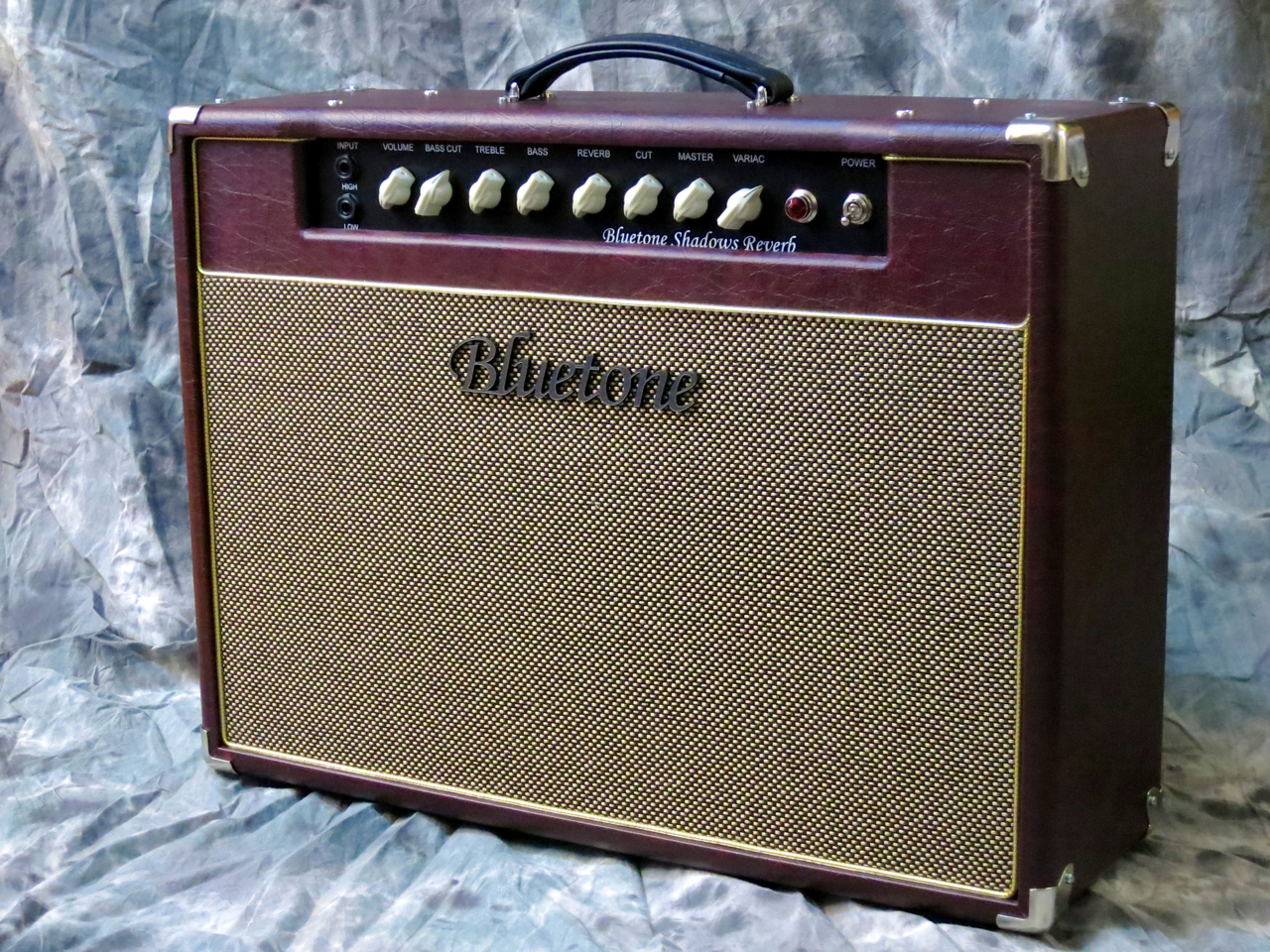
The Bluetone Black Prince Reverb guitar combo sees the boutique amp makers from Helsinki branch out into a new and interesting direction.
All the Bluetone models we have known thus far have been (and still are) produced as pure and genuine custom-made valve amplifiers.
This means that each new amp is ordered by the customer based on a certain Bluetone configuration on their website – like an à la carte-menu. The chosen model is then tweaked according to the customer’s wishes, and there are plenty of different options available – from the details of the amplifier’s internal specifications all the way to the type of finish of the cabinet and the font on the control panel.
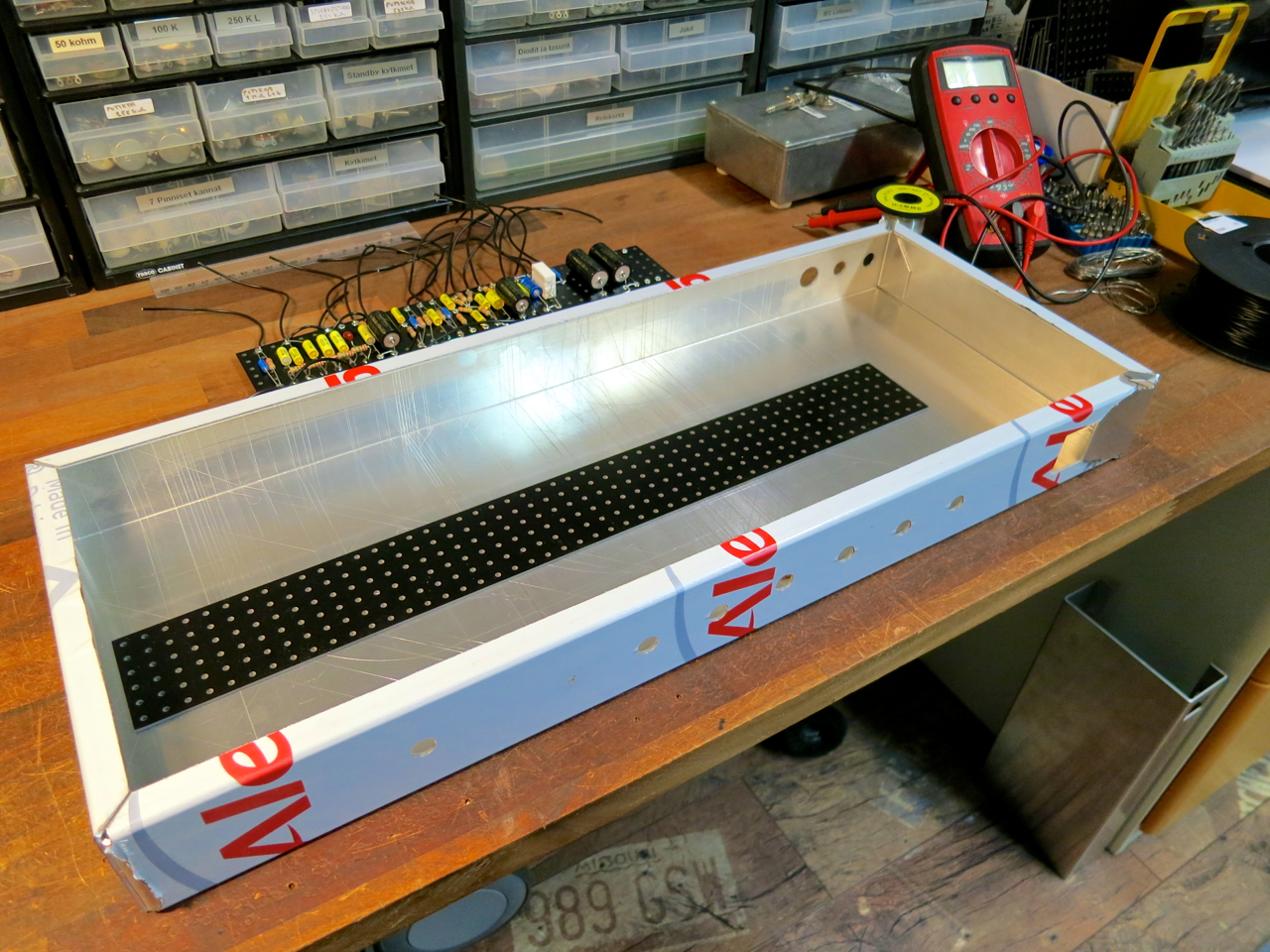
Due to the nature of custom amps, such as these, every Bluetone Custom amp is built completely by hand, starting with a clean slate – meaning: an empty metal chassis, and an empty fibreglass eyelet-board.
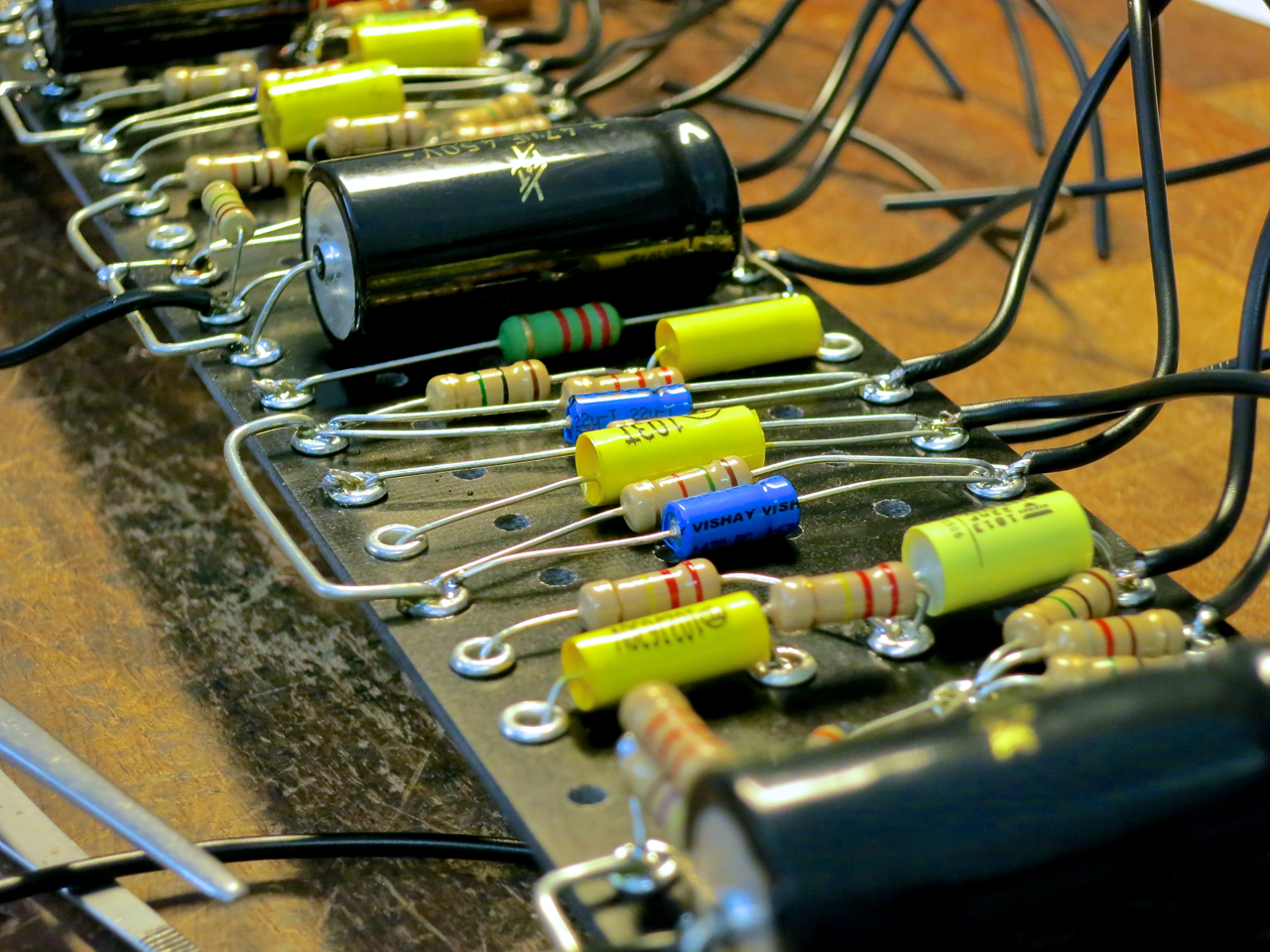
The board is then riveted at the right spots to take all the necessary wiring and electronic components going into this specific custom order. Everything is soldered into place by hand (point-to-point).
This is a very involved and time-consuming process, requiring a steady hand and a keen eye, which of course is reflected in the price of a Bluetone Custom amp. The advantage of building this type of point-to-point amp is, of course, that it gives the customer free reign to have his dream amp built.
Bluetone’s dynamic duo – Harry Kneckt and Matti Vauhkonen – have recently decided to launch a second model range alongside their strictly custom-made amps. The new range will include a few models that will be made and sold ”as is”, with only very limited options to choose from.
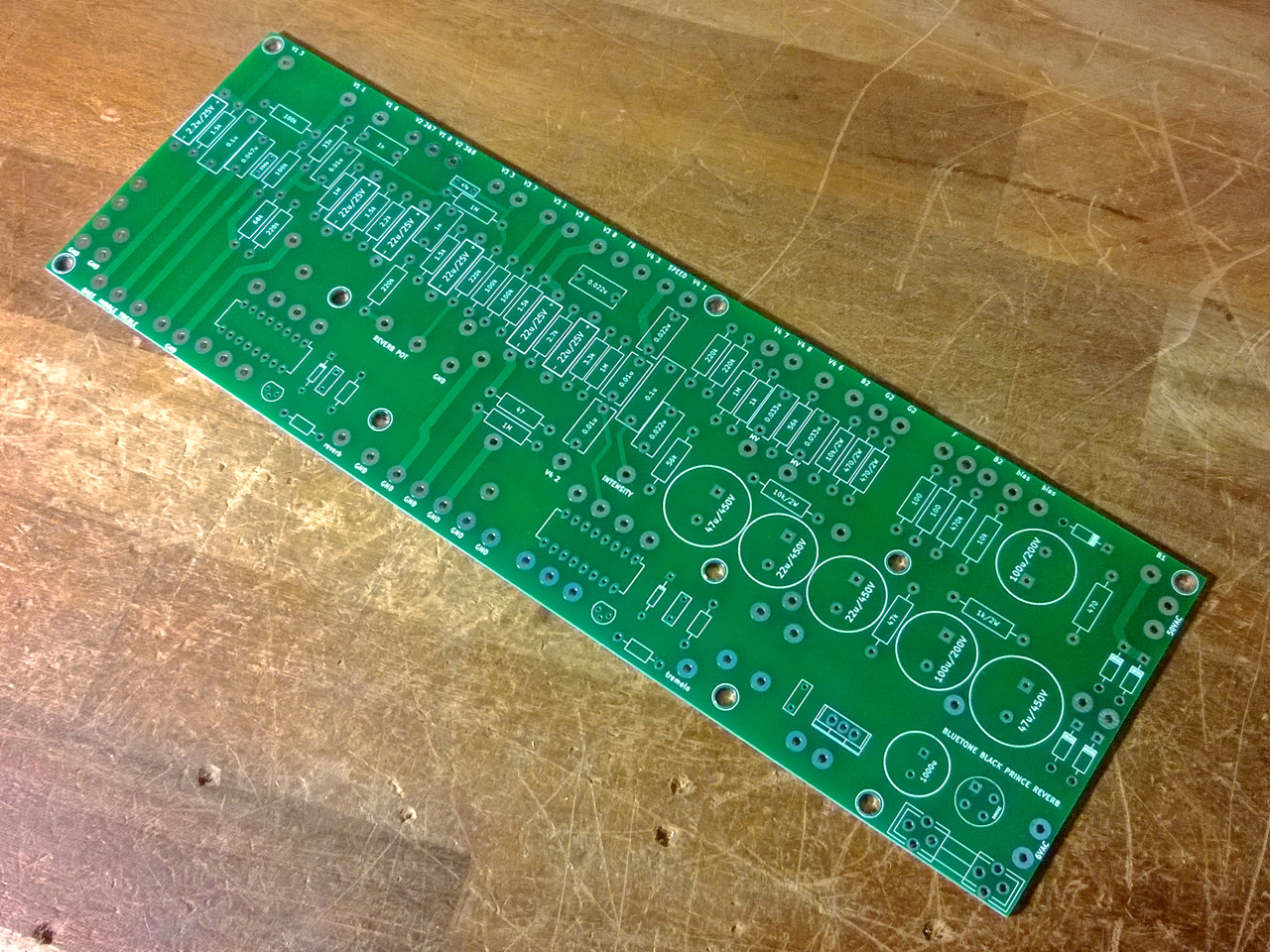
These new amps will be made using so-called hybrid boards.
Bluetone’s hybrid boards are very sturdy PCBs made of fibreglass, and are of a considerably higher quality than what you’d find in mass-produced valve amplifiers. Each component’s place on the hybrid is clearly labelled, and some of the ”wiring” is already incorporated into the board itself. In contrast to many mass-produced affordable amps, Bluetone’s new range will see all tubes and transformers mounted securely to the metal chassis (like on their custom-made amps, too), and not directly on the PCB (like on many affordable Far Eastern designs).
The rest of the building process is virtually identical to the more costly custom-made amplifiers – the components are fitted to the hybrid board by hand (from the top) and hand-soldered to the board. Thanks to the hybrid board the new amplifier range will be much easier and faster to produce, which will be reflected in the pricing of the new hybrid amps vis-à-vis the point-to-point custom orders.
****
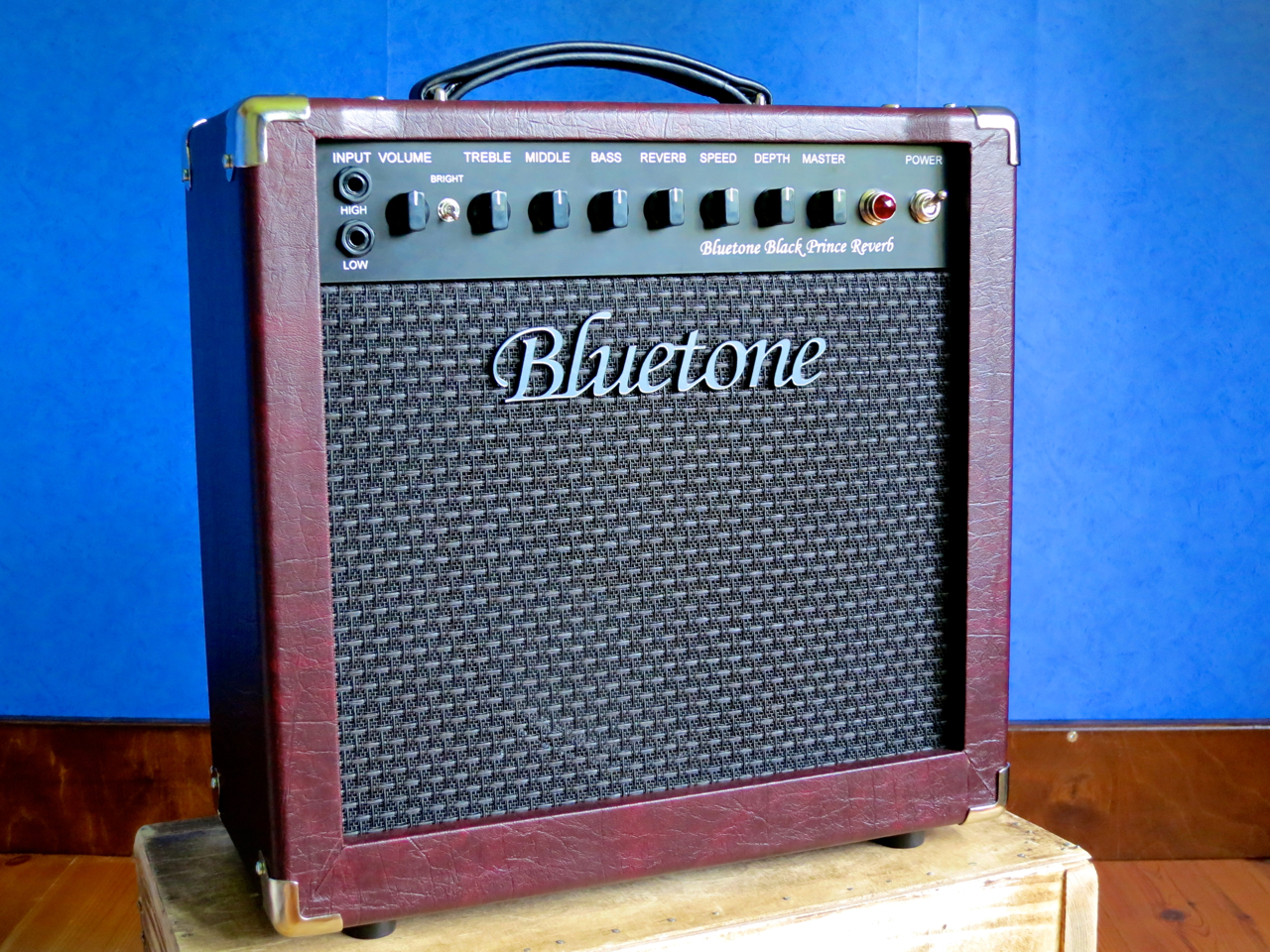
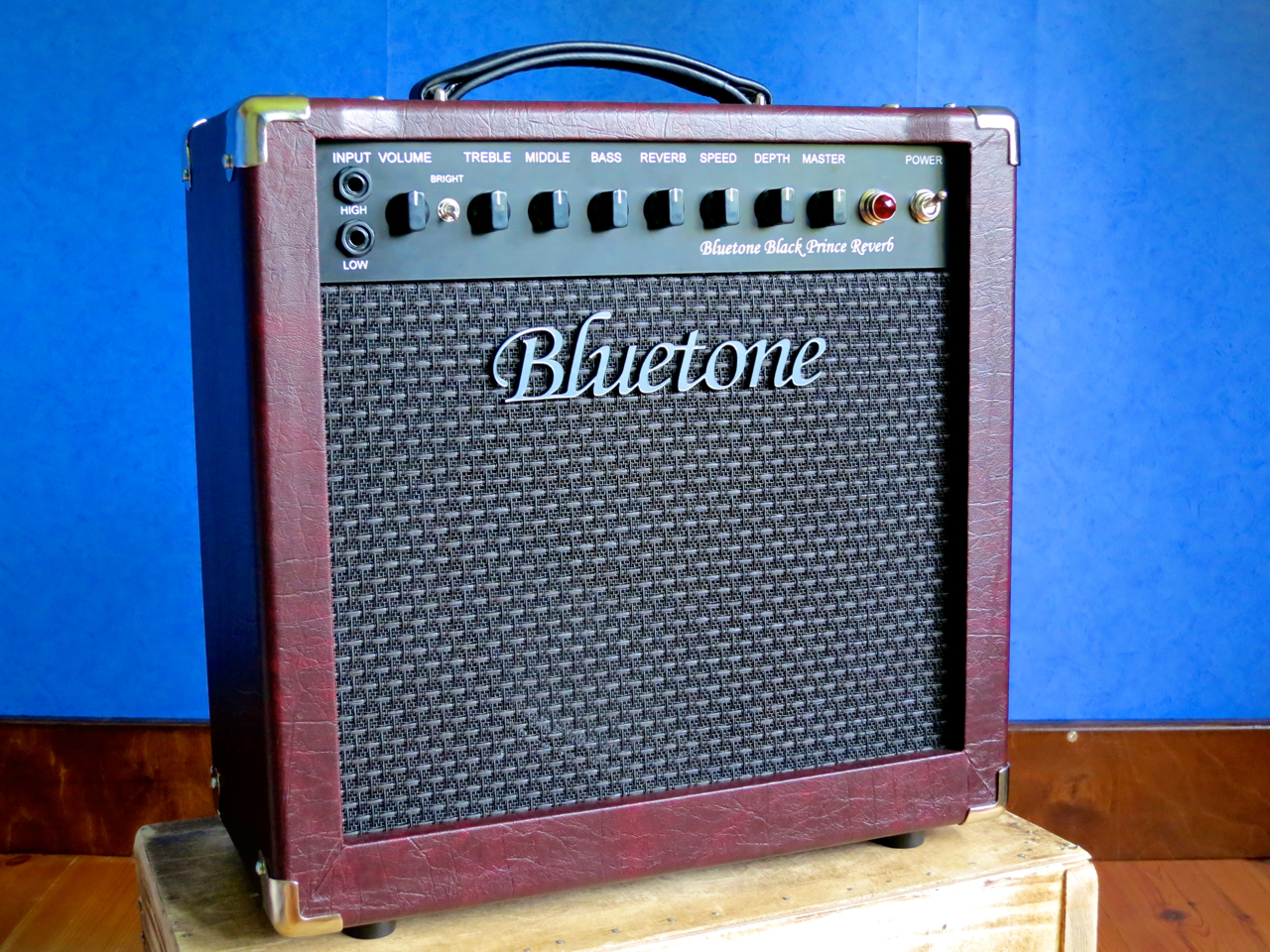
The first new Bluetone-combo is called the Bluetone Black Prince Reverb (approx. 1.500 €).
This compact and handy combo takes a lot of inspiration from Fender’s legendary ”Blackface” Princeton Reverb (version AA1164), but due to the Bluetone’s many refinements you can’t really call the Black Prince a straight copy.
In addition to the basic version in wine red tolex, you can also order the Black Prince Reverb in genuine tweed, or with an oiled cabinet made from mahogany (both at extra cost).
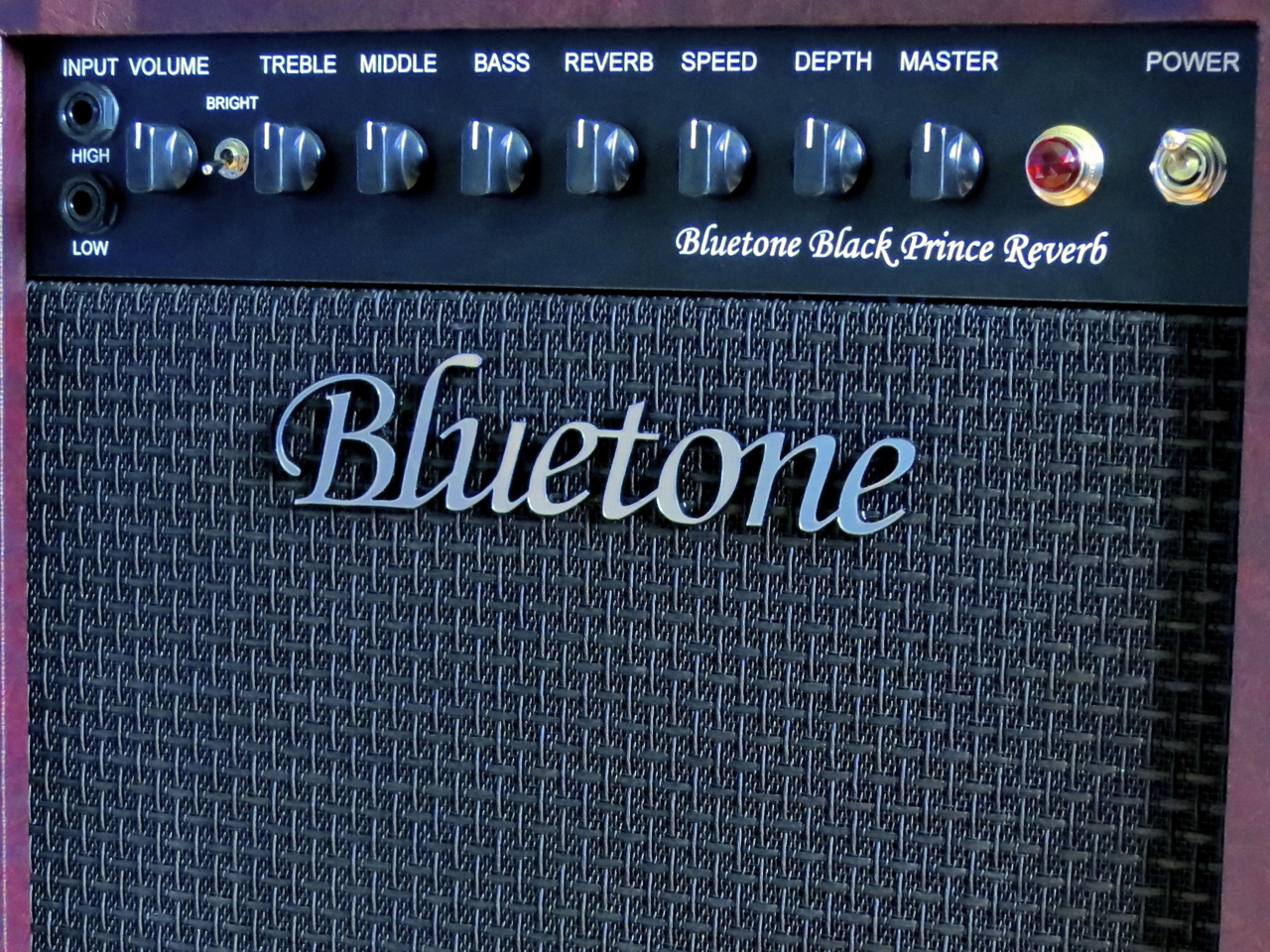
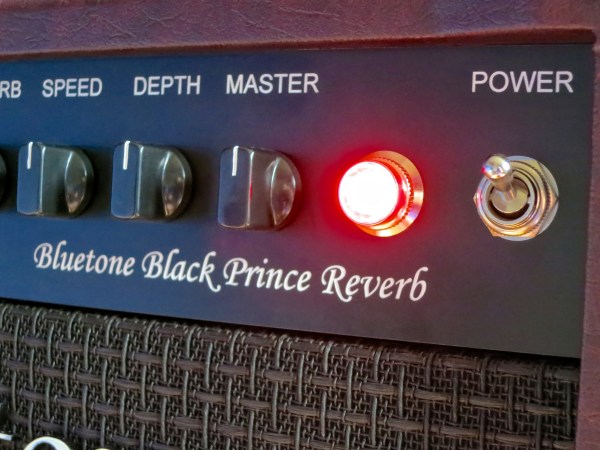
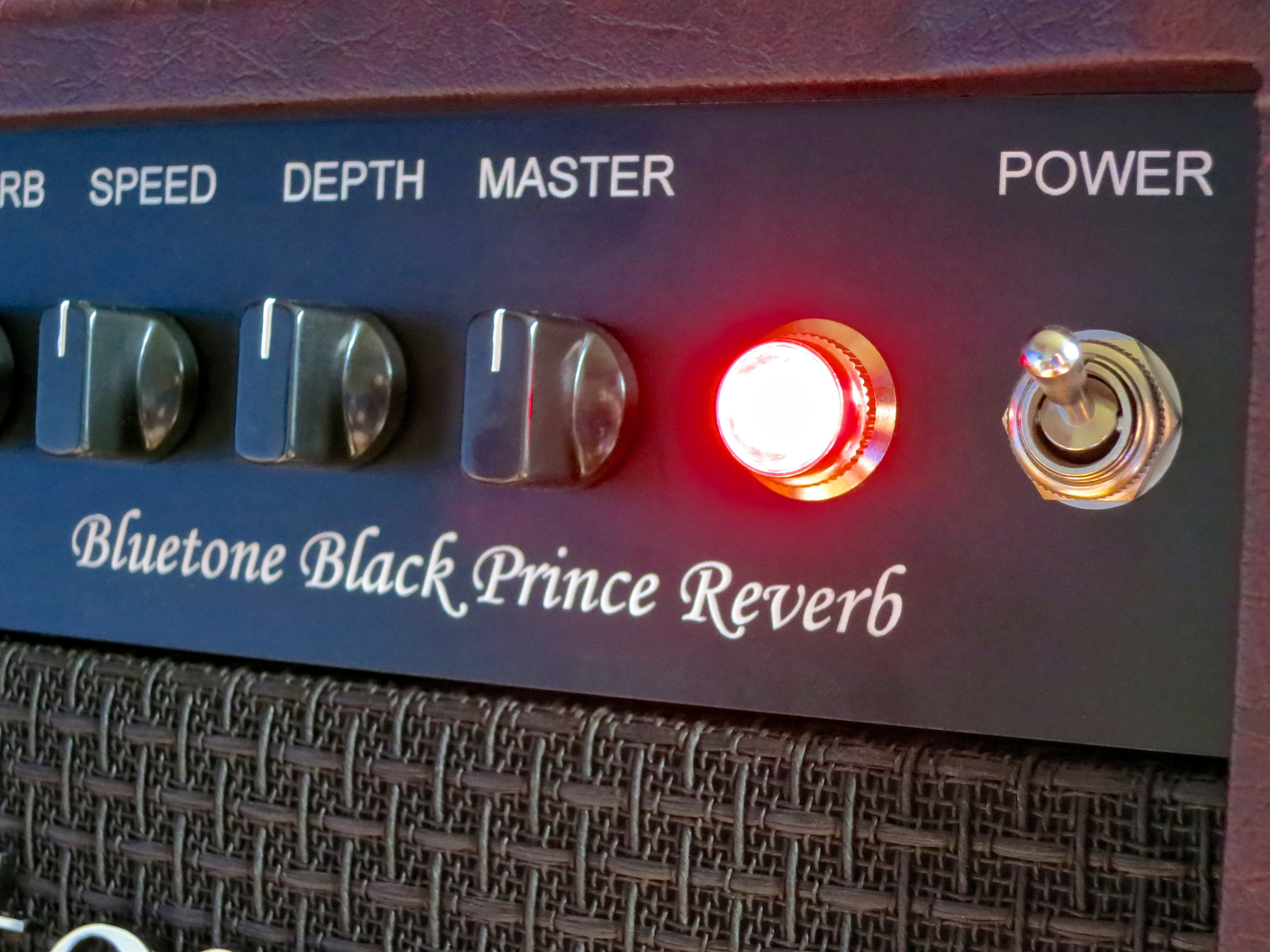
I very much like the businesslike and sober look of the Blacktone’s front panel. Everything is clearly labelled, which can be a great plus on a dimly lit stage.
The Bluetone Black Prince Reverb offers two different inputs for singlecoil and humbucker-equipped guitars (High and Low). The EQ-section is a three-band affair, with an additional Bright switch to liven up dull sounding pickups.
Even though the Black Prince Reverb is such a compact combo, it still featured both a genuine, valve-driven spring reverb and a tube tremolo.
Bluetone uses a post phase-inverter master volume in most of their designs, because it has the least negative impact on an amp’s tone and feel.
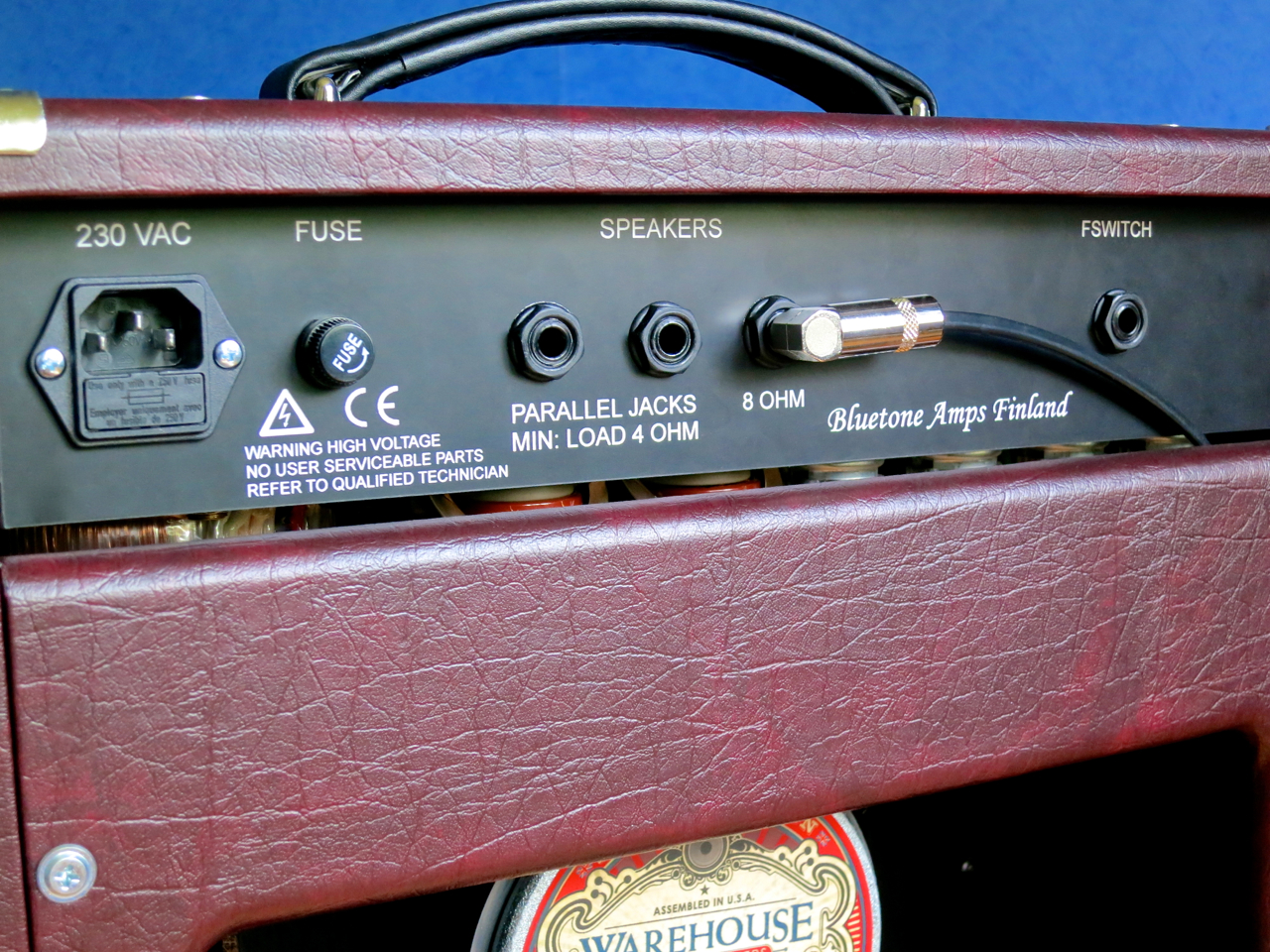
There’s a Fender-style open back on the Black Prince.
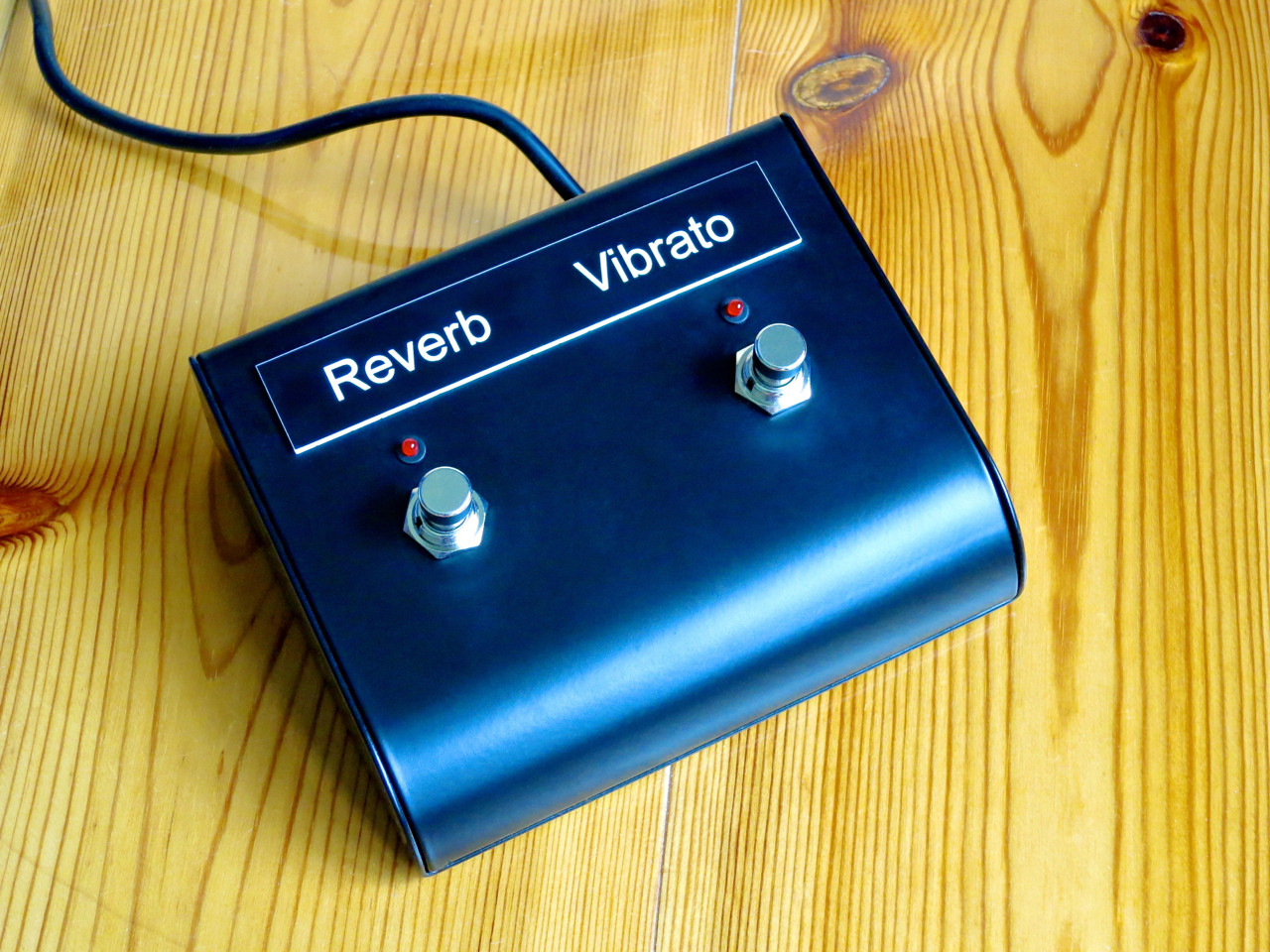
The back panel sports outputs for additional speakers, as well as the jack for the combo’s two-button footswitch unit (included).
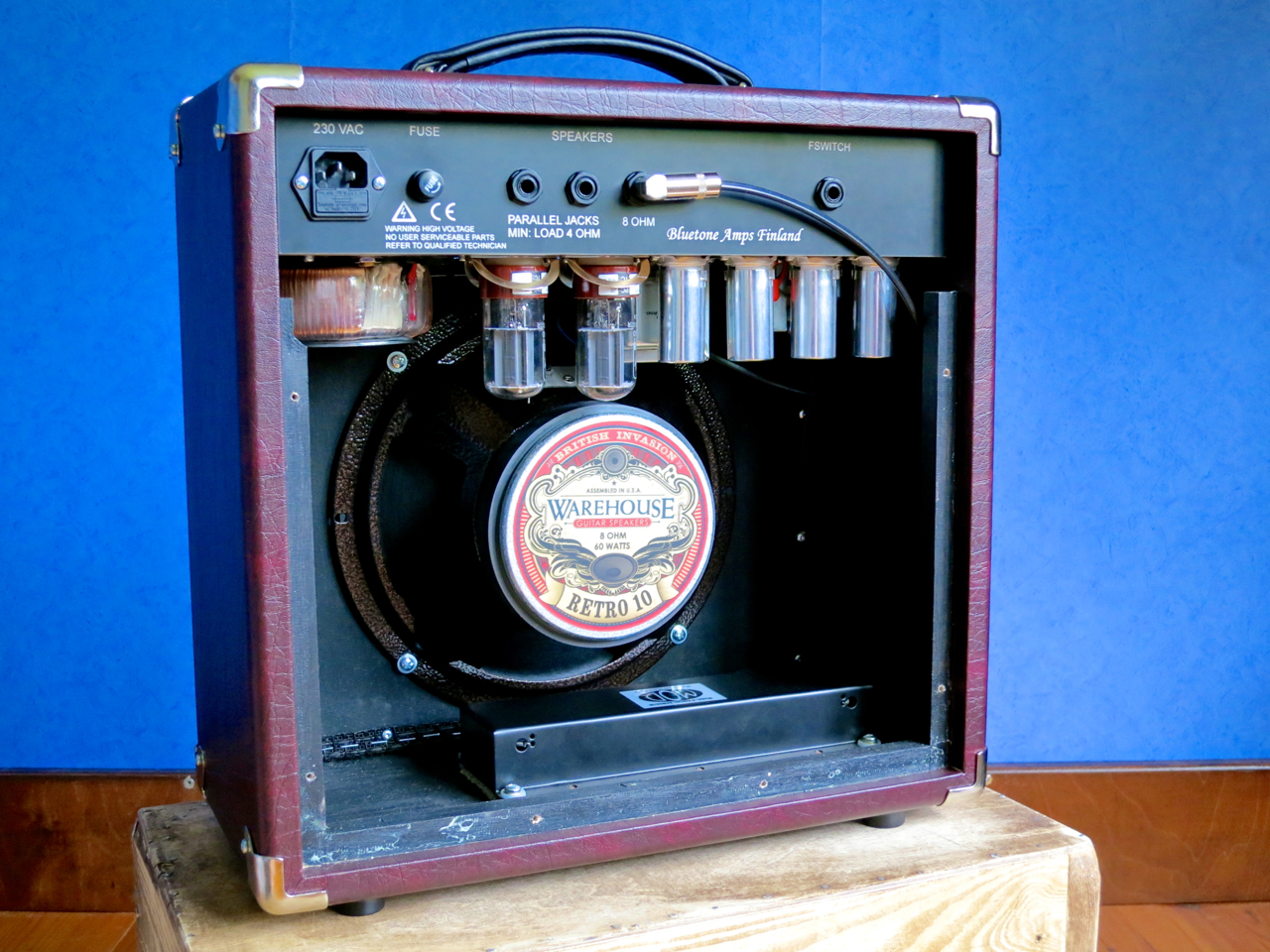
This is what the Bluetone looks like with the open back removed.
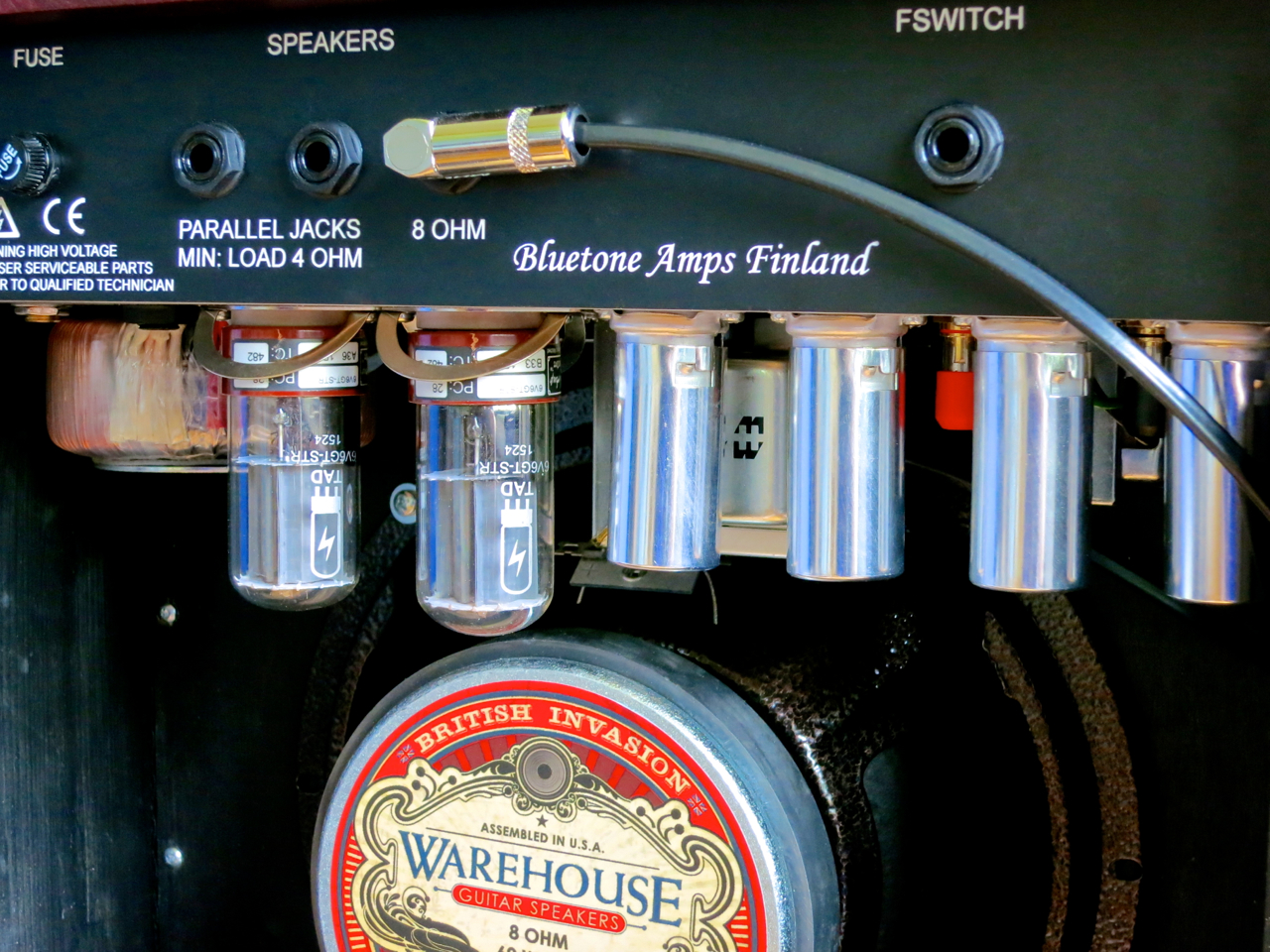
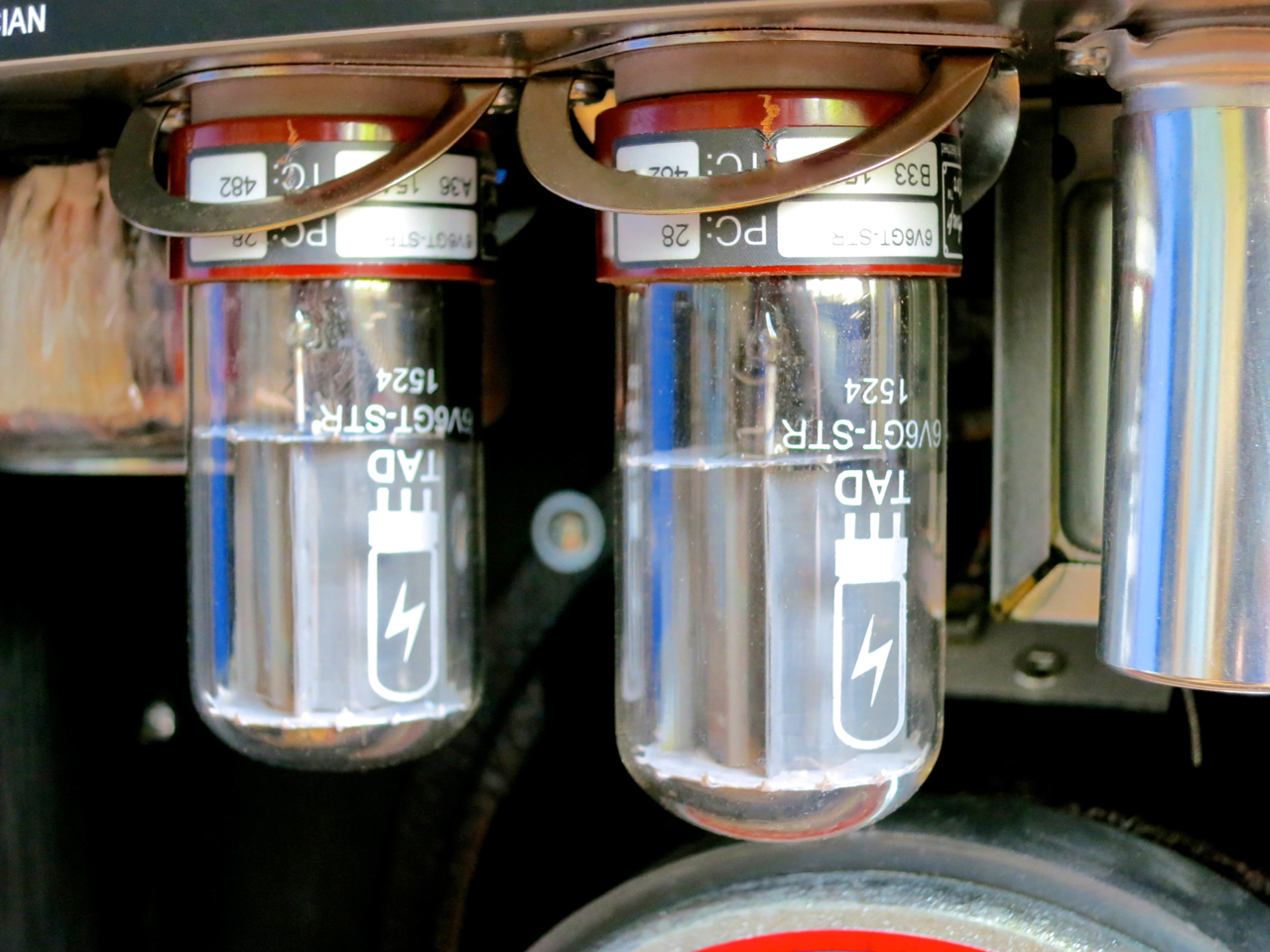
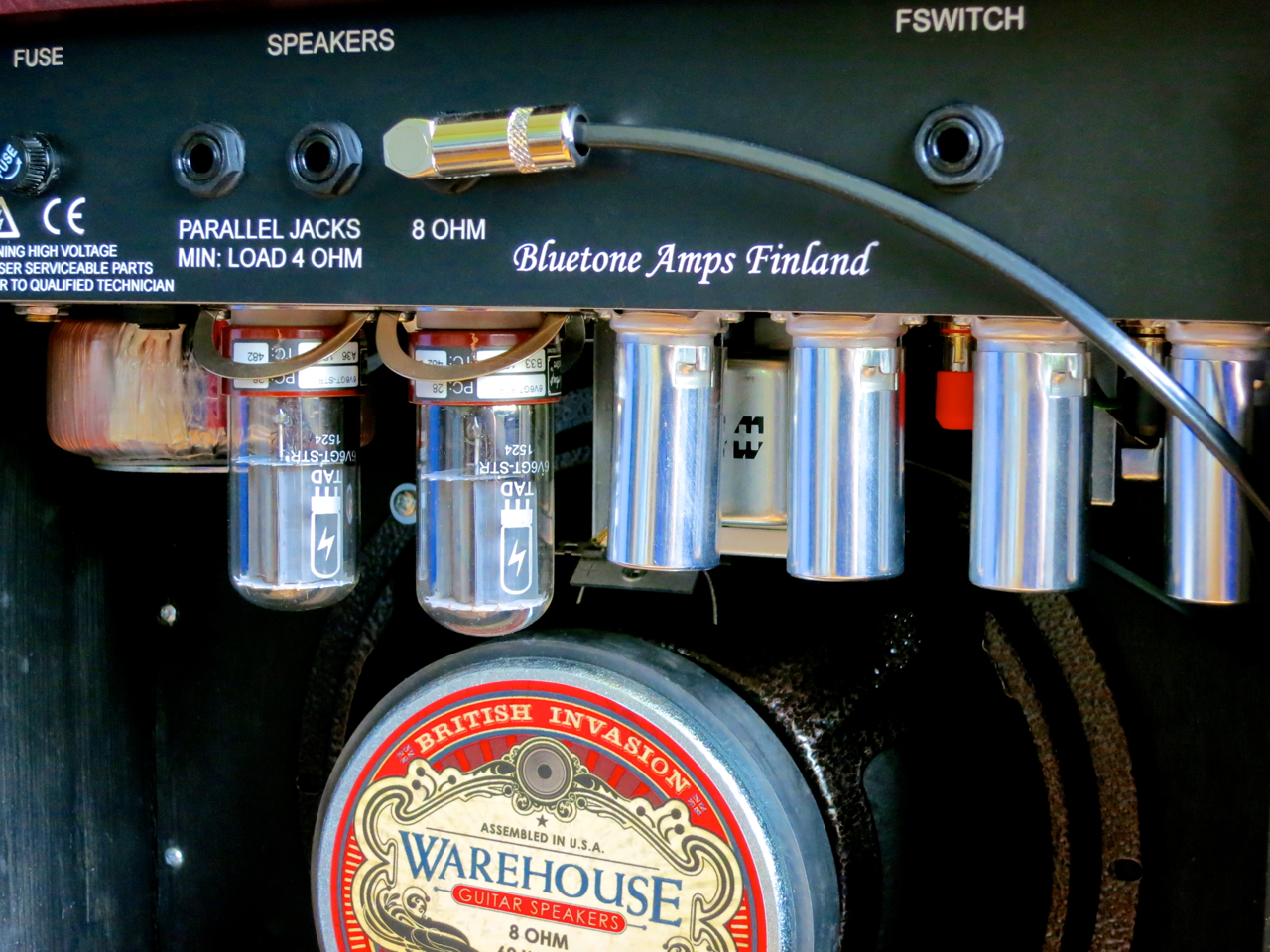
The Black Prince Reverb combo is an all-valve machine, loaded with the following tube types (from right to left):
The first 12AX7 is the combo’s preamp valve. The spring reverb circuit uses a 12AT7 and a 12AX7 valve. The 12AX7 works as the amp’s phase-inverter and tremolo tube.
The Black Prince leaves Bluetone’s workshop equipped with a pair of 6V6GT power valves, which will translate to about 20 watts of output. You can also re-bias this amp for a pair of 6L6GCs, which would boost the output to almost 30 watts.
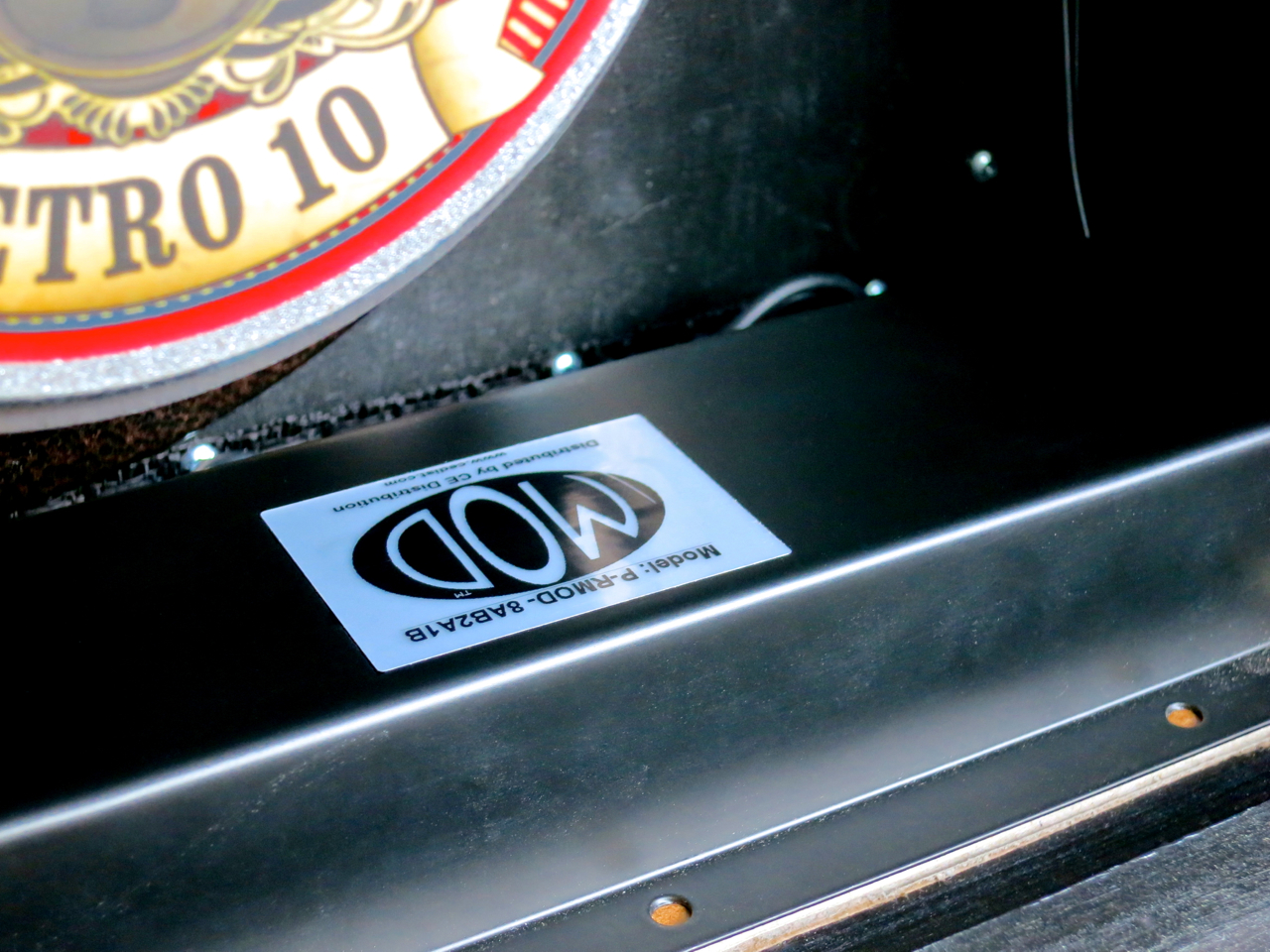
This combo’s short reverb tank is supplied by MOD.
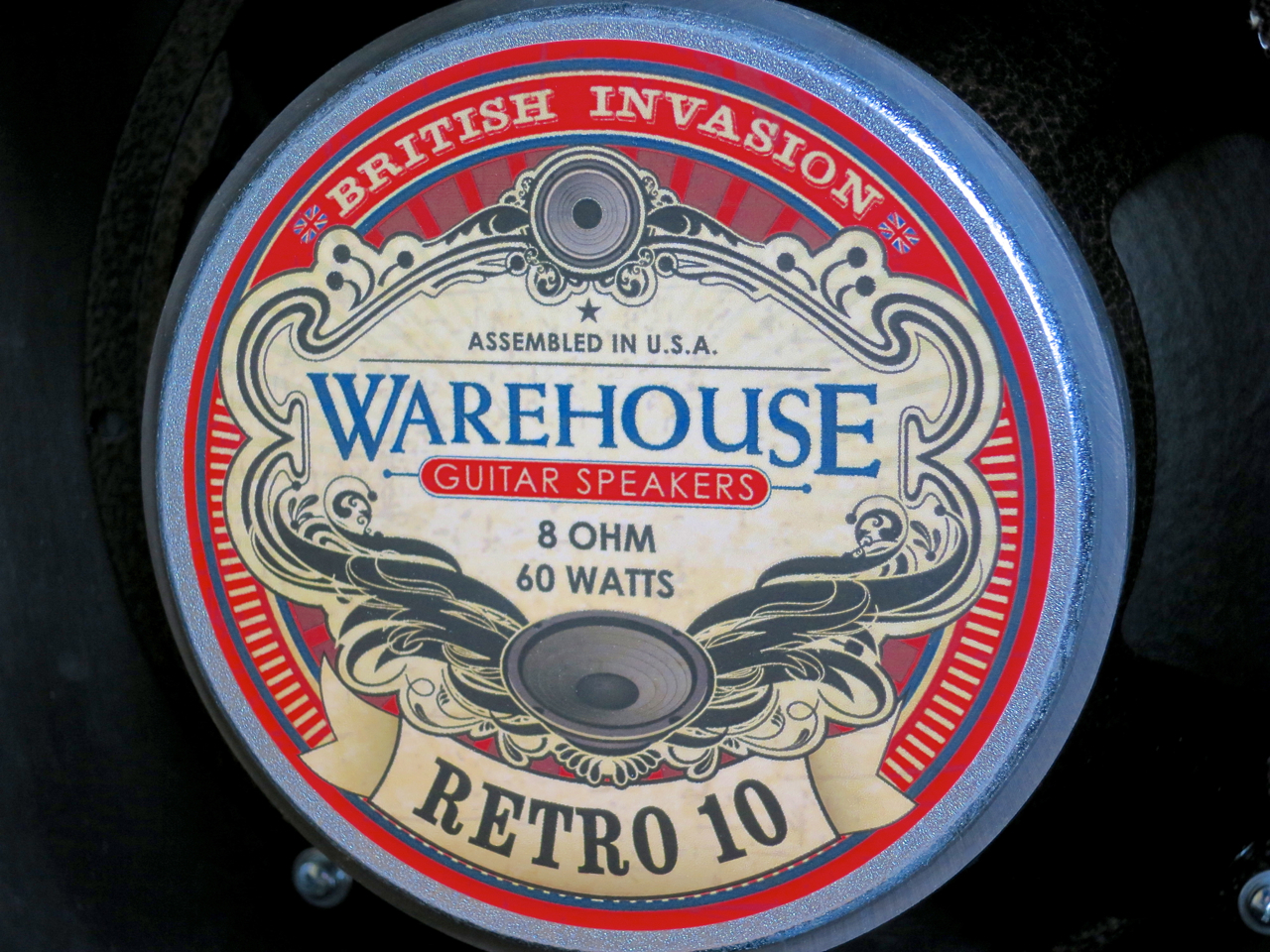
Bluetone have chosen a Warehouse Guitar Speakers Retro 10-speaker for their new combo, even though this model is distinctly different from the old Jensen speakers in vintage Fender designs.
This choice is, of course, deliberate and based upon many listening tests:
The WGS Retro, which is made to withstand far more output than this combo can deliver, keeps the Black Prince Reverb’s tones clean and dynamic under all circumstances. This speaker’s British character also makes the Bluetone-combo sound larger and fatter than you’d expect.
****
Oh, boy, this is a sound you cannot get enough of! At least in my case only a minute or two of playing the Black Prince was enough to make me consider getting myself in debt.
It’s hard to put into words what that special ingredient is, but this is what a clean electric guitar should sound like! This combo sounds clean, fresh and dynamic, but never clinical, cold or brittle. There a good dose of chime, but it doesn’t hurt your ears. The bass strings sound big, but never mushy.
The sound of the short MOD reverb tank is surprisingly dense and complex, and there’s more than enough of it to satisfy Surf Music fans. The Black Prince Reverb’s tremolo works like a treat, too, offering you anything from slow and soft to machine-gun mania.
Here’s a clip, recorded with a Fender Telecaster, gives you an idea of the Bluetone Black Prince Reverb’s dry tone, as well as its spring reverb and tremolo effects:
The Black Prince also excels in keeping your guitar’s own character intact. These three clips feature a Fender Telecaster…
…an Epiphone Casino…
…and a 1970s Japanese ”lawsuit” copy of a Gibson ES-335:
This combo’s fantastic clean tone is a fantastic platform for pedal addicts. The demo track was recorded using an analogue chorus pedal, a tube screamer-type overdrive, as well as the amp’s built-in reverb and tremolo.
The rhythm parts were played on a Fender Stratocaster, while the lead was played on a Hamer USA Studio Custom:
****
In my view, Bluetone’s Black Prince Reverb is a top-drawer choice as a combo for use at home or in the studio. It’s also great for smaller gigs, when too much noise on stage can be a problem, or you can mike it up for larger venues.
The Black Prince Reverb is a nicely compact boutique-grade valve combo offering fantastic cleans, as well as fine reverb and tremolo effects.
This amp hasn’t been spoiled by unnecessary ”tube voodoo” or distracting graphic. I’m all for the clean and understated looks this Bluetone has to offer!
This is a handmade, Finnish boutique combo, offered at a very fair price.
****
Bluetone Black Prince Reverb
1.500 €
Contact: Bluetone Amps
****
Pros:
+ value-for-money ratio
+ handmade in Finland
+ workmanship
+ fine spring reverb and valve tremolo
+ sound
+ master volume-control
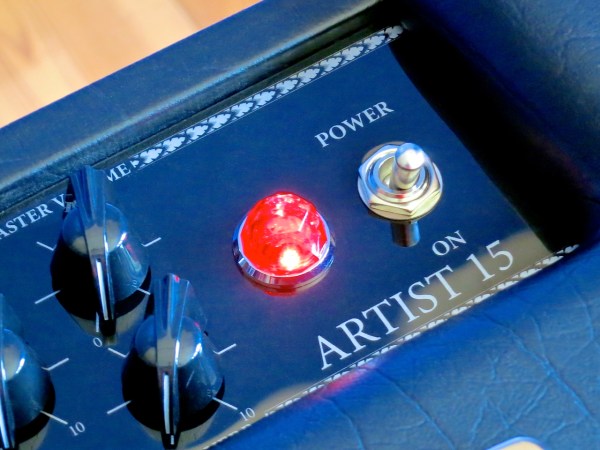

In a way Blackstar Amplification’s new Artist Series breaks new ground for the British amp maker.
Until now most of Blackstar’s designs were based on the typically British tones of EL34 and EL84 power tubes, often associated with Marshall designs.
The new Artist combos feature power amps built around 6L6 valves, as used in many of Fender’s classic designs. According to Blackstar the new Artist amps are designed to combine the best bits of the typically British Class A tone (with two ECC83s in the preamp section) with the dynamic range and chiming top end of a 6L6 power section.
Kitarablogi.com was given the opportunity to take the smaller Artist model – the Blackstar Artist 15 (current price in Finland: 799 €) for a spin.
****

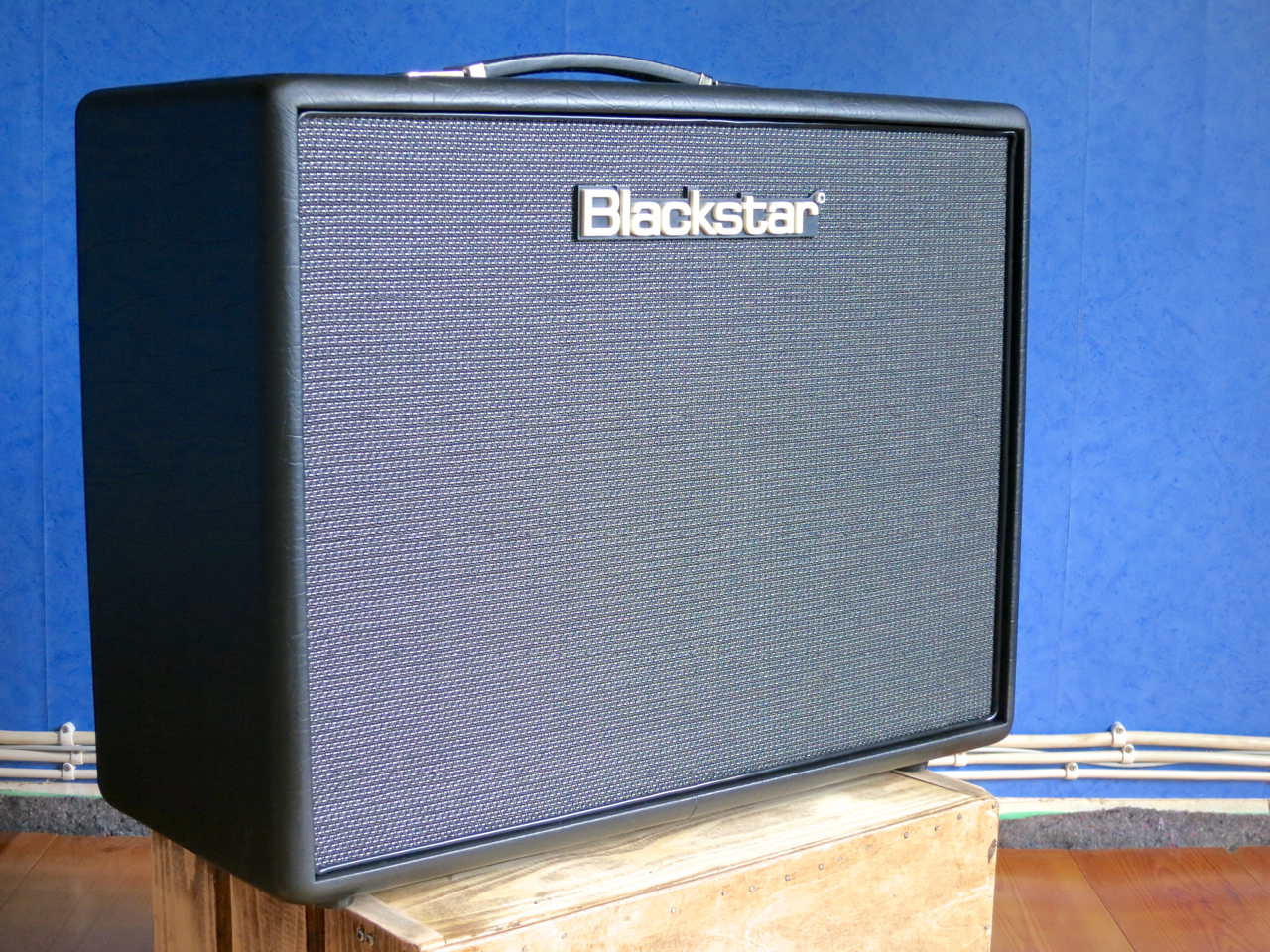
The Blackstar Artist 15 looks like a typical Blackstar combo – black vinyl covering and a dark grey grille cloth.
For a combo that comes equipped with a single 12-inch speaker the amp’s cabinet is rather large. The reason for the cabinet’s size becomes clear when you look at the Artist 15 from behind.
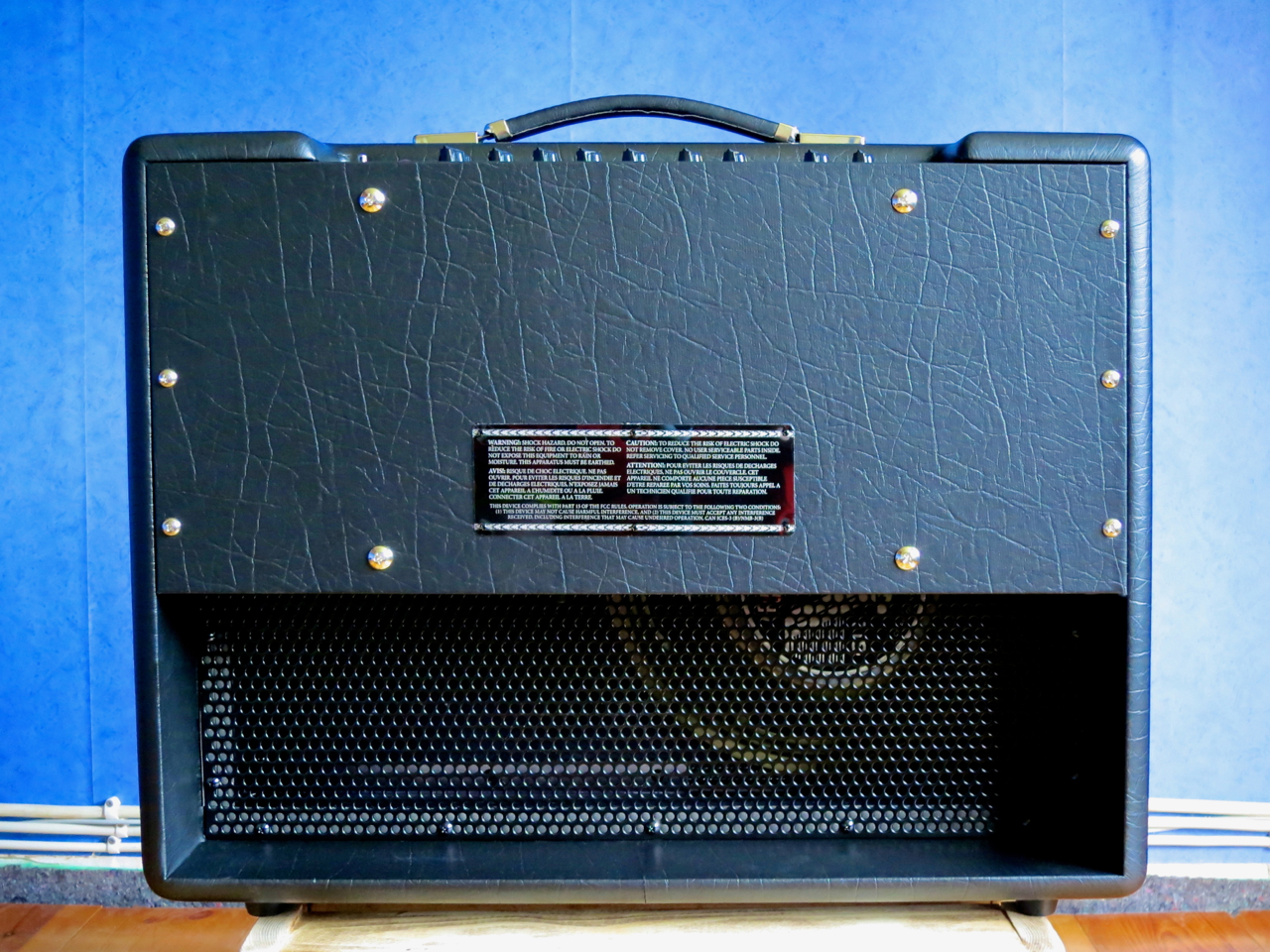
The combo’s Celestion V-Type G12-speaker has been placed deliberately to one side of the combo. Blackstar doesn’t tell us exactly why this configuration has been chosen, but I’d wager that the idea behind this is to harness the benefits of a large, stiff front baffle and a larger cabinet – namely: a crisp attack, and a warm, full bottom end.

Celestion’s V-Type comes loaded with a ceramic magnet. According to Celestion this speaker combines a classic tonality with a modern power rating.

The Blackstar’s back panel sports a whole array of connectors for things such as external speaker cabinets, a speaker-emulated line out, an effects loop, as well as the channel footswitch that comes with the amp.
****

Blackstar’s Artist 15 is rated at 15 watts of output and features two preamp channels:
Channel 1 is the so-called boutique channel, designed to put the least possible amount of components between your guitar and the speaker. This channel sports only two controls – Volume and Tone – before the signal is sent on to the master section.
Channel 2 gives you the full Blackstar-experience – you’ll find separate Gain and Volume knobs, a three-band EQ section, as well as Blackstar’s proprietary ISF-control. Setting the ISF knob to zero will result in bright and sinewy Fender Blackface-style sounds, while ISF at full on will give you muscular, Marshall-type tones from this channel.
In addition to the Master Volume control, the Artist 15’s master section also includes the level control for the combo’s very nice digital reverb.
Channel 1 clearly has a much rounder and warmer basic tonality than the (more versatile) second channel. With clean settings Channel 1 will give you a fuller mid-range compared to the more Fender-like, chimey Channel 2.
Here’s what Channel 1 sounds like played clean with an Epiphone Casino (first clip) and a Gibson Melody Maker SG (second clip):
…and here’s Channel 2 played with the same guitars:
The Artist 15’s channels also differ in the amount of gain they offer:
Channel 1 will take you from clean all the way to Rockbilly-style breakup and traditional Blues overdrive, while Channel 2 offers more than enough dirt for chunky Rock tones.
Here’s Channel 1 at full gain (Casino and Melody Maker SG):
…and here are two clips of Channel 2 with Gain full up:
The rhythm guitar tracks on the demo song have been recorded with a 1970s Japanese ES-335 copy (made by Kasuga; left channel) and a maple-necked Fender Stratocaster (right channel). The lead is played on the Kasuga:
****
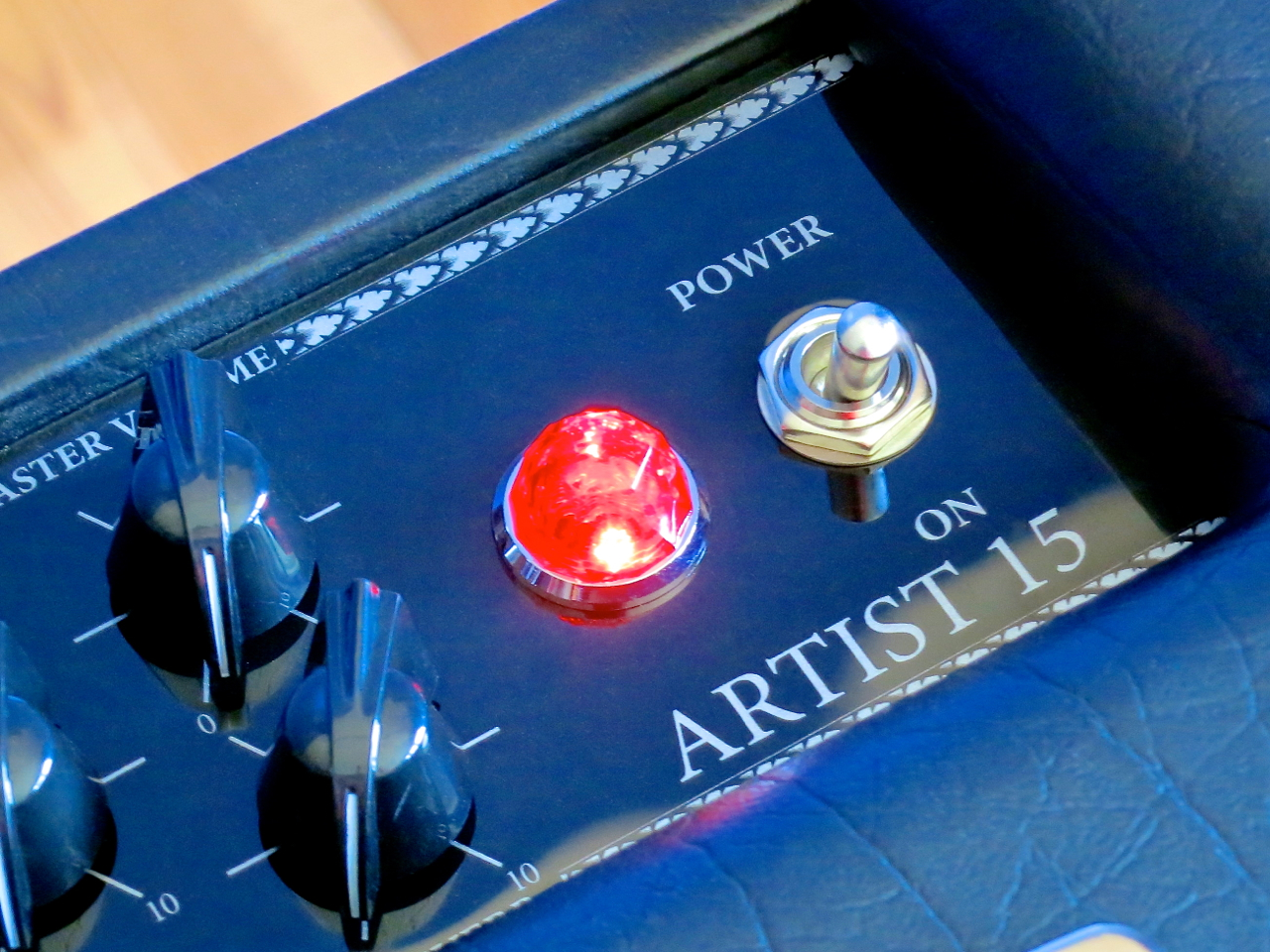
The new Blackstar Artist 15 isn’t your typical two-channel combo, which offers you a clean channel and a dirty channel. This is a valve amp that’s all about choices and flexibility.
Blackstar have noticed that pedalboards are becoming en vogue again, which is why their new Artist combos offer enough headroom for clean tones in both of their two channels.
For pedal users the big advantage of the Artist 15’s architecture lies in the fact that the combo offers two high-quality clean variants in the same amp. Channel 1 is a back-to-basics boutique-/AC30-style channel, while Channel 2 offers a much broader range of clean tones, all the way from Fender to modern Marshall.
Of course, you’re free to use the Blackstar Artist 15 in the traditional channel-switching fashion, too, which will give you a top-notch clean sound from Channel 1, and a very versatile array of quality overdriven and distorted tones from Channel 2.
Either way – the Blackstar Artist 15 hits bull’s-eye, in my opinion, and I can only recommend checking one out for yourselves.
****
Blackstar Artist 15
799 €
Finnish distribution: Musamaailma
Pros:
+ workmanship
+ clean headroom
+ versatile amp sound
+ great reverb
• fully programmable digital amp head
• Frank Gambale’s signature presets
• fully-featured amp, cabinet and microphone modelling
• wide range of digital effects
• stereo power amp section (2 x 150 W @ 8 ohm; 2 x 250 W @ 4 ohm)
****
Demo Track
• two clean rhythm guitars – Fender Telecaster (left channel) & Kasuga ES-335 copy (right channel)
• two auto-wah/filter rhythm guitars – Fender Stratocaster (left) & Gibson Melody Maker SG (right)
• lead guitar – Gibson Melody Maker SG
• all guitar tracks recorded direct using Frank Gambale presets (no added effects) via the Multiamp’s balanced XLR-output
****
Lisätiedot: Musamaailma
Bluetone Black Prince Reverb -kitarakombo on uusi aluevaltaus helsinkiläiselle putkivahvistimien valmistajalle.
Tähän mennessä kaikki Bluetone-mallit olivat puhtaasti kokonaan custom-periaatteella rakennettuja pelejä.
Se tarkoittaa, että firman sivustolta löytyy useita valmiita konfiguraatioita – ikään kuin à la carte -ruokalista – joista asiakas valitse hänelle sopivamman kustomoinnin lähtökohdaksi. Ja näitä lisäoptioita löytyy runsaasti – oman vahvistimen tarkoista sisäisistä ominaisuuksista kotelon viimeistelyyn ja säädinpaneelin fonttiin.
Tällainen valinnan runsaus tarkoittaa, että Bluetone custom-vahvistimen teko lähtee aina ns. tyhjästä pöydästä – sopivan kokoisesta metallikotelosta ja tyhjästä lasikuituisesta reikälevystä.
Reikälevystä tehdään ns. eyelet board lisäämällä oikeisiin kohteisiin popniittejä, joihin elektroniikan komponentit ja tarvittavat johdot juotetaan käsin kiinni (= point-to-point-rakenne).
Tämä on hyvin monimutkainen ja aikaa vievä prosessi, mikä näkyy luonnollisesti valmiin tuotteen hinnassa. Point-to-point-tekotapa kuitenkin antaa Bluetonen asiakkaille kustomoinnissa käytännössä vapaat kädet.
Bluetonen johtokaksikko – Harry Kneckt ja Matti Vauhkonen – on hiljattain päättänyt laittaa firman custom-vahvistimien rinnalle uuden sarjan, joka tulee tarjoamaan muutamia ”valmiita” vahvistinmalleja, joille on tarjolla vain hyvin rajattu määrä valittavia lisäoptioita.
Uutuusmalleissa voi virtaviivaistaa kokoonpanoprosessia käyttämällä elektroniikan alustana ns. hybridilevyä.
Bluetonen hybridilevyt ovat lasikuituisia, ja erittäin laadukkaita ja kestäviä, eikä niitä voi verrata massatuotannossa käytettäviin, heppoisiin piirilevyihin. Jokaisen komponentin paikka on tarkoin merkattu, ja monet osien välisistä ”johdotuksista” on hybridilevyssä jo valmiiksi olemassa. Uutuusvahvistimien putket ja muuntimet asennetaan kuitenkin edelleen tukevasti vahvarin metallikoteloon, eikä piirilevylle (niin kuin monissa halpavahvistimissa).
Muu valmistus tapahtuu uusissa malleissa ihan samalla tavalla kuin Bluetonen custom-peleissä – komponentit lisätään käsin (ylhäältä) hybridilevylle ja ne juotetaan käsin paikoilleen. Hybridilevyn ansiosta vahvistin valmistuu vain huomattavasti nopeammin ja helpommin, mikä tullaan näkemään myös hintaerona hybridilevy- ja point-to-point-mallien välillä.
****
Ensimmäinen hybridilevyä käyttävä Bluetone-kombo on nimeltään Bluetone Black Prince Reverb (1.500 €).
Kätevän kokoisen, yksikanavaisen boutique-kombon inspiraationa on toiminut Fender ”Blackface” Princeton Reverb (versio AA1164), mutta Bluetone-vahvistimessa on niin monta parannusta, ettei Black Princen tapauksessa voi edes puhua kopiosta.
Viininpunaisella tolexilla päällystetyn perusversion lisäksi tarjotaan Black Prince -kombo (lisämaksua vastaan) myös aidolla tweed-kankaalla tai öljytyllä (täyspuisella) mahonkikotelolla.
Tykkään itse kovasti Bluetonen hyvin asiallisen näköisestä etupaneelista, jossa jokainen säädin ja kytkin on selkeästi merkitty. Hektisissä live-tilanteissa selkeä etupaneeli voi olla kullan arvoinen.
Bluetone Black Prince Reverb tarjoaa singlecoil- ja humbucker-kitaroille omat tulojakit (High ja Low). EQ-osasto tarjoaa kolme säädettävää kaistaa, sekä lisäksi Bright-kytkimen, josta saa tarvittaessa vielä enemmän eloisuutta preesensalueelle.
Vaikka kyse on melko kompaktista putkikombosta, löytyy Black Prince Reverbistä sekä aito, putkivahvistettu jousikaiku, että putkitremolo.
Bluetone käyttää vahvistimissaan aina PPIMV-kytkennällä (post phase-inverter master volume) toimivia master volume -säätimiä, koska tällä tavalla toteutettu master volume vaikuttaa vähiten vahvistimen soundiin.
Black Prince -kombon takaseinä on Fender-tyylisesti avoin.
Takapaneelista löytyy lähtöjä lisäkaiuttimille, sekä liitin kombon mukaan tulevalle jalkakytkimelle.
Tällainen on näky, kun takaseinä on irrotettu Bluetone-kombosta.
Black Prince Reverb on täysputkikone ja putkivarustus on seuraavanlainen (oikealta vasempaan):
Ensimmäinen 12AX7 on kombon etuasteputki. Kaiun send ja return toimivat yhden 12AT7- ja yhden 12AX7-putken varassa. Viimeinen 12AX7 hoitaa sekä vahvarin vaiheenkääntämistä että tremolo-efektin tuotantoa.
Black Prince lähtee Bluetonen pajalta kahdella 6V6GT-pääteputkella, jotka tuottavat noin 20 wattia lähtötehoa. Tätä komboa pystyy myös käyttämään – biasoinnin jälkeen – kahdella 6L6GC-putkella, jolloin lähtöteho nousee lähelle 30 wattia.
Tämän kombon lyhyt jousikaikutankki tulee MOD:n valikoimasta.
Bluetone on valinnut Warehouse Guitar Speakersin Retro 10 -kaiuttimen uutuuskomboonsa, vaikka tämä on ihan erilainen kaiutin kuin vanhoissa Fendereissä käytetty Jensen.
Valinta oli kuitenkin tietoinen ja monien kokeilujen tulos:
Tehonkestoltaan ehkä hieman ”ylimitoitettu” WGS Retro varmistaa, että Black Prince Reverbin soundi pysyy mahdollisimman puhtaana ja dynaamisena. ”Britti-soundiin” viritetty luonne taas tekee Bluetone-kombon soundista tukevamman ja isomman.
****
Voi pojat, tästä soundista voi tulla riippuvainen! Ainakin minun tapauksessani vain muutaman soinnun soittaminen riitti herättämään ajatuksia pikalainan ottamisesta.
On hyvin vaikea kuvailla tarkoin, mitä se on, mutta juuri tällaiselta puhtaan sähkökitaran pitää soida! Soundi on puhdas ja dynaaminen, mutta ei koskaan kylmä tai kliininen. Kombon sointi on kuulas ja raikas, muttei ärsyttävän terävä. Bassokielet soivat tukevasti, mutta ne pysyvät kuitenkin selkeinä.
Lyhyen MOD-jousikaiun soundi on yllättävän monitahoinen ja tiheä, ja sitä on tarjolla hyvinkin runsaasti. Myös Black Prince Reverbin tremolo toimii esimerkillisesti – tarjolla on kaikenlaisia tremolomuotoja kevyestä ja hitaasta hyvin nopeaan ja rankkaan vatkaukseen.
Tässä pätkässä esitetään Telecasterilla Bluetone Black Prince Reverb -kombon kuivaa soundia, sekä kombon kaiku- ja tremolo-efektit:
Black Prince säilyttää myös mallikkaasti eri kitaroiden soundillisia eroja. Näissä kolmessa pätkissä soivat Fender Telecaster…
…Epiphone Casino…
…ja japanilainen 1970-luvun kopio Gibson ES-335 -mallista:
Kombon erittäin terve puhdas soundi toimii myös todella hyvin efektipedaalien kanssa. Demobiisissä on käytetty – Black Princen oman tremolon ja kaiun lisäksi – analogista chorus-pedaalia, sekä Tube Screamer -tyylinen säröpedaali.
Komppikitarana toimii Fender Stratocaster, kun taas soolo-osuudet on soitettu Hamer USA Studio Custom -kitaralla:
****
Bluetone Black Prince Reverb on mielestäni erittäin laadukas valinta koti- ja studiovahvistimeksi, sekä sellaisille keikoille, joissa ei tarvita lavalla suuria äänenvoimakkuuksia (tai joissa mikitys ja monitorointi toimii hyvin).
Black Prince Reverb on kätevän kokoinen boutique-luokan putkikombo loistavalla clean soundilla, täyteläisellä jousikaiulla ja tyylikkäällä tremolo-efektillä.
Vahvistinta ei ole pilattu lapsellisella putkivoodoolla tai sekavalla graafisella toteutuksella, vaan vankalla asialinjalla mennään – ja hyvä niin!
Tämä on käsintehty, kotimainen laatuvahvistin. Tämän valossa pidän Black Prince Reverbin hintaa jopa melko edullisena.
****
Bluetone Black Prince Reverb
1.500 €
Lisätiedot: Bluetone Amps
****
Plussat:
+ hinta-laatu-suhde
+ käsintehty Suomessa
+ työnjälki
+ jousikaiku ja putkitremolo
+ soundi
+ master volume -säädin

• Handmade in Finland
• Approx. 20 Watts of output power
• Single-channel valve amp
• Three-band EQ with Presence switch
• Valve-driven MOD spring reverb
• Valve-driven tremolo effect with Speed and Depth controls
• PPI Master Volume control
• Single 10-inch WGS Retro speaker
• Four preamp valves (3 x 12AX7; 1 x 12AT7)
• Two power valves (2 x 6V6GT)
• Can also be run with two 6L6GC power valves (25-30 W output)
• More info at:
www.bluetone.fi/en/black-prince/
****
Demo Track (inspired by ”I Wish It Would Rain Down” by Phil Collins)
• Rhythm Guitar tracks – Fender Stratocaster
• Lead Guitar – Hamer USA Studio Custom
• Joyo JF-37 Analog Chorus
• Joyo JF-01 Vintage Overdrive
• Recorded with a Shure SM57
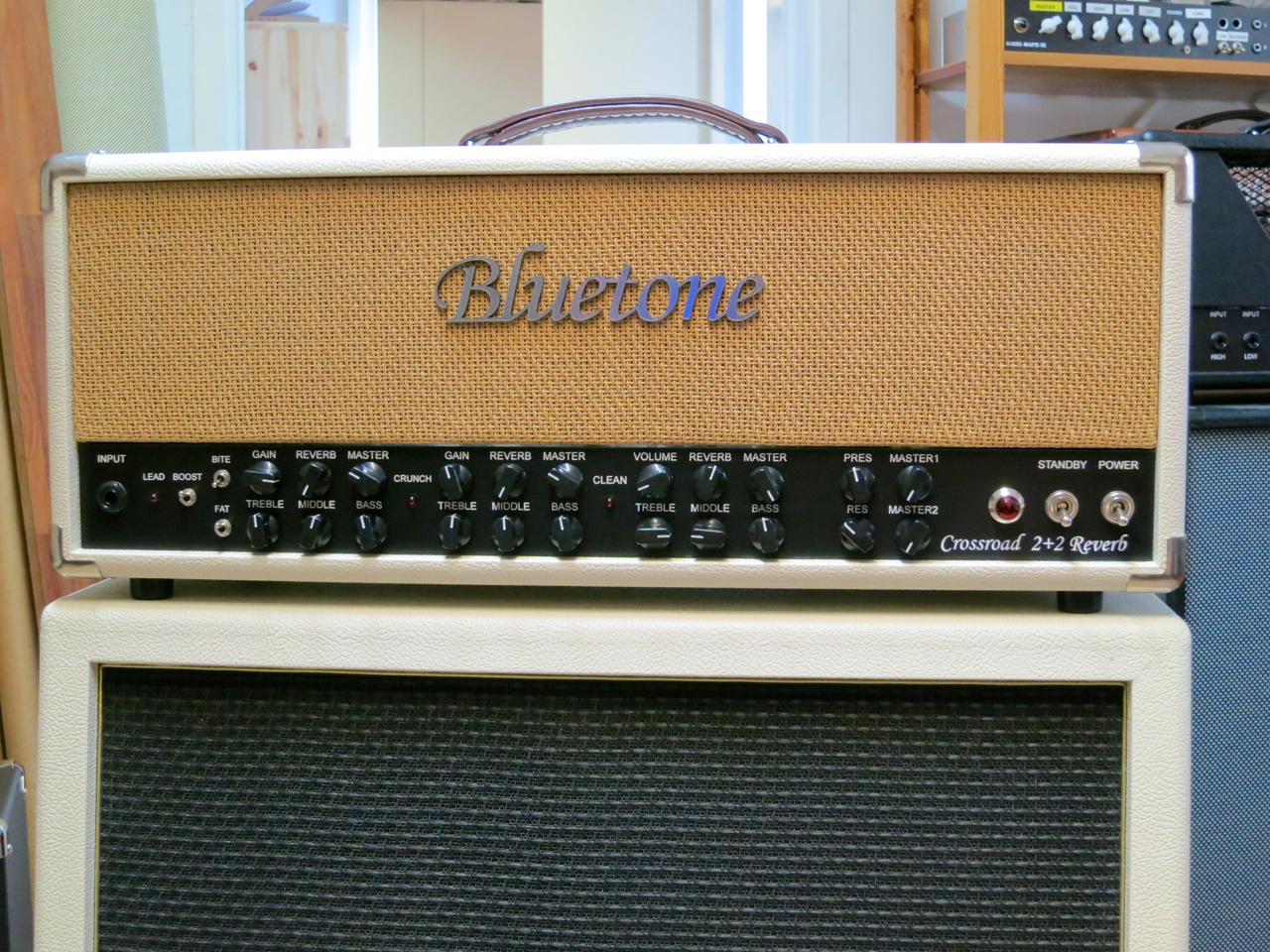
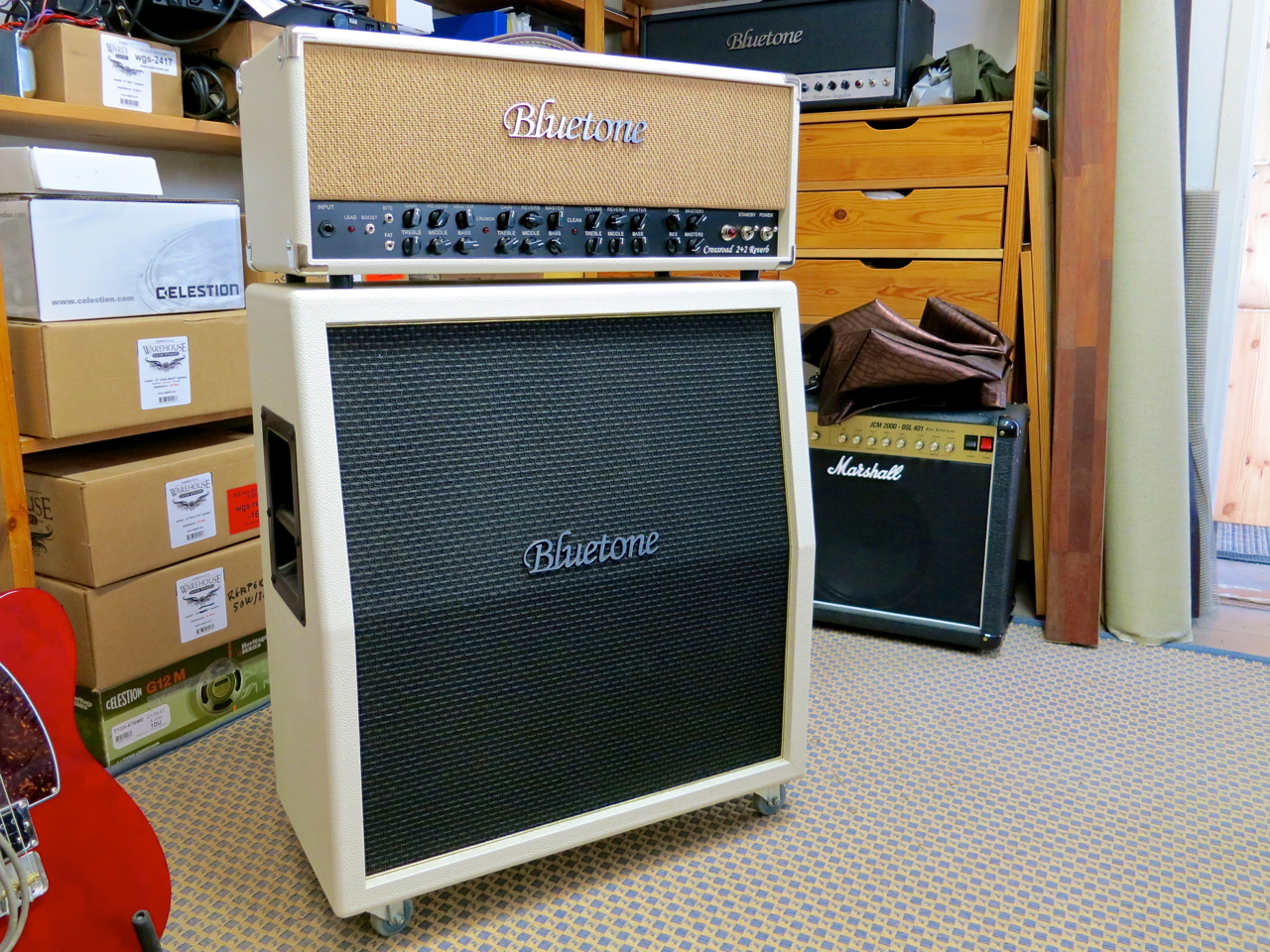
So here’s the finished guitar amplifier:
The new Bluetone Crossroad 2+2 amp head is fitted inside its cabinet, and Bluetone’s game-changing wifi-software is up and running smoothly.
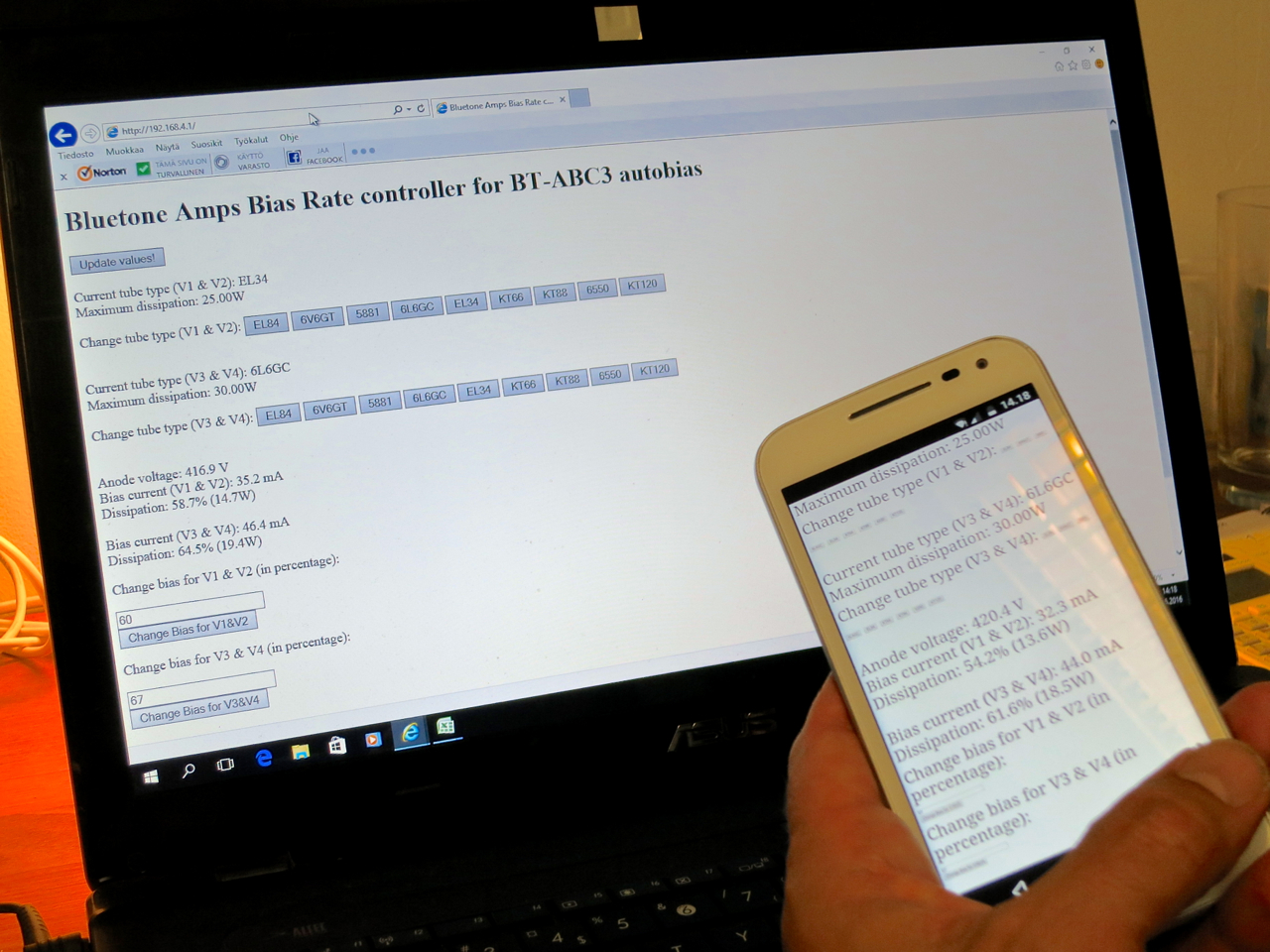
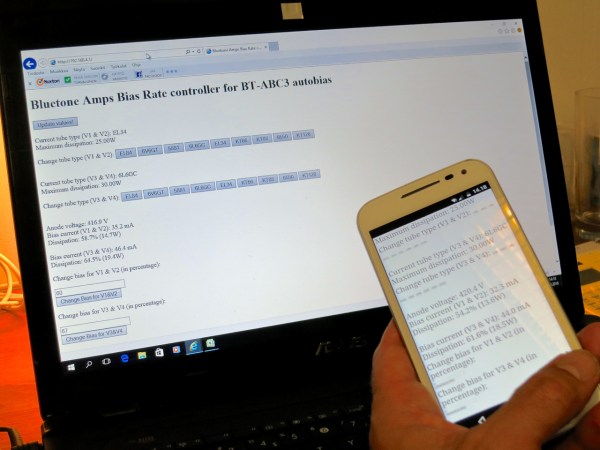
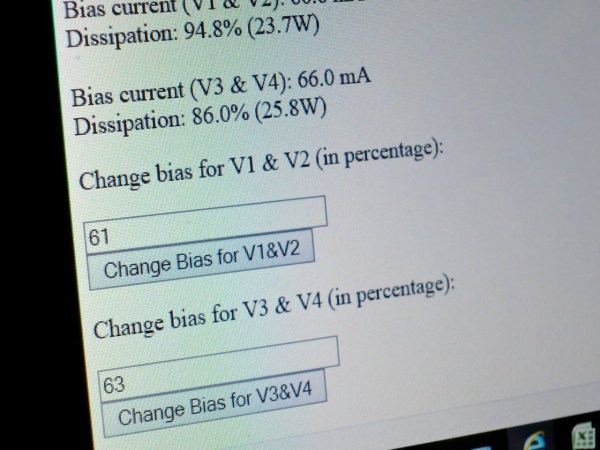
Bluetone’s wifi-protocol makes it easy to check and readjust the tube bias on your amplifier’s power tubes. No engineering degree or special tools needed – you only have to have a mobile device or computer to hand.
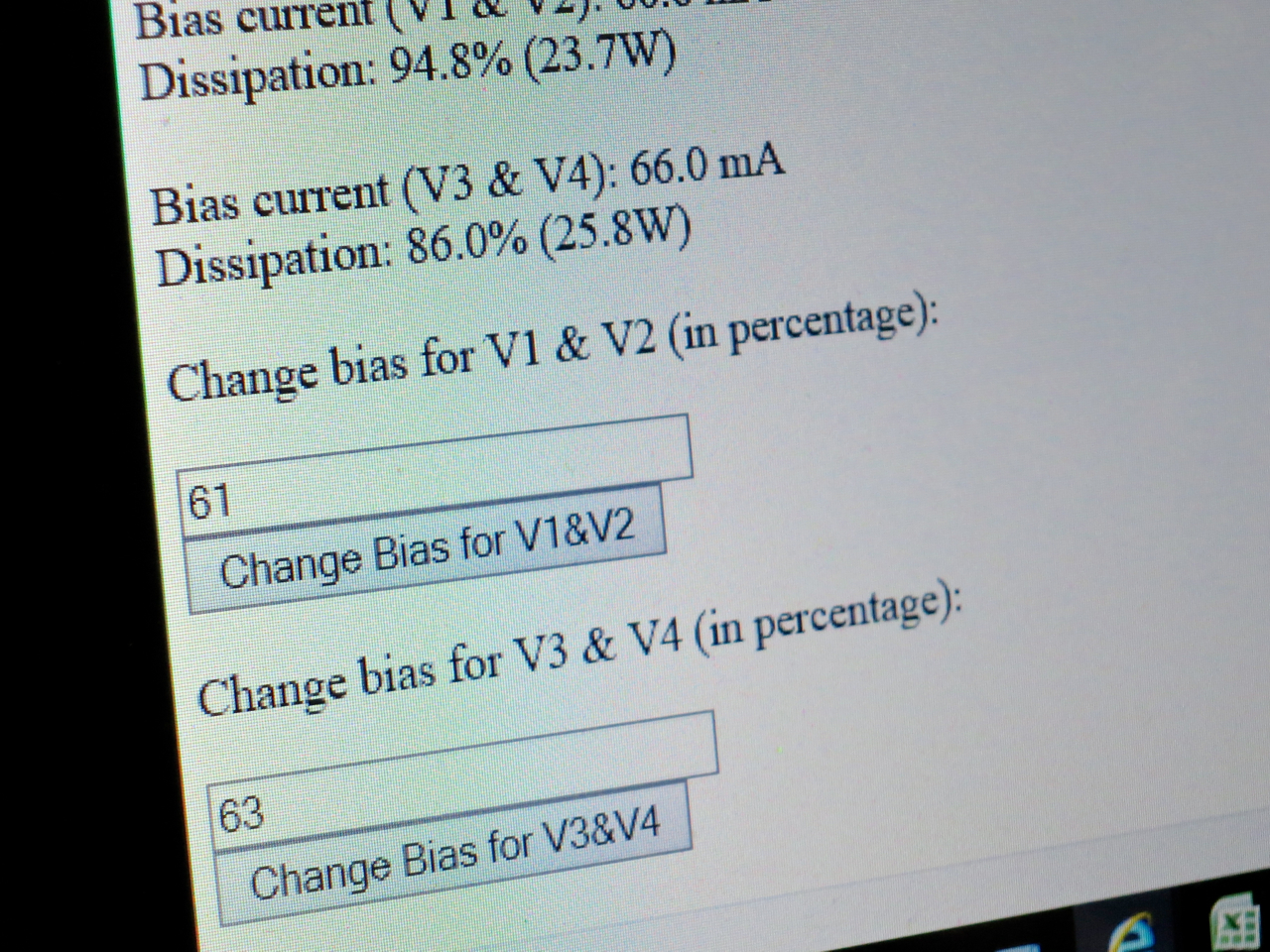
The amp head is accessed as a web-address. The correct bias values for the power amp valves fitting your amp are listed in the owner’s manual. All you have to do is to type the new bias values into the correct fields, and save them by pressing the ”Change Bias” buttons.
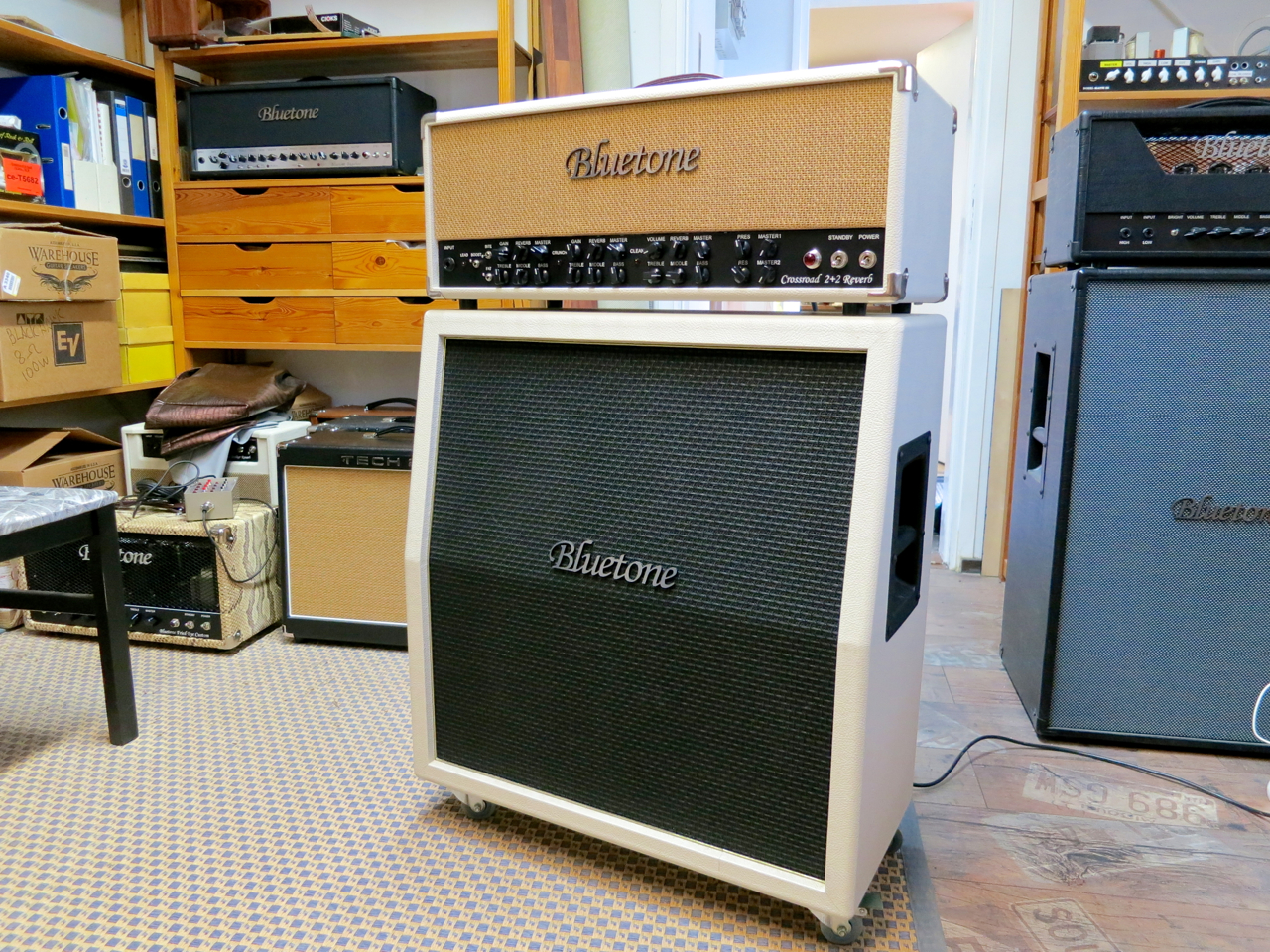
This is what the finished half-stack looks like. It has already been taken home by its lucky owner.
Contact: Bluetone
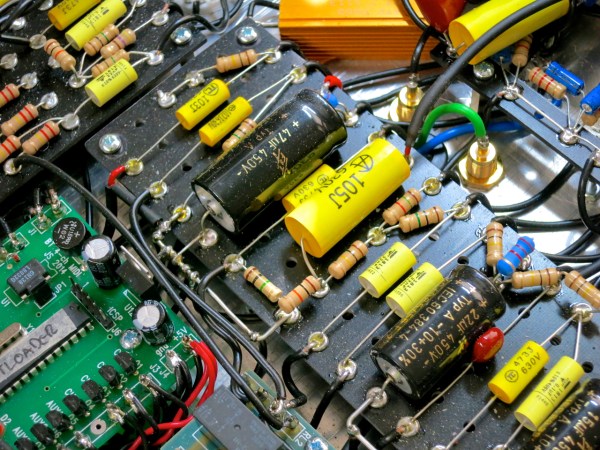
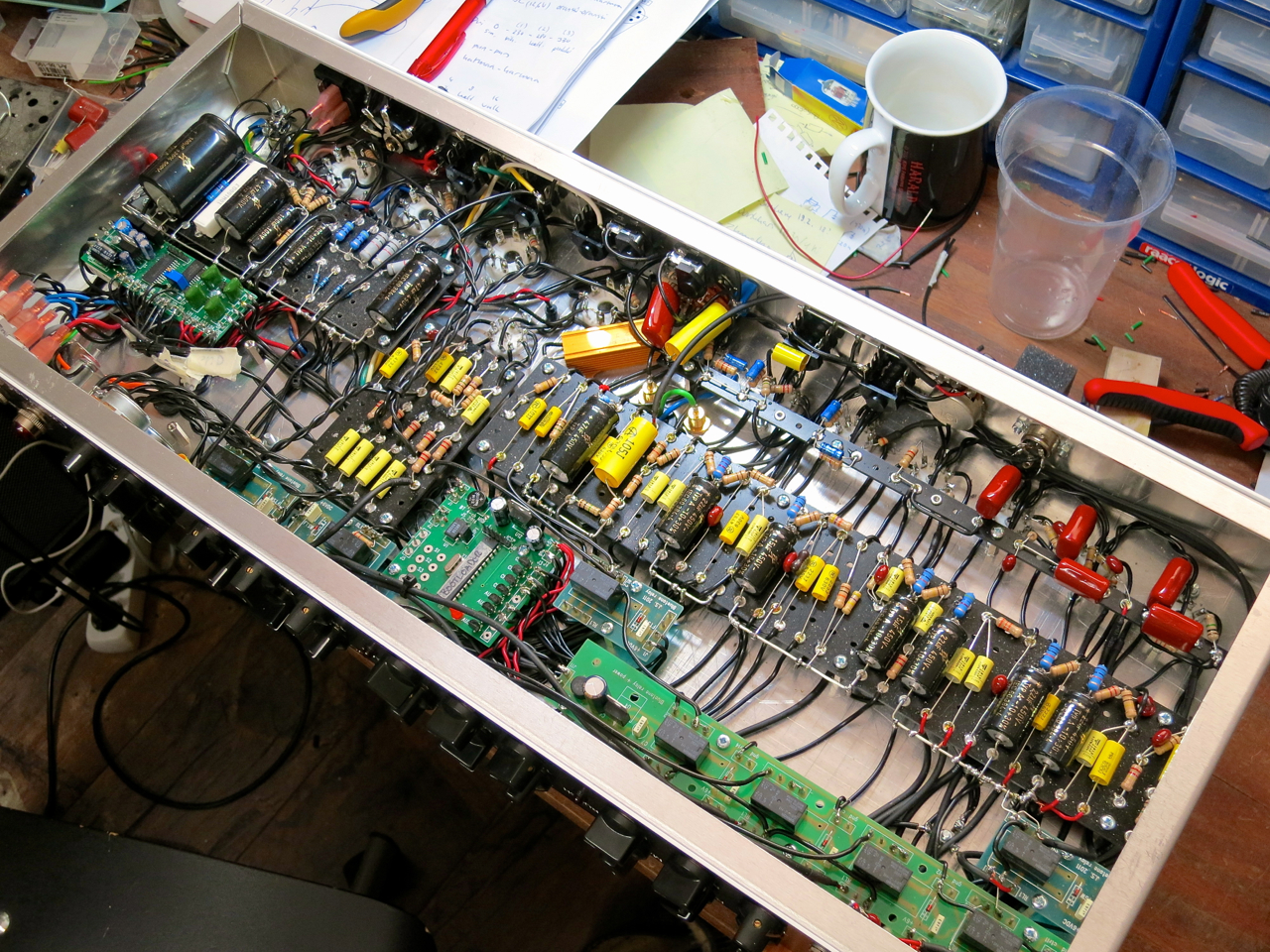
The time-consuming process of hand-wiring, assembling and soldering the innards of the new Bluetone Crossroad amp head was practically finished by the start of last week. The only thing still missing was the software to run the wifi power valve biasing (the traditional, hardwired bias adjustment already worked, of course).
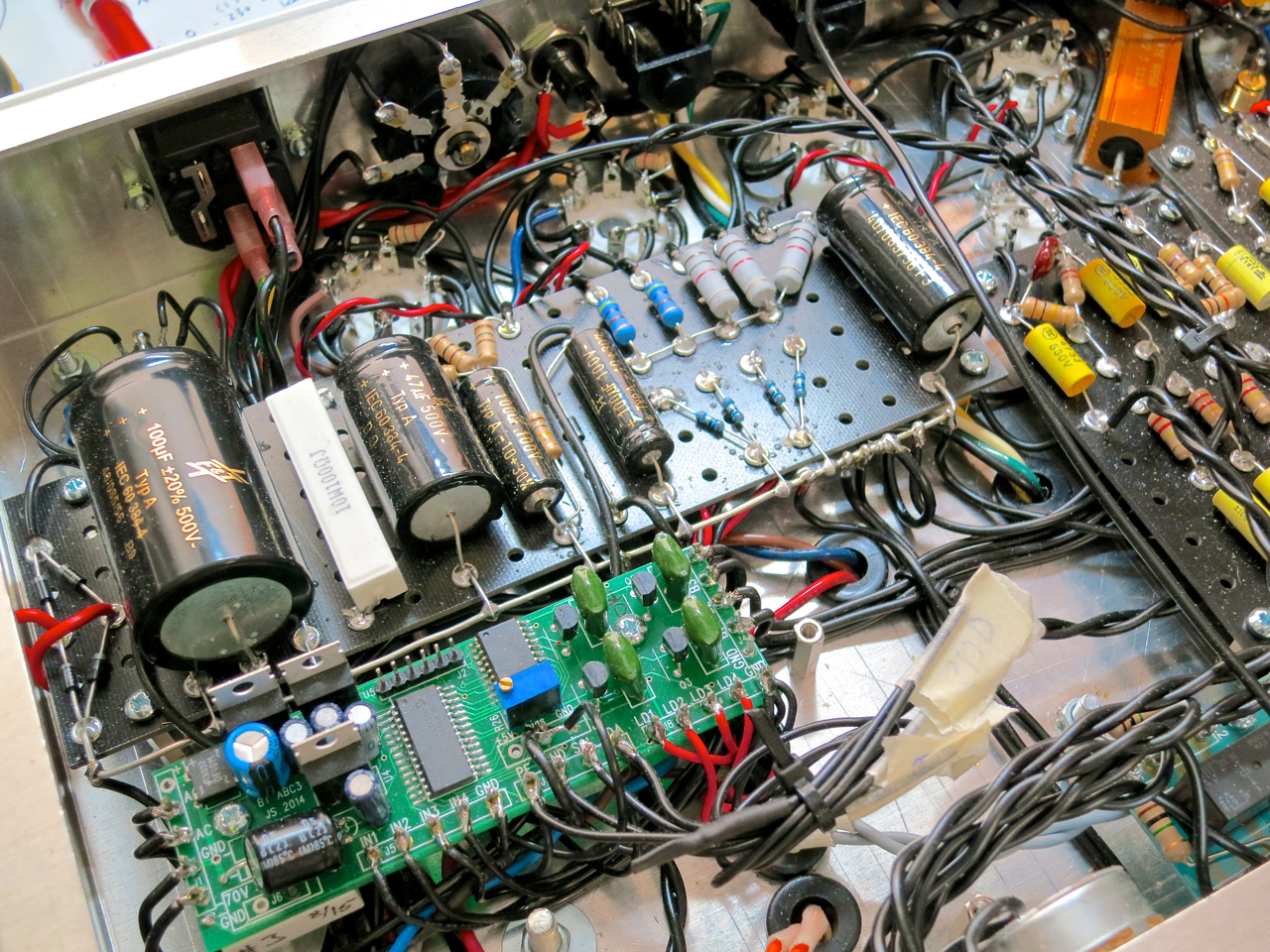
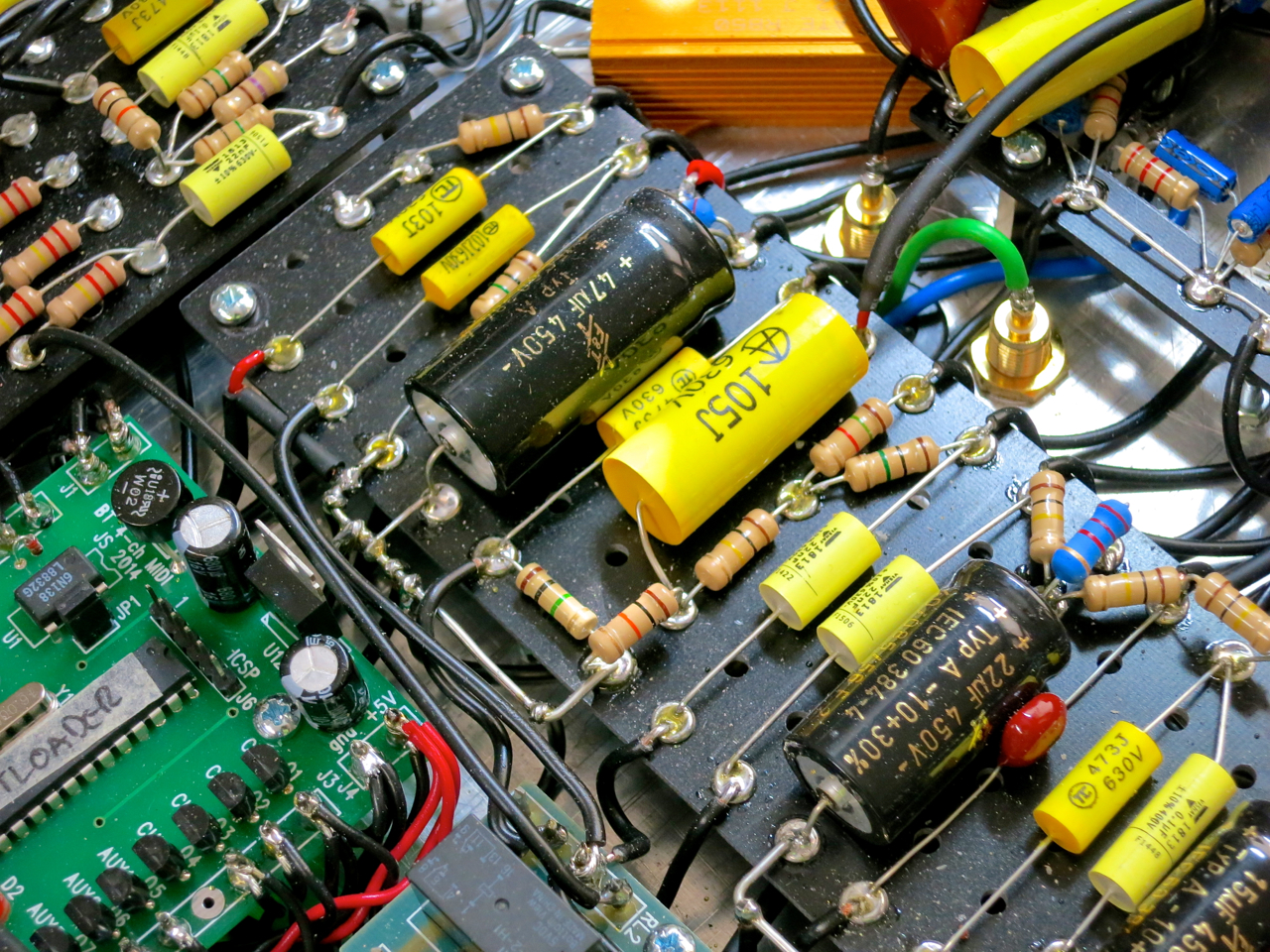
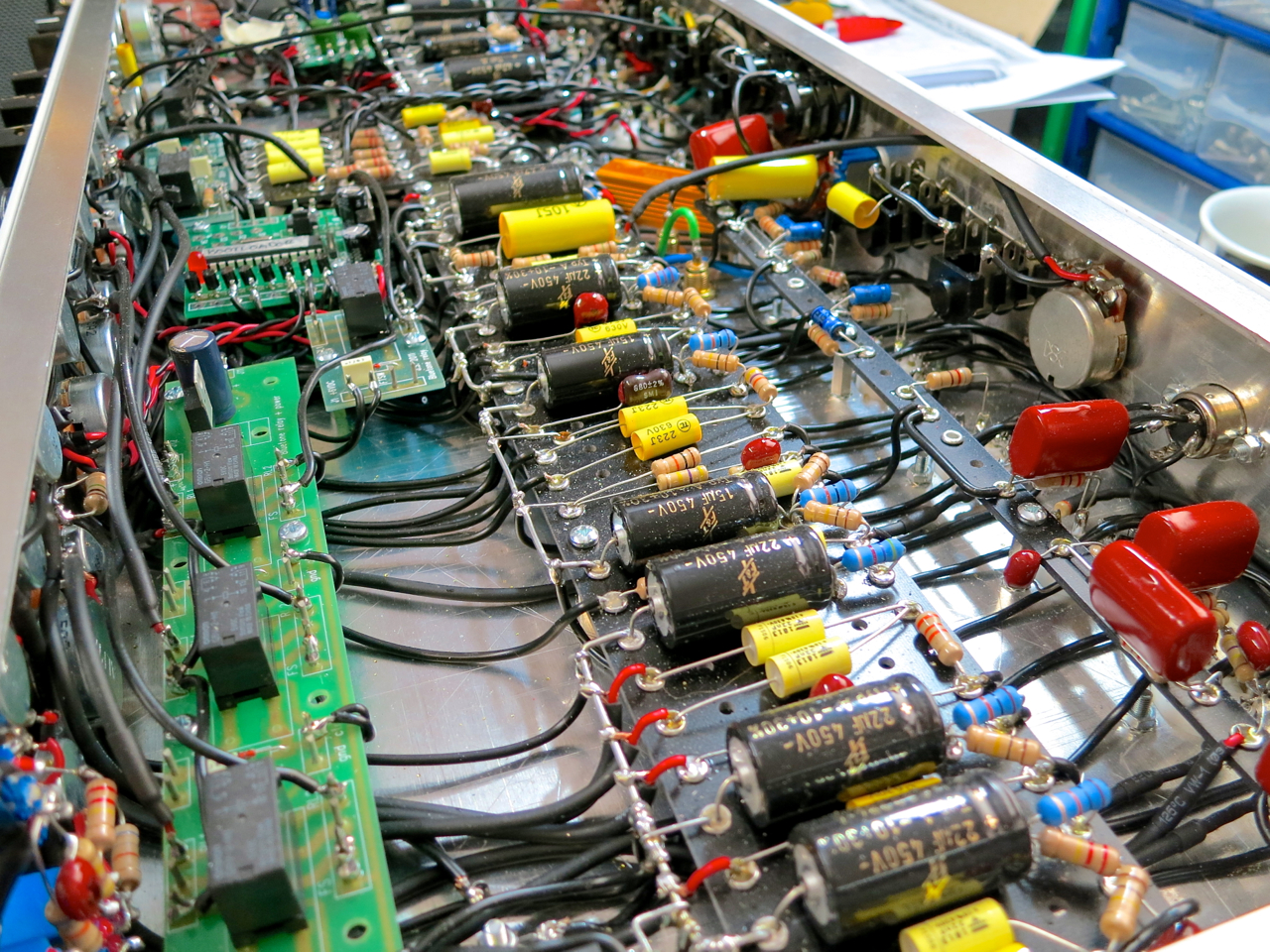
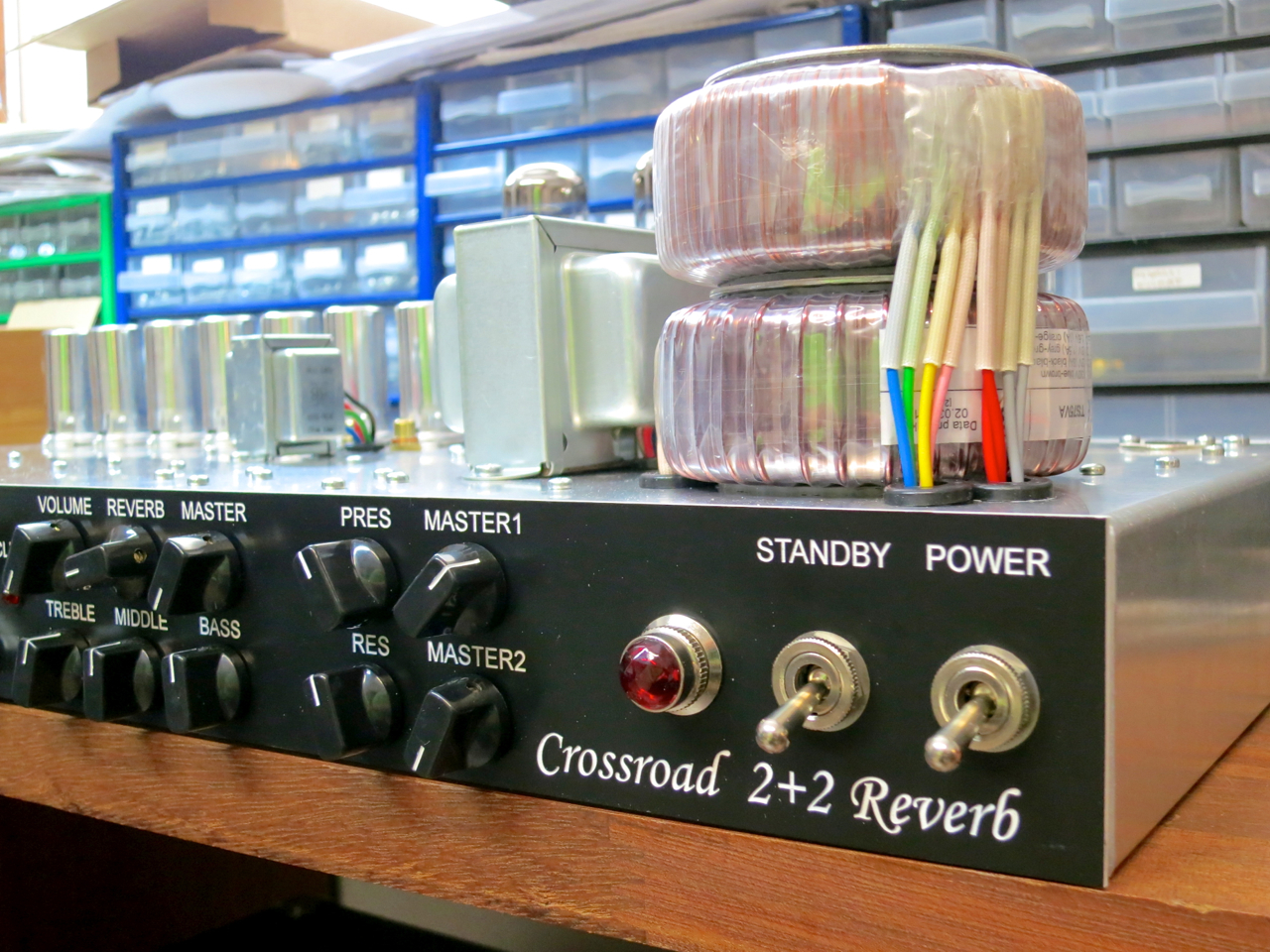
This is the way a custom-made guitar amplifier should look on the inside – exemplary workmanship and top grade components.
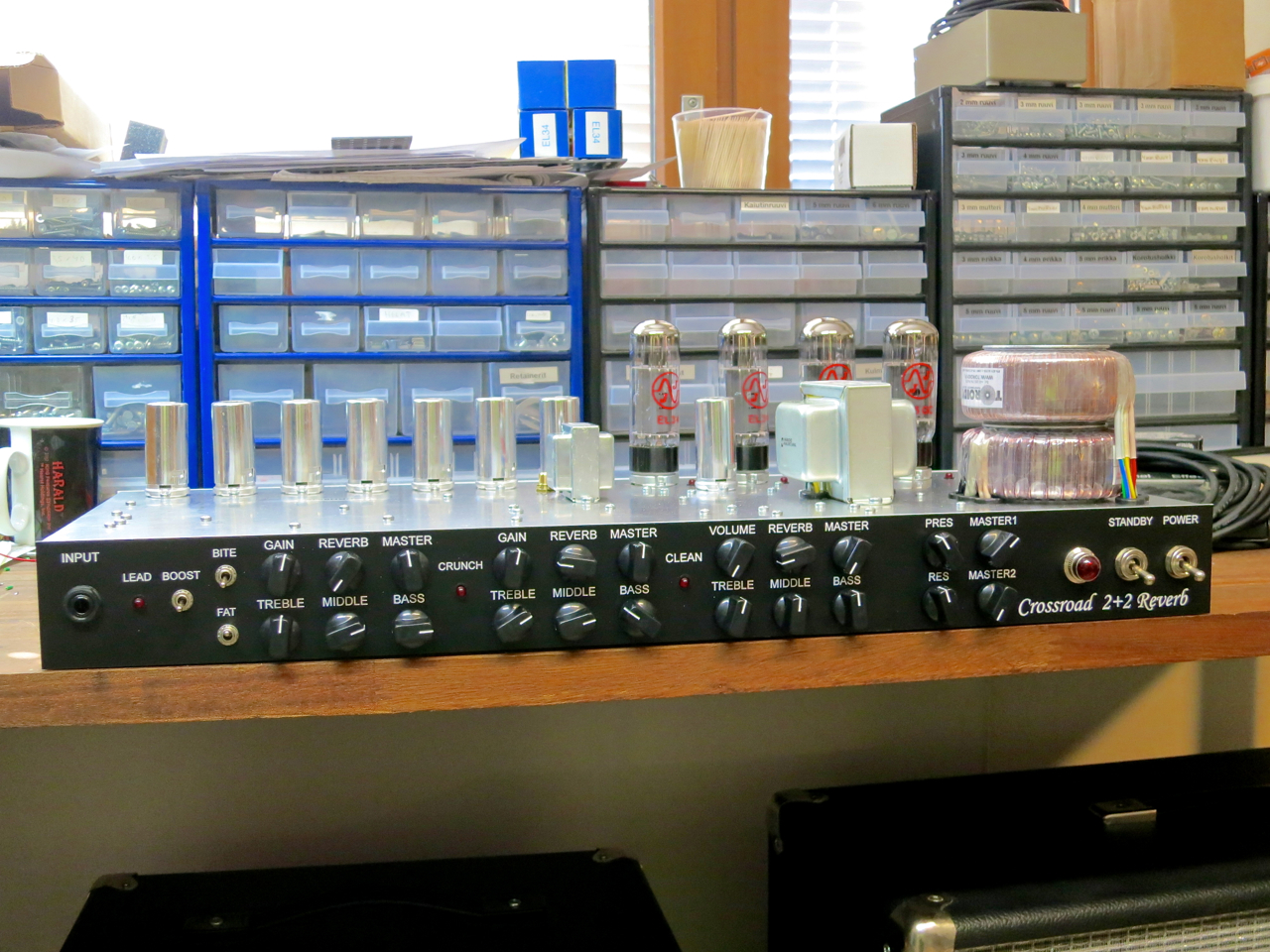
There was still a tiny bit of adjustment work to be done on the metal chassis to make it fit properly into its cabinet.
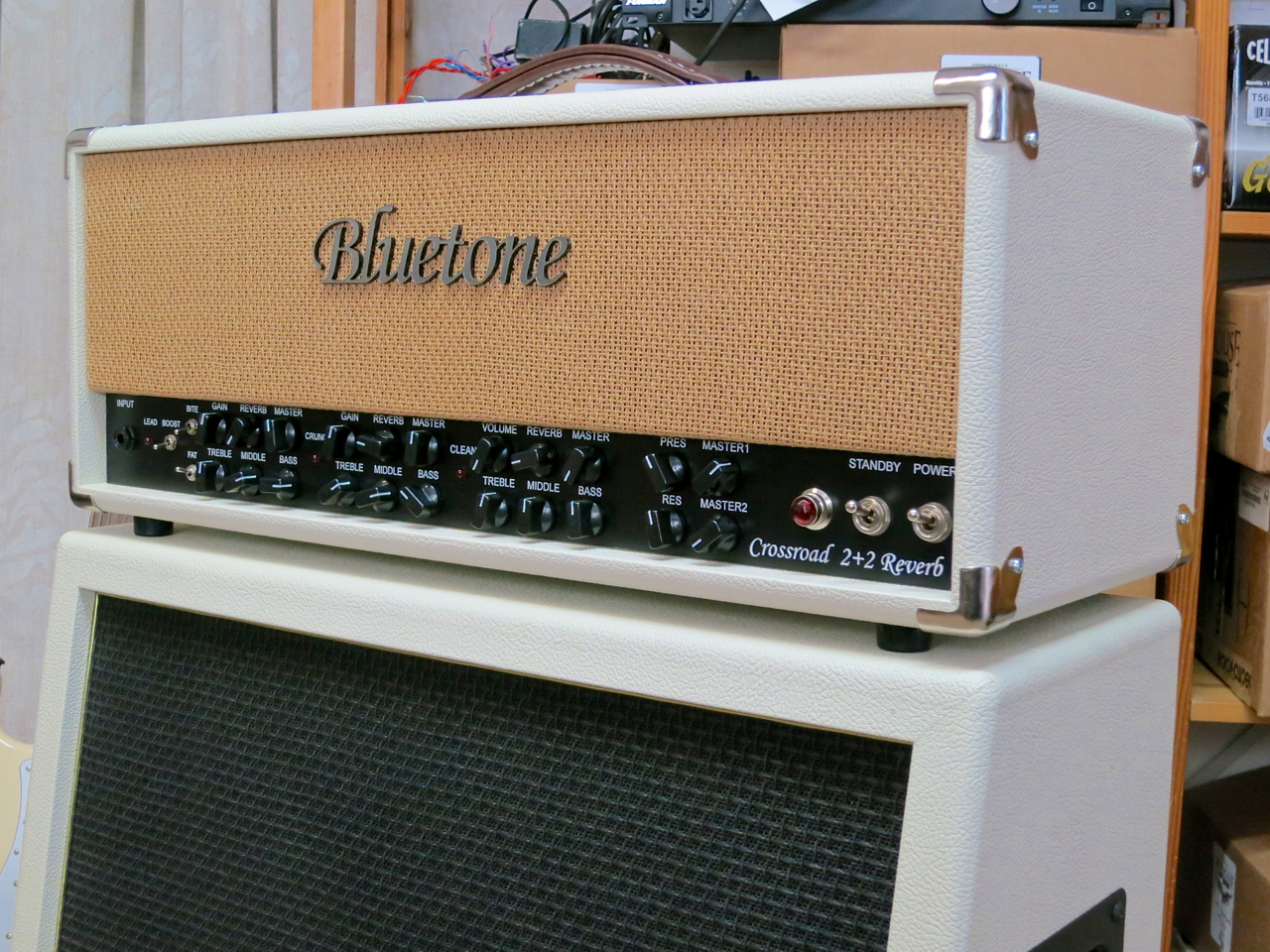
When all is finished the control panel should be flush with the cloth grille.
From a tonal perspective the Crossroad-head was all dialled-in, thoroughly checked and rearing to go. Matti and Harry gave me a run-through of the sounds offered by this amp’s three channels, and I must say it sounded fantastic!
Only a few hours after my visit to Bluetone’s HQ, I got a message from Harry that the wifi-application had arrived for inclusion in the head.
Valmista tuli!
Uusi Bluetone Crossroad 2+2 -vahvistin on sovitettu koteloonsa, ja firman mullistava wlan-softa pyörii ongelmitta vahvistimessa.
Wifi-ominaisuus mahdollistaa pääteputkien biasointia kätevästi ilman insinööritaitoa tai erikoistyökaluja suoraan mobiililaitteen tai tietokoneen nettiselaimelta.
Putkityypille sopivat biasointiarvot löytyy vahvistimen käyttöohjeesta, ja niitä voi muuttaa tallentamalla uudet arvot kummallekin pääteputkiparille nettiselaimen kautta.
Nyt Bluetone Crossroad -puolistäkki on valmis luovutettavaksi asiakkaalle.
Lisätiedot: Bluetone
 Kitarablogi.com – Finland's premier Guitar and Bass blog